Article

Thermo-Mechanical Interactions in Energy Pile Groups: Numerical Modeling of Cross-Thermal Effects and Settlement Behavior

1
Shandong Key Laboratory of Technologies and Systems for Intelligent Construction Equipment, Shandong Jiaotong University, Jinan 250357, China
2
Postdoctoral Programme of Shandong Hi-Speed Group Co., Ltd., Jinan 250014, China
3
Shandong Luqiao Group Co., Ltd., Jinan 250014, China
4
Faculty of Engineering, China University of Geosciences (Wuhan), Wuhan 430074, China
*
Authors to whom correspondence should be addressed.
Buildings 2026, 16(13), 2544; https://doi.org/10.3390/buildings16132544 (registering DOI)
Submission received: 28 March 2026 / Revised: 17 June 2026 / Accepted: 19 June 2026 / Published: 26 June 2026
(This article belongs to the Special Issue Advances in Steel-Concrete Composite Structure—2nd Edition)

Abstract

Energy pile groups present a dual-functional solution for structural support and geothermal energy utilization, yet their thermo-mechanical interactions with conventional piles remain insufficiently understood. This study establishes a 3D transient finite element model incorporating thermo-hydro-mechanical coupling to investigate thermal interference and differential settlement in hybrid pile groups under seasonal thermal loading. Systematic parametric analyses of pile length (10–30 m), diameter (1–2 m), and spacing (2D–3D) reveal two key findings: (1) Thermal perturbations in adjacent conventional piles exhibit distance-dependent attenuation characteristics, with measurable temperature variations (1–4 °C) observed within 4D spacing distances; (2) Differential settlement patterns demonstrate significant dependence on thermal operation modes, where heating cycles induce upward thermal stresses while cooling enhances consolidation settlement. The numerical framework is validated against field monitoring data and benchmarked with COMSOL 5.6/ABAQUS 6.14 simulations. Through optimized pile arrangements and spacing configurations, we demonstrate effective mitigation strategies for thermal interference and structural deformation, providing key guidance for the design of geothermal-energy-integrated foundation systems.

1. Introduction

Energy piles integrate ground-source heat exchange with structural foundations, providing building support while utilizing shallow geothermal energy to reduce carbon emissions and operational energy demands, thus aligning with global decarbonization goals [1,2]. However, in pile with group systems, how energy piles thermally affect one another and adjacent conventional piles pose significant challenges: heat exchange induces temperature fluctuations in the surrounding soil, which propagate to neighboring piles, potentially altering their thermo-mechanical behavior and increasing long-term performance uncertainty [3].
Considerable research has been devoted to the heat transfer, settlement calculation, and bearing capacity of energy pile groups.
Regarding heat transfer, key influencing factors include heat exchange tube configuration (U-shape, spiral, etc.), pile dimensions, and soil properties [4,5,6,7,8]. Theoretical models have evolved from line and cylindrical heat sources to finite-length cylindrical, coil, and spiral source models [9,10,11,12]. Several studies have also considered the effect of groundwater seepage on heat migration: Zhang et al. [13] introduced seepage into a coil-source model and found that high groundwater velocity significantly alters temperature distribution; Akrouch et al. [14] demonstrated that soil saturation (closely related to seepage) markedly affects heat transfer efficiency. However, most existing models assume a single energy pile in a uniform infinite medium and neglect seepage. In pile groups, adjacent piles disturb the thermal field, and the presence of groundwater may enhance or attenuate the propagation of thermal interference. A temperature field model that simultaneously accounts for group geometry and seepage conditions is still lacking.
Concerning settlement calculation, the load transfer method has been extended to include temperature-induced stresses and cyclic thermal effects [15,16]. For pile groups, the “reinforcement and shielding” effects of adjacent piles and thermal stress transfer must be considered [17,18]. A few studies have attempted to couple pore pressure changes induced by seepage with settlement [19]; however, in energy pile groups, how seepage-modified temperature fields affect settlement behavior remains underexplored. Overall, a group settlement method that simultaneously accounts for pile-to-pile mechanical interaction, thermal effects, and seepage influence is still underdeveloped.
With respect to bearing characteristics, field and numerical studies have shown that temperature changes cause load redistribution and differential settlement between energy piles and conventional piles [20,21]. Both field tests and numerical simulations confirm that repeated thermal cycles induce irreversible additional settlement [22,23]. For conditions involving groundwater seepage, asymmetric temperature fields may exacerbate differential settlement [22]; nevertheless, systematic analyses of hybrid pile groups (energy piles + conventional piles) under realistic seasonal cycles and potential seepage conditions remain scarce, and design guidelines for pile spacing and arrangement are lacking.
Three critical gaps thus persist: (1) no temperature field model exists for a conventional pile adjacent to an operating energy pile, especially when groundwater seepage is present; (2) a load-transfer method for hybrid pile groups incorporating mechanical interaction, thermal effects, and seepage influence has not been established; (3) the combined influence of mechanical load, thermal load, pile arrangement, and groundwater conditions on differential settlement and load sharing remains poorly understood.
To address these gaps, a three-dimensional transient finite element model (groundwater seepage is not explicitly modeled, but its potential influence is discussed) is developed in this study. The model is validated using two types of data: published field monitoring data and numerical results from the literature [15,24,25]. It systematically investigates thermal interference and differential settlement in hybrid pile groups under seasonal thermal loading. Parametric analyses of pile length, diameter, and spacing are conducted, and two energy pile arrangements (concentrated vs. dispersed) are compared in two-, four-, and nine-pile groups. Based on the numerical results, practical design recommendations for pile spacing and configuration are proposed to mitigate adverse cross-thermal effects, thereby advancing the safe and efficient deployment of energy pile technology in complex geothermal infrastructure projects.

2. Study on the Temperature Field Influence of Energy Piles on Adjacent Piles

2.1. Numerical Model Establishment

To investigate the temperature influence zone of energy piles on adjacent conventional piles, a numerical model was developed with carefully defined parameters and configurations. The thermal and physical properties of sand and concrete, including thermal conductivity, specific heat, and density, were adopted from [4], as detailed in Table 1. Water served as the heat exchange fluid, and steel hoses having an inner diameter of 30 mm functioned as heat exchange tubes. The detailed modeling procedure, including mesh generation, boundary conditions, and convergence criteria, has been described in our previous work on single energy piles [Cui et al., 2025] [26]. The model was designed to analyze the temperature effects by systematically varying pile length, diameter, and spacing, aiming to evaluate the temperature transfer between energy piles, adjacent conventional piles, and the surrounding soil.
Three sets of models were established with pile lengths of 10 m, 20 m, and 30 m, and corresponding pile diameters were selected based on typical engineering standards, detailed configurations are presented in Table 2. The heat exchange tube depth was set to the bottom arc radius plus 0.7 times the pile length, a choice informed by the need to optimize heat transfer efficiency. Previous studies suggest that the thermal influence of energy piles extends approximately 2 to 4 times the pile diameter, with a temperature response range of 5 to 7 m. Accordingly, a pile group was arranged with spacings of 2D, 2.5D, and 3D (D denotes the pile diameter), in accordance with [5], resulting in nine distinct model configurations.

2.2. Results Analysis

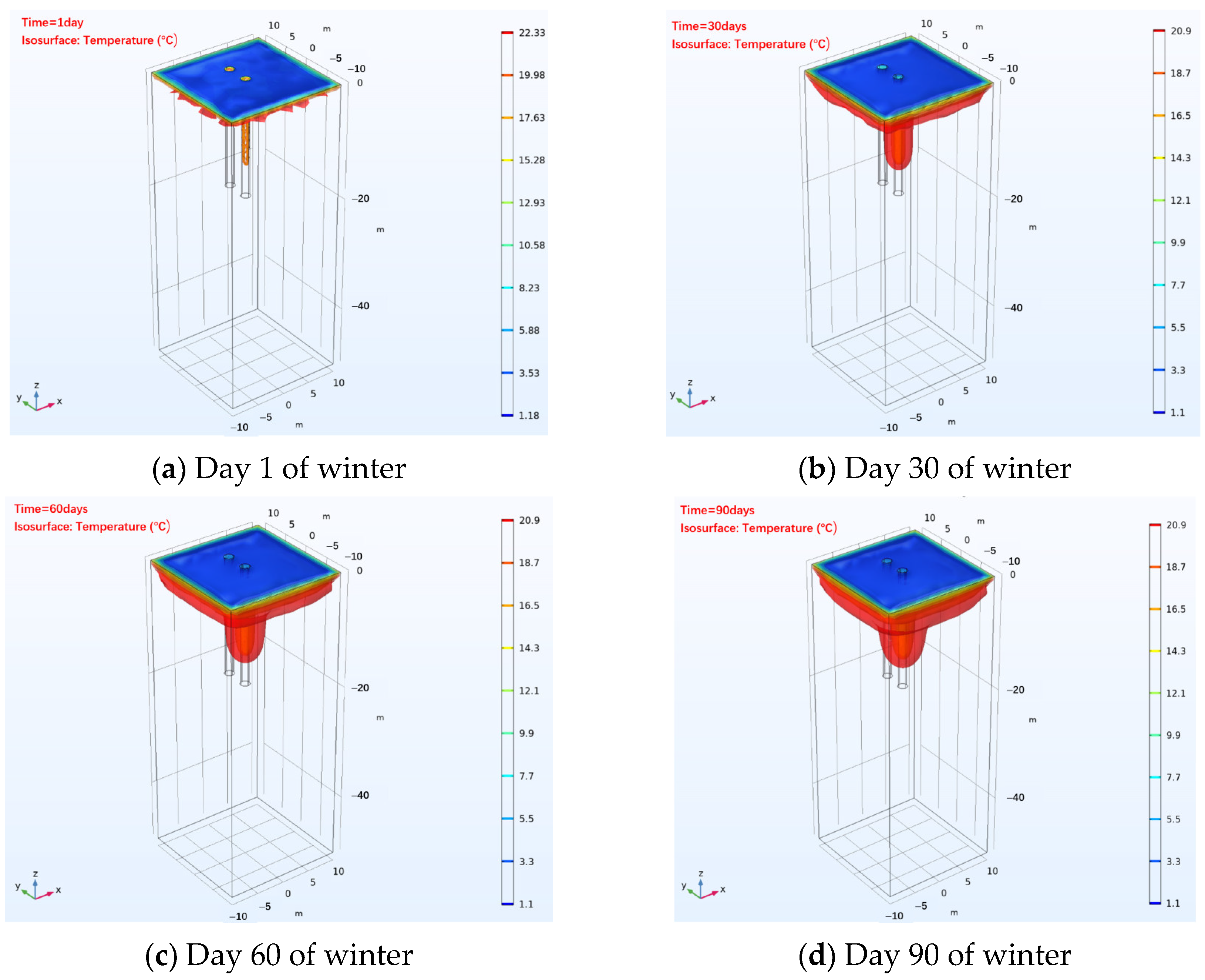
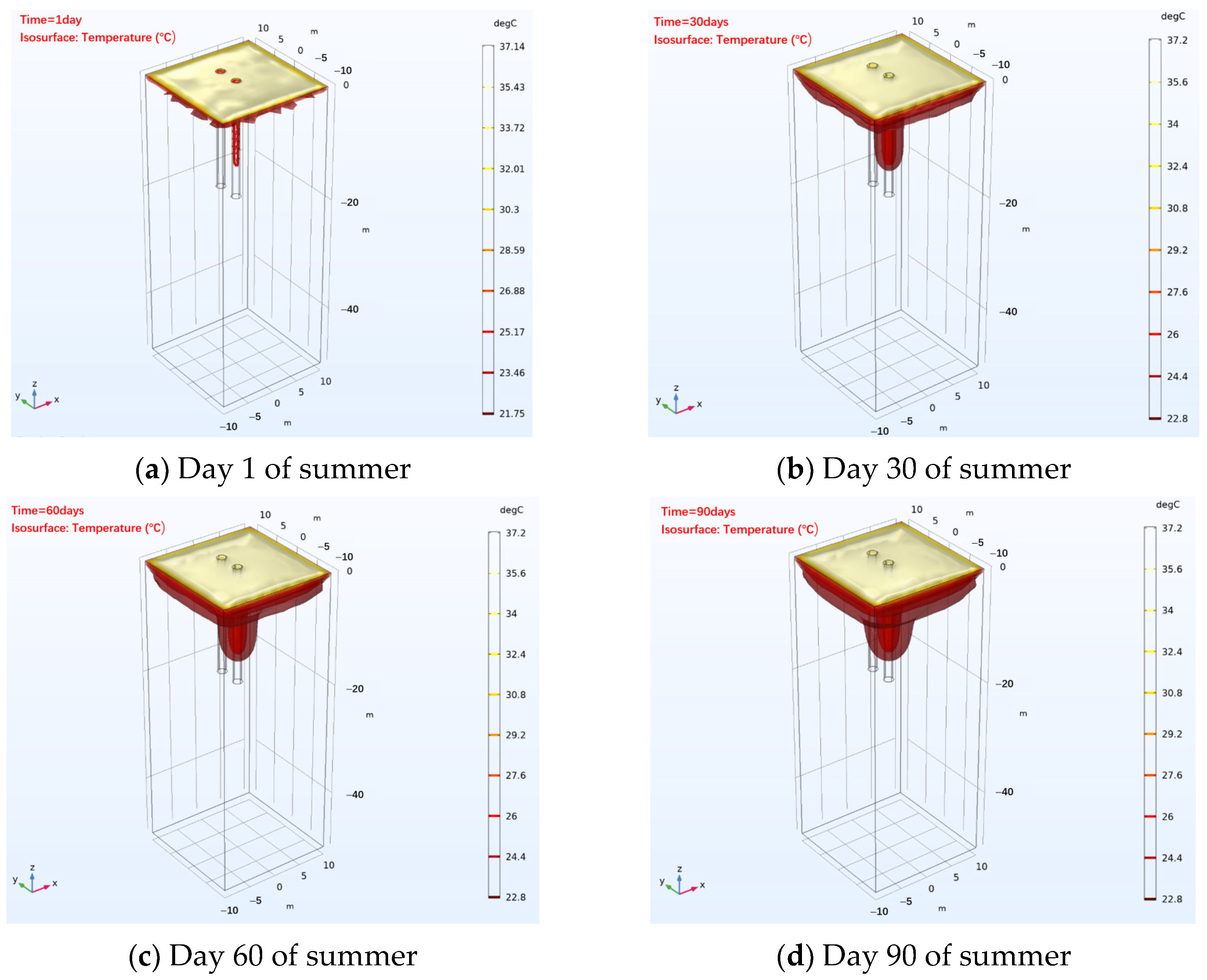
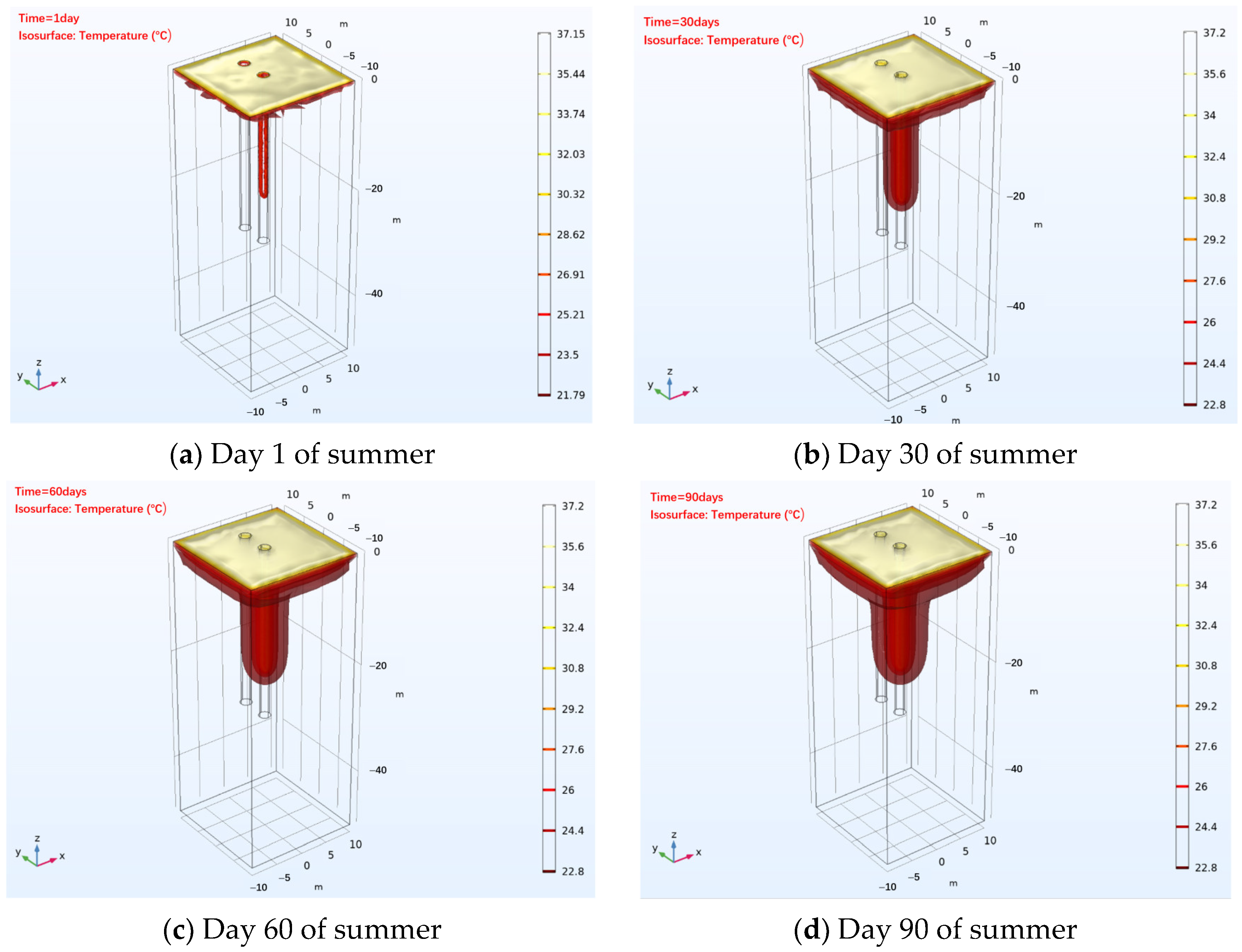
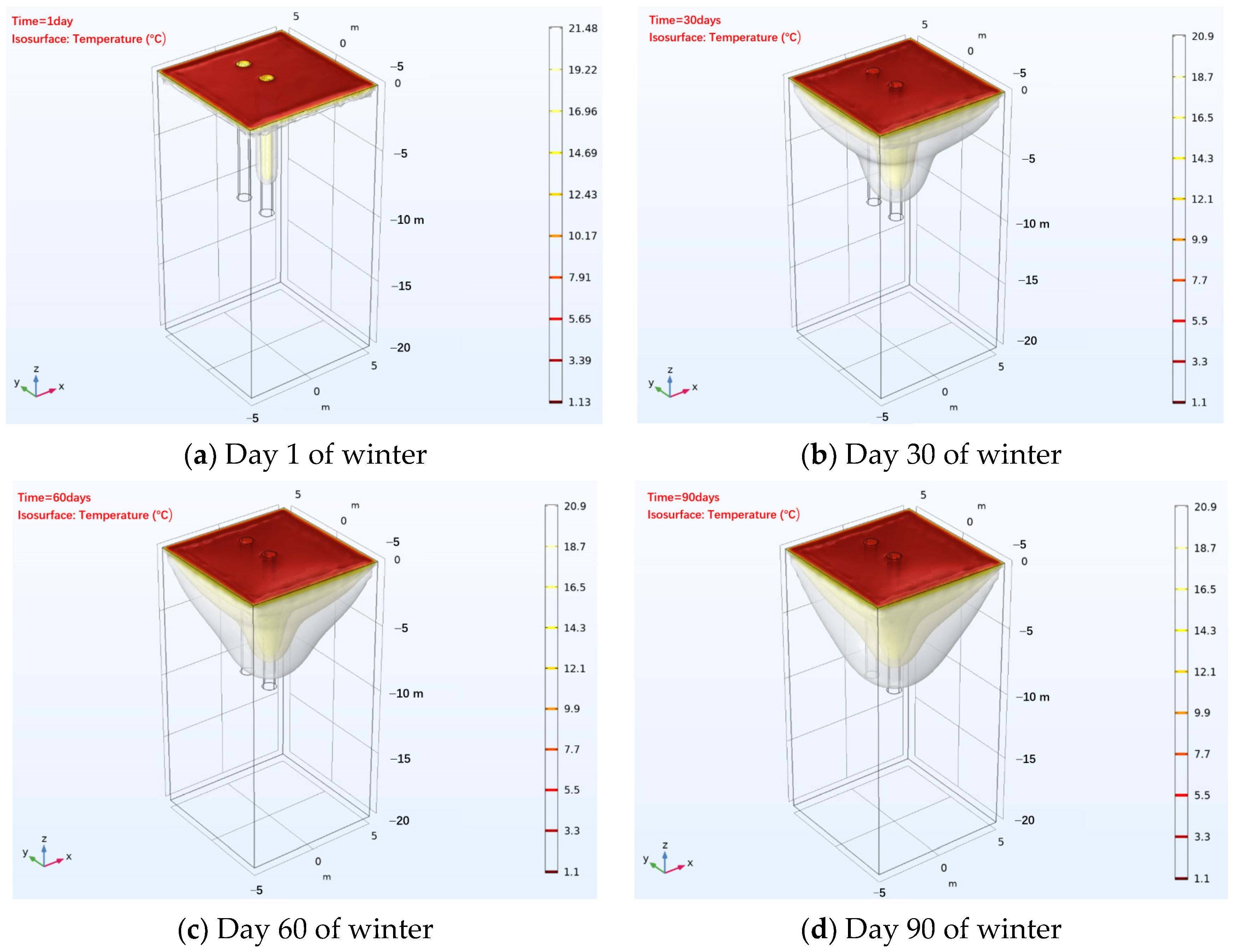
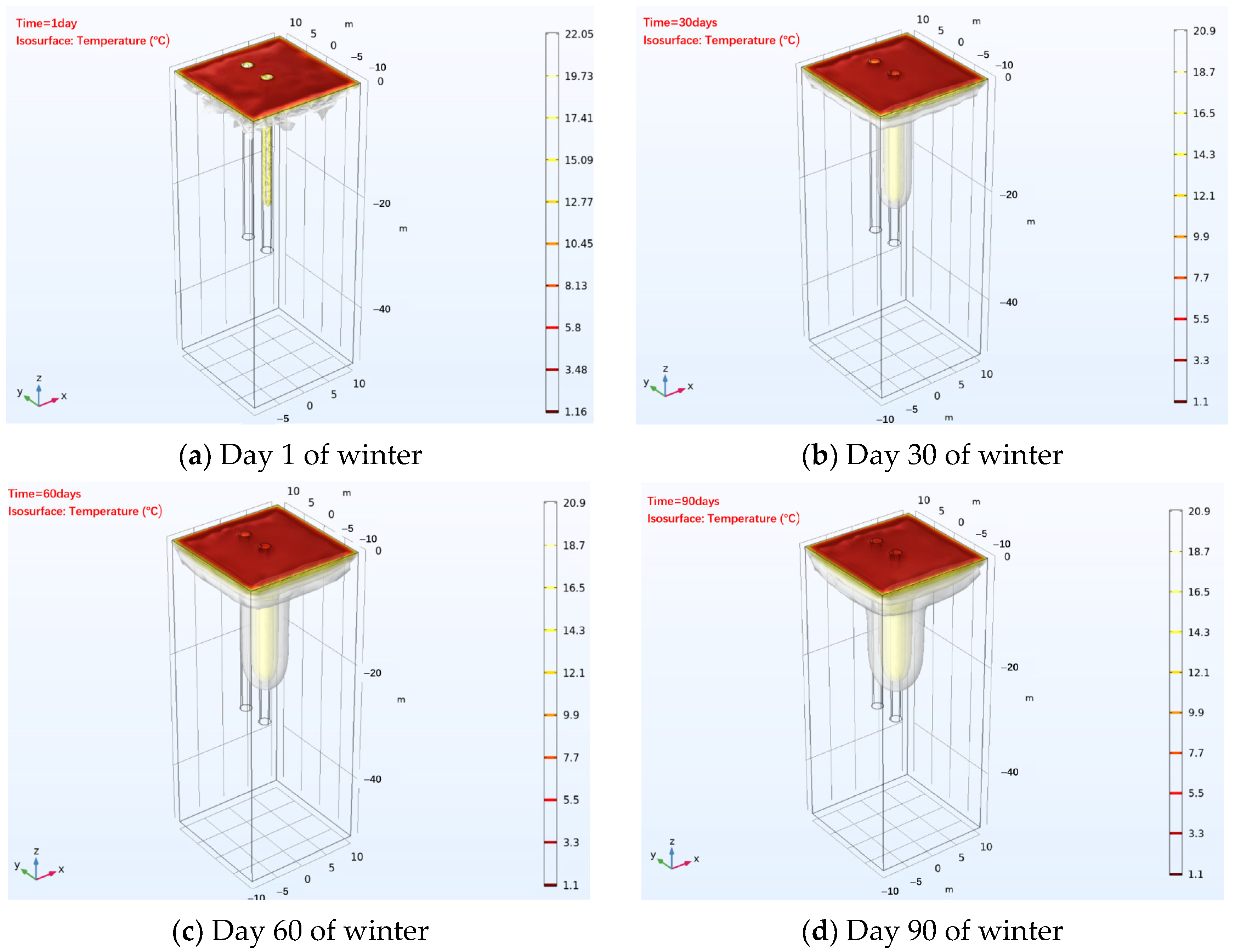
To analyze the temperature variations in adjacent conventional piles and the nearby soil during the heat exchange in energy piles, isotherms were generated for selected scenarios, specifically scenarios 2, 5, and 8, which represent different pile configurations and seasonal conditions. The isotherm plots for these scenarios under summer conditions are presented in Figure 1, Figure 2 and Figure 3, while the corresponding plots under winter conditions are shown in Figure 4, Figure 5 and Figure 6. These figures provide a visual representation of the temperature distribution, illustrating the thermal impact on adjacent piles and soil across varying operational and environmental settings.
To illustrate, we use isotherm diagrams to show how the temperatures of adjacent conventional piles and the nearby soil evolve during energy pile heat exchange. Scenarios 2, 5, and 8 are taken as examples. For summer conditions, these isotherms appear in Figure 1, Figure 2 and Figure 3, respectively; for winter conditions, they appear in Figure 4, Figure 5 and Figure 6.
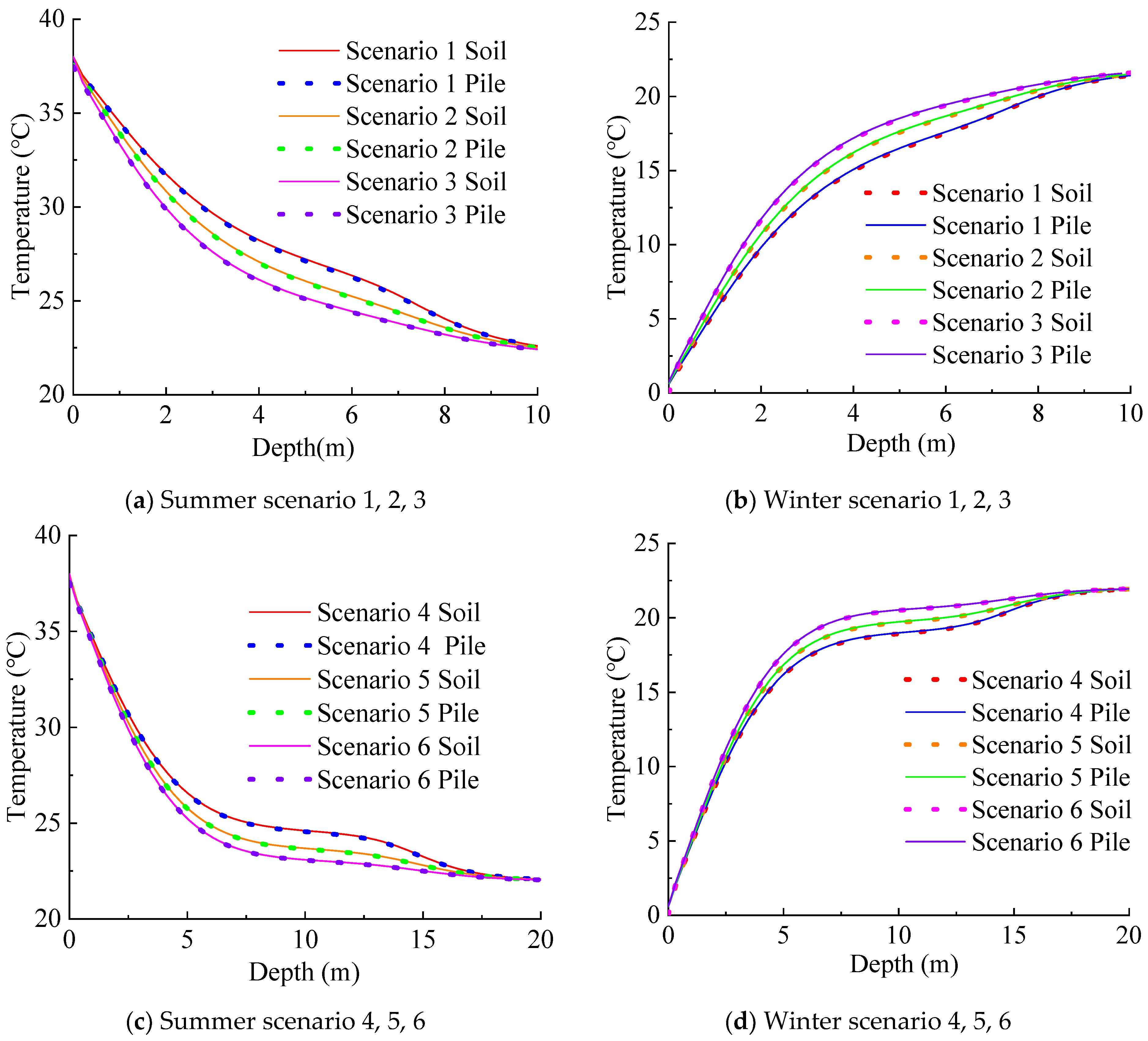
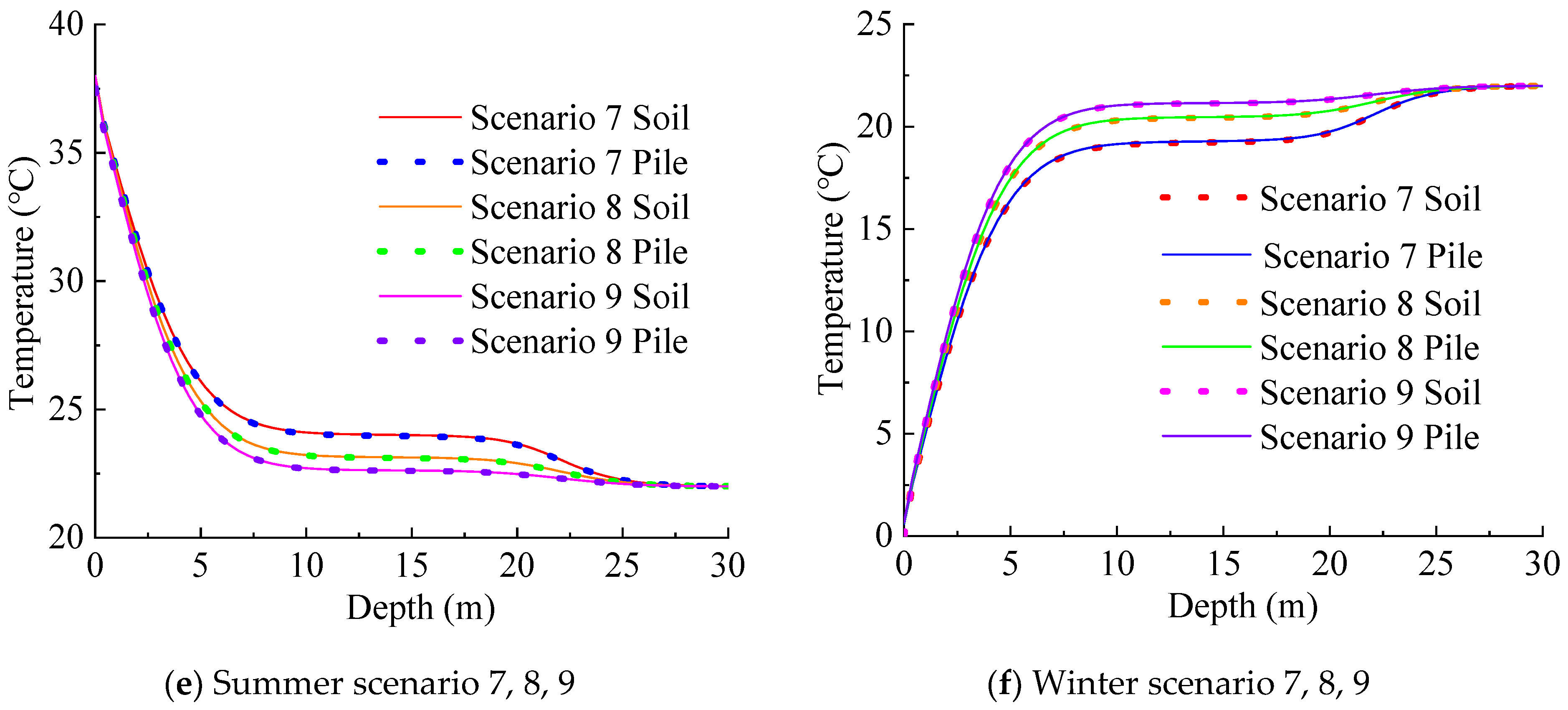
The presence of nearby pile foundations does not significantly affect the thermal response from the energy pile into the soil. The heat propagates outward such that the rate of diffusion declines with increasing distance from the energy pile. With the model parameters selected here, any temperature change induced by the energy pile becomes negligible beyond a radius of 5 m, implying that adjacent conventional piles experience virtually no thermal effect. Heat flows from the soil near the energy pile toward neighboring pile foundations. To quantify this process, we compare soil temperatures at the same depth near the energy pile and near an adjacent conventional pile. The resulting temperature difference between the pile and soil serves as a measure of how much the energy pile’s operation alters the temperature of nearby piles. Figure 6 plots the simulated temperature data for the adjacent conventional pile and the nearby soil at the same location.
Figure 6 shows that the conventional pile next to the energy pile undergoes thermal contrast driven by heat transfer from the latter. When the energy pile and soil conditions are fixed, a smaller spacing between piles leads to a larger temperature change in the conventional pile. For scenarios 1–3, increasing the pile spacing reduces the thermal influence on the conventional pile. Under summer conditions with a spacing of 2 m, the conventional pile’s temperature in the depth range of 6–8 m changes by roughly 4 °C, amounting to roughly one-third of the original energy-pile-to-soil temperature difference. With a spacing of 2.5 m, the thermal contrast over the same depth interval is 3.5 °C, still a considerable fraction of the initial difference. At a spacing of 3 m, the change is approximately 2.5 °C. The reduction in thermal influence as spacing grows from 2 m to 3 m follows the general rule that soil heat diffusion slows with distance.
The pattern of temperature variation in the conventional pile adjacent to the energy pile is similar in winter and summer. Under scenario 2, the temperature difference at the pile-soil interface of the adjacent conventional pile is 0.5 °C lower in summer than in winter. During the numerical simulations, the heat-exchange fluid in the pipe was set to 4 °C (winter) and 35 °C (summer), while the surrounding soil and the adjacent conventional pile were initially at 22 °C. Hence, the summer environmental thermal contrast around the energy pile is 5 °C less than the winter value. A larger thermal contrast between the energy pile’s circulating fluid and its environment amplifies the thermal effect on adjacent pile foundations.
Scenarios 4 through 9 exhibit consistent variation patterns and are therefore not discussed individually. Notably, in scenarios 5–8, where pile spacing exceeds 4 m, the temperature response of the conventional pile next to the energy pile is relatively small. In scenario 9 (spacing = 6 m), the conventional pile’s temperature change in the 6- to 30 m depth range remains below 1 °C, which lies beyond the modeled thermal zone where the surrounding soil is influenced. Consequently, when the pile spacing surpasses the energy pile’s effective temperature-response radius, the impact of the temperature field on adjacent pile foundations can be ignored. A distinct temperature inflection point appears at the pile bottom, where pile-soil contact accelerates heat transfer down to the heat-exchange tube.
From Figure 7, the temperature difference between the pile-soil boundary and the surrounding soil boundary of the conventional pile (adjacent to the energy pile) is very small. Even though this difference exhibits minor variations with changes in pile spacing or the temperature gradient relative to the energy pile, it is numerically insignificant and can be ignored. Therefore, the temperature of that conventional pile can be taken as equal to the soil temperature at the same location within the energy pile’s thermal field. A finite-length solid cylindrical heat source model offers a quantitative means to assess the thermal impact of the energy pile on its neighboring conventional pile. By assuming that the neighboring pile’s temperature equals the temperature at its center and using the pile spacing as the reference distance, the model of heat transfer for the adjacent conventional pile is obtained from Equation (1).
Δ T = Q 8 ρ c 0 t 1 ( π a v ( t t ) ) 3 I 0 r r 2 a v t t 0 H b exp r 2 + r 2 + z z 2 4 a v t t exp r 2 + r 2 + z + z 2 4 a v t t d z d t

3. Settlement Calculation of Energy Pile Groups

In the settlement analysis of pile groups, it is critical to consider the contacts among individual piles within the group. Existing methods for calculating pile foundation settlement are typically divided into three categories: the equivalent pier method (ep method), the interaction coefficient method, and the load transfer method. The ep method models the pile with groups as a single pier, yielding an average settlement estimate for the group. This approach is straightforward and facilitates rapid estimation of pile cap settlement when high precision is not essential. The interaction coefficient method accounts for pile-to-pile interactions by incorporating an interaction coefficient, determining each pile’s settlement based on its applied load and the influence of adjacent loaded piles. The load transfer method, similar to single-pile settlement analysis, requires parameter adjustments to reflect the “reinforcement and shading” effects induced by neighboring piles.
Energy pile groups are generally configured in two ways: entirely as energy piles or as composite groups combining energy piles with conventional piles. Assuming soil thermal properties remain constant with temperature variations, the settlement calculation for a group of energy piles needs only address the temperature effects on the energy piles themselves. However, in composite groups, the temperature field generated by the energy piles must be evaluated for its impact on the load-bearing capacity of the conventional piles.

3.1. Settlement Calculation of Energy Pile Groups Using the Ep Method

Among the ep method, a pile with a group foundation is treated as a single equivalent pier to estimate the average value in settlement of the group. This approach is especially useful for groups containing a large number of piles, offering a practical way to approximate their average settlement. For an energy pile with groups, if the number of energy piles is large enough to raise the entire group’s temperature to the interface between the pile and the soil temperature of the energy piles, then the group can be represented as an equivalent pier with a time-dependent temperature rise. Thus, the ep method can be used to estimate the average settlement of an energy pile group.
Poulos proposed an equation for the diameter of the equivalent pier [27]:
D e d = 2 A z π
where Ded is the diameter of the ep (equivalent pier), and Az is the plan zone of the pile with groups.
For an energy pile with a group modeled as an equivalent pier, the pier’s diameter undergoes radial expansion or contraction due to temperature effects. Thus, temperature influences must be integrated into the pier diameter calculation. Assuming the equivalent pier’s overall temperature equals that of the heat exchange fluid in the pipe, and neglecting temperature gradients from the pipe burial depth to the pile tip, the diameter of the equivalent pier for the energy pile group is expressed as:
D e d T = 2 A z π ( 1 + α Δ T )
where a is the linear thermal expansion coefficient of the energy pile, and ΔT is the temperature difference within the energy pile.
With the ep diameter determined, the average settlement of the energy-pile group using:
S a v g = S d D e d T d ω
where Savg is the average settlement of the energy pile group, Sd is the settlement of a single pile, d is the diameter of a single pile, and ω is the coefficient relating the pile group to a single pile and ranges from 0.25 to 0.45, based on experimental data [16].

3.2. Case Validation

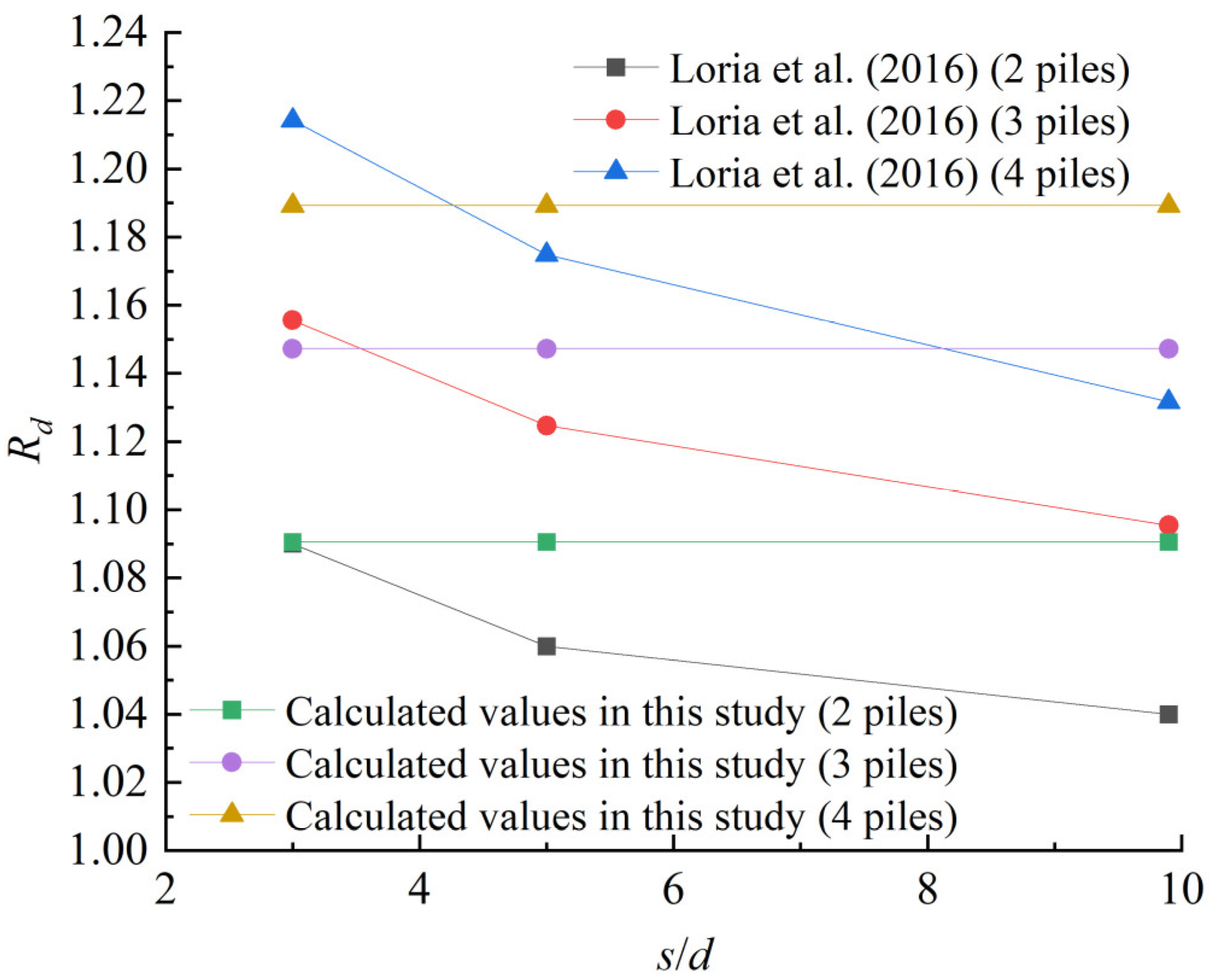
According to Rotta Loria et al. (2016) [15], FEM (finite-element modeling) was carried out to evaluate the load-bearing capacity of energy pile groups. An increase in pile temperature during energy pile operation results in thermal expansion, which produces pile -top upward displacement when no external load is present. The authors defined a displacement ratio, Rd, as the ratio of the pile-top displacement of a loaded group to that of a single pile under the same loading condition. In the ep method, Equation (5) provides the expression for the displacement ratio Rd.
R d = S a v g S d = D e d T d ω
According to Rotta Loria et al. (2016) [15], where all energy piles can be assumed as the same, and the surrounding soil was idealized as homogeneous sand. The model parameters for the energy piles and the nearby soil are provided in Table 3 and Table 4.
At the beginning, the temperature of the energy pile was assumed to match that of the nearby soil. For a pile body temperature increase of 10 °C and a pile group-to-single pile coefficient ω of 0.25, the displacement ratio Rd calculated using the ep method was compared with the results from the model by Rotta Loria et al. (2016) [15]. As can be seen in Figure 8, the comparison is made, where s/d represents the ratio of pile spacing to pile diameter.
As depicted in Figure 8, the settlement estimated using the ep method aligns closely with the results from Rotta Loria et al. (2016) [15], validating the improved ep method for estimating the average settlement of energy pile groups. The selection of the pile group-to-single pile coefficient ω is crucial, as it directly affects the accuracy of the settlement calculation. Notably, an increase in the energy pile count results in a significant decrease in the error in the estimated average settlement. Additionally, pile spacing influences the choice of ω; larger spacings reduce pile interactions, necessitating a smaller ω. Therefore, in the group of energy piles with a sufficient amount of piles and minimal spacing, the ep method, with an appropriately chosen ω, provides a reliable estimate of the average settlement.

4. Load Transfer Method for Calculating Settlement of Energy Pile Groups

When analyzing the settlement of energy pile groups, one must carefully account for temperature effects on pile settlement. Building upon the settlement calculation method for a single pile as a foundation, the load transfer method determines the settlement of each individual pile within the groups. The lateral load transfer model for the energy pile group adopts an exponential function, which requires fewer mechanical parameters and effectively captures the pile displacement related to soil. For the load transfer model (L-T model) at the pile tip, which excludes effects of temperature, a hyperbolic model is selected due to its applicability across various soil types and clarity in parameter determination. The interaction effects among the piles in the group are considered to calibrate the model parameters. By integrating the load transfer method, the load-settlement curve for the energy pile group is derived.
This section focuses on the scenario where a single energy pile is providing services in the group, as the temperature field model under the combined influence of multiple energy piles remains unclear. Consequently, a simplified settlement calculation method for the energy pile group with a single energy pile is developed.

4.1. Establishment of Lateral Mechanical Model for the Pile

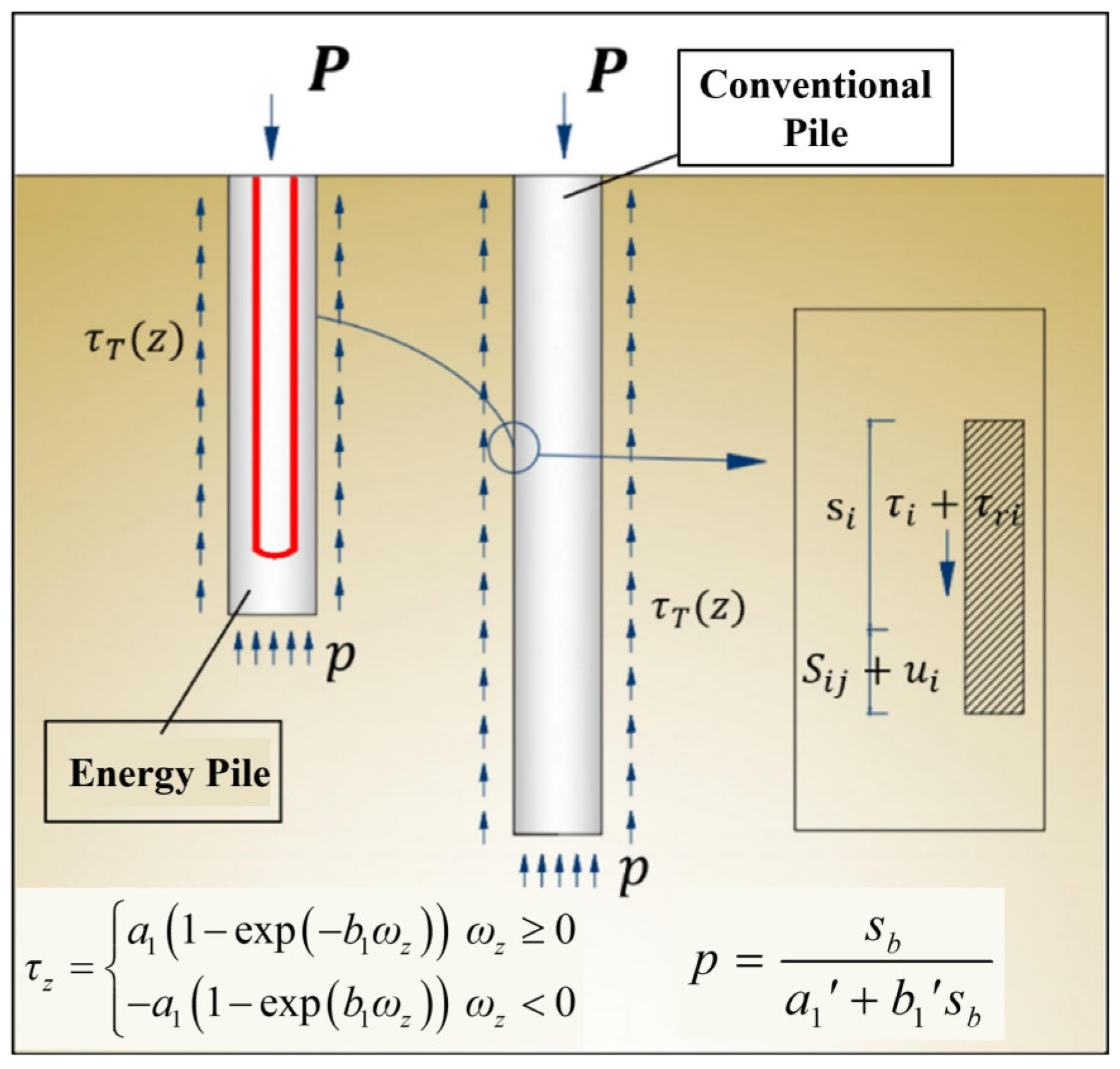
The lateral bearing response of the pile shaft is described using an exponential model, consistent with that of a single pile, to represent the correlation between the lateral shear stress τz and the pile-soil interface relative displacement ωz, which is expressed as:
τ z = a 1 1 exp b 1 ω z     ω z 0 a 1 1 exp b 1 ω z     ω z < 0
where a1 and b1 are model parameters.

4.2. Establishment of Pile Tip Mechanical Model

The tip resistance of the energy pile group is modeled using the hyperbolic method—a technique that is routinely applied to standard piles. This model is selected for its broad applicability and well-defined parameters. The function that expresses the load transfer process in the pile tip is expressed as:
p = s b a 1 + b 1 s b
where a1 and b1 are model parameters.

4.3. Determination of Energy Pile Group Model Parameters

When an energy pile is presented in groups, if the distance between an energy pile and an adjacent conventional pile is within a certain range, heat originating from the energy pile affects the thermal state of the neighboring pile, causing its temperature to change. These temperature variations generate additional thermal stresses in both the surrounding soil and the adjacent pile, thereby influencing the model parameters for the energy pile group.
When applying the load transfer method to energy pile groups, the pile-soil-pile interactions introduce additional strains, affecting the load transfer equation and parameter selection. Therefore, in determining the lateral L-T method parameters for energy pile groups, both the mechanical interactions between adjacent piles and the thermal stresses induced by the energy pile’s heat transfer must be considered.
Assuming the energy pile acts as a cylindrical heat source, it is discretized into n segments along the z-direction, with each segment maintaining a constant temperature increment. The additional thermal stresses are then computed using linear thermal stress theory [28]. The thermal stress in each soil layer is expressed as:
σ r s = E s A 1 v s E s B 1 + v s 1 r 2 E s α s r 2 r 0 r z Δ T s r d r
where E is the elastic modulus, and v is the Poisson’s ratio of the soil, respectively; a is the coefficient of linear thermal expansion of the soil; A and B are parameters, obtainable via the prescribed boundary values; and ΔT is the temperature change in the soil, which can be calculated using Equation (1).
The boundary conditions for calculating the parameters A and B in Equation (8) are as follows:
σ r 0 = σ r z u r 0 = u r z
where σrz and urz are the respective interface stress and displacement of the energy pile caused by thermal loads, and are calculated from Equation (10).
A r + B r = α p Δ T A 1 v s B 1 + v s 1 r 2 = 1 + 3 a Δ T 1 + a Δ T 1 1 + v s
The L-T method parameters are determined separately for the pile side and pile tip. Additionally, the energy pile releases thermal stresses through heat transfer. These stresses, in turn, affect the initial stiffness of the side springs installed in the neighboring piles. Thus, in the settlement calculation of the energy pile in groups, two cases are considered: one for energy piles and their surrounding conventional piles, and another for energy piles alone. These cases are detailed below.

4.4. Determination of Pile-Side Load Transfer Model Parameters for Energy Pile Groups

The pile-soil contact surface in energy pile groups is assumed to be elastic [22,29]. Soil deformation due to temperature exchange in energy piles varies with soil properties [30,31]. In accounting for pile-to-pile interactions, the primary considerations are the “reinforcement and shielding” effects between piles. The starting stiffness of the pile-soil interface spring for each pile under load is influenced by three factors:
(1)
The soil displacement caused by pile i itself.
(2)
The presence of adjacent pile j gives rise to soil displacement in the region around pile i.
(3)
The reduction in soil displacement caused by pile i’s obstruction, which manifests as negative skin friction on pile i.
The initial stiffness of the pile-side spring of the pile adjacent to the energy pile is also affected by the thermal stress induced by heat transfer from the energy pile. Therefore, in the settlement calculation of energy pile groups, two cases need to be considered separately: energy piles and conventional piles adjacent to energy piles, as shown in Figure 9.

4.5. Determination of the Pile-Side L-T Method Parameters for Energy Piles in Energy Pile Groups

Assuming the energy pile’s position remains fixed during heat exchange with the nearby soil and that the starting stiffness of the pile-side spring is constant, the surrounding soil undergoes thermal loading, altering its equivalent stiffness. It is posited that how thermal loading alters soil stiffness depends solely on the thermal stress and displacement induced by temperature changes, independent of other factors. The equivalent starting stiffness of the pile-side spring, accounting for the influence of adjacent piles, is expressed as:
1 K s i = s i + S i j + S i j τ i = 1 k s i + 1 K s i j 1 K s i j
where τi represents the pile-side friction resistance; si denotes the soil displacement caused by pile i itself; Sij is the soil displacement around pile i caused by adjacent pile j; S′ij is the reduction in soil displacement due to pile i’s obstruction; Ksi is the equivalent initial stiffness of the energy pile’s side spring; ksi is the starting stiffness under load, derived from single-pile calculations; Ksij is the change in stiffness due to adjacent pile friction; K′sij is the change due to the energy pile’s friction affecting adjacent piles.
The initial stiffness ksi is given by:
k s i = G s r 0 ln r m r 0
where Gs represents the shear modulus, r0 represents the pile radius, and rm represents the effective influence radius.
The change in stiffness due to adjacent pile friction, Ksij, is:
K s i j = G s r 0 ln r m r i j
where rij is the spacing between pile i and pile j.
If there are n adjacent piles j to the energy pile, the above equation becomes:
K s i j = j = 1 ,   j i n G s r 0 ln ( r m r i j )
The change in stiffness due to the energy pile’s friction on adjacent piles, Ksij, is:
K s i j = G s r i j r 0 2 ln r m r i j
For n adjacent piles:
n K s i j = j = 1 ,   j i n G s r i j r 0 2 ln ( r m r i j )
Following heat exchange, the equivalent stiffness of the pile-side spring changes due to temperature loading, expressed as:
1 K s T i = S i + S T i τ i = 1 K s i + 1 K T i
where Si denotes the displacement induced by mechanical loading; STi is the temperature-induced displacement; KTi is the stiffness change due to temperature.
The stiffness change under temperature load is:
K T i = μ σ r 0 u 0
where μ is the friction coefficient, σr0 is the thermal stress at the interface, and u0 is the temperature-induced displacement.
Assuming no group effect on the pile-side shear stress, the parameters for the energy pile group’s lateral L-T method are determined as:
a 1 = τ f b 1 = K s i τ f

4.6. Determination of the Pile-Side Load Transfer Model Parameters for Conventional Piles in Energy Pile Groups

The pile tip load transfer is independent of thermal effects, considering only the mechanical influence of the pile group. Beyond a certain distance from the loaded pile, the pile tip’s uniformly distributed load can be approximated as a concentrated load. According to Randolph and Wroth [18], the pile tip displacement of the loaded pile is:
S b = τ b r 0 2 1 v b 2 r G b
The change in pile tip soil stiffness Kbij induced by pile j on pile i is:
1 K b i j = S b τ b = r 0 2 1 v b 2 r i j G b
For n piles, the total change is:
1 n K b i j = r 0 2 1 v b 2 G b j = 1 . j i n r i j
The equivalent pile-end soil stiffness Kbi of pile i, under the mutual influence between the pile-end and adjacent piles, must account for both the pile-end soil stiffness kbi of pile i and the change in the pile-end soil stiffness Kbij induced by the adjacent pile j.
The equivalent pile tip soil stiffness Kbi for pile i, accounting for interactions, is:
K b i = k b i + K b i j
Thus, in pile group analysis, the parameter a1′ in the pile tip L-T method is adjusted as:
a 1 = 1 K b i = 1 k b i + 1 K b i j = π r 0 1 v b 4 G b + r 0 2 1 v b 2 G b j = 1 . j i n r i j
For the energy pile foundation, the parameter b1′ remains unchanged, consistent with the single-pile model.

4.7. Case Validation

4.7.1. Case 1

According to Dong’s et al. (2021) [24], field tests on friction-type energy piles utilized ABAQUS 6.14 finite element analysis software to develop a 2 × 2 energy pile group model, aiming to investigate the interactions among the energy piles within the group. After applying a steady mechanical load, the stabilized temperature field from the heat exchange in the energy piles was imposed on the entire model. A steady-state thermo-mechanical coupling analysis was then performed, revealing that a symmetrical distribution of energy piles in the group enhances the structural stability of the energy pile group. The case study selected by Dong et al. (2021) [24] aligns with that of Jiang et al. (2019) [32], with consistent soil and energy pile mechanical parameters detailed in Table 5 and Table 6, and thermal properties provided in Table 7.
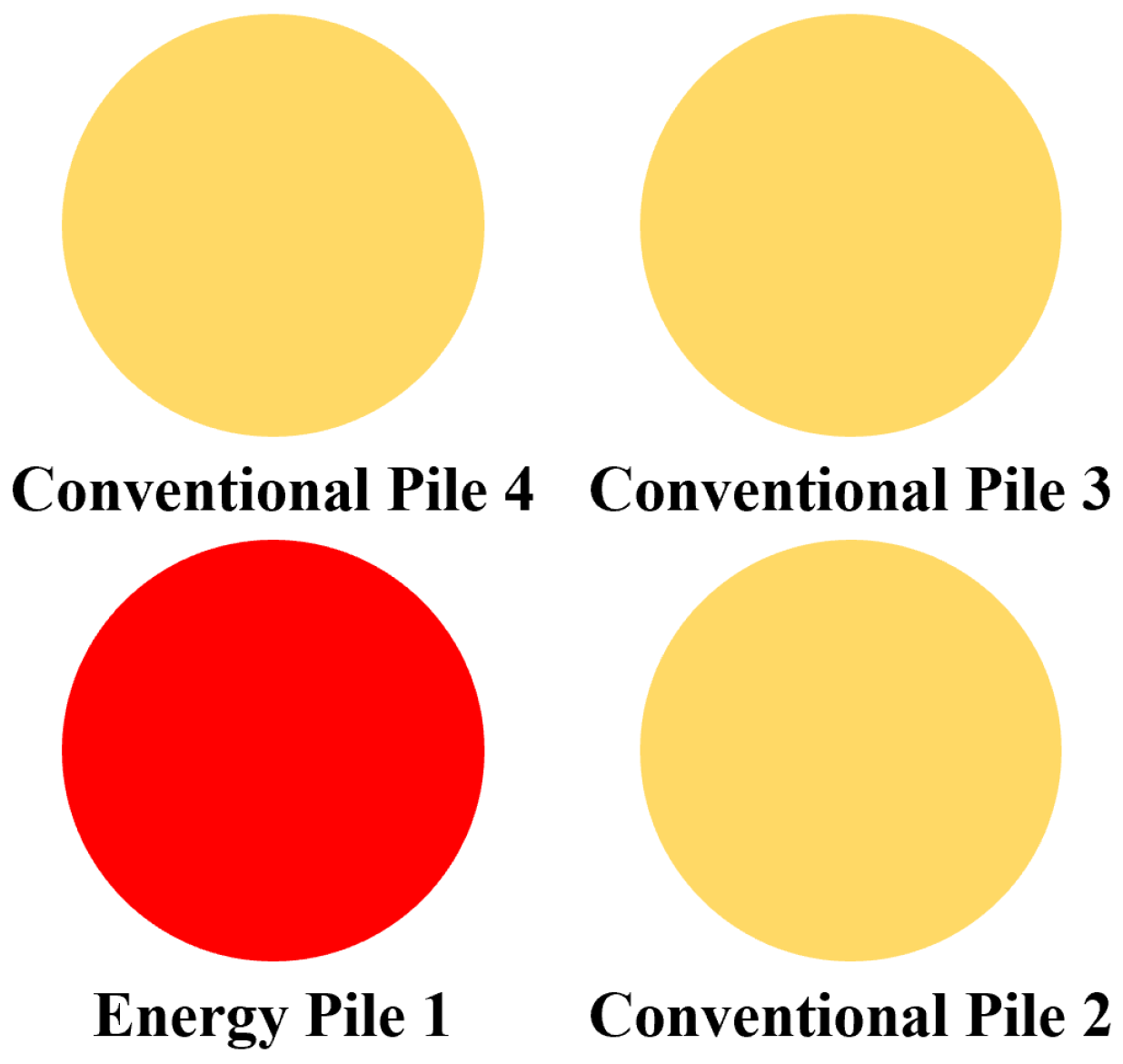
The pile group consists of a spacing of a 2 × 2 arrangement (Figure 10), with a center spacing of 3 m between adjacent piles. Dong et al. (2021) [24] numbered the piles counterclockwise and established three scenarios:
Scenario 1: Pile 1 is an energy pile, with the remaining piles being conventional.
Scenario 2: Piles 1 and 2 are energy piles, with the remaining piles being conventional.
Scenario 3: Diagonally opposite piles 1 and 3 are energy piles, with the remaining piles being conventional.
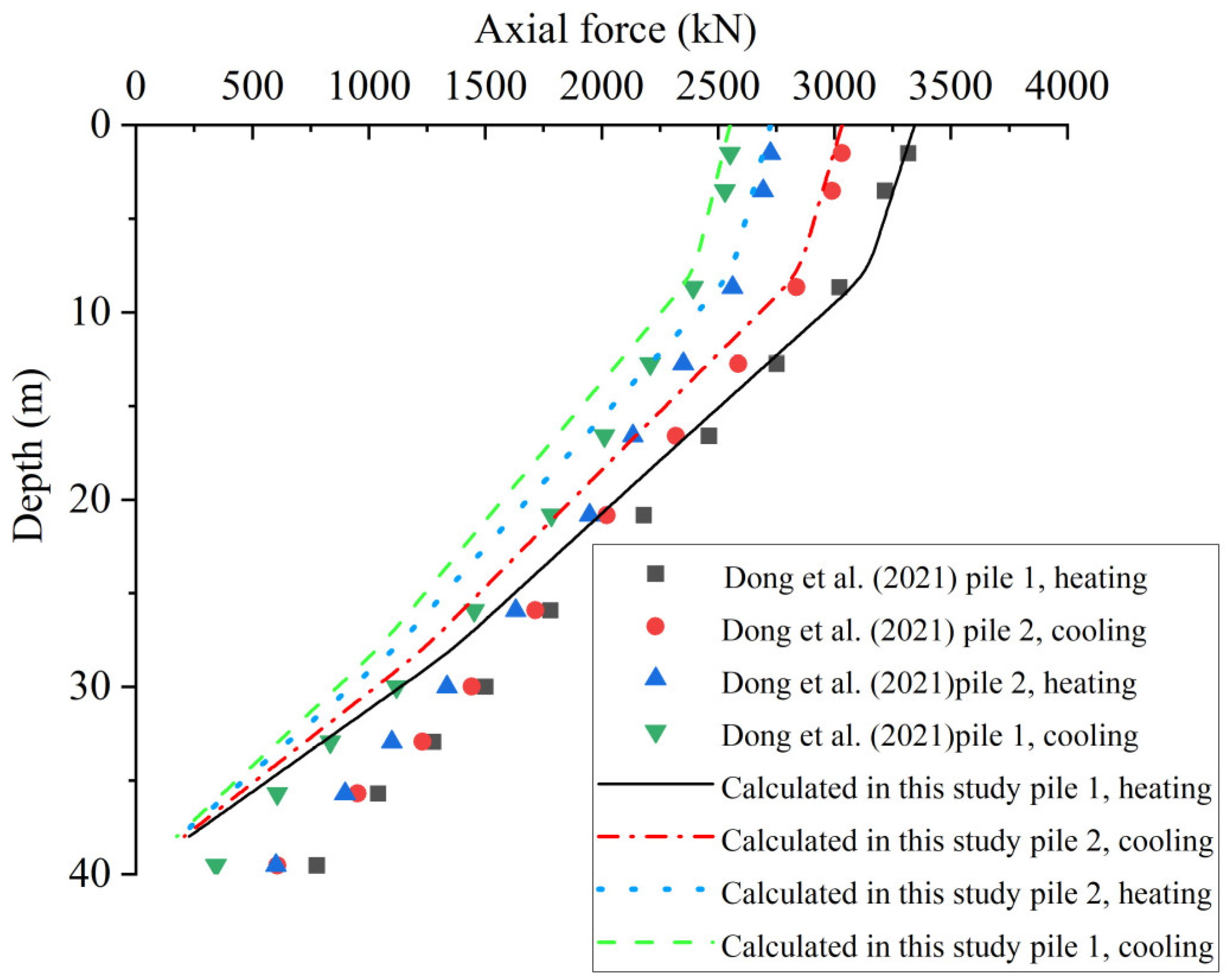
Owing to the uncertain nature of the temperature field in the surrounding soil when two energy piles lie next to each other, Scenario 1 is the only case used for comparison in this study. The energy piles are analyzed under heating (20 °C temperature rise) and cooling (15 °C temperature drop) conditions. The upper cap is subjected to a uniform load of 500 kPa, which has dimensions of 5 × 5 × 0.5 m, an elastic modulus of 35 GPa, and a Poisson’s ratio of 0.15. The proposed load-settlement calculation method for energy pile groups is compared against the numerical model results of Dong et al. (2021) [24] in Figure 11.
As shown in Figure 11, the axial forces in the energy piles and adjacent conventional piles under the applied loads closely match the numerical simulation results of Dong et al. (2021) [24]. Quantitative error analysis shows that under heating conditions, the root-mean-square error (RMSE) is 213.3 kN and the maximum error in relative terms is 10.3%; under cooling conditions, the RMSE is 119.0 kN and the maximum error in relative terms is 6.8%. The results from the proposed method are slightly lower than those from the numerical model, mainly because the pile-end L-T method assumes temperature does not affect the calculations, whereas temperature changes in energy piles induce axial stresses. Nevertheless, the proposed load-settlement calculation method is evaluated through the comparison. The results confirm its capability to effectively describe the axial force distribution in both energy piles and adjacent conventional piles under thermal loading conditions.

4.7.2. Case 2

In the field of thermo-mechanical coupling within energy pile groups, existing research primarily focuses on heat exchange efficiency, temperature distribution in the surrounding soil, and temperature-induced stresses within the piles. However, studies addressing the load-settlement behavior of energy pile groups remain scarce. This study seeks to address this gap by developing a numerical model for energy piles using the ABAQUS software, based on the experimental research conducted by Yin et al. (2022) [25] located in Hebei, China. A comparative analysis was conducted between the numerical model and the proposed method based on their load-settlement curves. The results confirm the accuracy of the proposed settlement calculation method.
Yin et al. (2022) [25] carried out an experimental study on silty clay sampled from the Handan region. They simulated the thermal behavior of single and grouped energy piles under heating and cooling conditions representing summer and winter heat exchange. Their findings indicate that, due to thermal interactions among piles, the long-term heat exchange efficiency of a single pile within a group is lower than that of an isolated pile. More specifically, at temperatures of 35 °C, 45 °C, and 55 °C, the axial force at the center of the pile group increased by 0.5 kN, 0.79 kN, and 0.8 kN, respectively, whereas at 0 °C it decreased by 0.73 kN. These results underscore the necessity of accounting for group effects in the design and performance evaluation of thermos-active pile systems.
The experimental setup utilized a steel box container with dimensions of 2 m × 2 m × 2 m. The test piles, measuring 1.8 m in length, were embedded to a depth of 1.6 m. The initial soil temperature was maintained at approximately 20 °C, with variations not exceeding 1 °C. The energy pile concrete was composed of 417 kg cement, 282 kg water, 510 kg sand, and 1156 kg gravel, yielding a density of 2720 kg/m3. Per the “Concrete Mix Design Code” (JGJ-55-2011) (2011) [33], for the concrete, the elastic modulus was specified as 30 GPa.
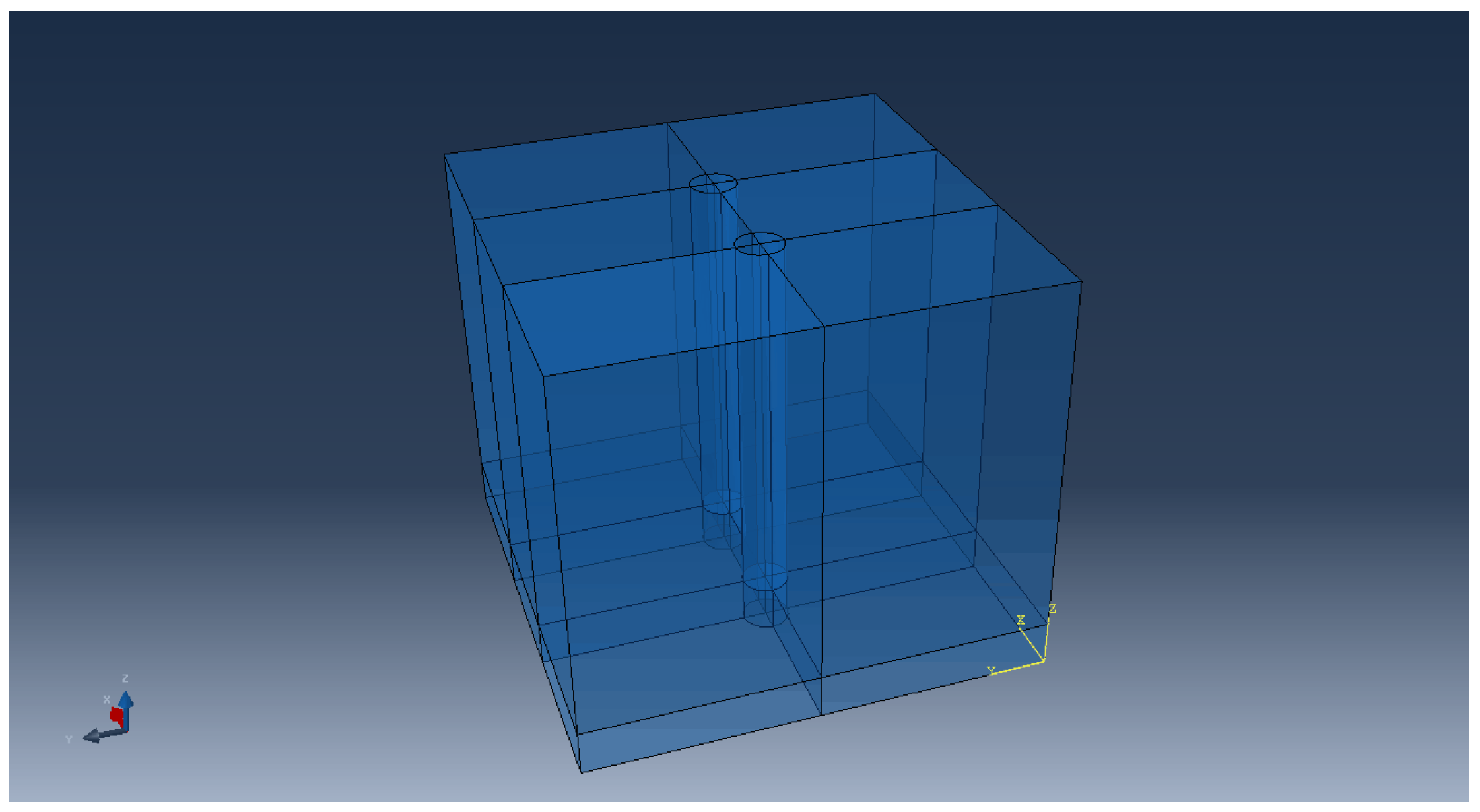
The numerical model developed in this study encompasses a soil volume of 2 m × 2 m × 1.8 m and includes two identical energy piles. The piles, each 0.2 m in diameter and 1.6 m in length, are positioned 0.7 m from the soil boundary, with a spacing of 0.6 m between piles. The model configuration is schematically shown in Figure 12.
Mechanical parameters for the silty clay, as reported by Ye et al. (2000) [34] and Shi et al. (2006) [35], are detailed in Table 8.
Thermal properties for the energy pile and nearby soil were reasonably assumed and are provided in Table 9.
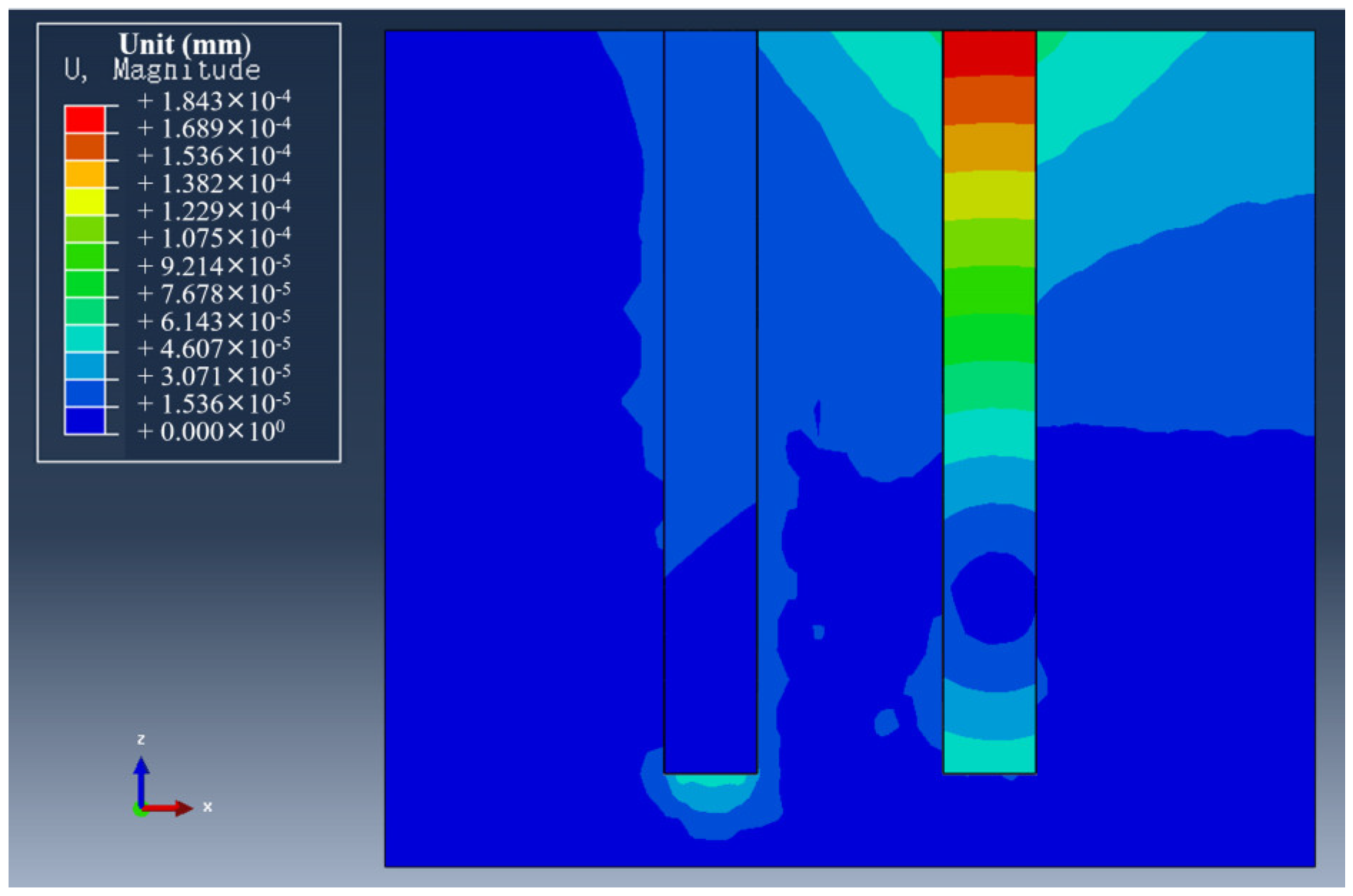
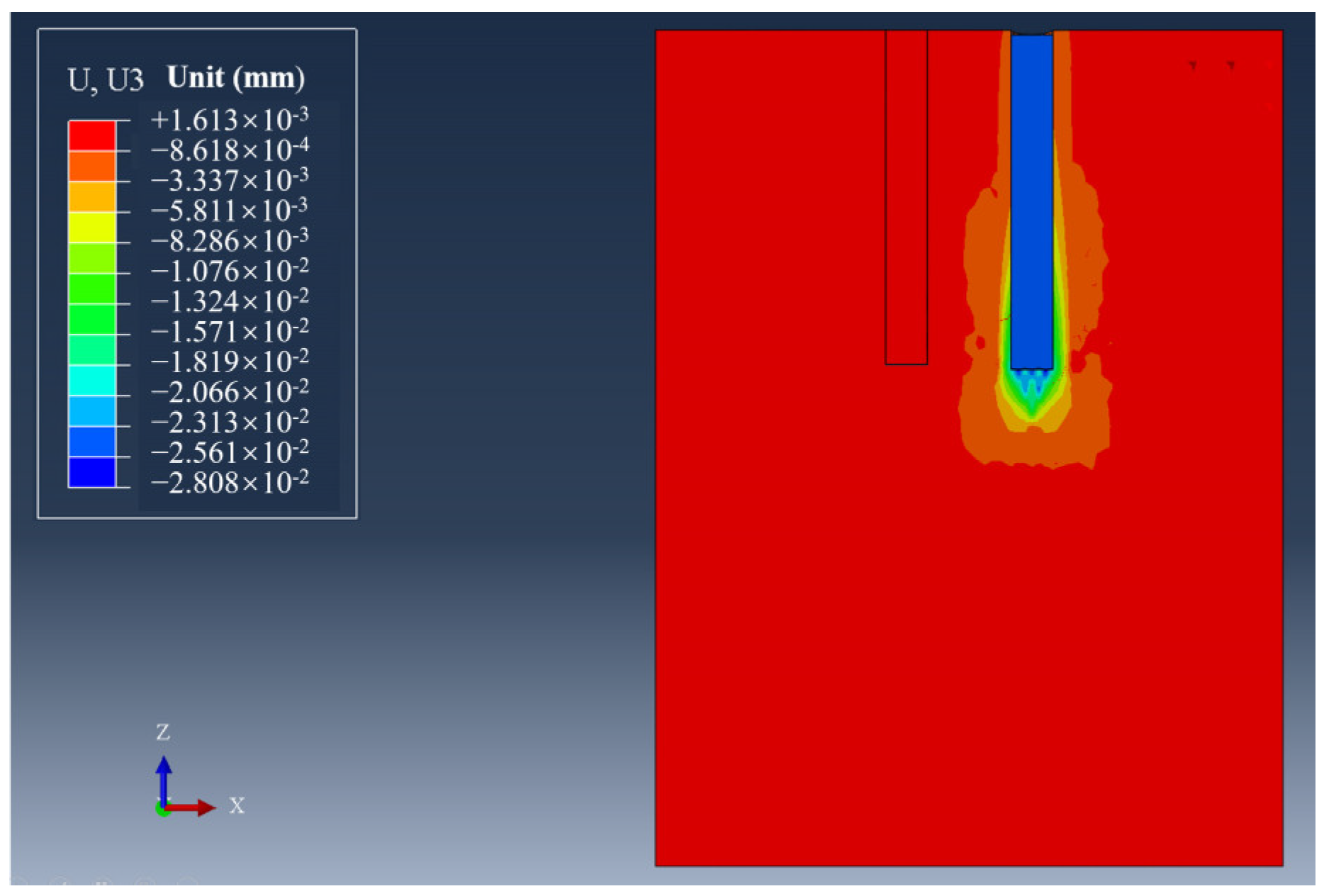
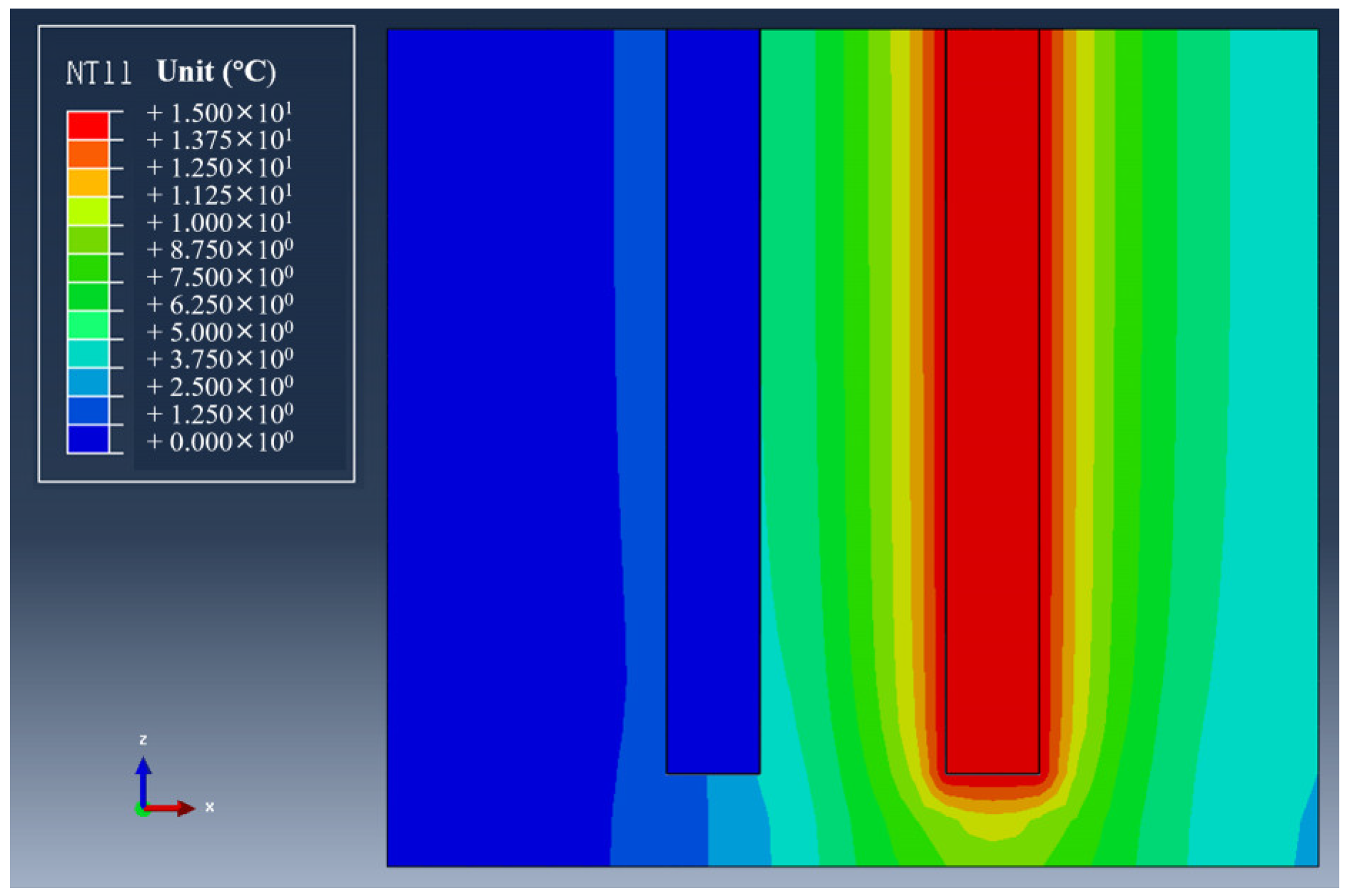
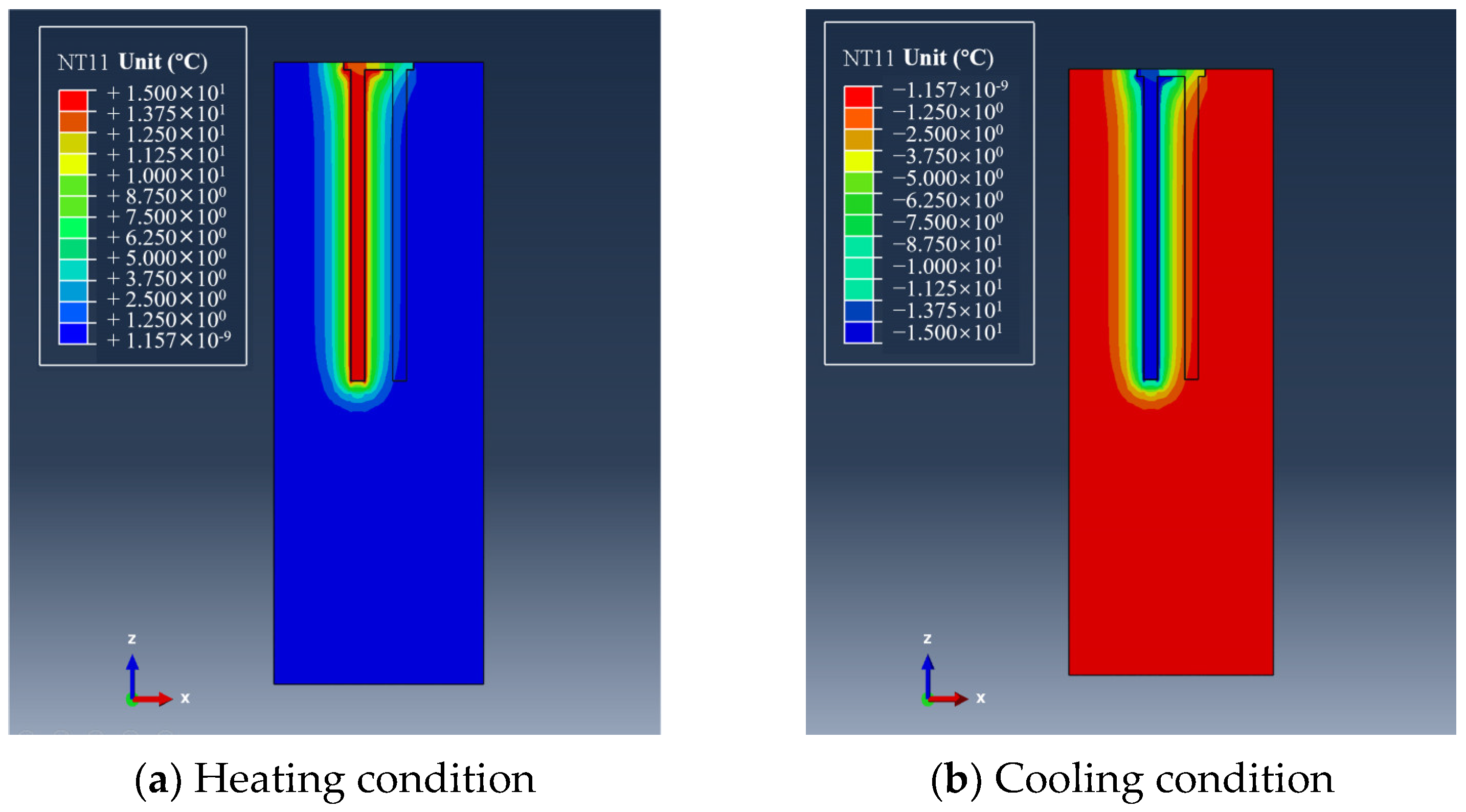
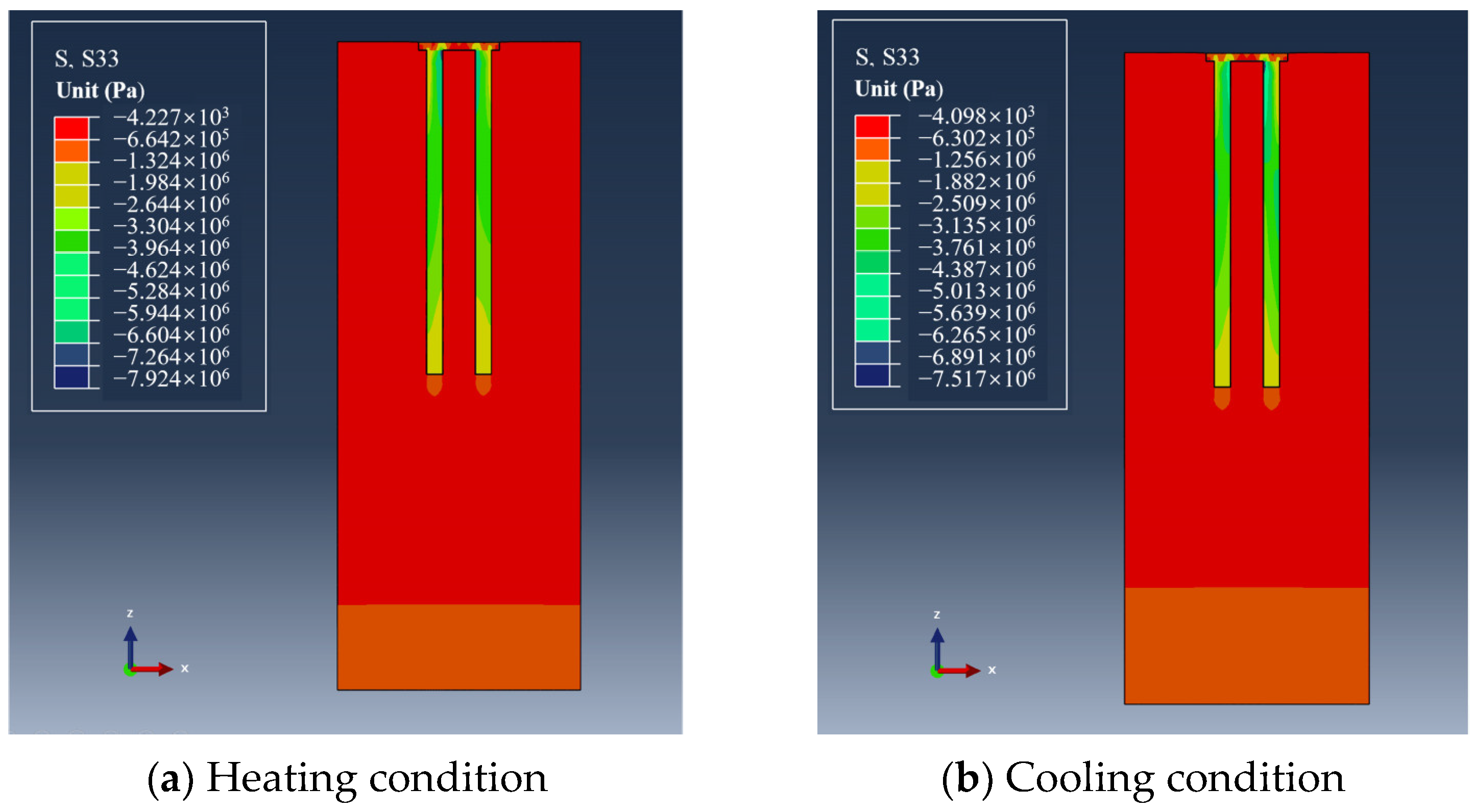
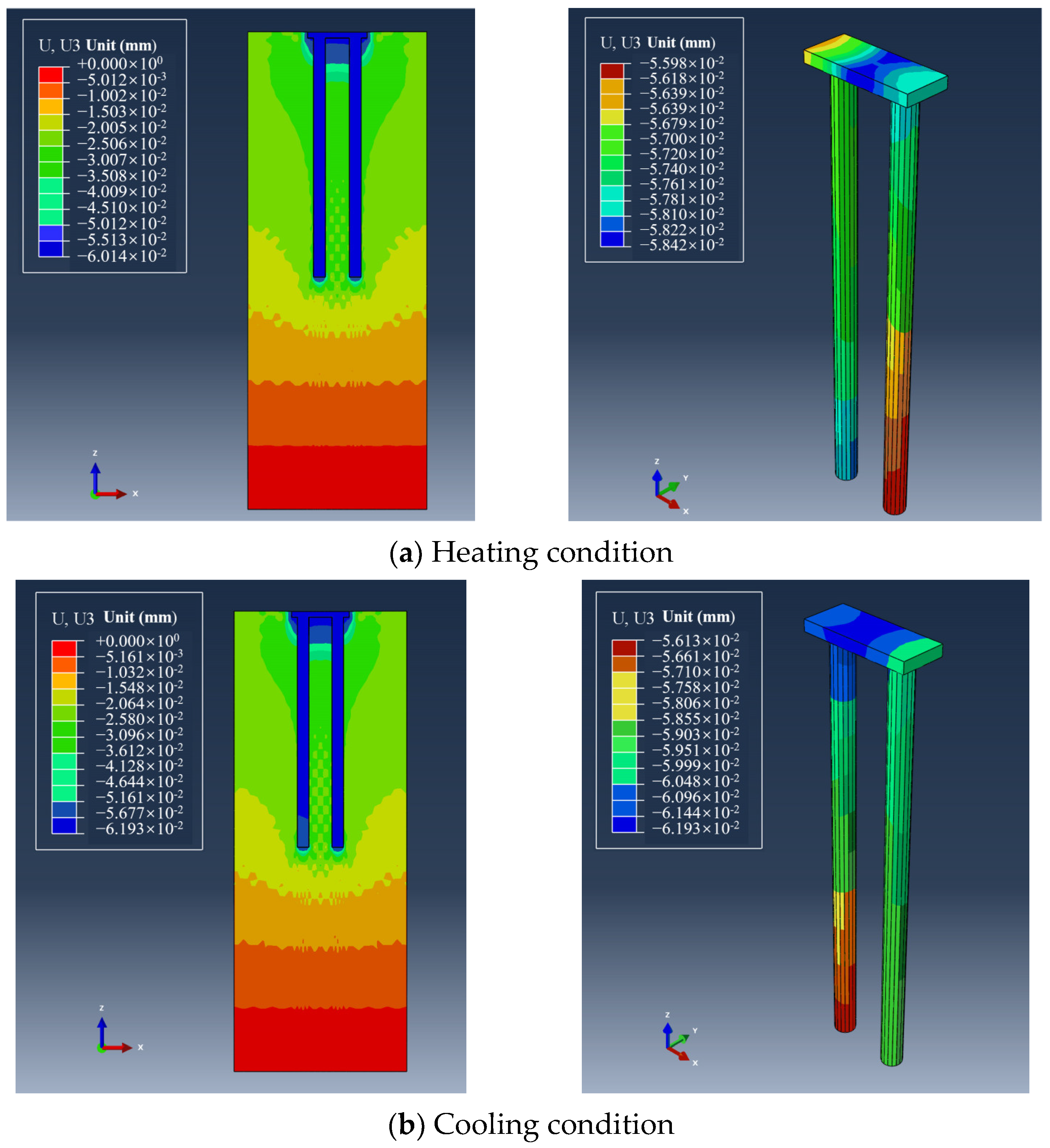
Temperature variations and displacements from the model are illustrated in Figure 13 and Figure 14, respectively. The displacement contours reveal an overall upward movement of the energy piles, attributed to the fixed bottom boundary condition, which restricts vertical settlement under mechanical loading. Consequently, thermal expansion dominates, causing the model to displace upward. To accurately simulate the load-settlement behavior, adjustments to the model are required to mitigate boundary effects.
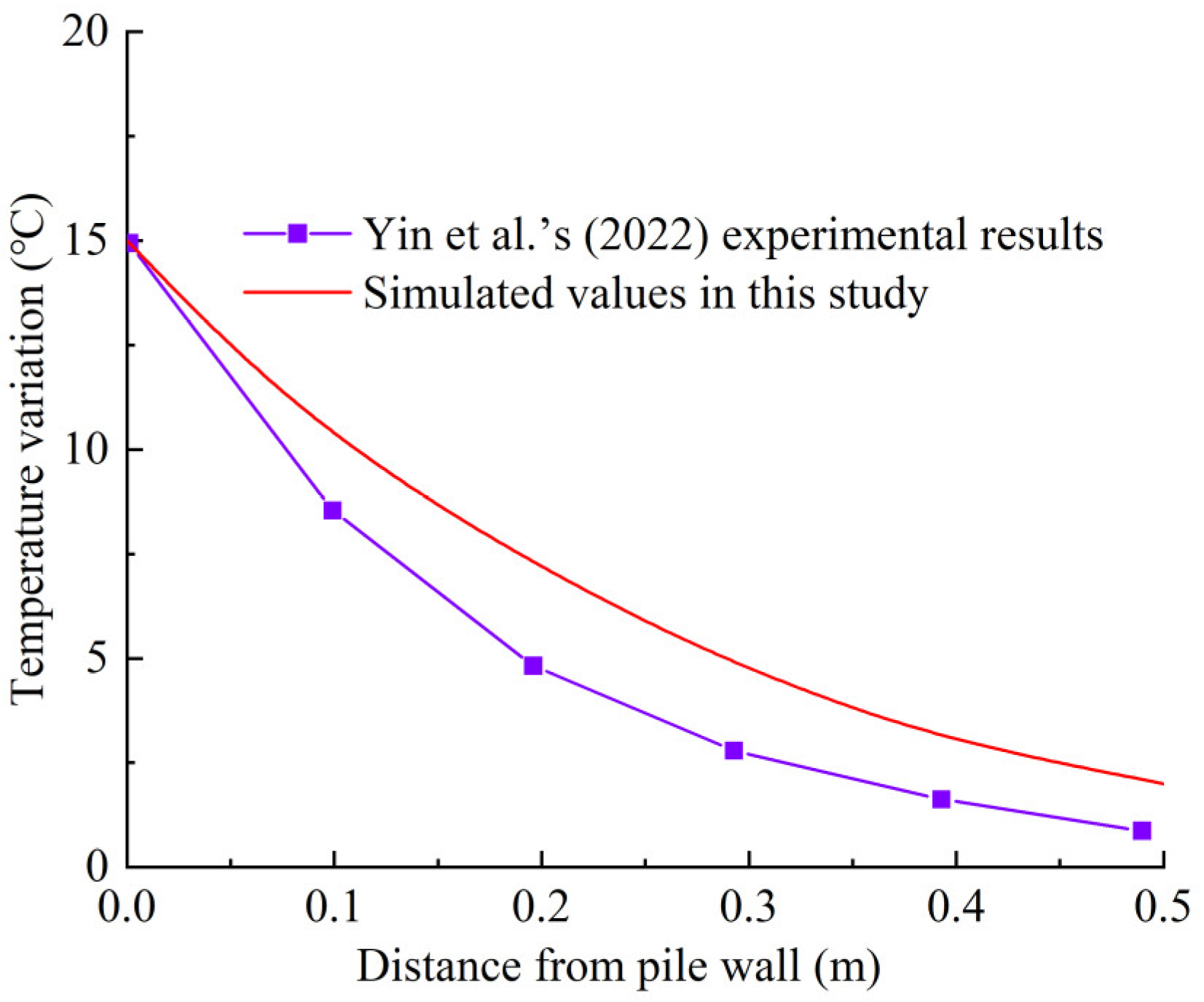
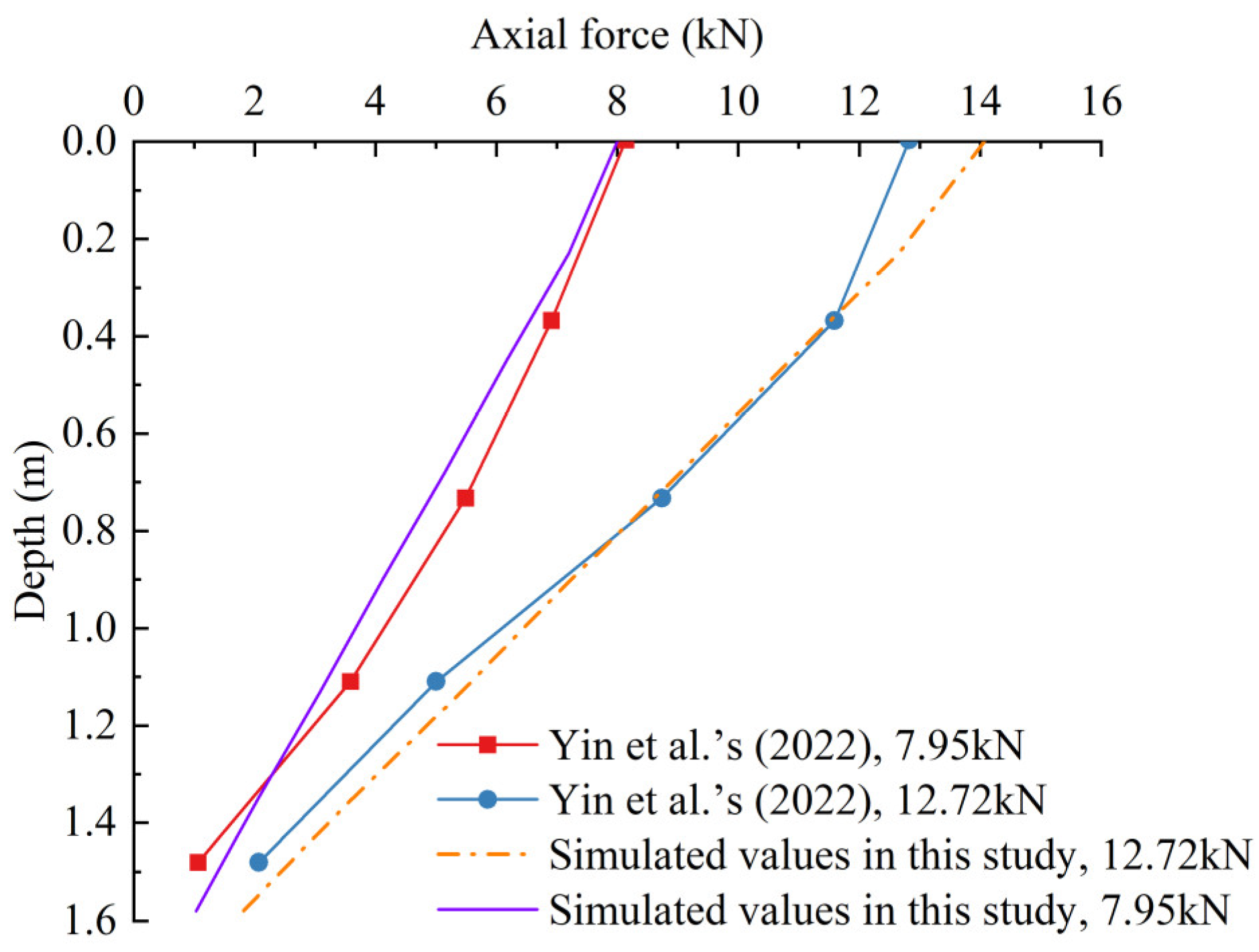
With an initial pile temperature of 20 °C, the model was subjected to a temperature increase to 55 °C. The resulting soil temperature variation at z = 0.6 m and axial forces under loads of 7.95 kN and 12.72 kN were compared with experimental data from Yin et al. (2022) [25], as shown in Figure 15 and Figure 16. Figure 15 shows that the simulated soil temperature variation follows the same trend as the experimental measurements, indicating a reasonable qualitative agreement. For the axial force data in Figure 16, a quantitative error analysis gives a root-mean-square error (RMSE) of 3.39 kN between our simulations and the experimental results, demonstrating good quantitative agreement. The overall close correlation validates the model’s capability to represent the thermo-mechanical behavior of energy pile groups, supporting the proposed settlement calculation method.
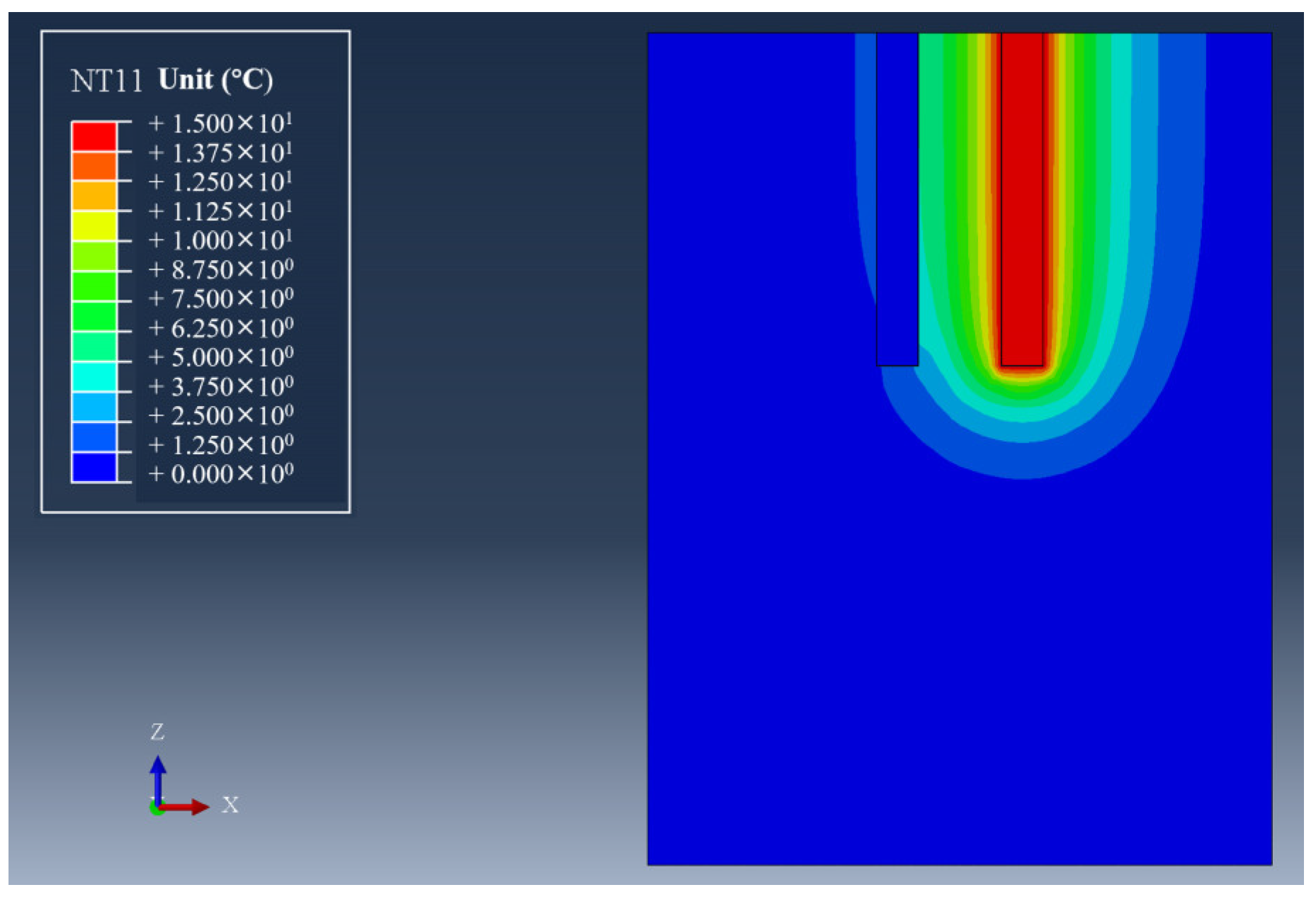
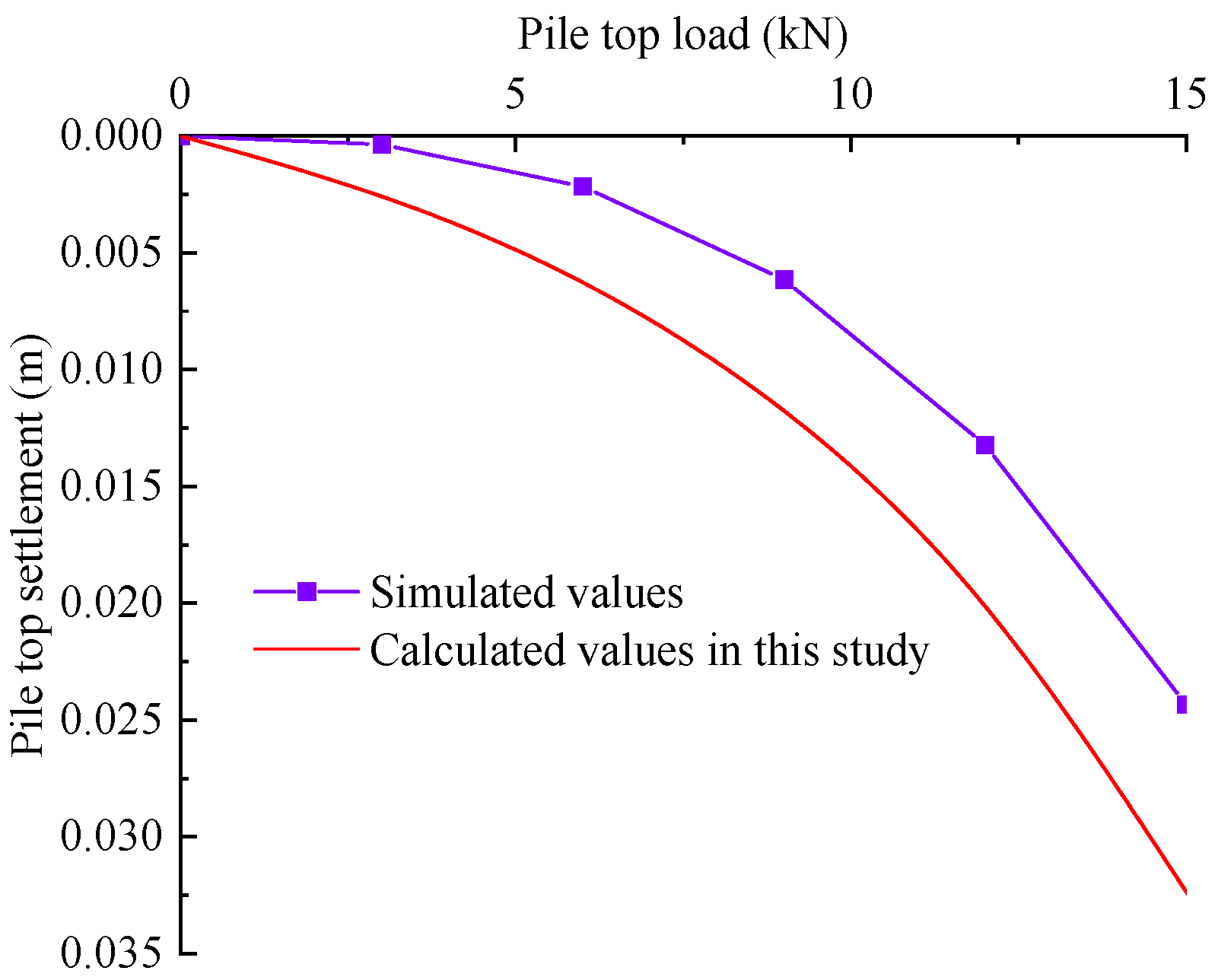
To address boundary effects, the soil volume was expanded to 3 m × 3 m × 4 m, and the energy pile was subjected to five incremental loading stages of 3 kN each, up to 15 kN. The temperature variation and vertical displacement from the revised numerical simulation are shown in Figure 17 and Figure 18. The resulting load-settlement curves for the energy pile group, compared with those from the proposed calculation method, are presented in Figure 19. The strong correlation between the two confirms the effectiveness of the proposed method in predicting pile-top settlement and overall settlement characteristics.

5. Study on the Bearing Characteristics of Energy Piles and Energy Pile Group Configurations

The analytical methods presented in Section 3 and Section 4 offer efficient estimates of settlement and load distribution, but they are limited by simplifying assumptions. To overcome these limitations and to investigate more realistic configurations, this section employs a three-dimensional finite element model that captures detailed temperature fields, stress distributions, and pile-pile interactions. The model setup is described below, followed by simulation results for two-, four-, and nine-pile groups.

5.1. Model Overview

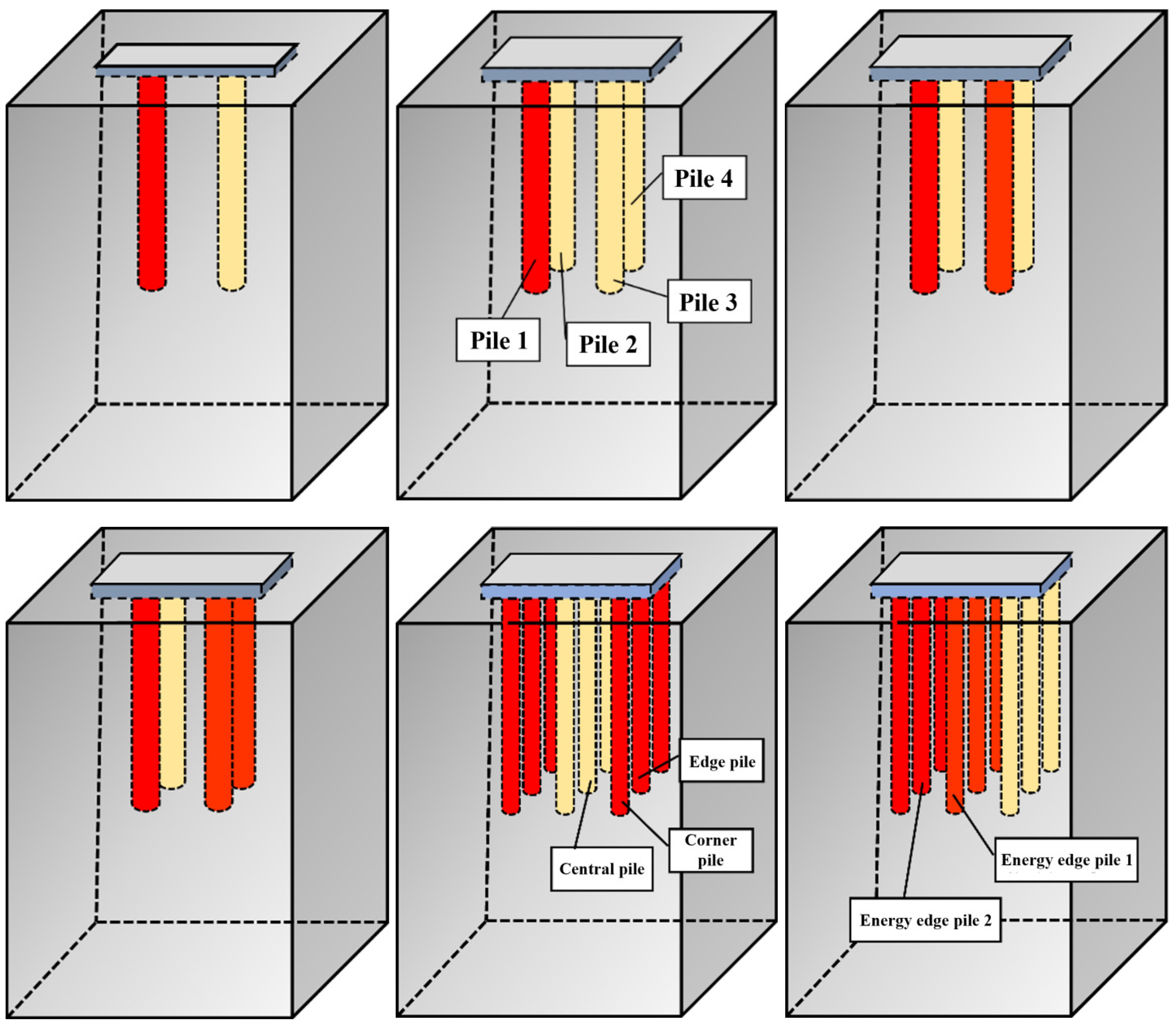
This study focuses on energy pile groups with two, four, and nine piles. Numerical simulations are employed to examine their bearing characteristics. The specific quantities and spatial arrangements of energy piles within each group are depicted in Figure 20, with energy piles marked in red and conventional piles in yellow.
To mitigate boundary effects, the numerical models incorporate soil domains with dimensions scaled relative to the pile cap sizes. For the two-pile model, the horizontal soil dimensions are set to three times the length of the two-pile cap. Similarly, for the four-pile and nine-pile models, the horizontal soil dimensions are three times the lengths of their respective caps. The vertical soil dimension is consistently set to twice the pile length across all configurations. The dimensions of individual piles within the energy pile groups are uniform, see Table 10.

5.2. Analysis of Two-Pile Results

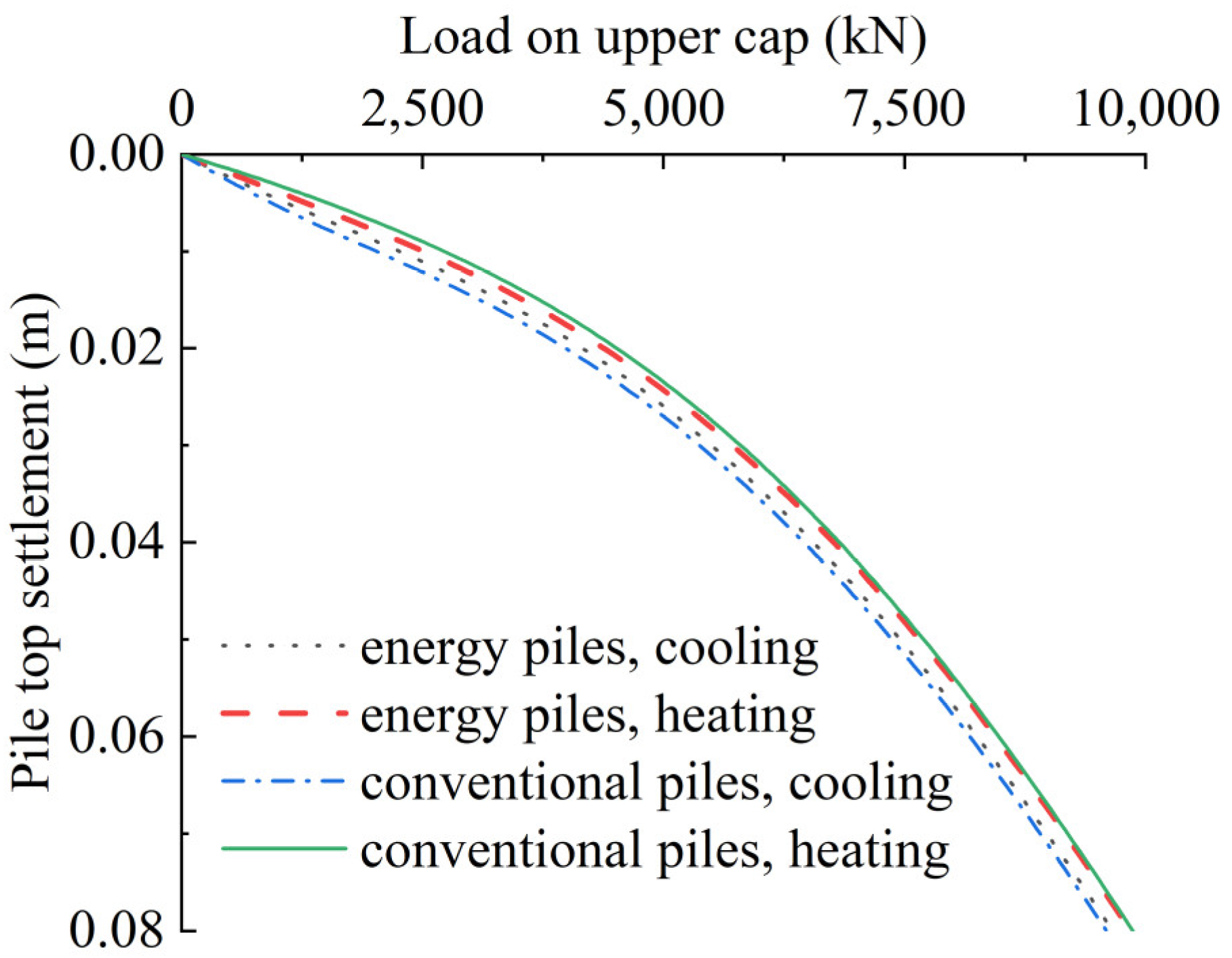
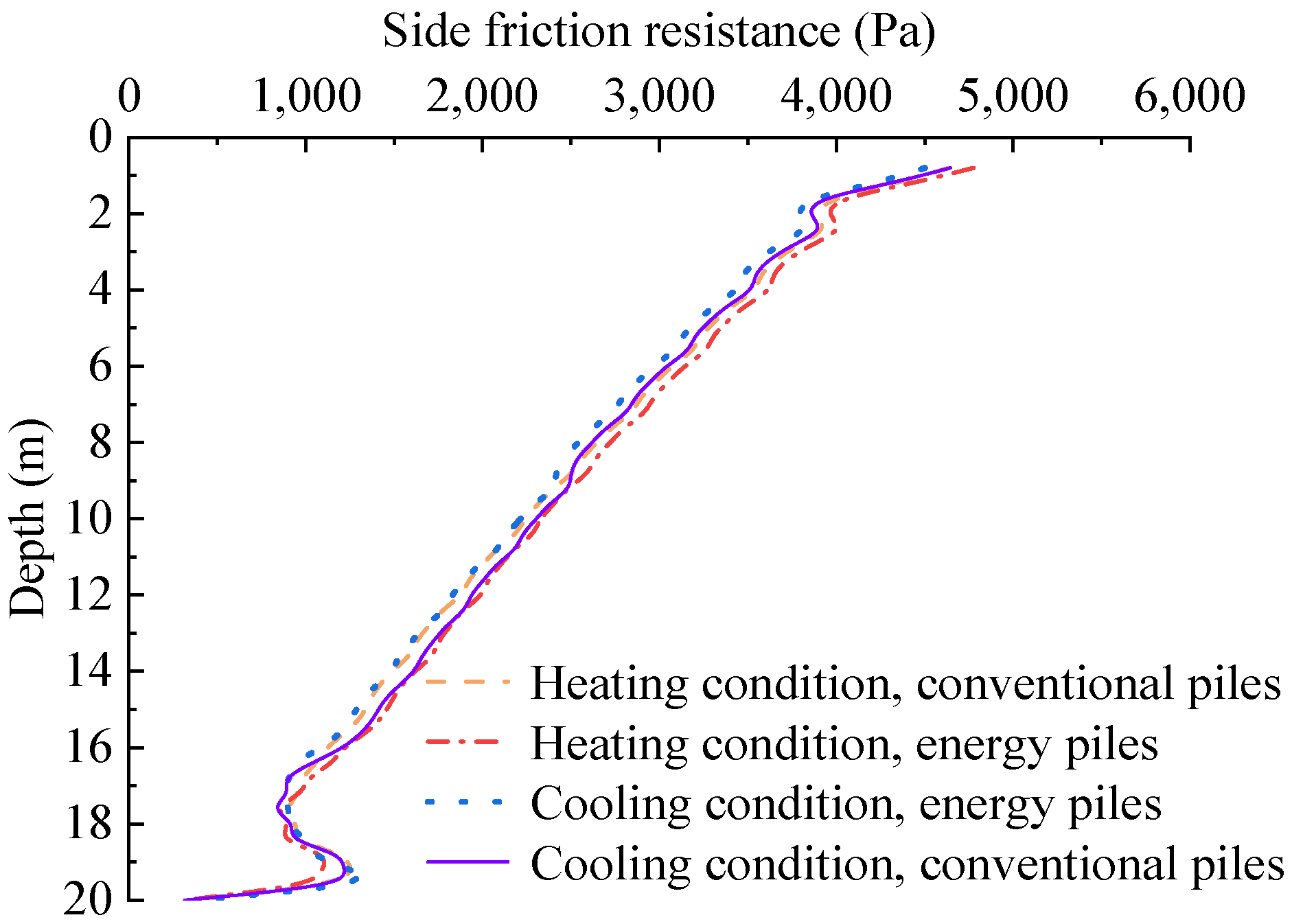
The temperature field outcomes for the two-pile model are presented in Figure 21. Using the third loading stage as a representative case, the stress and vertical displacement distributions within the two-pile energy group are illustrated in Figure 22 and Figure 23, respectively. The load-settlement relationship and side friction resistance profiles for the energy piles are shown in Figure 24 and Figure 25.
Figure 21 shows that the temperature transfer process is hardly affected by conventional piles placed next to the energy pile, behaving much like that of a solitary energy pile. Differences in thermal properties between the piles and the nearby soil, along with pile-soil interface effects, can be ignored. Conventional piles situated beyond the energy pile’s thermal influence zone are assumed to experience no temperature variation.
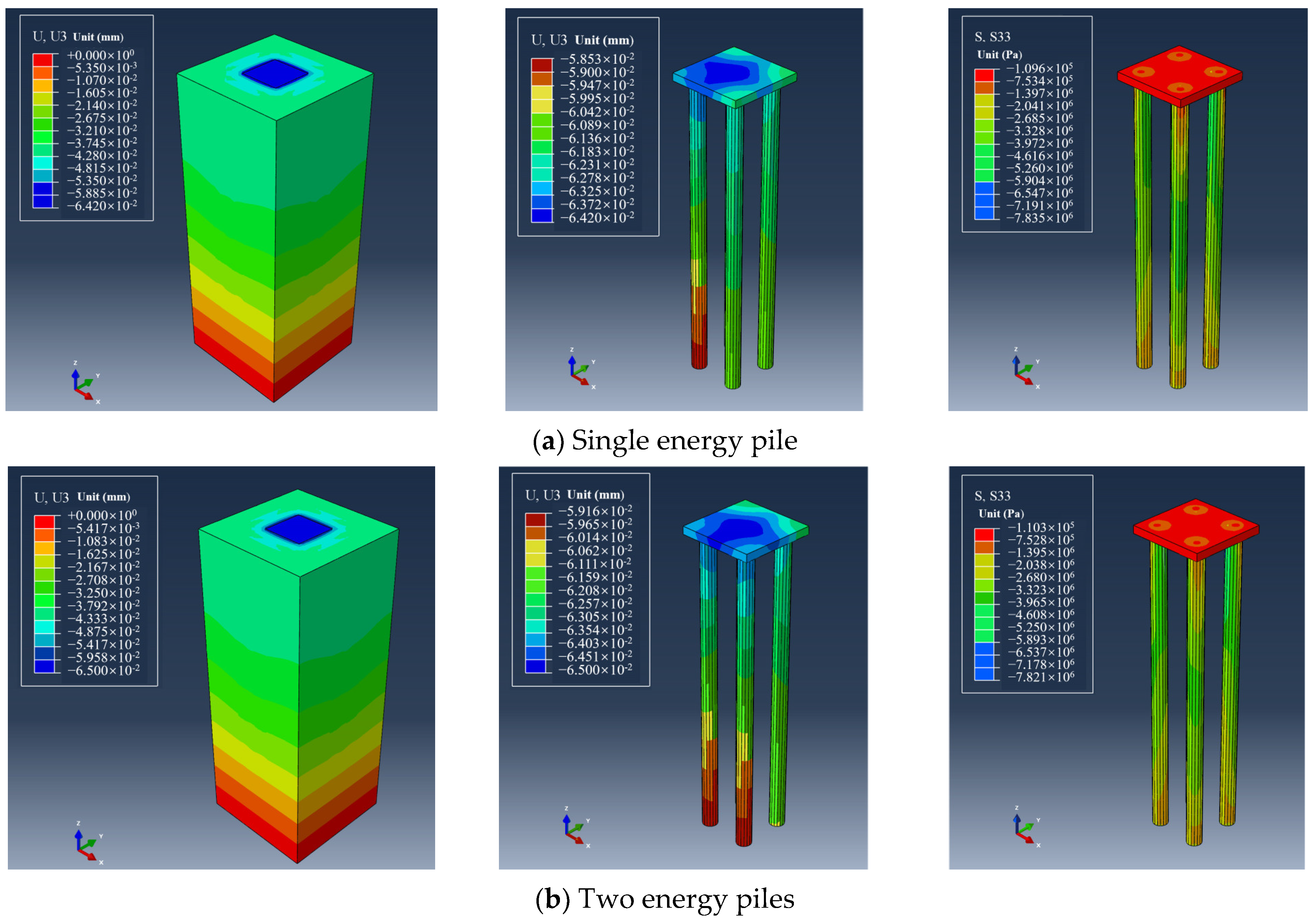
Observations from Figure 22 and Figure 23 indicate that temperature variations induce additional stresses in both the piles and the cap, with stress magnitudes varying according to structural configuration and pile positioning. Despite the cap’s constraining effect, differential settlement persists between energy and conventional piles, with greater settlement observed under cooling conditions. Under an 8000 kN load, heating results in settlements of 57.80 mm for the energy pile and 57.33 mm for the conventional pile, whereas cooling increases these values to 60.33 mm and 61.33 mm, respectively. Cooling conditions thus yield higher overall and differential settlements, with the latter approximating 1 mm. The displacement pattern in the surrounding soil under cooling exhibits a funnel-shaped trend, driven primarily by the dominance of vertical pile displacement over lateral movement, which is insufficient to replicate the soil settlement behavior observed in single energy piles.
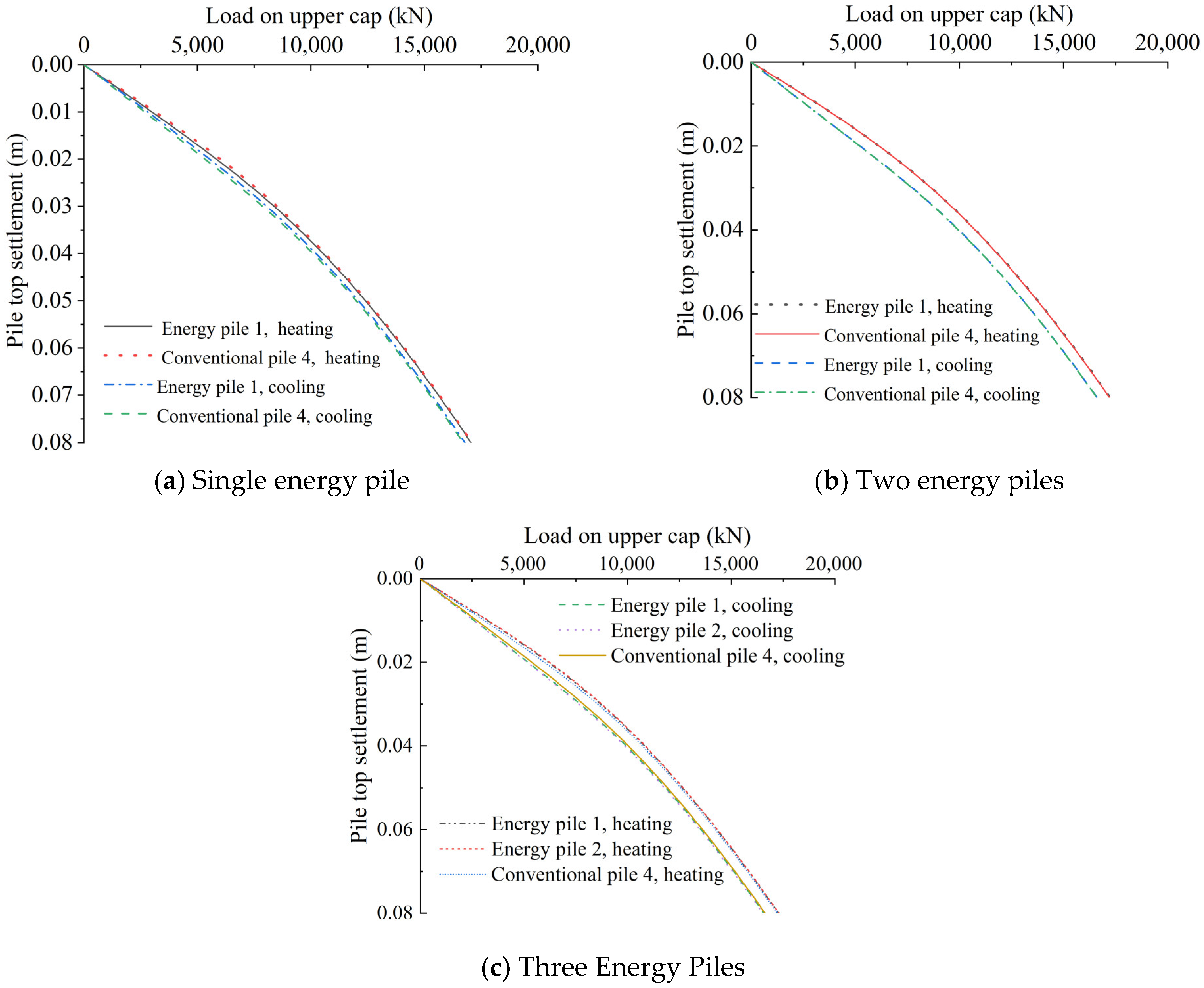
As shown in Figure 24, differential settlement between energy and conventional piles diminishes with increasing load, suggesting that the relative influence of thermal loading decreases as mechanical loading intensifies. However, the settlement disparity between heating and cooling conditions remains largely consistent.
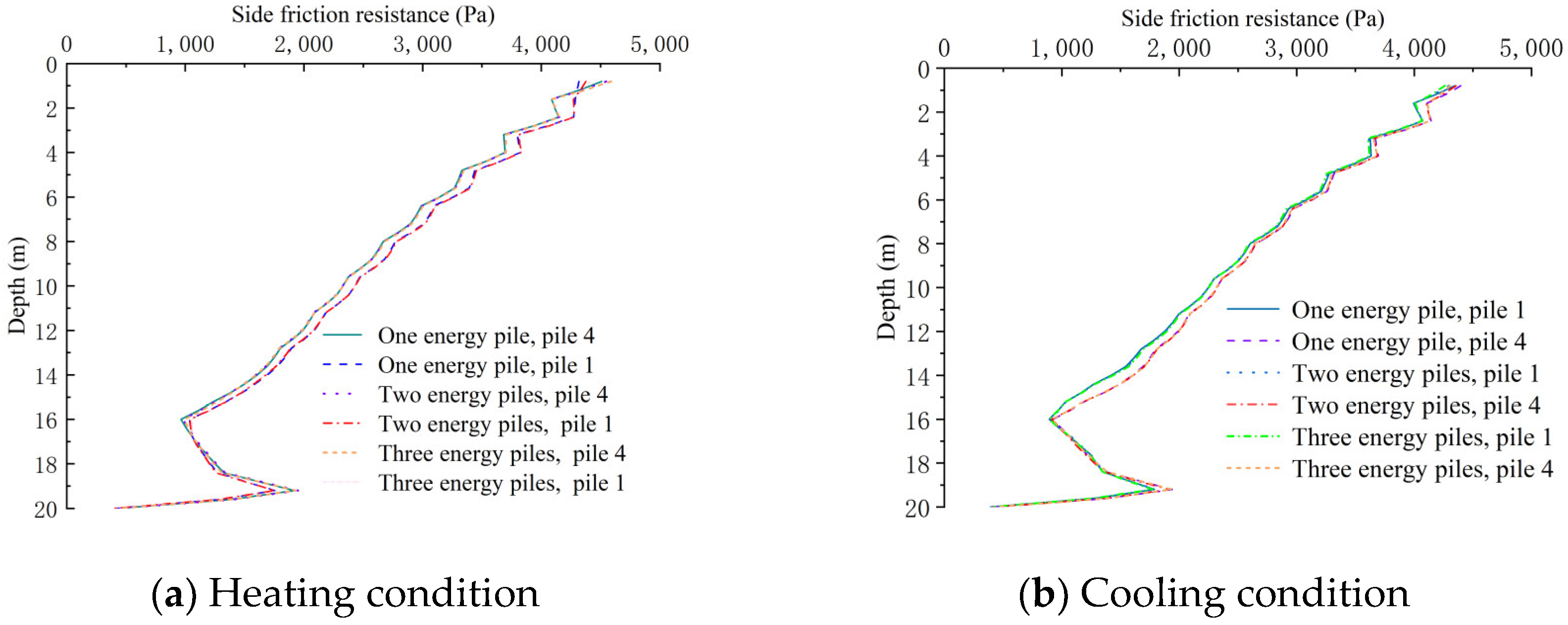
According to Figure 25, temperature variations in the energy pile influence the side friction resistance of neighboring conventional piles. During heating, the energy pile exhibits increased side friction, whereas the basal part of the adjacent conventional pile experiences a decrease. Under cooling, the opposite occurs: the energy pile’s side friction drops, while the lower part of the conventional pile shows a rise. This behavior suggests that thermal interactions within an energy pile group cause stress redistribution, thereby modifying both the load-bearing response of individual piles and the overall group behavior.

5.3. Analysis of Results for the Four-Pile Model

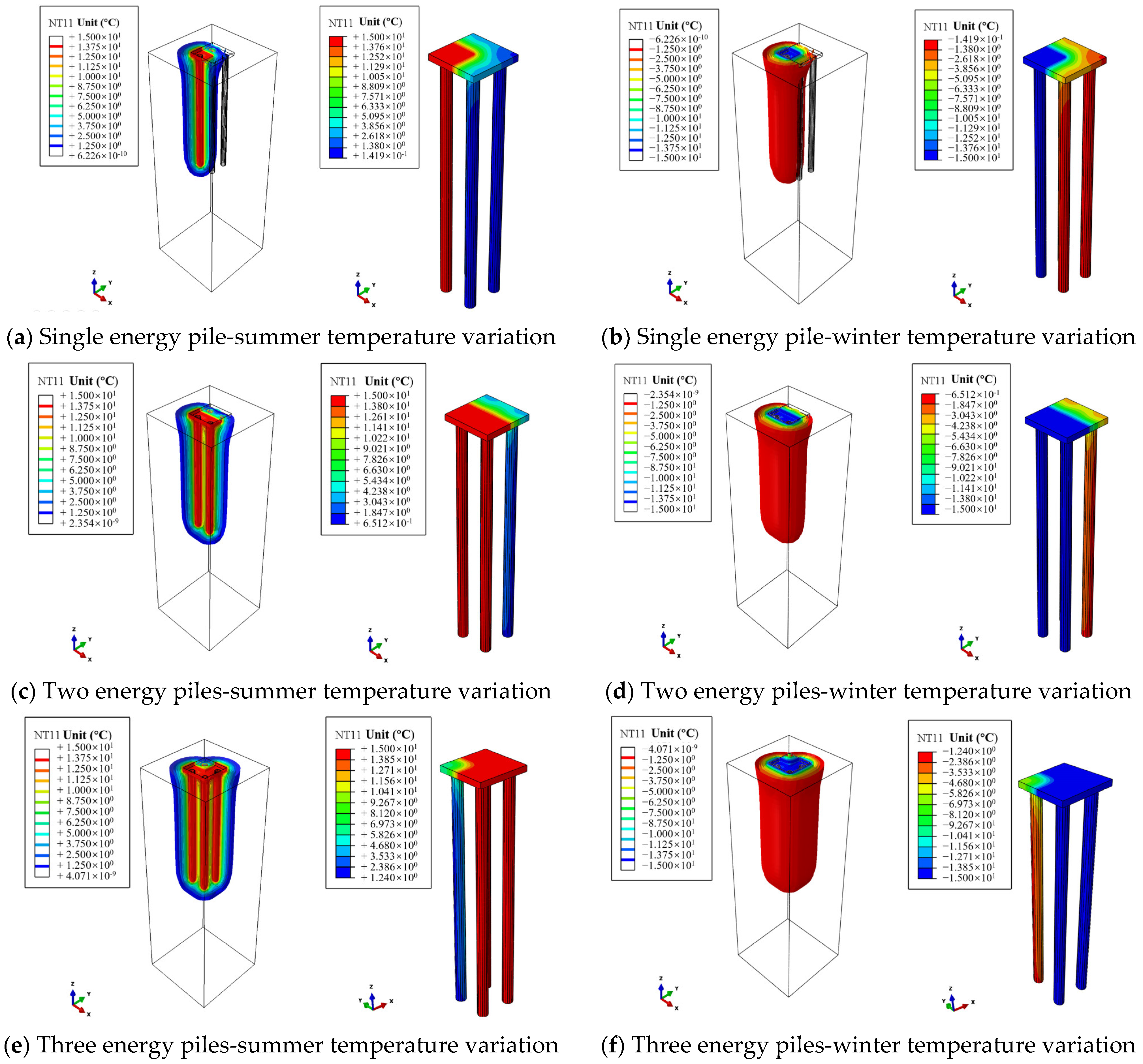
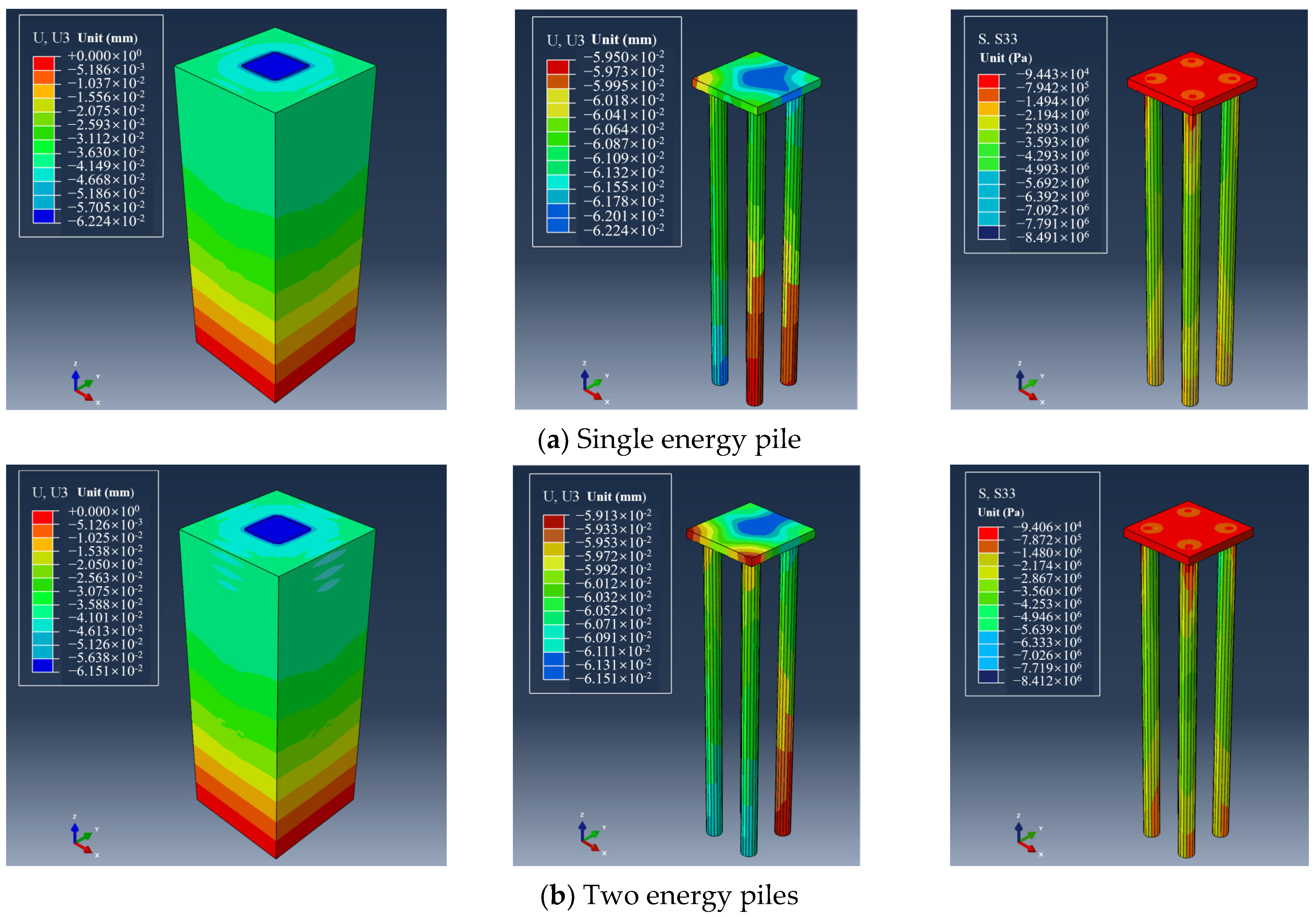
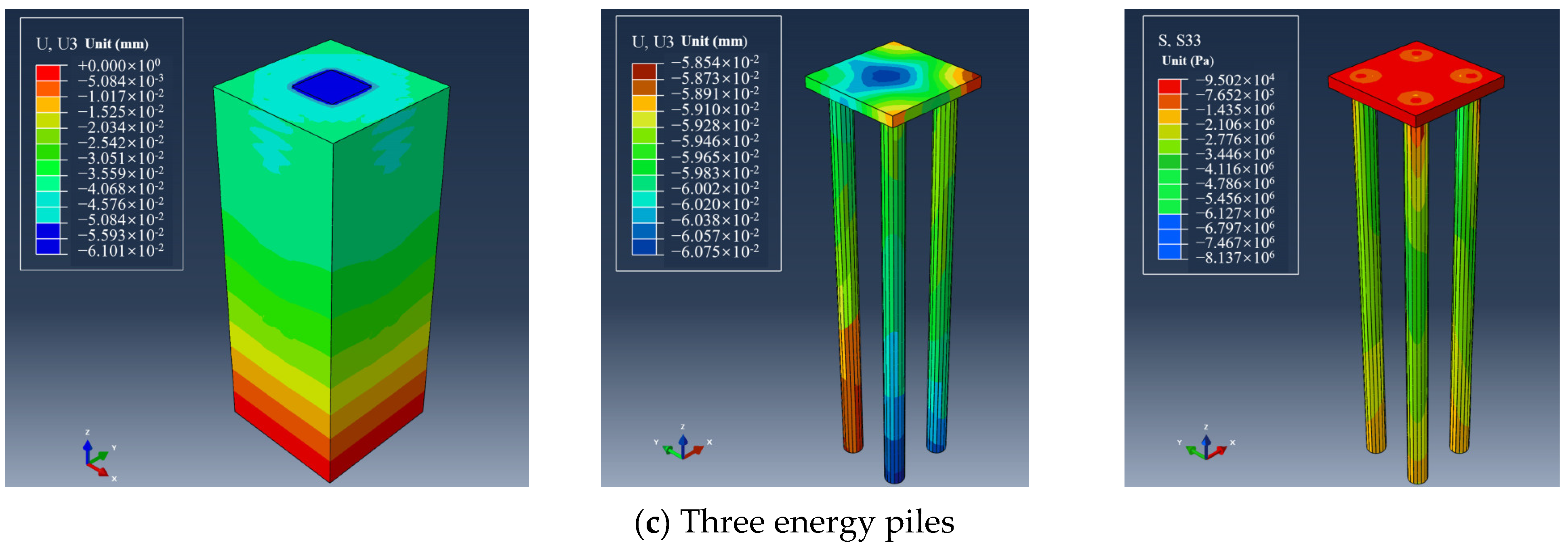
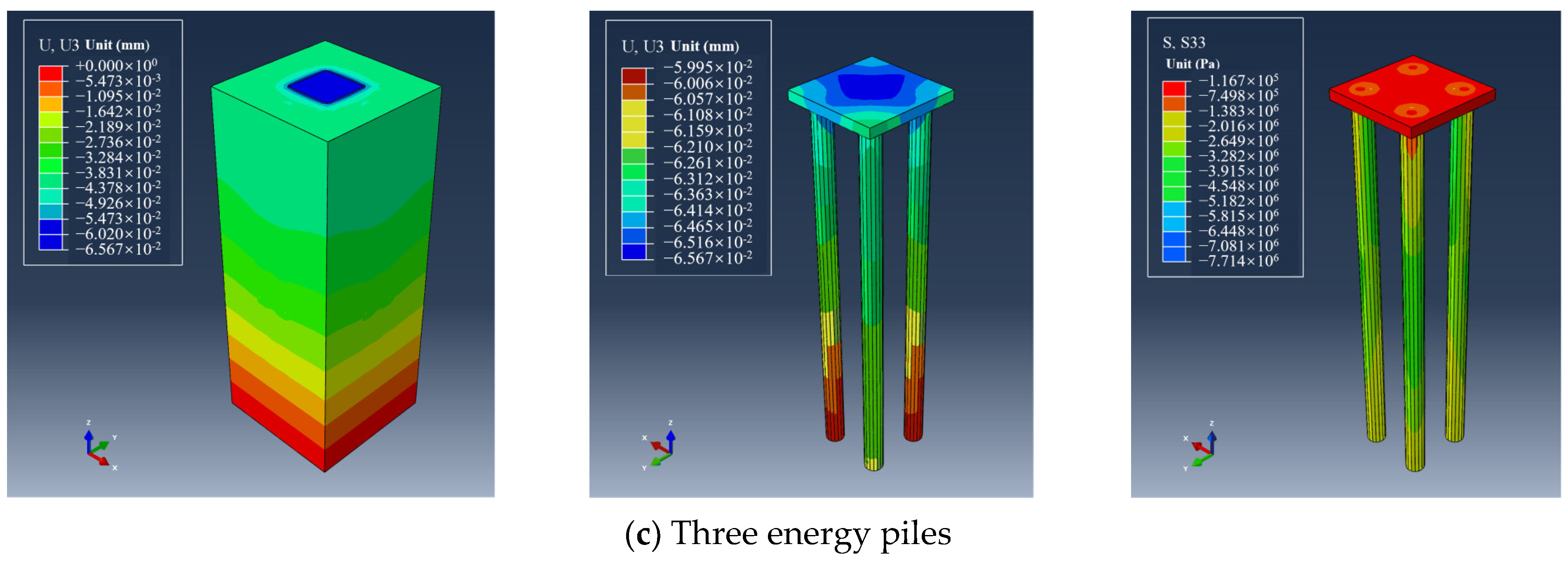
In the four-pile model, three distinct scenarios were simulated, incorporating one, two, and three energy piles, respectively. The temperature field distributions for these configurations are presented in Figure 26. Taking the third loading stage as a representative example, the stress and vertical displacement distributions under heating and cooling conditions are illustrated in Figure 27 and Figure 28, respectively, with the corresponding load-settlement curves shown in Figure 29.
As depicted in Figure 26, the heat exchange patterns in summer and winter remain largely consistent across scenarios with multiple energy piles. Within the cluster of energy piles, an increase in the number of energy piles amplifies the temperature variations in adjacent conventional piles. For instance, with one energy pile, the temperature change on the side of the conventional pile nearest to the energy pile is approximately 1 °C; with three energy piles, this rises to about 3 °C. This trend indicates that temperature changes in conventional piles become more pronounced when influenced by multiple energy piles. Additionally, densely arranged energy piles create localized temperature concentration zones, significantly altering the surrounding soil temperature. For example, in the summer scenario with three energy piles, in Figure 26, the inter-pile soil temperature reaches 10 °C. This elevation affects thermal stresses between piles and simultaneously impairs the heat-transfer capability of the energy pile system. To mitigate excessive localized temperature concentration, a more dispersed arrangement of energy piles within the group is recommended.
Under heating conditions, as shown in Figure 27, increasing the amount of energy piles reduces the overall settlement of the pile group. At an applied load of 14,400 kN, the pile head settlement decreases from 6.22 cm with one energy pile to 6.15 cm with two energy piles and 6.10 cm with three energy piles. Each additional energy pile reduces settlement by approximately 0.5 mm, though this reduction diminishes with more piles. This is attributed to cumulative thermal effects: more energy piles lead to greater temperature variations, lowering the total stress on the piles. However, temperature-induced stresses cause uneven stress distribution within each pile, with the unevenness increasing as temperatures rise.
Under cooling conditions, as illustrated in Figure 28, lower energy pile temperatures increase settlement. For a single energy pile, the pile head settlement under cooling exceeds that under heating by about 2.0 mm. This difference grows to 4.0 mm with two energy piles and 4.6 mm with three energy piles. Thus, temperature cycling amplifies additional settlement as the number of energy piles increases, though the rate of increase slows. Stress variations under cooling are less significant than under heating but still result in uneven stress distribution due to thermal effects.
The load-settlement behavior, shown in Figure 29, indicates that pile head settlement under cooling consistently exceeds that under heating, regardless of load magnitude. For a 9600 kN load under heating, settlements are: 33.98 mm (energy pile) and 33.52 mm (conventional pile) with one energy pile; 32.83 mm and 32.9 mm with two; and 32.63 mm and 33.17 mm with three. Under cooling, these increase to 35.51 mm and 36.15 mm (one pile), 36.73 mm and 36.83 mm (two piles), and 36.96 mm and 36.44 mm (three piles). With one energy pile, differential settlement resembles the two-pile model. With two, it is minimal (~0.1 mm). Three conventional piles settle less than energy piles, highlighting the influence of pile number and arrangement on differential settlement, warranting further study. As with the two-pile model, higher loads reduce the thermal load’s impact, narrowing settlement differences.
As shown in Figure 30, increasing energy pile numbers has minimal impact on side friction resistance for both energy and conventional piles. In multi-pile scenarios, focus should shift to temperature cycling and pile quantity effects on settlement rather than side friction, which shows minor variation. Given the limited pile numbers in this study compared to real-world applications, further precise research is needed.

5.4. Analysis Results of Nine-Pile Model

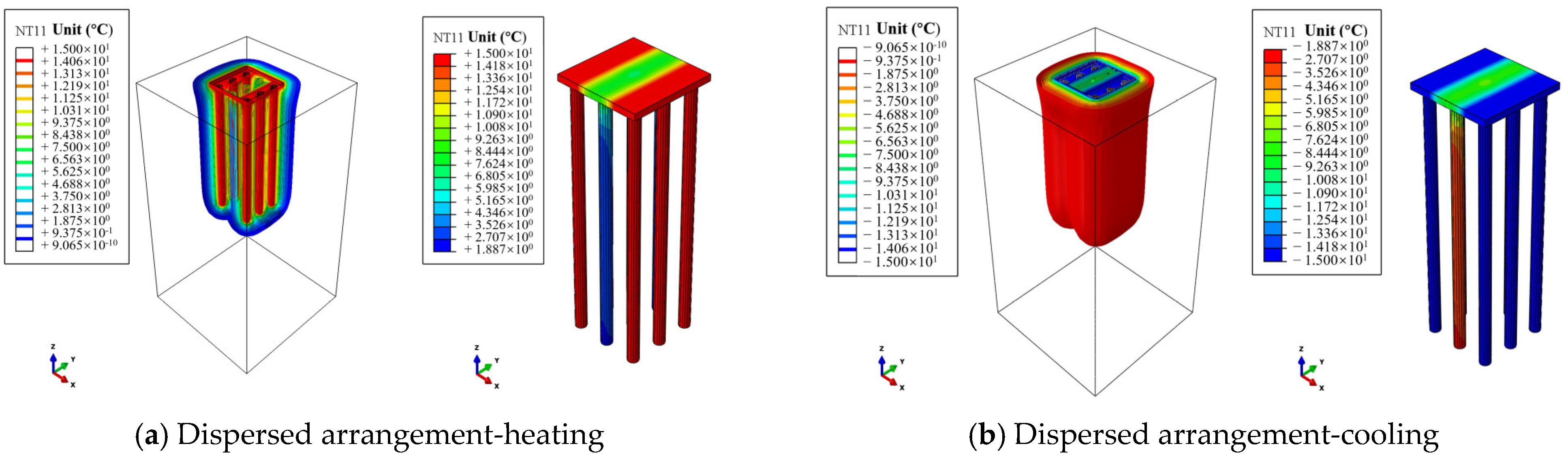
In the nine-pile energy group model, an investigation is conducted into the effect of energy pile arrangement on the bearing response of the pile group. Two configurations are analyzed, each consisting of nine piles and an upper cap, with six energy piles arranged in either a concentrated or dispersed layout. In the concentrated configuration, the energy piles are grouped on one side of the nine-pile structure, while in the dispersed configuration, three energy piles are symmetrically positioned at each end of the group. The temperature field outcomes for these setups are presented in Figure 31. Taking the third loading stage as an example, the stress and vertical displacement distributions under heating and cooling conditions are depicted in Figure 32 and Figure 33, respectively, followed by their corresponding load-settlement curves.
As illustrated in Figure 31, the concentrated arrangement of energy piles leads to excessively high localized soil temperatures. In the concentrated setup with six energy piles, the inter-pile soil temperature reaches 10 °C, aligning with observations from the four-pile model. This indicates that the temperatures of the soil and conventional piles are predominantly affected by the number of energy piles within the thermal response range, with negligible influence from piles outside this zone. Comparing the two configurations, the dispersed arrangement enhances the thermal impact of energy piles on conventional piles, resulting in more pronounced temperature variations. In contrast, the concentrated arrangement causes excessive localized heating, which diminishes heat exchange efficiency and has a detrimental effect on the thermal response of the energy piles. For optimal heat exchange, a more uniform distribution of energy piles is recommended to mitigate temperature concentration and improve overall efficiency.
As shown in Figure 32 and Figure 33, the overall settlement is greater under cooling conditions than under heating conditions. The settlement of individual piles under a 16,200 kN load, for both concentrated and dispersed configurations, is detailed in Table 11.
The data in Table 11 reveal a consistent trend: the central pile experiences the largest settlement, followed by edge piles, with corner piles exhibiting the least settlement. However, variations occur depending on the energy pile arrangement and thermal conditions. Under heating, the concentrated configuration results in smaller settlements for energy edge piles compared to conventional edge piles, whereas the dispersed configuration shows larger settlements for energy edge piles. Under cooling, the differential settlement is less pronounced in the concentrated configuration than in the dispersed one. For instance, in the concentrated case, the settlement difference between the central and conventional corner piles is 3 mm, compared to 2.26 mm in the dispersed case. Notably, under cooling, energy edge and corner piles in both configurations settle more than their conventional counterparts, reversing the trend observed under heating.
The bearing characteristics of the energy pile group are significantly influenced by the number and placement of energy piles. In this study, the concentrated and dispersed configurations alter the settlement patterns of energy and conventional edge piles. While the dispersed configuration exhibits distinct settlement behavior, it results in smaller differential settlements compared to the concentrated configuration, suggesting that a dispersed arrangement may help mitigate uneven settlement in energy pile groups.

6. Conclusions and Future Works

This research systematically explores the thermal-mechanical performance of energy pile systems, focusing on thermal interactions with adjacent conventional piles and their settlement responses under seasonal temperature variations. Through a validated 3D finite element model, the research quantifies the spatial extent of thermal influence—negligible beyond 5 m or 4 times the pile diameter—and its impact on adjacent pile temperatures (up to 4 °C in dense configurations). Settlement analyses, supported by the equivalent pier and load transfer methods, demonstrate that heating reduces group settlement while cooling exacerbates it, with differential settlement minimized in dispersed layouts (e.g., reducing disparities to ~1 mm in nine-pile setups). Configurations with multiple energy piles amplify thermal effects, yet concentrated arrangements compromise heat exchange efficiency due to localized temperature spikes (e.g., 10 °C in inter-pile soil). These findings underscore the importance of pile spacing (optimal at 4–6 m) and arrangement in balancing thermal performance and structural integrity. By bridging gaps in transient thermal coupling and hybrid pile group dynamics, this work offers robust predictive tools and design recommendations, advancing the practical implementation of energy pile technology in sustainable geotechnical engineering.
Several limitations remain. Future work should consider: (1) groundwater seepage effects using a THM framework; (2) rigorous calibration and sensitivity analysis of the empirical coefficient ω; (3) temperature-dependent deterioration of soil elastic modulus and Poisson’s ratio; (4) pore water pressure and consolidation settlement caused by low-temperature soil shrinkage; and (5) a comprehensive feasibility evaluation of pipe gallery connection costs and long-term energy consumption. Addressing these issues will further advance the practical application of energy pile groups.

Author Contributions

Conceptualization, C.L. and B.D.; methodology, F.W.; software, C.C.; validation, C.C., F.W. and Y.Y.; formal analysis, C.C.; investigation, F.W.; resources, C.C. and C.L.; data curation, B.D.; writing—original draft preparation, Z.L.; writing—review and editing, C.C.; visualization, Z.L.; supervision, C.L.; project administration, B.D.; funding acquisition, C.C. and Y.Y. All authors have read and agreed to the published version of the manuscript.

Funding

This research was funded by project ZR2023QE324, ZR2024ME215 and ZR2024QE474 by the Shandong Provincial Natural Science Foundation.

Institutional Review Board Statement

Not applicable.

Informed Consent Statement

Not applicable.

Data Availability Statement

The data that support the findings of this study are available from the corresponding author upon reasonable request.

Acknowledgments

The authors gratefully acknowledge the financial support provided by the Shandong Provincial Natural Science Foundation, China (Grant Nos. ZR2023QE324, ZR2024ME215 and ZR2024QE474). The authors also extend their sincere appreciation to the editors and anonymous reviewers for their constructive comments and suggestions, which have significantly improved the quality of this manuscript.

Conflicts of Interest

Author Chunyu Cui is a postdoctoral researcher at Shandong Hi-Speed Group Co., Ltd. Cunyou Lin and Zhongren Liu were employed by the company Shandong Luqiao Group Co., Ltd. The remaining authors declare that the research was conducted in the absence of any commercial or financial relationships that could be construed as a potential conflict of interest.

Abbreviations

The following abbreviations are used in this manuscript:
ΔTheat transfer model for the adjacent conventional pile
Deddiameter of the equivalent pier
DedTdiameter of the equivalent pier for the energy pile group
Savgaverage settlement of the energy pile group
Rddisplacement ratio in the ep method
τzlateral shear stress
ωzpile-soil interface relative displacement
a1model parameters
b1model parameters
σrsthermal stress in each soil layer
σrzstress at the energy pile-soil interface due to temperature changes
urzdisplacement at the energy pile-soil interface due to temperature changes
τipile-side friction resistance
sisoil displacement caused by pile i itself
Sijsoil displacement around pile i caused by adjacent pile j
S′ijreduction in soil displacement due to pile i’s obstruction
Ksiequivalent initial stiffness of the energy pile’s side spring
ksiinitial stiffness under load, derived from single-pile calculations
Ksijchange in stiffness due to adjacent pile friction
K’sijchange due to the energy pile’s friction affecting adjacent piles
Gsshear modulus
r0pile radius
rmeffective influence radius
rijcenter distance between pile i and pile j
Simechanical load-induced displacement
STitemperature-induced displacement
KTistiffness change due to temperature
μfriction coefficient
σr0thermal stress at the interface
u0temperature-induced displacement
Kbiequivalent pile-end soil stiffness of pile i
kbipile-end soil stiffness of pile i
Kbijchange in the pile-end soil stiffness induced by the adjacent pile j

References

  1. Brandl, H. Energy foundations and other thermo-active ground structures. Géotechnique 2006, 56, 81–122. [Google Scholar] [CrossRef]
  2. Laloui, L.; Sutman, M. Experimental investigation of energy piles: From laboratory to field testing. Geomech. Energy Environ. 2021, 27, 100214. [Google Scholar] [CrossRef]
  3. Laloui, L.; Loria, A.F.R. Analysis and Design of Energy Geostructures: Theoretical Essentials and Practical Application; Academic Press: Cambridge, MA, USA, 2019. [Google Scholar]
  4. Gao, J.; Zhang, X.; Liu, J.; Li, K.S.; Yang, J. Thermal performance and ground temperature of vertical pile-foundation heat exchangers: A case study. Appl. Therm. Eng. 2008, 28, 2295–2304. [Google Scholar] [CrossRef]
  5. Luo, X.Q.; Liu, G.B.; Zheng, Y.D.; Qian, F.; Zhou, M. A load transfer model of energy pile-soil interfaces under temperature variation. Chin. J. Rock. Mech. Eng. 2019, 38, 171–179. [Google Scholar]
  6. Zhao, Q.; Chen, B.; Liu, F. Study on the thermal performance of several types of energy pile ground heat exchangers: U-shaped, W-shaped and spiral-shaped. Energy Build. 2016, 133, 335–344. [Google Scholar]
  7. Zhou, Y.; Xu, C.; Sego, D.; Zhang, D.H. Analytical solution for solid cylindrical heat source model with convective boundary condition. J. Heat Transf. 2019, 141, 121701. [Google Scholar] [CrossRef]
  8. Liu, J.H.; Zhang, Q.Q.; Xiao, K.; Cui, W.; Liu, Z.R. Study on the thermo-mechanical response of a single energy pile in pile groups. Structures 2025, 71, 108013. [Google Scholar]
  9. Rotta Loria, A.F.; Laloui, L. Thermally induced group effects among energy piles. Géotechnique 2017, 67, 374–393. [Google Scholar] [CrossRef]
  10. Faizal, M.; Bouazza, A.; McCartney, J.S. An analytical model for predicting outlet fluid temperatures in energy piles using soil thermal resistances. Appl. Therm. Eng. 2025, 265, 125557. [Google Scholar] [CrossRef]
  11. Dai, G.; Kong, G.; Deng, H.; Yang, Q. Comprehensive models and analytical solutions for transient heat transfer in PHC energy pile. Comput. Geotech. 2024, 176, 106713. [Google Scholar] [CrossRef]
  12. Zhou, X.; Zhang, Q.; Sun, D.A.; Gao, Y.; Wen, M.; Tan, Y. Analytical model for heat transfer around energy piles in layered soil with interfacial thermal resistance by integral transform method. Int. J. Numer. Anal. Methods Geomech. 2025, 49, 466–483. [Google Scholar]
  13. Zhang, W. Study on Heat Transfer Surrounding Pile Foundation Ground Heat Exchangers with Groundwater Advection. Ph.D. Thesis, The Hong Kong Polytechnic University, Hong Kong, China, January 2015. [Google Scholar]
  14. Akrouch, G.A.; Sánchez, M.; Briaud, J.L. Thermo-mechanical behavior of energy piles in high plasticity clays. Acta Geotech. 2014, 9, 399–412. [Google Scholar] [CrossRef]
  15. Rotta Loria, A.F.; Laloui, L. The interaction factor method for energy pile groups. Comput. Geotech. 2016, 80, 121–137. [Google Scholar] [CrossRef]
  16. Zhang, Q.Q.; Li, S.C.; Li, L.P.; Chen, Y.J. Simplified algorithm for pile group settlement considering side resistance softening and end resistance hardening. Chin. J. Rock Mech. Eng. 2013, 32, 615–624. (In Chinese) [Google Scholar]
  17. Fei, K.; Zhu, Z.H.; Shi, Y.H.; Zhou, Y. A simplified method for geotechnical analysis of energy pile groups. Rock Soil Mech. 2020, 41, 3889–3898. (In Chinese) [Google Scholar]
  18. Randolph, M.F.; Wroth, C.P. Analysis of deformation of vertically loaded piles. J. Geotech. Eng. Div. 1978, 104, 1465–1488. [Google Scholar] [CrossRef]
  19. Yang, W.; Rao, Z.; Qiang, Y.; Wang, F. Investigations on thermo-mechanical coupling behaviours of energy pile group under groundwater seepage. Energy 2025, 330, 136943. [Google Scholar] [CrossRef]
  20. Bourne-Webb, P.; Burlon, S.; Javed, S.; Kürten, S.; Loveridge, F. Analysis and design methods for energy geostructures. Renew. Sustain. Energy Rev. 2016, 65, 402–419. [Google Scholar] [CrossRef]
  21. Ng, C.W.W.; Farivar, A.; Gomaa, S.M.M.H.; Shakeel, M.; Jafarzadeh, F. Performance of elevated energy pile groups with different pile spacing in clay subjected to cyclic non-symmetrical thermal loading. Renew. Energy 2021, 172, 998–1012. [Google Scholar] [CrossRef]
  22. Yang, W.; Xia, W.; Qiang, Y.; Wang, F. Experimental and numerical investigations on thermo-mechanical behaviours of energy pile group with different seepage parameters. Constr. Build. Mater. 2025, 472, 140748. [Google Scholar] [CrossRef]
  23. Yang, W.; Qiang, Y.; Ju, L.; Wang, F.; Liu, A. Numerical evaluations on the effects of different factors on thermo-mechanical behaviour of an energy pile group. Comput. Geotech. 2023, 162, 105664. [Google Scholar]
  24. Dong, L.L.; Mei, G.X.; Wu, W.B.; Wang, L.X.; Ruan, H.F. Numerical simulation of the working characteristics of energy pile groups under ther-mo-mechanical coupling. Bull. Geol. Sci. Technol. 2021, 40, 326–334. (In Chinese) [Google Scholar]
  25. Yin, Y.; Li, Q.; Qiao, L. Response of energy pile-soil structure and pile group effect: An indoor similarity simulation study. J. Build. Eng. 2022, 51, 104247. [Google Scholar] [CrossRef]
  26. Cui, C.Y.; Liu, Z.R.; Liu, J.H.; You, Y. Thermo-Mechanical Coupling Model for Energy Piles: Dynamic Interface Behavior and Sustainable Design Implications. Buildings 2025, 15, 3984. [Google Scholar] [CrossRef]
  27. Poulos, H.G. Settlement prediction for bored pile groups. In Proceedings of the 2nd International Geotechnical Seminar on Deep Foundations on Bored and Auger Piles, Ghent, Belgium, 1–4 June 1993; pp. 103–117. [Google Scholar]
  28. Li, W.; Huang, B.; Bi, Z. Analysis and Application of Thermal Stress Theory; China Electric Power Press: Beijing, China, 2004; pp. 94–95. [Google Scholar]
  29. Caputo, V.; Viggiani, C. Pile foundation analysis: A simple approach to nonlinearity effects. Riv. Ital. Geotec. 1984, 18, 32–51. [Google Scholar]
  30. Lee, K.M.; Xiao, Z.R. A simplified method for nonlinear analysis of single piles in multilayered soils. Can. Geotech. J. 2001, 38, 1063–1080. [Google Scholar]
  31. Demars, K.R.; Charles, R.D. Soil volume changes induced by temperature cycling. Can. Geotech. J. 1982, 19, 188–194. [Google Scholar] [CrossRef]
  32. Jiang, G.; Li, R.F.; Wang, H.; Chen, G.; Lu, H.W.; Shao, D. Numerical analysis of the bearing capacity of floating energy piles during the full process of thermal-mechanical coupling. Chin. J. Rock Mech. Eng. 2019, 38, 2525–2534. [Google Scholar]
  33. JGJ 55-2011; Specification for Mix Proportion Design of Ordinary Concrete. China Architecture & Building Press: Beijing, China, 2011.
  34. Ye, H.D.; Duan, W.X.; Xu, J.Y.; Wang, S.Z. Engineering practice of refuse compacted short piles in Handan City. Hydrogeol. Eng. Geol. 2000, 1, 57–60. (In Chinese) [Google Scholar]
  35. Shi, S.Y.; Li, Q.; Liu, D.Q. Experimental study on Duncan-Chang model parameters of silty clay in Handan City. J. Hebei Inst. Archit. Sci. Technol. 2006, 2, 1–3. (In Chinese) [Google Scholar]
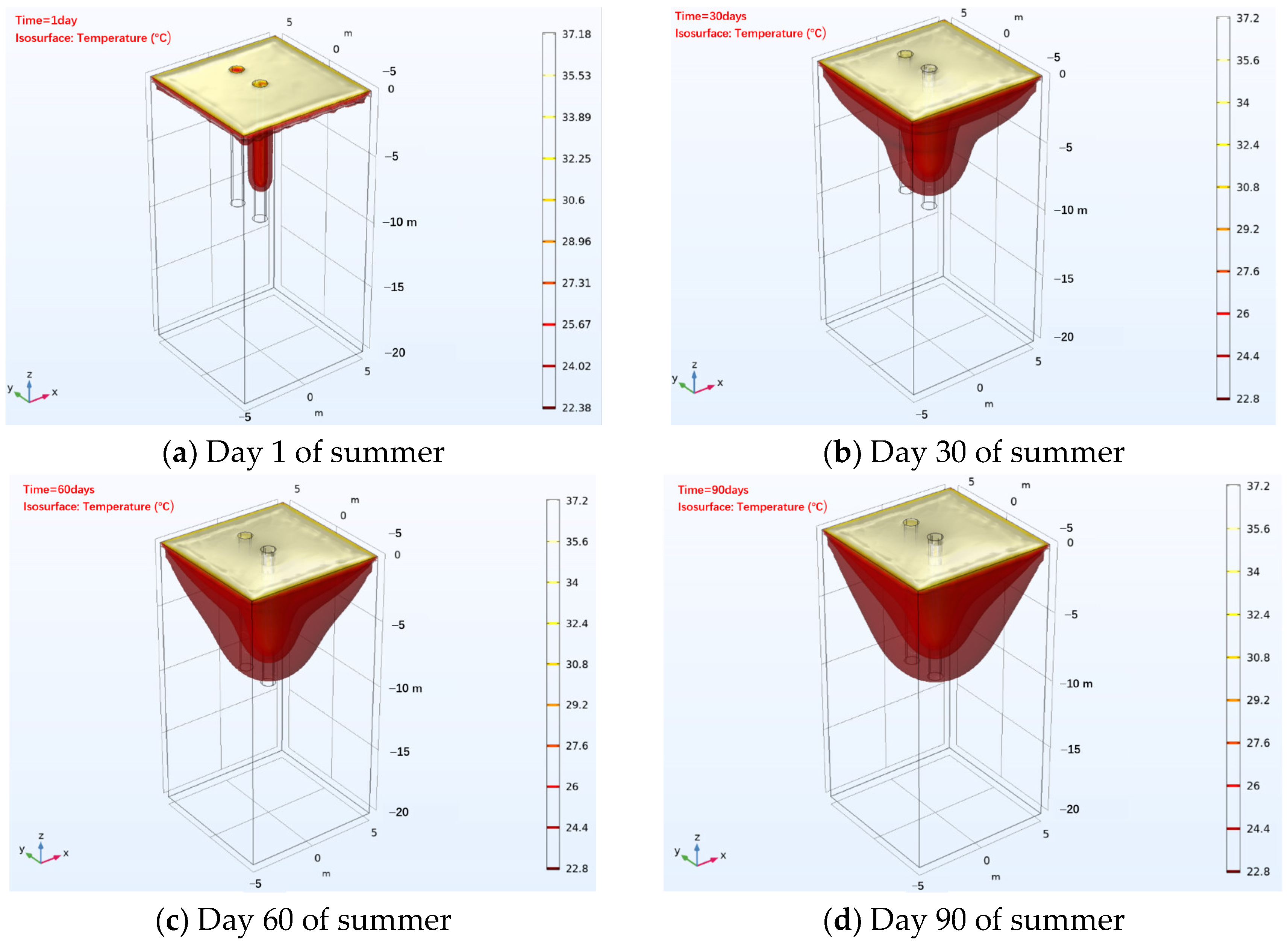
Figure 1. Scenario 2: Summer Condition.
Buildings 16 02544 g001
Figure 2. Scenario 5 summer Condition.
Buildings 16 02544 g002
Figure 3. Scenario 8 summer Condition.
Buildings 16 02544 g003
Figure 4. Scenario 2: Winter Condition.
Buildings 16 02544 g004
Figure 5. Scenario 5: Winter Condition.
Buildings 16 02544 g005
Figure 6. Scenario 8: Winter Condition.
Buildings 16 02544 g006
Figure 7. Interface temperature diagram of the pile and soil adjacent to the energy pile.
Buildings 16 02544 g007aBuildings 16 02544 g007b
Figure 8. Comparison of the displacement ratio Rd of energy piles [15].
Buildings 16 02544 g008
Figure 9. Schematic diagram of load-settlement model for energy pile group.
Buildings 16 02544 g009
Figure 10. Schematic diagram of Dong et al.’s (2021) [24] pile group.

Buildings 16 02544 g010
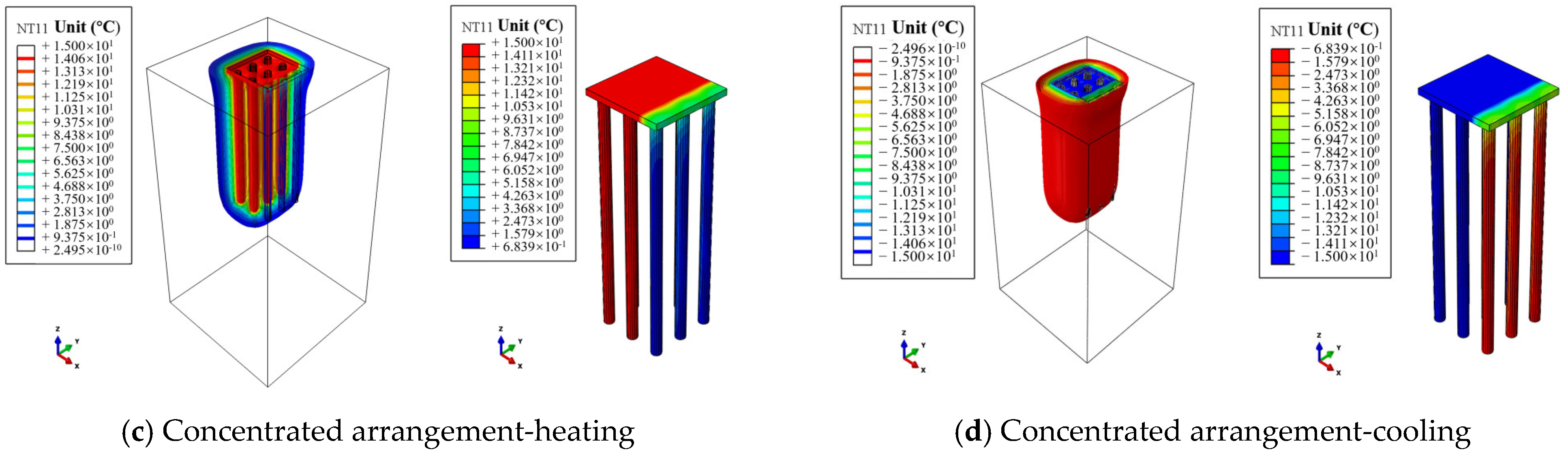
Figure 11. Comparison diagram of the axial force of the energy pile group [24].
Buildings 16 02544 g011
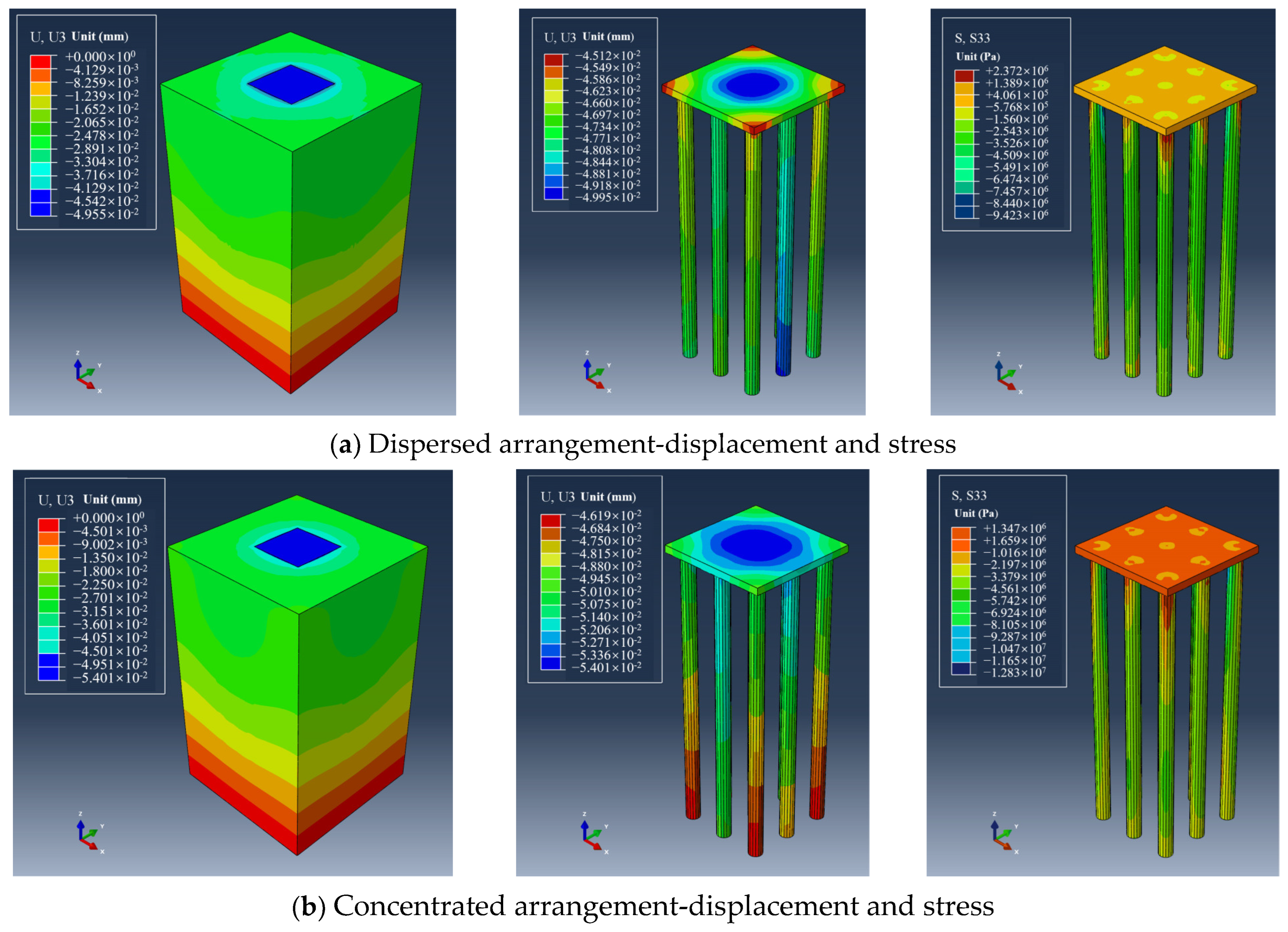
Figure 12. Schematic diagram of the numerical model of the energy pile group.
Buildings 16 02544 g012
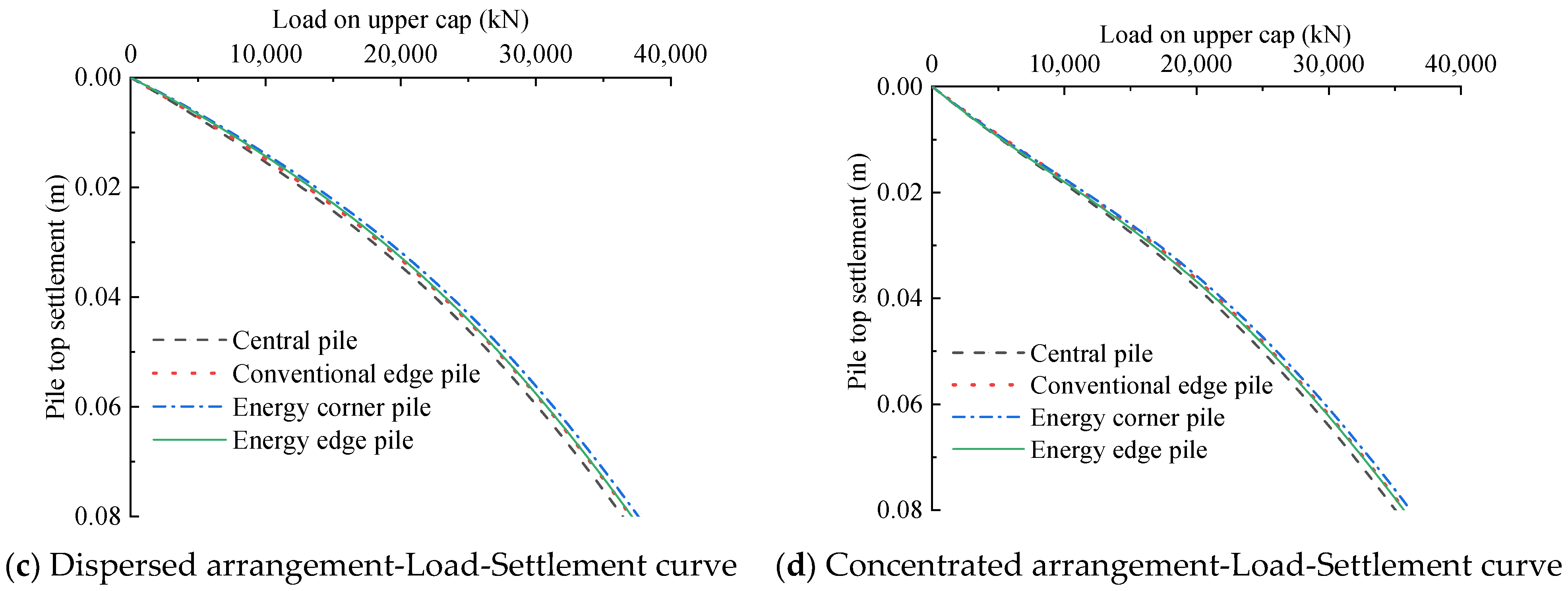
Figure 13. Temperature variation in the numerical model.
Buildings 16 02544 g013
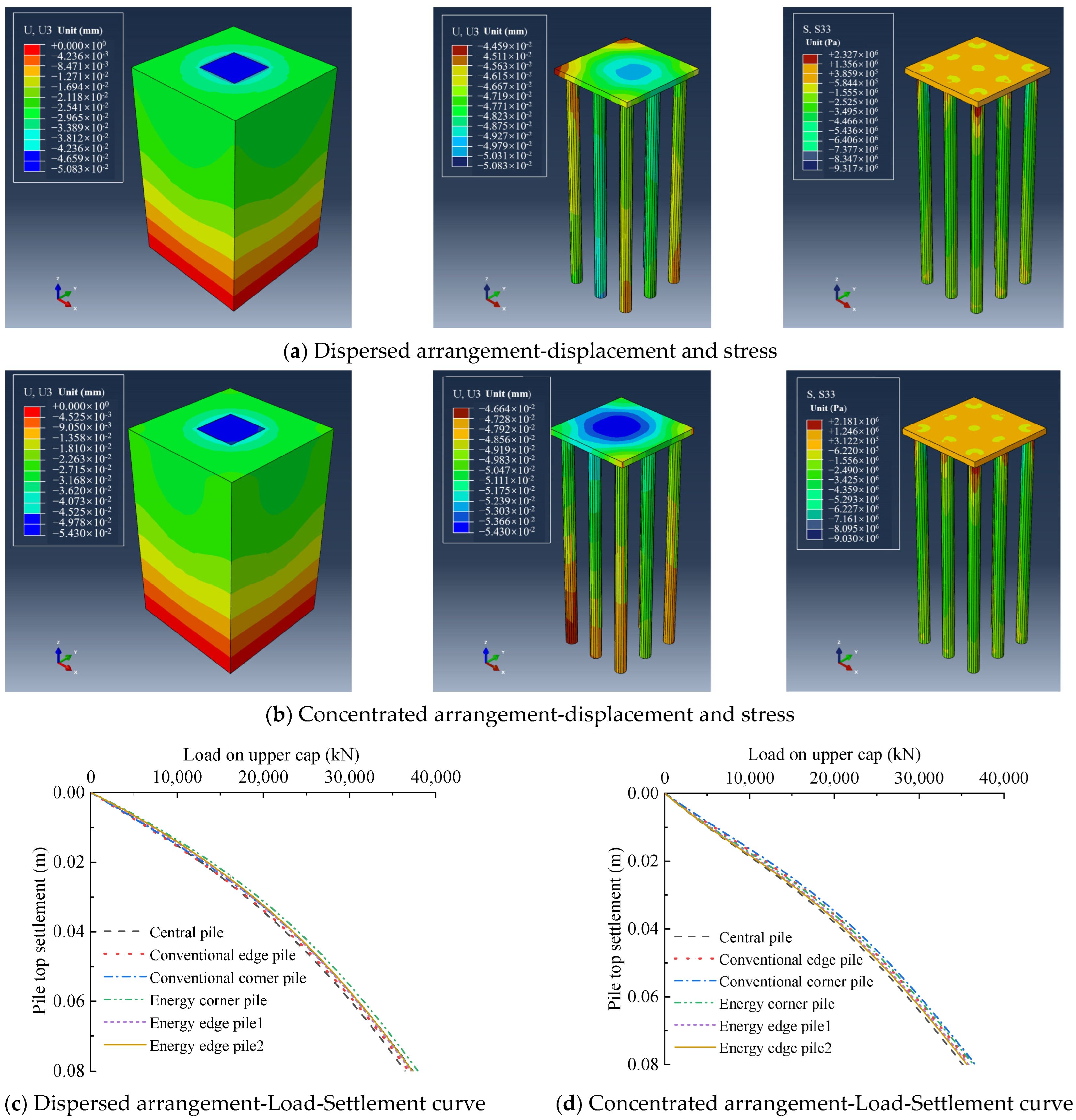
Figure 14. Displacement diagram of the numerical model.
Buildings 16 02544 g014
Figure 15. Comparison diagram of soil temperature variation around the pile [25].
Buildings 16 02544 g015
Figure 16. Comparison of pile shaft axial force [25].
Buildings 16 02544 g016
Figure 17. Temperature variation in the corrected numerical model.
Buildings 16 02544 g017
Figure 18. Vertical displacement in the corrected numerical model.
Buildings 16 02544 g018
Figure 19. Comparison of load-settlement curves for the energy pile group.
Buildings 16 02544 g019
Figure 20. Schematic of energy group pile configurations.
Buildings 16 02544 g020
Figure 21. Temperature field variation in the Two-Pile energy group.
Buildings 16 02544 g021
Figure 22. Stress responses of the Two-Pile energy group.
Buildings 16 02544 g022
Figure 23. Displacement response of the Two-Pile energy group.
Buildings 16 02544 g023
Figure 24. Load-Settlement curve for Two-Pile energy group.
Buildings 16 02544 g024
Figure 25. Side friction resistance curve for the Two-Pile energy group.
Buildings 16 02544 g025
Figure 26. Temperature field result for energy pile configurations.
Buildings 16 02544 g026
Figure 27. Displacement and stress distribution for the four-pile energy group in summer.
Buildings 16 02544 g027aBuildings 16 02544 g027b
Figure 28. Displacement and stress distribution for the Four-Pile energy group in winter.
Buildings 16 02544 g028aBuildings 16 02544 g028b
Figure 29. Load-settlement curves for the Four-Pile energy group.
Buildings 16 02544 g029
Figure 30. Side friction resistance curves for the Four-Pile energy group.
Buildings 16 02544 g030
Figure 31. Temperature variation in the Nine-Pile energy group.
Buildings 16 02544 g031aBuildings 16 02544 g031b
Figure 32. Mechanical results for the Nine-Pile energy group under heating.
Buildings 16 02544 g032aBuildings 16 02544 g032b
Figure 33. Mechanical results for the Nine-Pile energy group under cooling.
Buildings 16 02544 g033
Table 1. Material parameters.
MaterialDensity [kg/m3]Constant Pressure Heat Capacity [J/(kg·K)]Thermal Conductivity
[W/(m·K)]
Water100042000.62
Sandy soil173012001.68
Concrete25009601.92
Heat exchange tube787044050.0
Table 2. Configurations of pile length, diameter, and spacing for energy and conventional piles.
ScenarioPile Length (m)Pile Diameter (m)Pile Spacing (m)
11012
21012.5
31013
4201.63.2
5201.64
6201.64.8
73024
83025
93026
Table 3. Energy pile model: input parameters.
Pile Length (m)Pile Diameter (m)Elastic Modulus
(GPa)
Density
(kg/m3)
Poisson’s RatioThermal Expansion Coefficient (m/°C)
1013024500.251 × 10−5
Table 4. Model parameters of soil around the energy pile.
Initial Temperature
°C
Lateral Earth Pressure CoefficientShear Modulus
(MPa)
Density
(kg/m3)
Poisson’s Ratio Thermal Expansion Coefficient (m/°C)
150.433015370.31 × 10−5
Table 5. Mechanical parameters of soil around the energy pile.
No.Soil LayerThickness
(m)
Density
(kg/m3)
Internal Friction Angle
(°)
Elastic Modulus
(MPa)
Pile-Soil
Friction Coefficient
Poisson’s Ratio
1Plain fill3.0180011.6280.20.35
2Topsoil2.0180011.6280.20.35
3Silty clay1.5183012.8250.20.35
4Silty clay with mud2.0183010.0150.20.40
5Silty clay5.0194015.0800.20.35
6Silt with fine sand6.0184025.11000.30.30
7Fine sand with silt6.0186027.11400.30.30
8Silt2.5181022.11200.30.30
9Silt12.0184025.22000.30.30
Table 6. Mechanical parameters of the energy pile.
Pile Length
(m)
Pile Diameter
(m)
Elastic Modulus (GPa)Density
(kg/m3)
Poisson’s Ratio
400.63025000.2
Table 7. Thermal properties of pile and soil.
Pile Thermal Expansion Coefficient (m/°C)Pile Specific Heat Capacity (W/m·°C)Pile Thermal Conductivity (J/kg·°C)Soil Thermal Expansion Coefficient (m/°C)Soil Specific Heat Capacity
(W/m·°C)
Soil Thermal Conductivity (J/kg·°C)
1 × 10−59602.35.0 × 10−615001.8
Table 8. Mechanical parameters of silty clay in the Handan region.
Soil LayerDensity
(kg/m3)
Internal Friction Angle
(°)
Elastic Modulus
(MPa)
Cohesion
(kPa)
Poisson’s Ratio
Silt2000276.8540.30
Table 9. Energy pile and soil thermal property parameters.
Pile Thermal Expansion Coefficient (m/°C)Pile Specific Heat Capacity (W/m·°C)Pile Thermal Conductivity (J/kg·°C)Soil Thermal Expansion Coefficient (m/°C)Soil Specific Heat Capacity
(W/m·°C)
Soil Thermal Conductivity (J/kg·°C)
1 × 10−59602.35.0 × 10−615001.8
Table 10. Dimensions of the energy pile group.
Pile Length
(m)
Pile Diameter
(m)
Pile Spacing
(m)
Two-Pile Cap
(m)
Four-Pile Cap
(m)
Nine-Pile Cap
(m)
20135 × 2 × 0.55 × 5 × 0.58 × 8 × 0.5
Table 11. Settlement of the Nine-Pile energy group under 16,200 kN load.
PositionConcentrated
(Heating, mm)
Concentrated
(Cooling, mm)
Dispersed
(Heating, mm)
Dispersed
(Cooling, mm)
Central pile25.3428.8525.5928.65
Conventional edge25.1626.6924.0927.82
Conventional corner24.3625.82--
Energy corner22.8626.9123.3326.93
Energy edge 124.1527.7224.5627.36
Energy edge 223.828.1--
Disclaimer/Publisher’s Note: The statements, opinions and data contained in all publications are solely those of the individual author(s) and contributor(s) and not of MDPI and/or the editor(s). MDPI and/or the editor(s) disclaim responsibility for any injury to people or property resulting from any ideas, methods, instructions or products referred to in the content.