1. Introduction
Thermal comfort, as defined by ASHRAE 55 [
1], is the condition of mind that expresses satisfaction with the thermal environment, reflecting both behavioural and adaptive responses to indoor conditions. This understanding aligns with the framework proposed by de Dear and Brager [
2], who emphasize the active role occupants play in responding to and shaping their indoor thermal experience. Since Fanger’s seminal work [
3], it has been understood that thermal balance is influenced by climatic variables related to both personal factors, such as metabolic rate and clothing insulation, and environmental factors, such as mean radiant temperature, air temperature, air velocity, and relative humidity.
Other factors also influence thermal comfort perception, including behavioural and cultural aspects, individual preferences, demographic and anthropometric characteristics, spatial layout, architectural features, and available opportunities for adaptation [
4]. Fanger’s analytical model [
3]—the Predicted Mean Vote (PMV) and Predicted Percentage of Dissatisfied (PP)—was derived from experiments conducted in climate chambers. The PMV predicts the average thermal sensation of a group of people, whereas the PPD estimates the corresponding proportion of dissatisfied occupants. It should be noted that PMV represents a population-average response rather than an individual sensation. Therefore, discrepancies between model predictions and subjective responses reflect inter-individual variability not captured by this approach.
Among the concepts related to thermal comfort perception, thermal disposition stands out. It is defined as an individual’s self-assessment of their own thermal sensitivity, whereby one may consider themselves more sensitive to heat, cold, both, or neither, compared with peers exposed to the same environmental conditions. This concept emerged around 1980 [
5] and has more recently been investigated in office environments [
6] and laboratory settings [
7]. The literature indicates that subjective factors—such as individual expectations, previous experiences, and comparative perception relative to others—may influence how the thermal environment is evaluated [
8,
9,
10]. In this context, Healey [
11] conducted a field study on thermal comfort in a mixed-mode office building located in the hot and humid climate of Australia, concluding that occupants adjusted the indoor thermal environment according to their thermal disposition. Thermal disposition thus refers to individual differences in thermal sensitivity when perceiving environmental sensory information, which may relate to heat, cold, both, or neither, depending on thermal expectations and acceptability among people sharing the same conditioned environment [
6]. Similarly, Rupp et al. [
7] analysed the agreement between thermal sensation and thermal disposition and found that individuals with greater sensitivity to cold tend to prefer temperatures above the comfort range defined for the general population, whereas heat-sensitive individuals prefer lower temperatures, demonstrating that thermal disposition influences how individuals perceive and report their thermal sensation. These findings suggest that thermal disposition may constitute a relevant indicator for predicting discomfort due to both heat and cold.
Although the PMV/PPD framework [
3] remains widely used to estimate thermal comfort, several studies have demonstrated that population-average models have limitations in predicting individual thermal preferences. Recent studies have emphasized occupant-centred approaches, in which users actively participate in environmental monitoring and control systems by providing feedback on their thermal sensation and preferences [
12,
13,
14,
15], demonstrating the growing recognition of individual variability in thermal comfort assessment. These participatory approaches enable the development of individualized thermal profiles, allowing building systems to adjust indoor conditions more appropriately to occupants’ needs. However, user participation itself constitutes a behavioural variable subject to the influence of multiple factors, potentially introducing response bias in data collection. These findings reinforce the importance of explicitly considering individual variability and behavioural engagement in thermal comfort assessment. The mixed-mode strategy, which integrates mechanical systems such as air-conditioning and natural ventilation within the same space, has been adopted as an alternative to reconcile thermal comfort and energy efficiency, allowing occupants to adjust the environment according to their thermal disposition through controls such as operable windows, cooling system activation, or mechanical ventilation [
16,
17,
18,
19]. During most of the year, mixed-mode systems are designed to operate in natural mode, with users opening and closing windows to adjust temperature or allow fresh air into the space [
20]. The logic of mixed-mode operation suggests that a building should remain naturally ventilated until the thermostat exceeds the limit considered comfortable by occupants, at which point the mechanical system is activated [
21]. Recent literature emphasizes that mixed-mode buildings should not be viewed simply as conventional air-conditioned buildings with operable windows, but rather as environments designed to balance natural ventilation and mechanical conditioning while responding to occupants’ needs and changing climatic conditions. Consequently, individual differences in thermal perception and adaptation may play an important role in determining occupants’ responses to mixed-mode environments. Adaptive theory further suggests that opportunities for personal environmental control, such as operable windows, blinds, or fans, can influence not only indoor conditions but also occupants’ subjective perception of comfort, contributing to broader comfort ranges and more diverse thermal responses [
19].
Recent evidence suggests that indoor thermal experience, adaptive opportunities, and occupants’ comfort expectations may exert a stronger influence on thermal satisfaction than long-term acclimatization processes, particularly in naturally ventilated and mixed-mode buildings [
22]. In humid subtropical climates, such as that of Florianópolis, Brazil, the alternation between natural ventilation and air-conditioning periods creates a particularly challenging context for thermal comfort assessment, as occupants may respond differently to similar indoor conditions depending on their individual thermal disposition [
23]. Unlike in temperate climates, where operational mode switching largely occurs over months or seasons, mixed-mode buildings in warmer climates often alternate between natural ventilation and air-conditioning within the same day [
24]. This distinctive operational pattern may influence occupants’ thermal experiences and adaptation processes, potentially leading to comfort responses that differ from those observed in other climatic contexts [
25]. Similar observations have been reported in tropical mixed-mode buildings, where occupants exhibited thermal responses and comfort perceptions that differed from those predicted by conventional comfort models [
26].
This context is also related to the development of adaptive behavioural models that account for occupant feedback and contextual factors influencing thermal comfort behaviour [
27]. For example, Bayesian meta-learning approaches have been proposed to continuously update individual thermal preference profiles using participatory data and stated preferences [
28]. Such studies reflect the growing recognition of individual variability and behavioural uncertainty in predicting thermal comfort in mixed-mode buildings. Nevertheless, few field studies have investigated how thermal disposition−a subjective yet measurable indicator of individual predisposition to heat or cold−influences perceived comfort in mixed-mode buildings.
This study incorporates self-reported thermal disposition as a central analytical variable in the assessment of thermal comfort in mixed-mode office buildings located in a humid subtropical climate, seeking to understand how self-perceived sensitivity to heat or cold is associated with differences in thermal sensation responses observed under similar environmental conditions. The analysis is based on a previously collected dataset from a longitudinal field study and therefore constitutes a secondary analysis. As the original data collection was not specifically designed to investigate the influence of thermal disposition, potential effects of occupants’ thermal history and prior thermal expectations could not be fully controlled and should be considered when interpreting the results. The analysis stratifies occupants according to their sensitivity to heat and cold, enabling evaluation of how these profiles influence perceived thermal neutrality, acceptability, and dissatisfaction. By comparing widely used predictive indices with occupants’ actual thermal responses under real operating conditions and different ventilation modes, this study advances knowledge in the field. The integration of subjective variables, objective comfort indices, and operating modes contributes to the development of occupant-centred thermal comfort assessment frameworks, expanding the understanding of normative model limitations and providing empirical evidence to inform design and management strategies for mixed-mode buildings in subtropical climates.
2. Materials and Methods
Field measurements and occupant surveys were conducted in a mixed-mode office building located in Florianópolis, southern Brazil (27.59° S, 48.54° W). The city has a humid subtropical climate, with an annual mean temperature of 20.7 °C, an average maximum above 28.0 °C, and a minimum around 16.5 °C [
29]. The building comprises five floors and a basement (total area: 3090 m
2), with a predominantly south-facing façade and recessed windows made of clear glass with metallic film coating. The monitored workspaces were mainly oriented towards the south façade, although local shading conditions varied depending on workspace position and surrounding obstructions, influencing occupants’ solar exposure. Cooling is provided by split air-conditioning units, whereas natural ventilation occurs through manually operable windows. Occupants can individually choose and control their preferred conditioning mode, characterizing a mixed-mode operation. The main characteristics of the building are summarized in
Table 1.
Measurements and surveys were conducted between April 2015 and February 2016, covering all four climatic seasons. Monitoring focused on office workspaces with high occupant density and sedentary activity levels (1.0 to 1.2 m). The monitored environmental variables included air temperature, globe temperature, relative humidity, and air velocity, recorded using calibrated portable microclimatic stations in accordance with ISO 7726 [
30] and ASHRAE 55 [
1]. Outdoor air temperature data were obtained from weather sensors installed at the building site and recorded throughout the monitoring period. Mean radiant temperature was derived from globe temperature measurements using ISO 7726 [
30] equations. Sensors were positioned near occupants at a height of 0.6 m (seated abdomen level) and logged data at one-minute intervals. Globe temperature was measured using a 15 cm globe thermometer, and air velocity and temperature were obtained through spot measurements using a portable thermo-anemometer. Instrument accuracies were ±0.1 °C for air temperature, ±0.2 °C for globe temperature, ±3.0% for relative humidity, and ±0.03 m/s for air velocity [
31].
Concurrently, occupants completed an electronic questionnaire during regular working hours. The questionnaire included sections addressing personal and anthropometric characteristics (age, gender, height, weight, clothing insulation, and activity level), personal habits and preferences (thermal history, conditioning preference, mood, and perceived health), and real-time thermal perception, including thermal sensation, thermal preference, and thermal acceptability. In addition, respondents were asked to self-classify their thermal disposition as heat-sensitive, cold-sensitive, sensitive to both heat and cold, or sensitive to neither.
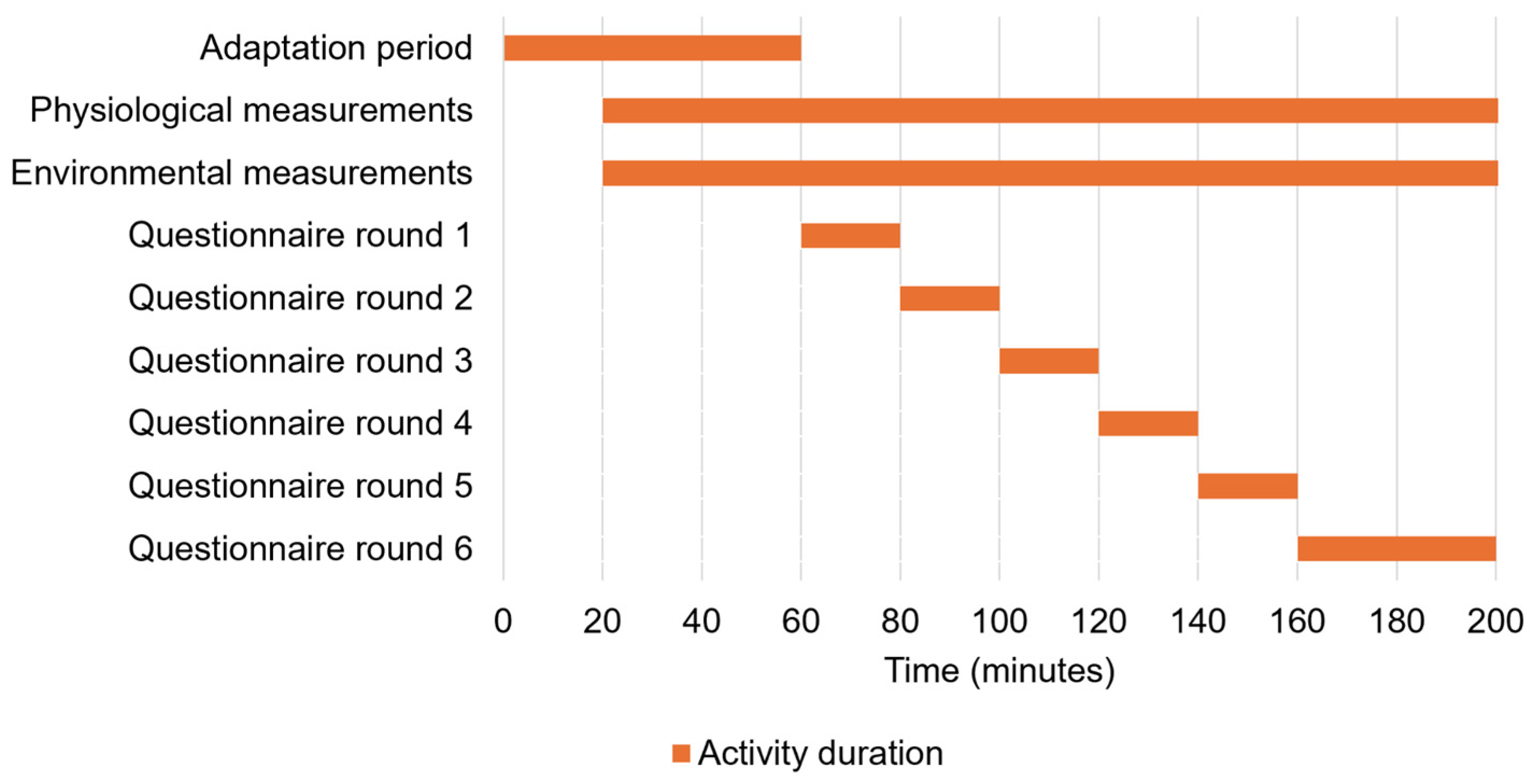
Figure 1 shows the experimental protocol adopted during the field campaign, including the schedule of environmental measurements, occupant behaviour observations, and questionnaire administration throughout each monitoring session. Before data collection, participants received instructions regarding the questionnaire procedure and the physical measurements. They were then encouraged to behave as they normally would during their daily work routine, including adjusting clothing and modifying environmental conditions whenever permitted by the organization. At each scheduled interval, a questionnaire window automatically appeared on the participant’s personal computer. After completing each round, the application instructed participants to wait 20 min before the next questionnaire became available. This procedure was repeated five times, resulting in a total of six questionnaire rounds per monitoring session and an average data-collection period of approximately 200 min.
To capture a broad range of indoor environmental conditions, data collection was distributed throughout the monitoring period, thereby reducing potential confounding effects associated with short-term climatic variations. Because all respondents were office workers, questionnaires were administered exclusively during regular daytime working hours, reflecting typical occupancy patterns and operational conditions of the mixed-mode office building.
The dataset comprised 103 occupants, of whom 53 were men and 50 were women. A total of 1765 valid questionnaire responses were analysed in this study, including 1032 responses from heat-sensitive occupants and 733 responses from cold-sensitive occupants.
Clothing insulation was estimated from self-reported garments in accordance with ISO 7730 [
32], and a metabolic rate of 1.1 met was assumed for office activities. The PMV and PPD were calculated from the measured environmental variables, clothing insulation, and metabolic rate, following ISO 7730 [
32] and ASHRAE 55 [
1]. Comparison between the PMV and the Actual Mean Vote (AMV) enabled assessment of the PMV model’s predictive accuracy under both air-conditioned and naturally ventilated conditions.
The data used in this study were previously collected. Therefore, this work constitutes a secondary analysis of an existing database, with emphasis on the role of thermal disposition as an explanatory variable of perceived thermal comfort in mixed-mode buildings. As this study is based on a secondary analysis of a previously collected dataset, potential influences of occupants’ thermal history and prior thermal expectations could not be fully controlled and may have affected subjective thermal perception. Detailed descriptions of the measurement protocol, instrumentation, data collection procedures, and questionnaire structure are provided elsewhere for the same building. The monitoring procedures and measurement approach followed the methodology described in previous studies [
31,
33].
Data Analysis
Descriptive statistics, including mean values, standard deviations, and minimum and maximum values of the environmental and anthropometric variables, were calculated to characterize the dataset collected by Rupp [
31,
33]. Based on electronic questionnaire responses, users were classified into four thermal disposition groups according to their self-assessment relative to their coworkers: “more sensitive to cold,” “more sensitive to heat,” “sensitive to both,” or “little or not sensitive to either.” This classification approach was also adopted by Rupp et al. [
7]. The study retained only heat-sensitive and cold-sensitive groups as they represent opposite extremes of thermal disposition, enabling a clearer contrast between divergent perceptual responses. Individuals classified as “both” or “neither” were excluded along with all their associated data, which does not compromise statistical validity. It is important to note that thermal disposition was determined based on a single questionnaire item, which may reflect not only physiological differences but also cognitive and psychological components associated with how individuals perceive and interpret the thermal environment.
The PMV was calculated from environmental parameters (air temperature, mean radiant temperature, relative humidity, and air velocity) and personal parameters (metabolic rate and clothing insulation), in accordance with ISO 7730 [
32] and ASHRAE 55 [
1]. The PMV index is directly related to the PPD, which estimates the expected proportion of thermally dissatisfied occupants for a given thermal sensation level. Although the PMV/PPD model [
3] was originally developed to estimate average thermal responses of large populations under steady-state conditions, it was also applied to individual observations in this study to compare predicted and actual thermal sensation responses under real building operating conditions.
Because participants could complete the questionnaire multiple times under different environmental conditions, repeated observations were obtained for each individual. Descriptive analyses were performed to examine the distribution of environmental conditions and thermal sensation responses across thermal disposition groups. The relationship between predicted and actual thermal sensation was first explored through comparisons between PMV and Thermal Sensation Vote (TSV) values. Subsequently, regression analyses were conducted to evaluate the association between PMV and AMV under both air-conditioning and natural ventilation modes. Mean PMV and AMV values were calculated for each experiment and thermal disposition group, enabling comparison of the PMV model’s predictive performance across sensitivity profiles and operating modes. The strength of the relationships was assessed using coefficients of determination (R
2), regression coefficients, and statistical significance tests. Differences between predicted and observed dissatisfaction were examined by comparing PPD values derived from the PMV model with the Actual Percentage of Dissatisfied (APD) obtained from field responses. This comparison enabled evaluation of how thermal disposition influences perceived acceptability under conditions classified as thermally comfortable according to ASHRAE 55 [
1].
To assess whether the thermal conditions observed in the mixed-mode building were consistent with adaptive comfort expectations, indoor operative temperatures were compared with the adaptive comfort limits defined by ASHRAE 55 [
1] based on the prevailing mean outdoor temperature. This analysis enabled assessment of whether the monitored environments fell within the expected comfort range for naturally ventilated and mixed-mode buildings, and whether occupants from different thermal disposition groups were exposed to comparable environmental conditions.
Finally, a linear mixed-effects model was fitted to evaluate how operative temperature interacts with thermal disposition and mode of operation when repeated observations from the same individuals are considered. The model included participant as a random effect, with a random intercept and random slope for operative temperature, to account for intra-individual correlation arising from repeated measurements. Fixed effects included operative temperature, thermal disposition, and mode of operation, as well as their interaction terms. This approach enabled assessment of whether thermal disposition moderates the relationship between indoor thermal conditions and thermal sensation under different conditioning strategies.
3. Results and Discussions
A total of 1765 valid responses were collected from 103 occupants via electronic questionnaires. Statistical analyses were performed to assess the influence of thermal disposition on the PMV and PPD indices, and to examine their relationship with thermal comfort in mixed-mode buildings under a subtropical climate.
3.1. Frequency Distribution of Thermal Conditions
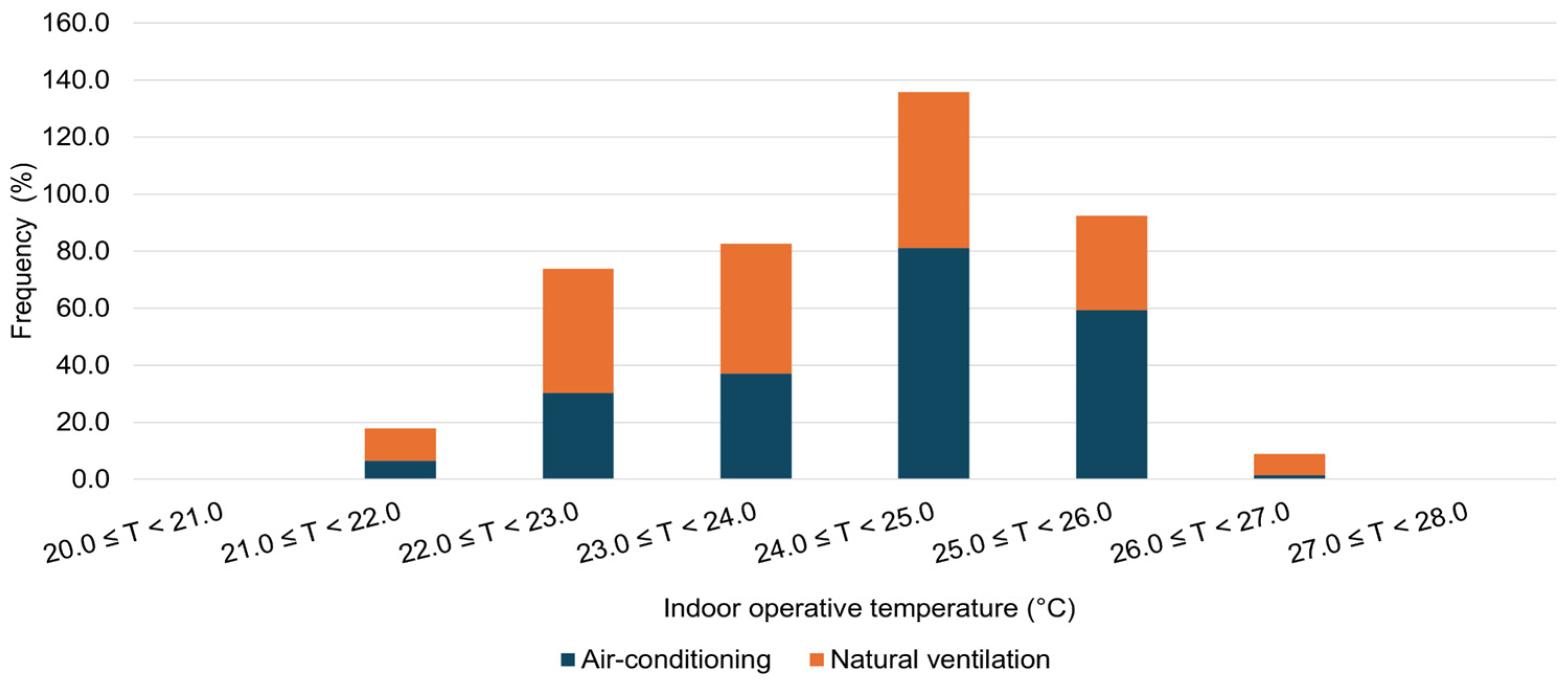
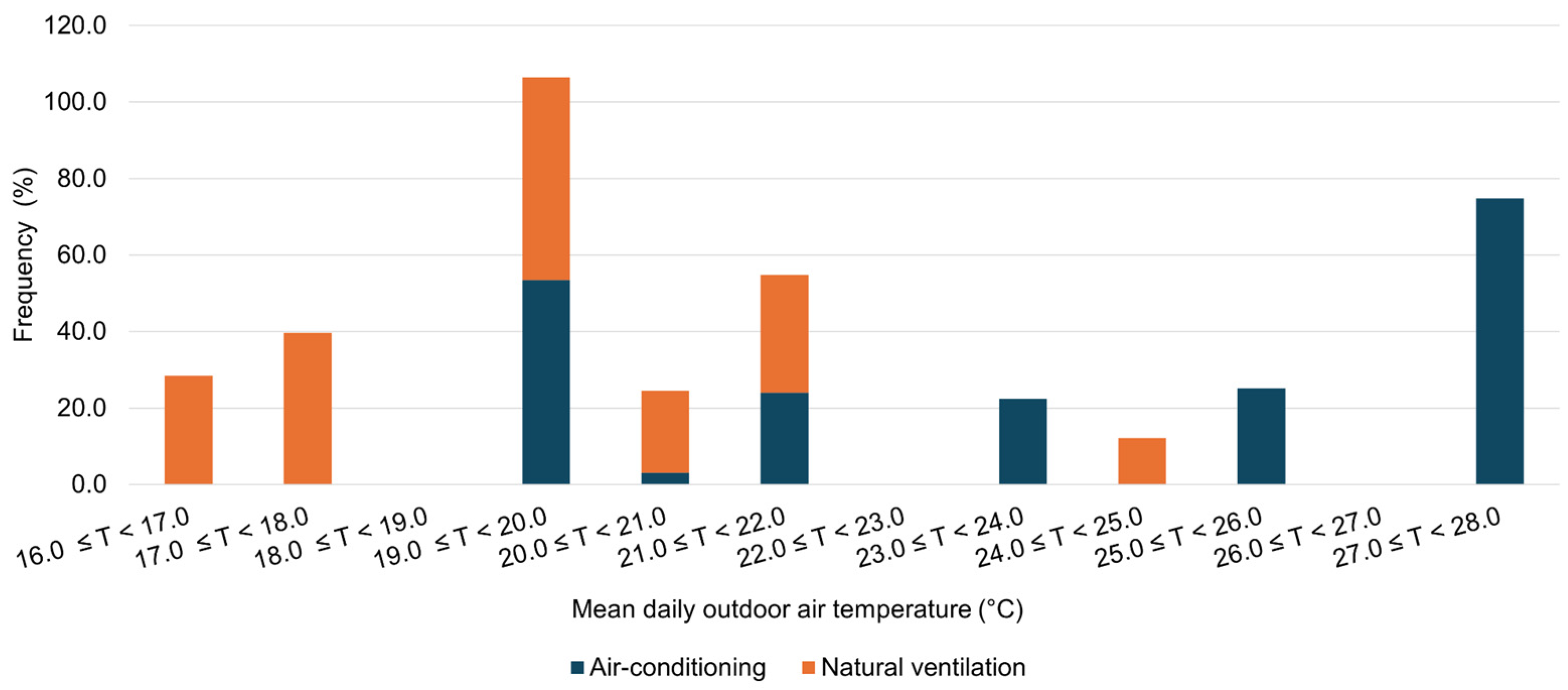
Frequency distributions of indoor operative temperature and outdoor air temperature were analysed to characterize the thermal conditions experienced during the monitoring period, providing contextual information on seasonal variability and local climatic conditions, as well as adaptive opportunities within the mixed-mode building (
Figure 2 and
Figure 3). The study covered all four seasons, capturing the variability typical of humid subtropical climates, which shapes occupants’ adaptive opportunities and expectations regarding indoor thermal conditions. Mean daily outdoor air temperatures ranged from 16.0 °C to 27.0 °C.
3.1.1. Descriptive Analysis of Environmental and Anthropometric Variables
For the analysis of environmental variables, the parameters considered were air temperature, mean radiant temperature, operative temperature, air velocity, and relative humidity, all collected across the four seasons.
Table 2 presents the descriptive statistics of the environmental variables for the two operating modes of the building under study. Data represent the mean values across all monitored zones; measurement uncertainties comply with ISO 7726 [
30] tolerances.
In general, average air temperature, operative temperature, mean radiant temperature, and air velocity were similar across both operating modes of the building, with indoor temperatures remaining around 24.0 °C and low air velocity regardless of the operating mode. Higher relative humidity was observed under natural ventilation compared to air-conditioning, which is attributed to the lower humidity levels associated with air-conditioning operation.
Additionally, the analysis of anthropometric variables considered data on age, height, weight, body mass index, clothing insulation, and metabolic activity for the 103 occupants.
Table 3 presents the descriptive statistics of the anthropometric variables. Data were analysed separately for male and female occupants to account for potential gender differences in anthropometric characteristics and their influence on thermal comfort.
Anthropometric variability, particularly in age and weight, was greater among male occupants, suggesting a potential influence on metabolic rate and thermal comfort perception.
3.1.2. Thermal Disposition and Distribution of Responses
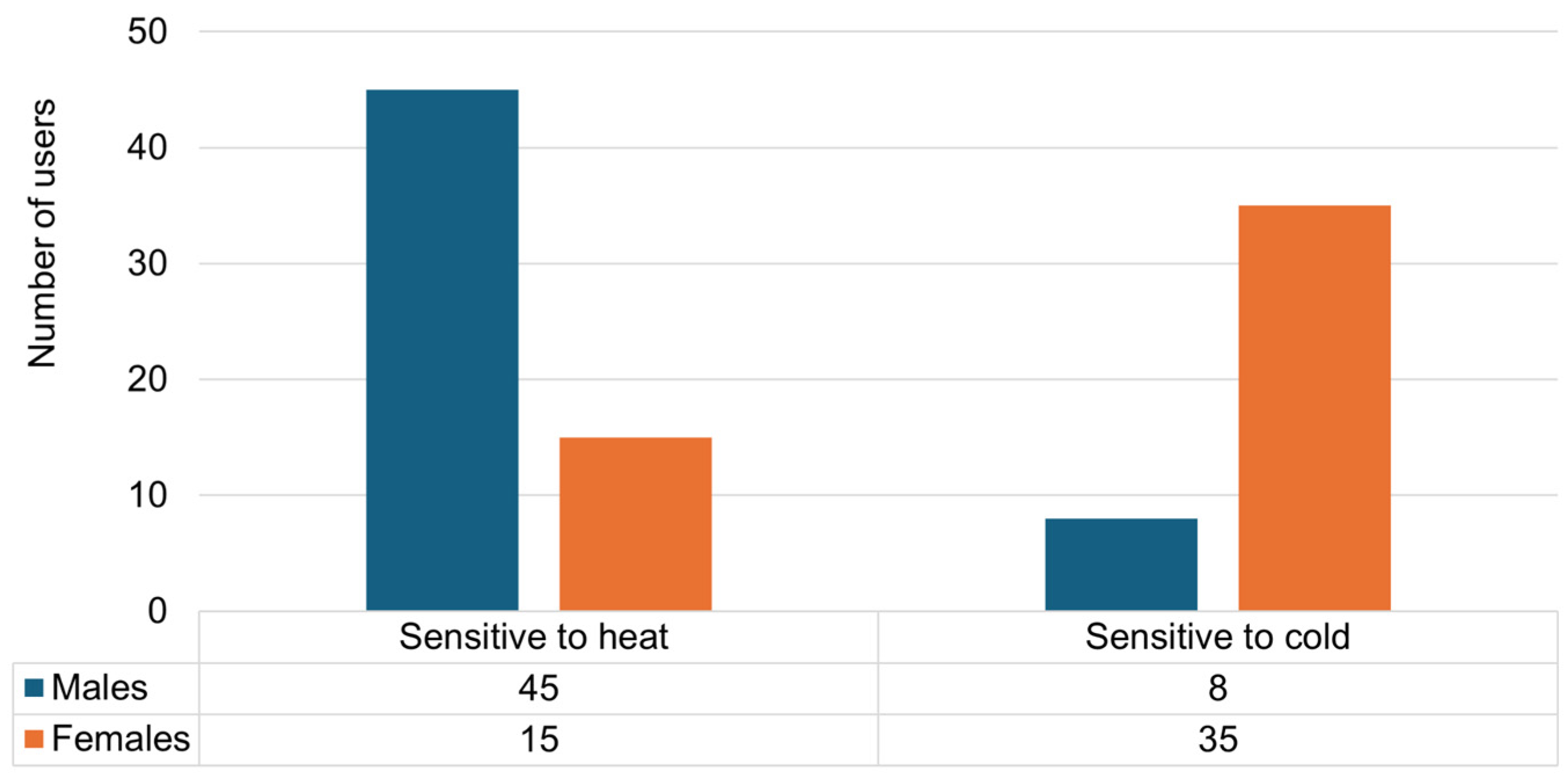
Male and female occupants may exhibit distinct physiological responses to the thermal environment, which may influence the results of the descriptive analysis regarding thermal disposition. From the data collected through electronic questionnaires, 1765 responses were recorded from 103 occupants, numerically identified in a non-sequential manner. Occupants were classified into two groups based on their thermal disposition: heat-sensitive and cold-sensitive (
Figure 4). Of the 103 occupants, 60 were heat-sensitive, with the majority being male, while 43 were cold-sensitive, with the majority being female.
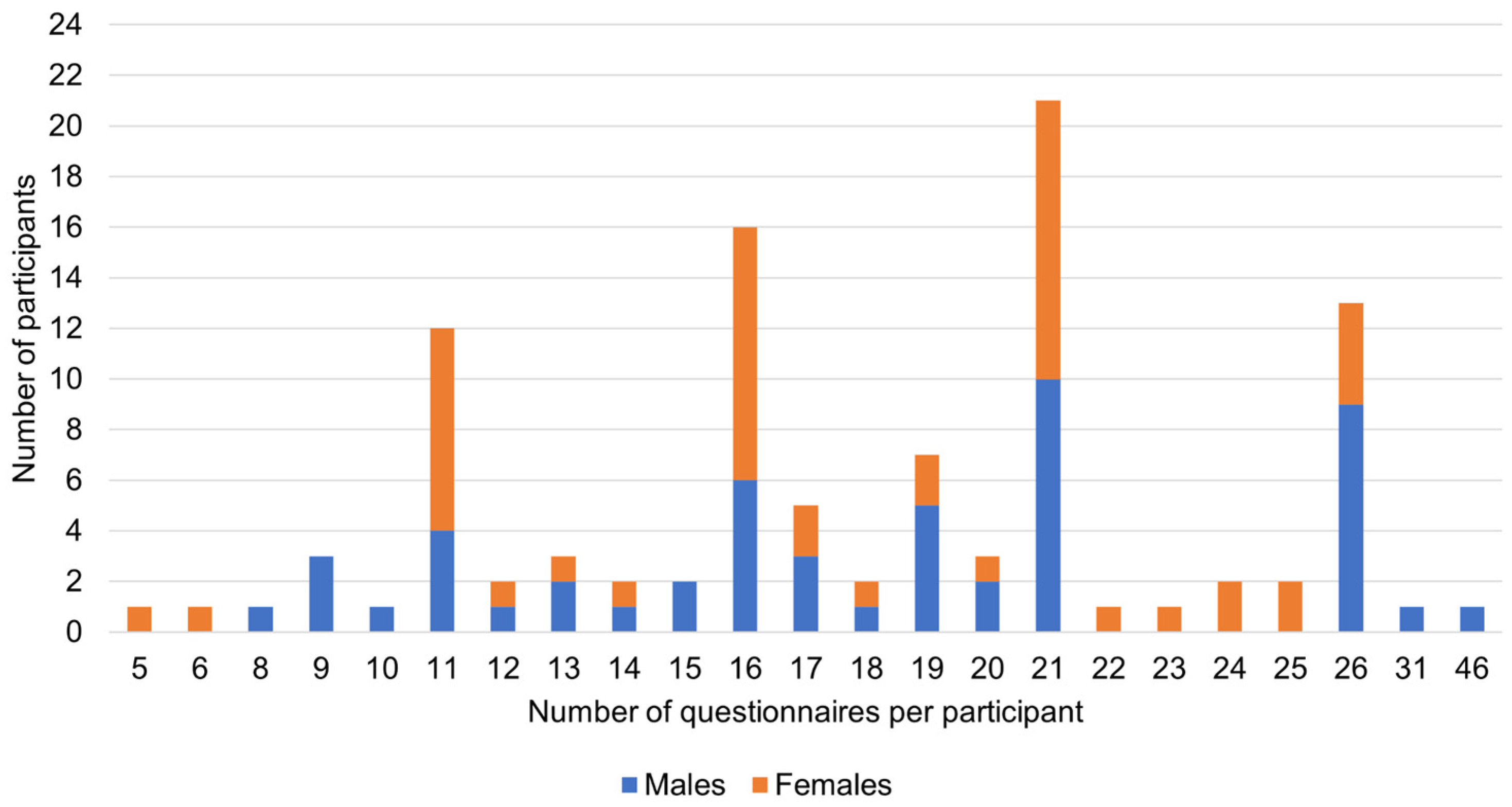
Figure 5 shows the distribution of responses per participant stratified by gender, revealing that data were reasonably distributed across participants and that the dataset was not disproportionately influenced by a small number of individuals.
Table 4 summarizes the characteristics of the dataset according to thermal disposition group, including the number of unique occupants, questionnaire responses, seasonal distribution, and operating mode. As participants were allowed to complete more than one questionnaire during the monitoring period, repeated observations were obtained for each individual.
3.2. PMV × TSV Correlations
Heat-sensitive occupants accounted for 1032 responses, with a mean PMV of 0.12 within the ASHRAE 55 [
1] comfort range (−0.5 to +0.5), while the mean TSV was slightly higher (0.23), indicating a tendency toward warmer thermal perceptions. Individual PMV values ranged from −1.3 to +1.0, revealing substantial inter-individual variability even under similar environmental conditions. Cold-sensitive occupants accounted for 733 responses, with a mean PMV of 0.26, also within the recommended comfort zone, whereas the mean TSV was −0.15, indicating a tendency toward cooler thermal perceptions. Individual PMV values ranged from −1.2 to +1.1, demonstrating considerable dispersion of responses within the group.
These results suggest that thermal neutrality predicted by the PMV model does not necessarily correspond to perceived neutrality for all occupants, reinforcing the role of individual variability in thermal comfort perception. Methodologically, PMV is typically evaluated by comparing predicted values with observed thermal sensation votes (TSV), which often reveals the characteristic “scissors difference”, where the slope of observed TSV plotted against indoor operative temperature diverges from the slope implied by the PMV model [
34,
35]. Similar findings have been reported in populations adapted to warm climates, where behavioural band physiological adaptation may shift perceived comfort ranges beyond those predicted by conventional models [
36,
37]. Recent evidence from tropical mixed-mode buildings further suggests that acclimatised occupants may tolerate cooler thermal sensations than those predicted by the PMV model, reinforcing the influence of adaptation on perceived comfort ranges [
25].
3.3. PMV × AMV Correlations
To analyse the relationship between thermal comfort indicators and occupants’ subjective responses, mean PMV and AMV values were calculated for each thermal disposition group under both operating modes.
For the cold-sensitive group, the relationship between PMV and AMV was very weak and statistically non-significant under both operating modes. The corresponding regression plots are presented in
Figure S1 in the Supplementary Materials. Under air-conditioning, PMV explained only 1.3% of the variance in AMV (R
2 = 0.013;
p = 0.522), while under natural ventilation, the explained variance was similarly low (R
2 = 0.016;
p = 0.423). The regression coefficients were small, and their 95% confidence intervals included zero, indicating the absence of a meaningful linear association between predicted and reported thermal sensation for this group. These findings suggest that, for cold-sensitive occupants, subjective thermal perception may be less directly related to the environmental conditions captured by the PMV model and more strongly influenced by individual expectations, physiological differences, and adaptive preferences.
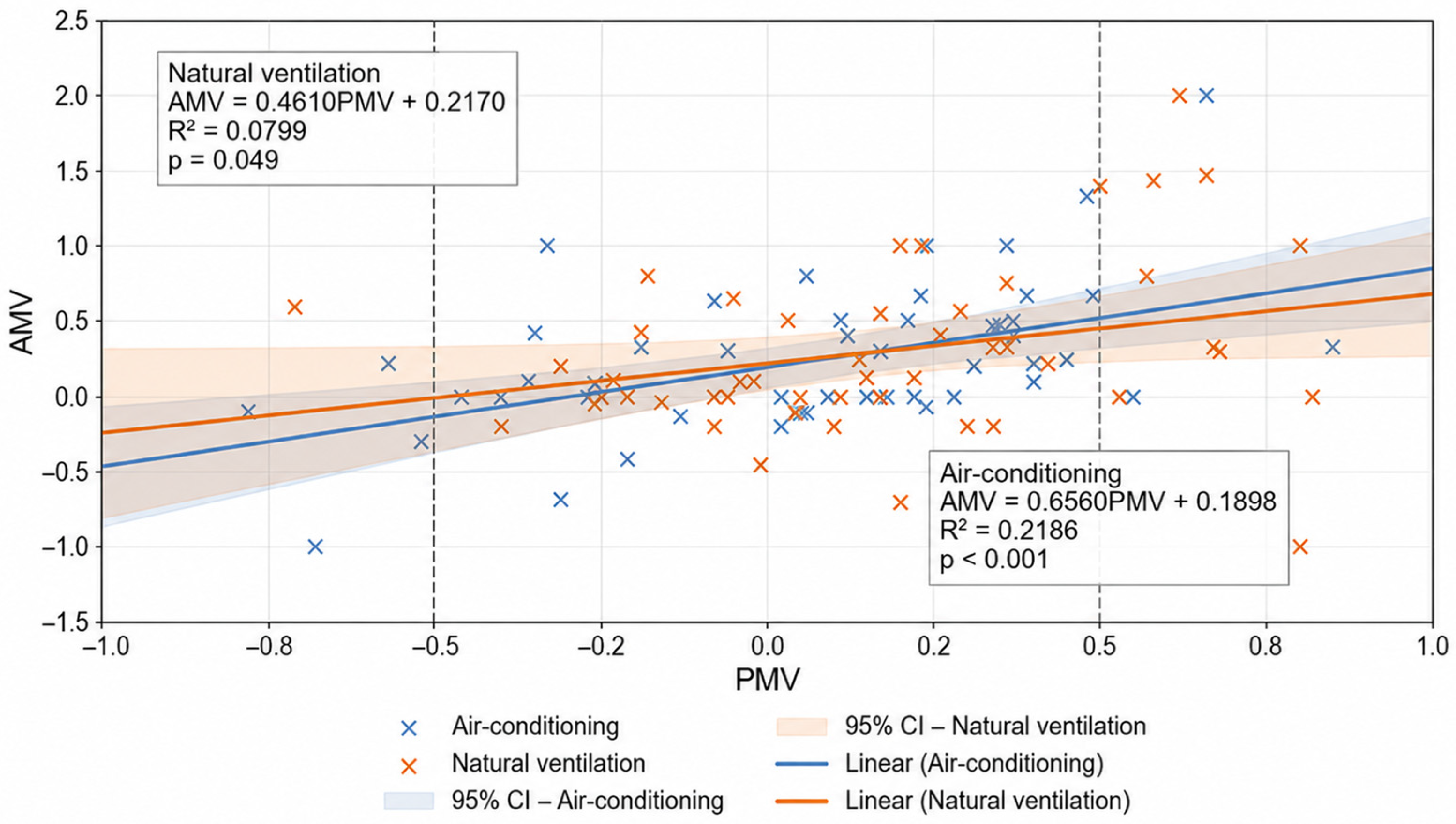
Figure 6 shows the relationship between PMV and AMV for heat-sensitive occupants under both operating modes.
For the heat-sensitive group, a statistically significant association between PMV and AMV was observed under both operating modes, although the strength of the relationship differed. Under air-conditioning, PMV explained approximately 21.9% of the variability in AMV (R2 = 0.219; p < 0.001), indicating a moderate relationship between predicted and observed thermal sensation. Under natural ventilation, the association was weaker, with approximately 8.0% of the variance explained (R2 = 0.080; p = 0.049), suggesting greater dispersion in subjective responses. The higher coefficient of determination observed under air-conditioning indicates that the thermal sensation responses of heat-sensitive occupants were more closely aligned with PMV predictions when environmental conditions were more stable and controlled. Conversely, the lower explanatory power observed under natural ventilation suggests that behavioural adaptation processes, such as changes in clothing levels, window operation, and adjustment of air movement, may contribute to increased variability in thermal perception.
Overall, the results indicate that the relationship between PMV and subjective thermal sensation varies according to both thermal disposition and operating mode in mixed-mode buildings located in humid subtropical climates. Previous studies have similarly reported discrepancies between PMV predictions and observed thermal sensation in mixed-mode buildings, where occupants’ ability to interact with the environment broadens the range of acceptable thermal conditions and introduces greater variability in responses [
27,
38,
39,
40,
41]. These findings support the hypothesis that thermal disposition acts as a moderating factor in the relationship between environmental conditions and perceived comfort. While PMV provides a population-average prediction derived from steady-state heat balance principles, the dispersion observed in AMV reflects the combined influence of physiological diversity, prior thermal experiences, expectations, and behavioural adaptation. In humid subtropical climates, where buildings frequently operate in mixed mode throughout the year, these factors may play a particularly important role, as occupants are accustomed to seasonal variability and may develop distinct comfort expectations according to their thermal disposition [
11,
12].
In addition, the individual contribution of relative humidity could not be fully separated from that of operative temperature. This represents a limitation of the study, particularly considering the humid subtropical climate of Florianópolis, where humidity may influence occupants’ thermal sensation and the applicability of PMV-based predictions.
3.4. PPD × APD Analysis
Even under optimal thermal comfort conditions, the PMV/PPD model predicts approximately 5% dissatisfied occupants [
3], increasing to around 10% within the comfort range of −0.5 to +0.5 according to ISO 7730 [
32]. However, differences were observed between predicted PPD and observed APD when occupants were grouped according to thermal disposition.
For cold-sensitive occupants, calculated PPD values were generally consistent with those reported for hot and humid climates [
42]. However, observed APD values were consistently higher and more dispersed than predicted values, indicating considerable variability in occupants’ responses, as shown in
Figure S2 in the Supplementary Materials. This suggests that thermal disposition may influence how individuals interpret and respond to similar thermal conditions, even when objective environmental parameters fall within conventional comfort limits. This interpretation is consistent with the findings of Bravo and González [
43], who reported—for naturally ventilated buildings in Maracaibo, Venezuela—that thermal satisfaction is strongly influenced by occupants’ prior experiences, habits, and thermal expectations. In mixed-mode buildings located in humid subtropical climates, these adaptive and perceptual factors may explain why observed dissatisfaction does not always closely correspond to PPD predictions.
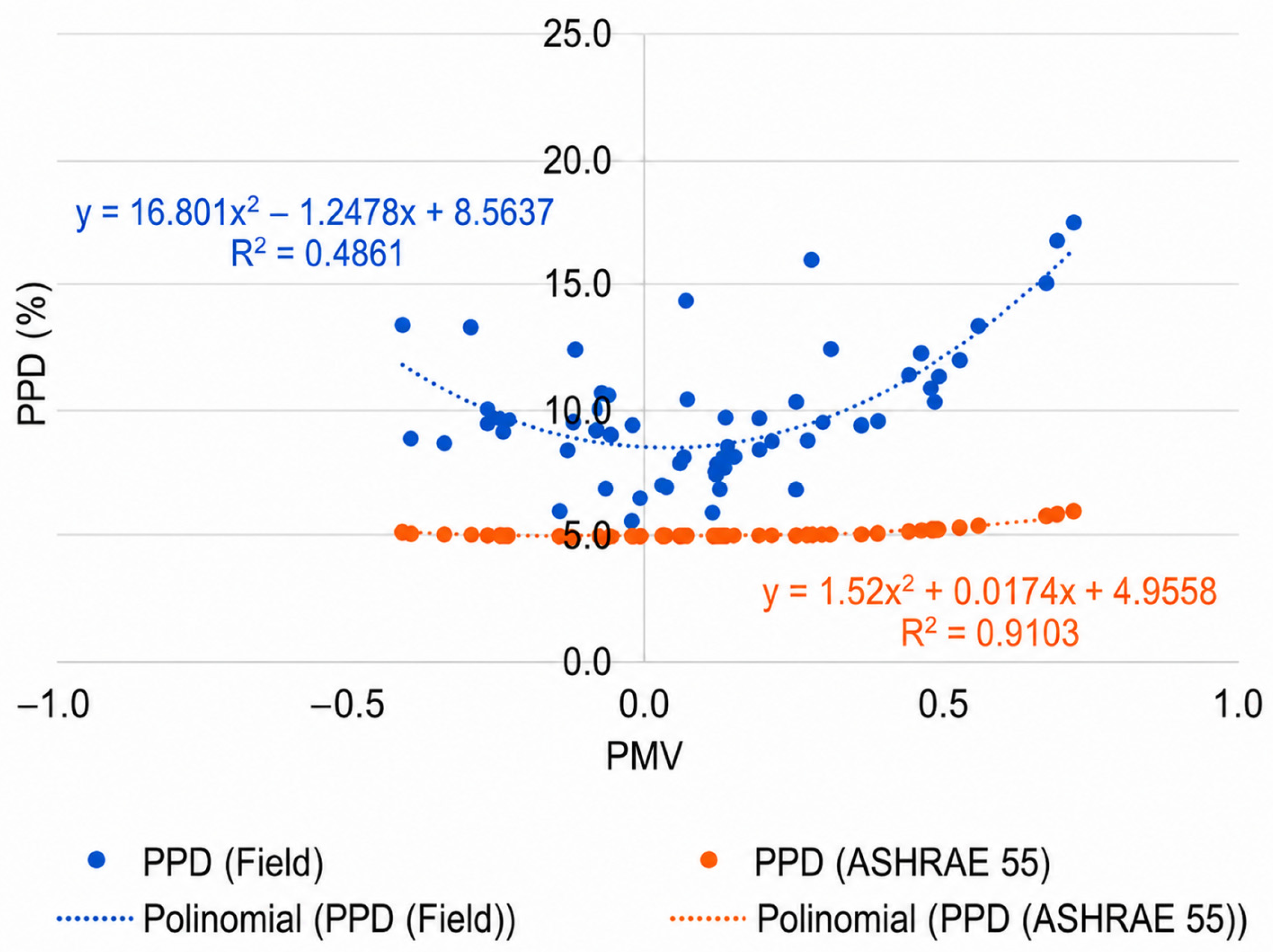
For heat-sensitive occupants (
Figure 7), APD values showed greater variability than predicted by the PMV/PPD model [
3]. Although PMV values remained close to thermal neutrality, observed dissatisfaction levels were frequently higher than those predicted by the model, suggesting that individual sensitivity to heat may influence perceived comfort beyond what is captured by steady-state heat balance approaches.
Overall, the results indicate that the PMV/PPD model may not fully capture the diversity of thermal perception observed in mixed-mode buildings located in humid subtropical climates. Heat-sensitive occupants exhibited systematically higher dissatisfaction levels and greater response variability than cold-sensitive occupants, indicating lower tolerance to warm conditions even near thermal neutrality. In these contexts, occupants are frequently exposed to seasonal variability and may develop distinct comfort expectations and adaptive behaviours according to their thermal disposition. Similar findings have recently been reported in office buildings located in a humid subtropical climate, where mechanically conditioned environments were found to reduce occupants’ adaptive capacity and tolerance to thermal variations. The authors further observed that uniform thermal environments do not adequately accommodate occupant diversity, reinforcing the importance of considering individual differences in thermal comfort assessment [
44]. The lower dissatisfaction observed among cold-sensitive occupants compared to heat-sensitive occupants is consistent with findings reported by Fanger et al. [
45], who demonstrated that occupants tend to be more tolerant of slightly cool environments than warm ones. This supports the hypothesis that thermal disposition acts as a moderating factor in the relationship between environmental conditions and perceived comfort.
3.5. Adaptive Comfort in the Mixed-Mode Building
To assess whether the monitored environments were consistent with adaptive comfort expectations, indoor operative temperatures were compared with the adaptive comfort limits defined by ASHRAE 55 [
1] based on the prevailing mean outdoor temperature.
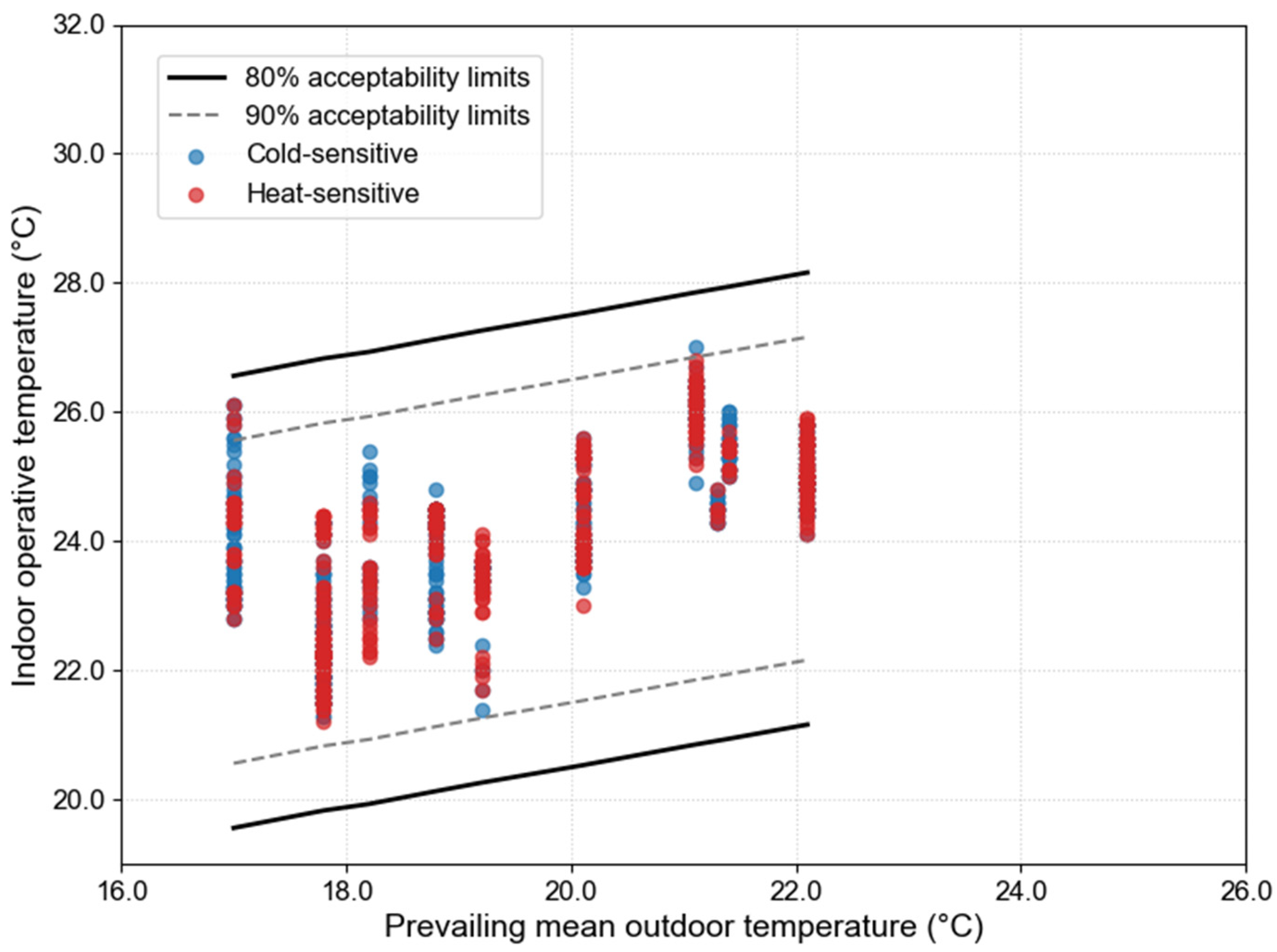
Figure 8 shows the relationship between indoor operative temperature and prevailing mean outdoor temperature under natural ventilation. The corresponding results for air-conditioning are provided in
Figure S3 in the Supplementary Materials. Most observations fell within the adaptive comfort limits under both operating modes. Under air-conditioning, 97.4% of observations were within the 80% acceptability limits and 91.6% within the 90% acceptability limits. Under natural ventilation, 100% of observations fell within the 80% limits and 98.8% within the 90% limits. These results indicate that the monitored environments were generally consistent with adaptive comfort expectations, particularly under natural ventilation, where occupants are more likely to adjust clothing levels, operate windows, or modify air movement in response to outdoor climatic conditions.
Studies conducted in humid subtropical climates indicate that occupants may exhibit thermal responses that differ from those predicted by standard comfort models, highlighting the role of adaptive processes and individual variability in thermal perception [
35]. Thermal disposition may therefore be understood as an individual factor that contributes to explaining differences in thermal sensation among occupants exposed to similar environmental conditions in mixed-mode buildings. Although most observations complied with the ASHRAE 55 [
1] adaptive comfort limits, adaptive compliance should not be interpreted as a guarantee of individual thermal satisfaction. The adaptive model defines temperature ranges expected to be acceptable for a majority of occupants based on outdoor climatic conditions and adaptive opportunities. However, the results demonstrate that substantial variability in subjective responses persists within these acceptable ranges, particularly among cold-sensitive occupants, for whom PMV showed very limited explanatory power and observed dissatisfaction frequently exceeded model predictions. These findings suggest that adaptive compliance reflects population-level acceptability rather than individual comfort, highlighting the importance of psychological, behavioural, and physiological factors that are not fully represented by simplified thermal comfort indices.
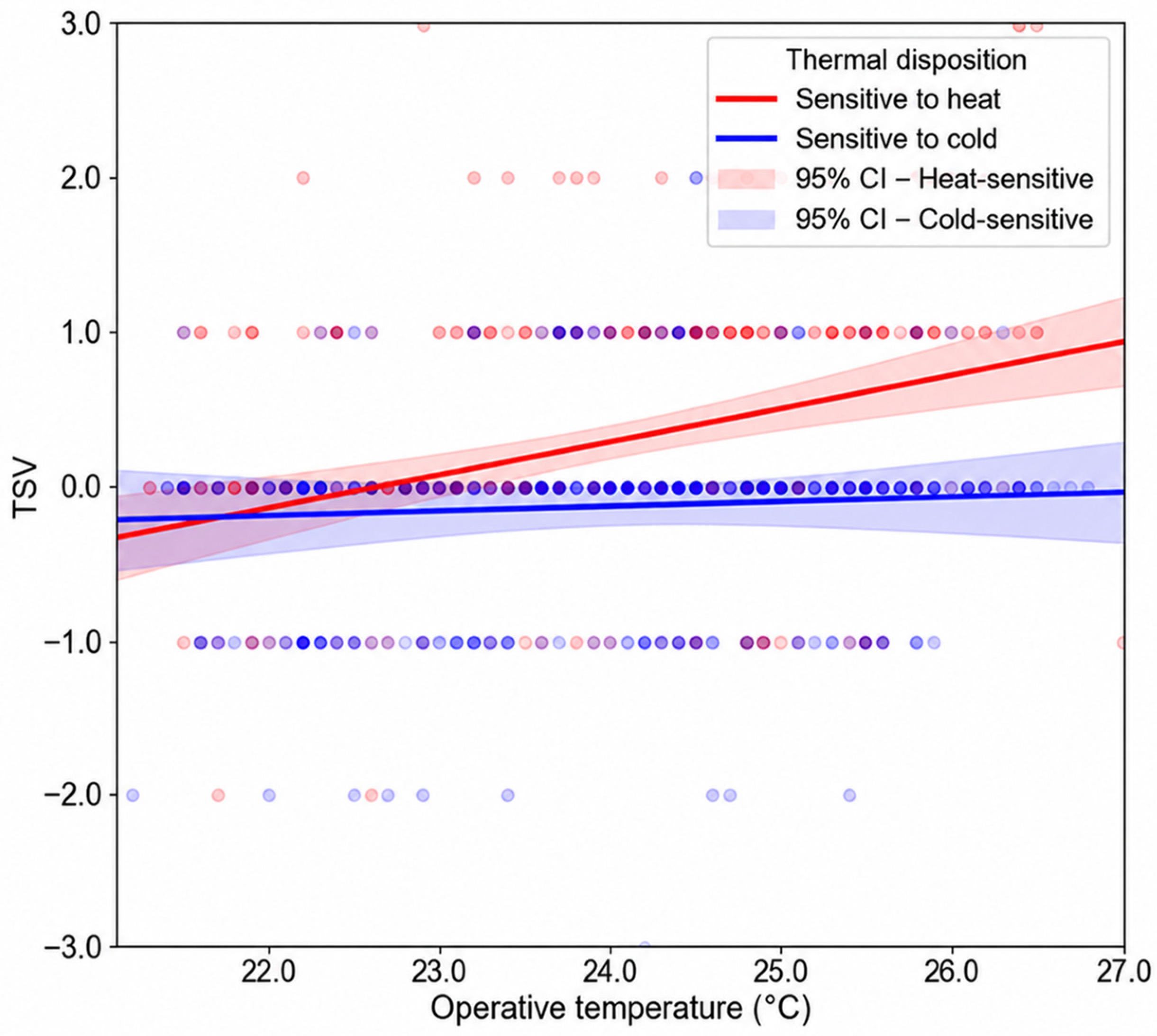
3.6. Mixed-Effects Model of Thermal Sensation in Mixed-Mode Buildings
Since indoor conditions were generally within adaptive comfort limits for both groups, a linear mixed-effects model was employed to evaluate the interaction between operative temperature, thermal disposition, and operating mode, accounting for repeated observations through participant-specific random effects. This approach enables an assessment of how sensitivity to heat or cold modifies the relationship between indoor operative temperature and thermal sensation under different operating modes. Results for natural ventilation are shown in
Figure 9, while the corresponding air-conditioning results are provided in
Figure S4 in the Supplementary Materials.
In this analysis, increasing operative temperature corresponds to progressively warmer thermal sensations. Differences in slopes between thermal disposition groups therefore indicate that heat-sensitive and cold-sensitive occupants respond differently to temperature variations depending on the operating mode.
Operative temperature showed a significant positive association with TSV (β = 0.148; p = 0.001), indicating that higher indoor temperatures were associated with warmer thermal sensation votes. The main effects of thermal disposition (p = 0.638) and operating mode (p = 0.158) were not statistically significant when considered independently. However, the interaction between thermal disposition and operating mode was significant (β = 4.808; p = 0.007), demonstrating that differences between heat-sensitive and cold-sensitive occupants depend on the conditioning strategy. A significant three-way interaction among operative temperature, thermal disposition, and operating mode was also observed (β = −0.195; p = 0.007), indicating that the effect of temperature variations on TSV differs between heat-sensitive and cold-sensitive occupants depending on the operating mode. In particular, heat-sensitive occupants exhibited a steeper increase in TSV with rising operative temperature, especially under air-conditioning, whereas cold-sensitive occupants showed a smaller change in thermal sensation with temperature variation under natural ventilation.
Random effects confirmed substantial inter-individual variability in both baseline thermal sensation and sensitivity to operative temperature, reinforcing that individual characteristics contribute to explaining differences in thermal perception beyond environmental variables alone. These findings provide statistical evidence that thermal disposition acts as a moderating factor in thermal comfort perception in mixed-mode buildings.
4. Conclusions
The main objective of this study was to investigate how thermal disposition influences occupants’ thermal comfort perception in mixed-mode buildings located in a humid subtropical climate. Clear differences in thermal sensation were observed between groups: heat-sensitive occupants consistently reported warmer sensations, whereas cold-sensitive occupants reported cooler sensations under similar indoor environmental conditions, indicating that perceived thermal neutrality varies according to individual sensitivity.
Although operative temperatures were similar across groups and most observations fell within the adaptive comfort limits defined by ASHRAE 55, subjective responses diverged considerably. More than 97% of observations under air-conditioning and virtually all observations under natural ventilation fell within the adaptive acceptability limits. While PMV values generally remained within the predicted comfort range, TSV and AMV results exhibited considerable variability, indicating limited predictive accuracy of the PMV model in capturing individual thermal perception. For cold-sensitive occupants, PMV explained only 1.3 to 1.6% of the variability in AMV, whereas for heat-sensitive occupants under air-conditioning, the explained variance reached 21.9%. APD values frequently exceeded those predicted by the PMV/PPD model, particularly among heat-sensitive occupants, suggesting lower tolerance to deviations from thermal neutrality and highlighting the influence of individual variability on perceived comfort. Observed dissatisfaction frequently exceeded 20% among heat-sensitive occupants, despite PMV values remaining within the conventional comfort range. The mixed-effects model confirmed that thermal disposition moderates the relationship between operative temperature and thermal sensation when repeated observations from the same individuals are accounted for. These findings reinforce the importance of considering individual sensitivity in mixed-mode buildings, where adaptive opportunities and behavioural factors influence occupants’ thermal perception even under environmental conditions deemed acceptable by standard comfort models.
Because the data were collected from a single building located in Florianópolis, Brazil, the results should be interpreted as context-specific evidence, limited to humid subtropical climates, and caution should be exercised when extrapolating these findings to other building typologies or occupant populations. It is also worth noting that cultural factors specific to the Brazilian context, such as thermal expectations shaped by long-term exposure to warm and humid conditions, clothing habits, and behavioural patterns, may influence how occupants perceive and report thermal comfort. These cultural particularities may differ from those of occupants in temperate climates, suggesting that international standards may not fully capture the thermal comfort requirements of Brazilian occupants. Future studies and regulatory frameworks could explicitly incorporate such cultural factors alongside individual thermal disposition and should examine the influence of thermal disposition in mixed-mode buildings across other climate zones to assess the generalizability of these findings.