


Abstract
High-density urban parks are essential spaces for residents in core urban areas for restorative experiences and routine leisure. Research on the impact of cross-density contexts on the motivational structure of park recreation remains limited. Empirical identification under a high-density Built Environment remains limited, and cross-density comparison is largely absent. This study examines five high-density parks using 583 valid questionnaires and the Recreation Experience Preference (REP) scale with exploratory factor analysis (EFA) to identify the motivational structure and motivational expression strength of park recreation. Standardized density assessment and cross-density comparison in existing studies generate exploratory hypotheses. Results identify eight motivational dimensions, explaining 62.36% of the variance. Physical well-being, nature enjoyment, relaxation and family bonding, and social connection are consistently recognized across density contexts, while escape, introspection and self-realization, learning and exploration, and autonomy and independence are more likely to emerge as independent dimensions in high-density contexts. Physical well-being and social connection appear at higher proportions in low-density contexts. This study provides direct empirical evidence on the motivational structure of urban park recreation in high-density Built Environments, exploratory evidence for understanding the potential associations between urban spatial contexts and psychological needs, and a foundation for future research in human-centered urban landscape planning and management.
1. Introduction
The structural contradiction between the intensified spatial concentration resulting from high-density urbanization and the relative scarcity of restorative open spaces has become a critical starting point for research on public spaces in contemporary urban cores [1,2,3]. As population, industry, and construction activities continue to concentrate in city centers, the intensity of urban spatial development has steadily increased. The proliferation of high-rise buildings, overlapping population activities, and the relative scarcity of public open spaces have become typical characteristics of high-density Built Environments [1,2]. While spatial efficiency is improved, urban cores face accumulating environmental pressures and a shortage of daily restorative resources for residents simultaneously [3,4].
Under this background, as the most routinely accessible open spaces in high-density urban areas, urban parks and public green spaces have gradually become crucial carriers for residents’ Physical Well-being, Nature Enjoyment, Relaxation and Family Bonding, Social Connection, and Daily Leisure Activities [3,5]. Related studies have revealed that healthy urban green classical theories, including Biophilia Theory and Stress Recovery Theory, emphasize the importance of regular contact with nature for promoting the health and well-being of urban residents [6]. Building on this perspective, subsequent studies have suggested that healthy urban green space systems should not only provide an adequate quantity of green spaces but also ensure an appropriate configuration of green spaces of different sizes and spatial forms, thus creating opportunities for sustained nature contact and restorative experiences [7]. The realization of the value of urban parks depends not only on the provision of space itself but also on their capacity to respond to residents’ core benefit needs in specific urban contexts [8,9,10]. Residents’ motivations for visiting parks and the psychological benefits they expect to gain directly influence whether parks can effectively relieve the pressures of daily life and meet practical needs [8,11]. For this reason, as a critical link between spatial provision and residents’ psychological benefits, park recreation motivation has significant practical importance, particularly regarding its Motivational Structure and Contextual Differences under varying built environment density conditions.
In this study, first, a systematic search was conducted on the Web of Science Core Collection focusing on the theme of park recreation motivation, followed by a stepwise screening of relevant literature in the urban park research context. The results indicate that a clear and mature research trajectory and methodological framework have already been established for the research on the recreation motivation of urban park visitors [12]. In existing studies, structured scales combined with factor analysis are generally employed to quantitatively identify visitors’ latent needs [12]. Regarding structured motivational scales, the Recreation Experience Preference (REP) theory and its associated scale system have become one of the most representative and widely used tools in park recreation motivation research [13,14]. In REP theory, it is emphasized that individuals participate in recreational activities primarily to obtain specific psychological benefits, encompassing multiple Motivational Dimensions, including Physical Well-being, Nature Enjoyment, Relaxation and Family Bonding, Social Connection, Learning and Exploration, and Introspection and Self-Realization [10,13,15]. Due to its adaptability across diverse recreational contexts, REP and its derivative scales have been extensively applied in studies of urban parks, forest recreation, and urban green space demand, making it one of the most authoritative measurement frameworks for identifying Motivational Structure [13,16]. In recent years, in several studies, REP items have also been adapted to specific urban park contexts to enhance explanatory power in daily urban recreation scenarios [13,17,18,19].
At the methodological level, exploratory factor analysis (EFA) is a commonly used and representative analytical approach. This approach has been widely applied in studies of urban parks and related green space to extract latent Motivational Dimensions from multiple observed items and further analyze the structural relationships among different motivations [12,20]. In relevant research, this method has been extensively applied across urban parks, linear parks, urban forests, and general urban green space contexts [17,21,22,23,24,25,26]. Based on the aforementioned methods and tools, existing literature has sufficiently demonstrated that park recreation motivation exhibits a clear multidimensional Motivational Structure. Physical Well-being, Nature Enjoyment, Relaxation and Family Bonding, and Social Connection constitute the commonly observed foundational Motivational Dimensions in current research [8,16,25].
Although prior studies have largely revealed the multidimensional characteristics of urban park recreation motivation, empirical identification of the Motivational Structure of park recreation in high-density Built Environment contexts remains a notable research gap.
To clarify this issue, a systematic literature search was conducted in databases, including Web of Science, Scopus, and Google Scholar, using combinations of keywords such as “park,” “motivation,” “green space,” “motivation identification,” “open space,” “factor analysis,” and “principal component analysis.” Additional studies were identified through backward reference searching and by reviewing publications of key authors in the field. Following an initial screening of titles and abstracts, 120 studies were retained. Studies not directly related to the identification of urban park recreation motivation structures were subsequently excluded, including those focusing on nature-dominated recreational settings (e.g., national parks, ecological parks, and protected areas), studies primarily concerned with pet-related activities or ecological restoration, and studies in which park boundaries could not be clearly defined. A total of 19 studies were ultimately included in the analysis. The list of studies selected through the screening process is provided in Table S1. Based on this selection, we made a standardized density assessment of the park sites involved in these studies. The results indicate that multiple park samples were included, and parks from both high- and low-built environment density contexts were often combined in most studies. Only 13 studies were based on a single density context. Among them, 12 studies corresponded to low-density Built Environment contexts, whereas only one study, focusing on small urban parks in Shanghai, could be categorized under a high-density Built Environment context. However, this study primarily relied on literature review and integration of existing scale items for motivation measurement, rather than conducting an independent Identification of Motivational Structure specifically in the high-intensity urban core. Thus, direct empirical evidence on the Motivational Structure of park recreation in high-density Built Environment contexts remains limited, and the existing scholarly accumulation is insufficient to provide a clear understanding of the composition of Motivational Dimensions and their Expression Intensity in this context.
Furthermore, existing research lacks effective Cross-density Comparison from the perspective of built environment density differences. Although the types of park recreation motivation and the composition of their Motivational Dimensions in various urban park contexts have been separately reported in different studies, most studies are still based primarily on single study sites. Existing findings mostly exist in a parallel and dispersed manner, without further comparison of the commonalities and differences in Motivational Dimensions across different density contexts. Consequently, there is still a lack of systematic evidence regarding which motivations exhibit Structural Stability across contexts and which motivations may undergo Structural Differentiation in response to environmental pressures, spatial constraints, and activity conditions. This limitation partially constrains the understanding of Contextual Differences in urban park recreation motivation and leaves density-related latent structural patterns primarily at the level of empirical observation and Exploratory Hypotheses.
To make up for the aforementioned research gaps, a three-step approach was adopted in this study: Identification of Motivational Structure and Expression Intensity in case samples from high built environment density contexts, Cross-density Comparison, and generation of Exploratory Hypotheses. First, representative urban parks situated in high-density Built Environment contexts were selected as case samples. Using structured questionnaires and established multivariate statistical methods, the latent Motivational Dimensions of park recreation and their Motivational Expression Strength were identified, providing direct empirical insights into core recreational needs in high-density contexts. Second, based on comparable representations of built environment density, Cross-density Comparison was conducted in conjunction with existing studies, with a focus on examining the commonalities and differences in the composition and Expression Intensity of Motivational Dimensions across different density contexts. Finally, informed by the latent density-related patterns emerging from the cross-study comparison, theoretically grounded and empirically testable Exploratory Hypotheses were proposed, thus providing a foundation for subsequent confirmatory research.
Based on the above research response approach, three specific objectives were established in this study: first, to identify the Motivational Dimensions of urban park visitors and their Expression Intensity in high-density Built Environment contexts; second, to conduct a Cross-context Comparison of Motivational Structure and Expression Intensity between high-density and low-density contexts within a standardized density framework; and third, to propose empirically testable Exploratory Hypotheses based on the comparison results, providing a foundation for subsequent research verification.
To our knowledge, this study is the first to focus on high-density Built Environment urban park contexts by identifying Motivational Dimensions of park recreation and conducting Cross-density Comparison and generating Exploratory Hypotheses in combination with existing literature. From the perspective of built environment density, the study makes up for the academic gap arising from the limited direct empirical evidence on park recreation motivation in high-intensity urban contexts. It further advances understanding of the relationship between spatial context and the structure of psychological needs and provides new empirical evidence for interpreting the commonalities, differentiation, and potential contextual associations of Motivational Dimensions across different built environment density settings. At the same time, the Exploratory Hypotheses generated from the cross-context comparison offer theoretically grounded and testable guidance for subsequent confirmatory research on recreational demand in diverse built environment density contexts.
2. Research Methods
2.1. Selection of Study Sites and Quantification of Built Environment Density Representation
This study aims to identify the Motivational Structure of park visitors in high-density Built Environment contexts and systematically compare these findings with those from existing studies in low-density Built Environment contexts. To achieve this objective, it is first necessary to establish an operational and comparable quantitative definition of “high-density Built Environment.” This section sequentially addresses three tasks: the quantification method and threshold determination for built environment density; the selection of case parks in high-density Built Environment contexts; and the standardized measurement and grouping of density backgrounds for cross-study comparison (see Figure 1).
Figure 1.
Technical framework.
2.1.1. Quantification Methods and Threshold Determination of Built Environment Density
Given the lack of a universally accepted international standard for quantifying urban built environment density, the total building volume per unit land area—i.e., Volume Density (unit: m3/m2)—was adopted as the core measurement indicator in this study. Compared with traditional two-dimensional building density metrics, Volume Density integrates both building coverage and building height information, providing a more accurate characterization of three-dimensional spatial intensity. It is particularly suitable for representing high-density Built Environment contexts dominated by high-rise buildings.
- (1)
- Data Source
The building volume data in this study were obtained from the Global Human Settlement Layer (GHSL). The GHSL dataset is generated using multi-source remote sensing imagery and Geographic Information System (GIS) techniques, providing global information on building coverage and height at a spatial resolution of 100 m, with data for the year 2025 and in the Mollweide projection [27]. GHSL was selected for four main reasons. First, a standardized data acquisition approach is employed for it, ensuring comparability across different regions and eliminating errors caused by variations in measurement methods or definitions [28]. Second, it is authoritative, and GHSL is released by the Joint Research Center (JRC) of the European Commission, offering high scientific reliability and credibility for academic research and urban planning applications. Third, it provides global coverage, encompassing urban areas worldwide and fully reflecting spatial patterns of urban buildings, thus offering a reliable basis for cross-regional or urban-core studies. Fourth, the data are publicly available and free, facilitating reproducibility and research transparency. In this study, GHSL data were used to quantify the three-dimensional built environment density of the urban core in the Second Ring Road of Xi’an and the comparative regions, providing foundational data for defining high- and low-density Built Environment areas and making subsequent analysis of park visitor recreation motivation.
- (2)
- Indicator Construction
To analyze differences in park recreation motivation among visitors under varying built environment density, the development intensity surrounding parks was quantified using ArcMap 10.7 (Esri, Redlands, CA, USA) in this study. Specifically, park boundaries were used as baselines to construct outward buffer zones, within which the ratio of total building volume to area was calculated to obtain a three-dimensional Volume Density indicator. The calculation formula is as follows:
where represents the total building volume (m3) contained in the -th data unit within the buffer zone, denotes the buffer area (m2), and nis the total number of data units within the buffer.
In practice, a 1000 m buffer was established around each park boundary to represent the area of influence. The ratio of total building volume to land area in this buffer provides a three-dimensional construction intensity index analogous to the floor area ratio. The choice of a 1000 m buffer is primarily based on studies of walking accessibility, as this distance covers the main activity range for daily urban leisure and short trips [29,30]. To examine the sensitivity of the results to buffer size, 500 m and 1500 m buffers were also calculated. The analysis indicated that changes in buffer size did not significantly affect the results, supporting the reasonableness and representativeness of the 1000 m buffer.
- (3)
- Threshold Determination
To define “high-density Built Environment” areas, a Volume Density threshold of 6 m3/m2 was set in this study based on the following rationale. Considering the physical characteristics of the built form, assuming a standard building floor height of 3 m, a Volume Density of 6 m3/m2 corresponds to a floor area ratio of approximately 2.0 (6 ÷ 3 = 2.0). A floor area ratio of 2.0 is commonly used as the boundary between low- and medium-density residential areas, as specified in the Urban Residential Area Planning and Design Standards issued by the Ministry of Housing and Urban-Rural Development of China and regularly reported in the China Urban Development Report by the Chinese Academy of Social Sciences, where it serves to distinguish low-density built-up areas from high-density ones [31,32]. This building volume threshold marks the transition from low-rise, low-density development to mid-to-high-rise, high-density construction and effectively identifies areas characterized by vertical urbanization.
2.1.2. Selection of Park Cases in High-Density Built Environment
After the GHSL-based Volume Density measurement method was established and the high-density threshold was determined (Volume Density ≥ 6 m3/m2), urban parks located within high-density Built Environment areas in the core urban area inside the Second Ring Road of Xi’an were selected based on objective quantitative indicators in this study. Ultimately, five parks were chosen as study sites: Xingqing Palace Park, Fengqing Park, Geming Park, Changle Park, and Lianhu Park (see Figure 2).
Figure 2.
Location of park samples in high-density Built Environments.
These parks are all located in the core urban area as defined by the Xi’an Territorial Spatial Master Plan (2021–2035) and the built environment density Report of Major Cities in China (2023) issued by the China Academy of Urban Planning and Design, exhibiting typical macro-level characteristics of high population concentration, intense land development, and highly compact building space [33,34]. The 1000 m buffer zones surrounding the selected parks all reached or exceeded a Volume Density of 8 m3/m2. The mean Volume Density across the five parks was 9.6 m3/m2, meeting the strict high-density criteria established in this study. In addition, the five parks showed a relatively high level of consistency in their internal characteristics, facility provision, and management and maintenance conditions, which helped reduce the potential influence of non-density-related factors on recreational motivation structure and expression strength (Table 1).
Therefore, these five parks serve as representative samples of high-density Built Environment contexts, providing a reliable empirical basis for the Identification of Motivational Structure in urban parks and Cross-density Comparison with low-density literature cases. Field observations further confirmed that the areas surrounding these parks are generally occupied by high-rise residential and commercial buildings, feature high street width-to-height ratios, and exhibit high pedestrian and traffic density, which is highly consistent with the quantitative measurements. This evidence further validates the reasonableness and representativeness of these parks as study samples in high-density Built Environment contexts.
2.2. Research Method
To systematically identify the Motivational Structure of urban park visitors in high-density Built Environment contexts, structured questionnaire surveys were employed to collect data in this study. This section sequentially introduces the data collection instruments, data collection procedures, and data analysis methods, ensuring the reproducibility of the research process and the reliability of the findings.
2.2.1. Data Collection Instruments
The questionnaire was designed based on the principles of theory-driven development and contextual adaptation and divided into two modules. The first module collected demographic characteristics of samples, including respondents’ gender, age, educational level, and occupation, to profile park users in high-density Built Environment contexts. The second module measured visitors’ park recreation motivation. As the core of the questionnaire, the internationally recognized Recreation Experience Preference (REP) scale [14] was used as the foundation in this study, adapting the language to the context of Chinese urban parks. After item screening, 35 motivational statements were retained. These items cover multiple theoretical dimensions, including personal development, social interaction, cognitive learning, nature experience, health and stress relief, and pursuit of tranquility, comprehensively reflecting the diverse Park recreation motivation potentially elicited in high-density Built Environment contexts.
Motivation was measured using a five-point Likert scale (1 = strongly disagree, 5 = strongly agree) [35]. Respondents evaluated the extent to which each motivational statement matched their actual recreation experiences. To ensure semantic clarity and ease of completion, a pilot test was conducted with 10 urban park users prior to the formal survey, and item wording was refined based on their feedback.
Table 1.
Internal Characteristics of the Selected Urban Parks.
2.2.2. Data Collection Methods
The sampling procedure, schedule, and sample composition were carefully designed in this study to ensure reproducibility and representativeness. Data were collected through on-site intercept surveys at five typical urban parks in the Second Ring Road of Xi’an, representing high-density Built Environment contexts: Xingqing Palace Park, Fengqing Park, Geming Park, Changle Park, and Lianhu Park. This study has been reviewed and approved by the Academic Committee of the School of Design at Xi’an Technological University (Number: XATUDS20230004) and complies with the relevant principles of the Declaration of Helsinki on biological research on humans. The collected questionnaires are anonymous and do not contain any personally identifiable information. The Academic Committee has also approved the use of oral informed consent from participants and assigned independent reviewers to oversee and witness the data collection process. The survey was conducted in March, a period with favorable climate conditions and relatively high park usage rates.
To enhance sample representativeness and temporal coverage, sampling was conducted alternately on weekdays and weekends, with daily survey periods from 8:00 to 18:00, covering morning exercise, daytime leisure, and evening activity peaks. Surveyors randomly invited visitors to participate in the questionnaire at the main park entrances and in key activity areas. For elderly respondents with difficulties in reading or writing, one-on-one assisted interviews were conducted to ensure effective coverage across different age groups.
A total of 640 questionnaires were distributed and collected. After data quality screening—excluding questionnaires with more than 20% of missing responses or identical answers across all items—583 valid responses were obtained, yielding an effective recovery rate of 91.1%. The sample size meets the conventional requirement for exploratory factor analysis, which recommends 5–10 times the number of items (35 items × 5 = 175).
2.2.3. Data Analysis Methods
Statistical analyses were conducted on the valid samples (N = 583) using IBM SPSS Statistics 26.0 (IBM Corp., Armonk, NY, USA). First, the internal consistency reliability of the park recreation motivation scale was assessed using Cronbach’s Alpha, both for the overall scale and each Motivational Dimension extracted through exploratory factor analysis (EFA) [41,42]. EFA was employed to identify the Motivational Structure of park visitors in high-density Built Environment contexts, extracting latent Motivational Dimensions from the observed variables. Principal Component Analysis was used for dimension extraction, and Varimax orthogonal rotation was applied to enhance the interpretability of the Motivational Dimensions. The number of dimensions retained followed the Kaiser criterion. Only those with eigenvalues greater than 1 were kept. Item factor loadings below 0.40 or exhibiting significant cross-loadings were excluded [43]. The suitability of the data for factor analysis was evaluated using the Kaiser–Meyer–Olkin (KMO) test and Bartlett’s Test of Sphericity.
2.3. Cross-Study Comparison Methods and Built Environment Density Grouping
To enable Cross-study Comparison, the GHSL-based Volume Density measurement method was applied to urban park sites reported in the relevant literature in this study, thus providing a standardized quantitative assessment and grouping of density backgrounds. Through a systematic search of English literature on park recreation motivation, 19 studies involving the measurement of park recreation motivation were preliminarily selected. Using park names or geographic information provided in the literature, the boundaries of the research sites were accurately delineated in a GIS environment in this study. A 1000 m buffer and the GHSL Volume Density calculation method were then applied to compute the SUM/AREA (m3/m2) value, and an equivalent floor area ratio (SUM/AREA ÷ 3) was also calculated to assist in density classification. Based on the established threshold (≥6 m3/m2 for high-density contexts, <6 m3/m2 for low-density contexts), each research site was grouped accordingly. Some studies included multiple parks with Volume Density values spanning the threshold, and these sites could not be assigned to a single density group due to inconsistent internal densities and were therefore excluded from the Cross-density Comparison.
After screening, the remaining 13 studies were classified under a single-density Built Environment context. The density measurement results for all 19 studies are presented in Table S2. Further considering the comparability of motivation measurement methods, only nine studies in which factor analysis or comparable multidimensional Motivational Structure identification methods were employed and whose Motivational Dimensions could be mapped to those in this study were retained for the core comparative analysis framework. Based on the standardized threshold, two groups were ultimately formed: the high-density context group, comprising nine small parks in Shanghai (SUM/AREA: 6.90–12.53 m3/m2), and the low-density context group, comprising multiple parks located in Athens, Serbia, Cyprus, the Dominican Republic, Kuala Lumpur, and Corvallis, Oregon (SUM/AREA: 0.73–4.15 m3/m2, equivalent floor area ratio: 0.24–1.38). A clear gradient difference exists between the two groups, providing a solid empirical foundation for Cross-density Comparison analysis.
Based on the above standardized quantitative grouping, the Motivational Structure of park visitors across different density contexts can be systematically compared in this study, thus preliminarily identifying potential associations between built environment density and park recreation motivation and generating empirically testable research hypotheses. It should be noted that the reviewed studies still exhibit some heterogeneity in questionnaire design, sampling strategies, and analytical methods despite the standardized density measurement. Therefore, the Cross-density Comparison conducted in this study is exploratory and hypothesis-generating in nature. Conclusions primarily intend to provide theoretical guidance and empirical insights for future confirmatory research.
3. Results
3.1. High-Density Built Environment Park Samples and Characteristics of the Motivational Structure of Park Recreation
Through descriptive statistical analysis, the sociodemographic characteristics of the sample and the scores of park recreation motivation were examined in this study, aiming to gain a deeper understanding of respondents’ basic profiles and their distribution across different Motivational Dimensions.
Specifically, regarding sociodemographic characteristics, in terms of gender composition, females accounted for 54.94%, and males accounted for 45.06%. In terms of age distribution, respondents were predominantly young and middle-aged. 36–60-year-olds represented 38.81% and 19–35-year-olds represented 37.23% of the sample, together comprising the majority. Regarding educational attainment, 45.54% of respondents had a college or undergraduate degree, 29.90% had a high school or vocational secondary school education, and 17.82% had a junior high school education or lower.
Furthermore, among the 35 park recreation motivation items, a clear hierarchical pattern emerged. Overall, high-scoring motivations were primarily related to relaxation, nature experience, and health maintenance, whereas low-scoring motivations were more associated with stimulation-seeking, role assumption, and skill-sharing. Specifically, “achieving physical relaxation and rest” received the highest score, with a mean of 4.34 and a total score of 2509, indicating that relaxation is one of the core recreational needs of the sample. “Being close to nature, enjoying nature” and “appreciating scenic beauty” were also highly rated, with mean scores of 4.26 and 4.19, and total scores of 2483 and 2428, respectively. In addition, “exercising to maintain health” and “releasing stress and tension” were rated relatively high, with means of 4.17 and 4.09. Beyond these core motivations, several social and cognitive-related motivations were also moderately important. For example, items such as “interacting with friends and colleagues,” “spending time with family, fostering family bonds,” and “learning about and exploring nature” had mean scores around 3.7, indicating that recreational activities also serve functions of social interaction, family engagement, and knowledge acquisition, although these motivations are comparatively secondary to relaxation and nature experience. In contrast, low-scoring items were primarily associated with “leading others,” “escaping daily routines,” “educating or sharing skills,” and “experiencing excitement.” “Leading others” received the lowest mean score of 2.04 and a total score of 1187.
3.2. Motivational Structure of Park Recreation in High-Density Built Environment (Exploratory Factor Analysis)
Because park usage behaviors are often driven by multiple motivations, single-variable analysis is insufficient to fully reveal their underlying structure. Therefore, it is necessary to summarize and reduce multiple measurement items by using exploratory factor analysis (EFA), thus identifying the latent Motivational Structure and Motivational Dimensions underlying park usage [44]. Based on this rationale, the classical Recreation Experience Preference scale was applied to collect questionnaire data from urban parks located in high-density Built Environment contexts, and EFA was used to analyze the data in this study. Prior to dimension extraction, the suitability of the data was first assessed to ensure the reliability and scientific validity of the analysis [44].
3.2.1. Suitability Test for Factor Analysis
Before conducting exploratory factor analysis, it is necessary to assess whether the sample data are appropriate for factor analysis. To this end, the Kaiser–Meyer–Olkin (KMO) test and Bartlett’s Test of Sphericity were used to evaluate data suitability. The results are presented in Table 2.
Table 2.
KMO test and Bartlett’s test of sphericity.
As shown in Table 2, the KMO sampling adequacy value of 0.866 indicates that the data are highly suitable for factor analysis. Bartlett’s Test of Sphericity was significant (χ2 = 7942.435, df = 595, p < 0.001), further confirming that the correlation matrix is appropriate for factor extraction. These results demonstrate that the sample data possess strong structural characteristics, supporting the subsequent exploratory factor analysis.
3.2.2. Extraction of Motivational Dimensions and Structural Interpretation
Following the suitability assessment, Principal Component Analysis was employed to identify the Motivational Dimensions, and Varimax orthogonal rotation was applied to enhance the interpretability of the Motivational Structure [44]. Based on the Kaiser criterion of eigenvalues greater than 1, eight Motivational Dimensions were extracted from the 35 motivation measurement items, cumulatively explaining 62.36% of the total variance. The Cronbach’s Alpha coefficients for the individual Motivational Dimensions ranged from 0.631 to 0.867, indicating good internal consistency for the overall scale. This suggests that the identified Motivational Structure effectively summarizes the main statistical structure of park recreation motivation among residents in high-density Built Environment contexts.
To provide a more intuitive presentation of the dimension membership and statistical characteristics of each measurement item, Table 3 reports the rotated factor loadings, eigenvalues, variance explained, and reliability coefficients.
Table 3.
Factor analysis load factor table.
As shown in Table 2, the first Motivational Dimension was labeled as Achievement and Stimulation, which made the largest contribution to the factor structure, with the highest variance explained (12.54%) and high internal consistency (Cronbach’s Alpha = 0.86). This dimension primarily encompasses motivations such as enhancing self-confidence, attaining satisfaction, receiving recognition from others, improving personal skills, understanding one’s abilities, experiencing excitement, achieving personal goals, and demonstrating talents. Thus, a sense of achievement and personal growth constitutes a distinct latent motivational dimension in related recreational activities. Escape, the second Motivational Dimension, accounted for 10.18% of the total variance and demonstrated high internal consistency (α = 0.87). It includes motivations such as escaping daily life, experiencing solitude and tranquility, avoiding interference from others, distancing from crowds, and enjoying open spaces, indicating that relieving psychological stress and temporarily leaving daily routines constitute another distinct dimension in the motivational structure. Introspection and Self-Realization, the third dimension, explained 8.22% of the variance (α = 0.80) and mainly involves self-reflection, self-awareness, enhancing creativity, sharing or teaching skills, and leading others, suggesting that recreational experiences also provide important contexts for deepening self-understanding and pursuing internal growth. Learning and Exploration, the fourth dimension, with a variance explained of 7.46%, is closely associated with motivations such as acquiring knowledge, exploring new things, understanding human history, and engaging with nature, reflecting a cognitive and learning-related component in the motivational structure. Social Connection, the fifth dimension, encompasses motivations such as sharing experiences with others, interacting and collaborating with friends or colleagues, approaching like-minded individuals, and making new acquaintances. Physical Well-being, the sixth dimension, reflects the demand to promote physical and mental health through exercise, maintaining fitness, relaxation, rest, and stress relief, highlighting the important role of recreational activities in health promotion. Nature Enjoyment, Relaxation and Family Bonding, the seventh dimension, captures affective attachment to natural environments and family connections, including spending time with family, appreciating natural landscapes, engaging with nature, and recalling pleasant memories. Finally, Autonomy and Independence, the eighth dimension, involves maintaining independence and a sense of personal control, indicating that self-determination and autonomous awareness also play a significant role in shaping individual park recreation behavior. In addition, to assess the sensitivity of the factor solution to the rotation method, a Promax oblique rotation was conducted as a robustness check. The resulting factor structure was highly consistent with that obtained from the Varimax orthogonal rotation. The vast majority of items retained their original factor assignments, thus supporting the stability and interpretability of the proposed eight-dimensional motivational structure. Furthermore, the scree plot, communalities, and cross-loading assessments yielded results consistent with the main analysis. Detailed results are provided in Appendix A.
To distinguish factor-structure contribution from perceived motivational strength of respondents, factor-level descriptive statistics were further calculated. Table 4 reports the mean, standard deviation, 95% confidence interval, and ranking of each motivational dimension.
Table 4.
Descriptive Statistics of Recreation Motivation Factors.
3.3. Comparison of Park Recreation Motivation Across Built Environment Density Contexts
3.3.1. Consistency and Differences in Park Recreation Motivation Across Built Environment Density Contexts
In this section, the Motivational Structure of park recreation motivation under high-density and low-density Built Environment contexts was compared from the perspective of whether a motivation was identified as an Independent Dimension in this study. This comparison constitutes a structural-level qualitative consistency analysis, focusing on whether different categories of motivation remain stably present across varying built environment density contexts.
The comparison results (Table 5) indicate that park recreation motivation exhibits both consistency and differences across high- and low-density Built Environment contexts. Specifically, Social Connection, Physical Well-being, Nature Enjoyment, Relaxation and Family Bonding showed high consistency across different density contexts. In contrast, motivations such as Escape, Introspection and Self-Realization, Learning and Exploration, and Autonomy and Independence demonstrated more pronounced differences in Identification of Motivational Structure between high- and low-density contexts, reflecting strong Context Dependency.
Table 5.
Comparison of independent motivation dimensions identified across built environment density contexts.
First, Physical Well-being exhibited significant Structural Stability across different built environment density contexts. According to the comparison results in Table 5, in the high-density Built Environment sample of this study, Physical Well-being was identified as an Independent Dimension. “Exercising” served as a representative indicator forming a stable factor, explaining 6.108% of the variance. In low-density Built Environment contexts, this motivation was also identified in most studies. Among the eight studies included in the comparison, Physical Well-being or related motivations were identified in seven studies [17,18,21,22,23,24,45,46]. Only in [18], this category was not addressed (see Table 5). Specifically, in the Pedieos Linear Park study, physical activity and exercise were recognized as some of the core motivations [21], while the importance of cycling, walking, and sports in park use was reported in [17,24]. In [45], “exercising and maintaining health” also occupied a high proportion. Physical Well-being was consistently identified across both high- and low-density Built Environment contexts and persisted in the majority of studies, indicating high consistency and Structural Stability across density contexts. It thus represents one of the most stable core motivations across different built environment density settings.
Second, the Nature Enjoyment, Relaxation and Family Bonding motivation also demonstrated significant Structural Stability across different built environment density contexts. According to the comparison results in Table 5, in the high-density Built Environment sample of this study, this motivation was identified as an Independent Dimension, explaining 6.069% of the variance, reflecting visitors’ sustained demand for contact with nature and relaxation experiences. In low-density Built Environment contexts, this motivation was similarly identified consistently in most studies. Among the eight studies included in the comparison, nature-related or relaxation-related motivations were identified in seven studies [17,21,22,23,24,45,46]. Only in [18], this category was not addressed (see Table 5). Specifically, in the Pedieos Linear Park study, enjoying nature and environmental comfort was recognized as one of the core motivations [21], and proximity to nature and relaxation experiences was similarly emphasized as important usage motivations in the Košutnjak Forest and related studies [17,22]. Additionally, in [18,24], items such as “breathing fresh air,” “enjoying the natural environment,” and “participating in activities with family” were also rated highly. Overall, Nature Enjoyment, Relaxation and Family Bonding were consistently identified in both high- and low-density Built Environment contexts and persisted across the majority of studies, indicating high consistency and Structural Stability across varying built environment density settings.
Compared with highly stable motivations such as Physical Well-being and Nature Enjoyment, Relaxation and Family Bonding, Social Connection exhibited relatively high but not completely consistent Structural Stability across different built environment density contexts. According to the comparison results in Table 5, in the high-density Built Environment sample of this study, Social Connection was identified as an Independent Dimension, explaining 6.813% of the variance, reflecting visitors’ demand for interaction and social engagement in the park. In low-density Built Environment contexts, this motivation was also identified in most studies. Among the eight studies included in the comparison, Social Connection or related motivation categories were recognized in six studies [17,18,21,22,24,46], while it was not classified as an Independent Dimension in [23,45] (see Table 5). In most studies, social activities were represented in forms such as “interacting and communicating,” “meeting new people,” or “activities with family and friends.” Overall, Social Connection exhibited a relatively high identification frequency across both high- and low-density Built Environment contexts, but its Structural Stability was slightly lower than that of Physical Well-being and nature-related motivations, indicating some variation in its Motivational Expression Strength across different contexts.
Escape motivation exhibited notable Contextual Differences across different built environment density contexts. According to the comparison results in Table 5, in the high-density Built Environment sample of this study, Escape was identified as an Independent Dimension, explaining 10.184% of the variance and reflecting visitors’ concentrated demand for experiences such as “escaping from noise,” “avoiding daily routines,” and “seeking quiet spaces.” In contrast, in low-density Built Environment contexts, the identification of this motivation was markedly unstable. Among the eight studies included in the comparison, Escape-related motivations were only recognized in four studies [18,21,45,46], while it was not classified as an Independent Dimension in the remaining studies [17,22,23,24] (see Table 5). Even in studies in which this motivation was identified, it often appeared as an ancillary experience, such as “quiet environment” or “stress relief,” rather than forming a structurally dominant dimension. Overall, Escape motivation demonstrated stronger independence and Salience in high-density Built Environment contexts, whereas it showed unstable identification or appeared subordinate to other motivation categories in low-density contexts. These results suggest that Escape may show strong context dependency across density settings and represents one of the few motivation types exhibiting clear Contextual Differences across density settings.
Compared with the aforementioned motivations, Introspection and Self-Realization exhibited significant Structural Differentiation across different built environment density contexts. According to the comparison results in Table 5, in the high-density Built Environment sample of this study, this motivation was identified as an Independent Dimension, explaining 8.221% of the variance and reflecting visitors’ need for self-reflection, meaning-making, and personal development-related activities in parks. In low-density Built Environment contexts, the identification of this motivation was clearly limited. Among the eight studies included in the comparison, motivations related to Introspection and Self-Realization were identified only in two [18,23], while it was not classified as an Independent Dimension in the remaining studies (see Table 5). Even in the few studies in which this motivation was identified, its expression mostly appeared as an ancillary experience rather than as a stable structural dimension. Overall, Introspection and Self-Realization are more likely to form an Independent Dimension in high-density Built Environment contexts, whereas they show notable absence or weakening in low-density contexts, indicating strong Context Dependency.
Learning and Exploration also exhibited clear Structural Differentiation across different built environment density contexts. According to the comparison results in Table 5, in the high-density Built Environment sample of this study, this motivation was identified as an Independent Dimension, explaining 7.461% of the variance and reflecting visitors’ needs for knowledge acquisition, cultural understanding, and environmental cognition. In low-density Built Environment contexts, the identification of this motivation was relatively limited. Among the eight studies included in the comparison, motivations related to Learning and Exploration were identified in only two studies [17,18], while it was not classified as an Independent Dimension in the remaining studies (see Table 5). In these studies, such needs were mostly expressed through specific behaviors, such as participation in cultural activities or nature observation, but they did not form a stable structural dimension. Therefore, Learning and Exploration demonstrated stronger independence in high-density Built Environment contexts, whereas they exhibited instability or dependence on other motivation categories in low-density contexts.
Autonomy and Independence exhibited the most pronounced Structural Differentiation among all compared motivations, as they were not identified in multiple studies. According to the comparison results in Table 5, in the high-density Built Environment sample of this study, this motivation was identified as an Independent Dimension, explaining 4.963% of the variance and reflecting visitors’ needs for solitude, autonomous control, and individual space. In contrast, in low-density Built Environment contexts, this motivation was rarely identified. Among the eight studies included in the comparison, only one [24] involved a motivation related to solitude, while it was not classified as a motivation category in the remaining studies (see Table 5). Even in [24], this motivation appeared only in the specific contextual form of “solitude” and did not form a stable structural dimension. Overall, Autonomy and Independence demonstrated clear independence in high-density Built Environment contexts, whereas they were almost absent in low-density contexts, making it one of the motivation types most sensitive to changes in built environment density.
3.3.2. Comparison of Differences in Motivational Expression Strength Across Built Environment Density Contexts
Building on the comparison of structural consistency, the core motivations that showed relatively high identification frequency and relatively consistent quantitative criteria across different built environment density contexts were further compared from the perspective of Motivational Expression Strength in this study. Unlike the preceding structural comparison, which focused on whether a motivation constituted an Independent Dimension, this section examines the relative strength of different motivations as expressed in existing studies. Given that existing literature presents results both as respondent-level proportions and category-level relative shares, two measures were adopted for comparison in this study: respondent prevalence (Prev) and category share (CS). For values derived by combining multiple related items, they were treated as mapped and aggregated results and marked accordingly in the table in this study; such values are used for exploratory assessment of Motivational Expression Strength. The specific calculation criteria are provided in Appendix B, and the comparison results are presented in Table 6.
Table 6.
Comparison of core motivational expression strength across built environment density contexts.
First, Physical Well-being showed relatively clear differences in Motivational Expression Strength across different built environment density contexts. In terms of respondent prevalence, related items accounted for 61.4% in the Kuala Lumpur sample under a low-density context [45], and “sports activities” reached 84% in the Visitor Access study [24]. In contrast, under high-density contexts, the Shanghai sample accounted for 38% [19], while the Xi’an sample accounted for 54.0%. In terms of category share, “physical exercise” accounted for 67% in the Pedieos study under a low-density case [21], and the mapped and aggregated result for the Košutnjak sample was 50% [22]. By comparison, in the Xi’an high-density Built Environment sample of this study, the category share of Physical Well-being was 19.2%. Overall, Physical Well-being is a core motivation in both high- and low-density contexts, but it tends to show a higher level in low-density Built Environment contexts.
Second, Social Connection also showed differences in Motivational Expression Strength across different built environment density contexts. In terms of respondent prevalence, the mapped and aggregated result for Social Connection-related motivations was 65% in the Visitor Access study under a low-density context [24], while the mapped and aggregated result for the Kuala Lumpur sample was 47.2% [45]. Under high-density contexts, “gathering with friends” accounted for 21% in the Shanghai sample [19], while it accounted for 37.2% in the Xi’an sample. In terms of option share, “social space” accounted for 17% in the low-density Push–Pull study [18], compared with 13.2% in the Xi’an sample. The results indicate that Social Connection was identified across different built environment density contexts, but its Motivational Expression Strength varied. In low-density cases, the strength of Social Connection-related motivations was generally higher than that observed in high-density Built Environment park samples.
Third, Nature Enjoyment, Relaxation and Family Bonding were frequently identified in both high- and low-density Built Environment contexts, but their Motivational Expression Strength did not show a stable proportional pattern. In existing studies, the proportions related to this motivation varied considerably, and the definition of its dimensional content was not entirely consistent across studies. It included not only appreciation of natural landscapes and closeness to nature, but also fresh air, relaxation, stress relief, and family activities. Therefore, the cross-study results for this motivation at the level of Motivational Expression Strength have only limited comparability, and they should not be used to directly infer stable differences in strength across different built environment density contexts.
In addition, the comparison of Motivational Expression Strength in this section is limited to core motivations with relatively high identification frequency and relatively consistent quantitative criteria. For motivations such as Escape, Introspection and Self-Realization, Learning and Exploration, and Autonomy and Independence, strict cross-study comparison of Motivational Expression Strength is not yet feasible due to their low identification frequency and substantial heterogeneity across studies. Therefore, only differences in their Motivational Dimensions are reported in Section 3.3.1.
Overall, the analysis of Motivational Structure indicates that high- and low-density Built Environment contexts do not alter the existence of core Motivational Dimensions, but they may be associated with differences in Motivational Expression Strength and structural weight. Specifically, Physical Well-being and Social Connection typically show higher levels in low-density Built Environment contexts, whereas Nature Enjoyment, Relaxation and Family Bonding exhibit considerable heterogeneity in their dimensional composition. Therefore, its comparison results should not be used to make direct judgments regarding Motivational Expression Strength.
4. Discussion
The Motivational Structure of Urban park recreation motivation across Built Environment contexts with different densities and their Cross-density Comparison differences were discussed in this study. Overall, the results indicate that park recreation motivation exhibits both cross-contextual Structural Stability and contextual Structural Differentiation. Motivations such as Physical Well-being, nature experience, and Social Connection show strong stability across different density contexts, whereas Escape, Introspection and Self-Realization, Learning and Exploration, and Autonomy and Independence are more likely to form Motivational Dimensions in high-density contexts. In addition, certain core motivations also differ in Motivational Expression Strength across different built environment density contexts. Based on these findings, the following discussion first examines the possible mechanisms through which built environment density influences Motivational Structure and strength, then proposes Exploratory Hypotheses and explains their theoretical significance, and finally addresses the study limitations and future research directions.
4.1. Potential Associations Between Built Environment Density and Motivational Structure of Park Recreation: Possible Mechanisms
The comparison across built environment density contexts shows that the Motivational Structure of park recreation motivation exhibits both a certain degree of stability and clear differences between high- and low-density contexts. This suggests that built environment density does not necessarily alter, but it may be associated with the ways in which different motivations become manifested, their degree of independence, and their relative importance in the overall structure.
First, Physical Well-being, Nature Enjoyment, Relaxation and Family Bonding, and Social Connection were consistently identified in both high- and low-density contexts, indicating that these motivations have strong cross-context universality. This finding is consistent with Driver’s Recreation Experience Preference theory, which suggests that health promotion, emotional restoration, social connection, and contact with nature are among the most fundamental psychological benefit categories of recreational activities [15,47,48,49]. Although specific activity patterns may vary across spatial contexts, the core benefit categories generally remain stable. In other words, whether parks are located in high-density urban cores or low-density suburban areas, their basic functions include facilitating physical recovery, providing nature experiences, and supporting social interaction [50]. Therefore, these related motivations are likely to remain stable across different built environment density contexts.
However, in contrast to the stability of the aforementioned core motivations, Escape, Introspection and Self-Realization, Autonomy and Independence, and Learning and Exploration showed a stronger tendency toward independence in high-density Built Environment contexts. This suggests that built environment density is hypothesized to play a moderating role in the formation of Motivational Structure. In particular, Escape formed an Independent Dimension with relatively strong explanatory power in the high-density context, whereas it generally did not constitute a separate dominant category in low-density contexts. This indicates that high-density contexts may strengthen the role of parks as “psychological restorative spaces.” Environmental stress research suggests that high-density urban environments are accompanied by noise, spatial crowding, social contact pressure, and a tense temporal rhythm, which increase individuals’ needs for quietness, distancing, and temporary release from daily constraints, making parks “escape spaces” in high-pressure urban environments [51,52,53].
The independent manifestation of Introspection, Self-Realization, Autonomy and Independence in high-density contexts also has clear contextual explanatory significance. High-density urban cores are often accompanied by spatial compression, intense life competition, and complex social environments. These external constraints increase individuals’ needs for self-adjustment, self-awareness, autonomous control, and personal meaning-making. Self-determination theory suggests that individuals are more likely to restore psychological balance by seeking autonomy, competence, and internal integration in environments characterized by strong external constraints and heightened contextual control [54]. Therefore, parks in high-density Built Environment contexts not only provide nature exposure and leisure activities but may also become important places for self-reflection, self-restoration, and meaning-making.
The independent formation of Learning and Exploration in high-density contexts may be related to the multifunctional attributes of parks in high-density urban areas. Such parks usually integrate nature experience, cultural presentation, historical memory, and educational communication, and their users are also more likely to have diversified needs. In this context, Learning and Exploration is no longer an ancillary experience but is clearly perceived by visitors as an independent recreational benefit.
It is worth noting that the internal development and design characteristics of parks may also influence the formation of different dimensions of recreational motivation beyond the density of the Built Environment itself. Previous studies have demonstrated that recreational motivations are closely associated with the environmental affordances created by park facilities, functional zoning, and landscape design. For instance, fitness trails, sports fields, and outdoor exercise equipment may reinforce health-oriented motivations [55], whereas children’s playgrounds and family-friendly facilities may strengthen family companionship motivations [56]. Similarly, educational exhibitions, cultural heritage displays, memorial installations, and interpretive facilities may promote motivations related to learning and exploration [57,58,59]. Therefore, some of the motivational differences observed across varying density contexts may not solely reflect the effects of built environment density but may also be associated with differences in park development characteristics and facility configurations. In future research, the relative contributions of density context and internal park organization to the formation of park recreation motivations should be further disentangled.
4.2. Potential Associations Between Built Environment Density and Motivational Expression Strength of Park Recreation: Possible Mechanisms
In the Cross-density Comparison across built environment density contexts, in addition to the stability and differences in motivation categories themselves, the Motivational Expression Strength of different core motivations also showed clear differentiation. This indicates that built environment density may not only be associated with whether a given motivation can form an Independent Dimension, but also be associated with differences in its weight and explicit expression in the overall Motivational Structure.
First, although Physical Well-being maintains a core position in both high- and low-density contexts, its Motivational Expression Strength is generally higher in low-density contexts. This indicates that Physical Well-being has cross-context stability, but its specific degree of manifestation remains constrained by spatial conditions. Compared with parks in high-density urban cores, low-density parks usually have more open and continuous green spaces, larger activity scales, and spatial conditions more suitable for walking, running, and ball games. Therefore, they are more likely to support exercise- and sport-oriented use patterns. In contrast, parks in high-density urban cores are often limited in area, characterized by greater functional complexity, and used for more diverse activity types. Although health-oriented needs continue to exist, their proportion in the overall Motivational Structure may be dispersed by other restorative, social, and experiential needs. Thus, built environment density does not weaken the existence of Physical Well-being, but rather may be associated with differences in its relative strength in overall recreational needs.
Second, Social Connection showed greater proportional variation across different density contexts, suggesting that its Motivational Expression Strength may be related to spatial organization patterns and social structural characteristics [50,60]. Low-density community parks often assume more explicit functions related to neighborhood communication and community interaction. Their user composition is relatively stable, and interpersonal relationships tend to be more familiar and continuous; therefore, Social Connection is more likely to appear at a higher proportion. In contrast, parks in high-density urban cores have more diverse user sources and faster activity rhythms, and they more often support short stays, incidental encounters, or weak-tie interactions. As a result, although Social Connection continues to exist, its Motivational Expression Strength is less concentrated than that in low-density contexts. In other words, the existence of Social Connection shows cross-context stability, but its strength is closely related to community organization patterns, population mobility, and the social attributes of parks.
In addition, Nature Enjoyment, Relaxation and Family Bonding showed considerable variation in Motivational Expression Strength across high- and low-density Built Environment contexts, and their conceptual definition was not entirely consistent across studies. Therefore, cross-study results for Nature Enjoyment, Relaxation and Family Bonding at the level of Motivational Expression Strength have only limited comparability, making it inappropriate to directly determine whether this motivation exhibits stable strength differences across different built environment density contexts.
Overall, the comparison results suggest that built environment density may be associated not only with “which motivations constitute Independent Dimensions,” but also with “the relative strength of different motivations in the overall Motivational Structure.” Specifically, Physical Well-being and Social Connection are more likely to show higher proportions in low-density contexts, whereas Nature Enjoyment, Relaxation and Family Bonding show greater variation. built environment density may jointly shape the explicit expression of park recreation motivation through mechanisms such as site capacity, spatial scale, activity carrying capacity, community organization patterns, and population mobility.
In addition, differences in park development and design characteristics may also influence the intensity of specific recreational motivations. Parks equipped with more comprehensive sports and exercise facilities may attract a higher proportion of visitors whose primary motivation is physical activity [55], whereas parks containing children’s playgrounds, picnic areas, and family-friendly amenities may strengthen motivations related to family interaction [56]. Similarly, parks featuring educational and cultural interpretation facilities may enhance the salience of learning- and exploration-oriented motivations [57,58]. Therefore, variations in motivational intensity may arise not only from differences in built environment density, but also from differences in internal park facility provision, functional organization, and spatial layout.
4.3. Generation of Exploratory Hypotheses and Theoretical Implications
Based on the empirical results from high-density Built Environment contexts and the comparative analysis across built environment density contexts, several Exploratory Hypotheses were further proposed in this study to provide theoretical directions for future confirmatory research. First, regarding the core motivations that remain stable across contexts, the following was proposed in this study:
H1:
Regardless of the built environment density of the area in which a park is located, Physical Well-being exhibits Structural Stability; that is, Physical Well-being remains a major visitation motivation in both high-density and low-density Built Environment contexts.
H2:
Regardless of the built environment density of the area in which a park is located, Nature Enjoyment, Relaxation and Family Bonding exhibit Structural Stability; that is, nature experience, landscape appreciation, and family relaxation remain major visitation motivations across different built environment density contexts.
Second, regarding motivations that are more likely to emerge independently in high-density contexts, the following was proposed in this study:
H3:
Built environment density positively moderates the independence and importance of Escape in park visitation; that is, in high-density contexts, Escape is more likely to form an Independent Dimension with stronger explanatory power, whereas it is less likely to constitute an independent dominant dimension in low-density contexts.
H4:
Built environment density positively moderates the independence of Introspection and Self-Realization in park visitation; that is, in high-density contexts, related items are more likely to form an Independent Dimension, whereas they tend to be incorporated into other comprehensive motivation categories in low-density contexts.
H5:
Built environment density positively moderates the Salience of Autonomy and Independence in park visitation; that is, in high-density contexts, needs related to autonomous control and independence are more likely to emerge independently, whereas their Salience decreases in low-density contexts.
Furthermore, after comparing the Motivational Expression Strength of core consistent motivations, the following hypotheses were proposed in this study:
H6:
Built environment density negatively moderates the Motivational Expression Strength of Physical Well-being in park visitation; that is, the proportion of Physical Well-being is significantly higher in low-density contexts than in high-density contexts, although this motivation maintains a core position across different density contexts.
H7:
Built environment density negatively moderates the Motivational Expression Strength of Social Connection in park visitation; that is, the proportion of Social Connection is higher in low-density contexts than in high-density contexts, while Social Connection continues to exist, but it exhibits relatively lower Motivational Expression Strength in high-density contexts.
H8:
Park development and design characteristics, such as recreational facilities, functional zoning, and landscape layout, moderate the relationship between built environment density and park recreation motivations, such that different types of facility configurations may strengthen or weaken specific recreational motivations.
If it is supported by future rigorous statistical analysis, this would indicate that high-density environments positively moderate the independent manifestation of certain Motivational Dimensions, such as Escape, Introspection and Self-Realization and Autonomy and Independence, whereas low-density environments enhance the Motivational Expression Strength of certain motivations, such as Physical Well-being and Social Connection. Accordingly, built environment density can be regarded as an important contextual moderating variable linking spatial structure and individual recreational needs.
The reviewer pointed out that features such as fitness trails, outdoor exercise equipment, sports fields, children’s playgrounds, educational exhibition facilities, and cultural landscape elements may enhance visitors’ perceptions of environmental affordances of parks and create different types of action opportunities. These environmental affordances may further stimulate specific recreational motivations, such as physical health, family companionship, and learning and exploration [55,56,59]. Therefore, the relationship between built environment density and recreational motivations may be mediated or moderated by park development and design characteristics to some extent. In response to this suggestion, we proposed the following additional research hypotheses.
4.4. Research Limitations and Future Directions
This study sought to ensure scientific rigor in its methodological design and data analysis; however, several limitations remain. First, the Cross-density Comparison relied on data from existing literature. Differences in questionnaire design, sample composition, and analytical methods across studies introduced a certain degree of heterogeneity, which may affect the comparability of the results. Therefore, the comparison can only support qualitative analysis and hypothesis generation, rather than rigorous statistical inference. Second, the high-density sample in this study was limited to the core urban area in the Second Ring Road of Xi’an. The spatial scope of the sample is therefore limited and has not yet covered high-density urban environments under different cultural, climatic, and urban morphological contexts, which may constrain the external validity of the findings. Third, due to inconsistent statistical criteria for sociodemographic attributes in the existing literature, there is currently a lack of systematic comparative analysis of differences in park recreation motivation among different sociodemographic groups, such as age, gender, and educational level, under high- and low-density Built Environment contexts. As a result, it remains difficult to further reveal the interaction mechanisms between built environment density and sociodemographic attributes. In addition, this study primarily focuses on built environment density factors and does not systematically incorporate park development characteristics, such as facility provision, spatial organization, landscape design, and functional zoning. Previous studies have demonstrated that these factors may also influence visitors’ activity choices and recreational motivations. Therefore, some of the cross-density differences in recreational motivations identified in this study may be attributable to variations in park development quality and facility provision to some extent.
In response to these limitations, future research may be expanded in the following directions. First, synchronous empirical studies involving multiple cities, multiple density gradients, and multiple climatic contexts should be conducted. By adopting unified questionnaire design, sampling strategies, and analytical frameworks, such studies could improve comparability across research on different built environment density contexts. Second, the spatial coverage of research should be expanded by incorporating different countries, cultural backgrounds, and urban morphological types into the comparative framework, thus enhancing the generalizability and external explanatory power of the findings. Third, in future studies, the synchronous collection and comparative analysis of sociodemographic data under high- and low-density Built Environment contexts should be strengthened, with particular attention to differences in park recreation motivation among groups differentiated by age, gender, and educational level. Such studies could test whether sociodemographic attributes alter the direction and strength of the influence of built environment density on Motivational Structure, thus revealing the behavioral responses of different population groups in urban contexts with different densities more clearly. This would help address the current lack of cross-density comparison of sociodemographic attributes and provide more targeted evidence for urban park planning and refined management oriented toward the differentiated needs of diverse population groups. Fourth, future research should further examine the influence of park development characteristics on recreational motivations by incorporating park-level variables, including facility provision, spatial organization, landscape design, and functional zoning, into the analytical framework. Objective spatial measurement methods should also be employed to systematically compare the relative contributions of built environment density factors and park development characteristics to the structure and intensity of recreational motivations. Such efforts would provide a more comprehensive understanding of the mechanisms underlying the formation of park recreational behaviors.
4.5. Practical Implications for Urban Park Planning and Management
The exploratory findings of this study may inform future urban park planning and management, particularly if the proposed hypotheses on built environment density and recreational motivation are supported by subsequent confirmatory research.
First, Physical Well-being and Nature Enjoyment, Relaxation and Family Bonding were identified as the most strongly expressed motivations among visitors to the investigated high-density urban parks. If future studies confirm their stable prominence in high-density contexts, planners may consider prioritizing accessible green spaces, walking trails, fitness facilities, shaded resting areas, and family-oriented recreational spaces.
Second, Escape, Introspection and Self-Realization, Learning and Exploration, and Autonomy and Independence emerged as relatively independent motivational dimensions in the investigated high-density context. If future research verifies that these dimensions are more likely to appear under high-density Built Environment conditions, park planning should not focus only on physical activity and social interaction. Greater attention could be paid to quiet spaces, contemplative landscapes, educational facilities, and flexible-use environments that support psychological restoration, self-reflection, learning, and autonomous recreation.
Third, the exploratory hypotheses generated through cross-density comparison suggest that park planning strategies may need to be adapted to local density conditions if future comparative studies provide further support. Such evidence could help develop more context-sensitive guidelines for urban green space planning and management.
Finally, the potential value of incorporating recreational motivation assessment into evidence-based green space planning was highlighted in this study. Further clarification of the relationship between built environment density and recreational motivation would help city authorities and planners better align park functions with residents’ needs, improve the effectiveness of public green space investment, and enhance the contribution of urban parks to well-being and quality of life.
5. Conclusions
As an important entry point linking spatial provision and residents’ psychological benefits, park recreation motivation has significant practical implications in terms of its Motivational Structure and differences across varying built environment density contexts. Although existing studies have sufficiently revealed the multidimensional characteristics of park recreation motivation in urban parks, direct empirical Identification of the Motivational Structure under high-intensity Built Environment contexts remains insufficient from the perspective of built environment density, limiting the ability to conduct Cross-density Comparison analysis.
Based on these issues, five urban parks in high-density Built Environment contexts were selected as typical cases, their Motivational Structure was identified based on 583 questionnaires and exploratory factor analysis (EFA), and standardized density measurement and Cross-density Comparison of existing studies on urban park recreation motivation were conducted in this study. The findings indicate that: (1) Park Recreation Motivation in urban parks under high-density Built Environment contexts presents eight stable Motivational Dimensions; (2) Physical Well-being, Nature Enjoyment, Relaxation and Family Bonding, and Social Connection show relatively high Structural Stability across different density contexts, whereas Escape, Introspection and Self-Realization, Learning and Exploration, and Autonomy and Independence are more likely to form Independent Dimensions in high-density contexts; and (3) Physical Well-being and Social Connection account for relatively higher proportions in low-density contexts in terms of Motivational Expression Strength, whereas Nature Enjoyment, Relaxation and Family Bonding does not show a clearly consistent difference across different density contexts.
In response to these differences, eight Exploratory Hypotheses were proposed from the perspectives of Motivational Structure consistency and differences in Motivational Expression Strength in this study, providing a testable framework for subsequent confirmatory research on the potential moderating role of built environment density. An exploratory framework was proposed in these hypotheses for examining the potential moderating role of built environment density in the Motivational Structure and functional expression of urban park recreation motivation.
Supplementary Materials
The following supporting information can be downloaded at: https://www.mdpi.com/article/10.3390/buildings16122377/s1, Table S1: Literature dataset. Table S2: Urban built-up area density measurement results.
Author Contributions
Conceptualization, W.D. and S.Z.; methodology, W.D. and S.Z.; software, H.Z. and H.S.; validation, S.Z. and H.S.; formal analysis, H.Z.; investigation, S.Z. and H.S.; resources, H.Z.; data curation, H.Z.; writing—original draft preparation, W.D., H.Z. and J.L.; writing—review and editing, G.W.; visualization, H.Z.; supervision, S.Z. and H.S.; project administration, H.S.; funding acquisition, G.W. All authors have read and agreed to the published version of the manuscript.
Funding
This work was supported by the Special Research Project of Philosophy and Social Sciences in Shaanxi Province [grant number: 2024QN179] and the Shaanxi Provincial Natural Science Foundation Research Program [grant number: 2024JC-YBQN-0599], and the Xi’an City Social Science Planning Fund [grant number: J26TY10].
Institutional Review Board Statement
This study has been reviewed and approved by the Academic Committee of the School of Design at Xi’an Technological University (approval number: XATUDS20230004, approval date: 29 December 2022) and complies with the relevant principles of the Declaration of Helsinki on human biological research.
Informed Consent Statement
The collected questionnaire data are anonymous and do not contain any personally identifiable information. The Academic Committee has also approved the use of oral informed consent from participants and assigned independent reviewers to oversee and witness the data collection process.
Data Availability Statement
The original contributions presented in this study are included in the article. Further inquiries can be directed to the corresponding author.
Conflicts of Interest
The funders had no role in study design, data collection and analysis, decision to publish, or preparation of the manuscript.
Appendix A. Additional Factor Analysis Results
Appendix A presents supplementary results from the exploratory factor analysis conducted to assess the stability of the eight-factor motivational structure. Specifically, it includes Figure A1, the scree plot used to determine the number of factors; Table A1, the rotated factor loading matrix (Varimax) with communalities; and Table A2, the rotated factor loading matrix (Promax) to examine the robustness of the factor solution under oblique rotation. These materials provide additional transparency and support for the factor structure reported in the main text.
Figure A1.
Scree Plot.
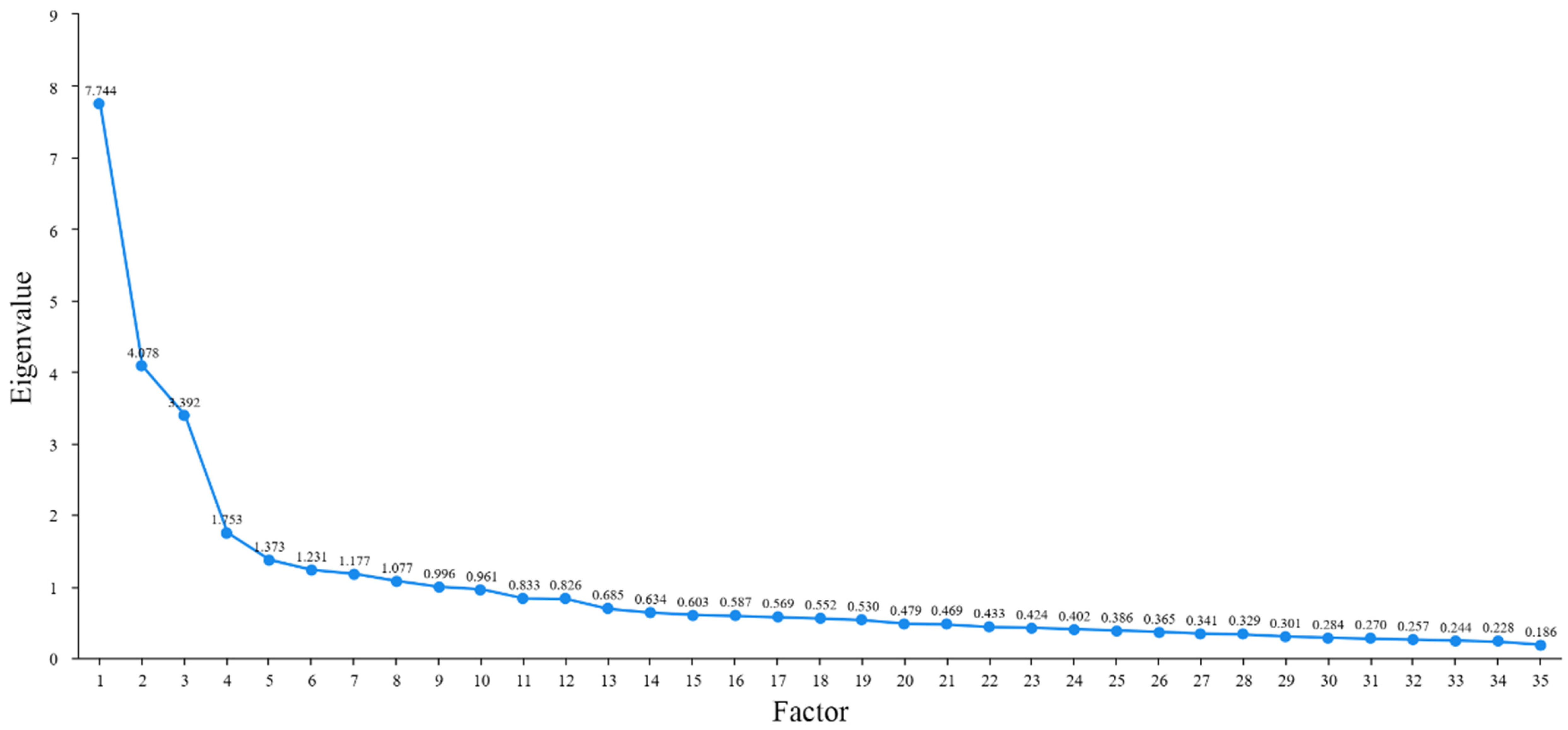
Table A1.
Rotated Factor Loading Matrix (Varimax) with Communalities.
Table A2.
Rotated Factor Loading Matrix (Promax).
Appendix B. Unified Terminology for Motivational Expression Strength Across Studies
Appendix B.1. Necessity and Scope of Unified Terminology
Section 3.3.2 of the main text compares the expression strength of core recreation motivations in different built environment density contexts. Since the existing studies included in the comparison do not consistently report results, some studies present the proportion of respondents associated with a particular motivation, while others report the relative weight of a specific motivation within the total motivational expressions. To avoid interpretive bias due to mixed statistical terminologies, this study converts the high-density sample using both respondent prevalence (Prev) and category share (CS) to align with the two reporting methods commonly used in previous research.
This appendix explains the calculation principles of these two indicators and their applicable scope. The unified terminology primarily applies to core motivations with higher identification frequencies and stronger correspondence between studies, such as physical well-being, social connection, and nature enjoyment and relaxation.
Appendix B.2. Motivation Strength Measurement Terminology and Calculation Formula
Appendix B.2.1. Respondent Prevalence (Prev)
Respondent prevalence is used to indicate the proportion of respondents who express a particular type of motivation within the total sample. This indicator reflects the general prevalence of a certain motivation category in the sample.
The calculation formula is as follows:
where
Prev = Nm/Ntotal × 100
(Nm) represents the number of respondents expressing a particular motivation category.
(Ntotal) is the total number of respondents in the sample.
In this study, if a respondent rates at least one item in a motivation category as “Strongly Agree” (i.e., a score of 5 on a five-point Likert scale), the respondent is considered to have expressed that category of motivation. The respondent prevalence for that category is then calculated by dividing the number of respondents expressing the motivation by the total sample size.
Appendix B.2.2. Category Share (CS)
Category share is used to represent the relative share of a particular motivation category within the total motivation expressions. This indicator reflects the relative weight of different motivation categories within the overall motivational structure, rather than their general prevalence in the entire sample.
The calculation formula is as follows:
where
CS = Fm/ΣF × 100
Fm represents the expression frequency of a particular motivation category. ΣF is the total sum of expression frequencies across all motivation categories.
In this study, category share is not directly calculated based on the individual item frequencies from the 35 original items. Instead, items are first grouped into 8 motivation dimensions based on the results of the exploratory factor analysis. Then, the frequencies are aggregated and converted at the category level to reduce interpretive bias arising from the inconsistent number of items across different categories.
Table A3.
Summary and Conversion Basis of the 8 Motivation Strengths in This Study.
Appendix B.3. Explanation and Methodological Boundaries
The purpose of this appendix is to clarify the calculation principles of the unified terminology, rather than to provide a comprehensive cross-study evidence table. Although this study has standardized the built environment density across different studies and compared the expression strength of core motivations in the main text, there is still heterogeneity in the original research in terms of questionnaire design, item wording, sample composition, and result reporting methods. Therefore, the strength comparisons in the main text should be understood as exploratory comparisons, primarily aimed at identifying the relative trends of core motivation expressions under high-density and low-density contexts, and providing a basis for subsequent confirmatory research.
Furthermore, respondent prevalence and category share have different statistical meanings: the former reflects the general prevalence at the sample level, while the latter reflects the relative weight within the motivational structure itself. Therefore, these two indicators should only be used to interpret the corresponding results from the literature and should not be directly compared across different terminologies. The discussion of physical well-being, social connection, and nature enjoyment and relaxation motivations in the main text should be understood with this distinction in mind.
References
- Zhu, B.W.; Zhang, J.R.; Tzeng, G.H.; Huang, S.L.; Xiong, L. Public open space development for elderly people by using the DANP-V model to establish continuous improvement strategies towards a sustainable and healthy aging society. Sustainability 2017, 9, 420. [Google Scholar] [CrossRef] [Scilit]
- Fan, Z.; Lv, Y.; Guo, L. Research on the impact of the urban park built environment on physical activity. Sci. Rep. 2025, 15, 28586. [Google Scholar] [CrossRef] [Scilit] [PubMed]
- Li, S.J.; Luo, Y.F.; Liu, Z.C.; Xiong, L.; Zhu, B.W. Exploring strategies for improving green open spaces in old downtown residential communities from the perspective of public health to enhance the health and well-being of the aged. J. Healthc. Eng. 2021, 2021, 5547749. [Google Scholar] [CrossRef] [Scilit] [PubMed]
- Csomós, G.; Farkas, J.Z.; Szabó, B.; Bertus, Z.; Kovács, Z. Exploring the use and perceptions of inner-city small urban parks: A case study of Budapest, Hungary. Urban For. Urban Green. 2023, 86, 128003. [Google Scholar] [CrossRef] [Scilit]
- Dietz, L.W.; Šćepanović, S.; Zhou, K.; Zanella, A.F.; Quercia, D. Understanding the potential of urban parks to promote well-being. Nat. Cities 2025, 2, 1205–1216. [Google Scholar] [CrossRef] [Scilit]
- Create Streets. Available online: https://www.createstreets.com/wp-content/uploads/2023/09/Greening_Up_Executive_Summary.pdf (accessed on 30 May 2026).
- Wei, L.; Liu, Z.; Zhou, Y.; Tao, Z.; Yang, F. Global Urban Green Spaces in the Functional Urban Areas: Spatial Pattern, Drivers and Size Hierarchy. Urban For. Urban Green. 2025, 107, 128770. [Google Scholar] [CrossRef] [Scilit]
- Wang, K.Y.; Li, X.Y.; Zhu, B.W.; Xiong, L.; Tzeng, G.H. A data mining approach to explore the causal rules between environmental conditions of neighborhood parks and seniors’ satisfaction. Cities 2025, 162, 105897. [Google Scholar] [CrossRef] [Scilit]
- Hu, Z.W.; Luo, J.M. Understanding residents’ motivation, psychological involvement, and psychological well-being in urban parks. Cities 2025, 157, 105598. [Google Scholar] [CrossRef] [Scilit]
- Lu, J.; Maruthaveeran, S.; Shahidan, M.F.; Liu, Q.Y. Exploring the motivational pathways to subjective well-being in urban forest parks of Fuzhou, China: A structural equation modelling analysis. Land 2025, 14, 1799. [Google Scholar] [CrossRef] [Scilit]
- Zhou, W.; Fan, S.Z.; Wu, Y.J.; Wang, G.Y.; Lan, S.R. How leisure involvement impacts visitors’ perceived health benefits in urban forest parks: Examining the moderating role of place attachment. Front. Psychol. 2024, 15, 1493422. [Google Scholar] [CrossRef] [Scilit] [PubMed]
- Sheng, G.; Liao, L.Q.; Xiong, L.; Zhu, B.W.; Cheung, S.M. Revitalization and development strategies of fostering urban cultural heritage villages: A quantitative analysis integrating expert and local resident opinions. Systems 2022, 10, 202. [Google Scholar] [CrossRef] [Scilit]
- Zhao, L.C.; Zheng, Y.Y.; Lin, J.Y.; Shen, K.; Li, R.T.; Xiong, L.; Zhu, B.W.; Tzeng, G.H. An ex-ante evaluation model of urban renewal projects for the sustainability potential towards TOD and AUD based on a FDEMATEL-GIS-FI approach. Int. J. Inf. Technol. Decis. Mak. 2023, 23, 2309–2333. [Google Scholar] [CrossRef] [Scilit]
- Manfredo, M.J.; Driver, B.L.; Tarrant, M.A. Measuring leisure motivation: A meta-analysis of the recreation experience preference scales. J. Leis. Res. 1996, 28, 188–213. [Google Scholar] [CrossRef] [Scilit]
- Moore, T.G. Managing to Optimize the Beneficial Outcomes of Recreation; Venture Publishing: State College, PA, USA, 2008. [Google Scholar]
- Felappi, J.F.; Sommer, J.H.; Falkenberg, T.; Terlau, W.; Kötter, T. Urban park qualities driving visitors mental well-being and wildlife conservation in a neotropical megacity. Sci. Rep. 2024, 14, 4856. [Google Scholar] [CrossRef] [Scilit] [PubMed]
- Halkos, G.; Leonti, A.; Sardianou, E. Activities, motivations and satisfaction of urban parks visitors: A structural equation modeling analysis. Econ. Anal. Policy 2021, 70, 502–513. [Google Scholar] [CrossRef] [Scilit]
- Mohamed, N.; Othman, N. Push and pull factor: Determining the visitors satisfactions at urban recreational area. Proc. Soc. Behav. Sci. 2012, 49, 175–182. [Google Scholar] [CrossRef] [Scilit]
- Wang, P.W.; Zhou, B.; Han, L.R.; Mei, R. The motivation and factors influencing visits to small urban parks in Shanghai, China. Urban For. Urban Green. 2021, 60, 127086. [Google Scholar] [CrossRef] [Scilit]
- Lee, J.; Kim, D.H. Urban forest visit motivation scale: Development and validation. Sustainability 2022, 15, 408. [Google Scholar] [CrossRef] [Scilit]
- Giannakis, E.; Bruggeman, A.; Poulou, D.; Zoumides, C.; Eliades, M. Linear parks along urban rivers: Perceptions of thermal comfort and climate change adaptation in Cyprus. Sustainability 2016, 8, 1023. [Google Scholar] [CrossRef] [Scilit]
- Tomićević-Dubljević, J.; Živojinović, I.; Tijanić, A. Urban forests and the needs of visitors: A case study of Košutnjak Park Forest, Serbia. Environ. Eng. Manag. J. 2017, 16, 2325–2335. [Google Scholar] [CrossRef] [Scilit]
- Vasiljević, Đ.A.; Vujičić, M.D.; Stankov, U.; Dragović, N. Visitor motivation and perceived value of periurban parks-Case study of Kamenica park, Serbia. J. Outdoor Rec. Tour. 2023, 42, 100625. [Google Scholar] [CrossRef] [Scilit]
- Talal, M.L.; Santelmann, M.V. Visitor access, use, and desired improvements in urban parks. Urban For. Urban Green. 2021, 63, 127216. [Google Scholar] [CrossRef] [Scilit]
- Li, X.; Zhu, B.W.; Xiong, L.; Li, X.Y.; Tzeng, G.H. Exploring combinations of landscape features in urban green spaces and their recovery effects on minor depression. J. Urban Plan. Dev. 2025, 151, 04024064. [Google Scholar] [CrossRef] [Scilit]
- Yang, D.; Xie, S.Q.; Su, R.P.; Wu, W.W. Urban park restorative effects in an integrated model of positive emotion and leisure involvement moderation. Sci. Rep. 2025, 15, 34100. [Google Scholar] [CrossRef] [Scilit] [PubMed]
- Pesaresi, M.; Politis, P. GHS-BUILT-V R2023A-GHS Built-Up Volume Grids Derived from Joint Assessment of Sentinel2, Landsat, and Global DEM Data, Multitemporal (1975–2030); European Commission, Joint Research Centre (JRC): Ispra, Italy, 2023. [Google Scholar]
- Pesaresi, M.; Freire, S.; Schiavina, M.; Politis, P.; Kemper, T. Global Human Settlement Layer (GHSL) We Generate Data; European Commission, Joint Research Centre (JRC): Ispra, Italy, 2023. [Google Scholar]
- Gong, F.Y. Modeling walking accessibility to urban parks using Google Maps crowdsourcing database in the high-density urban environments of Hong Kong. Sci. Rep. 2023, 13, 20798. [Google Scholar] [CrossRef] [Scilit] [PubMed]
- Gao, L.H.; Xu, Z.; Shang, Z.Q.; Li, M.Y.; Wang, J.H. Assessing urban park accessibility and equity using open-source data in Jiujiang, China. Land 2025, 14, 9. [Google Scholar] [CrossRef] [Scilit]
- GB 50180-2018; Urban Residential Area Planning and Design Standards. China Architecture & Building Press: Beijing, China, 2018.
- Shan, J.J.; Wu, Z.Y.; Zhang, Z.Q. Annual Report on Urban Development of China no. 18: Managing Bay Areas to Build World-Class Bay Areas; Social Sciences Academic Press (China): Beijing, China, 2025. [Google Scholar]
- State Council of the People’s Republic of China. Approved Territorial Spatial Master Plan for Xi’an (2021–2035); State Council of the People’s Republic of China: Beijing, China, 2025. [Google Scholar]
- Design CoUP. Report on the Urban Built Environment Density of Major Chinese Cities (2023); China Architecture & Building Press: Beijing, China, 2023. [Google Scholar]
- Weng, L.S.; Zhu, Y.J.; Xu, X.T.; Yang, J.Y.; Zheng, S.H.; Liu, H.F.; Wang, H.R.; Zhu, L.Q. The influence of visitors’ recreation experience and environmental attitude on environmentally responsible behavior: A case study of an urban forest park, China. Forests 2023, 14, 24. [Google Scholar] [CrossRef] [Scilit]
- Xing Qing Palace Park. Available online: https://www.xingqinggong.com/about/introduction (accessed on 30 May 2026).
- Xi’an Urban Management and Comprehensive Law Enforcement Bureau. Available online: http://xacg.xa.gov.cn/zwgk/czxx/czyjs/1912446296410062850.html (accessed on 30 May 2026).
- Zhang, B.; Zhao, J. “Zizai” and “Ziwei” in the Construction of Modern Inland Self-Built Parks: A Case Study of Lianhu Park in Xi’an. Chin. Landsc. Archit. 2023, 39, 133–138. (In Chinese) [Google Scholar] [CrossRef]
- Xi’an Local Chronicles Office. Available online: https://xadfz.xa.gov.cn/xadq/rwxa/1733056870662799362.html (accessed on 30 May 2026).
- Xi’an Qujiang New District Administrative Committee. Available online: https://qjxq.xa.gov.cn/zwgk/ndzdxxgk/czxx/dwyjs/1917512047918686209.html (accessed on 30 May 2026).
- Boateng, G.O.; Neilands, T.B.; Frongillo, E.A.; Melgar-Quiñonez, H.R.; Young, S.L. The best practices for developing and validating scales for health, social, and behavioral research: A primer. Front. Public Health 2018, 6, 149. [Google Scholar] [CrossRef] [Scilit] [PubMed]
- Izquierdo, I.; Olea, J.; Abad, F.J. Exploratory factor analysis in validation studies: Uses and recommendations. Psicothema 2014, 26, 395–400. [Google Scholar] [CrossRef] [Scilit] [PubMed]
- Howard, M.C. A review of exploratory factor analysis decisions and overview of current practices: What we are doing and how can we improve? Int. J. Hum.–Comput. Interact. 2016, 32, 51–62. [Google Scholar] [CrossRef] [Scilit]
- Kaiser, H.F. The varimax criterion for analytic rotation in factor analysis. Psychometrika 1958, 23, 187–200. [Google Scholar] [CrossRef] [Scilit]
- Sreetheran, M. Exploring the urban park use, preference and behaviours among the residents of Kuala Lumpur, Malaysia. Urban For. Urban Green. 2017, 25, 85–93. [Google Scholar] [CrossRef] [Scilit]
- Bonilla-Duarte, S.; Mancebo, Y.R.; Vargas-de la Mora, A.L.; García-García, A. Perception of ecosystem services and adaptation to climate change: Mirador sur park in santo domingo. Forests 2022, 13, 587. [Google Scholar] [CrossRef] [Scilit]
- Bedimo-Rung, A.L.; Mowen, A.J.; Cohen, D.A. The significance of parks to physical activity and public health: A conceptual model. Am. J. Prev. Med. 2005, 28, 159–168. [Google Scholar] [CrossRef] [Scilit] [PubMed]
- Hartig, T.; Mitchell, R.; De Vries, S.; Frumkin, H. Nature and health. Annu. Rev. Public Health 2014, 35, 207–228. [Google Scholar] [CrossRef] [Scilit] [PubMed]
- Wolch, J.R.; Byrne, J.; Newell, J.P. Urban green space, public health, and environmental justice: The challenge of making cities ‘just green enough’. Landsc. Urban Plan. 2014, 125, 234–244. [Google Scholar] [CrossRef] [Scilit]
- Peters, K.; Elands, B.; Buijs, A. Social interactions in urban parks: Stimulating social cohesion? Urban For. Urban Green. 2010, 9, 93–100. [Google Scholar] [CrossRef] [Scilit]
- Evans, G.W. The built environment and mental health. J. Urban Health 2003, 80, 536–555. [Google Scholar] [CrossRef] [Scilit] [PubMed]
- Zhang, R.; Zhang, C.Q.; Lai, P.C.; Cheng, W.; Schüz, B.; Kwan, M.P. Park environment and moderate-to-vigorous physical activity in parks among adolescents in a high-density city: The moderating role of neighbourhood income. Int. J. Health Geogr. 2021, 20, 35. [Google Scholar] [CrossRef] [Scilit] [PubMed]
- Korpela, K.M.; Hartig, T.; Kaiser, F.G.; Fuhrer, U. Restorative experience and self-regulation in favorite places. Environ. Behav. 2001, 33, 572–589. [Google Scholar] [CrossRef] [Scilit]
- Ryan, R.M.; Deci, E.L. Self-Determination Theory and the Role of Basic Psychological Needs in Personality and the Organization of Behavior; Guilford Press: New York, NY, USA, 2008. [Google Scholar]
- Veitch, J.; Ball, K.; Rivera, E.; Loh, V.; Deforche, B.; Best, K.; Timperio, A. What Entices Older Adults to Parks? Identification of Park Features That Encourage Park Visitation, Physical Activity, and Social Interaction. Landsc. Urban Plan. 2022, 217, 104254. [Google Scholar] [CrossRef] [Scilit]
- Rivera, E.; Timperio, A.; Loh, V.H.Y.; Deforche, B.; Veitch, J. Critical Factors Influencing Adolescents’ Active and Social Park Use: A Qualitative Study Using Walk-Along Interviews. Urban For. Urban Green. 2021, 58, 126948. [Google Scholar] [CrossRef] [Scilit]
- Tang, T.; Zhao, M.; Wang, D.; Chen, X.; Chen, W.; Xie, C.; Ding, Y. Does Environmental Interpretation Impact Public Ecological Flow Experience and Responsible Behavior? A Case Study of Potatso National Park, China. Int. J. Environ. Res. Public Health 2022, 19, 9630. [Google Scholar] [CrossRef] [Scilit] [PubMed]
- Andereck, K.L.; Wise, N.; Budruk, M.; Bricker, K.S. Heritage on the High Plains: Motive-Based Market Segmentation for a US National Historic Site. Sustainability 2024, 16, 10854. [Google Scholar] [CrossRef] [Scilit]
- Kang, E.-J.; Scott, N.; Lee, T.J.; Ballantyne, R. Benefits of Visiting a ‘Dark Tourism’ Site: The Case of the Jeju April 3rd Peace Park, Korea. Tour. Manag. 2012, 33, 257–265. [Google Scholar] [CrossRef] [Scilit]
- Jennings, V.; Bamkole, O. The relationship between social cohesion and urban green space: An avenue for health promotion. Int. J. Environ. Res. Public Health 2019, 16, 452. [Google Scholar] [CrossRef] [Scilit] [PubMed]
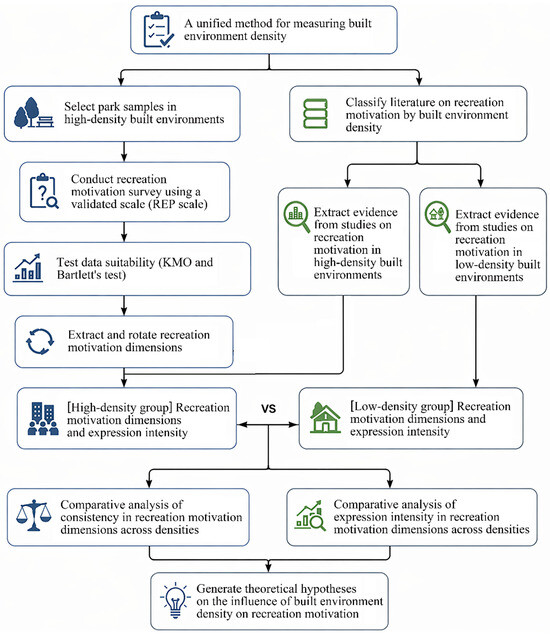
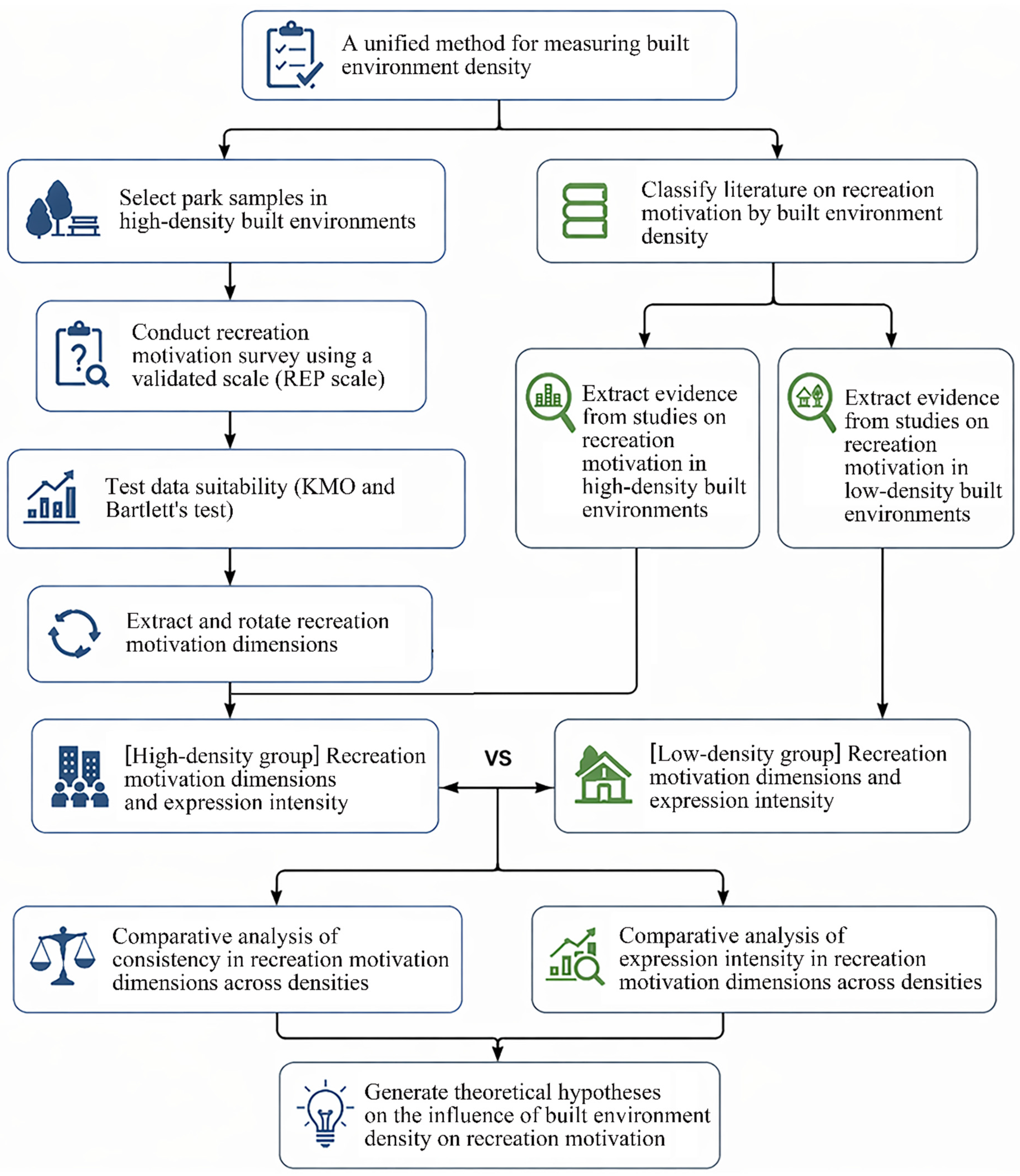
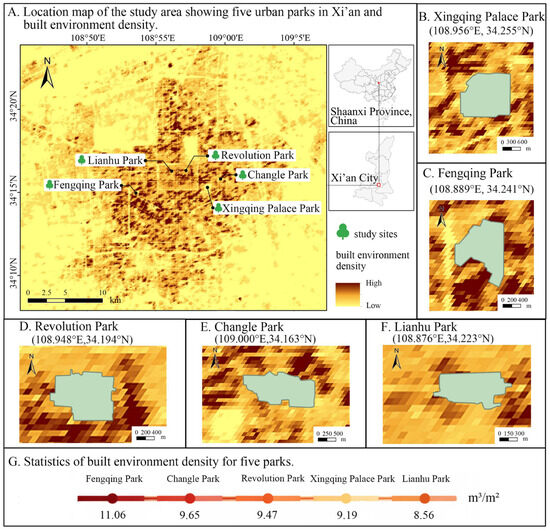
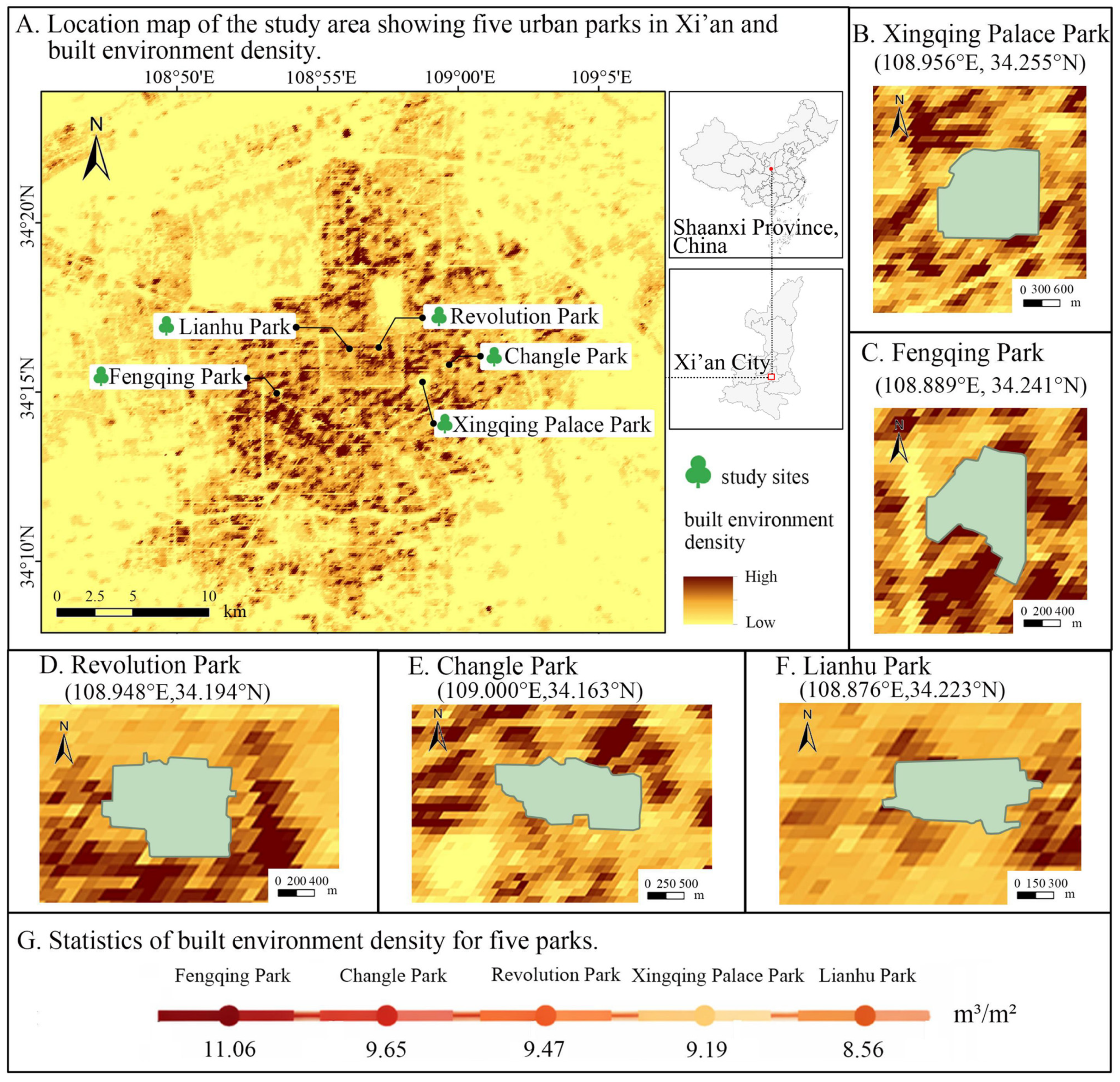

Disclaimer/Publisher’s Note: The statements, opinions and data contained in all publications are solely those of the individual author(s) and contributor(s) and not of MDPI and/or the editor(s). MDPI and/or the editor(s) disclaim responsibility for any injury to people or property resulting from any ideas, methods, instructions or products referred to in the content. |
© 2026 by the authors. Licensee MDPI, Basel, Switzerland. This article is an open access article distributed under the terms and conditions of the Creative Commons Attribution (CC BY) license.