Bi-Objective Station Planning of a Mobile Manipulator Considering Dexterity and Stiffness for Robotic 3D Concrete Printing


Abstract
1. Introduction
- A station planning problem for a mobile manipulator in robotic 3D concrete printing is formulated by considering two trajectory-level performance objectives: motion capability and deformation-related accuracy.
- A task-oriented dexterity metric and a stiffness-oriented deformation metric are established to evaluate the worst-case performance of a candidate station along the entire printing trajectory.
- A weighted scalarization-based optimization framework is developed to determine station configurations that balance dexterity and stiffness requirements for representative wall-printing tasks.
- Case studies on different wall geometries are conducted to demonstrate that the proposed method can improve trajectory-level motion performance and reduce end-effector deformation compared with non-optimized station placements.
2. Problem Formulation and System Modeling
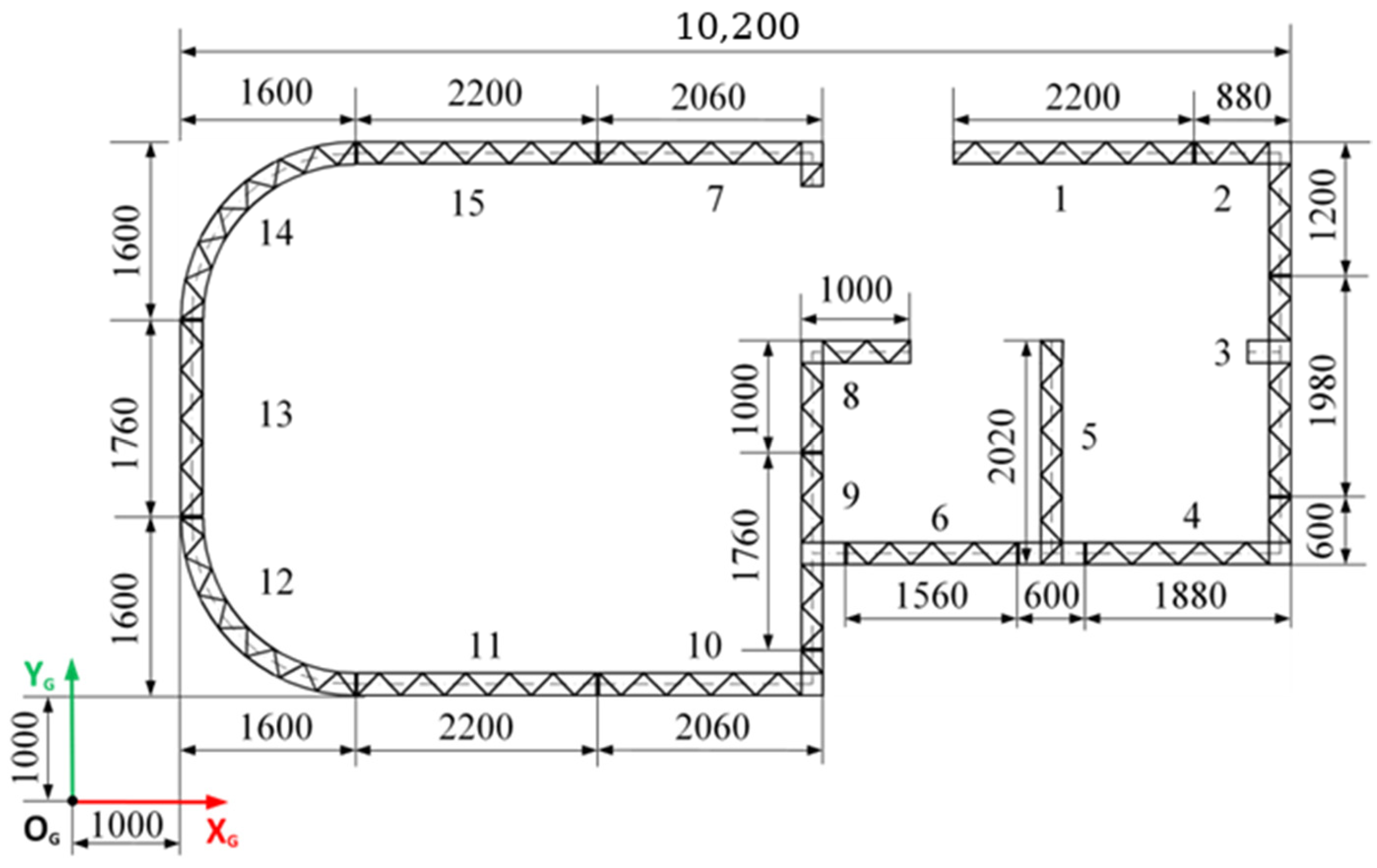
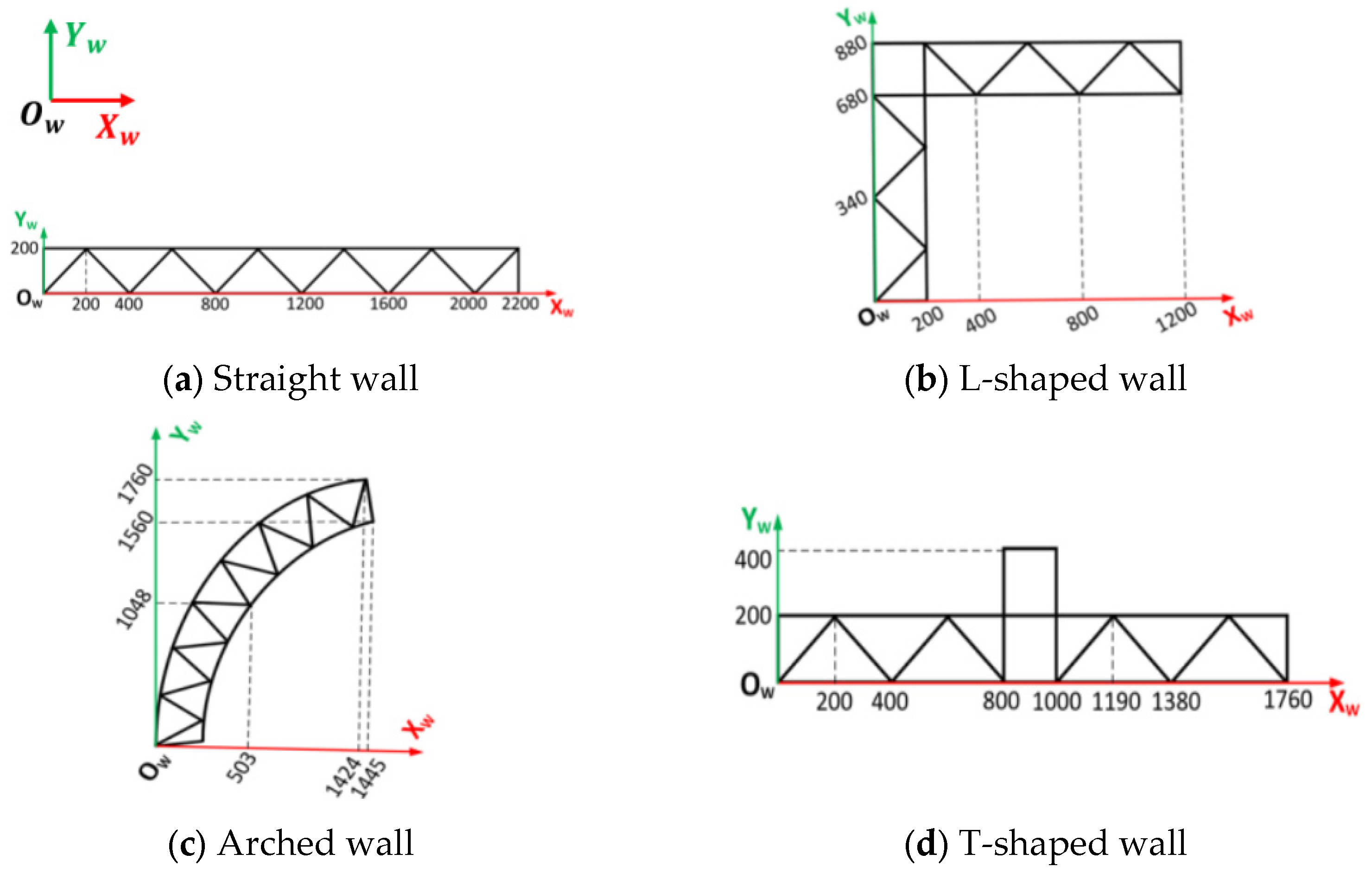
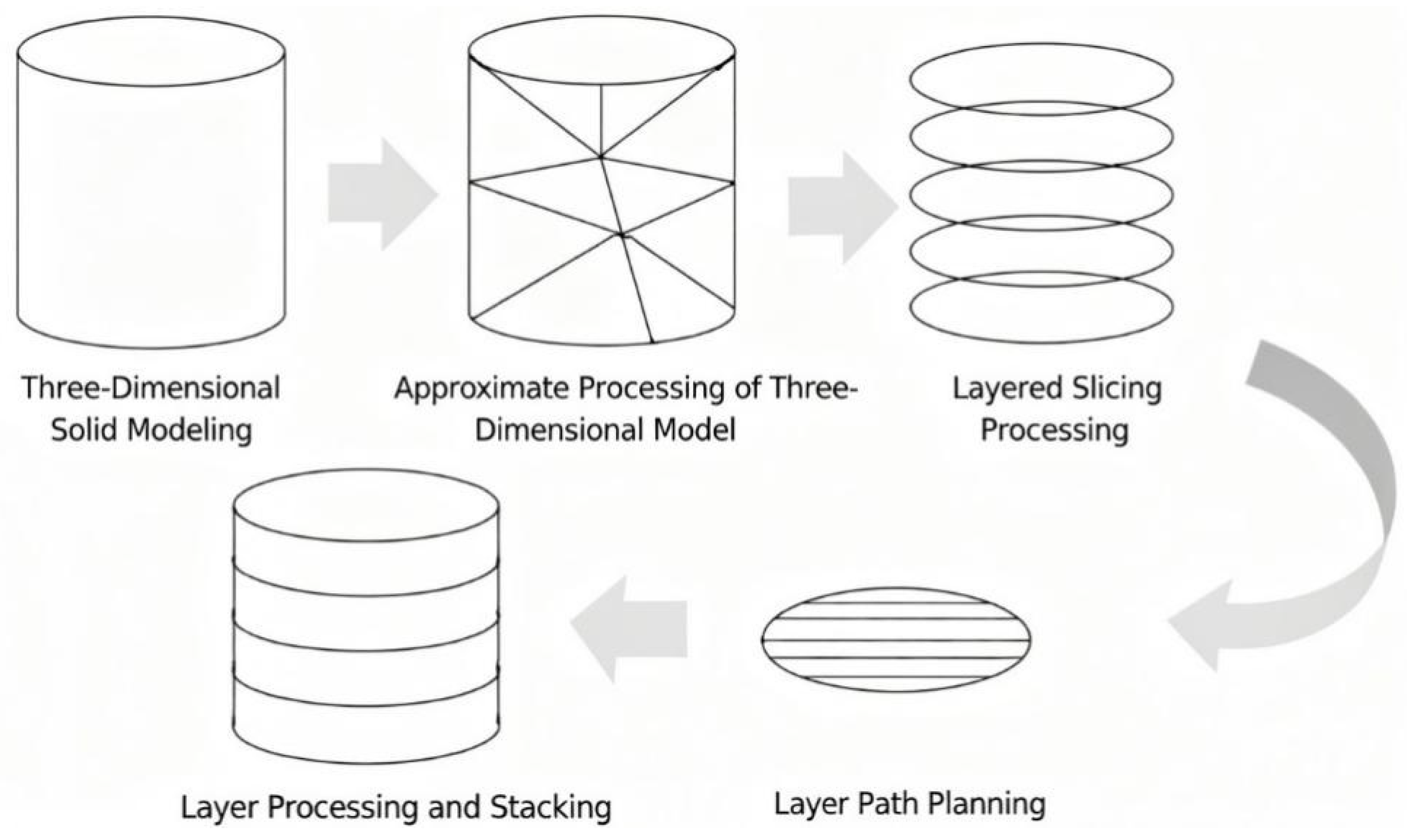
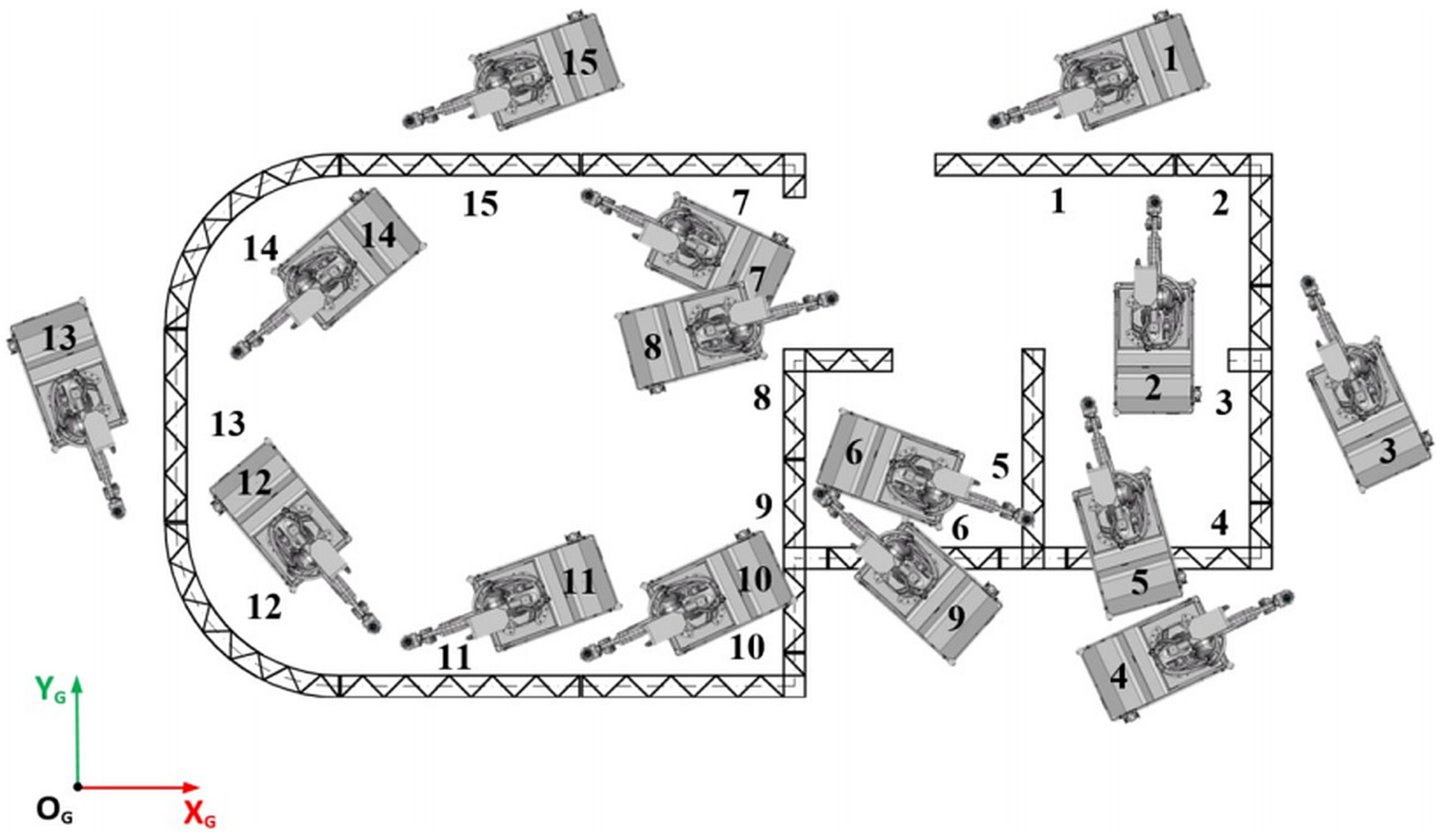
2.1. Application Context: 3D Concrete Printing
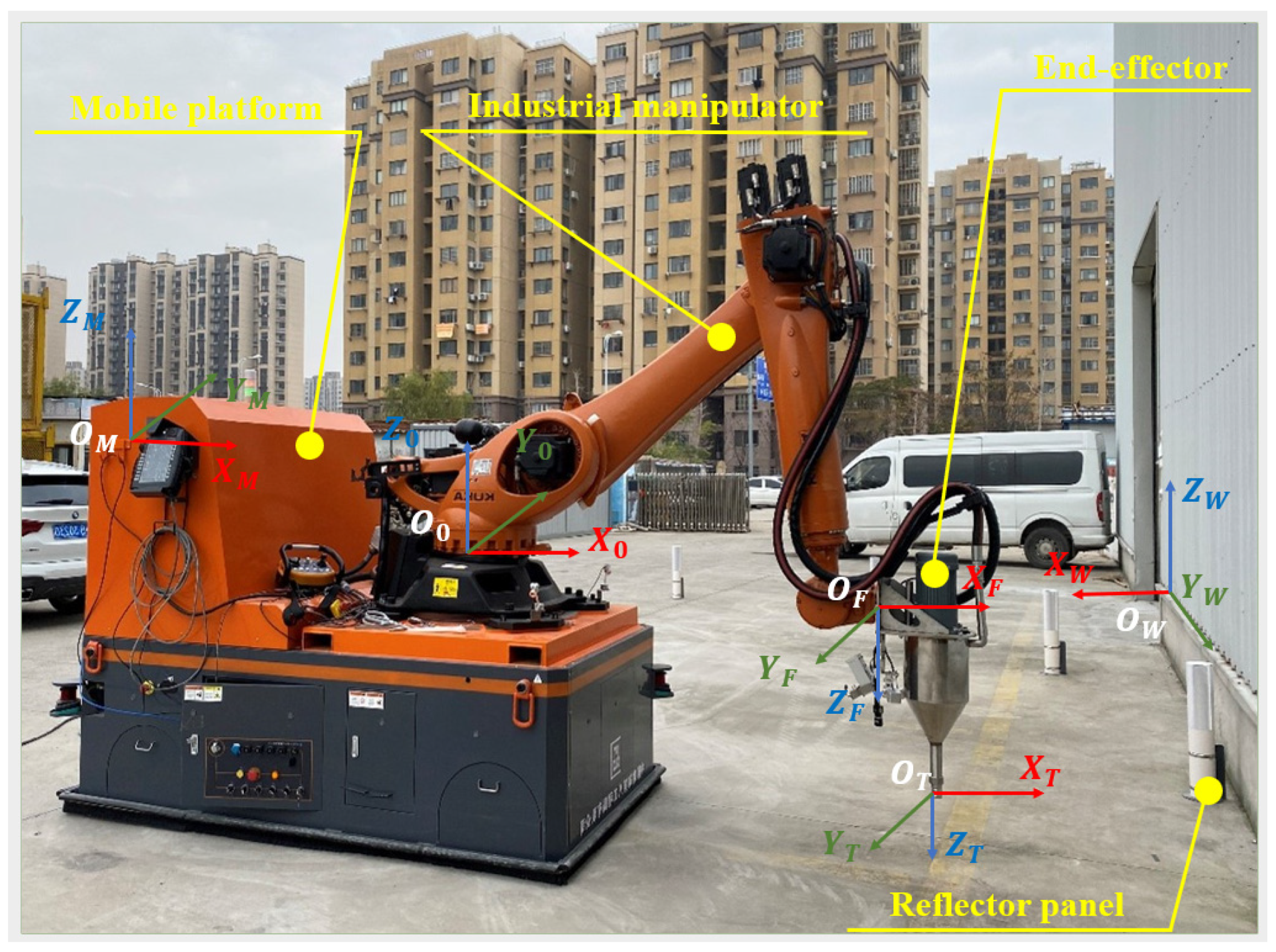
2.2. System Description
2.3. Dexterity and Stiffness Challenges in Station Planning
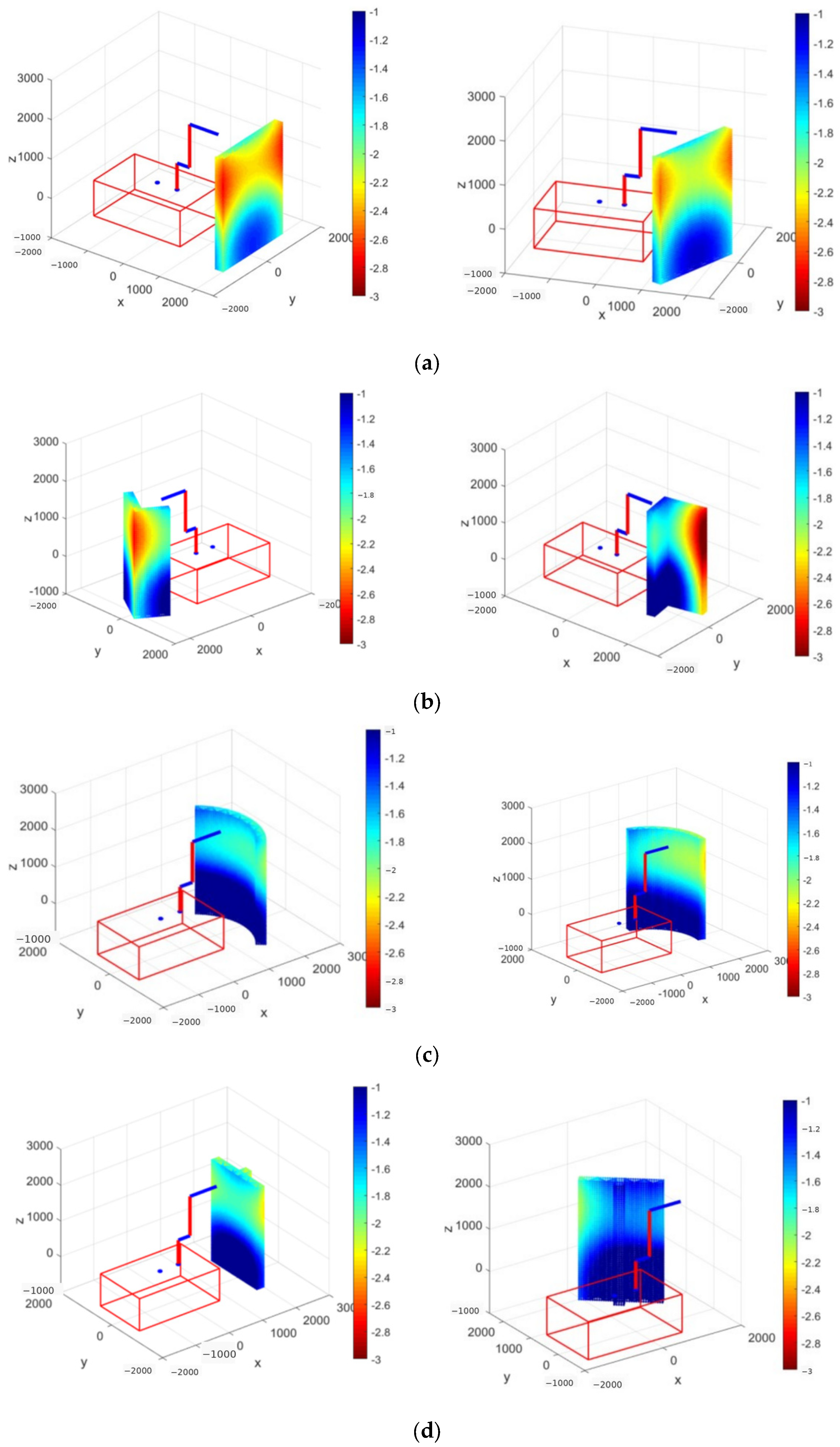
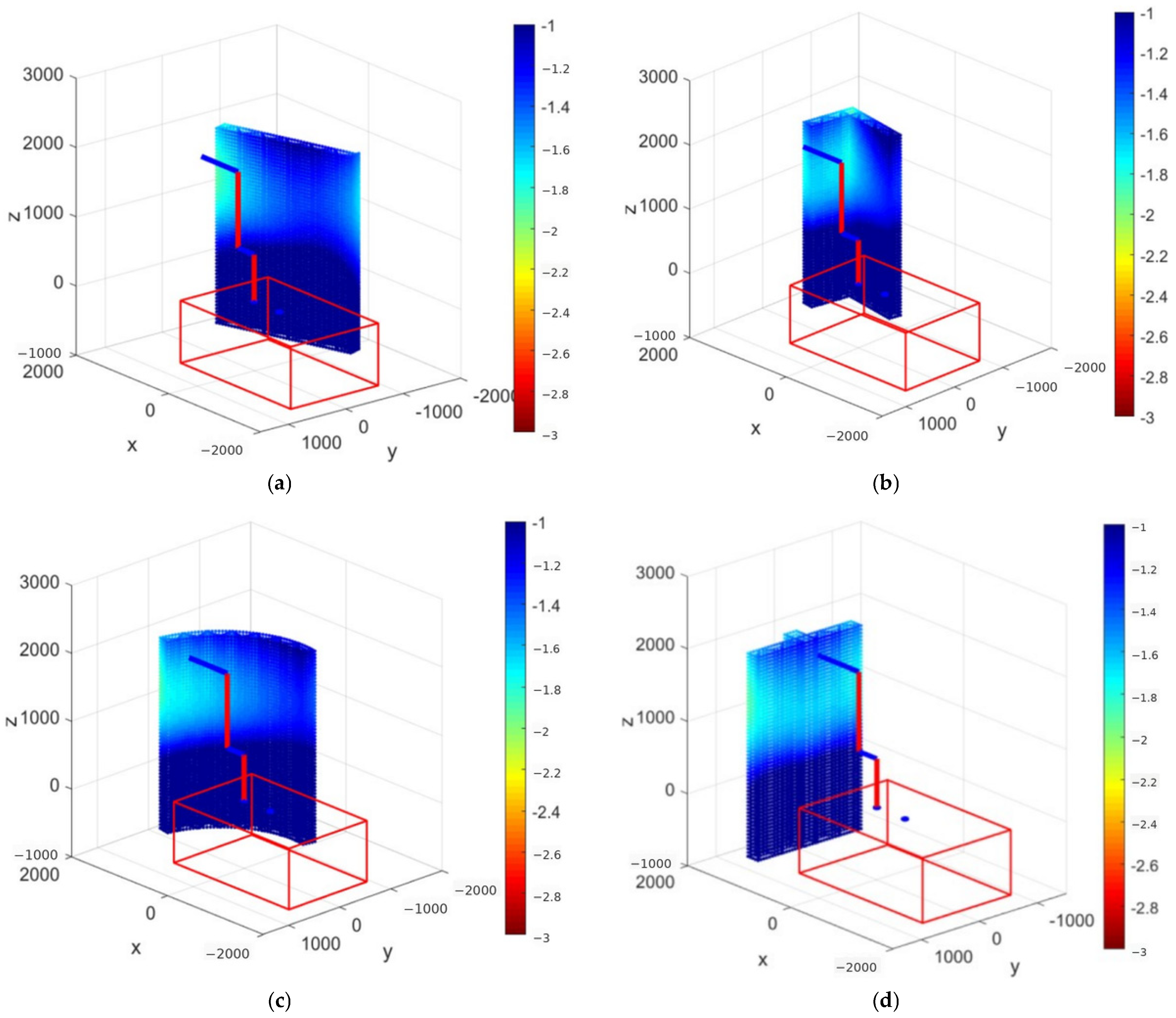
- Kinematic dexterity issues: An inappropriate station may force a manipulator to operate near its workspace boundary or in a kinematic singularity configuration. While this manifests itself superficially as reachability constraints or erratic motion, the root cause is a loss of critical kinematic dexterity—specifically a reduced ability to efficiently transfer velocity along the tool path. This compromises end-effector velocity stability and directly impacts the quality of the print job.
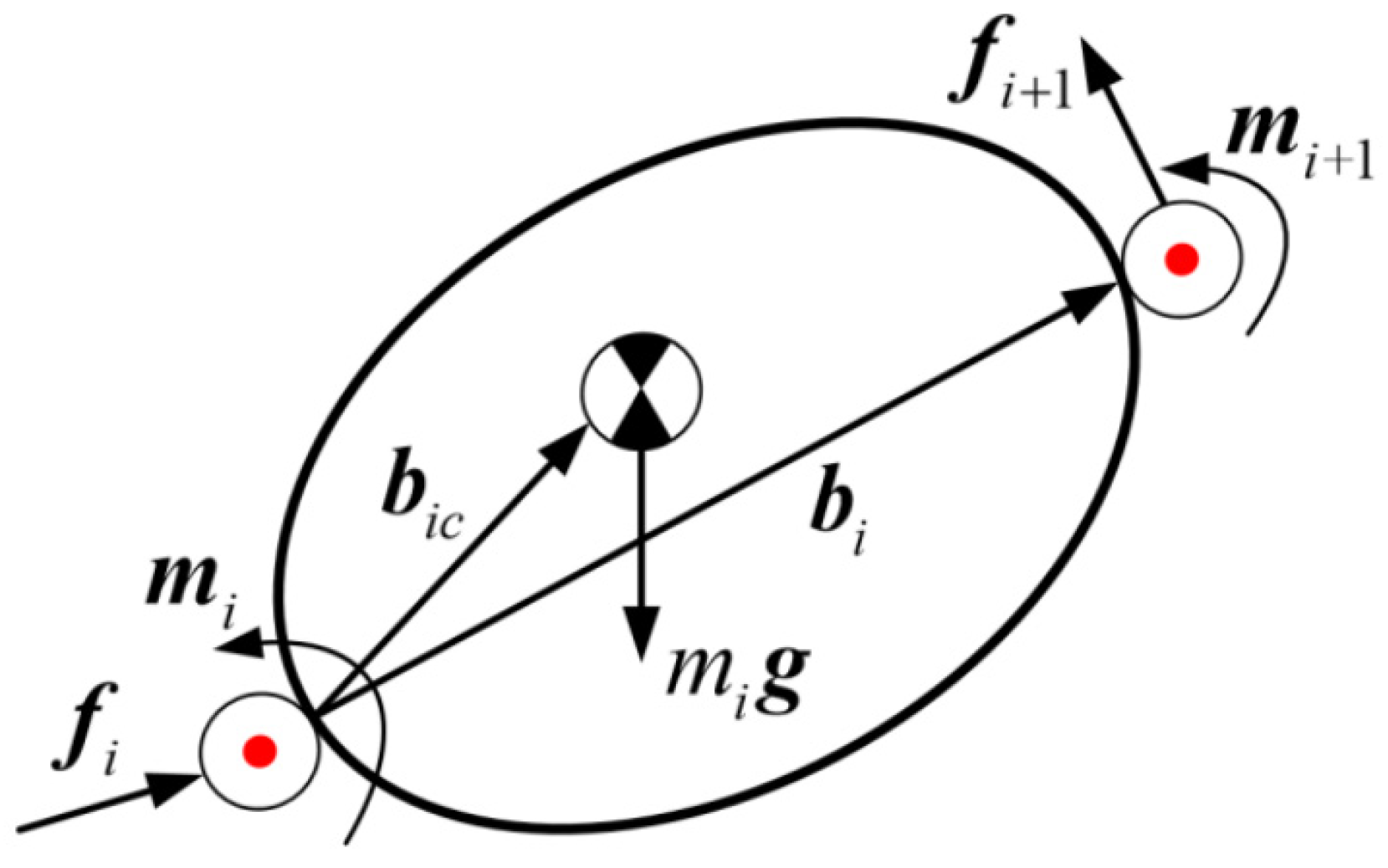
- The structural stiffness problem: Operating in extended configurations can also induce low structural stiffness. The observable effect is end-effector positioning error under operational loads such as gravity and extrusion forces. The intrinsic cause is excessive compliance, leading to elastic deformations that cause the nozzle to deviate from its intended path, thereby affecting the dimensional accuracy of the printed structure.
3. Kinematic and Dynamic Modeling
3.1. Kinematic Modeling of the Mobile Manipulator
3.2. Dynamic Modeling Based on the Newton–Euler Method
3.3. Connection Between Dynamic Loads and Stiffness-Oriented Deformation
4. Dexterity-Oriented Station Planning
4.1. Dexterity Metrics
4.1.1. Manipulability Index
4.1.2. Velocity Direction Manipulability (VDM)
- (1)
- When the adjacents of the running trajectory are at the same height:
- (2)
- When the adjacents of the travel path are not at the same height, this indicates the completion of printing a specific layer. Subsequently, the concrete 3D printing unit ascends vertically to initiate the printing of the subsequent layer.
4.2. Trajectory-Level Dexterity Optimization Framework
- (1)
- Placement Space Constraint: The station must lie within a predefined feasible area, determined by the system’s physical limits and workspace geometry.
- (2)
- Task Reachability Constraint: For a given , a valid inverse kinematic solution must exist for every point on the trajectory T.
4.3. Dexterity Performance Analysis and Validation
4.4. Dexterity Optimization Using Genetic Algorithm
5. Stiffness-Oriented Station Planning
5.1. Task-Oriented Stiffness Performance Metrics
5.2. Trajectory-Level Stiffness Optimization Framework
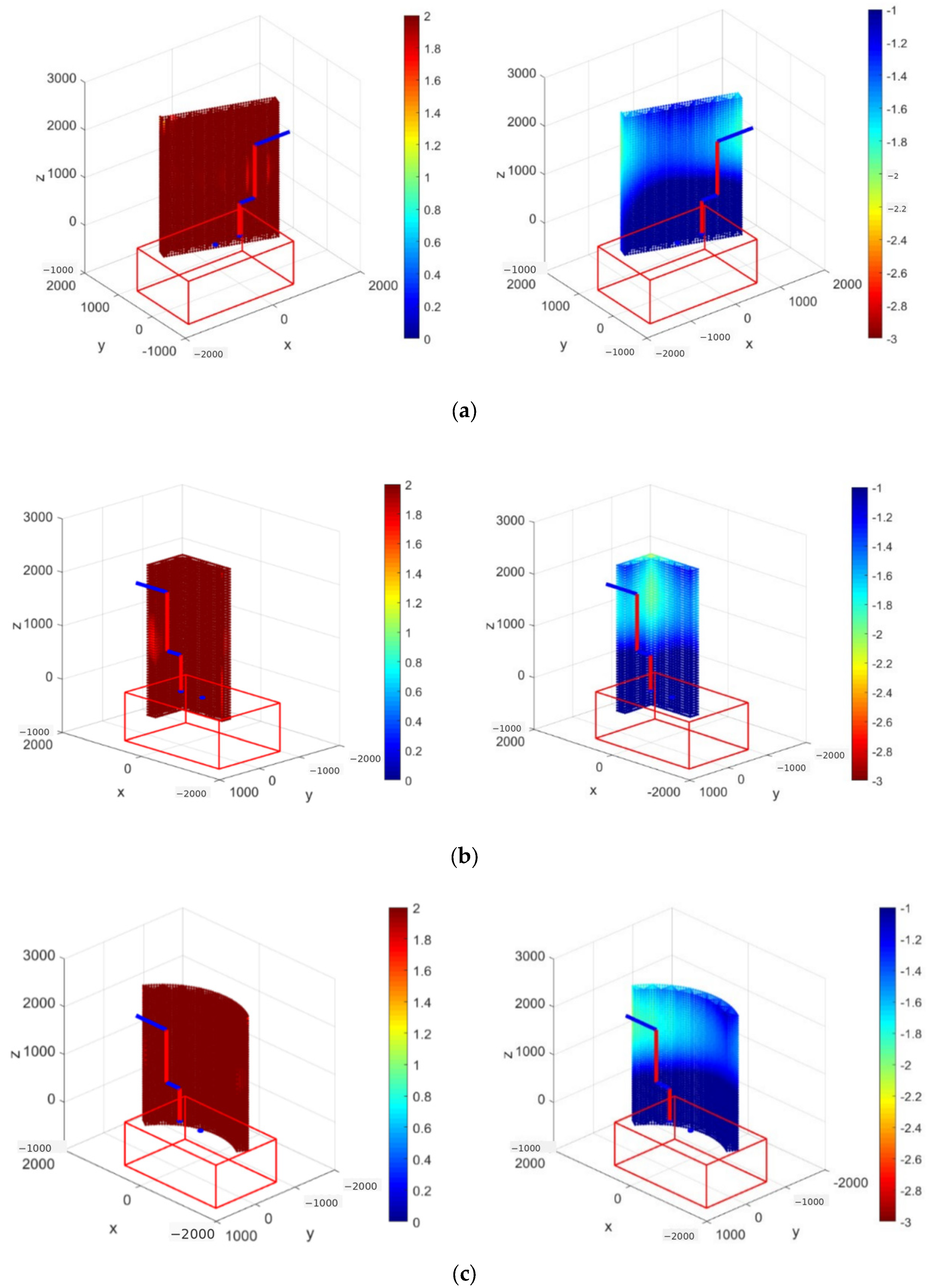
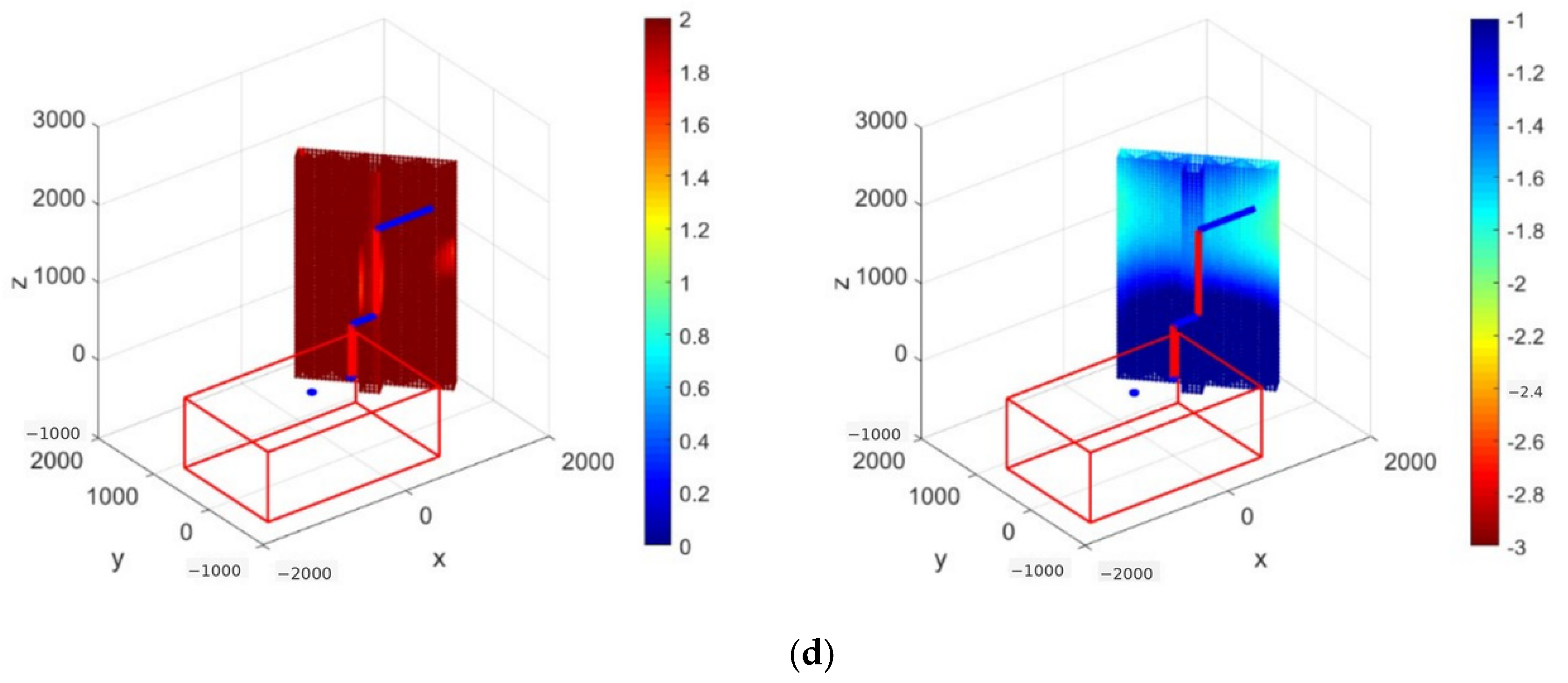
5.3. Stiffness Performance Analysis and Validation
5.4. Stiffness Optimization Using Genetic Algorithm
6. Integrated Optimization of Dexterity and Stiffness
6.1. Formulation of the Unified Objective Function
- is the trajectory-level dexterity index (the minimum VDM).
- is the trajectory-level stiffness index (the maximum Z-axis deformation).
- are non-negative weighting coefficients that represent the relative importance of dexterity and stiffness, respectively, satisfying .
- A negative sign is applied to the dexterity term because the overall goal is to minimize the unified objective function, and higher dexterity (a larger ) is desirable.
6.2. Integrated Optimization Using Genetic Algorithm
6.3. Analysis of Integrated Optimization Results
7. Discussion and Conclusions
7.1. Discussion
7.2. Conclusions
Author Contributions
Funding
Data Availability Statement
Conflicts of Interest
References
- Hercik, R.; Byrtus, R.; Jaros, R.; Koziorek, J. Implementation of autonomous mobile robot in smart factory. Appl. Sci. 2022, 12, 8912. [Google Scholar] [CrossRef]
- Wang, L.; Chen, L.; Shao, Z.; Zhang, Z.; Du, L. Stop planning of teleplatform for large civil aircraft painting with industrial robot. IOP Conf. Ser. Mater. Sci. Eng. 2018, 394, 032064. [Google Scholar] [CrossRef]
- Song, T.; Zhang, K.; Yan, Z.; Li, Y.; Guo, S.; Li, X. Research on upper limb motion intention classification and rehabilitation robot control based on sEMG. Sensors 2025, 25, 1057. [Google Scholar] [CrossRef] [PubMed]
- Zeng, L.D.; Guo, S.; Wu, J.; Markert, B. Autonomous mobile construction robots in built environment: A comprehensive review. Dev. Built Environ. 2024, 19, 100484. [Google Scholar] [CrossRef]
- Zhang, Z.Y.; Xiao, J.; Liu, H.T.; Huang, T. Base placement optimization of a mobile hybrid machining robot by stiffness analysis considering reachability and nonsingularity constraints. Chin. J. Aeronaut. 2023, 36, 398–416. [Google Scholar] [CrossRef]
- Xue, Y.; Sun, Z.Z.; Liu, S.W.; Gao, D.; Xu, Z.F. Stiffness-oriented placement optimization of machining robots for large component flexible manufacturing system. Machines 2022, 10, 389. [Google Scholar] [CrossRef]
- Song, T.; Xi, F.; Guo, S. Optimization of a mobile platform for a wheeled manipulator. J. Mech. Robot. 2016, 8, 061007. [Google Scholar] [CrossRef]
- Yoshikawa, T. Manipulability of robotic mechanisms. Int. J. Robot. Res. 1985, 4, 3–9. [Google Scholar] [CrossRef]
- Klein, C.A.; Blaho, B.E. Dexterity measures for the design and control of kinematically redundant manipulators. Int. J. Robot. Res. 1987, 6, 72–83. [Google Scholar] [CrossRef]
- Qin, X.Y.; Zhang, H.; Zhou, T.L.; Xiong, Z.H. Where to install the manipulator: Optimal installation pose planning based on whale algorithm. In 2022 IEEE/ASME International Conference on Advanced Intelligent Mechatronics (AIM); IEEE: Piscataway, NJ, USA, 2022; pp. 962–967. [Google Scholar] [CrossRef]
- Salisbury, J.K. Active stiffness control of a manipulator in cartesian coordinates. In 19th IEEE Conference on Decision and Control including the Symposium on Adaptive Processes; IEEE: Piscataway, NJ, USA, 1980; pp. 95–100. [Google Scholar] [CrossRef]
- Chen, S.F.; Kao, I. Conservative congruence transformation for joint and Cartesian stiffness matrices of robotic hands and fingers. Int. J. Robot. Res. 2000, 19, 835–847. [Google Scholar] [CrossRef]
- Alici, G.; Shirinzadeh, B. Enhanced stiffness modeling, identification and characterization for robot manipulators. IEEE Trans. Robot. 2005, 21, 554–564. [Google Scholar] [CrossRef]
- Zhou, J.; Nguyen, H.N.; Kang, H.J. Simultaneous identification of joint compliance and kinematic parameters of industrial robots. Int. J. Precis. Eng. Manuf. 2014, 15, 2257–2264. [Google Scholar] [CrossRef]
- Tian, Y.Z.; Wang, B.W.; Liu, J.R.; Shen, H.; Xi, F.; Li, L. Stiffness modeling and analysis of a multiple coordinated robot system. Int. J. Adv. Manuf. Technol. 2018, 94, 4265–4276. [Google Scholar] [CrossRef]
- Klimchik, A.; Wu, Y.; Dumas, C.; Caro, S.; Furet, B.; Pashkevich, A. Identification of geometrical and elastostatic parameters of heavy industrial robots. In 2013 IEEE International Conference on Robotics and Automation; IEEE: Piscataway, NJ, USA, 2013; pp. 3707–3714. [Google Scholar] [CrossRef]
- Mohamed, R.P.; Xi, F.; Lin, Y. A combinatorial search method for the quasi-static payload capacity of serial modular reconfigurable robots. Mech. Mach. Theory 2015, 92, 240–256. [Google Scholar] [CrossRef]
- Chen, C.; Peng, F.; Yan, R.; Li, Y.; Wei, D.; Fan, Z.; Tang, X.; Zhu, Z. Stiffness performance index based posture and feed orientation optimization in robotic milling process. Robot. Comput. Integr. Manuf. 2019, 55, 29–40. [Google Scholar] [CrossRef]
- Lin, Y.; Zhao, H.; Ding, H. Posture optimization methodology of 6R industrial robots for machining using performance evaluation indexes. Robot. Comput. Integr. Manuf. 2017, 48, 59–72. [Google Scholar] [CrossRef]
- Xiong, G.; Ding, Y.; Zhu, L.M. Stiffness-based pose optimization of an industrial robot for five-axis milling. Robot. Comput. Integr. Manuf. 2019, 55, 19–28. [Google Scholar] [CrossRef]
- İlerisoy, Z.Y.; Takva, Ç.; Top, S.M.; Gökgöz, B.İ.; Gebel, Ş.; İlcan, H.; Şahmaran, M. The effectiveness of 3D concrete printing technology in architectural design: Different corner-wall combinations in 3D printed elements and geometric form configurations in residential buildings. Arch. Sci. Rev. 2025, 1–17. [Google Scholar] [CrossRef]
- He, Y.; Xie, F.; Liu, X.J.; Xie, Z.; Zhao, H.; Yue, Y.; Li, M. Stiffness-performance-based redundant motion planning of a hybrid machining robot. Machines 2022, 10, 1157. [Google Scholar] [CrossRef]
- Zujović, M.; Obradović, R.; Rakonjac, I.; Milošević, J. 3D printing technologies in architectural design and construction: A systematic literature review. Buildings 2022, 12, 1319. [Google Scholar] [CrossRef]
- Dang, Q.V.; Nguyen, L. A heuristic approach to schedule mobile robots in flexible manufacturing environments. Procedia CIRP 2016, 40, 390–395. [Google Scholar] [CrossRef]
- Vinogradov, I.B.; Kobrinskii, A.Y.; Stepananko, Y.A.; Tyves, L.I. Features of the kinematics of manipulators and volume methods. Transl. Mech. Mach. 1973, 27/28, 665–672. [Google Scholar]
- Sundaram, A.M.; Budjakoski, N.; Klodmann, J.; Roa, M.A. Task-specific robot station optimization for robot-assisted surgeries. Front. Robot. AI 2022, 9, 899646. [Google Scholar] [CrossRef]
- Shafiq, M.U.; Imran, A.; Maznoor, S.; Majeed, A.H.; Ahmed, B.; Khan, I.; Mohamed, A. Real-time navigation of mecanum wheel-based mobile robot in a dynamic environment. Heliyon 2024, 10, e26829. [Google Scholar] [CrossRef]
- Wang, S.; Chen, X.; Ding, G.; Li, Y.; Xu, W.; Zhao, Q.; Gong, Y.; Song, Q. A lightweight localization strategy for LiDAR-guided autonomous robots with artificial landmarks. Sensors 2021, 21, 4479. [Google Scholar] [CrossRef]
- Ercan, S.; Meier, S.; Gramazio, F.; Kohler, M. Automated localization of a mobile construction robot with an external measurement device. In 36th ISARC; International Association on Automation and Robotics in Construction: Oulu, Finland, 2019; pp. 929–936. [Google Scholar] [CrossRef]
- Song, T.; Xi, F.; Guo, S.; Tu, X.; Li, X. Slip analysis for a wheeled mobile manipulator. J. Dyn. Syst. Meas. Control 2017, 140, 121005. [Google Scholar] [CrossRef]
- Song, T.; Xi, F.; Guo, S.; Mohamed, R. Tip-over stability analysis for a wheeled mobile manipulator. J. Dyn. Syst. Meas. Control 2017, 139, 054501. [Google Scholar] [CrossRef]
- Xi, F.; Sun, Q. A motion simulation method for reconfigurable machines. Int. J. Manuf. Res. 2008, 3, 216–235. [Google Scholar] [CrossRef]
- Qin, Y.; Yin, Z.; Yang, Q.; Zhang, K. Dynamics parameter identification of articulated robot. Machines 2024, 12, 595. [Google Scholar] [CrossRef]



| Wall Type | Station | Joint Velocities (deg/s) | Minimum VDM Value |
|---|---|---|---|
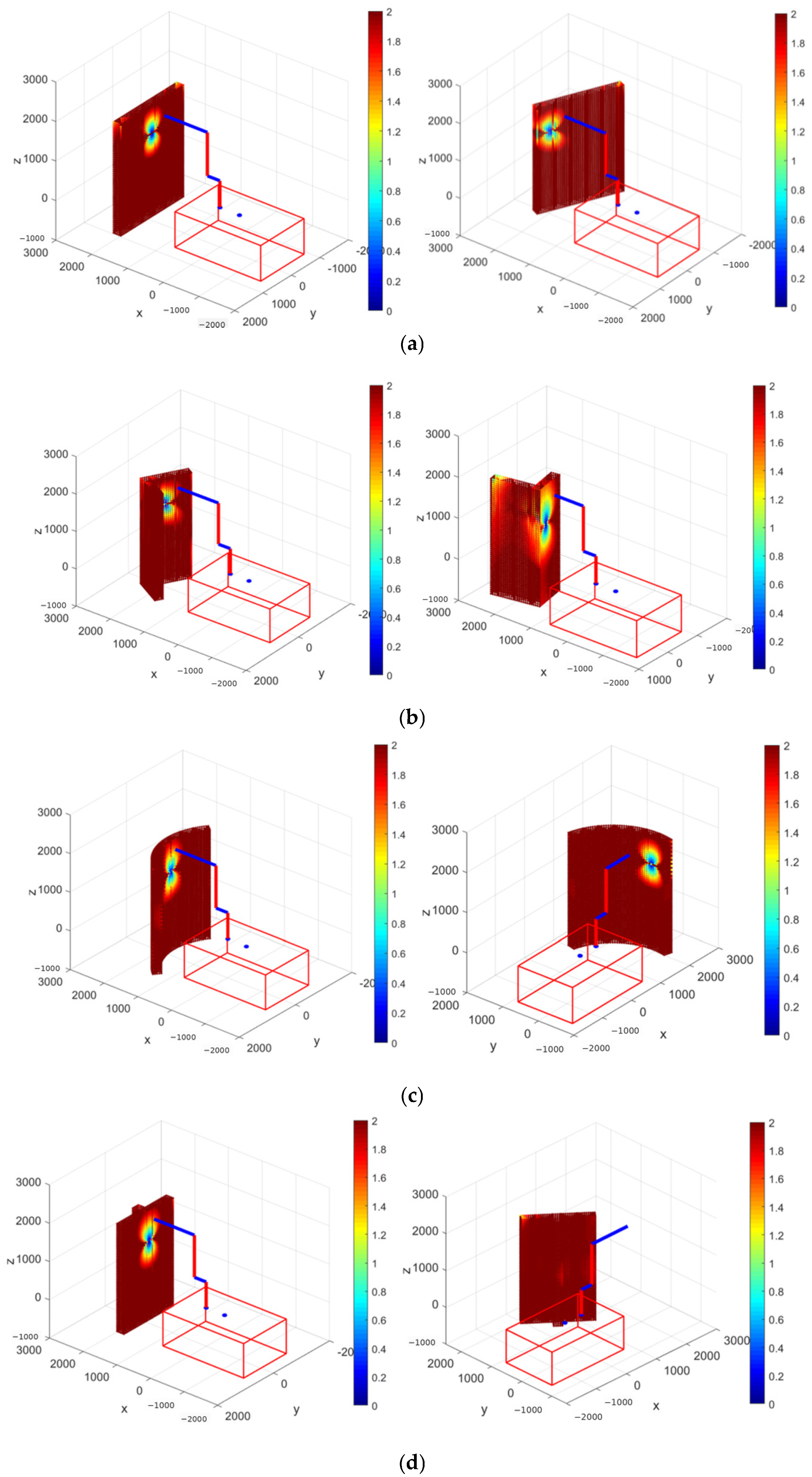
| Straight wall | [1100 mm, −2448 mm, 90°] | [3.87, 0, 0, −2368, 0, 2370] | 0.007 |
| [1391 mm, −2273 mm, 115°] | [−2.97, 1.77, −1.78, 147.72, −0.98, −147.69] | 0.138 | |
| L-shaped wall | [1766.8 mm, −1460.2 mm, −120°] | [2.84, −2 15, 2.14, −133.53, −1.12, 133.51] | 0.152 |
| [−1912.7 mm, 946.5 mm, −10°] | [2.71, 4.28, −2.21, −182.77, 3.27, 182.76] | 0.111 | |
| Arched wall | [2084.6 mm, −528.9 mm, 135°] | [3.88, −0.46, 0.37, 1053.87, 0.42, −1053.8] | 0.019 |
| [1904.8 mm, −847.6 mm, 110°] | [3.38, −0.21,0.19, −198.95, 0, 198.92] | 0.102 | |
| T-shaped wall | [900.0 mm, −2248.0 mm, 90°] | [−3.87, 0, 0, 2368.01, 0, −2368.01] | 0.008 |
| [869.3 mm, 1839.0 mm, −140°] | [0.48, −5.86, 8.24, −13.2, −0.7, −12.36] | 1.162 |
| Wall Type | Station | VDM | Joint Velocities |
|---|---|---|---|
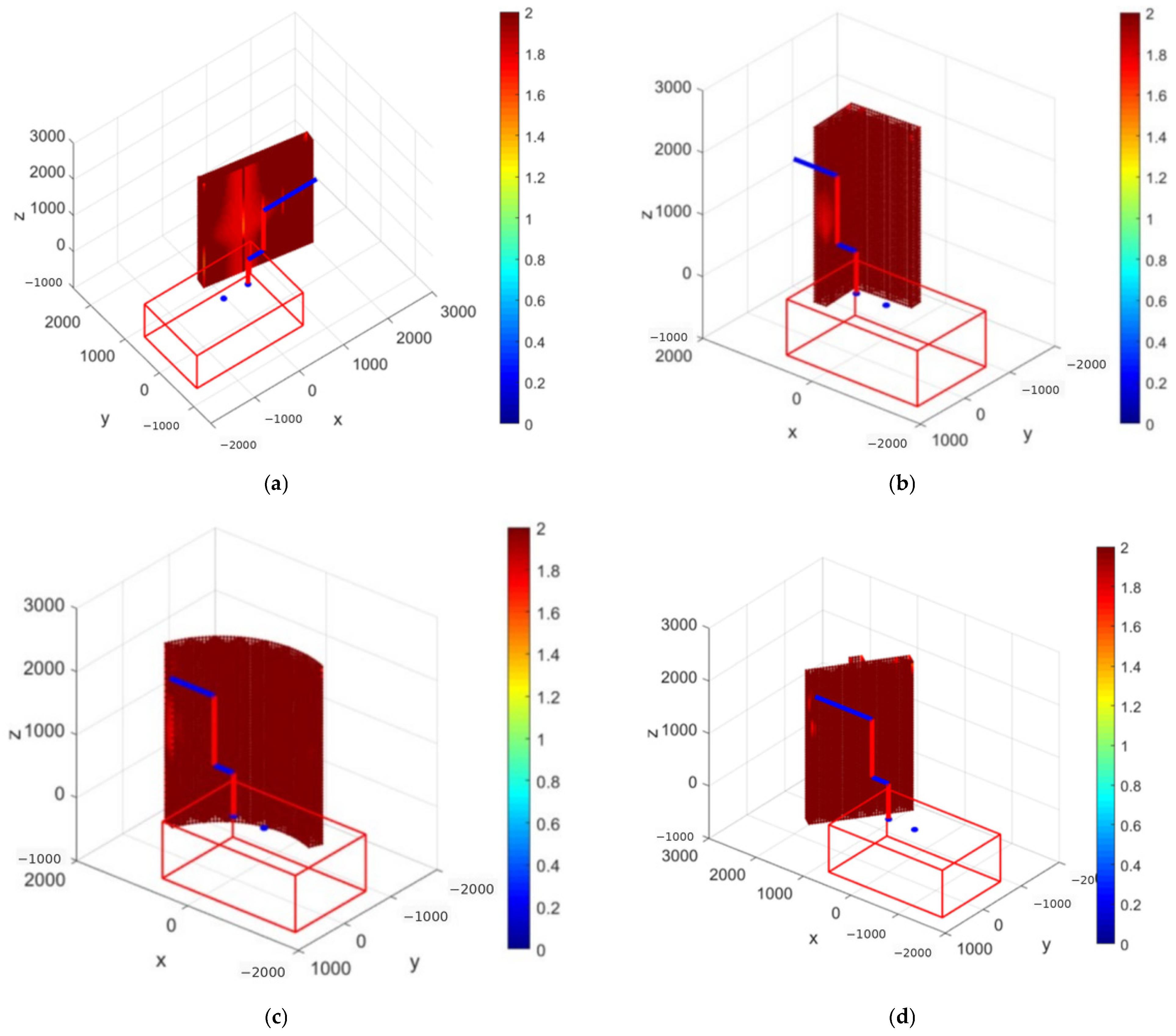
| Straight wall | [2384.8 mm, 1270.1 mm, −170.8°] | 1.466 | [0, 2.18, −7.04, −4.69, −3.09, 6.0] |
| L-shaped wall | [1859.3 mm, −818.4 mm, 176.89°] | 1.759 | [1.53, 4.17, −4.98, −0.55, −1.51, −0.43] |
| Arched wall | [2202.5 mm, 573.9 mm, −152.05°] | 1.661 | [0, −0.02, −4.08, 9.68, −0.24, −10.51] |
| T-shaped wall | [1203.3 mm, −2152.1 mm, 125.8°] | 1.638 | [0, 2.10, −6.86, 1.11, −0.56, −4.85] |
| Wall Type | Station | Maximum Z-Axis Deformation |
|---|---|---|
| Straight wall | [1100 mm, −2448 mm, 90°] | 2.724 |
| [1391 mm, −2273 mm, 115°] | 2.378 | |
| L-shaped wall | [−1912.7 mm, 946.5 mm, −10°] | 2.741 |
| [2084.6 mm, −528.9 mm, 135°] | 3.087 | |
| Arched wall | [1904.8 mm, −847.6 mm, 110°] | 2.178 |
| [900.0 mm, −2248.0 mm, 90°] | 2.321 | |
| T-shaped wall | [869.3 mm, 1839.0 mm, −140°] | 2.20 |
| [−1912.7 mm, 946.5 mm, −10°] | 2.502 |
| Wall Types | Station | Maximum Z-Axis Deformation (mm) |
|---|---|---|
| Straight wall | [1878.9 mm, −1252.4 mm, 162.79°] | 1.937 |
| L-shaped wall | [2135.8 mm, −74.87 mm, −170.9°] | 1.973 |
| Arched wall | [2171.8 mm, 679.1 mm, −163.11°] | 1.885 |
| T-shaped wall | [891.4 mm, −1875.8 mm, 90.8°] | 1.898 |
| Wall Type | Station | VDM | Max. Z-Axis Deformation (mm) | Unified Objective () |
|---|---|---|---|---|
| Straight wall | [1695.4 mm, 1571.0 mm, −161.92°] | 1.351 | 1.963 | 0.612 |
| L-shaped wall | [2008.9 mm, −618.5 mm, 179.59°] | 1.705 | 2.028 | 0.323 |
| Arched wall | [2272.1 mm, 769.7 mm, −142.48°] | 1.647 | 1.982 | 0.335 |
| T-shaped wall | [1278.3 mm, 2058.4 mm, −133.16°] | 1.600 | 1.939 | 0.339 |
Disclaimer/Publisher’s Note: The statements, opinions and data contained in all publications are solely those of the individual author(s) and contributor(s) and not of MDPI and/or the editor(s). MDPI and/or the editor(s) disclaim responsibility for any injury to people or property resulting from any ideas, methods, instructions or products referred to in the content. |
© 2026 by the authors. Licensee MDPI, Basel, Switzerland. This article is an open access article distributed under the terms and conditions of the Creative Commons Attribution (CC BY) license.
Share and Cite
Zhang, Y.; Yang, X.; Guo, S.; Song, T. Bi-Objective Station Planning of a Mobile Manipulator Considering Dexterity and Stiffness for Robotic 3D Concrete Printing. Buildings 2026, 16, 2361. https://doi.org/10.3390/buildings16122361
Zhang Y, Yang X, Guo S, Song T. Bi-Objective Station Planning of a Mobile Manipulator Considering Dexterity and Stiffness for Robotic 3D Concrete Printing. Buildings. 2026; 16(12):2361. https://doi.org/10.3390/buildings16122361
Chicago/Turabian StyleZhang, Yazhe, Xiaolong Yang, Shuai Guo, and Tao Song. 2026. "Bi-Objective Station Planning of a Mobile Manipulator Considering Dexterity and Stiffness for Robotic 3D Concrete Printing" Buildings 16, no. 12: 2361. https://doi.org/10.3390/buildings16122361
APA StyleZhang, Y., Yang, X., Guo, S., & Song, T. (2026). Bi-Objective Station Planning of a Mobile Manipulator Considering Dexterity and Stiffness for Robotic 3D Concrete Printing. Buildings, 16(12), 2361. https://doi.org/10.3390/buildings16122361