1. Introduction
The construction sector is increasingly confronted with a double imperative: it must provide adequate and affordable housing while reducing the environmental impacts associated with resource extraction, demolition waste, and greenhouse gas emissions. This challenge is particularly acute in Mediterranean cities, where climate stress, housing precarity, and the erosion of historic urban fabrics often coincide. In this context, the reuse of existing buildings is not a secondary conservation issue, but a central strategy for reducing environmental impact and producing socially useful space.
This article examines the adaptive reuse of early twentieth-century adobe refugee dwellings in Nea Ionia and Kaisariani, Attica, Greece. These modest buildings were produced under conditions of displacement and material scarcity after the Asia Minor Catastrophe and the 1923 compulsory population exchange. Today, many of them survive as fragmented remnants within dense urban fabrics dominated by reinforced-concrete apartment blocks. Their reduced scale, material vulnerability, and poor maintenance often make them appear marginal within the contemporary city. However, their apparent fragility masks a broader value, as they document the early stages of the refugees’ settlement in Attica and reflect local practices involving the use of sustainable materials and makeshift construction. Also, these buildings can be repaired and reused with local resources and collaborative work [
1,
2,
3].
Adaptive reuse has become a central topic in architectural conservation, building adaptation, and circular construction. Douglas defines building adaptation as the process through which existing buildings are altered, upgraded, converted, or extended so that they can continue to serve changing needs [
4]. Plevoets and Van Cleempoel further frame adaptive reuse of built heritage as an emerging discipline that operates between conservation, design, and social transformation [
5]. Recent circular-economy research has also shown that cultural heritage buildings can embody long service life, material continuity, and social value, making their reuse relevant to circular urban policies [
6,
7]. These perspectives are important because they shift attention from replacement to care, and from demolition-led renewal to the continued use of existing urban resources.
The reuse of adobe and other earthen buildings raises additional questions because such buildings are both material systems and carriers of cultural knowledge. Studies on the sustainability of adobe construction underline its low processing requirements, local material availability, repairability, and capacity to support low-impact maintenance [
8]. Research on reused rural houses with high thermal inertia in Navapalos, Spain, demonstrates the potential of heavy traditional envelopes to moderate indoor thermal conditions when such buildings are rehabilitated and used again [
9]. Studies of contemporary housing using local and reused materials further show the relevance of adobe and timber in reducing embodied carbon and economic cost [
10]. Furthermore, the technical literature on clay structures emphasizes the need for protection from rain every few years, the use of compatible coatings, the proper design of details, and the maintenance of clay walls to prevent rainwater from getting on the parapet, while it is well known that these tasks do not require specialized labor, but can be performed by unskilled workers [
11,
12,
13,
14].
International heritage organizations have likewise recognized earthen architecture as a significant and threatened part of the world’s-built heritage. UNESCO’s World Heritage Earthen Architecture Programme (WHEAP) identifies the conservation and management of earthen architectural sites as a global concern [
15]. The International Centre for the Study of the Preservation and Restoration of Cultural Property (ICCROM) has long addressed adobe conservation through training and technical publications, stressing the need for appropriate methods and specialized knowledge [
16]. The International Council on Monuments and Sites (ICOMOS) principles for architectural heritage conservation emphasize multidisciplinary assessment, minimum intervention, compatibility of repair, and respect for authenticity and setting [
17,
18]. In the European context, comparable research on cob, adobe, and rammed-earth heritage has shown the importance of inventories, documentation of ordinary buildings, and maintenance-oriented approaches before such everyday heritage disappears [
19,
20].
The need for bioclimatic upgrades in many large urban centers, as well as in their surrounding areas, is another pressing issue. The thermal behavior of adobe walls, the role of shading in cooling, and the effect of vegetation through evapotranspiration are documented in the existing literature [
9,
11,
21,
22,
23]. However, this article does not aim to measure the actual thermal performance of the case study dwellings or their streets. Instead, it uses design-based microclimatic reasoning to identify passive mechanisms that could be tested in future monitoring and simulation. This distinction is essential, as the proposal constitutes a feasibility framework and not a comprehensive environmental performance study.
The novelty of this article lies in its integration of three topics that are typically examined separately: the adaptive reuse through repurposing (social housing) of the adobe heritage, the preservation of the social history of refugee housing, and the improvement of the microclimate through low-tech applications within densely populated Mediterranean neighborhoods in urban centers.
The Greek case differs from many rural vernacular examples because the adobe buildings examined here are embedded in metropolitan neighborhoods, associated with forced displacement and self-help housing, and subjected to redevelopment pressures. Accordingly, the article asks how the adaptive reuse of early twentieth-century adobe refugee dwellings can contribute simultaneously to: (a) compact social housing provision; (b) microclimatic improvement and climate adaptation at dwelling, threshold, and street scales; and (c) the preservation of tangible and intangible heritage.
Building on previous research on mud-brick dwellings in Attica [
1], this article develops a design-based iterative evaluation framework, which was tested through case study scenarios in Nea Ionia and Kaisariani. The preservation and reuse scenario can be applied to hundreds of surviving adobe refugee dwellings in Attica, yet these remain undocumented, as these structures have not been systematically inventoried at the metropolitan scale. A reliable estimate would require a GIS-based survey combining historical settlement maps, aerial photographs, cadastral/municipal data, field observation, and material verification.
2. Materials and Methods
2.1. Case-Study Scope and Research Design
The research followed a qualitative, design-based case-study methodology. The primary cases are surviving adobe refugee dwellings in Nea Ionia and Kaisariani, Attica, with particular attention to two adjoining dwelling units that remain from an original row-house configuration in Nea Ionia and to a partially preserved original settlement structure in Kaisariani. The cases were selected because they condense a set of issues that is widespread in the adobe refugee settlements of Attica: modest scale, fragmented ownership, raw-earth construction, incremental transformation, urban densification, and uncertain heritage status.
The research design combines historical reconstruction, architectural survey, material and preservation assessment, typological interpretation, and design-based testing. Previous research conducted as part of the author’s doctoral dissertation showed that the earth used for adobe production was locally sourced, while water was drawn from nearby streams and watercourses in the area [
1]. This reinforces the interpretation of the dwellings as examples of low-resource, locally embedded construction practices.
The microclimatic arguments are formulated as expected passive mechanisms supported by the literature, rather than as measured performance claims. This methodological position is central to the study: the article does not present an instrumental environmental assessment but proposes a structured feasibility framework that can later be extended through thermal monitoring, hygrothermal simulation, structural assessment, and life-cycle analysis.
2.2. Field Observation, Current-Condition Recording, and Data Sources
The evidence base consisted of five categories: (i) historical and archival documentation on refugee settlement in Attica; (ii) aerial photographs, municipal plans, and cartographic material; (iii) field observations and building-survey notes undertaken during the author’s doctoral research and subsequent article preparation; (iv) typological reconstruction drawings and design scenarios; and (v) literature on earthen construction, adaptive reuse, and urban microclimate.
The field observations were architectural rather than instrumental. They recorded visible preservation conditions, urban setting, typological continuity, later additions, roof and wall vulnerabilities, and possible constraints for reuse. No temperature, humidity, wind speed, or surface temperature measurements were collected during this phase. The absence of instrumental environmental monitoring is therefore treated as a limitation of the present study, not as an omitted result. Accordingly, the article does not claim specific temperature reductions; instead, it identifies spatial and material conditions that may support future measured research.
The method can be replicated by documenting the same categories in other adobe or mud-brick areas: historical formation, urban morphology, current building condition, material compatibility, reuse capacity, and passive environmental mechanisms. The evidence base and the methodological role of each data type are summarized in
Table 1.
2.3. Analytical Framework
The analysis was structured through five interrelated layers that connect the historical, spatial, material, design, and theoretical dimensions of the study. The historical layer reconstructed the formation of the refugee settlements and the role of adobe in the first phases of housing provision. This layer frames the dwellings as evidence of displacement, collective settlement, and early forms of social housing. The morphological layer examined the row-house module, courtyards, passages, common areas within the building block, later informal additions, and the dense contemporary surroundings. This layer identifies the reuse potential of the dwellings not only at the scale of the individual unit, but also at the cluster and street scales.
The material and preservation layer evaluated the environmental and functional properties of the adobe envelopes, including thermal mass, moisture regulation, embodied energy, repairability, and compatibility of interventions. Attention was given to the need for compatible earthen or lime-based plasters, the protection of wall bases and roofs from persistent moisture, and the role of timber elements and repair practices. This layer supports the argument that adaptive reuse and compatible repair should be prioritized over demolition and replacement.
The design layer developed a low-tech bioclimatic reuse scenario for the selected dwellings. This scenario tested compact layouts, lofts where possible, service reorganization, vegetated pergolas, and shaded thresholds as design tools for adapting the buildings to contemporary social-housing needs. The aim was not to produce final construction drawings, but to examine whether the existing adobe envelopes could accommodate minimally invasive spatial transformation while preserving their material and typological legibility.
Finally, the comparative theoretical layer positioned the Attica cases in relation to adaptive reuse, circular construction, earthen heritage conservation, and urban greening literature. This layer connects the refugee dwellings with broader debates on direct reuse, participatory construction, material conservation, and microclimatic adaptation. The analytical framework was therefore used to test the research question through three criteria: whether the existing dwellings can support compact social housing; whether their material properties and proposed shading strategies can contribute to passive microclimatic improvement; and whether the intervention can preserve both the tangible fabric and the intangible memory of self-help construction. The proposal is thus evaluated as a structured test of compatibility between social use, environmental performance, circular economy and heritage preservation, rather than as a finalized architectural project.
2.4. Design-Based Scenario and Validation Logic
The design-based scenario was developed as a reconstruction scenario to identify a research tool for clarifying spatial, technical, and environmental possibilities. The intervention sequence was defined as follows: (i) documentation of the existing fabric; (ii) assessment of moisture patterns, cracks, roof condition, previous repairs, timber elements, and service routes; (iii) possibility to repair adobe walls with compatible earthen or lime-based materials; (iv) introduction of reversible structural and service upgrades where necessary; (v) redesign of the interior for social housing by preserving earthen walls; and (vi) extension of the environmental effect through vegetated shading and possible evaporative cooling at threshold and street scale.
The scenario was evaluated through a qualitative validation matrix rather than through simulation. Each proposed action was assessed against three questions on how to preserve the material and typological legibility of the historic dwelling, how to enable a viable compact housing use, and lastly, how the design can activate passive environmental mechanisms without introducing incompatible materials or irreversible alterations. This makes the method transferable to other adobe or mud-brick areas while making explicit the future quantitative tests needed before implementation.
3. Results
3.1. Historical Formation and Current Urban Condition of the Case-Study Areas
The Asia Minor Catastrophe of 1922 and the compulsory population exchange between Greece and Turkey produced an urgent need for housing on an unprecedented scale in modern Greece. Approximately 1.5 million refugees entered Greece, transforming the urban development of Athens and Piraeus [
3,
24]. Nea Ionia and Kaisariani were founded around 1923 as part of this process and received refugees primarily from Asia Minor, including communities associated with Smyrna (İzmir), Sparta (Isparta), Vourla (Urla), and other towns [
1,
3,
24]. The interpretation of the original settlement morphology and the identification of surviving row-house traces in Nea Ionia were also supported by aerial-photo processing and unpublished presentation material on the residential and industrial development of Nea Ionia [
25].
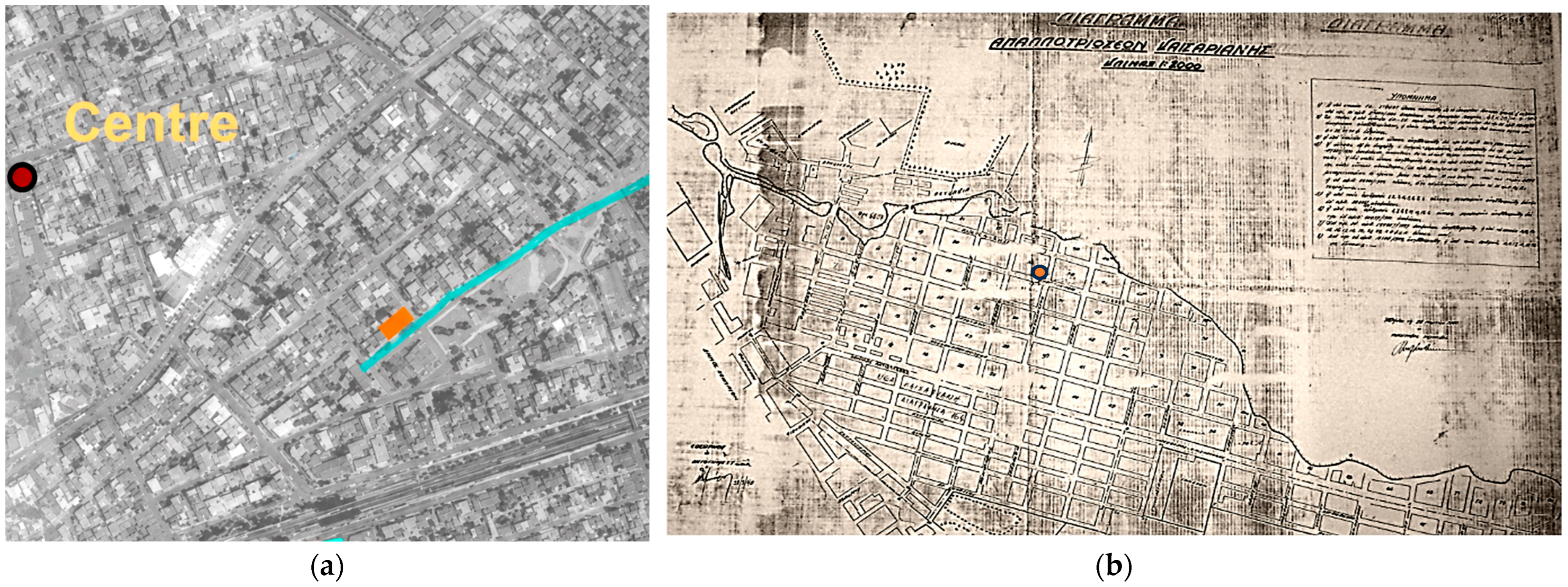
The geographical position of the two case-study areas, the surviving urban traces, and the historical organization of the refugee settlements are presented in
Figure 1. The first phase of settlement was characterized by scarcity. Temporary accommodation preceded more permanent housing, and adobe became a practical solution because it could be produced from local clay-rich soil with limited industrial inputs for roof, windows and doors. In the early areas of Nea Ionia and Eleftheroupoli, more than 500 houses were built with adobe and with the collaboration of future inhabitants [
1]. This collaboration was not limited to the completion of construction. Historical documentation indicates that the first settlers participated in the preparation of raw earth, the production and drying of adobe bricks, the transport of local materials, and, in some cases, the construction or completion of the dwellings themselves. This self-help process was a response to a shortage, but also a formative social practice through which the refugee settlement acquired a collective and participatory character. In Kaisariani, similarly, makeshift structures, mainly tents, were gradually replaced by adobe buildings.
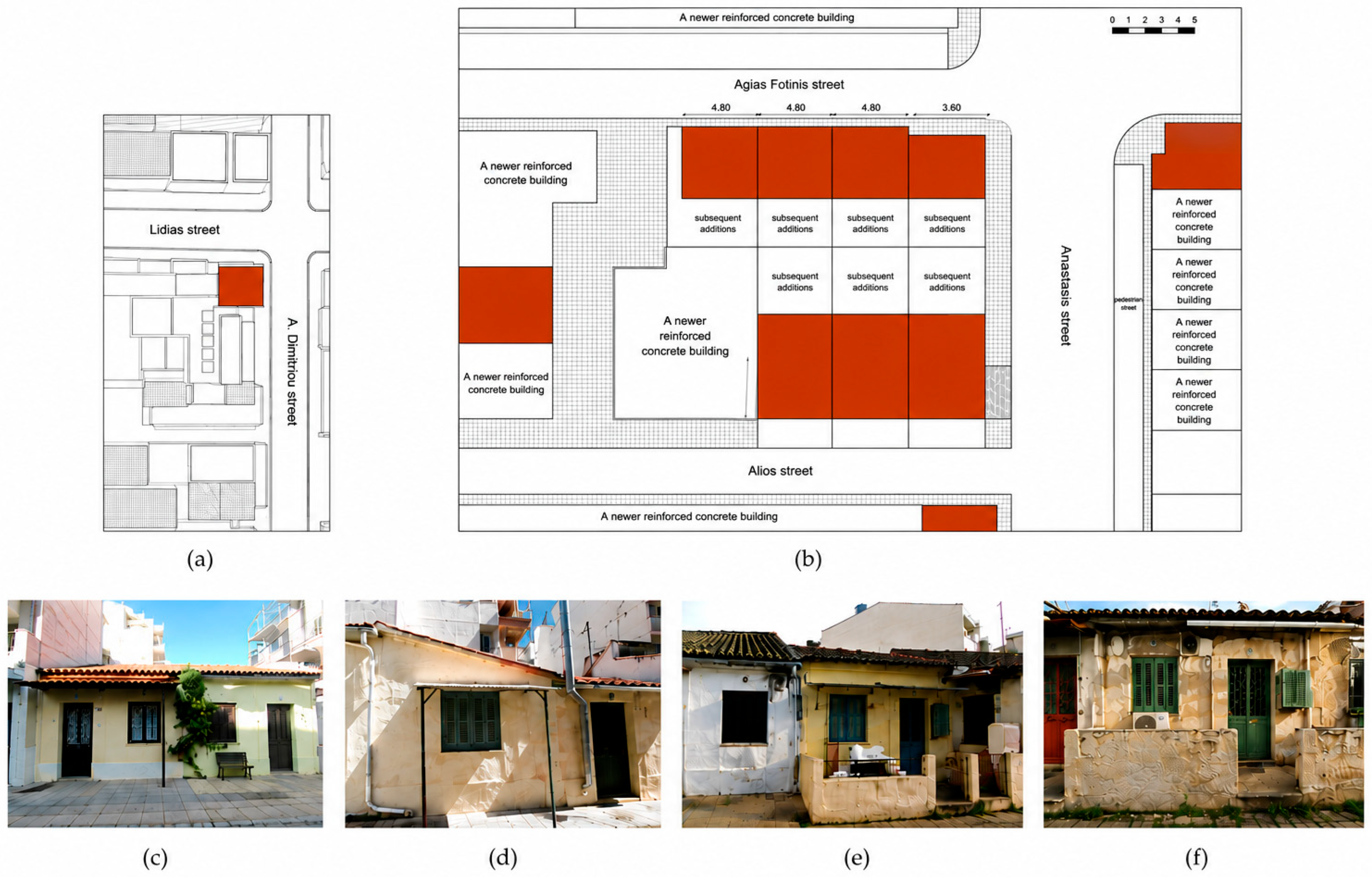
Three key urban findings emerge from the case studies. First, the original layout of the row houses remains recognizable, albeit in fragments, as many individual buildings have undergone alterations or even demolition. Second, the surviving mudbrick dwellings are now embedded in a denser urban environment, where taller reinforced concrete buildings intensify the pressure for redevelopment and reduce the visibility of the older settlement layer. Third, the small scale of the preserved dwellings is not merely a limitation: it creates the possibility for distributed, low-impact interventions that could combine housing with the promotion and preservation of cultural heritage, and ultimately contribute to improving the microclimate on a small scale at the level of the core of the small building block, the threshold, and the street.
3.2. Current Preservation Conditions and Reuse Constraints
The reuse potential of the selected adobe refugee dwellings cannot be assessed through typological analysis alone. Although the original row-house structure provides an important basis for understanding the spatial logic of the settlements, the possibility of adaptive reuse depends equally on the present condition of the surviving fabric, the degree of later transformation, the vulnerability of roofs and wall bases, the fragmentation of ownership, and the relationship of each dwelling to the surrounding urban tissue. For this reason, the analysis considers the current preservation conditions not as a secondary descriptive layer, but as a decisive factor in defining the limits and possibilities of intervention.
In the Nea Ionia case, the surviving fabric consists of a two-unit fragment embedded within a dense neighborhood of later reinforced-concrete apartment buildings. Its value lies partly in the fact that the original row-house logic remains legible despite subsequent alterations. The narrow dwelling width, the shared roof form, the relation to the courtyard, and the traces of incremental service additions still indicate the spatial organization of the early refugee dwelling. At the same time, these characteristics also impose constraints. The compact interior, limited footprint, altered service areas, and surrounding urban density require any reuse proposal to operate at a modest scale, avoiding excessive spatial demands and prioritizing careful reorganization within the existing envelope.
The Kaisariani case presents a related but distinct condition. The surviving structure represents a partially preserved fragment of the original refugee settlement fabric, where the relationship between the row-house unit, the street layout, and the geometry of the wider settlement remains readable. In this case, the reduced surviving volume and the fragmented condition of the built fabric require an even more cautious approach. Any proposed addition or internal reconfiguration should be minimal, reversible, and clearly distinguishable from the historic fabric, while maintaining the legibility of the original settlement structure.
Architectural observation can identify visible vulnerabilities—such as moisture at the wall base, cracks, roof deterioration, incompatible repairs, weakened timber elements, or cement-based coatings—but it cannot replace structural assessment and hygrothermal diagnosis. The design-based scenario therefore treats repair as a prerequisite rather than as a cosmetic operation. Compatible earthen, lime-based, and timber interventions should be prioritized, while impermeable cement-based repairs should be avoided because they may intensify moisture retention and accelerate material decay. This work can be carried out primarily by the future residents (who will also be responsible for maintaining the buildings over the years), as well as with the support of volunteers.
The spatial constraints of the dwellings also shape the possible social-housing use. Their small scale does not allow conventional housing standards to be applied through the simple insertion of new functions. Instead, reuse must be understood as a compact and carefully negotiated architectural operation. Service cores should be placed within existing or compatible additions where possible, while mezzanine or loft spaces may only be introduced where height, structural condition, and conservation criteria allow. The aim is not to maximize usable area at the expense of the historic fabric, but to test whether minimal spatial transformations can make the dwellings habitable, safe, and socially useful while preserving their material and typological identity.
The environmental potential of the two case studies is also linked to their yard surface. The adobe walls, courtyards, roof surfaces, and street thresholds can support passive microclimatic strategies when combined with shading, ventilation, vegetation, and, where appropriate, low-water evaporative cooling. However, these benefits are understood here as expected passive mechanisms rather than as quantified performance results. The present study identifies the spatial and material conditions that may support microclimatic improvement, while future monitoring or simulation would be required to measure temperature reduction, humidity regulation, and outdoor comfort effects.
Overall, the preservation conditions and reuse constraints demonstrate that adaptive reuse must be approached as a situated architectural process conducted by the municipality and local collectives. The surviving adobe dwellings are neither neutral containers for new functions nor static heritage objects to be preserved unchanged. The adobe brick dwellings reuse requires a careful balance between repair, habitability, heritage legibility, and environmental performance. This balance forms the basis for the design scenarios developed in the following section.
3.3. Typological and Material Findings
Adobe, expressed in Greek through terms such as plithi, plithia, plithra, omoplinthi, and plitharia, refers to sun-dried clay bricks. Sun-dried adobe bricks are among the earliest building techniques, with documented use since prehistoric times in the Mediterranean and the Greek world, including Neolithic settlements in Thessaly such as Sesklo. The construction of adobe buildings began during the second phase of activity of the Refugee Relief Fund, focused on the provision of permanent housing. These influences from the European experience were, of course, adapted to what was practically feasible in the Greek context. This phase included the construction of four permanent refugee settlements—Vyronas, Nea Ionia, Kaisariani, and Kokkinia—in Athens and Piraeus, between December 1922 and January 1923. After 10 January 1924, the completion of these works was undertaken by the Refugee Settlement Commission [
14].
The settlement of Nea Ionia was the second (after Vyronas area) to be constructed by the Refugee Relief Fund, on an area of 1.23 km2, with an urban layout that faintly echoed the circular geometries of the garden-city model. Its construction began in June 1923, and by December of the same year, the first 400 rooms of the settlement had already been built. The settlement of Kaisariani, in whose planning the engineer G. Soullis participated, followed an orthogonal urban layout. Its first phase, beginning in May 1923, included the construction of 500 wooden shelters and 1000 adobe rooms. After its completion by the Refugee Settlement Commission, Kaisariani housed 11,002 inhabitants in 1925.
Although dimensions vary, Greek adobe bricks were commonly produced as modular units of approximately 40 × 20 × 10 cm, using clay, water, straw or other fibers, and fine-grained aggregates [
1,
8]. The original dwellings in Nea Ionia and Kaisariani were generally elongated rectangular structures arranged in rows and covered by shared pitched roofs. A typical building was divided by transverse walls into four to six dwelling rooms, each approximately 4.00 m wide, with a door and window on the main elevations. Shared sanitary facilities were originally planned at the center of each urban block, serving groups of approximately 12–18 dwelling units. Kitchens, toilets, water supply, and electrical infrastructure were nevertheless added gradually to individual dwellings through small extensions into courtyards and side spaces [
1].
The material findings confirm both potential and vulnerability. The potential lies in the continued presence of massive earthen walls, low-processed local materials, and a repair culture by inhabitants that can be reactivated through compatible techniques. The vulnerability of these structures lies in moisture exposure, roof decay, possible rising damp, incompatible cement-based repairs, prolonged abandonment without regular maintenance, and the gradual loss of craft knowledge. The environmental value of adobe is therefore inseparable from its preservation condition. Adobe walls have high thermal mass and can moderate indoor temperature fluctuations, but this advantage depends on roof integrity, moisture-safe detailing, ventilation, and appropriate surface finishes [
9,
11,
12,
13,
14].
The case studies also demonstrate that adobe refugee dwellings should not be interpreted only as examples of vernacular construction. They are evidence of emergency housing that became permanent urban fabric. Their material characteristics are connected to a social history of self-help construction, incremental adaptation, and neighborhood formation. This dual material-social value is the reason why demolition would remove not only embodied carbon and reusable fabric, but also an everyday layer of twentieth-century urban memory.
The advantages identified in the case studies are therefore consistent with broader research on vernacular architecture, but they are not reducible to a generic vernacular condition. Like many vernacular earthen buildings, the refugee dwellings rely on local materials, simple repair cycles, and incremental adaptation. Their specificity, however, lies in the fact that these attributes emerged within a twentieth-century emergency-housing context and later became part of ordinary metropolitan neighborhoods. This distinction is important because the proposed reuse strategy also addresses social history and collective practices.
3.4. Adaptive Reuse and Bioclimatic Upgrading Scenario
The proposed reuse scenario concerns surviving dwelling fragments rather than an intact settlement. In the Nea Ionia case, the scenario addresses two adjoining dwelling units that originally served two families under a shared pitched roof. In the Kaisariani case, the surviving building represents a reduced fragment of the original structure. In both cases, the intervention begins with a diagnostic assessment: wall thickness, wall-base condition, moisture patterns, cracks, roof condition, previous repairs, timber elements, and service routes must be documented before design decisions are made. Beyond the provision of additional housing units within the urban center, the proposal also operates as a strategy for revealing and restoring the architectural character of the surviving adobe dwellings. Over time, many of these buildings have been visually and materially obscured by successive additions, such as air-conditioning units, aluminum frames, improvised metal structures, and other incompatible industrial materials. These accretions have weakened the legibility of the original refugee housing fabric and have contributed to the gradual loss of its architectural identity. Therefore, the formulation of reuse and repair guidelines would not only support the rehabilitation of abandoned buildings but also assist the careful upgrading and visual clarification of privately owned adobe dwellings that remain inhabited. Spatially, the compact interior can be reorganized for social housing. Where the repaired structure and height conditions permit, a narrow mezzanine can increase usable area without expanding the footprint. Service spaces can be placed in existing or carefully redesigned courtyard additions. The aim is not to transform the dwellings into idealized historic objects, but to keep them habitable, safe, and socially useful while preserving the material and typological evidence of the refugee settlement.
The main bioclimatic element is a light pergola system planted with deciduous climbing vegetation, such as Virginia creeper or five-leaved ivy. The pergola shades the roof, courtyard, small terrace, where available, and the transition between dwelling and street. In summer, foliage reduces direct solar gains and lowers surface temperatures; in winter, leaf fall allows solar access. If planted surfaces are combined with a simple misting or low-water evaporative system, the threshold can provide additional cooling. When repeated within the interior of the small urban block shown in
Figure 2, this strategy can transform residual open spaces into a pocket park with a positive environmental impact on both the dwellings and the surrounding urban fabric. Repetition of the same approach along the street could also produce shaded green galleries that reduce heat stress beyond the individual dwelling and improve pedestrian comfort at the neighborhood scale. The expected cooling mechanisms are consistent with research on urban greening, green roofs, and vegetated envelopes, but they remain to be quantified for these specific case studies [
21,
22,
23].
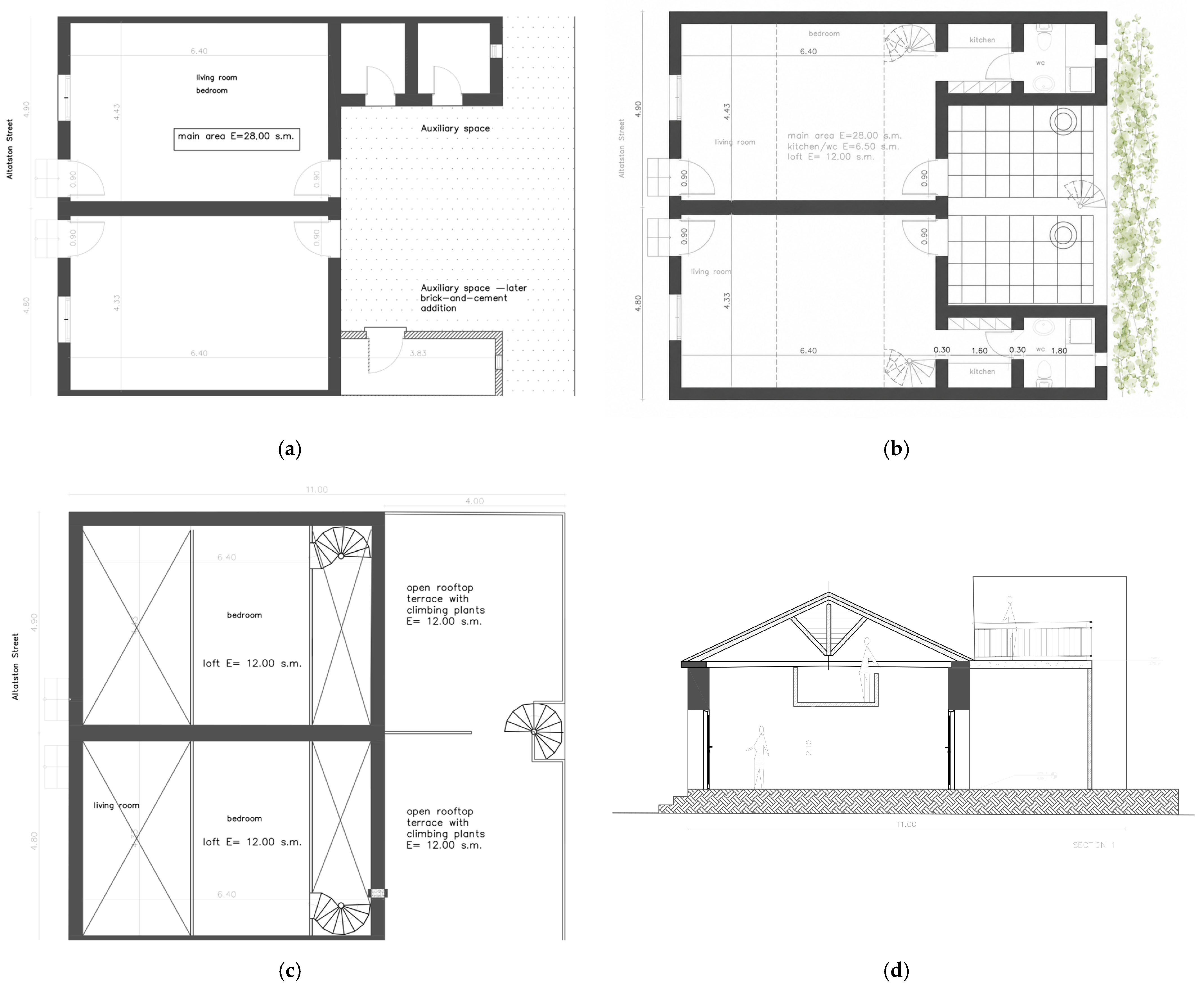
Figure 3 presents the proposed layout for the Nea Ionia case study as a low-impact intervention that preserves the original external adobe masonry and limits new construction to the elements required for structural and functional upgrading. The proposal retains the perimeter walls as the main architectural and material evidence of the historic dwelling, while strengthening the upper perimeter zone to improve the support of the new roof structure. The insertion of a mezzanine in the middle of the rectangular plan is made possible by the considerable internal height, approximately 4.30 m, in the zone where the sleeping area is proposed. In this way, the intervention increases the usable floor area without altering the basic footprint or the external character of the original adobe shell.
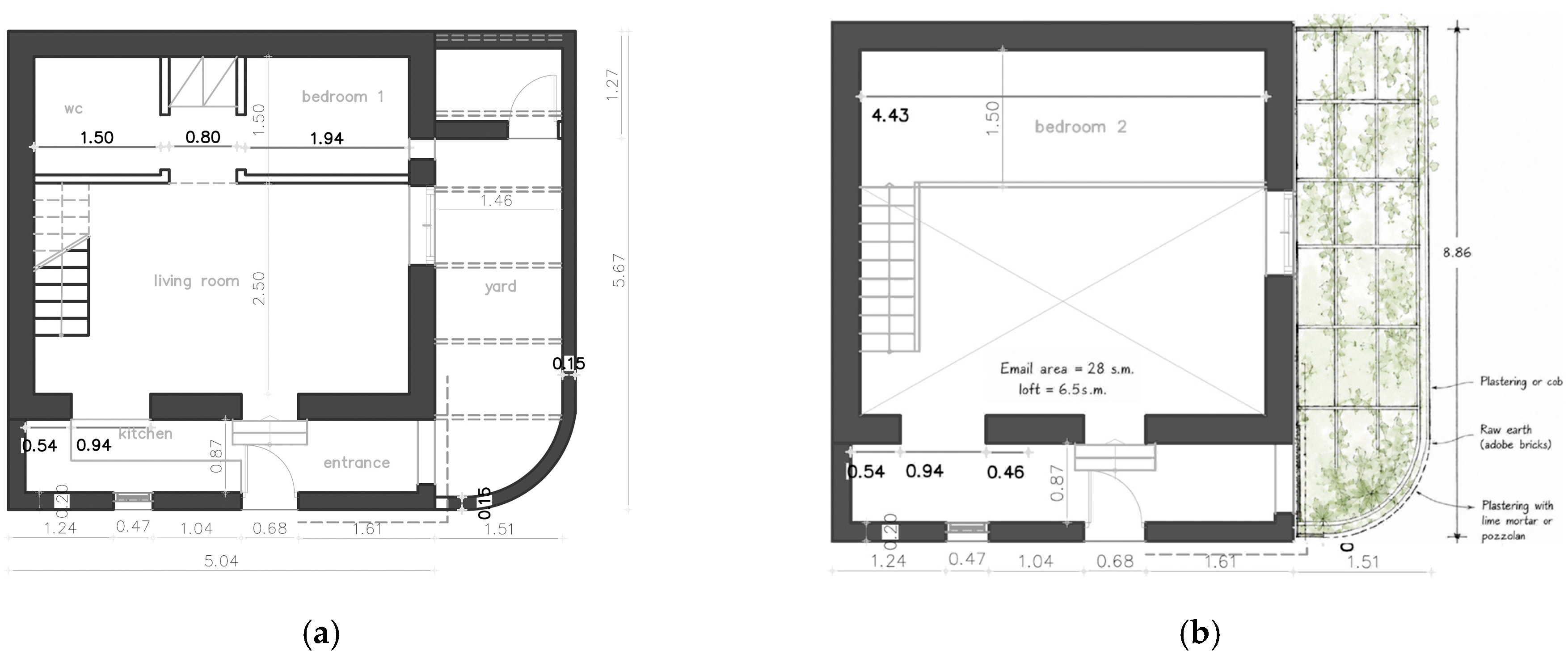
Figure 4 applies the same design and drawing logic as the Nea Ionia case study. However, in the Kaisariani case study, the proposed roof structure is single-pitched. Consequently, the loft space is formed within the area of greater height, which corresponds to the rear zone of the dwelling. The proposed adaptive reuse scenario accommodates up to four residents.
The vegetated pergola reduces direct solar radiation on the roof, courtyard, and threshold, while deciduous planting allows seasonal differentiation between summer shading and winter solar access. At street scale, the extension of planted shading can reduce surface temperatures and create a more comfortable semi-public transition zone. These effects are not quantified in the present study; the drawings identify passive mechanisms to be tested through future monitoring and simulation.
3.5. Case-Specific Validation of the Research Questions
The proposed adaptive reuse strategy was assessed against the three main research questions of the study: social housing provision, microclimatic improvement, and heritage preservation. A further criterion, circular construction, was also considered, as it directly relates to the environmental value of retaining and reusing the existing building stock. At the same time, the strategy contributes to the strengthening of the neighborhood and to the activation of architectural heritage through the very use for which these buildings were originally designed as residences.
In terms of social housing, the case studies demonstrate that the surviving adobe dwellings, although small and fragmented, still retain a reusable spatial and material envelope. Their compact scale allows for low-cost reorganization within the existing footprint, through the introduction of service cores (kitchen, wc) or with compatible additions where spatially feasible. This suggests the potential for distributed social housing provision without additional land consumption or demolition of historic fabric. At this stage, however, this remains a design-based feasibility assessment and requires further validation through policy, cost, and implementation studies.
An additional challenge concerns the ownership status of many of the remaining dwellings. Over the course of several decades, inheritance fragmentation has often resulted in multiple owners for a single property, making individual exploitation, maintenance, or sale difficult. In this context, the role of the municipality could become decisive. A municipal framework for acquisition, compensation, or targeted expropriation could enable the consolidation of selected properties into a coherent social housing and heritage reuse program. Such a framework could also support the establishment of a municipal management body or cooperative structure responsible for maintenance workshops, spatial management, user allocation, and long-term stewardship of the restored housing stock.
Regarding microclimatic performance, the existing adobe walls provide thermal mass, while the exposed roofs, small courtyards, narrow thresholds, and dense urban surroundings define the environmental conditions of each case. The proposed vegetated pergola, shaded entrance zone, and possible low-water evaporative cooling are expected to reduce solar gains, moderate surface temperatures, and improve comfort in semi-public transition spaces. These effects are identified as passive environmental mechanisms, but they have not yet been quantified. Future monitoring and simulation are therefore required to verify their actual performance.
From a heritage perspective, the case studies preserve important material and typological evidence, including adobe walls, layouts of house additions, traces of self-help construction, and the spatial memory of refugee settlement. The proposed interventions are based on compatible repair, reversible upgrades, and the preservation of typological legibility. In this respect, the strategy supports both tangible and intangible heritage continuity and is substantiated by historical and typological evidence. Also, heritage is not treated as a static exhibit, but as a living resource that can remain active through residential use and everyday occupation.
Finally, the reuse of the existing envelopes contributes to circular construction by retaining embodied material value and spatial usability. The strategy prioritizes non-demolition, repair, and direct reuse before recycling or replacement. This approach can reduce demolition waste while preserving the embodied cultural information contained in the buildings themselves. Although this argument is conceptually supported, it requires future life-cycle assessment to quantify its environmental benefits.
4. Discussion
4.1. What the Case Studies Add to Adaptive Reuse and Earthen Heritage Research
Compared with other European and Mediterranean examples of earthen heritage reuse, the refugee dwellings of Attica present a specific combination of material, social, and urban characteristics. Like cob, adobe, or rammed-earth buildings elsewhere, they require compatible repair, moisture control, and careful adaptation to contemporary standards. Unlike many rural vernacular examples, however, they are embedded in dense metropolitan neighborhoods and are directly linked to the history of forced displacement, emergency housing, and self-help construction. In addition, their reuse therefore cannot be understood only as conservation of earthen architecture; it also operates as a possible contribution to contemporary social housing and urban climate adaptation.
The main conclusion drawn from the case studies is that the adobe dwelling itself constitutes an object of significant intrinsic value, not only because of its material substance, but also because of the labor embedded in its construction, its distinctive typology, and the collective memory it carries. This interpretation broadens the discussion on adaptive reuse by shifting attention from large, monumental buildings to small, ordinary, and vulnerable dwellings that remain active components of neighborhood identity. It also reinforces the notion of open-air museums and pocket parks as complementary frameworks for understanding dispersed heritage within the urban fabric. Furthermore, the study expands research on adobe heritage by linking material conservation with contemporary use, while opening new possibilities for repair workshops, adaptive reuse practices in residential and non-residential buildings, and a renewed evaluation of microclimatic design at the scale of the dwelling and the street.
4.2. Addressing the Three Research Questions
Regarding social housing, the case studies suggest that small adobe dwellings cannot solve housing precarity at the metropolitan scale on their own. Their contribution is instead distributed and incremental. They can activate underused or abandoned fragments without requiring a large scale of cleared sites, and they can support compact housing when repairs, services, and spatial additions are carefully designed. This approach may be especially relevant in dense neighborhoods where land assembly is difficult, and redevelopment can intensify displacement.
Regarding microclimatic upgrading, the article identifies passive mechanisms rather than measured effects. Adobe thermal mass, roof and courtyard shading, deciduous vegetation, and low-water evaporative cooling may reduce heat stress at the dwelling and threshold scales. Repetition along a street could contribute to shaded pedestrian routes and cooler semi-public spaces. However, the precise magnitude of this effect remains unknown. At present, the argument is supported primarily by comparable urban and landscape design approaches, including Bas Smets’ proposals for the Cooling Athens initiative. These proposals examine the role of landscape as an active microclimatic system through the activation of soil, water, and vegetation as nature-based solutions for urban overheating. In particular, the Plaka Green Canopy proposes a network of climbing plants to provide natural shading in narrow streets and on building façades, while the Varvakeios Urban Forest transforms a hard surface above the existing parking area into an urban forest capable of generating a cooler microclimate and new public space. In this context, the article treats microclimatic upgrading as a testable design hypothesis and identifies environmental monitoring, UTCI-based assessment, and simulation as necessary future steps [
26].
To summarize, the cases demonstrate that heritage value lies not only in material authenticity but also in typological legibility and collective memory. The adobe walls, shared roofs, courtyards, and traces of incremental additions document the transformation of emergency refugee shelters into permanent urban fabric. Compatible repair and reversible upgrades therefore contribute not only to material conservation, but also to preserving the memory of refugee settlement and self-help construction.
4.3. From Recycling to Direct Reuse
The Nea Ionia and Kaisariani cases support a hierarchy of action that places non-demolition and direct reuse before recycling. This hierarchy is consistent with circular-construction debates and with architectural practices that treat the existing city as a material and spatial resource rather than as a field of replacement [
5,
6,
7]. In this perspective, the principle of not building anew can be read as a reframing of architectural intention not to primarily produce from scratch new objects, but to discover, repair, negotiate, and reactivate what already exists.
This position is relevant because recycling is often used as a reassuring term even when demolition remains unquestioned. Recycling can recover material value, but it frequently requires energy-intensive operations such as dismantling, crushing, melting, transport, and reprocessing. Direct reuse is more demanding because it requires careful observation, adaptation, and design based on what is already available. However, it preserves a greater proportion of embodied value and cultural information. In this study, the comparison is not only between recycling and component reuse, but between demolition-oriented urban renewal and the continued use of the original building envelope through compatible intervention.
4.4. Technical, Institutional, and Research Limits
The proposal has several limitations. First, adobe buildings require structural and property assessment on a case-by-case basis. The reuse of a specific dwelling cannot be recommended without documenting wall condition, roof behavior, seismic vulnerability, rising dampness, salts, and incompatible interventions. Second, the regulatory status of such buildings in Greece requires further clarification and institutional support. Heritage recognition is therefore crucial for a broader category of refugee settlements, and especially for the surviving adobe buildings within them [
27]. However, such recognition cannot operate in isolation: building permits, fragmented ownership structures, and the long-term management of social housing must be addressed together within a coherent institutional framework.
Third, the environmental claims in this article are based on material reasoning, architectural observation, and design-based assessment. Future work should include measured indoor and outdoor thermal conditions, hygrothermal monitoring, life-cycle assessment, and comparative scenarios between demolition and new construction, conventional retrofit, and compatible adaptive reuse, following established LCA and life-cycle energy analysis approaches in the building sector [
28]. Microclimatic simulation could also test the cumulative effect of repeated vegetated pergolas along a street canyon.
Finally, participatory repair requires institutional support. Workshops can reduce costs and revive local building knowledge, but they should not substitute for professional assessment where structural safety, moisture management, and public housing standards are involved. A robust implementation model should combine municipal coordination, community participation, technical supervision, and long-term support for maintenance workshops.
5. Conclusions
This article has argued that the adaptive reuse of early twentieth-century adobe refugee dwellings in Nea Ionia and Kaisariani can function as an integrated strategy for low-carbon social housing, cultural heritage preservation, and microclimatic adaptation. These dwellings are not merely obsolete remnants of poverty or emergency housing. Rather, they constitute material, spatial, and social resources that can continue to generate multidirectional value if repaired with compatible techniques and carefully adapted to the specific characteristics of adobe construction.
The central argument is that non-demolition should be considered the primary environmental and cultural option when adobe buildings remain repairable. The proposed framework demonstrates how historical evidence, current-condition recording, material compatibility, compact housing design, and passive microclimatic mechanisms can be assessed together. In this sense, the study examines how reuse can be designed without erasing heritage value, while also contributing to sustainability objectives such as microclimatic upgrading in urban areas of Athens.
For municipalities and heritage authorities, the framework can support preliminary surveys of overlooked adobe or mud-brick housing stock. The proposed design approach is based on repair, reversible intervention, and the reuse of existing spatial resources. For future research, the study identifies the next necessary steps: detailed structural assessment, hygrothermal monitoring, microclimatic simulation, and pilot rehabilitation projects. The broader implication is that sustainable architecture in dense Mediterranean cities must move from a culture of replacement to a culture of care, in which small and fragile buildings are treated as active components of social, environmental, and cultural resilience.