Article

Shear Behavior of Unsaturated Compacted Loess–Concrete Interface: Multi-Factor Quantitative Analysis and Constitutive Modeling

1
School of Civil and Hydraulic Engineering, Lanzhou University of Technology, Lanzhou 730050, China
2
College of Architecture and Civil Engineering, Huanghuai University, Zhumadian 463000, China
*
Author to whom correspondence should be addressed.
Buildings 2026, 16(12), 2340; https://doi.org/10.3390/buildings16122340
Submission received: 6 May 2026 / Revised: 31 May 2026 / Accepted: 9 June 2026 / Published: 11 June 2026
(This article belongs to the Section Building Structures)

Abstract

The mechanical properties of soil–concrete interfaces directly impact the bearing capacity and structural stability of underground projects. Characterizing mechanical responses and quantifying multi-factor influence mechanisms are fundamental to geotechnical design, numerical simulation, and safety assessment. To reveal the mechanical properties of the unsaturated loess–structure interface, this study conducted a series of direct shear tests on loess–concrete interfaces under varying moisture contents. The effects of interface roughness, soil dry density, normal stress, and soil moisture content on the interfacial shear strength were quantitatively evaluated. The results show 20–35% shear stress variation with dry density, up to 35% shear strength reduction upon wetting, less than 10% shear stress difference due to interface roughness, and normal stress controls, shear stress magnitude, and initial failure sliding displacement. Based on the test results, moisture content was introduced as an additional variable to establish a modified hyperbolic model for unsaturated soil-structure interfaces. This model contains six parameters, all of which can be determined through interface direct shear tests at different moisture contents. These findings advance the quantitative understanding of unsaturated loess–concrete interface mechanics and provide a critical theoretical foundation for the design, numerical analysis, and stability assessment of unsaturated loess–structure interfaces under multi-factor coupled conditions in practical geotechnical engineering.

1. Introduction

The analysis of soil-structure interface behavior has always been an important issue in underground engineering, such as determining the bearing capacity of pile foundations, the pull-out force of anchor rods, the friction force between tunnels and linings, and the friction resistance between concrete cutoff walls and dam filler soils [1,2,3]. Due to the large difference in mechanical properties between the two contacting materials, sliding or relative sliding tendency will occur under certain stress conditions, characterized by large deformation and local discontinuity, which is a mechanical response different from both soil and structural materials [4]. Therefore, to correctly simulate and calculate the soil-structure contact, it is necessary to accurately characterize the mechanical responses of interfaces and quantitatively analyze the influence mechanisms of multiple factors.
Numerous researchers worldwide have conducted extensive experimental studies on the soil-structure interaction problems, revealed important interface mechanical properties, and developed a series of theoretical models. Among them, Potyondy [5] carried out direct shear tests on the interface between different types of soil and various structural materials. Through the analysis of experimental laws, he concluded that soil type, moisture content, interface roughness, and normal stress are the main factors affecting the interface friction strength. Subsequent researchers have further studied the influence of various factors on the experimental laws through different test methods [6,7,8,9]. In the research on mechanical properties of soil-structure interfaces, some scholars adopt newly developed test devices to accurately characterize interfacial mechanical responses [10]. Nevertheless, most studies perform conventional interface direct shear tests and establish quantitative characterization methods for interfacial mechanical behaviors according to experimental laws. Wu et al. [11] conducted a series of large-scale direct shear tests on sand–concrete interfaces, systematically investigating their mechanical behavior under soil unloading conditions and varying interface roughness profiles. They further developed a novel methodology for determining and assessing the shear influence zone at contact interfaces, which offers a fresh perspective for characterizing shear bands in soil-structure interaction systems. In a subsequent study, Chen et al. [12] performed large-scale direct shear tests on red clay–concrete interfaces, elucidated the fundamental mechanisms by which interface roughness governs the shear behavior of soil–concrete interfaces, and proposed a highly practical evaluation framework for interface roughness. Interface roughness has been widely recognized as a dominant factor controlling the mechanical properties of soil–concrete interfaces, and numerous subsequent studies [13,14,15,16] have presented alternative evaluation approaches. Collectively, these contributions have laid a solid foundation for the accurate quantification of structural surface roughness. In addition to roughness, moisture content represents another primary factor influencing the mechanical response of soil-structure interfaces [5,9,17]. Li et al. [18] conducted a comprehensive experimental investigation using interface direct shear tests to reveal the underlying mechanisms through which moisture content modulates the stress–strain behavior of interfaces. They also established an empirical relationship between moisture content and interface shear strength, enabling quantitative assessment of moisture content effects on interface mechanical properties. While significant progress has been made in understanding the influence of individual factors on interface shear strength, the detailed mechanical response characteristics and failure mechanisms during the shear process of soil–concrete interfaces remain areas of active research. Zhou et al. [19] performed direct shear tests on cemented soil–concrete interfaces and identified three distinct stages in the interface shear failure process. Their study specifically examined how various factors affect the evolution of bond strength, peak strength, and residual strength throughout the development of interface shear strain. Li et al. [20] proposed a two-stage shear failure model consisting of a bond degradation stage and a frictional sliding stage, and derived an analytical expression for shear strength as a function of shear strain based on their direct shear test results. Collectively, these pioneering studies have substantially advanced our understanding of soil–concrete interface mechanics, and provided a rich theoretical and experimental foundation for future research on the mechanical properties of unsaturated compacted loess–concrete interfaces.
Despite the substantial progress achieved in experimental investigations into the mechanical behavior of soil–concrete interfaces, constitutive models capable of accurately capturing their complex shear deformation and failure mechanisms still represent a critical bottleneck limiting the accuracy of numerical simulations in underground engineering. According to the shear stress–shear strain relationship curve on the shear surface, Clough [21] found that the shear stress–shear strain of the sand–concrete interface presents a hyperbolic relationship, and thus proposed a non-linear hyperbolic model for the interface. Building on this pioneering work, Jesús et al. [22] modified the original non-linear hyperbolic framework and incorporated a yield surface to formulate an enhanced interface hyperbolic model, which demonstrates excellent predictive capability for the mechanical behavior of sand–concrete interfaces under both simple and complex loading paths. Subsequently, based on overstress theory and critical state theory, Li et al. [23] developed an elastic–viscoplastic constitutive model for clay–structure interfaces that systematically accounts for shear rate effects, shear softening, and hydro-mechanical coupling. Luan et al. [24] combined the two models and proposed a non-linear elastic–perfectly plastic model with a wider application range. To describe the static and dynamic mechanical properties of the soil-structure interface, Zhang et al. [25] explored the influence mechanism of coupled stress–dry–wet cycling on the contact mechanical properties, established a shear strength degradation model for the interface, and realized the quantitative analysis of the influence of factors on the interface mechanical properties. Among these existing constitutive frameworks, the interface hyperbolic model has been most popular among the existing models due to its adaptability in the investigation of soil-structure interaction problems [26,27]. Collectively, these research achievements have laid a theoretical foundation for the interface constitutive model to a certain extent. Nevertheless, a critical limitation of all these models is that they were almost exclusively developed and validated based on experimental data obtained under constant moisture content conditions. In practical engineering, there are many contacts between unsaturated soils and structures. The moisture content of these soils exhibits substantial spatial and temporal variations driven by rainfall infiltration [28], groundwater level fluctuations, evaporation [29], and other hydrological processes [30,31,32,33]. Therefore, when studying the mechanical properties of the unsaturated soil-structure interface, the influence of moisture content cannot be ignored, and the effect of hydro-mechanical coupling should be considered.
Accordingly, this paper takes the unsaturated compacted loess–concrete interface as the research object, and carries out direct shear tests on soil–concrete interfaces. The quantitative investigation systematically clarifies the influence mechanisms of key factors including soil dry density, moisture content, interface roughness, and normal stress on the shear mechanical properties of the unsaturated compacted loess–concrete interface. On the basis of experimental results, the hyperbolic model in Reference [21] is revised. Differently from the original model, this paper first simplifies the quantitative relationships between the initial shear stiffness coefficient, ultimate shear strength, and normal stress in the hyperbolic model, and further introduces soil moisture content as a characteristic variable to establish a modified hyperbolic model that can accurately characterize the mechanical characteristics of unsaturated soil-structure interfaces under different humidity and stress states. Notably, all six parameters contained in the proposed modified model can be efficiently determined via interface direct shear tests under different moisture content conditions, which endows the model with favorable operability and applicability. This study quantitatively analyzes the effects of multiple factors on the mechanical behavior of unsaturated compacted loess–concrete interfaces and enriches the theoretical framework for the constitutive relations of soil-structure interfaces. The research results provide a theoretical basis and data reference for the structural design, numerical simulation, and stability evaluation of geotechnical engineering involving unsaturated compacted loess–structure interfaces.

2. Materials and Methods

2.1. Test Samples

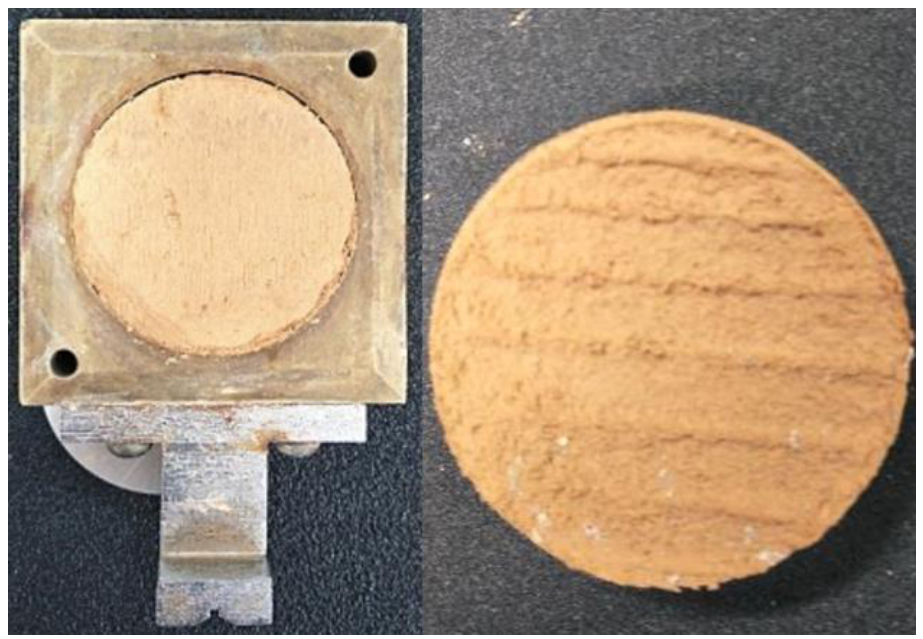
The soil used in this test was taken from a construction site in Weicheng, Xianyang, which is Q3 loess with a buried depth of 3~5 m. Its basic physical property indexes are shown in Table 1. In accordance with the standard for geotechnical test methods (GB/T 50123-2019) [34], the loose soil was naturally air-dried, crushed, and sieved through a 2 mm sieve. The moisture content of the air-dried soil sample was measured, and prewetted by spraying water layer by layer to a designed moisture content of 10%, then sealed and placed for one week to make the moisture diffuse evenly. To reduce the difference in the internal structure of samples caused by different sample preparation moisture contents and the change in sample mechanical properties caused by dry–wet cycles, all samples were prepared with a moisture content of 10%. Each sample had a bottom area of 30 cm2 and a height of 2 cm, as shown in Figure 1. Two types of dry density samples were prepared in this paper: one with the same dry density as the undisturbed soil sample, ρ d = 1.28   g / cm 3 , and the other with ρ d = 1.40   g / cm 3 . To make the samples have different designed moisture contents, the method of wetting by dripping–sealing–moisture diffusion was adopted, that is, the water required for the test was calculated according to the target moisture content, added dropwise several times with a burette, then wrapped and sealed with plastic wrap, and placed for 48 h to make the moisture inside the sample diffuse evenly.
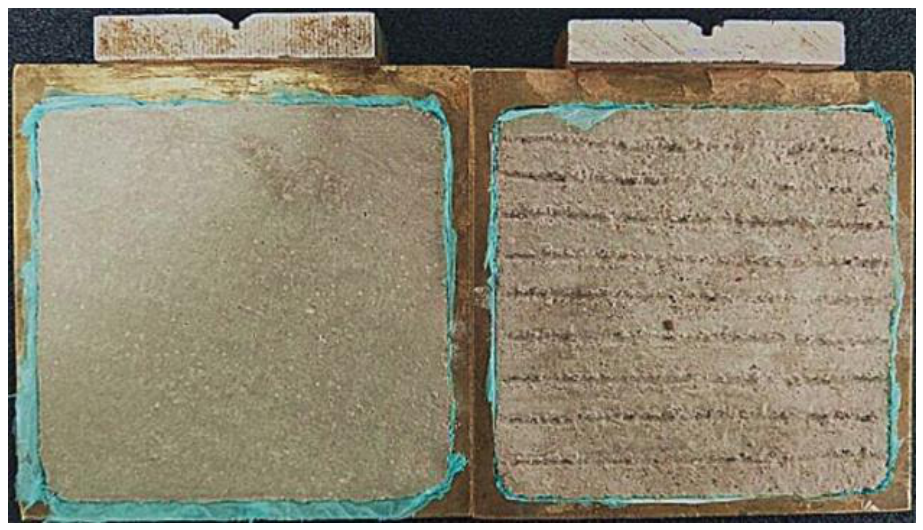
Two types of concrete interfaces were adopted: smooth and rough. The smooth interface was made using the lower direct shear box without the inner ring as the mold; after the concrete was initially set, the concrete surface was finished to be flush with the edge of the lower direct shear box. The rough interface also used the lower direct shear box as the mold; after the concrete was initially set, the concrete surface was grooved with thin iron wires, with a groove spacing of 1 cm, groove depth of 2 mm, and width of 2 mm. The two concrete interfaces with different roughness are shown in Figure 2.

2.2. Test Procedures

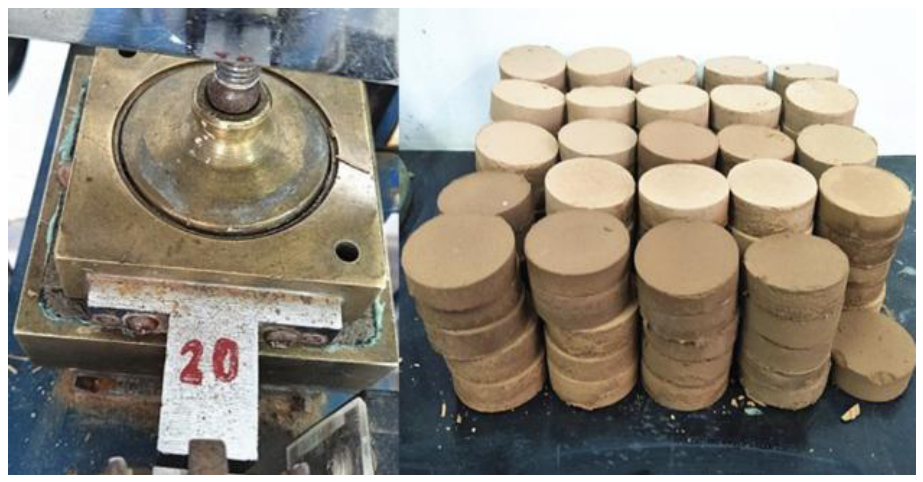
To reduce the friction of the side wall on the soil sample and affect the transmission of normal stress, a layer of vaseline was applied to the side wall of the upper direct shear box, which was then centered and placed on the lower box containing the concrete block. The cutting ring with the sample was aligned with the shear box opening, a 2 mm thick aluminum plate was used instead of the permeable stone on the top of the sample, and then the sample was slowly and evenly pushed into the shear box. The hand wheel was rotated to make the front end of the upper box fully contact with the dynamometer, and the reading was reset to zero. The pressure cover plate, steel ball, and pressure frame were added in sequence, the vertical displacement meter was installed, and the initial reading was recorded. Weights were applied according to the designed load, and the lever was adjusted to be horizontal. The shear box was wrapped with a wet towel to prevent water evaporation. When the change in vertical deformation reading was less than 0.005 mm/h, the consolidation was considered complete. Then the switch was turned on, shearing was started at a shear rate of 0.8 mm/min, and the dynamometer reading was recorded. The influence of concrete water absorption on the interfacial mechanical responses was not analyzed in this study [35,36]. The test procedure and some specimens after shearing are shown in Figure 3.

2.3. Test Content

Four groups of direct shear tests on the interface were carried out in this paper, involving two dry densities ( ρ d = 1.28   g / cm 3 and ρ d = 1.40   g / cm 3 ) of samples and two roughness levels of the interface (smooth and rough). Each group of tests was designed with five normal stresses (50, 100, 200, 300, 400 kPa) and four unsaturated soil samples with different wetting degrees. According to the field immersion test results in Reference [37], the measured moisture content of soil varies from 14% to 20.5% along the depth. Therefore, the designed moisture content of unsaturated soil was 10~25%, divided into four intervals equally, that is, the wetting moisture contents of samples were 10%, 15%, 20%, and 25% respectively. A total of 2 × 2 × 5 × 4 = 80 direct shear tests on the unsaturated loess–concrete interface were carried out (For each test group, two parallel specimens are tested simultaneously. If the relative error between the two measured shear strength values exceeds 15%, the entire test group is discarded and repeated. If the relative error is less than 15%, the average of the two results is taken as the final shear strength value. Additional parallel tests conducted due to abnormal results are not included in the statistical analysis.). The specific test scheme is shown in Table 2.

3. Results

3.1. Characteristics of Shear Stress–Shear Displacement Relationship

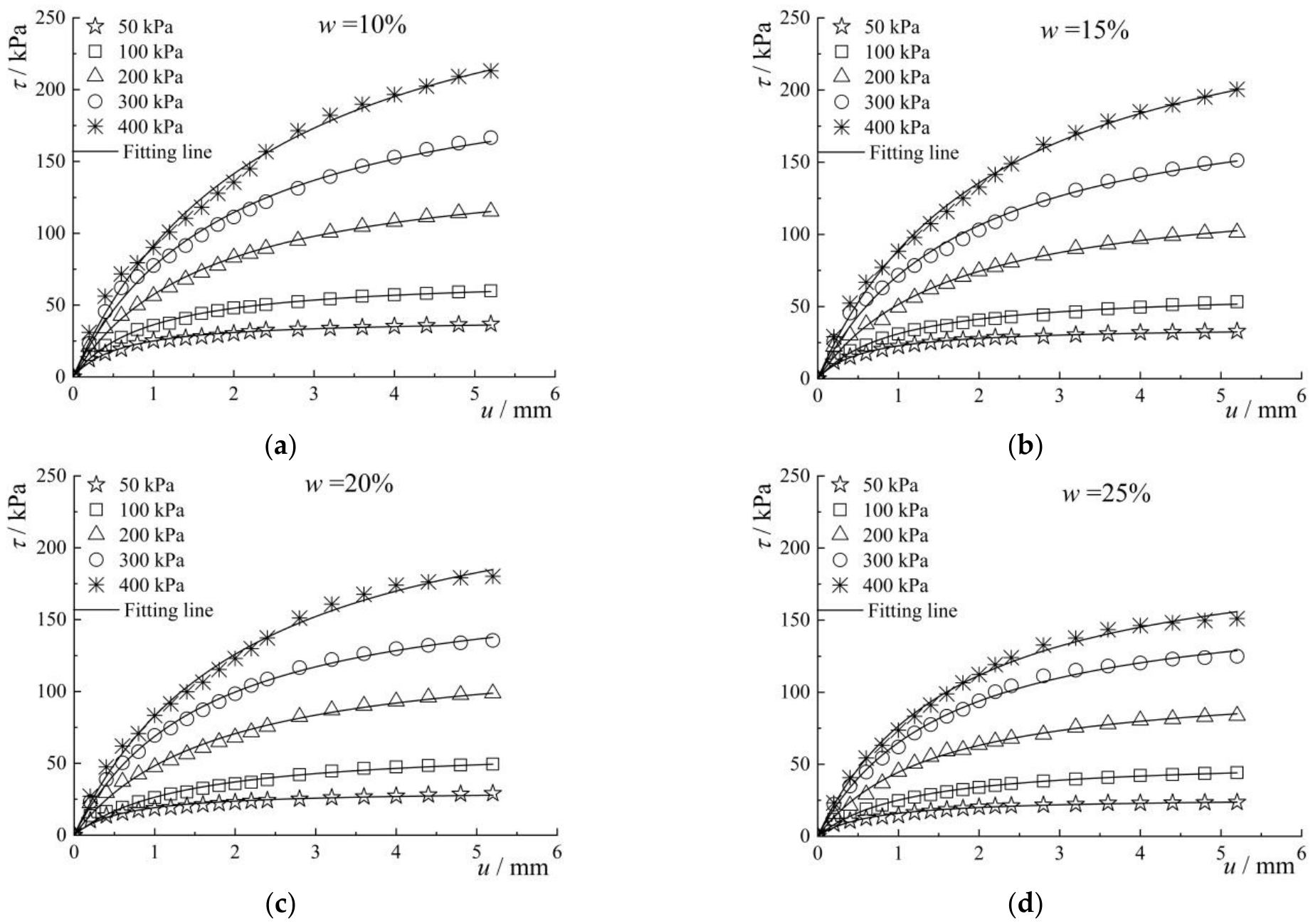
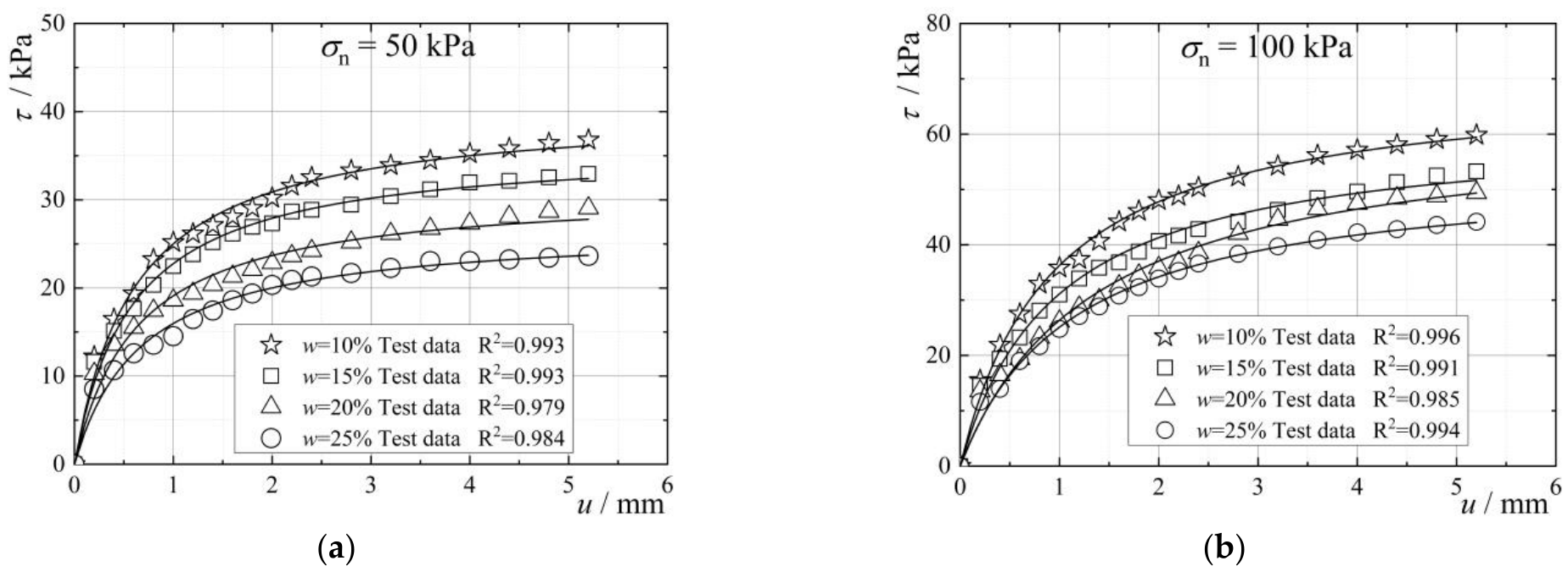
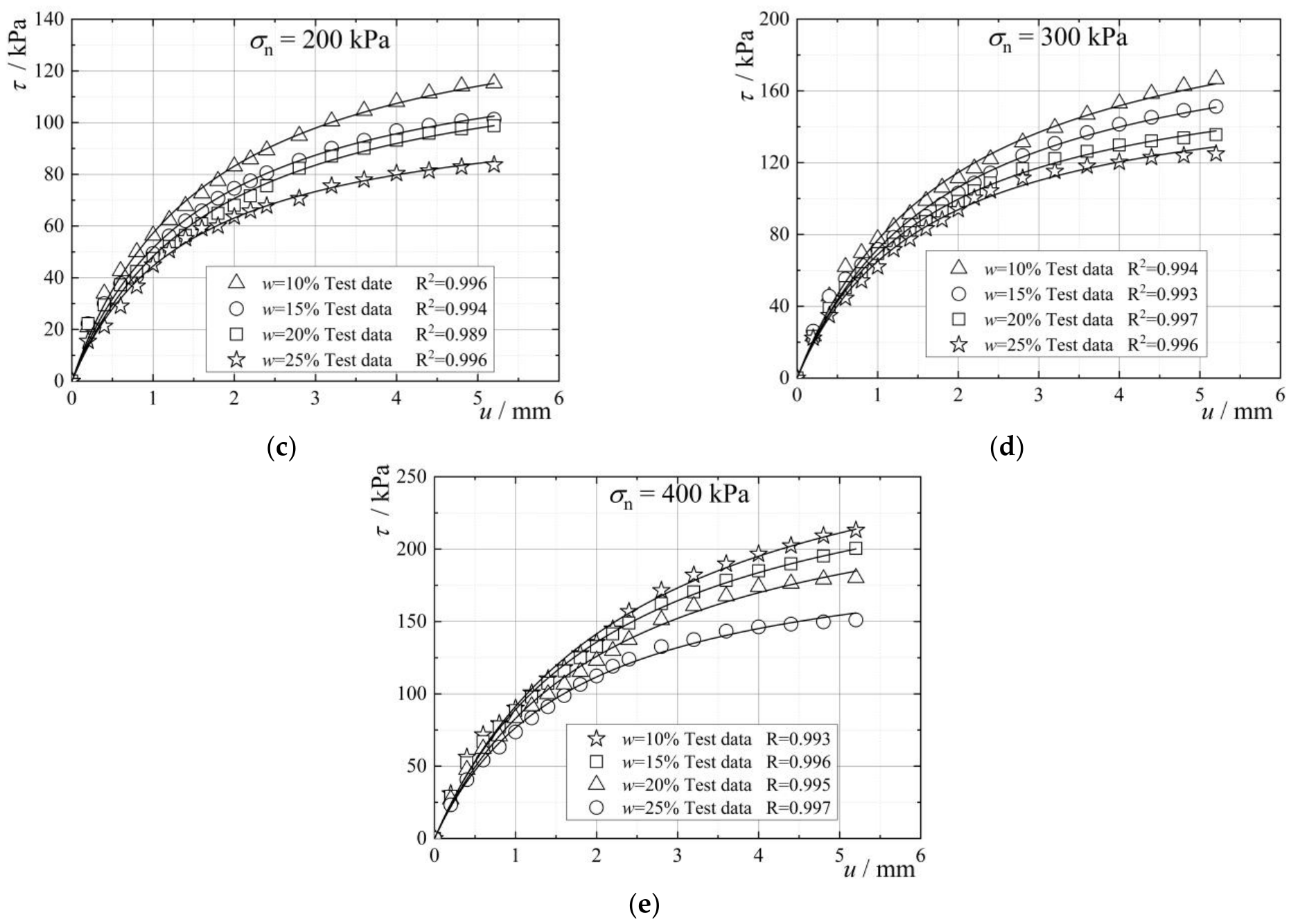
Firstly, the characteristics of the shear stress–shear displacement (τ-s) relationship of the unsaturated loess–concrete interface were analyzed. Since the stress–strain curves of the two roughness interface samples were similar, only the test curves of the smooth interface were analyzed. The data points obtained under various normal stresses for samples with different moisture contents were plotted in Figure 4, respectively.
It can be seen from Figure 4 that the τ-s relationship curves of samples with different moisture contents under various normal stresses show no strain softening, and the curves can be roughly divided into a shear deformation stage and a failure slip stage. In the shear deformation stage, the shear stress increases rapidly with the generation of shear displacement and gradually tends to be gentle with the development of shear displacement; in the failure slip stage, the shear stress does not increase with the increase in shear displacement and always stabilizes near a fixed value. The obtained interface shear curve differs from the strain-softening curves reported in the existing literature [19,20]. Specifically, the stress–strain curve shows no distinct peak, and the two stages of the shearing process cannot be clearly distinguished.

3.2. Quantitative Analysis of Factors Affecting Interface Mechanical Properties

The main factors affecting the mechanical properties of the unsaturated compacted loess–concrete interface are interface roughness, dry density of compacted loess samples, normal stress acting on the interface, and moisture content of samples. According to the results of test data processing, the influence degree of different factors on the interface mechanical properties was quantitatively analyzed in turn.
(1)
Interface Roughness
Only quantitative analysis of two roughness levels (smooth and rough) was carried out in this paper. The influence of interface roughness on the mechanical properties of the unsaturated loess–concrete interface was quantitatively analyzed by comparing the shear stress difference between the two interfaces under the same conditions. The quantitative index is defined as the shear stress difference, and its expression is:
Δ τ 1   =   τ r τ s
where τ r is the shear stress on the rough interface; τ s is the shear stress on the smooth interface.
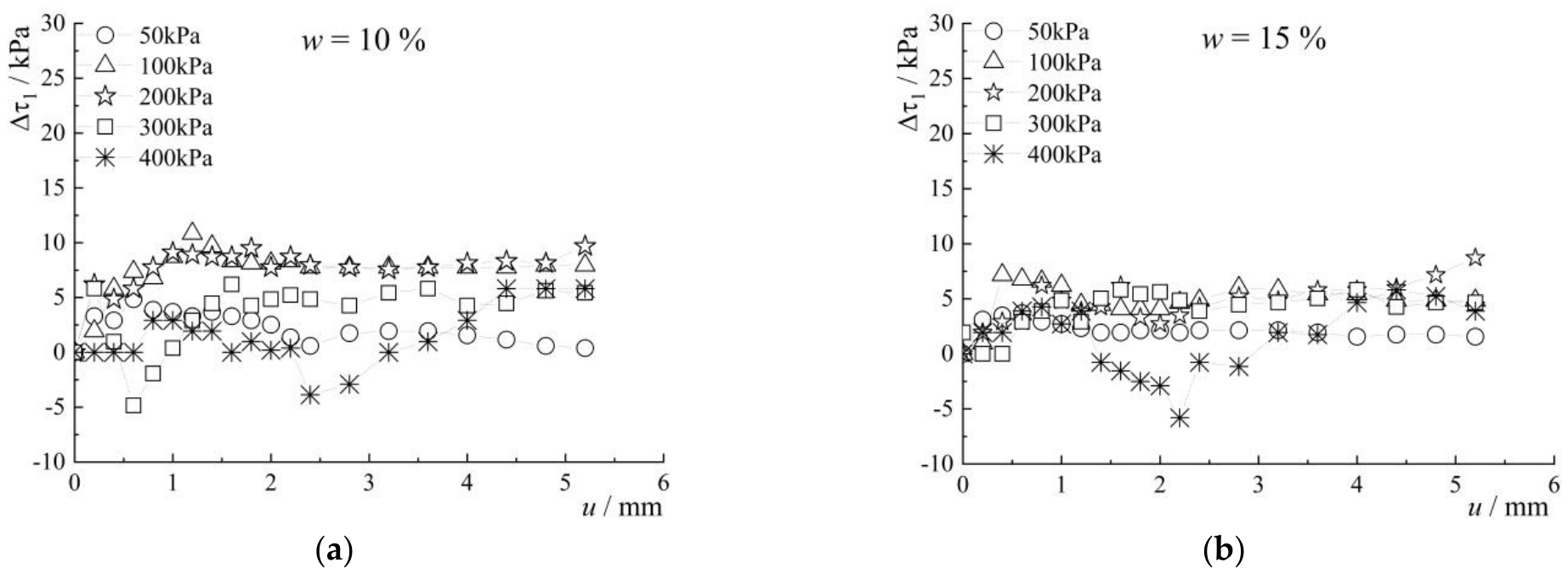
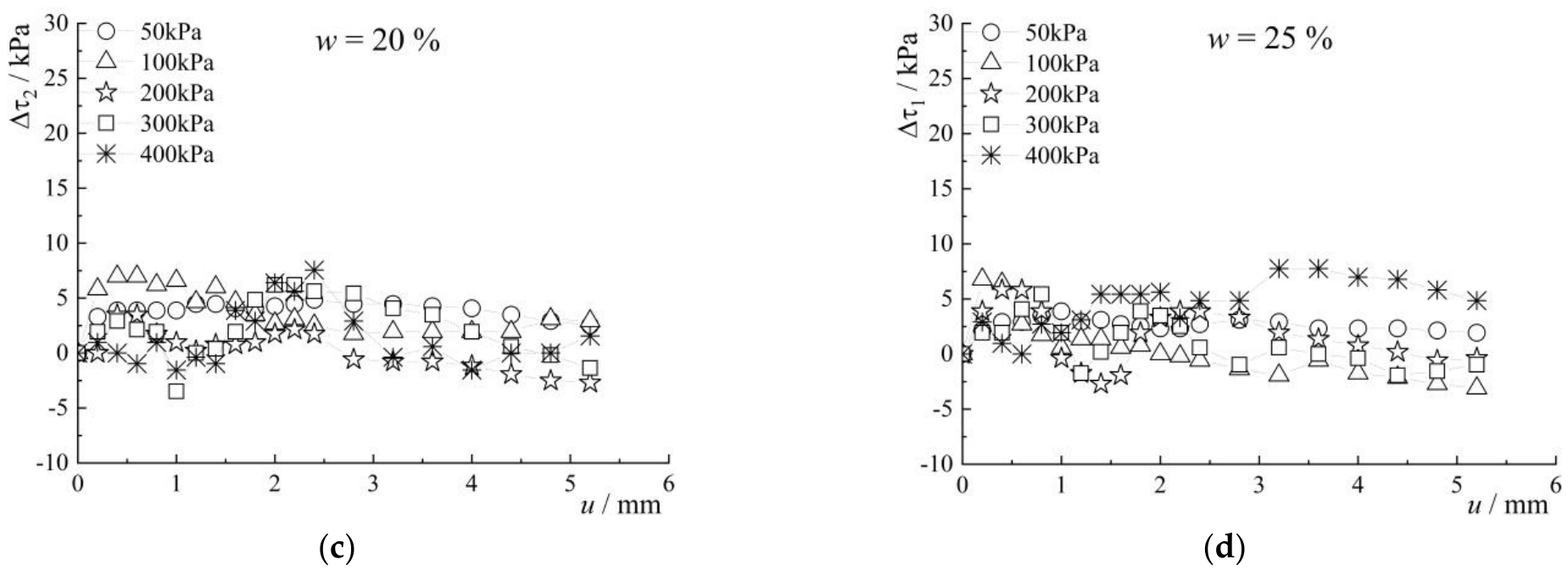
Using the above index, quantitative curves of the shear stress during direct shear tests of the interface under various conditions were plotted, taking compacted samples with dry density ( ρ d = 1.28   g / cm 3 ) as an example for analysis, as shown in Figure 5.
It was found that since there is no interembedding between the soil and the smooth interface, the shear stress on the interface is mainly generated by the friction between soil and concrete. In contrast, the soil and the rough interface are interembedded with each other, and the shear stress on the interface is generated not only by the friction between soil and concrete, but also by the elastoplastic failure caused by the shear band formed inside the soil. In addition, the rough interface is more conducive to the dissipation of excess pore water pressure on the interface than the smooth interface, so the shear stress generated on the soil–rough interface under the same conditions is relatively large.
The laws in Figure 5 show that for samples with the same moisture content, the shear stress on the rough interface is generally greater than that on the smooth interface during shearing; the lower the sample moisture content, the greater the shear stress difference, but the difference between the two is less than 10% of the interface shear stress, indicating that the influence of roughness on the shear stress of the compacted loess–concrete interface is small; when the shear strain is greater than 0.5%, the shear stress difference on the interface caused by roughness is similar. This is because when the shear strain is less than 0.5%, the shear force acting on the interface is less than the maximum static friction force, and the acting force is mainly borne by the soil. Due to the small shear stress, the soil is still in the elastic deformation stage, so the influence of interface roughness on the shear stress of the interface has not been manifested. With the increase in shear strain, under the same conditions, the difference between the two interfaces stabilizes near a fixed value. The research conclusions are generally consistent with the reported influence of surface roughness on interface shear strength in the existing literature [12,14]. However, obvious differences exist in the magnitude of strength improvement induced by roughness, which can be largely attributed to soil type and the thickness of the shear band at the interface.
(2)
Sample Dry Density
Direct shear tests of the interface were carried out on two types of compacted samples with different dry densities in this paper. The influence of sample dry density on the mechanical properties, of the unsaturated loess–concrete interface was quantitatively analyzed by comparing the shear stress difference between the two sets under the same conditions. The shear stress difference was also used as the quantitative index, and its expression is:
Δ τ 2   =   τ 1     τ 2
where τ 1 , τ 2 are the shear stresses of the compacted samples with dry densities of ρ d = 1.40     g / cm 3 and ρ d = 1.28   g / cm 3 , respectively, on the concrete interface.
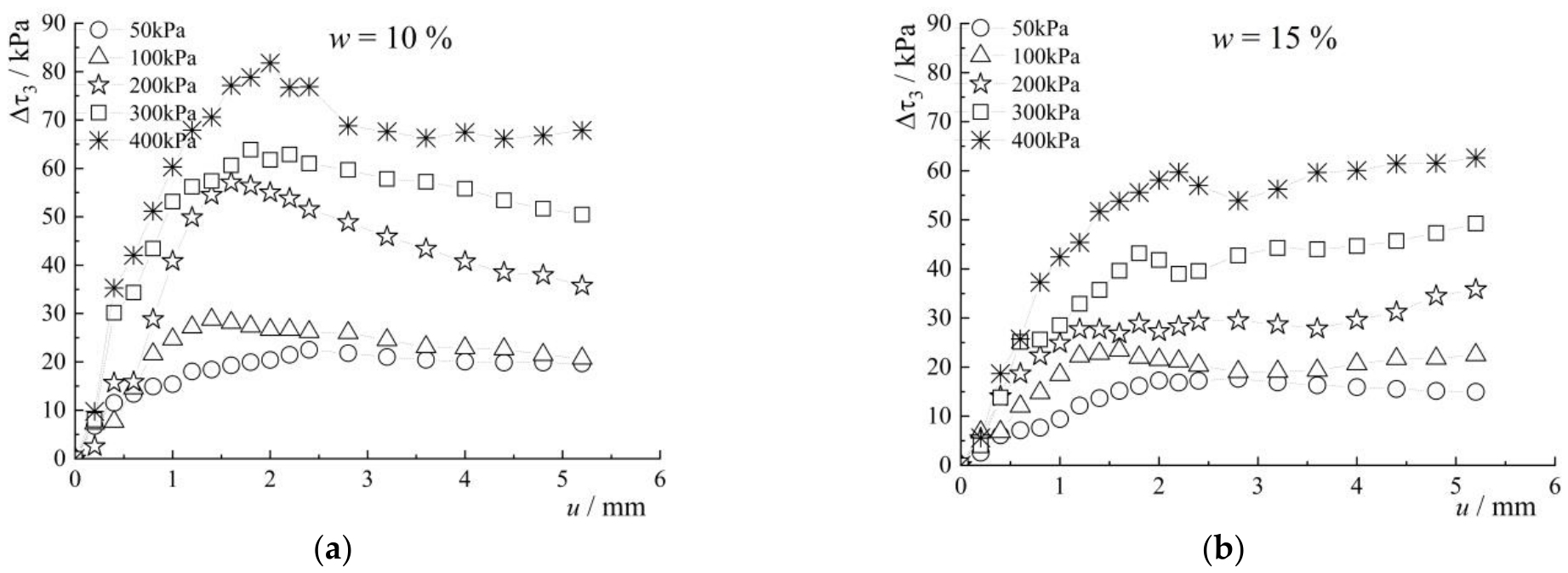
The influence laws of sample dry density on the interface shear stress difference during shearing were plotted for direct shear tests of the two roughness interfaces, as shown in Figure 6 and Figure 7.
It can be seen from Figure 6 and Figure 7 that when the shear displacement is small, the shear stress difference caused by dry density is small, increases with the increase in shear displacement, and finally tends to a stable value; the greater the applied pressure, the greater the shear stress difference caused by dry density; the greater the moisture content, the relatively smaller the shear stress difference; under the same conditions, the shear stress difference on the rough interface is significantly larger than that on the smooth interface. The difference in interface shear stress caused by the two dry densities is about 20–35%, indicating that dry density has a significant influence on the interface shear strength.
(3)
Interface Normal Stress
The influence of normal stress on the τ-s relationship curve is mainly manifested as follows: under the same shear displacement, the greater the normal stress on the interface, the greater the corresponding shear stress; the initial sliding shear displacement corresponding to entering the failure slip stage increases with the increase in normal stress. Under low normal stress (50, 100 kPa), the initial sliding shear displacement is small, and once shear deformation occurs, it is easy to enter the failure slip stage, and the shear stress does not change with shear displacement. Therefore, in practical applications, it is reasonable to directly take the stable value of shear stress; under high normal stress (200, 300, 400 kPa), the initial sliding shear displacement is large, and large shear deformation is required from the start of shearing to the shear displacement reaching the initial sliding shear displacement. During this process, the shear stress on the interface changes greatly, and if the stable value of shear stress is still taken for calculation, it will deviate from the engineering reality. The data points in Figure 4 were fitted with a hyperbola, and it can be seen that the fitting effect is good.
(4)
Sample Moisture Content
The influence of moisture content on the τ-s relationship characteristics was quantitatively analyzed. To quantitatively analyze the influence of moisture content on the interface mechanical properties, the expression for the reduction value of interface shear stress caused by the increase in moisture content under the same shear displacement is defined as:
Δ τ 3   =   τ 0   τ i
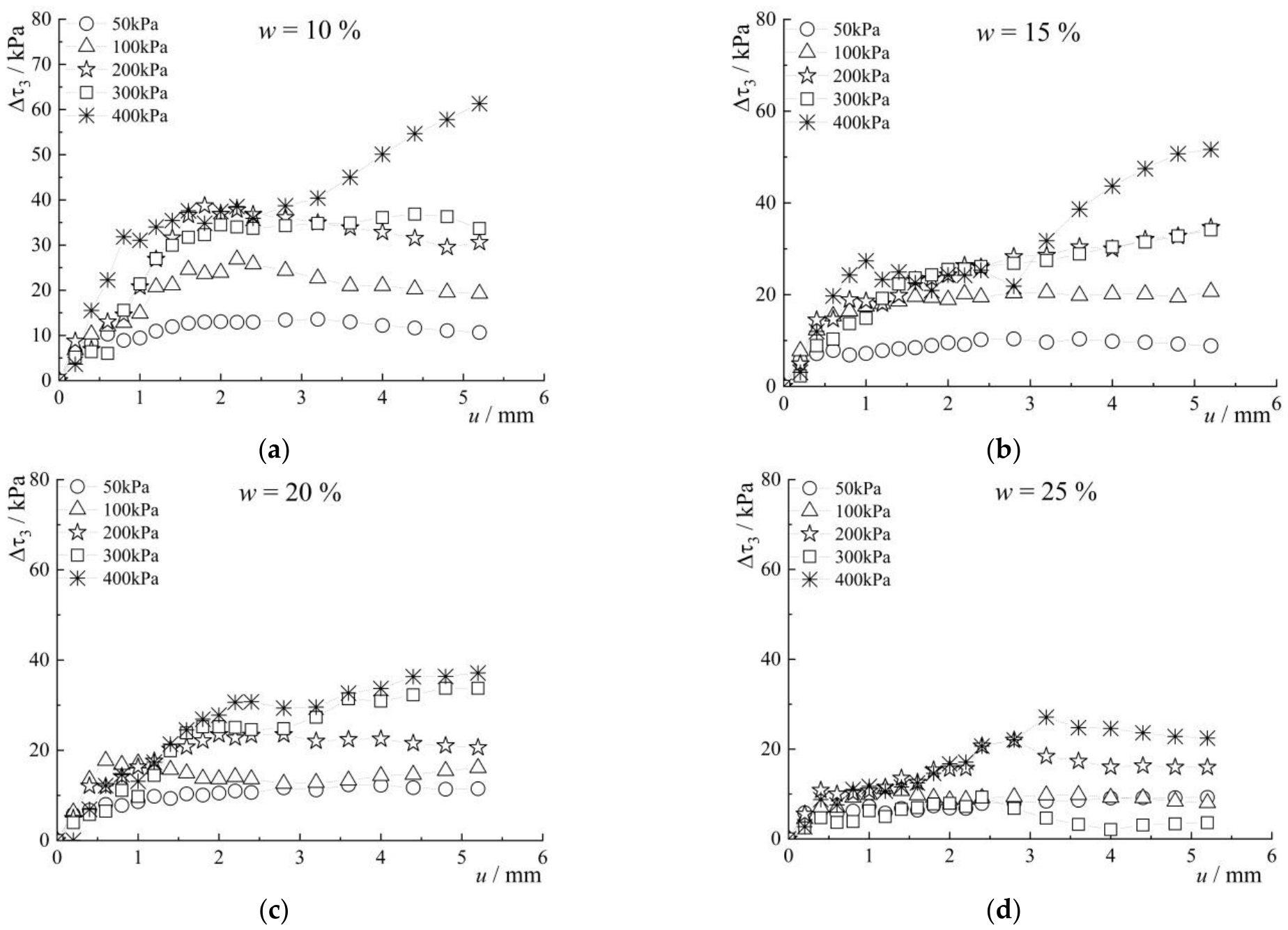
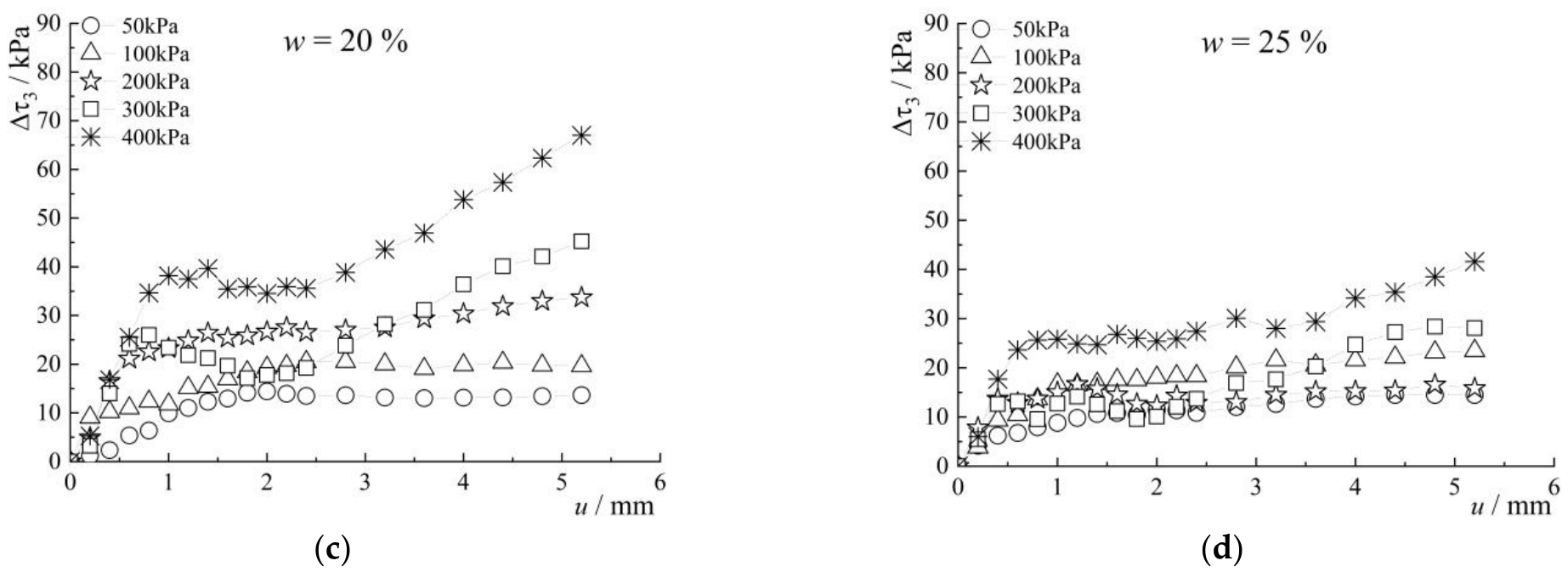
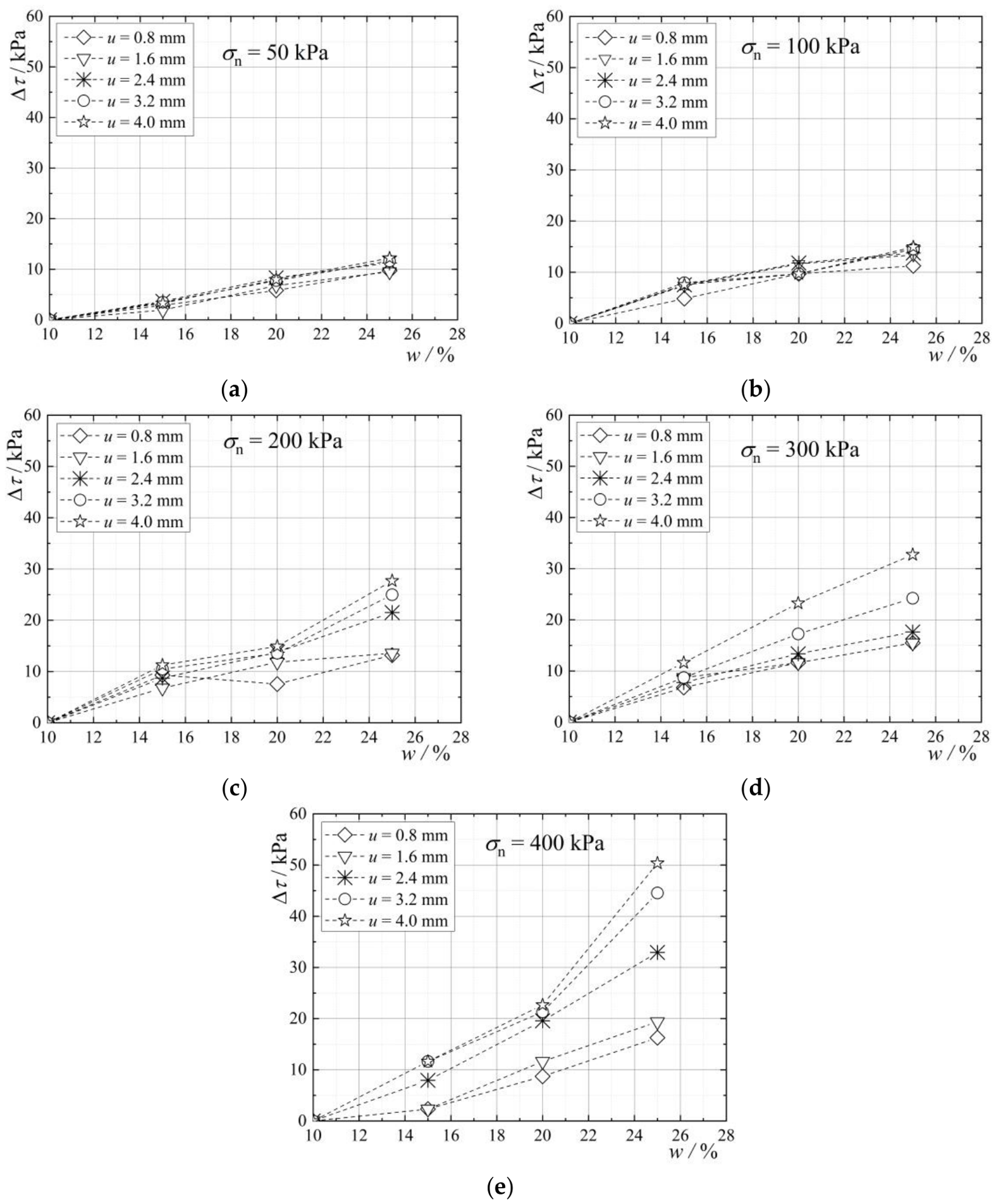
where τ 0 is the shear stress on the interface at a certain shear displacement of the sample with natural moisture content (10% in this paper); τ i is the shear stress on the interface at the same shear displacement of the wetted sample. The moisture contents of wetted samples in this paper are 15%, 20%, and 25% respectively. Several groups of data at shear displacement u = 0.8 ,   1.6 ,   2.4 ,   3.2 ,   4   mm were selected as the research object, and the Δ τ 3     w relationship curves under different normal stresses were plotted as shown in Figure 8.
It can be seen from Figure 8 that under the same shear displacement, the Δ τ value on the interface increases with the increase in the moisture content of the wetted sample. Under low normal stress (50, 100 kPa), the Δ τ values between different shear displacements are approximately equal, which again shows that under low normal stress, the shearing process can be ignored and it is reasonable to directly take the stable value of shear stress; under high normal stress (200, 300, 400 kPa), the Δ τ values on the interface caused by moisture content are different between different shear displacements, and basically show a law that the greater the u value, the greater the Δ τ value.
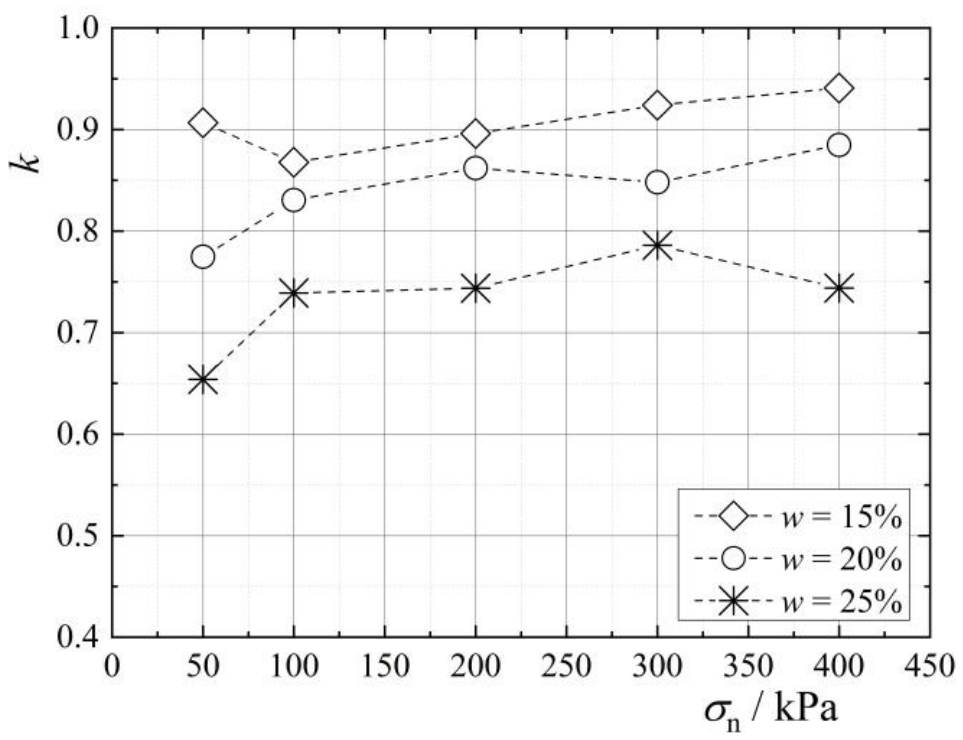
To illustrate the weakening degree of interface mechanical properties caused by moisture content, the expression of the wetting reduction coefficient is defined as:
k   =   τ i τ 0
The smaller the k value, the more the shear strength of the interface is reduced by wetting. Taking the shear displacement u = 4 mm as the research point, the corresponding relationship curves between normal stress σ n and wetting reduction coefficient k under different wetting moisture contents were plotted as shown in Figure 9.
It can be seen from Figure 9 that the greater the wetting moisture content, the smaller the k value, that is, the greater the wetting moisture content, the more the interface strength is reduced. Although the samples are not completely wetted to saturation, the minimum k value has reached 0.65, indicating that the softening degree of interface mechanical properties caused by wetting is considerable. In addition, under the same wetting moisture content, the k value basically shows a law that the greater the σ n , the greater the k value with the increase in σ n . This is because the greater the normal stress, the denser the soil is compressed, and the relatively weaker the water sensitivity, so the influence of water on the interface mechanical properties is relatively small.

4. Construction of Modified Hyperbolic Interface Constitutive Model

4.1. Parameters of the Modified Hyperbolic Model

It can be seen from Figure 4 that the fitting effect of the hyperbola on the data points is good, so the hyperbolic model in Reference [21] is applicable to this test. The expression of the hyperbolic model can be written as follows:
u τ = a + b u
where a—intercept of the fitted straight line; b—slope of the fitted straight line.
a = 1 k si
b = 1 τ u
where k si —the initial shear stiffness, i.e., the tangent slope at u = 0 in Figure 4; τ u —the ultimate shear stress, i.e., the shear stress when u in Figure 4.
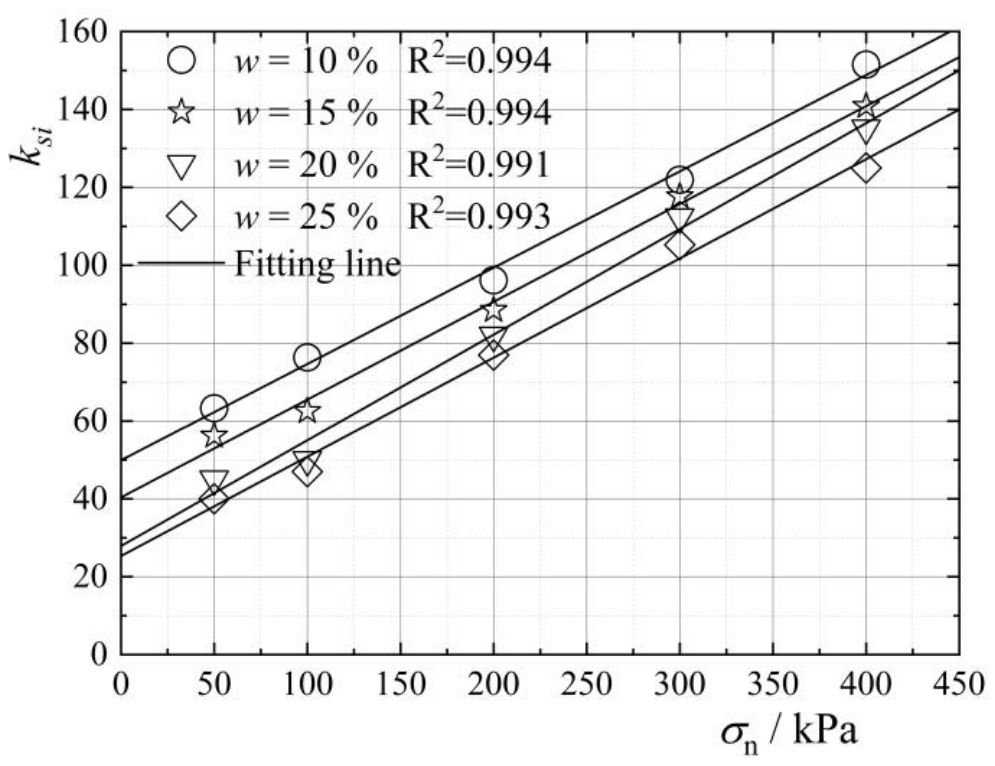
The test data were plotted in the form of u / τ u and fitted linearly. Due to space limitations, the fitted images are not listed, and only the k si and τ u values obtained through the fitted parameters are listed in Table 3.
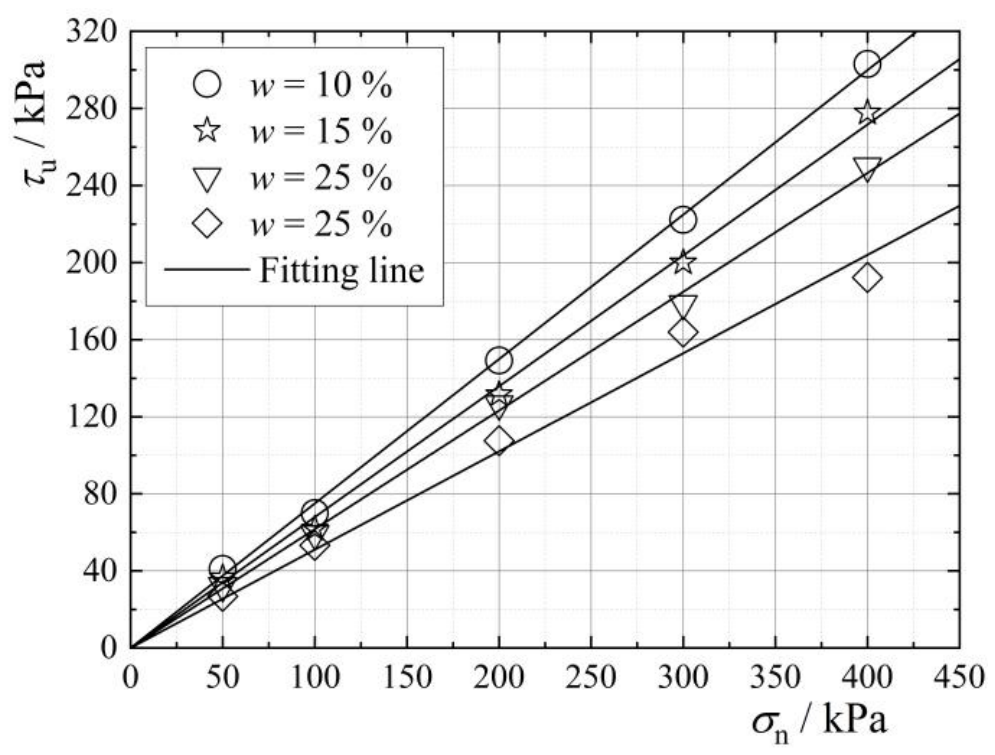
The test law in Reference [21] shows that lg k si γ w has a linear relationship with lg σ n p a , where γ w is the unit weight of water and p a is the atmospheric pressure. However, the results of this test show that direct linear fitting of k si and σ n has a high correlation coefficient. To avoid the limitations of this test, the shear test data points of silty clay [38], clay [39], gravel soil [40], and concrete interface conforming to the hyperbolic model in existing literatures were verified, and it was found that the correlation coefficient of direct linear fitting is higher than or close to that of fitting using Reference [21]. This indicates that it is not accidental in this test, and direct linear fitting of k si and σ n is feasible. The relationship between k si and σ n was fitted linearly as shown in Figure 10, and the fitting expression is given:
k si = s σ n + t
where s—the slope of the fitted straight line; t—the intercept of the fitted straight line.
Clough et al. [21] used the failure ratio and the shear stress at interface failure to represent the ultimate shear stress. In this paper, it was found through tests that there is a good linear relationship between the ultimate shear strength and the normal stress, as shown in Figure 11. The test data points conforming to the hyperbolic model in References [39,40,41,42] were verified, and all have high correlation coefficients. Therefore, the ultimate shear stress and normal stress can be fitted linearly [43], and its expression is:
τ u = m σ n + n
where m—slope of the fitted straight line; n—intercept of the fitted straight line.
Figure 10 and Figure 11 were fitted linearly, respectively, and the fitted parameters are listed in Table 4.

4.2. Influence of Moisture Content on Model Parameters

It can be seen from Table 4 that the parameter s changes little under different moisture contents and has no obvious law, indicating that the influence of moisture content on it is small. Therefore, the average value ( s ¯ ) of parameter s can be taken to replace its value. Although parameter n varies under different moisture contents, its change is almost negligible relative to the ultimate shear stress, so parameter n can be directly taken as the average value n ¯ .
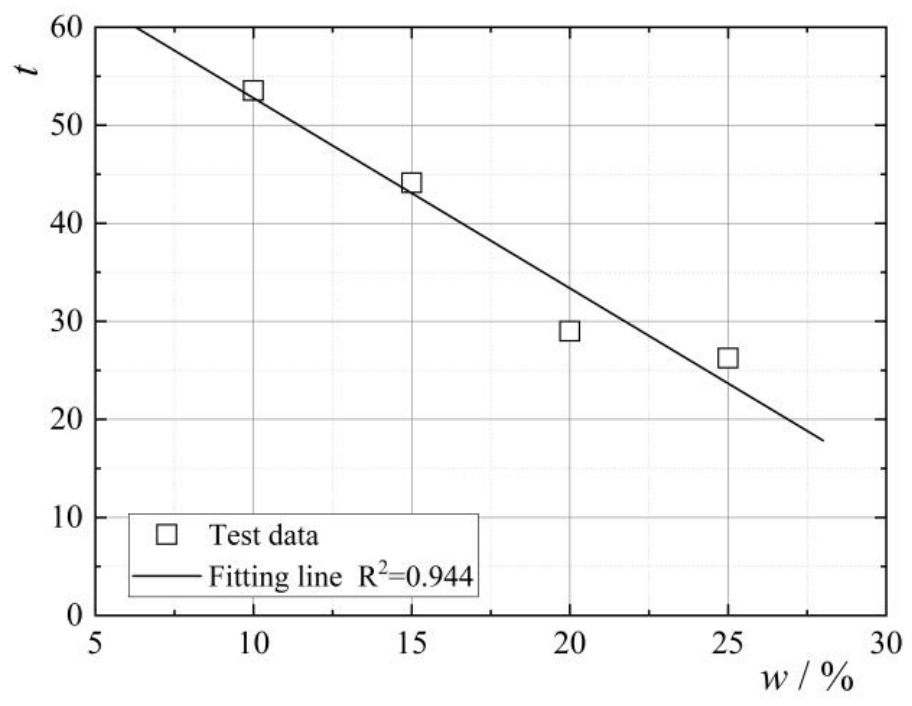
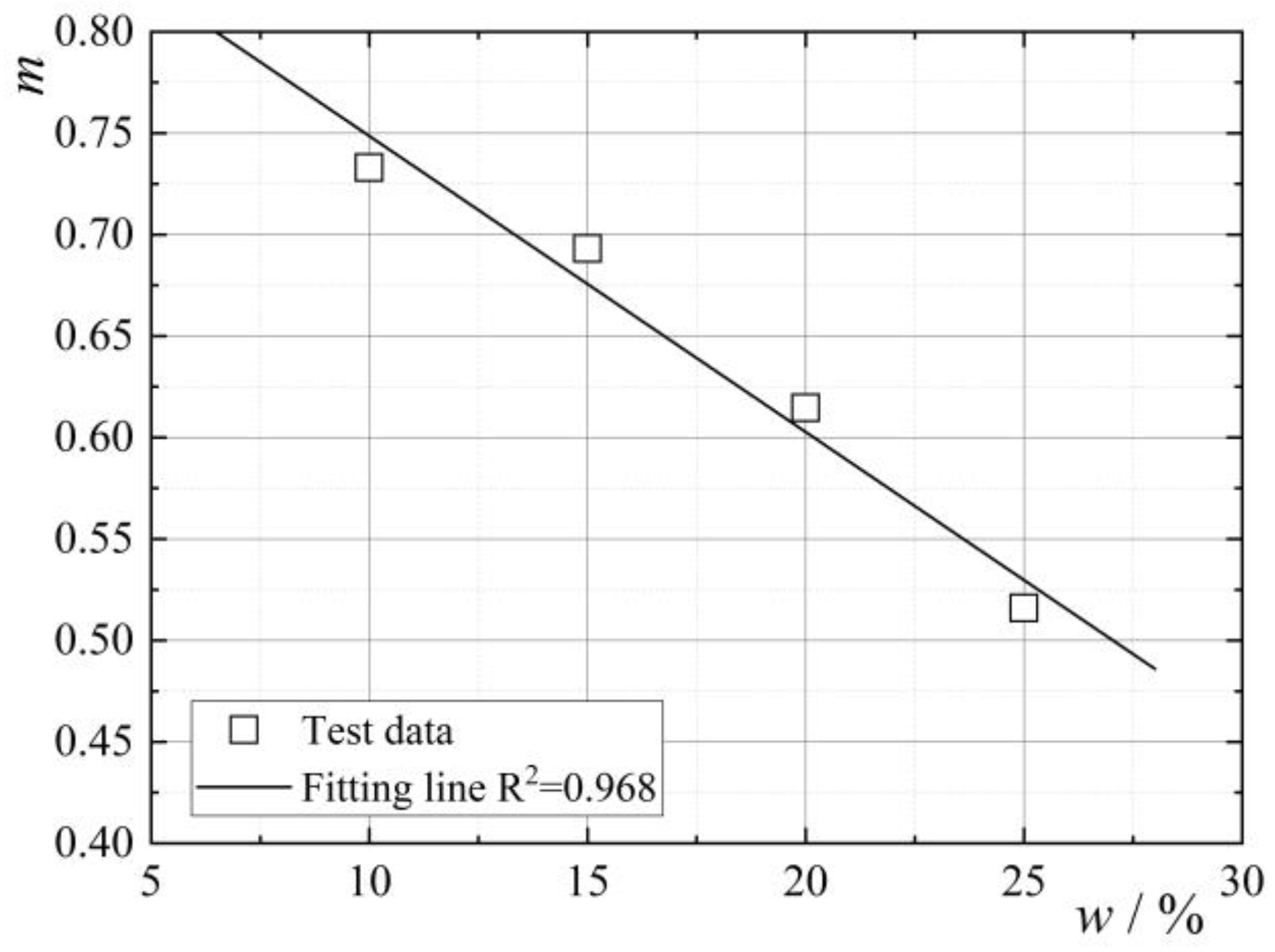
Using the data in Table 4, the relationship curves of parameter t and parameter m changing with moisture content were plotted as shown in Figure 12 and Figure 13.
It can be seen from Figure 12 and Figure 13 that within the designed moisture content range, tw and mw are approximately linear, and the corresponding expressions (10) and (11) are given, respectively:
t = γ w + θ
where γ —slope of the fitted straight line; θ —intercept of the fitted straight line.
m = α w + β
where α —slope of the fitted straight line; β —intercept of the fitted straight line.

4.3. Modified Model and Verification

Combining the experimental laws in Section 3.1 and Section 3.2, substituting Equation (10) into Equation (8) gives the relationship between k si and σ n , w :
k si = s ¯ σ n + γ w + θ
Substituting Equation (11) into Equation (9) gives:
τ u = α w + β σ n + n ¯
Substituting Equations (12) and (13) into Equation (5), the expression of the modified hyperbolic model for the unsaturated loess–concrete interface can be sorted out:
τ = u 1 s ¯ σ n + γ w + θ + u α w + β σ n + n ¯
Accordingly, a modified hyperbolic model considering the combined effect of moisture content and normal stress is established. The model contains six test parameters, which can be obtained from direct shear tests on soil–concrete interfaces under different moisture contents. When the influence of moisture content is neglected, only three parameters are required, which can be determined by a single set of tests. The model parameters obtained in this study are listed in Table 5.
According to the test parameters, calculation was carried out using the calculation model given by Equation (14), and compared with the test data. The verification results under different moisture contents are shown in Figure 14.
It can be seen from the verification results in Figure 14 that under different normal stresses, the calculated values of the model are in good agreement with the test data under various moisture contents, indicating that the modified hyperbolic model can carry out calculation to a certain extent.

4.4. Tangent Stiffness Coefficient

In interface calculation, the coupling effect between tangential and normal directions is usually not considered, and the matrix expression of the interface is [44]:
σ = τ σ n = k n 0 0 k s υ u
where k n and k s are the normal stiffness coefficient and tangent stiffness coefficient, respectively; υ and u are the normal relative displacement and tangential relative displacement, respectively.
The normal stiffness coefficient k n is not the focus of this paper, and detailed discussions are given in Reference [24]. For the normal stiffness coefficient k n , when the interface is under compression, an extremely large value should be assigned to prevent overlapping of the two-dimensional elements at the interface. However, if the calculated normal stress at the interface is tensile and the interface is assumed to be unable to sustain tensile stresses, k n should be set to a very small value, so that the resulting tensile stress can be neglected [44] during calculation. This paper only calculates the tangent stiffness coefficient k s . Combining Equations (5) and (14), the calculation formula of k s can be obtained as:
k s = τ u = a a + b u 2 =   s ¯ σ n + γ w + θ 1 + τ α w + β σ n + n ¯ t 2
Thus, the modified hyperbolic model of the interface considering different moisture contents and stress states has been obtained.

5. Conclusions

Through direct shear tests of the compacted loess–concrete interface, the mechanical properties of the compacted loess–concrete interface under the action of multiple factors were revealed, and the following conclusions are limited to the test conditions, material properties, and parameter ranges investigated in this study:
(1)
The shear stress–shear displacement relationship of the unsaturated compacted loess–concrete interface shows no strain softening, which can be clearly divided into a shear deformation stage (shear stress increases with shear displacement and tends to be gentle) and a failure slip stage (shear stress stabilizes near a fixed value). The stress–strain curve characteristics of smooth and rough interface samples are similar.
(2)
The influence degree of each factor on the interface mechanical properties is significantly different: dry density and moisture content have significant influences (dry density difference leads to 20–35% shear stress difference, and wetting can reduce the interface shear strength to 0.65); interface roughness has little influence (shear stress difference is less than 10%); normal stress mainly affects the shear stress magnitude and the initial sliding shear displacement of the failure slip stage. Under low normal stress, the stable value of shear stress can be taken for engineering calculation, while under high normal stress, the difference in interface shear stress during shear deformation needs to be considered.
(3)
Through tests and data in the existing literature, it is found that k si     σ n and τ u     σ n have good linear relationships. The hyperbolic model was modified according to the fitting results, the influence law of moisture content on model parameters was analyzed, and a modified hyperbolic model considering the variable of moisture content was proposed.
(4)
The calculated results of the proposed modified hyperbolic model were compared with the test results using test parameters, and the good agreement indicates the applicability of the model.
(5)
The tangent stiffness coefficient considering different moisture contents and stress states was obtained through derivation, and the modified model can realize the mechanical transfer calculation on the soil–concrete interface under different normal stresses and moisture contents.
This study mainly focuses on the quantitative analysis of the influences of various factors on the interfacial shear characteristics. Nevertheless, the macro- and mesoscopic evolutionary features of the interfacial shear band during shearing are not explored in depth in the current work, which will be a key research direction for future studies. In addition, the proposed interfacial constitutive model can be further embedded into finite element platforms for numerical simulation analysis. Comparative validation with in situ field test data will also be carried out to calibrate and optimize the model performance. Further improvement and refinement of the research findings are expected to provide reliable scientific guidance for the structural design and long-term safety evaluation of geotechnical and underground engineering constructions involving loess interfaces.

Author Contributions

Methodology, D.W.; Validation, J.F.; Data curation, J.F.; Writing—original draft, D.W.; Project administration, J.F.; Investigation, Writing—Review and Editing, D.G. All authors have read and agreed to the published version of the manuscript.

Funding

This research was funded by the National Natural Science Foundation of China (Grant No. 42462028), the Science and Technology Program of Gansu Province (Grant Nos. 23JRRA768, 24CXGE011), the Key Scientific Research Project of Colleges and Universities in Henan Province (Grant No. 26B560011), and the Key Science and Technology Research Project for Social Development of Zhumadian City (Grant No. ZMDSKJGG2025025).

Data Availability Statement

The data cited in the manuscript can be accurately obtained from the references. The data supporting the research is listed in the manuscript and can be viewed directly. All the data included in this study are available from the corresponding author.

Conflicts of Interest

The authors declare no conflicts of interest.

References

  1. Pan, J.; Wang, B.; Wang, Q.; Ling, X.; Yu, F. Effects of roughness on the shear zone of clay–concrete interface. Eng. Fail. Anal. 2025, 169, 109229. [Google Scholar] [CrossRef]
  2. Gao, D.; Zhao, K.; Ma, B.; Han, Z.; Fan, J. Research on the bearing behavior of single pile in self-weight collapsible loess areas. PLoS ONE 2023, 18, e0290878. [Google Scholar] [CrossRef]
  3. Zhao, K.; Xu, Q.; Liu, F.; Gao, D.; Peng, D.; Chen, W. Centrifuge modeling of loess slope failure induced by rising water level utilizing intact sample. Eng. Fail. Anal. 2024, 163, 108572. [Google Scholar] [CrossRef]
  4. Xie, B.; Zhang, T.; Liu, Y. Influence of roughness and inclination angle on the shear behavior of the saturated soft clay-structure interface under TCST test. Bull. Eng. Geol. Environ. 2026, 196. [Google Scholar] [CrossRef]
  5. Potyondy, J.G. Skin friction between various soils and construction materials. Géotechnique 1961, 11, 339–353. [Google Scholar] [CrossRef]
  6. Mouadh, R.; Minh, T.A.; Thibault, B.; Jean, D.S.; Dinan, S. Effect of thermal cycles on sand–concrete interface under constant shear stress. Can. Geotech. J. 2025, 62, 1–16. [Google Scholar] [CrossRef]
  7. Abu Qamar, M.I.; Suleiman, M.T.; Vermaak, N. The influence of surface characteristics on cohesive soils-structure interface monotonic shear response. Geotech. Test. J. 2025, 48, 894–915. [Google Scholar] [CrossRef]
  8. Zhilang, Y.; Tiehang, W.; Liang, Z.; Wang, J. Experimental and DEM Investigation of Shear Behaviors of a Loess and Rough Concrete Interface. Buildings 2025, 15, 3178. [Google Scholar] [CrossRef]
  9. Wang, Y.; Zhang, M.; Liu, J.; Bai, X. Influence of excess pore water pressure on shear strength of pile-soil interface in low-plasticity clay. Rock Soil Mech. 2018, 39, 831–838. [Google Scholar] [CrossRef]
  10. Jakob, V.; Gerhard, H.; Theodoros, T. A Large-Scale Soil-Structure Interface Testing Device. Geotech. Test. J. 2013, 36, 20120213. [Google Scholar] [CrossRef]
  11. Wu, Y.; Deng, Y.; Zhang, X.; Liu, L.; Zhao, C.; Zhang, J. Analysis of the Sand-Concrete Interface Shear Behaviors Considering the Soil Unloading and Interface Roughness Effects. KSCE J. Civ. Eng. 2024, 28, 2699–3706. [Google Scholar] [CrossRef]
  12. Chen, X.; Zhang, J.; Xiao, Y.; Li, J. Effect of roughness on shear behavior of red clay—Concrete interface in large-scale direct shear tests. Can. Geotech. J. 2015, 52, 1122–1135. [Google Scholar] [CrossRef]
  13. Huang, Y.; Deng, H.; Kong, G.; Li, J.; Zhu, Z.; Zhou, S.; Li, G. Shear mechanical model for soil-rock interface considering roughness effects. Rock Soil Mech. 2026, 47, 731–741. [Google Scholar]
  14. Jin, Z.; Yang, Q.; Chen, C.; Leng, W.; Guo, F.; Zhao, C. Experimental study on effects of the roughness on mechanical behaviors of concrete-sand interface. Chin. J. Rock Mech. Eng. 2018, 37, 754–765. [Google Scholar] [CrossRef]
  15. Liu, S.; Zhang, Q.; Ma, B.; Li, Z.; Yin, W.; Lou, Q. Study on surface roughness effect on shear behavior of concrete-soil interface. Eng. Fail. Anal. 2023, 145, 107050. [Google Scholar] [CrossRef]
  16. Haeri, H.; Sarfarazi, V.; Zhu, Z.; Marji, M.; Masoumi, A. Investigation of shear behavior of soil-concrete interface. Smart Struct. Syst. 2019, 23, 81–90. [Google Scholar] [CrossRef]
  17. Li, M.; Xu, Z.; Cao, C.; Chai, J.; Yang, X.; Wei, H. Seepage characteristics and mechanisms at clayey sand-structure interface using NMR technology. Bull. Eng. Geol. Environ. 2026, 85, 193. [Google Scholar] [CrossRef]
  18. Li, Y.; Lv, M.; Guo, Y.; Huang, M. Effects of the soil water content and relative roughness on the shear strength of silt and steel plate interface. Measurement 2021, 174, 109003. [Google Scholar] [CrossRef]
  19. Zhou, J.; Ban, C.; Zhou, H.; Ren, J.; Liu, Z. Experimental Study on the Shear Strength and Failure Mechanism of Cemented Soil–Concrete Interface. Materials 2023, 16, 4222. [Google Scholar] [CrossRef]
  20. Li, Y.; Sun, L.; Li, X.; Huang, M. Experimental study on the shear mechanical properties of the cemented soil–concrete interface. Eur. J. Environ. Civ. Eng. 2022, 26, 4725–4739. [Google Scholar] [CrossRef]
  21. Clough, G.W.; Duncan, J.M. Finite element analysis of retaining wall behavior. J. Soil Mech. Found. Eng. Div. ASCE 1971, 97, 1657–1673. [Google Scholar] [CrossRef]
  22. Jesús, E.; Filz, G.M.; Ebeling, R.M. Extended Hyperbolic Model for Sand-to-Concrete Interfaces. J. Geotech. Geoenviron. Eng. 2003, 129, 993–1000. [Google Scholar] [CrossRef]
  23. Li, J.; Yin, Z.; Yang, J. A novel elastic viscoplastic clay-structure interface model. J. Geotech. Geoenviron. Eng. 2026, 152, 04026017. [Google Scholar] [CrossRef]
  24. Luan, M.; Wu, Y. A nonlinear elastic-perfectly plastic model of interface element for soil-structure interaction and its applications. Rock Soil Mech. 2004, 25, 507–513. [Google Scholar] [CrossRef]
  25. Zhang, J.; Qian, X.; Deng, H.; Huang, Y.; Li, J.; Cheng, L.; Wan, L. Shear characteristics and mechanisms of sandstone-mudstone interface under coupled stress and dry-wet cycling. Chin. J. Rock Mech. Eng. 2026, 45, 65–78. [Google Scholar] [CrossRef]
  26. Du, P.; Zhou, D.; Liu, X.; Chen, X. Mechanical test and action mechanism of interface between gravel soil and concrete. Front. Earth Sci. 2023, 11, 1112568. [Google Scholar] [CrossRef]
  27. Hao, L.; Xu, Q.; van Westen, C.; Sajinkumar, K.S.; Zhao, K.; Xiu, D.; Yang, X.; Chen, W. The impact of irrigated agriculture on landslide activity: A spatio-temporal analysis in Heifangtai, China. Catena 2025, 252, 108844. [Google Scholar] [CrossRef]
  28. Wang, J.; Liu, L.; Zhao, K.; Wen, Q. Farmers’ adoption intentions of water-saving agriculture under the risks of frequent irrigation-induced landslides. Clim. Risk Manag. 2023, 39, 100484. [Google Scholar] [CrossRef]
  29. Dhadse, G.D.; Ramtekkar, G.; Bhatt, G. Performance of Interface Hyperbolic Model Parameters for Soil–Concrete Interfaces. Indian Geotech. J. 2025, 55, 1760–1778. [Google Scholar] [CrossRef]
  30. Gao, D.; Zhao, K.; Jin, S.; Xing, Y. Moistening Deformation Constitutive Model for Unsaturated Loess. Int. J. Geomech. 2022, 22, 04022123. [Google Scholar] [CrossRef]
  31. Li, L.; Zhang, D.; Zhang, M.; Zhang, M.; Gu, X.; Xu, L. Load transfer model of pile-unsaturated loess interface considering hydro-mechanical coupling effects. Rock Soil Mech. 2025, 46, 1343–1355. [Google Scholar] [CrossRef]
  32. Liu, S.; Liu, H.; Tian, X.; Zhao, K.; Qu, Y.; Jia, Z.; Su, H. Experimental Study on the Fracture and Failure of the Locking Section of Rock Slopes Caused by Freeze–Thaw of Fracture Water. Water 2025, 17, 2977. [Google Scholar] [CrossRef]
  33. Gao, D.; Zhao, K.; Xing, Y.; Guo, N.; Yang, X. An Elastic-Plastic Constitutive Model for Unsaturated Structural Loess. Symmetry 2024, 16, 1096. [Google Scholar] [CrossRef]
  34. GB/T 50123-2019; Standard for Geotechnical Test Methods. China Architecture & Building Press: Beijing, Chian, 2019; pp. 8–14. Available online: https://www.mohurd.gov.cn/gongkai/zc/wjk/art/2019/art_17339_241309.html (accessed on 24 May 2019).
  35. Yury, A.; Natalia, M.; Alejandra, B.; María, F.; Patricio, C.; Raúl, L.; Cristian, R. Relationship between sorptivity coefficients of concrete as calculated from the evolution of water uptake versus t0.5 or t0.25. Constr. Build. Mater. 2022, 342, 128084. [Google Scholar] [CrossRef]
  36. Kabir, H.; Garg, N. Rapid prediction of cementitious initial sorptivity via surface wettability. npj Mater. Degrad. 2023, 7, 52. [Google Scholar] [CrossRef]
  37. Liu, D.; An, Z.; Xu, S.; Wang, X.; Zhang, Z.; Jin, X.; Zhang, Y. Experimental study on immersion collapsibility process and vertical stress characteristics of large thickness loess foundation in Jingyuan area. Rock Soil Mech. 2023, 44, 268–278. [Google Scholar] [CrossRef]
  38. Liu, F.; Shang, S.; Wang, H. Study of shear properties of silty clay-concrete interface by simple shear test. Chin. J. Rock Mech. Eng. 2011, 30, 1720–1728. [Google Scholar]
  39. Zhao, C.; Gong, H.; Zhao, C.; Liao, Q. Elastoplastic analysis of interface between clay and concrete considering effect of normal stress history. Chin. J. Rock Mech. Eng. 2012, 31, 848–855. [Google Scholar] [CrossRef]
  40. Lu, T.; Bao, F. A coupled constitutive model for interface thin-layer element. J. Hydraul. Eng. 2000, 02, 71–75. [Google Scholar] [CrossRef]
  41. Zhang, G.; Zhang, J. Experimental study on monotonic behavior of interface between coarse-grained soil and structure. Chin. J. Geotech. Eng. 2004, 26, 21–25. [Google Scholar] [CrossRef]
  42. Zhang, M.; Bai, X.; Gao, Q.; Wang, Y.; Chen, X.; Liu, J. Laboratory test study on stress mechanism of pile-soil interface in clay. Rock Soil Mech. 2017, 38, 2167–2174. [Google Scholar] [CrossRef]
  43. Gao, D.; Xing, Y.; Guo, M.; Zhang, A.; Wang, X.; Ma, B. Modified Hyperbola Model for Interface between Unsaturated Remolded Loess andConcrete. J. Jilin Univ. Eng. Technol. Ed. 2020, 50, 156–164. [Google Scholar] [CrossRef]
  44. Yin, Z. Principles of Geotechnical Engineering; China Water Conservancy and Hydropower Press: Beijing, China, 2007; pp. 293–304. [Google Scholar]
Figure 1. Compacted loess samples.
Buildings 16 02340 g001
Figure 2. Two concrete interfaces with different roughness.
Buildings 16 02340 g002
Figure 3. Interface shear test and partial samples after shearing.
Buildings 16 02340 g003
Figure 4. Test data points and fitting curves of samples with different moisture contents: (a) The moisture content of soil sample is 10%; (b) The moisture content of soil sample is 15%; (c) The moisture content of soil sample is 20%; (d) The moisture content of soil sample is 25%.
Buildings 16 02340 g004
Figure 5. Shear stress difference on the two contact surfaces during loess–concrete shearing: (a) The moisture content of soil sample is 10%; (b) The moisture content of soil sample is 15%; (c) The moisture content of soil sample is 20%; (d) The moisture content of soil sample is 25%.
Buildings 16 02340 g005aBuildings 16 02340 g005b
Figure 6. Shear stress difference under two dry densities during loess–smooth interface shearing: (a) The moisture content of soil sample is 10%; (b) The moisture content of soil sample is 15%; (c) The moisture content of soil sample is 20%; (d) The moisture content of soil sample is 25%.
Buildings 16 02340 g006
Figure 7. Shear stress difference under two dry densities during loess–rough interface shearing: (a) The moisture content of soil sample is 10%; (b) The moisture content of soil sample is 15%; (c) The moisture content of soil sample is 20%; (d) The moisture content of soil sample is 25%.
Buildings 16 02340 g007aBuildings 16 02340 g007b
Figure 8. The relationship curves of Δ τ     w under different normal stress: (a) The applied normal stress is 50 kPa; (b) The applied normal stress is 100 kPa; (c) The applied normal stress is 200 kPa; (d) The applied normal stress is 300 kPa; (e) The applied normal stress is 400 kPa.
Buildings 16 02340 g008
Figure 9. The relationship curves of k     σ n .
Buildings 16 02340 g009
Figure 10. The relationship curves of k si     σ n .
Buildings 16 02340 g010
Figure 11. The relationship curves of τ u   σ n .
Buildings 16 02340 g011
Figure 12. The relationship curves of t w .
Buildings 16 02340 g012
Figure 13. The relationship curves of m w .
Buildings 16 02340 g013
Figure 14. Comparison between model calculation and test results: (a) The applied normal stress is 50 kPa; (b) The applied normal stress is 100 kPa; (c) The applied normal stress is 200 kPa; (d) The applied normal stress is 300 kPa; (e) The applied normal stress is 400 kPa.
Buildings 16 02340 g014aBuildings 16 02340 g014b
Table 1. The basic characteristic of undisturbed loess.
Buried Depth
(m)
Specific GravityDry Density
(g/cm3)
Liquid LimitPlastic LimitParticle Composition (mm)/(%)
>0.0750.075–0.005<0.005
32.711.2735.317.92.8577.3519.8
42.711.2933.317.4///
52.711.2734.616.6///
Table 2. The test research program.
Dry Densities (g/cm3)Roughness LevelsMoisture ContentNormal Stresses
(kPa)
Number
1.28smooth10%, 15%, 20%, 25%50, 100, 200, 300, 40020
rough20
1.40smooth20
rough20
Table 3. The values of k si and τ u .
σn (kPa)w = 10%w = 15%w = 20%w = 25%
τu
(kPa)
ksi
(kPa/mm)
τu
(kPa)
ksi
(kPa/mm)
τu
(kPa)
ksi
(kPa/mm)
τu
(kPa)
ksi
(kPa/mm)
5041.063.336.559.932.345.026.840.0
10070.076.361.763.359.248.353.248.8
200149.396.2131.688.5126.682.0108.075.8
300222.2122.0200.0117.6178.6114.9164.0109.9
400303.0138.9277.8137.0250.0128.2192.0123.5
Table 4. The values of k si and τ u .
w/%10152025
s0.2180.2340.2610.254
t53.5444.1228.9826.25
m0.7330.6930.6150.516
n−1.28−4.03−0.692.74
Table 5. The values of model parameters.
s ¯ γ θ α β n ¯
0.2416−1.93972.17−0.0140.8940.172
Disclaimer/Publisher’s Note: The statements, opinions and data contained in all publications are solely those of the individual author(s) and contributor(s) and not of MDPI and/or the editor(s). MDPI and/or the editor(s) disclaim responsibility for any injury to people or property resulting from any ideas, methods, instructions or products referred to in the content.