1. Introduction
Concrete construction increasingly demands free-form and geometrically complex elements, driven by advances in architectural design and digital engineering. Meeting this demand with conventional formwork—timber, steel, or expanded polystyrene (EPS)—is highly inefficient: customized curved geometries require extensive manual labor, extended fabrication time, and substantial material consumption, all of which inflate project costs and generate significant construction waste [
1,
2]. Addressing these inefficiencies has prompted growing interest in alternative fabrication approaches, including additive manufacturing, which offers advantages in terms of geometric complexity, customization, and production flexibility [
3,
4]. Notably, formwork fabrication and installation can account for up to 60% of total concrete construction costs, and the associated material waste contributes considerably to the environmental burden of the construction sector [
3,
4].
Additive manufacturing (AM), commonly referred to as 3D printing, has emerged as a promising digital fabrication technology capable of producing complex geometries with high precision and design flexibility [
5,
6,
7,
8,
9,
10,
11]. In the context of formwork fabrication, AM enables direct translation of digital design data into physical mold components, eliminating the need for complex tooling and reducing fabrication steps. Previous studies have demonstrated that 3D-printed formwork can improve material efficiency, reduce waste, and support off-site prefabrication strategies, thereby enhancing construction productivity and quality control [
7,
12,
13,
14]. These characteristics align closely with the principles of modular and circular construction, which emphasize prefabrication, resource efficiency, and material reuse to reduce environmental impacts across the building life cycle [
4,
15,
16].
Despite these advantages, the standalone application of 3D-printed formwork in construction remains constrained by several critical limitations. Polymer-based printed formwork typically exhibits lower stiffness and load-bearing capacity than conventional steel formwork, making it susceptible to deformation under casting-induced lateral pressure, particularly in large-scale applications [
11,
17,
18,
19]. In addition, high material costs and relatively slow printing speeds limit cost-effectiveness and scalability [
4,
7,
8,
20]. Conversely, while conventional steel formwork provides high strength, durability, and reliable resistance to casting loads, it lacks geometric flexibility and requires significant time and cost for customized fabrication of complex shapes [
1,
2,
3]. As a result, neither approach alone can simultaneously satisfy the requirements of geometric complexity, structural stability, and economic feasibility under real construction conditions.
To overcome these limitations, hybrid strategies that integrate complementary fabrication technologies have been increasingly explored. However, existing studies have predominantly focused on improving individual AM materials or fabrication processes, whereas integrated hybrid formwork systems that combine the structural advantages of steel with the geometric flexibility of 3D printing remain insufficiently investigated [
4,
13]. Unlike prior hybrid approaches that primarily integrate reinforcement and formwork functions within a single fabrication process (e.g., robotic mesh-based systems [
21]), the present study is distinguished by an explicit functional separation in which load resistance and geometry definition are assigned to structurally distinct components. In particular, empirical validation through full-scale experimental applications—essential for assessing practical feasibility under realistic construction conditions—is largely absent from the current literature. Recent reviews further confirm that 3D-printed and digitally fabricated formwork remains an active research direction, while structural stability and cost-effectiveness at construction scale remain persistent challenges [
22].
To address this research gap, this study proposes a hybrid formwork system that integrates a structural steel frame with 3D-printed modules. In the proposed system, the steel frame serves as the primary load-resisting component against casting-induced lateral pressure, while the 3D-printed modules define the complex mold geometry of the target concrete component. The practical applicability of the system is validated through the fabrication of a full-scale free-form concrete structure, and its performance is systematically evaluated in terms of geometric accuracy, fabrication efficiency, and cost competitiveness.
The main contributions of this study are as follows: (i) a hybrid formwork concept based on functional separation of load resistance and geometry definition is proposed; (ii) a modular fabrication and assembly workflow integrating large-scale FDM printing with conventional steel fabrication is developed; and (iii) the feasibility and performance of the system are empirically validated through a full-scale case study, providing quantitative evidence of geometric accuracy, schedule reduction, and cost savings relative to conventional and fully 3D-printed alternatives. Throughout this study, the proposed system is benchmarked against two baseline systems—conventional steel formwork and fully 3D-printed formwork—using three performance indicators: geometric accuracy, fabrication schedule, and normalized fabrication cost.
The remainder of this paper is organized as follows.
Section 2 reviews the structural characteristics of steel and 3D-printed formwork and summarizes representative AM-based formwork technologies.
Section 3 describes the concept, design principles, and integration strategy of the proposed hybrid system.
Section 4 presents the full-scale experimental application and fabrication process.
Section 5 evaluates system performance in terms of geometric accuracy, construction efficiency, and cost, followed by a discussion of practical applicability.
Section 6 concludes the paper and outlines directions for future research.
3. Hybrid Formwork System Development
3.1. Conceptual Framework of the Hybrid Formwork System
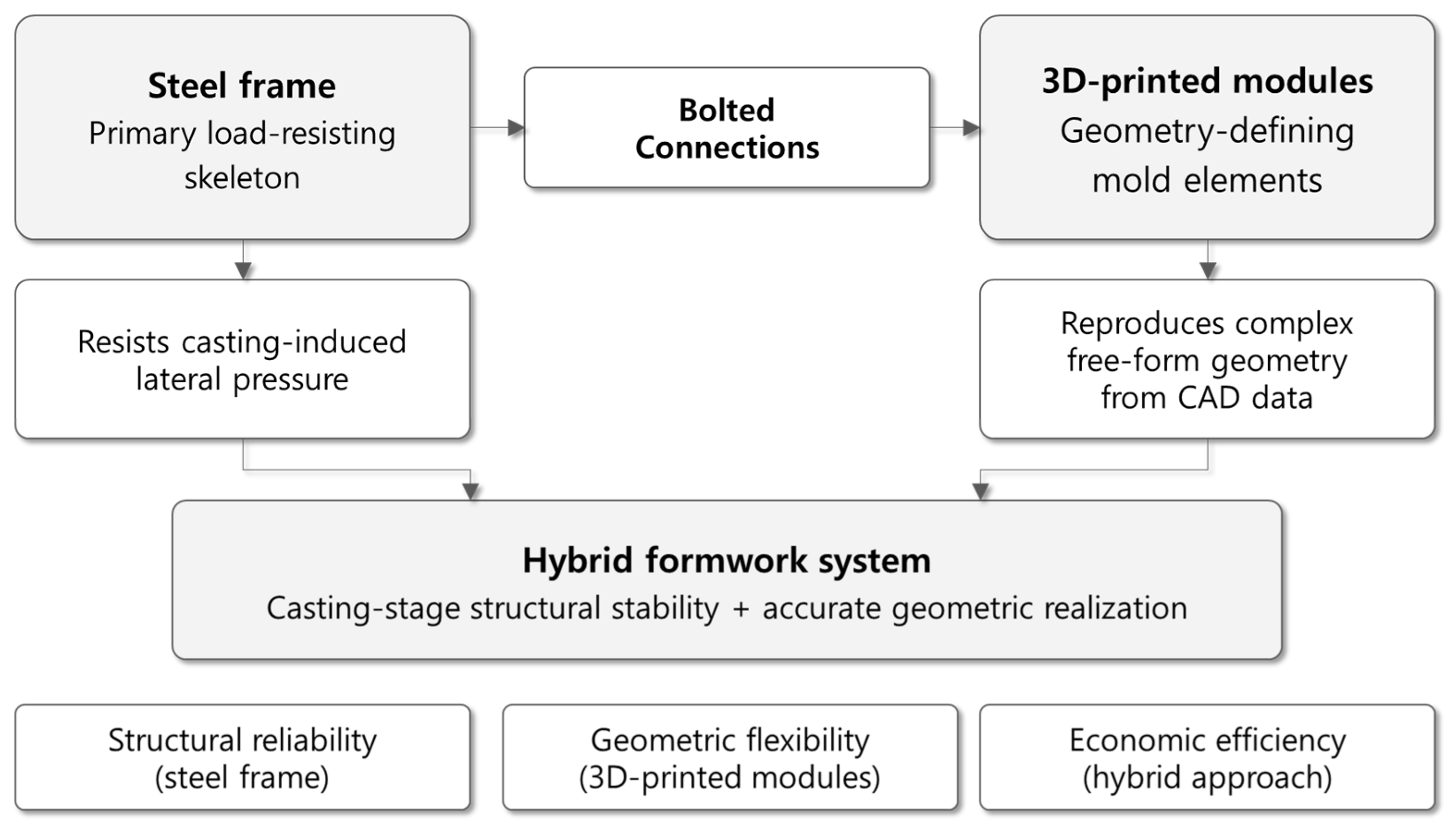
The hybrid formwork system proposed in this study is founded on a functional separation principle, in which the structural and geometric roles of the formwork are assigned to distinct components based on their material capabilities. As illustrated in
Figure 1, the system comprises two primary elements: a structural steel frame and 3D-printed formwork modules. The steel frame serves as the primary load-resisting skeleton, carrying casting-induced actions including lateral pressure and the self-weight of fresh concrete. The 3D-printed modules, produced directly from digital design data, define the complex mold geometry and determine the resulting concrete surface profile.
This functional separation addresses the fundamental limitations of each technology when applied independently. Standalone 3D-printed formwork is susceptible to deformation under casting-induced lateral pressure due to the relatively low stiffness of polymer-based materials, whereas conventional steel formwork lacks the geometric flexibility required for free-form concrete elements, as established in
Section 2. By combining these technologies within a single integrated system, the hybrid approach simultaneously achieves casting-stage structural stability and accurate geometric realization, providing a practical pathway for fabricating complex concrete structures that neither technology can deliver alone.
3.2. Design Criteria for the Hybrid Formwork System
The hybrid formwork system was designed based on four principal criteria: structural stability, geometric accuracy, constructability, and reusability. These criteria were established through a comprehensive review of formwork performance requirements and the complementary limitations of steel and AM-based formwork identified in
Section 2 [
4,
7,
13,
18,
34].
Table 3 summarizes each criterion, its engineering rationale, and the corresponding design response adopted in the proposed system.
Structural stability was prioritized as the primary criterion, given that formwork systems must resist significant loads during concrete placement without excessive deformation or failure [
18,
34]. In the proposed system, this requirement is addressed by assigning load resistance exclusively to the steel frame, thereby decoupling structural performance from the geometric complexity of the printed components.
Geometric accuracy was identified as critical for realizing the intended free-form concrete geometry. AM-based fabrication enables direct reproduction of complex shapes from digital design data, minimizing the discrepancies between the design model and the fabricated formwork that are inherent in conventional manual forming operations [
12,
13].
Constructability was addressed through modularization of both the steel frame and the printed formwork components, enabling off-site prefabrication, simplified transportation, and efficient on-site assembly. Bolted connections were adopted to facilitate rapid assembly and dismantling while allowing positional adjustment to reduce alignment errors during installation [
18].
Reusability was incorporated to improve lifecycle economics and reduce material waste. The steel frame is designed for repeated use across multiple casting operations, while damaged or geometry-specific printed modules can be selectively replaced or re-fabricated without replacing the entire system [
4,
18]. This approach is consistent with circular construction principles that emphasize resource efficiency and reduced environmental impact across the building life cycle [
15,
16].
3.3. Integration Strategy of Steel Frame and 3D-Printed Modules
The steel frame and 3D-printed formwork modules were integrated through a mechanically fastened, modular configuration that reflects the functional separation described in
Section 3.1. The steel frame was fabricated as the primary structural skeleton, designed to carry casting-induced lateral pressure and transfer loads to the foundation support without relying on the printed components for structural resistance. The printed modules were configured as geometry-defining mold elements, fastened to the interior faces of the steel frame to form the casting surface.
A bolted connection system was adopted at the interface between the steel frame and the printed modules. This approach enables rapid on-site assembly and dismantling, supports positional adjustment during installation to minimize geometric deviations, and facilitates selective replacement of individual modules without disassembling the entire system. Pre-drilled connection holes were incorporated into both the steel frame and the printed modules during fabrication to ensure dimensional consistency and assembly efficiency.
Both components were fabricated as modular units sized to accommodate equipment constraints and transportation requirements, enabling field assembly of large-scale formwork configurations from manageable sub-components. The printed modules were dimensioned and positioned such that casting loads were transferred directly to the steel frame, preventing load accumulation in the polymer components and maintaining system stability during concrete placement.
This integration strategy enables the hybrid system to simultaneously deliver the structural reliability of steel formwork and the geometric realization capability of additive manufacturing, forming the basis for the full-scale experimental application described in
Section 4.
3.4. Fabrication and Assembly Workflow
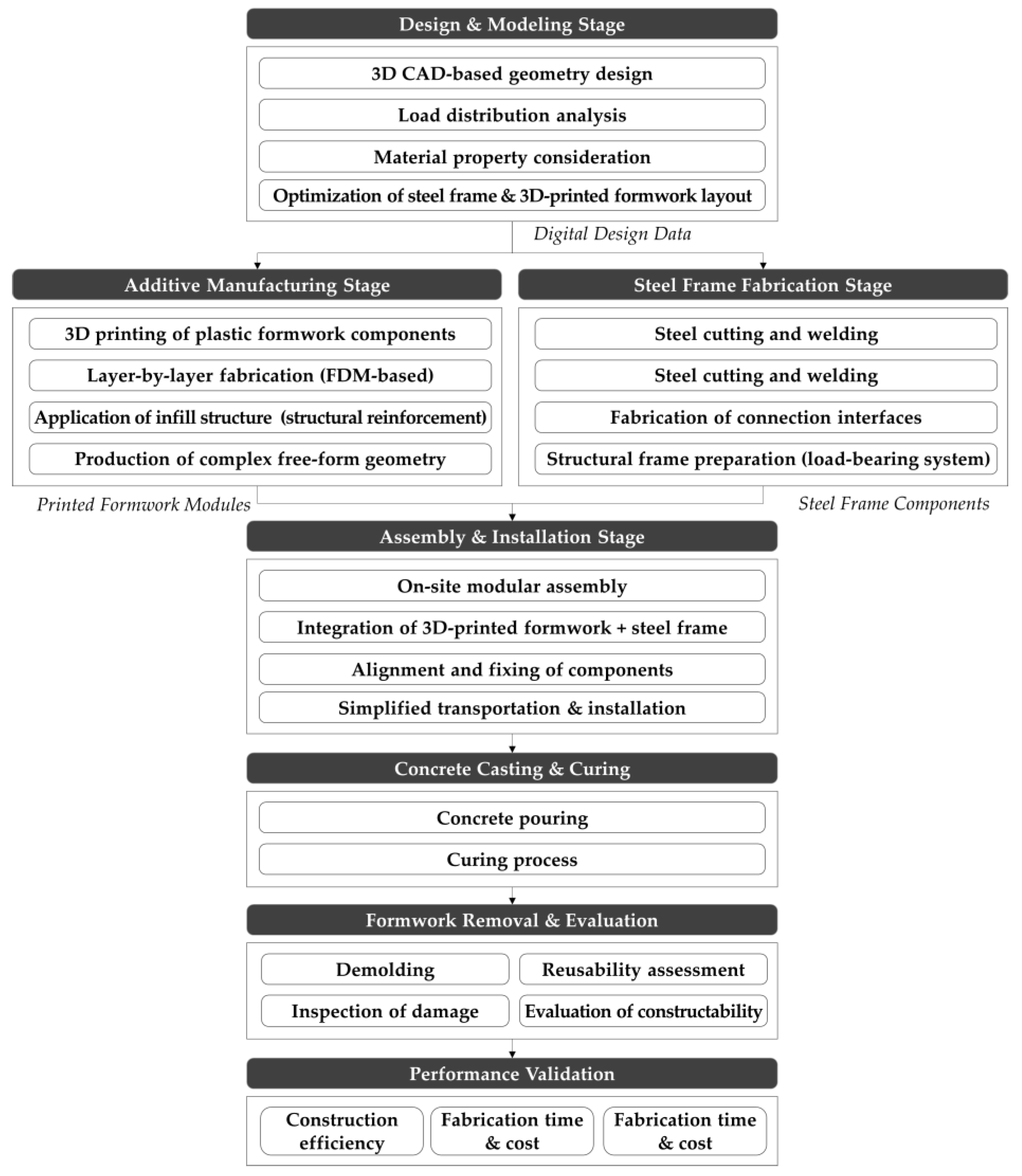
The fabrication and assembly of the hybrid formwork system follows a parallel workflow that integrates digital fabrication with conventional steel construction processes, as summarized in
Figure 2. The overall process comprises six stages: (i) design and digital modeling, (ii) fabrication of 3D-printed formwork modules, (iii) fabrication of steel frame components, (iv) on-site assembly and installation, (v) concrete casting and curing, and (vi) demolding and performance evaluation. Stages (ii) and (iii) are executed in parallel, reducing overall lead time relative to sequential fabrication approaches.
In the design and digital modeling stage, the target concrete geometry and hybrid formwork configuration are established using 3D CAD software (Rhinoceros 3D, v7; Robert McNeel & Associates, Seattle, WA, USA). The layout and integration scheme of the steel frame and printed modules are optimized based on casting-stage load distribution and material characteristics, and the resulting digital data are converted into fabrication-ready formats for both the AM process and steel fabrication.
In the additive manufacturing stage, the geometry-defining formwork modules are produced from digital design data using a large-scale industrial FDM printer, enabling accurate realization of complex free-form geometries [
5,
7]. Internal infill structures are applied where required to enhance component stiffness during handling and casting [
34]. Following printing, milling-based surface finishing is performed to meet concrete casting surface quality requirements.
Concurrently, the steel frame components are fabricated through conventional metalworking processes including cutting, welding, and surface treatment. Connection features are incorporated during fabrication to ensure precise integration with the printed modules and reliable load transfer during casting.
In the on-site assembly stage, the printed modules and steel frame components are transported to the site and assembled into the unified hybrid formwork system through precise alignment and mechanical fastening. The modular configuration facilitates handling and reduces on-site assembly complexity. Following reinforcement placement, concrete is cast into the assembled formwork and cured for 28 days. After curing, the formwork is dismantled and components are assessed for damage and reusability.
The parallel fabrication strategy adopted in this workflow reduces overall project lead time by allowing steel fabrication and 3D printing to proceed simultaneously, which is particularly advantageous for atypical concrete structures where conventional sequential fabrication significantly extends the construction schedule. The feasibility and performance of this workflow are validated through the full-scale case study presented in
Section 4.
4. Experimental Application and Case Study
4.1. Case Study Structure and Design
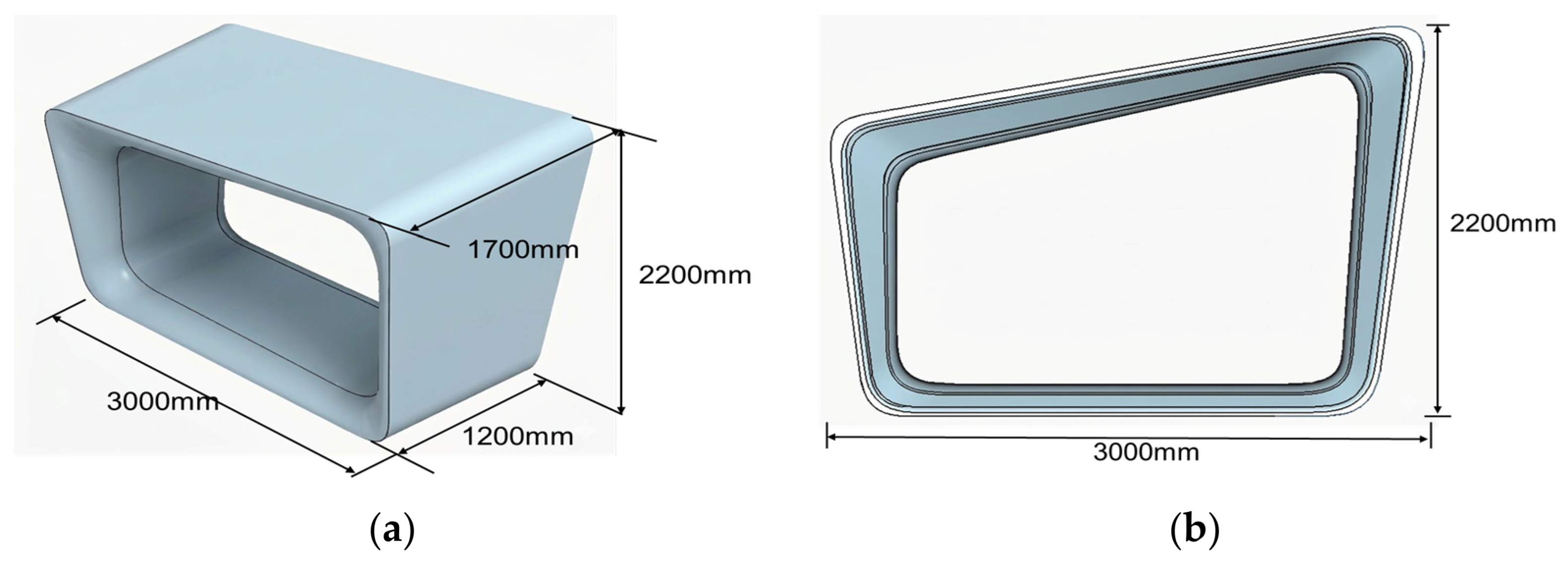
The case study structure was designed as an atypical concrete component with overall dimensions of 3.0 m (length) × 1.7 m (depth) × 2.2 m (height). The configuration was developed with reference to small building-scale facilities feasible in real construction contexts, such as a security booth within a residential complex or a bus shelter. The dimensions were selected to represent a construction-scale structure of sufficient complexity to evaluate the hybrid system under realistic casting conditions, while remaining within the fabrication capacity of the available large-scale FDM equipment (build volume: 5 m × 10 m × 2.5 m). To incorporate geometry that is challenging for conventional formwork, a curved surface was intentionally included in a portion of the structure, enabling evaluation of the applicability of 3D printing for free-form regions. The design process considered the overall geometry, load transfer characteristics, and formwork fabrication efficiency. Curved regions were included specifically to test the hybrid concept under conditions that typically increase fabrication complexity and cost when produced solely with conventional steel formwork.
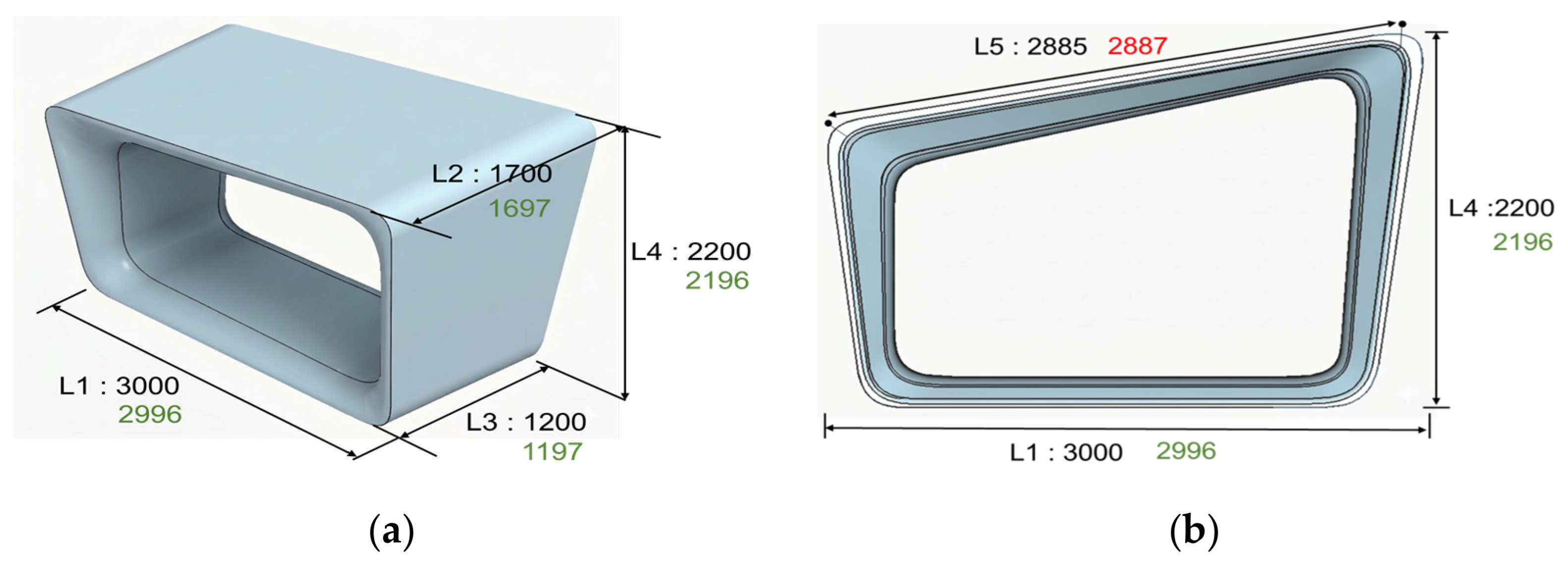
Figure 3 presents the geometry and key dimensions of the case study structure.
Figure 3a shows the overall configuration and external dimensions (3000 mm × 1700 mm × 2200 mm), while
Figure 3b highlights the internal opening geometry, including a representative dimension of 430 mm.
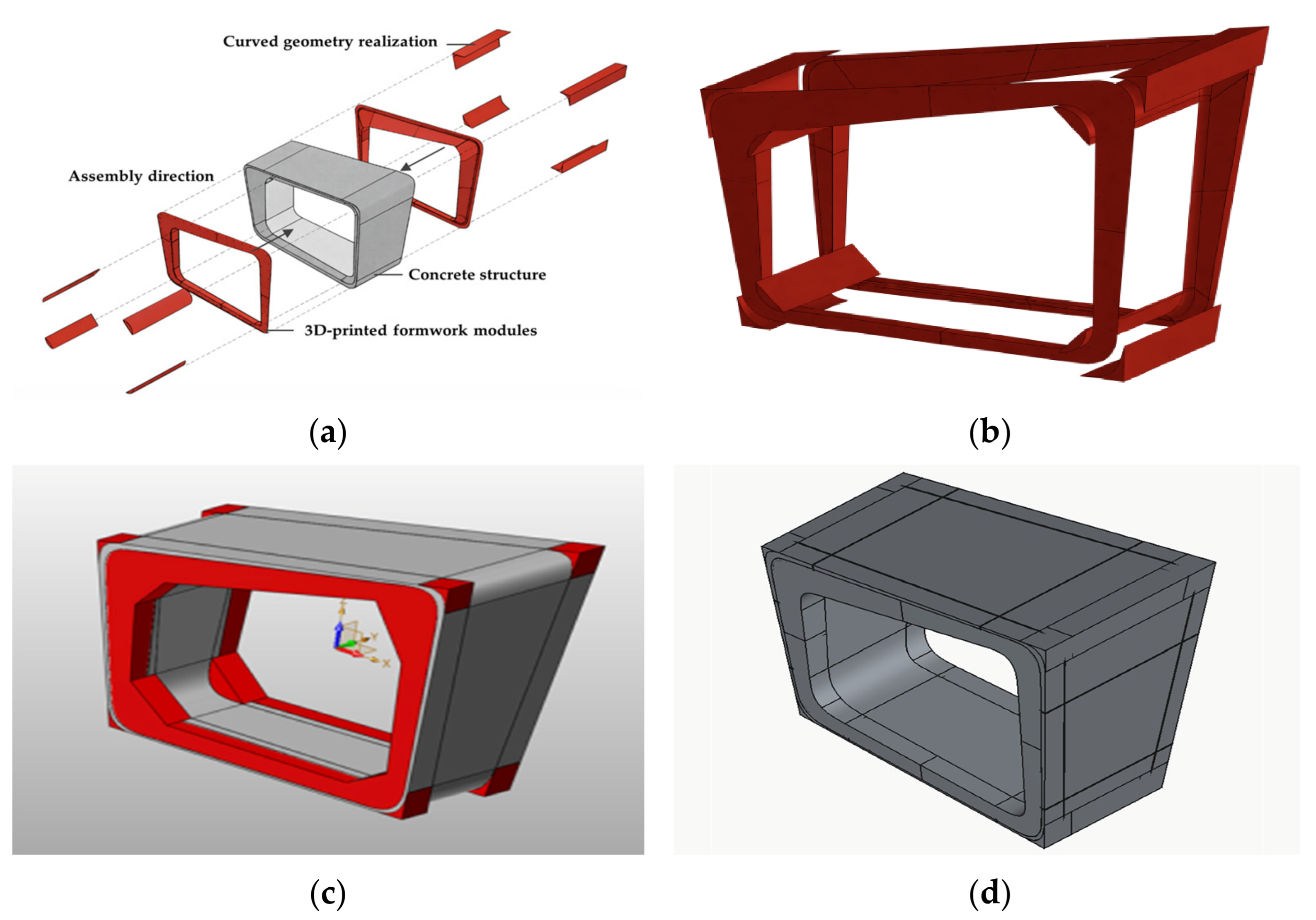
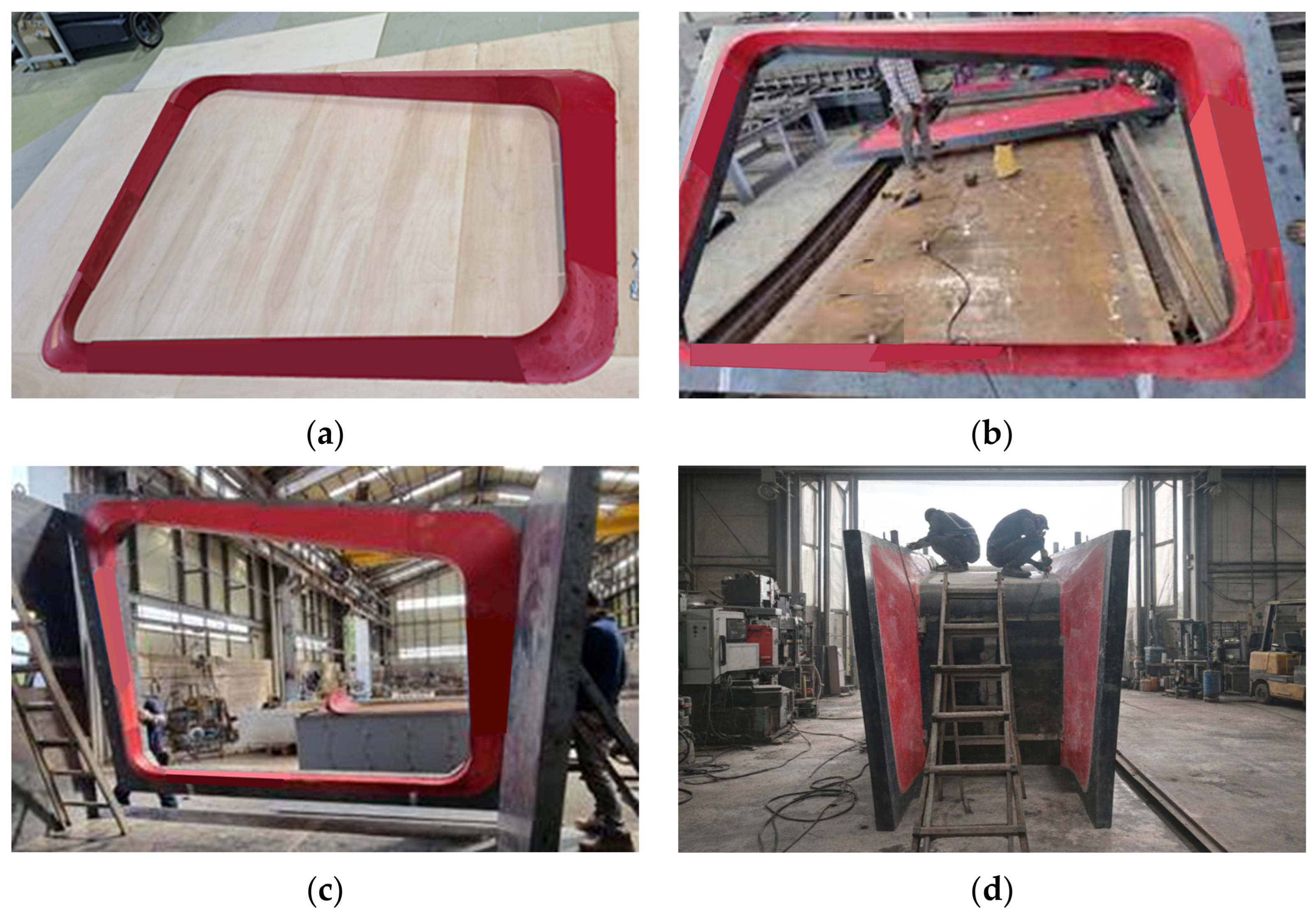
Figure 4 illustrates the staged configuration of the hybrid formwork system developed for this structure. Based on a geometry-based formwork allocation strategy, curved regions requiring customized fabrication were assigned to 3D-printed formwork, while planar regions subject to concentrated structural demand were assigned to conventional steel formwork.
Figure 4a shows the conceptual assembly, in which the red components on both sides represent the 3D-printed modules designed to reproduce the curved edge geometry.
Figure 4b presents the initial formwork assembly comprising the joined printed modules, which form the geometry-defining mold for the curved regions.
Figure 4c shows an intermediate configuration with additional steel formwork installed on the outer surface to enhance stiffness and resist casting-induced lateral pressure.
Figure 4d presents the final hybrid configuration, in which steel formwork was applied to the front, rear, and internal surfaces to ensure both structural stability and constructability. In the final system, the 3D-printed modules define the atypical curved geometry while the steel formwork serves as the principal load-resisting component during casting.
The materials and equipment used to fabricate the hybrid formwork system for this case study are described in the following section.
4.2. Materials and Equipment
The fabrication of the hybrid formwork system employed two complementary processes: large-scale additive manufacturing for the geometry-defining printed modules, and conventional steel fabrication for the load-resisting frame. The principal materials and equipment used in each process are summarized in
Table 4.
For the 3D-printed formwork, an industrial-scale FDM printer with a build capacity of approximately 5 m × 10 m × 2.5 m (custom-developed by 3D Factory Co., Ltd., Ulsan, Republic of Korea) was used to fabricate large free-form modules at construction scale. The printing material was ABS-CF20 (TRIBS 3DP-600C20, Samyang Corporation, Seoul, Republic of Korea), a thermoplastic composite reinforced with approximately 20% carbon fiber by weight. Compared to neat ABS (TRIBS 640R, Samyang Corporation), ABS-CF20 exhibits substantially higher mechanical performance and improved dimensional stability: tensile strength increased from 37.3 MPa to 91.2 MPa (+144%), flexural strength from 53.9 MPa to 115.8 MPa (+115%), and flexural modulus from 2.16 GPa to 8.71 GPa (+303%), as measured in accordance with ASTM D638 and D790, respectively (Samyang Corporation, 2022) [
38,
39]. The heat deflection temperature also improved from 85 °C to 100 °C (ASTM D648), contributing to dimensional stability during the printing process. These mechanical characteristics make ABS-CF20 suitable for large-scale formwork fabrication where deformation control during handling and casting is critical. Its rheological properties are also compatible with pellet-based extrusion, enabling stable layer deposition and reliable geometric realization at the required scale.
To optimize material efficiency while maintaining adequate structural performance, an internal infill structure was incorporated into the printed components. This approach reduces material consumption and printing time while providing sufficient stiffness to resist deformation during transportation, assembly, and concrete casting. Following printing, milling-based surface finishing was performed using an integrated milling unit (custom-developed by 3D Factory Co., Ltd., Ulsan, Republic of Korea) to remove layer marks inherent to the extrusion-based AM process, achieving a surface geometric accuracy of approximately 0.1 mm to meet the quality requirements for concrete casting surfaces.
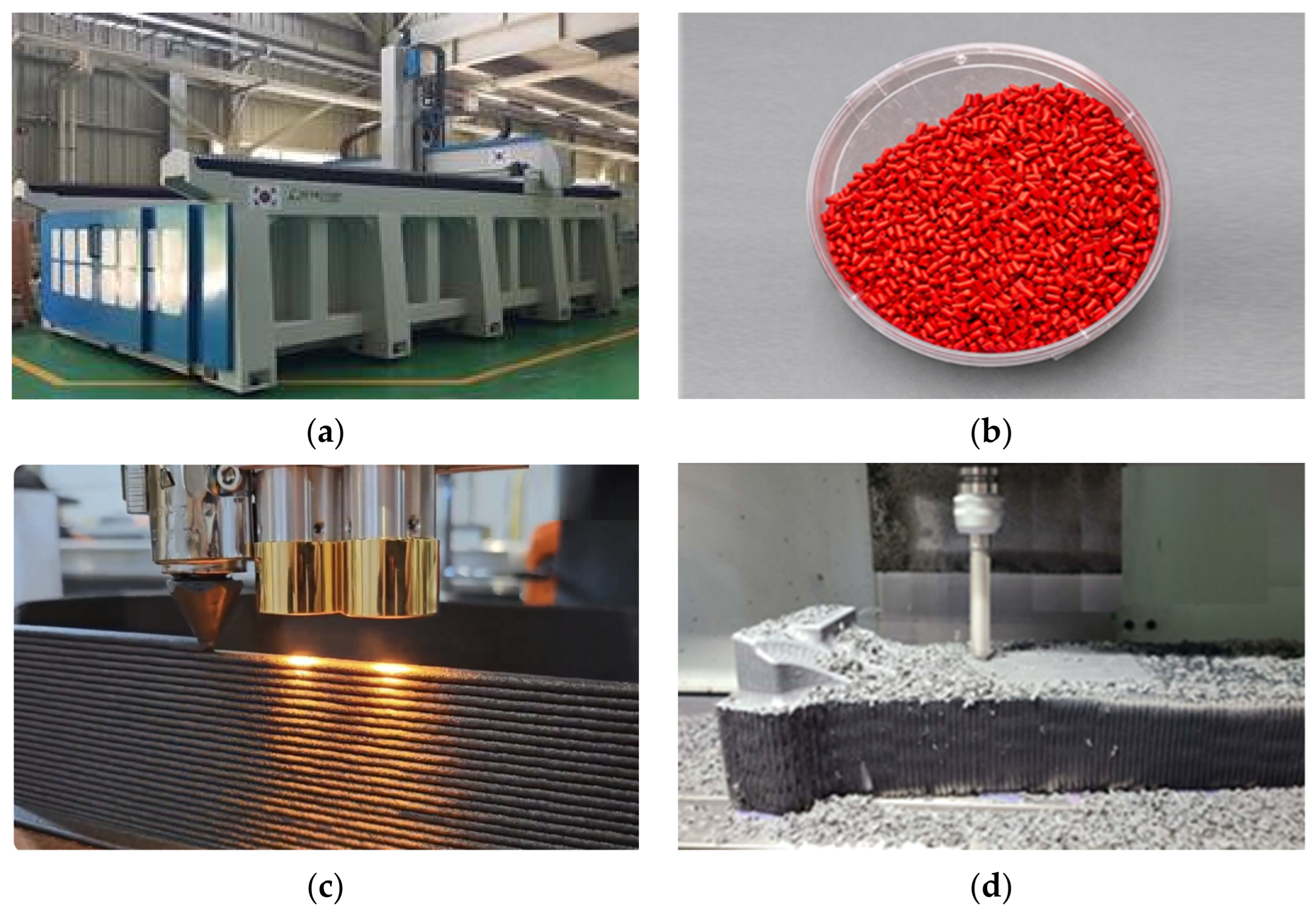
Figure 5 illustrates the additive manufacturing equipment and process chain.
Figure 5a shows the industrial-scale FDM printer;
Figure 5b presents the ABS-CF20 thermoplastic pellet feedstock;
Figure 5c illustrates the extrusion-based layer-by-layer deposition process; and
Figure 5d shows the integrated milling-based surface finishing stage.
For the steel frame, structural steel members (SS400) were fabricated through conventional metalworking processes including cutting, welding, and surface treatment. The frame was designed with pre-drilled connection features to enable precise mechanical integration with the printed modules, and bolted connections were adopted to ensure stable assembly, reliable load transfer to the primary structural components, and ease of disassembly following concrete casting. The steel frame member sections were not derived from detailed structural analysis but were determined conservatively based on prior fabrication experience and standard practice for formwork resisting casting-induced lateral pressure, with a deliberate safety margin to ensure stability during this first full-scale validation. This empirical sizing approach prioritized reliable casting-stage performance over weight or cost optimization.
The fabrication process and on-site assembly of the hybrid formwork system using these materials and equipment are described in the following section.
4.3. Fabrication of the Hybrid Formwork System
The hybrid formwork system was fabricated through parallel execution of two independent processes: (i) production of the 3D-printed formwork modules and (ii) fabrication of the steel frame components. This parallel strategy was adopted to reduce overall lead time relative to sequential fabrication, as discussed in
Section 3.4. The fabricated components were subsequently integrated on-site to form the complete hybrid formwork assembly.
For the 3D-printed formwork, regions requiring free-form geometry were identified based on the geometry-based formwork allocation strategy described in
Section 4.1. Printing data were generated directly from the 3D CAD model for these curved regions, and the components were produced using the large-scale industrial FDM printer described in
Section 4.2. Printing paths and deposition directions were optimized to reproduce the target curved geometries with dimensional accuracy. An internal infill structure was incorporated to provide sufficient stiffness during handling, transportation, and casting, as described in
Section 4.2. Following printing, milling-based surface finishing was performed to achieve the required casting surface quality. The printed formwork was produced as segmented modules to accommodate the equipment build volume and to improve handling efficiency for large-scale components. The modules were subsequently assembled into the target mold geometry through mechanical fastening.
Concurrently, the steel frame was fabricated through conventional metalworking processes including cutting, welding, and surface treatment, based on the structural design established in
Section 3.3. Pre-drilled connection features were incorporated during fabrication to enable precise mechanical integration with the printed modules and to ensure consistent bolt-hole alignment during on-site assembly. Surface treatment was applied to the steel components to ensure durability and dimensional stability under field conditions.
Figure 6 illustrates the key stages of the fabrication and assembly process.
Figure 6a shows the completed 3D-printed formwork modules following surface finishing.
Figure 6b illustrates mechanical fastening between the printed modules and the steel formwork components, forming the integrated casting surface.
Figure 6c presents the erection and alignment of the integrated modules within the steel frame, demonstrating the modular assembly sequence.
Figure 6d shows the completed hybrid formwork system following final fastening of all components, confirming that the 3D-printed modules and steel frame were successfully integrated into a unified casting mold.
Overall, the parallel fabrication strategy enabled simultaneous progress of the AM and steel fabrication processes, contributing to the schedule reduction quantified in
Section 5.2. The completed hybrid formwork system, in which the 3D-printed modules define the atypical curved geometry and the steel frame provides structural support against casting-induced loads, was subsequently transported to the construction site for on-site assembly and concrete casting, as described in the following section.
4.4. On-Site Assembly and Concrete Casting
The fabricated hybrid formwork components were transported to the construction site and assembled in accordance with the design drawings and the integration strategy described in
Section 3.3. The steel frame was erected first as the primary load-resisting structure, establishing the dimensional reference for subsequent module installation. The 3D-printed modules were then sequentially positioned against the steel frame and mechanically fastened using the pre-drilled bolt connections incorporated during fabrication. Positional adjustment was performed at each module interface during installation to minimize alignment errors and ensure geometric conformance with the target mold geometry. No significant difficulties were encountered during assembly, confirming that the modular configuration and pre-drilled connection system facilitated efficient on-site installation.
Assembly accuracy at the steel-frame–printed-module interface was controlled primarily through fabrication precision. The bolt holes were generated directly from the shared 3D CAD model and pre-drilled in both the steel frame and the printed modules, and the milling-based surface finishing of the printed modules (geometric accuracy ~0.1 mm) provided consistent, close-fitting mating surfaces, ensuring dimensional consistency between the design and fabricated bolt-hole positions. During installation, each module was positionally adjusted at its bolted interface before final tightening to minimize alignment errors. The close-fitting machined surfaces minimized gaps at the joints between adjacent modules and at the frame–module interface, and a sealant was applied where necessary to prevent slurry leakage. The bolted connections fixed the modules rigidly to the steel frame so that casting loads were transferred directly to the frame, preventing relative displacement of the printed components during placement. The absence of observed joint leakage or positional displacement during casting confirmed the effectiveness of these measures.
Following formwork assembly, steel reinforcement was placed in accordance with the structural design. The concrete used in this study had a design compressive strength of 24 MPa and a slump of 140 mm, as summarized in
Table 5, consistent with standard mix design requirements for reinforced concrete construction [
17].
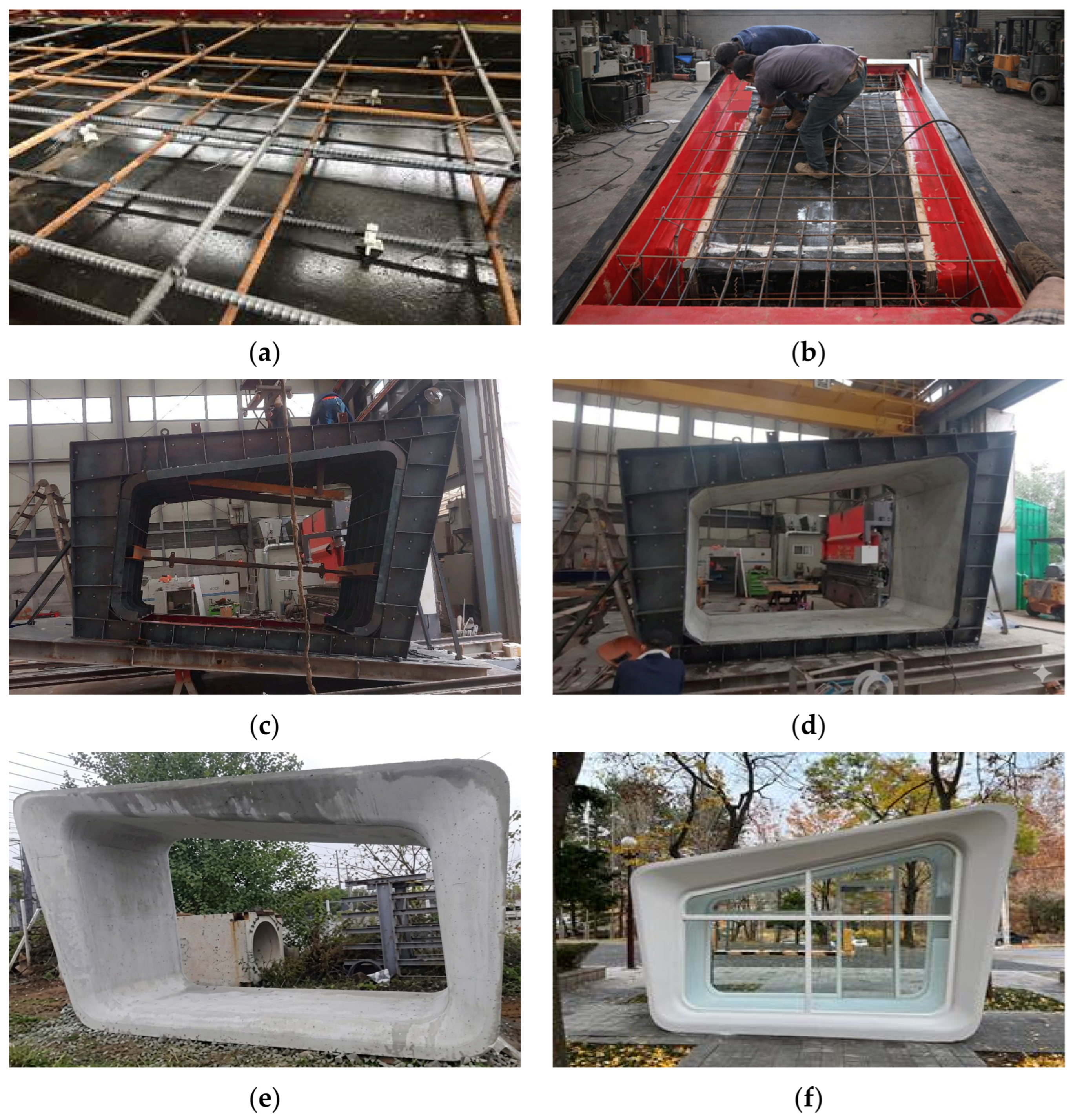
Figure 7a shows the placement of the bottom reinforcement layer, and
Figure 7b shows the subsequent installation of the top reinforcement. The assembled formwork system was arranged in an inclined configuration to facilitate uniform concrete flow and reduce the risk of void formation during placement, as shown in
Figure 7c. Concrete was placed continuously, and the system was inspected throughout casting for signs of formwork deformation, joint leakage, and positional displacement. No notable deformation or leakage was observed during the casting process, indicating that the steel frame provided sufficient lateral resistance under casting-induced pressure [
17].
Following placement, curing was conducted under ambient conditions for 28 days in accordance with standard concrete compressive strength development requirements prior to formwork removal. Upon completion of the 28-day curing period, the formwork was dismantled sequentially: the internal steel formwork components were removed first, as shown in
Figure 7d, followed by the external steel formwork together with the attached 3D-printed modules, after which the printed modules were separated from the steel components by releasing their bolted connections. Formwork removal was facilitated using a conventional release agent applied prior to casting, and upon demolding the printed modules exhibited no significant cracking, delamination, surface damage, or adhesion to the concrete, confirming that they remained intact and suitable for reuse. No significant surface defects or adhesion issues were observed on the cast concrete surface either. The structure was subsequently subjected to additional ambient curing to ensure adequate strength gain before full exposure, as shown in
Figure 7e. Finally, surface finishing and painting were performed to achieve the required appearance and durability of the completed structure.
Figure 7f shows the completed concrete structure, confirming that the free-form curved geometry defined by the 3D-printed modules was successfully realized as intended. The as-built appearance is consistent with the design geometry, with no visible evidence of formwork deformation or casting defects, demonstrating the structural adequacy of the hybrid formwork system under full-scale casting conditions.
The geometric accuracy of the completed structure and the construction efficiency and cost performance of the hybrid formwork system are evaluated quantitatively in the following section.
5. Performance Evaluation
5.1. Geometric Accuracy of the Constructed Structure
Geometric accuracy was evaluated to assess the fidelity with which the proposed hybrid formwork system reproduced the intended design geometry. For atypical concrete structures, deviations between the design model and the as-built geometry can directly affect structural performance, surface quality, and overall construction completeness; geometric accuracy was therefore treated as a primary performance indicator in this study.
The evaluation was conducted by comparing representative dimensions extracted from the 3D CAD design model with corresponding dimensions measured on the completed concrete structure. Physical dimensions were measured using a calibrated steel tape measure (Stanley Black & Decker, New Britain, CT, USA) and a digital distance meter (Leica Geosystems AG, Heerbrugg, Switzerland), with measurements taken at stable, fully cured surface locations to minimize the influence of surface irregularities. Measurement points were distributed across planar, edge, curved, and inclined regions to ensure representative coverage of the full geometric range of the structure. Five representative dimensions (L1–L5) were defined to characterize each region type, as shown in
Figure 8. At each measurement location, the geometric deviation
E was calculated as:
where
E denotes the geometric deviation (mm),
D_m is the measured dimension (mm), and
D_d is the designed dimension (mm). A positive value of
E indicates that the as-built dimension exceeds the design value, while a negative value indicates an underrun.
The results are summarized in
Table 6. Across all five measurement locations, deviations ranged from −4 mm to +2 mm, with an average absolute deviation of approximately 3.2 mm and a maximum absolute deviation within ±4 mm. The relative deviations ranged from 0.07% to 0.25%, with an overall average of 0.16%, indicating consistently small proportional errors relative to the design dimensions. Notably, the curved region (L5), where 3D-printed formwork was applied, exhibited the smallest deviation (+2 mm, 0.07%), comparable to or lower than those observed in the planar and edge regions (L1–L4), demonstrating that the printed modules provided effective geometric control for the free-form surface.
The observed deviations are consistent with dimensional tolerances commonly reported in construction-scale AM-based fabrication and conventional concrete construction practice, where deviations of up to ±5 mm are generally considered acceptable for non-structural surface elements [
40]. The negative deviations observed at L1–L4 may be attributed to two primary sources: minor thermal shrinkage of the thermoplastic modules during post-print cooling, and small elastic deformations of the formwork system under casting-induced lateral pressure. Carbon-fiber reinforcement in ABS-based composites is known to significantly reduce the coefficient of thermal expansion along the print direction relative to neat ABS; however, residual thermal shrinkage during cooling from printing temperature to ambient conditions remains a contributing factor to dimensional underrun in large-scale FDM-printed components [
41]. The magnitude of the negative deviations observed at L1–L4 (−3 to −4 mm over dimensions of 1200–3000 mm, corresponding to relative deviations of 0.13–0.25%) is consistent with shrinkage-induced dimensional change reported for construction-scale thermoplastic extrusion processes under comparable conditions. The positive deviation at L5 may reflect minor misalignment during inclined casting or slight upward displacement of the formwork surface during concrete placement and vibration. Alignment errors during modular assembly may also have contributed to the observed deviations across all measurement locations [
40]. Nevertheless, the limited deviation range and consistent results across all region types indicate that the hybrid formwork system provided sufficient geometric stability throughout the casting process.
The findings confirm that the proposed hybrid formwork system is capable of reproducing complex free-form concrete geometries with accuracy comparable to conventional construction tolerances, supporting its practical applicability for atypical concrete structures. The construction efficiency and cost performance of the system are evaluated in the following sections.
5.2. Construction Efficiency
A comparative analysis of construction efficiency was conducted to evaluate the schedule implications of three formwork fabrication approaches: conventional steel formwork, fully 3D-printed formwork, and the proposed hybrid formwork system. The overall fabrication process was decomposed into major sub-processes—including shop drawing and detailing, cutting and forming, welding and assembly, 3D printing, surface finishing, transportation, and on-site assembly—following process-based decomposition approaches commonly adopted in comparative construction fabrication studies [
7,
18,
23]. The duration of each sub-process was estimated based on the following assumptions: (i) labor productivity rates for steel fabrication processes, including cutting, forming, and welding, were referenced from published construction cost databases and prior literature [
7,
18]; (ii) process durations for the 3D printing stage were estimated based on the print volume of the fabricated components and equipment throughput data referenced from prior AM fabrication studies [
25,
33]; (iii) surface finishing and on-site assembly durations were derived from empirical project experience consistent with construction-scale AM applications reported in the literature [
13,
21]; and (iv) all estimates were applied consistently across the three formwork systems using the same decomposition framework to ensure comparability. The absolute duration figures underlying the estimates are available from the corresponding author upon reasonable request.
The results are summarized in
Table 7.
Under the conventional steel formwork approach, the total fabrication and construction duration was estimated at approximately 30 days, with cutting and forming (8 days) and welding and assembly (10 days) constituting the dominant sub-processes, reflecting the sequential and labor-intensive nature of customized steel formwork production for complex geometries [
18].
Fully 3D-printed formwork significantly reduced metalworking operations, with cutting and forming and welding reduced by approximately 87.5% and 90.0%, respectively. However, the introduction of an 8-day printing process for large-scale components—consistent with previously reported limitations in AM productivity and material workability at construction scale [
42]—partially offset these gains, resulting in a total duration of approximately 22 days, a reduction of 26.7% relative to the conventional approach.
The proposed hybrid formwork system achieved the greatest schedule reduction by minimizing metalworking operations while selectively applying 3D printing only to the components requiring free-form geometry. Cutting and forming and welding were reduced by 75.0% and 80.0%, respectively, and surface finishing time decreased by 75.0%. As a result, the fabrication subtotal was reduced from 27 days to 11 days, a reduction of 59.3%, which constituted the primary driver of overall schedule improvement. The total construction duration was consequently reduced to approximately 15 days, representing a reduction of 50.0% relative to conventional steel formwork and 31.8% relative to the fully 3D-printed approach.
Although on-site assembly time increased slightly relative to the conventional approach—from 1 day to 2 days for the hybrid system—this increase had a negligible impact on the overall schedule given the substantial reduction in fabrication duration. The modular configuration and lower self-weight of the thermoplastic printed components, as noted in
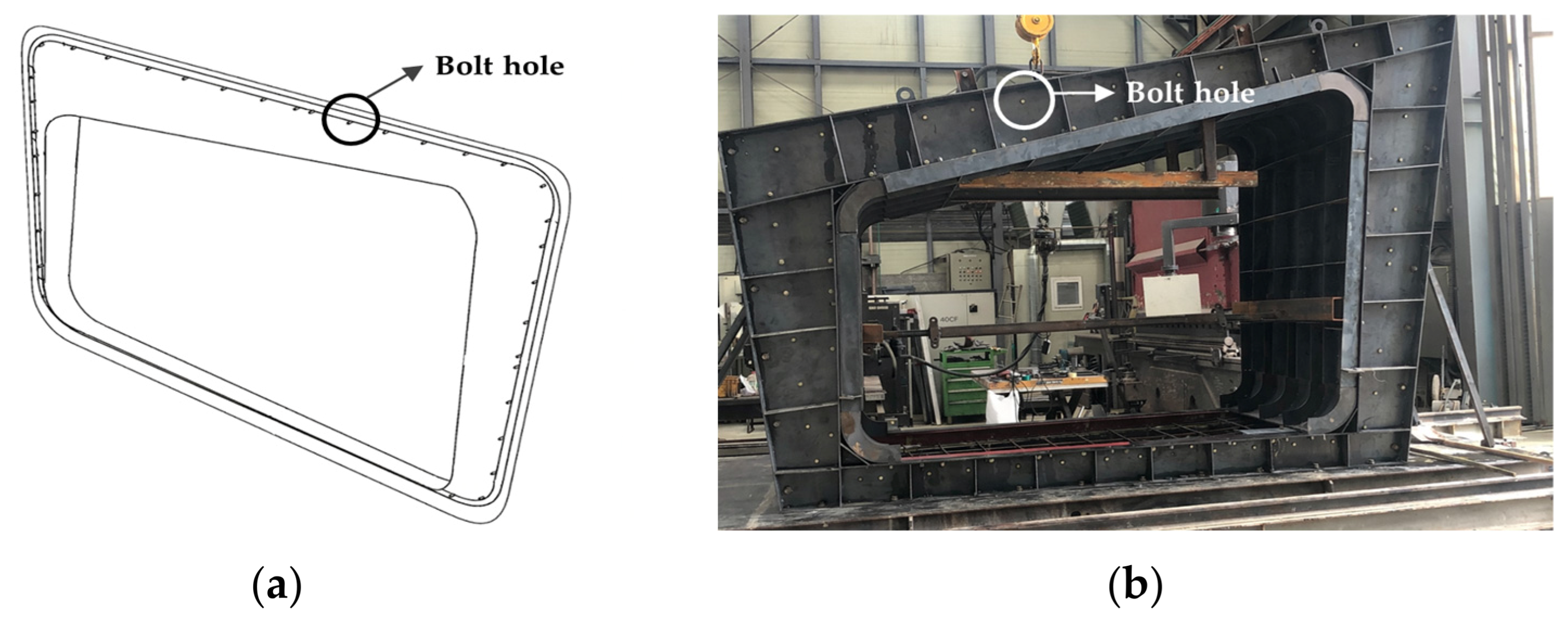
Section 2.1, contributed to improved handling efficiency during transportation and installation. The bolted connection system with pre-drilled holes, described in
Section 3.3 and
Section 4.3, further supported assembly accuracy and efficiency. As illustrated in
Figure 9, the bolt-hole positions defined in the digital model were accurately reproduced in the fabricated steel frame, confirming dimensional consistency between the design and fabricated components.
Overall, the results confirm that the proposed hybrid formwork system provides the most favorable schedule performance among the evaluated approaches, achieving a 50% reduction in total construction duration relative to conventional steel formwork. The primary source of this improvement is the substantial reduction in fabrication time enabled by the selective application of 3D printing and the parallel fabrication strategy described in
Section 3.4. The cost implications of the three formwork systems are examined in the following section.
5.3. Cost Analysis
A comparative cost analysis was conducted to evaluate the economic implications of the three formwork fabrication approaches examined in this study. The cost estimation followed the same process-based framework adopted for the schedule analysis in
Section 5.2, decomposing total fabrication cost into material cost and fabrication cost components. Fabrication cost was further subdivided into sub-items corresponding to each major process step. To ensure confidentiality of project-specific data, all cost values were normalized by setting the total fabrication cost of conventional steel formwork as the baseline index (=100). The cost of each sub-process was estimated based on the following assumptions: (i) material unit costs for structural steel (SS400) and ABS-CF20 thermoplastic composite were referenced from market prices at the time of fabrication and supplier specifications; (ii) fabrication labor costs for steel processing were referenced from published construction cost databases and prior literature [
7,
18]; (iii) equipment operating costs for the large-scale FDM system were estimated from manufacturer specifications and industry references [
25]; and (iv) all values were normalized relative to the conventional steel formwork baseline (=100) to ensure confidentiality of project-specific data while maintaining comparability across systems. The absolute cost figures underlying the normalized index are available from the corresponding author upon reasonable request. The normalized cost breakdown is summarized in
Table 8.
For conventional steel formwork, material and fabrication costs accounted for approximately 40% and 60% of the total, respectively. The dominance of fabrication cost reflects the labor- and equipment-intensive nature of customized metalworking operations—cutting, forming, welding, and assembly—required to reproduce complex curved geometries in steel, which collectively accounted for 55.0% of the total cost index.
For fully 3D-printed formwork, the total cost index was approximately 72.5, representing a reduction of 27.5% relative to the conventional system. Conventional metalworking operations were reduced substantially, with cutting and welding costs declining by over 90% each. However, the introduction of 3D printing as a major fabrication process (cost index: 22.5) partially offset these savings, limiting the overall cost reduction. Furthermore, the need for additional material to compensate for the lower structural stiffness of polymer-based formwork constrained material cost reductions to approximately 20%, resulting in a material-to-fabrication cost ratio of approximately 44:56—similar to the conventional system despite the different process composition.
The proposed hybrid formwork system achieved the lowest total cost index of approximately 40.5, representing reductions of about 60% relative to conventional steel formwork and about 45% relative to fully 3D-printed formwork. The material cost subtotal decreased to 18.0 (a reduction of 55.0% from the conventional baseline), reflecting the selective use of steel only for the load-resisting frame and the limited application of thermoplastic material only to geometry-critical regions. The fabrication cost subtotal decreased to 22.5 (a reduction of 62.5%), driven by the elimination of most metalworking operations and the targeted use of 3D printing only where geometric complexity required it. Notably, the material-to-fabrication cost ratio shifted to approximately 45:55, consistent with the conventional system in proportion but achieved at significantly lower absolute cost levels, indicating that the hybrid approach optimizes both cost components simultaneously rather than trading one against the other.
The key advantage of the hybrid system over fully 3D-printed formwork lies in the selective application of AM: by restricting 3D printing to regions requiring complex geometry and assigning load resistance to the steel frame, the hybrid approach avoids the dual cost penalty of high printing costs and increased material demand for stiffness that limits the competitiveness of fully printed systems. These findings suggest that the economic feasibility of AM-based formwork in practical construction can be substantially improved through strategic integration with conventional steel fabrication, rather than through wholesale replacement of conventional processes.
The practical applicability of the proposed hybrid system in real construction projects, including considerations of scalability and implementation constraints, is discussed in the following section.
5.4. Discussion on Practical Applicability
The experimental findings from this study demonstrate that the proposed hybrid formwork system has practical potential for atypical concrete construction, offering technically viable and economically competitive performance across the key indicators evaluated. This section synthesizes the results from
Section 5.1,
Section 5.2 and
Section 5.3 and discusses the broader implications, practical considerations, and remaining challenges associated with real-world implementation.
The geometric accuracy assessment confirmed that the constructed structure reproduced the intended design geometry with an average deviation of approximately 3.2 mm and a maximum deviation within ±4 mm, consistent with dimensional tolerances accepted in construction practice [
40]. No notable formwork deformation or damage was observed during concrete casting, confirming that the functional separation principle—assigning load resistance to the steel frame and geometry definition to the printed modules—effectively addressed the structural limitations that constrain standalone AM-based formwork systems [
34]. The comparable deviations observed across planar, edge, and curved regions indicate that the hybrid system maintains consistent geometric control across diverse surface types, which is particularly significant for free-form concrete applications where surface quality is a critical design requirement.
The findings of this study are based on a single full-scale case study involving a structure of moderate geometric complexity (3.0 m × 1.7 m × 2.2 m) with a partially curved surface. While the results demonstrate the practical feasibility of the hybrid formwork system under realistic construction conditions, the conditions under which the hybrid approach provides the greatest advantage over conventional and fully AM-based alternatives warrant explicit discussion. The hybrid system is expected to be most advantageous when the following conditions are met: (i) the target structure incorporates a significant proportion of geometrically complex or free-form surfaces that are impractical to fabricate using conventional steel forming operations, yet the overall scale and casting loads exceed the structural capacity of standalone polymer-based printed formwork; (ii) the ratio of curved-to-planar surface area is sufficiently high to justify the setup and equipment costs associated with large-scale FDM fabrication, while remaining below the threshold at which fully printed formwork becomes cost-competitive; and (iii) off-site prefabrication and modular assembly are feasible within the project logistics. Conversely, for structures with predominantly planar geometries, conventional steel formwork is likely to remain more economical, as the cost and schedule advantages of 3D printing are insufficient to offset its setup requirements. For structures requiring near-complete free-form geometry at small scale, fully printed formwork may be preferable. The hybrid approach therefore occupies a practical middle ground that is particularly relevant for construction-scale atypical concrete elements such as architectural façade components, transit shelters, and small infrastructure facilities. Validation across a broader range of structural geometries, scales, and curved-surface ratios is needed to establish quantitative applicability boundaries and to generalize the findings of this study.
The modular configuration and bolted connection system enabled efficient transportation, on-site assembly, and dismantling of the hybrid formwork. The lower self-weight of thermoplastic printed components relative to steel reduced handling complexity, and the pre-drilled connection system supported alignment accuracy during installation, as confirmed by the bolt-hole comparison in
Figure 9. The parallel fabrication strategy—executing AM production and steel fabrication simultaneously—contributed to the approximately 50% reduction in total construction duration relative to conventional steel formwork, as quantified in
Section 5.2. These constructability advantages are consistent with the principles of modular and off-site construction, which emphasize prefabrication and process efficiency to reduce on-site labor requirements and project duration [
3,
14].
The cost analysis in
Section 5.3 demonstrated that the hybrid system achieved a normalized cost index of approximately 40.5, representing reductions of approximately 60% and 45% relative to conventional steel formwork and fully 3D-printed formwork, respectively. The key economic advantage of the hybrid approach lies in its selective application of AM: by restricting 3D printing to geometry-critical regions and assigning structural resistance to the steel frame, the system avoids the dual cost penalty—high printing costs and increased material demand for stiffness—that limits the cost competitiveness of fully printed systems. These findings suggest that strategic integration of AM with conventional fabrication, rather than wholesale substitution, represents a more economically viable pathway for digital fabrication adoption in construction.
The hybrid system’s reduced fabrication duration and optimized material usage have direct implications for construction sustainability. The selective application of thermoplastic materials only where required minimizes polymer consumption and associated waste, while the reusable steel frame components support lifecycle material efficiency consistent with circular construction principles [
4,
15,
16]. The off-site prefabrication strategy further reduces on-site material waste and logistical complexity. Although a full life cycle assessment (LCA) was beyond the scope of this study, these characteristics suggest favorable environmental performance relative to conventional formwork systems that require full steel fabrication for complex geometries.
Several practical constraints should be acknowledged for broader implementation. For larger structures, printer build volume limitations may necessitate increased module segmentation, which could extend assembly time and introduce additional joint interfaces requiring careful geometric control. The cost and schedule estimates presented in this study were derived from process-based analysis and empirical assumptions for a specific case study geometry; actual values will vary depending on project scale, equipment availability, labor productivity, and regional material costs. Additionally, the structural performance of the 3D-printed modules under cyclic loading or long-term environmental exposure was not evaluated, and further investigation is required before application in environments with demanding service conditions. Notwithstanding these considerations, the results of this full-scale validation demonstrate that the hybrid formwork system is practically implementable and economically advantageous for atypical concrete structures, providing a credible basis for broader adoption in digital construction practice.
Reusability of the steel frame also warrants qualification. Although the frame is designed for repeated use, its economic benefit is greatest when identical or geometrically similar elements are produced repeatedly; a frame configured for one specific geometry offers limited transferability to structures with substantially different shapes, and may require partial re-fabrication or reconfiguration. In addition, repeated casting and demolding cycles may induce bolt-hole wear, weld fatigue, and surface corrosion, so periodic inspection and reconditioning are necessary before reuse. The handling, transportation, and storage of the relatively heavy steel frame also impose logistical demands. In contrast, the geometry-specific 3D-printed modules are intended for selective replacement rather than repeated reuse, and the two component types should therefore be assessed separately when evaluating life-cycle reusability.
6. Conclusions
This study proposed and experimentally validated a hybrid formwork system integrating a structural steel frame with 3D-printed modules for the fabrication of complex free-form concrete structures. The system was designed based on a functional separation principle, in which the steel frame resists casting-induced lateral pressure and the 3D-printed modules define the complex mold geometry. Full-scale fabrication and performance evaluation of a case study structure (3.0 m × 1.7 m × 2.2 m) were conducted to assess geometric accuracy, construction efficiency, and cost performance under realistic construction conditions.
The key findings of this study are summarized as follows:
- (i)
Geometric accuracy. The constructed structure reproduced the intended design geometry with an average deviation of approximately 3.2 mm and a maximum deviation within ±4 mm across planar, edge, curved, and inclined regions. Relative deviations ranged from 0.07% to 0.25%, consistent with dimensional tolerances accepted in construction practice. The curved regions where 3D-printed formwork was applied exhibited deviations comparable to those in planar regions, confirming effective geometric control across all surface types.
- (ii)
Structural stability during casting. No notable formwork deformation or damage was observed during concrete placement, confirming that the steel frame provided sufficient resistance to casting-induced lateral pressure. This result demonstrates that the functional separation concept effectively addresses the structural limitations of standalone AM-based formwork, which has been identified as a critical barrier to practical implementation [
34].
- (iii)
Constructability. The modular configuration, pre-drilled bolted connections, and parallel fabrication strategy collectively improved transportability, on-site assembly efficiency, and overall construction workflow. The hybrid system reduced total construction duration from approximately 30 days to 15 days, a reduction of about 50% relative to conventional steel formwork, primarily driven by the 59.3% reduction in fabrication duration.
- (iv)
Cost performance. The normalized cost analysis indicated that the hybrid system achieved a total fabrication cost index of approximately 40.5, representing reductions of about 60% relative to conventional steel formwork and about 45% relative to fully 3D-printed formwork. The cost advantage was achieved through selective application of AM to geometry-critical regions, minimizing both material consumption and metalworking operations while avoiding the high printing costs associated with fully printed systems.
From a broader perspective, the proposed hybrid formwork system advances the practical integration of digital fabrication with conventional construction processes by providing a technically reliable, economically competitive, and constructability-oriented approach to complex concrete construction. The system’s compatibility with modular prefabrication strategies and its potential for component reuse align with sustainable construction principles, including resource efficiency, waste reduction, and lifecycle performance improvement [
4,
7,
15,
16]. These characteristics position the hybrid approach as a viable pathway toward more digitally integrated and environmentally responsible construction practice.
Several limitations of this study should be acknowledged. First, the validation was conducted on a single full-scale case study, and the generalizability of the findings to different structural scales, geometries, and loading conditions remains to be established. Second, the cost and schedule estimates were derived from process-based analysis and empirical assumptions, and may differ under varying project conditions, equipment configurations, and regional labor and material costs. Third, the mechanical performance of the ABS-CF20 printed components was not evaluated under cyclic loading or long-term environmental exposure, which limits the applicability of the current findings to short-term static casting conditions. Fourth, the geometric accuracy assessment relied on a limited number of discrete point measurements using a calibrated steel tape measure and digital distance meter, rather than full-surface three-dimensional scanning techniques such as terrestrial laser scanning or structured-light scanning. This approach may not fully capture localized surface deviations across the entire structure, and measurement uncertainty associated with the instrumentation and operator variability was not formally quantified. Future studies should incorporate point-cloud-based measurement methodologies to provide more comprehensive and statistically robust geometric validation. Fifth, the steel frame was conservatively sized based on empirical judgment rather than detailed structural analysis; accordingly, the reported configuration demonstrates structural adequacy but is not optimized, and quantitative load estimation and structural optimization of the frame were beyond the scope of this study.
Future research should address these limitations through the following directions. Validation of the hybrid system across a broader range of structural geometries and scales is needed to establish its generalizability and define the conditions under which the hybrid approach provides the greatest advantage over conventional and fully AM-based alternatives. Refinement of the process-based cost and schedule models using field data from multiple projects would improve the reliability and transferability of the economic analysis. Investigation of the mechanical performance and durability of large-scale FDM-printed thermoplastic components under construction-relevant loading and environmental conditions is also warranted. Furthermore, the development of recyclable or bio-based thermoplastic composites for formwork applications could enhance the environmental sustainability of the system, and integration with automated assembly and digital twin frameworks may provide opportunities to further improve construction efficiency and quality control in complex concrete construction. In addition, although the steel frame safely resisted casting-induced lateral pressure without observable deformation, it was not optimized; future work should therefore address optimization of the frame under both static casting loads and dynamic effects such as vibration during placement, which may enable further reductions in steel consumption, self-weight, and cost beyond those reported here.