A Numerical Simulation Investigation on the Mechanical Constitutive Model of Lithium Slag UHPC and the Bending Behavior of Its Prefabricated Connection Components
 ,
, 

Abstract
1. Introduction
2. Overview of the Experiment
2.1. Raw Materials for the Experiment
2.2. Mix Proportions
2.3. Test Method
- (1)
- Specimen preparation
- (2)
- Mechanical property testing
- a.
- Axial compression test
- b.
- Uniaxial tensile test
2.4. Establishment of the Finite Element Simulation
- (1)
- Geometric dimensions
- (2)
- Finite element model
- (3)
- Parameter settings
- a.
- Constitutive model
- b.
- Interface settings
- (4)
- Boundary conditions
- (5)
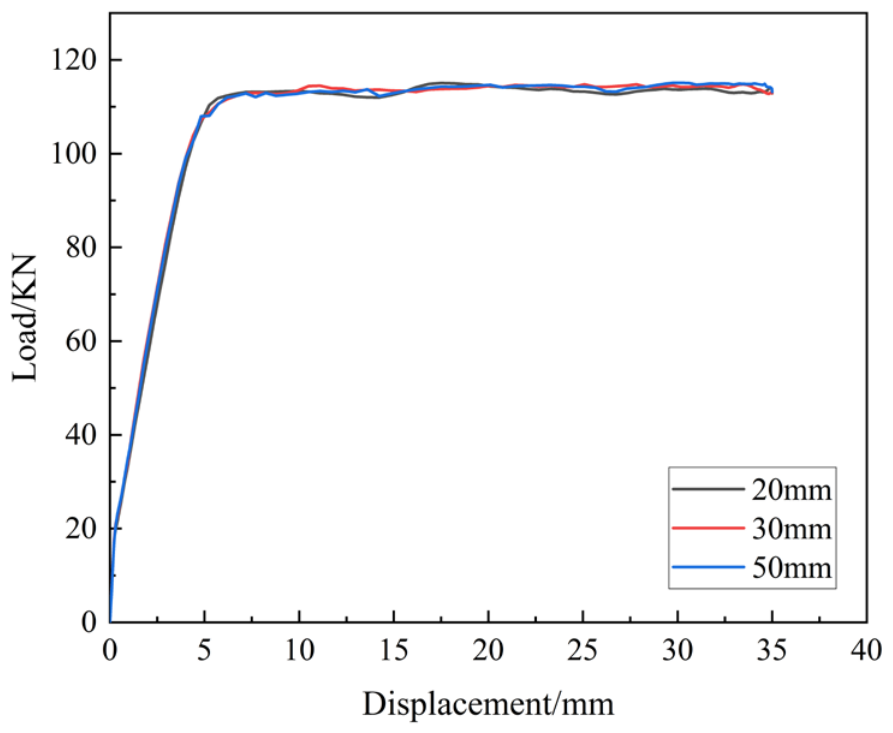
- Mesh Convergence Analysis
3. Results Analysis
3.1. Test Results
- (1)
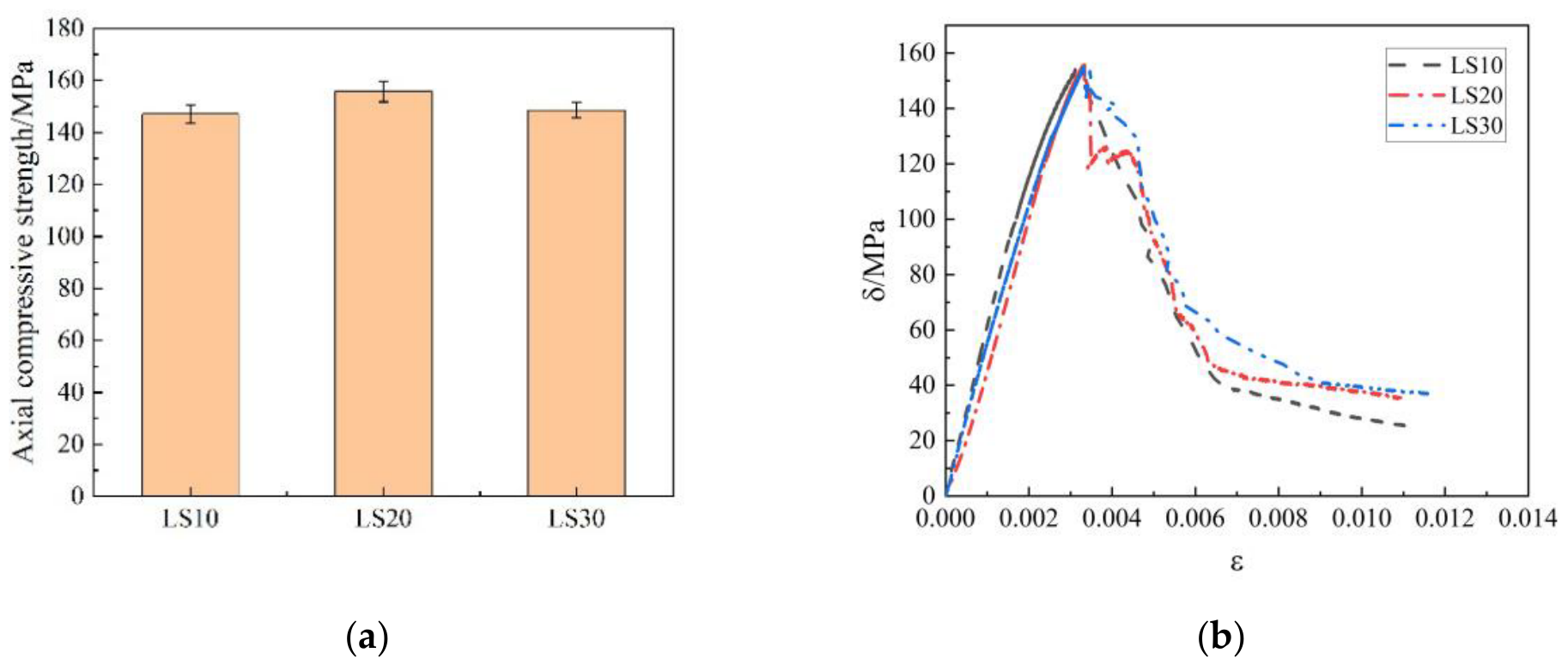
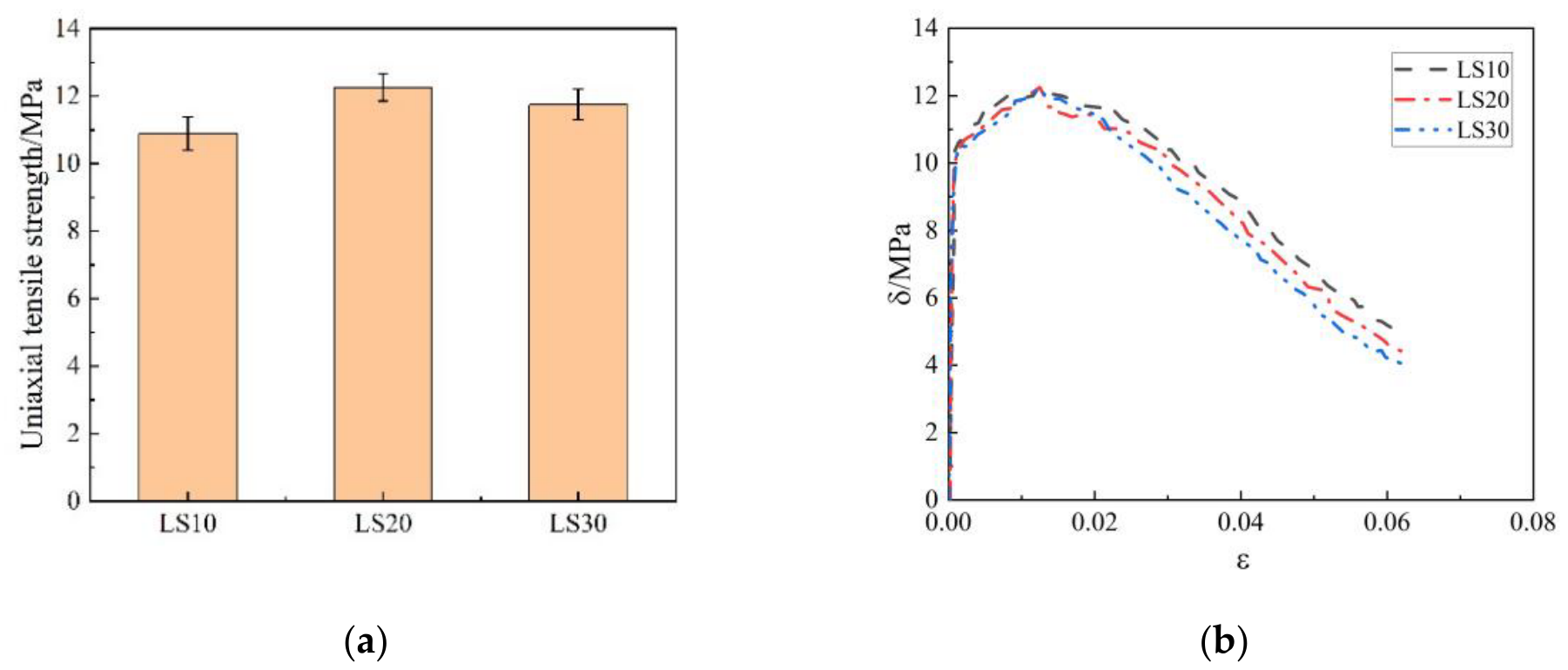
- Axial compressive and tensile strength
- (2)
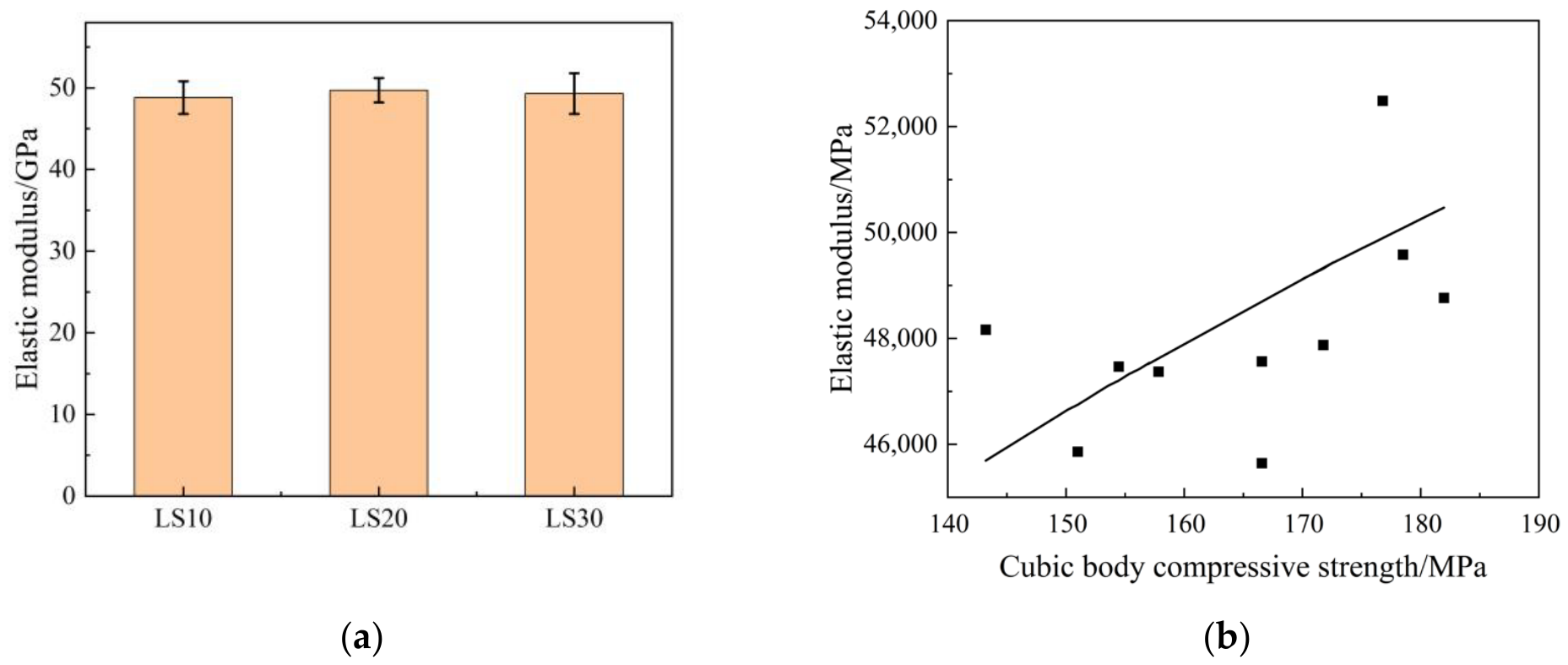
- Elastic modulus
- (3)
- Peak strain
- (4)
- Poisson’s ratio
3.2. Constitutive Relationship
- (1)
- Compressive constitutive behavior
- (2)
- Tensile constitutive behavior
3.3. Finite Element Simulation of the In-Span Connection in LS-UHPC Beams
3.4. Parametric Analysis of Finite Element Simulation
4. Limitations and Future Work
5. Conclusions
- (1)
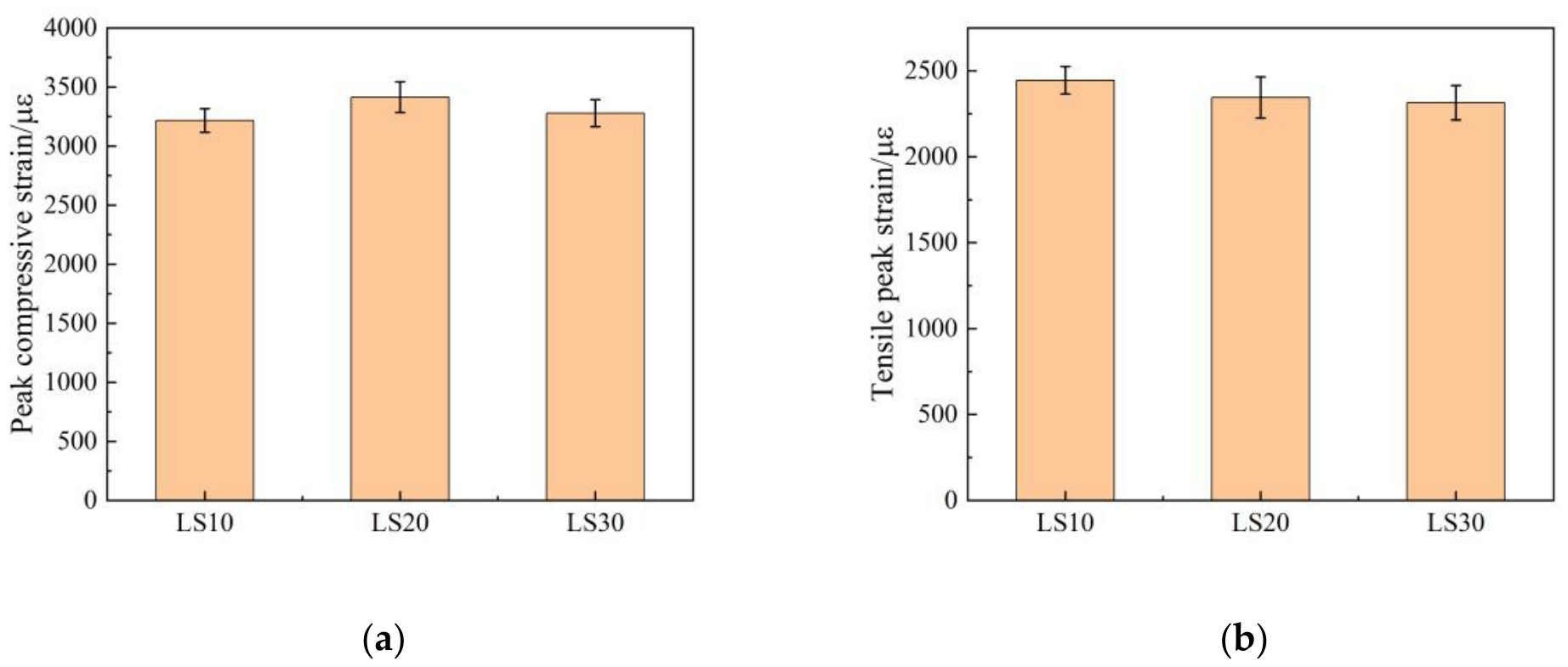
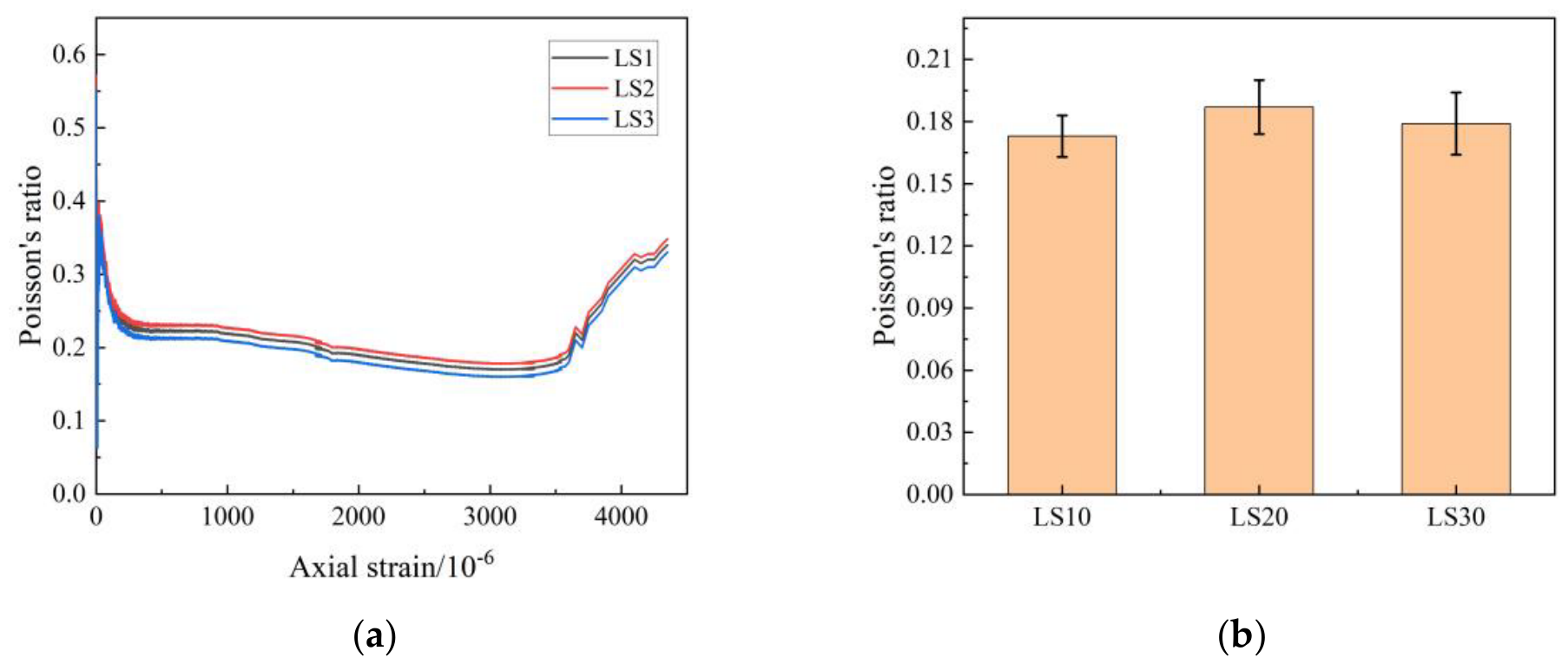
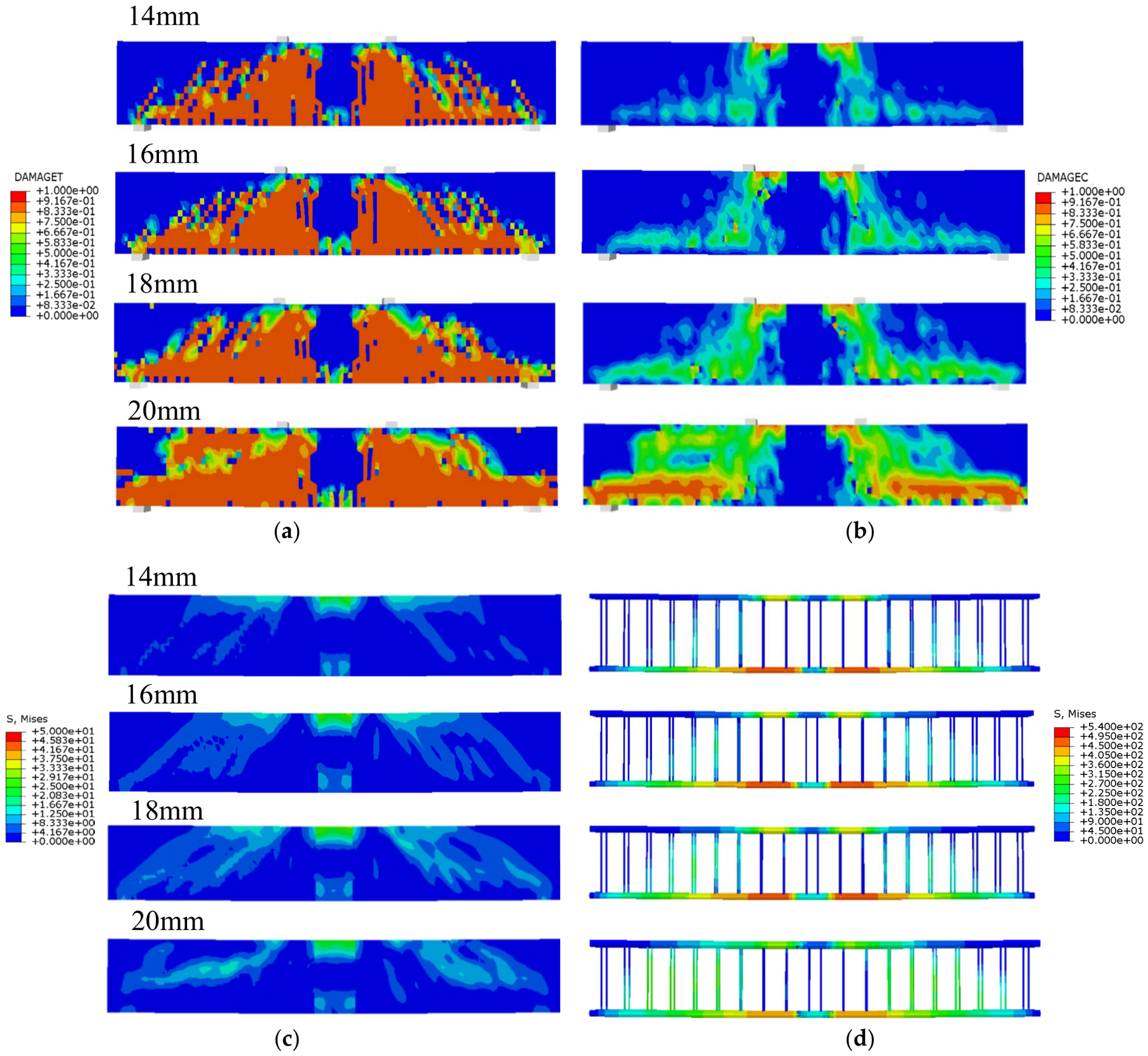
- The key mechanical parameters of LS-UHPC are: elastic modulus of 4.45 × 10⁴ MPa to 4.97 × 10⁴ MPa, compressive peak strain of 3150–3500 με, tensile peak strain of 2300–2450 με, and Poisson’s ratio of 0.17–0.19. Compared with existing UHPC studies, the elastic modulus is 5–8% lower, but the peak strain is comparable, indicating that replacing cement with lithium slag slightly reduces stiffness but has little effect on deformation capacity.
- (2)
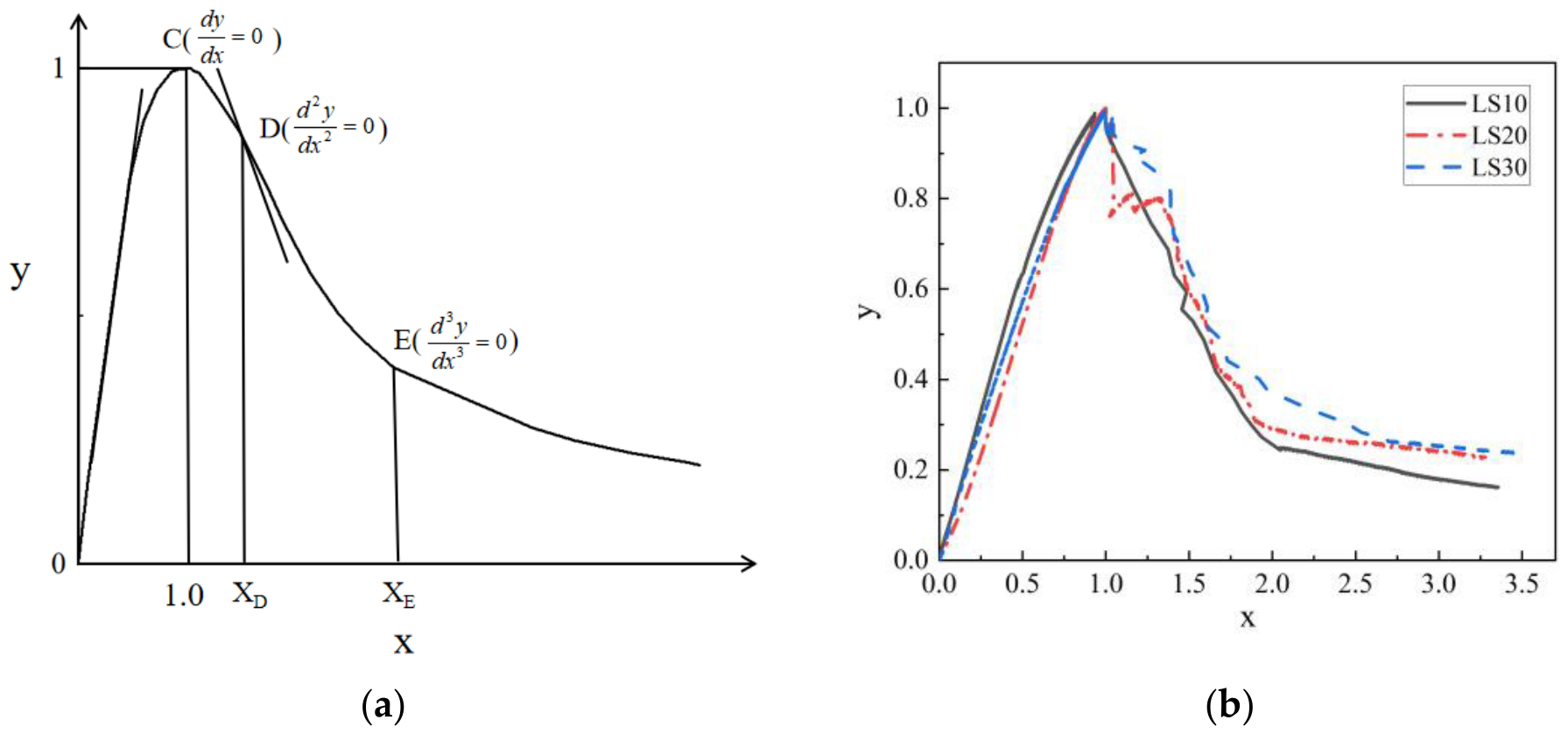
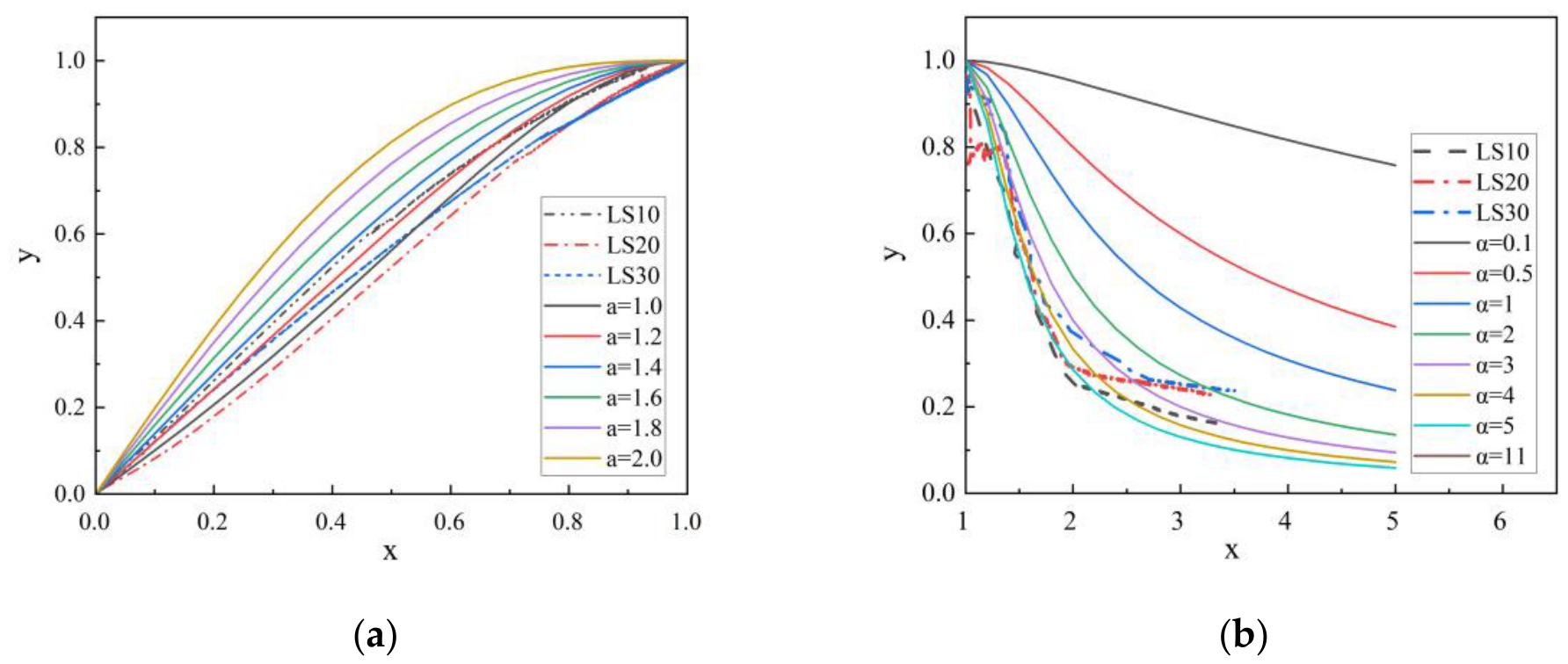
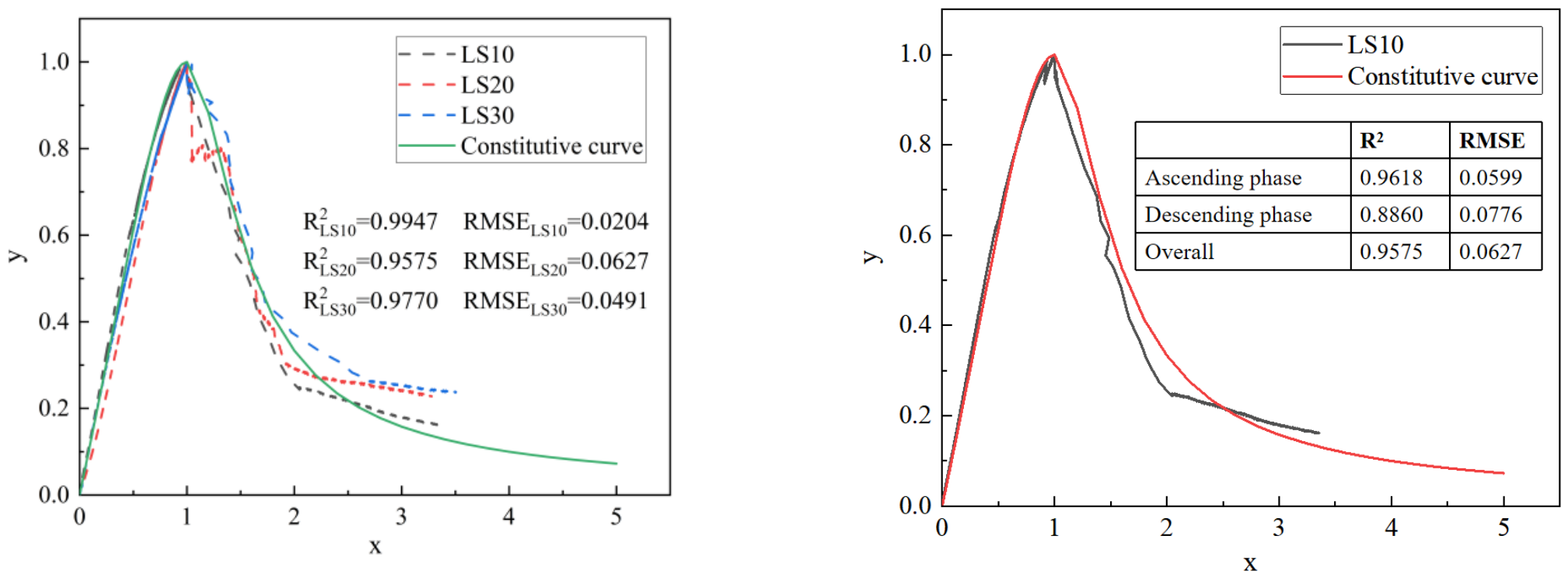
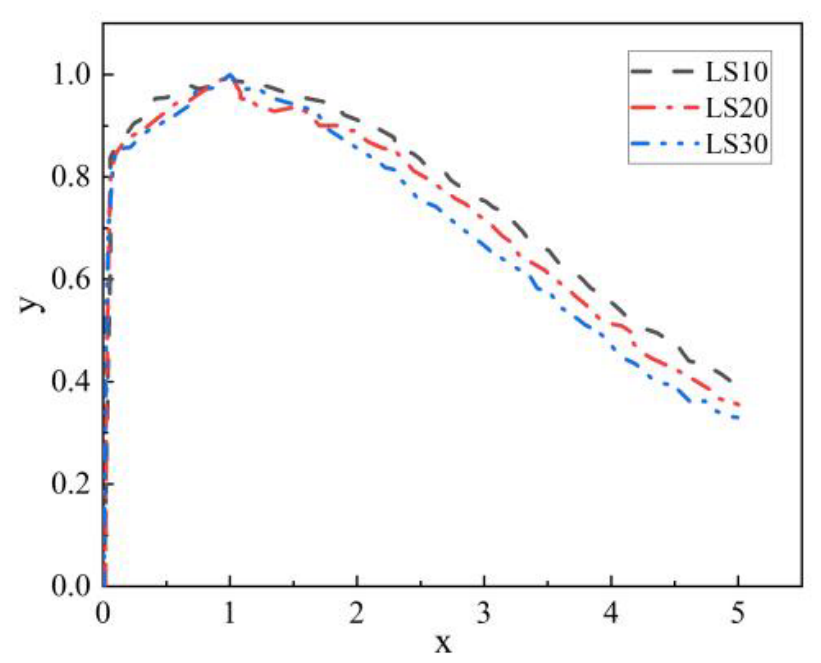
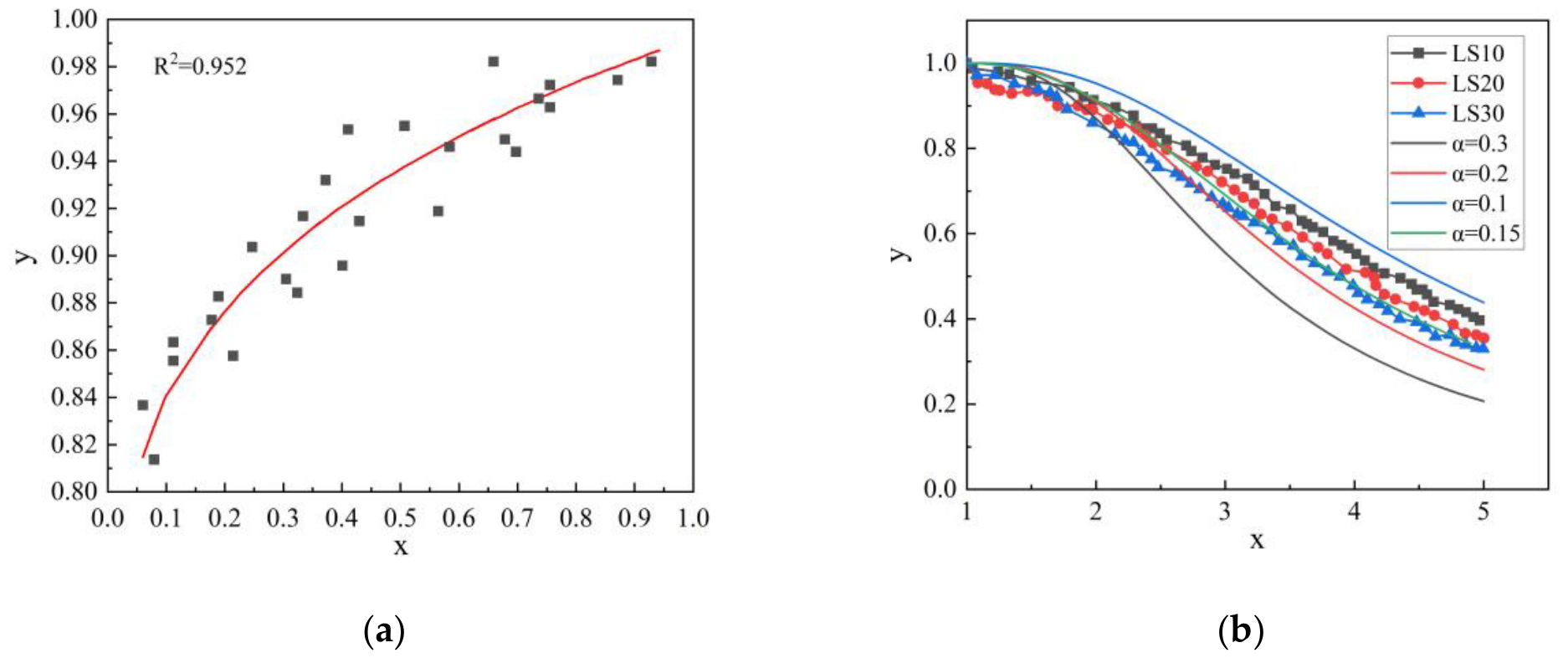
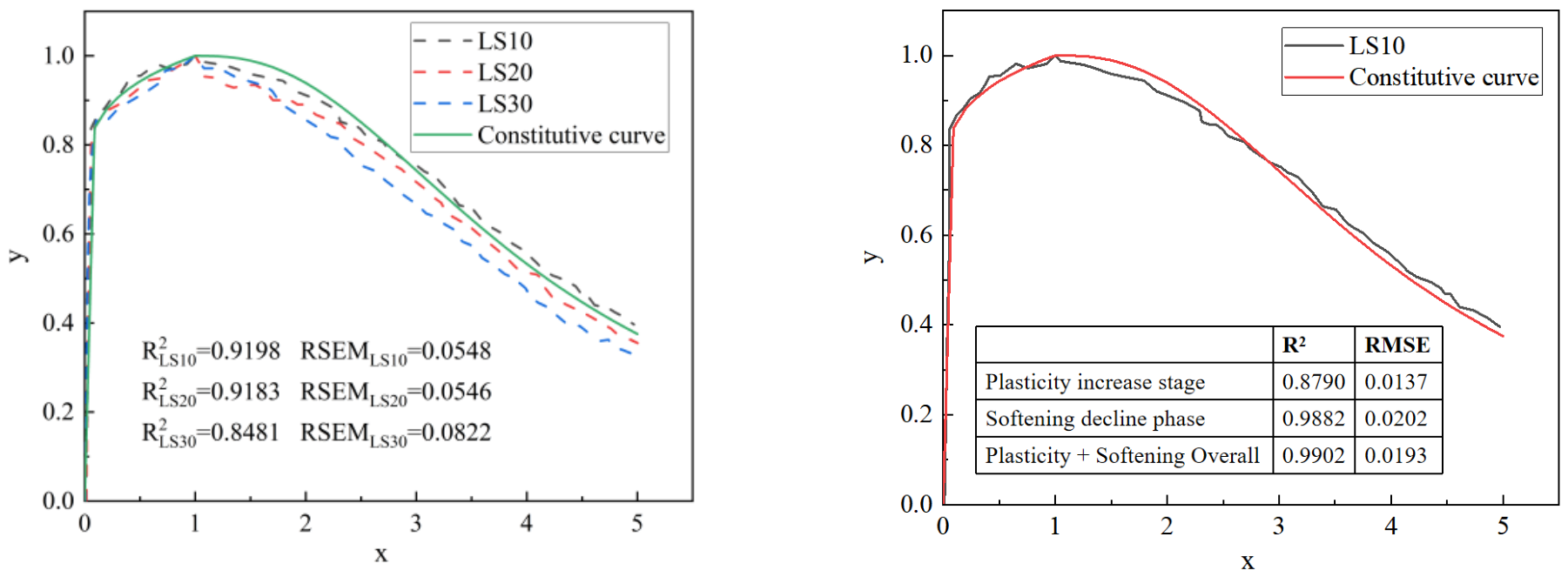
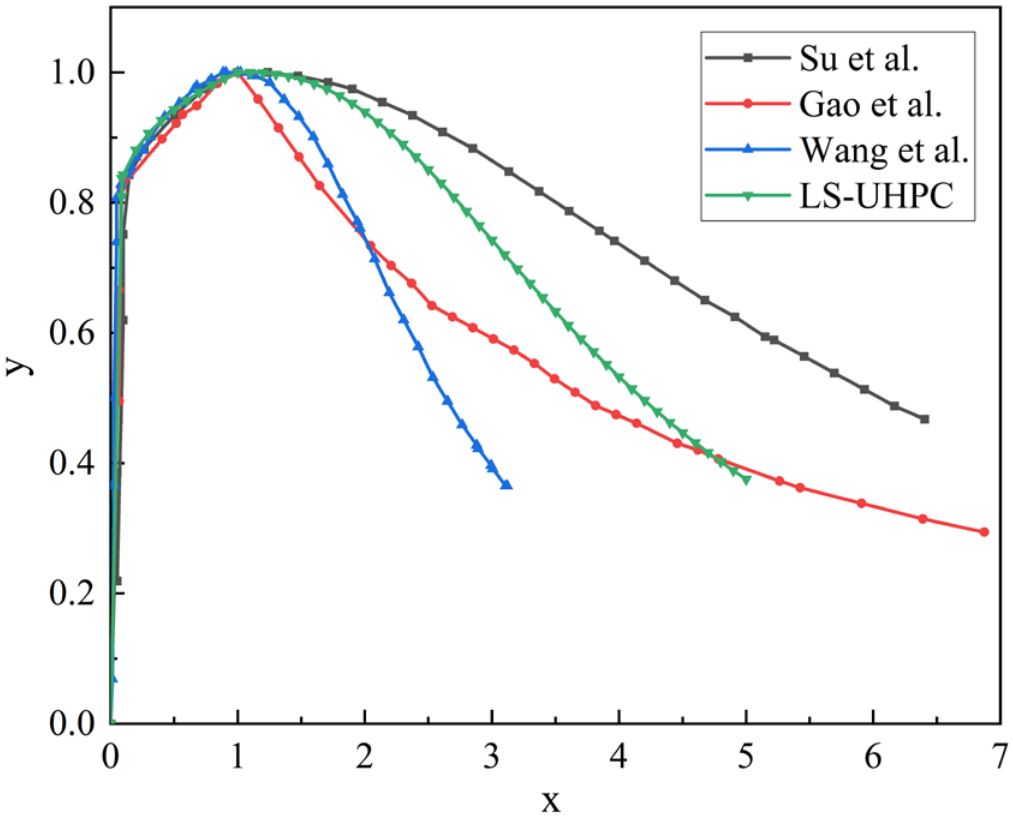
- A piecewise constitutive model for LS-UHPC is established. The compressive model uses parameters a = 1.2 and α = 4, with goodness-of-fit R2 = 0.962 (ascending branch) and R2 = 0.886 (descending branch). The tensile model has a softening parameter β = 0.13, with R2 = 0.879 (plastic ascending branch) and R2 = 0.988 (softening descending branch). This model is the first complete constitutive expression specifically for LS-UHPC.
- (3)
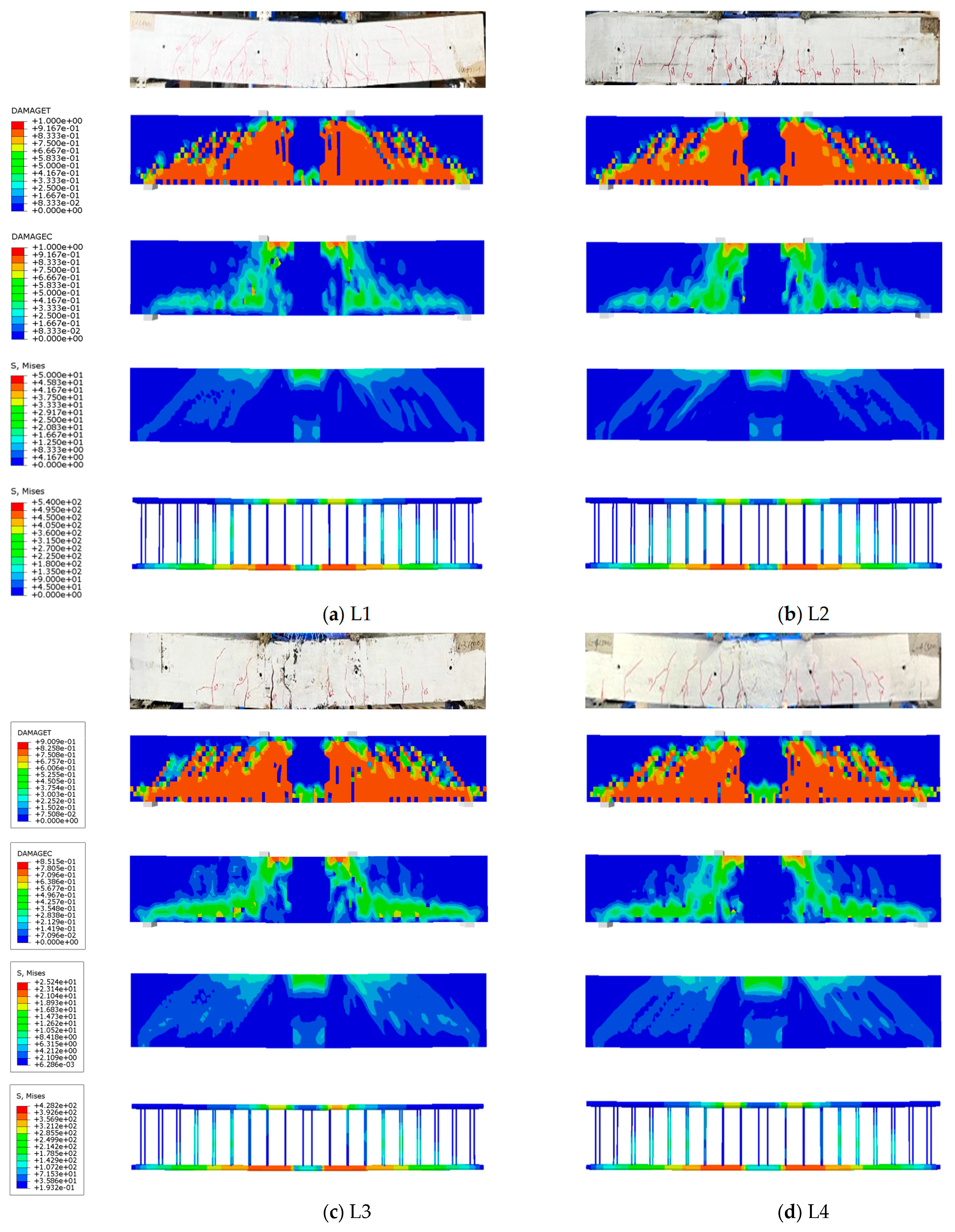
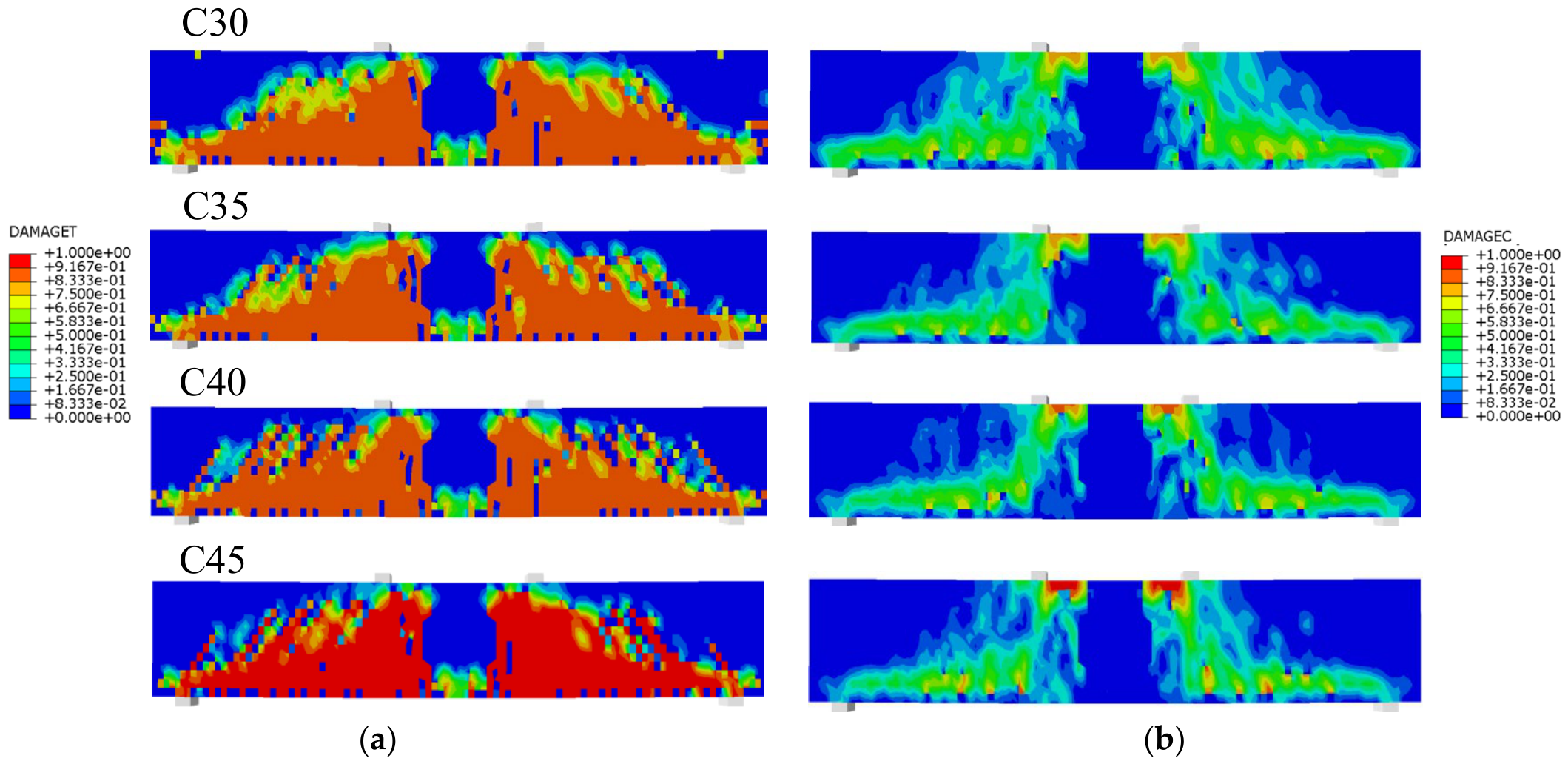
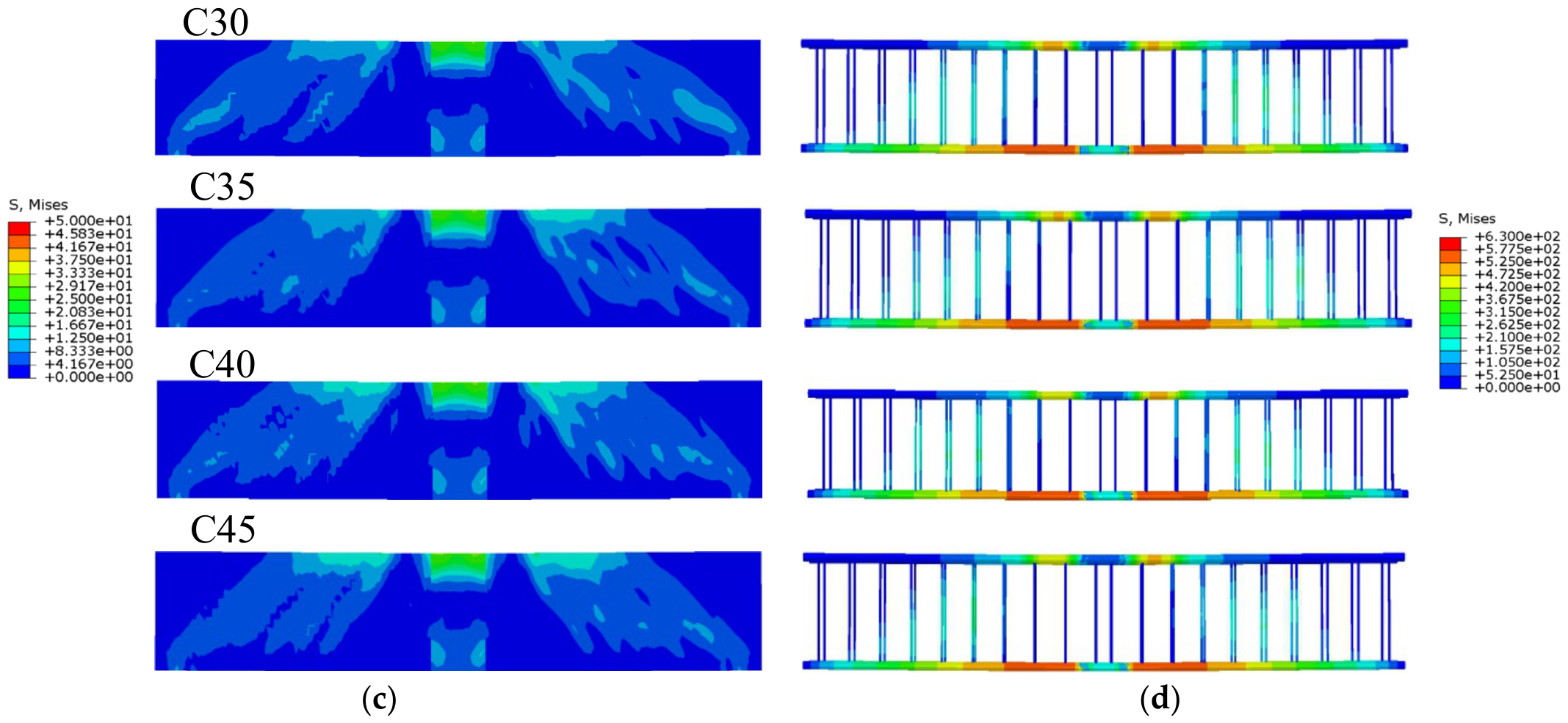
- The failure mode of the post-poured LS-UHPC connection is as follows: cracks first appear at the interface between ordinary concrete and UHPC, then multiple short cracks form in the ordinary concrete zone, diagonal cracks in the flexural-shear zone propagate toward the compression zone, and finally, the ordinary concrete is crushed. Damage in the LS-UHPC zone is minor, indicating that LS-UHPC effectively transfers load in the connection region.
- (4)
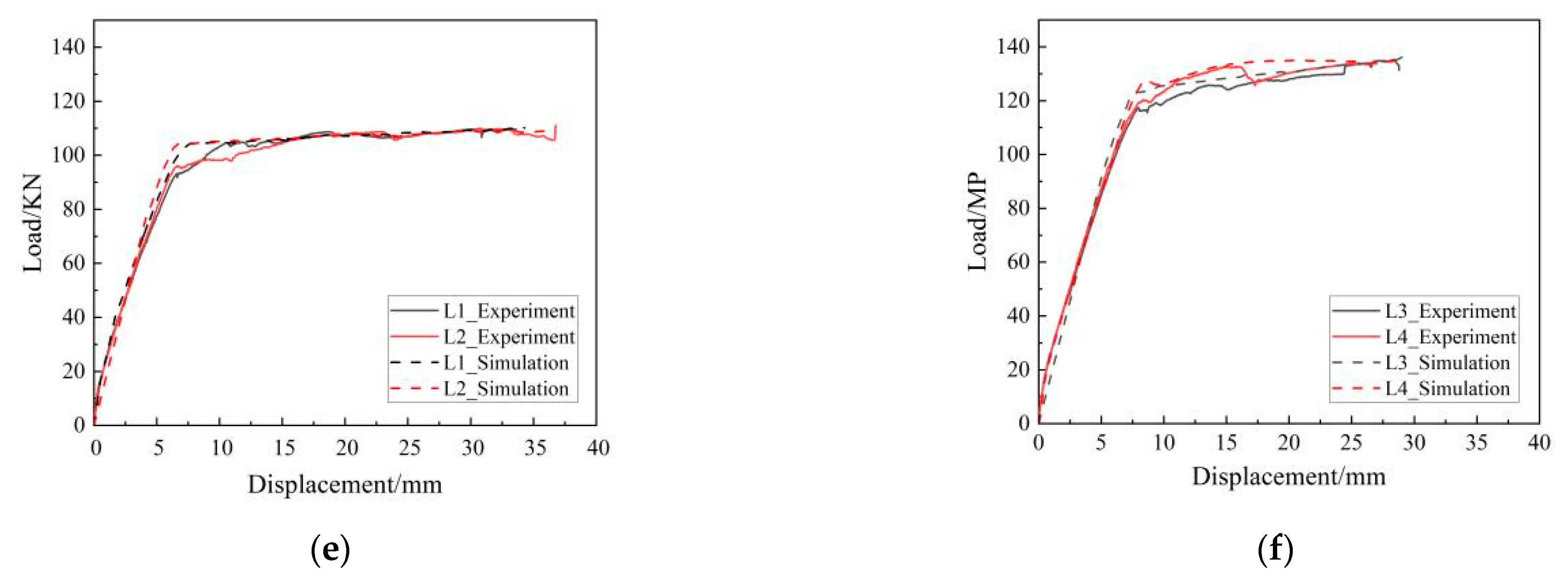
- The simulated initial stiffness is 7–13% higher than the experimental value, mainly due to differences in bond–slip parameter sources, the assumption of perfect interface bonding, and shrinkage differences. However, predictions of ultimate load and failure mode agree well with experiments (error < 5%), so the model is suitable for ultimate limit state design. For serviceability limit states (e.g., deflection control), a stiffness reduction factor of 0.85 is recommended.
- (5)
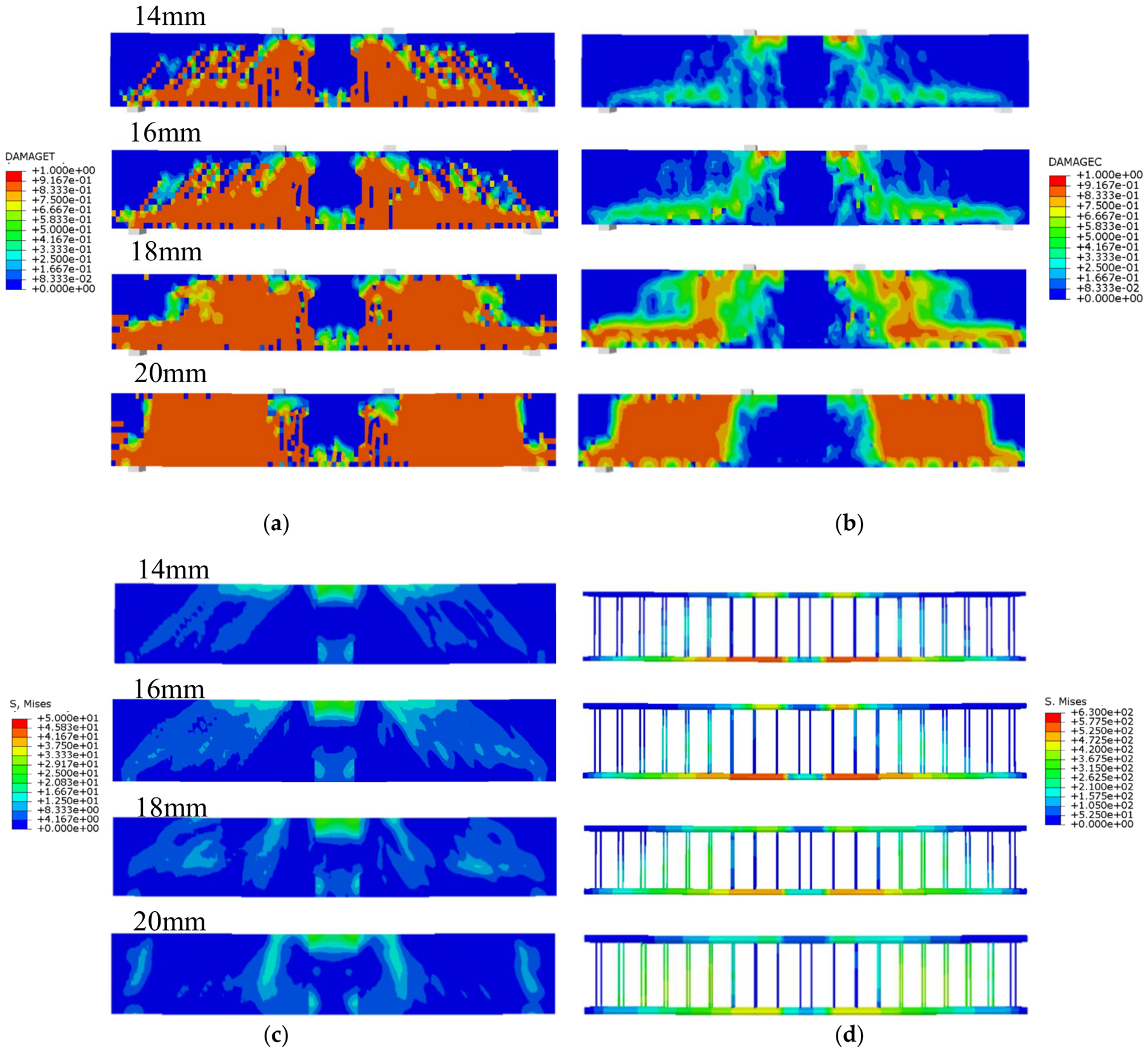
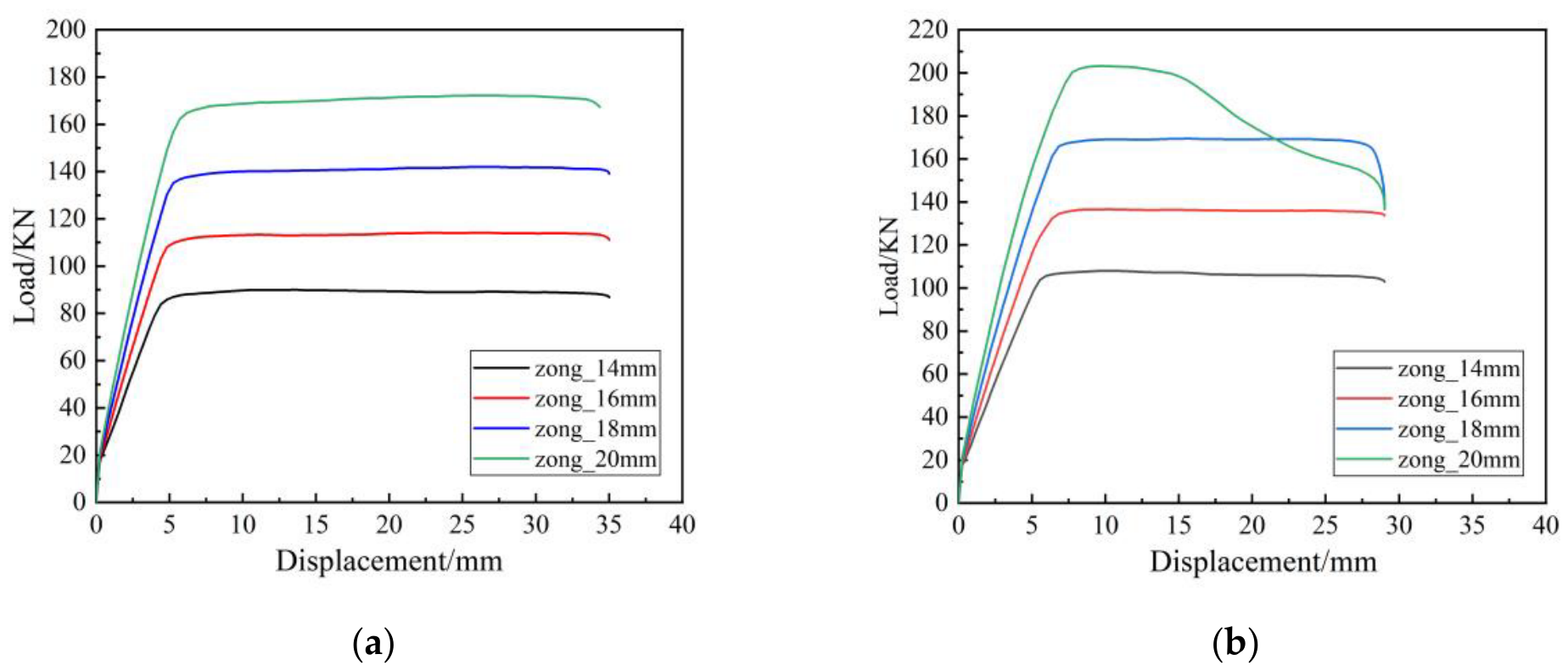
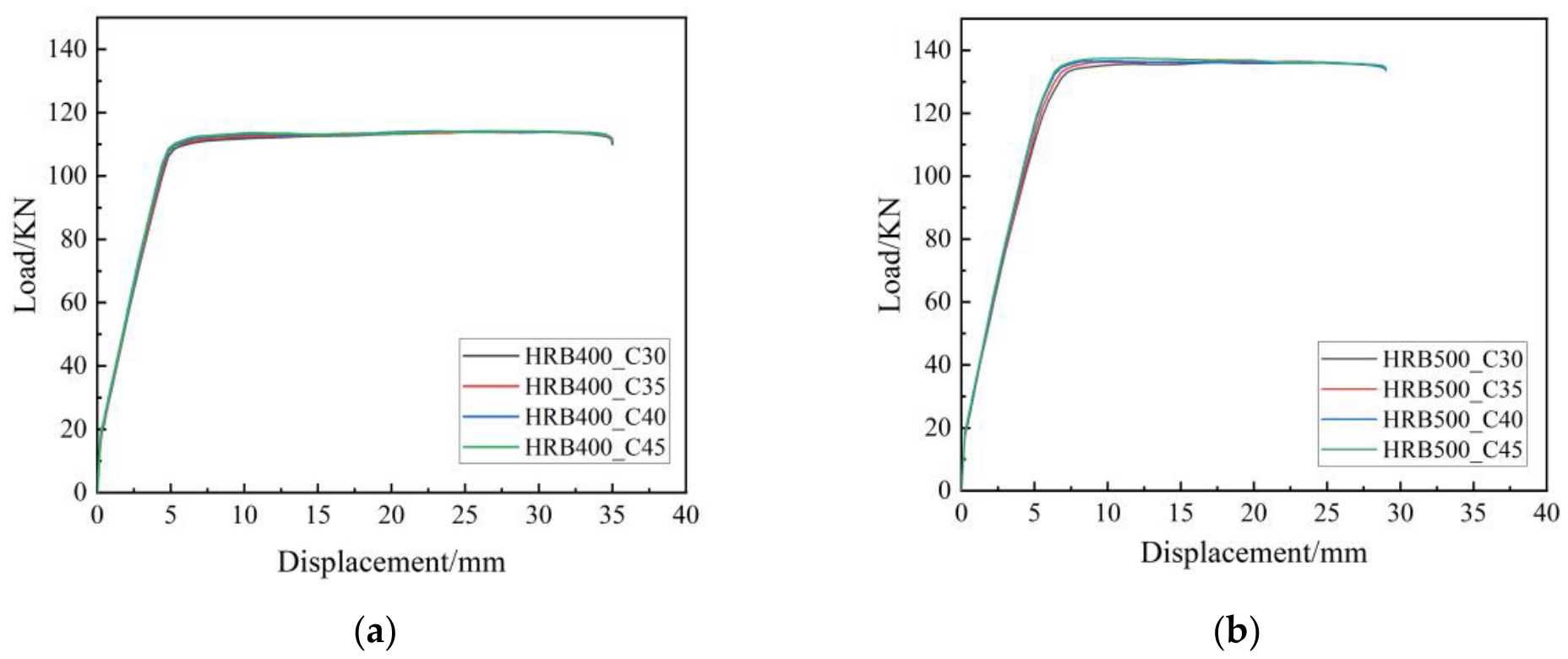
- Increasing the longitudinal rebar diameter significantly enhances the flexural capacity: from 14 mm to 20 mm, the ultimate capacity increases from 90.0 kN to 172.2 kN for HRB400, and from 108.0 kN to 203.2 kN for HRB500. However, when the diameter exceeds 18 mm with HRB500 rebars, an over-reinforced failure mode occurs (concrete crushes before steel yielding). For connection nodes with similar cross-sectional dimensions (150 mm × 250 mm), it is recommended that the diameter of HRB500 longitudinal rebars should not exceed 18 mm.
- (6)
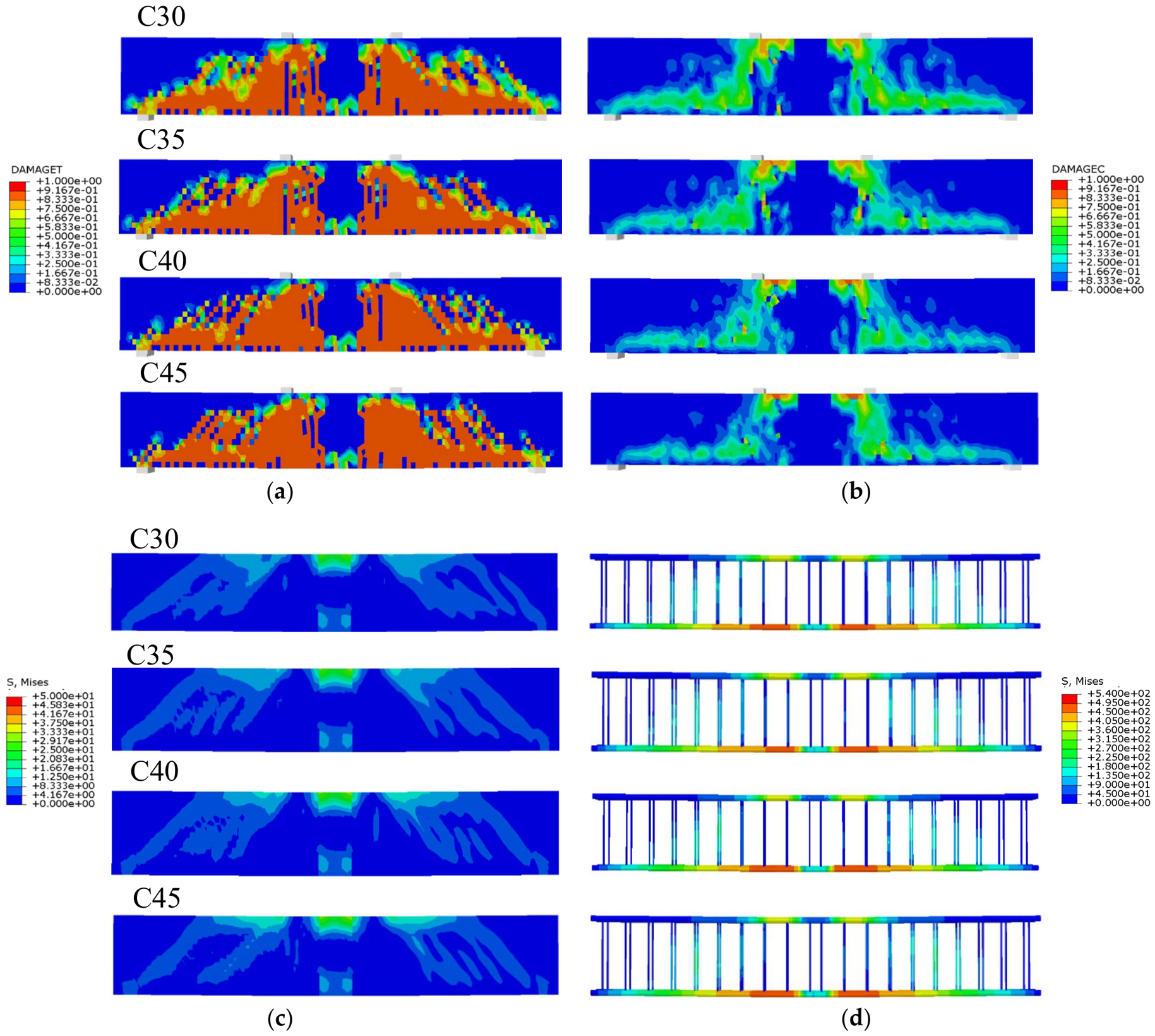
- Increasing the ordinary concrete strength grade from C30 to C45 improves the ultimate capacity of the connection by less than 5%, so this should not be used as a primary optimization measure in design.
6. Suggestions for Engineering Applications
- (1)
- It is recommended that the LS substitution rate be controlled within 20% to achieve the best mechanical properties;
- (2)
- It is recommended that in the connection nodes of precast beams with similar cross-sectional dimensions (150 mm × 250 mm), the diameter of the HRB500 longitudinal reinforcement should not exceed 18 mm to avoid excessive reinforcement failure;
- (3)
- Increasing the strength grade of ordinary concrete has a limited effect on the bending bearing capacity of the nodes; it is not recommended as the main optimization method;
- (4)
- During construction, it is necessary to ensure that the interface between LS-UHPC and ordinary concrete is roughly treated and key grooves are set.
Author Contributions
Funding
Data Availability Statement
Conflicts of Interest
References
- Xie, Z.; Yan, Q.; Liu, H. Experimental Study on Seismic Performance of Joints in Prefabricated Concrete Frame with Grout Anchoring. Concrete 2018, 40, 128–132. [Google Scholar]
- Liu, H.T.; Yan, Q.S.; Du, X.L. Research on the Seismic Performance of Grouting Sleeve Connections for Reinforced Concrete Frame Beam-Column Joints. J. Build. Struct. 2017, 38, 54–61. [Google Scholar]
- Ma, F.; Deng, M.; Ma, Y.; Lü, H.; Yang, Y.; Sun, H. Experimental study on interior precast concrete beam–column connections with lap-spliced steel bars in field-cast RPC. Eng. Struct. 2021, 228, 111481. [Google Scholar] [CrossRef]
- Xu, Z.; Zhou, W.; Lu, G. Experimental study on flexural behavior of precast concrete beams in-span joined with UHPC. J. Build. Eng. 2025, 111, 113190. [Google Scholar] [CrossRef]
- Yang, Z.; Lv, W.; Bao, L. Research on the Seismic Performance of a New Prefabricated Joint for Reinforced Concrete Frame Based on Bolt Connections. Ind. Archit. 2019, 49, 93–99. [Google Scholar]
- Cao, Y.; Sun, Q.; Gong, W.; Wei, H.; Ding, W. Experimental Study on a New Type of Prefabricated Concrete Frame-Steel Joint. J. Build. Sci. Eng. 2016, 33, 15–29. [Google Scholar]
- Li, N.; Zhang, J.; Chu, X.; Liu, B. Experimental Study on Seismic Performance of Post-poured Integral Beam-Column Joints in Prefabricated Concrete Structures. Eng. Mech. 2009, 26, 41–44. [Google Scholar]
- Wang, H.; Kang, Y.; Pan, P. Research on Seismic Performance of Fully Prefabricated Self-Releasing Energy Dissipation Reinforced Concrete Frame Beam-Column Joints. J. Build. Struct. 2022, 43, 158–166+176. [Google Scholar]
- Fu, X.; Yu, Y.; Han, J.; Hong, X. Experimental Study on Seismic Performance of Nodes in Prestressed Concrete Assembled Frames. J. Build. Struct. 2015, 36, 203–208. [Google Scholar]
- Wu, G.; Feng, D. Research Progress on Basic Performance of Prefabricated Concrete Frame Connections. J. Build. Struct. 2018, 39, 1–16. [Google Scholar]
- Li, W.W.; Pan, Y.J.; Wang, S.G.; Yang, C.; Xu, F. Experimental study on the seismic performance of prefabricated concrete frame under the influence of grouting defects. J. Build. Struct. 2022, 43, 123–130. [Google Scholar]
- Amran, M.; Huang, S.-S.; Onaizi, A.M.; Makul, N.; Abdelgader, H.S.; Ozbakkaloglu, T. Recent trends in ultra-high performance concrete (UHPC): Current status, challenges, and future prospects. Constr. Build. Mater. 2022, 352, 129029. [Google Scholar] [CrossRef]
- Guo, B.D.; Ding, R.; Li, Y.Y.; Nie, X.; Xu, J. Experimental study on anchorage and lapping performance of reinforcement in ultra-high performance concrete. J. Build. Struct. 2024, 45, 100–112. [Google Scholar]
- Lin, Y.; Chen, Z.; Guan, D.; Guo, Z. Experimental study on interior precast concrete beam-column connections with UHPC core shells. Structures 2021, 32, 1103–1114. [Google Scholar] [CrossRef]
- Zeng, J.-J.; Zeng, W.-B.; Ye, Y.-Y.; Liao, J.; Zhuge, Y.; Fan, T.-H. Flexural behavior of FRP grid reinforced ultra-high-performance concrete composite plates with different types of fibers. Eng. Struct. 2022, 272, 115020. [Google Scholar] [CrossRef]
- Liao, J.; Yang, K.Y.; Zeng, J.-J.; Quach, W.-M.; Ye, Y.-Y.; Zhang, L. Compressive behavior of FRP-confined ultra-high performance concrete (UHPC) in circular columns. Eng. Struct. 2021, 249, 113246. [Google Scholar] [CrossRef]
- Zeng, J.-J.; Chen, S.-P.; Feng, P.; Zhuge, Y.; Peng, K.-D.; Dai, J.-G.; Fan, T.-H. FRP bar-reinforced ultra-high-performance concrete plates with a grouting sleeve connection: Development and flexural behavior. Eng. Struct. 2023, 287, 116164. [Google Scholar] [CrossRef]
- Zeng, J.-J.; Su, T.-H.; Chen, J.-D.; Hu, X.; Ng, C.-T.; Zheng, Y.; Quach, W.-M.; Zhuge, Y. Novel prefabricated FRP bar reinforced UHPC shells for column strengthening: Development and axial compression tests. J. Build. Eng. 2024, 94, 109935. [Google Scholar] [CrossRef]
- Park, S.; Wu, S.; Liu, Z.; Pyo, S. The Role of Supplementary Cementitious Materials (SCMs) in Ultra High Performance Concrete (UHPC): A Review. Materials 2021, 14, 1472. [Google Scholar] [CrossRef]
- Wang, L.; Guo, F.; Lin, Y.; Yang, H.; Tang, S. Comparison between the effects of phosphorous slag and fly ash on the C-S-H structure, long-term hydration heat and volume deformation of cement-based materials. Constr. Build. Mater. 2020, 250, 118807. [Google Scholar] [CrossRef]
- He, Z.-H.; Li, L.-Y.; Du, S.-G. Mechanical properties, drying shrinkage, and creep of concrete containing lithium slag. Constr. Build. Mater. 2017, 147, 296–304. [Google Scholar] [CrossRef]
- Yang, B.; Li, Y.; Zhou, Y.; Lin, H.; Li, W.; Qiao, T.; Liu, X.; Shen, J.; Wang, N. Mix proportion design and analysis of underground continuous wall concrete based on hybrid grey target decision theory. Constr. Build. Mater. 2025, 501, 144317. [Google Scholar] [CrossRef]
- Zhang, X.Y.; Yu, R.; Zhang, J.; Shui, Z. A low-carbon alkali activated slag based ultra-high performance concrete (UHPC): Reaction kinetics and microstructure development. J. Clean. Prod. 2022, 363, 132416. [Google Scholar] [CrossRef]
- Ghasemzadeh Mousavinejad, S.H.; Sammak, M. An assessment of the effect of Na2SiO3/NaOH ratio, NaOH solution concentration, and aging on the fracture properties of ultra-high-performance geopolymer concrete: The application of the work of fracture and size effect methods. Structures 2022, 39, 434–443. [Google Scholar] [CrossRef]
- Cai, R.; Tian, Z.; Ye, H. Durability characteristics and quantification of ultra-high strength alkali-activated concrete. Cem. Concr. Compos. 2022, 134, 104743. [Google Scholar] [CrossRef]
- Yang, R.; Yu, R.; Shui, Z.; Gao, X.; Xiao, X.; Zhang, X.; Wang, Y.; He, Y. Low carbon design of an Ultra-High Performance Concrete (UHPC) incorporating phosphorous slag. J. Clean. Prod. 2019, 240, 118157. [Google Scholar] [CrossRef]
- Essam, A.; Mostafa, S.A.; Khan, M.; Tahwia, A.M. Modified particle packing approach for optimizing waste marble powder as a cement substitute in high-performance concrete. Constr. Build. Mater. 2023, 409, 133845. [Google Scholar] [CrossRef]
- Zhang, X.; Wu, Z.; Xie, J.; Hu, X.; Shi, C. Trends toward lower-carbon ultra-high performance concrete (UHPC)—A review. Constr. Build. Mater. 2024, 420, 135602. [Google Scholar] [CrossRef]
- He, Z.H.; Du, S.G.; Chen, D. Microstructure of ultra high performance concrete containing lithium slag. J. Hazard Mater. 2018, 353, 35–43. [Google Scholar] [CrossRef]
- Yang, B.; Zhang, Y.; Zhang, W.; Sun, H.; Wang, Q.; Han, D. Recycling lithium slag into eco-friendly ultra-high performance concrete: Hydration process, microstructure development, and environmental benefits. J. Build. Eng. 2024, 91, 109563. [Google Scholar] [CrossRef]
- Hiew, S.Y.; Bin Teoh, K.; Raman, S.N.; Hung, C.-C.; Chaen, Y.X.; Kong, D.; Hafezolghorani, M. A unified tensile constitutive model for mono/hybrid fibre-reinforced ultra-high-performance concrete (UHPC). Cem. Concr. Compos. 2024, 150, 105553. [Google Scholar] [CrossRef]
- Fakeh, M.; Jawdhari, A.; Fam, A. Recommended concrete damage plasticity parameters and constitutive models for UHPC in ABAQUS. Eng. Struct. 2025, 333, 120154. [Google Scholar] [CrossRef]
- Shao, Y.; Ostertag, C.P. Bond-slip behavior of steel reinforced UHPC under flexure: Experiment and prediction. Cem. Concr. Compos. 2022, 133, 104724. [Google Scholar] [CrossRef]
- He, S.; Huang, X.; Zhong, H.; Wan, Z.; Liu, G.; Xin, H.; Zhang, Y. Experimental study on bond performance of UHPC-to-NC interfaces: Constitutive model and size effect. Eng. Struct. 2024, 317, 118681. [Google Scholar] [CrossRef]
- Li, G.; Wan, Z.; Shen, J.; Li, Y. The Influence and Mechanism of Lithium Sludge Specific Surface Area on the Performance of Ultra-High Performance Concrete. Concrete 2025, 6, 166–171. [Google Scholar]
- Wan, Z. Preparation of Lithium-Containing Slag UHPC and Simulation Study on Its Application in Connection of Prefabricated Structural Components. Master’s Thesis, Beijing University of Technology, Beijing, China, 2024. [Google Scholar]
- Chen, H.; Shi, Q.; Liu, W.; Dai, L.; Zeng, L. Experimental Study on the Bending Performance of Prefabricated Concrete Beams Based on UHPC Connections. New Build. Mater. 2026, 53, 97–102. [Google Scholar]
- GB/T 50010-2010; Design Standard for Concrete Structures (2024 Edition). China Building Industry Press: Beijing, China, 2024. (In Chinese)
- Zhang, T.; Hou, Z.; Li, X.; Chen, Q.-J.; Zhang, S.-Y.; Sun, W.; Zhang, Y. Study on calculation method of concrete plastic damage model parameters. J. Comput. Mech. 2024, 41, 1130–1137. (In Chinese) [Google Scholar]
- Lin, Y.; Chen, L.; Chen, Y.; Fang, Z.; Wang, L.; Zhao, Q.; Huang, Z. Experimental Study and Seismic Performance Analysis of Hollow Bridge Piers in Ultra-High Performance Concrete. J. Transp. Eng. 2025. [Google Scholar]
- Ouyang, N. Research on the Interface Behavior of UHPC-NC Composite Components. J. Chongqing Univ. 2021, 44, 63–74. [Google Scholar]
- Hu, X.; Peng, G.; Niu, D.; Wang, J. Bond properties of deformed steel bars in concrete during construction under reversed cyclic loading. Constr. Build. Mater. 2019, 223, 817–829. [Google Scholar] [CrossRef]
- Shao, Y.; Tich, K.L.; Boaro, S.B.; Billington, S.L. Impact of fiber distribution and cyclic loading on the bond behavior of steel-reinforced UHPC. Cem. Concr. Compos. 2022, 126, 104338. [Google Scholar] [CrossRef]
- Wang, T.; Yu, M.; Shan, W.; Xu, L.; Cheng, S.; Li, L.-Y. Post-fire compressive stress–strain behaviour of steel fibre reinforced recycled aggregate concrete. Compos. Struct. 2023, 309, 116735. [Google Scholar] [CrossRef]
- Xu, M.; Liang, X.; Wang, P.; Wang, Z. Theoretical Research on the Flexural Bearing Capacity of Ultra-High Performance Concrete Beams. Eng. Mech. 2019, 36, 70–78. [Google Scholar]
- Chen, B.; Yang, J.; Wu, X.; Haung, Q.-W. Multi-index Grading of UHPC Mechanical Properties. Chin. J. Highw. Transp. 2021, 34, 23–34. [Google Scholar]
- Graybeal, B.A. Compressive Behavior of Ultra-High-Performance Fiber-Reinforced Concrete. ACI Mater. J. 2007, 104, 146–152. [Google Scholar]
- Wille, K.; Naaman, A.E.; Parra-Montesinos, G.J. Ultra-High Performance Concrete with Compressive Strength Exceeding 150 MPa (22 ksi): A Simpler Way. ACI Mater. J. 2011, 108, 46–54. [Google Scholar] [CrossRef]
- Ma, Y.F. Research on the Uniaxial Compressive Constitutive Relationship of Active Powder Concrete (RPC200). Master’s Thesis, Beijing Jiaotong University, Beijing, China, 2006. [Google Scholar]
- Guo, X.; Kang, J.; Zhu, J. Constitutive Relationship of Ultra-High Performance Concrete under Uniaxial Compression. J. Southeast Univ. (Nat. Sci. Ed.) 2017, 47, 369–376. [Google Scholar]
- Zhao, J.Z.; Xin, G.F.; Tao, M.X.; Cui, W.T. Mechanical properties and constitutive model of ultra-high performance concrete under uniaxial tensile and compressive cycling. Eng. Mech. 2024, 41, 81–93. [Google Scholar]
- Zhang, Z.; Shao, X.; Li, W.; Zhu, P.; Chen, H. Test on Axial Tensile Performance of Ultra-High Performance Concrete. Chin. J. Highw. Transp. 2015, 28, 50–58. [Google Scholar]
- Wang, Q.; Liang, L.; Shi, Q. Axial-tensile Mechanical Properties and Constitutive Model of Hybrid Steel Fiber Ultra-High Performance Concrete. J. Compos. Mater. 2024, 41, 383–394. [Google Scholar]
- Su, J.; Lin, Y.; Chen, B.; Huang, Q. Analysis of the mixed effect on the uniaxial tensile properties of hybrid steel-fiber UHPC. J. Nanchang Univ. (Eng. Sci. Ed.) 2019, 41, 358–364. [Google Scholar]
- Gao, X.; Wang, J.; Guo, J.; Liu, C. Axial-tensile mechanical properties and constitutive relationship model of ultra-high performance concrete under cyclic loading. J. Compos. Mater. 2021, 38, 3925–3938. [Google Scholar]
- Zhang, X.; Teng, Y.; Ju, Y.; Wang, B.; Wang, D.; Zhao, J.; Kong, X. Experimental and theoretical study on seismic behavior of precast exterior UHPC-HSC beam-column connections. Case Stud. Constr. Mater. 2025, 23, e05619. [Google Scholar] [CrossRef]
- Li, H.; Du, Y.; Han, J.; Li, F. Investigation on seismic behavior of a new beam-column joint for precast concrete structures under reversed cyclic loading. Structures 2024, 70, 107782. [Google Scholar] [CrossRef]




| SiO2 | Al2O3 | CaO | Fe2O3 | MgO | Na2O | K2O | SO3 | TiO2 | P2O5 | Others | |
|---|---|---|---|---|---|---|---|---|---|---|---|
| C | 20.02 | 4.64 | 63.13 | 5.71 | 1.71 | 0.20 | 1.27 | 1.86 | 0.58 | 0.07 | 0.81 |
| SF | 96.24 | 0.49 | 0.85 | 0.12 | 0.48 | 0.23 | 0.89 | 0.28 | 0.05 | 0.18 | 0.19 |
| FA | 49.34 | 25.91 | 10.63 | 6.88 | 1.00 | 0.21 | 1.41 | 1.28 | 1.82 | 0.10 | 1.42 |
| LS | 38.72 | 13.14 | 27.17 | 0.71 | 0.89 | 3.02 | 1.49 | 13.21 | 0.11 | 1.22 | 0.32 |
| Density/kg/m3 | Length/mm | Diameter/mm | Elastic Modulus/Gpa | Tensile Strength/MPa | Fracture Elongation/% |
|---|---|---|---|---|---|
| 7800 | 14 | 0.25 | 200~220 | ≥2000 | ≥10 |
| Mixture | C | LS | FA | SF | FS | MS | CS | W | Steel Fiber | Water Reducer |
|---|---|---|---|---|---|---|---|---|---|---|
| LS10 | 688 | 76 | 113 | 207 | 317 | 286 | 493 | 195 | 156 | 28 |
| LS20 | 622 | 142 | 113 | 207 | 317 | 286 | 493 | 195 | 156 | 28 |
| LS30 | 535 | 229 | 113 | 207 | 317 | 286 | 493 | 195 | 156 | 28 |
| Longitudinal Reinforcement Strength Grade | Longitudinal Reinforcement Diameter/mm | Reinforcement Strength Grade | Rebar Diameter/mm | Concrete Strength Grade | UHPC Strength Grade | UHPC Bond Length | |
|---|---|---|---|---|---|---|---|
| L1 | HRB400 | 16 | HRB400 | 8 | C40 | 150 | 8d |
| L2 | HRB400 | 16 | HRB400 | 8 | C40 | 150 | 10d |
| L3 | HRB500 | 16 | HRB400 | 8 | C40 | 150 | 10d |
| L4 | HRB500 | 16 | HRB400 | 8 | C40 | 150 | 12d |
| Concrete | Expansion Angle | Eccentricity | Viscosity Coefficient | ||
|---|---|---|---|---|---|
| C40 | 30 | 0.1 | 1.16 | 0.667 | 0.005 |
| LS-UHPC | 55 | 0.1 | 3.0 | 0.667 | 0.005 |
| Knn | Kss | Ktt | tn0 | ts0 | tt0 | σp | μ |
|---|---|---|---|---|---|---|---|
| 2884 | 73 | 73 | 12.32 | 21.33 | 21.33 | 0.256 | 1.49 |
| gK1 | gK2 | gK3 | gK4 | gKL | gD1 | gD2 | gD3 | gD4 | gDL | gF1 | gF2 | gF3 | gF4 | gFL | |
|---|---|---|---|---|---|---|---|---|---|---|---|---|---|---|---|
| Rebar-Concrete | 0 | 0 | 0.3 | 0.2 | 0.1 | 0.5 | 0.5 | 2.0 | 2.0 | 0.5 | 1.5 | 1.0 | 1.0 | 2.2 | 0.8 |
| Rebar-UHPC | 0 | 0 | 0.3 | 0.2 | 0.1 | 0.5 | 0.5 | 2.0 | 2.0 | 0.5 | 2.2 | 2.0 | 0.8 | 2.2 | 0.7 |
| Concrete Grid | Ultimate Load/KN | Initial Stiffness/N/mm | Destructive Mode | Calculate the Time | Convergence Analysis |
|---|---|---|---|---|---|
| 50 mm | 114.97 | 24,750 | Consistent | 20 min | Convergence |
| 30 mm | 114.76 | 24,772 | Consistent | 48 min | Convergence |
| 20 mm | 114.85 | 24,280 | Consistent | 70 min | Convergence |
| Literature | Material Object | Ascending Phase Form | Descending Phase Form | Ascending Phase Parameter | Descending Phase Parameter | Main Features | The Differences from the LS-UHPC Model in This Article |
|---|---|---|---|---|---|---|---|
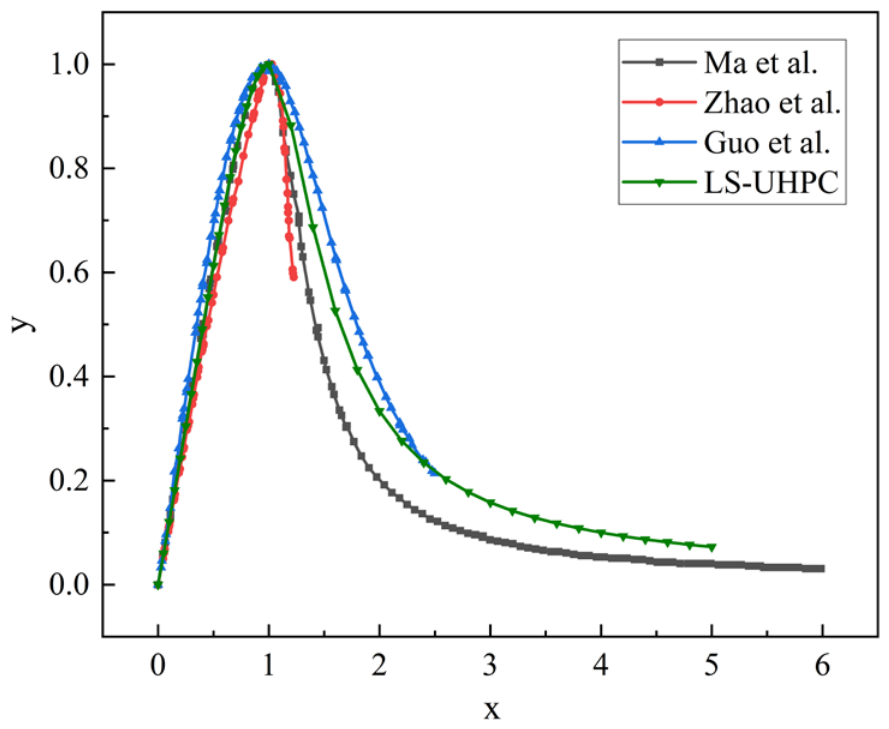
| Ma et al. [49], 2006 | RPC200 | a = 1.1~1.4 | α = 6.0~10.0 | For a 200 MPa-level RPC, provide a complete description of the compression ascending and descending segments | High-strength grade material is RPC20 | ||
| Guo et al. [50], 2017 | UHPC /RPC | , And provide the experience formula | B Control the softening of the descent section | Unified processing of multiple UHPC/RPC compression models | It is more suitable to serve as the direct comparison benchmark for the compression model in this article | ||
| Zhao et al. [51], 2024 | UHPC | Compressive skeleton curve | Compression hysteresis/regression curve | - | - | Applicable to uniaxial compression cyclic loading | It can be used to illustrate the applicable boundaries of the model in this paper |
| This article | LS-UHPC | a = 1.2 | α = 4 | The test curves for LS10, LS20 and LS30 are established | It focuses on the characteristics of stiffness, peak strain and post-peak softening after lithium slag substitution |
| Literature | Material System | Curved Form | Main Parameters | The Physical Meaning of Parameters | The Differences from the LS-UHPC in This Article |
|---|---|---|---|---|---|
| Su et al. [54] | Mixed steel fiber UHPC | Mainly focuses on uniaxial tensile properties and the hybrid effect | Tensile strength, peak strain, tensile toughness, and mixed effect indicators | It reflects the effect of different steel fiber combinations on crack control and fiber bridging ability | The key point is the effect of fiber heterogeneity |
| Gao et al. [55] | Strain-hardening/strain-softening type UHPC | Monotonic envelope line + cyclic unloading/reloading path | Cracking strength, ultimate tensile strength, residual strain, unloading stiffness, cyclic degradation parameters | Reflecting the closure of cracks, the accumulation of damage and the degradation of stiffness under cyclic tensile loading | Applicable to cyclic loading |
| Wang et al. [53] | Mixed steel fiber UHPC | A, a, b, , β | A, a and b control the ascending section after cracking: and β control the softening section after the peak | It is closest to the form of this article, but the parameters are calibrated by ordinary/hybrid steel fiber UHPC | |
| This article | LS-UHPC | Finite element analysis for LS-UHPC and post-poured connections; The scope of application is limited to monotonous tension at normal temperature |
| Diameter of Longitudinal Reinforcement Bars/mm | Initial Cracking Load/kN | Relative Error/% | Ultimate Load/kN | Relative Error/% | ||
|---|---|---|---|---|---|---|
| Test Value | Simulated Value | Test Value | Simulated Value | |||
| 14 | - | 18.6 | - | - | 90.0 | - |
| 16 | 24 | 19.9 | 17.1 | 109.9 | 114.1 | 3.8 |
| 18 | - | 21.6 | - | - | 142.0 | - |
| 20 | - | 22.9 | - | - | 172.2 | - |
| Diameter of Longitudinal Reinforcement Bars/mm | Initial Cracking Load/kN | Relative Error/% | Ultimate Load/kN | Relative Error/% | ||
|---|---|---|---|---|---|---|
| Test Value | Simulated Value | Test Value | Simulated Value | |||
| 14 | - | 17.9 | - | - | 108.0 | - |
| 16 | 25 | 20.3 | 18.8 | 135.5 | 136.6 | 0.8 |
| 18 | - | 20.1 | - | - | 169.5 | - |
| 20 | - | 12.4 | - | - | 203.2 | - |
| Strength Grades of Ordinary Concrete | Initial Cracking Load/kN | Relative Error/% | Ultimate Load/kN | Relative Error/% | ||
|---|---|---|---|---|---|---|
| Test Value | Simulated Value | Test Value | Simulated Value | |||
| C30 | - | 18.6 | - | - | 114.1 | - |
| C35 | - | 19.2 | - | - | 113.9 | - |
| C40 | 24 | 19.9 | 17.1 | 109.9 | 114.1 | 3.8 |
| C45 | - | 20.5 | - | - | 114.1 | - |
| Strength Grades of Ordinary Concrete | Initial Cracking Load/kN | Relative Error/% | Ultimate Load/kN | Relative Error/% | ||
|---|---|---|---|---|---|---|
| Test Value | Simulated Value | Test Value | Simulated Value | |||
| C30 | - | 17.5 | - | - | 136.5 | - |
| C35 | - | 18.1 | - | - | 136.5 | - |
| C40 | 25 | 20.3 | 18.8 | 135.5 | 136.6 | 0.8 |
| C45 | - | 19.5 | - | - | 137.5 | - |
Disclaimer/Publisher’s Note: The statements, opinions and data contained in all publications are solely those of the individual author(s) and contributor(s) and not of MDPI and/or the editor(s). MDPI and/or the editor(s) disclaim responsibility for any injury to people or property resulting from any ideas, methods, instructions or products referred to in the content. |
© 2026 by the authors. Licensee MDPI, Basel, Switzerland. This article is an open access article distributed under the terms and conditions of the Creative Commons Attribution (CC BY) license.
Share and Cite
Chen, T.; Li, Y.; Zhang, G.; Ge, F.; Ding, S.; Sun, J.; Lin, H.; Shen, J. A Numerical Simulation Investigation on the Mechanical Constitutive Model of Lithium Slag UHPC and the Bending Behavior of Its Prefabricated Connection Components. Buildings 2026, 16, 2253. https://doi.org/10.3390/buildings16112253
Chen T, Li Y, Zhang G, Ge F, Ding S, Sun J, Lin H, Shen J. A Numerical Simulation Investigation on the Mechanical Constitutive Model of Lithium Slag UHPC and the Bending Behavior of Its Prefabricated Connection Components. Buildings. 2026; 16(11):2253. https://doi.org/10.3390/buildings16112253
Chicago/Turabian StyleChen, Tiantian, Yue Li, Guosheng Zhang, Fengkai Ge, Shijun Ding, Jia Sun, Hui Lin, and Jiale Shen. 2026. "A Numerical Simulation Investigation on the Mechanical Constitutive Model of Lithium Slag UHPC and the Bending Behavior of Its Prefabricated Connection Components" Buildings 16, no. 11: 2253. https://doi.org/10.3390/buildings16112253
APA StyleChen, T., Li, Y., Zhang, G., Ge, F., Ding, S., Sun, J., Lin, H., & Shen, J. (2026). A Numerical Simulation Investigation on the Mechanical Constitutive Model of Lithium Slag UHPC and the Bending Behavior of Its Prefabricated Connection Components. Buildings, 16(11), 2253. https://doi.org/10.3390/buildings16112253