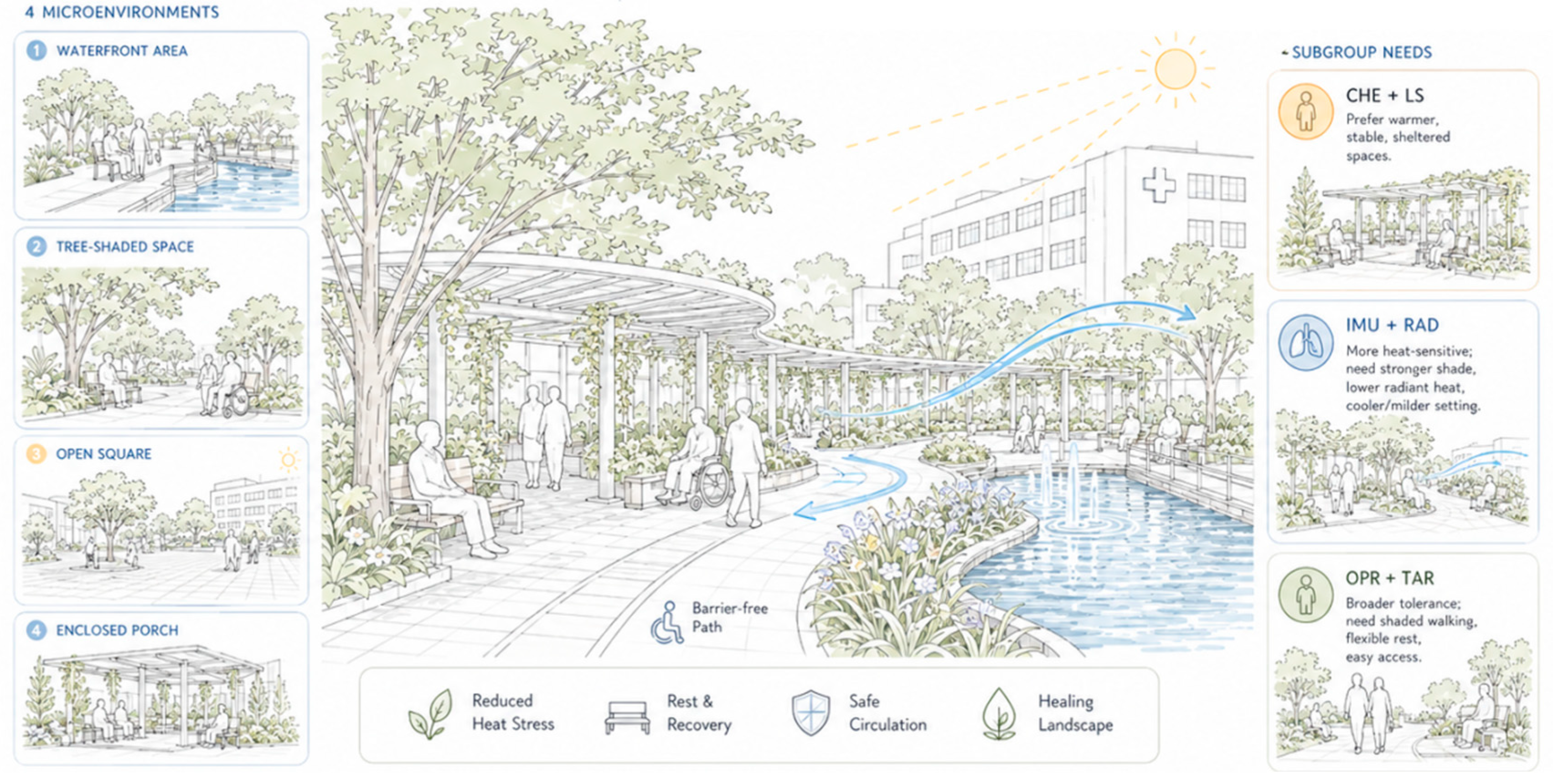
Summer Outdoor Thermal Comfort of Lung Cancer Patients: Differences by Treatment Modality and Disease Stage

 ,
,
Abstract
1. Introduction
1.1. Research Background and Clinical Urgency
1.2. Literature Review
1.3. Research Objectives
2. Methodology
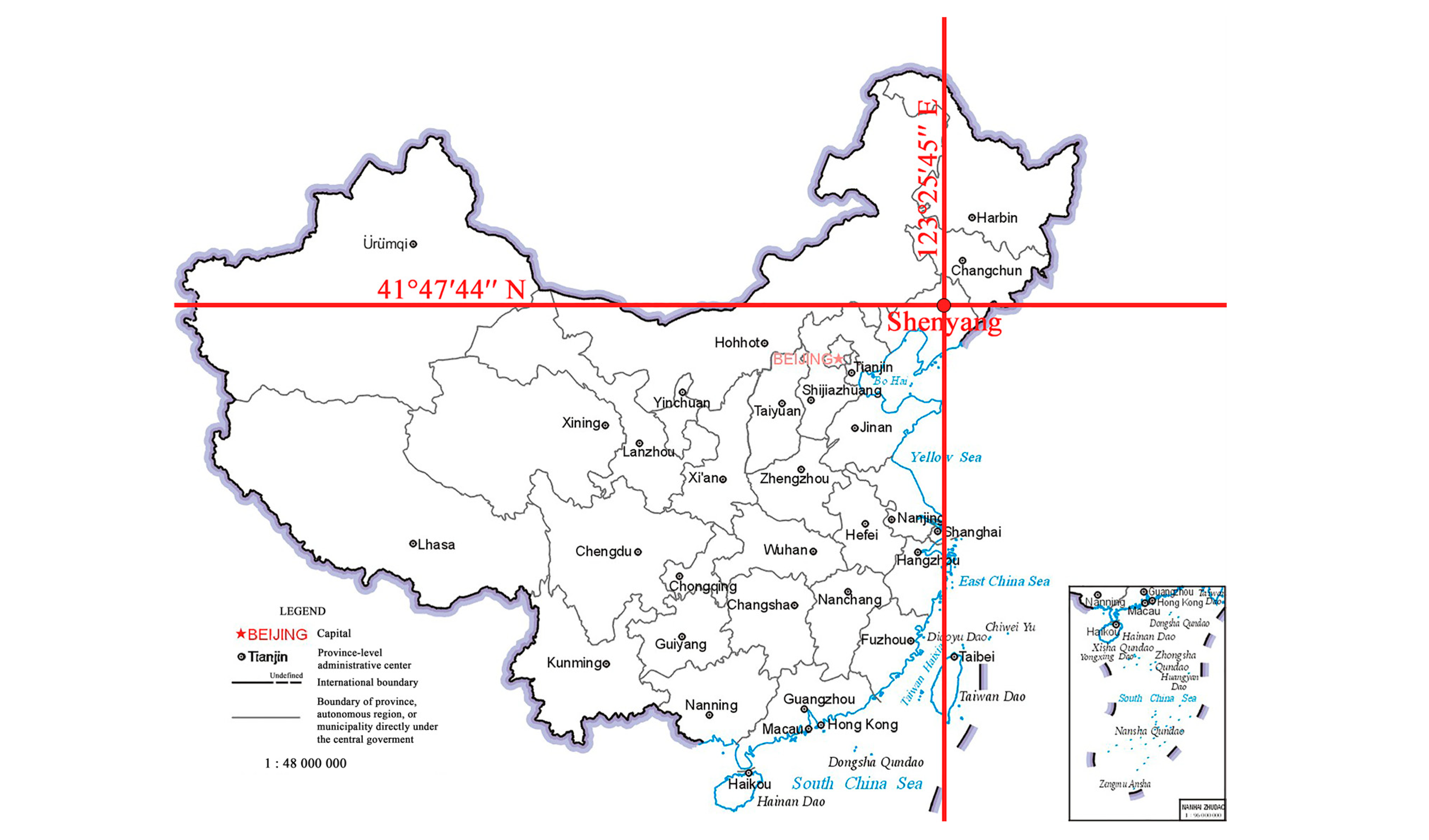
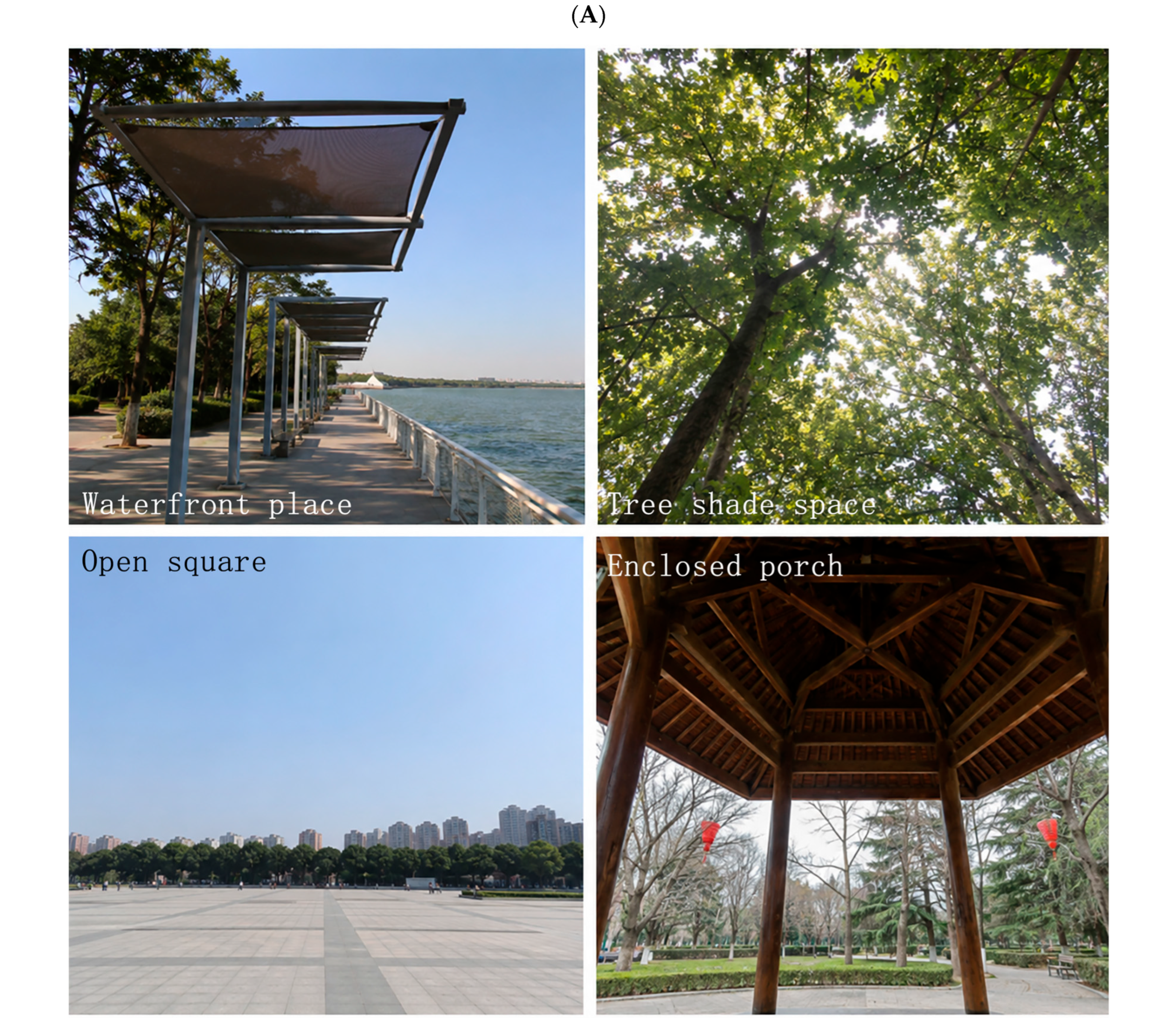
2.1. Study Site
2.2. Microclimatic Measurements
2.3. Questionnaire Survey
2.4. Selection of Thermal Index
2.5. Investigative Process
2.6. Statistical Analysis
3. Results
3.1. Descriptive Analysis
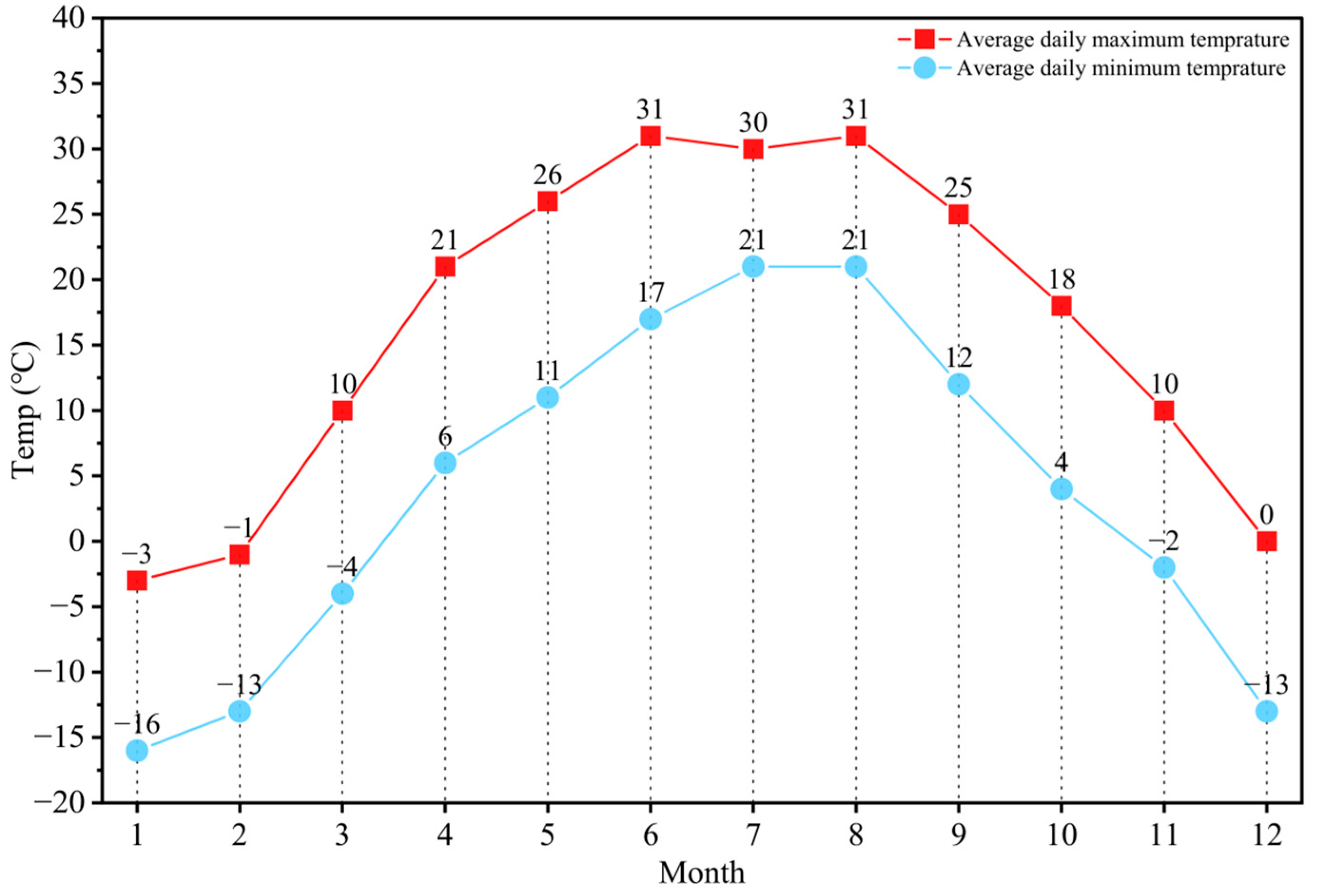
3.1.1. Meteorological Parameters of Survey Areas
3.1.2. Participant Demographics
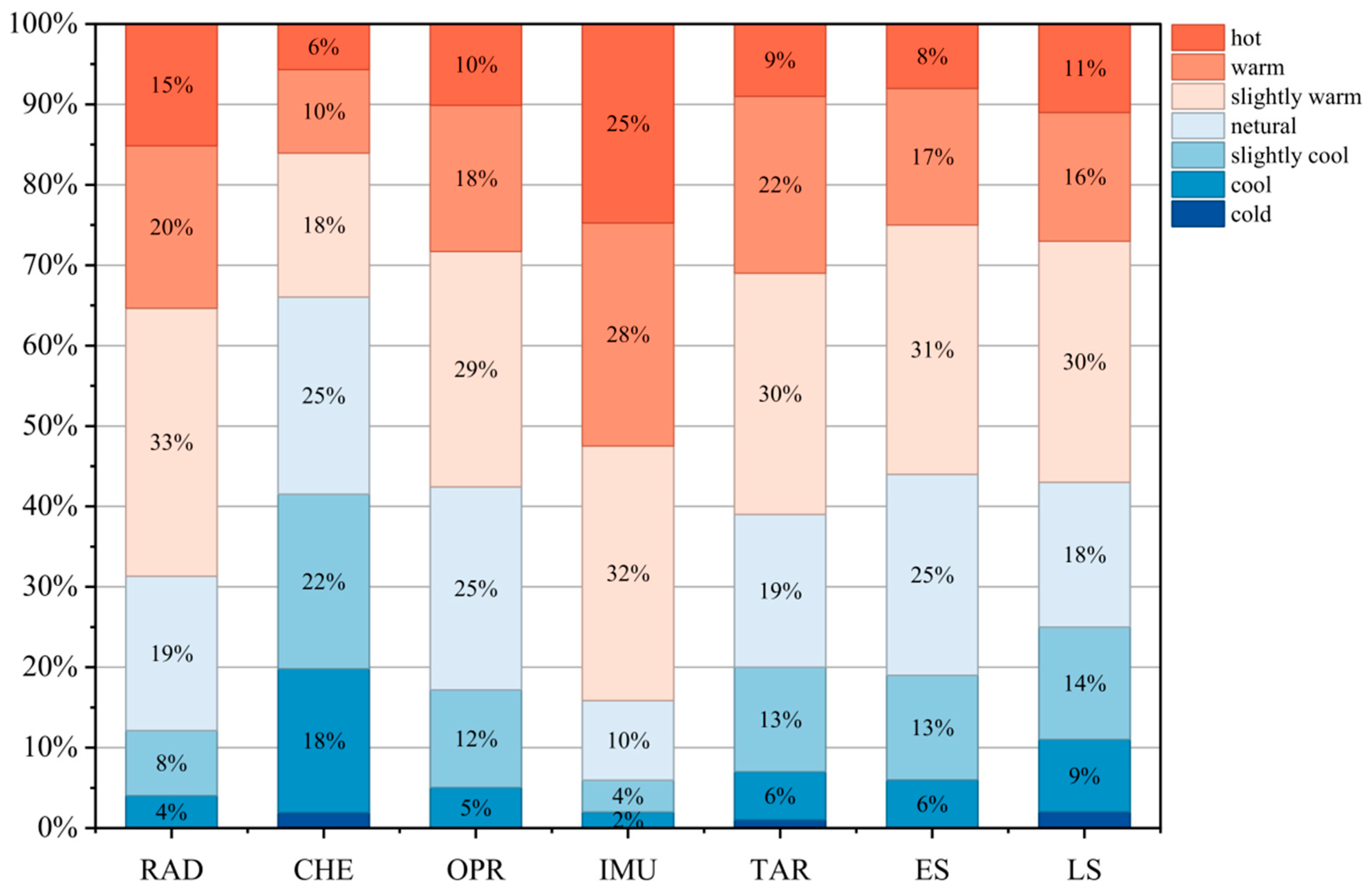
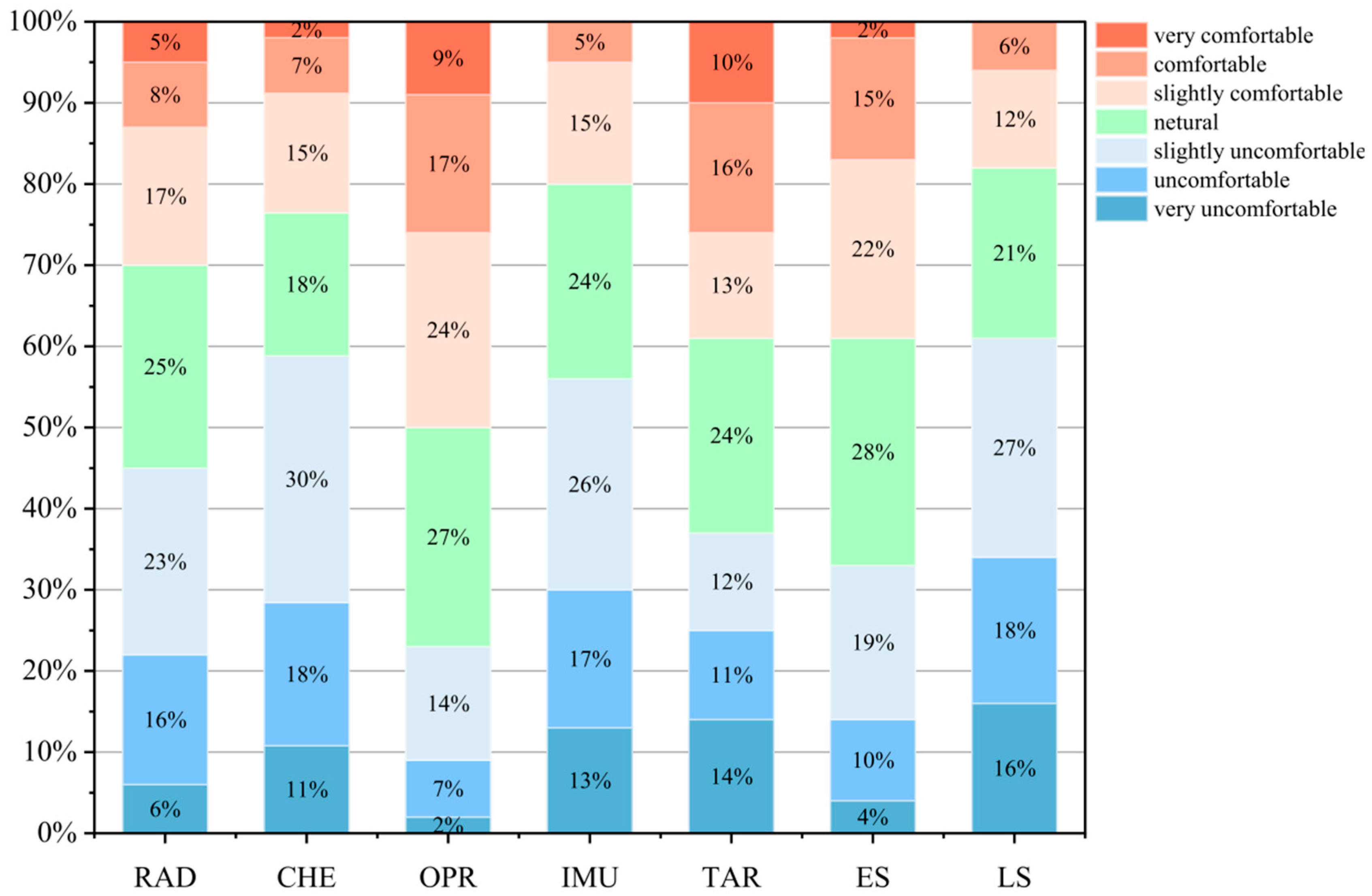
3.1.3. Distribution Characteristics of Thermal Sensation and Thermal Comfort
3.1.4. Correlation Between TSV and TCV
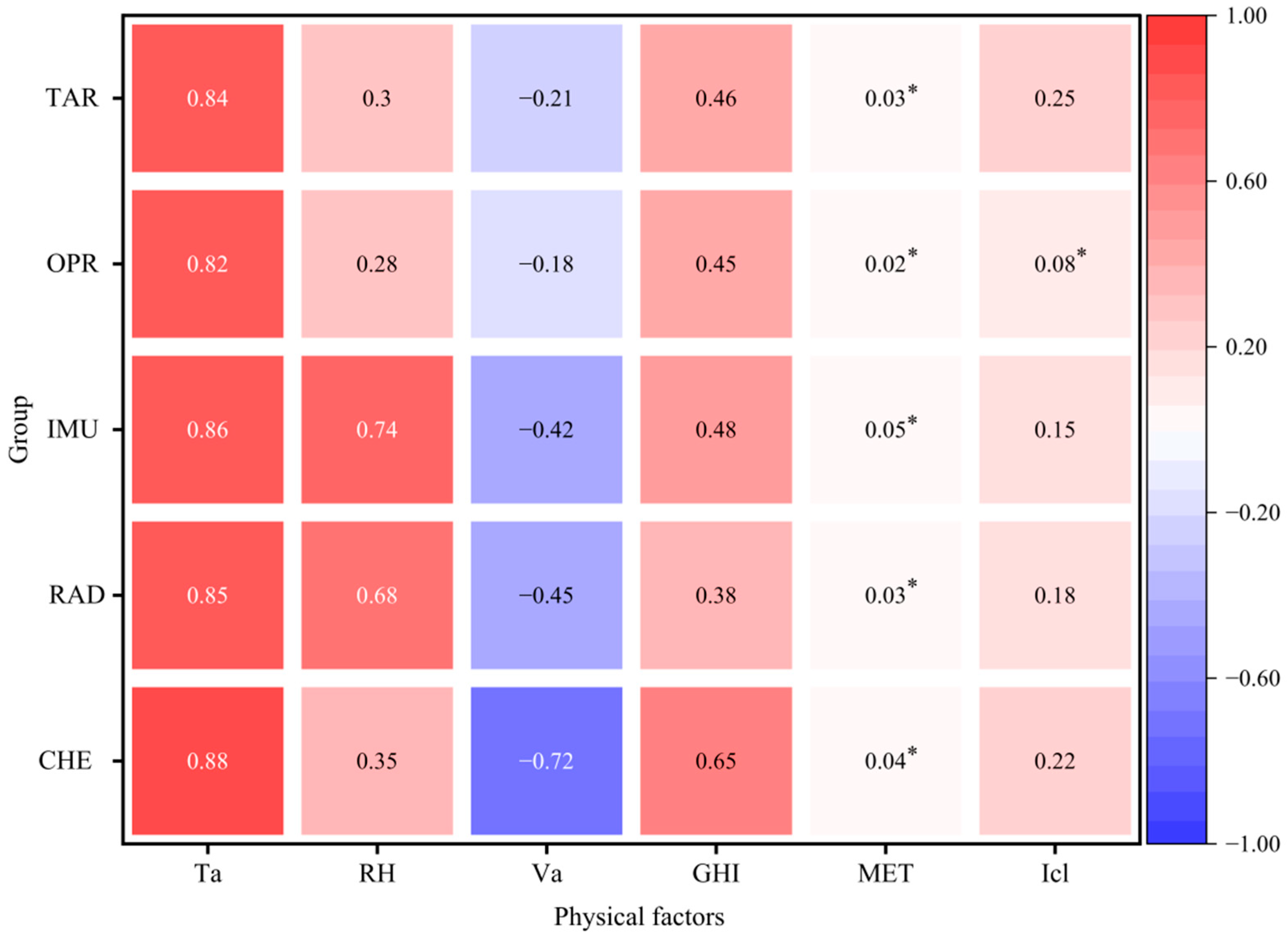
3.1.5. Influence of Physical Environmental Parameters on TSV
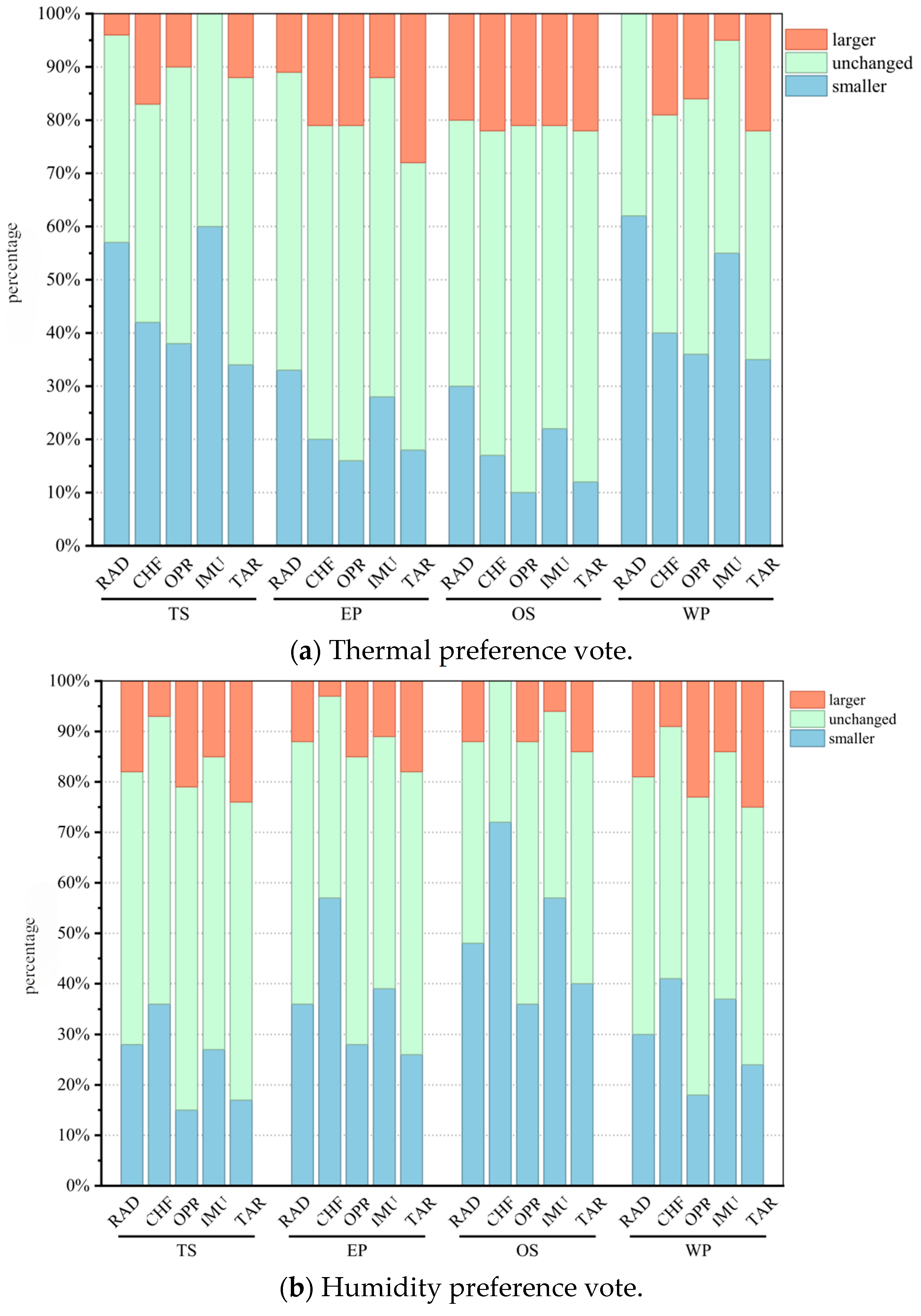
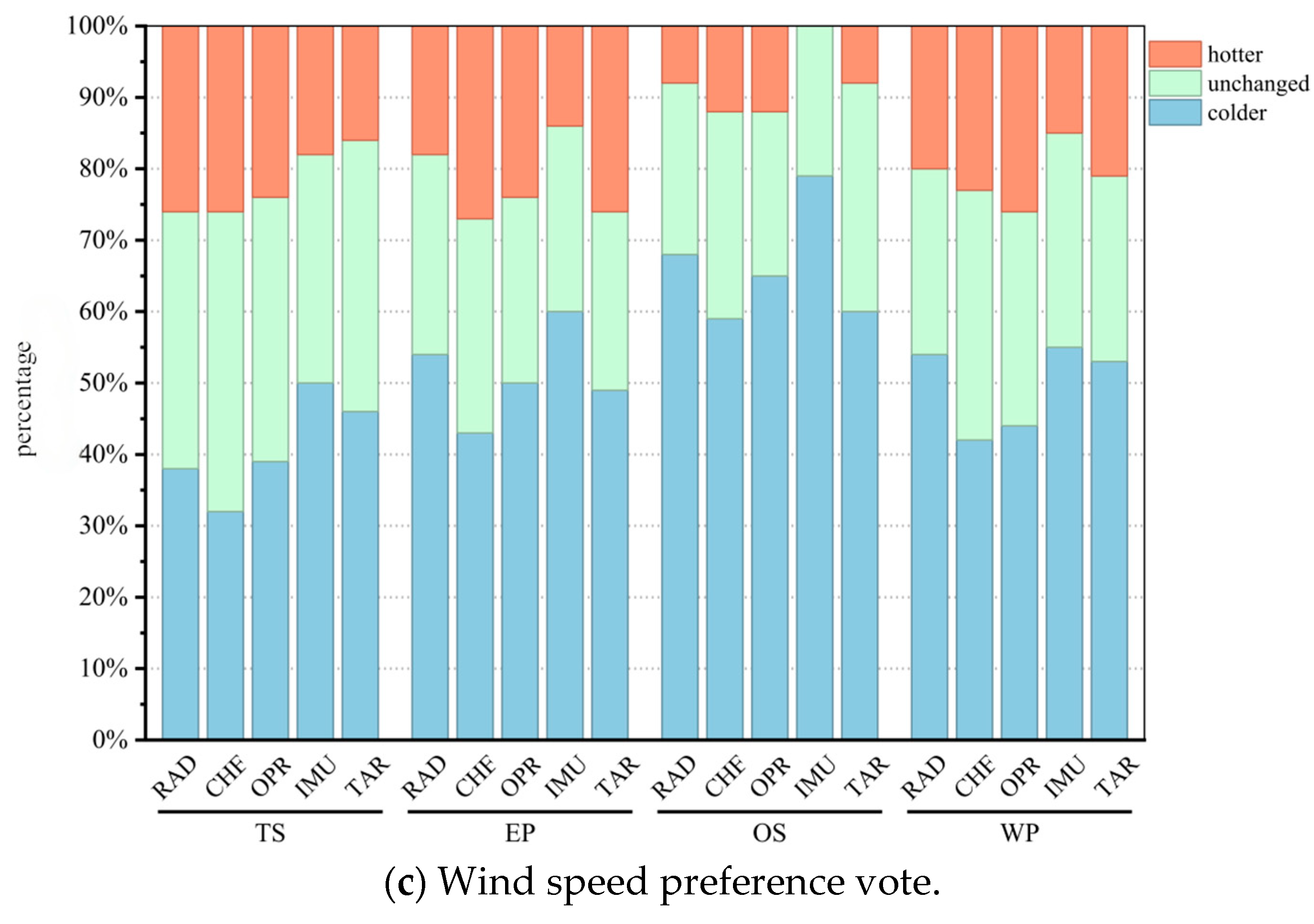
3.1.6. Meteorological Preferences
3.2. Thermal Benchmarks
3.2.1. Neutral PET and Neutral PET Range
3.2.2. PET and MTCV
3.3. Thermal Acceptability Range
3.4. Preferred Temperature
4. Discussion
4.1. Treatment-Induced Heterogeneity in Thermal Comfort and Underlying Pathophysiological Determinants
4.2. Associations with and Differentiation from Previous Research
4.3. Design Strategy
4.4. Limitations and Future Directions
5. Conclusions
Author Contributions
Funding
Institutional Review Board Statement
Informed Consent Statement
Data Availability Statement
Conflicts of Interest
Abbreviations
| Nomenclature | ||
| Abbreviation | Parameters | Units |
| RAD | Radiotherapy group | |
| CHE | Chemotherapy group | |
| OPR | Surgery group | |
| IMU | Immunotherapy group | |
| TAR | Targeted therapy group | |
| ES | Early-stage group | |
| LS | Late-stage group | |
| WP | Waterfront place | |
| TS | Tree shade place | |
| OS | Open square | |
| EP | Enclosed porch | |
| Ta | Air temperature | °C |
| Va | Air velocity | m/s |
| RH | Relative humidity | % |
| Tg | Black-globe temperature | °C |
| Tmrt | Mean radiant temperature | °C |
| Clo | Unit of clothing insulation | m2 °C/W |
| GHI | Global horizontal irradiance | W/m2 |
| PET | Physiologically equivalent temperature | °C |
| TSV | Thermal sensation vote | |
| TCV | Thermal comfort vote | |
| TAV | Thermal acceptability vote | |
| ESV | Environment satisfaction vote | |
| TPV | Temperature preference vote | |
| HPV | Humidity preference vote | |
| WPV | Wind speed preference vote | |
| MTSV | Mean thermal sensation vote | |
| MTCV | Mean thermal comfort vote | |
| Tn | Neutral temperature | °C |
| NPET | Neutral physiologically equivalent temperature | °C |
| NPETR | Neutral physiologically equivalent temperature range | °C |
| Tpref | Preference temperature | °C |
References
- Sung, H.; Ferlay, J.; Siegel, R.L.; Laversanne, M.; Soerjomataram, I.; Jemal, A.; Bray, F. Global Cancer Statistics 2020: GLOBOCAN Estimates of Incidence and Mortality Worldwide for 36 Cancers in 185 Countries. CA Cancer J. Clin. 2021, 71, 209–249. [Google Scholar] [CrossRef]
- Bade, B.C.; Dela Cruz, C.S. Lung Cancer 2020: Epidemiology, Etiology, and Prevention. Clin. Chest Med. 2020, 41, 1–24. [Google Scholar] [CrossRef]
- Chen, W.; Zheng, R.; Baade, P.D.; Zhang, S.; Zeng, H.; Bray, F.; Jemal, A.; Yu, X.Q.; He, J. Cancer Statistics in China, 2015. CA Cancer J. Clin. 2016, 66, 115–132. [Google Scholar] [CrossRef]
- Cao, M.; Li, H.; Sun, D.; Chen, W. Cancer Burden of Major Cancers in China: A Need for Sustainable Actions. Cancer Commun. 2020, 40, 205–210. [Google Scholar] [CrossRef] [PubMed]
- Jiang, S. Therapeutic Landscapes and Healing Gardens: A Review of Chinese Literature in Relation to the Studies in Western Countries. Front. Archit. Res. 2014, 3, 141–153. [Google Scholar] [CrossRef]
- Ulrich, R.S. View through a Window May Influence Recovery from Surgery. Science 1984, 224, 420–421. [Google Scholar] [CrossRef]
- Kaplan, S. The Restorative Benefits of Nature: Toward an Integrative Framework. J. Environ. Psychol. 1995, 15, 169–182. [Google Scholar] [CrossRef]
- Detterbeck, F.C.; Boffa, D.J.; Kim, A.W.; Tanoue, L.T. The Eighth Edition Lung Cancer Stage Classification. Chest 2017, 151, 193–203. [Google Scholar] [CrossRef]
- Peddle-McIntyre, C.J.; Singh, F.; Thomas, R.; Newton, R.U.; Galvão, D.A.; Cavalheri, V. Exercise Training for Advanced Lung Cancer. Cochrane Database Syst. Rev. 2019, 2, CD012685. [Google Scholar] [CrossRef]
- Fan, L.; Li, Z.; Zhou, Y. Seasonal Outdoor Thermal Comfort and Neutral PET Thresholds in a Severe Cold Dwa Climate City of Shenyang, China. Sci. Rep. 2026, 16, 15265. [Google Scholar] [CrossRef] [PubMed]
- Conti, S.; Meli, P.; Minelli, G.; Solimini, R.; Toccaceli, V.; Vichi, M.; Beltrano, C.; Perini, L. Epidemiologic Study of Mortality during the Summer 2003 Heat Wave in Italy. Environ. Res. 2005, 98, 390–399. [Google Scholar] [CrossRef]
- Brown, R.D. Design with Microclimate: The Secret to Comfortable Outdoor Space; Island Press: Washington, DC, USA, 2010. [Google Scholar]
- Fanger, P.O. Thermal Comfort: Analysis and Applications in Environmental Engineering; Danish Technical Press: Copenhagen, Denmark, 1970. [Google Scholar]
- ANSI/ASHRAE Standard 55-2020; Thermal Environmental Conditions for Human Occupancy. ASHRAE: Atlanta, GA, USA, 2020.
- Guan, R.; Lu, J.; Peng, Z.; Ma, S.; Deng, W.; Zhang, Z.; Beccarelli, P.; He, T. Thermal Comfort of Healthcare Facilities in China: A Review. Build. Environ. 2024, 265, 111927. [Google Scholar] [CrossRef]
- Pereira, P.F.C.; Broday, E.E.; Xavier, A.A.P. Thermal Comfort Applied in Hospital Environments. Appl. Sci. 2020, 10, 7030. [Google Scholar] [CrossRef]
- Pourshaghaghy, A.; Omidvari, M. Examination of Thermal Comfort in a Hospital Using PMV–PPD Model. Appl. Ergon. 2012, 43, 1089–1095. [Google Scholar] [CrossRef]
- Wang, B.; Zhao, H.; Han, B.; Jiang, X. An Investigation of Outdoor Thermal Comfort Assessment for Elderly Individuals in a Field Study in Northeastern China. Buildings 2023, 13, 2458. [Google Scholar] [CrossRef]
- Wei, R.; Yan, J.; Cui, Y.; Song, D.; Yin, X.; Sun, N. Studies on the Specificity of Outdoor Thermal Comfort during the Warm Season in High-Density Urban Areas. Buildings 2023, 13, 2473. [Google Scholar] [CrossRef]
- Zhen, M.; Zhou, W.; Zheng, R.; Lu, Y. Study on Thermal Comfort and Optimization Strategies in Outdoor Open Spaces of Hospitals in Cold Regions of China during Summer. Urban Clim. 2024, 58, 102135. [Google Scholar] [CrossRef]
- Bian, G.; Gao, X.; Zou, Q.; Cheng, Q.; Sun, T.; Sha, S.; Zhen, M. Effects of Thermal Environment and Air Quality on Outdoor Thermal Comfort in Urban Parks of Tianjin, China. Environ. Sci. Pollut. Res. 2023, 30, 97363–97376. [Google Scholar] [CrossRef]
- Jing, W.; Qin, Z.; Mu, T.; Ge, Z.; Dong, Y. Evaluating Thermal Comfort Indices for Outdoor Spaces on a University Campus. Sci. Rep. 2024, 14, 21253. [Google Scholar] [CrossRef]
- Li, K.; Zhang, Y.; Zhao, L. Outdoor Thermal Comfort and Activities in the Urban Residential Community in a Humid Subtropical Area of China. Energy Build. 2016, 133, 498–511. [Google Scholar] [CrossRef]
- Xu, M.; Hong, B.; Jiang, R.; An, L.; Zhang, T. Outdoor Thermal Comfort of Shaded Spaces in an Urban Park in the Cold Region of China. Build. Environ. 2019, 155, 408–420. [Google Scholar] [CrossRef]
- Oke, T.R. Boundary Layer Climates, 2nd ed.; Routledge: London, UK, 1987. [Google Scholar]
- Zhu, Y.; Jiang, Y.; Du, X.; Zhu, X.; Zhou, L.; Niu, Y.; Liu, C.; Kan, H.; Chen, R. Heat Exposure Changes Lung Function, Biomarkers of Airway Injury, and Airway Microbiota: A Randomized, Crossover Trial. Environ. Health 2025, 3, 1344–1352. [Google Scholar] [CrossRef]
- Zhen, M.; Zhang, L.; She, X.; Nan, K. Study on Thermal Comfort of Gynecological Tumor Patients in Hospital Ward Area. Energy Build. 2025, 329, 115230. [Google Scholar] [CrossRef]
- Sun, T.; Luo, A.; Lu, Y.; Zhen, M.; Zhang, Y.; Bian, G. Research on Indoor Thermal Comfort of Orthopedic Patients in Hospital. Sci. Rep. 2025, 15, 9053. [Google Scholar] [CrossRef] [PubMed]
- Li, L.; Wang, Z.; Zhen, M.; Nan, K. Study on Outdoor Thermal Comfort of Older People in Age-Friendly Communities in Cold Regions. Energy Build. 2025, 329, 115265. [Google Scholar] [CrossRef]
- Xi, T.; Li, Q.; Mochida, A.; Meng, Q. Study on the Outdoor Thermal Environment and Thermal Comfort around Campus Clusters in Subtropical Urban Areas. Build. Environ. 2012, 52, 162–170. [Google Scholar] [CrossRef]
- Tan, J.; Zheng, Y.; Tang, X.; Guo, C.; Li, L.; Song, G.; Zhen, X.; Yuan, D.; Kalkstein, A.J.; Li, F.; et al. The Urban Heat Island and Its Impact on Heat Waves and Human Health in Shanghai. Int. J. Biometeorol. 2010, 54, 75–84. [Google Scholar] [CrossRef]
- Lin, T.-P.; Matzarakis, A.; Hwang, R.-L. Shading Effect on Long-Term Outdoor Thermal Comfort. Build. Environ. 2010, 45, 213–221. [Google Scholar] [CrossRef]
- Nikolopoulou, M.; Lykoudis, S. Thermal Comfort in Outdoor Urban Spaces: Analysis across Different European Countries. Build. Environ. 2006, 41, 1455–1470. [Google Scholar] [CrossRef]
- Chen, L.; Ng, E. Outdoor Thermal Comfort and Outdoor Activities: A Review of Research in the Past Decade. Cities 2012, 29, 118–125. [Google Scholar] [CrossRef]
- Zhen, M.; Zou, W.; Zheng, R.; Lu, Y. Urban Outdoor Thermal Environment and Adaptive Thermal Comfort during the Summer. Environ. Sci. Pollut. Res. 2022, 29, 77864–77883. [Google Scholar] [CrossRef]
- Gagge, A.P.; Stolwijk, J.A.J.; Hardy, J.D. Comfort and Thermal Sensations and Associated Physiological Responses at Various Ambient Temperatures. Environ. Res. 1967, 1, 1–20. [Google Scholar] [CrossRef] [PubMed]
- Höppe, P. The Physiological Equivalent Temperature—A Universal Index for the Biometeorological Assessment of the Thermal Environment. Int. J. Biometeorol. 1999, 43, 71–75. [Google Scholar] [CrossRef] [PubMed]
- Matzarakis, A.; Rutz, F.; Mayer, H. Modelling Radiation Fluxes in Simple and Complex Environments—Application of the RayMan Model. Int. J. Biometeorol. 2007, 51, 323–334. [Google Scholar] [CrossRef] [PubMed]
- Jendritzky, G.; de Dear, R.; Havenith, G. UTCI—Why Another Thermal Index? Int. J. Biometeorol. 2012, 56, 421–428. [Google Scholar] [CrossRef]
- ISO 7726:1998; Ergonomics of the Thermal Environment—Instruments for Measuring Physical Quantities. International Organization for Standardization: Geneva, Switzerland, 1998.
- Burgess, J.; Ferdousi, M.; Gosal, D.; Boon, C.; Matsumoto, K.; Marshall, A.; Mak, T.; Marshall, A.; Frank, B.; Malik, R.A.; et al. Chemotherapy-Induced Peripheral Neuropathy: Epidemiology, Pathomechanisms and Treatment. Oncol. Ther. 2021, 9, 385–450. [Google Scholar] [CrossRef]
- Su, C.; Wang, H.; Liu, Y.; Guo, Q.; Zhang, L.; Li, J.; Zhou, W.; Yan, Y.; Zhou, X. Adverse Effects of Anti-PD-1/PD-L1 Therapy in Non-Small Cell Lung Cancer. Front. Oncol. 2020, 10, 554313. [Google Scholar] [CrossRef]
- Li, K.; Yin, R. A Critical Review of the Progress in Prevention and Treatment of Radiation-Induced Skin Damage. Front. Oncol. 2024, 14, 1395778. [Google Scholar] [CrossRef]
- Abdullah, S.E.; Haigentz, M., Jr.; Piperdi, B. Dermatologic Toxicities from Monoclonal Antibodies and Tyrosine Kinase Inhibitors against EGFR: Pathophysiology and Management. Chemother. Res. Pract. 2012, 2012, 351210. [Google Scholar] [CrossRef]
- Fearon, K.; Strasser, F.; Anker, S.D.; Bosaeus, I.; Bruera, E.; Fainsinger, R.L.; Jatoi, A.; Loprinzi, C.; MacDonald, N.; Mantovani, G.; et al. Definition and Classification of Cancer Cachexia: An International Consensus. Lancet Oncol. 2011, 12, 489–495. [Google Scholar] [CrossRef]
- Petruzzelli, M.; Wagner, E.F. Mechanisms of Metabolic Dysfunction in Cancer-Associated Cachexia. Genes Dev. 2016, 30, 489–501. [Google Scholar] [CrossRef] [PubMed]
- Chen, X.; Xue, P.; Liu, L.; Gao, L.; Liu, J. Outdoor Thermal Comfort and Adaptation in Severe Cold Area: A Longitudinal Survey in Harbin, China. Build. Environ. 2018, 143, 548–560. [Google Scholar] [CrossRef]
- Zhu, Z.; Zhang, Y.; Gao, Y.; Luo, Y. Summer Outdoor Thermal Comfort in Urban Commercial Pedestrian Streets in Severe Cold Regions of China. Sustainability 2020, 12, 1876. [Google Scholar] [CrossRef]
- Ma, T.; Zhang, J. Integrating Thermal Perception and Public Space Use: An Experimental Outdoor Comfort Study in Cold Winter-Hot Summer Zone: Beijing, China. Urban Clim. 2024, 58, 102138. [Google Scholar] [CrossRef]
- Liu, L.; Xia, B.; Zhang, L. Outdoor Thermal Comfort of Urban River Landscape Belt in China’s Cold Region: A Case Study of Xi’an. Urban Clim. 2023, 48, 101406. [Google Scholar] [CrossRef]
- Xu, M.; Hong, B.; Mi, J.; Yan, S. Outdoor Thermal Comfort in an Urban Park during Winter in Cold Regions of China. Sustain. Cities Soc. 2018, 43, 208–220. [Google Scholar] [CrossRef]
- Li, J.; Liu, N. The Perception, Optimization Strategies and Prospects of Outdoor Thermal Comfort in China: A Review. Build. Environ. 2020, 170, 106614. [Google Scholar] [CrossRef]
- Fang, Z.; Feng, X.; Liu, J.; Lin, Z.; Mak, C.M.; Niu, J.; Tse, K.-T.; Xu, X. Investigation into the Differences among Several Outdoor Thermal Comfort Indices against Field Survey in Subtropics. Sustain. Cities Soc. 2019, 44, 676–690. [Google Scholar] [CrossRef]
- Cohen, P.; Potchter, O.; Matzarakis, A. Human Thermal Perception of Coastal Mediterranean Outdoor Urban Environments. Appl. Geogr. 2013, 37, 1–10. [Google Scholar] [CrossRef]
- Kántor, N.; Égerházi, L.; Unger, J. Subjective Estimations of Thermal Environment in Recreational Urban Spaces—Part 2: International Comparison. Int. J. Biometeorol. 2012, 56, 1089–1101. [Google Scholar] [CrossRef] [PubMed]


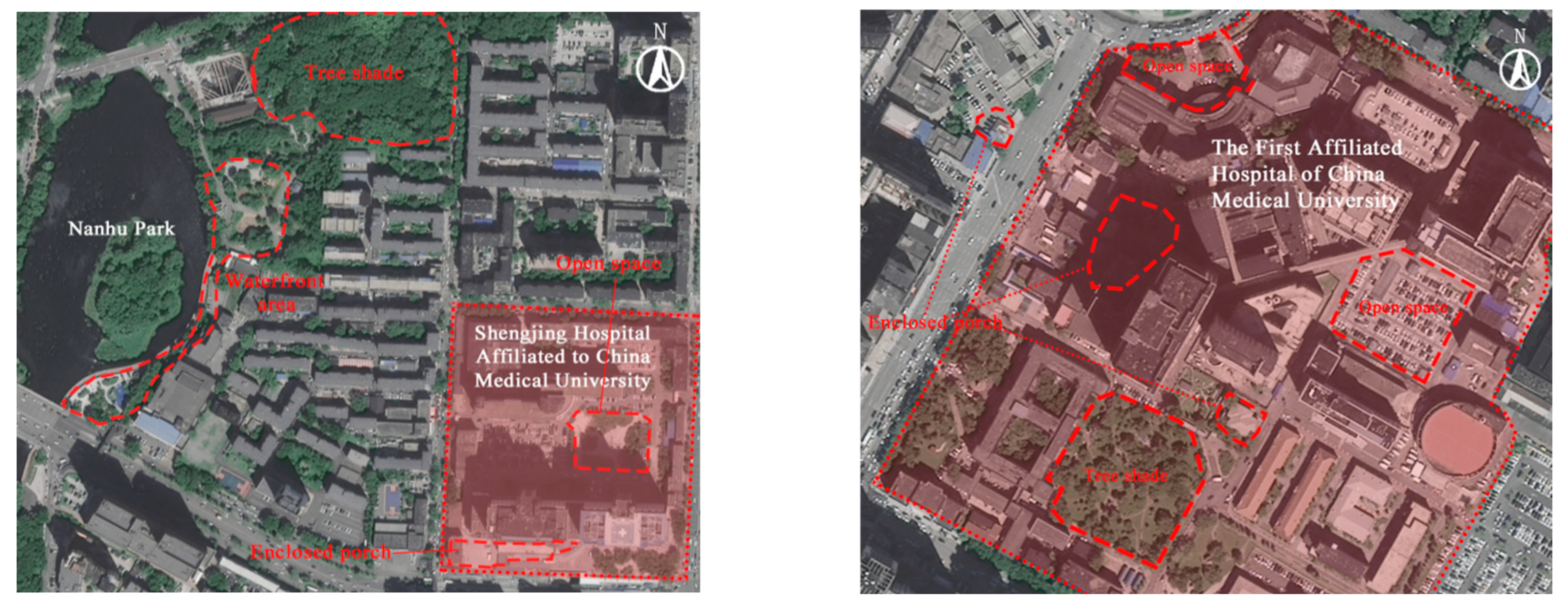

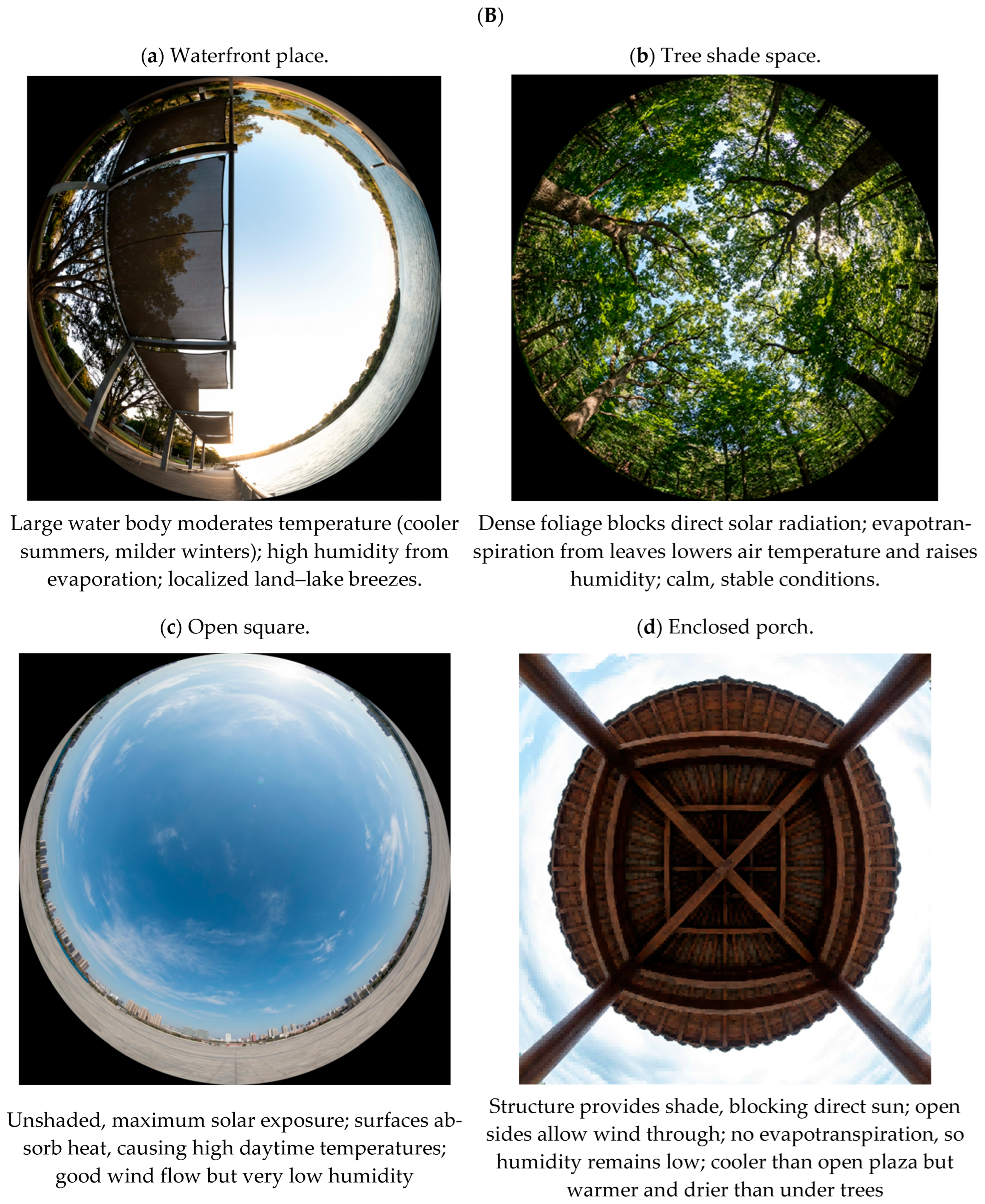


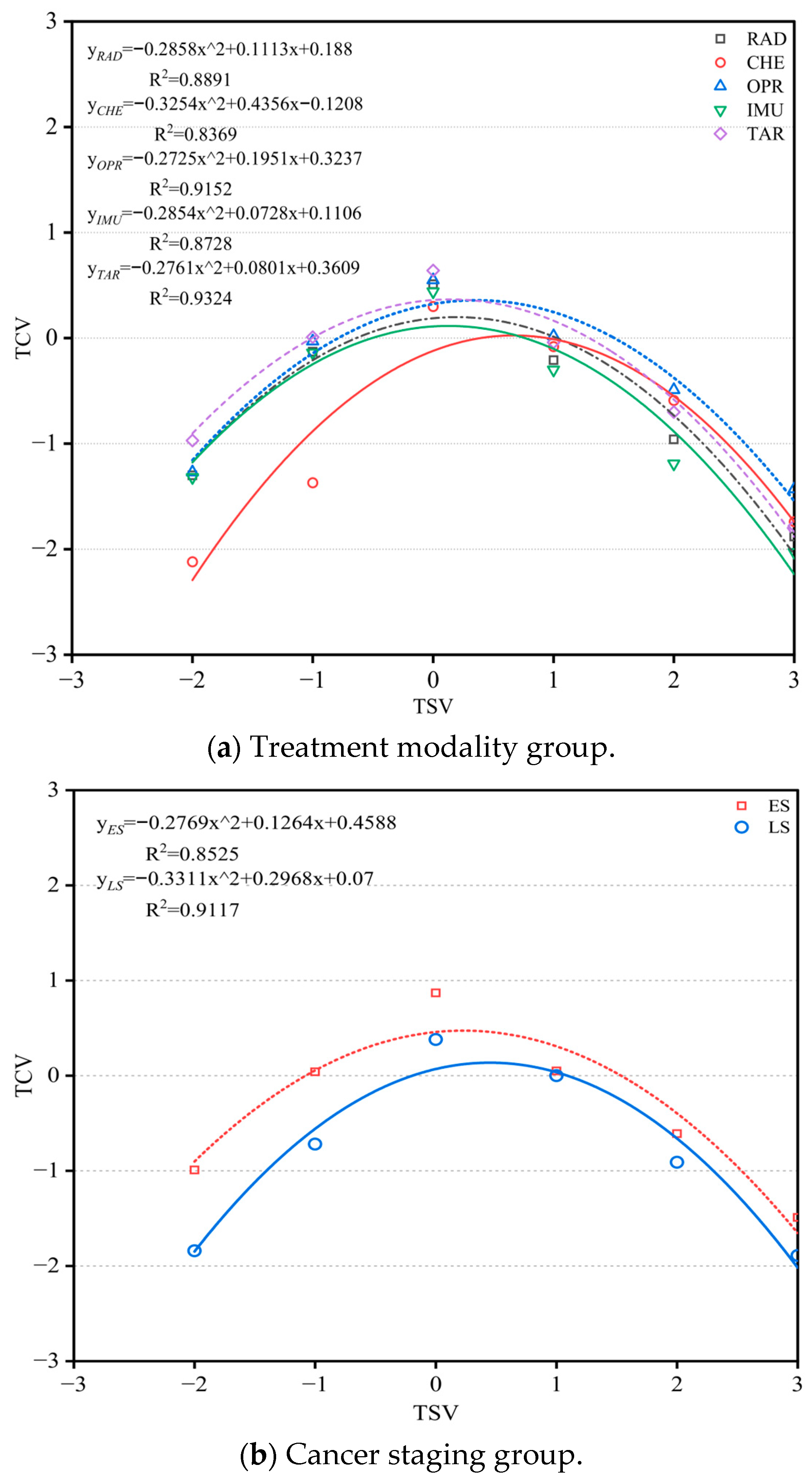





| Meteorological Parameter | Units | Type | Accuracy | Range | Resolution |
|---|---|---|---|---|---|
| Air Temperature | °C | JT2020 Thermal comfort meter (temperature and humidity sensor) | −20~125 °C | ±0.5 °C | 0.1 °C |
| Relative Humidity | % | 0~100% | ±3% | 0.1% | |
| Wind Speed | m/s | JT2020 Omnidirectional wind speed sensor | 0.05~5 m/s | ±0.05 m/s | 0.01 m/s |
| Black Globe Temperature | °C | JT2020 Black ball temperature sensor | −20~85 °C | ±0.5 °C | 0.1 °C |
| Global Horizontal Irradiance | W/m2 | Kipp & Zonen CMP3 pyranometer | 1%/year | 0–2000 W/m2 | 1 W/m2 |
| Rating | −3 | −2 | −1 | 0 | 1 | 2 | 3 |
|---|---|---|---|---|---|---|---|
| TSV | Very cold | Cool | Slightly cool | Neutral | Slightly warm | Warm | Very hot |
| TCV | Very uncomfortable | Uncomfortable | Slightly uncomfortable | Neutral | Slightly comfortable | Comfortable | Very comfortable |
| Rating | −1 | 0 | 1 | ||||
| TPV | Cooler | Unchanged | Hotter | ||||
| WPV | Smaller | Unchanged | Larger | ||||
| HPV | Smaller | Unchanged | Larger | ||||
| Rating | −1 | 1 | |||||
| TAV | Unacceptable | Acceptable | |||||
| Climate Parameters in Different Measurement Area | ||||||||||
|---|---|---|---|---|---|---|---|---|---|---|
| Place | Ta | RH | Va | Tg | ||||||
| Average | Min | Max | Average | Min | Max | Average | Max | Min | Average | |
| Tree shade(TS) | 29.4 °C | 25.7 °C | 33.7 °C | 68% | 65% | 63% | 1.1 m/s | 2.6 m/s | 0.2 m/s | 33.3 °C |
| Open square(OS) | 32.7 °C | 27.3 °C | 36.6 °C | 57% | 38% | 69% | 3 m/s | 6.5 m/s | 1.1 m/s | 45.0 °C |
| Waterfront place (WP) | 29.6 °C | 24.4 °C | 33.0 °C | 78% | 74% | 82% | 2 m/s | 3.4 m/s | 0.9 m/s | 32.9 °C |
| Enclosed porch(EP) | 30.2 °C | 27.5 °C | 34.2 °C | 65% | 61& | 69% | 1.8 m/s | 2.4 m/s | 1.0 m/s | 34.8 °C |
| Classification | Introduction | Number of Questionnaires | Age Ranges | Number in Different Sites |
|---|---|---|---|---|
| Radiotherapy group (RAD) | Utilizes high-energy radiation (e.g., X-rays or proton beams) focused on the tumor site to induce DNA damage and apoptosis in malignant cells, serving as a critical modality for local control. | Male: 82 Female: 50 | Under 35 (2 cases) 35–50 (14 cases) 50–70 (71 cases) Over 70 (45 cases) | WP: 31 TS: 40 OS: 25 EP: 36 |
| Chemotherapy group (CHE) | Employs cytotoxic agents to systemically eradicate rapidly proliferating cancer cells (including metastases) by interfering with DNA synthesis or inhibiting mitosis, functioning as a primary systemic therapy. | Male: 98 Female:39 | Under 35 (3 cases) 35–50 (19 cases) 50–70 (85 cases) Over 70 (30 cases) | WP: 35 TS: 34 OS: 29 EP: 39 |
| Surgery group (OPR) | Involves the surgical resection of the primary tumor and regional lymph nodes en bloc. This remains the cornerstone approach for achieving accurate pathological staging and local curative intent. | Male: 126 Female: 105 | Under 35 (27 cases) 35–50 (42 cases) 50–70 (126 cases) Over 70 (36 cases) | WP: 54 TS: 63 OS: 46 EP: 68 |
| Immunotherapy group (IMU) | Restores the host immune system’s capacity to recognize and eliminate malignant cells by overcoming immunosuppression within the tumor microenvironment (e.g., via PD-1/PD-L1 inhibitors) or enhancing effector cell activity (e.g., CAR-T therapy). | Male: 58 Female: 28 | Under 35 (0 cases) 35–50 (9 cases) 50–70 (48 cases) Over 70 (29 cases) | WP: 19 TS: 25 OS: 18 EP: 24 |
| Targeted therapy group(TAR) | Delivers precise inhibition against specific oncogenic driver mutations or aberrant signaling pathways (e.g., EGFR, ALK) utilizing small-molecule inhibitors or monoclonal antibodies, characterized by high biological specificity. | Male: 75 Female: 45 | Under 35 (12 cases) 35–50 (22 cases) 50–70 (56 cases) Over 70 (30 cases) | WP: 33 TS: 27 OS: 27 EP: 33 |
| Early-stage group (ES) | Refers to localized primary tumors with no or limited regional lymph node involvement and absence of distant metastasis. Biologically characterized by local growth, this stage is highly amenable to curative modalities such as surgery or radiotherapy. | Male: 153 Female: 165 | Under 35 (29 cases) 35–50 (51 cases) 50–70 (163 cases) Over 70 (75 cases) | WP: 81 TS: 77 OS: 72 EP: 80 |
| Late-stage group (LS) | Indicates the presence of distant organ metastasis or non-regional lymph node involvement. Characterized by systemic dissemination, the therapeutic objective shifts toward long-term disease control and quality of life improvement, primarily managed through systemic pharmacotherapies (chemotherapy, targeted therapy, or immunotherapy). | Male: 286 Female: 102 | Under 35 (14 cases) 35–50 (58 cases) 50–70 (223 cases) Over 70 (93 cases) | WP: 91 TS: 112 OS: 73 EP: 120 |
| Participants | NPET | NPETR | Linear Function | R2 | Gradient |
|---|---|---|---|---|---|
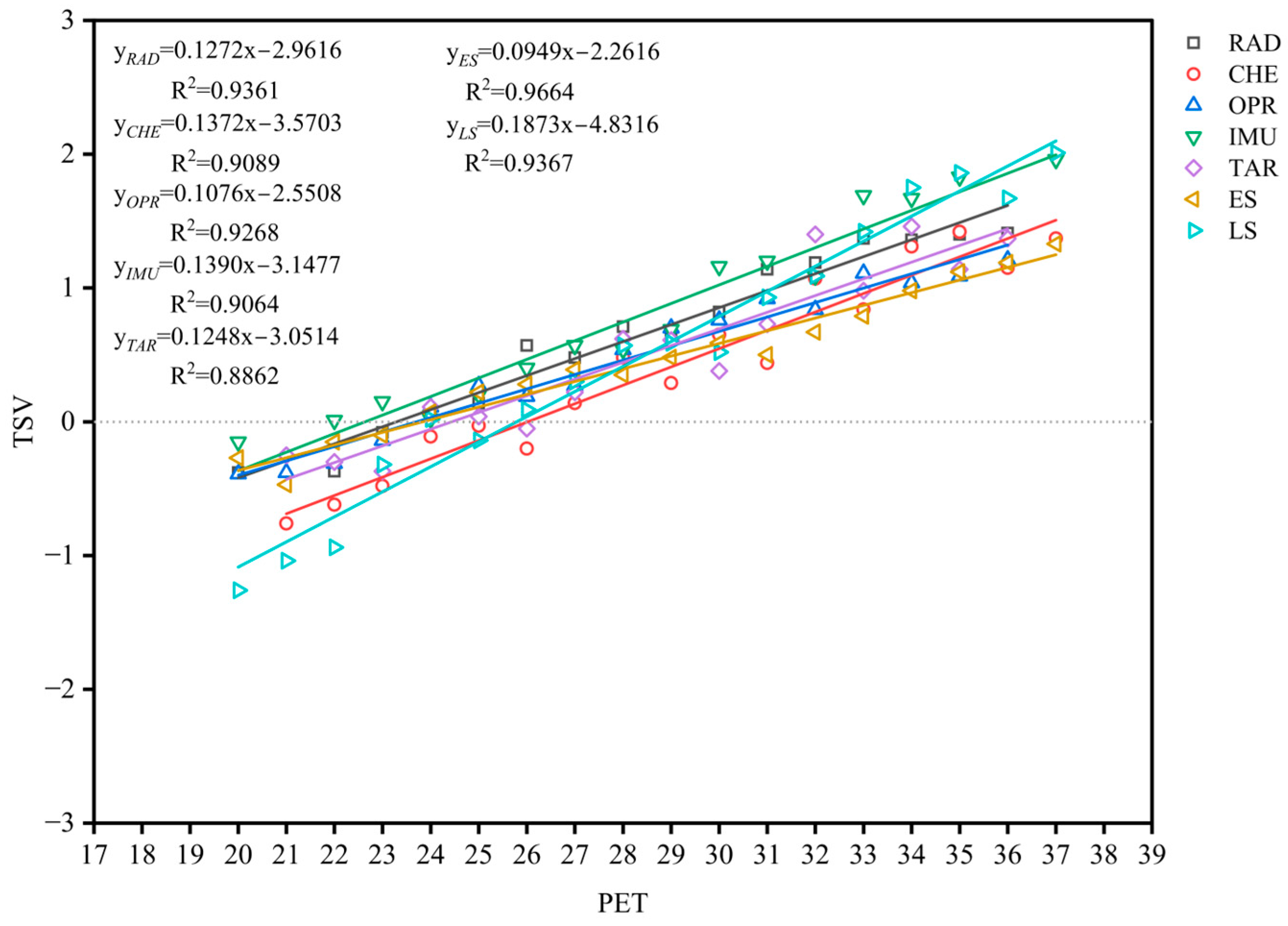
| RAD | 23.3 °C | 19.4–27.2 °C | Y = 0.1272 × X − 2.9616 | 0.9361 | 0.1272 |
| CHE | 26.0 °C | 22.4–29.7 °C | Y = 0.1372 × X − 3.5703 | 0.9089 | 0.1372 |
| OPR | 23.7 °C | 19.0–28.4 °C | Y = 0.1076 × X − 2.5508 | 0.9268 | 0.1076 |
| IMU | 22.6 °C | 19.1–26.2 °C | Y = 0.1390 × X − 3.1477 | 0.9064 | 0.1390 |
| TAR | 24.5 °C | 20.4–28.5 °C | Y = 0.1248 × X − 3.0514 | 0.8862 | 0.1248 |
| ES | 23.8 °C | 18.6–29.1 °C | Y = 0.0949 × X − 2.2616 | 0.9664 | 0.0949 |
| LS | 25.8 °C | 23.1–28.5 °C | Y = 0.1873 × X − 4.8316 | 0.9367 | 0.1873 |
| Participants | Vertex Coordinates | TCV > 0, Range of PET | Function | R2 |
|---|---|---|---|---|
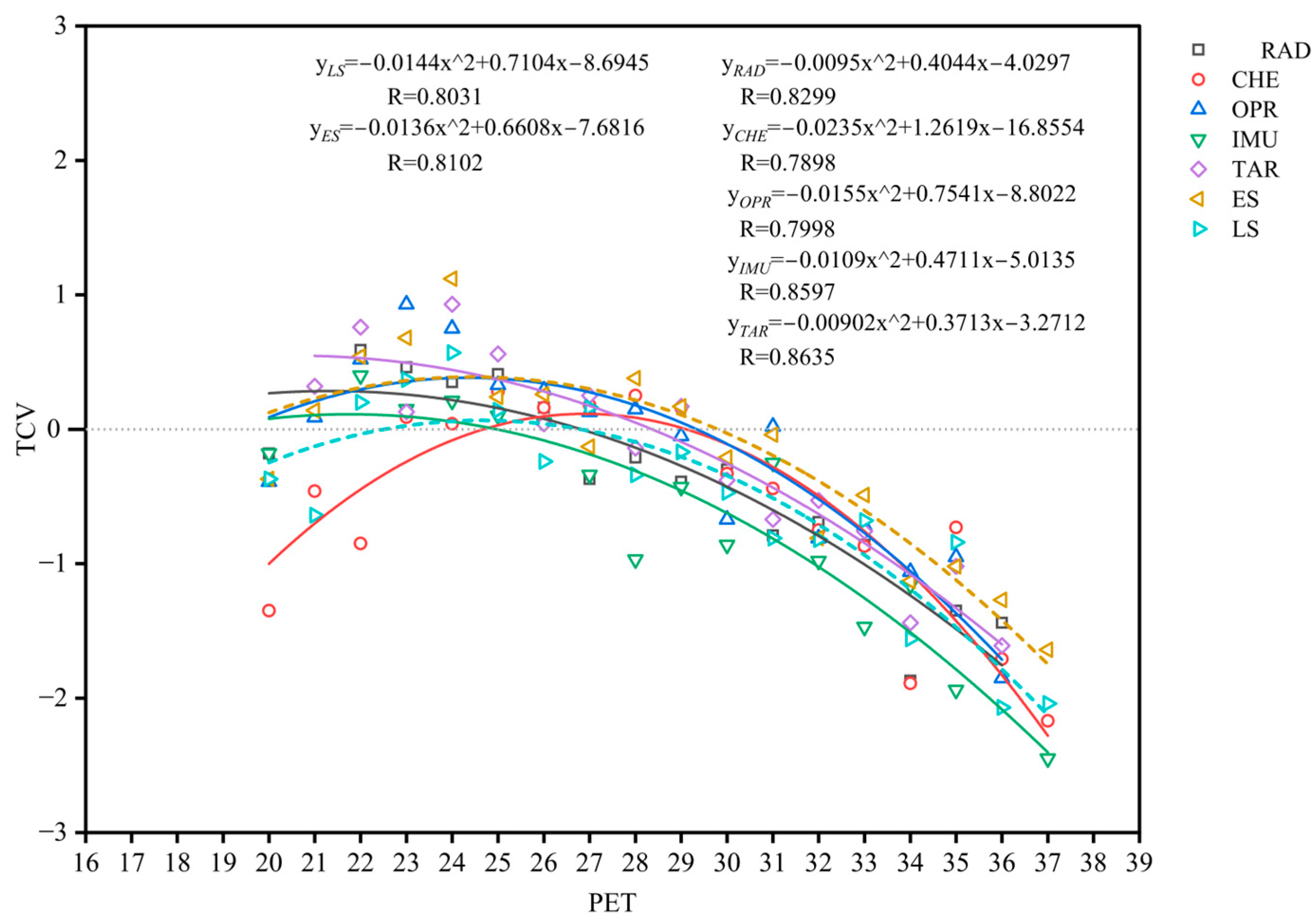
| RAD | PET = 22.4 °C TCV = 0.27 | 19.7–26.6 °C | Y = −0.0095X2 + 0.4044 × X − 4.0297 | 0.8299 |
| CHE | PET = 26.8 °C TCV = 0.08 | 24.8–28. 7 °C | Y = −0.0235X2 + 1.2619 × X − 16.8554 | 0.7898 |
| OPR | PET = 24.3 °C TCV = 0.36 | 19.4–29.1 °C | Y = −0.0155X2 + 0.7541 × X − 8.8022 | 0.7998 |
| IMU | PET = 21.6 °C TCV = 0.17 | 18.5–25.1 °C | Y = −0.0109X2 + 0.4711 × X − 5.0135 | 0.8597 |
| TAR | PET = 23.8 °C TCV = 0.31 | 18.8–27.8 °C | Y = −0.00902X2 + 0.371 3 × X − 3.2712 | 0.8635 |
| ES | PET = 24.5 °C TCV = 0.40 | 19.0–29.9 °C | Y = −0.0144X2 + 0.7104 × X − 8.6945 | 0.8031 |
| LS | PET = 24.7 °C TCV = 0.07 | 22.5–26.9 °C | Y = −0.0136X2+ 0.6608 × X − 7.6816 | 0.8102 |
| Regions | Functional Areas | Participants | Season | Index | Neutral Temperature (°C) |
|---|---|---|---|---|---|
| Shenyang, China (this study) | Monsoon climate of medium latitudes | Patients with lung cancer who have received different treatments and at different stages of the disease | Summer | PET | RAD: 23.3 °C CHE:26.0 °C OPR:23.7 °C IMU:22.6 °C TAR:24.5 °C ES:23.8 °C LS:25.8 °C |
| Xi’an, China [51] | Warm, temperate, semi-humid continental monsoon climate | All age groups (including a large number of middle-aged and elderly people) | Summer | PET, UTCI | 24.8 °C |
| Shanghai, China [52] | North subtropical monsoon climate | Tourists and local residents | Summer | PET | 24.2–26.5 °C |
| Guangzhou, China [53] | Subtropical monsoon climate | Students and residents in the university campus area | Summer | PET, SET*, UTCI | 26.5 °C |
| Tel Aviv, Israel [54] | Mediterranean | City residents | Summer | PET | 25.5 °C |
| Several European countries [55] | Temperate and c ontinental | Recreational visitors in the park | Summer | PET | 22.0–23.0 °C |
Disclaimer/Publisher’s Note: The statements, opinions and data contained in all publications are solely those of the individual author(s) and contributor(s) and not of MDPI and/or the editor(s). MDPI and/or the editor(s) disclaim responsibility for any injury to people or property resulting from any ideas, methods, instructions or products referred to in the content. |
© 2026 by the authors. Licensee MDPI, Basel, Switzerland. This article is an open access article distributed under the terms and conditions of the Creative Commons Attribution (CC BY) license.
Share and Cite
Qin, Z.; Wu, X.; Dai, Y.; Tan, X.; Wang, H.; Xia, W.; Zhen, M. Summer Outdoor Thermal Comfort of Lung Cancer Patients: Differences by Treatment Modality and Disease Stage. Buildings 2026, 16, 2230. https://doi.org/10.3390/buildings16112230
Qin Z, Wu X, Dai Y, Tan X, Wang H, Xia W, Zhen M. Summer Outdoor Thermal Comfort of Lung Cancer Patients: Differences by Treatment Modality and Disease Stage. Buildings. 2026; 16(11):2230. https://doi.org/10.3390/buildings16112230
Chicago/Turabian StyleQin, Zihao, Xinke Wu, Yufan Dai, Xinyu Tan, Houxiang Wang, Weijie Xia, and Meng Zhen. 2026. "Summer Outdoor Thermal Comfort of Lung Cancer Patients: Differences by Treatment Modality and Disease Stage" Buildings 16, no. 11: 2230. https://doi.org/10.3390/buildings16112230
APA StyleQin, Z., Wu, X., Dai, Y., Tan, X., Wang, H., Xia, W., & Zhen, M. (2026). Summer Outdoor Thermal Comfort of Lung Cancer Patients: Differences by Treatment Modality and Disease Stage. Buildings, 16(11), 2230. https://doi.org/10.3390/buildings16112230