Analysis of Han Dynasty Red Pottery Eave-End Tile from the Minyue Kingdom Ruins

 ,
,  ,
,  ,
, 
 ,
,  ,
,  ,
,  and
and 
Abstract
1. Introduction
2. Materials and Methods
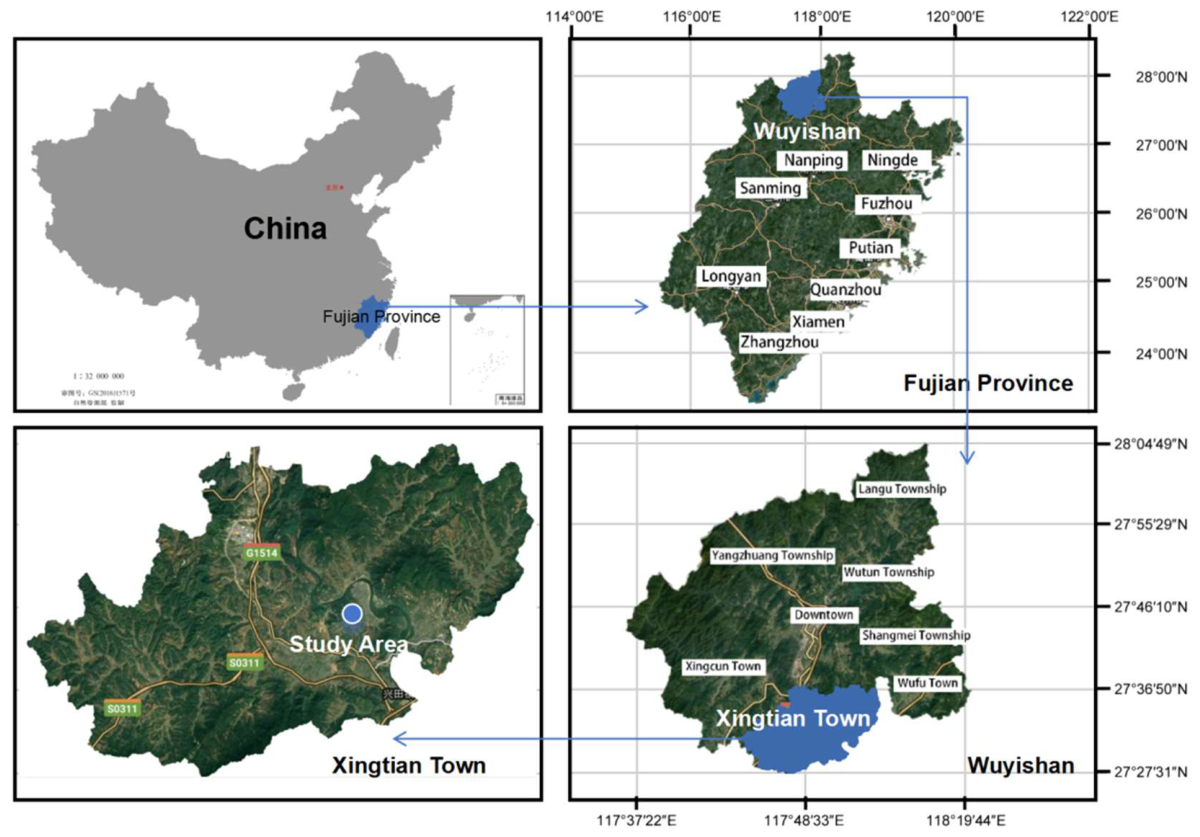
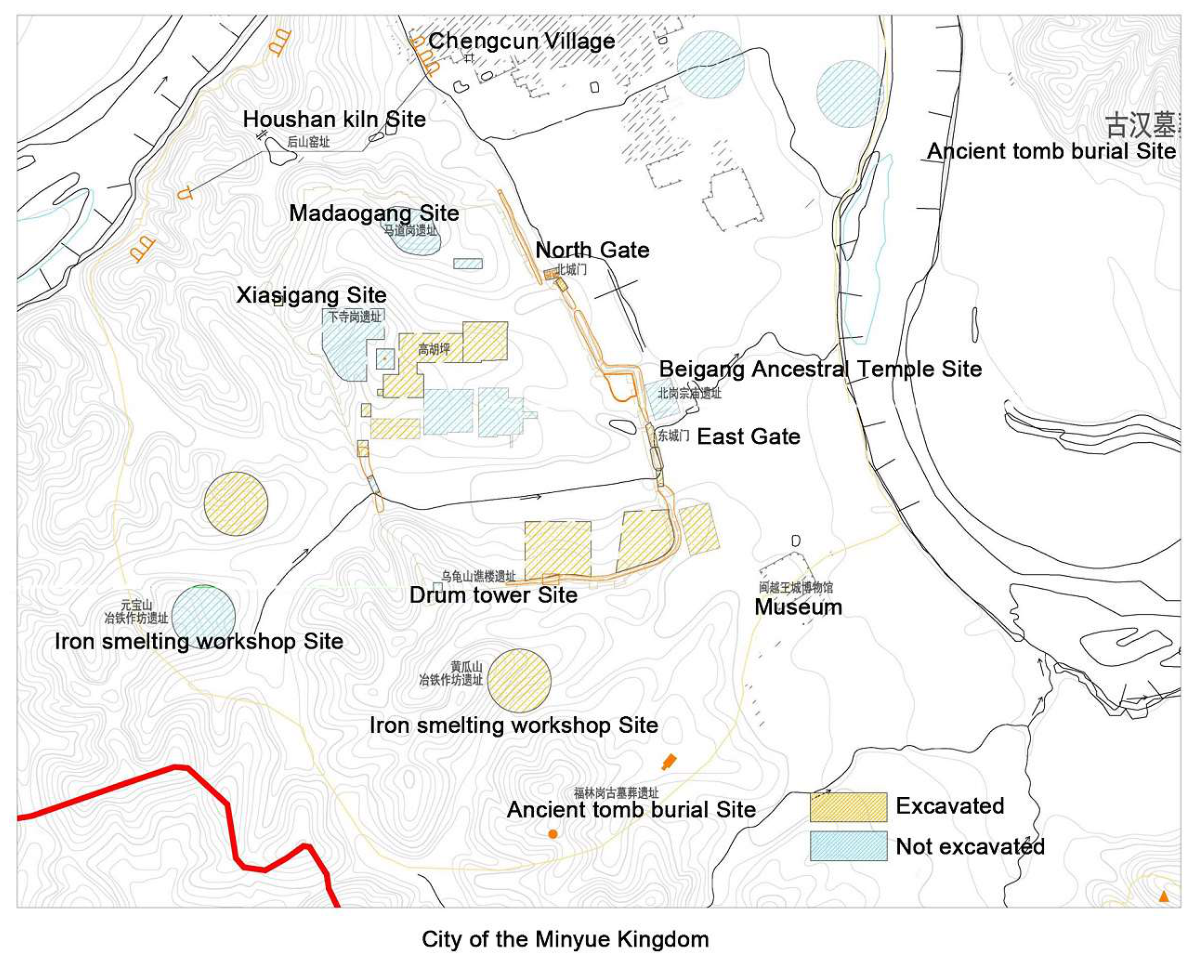
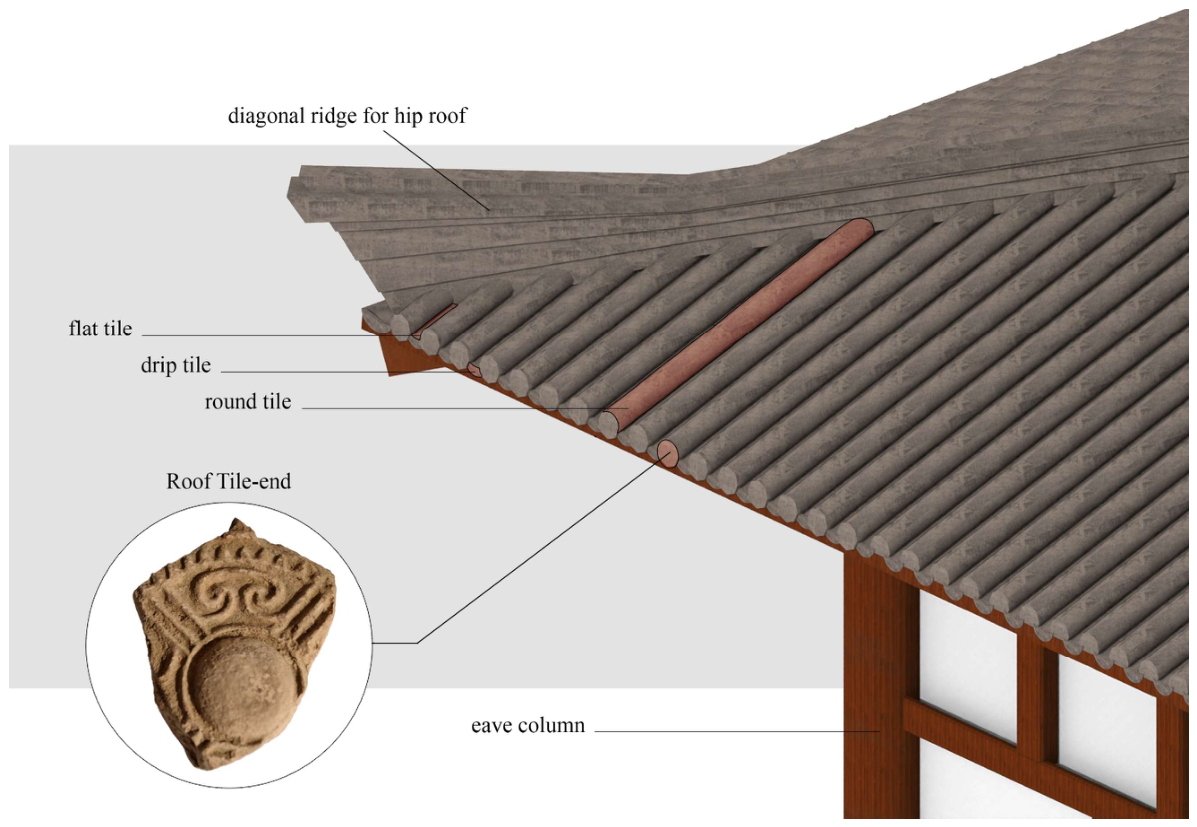
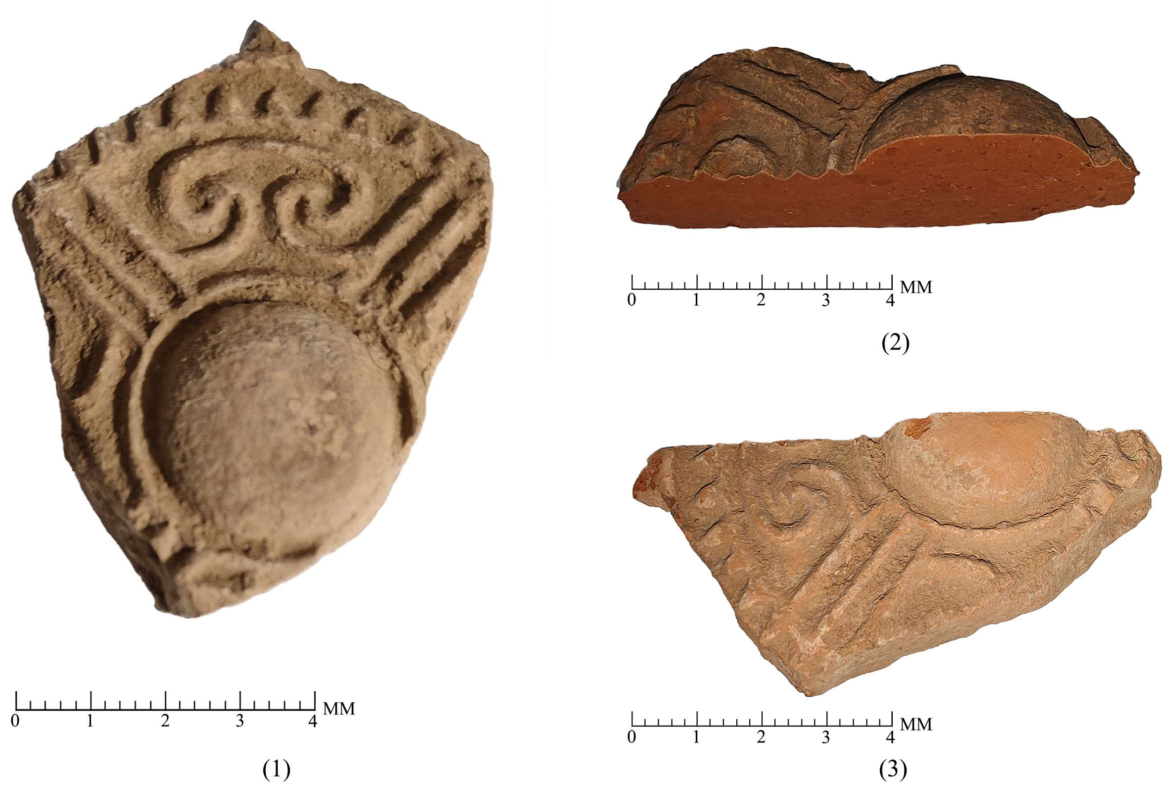
2.1. Han Dynasty Red Pottery Eave-End Tiles (Wadang) from the Minyue Kingdom
2.2. Analysis Methods
- (1).
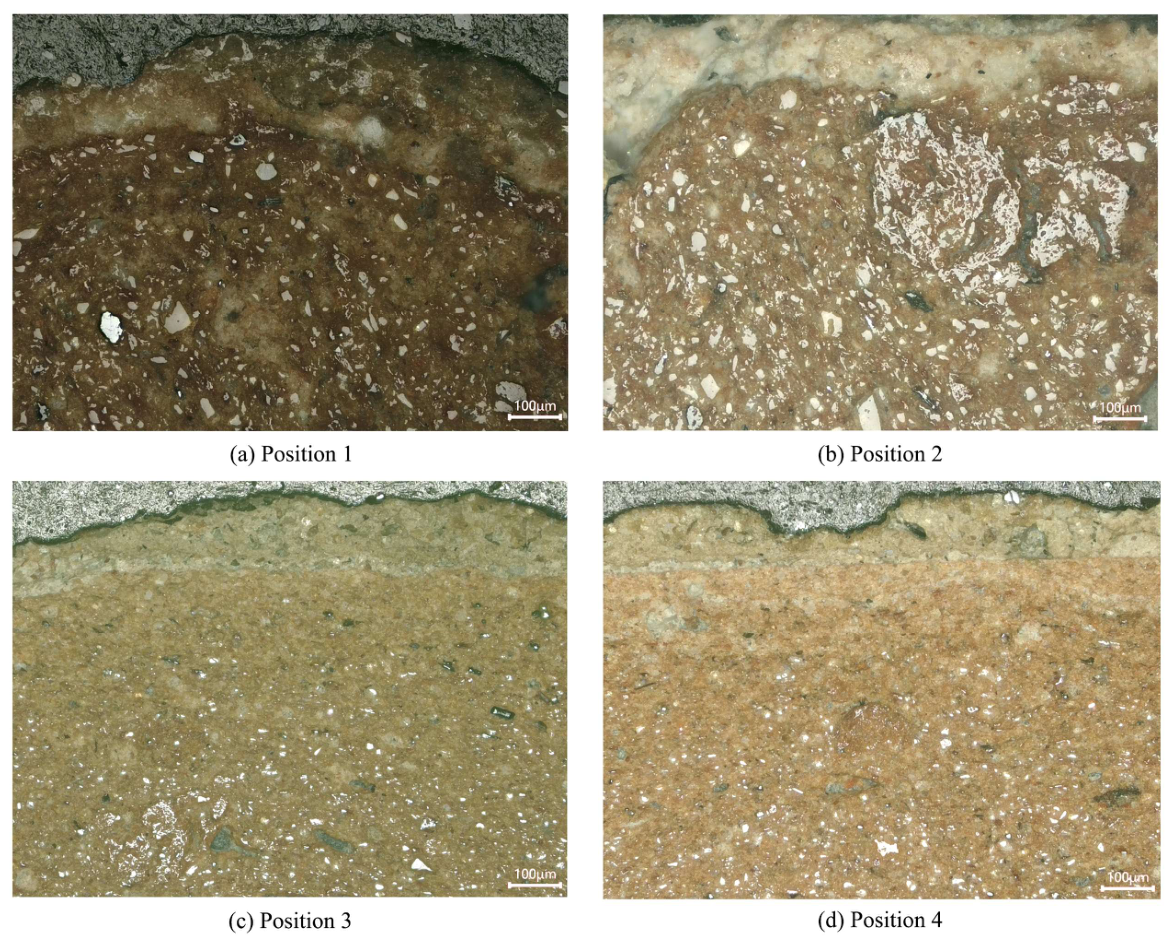
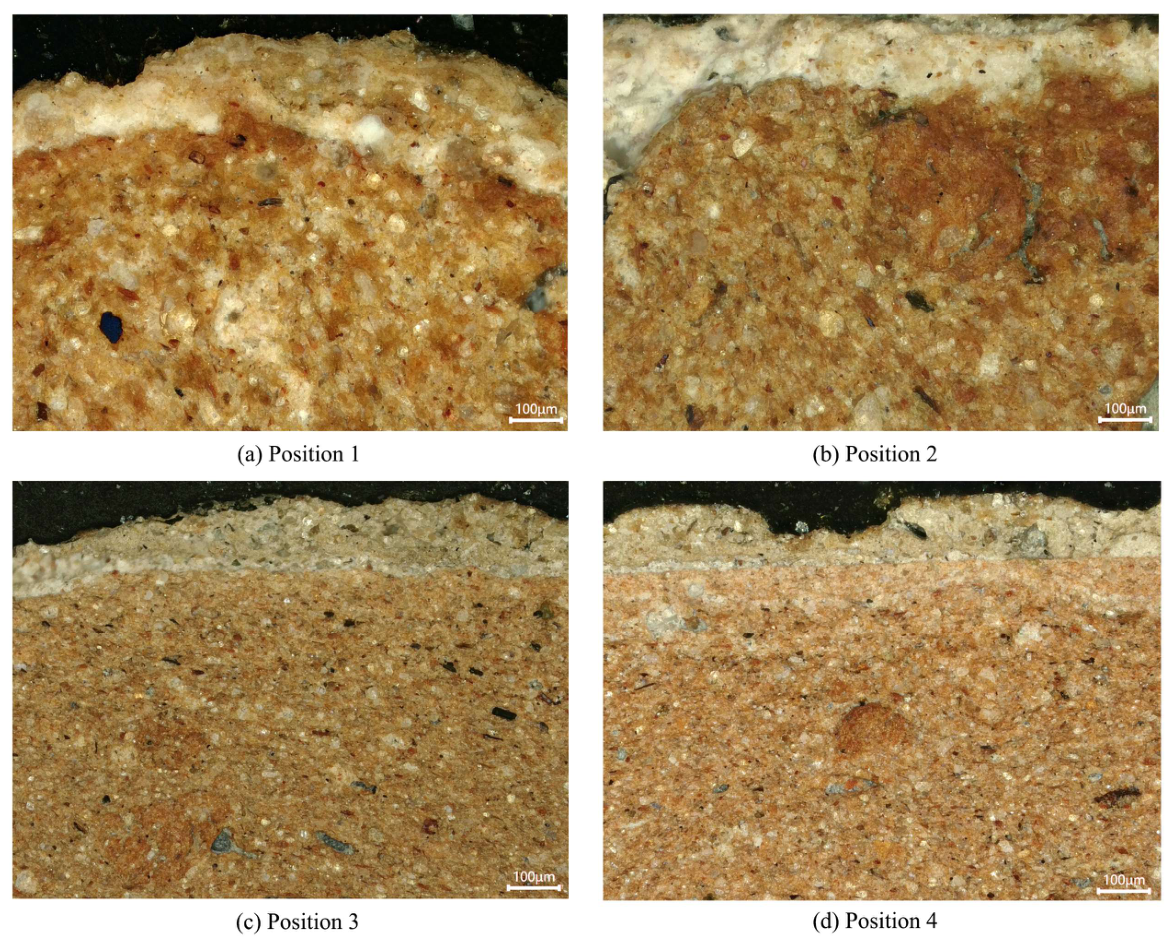
- Petrographic analysis. Petrographic analysis is used to observe the microstructure and phase composition characteristics of eave-end tiles (Wadang). Several representative samples were selected, cut, mounted, and polished to thin slices of approximately 30 μm in thickness. Polarized light microscopy (Leica DM4500P, Wetzlar, Hesse, Germany) was used for the analysis under parallel and crossed light, with a magnification of 50×–200×. Extended Depth of Field (EDF) technology was employed to synthesize multiple focal planes into a single clear image for detailed morphological analysis. The morphology, particle size distribution, and porosity of the quartz, feldspar, calcite, and glass phase components in the tiles were analyzed through thin-section images, thereby allowing us to infer their firing temperature and process level. Scanning electron microscopy (SEM, ZEISS EVO18) was used for additional observation of some samples to confirm the sintering relationship between mineral particles.
- (2).
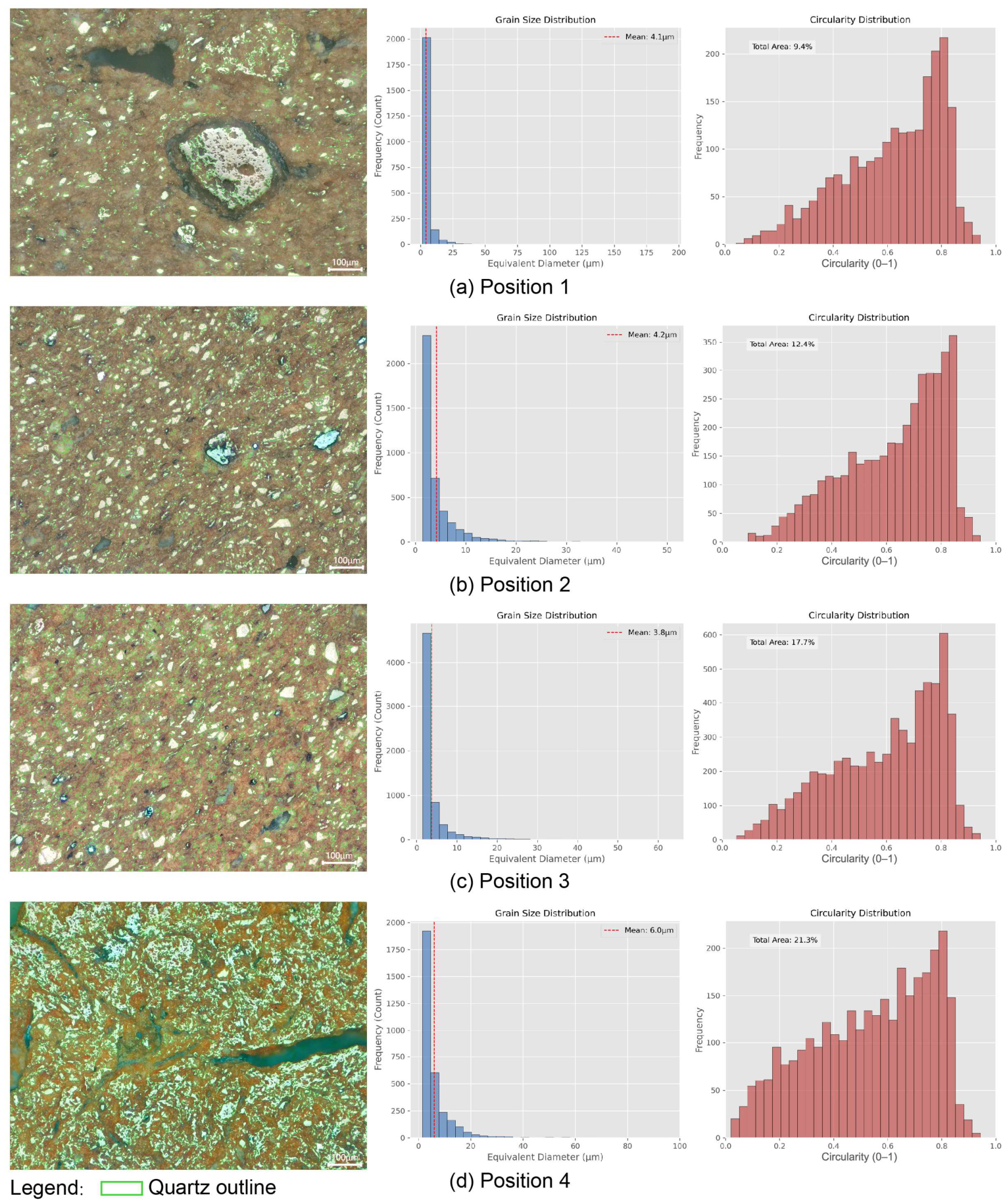
- Quantitative image analysis. To supplement qualitative lithofacies observations and achieve accurate characterization of the distribution of mixed components, we conducted a quantitative analysis of thin-section micrographs based on digital image segmentation. Using a custom Python (Version 3.14.3) script based on the OpenCV library, the original images were converted from RGB to HSV (hue, saturation, lightness) color space to enhance the contrast between mineral inclusions and the clay matrix. An adaptive thresholding algorithm was applied to segment quartz grains based on their high brightness and low saturation characteristics, followed by morphological opening to remove noise. Statistical analysis was then performed on the segmented binary masks to calculate the quartz area fraction (Quartz Area Fraction, %) to indicate the abundance of mixed materials. Furthermore, the geometric parameters of individual grains were extracted, including equivalent diameter (for assessing grain size distribution), roundness (4π × area/perimeter2, for assessing grain roundness), and aspect ratio, providing quantitative data support for interpreting raw material origin and processing standardization.
- (3).
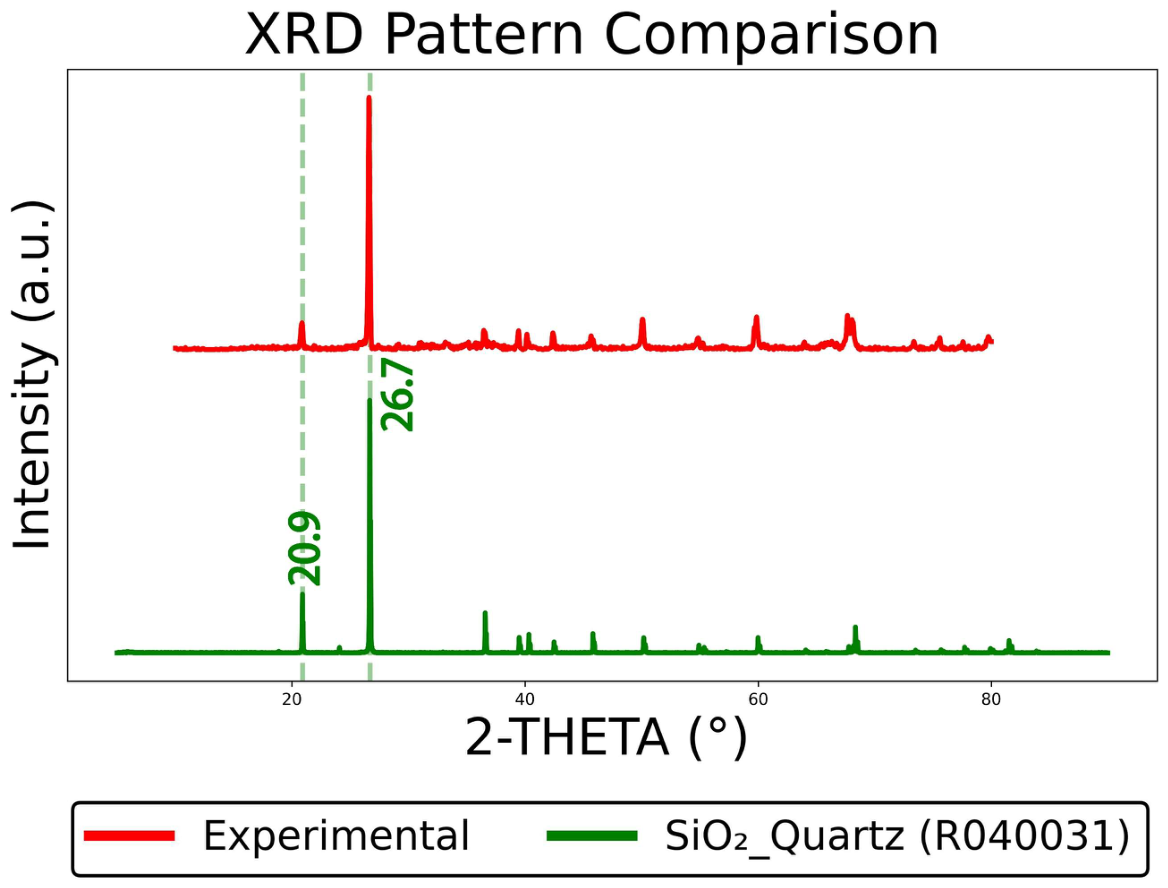
- X-ray diffraction analysis (XRD). XRD was used to identify the main mineral phases in the eave-end tile (Wadang) samples. The experiment used a Bruker D8 Advance X-ray diffractometer, Cu Kα radiation (λ = 1.5406 Å), tube voltage of 40 kV, and tube current of 40 mA. The scanning range was 5–80° (2θ), step size 0.02°, and scanning rate 2°/min. The samples were crushed to a particle size of <75 μm and then loaded into the sample holder for compaction. The obtained diffraction patterns were matched with the Powder Diffraction File (PDF)-4 of the International Centre for Diffraction Data (ICDD) database (https://www.icdd.com/pdf-4-minerals/, accessed on 8 October 2025) and qualitatively identified in combination with JCPDS cards. The main mineral identified was quartz, while other trace phases were not detected due to the masking effect of the strong quartz peaks and their low content. For some samples, the crystal phase ratio was estimated using a semi-quantitative method to assist in determining the firing temperature and raw material ratio.
- (4).
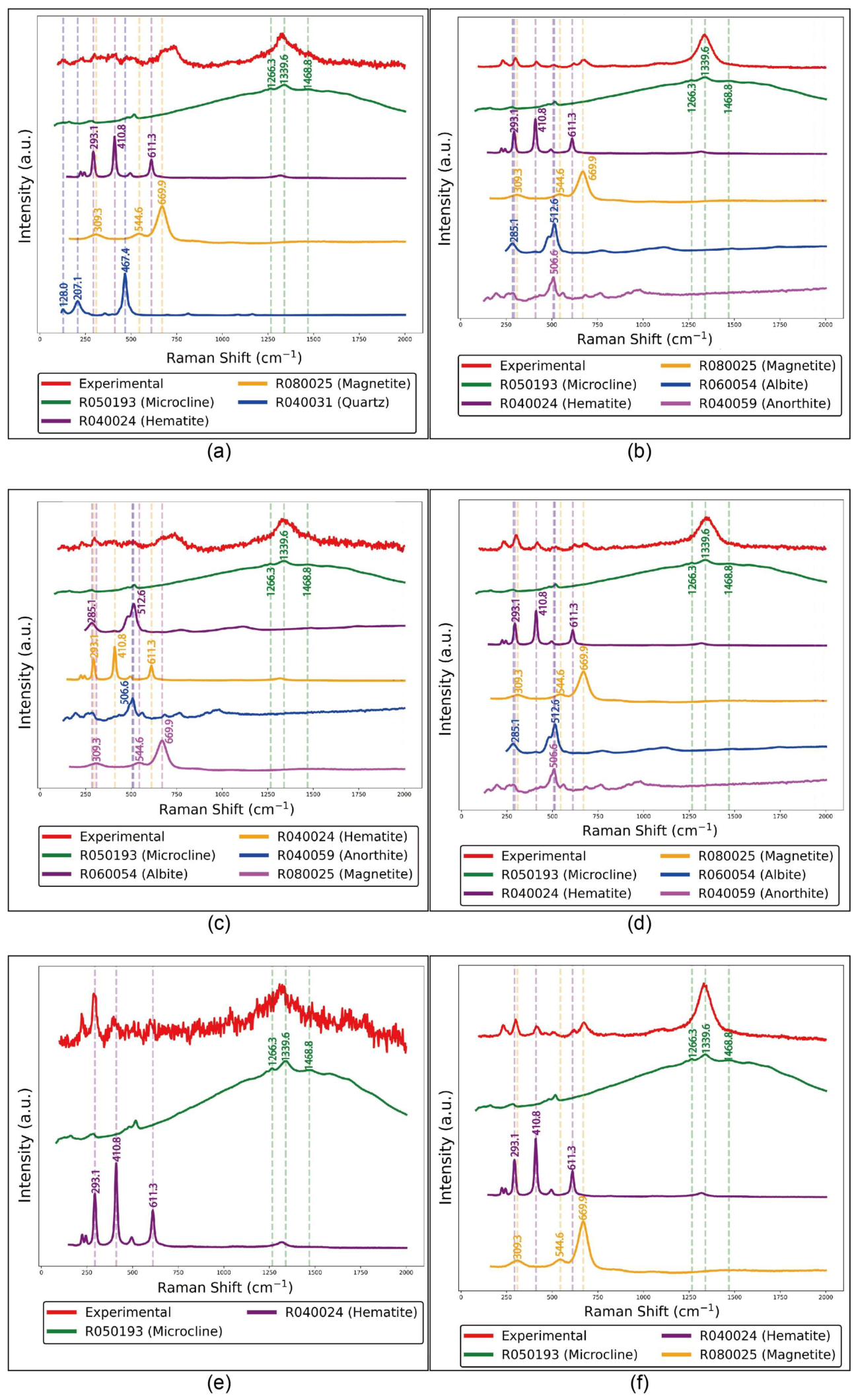
- Raman spectroscopy analysis. Raman spectroscopy is used to identify the mineral structure and glass phase characteristics of the samples. A Horiba LabRAM HR Evolution Raman spectrometer was used, with a laser wavelength of 532 nm and a laser power controlled at <1 mW to avoid thermal damage. The microscope magnification was 50×. The spectral acquisition range was 100–2000 cm−1, and each sample was tested three times and averaged. Raman data were processed and baseline corrected using LabSpec 6 software. The main mineral vibration peaks (such as Si–O stretching vibration and Al–O angular vibration) were determined via comparison with the literature database and verified with the XRD results to identify possible amorphous phases and mineral transformation characteristics.
3. Results
3.1. Petrographic Analysis Results
3.2. Microstructural Heterogeneity Analysis
3.3. XRD Analysis
3.4. Raman Spectroscopy Analysis
4. Discussion
5. Conclusions
Author Contributions
Funding
Data Availability Statement
Conflicts of Interest
References
- Li, G. Migrating Fujianese: Ethnic, Family, and Gender Identities in an Early Modern Maritime World; Brill: Leiden, The Netherlands, 2016. [Google Scholar]
- Mount Wuyi. Available online: https://whc.unesco.org/en/list/911/ (accessed on 8 October 2025).
- Ruins of the Imperial City of the Minyue Kingdom. Available online: http://wwj.wlt.fujian.gov.cn/xwzx/wbyw/202410/t20241021_6550993.htm (accessed on 8 October 2025).
- Why Is the Ruins of the Imperial City of the Minyue Kingdom Called “China’s Pompeii”? Available online: http://wwj.wlt.fujian.gov.cn/xwzx/wbyw/202304/t20230410_6146954.htm (accessed on 8 October 2025).
- A Visit to Chengcun Village, a Historical and Cultural Village in Wuyishan, to See the Guardians of the Minyue Kingdom. Available online: https://www.sinowh.org.cn/Mobile/Article?ArticleId=b0615be8-4c9f-4963-b61c-4d186d1536de (accessed on 21 December 2025).
- Wang, Z.; Jin, J.; Lou, J.; Wei, C.; Zuo, X.; Ling, Z.; Wei, J.; Xu, J.; Qiu, J.; Li, Z. Luminescence dating reveals the historical utilization of the Minyue State’s capital city during the Han Dynasty, China. Holocene 2026, 09596836261440844. [Google Scholar] [CrossRef]
- Chengcun Han Dynasty City Site: The First Han Dynasty Archaeological City in Jiangnan. Available online: http://fjnews.fjsen.com/2020-03/23/content_30233510_0.htm (accessed on 21 December 2025).
- Fujian Daily: The Lives of the Minyue People Are So Exquisite! Available online: https://www.fjdaily.com/app/content/2022-06/30/content_1503029.html (accessed on 21 December 2025).
- Xingbo, L.; Peijun, A. Construction. In Chinese Handicrafts; Springer Nature: Singapore, 2023; pp. 227–296. [Google Scholar] [CrossRef]
- Fu, X.; Steinhardt, N. Traditional Chinese Architecture: Twelve Essays; Princeton University Press: Princeton, NJ, USA, 2017; Available online: http://digital.casalini.it/9781400885138 (accessed on 8 October 2025).
- Cai, Y.; Teng, M. Research on production technology and related issues of tile ends in the Warring States Period and the early Han Dynasty. Acta Archaeol. Sin. 2017, 3, 345–368. [Google Scholar]
- Li, F. Tile Ends of the Ancient City of Qi; Cultural Relics Publishing House: Beijing, China, 1990; pp. 45–67. [Google Scholar]
- Liu, Z.; Zhang, J. A Preliminary Study on Bricks and Tiles of the Western Han Dynasty. J. Archaeol. 2007, 3, 329–362. [Google Scholar]
- Sarhaddi-Dadian, H.; Ramli, Z.; Rahman, N.H.S.N.A.; Mehrafarin, R. X-ray diffraction and X-ray fluorescence analysis of pottery shards from new archaeological survey in south region of Sistan, Iran. Mediterr. Archaeol. Archaeom. 2015, 15, 45. Available online: https://www.maajournal.com/index.php/maa/article/view/266 (accessed on 8 October 2025).
- Mazzocchin, G.A.; Agnoli, F.; Colpo, I. Investigation of roman age pigments found on pottery fragments. Anal. Chim. Acta 2003, 478, 147–161. [Google Scholar] [CrossRef]
- Moon, D.-H.; Kim, S.-J.; Nam, S.-W.; Cho, H.-G. X-ray Diffraction Analysis of Clay Particles in Ancient Baekje Black Pottery: Indicator of the Firing Parameters. Minerals 2021, 11, 1239. [Google Scholar] [CrossRef]
- Choi, H.; Sun, G.M.; Uhm, Y.R. Analysis of red pottery bodies from South Korea using Mössbauer spectroscopy. J. Radioanal. Nucl. Chem. 2023, 332, 5119–5126. [Google Scholar] [CrossRef]
- Kostova, B.; Dumanov, B.; Mihaylova, K. Archaeological bricks and tiles from Southeast Bulgaria—Determination of raw material and production technology by chemical, phase, and thermal analyses. Mediterr. Archaeol. Archaeom. 2023, 23, 1–22. [Google Scholar]
- Zhao, J.; Xiao, J.; Liu, T.; Liu, S. Petrographic and chemical analyses of ceramic roof tile end caps from the ritual temple of Jin Dynasty in Changbai Mountain. J. Archaeol. Sci. Rep. 2025, 62, 105032. [Google Scholar] [CrossRef]
- Qin, J.; Jiang, B. The Changes in the Internal and External Construction Techniques of Bamboo Tile in the Qin and Han Dynasties. Cult. Relics Apprais. Apprec. 2010, 7. [Google Scholar]
- Wang, M.H. Making Writing: The Design of Western Han Chang’an Eave Tiles. Artibus Asiae 2018, 78, 101–150. Available online: http://www.jstor.org/stable/45049818 (accessed on 13 October 2025). [CrossRef]
- Mei, D.; Li, L.; Chen, W.; Cheng, Y. Study on the Classification of Chinese Glazed Pagodas. Buildings 2024, 14, 4084. [Google Scholar] [CrossRef]
- Liu, Z.; Zhang, Z. A Preliminary Study of Semi-circular Roof Tiles of the Western Han. Chin. Archaeol. 2009, 9, 202–206. [Google Scholar] [CrossRef]
- A Small Eave-End Tile Hides the Universe, by the People’s Govemment of Guangzhou Municipality. Available online: https://www.gz.gov.cn/zlgz/tsgz/content/post_5803764.html (accessed on 8 October 2025).
- Fu in Cultural Relics: Tiger and Phoenix Patterned Tiles, “Le Weiyang” Eave-End Tiles—A Leap in Fujian’s Architectural Craftsmanship and Aesthetic Culture During the Han Dynasty, by Fujian Provincial Bureau of Cultural Heritage. Available online: http://wwj.wlt.fujian.gov.cn/wwzy/wwgy/202507/t20250709_6965668.htm (accessed on 9 October 2025).
- Xu, Y.; Wan, W. A Study on the Phenomenon of Burial Tiles in Tombs during the Han, Wei and Jin Dynasties. North. Cult. Relics 2024, 3, 68–78. Available online: https://chn.oversea.cnki.net/kcms/detail/detail.aspx?filename=BJWW202403008&dbcode=CJFQ&dbname=CJFDLAST2024&uniplatform=NZKPT (accessed on 21 December 2025).
- Okuno, M.; Marumo, F. The structures of anorthite and albite melts. Mineral. J. 1982, 11, 180–196. [Google Scholar] [CrossRef]
- Klein, L.C.; Uhlmann, D.R. Crystallization behavior of anorthite. J. Geophys. Res. 1974, 79, 4869–4874. [Google Scholar] [CrossRef]
- Cao, M.; Zhao, X.; Xing, G.; Fan, F.; Yu, M.; Duan, Z.; Chu, P.; Chen, R. Tectonic transition from subduction to retreat of the palaeo-Pacific plate: New geochemical constraints from the late Mesozoic volcanic sequence in eastern Fujian Province, SE China. Geol. Mag. 2021, 158, 1074–1108. [Google Scholar] [CrossRef]
- Xu, X.; Dong, C.; Li, W.; Zhou, X. Late Mesozoic intrusive complexes in the coastal area of Fujian, SE China: The significance of the gabbro-diorite–granite association. Lithos 1999, 46, 299–315. [Google Scholar] [CrossRef]
- Jiang, H.; Li, W.Q.; Jiang, S.Y.; Wang, H.; Wei, X.P. Geochronological, geochemical and Sr-Nd-Hf isotopic constraints on the petrogenesis of Late Cretaceous A-type granites from the Sibumasu Block, Southern Myanmar, SE Asia. Lithos 2017, 268, 32–47. [Google Scholar] [CrossRef]
- Shu, L.; Deng, P.; Yu, J.; Wang, Y.; Jiang, S. The age and tectonic environment of the rhyolitic rocks on the western side of Wuyi Mountain, South China. Sci. China Ser. D Earth Sci. 2008, 51, 1053–1063. [Google Scholar] [CrossRef]
- Duchesne, J.C.; Demaiffe, D. Trace elements and anorthosite genesis. Earth Planet. Sci. Lett. 1978, 38, 249–272. [Google Scholar] [CrossRef]
- Brown, W.L.; Parsons, I. Feldspars in igneous rocks. In Feldspars and Their Reactions; Springer: Dordrecht, The Netherlands, 1994; pp. 449–499. [Google Scholar] [CrossRef]
- Qi, D.; Yu, R.; Zhang, R.; Ge, Y.; Li, J. Comparative studies of Danxia landforms in China. J. Geogr. Sci. 2005, 15, 337–345. [Google Scholar] [CrossRef]
- Song, Y. Tiangong Kaiwu (Exploitation of the Works of Nature). ArtChina.net. 1997. Available online: http://www.chinaknowledge.de/Literature/Science/tiangongkaiwu.html (accessed on 17 October 2025).
- Nara National Research Institute for Cultural Properties Bulletin 85: Gui Palace of Chang’an City of the Han Dynasty; Nara National Research Institute for Cultural Properties, National Institutes for Cultural Heritage: Nara, Japan, 2011. [CrossRef]
- Qiang, Y. The Exploration of Chu Capitals. Doctoral Dissertation, Alma Mater Studiorum Università di Bologna, Bologna, Italy, 2021. [Google Scholar] [CrossRef]
- The Last Capital! This Ancient City Wall Ruin Brings a New Breakthrough in Shouchun Archaeology. Available online: https://cloud.kepuchina.cn/newSearch/imgText?id=7201043027748392960 (accessed on 21 December 2025).
- Hu, J.; Qi, G. Ceramics. In Chinese Handicrafts; Hu, J., Li, J., Wang, L., Eds.; Springer: Singapore, 2022. [Google Scholar] [CrossRef]
- Yang, C. Military System and Equipment of the Minyue Kingdom in the Western Han Dynasty. In Proceedings of the Academic Symposium on Minyue Culture, an Important Source of Fujian Culture; Fujian Yanhuang Culture Research Association and Fujian Provincial Department of Culture, Ed.; Straits Literature and Art Publishing House: Fuzhou, China, 2001; pp. 70–77. Available online: https://chn.oversea.cnki.net/KCMS/detail/detail.aspx?dbcode=CPFD&dbname=CPFD9908&filename=FJMX200104001007&uniplatform=OVERSEA&v=c8PA8pMFhSEFQOt3WhWtBq-wxu_w-7-tmhBFYx9yg-cHc5Q4-2XlDRHIh_egRJDVhlecQ9OGFAA%3d (accessed on 21 December 2025).
- Liu, Z. The social structure of Minyue during the Qin and Han dynasties. In Minyue Culture Research—Proceedings of the Academic Symposium on Minyue Culture; Fujian Yanhuang Culture Research Association, Fujian Provincial Department of Culture, Eds.; Straits Literature and Art Publishing House: Fuzhou, China, 2001; pp. 78–89. Available online: https://chn.oversea.cnki.net/KCMS/detail/detail.aspx?dbcode=CPFD&dbname=CPFD9908&filename=YJWS200104001009&uniplatform=OVERSEA&v=TLbdk8mDCaoy9pLd3iJKDKpLu9GKEqvllQrBdsDxlsbJ4BfJXqQToUpXSuVYkOHCkJaOeEOSydY%3d (accessed on 21 December 2025).
- Li, W. An Analysis of the Reasons for the Demise of the Minyue Kingdom. J. Longyan Univ. 2005, 2, 52–54. Available online: https://chn.oversea.cnki.net/KCMS/detail/detail.aspx?dbcode=CJFD&dbname=CJFD2005&filename=LYSX200502017&uniplatform=OVERSEA&v=PaXWrDD0fIpFgsLbm0XJ7QZyrgb6Rbuoj8rAwr2h0rt7vdBVff7BFEfweICYTZnc (accessed on 21 December 2025).





| Sample | 1 | 2 | 3 | 4 |
|---|---|---|---|---|
| Quartz Area (%) | 9.37 | 12.38 | 17.67 | 21.30 |
| Total Count | 2229 | 4047 | 6415 | 3182 |
| Mean Size (µm) | 4.08 | 4.19 | 3.77 | 5.97 |
| Median Size (µm) | 2.56 | 2.73 | 2.40 | 3.74 |
| Max Size (µm) | 192.24 | 50.84 | 63.27 | 95.57 |
| Circularity | 0.62 | 0.63 | 0.59 | 0.54 |
| Aspect Ratio | 1.46 | 1.37 | 1.37 | 1.44 |
| Process Steps | Process Name | Process Type |
|---|---|---|
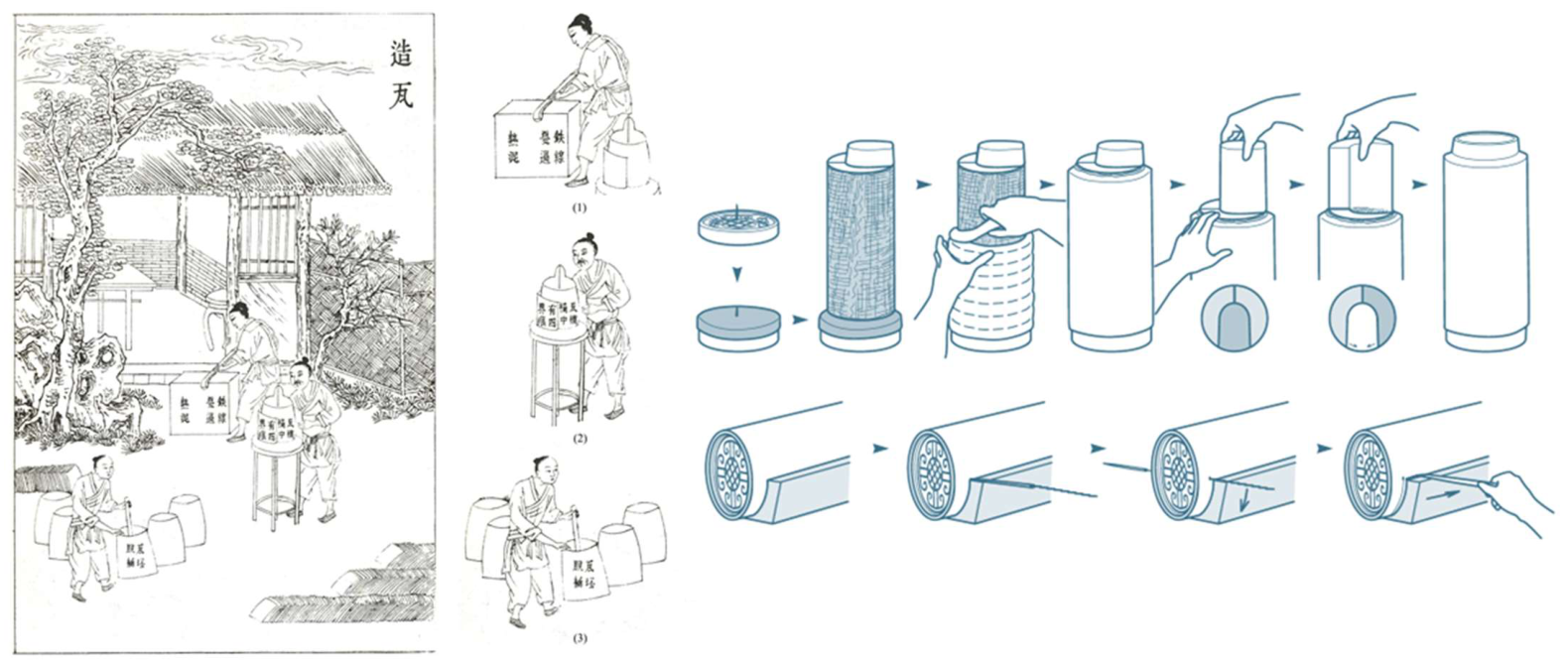
| 1 | Selecting the inner mold | (1). Inner mold structure: Several wooden sticks are placed vertically to form a cylinder. (2). Isolation membrane type: Type A with pockmarks, Type B with convex dots (tiles unearthed from the ruins of the Minyue Kingdom are mainly of this type), Type C with cloth patterns |
| 2 | Throwing | Type A clay strips are coiled around the inner mold; Type B clay sheets are rolled around the inner mold. |
| 3 | Beating to shape | Type A uses a rope-patterned roller; Type B uses a rope-patterned pottery paddle. |
| 4 | Trimming the convex surface of barrel tiles | Type A: all-over rope pattern; Type B: plain and interlaced rope pattern sections; Type C: plain at the beginning with rope pattern at the end (this is the main type of eave-end tiles excavated from the Imperial City of the Minyue Kingdom Ruins); Type D: plain (no patterns or designs). |
| 5 | Trimming the concave surface of barrel tiles | After removing the inner mold, rotate the wheel to finish the surface. After partially finishing the surface, tap the convex points. |
| 6 | Making dangmian (front face) | (1). Theme: rope pattern, animal pattern, plant pattern, cloud pattern, text. (2). Structure: winding structure, symmetrical structure, etc. There is a relationship of inheritance and development between different themes and structures |
| 7 | Making the side wheel | Type A is coiled with mud strips; Type B is molded; Type C is without side wheel. |
| 8 | Connecting the dangmian (front face) to the barrel tiles | Type A: the dangmian and the barrel tile are manufactured integrally and then cut; Type B: the dangmian and the barrel tile are manufactured separately and then joined, leaving no cut marks; Type C: the dangmian and the barrel tile are manufactured separately, joined with clay strips, and then cut (this type of dangmian tile was primarily found at the Imperial City of the Minyue Kingdom). |
| 9 | Making the tile lip | Type A: wheel-made, the tile lip and barrel tile are manufactured separately and then joined; Type B: one end of the barrel tile is pressed inward to form the lip. |
| 10 | Cutting the barrel tile and dangmian | Type A: knife cutting; Type B: knife cutting and rope cutting (this type was used at the Ruins of Han Dynasty Ruins in Chengcun Village); Type C: rope cutting. |
| 11 | Finishing the dangbei (back face) | Some craftsmen trim the dangbei (back face), demonstrating their meticulous craftsmanship. |
Disclaimer/Publisher’s Note: The statements, opinions and data contained in all publications are solely those of the individual author(s) and contributor(s) and not of MDPI and/or the editor(s). MDPI and/or the editor(s) disclaim responsibility for any injury to people or property resulting from any ideas, methods, instructions or products referred to in the content. |
© 2026 by the authors. Licensee MDPI, Basel, Switzerland. This article is an open access article distributed under the terms and conditions of the Creative Commons Attribution (CC BY) license.
Share and Cite
Zhou, S.; Zhu, Y.; Zhang, L.; Deng, Q.; Liang, J.; Guo, Z.; Liu, W.; Zheng, L.; Chen, Y. Analysis of Han Dynasty Red Pottery Eave-End Tile from the Minyue Kingdom Ruins. Buildings 2026, 16, 2222. https://doi.org/10.3390/buildings16112222
Zhou S, Zhu Y, Zhang L, Deng Q, Liang J, Guo Z, Liu W, Zheng L, Chen Y. Analysis of Han Dynasty Red Pottery Eave-End Tile from the Minyue Kingdom Ruins. Buildings. 2026; 16(11):2222. https://doi.org/10.3390/buildings16112222
Chicago/Turabian StyleZhou, Shihui, Yufei Zhu, Lei Zhang, Qingnian Deng, Jingwei Liang, Zekai Guo, Wei Liu, Liang Zheng, and Yile Chen. 2026. "Analysis of Han Dynasty Red Pottery Eave-End Tile from the Minyue Kingdom Ruins" Buildings 16, no. 11: 2222. https://doi.org/10.3390/buildings16112222
APA StyleZhou, S., Zhu, Y., Zhang, L., Deng, Q., Liang, J., Guo, Z., Liu, W., Zheng, L., & Chen, Y. (2026). Analysis of Han Dynasty Red Pottery Eave-End Tile from the Minyue Kingdom Ruins. Buildings, 16(11), 2222. https://doi.org/10.3390/buildings16112222