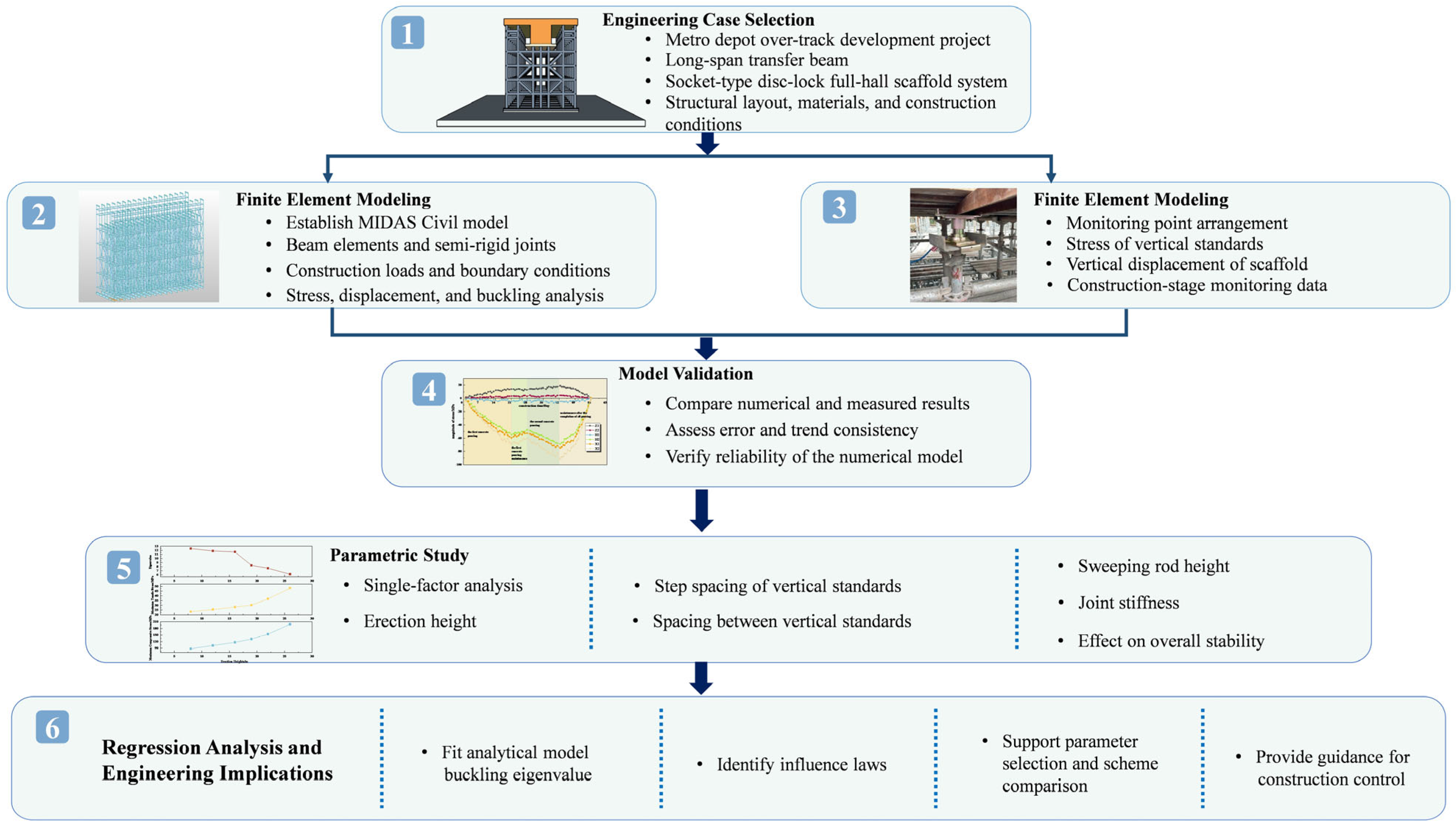
Mechanical Behavior and Parametric Analysis of Socket-Type Disc-Lock Full-Hall Scaffold System for Long-Span Transfer Beams in Metro Depot Over-Track Development

Abstract
1. Introduction
2. Project Profile
3. Finite Element Modeling Method
3.1. Model Assumptions and Limitations
- (1)
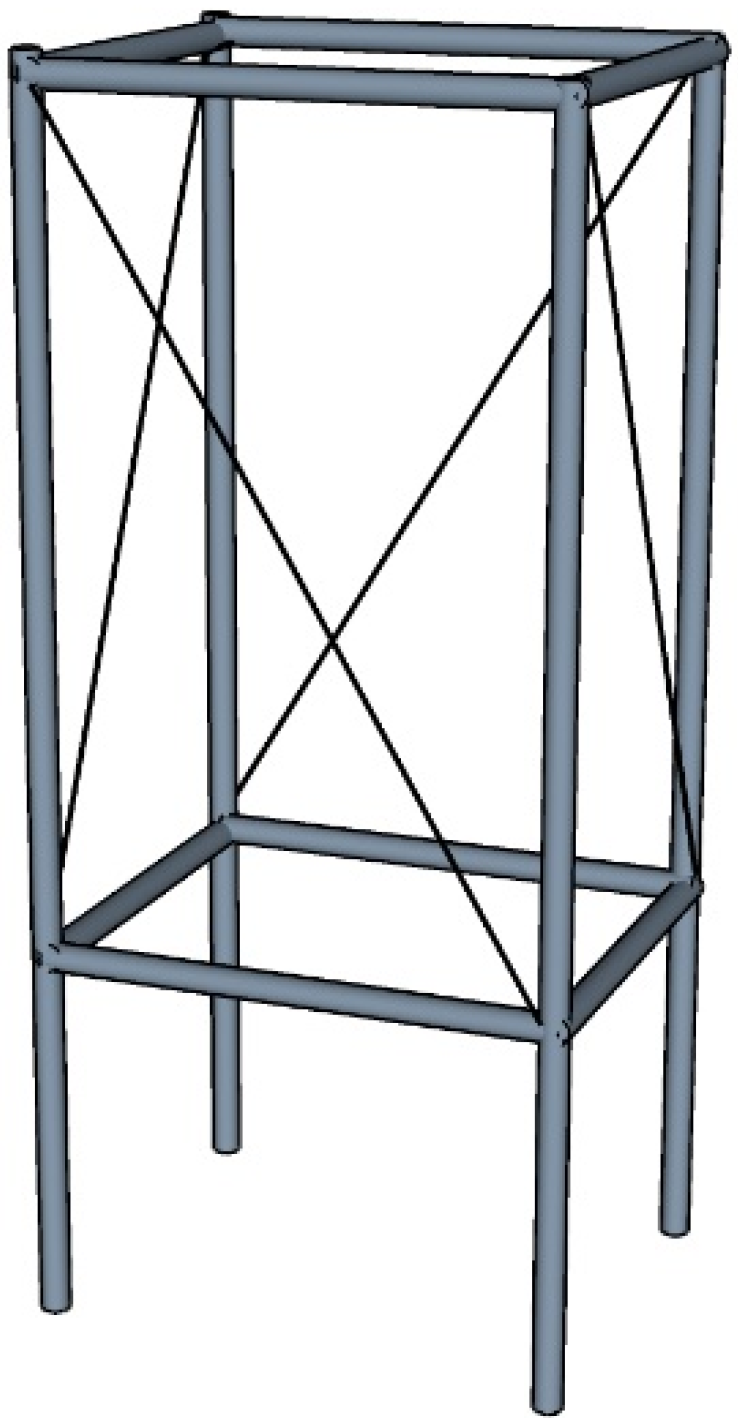
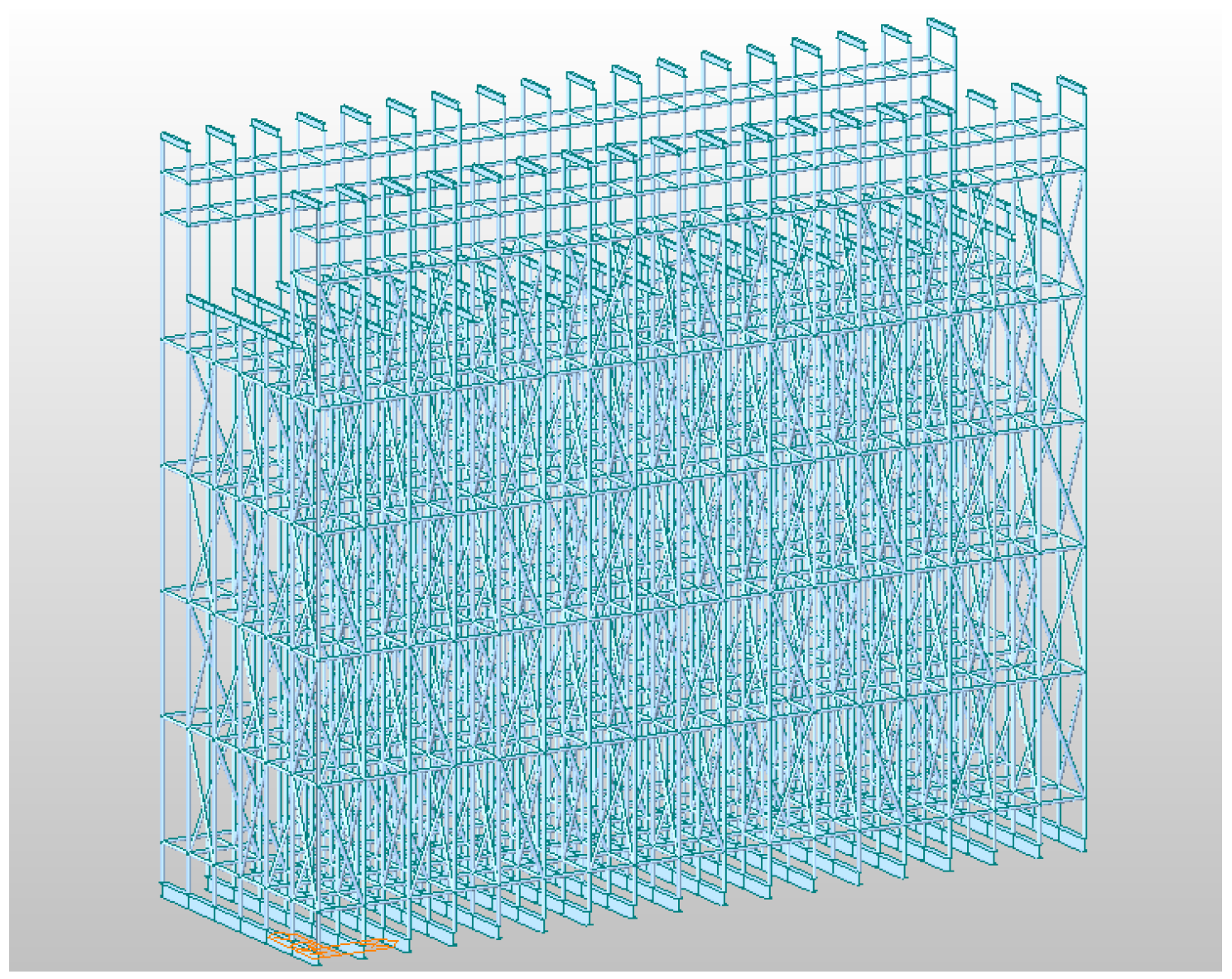
- The scaffold system was treated as a spatial frame structure. The vertical standards, horizontal ledgers, and diagonal braces were all simulated using beam elements, mainly to reflect the overall mechanical behavior, deformation characteristics, and stability features of the scaffold system during construction.
- (2)
- The disc-lock joints were modeled as equivalent semi-rigid connections. A unified rotational stiffness was used to characterize the restraining effect of the joints, thereby reflecting the actual mechanical behavior of the joints, which lies between ideal hinged and fully rigid connections.
- (3)
- The construction loads were treated as equivalent static loads at key construction stages. The loads from fresh concrete, reinforcement, formwork, and construction activities were converted and applied according to the corresponding tributary widths. The wind load was transferred through an auxiliary “virtual surface”, with emphasis placed on capturing the overall response of the scaffold system at each construction stage.
- (4)
- Erection imperfections, such as initial inclination of vertical standards, installation eccentricity, assembly gaps at joints, and compressive deformation of the screw jacks and base plates, were not explicitly considered in this study. The stiffness development of concrete with age during staged pouring, the migration of local construction surcharge, and second-order geometric nonlinear effects were also not further simulated. Therefore, the proposed model is more suitable for analyzing the overall mechanical behavior of the scaffold system during construction, comparing controlling responses, and investigating the influence patterns of key parameters.
3.2. Model Establishment
- (1)
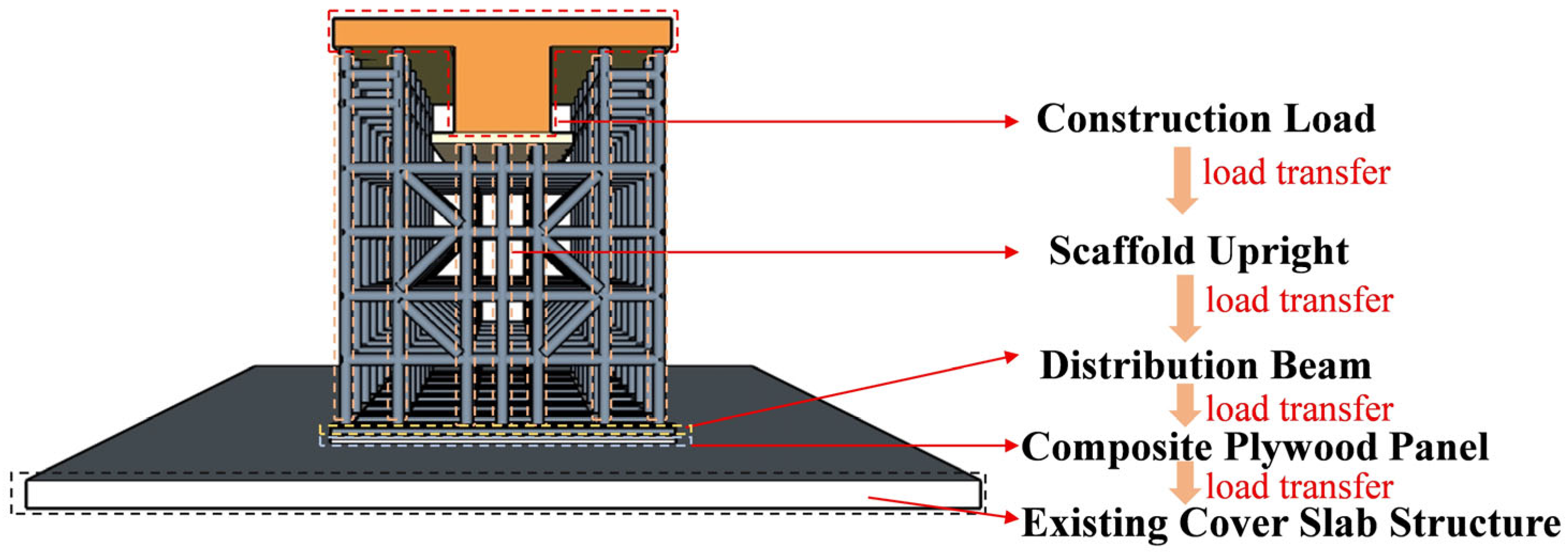
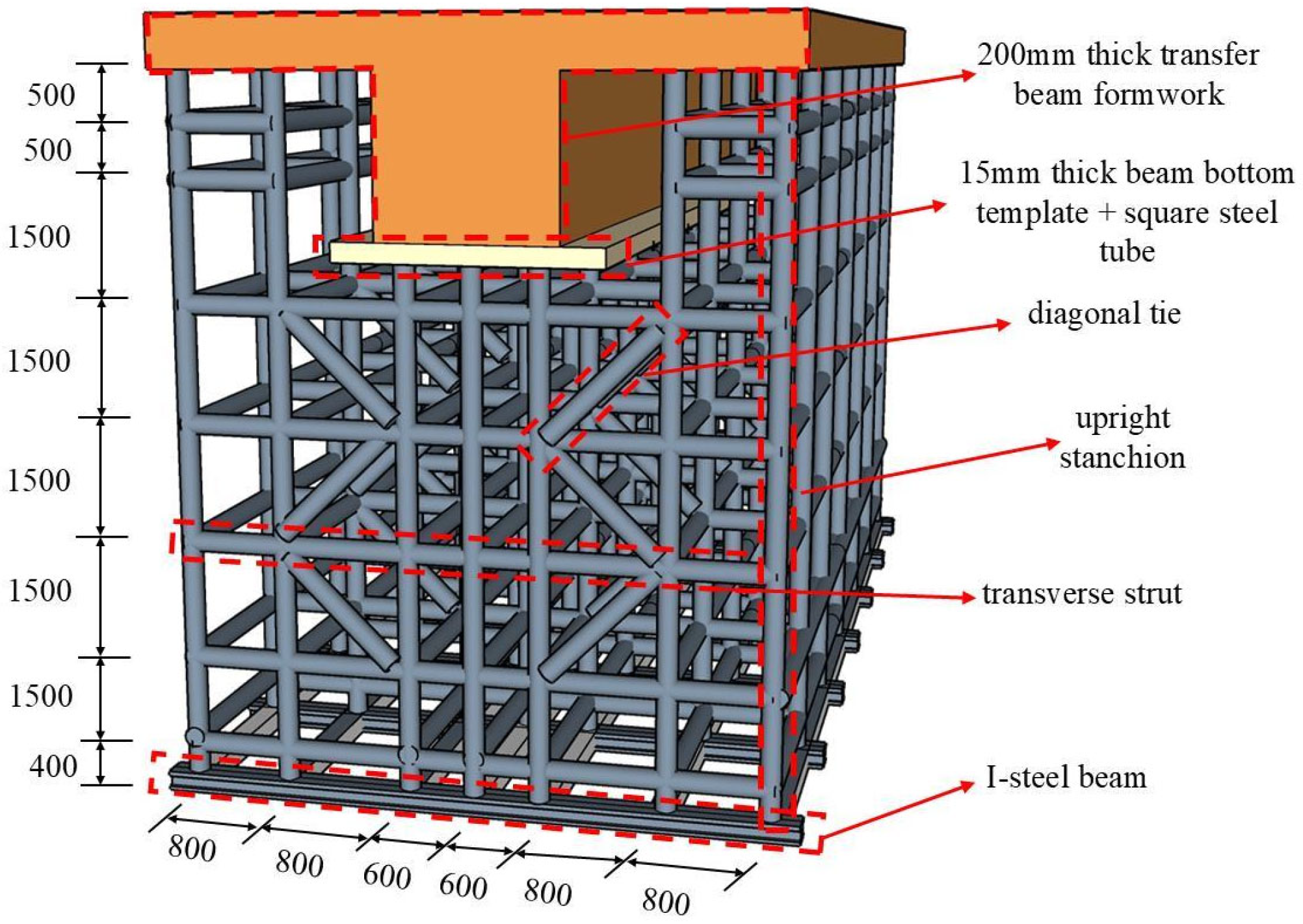
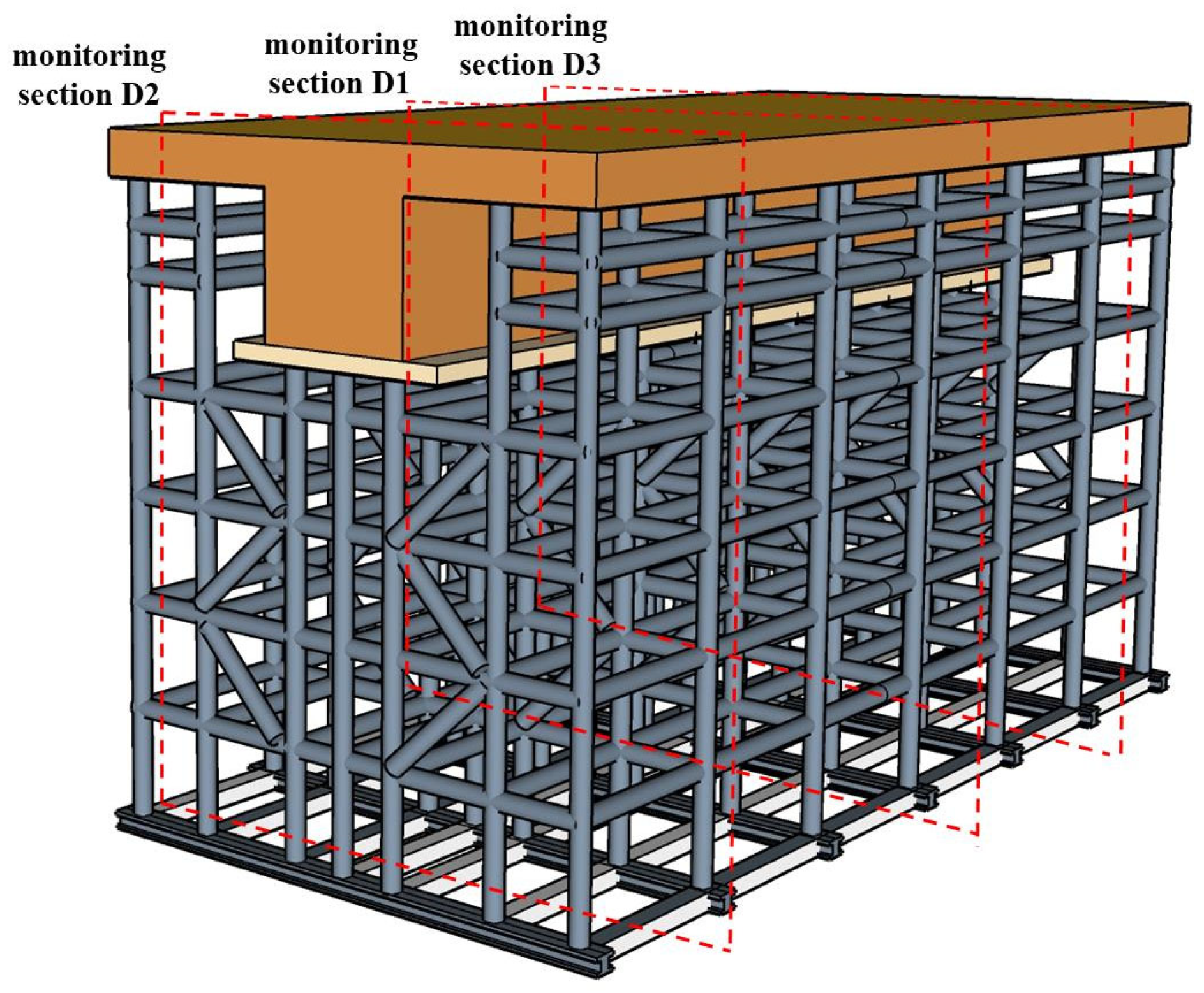
- This study mainly focuses on the socket-type disc-lock scaffold system. Considering the layout and mechanical characteristics of the full-hall scaffold beneath the transfer beam, the transfer beam and the 1-m-wide slab strips on both sides were selected to establish the scaffold model. The modeling range extended from the bottom distribution beams to the channel steel at the top of the scaffold, including the full-hall scaffold beneath the transfer beam and the slab strips on both sides. During load application, the permanent loads of fresh concrete, reinforcement, formwork, and square steel tubes in the beam region and slab-strip regions were calculated separately. These loads were then converted into equivalent line loads according to the tributary width of the channel steel at the top of the scaffold and applied to the channel steel. The converted area load of the permanent load in the beam region was 52.73 kN/m2, corresponding to an equivalent line load of 31.64 kN/m. The converted area load of the permanent load in the slab-strip regions was 9.80 kN/m2, corresponding to an equivalent line load of 5.88 kN/m. Therefore, 82.08 kN/m corresponds to the self-weight line load of the transfer beam member, while 31.64 kN/m and 5.88 kN/m correspond to the equivalent permanent line loads applied to the channel steel in the beam region and slab-strip regions, respectively, in the finite element model [24].
- (2)
- The construction personnel and equipment load was taken as 2.5 kN/m2 according to the relevant code provisions. This construction live load was converted into an equivalent line load and applied to the channel steel at the top of the disc-lock scaffold system. Since the channel steel at the top of the scaffold was arranged along the top surfaces of the vertical standards at a spacing of 600 mm, the construction live load was converted according to the tributary width of 0.60 m for a single channel steel member. The corresponding equivalent line load was therefore 1.5 kN/m.
- (3)
- Considering the influence of wind load, the wind load was calculated according to the relevant code provisions and taken as 0.17 kN/m2. In the finite element model, the wind load was applied by establishing a “virtual surface” between the vertical standard and horizontal ledger joints along the span direction of the transfer beam and imposing surface pressure on this surface, so as to reflect the overall mechanical behavior of the scaffold system under wind action. When converted using the same tributary width of 0.60 m as that of the top channel steel, the corresponding equivalent line load is 0.102 kN/m. However, in the finite element implementation, the wind load was still directly applied to the “virtual surface” as a surface pressure of 0.17 kN/m2, rather than being simplified as a line load acting on the top members.
4. Finite Element Numerical Analysis of Stress and Deformation
4.1. Stress Analysis
4.2. Numerical Simulation Displacement Analysis
5. Stress and Deformation Monitoring Analysis
5.1. Stress Monitoring Analysis
5.2. Vertical Displacement Monitoring Analysis of Support System
6. Parametric Influence Effect Analysis
6.1. Parametric Analysis Scheme
6.2. Multiple Linear Regression Analysis
6.3. Stability Analysis of the Support System Under Different Parameters
6.3.1. Effect of Different Erection Heights
6.3.2. Effect of Different Step Spacings of Vertical Standards
6.3.3. Effect of Different Spacings Between Vertical Standards
6.3.4. Effect of Different Sweeping Rod Heights
6.3.5. Effect of Different Joint Stiffnesses
6.4. Regression Analysis Results
6.5. Engineering Applicability Analysis
- (1)
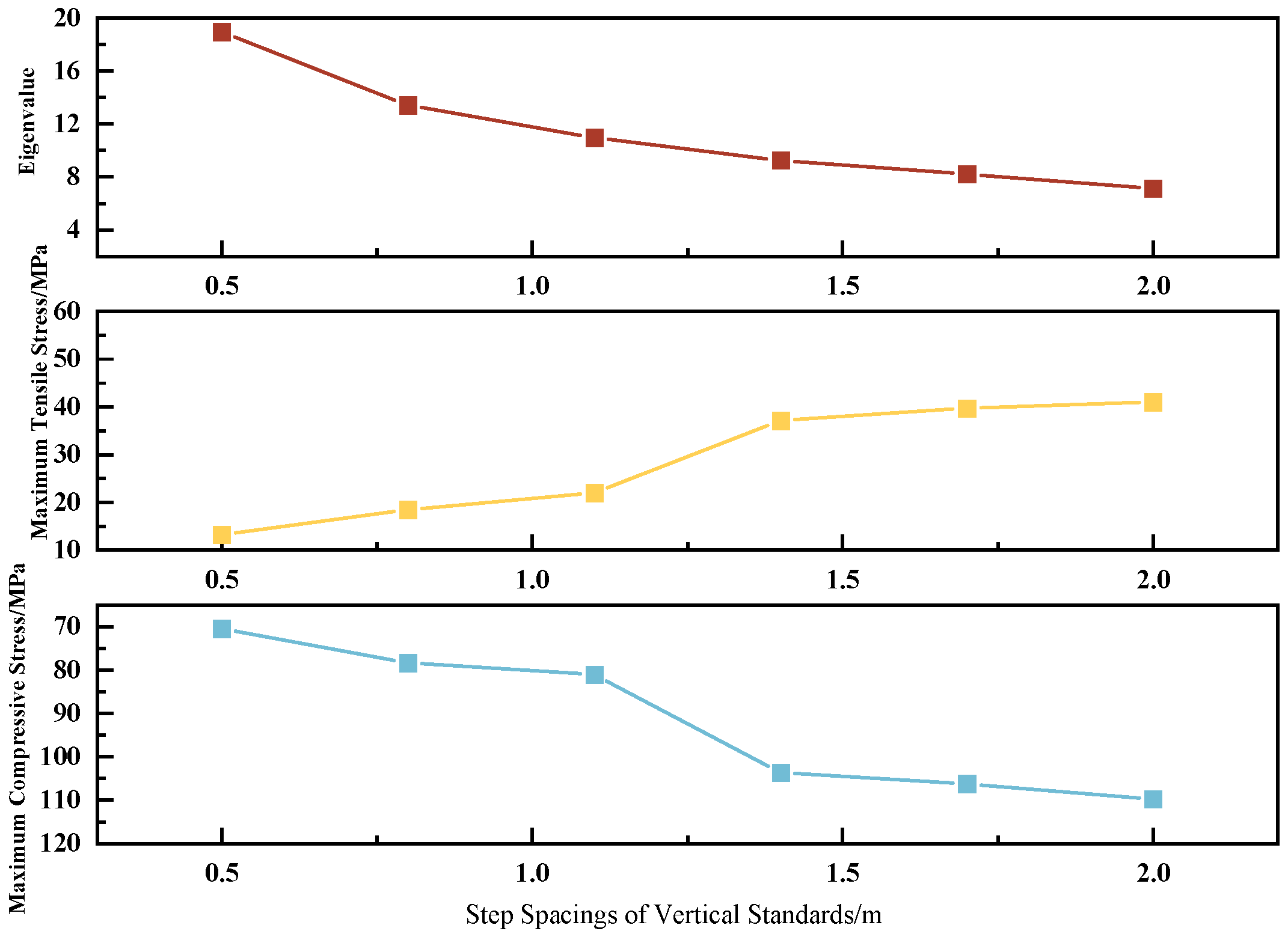
- The parametric analysis shows that the step spacing of vertical standards is the most sensitive factor affecting the overall stability of the scaffold system. Under the calculation conditions adopted in this study, when the step spacing exceeded 1.5 m, the reduction in the buckling eigenvalue became more pronounced, indicating that the overall stability reserve of the scaffold system was more sensitive to variations in step spacing. Therefore, during the scheme design stage, the step spacing of vertical standards should be taken as a priority control parameter. When the spacing between vertical standards cannot be reduced due to site construction constraints, blindly increasing the step spacing should be avoided.
- (2)
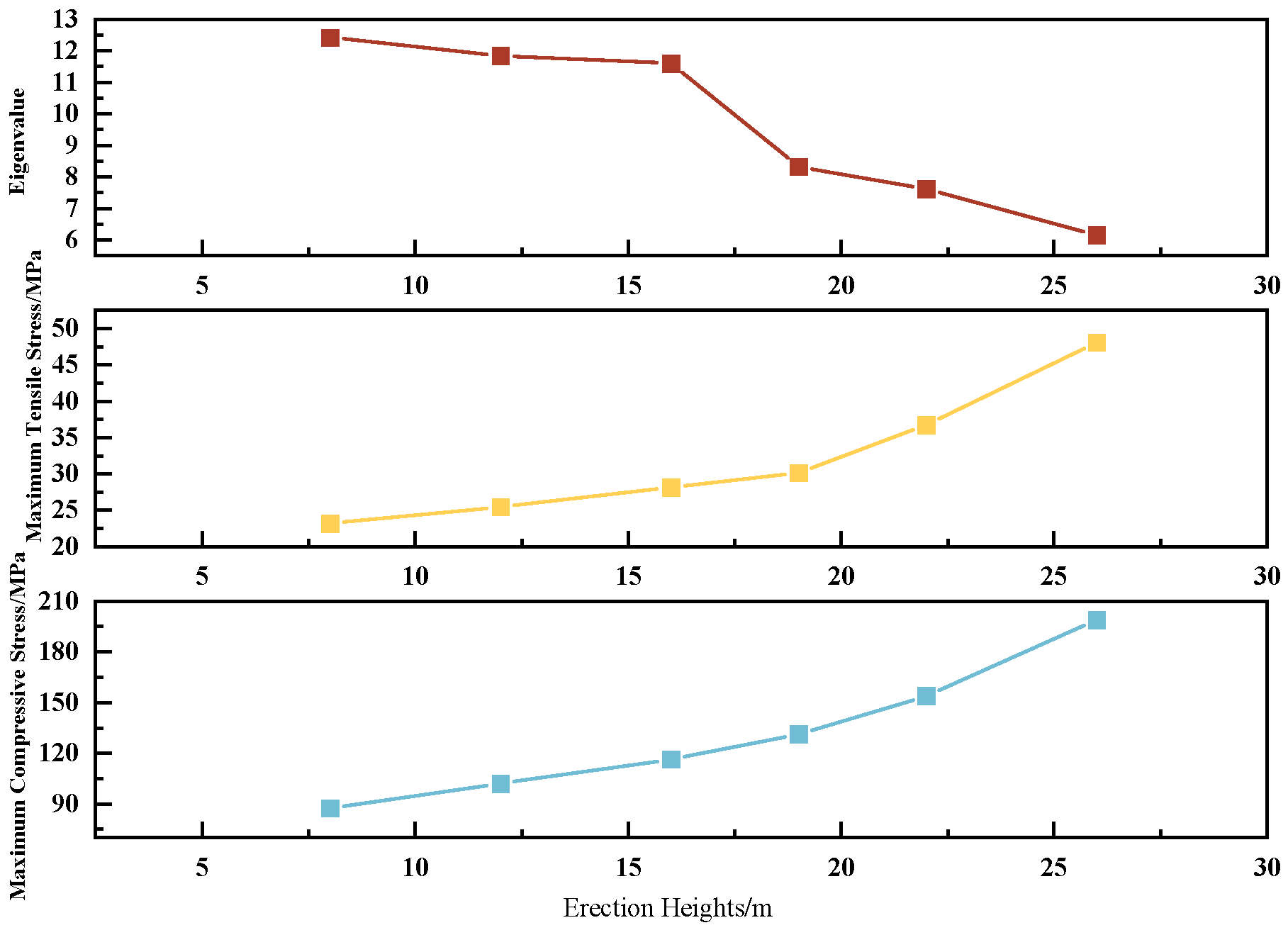
- Erection height has a significant influence on the overall stability of the scaffold system. When the height exceeds 16 m, the bearing capacity decreases noticeably, and the structure becomes more sensitive to initial imperfections and construction disturbances. For scaffold systems higher than 16 m, overall stability should be improved by measures such as adding horizontal cross bracing, strengthening wall-tie restraints, and imposing stricter control requirements on the verticality of vertical standards.
- (3)
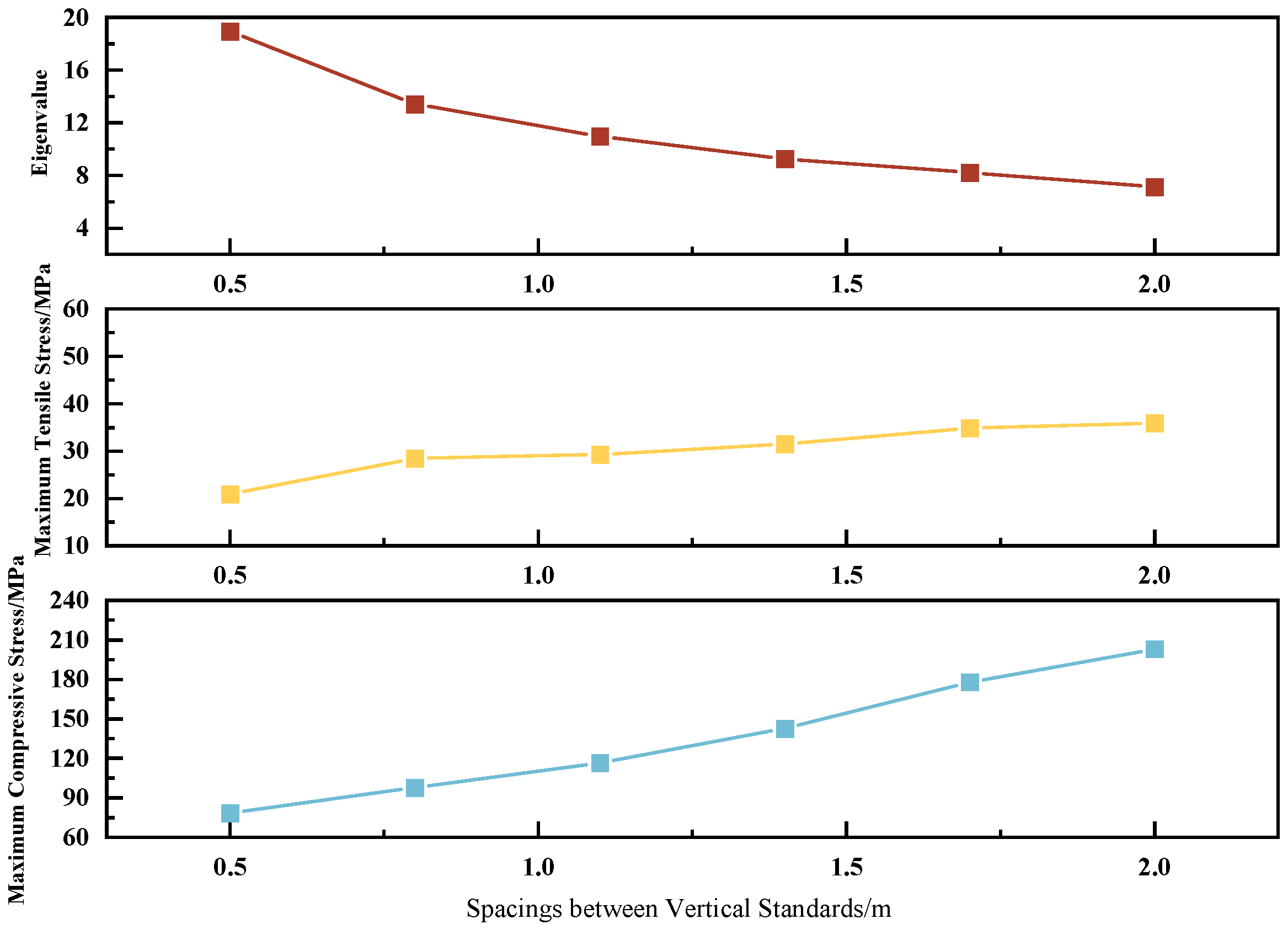
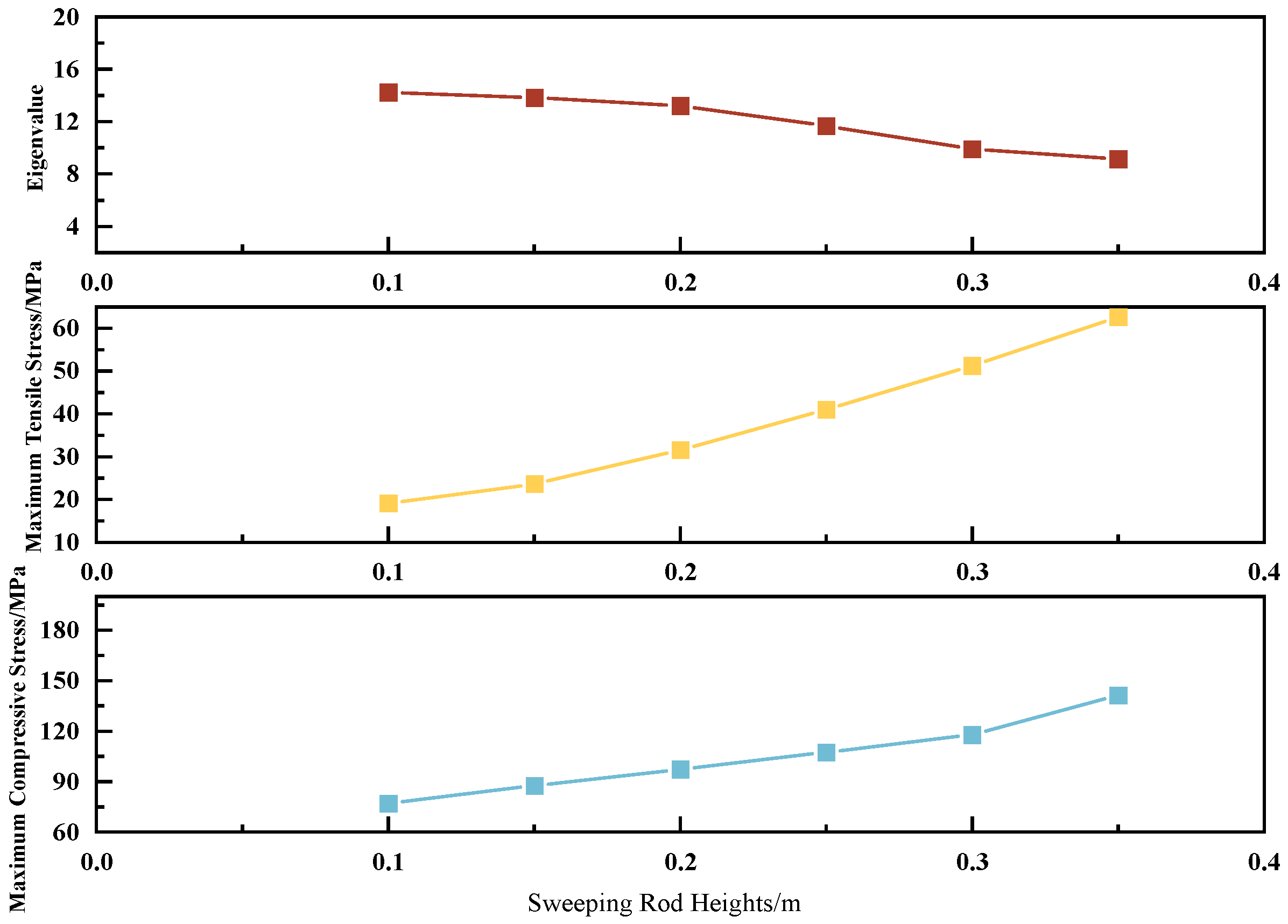
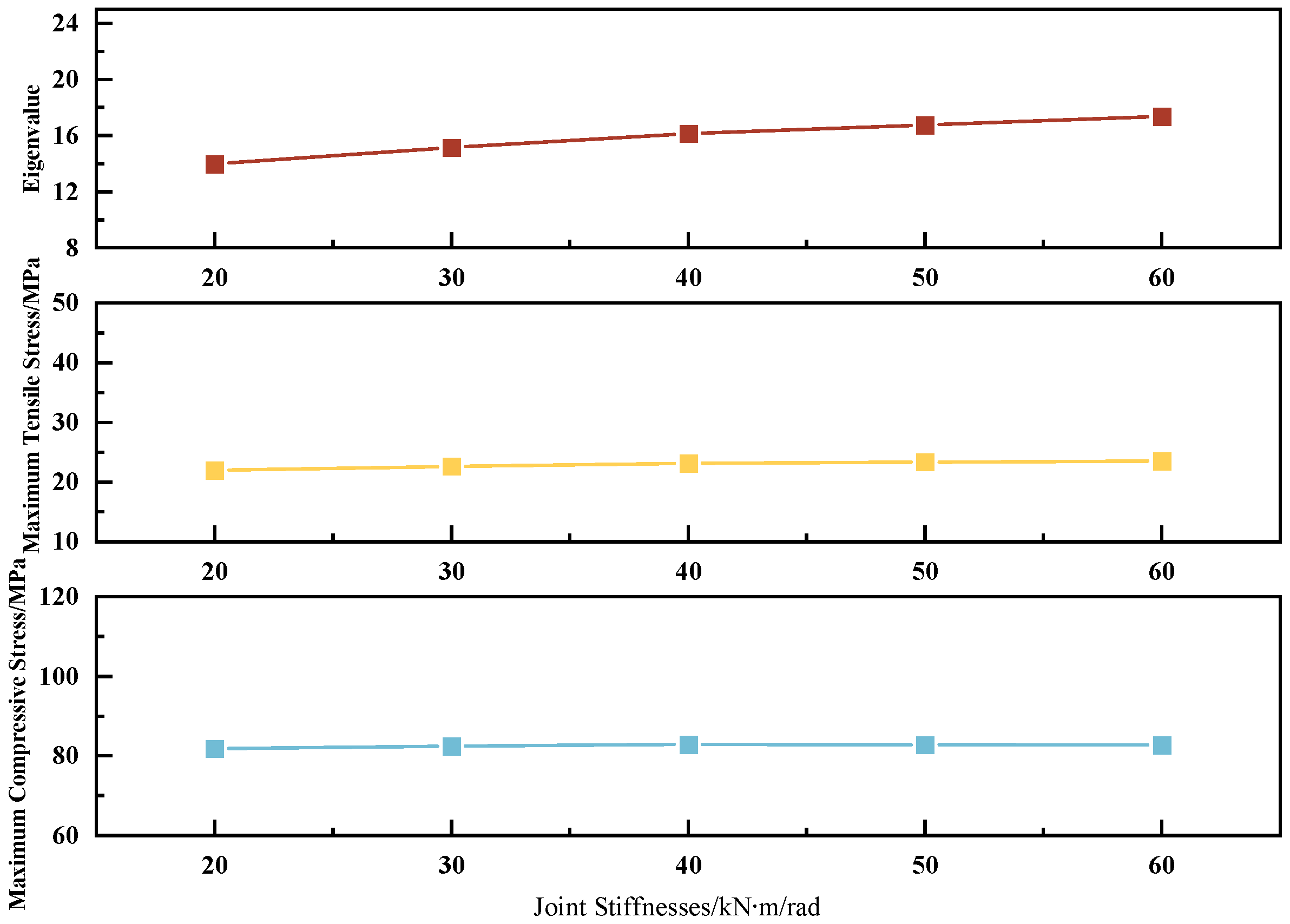
- Based on 28 sets of parametric numerical simulation results, a multiple linear regression fitting model was established for the buckling eigenvalue of the disc-lock scaffold system. The results show that increases in erection height, step spacing of vertical standards, spacing between vertical standards, and sweeping rod height reduce the overall stability of the scaffold system, among which the step spacing of vertical standards has the most significant influence. In contrast, increasing joint stiffness is beneficial for enhancing the overall stability reserve of the scaffold system. The proposed model can provide a reference for scaffold scheme comparison and stability assessment in similar engineering projects.
- (4)
- Increasing joint stiffness helps enhance the overall stability of the scaffold system. During design and construction, disc-lock joints should be properly installed in place, and joint gaps and assembly deviations should be reduced to prevent weakened member-end restraint effects caused by connection looseness.
- (5)
- When the parameter values fall within the range investigated in this study, Equation (4) can first be used to rapidly analyze the buckling eigenvalues of different schemes. Preliminary screening can then be conducted according to the following criteria: when the erection height is greater than 16 m or the step spacing of vertical standards is greater than 1.5 m, the corresponding scheme should be regarded as a condition requiring focused checking and strengthening. When both parameters increase simultaneously, adjustments should preferably be made by reducing the step spacing, optimizing the arrangement of vertical standards, and enhancing joint restraints. This method can be used for rapid judgment during the scheme comparison stage and can reduce the workload associated with repeated modeling and calculation.
7. Conclusions
- (1)
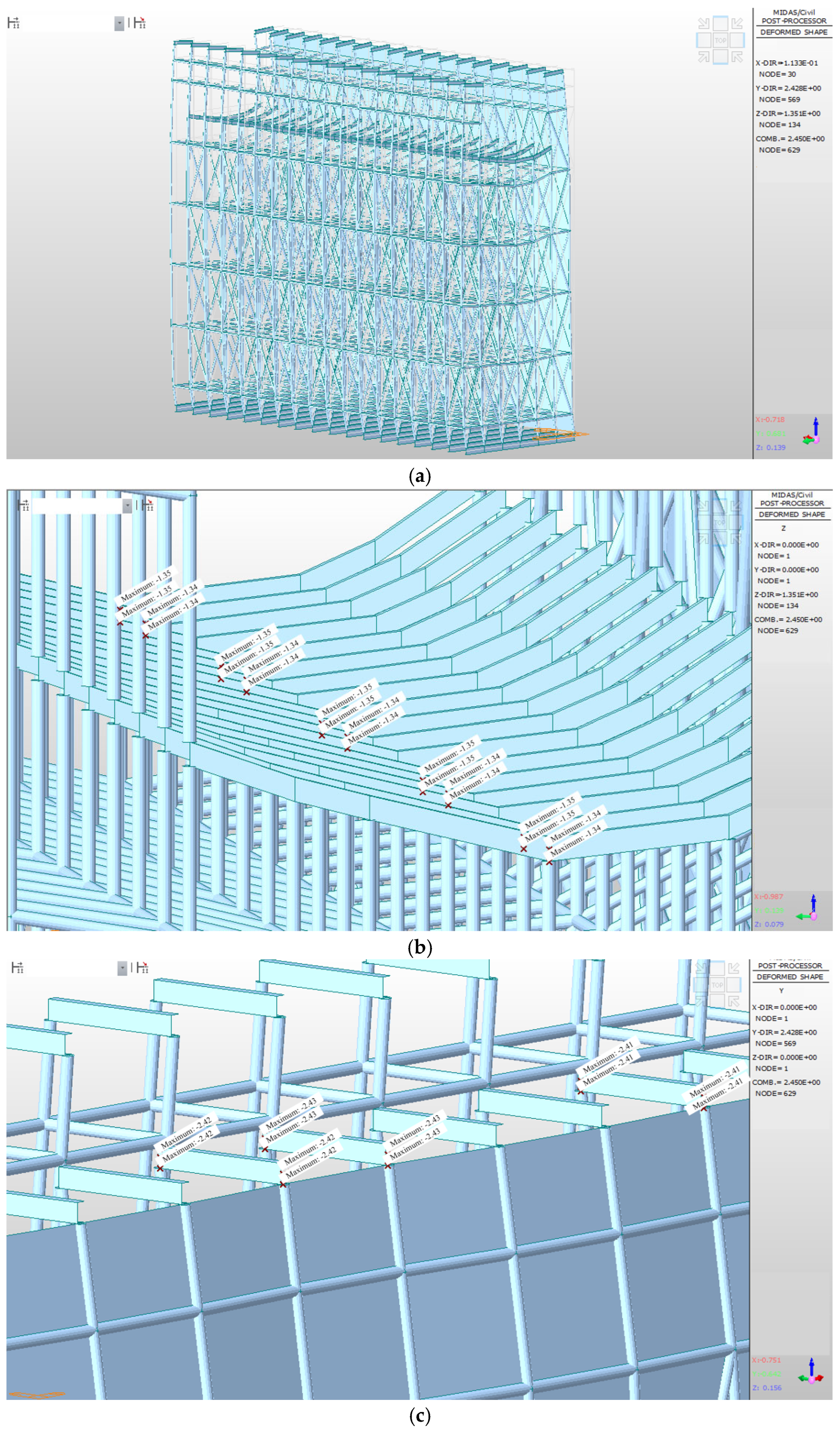
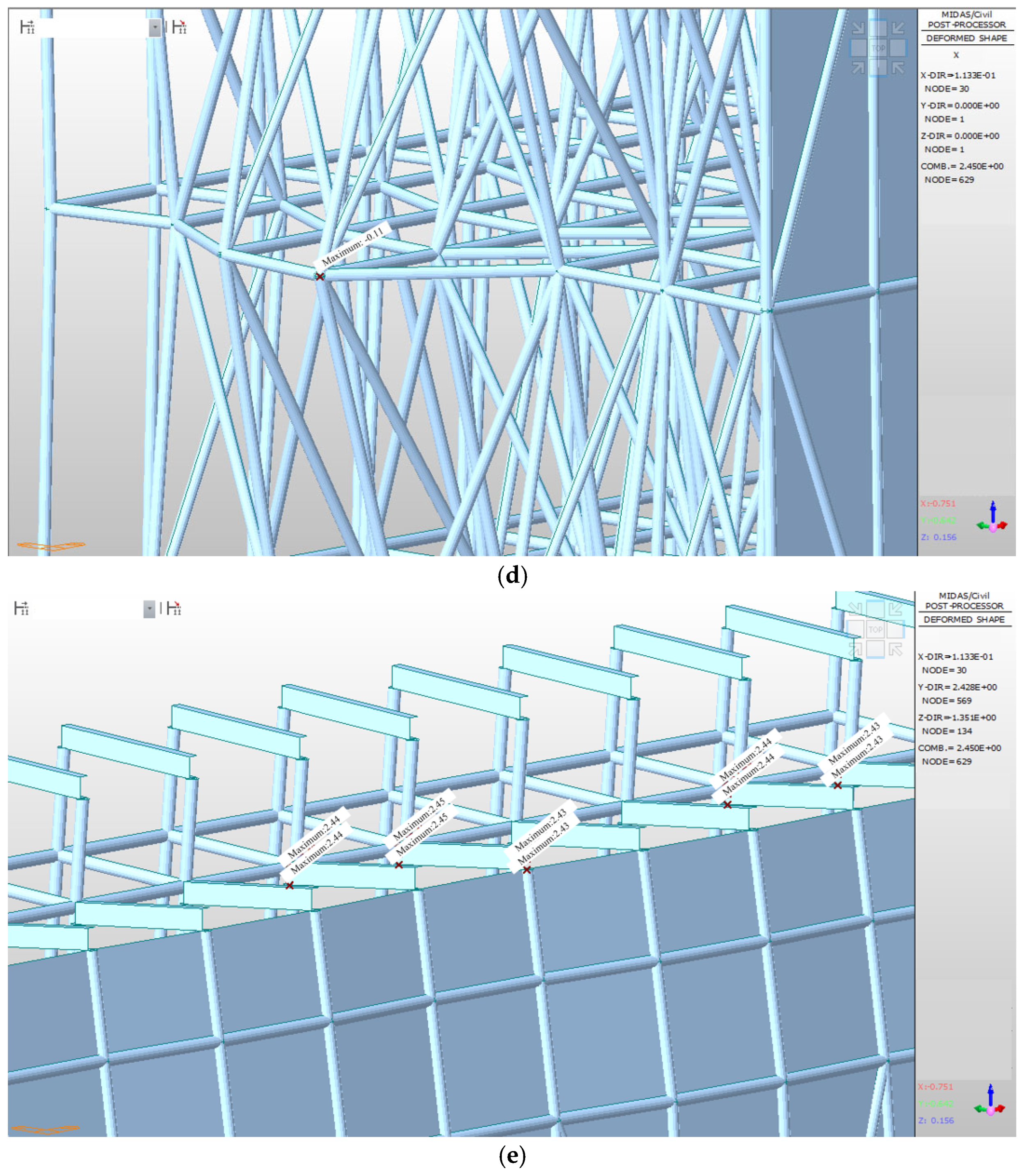
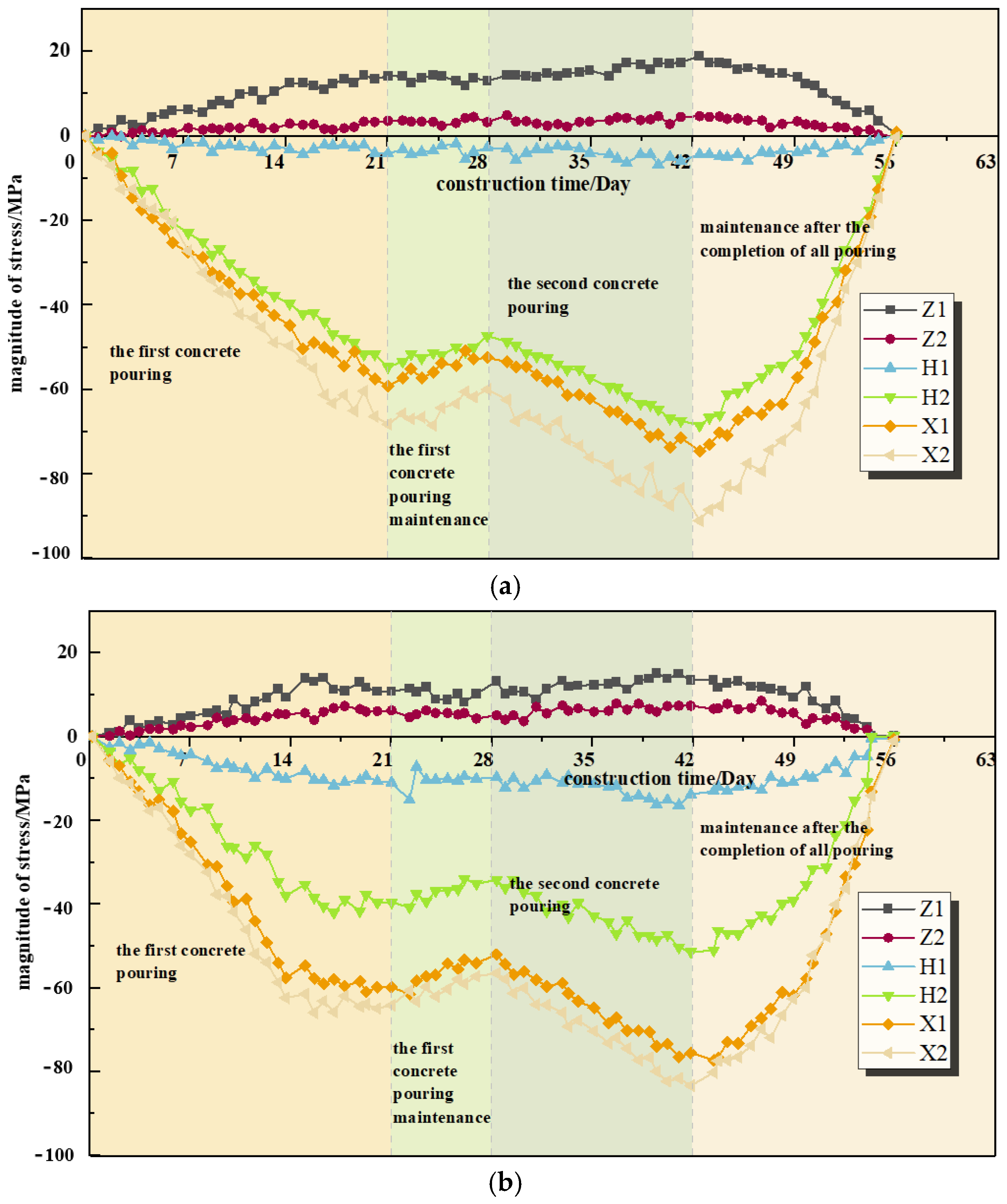
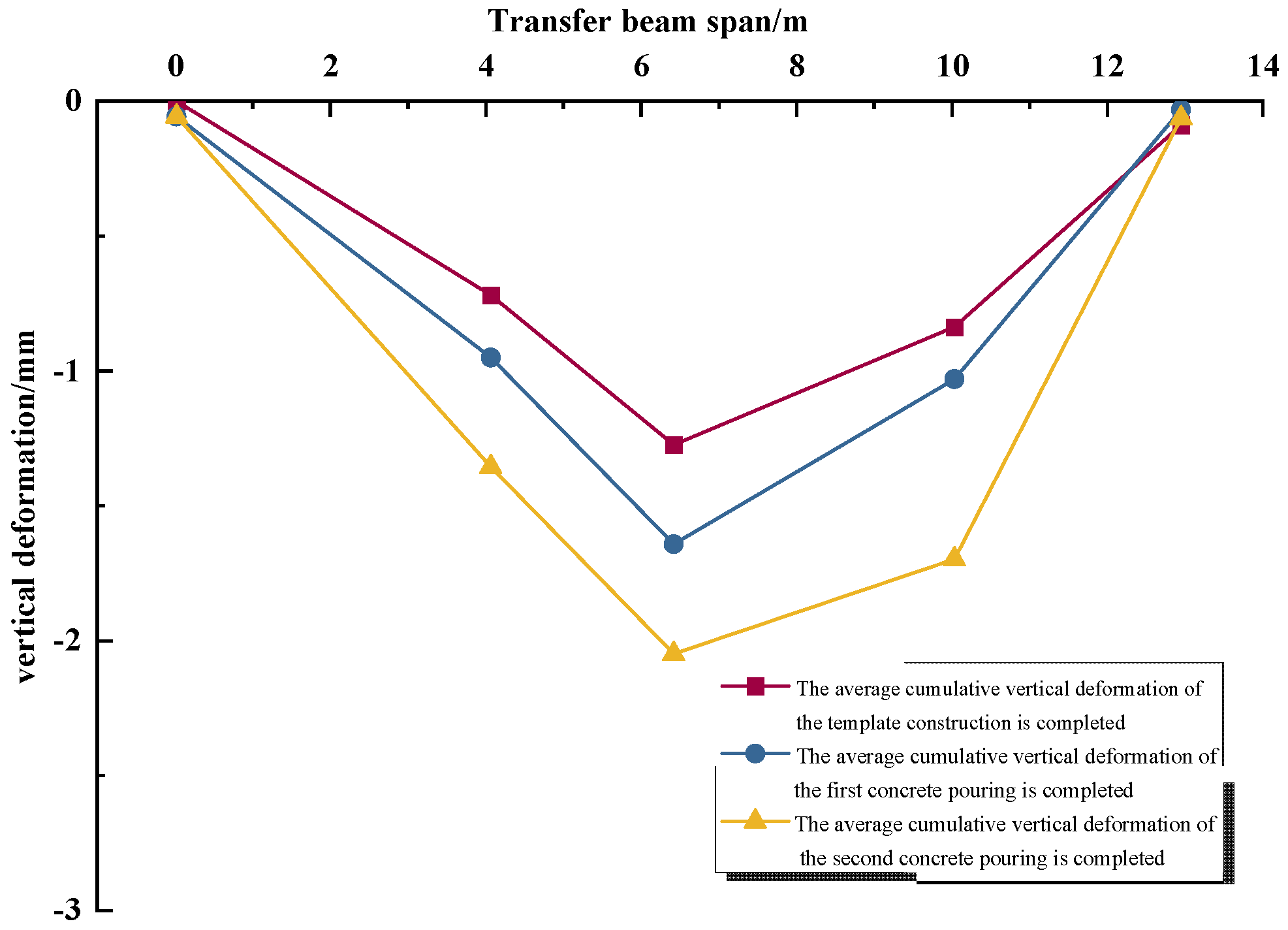
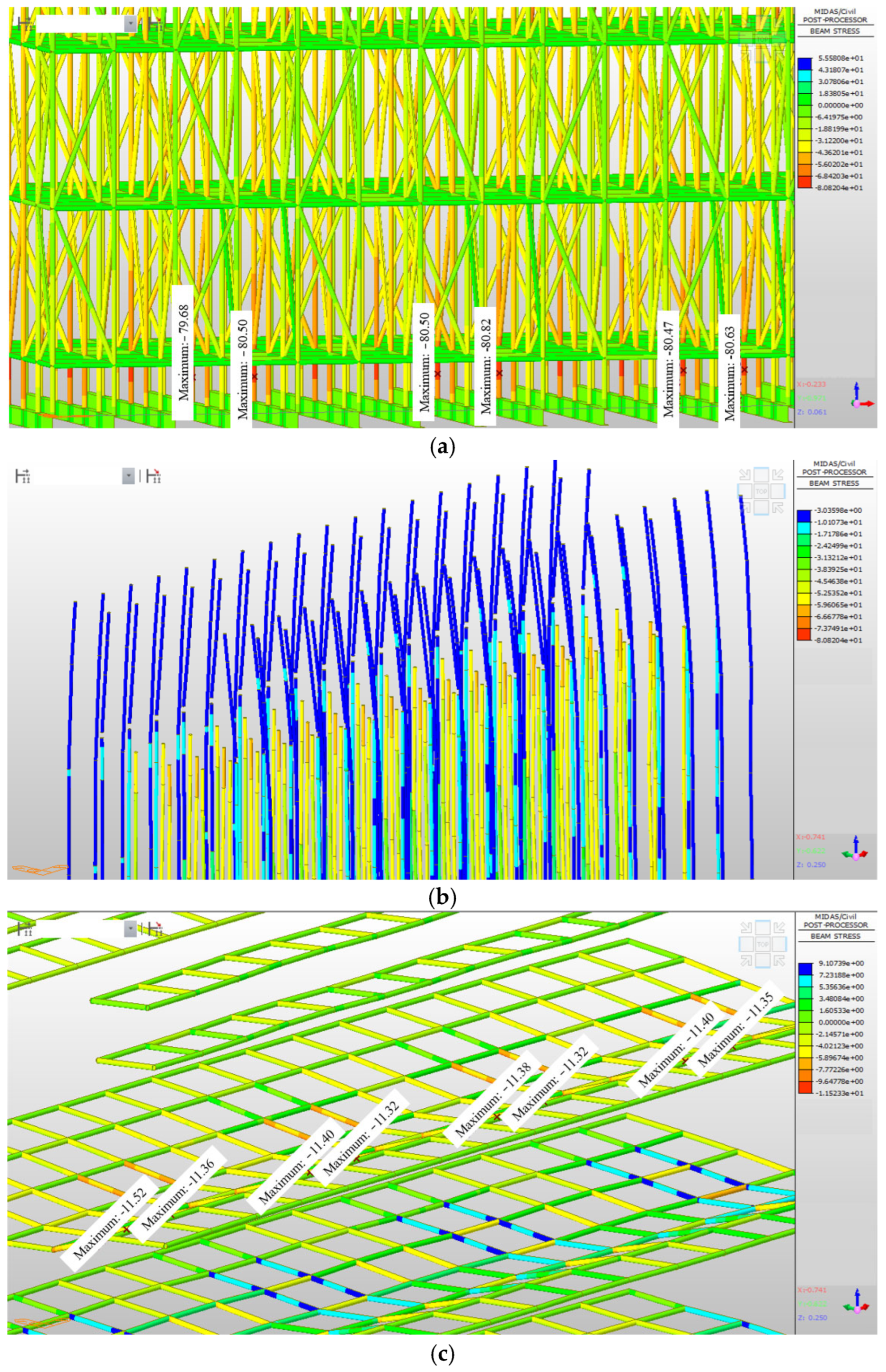
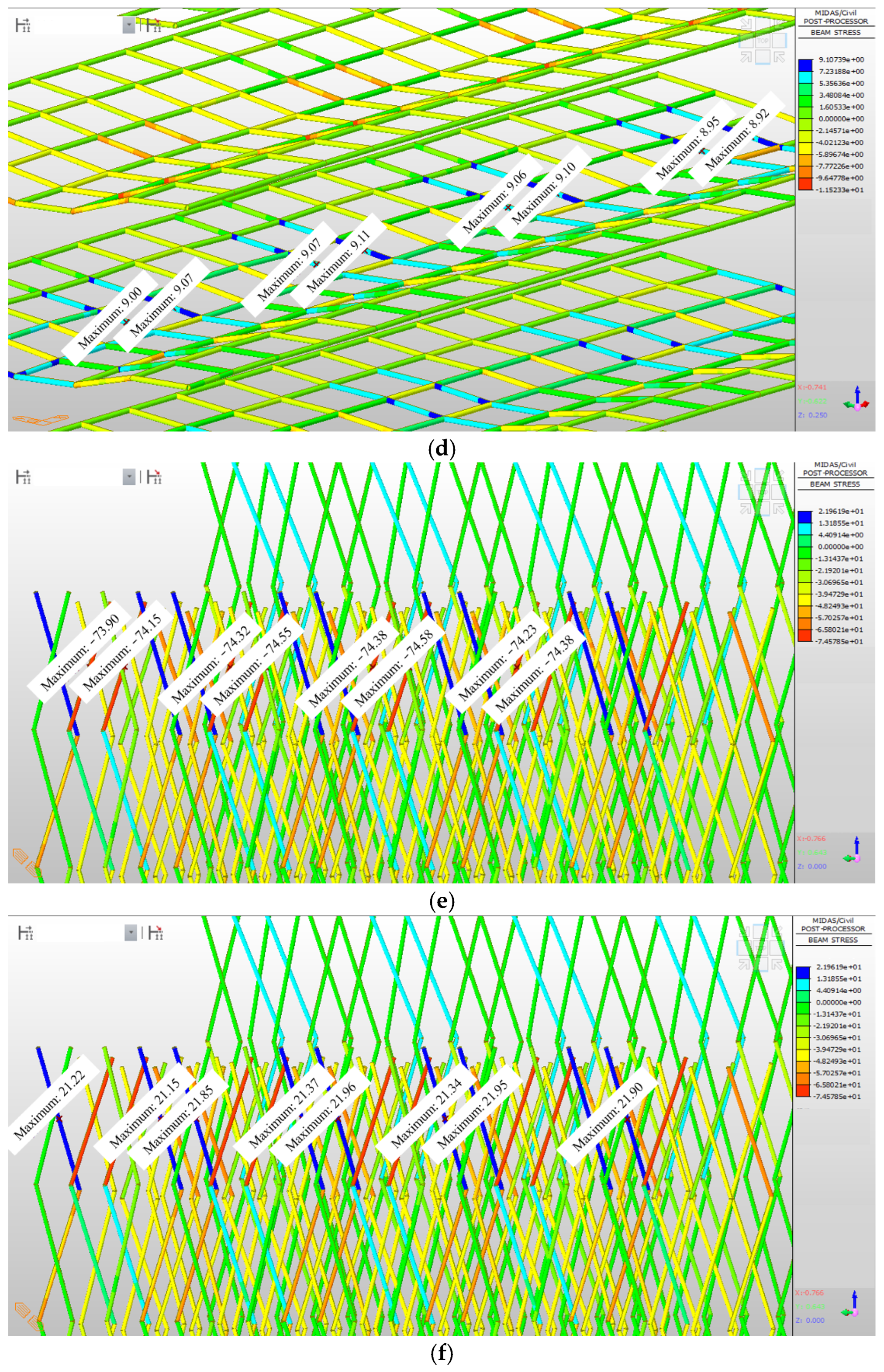
- Through the comparison between finite element analysis and field monitoring, the socket-type disc-lock scaffold system demonstrates favorable mechanical performance during the construction of the transfer beam. The numerical simulation results indicate that the maximum compressive stress in the vertical standards is 80.82 MPa, while the field-monitored maximum is 90.92 MPa, resulting in an error of 12.50%, both within the Q355 steel early-warning stress limit. The maximum average cumulative vertical displacement of the scaffold is 1.69 mm in magnitude, which does not exceed the allowable construction deformation. These results indicate that the scaffold system is safe and reliable, meeting the requirements of high-formwork support construction.
- (2)
- The parametric influence analysis shows that increases in erection height, step spacing of vertical standards, spacing between vertical standards, and sweeping rod height significantly reduce the overall stability of the scaffold, with the step spacing of vertical standards being the most sensitive factor. In contrast, increasing joint stiffness effectively enhances the overall stability of the scaffold system. When the erection height exceeds 16 m or the step spacing of vertical standards is greater than 1.5 m, the bearing capacity exhibits a noticeable inflection point, indicating the need for reinforcement measures to ensure construction safety.
- (3)
- Based on the multi-parameter numerical simulation results, a multiple linear regression predictive model for the overall stability of the disc-lock scaffold system was established. The model demonstrates good statistical significance and can provide a reference for preliminary design and construction control of scaffold systems in similar engineering projects.
Author Contributions
Funding
Data Availability Statement
Conflicts of Interest
References
- Zhou, D.; Mei, Y.; Ke, X.; Liu, Z.; Xu, W. Study on the Structural Behavior and Reinforcement Design of Openings in Subway Station Floor Slabs. J. Build. Eng. 2024, 98, 110994. [Google Scholar] [CrossRef]
- Wang, X.; Chen, C. Vibration Table Test of Prefabricated L-Shaped Column Concrete Structure. Buildings 2025, 15, 2329. [Google Scholar] [CrossRef]
- Wang, X.; Wang, B.; Yuan, Y.; Yang, T.; Dong, G.; Shi, C. Study on the Effect of EICP Combined with Nano-SiO2 and Soil Stabilizer on Improving Loess Surface Strength. Buildings 2025, 15, 1998. [Google Scholar] [CrossRef]
- Han, J.; Wang, J.; Cheng, C.; Zhang, C.; Liang, E.; Wang, Z.; Song, J.-J.; Leem, J. Mechanical Response and Parametric Analysis of a Deep Excavation Structure Overlying an Existing Subway Station: A Case Study of the Beijing Subway Station Expansion. Front. Earth Sci. 2023, 10, 1079837. [Google Scholar] [CrossRef]
- Yoo, D.-Y.; Banthia, N.; Kang, S.-T.; Yoon, Y.-S. Size Effect in Ultra-High-Performance Concrete Beams. Eng. Fract. Mech. 2016, 157, 86–106. [Google Scholar] [CrossRef]
- El-Sayed, A.K.; Shuraim, A.B. Size Effect on Shear Resistance of High Strength Concrete Deep Beams. Mater. Struct. 2016, 49, 1871–1882. [Google Scholar] [CrossRef]
- Hussein, G.; Sayed, S.H.; Nasr, N.E.; Mostafa, A.M. Effect of Loading and Supporting Area on Shear Strength and Size Effect of Concrete Deep Beams. Ain Shams Eng. J. 2018, 9, 2823–2831. [Google Scholar] [CrossRef]
- Huang, H.; Peng, Z.; Hou, J.; Zheng, X.; Ding, Y.; Wu, H. Study on the Ultimate Load-Bearing Capacity of Disc Buckle Tall Formwork Support Considering Uncertain Factors. Buildings 2024, 14, 828. [Google Scholar] [CrossRef]
- Zhao, J.; Wu, B.; Ou, J. A Novel Type of Angle Steel Buckling-Restrained Brace: Cyclic Behavior and Failure Mechanism. Earthq. Eng. Struct. Dyn. 2011, 40, 1083–1102. [Google Scholar] [CrossRef]
- Dong, J.; Liu, H.; Lei, M.; Fang, Z.; Guo, L. Safety and Stability Analysis of Variable Cross-Section Disc-Buckle Type Steel Pipe High Support System. Int. J. Press. Vessel. Pip. 2022, 200, 104831. [Google Scholar] [CrossRef]
- Dong, J.; Liu, H.; Xia, S.; Cheng, Y.; Lei, M.; Chen, Z. Experimental Research and Finite Element Analysis on Structural Stability of Disc-Buckle Type Formwork Support. Int. J. Steel Struct. 2022, 22, 748–766. [Google Scholar] [CrossRef]
- Li, R.; Tao, Q.; Liu, Z.; Tan, Q.; Wang, Y.; Dong, W.; Zhang, B. Investigation on Buckling Behaviour of Scaffold Independent Supporting System Considering Semi-Rigid Nodes. Buildings 2025, 15, 443. [Google Scholar] [CrossRef]
- Dong, J.; Liu, H.; Lei, M.; Chen, Z.; Wang, L.; Guo, L.; Gong, X.; Fang, Z. Effective Length Correction Factor of Disc-Buckle Type Scaffolding by Considering Joint Bending Stiffness and Geometrical Size. PLoS ONE 2022, 17, e0276340. [Google Scholar] [CrossRef]
- Cai, J.; Feng, J.; Xu, Y. Effects of Elastic Supports on the Snap-through Buckling of Mises Trusses. Mech. Solids 2019, 54, 486–490. [Google Scholar] [CrossRef]
- Dong, J.; Liao, Z.; Liu, H.; Zhao, Z.; Lei, M.; Chen, Z.; Wang, L.; Gong, X. Bending Behavior and Influence Parameter Optimization of Connection Joints of Disc-Buckle Type Formwork Support. Sci. Rep. 2025, 15, 1785. [Google Scholar] [CrossRef]
- Zhao, Y.B.; Hu, C.M.; Yuan, Y.L.; Wang, S.N. FEM Analysis of Cooperative Effects of Formwork Supporting System and Concrete Floor. Appl. Mech. Mater. 2014, 651–653, 1158–1163. [Google Scholar] [CrossRef]
- Al-Ahmed, A.H.A.; Al-Zuhairi, A.H.; Hasan, A.M. Behavior of Reinforced Concrete Tapered Beams. Structures 2022, 37, 1098–1118. [Google Scholar] [CrossRef]
- Jeng, C.-H.; Hsiao, C.-K.; Chiu, H.-J. New Torsion Experiment on Large-Sized Hollow Reinforced Concrete Beams. ACI Struct. J. 2014, 111, 7166. [Google Scholar] [CrossRef]
- Yang, C.; Jia, X.; Huang, Z.; Zhao, L.; Shang, W. Damage of Full-scale Reinforced Concrete Beams under Contact Explosion. Int. J. Impact Eng. 2022, 163, 104180. [Google Scholar] [CrossRef]
- Lin, S.-C.; Li, D.; Yang, B. Experimental Study and Numerical Simulation on Damage Assessment of Reinforced Concrete Beams. Int. J. Impact Eng. 2019, 132, 103323. [Google Scholar] [CrossRef]
- Li, W.; Lin, X.; Bao, D.W.; Min Xie, Y. A Review of Formwork Systems for Modern Concrete Construction. Structures 2022, 38, 52–63. [Google Scholar] [CrossRef]
- Ministry of Housing and Urban-Rural Development of the People’s Republic of China. Technical Standard for Safety of Disk Lock Steel Tubular Scaffold in Construction: JGJ/T 231—2021; China Architecture & Building Press: Beijing, China, 2021. [Google Scholar]
- Ministry of Housing and Urban-Rural Development of the People’s Republic of China. Load Code for the Design of Building Structures: GB 50009—2012; China Architecture & Building Press: Beijing, China, 2012. [Google Scholar]
- Romanovskyi, R.; Mejia, L.S.; Azar, E.R. BIM-Based Decision Support System for Concrete Formwork Design. ISARC Proc. Int. Symp. Autom. Robot. Constr. 2019, 36, 1129–1135. [Google Scholar] [CrossRef]
- Ministry of Housing and Urban-Rural Development of the People’s Republic of China. Technical Code for Temporary Support Structures in Construction: JGJ 300—2013; China Architecture & Building Press: Beijing, China, 2013. [Google Scholar]
- Zheng, Y.; Guo, Z. Investigation of Joint Behavior of Disk-Lock and Cuplok Steel Tubular Scaffold. J. Constr. Steel Res. 2021, 177, 106415. [Google Scholar] [CrossRef]
- Mo, Z.; Lai, B.; Wen, A.; Shu, G. Performance, Strategy, and Evaluation of Truss String Structure Based on Active Control. Structures 2025, 75, 108706. [Google Scholar] [CrossRef]







| Member Type | Maximum Compressive Stress/MPa | Maximum Tensile Stress/MPa |
|---|---|---|
| vertical standard | 80.82 | — |
| horizontal ledger | 11.52 | 9.11 |
| diagonal brace | 74.58 | 21.96 |
| Member Type | Material | Maximum Combined Stress/MPa | Design Strength/MPa | Stress Ratio | Controlling Load Case | Critical Location | ||
|---|---|---|---|---|---|---|---|---|
| Compressive Stress | Tensile Stress | Compressive Stress | Tensile Stress | |||||
| Vertical standard | Q355 | 80.82 | / | 305 | 0.265 | / | 1.2 × permanent load + 1.4 × live load + 1.4 × 0.6 × wind load | bottom vertical standard at the mid-span of the transfer beam |
| Horizontal ledger | Q235 | 11.52 | 9.11 | 205 | 0.056 | 0.044 | 1.2 × permanent load + 1.4 × live load + 1.4 × 0.6 × wind load | first-layer horizontal ledger on the windward side |
| Diagonal brace | Q235 | 74.58 | 21.96 | 205 | 0.364 | 0.107 | 1.2 × permanent load + 1.4 × live load + 1.4 × 0.6 × wind load | diagonal brace beneath the beam at mid-span |
| Measurement Point Number | Maximum Compressive Stress/MPa | Location of Occurrence | Maximum Tensile Stress/MPa | Location of Occurrence |
|---|---|---|---|---|
| Z1 | −90.92 | Section D1 | — | — |
| Z2 | −77.24 | Section D3 | — | — |
| H1 | −5.60 | Section D2 | 7.78 | Section D3 |
| H2 | −13.58 | Section D3 | 22.37 | Section D1 |
| X1 | −68.75 | Section D1 | 14.59 | Section D3 |
| X2 | −56.17 | Section D2 | 6.46 | Section D1 |
| Construction Stage | Measurement Point Number | Finite Element Value/MPa | Field-Measured Value/MPa | Absolute Error/MPa |
|---|---|---|---|---|
| Completion of formwork and reinforcement installation | D1-Z1 | 41.26 | 45.83 | 4.57 |
| D1-Z2 | 38.94 | 43.12 | 4.18 | |
| D3-Z1 | 39.58 | 44.37 | 4.79 | |
| D3-Z2 | 37.82 | 42.05 | 4.23 | |
| Completion of the first concrete pouring | D1-Z1 | 68.35 | 75.48 | 7.13 |
| D1-Z2 | 64.71 | 71.93 | 7.22 | |
| D3-Z1 | 65.42 | 72.86 | 7.44 | |
| D3-Z2 | 62.18 | 69.31 | 7.13 | |
| Completion of the second concrete pouring | D1-Z1 | 80.82 | 90.92 | 10.10 |
| D1-Z2 | 76.55 | 85.47 | 8.92 | |
| D3-Z1 | 77.43 | 86.81 | 9.38 | |
| D3-Z2 | 73.29 | 82.56 | 9.27 |
| Monitoring Point | D1 | D2 | D3 |
|---|---|---|---|
| Y1 | −0.72 | −0.95 | −1.35 |
| Y2 | −1.27 | −1.64 | −2.04 |
| Y3 | −0.83 | −1.03 | −1.69 |
| average value | −0.94 | −1.21 | −1.69 |
| Variable | Fitted Value | Standard Error | t | p |
|---|---|---|---|---|
| Erection Heights | −5.219 | 0.626 | −7.519 | 3.244 × 10⁻⁴ |
| Step Spacings of Vertical Standards | −6.215 | 1.215 | −5.762 | 2.514 × 10⁻⁵ |
| Spacings between Vertical Standards | −0.399 | 0.094 | −4.132 | 5.612 × 10⁻⁶ |
| Sweeping Rod Heights | −22.051 | 6.054 | −3.132 | 3.814 × 10⁻³ |
| Joint Stiffnesses | 0.194 | 0.029 | 5.871 | 1.612 × 10⁻⁴ |
Disclaimer/Publisher’s Note: The statements, opinions and data contained in all publications are solely those of the individual author(s) and contributor(s) and not of MDPI and/or the editor(s). MDPI and/or the editor(s) disclaim responsibility for any injury to people or property resulting from any ideas, methods, instructions or products referred to in the content. |
© 2026 by the authors. Licensee MDPI, Basel, Switzerland. This article is an open access article distributed under the terms and conditions of the Creative Commons Attribution (CC BY) license.
Share and Cite
Duan, F.; Cui, Y.; Xue, X.; Wang, J.; Kang, W.; Huang, Z.; Mei, Y.; Ke, X. Mechanical Behavior and Parametric Analysis of Socket-Type Disc-Lock Full-Hall Scaffold System for Long-Span Transfer Beams in Metro Depot Over-Track Development. Buildings 2026, 16, 2182. https://doi.org/10.3390/buildings16112182
Duan F, Cui Y, Xue X, Wang J, Kang W, Huang Z, Mei Y, Ke X. Mechanical Behavior and Parametric Analysis of Socket-Type Disc-Lock Full-Hall Scaffold System for Long-Span Transfer Beams in Metro Depot Over-Track Development. Buildings. 2026; 16(11):2182. https://doi.org/10.3390/buildings16112182
Chicago/Turabian StyleDuan, Feng, Ye Cui, Xiaohong Xue, Jian Wang, Wanliang Kang, Zhengye Huang, Yuan Mei, and Xin Ke. 2026. "Mechanical Behavior and Parametric Analysis of Socket-Type Disc-Lock Full-Hall Scaffold System for Long-Span Transfer Beams in Metro Depot Over-Track Development" Buildings 16, no. 11: 2182. https://doi.org/10.3390/buildings16112182
APA StyleDuan, F., Cui, Y., Xue, X., Wang, J., Kang, W., Huang, Z., Mei, Y., & Ke, X. (2026). Mechanical Behavior and Parametric Analysis of Socket-Type Disc-Lock Full-Hall Scaffold System for Long-Span Transfer Beams in Metro Depot Over-Track Development. Buildings, 16(11), 2182. https://doi.org/10.3390/buildings16112182