


Abstract
Automated compliance checking (ACC) integrated with Building Information Modeling (BIM) requires regulatory texts that can be translated into machine-executable rules. Existing studies have largely focused on rule extraction techniques and ontology-based modeling within single jurisdictions, leaving the upstream question of regulatory readiness underexplored. This study introduces a clause-level framework for assessing the formalizability of building regulations and applies it to four documents covering accessibility and fire safety in the United Kingdom and Kazakhstan. The corpus was decomposed into 2361 enforceable clauses, classified using a ten-category semantic taxonomy, and evaluated against four formalizability criteria: explicit scope, measurable requirement, deterministic outcome, and design-stage data availability. Clauses were classified as formalizable only when satisfying all four criteria simultaneously. UK documents reached 85% formalizability for accessibility and 90% for fire safety, compared with 77% and 51% for the corresponding Kazakh standards. The largest gap was observed in fire safety, where the Kazakh corpus contained fewer BIM-oriented and spatially explicit checks and a higher share of clauses lacking evidential specification. The proposed framework supports clause-level diagnosis of regulatory automation readiness, and a four-stage roadmap links linguistic structure to digital maturity in both jurisdictions.
1. Introduction
Digitalization and automation have become central to improving the quality and safety of the built environment [1]. In this study, three related but distinct terms are used with precise meanings: digitization, digitalization, and digital transformation. Digitization refers to the conversion of analogue or text-based regulatory information into digital form. Digitalization refers to the use of digital technologies to transform regulatory processes, including the transition from document-based compliance to data-driven workflows. Digital transformation refers to systemic changes in regulatory, organizational, and industry practices enabled by digital technologies, including the transition toward machine-readable regulations and automated compliance processes.
Automated Compliance Checking (ACC) verifies building designs against regulatory requirements using computational methods and Building Information Modeling (BIM). ACC integrates technologies such as Natural Language Processing (NLP), semantic modeling, and BIM-based rule evaluation to enable more efficient and consistent compliance verification [2]. Prior research demonstrates that these approaches can improve the speed, transparency, and reliability of regulatory checking processes [3,4].
Prior research indicates that the maturity of BIM-enabled regulatory compliance systems differs significantly across jurisdictions. Developed economies such as the United Kingdom and Finland have achieved higher BIM maturity through coordinated government mandates, standardized data environments, and sustained institutional support, whereas post-Soviet and developing countries, including Kazakhstan and other Central Asian states, often continue to operate under legacy regulatory frameworks that constrain digital transformation [5]. In many transitional contexts, smaller organizations, fragmented regulatory governance, limited digital capacity, and insufficient institutional coordination and professional expertise contribute to a persistent digital divide, slowing the diffusion of BIM-based workflows and automated compliance systems [6,7,8,9]. The effectiveness of automated compliance checking therefore depends not only on advances in computational technologies but also on the maturity and structure of the regulatory environment in which these technologies are applied [10].
Advances in automated compliance checking enable more efficient and consistent verification of building designs against regulatory requirements, improving both safety outcomes and operational efficiency in construction projects [11]. Recent studies also demonstrate that semantic web technologies, including ontology-based representations, can improve the scalability of ACC systems by formalizing regulatory knowledge and aligning it with digital building models [12]. However, the automation of regulatory verification remains challenging because many regulatory provisions contain ambiguous language, subjective criteria, or dependencies on external standards that complicate machine interpretation [13]. Previous studies also highlight substantial variation between national regulatory systems in terms of their suitability for automated compliance checking [14].
The existing literature shows that disparities in regulatory modernization and data interoperability significantly affect the feasibility of automated compliance checking, underscoring the need for cross-jurisdictional evaluations of digital readiness [12,15]. Systematic reviews further emphasize that interoperability between BIM, artificial intelligence, and regulatory datasets remains a critical enabler of scalable ACC systems, highlighting the importance of semantic alignment and standardized data exchange frameworks [16]. These differences in digital maturity motivate comparative analyses between advanced and emerging regulatory environments in order to identify scalable pathways for regulatory automation. Nevertheless, existing ACC research remains largely limited to single-jurisdiction investigations, such as the digitization of individual UK Approved Documents [17,18] or the formalization of isolated prescriptive standards in other national contexts.
Most prior studies on automated compliance checking have focused on rule extraction techniques, ontology-based modeling, and BIM-enabled validation workflows, demonstrating the technical feasibility of translating regulatory provisions into machine-interpretable rules and integrating them into computational compliance-checking systems.
Limited attention has been given to the upstream problem of regulatory readiness, namely the extent to which regulatory texts are structurally and semantically suitable for formalization prior to rule implementation. In particular, there is a lack of systematic methods for evaluating automation readiness at the clause level and for operationalizing regulatory formalizability as a measurable construct.
This study evaluates the formalizability of regulatory requirements for automated compliance checking through a comparative analysis of accessibility and fire-safety regulations in the United Kingdom and Kazakhstan, examining how regulatory clauses can be translated into precise, machine-readable rules that support automated verification of building designs. Building on previous ACC research [17], the analysis identifies structural and semantic factors that influence the extent to which construction regulations can be operationalized as machine-executable compliance rules.
Regulatory formalizability, as used in this study, denotes the extent to which regulatory requirements can be translated into machine-readable representations while preserving their intended meaning and operational criteria without requiring subjective interpretation [13]. Highly formalizable regulations can be expressed as logical constraints or rule-based conditions suitable for automated compliance checking, whereas lower formalizability indicates the presence of ambiguous language, external dependencies, or subjective judgments that hinder rule execution in digital environments.
Formalizability, as defined here, is a property of the regulatory text and should be distinguished from related concepts that operate at different layers of the automated compliance checking pipeline. Automation readiness is a broader systemic property that combines regulatory formalizability with the maturity of supporting infrastructure, including BIM submission standards, digital permitting platforms, and institutional capacity. Semantic interoperability concerns the consistent exchange of structured information between regulatory artefacts and digital models, typically through shared ontologies or IFC mappings [12,16]. Rule formalization is the operational step that converts a formalizable clause into a logical or computational construct, such as a first-order logic predicate, an ontology assertion, or a rule expressed in a domain-specific language [3,13]. Machine interpretability, in turn, characterizes the ability of an ACC engine to execute that construct against a given building model at runtime [2]. The clause-level framework proposed in this study addresses the upstream layer of this pipeline: it diagnoses whether the regulatory text itself is amenable to subsequent formalization, without prejudging the choice of rule language, ontology, or execution engine.
A related distinction concerns the difference between structural formalizability, assessed at the clause level, and operational executability, which refers to whether a formalized rule can in fact be executed against a real building model within a deployed ACC environment [17,18]. A clause that satisfies all four formalizability criteria proposed in this study is necessary but not sufficient for runtime executability: implementation also depends on the availability of the relevant BIM properties at the queried level of development, the alignment between the rule’s vocabulary and the IFC schema in use, and the resolution of any cross-references at execution time. The present study evaluates structural formalizability and does not test runtime executability. The empirical assessment of how formalizable clauses behave once encoded and executed in an operational ACC environment is identified as a necessary follow-up.
Although prescriptive regulations are often assumed to be easier to formalize because of their explicit numerical thresholds, formalizability ultimately depends on the presence of clearly defined evidential criteria and model-verifiable relationships. As demonstrated later in this study, the presence of deterministic numerical language alone does not guarantee that regulatory provisions can be directly translated into executable compliance rules.
The analysis focuses on two regulatory domains, accessibility and fire safety, to evaluate the formalizability of regulatory requirements in the United Kingdom and Kazakhstan. These domains are widely examined in automated compliance checking research because they involve geometric constraints, spatial reasoning, and safety-critical requirements frequently evaluated during building design. Compliance with such regulations is essential for protecting human life and enabling equitable access to the built environment [11].
Accordingly, this study addresses the following research question: how do differences in the formalizability of building regulations in the United Kingdom and Kazakhstan influence the feasibility of BIM-based automated compliance checking?
This study makes four contributions to the field of regulatory digitalization and automated compliance checking. First, it operationalizes regulatory formalizability as a measurable analytical construct and proposes a reproducible clause-level framework for evaluating the suitability of regulatory provisions for machine-executable rule encoding—a methodological contribution applicable beyond the two jurisdictions examined. Second, it introduces a ten-category semantic taxonomy and four formalizability criteria that together constitute a structured diagnostic instrument for assessing regulatory automation readiness. Third, it provides cross-jurisdictional empirical evidence, based on 2361 annotated clauses, demonstrating how regulatory drafting structures systematically constrain or enable ACC implementation—evidence not previously available for the Kazakhstan–UK comparison. Fourth, it traces the implications of regulatory structure for the design of ACC algorithms themselves, identifying how the distribution of clause types affects rule-extraction feasibility, BIM object mapping, and the automation coverage achievable through compliance checking systems.
To operationalize this approach, the analysis applies a ten-category semantic taxonomy and introduces a four-stage roadmap for improving regulatory formalizability across contrasting regulatory systems.
The remainder of this paper is organized as follows. Section 2 reviews existing research on automated compliance checking and outlines the regulatory contexts of Kazakhstan and the United Kingdom. Section 3 describes the research methodology, including document selection, clause segmentation, semantic categorization, and the formalizability assessment framework. Section 4 presents the results of the clause-level analysis for accessibility and fire-safety regulations in both jurisdictions. Section 5 discusses the implications of these findings, identifying key enablers and barriers to automation and proposing strategies for improving regulatory formalizability. Section 6 concludes the paper with recommendations for regulators and ACC developers and outlines directions for future research.
2. Literature Review
The following subsections review major approaches to automated compliance checking, describe the regulatory environment of Kazakhstan, and outline the principle-based regulatory model used in the United Kingdom.
The existing literature on Building Information Modeling (BIM) adoption and regulatory digitalization highlights substantial differences in digital readiness across national contexts. Mature markets such as the United Kingdom have advanced through coordinated government mandates, standardized data environments, and sustained institutional support, while many emerging economies remain at earlier stages of BIM maturity due to inconsistent policy frameworks and fragmented regulatory governance [17,19].
Studies across multiple regions similarly indicate that limited technical capacity, fragmented institutional structures, and unclear regulatory requirements continue to hinder digital transformation in construction sectors [20]. As a result, the implementation of automated compliance checking systems depends not only on advances in computational methods but also on the maturity and structure of the regulatory ecosystem within which these systems operate. This body of research indicates that BIM-enabled regulatory automation represents a socio-technical challenge shaped by both technological capabilities and institutional governance structures.
2.1. Automated Compliance Checking: Overview and Approaches
Automated compliance checking (ACC) has been an active research area for several decades, motivated by the growing complexity of regulatory frameworks and the need for more efficient and consistent compliance verification. Recent developments increasingly rely on ontology-driven semantic frameworks that align regulatory concepts with BIM data and support automated reasoning across complex regulatory structures [21].
Within the architecture, engineering, and construction (AEC) domain, BIM has become a key platform for integrating regulatory checking into design workflows. Studies demonstrate that combining BIM with formalized regulatory knowledge can enable compliance verification during early design stages, reducing errors and improving regulatory transparency [22]. Recent hybrid approaches integrate semantic modeling, natural language processing (NLP), and BIM-based rule evaluation to automate multi-layered compliance scenarios involving spatial, geometric, and safety-related constraints [2].
Despite these advances, several challenges remain. Regulatory provisions frequently contain subjective language, implicit assumptions, or references to external standards, which complicate their translation into formalized, machine-executable rules [13,14]. Semantic modeling and logic-based representations have therefore become central to ACC research, enabling regulatory statements to be translated into machine-interpretable rules. For example, first-order logic (FOL) and ontology-based representations have been widely used to encode regulatory constraints and support automated reasoning within BIM environments [3,13]. By linking BIM data with formalized rules, such systems can evaluate compliance directly within digital design models [23].
Recent research on AI-supported automated compliance checking has progressed rapidly and now spans several methodological families. Large language models and prompt-based methods have been applied to BIM-based ACC and building-code information transformation, supporting the interpretation of regulatory provisions, conversion of code requirements into machine-processable rules, BIM data extraction, rule execution, and compliance reporting [2,24,25]. Knowledge-graph and ontology-driven approaches have advanced the structured representation of regulatory concepts and their alignment with IFC data, enabling automated reasoning across heterogeneous regulatory corpora [15,21]. Hybrid pipelines that combine deep learning-based extraction with rule-based or ontology-based reasoning have emerged as a way to balance the linguistic flexibility of statistical models with the determinism required for compliance verification [2]. Despite these advances, the quality of automated rule extraction remains fundamentally dependent on the structure of the source regulatory text: ambiguous provisions, absent evidential criteria, and unresolved cross-references introduce interpretation gaps that statistical extraction models cannot resolve from text alone [13]. This continued dependence on upstream regulatory structure reinforces the relevance of clause-level preprocessing and the assessment of regulatory readiness prior to ACC implementation, which is the focus of the present study.
Several methodological frameworks have been proposed to structure regulatory information for automated compliance checking.
RASE (Requirement–Applicability–Selection–Execution) is one of the most widely used approaches for decomposing regulatory texts into structured rule components. The framework separates regulatory statements into requirement, applicability conditions, rule selection logic, and execution procedures, enabling the systematic transformation of textual regulations into machine-readable rules [13]. However, RASE remains sensitive to regulatory provisions that lack explicit conditions or rely on subjective interpretation. The four components of the RASE framework are summarized in Table 1.
Table 1.
RASE framework.
Another notable approach is the Generalized Adaptive Framework (GAF) developed by Nawari [26], which applies NLP and ontology-based reasoning to transform regulatory provisions into machine-interpretable representations. The framework structures regulatory knowledge using a Transformation Reasoning Algorithm (TRA) and integrates with BIM environments through IFC-based data exchange. GAF also incorporates fuzzy logic reasoning to interpret ambiguous regulatory language and cross-referenced provisions.
Research led by Amor and colleagues has demonstrated the feasibility of integrating machine-readable regulatory rules into BIM workflows to support automated compliance checking across multiple jurisdictions [4]. This positions regulatory formalizability as a computational challenge involving knowledge representation, rule formalization, and machine-interpretable regulatory logic within BIM-enabled environments. Their work highlights the potential of rule-based reasoning and semantic modeling for automated regulatory interpretation, while also emphasizing challenges associated with natural language complexity and jurisdictional variation.
Collectively, these approaches demonstrate the growing maturity of automated compliance checking research while revealing persistent challenges related to regulatory ambiguity, cross-references, and the absence of structured evidential criteria required for rule execution. These limitations highlight the need for systematic methods to evaluate the formalizability of regulatory provisions prior to their translation into executable compliance rules.
2.2. Regulatory Framework in Kazakhstan
Kazakhstan’s construction sector is governed by a multi-tiered regulatory framework that includes both mandatory and voluntary documents. Mandatory categories encompass Laws, Codes, Technical Regulations, Construction Norms (CNs), and various types of Rules and Instructions. Voluntary documents generally comprise different forms of Construction Rules (CRs) and related standards that provide recommended technical solutions and guidelines.
This regulatory structure reflects the government’s intention to modernize the national construction regulatory system, as outlined in the 2013 “Concept for Reforming the Normative Base of the Construction Sphere”, which aims to transition from rigid Soviet-era prescriptive norms toward a more flexible, parameter-based regulatory model. In principle, Construction Norms (CNs) define overarching performance requirements, while Construction Rules (CRs) provide more detailed technical provisions and recommended design solutions. However, numerous legacy documents remain in force and continue to follow a strictly prescriptive format, resulting in inconsistencies across the regulatory landscape.
Despite ongoing efforts to align Kazakhstan’s regulatory framework with international standards, including partial adoption of Eurocodes and integration within the Eurasian Economic Union (EAEU) technical regulation system, the modernization process faces several structural and institutional challenges:
- Complex organizational structure. Multiple agencies and institutions are involved in developing and updating regulatory documents, often without sufficient coordination, leading to structural and terminological inconsistencies.
- Lack of a centralized digital platform. The absence of a unified system for tracking regulatory updates and disseminating current requirements complicates the maintenance of a consistent and up-to-date regulatory corpus.
- Ambiguous and redundant terminology. The widespread use of synonyms and vague language creates uncertainty in interpreting regulatory requirements.
- Contradictions and conflicts. Legacy documents and newly updated regulations sometimes overlap or conflict, hindering coherent regulatory interpretation.
- Predominantly text-based formats. Most regulatory documents exist only in unstructured textual form, which requires extensive Natural Language Processing (NLP) to enable automated interpretation.
- Limited adaptation for automation. Although government initiatives support Building Information Modeling (BIM) and digital construction practices, the regulatory corpus itself has not yet been systematically structured for machine-readable formats or automated compliance verification.
These challenges reflect broader difficulties observed in many developing and transitional economies attempting to modernize their construction regulatory systems. Empirical studies show that inconsistent terminology, fragmented regulatory governance, and limited digital training often constrain BIM maturity and automation readiness in such contexts [7,8]. Organizational fragmentation and insufficient digital capacity have likewise been identified as major barriers to BIM implementation and regulatory digitization in developing construction sectors [27].
Addressing these structural and linguistic inconsistencies represents a key prerequisite for improving the formalizability of Kazakhstan’s regulatory corpus and enabling automated compliance checking.
This research focuses specifically on the potential of Construction Rules (CRs) for automated compliance checking (ACC). While Construction Norms (CNs) define high-level performance requirements that are often difficult to formalize, Construction Rules provide more detailed technical provisions and deterministic design criteria that are more suitable for machine-readable representation. A recent semantic and ontology-based analysis of Kazakhstan’s construction regulations [28] demonstrated that the large volume, multi-layered structure, and frequent revisions of these documents introduce semantic inconsistencies, duplicated provisions, and logical contradictions. Such issues hinder automated compliance checking and reduce the overall digital readiness of the national regulatory corpus.
By comparing Kazakhstan’s regulatory system with the principle-based regulatory model of the United Kingdom, this study identifies strategic opportunities for improving regulatory formalizability, reducing ambiguity, and supporting the development of BIM-enabled automated compliance checking systems within the construction sector.
2.3. The UK’s Building Control Regulatory Model
In the United Kingdom, Building Regulations establish high-level minimum standards governing the design, construction, and alteration of most buildings. These regulations define performance requirements rather than detailed prescriptive rules and therefore cannot typically be used directly to assess compliance in a deterministic manner.
To support the practical implementation of these requirements, the UK government publishes a set of supplementary guidance documents known as Approved Documents. These documents provide detailed recommendations and illustrative solutions intended to demonstrate typical ways of achieving compliance with the Building Regulations.
Currently, there are fifteen Approved Documents labeled Parts A–R (excluding Parts I, N, and O). Each document generally contains two types of guidance: (a) general performance expectations for building elements, materials, and construction processes; and (b) practical examples and recommended design solutions for common building scenarios.
In recent years, several initiatives have explored the digitization of the UK Approved Documents in order to enable automated compliance checking. Research efforts have focused particularly on Approved Document M (Accessibility), Approved Document L (Energy Performance), and Approved Document B (Fire Safety) [17,18]. These studies demonstrate that a substantial portion of the regulatory provisions contained within these documents can potentially be translated into machine-executable rules suitable for automated compliance checking.
Several challenges nonetheless limit the widespread adoption of ACC within the UK regulatory framework, including: (i) insufficiently defined requirements that introduce subjective or ambiguous regulatory language; (ii) the absence of standardized BIM submission schemas or formalized modeling protocols for compliance verification; and (iii) the coexistence of different types of guidance within the same document, including design requirements, on-site construction instructions, and recommendations related to workmanship rather than measurable building attributes.
Although the UK regulatory framework provides a relatively strong foundation for digital regulatory systems, further work is required to structure regulatory provisions in ways that support consistent machine interpretation and model-based compliance verification.
2.4. Summary of Literature Review
Existing scholarship demonstrates that ontology-driven reasoning, BIM integration, and hybrid NLP–logic pipelines have substantially advanced automated compliance checking. Persistent challenges remain due to subjective language, external cross-references, and inconsistencies in regulatory data structures.
The literature further indicates that Kazakhstan’s predominantly prescriptive and text-based regulatory standards lack the semantic harmonization and structured formats required for reliable rule extraction. In contrast, the United Kingdom’s principle-oriented regulatory documents, although more digitally mature, still contain narrative provisions and heterogeneous modeling practices that complicate fully automated compliance workflows.
These observations highlight the importance of evaluating the formalizability of regulatory provisions before they can be translated into executable compliance rules. They also confirm the need for a systematic clause-level analysis capable of assessing the readiness of regulatory documents for automated compliance checking.
Accordingly, the following section introduces the methodological framework used in this study to evaluate the formalizability of regulatory clauses and to compare the automation readiness of building regulations in Kazakhstan and the United Kingdom.
3. Materials and Methods
This study adopts a structured methodological framework to assess the readiness of accessibility and fire-safety regulations in Kazakhstan and the UK for automated compliance checking. The methodology addresses key challenges identified in the literature, such as subjectivity, external references, and complex interdependencies. The structured approach includes analyzing representative documents and applying structured clause segmentation and rule-based semantic classification based on the semantic categories presented in Table 2 (Figure 1).
Table 2.
Categorization of regulation types extracted from regulatory documents.
Figure 1.
Methodological framework for regulatory document analysis.
3.1. Document Analysis and Clause Identification
The foundation of this study lies in a detailed analysis of regulatory documents governing accessibility and fire-safety requirements in the United Kingdom and Kazakhstan. The selected documents represent the primary regulatory sources used during building design review in both jurisdictions and therefore provide an appropriate basis for evaluating automation readiness for automated compliance checking (ACC).
The methodology begins with the selection of representative regulatory documents that fall within the scope of this study, namely accessibility and fire-safety regulations. These documents are listed in Table 3. The selected documents represent the primary accessibility and fire-safety regulatory standards applied during building design review in the respective jurisdictions.
Table 3.
Regulatory documents selected for accessibility and fire-safety analysis.
The two regulatory domains examined in this study (accessibility and fire safety) were selected on the basis of four criteria. First, both domains are well-represented in the existing ACC literature, enabling comparison with prior digitization studies [13,17,18]. Second, both domains involve design-stage verifiable constraints, including dimensional thresholds, spatial relationships, and material specifications, that are in principle amenable to BIM-based rule evaluation. Third, both domains carry direct safety and equity implications: fire-safety provisions govern the protection of human life, while accessibility requirements determine equitable physical access to the built environment [11]. Fourth, each jurisdiction maintains a dedicated primary regulatory document for both domains, enabling functional cross-jurisdictional comparability. Within each domain, the document selected for each jurisdiction is the primary regulatory standard applied during building design review, identified through official status and active use in design review. Document length was not used as an independent selection criterion; the guiding factors were official status, active use in design review, domain relevance, and functional comparability across jurisdictions.
In this study, a clause is defined as a single enforceable regulatory statement expressing a design requirement, performance condition, or procedural obligation that can potentially be evaluated during compliance checking.
The document analysis process consists of two main steps:
- Paragraph analysis. Regulatory documents were first parsed into individual paragraphs. Paragraphs that did not contain enforceable regulatory content, such as definitions, explanatory notes, or purely descriptive text, were excluded from further analysis.
- Requirements segmentation. Remaining paragraphs were segmented into individual regulatory statements when multiple requirements were present within the same paragraph. Segmentation was performed by identifying separate obligation statements based on punctuation, conjunctions (e.g., and, or), or embedded conditional expressions.
The output of this stage was a structured dataset of regulatory clauses extracted from each document, which was subsequently used for semantic categorization and formalizability analysis.
3.2. Clause Categorization and Formalizability Analysis
Categorizing each regulatory clause is a critical step in identifying the most effective approach for automated compliance checking (Table 2) [17]. As demonstrated in previous analyses of regulatory texts, clauses vary significantly in their degree of formalizability. Some clauses can be represented as deterministic checks based on simple numerical comparisons or attribute lookups [13], while others require discretionary judgment or context-dependent interpretation.
Each clause identified during the segmentation stage was manually assigned to one of the ten semantic categories presented in Table 2. The categorization was based on the structural characteristics of the clause, including the presence of measurable parameters, spatial relationships, product attributes, or references to external documentation. This classification enabled a systematic assessment of the extent to which different types of regulatory provisions can be transformed into machine-executable compliance rules.
The complexity of regulatory language and the presence of cross-references remain major barriers to full automation [17], which were considered during the categorization and formalizability assessment stages of this study.
To enable automation of compliance checks, each clause was analyzed for its potential to be transformed into formalizable rules. Clauses categorized as “Out of Scope”, or “Lack of Evidential Specification” were the least formalizable and required expert evaluation or further interpretation.
3.3. Regulatory Document Comparison
This methodological stage compared the outcomes of the previous two methodological stages applied to the accessibility and fire-safety regulatory documents in the UK and Kazakhstan, as described in Table 3.
The comparative analysis evaluates the regulatory frameworks’ suitability for automated compliance checking, addressing the study’s research question on formalizability and implementation readiness. The synthesis integrates both quantitative data from classification and formalizability assessments and qualitative insights derived from textual analysis.
The comparative evaluation first focuses on systematically examining key indicators derived from the regulatory provisions’ classification and formalizability analyses in both national contexts. This step identifies discrepancies and commonalities, illuminating the comparative readiness and underlying reasons for variations in formalizability between the UK and Kazakh regulations.
The analysis then identifies systemic barriers impeding the automation potential. By aggregating and categorizing data into thematic clusters that reflect regulatory documents’ structural and linguistic attributes, critical barriers such as ambiguous terminology, inconsistent definitions, and interpretative complexities of interlinked provisions are assessed. Addressing these barriers directly responds to the research question regarding challenges faced in regulatory compliance automation.
Finally, contextual interpretation of the comparative results is provided, reflecting on legislative and regulatory policy dynamics specific to each country. This involves contrasting Kazakhstan’s predominantly prescriptive regulatory approach against the UK’s principle-based methodology, indicating how these differences influence regulatory automation readiness. The outcomes of this comparative assessment provide the basis for the strategic recommendations developed in the discussion.
3.4. Data Processing and Reliability
To ensure the transparency and reproducibility of the quantitative results presented, a data-processing and validation procedure was applied to all selected regulatory documents. The process combined systematic text segmentation, semantic classification, and a clause-level formalizability assessment based on predefined criteria.
3.4.1. Data Preparation and Segmentation
Each regulatory document was first parsed into individual paragraphs. Non-normative content, including definitions, explanatory notes, and purely descriptive text, was excluded. Remaining normative paragraphs were segmented into enforceable clauses by identifying distinct obligation statements separated by punctuation marks, conjunctions (and/or), or embedded conditions.
3.4.2. Categorization
Each clause was assigned to one of the ten mutually exclusive categories listed in Table 2. The classification followed a manual process with the categories drawn from previous ACC literature [13,17] and refined for this study. Categories such as Product Data, Geometric Calculations, and Spatial Relationships correspond to clause types that are potentially formalizable, while Out of Scope and Lack of Evidential Specification/Subjective Judgment represent content that is intrinsically non-formalizable. To ensure consistency and reproducibility, classification followed explicit decision rules based on the primary verification logic of each clause. Compound provisions were decomposed into independent requirements where they contained multiple conditions or outcomes. In cases of ambiguity, classification was determined by the component governing compliance evaluation. Clauses lacking measurable or verifiable criteria were assigned to the category of subjective or non-evaluable requirements.
Where a clause exhibited characteristics associated with more than one semantic category (for example, a provision requiring both a dimensional threshold and an explicit spatial relationship between building elements), classification was determined by the dominant computational operation required for ACC implementation. The dominant operation was defined as the operation decisive for determining compliance in an automated checking workflow. A single-label classification approach was applied throughout the quantitative analysis to prevent double-counting of clauses across categories. Multi-attribute characteristics of individual clauses were noted and considered in the qualitative interpretation but do not affect the numerical totals reported in the quantitative analysis. This approach is consistent with the methodological precedent established in earlier clause-level studies of UK Approved Documents [13,17].
3.4.3. Formalizability Assessment
Each clause was evaluated against four formalizability criteria:
- Explicit scope—the clause clearly defines the object or condition under regulation.
- Measurable requirement—the clause includes a quantifiable or verifiable parameter.
- Deterministic outcome—compliance can be expressed as a binary true/false result.
- Design-stage data availability—all input data required for verification are available in a BIM model or design documentation.
A clause was considered formalizable only if it satisfied all four conditions simultaneously. Clauses failing any condition were classified as non-formalizable.
3.4.4. Data Aggregation and Linkage to Results Tables
The counts reported in Table 4 derive directly from the first-level categorization of all enforceable clauses after segmentation.
Table 4.
Category distribution of accessibility and fire-safety requirements.
Table 5 presents the proportion of clauses that meet all four formalizability criteria. Clauses within the seven potentially formalizable categories that fail any criterion were reclassified as non-formalizable, while those in Out of Scope and Lack of Evidential Specification/Subjective Judgment were automatically considered non-formalizable.
Table 5.
Formalizability of accessibility and fire-safety requirements.
For each document, the formalizable values in Table 5 represent the number of clauses that satisfy all four criteria, while the non-formalizable values correspond to the remainder, including every clause in the two intrinsically non-formalizable categories. This procedure ensures a consistent and replicable link between the methodological framework and the quantitative results.
3.4.5. Illustrative Examples
To illustrate the coding logic, an example was taken from the Kazakh accessibility standard CR RK 3.06-101-2012, clause 4.3.2.30:
“The longitudinal gradient of a ramp shall not exceed 5% (1:20). In exceptional cases in constrained locations, the maximum rise of a ramp flight shall not exceed 0.8 m with a gradient of no more than 8%.”
This provision was segmented into two enforceable clauses:
(a) “The longitudinal gradient of the ramp shall not exceed 5% (1:20).”
(b) “In exceptional cases in constrained locations, the maximum rise of a ramp flight shall not exceed 0.8 m with a gradient of no more than 8%.”
Both clauses were categorized as Geometric Calculations and Building Information Model Checks, since the parameters (gradient and rise) are numeric, directly measurable, and can be extracted from BIM geometry. Each clause defines an explicit scope (ramp), specifies clear quantitative thresholds, and produces a deterministic pass/fail outcome based on design-stage data; therefore, both were classified as formalizable.
By contrast, the following note from clause 4.3.1.15 exemplifies a non-formalizable statement:
“Depending on climatic conditions, additional measures ensuring the safety of people with limited mobility may be applied alongside tactile warnings.”
This provision authorizes unspecified “additional measures” without defining measurable criteria or verification methods. It lacks evidential specification and cannot be mapped to a formalizable rule. Accordingly, it was classified as Lack of Evidential Specification/Subjective Judgment and treated as non-formalizable.
4. Results
This section analyzes accessibility and fire-safety regulatory documents from Kazakhstan and the United Kingdom by categorizing regulatory clauses and evaluating their formalizability and suitability for automated compliance checking (ACC). Data presented in Table 4 and Table 5 quantitatively illustrate the distribution of clause categories and the proportion of formalizable provisions, indicating structural differences between prescriptive and principle-based regulatory frameworks.
Kazakh standards are dominated by deterministic, calculation-focused provisions, whereas UK documents incorporate richer spatial reasoning, BIM-based checks, and evidential requirements. As shown in Table 5, the proportion of clauses satisfying all formalizability criteria is higher in the UK regulatory documents than in the Kazakh standards. The UK framework therefore currently provides a stronger basis for implementing rule-based BIM compliance queries. To achieve comparable levels of automated compliance checking in Kazakhstan, source regulations will need to be augmented with explicit model-check directives and relational constraints that can be directly interpreted by digital compliance systems.
Table 5 summarizes the clause-level formalizability assessment applied in this study, reporting the number of regulatory clauses that can be implemented as machine-executable rules and those that require professional judgment. The reported values were derived through four sequential analytical steps.
First, each regulatory standard was parsed into its smallest enforceable statements. Purely definitional, illustrative, or referential sentences were removed so that only normative regulatory provisions were retained for analysis.
Second, each retained clause was assigned to one of the ten mutually exclusive semantic categories listed in Table 4. Seven of these categories—Geometric Calculations, Product Data, Cross References, Other Calculations, Spatial Relationships, Simulation Benchmarks, and BIM-Model Checks—correspond to clause types that are potentially formalizable. The remaining two categories, Out of Scope and Lack of Evidential Specification/Subjective Judgment, identify clauses that are intrinsically non-formalizable because they lack explicit verification criteria or rely on discretionary interpretation.
Third, all clauses belonging to the potentially formalizable categories were subjected to a clause-level formalizability assessment. A clause was considered formalizable only if it satisfied four criteria simultaneously: (i) explicit scope, meaning that the regulated object or condition is clearly defined; (ii) measurable requirement, indicating the presence of a quantifiable or verifiable parameter; (iii) deterministic outcome, meaning that compliance can be evaluated as a binary pass–fail condition; and (iv) design-stage data availability, indicating that all required input parameters can be derived from BIM models or associated design documentation. Clauses failing any of these criteria were classified as non-formalizable, even if their semantic category corresponded to a potentially formalizable clause type.
Fourth, the validated clauses were aggregated to obtain document-level formalizability metrics. Clauses satisfying all four criteria were counted as formalizable (n), whereas the remainder, including all clauses classified as Out of Scope and Lack of Evidential Specification/Subjective Judgment, were counted as non-formalizable (n). The percentages reported in Table 5 were calculated by dividing each subtotal by the total number of analyzed clauses in the corresponding regulatory document. These indicators provide a conservative and reproducible estimate of the automation readiness of each regulatory corpus, based on a consistent ten-category semantic taxonomy and a clause-level formalizability test.
Figure 2 visualizes the clause-type distribution presented in Table 4 as a percentage of total clauses per document. The chart makes the structural contrast between the two regulatory systems directly visible: the Kazakh standards are dominated by Product Data and Geometric Calculations, while the UK Approved Documents shift a substantially larger share of clauses into BIM-oriented and spatial categories.
Figure 2.
Distribution of clause types across the four analyzed regulatory documents, expressed as a percentage of total clauses per document. The category “Non-formalizable” aggregates clauses classified as “Out of Scope” and “Lack of Evidential Specification/Subjective Judgment” under the formalizability assessment in Table 5. Segment labels are omitted for shares below 5% for readability.
5. Discussion
This section interprets the clause-level findings through the lens of regulatory drafting structure and ACC algorithm logic, moving beyond a descriptive comparison of two jurisdictions toward an analytical framework that explains how regulatory text structure governs the feasibility of machine-executable compliance checking. The discussion is organized in four parts: (i) the implications of clause-type distributions for ACC algorithm design (Section 5.1); (ii) the influence of legal drafting traditions on formalizability; (iii) a four-stage procedural framework (Algorithm 1) that translates the analytical findings into actionable steps for regulatory revision and digital infrastructure development; and (iv) illustrative reformulations of non-formalizable clauses (Table 6).
| Algorithm 1: Four-stage procedure for improving regulatory formalizability |
| Input: Existing regulatory corpus: normative documents governing building design requirements. Output: Regulatory provisions structured for machine-executable compliance checking. |
| Stage 1. Semantic consolidation 1.1 Inventory all regulatory terms across the corpus. 1.2 Identify and resolve synonymic conflicts, homonyms, and contradictory definitions. 1.3 Assign a unique persistent identifier to each concept. 1.4 Publish a versioned controlled vocabulary for regulatory use. |
| Stage 2. Evidential specification 2.1 Identify all clauses classified as non-formalizable due to absent measurable criteria. 2.2 For each such clause, specify: (a) the regulated object; (b) the measurable parameter; (c) the pass/fail threshold; (d) the calculation or verification method. 2.3 Verify that revised clauses satisfy all four formalizability criteria. |
| Stage 3. Model and calculation-method mapping 3.1 Map each formalizable clause to the corresponding BIM object type and IFC entity or attribute. 3.2 Identify the computational procedure required to evaluate compliance. 3.3 Develop a standardized IFC submission schema aligned with the mapped requirements. |
| Stage 4. Ecosystem integration 4.1 Compile a catalogue of required compliance-checking operations from Stage 3. 4.2 Link each operation to existing software tools, or specify development requirements where no suitable tool exists. 4.3 Integrate tools into the digital permitting workflow. 4.4 Establish a review cycle to update the regulatory corpus and associated compliance rules. |
Table 6.
Illustrative reformulation of non-formalizable clauses, demonstrating the types of measurable parameters required for machine-interpretable and BIM-compatible Automated Compliance Checking (ACC).
The quantitative results presented in Table 4 and Table 5 reveal substantial differences in the automation readiness of the analyzed regulatory documents. While both regulatory systems contain provisions that can be translated into machine-executable rules, the distribution of formalizable clauses varies significantly between the two jurisdictions. UK Approved Documents contain a larger proportion of clauses involving spatial relationships, BIM-oriented checks, and clearly specified evidential parameters, whereas the Kazakh standards are more strongly dominated by deterministic numerical provisions and narrative regulatory statements that require professional interpretation.
These differences indicate that regulatory formalizability depends not only on the presence of measurable parameters but also on the clarity with which verification conditions are defined. In the UK regulatory corpus, clauses more frequently specify spatial relationships, dimensional thresholds, and verifiable design parameters that can be directly evaluated using BIM-based rule queries. In contrast, many provisions within the Kazakh standards rely on implicit assumptions, contextual interpretation, or references to external guidance, which reduces their suitability for automated compliance checking.
The UK regulatory documents exhibit notably higher levels of formalizability (85% for accessibility and 90% for fire safety) compared with the Kazakh standards (77% for accessibility and 51% for fire safety). This gap reflects structural differences between the principle-based, outcome-oriented regulatory model used in the United Kingdom and the more prescriptive and deterministic drafting tradition observed in the Kazakh standards.
A closer examination of clause categories further indicates these structural differences. BIM-model-check requirements account for 34.6% of the clauses in Approved Document M (275 of 794) and 44.0% in Approved Document B (296 of 673). By contrast, such clauses represent only 16.7% of Kazakhstan’s accessibility standard (105 of 628) and 7.9% of its fire-safety standard (21 of 266). Spatial-relationship provisions show a similar pattern: the UK documents contain 121 and 102 clauses respectively, whereas the Kazakh standards contain only 41 and 36.
As a result, the Kazakh regulatory corpus remains dominated by geometric calculations and product-data checks, which, although deterministic, rarely encode the explicit relational semantics required for automated BIM-based rule evaluation. This structural imbalance limits the immediate feasibility of fully automated compliance verification for the analyzed Kazakh regulations.
The relatively low formalizability of the Kazakh fire-safety standard (51%) is particularly notable given the shorter length of these documents compared with their UK counterparts. Despite their conciseness, a considerable share of clauses contain subjective language, ambiguous references, or insufficient evidential specification, all of which complicate their translation into machine-executable rules. Improving automation readiness would therefore require clearer specification of verification parameters, explicit definition of spatial relationships, and stronger alignment between regulatory provisions and BIM-verifiable design data.
Although the UK regulatory documents demonstrate substantially higher formalizability, the results indicate that full automation of compliance checking remains constrained by residual subjectivity and numerous cross-references to external guidance documents. These characteristics introduce interpretative dependencies that complicate direct machine interpretation. Further improvements could therefore be achieved by increasing the consistency of terminology, reducing narrative provisions that require discretionary judgment, and structuring regulatory clauses in ways that better align with model-based verification workflows. Establishing more explicit semantic relationships within regulatory texts would enhance the scalability and robustness of automated compliance checking systems.
5.1. Implications for ACC Algorithm Design
The clause-type distribution reported in Table 4 has direct consequences for the algorithmic design of ACC systems in each jurisdiction. In rule-based ACC workflows, each formalizable clause must be translated into an object–property–condition triple in which a BIM object (e.g., a ramp, a door, an exit corridor) is associated with a measurable property (e.g., gradient, clear width, travel distance) and a compliance condition (e.g., ≤5%, ≥850 mm, ≤18 m). This triple structure is directly compatible with BIM-oriented clauses and spatial-relationship provisions, which together account for 39% of UK clauses (571 of 1467) but only 14% of Kazakh clauses (126 of 894).
Non-formalizable clauses require one of three interventions before encoding: (a) exclusion from automated checking with flagging for mandatory manual review, which reduces overall automation coverage; (b) application of a conservative default interpretation, which may over-constrain design without direct regulatory basis; or (c) regulatory reformulation prior to encoding, as illustrated in Table 6. The 49% non-formalizability rate observed in Kazakhstan’s fire-safety standard implies that a realistic ACC deployment in this domain would achieve only partial automation: rule-based checking limited to the 51% of clauses satisfying formalizability criteria and manual review required for the remainder. This substantially reduces the efficiency gains that BIM-based compliance systems are designed to deliver and increases the preprocessing burden for ACC developers, who must make explicit interpretive decisions about each non-formalizable clause before encoding can proceed.
The UK fire-safety profile, by contrast, with 90% formalizability and 44% of clauses already structured as explicit BIM-model checks (296 of 673), requires primarily mapping and ecosystem-integration work rather than foundational regulatory revision. The difference in starting conditions means that Kazakhstan’s ACC implementation pathway is longer and more dependent on prior regulatory reform than that of the United Kingdom, irrespective of the extraction technologies deployed.
A structural factor contributing to the observed differences is the distinct legal drafting tradition within which each regulatory framework operates. UK Building Regulations and their associated Approved Documents follow an outcome-oriented approach in which regulatory instruments define performance requirements and supplementary guidance documents illustrate compliant solutions. This approach tends to produce provisions framed around verifiable building attributes and structured compliance pathways, a format more readily aligned with BIM-based rule evaluation. Kazakhstan’s regulatory framework retains features of the post-Soviet prescriptive regulatory tradition, in which regulatory documents are comprehensive and directive, designed to guide professional judgment through enumerated technical requirements rather than to specify computationally verifiable criteria. These differences should not be interpreted as reflecting a hierarchy of regulatory quality; they reflect fundamentally distinct assumptions about the intended audience and mode of regulatory interpretation. However, they have concrete consequences for formalizability: provisions drafted for professional discretion resist transformation into if-then machine rules, whereas provisions specifying verifiable building attributes and explicit compliance thresholds are more readily encoded as computational checks within ACC workflows.
Figure 3 positions the two regulatory systems on this four-stage roadmap. Kazakhstan, with 69% overall formalizability and 14% of clauses expressed as BIM-oriented checks, currently sits between Stage 1 (Semantic Consolidation) and Stage 2 (Evidential Specification): its short-term priority is foundational regulatory revision. The United Kingdom, with 89% formalizability and 39% BIM-oriented clauses, sits between Stage 3 (Model and Calculation-Method Mapping) and Stage 4 (Ecosystem Integration): the corresponding priority is integrative work on data schemas and tool interoperability rather than further regulatory rewriting.
Figure 3.
Current positioning of the two regulatory systems on the four-stage formalizability roadmap. Country positions are derived from the clause-level analysis: overall formalizability percentages are from Table 5; BIM-oriented clause shares (BIM Model Checks plus Spatial Relationships) are computed from Table 4.
Three illustrative reformulations of non-formalizable clauses, drawn from Kazakhstan’s regulatory corpus, are presented in Table 6 to demonstrate how Stage 2 (Evidential Specification) of the roadmap can be operationalized at the clause level.
The four formalizability criteria used in this study can be interpreted as constituent dimensions of a preliminary regulatory digital maturity assessment. Table 7 presents this correspondence and illustrates how each criterion maps to a functional requirement in ACC system design. Applied at corpus level, the proportions of clauses satisfying each criterion provide a dimension-specific maturity profile that enables cross-jurisdictional comparison at a granularity not captured by aggregate formalizability scores alone. Developing a fully calibrated regulatory digital maturity index from this basis would require extension to additional regulatory domains, definition of weighting criteria across dimensions, and empirical calibration against deployed ACC systems; these steps are identified as directions for future research.
Table 7.
Four formalizability criteria as dimensions of regulatory digital maturity.
A coherent four-stage roadmap can therefore be proposed for the digitization of building-control regulations [17], which can be applied to both Kazakhstan and the United Kingdom.
5.2. Stage 1. Semantic Consolidation
Regulations are refined to create a controlled vocabulary and resolve synonymic or conflicting terms across the entire regulatory corpus. To initiate semantic consolidation, the regulatory documents must undergo systematic linguistic harmonization. Each document is examined to identify and eliminate synonyms, homonyms, and contradictory definitions. The remaining concepts are curated into a controlled, versioned vocabulary in which each term is assigned a persistent unique identifier.
5.3. Stage 2. Evidential Specification
Each testable clause must be reviewed to ensure that it explicitly specifies (i) the deterministic criterion for pass/fail evaluation, (ii) the calculation method used to determine compliance, and (iii) the information required to perform the verification. This step is necessary because many clauses in construction regulations contain vague or incomplete evidential specifications that prevent reliable automated interpretation.
5.4. Stage 3. Model and Calculation-Method Mapping
Clauses refined during the previous stages should be mapped to both the required model data and the calculation procedures necessary for compliance verification. This mapping enables the identification of all computational checks required for automated compliance checking. In addition, it allows regulators to define the BIM data structures needed for verification, which can ultimately support the adoption of a standardized IFC submission schema.
5.5. Stage 4. Ecosystem Integration
The final stage involves assembling the ecosystem of tools required to support a fully digital building-permitting process. Based on the previous stages, a catalogue of required compliance-checking calculations will have been established. These calculations must then be linked either to (a) existing software tools capable of performing the required checks or (b) new tools that must be developed. Once identified, these tools can be incrementally integrated into the digital ecosystem supporting regulatory review and building-permitting workflows.
Following the 2013–2020 revision of the Approved Documents, the United Kingdom possesses a largely unified regulatory lexicon. Only 11% of clauses remain purely narrative, and 34.6% are already framed as explicit BIM-oriented checks. With 1306 of 1467 analyzed clauses (89%) satisfying the study’s formalizability criteria, the UK regulatory framework currently operates at the boundary between Stage 3 (model and calculation-method mapping) and Stage 4 (ecosystem integration). Priority actions are therefore integrative rather than foundational: resolving the remaining narrative provisions and cross-document references, introducing a standardized national IFC submission schema, and embedding existing rule sets within an interoperable digital compliance ecosystem linking building-permitting workflows with automated checking engines.
By contrast, Kazakhstan remains in the earlier stages of this transformation process. Approximately one-third of all clauses remain narrative or rely on external references, and only 16.7% (accessibility) and 7.9% (fire safety) are expressed as BIM-oriented checks. Consequently, only 616 of 894 clauses (69%) satisfy the formalizability criteria defined in this study. The immediate priority is therefore foundational: establishing a national construction ontology capable of reconciling legacy and newly introduced standards, eliminating synonymic conflicts, and revising regulatory clauses to include explicit pass/fail criteria, input data specifications, and calculation procedures. Once this evidential precision is achieved, the regulatory corpus can progress toward BIM data mapping and, ultimately, toward the integrated digital compliance ecosystem that is already emerging in the United Kingdom.
Aligning regulatory drafting practices with digital construction workflows is a precondition for both jurisdictions to fully realize the potential of automated compliance checking. Implementing the proposed roadmap could improve construction safety, increase compliance accuracy, and enhance regulatory transparency, while also accelerating project delivery through near-real-time model-based regulatory review.
Implementing the four-stage roadmap is expected to yield several categories of practical benefit. Regulatory provisions structured according to the evidential specification and model-mapping criteria of Stages 2 and 3 would reduce the volume of clauses requiring manual professional interpretation, thereby improving checking consistency and reducing the risk of divergent compliance decisions across practitioners. Earlier encoding of compliance requirements into BIM-verifiable rules would enable detection of design violations at earlier project stages, when correction costs are typically lower. Improved regulatory traceability, through the controlled vocabulary developed in Stage 1 and the clause-to-rule mapping of Stage 3, would support the auditability of compliance decisions. Since the present study does not include a deployed ACC system or an industrial pilot, quantitative measurement of these benefits in terms of time saved, cost reduced, or error rate is not possible from the available data. Quantitative validation requires pilot testing within an operational digital permitting environment and is identified as a necessary direction for future research.
5.6. Limitations
The study has several limitations that qualify the generalizability of the findings. First, the analysis is limited to four regulatory documents spanning two domains and two jurisdictions; results should not be generalized beyond the analyzed corpus without independent application of the methodology in other regulatory systems. The clause-level framework and four formalizability criteria are designed to be transferable, and their application to additional regulatory domains, including energy performance, structural safety, and post-construction obligations, represents a priority for future research. Second, clause categorization and formalizability assessment were performed manually, which may introduce interpretative variability despite the use of explicit decision rules and a single-label classification approach. Future work should evaluate inter-rater reliability through independent double-coding of a representative clause sample. Third, the study evaluates formalizability potential rather than end-to-end runtime performance in a deployed ACC environment: quantitative measurement of time savings, error-rate reductions, and compliance accuracy improvements requires pilot testing within an operational digital permitting workflow and is identified as a necessary next step. Fourth, the before/after reformulation examples in Table 6 are illustrative analytical constructs and do not constitute legally valid revisions to either jurisdiction’s regulatory instruments; any reformulation for regulatory purposes would require formal legislative or technical committee processes.
6. Conclusions
This study offers four contributions. Conceptually, it operationalizes regulatory formalizability as a measurable analytical construct and demonstrates its applicability for evaluating automation readiness at the clause level. Empirically, it provides a clause-level cross-national dataset of 2361 annotated regulatory statements that exposes measurable disparities between prescriptive and principle-based regulatory systems. Although the analysis is based on regulatory documents from the United Kingdom and Kazakhstan, the proposed framework is not jurisdiction-specific. The ten-category taxonomy and four formalizability criteria are designed to be transferable to other regulatory systems, enabling comparative assessment and supporting broader implementation of automated compliance checking approaches. Methodologically and practically, the study formulates a four-stage roadmap that connects linguistic structure and digital maturity, and traces the implications of regulatory structure for ACC algorithm design—translating the findings into actionable guidance for regulators and BIM ecosystem developers.
The study addressed the following question: how do differences in the formalizability of building regulations in the United Kingdom and Kazakhstan influence the feasibility of BIM-based automated compliance checking? A clause-level evaluation of 2361 regulatory statements across four accessibility and fire-safety documents yielded three mutually reinforcing insights.
First, the aggregate formalizability gap is unambiguous: 1306 of 1467 UK clauses (89%) satisfy all four formalizability tests, whereas only 616 of 894 Kazakh clauses (69%) do so, a difference of twenty percentage points that influences the sequencing of digital-compliance initiatives in the two jurisdictions.
Second, the distribution of clause types clarifies the technical roots of that gap. Model-oriented checks, comprising BIM queries and spatial-logic tests, account for 571 UK clauses (39%) but only 126 Kazakh clauses (14%). Conversely, geometric calculations and product-data lookups dominate Kazakhstan’s corpus at 384 clauses (43%) yet represent only 403 clauses (28%) in the UK dataset. Although numerically explicit, such clauses rarely encode the relational semantics required for automated end-to-end compliance workflows. Provisions that lack explicit evidential specification or rely on subjective judgment remain more prevalent in Kazakhstan, 18% versus 11% in the United Kingdom, identifying the primary targets for regulatory revision.
Third, mapping these quantitative profiles onto the four-stage roadmap indicates that Kazakhstan currently straddles Stage 1 (semantic consolidation) and Stage 2 (evidential specification), whereas the United Kingdom is progressing from Stage 3 (model-oriented rule enrichment) toward Stage 4 (ecosystem integration). Accordingly, Kazakhstan’s short-term priority is to develop a national construction ontology, revise ambiguous provisions by introducing deterministic evidence requirements, and expand the share of BIM-based regulatory checks. The UK, by contrast, should prioritize the implementation of a unified IFC submission schema and the integration of machine-resolvable cross-references so that ACC engines can function as the primary interface for statutory compliance review.
Future research should extend the taxonomy to additional regulatory domains and post-construction obligations, replicate the framework in hybrid regulatory environments such as Singapore and New Zealand to test its generality, embed the clause dataset in a prototype ACC engine to evaluate throughput, error reduction, and reviewer trust, and develop multilingual open-source ontological libraries that support global convergence in machine-interpretable building-control regulations.
By linking linguistic structure with digital governance capacity, the study provides an evidence-based framework to inform both future research and national strategies for regulatory modernization.
Author Contributions
Conceptualization, T.B. and Z.K.; methodology, T.B. and Z.K.; formal analysis, Z.K. and A.S.; investigation, Z.K.; data curation, Z.K.; writing—original draft preparation, Z.K.; writing—review and editing, T.B.; supervision, T.B. All authors have read and agreed to the published version of the manuscript.
Funding
This research received no external funding.
Data Availability Statement
The clause-level annotated dataset and classification schema generated during this study are available from the corresponding author upon reasonable request.
Conflicts of Interest
The authors declare no conflicts of interest.
References
- Kraus, M.; Kaňkovský, A.; Dědič, M.; Navara, T. Research and development of an innovative building data warehouse (BDW) line to ensure quality and process control in construction and maintenance. In Proceedings of the 23rd International Multidisciplinary Scientific GeoConference SGEM 2023; STEF92 Technology: Sofia, Bulgaria, 2023; Volume 23, pp. 399–404. [Google Scholar] [CrossRef] [Scilit]
- Chen, N.; Lin, X.; Jiang, H.; An, Y. Automated building information modeling compliance check through a large language model combined with deep learning and ontology. Buildings 2024, 14, 1983. [Google Scholar] [CrossRef] [Scilit]
- Zhang, J.; El-Gohary, N. Semantic-based logic representation and reasoning for automated regulatory compliance checking. J. Comput. Civ. Eng. 2017, 31, 04017051. [Google Scholar] [CrossRef] [Scilit]
- Amor, R.; Dimyadi, J. The promise of automated compliance checking. Dev. Built Environ. 2021, 5, 100039. [Google Scholar] [CrossRef] [Scilit]
- Georgiadou, M.C. An overview of benefits and challenges of building information modelling (BIM) adoption in UK residential projects. Constr. Innov. 2019, 19, 298–320. [Google Scholar] [CrossRef] [Scilit]
- Ayinla, K.O.; Adamu, Z. Bridging the digital divide gap in BIM technology adoption. Eng. Constr. Archit. Manag. 2018, 25, 1056–1078. [Google Scholar] [CrossRef] [Scilit]
- Rinchen, S.; Banihashemi, S.; Alkilani, S. Driving digital transformation in construction: Strategic insights into building information modelling adoption in developing countries. Proj. Leadersh. Soc. 2024, 5, 100138. [Google Scholar] [CrossRef] [Scilit]
- Adetoro, P.; Kululanga, G.; Mkandawire, T.; Malik, A. A critical analysis of factors influencing BIM implementation for public projects in developing countries: A case study of Malawi. Buildings 2025, 15, 502. [Google Scholar] [CrossRef] [Scilit]
- Iqbal, M.; Ullah, I.; Abdou, H.; Alzara, M.; Yosri, A. Blueprint for progress: Understanding the driving forces of BIM adoption in Kingdom of Saudi Arabia (KSA) construction industry. PLoS ONE 2025, 20, e0313135. [Google Scholar] [CrossRef] [Scilit] [PubMed]
- Demirdöğen, G.; Diren, N.S.; Aladağ, H.; Işık, Z. Lean based maturity framework integrating value, BIM and big data analytics: Evidence from AEC industry. Sustainability 2021, 13, 10029. [Google Scholar] [CrossRef] [Scilit]
- Wang, Y.; Liu, Y.; Cai, H.; Wang, J.; Zhou, X. An automated fire code compliance checking jointly using building information models and natural language processing. Fire 2023, 6, 358. [Google Scholar] [CrossRef] [Scilit]
- Patlakas, P.; Christovasilis, I.P.; Riparbelli, L.; Cheung, F.K.T.; Vakaj, E.K. Semantic web-based automated compliance checking with integration of finite element analysis. Adv. Eng. Inform. 2025, 69, 102448. [Google Scholar] [CrossRef] [Scilit]
- Beach, T.H.; Hippolyte, J.-L.; Rezgui, Y. Towards the adoption of automated regulatory compliance checking in the built environment. Autom. Constr. 2020, 118, 103285. [Google Scholar] [CrossRef] [Scilit]
- Soliman-Junior, J.; Tzortzopoulos, P.; Baldauf, J.P.; Pedó, B.; Kagioglou, M.; Formoso, C.T.; Humphreys, J. Automated compliance checking in healthcare building design. Autom. Constr. 2021, 129, 103822. [Google Scholar] [CrossRef] [Scilit]
- Peng, J.; Liu, X. Automated code compliance checking research based on BIM and knowledge graph. Sci. Rep. 2023, 13, 7065. [Google Scholar] [CrossRef] [Scilit] [PubMed]
- Heidari, A.; Peyvastehgar, Y.; Amanzadegan, M. A systematic review of BIM in construction: From smart building management to interoperability of BIM and AI. Archit. Sci. Rev. 2024, 67, 237–254. [Google Scholar] [CrossRef] [Scilit]
- Beach, T.; Yeung, J.; Nisbet, N.; Rezgui, Y. Digital approaches to construction compliance checking: Validating the suitability of an ecosystem approach to compliance checking. Adv. Eng. Inform. 2024, 59, 102288. [Google Scholar] [CrossRef] [Scilit]
- Beach, T.; Yeung, J.; Ghoroghi, A.; Rezgui, Y. Moving automated compliance checking to the operational phase of the building life-cycle: Analysis and feasibility study in the UK. Int. J. Constr. Manag. 2024, 25, 840–849. [Google Scholar] [CrossRef] [Scilit]
- Kaur, R.; Mwambegele, B.J.; Abraham, A.G.; Basheer, S.A.; Garia, S. A comprehensive review on building information modelling (BIM), its implementations and applications. Discov. Civ. Eng. 2025, 2, 177. [Google Scholar] [CrossRef] [Scilit]
- Giménez, Z.; Hernández, H.; Leyva Londoño, J.P.; Castro Bedoya, P.A.; Garcia-Lopez, N.P. Analyzing the relationship between the level of BIM maturity and the value generated in construction projects in Colombia. Ain Shams Eng. J. 2025, 16, 103351. [Google Scholar] [CrossRef] [Scilit]
- Zheng, Z.; Zhou, Y.-C.; Lu, X.-Z.; Lin, J.-R. Knowledge-informed semantic alignment and rule interpretation for automated compliance checking. Autom. Constr. 2022, 142, 104524. [Google Scholar] [CrossRef] [Scilit]
- Zhao, X.; Huang, L.; Sun, Z.; Fan, X.; Zhang, M. Compliance checking on topological spatial relationships of building elements based on building information models and ontology. Sustainability 2023, 15, 10901. [Google Scholar] [CrossRef] [Scilit]
- Guo, D.; Onstein, E.; La Rosa, A.D. A semantic approach for automated rule compliance checking in construction industry. IEEE Access 2021, 9, 129648–129660. [Google Scholar] [CrossRef] [Scilit]
- Iversen, O.; Huang, L. Leveraging large language models for BIM-based automated compliance checking. Autom. Constr. 2026, 182, 106707. [Google Scholar] [CrossRef] [Scilit]
- Yang, F.; Zhang, J. Prompt-based automation of building code information transformation for compliance checking. Autom. Constr. 2024, 168, 105817. [Google Scholar] [CrossRef] [Scilit]
- Nawari, N.O. A generalized adaptive framework (GAF) for automating code compliance checking. Buildings 2019, 9, 86. [Google Scholar] [CrossRef] [Scilit]
- El Masry, A.; Chronéer, D. Obstacles to BIM adoption in construction production: A study of Swedish construction contractors’ experiences. Buildings 2025, 15, 3288. [Google Scholar] [CrossRef] [Scilit]
- Kabzhan, Z.; Shakhnovich, A.; Gorshkov, S.; Yemenov, Y.; Gorshkov, F.; Shogelova, N. Semantic and ontology-based analysis of regulatory documents for construction industry digitalization. Front. Built Environ. 2025, 11, 1575913. [Google Scholar] [CrossRef] [Scilit]
- Approved Document M: Access to and Use of Buildings, Volume 2—Buildings Other than Dwellings, 2015 Edition Incorporating 2020 and 2024 Amendments; HM Government: London, UK, 2024. Available online: https://www.gov.uk/government/publications/access-to-and-use-of-buildings-approved-document-m (accessed on 1 May 2026).
- Approved Document B: Fire Safety, Volume 2—Buildings Other than Dwellings, 2019 Edition Incorporating 2020, 2022 and 2025 Amendments; HM Government: London, UK, 2025. Available online: https://www.gov.uk/government/publications/fire-safety-approved-document-b (accessed on 1 May 2026).
- CR RK 3.06-101-2012; Design of Buildings and Structures Considering Accessibility for People with Limited Mobility. General Provisions. Committee for Construction and Housing and Communal Services of the Ministry of Industry and Infrastructural Development of the Republic of Kazakhstan: Astana, Kazakhstan, 2012; (as amended on 27 November 2019).
- CR RK 2.02-101-2022; Fire Safety of Buildings and Structures. Committee for Construction and Housing and Communal Services of the Ministry of Industry and Infrastructural Development of the Republic of Kazakhstan: Astana, Kazakhstan, 2022; (approved by Order No. 233-HҚ of 21 December 2022; as amended on 24 October 2023).
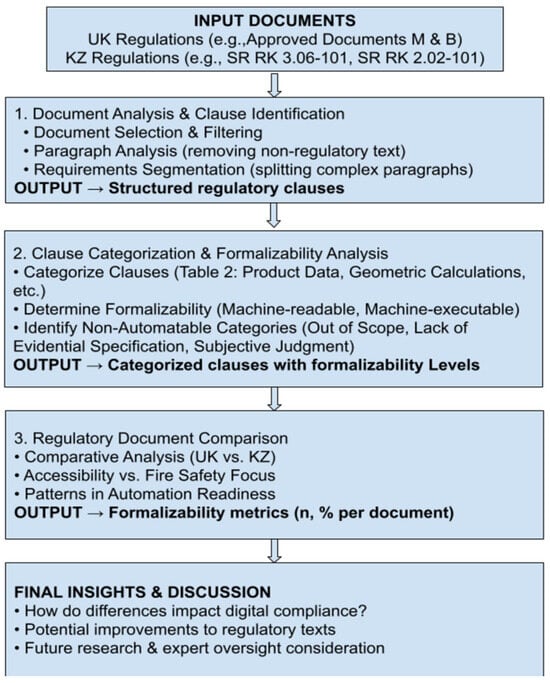
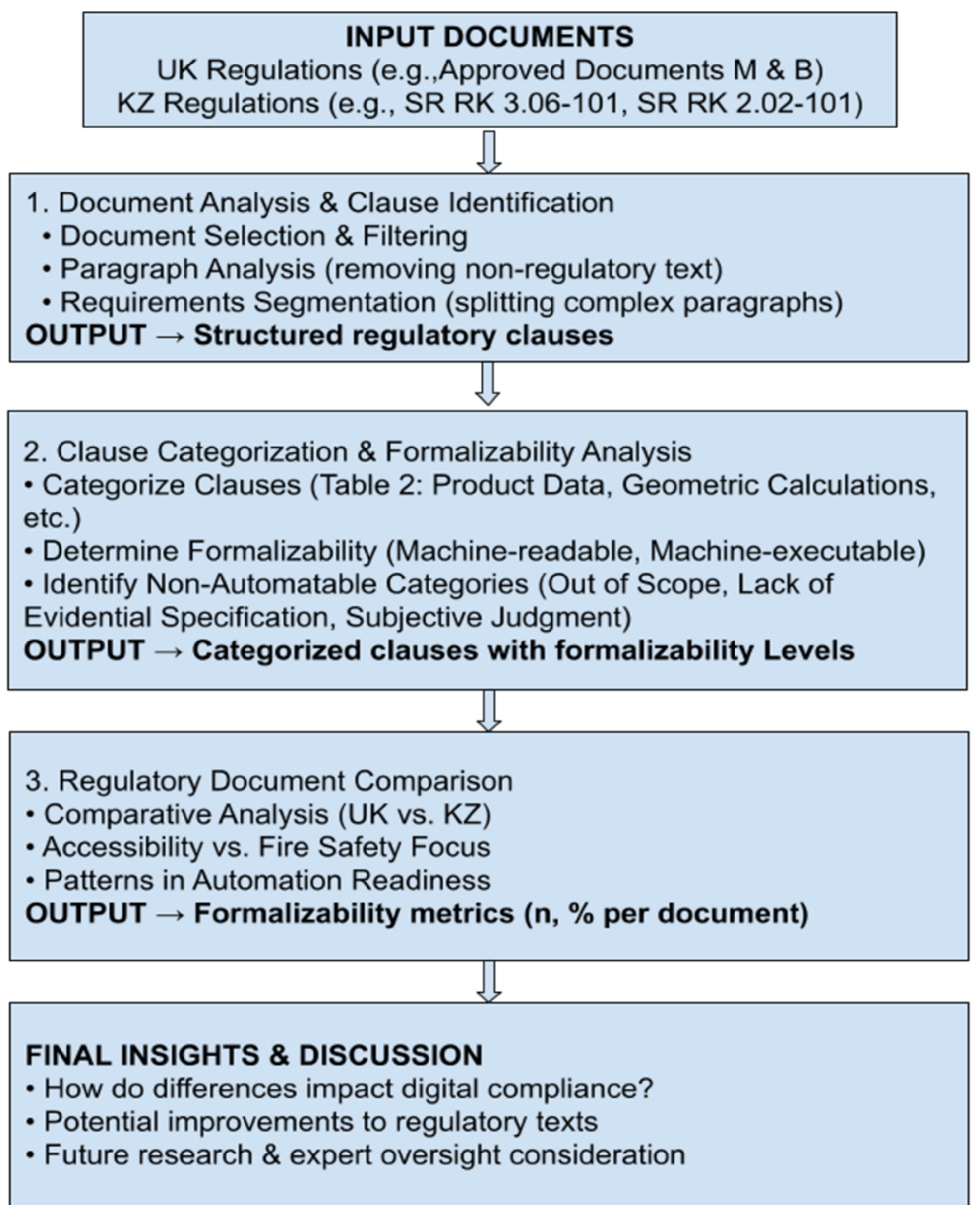
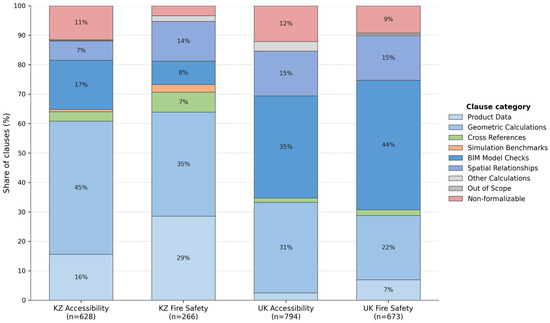
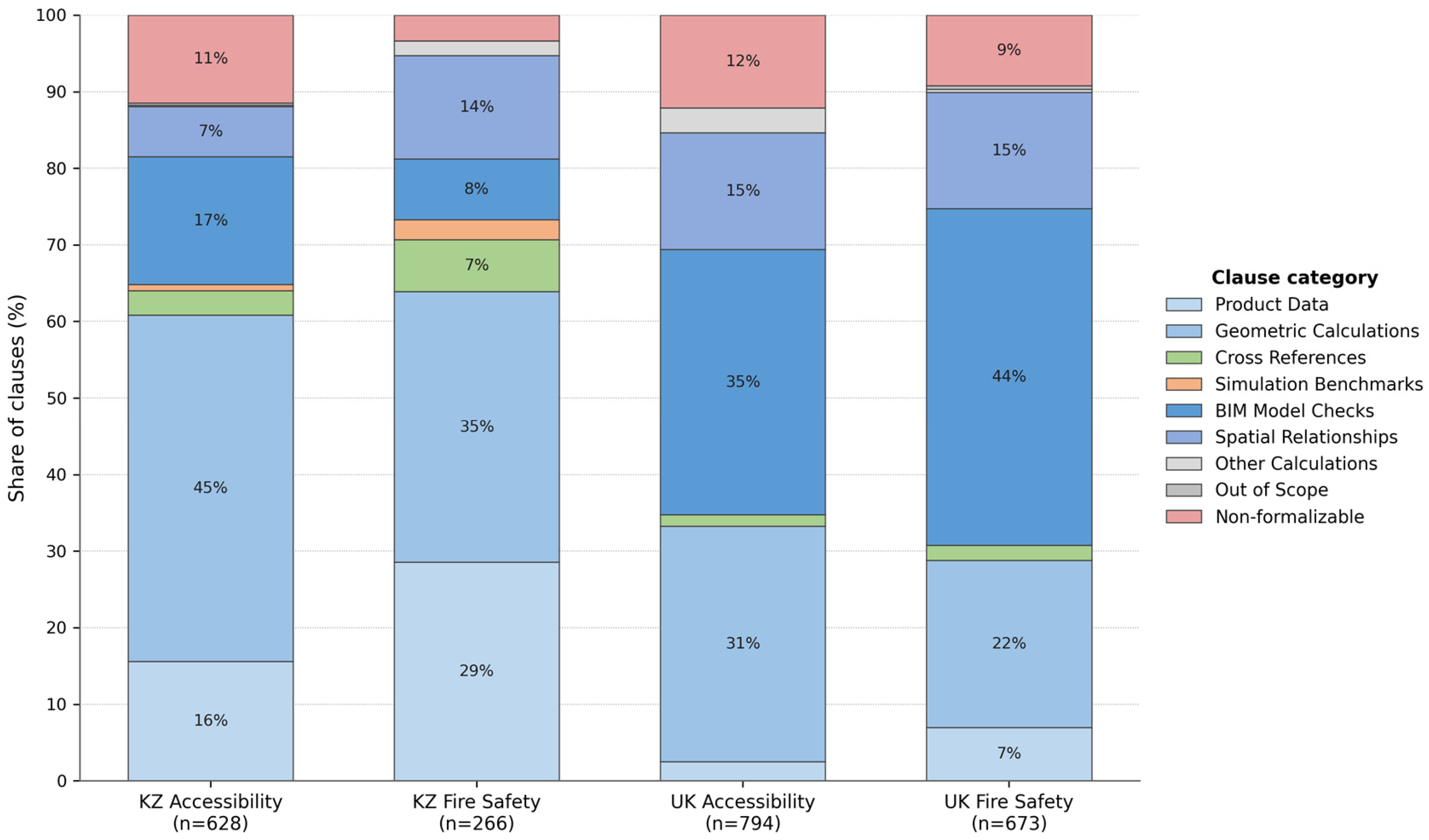
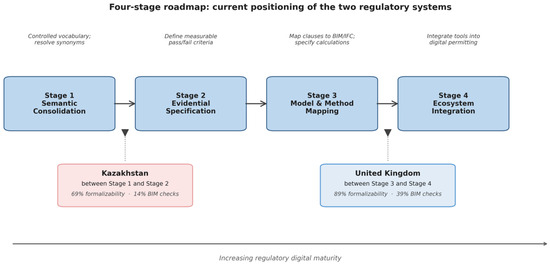
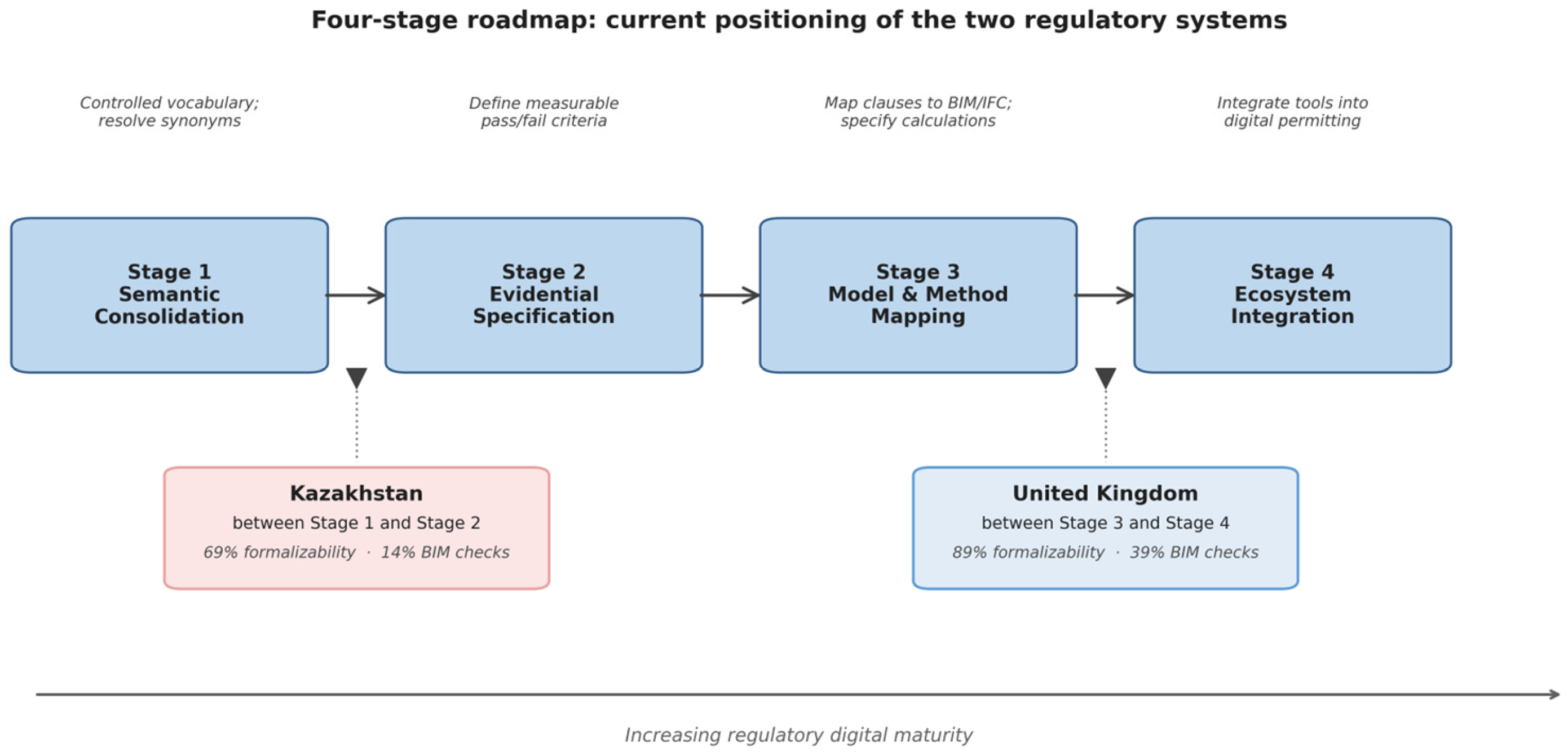

Disclaimer/Publisher’s Note: The statements, opinions and data contained in all publications are solely those of the individual author(s) and contributor(s) and not of MDPI and/or the editor(s). MDPI and/or the editor(s) disclaim responsibility for any injury to people or property resulting from any ideas, methods, instructions or products referred to in the content. |
© 2026 by the authors. Licensee MDPI, Basel, Switzerland. This article is an open access article distributed under the terms and conditions of the Creative Commons Attribution (CC BY) license.