Zero-Carbon Building: Rule-Based Design and Scheduling Adapting to Seasonal Time-of-Use Electricity Prices

Abstract
1. Introduction
- (1)
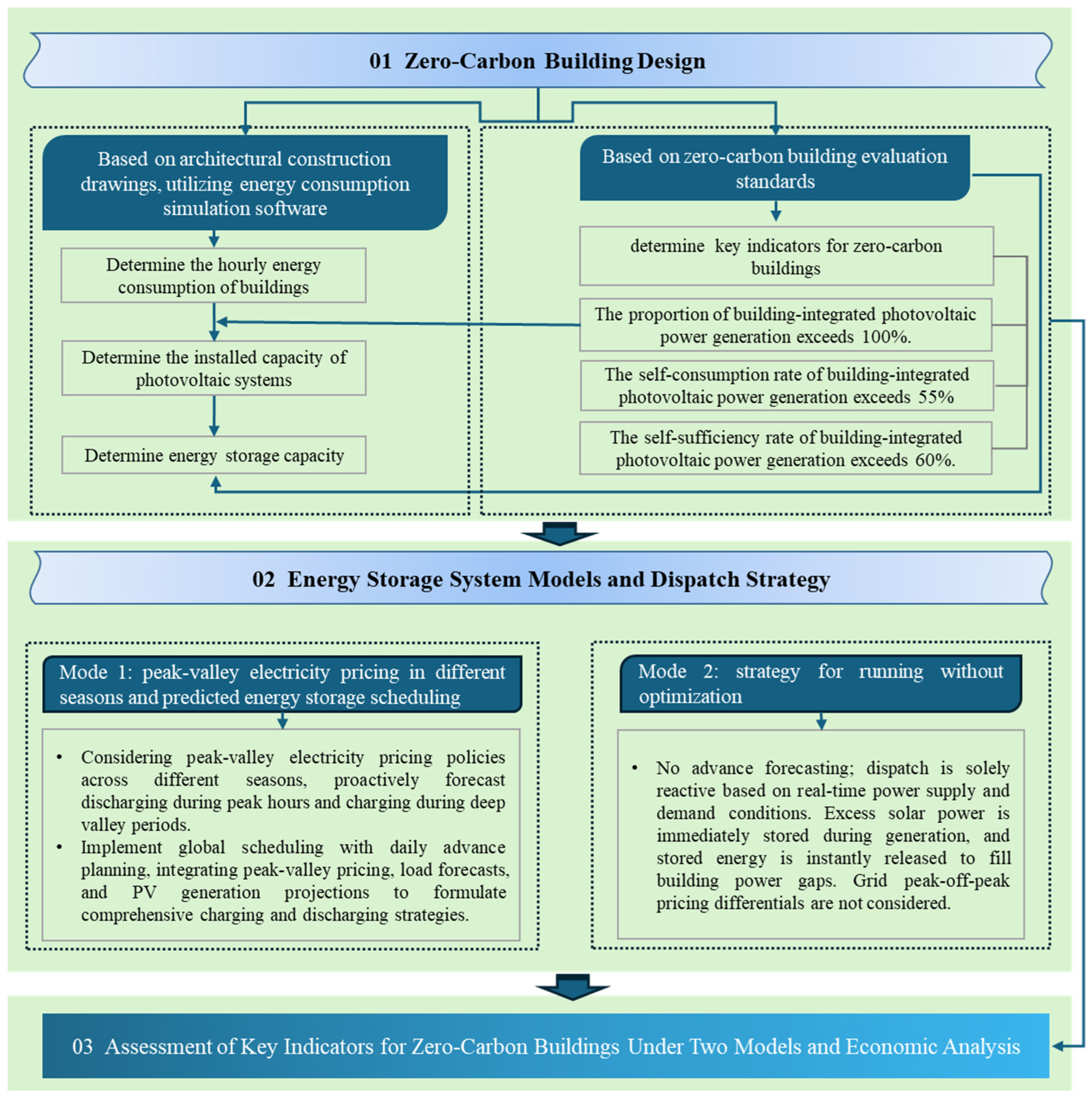
- A rule-based integrated design-operation methodology is proposed, which takes the three core performance indicators of zero-carbon buildings (PV generation ratio, PV self-consumption rate, and PV self-sufficiency rate) as constraints and conducts full-year hourly simulations of building energy load and PV power output.
- (2)
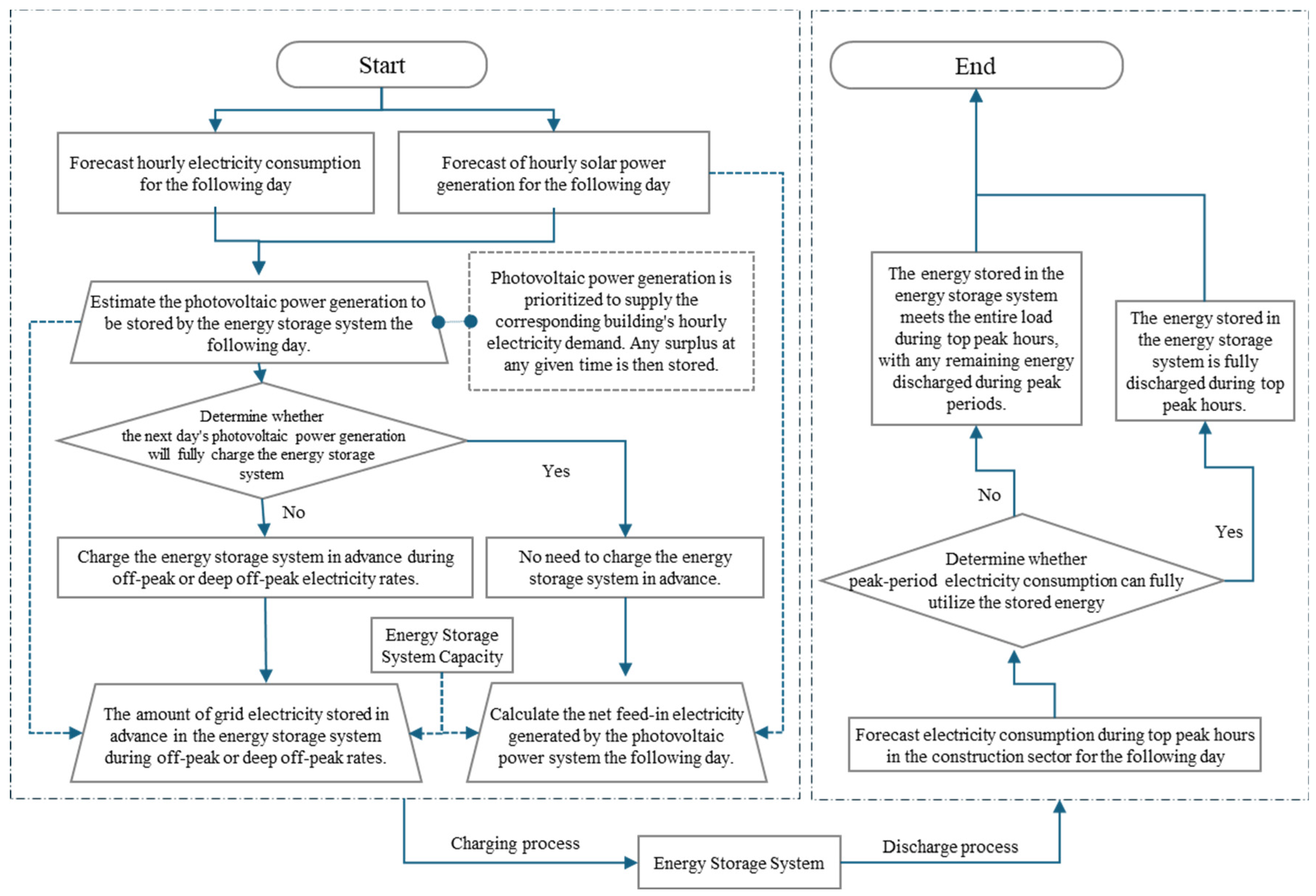
- A predictive scheduling strategy for energy storage systems (ESS) considering time-of-use (TOU) electricity prices is constructed. By incorporating day-ahead PV generation and building load forecasting to formulate scheduling plans, the strategy prioritizes grid power purchase and charging during deep off-peak periods and reserves stored energy for discharge during top peak periods, so as to maximize electricity price arbitrage under Shandong’s five-tier seasonal TOU pricing policy.
- (3)
- A two-dimensional comparative analysis covering technical compliance and economic performance is carried out between the zero-carbon rule-based scheduling mode and the conventional real-time passive scheduling mode. This dual assessment reveals significant seasonal variations in core indicators and quantifies the considerable cost-saving benefits of the proposed intelligent strategy, providing practical and implementable guidance for the design and operational optimization of future zero-carbon buildings.
2. Research Technical Route and Theoretical Formulas
2.1. Technical Roadmap
2.2. Core Performance Indicators
2.3. Scheduling Strategies for Ess in Zero-Carbon Buildings
2.3.1. Seasonal Tou Periods and Electricity Prices
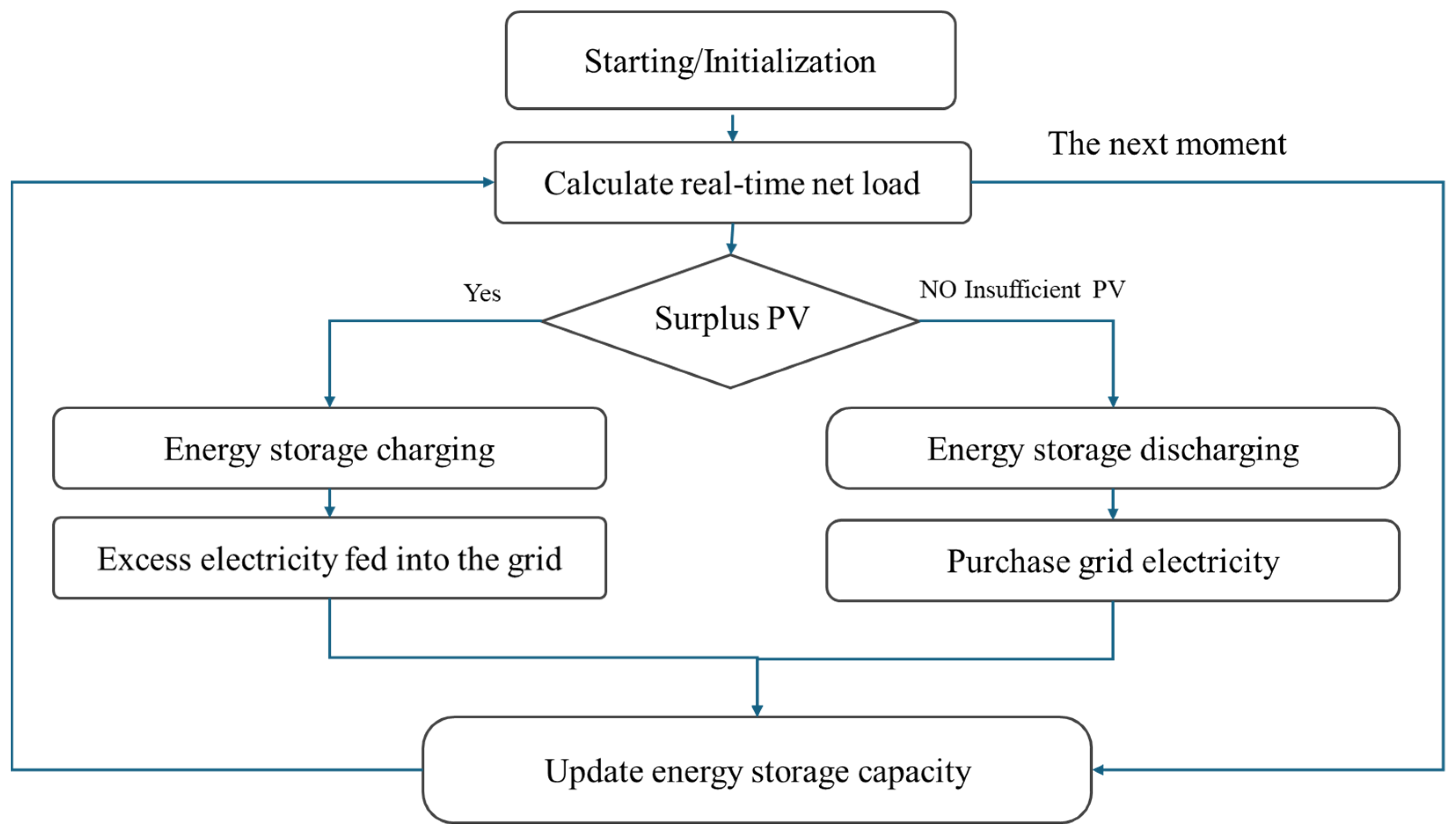
2.3.2. Mode 1: Real-Time Passive Scheduling
- (1)
- Surplus PV scenario
- (2)
- Insufficient PV scenario
- (3)
- Real-time update of energy storage power
2.3.3. Mode 2: Tou-Aware Predictive Scheduling
- (1)
- Day-ahead planning
- (2)
- Hourly real-time scheduling execution
- (3)
- Update of ESS remaining capacity
2.4. Economic Analysis
2.4.1. Operation Cost
2.4.2. Investment Payback Period and Net Present Value (NPV) Analysis
3. Case Application
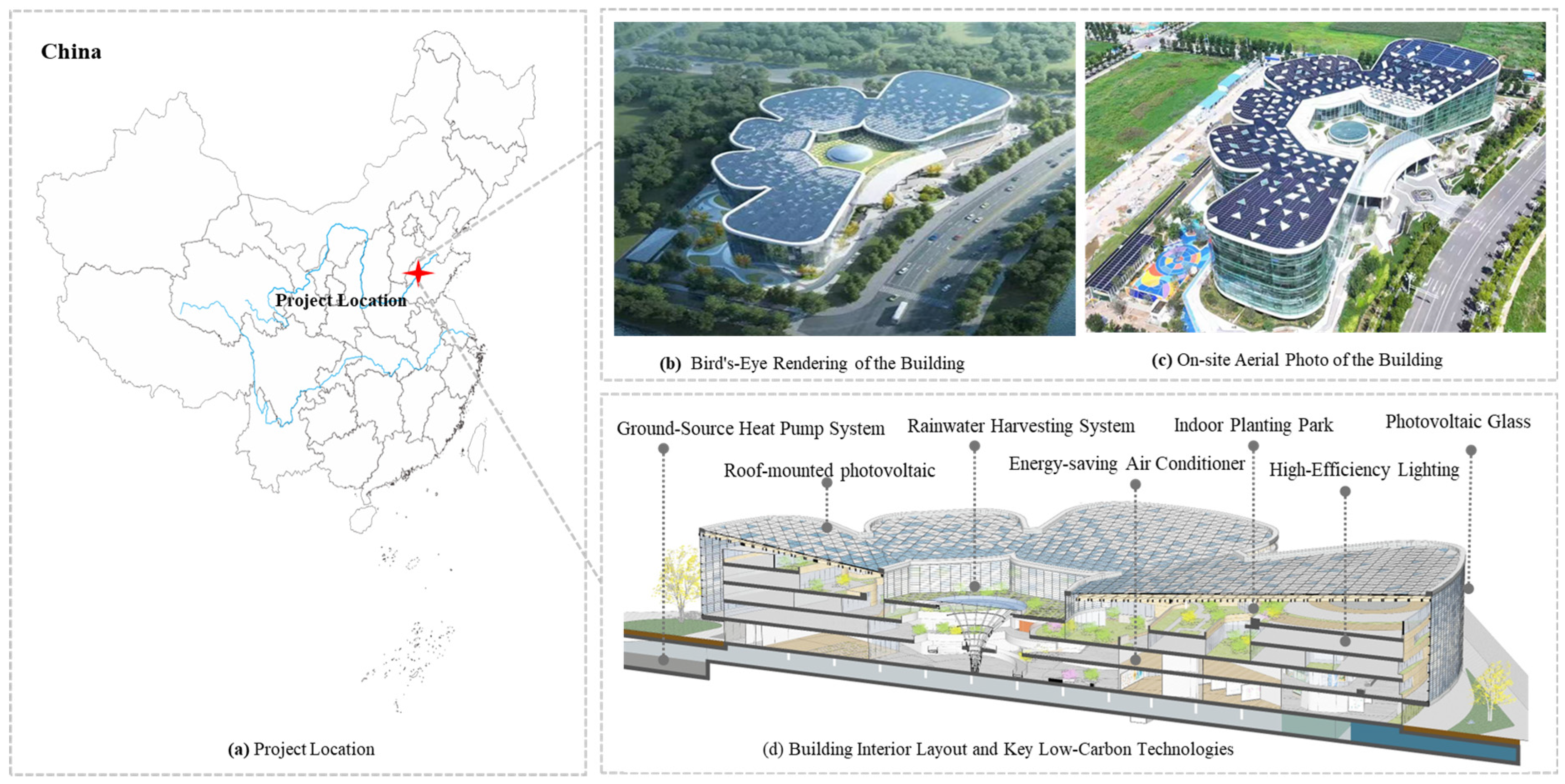
3.1. Project Overview
3.2. Design of Zero-Carbon Buildings and Analysis of Key Indicators
3.2.1. Design of Pv Installed Capacity and Ess Capacity
3.2.2. Calculation of Hourly Building Electricity Consumption and Hourly Pv Generation
3.2.3. Analysis of Key Indicators of Zero-Carbon Buildings
- (1)
- Compliance analysis of key indicators
- (2)
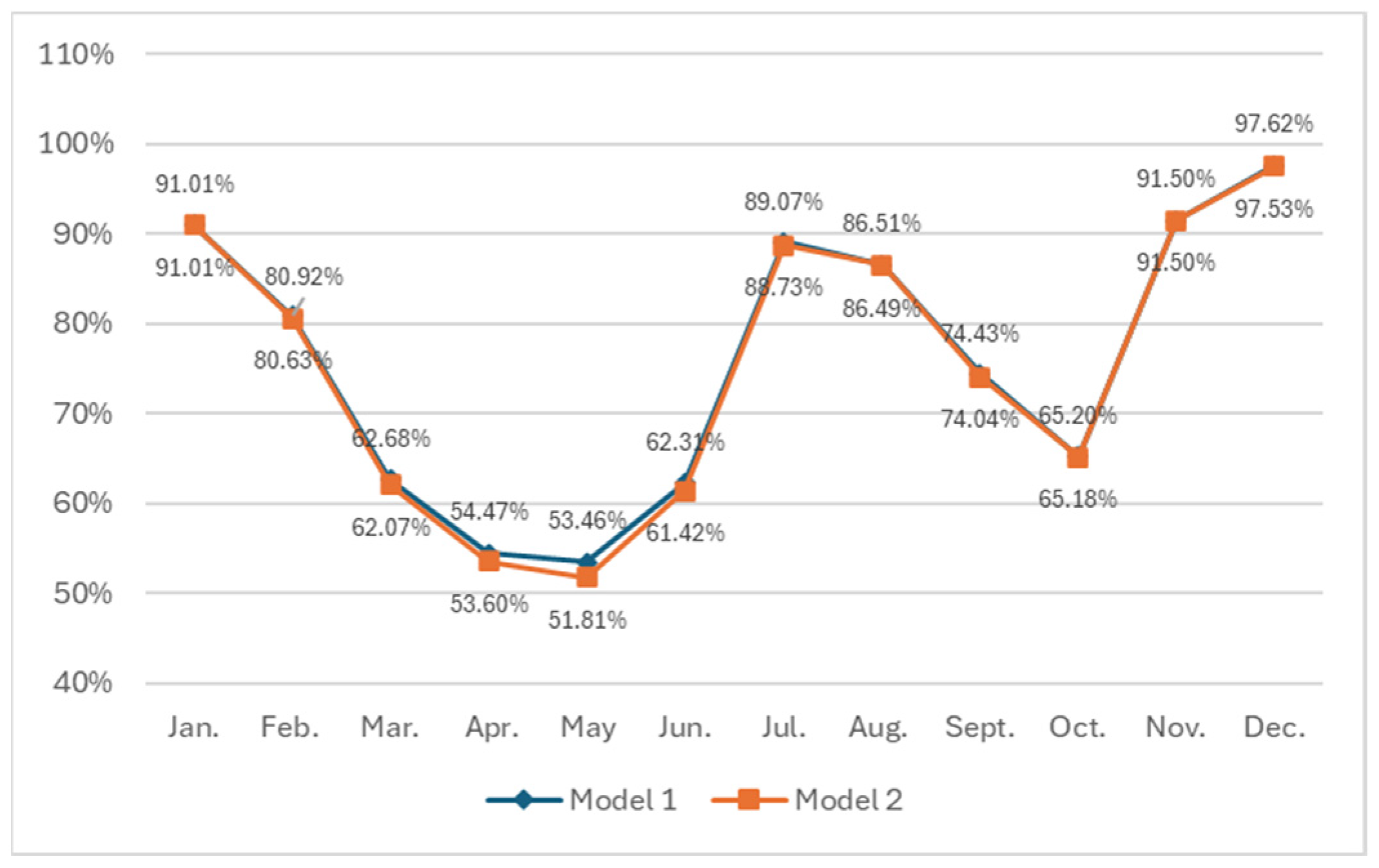
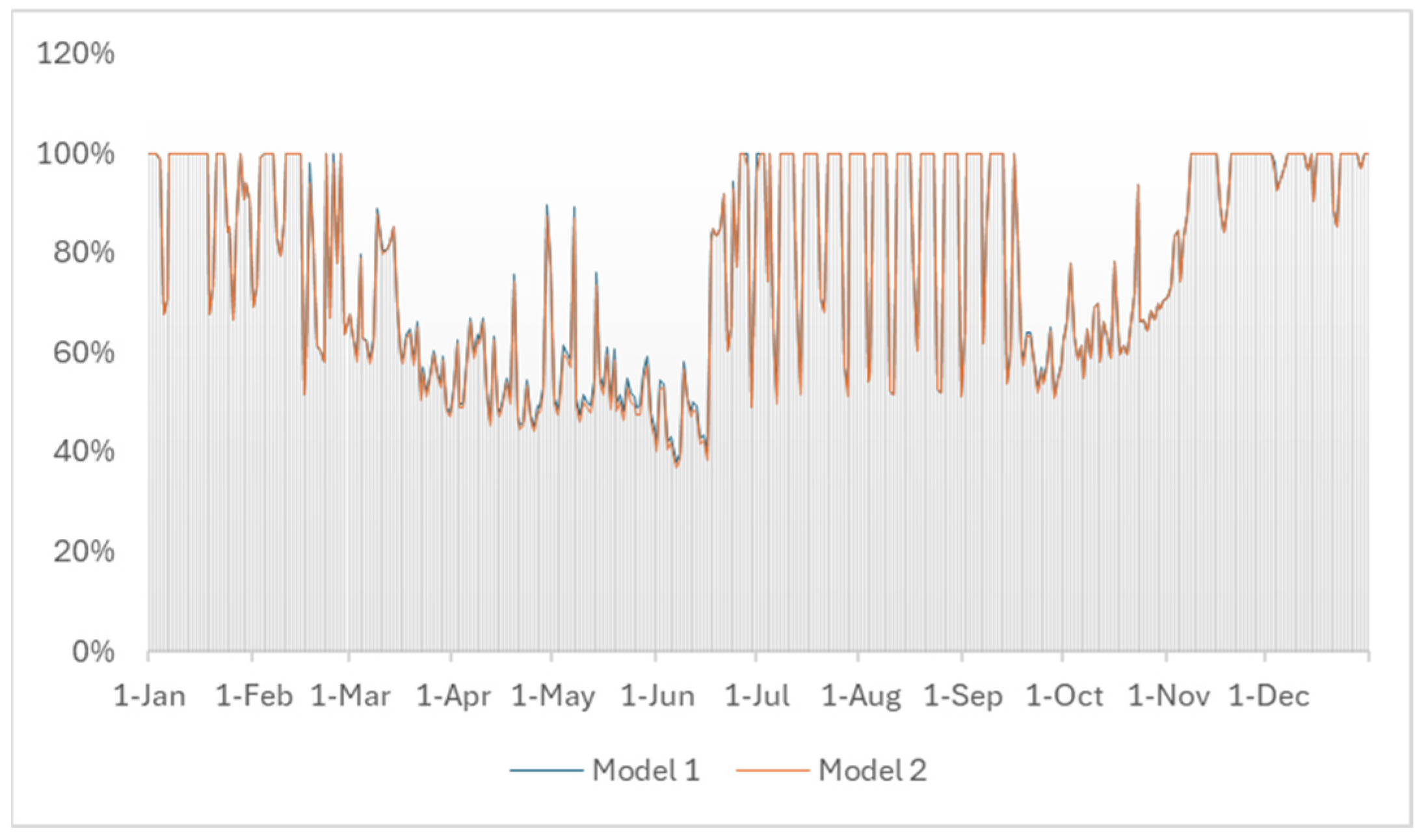
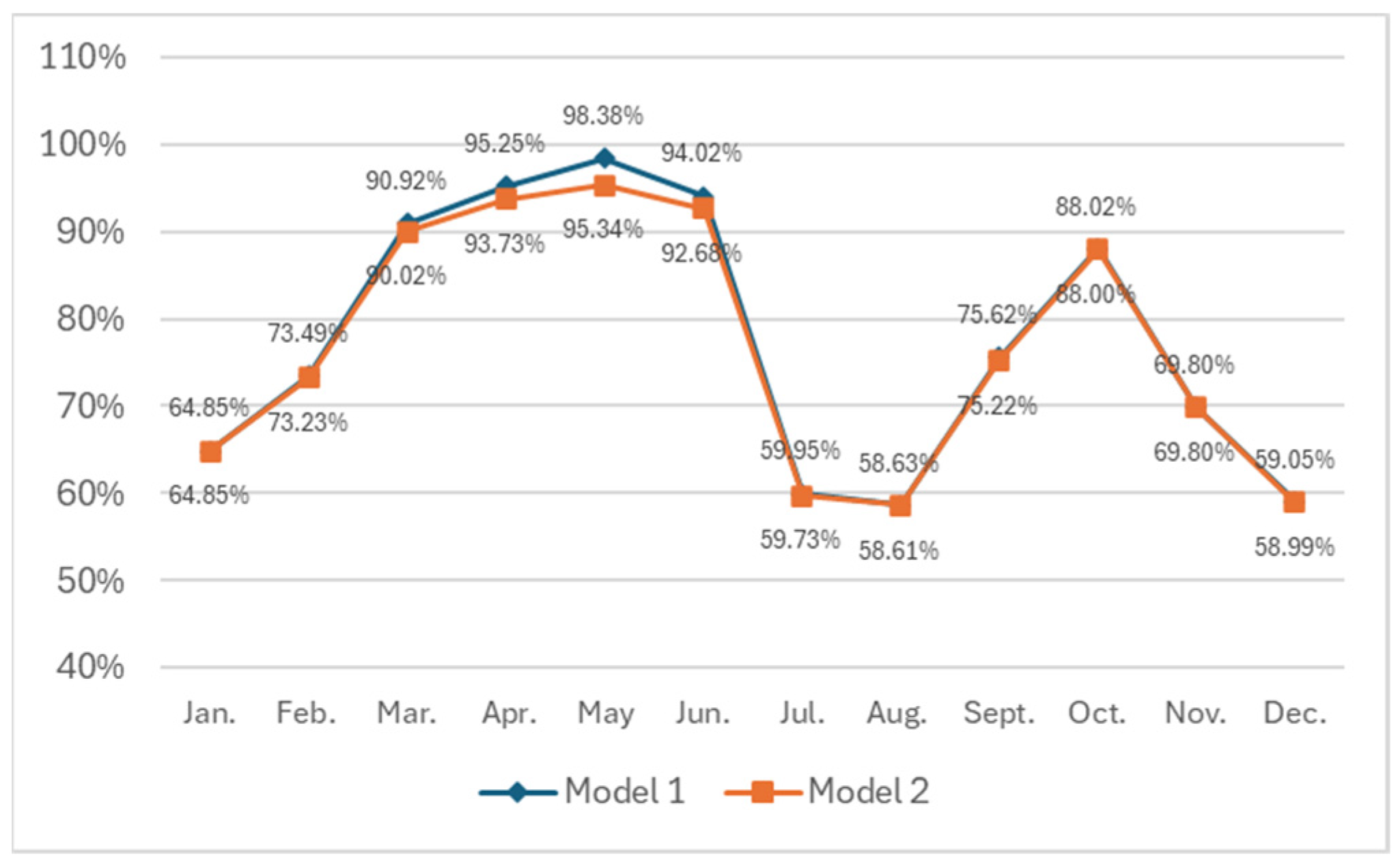
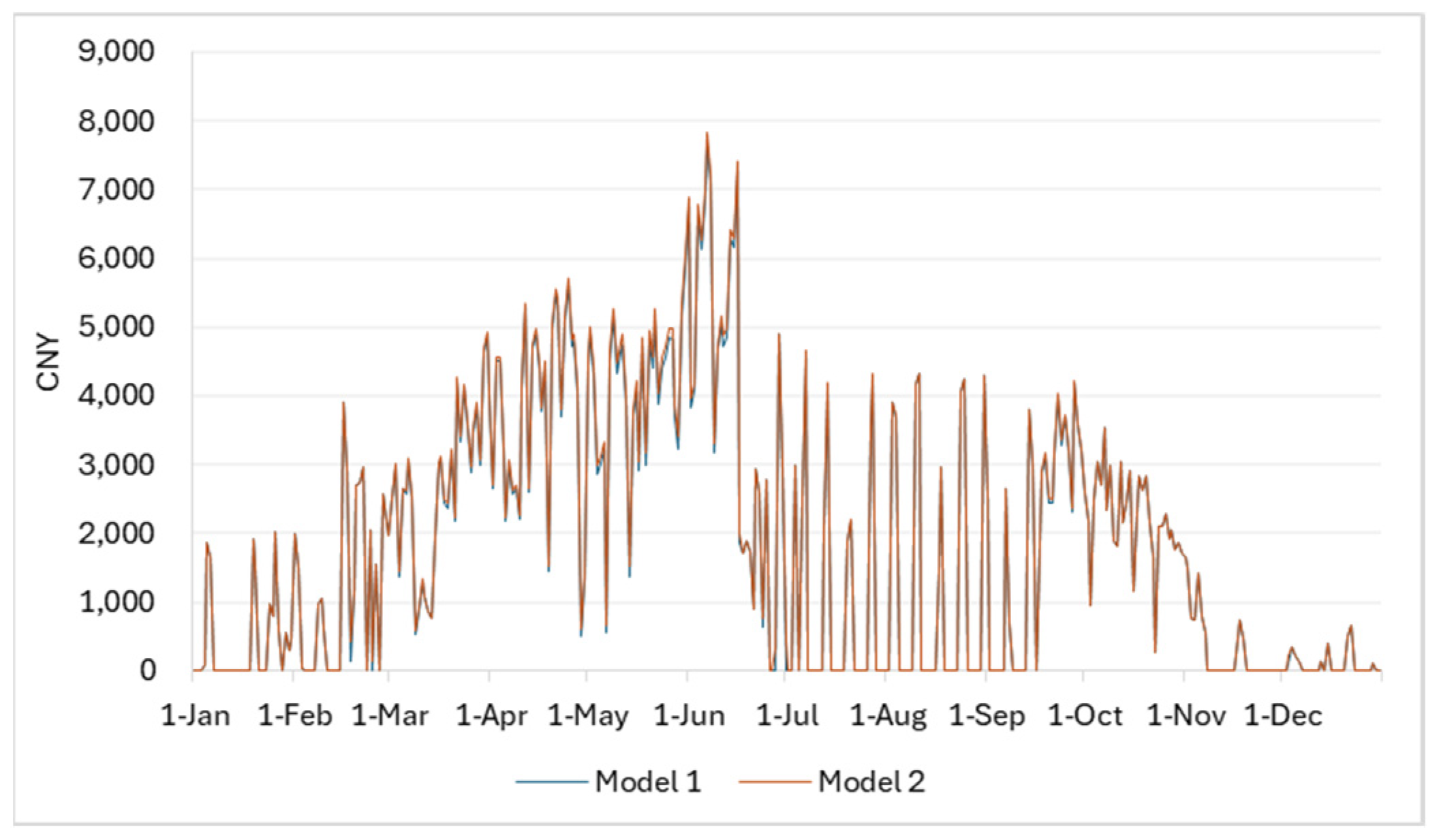
- Analysis of temporal variation characteristics of key indicators
4. Discussion
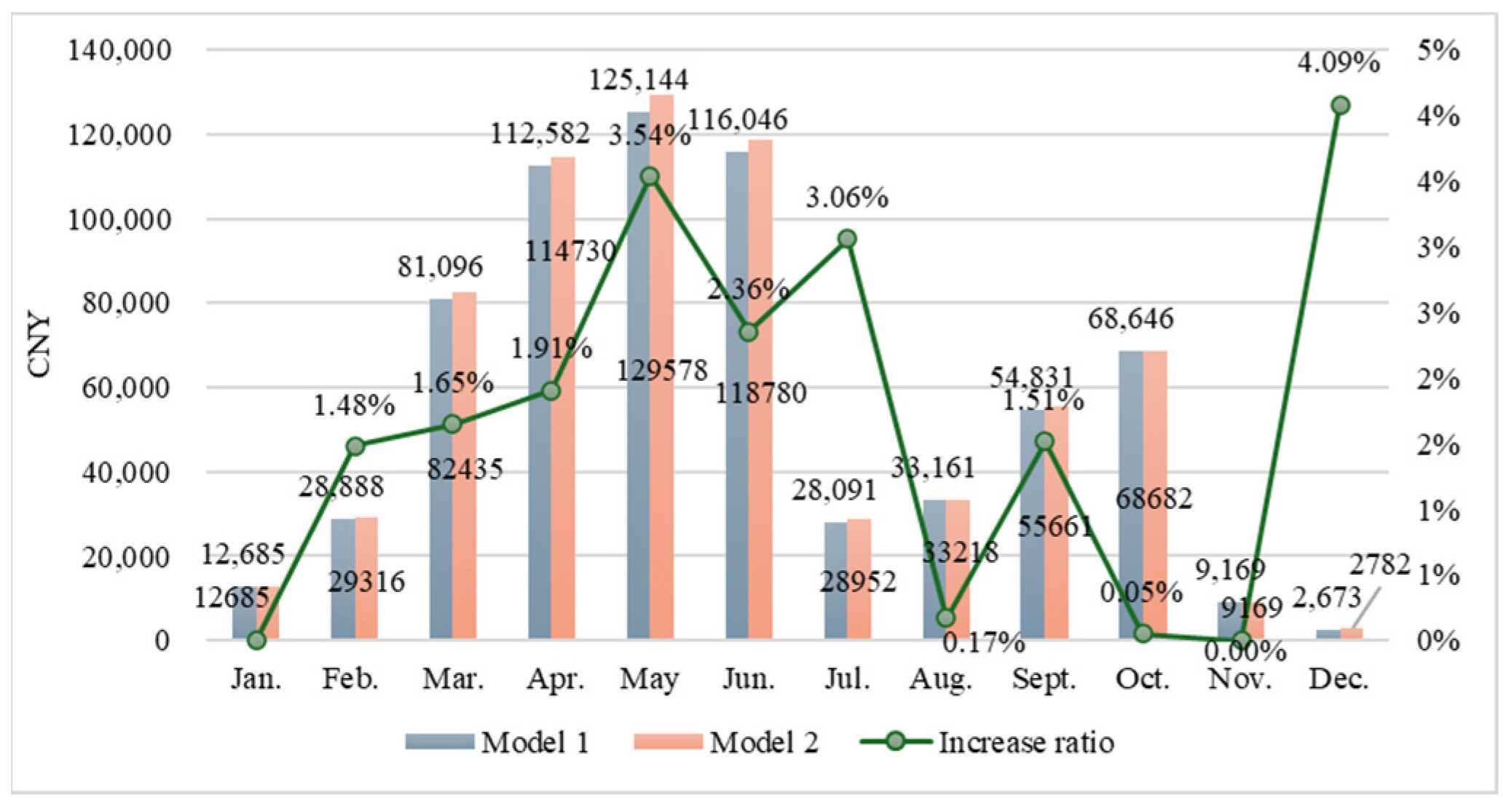
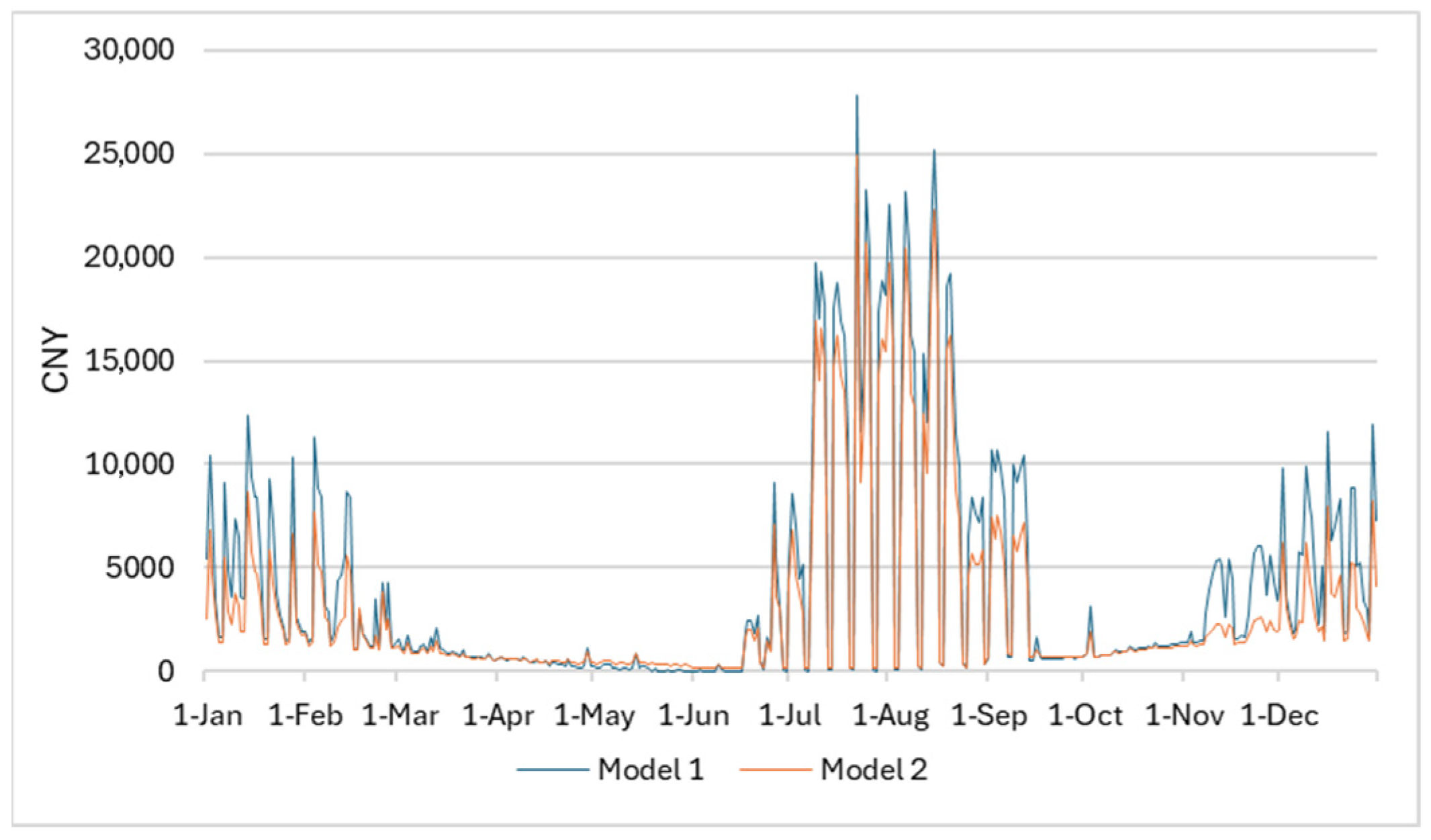
4.1. Revenue from Grid-Connected and Grid Electricity Purchase Cost
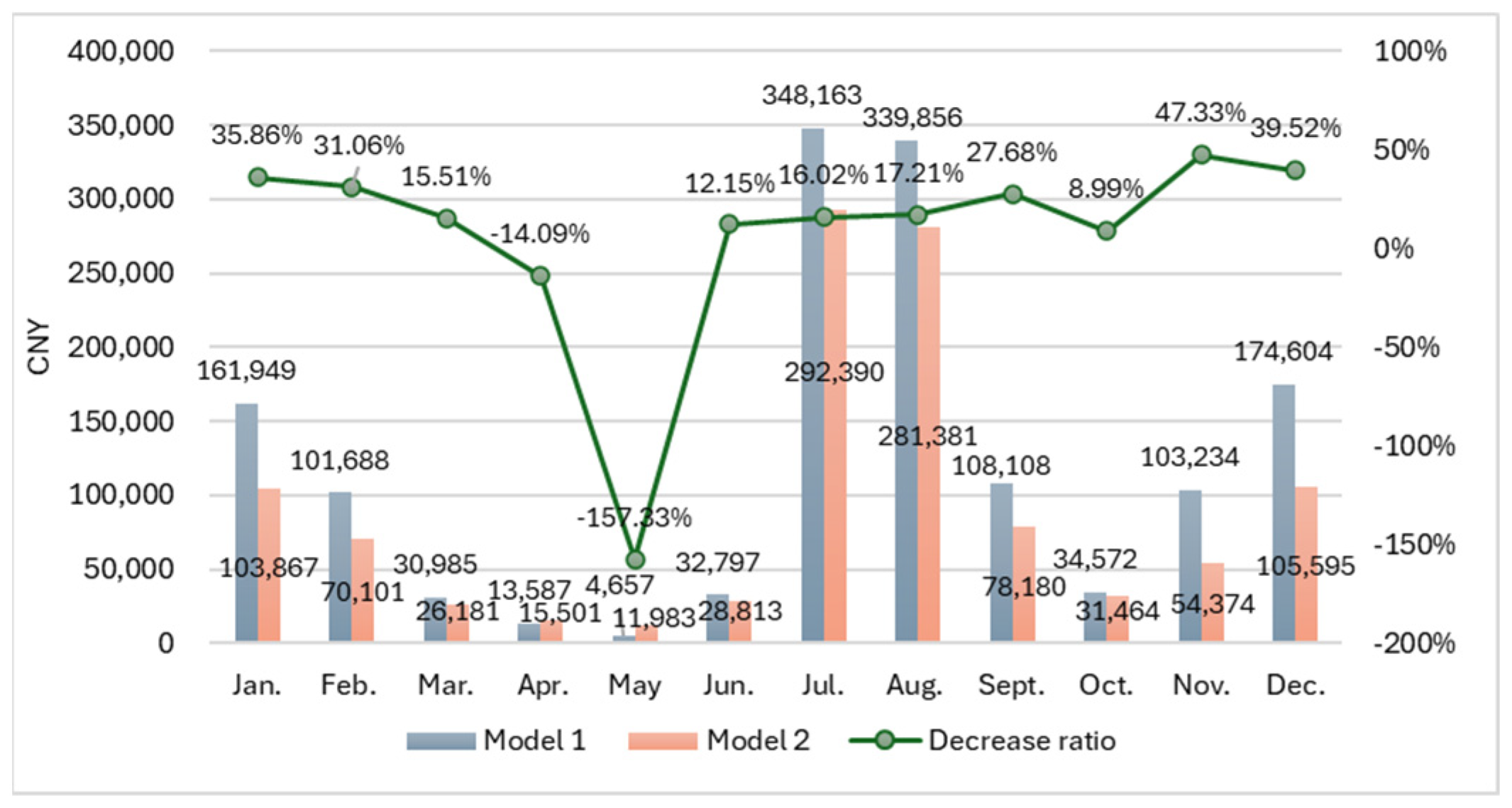
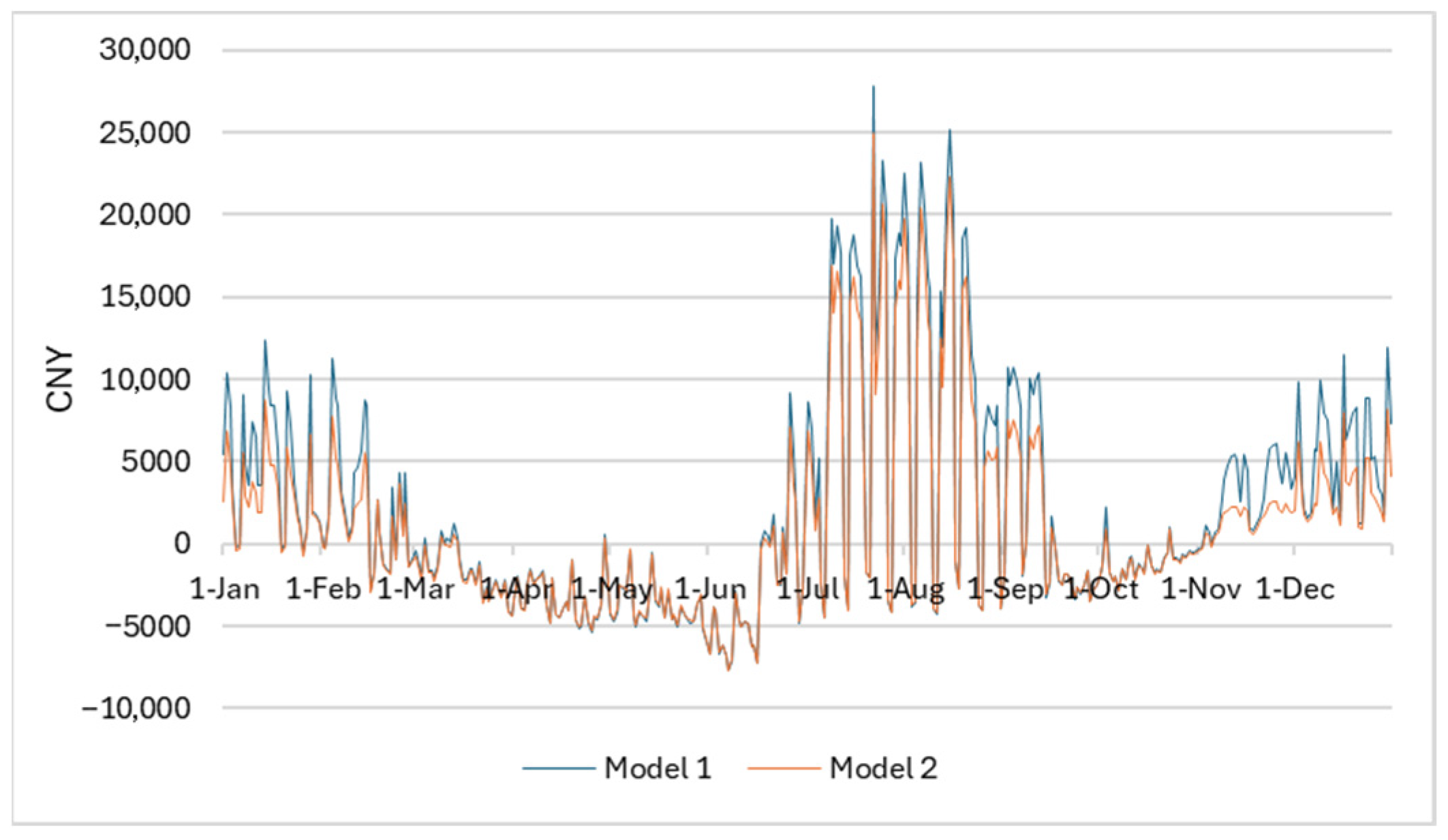
4.2. Net Operating Cost
4.3. Payback Period and Net Present Value
5. Conclusions
- (1)
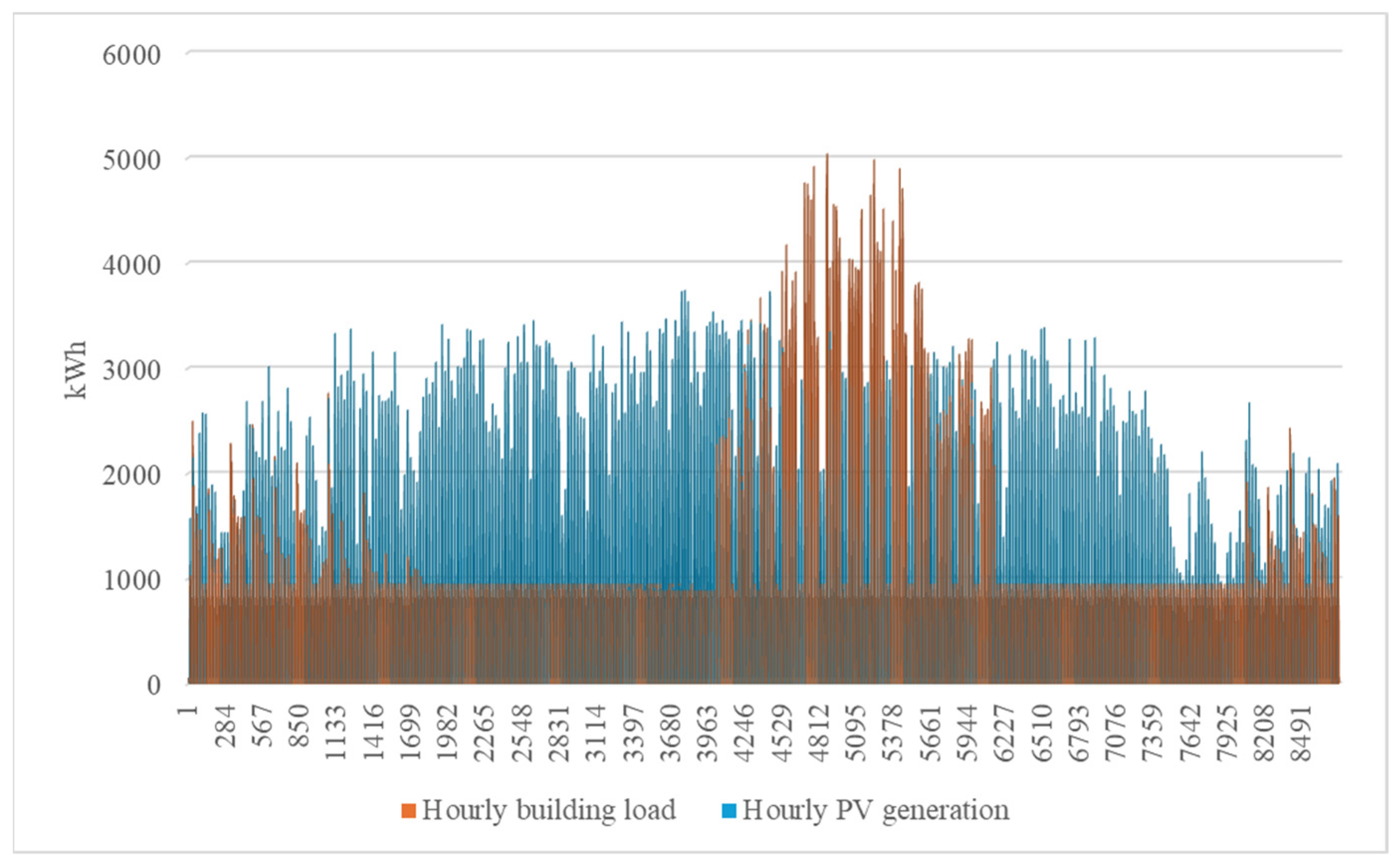
- The optimized PV-ESS configuration (5364.12 kW PV, 4000 kWh ESS) meets the requirements of T/CECS 1555-2024, with an annual PV generation ratio of 101.38%, self-consumption rate of 73.21% and self-sufficiency rate of 72.21%, realizing stable zero-carbon operation.
- (2)
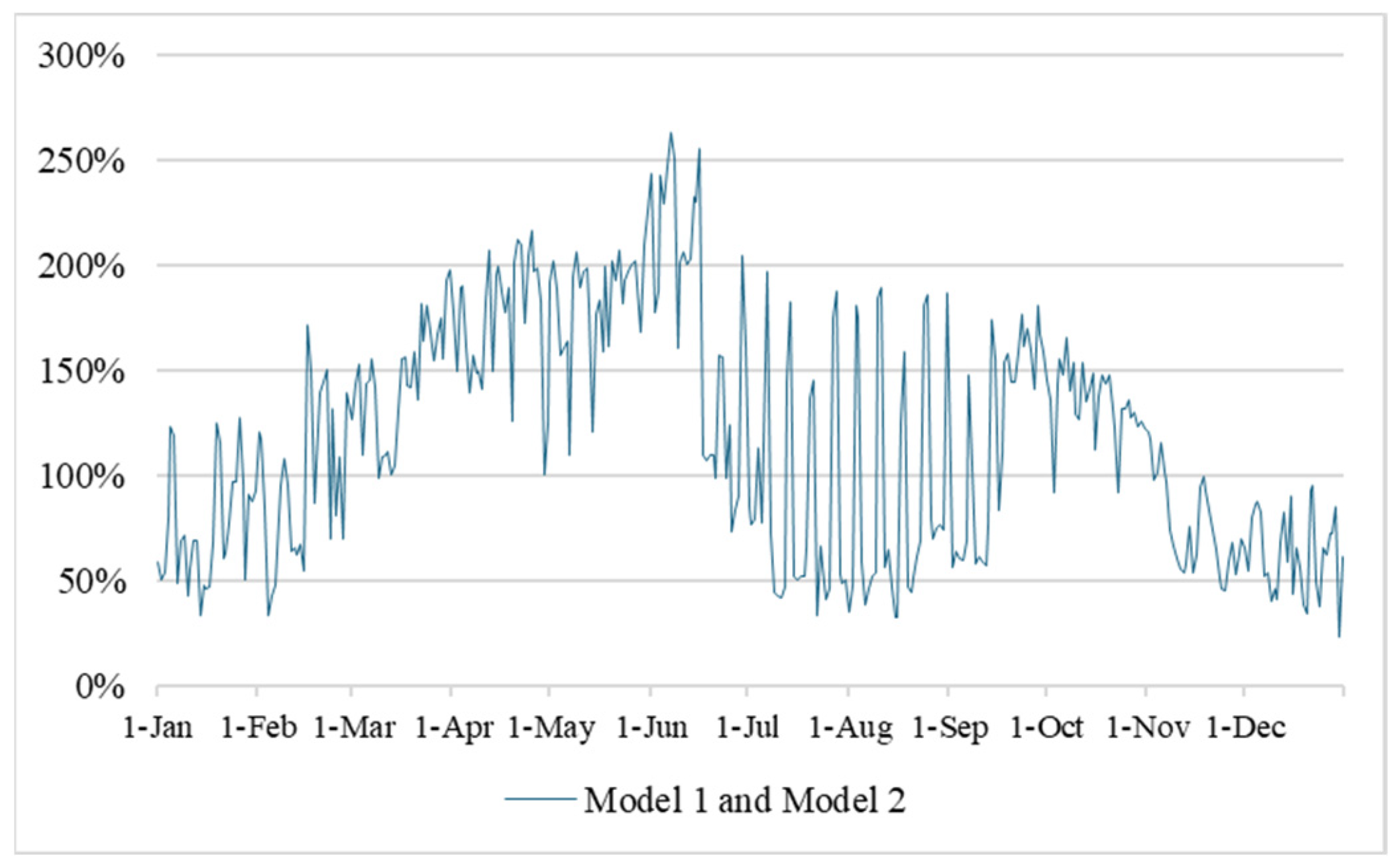
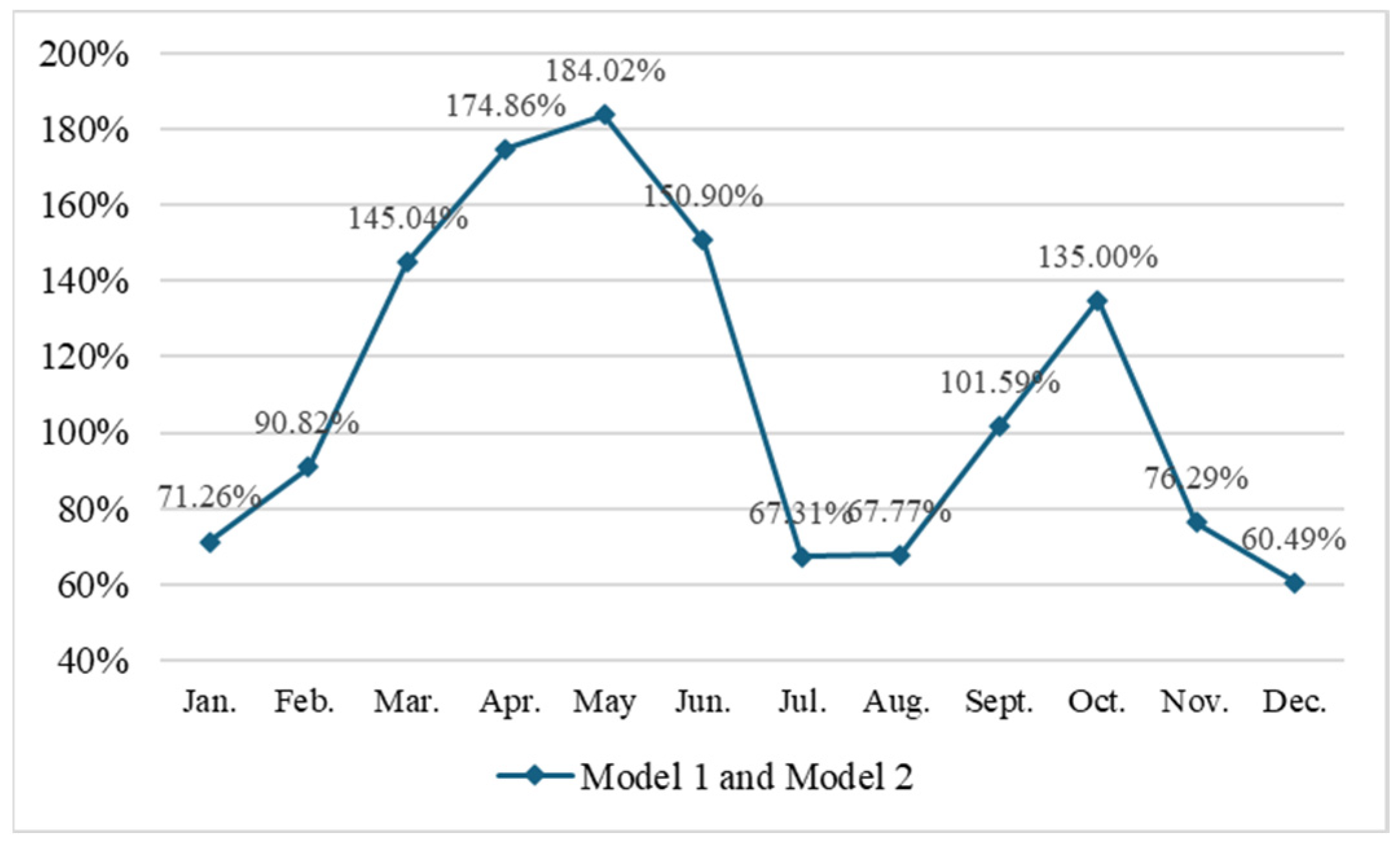
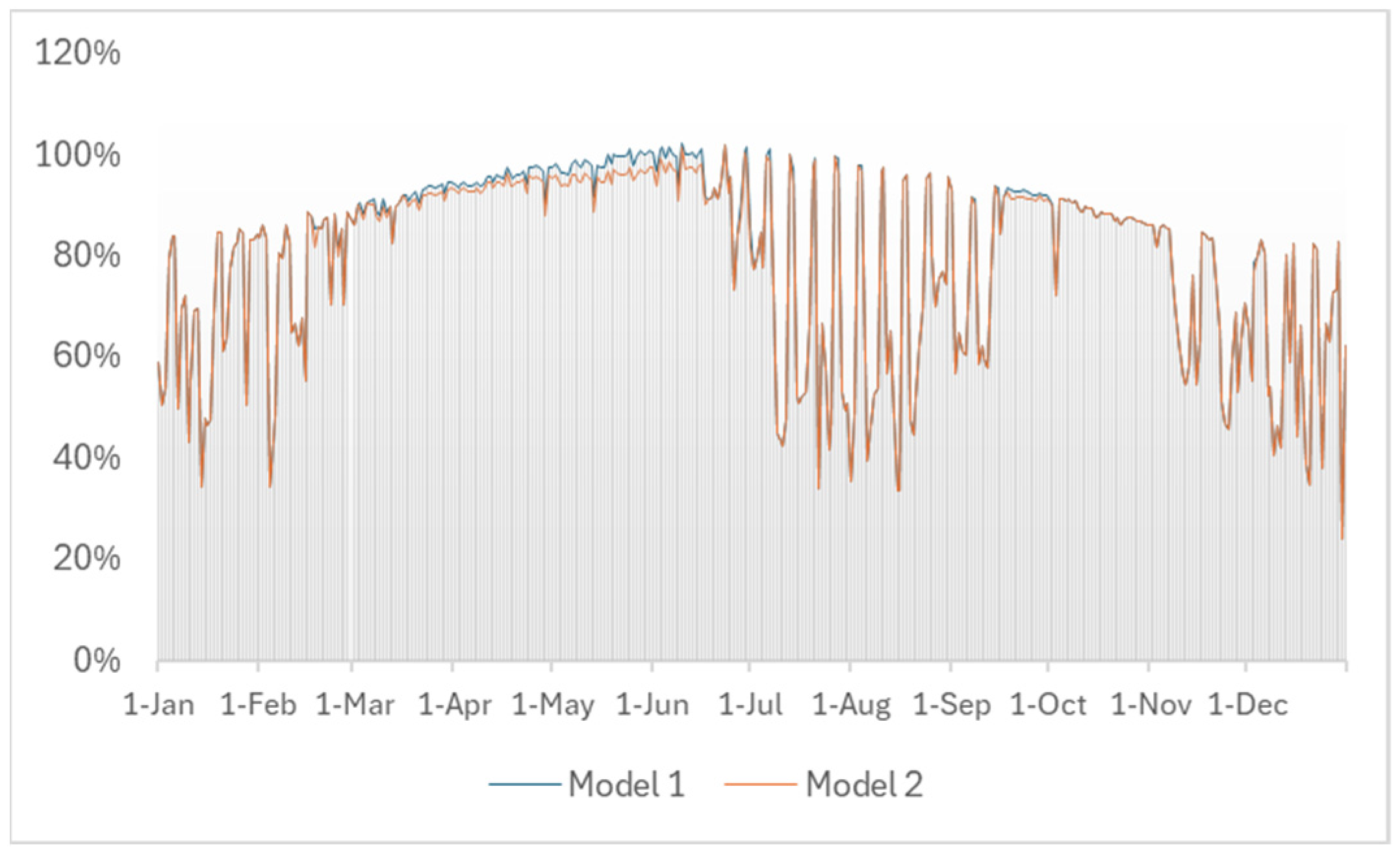
- Core indicators show distinct seasonal variations: PV generation ratio and self-sufficiency rate are higher in spring and autumn, lower in summer and winter; self-consumption rate presents the opposite trend, which is dominated by seasonal load and solar radiation.
- (3)
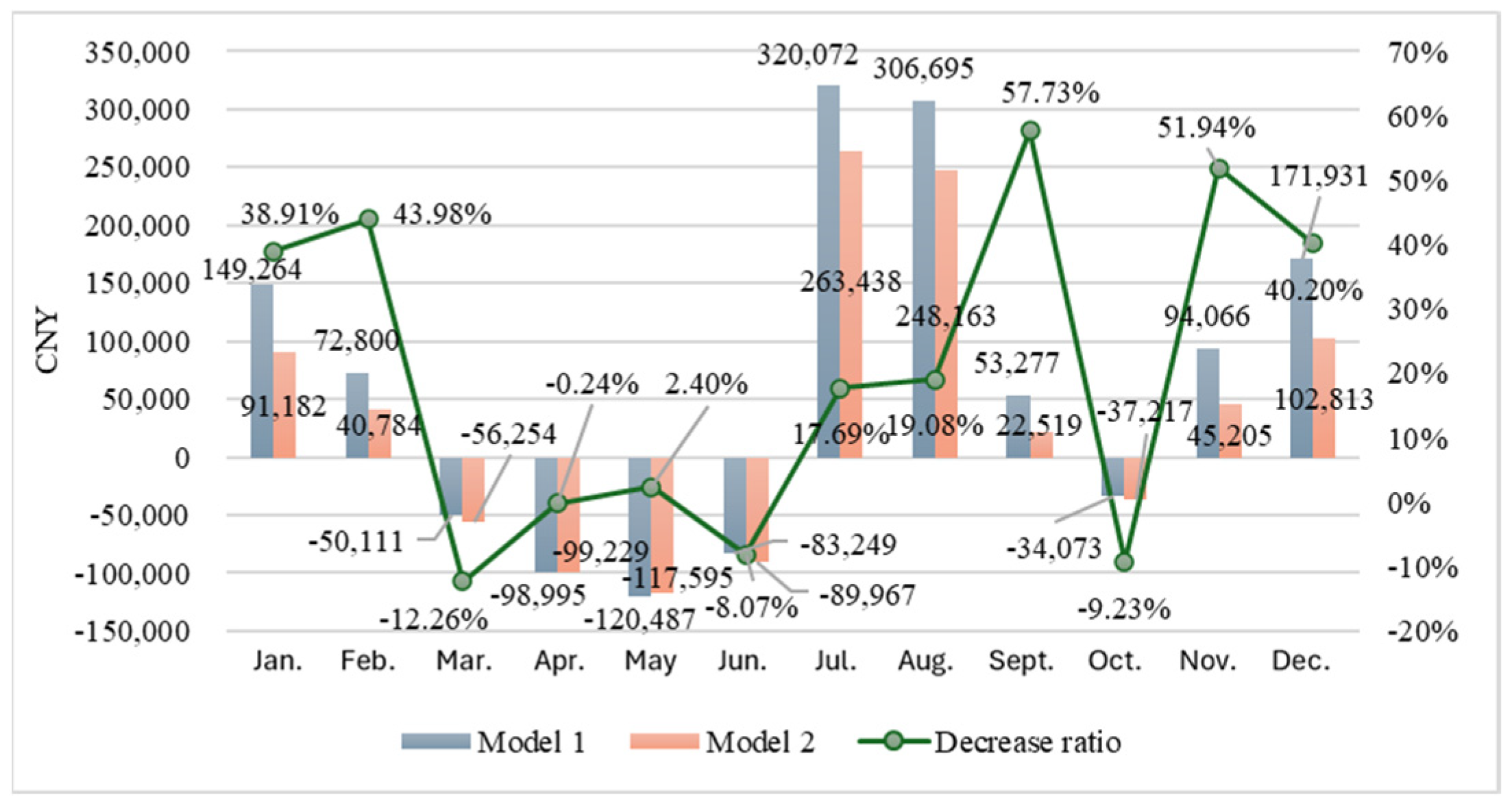
- The TOU-aware predictive scheduling (Mode 2) reduces annual net operation cost by 367,349 CNY (47.02%) compared with conventional real-time scheduling (Mode 1), owing to low-price charging in deep off-peak periods and high-price discharging in top peak periods.
- (4)
- The integrated design-operation framework balances technical compliance and economic efficiency, providing a replicable solution for zero-carbon public buildings in Shandong and regions with similar climates and tariff policies.
6. Research Prospects
- (1)
- Introduce PV and load forecasting error correction and intraday rolling optimization to enhance scheduling robustness under real-world uncertainties.
- (2)
- Expand the analysis to the whole building lifecycle, covering initial investment, ESS degradation, operation and demolition, for multi-objective techno-economic carbon optimization.
- (3)
- Conduct comparative studies across climate zones and tariff systems to establish region-adaptive scheduling templates and improve universality.
- (4)
- Integrate AI and big data to upgrade rule-based scheduling to intelligent dynamic control, coordinating flexible loads and multi-energy systems for higher efficiency and economy.
Author Contributions
Funding
Data Availability Statement
Conflicts of Interest
References
- International Energy Agency. World Energy Statistics 2023: Buildings. 2023. Available online: https://www.iea.org/reports/world-energy-statistics-2023 (accessed on 4 February 2026).
- OECD. Zero-Carbon Buildings in Cities: A Whole Life-Cycle Approach. 2025. Available online: https://www.oecd.org/en/publications/zero-carbon-buildings-in-cities_daae8779-en.html (accessed on 15 January 2026).
- Liu, J.; Wu, H.; Huang, H.; Yang, H. Renewable energy design and optimization for a net-zero energy building integrating electric vehicles and battery storage considering grid flexibility. Energy Convers. Manag. 2023, 298, 117768. [Google Scholar] [CrossRef]
- Zhang, S.; Wang, K.; Xu, W.; Iyer-Raniga, U.; Athienitis, A.; Ge, H.; Cho, D.W.; Feng, W.; Okumiya, M.; Yoon, G.; et al. Policy recommendations for the zero energy building promotion towards carbon neutral in Asia-Pacific Region. Energy Policy 2021, 159, 112661. [Google Scholar] [CrossRef]
- Myint, N.N.; Shafique, M.; Zhou, X.; Zheng, Z. Net zero carbon buildings: A review on recent advances, knowledge gaps and research directions. Case Stud. Constr. Mater. 2025, 22, e04200. [Google Scholar] [CrossRef]
- Liu, C.; Zhang, S.; Chen, X.; Xu, W.; Wang, K. A comprehensive study of the potential and applicability of photovoltaic systems for zero carbon buildings in Hainan Province, China. Sol. Energy 2022, 238, 371–380. [Google Scholar] [CrossRef]
- Agarwal, U.; Rathore, N.S.; Jain, N.; Sharma, P.; Bansal, R.C.; Chouhan, M.; Kumawat, M. Adaptable pathway to net zero carbon: A case study for Techno-Economic & Environmental assessment of Rooftop Solar PV System. Energy Rep. 2023, 9, 3482–3492. [Google Scholar] [CrossRef]
- Liu, R.; Liu, Z.; Xiong, W.; Zhang, L.; Zhao, C.; Yin, Y. Performance simulation and optimization of building façade photovoltaic systems under different urban building layouts. Energy 2024, 288, 129708. [Google Scholar] [CrossRef]
- Fu, Y.; Xu, W.; Wang, Z.; Zhang, S.; Chen, X.; Wang, B. Parametric study and sensitivity analysis on thermoelectric energy generation of building integrated photovoltaic facades in various climatic zones of China. J. Build. Eng. 2024, 82, 108096. [Google Scholar] [CrossRef]
- Cuce, E. Toward multi-functional PV glazing technologies in low/zero carbon buildings: Heat insulation solar glass–Latest developments and future prospects. Renew. Sustain. Energy Rev. 2016, 60, 1286–1301. [Google Scholar] [CrossRef]
- Huang, H.; Li, Y.; Liu, H. Collaborative optimization strategy of source-grid-load-storage considering dynamic time series complementarity of multiple storages. IET Gener. Transm. Distrib. 2023, 17, 4007–4023. [Google Scholar] [CrossRef]
- Fan, J.; Li, X.; Chen, H.; Jiang, Y.; Wang, S.; Cao, X. Practice of generation-grid-load-storage interactive transaction considering clean energy consumption. In IOP Conference Series: Earth and Environmental Science; IOP Publishing: Bristol, UK, 2021. [Google Scholar]
- Mi, Y.; Chen, Y.; Yuan, M.; Li, Z.; Tao, B.; Han, Y. Multi-timescale optimal dispatching strategy for coordinated source-grid-load-storage interaction in active distribution networks based on second-order cone planning. Energies 2023, 16, 1356. [Google Scholar] [CrossRef]
- Zhang, T.; Zhou, X.; Gao, Y.; Zhu, R. Optimal dispatch of the source-grid-load-storage under a high penetration of photovoltaic access to the distribution network. Processes 2023, 11, 2824. [Google Scholar] [CrossRef]
- Makahleh, F.M.; Amer, A.; Manasrah, A.A.; Attar, H.; Solyman, A.A.A.; Kamarposhti, M.A.; Thounthong, P. Optimal management of energy storage systems for peak shaving in a smart grid. Comput. Mater. Contin. 2023, 75, 3317–3337. [Google Scholar] [CrossRef]
- Li, W.; Sui, W.; Cheng, L.; Ji, Y.; Guo, Y.; Zhu, J. Quantifying seasonal demand-side flexibility in residential air conditioning under diverse control strategies. Energy Build. 2026, 352, 116764. [Google Scholar] [CrossRef]
- Wu, Z.; Shi, X.; Fang, F.; Wen, G.; Mi, Y. Co-optimization of building energy systems with renewable generations combining active and passive energy-saving. Appl. Energy 2023, 351, 121514. [Google Scholar] [CrossRef]
- Feng, G.; Yu, K.; Zheng, Y.; Bu, L.; Chen, J.; Xu, W.; Chen, X. Optimization of energy use for zero-carbon buildings considering intraday source-load uncertainties. Energies 2025, 18, 2582. [Google Scholar] [CrossRef]
- Song, Y.; Mu, H.; Li, N.; Wang, H.; Kong, X. Optimal scheduling of zero-carbon integrated energy system considering long-and short-term energy storages, demand response, and uncertainty. J. Clean. Prod. 2024, 435, 140393. [Google Scholar] [CrossRef]
- Wang, L.; Lin, J.; Dong, H.; Wang, Y.; Zeng, M. Demand response comprehensive incentive mechanism-based multi-time scale optimization scheduling for park integrated energy system. Energy 2023, 270, 126893. [Google Scholar] [CrossRef]
- Wang, J.; Liu, H.; Xu, C. Three-Stage Optimization Integrating Data-Driven Forecasting-Based Capacity Planning, Day-Ahead Scheduling, and Intraday Rolling Optimization for Integrated Energy Systems; Elsevier: Amsterdam, The Netherlands, 2026. [Google Scholar]
- Qiao, B.; Dong, J.; Xu, W.; Li, J.; Lu, F. Research and demonstration of operation optimization method of zero-carbon building’s compound energy system based on day-ahead planning and intraday rolling optimization algorithm. Buildings 2025, 15, 836. [Google Scholar] [CrossRef]
- Yang, Q.; Tian, M.; Li, L.; Deng, H. Fuzzy chance-constrained multi-objective optimization of configuration and operation of building-photovoltaics-assisted distributed energy system under source-load uncertainties. Renew. Energy 2025, 256, 124405. [Google Scholar] [CrossRef]
- Fazlollahtabar, H. A fuzzy two-phase model for renewable energy system optimization under uncertainty: From operational to strategic scenario planning. Energy Convers. Manag. X 2026, 30, 101600. [Google Scholar] [CrossRef]
- CECS. Assessment Standard for Carbon-Neutral Building; China Architecture & Building Press: Beijing, China, 2024; Available online: https://25978851.s21i.faiusr.com/61/ABUIABA9GAAgldCDsAYonZeS2gY.pdf (accessed on 25 February 2026).
- SDDRC. Shandong Releases “Five-Stage” Time-of-Use Electricity Price Blue Book. 2025. Available online: https://www.sohu.com/a/884855009_121124363 (accessed on 30 January 2026).
- NDRC. PV Feed-In Tariffs in 31 Provincial-Level Regions. 2021. Available online: https://guangfu.bjx.com.cn/news/20240422/1372793.shtml (accessed on 10 February 2026).
- MOHURD. Standard for Design of Photovoltaic Power Station GB 50797. 2024. Available online: https://www.jszjxh.com/w/portal/newsDetails?newsId=1000017598 (accessed on 15 February 2026).
- Leah126. 2025. Available online: https://blog.csdn.net/leah126/article/details/151212169 (accessed on 9 January 2026).



| Time Period | Spring (Mar–May) | Summer (Jun–Aug) | Autumn (Sep–Nov) | Winter (Dec–Feb) | ||||
|---|---|---|---|---|---|---|---|---|
| Type | Price | Type | Price | Type | Price | Type | Price | |
| 00:00–01:00 | Shoulder | 0.69 | Off-peak | 0.33 | Shoulder | 0.69 | Shoulder | 0.69 |
| 01:00–02:00 | Shoulder | 0.69 | Off-peak | 0.33 | Shoulder | 0.69 | Shoulder | 0.69 |
| 02:00–03:00 | Shoulder | 0.69 | Off-peak | 0.33 | Shoulder | 0.69 | Shoulder | 0.69 |
| 03:00–04:00 | Shoulder | 0.69 | Off-peak | 0.33 | Shoulder | 0.69 | Shoulder | 0.69 |
| 04:00–05:00 | Shoulder | 0.69 | Off-peak | 0.33 | Shoulder | 0.69 | Shoulder | 0.69 |
| 05:00–06:00 | Shoulder | 0.69 | Off-peak | 0.33 | Shoulder | 0.69 | Shoulder | 0.69 |
| 06:00–07:00 | Shoulder | 0.69 | Shoulder | 0.69 | Shoulder | 0.69 | Shoulder | 0.69 |
| 07:00–08:00 | Shoulder | 0.69 | Shoulder | 0.69 | Shoulder | 0.69 | Shoulder | 0.69 |
| 08:00–09:00 | Shoulder | 0.69 | Shoulder | 0.69 | Shoulder | 0.69 | Shoulder | 0.69 |
| 09:00–10:00 | Shoulder | 0.69 | Shoulder | 0.69 | Shoulder | 0.69 | Shoulder | 0.69 |
| 10:00–11:00 | Off-peak | 0.33 | Shoulder | 0.69 | Off-peak | 0.33 | Off-peak | 0.33 |
| 11:00–12:00 | Deep off-peak | 0.23 | Shoulder | 0.69 | Deep off-peak | 0.23 | Deep off-peak | 0.23 |
| 12:00–13:00 | Deep off-peak | 0.23 | Shoulder | 0.69 | Deep off-peak | 0.23 | Deep off-peak | 0.23 |
| 13:00–14:00 | Deep off-peak | 0.23 | Shoulder | 0.69 | Deep off-peak | 0.23 | Deep off-peak | 0.23 |
| 14:00–15:00 | Off-peak | 0.33 | Shoulder | 0.69 | Off-peak | 0.33 | Off-peak | 0.33 |
| 15:00–16:00 | Shoulder | 0.69 | Shoulder | 0.69 | Shoulder | 0.69 | Shoulder | 0.69 |
| 16:00–17:00 | Shoulder | 0.69 | Peak | 1.04 | Peak | 1.04 | Top peak | 1.19 |
| 17:00–18:00 | Top peak | 1.19 | Top peak | 1.19 | Top peak | 1.19 | Top peak | 1.19 |
| 18:00–19:00 | Top peak | 1.19 | Top peak | 1.19 | Top peak | 1.19 | Top peak | 1.19 |
| 19:00–20:00 | Top peak | 1.19 | Top peak | 1.19 | Peak | 1.04 | Peak | 1.04 |
| 20:00–21:00 | Peak | 1.04 | Top peak | 1.19 | Peak | 1.04 | Peak | 1.04 |
| 21:00–22:00 | Peak | 1.04 | Top peak | 1.19 | Shoulder | 0.69 | Shoulder | 0.69 |
| 22:00–23:00 | Shoulder | 0.69 | Shoulder | 0.69 | Shoulder | 0.69 | Shoulder | 0.69 |
| 23:00–24:00 | Shoulder | 0.69 | Shoulder | 0.69 | Shoulder | 0.69 | Shoulder | 0.69 |
| Indicator Name | Operation Mode | Project Indicator Value | Zero-Carbon Building Requirement | Compliance |
|---|---|---|---|---|
| Annual PV Generation ratio | Mode 1 | 101.38% | ≥100% | Yes |
| Mode 2 | 101.38% | Yes | ||
| PV Generation self-sufficiency rate | Mode 1 | 72.74% | ≥60% | Yes |
| Mode 2 | 72.21% | Yes | ||
| PV Generation self-consumption rate | Mode 1 | 73.74% | ≥55% | Yes |
| Mode 2 | 73.21% | Yes |
| Name | Model 1 | Model 2 | The Difference Between Model 1 and Model 2 |
|---|---|---|---|
| Payback Period | 7.11 years | 6.43 years | 0.7 years |
| Net Present Value | 34,142,566 CNY | 30,535,882 CNY | 3,606,684 CNY |
Disclaimer/Publisher’s Note: The statements, opinions and data contained in all publications are solely those of the individual author(s) and contributor(s) and not of MDPI and/or the editor(s). MDPI and/or the editor(s) disclaim responsibility for any injury to people or property resulting from any ideas, methods, instructions or products referred to in the content. |
© 2026 by the authors. Licensee MDPI, Basel, Switzerland. This article is an open access article distributed under the terms and conditions of the Creative Commons Attribution (CC BY) license.
Share and Cite
Jiang, Y.; Wei, C.; Ding, Y.; Liu, K.; Lu, Q.; Zhou, Z. Zero-Carbon Building: Rule-Based Design and Scheduling Adapting to Seasonal Time-of-Use Electricity Prices. Buildings 2026, 16, 2027. https://doi.org/10.3390/buildings16102027
Jiang Y, Wei C, Ding Y, Liu K, Lu Q, Zhou Z. Zero-Carbon Building: Rule-Based Design and Scheduling Adapting to Seasonal Time-of-Use Electricity Prices. Buildings. 2026; 16(10):2027. https://doi.org/10.3390/buildings16102027
Chicago/Turabian StyleJiang, Yizhou, Cun Wei, Yuanwei Ding, Kaiying Liu, Qunshan Lu, and Zhigang Zhou. 2026. "Zero-Carbon Building: Rule-Based Design and Scheduling Adapting to Seasonal Time-of-Use Electricity Prices" Buildings 16, no. 10: 2027. https://doi.org/10.3390/buildings16102027
APA StyleJiang, Y., Wei, C., Ding, Y., Liu, K., Lu, Q., & Zhou, Z. (2026). Zero-Carbon Building: Rule-Based Design and Scheduling Adapting to Seasonal Time-of-Use Electricity Prices. Buildings, 16(10), 2027. https://doi.org/10.3390/buildings16102027