1. Introduction
Rapidly increasing energy consumption worldwide has raised concerns about supply shortages, depletion of energy resources, and environmental impacts (e.g., global warming and climate change), especially in developing countries. Currently, the world is facing an unprecedented energy challenge. Despite the successful implementation of all energy efficiency policies, global primary energy demand is projected to increase by 35% by 2040 [
1]. Furthermore, the need to reduce the impact of greenhouse gas (GHG) emissions on the climate has become imperative and poses a major challenge. Improving the building sector is central to achieving sustainable development goals and creating positive environmental, economic, and social impacts [
2]. The building sector accounts for approximately one-third of total global energy use through construction, operation, and demolition processes and has significant energy-saving potential, as it is one of the largest contributors to greenhouse gas emissions in urban areas [
3,
4]. In recent years, significant efforts have been made in many countries with different climates to reduce energy use and increase energy efficiency. The energy supply crisis and the resources needed to achieve suitable, ideal, ecologically friendly conditions that reduce energy use are the focus of these building-related studies [
5]. In addition, there are supplementary solutions, such as replacing or repairing materials used in the components of existing buildings. The studies related to the present study are summarized below.
1.1. Literature Survey
The construction sector is one of the largest contributors to global greenhouse gas emissions, accounting for approximately 36–37% of total energy-related CO
2 emissions; the main reasons for this include energy use in operations and the carbon content of building materials. This significant environmental impact has accelerated the transition to more sustainable building concepts, such as near-zero energy buildings (nZEBs), which aim to minimize energy demand while ensuring a significant portion of the required energy is supplied by renewable sources [
6].
One way to achieve the Paris climate agreement targets is to reduce building energy consumption, ensure efficient energy use, and reduce building-related carbon emissions. In 2023, 32.3% of Türkiye’s total final energy consumption was attributed to the building sector, comprising residential buildings and related service activities [
7]. The nZEB continues to be researched worldwide as a way to reduce energy use and greenhouse gas (GHG) emissions in future buildings, lower future energy-related costs, and improve indoor comfort [
8,
9].
The near-zero energy building (NSEB) approach is developed within this framework. The nZEB concept aims to implement building solutions that have low energy requirements, high energy performance, and are economically viable. It mandates not only a reduction in building energy needs, but also that a certain percentage of energy consumption be met by renewable energy sources. In this context, nZEB legislation came into effect in Türkiye in 2025. Compliance with nZEB criteria is mandatory for all new buildings with a total construction area greater than 2000 m
2, requiring a 10% share of total energy consumption from renewable energy sources [
10].
Energy consumption is largely attributed to heating systems, particularly in residential buildings in continental areas. Reducing heating energy use is a crucial measure for energy conservation and environmental protection. Regarding energy use requirements, this largely depends on the building’s main components and the materials used on its exterior. Building exterior design includes shell and material elements such as walls, floors, roofs, and windows [
11]. Heat loss primarily occurs through the building envelope; heat transfer occurs in winter, while heat gain (especially from excessive solar heat) occurs in summer [
12]. Since the building envelope is directly exposed to the external environment, determining the effects of building envelope material selection is essential and should be done at the design stage [
13].
In recent years, optimization methods have become fundamental tools in building energy performance analysis, especially for multi-parameter problems involving building exterior properties [
14]. Among these methods, the Taguchi approach significantly reduces the number of simulations while maintaining reliable optimization performance [
15]. Many studies have successfully applied the Taguchi method to determine optimal insulation thickness, window configurations, and building envelope design parameters. The method provides a systematic, efficient framework based on orthogonal arrays, enabling the evaluation of multiple variables with a limited number of experiments. Optimization studies aimed at determining the effect of the building envelope, i.e., building component materials, on energy performance are presented in the literature. El-Darwish and Gomaa analysed various improvement strategies applied to building exterior components and found that relatively simple measures such as improved glazing, shading systems, increased airtightness, and insulation can lead to an average reduction of approximately 33% in energy consumption [
16]. Similarly, Sedlakova et al. investigated alternative material choices for structural elements, including floors, foundations, and walls, during the design phase of energy-efficient buildings and concluded that appropriate material choices play a decisive role in improving overall energy performance [
17]. In another study, Mirrahimi et al. highlighted that exterior design is one of the most effective factors affecting indoor environmental conditions. Furthermore, building components such as exterior walls, glazing systems, shading devices, roofs, and insulation have been reported to be strongly associated with reductions in both energy consumption and cooling loads [
18]. Arslanoğlu and Yiğit used the Taguchi method to determine the optimum thermal insulation thickness in building exterior walls. In the study, sample exterior walls from four cities in Türkiye, representing different climate zones according to TS 825 [
19], were selected, and insulation thickness was considered a performance parameter. According to the results, the heating degree-day value was the most dominant parameter [
20]. Lee and Lin used grey relational analysis (GRA), one of the multi-criteria decision-making methods. In their study, the energy performance of 47 office buildings in Taiwan was evaluated and ranked. The results showed that grey relational analysis is an effective method for comparing and ranking building energy performance [
21]. Xie and Mao stated that energy-efficient building design is a fundamental element in achieving energy efficiency in buildings and that there is no common method that can holistically evaluate the energy efficiency of residential designs. Due to the complex nature of energy-efficient building designs and the uncertainty experienced in choosing the most suitable design, they proposed a GRA model in their study to evaluate multiple design alternatives [
22].
Despite its advantages, the application of the Taguchi method in nZEB-oriented studies remains limited. Most previous studies have primarily focused on optimizing energy performance, while economic indicators such as initial investment cost and payback period have generally been evaluated separately. In addition, integrated studies combining national building energy simulation tools with statistical optimization techniques are relatively scarce in the literature.
In the Türkiye regulatory framework, nZEB compliance requires that at least 10% of the total annual building energy demand be supplied from renewable energy sources. However, the additional investment cost associated with meeting this requirement is rarely incorporated into building envelope optimization studies. Therefore, a clear research gap exists in developing a comprehensive optimization framework that simultaneously evaluates energy consumption, economic feasibility, and regulatory compliance with nZEB requirements.
Accordingly, the present study aims to address this gap by applying the Taguchi method to optimize the building envelope parameters of a residential building under Turkish climatic conditions using BEP-TR version 2.0 software, while also accounting for the cost implications of the mandatory renewable energy contribution. BEP-TR was preferred in this study because it is the nationally authorized building energy performance software used for regulatory compliance and certification in Türkiye. The software incorporates local climatic data, national standards, default occupancy assumptions, and nZEB legislative requirements. Therefore, it provides a robust and context-specific framework for evaluating residential building energy performance under Turkish conditions.
1.2. Statement and Novelty of the Study
The main objective of this study is to investigate the effects of different overall heat transfer coefficient (U-value) combinations of wall, roof, floor, and window structural components on total energy consumption and total initial investment cost in a duplex residential building in Elazig province, and to determine the most suitable building envelope design. To this end, different U-values were defined for the four main structural components of the building. Then, combinations of these levels were analysed for energy performance using the national commercial software BEP-TR, which is used in Türkiye.
The obtained annual energy consumption values were evaluated alongside the initial investment costs of the structural components, and payback periods were calculated for each case. To statistically compare different design alternatives, the Taguchi experimental design method was used. In this context, three levels were defined for each of the four building envelope parameters, yielding a total of nine baseline cases generated using the L9 orthogonal array. Annual total energy consumption for each case, including the reference case, was calculated by using BEP-TR software, which is a national software in Türkiye. By considering energy consumption, cost, and payback period together, the problem was formulated as an optimization problem to determine the most suitable building envelope design.
In the economic analysis section of this study, the costs of building envelope components and renewable energy systems were evaluated together. In this context, the per m2 costs of insulation materials used for walls, roofs, and foundations, and the per-unit costs of window systems were included in the initial investment cost calculations. The costs of other building components were assumed fixed and not included in the calculations. In Türkiye, within the scope of nZEB applications, the condition of meeting at least 10% of energy consumption from renewable energy sources was adopted. For this purpose, solar energy systems were evaluated; the solar panel system was priced as a holistic system, and the resulting cost was added to other investment costs. In the analyses, building geometry, usage profiles, internal gains, mechanical system characteristics, and climate data were assumed constant, and the evaluations focused solely on changes in the U-values of the building envelope components. The ultimate goal of this study is to present an energy-efficient, economically viable building envelope design compatible with the nZEB approach.
This study systematically sought answers to the following research questions:
- (i)
What are the optimum building envelope components suitable for Elazig’s climate conditions to meet nZEB criteria?
- (ii)
What is the payback period within the scope of the economic feasibility of additional insulation applications?
- (iii)
From the user’s perspective, what is the most suitable combination where the total initial investment cost, insulation thickness, and payback period parameters are optimized together?
2. Materials and Methods
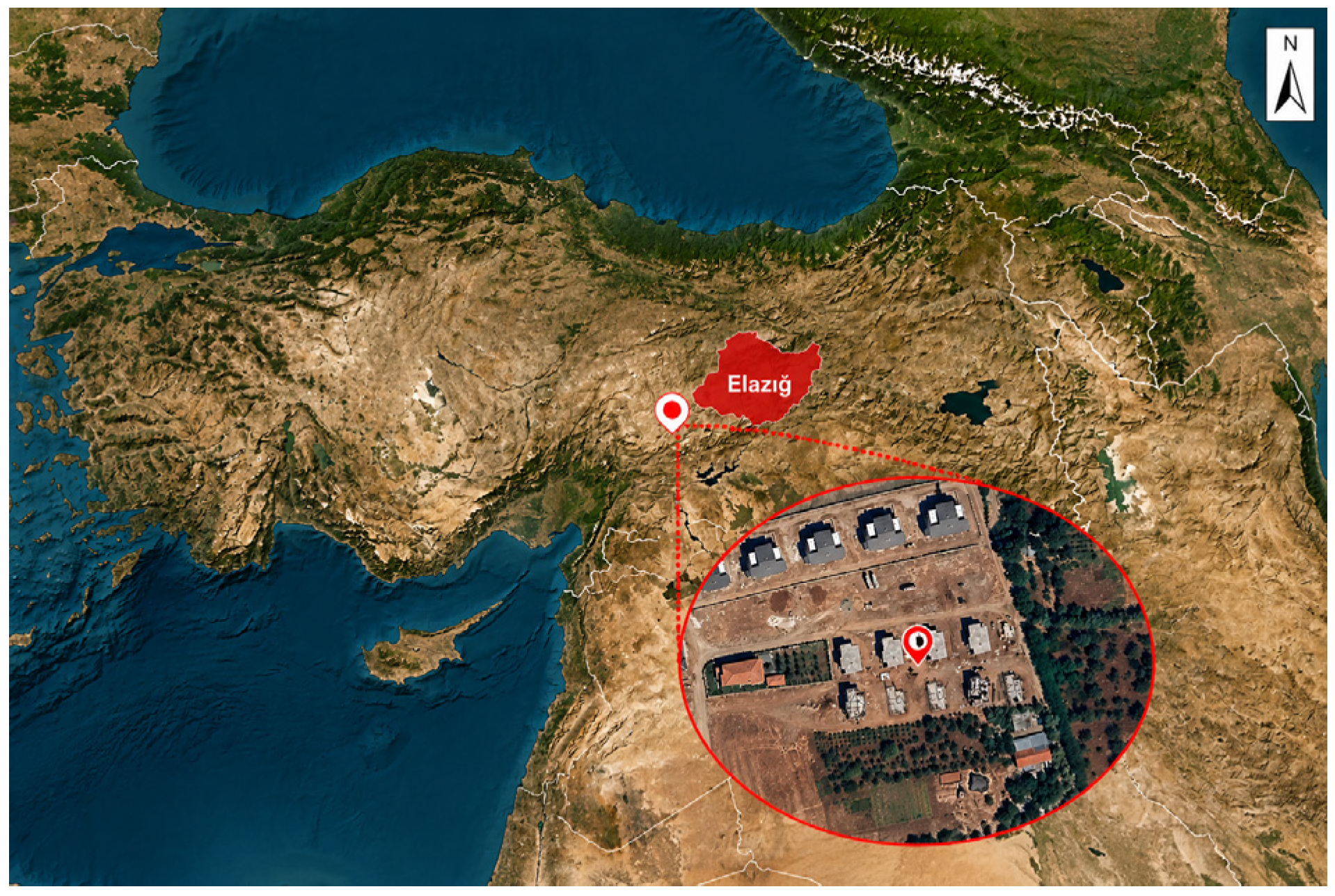
The case study building is located in Elazig, a city in the Eastern Anatolia region of Türkiye. The study area is located at 38°39′08.65″ N 39°10′11.22″ E, as indicated in
Figure 1. The climate data used in this study were generated by BEP-TR version 2.0 software. These data are used to calculate annual heating, domestic hot water, cooling, ventilation, and lighting loads based on outdoor air temperature. By keeping the climate data constant in the energy performance calculations, the aim was to clearly demonstrate the effects of variations in the U-values of building envelope components on energy consumption.
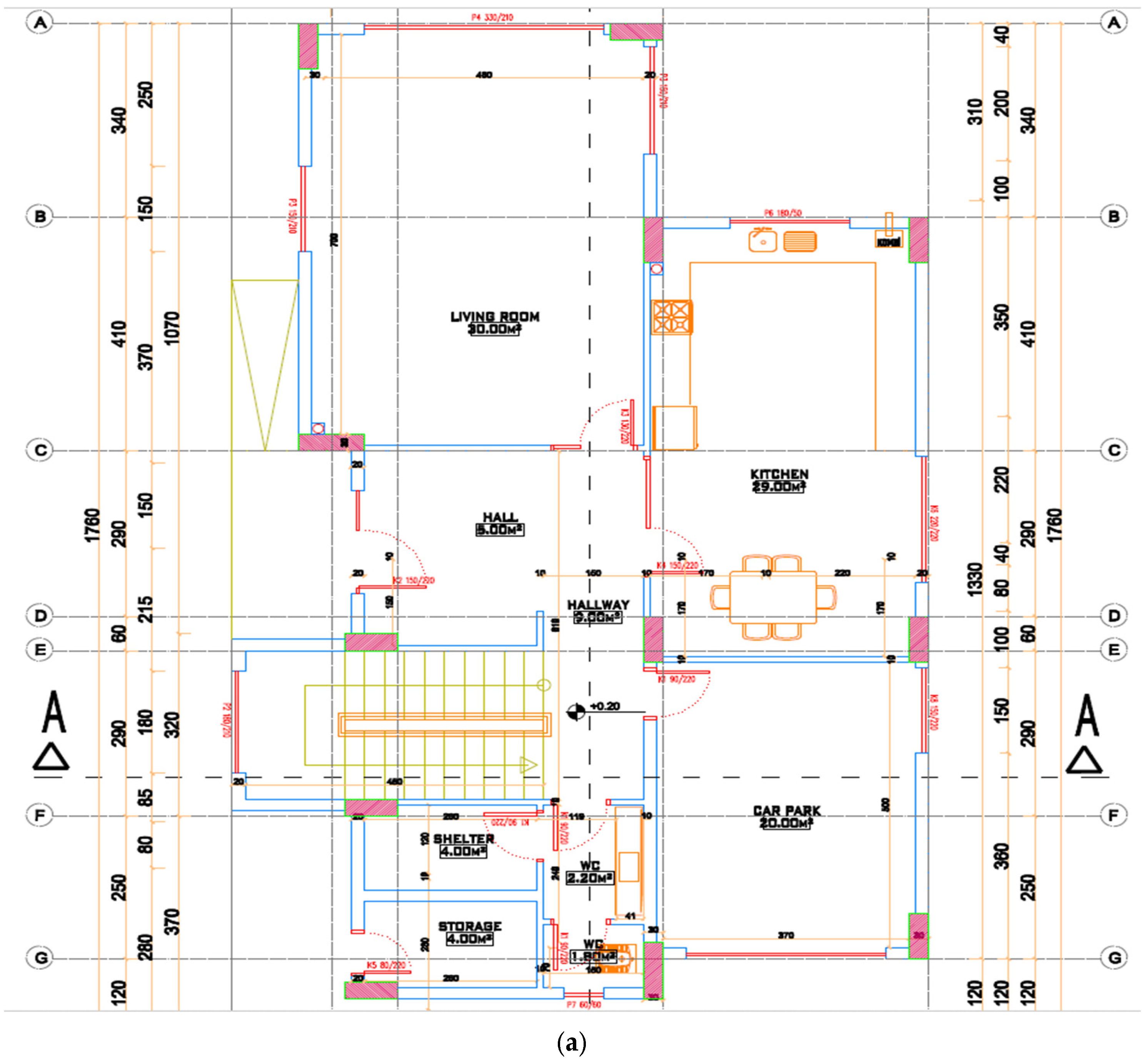
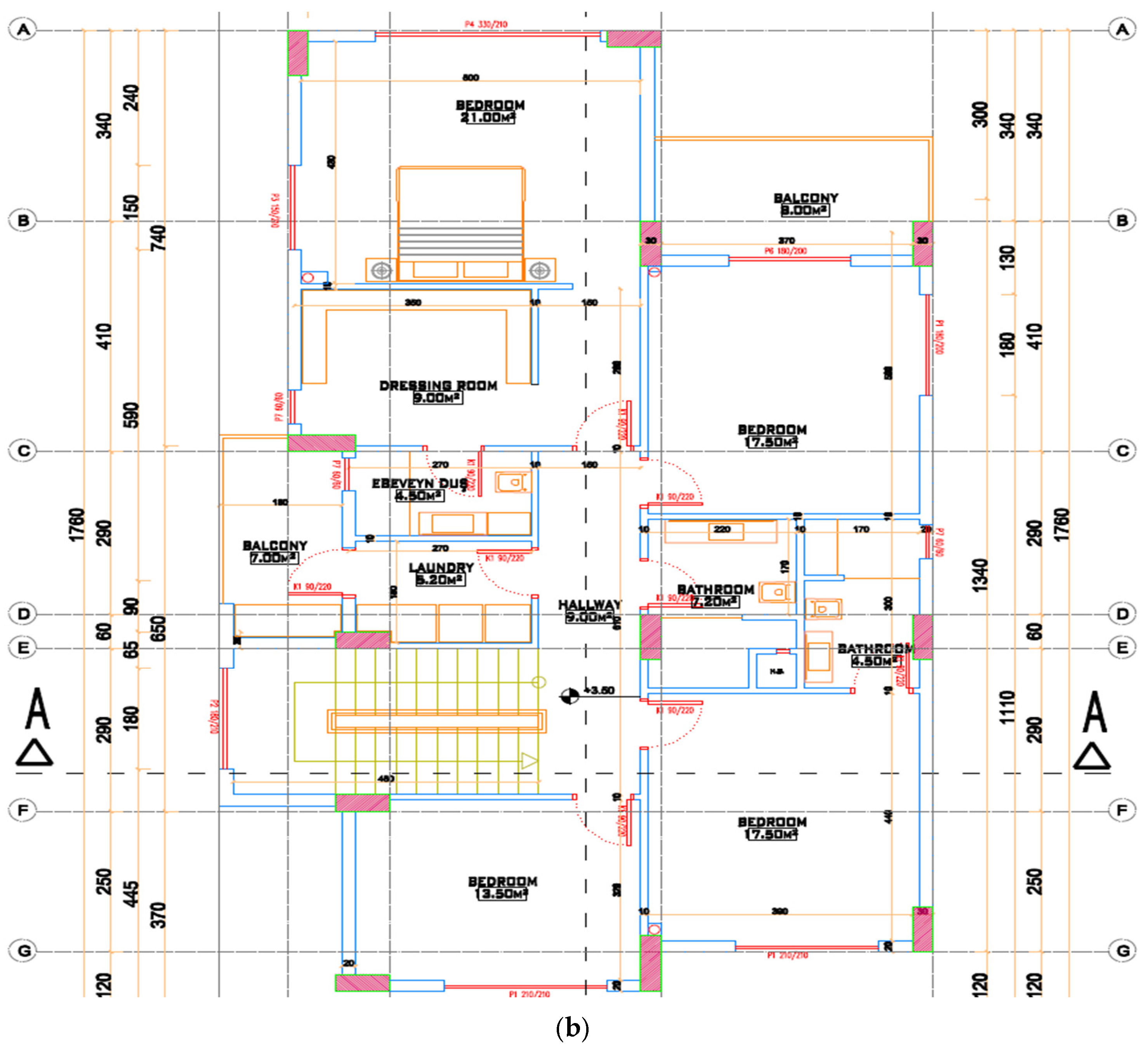
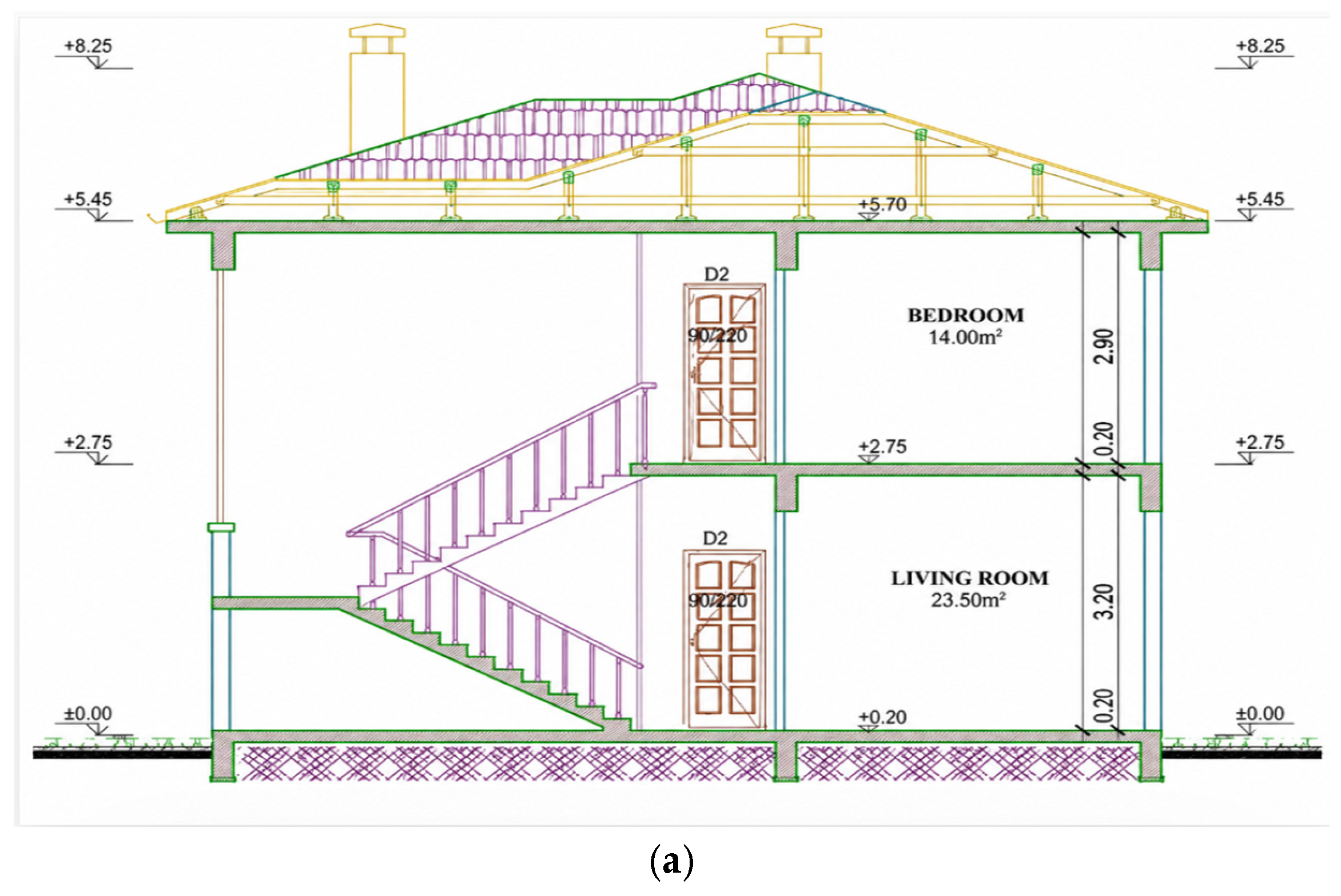
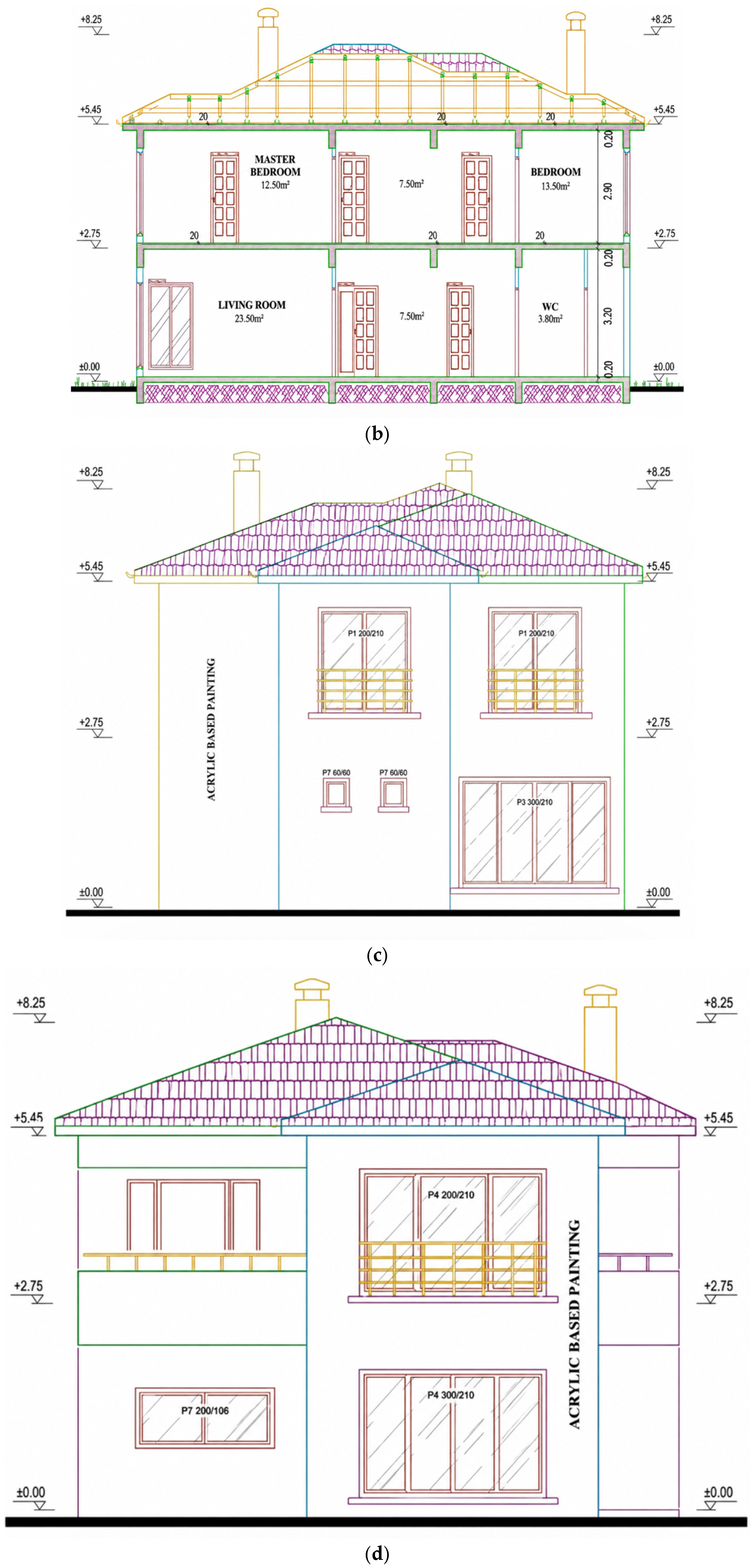
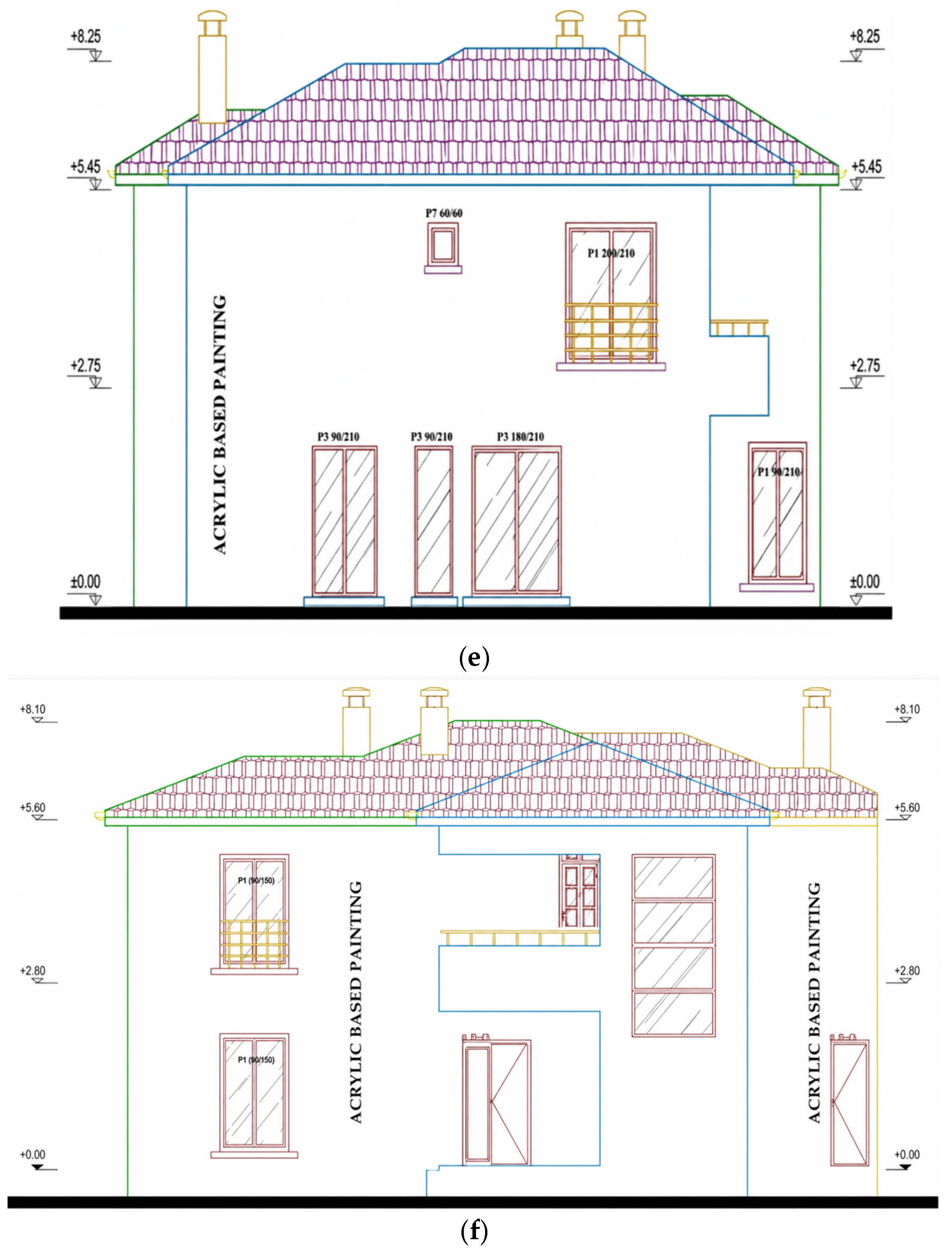
The duplex buildings were introduced with fixed geometric and functional characteristics to allow for comparison in energy performance analyses. Thus, the results obtained are based solely on changes in U-values of the building envelope components. The floor plans of the duplex residence are presented in
Figure 2a,b, while the technical views of the architectural project are shown in
Figure 3a–f.
All mechanical system characteristics (heating, cooling, and domestic hot water systems) were defined in the BEP-TR model and kept constant across all scenarios. In this study, “scenarios” refer to alternative combinations of wall, roof, floor, and window U-values, whereas “experimental conditions” refer to the Taguchi-based parameter arrangements used in the simulations. Detailed combinations are presented in
Section 2.6. This approach allowed this study to isolate the effect of building envelope thermal properties on energy consumption. Internal gains and occupancy-related variations were not parametrically varied, and their effects are inherently accounted for in the standard assumptions of the BEP-TR calculation methodology. Also, BEP-TR software uses climate data specific to Türkiye to calculate in detail the solar energy gains through windows. The window-to-wall ratio for the reference building was calculated as 70.73 m
2 of window area divided by 214.99 m
2 of exterior wall area, yielding a WWR of 0.329.
2.1. Building Envelope Components and U-Levels
The building envelope was considered the primary element determining energy consumption; wall, roof, floor, and window components were included in the analysis. These four components, which form the building envelope, are direct influencing parameters in evaluating energy performance, both according to the TS 825 standard and the BEP-TR calculation approach. In line with this study’s objective, the overall heat transfer coefficients (U-values) of these components were defined as variables; all other structural and operational parameters were kept constant.
The U-value levels for wall, floor, and roof structural elements were defined by varying only the insulation thickness. This approach examines the impact of different structural elements on energy performance and economic indicators. For the window component, however, different U-values were obtained by changing the window type and glass properties instead of the insulation thickness.
In this study, the TS 825 standards were kept as the reference [
19].
Table 1,
Table 2, and
Table 3, respectively, present the calculations and values of the U-values for the external wall building components, roofed ceiling building components, and ground-contact base building components. The U-value of the window used in the reference case was determined as 2.10 W/m
2K.
2.2. Use of Renewable Energy According to nZEB Criteria
In this study, a solar panel system design was developed to meet 10% of the building’s total annual energy consumption for each scenario. Global radiation values for Elazig province (kWh/m
2-day) were taken from Ref. [
23]. The annual photovoltaic electricity generation was calculated directly using PVsyst version 8.0 software, considering solar radiation, PV module characteristics, system losses, and installation parameters.
The electricity production of photovoltaic panels is generally calculated using the following formula:
Table 4 shows the specifications of the panel used in solar energy system calculations.
2.3. Calculation of Economic Performance Parameters
It is of great importance that energy efficiency applications are not only technically feasible but also economically sustainable. In particular, the initial investment costs of thermal insulation, high-efficiency mechanical systems, and renewable energy technologies applied in buildings can be recovered through energy savings. Therefore, in evaluating the nZEB approach, it is necessary to analyse economic performance parameters in addition to energy performance. Economic performance analysis of buildings was carried out using indicators such as annual energy savings, reductions in energy costs, payback period, and net present value. In this study, within the scope of economic evaluation, the energy savings achieved in building energy consumption were first calculated, and this value was used as the basic input for economic analyses.
2.3.1. Energy-Saving Amount
The energy-saving amount is defined as the annual reduction in energy consumption in a building resulting from energy efficiency measures implemented, compared to the reference condition. This parameter is a key indicator in evaluating both the environmental and economic impacts of energy performance improvements. In this study, the energy savings were determined by comparing the total annual energy consumption between the existing building design and the nZEB-optimized building design. Energy saving is calculated with the following general expression:
where
Ei represents the amount of energy consumption in each case specified in the orthogonal array, and
Eref represents the amount of energy consumption in the reference case.
2.3.2. Total Initial Investment Cost and Payback Period
In this study, the total initial investment cost represents the additional cost resulting from differences between the reference case and the case under study. The total initial investment cost does not include the building’s construction costs. The formula for calculating the total initial investment cost is given in the following equation:
where
Aw represents the wall area (m
2),
Ar represents the roof area (m
2),
Af represents the floor area (m
2), X
i represents the unit insulation cost, and X
win represents the unit window cost in US dollars (
$).
The payback period (PP; years) is calculated by dividing the total initial investment cost by the savings achieved, as shown below.
The savings are calculated by adding the monetary value of the energy savings between the reference case and the case under study to the savings from the electricity generated by the solar panels.
where
Xi is total insulation cost for case
i (
$),
Xref is total insulation cost for reference case (
$),
Xsol is solar energy system installation cost (
$),
Eref is the energy consumption for reference case (kWh),
Ei,con is the energy consumption for case
i (kWh),
Epr is the amount of electricity produced by the solar power plant (kWh), and
Xel is the unit cost of electricity (
$/kWh).
2.4. Calculations of Energy Performance
In this study, energy consumption data were obtained using the BEP-TR. Since BEP-TR provides a calculation infrastructure based on legislation, it enables a comparison of different building envelope alternatives under the same conditions. This study aims to clearly demonstrate how annual energy consumption changes as the U-values of the envelope components change. The assumptions made while performing energy performance calculations are that the building geometry and the system definitions were both kept constant in all scenarios. Thus, it was assumed that the observed energy consumption differences originated solely from the U-values of the walls, roof, floor, and windows. This approach is critically important for interpreting the effect of factors in Taguchi design.
2.5. Defining Building Envelope Parameters
In the BEP-TR model, overall heat transfer coefficients for the exterior wall, roof, base, and window components were entered based on the factor levels. Only these parameters varied between scenarios, while other envelope-related inputs (areas, opening ratios, orientation, shading assumptions, etc.) were kept constant. Since the window area and facade orientation were kept constant, the effect of changes in the window U-value on energy consumption will be understood more clearly. At this point, it should be noted that BEP-TR works on a project basis. A separate project was created for each experimental condition, and only the relevant U-values were updated in each project. This method prevented data confusion and facilitated the retrospective monitoring of the results.
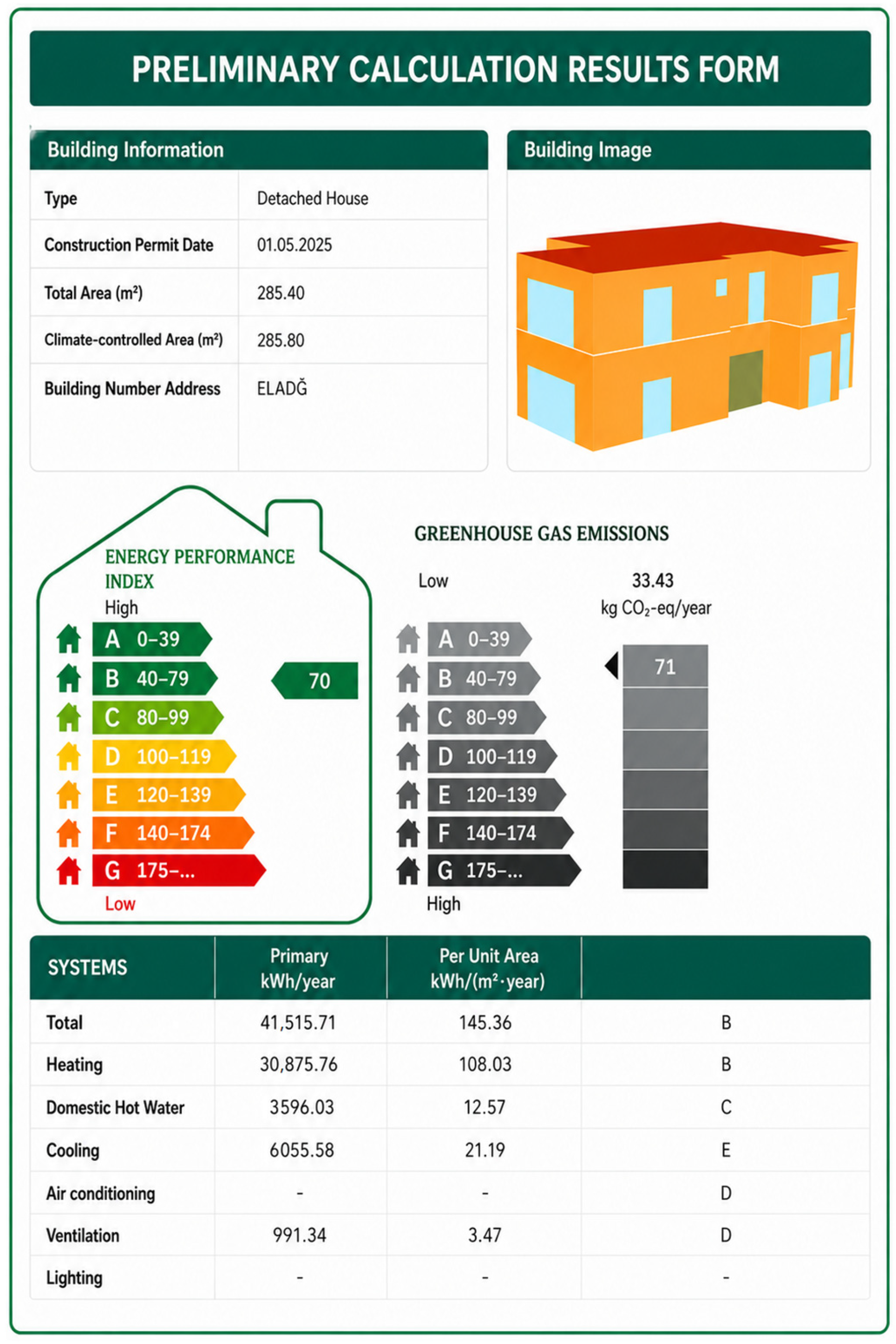
Figure 4 presents the reference building energy consumption values calculated using BEP-TR, together with the final energy performance rating and greenhouse gas emission results. The BEP-TR outputs were combined with a cost analysis, and payback period calculations were performed based on the monetary savings from reduced energy consumption. This made it possible to differentiate options that were not only “energy-efficient” but also offered a meaningful economic return.
2.6. Taguchi and Grey Relational Analysis
The Taguchi experimental design method generally consists of three basic stages: system design, parameter design, and tolerance design. The first stage of the method, system design, involved determining the design factors to be considered in this study. In this study, the overall heat transfer coefficients (U-values) of the external wall, roof, floor, and window elements that comprise the building envelope were selected as design parameters during the system design stage.
The second stage, parameter design, constitutes the most critical step of the Taguchi method. In this stage, parameter levels were determined to enable the system to achieve the targeted performance values and, at the same time, minimize the process’s sensitivity to uncontrollable external factors. In other words, the levels at which the design parameters should be tested are defined in this stage. In this study, three levels were determined for the U-values of the wall, roof, floor, and window factors, and experimental analyses were conducted at these levels. The design parameters (A; wall, B; roof, C; floor, D; window) and their levels (1, 2, 3) used in the experiments are listed in
Table 5.
The U-value levels selected for wall, roof, floor, and window components were based on TS 825 recommendations, market-available construction solutions, and realistic improvement options for residential buildings in Türkiye. Level 1 represents the reference/base condition, Level 2 an intermediate efficiency level, and Level 3 a high-performance level. For wall, roof, and floor components, reduced U-values were obtained by increasing insulation thicknesses, whereas for windows, different glazing/frame configurations were used to achieve the target U-values.
In the parameter design stage, two basic concepts commonly used in experimental design stand out: orthogonal arrays and signal-to-noise (S/N) ratio. Orthogonal arrays are fractional factorial design structures that allow the effects of numerous parameters to be investigated with a limited number of experiments. These arrays enable a systematic and comparable analysis of the effects of parameters on performance outputs. The S/N ratio was used as a measure of variability in system performance and enables the evaluation of process stability [
24].
In the Taguchi approach, defining target values is necessary to evaluate process performance. In this study, total initial investment cost, energy savings, and payback period were selected as performance criteria. Target values for the examined performance indicators can be defined as minimum or maximum. This study aims to maximize energy savings while minimizing total initial investment cost and payback period. The amount of deviation from the target value was evaluated through the Taguchi loss function, and this function was converted into an S/N ratio. In the Taguchi method, various S/N ratio definitions are used to evaluate experimental results for different performance characteristics. These are: The best approach to energy efficiency is “lower is better” (LB), “nominal is better” (NB), and “higher is better” (HB). The choice of S/N ratio depends on the type of performance indicator being examined [
25,
26].
In this study, the HB approach was preferred for energy savings, while the LB approach was used for total initial investment cost and payback period. This enabled the simultaneous evaluation of multiple performance criteria to determine the most suitable parameter combination for building envelope design.
where
yi represents the result value, and
n represents the number of experiments performed. The S/N ratio, denoted by
ηij, represents the performance characteristic in the
ith experiment. The S/N ratio was calculated using the following equation:
Analysis of variance (ANOVA) was used to evaluate the experimental results statistically. The ANOVA results, along with S/N ratios, were used to estimate the optimal combination of design parameters. One can visit the co-author’s previous studies to learn about the formulations and details of the ANOVA [
24,
25].
In this study, the grey relational analysis method was used to evaluate multiple performance criteria together. Grey relational analysis is based on grey system theory and is widely preferred for solving complex problems involving multiple performance characteristics. This study, which aims to increase energy savings while simultaneously reducing the total initial investment cost and the payback period, includes multiple, interacting performance criteria [
21]. The main purpose of the analysis is to maximize energy savings while minimizing the total initial investment cost and payback period. The grey relational coefficient was calculated using the following equation:
where
xi(
k) represents the normalized value of the
kth performance characteristic for the
ith experiment.
ξ is the recognition coefficient, taking a value between
ξ ∈ 0 and 1. This coefficient is determined based on the characteristics of the actual system and the sensitivity of the analysis. The degree of grey correlation for each experiment was obtained by taking the arithmetic mean of the grey correlation coefficients and using the following equation:
where
m is the number of performance characteristics. Within the scope of grey correlation analysis, the results for total initial investment cost, energy savings, and payback period were first normalized to a range of 0 to 1. Then, using grey correlation analysis and joint statistical evaluation of variances, the optimal combination of design parameters was determined.
3. Results
3.1. Effects of the U-Values of Building Envelope on Economy and Energy Performance
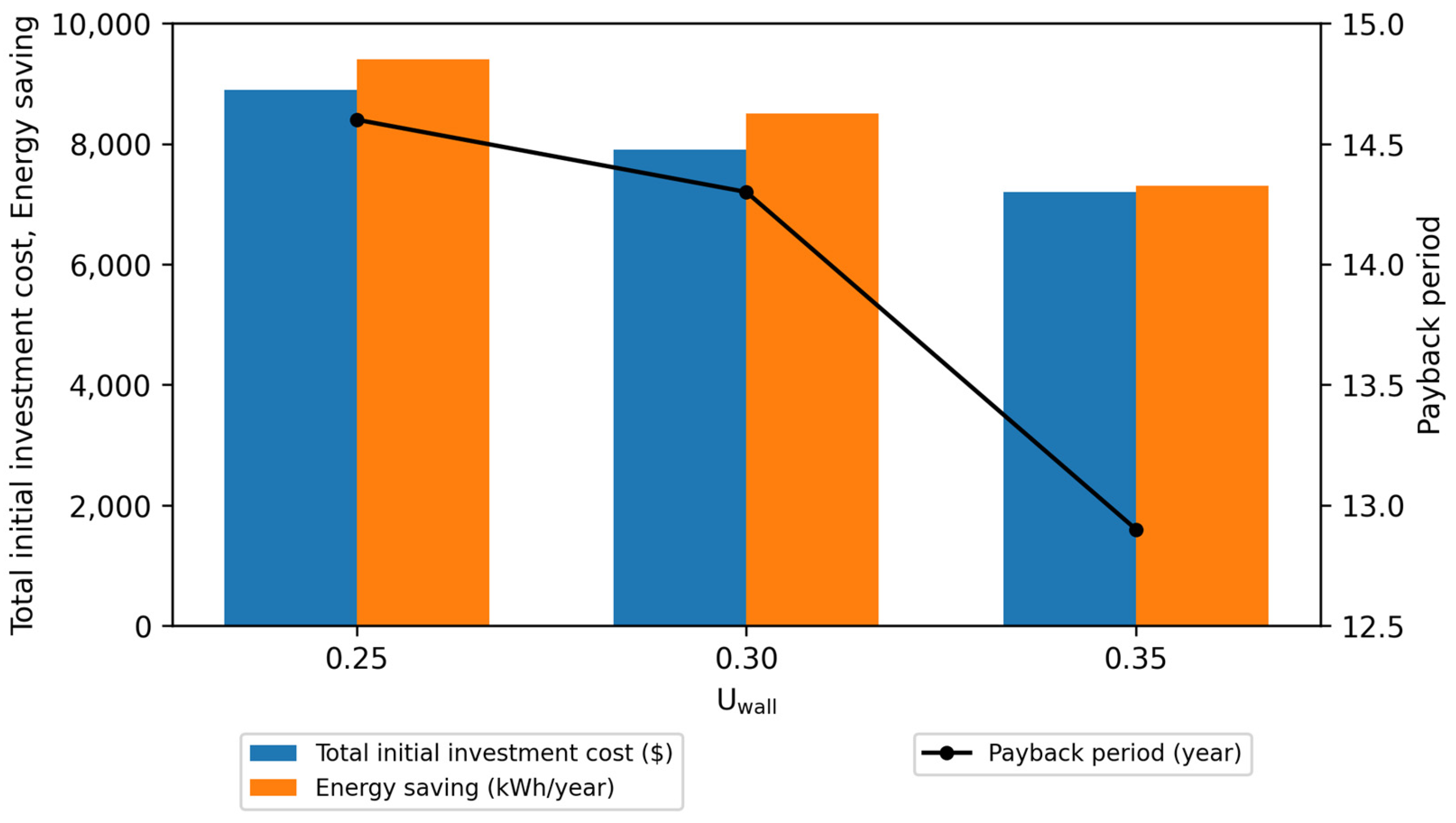
Figure 5 shows changes in performance parameters as a function of the total U-value of the wall components. The graph shows the relationships among total initial investment cost, energy savings, and payback period as the U-value increases (i.e., as the wall insulation thickness decreases). It was observed that the total initial investment cost decreased as the U-value increased from 0.25 W/m
2K to 0.35 W/m
2K. The main reason is the thinner insulation. In contrast, energy savings decrease with increasing U-value. Higher U-values increase heat losses through the building element, leading to higher annual energy consumption. When examining the payback period, another performance parameter, it is seen that the payback period shortens as the wall’s U-value increases. However, as the wall insulation thickness decreases, the amount of energy lost from the building increases, thus reducing energy savings.
Reducing the wall heat transfer coefficient significantly impacts both energy savings and the payback period. At a U-value of 0.35 W/m2K, annual energy savings are approximately 7300 kWh/year; reducing it to 0.30 W/m2K increases energy savings to 8500 kWh/year, and at 0.25 W/m2K, it rises to approximately 9400 kWh/year. Conversely, the total initial investment cost increases with decreasing U-value, rising from approximately USD 7200 to USD 9000.
When the payback period is examined, it is found that improving the U-value results in a positive impact on economic performance. The payback period was calculated to be approximately 12.9 years for U = 0.35 W/m2K, 14.3 years for U = 0.30 W/m2K, and 14.6 years for U = 0.25 W/m2K. This shows that although energy savings increase at lower U values, the increase in initial investment cost slightly extends the payback period.
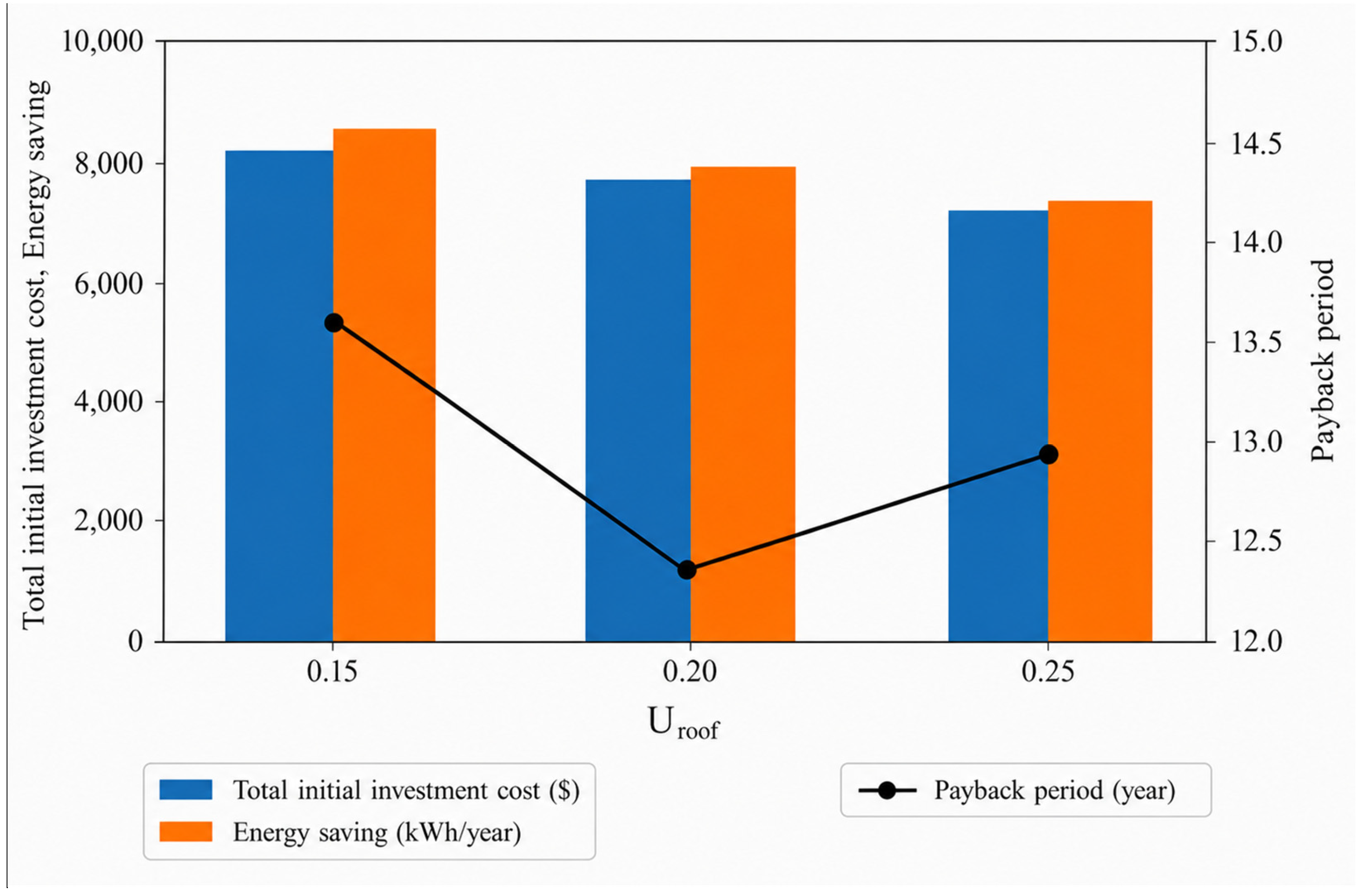
The effect of the roof’s U-values on economic and energy performance parameters is shown in
Figure 6. Reducing the roof U-value has been one of the building components that has had the most significant effect on energy savings. The bar charts show that the annual energy saving is approximately 7300 kWh/year for U = 0.25 W/m
2K, 7900 kWh/year for U = 0.20 W/m
2K, and approximately 8500 kWh/year for U = 0.15 W/m
2K. In contrast, the total initial investment cost ranges between USD 7200 and USD 8100.
When evaluated by payback period, the shortest was obtained for the roof at U = 0.20 W/m2K, with a payback period of approximately 12.7 years. The payback period is 13.6 years for U = 0.15 W/m2K and around 13.0 years for U = 0.25 W/m2K. This shows that a moderate U-value for roof insulation offers a more balanced solution in terms of both energy and economy.
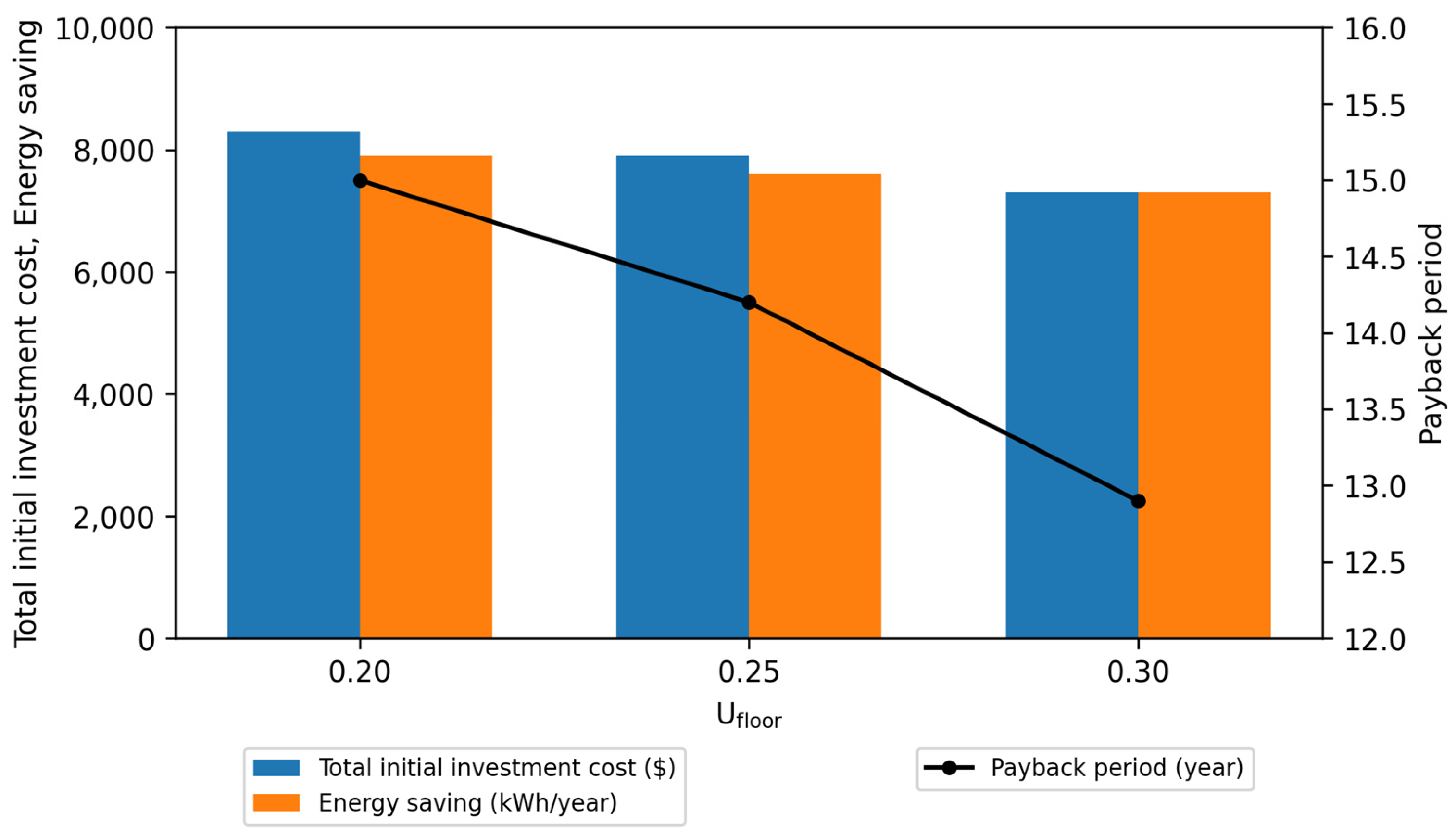
Figure 7 represents the effects of the U-values of the floor. As shown in the figure, reducing the floor’s U-value has an energy-saving effect similar to that of walls. Annual energy savings are approximately 7300 kWh/year for U = 0.30 W/m
2K, 7600 kWh/year for 0.25 W/m
2K, and approximately 7900 kWh/year for 0.20 W/m
2K. The total initial investment cost was approximately USD 7200, USD 7800, and USD 8300, respectively.
Economically, reducing the base U-value positively impacted the payback period. The payback period was approximately 12.8 years for U = 0.30 W/m2K, 14 years for U = 0.25 W/m2K, and 15 years for U = 0.20 W/m2K. These results show that improvements in floor insulation lead to energy savings, but increased investment costs can prolong the payback period.
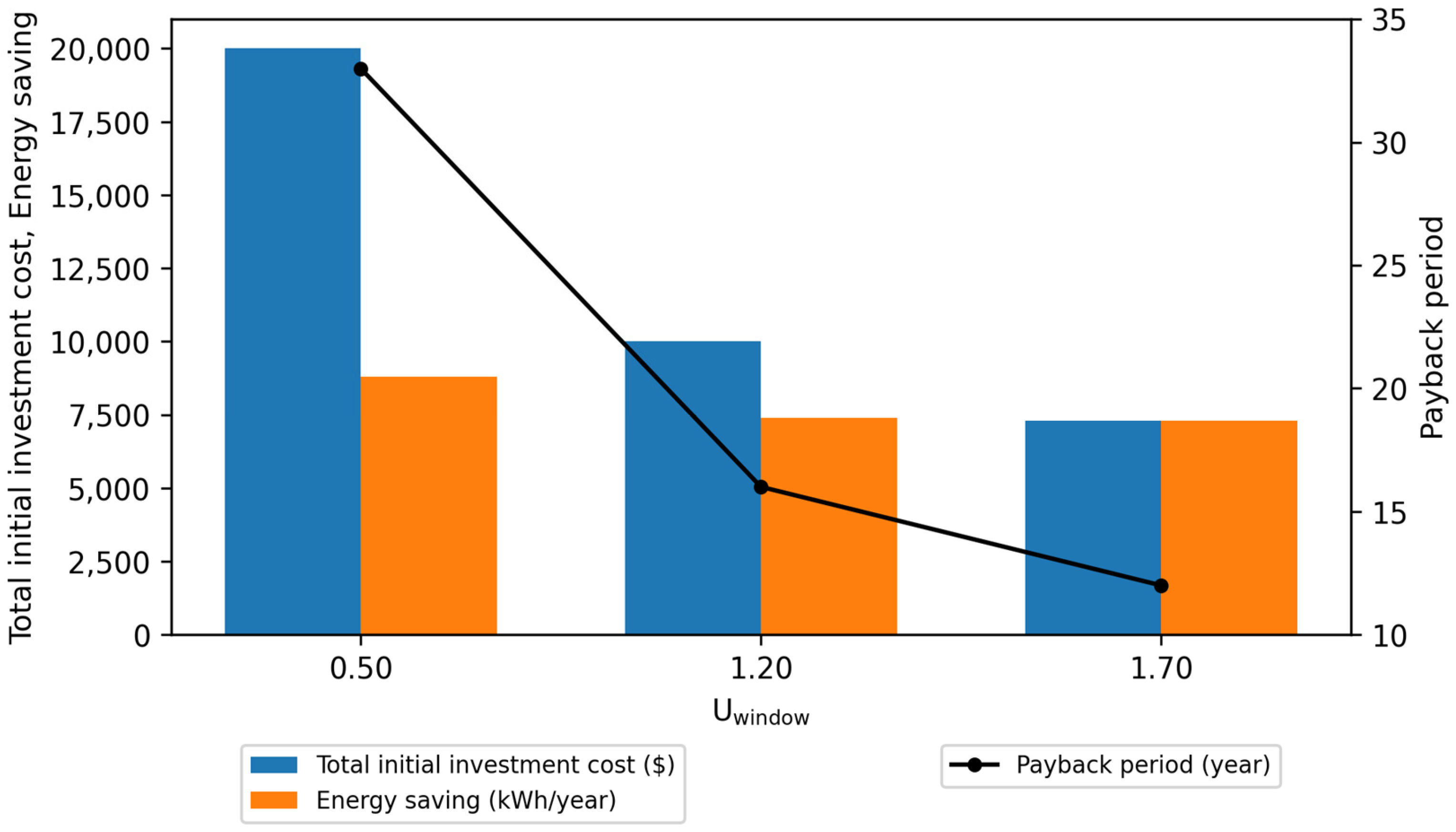
The effects of windows’ U-values are shown in
Figure 8. The graph shows that reducing the U-value of windows has a significant effect on energy savings and the payback period. Annual energy savings are approximately 7300 kWh/year for U = 1.7 W/m
2K, rising to 7400 kWh/year for U = 1.2 W/m
2K, and approximately 8700 kWh/year for U = 0.5 W/m
2K. Conversely, the total initial investment cost increases significantly with decreasing U value; approximately USD 7200 for 1.7 W/m
2K, USD 10,000 for 1.2 W/m
2K, and approximately USD 20,000 for 0.5 W/m
2K.
In terms of payback period, the U = 0.5 W/m2K case reaches a very high value of approximately 33 years. In contrast, the payback period is approximately 18 years for U = 1.2 W/m2K and around 13 years for U = 1.7 W/m2K. These results show that although improving the window U-value increases energy savings, it significantly extends the payback period economically due to the high initial investment cost.
3.2. Energy Saving, Total Initial Investment Cost, and Payback Period
The performance parameters calculated from the L9 orthogonal array obtained using the Taguchi experimental design method are presented in
Table 6. In contrast, the orthogonal array, design parameters, and outputs are presented in
Table 7. It should be noted that the
value represents the PV system’s annual energy production. Since annual building energy demand varies with the thermal performance of the building envelope, the required PV system capacity also varies. In accordance with the Turkish nZEB regulation, the PV system was sized to supply 10% of the total annual energy demand for each scenario; therefore, the
values differ among the schemes.
3.3. Results of ANOVA and Grey Relational Analysis
The results obtained for the total initial investment cost, energy savings, and payback period, and the signal-to-noise ratios (S/N) for each experiment are presented in
Table 8.
Table 9 shows the average S/N ratio for the total initial investment cost;
Table 10, for energy savings; and
Table 11, for the payback period (PP).
Table 12 shows the ANOVA results for the total initial investment cost;
Table 13, for energy savings; and
Table 14, for the payback period (PP).
So far, the effects of all parameters on the results have been presented numerically in the tables. Accordingly, in
Table 12, the impact rates of the design parameters, namely the wall U-value, roof U-value, floor U-value, and window U-value, on the total initial investment cost were determined as 3.66%, 1.16%, 1.88%, and 93.3%, respectively. From this, it can be seen that the window U-value has the greatest impact on the total initial investment cost, and the roof U-value has the least. This situation is also evident in the total investment cost evaluations shown in the graphs in
Figure 5,
Figure 6,
Figure 7 and
Figure 8.
Similarly, if the ANOVA results of energy savings in
Table 13 are examined, the effects of the design parameters on the wall, roof, floor, and window results are 49.98%, 15.47%, 9.46%, and 25.09%, respectively. From the ANOVA results for the payback period presented in
Table 14, the effects of the design parameters on the payback period of the wall, roof, floor, and window were 2.07%, 0.54%, 1.95%, and 95.44%, respectively.
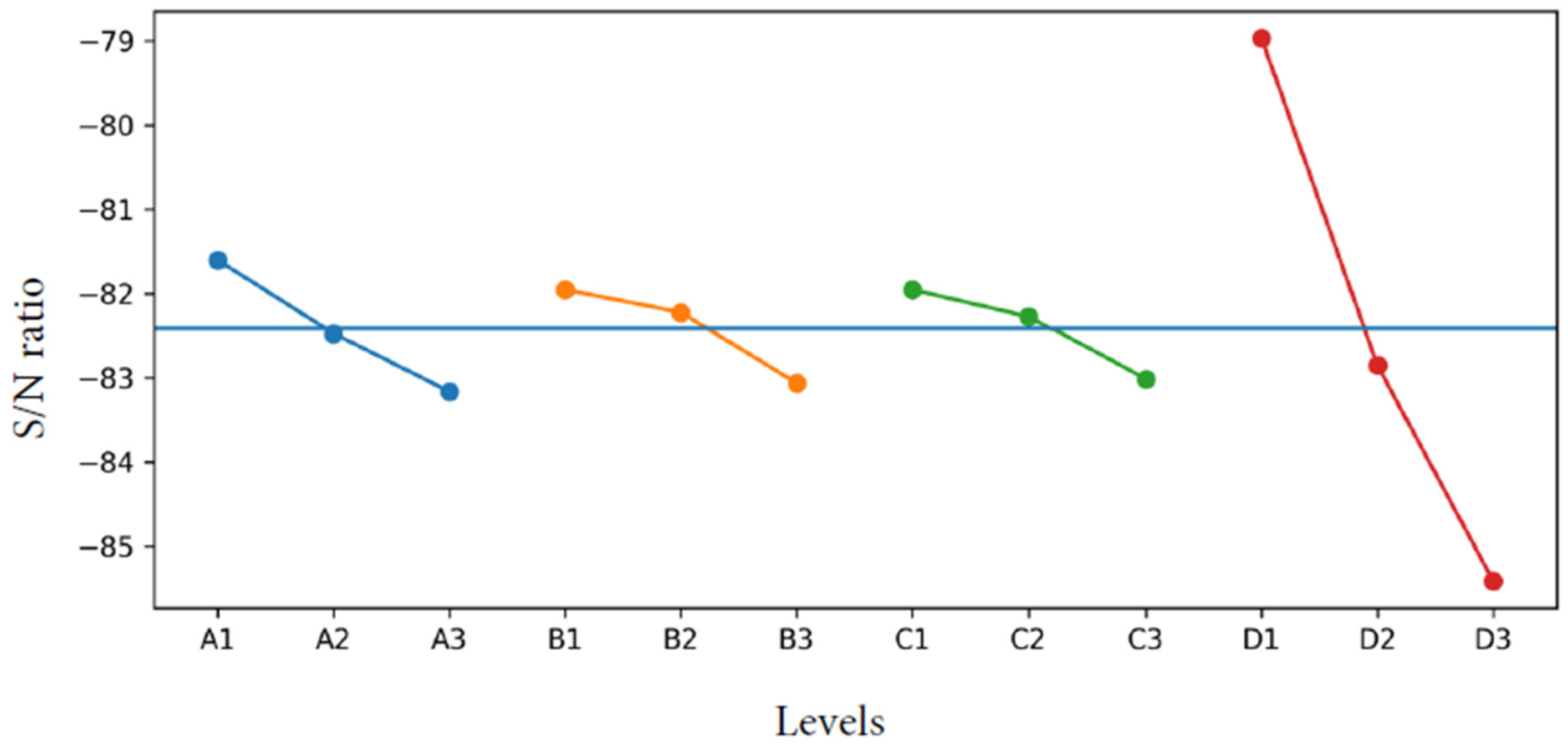
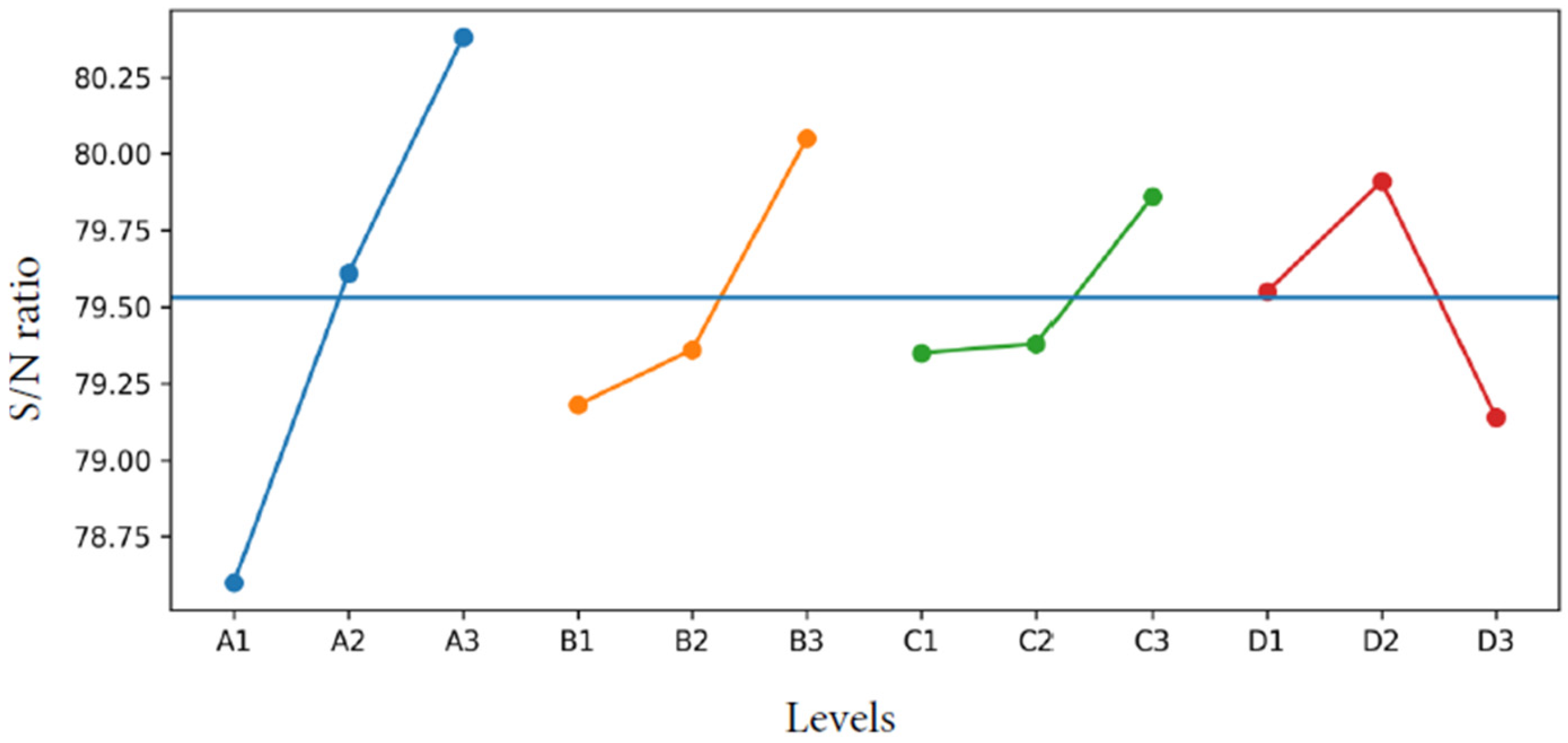
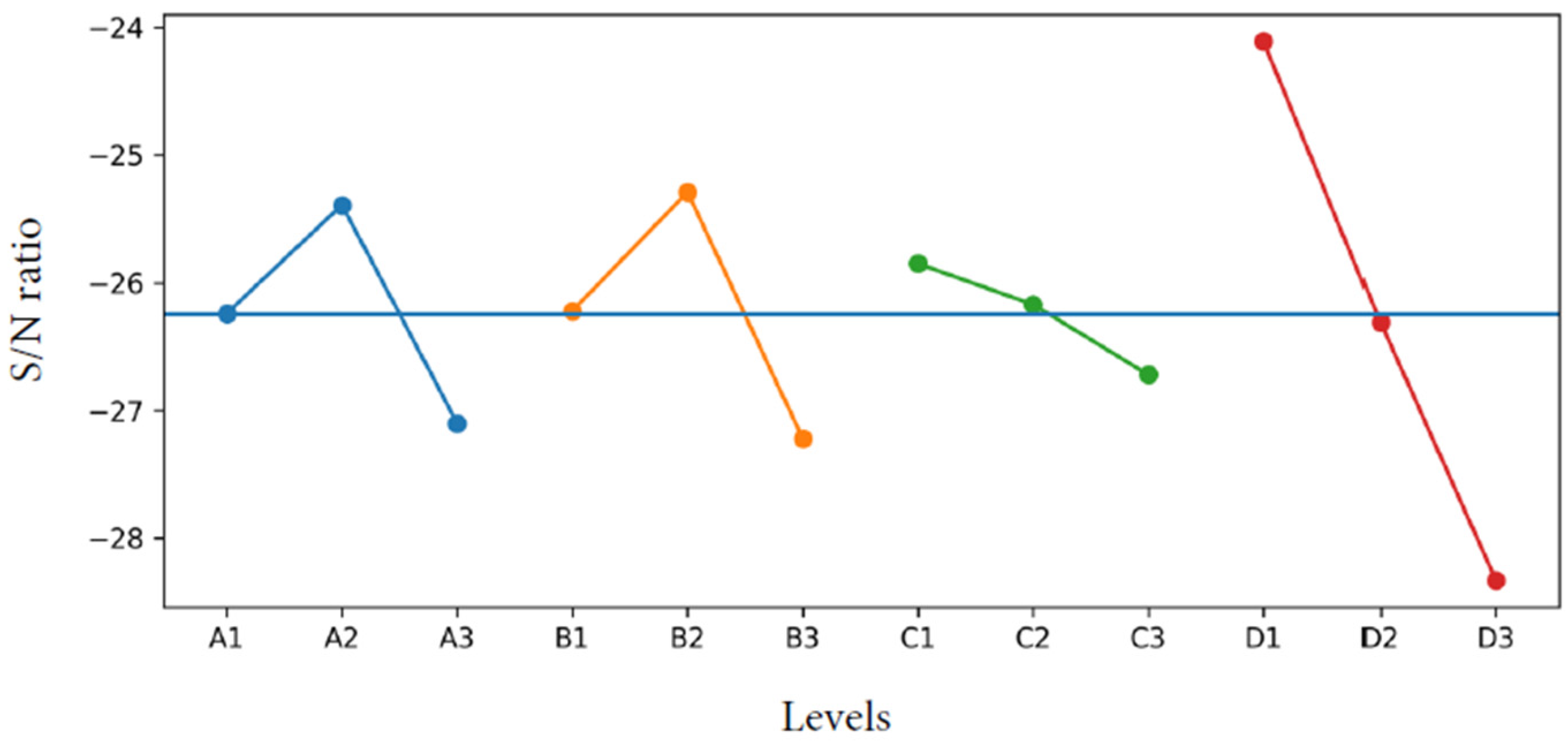
In terms of lower is better (LB), the best values for the total initial investment cost were determined in the case A1B1C1D1, i.e., when A ⟶ 0.35, B ⟶ 0.25, C ⟶ 0.3, and D ⟶ 1.7. According to
Table 13, considering the “higher is better” (HB) criterion for energy savings, the highest performance was obtained for the predicted optimum combination A3B3C3D3, corresponding to A ⟶ 0.25, B ⟶ 0.19, C ⟶ 0.24, and D ⟶ 1.2. The payback period was evaluated as LB, and, similar to the total initial investment cost, the best values were obtained when A1B1C1D1, i.e., A 0.35, B 0.25, C 0.3, and D ⟶ 1.7. These values, clearly shown in the tables, are shown again in
Figure 9 for the total initial investment cost, in
Figure 10 for energy savings, and in
Figure 11 for the payback period.
3.4. Grey Relational Analysis Results (GRA)
In this study, grey relational analysis (GRA) was applied to evaluate multiple performance criteria together. The grey correlation degree obtained by GRA reflects the overall proximity of each experiment to the multiple performance criteria. However, the grey correlation degree ranking was not used directly to determine the optimal parameter combination; instead, the average grey correlation degrees calculated based on the parameter levels served as the basis.
The GRA ranking only allows the comparison of existing experiment combinations that are in an orthogonal arrangement. This ranking shows “which experiment is the best among the existing alternatives” and does not separate the individual effects of the parameter levels. Therefore, this approach does not allow suggesting a new parameter combination that is not exactly present in the experiment table.
In contrast, the average grey correlation degrees calculated for different levels of each design parameter reveal the relative effects of the parameters on multiple performance and enable the determination of the optimal level for each parameter. This approach is consistent with the fundamental philosophy of the Taguchi method. It allows for the creation of a new combination that is not included in the experimental table but is more favourable in terms of performance. Therefore, in this study, the optimum parameter combination was determined by selecting the level with the highest average grey correlation degree for each parameter. The grey correlation degree ranking was used only for inter-experiment comparison and to support the results. In line with this approach, the optimum parameter combination of this study was determined as
A3B2C1D1. In this study, normalization was applied within the scope of grey correlation analysis to enable the evaluation of performance criteria with different units and magnitudes together. This is presented in
Table 15. The data were dimensionless in the range of 0–1, based on the “lower is better” approach for the total initial investment cost and payback period criteria, and the “higher is better” approach for the energy-saving criterion. The comparability series obtained as a result of normalization expresses the relative closeness of each experiment to the ideal situation (reference set = 1) in terms of the relevant criterion. This step serves as the basis for calculating grey correlation coefficients, enabling different criteria to be combined into a common evaluation.
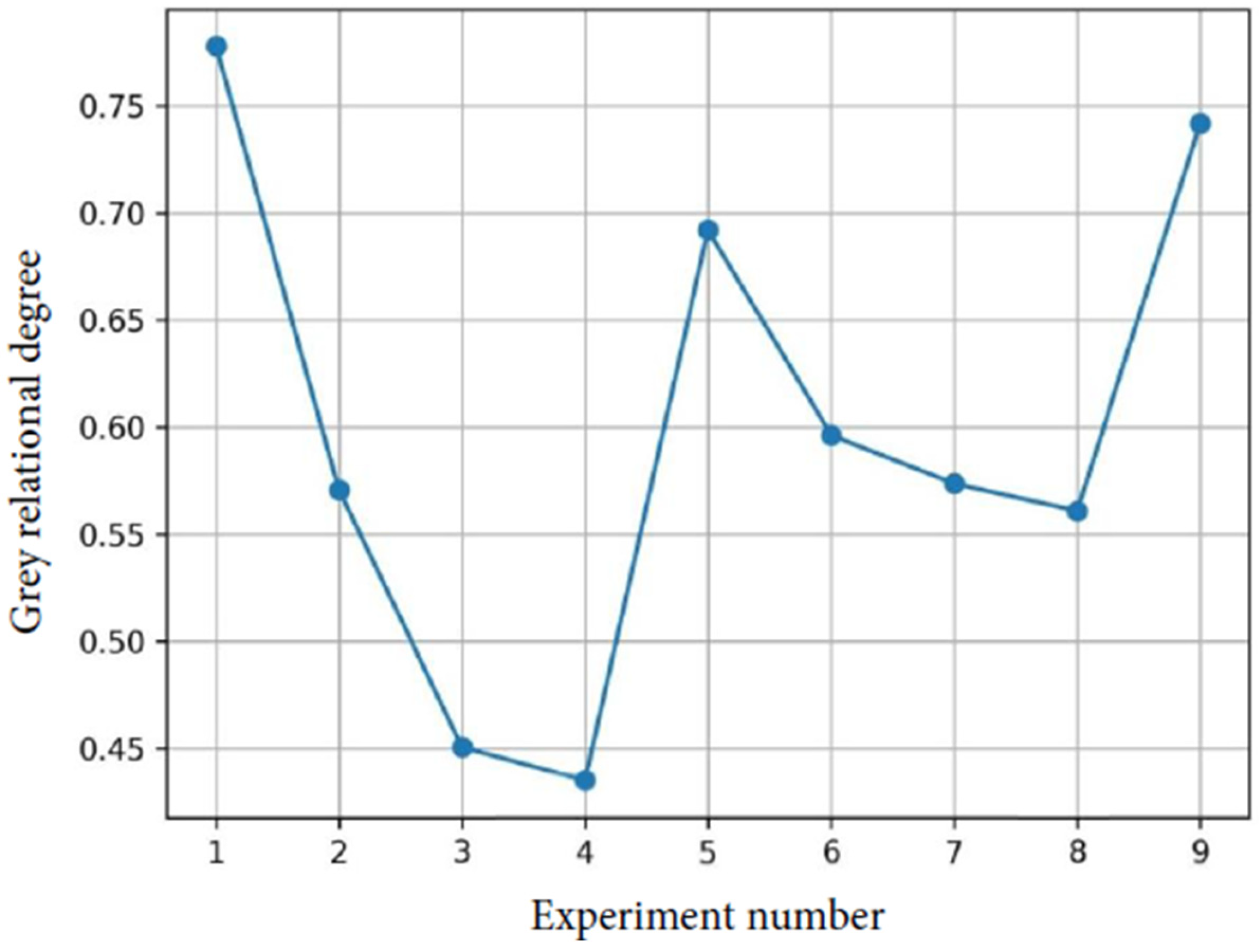
Table 16 presents the grey correlation coefficient and grey correlation degrees. According to the GRA results, when all performance criteria are evaluated together, experiment 1 achieved the highest grey correlation degree (0.7778) and ranked first among the experiments. This result shows that the experiment in question exhibited the closest performance to the reference array across total initial investment cost, energy savings, and payback period criteria. Therefore, experiment number 1 was determined as the best alternative within the current experimental set.
Examining the average grey relational degrees given in
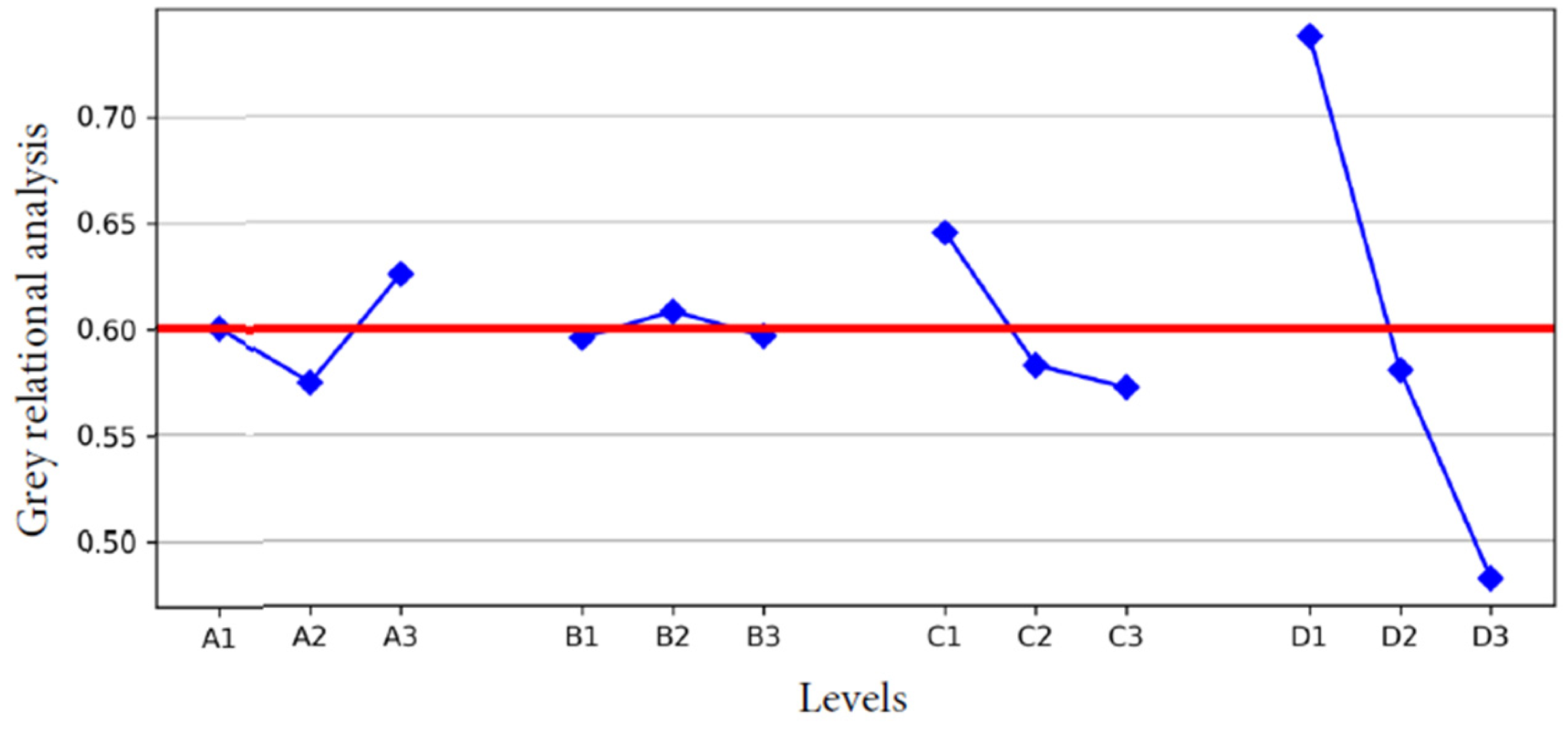
Table 17, it is seen that the most suitable levels in terms of multi-performance are A3, B2, C1, and D1. In particular, parameter D stands out as the most impactful on multi-performance, with a max–min value of 0.2550. In contrast, parameter B has the lowest max–min value, indicating that its impact on performance is more limited than that of the other parameters. Based on these results, the optimum parameter combination was determined by selecting the levels with the highest average grey relational degree for each parameter.
When examining the variation in grey relational degrees across the experiments shown in
Figure 12, it is observed that experiment 1 has the highest grey relational degree and provides the best overall performance. In contrast, experiment number 4 exhibited the weakest performance with the lowest grey relational degree. When the graph is evaluated as a whole, it becomes clear that the grey relational degrees vary significantly across experiments and that there are significant differences in performance. This result shows that the effects of design parameters on multiple performance measures vary significantly across experiment combinations.
Figure 13 shows the effects of design parameters on multiple performance metrics. When examining the grey relational degrees of the design parameters at the level, it is clear that the effects of the parameters on multiple performance metrics differ. For parameter A, it was determined that the grey relational degree increased across the levels, and level A3 achieved the highest performance. For parameter B, it is understood that the grey relational degrees were close to each other among the levels, and its effect on performance remained limited. In parameter C, a higher grey relational degree was obtained at the first level, while performance decreased at subsequent levels. Parameter D showed the most significant change among the levels; the grey relational degree reached its maximum at level D1, while a significant decrease occurred at subsequent levels. These results reveal that parameter D has the greatest effect on multiple performance, and that the optimal parameter combination should be determined based on the average grey relational degree at that level.
4. Discussion
The results of this study show that the thermal performance of building envelope components significantly affects both annual energy consumption and economic performance in a residential building designed according to nZEB principles. However, the influence of each envelope component is not identical. The ANOVA results indicate that the wall U-value is the most influential parameter on energy savings, with a contribution of 49.98%, followed by the window U-value (25.09%), the roof U-value (15.47%), and the floor U-value (9.46%). This result can be attributed to the relatively large external wall surface area and its continuous exposure to outdoor climatic conditions. Similar findings have been reported in previous studies, where external walls and insulation thickness were identified as key parameters affecting heating energy demand in residential buildings [
15,
27].
The results obtained for the wall component are also consistent with those of Bolattürk [
27], who reported that the optimum insulation thickness in Türkiye varies between 2 and 7 cm depending on climate zone and fuel type, and that appropriate insulation applications can reduce heating energy consumption by a range of approximately 20–50%. In the present study, reducing the wall U-value from 0.35 W/m
2K to 0.25 W/m
2K increased annual energy savings from approximately 7300 kWh/year to 9400 kWh/year. This confirms that improving the thermal resistance of external walls is one of the most effective strategies for reducing energy demand in cold, dry climates such as Elazig.
The roof U-value also influenced energy performance, although its contribution was lower than that of the wall. The results showed that reducing the roof U-value from 0.25 W/m2K to 0.15 W/m2K increased annual energy savings from approximately 7300 kWh/year to 8500 kWh/year. However, the lowest payback period was obtained at an intermediate roof U-value of 0.20 W/m2K. This indicates that the lowest U-value does not always provide the most economically favourable solution. Therefore, from an nZEB design perspective, the envelope configuration should be evaluated not only for energy savings but also for investment cost and payback period.
The window U-value showed a different behavior compared with opaque envelope components. Although reducing the window U-value improved energy savings, it also led to a substantial increase in the total initial investment cost. According to the ANOVA results, the window U-value was the dominant parameter affecting total initial investment cost and payback period, with contribution ratios of 93.30% and 95.44%, respectively. This finding highlights the economic sensitivity of high-performance window systems. In particular, while reducing the window U-value to 0.5 W/m2K increased annual energy savings, the payback period reached approximately 33 years. Therefore, the use of very low U-value window systems may not always be economically feasible under the cost assumptions considered in this study.
These findings are consistent with previous studies that emphasize the importance of window systems for building energy performance. Chi et al. [
28] reported that the optimum window-to-wall ratio generally ranges from 0.3 to 0.5, depending on orientation, daylight, thermal comfort, and energy performance criteria. Jelle et al. [
29] also showed that advanced glazing technologies, such as triple glazing, vacuum glazing, electrochromic glazing, and aerogel glazing, can significantly improve thermal performance, achieving very low U-values. However, such systems generally require a higher initial investment. Therefore, the results of the present study confirm that window selection should be evaluated using a combined energy–economic approach rather than solely on thermal performance.
The GRA results provide an integrated evaluation of energy savings, total initial investment cost, and payback period. Although experiment no. 1 showed the highest grey relational degree among the existing L9 experimental combinations, the level-based GRA evaluation indicated that the optimum multi-performance parameter combination was A3B2C1D1. This result indicates that the most suitable combined design has a wall U-value of 0.25 W/m2K, a roof U-value of 0.19 W/m2K, a floor U-value of 0.28 W/m2K, and a window U-value of 1.7 W/m2K. This combination reflects an important trade-off: stronger wall insulation improves energy performance, while avoiding very low window U-values prevents excessive investment cost and long payback periods.
Photovoltaic systems also play an important role within the nZEB framework. In this study, the PV system was sized to meet at least 10% of the annual energy consumption of each scenario, in accordance with Türkiye’s ZEB requirements. Therefore, the PV contribution was not treated as an independent optimization parameter but as a regulatory compliance component. Including PV costs in the total initial investment ensured that the economic evaluation reflected the additional financial burden required to meet the nZEB criterion. This approach distinguishes the present study from envelope-only optimization studies and provides a more realistic assessment of nZEB-oriented residential building design in Türkiye.
Compared with previous optimization studies, this study’s contribution lies in the combined assessment of energy consumption, initial investment cost, payback period, and nZEB compliance using BEP-TR, Taguchi, ANOVA, and GRA. While previous studies have commonly focused on either energy performance or economic feasibility separately, the present study evaluates both aspects simultaneously within a national regulatory framework. This integrated approach is particularly important for regions such as Elazig, where heating demand is dominant and envelope-related decisions strongly influence both energy savings and economic feasibility.
Limitations of the Study
This study has several limitations that should be considered when interpreting the results. First, the analysis was conducted for a single duplex residential building located in Elazig; therefore, the numerical results may not be directly generalized to buildings with different geometries, orientations, usage profiles, or climatic conditions. Second, the study focused only on the variation in U-values of wall, roof, floor, and window components. At the same time, other design parameters, such as window-to-wall ratio, shading devices, air-tightness level, HVAC system efficiency, and occupant behaviour, were kept constant. Third, the calculations were performed using BEP-TR, which is based on the Turkish national calculation methodology; therefore, the results reflect the assumptions and calculation structure of this software. Fourth, the economic analysis was based on current unit costs and electricity prices, which may change over time and affect the payback period. Finally, the PV system was included to satisfy the minimum nZEB requirement, but PV capacity, orientation, degradation, and life-cycle performance were not optimized in detail. Future studies should extend the analysis to different climate zones, building types, dynamic occupancy patterns, alternative HVAC systems, and life-cycle cost and carbon emission assessments.
In this study, both units of the duplex building were evaluated under identical standardized residential operating conditions to isolate the effect of envelope design parameters. Possible differences in actual energy use driven by occupant behaviour, schedules, and ownership-related usage patterns were not modelled separately and should be considered a limitation of the present study.
Another limitation of the present study is that the economic evaluation was conducted using fixed electricity prices and material unit costs under current market conditions. Variations in electricity tariffs, discount rates, inflation, and construction material costs may significantly influence the calculated payback periods. Therefore, the absence of a detailed sensitivity or uncertainty analysis regarding economic parameters should be considered a limitation of this study. Future studies should incorporate dynamic economic scenarios to provide more robust feasibility assessments.
5. Conclusions
This study evaluated the effects of varying U-values for wall, roof, floor, and window components on the energy and economic performance of a duplex residential building in Elazig, Türkiye, within the framework of nZEB requirements. Annual energy consumption was calculated using BEP-TR software, and the results were evaluated using the Taguchi method, ANOVA, and grey relational analysis.
The results show that building envelope parameters significantly affect annual energy savings, total initial investment cost, and payback period. According to the ANOVA results, the wall U-value was the most influential parameter for energy savings, accounting for 49.98% of the total variance. This indicates that wall insulation is the most critical envelope parameter for reducing annual energy demand in the cold–dry climate of Elazig. The window U-value was found to be the dominant parameter affecting total initial investment cost and payback period, with contribution ratios of 93.30% and 95.44%, respectively. This result shows that high-performance window systems should be carefully evaluated due to their high initial cost and long payback period.
The Taguchi analysis indicated that the best combination for minimizing total initial investment cost and payback period was A1B1C1D1, while the best combination for maximizing energy savings was A3B3C3D3. However, when energy savings, investment cost, and payback period were evaluated together using grey relational analysis, the optimal multi-performance combination was determined to be A3B2C1D1. This corresponds to a wall U-value of 0.25 W/m2K, a roof U-value of 0.19 W/m2K, a floor U-value of 0.28 W/m2K, and a window U-value of 1.7 W/m2K.
The results also showed that reducing the wall U-value from 0.35 W/m2K to 0.25 W/m2K increased annual energy savings from approximately 7300 kWh/year to 9400 kWh/year. For the roof component, reducing the U-value from 0.25 W/m2K to 0.15 W/m2K increased annual energy savings from approximately 7300 kWh/year to 8500 kWh/year. However, very low window U-values significantly increased the total initial investment cost and extended the payback period up to approximately 33 years. Therefore, the lowest U-value does not always represent the most economically feasible solution.
Within the scope of Turkish nZEB requirements, the PV system was included to meet at least 10% of annual energy consumption from renewable energy sources. Thus, the proposed framework considers not only envelope-related energy savings but also renewable energy integration and economic feasibility.
Overall, this study demonstrates that a balanced building envelope design can improve energy performance while maintaining economic feasibility. The findings provide a technical reference for nZEB-oriented residential building design in Elazig and other regions with similar climatic conditions. Future studies should include different climate zones, dynamic occupancy profiles, alternative HVAC systems, life-cycle cost analysis, and carbon emission assessment to improve the generalizability of the results further.