


Abstract
This study presents an integrated bibliometric analysis (BA) and systematic literature review (SLR) of construction safety research (CSR) to examine its evolution and emerging technological directions. It aims to move beyond descriptive mapping by linking long-term research trends with recent technological advancements to provide a structured understanding of how construction safety is transitioning toward data-driven and resilient systems. Utilising the PRISMA-guided approach, 1979 publications were analysed, revealing an average annual growth rate of 18%, driven by increasing safety concerns and the rapid implementation of digital technologies. The findings demonstrate that conventional safety research, centred on hazard identification, safety culture, and management commitment, is gradually being complemented by advanced technologies such as artificial intelligence (AI), machine learning (ML), extended reality (XR), and digital twins. These technologies enable predictive risk assessment, real-time monitoring, and immersive training, supporting a shift from reactive to proactive safety management. Despite these advancements, critical gaps remain, including limited real-world validation of AI-based systems, insufficient integration of technologies into cohesive frameworks, and underexplored socio-cultural factors influencing adoption. These challenges were addressed by proposing a research-to-practice framework for integrating emerging technologies into construction safety management. The framework incorporates technological, organisational, and human factors to enhance adaptability, risk management, and overall construction project resilience. Additionally, the research contributes to the body of knowledge by providing a comprehensive and analytically grounded framework that bridges the gap between research and practical implementation, while also identifying future research directions to support the development of intelligent, resilient, and adaptive construction safety systems.
1. Introduction
The construction industry has experienced exponential growth due to the increasing demand for critical infrastructure such as housing, schools, roads, hospitals, telecommunications, transportation, and energy [1,2]. The construction industry globally employs millions, with the US sector accounting for over 7 million jobs, including construction labourers, carpenters, plumbers, and electricians [3]. In the UK, the construction industry contributed £117 billion or 6.6% of the total economy in 2018, while providing 2.4 million jobs [4]. In China, the construction industry accounted for 25.9% of the gross domestic product (GDP) in 2019, based on data from the National Bureau of Statistics [5]. As observed, the industry significantly contributes to socio-economic growth and infrastructural development in numerous global societies [6,7].
Despite its global socio-economic significance, the construction industry is widely considered one of the most hazardous sectors [8,9,10]. It is a high-risk sector that is prone to accidents, injuries, and fatalities that occur annually at construction sites [11,12]. According to the Bureau of Labour Statistics (BLS), four out of every 100 construction workers experienced some accident or injury on site. The BLS data also shows that over 750 deaths occurred at construction sites in the United States in 2010 [13]. The multiple hazards and accidents commonly encountered by workers in the construction industry have also been widely reported. The most common accidents encountered at construction sites are falls from heights, slips, electrocutions, getting caught in between, fires or explosions, among others [14]. However, the Occupational Safety and Health Administration (OSHA) has outlined falls, electrocutions, being caught between objects, and being struck by objects as the four most common forms of accidents at construction sites [15]. Given this, these accidents are termed the “fatal four” and account for 39% (falls), 10% (struck by), 9% (electrocution), and 7% (caught in between) of all accidents at construction sites [14,16]. Analysis of construction site accident reports indicates that the industry is prone to severe risks, which pose significant threats to human health and occupational safety.
In response to these challenges, numerous studies have been conducted to identify and analyse the root causes of accidents at construction sites. Such studies have given rise to the field of construction safety science, which spans various sub-themes and areas such as safety culture, safety climate, safety behaviour, accident detection, hazard identification, health, and safety [17]. The extensive studies on construction safety research (CSR) necessitate a comprehensive overview of the research landscape and scientific advancements in the area. Simultaneously, there has been a growing focus on the integration of advanced technologies in construction safety management [18]. The emergence of technologies such as artificial intelligence (AI), machine learning (ML), building information modelling (BIM), and the Internet of Things (IoT) has revolutionised how safety is managed on construction sites. These technologies provide promising and innovative solutions for hazard identification, real-time monitoring, and predictive analytics, which are crucial for preventing accidents and enhancing overall safety [19]. But despite the significant potential of these technologies, their adoption in the construction industry has been gradually hindered by challenges such as data integration, technological infrastructure, and the need for a comprehensive safety management framework [19].
Recent advancements in digital technologies have significantly transformed construction safety management, with growing emphasis on immersive tools like e-Extended Reality (XR), a-Augmented Reality (AR), and V-Virtual Reality (VR). These technologies enhance safety training by offering interactive, scenario-based learning, as demonstrated by Speiser and Teizer [20], who developed a VR-based digital twin framework for personalised safety training. Beyond immersive solutions, broader digital integration, including Artificial Intelligence (AI), Machine Learning (ML), Building Information Modelling (BIM), and the Internet of Things (IoT), has reshaped safety practices through real-time monitoring, predictive analytics, and safety culture enhancement. Dobrucali et al. [21] highlighted these trends in their bibliometric analysis of construction health and safety technologies, examining adoption patterns and future potential. Building on this work, this study combines a systematic literature review (SLR) with an in-depth exploration of how AI, ML, BIM, and IoT specifically improve safety management, moving beyond bibliometrics to assess their practical integration into construction safety frameworks.
Thus, to address these gaps, this paper conducts a bibliometric analysis (BA) and systematic literature review (SLR) of construction safety research (CSR), with a focus on emerging technologies. While earlier reviews, such as Dobrucali et al. [21], focus on digital technology adoption in CSR, this study uniquely integrates a systematic literature review with a comprehensive bibliometric analysis, while also proposing a comprehensive technological integration framework for emerging technologies in CSR to guide stakeholders in adopting AI, ML, BIM, IoT, and XR for safety management. By bridging the gap between theoretical research and on-site application, this work aims to accelerate the industry’s transition toward data-driven, proactive safety practices.
To ensure methodological consistency and enable robust longitudinal analysis, this study focuses on publications from 2001 to 2020, establishing a comprehensive baseline of construction safety research before the industry’s rapid digital transformation. This temporal boundary ensures completeness, consistency, and reliable bibliometric indicators that align with established bibliometric practices. Additionally, Donthu et al. [22] highlight the importance of complementing quantitative bibliometric mapping with qualitative interpretation to enhance contextual relevance. Accordingly, while post-2020 publications are excluded from the quantitative analysis, recent studies (2021–2025) are incorporated qualitatively to contextualise recent findings, particularly regarding emerging technologies such as AI, XR, digital twins, and IoT. Recent studies in the literature [23,24,25] continue to adopt similar hybrid approaches, confirming that combining a structured historical dataset with qualitative assessment of recent developments remains a widely accepted strategy in rapidly evolving domains such as construction safety. In this context, enhancing construction project resilience has become increasingly important, requiring the integration of emerging technologies with effective management and human-centred approaches.
2. Theoretical Framework
Grounded in a systematic literature review (SLR) and bibliometric analysis (BA), the following theoretical framework establishes a structured approach for technologically enhanced construction safety management. It synthesises key insights into four interconnected themes that collectively address both human and technical factors: safety culture, hazard identification, safety training, and technological integration.
2.1. Safety Culture and Management Commitment
A strong safety culture is widely recognised in the reviewed literature as a cornerstone for reducing incidents on construction sites. Defined as the collective values, attitudes, perceptions, and behaviours toward safety shared by workers and management, safety culture significantly influences safety outcomes [26]. Among the most consistently emphasised factors in fostering this culture is management commitment. Effective leadership plays a pivotal role by actively supporting safety initiatives through policy development, resource allocation, and training programmes [27,28]. Such commitment not only strengthens safety norms but also ensures the consistent implementation of safety technologies across organisational levels. This aligns with institutional theory, which posits that organisational behaviours and norms critically shape safety performance. Ultimately, leadership engagement serves as the bridge between policy and practice, enabling the proactive integration of advanced safety measures within the construction industry.
2.2. Hazard Identification and Risk Management
Effective hazard identification is a foundational pillar of construction safety, with the reviewed literature underscoring its critical role in proactive risk prevention. Rather than relying solely on traditional reactive approaches, modern safety management increasingly emphasises anticipating and mitigating risks before incidents occur. Emerging technologies such as Building Information Modelling (BIM), the Internet of Things (IoT), and machine learning (ML) have significantly advanced this principle by enabling real-time monitoring, predictive analytics, and dynamic visualisation of potential hazards [29,30,31]. These innovations support a transition from reactive to pre-emptive safety strategies, aligning with the principles of High-Reliability Organisation (HRO) theory, which advocates continuous vigilance in complex and high-risk environments. For example, AI-powered predictive models can analyse historical safety data to forecast future risks, while IoT-enabled sensors provide continuous, on-site hazard detection, enhancing situational awareness and enabling timely intervention.
2.3. Integration of Advanced Technologies
The integration of advanced technologies such as AI, ML, BIM, IoT, and VR/AR is reshaping construction safety by enhancing predictive analytics, real-time monitoring, and immersive training [20,32,33]. Rooted in technology diffusion theory, this shift reflects a move from reactive to proactive safety management. BIM enables early hazard detection, AI/ML improves risk prediction, IoT provides continuous on-site monitoring, and VR/AR offer realistic safety simulations. Together, these tools overcome the limitations of traditional methods, improve decision-making, and support a more efficient and anticipatory safety culture in the construction industry.
2.4. Worker Behaviour, Training, and Socio-Cultural Influences
Worker behaviour plays a pivotal role in safety outcomes, with behavioural safety theories emphasising that active engagement in safety protocols significantly reduces incidents [27]. The literature underscores the value of immersive technologies such as virtual reality (VR) and digital twins, which simulate high-risk scenarios to enhance hazard recognition and response [34]. Personalised, role-specific training further strengthens safety competence across diverse teams. Additionally, involving workers in safety planning fosters ownership and adherence to protocols, making participation a key element of an effective safety culture [35]. Socio-cultural factors further shape safety practices, such as regional norms, workforce demographics, and organisational structures, which influence how safety policies are received. For example, collectivist cultures may stress group accountability, while individualist settings emphasise personal responsibility [26]. Thus, the integration of safety technologies and training must be context-sensitive, aligning with local cultural and organisational dynamics to ensure acceptance and effectiveness.
2.5. Framework for Technological Integration
The proposed framework consolidates key findings into a structured, actionable model for enhancing construction safety through technological integration. It emphasises five core pillars: (1) fostering a strong safety culture and leadership commitment to drive top-down support for innovation; (2) implementing proactive hazard management using BIM, AI, and IoT to enable real-time risk analytics and early hazard detection; (3) enhancing training effectiveness through immersive VR/AR technologies that simulate high-risk scenarios; (4) ensuring socio-cultural adaptation by customising tools and practices to align with local norms and workforce dynamics; and (5) addressing both technical and human-centric challenges to create scalable, context-sensitive safety solutions. This framework serves as a strategic guide for researchers, industry practitioners, and policymakers to systematically adopt emerging technologies. This approach will improve safety performance on construction sites, ensuring both technological effectiveness and cultural relevance.
3. Methodology
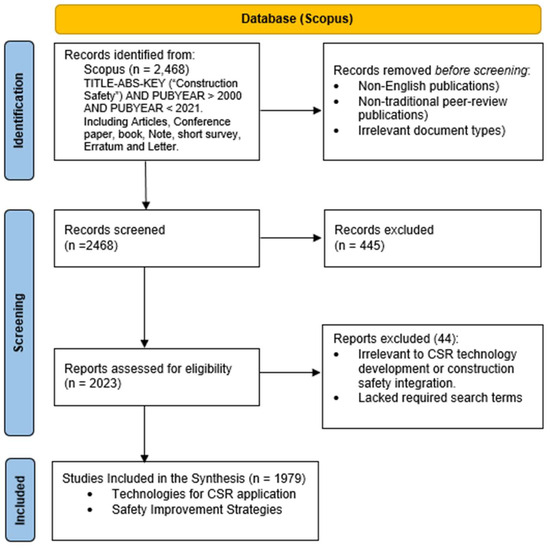
This study employed a bibliometric analysis (BA) combined with a systematic literature review (SLR) to examine the evolution of construction safety research and the integration of emerging technologies between 2001 and 2020. In contrast to other reviews, such as Dobrucali et al. [21], who focused on broad bibliometric trends in digital technology adoption, this study integrates bibliometric analysis with a systematic literature review to provide a deeper understanding of technological developments in construction safety. This review was conducted and reported in accordance with PRISMA 2020 guidelines, with a minor adjustment tailored to the study’s objective. It addressed three research questions: (1) how CSR has evolved over two decades, (2) what digital and smart technologies are gaining prominence, and (3) what knowledge gaps remain in the integration of AI, ML, BIM, and IoT for construction safety. The PRISMA framework was applied to structure the literature search, screening procedure, and reporting of results. The study selection process is illustrated using the PRISMA flow diagram shown in Figure 1. While a formal review protocol was not prospectively registered, all methodological steps were predefined and are reported in accordance with PRISMA 2020 reporting standards. The completed checklist is available in the Supplementary Materials.
Figure 1.
PRISMA schematic procedure for document retrieval.
3.1. Information Source and Search Strategy
This motivation guided the selection of the papers, emphasising those that have contributed to a deeper understanding of technology integration and socio-cultural factors impacting safety behaviour. The goal was to uncover key research trends, collaboration patterns, and the influence of technological innovations on CSR practices. By adopting the PRISMA approach, the research sought to identify the central themes in CSR literature and provide insights into how advanced technologies have reshaped safety management and mitigated risks. The emphasis was on documenting both the scientific advancements and the emerging gaps to guide future research in this field.
An appropriate search query was developed based on the keywords “construction safety”. Therefore, the search query: TITLE-ABS-KEY (“Construction Safety”) AND PUBYEAR > 2000 AND PUBYEAR < 2021 AND (LIMIT-TO (DOCTYPE, “ar”) OR LIMIT-TO (DOCTYPE, “cp”) OR LIMIT-TO (DOCTYPE, “re”)) AND (EXCLUDE (LANGUAGE, “Chinese”) OR EXCLUDE (LANGUAGE, “Spanish”) OR EXCLUDE (LANGUAGE, “Persian”) OR EXCLUDE (LANGUAGE, “Korean”) OR EXCLUDE (LANGUAGE, “Russian”) OR EXCLUDE (LANGUAGE, “German”) OR EXCLUDE (LANGUAGE, “Japanese”) OR EXCLUDE (LANGUAGE, “Polish”)) was executed in the Scopus database, which has comprehensive coverage of peer-reviewed literature and its suitability for bibliometric analysis. However, the use of a single database may exclude relevant studies indexed in other sources such as Web of Science, IEEE Xplore, and PubMed. Additionally, only English-language publications were included to ensure consistency in data extraction, indexing reliability, and compatibility with bibliometric analysis tools. While this approach supports methodological rigour, it may exclude relevant studies published in other languages. The temporal boundary (2001–2020) was deliberately defined to ensure data completeness, consistency in indexing, and comparability of bibliometric indicators such as citation counts, co-authorship networks, and keyword co-occurrence patterns. Bibliometric analyses require stable datasets to avoid bias caused by incomplete citation accumulation in recently published studies. In line with established bibliometric guidelines, Donthu [22] emphasises that quantitative bibliometric mapping should be complemented with qualitative interpretation to enhance the depth and contextual relevance of findings. Therefore, while post-2020 publications were not included in the quantitative bibliometric analysis, they are incorporated qualitatively in subsequent sections to highlight emerging trends and recent technological advancements in construction safety.
3.2. Study Selection, Data Collection, and Bibliometric Analysis
The search query yielded 2468 records related to construction safety research (CSR) published between 2001 and 2020. The records were screened to exclude non-English publications and unconventional or non-peer-reviewed document types to ensure consistency and reliability. After the screening process, 445 records were excluded, resulting in 1979 publications, comprising journal articles, conference papers, and review papers.
The bibliographic data from the retained publications were exported and analysed using VOSviewer software (versions 1.6.18 and 1.6.20). Bibliometric analysis was conducted to explore the research landscape of CSR, including leading authors, publication sources, institutions, funding agencies, and contributing countries worldwide. The analysis focused on co-authorship networks and keyword co-occurrence relationships to identify research collaboration patterns and major thematic clusters within the field.
3.3. Synthesis Approach and Reporting Considerations
A mixed-method synthesis combined quantitative bibliometric mapping with qualitative thematic analysis. While the bibliometric analysis is limited to 2001–2020, the identification of research gaps incorporates recent literature (2021–2025) to ensure that conclusions reflect current developments in construction safety research. This method aligns with published bibliometric practices, where stable historical datasets are combined with qualitative analysis of recent studies to ensure both analytical rigour and contemporary relevance [22].
The bibliometric techniques identified structural research patterns, and the qualitative synthesis examined technological applications, safety culture, hazard identification, framework development, and research gaps. Given the engineering focus of the review, a formal clinical risk-of-bias tool was not applied; however, inclusion was restricted to peer-reviewed Scopus-indexed publications to ensure quality. Potential limitations, including database restriction, language bias, and publication bias, are discussed in the limitations section.
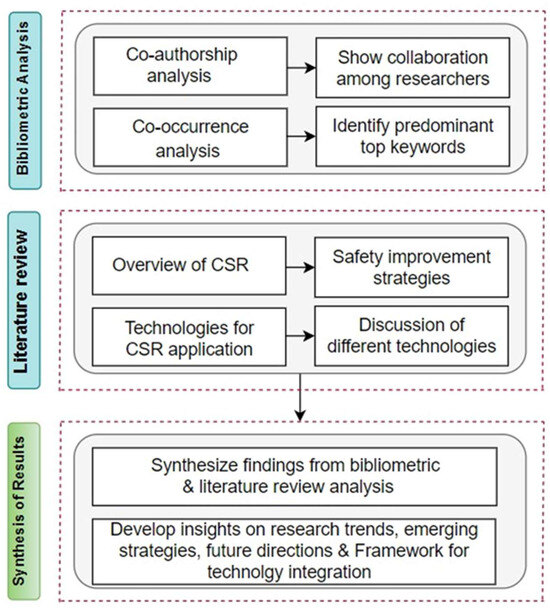
The systematic literature review (SLR) examined scientific developments in construction safety research and identified recent technological innovations, research gaps, and future research directions related to the integration of emerging technologies in construction safety management. The systematic literature review process of published documents on CSR is presented in Figure 2.
Figure 2.
Procedure for analysis of published documents on CSR.
3.4. Framework Development Approach
The proposed technological integration framework for adopting advanced technologies was developed through a structured synthesis of findings from both the bibliometric analysis (BA) and systematic literature review (SLR). The process involved: (1) identifying recurring safety management themes, (2) grouping technology-related interventions across planning, implementation, monitoring, and improvement stages, and (3) synthesising these into an actionable framework aligned with established construction safety management practices. Recent post-2020 studies were also used to refine the framework to reflect current industry development research areas such as “AI”, “IoT”, “safety culture”, and “risk management”. Based on this combined analysis, this is to strengthen the analytical rigour, which will define the usefulness of the adoption. Thus, the framework was constructed by mapping the identified themes into sequential implementation stages, including assessment, planning, implementation, monitoring, and optimisation. This method confirms the framework is not conceptual only but is grounded in empirical studies and reflects both historical research trends and recent technological advancements [18,19,23].
4. Results and Discussion
4.1. Publications Analysis
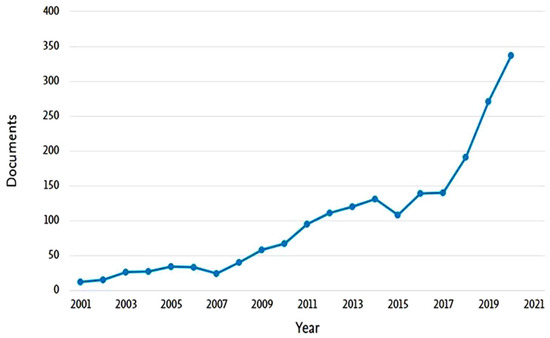
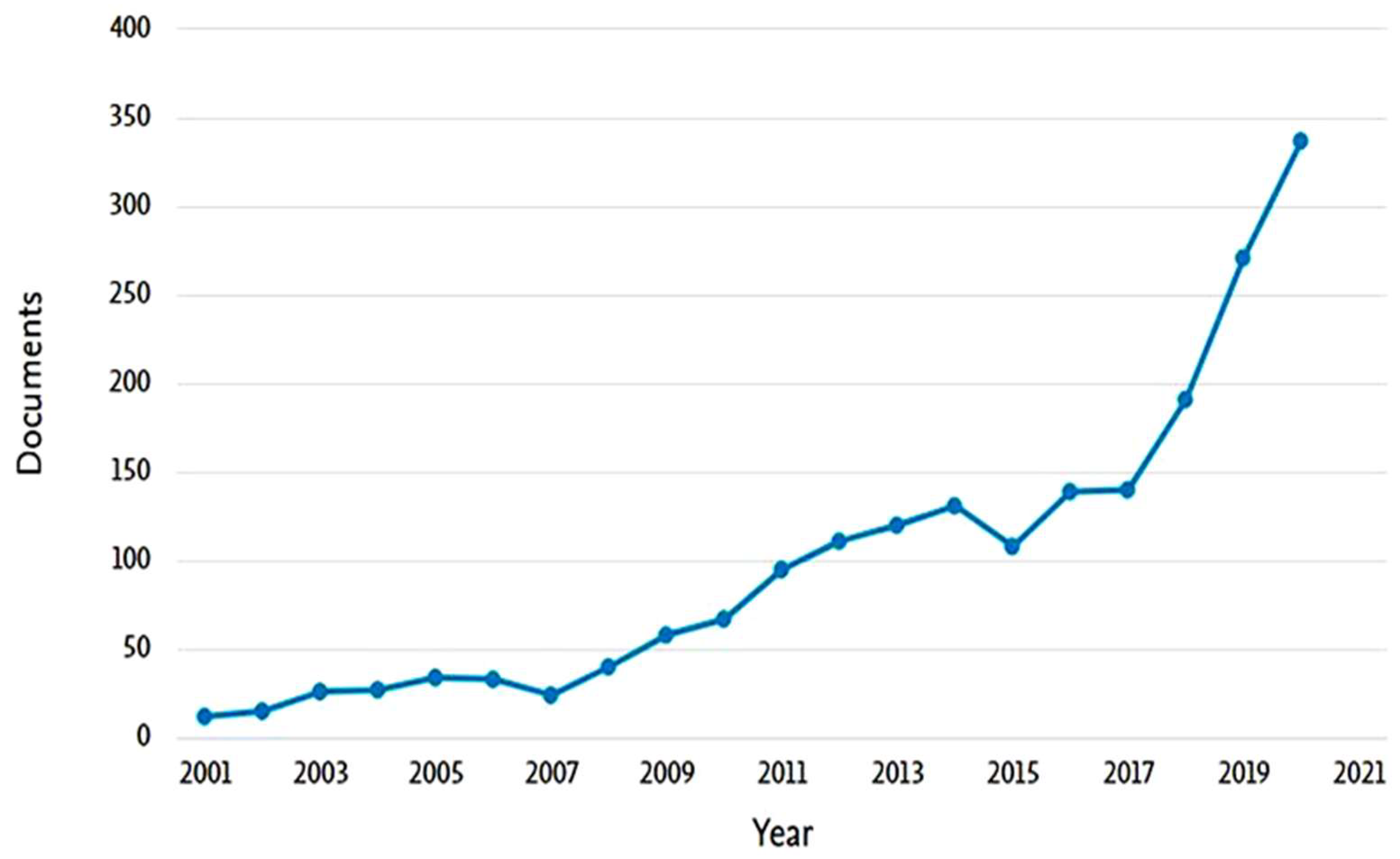
The publication trends analysis was conducted to examine the research publications’ landscape on CSR based on the selected timespan from 2001 to 2020, as shown in Figure 3. Publications increased from 12 to 337 between 2001 and 2020, indicating an average annual growth rate of approximately 18%, indicating significant attention to CSR among academics, scientists, and policymakers worldwide. The observed increase in publications reflects growing global awareness of construction safety challenges over the study period (2001–2020). This trend is further supported by recent studies (e.g., Das [36]), which highlight the continued rise in construction-related accidents and the increasing need for advanced safety interventions.
Figure 3.
Publication trends on CSR (2001–2020).
According to the United States (US) Bureau of Labour Statistics (BLS), one out of every ten workers (~150,000 accidents annually) has experienced some form of accident at construction sites [37]. Likewise, the BLS reported that 9.7 out of every 100,000 workers in the construction industry had suffered a fatal injury, while 1061 lost their lives on construction sites in 2019 [38]. Therefore, the call for concerted efforts to address the underlying challenges associated with the health and safety of construction workers has stimulated research efforts and various publications on CSR worldwide.
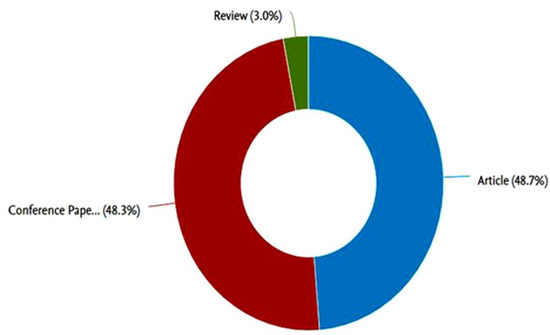
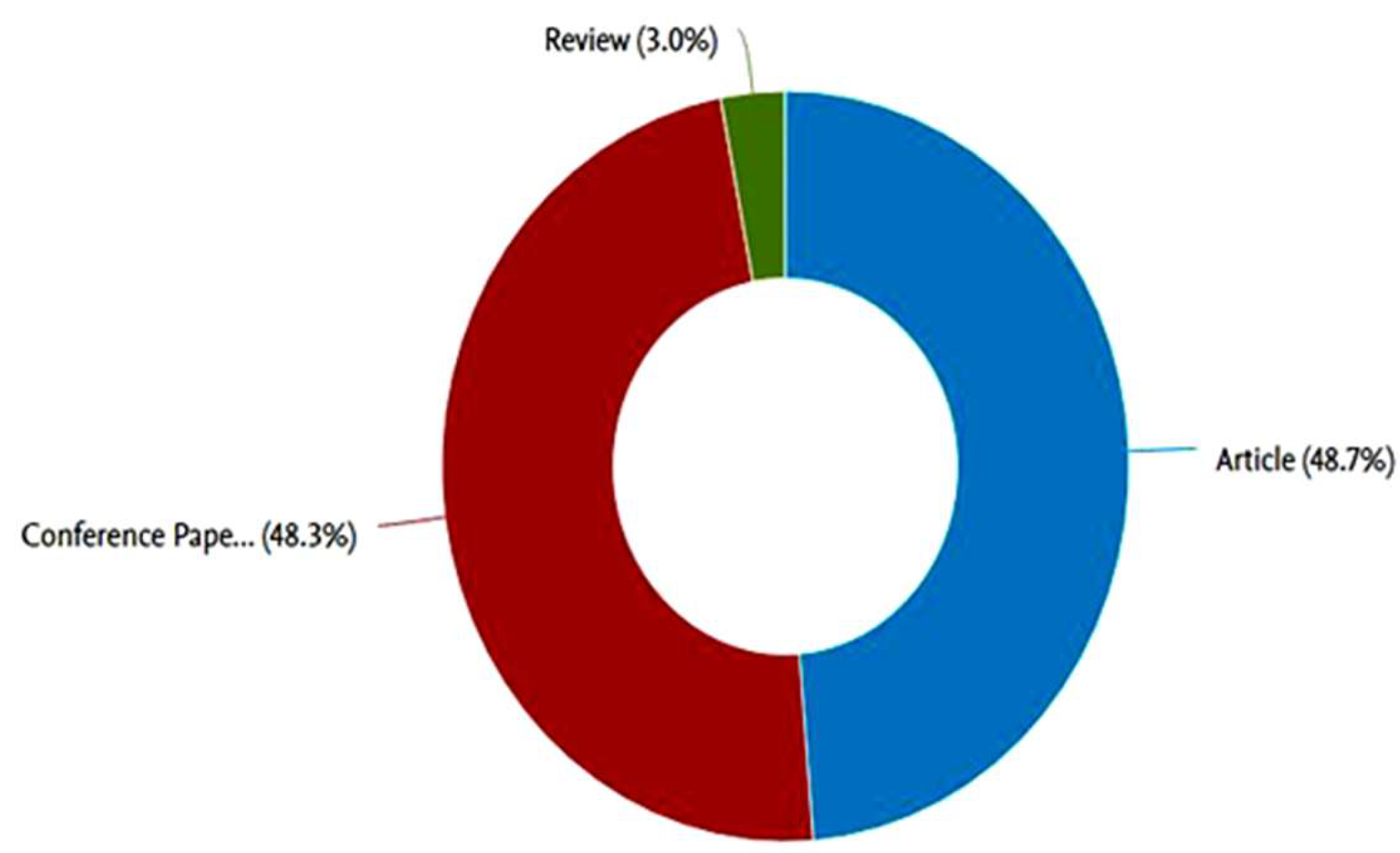
Many published documents on CSR are articles (964), conference papers (955), and reviews (60), as shown in Figure 4. Researchers in the area prefer articles and conference papers as the most preferred medium of publication, accounting for 97% of the total publications. The preference for articles and conference papers in academia is primarily due to the financial rewards associated with these publications. Several studies have shown that economic incentives are a strong motivation for academic publication as reported in Denmark, Sweden, Germany, and the United States, among others worldwide [39,40].
Figure 4.
Various types of published documents on CSR (2001–2020).
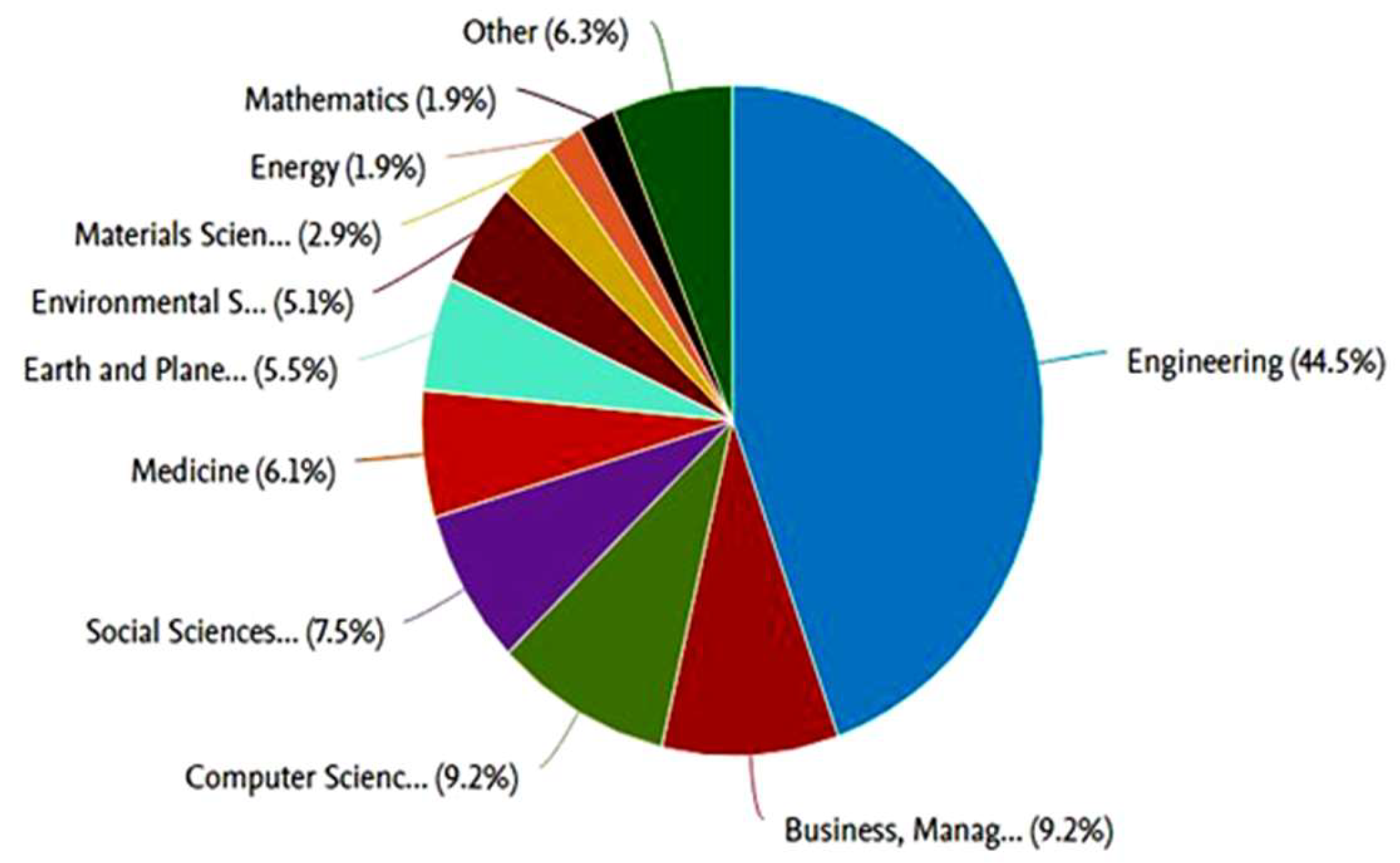
Academic prestige and research impact significantly influence the selection of publication types or sources for scientific literature publication. The top journals for CSR publications were analysed to examine this submission further, as shown in Table 1. This study examined the top ten source titles for CSR publications. As observed, the top ten source titles have been published between 24 and 112 documents and gained 30-6179 citations during the examined period. On average, the top 10 source titles published 58.3 documents and gained 1785.20 citations between 2001 and 2020. The findings further indicate that the Journal of Construction Engineering and Management has the highest TP, accounting for 5.66% of the TP. Safety Science has the highest TC (n = 6179). Based on citations and the number of published documents, the most prominent journal on CSR is Safety Science, closely followed by Automation in Construction and then the Journal of Construction Engineering and Management. The analysis further revealed that CSR studies are published and indexed under various subject areas/themes, as depicted in Figure 4.
Table 1.
Top ten sources of publications and citations on CSR (2001–2021).
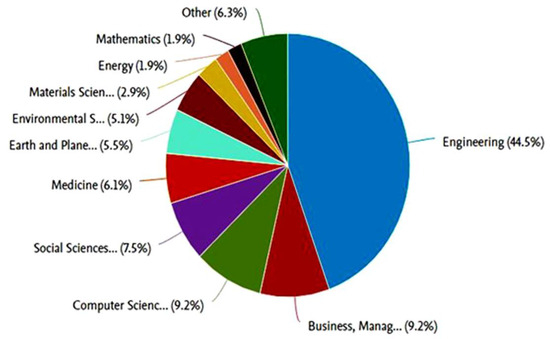
The published documents on CSR cut across areas ranging from STEM to Humanities, Arts, and Social Sciences (HASS). The top 10 subject areas and their respective publication counts (in brackets) are namely Engineering (1552), Business, Management and Accounting (320), Computer Science (320), Social Sciences (262), Medicine (213), Earth and Planetary Sciences (192), Environmental Science (177), Materials Science (101), Energy (67), and Mathematics (66). The findings indicate that CSR is a multidisciplinary field that fosters collaboration among researchers from diverse fields, thereby enhancing research impact and social acceptability [41,42].
4.2. Top Authors on CSR
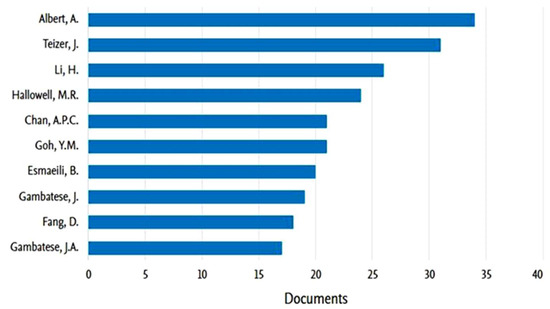
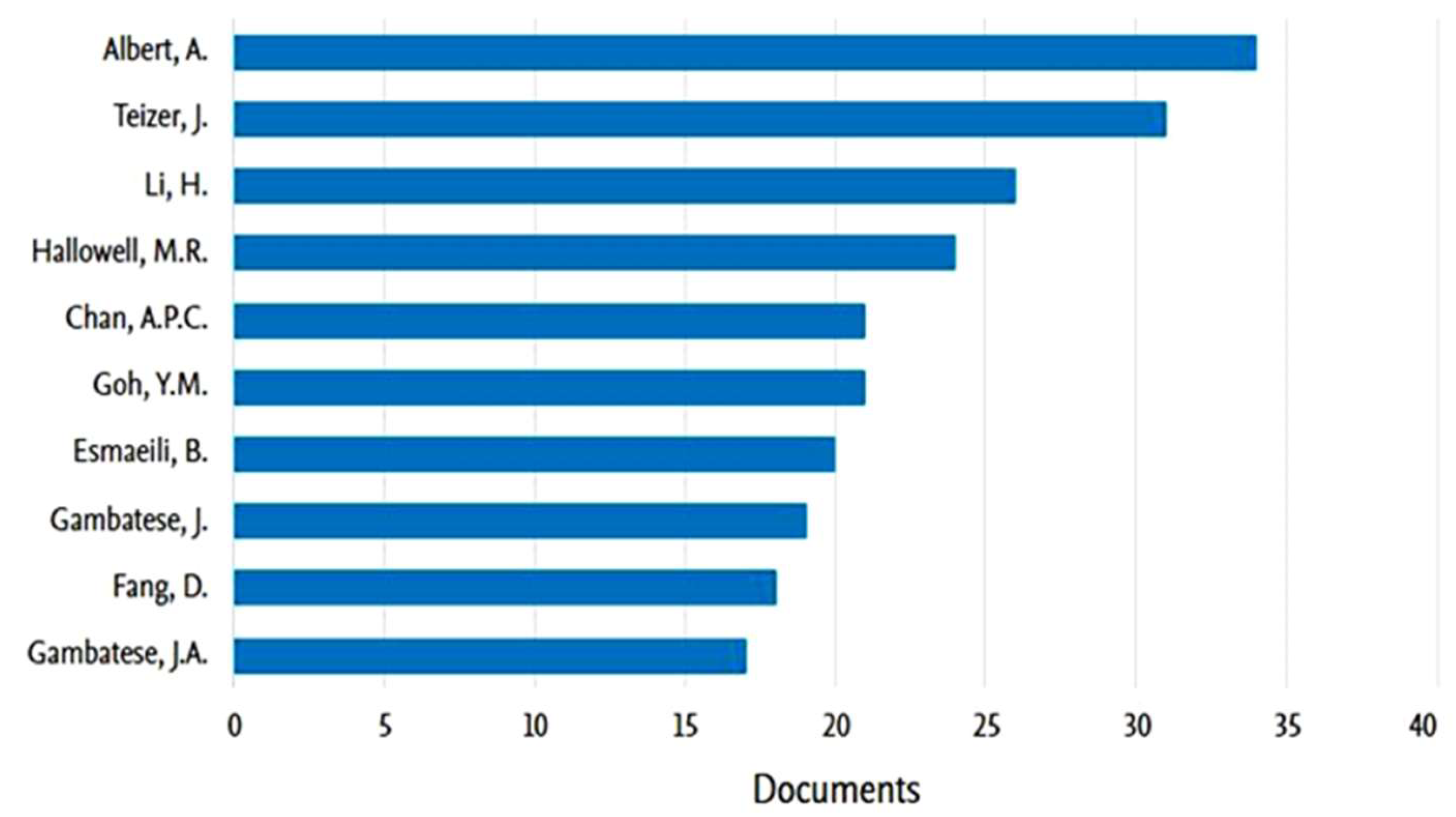
This study analysed the top researchers and scientists globally working on CSR, as depicted in Figure 5. The distribution and contribution of the most prolific authors in construction safety research are illustrated in Figure 6. The top authors and their research affiliations provide valuable insights into the impact of global research and social acceptability on various fields or topics [43,44]. The data show that the top 10 researchers actively working in CSR have garnered over 15 publications over the last 20 years under examination. The top researcher on CSR is Alex Albert, who has 34 publications, followed by Jochen Teizer and Heng Li, who have published 31 and 26 documents, respectively. Table 2 presents the top 10 researchers, their affiliations, and the country of research. The top 10 authors have published between 17 and 34 publications (or 23.1 on average). Out of the top 10 authors, 5 are based in the United States, while China, Denmark, and Singapore make up the remainder. The findings also indicate that the US authors are the most prominent researchers in CSR, which could be due to the high annual rates of accidents, injuries, and fatalities reported in the country. Furthermore, this could be since the HSE industry has invested significant resources in identifying and examining causes of accidents on construction sites for research impact and social progress.
Figure 5.
Subject areas of published documents on CSR (2001–2020).
Figure 6.
Top authors on CSR (2001–2020).
Table 2.
Top authors on construction safety research (CSR).
Table 2 shows the details of the top authors on CSR. The analysis of the authors’ h-index also shows their publications have gained global prominence with values ranging from 17 to 64, as observed for B Esmaeili (United States) and Heng Li (China), respectively. Other notable researchers, such as J. Teizer, A.P.C. Chan, and D. Fang, have also made significant contributions to the topic. The fact that these researchers are based across the globe suggests that CSR is a global research area that has attracted considerable research interest among academics, industry, and policymakers, among others.
4.3. Top Institutions on CSR
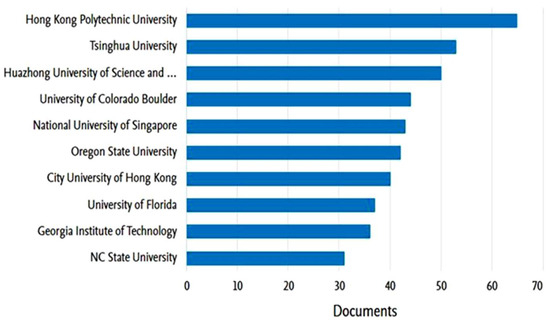
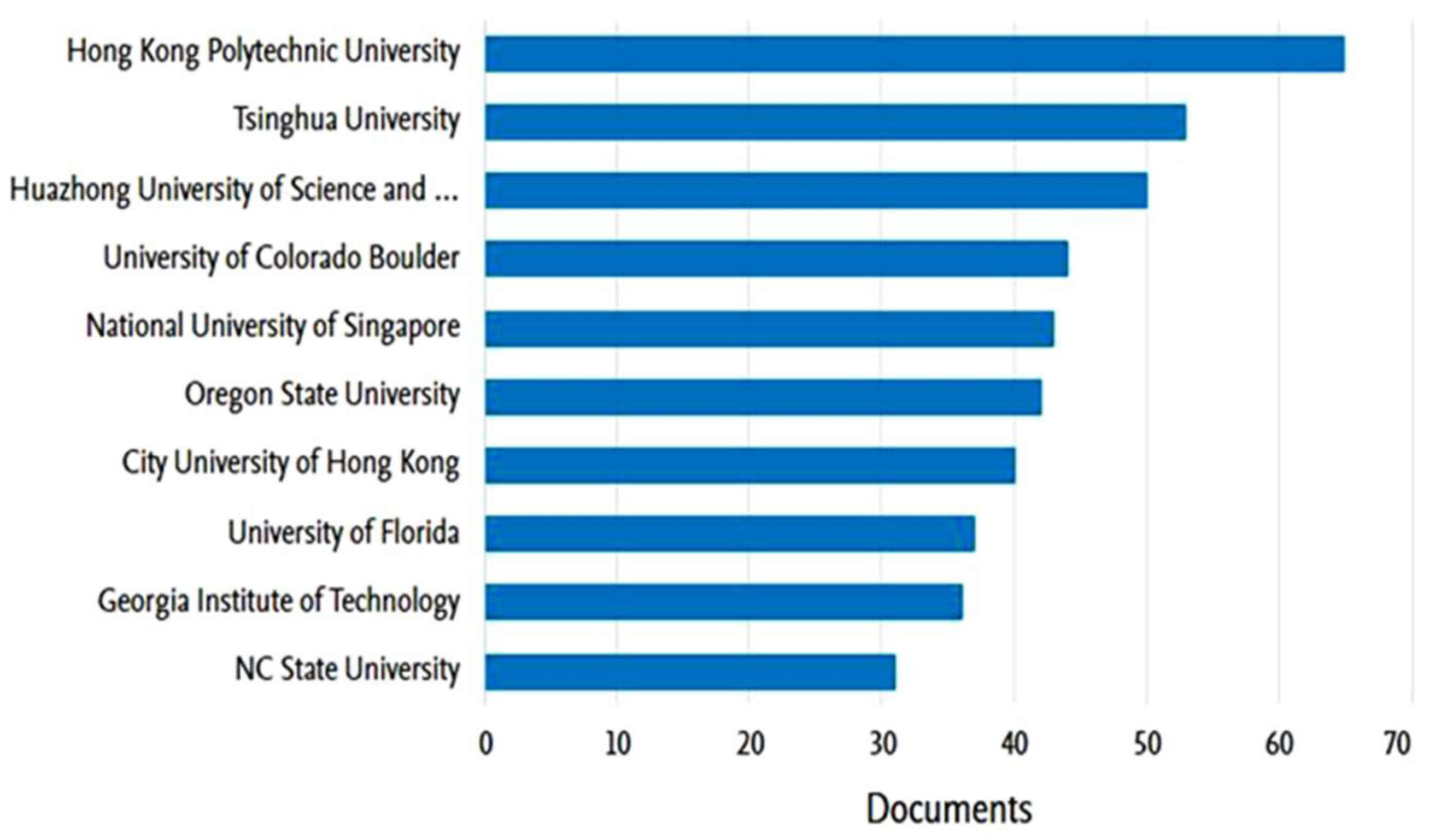
Figure 7 presents the top 10 most prolific institutions on CSR. This study analysed the top global institutions in CSR, focusing on identifying the most influential and prolific organisations globally. The top 10 institutions on the topic have produced over 30 publications (i.e., 44.1 publications on average) over the years.
Figure 7.
Top 10 most prolific institutions on CSR.
The Hong Kong Polytechnic University (HKPU, China) is the most prolific institution with 65 publications. HKPU’s productivity can be ascribed mainly to the works of Albert Chan and Heng Li. The work rate of the duo is closely followed by academics at Tsinghua University (China) and Huazhong University of Science and Technology (China), with 53 and 50 publications, respectively. The top 10 list primarily comprises United States-based institutions (i.e., 5 out of 10). However, the China-based institutions account for the top three, which makes them the most highly influential in CSR. This observed dominance could be attributed to the availability of research funding in the form of research grants, infrastructure, or incentives for publication, amongst other factors. The next section of the paper will highlight the various funding agencies and institutions that have supported CSR.
4.4. Top Funders/Countries
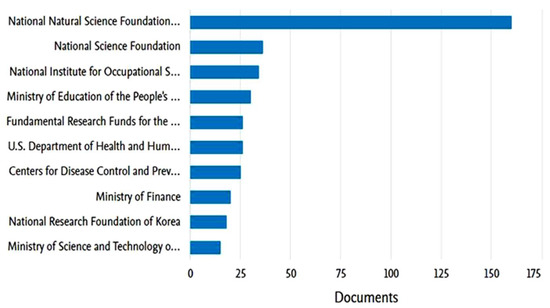
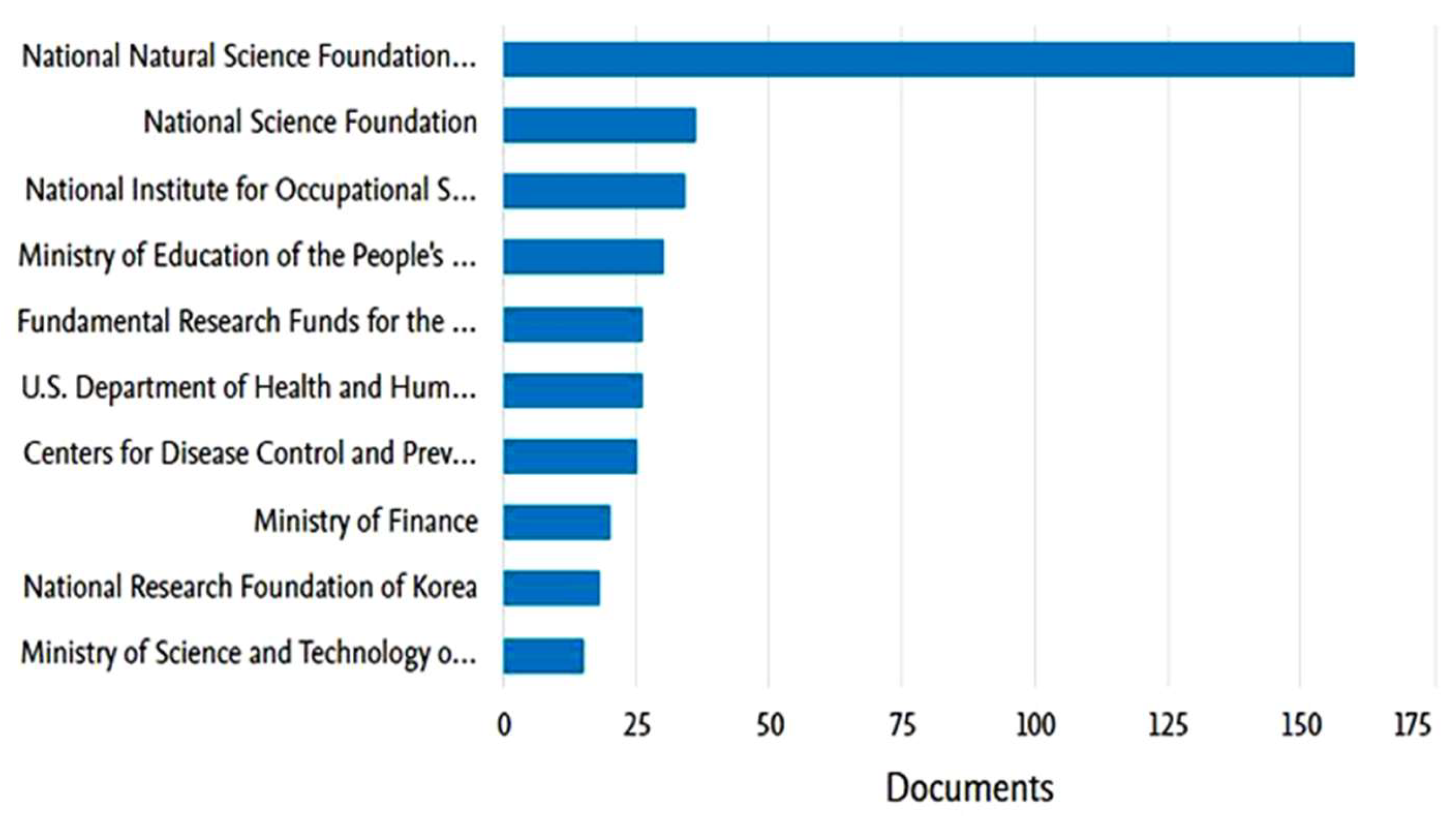
The top CSR funding organisations globally are displayed in Figure 7. The major funding agencies supporting construction safety research are presented in Figure 8. The objective of the analysis was to identify and emphasise the nature, extent, and importance of financial support for conducting top-tier research on the topic. Numerous organisations and countries offer grants, waivers, and tax relief to enhance the quality and quantity of research activities [45]. The top 10 funding organisations have financed between 15 and 160 publications, or 37.6 on average, during the period examined in this paper. The top funder of research on the topic is the National Natural Science Foundation (NNSF) of China, with 160 published documents, which is higher than the research output of the National Science Foundation (United States) and National Institute for Occupational Safety and Health (United States), with 36 and 34 published documents, respectively. Other major funders of CSR are the Fundamental Research Funds for the Central Universities (China) and the Ministry of Education (China), each with 26 published documents.
Figure 8.
Top funding agencies and institutions for CSR.
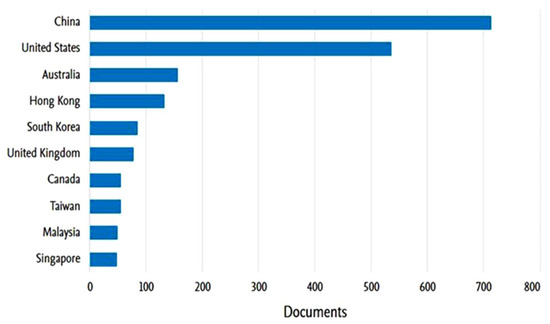
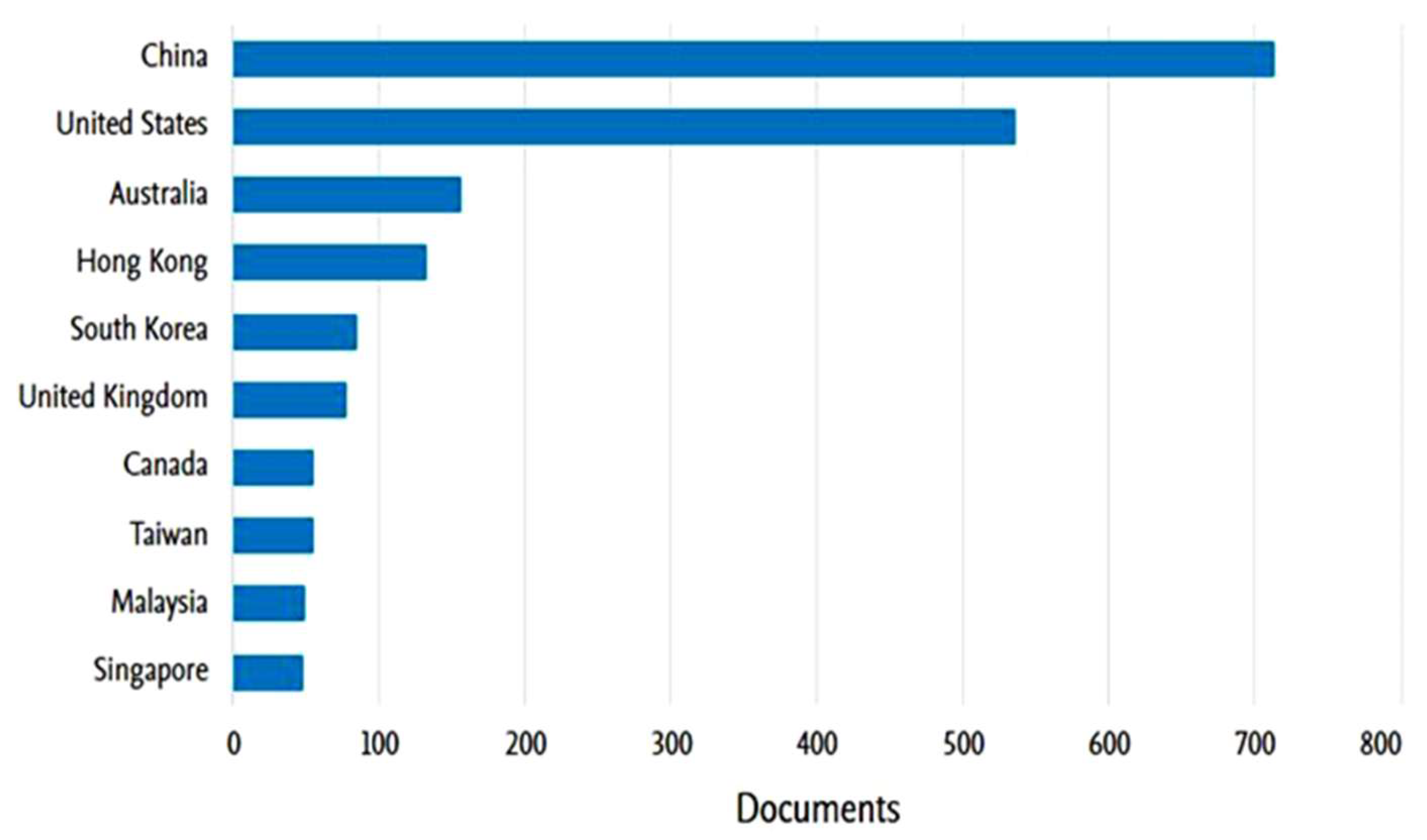
The findings show that China and the United States are significant funders of CSR, accounting for the productivity and dominance of their researchers and affiliations. To further analyse this, the top 10 countries that are funding CSR were assessed, as shown in Figure 9. As observed, China and the US are the top funders of CSR, accounting for 63% of all published documents worldwide, followed by Australia, Hong Kong, and South Korea. It is essential also to note that Asian nations (China, Hong Kong, Taiwan, South Korea, Singapore, and Malaysia) account for 6 out of the top 10 nations in CSR, whereas the remainder are OECD countries. The findings indicate that CSR is a priority area for these nations.
Figure 9.
Top funding countries of CSR.
4.5. Bibliometric Analysis (BA)
BA is a statistical and mathematical technique used to analyse research output and publication trends on any given scientific topic or area of research [46]. It is a comprehensive tool for visualising the network of authors, affiliations, organisations, funders, and countries actively engaged in a specific research area [47,48]. The concept has been widely used to analyse the research landscape and scientific advancements in energy [43], healthcare facilities [49], food safety [50], and waste recovery [51], among others [52,53,54,55] in the literature. Bibliometric analysis has been widely applied across multiple disciplines to evaluate research trends and scientific impact [56].
4.6. Co-Authorship Analysis
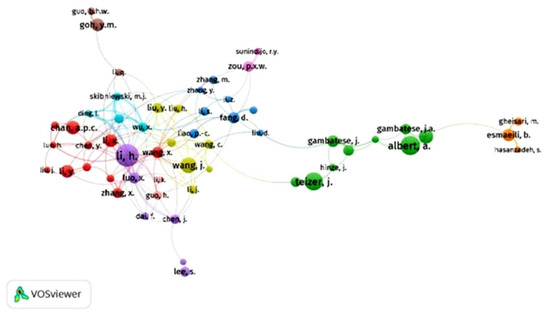
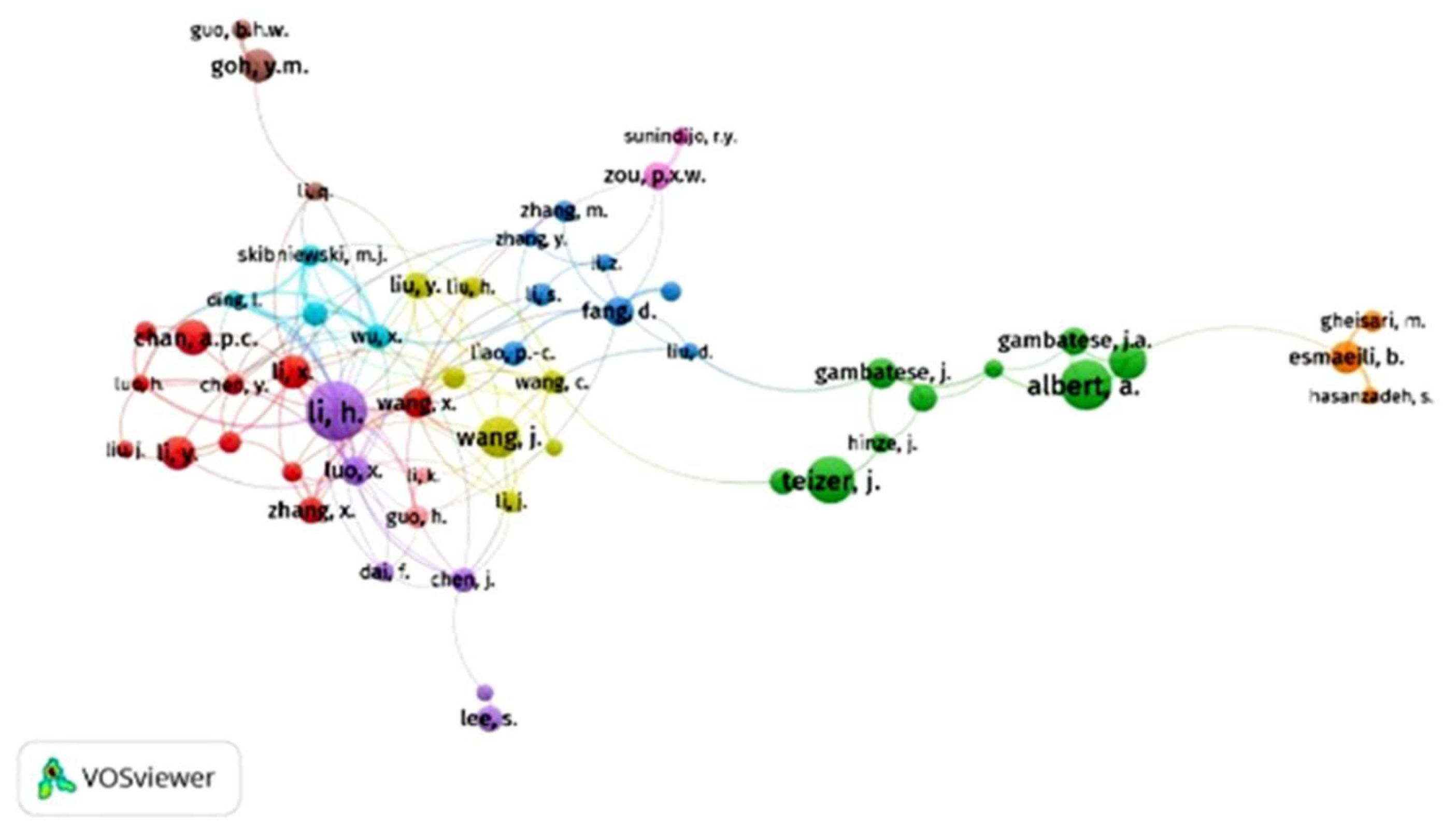
This study examined the network of co-authorship among the top CSR researchers worldwide based on publications, as depicted in Figure 9. The analysis, based on 3573 authors published over 20 years, identified 55 clusters, with 55 of them connected to form 10 clusters. The network visualisation map reveals that Alex Albert, Jochen Teizer, and Heng Li are the most connected researchers in CSR due to their high productivity with their global peers. The findings may be attributed to the high level of research collaboration and cooperation among researchers on the topic. Research collaborations significantly contribute to scientific growth and advancement by fostering multidimensional problem-solving approaches and sharing resources, infrastructure, and knowledge [57]. The high linkage of strengths, clusters, and co-authored documents indicates the impact of global research and the social importance of CSR.
4.7. Co-Occurrence Analysis
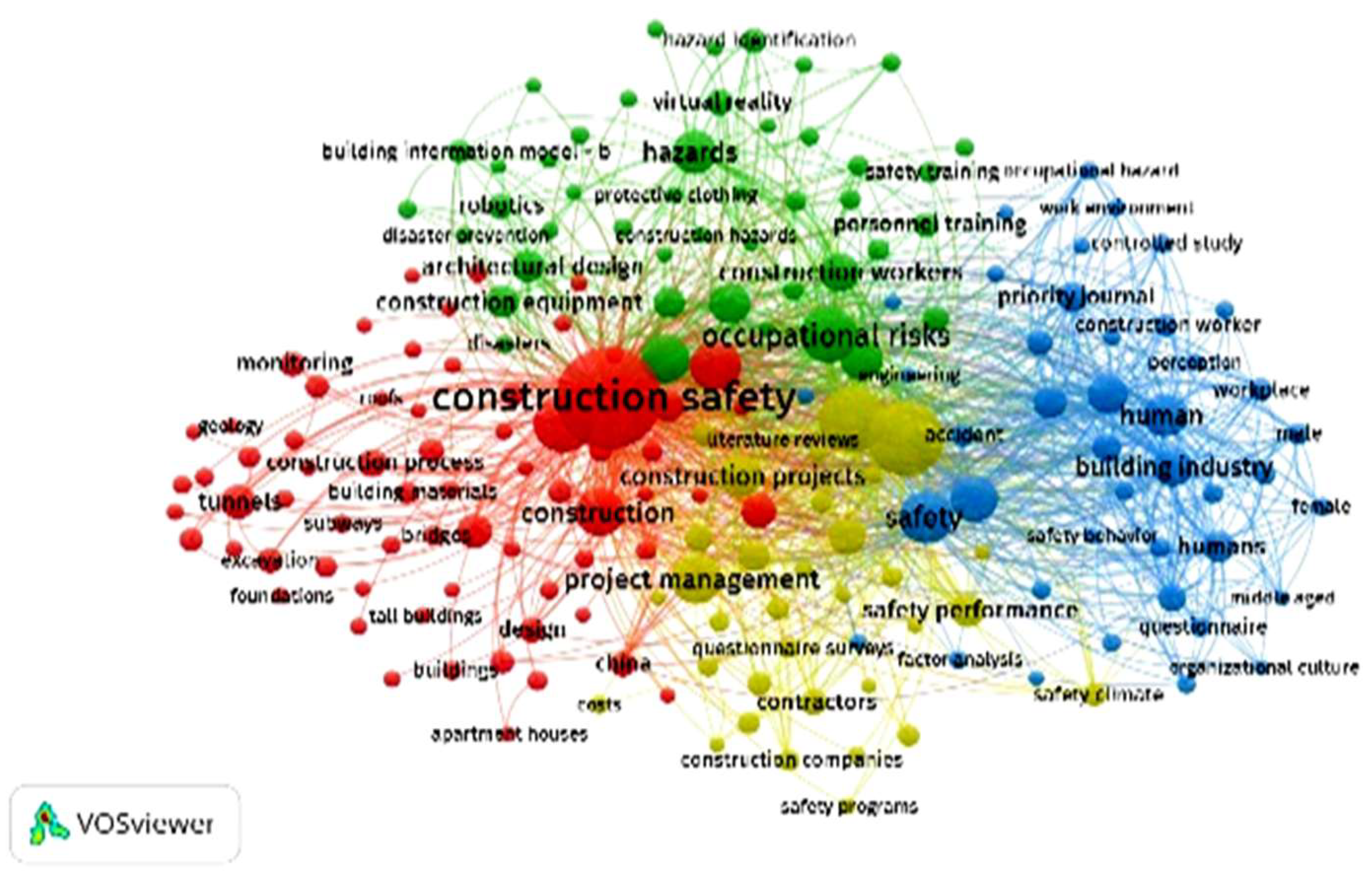
The network visualisation of co-occurring keywords on CSR is depicted in Figure 10. The frequency of keywords is crucial for analysing the research landscape and scientific impact of any given topic during the BA [58]. This study conducted a keyword co-occurrence (KCO) analysis to examine the co-occurrence based on occurrences of at least 20 times, which resulted in a total of 11,441 keywords. The required keywords were 189, which generated four clusters (i.e., red, green, blue, and yellow nodes), as shown in Figure 11.
Figure 10.
Network visualisation of co-authorship on CSR publications.
Figure 11.
Network visualisation of co-occurring keywords on CSR.
The KCO analysis revealed “construction safety” as the most common keyword(s), which is likely due to the search query used to retrieve CSR documents from the Scopus database. The red cluster contains keywords such as “construction projects”, “construction process”, and “construction”, which are the most frequently occurring terms in the clusters. For the blue cluster, the most common keywords are “building industry”, “human”, and “safety”. However, the green cluster has “occupational risks”, “hazards”, “construction workers”, and “construction equipment” as the most notable keywords. Lastly, the yellow cluster comprises “project management”, “safety performance”, and “contractors”.
Construction projects involve numerous individuals who interact with complex processes, hazards, equipment, and work environments that pose significant health and safety risks. Therefore, the safety of construction site workers has sparked extensive research into safety performance, culture, climate, and project management. Given this, other studies have investigated the causes of accidents, injuries, and fatalities at construction sites, offering solutions, preventive measures, and safety guidelines.
5. Discussion and Analysis
The BA provides insightful trends, patterns, and notable developments in the field from 2001 to 2020. The results indicate that the number of publications on CSR soared significantly over the years. The observed increments suggest a rising appreciation of CSR’s importance among researchers, policymakers, and industry practitioners worldwide. The trend also highlights the growing awareness and concern about construction site accidents whilst emphasising the necessity for robust safety measures. This surge can be attributed to several factors:
- The increasing awareness of construction work hazards has prompted increased research on mitigating risks and improving safety protocols.
- The industry is facing growing regulatory pressure due to stricter safety regulations, necessitating increased investment in safety research to meet new standards.
- The advent of computational tools such as AI, ML, and IoT technologies has sparked increased research interest in innovative safety solutions.
Most CSR publications are research articles and conference papers. This finding indicates that researchers in the CSR field prefer to share findings through academic channels, which are typically subject to rigorous peer review for quality and credibility.
5.1. Co-Authorship and Collaboration
This analysis reveals a significant degree of global collaboration among CSR researchers. In essence, these collaborative efforts greatly help to foster a well-integrated research community that promotes teamwork and resource sharing. This collaborative approach is vital in tackling multifaceted safety issues, which require interdisciplinary methods.
5.2. Interdisciplinarity of CSR
The analysis revealed that CSR is a multidisciplinary field that includes business management, engineering, computer science, environmental sciences, medicine, and social sciences. As such, various perceptions and proficiencies are required to tackle construction safety issues successfully. The integration of business management, engineering, technology, social sciences, and medicine and health sciences in construction safety offers a comprehensive approach, promoting safety culture and training programmes.
5.3. Co-Occurrence of Keywords
The KCO analysis elucidated 189 notable keywords, which were categorised into four clusters. These clusters show the primary focuses and themes of CSR over the last few decades. Safety management, hazard identification, accident prevention, and the role of technology in augmenting safety measures are among the major themes. The prominence of these themes indicates that researchers are concentrating on both the proactive and reactive facets of construction safety. As such, the short- and long-term objectives have been to prevent mishaps at construction sites by using improved technology and strategic management while attending to the fallout from mishaps when they occur.
5.4. Funding and Support
This study emphasised the importance of funding to the advancement of CSR. China and the US contribute the most to CSR, accounting for 63% of all published documents, which is likely due to substantial financial and resource investment. Financial support for high-impact research is vital, and leading funding agencies like the National Science Foundation and the National Natural Science Foundation in the US and China are important examples of this. Australia, Hong Kong, and South Korea are among the top contributors to improving construction safety. The findings indicate there is a global focus on CSR due to rapid urbanisation and infrastructure projects in these regions.
6. Systematic Literature Review (SLR)
Table 3 lists the most cited publications on CSR in the literature, focusing on the most cited publications during the period examined. Tam et al. [59] identified poor safety management (PSM) and safety performance (SP) as key factors contributing to accidents in the construction industry. The study found that PSM enhances safety records at construction sites by improving PPE provision and consistency, while SP influences management’s attitude and government policies on safety-related programmes. Haslam et al. [35] highlighted worker issues, workplace issues, equipment failures, material correctness, and risk management shortcomings as primary causes of construction site accidents. Behm [60] revealed that top management decisions significantly impact construction worker safety, contributing to over 40% of site fatalities, suggesting that integrating safety into project design can mitigate risks. Carter and Smith [61] propose IT-based tools for effective risk identification and holistic project safety management in construction projects, addressing inadequate current strategies. Choudhry and Fang [26] highlighted that unsafe worker behaviours in construction accidents exist due to safety consciousness, workplace pressures, and psychological, economic, and organisational factors, emphasising the importance of organisational management. Aksorn and Hadikusumo [62] and Mahmoud et al. [63] identified 16 key success factors for effective safety performance in construction projects, with management support being the most crucial factor.
Table 3.
Top cited publications on CSR.
6.1. Recent Innovations, Practices, and Future Perspectives in CSR
While the bibliometric analysis in this study is limited to publications up to 2020, the recent literature (2021–2025) reveals a significant acceleration in the evolution of construction safety research, driven primarily by rapid advancements in digital and intelligent technologies. This post-2020 shift marks a transition from traditional reactive safety management toward predictive, data-driven, and automated safety systems. Emerging studies (e.g., [18,19,20,23,25,68]) demonstrate that artificial intelligence (AI), machine learning (ML), digital twins, and extended reality (XR) are no longer conceptual tools but are increasingly being integrated into real-world safety applications.
Analytically, these developments confirm and extend the trends identified in the 2001–2020 dataset, particularly the growing emphasis on hazard prediction, real-time monitoring, and proactive risk management. However, recent studies go further by highlighting a paradigm shift toward intelligent safety ecosystems, where interconnected technologies (AI–BIM–IoT integration) enable continuous data exchange, automated decision-making, and adaptive safety responses. This indicates that the pre-2020 research landscape represents a foundational phase, while the post-2020 period reflects an implementation and optimisation phase.
A critical synthesis of recent literature reveals three major dimensions influencing the effectiveness of emerging safety technologies: (1) technological capability, (2) organisational readiness, and (3) contextual adaptability. First, advances in artificial intelligence (AI) and machine learning (ML) have significantly improved predictive analytics, enabling early identification of unsafe conditions and behavioural risks through real-time data processing, computer vision, and multimodal data integration [23,69]. Second, organisational readiness remains a critical determinant of successful technology adoption, with leadership commitment, workforce training, and change management identified as essential enablers of digital safety implementation [18]. Third, contextual adaptability, considering socio-cultural conditions, project complexity, and operational constraints, has emerged as a key factor influencing the practical effectiveness of safety technologies across diverse construction environments [23,24]. These three dimensions collectively form a conceptual foundation for understanding the transition from technological adoption to intelligent safety ecosystems in construction.
6.1.1. Integration of Advanced Technologies
Recent literature demonstrates that the integration of advanced technologies—particularly artificial intelligence (AI), machine learning (ML), building information modelling (BIM), Internet of Things (IoT), and extended reality (XR)—has fundamentally transformed construction safety from a reactive process into a predictive and data-driven system. Post-2020 studies increasingly emphasise the convergence of these technologies into integrated safety ecosystems, where real-time data acquisition, predictive analytics, and automated decision-making operate synergistically [18,19,23,24]. AI and ML models are now widely applied for hazard prediction, unsafe behaviour detection, and risk forecasting using computer vision, sensor data, and historical safety datasets [70]. Similarly, IoT-enabled wearables and sensor networks facilitate continuous monitoring of worker conditions and environmental risks, enabling real-time intervention and improved situational awareness [23,71]. Digital twins and XR technologies further extend these capabilities by enabling immersive safety training, scenario simulation, and dynamic risk visualisation in virtual environments [20]. Compared to earlier studies, which focused on isolated technological applications, recent research highlights a shift toward system interoperability and platform integration. This transition reflects a move from technology adoption to intelligent safety systems, where multiple technologies interact to enhance safety performance, reduce response time, and support proactive risk management. However, challenges related to data integration, system interoperability, and scalability remain critical barriers to widespread implementation, particularly in complex and resource-constrained construction environments [23,24].
6.1.2. Safety Culture and Management Commitment
Despite rapid technological advancements, the recent literature consistently reinforces that safety culture and management commitment remain central to effective construction safety performance. Post-2020 studies highlight that the successful adoption of digital safety technologies depends heavily on organisational readiness, including leadership engagement, workforce training, and digital competency development [18,70]. Emerging evidence suggests that technology alone does not guarantee improved safety outcomes; rather, its effectiveness is mediated by human and organisational factors. For instance, recent studies emphasise that leadership commitment plays a critical role in fostering a safety-oriented culture that supports the integration of AI-driven and digital safety systems [23,28]. Similarly, workforce training and change management strategies are increasingly recognised as essential for overcoming resistance to new technologies and ensuring their effective utilisation in practice [72,73]. Furthermore, the transition toward intelligent and automated safety systems has intensified the need for adaptive safety cultures that can accommodate continuous technological change. This indicates that future construction safety frameworks must integrate both technological innovation and organisational transformation, reinforcing the interdependence between digital capability and human factors in achieving sustainable safety performance.
6.1.3. Hazard Identification and Risk Management
Recent advancements in hazard identification and risk management have been significantly driven by the integration of real-time data analytics, sensor technologies, and AI-based predictive systems [74]. Contemporary studies demonstrate that IoT-enabled devices, wearable technologies, and computer vision systems enable continuous monitoring of worker behaviour, environmental conditions, and site activities, which facilitates early hazard detection and proactive risk mitigation [23,70,71]. AI-powered analytics further enhance these capabilities by processing large-scale, heterogeneous datasets to identify patterns, predict accident likelihood, and support real-time decision-making [69,75]. This represents a significant shift from traditional hazard identification approaches, which relied primarily on manual inspection and reactive reporting, toward dynamic and automated risk management systems. However, despite these technological advancements, the recent literature highlights persistent challenges related to data quality, interoperability, and system integration. Many safety technologies operate in fragmented environments, limiting their effectiveness across different project phases and stakeholders [24,76]. Additionally, issues such as data standardisation, privacy concerns, and infrastructure limitations continue to constrain large-scale implementation. These findings suggest that future research should prioritise the development of integrated, scalable, and interoperable safety systems capable of operating across complex construction environments, particularly studies related to hazard identification, real-time monitoring, and AI-based risk management [30]. This is identified through the integrated BA–SLR approach, as opined by Dobrucali et al. [21].
Figure 12 illustrates the process of integrating advanced digital technologies into hazard identification and risk management in construction [29,71]. The framework is developed based on thematic synthesis of SLR findings, particularly studies related to real-time monitoring, predictive analytics, and AI-based safety systems [70]. It demonstrates how technologies such as BIM, IoT, and AI support hazard detection, risk prediction, and continuous system optimisation. For example, the integration of such advanced computational tools (ACTs) could improve safety monitoring and hazard detection, as such methods directly influence hazard detection practices and safety culture initiatives [23]. It is important to state that while such ACTs can enhance the detection of hazards, they are prone to challenges. For example, limitations such as language bias and data source constraints could hamper the completeness of such procedures. The process starts with hazard identification, where technologies such as BIM and IoT-enabled systems are used to detect potential risks and visualise unsafe conditions in real time [29,30]. These technologies improve situational awareness and support early-stage risk assessment. This is followed by risk analysis and prediction, where artificial intelligence (AI) and machine learning (ML) models analyse historical and real-time data to identify patterns and forecast potential safety incidents. These approaches enable proactive decision-making and enhance risk prediction accuracy [70]. The process incorporates a feedback and optimisation loop, where collected data are used to refine safety strategies, improve system performance, and support continuous learning. This stage ensures adaptive and data-driven improvement of safety management practices over time.
Figure 12.
Process for Integrating Advanced Technologies in Hazard Identification and Risk Management.
6.1.4. Identified Research Gaps and Future Directions
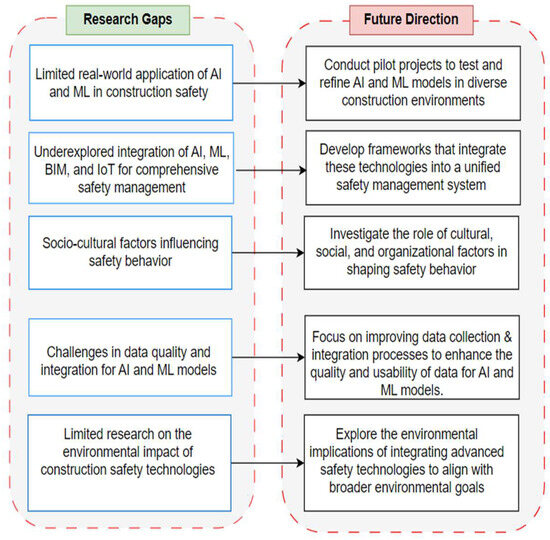
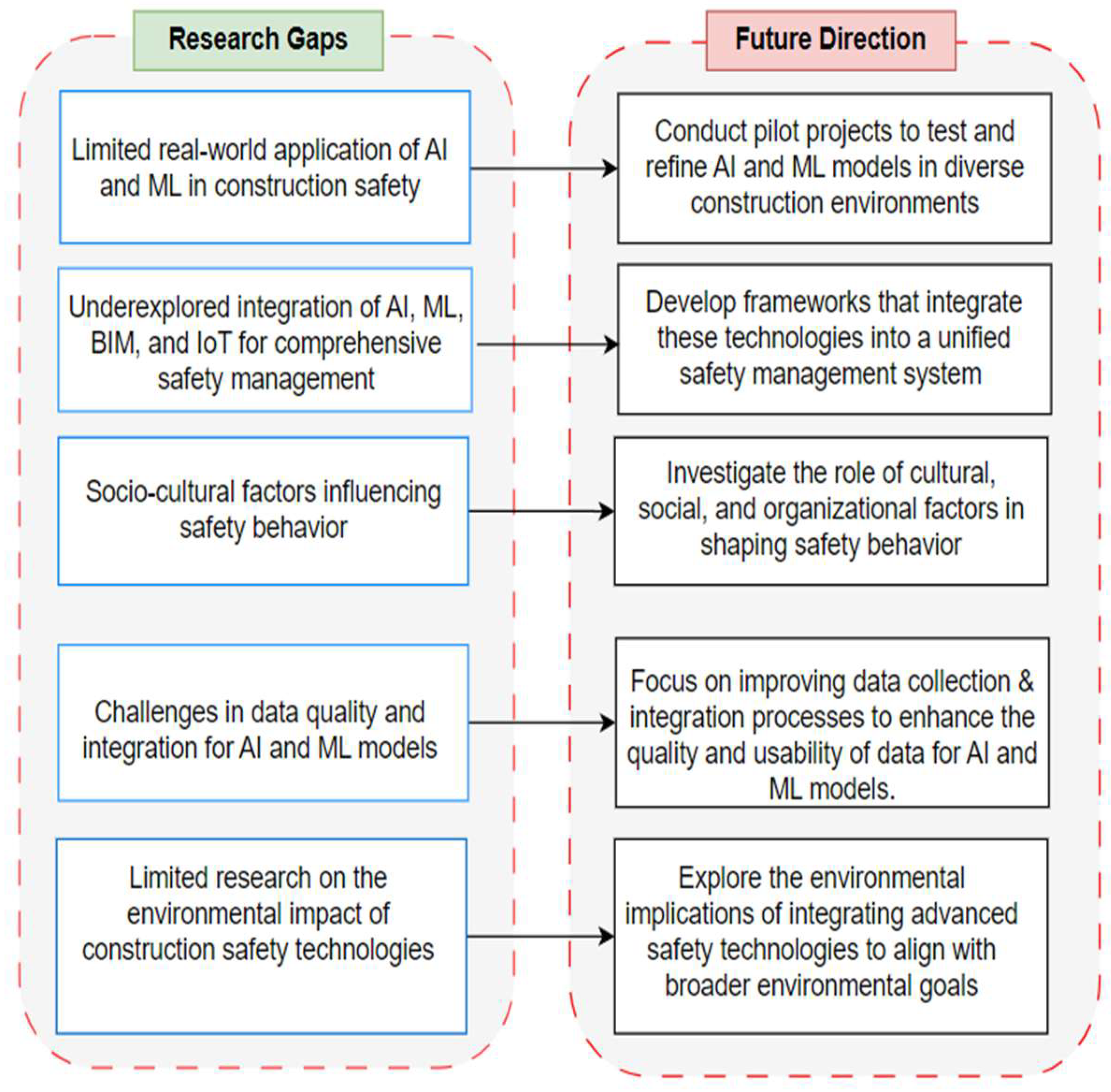
Despite significant progress in construction safety research, recent studies identify several critical gaps that limit the practical implementation and scalability of emerging technologies. The identified research gaps are based on both long-term bibliometric trends and recent studies (2021–2025), ensuring that they reflect current global research developments and emerging technological advancements. First, the bibliometric clusters analysis indicates key research gaps, as the red cluster shows limited integration of construction processes with intelligent safety systems, though, and the green cluster highlights a lack of real-world validation of emerging technologies. The blue cluster recommends insufficient research on the interaction between human factors and digital technologies, and the yellow cluster reveals gaps in linking management practices with data-driven safety solutions. Secondly, there is a lack of large-scale empirical validation of AI- and ML-based safety systems in real-world construction environments, with most studies remaining at the experimental or pilot stage [23,70]. This raises concerns regarding the reliability, generalizability, and long-term effectiveness of these technologies in complex project settings. Thirdly, the integration of multiple technologies into cohesive and interoperable safety management frameworks remains underdeveloped. While individual technologies such as AI, BIM, and IoT have demonstrated significant potential, their combined application within unified systems is still limited, creating challenges in data integration, system coordination, and decision-making [19,25]. Fourth, socio-cultural and human-centric factors influencing technology adoption remain insufficiently explored. Recent studies highlight that workforce diversity, cultural differences, and organisational structures significantly affect the acceptance and effectiveness of safety technologies, particularly in developing and multi-national construction contexts [18]. This indicates the need for more context-sensitive and human-centred research approaches.
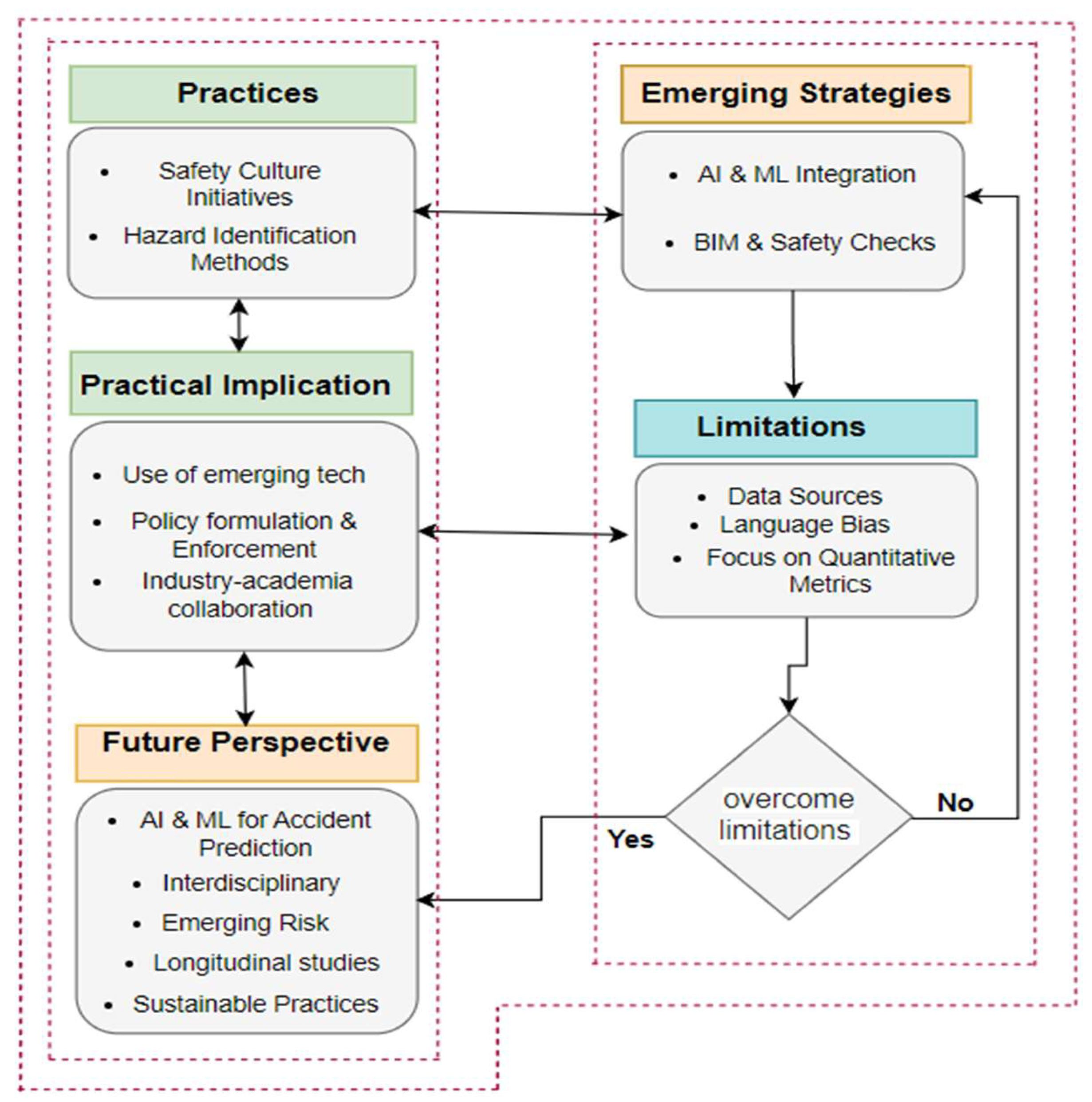
Future research should therefore focus on (1) validating intelligent safety systems through real-world applications, (2) developing integrated and scalable digital safety platforms, and (3) incorporating socio-cultural and behavioural dimensions into technology-driven safety models. Additionally, emerging areas such as human–AI collaboration, sustainable construction safety, and digital twin-based risk management present promising directions for advancing the field. Collectively, these efforts will support the transition toward intelligent, adaptive, and context-aware construction safety systems as indicated in Figure 13.
Figure 13.
Research gaps and future research directions.
6.1.5. Procedure for Adopting Recent Innovations in Construction Safety
The adoption, integration, and optimisation of ACT, such as AI, ML, BIM, IoT, and wearable devices in construction safety, necessitate a systematic approach. The initial step involves performing a comprehensive safety audit. This approach could help identify construction safety problems and evaluate the potential of ACT to tackle these issues. The process requires technology selection and customisation. In this case, the most appropriate technologies are chosen and modified to satisfy the given safety conditions at the construction site. This step confirms that the technologies fit with current systems to deliver the recognised safety hazards essentially.
The subsequent stage involves the development of a comprehensive roadmap. This framework helps to integrate selected technologies into the management system for construction safety. The phrase implies cooperating with IT and safety teams to guarantee uniform incorporation, organisation, and implementation phases, which start with pilot projects. Lastly, training and change management are crucial for the smooth adoption of new technologies, involving all stakeholders and strategies to manage resistance to change.
The implementation of technologies establishes real-time monitoring and feedback loop processes. Such procedures utilise data from IoT devices, wearables, and AI/ML models for nonstop monitoring and decision-making. The phases involve proactively responding to safety alerts and regulating protocols based on real-time data. It also involves regular evaluation of the effectiveness of executed technologies via evaluation and continuous improvement.
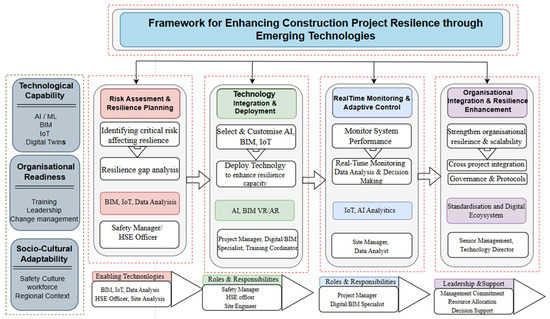
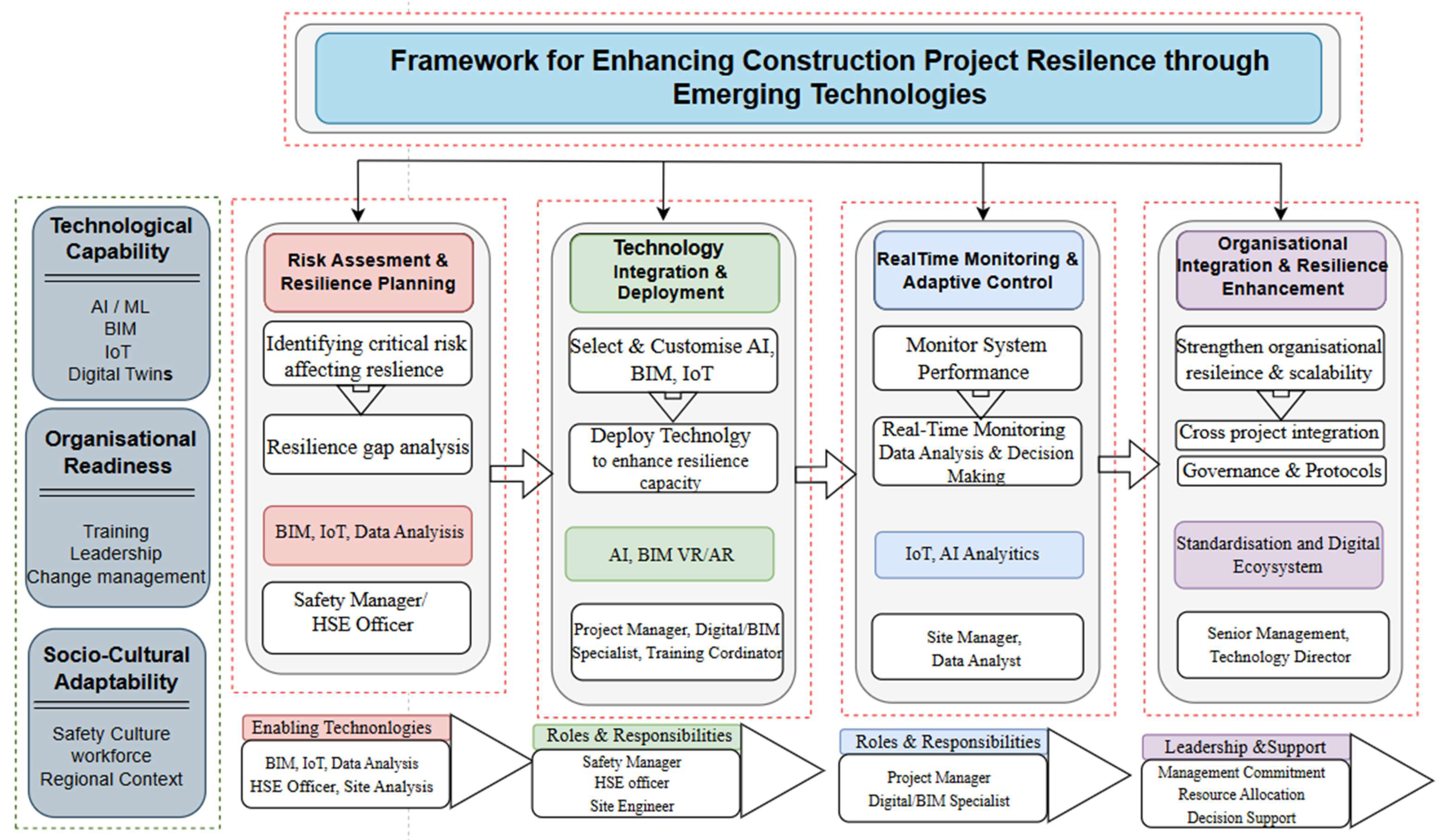
The framework presented in Figure 14 illustrates a structured, evidence-based approach to adopting and integrating advanced digital technologies for construction resilience via four sequential phases: (1) risk assessment and resilience planning, (2) technology integration and deployment, (3) real-time monitoring and adaptive control, (4) organisational integration and resilience enhancement. The framework was developed through the synthesis of reviewed findings along with bibliometric trends, ensuring alignment with both empirical evidence and emerging research directions [18,23].
Figure 14.
Framework for enhancing construction project resilience through emerging technologies.
In the risk assessment phase, safety managers, HSE officers, and site engineers are responsible for conducting comprehensive safety audits, identifying high-risk activities, and evaluating existing safety gaps. This stage is supported by technologies such as BIM and IoT for hazard identification and risk visualisation as defined in the technology integration stage, which enable proactive safety planning and early detection of potential hazards [29,30]. Site engineers and data analysts collaborate to select appropriate technologies (e.g., AI, BIM, IoT, XR), customise them to project-specific conditions, and ensure system integration is phased, distributed, and deployed. AI and ML tools are particularly effective at this stage for predictive risk assessment and decision-making, while XR technologies enhance safety training through immersive simulations [19,20,70]. In the monitoring and adaptive control phase, site engineers and data analysts are responsible for real-time monitoring, performance evaluation, and continuous improvement of the systems. IoT-enabled sensors and AI-based analytics facilitate continuous hazard detection and adaptive decision-making, enabling proactive risk mitigation and improved construction performance [69,71]. By explicitly defining roles and responsibilities across all phases, the framework enhances practical applicability and supports effective implementation across organisational levels.
Furthermore, unlike previous developed frameworks, which focus mainly on technological adoption, this model incorporates integration of technological capability, organisational readiness, and socio-cultural adaptability, ensuring that the framework is both scalable and adaptable to diverse construction environments. The framework supports a transition from reactive safety management to proactive, data-driven, and intelligent safety systems, thereby enhancing construction project resilience and overall safety performance.
7. Practical Implications of the Study
This SLR study provides a framework for integrating ACT into construction safety management practices such as AI, ML, BIM, and IoT. It highlights the necessity for reorganised safety regulations and real-time monitoring to improve accident forecasting and prevention. The authors also opined that policymakers need to incentivise the implementation of such technologies. This proposal could be accomplished using supervisory constraints and monetary incentives, which promote a safer working environment. Moreover, this study highlights the impact of integrating innovative safety techniques into administrative safety culture. This approach presents an important roadmap for selecting, customising, and incorporating such technologies. It also helps to encourage collaboration with academic establishments for nonstop progress and practical safety policies. Therefore, this study proposes extended research on AI and ML in safety management. This will be particularly helpful in construction environments, reinforcing the need for incorporating technological tools into the integrated system. Lastly, the authors emphasise the necessity to explore the social and cultural influences of safety behaviour, which could contribute to the evolution of construction safety practices.
Limitations of the Study
This study is limited to publications indexed in the Scopus database between 2001 and 2020, which may exclude the most recent developments in construction safety research. However, this temporal scope was intentionally defined to ensure methodological consistency, data reliability, and sufficient citation maturity for bibliometric analysis. Recent studies published after 2020 have been incorporated qualitatively within the discussion to reflect the rapid evolution of emerging technologies such as AI, IoT, and extended reality in construction safety. Nevertheless, future research could extend the bibliometric dataset to include post-2020 publications to capture the latest research dynamics and technological advancements more comprehensively.
This study is limited to English-language publications indexed in the Scopus database, which may exclude relevant research from non-English sources, particularly from countries such as China and Japan. Although many studies from these regions are available in English-language journals, this restriction may introduce language bias. Future research could incorporate multilingual datasets to provide a more comprehensive global perspective. This study is limited to the Scopus database, which may not capture all relevant publications available in other databases such as Web of Science, IEEE Xplore, or PubMed. Although Scopus provides broad coverage of engineering and construction research, this may introduce a degree of database selection bias. Future studies could incorporate multiple databases to enhance coverage and improve the robustness of findings.
8. Conclusions
This study provides a comprehensive and integrated assessment of construction safety research (CSR) through the combined application of bibliometric analysis (BA) and systematic literature review (SLR). The findings demonstrate a significant evolution of the field over the past two decades, characterised by increasing research activity, expanding interdisciplinary collaboration, and the emergence of advanced digital technologies as evidence in the inclusion of recent studies (2021–2025). The 2708% growth rate in publications indicates a growing global awareness of the need to enhance safety resilience standards in high-risk sectors such as the construction industry.
The findings reveal a distinct transition from the conventional safety management approaches that focused on hazard identification, safety culture, and management commitment toward data-driven and technology-enabled systems. Predictive analytics, proactive risk management, and real-time monitoring are increasingly supported by emerging technologies such as artificial intelligence (AI), machine learning (ML), building information modelling (BIM), Internet of Things (IoT), and extended reality (XR). Despite these advancements, several critical challenges remain. These include the limited real-world validation of AI-based systems, fragmentation in technology integration, and insufficient consideration of socio-cultural and organisational factors influencing technology adoption. Addressing these challenges is essential for bridging the gap between research and practical implementation. The development of a research-to-practice framework for integrating emerging technologies into construction project resilience is a major contribution of this study. The framework integrates technological, organisational, and human dimensions, which are grounded in BA and SLR findings, provide a structured pathway for enhancing risk management, adaptability, and overall construction project resilience.
This study advances the field by demonstrating how construction safety is evolving into intelligent, adaptive, and resilient systems, where digital technologies play a crucial role in improving safety performance. The integration of these technologies with organisational and socio-cultural factors represents a critical step toward achieving sustainable and resilient construction practices. Future research should focus on large-scale empirical validation of emerging technologies, development of integrated and interoperable safety systems, and deeper investigation of human technology interactions across diverse construction environments. Such efforts will support the continued evolution of construction safety toward fully integrated, data-driven, and resilient systems.
Supplementary Materials
The following supporting information can be downloaded at: https://www.mdpi.com/article/10.3390/buildings16101925/s1. The PRISMA checklist is included as supplementary materials.
Funding
This research received no external funding.
Data Availability Statement
The original contributions presented in this study are included in the article. Further inquiries can be directed to the corresponding author.
Conflicts of Interest
The authors declare no conflicts of interest.
References
- Ball, M. Rebuilding Construction; Routledge: Abingdon, UK, 2014. [Google Scholar]
- Yahya, M.A. Modernizing Construction Using Rapid Construction Concept. In Proceedings of the Management in Construction Researchers Association 9th Annual Conference and Meeting, Petoskey, MI, USA, 8–10 May 2010. [Google Scholar]
- Statista. U.S. Construction Industry Statistics. 2021. Available online: https://www.statista.com (accessed on 2 April 2022).
- Rhodes, C. Construction Industry Statistics and Policy. 2019. Available online: https://bit.ly/3GsFuAC (accessed on 5 April 2022).
- National Bureau of Statistics of China. China Statistical Yearbook 2021; National Bureau of Statistics of China: Beijing, China, 2021. Available online: https://www.stats.gov.cn/sj/ndsj/2021/indexeh.htm (accessed on 5 April 2022).
- Kundi, M.F.A.; Unab, W. KPIs in construction industry of Pakistan. J. Strategy Perform. Manag. 2014, 2, 136. [Google Scholar]
- Mudi, A.; Bioku, J.; Kolawole, O. Nigerian construction industry characteristics. Int. J. Eng. Res. Technol. 2015, 4, 546–555. [Google Scholar]
- Agwu, M.O.; Olele, H.E. Fatalities in the Nigerian construction industry. J. Econ. Manag. Trade 2014, 4, 431–452. [Google Scholar]
- Chaudhari, K. Poor construction safety culture. In Advances in Industrial Safety; Springer: Berlin/Heidelberg, Germany, 2020; pp. 281–290. [Google Scholar]
- Mahmoud, A.S.; Sanni-Anibire, M.; Alsafwani, A. Fall from height accidents in the construction industry in Saudi Arabia. Archit. Civ. Eng. Environ. 2023, 16, 101–110. [Google Scholar] [CrossRef] [Scilit]
- Kartam, N.A.; Bouz, R.G. Fatalities and injuries in the Kuwaiti construction industry. Accid. Anal. Prev. 1998, 30, 805–814. [Google Scholar] [CrossRef] [Scilit]
- Zou, P.X. Construction safety culture. Leadersh. Manag. Eng. 2011, 11, 11–22. [Google Scholar] [CrossRef] [Scilit]
- Bureau of Labor Statistics, U.S. Department of Labor. National Census of Fatal Occupational Injuries in 2019; Bureau of Labor Statistics: Washington, DC, USA, 2019. Available online: https://www.bls.gov/news.release/cfoi.nr0.htm (accessed on 1 March 2026).
- Albert, A.; Pandit, B.; Patil, Y. Focus on the fatal-four. Saf. Sci. 2020, 128, 104774. [Google Scholar] [CrossRef] [Scilit]
- OSHA. Occupational Safety Statistics. 2018. Available online: https://www.osha.gov/data/commonstats (accessed on 23 April 2026).
- Zhao, D.; Thabet, W.; McCoy, A.; Kleiner, B. Electrical deaths in construction. Int. J. Inj. Control Saf. Promot. 2014, 21, 278–288. [Google Scholar] [CrossRef] [Scilit]
- Fung, I.W.; Tam, V.W.; Lo, T.Y.; Lu, L.L. Developing a risk assessment model for construction safety. Int. J. Proj. Manag. 2010, 28, 593–600. [Google Scholar] [CrossRef] [Scilit]
- Dobrucali, E.; Demirkesen, S.; Sadikoglu, E.; Zhang, C.; Damci, A. Emerging technologies and construction safety. Eng. Constr. Archit. Manag. 2024, 31, 1322. [Google Scholar] [CrossRef] [Scilit]
- Rangasamy, V.; Yang, J.-B. The convergence of BIM, AI and IoT: Reshaping the future of prefabricated construction. J. Build. Eng. 2024, 84, 108606. [Google Scholar] [CrossRef] [Scilit]
- Speiser, M.; Teizer, J. Digital twin and VR safety training. Autom. Constr. 2024, 158, 105267. [Google Scholar]
- Dobrucali, E.; Sadikoglu, E.; Demirkesen, S.; Zhang, C.; Tezel, A.; Kiral, I.A. A bibliometric analysis of digital technologies use in construction health and safety. Eng. Constr. Archit. Manag. 2024, 31, 3249–3282. [Google Scholar] [CrossRef] [Scilit]
- Donthu, N.; Kumar, S.; Mukherjee, D.; Pandey, N.; Lim, W.M. Bibliometric analysis guidelines. J. Bus. Res. 2021, 133, 285–296. [Google Scholar] [CrossRef] [Scilit]
- Hu, X.; Zhang, Y.; Li, H.; Chen, J. Construction safety resilience. Saf. Sci. Resil. 2025, 6, 100123. [Google Scholar]
- Su, X.; Chau, K.Y.; Ho, G.T.S.; Yip, H.T.; Tang, Y.M. A bibliometric study on technology usage for occupational safety and health risk assessment in construction industry. J. Asian Archit. Build. Eng. 2025, 25, 2400–2415. [Google Scholar] [CrossRef] [Scilit]
- Su, Y.; Wang, L.; Zhao, X.; Li, Q. Emerging technologies in construction safety. J. Asian Archit. Build. Eng. 2025, 24, 1. [Google Scholar]
- Choudhry, R.M.; Fang, D. Why operatives engage in unsafe work behaviour: Investigating factors on construction sites. Saf. Sci. 2008, 46, 566–584. [Google Scholar] [CrossRef] [Scilit]
- Xu, B.; Zheng, X.; Li, Y.; Zhu, Y. Safety culture impact on safety performance. Int. J. Environ. Res. Public Health 2020, 17, 7162. [Google Scholar]
- Zhang, S.; Goh, Y.M.; Wang, P. Safety climate and safety performance. Saf. Sci. 2021, 138, 105213. [Google Scholar]
- Gan, V.J.L.; Wong, K.A.; Tse, T.K.; Cheng, J.C.P.; Lo, I.M.C.; Chan, C.M. BIM in construction safety. Saf. Sci. 2021, 143, 105421. [Google Scholar]
- Sacks, R.; Perlman, A.; Barak, R. Wearable technology for construction safety. Autom. Constr. 2020, 106, 102937. [Google Scholar]
- Venkatesh, P.; Ergan, S. Classification of challenges in achieving BIM-based safety-requirement checking in vertical construction projects. J. Constr. Eng. Manag. 2023, 149, 04023131. [Google Scholar] [CrossRef] [Scilit]
- Hossain, M.I.; Hosen, M.M.; Sunny, M.A.U.; Tarapder, S.A. Implementing advanced technologies for enhanced construction site safety. Am. J. Adv. Technol. Eng. Solut. 2025, 1, 1–31. [Google Scholar] [CrossRef] [Scilit]
- Istanbullu, A.; Omar, E.A.; Aljoma, M. Sustainable building production adopting an optimized BIM phasing system. J. Eng. Res. 2024, 21, 17–22. [Google Scholar] [CrossRef] [Scilit]
- Cheng, R.; Hou, L.; Xu, S. A review of digital twin applications in civil and infrastructure emergency management. Buildings 2023, 13, 1143. [Google Scholar] [CrossRef] [Scilit]
- Haslam, R.A.; Hide, S.A.; Gibb, A.G.F.; Gyi, D.E.; Pavitt, T.; Atkinson, S.; Duff, A.R. Contributing factors in construction accidents. Appl. Ergon. 2005, 36, 401–415. [Google Scholar] [CrossRef] [Scilit]
- Das, D.K. Occupational safety in road construction. Transp. Res. Interdiscip. Perspect. 2024, 26, 101154. [Google Scholar] [CrossRef] [Scilit]
- Ehsinsights. OSHA—Construction Accidents: What You Need to Know. 2021. Available online: https://bit.ly/3olExnq (accessed on 4 April 2022).
- BigRentZ. Construction Safety Statistics. 2021. Available online: https://www.bigrentz.com/blog/construction-safety-statistics (accessed on 4 April 2022).
- Andersen, L.B.; Pallesen, T. Not just for the money? Int. Public Manag. J. 2008, 11, 28–47. [Google Scholar] [CrossRef] [Scilit]
- Kinney, A.J.; Krebbers, E.; Vollmer, S.J. Publications from industry. Plant Physiol. 2004, 134, 11–15. [Google Scholar] [CrossRef] [Scilit]
- Bordons, M.; Aparicio, J.; Costas, R. Collaboration and research impact. Scientometrics 2013, 96, 443–466. [Google Scholar] [CrossRef] [Scilit]
- Lee, S.; Bozeman, B. Research collaboration and productivity. Soc. Stud. Sci. 2005, 35, 673–702. [Google Scholar] [CrossRef] [Scilit]
- Mahmoud, A.S.; Abubakar, M.H.; Adamu, Z.; Garkuwa, J.A. Demolition wastes in the global construction industry: An overview of research perspective from 2001 to 2020. J. Therm. Eng. 2025, 11, 603–621. [Google Scholar] [CrossRef] [Scilit]
- Wong, S.; Mah, A.X.Y.; Nordin, A.H.; Nyakuma, B.B.; Ngadi, N.; Mat, R.; Lee, T.H. Municipal solid waste incineration ash bibliometric analysis. Environ. Sci. Pollut. Res. 2020, 27, 7757–7784. [Google Scholar] [CrossRef] [Scilit]
- Wong, S.L.; Nyakuma, B.B.; Nordin, A.H.; Lee, C.T.; Ngadi, N.; Wong, K.Y.; Oladokun, O. Uncovering the dynamics in global carbon dioxide utilization research: A bibliometric analysis (1995–2019). Environ. Sci. Pollut. Res. 2021, 28, 13842–13860. [Google Scholar] [CrossRef] [Scilit] [PubMed]
- Mahmoud, A.S.; Omar, A.S. Recycled concrete aggregates utilization in construction: Publications trends, bibliometric analysis, and literature review (2011–2021). J. Scientometr. Res. 2024, 13, 757–772. [Google Scholar] [CrossRef] [Scilit]
- Mhamdi, R. Wood vinegar research bibliometric study. J. Anal. Appl. Pyrolysis 2023, 175, 106190. [Google Scholar] [CrossRef] [Scilit]
- Mahmoud, A.S.; Hassanain, M.A.; Alshibani, A. Evolving trends and innovations in facilities management within higher education institutions. Buildings 2024, 14, 3759. [Google Scholar] [CrossRef] [Scilit]
- Kek, H.Y.; Mohd Saupi, S.B.; Tan, H.; Othman, M.H.D.; Nyakuma, B.B.; Goh, P.S.; Wong, K.Y. Ventilation strategies for mitigating airborne infection. Energy Build. 2023, 295, 113323. [Google Scholar] [CrossRef] [Scilit]
- Lee, C.H.; Lee, T.H.; Wong, S.L.; Nyakuma, B.B.; Hamdan, N.; Khoo, S.C.; Jamaluddin, H. Edible Bird’s Nest research bibliometric study. J. Food Meas. Charact. 2023, 17, 4905–4926. [Google Scholar] [CrossRef] [Scilit]
- Ali, M.; Shams, M.A.; Bheel, N.; Almaliki, A.H.; Mahmoud, A.S.; Dodo, Y.A.; Benjeddou, O. A review on chloride induced corrosion in reinforced concrete structures: Lab and in situ investigation. RSC Adv. 2024, 14, 37252–37271. [Google Scholar] [CrossRef] [Scilit]
- Ajibade, S.M.; Jasser, M.B.; Aldharhani, G.S.; Oyebode, O.J.; Nyakuma, B.B. Artificial Neural Network Applications in Coal Research: A Bibliometric Mapping of Developments and Trends (2003–2024). Pet. Coal 2025, 67, 974–995. [Google Scholar]
- Ardito, L.; Scuotto, V.; Del Giudice, M.; Petruzzelli, A.M. A bibliometric analysis of research on Big Data analytics. Manag. Decis. 2019, 57, 1993–2009. [Google Scholar] [CrossRef] [Scilit]
- Salcedo, R.A.P. Gasification research bibliometric study. Int. J. Appl. Eng. Res. 2018, 13, 12685. [Google Scholar]
- Siluo, Y.; Qingli, Y. Scientometrics vs Bibliometrics. In Proceedings of the ISSI Conference, Wuhan, China, 16–20 October 2017. [Google Scholar]
- Öztürk, O.; Kocaman, R.; Kanbach, D.K. How to design bibliometric research: An overview and a framework proposal. Rev. Manag. Sci. 2024, 18, 3333–3361. [Google Scholar] [CrossRef] [Scilit]
- Tan, H.; Mong, G.R.; Wong, S.L.; Wong, K.Y.; Sheng, D.D.C.V.; Nyakuma, B.B.; Lee, C.H. Airborne microplastic/nanoplastic research: A comprehensive Web of Science (WoS) data-driven bibliometric analysis. Environ. Sci. Pollut. Res. 2024, 31, 109–126. [Google Scholar] [CrossRef] [Scilit] [PubMed]
- Wong, S.L. Upcycling of plastic waste to carbon nanomaterials: A bibliometric analysis (2000–2019). Clean Technol. Environ. Policy 2022, 24, 739–759. [Google Scholar] [CrossRef] [Scilit]
- Tam, C.; Zeng, S.; Deng, Z. Identifying elements of poor construction safety management in China. Saf. Sci. 2004, 42, 569–586. [Google Scholar] [CrossRef] [Scilit]
- Behm, M. Linking construction fatalities to the design for construction safety concept. Saf. Sci. 2005, 43, 589–611. [Google Scholar] [CrossRef] [Scilit]
- Carter, G.; Smith, S.D. Safety hazard identification on construction projects. J. Constr. Eng. Manag. 2006, 132, 197–205. [Google Scholar] [CrossRef] [Scilit]
- Aksorn, T.; Hadikusumo, B.H. Critical success factors influencing safety program performance in Thai construction projects. Saf. Sci. 2008, 46, 709–727. [Google Scholar] [CrossRef] [Scilit]
- Mahmoud, A.S.; Ahmad, M.H.; Yatim, Y.M.; Dodo, Y.A. Key performance indicators (KPIS) to promote building developers safety performance in the construction industry. J. Ind. Eng. Manag. (JIEM) 2020, 13, 371–401. [Google Scholar] [CrossRef] [Scilit]
- Choudhry, R.M.; Fang, D.; Mohamed, S. The nature of safety culture: A survey of the state-of-the-art. Saf. Sci. 2007, 45, 993–1012. [Google Scholar] [CrossRef] [Scilit]
- Teizer, J.; Allread, B.S.; Fullerton, C.E.; Hinze, J. Autonomous pro-active real-time construction worker and equipment operator proximity safety alert system. Autom. Constr. 2010, 19, 630–640. [Google Scholar] [CrossRef] [Scilit]
- Zhang, S.; Teizer, J.; Lee, J.-K.; Eastman, C.M.; Venugopal, M. Building information modeling (BIM) and safety: Automatic safety checking of construction models and schedules. Autom. Constr. 2013, 29, 183–195. [Google Scholar] [CrossRef] [Scilit]
- Li, X.; Yi, W.; Chi, H.-L.; Wang, X.; Chan, A.P. A critical review of virtual and augmented reality (VR/AR) applications in construction safety. Autom. Constr. 2018, 86, 150–162. [Google Scholar] [CrossRef] [Scilit]
- Otitolaiye, V.O.; Sharina, S.; Faidzulaini, M.; Zulkurnai, G.M.; Abd Aziz, F.S. Safety communication unveiled: A comprehensive bibliometric analysis spanning two decades (2001–2023). Heliyon 2026, 12, e44580. [Google Scholar] [CrossRef] [Scilit]
- Pham, V.H.S.; Tran, L.A.; Bui, D.K.; Nguyen, Q.T. AI in construction safety risk management. In International Conference on Civil Engineering and Architecture; Springer Nature: Singapore, 2024; pp. 212–221. [Google Scholar]
- Badhan, S.J.; Samsami, R. Artificial Intelligence (AI) in Construction Safety: A Systematic Literature Review. Buildings 2025, 15, 4084. [Google Scholar] [CrossRef] [Scilit]
- Rao, A.S.; Radanovic, M.; Liu, Y.; Hu, S.; Fang, Y.; Khoshelham, K.; Ngo, T. Real-time monitoring of construction sites. Autom. Constr. 2022, 136, 104099. [Google Scholar] [CrossRef] [Scilit]
- Chugh, R. Educational technology in HEIs. Educ. Inf. Technol. 2023, 28, 16403. [Google Scholar] [CrossRef] [Scilit]
- Kaya, F.E. From Fragmentation to Collective Action. Buildings 2025, 15, 1655. [Google Scholar] [CrossRef] [Scilit]
- Deng, G. TPCEK framework. Comput. Educ. 2023, 197, 104740. [Google Scholar] [CrossRef] [Scilit]
- Sanjalawe, Y.; Fraihat, S.; Abualhaj, M.; Makhadmeh, S.; Alzubi, E. A review of 6G and AI convergence: Enhancing communication networks with artificial intelligence. IEEE Open J. Commun. Soc. 2025, 6, 2308–2355. [Google Scholar] [CrossRef] [Scilit]
- Otitolaiye, V.O.; Sharina, S.; Faidzulaini, M.; Zulkurnai, G.M.; Abd Aziz, F.S. Understanding the mechanism through which safety management systems influence safety performance in Nigerian power and electricity distribution companies. Sustainability 2025, 11, 98. [Google Scholar] [CrossRef] [Scilit]

Disclaimer/Publisher’s Note: The statements, opinions and data contained in all publications are solely those of the individual author(s) and contributor(s) and not of MDPI and/or the editor(s). MDPI and/or the editor(s) disclaim responsibility for any injury to people or property resulting from any ideas, methods, instructions or products referred to in the content. |
© 2026 by the authors. Licensee MDPI, Basel, Switzerland. This article is an open access article distributed under the terms and conditions of the Creative Commons Attribution (CC BY) license.