1. Introduction
In recent years, as the scale of major infrastructure projects such as hydropower and wind power continues to expand, higher demands have been placed on the overall performance of grouting materials. Particularly in large-scale projects such as wind turbine foundations, long-span structures and high-stress anchorage zones, grouting materials must not only possess high strength and excellent flowability to meet construction requirements, but also exhibit low hydration heat and outstanding volume stability to effectively control the risks of thermal stress and shrinkage cracking [
1,
2,
3]. Therefore, there is an urgent need to develop ultra-high-strength cementitious materials that combine high strength, high fluidity, low hydration heat and excellent volume stability. Ultra-high-performance concrete (UHPC) is considered an ideal choice for high-strength grouting materials due to its dense microstructure, excellent mechanical properties and durability [
4]. However, UHPC typically employs an extremely low water-to-binder ratio (usually below 0.20) and a higher proportion of cementitious materials, resulting in concentrated early hydration heat and significant autogenous shrinkage [
5,
6]. This makes it prone to shrinkage cracking in large-volume engineering or under constrained conditions, thereby limiting its widespread application in grouting projects.
To simultaneously control temperature rise and shrinkage behavior, the incorporation of expansive agents to compensate for shrinkage has become a common engineering practice [
7,
8]. Expansive agents generate expansive products through hydration reactions, and produce pre-compressive stress under confined conditions, thereby offsetting part of the shrinkage stress [
9]. Currently, commonly used expansive agents mainly include calcium sulphatoaluminate (UEA) and magnesium oxide (MEA) [
10]. There are essential differences between these two types of expansive agents in terms of expansion mechanism, development rate, and adaptability to matrix constraints [
11]. UEA relies on the formation of ettringite to provide expansion, whilst the rate of expansion is relatively rapid [
12]. Research indicates that the expansion caused by UEA is primarily concentrated in the first 1–9 d, after which it tends to stabilize. The formation of the expansion product, AFt, fills the pores in the cement system, and the resulting expansion stresses densify the microstructure, enhancing the compressive strength of the mortar [
13]. In high-strength cementitious materials, the early hydration space is limited, and the generation and stability of ettringite are easily inhibited, resulting in a decrease in expansion efficiency [
14]. MEA generates magnesium hydroxide (Mg(OH)
2) through the hydration of magnesia (MgO), leading to expansion [
15]. Liu [
16] found that MEA effectively inhibited the autogenous shrinkage of UHPC, but it also slows down the early hydration process of UHPC, thereby leading to an increase in internal voids and a reduction in strength. The hydration activity of MEA is highly dependent on the calcination temperature and crystal structure, and the expansion process is slow and prolonged [
17]. The lower the activity and the larger the grain size of MgO, the slower the early expansion, and the greater the final expansion rate in the later stage [
18,
19]. However, in systems characterized by low water-to-binder ratios and high strength, the expansion efficiency and stability of expansive agents are often limited, and the adaptability of the hydration processes to the microstructure of the matrix remains unclear.
On the other hand, ground granulated blast furnace slag (GGBS), as a commonly used mineral admixture, has been widely applied in high-performance cementitious materials [
20]. GGBS can reduce the peak hydration temperature and improve late-age strength, refine the pore structure and enhance the durability of cementitious materials [
21,
22]. The study of Çağlar [
23] indicates that the cumulative heat release at 20 °C and 35 °C can be reduced by 36% and 28% respectively by using 60% GGBS instead of cement, and the content of calcium hydroxide can be reduced to 0.5%. In systems with low water-to-binder ratios, GGBS can participate in secondary hydration reactions to facilitate the generation of C-S-H gel, thus improving the compactness of the system [
24]. Research by Liu [
25] indicates that the combined use of fly ash and MEA can reduce the chemical shrinkage and drying shrinkage of low-heat cement, delay early-stage hydration, and enhance the continuous generation of hydration productions. This process fills the pore structure and compensates for shrinkage through micro-expansion. However, the mechanisms underlying the “synergistic” or “interfering” effects of GGBS on the expansion behavior of expansive agents remain unclear.
In summary, a large number of studies have shown that expansive agents can compensate for shrinkage, and GGBS can improve the workability and long-term mechanical properties of cement-based materials. However, in low water-to-binder ratio, high-strength grouting systems, there remains a lack of systematic research on hydration kinetics, expansion coordination, and microstructural evolution mechanisms when GGBS is used in combination with different types of expansive agents. In particular, the mechanism by which GGBS affects the expansion performance of expansive agents remains unclear. Therefore, this research aims to develop a high-strength grouting material with low hydration heat and non-shrinkage in this paper. It focuses on investigating the effects of blending GGBS with UEA and MEA on the workability, mechanical properties, hydration heat, and restrained expansion rate of grouting materials. On this basis, combined with microscopic testing methods, the synergistic regulation mechanism between GGBS and two expansion agents is elucidated, and the essential differences between UEA and MEA in expansion characteristics and environmental adaptability are clarified. It is expected to provide theoretical basis and data support for the preparation of low hydration heat, non-shrinkage and high-strength grouting materials and their reliable application in large-volume projects such as wind power foundations.
3. Results and Discussion
3.1. Compressive Strength of High-Strength Grouting Materials
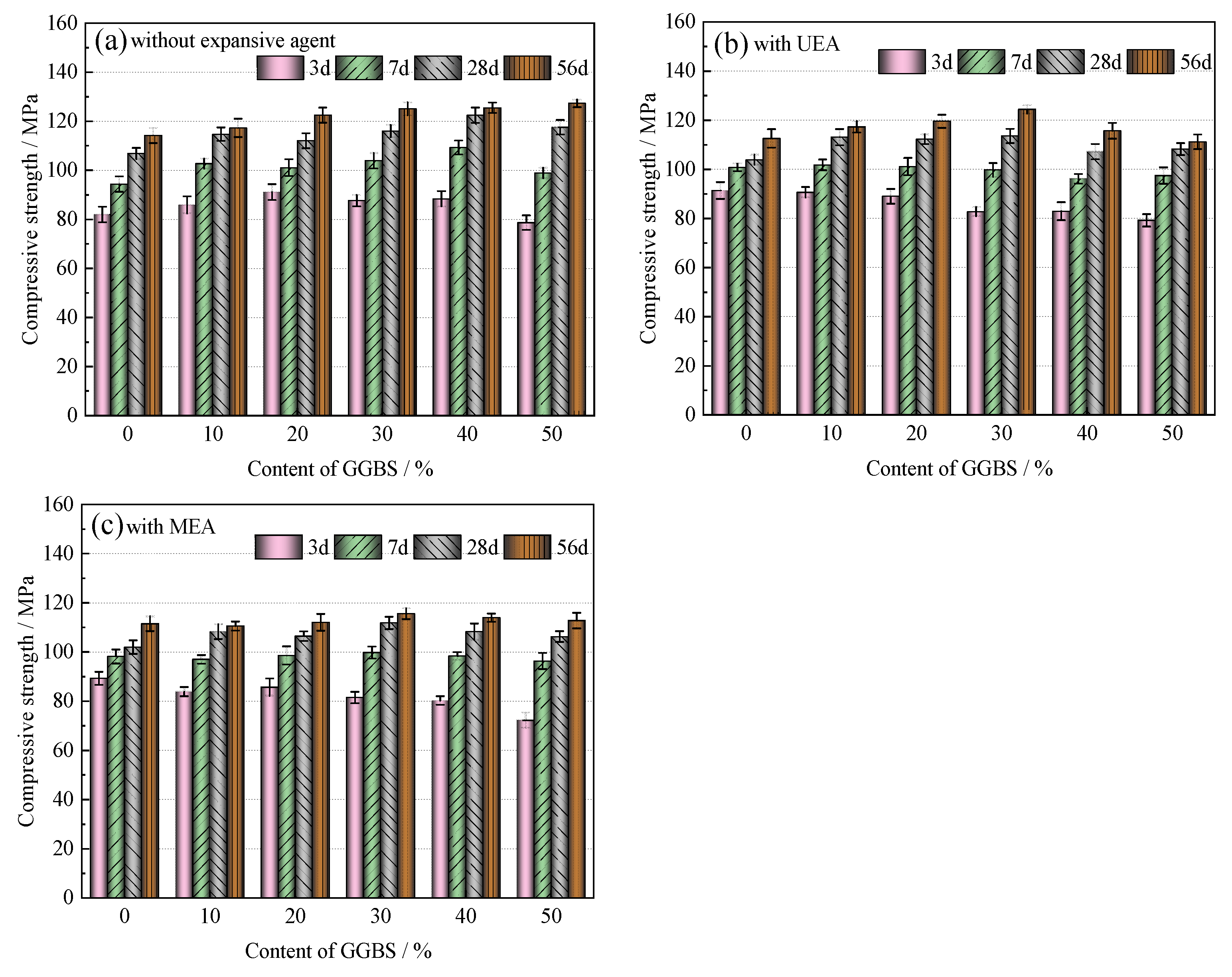
The effect of GGBS replacement ratios on the compressive strength of high-strength grouting materials is shown in
Figure 2, and the incorporation of GGBS had a positive effect on the development of strength. In the reference system without expansive agent (
Figure 2a), the compressive strength of all test groups incorporating GGBS was higher than that of the control group at all ages. Specifically, the compressive strengths of K20, K30, K40 and K50 at 56 d were greater than 120 MPa, and K50 reached a peak of 127.4 MPa. The early strength development exhibited a trend of initially rising and then declining, with the compressive strength at 3 d reaching its highest point when the substitution amount was 20%. This is because the particle sizes of GGBS were small, and the optimal quantity of GGBS can fill the voids between particles in the cementitious matrix. The micro-aggregate effect optimized the initial packing density of the paste. Furthermore, under the excitation of an alkaline environment, GGBS continued a pozzolanic reaction and generated C-S-H gel with low calcium silicon ratio [
37], thereby continuously densifying the microstructure and promoting the stable growth of strength in the later period.
For the experimental group mixed with UEA (
Figure 2b), the 3 d compressive strength of the specimens gradually declined with increasing GGBS replacement ratio, and the compressive strengths at 28 d and 56 d first increased and then decreased. When the substitution rate of GGBS was 30%, the compressive strength at 56 d reached the maximum value of 124.4 MPa. As the replacement amount of GGBS increased, the amount of cement in the cementitious matrix gradually decreased. The higher the replacement amount of GGBS, the less the cement hydration products contribute primarily to early strength. Therefore, the compressive strength at 3 d of grouting materials decreased with the increase in GGBS replacement amount. Meanwhile, due to the rapid early reaction of UEA, the expansion products generated may introduce microstructural stresses in the early stages, which in turn may affect the development of early strength. As the hydration reaction progressed, the pozzolanic effect of the GGBS continued to play a role, and the secondary hydration products gradually filled the pores and repaired microscopic defects. Thereby, the compressive strength at the later stage was developed steadily, and the optimization was achieved at an appropriate replacement amount.
For the experimental group mixed with MEA (
Figure 2c), the development trend of compressive strength was consistent with that of the UEA group. When the GGBS replacement ratio was 30%, the compressive strength at 56 d reached the maximum value of 111.8 MPa. However, its overall compressive strength was less than that of the control group and the UEA-doped group, which is related to the reaction characteristics of MEA. On the one hand, the early expansion of MEA was slow, and there was an interface between the unhydrated expansion agent particles and the cement hydration paste. The expansion agent particles act as weak points within the matrix [
38]. Consequently, the compressive strength of the K30M8 group at 3 d was inferior to that of the reference group. On the other hand, the hydration product of MEA was Mg(OH)
2, which had small crystals and low strength. Its contribution to strength was relatively small, resulting in a generally low compressive strength of the K30M8 at 56 d.
3.2. Flexural Strength of High-Strength Grouting Materials
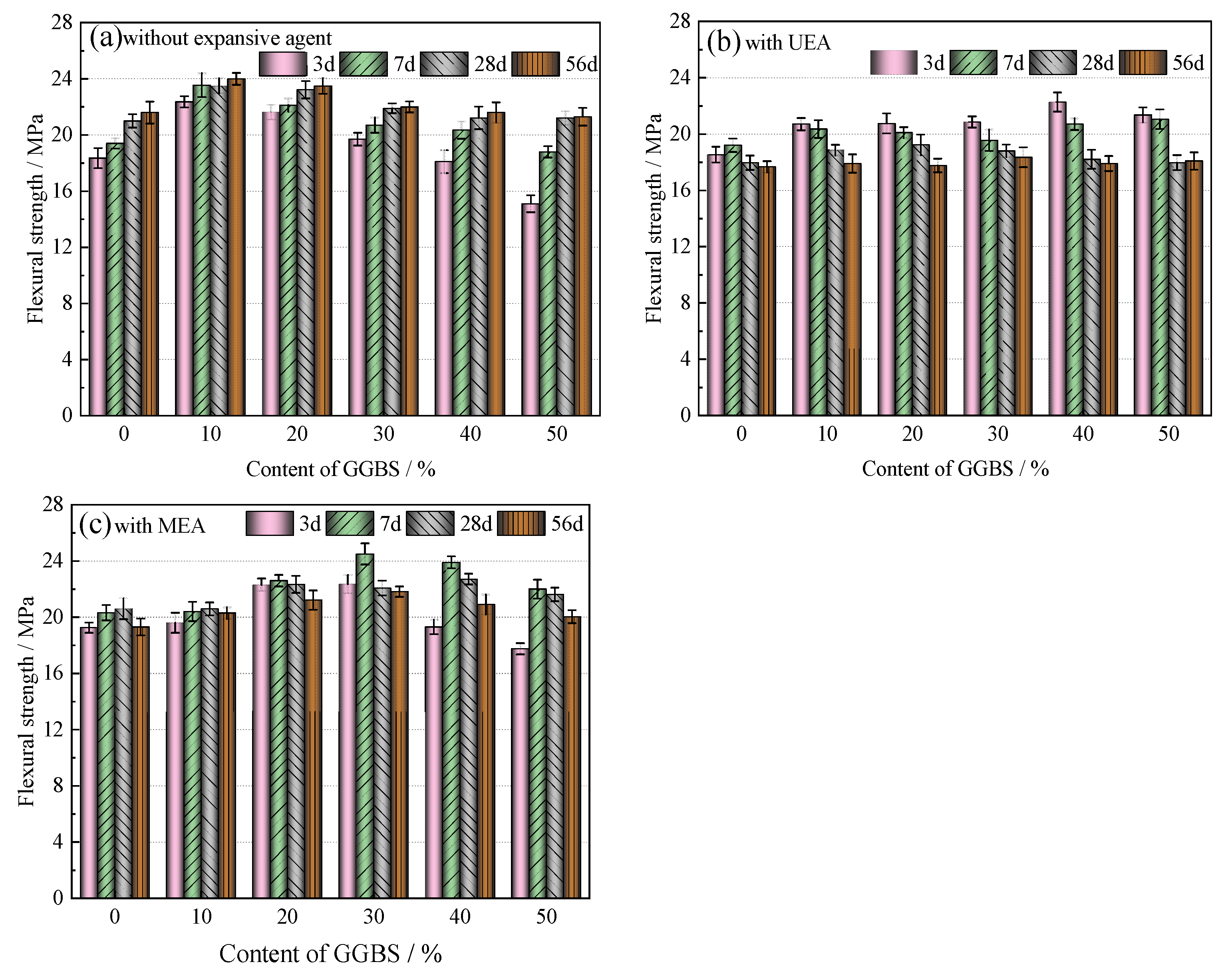
The effect of GGBS replacement ratio on the flexural strength of high-strength grouting materials is shown in
Figure 3. In the reference system without expansive agent (
Figure 3a) the flexural strength initially increased and then decreased with increasing GGBS content. When the replacement ratio of GGBS was 10%, the flexural strength at all ages reached the optimum value. The addition of an optimum amount of GGBS improved the toughness of the grout materials through fine-aggregate filling and early pozzolanic effects. However, excessive incorporation weakened the continuity of the cement paste, adversely affecting flexural strength at early stage.
For the experimental group mixed with UEA (
Figure 3b), the flexural strength exhibited a monotonically declining trend with age, and the strength in the early stages was significantly affected by the amount of GGBS. Among them, the specimens mixed with 40% GGBS achieved the highest value of 23.3 MPa at 3 d, but the strength continued to decline at various ages and gradually stabilized at 56 d. This phenomenon is closely related to the early rapid expansion characteristics of UEA. The expansion stress formed a network of microcracks within the matrix, directly reducing the ability to resist bending loads of materials. Although the pozzolanic reaction in the later stage of GGBS partially repaired micro defects, its contribution to flexural strength was still limited.
In the test group incorporating MEA (
Figure 3c), the flexural strength tended to increase initially and then decrease with age. The flexural strength of samples within 20% GGBS content at 3 d gradually increased, reached its maximum at 7 d, and then began to decline. The most pronounced decline occurred between 28 d and 56 d. This reflects the influence of the delayed expansion characteristics of MEA. The expansion of MEA occurred primarily in the later stages, and the initial expansion was minor and had a limited impact on the strength of the matrix. However, the cumulative effect of sustained expansion stresses in the later stages led to the formation of defects such as microcracks in the matrix, resulting in a loss of flexural strength [
16]. In the laboratory environment, due to the absence of restrictive conditions to limit the expansion of specimens containing MEA, there may be more microcracks in the matrix under free expansion. However, in actual grouting projects, grouting materials containing expansive agents, when subjected to the confining action of an enclosed space, help to make the structure even more compact.
3.3. Restrained Expansion Rate of High-Strength Grouting Materials
3.3.1. The Restrained Expansion Rate Under Water-Curing Conditions
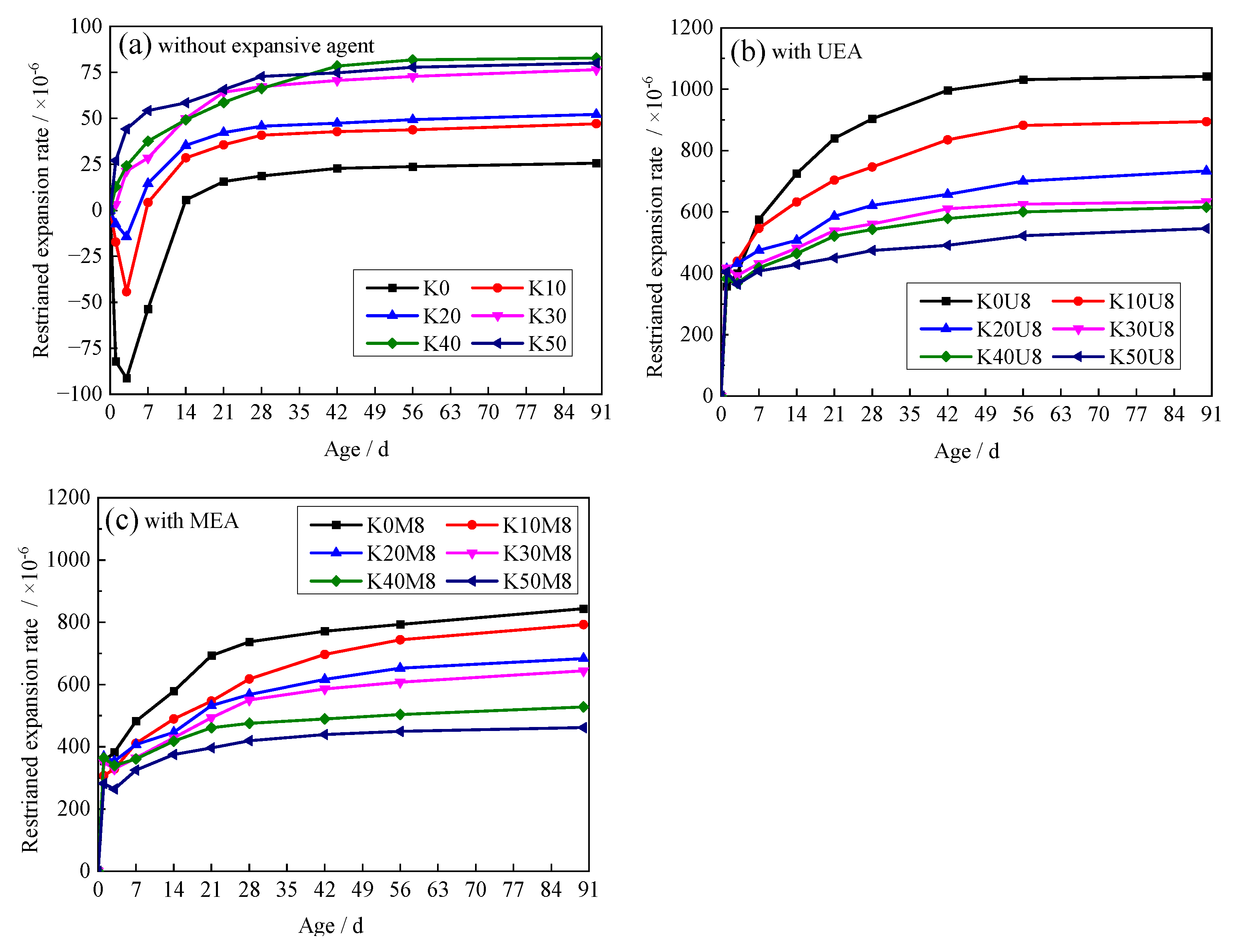
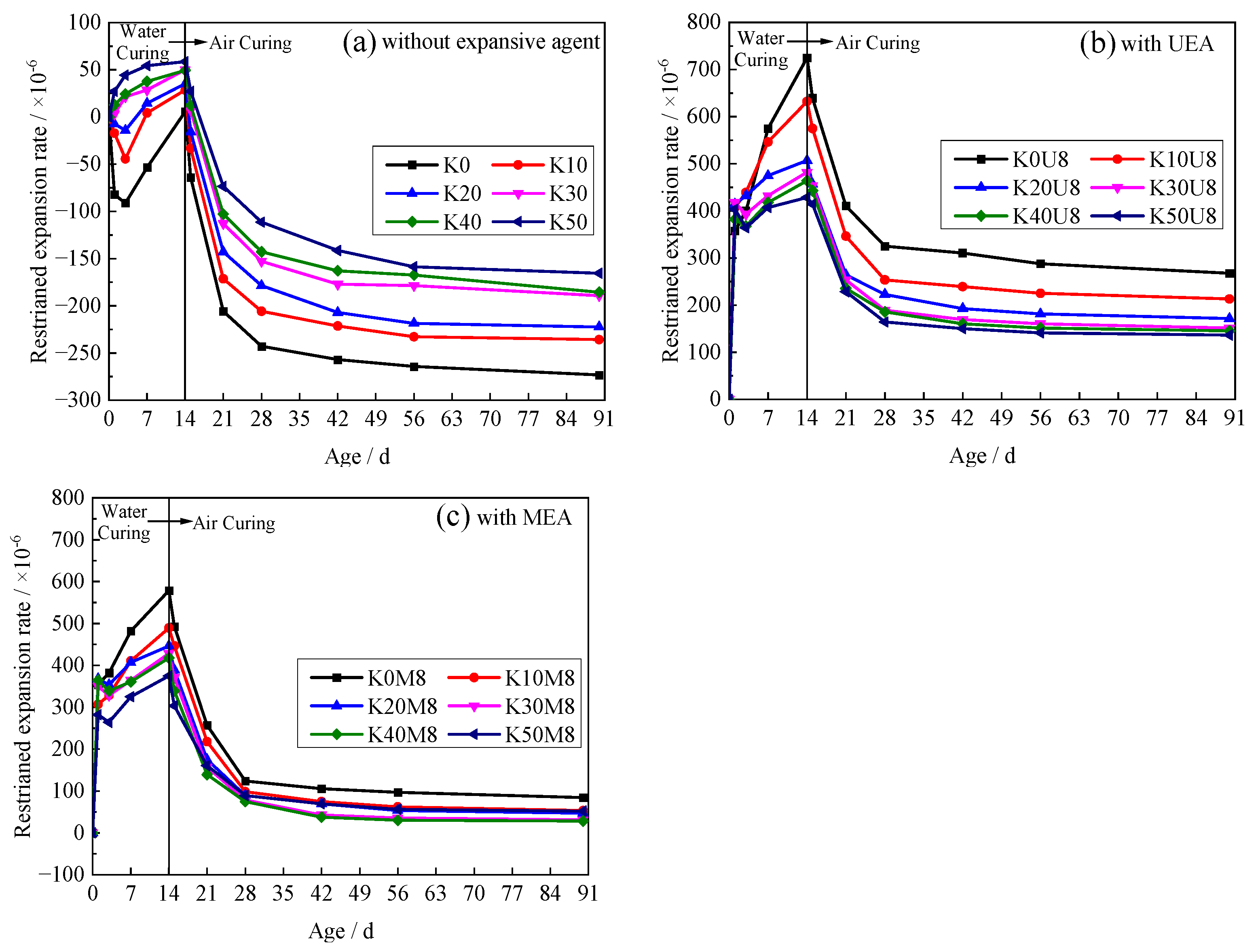
Figure 4 shows the influence of different expansive agents on the restrained expansion rate of test specimens under water-curing conditions. When no expansive agent was added (
Figure 4a), the specimens underwent slight expansion followed by shrinkage before 1 d, and then entered a phase of significant expansion at 3 d. This is because after the specimens were placed in water for curing, water absorption on the surface causes expansion. Subsequently, water absorption and self-shrinkage occurred simultaneously. For specimens with a higher content of cement, autogenous shrinkage played a dominant role at this stage. After 3 d, the effect of autogenous shrinkage diminished, and the specimens continued to absorb water, leading to wet expansion. The test groups with higher GGBS content showed no significant shrinkage in the early stages, indicating that GGBS can temporarily mitigate shrinkage through the action of micro-aggregate and early-stage hydration. Furthermore, the gradual increase in late-stage hydration products also promoted volume expansion.
When GGBS is combined with the UEA (
Figure 4b), GGBS significantly inhibited the expansion behavior of the composite system. The reason lies in the rapid hydration of GGBS, which consumed the Ca(OH)
2 in the grouting materials, leading to a decrease in the system’s alkalinity. However, the formation of expansive ettringite (AFt) by UEA was highly dependent on a highly alkaline environment. The reduction in pH value caused the structure and development capacity of the formed AFt to deteriorate [
39], thus the expansion efficiency weakened as the GGBS content increased. In contrast, when GGBS was combined with the MEA (
Figure 4c), the early expansion of the specimen was relatively small, while the expansion lasted longer in the later stage. This indicates that MEA was a delayed-reaction expansive agent, and its expansion process was related to the hydration process of the cementitious system. As the amount of GGBS increased, it similarly exerted a slow-release and attenuating effect on the expansion. This is due to the secondary hydration reaction of GGBS competing with the MEA hydration product (Mg(OH)
2) for OH
− ions in the pore solution [
40]. It is evident that the hydration kinetics and expansion behavior of the expansive agent were significantly influenced by GGBS through altering the hydration process, consuming Ca(OH)
2 and regulating the alkalinity of the pore solution.
3.3.2. The Restrained Expansion Rate Under Water-Curing–Air-Curing Conditions
Figure 5 shows the effect of expansive agents on the restrained expansion rate of test specimens under water-curing and air-curing conditions. The mechanism by which expansive agents affect the restrained expansion rate of grouting materials primarily involves competition between the drying effect of the environment and the internal hydration expansion process of the material. For specimens without expansive agents (
Figure 5a), after curing in air, the final volumetric deformation of the cementitious system was dominated by drying shrinkage due to the lack of an effective expansive agent to compensate for shrinkage. In contrast, after the addition of expansive agents, specimens containing UEA or MEA exhibited a common pattern of shrinkage due to water loss, eventually reaching stability and retaining some residual expansion.
To clarify the effect of environmental drying on the residual expansion of different systems, the ranges of the restrained expansion rates at 14 d and 56 d were calculated. This reflects the stability of compensating shrinkage by different expansive agents, and the results are presented in
Table 5. The specimens containing UEA exhibited significantly higher early expansion rates and residual expansion values compared to those containing MEA. In contrast, the expansion performance of MEA was more significantly affected by environmental drying, resulting in the highest range of restrained expansion rates. This is mainly due to the delayed appearance of the peak expansion rate of MEA. Under air curing conditions, due to insufficient moisture content in the system, the later expansion capacity was difficult to fully utilize [
41]. It is noteworthy that the restrained expansion rate of all test groups containing expansive agents was obviously greater than those of the groups without expansive agents. This confirms that the expansive deformation may have induced microcracks in the matrix, thereby accelerating the evaporation of moisture within the specimens.
In addition, regardless of whether an expansive agent was added, the range of restrained expansion rates of all test groups decreased with the increase in GGBS substitution, indicating that GGBS helped stabilize the shrinkage-compensating effect of the expansion agent. On the one hand, GGBS reacted with the cement hydration product Ca(OH)2 to form a denser C-S-H gel, which enhanced the compactness of the specimen, thereby reducing self-drying and consequently lowering self-shrinkage. On the other hand, GGBS replaced a portion of the cement, reducing the cement content and also mitigating the self-shrinkage of the cementitious system.
Therefore, in practical grouting projects, extending the duration of early-stage moisture curing is crucial for ensuring the effectiveness of the expansive agent. For structural components that may be exposed to dry environments in the later stages, the amount of GGBS can be appropriately increased to enhance volumetric stability, and the appropriate type of expansive agent should be selected based on actual curing conditions. Under conditions of sufficient moisture curing, MEA is the preferred choice, whereas in areas where curing is limited or the risk of dryness is high, the UEA system is recommended.
3.4. Hydration-Exothermic Characteristics of High-Strength Grouting Materials
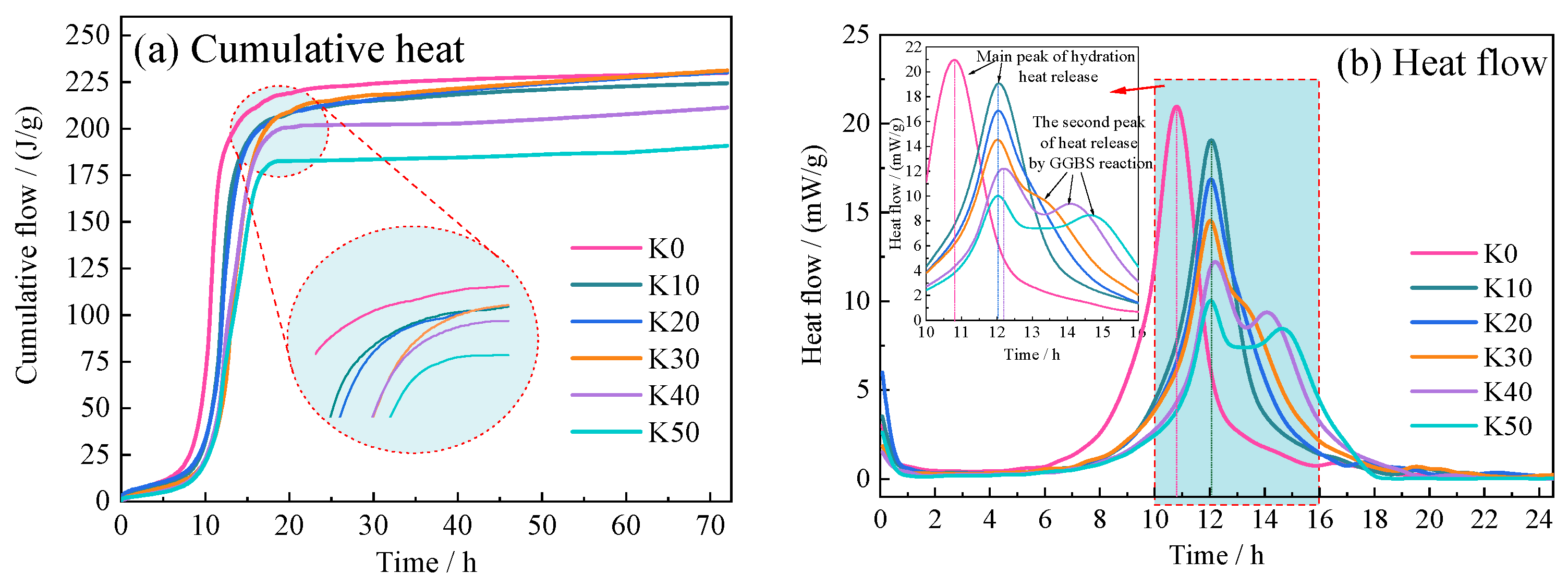
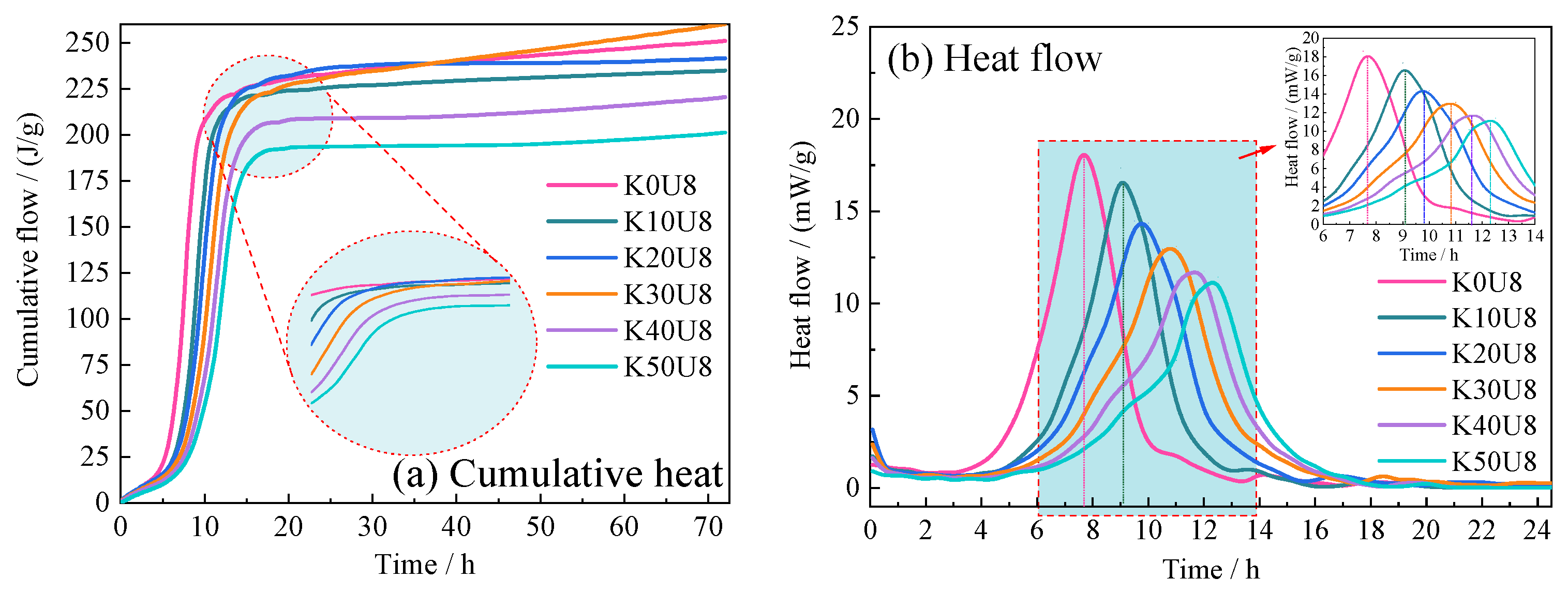
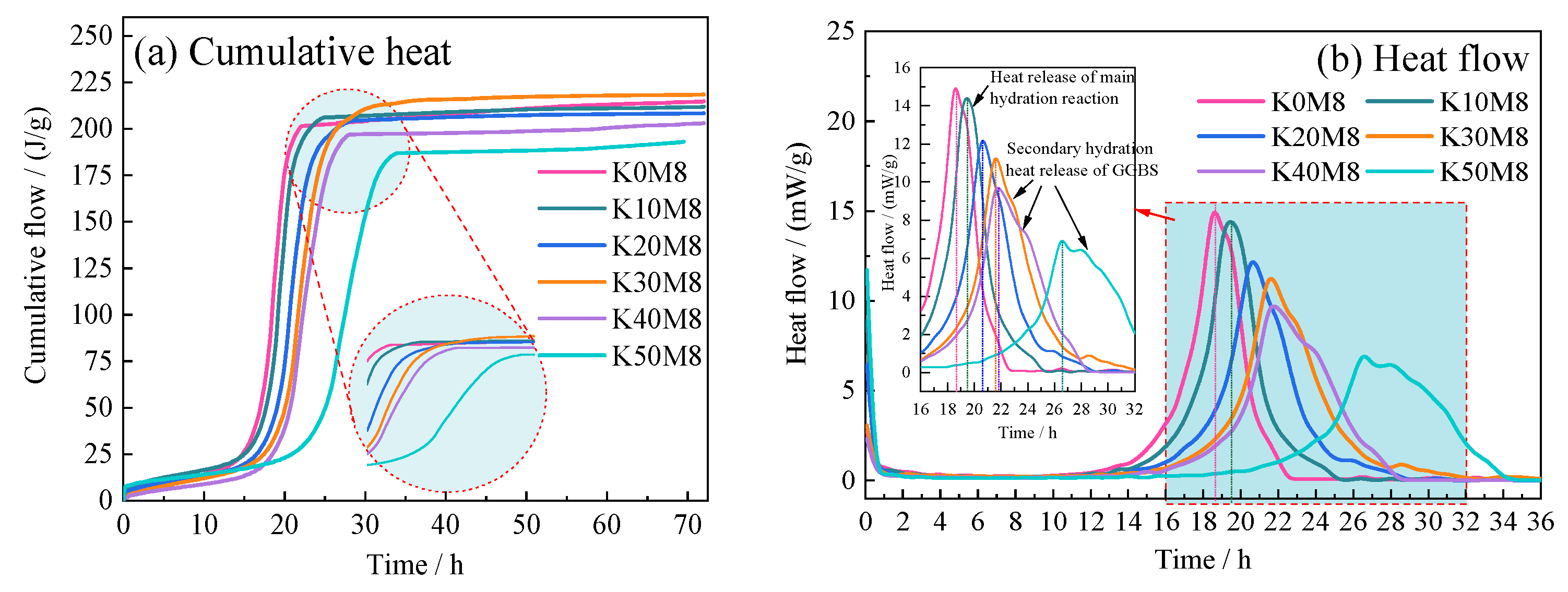
The effects of GGBS on the hydration-exothermic properties of the grouting materials are shown in
Figure 6,
Figure 7 and
Figure 8. Overall, as the replacement ratio of GGBS increased, the peak values of hydration heat release for all systems showed decreasing trends, and the time of peak occurrence was correspondingly delayed. This indicates that GGBS has the effect of retarding hydration and reducing temperature rise. However, the incorporation of different expansive agents significantly altered the hydration heat release process and characteristics of the systems.
In the systems without expansive agents (
Figure 6), the first exothermic peak decreased as the content of GGBS increased, primarily attributed to the reduced cement content. When the replacement ratio of GGBS exceeded 30%, a distinct second exothermic peak appeared in the system, and the peak height increased with increasing GGBS content. It indicates that the secondary hydration reaction of GGBS has been enhanced. Generally, the secondary hydration of GGBS typically occurred after 24 h of cement hydration. In this experiment, the second exothermic peak was advanced to approximately 14 h, possibly due to the higher alkalinity of the paste phase, which accelerated the reaction process. Furthermore, the incorporation of GGBS delayed the appearance of the exothermic peak and reduced the cumulative heat release. From the perspective of hydration kinetics, the rough surface of GGBS can adsorb ions from the pore solution, thereby reducing the ion concentration in the liquid phase. This prolonged the dissolution time of the cement particles and extended the induction period, ultimately achieving the regulation of hydration heat.
In the system doped with the UEA (
Figure 7), GGBS also exhibited an inhibitory effect on early exothermic heat release. As the GGBS substitution rate increased, the peak exothermic heat release decreased and the time to peak was delayed. The cumulative exothermic heat release showed a trend of first reducing, then rising, and ultimately decreasing again. When the replacement ratio of GGBS was low, its diluting effect and ion adsorption effect were dominant, thus reducing the cumulative exothermic heat release. As the replacement ratio continued to increase (20–30%), the secondary hydration reaction of GGBS gradually strengthened and combined with the concentrated heat release from UEA, resulting in an increase in the cumulative heat of reaction. When the replacement ratio of GGBS increased further (exceeding 30%), the amount of cement in the system decreased significantly, and although secondary hydration continued, the total heat of reaction decreased. This phenomenon reflects the interplay and competitive relationship between the initial hydration of the cement, the secondary hydration of GGBS, and the reaction of UEA. The test groups incorporating UEA did not exhibit a distinct second exothermic peak. This may be because the early hydration reactions of UEA were relatively concentrated, and its exothermic peak overlapped with the main peak of cement, thereby masking the independent exothermic characteristics of the secondary hydration of GGBS.
In the system incorporating MEA (
Figure 8), although the trend of the exothermic peak decreasing and being delayed as the GGBS content increased was consistent with the two groups described above, the peak of the hydration temperature was significantly delayed. In the group without an expansive agent, the exothermic rate was essentially 0 for the first 6 h. In the group incorporating UEA, the rate rose rapidly after 5 h, whereas in the group incorporating MEA, this occurred only after 12 h. This indicates that MEA significantly prolonged the induction period of cement hydration. The mechanism involves MEA inhibiting the nucleation of cement particles and the formation of Ca(OH)
2, thereby slowing down the rate of cement dissolution. In terms of cumulative heat release, the MEA-doped group exhibited a similar pattern to the other two groups during the acceleration phase. However, during the deceleration and stabilization periods, the cumulative heat release of specimens with low GGBS content (10%, 20% and 30%) was slightly larger than that of the blank group, which may be attributed to the sustained slow hydration of MgO. When the replacement ratio of GGBS was further increased to 40% and 50%, the cumulative heat release was lower than that of the blank group, consistent with the overall downward trend.
3.5. Microscopic Analysis
3.5.1. XRD Analysis
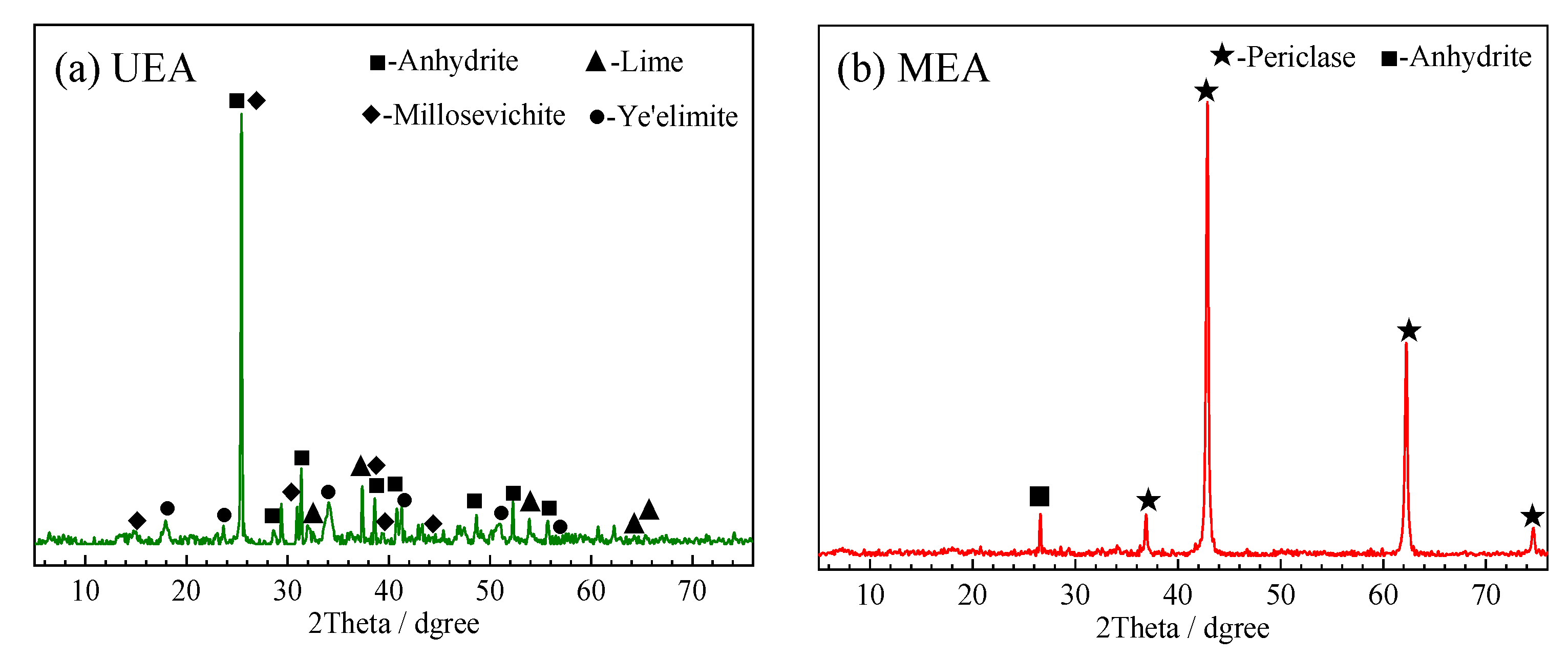
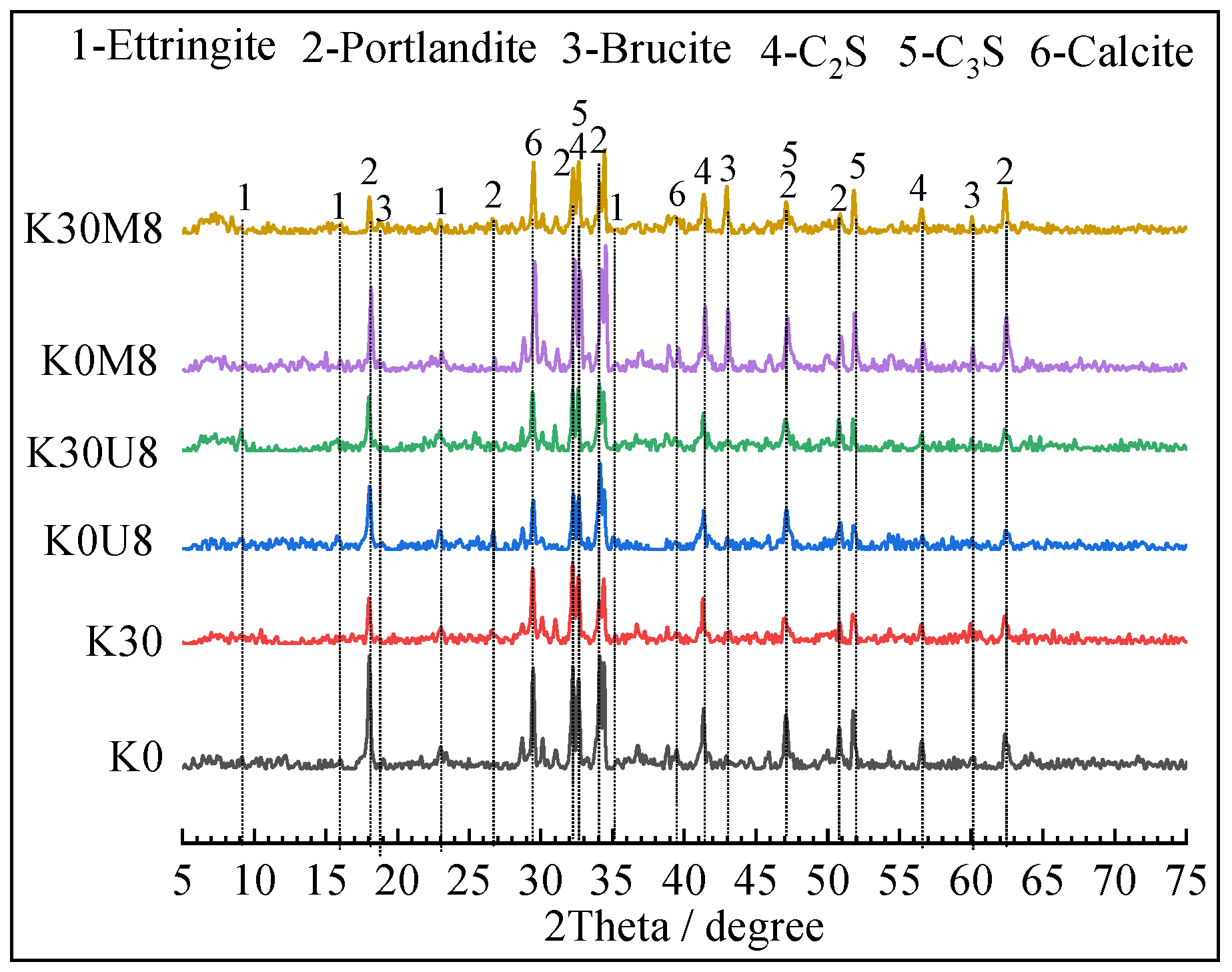
The XRD patterns of paste specimens at 28 d under different expansive agent systems are shown in
Figure 9. The results show that the main hydration products in all test groups are portlandite (Ca(OH)
2) and ettringite (AFt). Among these, the diffraction peak intensity of portlandite was generally higher. In the specimens containing UEA and MEA, the characteristic diffraction peaks of ettringite and brucite (Mg(OH)
2), respectively, can be clearly identified. This indicates that the two expansive agents provided sources of expansion via different mechanisms: UEA primarily promoted the formation of ettringite, while MEA relied on the hydration of MgO to form brucite, thereby generating expansion [
42] and compensating for matrix shrinkage. This is corroborated by the results of the restrained expansion rate test.
Furthermore, comparing the diffraction patterns of different GGBS contents under the same expansive agent, it can be seen that with increasing GGBS replacement, the intensity of the portlandite diffraction peak decreases significantly as the GGBS replacement ratio increases. This indicates that the secondary hydration reaction of GGBS consumed a portion of the Ca(OH)2, leading to a decrease in the alkalinity of the system. It also explains the trend of the restrained expansion rate decreasing as the GGBS content increased at the phase level.
3.5.2. TG Analysis
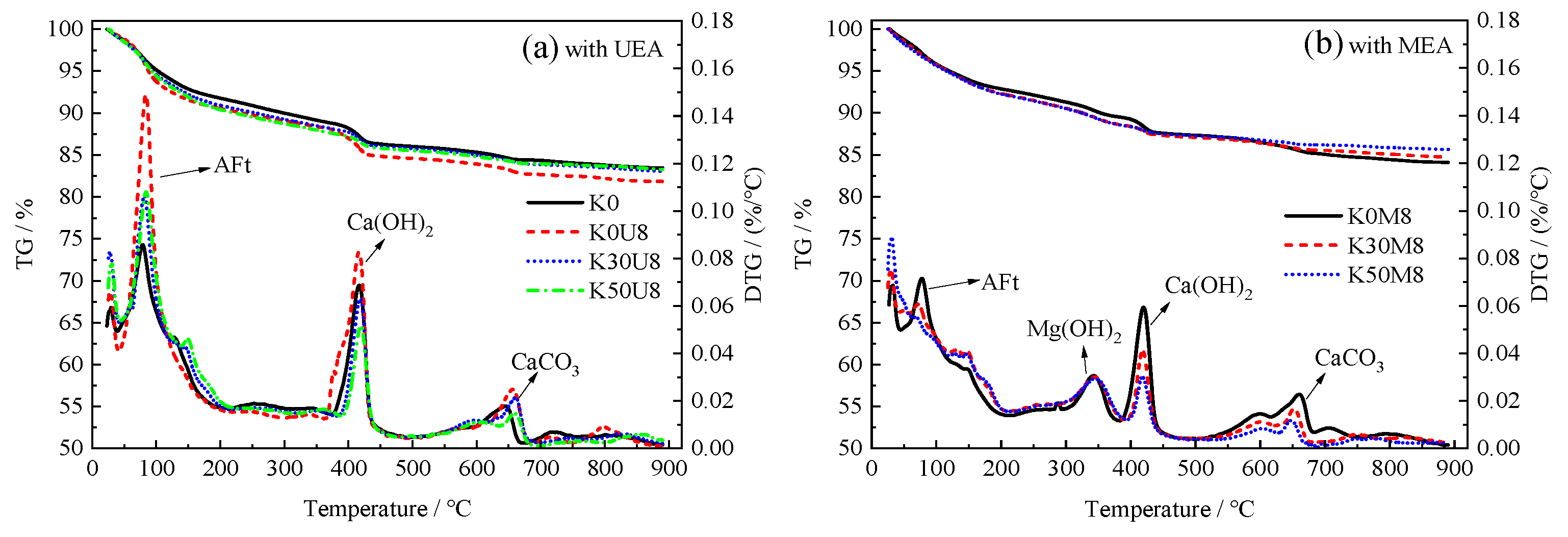
Thermogravimetric (TG) analysis was employed to quantitatively determine the contents of hydration products in paste containing UEA and MEA at 28 d. The mass loss was attributed to the characteristic decomposition temperature ranges of each hydration product, and the contents of AFt, Mg(OH)
2 and Ca(OH)
2 in the hydration products were calculated using Equations (1)–(3). The results are shown in the DTG curves in
Figure 10 and
Table 6. Specifically, the temperature range of 60~150 °C corresponds to the dehydration of AFt, C-S-H gel and bound water, the range of 300~380 °C is associated with dehydration of Mg(OH)
2, and the range of 380~470 °C is associated with dehydration of Ca(OH)
2 [
43,
44].
where,
MassAFt,
MassMg(OH)2 and
MassCa(OH)2 represent the contents of AFt, Mg(OH)
2 and Ca(OH)
2, respectively.
Mass loss denotes the rate of weight loss within the corresponding temperature range.
As can be seen from the data in
Table 6, as the replacement ratio of GGBS increased, the AFt and Ca(OH)
2 contents showed decreasing trends in both the UEA and MEA added experimental groups. This is primarily because the amount of cement used was reduced, which in turn resulted in a decrease in the generation of the corresponding main hydration products. In the test groups incorporating UEA, the content of AFt decreased as the GGBS content increased. This indicates that the addition of GGBS improved the compactness of the matrix and inhibited the reaction process of UEA to some extent, consequently reducing the formation of its expansion products (AFt) and affecting the final expansion performance.
For the test group with MEA, the addition of GGBS introduced a “dilution effect” that increased the effective water-to-binder ratio, providing more free water for MgO hydration and potentially promoting the formation of Mg(OH)2. Since MgO in MEA does not react in large quantities in the early stage of hydration, the secondary hydration reaction of GGBS competes with the MEA hydration product (Mg(OH)2) for OH− in the pore solution. Therefore, the amount of Mg(OH)2 formed in the samples with GGBS replacement ratios of 30% and 50% was slightly lower than that in the control group (K0M8). Moreover, the Mg(OH)2 crystals formed in the early stages were small in size and unable to grow effectively within the matrix or generate significant expansion stresses. This is consistent with the results of the restrained expansion test, which showed slow expansion development in the early stages.
3.5.3. SEM Analysis
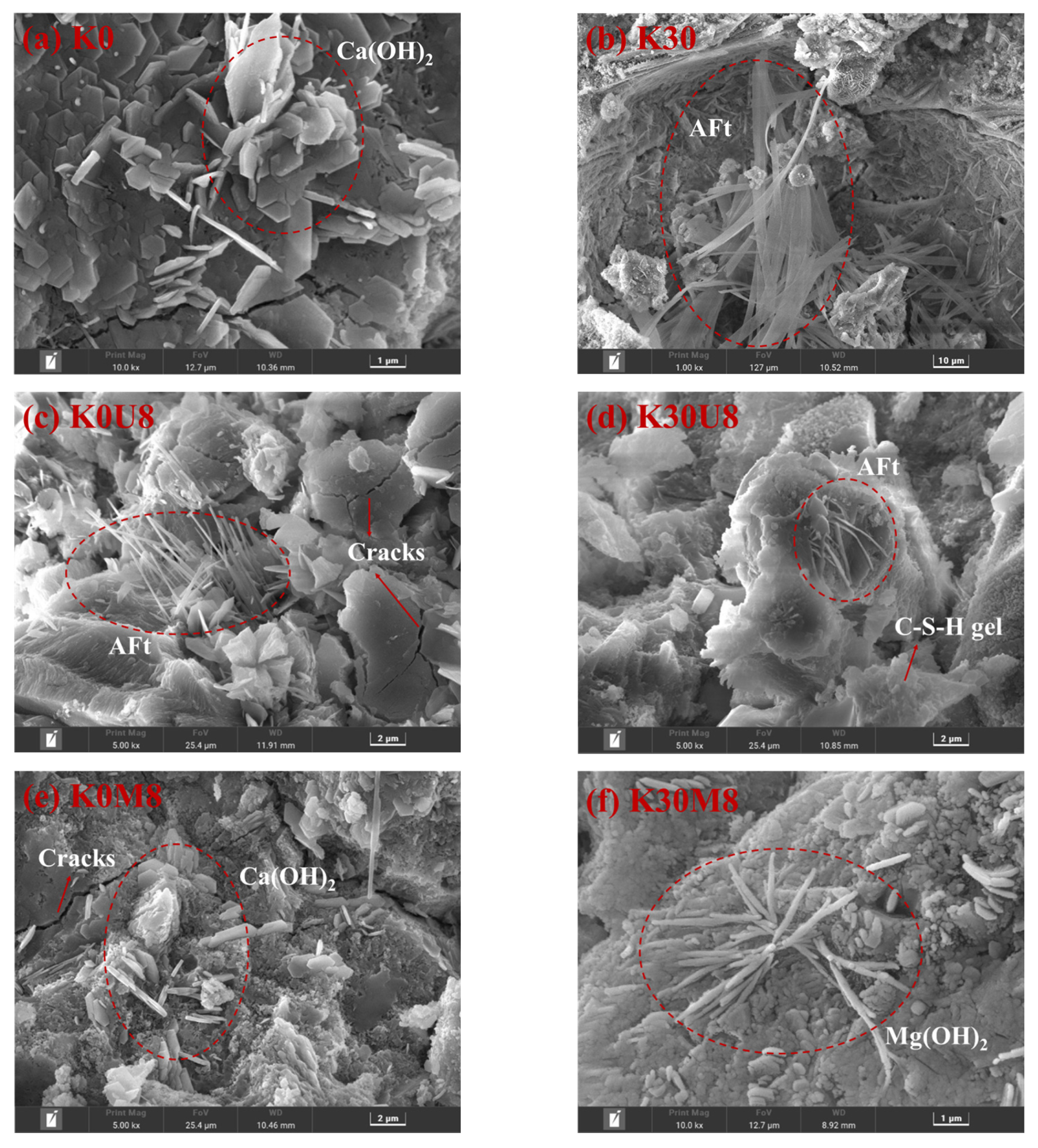
To elucidate the hydration characteristics and expansion mechanisms of the different test groups at the microscopic level, samples were selected for SEM analysis. The results are shown in
Figure 11.
Figure 11a,b show the microstructures of the K0 and K30 groups, respectively, without expansive agents. In the K0 sample, a large number of regular hexagonal plate-like Ca(OH)
2 crystals and flocculent C-S-H gel were visible. In the K30 sample, needle- and rod-shaped ettringite crystals can be clearly observed, whereas the morphology of ettringite was not distinct in the K0 samples. This may be because in the pure cement system the ettringite was extensively enveloped and covered by C-S-H gel, and was not sufficiently exposed in the selected field of view.
Figure 11c,d show the microstructure of specimens incorporating UEA. In the K0U8 samples, a large number of interlocking acicular ettringite crystals were observed, and microcracks appeared in some areas of C-S-H gel. This indicates that the process of UEA hydration to form ettringite generated crystallization pressure, and when the pressure exceeded the tensile strength of the local matrix, microcracks were induced. In the K30U8 samples, the ettringite crystals were tightly encapsulated by a denser and more continuous C-S-H gel network. This dense structure, formed by the secondary hydration of GGBS, not only enhanced the ability of the matrix to constrain expansion stresses, but may also physically prevent water from coming into contact with unreacted UEA particles, thereby inhibiting the continued development of expansion in the later stages.
In the K0M8 samples (
Figure 11e), Ca(OH)
2 crystals were closely packed, with C-S-H gel filling the interstices to form a dense structure. In the K30M8 samples (
Figure 11e), fibrous or ellipsoidal Mg(OH)
2 crystals can be observed randomly distributed within the matrix. The Mg(OH)
2 produced by the hydration of MgO tended to form fibrous or fine spherical aggregates, which have a large specific surface area. Although the growth of Mg(OH)
2 was accompanied by volume expansion, the expansion forces were distributed more diffusely, making it difficult to form concentrated and oriented expansion stress [
7]. This is consistent with the results from the restrained expansion rate test, which showed that the development of MEA expansion was slow.
3.6. Discussion
The test results indicate that GGBS inhibited the expansion properties of both UEA and MEA in low-water-binder-ratio systems. Firstly, the secondary hydration reaction of GGBS continuously consumed the Ca(OH)2 in the system, resulting in a continuous decrease in the alkalinity of the pore solution. In the case of UEA, the formation and stability of AFt required a highly alkaline environment; a decrease in pH value directly weakened the driving force and stability of AFt. In the case of MEA, the secondary hydration reaction of GGBS competed with the Mg(OH)2 for OH− ions in the pore solution, thereby reducing the final expansion. Furthermore, the C-S-H gel formed by the hydration of GGBS was characterized by a low Ca/Si ratio, filling the pores between cement particles and making the microstructure denser. This not only limited the growth space of the expansion products, but also prevented external moisture from coming into contact with unreacted UEA or MEA particles, thereby inhibiting the continued development of expansion in the later stages.
Although GGBS inhibited the expansion of both types of expansive agents, the expansion behavior of UEA and MEA showed clear differences, which was due to the different formation kinetics and thermodynamic stability of their hydration products. UEA relied on the rapid generation of AFt to provide early expansion. However, AFt may convert to AFm under low alkalinity or insufficient moisture conditions, which explained the sharp decline in restrained expansion after the UEA group was transferred to a dry environment. At high GGBS dosages, the low-alkalinity environment further reduced the stability of AFt, causing a more pronounced decline in its expansion performance. The expansion of MEA depended on the hydration of MgO to form Mg(OH)2, and the expansion process was slow and continuous. The Mg(OH)2 crystals were fibrous or ellipsoidal aggregates, and the expansion force distribution was relatively dispersed. However, in a dry environment, the evaporation of moisture inhibited the later-stage hydration of MgO, causing the group mixed with MEA to shrink significantly after being transferred to air curing.
GGBS significantly reduced the hydration-heat-release rate and total heat release of the system, which is crucial to reducing the risk of temperature cracking in large-volume grouting projects. Furthermore, the fine particles in the GGBS and the resulting C-S-H gel improved the particle size distribution of the pastes, filled internal voids, and continuously densified the microstructure, thereby ensuring the long-term strength of the grouting material (compressive strength reaching 127.4 MPa at 56 d).
4. Conclusions
To mitigate the high hydration heat and significant shrinkage problems of high-strength cementitious grouting materials, the synergistic regulation mechanism of GGBS and UEA and MEA on the hydration process and expansion effects were systematically investigated. The following conclusions were reached:
- (1)
GGBS can effectively improve the workability and long-term mechanical properties of high-strength cement-based grouting materials. As the GGBS content increased, the fluidity of the grouting materials improved, and the compressive strength at 56 d continued to rise, reaching 127.4 MPa at a 50% GGBS content. However, the addition of UEA or MEA expansive agents reduced the strength at later stages, with MEA having a more pronounced weakening effect on early strength.
- (2)
Both UEA and MEA can effectively compensate for the shrinkage of a system, but there are significant differences in their expansion behavior and environmental adaptability. UEA exhibited rapid and substantial early expansion, enabling quick compensation for early shrinkage, and was suitable for dry environments or areas with high requirements for early shrinkage control. MEA expanded slowly and continuously, offering superior long-term stability under prolonged water-curing conditions. However, MEA experienced significant late-stage shrinkage rebound in dry environments, and the expansion efficiency was difficult to fully realize when moisture was insufficient. Therefore, MEA was suitable for applications which can ensure long-term wet curing and pursue long-term volume stability. The addition of GGBS inhibited the expansion performance of both types of expansive agents, primarily because of the consumption of Ca(OH)2, the reduction of system alkalinity and the densification of the microstructure, thereby constraining the expansion process.
- (3)
GGBS can significantly regulate the hydration heat process, delay the exothermic peak and reduce total heat release. When the dosage of GGBS was 50%, the cumulative heat release decreased by up to 20%. UEA slightly accelerated and increased hydration-exothermic heat at an early stage, while MEA significantly prolonged the induction period and delayed the temperature peak, demonstrating superior temperature-control potential. The microscopic analysis indicates that GGBS enhanced the strength of the matrix by promoting the densification of the C-S-H gel. Simultaneously, the densified structure physically restricted the formation space and growth morphology of expansion products (AFt and Mg(OH)2), thereby suppressing the effectiveness of the expansive agent at the macroscopic level.
In summary, the combined use of GGBS and expansive agents in systems with a low water-to-binder ratio can effectively control the fluidity, mechanical properties, volume stability, and hydration heat characteristics of high-strength cementitious grouting materials. However, this study is based on laboratory experiments and further field validation can be conducted in actual wind turbine foundations, large-scale equipment foundations, and other engineering applications. Combined with durability indicators such as freeze–thaw resistance, impermeability, and resistance to sulfate attack, the long-term service performance of the composite system can be comprehensively evaluated, and a more accurate prediction model developed to optimize and control material properties.