1. Introduction
Against the backdrop of ongoing climate change and rapid urbanization, the urban heat island (UHI) effect has become increasingly severe, and extreme heat exposure has emerged as one of the most critical environmental health risks in urban areas [
1,
2]. According to recent global health assessments, the frequency, duration, and intensity of heat stress events have increased substantially, leading to a higher risk of heat-related morbidity and mortality, particularly in densely built cities [
3,
4,
5]. Although considerable efforts have been devoted to improving indoor thermal environments [
6], urban outdoor spaces—where daily activities such as walking, commuting, social interaction, and recreation take place—remain highly vulnerable to extreme heat conditions [
7].
Among various types of outdoor spaces, open urban squares play a particularly important role in shaping pedestrian thermal experience [
8]. These spaces are typically characterized by high sky view factors, extensive paved surfaces, and limited shading, making these spaces prone to intense solar radiation and heat accumulation during summer periods [
9]. In hot-humid regions, such conditions are further exacerbated by high atmospheric moisture content, which suppresses evaporative cooling from the human body and amplifies thermal stress [
10]. As a result, pedestrians in open squares are often exposed to severe heat stress, discouraging outdoor activities and posing tangible public health concerns [
4,
5,
11].
Previous studies on outdoor thermal comfort have employed field measurements, numerical simulations, and thermal indices such as PET and UTCI to evaluate microclimatic conditions and human thermal responses [
12,
13,
14]. These studies have consistently demonstrated the importance of air temperature, mean radiant temperature (MRT), wind speed, and humidity in determining outdoor thermal comfort [
15]. MRT has been identified as a dominant driver of thermal stress in sun-exposed open spaces [
16], while wind speed plays a critical mitigating role through convective heat removal [
17]. However, in hot-humid climates, the interaction between thermal and moisture processes introduces additional complexity that is not fully captured by approaches focusing primarily on temperature or radiation.
Urban vegetation, especially trees, is widely recognized as one of the most effective nature-based solutions for mitigating outdoor heat stress [
2,
18]. Through shading, evapotranspiration, and airflow modification, trees can substantially reduce MRT and air temperature while improving local thermal comfort [
2,
18]. Numerous studies have confirmed that tree-shaded areas exhibit significantly lower thermal stress compared to unshaded spaces [
19,
20]. Nevertheless, existing research has largely emphasized the presence or absence of trees, green coverage ratios, or species-related parameters, while paying comparatively limited attention to the spatial configuration of tree canopies within open urban spaces [
2,
18,
21].
From a design and planning perspective, tree layout plays a critical role in determining the effectiveness of thermal mitigation. The spatial distribution of tree canopies influences not only shading patterns but also airflow pathways and humidity distribution, thereby shaping pedestrian thermal exposure in a highly heterogeneous manner [
22,
23]. However, many studies still rely on static evaluation points or area-averaged indicators, which are insufficient to capture the dynamic thermal exposure experienced by pedestrians as they move through space [
24,
25,
26]. Consequently, the relationship between tree layout strategies and pedestrian thermal exposure remains insufficiently quantified, particularly in hot-humid urban squares where coupled radiation–airflow–humidity processes dominate.
In recent years, existing research has introduced pedestrian simulation techniques to address challenges in multiple disciplines, including transportation, evacuation, and building design optimization [
27,
28,
29]. Among these, agent-based model (ABM) provides a convenient solution for achieving dynamic and realistic pedestrian simulations. However, the low integration between pedestrian simulation tools and design tools has made it exceptionally difficult to implement human-centered tree layout design.
Recent advances in computational fluid dynamics (CFD), human thermal indices, and parametric pedestrian simulation tools offer new opportunities to address these limitations. CFD-based microclimate models enable the coupled simulation of airflow, heat transfer, radiation, and moisture processes within complex urban environments [
23,
30], while parametric pedestrian simulation tools facilitate the systematic exploration of behavioral patterns and spatial configurations [
31]. When combined with pedestrian-oriented thermal indices such as UTCI, these approaches can assess thermal comfort from the perspective of human exposure rather than purely environmental conditions [
32,
33,
34,
35,
36]. Despite this potential, integrated frameworks that combine pedestrian thermal exposure assessment with parametric optimization of tree layout remain rare in the literature, particularly in the context of hot and humid climates.
To address these gaps, this study proposes a human thermal exposure–oriented framework for evaluating and optimizing tree layout strategies in hot-humid open urban squares. Using a representative urban square as a case study, the research first quantifies baseline pedestrian thermal exposure under summer design conditions, identifying the dominant microclimatic drivers of heat stress. Subsequently, a series of tree-layout scenarios are generated and evaluated through coupled CFD simulations and UTCI-based thermal exposure analysis. Parametric modeling techniques are employed to systematically explore the influence of tree spatial configurations on pedestrian thermal conditions, with particular attention to the combined effects of radiation attenuation, airflow modification, and humidity variation.
This study makes five key contributions:
- (1)
Develops an exposure-weighted evaluation framework integrating agent-based pedestrian simulation (PedSim) with coupled CFD microclimate modeling (airflow, radiation, moisture) to assess outdoor thermal comfort from a human-centered perspective rather than area-averaged metrics.
- (2)
Quantifies spatial misalignment between pedestrian activity and thermal stress: Reveals that high-density pedestrian zones (hotspots) suffer the most severe heat exposure (baseline UTCI 44.39 °C), significantly underestimated by conventional plaza-wide assessments.
- (3)
Demonstrates configuration-driven efficiency gains: Under identical green coverage (6.6%), pedestrian-oriented tree placement reduces hotspot MRT by 5 °C and UTCI by 3 °C, outperforming plaza-wide uniform distribution by 3–4× in thermal stress mitigation efficiency (ΔUTCI −3.0 vs. −0.8).
- (4)
Elucidates coupled physical mechanisms: Pedestrian-oriented optimization enhances thermal comfort primarily through targeted MRT attenuation along movement corridors, while maintaining beneficial airflow patterns and avoiding humidity accumulation in critical zones.
- (5)
Validates seasonal robustness: Summer-oriented, exposure-optimized tree layouts do not induce winter thermal penalties (cold stress), supporting year-round applicability in hot-humid climates.
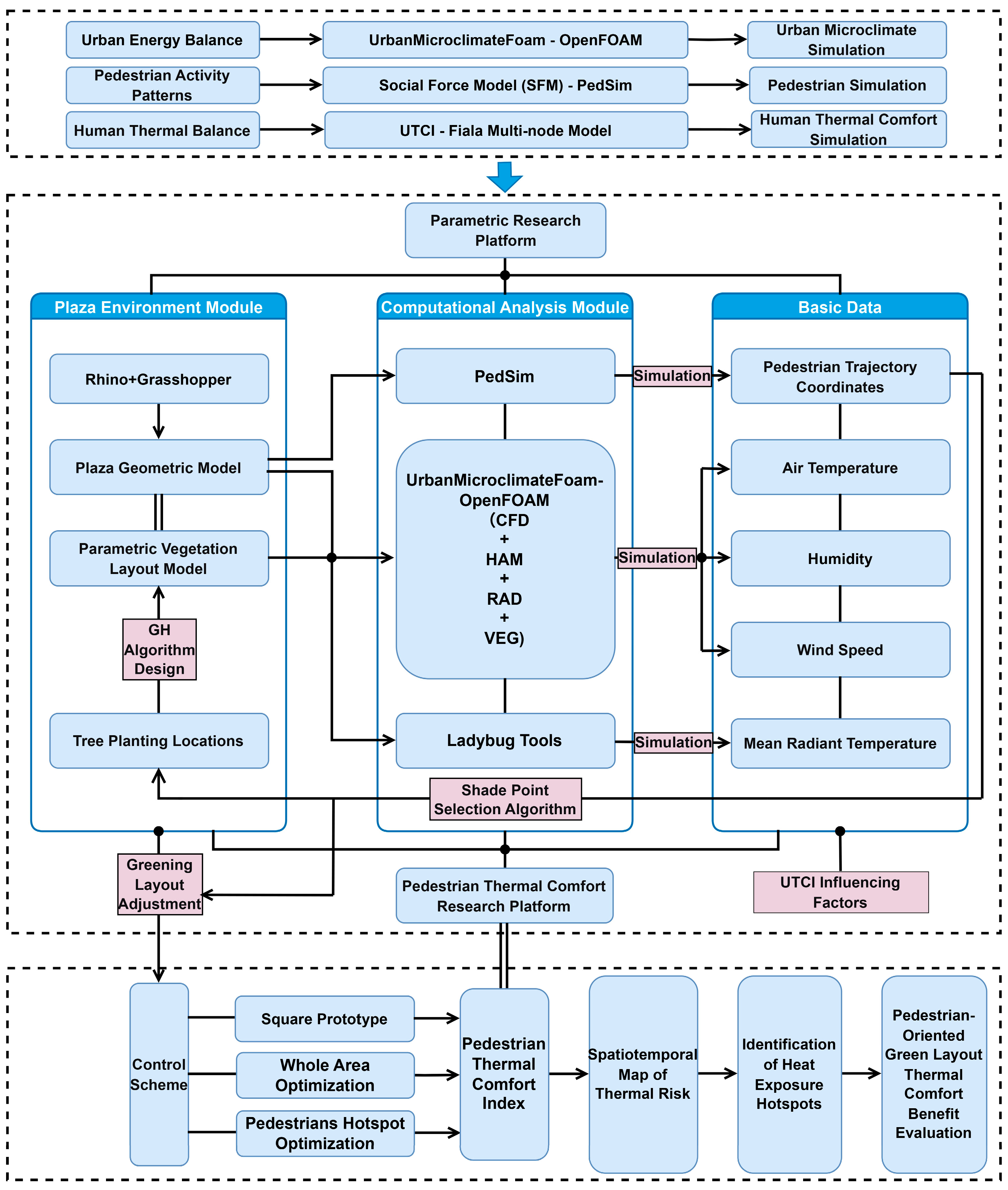
The research framework is shown in
Figure 1.
2. Methodology
2.1. Study Area and Climatic Conditions
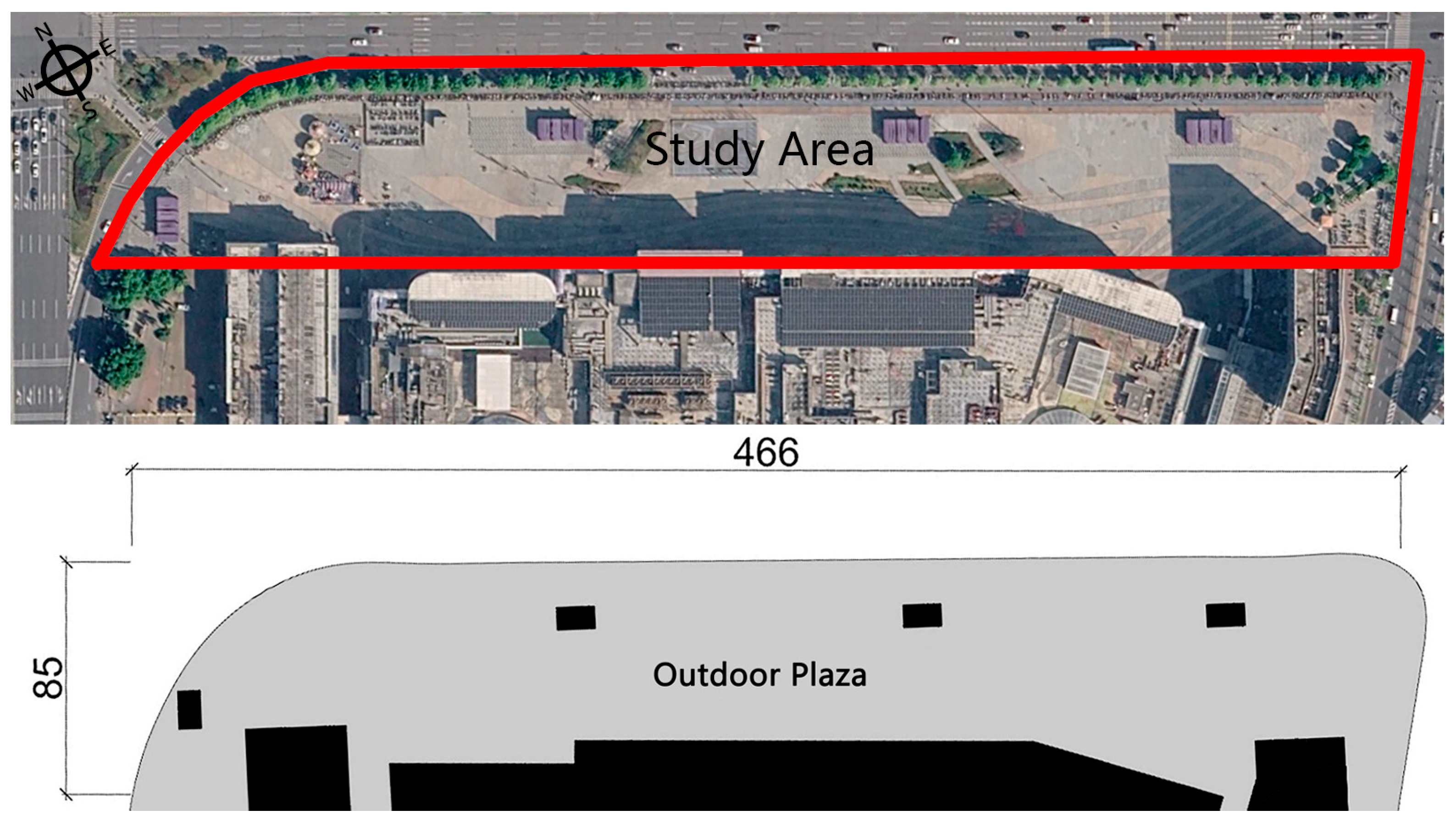
This study focuses on a representative open urban square located in a hot-humid climatic region. The open-air plaza covers an area of approximately 32,300 m
2, and includes four subway entrances, bus terminals, taxi stands, and other high-volume transportation hubs. The selected site is characterized by a large open paved area, limited permanent shading, and high pedestrian activity intensity, which makes it particularly vulnerable to extreme heat exposure during summer periods. The square is surrounded by urban buildings of moderate height, while its interior is dominated by hard surfaces with sparse green coverage in the baseline condition. Actual photographs and information of the plaza are shown in
Figure 2.
To capture typical summer thermal conditions, simulations were conducted under representative hot–humid weather scenarios. Boundary meteorological conditions, including air temperature, relative humidity, wind speed, and solar radiation, were derived from local summer design weather data. These conditions reflect periods with high heat stress risk and are commonly used for outdoor thermal comfort assessment in hot-humid regions. All simulations were performed for daytime hours when pedestrian exposure to solar radiation is most pronounced.
2.2. CFD-Based Microclimate Modeling Framework
To simulate the urban microclimate of the study area, a multiphysics-coupled CFD framework was employed, integrating airflow (CFD), heat and moisture transport (HAM), radiative exchange (RAD), and vegetation (VEG) modules. The model was implemented using the user-defined solver urbanMicroclimateFoam on the open-source CFD platform OpenFOAM v8 [
37,
38], enabling the capture of complex interactions governing the outdoor thermal environment under hot and humid conditions.
CFD simulation domain settings were established in accordance with the requirements for outdoor wind environment computation specified in the Chinese standard
Standard for green performance calculation of civil buildings (JGJ/T 449-2018) [
39]. Specifically, the distances from the inflow boundary, top boundary, and lateral boundaries to the outer edge of the analysis object were greater than 5H, while the distance from the outflow boundary to the outer edge of the analysis object was greater than 10H. A neutral atmospheric boundary layer (ABL) inflow velocity profile following the logarithmic law was applied at the inlet boundary, with a reference height of 10 m for gradient wind and an aerodynamic roughness length
z0 of 1. The lateral and top boundaries were assigned a slip condition, whereas the ground terrain and building surfaces were treated as no-slip wall boundaries (fixedValue). The outlet boundary employed an inletOutlet mixed boundary condition to allow free outflow and prevent unphysical backflow.
The residual control criteria specified a tolerance of 0.001 for pressure, while the tolerances for velocity, temperature, specific humidity, and other physical quantities were all set to 0.0001. The simulation duration was 5 h, with an exchange time step of 3600 s, meaning that the data exchange interval between the external environmental conditions (temperature, humidity, radiation) and the CFD solver was 1 h. After each exchange, the CFD solver performed steady-state calculations based on updated boundary conditions derived from EPW data until residual convergence was achieved. Subsequently, the HAM model conducted transient calculations with adaptive time steps based on the boundary conditions updated by the CFD solver.
Based on the above settings, a comprehensive simulation of the microclimate and thermal environment of the square was conducted. To ensure reliable results, the data from the fifth time step were selected for analysis (to avoid the short-term unheated state of building materials).
In urban microscale simulations, the fully coupled model and its submodels have been validated in previous studies. Santiago et al. proved the high fidelity of the RANS model in capturing dynamic effects from urban roughness elements by comparing simulations over regular building arrays with high-precision wind-tunnel LDA data [
40]. The coupling of CFD and HAM models was validated by Saneinejad using neutron radiography [
41], and the vegetation model by Manickathan et al. via wind-tunnel tests on small-scale trees [
42]. Moreover, Rahimi et al. reported that the urbanMicroclimateFoam solver achieves temperature and humidity RMSE values as low as 1.03 °C and 4.78%, respectively, confirming its high reliability and practicality for coupled urban microclimate simulations involving heat, moisture, radiation, and vegetation [
34,
43].
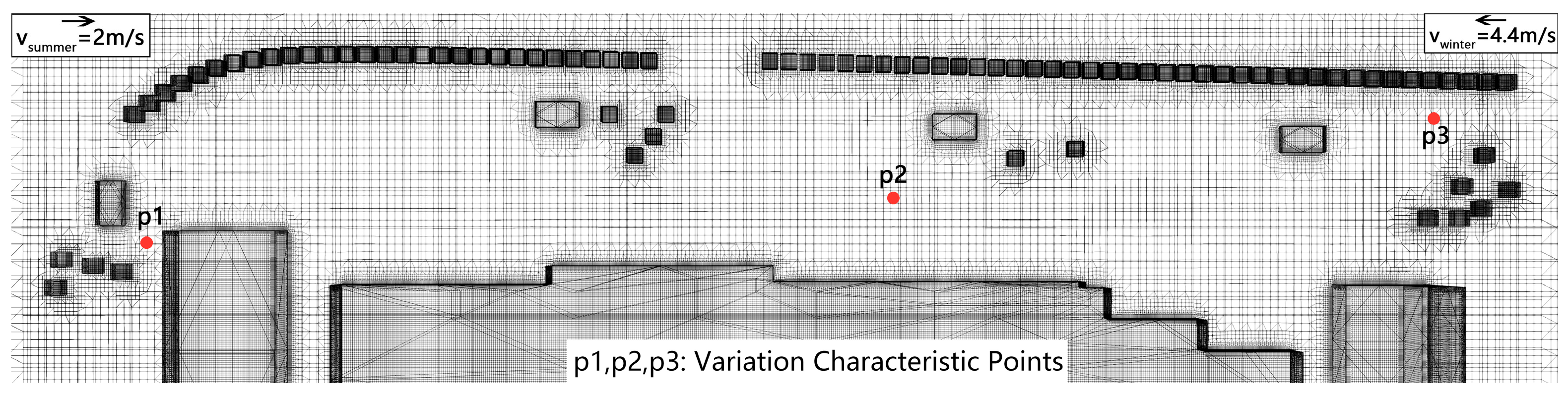
CFD simulations were conducted using three grid resolutions—coarse (approximately 2 million cells), basic (approximately 5 million cells), and fine (approximately 12 million cells)—to evaluate grid sensitivity by comparing wind speed variations at three characteristic points. These points were located at the front, middle, and rear sections of the wind field, respectively, at a height of 1.5 m above ground. The results, presented in
Table 1, indicate that as the grid resolution increased, the average relative errors in wind speed at points p1, p2, and p3 were 0.010, 0.050, and 0.0255, respectively. The relative errors at all three test points were below 0.05, with an overall average relative error of 0.029, which is considered acceptable in complex urban microclimate studies. The relative error (RE) for wind speed at the characteristic points was calculated using the formula:
where
represents the wind speed at the test point on the coarser grid, and
represents the wind speed at the test point on the finer grid. The grid dependency test results demonstrated that the ability to capture flow field variations improves with increasing grid resolution. However, further refinement beyond the basic resolution yields marginal improvements in prediction accuracy. Ultimately, balancing computational accuracy and efficiency, a grid scheme with approximately 7 million cells was selected for numerical simulations. The computational domain grid division and the characteristic points used in the grid dependency test are illustrated in
Figure 3.
Airflow within the computational domain was simulated using the Reynolds-averaged Navier–Stokes (RANS) equations [
38,
44], with turbulence closure provided by realizable k-epsilon (RKE) model [
45]. Heat transfer processes included convective and conductive exchanges between air and urban surfaces, while long-wave and short-wave radiation exchanges were calculated using a view factor-based radiation model. Direct and diffuse solar radiation were explicitly considered to capture shading effects induced by buildings and vegetation [
46].
Moisture transport was incorporated through the solution of a humidity transport equation, allowing spatial variations in humidity to be resolved [
46]. This is particularly important in hot–humid climates, where elevated moisture levels significantly influence human thermal perception and limit evaporative cooling. By solving these coupled physical processes, the model provides a comprehensive representation of the microclimatic conditions experienced by pedestrians in open urban spaces.
2.3. Representation of Urban Vegetation and Tree Canopies
Urban trees were modeled as porous media to account for their aerodynamic and thermophysical effects on the surrounding environment. Tree canopies were characterized using leaf area density (LAD), which governs momentum attenuation, radiative interception, and evapotranspiration processes within the vegetation volume.
The interaction between vegetation and airflow was represented by additional source and sink terms in the momentum equations, capturing the drag force induced by leaves and branches. Thermal effects associated with vegetation included shading of solar radiation and latent heat exchange through evapotranspiration. Leaf energy balance was considered to estimate transpiration-induced cooling, which influences both air temperature and humidity in the vicinity of tree canopies. Detailed biophysical models of vegetation can be found in previous studies [
35,
38,
42,
43,
46].
The vegetation parameters are set according to the red maple tree, with an LAD of 1, an aerodynamic resistance coefficient of 131.035, a characteristic leaf length of 0.1 m, a number of transpiring surfaces of 1, an emissivity of 0.9, and an albedo of 0.15. The radiation data at the top of the canopy are dynamically extracted from EPW data, and the radiation transfer within the plant canopy is based on the Beer-Lambert law [
47,
48]. Numerous other parameters, such as stomatal resistance parameters and the radiation extinction coefficient, can be found in previous studies and are not repeated here [
46].
This modeling approach enables the integrated simulation of shading, airflow modification, and moisture effects associated with trees, while maintaining computational efficiency suitable for parametric analysis of multiple layout scenarios.
2.4. Local Model Validation
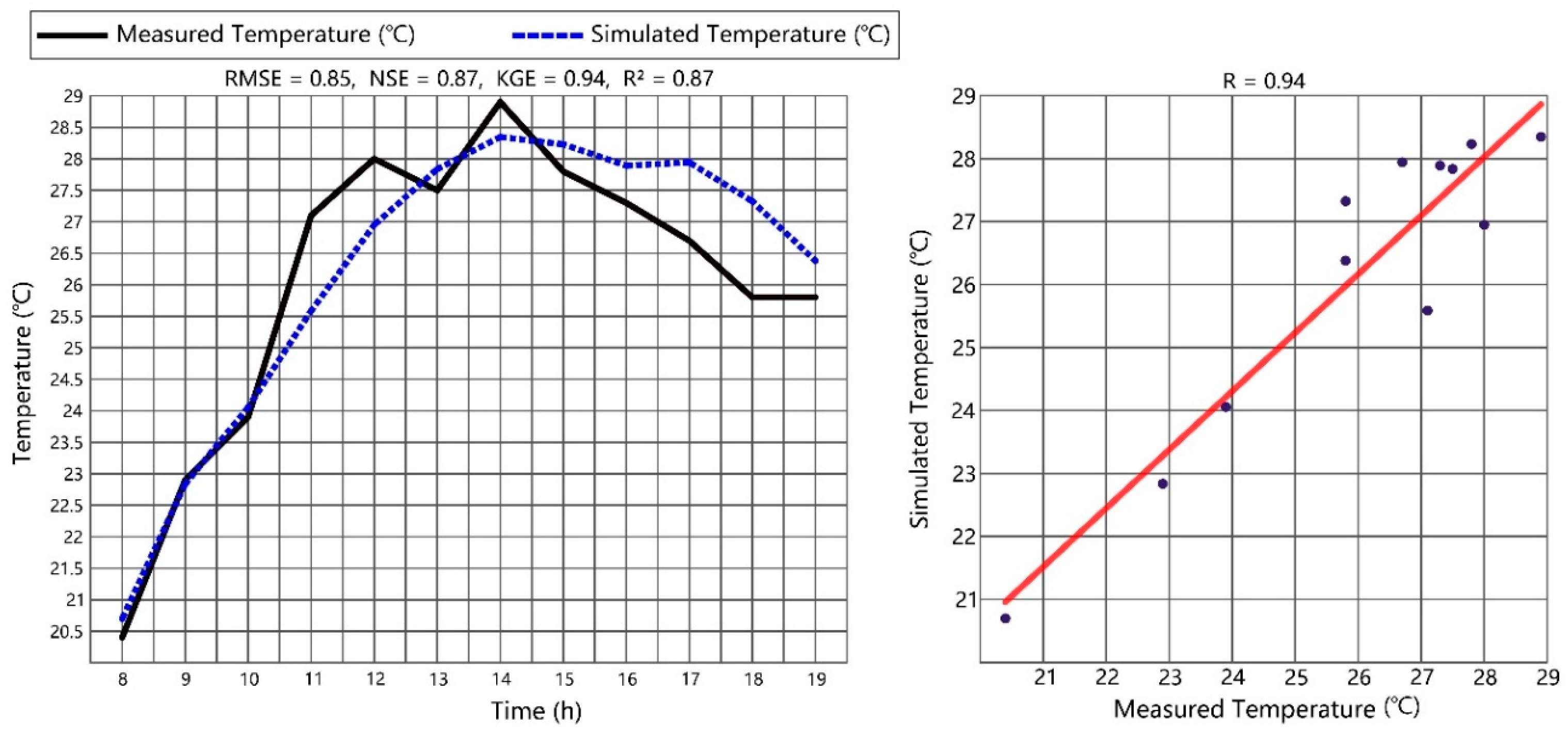
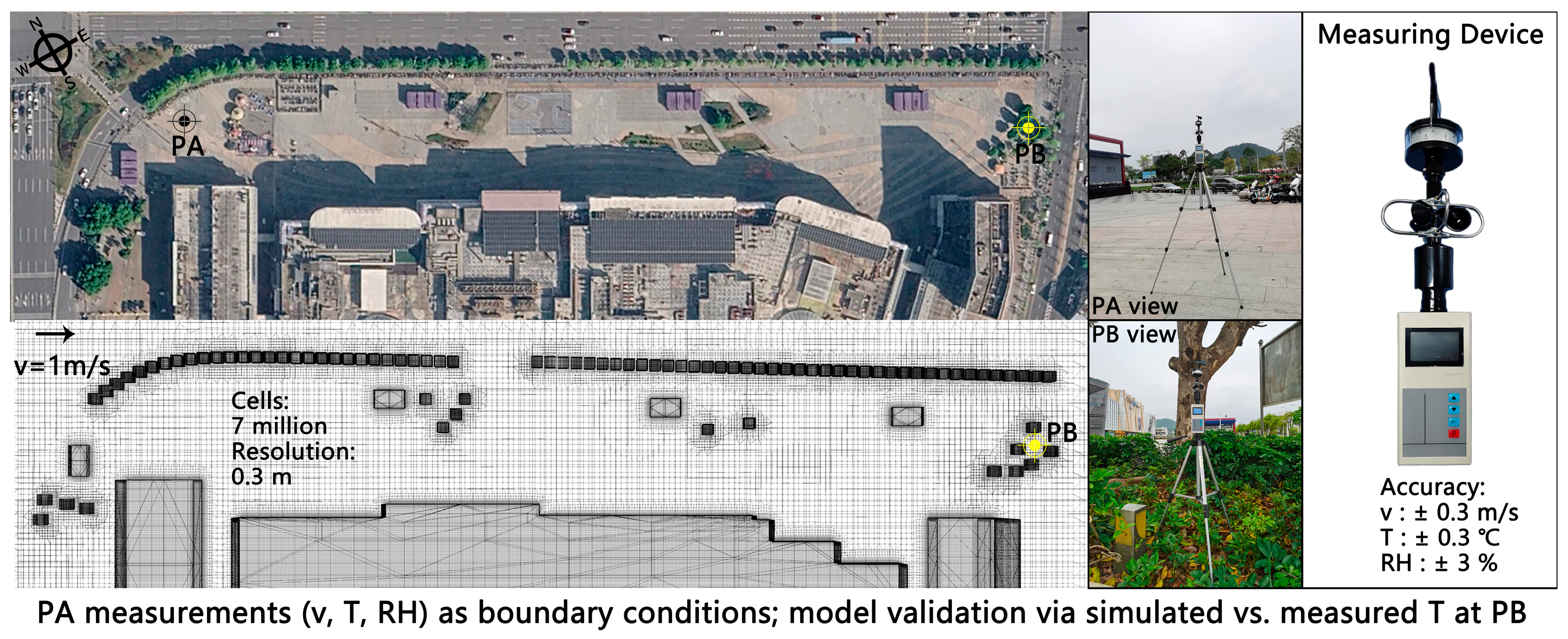
To validate the accuracy of the model, the authors conducted a comparative verification between measurements and simulations under the environmental conditions of the square. The measurement period was from 8:00 to 19:00 on 19 March 2026. The measured physical quantities were the hourly wind speed, air temperature, and humidity at a height of 1.5 m at an open space point (PA) and a vegetation-covered validation point (PB) in the square. The external wind speed on that day ranged from 0 to 2 m/s. The simulation boundary condition was set as a constant wind speed of 1 m/s at a reference height of 1.5 m. Hourly measured data were used for temperature and humidity, while radiation parameters were taken from an EPW file (representing similar sky conditions). All other solution settings were identical to those described previously. A 12 h transient simulation was performed, and the air temperature data at the validation points were selected for model accuracy analysis. The measured environment and instrument accuracy are shown in
Figure 4, the boundary condition parameters (model input parameters) are listed in
Table 2, and the measured and simulated air temperatures at the validation points are given in
Table 3.
To comprehensively assess the model accuracy, several evaluation metrics were calculated: RMSE = 0.85, NSE = 0.87, KGE = 0.94, R
2 = 0.87. The simulated data were in excellent agreement with the measured results (R = 0.94), with an absolute error
°C. A summary of the interpretation of these metrics is provided in
Table 4. The continuous 12 h curves of measured and simulated air temperatures (
Figure 5) demonstrate the high accuracy of the numerical model, indicating that such model settings are appropriate for the environmental conditions of the studied square.
2.5. Pedestrian Thermal Exposure and Pedestrian Hotspots
UTCI was developed in 2009 by multiple scientists under the auspices of the International Society of Biometeorology (ISB) Special Committee and the European COST Action 730 [
54,
55,
56,
57]. The index is based on the Fiala multi-node model of human thermoregulation [
58] and iteratively solves for the equivalent temperature of the human body using parameters such as air temperature, mean radiant temperature (MRT), wind speed, relative humidity, as well as metabolic rate and clothing insulation. As a globally applicable outdoor thermal comfort index recommended by the ISB, the UTCI has demonstrated its applicability and reliability in numerous studies [
59,
60,
61].
Spatial distributions of UTCI were calculated based on simulated microclimatic variables at pedestrian height. To better represent pedestrian experience in open squares, thermal exposure was assessed along pedestrian movement paths rather than at isolated static points. This exposure-oriented approach captures the cumulative and spatially heterogeneous thermal conditions encountered by pedestrians as they traverse the square.
By focusing on pedestrian thermal exposure rather than solely on area-averaged comfort indices, the analysis provides a more realistic assessment of heat stress risks in open urban spaces.
In addition to point-based thermal assessment, pedestrian thermal exposure was evaluated along representative movement paths to better reflect spatial heterogeneity in space usage. The representative pedestrian movement patterns within the square were generated using the Grasshopper plugin PedSim v4, which is a simplified real-time pedestrian simulation based on the classic pedestrian dynamics model—the Social Force Model (SFM) [
62,
63]. The model assumes that individual pedestrians have clear purposes and are influenced by the combined effects of multiple forces, including repulsive forces from obstacles, psychological repulsive forces between individuals (social forces), and attractive forces from points of interest and destinations. These forces are not actual physical forces but mathematical abstractions of psychological motivations and external influences [
64]. By applying forces to agents, the model can simulate complex behaviors such as realistic pedestrian walking, lingering, and obstacle avoidance. Such models have now been widely applied in fields such as environmental optimization, safety evacuation, and traffic planning [
27,
28,
29].
Existing research, based on a comparison of surveillance video data and pedestrian simulation, points out that PedSim has the characteristics of clear paths and strong directionality, making it suitable for simulating pedestrians in familiar environments [
65].
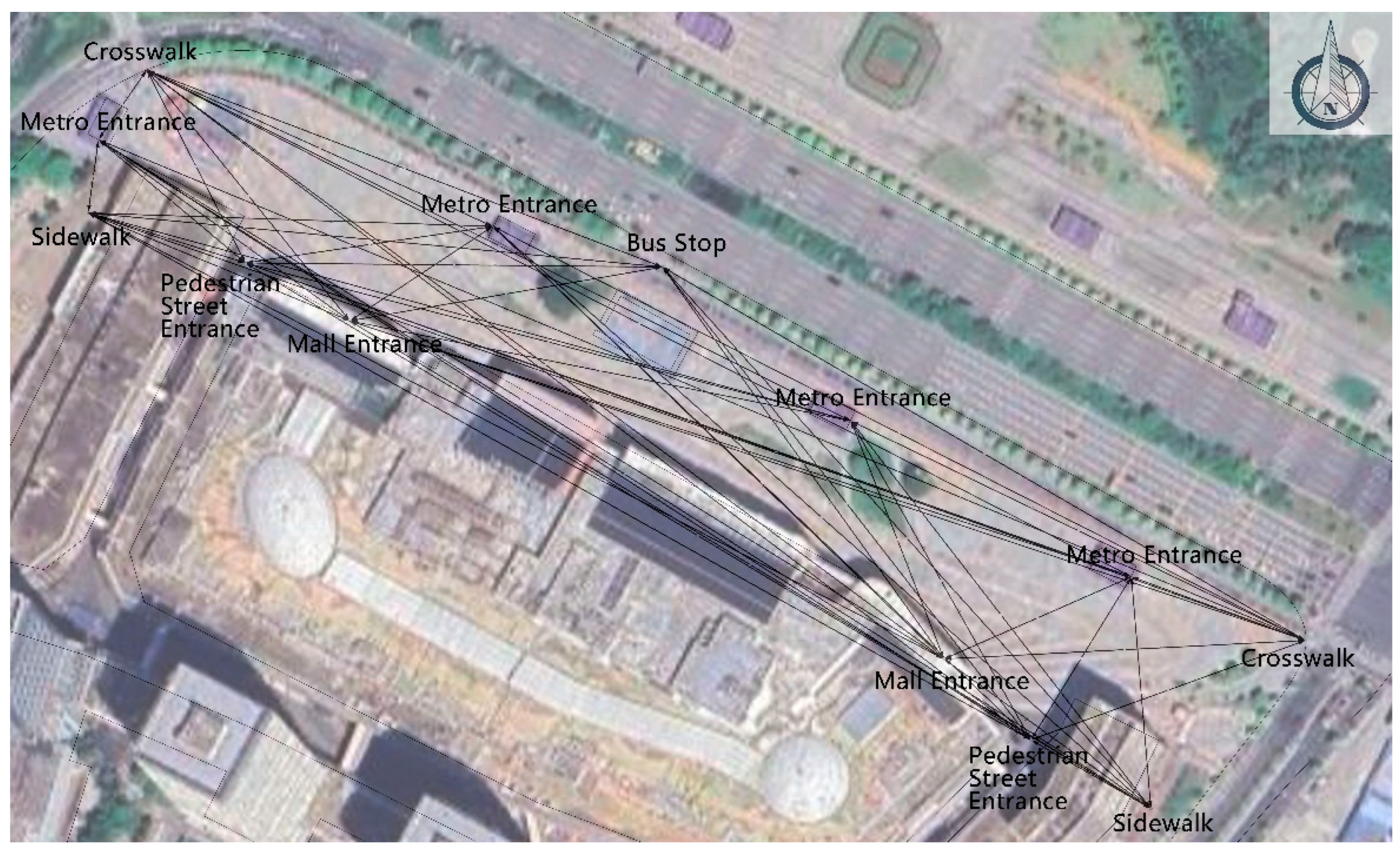
This study aims to capture the typical flow trends and density probabilities of pedestrian crowds in the square, rather than to predict fine-grained individual behavior. The simulation outputs were processed into pedestrian point density maps, indicating areas with relatively higher pedestrian presence. These density maps were not treated as behavioral results but were employed as exposure-weighting layers to support the assessment of pedestrian thermal exposure. By incorporating pedestrian movement patterns in this manner, the analysis prioritizes areas where pedestrians are more likely to experience prolonged thermal stress, while avoiding over-reliance on behavioral modeling assumptions. The starting and ending points of pedestrians are analyzed as shown in
Figure 6, and the key simulation settings for pedestrian simulation are shown in
Table 5.
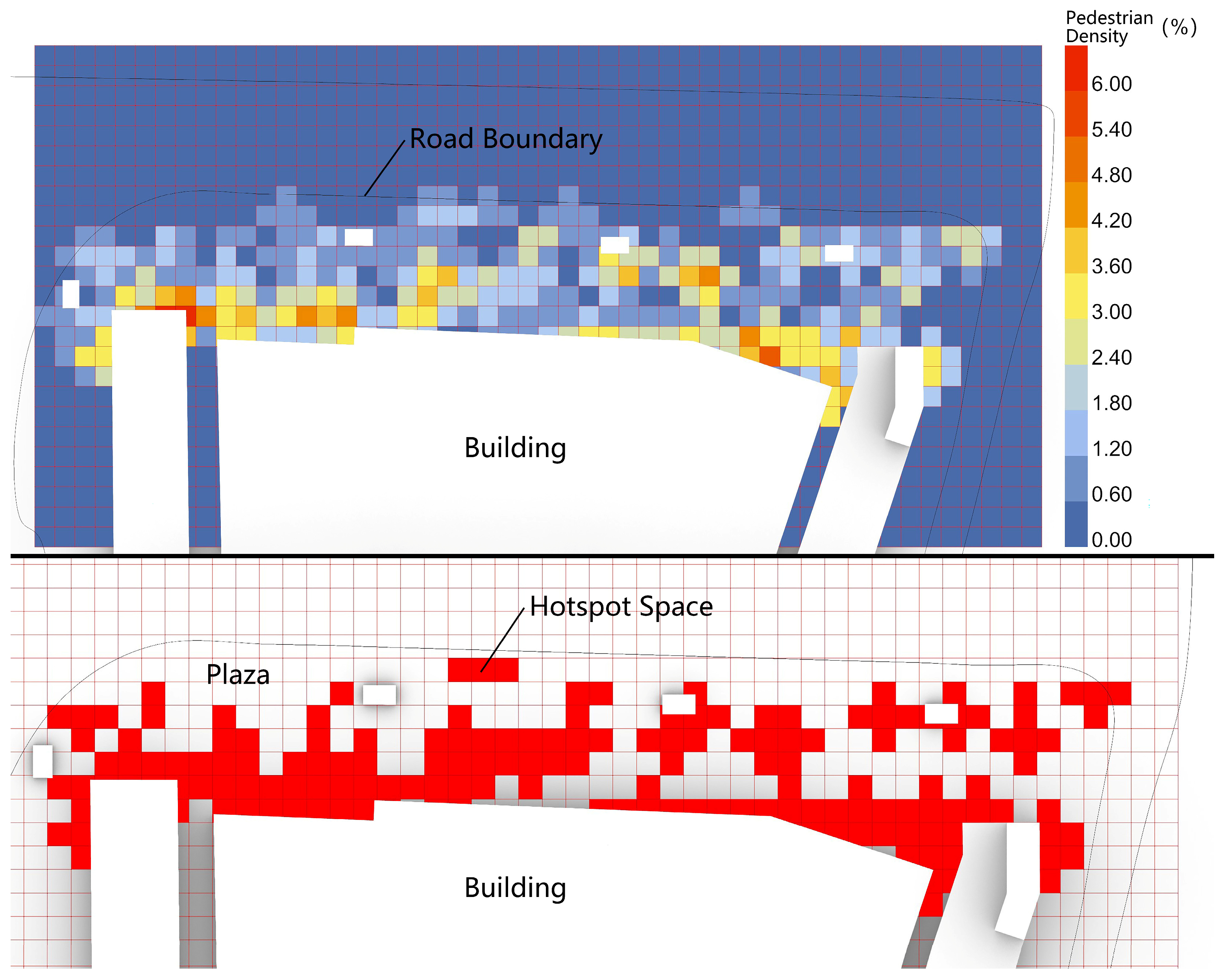
Representative pedestrian movement patterns were generated to illustrate typical circulation within the square. The resulting spatial distribution of pedestrian presence is shown on
Figure 7. Spaces with a pedestrian density of 1% or higher were designated as pedestrian hotspots (
Figure 7), with an area of approximately 14,000 m
2. Subsequent studies will assess pedestrian thermal comfort based on this space.
These figures illustrate representative pedestrian movement paths and the corresponding pedestrian point density distribution used to derive exposure-weighting layers. The pedestrian movement simulation is applied as a simplified and illustrative tool to represent typical circulation patterns within the square, rather than as a predictive behavioral model.
2.6. Parametric Generation of Tree Layout Scenarios
To systematically explore the influence of tree spatial configuration on pedestrian thermal exposure, a parametric modeling approach was adopted to generate multiple tree layout scenarios. Tree species-related parameters were kept constant, while spatial variables such as tree spacing, distribution patterns, and canopy arrangement were parametrically controlled.
Pedestrian exposure-weighting layers derived from representative movement patterns were incorporated into the parametric generation process as probabilistic inputs. Areas with higher pedestrian exposure intensity were assigned a higher likelihood of tree placement, while stochastic variation was retained to avoid overly deterministic configurations. This approach enables the exploration of exposure-prioritized tree layouts without assuming a single optimal solution.
All generated tree layout scenarios were subsequently evaluated using the same CFD-based microclimate modeling framework and thermal exposure assessment procedure to ensure comparability across scenarios. Through this parametric workflow, the study identifies tree layout strategies that effectively mitigate pedestrian thermal exposure under hot-humid conditions and reveals the underlying mechanisms driving their performance.
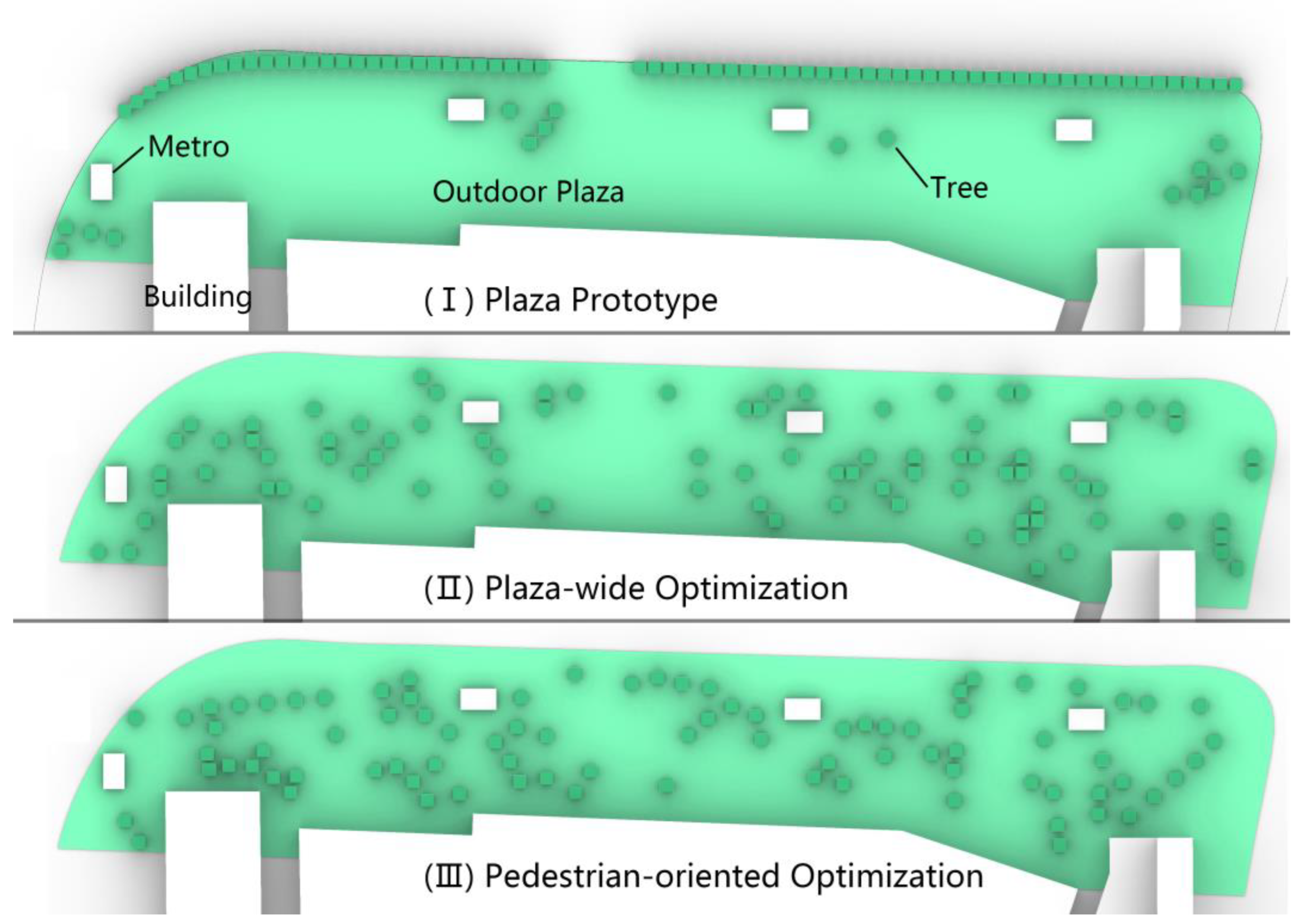
Figure 8 shows two tree canopy layout comparison models constructed using the Grasshopper parametric method based on the original green coverage ratio of the square. Both squares have a green coverage ratio of 6.6% and contain 85 trees. In
Figure 8, I represents the original green layout model of the square, II represents the green layout scheme obtained by randomly distributing 85 trees using a random algorithm, and III represents the green layout scheme obtained by randomly distributing 85 trees at simulated pedestrian trajectory points.
In subsequent CFD calculations, plants will be modeled as porous fluid regions based on LAD (leaf area density) and included in the flow field calculation. Therefore, the plant canopy model is simplified to a voxel model, with the lowest point of the canopy at an elevation of 3 m, the highest point at an elevation of 9 m, a side length of 5 m, a canopy height of 6 m, and LAD = 1.
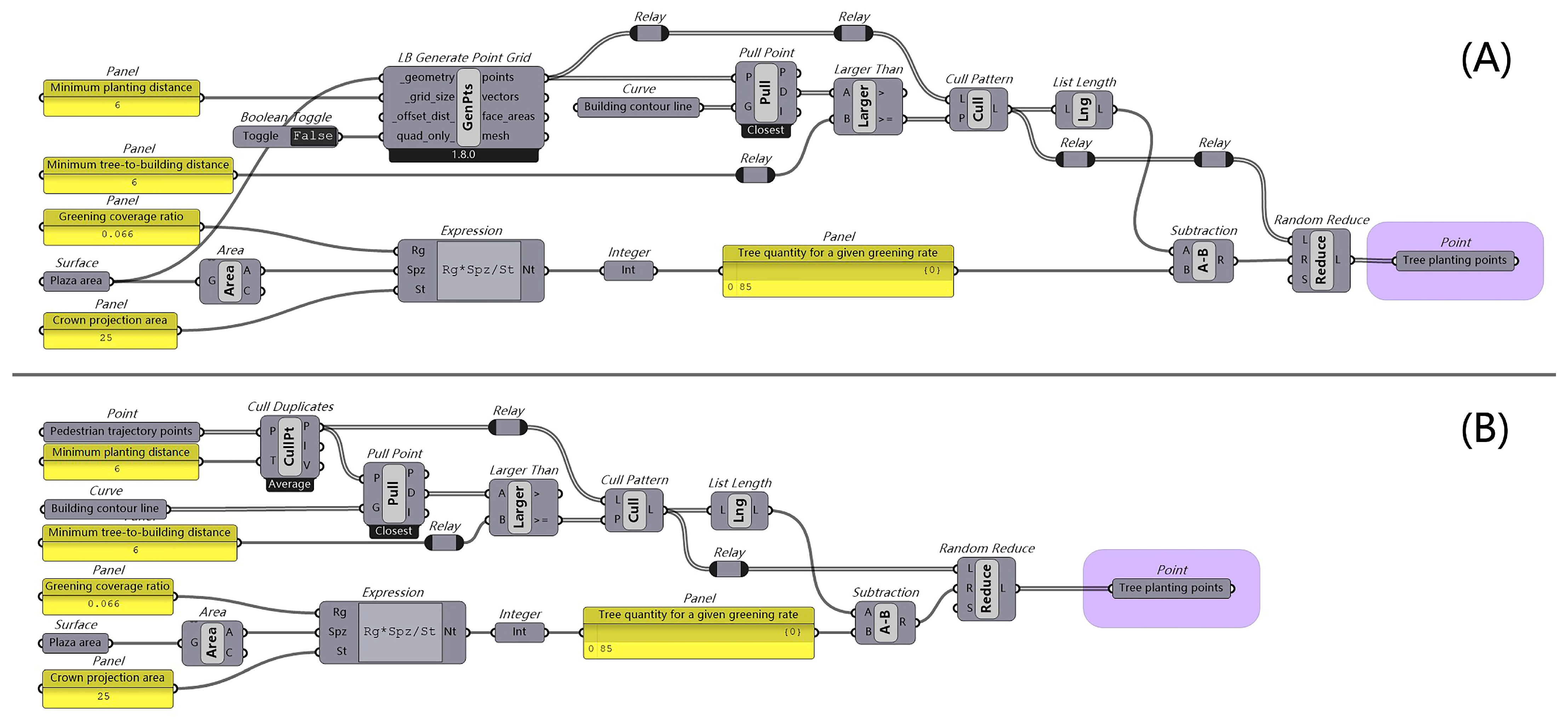
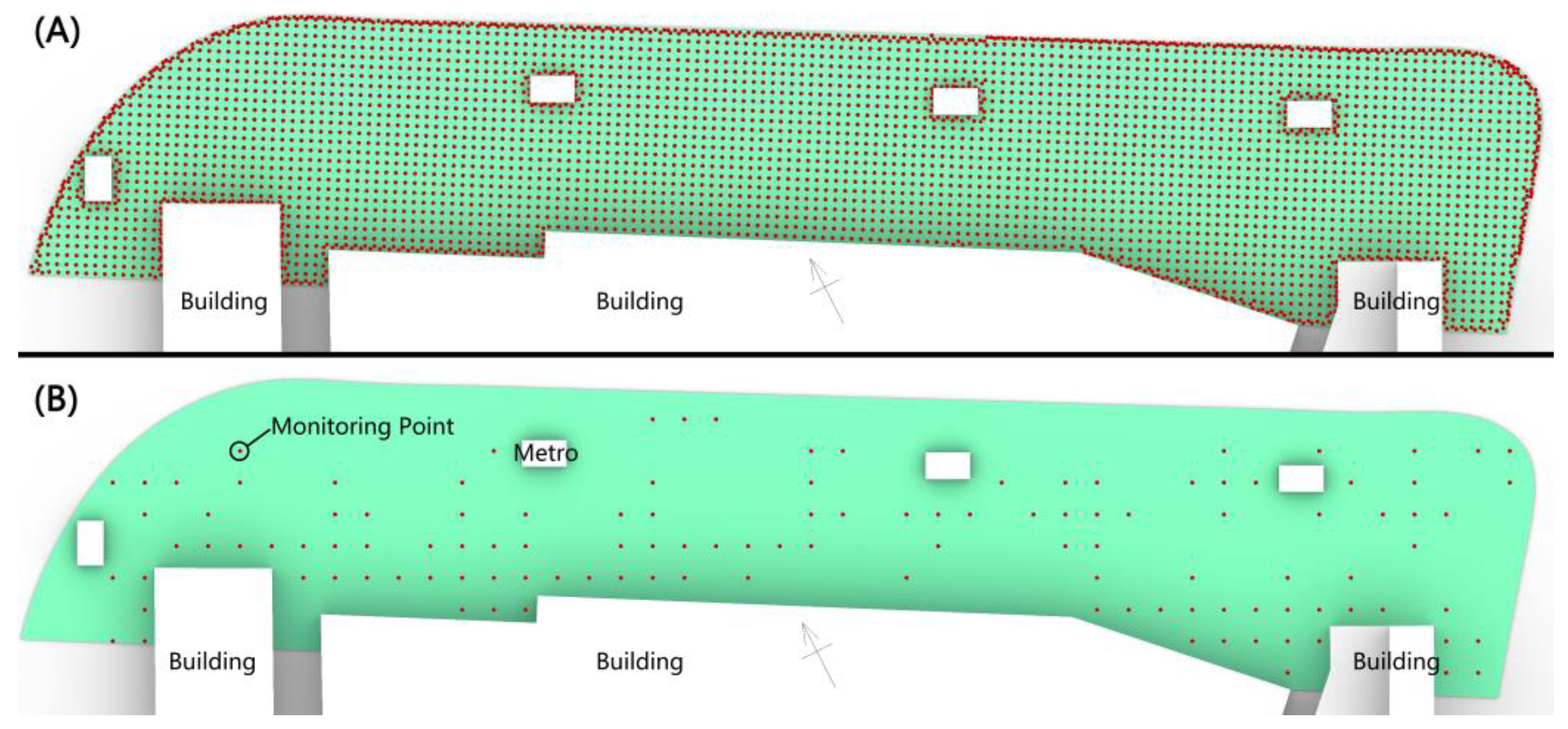
The GH algorithm logic for greening layout scheme II is as follows: Calculate the number of trees n based on the green coverage ratio and the square area; densely distribute grid points with a spacing of 6 m throughout the square, then discard grid points less than 6 m away from buildings, and consider the remaining grid points as the maximum possible planting locations for trees, with a quantity of N; use GH’s “Random Reduce” method to pseudo-randomly remove N-n points from the maximum possible tree planting locations.
where
is the green coverage ratio,
is the square area, and
is the projected area of the tree canopy (
Figure 9A). The generation logic for greening layout scheme III is similar, except that the maximum possible planting locations are replaced by pedestrian trajectory points spaced 6 m apart (
Figure 9B).
2.7. Simulation Setup and Boundary Conditions
2.7.1. Meteorological Boundary Conditions
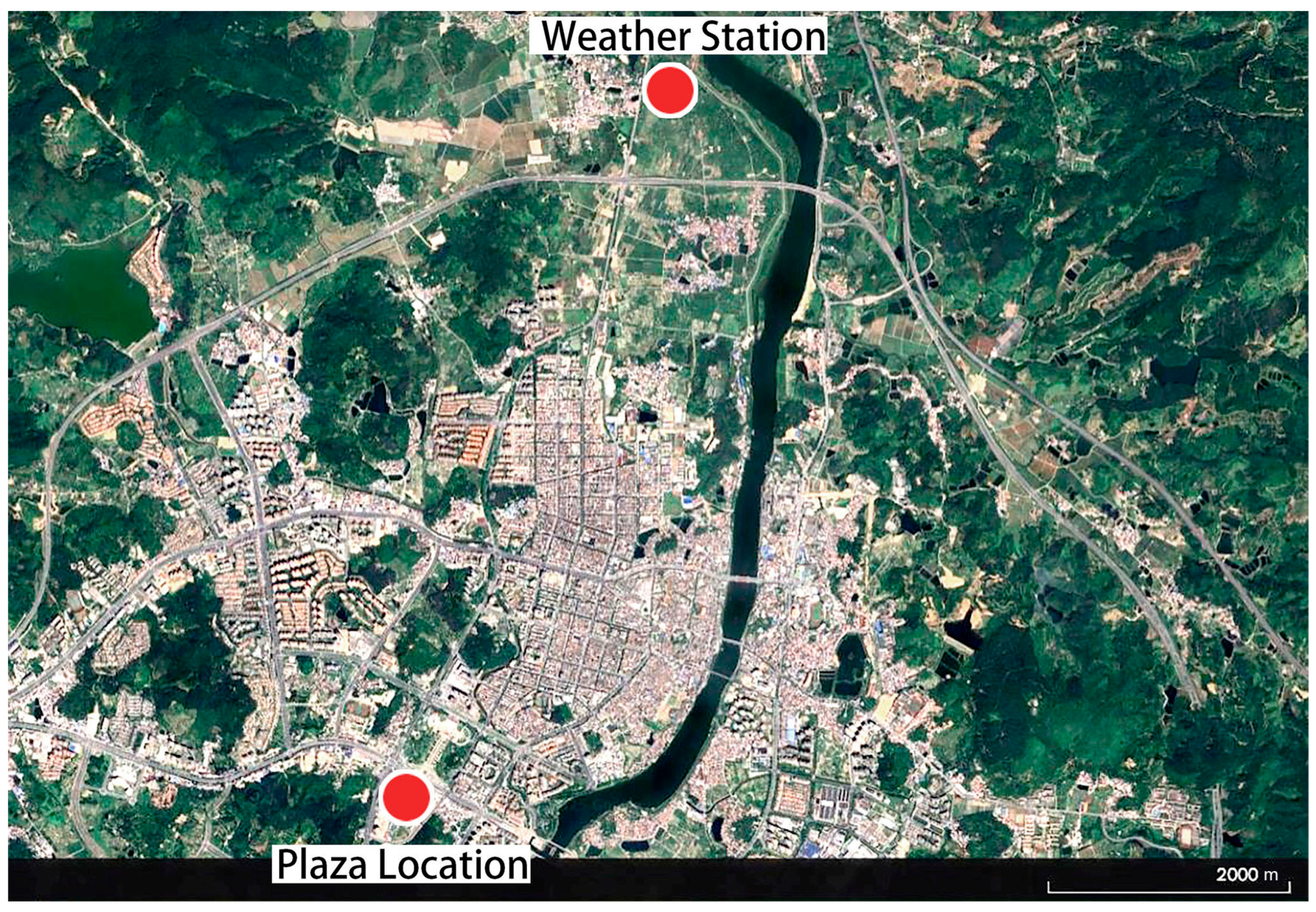
EPW (EnergyPlus Weather File) meteorological data is a standardized database released by the U.S. Department of Energy (DOE) for building performance simulation analysis. Its sources include CSWD (China Standard Weather Data), IWEC (International Weather for Energy Calculation), and SWERA (Solar and Wind Energy Resource Assessment). The meteorological data source for this study is CSWD, which is based on long-term observation data from the surface meteorological stations of the China Meteorological Administration (113.83° E, 23.33° N). The meteorological station is about 6 km away from the studied block in a straight line (
Figure 10). Considering the extremely close spatial distance on a meteorological scale, it adequately characterizes the external climate conditions of the block.
The simulation time was set at 12:00 noon on the 202nd day of the year, which is approximately the hottest summer period (approximately the “Great Heat” day in the Chinese lunar calendar) of the year and the hottest period of the year, to reflect the thermal environment response of the plaza case under hot and humid climate conditions. The wind speed was taken as the average wind speed of 2 m/s recorded in the meteorological data of the prevailing wind direction (247.5°) in Zengcheng, Guangzhou in July. The wind direction was set at 297° along the wind corridor of the road, which is basically consistent with the corresponding prevailing wind direction. The other meteorological parameters are consistent with the EPW meteorological data (
Table 6).
2.7.2. Thermophysical Properties of Urban Materials
Buildings are the most important component of urban space, and buildings of varying height define the main surface morphology of a city. The construction materials of a specific building are diverse, and even the same material can have different compositions. This means that their thermal properties, such as heat transfer and heat storage, vary, which contributes to the complexity of urban and building energy consumption analysis.
For calculating the energy consumption and indoor thermal environment of a single building, it is necessary to finely differentiate each building material and assign corresponding physical parameters. However, when calculating and analyzing the energy flow of a block, a certain area of a city, or even the entire city, it is impossible to finely differentiate every building material; a simplified approach must be adopted. In this study, the material parameters are uniformly taken as those of silicate brick masonry [
46]. Ground emissivity 0.9, albedo 0.2; building emissivity 0.9, albedo 0.4.
2.7.3. Pedestrian-Related Parameters for UTCI and MRT Calculation
Pedestrian-related parameters required for the calculation of UTCI and MRT were defined based on commonly adopted reference values for outdoor thermal comfort assessment. These parameters represent a standard adult pedestrian under typical summer conditions and were applied consistently across all simulation scenarios. The selected values aim to ensure comparability between different tree layout configurations, rather than to capture individual behavioral variability. A summary of the pedestrian-related parameters used in this study is provided in
Table 7.
3. Baseline Pedestrian Thermal Exposure in the Open Square
3.1. Baseline Microclimatic Conditions
To characterize baseline thermal conditions within the open square, a set of representative climate monitoring points was defined across the plaza area. These points were distributed to capture spatial variations in microclimatic conditions under typical summer daytime scenarios, including areas with different degrees of solar exposure and spatial openness. The spatial arrangement of the monitoring points across the plaza is illustrated in
Figure 11A.
In addition to plaza-wide monitoring, pedestrian hotspot zones identified using the exposure-weighting approach described above were further sampled to reflect thermal conditions experienced in highly used pedestrian areas. Climate monitoring points within these hotspot zones are shown on
Figure 11B, enabling a focused assessment of pedestrian thermal exposure under baseline conditions.
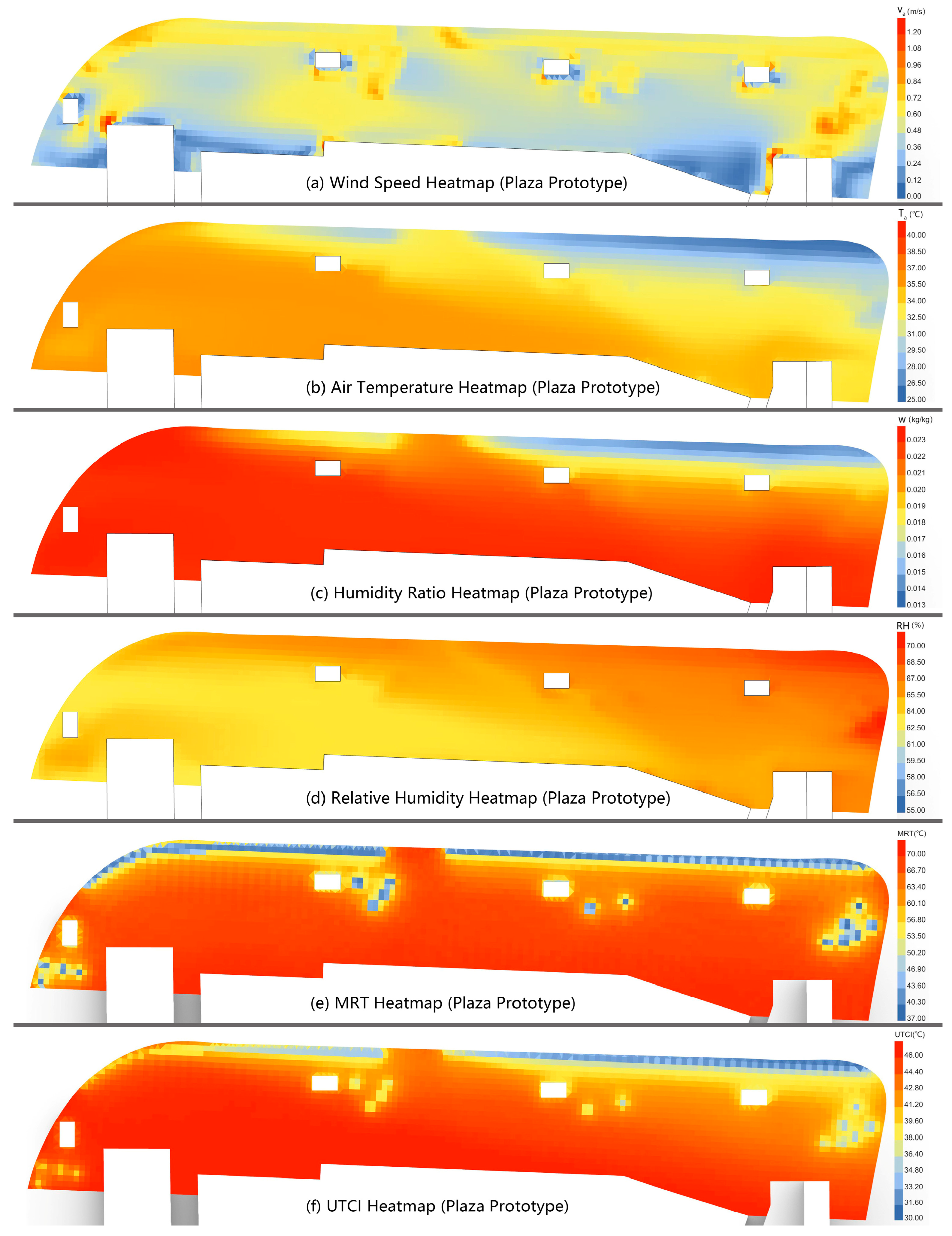
The spatial distributions of baseline microclimatic parameters are shown in
Figure 12a–d. Wind speed across the plaza remains generally low, ranging from 0.05 to 1.16 m/s with an average of 0.61 m/s, indicating limited convective cooling potential at pedestrian height. Air temperature exhibits consistently high values across the plaza, with an average of 33.08 °C. Humidity conditions further intensify thermal stress, with average specific humidity and relative humidity reaching 0.0200 kg/kg and 61.66%, respectively. Together, these conditions form an unfavorable microclimatic background for outdoor thermal comfort.
The combined effects of high air temperature, humidity, and weak ventilation result in severe radiative and thermal stress across the plaza. As illustrated in
Figure 12e, plaza-wide MRT values range from 37.41 to 69.25 °C, with an average of 61.71 °C. Within pedestrian hotspot areas, MRT further increases, reaching an average of 66.37 °C, indicating intensified radiative heat exposure in areas of high pedestrian presence.
UTCI distributions reveal similarly severe baseline thermal conditions. Plaza-wide UTCI values range from 30.19 to 46.54 °C, with an average of 42.49 °C and a thermally comfortable area ratio of zero (
Figure 12f). Pedestrian hotspot areas exhibit even higher thermal stress, with an average UTCI of 44.39 °C and no thermally comfortable zones identified. These results confirm that pedestrians are predominantly exposed to strong or very strong heat stress under baseline conditions.
Overall, the baseline simulations demonstrate that the plaza prototype experiences pronounced thermal stress under extreme summer conditions, particularly within pedestrian hotspot areas. The quantified baseline conditions and their spatial characteristics provide a critical reference for evaluating the effectiveness of tree layout optimization strategies examined in
Section 4.1,
Section 4.2 and
Section 4.3.
3.2. Plaza-Wide Baseline Thermal Indicators
This study focuses on pedestrian thermal conditions in open plazas; therefore, air temperature, MRT, and UTCI were selected as the key indicators for baseline assessment. Plaza-wide thermal conditions were analyzed under a representative extreme summer scenario (202d, 12:00), with a green coverage ratio of 6.6%.
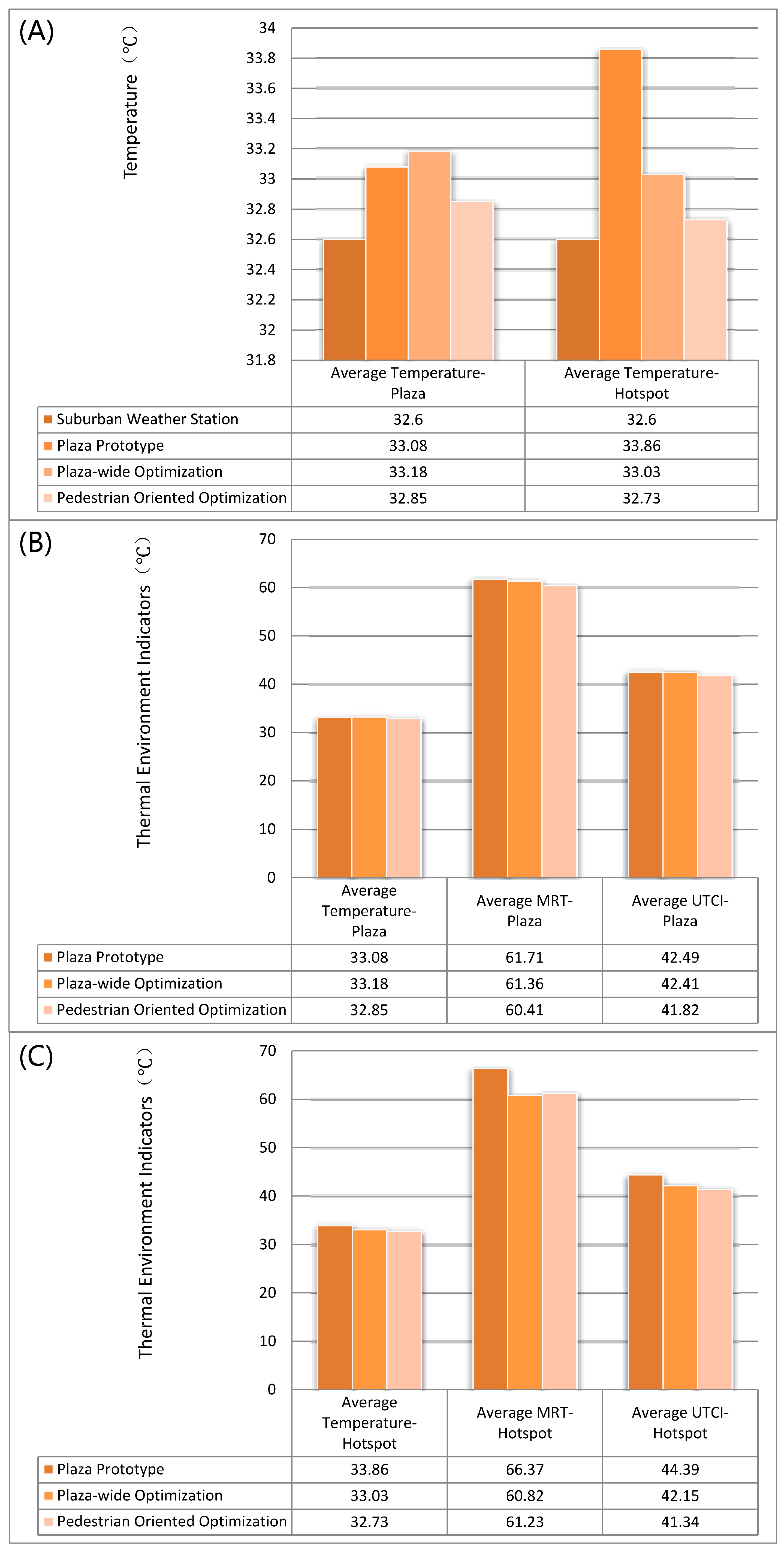
In terms of air temperature, the simulated plaza exhibits higher average values than the corresponding suburban reference, indicating the presence of an urban heat island effect. At the plaza-wide scale, the temperature difference relative to suburban conditions remains moderate (approximately 0.3–0.6 °C), suggesting limited spatial variation in air temperature across the plaza (
Figure 13A). Nevertheless, localized differences emerge in highly exposed areas, indicating that air temperature alone is insufficient to characterize pedestrian thermal stress in open spaces.
By contrast, MRT shows a stronger spatial influence on thermal conditions. While plaza-wide average MRT values differ only marginally among the simulated cases, pronounced reductions are observed in locations where shading is present (ΔMRT < −20). This indicates that radiative heat load is highly sensitive to spatial configuration and shading availability, particularly in areas frequently used by pedestrians (
Figure 13B).
The combined effect of elevated air temperature, high radiative load, and humid summer conditions results in consistently high UTCI values across the plaza under baseline conditions. Most areas remain subject to strong or very strong heat stress, confirming that the existing spatial configuration provides limited thermal protection for pedestrians during extreme summer periods.
Overall, the baseline analysis highlights that, although air temperature differences across the plaza are relatively modest, radiative exposure plays a dominant role in shaping pedestrian thermal stress. These plaza-wide thermal indicators establish a reference condition for evaluating the effectiveness of subsequent tree layout optimization strategies.
3.3. Thermal Exposure in Pedestrian Hotspot Areas
To better reflect pedestrian thermal experience, thermal conditions were further examined within pedestrian hotspot areas identified using the exposure-weighting approach described above. These hotspot areas represent locations with relatively high pedestrian presence and therefore correspond to zones where thermal stress is most likely to accumulate.
Figure 13C summarizes key thermal environment indicators within pedestrian hotspot areas under baseline conditions. Compared with plaza-wide UTCI (42.49 °C), hotspot areas exhibit consistently higher thermal stress levels (mean UTCI exceeding 44 °C), indicating that pedestrian activity is concentrated in thermally adverse environments. This contrast highlights the limitation of plaza-wide assessments in capturing pedestrian-relevant thermal exposure.
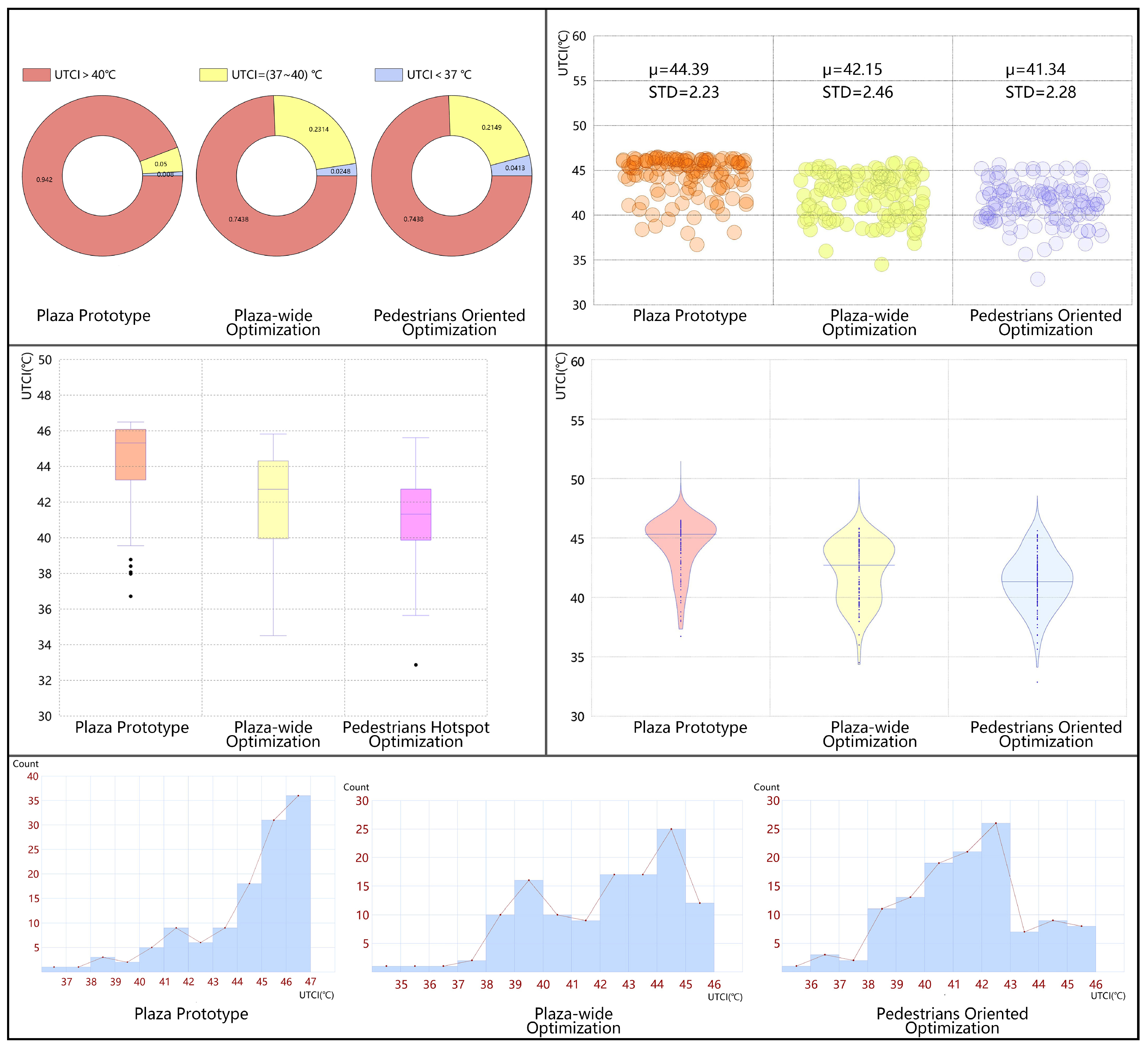
The distribution characteristics of UTCI within pedestrian hotspot areas further illustrate the severity of heat stress. As shown in
Figure 14, most hotspot data points cluster at high UTCI values, with only limited occurrences of lower thermal stress. The relationship between UTCI and pedestrian presence indicates that under typical summer daytime conditions, pedestrians are frequently exposed to extremely high thermal loads (unshaded areas with UTCI exceeding 40 °C).
Statistical analyses of UTCI distributions within pedestrian hotspot areas are presented in
Figure 14. Both the box–violin plots and interval distribution charts indicate that most hotspot locations fall within the categories of strong to very strong heat stress. The upper tail of the UTCI distribution remains pronounced, implying persistent exposure to extreme thermal conditions rather than isolated hotspots.
The proportional distribution of UTCI categories within pedestrian hotspot areas, illustrated by the donut chart (
Figure 14), further confirms that thermally comfortable conditions are nearly absent under baseline conditions (94% of the space has a UTCI exceeding 40 °C). Most pedestrian hotspot locations are associated with high or extreme heat stress levels, underscoring the limited thermal suitability of the existing spatial configuration during extreme summer periods.
Overall, the pedestrian hotspot analysis reveals a clear mismatch between pedestrian spatial behavior and thermal comfort conditions. Areas with the highest pedestrian presence coincide with zones of severe thermal stress, indicating that pedestrians are disproportionately exposed to adverse thermal environments. These findings emphasize the necessity of optimization strategies that explicitly prioritize pedestrian hotspot areas rather than relying solely on uniform or plaza-wide thermal mitigation.
4. Effects of Pedestrian-Oriented Tree Layout Optimization
This section evaluates the effectiveness of different tree layout strategies in mitigating pedestrian thermal stress in the plaza. Analyses focus on plaza-wide and hotspot-specific microclimatic improvements, with comparisons against baseline conditions established in
Section 3.
4.1. Plaza-Wide Mitigation Effects of Tree Layout Optimization
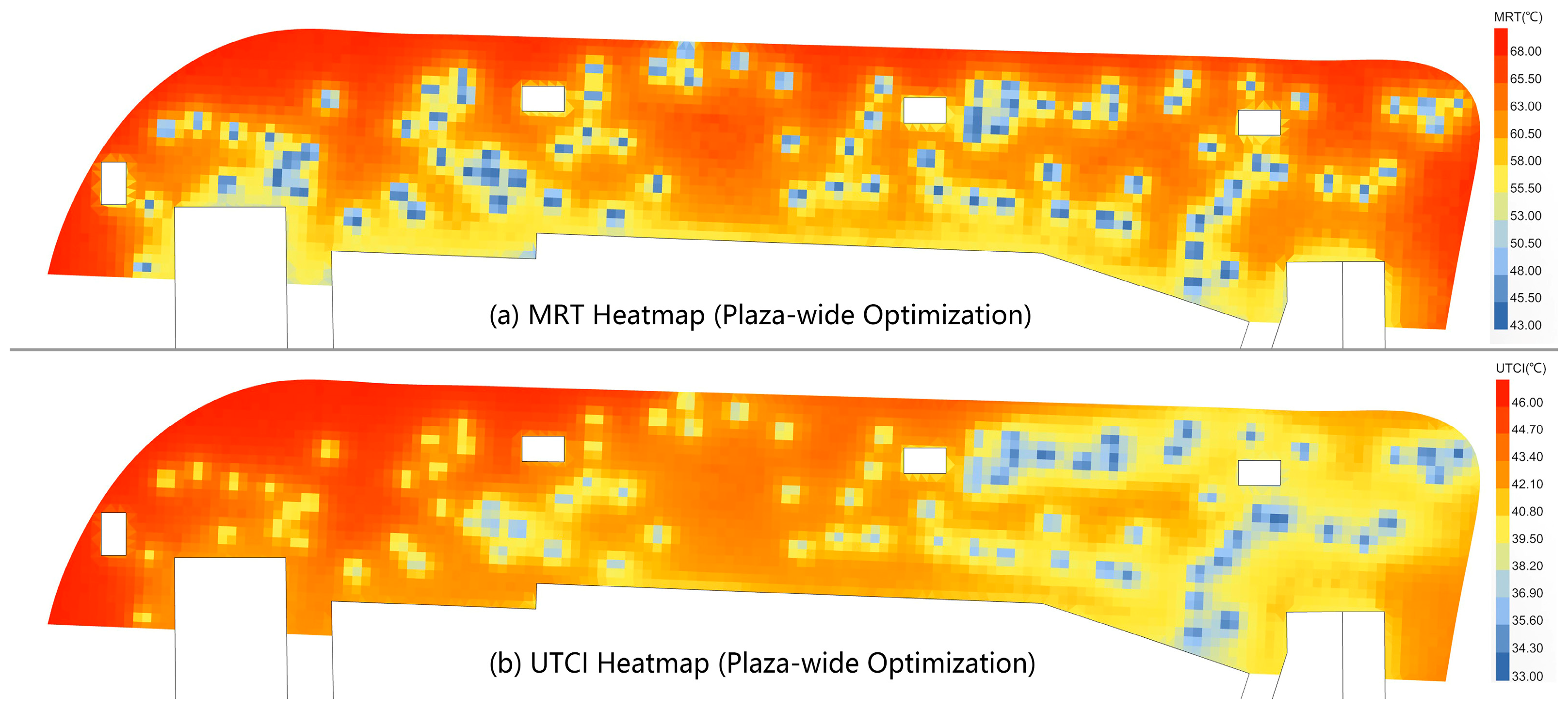
To evaluate the effectiveness of the plaza-wide optimization strategy beyond aggregated indicators, both spatial distributions and quantitative comparisons of thermal conditions were analyzed at the plaza-wide scale. The spatial patterns of MRT and UTCI under the plaza-wide optimization scenario are illustrated in
Figure 15, while plaza-wide average microclimatic and thermal comfort indicators for all scenarios are summarized in
Table 8.
The spatial distribution of MRT under the plaza-wide optimization scenario exhibits considerable heterogeneity across the plaza (
Figure 15a). MRT values range from 43.01 to 68.40 °C, with an average of 61.36 °C, indicating that extreme radiative heat loads persist in large unshaded open areas despite vegetation redistribution. Localized reductions in MRT are primarily associated with areas directly shaded by tree canopies, suggesting that plaza-wide optimization can alleviate radiative heat stress in selected locations but does not fundamentally alter the overall radiative environment of the plaza.
A similar pattern is observed for UTCI (
Figure 15b). Plaza-wide UTCI values range from 33.83 to 46.21 °C, with an average of 42.41 °C, and no thermally comfortable areas are identified under the extreme summer scenario. Although shaded zones exhibit relatively lower UTCI values, the spatial distribution reveals widespread conditions corresponding to strong or very strong heat stress, indicating limited improvement in overall thermal comfort.
When focusing on pedestrian hotspot areas extracted based on exposure-weighted movement patterns, the plaza-wide optimization scenario yields MRT values ranging from 46.99 to 67.49 °C, with an average of 60.82 °C, and UTCI values ranging from 34.51 to 45.82 °C, with an average of 42.15 °C. The similarity between hotspot-level and plaza-wide averages suggests that, under plaza-wide optimization, thermal mitigation is not sufficiently aligned with areas of intensive pedestrian use, leaving pedestrian hotspots exposed to substantial radiative and thermal stress.
To complement the spatial analysis,
Table 8 provides a quantitative comparison of plaza-wide average thermal indicators across all scenarios. Consistent with the spatial patterns observed in
Figure 15, the plaza-wide optimization strategy achieves moderate reductions in MRT and UTCI relative to the baseline configuration (ΔMRT = −0.35, ΔUTCI = −0.08). However, the magnitude of improvement remains limited under extreme summer conditions, particularly when evaluated from a pedestrian exposure perspective.
Overall, the combined spatial and quantitative evidence demonstrates that plaza-wide optimization can moderately improve radiative conditions at the overall plaza scale but has limited effectiveness in reducing pedestrian thermal stress. These findings highlight the constraints of uniform plaza-wide vegetation redistribution and provide a basis for examining pedestrian-oriented optimization strategies, which are further discussed in
Section 4.2.
4.2. Pedestrian Hotspot-Oriented Mitigation Effects
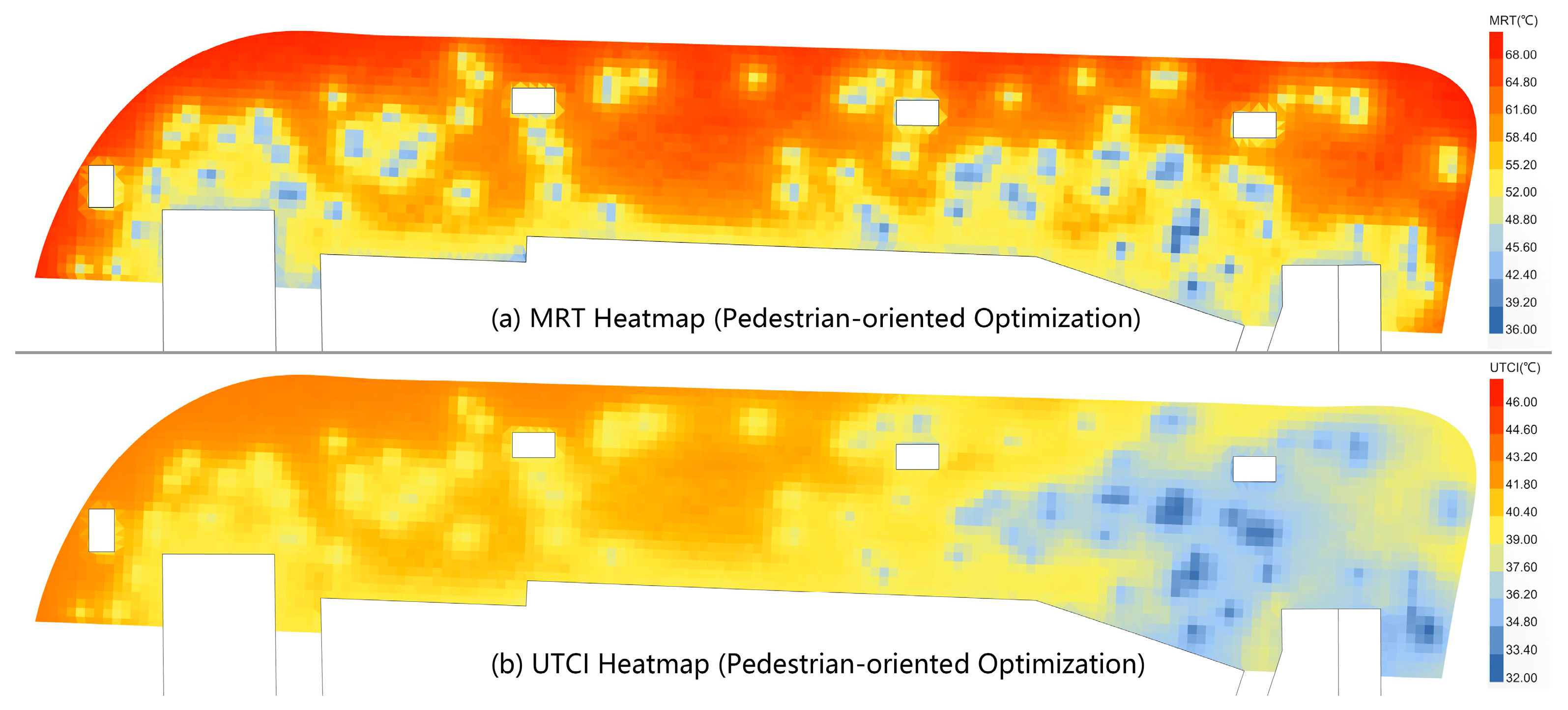
To evaluate the effectiveness of pedestrian-oriented optimization strategies, the spatial distributions of MRT and UTCI under the pedestrian-oriented tree layout were analyzed at the plaza-wide scale. The resulting MRT and UTCI distributions are illustrated in
Figure 16, while pedestrian hotspot-level thermal comfort indicators are quantitatively summarized in
Table 9.
Under the pedestrian-oriented optimization scenario, plaza-wide MRT values range from 36.09 to 68.80 °C, with an average MRT of 60.41 °C (
Figure 16a). Compared with the plaza-wide optimization strategy, the spatial distribution exhibits a more heterogeneous pattern, characterized by locally pronounced MRT reductions along dominant pedestrian trajectories. These lower-MRT zones coincide with areas where tree canopies are deliberately concentrated based on pedestrian movement patterns, indicating that pedestrian-oriented optimization effectively redistributes shading toward functionally relevant spaces without increasing overall green coverage.
At the pedestrian hotspot level, MRT values range from 57.94 to 67.42 °C, with an average of 61.23 °C. Although hotspot-level average MRT remains high under extreme summer conditions, the spatial correspondence between shaded zones and pedestrian hotspots demonstrates that the pedestrian-oriented strategy enhances radiative mitigation precisely where pedestrian exposure is greatest. This contrasts with plaza-wide optimization, where shading benefits are more diffusely distributed and less aligned with pedestrian presence.
UTCI results further highlight the advantages of pedestrian-oriented optimization. Across the entire plaza, UTCI values range from 32.19 to 46.49 °C, with an average of 41.82 °C, and no thermally comfortable areas are identified (
Figure 16b). Nevertheless, the spatial distribution reveals an expansion of relatively lower UTCI zones along pedestrian movement corridors, reflecting the combined effects of reduced radiative load and slightly improved wind conditions in shaded areas.
Within pedestrian hotspot areas, UTCI values range from 32.87 to 45.61 °C, with an average of 41.34 °C, as summarized in
Table 9. Although thermally comfortable conditions remain absent under the extreme summer scenario, the reduction in both average and upper-range UTCI values compared with the baseline and plaza-wide optimization strategies indicates a meaningful alleviation of pedestrian thermal stress. Importantly, the hotspot-level UTCI distribution becomes less skewed toward extreme heat stress (compared to the baseline condition, ΔUTCI = −3; compared to the plaza-wide optimization scheme, ΔUTCI = −0.8), suggesting a more uniform and tolerable thermal environment for pedestrians.
Taken together, the combined spatial and quantitative evidence demonstrates that pedestrian-oriented optimization achieves more effective thermal mitigation than plaza-wide approaches by explicitly aligning vegetation placement with pedestrian movement patterns. While overall plaza-wide thermal conditions remain constrained by extreme climatic forcing, concentrating shading resources along pedestrian trajectories leads to locally enhanced reductions in MRT and UTCI within areas of highest pedestrian exposure. These findings confirm the importance of incorporating pedestrian spatial behavior into tree layout optimization to improve outdoor thermal comfort in urban open spaces.
4.3. Winter Performance and Seasonal Trade-Offs
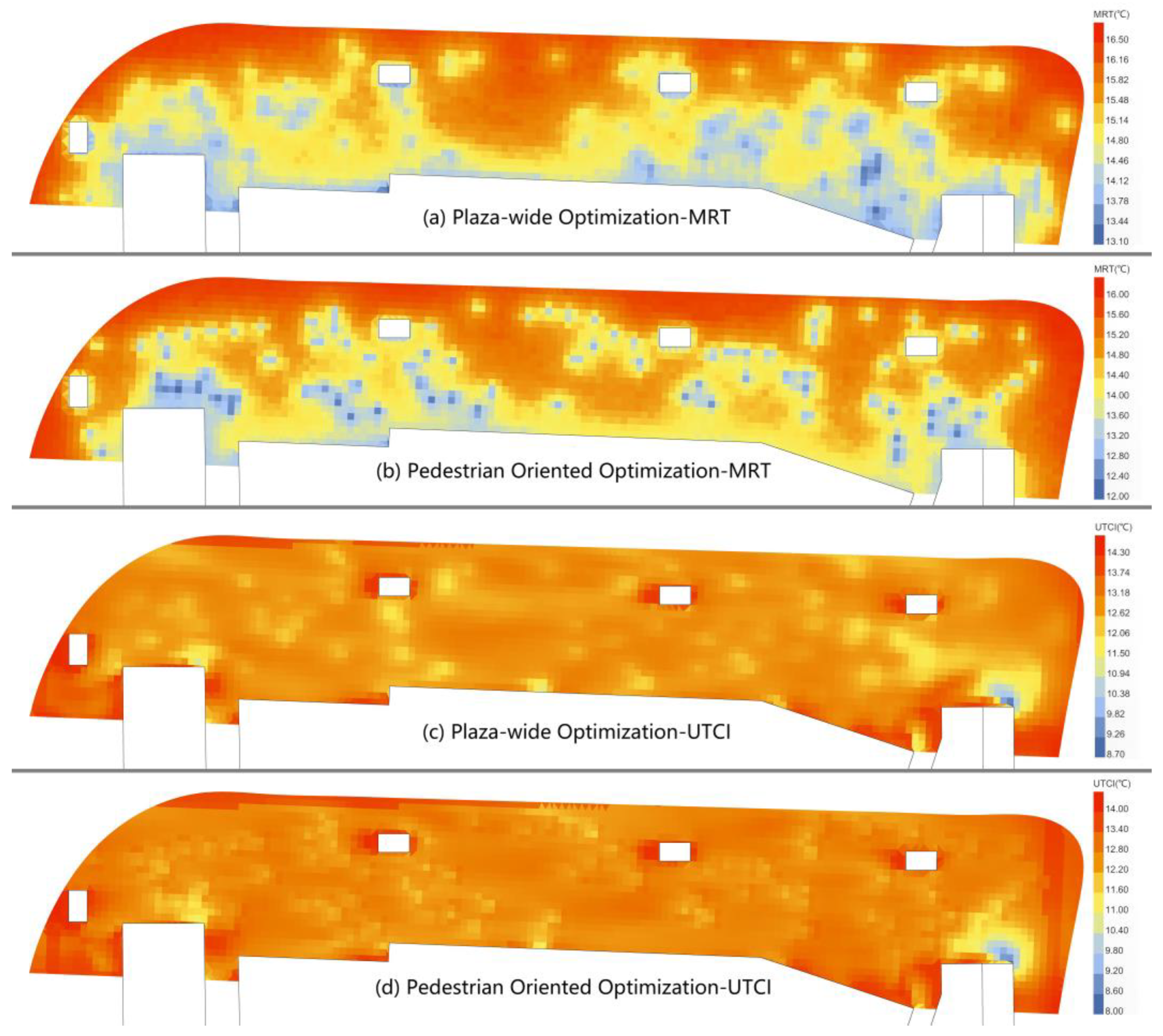
To examine potential seasonal trade-offs associated with tree layout optimization, winter thermal performance under both the plaza-wide and pedestrian-oriented optimization scenarios was analyzed. Spatial distributions of MRT and UTCI for the two optimization strategies are illustrated in
Figure 17, respectively.
Under winter conditions, both optimization strategies exhibit relatively homogeneous MRT distributions across the plaza. For the plaza-wide optimization scenario, MRT values range from 13.10 to 16.56 °C, with an average of 15.60 °C (
Figure 17a). Similarly, the pedestrian-oriented optimization yields MRT values ranging from 12.14 to 16.67 °C, with an average of 15.50 °C (
Figure 17b). The narrow MRT ranges and close average values indicate that vegetation redistribution has a limited influence on radiative thermal conditions at the plaza-wide scale during winter.
At the pedestrian hotspot level, MRT values remain comparable between the two optimization strategies. Average hotspot MRT is 15.53 °C under plaza-wide optimization and 15.36 °C under pedestrian-oriented optimization, suggesting that concentrating vegetation along pedestrian trajectories does not result in excessive shading or radiative cooling during winter periods.
UTCI results further confirm the absence of adverse winter impacts. For the plaza-wide optimization scenario (
Figure 17c), UTCI values range from 8.73 to 14.32 °C, with an average of 11.92 °C, and the thermally comfortable area ratio reaches 100%, corresponding to the category of no thermal stress to slight cold stress. The pedestrian-oriented optimization produces a similarly favorable UTCI distribution, with plaza-wide values ranging from 8.10 to 14.43 °C and an average of 11.84 °C (
Figure 17d). At the pedestrian hotspot level, both optimization strategies maintain a 100% thermally comfortable area ratio, with average UTCI values of 12.01 °C and 11.79 °C for the plaza-wide and pedestrian-oriented scenarios, respectively.
Overall, the winter analyses indicate that neither optimization strategy introduces significant thermal discomfort during colder periods. The pedestrian-oriented optimization, while substantially improving thermal conditions under extreme summer scenarios, does not lead to measurable winter penalties in terms of radiative cooling or cold stress. These findings suggest that integrating pedestrian movement patterns into tree layout design can enhance summer thermal comfort without compromising winter thermal performance, supporting the seasonal robustness of the proposed optimization approach.
5. Conclusions
Under escalating urban heat risks, conventional plaza-wide greening strategies have proven insufficient for protecting pedestrians in hot-humid open squares, as they misalign thermal mitigation resources with actual human exposure patterns. This study develops and validates a pedestrian-oriented microclimate optimization framework that integrates agent-based movement simulation (PedSim) with coupled CFD microclimate modeling (urbanMicroclimateFoam) to enhance outdoor thermal comfort precisely where pedestrians walk and congregate.
Through systematic comparison of three scenarios in a representative urban plaza (32,300 m2) under extreme summer conditions, the research demonstrates three key findings:
First, spatial configuration of vegetation is as critical as coverage quantity for pedestrian thermal exposure. Under identical green coverage ratio (6.6%), the pedestrian-oriented strategy achieved substantially greater thermal comfort improvements in high-use areas compared to both baseline and plaza-wide optimization. Specifically, hotspot Mean Radiant Temperature (MRT) and Universal Thermal Climate Index (UTCI) were reduced by up to 5 °C and 3 °C, respectively, whereas plaza-wide uniform distribution yielded only marginal benefits (ΔUTCI < 1 °C).
Second, the pedestrian-oriented approach exhibits superior mitigation efficiency without resource augmentation. By concentrating tree canopies along exposure-weighted movement corridors, the strategy reduced hotspot UTCI by an additional 0.8 °C compared to plaza-wide optimization, effectively filling the “thermal exposure gap” where pedestrian activity coincides with severe heat stress.
Third, the optimization demonstrates seasonal robustness. Winter simulations confirmed that summer-oriented, pedestrian-targeted shading layouts do not induce thermal penalties, maintaining 100% thermally comfortable conditions across all scenarios. This validates the applicability of the framework for year-round climate-responsive design in hot-humid regions.
The proposed framework offers a human-centered paradigm shift in urban open space design, transitioning from geometry-driven, area-averaged assessments to exposure-weighted, behavior-informed optimization. By explicitly linking vegetation placement to pedestrian movement patterns, this approach enables planners to maximize thermal resilience and public health benefits within fixed green infrastructure budgets, providing an actionable pathway for climate-adaptive urban design.
6. Discussion
6.1. Mechanisms of Pedestrian-Oriented Thermal Mitigation
The superior performance of pedestrian-oriented optimization stems from the spatial decoupling of exposure intensity and mitigation resources inherent in conventional designs. While plaza-wide strategies dilute shading benefits across the entire plaza—including underutilized zones—pedestrian-oriented placement concentrates cooling potential along high-exposure trajectories where radiant heat accumulation is most detrimental.
From a biophysical perspective, MRT reduction is the dominant driver of UTCI improvement in hot-humid environments. Our results indicate that MRT reduction accounts for approximately 70% of the thermal benefit in pedestrian hotspots. This aligns with the physiological reality that pedestrians in open squares experience cumulative radiative load along their movement paths rather than at discrete static points. By aligning tree canopies with dominant pedestrian vectors (
Figure 7), the optimized layout intercepts direct solar radiation precisely where pedestrian density is highest, effectively reducing the “radiative dose” per capita.
Furthermore, the pedestrian-oriented configuration subtly modifies the turbulent kinetic energy distribution without significantly obstructing prevailing ventilation pathways (
Table 8 and
Table 9). Unlike dense, uniform plantations that may create stagnant, humid microenvironments, strategic placement along trajectories maintains air exchange rates while providing punctuated shading. This avoids the “greenhouse effect” sometimes observed in poorly ventilated, heavily vegetated spaces in humid climates. The slight increase in hotspot wind speed (from 0.61 m/s to 0.66 m/s) suggests that concentrated vegetation along linear corridors can enhance rather than impede convective cooling, provided canopy density is carefully parameterized.
6.2. Dialogue with Existing Literature
Previous research on urban vegetations thermal mitigation effects has predominantly focused on two dimensions: (1) establishing negative correlations between canopy coverage and mean radiant temperature through remote sensing or fixed-point observations [
18,
21,
66], and (2) examining localized microclimate impacts of individual trees or regular tree belts via CFD simulation [
23,
42]. However, these studies share a critical methodological gap: the absence of explicit modeling of pedestrians’ actual spatiotemporal behavior patterns, making it impossible to determine whether mitigation measures target spaces that matter to people.
Our study addresses this gap by integrating Social Force Model (SFM)-based pedestrian simulation into a CFD optimization framework, systematically incorporating the human-space-climate triadic interaction. Our findings directly validate and quantify Willers et al.’s [
25] argument for high-resolution exposure modeling, extending this concept from health epidemiology to design optimization. Compared to Al Sabbagh & Marey [
31], who proposed multi-agent thermal comfort prediction, our research advances beyond prediction to complete the “diagnosis-to-prescription” loop—generating verifiable optimal layout schemes based on exposure hotspots.
Moreover, our results challenge the “coverage-centric” paradigm prevalent in urban greening policies. While Zaerpour et al. [
18] demonstrated that increasing tree canopy lowers urban air temperature by up to 1.5 °C, our study reveals that spatial configuration can achieve comparable or greater benefits at the pedestrian scale without increasing coverage. This has profound implications for resource-constrained urban environments where expanding green coverage is politically or economically unfeasible.
6.3. Design Implications and Spatial Strategies
The findings advocate for a paradigm shift from “geometry-driven” to “behavior-informed” environmental design. Rather than pursuing uniform thermal improvement across an entire site, designers may achieve greater comfort benefits by prioritizing high-use pedestrian corridors and activity nodes. This pedestrian-centric approach aligns thermal mitigation strategies with actual human behavior, enhancing experiential comfort without necessarily increasing intervention intensity.
We propose three translational strategies for practice:
Primary Path Shading: Deploy continuous tree lines along dominant pedestrian trajectories (e.g., transit connections, desire lines) to create “cool corridors” that reduce cumulative exposure during transit. Our results suggest maintaining 6 m spacing (as implemented in this study) to ensure shadow continuity while avoiding excessive wind blockage. The presence of trees modifies the local flow field: the nozzle effect or flow deflection beneath tree canopies paradoxically yields a slight increase in wind speed (by approximately +0.05 m/s), raising the hotspot wind speed from 0.61 m/s to 0.66 m/s. This indicates that strategically placed linear vegetation can enhance rather than impede convective cooling along pedestrian corridors.
Node-Targeted Intervention: Intensify vegetation at decision points, intersections, and waiting areas (e.g., transit stops) where pedestrians experience prolonged stationary exposure. In our case study, these hotspots covered approximately 14,000 m2 (43% of total plaza area), yet received disproportionately high thermal benefits from targeted intervention.
Temporal-Spatial Layering: Combine fixed tree canopies with lightweight, movable shading elements at seasonal hotspots to adapt to shifting solar angles while maintaining winter solar access. The winter validation (100% comfortable conditions) supports the use of deciduous or semi-transparent canopies (e.g., red maple, LAD = 1.0) that provide summer shade without excessive winter radiation blockage.
This approach achieves thermal equity by prioritizing spaces with highest human presence, ensuring limited green infrastructure resources deliver maximum public health benefits per unit investment. For rapidly urbanizing regions in hot-humid climates, our framework offers a cost-neutral pathway to enhance thermal resilience—optimizing existing or planned vegetation rather than requiring additional coverage.
6.4. Seasonal Robustness and Climatic Adaptability
A critical consideration in shading-based mitigation is the potential for seasonal trade-offs, particularly the risk of excessive cooling or solar deprivation in winter. Our winter simulations demonstrate that pedestrian-oriented strategies exhibit high seasonal robustness: both optimization schemes maintained 100% thermally comfortable area ratios in hotspots, with UTCI values of 12.01 °C (plaza-wide) and 11.79 °C (pedestrian-oriented)—well within the “no thermal stress” category.
This robustness arises from the solar geometry of hot-humid climates. In summer, high solar altitudes make horizontal shading highly effective; in winter, low solar angles allow sunlight to penetrate beneath canopy edges and reach pedestrian levels, even with trees positioned along pathways. The narrow MRT ranges in winter (12.14–16.67 °C) indicate that vegetation redistribution has limited influence on radiative conditions when solar forcing is weak. This resolves designers’ longstanding concerns about “summer shade vs. winter sun” conflicts, providing quantitative evidence that pedestrian-oriented shading does not compromise winter usability in subtropical contexts.
However, we caution that this conclusion may not extend to cold climates with severe winters, where solar access is critical for thermal comfort. Future research should explore species-specific strategies (e.g., deciduous vs. evergreen) to optimize the seasonal balance in diverse climatic contexts.
6.5. Spatial Variability and Statistical Interpretation of CFD Outputs
While CFD simulations are inherently deterministic, the interpretation of spatial variability in microclimatic outputs requires careful statistical treatment to ensure robust conclusions. In this study, spatial heterogeneity was captured through a stratified sampling strategy that distinguished between plaza-wide monitoring points and pedestrian hotspot zones, rather than relying solely on area-averaged metrics. The spatial distributions of MRT and UTCI were analyzed using both descriptive statistics (mean, range) and categorical frequency analysis (e.g., thermally comfortable area ratios) to characterize the thermal environment across different usage intensities. It is important to recognize that the reported spatial variations represent steady-state solutions under fixed boundary conditions; they do not account for stochastic fluctuations in pedestrian behavior or meteorological forcing. Consequently, the observed differences between scenarios (e.g., ΔUTCI = −3.0 °C in hotspots) should be interpreted as deterministic response magnitudes rather than probabilistic estimates. Future studies could enhance the statistical rigor by employing ensemble simulations with perturbed boundary conditions or Monte Carlo sampling of vegetation parameters to quantify uncertainty bounds and confidence intervals for spatial thermal metrics.
6.6. Limitations and Future Research
Geographic Specificity: This study focused on a single plaza typology (transit-oriented, high-flow) in a hot-humid climate. Generalizability to other urban morphologies (e.g., canyon-like squares, waterfront plazas, residential courtyards) requires validation. Future research should compare diverse plaza types through cross-case analyses to extract universal morphological parameters (e.g., the relationship between shading coverage and trajectory curvature).
Model Validation Constraints: The validation in
Section 2.4, while showing satisfactory agreement (RMSE = 0.85 °C, R
2 = 0.87), is constrained by limited temporal and spatial coverage. The measurement campaign covered a single day (19 March 2026) with moderate solar radiation and low wind speeds (0–2 m/s), which does not represent the extreme summer design conditions (32.6 °C) used for scenario evaluation. Moreover, only two measurement points (PA and PB) were employed, which cannot fully capture the three-dimensional spatial variability across the 32,300 m
2 domain, particularly in areas with complex building–vegetation–wind interactions. Future work should extend validation to multi-day summer observations with denser sensor networks to corroborate model fidelity under heat-stress conditions.
Pedestrian Behavior Modeling: The current implementation uses steady-state pedestrian density maps derived from fixed origin-destination pairs. This approach does not account for thermal adaptive behavior—pedestrians may spontaneously select shaded routes or adjust timing to avoid peak heat. Future studies should develop “thermal-behavior” bidirectional coupling models (e.g., using real-time UTCI as a resistance field in social force models) to simulate how heat avoidance reshapes exposure distributions.
Vegetation Parameterization: We modeled trees as simplified porous media with uniform LAD (1.0 m2/m3) and cubic geometry (5 m × 5 m × 6 m). Species-specific variations in canopy porosity, evapotranspiration rates, and seasonal deciduousness could significantly alter thermal performance. Future work should incorporate species parameterization libraries to explore how different tree traits (e.g., deep-rooted species for evaporative cooling vs. dense-canopy species for radiation blocking) optimize specific microclimatic objectives.
Transient Boundary Conditions: Our simulations employed steady-state meteorological forcing (extreme summer design day). Real-world heat stress depends on diurnal dynamics and stochastic weather fluctuations. Future research should employ probabilistic multi-scenario simulations (e.g., Monte Carlo sampling of meteorological parameters) to assess optimization robustness across variable conditions.
Scaling Implications: While effective at the plaza scale (3.2 ha), urban heat mitigation requires neighborhood-scale coordination. Future studies should investigate how micro-scale, pedestrian-oriented interventions interact with urban canopy layer airflow and whether aggregated optimizations can yield meso-scale cooling benefits—or potentially create unintended “thermal shadows” in adjacent spaces.
In conclusion, this study establishes that thermal comfort in urban open spaces is not merely a function of how much vegetation is provided, but critically, where it is placed relative to human occupancy patterns. By operationalizing the concept of “pedestrian thermal exposure,” we provide a replicable framework for evidence-based urban design that maximizes human well-being within resource-constrained environments. As cities worldwide confront escalating heat risks, such human-centered microclimate optimization offers a pragmatic pathway toward thermally resilient public realms.