



Analysis of the Effects of a Swing Door Opening on Indoor Airflow Fields—An Experimental Study
 , , and
Abstract
1. Introduction
- How does the movement of a swing door under different ventilation conditions affect the spatiotemporal dynamics of indoor airflow fields?
- What is the impact of consecutive door openings on the propagation and persistence of wakes generated by door movements in a controlled environment?
- Can an enhanced event-based modeling approach effectively approximate transient indoor air patterns resulting from door-opening activities, and how does it compare with experimental data?
2. Methodology
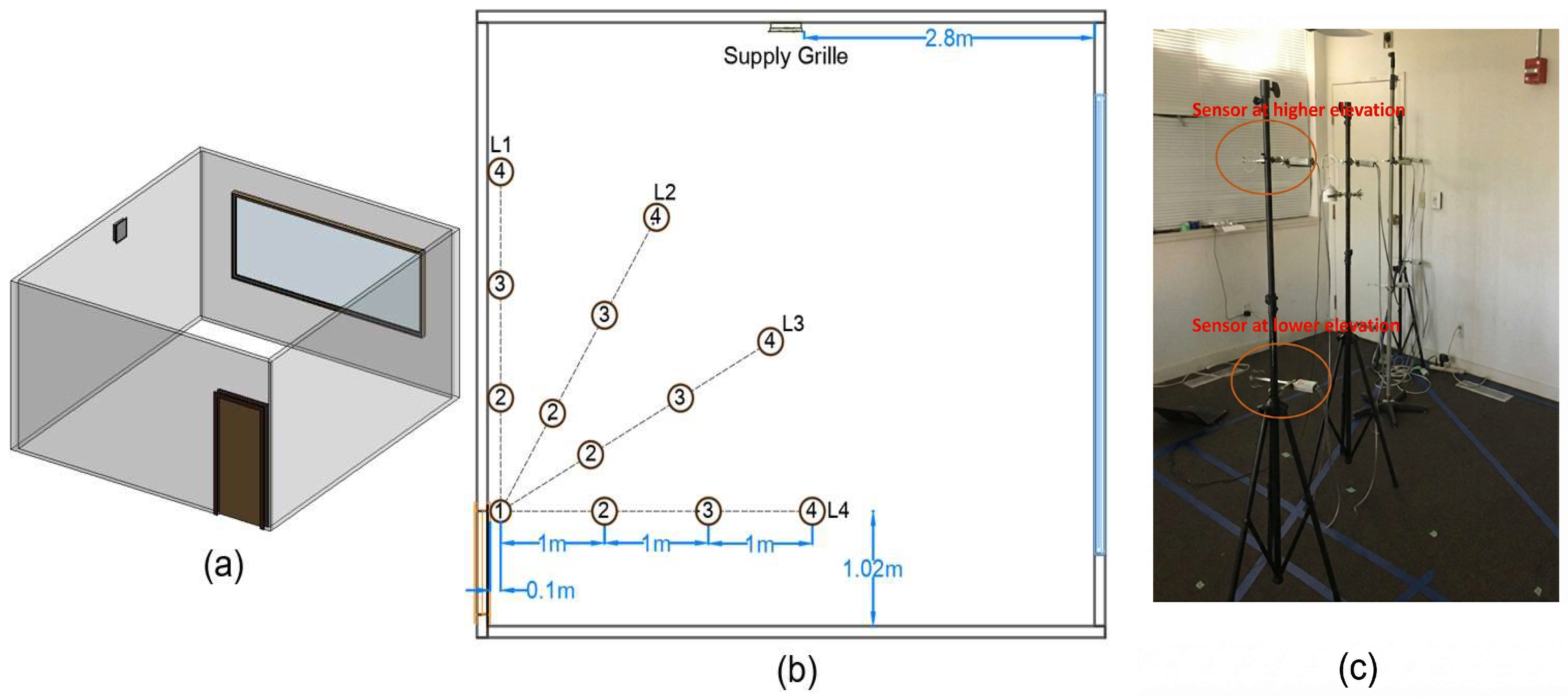
2.1. Experiment Facility and Setups
2.2. Initial Conditions and Door-Opening Events
- Still air—The initial steady-state condition inside the experiment chamber was quiescent as the supply fan and the Air Handling Unit (AHU) were not operating, and the supply diffuser was kept off.
- 70% of fan—This condition corresponded to a moderate airflow at around 0.063 m3/s (63 L/s). After obtaining steady-state conditions, the differential pressure between the chamber and the outside corridor was 10 Pa, with the chamber being on the positive side.
- 100% fan—With the fan and AHU operating at full capacity, this initial condition was set for supplying air at 0.09 m3/s and generated a 20 Pa pressure differential with respect to the corridor outside of the test chamber.
- Door opening and closing once—The door opens in 2 s, remains open for 1 s, and closes in another 2 s, simulating a typical entry or exit. Each cycle lasted approximately 5 s.
- Door opening and closing twice—The door followed the same initial cycle, then remained closed for 2 s before opening and closing again, representing scenarios like item delivery or retrieval. This scheme lasted around 12 s per cycle.
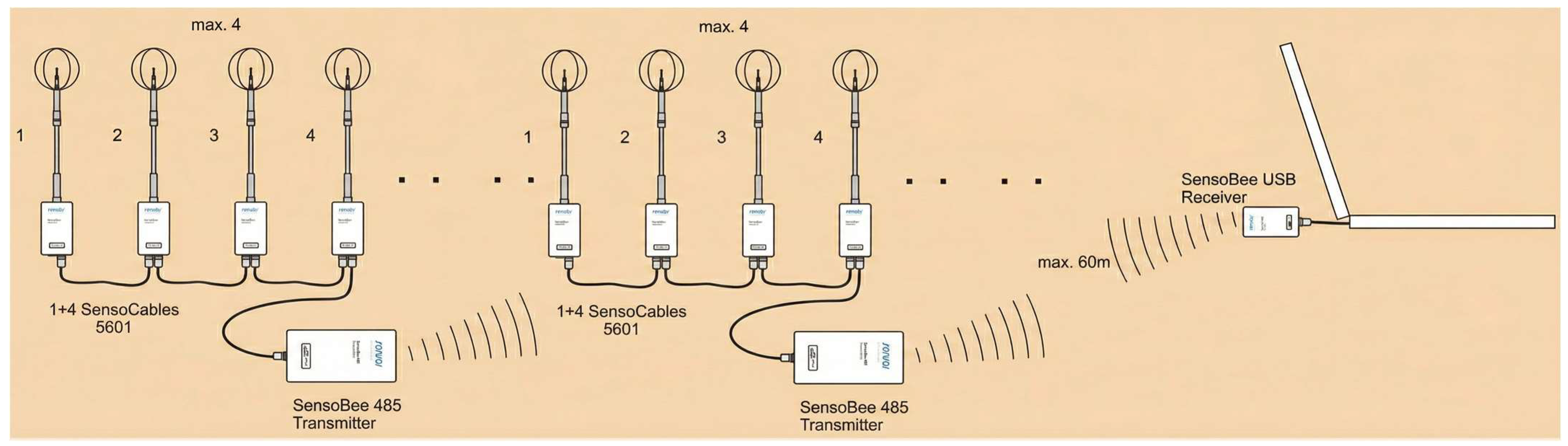
2.3. Sensing Instruments
2.4. Statistical Consistency
2.5. Kinetic Energy Calculation
2.6. Predictive Methodology Using Event-Based Model
| Algorithm 1 EBM Approximation. |
| Let < > be the known cases |
| Letbe the velocity vectors at all the nodes of the entire domain at timestep I for each of the known cases, i.e., the IC |
| () |
| (% j is the no. of data points per experiment %) |
| (% k is the no. of known cases %) |
| = αQ |
| = × |
3. Results
3.1. Door Opening Once—Still Air
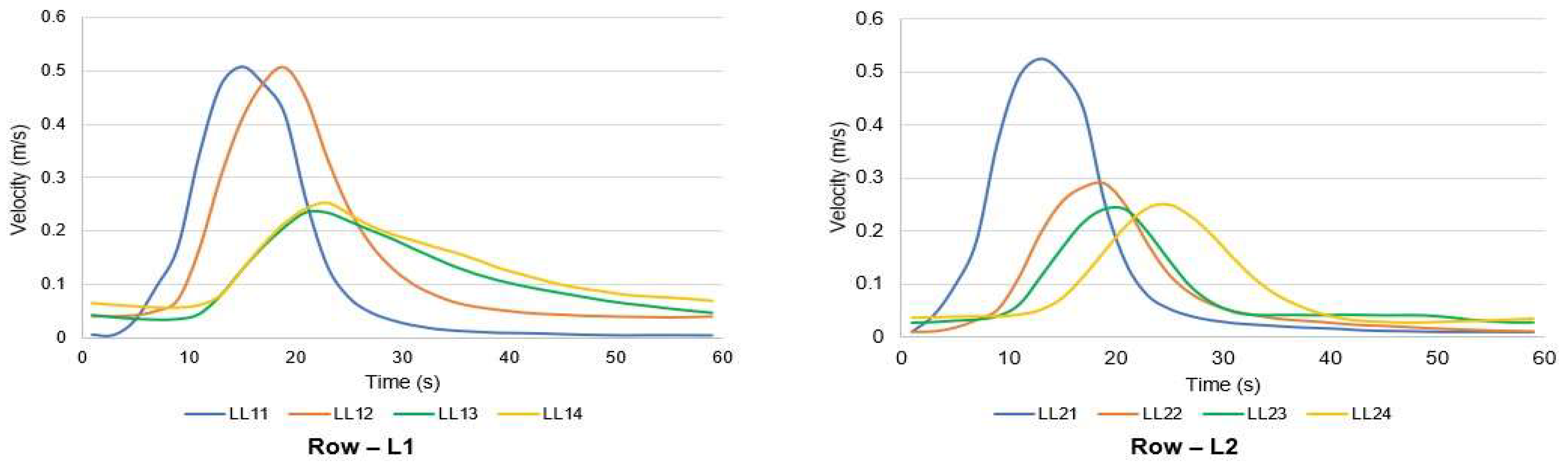
Sensing Systems at Lower Elevation
3.2. Opening Twice—Still Air
3.2.1. Sensing Systems at Lower Elevation
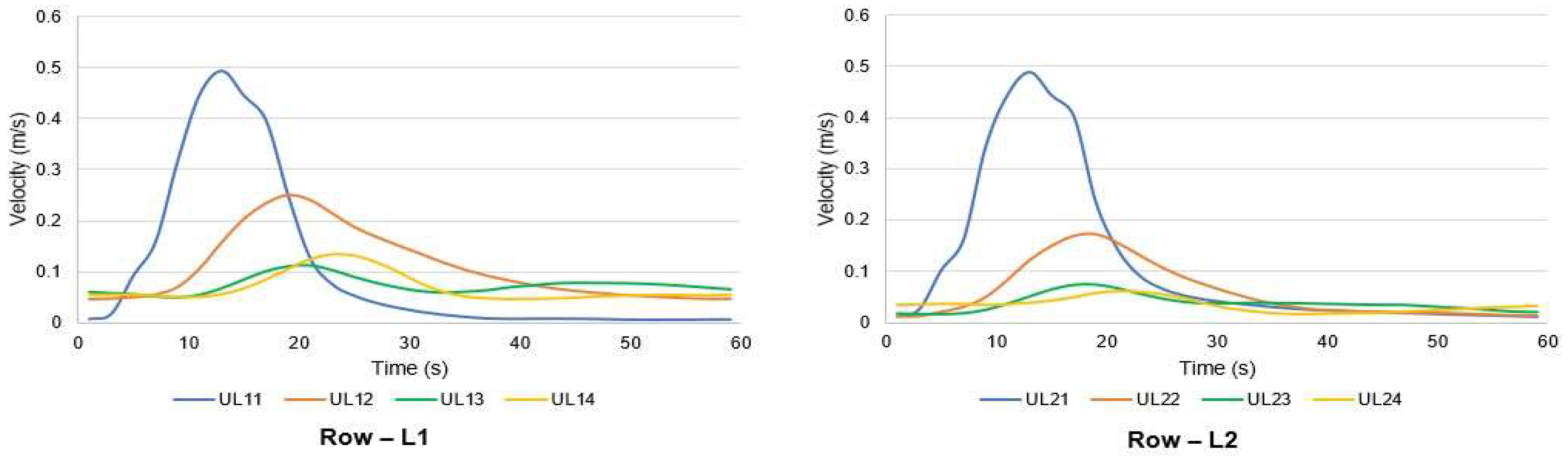
3.2.2. Sensing Systems at Higher Elevation
3.3. Effect of Initial Conditions
3.4. Spatial Distribution
3.5. Kinetic Energy
3.6. Prediction of Velocity Fields Using EBM
4. Discussion
5. Limitations
6. Conclusions
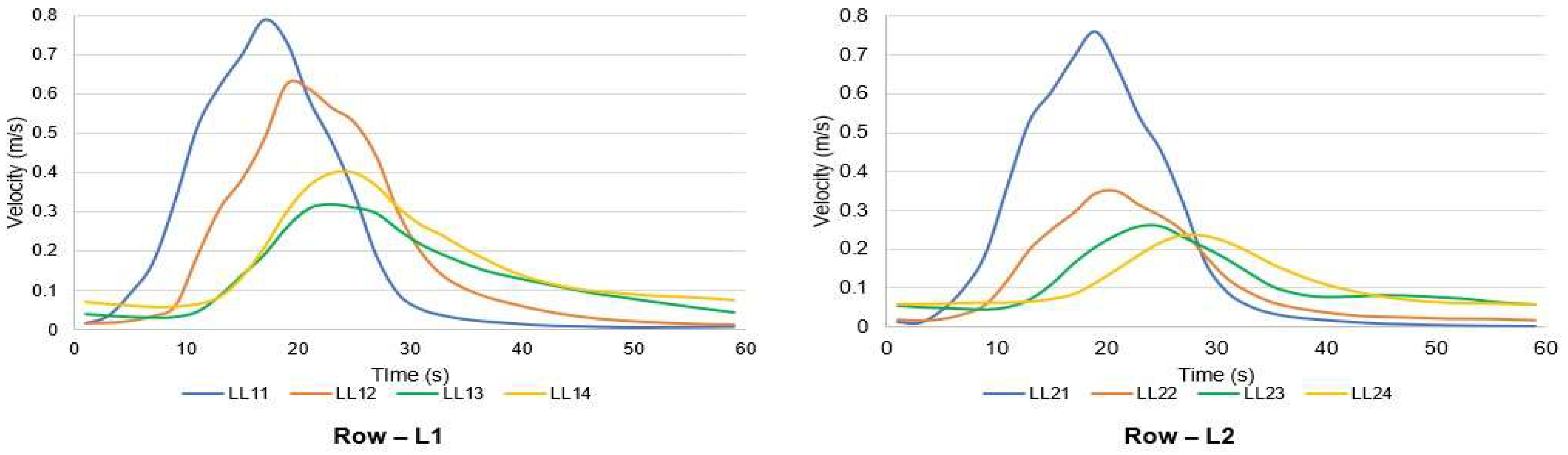
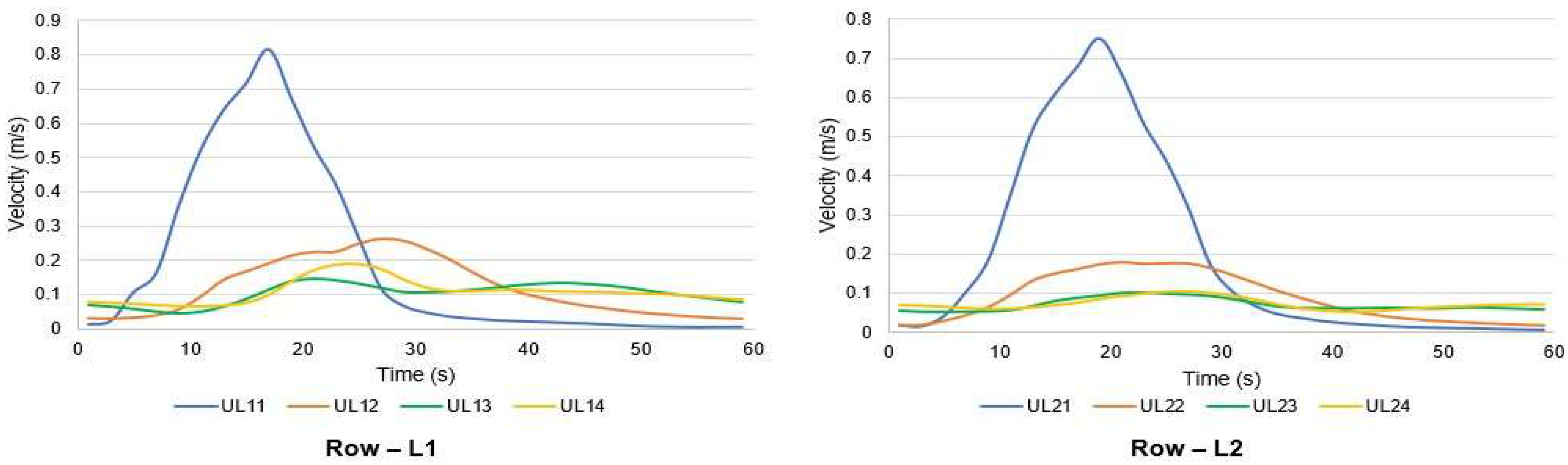
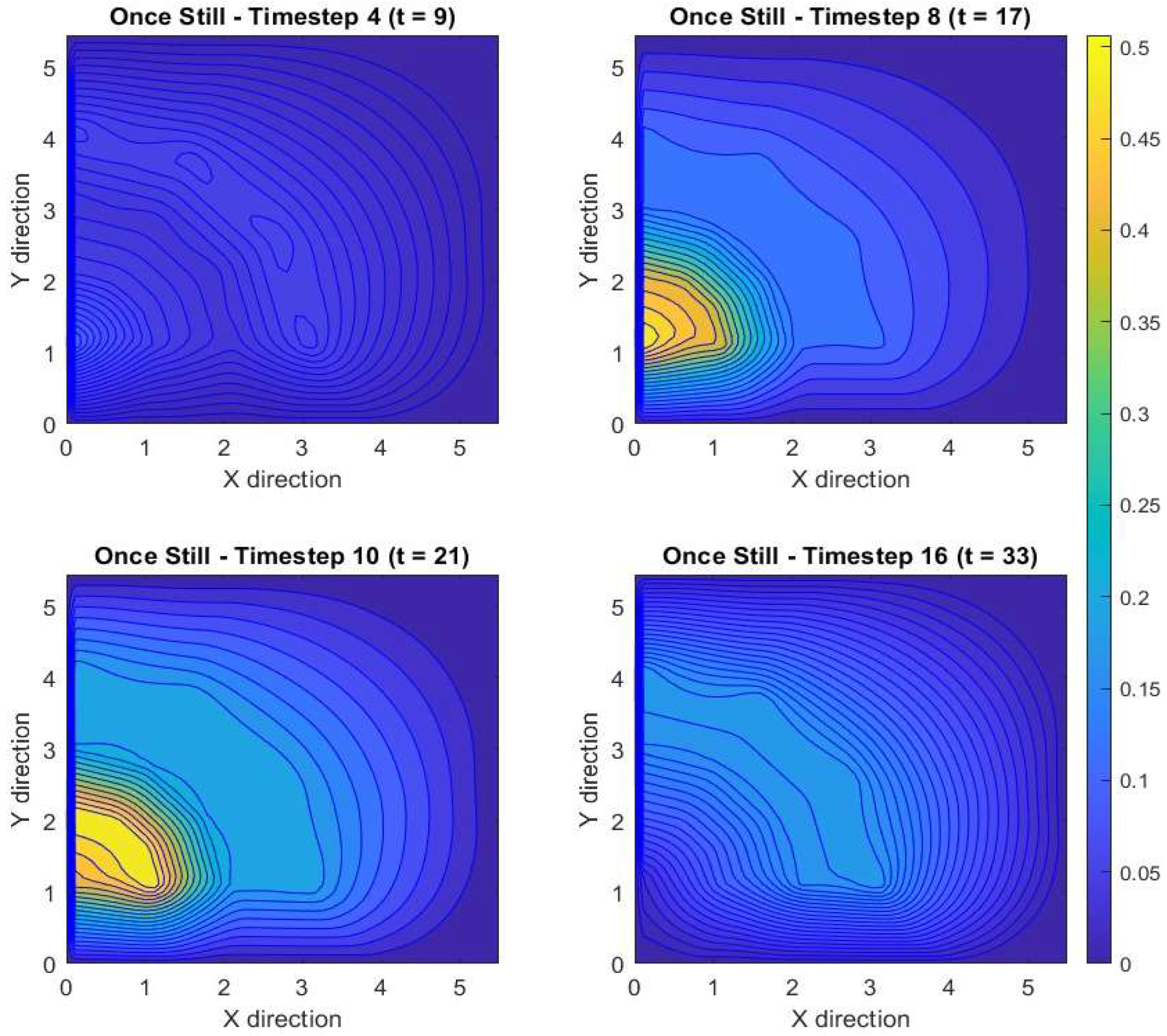
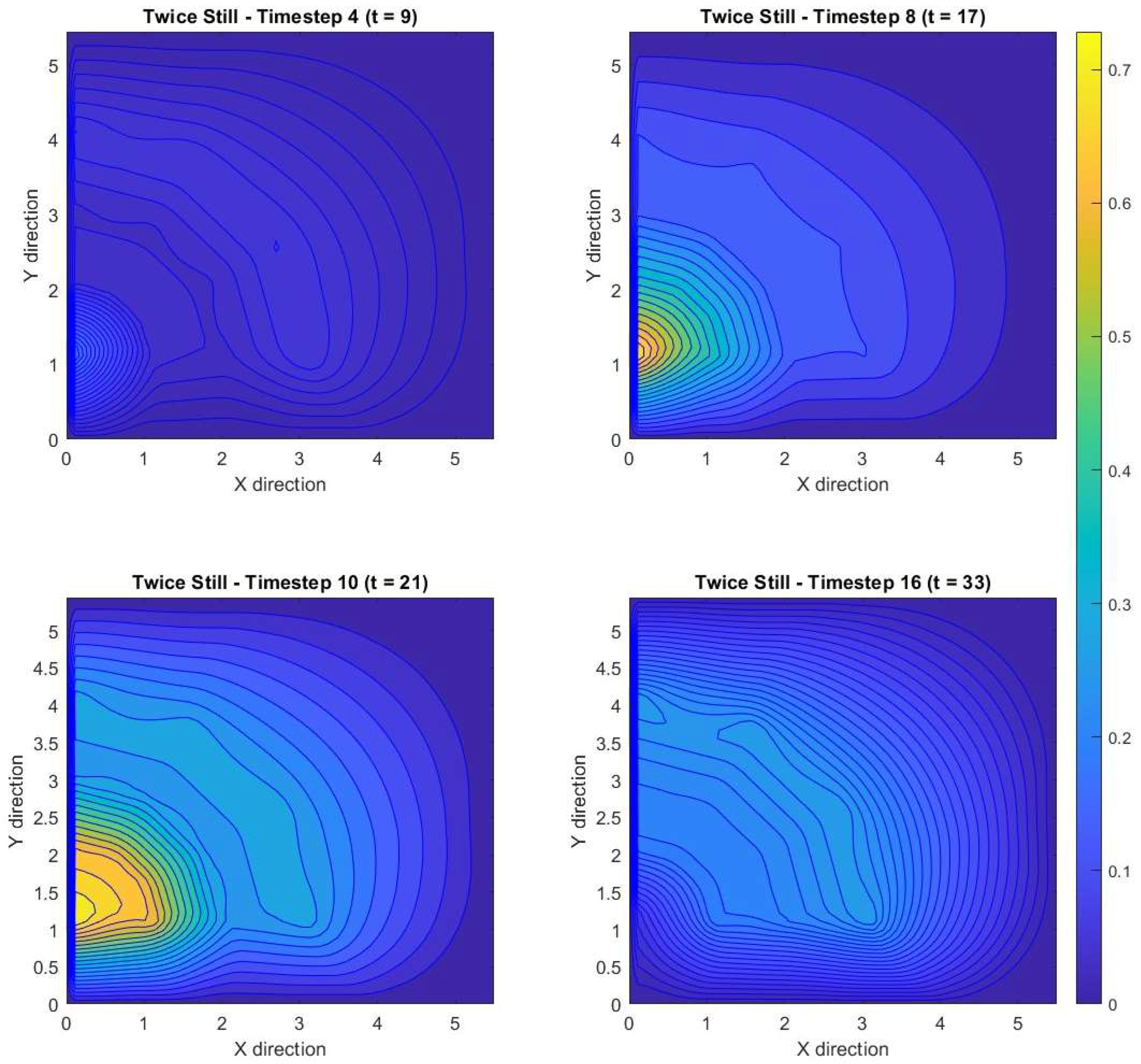
- Door motion produced location-specific wakes. In this case, wakes appear earlier at near-door sensors, and after a few seconds, they show up at the sensors further away. The farther away the sensors are from the door, the lower the peak magnitudes are recorded. In still air, high-speed isolines (0.3–0.5 m/s) initially stayed within 1.5–2.5 m of the door, then migrated inward and weakened. Also, double openings kept higher-speed contours near the door for longer.
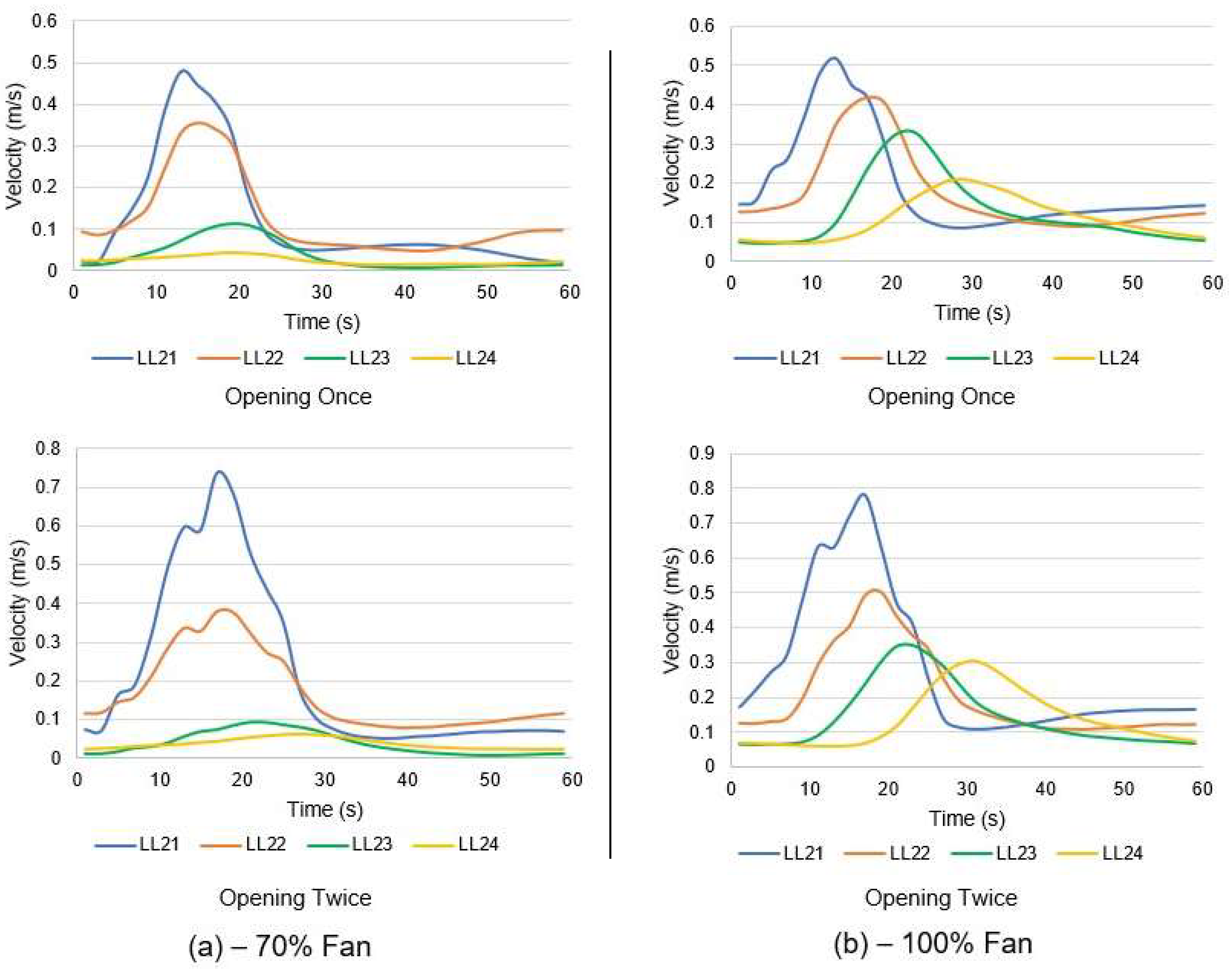
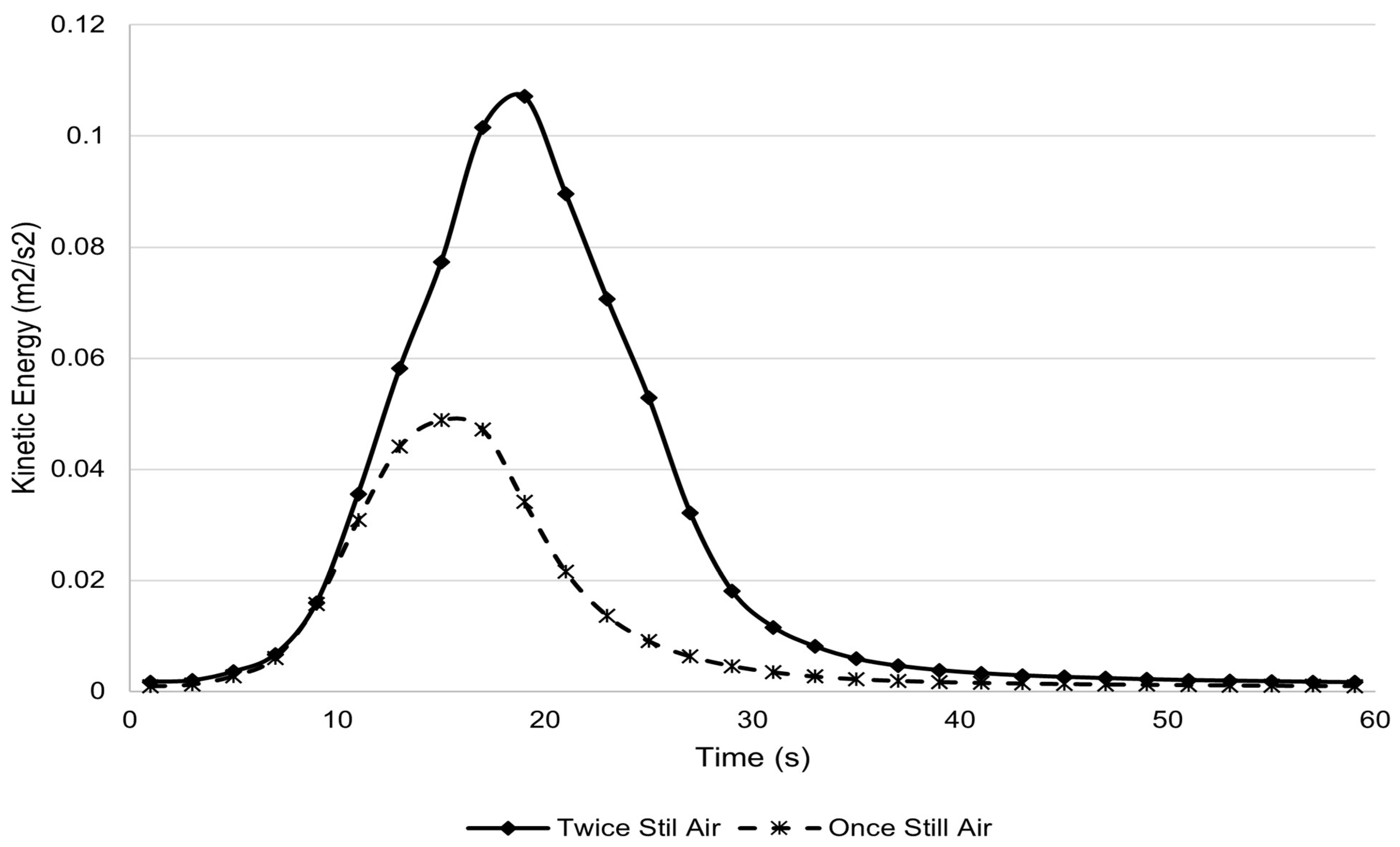
- Consecutive openings amplified velocities across the field typically by about 1.2 to 1.9 times depending on location and extended disturbance duration. Time-averaged kinetic energy increased by about 2 for double vs. single openings across initial conditions including 2.15, 2.09, 1.91 for still, 70%, 100%.
- Higher supply air partially mitigated peaks by speeding exchange and recovery but could carry wakes deeper so far that sensors (positions 3–4) still responded. Lower elevations consistently recorded higher peaks (near-door ≈0.49–0.51 m/s), and near-wall/floor regions showed stronger turbulence, indicating elevated resuspension risk at boundaries.
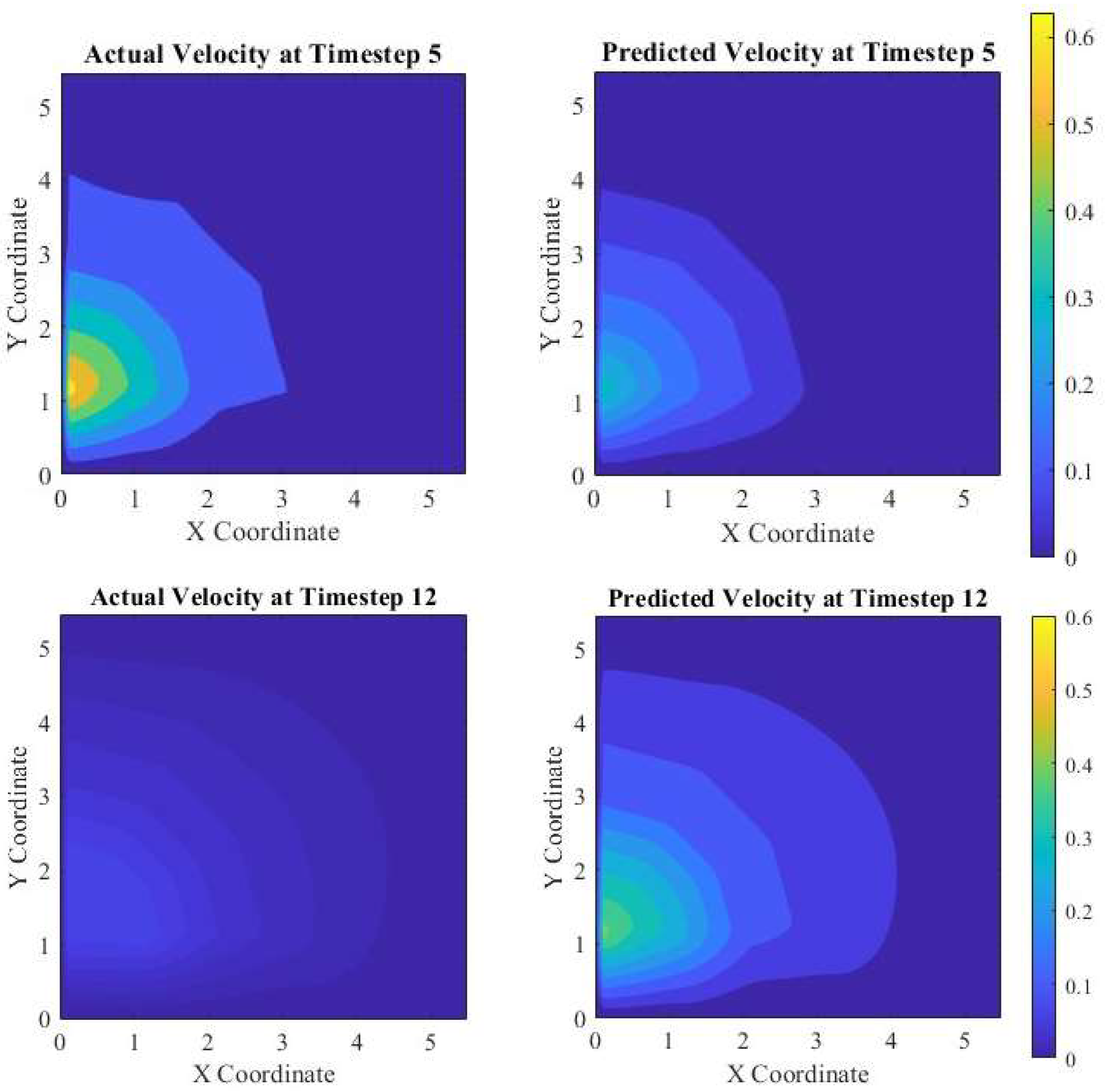
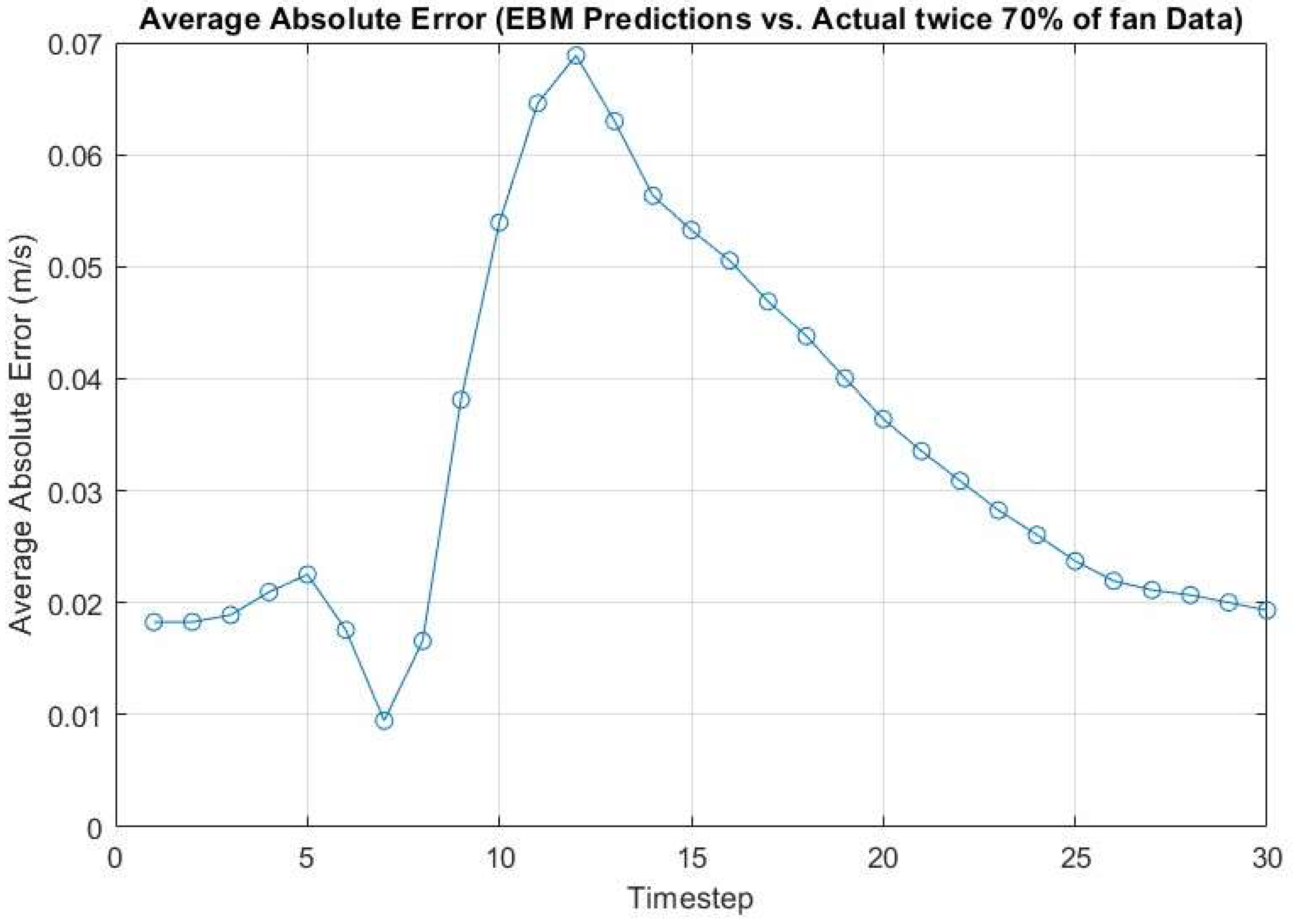
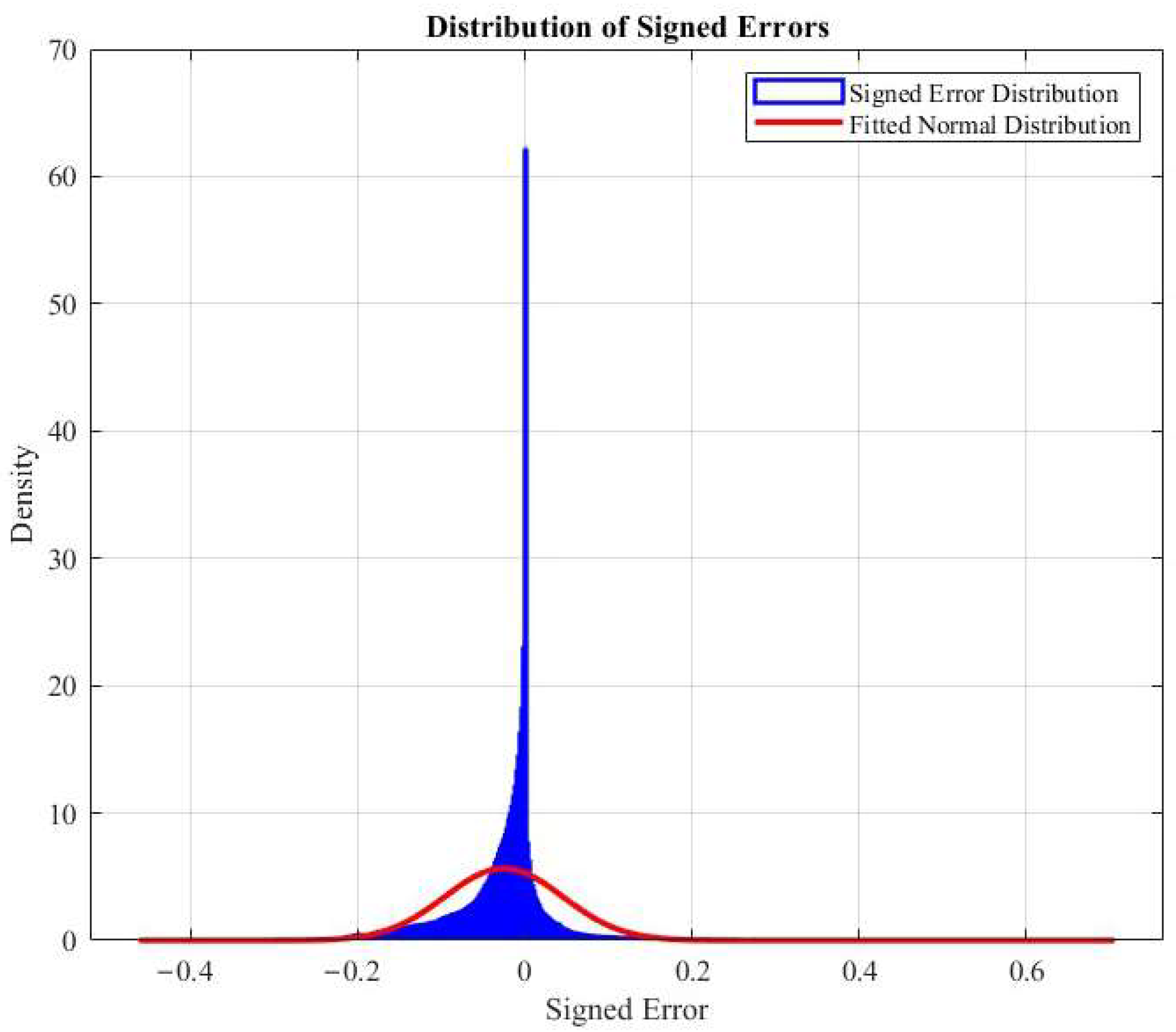
- EBM performance. EBM reproduced transient fields with mean relative errors generally <5% over 30 timesteps and no systematic bias in signed-error distributions while substantially reducing computational cost relative to conventional transient simulations by reusing discrete event solutions.
Author Contributions
Funding
Institutional Review Board Statement
Informed Consent Statement
Data Availability Statement
Conflicts of Interest
References
- Karmakar, P.; Pradhan, S.; Chakraborty, S. Exploring Indoor Health: An In-depth Field Study on the Indoor Air Quality Dynamics. arXiv 2023, arXiv:2310.12241. [Google Scholar] [CrossRef] [Scilit]
- Zhang, S.; Niu, D.; Lin, Z. Occupancy-aided ventilation for airborne infection risk control: Continuously or intermittently reduced occupancies? Build. Simul. 2023, 16, 733–747. [Google Scholar] [CrossRef] [Scilit] [PubMed]
- Feyli, F.; Abouali, O.; Yaghoubi, M.A.; Ahmadi, G. Numerical investigation of heat transfer from eye by thermal plume around a human body. In Proceedings of the CONV-14: International Symposium on Convective Heat and Mass Transfer, Kusadasi, Turkey, 8–13 June 2014. [Google Scholar]
- Morawska, L.; Cao, J. Airborne transmission of SARS-CoV-2: The world should face the reality. Environ. Int. 2020, 139, 105730. [Google Scholar] [CrossRef] [Scilit] [PubMed]
- Arens, E.; Ghahramani, A.; Przybyla, R.; Andersen, M.; Min, S.; Peffer, T.; Raftery, P.; Zhu, M.; Luu, V.; Zhang, H. Measuring 3D indoor air velocity via an inexpensive low-power ultrasonic anemometer. Energy Build. 2020, 211, 109805. [Google Scholar] [CrossRef] [Scilit]
- Mansourihanis, O.; Tilaki, M.J.M.; Zaroujtaghi, A.; Tayarani, M.; Sheikhfarshi, S. Inequalities in emergency service accessibility: Spatial analysis of urban infrastructure. J. Place Manag. Dev. 2024, 17, 584–614. [Google Scholar] [CrossRef] [Scilit]
- Mannan, M.; Al-Ghamdi, S.G. Indoor air quality in buildings: A comprehensive review on the factors influencing air pollution in residential and commercial structure. Int. J. Environ. Res. Public Health 2021, 18, 3276. [Google Scholar] [CrossRef] [Scilit]
- Vosoughkhosravi, S.; Dixon-Grasso, L.; Jafari, A. The impact of LEED certification on energy performance and occupant satisfaction: A case study of residential college buildings. J. Build. Eng. 2022, 59, 105097. [Google Scholar] [CrossRef] [Scilit]
- Kalliomäki, P.; Saarinen, P.; Tang, J.W.; Koskela, H. Airflow patterns through single hinged and sliding doors in hospital isolation rooms—Effect of ventilation, flow differential and passage. Build. Environ. 2016, 107, 154–168. [Google Scholar] [CrossRef] [Scilit]
- Mousavi, E.; Lautz, R.; Betz, F.; Grosskopf, K. Academic Research to Support Facility Guidelines Institute & ANSI/ASHRAE/ASHE Standard 170; ASHRAE Research Project CO-RP3; ASHRAE: Atlanta, GA, USA, 2019. [Google Scholar]
- Wu, J.; Weng, W.; Fu, M.; Li, Y.; Lan, M. Enhancement effect of human movement on the high risk range of viral aerosols exhaled by a sitting person. Build. Environ. 2022, 218, 109136. [Google Scholar] [CrossRef] [Scilit]
- Bhattacharya, A.; Ghahramani, A.; Mousavi, E. The effect of door opening on air-mixing in a positively pressurized room: Implications for operating room air management during the COVID outbreak. J. Build. Eng. 2021, 44, 102900. [Google Scholar] [CrossRef] [Scilit]
- Jo, S.; Kim, G.; Sung, M. A study on contaminant leakage from Airborne Infection Isolation room during medical staff entry; Implementation of walking motion on hypothetical human model in CFD simulation. J. Build. Eng. 2024, 86, 108812. [Google Scholar] [CrossRef] [Scilit]
- Feng, L.; Wu, Y.; Li, R.; Liu, M.; Gao, N. The Generation of Internal Waves by the Movement of Human Body and Their Diffusion in the Displacement Ventilated Room. In Proceedings of the 5th International Conference on Building Energy and Environment, Montreal, QC, Canada, 25–29 July 2022; Wang, L.L., Ge, H., Zhai, Z.J., Qi, D., Ouf, M., Sun, C., Wang, D., Eds.; Springer Nature: Singapore, 2023; pp. 1883–1892. [Google Scholar]
- Ren, J.; He, J.; Guo, L.; Li, H.; Kong, X. Effect of Walking Modes and Temperatures on the Robustness of Ventilation Systems in the Control of Walking-induced Disturbances. Aerosol Air Qual. Res. 2022, 22, 220115. [Google Scholar] [CrossRef] [Scilit]
- Li, S. Review of Engineering Controls for Indoor Air Quality: A Systems Design Perspective. Sustainability 2023, 15, 14232. [Google Scholar] [CrossRef] [Scilit]
- Nikoopayan Tak, M.S.; Bhattacharya, A.; Metcalf, A.R.; Mousavi, E. Cleanroom air quality: Combined effects of ventilation rate and filtration schemes in a laboratory cleanroom. Build. Res. Inf. 2023, 51, 717–729. [Google Scholar] [CrossRef] [Scilit]
- Feng, Y.; Yao, R.; Yu, W.; Sadrizadeh, S.; Awbi, H.; Kumar, P. Dynamic characteristics of particulate matter resuspension due to human activities in indoor environments: A comprehensive review. J. Build. Eng. 2023, 79, 107914. [Google Scholar] [CrossRef] [Scilit]
- Liu, H.; Liu, Z.; He, J.; Hu, C.; Rong, R. Interfacial exchange of airflow and bacteria-carrying particles induced by door opening and foot traffic in an operating room. Build. Environ. 2024, 262, 111812. [Google Scholar] [CrossRef] [Scilit]
- Tang, J.W.; Li, Y.; Eames, I.; Chan, P.K.S.; Ridgway, G.L. Factors involved in the aerosol transmission of infection and control of ventilation in healthcare premises. J. Hosp. Infect. 2006, 64, 100–114. [Google Scholar] [CrossRef] [Scilit] [PubMed]
- Zheng, M.; Fan, Y.; Li, X.; Lester, D.; Chen, X.; Li, Y.; Cole, I. Aerosol exchange between pressure-equilibrium rooms induced by door motion and human movement. Build. Environ. 2023, 241, 110486. [Google Scholar] [CrossRef] [Scilit]
- Shao, X.; Hashimoto, K.; Fang, L.; Melikov, A.K.; Naydenov, K.G.; Rasmuseen, C. Experimental study of airborne particle transmission through the doorway of a cleanroom due to the movement of a person. Build. Environ. 2020, 183, 107205. [Google Scholar] [CrossRef] [Scilit]
- Li, Z.; Ma, X.; Liao, Y. Airflow and aerosol transport in the hospital isolation zone based on dynamic scenarios. Build. Environ. 2024, 265, 111970. [Google Scholar] [CrossRef] [Scilit]
- Li, Z.; Ma, X.; Liao, Y. Numerical study of airflow pattern and bioaerosol dispersion during door motion in a negative pressure isolation ward. J. Build. Eng. 2024, 89, 109351. [Google Scholar] [CrossRef] [Scilit]
- Mousavi, E.; Bhattacharya, A. Event based approach for modeling indoor airflow patterns. J. Build. Eng. 2022, 51, 104244. [Google Scholar] [CrossRef] [Scilit]
- Mohammadi Nafchi, A.; Blouin, V.; Kaye, N.; Metcalf, A.; Van Valkinburgh, K.; Mousavi, E. Room HVAC influences on the removal of airborne particulate matter: Implications for school reopening during the COVID-19 pandemic. Energies 2021, 14, 7463. [Google Scholar] [CrossRef] [Scilit]
- ISO 7726:2025; Ergonomics of the Thermal Environment—Instruments for Measuring and Monitoring Physical Quantities. ISO: Geneva, Switzerland, 2025.
- ISO 7730:2025; Ergonomics of the Thermal Environment—Analytical Determination and Interpretation of Thermal Comfort Using Calculation of the PMV and PPD Indices and Local Thermal Comfort Criteria. ISO: Geneva, Switzerland, 2025.
- ASHRAE 55; ASHRAE Standard Thermal Environmental Conditions for Human Occupancy. The Society: Atlanta, GA, USA, 1992.
- Li, N.; Chen, Q. Study on dynamic thermal performance and optimization of hybrid systems with capillary mat cooling and displacement ventilation. Int. J. Refrig. 2020, 110, 196–207. [Google Scholar] [CrossRef] [Scilit]
- Du, X.; Li, B.; Liu, H.; Wu, Y.; Cheng, T. The appropriate airflow rate for a nozzle in commercial aircraft cabins based on thermal comfort experiments. Build. Environ. 2017, 112, 132–143. [Google Scholar] [CrossRef] [Scilit]
- Wu, Y.; Liu, H.; Li, B.; Cheng, Y.; Tan, D.; Fang, Z. Thermal comfort criteria for personal air supply in aircraft cabins in winter. Build. Environ. 2017, 125, 373–382. [Google Scholar] [CrossRef] [Scilit]
- Jaszczur, M.; Madejski, P.; Kleszcz, S.; Zych, M.; Palej, P. Numerical and experimental analysis of the air stream generated by square ceiling diffusers. E3S Web Conf. 2019, 128, 8003. [Google Scholar] [CrossRef] [Scilit]
- Borowski, M.; Jaszczur, M.; Satoła, D.; Karch, M. Air flow characteristics of a room with air vortex diffuser. MATEC Web Conf. 2018, 240, 2002. [Google Scholar] [CrossRef] [Scilit]
- Bhattacharya, A.; Pantelic, J.; Ghahramani, A.; Mousavi, E.S. Three-dimensional analysis of the effect of human movement on indoor airflow patterns. Indoor Air 2021, 31, 587–601. [Google Scholar] [PubMed]
- Esmaeilbeigi, M.; Chatrabgoun, O. An efficient method based on RBFs for multilayer data interpolation with application in air pollution data analysis. Comput. Appl. Math. 2019, 38, 153. [Google Scholar] [CrossRef] [Scilit]
- Eames, I.; Shoaib, D.; Klettner, C.A.; Taban, V. Movement of airborne contaminants in a hospital isolation room. J. R. Soc. Interface 2009, 6, S707–S766. [Google Scholar] [CrossRef] [Scilit] [PubMed]
- Bhattacharya, A.; Mousavi, E. The Effect of Boundary Conditions on Transient Airflow Patterns: A Numerical Investigation of Door Operation. ASHRAE Trans. 2020, 126, 239–246. [Google Scholar]
- Papakonstantis, I.G.; Hathway, E.A.; Brevis, W. An experimental study of the flow induced by the motion of a hinged door separating two rooms. Build. Environ. 2018, 131, 220–230. [Google Scholar] [CrossRef] [Scilit]
- Choi, J.I.; Edwards, J.R. Large-eddy simulation of human-induced contaminant transport in room compartments. Indoor Air 2012, 22, 77–87. [Google Scholar] [CrossRef] [Scilit]
- Bhattacharya, A.; Metcalf, A.R.; Nafchi, A.M.; Mousavi, E.S. Particle dispersion in a cleanroom—Effects of pressurization, door opening and traffic flow. Build. Res. Inf. 2020, 49, 294–307. [Google Scholar] [CrossRef] [Scilit]



| Test Number | Supply Fan Operation | Airflow Rate (m3/s) | Differential Pressure (Pa) | Door Opening Scheme | Total Cycle Time (s) | Description |
|---|---|---|---|---|---|---|
| Test 1 | Off | 0 | 0 | Door Opening and Closing Once | ~5.38 (σ = 0.21) | The door opens in 2 s, remains open for 1 s, and closes in 2 s. Represents typical entry or exit. |
| Test 2 | 70% Capacity | 0.063 | 10 | Door Opening and Closing Once | ~5.52 (σ = 0.82) | Same as Test 1 but with a medium airflow supply. |
| Test 3 | 100% Fan | 0.09 | 20 | Door Opening and Closing Once | ~5.42 (σ = 0.39) | Same as Test 1 but with a high airflow supply. |
| Test 4 | Off | 0 | 0 | Door Opening and Closing Twice | ~12.33 (σ = 1.14) | Two cycles of door operation with a 2 s pause between them. Represents entering to deliver or retrieve items and getting out. |
| Test 5 | 70% Capacity | 0.063 | 10 | Door Opening and Closing Twice | ~12.49 (σ = 0.24) | Same as Test 4 but with a medium airflow supply. |
| Test 6 | 100% Fan | 0.09 | 20 | Door Opening and Closing Twice | ~12.48 (σ = 0.19) | Same as Test 4 but with a high airflow supply |
| Experiment | Average RSE |
|---|---|
| Test 1 | 11.56% |
| Test 2 | 10.09% |
| Test 3 | 7.67% |
| Test 4 | 11.43% |
| Test 5 | 10.23% |
| Test 6 | 8.19% |
| Sensors at Low Elevation | Sensors at High Elevation | ||||||
|---|---|---|---|---|---|---|---|
| Range of | Maximum Velocity | Range of | Maximum Velocity | ||||
| Sensor | Non-Zero Entries | Lag (s) | [Time It Occurred] | Sensor | Non-Zero Entries | Lag (s) | [Time It Occurred] |
| ID | (s) | (s) | ID | (s) | (s) | ||
| LL11 | 26 | 2 | 0.51 [15] | UL11 | 22 | 2 | 0.49 [13] |
| LL12 | 34 | 6 | 0.51 [19] | UL12 | 34 | 6 | 0.25 [19] |
| LL13 | 35 | 8 | 0.23 [14] | UL13 | 20 | 10 | 0.11 [14] |
| LL14 | 40 | 10 | 0.25 [22] | UL14 | 23 | 12 | 0.13 [22] |
| LL21 | 26 | <1 | 0.53 [13] | UL21 | 26 | <1 | 0.49 [13] |
| LL22 | 28 | 6 | 0.29 [19] | UL22 | 33 | 2 | 0.17 [19] |
| LL23 | 26 | 8 | 0.24 [19] | UL23 | 20 | 6 | 0.07 [19] |
| LL24 | 30 | 10 | 0.25 [24] | UL24 | 20 | 10 | 0.06 [14] |
| LL31 | 24 | <1 | 0.5 [13] | UL31 | 24 | <1 | 0.48 [13] |
| LL32 | 26 | 2 | 0.29 [15] | UL32 | 22 | 2 | 0.13 [15] |
| LL33 | 28 | 2 | 0.12 [19] | UL33 | 24 | 2 | 0.05 [15] |
| LL34 | 19 | 11 | 0.087 [22] | UL34 | 20 | 6 | 0.04 [17] |
| LL41 | 22 | 2 | 0.49 [13] | UL41 | 26 | <1 | 0.48 [13] |
| LL42 | 30 | 2 | 0.31 [15] | UL42 | 26 | 2 | 0.17 [13] |
| LL43 | 24 | 4 | 0.14 [15] | UL43 | 24 | 4 | 0.11 [15] |
| LL44 | 26 | 6 | 0.12 [17] | UL44 | 22 | 6 | 0.08 [17] |
| Sensor | Door Opening | Door Opening | Velocity | Sensor | Door Opening | Door Opening | Velocity |
|---|---|---|---|---|---|---|---|
| ID | Once | Twice | Proportions | ID | Once | Twice | Proportions |
| Column | A | B | B/A | Column | A | B | B/A |
| LL11 | 0.1504 | 0.1962 | 1.3 | UL11 | 0.1431 | 0.268 | 1.87 |
| LL12 | 0.1824 | 0.1821 | 1 | UL12 | 0.1318 | 0.1518 | 1.15 |
| LL13 | 0.1258 | 0.1342 | 1.07 | UL13 | 0.0739 | 0.1012 | 1.37 |
| LL14 | 0.1426 | 0.1629 | 1.14 | UL14 | 0.0733 | 0.0937 | 1.27 |
| LL21 | 0.1597 | 0.1911 | 1.2 | UL21 | 0.1547 | 0.2731 | 1.77 |
| LL22 | 0.1029 | 0.1103 | 1.07 | UL22 | 0.0766 | 0.1125 | 1.47 |
| LL23 | 0.0932 | 0.1122 | 1.2 | UL23 | 0.0504 | 0.0722 | 1.43 |
| LL24 | 0.1063 | 0.1088 | 1.02 | UL24 | 0.0476 | 0.0679 | 1.42 |
| LL31 | 0.1556 | 0.2033 | 1.31 | UL31 | 0.1645 | 0.2808 | 1.71 |
| LL32 | 0.116 | 0.1401 | 1.21 | UL32 | 0.0634 | 0.0929 | 1.47 |
| LL33 | 0.0683 | 0.0715 | 1.05 | UL33 | 0.0282 | 0.0404 | 1.43 |
| LL34 | 0.0694 | 0.0789 | 1.14 | UL34 | 0.0234 | 0.0344 | 1.53 |
| LL41 | 0.1495 | 0.2218 | 1.48 | UL41 | 0.1563 | 0.2971 | 1.9 |
| LL42 | 0.112 | 0.1485 | 1.33 | UL42 | 0.0753 | 0.1242 | 1.65 |
| LL43 | 0.0745 | 0.0758 | 1.02 | UL43 | 0.0695 | 0.0832 | 1.2 |
| LL44 | 0.0613 | 0.0546 | 0.89 | UL44 | 0.0395 | 0.0397 | 1.01 |
| Initial Condition | Still Air | 70% Fan | 100% Fan | |||
|---|---|---|---|---|---|---|
| Door Opening | Opening | Opening | Opening | Opening | Opening | Opening |
| Scheme | Once | Twice | Once | Twice | Once | Twice |
| 0.0242 | 0.0516 | 0.0249 | 0.0483 | 0.0411 | 0.0682 | |
| 0.0012 | 0.0022 | 0.0042 | 0.0052 | 0.0129 | 0.0145 | |
| 0.023 | 0.0494 | 0.0206 | 0.0431 | 0.0281 | 0.0537 | |
| 2.15 | 2.09 | 1.91 | ||||
Disclaimer/Publisher’s Note: The statements, opinions and data contained in all publications are solely those of the individual author(s) and contributor(s) and not of MDPI and/or the editor(s). MDPI and/or the editor(s) disclaim responsibility for any injury to people or property resulting from any ideas, methods, instructions or products referred to in the content. |
© 2025 by the authors. Licensee MDPI, Basel, Switzerland. This article is an open access article distributed under the terms and conditions of the Creative Commons Attribution (CC BY) license.
Share and Cite
Chahardoli, S.; Nikoopayan Tak, M.S.; Lesan, M.; Mousavi, E.; Bhattacharya, A. Analysis of the Effects of a Swing Door Opening on Indoor Airflow Fields—An Experimental Study. Buildings 2026, 16, 54. https://doi.org/10.3390/buildings16010054
Chahardoli S, Nikoopayan Tak MS, Lesan M, Mousavi E, Bhattacharya A. Analysis of the Effects of a Swing Door Opening on Indoor Airflow Fields—An Experimental Study. Buildings. 2026; 16(1):54. https://doi.org/10.3390/buildings16010054
Chicago/Turabian StyleChahardoli, Saeid, Mohammad Saleh Nikoopayan Tak, Mina Lesan, Ehsan Mousavi, and Arup Bhattacharya. 2026. "Analysis of the Effects of a Swing Door Opening on Indoor Airflow Fields—An Experimental Study" Buildings 16, no. 1: 54. https://doi.org/10.3390/buildings16010054
APA StyleChahardoli, S., Nikoopayan Tak, M. S., Lesan, M., Mousavi, E., & Bhattacharya, A. (2026). Analysis of the Effects of a Swing Door Opening on Indoor Airflow Fields—An Experimental Study. Buildings, 16(1), 54. https://doi.org/10.3390/buildings16010054