Article

Emerging Trends in Structural Mechanics Education: A Bibliometric Approach from the Perspective of Colombian Professors


by
Jesús D. Villalba-Morales
1,*,
Sandra Jerez
2,
Ricardo Parra
3,
Juan C. Obando
4,
Andrés Guzmán
5,
José M. Benjumea
6,
Orlando Arroyo
6 and
Orlando Cundumi
7
1
Department of Civil Engineering, Pontificia Universidad Javeriana, Bogotá 110231, Colombia
2
Programa de Ingeniería Civil, Escuela Colombiana de Ingeniería Julio Garavito, Bogotá 111321, Colombia
3
Departamento de Ingeniería Civil y Agrícola, Universidad Nacional de Colombia, Bogotá 111321, Colombia
4
Escuela Ambiental, Universidad de Antioquia, Medellín 050010, Colombia
5
Departamento de Ingeniería Civil y Ambiental, Universidad del Norte, Barranquilla 080001, Colombia
6
Escuela de Ingeniería Civil, Universidad Industrial de Santander, Bucaramanga 680002, Colombia
7
Departamento de Ingeniería Civil e Industrial, Pontificia Universidad Javeriana-Cali, Cali 760031, Colombia
*
Author to whom correspondence should be addressed.
Buildings 2026, 16(1), 219; https://doi.org/10.3390/buildings16010219

Submission received: 31 October 2025 / Revised: 1 December 2025 / Accepted: 13 December 2025 / Published: 4 January 2026
(This article belongs to the Section Building Structures)

Abstract

Recent developments in higher education have transformed teaching–learning processes across disciplines, including structural mechanics in civil engineering programs. However, reports on innovative teaching practices in structural engineering are scattered, hindering their application in other contexts. This study consolidates and analyzes global research trends in structural mechanics education (from 2014 to 2023), complemented by insights obtained from surveys applied to students, instructors, and senior structural engineers in Colombia. The sample literature comprises 150 Scopus-indexed English articles analyzed with Bibliometrix. Eight guiding questions serve to characterize the literature, identify predominant pedagogical strategies, and outline future research directions. Results reveal limited collaboration networks, inconsistent keyword usage, and a strong concentration of U.S.-based authors and institutions. Most papers appear in engineering education journals, and the recurrent topics (active learning strategies, digital and virtual resources, and assessment methods) confirm the prevalence of experiential, student-centered approaches. Based on the findings, eight emerging areas should guide future research: sustainability, educational research, non-disciplinary competencies, digital resources, artificial intelligence, innovation, disciplinary competencies, and digital competencies. Also, it is recommended that engineering faculties focus efforts on clarifying competency frameworks, strengthening pedagogical and faculty development, investing in educational technologies and laboratory infrastructure, fostering collaborative networks, and enhancing the visibility of structural mechanics education research.

1. Introduction

Teaching and learning processes in engineering have evolved rapidly in recent decades, driven by accelerated global transformations that demand innovative curricula. The CDIO (Conceive, Design, Implement, Operate) approach offers a framework that considers all stages of engineering systems, such as civil infrastructure [1]. Simultaneously, ABET certification provides essential standards for assessing educational quality. In civil engineering specifically, the Civil Engineering Body of Knowledge (CEBOK3), prepared by the ASCE Task Committee [2], defines 21 fundamental learning outcomes aligned with ABET criteria and extensive educational experiences [3]. These outcomes span undergraduate education, technical skills, and professional responsibilities. However, technological advances offer possibilities for classroom innovation. The widespread diffusion of artificial intelligence (AI) tools offers both possibilities and challenges for educational practices. Consequently, both external transformations (AI) and internal modifications (curricula) make civil engineering education a promising area of study.
The education of structural engineers is of the utmost importance, given their crucial role in ensuring public safety and well-being. Structural engineers require solid foundations in technical concepts, along with the ability to meet societal demands for sustainability. As globalization demands cross-disciplinary integration, structural engineers should collaborate seamlessly with architects and other specialists. This requires skills such as effective communication and teamwork, in addition to traditional technical knowledge. To meet these demands, new educational approaches are urgently needed. Modern strategies applicable to the classroom include physical models, digital resources, collaborative strategies, and case studies. The industry’s future depends on educators adapting to these changes, a sentiment echoed by the Structural Engineering Institute’s vision for the profession through 2033 [4].
Modern pedagogical strategies, such as the Flipped Learning Model [5], Problem-Based Learning (PrbBL) [6], and Project-Based Learning [7], can significantly impact structural engineering training. However, a key challenge remains: these strategies are often misunderstood or improperly implemented. For instance, PrbBL is sometimes reduced to merely assigning problems, whereas effective implementation requires comprehensive curriculum planning, collaboration among faculty, and adequate facilities. Furthermore, frameworks like Universal Design for Learning [8] emphasize that teachers and students should understand metacognitive processes to maximize the benefits of training. While universities are increasingly establishing pedagogical training centers, some institutions and professors may not be prepared to implement these trends. As noted in previous works [9,10,11,12,13,14], a PhD in structural engineering does not guarantee pedagogical expertise; yet, the new vision for the profession demands professors with appropriate knowledge of engineering education.
Despite these needs, documentation regarding teaching practices in structural engineering is scattered, preventing the transfer of accumulated experience. While bibliometric reviews exist for transportation [15], construction games [16], lean construction [17], and geotechnical technology-enhanced learning [18], there is a distinct lack of recent research reviews specifically focused on structural engineering education. The most relevant existing reviews are historical overviews from 2007 [19] or focus on structural art [20]. This represents a significant research gap: information on methods, tools, and assessment in structural mechanics is currently dispersed, hindering its adoption by educators.
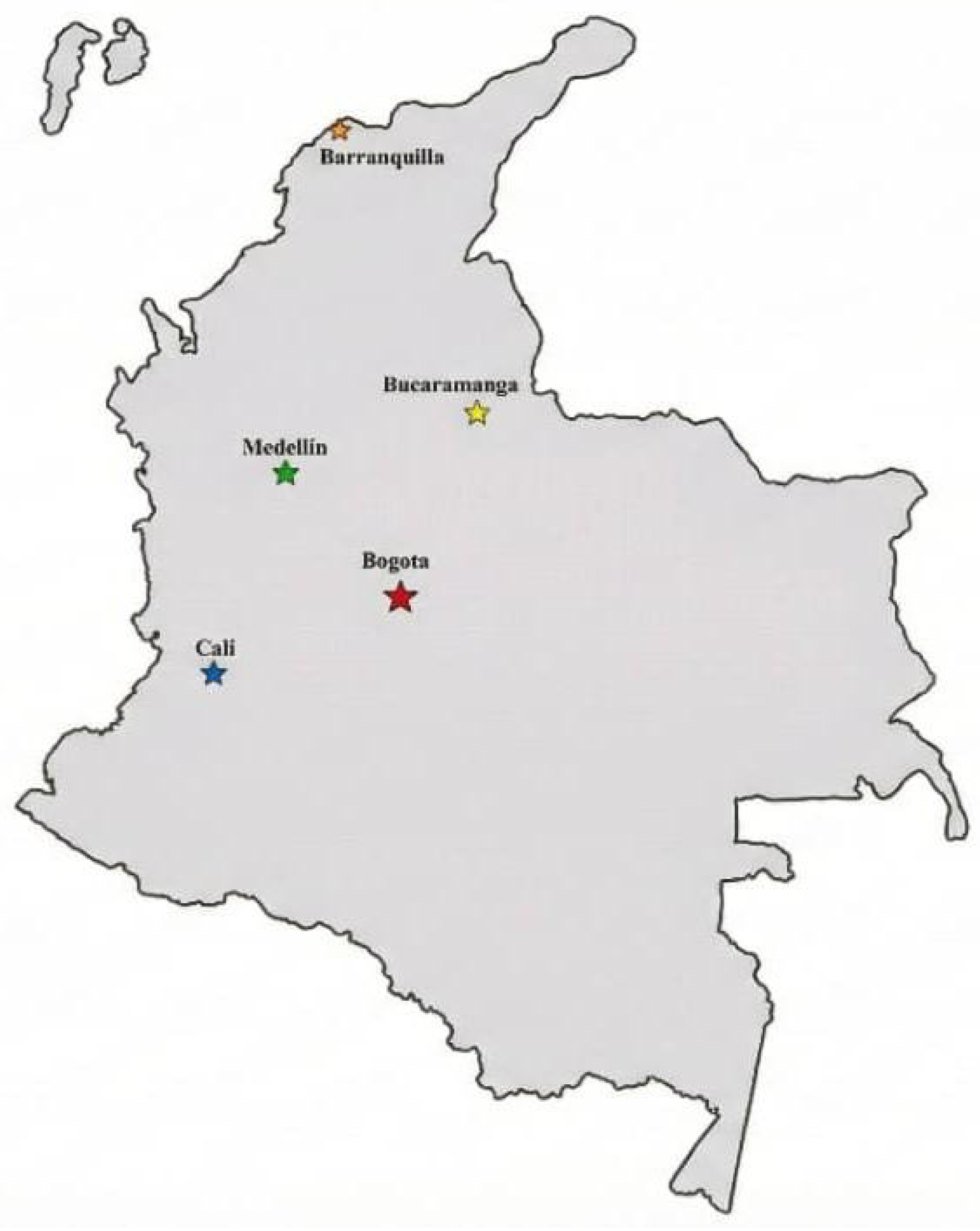
This paper addresses this gap by presenting a systematic analysis of worldwide research on the teaching of structural engineering. It aims to gather dispersed information to facilitate its use by researchers and professors seeking to improve their teaching methods. The study analyzes 150 papers published between 2014 and 2023 in the Scopus database. While the Bibliometrix tool [21] supports analysis following the PRISMA approach, a further manual extraction of information was necessary to complete it. This dual approach allows for a deeper understanding of collaboration networks and proposes a novel classification of pedagogical strategies by specific domains (statics, mechanics of materials, and structural analysis). Additionally, Section 2 describes structural mechanics education in Colombia from the perspective of the authors, who work at universities in the main cities of Colombia (Figure 1). To address the research objective, the following questions are proposed:
  • Q1: Who are the main authors, collaboration networks, institutions, and countries researching the subject?
  • Q2: What are the leading journals for publications on this subject?
  • Q3: Is research on this subject showing an increasing trend?
  • Q4: Are the keywords adequately defined?
  • Q5: What are the main topics of research?
  • Q6: What are the most cited articles on the subject?
  • Q7: What does the evidence from the analyzed research tell us about the education of structural mechanics?
  • Q8: What research lines should be followed in structural mechanics education?

2. Structural Mechanics: The Author’s Perspective

This section provides an overview of the general approach to teaching the principles of structural mechanics, underscoring the importance of this area for several professions. The typical curricular layout for structural mechanics in undergraduate civil engineering programs is presented, along with the perceptions of undergraduate students, professors, and practitioners associated with structural mechanics. Some survey results are presented in word clouds. For these, it was necessary to carefully revise and eliminate some of the respondents’ contributions, as certain inputs introduced ambiguity in their interpretation. For example, when asked about their perceptions of structural mechanics courses, five students responded with “dynamic.” In this case, it was unclear whether they referred to the course content (e.g., dynamic response of an element) or the pedagogical approach used by their professors. This highlights the importance of developing skills in formulating and assessing qualitative research in engineering education.
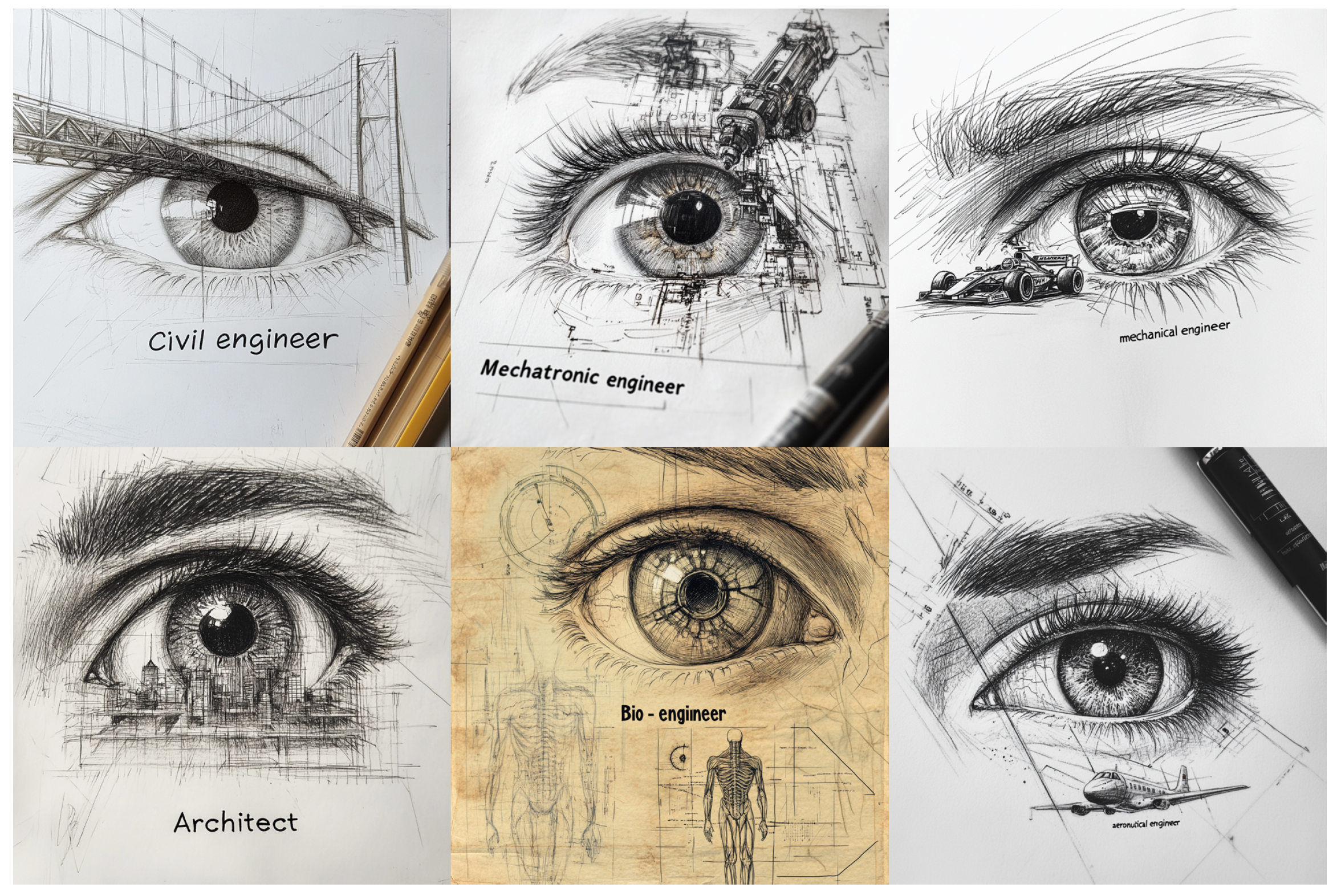
Structural mechanics forms the basis of the structural thinking of civil engineers. The concept of structural thinking is introduced here to illustrate an engineer’s ability to understand how a structure responds under various loading conditions. It is important to note that a structure can be understood differently across various engineering disciplines. Figure 2 illustrates interpretations of structures in some related fields of civil engineering; interestingly, all of these systems can be analyzed using the foundational concepts and procedures of structural mechanics. At the undergraduate level, structures are assumed to exhibit linear and elastic behavior, and energy, flexibility, or stiffness-based methods are used to calculate the responses (displacements, internal forces, strains, and stresses) under static loads.
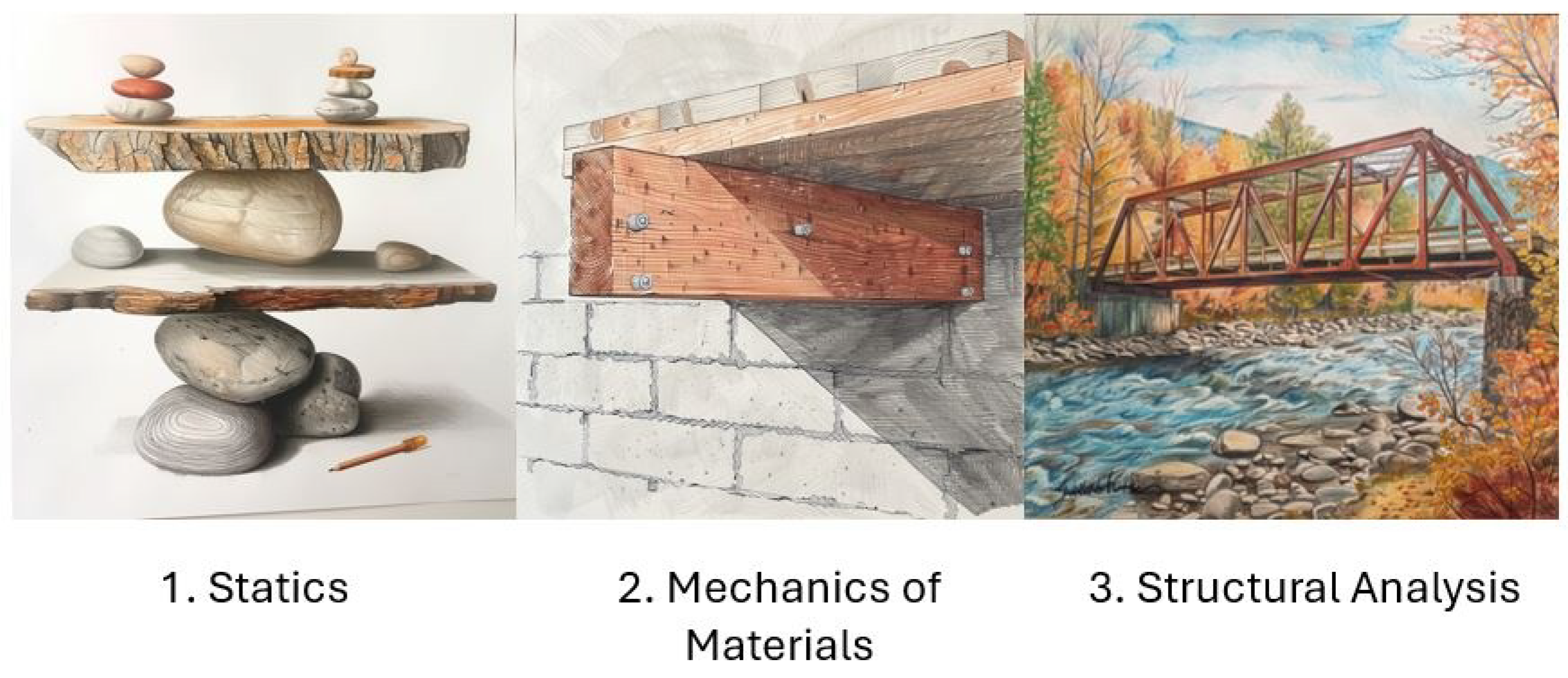
In Colombia, structural mechanics involves three sequential courses (Figure 3). The first, statics, introduces students to static equilibrium and its applications in solving basic and rigid structural systems. Then, in Mechanics of Materials (Strength of Materials or Mechanics of Solids), students are expected to consider the deformation capability of structures under a set of loads when solving problems involving hyperstatic systems. Laboratory sessions are typically included with this course to help students properly understand the mechanical phenomena. Finally, more complex and larger structures are analyzed in the structural analysis course, where analytical, numerical, and computational methods are explored primarily through the computer implementation of a matrix approach. In the universities involved in this study, and considering the country’s seismic hazard, a project involving the seismic analysis of a building using the Equivalent Lateral Force method is integrated. This project is sometimes continued in subsequent courses, such as structural dynamics or reinforced concrete design.
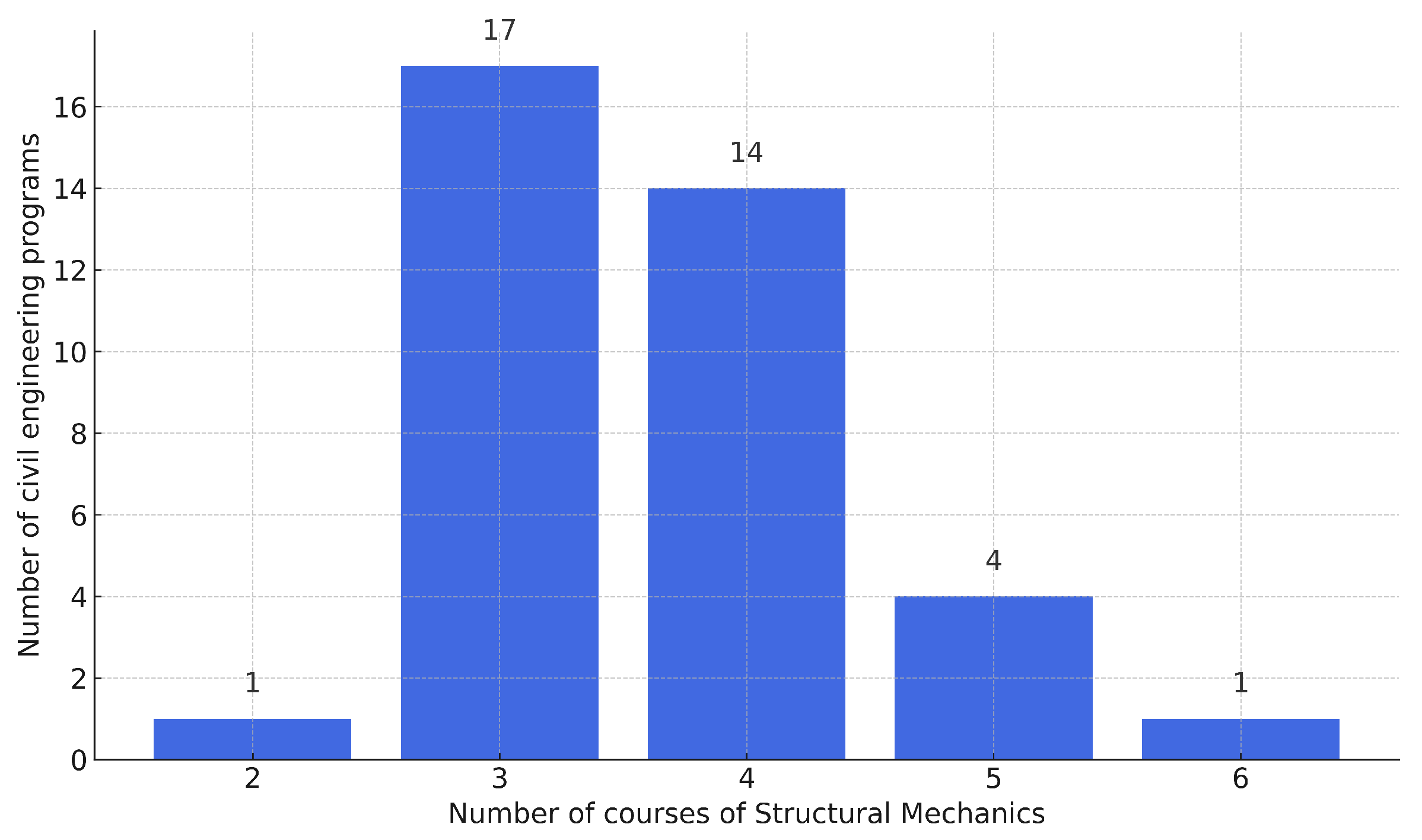
As seen in Figure 4, which summarizes the number of structural mechanics courses taught in 37 civil engineering programs in Colombia, half of the programs follow the three-course sequence described above. In programs with four courses, structural analysis is sometimes divided into two courses: the first is dedicated to classical analysis techniques, while the second focuses on matrix or finite element analysis (FEA). Alternatively, the three-course sequence precedes a course in structural dynamics. It is worth mentioning that only one program integrates mechanical concepts into two courses, whereas another program comprises six basic courses, including FEA and topics related to earthquake engineering.
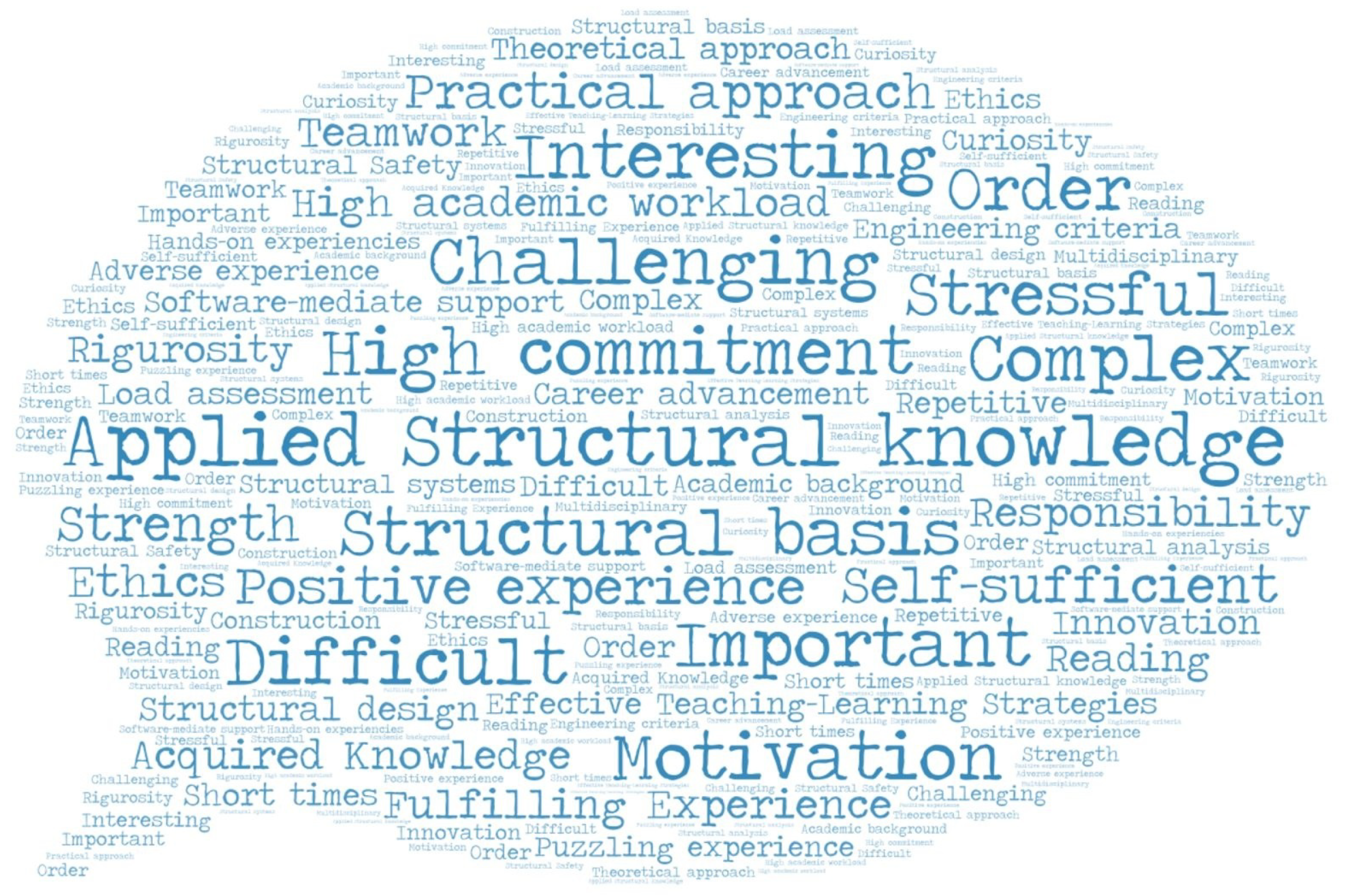
For students, structural mechanics is commonly regarded as a challenging yet essential area in their development as civil engineers. This can be confirmed in the word cloud shown in Figure 5, which presents the opinions of 182 students from nine Colombian universities about their experiences in the respective courses. The students were asked to respond to the statement: “Use three words (or groups of words) to describe the perception of your learning experience when taking the fundamental courses in structural engineering: statics, strength of materials, and structural analysis.” The results, which are indicative, show that despite the perceived complexity, students recognize the importance of structural mechanics. For some, the courses present a positive challenge to their formation, requiring self-learning and involving non-disciplinary aspects such as motivation, ethical issues, and pedagogical considerations. Yet, the courses can be time-consuming for many and may sometimes evoke negative emotions. The above results underscore the need for more comprehensive and didactic approaches to teaching structural mechanics.
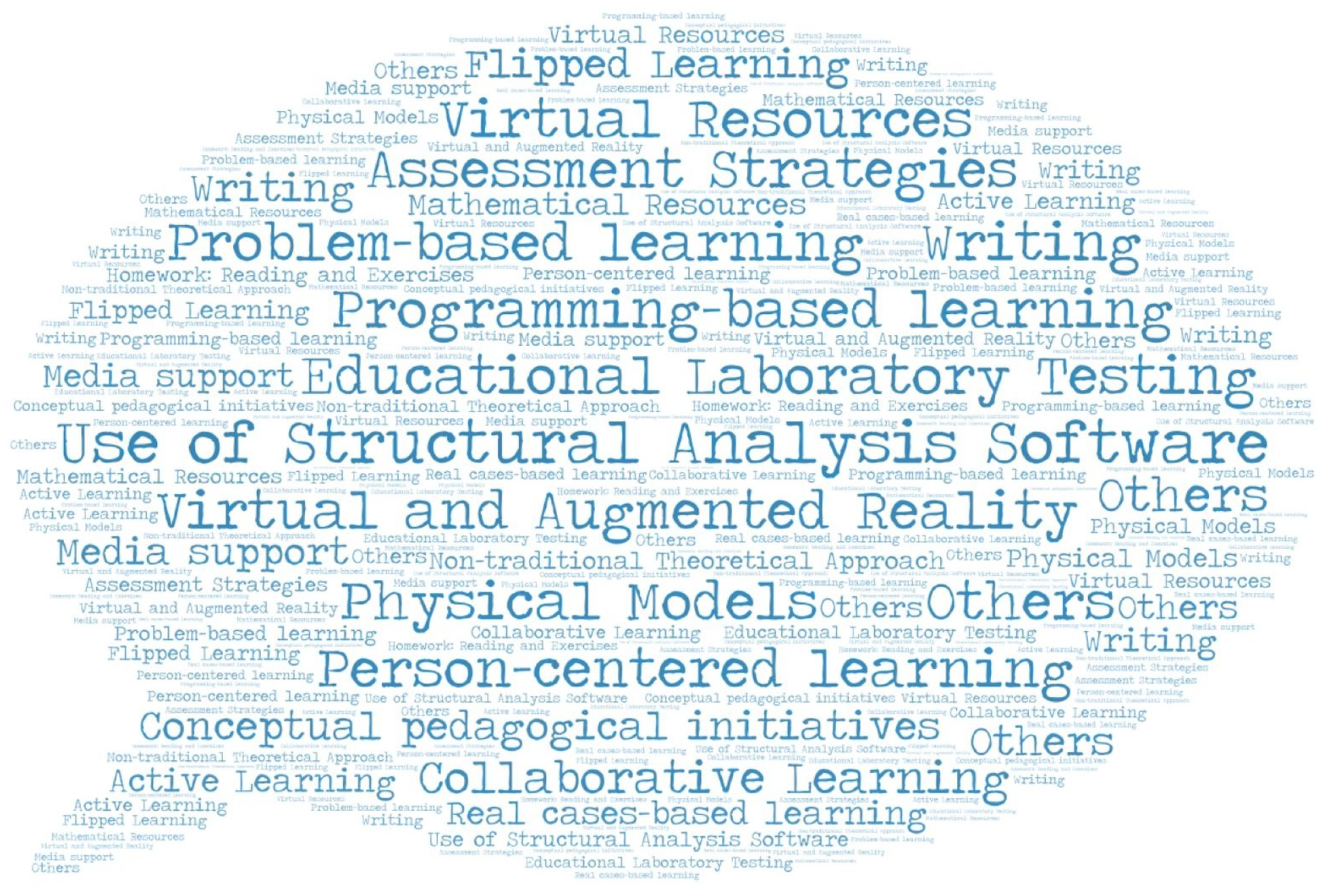
Given the perceived complexity of the subject, educators are encouraged to employ pedagogical strategies that enhance the teaching and learning process of structural mechanics. Figure 6 presents the responses of 33 Colombian professors to the prompt: “Identify up to four pedagogical strategies that you have implemented in undergraduate structural engineering courses (Statics, Mechanics of Materials, Structural Analysis) that facilitated the teaching-learning processes. Use only one sentence per suggestion”. As seen in the plot, three strategies (programming methods, lab work for structural concepts, and exposure to real-world scenarios) are preferred. Notably, the fourth strategy corresponds to assessment strategies that complement the learning process. The adoption of strategies related to resource utilization, including virtual and augmented reality, virtual resources, and media support, suggests that professors often cater to the visual learning styles of their students.
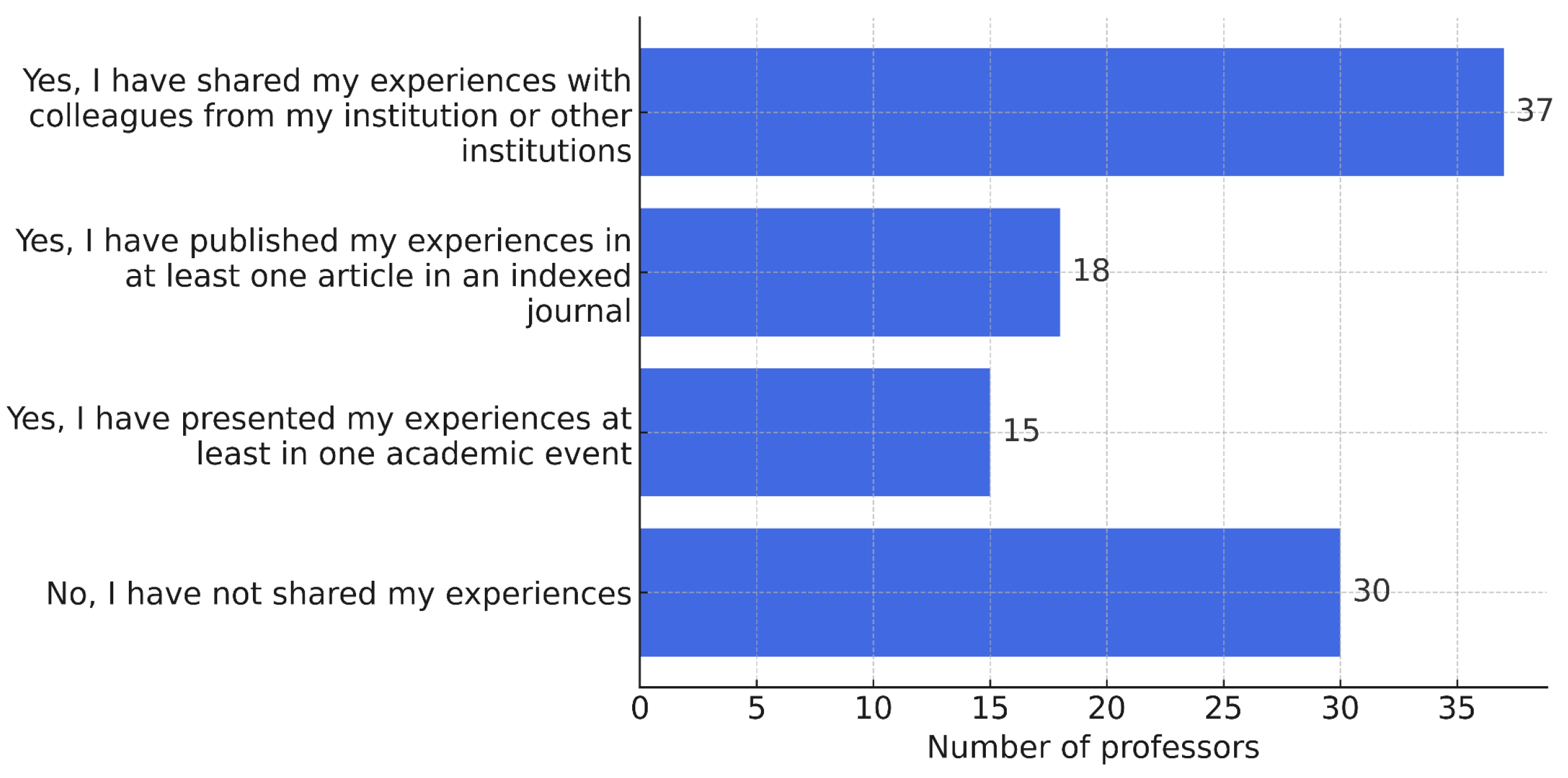
One key aspect of cohesively improving teaching practices in structural mechanics is sharing both successful and unsuccessful teaching experiences. This means that it is not sufficient for a professor to be provided with pedagogical development by the institution; it is also advisable to exchange experiences, monitor progress, and apply, interpret, and assess them. In this regard, Figure 7 presents the degree of dissemination of the pedagogical experiences of the interviewed Colombian professors. The fact that 70% of the respondents have communicated their work indicates an effort to apply or generate new pedagogical experiences. From the authors’ perspective, establishing the relationship between the strategy and its impact on students’ learning is not a simple task. Although many strategies have been developed worldwide, they are rarely compiled in journal publications, and their impact has not been systematically analyzed. This paper aims to provide a first step toward addressing this issue, based on the bibliometric analysis.
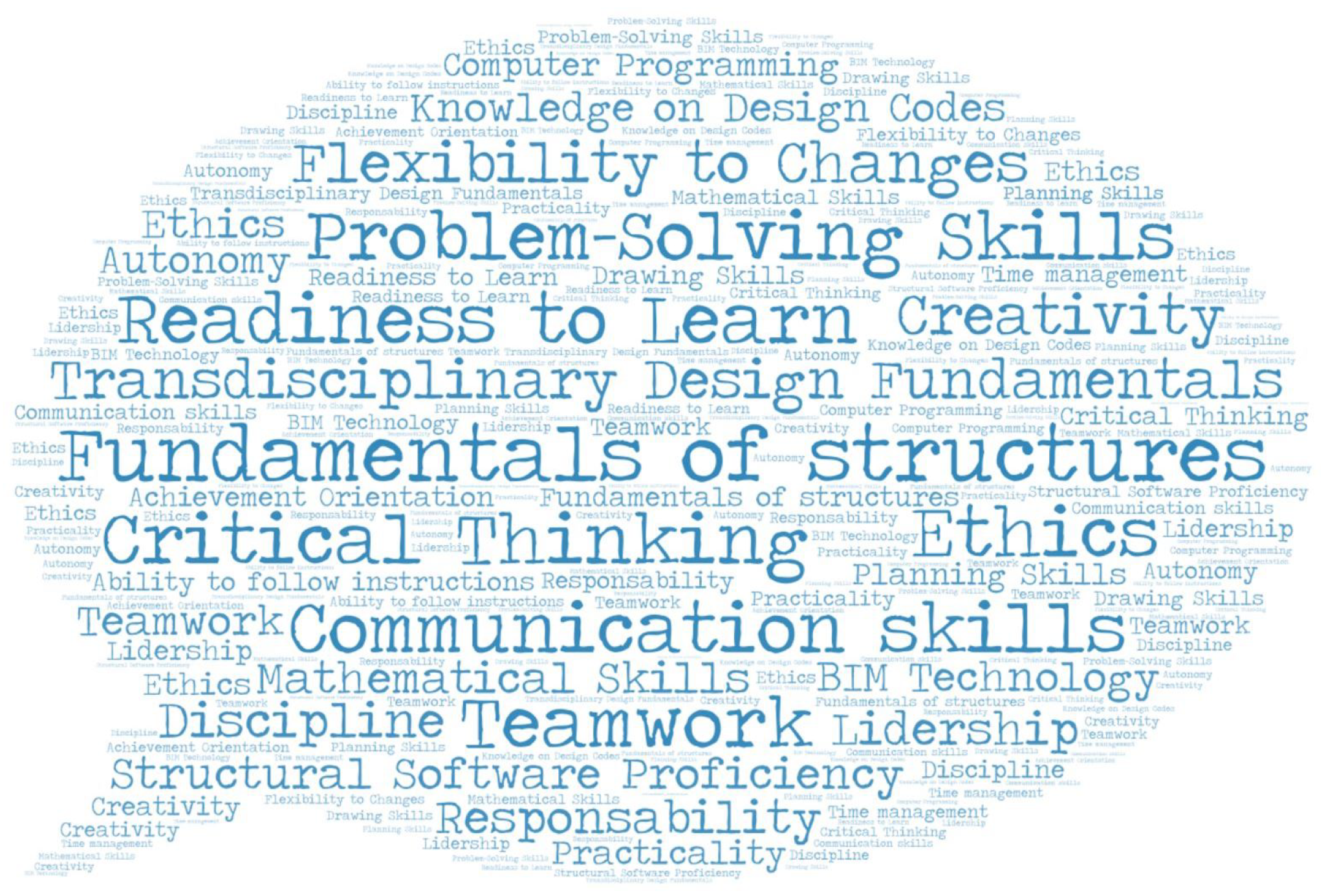
Another valuable perspective for the effective formulation of teaching strategies comes from practitioners and senior structural engineers. Hence, 28 senior structural engineers from different cities in Colombia were asked the following survey instruction: “Indicate four words (or groups of words) that reflect the required competencies in the field of structural engineering for an effective performance of a recently graduated civil engineer”. Their responses are shown in Figure 8. Regarding disciplinary competencies, the senior engineers expect young professionals to possess solid technical knowledge in mechanics and structural fundamentals, as well as the ability to engage in trans-disciplinary design. Proficiency in structural analysis software and the integration of Building Information Modeling (BIM) is also recommended. However, several soft skills are equally desired in young professionals. As seen in Figure 8, senior engineers emphasize several non-disciplinary competencies—such as critical thinking, adaptability to change, commitment, effective teamwork and communication skills, and a strong disposition for continuous and self-directed learning—which should be explicitly integrated into the civil engineering curriculum.
The previous discussion highlights the need for stronger interconnections among the three key actors (students, academia, and industry) to cultivate the most capable structural engineers to address societal needs. These inputs not only contextualize this research but also provide the basis for discussing the responses to research questions Q1–Q8 introduced in Section 1.

3. Research Methodology

3.1. Background and Methodology Framework

Bibliometric analysis has gained importance across many engineering fields as a tool to quantify, identify, and understand the volume of knowledge about a specific subject based on the analysis of metrics and trends. In this paper, the analysis conducted by a group of professors from various Colombian universities focused on the subject of trends in the teaching-learning process of structural mechanics in civil engineering programs. This research is carried out following the PRISMA methodology [22] to ensure a systematic approach to the selection and analysis of the literature. Despite advances in bibliometric research, each application contains particularities in each of the main stages defined by the PRISMA methodology. Thus, it was necessary to adapt some steps to the specific characteristics of structural mechanics education.
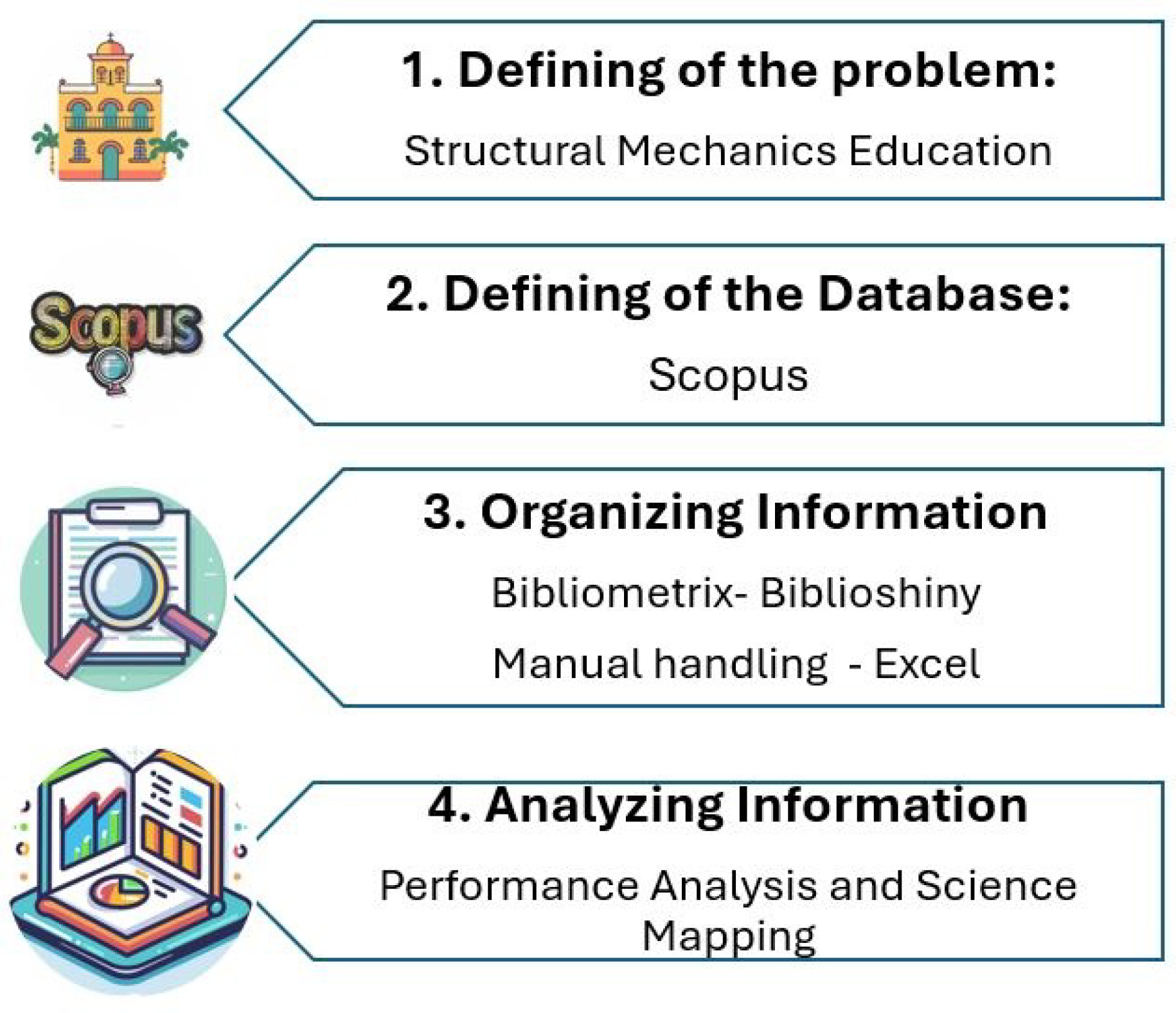
The research was based on four pillars [23]: (i) definition of the problem, (ii) data collection, (iii) analysis and visualization, and (iv) interpretation. Figure 9 presents the description of these pillars. The originality of this article, not identified in the reviewed literature, lies in its particular approach to teaching the three subjects included under the concept of structural mechanics. The Scopus database was selected to identify the sample of papers, which is one of the most widely used in civil engineering, not only for technical reports but also for specialized reviews [24,25,26]. Information analysis in Section 4 was carried out with the support of Bibliometrix v. 4.3.0 application [21], which has been widely employed in educational literature reviews [27,28,29,30,31]. This computational tool was also used to extract information from the collected papers and to generate visual content.
Two additional aspects were considered: performance analysis and science mapping, the latter serving as a complement. Interpretation of the results follows the guidelines proposed in [32] regarding scanning, sensing, and substantiating. Several guidelines illustrating good practices for performing bibliometric analysis have been reported in the literature [23,32,33]. In this regard, the strategies proposed by Mukherjee et al. [34] were examined. The recommendations by Romanelli et al. [35] were considered to address the different challenges encountered during the development of the research for the available paper sample.

3.2. Bibliometric Structure and Research Landscape

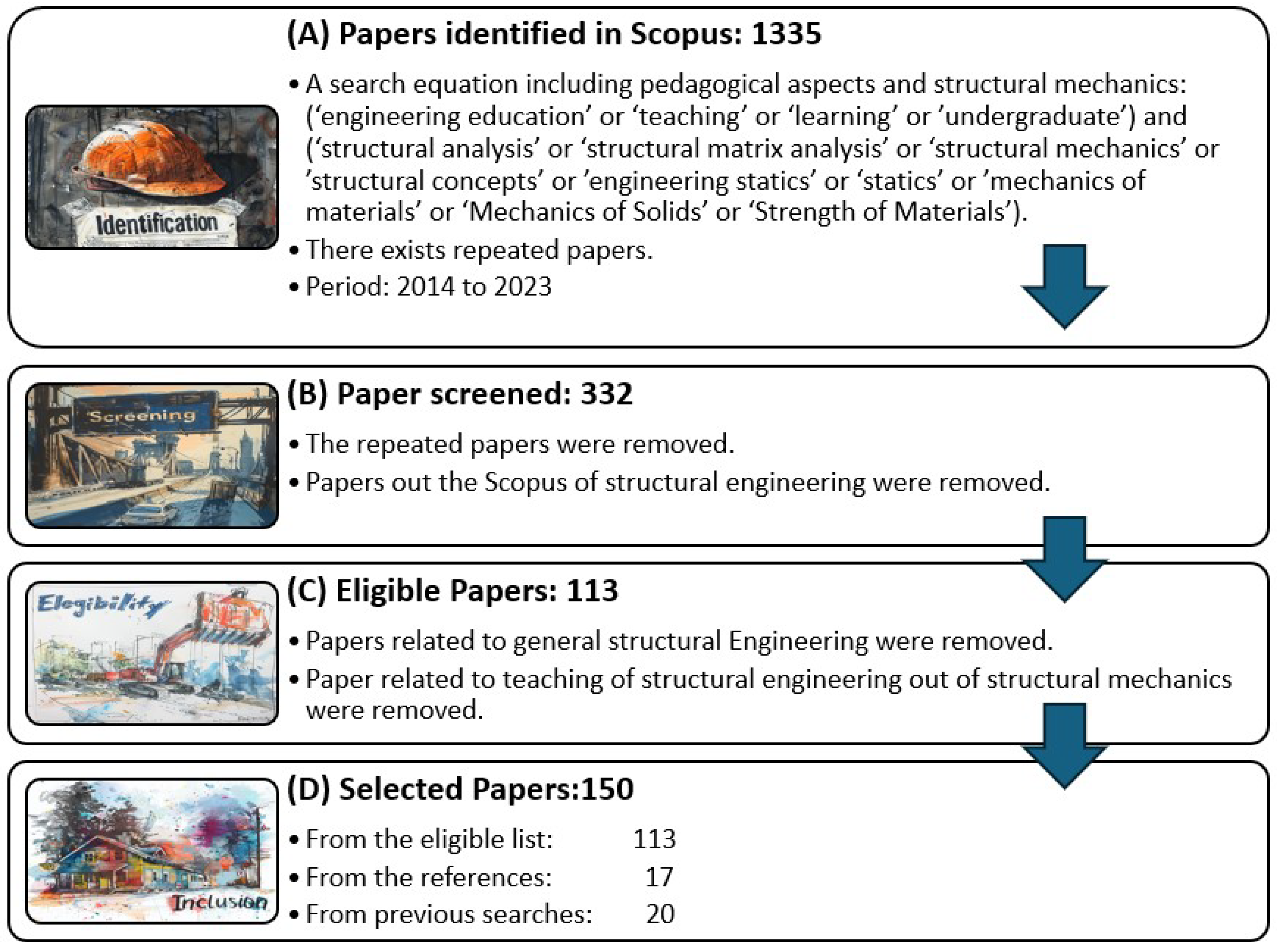
Figure 10 presents the procedure for selecting the sample papers used in the analysis, following the PRISMA guidelines. The inclusion criteria for selecting a paper were as follows:
  • It must address a topic related to any of the three structural mechanics courses in undergraduate education (see Figure 3).
  • It must be published in a scientific journal; no other publication types were considered.
  • It must have been published between 2014 and 2023.
  • It must be indexed in the Scopus database, thereby ensuring the journal’s inclusion in a recognized index.
  • It must be written in English.
The review process began with the formulation of the search equation, which combined pedagogical terms (‘engineering education’, ‘teaching’, ‘learning’, and ’undergraduate’) with disciplinary terms commonly used in structural mechanics (‘structural analysis or structural matrix analysis’, ‘structural mechanics’, ’structural concepts’, ’engineering statics or statics’, and ’mechanics of materials or Mechanics of Solids or Strength of Materials). The equation was applied to the Scopus database using the Title–Abstract–Keywords fields, yielding 1335 records. Duplicates were removed, and the remaining documents were screened by title and abstract. Conference summaries, editorials, non-engineering education papers, and documents unrelated to structural mechanics were excluded. After this screening stage, 332 papers met the inclusion criteria and were retained for full analysis.
The authors selected only those papers from the initial sample that addressed the teaching–learning process in structural mechanics education. After this step, the number of papers was reduced from 332 to 113. Two additional steps were considered during the selection stage. First, the references of the reviewed papers were examined, which led to the inclusion of 17 additional papers on the subject that were found in Scopus. Second, 20 previously known papers, also indexed in Scopus, were added to the sample. A subsequent analysis of these papers revealed that the search equation was unable to identify them. Finally, a total of 150 articles are part of this research [36,37,38,39,40,41,42,43,44,45,46,47,48,49,50,51,52,53,54,55,56,57,58,59,60,61,62,63,64,65,66,67,68,69,70,71,72,73,74,75,76,77,78,79,80,81,82,83,84,85,86,87,88,89,90,91,92,93,94,95,96,97,98,99,100,101,102,103,104,105,106,107,108,109,110,111,112,113,114,115,116,117,118,119,120,121,122,123,124,125,126,127,128,129,130,131,132,133,134,135,136,137,138,139,140,141,142,143,144,145,146,147,148,149,150,151,152,153,154,155,156,157,158,159,160,161,162,163,164,165,166,167,168,169,170,171,172,173,174,175,176,177,178,179,180]. The bibliometric analysis detailed in Section 4 was therefore conducted on this sample.

3.3. Description of the Analysis

The essence of a bibliometric analysis involves identifying the key questions to be answered regarding trends in structural mechanics education. These questions include general information about the paper sample (time span, number of sources, number of documents, among others). Such data allow for establishing the relationship between each paper and the structural mechanics courses to which they relate. In this research, we organized the questions defined in Section 1 into three main categories: basic information, research trends, and projective questions.
The basic questions aim to determine who is conducting research on the subject, which journals are preferred for publication, and how the number of publications has evolved over the last decade (see Questions Q1–Q3). The number of paper contributions to the sample was selected as the main indicator for inclusion in this question group. Questions Q4–Q6 seek to clarify the main research trends in structural mechanics education, enabling the formation of thematic categories. The analysis for this group was primarily supported by visual tools such as keyword word clouds, keyword co-occurrence diagrams, thematic maps, and contribution counts. Complementary categories were associated with each paper to facilitate the identification of information focused on specific pedagogical aspects, such as educational laboratory testing and problem-based learning.
Questions Q7 and Q8 introduce a reflective component to generate insights into the current state and emerging research lines in structural mechanics education. Rather than relying on indicators, the discussion for this question group is based on the information presented in Section 4 and, importantly, on our collective interpretation of the subject. Graphic resources are included to support the comprehension of the discussion. Finally, the implications of the findings for structural engineering education are articulated to foster deeper academic reflection within civil engineering curricula.

4. Bibliometric Analysis

4.1. General Information

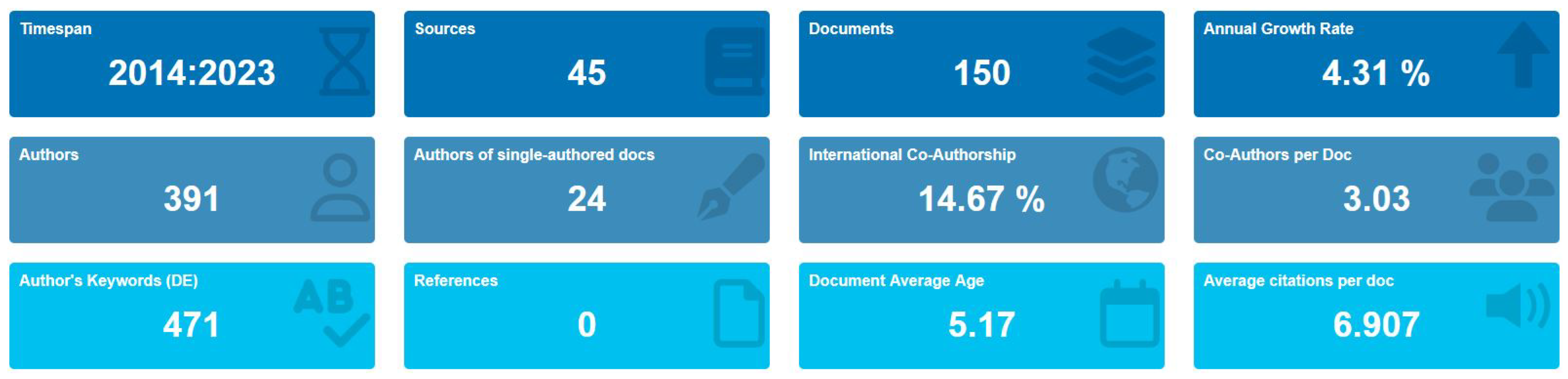
Figure 11 summarizes the primary information extracted from the reviewed papers. A total of 45 sources are involved in the analysis, providing a total of 150 documents in the time span 2014–2023, as explained in the previous section. Structural mechanics education exhibits an annual growth rate of 4.31% during the study period, representing an increase compared to earlier years. Additional information on the paper sample is also presented. Despite numerous trials, the software was unable to extract the total number of references in the revised papers; therefore, this value was set to zero. It is worth noting that all the figures in this section were generated using the software Bibliometrix (R Foundation for Statistical Computing) [21].
Complementary information about the sample will be discussed in the following sections. It is worth noting that, as the research progressed, it became necessary to analyze the information manually in order to conduct a more detailed review. Additionally, it was necessary to correct some inaccuracies in the information obtained from the Scopus database, including errors in the assigned publication year for the paper, incorrect author or university identifications, and missing keywords. Such faults occurred mainly with the oldest papers. Moreover, the Journal of Civil Engineering Education did not provide the corresponding keywords for the papers in the sample. The authors emphasize the crucial importance of conducting a thorough and critical analysis of the information gathered about the topic under study.
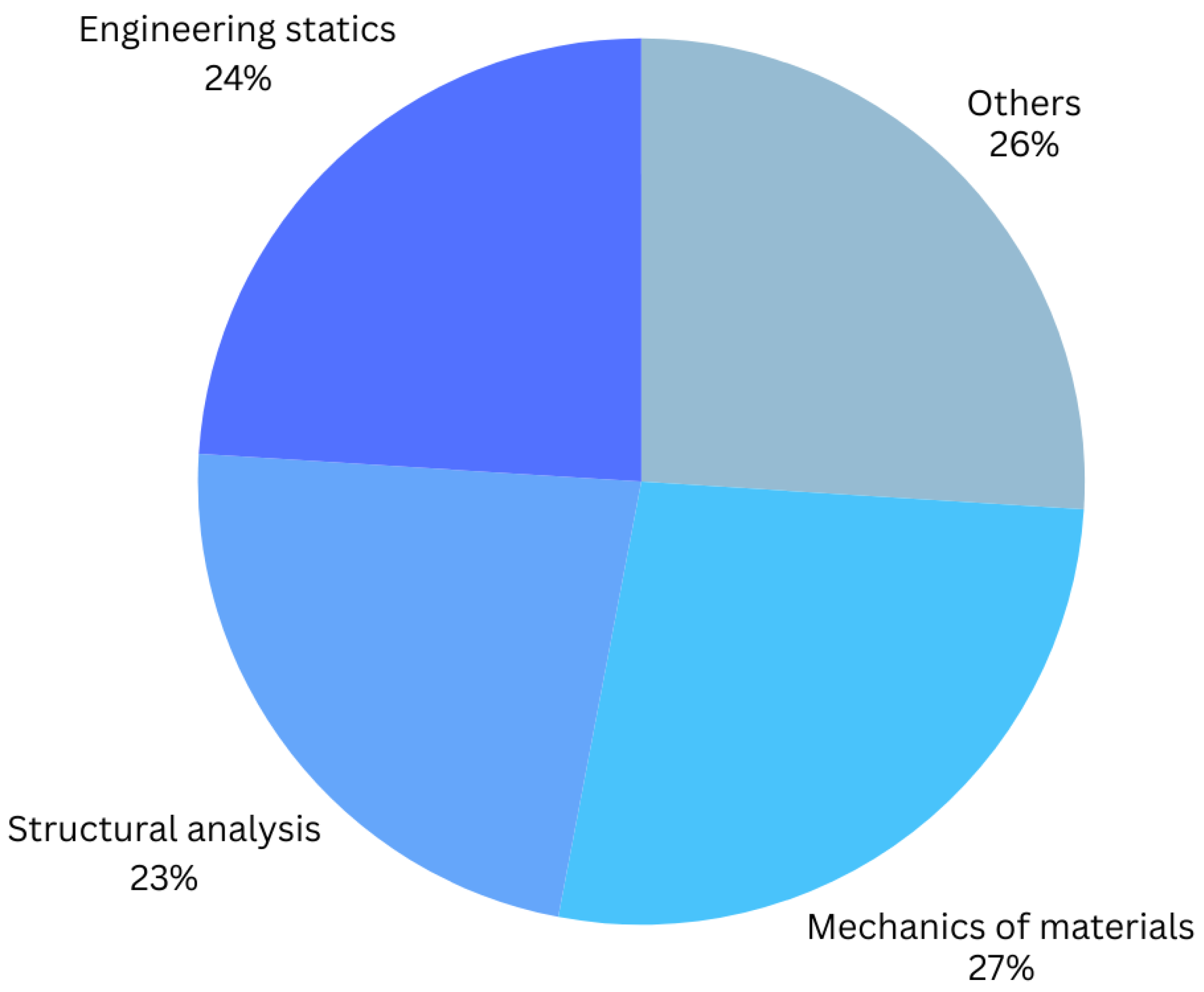
A topic-based classification of the papers was conducted according to their areas of expertise, with the results summarized in Table 1. This approach was designed to help readers locate information related to a specific course. Figure 12 presents the distribution of the paper sample across the courses related to structural mechanics in Colombian undergraduate programs, as defined in Section 2. Approximately three-quarters of the sample are related to general courses in engineering statics, mechanics of materials, and structural analysis. The remaining 26% is about other special subjects taught in undergraduate courses. For example, in some papers, the contribution to the understanding of Structural Mechanics is analyzed in courses such as Structural Dynamics or Earthquake Engineering. These topics are very relevant for countries located in earthquake-prone regions. Another special topic concerns the finite element method for structural analysis, which is commonly studied at the postgraduate level. In addition, the analysis of the information revealed that 47.0% of the research comes from civil engineering departments, while 22.7% comes from mechanical engineering, and 3.0% comes from architecture. Such results demonstrate that it is possible to promote structural mechanics teaching from various perspectives.

4.2. Q1: Who Are the Main Authors, Collaboration Networks, Institutions, and Countries Researching the Subject?

One key outcome from the bibliometric reviews is determining the authors with the highest number of publications on structural mechanics education in the analyzed period. In the sample of papers, there are 398 authors worldwide contributing to the topic. Table 2 presents the authors who contributed at least three papers to the sample, highlighting that seven authors were affiliated with universities in the United States. It was observed that Dr. Brown from Oregon State University (USA) has the highest number of contributions to the topic (eight papers). He was either the first or the corresponding author for all his papers [46,47,48,56,57,85,116,137]. Some of these papers are related to strategies for strengthening or assessing the understanding of concepts in statics and mechanics of materials. Dr. Brown has also applied the concept of inventory tests in engineering education [57,85,137]. This assessment strategy is not common among professors in structural engineering (including the authors of this paper).
The number of main authors in Table 2 represents 3.5% of the total authors, indicating that no additional authors have structural mechanics education as an active line of research with at least three papers. It is worth mentioning that in 35% of the paper sample, there is at least one author who has published at least five documents (papers or conference proceedings) on education-related topics. Google Scholar provided the latter information. One aspect to highlight is the contribution to a specialized topic from the main expertise of one author. For example, Dr. Virgin contributed to the application of manufacturing additives in structural mechanics education in topics such as structural dynamics [162], linear structural analysis [163], elastic buckling [164], and shear center [165]. Dr Chacón has used different digital tools for education, including digital fabrication [61,62] and virtual and augmented reality [63]. Dr. Zuo published a series of three papers [178,179,180] related to the development of educational software (EFESTS) for finite element analysis of trusses. These examples demonstrate that applying specialized expertise in structural engineering can enhance the teaching and learning of structural mechanics.
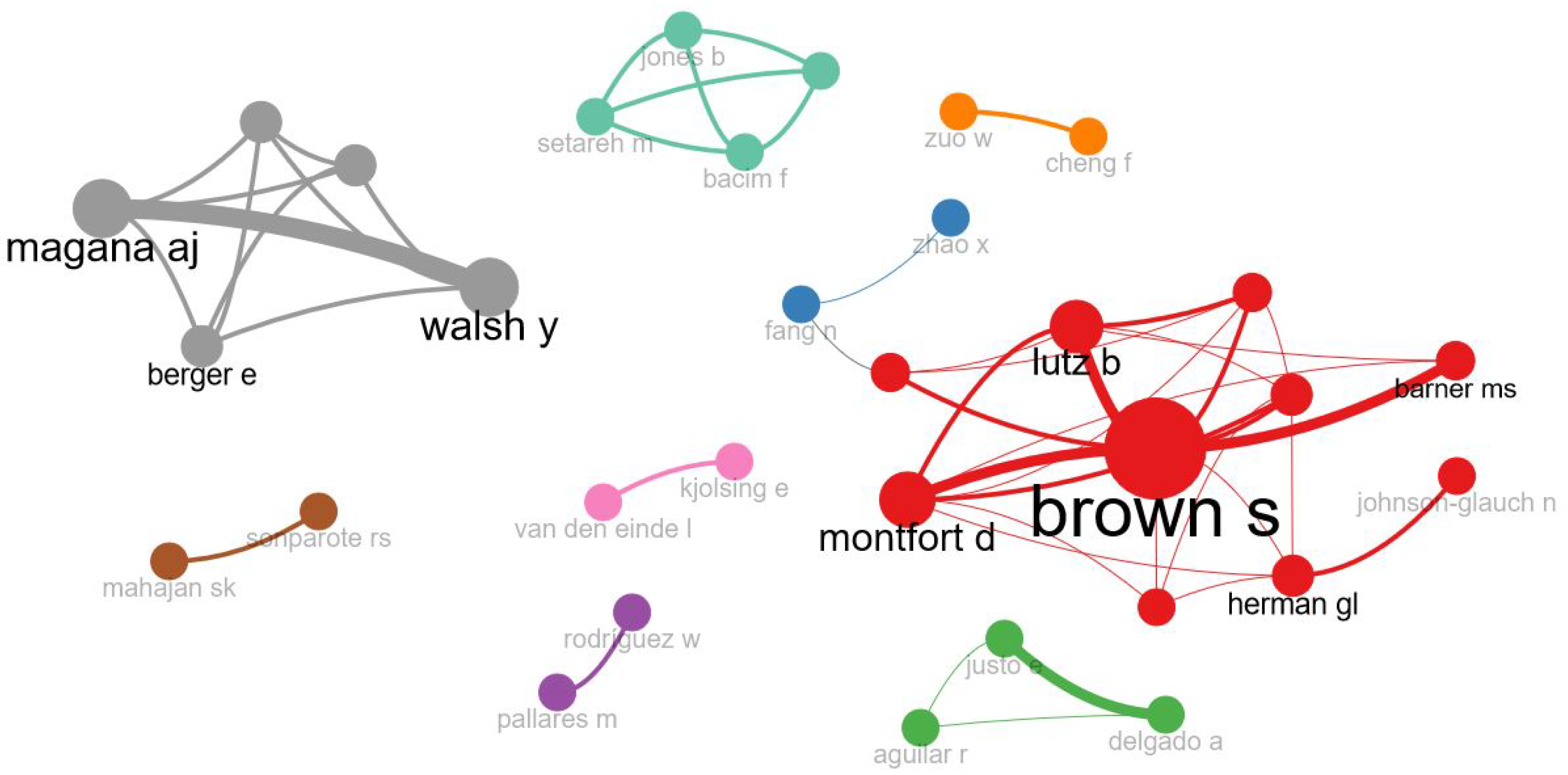
Concerning the research collaboration networks, four small clusters were identified (Figure 13). The main cluster is formed by Dr. Brown from Oregon State University, who interacts with at least five other authors. Dr. Magana, from Purdue University, also leads collaborative research. The clusters are generally composed of researchers from the same country, and no links are observed between clusters. The international co-authorship corresponds to approximately 14% of the sample, with 3.03 co-authors per paper. On the other hand, it is observed that single-authored papers correspond to 18% of the sample (27 papers). These results indicate the necessity of promoting interaction among researchers. Through this collaboration, teaching in structural mechanics may be enriched by different cultural perspectives to address an educational issue.
Because many authors appear only once in the sample, the lack of robust collaborative interactions poses a challenge to advancing global perspectives on structural mechanics education. It raises an important question: how can a collaborative network be designed to strengthen the global impact of structural mechanics education research? It is worth mentioning that several synergies are found; for example, innovations based on technology, where civil engineers interact with various specialties, such as mechanical or electrical engineering. Concerning the research group, it can be observed that 20% of the papers involved the participation of a specialist affiliated with a department or institution of education. The participation of these specialists facilitates the possibility of conducting research on education for professors in structural engineering with no previous experience in the subject. However, it would be valuable for any professor in structural mechanics to have the opportunity to be trained in research for education. In this way, it is possible to improve the educational practice of structural mechanics.
The third aspect of question Q1 refers to the university institutions from which the main contributions originated. A total of 149 universities were identified in the sample, with four papers [37,47,87,183] being co-authored by practitioners. The presence of industry representatives in education research is desirable to strengthen the relationship with academia and the education of structural engineers. Table 3 presents the universities that contribute at least four different papers, achieving 31% of participation in the sample. This table also shows the number of papers where a researcher from the university is the first author and the number of researchers from this university. In most cases, the universities in Table 3 correspond to publications led by a professor from that institution. Similar results were found when the selection criterion was based on the corresponding author. One particular case occurs with Duke University, where all the contributions come from a single author [162,163,164,165]. A total of 128 universities present one contribution to the paper sample, which would indicate that there exists motivation for contributing to the education in structural mechanics. On the other hand, it can be observed that Oregon State University and Purdue University have a high number of contributors with at least one paper. It is important to note that engineering education departments at these universities could streamline research while encouraging innovation. This, understandably, is not the rule for many universities.
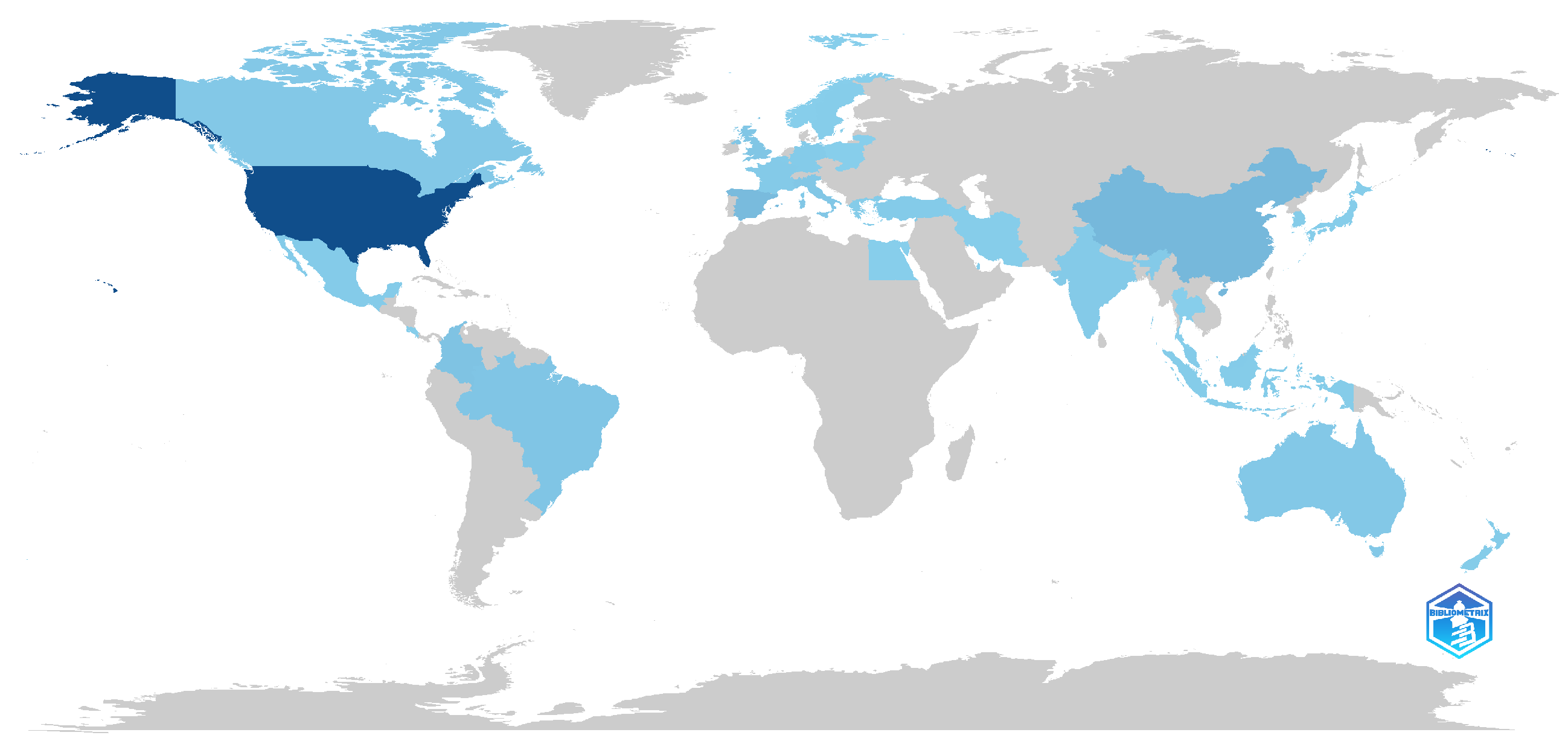
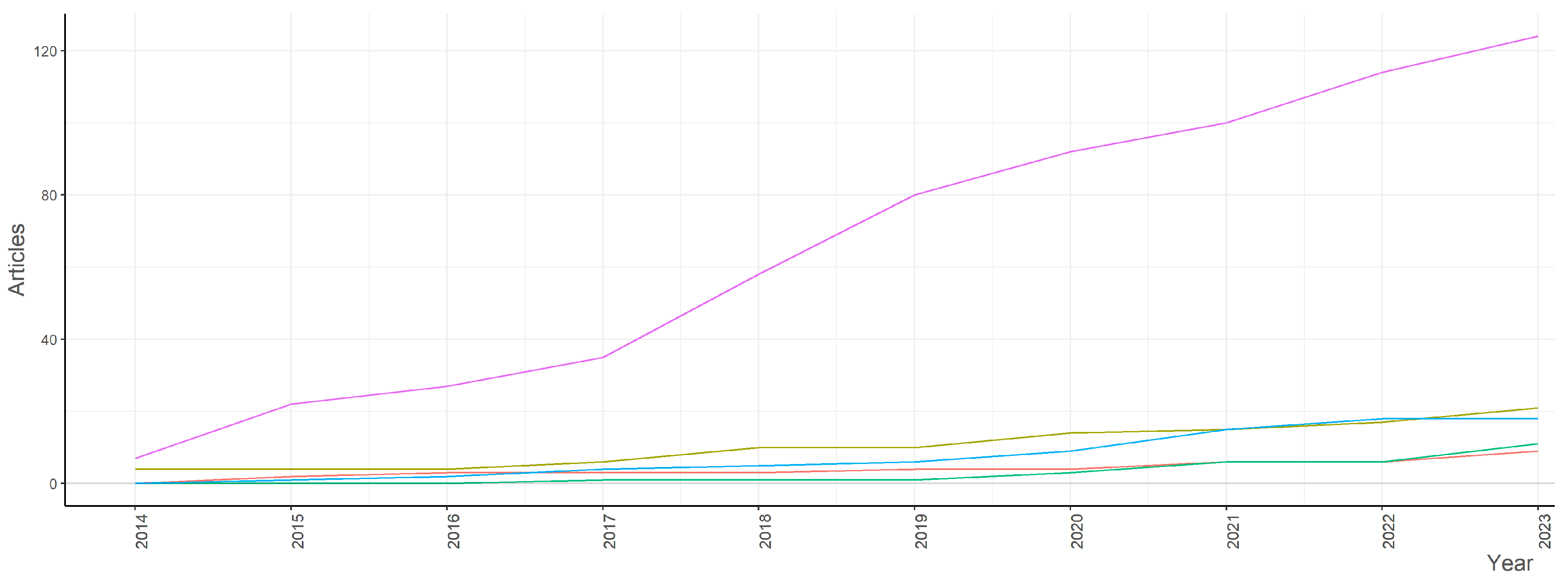
Table 4 presents the countries with the most contributions to the paper sample. Papers whose authors are affiliated with universities in the United States represent 43% of the contributions. A similar result is found when analyzing the countries of the first author. Only 21 papers present international collaboration, with a maximum of four countries involved in a single paper (see reference [37]). Figure 14 allows for a visual understanding of the spatial distribution of the papers around the world, highlighting the contributions from the USA, China, and Spain. Colombia and Brazil contribute to South America. The intensity of the blue color represents the relative level of contributions made by each country. The contributions from Colombia could be related to those presented in Figure 7. In addition, Figure 15 shows that there is continuous growth in publications on the subject in the USA. Although interest is growing in Brazil, China, and Colombia, publication rates remain modest. This may reflect limited experience publishing in the field of educational research. To make the number of articles published by country more comparable, the authors of this work suggest averaging this value in relation to the number of structural engineering professors in each country. In this way, it is recommended to consult databases from UNESCO, OECD, the World Bank, or the specific higher education authorities of each country.

4.3. Q2: What Are the Leading Journals for Publications on This Subject?

Table 5 shows the leading journals in which research related to structural mechanics education is published. The ten sources correspond mainly to Scopus Quartile 1 and 2 journals and account for 70% of the analyzed articles. Seven out of ten journals are associated with engineering education, revealing several significant facts. There is only one journal specifically focused on civil engineering education, which highlights the need for further research in this field. The identified journal corresponds to the Journal of Civil Engineering Education, formerly named the Journal of Professional Issues in Engineering Education and Practice. It can be seen that the journal Computer Applications in Engineering Education leads with approximately 19% of the publications analyzed. This is consistent with the fact that studies on the use of computers during the teaching process represent a trending topic, as shown in the literature [41,53,54]. In addition to the previous findings, three journals with a primary scope different from engineering education are included: International Journal of Mechanical Engineering, Engineering Structures, and Journal of Architectural Engineering. The journal Engineering Structures promotes publications on research about advances in structural engineering, without explicitly including in its scope any subject related to education in structural engineering. Although the International Journal of Mechanical Engineering focuses on mechanical engineering, it also features publications on the teaching of structural mechanics, a topic common to both civil and mechanical engineering. It is worth mentioning that the quartile for each journal was related to the most similar area.
Based on the above discussion, and considering that the paper sample includes 150 papers over a time span of 10 years, it is worth asking: would it be necessary to suggest the creation of new specialized journals on civil engineering education that contribute to consolidating research on this subject? The authors of this research consider that it is necessary for researchers to have a smaller number of journals specialized in civil engineering education in order to concentrate and exchange the available information. The above suggestion was based on the complexity of teaching in these fields, as well as the implications and responsibilities that future engineers and teachers may encounter in both education and the professional practice of civil engineering.

4.4. Q3: Is Research on This Subject Showing an Increasing Trend?

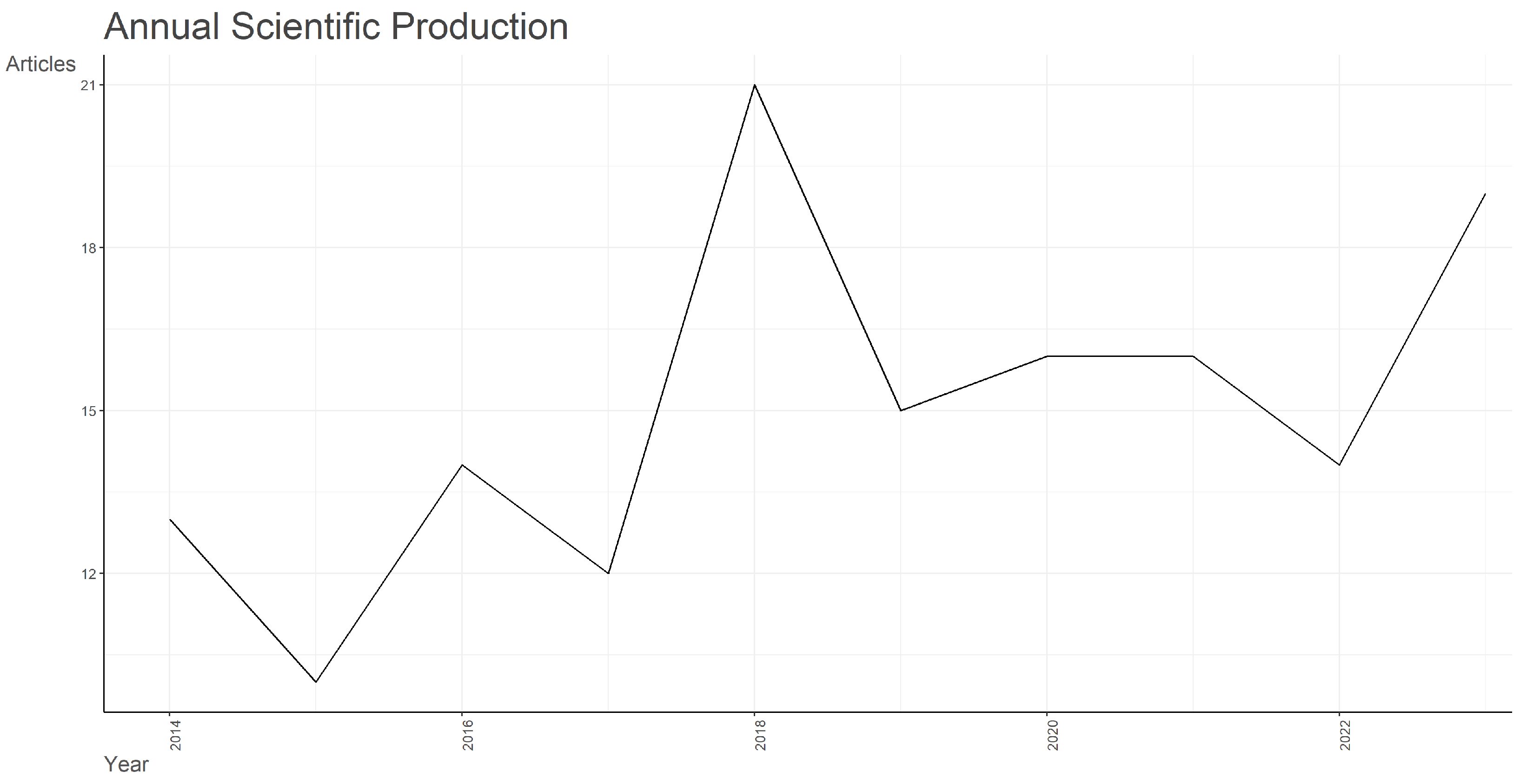
Figure 16 presents the annual scientific production on structural mechanics education for the sample of papers. With a mean annual growth rate of 4.3%, there appears to be a modest increase in the number of publications on the subject throughout the period. However, the number of publications is in agreement with the numbers reported in other research related to education in civil engineering published in recent years, such as [16,17]. The graph shows that, in the recent past, the year 2022 experienced the largest decline in the number of publications. This decline can probably be attributed to the emergence of COVID-19 and the time required by the editors for article evaluation. During 2024, at least 18 papers on structural mechanics education were published [186,187,188,189,190,191,192,193,194,195,196,197,198,199,200,201,202,203]. These results indicate that the publication trend in this area remains active; nevertheless, a further increase in the number of papers can be expected as the field achieves greater consolidation.

4.5. Q4: Are the Keywords Adequately Defined?

The definition of keywords for a research paper plays a very important role in the consolidation of a field of knowledge, as it allows researchers to focus on what is being studied in the subject. Table 6 presents the main keywords related to structural mechanics education. In the sample of papers, two groups of keywords can be identified: those related to the disciplinary field (structural engineering) and those related to education. In the first case, the main keywords correspond to the three courses of structural mechanics: statics, mechanics of materials, and structural analysis. Additionally, keywords are related to specific subjects in the different courses, such as Mohr’s circle [58], shear center location [165], or free body diagram [70]. The second type concerns aspects of education, with active learning and augmented reality being the most commonly used keywords in this group. Despite the expression “engineering education” being a linking term for the disciplinary and pedagogical aspects, it only appears in 28 papers. As shown in Table 6, only nine articles include the keyword structural engineering, while only seven include the word education.
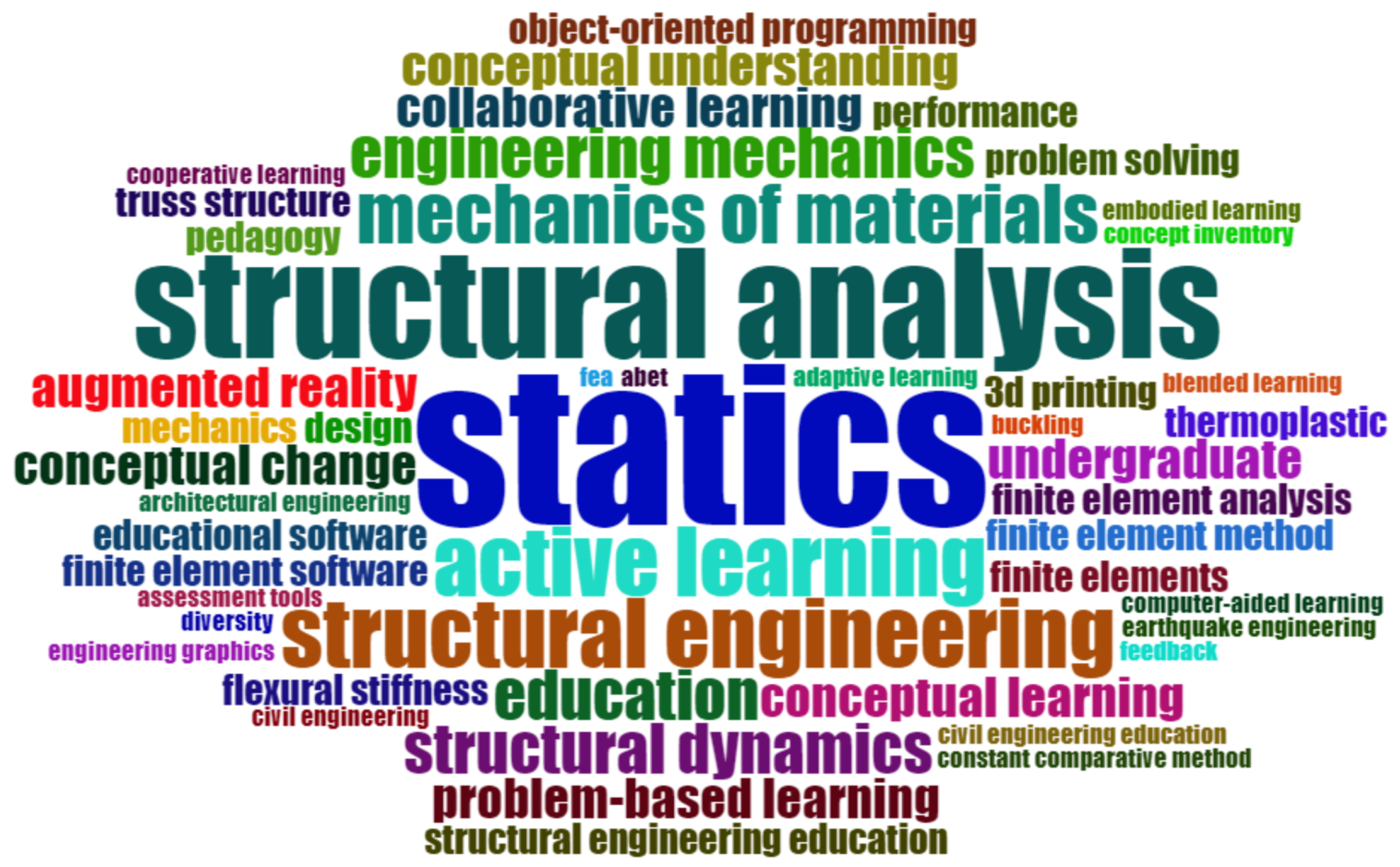
A broader perspective on the keywords in the paper sample can be taken from the word cloud presented in Figure 17. The figure presents a variety of aspects in which contributions to structural mechanics education can be developed. Statics is the most commonly used keyword, which may be associated with the necessity for a structural engineer to understand the principles of equilibrium of structures under different loads. Then, the following keyword is the mechanics of materials. In contrast, the word cloud seems to indicate that structural mechanics education is moving toward active learning-based methodologies. Another term refers to collaborative learning, problem-based learning, and assessment tools, among others. Augmented reality and 3D printing are technologies that contribute to the understanding of structural concepts through physical and virtual models.
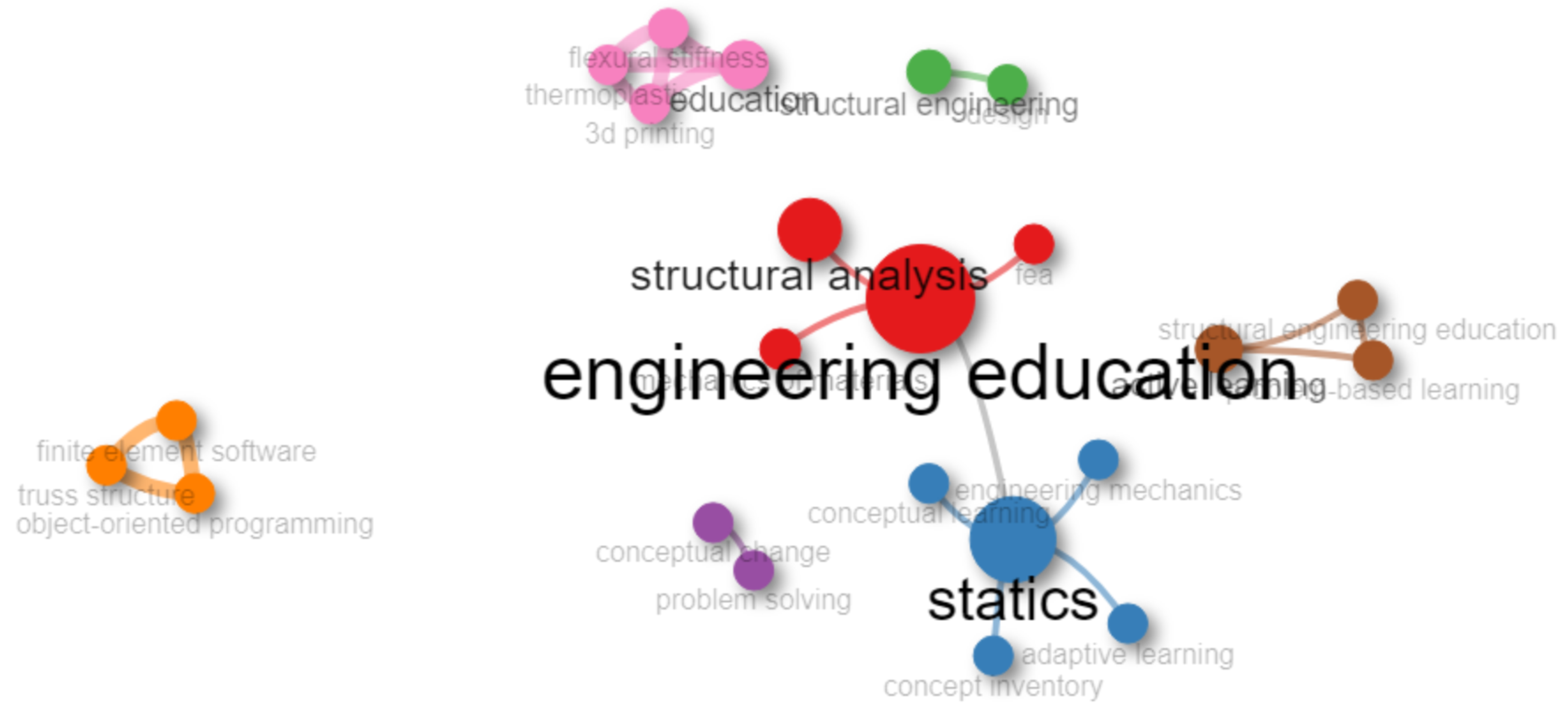
Figure 18 presents the co-occurrence network of keywords in the sample papers, from which three types of clusters are identified. Clear linkages between technical and pedagogical concepts appear in the main clusters, such as those connecting engineering education with structural analysis or statics with concept inventories. In addition, several clusters focus exclusively on technical aspects, including finite element software, truss structures, and object-oriented programming. Two pedagogically oriented keywords—conceptual change and problem solving—also emerge as particularly influential. As the field continues to mature, the establishment of a consistent and standardized set of keywords becomes essential for improving information retrieval and strengthening the coherence of future research.

4.6. Q5: What Are the Main Topics of Research?

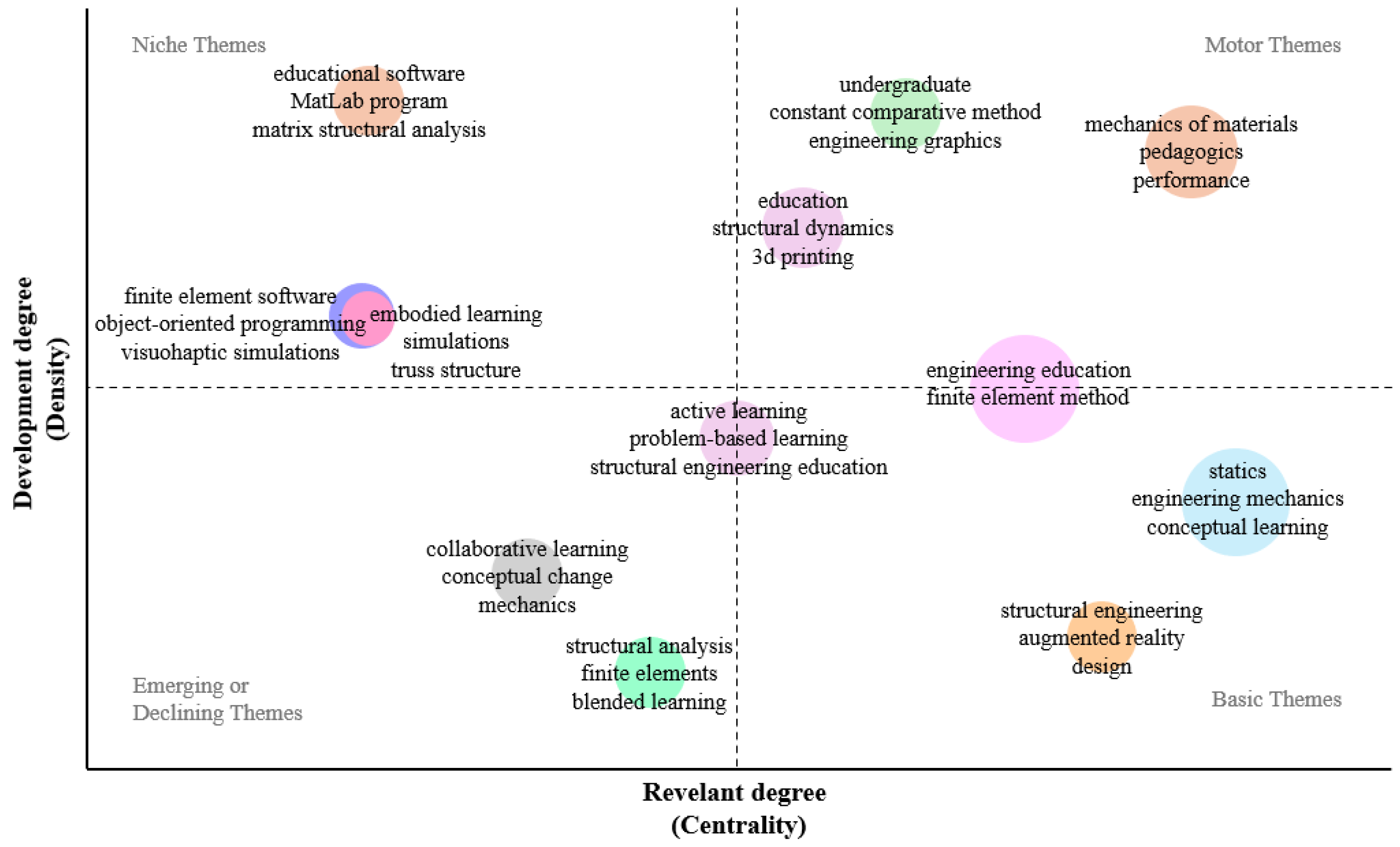
It is possible to identify the main topics being researched in the paper sample from the thematic map shown in Figure 19. The map indicates that active and problem-based learning is at the center of the studies. At the center of the figure, the necessity of active learning can be found. In the Motor Themes quadrant, the topics of mechanics, pedagogy, performance, undergraduate education, the constant comparative method, and engineering graphics are positioned at the highest level, indicating a well-established and high level of development. Topics with slightly lower development and relevance include education, structural dynamics, and 3D printing. As indicated previously, the mechanics of materials have received attention for the application of new pedagogical strategies due to their inherent complexity. The subjects Educational software, MATLAB ® program (MATLAB Online (Basic), Release R2025b Update 2 (25.2.0.3055257), MathWorks, Inc., Natick, MA, USA, 2025. Available online: https://www.mathworks.com/products/matlab-online.html (accessed on 30 October 2025)), and matrix structural analysis are specialized or niche themes; they are well-developed but have few global connections. Matlab® remains a common computational resource for developing educational software, which explains its placement in the emerging/declining quadrant. However, programming languages such as Python (Python (version 3.12.2), Python Software Foundation, Wilmington, DE, USA, 2025, available online: https://www.python.org (accessed on 30 October 2025)), particularly when coupled with open-access tools, increasingly offer attractive alternatives for structural mechanics courses.
On the other hand, the subjects of collaborative learning and conceptual change represent areas that have been little explored, are in an initial state of development, or have low relevance. This could be due to the necessity of training in educational themes for structural engineers. The subjects of statics, engineering mechanics, conceptual learning, and, at a lower level, structural engineering, augmented reality, and design are central themes in the sample; however, they require greater cohesion and internal development. Two groups of topics in the figure are identified as being close to the neutral axis of density. One of them, the active learning problem, has zero relevance, while the other, engineering education FEA and FEM, has slightly more relevance. This position can be interpreted as the representation of topics that are still underdeveloped, with normal to moderately high relevance. Such cohesion could be achieved in the manner in which the field of structural mechanics education consolidates.
The authors defined 17 pedagogical categories based on their experience and classified each paper according to its primary contribution. Table 7 presents the results of this classification, indicating both the references assigned to each category and the number of papers per category. It highlights the number of contributions to person-centered learning, which includes aspects of inclusivity and diversity in the classroom [60]. Problem-based learning and real case-based learning contribute to 16 papers, demonstrating the importance of these strategies in the formation of structural principles. The role of assessment strategies is gaining importance as part of the formative process for civil engineers. Few papers attempt to include non-traditional theoretical approaches in the content of the structural mechanics courses, such as the references [51,135]. It is curious that only two papers aimed at strengthening students’ mathematical foundations exist. From the authors’ experience, this is a critical subject in education today. One special subject of attention refers to writing, an ability that every professional needs to develop to communicate effectively with others. It was not a simple task to classify four papers dealing with the development of spatial ability [84], interdisciplinary work [159], curriculum development [174], and the teaching reform of a course [177]. Finally, the classification process also made it possible to identify additional relevant topics beyond those shown in Figure 19, such as flipped learning.

4.7. Q6: What Are the Most Cited Articles on the Subject?

The ten most cited papers on structural mechanics education found in Scopus up to 28 November 2024, are presented in Table 8. The most cited articles are concentrated in various journals, demonstrating that there is a wide range of documents and editorials that consider the topics of interest. The work by Fogarty et al. [76], published in 2017, is the most cited. This paper focuses on the impact of virtual reality tools on the understanding of the buckling phenomenon. The presence of other research related to augmented reality on the list of the most cited papers reflects the attention this subject has gained in the last decade. Concerning the use of structural analysis software, Francois et al. [78] developed a Matlab-based computational toolbox, Stabil, to help students better comprehend the principles of static and dynamic response in structural systems through interactive simulations. This type of contribution is accompanied by a pedagogical discussion about how to orient the learning process for students. Two papers are related to implementing problem-based learning in the elaboration of structural models for analysis and design [99,113]. It is observed that the least cited papers in Table 8 have at least 25 citations. The most cited paper on assessment strategies has 37 citations, which shows the importance of the topic. Other cited publications cover different topics, including structural analysis software and problem-based learning.
Table 9 lists the countries of origin of the first authors whose papers on structural mechanics education have received the highest number of citations. In relation to these results, the most cited papers originated from the USA and Spain, which correlate well with the list of countries with higher contributions shown in Table 9. Interestingly, five countries in Table 9 (A, B, C, D, and D) are not included in Table 4.

5. Discussion

5.1. Q7: What Does the Evidence from the Analyzed Research Tell Us About the Education of Structural Mechanics?

Structural mechanics plays a very important role in the education of structural engineers, as it forms the foundation of their professional practice. However, it is often perceived as a difficult subject, as evidenced by the interviewed students (see Figure 5). Both aspects motivate the development of pedagogical strategies to improve the teaching–learning process and invite further educational research that can contribute to global progress in this field.
The evidence found in the paper sample suggests that structural mechanics education is a field in consolidation. This trend is also visible in Figure 16, which shows a marked increase in publications over the last decade. The number of papers published in the last decade (150), involving 398 authors from 31 countries, further illustrates this growth. Established education researchers are among these authors. Publication in 45 different sources highlighted the variety of publication venues. It is also worth noting that additional contributions to structural mechanics education can be found in conference proceedings and in languages other than English, such as Spanish, French, Portuguese, and Italian.
The sample revealed 20 research topics from a topical perspective. By far, the most common topic is the Use of Structural Analysis Software, addressed in 24 articles (Table 7). This finding also closely aligns with the results in Figure 6, where professors from Colombian universities reported the Use of Structural Analysis Software as one of the most frequently employed pedagogical tools. Although software use is widely adopted and valued as a pedagogical tool, senior structural engineers in professional practice do not value proficiency in operating the software itself as highly; instead, they emphasize mastery of fundamental structural concepts, critical thinking, ethics, communication, and problem-solving skills, among others (Figure 8).
The next most frequent research topics are in Table 7: Educational Laboratory Testing (12), Virtual and Augmented Reality (12), Physical Models (12), and Person-centered Learning (12), followed closely by Problem-based Learning (11), Programming-based Learning (11), and others. These topics, like the most frequent one (Use of Structural Analysis Software), are consistent with the main pedagogical strategies mentioned by professors from Colombian universities (Figure 6).
In a society that places an increasing emphasis on the teaching–learning process, the potential to make contributions from classroom practice is highly relevant. In this sense, the authors propose the concept of Structural Engineering Thinking (Str-Eng-Th) as the set of knowledge and abilities that structural engineers should acquire for the proper exercise of their profession, as illustrated in Figure 20. This concept can serve as a basis for rethinking the teaching of structural mechanics. The concept will be further elaborated in future work.
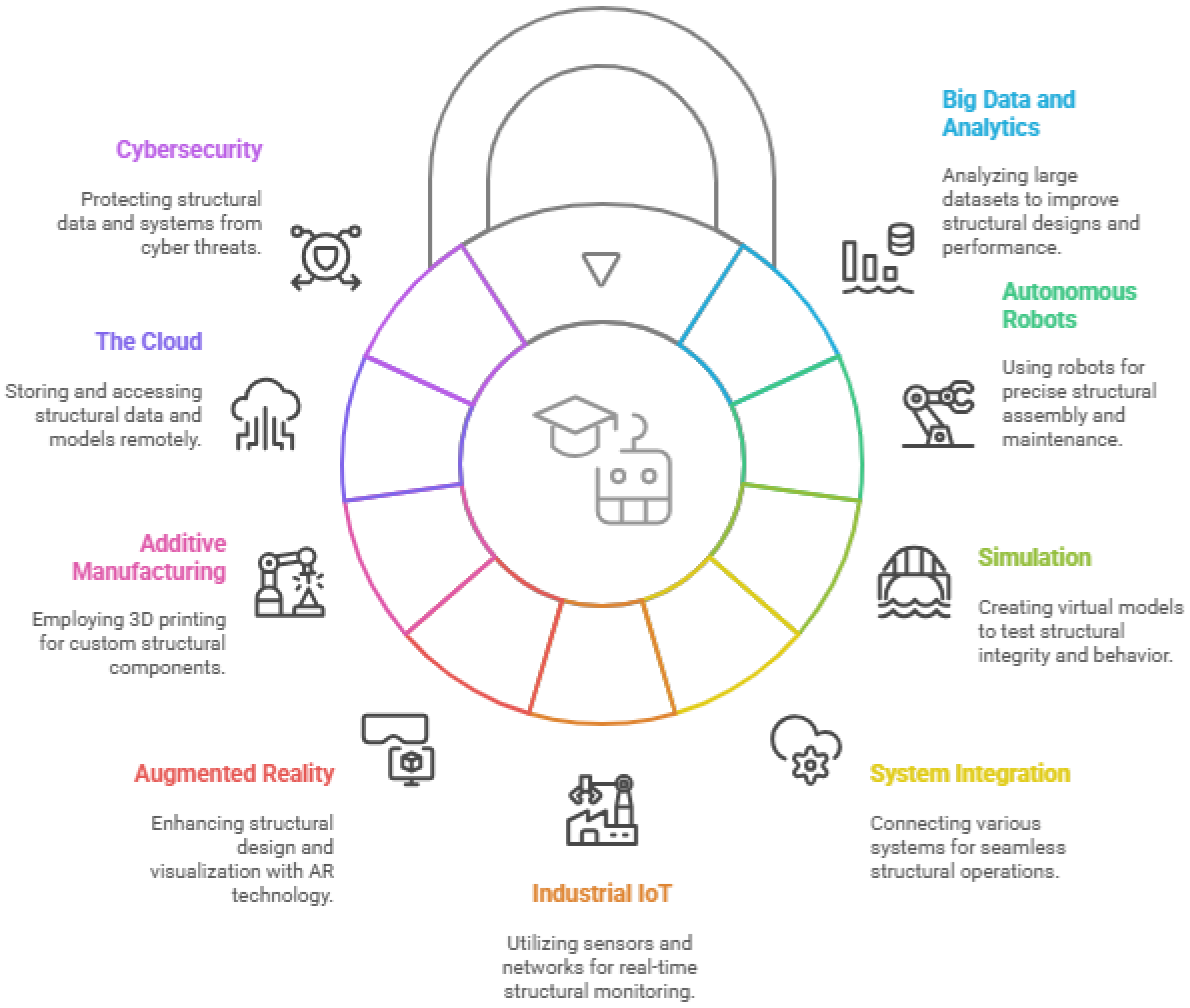
The papers in the sample present a wide range of contributions to structural mechanics education that leverage technological resources; both dimensions should work together. Technological developments play an important role in improving the teaching–learning process. The Fourth Industrial Revolution (Industry 4.0) has facilitated the use of virtual and augmented models [63], interactive resources [81], virtual laboratories [95], and digital fabrication [61], among others. Figure 21 schematically illustrates how these technologies are related to structural mechanics education. For example, Haritos [87] offers an interesting contribution to innovation in hands-on experiential learning, and the overall evidence shows a growing interest in virtual resources, such as augmented reality and virtual reality.
Integrating these technologies requires not only specific technical expertise but also knowledge of how to design pedagogical experiences that effectively incorporate them to enhance student learning. Therefore, institutional initiatives are desirable to support the pedagogical training of university professors. Technology integration can also enable collaborative work among professors with complementary skills, such as a specialist in educational technology and another in pedagogy or structural engineering. One noteworthy observation is that no research in the paper sample (2014–2023) has addressed the use of generative artificial intelligence in structural mechanics education. This subject is expected to become very important in the coming years. The present authors already use some of these tools, but they have not yet initiated a systematic approach to measure their impact on classroom use.
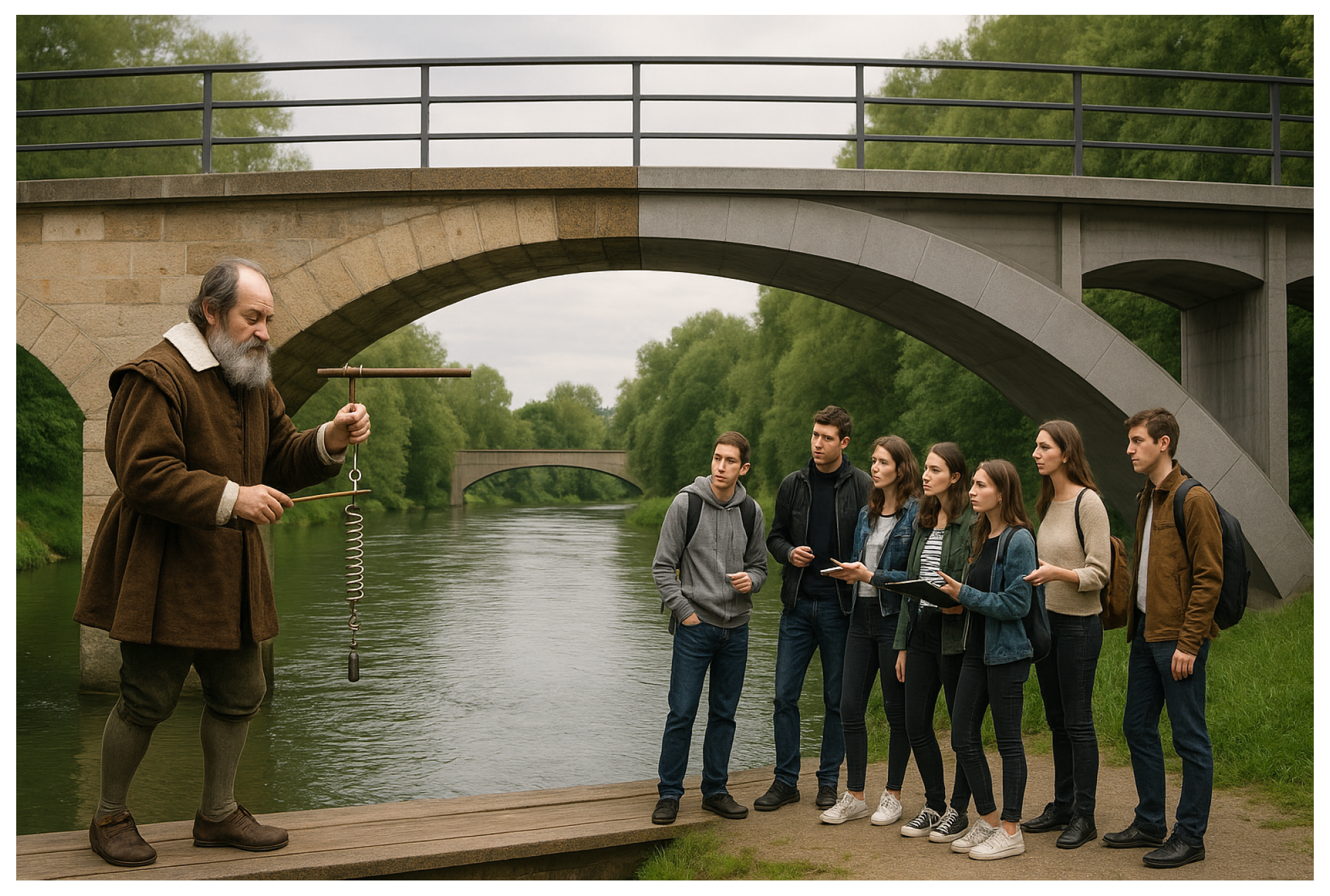
Regarding the pedagogical aspects of the paper sample, the presence of modern educational approaches is evident, including real-case-based learning, problem-based learning, flipped learning, collaborative learning, and conceptually oriented pedagogical initiatives. There are also experiences that focus on the role of assessment in the classroom, a topic that warrants further exploration. The evolution of structural mechanics education has progressively built bridges between its historical roots and contemporary approaches, as schematically represented in Figure 22.
Within the sample, 91 papers report classroom-based experiences, whereas 57 research papers adopt a broader or more general perspective. A significant number of contributions describe educational computational tools without providing much detail on how the tools are implemented in the classroom, creating an opportunity for more comprehensive reporting. Also important is the need for professors to develop qualitative research competencies, thereby enabling richer teaching insights that explicitly incorporate students’ voices. There is also a clear need to increase collaborative research between engineering and education experts. Only a few papers report experiences that involve institutions from different countries; exploring how the same educational intervention works across diverse contexts would be valuable.
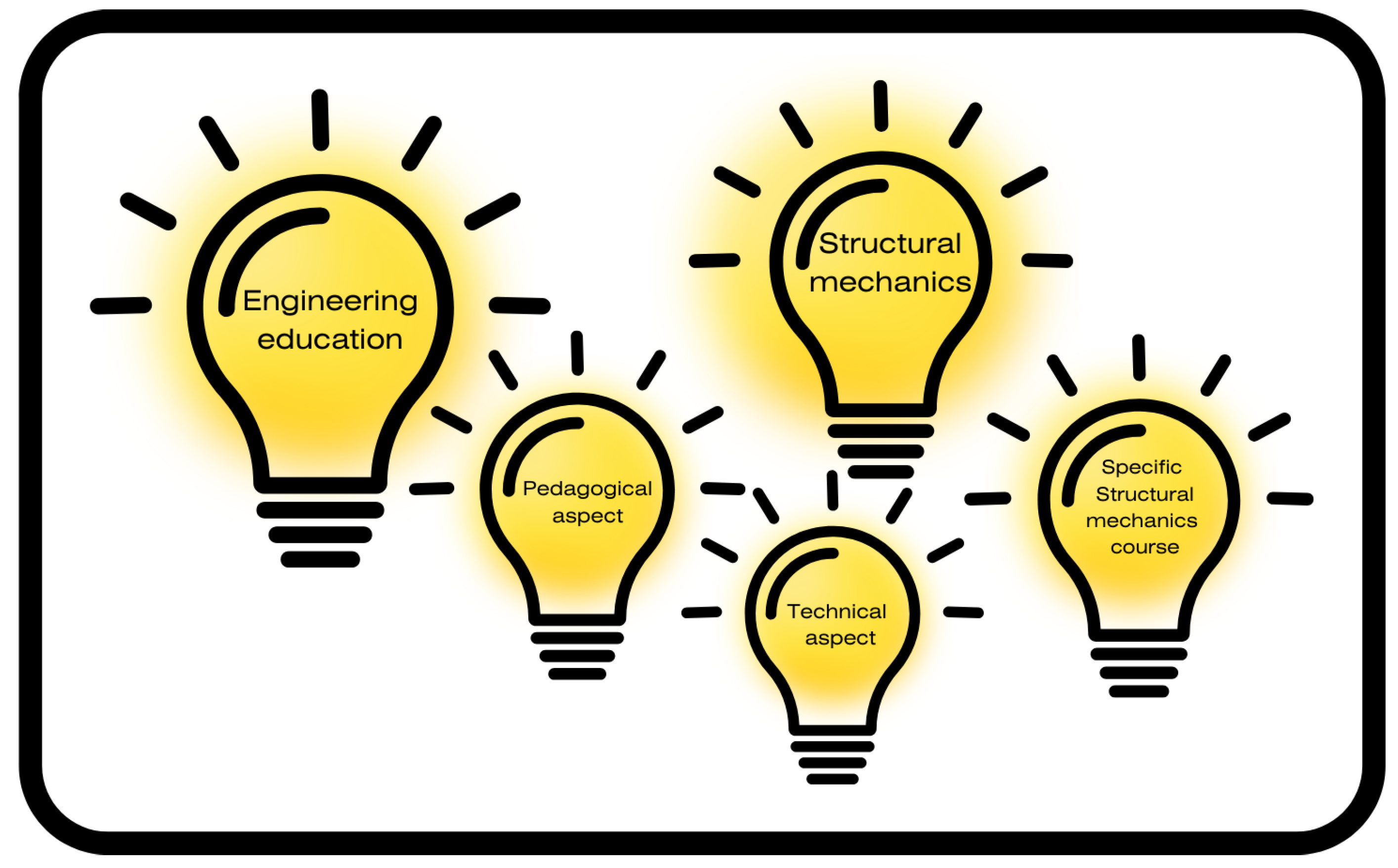
The literature on structural mechanics education is sparse and fragmented, making it difficult to retrieve relevant information from databases. Effective retrieval requires an understanding of how disciplinary and educational terms interact in keyword searches. To address this, the authors propose a standardized framework consisting of five keywords for structural mechanics education research. At least three items should always be included: engineering education, structural mechanics, and the name of the course. The remaining two should refer to one disciplinary aspect and one pedagogical aspect (Table 7). This structure facilitates the concentration and retrieval of results, enabling other institutions to access relevant research more efficiently, as schematically illustrated in Figure 23. For example, applying the framework for defining the keywords of reference [49] would yield the following set: engineering education, structural mechanics, mechanics of materials, educational laboratory testing, and torsion. It should be noted that some terms, such as learning or structural analysis, may overlap with other fields and make retrieval more difficult.
Another relevant aspect concerns the composition of research teams. It is noteworthy that 19% of the papers were authored by a single researcher, whereas 31% involved four or more authors. The reasons for these differences are not straightforward to interpret; however, understanding them could shed light on how educational research is organized and conducted. Identifying the specific roles of the authors—whether related to pedagogy, disciplinary expertise, or methodological design—provides valuable insight into the collaborative processes behind the studies. Such knowledge could enhance transparency, foster more effective interdisciplinary partnerships, and ultimately strengthen the quality of future educational research.
Establishing both local and international perspectives is essential for fostering global integration on a topic that is relevant everywhere. In the paper sample, only 23 studies involved research teams affiliated with institutions from two or more countries. However, in most of these cases, the students who participated in the educational interventions came from a single university. Bringing together the perspectives of professors from diverse contexts enables a more comprehensive construction of knowledge and encourages deeper reflection on the processes involved in structural mechanics education. This paper exemplifies such a plural vision, aiming to integrate diverse perspectives. Figure 24 illustrates how structural mechanics education may encounter different needs in various countries, using typical houses as examples. This demonstrates that local factors should be considered when addressing these challenges.
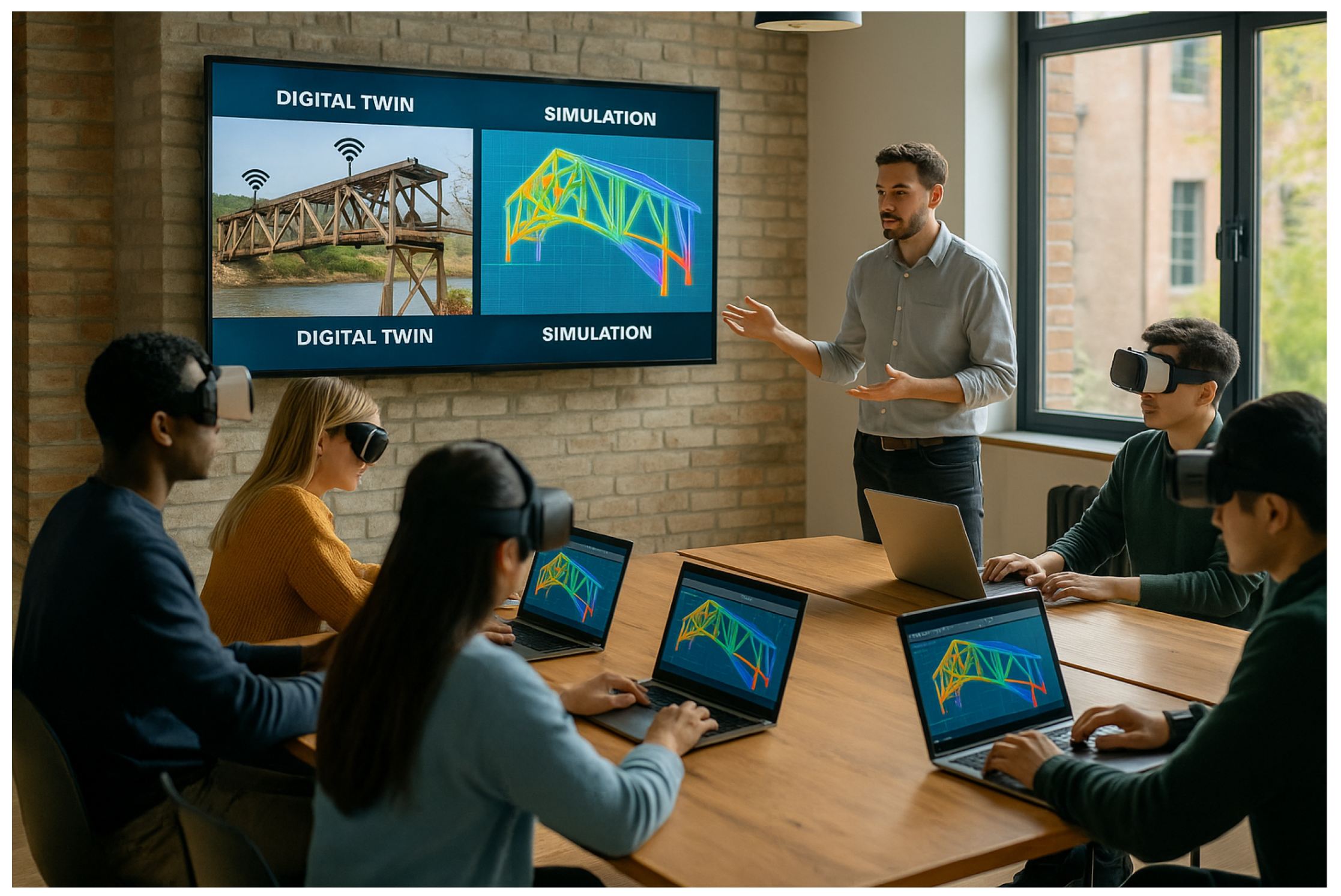
Thus far, there has been no explicit discussion on how to evaluate the success of new pedagogical methods in structural mechanics. Figure 25 presents a graphical description of a group of students using new technologies in the structural engineering classroom. Such spaces should implement and evaluate the feasibility and impact of pedagogical proposals. In the paper sample, 89 contributions included descriptions of the achievements obtained from applying new pedagogical strategies. Assessment techniques encompass both quantitative and qualitative approaches, supported by statistical analysis, as illustrated in [39,42,43,45,52]. This highlights the need for training in statistics and research methods for those engaged in educational research. The students in the studies mostly originated from research institutions. Within the sample, only one paper included students’ opinions from two different countries [73]. It is also important to emphasize that educational research should adhere to ethical standards, given the direct interaction with students. Professors should, therefore, be prepared to follow the ethical guidelines defined by their universities and the relevant institutional review processes.
Research findings also point to the need for new activities. These additional activities complemented the analysis and generally required manual review, as the database did not contain such detailed information. For instance, it was necessary to determine whether at least one author of each paper had an established track record in education research. To this end, all authors were examined in Google Scholar. It was also necessary to classify the papers according to the structural mechanics course, producing information that could be useful for instructors. Figure 26 shows the evolving universe of variables considered in the study. This evolution reflects the need to remain open to new information. Future research could utilize AI to help identify clusters and interpret data, especially with survey questions.
To conclude this section, several open questions could not be answered in this investigation but deserve further study:
  • What proportion of professors in the sample have received formal pedagogical training?
  • What strategies do universities use to promote and support pedagogical training for their professors?
  • Is there evidence that pedagogically trained professors are more effective in improving student learning outcomes?
  • Is it necessary to assess impacts at a global level, or is locally focused research sufficient?

5.2. Q8: What Would Be the Research Lines to Follow in Structural Mechanics Education?

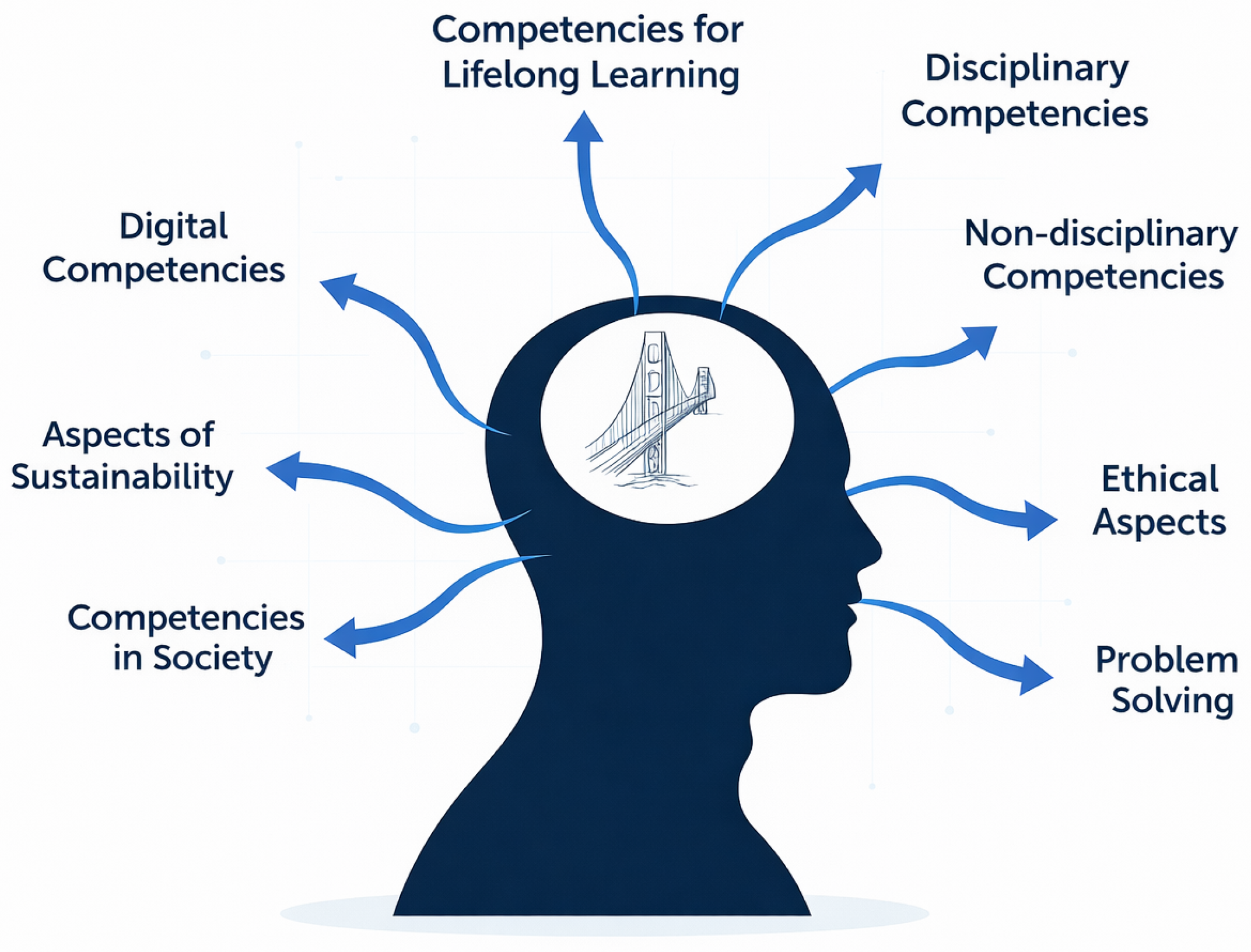
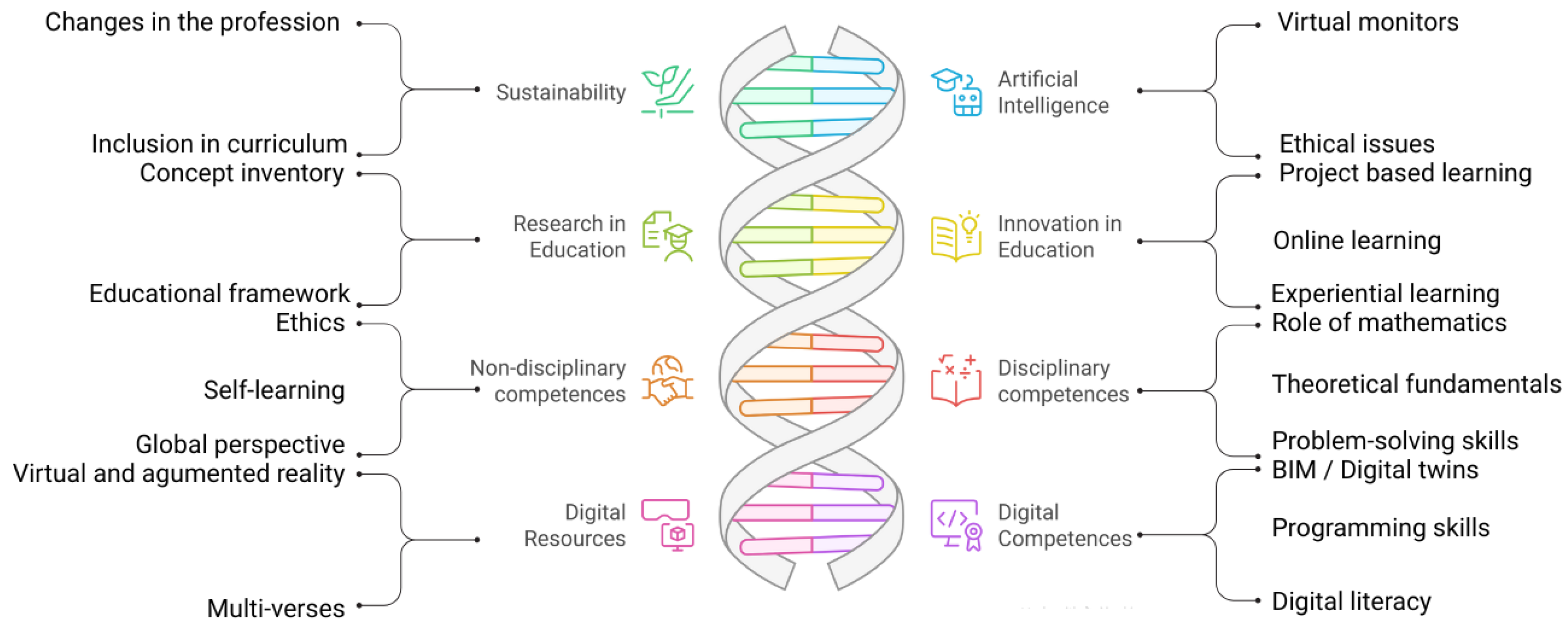
The completion of this work revealed several challenges that can guide future studies on structural mechanics education. We outlined the main research lines and related questions in Figure 27, which summarizes these challenges.
The first issue concerns the need for a stronger sustainability perspective in civil engineering education and how the profession is already being transformed by this requirement. Due to the prevalence of sustainability in many program profiles, it should be integrated into structural mechanics instruction. As artificial intelligence becomes more prevalent, it is essential to consider the necessary curriculum adjustments, the applications of these technologies to improve learning, and the ethical parameters governing their implementation.
A further critical challenge is the necessity of methodologies to properly evaluate the viability and consequences of proposed instructional approaches. Innovation in education requires evaluating the effects of modern pedagogical approaches, such as project-based, experiential, and online learning. For example, the use of physical resources, such as the Kit Mola® or similar tools, can facilitate the understanding of structural concepts. This raises further questions: what are the minimum structural competencies that civil engineering graduates should achieve? Which contents within structural mechanics instruction could be reconsidered or removed to enhance the coherence, relevance, and overall effectiveness of the curriculum? What instructional approaches are best suited for teaching mathematical competencies in the digital era? How should the abstraction process be developed for two- and three-dimensional problems within a digital environment?
An additional consideration involves integrating digital resources to guarantee equitable student access. Given the current deep integration of Building Information Modeling (BIM) in structural engineering practice, establishing and agreeing on the digital competencies for students has become essential. The central role of BIM also implies a need to strengthen the integration of structural engineers with other disciplines from the early stages of their education.
Ultimately, these future directions should be considered within a sustainability framework, which presents the challenge of integrating these aspects into the curriculum cohesively. The challenges highlighted here are only a subset of the many possibilities for future work, but they illustrate that there is much to discuss and investigate in structural mechanics education.

5.3. Implications of the Findings for Structural Engineering Education

The results of this investigation have several implications for the instruction of structural engineering. First, it contributes to the consolidation of structural mechanics education as a research field, together with the diverse topics identified, suggesting that curricula should more deliberately integrate active and technology-enhanced learning strategies, such as laboratory testing, virtual and augmented reality, and programming-based learning. Integration of these strategies with the suggested structural engineering approach can ensure that technological tools reinforce rather than replace the understanding of fundamental concepts.
Secondly, the observed shortcomings in reporting classroom implementation, the utilization of qualitative methods, and interdisciplinary collaboration suggest the need for structured pedagogical and research training for structural engineering faculty. Universities should promote the formation of multidisciplinary teams that incorporate expertise in structural engineering, education, and research methodology. This would improve the design, assessment, and dissemination of teaching innovations.
Third, the proposed keyword framework and the emphasis on local–global perspectives highlight the importance of building a more visible and connected community of practice in structural mechanics education. Better indexing of research, along with more international collaborations, would facilitate knowledge transfer between institutions and contexts, supporting curriculum reforms that incorporate sustainability, digitization, and artificial intelligence in a coherent and ethically grounded manner.
Given these implications, several recommendations are pertinent to the faculties of engineering that offer civil engineering programs:
  • Define a shared vision of structural engineering thinking: Explicitly articulate the set of disciplinary and transversal competencies that graduates should achieve in structural mechanics, and map these outcomes across the curriculum.
  • Invest in pedagogical development for structural mechanics instructors: This involves offering sustained programs in university teaching, educational research methodologies, and assessment design, supported by institutional incentives for faculty participation. In addition, it is essential to promote educational innovation projects and develop the competencies required to build and strengthen communities of practice focused on improving teaching and learning in this field.
  • Support interdisciplinary teaching and research teams: Develop the appropriate framework encompassing time, recognition, and funding to encourage collaboration amongst structural engineers, education specialists, and experts in educational technology and statistics.
  • Provide and maintain educational technology and laboratory infrastructure: Allocate resources for physical models, experimental laboratories, virtual and augmented reality, BIM platforms, programming environments, and other digital tools. These elements should be incorporated into thoughtfully planned learning activities.
  • Establish guidelines for the ethical and effective use of artificial intelligence: Create institutional policies and instructional guidelines that will assist educators and students in the application of generative AI and related technologies to enrich the educational process, while concurrently managing the challenges of integrity, bias, and transparency.
  • Recognize and reward educational innovation and scholarship: By incorporating teaching innovation, curriculum development, and publications in engineering education into promotion and evaluation criteria, educational research can be valued equally with disciplinary research.
  • Promote international and inter-institutional collaboration: Encourage joint courses, comparative studies, and shared projects in structural mechanics education across universities and countries to test the transferability of pedagogical approaches to different contexts.
  • Improve the visibility and retrievability of educational research: Encourage the systematic use of structured keywords (e.g., the proposed five-keyword framework) and support institutional repositories that make educational studies in structural mechanics more accessible to the community.

6. Conclusions

This research carried out a bibliometric analysis of structural mechanics education from 2014 to 2023, complemented by insights from Colombian professors, students, and senior engineers. The results reveal a wide dispersion of publications, constraints on collaboration networks, and the absence of standardized keyword definitions, all of which limit the consolidation and advancement of knowledge in the field.
The main conclusions are as follows:
  • At least four contributions are documented in the analyzed sample by six authors. Dr. Brown stands out as the leading researcher in this area, with eight contributions to date. A significant proportion of the researchers are affiliated with institutions in the United States. Strengthening collaborative networks remains an urgent need.
  • The leading journals in this domain are Computer Applications in Engineering Education and the Journal of Civil Engineering Education, reflecting a sustained interest in the topic. Only a small number of articles have been published in non-educational journals.
  • In the last two years, at least 20 papers have been published on structural mechanics education, demonstrating the scientific community’s interest in the subject. However, the annual growth rate of scientific production remains relatively low. It is expected that the number of publications will increase as the field of research becomes more consolidated.
  • Keyword definition represents an important challenge for effective information retrieval. “Engineering education” emerges as the most relevant keyword in the sample. This study introduces a keyword-definition strategy applicable to engineering education—particularly in relation to structural mechanics, pedagogy, technical aspects, and structural mechanics courses.
  • The primary research areas identified include structural analysis software and educational laboratory-testing applications. Digital tools play a crucial role in the training of civil engineers, and experiential learning continues to attract considerable attention.
  • The most frequently cited papers address multiple dimensions of the field, including problem-based learning, among other instructional approaches.
  • The reviewed publications underscore key issues: the need for a clearer articulation of structural engineering thinking, an increasing tendency to incorporate modern pedagogical approaches, a persistent lack of cohesion across the literature, and the importance of integrating more global perspectives into research and practice.
  • Eight central research themes were identified: sustainability, educational research, transversal skills, digital resources, artificial intelligence, educational innovation, subject-specific competencies, and digital competencies.
Ultimately, advancing structural mechanics education requires the development of a global community of practice capable of sharing pedagogical experiences, establishing common research lines, and integrating sustainability, digital transformation, and emerging technologies into the curriculum for future civil engineers.

Author Contributions

J.D.V.-M. conceived the general idea of the study, led the design, and performed the bibliometric analysis. He also supervised the overall process and ensured consistency in the final manuscript. All authors (J.D.V.-M., S.J., R.P., J.C.O., A.G., J.M.B., O.A. and O.C.) contributed to data collection, literature review, figures and visual representations, section writing, and the formulation of conclusions. Each author provided input in refining the reference base and its analysis. All authors have read and agreed to the published version of the manuscript.

Funding

The authors did not receive support from any organization for the submitted work.

Institutional Review Board Statement

Ethical review and approval were waived for this study because it involved anonymous surveys conducted for educational research purposes. No personal or identifiable information was collected, participation was voluntary, and no intervention or experimental manipulation was performed. The study posed no foreseeable risk to participants and complied with standard ethical principles for research involving human subjects.

Informed Consent Statement

Consent to participate was obtained from all individual respondents, who voluntarily agreed to complete the survey.

Data Availability Statement

The datasets generated and analyzed during the current study are available from the corresponding author on reasonable request.

Acknowledgments

The authors would like to thank the universities involved in this study for facilitating the interaction among the authors, which made this research possible.

Conflicts of Interest

The authors have no competing interests to declare.

References

  1. Crawley, E.; Malmqvist, J.; Östlund, S.; Brodeur, D. Rethinking Engineering Education; Springer: Berlin/Heidelberg, Germany, 2007. [Google Scholar]
  2. ASCE. Civil Engineering Body of Knowledge: Preparing the Future Civil Engineer; American Society of Civil Engineers (ASCE): Reston, VA, USA, 2019; pp. 1–156. [Google Scholar] [CrossRef]
  3. ASCE. Commentary on the ABET Program Criteria for Civil and Similarly Named Programs; ASCE: Reston, VA, USA, 2024. [Google Scholar]
  4. Structural Engineering Institute. A Vision for the Future of Structural Engineering and Structural Engineers: A Case for Change; Technical Report; American Society of Civil Engineers: Washington, DC, USA, 2013. [Google Scholar]
  5. Talbert, R. Flipped Learning: A Guide for Higher Education Faculty; Taylor & Francis: Abingdon, UK, 2017. [Google Scholar]
  6. Baden, M.S.; Major, C.H. Foundations of Problem-Based Learning; Open University Press: Berkshire, UK, 2004. [Google Scholar]
  7. Larmer, J.; Mergendoller, J.; Boss, S. Setting the Standard for Project Based Learning; Association for Supervision and Curriculum Development (ASCD): Arlington, VA, USA, 2015. [Google Scholar]
  8. Meyer, A.; Rose, D.H.; Gordon, D. Universal Design for Learning: Theory and Practice; Cast Incorporated: Lynnfield, MA, USA, 2013. [Google Scholar]
  9. Borrego, M. Conceptual difficulties experienced by trained engineers learning educational research methods. J. Eng. Educ. 2007, 96, 91–102. [Google Scholar] [CrossRef]
  10. Niaz, M. Qualitative methodology and its pitfalls in educational research. Qual. Quant. 2009, 43, 535–551. [Google Scholar] [CrossRef]
  11. Jesiek, B.K.; Newswander, L.K.; Borrego, M. Engineering education research: Discipline, community, or field? J. Eng. Educ. 2009, 98, 39–52. [Google Scholar] [CrossRef]
  12. Borrego, M.; Bernhard, J. The emergence of engineering education research as an internationally connected field of inquiry. J. Eng. Educ. 2011, 100, 14–47. [Google Scholar] [CrossRef]
  13. Felder, R.M.; Hadgraft, R.G. Educational practice and educational research in engineering: Partners, antagonists, or ships passing in the night? J. Eng. Educ. 2013, 102, 339–345. [Google Scholar] [CrossRef]
  14. Dubinina, I.; Berestneva, O.; Sviridov, K. Educational Technologies for Forming Intellectual Competence in Scientific Research and Engineering Business. Procedia-Soc. Behav. Sci. 2015, 166, 317–324. [Google Scholar] [CrossRef]
  15. Hurwitz, D.S.; Bernhardt, K.L.S.; Turochy, R.E.; Young, R.K. Transportation Engineering Curriculum: Analytic Review of the Literature. J. Prof. Issues Eng. Educ. Pract. 2016, 142, 04016003. [Google Scholar] [CrossRef]
  16. Ilbeigi, M.; Bairaktarova, D.; Morteza, A. Gamification in Construction Engineering Education: A Scoping Review. J. Civ. Eng. Educ. 2023, 149, 04022012. [Google Scholar] [CrossRef]
  17. Aliu, J.; Aigbavboa, C. Reviewing the trends of construction education research in the last decade: A bibliometric analysis. Int. J. Constr. Manag. 2023, 23, 1571–1580. [Google Scholar] [CrossRef]
  18. ur Rehman, Z. Trends and Challenges of Technology-Enhanced Learning in Geotechnical Engineering Education. Sustainability 2023, 15, 7972. [Google Scholar] [CrossRef]
  19. Aparicio, A.C.; Ruiz-Teran, A.M. Tradition and Innovation in Teaching Structural Design in Civil Engineering. J. Prof. Issues Eng. Educ. Pract. 2007, 133, 340–349. [Google Scholar] [CrossRef]
  20. Hu, N.; Feng, P.; Dai, G.L. Structural art: Past, present and future. Eng. Struct. 2014, 79, 407–416. [Google Scholar] [CrossRef]
  21. Aria, M.; Cuccurullo, C. bibliometrix: An R-tool for comprehensive science mapping analysis. J. Inf. 2017, 11, 959–975. [Google Scholar] [CrossRef]
  22. Tricco, A.C.; Lillie, E.; Zarin, W.; O’Brien, K.K.; Colquhoun, H.; Levac, D.; Moher, D.; Peters, M.D.; Horsley, T.; Weeks, L.; et al. PRISMA extension for scoping reviews (PRISMA-ScR): Checklist and explanation. Ann. Intern. Med. 2018, 169, 467–473. [Google Scholar] [CrossRef]
  23. Öztürk, O.; Kocaman, R.; Kanbach, D.K. How to design bibliometric research: An overview and a framework proposal. Rev. Manag. Sci. 2024, 18, 3333–3361. [Google Scholar] [CrossRef]
  24. Thai, H.T. Machine learning for structural engineering: A state-of-the-art review. Structures 2022, 38, 448–491. [Google Scholar] [CrossRef]
  25. Solórzano, J.; Morante-Carballo, F.; Montalván-Burbano, N.; Briones-Bitar, J.; Carrión-Mero, P. A Systematic Review of the Relationship between Geotechnics and Disasters. Sustainability 2022, 14, 12835. [Google Scholar] [CrossRef]
  26. Vaz, L.R.L.; Conesa, J.A.; Borges, A.C. A mini review on phytoremediation of fluoride-contaminated waters: A bibliometric analysis. Front. Environ. Sci. 2023, 11, 1278411. [Google Scholar] [CrossRef]
  27. Gaytan-Reyna, K.L.; Alvarado-Silva, C.A.; Gaytan-Reyna, S.E.; Gamarra-Rosado, V.O.; de Azevedo Silva, F. The Virtual Teaching in Statistics Course in Higher Education: A Bibliometric Analysis and Systematic Literature Research. Int. J. Inf. Educ. Technol. 2024, 14, 333–344. [Google Scholar] [CrossRef]
  28. Gorski, A.T.; Ranf, E.D.; Badea, D.; Halmaghi, E.E.; Gorski, H. Education for Sustainability—Some Bibliometric Insights. Sustainability 2023, 15, 4916. [Google Scholar] [CrossRef]
  29. Saraf, H.S.; Kumar, S.P. Engineering education for sustainable development: Bibliometric analysis. J. Eng. Educ. Transform. 2022, 36, 575–581. [Google Scholar] [CrossRef]
  30. Jamali, S.M.; Ebrahim, N.A.; Jamali, F. The role of STEM Education in improving the quality of education: A bibliometric study. Int. J. Technol. Des. Educ. 2023, 33, 819–840. [Google Scholar] [CrossRef]
  31. Ishmuradova, I.I.; Chistyakov, A.A.; Chudnovskiy, A.D.; Grib, E.V.; Kondrashev, S.V.; Zhdanov, S.P. A cross-database bibliometrics analysis of blended learning in higher education: Trends and capabilities. Contemp. Educ. Technol. 2024, 16, ep508. [Google Scholar] [CrossRef]
  32. Donthu, N.; Kumar, S.; Mukherjee, D.; Pandey, N.; Lim, W.M. How to conduct a bibliometric analysis: An overview and guidelines. J. Bus. Res. 2021, 133, 285–296. [Google Scholar] [CrossRef]
  33. Montazeri, A.; Mohammadi, S.; Hesari, P.M.; Ghaemi, M.; Riazi, H.; Sheikhi-Mobarakeh, Z. Preliminary guideline for reporting bibliometric reviews of the biomedical literature (BIBLIO): A minimum requirements. Syst. Rev. 2023, 12, 239. [Google Scholar] [CrossRef]
  34. Mukherjee, D.; Lim, W.M.; Kumar, S.; Donthu, N. Guidelines for advancing theory and practice through bibliometric research. J. Bus. Res. 2022, 148, 101–115. [Google Scholar] [CrossRef]
  35. Romanelli, J.P.; Carolina, M.; Gonçalves, P.; Pestana, L.F.D.A.; Akemi, J.; Soares, H.; Boschi, R.S.; Andrade, D.F. Four challenges when conducting bibliometric reviews and how to deal with them. Environ. Sci. Pollut. Res. 2021, 28, 60448–60458. [Google Scholar] [CrossRef]
  36. Abdulla, S.; Nafees, M.; El-Borgi, S.; Srinivasa, A. An integrated e-learning approach for teaching statics to undergraduate engineering students. Int. J. Mech. Eng. Educ. 2023, 53, 83–101. [Google Scholar] [CrossRef]
  37. Adriaenssens, S.; Pauletti, R.M.O.; Stockhusen, K.; Gabriele, S.; Magrone, P.; Varano, V.; Lochner-Aldinger, I. A Project-Based Approach to Learning Form Finding of Structural Surfaces. Int. J. Space Struct. 2015, 30, 297. [Google Scholar] [CrossRef]
  38. Ahn, B.; Bir, D.D. Education Student Interactions with Online Videos in a Large Hybrid Mechanics of Materials Course. Adv. Eng. 2018, 6, 1–24. [Google Scholar]
  39. Ahn, B.; Nelson, M. Assessment of the effects of using the cooperative learning pedagogy in a hybrid mechanics of materials course. Int. J. Mech. Eng. Educ. 2019, 47, 210–226. [Google Scholar] [CrossRef]
  40. Aleyaasin, M. An elementary finite element exercise to stimulate computational thinking in engineering education. Comput. Appl. Eng. Educ. 2022, 30, 31–41. [Google Scholar] [CrossRef]
  41. Alhan, C.; Gazi, H.C. Bringing Probabilistic Analysis Perspective into Structural Engineering Education: Use of Monte Carlo Simulations. Int. J. Eng. Educ. 2014, 30, 1280–1294. [Google Scholar]
  42. Atadero, R.A.; Rambo-Hernandez, K.E.; Balgopal, M.M. Using social cognitive career theory to assess student outcomes of group design projects in statics. J. Eng. Educ. 2015, 104, 55–73. [Google Scholar] [CrossRef]
  43. Badir, A.; Tsegaye, S.; Girimurugan, S. The Effect of McGraw-Hill Connect Online Assessment on Students’ Academic Performance in a Mechanics of Materials Course. Int. J. Eng. Educ. 2023, 39, 1242–1255. [Google Scholar]
  44. Balash, C.; Richardson, S.; Guzzomi, F.; Rassau, A. Engineering Mechanics: Adoption of project-based learning supported by computer-aided online adaptive assessments–overcoming fundamental issues with a fundamental subject. Eur. J. Eng. Educ. 2020, 45, 809–820. [Google Scholar] [CrossRef]
  45. Bao, A. Advances in Engineering Education Enhancing Learning Effectiveness by Implementing Screencasts into Civil Engineering Classroom with Deaf Students. Adv. Eng. Educ. 2019, 1–12. [Google Scholar]
  46. Barner, M.S.; Brown, S.A.; Lutz, B.; Montfort, D. How Engineering Faculty Interpret Pull-Oriented Innovation Development and Why Context Matters. Int. J. Eng. Educ. 2018, 34, 1644–1657. [Google Scholar]
  47. Barner, M.S.; Brown, S.A.; Linton, D. Structural Engineering Heuristics in an Engineering Workplace and Academic Environments. J. Civ. Eng. Educ. 2021, 147, 04020014. [Google Scholar] [CrossRef]
  48. Barner, M.S.; Brown, S.A. Design Codes in Structural Engineering Practice and Education. J. Civ. Eng. Educ. 2021, 147, 04020013. [Google Scholar] [CrossRef]
  49. Benjumea, J.M.; Prieto, D.C.; Oyaga, L.C.; Sepulveda, L.N.N.; Pulido, S.M. Development of Experimental and Collaborative Work Skills in the Students of Mechanics of Solids by Implementing a Low-Cost Torsiometer and Digital Image Correlation. Rev. Iberoam. Tecnol. Aprendiz. 2023, 18, 10–18. [Google Scholar] [CrossRef]
  50. Berge, M.; Weilenmann, A. Learning about friction: Group dynamics in engineering students’ work with free body diagrams. Eur. J. Eng. Educ. 2014, 39, 601–616. [Google Scholar] [CrossRef]
  51. Bhattacharyya, A.; Payne, S.W.; RoyChoudhury, P.; Schueller, J.K. An alternative method of teaching the mechanics of bulk metal forming to undergraduates: Newtonian and Lagrangian approaches. Int. J. Mech. Eng. Educ. 2022, 50, 447–492. [Google Scholar] [CrossRef]
  52. Bi, Y.; Jiao, S.; Reid, T. Evaluating students’ understanding of statics concepts using eye gaze data. Int. J. Eng. Educ. 2017, 33, 225–235. [Google Scholar]
  53. Bishay, P.L. “fEApps”: Boosting students’ enthusiasm for coding and app designing, with a deeper learning experience in engineering fundamentals. Comput. Appl. Eng. Educ. 2016, 24, 456–463. [Google Scholar] [CrossRef]
  54. Bishay, P.L. Teaching the finite element method fundamentals to undergraduate students through truss builder and truss analyzer computational tools and student-generated assignments mini-projects. Comput. Appl. Eng. Educ. 2020, 28, 1007–1027. [Google Scholar] [CrossRef]
  55. Perez, V.V.B.; Strong, A.C. Exploring the effects of learning assistants on instructional team–student interactions in statics. Int. J. Mech. Eng. Educ. 2023, 51, 294–318. [Google Scholar] [CrossRef]
  56. Brown, S.; Montfort, D.; Perova-Mello, N.; Lutz, B.; Berger, A.; Streveler, R. Framework Theory of Conceptual Change to Interpret Undergraduate Engineering Students’ Explanations About Mechanics of Materials Concepts. J. Eng. Educ. 2018, 107, 113–139. [Google Scholar] [CrossRef]
  57. Brown, S.; Lutz, B.; Perova-Mello, N.; Ha, O. Exploring differences in Statics Concept Inventory scores among students and practitioners. J. Eng. Educ. 2019, 108, 119–135. [Google Scholar] [CrossRef]
  58. dos Santos Campos, M.; Rodrigues, M.A.C.; Camargo, R.S.; Kiepper, L.S. A unified educational mobile application to aid in teaching solid mechanics using interactive Mohr’s circle. Int. J. Mech. Eng. Educ. 2023, 53, 143–166. [Google Scholar] [CrossRef]
  59. Canu, M.; Duque, M.; de Hosson, C. Active Learning session based on Didactical Engineering framework for conceptual change in students’ equilibrium and stability understanding. Eur. J. Eng. Educ. 2017, 42, 32–44. [Google Scholar] [CrossRef]
  60. Casper, A.M.A.; Atadero, R.A.; Hedayati-Mehdiabadi, A.; Baker, D.W. Linking Engineering Students’ Professional Identity Development to Diversity and Working Inclusively in Technical Courses. J. Civ. Eng. Educ. 2021, 147, 04021012. [Google Scholar] [CrossRef]
  61. Chacón, R.; Oller, S. Designing Experiments Using Digital Fabrication in Structural Dynamics. J. Prof. Issues Eng. Educ. Pract. 2017, 143, 05016011. [Google Scholar] [CrossRef]
  62. Chacón, R.; Codony, D.; Toledo, Á. From physical to digital in structural engineering classrooms using digital fabrication. Comput. Appl. Eng. Educ. 2017, 25, 927–937. [Google Scholar] [CrossRef]
  63. Chacón, R.; Claure, F.; de Coss, O. Development of VR/AR Applications for Experimental Tests of Beams, Columns, and Frames. J. Comput. Civ. Eng. 2020, 34, 05020003. [Google Scholar] [CrossRef]
  64. Cimellaro, G.P.; Domaneschi, M. Development of Dynamic Laboratory Platform for Earthquake Engineering Courses. J. Prof. Issues Eng. Educ. Pract. 2018, 144, 05018015. [Google Scholar] [CrossRef]
  65. Cleary, J. Using the Flipped Classroom Model in a Junior Level Course to Increase Student Learning and Success. J. Civ. Eng. Educ. 2020, 146, 05020003. [Google Scholar] [CrossRef]
  66. Coombs, W.M.; Augarde, C.E. AMPLE: A Material Point Learning Environment. Adv. Eng. Softw. 2020, 139, 102748. [Google Scholar] [CrossRef]
  67. Costa, A.L.D. Using learning objects to teach structural engineering. Int. J. Online Eng. 2016, 12, 14–16. [Google Scholar] [CrossRef]
  68. Dart, S.; Lim, J.B.P. Three-Dimensional Printed Models for Teaching and Learning Structural Engineering Concepts: Building Intuition by Physically Connecting Theory to Real Life. J. Civ. Eng. Educ. 2023, 149, 05022004. [Google Scholar] [CrossRef]
  69. Hoz, J.L.D.L.; Vieira, C.; Arteta, C. Self-explanation activities in statics: A knowledge-building activity to promote conceptual change. J. Eng. Educ. 2023, 112, 741–768. [Google Scholar] [CrossRef]
  70. Echempati, R. New Idea to Enhance Better Understanding of Free Body Diagrams in Solid Mechanics Course. J. Eng. Educ. Transform. 2020, 34, 19–25. [Google Scholar] [CrossRef]
  71. Villegas, L.E.; Barrientos, D.R.Q.; la Peña, J.A.D.D.; de Jesús Balvantín García, A.; Leyva, P.A.L. Integration of Numerical, Theoretical & Experimental Methods for the Calculation and Measurement of Strains in an Experimental Stress Analysis Lecture. Exp. Tech. 2018, 42, 333–342. [Google Scholar] [CrossRef]
  72. Essig, R.R.; Troy, C.D.; Jesiek, B.K.; Buswell, N.T.; Boyd, J.E. Assessment and Characterization of Writing Exercises in Core Engineering Textbooks. J. Prof. Issues Eng. Educ. Pract. 2018, 144, 04018007. [Google Scholar] [CrossRef]
  73. Fang, N.; Zhao, X. Cross-Cultural Comparison of Learning Style Preferences between American and Chinese Undergraduate Engineering Students. Int. J. Eng. Educ. 2014, 30, 179–188. [Google Scholar]
  74. Faulkner, B.; Johnson-Glauch, N.; Choi, D.S.; Herman, G.L. When am I ever going to use this? An investigation of the calculus content of core engineering courses. J. Eng. Educ. 2020, 109, 402–423. [Google Scholar] [CrossRef]
  75. Ford, M.J.; Fatehiboroujeni, S.; Fisher, E.M.; Ritz, H. A Hands-on Guided-inquiry Materials Laboratory that Supports Student Agency. Adv. Eng. Educ. 2023, 11, 77–104. [Google Scholar] [CrossRef]
  76. Fogarty, J.; McCormick, J.; El-Tawil, S. Improving Student Understanding of Complex Spatial Arrangements with Virtual Reality. J. Prof. Issues Eng. Educ. Pract. 2018, 144, 04017013. [Google Scholar] [CrossRef]
  77. Foutz, T.L. Using argumentation as a learning strategy to improve student performance in engineering Statics. Eur. J. Eng. Educ. 2019, 44, 312–329. [Google Scholar] [CrossRef]
  78. François, S.; Schevenels, M.; Dooms, D.; Jansen, M.; Wambacq, J.; Lombaert, G.; Degrande, G.; Roeck, G.D. Stabil: An educational Matlab toolbox for static and dynamic structural analysis. Comput. Appl. Eng. Educ. 2021, 29, 1372–1389. [Google Scholar] [CrossRef]
  79. Friederich, J.; Pfaller, S.; Steinmann, P. A web-based tool for the interactive visualization of stresses in an infinite plate with an elliptical hole under simple tension: www.ltm.fau.de/plate. Arch. Appl. Mech. 2016, 86, 617–625. [Google Scholar] [CrossRef]
  80. Gauvreau, P. Sustainable education for bridge engineers. J. Traffic Transp. Eng. (Engl. Ed.) 2018, 5, 510–519. [Google Scholar] [CrossRef]
  81. Ge, L.; Kuester, F. Integrative Simulation Environment for Conceptual Structural Analysis. J. Comput. Civ. Eng. 2015, 29, B4014004. [Google Scholar] [CrossRef]
  82. Giancaspro, J.W.; Arboleda, D.; Kim, N.J.; Chin, S.J.; Britton, J.C.; Secada, W.G. An active learning approach to teach distributed forces using augmented reality with guided inquiry. Comput. Appl. Eng. Educ. 2023, 32, e22703. [Google Scholar] [CrossRef]
  83. Guo, Y.; Yang, L.; Chen, X.; Yang, L. An engineering-problem-based short experiment project on finite element method for undergraduate students. Educ. Sci. 2020, 10, 45. [Google Scholar] [CrossRef]
  84. Ha, O.; Fang, N. Spatial Ability in Learning Engineering Mechanics: Critical Review. J. Prof. Issues Eng. Educ. Pract. 2016, 142, 04015014. [Google Scholar] [CrossRef]
  85. Ha, O.; Brown, S.; Pitterson, N. An Exploratory Factor Analysis of Statics Concept Inventory Data from Practicing Civil Engineers. Int. J. Eng. Educ. 2017, 33, 236–246. [Google Scholar]
  86. Hanson, J.H. Teaching Students How to Evaluate the Reasonableness of Structural Analysis Results. J. Civ. Eng. Educ. 2022, 148. [Google Scholar] [CrossRef]
  87. Haritos, N. Hands-on experiential learning of structural mechanics. Aust. J. Struct. Eng. 2019, 20, 259–270. [Google Scholar] [CrossRef]
  88. Hashim, S.; Masek, A.; Mahthir, B.N.S.M.; Rashid, A.H.A.; Nincarean, D. Association of interest, attitude and learning habit in mathematics learning towards enhancing students’ achievement. Indones. J. Sci. Technol. 2021, 6, 113–122. [Google Scholar] [CrossRef]
  89. Hildebrand, J.D.; Ahn, B. Student video viewing habits in an online mechanics of materials engineering course. Int. J. Eng. Pedagog. 2018, 8, 40–59. [Google Scholar] [CrossRef]
  90. Hu, X.; Goh, Y.M.; Lin, A. Educational impact of an Augmented Reality (AR) application for teaching structural systems to non-engineering students. Adv. Eng. Inform. 2021, 50, 101436. [Google Scholar] [CrossRef]
  91. Huang, J.; Ong, S.K.; Nee, A.Y.C. An approach for augmented learning of finite element analysis. Comput. Appl. Eng. Educ. 2019, 27, 921–933. [Google Scholar] [CrossRef]
  92. Huang, Z.; Wen, M.; Yang, T.; Fan, B. An effective teaching strategy for engineering mechanics to develop structural optimization modeling skills of undergraduates. Int. J. Mech. Eng. Educ. 2020, 48, 271–283. [Google Scholar] [CrossRef]
  93. Hunsu, N.J.; Olaogun, O.P.; Oje, A.V.; Carnell, P.H.; Morkos, B. Investigating students’ motivational goals and self-efficacy and task beliefs in relationship to course attendance and prior knowledge in an undergraduate statics course. J. Eng. Educ. 2023, 112, 108–124. [Google Scholar] [CrossRef]
  94. Jahan, K.; Farrell, S.; Hartman, H.; Forin, T. Integrating Inclusivity and Sustainability in Civil Engineering Courses. Int. J. Eng. Educ. 2022, 38, 727–741. [Google Scholar]
  95. Jamshidi, R.; Milanovic, I. Building Virtual Laboratory with Simulations. Comput. Appl. Eng. Educ. 2022, 30, 483–489. [Google Scholar] [CrossRef]
  96. Ji, T.; Bell, A.; Wu, Y. The philosophical basis of Seeing and Touching Structural Concepts. Eur. J. Eng. Educ. 2021, 46, 889–907. [Google Scholar] [CrossRef]
  97. Johnson-Glauch, N.; Herman, G.L. Engineering representations guide student problem-solving in statics. J. Eng. Educ. 2019, 108, 220–247. [Google Scholar] [CrossRef]
  98. Johnson-Glauch, N.; Choi, D.S.; Herman, G. How engineering students use domain knowledge when problem-solving using different visual representations. J. Eng. Educ. 2020, 109, 443–469. [Google Scholar] [CrossRef]
  99. Justo, E.; Delgado, A. Change to Competence-Based Education in Structural Engineering. J. Prof. Issues Eng. Educ. Pract. 2015, 141, 1–8. [Google Scholar] [CrossRef]
  100. Justo, E.; Delgado, A.; Vázquez-Boza, M.; Branda, L.A. Implementation of Problem-Based Learning in Structural Engineering: A Case Study. Int. J. Eng. Educ. 2016, 32, 2556–2568. [Google Scholar]
  101. Justo, E.; Delgado, A.; Llorente-Cejudo, C.; Aguilar, R.; Cabero-Almenara, J. The effectiveness of physical and virtual manipulatives on learning and motivation in structural engineering. J. Eng. Educ. 2022, 111, 813–851. [Google Scholar] [CrossRef]
  102. Kang, S.; Lee, K. Real-time, high-fidelity linear elastostatic beam models for engineering education. J. Mech. Sci. Technol. 2021, 35, 3483–3495. [Google Scholar] [CrossRef]
  103. Karn, A.; Vyas, A.; Upadhyay, A.; Dwivedi, A. Elegant Computational Frameworks For the Analysis of Cantilevers and Beams. J. Eng. Educ. Transform. 2023, 37, 89–97. [Google Scholar] [CrossRef]
  104. Kim, Y. Learning statics through in-class demonstration, assignment and evaluation. Int. J. Mech. Eng. Educ. 2015, 43, 23–37. [Google Scholar] [CrossRef]
  105. Kjolsing, E.; Einde, L.V.D.; Todd, M. Using a Design Project to Instill Empathy in Structural Engineering Teaching Assistants. J. Prof. Issues Eng. Educ. Pract. 2016, 142. [Google Scholar] [CrossRef]
  106. Kjolsing, E.; Asce, S.M.; Van, L.; Einde, D.; Asce, M. Peer Instruction: Using Isomorphic Questions to Document Learning Gains in a Small Statics Class. J. Prof. Issues Eng. Educ. Pract. 2016, 142, 1–8. [Google Scholar] [CrossRef]
  107. Li, B.; Zhang, M.; Jin, R.; Wanatowski, D.; Piroozfar, P. Incorporating Woodwork Fabrication into the Integrated Teaching and Learning of Civil Engineering Students. J. Prof. Issues Eng. Educ. Pract. 2018, 144, 05018007. [Google Scholar] [CrossRef]
  108. Loong, C.N.; Juan, J.D.Q.S.; Chang, C.C. Image-based structural analysis for education purposes: A proof-of-concept study. Comput. Appl. Eng. Educ. 2023, 31, 1200–1218. [Google Scholar] [CrossRef]
  109. Lopes, P.; Rangel, R.; Martha, L.F. An interactive user interface for a structural analysis software using computer graphics techniques in MATLAB. Comput. Appl. Eng. Educ. 2021, 29, 1505–1525. [Google Scholar] [CrossRef]
  110. MacCariella, J.; Pribesh, S.; Williams, M.R. An Engineering Learning Community to Promote Retention and Graduation for Community College Students. J. Prof. Issues Eng. Educ. Pract. 2019, 145. [Google Scholar] [CrossRef]
  111. Mahajan, S.K.; Sonparote, R.S. Implementation of comparative visualization pedagogy for structural dynamics. Comput. Appl. Eng. Educ. 2018, 26, 1894–1902. [Google Scholar] [CrossRef]
  112. Mandal, N.K. Importance of student feedback in improving mechanical engineering courses. Int. J. Mech. Eng. Educ. 2019, 47, 227–245. [Google Scholar] [CrossRef]
  113. McCrum, D.P. Evaluation of creative problem-solving abilities in undergraduate structural engineers through interdisciplinary problem-based learning. Eur. J. Eng. Educ. 2017, 42, 684–700. [Google Scholar] [CrossRef]
  114. Micheal, A.G. Gamifying structural analysis assessments for first-year architecture engineering students. Comput. Appl. Eng. Educ. 2023, 31, 260–269. [Google Scholar] [CrossRef]
  115. Miller, C. Advances in Engineering Education Mentoring and Motivating Project Based Learning in Dynamics. Adv. Eng. Educ. 2020, 8, 1–15. [Google Scholar]
  116. Montfort, D.; Herman, G.L.; Brown, S.; Matusovich, H.M.; Streveler, R.A.; Adesope, O. Patterns of Student Conceptual Understanding across Engineering Content Areas. Int. J. Eng. Educ. 2015, 31, 1587–1604. [Google Scholar]
  117. Moore, J.; State, P.; Alto, M.; Williams, C.B.; North, C.; Johri, A.; Paretti, M. Effectiveness of Adaptive Concept Maps for Promoting Conceptual Understanding: Findings from a Design-Based Case Study of a Learner-Centered Tool. Adv. Eng. Educ. 2015, 1–35. [Google Scholar]
  118. Narvydas, E.; Puodziuniene, N. Curved beam stress analysis using a binary image of the cross-section. Comput. Appl. Eng. Educ. 2020, 28, 1696–1707. [Google Scholar] [CrossRef]
  119. Olmi, G. Load Cell Training for the Students of Experimental Stress Analysis. Exp. Tech. 2016, 40, 1147–1161. [Google Scholar] [CrossRef]
  120. Otarawanna, S.; Ngiamsoongnirn, K.; Malatip, A.; Eiamaram, P.; Phongthanapanich, S.; Juntasaro, E.; Kowitwarangkul, P.; Intarakumthornchai, T.; Boonmalert, P.; Bhothikhun, C. An educational software suite for comprehensive learning of Computer-Aided Engineering. Comput. Appl. Eng. Educ. 2020, 28, 1083–1109. [Google Scholar] [CrossRef]
  121. Pallares, M.; Rodríguez, W.; Gonzalez, D. An educational computer program for matrix analysis of plane trusses in civil engineering. ARPN J. Eng. Appl. Sci. 2020, 15, 570–576. [Google Scholar]
  122. Pallares, M.; Rodríguez, W. Solving plane stress problems using EsfPlano2D educational software. DYNA 2023, 90, 92–99. [Google Scholar] [CrossRef]
  123. Paya-Zaforteza, I.; Garlock, M.E. Structural Engineering Heroes and Their Inspirational Journey. Struct. Eng. Int. 2021, 31, 584–597. [Google Scholar] [CrossRef]
  124. Pena, N.; Chen, A. Development of structural analysis virtual modules for iPad application. Comput. Appl. Eng. Educ. 2018, 26, 356–369. [Google Scholar] [CrossRef]
  125. Perez-Santiago, R.; Campos, E. FEM education in undergraduate studies: Industry-informed research. Comput. Appl. Eng. Educ. 2023, 31, 1159–1173. [Google Scholar] [CrossRef]
  126. Picton, O.; Losada, R.; Ferna, I.; Bustos, N.D.; Roji, E. Glued-Wood Structure Development Contests for Project Based Learning in Engineering and Architecture Degrees. Int. J. Eng. Educ. 2019, 35, 1392–1401. [Google Scholar]
  127. Plevris, V.; Markeset, G. Educational challenges in computer-based Finite Element Analysis and design of structures. J. Comput. Sci. 2018, 14, 1351–1362. [Google Scholar] [CrossRef]
  128. Polys, N.F.; Bacim, F.; Setareh, M.; Jones, B.D.; Tech, V. SAFAS: Unifying Form and Structure through Interactive 3D Simulation. Eng. Des. Graph. J. (EDGJ) 2015, 79, 1–23. [Google Scholar] [CrossRef]
  129. Rahmawati, Y.; Pradipto, E.; Mustaffa, Z.; Saputra, A.; Mohammed, B.S.; Utomo, C. Enhancing Students’ Competency and Learning Experience in Structural Engineering through Collaborative Building Design Practices. Buildings 2022, 12, 501. [Google Scholar] [CrossRef]
  130. Rais-Rohani, M.; Walters, A. Preliminary Assessment of the Emporium Model in a Redesigned Engineering Mechanics Course. Adv. Eng. Educ. 2014, 4, 1–19. [Google Scholar]
  131. Rangel, R.L.; Martha, L.F. LESM—An object-oriented MATLAB program for structural analysis of linear element models. Comput. Appl. Eng. Educ. 2019, 27, 553–571. [Google Scholar] [CrossRef]
  132. Reeping, D.; Knight, D.; Grohs, J.; Case, S.W. Visualization and Analysis of Student Enrollment Patterns in Foundational Engineering Courses. Int. J. Eng. Educ. 2019, 35, 142–155. [Google Scholar]
  133. Richard, B.; Rastiello, G.; Giry, C.; Riccardi, F.; Paredes, R.; Zafati, E.; Kakarla, S.; Lejouad, C. CastLab: An object-oriented finite element toolbox within the Matlab environment for educational and research purposes in computational solid mechanics. Adv. Eng. Softw. 2019, 128, 136–151. [Google Scholar] [CrossRef]
  134. Roopa, A.K.; Hunashyal, A.M. Enhancing student learning in mechanics of material course through contextual learning. J. Eng. Educ. Transform. 2020, 33, 19–25. [Google Scholar] [CrossRef]
  135. Ruta, G.; Elishakoff, I. On proper applications of Galërkin’s approach in structural mechanics courses. Int. J. Mech. Eng. Educ. 2022, 50, 493–512. [Google Scholar] [CrossRef]
  136. Sadowski, K.; Jankowski, S. Learning statics by visualizing forces on the example of a physical model of a truss. Buildings 2021, 11, 395. [Google Scholar] [CrossRef]
  137. Sanchez, D.; Barner, M.; Brown, S. Comparing Engineering Student and Practitioner Performance on the Strength of Materials Concept Inventory: Results and Implications. J. Civ. Eng. Educ. 2022, 148, 1–10. [Google Scholar] [CrossRef]
  138. Schneider, P.; Kienzler, R. Teaching nonlinear mechanics: An extensive discussion of a standard example feasible for undergraduate courses. Int. J. Comput. Methods Eng. Sci. Mech. 2014, 15, 172–181. [Google Scholar] [CrossRef]
  139. Senatore, G.; Piker, D. Interactive real-time physics: An intuitive approach to form-finding and structural analysis for design and education. CAD Comput. Aided Des. 2015, 61, 32–41. [Google Scholar] [CrossRef]
  140. Setareh, M.; Jones, B.; Ma, L.; Bacim, F.; Polys, N. Application and Evaluation of Double-Layer Grid Spatial Structures for the Engineering Education of Architects. J. Archit. Eng. 2015, 21, 04015005. [Google Scholar] [CrossRef]
  141. Sextos, A.G. A paperless course on structural engineering programming: Investing in educational technology in the times of the Greek financial recession. Eur. J. Eng. Educ. 2014, 39, 18–30. [Google Scholar] [CrossRef]
  142. Sha, B.; Guo, X.; Zhong, Q.; Xiong, H. Impact of Peer Learning on the Academic Performance of Civil Engineering Undergraduates: A Case Study from China. Int. J. Eng. Educ. 2023, 39, 1417–1433. [Google Scholar]
  143. Simonen, K. Iterating Structures: Teaching Engineering as Design. J. Archit. Eng. 2014, 20, 05014003. [Google Scholar] [CrossRef]
  144. Sgambi, L.; Kubiak, L.; Basso, N.; Garavaglia, E. Active learning for the promotion of students’ creativity and critical thinking: An experience in structural courses for architecture. Archnet-IJAR Int. J. Archit. Res. 2019, 13, 386–407. [Google Scholar] [CrossRef]
  145. Slocum, R.K.; Adams, R.K.; Buker, K.; Hurwitz, D.S.; Mason, H.B.; Parrish, C.E.; Scott, M.H. Response spectrum devices for active learning in earthquake engineering education. HardwareX 2018, 4, e00032. [Google Scholar] [CrossRef]
  146. Sonparote, R.S.; Mahajan, S.K. An educational tool to improve understanding of structural dynamics through idealization of physical structure to analytical model. Comput. Appl. Eng. Educ. 2018, 26, 1270–1278. [Google Scholar] [CrossRef]
  147. Soriano, R.P.; Mobaraki, B.; Lozano-Galant, J.A.; Sanchez-Cambronero, S.; Muñoz, F.P.; Gutierrez, J.J. New image recognition technique for intuitive understanding in class of the dynamic response of high-rise buildings. Sustainability 2021, 13, 3695. [Google Scholar] [CrossRef]
  148. Srinivasan, S.S. Project Based Curriculumfor Millennial Learners @ Florida Polytechnic University. J. Eng. Educ. Transform. 2018, 31, 281–288. [Google Scholar]
  149. Steele, K.M.; Brunhaver, S.R.; Sheppard, S.D. Feedback from In-class Worksheets and Discussion Improves Performance on the Statics Concept Inventory. Int. J. Eng. Educ. 2014, 30, 992–999. [Google Scholar]
  150. Steif, P.S.; Fu, L.; Kara, L.B. Providing formative assessment to students solving multipath engineering problems with complex arrangements of interacting parts: An intelligent tutor approach. Interact. Learn. Environ. 2016, 24, 1864–1880. [Google Scholar] [CrossRef]
  151. Suárez-García, A.; Arce-Fariña, E.; Álvarez Hernández, M.; Fernández-Gavilanes, M. Teaching structural analysis theory with Jupyter Notebooks. Comput. Appl. Eng. Educ. 2021, 29, 1257–1266. [Google Scholar] [CrossRef]
  152. Suh, Y.S. Development of educational software for beam loading analysis using pen-based user interfaces. J. Comput. Des. Eng. 2014, 1, 67–77. [Google Scholar] [CrossRef]
  153. Tabatabaei, J.; Mahmoudi, M.; Javidruzi, M. Practical concepts of structura for architecture students. J. Eng. Appl. Sci. 2017, 12, 7843–7848. [Google Scholar]
  154. Arciniegas, M.T.; Velez, M.I.G.; Reyes, J.C.; Valencia, D.M.; Galvis, F.A.; Ángel, C.C. The Impact of Non-Traditional Teaching on Students’ Performance and Perceptions in a Structural Engineering Course. Int. J. Eng. Educ. 2021, 37, 1044–1059. [Google Scholar]
  155. Tamayo, J.L.; Mucillo, V.C.; Bigarella, B.G. Integration of Excel VBA with professional software for the structural analysis and design of civil structures. Comput. Appl. Eng. Educ. 2023, 31, 793–813. [Google Scholar] [CrossRef]
  156. Turkan, Y.; Radkowski, R.; Karabulut-Ilgu, A.; Behzadan, A.H.; Chen, A. Mobile augmented reality for teaching structural analysis. Adv. Eng. Inform. 2017, 34, 90–100. [Google Scholar] [CrossRef]
  157. Turker, H.T.; Coskun, H.; Mertayak, C. Innovative experimental model and simulation method for structural dynamic concepts. Comput. Appl. Eng. Educ. 2016, 24, 421–427. [Google Scholar] [CrossRef]
  158. Turker, H.T.; Sagiroglu, S.; Deliktas, B. Experimental setup for beams with adjustable rotational stiffness: An educational perspective. Comput. Appl. Eng. Educ. 2022, 30, 564–574. [Google Scholar] [CrossRef]
  159. Vackova, M.; Kancirova, M.; Kovacova, L. The importance of interdisciplinary relations of physics and statics. Commun.-Sci. Lett. Univ. žIlina 2016, 18, 153–156. [Google Scholar] [CrossRef]
  160. Venters, C.; Groen, C.; Mcnair, L.D.; Paretti, M.C. Using Writing Assignments to Improve Learning in Statics: A Mixed Methods Study. Int. J. Eng. Educ. 2018, 34, 119–131. [Google Scholar]
  161. Vimonsatit, V.; Htut, T. Civil Engineering students’ response to visualisation learning experience with building information model. Australas. J. Eng. Educ. 2016, 21, 27–38. [Google Scholar] [CrossRef]
  162. Virgin, L. Enhancing the teaching of structural dynamics using additive manufacturing. Eng. Struct. 2017, 152, 750–757. [Google Scholar] [CrossRef]
  163. Virgin, L. Enhancing the teaching of linear structural analysis using additive manufacturing. Eng. Struct. 2017, 150, 135–142. [Google Scholar] [CrossRef]
  164. Virgin, L.N. Enhancing the teaching of elastic buckling using additive manufacturing. Eng. Struct. 2018, 174, 338–345. [Google Scholar] [CrossRef]
  165. Virgin, L.N. A shear center demonstration model using 3D-printing. Int. J. Mech. Eng. Educ. 2022, 50, 739–748. [Google Scholar] [CrossRef]
  166. Walsh, Y.; Magana, A.J.; Feng, S. Investigating Students’ Explanations about Friction Concepts after Interacting with a Visuohaptic Simulation with Two Different Sequenced Approaches. J. Sci. Educ. Technol. 2020, 29, 443–458. [Google Scholar] [CrossRef]
  167. Walsh, Y.; Magana, A.; Will, H.; Yuksel, T.; Bryan, L.; Berger, E.; Benes, B. A learner-centered approach for designing visuohaptic simulations for conceptual understanding of truss structures. Comput. Appl. Eng. Educ. 2021, 29, 1567–1588. [Google Scholar] [CrossRef]
  168. Walsh, Y.; Magana, A.J. Learning Statics through Physical Manipulative Tools and Visuohaptic Simulations: The Effect of Visual and Haptic Feedback. Electronics 2023, 12, 1659. [Google Scholar] [CrossRef]
  169. Wright, K.; Slaboch, P.E.; Jamshidi, R. Technical writing improvements through engineering lab courses. Int. J. Mech. Eng. Educ. 2022, 50, 120–134. [Google Scholar] [CrossRef]
  170. Wu, B.; Tan, Q.; Wang, Z.; Yang, G. Dual analysis of rigidity for structural analysis course. J. Eng. Technol. 2022, 39, 8–24. [Google Scholar]
  171. Xu, Q.; Zhao, D.; Xu, Q.; Zhao, D. Research and development of website application of material mechanics based on flipped course. Int. J. Contin. Eng. Educ. Life-Long Learn. 2018, 28, 185–204. [Google Scholar] [CrossRef]
  172. Yan, J.; Li, L.; Yin, J.; Nie, Y. A comparison of flipped and traditional classroom learning: A case study in mechanical engineering. Int. J. Eng. Educ. 2018, 34, 1876–1887. [Google Scholar]
  173. Yanase, K. An introduction to FE analysis with Excel-VBA. Comput. Appl. Eng. Educ. 2017, 25, 311–319. [Google Scholar] [CrossRef]
  174. Yoon, S.O.Y.; Imbrie, P.K.; Reed, T.; Shryock, K.J. Identification of the Engineering Gateway Subjects in the Second-Year Engineering Common Curriculum. Int. J. Eng. Educ. 2019, 35, 232–251. [Google Scholar]
  175. Yuksel, T.; Walsh, Y.; Magana, A.J.; Nova, N.; Krs, V.; Ngambeki, I.; Berger, E.J.; Benes, B. Visuohaptic experiments: Exploring the effects of visual and haptic feedback on students’ learning of friction concepts. Comput. Appl. Eng. Educ. 2019, 27, 1376–1401. [Google Scholar] [CrossRef]
  176. Zhang, D. Open-Topic Project-Based Learning and Its Gender-Related Effect on Students’ Exam Performance in Engineering Mechanics. J. Civ. Eng. Educ. 2023, 149, 05023003. [Google Scholar] [CrossRef]
  177. Zhao, K.; Zhang, J.; Zhao, X. The effect of teaching reform of a mechanics of materials course on the abilities of students in engineering application and innovation. World Trans. Eng. Technol. Educ. 2014, 12, 738–742. [Google Scholar]
  178. Zuo, W.; Bai, J.; Cheng, F. EFESTS: Educational finite element software for truss structure. Part I: Preprocess. Int. J. Mech. Eng. Educ. 2014, 42, 298–306. [Google Scholar] [CrossRef]
  179. Zuo, W.; Li, X.; Guo, G. EFESTS: Educational finite element software for truss structure. Part II: Linear static analysis. Int. J. Mech. Eng. Educ. 2014, 42, 307–319. [Google Scholar] [CrossRef]
  180. Zuo, W.; Huang, K.; Cheng, F. EFESTS: Educational finite element software for truss structure - Part 3: Geometrically nonlinear static analysis. Int. J. Mech. Eng. Educ. 2017, 45, 154–169. [Google Scholar] [CrossRef]
  181. Ellis, B.D.; Graveson, J. Teaching Design and Strength of Materials via Additive Manufacturing Project-Based Learning. Adv. Eng. Educ. 2022, 10, 19–45. [Google Scholar] [CrossRef]
  182. Pastor, M.M.; Roure, F.; Ferrer, M.; Ayneto, X.; Casafont, M.; Pons, J.M.; Bonada, J. Learning in Engineering through Design, Construction, Analysis and Experimentation. Int. J. Eng. Educ. 2019, 35, 372–384. [Google Scholar]
  183. Ballatore, M.G.; Barpi, F.; Crocker, D.; Tabacco, A. Pedestrian bridge application in a fundamentals of structural analysis course inside an architecture bachelor program. Int. J. Eng. Pedagog. 2021, 11, 4–18. [Google Scholar] [CrossRef]
  184. Paultre, P.; Lapointe, E.; Carbonneau, C.; Proulx, J. LAS: A programming language and development environment for learning matrix structural analysis. Comput. Appl. Eng. Educ. 2016, 24, 89–100. [Google Scholar] [CrossRef]
  185. Panagiotopoulos, C.G.; Manolis, G.D. A web-based educational software for structural dynamics. Comput. Appl. Eng. Educ. 2016, 24, 599–614. [Google Scholar] [CrossRef]
  186. Abuchar, V.J.; Arteta, C.A.; Hoz, J.L.D.L.; Vieira, C. Risk-based student performance prediction model for engineering courses. Comput. Appl. Eng. Educ. 2024, 32, e22757. [Google Scholar] [CrossRef]
  187. Avinç, G.M. Design-Build Projects in Architecture Education and Experimental Structures as a Pedagogical Approach. J. Eng. Sci. Technol. Rev. 2024, 17, 228–239. [Google Scholar] [CrossRef]
  188. Azam, R.; Farooq, M.U.; Riaz, M.R. A Case Study of Problem-Based Learning from a Civil Engineering Structural Analysis Course. J. Civ. Eng. Educ. 2024, 150, 05024001. [Google Scholar] [CrossRef]
  189. Bartolomé, E. Adapting the ‘study and research path’ methodology in strength of materials to online teaching and resource-constrained scenarios. Int. J. Mech. Eng. Educ. 2024, 54, 107–128. [Google Scholar] [CrossRef]
  190. Feijoo-Garcia, M.A.; Holstrom, M.S.; Magana, A.J.; Newell, B.A. Simulation-Based Learning and Argumentation to Promote Informed Design Decision-Making Processes within a First-Year Engineering Technology Course. Sustainability 2024, 16, 2633. [Google Scholar] [CrossRef]
  191. Hicks, A.; Kontar, W. The Role of Disasters and Infrastructure Failures in Engineering Education with Analysis through Machine Learning. J. Civ. Eng. Educ. 2024, 150, 04024003. [Google Scholar] [CrossRef]
  192. Huerta-Gomez-Merodio, M.; Requena-Garcia-Cruz, M.V. Application of MS Excel and FastTest PlugIn to automatically evaluate the students’ performance in structural engineering courses. Comput. Appl. Eng. Educ. 2024, 32, e22799. [Google Scholar] [CrossRef]
  193. Joffe, I.; Qian, Y.; Talebi-Kalaleh, M.; Mei, Q. A Computer Vision Framework for Structural Analysis of Hand-Drawn Engineering Sketches. Sensors 2024, 24, 2923. [Google Scholar] [CrossRef]
  194. Karadag, O.; Canakcioglu, N.G. Teaching earthquake-resistant structural systems in architecture department: A hands-on learning experience. Archit. Sci. Rev. 2024, 67, 332–344. [Google Scholar] [CrossRef]
  195. LeChasseur, K.; Wodin-Schwartz, S.J.; Sloboda, A.; Powell, A. Validity of a self-report measure of student learning in active learning statics courses. Int. J. Mech. Eng. Educ. 2024, 53, 751–771. [Google Scholar] [CrossRef]
  196. Liu, P.; Yang, Z.; Huang, J.; Wang, T.K. The effect of augmented reality applied to learning process with different learning styles in structural engineering education. Eng. Constr. Archit. Manag. 2024, 32, 3727–3759. [Google Scholar] [CrossRef]
  197. Marouani, H.; Hassine, T. An educational MATLAB code for nonlinear isotropic/kinematic hardening model implementation. Int. J. Mech. Eng. Educ. 2024, 53, 924–941. [Google Scholar] [CrossRef]
  198. Matsekoleng, T.K.; Mapotse, T.A.; Gumbo, M.T. The role of indigenous games in education: A technology and environmental education perspective. Diaspora Indig. Minor. Educ. 2022, 18, 68–82. [Google Scholar] [CrossRef]
  199. Rocha, B.; McMullen, K.F. Mechanics Escape Room: Escaping the Monotony of Solving Problems. J. Civ. Eng. Educ. 2024, 150, 05024004. [Google Scholar] [CrossRef]
  200. Sha, B.; Guo, X.; Zhong, Q. Impact of Peer Learning on Students Academic Achievement and Personal Attributes. Int. J. Eng. Educ. 2024, 40, 400–409. [Google Scholar]
  201. Tian, J.; Hou, J.; Wu, Z.; Shu, P.; Liu, N.; Liu, Z.; Xiang, Y.; Gu, B.; Filla, N.; Li, Y.; et al. Assessing Large Language Models in Mechanical Engineering Education: A Study on Mechanics-Focused Conceptual Understanding. arXiv 2024. [Google Scholar] [CrossRef]
  202. Voutetaki, M.E. Application and Assessment of an Experiential Deformation Approach as a Didactive Tool of Truss Structures in Architectural Engineering. Educ. Sci. 2024, 14, 354. [Google Scholar] [CrossRef]
  203. Waskito; Fortuna, A.; Prasetya, F.; Wulansari, R.E.; Nabawi, R.A.; Luthfi, A. Integration of Mobile Augmented Reality Applications for Engineering Mechanics Learning with Interacting 3D Objects in Engineering Education. Int. J. Inf. Educ. Technol. 2024, 14, 354–361. [Google Scholar] [CrossRef]
Figure 1. Map of Colombia showing the location of the universities participating in this study.
Buildings 16 00219 g001
Figure 2. Visual representations of professional fields connected to structural mechanics learning. Images generated with Midjourney AI (version 6), Midjourney, Inc., San Francisco, CA, USA, 2024. Available online: https://www.midjourney.com (accessed on 30 October 2025).
Buildings 16 00219 g002
Figure 3. Core structural mechanics courses in the civil engineering curriculum: A visual representation. Images generated with Midjourney AI (version 6), Midjourney, Inc., San Francisco, CA, USA, 2024. Available online: https://www.midjourney.com (accessed on 30 October 2025).
Buildings 16 00219 g003
Figure 4. Overview of the number of structural mechanics courses offered by Colombian universities.
Buildings 16 00219 g004
Figure 5. Word cloud of the perception of civil engineering students regarding structural mechanical courses.
Buildings 16 00219 g005
Figure 6. Word cloud of pedagogical strategies employed by professors of structural mechanics courses in some Colombian universities.
Buildings 16 00219 g006
Figure 7. Socialization of pedagogical experiences of Colombian professors for structural mechanics.
Buildings 16 00219 g007
Figure 8. Word cloud of expected competencies for young structural engineers from the perspective of senior structural engineers.
Buildings 16 00219 g008
Figure 9. Pillars for conducting the bibliometric analysis on structural mechanics education.
Buildings 16 00219 g009
Figure 10. Steps for defining the sample of papers following the PRISMA methodology.
Buildings 16 00219 g010
Figure 11. General information of the sample of analyzed papers on teaching-learning of structural mechanics for the 2014:2023 period.
Buildings 16 00219 g011
Figure 12. Classification of sampled papers according to their primary contribution to the structural mechanics course.
Buildings 16 00219 g012
Figure 13. Collaboration network of authors of the sampled papers.
Buildings 16 00219 g013
Figure 14. World map: Nations conducting structural mechanics education research.
Buildings 16 00219 g014
Figure 15. Evolution of the number of published journal or conference papers by countries: USA (magenta), China (olive green), Spain (blue), Colombia (green), and Brazil (orange).
Buildings 16 00219 g015
Figure 16. Annual Scientific Production on structural mechanics education in the period of 2014 to 2023.
Buildings 16 00219 g016
Figure 17. Word cloud generated from the keywords of the sampled papers.
Buildings 16 00219 g017
Figure 18. Co-occurrence keyword diagram built with the keywords of the sampled papers.
Buildings 16 00219 g018
Figure 19. Positioning of theme groups in a relevance vs. development plane: Motor, niche, emerging/decline and basic themes.
Buildings 16 00219 g019
Figure 20. Structural engineering thinking aspects. Figure generated with the assistance of ChatGPT 5.2 (2025).
Buildings 16 00219 g020
Figure 21. Possibilities of using educational technology in structural engineering education. Figure generated with the assistance of Napkin (Napkin AI, v2025, Napkin Technologies, Inc., USA. Available online: https://www.napkin.ai, accessed on 30 October 2025).
Buildings 16 00219 g021
Figure 22. Visual representation of the link between the origins and modern structural mechanics education. Figure generated with the assistance of Sora (OpenAI, San Francisco, CA, USA, 2025. Available online: https://openai.com/sora, accessed on 30 October 2025).
Buildings 16 00219 g022
Figure 23. Example of a new set of keywords for structural mechanics education. Figure generated with the assistance of Canva (Canva Pty Ltd., Sydney, NSW, Australia, 2025. Available online: https://www.canva.com, accessed on 30 October 2025).
Buildings 16 00219 g023
Figure 24. Visual representations of houses from different places in the world. Figure partially generated with the assistance of ChatGPT (OpenAI, San Francisco, CA, USA, 2025. Available online: https://chat.openai.com, accessed on 30 October 2025).
Buildings 16 00219 g024
Figure 25. Example of applying new pedagogical strategies in the classroom. Figure generated with the assistance of Sora (OpenAI, San Francisco, CA, USA, 2025. Available online: https://openai.com/sora, accessed on 30 October 2025).
Buildings 16 00219 g025
Figure 26. Universe of variables for understanding information raising in the sampled paper. Figure generated with the assistance of Napkin (Napkin AI, Napkin Technologies, Inc., 2025. Available online: https://www.napkin.ai, accessed on 30 October 2025).
Buildings 16 00219 g026
Figure 27. Decisions. Figure generated with the assistance of Napkin (Napkin AI, Napkin Technologies, Inc., 2025. Available online: https://www.napkin.ai, accessed on 30 October 2025).
Buildings 16 00219 g027
Table 1. Distribution of sampled papers by commonly offered structural mechanics courses in civil engineering curricula.
TopicContributions
Statics[36,42,44,52,55,57,59,60,67,69,70,72,73,74,77,82,84,85,93,97,98,104,106,117,130,136,148,149,159,160,166,167,168,172,175,176]
Mechanics of Materials[38,39,43,46,49,51,56,58,62,63,66,71,75,76,79,87,88,89,95,102,103,110,112,116,118,119,120,122,134,135,137,138,158,164,165,169,171,177,181,182]
Structural Analysis[41,45,47,48,65,68,80,81,86,90,92,99,100,101,107,108,109,114,121,124,128,131,139,140,142,143,144,150,151,152,153,154,155,156,161,162,170,183,184]
Finite Element Analysis[40,53,54,83,91,125,127,133,173,178,179,180]
Structural Dynamics & Earthquake Engineering[61,64,78,111,115,145,146,147,157,163,185]
General[37,94,96,105,113,123,126,129,132,141,174]
Table 2. Fourteen main authors of the sampled papers and their affiliations.
AuthorAffiliationContributions
Brown S.Oregon State University8
Barner M. S.Oregon State University4
Herman G. L.California Polytechnic State University4
Magana A. J.Purdue Univerisity4
Virgin L.Duke University4
Walsh Y.Tecnológico de Costa Rica4
Ahn B.Iowa State University3
Chacón R.Universitat Politécnica de Catalunya3
Delgado A.Universidad de Sevilla3
Ha O.Oregon State University3
Justo E.Universidad de Sevilla3
Monfort D.Oregon State University3
Johnson-Glauch N.California Polytechnic State University3
Zuo W.Jilin University3
Table 3. Main institutions researching on structural mechanics education.
JournalCountry# PapersFirst Author# Researchers
Oregon State UniversityUSA9913
Purdue UniversityUSA8515
Iowa State UniversityUSA536
Virginia TechUSA535
California Polytechnic State UniversityUSA422
California State UniversityUSA443
Duke UniversityUSA441
Universitat Politécnica de CatalunyaSpain437
University of CaliforniaUSA436
Table 4. Top ten countries represented by the first authors of the sampled papers.
CountryNumber of ContributionsNumber of First Authors
USA7364
China1513
Spain1211
Brazil65
Colombia66
United Kingdom65
Italy54
Australia55
India55
Turkey43
Table 5. Ten Main Journals of information of the sampled papers.
JournalContributionsQuartil
Computer Applications in Engineering Education28Q1
Journal of Civil Engineering Education18Q2
International Journal of Engineering Education18Q2
International Journal of Mechanical Engineering14Q4
Journal of Engineering Education9Q1
Advances in Engineering Education7Q2
European Journal of Engineering Education7Q1
Journal of Engineering Education Transformations4Q4
Engineering Structures3Q1
Journal of Architectural Engineering3Q3
Table 6. Most relevant keywords identified across the sampled papers.
KeywordNumber of Contributions
Engineering Education28
Statics18
Structural Analysis14
Active Learning10
Structural Engineering9
Mechanics of Materials8
Education7
Engineering Mechanics7
Structural Dynamics4
Augmented Reality3
Table 7. Classification of the sampled papers based on their main pedagogical strategy.
Pedagogical CategoryNumber of ContributionsReferences
Use of Structural Analysis Software24[40,66,78,79,92,95,102,103,108,111,120,121,122,125,127,128,139,146,155,178,179,180,184,185]
Educational Laboratory Testing12[49,61,62,64,71,75,83,119,145,157,158,182]
Virtual and Augmented Reality12[61,76,81,82,90,91,147,156,166,167,168,175]
Physical Models12[68,87,96,101,104,107,126,144,162,163,164,165]
Person-centered learning12[45,57,60,73,93,94,110,112,115,123,132]
Problem-based learning11[37,47,97,98,99,100,106,113,148,181,183]
Programming-based learning10[41,53,54,109,131,133,141,151,173,176]
Virtual Resources9[36,38,58,118,124,136,140,152,161]
Conceptual pedagogical initiatives9[46,59,69,70,77,114,116,117,149]
Assessment Strategies8[42,43,44,52,85,86,137,150]
Collaborative Learning6[39,50,55,105,129,142]
Real cases-based learning5[48,80,134,143,153]
Flipped Learning5[65,130,154,171,172]
Non-traditional Theoretical Approach4[51,135,138,170]
Writing3[72,160,169]
Media support2[67,89]
Mathematical Resources2[74,88]
Table 8. Ten most cited papers up to 28 November 2024.
AuthorsYearJournalSubjectNumber of Citations
Fogarty [76]2017Prof. Issues Eng. Educ. Pract.Virtual and Augmented Reality64
Francois S. [78]2021Comput. Appl. Eng. Educ.Use of Structural Analysis Software40
Atadero et al. [42]2015J. Eng. EducAssessment Strategies37
Ha O. [84]2016Prof. Issues Eng. Educ. Pract.Spatial Ability36
Senatore G. [139]2015CAD. Comput. Aided Des.Use of Structural Analysis Software36
McCrum DP. [113]2017Eur. J. Eng. Educ.Problem-based learning36
Hashim et al. [88]2021Indonesian Journal of Science and TechMathematical Resources34
Justo E. [99]2015Prof. Issues Eng. Educ. Pract.Problem-based learning26
Hu [90]2021Adv. Eng. InformaticsVirtual and Augmented Reality26
Yan J. [172]2018Int. J. Eng. Educ.Flipped Learning25
Table 9. Most cited countries on the sampled papers.
JournalNumber of Citations by Country
USA182
Spain69
United Kingdom66
Italy44
Belgium42
Malaysia39
Korea37
Australia26
Mexico22
Greece12
Disclaimer/Publisher’s Note: The statements, opinions and data contained in all publications are solely those of the individual author(s) and contributor(s) and not of MDPI and/or the editor(s). MDPI and/or the editor(s) disclaim responsibility for any injury to people or property resulting from any ideas, methods, instructions or products referred to in the content.