Multi-Dimensional Assessment of Energy Dissipation in Concrete Under Dynamic Impact: Integration of Dynamic Strength Enhancement and Deformation Coordination

Abstract
1. Introduction
2. SHPB Experiment
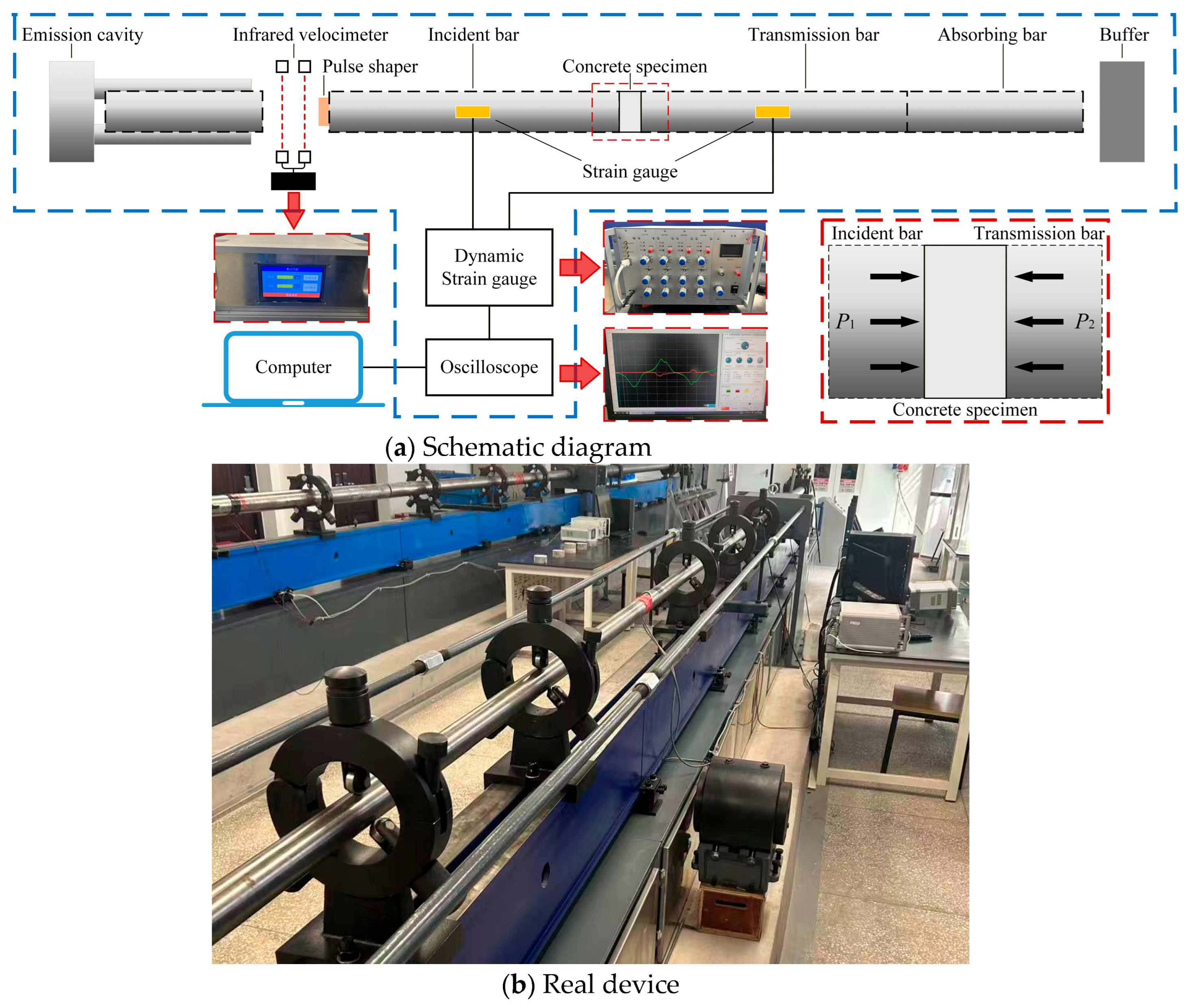
2.1. SHPB Testing Equipment and Principles
2.2. Concrete Test Block Design
3. Analysis of Experimental Results
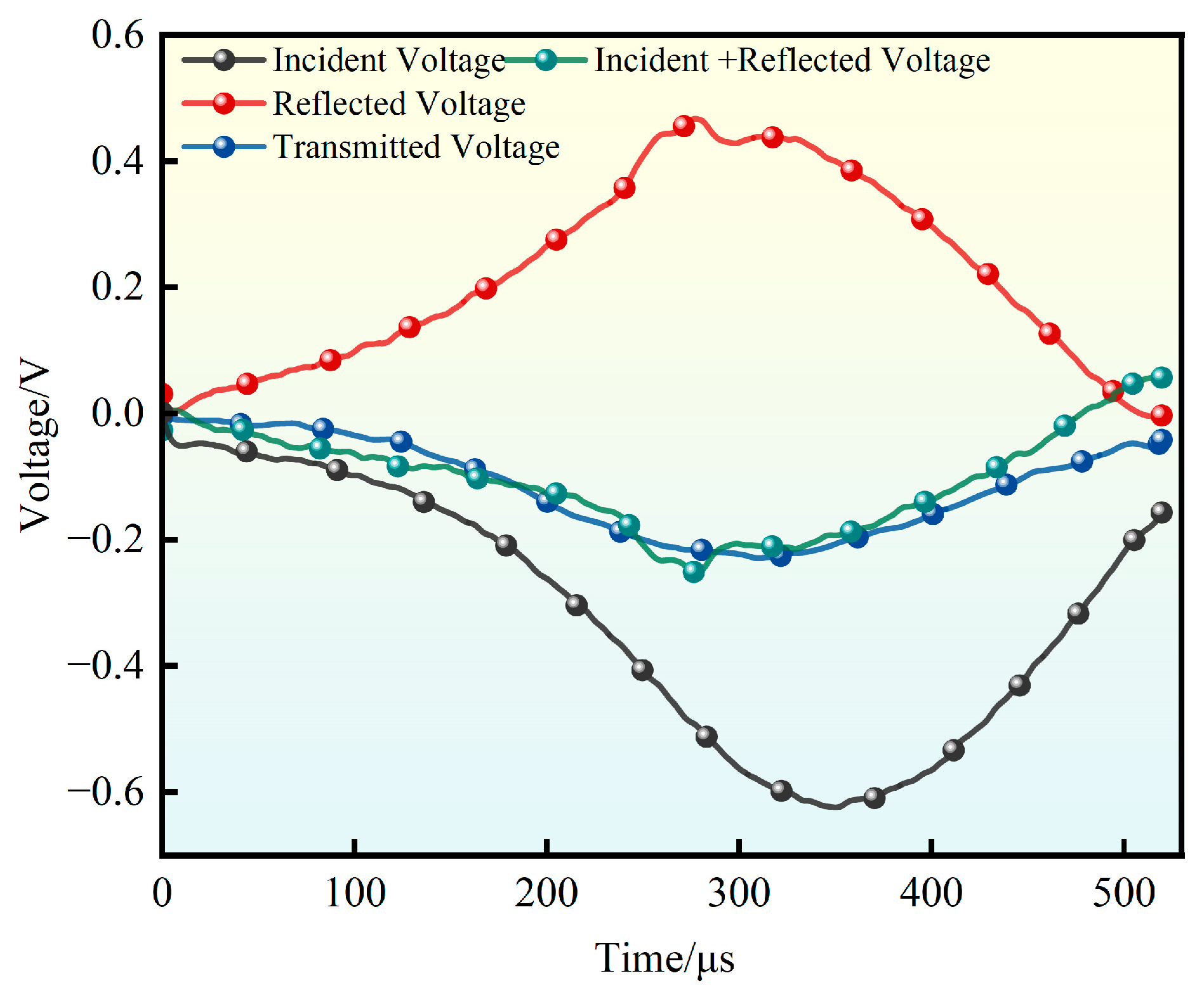
3.1. Stress Equilibrium Verification
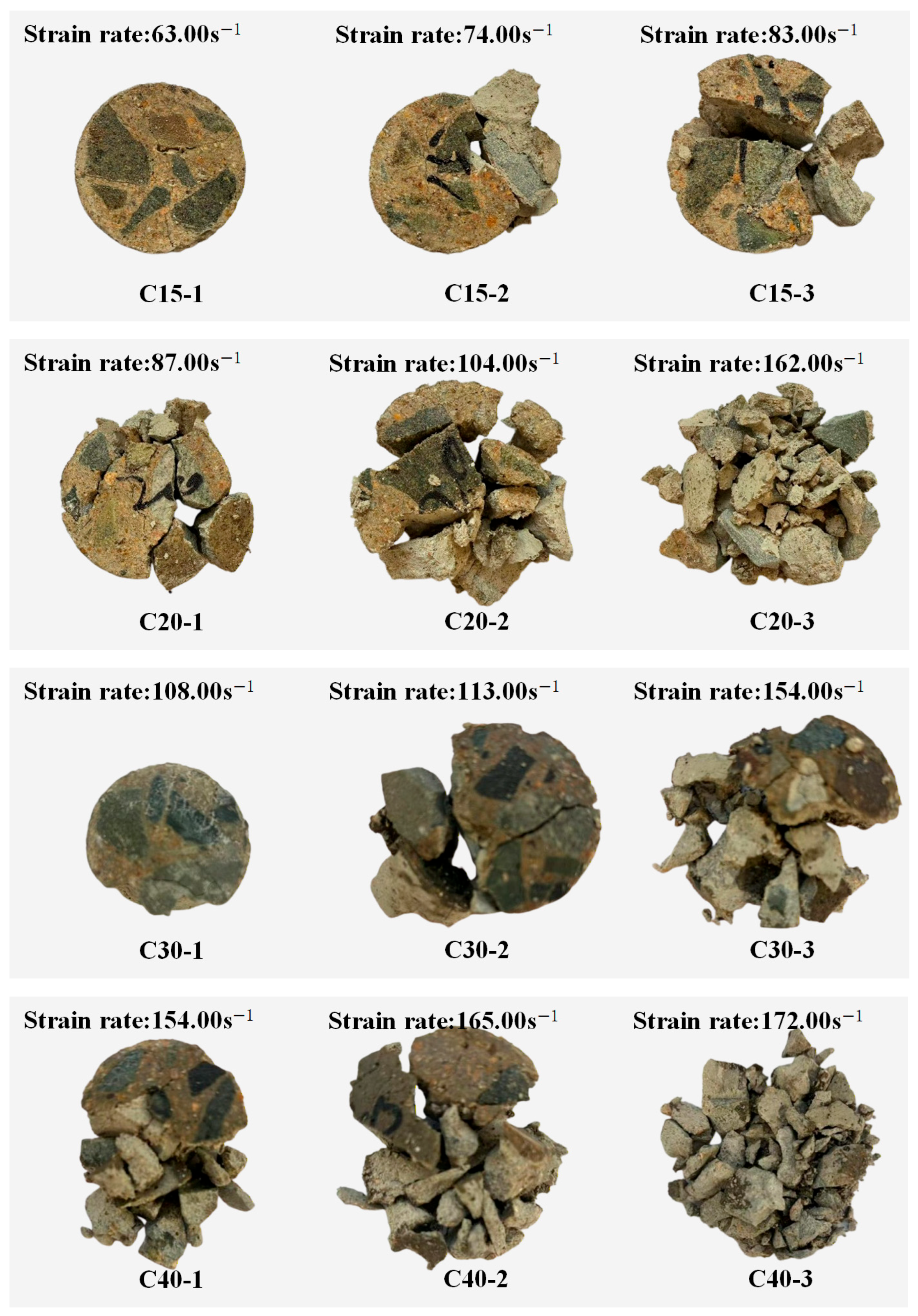
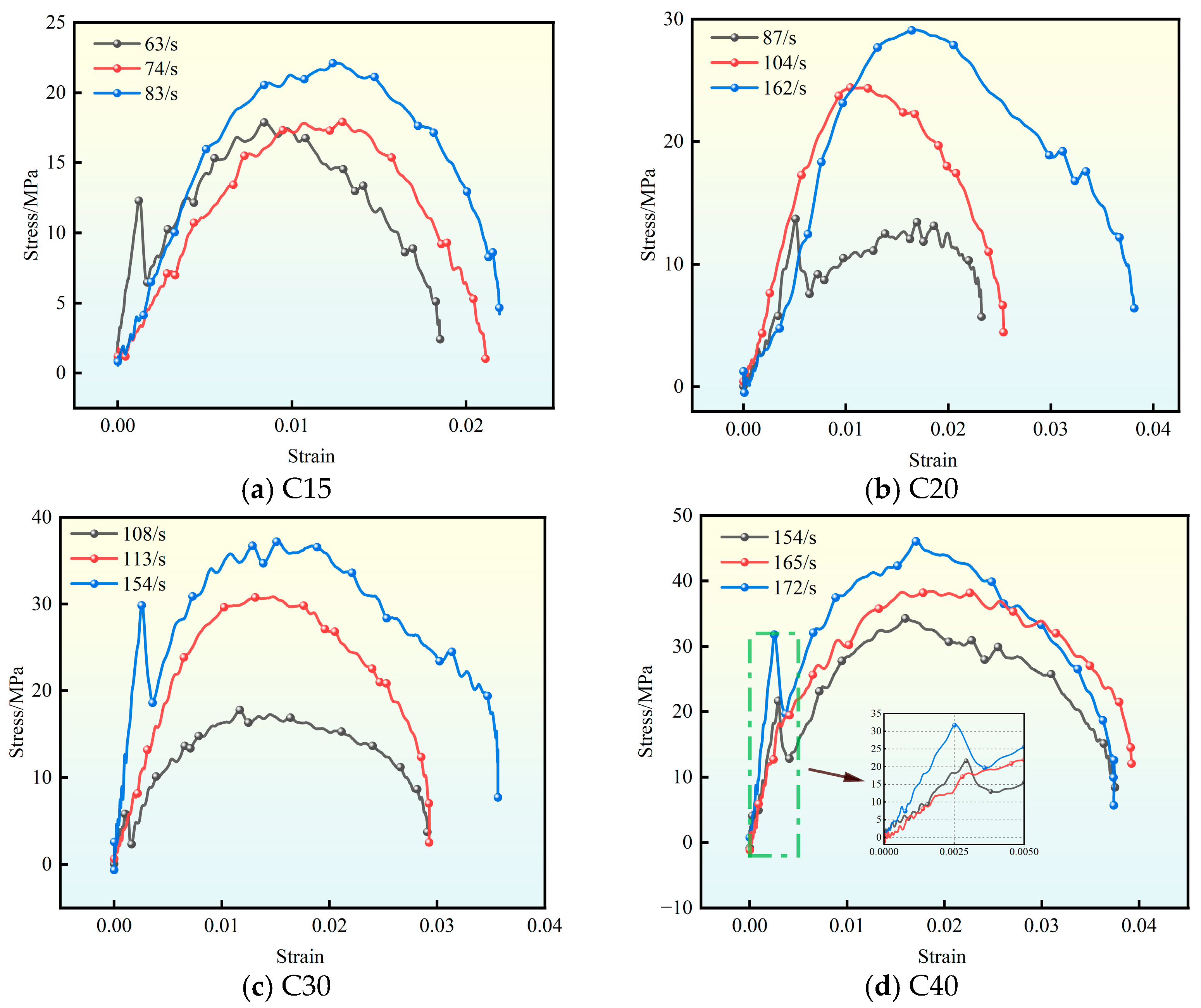
3.2. Dynamics Response Analysis of Specimen Under Impact Loading
3.3. Concrete Energy Dissipation
4. Multi-Parameter Assessment of Dynamic Energy Dissipation
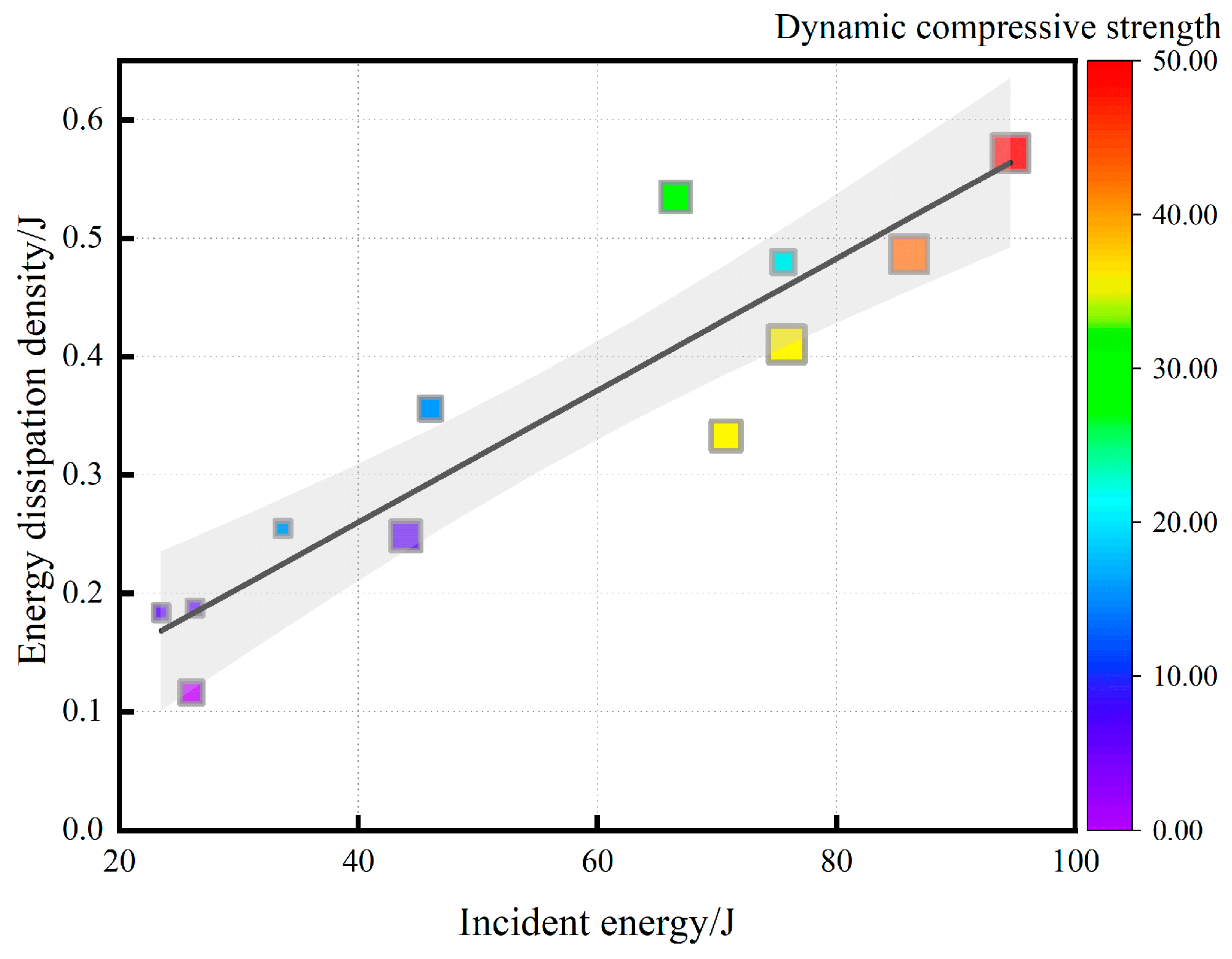
4.1. Correlation Analysis of Multiple Parameters Based on Energy Dissipation Density
4.2. Evaluation of Energy Dissipation Characteristics Based on Dynamic Impact Processes
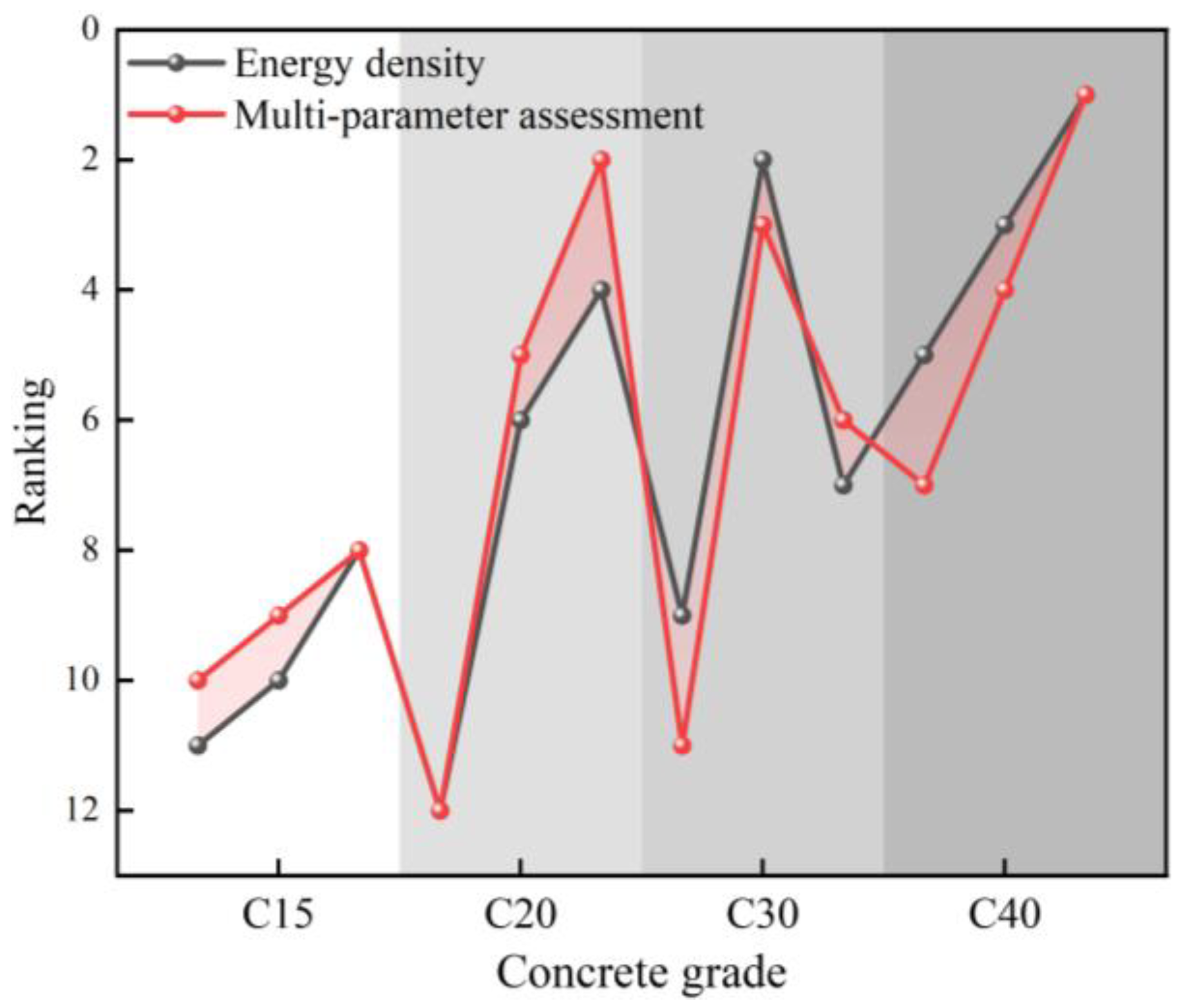
4.3. Comparison of Results
5. Conclusions
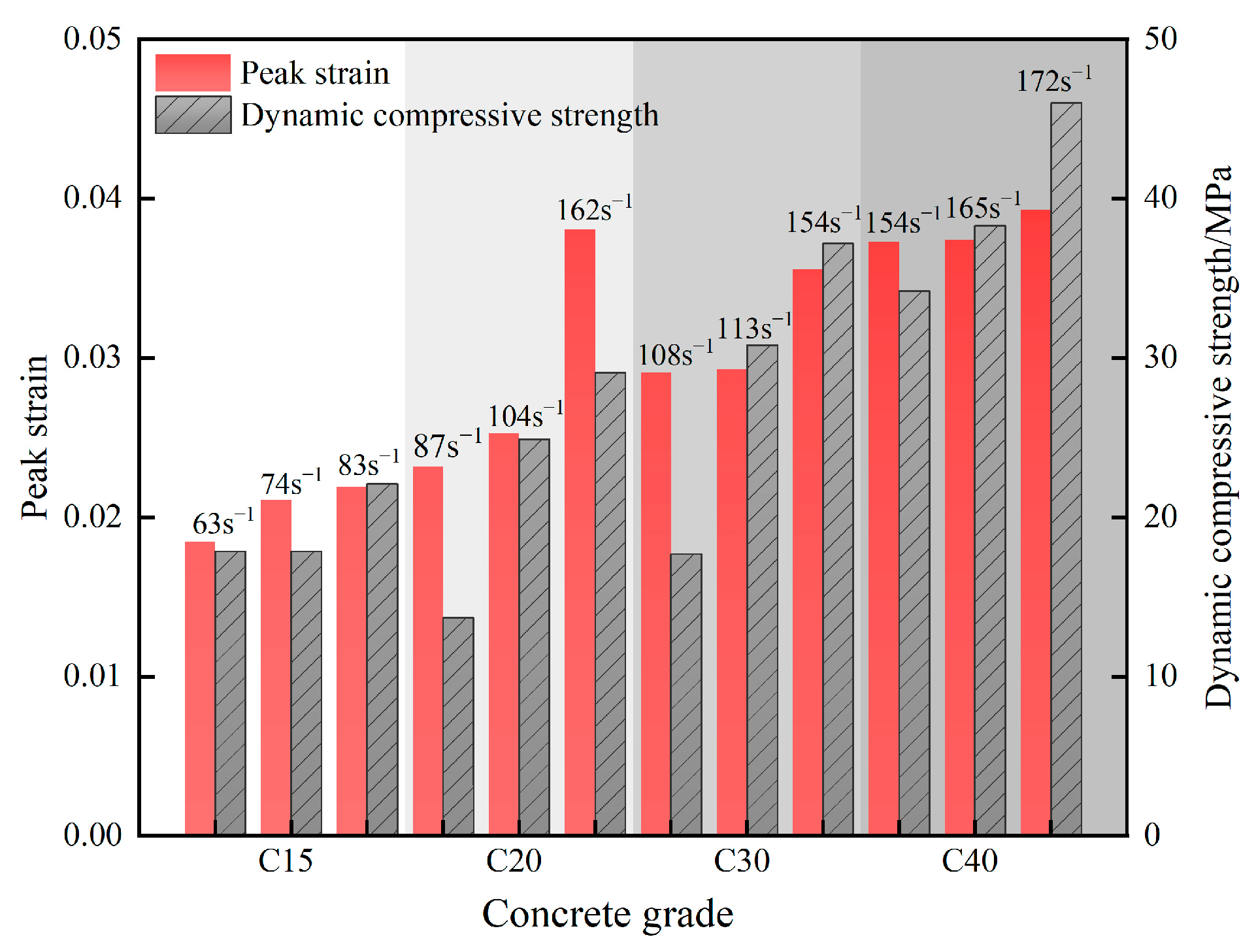
- In the SHPB test, during the dynamic impact of concrete specimens of different grades, the damage mode is affected by the loading strain rate, and the overall performance is basically from ‘local cracking’ to ‘local damage’ and finally to ‘complete crushing’, and the crushing is diffused from the center of the specimen to the surrounding area, which is basically a brittle damage characteristic. Also, ‘completely crushed’, the crushing from the center of the specimen to the surrounding dispersion, basically shows brittle damage characteristics, and the dynamic impact performance obvious strain-rate strengthening effect. Specifically, the dynamic compressive strength of C15-3 is 22.10 MPa, representing an increase of approximately 47.3%, while that of C40-3 is 46 MPa, showing an increase of approximately 15%.
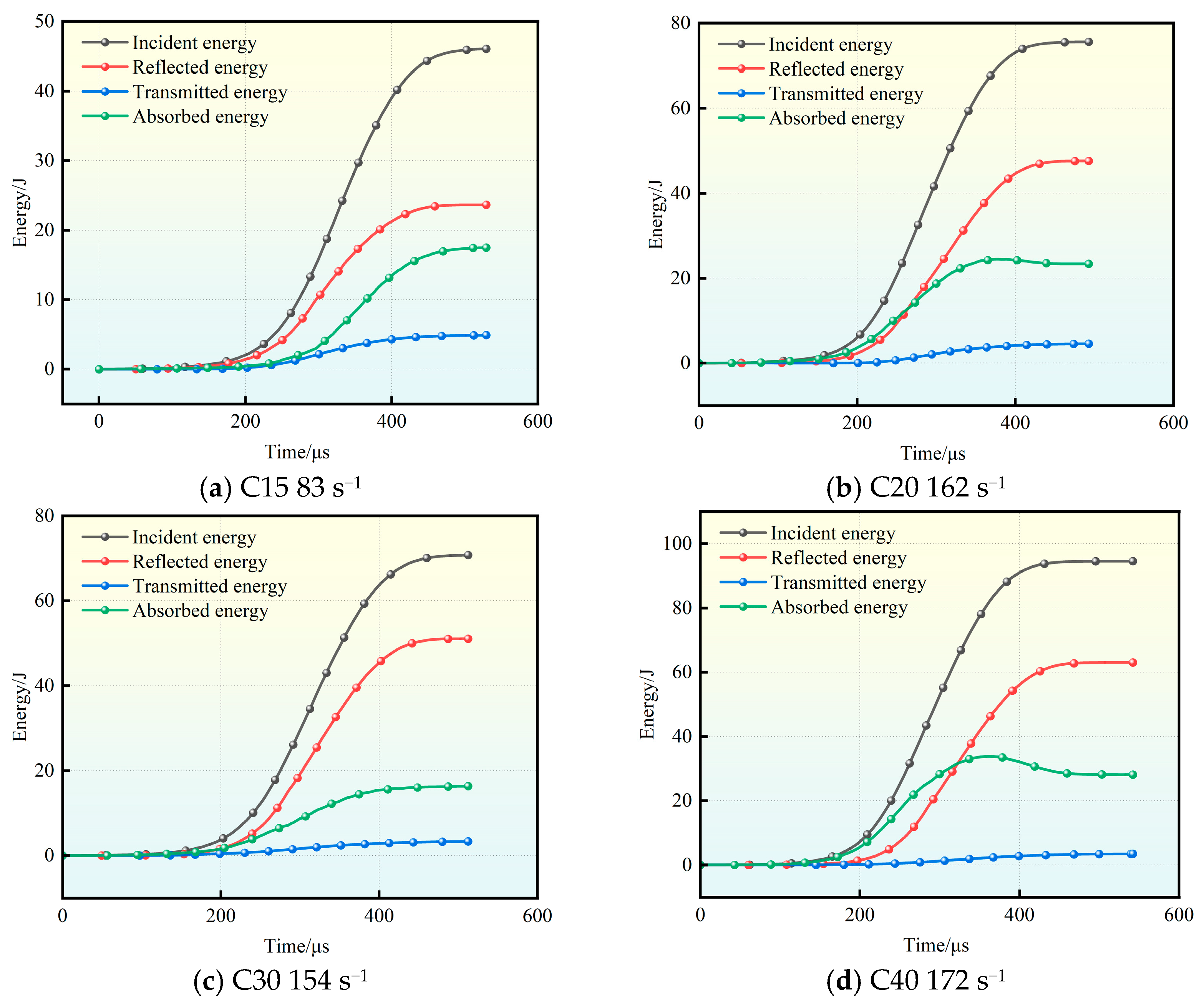
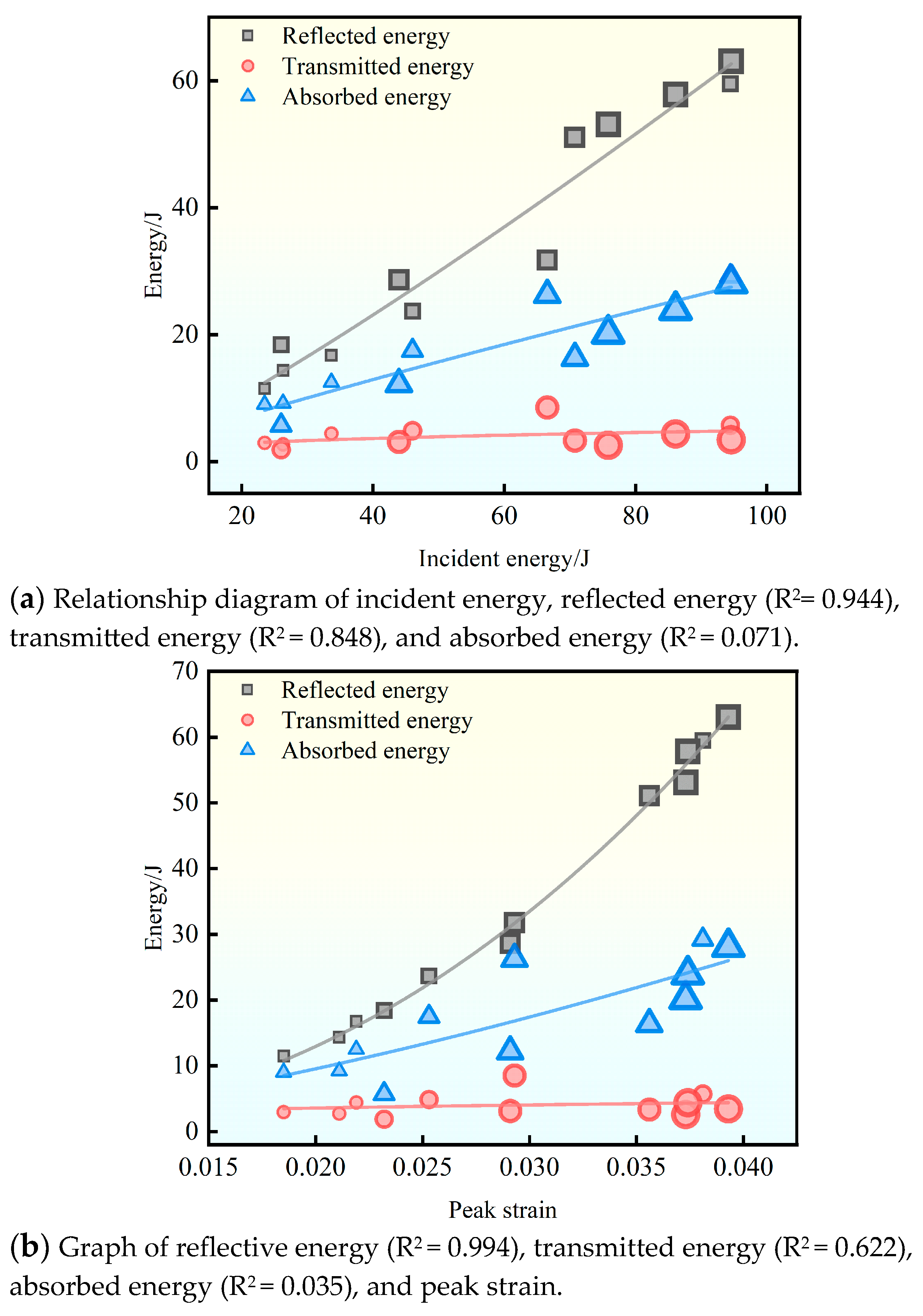
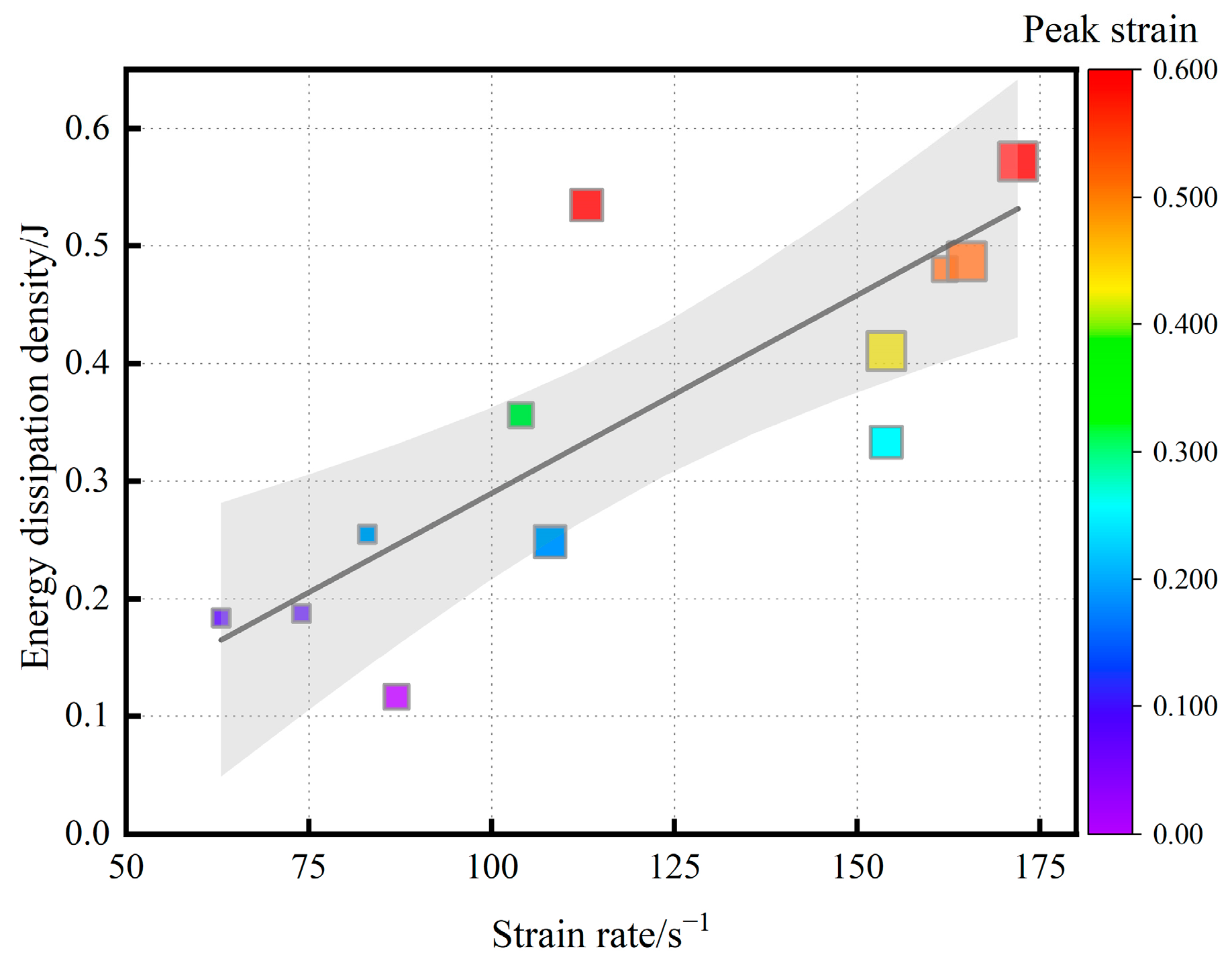
- Based on the SHPB test results, the differences in energy conversion behavior among concrete specimens of varying grades under dynamic impact loading were analyzed. When employing energy dissipation density to evaluate the energy dissipation of test specimens, the specimen demonstrating the most favorable performance was C40-3 at 0.57 J/cm3, followed by C30-2 at 0.54 J/cm3.The peak strain of C30-2 at a strain rate of 113 s−1 was merely 0.0293, indicating a relatively low degree of fragmentation. Therefore, it is considered that the energy transfer within the concrete specimen during impact is influenced by multiple factors, including initial loading conditions, concrete material properties, and failure mode.
- On the basis of the analysis of energy transfer, the relationship between energy dissipation density and multi-parameters in the dynamic impact process is explored to further reveal the energy dissipation mechanism of concrete specimens with different grades, and the coordination factor λ is introduced to propose a performance index Pi for the integrated multi-parameters to evaluate the dynamic energy dissipation of concrete specimens under the action of impact loading on the basis of energy dissipation density, and to verify its validity, providing reference for the evaluation of structural safety protection.
Author Contributions
Funding
Data Availability Statement
Acknowledgments
Conflicts of Interest
References
- Cao, J.; Lai, T.; Xu, L.; Xu, J. A Novel Optimization Design Framework for Mix Proportion of Mass Concrete: A Case Study of Foundation in Super High-Rise Buildings. Case Stud. Constr. Mater. 2025, 23, e04819. [Google Scholar] [CrossRef]
- Tutu, K.A.; Odei, D.A.; Baniba, P.; Owusu, M. Concrete quality issues in multistory building construction in Ghana: Cases from Kumasi metropolis. Case Stud. Constr. Mater. 2022, 17, e01425. [Google Scholar] [CrossRef]
- Mirzahosseini, H.; Mirhosseini, S.M.; Zeighami, E. Progressive collapse assessment of reinforced concrete (RC) buildings with high-performance fiber-reinforced cementitious composites (HPFRCC). Structures 2023, 49, 139–151. [Google Scholar] [CrossRef]
- Fan, W.; Zhong, Z.; Huang, X.; Sun, W.; Mao, W. Multi-platform simulation of reinforced concrete structures under impact loading. Eng. Struct. 2022, 266, 114523. [Google Scholar] [CrossRef]
- Lv, C.; Yan, Q.; Li, L.; Li, S. Field test and probabilistic vulnerability assessment of a reinforced concrete bridge pier subjected to blast loads. Eng. Fail. Anal. 2023, 143, 106802. [Google Scholar] [CrossRef]
- Li, J.; Wu, C.; Hao, H. Investigation of ultra-high performance concrete slab and normal strength concrete slab under contact explosion. Eng. Struct. 2015, 102, 395–408. [Google Scholar] [CrossRef]
- Xiao, Y.; Zhu, W.; Li, M.; Jia, J.; Li, Z. Concrete spalling behavior and damage evaluation of concrete members with different cross-sectional properties under contact explosion. Int. J. Impact Eng. 2023, 181, 104753. [Google Scholar] [CrossRef]
- Wang, W.Y.; Deng, Y.J.; Liu, L.B.; Zhang, L.H.; Yao, Y. Dynamic mechanical properties and energy dissipation analysis of rubber-modified aggregate concrete based on SHPB tests. Constr. Build. Mater. 2024, 445, 137920. [Google Scholar] [CrossRef]
- Zheng, J.; Huang, L.; Zhou, Z.; Huang, L. Seismic resilience assessment of self-centering prestressed concrete frame with different energy dissipation ratio and second stiffness. J. Build. Eng. 2023, 63, 105516. [Google Scholar] [CrossRef]
- Huang, R.; Guan, Z.; Qin, J.; Wen, Y.; Lai, Z. Strain rate effect of concrete based on split Hopkinson pressure bar (SHPB) test. J. Build. Eng. 2024, 86, 108856. [Google Scholar] [CrossRef]
- Ren, L.; Yu, X.; Guo, Z.; Xiao, L. Numerical investigation of the dynamic increase factor of ultra-high performance concrete based on SHPB technology. Constr. Build. Mater. 2022, 325, 126756. [Google Scholar] [CrossRef]
- Ren, G.; Guo, Y.; Shen, A.; Deng, S.; Wu, H.; Pan, H. Dynamic mechanical performance of cellulose fiber concrete under compressive impact loading. Constr. Build. Mater. 2025, 493, 143192. [Google Scholar] [CrossRef]
- Jiang, Y.; Zhang, S.; Xue, G.; Wang, W. Compressive behavior of rubberized concrete under high strain rates. Structures 2023, 56, 104983. [Google Scholar] [CrossRef]
- Kelei, C.; Sherong, Z.; Jianwei, Z.; Hu, H. Dynamic compressive behavior of steel fiber synergistically reinforced cellular concrete under high strain-rate loading. Structures 2024, 63, 106437. [Google Scholar] [CrossRef]
- Wang, T.; Bai, E.; Ren, B.; Xia, W.; Xu, J. Strengthening effect of monolayer graphene oxide on the impact mechanical properties of concrete and the mechanism analysis based on fractal theory. Constr. Build. Mater. 2024, 428, 136305. [Google Scholar] [CrossRef]
- Zhuang, W.; Li, S.; Deng, Q.; Chen, M.; Yu, Q. Effects of coarse aggregates size on dynamic characteristics of ultra-high performance concrete: Towards enhanced impact resistance. Constr. Build. Mater. 2024, 411, 134524. [Google Scholar] [CrossRef]
- Chen, L.; Li, P.; Shi, K.; Bai, X.; Zhang, Y.; Yu, Z.; Zhang, D.; Guo, W.; Feng, Z.; Song, Z. Investigation on the temperature-strain rate coupled mechanical behavior and constitutive modeling of foamed concrete using a high-temperature viscoelastic SHPB technique. Case Stud. Constr. Mater. 2025, 23, e05476. [Google Scholar] [CrossRef]
- Xie, H.; Yang, L.; Zhu, H.; Zhang, Q.; Deng, X.; Wei, P.; Lü, J. Energy dissipation and fractal characteristics of basalt fiber reinforced concrete under impact loading. Structures 2022, 46, 654–663. [Google Scholar] [CrossRef]
- Bakhshi, M.; Dalalbashi, A.; Soheili, H. Energy dissipation capacity of an optimized structural lightweight perlite concrete. Constr. Build. Mater. 2023, 389, 131765. [Google Scholar] [CrossRef]
- Aown, M.; Al-Deen, S.; Mohotti, D. Impact of crumb rubber and pre-treatment on the energy absorption of geopolymer concrete. Constr. Build. Mater. 2025, 492, 142983. [Google Scholar] [CrossRef]
- Mei, X.; Li, J.; Zhang, J.; Cui, Z.; Zhou, J.; Li, C. Predicting energy absorption characteristic of rubber concrete materials. Constr. Build. Mater. 2025, 465, 140248. [Google Scholar] [CrossRef]
- Zhou, Y.; Zou, S.; Wen, J.; Zhang, Y. Study on the damage behavior and energy dissipation characteristics of basalt fiber concrete using SHPB device. Constr. Build. Mater. 2023, 368, 130413. [Google Scholar] [CrossRef]
- Geng, K.; Chai, J.; Qin, Y.; Li, X.; Duan, M.; Liang, D. Exploring the brittleness and fractal characteristics of basalt fiber reinforced concrete under impact load based on the principle of energy dissipation. Mater. Struct. 2022, 55, 78. [Google Scholar] [CrossRef]
- Li, H.; Li, X.; Fu, J.; Zhu, N.; Chen, D.; Wang, Y.; Ding, S. Experimental study on compressive behavior and failure characteristics of imitation steel fiber concrete under uniaxial load. Constr. Build. Mater. 2023, 399, 132599. [Google Scholar] [CrossRef]
- Feng, S.; Zhou, Y.; Li, Q.M. Damage behavior and energy absorption characteristics of foamed concrete under dynamic load. Constr. Build. Mater. 2022, 357, 129340. [Google Scholar] [CrossRef]
- Khan, M.M.; Iqbal, M.A. Strain rate and size effects on dynamic tensile behaviour of standard and high-strength concrete: An experimental study. Structures 2024, 63, 106325. [Google Scholar] [CrossRef]
- Bian, Z.; Zhang, L.; Peng, C.; Zhou, Z.; Shen, H. Experimental study on hybrid fiber reinforced high performance concrete properties: Investigatingcomprehensive energy consumption capacity. Constr. Build. Mater. 2024, 443, 137682. [Google Scholar] [CrossRef]
- Cai, Y.; Ren, H.-Q.; Long, Z.-L.; Guo, R.-Q.; Du, K.-M.; Chen, S.-S.; Zheng, Z.-H. Comparison study on the impact compression mechanical properties of coral aggregate concrete and ordinary Portland concrete. Structures 2022, 44, 1403–1415. [Google Scholar] [CrossRef]
- Lv, J.; Han, W.; Zheng, J.; Lin, S.; Yuan, S. Effects of basalt fibre and rubber particles on the mechanical properties and impact resistance of concrete. Structures 2024, 65, 106677. [Google Scholar] [CrossRef]
- Han, J.; Liu, Z.; Zhang, C. Experimental study on impact resistance of steel-fiber-reinforced two-grade aggregate concrete. Constr. Build. Mater. 2023, 373, 130901. [Google Scholar] [CrossRef]
- Wang, J.; Fu, R.; Dong, H. Carbon nanofibers and PVA fiber hybrid concrete: Abrasion and impact resistance. J. Build. Eng. 2023, 80, 107894. [Google Scholar] [CrossRef]



| Number | Impact Velocity/(m·s−1) | Impact Pressure/MPa | Strain Rate/s−1 | Peak Strain | Dynamic Compressive Strength/MPa |
|---|---|---|---|---|---|
| C15-1 | 3.56 | 0.100 | 63.00 | 0.0185 | 17.86 |
| C15-2 | 3.94 | 74.00 | 0.0211 | 17.88 | |
| C15-3 | 4.24 | 83.00 | 0.0219 | 22.10 | |
| C20-1 | 4.72 | 87.00 | 0.0232 | 13.70 | |
| C20-2 | 5.02 | 104.00 | 0.0253 | 24.90 | |
| C20-3 | 5.89 | 162.00 | 0.0381 | 29.10 | |
| C30-1 | 5.08 | 108.00 | 0.0291 | 17.70 | |
| C30-2 | 5.57 | 113.00 | 0.0293 | 30.80 | |
| C30-3 | 5.62 | 154.00 | 0.0356 | 37.20 | |
| C40-1 | 5.86 | 154.00 | 0.0373 | 34.20 | |
| C40-2 | 6.14 | 165.00 | 0.0374 | 38.30 | |
| C40-3 | 6.36 | 172.00 | 0.0393 | 46.00 |
| Number | Strain Rate /(s−1) | WI/J | WR/J | WT/J | WS/J | Energy Dissipation Density/(J/cm3) | Dynamic Compressive Strength/MPa | Peak Strain |
|---|---|---|---|---|---|---|---|---|
| C15-1 | 63.00 | 23.49 | 11.48 | 2.98 | 9.03 | 0.18 | 17.86 | 0.0185 |
| C15-2 | 74.00 | 26.31 | 14.33 | 2.75 | 9.23 | 0.19 | 17.88 | 0.0211 |
| C15-3 | 83.00 | 33.67 | 16.70 | 4.45 | 12.52 | 0.25 | 22.10 | 0.0219 |
| C20-1 | 87.00 | 26.02 | 18.40 | 1.90 | 5.72 | 0.12 | 13.70 | 0.0232 |
| C20-2 | 104.00 | 46.03 | 23.66 | 4.89 | 17.49 | 0.36 | 24.90 | 0.0253 |
| C20-3 | 162.00 | 75.56 | 47.59 | 4.59 | 23.37 | 0.48 | 29.10 | 0.0381 |
| C30-1 | 108.00 | 43.95 | 28.60 | 3.14 | 12.21 | 0.25 | 17.70 | 0.0291 |
| C30-2 | 113.00 | 66.54 | 31.73 | 8.54 | 26.27 | 0.54 | 30.80 | 0.0293 |
| C30-3 | 154.00 | 70.76 | 51.05 | 3.35 | 16.36 | 0.33 | 37.20 | 0.0356 |
| C40-1 | 154.00 | 75.84 | 53.09 | 2.60 | 20.15 | 0.41 | 34.20 | 0.0373 |
| C40-2 | 165.00 | 86.09 | 57.81 | 4.39 | 23.89 | 0.49 | 38.30 | 0.0374 |
| C40-3 | 172.00 | 94.56 | 63.01 | 3.47 | 28.09 | 0.57 | 46.00 | 0.0393 |
| Number | Ranking of Energy Density | Ranking of Multi-Parameter Assessment | Comparison |
|---|---|---|---|
| C15-1 | 11 | 10 | −1 |
| C15-2 | 10 | 9 | −1 |
| C15-3 | 8 | 8 | 0 |
| C20-1 | 12 | 12 | 0 |
| C20-2 | 6 | 5 | −1 |
| C20-3 | 4 | 2 | −2 |
| C30-1 | 9 | 11 | +2 |
| C30-2 | 2 | 3 | +1 |
| C30-3 | 7 | 6 | −1 |
| C40-1 | 5 | 7 | +2 |
| C40-2 | 3 | 4 | +1 |
| C40-3 | 1 | 1 | 0 |
Disclaimer/Publisher’s Note: The statements, opinions and data contained in all publications are solely those of the individual author(s) and contributor(s) and not of MDPI and/or the editor(s). MDPI and/or the editor(s) disclaim responsibility for any injury to people or property resulting from any ideas, methods, instructions or products referred to in the content. |
© 2026 by the authors. Licensee MDPI, Basel, Switzerland. This article is an open access article distributed under the terms and conditions of the Creative Commons Attribution (CC BY) license.
Share and Cite
Jia, X.; Yao, Y.; Zhang, J.; Cao, M.; Li, K. Multi-Dimensional Assessment of Energy Dissipation in Concrete Under Dynamic Impact: Integration of Dynamic Strength Enhancement and Deformation Coordination. Buildings 2026, 16, 199. https://doi.org/10.3390/buildings16010199
Jia X, Yao Y, Zhang J, Cao M, Li K. Multi-Dimensional Assessment of Energy Dissipation in Concrete Under Dynamic Impact: Integration of Dynamic Strength Enhancement and Deformation Coordination. Buildings. 2026; 16(1):199. https://doi.org/10.3390/buildings16010199
Chicago/Turabian StyleJia, Xiaoyu, Yingkang Yao, Jinhao Zhang, Mengqing Cao, and Kang Li. 2026. "Multi-Dimensional Assessment of Energy Dissipation in Concrete Under Dynamic Impact: Integration of Dynamic Strength Enhancement and Deformation Coordination" Buildings 16, no. 1: 199. https://doi.org/10.3390/buildings16010199
APA StyleJia, X., Yao, Y., Zhang, J., Cao, M., & Li, K. (2026). Multi-Dimensional Assessment of Energy Dissipation in Concrete Under Dynamic Impact: Integration of Dynamic Strength Enhancement and Deformation Coordination. Buildings, 16(1), 199. https://doi.org/10.3390/buildings16010199