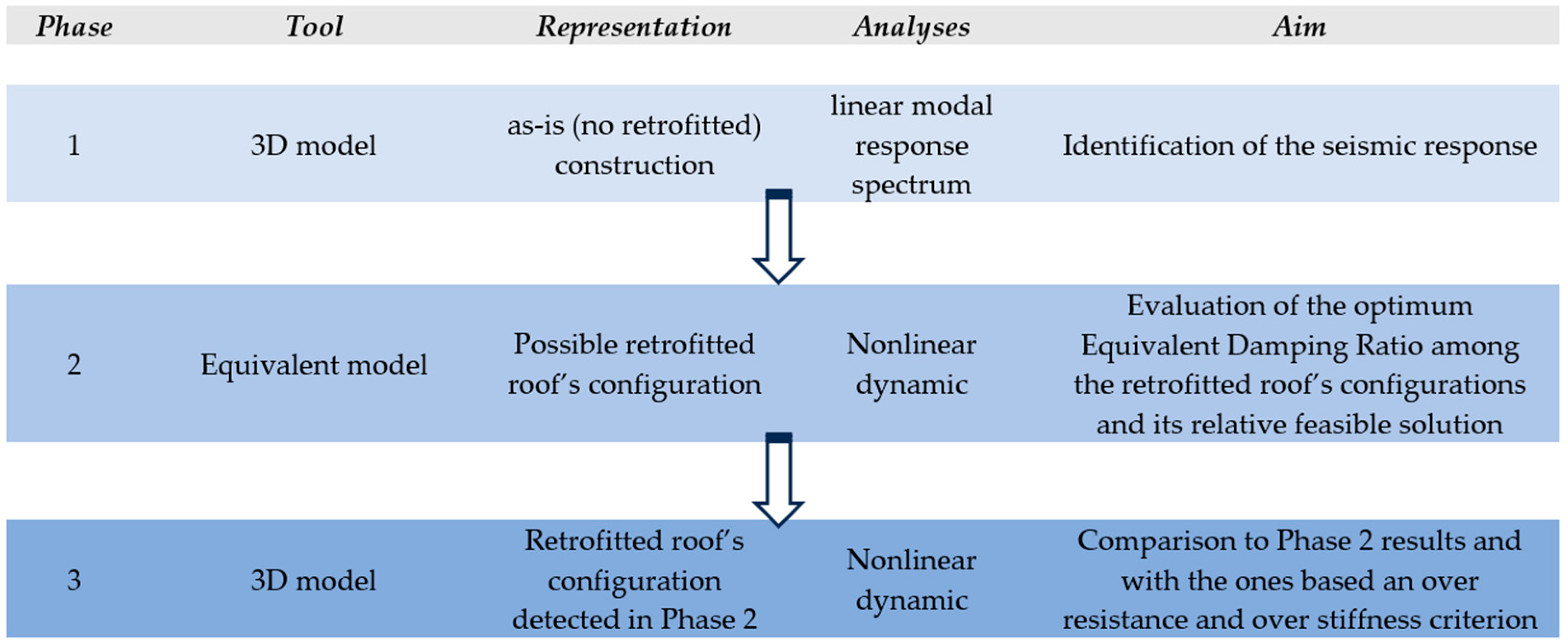
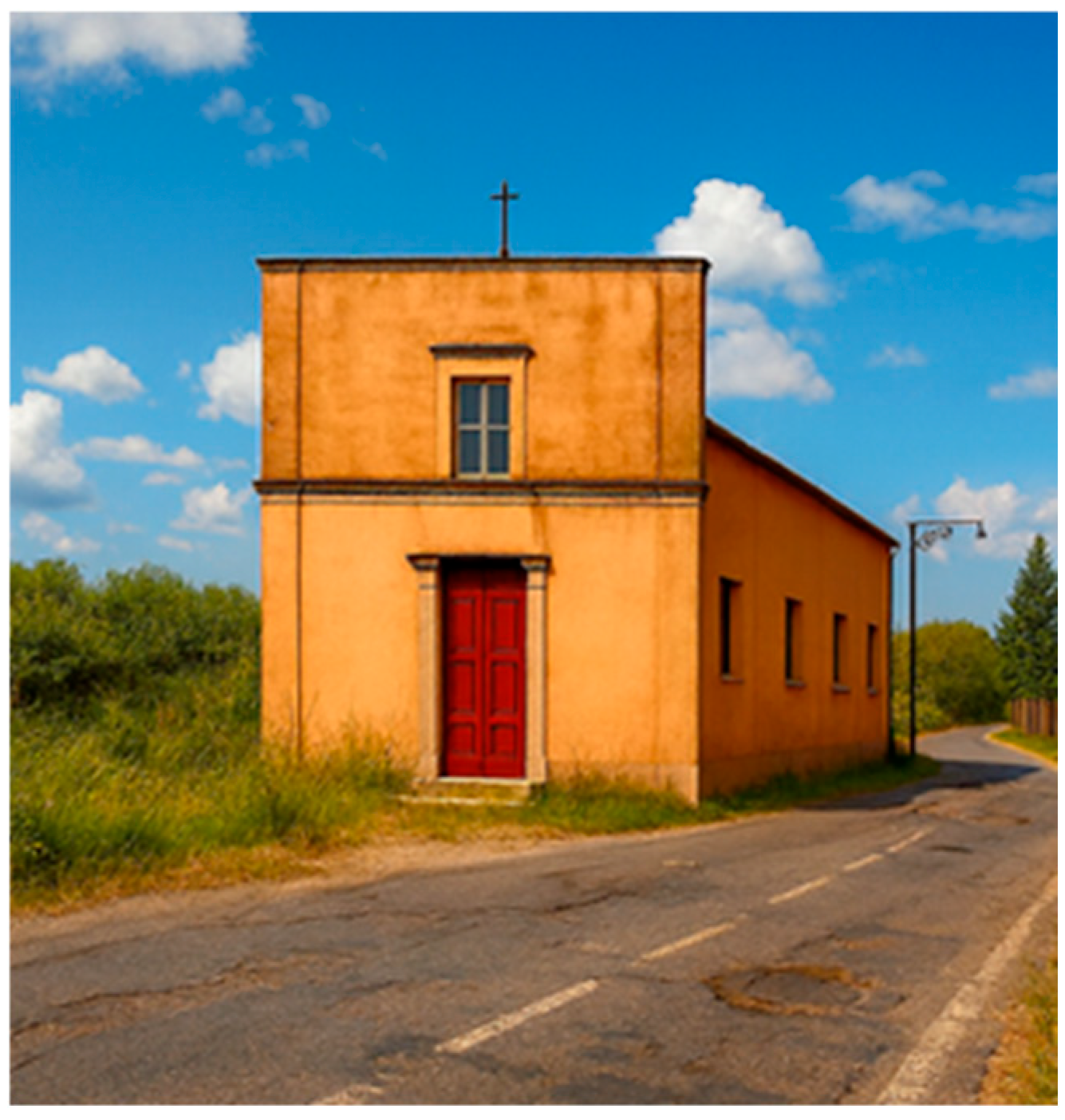
Energy-Based Design for the Seismic Improvement of Historic Churches by Nonlinear Modelling




Abstract
1. Introduction
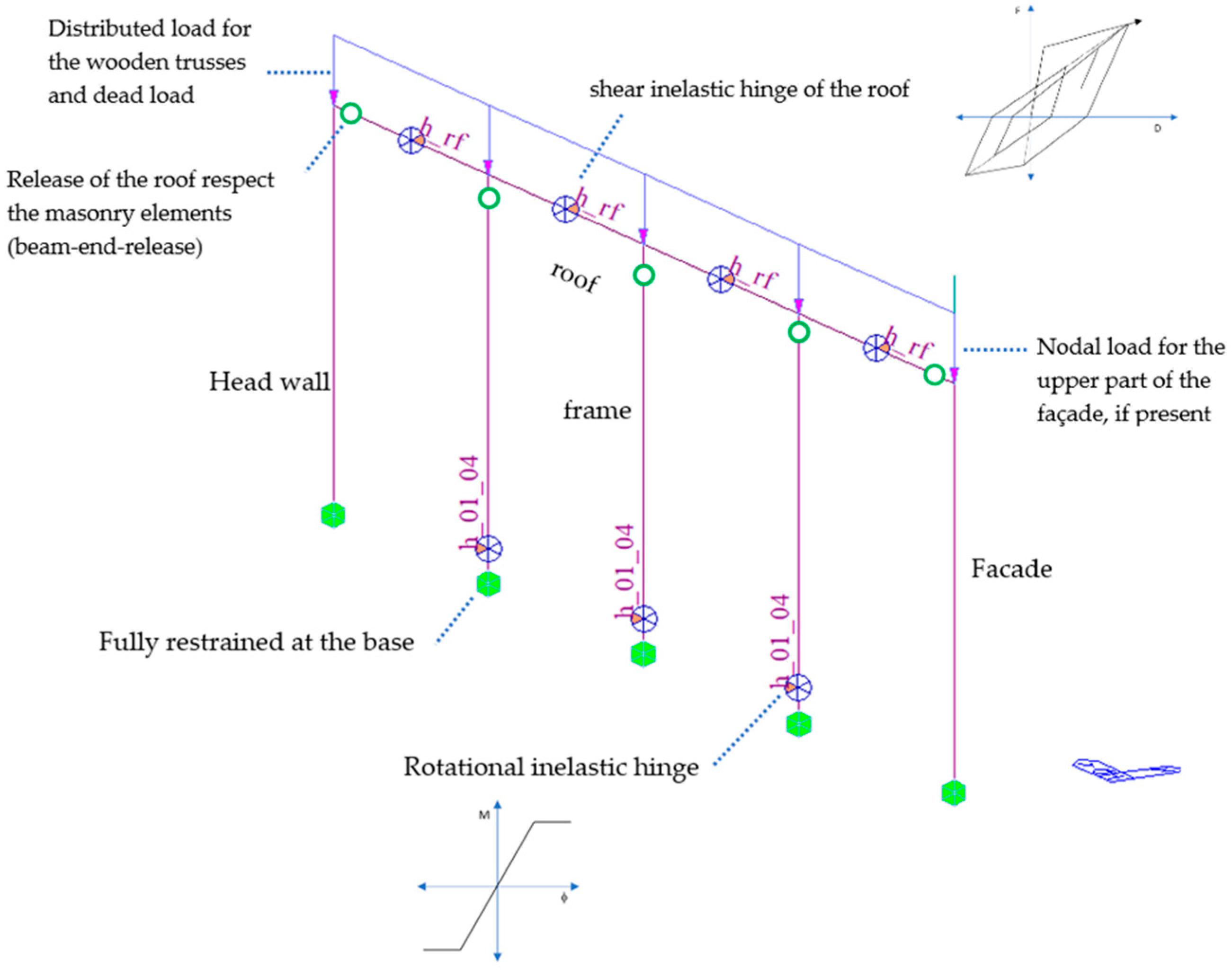
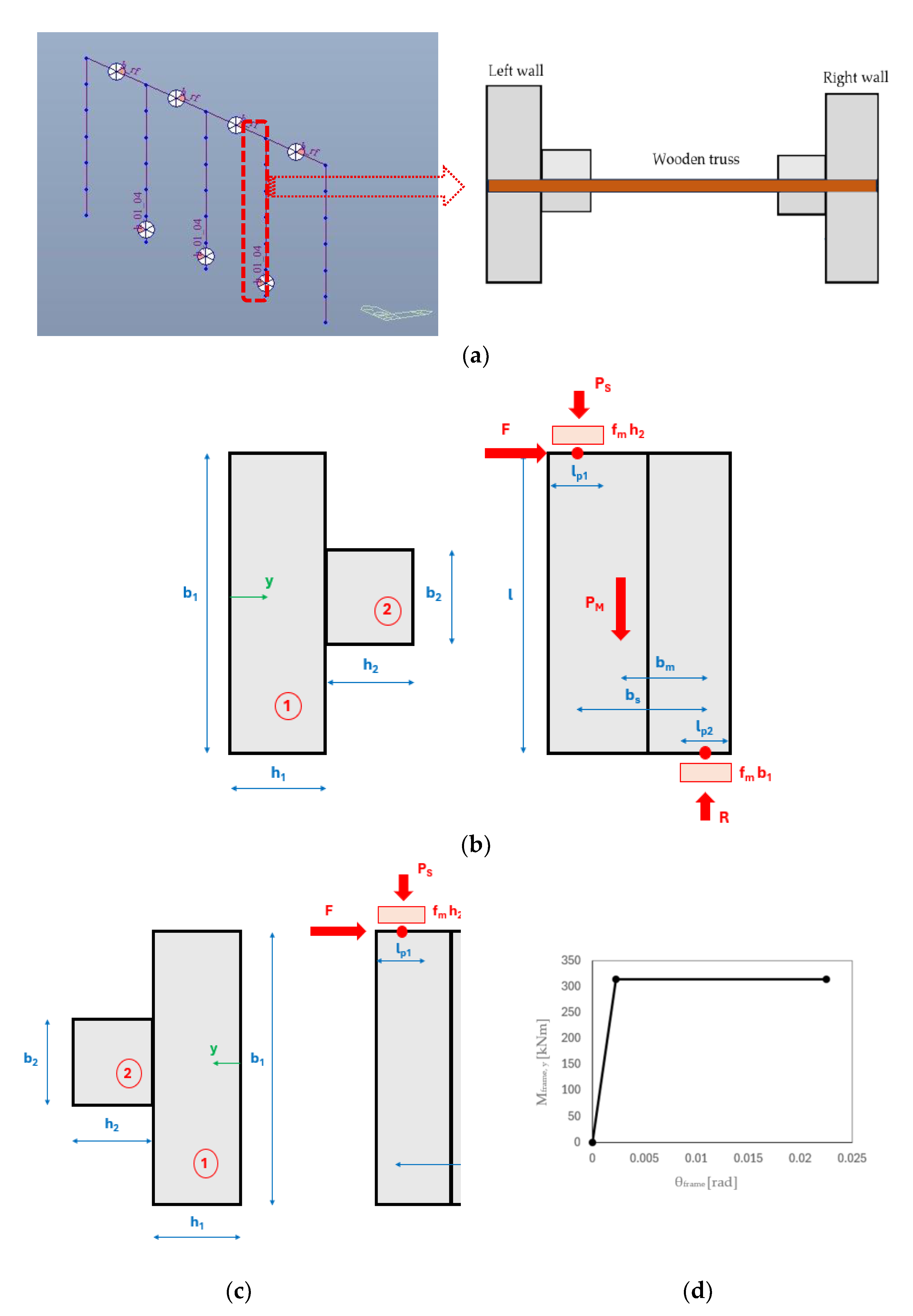
2. Damped Rocking Mechanism by Equivalent Finite Element Model
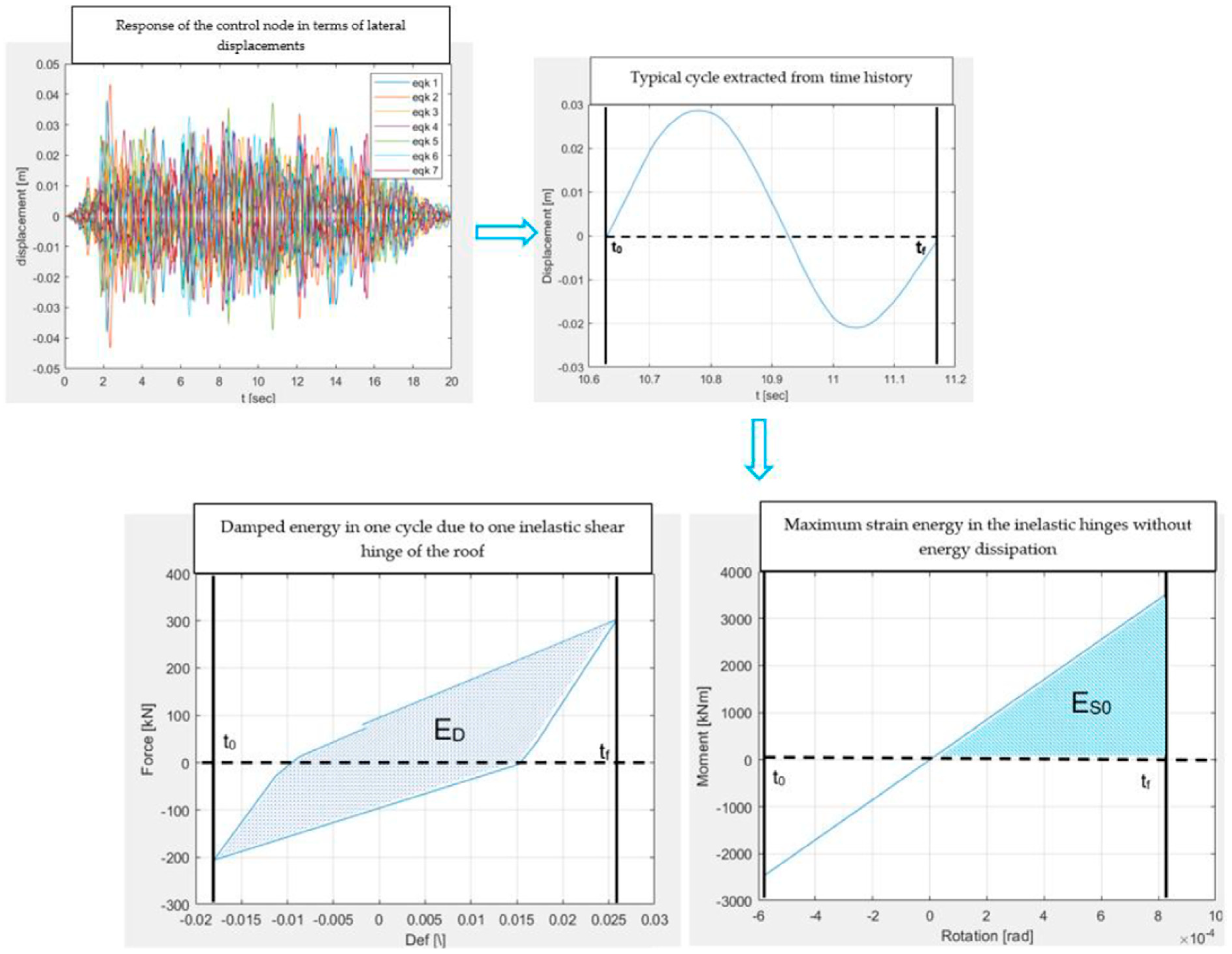
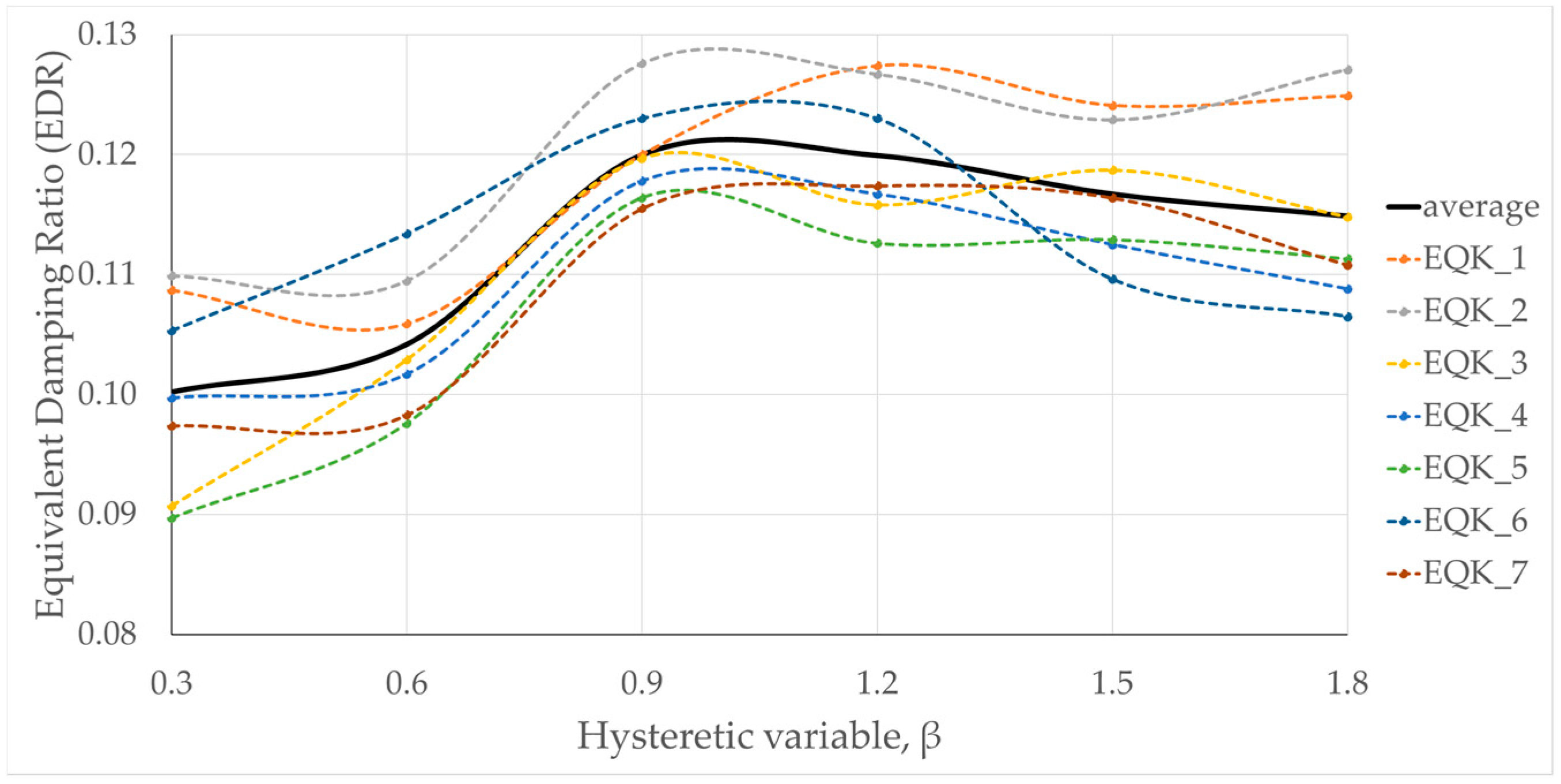
3. Evaluation of the Equivalent Damping Ratio
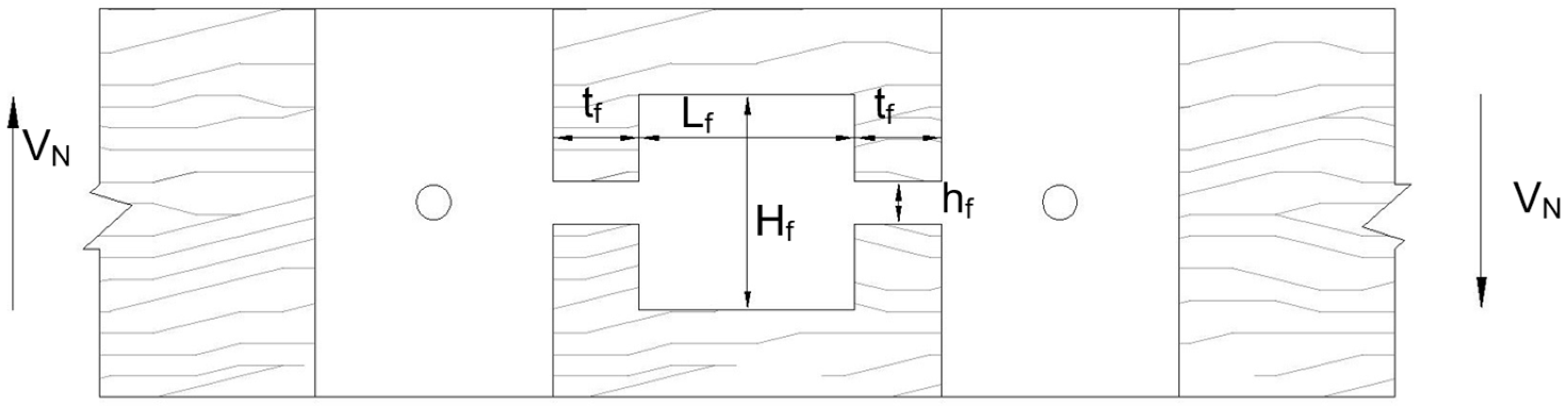
4. Technological Solution for the Roof Diaphragm from EDR
- kdf is the diaphragm’s bending stiffness;
- kdt is the diaphragm’s shear stiffness;
- Ew* is the diaphragm’s equivalent elastic modulus evaluated by Equation (8);
- Gw* is the diaphragm’s equivalent shear modulus evaluated by Equation (9);
- Jid* is the diaphragm’s ideal inertia moment of the section evaluated by Equation (10);
- A* is the shear equivalent area given by Equation (11).
- nws is the homogenization coefficient given by the ratio nws = Es/Ew* (Es is the steel elastic modulus);
- L is the distance between two consecutive frames;
- Ly is the width of the roof (given by the geometry of the church);
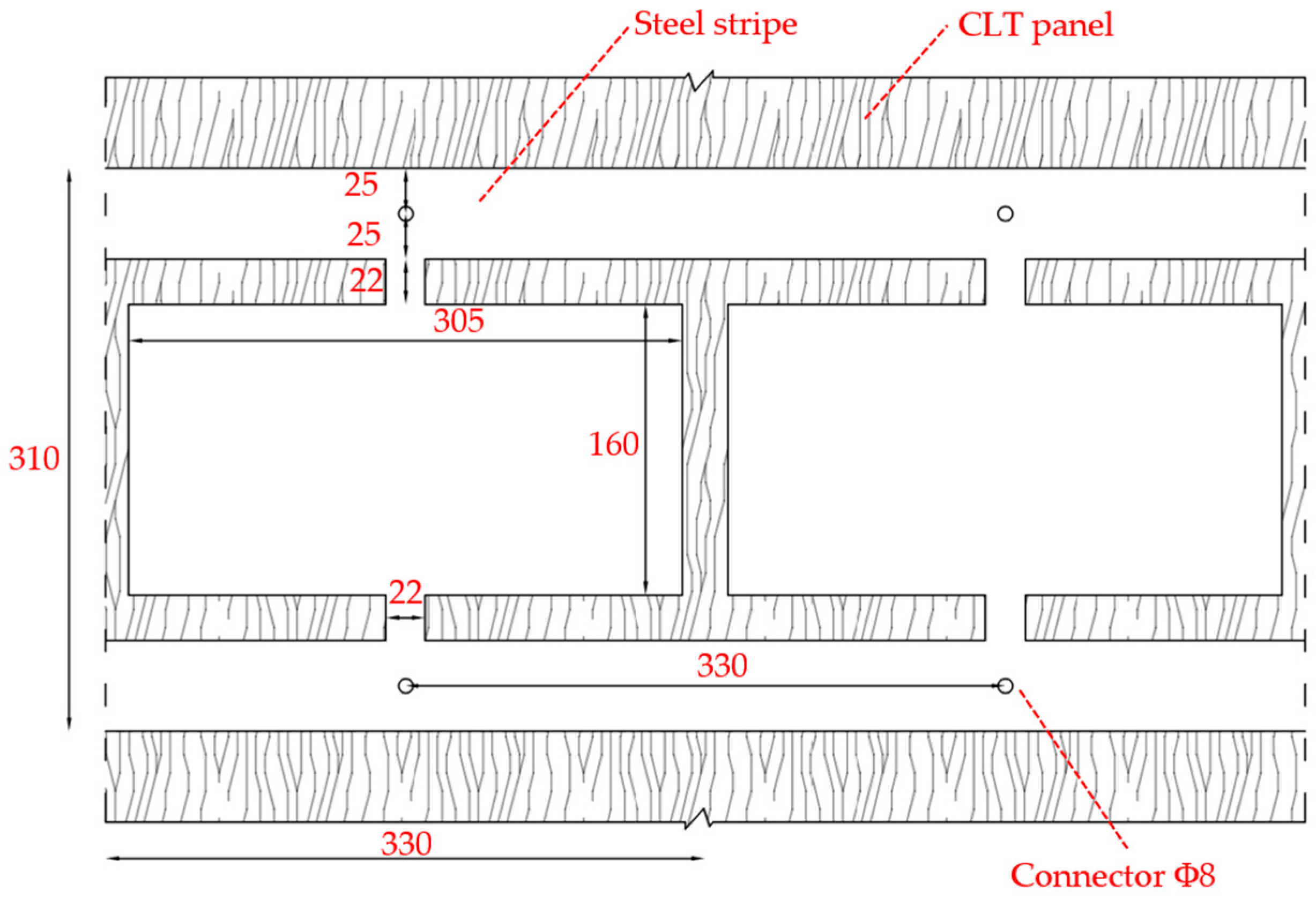
- i is the spacing of the connectors (depending on the shear afflicted the roof in the equivalent model);
- kn is the stiffness of a single connector (depending on the type of chosen connector);
- tw is the thickness of the wooden panels (depending on the technological choice);
- χ = [6/5(cos2α)] is the shear factor of the cross-section (with χ = 1.2 for rectangular sections);
- Aw is the cross-section area of the roof diaphragm (depending on the geometry of the church);
- nn is the number of connectors for each connection stripe (given by the ratio between the spacing of the seismic elements and the spacing of the connectors);
- ns is the number of the connection stripes for each span (to be evaluated respecting the commercially available dimensions of the panels);
- As is the cross-section area of the steel stripes covering the heads of the connectors.
5. Case Study
5.1. Description
5.2. Phase 1: Initial Linear 3D Model
5.3. Phase 2: Evaluation of EDR from Equivalent Model and Definition of the Connections
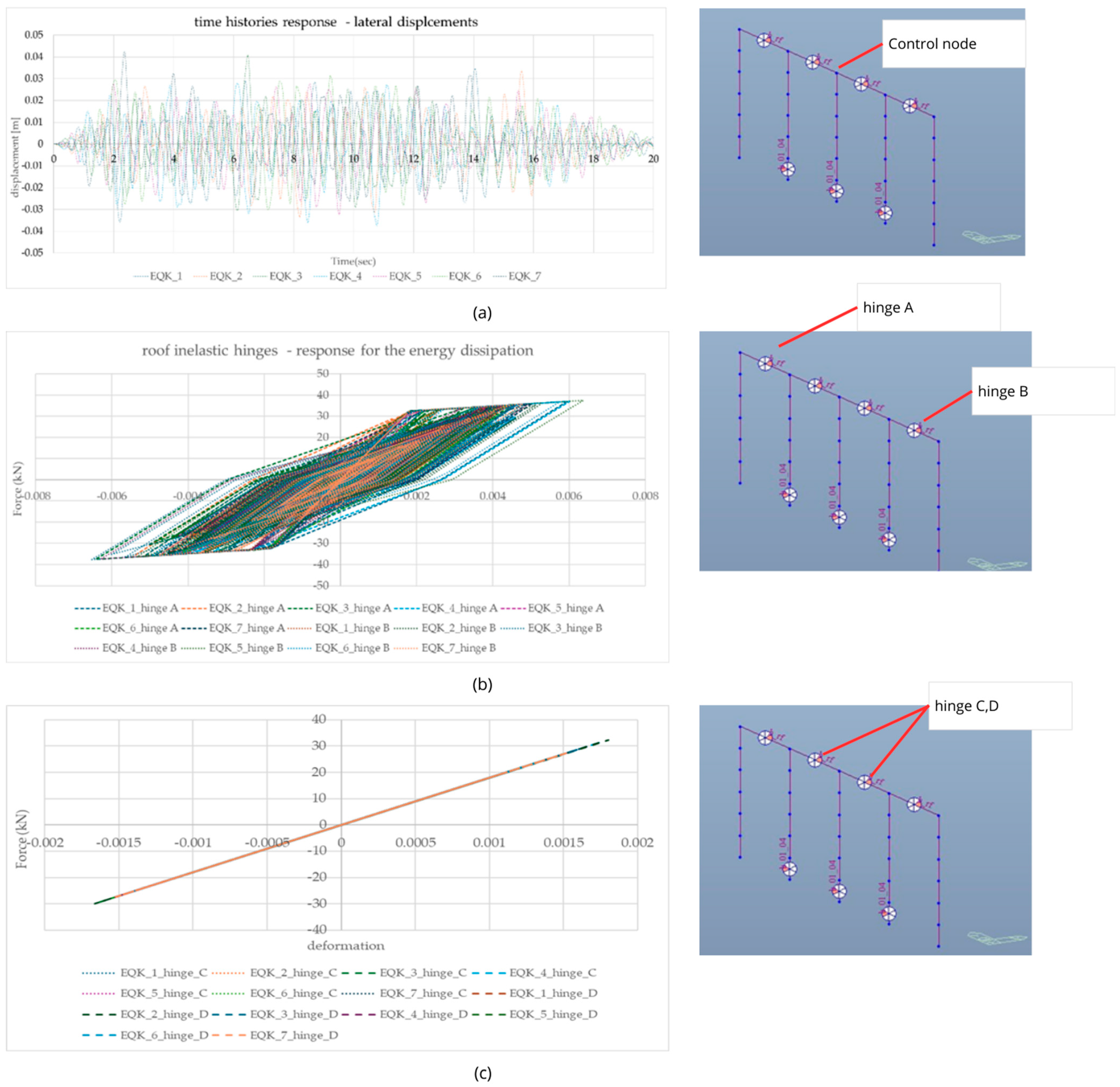
5.4. Phase 3: Validation of the Optimized Roof Diaphragm by Nonlinear 3D Modeling
6. Remarks
7. Conclusions
- The equivalent model facilitates rapid parametric analyses of panel-to-panel connection schemes, markedly reducing computational requirements relative to an initial full 3D nonlinear analysis. Moreover, the full 3D model nonlinear analyses have confirmed the results obtained by equivalent model.
- The concentrated nonlinear properties introduced in the equivalent model are presented with the aim of capturing the overall behavior of the structure and make it possible to evaluate the variations of the lateral displacements, considering that the introduction of a roof diaphragm should avoid out-of-plane mechanisms in the transverse response of the retrofitted church. In fact, this approach is initially adopted in the energy-based comparative analyses to detect the optimum EDR and retrofitted roof stiffness. However, the assumption of concentrated nonlinearities at the base of the walls limits the identification of possible crack patterns in the masonry structure by assuming a priori the position of the plastic hinges. Future works will explore the possibility of incorporating the nonlinear modeling of masonry walls using solid finite elements into the design strategy for the selection of the optimized roof configuration.
- The method enables the optimization of diaphragm thickness and connector quantity by leveraging the system’s dissipative capacity, an aspect that cannot be captured through conventional strength-based approaches.
- The retrofitted configuration based on EDR can reduce the thickness of the panels and the number of connectors, thanks to the detection of the connections’ dissipative effects.
- The numerical approaches discussed here are particularly suitable for single-nave churches, although similar equivalent modeling can be adopted also in case of multi-nave churches with rectangular plans or Basilicas with a cruciform layout. In the case of a cruciform layout, the transverse response of the Basilica could be simulated by modelling all the elements of the church placed between the façade and the triumphal arch, typically located before the transept. Given the different characteristics of the roof between the central nave and the lateral aisles, special care should be taken in the equivalent modeling. Regarding the applicability of the method for the calculation of the EDR, it could be extended to historic buildings with elongated rectangular plans and regular layouts, whose first vibration mode shape involves mainly transverse displacements (perpendicular to the longitudinal axis of the building) and accounts for a significant percentage of the building’s overall mass.
Author Contributions
Funding
Institutional Review Board Statement
Informed Consent Statement
Data Availability Statement
Acknowledgments
Conflicts of Interest
References
- Benedetti, D.; Petrini, V. Sulla Vulnerabilità Sismica Degli Edifici in Muratura: Un Metodo di Valutazione. L’industria delle Costruzioni 1984, 149, 66–74. [Google Scholar]
- Cattari, S.; Calderoni, B.; Caliò, I.; Camata, G.; de Miranda, S.; Magenes, G.; Milani, G.; Saetta, A. Nonlinear Modeling of the Seismic Response of Masonry Structures: Critical Review and Open Issues towards Engineering Practice. Bull. Earthq. Eng. 2022, 20, 1939–1997. [Google Scholar] [CrossRef] [Scilit]
- Cundari, G.A.; Milani, G.; Failla, G. Seismic Vulnerability Evaluation of Historical Masonry Churches: Proposal for a General and Comprehensive Numerical Approach to Cross-Check Results. Eng. Fail. Anal. 2017, 82, 208–228. [Google Scholar] [CrossRef] [Scilit]
- Ruggieri, S.; Tosto, C.; Rosati, G.; Uva, G.; Ferro, G.A. Seismic Vulnerability Analysis of Masonry Churches in Piemonte after 2003 Valle Scrivia Earthquake: Post-Event Screening and Situation 17 Years Later. Int. J. Archit. Herit. 2022, 16, 717–745. [Google Scholar] [CrossRef] [Scilit]
- De Matteis, G.; Criber, E.; Brando, G. Damage Probability Matrices for Three-Nave Masonry Churches in Abruzzi after the 2009 LAquila Earthquake. Proc. Int. J. Archit. Herit. 2016, 10, 120–145. [Google Scholar]
- Dias-Oliveira, J.; Rodrigues, H.; Asteris, P.G.; Varum, H. On the Seismic Behavior of Masonry Infilled Frame Structures. Buildings 2022, 12, 1146. [Google Scholar] [CrossRef] [Scilit]
- Zizi, M.; Rouhi, J.; Chisari, C.; Cacace, D.; De Matteis, G. Seismic Vulnerability Assessment for Masonry Churches: An Overview on Existing Methodologies. Buildings 2021, 11, 588. [Google Scholar] [CrossRef] [Scilit]
- Tena-Colunga, A.; Abrams, D.P. Seismic Behavior of Structures with Flexible Diaphragms. J. Struct. Eng. 1996, 122, 439–445. [Google Scholar] [CrossRef] [Scilit]
- Milani, G.; Shehu, R.; Valente, M. Seismic Vulnerability Reduction of Masonry Churches: A Case Study. Proc. Procedia Eng. 2017, 199, 272–277. [Google Scholar] [CrossRef] [Scilit]
- Longarini, N.; Crespi, P.; Zucca, M. The Influence of the Geometrical Features on the Seismic Response of Historical Churches Reinforced by Different Cross Lam Roof-Solutions. Bull. Earthq. Eng. 2022, 20, 6813–6852. [Google Scholar] [CrossRef] [Scilit]
- Marini, A.; Giuriani, E.P. Transformation of Wooden Roof Pitches into Antiseismic Shear Resistance Diaphragms. In Proceedings of the V International Conference on Structural Analysis of Historical Constructions, New Delhi, India, 6–8 November 2006; MacMillan: New York, NY, USA, 2006. [Google Scholar]
- Acito, M.; Magrinelli, E.; Milani, G.; Tiberti, S. Seismic Vulnerability of Masonry Buildings: Numerical Insight on Damage Causes for Residential Buildings by the 2016 Central Italy Seismic Sequence and Evaluation of Strengthening Techniques. J. Build. Eng. 2020, 28, 101081. [Google Scholar] [CrossRef] [Scilit]
- Thomoglou, A.K.; Jagadesh, P.; Voutetaki, M.E. Review of Out-of-Plane Strengthening Techniques of Unreinforced Masonry Walls. Fibers 2023, 11, 78. [Google Scholar] [CrossRef] [Scilit]
- Hafner, I.; Kišiček, T.; Gams, M. Review of Methods for Seismic Strengthening of Masonry Piers and Walls. Buildings 2023, 13, 1524. [Google Scholar] [CrossRef] [Scilit]
- Giuriani, E.; Marini, A. Wooden Roof Box Structure for the Anti-Seismic Strengthening of Historic Buildings. Int. J. Archit. Herit. 2008, 2, 226–246. [Google Scholar] [CrossRef] [Scilit]
- D’Arenzo, G.; Rigo, P.; Nicolussi, V.; Pozza, L.; Casagrande, D. Characterisation of the Rigid Diaphragm Conditions for Cross Laminated Timber Floors. Bull. Earthq. Eng. 2025, 23, 1759–1794. [Google Scholar] [CrossRef] [Scilit]
- Sharifi, J.; Sharifi, Z.; Berg, S.; Ekevad, M. Diaphragm Shear and Diagonal Compression Testing of Cross-Laminated Timber. SN Appl. Sci. 2021, 3, 842. [Google Scholar] [CrossRef] [Scilit]
- Zucca, M.; Reccia, E.; Longarini, N.; Cazzani, A. Seismic Assessment and Retrofitting of an Historical Masonry Building Damaged during the 2016 Centro Italia Seismic Event. Appl. Sci. 2022, 12, 11789. [Google Scholar] [CrossRef] [Scilit]
- Soong, T.T.; Dargush, G.F. Passive Energy Dissipation Systems in Structural Engineering; Wiley: Hoboken, NJ, USA, 1997; ISBN 9780471968214. [Google Scholar]
- Den Hartog, J.P. Mechanical Vibrations; McGraw-Hill: Columbus, OH, USA, 1956; ISBN 0070163898. [Google Scholar]
- Jacobsen, L. Steady Forced Vibrations as Influenced by Damping. Trans. Am. Soc. Mech. Eng. 1930, 52, 169–181. [Google Scholar] [CrossRef] [Scilit]
- Jennings, P.C. Equivalent Viscous Damping for Yielding Structures. J. Eng. Mech. Div. 1968, 94, 103–116. [Google Scholar] [CrossRef] [Scilit]
- Department of Homeland Security. FEMA 440: Improvement of Nonlinear Static Seismic Analysis Procedures; Federal Emergency Management Agency: Washington, DC, USA, 2005.
- FEMA 356. FEMA 356—Prestandard and Commentary for the Seismic Rehabilitation of Buildings; Federal Emergency Management Agency: Washington, DC, USA, 2000.
- Applied Technology Council. ATC 40, Seismic Evaluation and Retrofit of Concrete Buildings; Applied Technology Council: Redwood City, CA, USA, 1996; Volume 1. [Google Scholar]
- Puncello, I.; Caprili, S. Seismic Assessment of Historical Masonry Buildings at Different Scale Levels: A Review. Appl. Sci. 2023, 13, 1941. [Google Scholar] [CrossRef] [Scilit]
- Castellazzi, G.; Cardillo, E.; Lo Presti, N.; D’Altri, A.M.; de Miranda, S.; Bertani, G.; Ferretti, F.; Mazzotti, C. Advancing Cultural Heritage Structures Conservation: Integrating BIM and Cloud-Based Solutions for Enhanced Management and Visualization. Heritage 2023, 6, 7316–7342. [Google Scholar] [CrossRef] [Scilit]
- Valente, M.; Milani, G. Damage Survey, Simplified Assessment, and Advanced Seismic Analyses of Two Masonry Churches after the 2012 Emilia Earthquake. Int. J. Arch. Herit. 2018, 13, 901–924. [Google Scholar] [CrossRef] [Scilit]
- Kamil, S.S.; Nabilah, A.B.; Karim, I.A.; Alias, A.H.; Mohd Tohir, M.Z. Seismic Performance and Fragility Assessment of Masonry Infilled RC Frames Using a Numerical Approach. Bull. Earthq. Eng. 2025, 1–28. [Google Scholar] [CrossRef] [Scilit]
- Preti, M.; Loda, S.; Bolis, V.; Cominelli, S.; Marini, A.; Giuriani, E. Dissipative Roof Diaphragm for the Seismic Retrofit of Listed Masonry Churches. J. Earthq. Eng. 2019, 23, 1241–1261. [Google Scholar] [CrossRef] [Scilit]
- Preti, M.; Bolis, V.; Marini, A.; Giuriani, E. Example of the Benefits of a Dissipative Roof Diaphragm in the Seismic Response of Masonry. In Proceedings of the 9th International Conference on Structural Analysis of Historical Constructions 2014, Mexico City, Mexico, 14–17 October 2014. [Google Scholar]
- Cacciola, P.; Deodatis, G. A Method for Generating Fully Non-Stationary and Spectrum-Compatible Ground Motion Vector Processes. Soil Dyn. Earthq. Eng. 2011, 31, 351–360. [Google Scholar] [CrossRef] [Scilit]
- Iervolino, I.; Galasso, C.; Cosenza, E. REXEL: Computer Aided Record Selection for Code-Based Seismic Structural Analysis. Bull. Earthq. Eng. 2010, 8, 339–362. [Google Scholar] [CrossRef] [Scilit]
- Algamati, M.; Al-Sakkaf, A.; Bagchi, A. Energy Dissipation Technologies in Seismic Retrofitting: A Review. Civil. Eng. 2025, 6, 23. [Google Scholar] [CrossRef] [Scilit]
- Hossain, A.; Lakshman, R.; Tannert, T. Shear Connections with Self-Tapping Screws for Cross-Laminated Timber Panels. In Proceedings of the Structures Congress 2015, Portland, OR, USA, 23–25 April 2015. [Google Scholar]
- Aloisio, A.; Alaggio, R.; Fragiacomo, M. Equivalent Viscous Damping of Cross-Laminated Timber Structural Archetypes. J. Struct. Eng. 2021, 147, 04021012. [Google Scholar] [CrossRef] [Scilit]
- Iwan, W.D.; Gates, N.C. The Effective Period and Damping of a Class of Hysteretic Structures. Earthq. Eng. Struct. Dyn. 1979, 7, 199–211. [Google Scholar] [CrossRef] [Scilit]
- Chopra, A.K. Dynamics of Structures: Theory and Applications to Earthquake Engineering; Pearson: London, UK, 2017; ISBN 9780134555126. [Google Scholar]
- Johansen, K.W. Theory of Timber Connections. IABSE Int. Assoc. Bridge Struct. Eng. 1949, 9, 249–262. [Google Scholar]
- CEN EN 1995-1-1; Eurocode 5-Design of Timber Structures-General-Common Rules and Rules for Buildings. The European Union per Regulation: Brussels, Belgium, 2004; Volume 144.
- Loss, C.; Hossain, A.; Tannert, T. Simple Cross-Laminated Timber Shear Connections with Spatially Arranged Screws. Eng. Struct. 2018, 173, 340–356. [Google Scholar] [CrossRef] [Scilit]
- Longarini, N.; Crespi, P.; Scamardo, M. Numerical Approaches for Cross-Laminated Timber Roof Structure Optimization in Seismic Retrofitting of a Historical Masonry Church. Bull. Earthq. Eng. 2020, 18, 487–512. [Google Scholar] [CrossRef] [Scilit]
- Manojlović, D.; Rašeta, A.; Vukobratović, V.; Čeh, A.; Kozarić, L.; Jovanović, Đ.; Starčev-Ćurčin, A. Simulation of Load–Slip Capacity of Timber–Concrete Connections with Dowel-Type Fasteners. Buildings 2023, 13, 1171. [Google Scholar] [CrossRef] [Scilit]
- Bolis, V.; Giuriani, E.; Marini, A.; Peretti, M.; Preti, M. Studio del Ruolo del Diaframma di Copertura Nel Comportamento Sismico Degli Archi Diaframma Nella Chiesa Parrocchiale Di Sirmione; Technical Report n. 1; Università di Brescia: Brescia, Italy, 2013. [Google Scholar]
- Valente, M.; Milani, G. Damage Assessment and Partial Failure Mechanisms Activation of Historical Masonry Churches under Seismic Actions: Three Case Studies in Mantua. Eng. Fail. Anal. 2018, 92, 495–519. [Google Scholar] [CrossRef] [Scilit]
- Giordano, N.; Crespi, P.; Franchi, A. Flexural Strength-Ductility Assessment of Unreinforced Masonry Cross-Sections: Analytical Expressions. Eng. Struct. 2017, 148, 399–409. [Google Scholar] [CrossRef] [Scilit]
- Otani, S. Hysteresis models of reinforced concrete for earthquake response analysis. J. Fac. Eng. Univ. Tokyo Series B 1981, 36, 407–441. [Google Scholar]
- Takeda, T.; Sozen, M.A.; Nielsen, N.N. Reinforced Concrete Response to Simulated Earthquakes. J. Struct. Div. 1970, 96, 2557–2573. [Google Scholar] [CrossRef] [Scilit]
- Jacobsen, L. Damping in Composite Structures. In Proceedings of the 2nd World Conference on Earthquake Engineering, Tokyo, Japan, 11–18 July 1960; p. 2. [Google Scholar]
- Lubliner, J.; Oliver, J.; Oller, S.; Oñate, E. A Plastic-Damage Model for Concrete. Int. J. Solids Struct. 1989, 25, 299–326. [Google Scholar] [CrossRef] [Scilit]
- Lee, J.; Fenves, G.L. Plastic-Damage Model for Cyclic Loading of Concrete Structures. J. Eng. Mech. 1998, 124, 892–900. [Google Scholar] [CrossRef] [Scilit]
- Iuriani, E.P.; Marini, A.; Preti, M. Thin-Folded Shell for the Renewal of Existing Wooden Roofs. Int. J. Archit. Herit. 2016, 10, 797–816. [Google Scholar] [CrossRef] [Scilit]
- Rubner Holzbau. Cross Laminated Timber—Technical Specifications; Rubner Holzbau: Bressanone, Italy, 2023. [Google Scholar]
- Stora Enso. CLT by Stora Enso—Technical Brochure; Stora Enso: Helsinki, Finland, 2023. [Google Scholar]
- Sandhaas, C.; van de Kuilen, J.W.G. Strength and Stiffness of Timber Joints with Very High Strength Steel Dowels. Eng. Struct. 2017, 131, 394–404. [Google Scholar] [CrossRef] [Scilit]
- Hong, J.-P.; Barrett, D. Three-Dimensional Finite-Element Modeling of Nailed Connections in Wood. J. Struct. Eng. 2010, 136, 715–722. [Google Scholar] [CrossRef] [Scilit]
- DM 17/1/2018; Norme Tecniche per Le Costruzioni. Gazzetta Ufficiale: Livorno, Italy, 2018. (In Italian)
- Totani, G.; Monaco, P.; Totani, F.; Lanzo, G.; Pagliaroli, A.; Amoroso, S.; Marchetti, D. Site Characterization and Seismic Response Analysis in the Area of Collemaggio, L’Aquila (Italy). In Proceedings of the 5th International Conference on Geotechnical and Geophysical Site Characterisation, Gold Coast, Australia, 5–9 September 2016; ISC: Tokyo, Japan, 2016; Volume 2. [Google Scholar]
- Genshu, T.; Yongfeng, Z. Seismic Force Modification Factors for Modified-Clough Hysteretic Model. Eng. Struct. 2007, 29, 3053–3070. [Google Scholar] [CrossRef] [Scilit]
- Clough, R.W. Effect of Stiffness Degradation on Earthquake Ductility Requirements; University of California: Berkeley, CA, USA, 1966. [Google Scholar]
- ISO 898-1:2009; Mechanical Properties of Fasteners Made of Carbon Steel and Alloy Steel—Part 1: Bolts, Screws and Studs with Specified Property Classes—Coarse Thread and Fine Pitch Thread. ISO: Geneva, Switzerland, 2009.
- ISO/TC 165; Timber Structures. Joints Made with Mechanical Fasteners. Quasi-Static Reversed-Cyclic Test Method. European Standard: Brussels, Belgium, 2019.
- Ministero delle Infrastrutture e dei Trasporti. Istruzioni per l’Applicazione dell’Aggiornamento delle “Norme Tecniche per le Costruzioni” di cui al Decreto Ministeriale 17 Gennaio 2018; Ministero delle Infrastrutture e dei Trasporti: Rome, Italy, 2019.



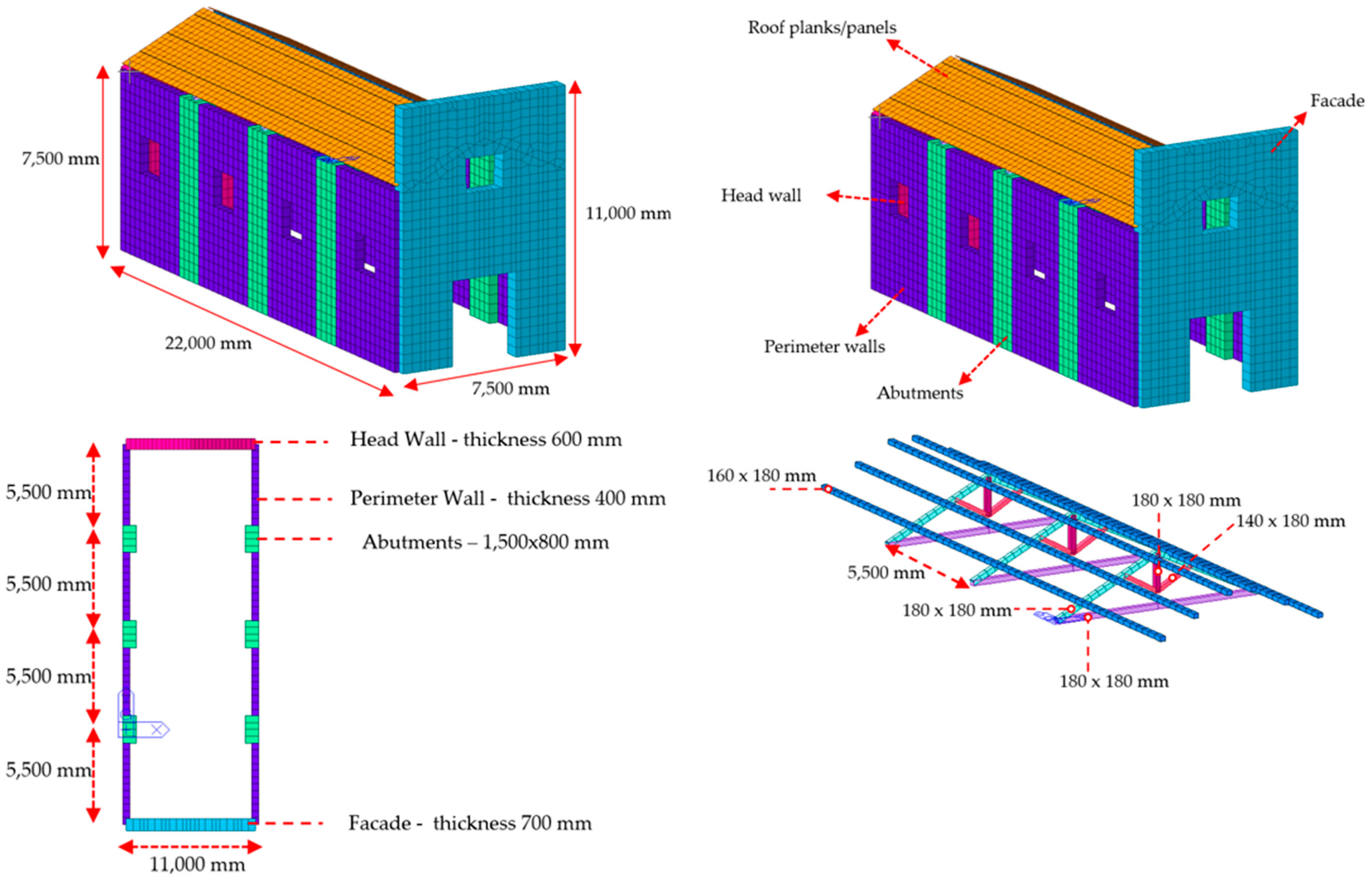


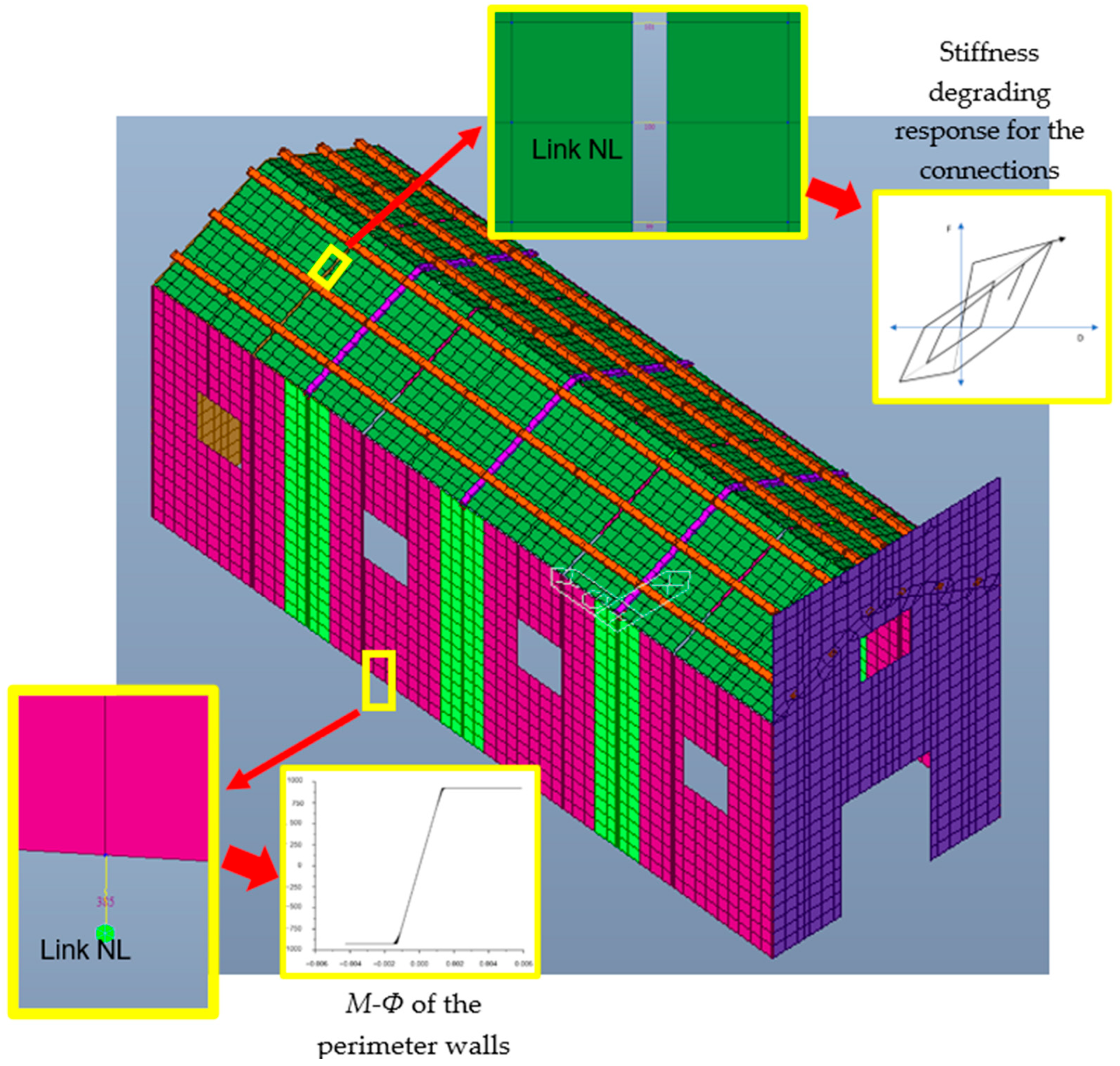

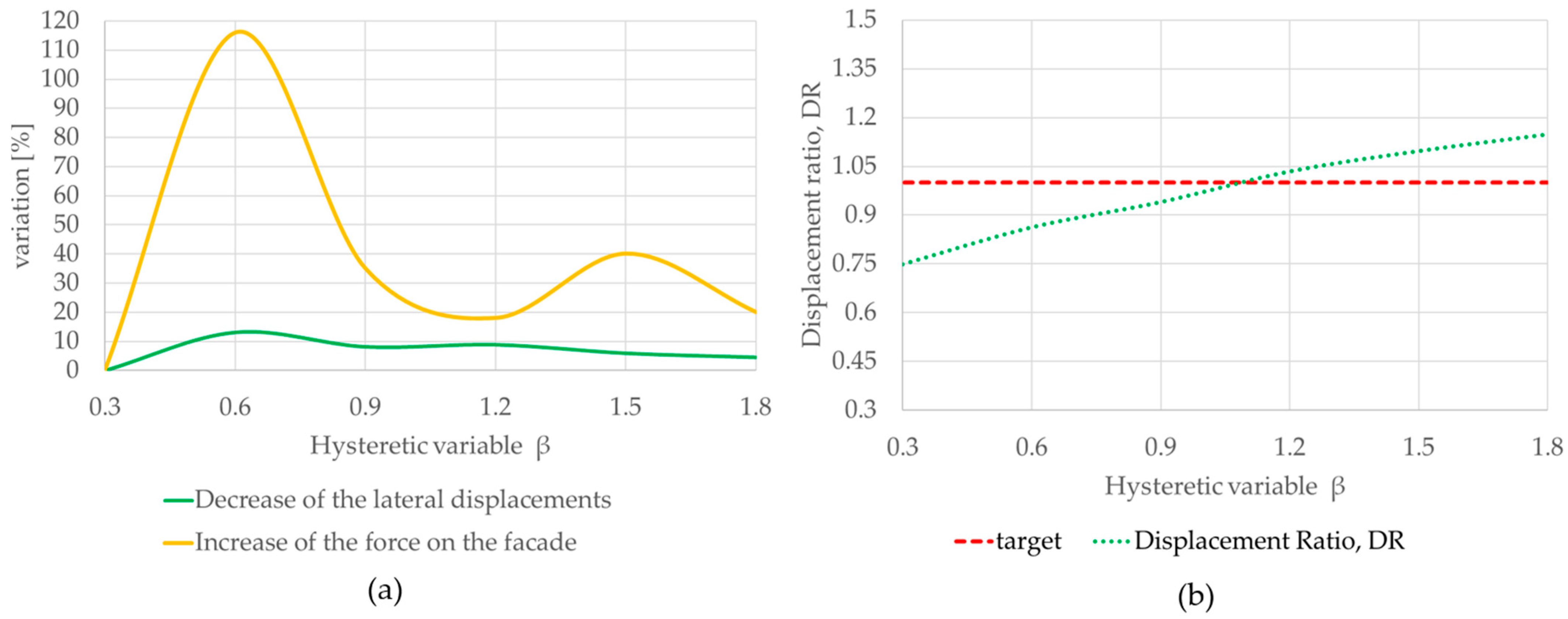


| Geometrical Features | Left Wall | Right Wall | Symbol | Unit |
|---|---|---|---|---|
| Section base 1 | 5500 | 5500 | b1 | mm |
| Section height 1 | 400 | 400 | h1 | mm |
| Section base 2 | 1571 | 1571 | b2 | mm |
| Section height 2 | 400 | 400 | h2 | mm |
| Frame vertical dimension | 7500 | 7500 | l | mm |
| Section 1—Area | 2,200,000 | 2,200,000 | A1 | mm2 |
| Section 2—Area | 628,571 | 628,571 | A2 | mm2 |
| Total Section—Area | 2,828,571 | 2,828,571 | A | mm2 |
| Section 1—gravity center height | 200 | 200 | yG1 | mm |
| Section 2—gravity center height | 600 | 600 | yG2 | mm |
| Total height of the gravity center | 289 | 289 | yG | mm |
| Masonry features | ||||
| Unit self-weight | 1.8 × 10⁻⁵ | 1.8 × 10⁻⁵ | ρ | N/mm3 |
| Average compression resistance | 4.49 | 4.49 | fm | MPa |
| Loads and reactions | ||||
| Roof load on the wall | 13,700 | 13,700 | PS | N |
| Load of the wall | 381,900 | 381,900 | PM | N |
| Base wall reaction | 395,500 | 395,500 | R | N |
| Top plasticity length (lp1 ≤ h2) | 1 | 2 | lp1 | mm |
| Base plasticity length (lp2 ≤ h1) | 56 | 16 | lp2 | mm |
| Rotational equilibrium at the base of the wall | ||||
| Length of PM | 483 | 281 | bM | mm |
| Length of PS | 772 | 791 | bS | mm |
| Wall stabilizing moment | 1.95 × 10⁸ | 1.18 × 10⁸ | Mstab | Nmm |
| Force for the rocking trigger | 26,000 | 15,700 | Fy | N |
| Inelastic hinge features for each frame | ||||
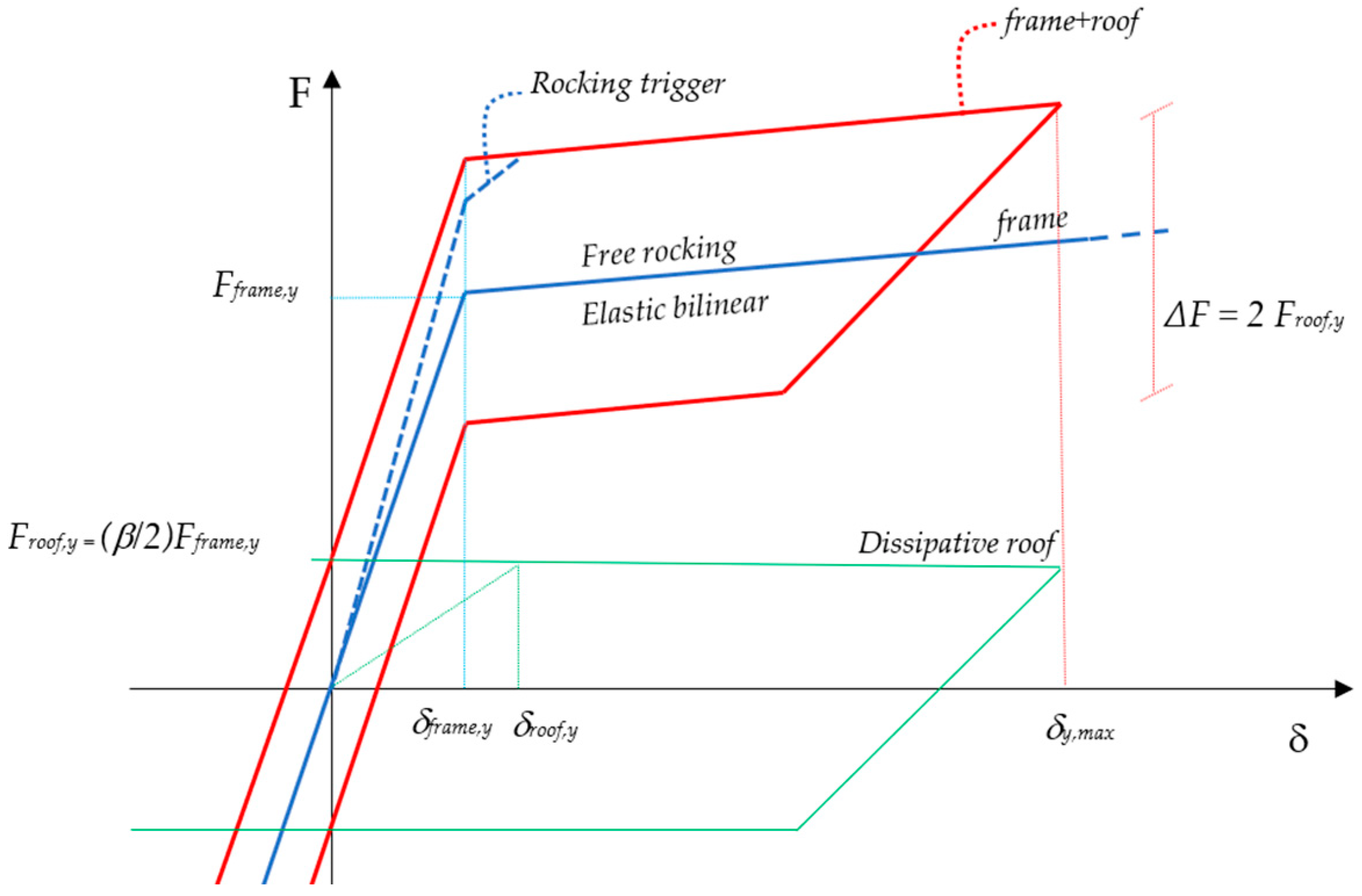
| Force for the rocking trigger (yielding force) | 41,700 | Fframe,y | kN | |
| Stiffness of the frame | 2473.3 | Kframe,y | N/mm | |
| Lateral displacement (yielding displacement) | 16.9 | δframe,y | mm | |
| Frames’ height | 7500 | hw | mm | |
| Overturning moment for the rocking’s activation (yielding moment) | 3.131 × 10⁸ | Mframe,y | Nm | |
| Rotation for the rocking’s activation (yielding rotation) | 0.00225 | θframe,y | rad | |
| Ultimate rotation | 0.02250 | θframe,u | rad | |
| Kframe,y | Fframe,y | β | Δ | Kroof,y | Froof,y | δroof,y | Δroof,u |
|---|---|---|---|---|---|---|---|
| [N/mm] | [N] | [-] | [-] | [N/mm] | [N] | [mm] | [mm] |
| 2473.3 | 41,700 | 0.2 | 1.0 | 247.3 | 4200 | 16.9 | 168.8 |
| 2473.3 | 41,700 | 0.4 | 1.0 | 494.7 | 8300 | 16.9 | 168.8 |
| 2473.3 | 41,700 | 0.6 | 1.0 | 742.0 | 12,500 | 16.9 | 168.8 |
| 2473.3 | 41,700 | 0.8 | 1.0 | 989.3 | 16,700 | 16.9 | 168.8 |
| 2473.3 | 41,700 | 1.0 | 1.0 | 1236.7 | 20,900 | 16.9 | 168.8 |
| 2473.3 | 41,700 | 1.2 | 1.0 | 1484.0 | 25,000 | 16.9 | 168.8 |
| 2473.3 | 41,700 | 1.4 | 1.0 | 1731.3 | 29,200 | 16.9 | 168.8 |
| 2473.3 | 41,700 | 1.6 | 1.0 | 1978.6 | 33,400 | 16.9 | 168.8 |
| 2473.3 | 41,700 | 1.8 | 1.0 | 2226.0 | 37,600 | 16.9 | 168.8 |
Disclaimer/Publisher’s Note: The statements, opinions and data contained in all publications are solely those of the individual author(s) and contributor(s) and not of MDPI and/or the editor(s). MDPI and/or the editor(s) disclaim responsibility for any injury to people or property resulting from any ideas, methods, instructions or products referred to in the content. |
© 2025 by the authors. Licensee MDPI, Basel, Switzerland. This article is an open access article distributed under the terms and conditions of the Creative Commons Attribution (CC BY) license.
Share and Cite
Longarini, N.; Crespi, P.; Cabras, L.; Santoro, M. Energy-Based Design for the Seismic Improvement of Historic Churches by Nonlinear Modelling. Buildings 2026, 16, 12. https://doi.org/10.3390/buildings16010012
Longarini N, Crespi P, Cabras L, Santoro M. Energy-Based Design for the Seismic Improvement of Historic Churches by Nonlinear Modelling. Buildings. 2026; 16(1):12. https://doi.org/10.3390/buildings16010012
Chicago/Turabian StyleLongarini, Nicola, Pietro Crespi, Luigi Cabras, and Michele Santoro. 2026. "Energy-Based Design for the Seismic Improvement of Historic Churches by Nonlinear Modelling" Buildings 16, no. 1: 12. https://doi.org/10.3390/buildings16010012
APA StyleLongarini, N., Crespi, P., Cabras, L., & Santoro, M. (2026). Energy-Based Design for the Seismic Improvement of Historic Churches by Nonlinear Modelling. Buildings, 16(1), 12. https://doi.org/10.3390/buildings16010012