1. Introduction
Climate change has become a critical challenge in the entire world. Climate conditions are changing, and severe weather events are occurring more frequently as greenhouse gas emissions have already reached extremely high levels [
1]. The construction sector and buildings are responsible for 35–37% of final energy consumption and around 40% of total carbon dioxide outputs. The year 2020 was important for countries to increase their Nationally Determined Contributions (NDCs), essentially taking into account further measures to diminish energy usage and emissions comprising embodied emissions in the construction sector and buildings [
2]. The building sector has an important place in national economies. Worldwide population increase leads to inevitable necessities concerning the construction sector such as infrastructure, housing, urban development, and urban regeneration, which includes the refurbishment of existing buildings. Such needs ensure continuous growth in the construction and building sector.
Current construction practices for reducing cost and minimizing environmental impact involve reducing waste, improving methods and services, and reusing materials and components [
3]. Carbon emissions can be reduced and resources can be conserved by recycling construction waste, thus combating climate change. Construction debris should be reused rather than disposed of to landfills as waste, which contributes to climate change [
4]. If one can make a choice of which kinds of building materials are sustainable long term and renewable, by analyzing the natural environment and overlapping with history, wood is among the most eco-friendly materials. It has many properties, giving comfort, structural safety, healthy indoor environments, aesthetic benefits, and a beautiful appearance. As far as recyclable materials, reclaimed wood is in the top 10 most sustainable materials [
5]. Repurposed lumber from old buildings, old log houses, and farm buildings can reduce the demand for new timber. Each piece of reclaimed lumber carries a unique footprint, character, and history. By using reclaimed wood, one cuts down on waste and helps to preserve forest resources.
The other goal of this paper is to enhance and evaluate the importance of traditional wood culture heritage, which is very rich in the Nordic countries and could be a model for other countries. Crafts, practical skills, and wise management have demonstrated incredible adaptation to the climate but, most importantly, have become a valuable piece of the cultural heritage of the country and society.
This history shows how a country, with low income (GDP) at the time, has managed to conquer the world’s forestry market by innovation and a capitalist business model. The circularity could be demonstrated by understanding how the past wood culture tradition could enter into the modern civilization of today, a good example of reusing construction building materials. In addition to being renewable, it adds significant value to tangible and intangible cultural heritage through building regeneration.
A European Environment Agency Report, in 2024, pointed to a new way on the path to sustainability: “Making building renovation a priority and having the first principle: Prioritizing building renovation to minimize material and energy consumption, waste generation and land take” [
6].
2. Sustainable Forest Management in Europe
Forestry is considered a valuable resource for sustainable development, circularity, and climate mitigation. As a renewable resource, the worldwide wooden stock contributes to decarbonization, and Europe’s goals highlight its value not only as a renewable material but as a building resource in rural and urban development, innovation, and industrial resilience [
7].
In terms of the European countries, the stocks of timber in the EU’s forests are estimated to be 28.6 billion m3 (over bark) in 2022. According to the EOS report, Germany has the largest share (13.2%), followed by Sweden (12.6%) and France (11.8%). “The stocks of timber in forests have increased in every country, giving a 32% growth at EU level in the period of 2000–2022. The largest increase was estimated for Ireland (163%), France (66%), Cyprus, and Italy (57% and 54%, respectively), while at the other end of the spectrum, a much more moderate increase was estimated for Sweden (14%), as well as Czechia (10%) and Slovenia (7%)” [
8].
In Western Europe, a comparison between countries’ forestry found that Scandinavia has the highest rate and that, in contrast to Central European countries, they do not rate their own country’s forestry as being the best.
Nordic forestry is evaluated to be on top in Europe, regardless of preferences for the home countries’ forestry. The populations in the Nordic countries evaluate their own forestry as the best. It seems that in Germany and Austria, the general public considers forestry in their own country to be more sustainable than Scandinavian forestry. When the focus is on whether trees are being replanted after felling, Scandinavian countries receive a strong vote of confidence that sustainable forest management is practiced [
9].
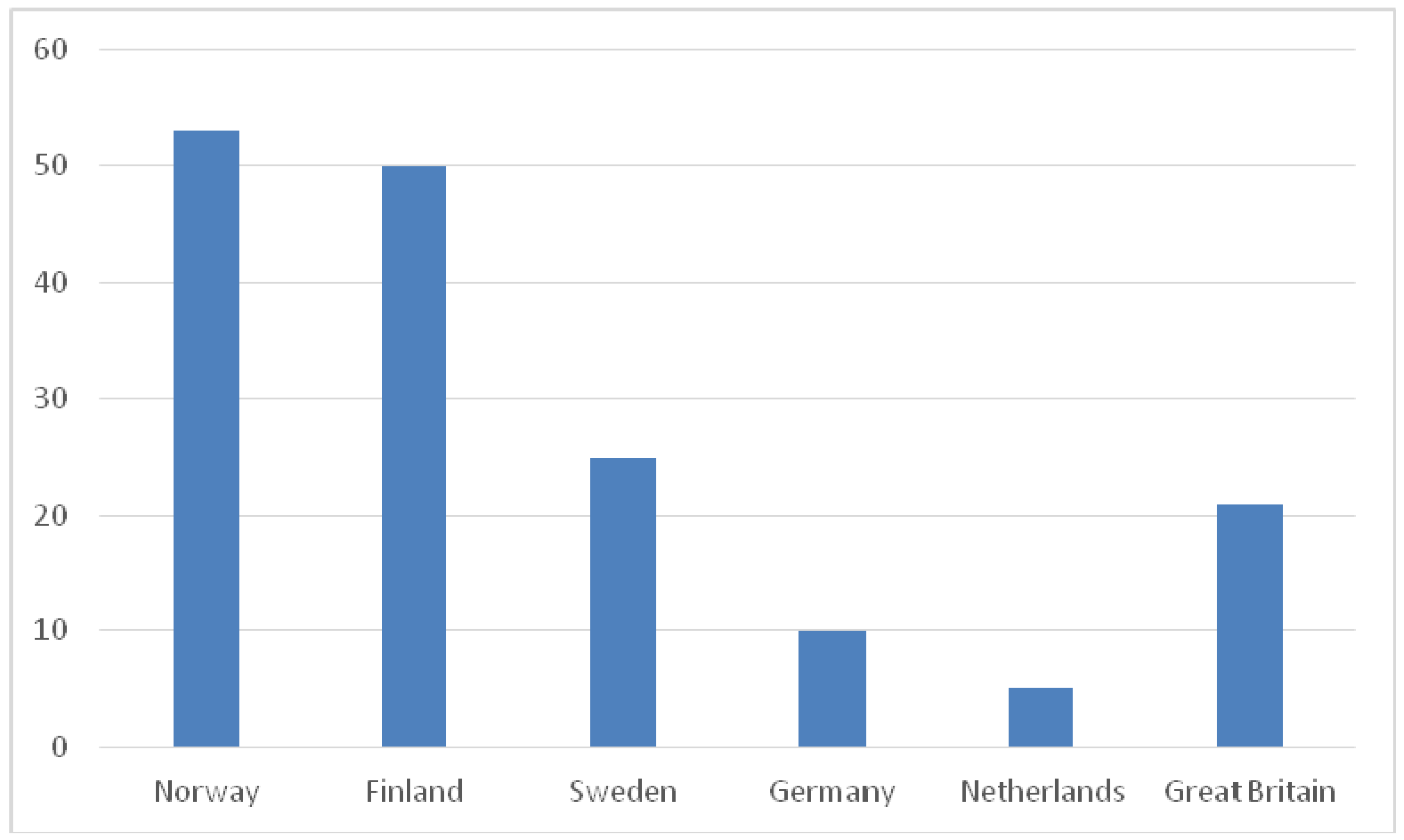
For example, in Norway, public general confidence in good forestry management shows over 53% confidence, in Finland over 50%, and in Sweden over 23%. In Great Britain, it is about 20–21%, but in other countries it is lower; in Germany and the Netherlands, it is less than 10% as one can see in
Figure 1.
Citizens in the Nordic countries consider that their forestry has a good image [
9].
Below are some relevant data, according to Nordic Forest Statistics:
“The forest area in the Nordic countries accounts for almost 55% of the total land area. Just over two-thirds of the land is forested in Finland and Sweden, while the share of forest land in Norway and Denmark is relatively less, 40% and 15%, respectively. The forest cover in Iceland is approximately 50,000 ha of forests or about 0.5% of the total land area.” [
10].
“The growing stock has increased twofold in 100 years in Finland and Sweden, and threefold in Norway. The Finnish data is on the growing stock of forest land, including low-productive land (“tvinmark”). The Swedish data is on forest land excluding formally protected areas. The Norwegian data is on all forest land, with some exceptions for the period 1950–2006.”
“The growing stock in the Nordic countries has been continuously increasing since the national forest inventories started in the 1920s. For example, in Sweden and Finland, the volume has doubled, and in Norway it has gone up three-fold. In Denmark, the growing stock has increased 32% since the inventory started in 2002, to a current 143 million m3” [
11].
Forests are a renewable natural resource if managed in such a way that sufficient growth is ensured. When the tree grows, wood is formed from carbon dioxide from the air and water from the ground using energy from sunlight. In this process, oxygen is formed. Wood is the only renewable building material that also has great flexibility in terms of applications. Nordic wood is used extensively for everything from simple objects to large building structures [
12].
“There is no common available building material that on a large scale can substitute wood and has similar ecological basic values.”
This very short and general summary is taken from a life cycle assessment report from FMPA, Switzerland. The report presents twelve arguments, including a short explanation and evaluation:
Nordic wood is a renewable raw material.
The growth in the Nordic forests is greater than the harvest.
Nordic forests are managed according to principles for long-term utilization.
Nordic wood can partially substitute fossil fuel.
Nordic wood products are generally manufactured with low energy consumption and a low rate of fossil fuel and electricity.
Utilization of Nordic wood as a substitute for other building materials can be used as an action towards the danger of human-caused climate changes.
The Nordic wood industry utilizes all of the raw material in the harvested logs.
The Nordic wood industry is a clean industry for the environment.
Nordic wood is a well-respected (known by experience) natural building material.
Nordic wood products can replace products that harm the indoor environment.
Nordic wood and wood products have good durability.
Nordic wood products can be reused or recycled [
10].
The approach to forestry in the Nordic countries is based on more than an economic or industrial point of view, it is based on the wood culture with deep roots in history and how, over the time, people have developed their abilities to manage their natural resources in the most efficient, organic way.
In Eastern Europe, the circular economy is seen quite differently than in Northern Europe. For example, in Romania, where the forested area represents close to one third of the entire country, there is no emphasis on the reuse of wood in the construction sector. One motivation probably comes from the fact that Romanian legislation related to wooden constructions centers on the use of well-defined characteristics, classes, and varieties of wood [
13]. The reuse of wood recovered from the demolition of old buildings is not prohibited, but there are no chapters dedicated to this source of wood either. Thus, the vast majority of developers of wooden constructions focus on using “new” wood, which complies with the requirements of the legislation.
In Romania, recovered wood and wood fibers are considered waste and represent a supplement to forestry. Recycled wood materials are used for fuel, in raw or conditioned form (slivers or briquettes) as an energy source, in paper production, and in the production of wood-derived products as raw material for compressed boards. Sawdust, shavings, bark, and residues mixed with mineral binders give products that replace energy-intensive thermal insulation boards. Sawdust is used in the manufacture of porous bricks and with good results in obtaining wood flour—for obtaining plastics (thermoactive, phenolic, urea-formaldehyde, linoleum, wallpapers), glues, explosive substances (dynamite), finishing materials, etc. Pellets are a new wood fuel, which meets the current requirements for the use of less polluting energy and represents the cleanest domestic and industrial heating alternative. For Romania, under the conditions of aligning the prices of classic fuels with European prices, it will soon become the most economical and comfortable alternative.
On a global scale, lumber, engineered wood products, and wood-based panels used in construction constitute less than 5% (in volume) compared to other types of building products such as cement, steel, ceramic, or glass. In Europe, the wood used in construction constitutes more than 10% compared to other building products (twice the global average). As wood is a lightweight construction material, the share of material consumption according to weight is estimated to be <1%. However, today, wood represents around 12% of materials used in renovation [
7].
Generally speaking, many European countries are increasing the amount of wood used in their building industries. In Austria, for example, the share of new buildings in wood construction has increased from 14 to 24% (1998–2018). In Germany, the share in new buildings is 25% in single-family houses, 22% in non-residential, and 6% in apartment buildings (2023). In Sweden, modern multi-storey buildings in wood have already reached a 20% market share. Several EU countries have announced ambitious targets for public buildings with wood and have initiated revisions of their national building codes [
7].
3. Methods of Investigation: Principles for Renovation/Rehabilitation
The European goals of renovation can be achieved to a high degree by using wood in constructions, with an emphasis on reuse, retrofitting, or renovating. In this article, the authors are investigating how the traditional crafts and experience in forestry and building techniques of previous generations could enhance the principles for sustainable constructions in the frame of climate mitigation and reducing the CO2 footprint.
In regards to the key principles for building renovation towards 2030 and 2050, this study brings clarity about how it can be achieved, containing at least five points out of seven, which explains how the reuse of old timber/logs could provide results:
It is known that “wood material is composed of about 50% carbon by dry weight, this carbon having been drawn from the CO
2 removed from the atmosphere by the growing tree” [
15]. When a tree is cut and the wood is used to make products or building materials, this is a carbon transfer and carbon storage from the forest to the products [
16].
Calculating the amount of CO2 stored in logs is a difficult task as the logs used in log buildings vary in wood type, age, and size. The CO2 concentration in the atmosphere at the time of growth will have had an impact on the wood and the growing process. Access to water, sunlight, how physical forces like wind works on the specific trees during the growing process, the seasons the wood has been exposed to, where the logs have been grown, and the degradation of parts of the logs in the finished constructions over time, and several other factors come into play.
- 3.
High health and environmental standards.
- 4.
Decarbonization and integration of renewables.
- 5.
Respect for aesthetics and architectural quality. Renovation must respect design, craftsmanship, heritage, and public space conservation principles [
14].
This article tries to point out a general problem that in the European Union, traditional old and very old wooden houses are not given the attention they deserve. There are tens of thousands of old buildings across Europe that need to be repaired and new constructions that can benefit from renovation, rehabilitation, or regeneration of the built environment. By doing this, we could solve three important problems: being environmentally friendly by using an already produced material that acts like a CO2 sink, being ready to use without future shrinkage, which can create significant problems in construction, and rebuilding cultural heritage.
Some countries, mainly the Nordic countries, have for decades included in their regulations the use of wood as a reusable and renewable material:
Execution of load-bearing wooden structures—Norwegian Standard: NS 3516 Standard Norge, Norway, 2017.
In Norway, there are long traditions of erecting wooden buildings, and over the years a lot of expertise has been built up in the area. NS 3516 describes the construction of load-bearing wooden structures.
NS 3516 provides a common execution basis for the parties in construction cases. This is important to demonstrate that the assumed safety level and usability throughout the entire service life are achieved in line with the design carried out in accordance with the Planning and Building Act and the design standards (NS-EN 1990 and NS-EN 1995 Euro code 5, Norway, 2004) [
17].
Using traditional wood—in either of its forms, timber or lumber—the design is easy to repurpose and allows for both prefabrication or on-site assembly of the constructive elements.
Wooden constructions provide numerous advantages and the use of timber in construction is an economical solution and reduces environmental impacts [
18].
Having high levels of carbon storage, timber construction could have a vital role in mitigating climate change. Due to the possibility of recycling, reusing, and repurposing materials after the building’s life cycle, timber construction is acknowledged as “the second forest” [
19].
In Nordic countries where wood is readily available, wooden constructions are more affordable because of the variety of solutions and the proximity of the raw material. It also permits the design of different constructive structures, depending on the customer’s requirements, using basic elements, made in either new materials or old reused ones. In the case of existing buildings, the wooden materials allow for the creation of different modules where the volume can be extended or repurposed according to the space functionality or needs. A wooden building can be considered a modular building, where all its elements can be prefabricated or replaced, unlike a solid structure built on-site, such as brick or concrete buildings. The approach comes with many advantages, both for the customers and contractors, considering the environmental aspects and the life cycle assessment.
Reusing old timber is highly environmentally friendly as it is a material that is provided and disposed of in natural circular processes. In terms of environmental sustainability, reusing old logs is virtually unmatched in terms of being environmentally friendly. From an economic sustainability point of view, the considerations become more complicated. In the 2020s, wood prices are dominated by forestry diseases and forest fires in North America, and the Russia–Ukraine war, with substantially increased raw material prices. To reuse wood, one needs to recover it from previous buildings and most often clean it before refitting it into new buildings. With increased associated workhours compared to using new wood, the financial incentive in terms of a circular economy can be something to consider for decision-makers. When raw material prices are lower, reusing wood for buildings is probably most driven by a feeling of quality, pleasance, and preserving cultural heritage over pure finances. However, from a carpenter’s technical point of view, using new logs requires much more skilled workers as the new wood will shrink about an inch per meter when drying, whereas most old wood is dried and will not shrink much, if at all. Adjusting the built-in interior furniture or membranes to protect from humidity and noise can be very complicated and expensive. New, still-drying wood, which will move some centimeters in various directions, can be more susceptible to constant or instant outside forces like imperfect foundations, changing foundation properties, wind, humidity, etc., than older dry settled wood.
As there are many applications in buildings that require a stiff material with qualities that wood can provide (structural integrity), there are no alternatives that require fewer resources from society and do as little harm. There can be little doubt that log houses can be of great value and comfort across large parts of the globe, but for sustainability and for the local environment a focus on local wood types could be preferable. Also, adjusting to the local environment on a global scale is paramount in terms of both reduced transport and adjustment to the local climate and forces like fungus, mold, insects, and other forces that will impact a living material. It is just as important to make sure one does not move microorganisms that do not belong locally to other continents and create new problems and that one follows the local import regulations and considers the environmental impact of any product one introduces to a society.
Sustainable timber is among the most used natural building materials, which can be used for structural parts, or in an extension or self-build, or left exposed as part of the building design.
The main objective of this paper is to compare and analyze construction solutions with wood as a solid material, having connections with both traditional vernacular architecture and with the circular economy, aiming toward a clear goal of reducing the carbon footprint in the construction process.
The second major component of the energy consumed by the building is the embodied energy. This embodied energy comes from the material manufacturing and construction phases of the building project [
20].
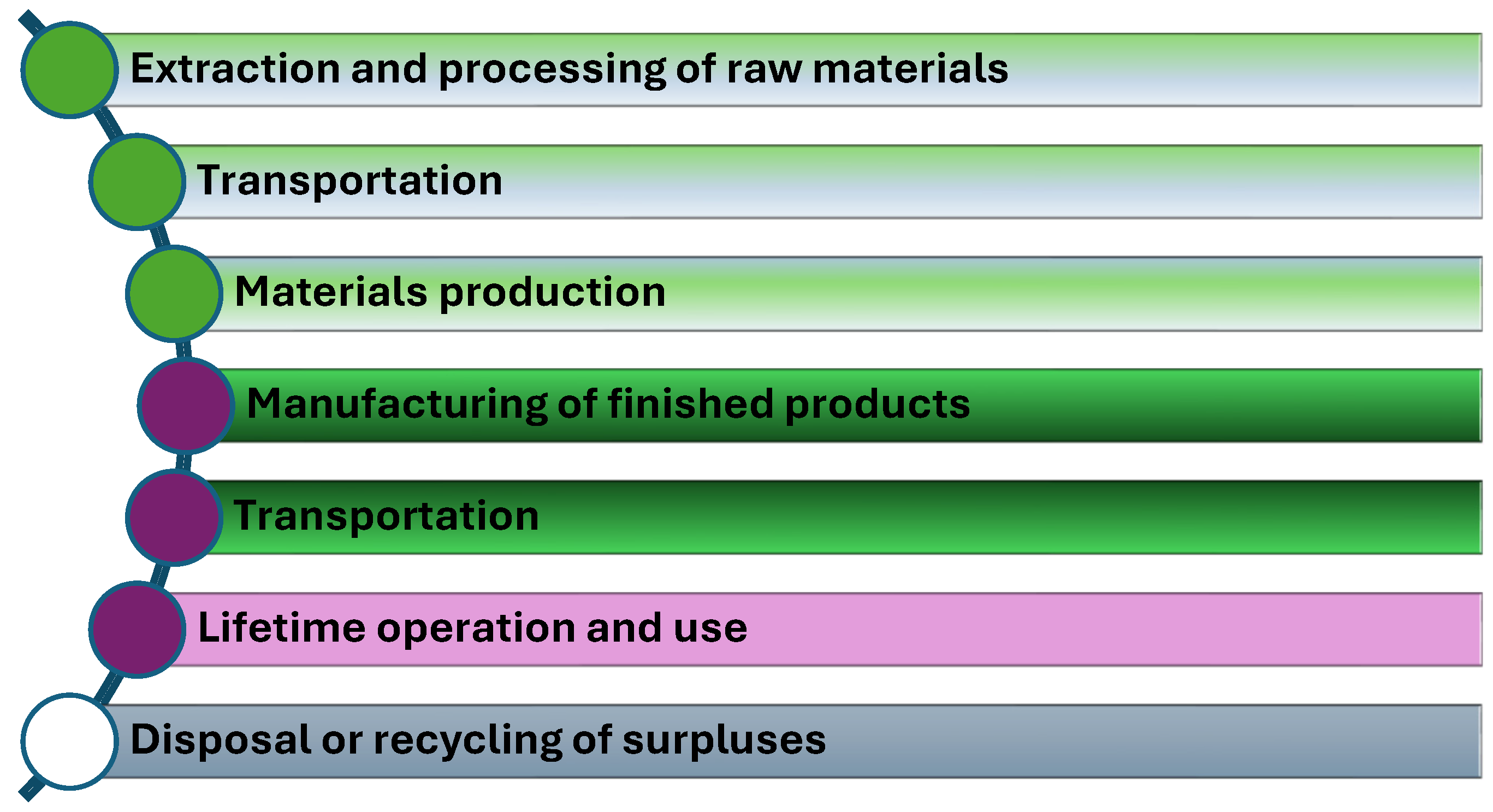
As we can see in
Figure 2, if the quality of the building material after demolition/disposal is still good, and fulfills construction requirements, recycling the components will save 3 stages of production and will diminish the embodied carbon footprint.
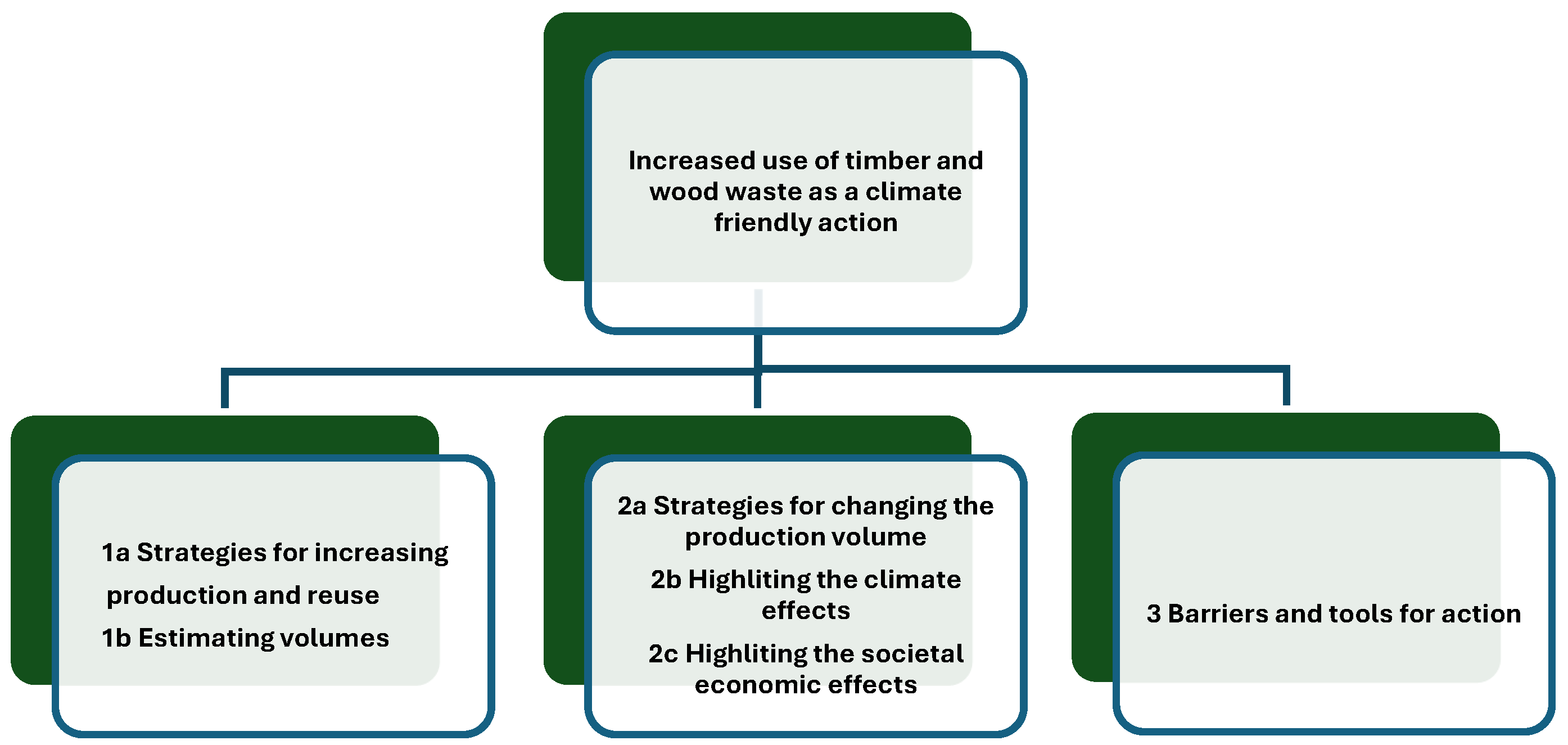
The modern Norwegian building industry is taking into consideration the potential for increased processing and reuse of sawn timber, pulpwood, and wood waste nationally. Some research projects are showing the potential for using these raw materials in harvested wood products (HWPs) by assessing the climate impact of such an allocation, outlining the associated socio-economic effects, and assessing barriers and instruments to achieve the goals of increased national processing and reuse. The main track is increased utilization of sawn timber, pulpwood, and wood waste into lumber, wood-based panels, cross-laminated timber, glulam, and other volume-intensive products with a long expected lifespan.
Review strategies for increased production and reuse, including possible volumes. Then generate different scenarios and volume predictions.
Review visibility of climate impacts and socio-economic impacts for all scenarios.
Identify barriers and instruments to achieve increased national utilization of the aforementioned wood raw materials, as
Figure 3, shows below [
21].
During the process of harvesting timber, the carbon stored in trees is ready for emission into the atmosphere. Some of that carbon is quickly released due to short-term decomposition of harvest residue (slash) and mill processing residue. Other carbon is stored in harvested wood products (HWPs) and emitted later, as those products are further processed and eventually decompose over years and decades.
4. Discussion
Was the recirculating or recycling process invented only in our times?
Since human civilization started, wood has been used for building shelters, houses, and different building functions. Either permanently or temporarily, wood has been essential for building traditions and culture. Durability and availability were the main reasons for having such an affordable material straight from nature, for everything. Understanding the environment has become a concern for our times. Everything in nature has cycles; nature is renewable but needs time for growing and maturing, as well as for regeneration. The continuation of the life cycle is actually the most natural way to understand life in itself. As our ancestors learnt in the past, wood is a valuable living resource which must be treated with respect and has to be preserved. The gap between the present and the past has led to a forceful development of the built environment, without waiting for natural resources to regenerate in their own specific lifetime.
To cut it short, many earlier civilizations from different climate areas understood the importance of this resource, because among the building materials wood was more renewable. Forest management is not a new concept, and our ancestors knew the importance of managing scarce resources. Some civilizations have preserved this resource and history, some have exploited it to the maximum, and some have destroyed it completely.
Take, for example the continents of Europe, Asia, North and South America, Africa, and Oceania. Which has balanced forestry and where has the most efficient utilization of the forest been found?
Each year, we still lose around 10.9 million hectares of forest to deforestation as forests are converted to other land uses. Wildfires, pests, disease, and extreme weather affect even more, damaging about 170 million hectares annually. With such threats escalating, it can feel that the odds are stacked against forests [
22].
But could there be good news coming? The rate of deforestation in the world has started to decline, from 17.6 million hectares per year between 1990 and 2000 to 13.6 million hectares per year between 2000 and 2015, and finally 10.9 million hectares per year between 2015 and 2025. It appears that net forest loss—the difference between deforestation and forest expansion—estimated at 10.7 million hectares per year between 1990 and 2000 fell to 4.12 million hectares per year between 2015 and 2025 [
22].
Linking the tradition of forestry in the country with strong business development operating all over the world, Norwegians have created and inherited strong techniques over time in building wooden housing, with their affordable resources, stemming from older forest management.
As part of the Norwegian culture, traditional forestry has been taught to children in fairy tales and stories: “In front of them is Sutterøya and to the right it opens up to the Leira industrial area. The boy’s rear wheel makes a slight clatter, the chain seems to have come off. While the grandfather squats down to fasten the chain, the boy stands by the railing and squints out over the shiny sea. He can’t quite get the scenery right. “Kofor står’e træ uti sjø’n, bestfar?” “Why are there trees in the sea, Grandpa?”
Yes, there are probably many who have asked themselves the same question over the last 50 years, and many will wonder the same thing in the coming years. Fewer and fewer know that what they are seeing are the remains of Tangen Lense, a collection and sorting site for timber that came floating down the Stjørdal River, and which ceased to be a floating site when the extension of the runway at Værnes forced a new outlet of the river into the fjord on 11 August 1960.
The area between Stokkbekken and the outlet of the Gråelva River constituted what was first in the 19th century the Exercerpladsen Stjørdalshalsen, later referred to as Tangmoen, that is, the northernmost area west of Stokkbekken. Tangmoen has now shifted slightly (incorrectly) on the map, including the newly dredged area from 1985. Today, Tangmoen is considered to be the entire area west of Innherredsvegen, from Halsøkrysset—limited by the sea, the Gråelva River, and Stokkbekken. The first documented Tangmolett was Oluff Tangen in 1551. During the census in 1661, there were 11 householders in the area, subject to Værnes Fogdegård (Main Farm). Gradually, well-known families such as Schøller and Wessel came in as owners of the area, including Jan Wessel, father of Tordenskiold [
23].
Jensen Bruk is considered to be Stjørdal’s first real industrial enterprise. In the Stjørdal River, the piles have been put in place for Tangen Lense which to a significant extent is connected with the Jenssen family, who became full owners of Tangen Bruk in 1822. Jenssen & Co started their company in 1790, and became owners of Stjørdalsgodset after the death of Einar Schavland Gram at Værnes Hovedgård. Einar’s brother, Jacob Schavland Gram, and his son were co-owners until 1854, when Jenssen & Co took over the whole thing alone. A significant timber flotation was initiated, with up to 60,000 logs per year. The Jenssen dynasty was dominant in most things that happened in Stjørdal, industrially, politically, socially, and culturally. For a while they lived at Medbroen, and there was a big divide between the people at Medbroen and the shore dwellers who worked at Tangen Bruk. The Jenssen family, the business at Tangen Bruk, and the clay and lime industry are very well described in the magnificent book: “Fra sjøbunn til vakker pottemakerkunst” (Kjell Erik Pettersson 2011), probably the best local history book published in Stjørdal.
It is quite interesting to see that the famous Hans Barlien was also involved in pottery. Hans Barlien was a special fellow, an opponent in society, who could often go against political correctness. This also happened when he was in the Storting. But he was practical and knew how to exploit opportunities. Therefore, he had a sawmill built under Røsfossen (Røddesfossen), where he sawed timber from the Lånke forests. He also floated timber down from Hegra to Langøra. At high tide, the stream went quite far up the Leksa River, but not all the way to Røsfossen. According to Gunnar Aasvold’s book, Barlien then had a lock system built that brought the timber all the way up to the sawmill. Large quantities were processed. Hans Barlien was a man of great capacity, someone who was not afraid to try different methods in agriculture.
He developed the waterworks in Trondheim, and ran a glassworks and a hat and umbrella factory. He received the Order of the Dannebrog. But Barlien apparently had enough of Norway, and at times expressed that he felt persecuted by the Chancellery, in line with so many others, a push factor that many have neglected to mention in our history of emigration. He emigrated to America at the age of 65 in 1837. There he started a factory in St. Louis. He eventually settled in Sugar Creek, Iowa. There he died in 1842 and his grave has not been found, even after intensive research [
23].
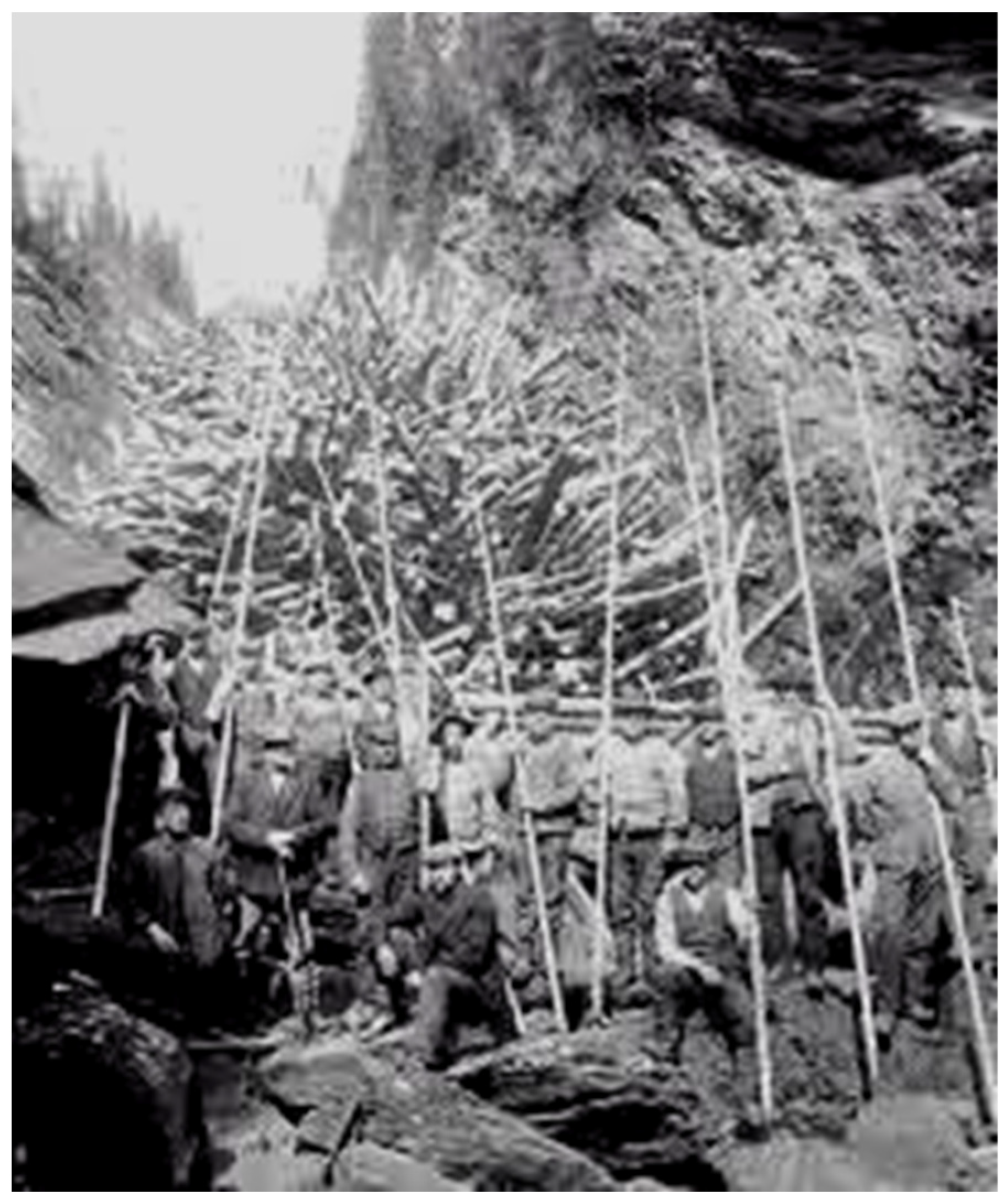
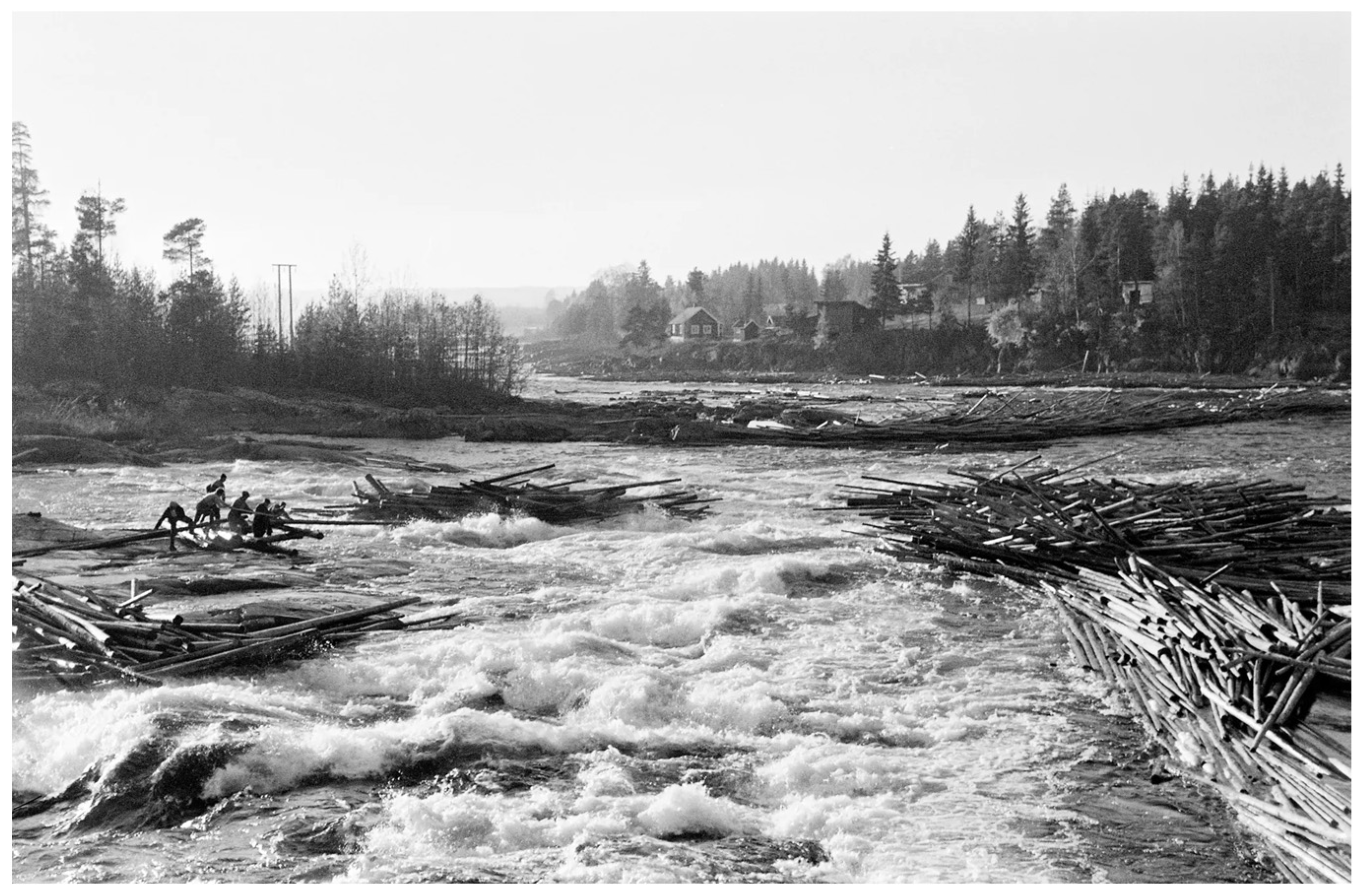
For a few years, Jenssen & Co. became dominant in the timber industry. The need quickly arose for floating dams. In 1866, the company received permission to build three dams in Røaa Allmenning. Karl Løken at Bye had large forest properties in Hegra and contracts for logging in Sondalen and Forradalen. He had the timber floated down to Langøra where he established a sawmill. Here he made sleepers for the Meråker Line. There was extensive cooperation between Løken and Jenssen on joint floating. Despite this, there was a downturn, a slump, and Karl Løken went bankrupt in 1883, 15 years after he built a quay in “Halsøkrysset”. The valley was soon open to a new major player: Meraker Brug. For several decades, Tangen Bruk was run as a pottery factory, and probably ceased towards the end of the 1890s. But limestone production continued. At this time, there were a total of 300 brickworks in the country. And at the outlet of the Stjørdal River, a collection and sorting site for timber developed, which was called Tangen Lense. As mentioned, some of the posts still stand there today and constitute a cultural monument in themselves. It is not the purpose of this chapter to tell about the floating of timber down the Stjørdal River and adjacent tributaries. But just to mention this special culture, let us call it a community of seasonal workers, who developed their own techniques, methods, and tricks over several hundred years. “As a young man, I remember how exciting it was to follow these men balancing on slippery and erratic logs. They were like circus performers, mostly with their lives at stake, unfortunately. A dangerous workplace that claimed several human lives. It is clear that we wondered how they would untie a timber knot, a so-called snarl” (
Figure 4) [
23].
4.1. Log Floating Is the Transportation of Timber in a Waterway
The use of the river as a means of transport must have been known to the first people who settled along the rivers. The need for transporting timber came, if not before, with the iron axe in the 4th century. It then became possible to fell trees and process them on a larger scale, and timber and wood became a commodity for sale. In the 9th century, we know that timber was exported from Norway. Kaupangen was at that time Norway’s trading center and was well known in Europe. Its location at the mouth of Numedalslågen and its wood-rich areas provided a good basis for timber exports, and there were no other means of transport to the port than rafting. In the Drammenselva and Glomma, we know of rafting facilities and activities from the 14th century. The Drammensvassdraget was for a long time Norway’s largest rafting waterway until the Glomma took over around 1860, and Drammen was for a long time the largest shipping port [
24].
We know little about timber floating in medieval Norway, but we do know that timber was exported. Much of this timber was probably cut in coastal villages. About 500 years ago, the sawmill technology was introduced, with water wheels, shafts, and saw blades set in motion by water from waterfalls. This innovation accelerated the trade in timber and lumber, and probably also stimulated timber floating on the southern Norwegian waterways. There is reason to believe that timber was first obtained from coastal villages, but gradually people had to move further inland and up the waterways to gain access to the most attractive timber dimensions. Timber traders and their representatives (“timber traders”) made agreements with forest owners for deliveries by waterways. Early in the spring, when the operating season in the timber forest had ended, the logs were measured and marked with a carved axe that left a symbol in the surface wood of the logs. This mark told who owned the timber. When the spring flood came, the timber could be rolled out into rivers and lakes. Workers with float hooks made sure that the logs did not lie along river banks, on gravel banks, or near rock ledges in the riverbed (
Figure 5) [
25].
4.2. From Individual Rafting to Joint Rafting
Originally, each timber buyer ensured that his own timber was transported from the delivery point to the sawmill where he had it processed into lumber. This was called individual rafting. In large waterways with many buyers, it was difficult to keep the timber lots separate, and the players understood that it would be more profitable to organize joint rafting, where each individual timber merchant contributed to covering the costs based on the proportion of the timber they had purchased in different zones upstream along the waterway. The longer the rafting distance, the higher the fee level. After lumber merchants and eventually paper manufacturers had formed joint rafting associations in the main waterways, forest owners organized their rafting organizations (cross-river associations) in many of the smaller tributaries [
25].
The rafting associations made the business more organizationally and economically robust. The joint rafting associations had the ability to invest in what they called “river improvements”—measures that would make it easier to get the timber out. They had rockfalls blasted where the timber had easily piled up in huge piles, and they had dams built to store the rafting water and booms that would either guide the timber or collect it for sorting and bundling. The joint rafting associations also built timber chutes, which would guide the logs safely past high waterfalls and narrow gorges. In the largest waterways, from the mid-19th century onwards, they invested in tugboats, which would tow the timber across lakes with stagnant water. Several of the joint rafting associations employed engineers as managers of the business [
25].
Timber for export was first taken as close to the coast as possible. But as coastal settlements grew, much timber was also used for development. Timber had to be brought in from further inland. In the beginning, boards had to be made by splitting and hewing logs with an axe, and one log often yielded no more than two boards. This was often performed at the felling site, as the boards were easier to transport than whole logs. Both logs and the manufactured material were floated to the coast.
In the 16th century, water saws came along. These made it possible to obtain more boards out of each log while working much faster. This contributed to a large increase in timber logging and lumber exports. Timber logging became a nationally important business regulated by laws and requirements. Exports continued to increase over time, but with periods of decline in between, such as the Napoleonic Wars at the beginning of the 19th century, when England’s blockade of shipping stopped most exports and imports and hit the lumber trade hard [
24].
The oldest locks in the Drammen waterway were probably the Buskerud lock at Åmot and the Kverk lock. These date from around 1600, when a number of new locks were built, but the two locks are probably older, from the mid-16th century, when the Royal Locks were in full operation. “The float has been subject to state administration since early times,” writes Lorens Rynning. “It has been largely made dependent on royal consent and privileges, and it is the State (the monarchy) that first represents the general float interests, but the float has also been the subject of private law developments” [
26].
Peak years and closure floating volumes fluctuated with the economic cycle. There was a particularly high volume of timber in the waterways in the first few years after the First World War and in the early 1950s. After that time, more and more timber transport was transferred to road and rail. In some waterways, extensive power development also contributed to limiting flotation activity. With reduced timber volumes in the waterways, this form of transport became expensive. First, flotation in many of the smaller waterways was discontinued. In 1969, timber flotation ceased in the Drammen waterway, and the following year it also ended in the Arendal waterway. In the largest river, the Glomma, the flotation was kept going until 1985. In the Trysilelva, the activity continued until 1991. On the canalized part of the Skiens River, timber was still hauled until the large wood processing company union was closed down in 2005–2006 [
25].
It could appear ironic that we are talking about a sustainable resource and reducing the carbon footprint, all the while modern forestry—especially in Norway—requires building forest roads into nature so one can transport in big forestry machines and transport out the wood with big lorries. Although most of the rivers now have hydroelectric dams along the old floating paths, floating could probably still save millions of tons of CO2, for partial transport, and with modern robotics, the risky job of floating and untangling timber tangles could be performed without risking human lives.
4.3. Log Houses Tradition for More than 1000 Years
The availability of forests and timber was crucial for the development of housing in Norway. The use of wood determined the shape and content of houses, provided light and heat, and influenced lifestyles, work, cooking, and all everyday tasks. Until the Viking Age, pole, post, and beam construction were the most common building methods in Norway and Scandinavia. The lathing technique spread from Russia, and gradually replaced the older constructions within the coniferous forest areas. Naturally, the lathing technique first came into use in eastern Norway, with its large forests. Already from the early Middle Ages, the lathing technique was almost exclusively used. Different access to timber led to the development of different building customs between the different parts of the country [
26].
Background:
Log houses have been built since the turn of the last millennium in Norway. Despite long traditions, the technical properties of log houses are poorly documented.
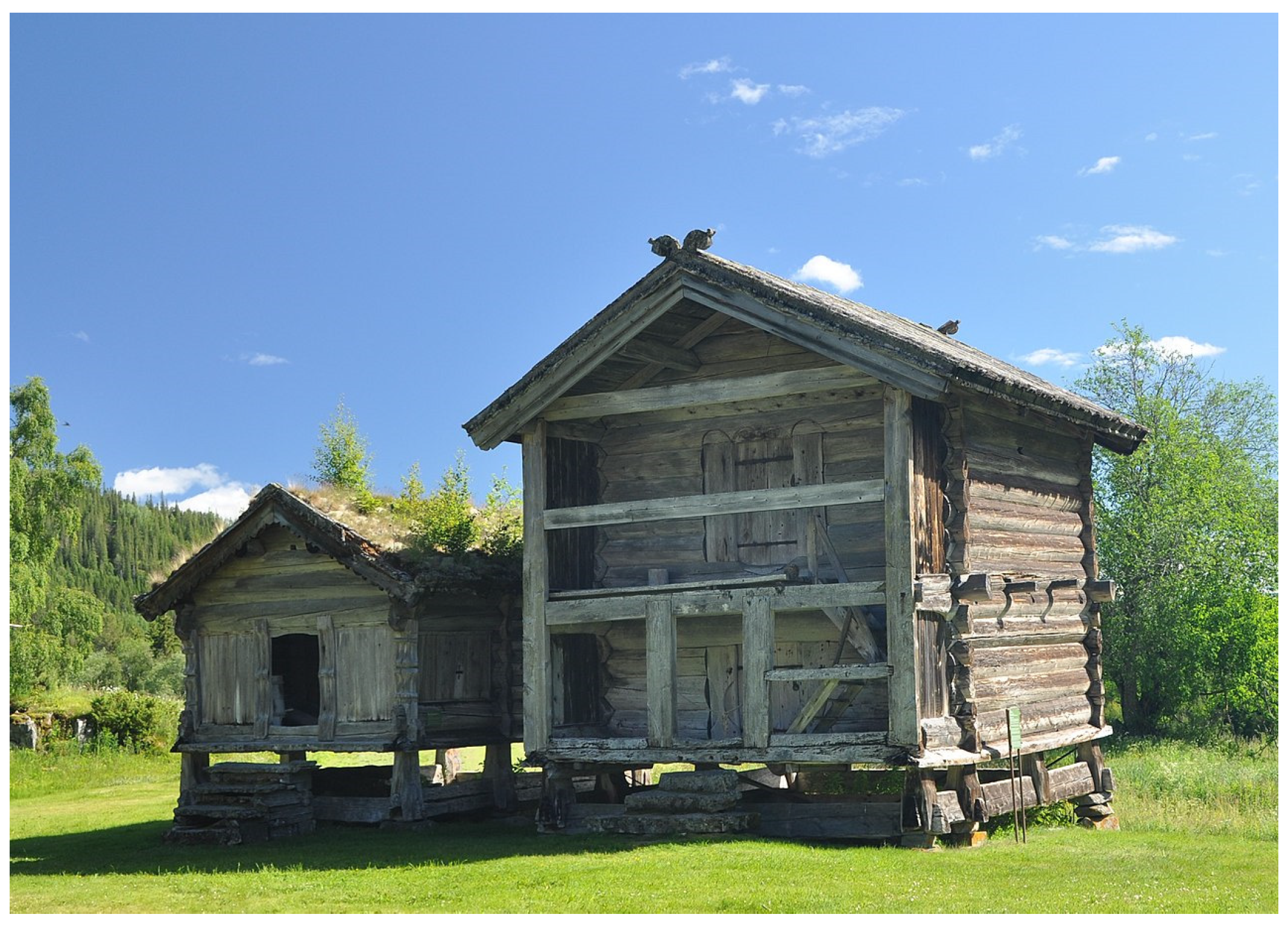
One of the oldest log houses in Norway, the Vindlausloft, is made of Findalslaft—an ancient type of log construction used in the Middle Ages (
Figure 6). Previously, the building had gables around the attic floor on four sides. Drawings from 1869 and 1875 show protruding logs on which the gables rested; on three sides the gable is gone, and the logs have been cut so that only the remains are visible. The gables had a stave construction, which is seen, among other things, by the fact that the logs had rebates (grooves) for the standing wall planks. The stave and frame that keep the building free from the ground are probably much newer than the rest of the building. The new foundation and new outer door probably came when the building went out of use as a bedroom and guest room, and became purely a storage room. The building was probably moved from another farm, probably Lofthus nearby. On the upper floor, there are small windows (the windows had sliding shutters) on the three walls without doors [
27].
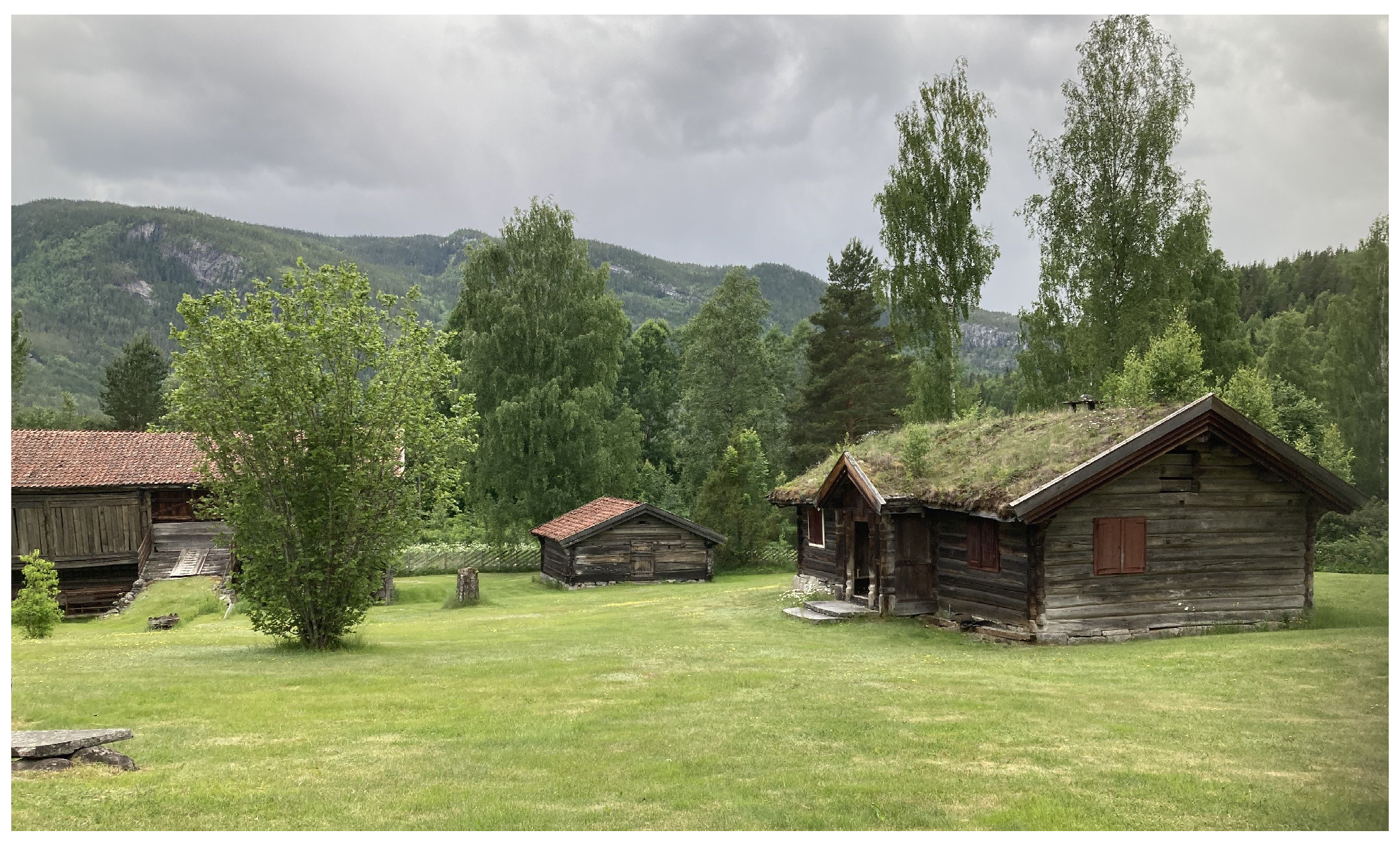
A large proportion of the country’s approximately 500,000 houses built before 1900 are worth preserving even if they are not protected by law. The term “protected” is often used incorrectly when talking about old houses. In total, there are no more than around 3500 protected buildings in Norway, and this includes everything from sea sheds to industrial buildings. Only buildings that are protected under the Cultural Heritage Act can be described as protected. Buildings from before 1650 are automatically protected. If the building is younger, the National Agency for Cultural Heritage can protect both the building and parts of the inventory if it meets certain protection criteria (Figure 8). Usually, it is the regional cultural heritage administration in the county municipality that promotes and processes new protection proposals. By contacting the county municipality, it will be possible to obtain more detailed information about what protection entails. Preservation is a comprehensive process in which owners, public bodies, and other interested parties are given the opportunity to express their views, and in which the National Agency for Antiquities is also required to consider other societal interests and consequences before a decision can be made. The latest amendments to the Cultural Heritage Act require that all applications for measures on buildings from before 1850 be forwarded from the municipality to the regional cultural heritage administrator (
Figure 7 and
Figure 8) [
28].
5. Case Study on Log Houses in Norway
Farmhouses were usually built from their own farm’s forest land. Log buildings have been dominant in the country from the Middle Ages until the end of the 19th century. The construction method was partly replaced by the scaffolding technique, which, among other things, reduced material consumption and made it possible for new buildings to be paneled immediately. After the turn of the century, timber-framed construction was introduced into residential construction. Until then, log construction had been used in uninsulated buildings, such as farm buildings, sea sheds, etc. In recent years, interest in log housing has increased. One can investigate and carry out certain measures oneself to restore and repair damage to timber walls. Larger repairs should be left to timber carpenters with insight and experience in building protection.
As part of the case study, the authors investigated some areas in eastern Norway, mainly in the Buskerud region, being fascinated by a long-life tradition in building with logs: “laftehus”.
Their principles are well established from the past, back in time at least 1000 years ago. The log houses have proven their durability, adaptability, and usability for several functions over centuries, not only in the countryside areas but also in the towns and cities.
The advantages are numerous and, due to proper maintenance and versatility to a harsh climate, these buildings can be upgraded to modern living conditions.
What we can learn from a log house:
From the Middle Ages until the 20th century, log building dominated over a long period of time and was the preferred option outside city centers. It makes little sense to determine when buildings with cross-laminated logs originated. Wood rots, so it is certain that log construction originated earlier than we can find physical examples of. The absolute oldest log buildings that have been found are in German wells. Among other things, discoveries have been made in Kückhoven that date back to 5090 BC.
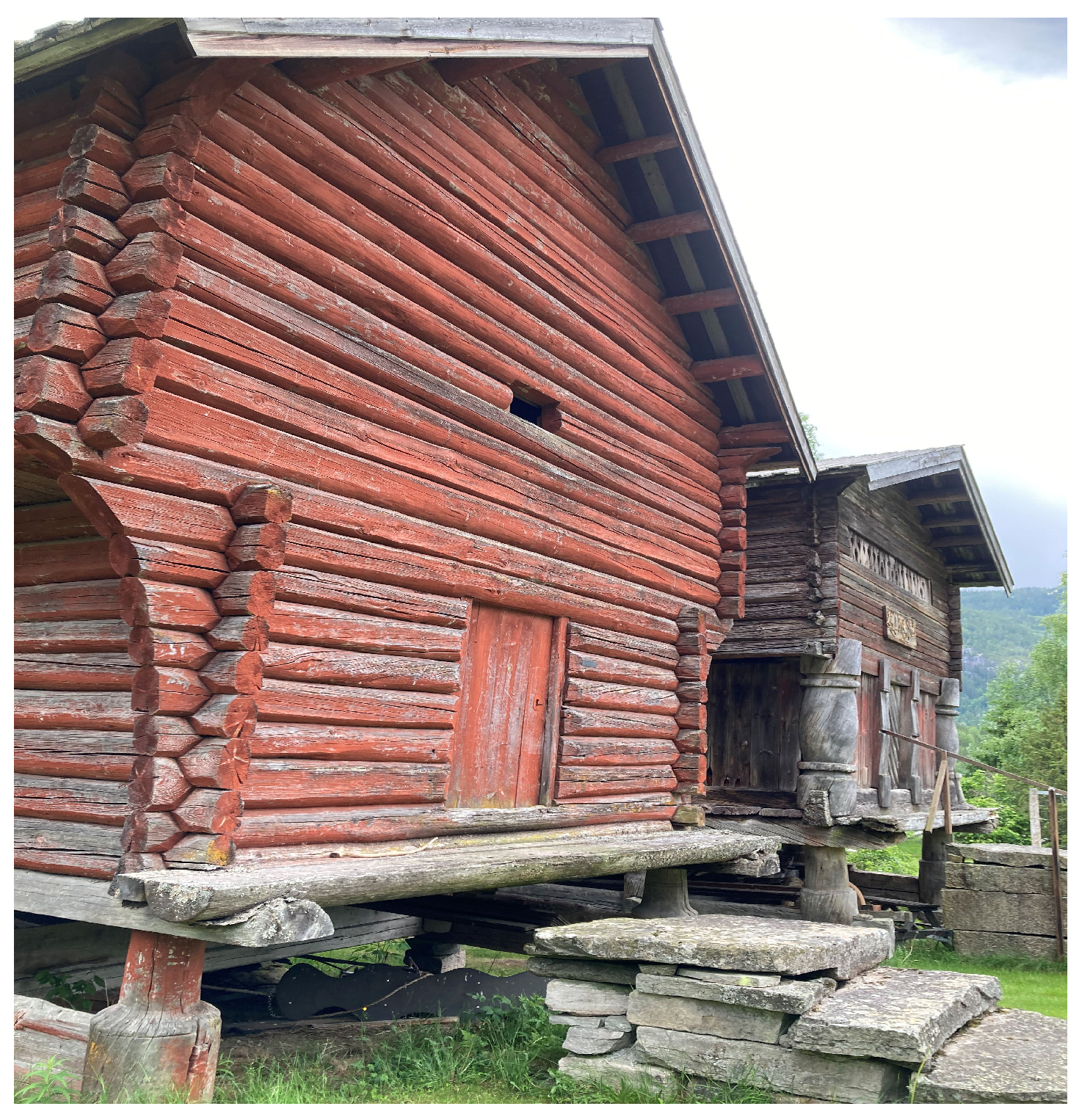
Almost all kinds of buildings were built using the timber log construction technique, from churches and residential buildings to barns and sheds as well as other commercial buildings (
Figure 9). The technique was used in the town and the country. In the inner valleys, beautiful timber buildings with visible timber walls have been preserved. In flat areas, towards the coast, and in the “wooden towns”, most of the old paneled wooden buildings are built using timber.
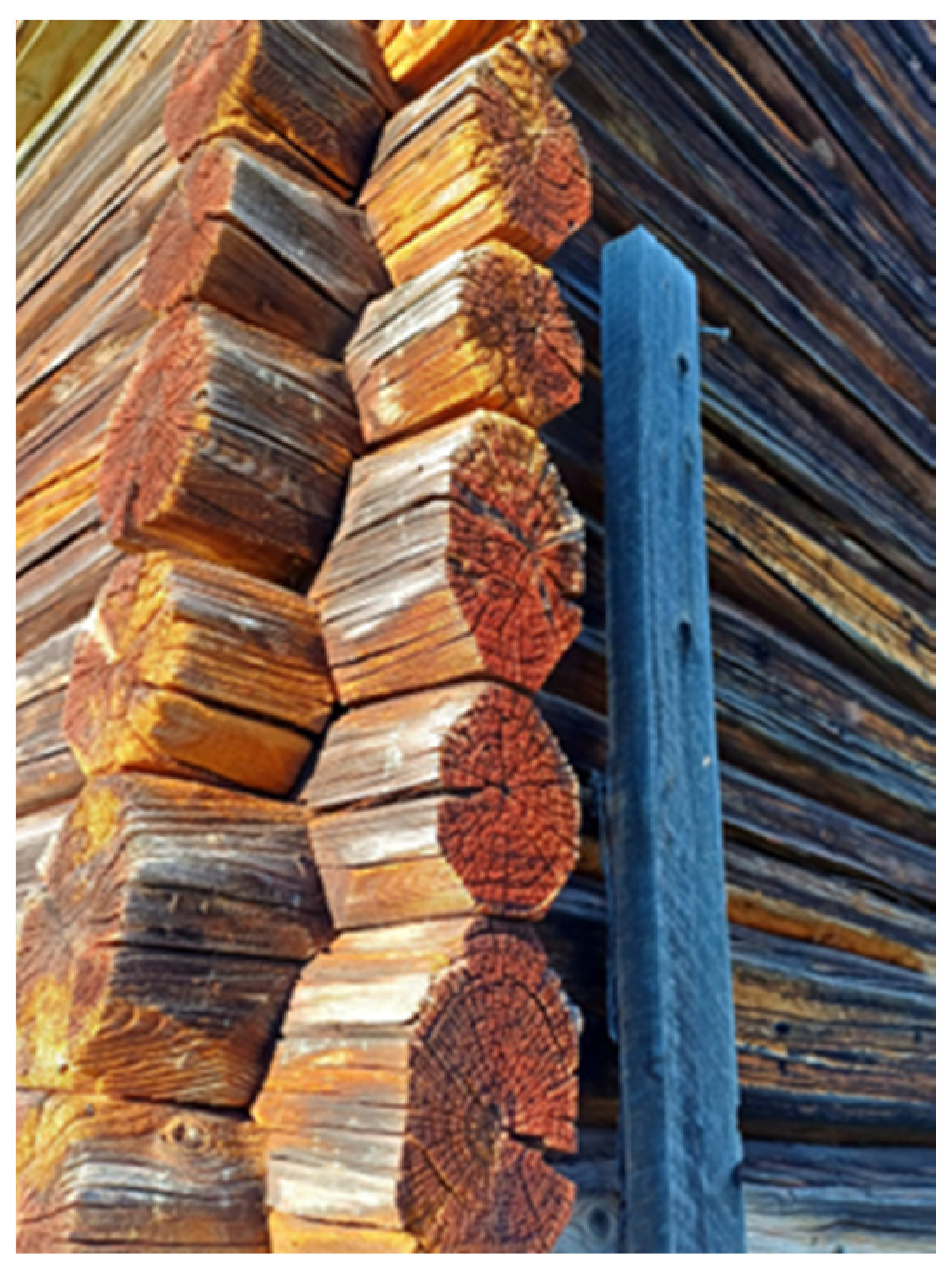
The shape of the lafte heads and the lafte knot itself can be important criteria for dating. Jon Bojer Godal et al. talk about there being six archetypes when it comes to the shape of the neck. There are the square Trøndersk knot notch, grøyplaft (vague), skallelaus notch, in planhoggen plank, findal, half-split (with triangle), and rævskoro. From these archetypes, later and more complex lafte have been developed [
29].
5.1. Tradition of Moving “Lafte” Buildings
Moving and reusing log houses was important in older Norwegian building practices. Some buildings there were moved several times over long periods of time. Old timber walls may bear marks from one or more previous moves. Timber framing can be considered prefabrication with elements suitable for dismantling and transport. Therefore, moving houses has been most widespread in Northern Scandinavia and other regions with a timber tradition. Some villages had the business of stacking and storing houses in anticipation of the demand that would arise when the nearest town was hit by fire. Houses could be bought and sold, and moving was common in the event of inheritance settlements, marriages, or land transfers. In the 19th century, it became customary in many places to expand houses by moving several units together. The long “Trønderlåna” originated, for example, in such moving together [
30].
For moving, restoring, and reconstructing a log house, the wooden logs have to fulfill important proprieties but; most importantly, the building must have a value as cultural heritage. A move always comes at the expense of value. It is generally unfortunate to tear down buildings from their original environment. Their value as a source of cultural and historical knowledge is reduced by the loss of connections, terrain adaptation, foundations, foundation walls, fasteners, and sealants. This suggests that if the house must be moved, it should be moved as completely as possible.
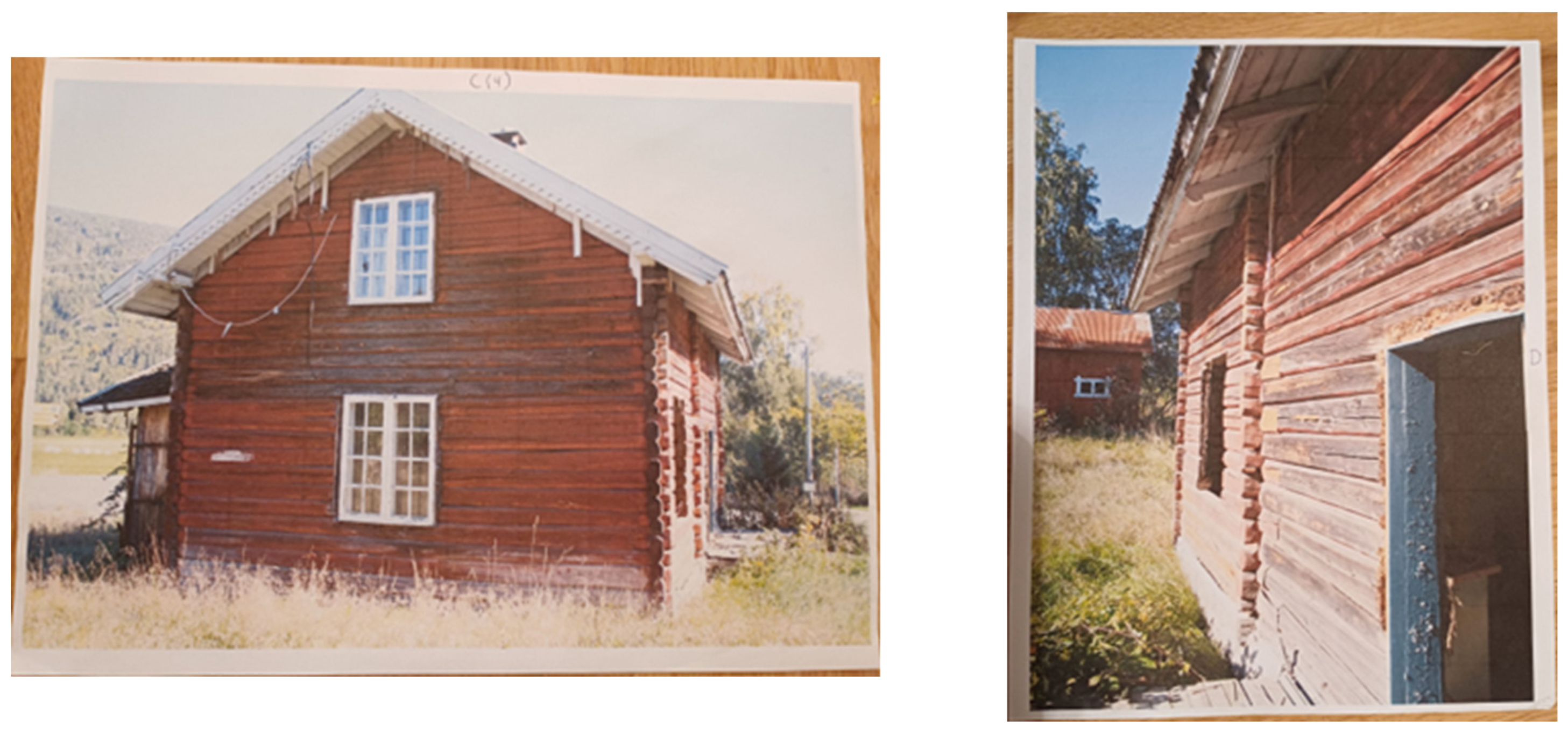
As a site-analysis project, the authors are studying an example from a village in Buskerud, where a house from the 18th century has been moved five times in its history (
Figure 10).
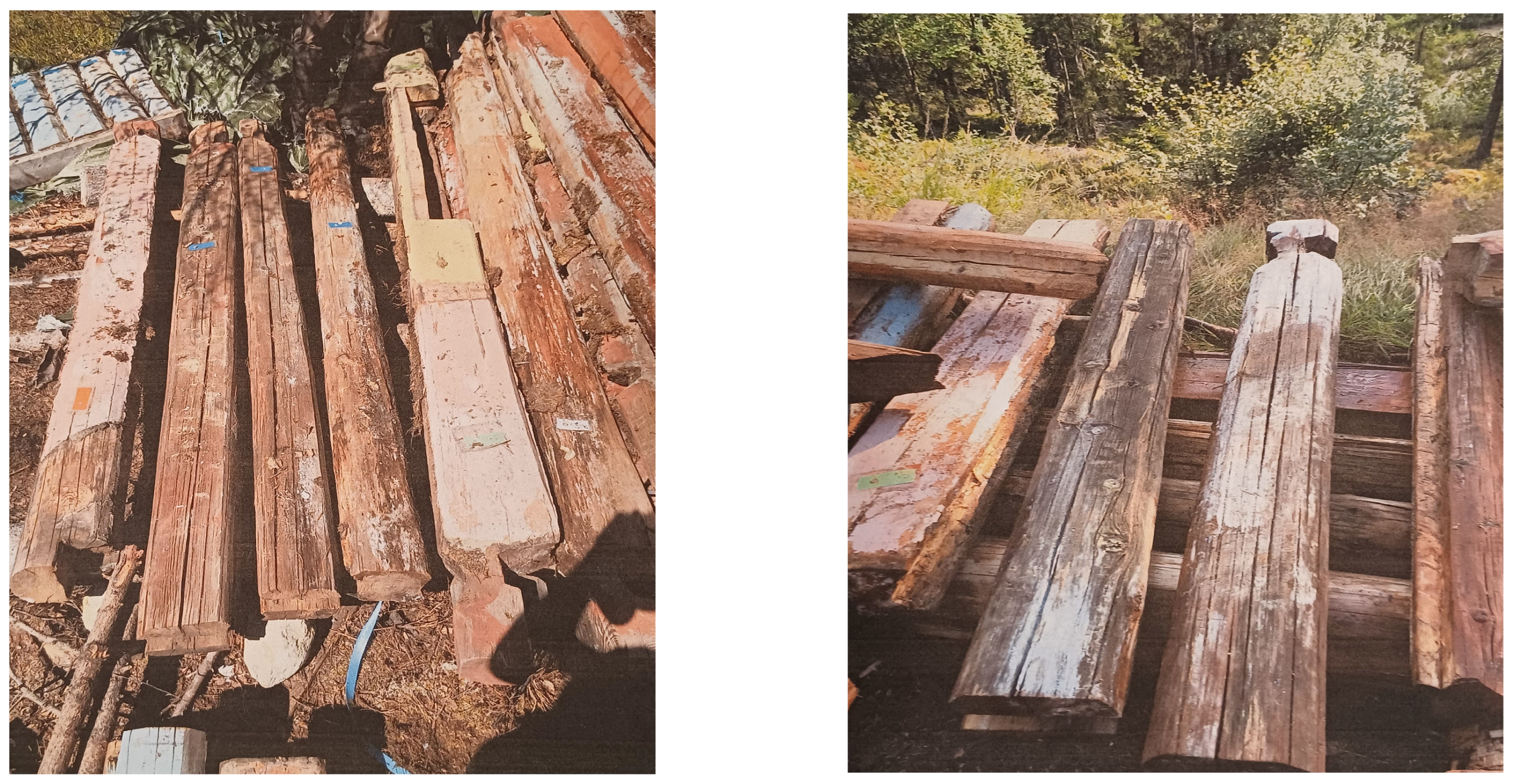
The last relocation started a few years ago, but after moving, the logs has been deposited over 5 years, in bad weather conditions, which led to more mold, humidity, and partial rot of the wood (
Figure 11).
Despite these odds, the owners have been resilient with their plan to restore and rebuild the house, having a dedicated understanding of the multileveled issues, that must be overcome, both economic and regarding time consumption. The original house was disassembled with some registration of the logs before the moving process. The new location, the moving process, and the project of reconstruction was approved by the local commune, as part of saving the rural local heritage according to the Norwegian regulations. The transportation of the dissembled logs was extremely difficult due to the landscape, in a mountainous area, and the forest road not being entirely accessible at the end of the destination.
5.2. Restoration, Conservation, and Rehabilitation
Some buildings may have stood for a long time with few changes, while others may have been modernized, extended, and added to several times. This case study, before moving and rebuilding, has been chosen for preservation due to historical contributions but also to retrofit the function from a house to a cabin. Preserving the building as it stands ensures both its age value and its source value for future research.
Restoration, or returning to a previous state, exploits contributions from other periods. Only restoration can provide a credible picture of the situation at a particular time.
Rehabilitation: In practice, considerations of use and economy will have a great influence, and the process should then be described as rehabilitation. The aim must be to preserve as much of the antiquarian value and architectural quality as possible.
In this case study, rehabilitation was chosen, considering the previous unfortunate factors, due to the harsh climate, and since the new location was so remote that over the winter or bad weather conditions it was inaccessible for many months in a year.
The main factor for a wooden construction is to avoid humidity. After a long period of storage, moisture damage of the logs occurred.
The humidity content in the wood over time is a challenge and could complicate the calculations to such a significant degree that aggregate calculations for general buildings become, in large part, inaccurate. Dry logs open cracks that can hold and release humidity from 1–2 times a day or more, depending on temperature differences during the day. Fairly precise log weight therefore fluctuates. Wood can deal with this humidity fluctuation. Density and changes in the specific abilities of specific trees of the same type—where one log can look bigger, but weigh less, but where they will still have sufficient load bearing strength over centuries—impact the considerations. The value of traditional wood cannot be quantified; it is priceless, like a museum piece. In addition to this wealth, there are other benefits, such as reducing the carbon footprint through less deforestation and secondarily the economic benefit of the material itself which can be listed. The article does not aim to quantify the economy because the financial costs between using new wood and recycled wood are project- and culture-specific, the actual economical differences are complex as the material properties may be different, and the economic considerations also rely on national regulations.
Timber walls tolerate water and moisture well but must be given the opportunity to dry out. Constant moisture over a long period of time will lead to rot and the wall becomes more susceptible to insect attack. The most vulnerable places are the sill, under windows, the top wall jamb, the rafters, cracks with a slope inward, the heads of the joists, internal corners, and the transition between the wall and the roof surface on lower extensions. Rot develops relatively slowly in timber. Rot damage on the surface is rarely serious for the load-bearing capacity. Rot and insect damage can develop in the timber over a long period of time without being detected until large cracks and compression of the log occur. Rot inside the wall can be revealed by poking with an awl or sharp knife, especially in the rafter (the joint between the logs). It can be useful to take a walk around the house during and after prolonged rain to see where the walls get wet and where they dry up quickly [
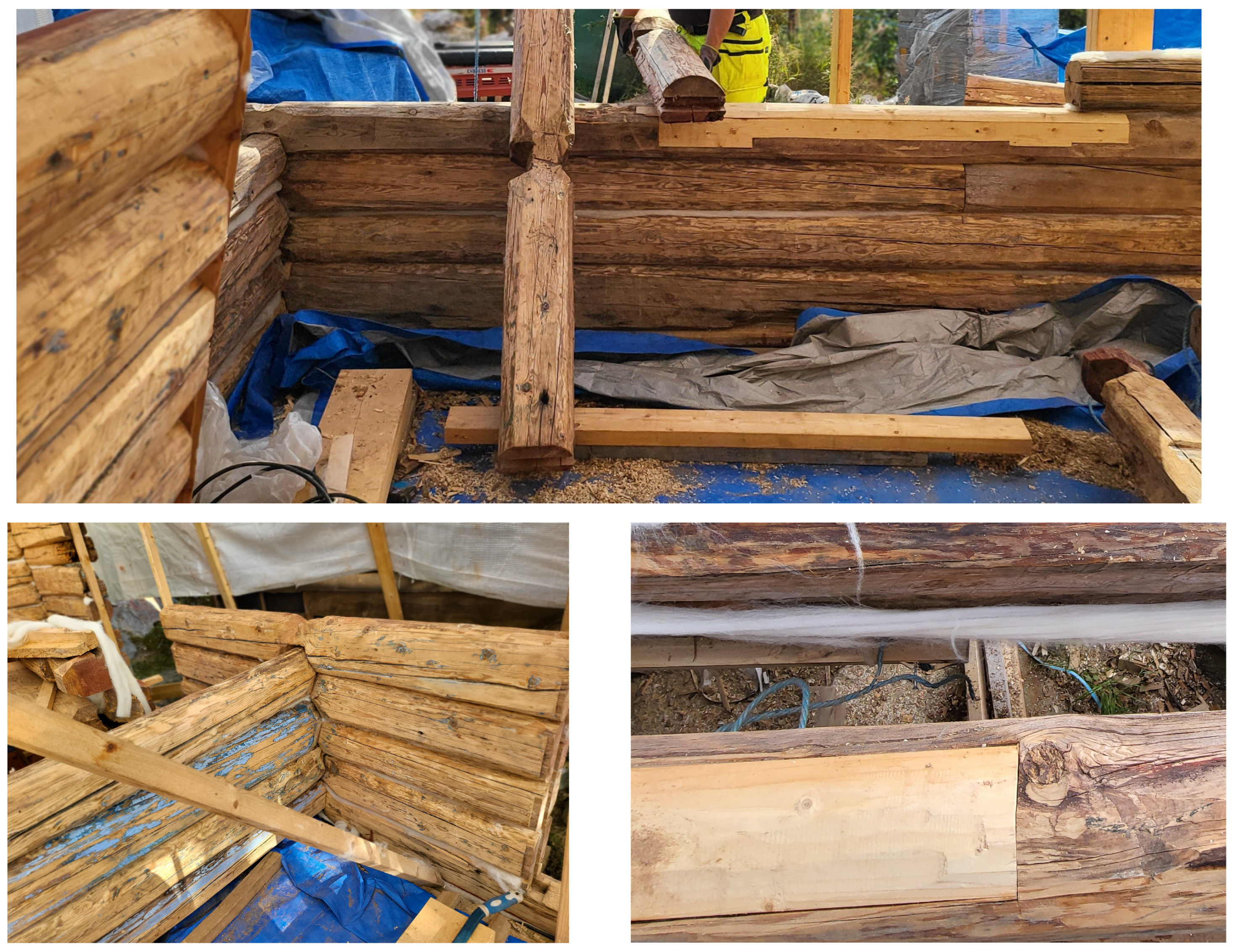
31]. The detailed phases of the cabin reconstruction and rehabilitation process will be further described in a next article, by providing measuring data and solutions for the rehabilitation of the wooden logs (
Figure 12 and
Figure 13).
Here are some of the milestones from the reconstruction of the log cabin of the case study, from Buskerud, that have been achieved until now:
Identifying the entire wooden structure through measurements, evaluation of the log status, and registering all damage.
Cleaning, treating, drying, and sanding the logs.
Rebuilding the foundations; in this case, it was possible to move the original one. It is advisable to mark and move the foundation and basement and rebuild them as much as possible using the original technique.
Damage that occurs during dismantling and transport must be repaired. However, older damage caused by wear, climate, fungi, and insects, like settlement damage, must be assessed in relation to the basic guidelines for the work.
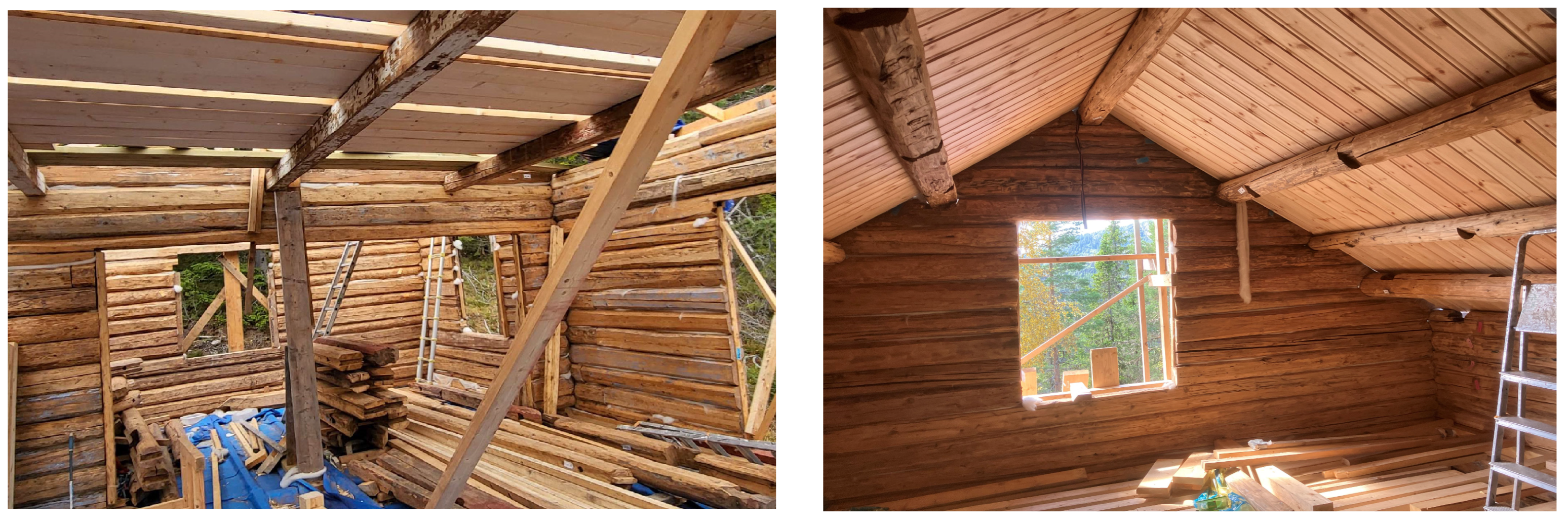
After all of the logs have been treated, one must start setting up the structure in the right order from the markings and measurements before moving, checking the matching on the joints, rebuilding, and inserting new carved parts which were missing (
Figure 12).
Support structures, tension rods, or reinforcing fittings can be used to preserve the original but weakened building parts. They can be hidden within the structure or original part or be clearly visible. Tension rods to brace unstable timber walls are examples of support structures with a legacy in older maintenance traditions. Support structures should generally appear as functional additions in a contemporary form (
Figure 13).
The roof structure of a log house can be constructed in several ways. A hipped roof, either with just a ridge or with multiple ridges, a combination of a hipped roof and a rafter roof, and various forms of rafter roof structures, often in the form of a kneeler, crowbar, or roof truss with a lower belt, are common constructions (
Figure 13).
In constructions, wood is an organic material that will react to climate changes and other influences from the indoor and outdoor environment. This is prominent when the building is new, but log buildings will “live” and move throughout their entire lifespan. Wood shrinks when it dries. The shrinkage is greater transversely than longitudinally. In addition to this shrinkage, the logs will also be compressed by their weight in the initial period. This means that shrinkage of 1–3 cm per meter of wall height is expected. This is important to consider for new building. In a reutilization project of old logs, these factors are much smaller, because the drying process of the wooden fiber has been completed within the first years, and the only damage could occur from humidity and weather [
32,
33].
Wood has a great ability to dry out after being dampened. It is very important that the exterior surface treatment of wood is performed with diffusion-open materials that enable good drying out after being dampened. It is not possible to “seal” the wall so that moisture does not get in. In a construction where dampening is impossible to avoid completely, it will always be a great advantage that drying out occurs as quickly as possible after being dampened. The heat from the inside helps to provide heat and thereby dry out the outer walls [
33].
6. New Building Regulations for Log Houses in Norway
Norwegian building practices were characterized by technological limitations before the 1950s, and technological developments after. Before 1950, constructions were compact and very material-intensive. After 1950, industrialized production, developments in chemistry, a focus on the indoor environment, and material-saving construction led to a marked transition from simple to complex building physics requirements for the buildings we use [
34].
Renovation in the building industry is crosscutting across life cycle stages.
Since renovation extends the lifespan of the existing building stock, it can lead to a reduction in the long-term demand for new construction, lowering demand for land, raw materials, and energy and reducing waste. By improving energy efficiency, renovation also contributes to reducing the operational impacts of buildings.
The response to making renovation a priority in the EU is to be achieved through a sustainable building system by 2050, addressing the environmental and climate footprint of buildings. However, energy renovation can also involve the need for new construction products and could lead to a shift in the environmental burden of a building across its life cycle. It is thus essential to design renovation programs for circularity and according to a whole-life-cycle perspective [
35].
According to the first analysis of Norway’s consumption of important raw materials that the world may run out of, the Circularity Gap Report Norway 20208, the Norwegian economy is only 2.4% circular today. Construction is the sector with the largest consumption of raw materials, a quarter of the national total. Reuse and life-extending measures are pointed out in the report as the most important measures to reduce the construction industry’s climate and resource footprint. By making the best possible use of the resources that already exist, we reduce the need for new building materials, which in turn reduces emissions related to the extraction and production of new building materials. The words reuse and recycling are often used interchangeably [
36]. Reuse is a broader term than reuse, as reuse also includes material recycling, i.e., remelting metals and reusing them instead of using the metal products in their original form (reuse), for example [
37].
There has been an interest in Norway’s building industry, including from some stakeholders, to analyze the different building types from Statistics Norway figures, which include all buildings that are demolished, and to indicate those assessments as the potential for climate benefits from building upgrades. However, one should consider that upgrading is not a real alternative in many cases. If demolition statistics that include all buildings that are demolished are used as a basis, such as Statistics Norway’s demolition statistics, the potential will be overestimated. Consultants in the building industry have chosen four scenarios, which show possible building solutions:
Upgrade the existing buildings, with an equivalent area to demolished buildings.
Upgrade the existing buildings, with new additional area (average increase per building type, based on the statistical basis).
Demolish existing buildings; construct new, larger buildings (average increase per building type, based on the statistical basis).
Demolish existing building stock; construct new buildings, with equivalent area to demolished buildings [
34].
The analysis includes greenhouse gas emissions associated with energy use in operation and the production of building materials that are included in the upgrade/construction of new buildings, including the transport of the materials to the construction site and the replacement of materials during the 60-year calculation period. The results show that upgrading results in significantly lower greenhouse gas emissions for small houses and holiday homes, and somewhat lower for commercial/service buildings. For office buildings and cultural buildings, new buildings result in somewhat lower emissions, but the differences are so small that the results are not considered significant.
This means that, in priority order, one should consider the reuse of existing buildings and structures through rehabilitation and transformation, and then the reuse of components or recycling materials, before considering energy recovery and, as a last alternative, landfill. In Norway, a relatively high proportion of construction waste is sorted at source today, but only about 40% of the waste goes to material recovery. The rest of the waste is divided evenly between energy recovery and landfill. In practice, the amount of used materials that can be reused varies greatly from building to building based on building practices at the time of construction. For example, older load-bearing systems such as lath can be very easy to reuse directly, while other types such as cast-in-place concrete are very difficult. The reuse potential of components depends on the following factors.
Avoid hazardous waste: Elements with substances hazardous to health and the environment (such as asbestos) should be excluded from the cycle and should not be reused.
Dismantle ability: Elements that are easy to disassemble and reassemble can be reused; those that are damaged during disassembly (such as tiles or other components that are glued in) are not reused.
Residual life: Robust elements with good technical quality and a long residual life can be reused.
Volume: Elements that are numerous increase the chances of reuse [
34,
36].
In Norway, there are private “material banks” which acquire old building materials (mainly from before 1940, as after the Second World War the focus was on building quickly, and houses were built with whatever materials they could get, and not necessarily with good quality materials) and make them available for new construction projects. The building regulations have been changed so that when you build a house today, you need to have a plan for how to disassemble it and reuse the materials in the future.
The Norwegian building technical regulations known as TEK 17 make exemptions for timber log buildings. Under the §14-3 minimum requirements for energy efficiency, the requirements for residential buildings and leisure homes with log outer walls are as follows:
Dimension external walls: ≥0.22;
U-value roof [W/(m2K)]: ≤0.18;
U-value floors on ground and above open air [W/(m2K)]: ≤0.18;
U-value windows and doors, including frames [W/(m2K)]: ≤1.2;
Leakage figures at 50 Pa pressure differential [air change per hour]: ≥1.5.
Residential buildings and leisure homes with log outer walls are exempt from the requirements. Leisure homes with a heated gross internal area of between 70 m2 and 150 m2 and log outer walls are also exempt from the requirements. The following requirements apply regarding energy efficiency for leisure homes with a heated gross internal area of more than 150 m2 and residential buildings with log outer walls.
Residential buildings and leisure homes with log outer walls:
Dimension external walls: ≥6” logs;
U-value roof [W/(m2K)]: ≤0.18;
U-value floors on ground and above open air [W/(m2K)]: ≤0.18;
U-value windows and doors, including frames [W/(m2K)]: ≤1.2;
Leakage figures at 50 Pa pressure differential [air change per hour]: ≥6;
This allows for restoring and upgrading old buildings, utilizing the circular economy [
32,
38].
7. Conclusions
Wood as a material for construction has been one of the most important factors in establishing civilizations, and if managed well can allow settlements to have a renewable resource for thousands of years. The timber trade highlights the enormous contribution the timber industry has made to the development of civilizations and continents, and how preserving and reusing the old materials represent both a way of honoring this tradition and a way of sustainable resource management. This article has chosen to focus on the Nordic forestry as it is at the forefront on sustainability and regulations for European common sustainable development. It has highlighted the history and evolution of a forestry industry on the outskirts of central Europe, but which played an outsized role in European building and general industry.
In Norway, society and government have found good compromises in making regulations which focus on preserving cultural heritage, tangible and intangible, at the same time as following common European regulations on energy efficiency in buildings. Urban and rural regeneration of the traditional habitat is part of Nordic culture and provides a unique and essential quality that, alongside the nature in which it was created, is the basis for a very substantial tourism industry. Buildings and museums highlighting the Norwegian log culture are amongst the most popular tourist destinations and generate substantial societal revenues.
Wood is also a material that can be used in the harshest of climates, either along wet coasts, in rainforests, in deserts, or in the unforgiving climate of Svalbard and Antarctica. In the case of Norway, although few countries have more rocks and stone readily available, it is solid wood and timber that has been selected over generations for tackling weather and providing shelter, warmth, and physical and emotional comfort. It is a material which has given craftsmen, architects, and engineers the ability to build buildings which are operational today after 500–800 years battling the harshest of winters. Much of the same wood culture can be found throughout the Nordic countries, Central and parts of Eastern Europe, North America, and Russia.
Timber has the advantageous ability in most cases to become a new and valuable resource when coming to the end of its useful life as a construction material, as it can be turned into energy for heating, it can add value through composting, or it can be used as habitat for a vast array of life forms in nature. Small cutoffs from the production of pieces can be used for multiple applications, and transformation or processing of wood generally requires considerably less energy-intensive processing than other common materials. The health risks associated with processing of wood products are generally lower than many other materials, as it is biodegradable. As climate change is an acute problem for the entire world, and humanity faces an immediate and daunting task of reducing energy consumption while generating it in sustainable ways, one way to further reduce the pollution footprint related to wood as a material seems to be somehow overlooked.
The case study represents a common practice in log construction which can be found in many regions in Norway. Instead of demolishing and disposing of old buildings, or materials from buildings in disrepair, the private sector—with some support from the public sector—tends to preserve or move the old buildings so that they can be preserved or retrofitted while regenerating cultural heritage. The aesthetic aspects are in many local cases prioritized over the short-term local economic aspects.
The preservation of traditions and cultural heritage is an esteemed and globally recognized value which brings happiness, helps drive society in positive ways, and provides huge economic benefits. Sustainability, regeneration and preserving historical values in the long term has generally become one of the most profitable investments considering the fact that countries like France, Britain, Italy, Denmark, and Norway to mention a few focus on preservation of their built and tangible heritage.
The main purpose of this article is to provide insights into how one could consider what is significant for society, culture, and the preservation of historical values and knowledge and bring a new direction towards a sustainable approach connected with the modern construction industry by reducing the CO2 footprint.
It requires a holistic understanding, combining sustainability, circular economy with art, traditional crafts, and historical sites and landscapes. These directions of urban or rural regeneration are in line with the purposes of UNESCO Heritage: as in the 1972 Convention concerning the Protection of the World Cultural and Natural Heritage, in the Recommendations Concerning the Safeguarding of the Beauty and Character of Landscapes and Sites (1962), or in the Charter on the Built Vernacular Heritage (1999). Cultural heritage plays a big role in cultural influence and international economies.