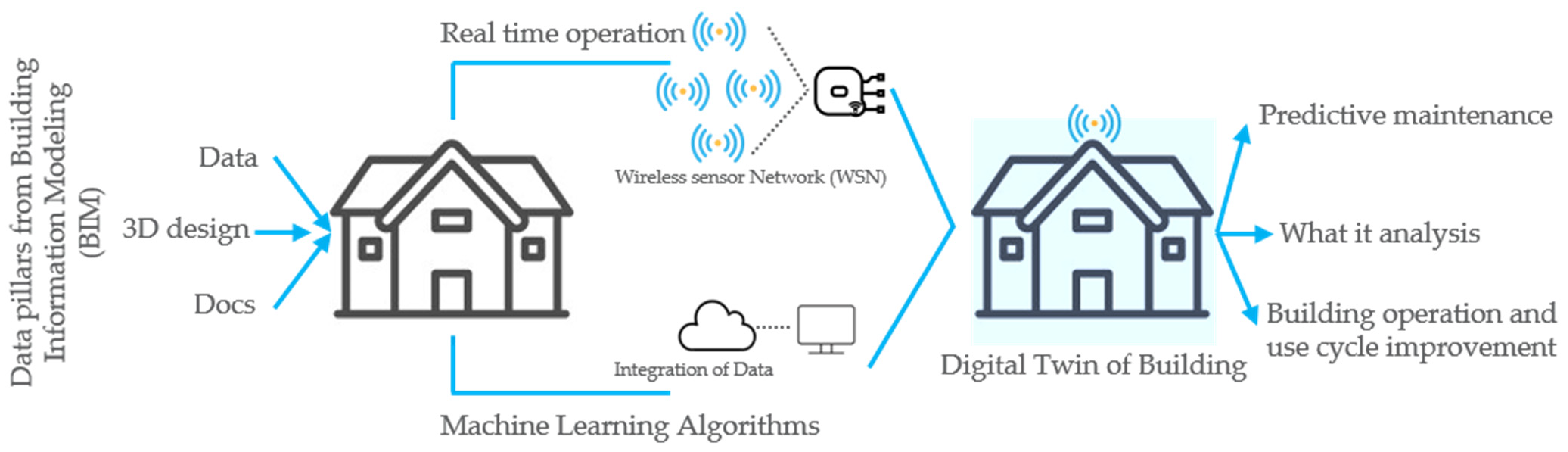
Abstract
The application of artificial intelligence (AI) in tall buildings’ development provides transformative opportunities for facing population growth pressures and sustainability challenges in cities. This study presents a comprehensive review of both the current literature and the theoretical framework of AI and its role in construction, specifically analyzing the convergence of AI and skyscraper development. The research methodology combines scholarly sources, AI image generation techniques, an analytical approach, and a comparative analysis of traditional versus AI-enhanced approaches. This study identifies key domains where AI significantly impacts skyscraper evolution, including design optimization, energy management, construction processes, and operational efficiencies. It highlights short-term benefits like enhanced architectural design through rapid generative design iterations and material optimization, alongside long-term implications involving adaptive building technologies and sustainability enhancements. Additionally, it addresses the advantages and challenges of adopting AI in architecture, considering various factors (e.g., sustainability, security, and occupant well-being), as well as the impact of different climates on AI in architecture and construction. It also explores transformative applications across diverse skyscraper functions and how AI can bridge different cultures and technologies. The findings reveal AI’s substantial potential in TBs’ design and management, (i.e., structural optimization, energy saving, safety protocols, and operational efficiency) by leveraging innovative technologies such as machine learning, computer vision, and predictive modeling. In conclusion, AI’s dual role as both a revolutionary tool that enhances traditional architectural methods and a catalyst for new design paradigms prioritizing sustainability and resilience has been reflected. Ultimately, this research underscores the importance of balancing AI innovation with established architectural principles to foster a favorable urban future that embraces both technological advancement and foundational design values. This study serves as a base for future research in the AI field.
1. Introduction
With the accelerated urbanization of the global population, there is an exceptional increase in the construction of tall buildings (TBs). As metropolitan areas evolve to rise vertically in response to increasing population densities and improve land use efficiency, the complexity related to the architectural design, construction methodologies, and operational management of these towering structures has intensified markedly. At the same time, artificial intelligence (AI) has witnessed an outstanding evolution and expansion that contributes to solving complex problems in several fields and industries by offering extraordinary innovative approaches [1].
Combining urban verticality with intelligent technologies creates an unprecedented chance and scope to redefine the development of skyscrapers and transform cityscape architecture [2]. With its capacity for data analysis, pattern recognition, and predictive modeling, AI can potentially address several challenges associated with skyscrapers’ development.
Nowadays, AI technologies provide a wide range of applications in the scope of tall building architecture, including conceptual ideas and designs, optimizing structural elements, developing energy efficiency (EE) systems, construction processes, time management efficiency, and occupant comfort and satisfaction. The investigation of the potential impact of AI applications on TBs and skyscrapers’ future becomes crucial, and exploring the integration of innovative technology in creating sustainable, livable, and efficient vertical communities due to AI’s stance on top of a new era in urban development [3].
AI is more than the transformative practice of many countries worldwide. Instead, it is looking at how architecture and technology can come together to improve how people live. Its objectives are formed because of situations and conditions that are related to man. The core is to realize that architecture is a technology; it is the technology of shelter, form, and spatial attributes.
Architectural Intelligence is the combination of both logic and creativity to formulate architecture with an emphasis on a human-centric approach that outstrips art. While these buildings are spectacular, AI works to make these buildings responsible for different aspects (e.g., technology, environment, and society) [4].
This study presents a strategic guide to implementing AI to create more responsive, resilient, and sustainable TBs, offering transformative insights for professionals across architecture, engineering, urban development, and legislative domains. By exploring both opportunities and potential limitations, this study delivers a balanced approach to technological innovation.
Based on the conducted literature review, it was found that there is a lack of studies discussing the role of AI in developing skyscrapers, which nowadays has become the orientation in construction in several countries for different reasons. Therefore, this research aims to identify the gap that exists in the field of AI and architecture design and construction; for instance, Kazeem et al. [5] carried out a systematic literature review to explore the role of AI and ML in the construction of sustainable societies, and they found a tremendously increasing amount of research interest since 2021, represented by a number of publications. Additionally, they predicted in the near future that enhanced automation, optimization, and decision-making will transform the construction industry, improving efficiency, safety, and sustainability (Figure 1).
Figure 1.
Articles related to AI and ML in the built environment by year and publisher (source: developed by authors based on [5]). (a) Mapping articles connected to AI and ML by year, (b) Articles associated with AI and ML by publisher.
1.1. Urban Challenges and the Imperative for Innovative Architectural Solutions
Urban “challenges”, contests to seek and reward creative solutions to urban policy issues, have evolved into a broader program of governance innovations that have been promoted to city governments as practical ways to address intricate urban issues in recent years [6]. As indicated by Sisson, et al., they identified these urban challenges and simplified the model of the challenges process.
The most apparent challenges are the following: (a) population density and overcrowding that lead to increased housing shortages; (b) land scarcity, which leads to high real estate prices, diminishing available urban land, and the need for efficient land use; (c) a lack of environmental sustainability, which causes an increase in carbon emissions from buildings, high energy consumption, and limited resources and environmental degradation; (d) infrastructure strain, which leads to congested transportation, limited utility infrastructure, and inadequate public spaces; and (e) economic constraints, which cause high construction and maintenances cost, economic disparities in urban development, and the need for cost-effective building solutions [7].
Facing these challenges by architectural solutions includes the following: (a) vertical urban development by constructing TBs and skyscrapers to maximize land use and building mixed-use vertical communities to be sustainable; (b) sustainable design strategies via green building design technologies, the integration of renewable energy and different passive cooling and heating systems, and recycled and sustainable building materials; (c) smart building technologies implementing AI-driven building management systems, adaptive environmental control, real-time energy optimization, predictive maintenance, and an enhancement in occupants’ comfort and well-being; (d) modular and prefabricated construction to reduce construction times, lower costs, improve quality control, and minimize on-site waste, as well as flexibility in design and adaptation; (e) resilient and adaptive architecture that helps in facing climate change, flexible spatial configurations, multifunctional spaces, self-healing materials, and climate-responsive architectural designs; (f) technological integration by applying Internet of Things (IoT) infrastructure and integrating advanced sensors and monitoring systems, data-driven design optimization, and enhanced building performance analytics; and (g) social inclusion and community design via inclusive architectural spaces, accessible design, community-centric urban planning, shared spaces and amenities, and promoting social interaction [8,9].
AI tools are revolutionizing sustainable urban planning by enabling data-driven, predictive, and holistic approaches to city development. Through advanced machine learning (ML) algorithms and comprehensive data analytics, AI facilitates precise environmental impact assessments, optimizes resource allocation, and supports climate-resilient infrastructure design. These technologies enable urban planners to simulate complex urban ecosystems, predict population dynamics, model energy consumption patterns, and develop targeted sustainability strategies.
By integrating IoT sensors, geospatial analytics, and predictive modeling, AI empowers cities to create adaptive, efficient urban environments that minimize carbon footprints, enhance renewable energy integration, and promote intelligent transportation systems. The synergy between AI and urban planning represents a transformative paradigm for creating more sustainable, responsive, and technologically integrated metropolitan landscapes that can dynamically address emerging environmental challenges [10,11].
Artificial Intelligence’s Transformative Potential in Urban Context
Most of the problems inherent in city life, its high population density, and infrastructural constraints naturally call for a better way of carrying out effective city planning and development. Thus, AI assists in improving this through the utilization of smart urban planning, dynamic traffic management, intelligent resource management, sustainable design practices, and community engagement. These elements are listed in Table 1.
Table 1.
Transforming city challenges into opportunities by AI-driven urban solutions (source: developed by authors based on [12,13,14]).
By effectively utilizing AI technologies, cities can become more adaptive and responsive to the complexities associated with urban environments. These applications highlight AI’s capability to not only streamline existing processes but also innovate solutions that can lead to more sustainable, efficient, and livable urban spaces [14].
1.2. Artificial Intelligence’s Transformative Potential in Architectural Construction
It is a well-known fact that AI contributes to changing the field of architecture through its capabilities in driving innovation, efficiency, and sustainability. The optimization and enhancement of the projects’ management, collaboration, and sustainability are conducted by generative design tools, real-time Building Information Modeling (BIM) updates, and streamlined workflows [15]. AI permits a transformation in projects’ conception, design, and execution through the optimization of layouts, materials, and structures with generative design tools. In addition, AI enhances project management, BIM, and visualizations to improve decision-making.
Additionally, AI has the ability to enhance creativity and precision with generative design tools that improve sustainability and quality; moreover, Virtual Reality (VR) and Augmented Reality (AR) tools aid client visualization and decision making, leading to more advanced architectural projects’ delivery by automation and a reduction in errors. Moreover, the utilization of BIM-AI throughout the construction project lifecycle is apparent in Additive Manufacturing (AM), 3D Printing (3DP), Blockchain Technology (BCT), Just in Time (JIT), computer vision (CV), Unmanned Aerial Vehicles (UAVs), the Internet of Things (IoT), Radio Frequency Identification (RFID), Big Data Analytics (BDA), Digital Material Passports (DMPs), and Data Platforms and Banks (DP&Bs) [15,16].
Nowadays, design possibilities become easier for architects; they can generate countless design options in seconds with AI-powered generative design. Therefore, it expands the limits of creativity and optimizes every aspect of the project.
One of the most critical aspects of integrating AI in the Architecture, Engineering, and Construction (AEC) sector is data quality; both data quality and management are fundamental to the success of AI implementation to obtain an accurate performance; poor, wrong, and inconsistent data can deliver defective AI results; this, in turn, leads to significant consequences in architectural design and construction. Excessive AI dependence, especially among younger professionals, may lead to overlooking crucial engineering concepts, lowering project quality and weakening critical thinking and foundational abilities [17].
1.3. Research Scope and Methodological Framework for AI-Enhanced Tall Building Development
As architectural design and urban development face increasingly complex challenges in the 21st century, understanding the methodological approach to them becomes crucial for meaningful research and innovation. The research framework explores AI’s transformative potential in tall building development, combining theoretical perception with practical applications to understand how AI works and how it can improve architectural design, construction processes, and the urban vertical environment.
1.3.1. Research Scope
This study investigates the transformative potential of AI in tall building design, a brief history of both skyscrapers and AI technology, and the role of integrating AI in different construction phases, as well as the applications of AI in smart buildings, AI and the conceptual sustainable skyscrapers of tomorrow, and the constraints of the conceptual designs produced by AI.
1.3.2. Research Objectives
The main goal of this paper is to present a comprehensive and deep analysis of the role of AI in the development of TBs and how AI can contribute to generating designs and to different phases of construction by testing the convergence of AI technologies and high-rise architecture.
It is imperative to illuminate the transformative possibilities that emerge from this synergy. The threefold objectives of this study are outlined as follows:
- Investigate a brief history of TBs and their evolution, and AI accelerated development;
- Determine the main domains—design optimization, structure, energy management, construction procedures, and building operations. This is where AI can have a substantial impact on the development of skyscrapers;
- Discuss the advantages and difficulties of incorporating AI technologies into skyscraper projects and keep in mind several aspects, such as sustainability, security, affordability, and occupants’ well-being.
Examining the role of AI in developing tomorrow’s tall buildings clearly shows a radical and visionary reformation of new architectural innovation—a landscape that separates the short-term and long-term effect implications of integrated AI. Precisely, in a short-term timeline, AI shapes and revolutionizes architect design through computer acceleration that generates fast generative design iterations by advanced structural optimization.
In real time, simulated performance eventually reduces the time needed for the design concept, in addition to complex project-planning issues. Resource efficiency experiences a significant near-term impact, wherein AI enables optimized material selection, accurate energy consumption prediction, and huge cost reductions [12].
In the long term, this study foresees a paradigm shift in architecture toward adaptive building technologies, self-reconfiguring architectural systems, and quantum computing-enabled design methodologies. These technologies will provide autonomous building management, biometric responsive architectures, and sophisticated climate-adaptive design strategies.
In sustainability, this becomes a core transformation whereby AI architectural models for the circular economy, carbon-neutral design methods, and regenerative building technologies rewrite the concept of urban infrastructure. The economic implications are also shifting beyond immediate cost savings to the disruption of the architectural value chains; the positioning of AI not merely as a technological tool but as a revolutionary framework in which humankind thinks about, conceptualizes, and interfaces with the built environment is the core value it introduces [12].
By tackling these goals, we intend to offer insightful information to the architects, engineers, urban planners, and legislators involved in forming future cities. As we continue this investigation, we propose that the thoughtful application of AI to the construction of TBs will improve individual buildings’ sustainability and efficiency, while fostering the development of more resilient and adaptable urban environments.
1.3.3. Research Questions
To conduct this study, the following research questions (RQs) are set to explore and tackle the goals of this research:
- RQ 1: What is the role of AI technologies in transforming skyscrapers’ design and planning processes to enhance architectural innovation and efficiency?
- RQ 2: What is the potential that AI offers to optimize construction processes and building operations throughout the lifecycle of skyscrapers?
- RQ 3: How can the integration of AI improve sustainability, energy efficiency, and occupant well-being in the skyscrapers of tomorrow?
- RQ 4: What are the key opportunities, challenges, and implications of implementing AI technologies in the development of TBs for future urban environments?
1.3.4. Research Hypothesis
This study was motivated and generated by the hypothesis that the incorporation of AI into TBs’ development will cause a paradigm shift in the design, construction, and operation of skyscrapers. With the incorporation of AI technologies in skyscrapers’ development, sustainability, adaptability, and human centricity will be improved; moreover, it will significantly enhance design optimization, construction efficiency, energy management, and occupants’ well-being.
In addition, AI-driven change is expected to go beyond specific structures, possibly altering urban skylines and fostering more intelligent and resilient cityscapes. The purpose of this study is to investigate the implications of this hypothesis, while taking into account the opportunities and difficulties brought about by this convergence.
1.3.5. The Significance of This Study
This study presents the role of AI in skyscraper development and highlights its potential to transform design processes, planning, building, operation, and management. It offers a roadmap for integrating AI technology to create smarter, more adaptable, and sustainable urban settings that will benefit architects, engineers, urban planners, and legislators. The study has shown the importance of innovative technologies in vertical urbanism.
2. Materials and Methods
2.1. Methodology
This study engages a qualitative methodology that principally concerns a critical literature review for both AI and TBs’ evolution and development to discover the innovative approaches AI has introduced in the architectural design and construction field, besides showing the crucial need for TBs. Moreover, an analytical approach to the role of AI in different construction phases and environmental control, as well as the future of AI in skyscrapers’ construction, is needed.
In addition, a comparative analysis is conducted to examine four main key aspects, namely (a) environmental impact, with subheadings such as energy consumption analysis, materials usage, sustainability assessment, and carbon footprint; (b) efficiency, with subheadings such as planning and construction, cost efficiency, design speed, optimizations, predictive capabilities, error detections, structural analysis, material selection, and documentation; (c) human-centric performance, with subheadings such as occupants’ comfort, safety and security, maintenance and operation, risk assessment, and safety planning; and (d) long-term impact, with subheadings as building longevity, future adaptability, and building performance quality control.
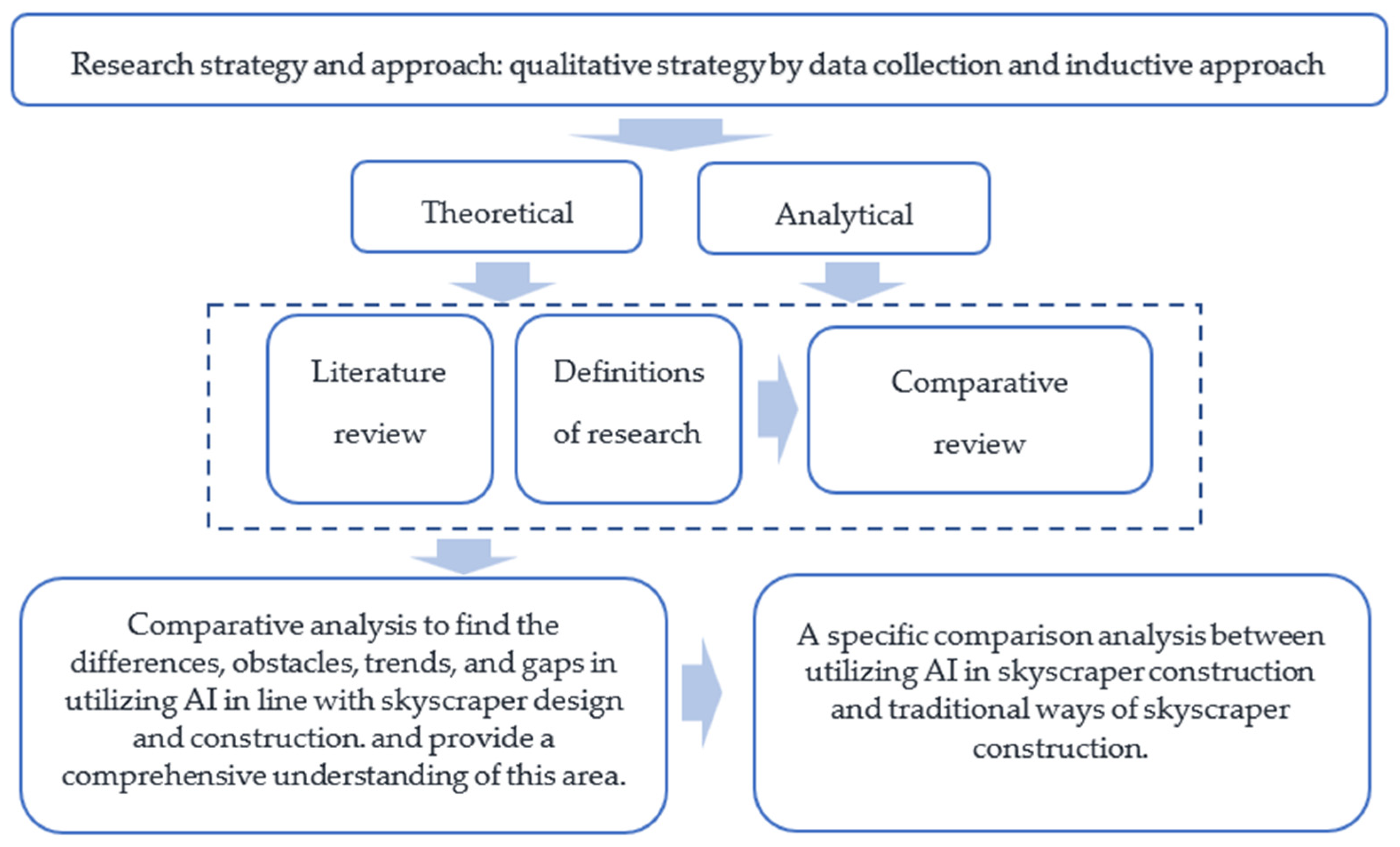
By thoroughly addressing these differences in the comparative analysis, our methodology will more effectively illuminate the transformative impact of AI in skyscraper construction and provide a clearer framework for future research. Figure 2 depicts a flow chart of the methodology of the research and its structure.
Figure 2.
The adopted methodology shows the strategy and two main approaches, theoretical and analytical, leading to a comparative review and comparative analysis of utilizing AI in line with skyscraper design (source: developed by authors).
2.2. Theoretical Background
The design of TBs is complex due to transdisciplinary performance aspects. There is an increasing demand for sustainable metropolises. Thus, AI helps make decisions in sustainable buildings. High-rise structures emerged in the late 19th century for urban spaces [18,19]. The theoretical foundation of AI is rooted in various fields of study, including computer science, cognitive psychology, and systems theory, in relation to the development of skyscrapers. In general, AI strives to design systems with capabilities to perceive the environment, reason on complex issues, and act to realize particular objectives, which can also be applied to TBs. ML theories include deep learning and reinforcement learning, both of which inform frameworks for enhancing performance with experience. Applied to skyscrapers, the two intersect with the principles of structural engineering, building physics, and urban planning, allowing intelligent systems to optimize efficiency [18].
2.2.1. Tall Buildings’ Origin, History, and Definitions
The definition of high-rise buildings can vary according to different references. It is a general term for multi-story structures taller than 35 m. It is usually a development with more than nine stories, which in the skyline of a dense city can seem to be a fairly small structure. However, they are not; in reality, structures taller than 35 m already have significant impact on the urban context, not only visually and aesthetically but also from an environmental perspective (e.g., sunlight exposure, wind comfort, and pollution dispersion) [18]. The first skyscraper marked a significant turning point in urban planning and development. Some of the most notable structures in the early history of skyscrapers are listed in Table 2. Moreover, the various definitions of high-rises or skyscrapers can be summarized, based on reference [20,21], as follows:
Table 2.
Most notable structures in the early history of skyscrapers, highlighting their architectural styles construction dates, and key innovations. It serves to illustrate the evolution of skyscraper design (source: developed by authors).
- Emporis Standards: “A multi-story structure between 35–100 m tall, or a building of unknown height from 12 to 39 floors”;
- Building code of Hyderabad, India: “A high-rise building is one with four floors or more, or 15 to 18 m or more in height”;
- The New Shorter Oxford English Dictionary: “A building having many stories”;
- International conference on fire safety in high-rise buildings: “ Any structure where the height can have a serious impact on evacuation”;
- The National Fire Protection Association, US: “A high-rise as being higher than 75 feet (23 m), or about seven stories”;
- Most buildings engineers, inspectors, architects, and similar professionals: “A high-rise is a building that is at least 75 feet (23 m)”;
Skyscrapers have been built in one form or another for thousands of years. The Great Pyramid of Giza in Egypt was built in the 26th century BC at a height of 481 feet (147 m). It remained the tallest structure on earth for thousands of years until it was surpassed in the Middle Ages. The term “skyscraper” was not originally used for buildings; the first use was in 1780 to describe tall horses; later on, this term was used for the sail on top of a ship’s mast. Chicago pioneered skyscraper design in the late 1880s and early 1890s, with the Home Insurance Building being the first skyscraper. After the 1871 fire in Chicago, Jenney designed a fireproof headquarters for the insurance company, which was demolished in 1931 [22]. Although this is considered relatively small by today’s standards, the first skyscraper marked a significant turning point in urban planning and development. One of the most famous phrases in the architectural field is “form follows function”. Architect Louis H. Sullivan coined it in his essay “The Tall Office Building Artistically Considered” in 1896. This statement lights up the idea that the exterior (skin) design should reflect the different interior functions. The Wainwright Building in St. Louis, Missouri, and the Prudential Building in Buffalo, New York, are two examples of skyscrapers whose form follows their function. Sullivan made an outstanding contribution to pioneering the American skyscraper by creating the “Sullivanesque” style that accrued changes in the face of architecture. It is also influenced the style of architecture known as the “Chicago School” [23].
2.2.2. Tall Buildings in Modern Urban Development
The skyscraper is arguably the most remarkable architectural icon of modernism. People like or hate this type of architecture. Skyscrapers have existed on all continents over the past century, providing homes, offices, hotels, restaurants, and tourist attractions for countless visitors. But why do we build these giant buildings? And what does the future of skyscrapers look like? There is a high acceleration in constructing skyscrapers in order to accommodate urban population growth due to several factors such as land price, land scarcity, demographic changes, urban generation, globalization, economic growth, agglomeration, technological advancements, structural innovations, human aspiration, cultural significance, infrastructure, transportation, and international finance.
Over the past two decades, there has been an unmatched increase in the construction of TBs worldwide; the number of TBs built globally is 12,979, of which around 1361 towers exceed 200 m. Also, there are 150 supertalls and three mega talls, surpassing the 7804 buildings built in the previous two decades [24]. The classification of TBs according to height are (a) high-rise building—between 75 feet and 491 feet (23 m to 150 m); (b) skyscraper or TB—building taller than 492 feet (150 m); and (c) TB subgroups—supertall > 300 m and mega-tall > 600 m [20].
2.2.3. The Development of Skyscrapers
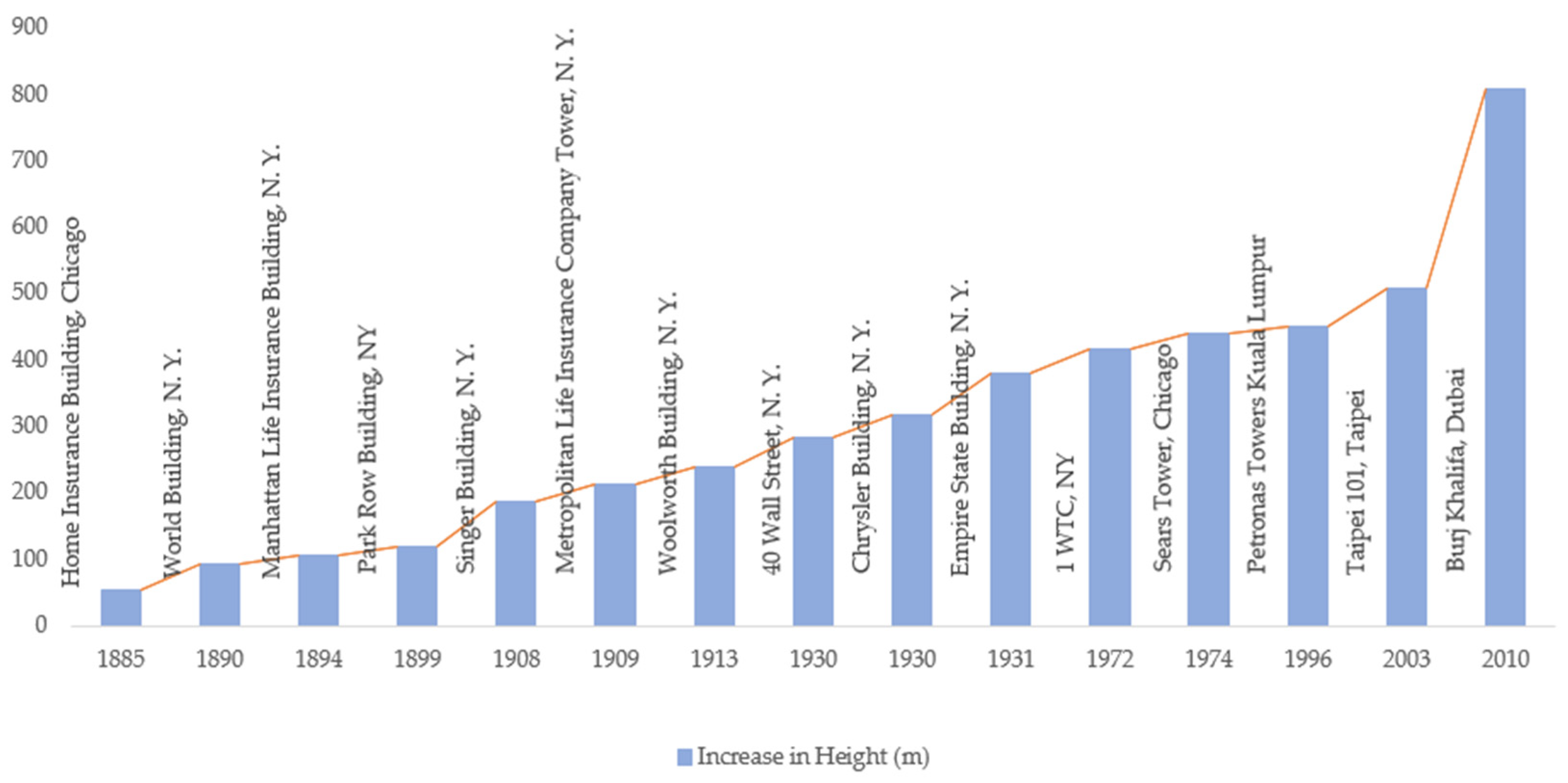
Due to urbanization and space usage, skyscrapers cropped up in the late 19th century. While the early structures considered gravity loads, subsequent buildings included lateral loads such as wind and earthquakes. In the 1890s, European cities disdained TBs. The Chrysler Building, 1930, and the Empire State Building, 1931, were the world’s tallest skyscrapers built in New York City. Skyscrapers are designed and keep evolving with technological development, cultural changes, and concern for the environment. Louis Sullivan, John Wellborn Root, and George B. Post reimagined skyscrapers as purer architectural types that symbolize the spirit of modern progress, at the same time evoking historical connections, especially in the United States [25]. There are three generations of skyscrapers; each one has its own character and way of construction. The three generations are classified as follows: (a) First Generation 1780–1850: At this time, the buildings consisted of stone or brick, and sometimes cast iron was added for decorative purposes. (b) Second Generation 1850–1940: Frame structures, with a skeleton of welded or riveted steel columns and beams. (c) Third Generation 1940–present: Buildings constructed after World War II until today constitute the most recent generation of high-rise buildings, with reinforced concrete construction and steel-framed reinforced concrete construction [21]. At the beginning of the 20th century, architects began working on more elaborate designs that included a wide use of detailing and decoration. When the Woolworth Building was completed in 1913 in New York City, it became a great example with its neo-Gothic style, complex carvings, and soaring spire. Other notable examples from that time were the Chrysler Building and the Empire State Building, in which sleek Art Deco designs merged with technology, creating some of the most iconic buildings in the world [25]. Table 3 lists the development of the architectural style of skyscrapers, while Figure 3 illustrates the development in height over the years.
Table 3.
The evolution of the architectural style of skyscrapers (source: developed by authors).
Figure 3.
Development of skyscrapers’ height through the years (image source: developed by authors based on [21]).
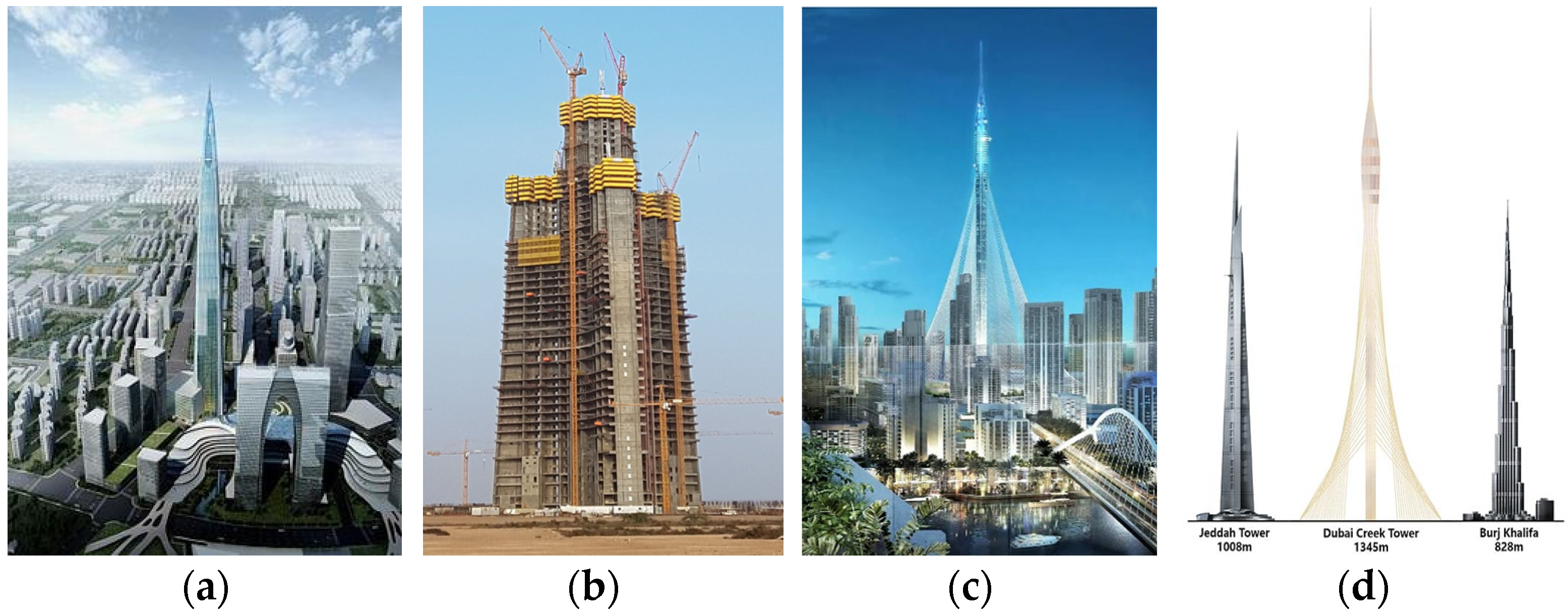
Although there are several towers that have been built since 2010 in different countries, to date the Burj Khalifa is the benchmark of the tallest skyscraper worldwide since 2010. The evolution of the world’s tallest buildings between 2010 and 2024 began with the Burj Khalifa in Dubai (828 m, 2010), followed by Al Hamra Tower in Kuwait City (413 m, 2011) and Princess Tower in Dubai (413 m, 2012). Moreover, the JW Marriott Marquis Hotel in Dubai (355 m) was completed in 2013, while 2014 saw the completion of Shanghai Tower (632 m) in China. In 2015, 432 Park Avenue in New York reached 425 m, followed by the Guangzhou CTF Finance Center (530 m, 2016), and Ping An Finance Center in Shenzhen (599 m, 2017). Additionally, China Zun in Beijing (528 m) and the Tianjin CTF Finance Center (530 m) were built in 2018 and 2019, respectively. Furthermore, Shanghai Tower remained prominent in 2020, while the year 2021 saw the completion of Makkah Royal Clock Tower Hotel (601 m). Additionally, Steinway Tower in New York (435 m) and Merdeka 118 in Kuala Lumpur (679 m) were completed in 2022 and 2023. Finally, the Jeddah Tower in Saudi Arabia, scheduled for completion in 2024, aims to reach 1000 m, potentially becoming the world’s first kilometer-high building [26]. Nonetheless, in the 21st century, skyscraper design focuses on sustainability and environmental impact, by incorporating green roofs, solar panels, and efficient HVAC systems to reduce energy consumption and mitigate CO2 emissions. Contemporary skyscraper design emphasizes mixed-use spaces (e.g., the Hudson Yards development in New York [21].
2.2.4. Why Do We Need to Build Skyscrapers?
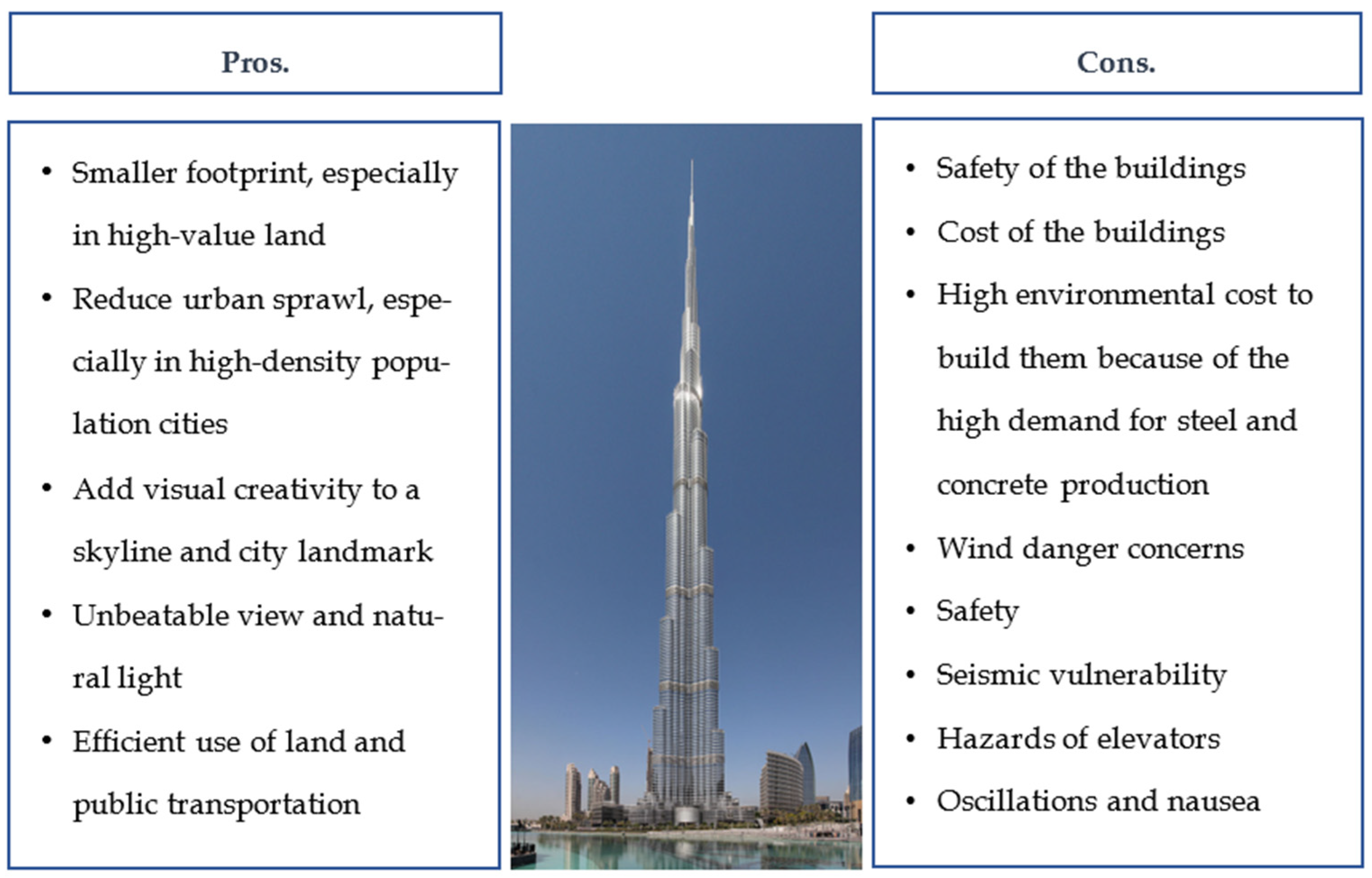
Towers and skyscrapers have been used for some 10,000 years for the purpose of def- ensive observation, visibility, and communication. While skyscrapers are decidedly newer, they are still over 100 years old. Skyscrapers are created for a purpose. Lower housing costs decreased inequality, and more people were allowed to reside in inner cities, which are three main reasons for building skyscrapers [21]. The main reason is the demand for space, both residential and commercial, in cities. Across the world, approximately 10 million people migrate to urban centers every month. Some very large cities do not have much land available to build on, driving developers to build tall, supertall, or even mega-tall buildings. There have even been cases when project owners purchased what is known as the excess development rights from adjacent buildings to build a taller building on their site. Moreover, there are the personality aspects of some developers and occupants, who want to build taller than the competition or to have an office address in a supertall building [27]. Skyscrapers help in solving multiple challenges facing urban areas, while also introducing many benefits to the cities that build them. Some of the key benefits of skyscrapers are (a) a solution to urban sprawl, (b) a tourist destination, (c) dramatic skylines, (d) prestige and great views, (e) hubs for economic activity, (f) a better return on investment, and (g) environmental benefits; for more details, you can see reference [28]. Skyscrapers, iconic urban structures, while offering efficient land use and EE, also face environmental and quality of life concerns. Critics argue that they block sunlight, increase traffic, and isolate people, highlighting the complex trade-offs between economic and sustainable density and livability. Figure 4 shows the pros and cons of skyscrapers.
Figure 4.
Pros and cons of skyscrapers, developed by authors (Image’s credit and source: Donaldytong, https://en.wikipedia.org/wiki/Burj_Khalifa#/media/File:Burj_Khalifa.jpg (accessed on 26 December 2024)).
2.2.5. AI’s Origin, History, Definitions, Types, Domains, and Applications
As a concept, AI is not a new one; tracing it back, it found that the origin of AI started in the 1950s. Arthur Samuel, a trailblazer in the field, identified it as “the discipline that imparts computers with the capability to learn autonomously, without explicit programming”. Differently, AI entails the utilization of computer systems that acquire knowledge through experience.
The objective of AI is to enable machines to perform tasks currently executed by humans but with enhanced efficiency and speed [29]. AI is a branch of computer science that deals with the implementation of human intelligence, solving knowledge-intensive problems and constructing self-learning systems using high-performance algorithms and neural networks. It deals with the ability of computer systems to perceive, analyze, and respond to inputs. Humans are said to be the most astute and clever species because they think critically, reason logically, and make decisions independently.
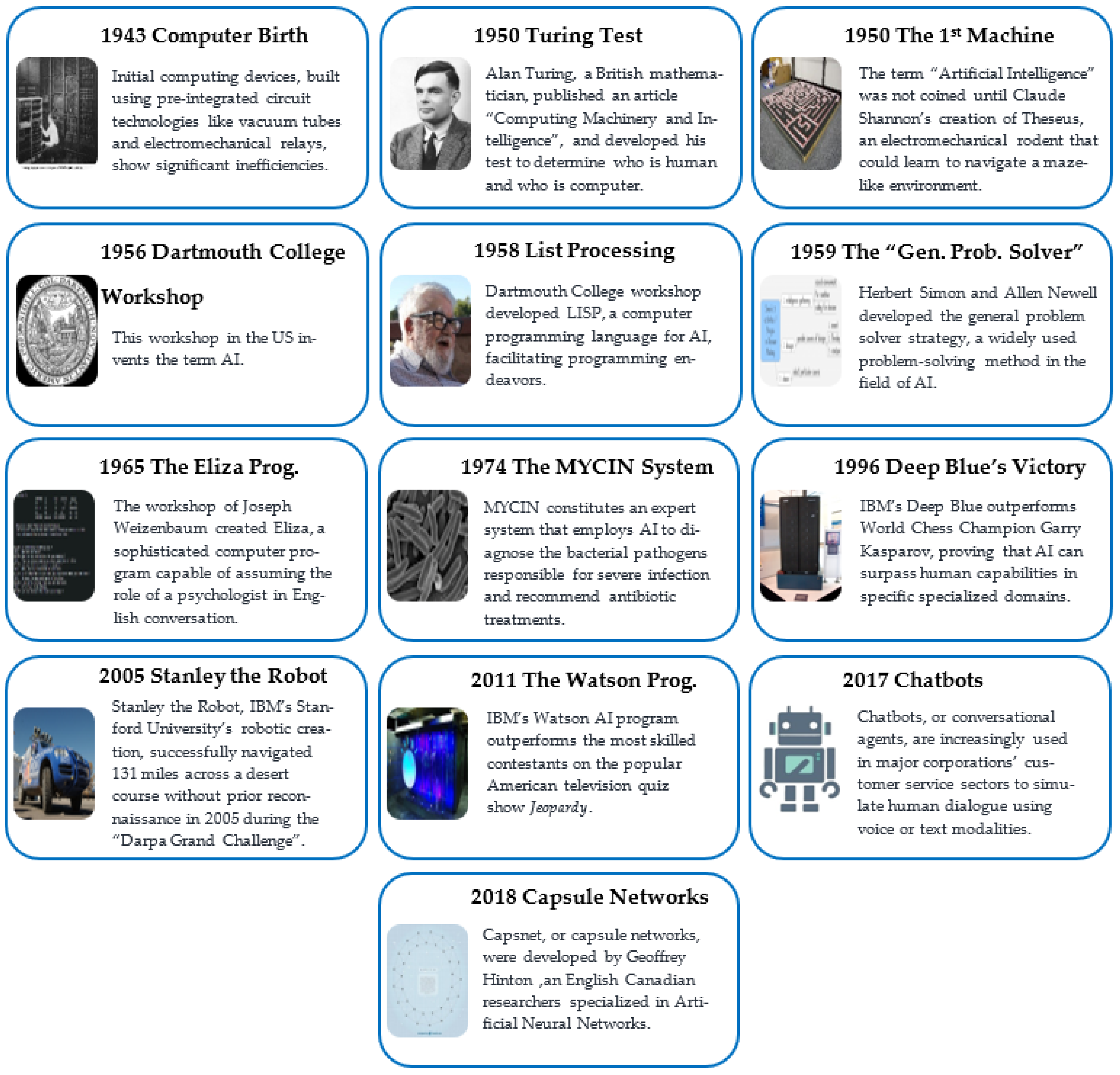
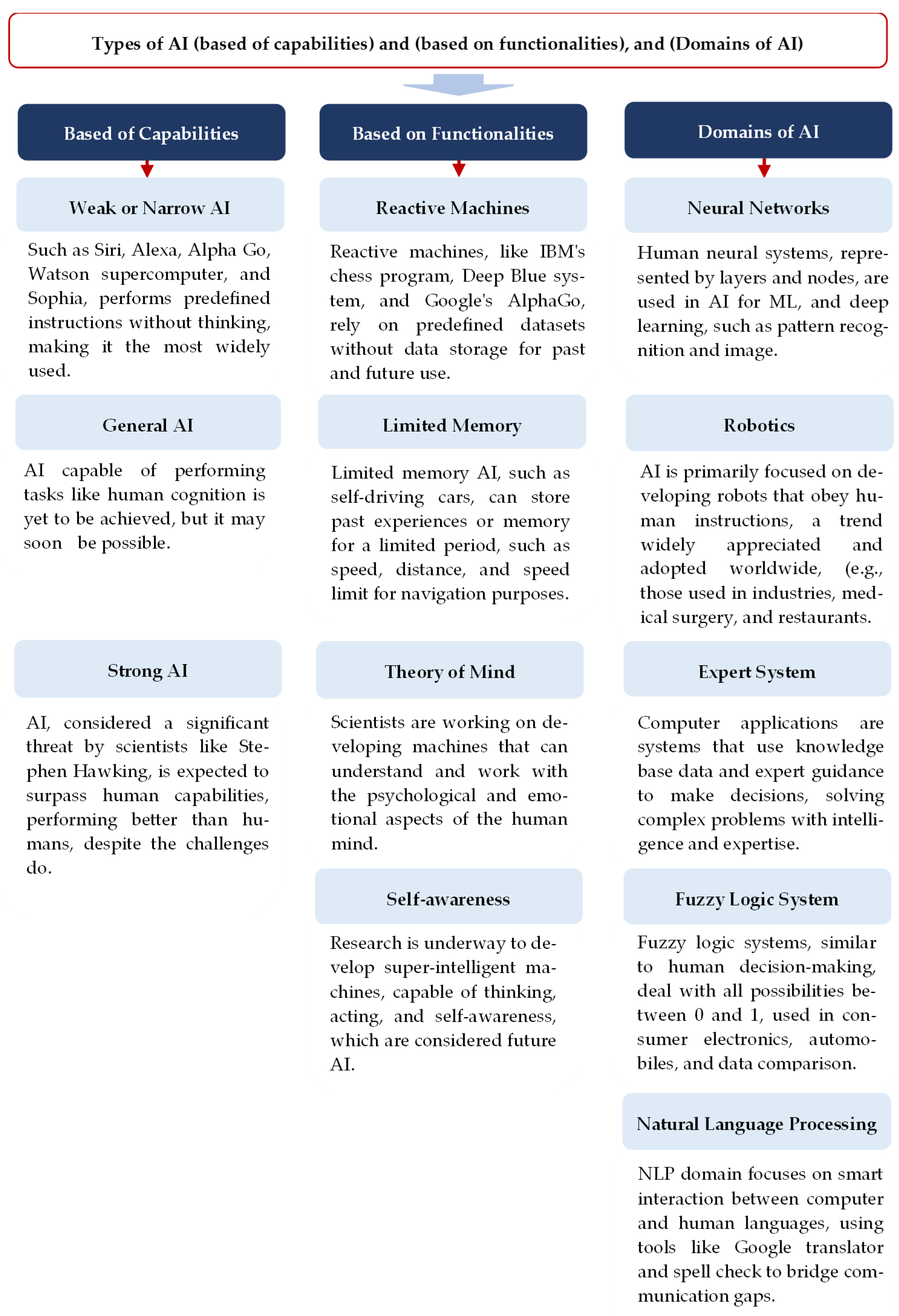
AI is a domain of mathematics, biology, philosophy, psychology, neuroscience, statistics, and computer science combined, the main objective of which is to develop transparent and interpretable systems for intelligent agents. Figure 5 illustrates the evolution of AI [30], while Figure 6 shows the types of AI based on capabilities and based on functionality, as well as different domains of AI. Moreover, AI often relies on heuristics, which are like “quick tips” for solving problems. These guidelines help tackle complex problems that simple algorithms cannot easily solve. They often incorporate human expertise, particularly when using sophisticated AI approaches.
Figure 5.
A brief history of AI evolution through the years (image source: developed by authors after Hello Future, 2022, [31]; (Image’s credit and source: M. Weik. https://commons.wikimedia.org/wiki/File:ENIAC-changing_a_tube_(cropped).jpg (accessed on 16 February 2025)). (Image’s credit and source: Elliott & Fry. https://en.wikipedia.org/wiki/Alan_Turing#/media/File:Alan_Turing_(1951).jpg (accessed on 16 February 2025)). Image’s credit and source: Osamu Iwasaki. https://en.wikipedia.org/wiki/Micromouse#/media/File:Micromouse_maze.jpg (accessed on 16 February 2025)). (Image’s credit and source: Dartmouth College. https://en.wikipedia.org/wiki/Seal_of_Dartmouth_College#/media/File:Seal_of_Dartmouth_College.png (accessed on 16 February 2025)). (Image’s credit and source: null0. https://en.wikipedia.org/wiki/John_McCarthy_(computer_scientist)#/media/File:John_McCarthy_Stanford.jpg (accessed on 16 February 2025)). (Image’s credit and source: MrunaltPatel. https://commons.wikimedia.org/wiki/File:Simons_3_stages_in_Decision_Making.gif (accessed on 16 February 2025)). (Image’s credit and source: Unknown author. https://en.wikipedia.org/wiki/ELIZA#/media/File:ELIZA_conversation.png (accessed on 16 February 2025)). (Image’s credit and source: NIAID. https://en.wikipedia.org/wiki/File:E._coli_Bacteria_(7316101966).jpg (accessed on 16 February 2025)). (Image’s credit and source: James the photographer. https://en.wikipedia.org/wiki/Deep_Blue_%28chess_computer%29#/media/File:Deep_Blue.jpg (accessed on 16 February 2025)). (Image’s credit and source: https://en.wikipedia.org/wiki/Deep_Blue_%28chess_computer%29#/media/File:Deep_Blue.jpg (accessed on 16 February 2025)). (Image’s credit and source: Clockready. https://en.wikipedia.org/wiki/IBM_Watson#/media/File:IBM_Watson.PNG (accessed on 16 February 2025)). (Image’s credit and source: www.freepik.com/free-vector/illustration-robot_2606096.htm#fromView=keyword&page=1&position=2&uuid=1fe57a5f-8ed5-4f45-973e-ee6aeea3f46a&query=Chatbots+Icon (accessed on 16 February 2025)). (Image’s credit and source: https://www.freepik.com/free-vector/circle-with-triangles-background_723422.htm#fromView=search&page=1&position=2&uuid=5df70b94-ca1e-4979-8aa7-2239dc59ac8c&query=Capsule+neural+network (accessed on 16 February 2025)).
Figure 6.
Types of AI based on capabilities, functionality, and domain of AI (image source: developed by authors based on [30]).
While some challenges are ideal for AI solutions, others are better handled through conventional computing methods that use exact calculations and straightforward logic. AI has multiple applications in architecture, ranging from analyzing data to creating generative designs through (a) Natural Language Processing (NLP), which focuses on the understanding between machine and human language; (b) Reinforcement Learning AI—by trial and error; (c) Evolutionary Computation that extends beyond optimization and uses representational paradigms; (d) Neural Computing Networks—considered a subcategory of AI, these mimic the human’s brain function; (e) Expert Systems—at a more advanced level, these are for solving complicated problems by mimicking human expert abilities in decision-making; (f) Genetic Algorithms—a branch of AI that uses pre-defined rules to solve problems, akin to how animals adapt to their environments; and (g) Knowledge Representation—AI systems require the ability to identify and represent knowledge, which is crucial for problem-solving and understanding in AI-related problems. Further details are discussed in a paper published in 2024 in the Engineering Research Journal [31].
The primary objective of AI is to furnish more transparent, interpretable, and explicable systems that can facilitate the establishment of a well-equipped intelligent agent. The notion of confiding in machines as human replicas originated with the inception of the Turing test, where the machine is evaluated without the examiner’s knowledge based on provided instructions, assuming it to be human, and if it successfully passes the test, it is deemed intelligent. Unquestionably, AI has influenced various facets of society and heralded a new contemporary era in the ongoing digital revolution [30].
There are seven recurrent patterns that are engaged and used in different combinations of how AI appears within its systems. In AI and ML systems, these patterns are used either for particular use cases or in combination to produce the intended results. Understanding these seven patterns provides insights into how to effectively apply them and contributes to the awareness of ultimate goals in the realm of AI and ML.
The varied and flexible nature of the seven patterns reflects the complexity of AI applications. By understanding and carefully implementing these patterns, developers and practitioners can navigate the complexities of AI systems, tailoring their approaches to specific needs and objectives. These patterns’ adaptability fosters creativity and customization, opening the door for AI breakthroughs and helping to realize its full potential [32].
The different patterns of AI are (a) the Hyper-Personalization Pattern, (b) Autonomous Systems Architecture, (c) Decision Support and Predictive Analytics, (d) Conversational Pattern, (e) Finding Patterns and Anomalies, (f) Identifying Patterns, and (g) Goal-Driven Patterns. These patterns shape AI implementation and are present in most sophisticated applications, aiming for optimal solutions and experiential learning [32].
2.2.6. AI in Design Exploration and Image Generation
The number of deep learning models due to AI is growing by the day, and this has consequently elicited discussion of whether AI may even replace the architects themselves. Design methodologies enabled by AI, such as NovelAi with its latest version is NovelAI Clio and Kayra models as of 2023, produced in Luxembourg and developed by NovelAI team, DALL-E; the latest version is DALL-E 3, produced in USA and developed by OpenAI, Midjourney; the latest version is Midjourney V6 and released in late 2023, produced in USA, and developed by Midjourney Inc., and Stable Diffusion; with its latest version Stable Diffusion XL 1.0 released in 2023 and SDXL Turbo in late 2023, produced in UK and USA, and developed by Stability AI in collaboration with RunwayML and CompVis, all the previous AI image generation tools allow for efficient image creation without having to have broad prior knowledge of algorithms and programming [33,34,35,36]. This is where, during the conceptual design process, architects are asked to interpret several massing suggestions in various building styles in the shortest time possible. This entails a great deal of modeling and drawing, which is very burdensome. Since the 1960s, AI has emerged at the forefront of architectural design. Currently, there is a growing body of scholarly questions regarding its disruptive effects on multiple professional fields [37].
Therefore, ML is increasingly being used in AI-enhanced design, particularly in text-to-image-based GAIs (AI image generators). These tools can create visuals for messages in natural language quickly, making them popular. Although not yet mature enough for general use in the workplace, their usage is expected to change workflows and working modalities significantly. They are used for various architectural purposes, including image synthesizing, floor planning, diagram creation, and three-dimensional modeling [37].
These AI systems can balance complex objectives that range from structural performance to daylighting, spatial efficiency, and aesthetic expression. AI-generated imagery enables designers to transform abstract artistic visions into real-life-like renderings and visualizations of designs. Diffusion models and GANs are examples of advanced ML that have had large-scale training on vast architectural datasets of designers, and they can refine AI-generated imagery with natural language and interactive tools. This synergy between humans and AI will herald a new frontier in how professionals explore ideas, communicate design intent, and bring spatial concepts to life.
Several strategies can be employed to ensure that AI-generated designs meet functional requirements while integrating with architectural aesthetic principles. These strategies combine both technical approaches and design considerations, as informed by recent studies and practices in the field of architecture and AI [38,39]. Table 4 lists these 10 key strategies.
Table 4.
Ten key strategies to ensure that AI-generated design meets functional requirements while integrating with architectural aesthetics (source: developed by authors based on [38,39,40]).
By employing these strategies, architects and designers can leverage AI in a way that ensures that the generated designs are not only innovative but also practical and culturally relevant. The integration of iterative processes, user feedback, and interdisciplinary collaboration is essential for achieving a balance between functionality and aesthetics in architecture [40].
2.2.7. Natural Abstraction, Biomimicry Architecture, and Architectural Drawings
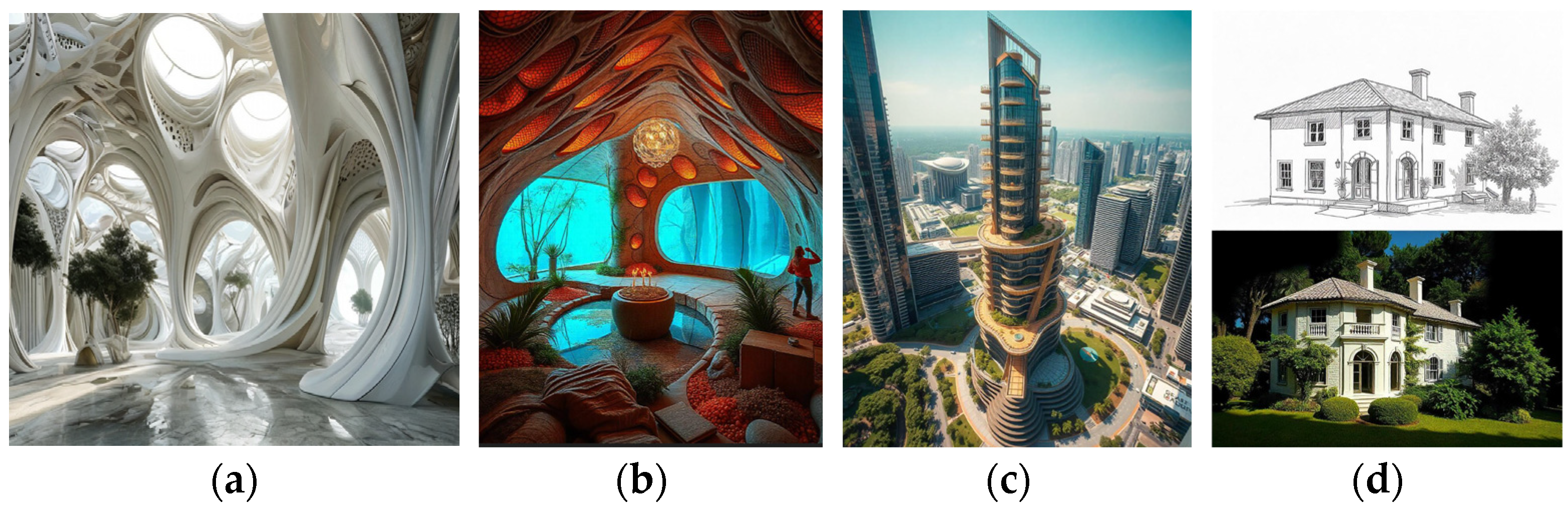
AI image generation has a high potential for application in the easy creation of radical, futuristic, and highly abstract forms, as shown in Figure 7a. It helps in developing images belonging to unique and abstract designs, many of them featuring an aesthetic sense and composition. Such results are achieved by the creation of a text prompt that combines different ideas, architectural styles, and highlighted phrases like science fiction (sci-fi) and futuristic elements.
Figure 7.
AI applications in abstracting forms, biomimicry, and enhancing architectural sketches (images’ source: developed by authors). (a) Abstract form and pattern inspired by nature, (b,c) AI and biomimetic architecture, (d) AI in enhancing sketches.
For example, Tim Fu, a designer working for Zaha Hadid Architects, has presented several design projects based on organic shapes and textures taken from nature in visually attractive architectural representations displaying the concept of the future with ideas and materials. These manifestations of design underline the capability of AI image generation to create deeply imaginative and abstract forms for the investigation of new concepts and styles in architecture [31].
Biomimetic architecture can use AI image generation to create designs that mimic natural ecosystems. El Sayary used Midjourney to create imaginative forms inspired by natural phenomena like ant colonies and forests, as illustrated in Figure 7b. This approach allows for highly articulated, fluid shapes with a persuasive structural and aesthetic coherence, reflecting nature and the locale [41].
Additionally, AI image generation can enhance architectural sketches and concepts by training systems to complete incomplete sketches or develop new versions based on initial sketches. This will go a long way in helping architects study their design concepts without much visualization, as presented in Figure 7c. A good example is the use of the img2img-a technique from Stable Diffusion, applicable in the creation of façade design visualizations from simple sketches [41], while Figure 7d shows AI improving sketches.
2.2.8. The Emergence of Artificial Intelligence in Architecture and Construction
The 2018 AI Knowledge Map (AIKM) depicted in the book Artificial Intelligence and Architectural Design: An Introduction, a taxonomy of AI technology by Francesco Corea, is a commendable attempt at creating an infrastructure for accessing AI knowledge. He made a diagram showing where the AI problem domains and AI paradigms intersect [42]. The methods used by AI researchers to address certain issues are known as AI paradigms, and the issues that AI has traditionally been able to resolve are known as AI problem domains. There are three broad approaches to AI paradigms: (a) statistical, which is based on mathematical tools to solve specific sub-problems; (b) sub-symbolic, where specific knowledge representations are a priority; and (c) symbolic, which claims that manipulating symbols is all that human intelligence is capable of [41].
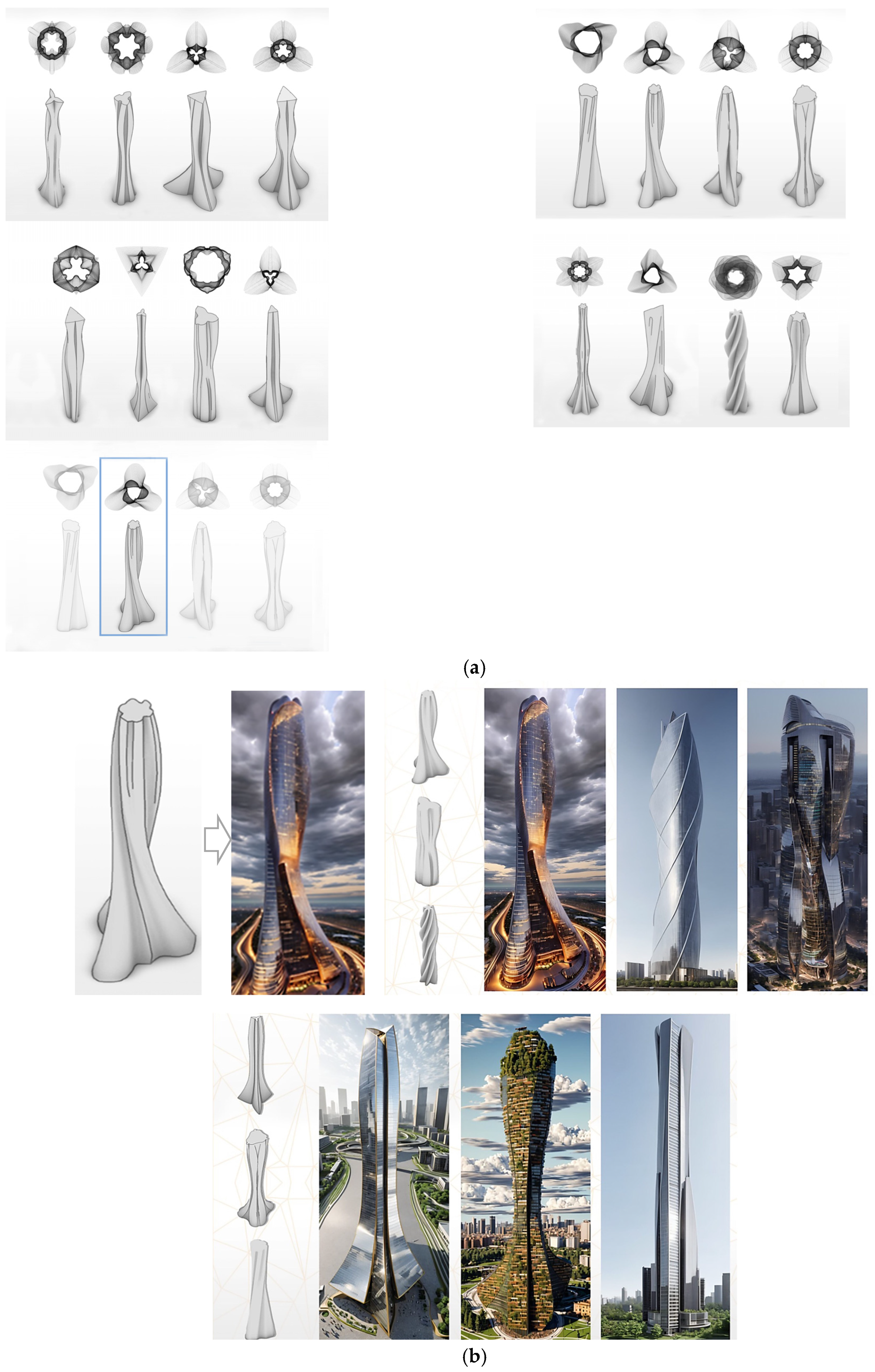
In consequence, it can be said that the architectural discipline will likely deal with statistical approaches, in addition to sub-symbolic one that mentioned above when working with symbols from the environment. Furthermore, it will be obvious to say that the areas of planning, communication, and perception will mostly overlap. Therefore, the graphic makes it clear that distributed AI systems and autonomous systems are and will be the most suitable for handling the transition between architectural design techniques and AI-based algorithmic procedures [41]. AI is revolutionizing the building industry by transforming traditional practices to new advanced ones, shifting architects’ roles to become system designers instead of designing forms, leading to design processes driven by data. Figure 8 portrays the generation of multiple tower proposals by Dynamo scripts and additionally illustrates examples of Dynamo or Revit geometry to Promeai rendering. AI in construction can improve both efficiency and safety by automating tasks and using digital twins for accurate planning. Additionally, it can provide real-time optimizations and adaptations that contribute to revolutionizing the building lifecycle. However, ethical considerations and new industry skills are needed [30,43].

Figure 8.
AI’s role in generating alternatives for tower designs, showing the capabilities of AI tools and technologies in generating several alternatives (images’ source: Noori and Yashoaa, 2023 [39]). (a) Different forms of towers generated by Dynamo script; these scripts lead to having multiple tower proposals; the form that highlighted with a blue frame is the conceptual mass that will ultimately be selected for the following AI augmentation phase [39]. (b) (Left) Dynamo or Revit geometry to Promeai to generate high-quality renderings. (Middle and Right) Alternative towers [44]. (c) An additional illustration of using multiple merged reference images to improve Dynamo models with AI.
AI contributes to different design phases:
- Design phase: The role of AI in this phase is enhancing space usage, energy efficiency, and structural integrity, which helps architects and engineers discover innovative, efficient designs away from traditional methods. The tools used at this phase are Autodesk Revit with Dynamo by Autodesk USA, DALL-E2 released in 2022 as the successor to DALL-E, and DALL-E3 was later released in 2023 by OpenAI USA, Midjourney multiple versions have been released (V1 through V6) by Midjourney, Inc., San Francisco, CA, USA, Hypar a cloud-based computational design platform by Hypar Inc., Culver City, CA, USA, and Wallacei, an evolutionary mutli-objective optimization engine for Grasshopper, developed by Wallacei Ltd., London, UK;
- Construction phase: AI is used in project management and on-site safety to analyze schedules, delay predictions, and resource allocation; computer vision technologies are utilized in sites’ monitoring and hazard identification. The tools used are Smartvid.io, Buildots, Scaled Robotics, and Versatile Natures, ML and IoT, enabling automated data collection, reducing human error, improving resource management, and speeding up decision-making. ML methods have also been successfully applied to predict mobile resource and equipment management trajectories [40];
- Building operation and maintenance: AI revolutionized this phase by energy optimization, early issues identification, and occupants’ experience enhancement by personalizing comfort settings, in that way reducing downtime and maintenance costs; the used tools are BuildingIQ; a cloud-based platform that uses predictive energy optimization, originally from Australia, now based in the USA, by Building IQ, Inc. (San Mateo, CA, USA) developer, Enlighted; an IoT platform for smart building management by Enlighted Inc. that now part of Siemens in Santa Clara, CA, USA, 75F; Building intelligence system focusing on HVAC optimization, by 75F developer in USA, Grid Edge; AI-driven building energy management platform, by Grid Edge, Birmingham, UK, Brainbox AI, Autonomous AI HVAC optimization system, by BrainBox AI developer, Canada, and Sidewalk Labs Mesa, Commercial building energy management platform, by Sidewalk Labs (a subsidiary of Alphabet Inc.) developer, Mountain View, CA, USA.
2.2.9. The Convergence of AI and Tall Building Development
AI integrated into urban architecture ensures efficiency, sustainability, and decision-making in skyscraper design, construction, and management, furthering satisfaction for both urban occupants and the environment [18]. The convergence of AI and skyscrapers can be discussed based on the following: (a) The unique challenges of TBs that AI can potentially solve, improve the efficiency, and comfort of TBs by optimizing structural systems, anticipating traffic flow, reducing waiting times, addressing energy management, enhancing safety, and managing construction logistics [19]. (b) Examples of AI application in skyscraper projects: AI has shown promise in tall building development and is used to optimize schedules, predict delays, and manage resources to further improve efficiency and user comfort in large structures. (c) The potential of AI to disrupt various aspects of tall building development with a view to optimizing energy efficiency, structural integrity, and aesthetic appeal. It can improve safety, efficiency, quality control, logistics, and resilience, thereby enabling skyscrapers to function like dynamic systems with longer lifespans and a greater adaptability to future needs [18].
2.2.10. Artificial Intelligence and Re-Imagination of 10 Iconic Buildings Worldwide
AI has revolutionized languages, design, technology, arts, and many other spectrums of life. From the fantasy world, designers like Andres Reisinger and Ariadna Giménez draw inspiration to create products that are partially AI-generated. The real estate company GetAgent has also ventured into AI, redesigning iconic buildings in an innovative style. These artists have expressed the ability of AI to transform various aspects of life, including architecture and design [45]. Table 5 depicts the virtual redesigning of some famous buildings across the world.
Table 5.
Virtual redesign of selection of world’s most famous buildings in architectural styles that could hardly be farther from those of the originals (source: developed by authors based on [44]).
2.2.11. Artificial Intelligence and Smart Buildings
AI is now rapidly changing the smart building sector, bringing into consideration a new beginning in the race for efficiency and sustainability concerning the built environment and user experience. Smart buildings integrate various systems and technologies together to optimize their performance and make lives more comfortable for their occupants. Such buildings are increasingly considering the use of AI in processing and analyzing large bulks of data emanating from sensors and Internet of Things (IoT) devices. AI algorithms optimize smart buildings for energy consumption, space utilization, and schedule consistency. Key use cases include HVAC, lighting control, predictive maintenance, security, and occupant experiences. ML models adjust systems, saving energy and improving comfort, while AI-driven anomaly detection reduces maintenance costs [46].
Designers face the challenge of creating new and retrofitted buildings and infrastructure in the coming decades. Traditional design methods are economically, ecologically, and culturally unsustainable. As resources become scarce, building technologies diversify, and the built environment becomes more evident. AI integration is transforming buildings into interactive mechanisms that provide customized patterns, energy, and cost savings and offer personalized experiences beyond concrete and steel versions. The 21st-century challenge is exploring the application of theories in resolving construction issues and comprehending system behavior. Systems are complicated due to the fact that they involve the building’s structure, the operational procedures inside the building, the information and communication systems, and the humans who manage the building and put it to use. Buildings with similar contexts could show different ways in which energy is used, and that basically happens because of differences in the management system and user behavior that influence the various ways energy is utilized [47].
Chaos theory should be applied to construction. Energy conservation in buildings is a complicated issue, and this is why many scientists from different fields are interested in participating in it. For that very reason, it also represents a challenging but promising field of research. In the past three decades, hundreds of scientific and technological articles have been published in various international journals on the subject of the energy conservation in buildings. The present work evaluates the role of AI as a design tool in building automation systems. The application of current methodologies in AI leads to the development of intelligent buildings with main goals in the direction of energy efficiency, comfort, health, and productivity for the occupants of the space [46].
2.3. Analytical Approach
It becomes essential to understand how AI technologies interconnect with and transform the development of TBs. This section will explore the qualitative impacts of AI implementation in high-rise architecture through the analysis of case studies that have used AI in different phases of their construction.
2.3.1. Artificial Intelligence and Skyscrapers
The theoretical foundation of AI in the context of skyscraper development draws from diverse fields, including those of computer science, cognitive psychology, and systems theory. In summary, AI seeks to develop systems that can realize and understand their environment, reason on complex problems, and act to achieve certain capabilities for the multivariable challenges presented by TBs. ML theories, deep learning, and reinforcement learning provide a framework to improve particular tasks by experience—a process that similarly mirrors the nature of the architectural design and building process. The intersection of AI with skyscraper development combines multiple engineering disciplines, enabling intelligent systems to optimize design, performance, and operations. AI’s capacity to process complex data and solve multi-objective problems makes it particularly suited for addressing the challenges in tall building development [48].
2.3.2. AI in Preconstruction
A commercial construction project necessitates the collaboration of a multitude of individuals and groups with varied backgrounds and expertise to coordinate and strategize the project’s trajectory prior to the commencement of construction activities. The term “preconstruction” delineates the phases of construction that transpire before the onset of the physical construction phase. Preconstruction encompasses a plethora of stakeholders, such as building proprietors, architects, engineers, main contractors, subcontractors, and suppliers of construction materials [29]. The preconstruction phase of commercial construction ensures timely completion, is within budget, and meets all client needs by prioritizing and organizing individuals with specific activities. The strength of the initial foundation built in this phase greatly influences the overall strength of a project. Preconstruction variability is based on the structure, various delivery methodologies, the involved tasks, and whether the project is public or private.
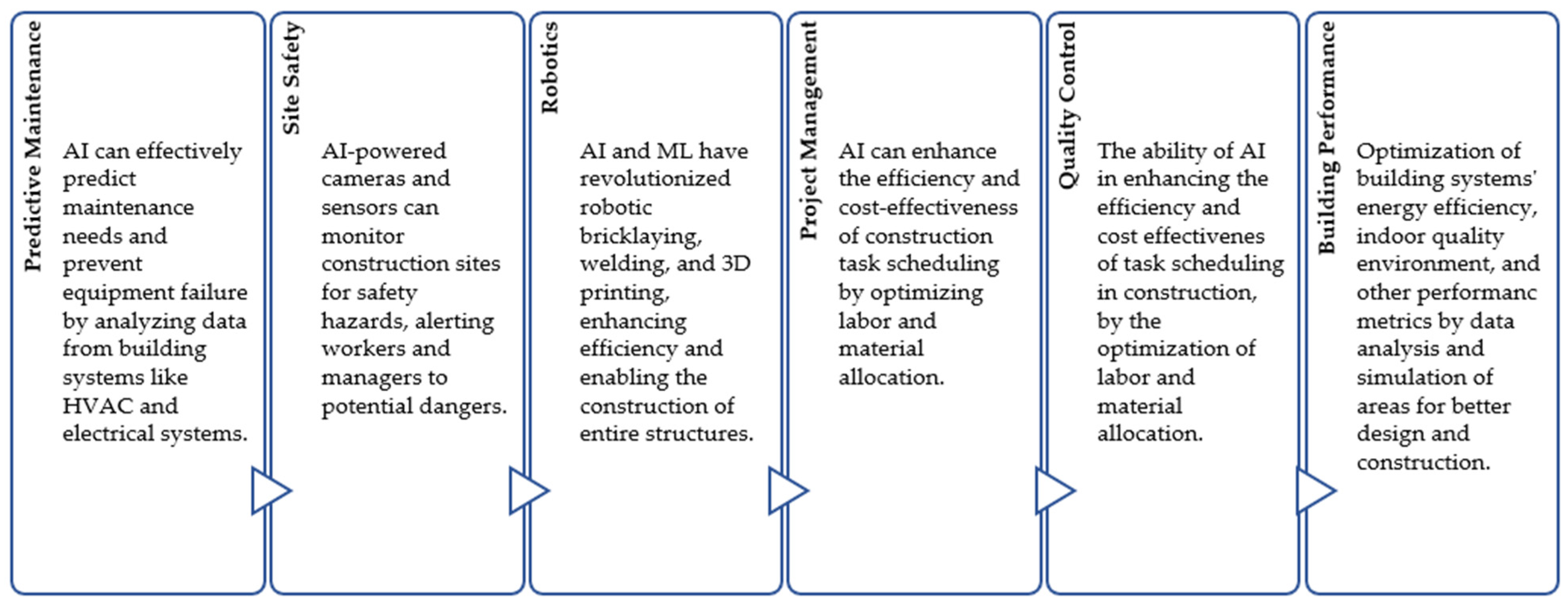
AI influences different spheres of construction, such as predictive maintenance, robotics, site safety, project management, quality control, and building performance [49]; “Downtobid” is considered one of the best preconstruction programs; the reason behind developing this software was the demand for bid management that is efficient, user friendly, and streamlined; additionally, this platform assists in achieving thorough scope coverage for improved risk mitigation, teamwork, and project scheduling.
The utilization of AI in the preconstruction phase can be summarized as follows: (a) Predesign; (b) Design Development, which is a major phase of the project’s development; (c) Construction Document, which is the last step in document creation, including plans, specifications, and contracts (AI-based tools such as NLP will be able to extract data and analyze it from a given text so much faster compared to traditional methods); (d) Bidding and Negotiation, giving out the plans to the trades, contractors, and manufacturers for bidding; (e) Permitting and Approvals, where AI is utilized in the submission of construction documents to governmental organizations for review and approval, ensuring building code compliance and managing the permit process; and (f) Finalize Preconstruction, where the finalization of contracts, mobilization of contractors, and commencement of construction activities take place with the help of AI, which can boost performance along the preconstruction lifecycle [50].
Additionally, in the planning phase, stakeholders’ requirements and targets must be understood and defined, requiring close communication among all participants. This helps identify gaps between technologies and user expectations, setting targets and determining development directions. Defined evaluation metrics assess the AI method’s performance, implementation impact, and project success, providing guidance, reducing uncertainty, and enhancing system explainability and accountability [51].
2.3.3. AI in Design and Construction
AI has manifested within the construction sector, signifying a pivotal juncture in the evolution of this industry. The advent of AI presents an opportunity to revolutionize our field. Delving into this new realm of construction technology necessitates a comprehensive comprehension of the nature of AI and its capacity to provide unparalleled solutions for enhancing the efficiency and efficacy of the construction industry [29]. The phases of design and construction establish a crucial basis for the environmental impact, efficiency, and performance centered on humans throughout the lifespan of a skyscraper. The incorporation of AI in these initial stages can significantly enhance results across various factors. Within the domain of design, AI is facilitating a change in approach from traditional manual procedures towards generative design and computational investigation on an unprecedented scale.
AI is being used in generative design to optimize multiple objectives, such as reducing carbon, improving natural lighting, and simplifying construction processes. This computational exploration uncovers solutions that are unattainable through manual development. AI also plays a crucial role in skyscraper construction, enabling real-time monitoring and optimizing equipment utilization [29]. Skyscrapers are utilizing AI-driven generative design and advanced construction methods to achieve architectural ambitions and reduce hazards, transforming the landscape of skyscraper construction by combining human designers and computational processes. Figure 9 outlines AI technology emerging in other areas of construction [29].
Figure 9.
Examples of AI technology being implemented across different areas of the construction industry, highlighting innovative applications (e.g., predictive analytics for project management, automated design generation, robotics in construction processes, and smart building systems). (source: developed by authors based on [29]).
AI in construction has a bright future ahead of it, as more AI-based tools and methods find their way into workflows. AI is anticipated to become an increasingly important component of construction as technology develops, contributing to increased productivity, lower costs, and better building performance results. AI has entered the building sector; Manas Bhatia envisions a future characterized by residential skyscrapers adorned with trees, plants, and algae serving as “air purification towers”.
Through a collection of intricate visuals, this architect and computational designer from New Delhi has materialized this concept. The envisioned structures are portrayed towering over a futuristic urban landscape, their organic shapes drawing inspiration from natural forms. The AI x Future Cities series by Manas Bhatia investigates sustainable infrastructure in urbanization.
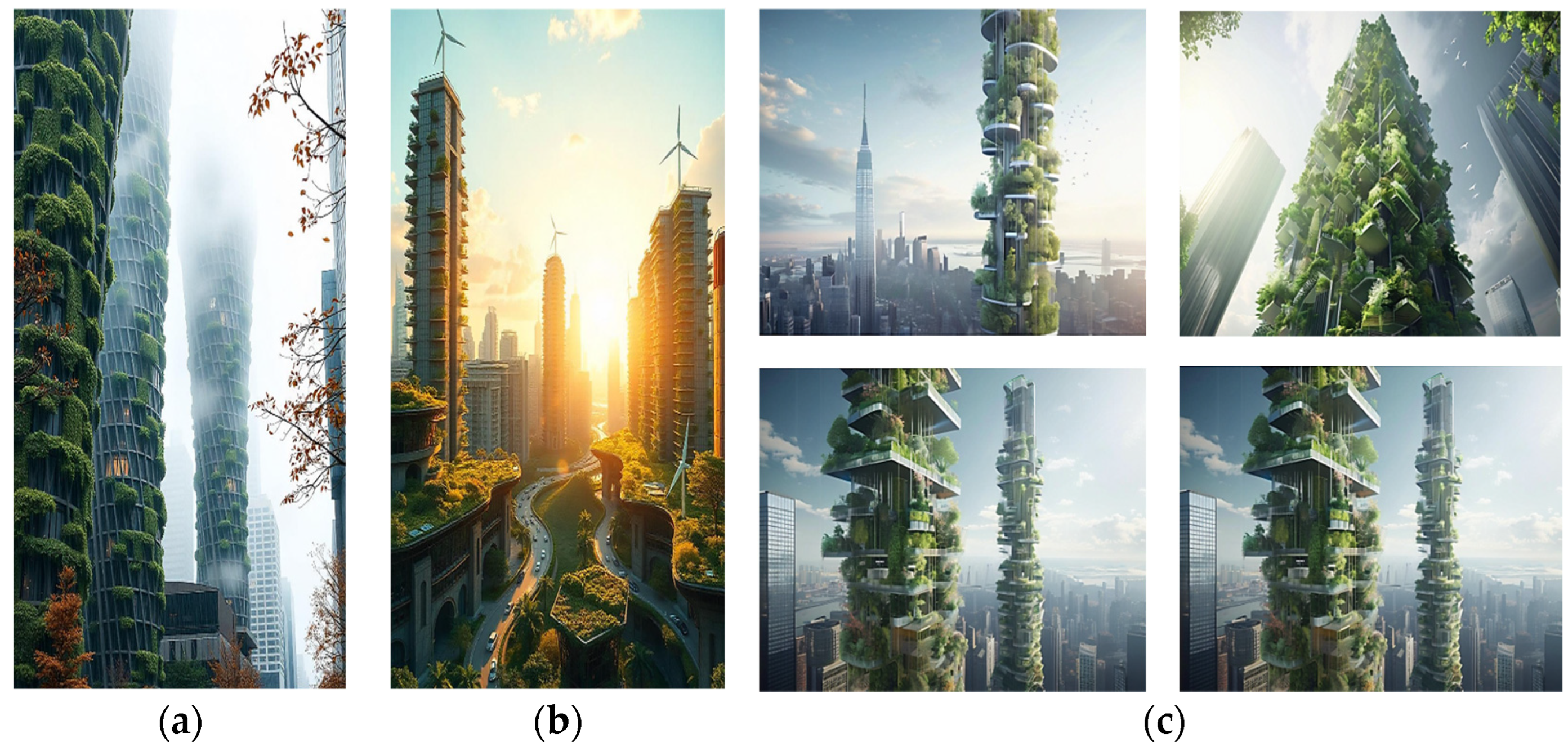
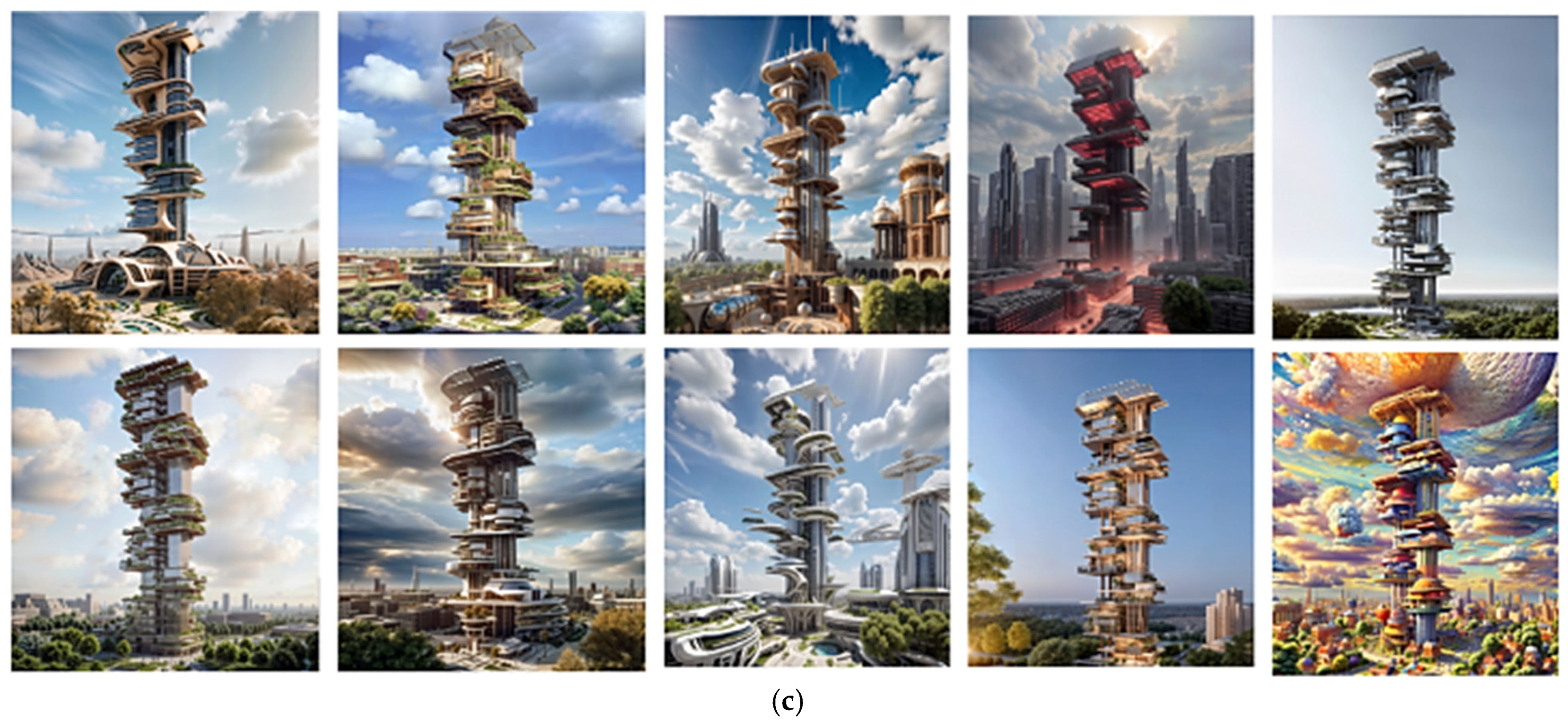
The AI-generated pictures show a perfect metropolis with biophilic air purification towers that cut down on artificial cooling and carbon emissions. Bhatia creates this utopian, green architectural idea through Midjourney [52]. Images of biophilic architecture and conceptual skyscrapers in The AI x Future Cities series produced by Midjourney (Manas Bahatiah) are illustrated in ref. [52], AI assisted in generating same of these ideas in seconds, as illustrated in Figure 10, but with other AI tools instead of Midjourney. In a proposal labeled “Symbiotic Architecture”, Bhatia envisioned a prospect where structures are constructed from organic substances. By utilizing signs like “giant” and “hollowed”, he formulated depictions of what he termed a “utopian future” where dwellings are nested within trees resembling redwoods and symbiotic architecture.
Figure 10.
AI x Future Cities conceptual design based on Manas Bahateia’s ideas to depict AI tools’ capabilities in imagining ideas (images’ source: developed by authors). (a) Skyscrapers envisioned as biophilic towers for air purification; (b) a flowing, utopian metropolis with structures that serve as green areas, (c) other alternatives and imaginings of the same project.
Contemporary building AI is still in its early stages. We expect more robust and dependable technologies, like AI and ML, to advance more quickly. AI holds great potential in the building sector. AI has been well integrated into the construction sector, ranging from data analytics and augmented reality to construction project management [52]. Technology in the construction sector has advanced quickly, especially in fields like project management and site monitoring. AI’s potential to enhance construction safety and productivity is hindered by concerns about its technical maturity, reliability, safety, and privacy implications, affecting industry transformation.
The recent surge in popularity of AI visualization tools like OpenAI’s DALL-E 2 and Google Research’s Imagen has instigated fresh inquiries regarding creativity and artistic authenticity. Engendering concepts that surpass users’ expectations has the potential to stimulate innovative thoughts and enhance the design procedure, one architect emphasized [29].
2.3.4. AI for Building Operations and Management
AI is revolutionizing building management, bringing transparency and improving efficiency. It enhances commercial building with its intelligent online analyses of long-term trends and speed of decision-making. By training itself on building automation and linked systems data, AI can learn very quickly to recognize these interrelations and execute actions that it has learned. Likewise, skyscrapers’ management and operation can be undertaken with predictive, pre-emptive, and automatic methods. AI-based condition monitoring uses machine learning algorithms to predict failures of building parts, such as HVAC and elevators, thereby reducing downtime and the costs of repair or replacement. It is also used to monitor occupancy, energy usage, and other external conditions to optimize lighting, temperature controls, and ventilation while ensuring comfort. AI provides advanced automated building management through the combination of multiple sensor networks, including occupancy, air quality, security, and data analysis. Both Smart Building Management Systems (BMSs) and Building Automation Systems (BASs) use AI to control intercommunications and entire building operation modes, enabling intelligent management in improving building performance [50].
- A digital building twin
Domain-specific semantic models of building systems, like HVAC, create a digital twin of the building’s structure and installed systems, which configure and form through twins living in the cloud; more illustrated figures about this semantic model and the essential components for digital twin creation of the building are in references [46,48]. Such replications provide a systematic visualization of the layout, components, and connections of the building. Especially, when equipment with IoT capabilities is quick to connect to the internet, all the structured data and information, thus, the devices and systems have got integrated with the digital twin, allowing for an effective situational presence with no need to be in place to conduct the apparatus or systems [49,53].
- b.
- Time Series
Historical research on a built form has been advanced by collecting and transferring information from relevant systems to a digital twin of the structure. These semantic data provide AI with a context for specific relations, providing timely targeted building design information. Cloud infrastructure AI models can be uploaded to devices, enhancing the device’s intelligence. Over time, the system directs itself more instinctively towards its environment, offering proper responses to various circumstances [53].
2.3.5. AI-Driven Environmental Controls and Environmental Impact
AI is predicted to remain right at the heart of innovation in technology in the future. Currently, AI is changing the face of leading scientific communities and industries across the globe by making phenomenal advancements possible and paving new ways of dealing with complex issues. The omnipresence of AI will usher in an era of new possibilities and will render the technology a significant enabler. The challenges imposed by climate change, pollution, and the depletion of natural resources have pointed out that new, more effective, and better methodologies are needed in order to protect and monitor our environment [49].
The emergence of AI in environmental surveillance has created unprecedented possibilities for safeguarding our planet’s ecological well-being. Table 6 lists AI’s role in environmental surveillance and preservation. In response to the urgent challenges of climate change, forest destruction, and diminishing biodiversity, cutting-edge technologies have become essential for effectively monitoring and preserving our natural ecosystems. Comprehension of the role of AI will contribute to shaping a more environmentally friendly and resilient future [49]. The use of AI systems in construction can cause noise pollution and disturb wildlife habitats. In order to avoid irreparable harm, environmental impact assessments are essential. Another issue is energy use, where energy consumption can be decreased with the aid of intelligent management systems and energy-efficient equipment [51].
Table 6.
AI applications in monitoring the environment and environmental conservation (source: developed by the authors based on [54]).
Rather than acting on pre-programmed schedules, AI can implement truly responsive environmental controls that adapt dynamically to evolving conditions and needs. The systems can prepare in advance the indoor environment for spikes in occupancy based on inputs like meeting schedules and commutator travel patterns. They will seamlessly match outdoor air ventilation and cooling loads with the number of occupants in each zone. AI-driven circadian lighting can be modulated to follow the body’s natural rhythms. Even more advanced models will build personalized thermal and lighting profiles based on personal comfort preferences for occupants, in support of personalized environmental controls. Regarding AI applications, especially in monitoring the environment and conservation of the environment, AI is playing a revolutionary role in Earth ecosystems, biodiversity security, and the promotion of sustainable environmental behavior. It has transformed wildlife tracking by applying ML algorithms to animal movements, to gain insight into their lives. Technology that is powered by footage from camera traps, drone images, and GPS location data has transformed wildlife tracking [55].
2.3.6. Artificial Intelligence and Sustainability—How AI Can Address Sustainability by Different Companies’ Practices?
Sustainability is crucial in tall building development, as it minimizes environmental impact and maximizes resource efficiency. AI helps architects and engineers use advanced data analytics to identify energy-efficient materials, optimize energy consumption, and enhance natural lighting and ventilation plans. AI-powered predictive models also inform maintenance strategies and retrofitting needs, fostering sustainable urban environments for future generations [56].
The construction industry is increasingly adopting technology due to its operational advantages and potential to improve project outcomes and productivity. This shift is driven by the industry’s growing awareness of the transformative potential of technological integration in addressing urban built environment challenges such as safety concerns, labor shortages, and cost and schedule overruns and sustainability [52]. The construction sector’s role in societal development and infrastructure creation is crucial for achieving the nine Sustainable Development Goals (SDGs). AI integration is a strategic strategy for enhancing sustainability efforts and reshaping the construction landscape, highlighting the transformative potential of AI technologies. The potential of AI for SDGs is mentioned in different tables in reference [57].
Several companies are leading the way in integrating AI to enhance sustainability in their architectural and construction practices. For example, Autodesk has developed tools like Green Building Studio, which utilizes AI algorithms to evaluate the sustainability of building designs, assess energy consumption, and optimize materials usage, and which also utilizes generative design AI to optimize building structures, developed generative designs for architecture software that reduces material waste, and helps in creating more energy efficient skyscraper designs [58]. Their generative design technology enables architects to create buildings that maximize resource efficiency and minimize construction waste.
Another notable company, Kohn Pedersen Fox (KPF), employs AI-driven analysis to improve the energy performance of their skyscrapers. By utilizing ML models, they can assess various design parameters and simulate environmental impacts, leading to more sustainable architecture. Moreover, Foster and Partners implements AI-driven parametric design tools and uses ML to stimulate building performance, and it develops sustainable skyscraper designs with a reduced carbon footprint that leads to achieving sustainability. Moreover, Arup applies AI for environmental simulation and optimization, uses ML to predict and minimize building energy consumption, and develops computational design tools for sustainable high-rise structures. These examples illustrate how AI technologies contribute to sustainability by improving energy efficiency, optimizing materials, and minimizing waste, thus reflecting a commitment to environmentally responsible design and construction [59].
2.3.7. The Future of Artificial Intelligence in Construction
AI will transform building as a whole and how we build things. First off, since construction managers will not need large teams to perform administrative responsibilities, it will drastically lower building costs. Project management will be made simpler by artificial intelligence. Additionally, since AI can identify possible risks on building sites and give construction teams precise, up-to-date information, we will see increased job-site safety and collaboration.
The necessity to visit construction sites will disappear with the advancement of Virtual Reality eyewear. Alternatively, by deploying drones equipped with cameras beneath buildings on a construction site, project managers can monitor advancements. AI will not completely replace people, despite the concern of many that there will be enormous job losses in the construction business. Instead, construction sites will become hybrid, combining human and machine labor. The construction industry will lead the way in technological advancement if construction organizations adopt artificial intelligence. Every project will be centered on efficiency, with fewer errors and blunders. Table 7 depicts an analysis of AI tools’ impact on skyscraper construction, with examples of buildings utilizing them in different construction phases, and shows the impact of using this technology [60,61,62].
2.3.8. Visualizing the AI-Enabled Conceptual Sustainable Skyscraper of Tomorrow

Architecture is an odd sort of art, because any result of the discipline should have aesthetic appeal, structural integrity, and functional utility. A methodology in architectural design centers on or revolves around decisions regarding the form of the building, which usually starts with an abstract conception of the form. The form factor of the initial configuration further sets the performance, construction cost, usage of natural light energy efficiency, spatial organization, shadow dynamics, acoustic properties, functional accessibility, and solar energy absorption. Thus, the search for forms is an essential pursuit during the conceptual design stage, setting the design process and construction phase and the whole lifecycle of the edifice.
Architectural design is a multivariable process that uses experiential knowledge and creative ingenuity to innovate new designs. The integration of AI should not be confined to the mere identification of solutions within a predefined search space but rather explore these very requirements and the possible solutions that could fulfill those requirements. Many design components are selected simultaneously based on considerations for quantifiable and unquantifiable attributes [54].
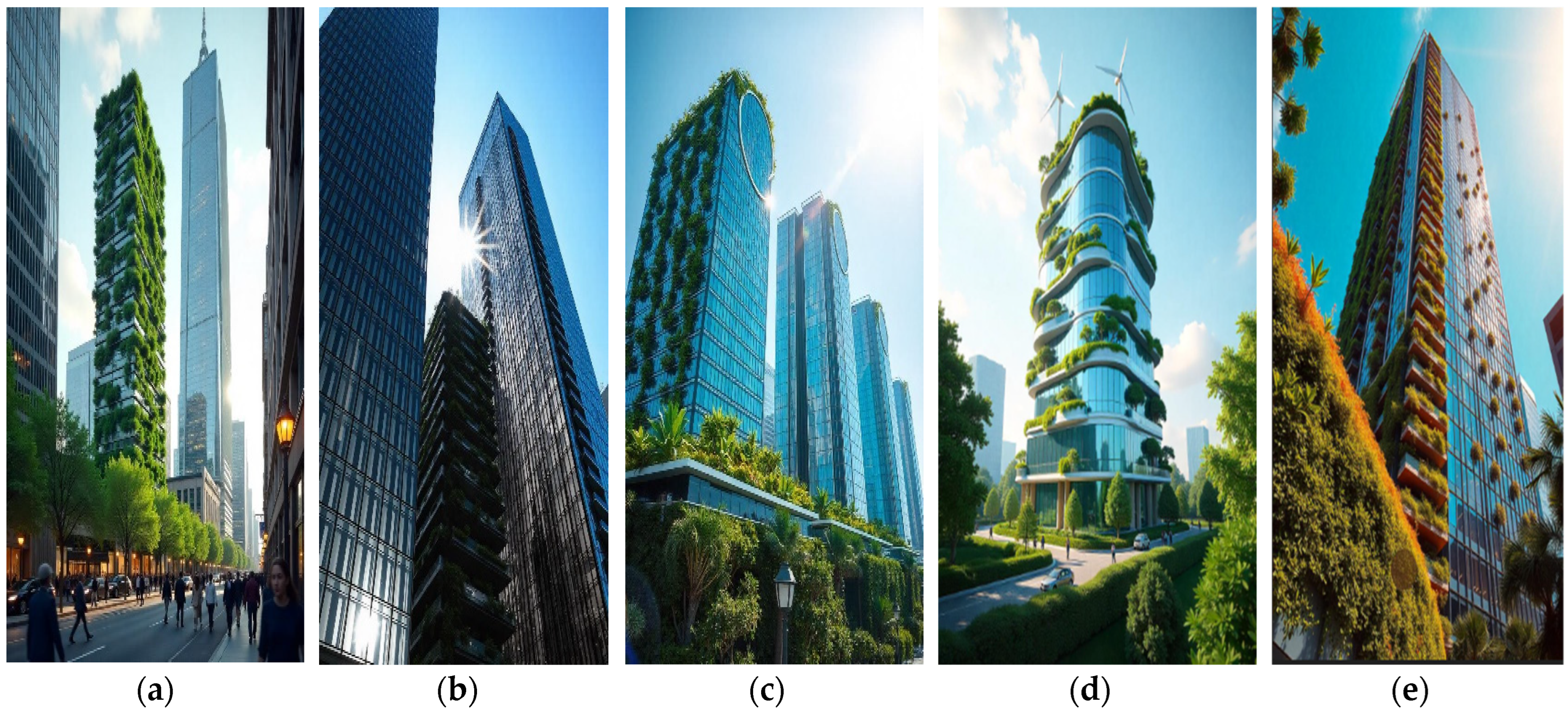
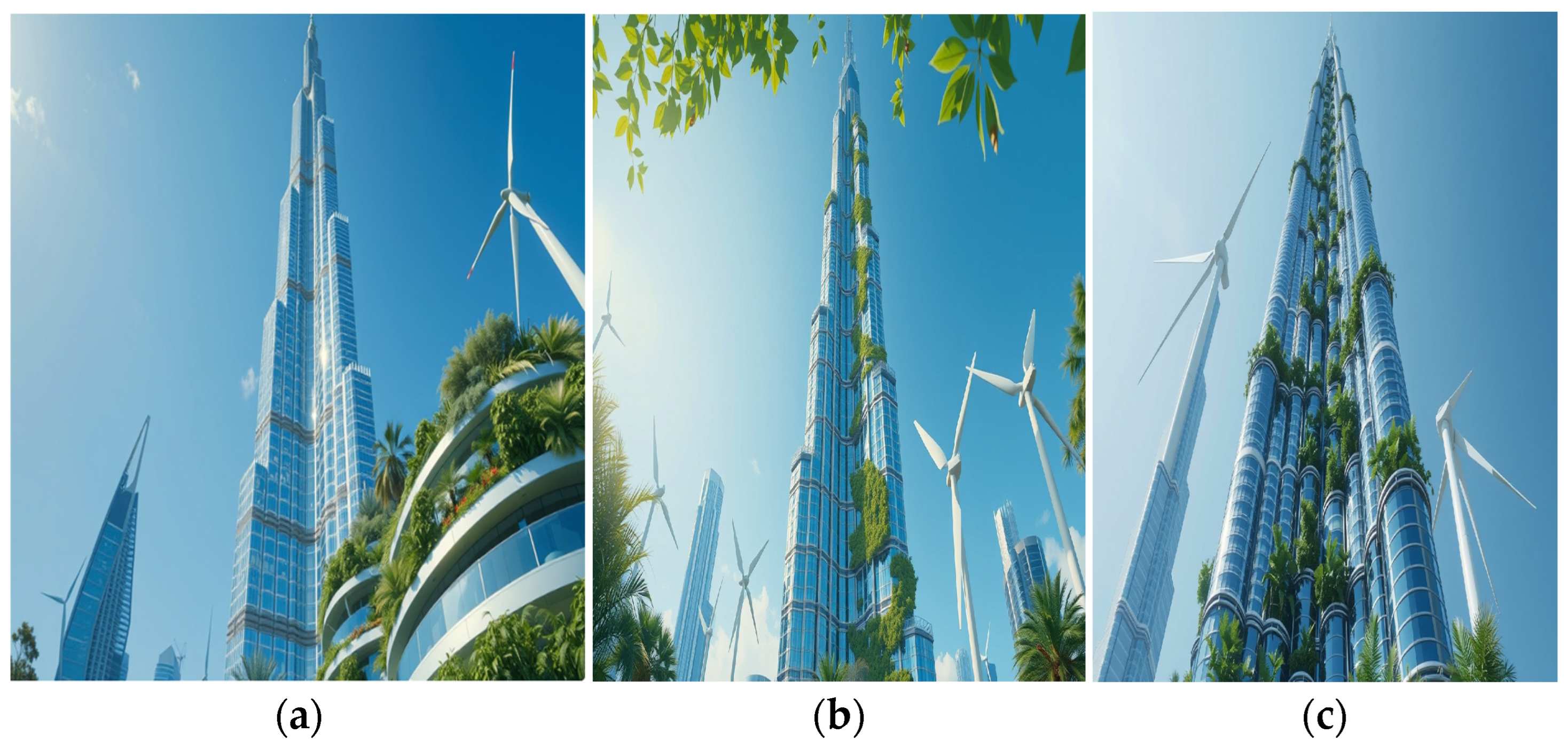
The adoption of AI in tall building development goes beyond smart systems and interiors to touch the design tissue itself. We illustrate a vision of the future here: AI-generated images of sustainable skyscrapers. Created using innovative AI image generation technology, Figure 11 illustrates the capabilities of AI to generate sustainable and green skyscraper designs in seconds according to your input (prompts); the visuals of these mega-tall office buildings portray a future where tall structures effortlessly integrate smart and green architectural features [63,64]. Featured in the images is a range of state-of-the-art innovations like integrated photovoltaic panels that provide on-site renewable energy production, smart glazing solutions that respond to changing light conditions, and extensive biophilia for cleaner air and increased biodiversity on campus, as well as cutting-edge sun-shading systems designed with regard to high-grade EE.
Figure 11.
Skyscrapers with smart and green architectural elements (e.g., photovoltaic panels, smart glazing, green features, and sun-shading systems generated by AI (images’ source: developed by authors). (a,b) Two alternatives of tall building design with green elements act as a biophilic design and mimic the behavior of trees and greenery. (c–e) Tall building design output after giving a prompt that includes specific glazing, renewable energy elements, and solar photovoltaic panels.
Additionally, it is vitally important to differentiate between the different functions of TBs in terms of function, user group, operational hours, AI applications, and AI-utilized tools to find out how AI technologies and applications could vary according to these factors in TBs. Table 8 lists various skyscrapers’ types and AI applications and tools to differentiate between the impacts of AI utilization on different types of high-rise buildings.
Table 7.
Overview of AI construction tools and their application, detailing specific cases for each tool within different phases of construction projects (source: developed by authors based on [65,66]).
Table 7.
Overview of AI construction tools and their application, detailing specific cases for each tool within different phases of construction projects (source: developed by authors based on [65,66]).
| AI Tools/ Technology | Software Example | Building Examples | Construction Phase | Primary Function | Impact Analysis and Implementation Outcomes |
|---|---|---|---|---|---|
| BIM with AI Integration | Autodesk Revit + AI, Bently SYNCHRO, Tekla Structure, Navisworks | Shanghai Tower, China, One World Center, NYC, The Shard, London. | Preconstruction Planning | Automated design optimization, clash detection, resource planning, and 4D/5D simulation. | 30–40% reduction in planning time, 25% improvement in design accuracy. Reduction in construction waste by 25% in Shanghai tower, and The Shard saw 30% faster design phase completion. |
| ML for Site Analysis | Plangrid AI, Deepsoil AI, SiteAware, Soil.ai | Jeddah Tower, KSA Taipei 101, Taiwan Dubai Creek Tower | Site Preparation | Soil analysis, environmental assessment, site logistics | 40% faster site analysis and improved ground assessment. For Taipei 101, optimization of design of foundation for seismic conditions, and for Jeddah Tower, enhanced wind load prediction. |
| Robotics and Automation | SAM (Semi- Automated Mason), WALT Robot, Boston Dynamics Spot, Dusty robotic. | Burj Khalifa, Dubai Marina Bay Sands, Singapore Lakhta Center, Russia | Construction Execution | Automated construction, material handling, and quality control | Faster construction and reduction in human error. Burj Khalifa had a 40% reduction in labor costs, and Lakhta Center achieved a 50% faster vertical assembly. |
| AI- Powered Project Management | Procore + AI, Oracle Primavera AI, BIM 360, Aconex | 30 Hudson Yards, NYC, Salesforce Tower, SF Ping An Finance Center, China | All Phases | Schedule optimization, resource allocation, and progress monitoring | Better resources are used by nearly 35%, and real-time problem-solving is also used. In Hudson Yard: 20% under budget cost. |
| Computer Vision and Drones | DroneDeploy AI, Skycatch, Percepta AIM, Open Space. | Central Park Tower, NYC Shanghai World Financial Center, Petronas Towers, Malaysia | Construction Monitoring | Progress tracking, safety monitoring, and quality inspection | Faster inspection and 80% more accurate tracking. Zero safety incidents in Central Park Tower and a 45% faster inspection cycle in Petronas. |
| Predictive Analytics | IBM Maximo, Schneider Eco-Struxure, Johnson Controls Open Blue, Siemens Enlighted | Edge Building, Amsterdam, The Tower at PNC Plaza, Capital Tower, Singapore | Operation and Maintenance | Performance prediction, energy optimization, and system monitoring | Lower maintenance costs, 30% energy savings. World’s highest BREEAM score in Edge Building, and 50% energy reduction in PNC Plaza. |
| Generative Design | Autodesk Generative Design, Grasshopper + AI, Rhino + Neural Nets, TestFit | Beijing Daxing Airport, Louvre Abu Dhabi, KAFD Tower, KSA | Design Phase | Farm optimization, Structural efficiency, and Space Planning | 50% more design alternatives and 40% material optimization, Material reduction in Beijing Daxing by 20%, and better performance in KAFD Tower, KSA |
| Digital Twin Integration | Bently I Twin, Cityzenith SmartWorld, Unity Reflect, Azure Digital Twins | Kingdom Tower, Jeddah Hudson Yards, NYC Marina Bay Sands 2 | Lifecycle Management | Time monitoring, predictive maintenance, and performance optimization | 55% operational efficiency and 35% maintenance cost reduction. Complete digital ecosystem in Hudson Yards and smart building integration in Marina Bay Sands. |
AI is not a technological enhancement but a basic transformation in skyscrapers’ design, construction, and management. The architecture and construction industries are drifting towards more efficient, sustainable, safe, and smart building solutions that put both the human experience and environmental responsibility first through the integration of AI [67].
Throughout their lifecycle, from preconstruction planning and development to post-completion management, the world’s most iconic skyscrapers have achieved exceptional gains in efficiency, sustainability, and human-centered performance. These benefits include a 30% to 40% reduction in energy use, a 50% decrease in construction time, a 35% decrease in material waste, and enhanced occupant experiences through intelligent, adaptive environments.
Table 8.
Different types of skyscrapers and AI applications and tools to differentiate between the impact of AI utilization on the different types of high-rise buildings (source: developed by authors based on [68,69,70]).
Table 8.
Different types of skyscrapers and AI applications and tools to differentiate between the impact of AI utilization on the different types of high-rise buildings (source: developed by authors based on [68,69,70]).
| Type of High-Rise Building | Functional Requirements | User Groups | Operational Modes | AI Applications | Construction Phases | AI Tools Used |
|---|---|---|---|---|---|---|
| Residential towers | EE, security, comfort and convenience | Residents, property managers | -24/7 varying occupancy patterns |
|
|
|
| Commercial skyscrapers |
|
|
|
|
|
|
| Mixed-use developments |
|
|
|
|
|
|
| Hospitality towers (hotels) |
|
|
|
|
|
|
AI-driven approaches will help optimize resource allocation, predictive maintenance, and risk management, saving substantially on costs and carbon footprints and hence prolonging building lifecycles [47]. While effectively advocating for the aesthetic merits of AI-enhanced design, these visual representations also illuminate the potential of emerging technologies to enable architects and engineers to conceptualize intricate sustainable systems within high-rise structures.
By integrating cutting-edge technology with innovations in sustainable architecture, this compilation of images portrays a foreseeable future wherein skyscrapers transcend mere height—they also exhibit intelligence and adaptability to their surroundings [66]. Additionally, several AI visualization tools have the ability to reimagine existing buildings with the input prompts that you need to apply to these buildings; for instance, it can reimagine a building with green elements, solar panels, wind turbines, and other feature to give an initial idea and stimulate the imagination, especially in redesign and retrofit projects and also in designing new projects. Figure 12 shows the re-imagination of the Burj Khalifa with some environmentally friendly elements.
Figure 12.
This re-imagination of the Burj Khalifa with some environmentally friendly and sustainable elements was conducted using the AI image generator tool Haiper (images’ source: developed by the authors). (a) Utilization of AI tool in re-imagining the Burj Khalifa with renewable energy (RE). (b) Another angle of the building with green walls. (c) AI-created ant’s view of the Burj Khalifa with renewable energy, specific types of glazing, and green walls.
The new skyscrapers will be among the most sustainable built to date, thanks in part to advances in technology that push traditional approaches toward more environmentally friendly designs with better indoor environmental conditions for the occupants. With the help of AI-driven generative design, their structures can be greatly optimized for better EE and ventilation using daylight. In the automation of smart buildings, ML-driven systems would always monitor, and control lighting, heating, and cooling based on real-time occupancy behavior they possess. The building draws a quantity of energy for their needs, but the facade would be latticed or covered in solar panels and/or wind turbines that can produce an impressive amount on-site [67]. Regarding the height, where will the next world’s tallest building come from? The construction of the Burj Khalifa, a skyscraper costing USD 1.5 billion, was initiated as a result of a convergence of essential elements and financial backing. Despite its considerable stature, the endeavor encountered obstacles such as safety apprehensions and bureaucratic authorization challenges. A proposition was made by China in 2013 for the development of a Sky City skyscraper that would reach a height of 838 m, a project that was impeded by concerns regarding safety and issues with government approval. Among the noteworthy construction sites in China is the Suzhou Zhongnan Center, as shown in Figure 13. Additionally, Saudi Arabia’s Jeddah Tower, designed by the same architect and employing the same Y-shaped floor plan as the Burj, is the closest building to taking the Burj Khalifa’s crown.
Figure 13.
Proposed futuristic skyscrapers that are taller than the Burj Khalifa: (a) Image’s credit and source: Gensler, https://en.wikipedia.org/wiki/File:Suzhou_Zhongnan_Center.jpg (accessed on 26 December 2024), (b) Image’s credit and source: Ammar shaker, https://commons.wikimedia.org/wiki/File:Jeddah_Tower_Building_Progress_as_of_13-Jul-2016_002.jpg (accessed on 26 December 2024), (c,d) Thetowerinfo [71]). (a) Proposed Suzhou Zhongnan Center, (b) Jeddah Tower under construction, (c) Creek Tower, (d) Creek Tower height relative to Burj Kalifa and Jeddah Tower.
The project, which was set to rise to 1000 m, was halted in 2018 due to factors such as the 2017 anti-corruption purge, rising costs, and the shifting priorities of the Saudi government. Dubai also announced its own competitor, the Dubai Creek Tower, a 1300 m high observation tower. Despite foundations being laid in 2017, construction on Jeddah Tower has not resumed, but in October 2024, they resumed the project and started to build it again [67,72]. Architects are shifting their focus from taller structures to improving space efficiency in skyscrapers.
Future skyscraper designs will be heavily influenced by energy efficiency, with economic worth being determined by this factor. Conservation strategies and renewable energy sources like rainwater harvesting and solar power are considered [73]. Figure 14 shows research activities in the field of tall structures that currently span eleven different domains.
Figure 14.
Domains influencing the future of skyscraper design that play a crucial role in shaping the future of skyscrapers. These encompass multiple factors (source: developed by authors based on [73]).
2.3.9. Harnessing AI: Transformative Applications Across Diverse Skyscraper Functions
AI has a transformative potential across various types of skyscrapers, enhancing their design, construction, and operational efficiencies. Here is how AI can be specifically applied to different categories of skyscrapers: (a) Commercial Skyscrapers. AI can improve commercial buildings’ space utilization, tenant experiences, and EE by predicting peak occupancy times and adjusting HVAC, lighting, and security systems. AI-driven analytics also help facility managers predict maintenance needs and streamline services. (b) Mixed-Use Skyscrapers. AI can enhance design integration in mixed-use developments by analyzing user interaction patterns and preferences, enhancing accessibility and functionality, and aiding in zoning management to maintain a cohesive environment. (c) Hospitality Skyscrapers. AI in hotels can improve guest experiences by analyzing guest data, offering personalized services, and streamlining operations through predictive analytics and housekeeping schedule optimization. (d) Residential Skyscrapers. AI enhances residential towers by promoting smart home technologies, improving energy consumption, security, and resource management, thereby enhancing living experiences and promoting cost savings [68,69].
2.3.10. Constraints of Conceptual Designs Produced by AI
Despite their promise with respect to design generation and exploration, AI systems should be seen for what they are: tools—mighty ones at that; but if you choose to work along this line of architectural conceptual design, nothing is ever indeed “done for you”. A core problem is the natural bias and limitations in the training data that ML models consume. Table 9 depicts the main constraints that exist in AI utilization outputs and generated design images.
Table 9.
The main constraints existed in AI utilization outputs and generated design images (source: developed by authors based on [41]).
With datasets lacking diversity in architectural styles and cultural contexts or only representing mainstream exemplars, the AI’s creative outputs are at risk of reinforcing homogeneity and not exploring vernacular design languages [41]. Currently, AI is constrained by the boundaries set by humans, hence the problems of rewriting from first principles. Derivatives created by AI blur the line between inspiration and copying protected IPs or cultural motifs, hence raising ethical questions. This has led to an increased unintended replication of copyrighted works and unauthorized exploitation of traditional knowledge.
Governance frameworks help draw a line around these risks [41]. Architectural ideation, a complex process influenced by metaphors, philosophical perspectives, and subjective experiences, can be simplified by AI technologies into tangible buildings. To promote human–machine collaboration, both AI’s strengths and a balanced approach that understands its limits are necessary, integrating them at the conceptual design level. Table 10 summarizes the main constraints that exist on some of AI’s design outputs.
Table 10.
The main constraints existing on AI utilization outputs and generated design images (source: developed by authors based on [74,75,76]).
The future development of AI and the positive implications for the architectural profession seem hopeful. As Stanislas mentioned, AI has a very great potential to be widely integrated into the daily work of architects within a short period of time. The design paradigms that have been around for a long time could change if useful features could be separated and made to appear like algorithms. Regarding the question of whether AI will replace human architects in the future, most interviewees answered, as Bao and Xiang show in their research, that AI will be just an effective assistant.
Additionally, the challenges of integrating AI tools with existing systems that organizations must strategically address cannot be ignored; the primary technical difficulties include computational infrastructure limitations, data compatibility, model interpretability, and security concerns; moreover, the struggles that companies often face are the connection of AI technologies to legacy systems, which typically involve complex data architectures and diverse technological ecosystems [74].
Interoperability emerges as a significant obstacle, as AI instruments necessitate uniform data formats, resilient application programming interfaces, and adaptable integration frameworks. Institutions are compelled to allocate resources toward middleware solutions and formulate extensive integration strategies that consider scalability, performance enhancement, and the ongoing learning functionalities of AI systems [75]. In Table 10, technical difficulties, challenges, and proposed solutions have been illustrated.
2.3.11. Tall Building Aging—Adaptation with AI Continuous Evolution
The world is fast moving, especially in architecture and urban development; unparalleled TBs, specifically in longevity and technological adaptation, face challenges. AI integration presents a transformative approach to addressing the complex lifecycle of skyscrapers, offering unparalleled insights into long-term performance and sustainable management. With the aging of buildings, they face a number of critical challenges, as illustrated in Figure 15. The challenges and considerations are continuous skill development for management teams, significant initial investment requirements, the complex integration of legacy systems, cybersecurity and data protection, and ethical considerations in AI implementation. Moreover, in the future, TBs will be all about adaptation, learning, and evolution. AI becomes the key enabler, transforming static structures into dynamic, intelligent ecosystems that can respond to ever-changing environmental, technological, and human needs. The most successful TBs of the future will be those embracing AI not as a one-time solution but as continuous, adaptive framework for sustainable urban development [77,78].
Figure 15.
Multiple critical challenges as buildings age (source: developed by authors after [77]).
2.3.12. Bridging Culture and Technology: AI and Culturally Sensitive Architecture
In architecture, AI applications are being used to visualize designs and explore cultural expressions through interactive workshops and generative design tools. These advancements present both opportunities and challenges, particularly regarding cultural representation and identity in architectural design [79].
Cultural differences and AI representation can be summarized in the following points: (a) Digital Bias. AI systems may misrepresent architectural styles due to biases in training data, leading to a distorted understanding of cultural expressions and misinterpretations of local identities and traditions. (b) Local vs. Global Interpretations. AI-generated imagery often uses widely available online data, resulting in an accurate representation of well-known landmarks and potential global bias in depicting lesser-known structures. (c) Dynamic Nature of Culture. AI can bridge historical and contemporary architectural styles but must recognize and incorporate local cultural nuances to effectively serve diverse user needs. (d) Cultural Identity Challenges. The process of using AI to generate architectural designs raises questions about the authenticity of cultural representation. For instance, AI may strip away vernacular elements, leading to a new architectural identity that may not resonate with local traditions. (e) Exclusion and Access. The digital divide between north and south can limit the cultural diversity of AI applications in architecture, perpetuating biases and the exclusion of certain populations [79].
Additionally, there are several elements that present user needs in AI-enhanced design, such as the following: (a) Customization. AI can help users create personalized architectural designs that reflect their cultural heritage and preferences by allowing them to input specific cultural references into design parameters. (b) Efficiency in Design. AI tools enable designers to visualize multiple iterations quickly, allowing for rapid experimentation with culturally relevant design concepts. (c) User Engagement. Interactive AI applications can engage users in the design process, making it more inclusive and representative of diverse cultural backgrounds. (d) Cultural Sensitivity. Understanding the cultural context of AI is crucial for creating designs that resonate with the target audience, and integrating this sensitivity into AI algorithms can enhance accuracy. (e) Regulatory Considerations. Regulations are being called for to address biases in AI systems, ensuring a fair representation of all cultural identities in architectural design [79].
AI technology can improve architectural design efficiency and user engagement, but it must address bias, representation, and inclusiveness to honor diverse cultural identities. By understanding and integrating these nuances, AI can transform architecture to meet the needs of different communities.
2.3.13. Impact of Climate on AI in Architecture and Construction
AI is transforming architecture and construction through the activities of improving design processes, optimizing performances, and solving environmental challenges. Adaptive solutions are key as the built environment becomes increasingly complex. AI applications can enhance energy efficiency, improve indoor climate control, and allow dynamic design strategies. With the help of ML models, along with predictive analytics, architects can design buildings that meet the required efficiency and sustainability standards, adapting to various climates.
This evolution is necessary for building resilience and sustainable development in urban areas. Table 11 lists different climate types, corresponding AI applications, and specific AI tools that can be utilized to address the challenges associated with each climate environment in architecture and construction [79,80,81].
Table 11.
Different climate types, corresponding AI applications, and specific AI tools (source: developed by authors based on [82,83,84]).
In conclusion, addressing the impact of different climate environments on AI applications in architecture and construction is essential for developing versatile and resilient technologies. AI systems can integrate real-time weather data to optimize energy consumption, resulting in up to 30% savings in heating costs; moreover, AI-driven simulations for hot climates could reduce cooling load requirements by approximately 40%, showcasing the importance of climate-specific AI applications in energy management. Moreover, AI-based models have successfully predicted and adjusted HVAC performance, leading to a reduction in excess humidity by up to 25%, and AI simulations have aided in the design of high-rise buildings exposed to strong winds, resulting in improved structural integrity and EE [82].
2.3.14. AI Applications in Energy-Efficient Renovation for Existing Skyscrapers
In the AI field, deploying advanced data analytics, ML algorithms, and IoT sensor networks are the keys that transform energy-efficient renovation in TBs for performance optimization. The areas that AI can deal with in super performance are the following: supporting a comprehensive energy consumption analysis, predictive maintenance, smart HVAC optimization, dynamic facade management, and real-time environmental response. With the creation of digital twins of physical structures as shown in Figure 16, where AI allows for the precise simulation of renovation scenarios, it foresees possible system failures and elaborates personalized strategies for energy efficiency. This technology enables buildings to learn and adapt continuously and minimize energy waste through the intelligent monitoring and automatic adjustment of their systems. This will make any skyscraper a sustainable, technologically advanced urban ecosystem [49,85,86].
Figure 16.
Essential components for digital twin creation of the building (image credit and source: Developed by authors).
Table 12 lists examples of buildings that utilize AI for EE features. Moreover, AI provides a transformative approach to renovating existing high-rise buildings, offering unprecedented opportunities for energy efficiency, sustainability, and intelligent building management [87].
Table 12.
Examples of buildings that utilize AI for EE features. (source: developed by authors based on [49,85,86,88]).
2.3.15. Constraints and Applications of AI Tools in Architecture and Construction
The integration of AI tools, such as generative design, into architecture and construction has revolutionized the industry by enhancing design capabilities and operational efficiencies. However, the adoption of these technologies is not without its challenges. Constraints such as data quality issues, computational complexity, potential algorithmic biases, the necessity for significant computational resources, and the risk of over-reliance on AI can hinder their effectiveness; the effectiveness of generative design algorithms depends critically on high-quality, diverse training datasets, and any inherent biases can propagate systematically through design outputs. Substantial computational resources are required for complex simulations, creating barriers for smaller architectural practices with a limited technological infrastructure [89,90]. Despite these challenges, AI tools have found diverse applications across various sectors. For instance, generative design is being utilized to optimize building layouts, improve energy efficiency, and support sustainable practices, demonstrating its potential to transform architectural design and construction processes [2]. By examining both the constraints and applications of AI tools, we can better understand their impact on the industry and the broader implications for future architectural practices. Case studies demonstrate AI’s potential in projects like the Shanghai Tower and One Vanderbilt, where ML enabled advanced structural optimization, reduced construction timelines, and improved environmental performance. These implementations showcase AI’s capacity to drive design innovation, improve project outcomes, and address complex urban development challenges.
Biases in training data can significantly impact AI-generated designs by leading to outputs that lack diversity and cultural relevance. When AI models are trained on datasets that predominantly feature specific architectural styles or cultural contexts, the resultant designs may reinforce existing stereotypes and overlook the rich variety of global architectural practices. This homogeneity not only stifles creativity but can also result in designs that are insensitive or inappropriate to cultural settings, potentially alienating the communities they are meant to serve [91].
To mitigate the effects of these biases, it is essential to diversify the datasets used in training AI models, ensuring they encompass a broader range of architectural styles and cultural contexts. Strategies such as data augmentation, which involves artificially increasing the diversity of training data by introducing variations, can help in expanding the model’s understanding of different architectural elements [92]. Additionally, employing transfer learning can enhance model performance by leveraging knowledge gained from pre-trained models that have been exposed to diverse datasets. These approaches not only improve the robustness of AI-generated designs but also foster a more inclusive design process that respects and reflects a variety of cultural narratives and architectural traditions.
2.3.16. Will AI Stifle Human Creativity or Catalyze It?
AI’s impact on human creativity is balanced, allowing for a balanced perspective on whether it suppresses or stimulates it. However, creating precise textual inputs is a significant challenge. AI platforms require multiple iterations of prompts, evolving them systematically to produce the expected output. The quality of images is significantly influenced by the prompt type. Input data are necessary for learning algorithms to construct AI platforms effectively. However, the availability of accessible data is limited, and deviations in class distributions complicate data acquisition [28].
A widely held apprehension is the possibility that AI would replace human architects. Frey and Osborne, on the other hand, have researched the prospects for employment in the future. They claimed that although it is not difficult for computers to produce new content, even with the rapid advancement of technology, it will take a little longer for computers to produce understanding and intrinsic value.
The intersection of AI and human creativity represents a complex, dynamic landscape where technological innovation potentially catalyzes or constrains creative expression. Emerging research suggests AI serves as a powerful cognitive amplifier, expanding creative boundaries by generating novel design possibilities and breaking traditional conceptual constraints. Concerns persist about algorithmic homogenization, leading scholars like Kai-Fu Lee to argue that AI functions as a collaborative tool, enhancing rather than replacing human creative potential [93].
The symbiotic relationship between human imagination and computational creativity enables an unprecedented exploration of design spaces, challenging existing paradigms and offering transformative problem-solving methodologies. Mitchell Kapor’s research emphasizes technology’s role in creative augmentation, positioning AI as a sophisticated ideation partner that accelerates conceptual development without undermining human originality [94]. Empirical studies indicate potential creative exploration improvements ranging from 40% to 60%, suggesting AI’s capacity to generate diverse variations and push innovative boundaries, while preserving the fundamental essence of human creative expression [95].
The discussion surrounding the interplay between human creativity and AI is indeed a pivotal aspect of contemporary architectural discourse. To strengthen this section, we can reference authoritative perspectives that both support and challenge the notion of AI as a catalyst or suppressor of creativity. For example, David C. Kopec in his book AI in Design emphasizes that AI can augment human creativity by providing new tools and processes that enable architects to explore innovative design possibilities beyond traditional constraints [96].
Conversely, some critics argue that reliance on AI may inhibit individual creativity by promoting a standardization of design processes, as posited by authors like Adrian Forty, who suggests that overdependence on technology can lead to a homogenization of architectural styles [97]. Furthermore, research by Bolek et al. [98] indicates that while AI tools can assist in the design process, they cannot replace the unique creative insight and emotional intelligence that human designers bring to their work, thus highlighting the importance of a collaborative approach that leverages both AI capabilities and human ingenuity.
2.4. Comparative Analysis
The comparative analysis of AI in skyscraper design and construction exposes a transformation where technological innovation intersects with traditional architectural practices. It shows how ML, generative design, and predictive analytics are fundamentally reshaping the built environment. Four key comparative elements, environmental impact, efficiency, human-centric performance, and long-term impact in terms of AI-enhanced skyscrapers versus traditional skyscrapers, are depicted in Table 13.
Table 13.
Comparative analysis of AI-enhanced vs. traditional skyscraper construction, presenting a detailed comparison including several key aspects (source: developed by authors).
While conventional methods rely on historical precedents and human expertise, AI-integrated approaches leverage data-driven insights, ML algorithms, and sophisticated simulation technologies to generate innovative, efficient, and responsive architectural solutions. This comparative analysis not only highlights their technological advantages but also illuminates the evolving relationship between human creativity and AI in architectural innovation design and construction.
This table discloses a profound technological transformation in architectural design and construction methodologies. By investigating these four aspects, the comparison demonstrates that AI is not only an incremental improvement but also a fundamental shift in building design, especially of skyscrapers. AI-powered approaches go beyond conventional linear design processes to dynamic optimization, predictive capabilities, and adaptive systems that respond intelligently to complex environmental and human factors. Whereas traditional construction methodologies are based on historical precedents and rely on manual interventions, AI-driven technologies allow for real-time learning, comprehensive risk assessment, and continuous performance improvement.
The Edge, the world’s most smart and sustainable office building in Amsterdam, utilizes AI-driven energy management systems to optimize its operational efficiency [102]. In the energy consumption analysis, this example highlights how AI technologies enable real-time adjustments to HVAC systems, resulting in significant energy savings compared to traditional methods employed in older buildings like the Empire State Building, which underwent a conventional retrofitting process [103]. Furthermore, the Bosco Verticale project in Milan, Italy, exemplifies AI’s role in optimizing material usage and waste reduction through precise calculations and smart inventory management, contrasting with traditional skyscraper designs that often rely on standard waste management practices. Integrating these specific projects into the table will demonstrate the tangible benefits of AI relative to traditional methodologies, making the comparative analysis more relatable and impactful for readers.
3. Results
This study reveals a transformative landscape regarding technology and architectural innovation potential. It analyzes the role of AI in various development stages, from initial conceptualization to the operational management of skyscrapers. This depicts how intelligent technologies are drastically reshaping our ways of understanding a vertical urban environment. These findings explain that AI is not only a supplemental but also a core catalyzing factor in reimagining the design, construction, and functionality of TBs. We critically review applications of AI and engage in a nuanced exploration of how ML, generative design, and predictive analytics challenge conventional architectural paradigms and offer surpassing opportunities in creating more efficient, sustainable, and adaptive skyscrapers. Additionally, it is found that AI applications and their utilization could vary from one country to another, from one climate to other climates and from culture to culture, so that the output will be different according to the different input, depending on all the previous factors. The acceleration of AI technologies is continuing alongside the aging of the buildings; it is found that there are ways that lead to AI adaptation within this aging.
Hence, this research presented the transformative potential of AI in the various development stages of skyscrapers, including the following: (a) Conceptualization and initial design. The implementation of AI eases the process of generating many design alternatives and optimizes structural efficiency and sustainability parameters using generative design methodologies, with the advanced visualization of complex architectural concepts. (b) Predesign phase. The predictive analysis and simulation of site ecology, an holistic evaluation of risks, and optimization in resource allocation; financial and temporal forecasting with extraordinary precision. (c) Construction phase. Real-time monitoring of projects; prediction and mitigation of safety risks; quality control by computer vision technologies; automated construction scheduling. (d) Project management. Intelligent resource management, predictive strategies for maintenance, tracking, and improvement of performance, as well as communication and collaboration platforms. Moreover, based on a deep understanding of the impact of AI in the architecture field, especially in skyscraper designs, Table 14 summarizes the pros and cons of using AI in architectural design, while bearing in mind that the effects of these pros and cons may vary according to different factors such as (a) project scale and complexity; (b) available technology and resources; (c) team expertise and experience; and (d) the regulatory environment.
Table 14.
Pros and Cons of using AI in architectural design, specifically for skyscrapers (source: developed by authors).
4. Discussion
The following scholarly research has systematically addressed each of the specified research questions through varied sections and analytical frameworks.
4.1. Linking the Research Questions to the Study’s Findings
It is imperative to answer the research questions and link them to the outcomes and the main findings of the study. The following section summarizes the answers to RQ 1, RQ 2, RQ 3, and RQ 4.
- RQ 1: What is the role of AI technologies in transforming skyscrapers’ design and planning processes to enhance architectural innovation and efficiency?
Regarding RQ1, those sections dealing with AI-driven design methodologies and generative architecture have explained how AI is changing the very concept of the conception and planning phases of skyscraper construction, focusing on advances in design optimization and innovative efficiency. Additionally, the utilization of AI at the design optimization phase in generative design, in particular, contributes to exploring thousands of design variations by AI algorithms, optimizing structural efficiency and space utilization and balancing aesthetics with functional requirements in the same phase, but in performance analysis specifically, AI simulates building performance under various conditions, analyzes energy efficiency and environmental impact as mentioned in [49,51,54], tests structural integrity and wind resistance, and elevates occupant flow and space usage, which leads to improving comfort, saving energy, and enhancing efficiency, mentioned in compliance with Farzaneh et al.’s study [46]. Let us turn next to the various planning processes: (a) Preconstruction analysis. AI is utilized in site evaluation and optimization, resource allocation and scheduling, cost estimation and budget optimization, and risk assessment and mitigation strategies, as referred to in [50]. (b) Construction process. AI is utilized in real-time project monitoring, supply chain optimization, quality control automation, and safety prediction and management, as hinted at [29]. Moreover; these findings are in line with what was found in [104], assuring and confirming that AI technologies have a great impact in transforming the design and planning process, leading to an enhancement in both innovation and efficiency
- RQ 2: What is the potential that AI offers to optimize construction processes and building operations throughout the lifecycle of skyscrapers?
Discussing RQ2 reveals AI’s enormous potential in enhancing the distribution of both construction schedules and resources for long-term operational effectiveness, as discussed in the sections on construction methodologies and building lifecycle management, respectively. The analysis of AI-enabled project management systems and predictive maintenance strategies gives broad insights into the potential role of AI in enhancing building operations at all stages of its lifetime, as mentioned in [43,46].
The impact of AI on tall buildings’ construction process and building operations has been comprehended and concludes in three key phases: (a) Design and planning phase. AI and ML can dramatically improve the initial design optimization through generative design algorithms that can produce thousands of design variations based on specified parameters like energy efficiency, cost, and structural integrity, predictive analytics for cost estimation and project timeline optimization, and BIM integration with AI for clash detection and construction sequencing [43,48]. (b) Construction phase. AI enables real-time progress monitoring using computer vision and drones, automated equipment and robotics for dangerous or repetitive tasks, predictive maintenance for construction equipment, supply chain optimization and materials management, and safety monitoring through AI-powered cameras and sensors. (c) Operations and maintenance phase throughout the building’s lifecycle. AI can enhance energy management through smart building systems that predict and optimize energy usage; predictive maintenance for critical systems like elevators, HVAC, and structural components; occupancy optimization and space utilization; security through advanced surveillance and access control; and tenant comfort through automated environmental controls [62].
Additionally, AI and digital technologies can mitigate and transform risk assessment and management, making them efficient and in real time. AI models enhance analyses in RM, providing predictive insights and accurate results and mitigating risks in dynamic and complex environments like construction, in compliance with Gado’s findings [105], who stated the pivotal role of AI in addressing the associated risks of conventional construction machinery that needs human operators, resulting in increased costs and safety hazards. But also, employing AI in construction is inevitable and can lead to “a paradigm shift toward a more efficient, sustainable, and ethical future of the construction industry” (Cecconi et al., 2025 [106]).
- RQ 3: How can the integration of AI improve sustainability, energy efficiency, and occupant well-being in the skyscrapers of tomorrow?
For RQ3, comprehensive analyses, depicted in the sections that assess the integration of sustainable design and the optimization of occupants’ comfort, highlighting how AI can strengthen EE through intelligent building systems and enhance occupants’ well-being through adaptive environmental controls. Nonetheless, this research question directly relates to the scrutiny of AI-driven sustainability initiatives and smart building management solutions. Regarding sustainability; the importance of it is to minimize environmental impact and maximizes resources efficiency. It is found that AI assists engineers and architects in identifying energy-efficient materials, optimizing energy use, and improving natural lighting and ventilation designs through the use of sophisticated data analytics. Predictive models driven by AI also guide maintenance plans and retrofit requirements, creating sustainable urban environments for coming generations [56].
Achieving the nine Sustainable Development Goals (SDGs) depends heavily on the construction industry’s contribution to infrastructure development and societal advancement. By showcasing the revolutionary potential of AI technologies, AI integration is a calculated tactic for strengthening sustainability initiatives and changing the construction industry. A variety of reference tables discuss AI’s potential for the SDGs [57]. Particularly, the tendency of the construction industry is oriented to leveraging AI to enable the decarbonization of the industry, as promoted in the European Commission [107]. Through structural system optimization, traffic flow anticipation, wait time reduction, energy management, safety enhancement, and construction logistics management, AI can increase TBs’ comfort and efficiency [19].
The key to transforming energy-efficient renovation in TBs for performance optimization in the AI field is the deployment of advanced data analytics, ML algorithms, and IoT sensor networks. Supporting a thorough energy consumption analysis, predictive maintenance, smart HVAC optimization, dynamic facade management, and real-time environmental response are some of the areas where AI can perform exceptionally well, develops customized energy-saving strategies [85,86] and improving the entire building’s energy performance in compliance with Seyedzadeh et al.’s conclusions [108].
For occupant well-being, AI has a great role in three respects: (a) Environmental quality. AI systems can monitor and adjust indoor air quality in real time, controlling ventilation based on CO2 levels, pollutants, and occupancy; also, smart lighting systems can mimic natural daylight patterns to support occupants’ circadian rhythms. In addition, acoustic management systems can actively control levels in different zones, and thermal comfort can be personalized to individual preferences through AI driven micro zoning [109]. (b) Space optimization. AI can analyze occupancy patterns to optimize space utilization and improve social distancing when needed; also, predictive elevator systems can reduce wait times and improve flow through the building; moreover, smart wayfinding systems can reduce stress and improve navigation in large buildings, and biophilic design elements can be automatically maintained and optimized for maximum psychological benefit [110]. (c) Health and safety. AI-powered air filtration systems can respond to environmental threats and maintain an optimal air quality; as well, advanced security systems can identify potential safety risks while maintaining privacy; additionally, contactless technologies can reduce disease transmission, and emergency response systems can predict and prevent potential hazards [111].
As reaffirmed by Mehmood [112], AI and big data can significantly improve the cost-effectiveness and energy efficiency of buildings intended to give residents a comfortable indoor living space. Additionally, as AI technology continues to evolve, we can expect even more sophisticated solutions that further enhance sustainability and occupant well-being in skyscrapers.
- RQ 4: What are the key opportunities, challenges, and implications of implementing AI technologies in the development of TBs for future urban environments?
Concerning RQ4, it is covered and discussed in terms of a critical assessment regarding implementation obstacles and prospective implications, whereby this research investigates the opportunities and possible impediments for integrating AI into tall structures, considering technological, ethical, regulatory, and financial matters, which all require collaboration between scholars and industry experts [113]. The section on futuristic urban sceneries and the comparative evaluation between traditional and AI-assisted approaches goes a long way in answering this question, highlighting both the revolutionary potential and deployment difficulties of AI in the design of high-rise structures. This systematic approach ensures that every research question is thoroughly investigated and answered within the context of the general aims of the study.
Undoubtedly, the use of AI in skyscraper design has its advantages and disadvantages, as highlighted in the research findings, as presented in Table 14. There is still time to develop this new technology and technique for broader and more prevalent use, as it cannot yet be fully relied upon in design and implementation processes. However, AI has created a significant breakthrough in facilitating idea generation, design production, and inspiration from images and forms, particularly as a supportive tool in the early design stages, considering that AI companies and providers are required to foster an innovative way to connect AI technologies to legacy systems, as highlighted by Aldoseri [74]. This study opens several promising avenues for future research in the intersection of AI and tall building development, which, in turn, can regenerate the urban environments of the future, as emphasized by Emre [56].
4.2. Recommendation for Key Future Research Directions
Although this study examined the role of AI technologies in transforming skyscrapers’ design and planning processes; highlighted the potential that AI offers to optimize construction processes and building operations throughout the lifecycle of skyscrapers; featured the key opportunities, challenges, and implications of implementing AI technologies in the development of TBs; and depicted the integration of AI in improving sustainability, energy efficiency, and occupant well-being in skyscrapers of tomorrow, still there are areas that need to be further explored and assessed. Therefore, the following are recommendations for future research studies:
- Formulate all-encompassing frameworks for AI applications in skyscraper design;
- Inquire into the ethical and regulatory ramifications of AI within the field of architecture;
- Tackle the establishment of standardized metrics for the assessment of AI efficacy in building design;
- Assess the conception of interdisciplinary methodologies that merge AI with architectural proficiency.
4.3. Research Findings and Future Direction for Various Stakeholders
Additionally, the research finding and future directions are relevant to various stakeholders, including architectural firms, technology companies, engineering and construction firms, academic and research institutions, government and regulatory organizations, rea -estate developers, and environmental and sustainability organizations.
The following stakeholders are presented in detail: (a) Architectural firms (design studios specializing in high-rise buildings, innovative architectural practices, and urban design consultants), specially in transformative design optimization, parametric modeling capabilities, advanced generative design techniques, and reduced design iteration time. (b) Technology companies (AI and ML developers, software companies that focus on architectural design tools, and technology institutions), the utilization of structural analysis, Edge computing integration, ML predictive modeling, advanced simulation technologies. (c) Engineering and construction firms (large-scale construction companies and building technology innovators), the utilization of AI will be in predictive risk management, real-time construction monitoring, material efficiency optimization, and automated construction planning. (d) Academic and research institutions (architecture departments, engineering schools, and academic institutes), the field of AI could be integrated in interdisciplinary research opportunities, advanced computational design curricula, empirical research on AI integration, and knowledge transfer mechanisms. (e) Government and regulatory organizations (sustainable development agencies, urban planning authorities, and building code and standards organization), the utilization of AI could be in enhanced urban development strategies, sustainable infrastructure planning, safe standard development, and regulatory framework adaptation. (f) Real estate developers (skyscraper development firms, commercial real estate companies, and investment groups focusing on urban infrastructure),utilizing AI in cost-effective design strategies, investment risk reduction, performance predictability, and enhanced property valuation models. (g) Environmental and sustainability organizations (sustainable design think tanks and green building certification organizations), using AI in carbon footprint reduction strategies, EE optimization, sustainable material selection, and climate resilience assessment.
Additionally, for the future research directions, each previous point of how to integrate AI for different stakeholders and the area of integration could be explained and expanded in different manuscripts. There is no doubt that it is very important to have future empirical studies regarding AI and the constructions of tomorrow. It is imperative to suggest that subsequent research could involve surveys or interviews with industry professionals and experts, longitudinal studies, and case studies in diverse geographical contexts to gather quantitative data on the impact of AI in construction. While AI is a revolutionary tool, it will not replace the fundamental principles of architecture. Sketching, model building, and client interaction will still be part of the image of this field, as the traditional method still has its potential and flavor in designing. AI’s role is to modify, enhance, and improve conventional methods to allow architects to explore variations, refine their designs, and deliver their vision easily and more effectively.
5. Conclusions
In summary, this study explored the transformative potential of AI in architectural design, particularly within the context of skyscrapers. By analyzing the various stages of development—from initial conceptualization to operational management—it highlighted AI’s role in enhancing building performance, optimizing resources, and promoting sustainability. However, embracing AI as a significant technological advancement, it is imperative to facilitate a critical examination of its broader implications.
The integration of AI into architecture is not without its challenges and ethical considerations. Issues such as data quality, the potential homogenization of design, and the risk of diminishing human creativity warrant serious reflection. Therefore, advocating for a holistic approach that not only embraces innovation but also emphasizes responsibility is vital. This includes fostering interdisciplinary collaboration between architects, technologists, ethicists, and policymakers to ensure that AI applications are aligned with our societal values and the needs of communities.
Stakeholders, including architects, urban planners, engineers, and technology developers, can adopt a multi-faceted approach to integrating AI into architectural practices. First, stakeholders should invest in continuous education and training programs that focus on AI tools and technologies to enhance design accuracy and performance optimization, Second, fostering interdisciplinary collaboration among architects, engineers, computer scientists, and policymakers is essential for effective AI integration. This collaborative effort can lead to the establishment of robust protocols for data management and privacy, especially considering the ethical implications inherent in using AI in urban settings.
Moreover, stakeholders should explore AI-driven generative design methods that enable architects to rapidly prototype and test design variations, enhancing creativity and innovation in building design. Finally, developing pilot projects that integrate these AI technologies can provide valuable insights and empirical data, guiding future implementations and establishing best practices. By adopting these practical measures, stakeholders can not only embrace the transformative potential of AI but also ensure that its application yields sustainable and resilient urban environments.
Additionally, architects can specifically achieve AI applications in architecture through strategic, phased approaches. They should conduct digital audits through software like Autodesk Generative Design and IBM Watson IoT Platform, create a roadmap for the incremental integration of AI, invest in cross-disciplinary training programs, foster partnerships with technology providers and research institutions, and develop robust data governance frameworks. In this way, the architect will be able to leverage all of the transformative capabilities of AI while mitigating its implementation risks. This systematic approach will ensure the efficient use of AI tools in architectural processes.
As we stand, therefore, on the eve of this technological revolution in architecture, it is imperative that we should go on considering the integration of AI in the development of TBs optimistically, yet with reflection, securing its potential, to be put to work in service of a better urban future for all.
Author Contributions
Conceptualization, S.E. and M.A.; methodology S.E., M.A. and A.A.; software, S.E.; validation, S.E. and A.A., formal analysis, S.E. and A.W.; investigation, S.E. and M.A. resources, S.E., M.A. and A.A.; data curation, S.E.; writing—original draft preparation, S.E. and M.A.; writing—review and editing, S.E., A.A. and M.A.; visualization, S.E.; supervision, M.A., A.W. and A.A., project administration M.A. and S.E. All authors have read and agreed to the published version of the manuscript.
Funding
This study received no funding.
Data Availability Statement
All data are available in the study’s text.
Conflicts of Interest
The authors declare no conflicts of interest.
References
- Builtin. Available online: https://builtin.com/artificial-intelligence/artificial-intelligence-future (accessed on 16 December 2024).
- Al-Kodmany, K.; Xue, Q.; Sun, C. Reconfiguring Vertical Urbanism: The Example of Tall Buildings and Transit-Oriented Development (TB-TOD) in Hong Kong. Buildings 2022, 12, 197. [Google Scholar] [CrossRef]
- Almaz, A.; El-Agouz, E.; Abdelfatah, M.; Mohamed, I. The Future Role of Artificial Intelligence (AI) Design’s Integration into Architectural and Interior Design Education is to Improve Efficiency, Sustainability, and Creativity. J. Archit. Civ. Eng. 2024, 12, 1749–1772. [Google Scholar] [CrossRef]
- Skyscrapercenter. Available online: https://www.skyscrapercenter.com/company/18477 (accessed on 1 December 2024).
- Kazeem, K.; Olawumi, T.; Osunsanmi, T. Roles of Artificial Intelligence and Machine Learning in Enhancing Construction Processes and Sustainable Communities. Buildings 2023, 13, 2061. [Google Scholar] [CrossRef]
- Sisson, A.; McGuirk, P.; Dowling, R.; Baker, T.; Maalsen, S. Innovating urban governance through ‘Challenges’. J. Urban Aff. 2023, 1–17. [Google Scholar] [CrossRef]
- United Nations. Challenges and Way Forward in the Urban Sector Sustainable Development in the 21st Century (SD21). Available online: https://www.un.org/esa/dsd/dsd_sd21st/21_pdf/challenges_and_way_forward_in_the_urban_sector_web.pdf (accessed on 16 December 2024).
- Pesce, B.; Bagaini, A. Urban and Architectural Adaptive Strategies for Inclusive Cities: A Review of International Innovation Experiments. plaNext 2019, 9, 65–82. [Google Scholar] [CrossRef] [PubMed]
- Yan, Y.; Li, D.; Qin, K.; Kong, Y.; Wu, X.; Liu, Q. Sustainable Urbanism and Architectural Design: An Interdisciplinary Exploration. In Proceedings of the 3rd International Conference on Urban Planning and Regional Economy (UPRE 2024), Bangkok, Thailand, 22–24 April 2024; p. 4. Available online: https://www.shs-conferences.org/articles/shsconf/pdf/2024/12/shsconf_upre2024_01015.pdf (accessed on 29 January 2025).
- Canedo, V.; Fernandez, L.; Cancela, B.; Betanzos, A. A review of green artificial intelligence: Towards a more sustainable future. Neurocomputing 2024, 599, 128096. [Google Scholar] [CrossRef]
- Zhong, Y.; Zhong, Y.; Zhang, L.; Tang, Z. The Path to Urban Sustainability: Urban Intelligent Transformation and Green Development—Evidence from 286 Cities in China. Sustainability 2024, 16, 10394. [Google Scholar] [CrossRef]
- Wang, J.; Zhang, Y. Machine Learning in Urban Planning: A Review. Urban Plan. 2021, 6, 1–12. [Google Scholar]
- Mehmood, R.; Yigitcanlar, T.; Corchado, J. Smart Technologies for Sustainable Urban and Regional Development. Sustainability 2024, 16, 1171. [Google Scholar] [CrossRef]
- Omer, A.; Salih, S. Urban Infrastructure and AI: A New Paradigm for Resource Management”. Int. J. Urban Sci. 2023, 27, 74–95. [Google Scholar]
- Autodesk. Available online: https://www.autodesk.com/design-make/articles/ai-in-architecture (accessed on 8 December 2024).
- Khan, A.; Bello, A.; Arqam, M.; Ullah, F. Integrating Building Information Modelling and Artificial Intelligence in Construction Projects: A Review of Challenges and Mitigation Strategies. Technologies 2024, 12, 185. [Google Scholar] [CrossRef]
- Nationthailand. Available online: https://www.nationthailand.com/blogs/news/general/40044157 (accessed on 18 December 2024).
- Ekici, B.; Kazanasmaz, T.; Turrin, M.; Tasgetiren, M. Multi-zone optimisation of high-rise buildings using artificial intelligence for sustainable metropolises. Part 1: Background, methodology, setup, and machine learning results. Sol. Energy 2021, 224, 373–389. [Google Scholar] [CrossRef]
- Al-Kodmany, A. The Future of the City, Tall Buildings and Urban Design; WIT Press: Chicago, IL, USA, 2013; Available online: https://books.google.com.eg/books?hl=ar&lr=&id=yBPA9kYZXTMC&oi=fnd&pg=PP1&ots=RU-BpHYb6p&sig=AsD_VE5IxNGSHFPdyG_AbQz_TzI&redir_esc=y#v=onepage&q&f=false (accessed on 20 November 2024).
- CTBUH. CTBUH Height Criteria for Measuring & Defining Tall Buildings. Available online: https://cloud.ctbuh.org/CTBUH_HeightCriteria.pdf (accessed on 5 May 2024).
- Constrofacilitator. Available online: https://constrofacilitator.com/high-rise-building-an-analysis-of-development-types-and-importance/ (accessed on 20 June 2024).
- ThoughtCo. Available online: https://www.thoughtco.com/how-skyscrapers-became-possible-1991649 (accessed on 5 May 2024).
- ThoughtCo. Available online: https://www.thoughtco.com/form-follows-function-177237 (accessed on 5 May 2024).
- Al-Kodmany, K. Sustainable Skyscrapers: A Review of Green Features. Int. J. Archit. Eng. Technol. 2021, 8, 37–51. [Google Scholar] [CrossRef]
- Illustrarch. Available online: https://illustrarch.com/articles/15458-the-evolution-of-skyscraper-architecture.html (accessed on 20 August 2024).
- Skyscrapercenter. Available online: https://www.skyscrapercenter.com/buildings?status=completed&material=all&function=all&location=world&year=2024%60 (accessed on 2 February 2025).
- Vijayasree, A. A Study of Challenges in Designing and Construction of Skyscrapers. Int. J. Eng. Res. Technol. 2019, 8, 372–391. Available online: https://www.ijert.org/research/a-study-of-challenges-in-designing-and-construction-of-skyscrapers-IJERTV8IS120201.pdf (accessed on 3 December 2024). [CrossRef]
- Planradar. Available online: https://www.planradar.com/gb/skyscrapers-city-image/ (accessed on 12 April 2024).
- Constructconnect. Available online: https://www.constructconnect.com/blog/ai-in-construction-has-landed (accessed on 2 October 2024).
- Ghosh, M.; Thirugnanam, A. Introduction to Artificial Intelligence. In Artificial Intelligence for Information Management: A Healthcare Perspective; Springer Nature: Singapore, 2021; pp. 23–44. [Google Scholar] [CrossRef]
- Hello Future. Available online: https://hellofuture.orange.com/en/interactive/artificial-intelligence-hopes-fears-humankind#a-brief-history-of-ai (accessed on 16 October 2024).
- Matter, N.; Gado, N. Artificial Intelligence in Architecture: Integration into Architectural Design Process. J. Eng. Res. 2024, 181, 1–16. [Google Scholar] [CrossRef]
- Novelai. Available online: https://novelai.net/ (accessed on 19 February 2025).
- Stability.ai. Available online: https://stability.ai/stable-image (accessed on 19 February 2025).
- Open.ai. Available online: https://openai.com/index/dall-e-3/ (accessed on 19 February 2025).
- Midjourney-v6. Available online: https://www.midjourney-v6.com/ (accessed on 19 February 2025).
- Bao, Y.; Xiang, C. Exploration of Conceptual Design Generation Based on the Deep Learning Model—Discussing the Application of AI Generator to the Preliminary Architectural Design Process. In Proceedings of the Creativity in the Age of Digital Reproduction; Springer: Singapore, 2024; pp. 171–178. [Google Scholar] [CrossRef]
- Leach, N. Architecture in the Age of Artificial Intelligence: An introduction to AI for architects, 1st ed.; Bloomsbury Visual Art: London, UK, 2021. [Google Scholar] [CrossRef]
- Dezeen. Available online: https://www.dezeen.com/2022/11/16/ai-design-architecture-product/ (accessed on 28 January 2025).
- Campo, M.; Carlson, A.; Manninger, S. Towards Hallucinating Machines Designing with Computational Vision. Int. J. Archit. Comput. 2021, 19, 88–103. [Google Scholar] [CrossRef]
- Hegazy, M.; Saleh, A. Evolution of AI role in architectural design: Between parametric exploration and machine hallucination. MSA Eng. J. 2023, 2, 1–26. Available online: https://msaeng.journals.ekb.eg/article_291873_9e9b36545c240184708f6506df34ab31.pdf (accessed on 15 November 2024). [CrossRef]
- Muntañola, J. Artificial intelligence and Architectural Design: An introduction, 1st ed.; Iniciativa Digital Politècnica, Oficina de Publicacions Acadèmiques Digitals de la UPC: Barcelona, Spain, 2022; pp. 17–21. Available online: https://upcommons.upc.edu/handle/2117/372903 (accessed on 9 November 2024).
- Na, S.; Heo, S.; Choi, W.; Kim, C.; Whang, S. Artificial Intelligence (AI)—Based Technology Adoption in the Construction Industry: A Cross National Perspective Using the Technology Acceptance Model. Buildings 2023, 13, 2518. [Google Scholar] [CrossRef]
- Noori, F.; Yashoaa, N. Dynamo—Grasshopper Dictionary Guidelines for Beginners, 1st ed.; Independent Publisher: Chicago, IL, USA, 2023; Available online: https://dynamobim.org/the-use-of-imagination-and-ai-for-high-rise-buildings-made-with-dynamo/ (accessed on 30 August 2024).
- AI reimagines 10 iconic buildings around the world, Architectural Digest. Available online: https://www.architecturaldigest.in/story/ai-gives-dystopian-makeovers-to-10-iconic-buildings-around-the-world/ (accessed on 10 October 2024).
- Farzaneh, H.; Malehmirchegini, L.; Bejan, A.; Afolabi, T.; Mulumba, A.; Daka, P. Artificial Intelligence Evolution in Smart Buildings for Energy Efficiency. Appl. Sci. 2021, 11, 763. [Google Scholar] [CrossRef]
- Sangole, T. Use of AI on Renovated Existing Buildings. Int. Eng. J. Res. Dev. 2018, 3, 1–10. [Google Scholar] [CrossRef]
- Zhou, Q.; Li, Q.; Lu, B. Displacement estimation for a high-rise building during Super Typhoon Mangkhut based on field measurements and machine learning. Eng. Stru. 2024, 307, 117947. [Google Scholar] [CrossRef]
- Khajavi, S.; Motlagh, N.; Jaribion, A.; Werner, L.; Holmstrom, J. Digital Twin: Vision, Benefits, Boundaries, and Creation for Buildings. IEEE Access 2019, 7, 147406–147419. [Google Scholar] [CrossRef]
- Examples of Artificial Intelligence in Construction: How AI is Revolutionizing Efficiency. Downtobid. Available online: https://downtobid.com/blog/examples-of-artificial-intelligence-in-construction (accessed on 15 October 2024).
- Yang, L.; Allen, G.; Zhang, Z.; Zhao, Y. Achieving On-Site Trustworthy AI Implementation in the Construction Industry: A Framework Across the AI Lifecycle. Buildings 2025, 15, 21. [Google Scholar] [CrossRef]
- Designboom. Midjourney Envisions a Futuristic Sustainable City with Air-Purifying Biophilic Skyscrapers. Available online: https://www.designboom.com/architecture/ai-futuristic-sustainable-city-air-purifying-biophilic-skyscrapers-manas-bhatia-08-22-2022/ (accessed on 20 November 2024).
- Bosch. Smart Building: Artificial Intelligence in Building Management. Available online: https://www.boschbuildingsolutions.com/xc/en/news-and-stories/smart-buildings/artificial-intelligence-in-building-management/ (accessed on 15 October 2024).
- Chisom, O.; Biu, P.; Umoh, A.; Obaedo, B.; Adegbite, A.; Abatan, A. Reviewing the role of AI in environmental monitoring and conservation: A data-driven revolution for our planet. World J. Adv. Res. Rev. 2024, 21, 161–171. [Google Scholar] [CrossRef]
- Saleh, S.; Battseren, B. AI-driven Solutions for Sustainable Environment Monitoring Embedded Self organising Systems. Embed. Selforganising Syst. 2023, 10, 1–2. [Google Scholar] [CrossRef]
- Emre, H. Space Efficiency in Tapered Super-Tall Towers. Buildings 2023, 13, 2819. [Google Scholar] [CrossRef]
- Regona, M.; Yigitcanlar, T.; Hon, C.; Teo, M. Artificial intelligence and sustainable development goals: Systematic literature review of the construction industry. Sustain. Cities Soc. 2024, 108, 105499. [Google Scholar] [CrossRef]
- Autodesk. Available online: https://www.autodesk.com/solutions/generative-design (accessed on 18 October 2024).
- KPF. About SUSTAINABILITY. Available online: https://www.kpf.com/what-we-do/sustainability/ (accessed on 19 November 2024).
- SCRIBD. The Future of Construction. Available online: https://www.scribd.com/document/396959551/The-Future-of-Construction (accessed on 19 November 2024).
- Chen, H.; Ying, K. Artificial Intelligence in the Construction Industry: Main Development Trajectories and Future Outlook. Appl. Sci. 2022, 12, 5832. [Google Scholar] [CrossRef]
- Li, J.; Liu, Z.; Han, G.; Demian, P.; Osmani, M. The Relationship Between Artificial Intelligence (AI) and Building Information Modeling (BIM) Technologies for Sustainable Building in the Context of Smart Cities. Sustainability 2024, 16, 10848. [Google Scholar] [CrossRef]
- Pena, M.; Carballal, A.; Fernandez, N.; Santos, I.; Romero, J. Artificial intelligence applied to conceptual design. A review of its use in architecture. Autom. Constr. 2021, 124, 103550. [Google Scholar] [CrossRef]
- Pasupuleti, R.; Orekanti, E.; Rao, B. Building Tomorrow: Navigating Sustainable Construction with Artificial Intelligence. In Proceedings of the International Conference on Social and Sustainable Innovations in Technology and Engineering (SASI-ITE), Tadepalligudem, India, 23–25 February 2024; pp. 125–130. [Google Scholar] [CrossRef]
- Ivanova, S.; Kuznetsov, A.; Zverev, R.; Rada, A. Artificial Intelligence Methods for the Construction and Management of Buildings. Sensors 2023, 23, 8740. [Google Scholar] [CrossRef]
- Abioye, S.; Oyedele, L.; Akanbi, L.; Ajayi, A.; Delgado, J.; Bilal, M.; Akinade, O.; Ahmed, A. Artificial intelligence in the construction industry: A review of present status, opportunities and future challenges. J. Build. Eng 2021, 44, 103299. [Google Scholar] [CrossRef]
- Enjellina; Beyan, E.; Rossy, A. A Review of AI Image Generator: Influence, Challenges, and Future Prospects for Architectural Field. J. Artif. Intell. Archit. 2023, 2, 53–65. Available online: https://ojs.uajy.ac.id/index.php/JARINA/article/view/6662/2893 (accessed on 5 November 2024).
- Olszewski, D.; Huber, G. The role of artificial intelligence in intelligent operational management of commercial buildings. Buildings 2021, 11, 40. [Google Scholar] [CrossRef]
- CJR Builds Hero. The Future of Mixed-Use Developments: Innovations and Trends. Available online: https://cjrbuilds.com/the-future-of-mixed-use-developments-innovations-and-trends/ (accessed on 16 February 2025).
- Alanne, K.; Sierla, S. An overview of machine learning applications for smart buildings. Autom. Constr. 2022, 76, 103628. [Google Scholar] [CrossRef]
- THE TOWER INFO. Dubai Creek Tower Facts and Information. Available online: https://thetowerinfo.com/buildings-list/dubai-creek-tower/ (accessed on 16 October 2024).
- Chan, S.; Hannum, J.; Logan, W.; Vaish, M. The Skyscraper of the Future: Integrating a Flexible Program With Energy Innovation. In Proceedings of the Emerging trends in Global Interchanges: Resurgence of the Skyscraper City, New York, NY, USA, 26–27 October 2015; Available online: https://global.ctbuh.org/resources/papers/download/2498-the-skyscraper-of-the-future-integrating-a-flexible-program-with-energy-innovation.pdf (accessed on 27 November 2024).
- Ray, P.; Roy, S. Skyscrapers: Origin, History, Evolution and Future. J. Today’s Ideas Tomorrow’s Technol. 2018, 6, 9–20. Available online: https://www.researchgate.net/publication/333894369_Skyscrapers_Origin_History_Evolution_and_Future#full-text#full-text (accessed on 4 December 2024).
- Aldoseri, A.; AL-Khalifa, K.; Hamouda, A. Re-Thinking Data Strategy and Integration for Artificial Intelligence: Concepts, Opportunities and Challenges. Appl. Sci. 2023, 12, 7082. [Google Scholar] [CrossRef]
- Hua, H.; Li, Y.; Dong, N.; Wang, T.; Cao, J.; Li, W. Edge Computing with Artificial Intelligence: A Machine Learning Perspective. ACM Comput. Surv. 2023, 55, 1–35. [Google Scholar] [CrossRef]
- Sharma, N.; Chand, R.; Buksh, Z.; Ali, A.; Hanif, A.; Beheshti, A. Explainable AI Frameworks: Navigating the Present Challenges and Unveiling Innovative Applications. Algorithms 2024, 17, 227. [Google Scholar] [CrossRef]
- Mai, T.; Nguyen, M.; Ghobakhlou, A.; Yan, W.; Chhun, B.; Nguyen, H. Decoding a decade: The evolution of artificial intelligence in security, communication, and maintenance within the construction industry. Automate. Constr. 2024, 165, 105522. Available online: https://www.sciencedirect.com/science/article/pii/S0926580524002589 (accessed on 26 January 2025). [CrossRef]
- Zhavorankov, A.; Mamoshina, P.; Vanhaelen, Q.; Knudsen, M.; Moskalev, A.; Alper, A. Artificial intelligence for aging and longevity research: Recent advances and perspectives. Ageing Res. Rev. 2019, 49, 49–66. [Google Scholar] [CrossRef] [PubMed]
- Al-Haroun, Y. The Impact of Artificial Intelligence on Architectural Design, Identity, and Culture-Making in Kuwait and the Gulf. TDSR 2024, 1, 71–82. Available online: https://www.researchgate.net/publication/385896314_The_Impact_of_Artificial_Intelligence_on_Architectural_Design_Identity_and_Culture-Making_in_Kuwait_and_the_Gulf (accessed on 24 January 2025).
- Mehraban, M.; Alnaser, A.; Sepasgozar, S. Building Information Modeling and AI Algorithms for Optimizing Energy Performance in Hot Climates: A Comparative Study of Riyadh and Dubai. Buildings 2024, 14, 2748. [Google Scholar] [CrossRef]
- Garcia, A.; Sobeida, J.; Choez, M.; Heredia, L.; Loor, A.; Carazas, R.; Solis, E. Prediction of temperature and relative humidity with AI on the Ecuadorian cost. Heritage Sustain. Dev. 2024, 6, 671–688. [Google Scholar] [CrossRef]
- Ghahramani, A.; Galicia, P.; Lehrer, D.; Varghese, Z.; Wang, Z.; Pandit, Y. Artificial Intelligence for Efficient Thermal Comfort Systems: Requirements, Current Applications and Future Directions. Front. Built Environ. 2020, 6, 49. Available online: https://www.frontiersin.org/journals/built-environment/articles/10.3389/fbuil.2020.00049/full (accessed on 10 February 2025). [CrossRef]
- Sun, L.; Ji, G. Machine Learning for Real-Time Building Outdoor Wind Environment Prediction Framework in Preliminary Design: Taking Xinjiekou Area of Nanjing, China as the Case. Buildings 2024, 14, 2613. [Google Scholar] [CrossRef]
- OrbitalStack. How Predictive AI Is Revolutionizing Building Design. Available online: https://orbitalstack.com/how-predictive-ai-is-revolutionizing-building-design/ (accessed on 27 January 2025).
- Motawa, I.; Almarshad, A. A knowledge-based BIM system for building maintenance. Automate Constr. 2013, 29, 173–182. [Google Scholar] [CrossRef]
- Bocaneala, N.; Mayouf, M.; Vakaj, E.; Shelbourn, M. Artificial Intelligence Based Methods for Retrofit Projects: A Review of Applications and Impacts. Arch. Comput. Methods Eng. 2024, 31, 1–28. [Google Scholar] [CrossRef]
- Seraj, H.; Jahromi, A.; Amirkhani, S. Developing a Data-Driven AI Model to Enhance Energy Efficiency in UK Residential Buildings. Sustainability 2024, 16, 3151. [Google Scholar] [CrossRef]
- Amasyali, K.; El-Gohary, M. A review of data-driven building energy consumption prediction techniques. Renewable and Sustainable Energy Reviews. Renew. Sust. Energ. 2018, 81, 1192–1205. [Google Scholar] [CrossRef]
- Garbett, J.; Hartley, T.; Heesom, D. A multi-user collaborative BIM-AR system to support design and construction. Autom, Constr. 2021, 122, 103487. [Google Scholar] [CrossRef]
- Baker, S.; Kauffman, J. Ethical considerations in the use of artificial intelligence in architecture. JAE 2020, 74, 45–58. [Google Scholar]
- Gonzalez, R. Cultural considerations in architectural design: Analyzing the effects of AI on cultural representation. Arch. Edu. 2019, 73, 60–68. [Google Scholar]
- Shorten, C.; Khoshgoftaar, T. A survey on image data augmentation for deep learning. Big Data 2019, 6, 60. Available online: https://journalofbigdata.springeropen.com/articles/10.1186/s40537-019-0197-0 (accessed on 11 February 2025). [CrossRef]
- Northwestern-MEDILL. Artificial Intelligence and the Future of Work: Expert Shares How AI Will Become a Tool to Aid Creativity. Available online: https://www.medill.northwestern.edu/news/2018/artificial-intelligence-expert-kai-fu-lee-visits-medill-imc.html (accessed on 3 February 2025).
- Kapoor, H.; Kaufman, J. Creativity and Morality; Academic Press: London, UK, 2022; Available online: https://www.researchgate.net/profile/Kat-Schrier/publication/368898661_Book_-_Creativity_and_Morality/links/63ffebc00cf1030a56619864/Book-Creativity-and-Morality.pdf (accessed on 11 February 2025).
- Shtefan, A. Creativity and artificial intelligence: A view from the perspective of copyright. J. Intellect. Prop. Law Pr. 2021, 16, 720–728. [Google Scholar] [CrossRef]
- Toptal Designers. The Present and Future of AI in Design (With Infographic). Available online: https://www.toptal.com/designers/product-design/infographic-ai-in-design (accessed on 16 February 2025).
- Forty, A. Words and Buildings: A Vocabulary of Modern Architecture; Thames & Hudson Ltd.: London, UK, 2000; Available online: https://dash1.we822w5sd.sbs/Words_And_Buildings_A_Vocabulary_Of_Modern_Architecture.zip?c=AJocsWdKbgUAXFgCAEVHFwASAAAAAABK (accessed on 11 February 2025).
- Bolek, B.; Tutal, O.; Ozbasaran, H. A systematic review on artificial intelligence applications in architecture. DR Arch. 2023, 4, 91–104. [Google Scholar] [CrossRef]
- Muniandi, B.; Maurya, P.; Bhavani, C.; Kulkarni, S.; Yellu, R.; Chauhan, N. AI-Driven Energy Management Systems for Smart Buildings. Power Syst. Technol. 2024, 48, 322–337. [Google Scholar] [CrossRef]
- Parametric Architecture. AI-Enhanced Materials: Driving Sustainability in Modern Architecture. Available online: https://parametric-architecture.com/ai-enhanced-materials-driving-sustainability/?srsltid=AfmBOoqQi05mk9FFapBKKQGdcslqIE44f_xCHsSLjNwse9Dwfp8DW2i0 (accessed on 3 February 2025).
- Chen, L. Artificial intelligence for calculating and predicting building carbon emissions: A review. Enviro. Chemist. Lett. 2024, 10311, 1799. [Google Scholar]
- The Edge Amsterdam, The Netherlands. PLP Architecture. Available online: https://www.plparchitecture.com/ (accessed on 3 February 2025).
- ESBYNC. The Empire State Building. Available online: https://www.esbnyc.com/ (accessed on 3 February 2025).
- Li, Y.; Chen, H.; Yu, P.; Yang, L. A Review of Artificial Intelligence in Enhancing Architectural Design Efficiency. Appl. Sci. 2025, 15, 1476. [Google Scholar] [CrossRef]
- Gado, N. AI Revolutionizes Construction Management Building Smarter, Safer, and Efficiently Addressing Industry Challenges. J. Eng. Res. 2024, 183, 330–344. Available online: https://erj.journals.ekb.eg/article_376597_e0bae8c80d1cd7df9bc8b1c9369d52c6.pdf (accessed on 9 February 2025). [CrossRef]
- Cecconi, F.R.; Khodabakhshian, A.; Rampini, L. Building Tomorrow: Unleashing the Potential of Artificial Intelligence in Construction; Springer: Cham, Switzerland, 2025. [Google Scholar] [CrossRef]
- BUILD UP, Construction industry: What to expect in 2025, The European Commission. Available online: https://build-up.ec.europa.eu/en/news-and-events/news/construction-industry-what-expect-2025 (accessed on 17 February 2025).
- Seyedzadeh, S.; Rahimian, F.; Glesk, I.; Roper, M. Machine learning for estimation of building energy consumption and performance: A review. Vis. Eng. 2018, 6, 5. [Google Scholar] [CrossRef]
- Yayla, A.; Swierczewska, K.; Kaya, M.; Karaca, B. Artificial Intelligence (AI)-Based Occupant-Centric Heating Ventilation and Air Conditioning (HVAC) Control System for Multi-Zone Commercial Buildings. Sustainability 2022, 14, 16107. [Google Scholar] [CrossRef]
- Zhou, Y.; Herr, C.M.; Tsou, J.Y. AI-Based Models in Support of Human-Centric Indoor Environment Design: Towards Climate-Adaptive Façade Design Integrating Occupant Satisfaction. In Towards a Carbon Neutral Future; Papadikis, K., Zhang, C., Tang, S., Liu, E., Di Sarno, L., Eds.; ICSBS 2023. Lecture Notes in Civil Engineering; Springer: Singapore, 2024; Volume 393. [Google Scholar] [CrossRef]
- Baduge, S.; Thilakarathna, S.; Perera, J.; Arashpour, M.; Sharafi, P.; Teodosio, B.; Shringi, A.; Mendis, P. Artificial intelligence and smart vision for building and construction 4.0: Machine and deep learning methods and applications. Autom. Constr. 2022, 141, 104440. [Google Scholar] [CrossRef]
- Mehmood, M.; Chun, D.; Zeeshan, H.H.; Jeon, G.; Chen, K. A review of the applications of artificial intelligence and big data to buildings for energy-efficiency and a comfortable indoor living environment. Energy Build. 2019, 202, 109383. [Google Scholar] [CrossRef]
- Adebowale, O.; Agumba, J. Artificial Intelligence technology applications in building construction productivity: A systematic literature review. Acta Structilia 2023, 30, 161–195. [Google Scholar]
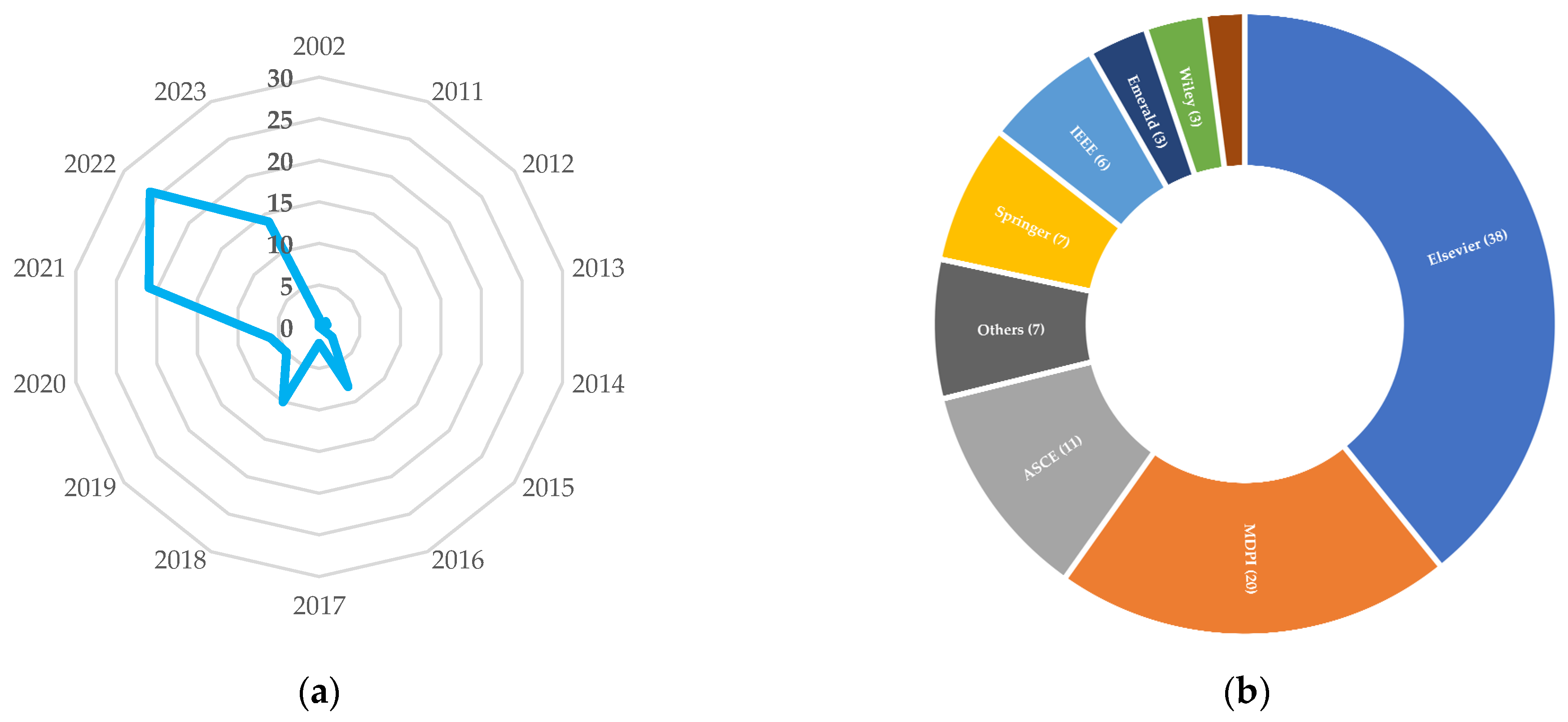
Disclaimer/Publisher’s Note: The statements, opinions and data contained in all publications are solely those of the individual author(s) and contributor(s) and not of MDPI and/or the editor(s). MDPI and/or the editor(s) disclaim responsibility for any injury to people or property resulting from any ideas, methods, instructions or products referred to in the content. |
© 2025 by the authors. Licensee MDPI, Basel, Switzerland. This article is an open access article distributed under the terms and conditions of the Creative Commons Attribution (CC BY) license (https://creativecommons.org/licenses/by/4.0/).