Article

Drowsiness Detection of Construction Workers: Accident Prevention Leveraging Yolov8 Deep Learning and Computer Vision Techniques

by
Adetayo Olugbenga Onososen
1,*,
Innocent Musonda
1,
Damilola Onatayo
2,
Abdullahi Babatunde Saka
3,
Samuel Adeniyi Adekunle
4,5 and
Eniola Onatayo
6
1
Centre of Applied Research and Innovation in the Built Environment (CARINBE), Faculty of Engineering and the Built Environment, University of Johannesburg, Johannesburg 2092, South Africa
2
Department of Construction Management, University of Florida, Jacksonville, FL 32224, USA
3
Westminster Business School, University of Westminster, London NW1 5LS, UK
4
Department of Civil Engineering, College of Engineering and Technology, William V.S. Tubman University, Harper P.O. Box 3570, Maryland County, Liberia
5
cidb Centre of Excellence, University of Johannesburg, Johannesburg 2092, South Africa
6
Department of Environmental Engineering, State University of New York, Syracuse, NY 13210, USA
*
Author to whom correspondence should be addressed.
Buildings 2025, 15(3), 500; https://doi.org/10.3390/buildings15030500

Submission received: 9 October 2024 / Revised: 17 December 2024 / Accepted: 15 January 2025 / Published: 5 February 2025
(This article belongs to the Special Issue Advances in Safety and Health at Work in Building Construction)

Abstract

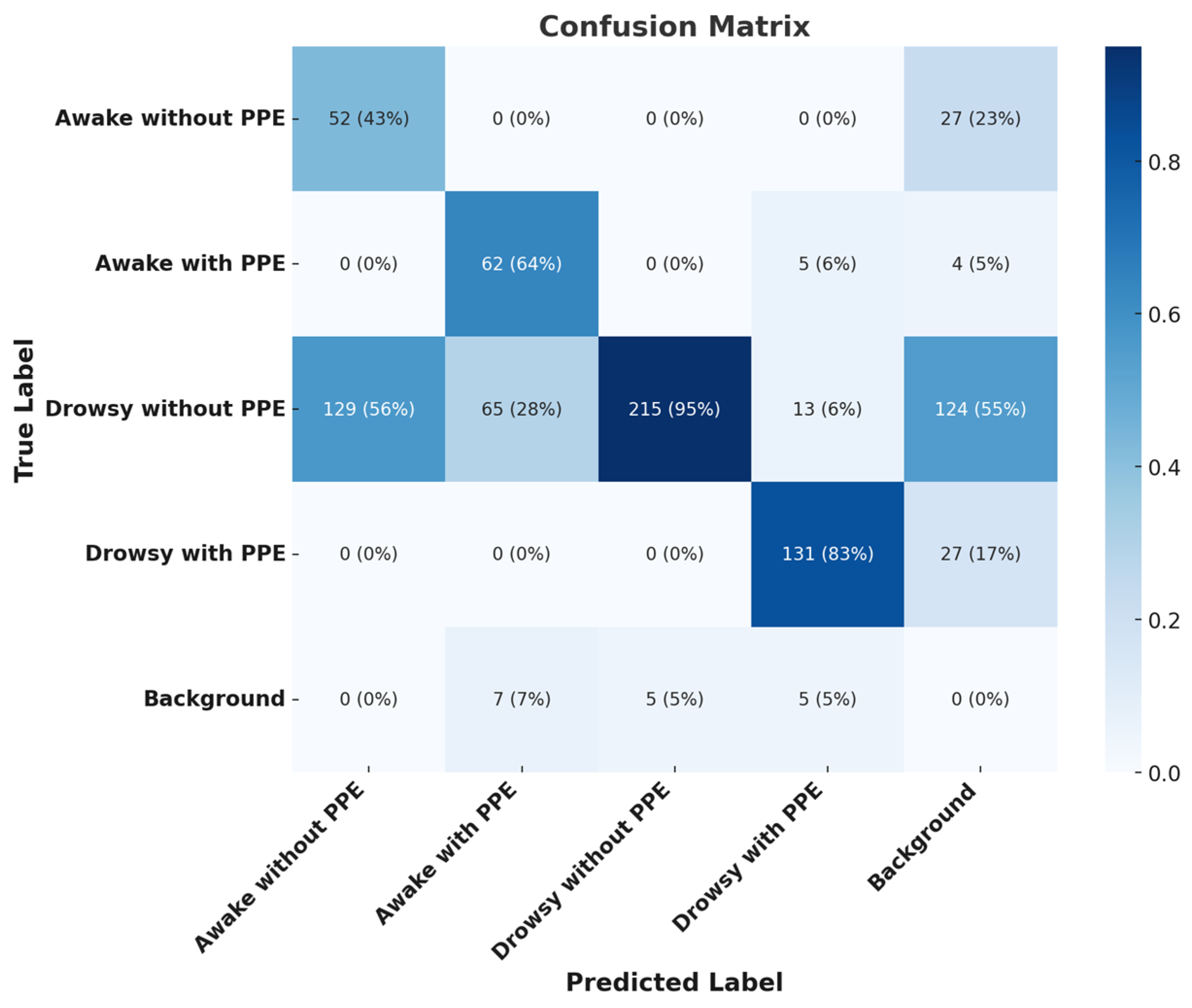
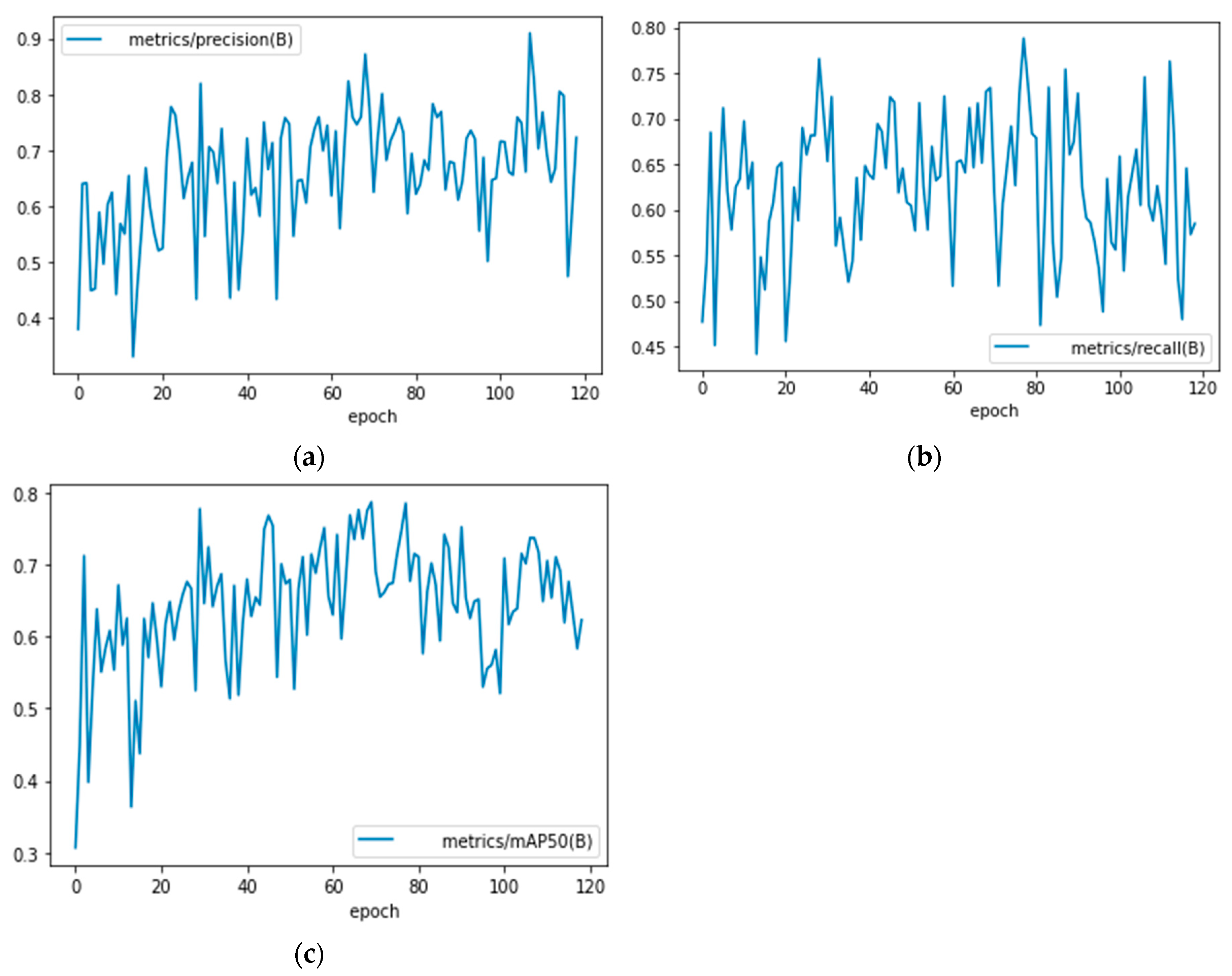
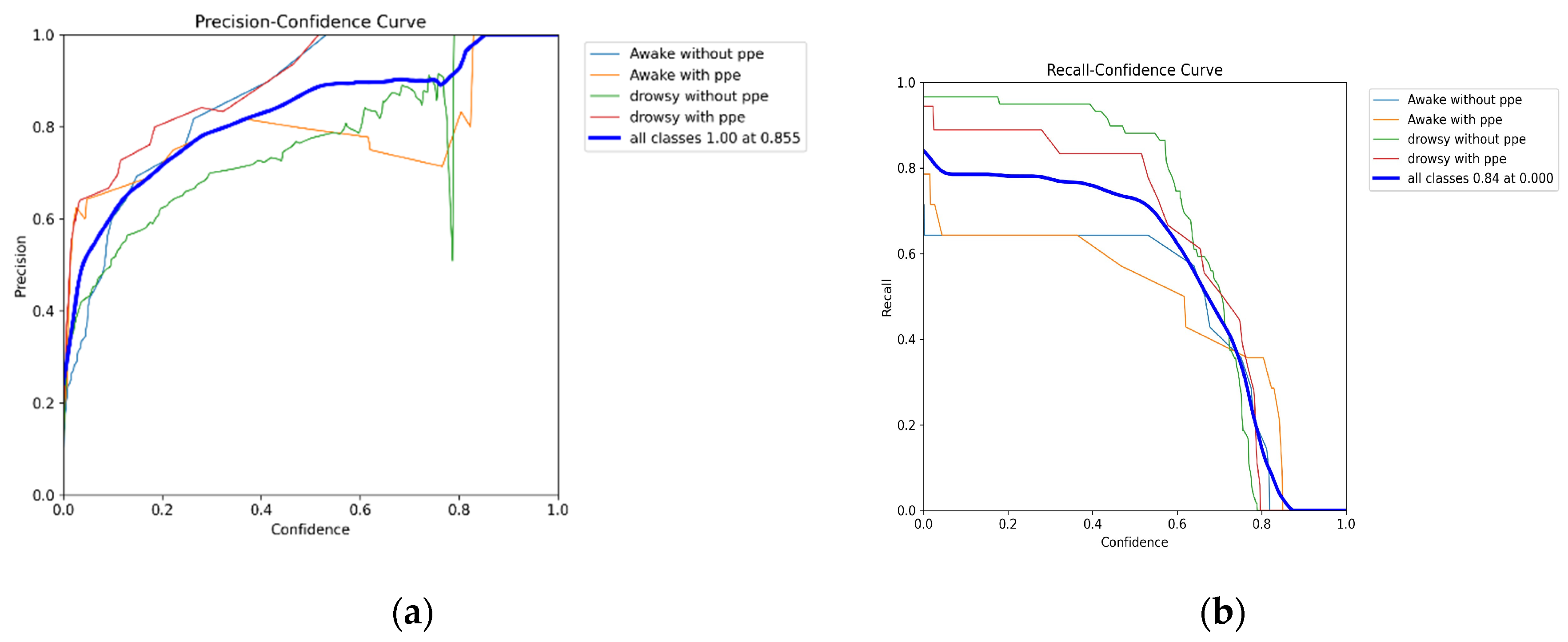
Construction projects’ unsatisfactory performance has been linked to factors influencing individuals’ well-being and mental alertness on projects. Drowsiness is a significant indicator of sleep deprivation and fatigue, so being able to identify the cognitive and physical preparedness of workers on site to engage in construction tasks is important. As a consequence of the strenuous nature of the work involved in construction, long work hours, and environmental conditions, drowsiness is commonplace and has received less attention despite being a leading cause of accidents occurring on-site. Detecting drowsiness is essential for determining the safety and well-being of site workers. This study presents a vision-based approach using an improved version of the You Only Look Once (YOLOv8) algorithm for real-time drowsiness exposure among construction workers. The proposed method leverages computer vision techniques to analyze facial and eye features, enabling the early detection of signs of drowsiness, effectively preventing accidents, and enhancing on-site safety. The model showed significant precision and efficiency in detecting drowsiness from the given dataset, accomplishing a drowsiness class with a mean average precision (mAP) of 92%. However, it also exhibited difficulties handling imbalanced classes, particularly the underrepresented ‘Awake with PPE’ class, which was detected with high precision but comparatively lower recall and mAP. This highlighted the necessity of balanced datasets for optimal deep learning performance. The YOLOv8 model’s average mAP of 78% in drowsiness detection compared favorably with other studies employing different methodologies. The system improves productivity and reduces costs by preventing accidents and enhancing worker safety. However, limitations, such as sensitivity to lighting conditions and occlusions, must be addressed in future iterations.
Keywords: construction; deep learning; drowsiness; construction safety; computer vision; accident; Yolo construction; deep learning; drowsiness; construction safety; computer vision; accident; Yolo