You are currently viewing a new version of our website. To view the old version click .
Buildings
  • Article
  • Open Access

15 December 2025

Impact of Multiple Environmental Factors of Space Clusters for Informal Learning in Library Renovation and Update


,
,

,
,
and
1
State Key Laboratory of Subtropical Building and Urban Science, South China University of Technology, Guangzhou 510640, China
2
School of Architecture, South China University of Technology, Guangzhou 510640, China
3
Department of Architecture and Design, Politecnico di Torino, 10125 Torino, Italy
4
School of Chemical and Environmental Engineering, China University of Mining and Technology-Beijing, Beijing 100083, China
This article belongs to the Topic Advances in Low-Carbon, Climate-Resilient, and Sustainable Built Environment

Abstract

Informal learning spaces (ILSs) have received widespread attention owing to their diversity, flexibility, and richness. Many university libraries are undergoing renovation. After partial renovation, the ILS of the library often appears in a ‘group embedded’ organisational model. This study used a study cluster of a university library as an example to research the quality of the internal spatial environment and its influencing factors in the study cluster. In terms of research methods, this study adopted a combination of high-precision positioning, questionnaires, and environmental data measurement. The questionnaires integrated the opinions of both users and designers. Drawing on the literature, this study surveyed multiple university libraries, summarised the spatial quality and influencing factors of ‘group embedded’ libraries, and compared them with the ILS of other two organisational models. There is currently no targeted framework for the design of ILSs, and no scholars have discussed the specifics of their organisational models. This study established a multi-factor analysis model for ‘group embedded’ ILSs. Finally, this study found four key determinants and their weights; they were physical environment (30.65%), environmental atmosphere (26.76%), spatial ontology (25.03%), and spatial facilities (17.56%). Among the 20 key factors, the first three factors and their weights are privacy (10.34%), illumination (9.20%), and noise (8.62%). Unlike the other two spatial organisation models, users of clustered embedded libraries paid more attention to space privacy. This paper proposed six major improvement measures to address privacy, illumination, noise, temperature, air quality, and nature friendly design.

1. Introduction

Since the Fourth Industrial Revolution, the rapid development of artificial intelligence and information technology has greatly promoted changes in educational environments and methods, leading to intensified competition for talent [1]. Educational philosophy is shifting towards cultivating innovative talent and inherent enhancement, and informal learning is gradually being emphasised [2]. Compared with traditional classroom learning, informal learning lacks teacher instruction and relies on student-centred learning. This approach is conducive to group participation and interdisciplinary collaboration [3,4]. Regarding the types of informal learning spaces, this study used Scott Weber’s four quadrant classification method [5]. It classified ILS into four categories based on the openness of the space and the quantity of people. Some have classified it into several levels based on different sound environments that are suitable for quiet learning, relatively quiet learning, and conversational learning [6]. Some scholars have classified ILS into three categories based on its functions: self-directed learning, exhibition learning, and discussion learning. Weber’s classification method is more widely applied than others [7,8,9].
The location of informal learning is not fixed [10]. Research has shown that libraries were the most popular environments for promoting active learning among students [11]. Libraries typically have good facilities, comfortable spatial environments and efficient learning atmosphere [12]. Numerous libraries are undergoing upgrades and renovations, with an increasing number primarily focusing on informal learning spaces (ILS), breaking away from the previous layout model, which focused mainly on book collections. Therefore, we focus on the ILS within partially renovated libraries. Partial renovation differs from overall renovation. This refers to the renovation of individual reading spaces, seminar rooms, shared spaces, and other ILS during the normal operation of the library [13]. An updated ILS is usually flexible and diverse, can accommodate different forms of learning, and has innovative internal equipment that has received high praise [14]. Field investigations have found that ILS in partially updated libraries often exist in a ‘group embedded’ organisational model. This organisational model exhibits unique characteristics, often appearing in corners or shared centres and can accommodate three to four different types of ILS internally. This study focuses on the learning cluster of a ‘group embedded’ library. This model of library is actually one of the forms of traditional libraries crossing over to learning centres, and it is also a reflection of the learning needs of teachers and students. The original method of individual public learning could no longer meet the existing learning needs of students, and more diversified learning cluster areas are beginning to emerge.
Researchers often propose relevant strategies from a qualitative analysis perspective to improve space quality in ‘group embedded’ libraries [15]. Gatlin et al. developed a qualitative research model adapted to the needs and learning styles of students through the iterative learning of spatial type combinations [16]. Fouad and Sailer analysed learning cluster using spatial syntax and found that the lower the Visual Mean Depth, the wider the learning corridor [17], providing inspiration for ILS design in node regions. Owing to the complexity of ILS and the diversity of influencing factors [5], quantitative research on multiple factors is difficult, and only a few scholars have quantified a single factor. Huang et al. quantified indoor thermal comfort through long-term monitoring of indoor temperature changes and explored the relationship between comfort and learning efficiency [18]. Cecchi monitored the air quality of learning cluster and found that, when the level of outdoor pollutants was low, sufficient ventilation could make the learning environment comply with regulations [19]. Braat-Eggen et al. studied the relationship between noise sensitivity and learning cluster, the results showed that learners had the lowest level of attention in speaking environments with three people [20]. Barrett et al. found that the naturalness of the design of learning cluster could affect 49% of the learning environment, whereas individuality and stimulation each accounted for nearly 25% [21]. These studies have promoted the improvement of learning cluster quality; however, composite research on multiple factors was lacking. As pointed out by relevant scholars, currently, universally available paradigms for learning cluster are lacking [22], and no one has explored organisational models for learning cluster. The novelty of this study was the identification of the multiple influencing factors and their weights of learning cluster that affect learning clusters, thereby providing support for the subsequent improvement and renovation of libraries.
The Library of the Guangdong University of Technology in Guangzhou (GDUT) was selected as the research case. It is a typical representative of library renovation and reflects the characteristics of the ‘group embedded’ organisational model accurately. To address this issue, we first utilised indoor positioning technology to monitor student behaviour and usage duration. Second, we used environmental testing equipment to measure the physical environment. Third, we use the real-time distribution of questionnaires to collect students’ background information and subjective evaluations. Fourth, a rating table for interior-space design was collected from designers. After integrating the information, we conducted a correlation analysis and verification, and determined the relationship between different influencing factors and selection preferences within the learning cluster.

2. Literature Review

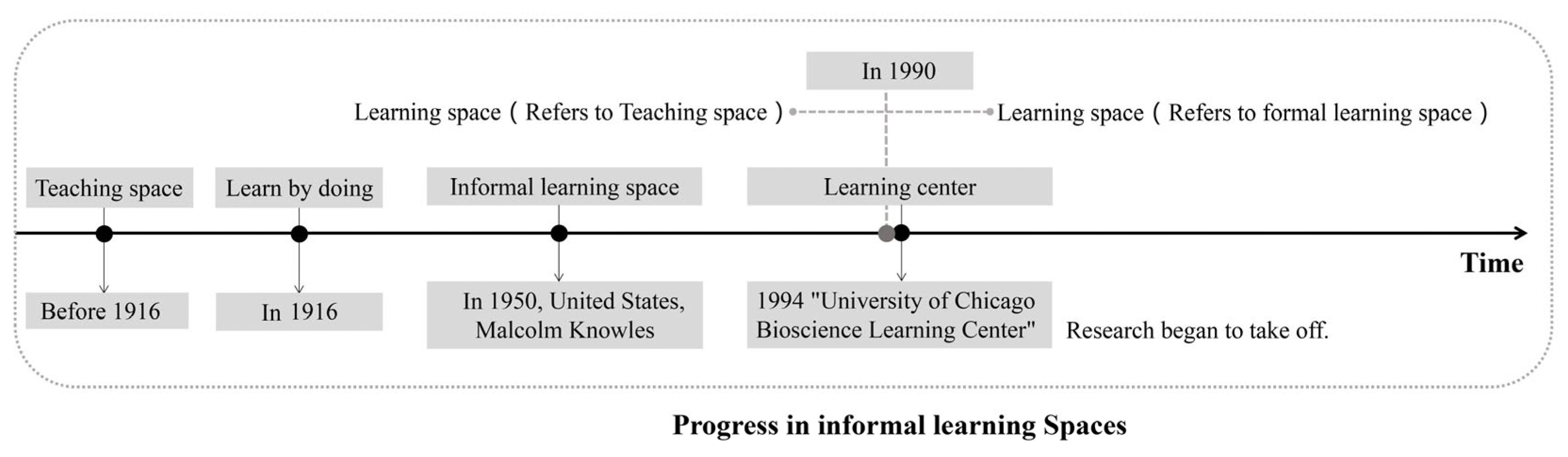
Informal learning refers to learning outside the teaching space [23]. It can be traced back to Dewey’s theory of ‘learning by doing’ [24]; then, this concept was formally proposed by Malcolm Knowles and continuously developed [25]. Figure 1 demonstrates the development and evolution of ILS. Informal learning evolved from the term ‘teaching space’, and it was not until 1950 that the term ‘informal learning’ was officially introduced. 80% of a person’s life was spent on informal learning [26]. In the digital era, Internet and intelligent devices has increased the value of informal learning [27].
Figure 1. Conceptual evolution.
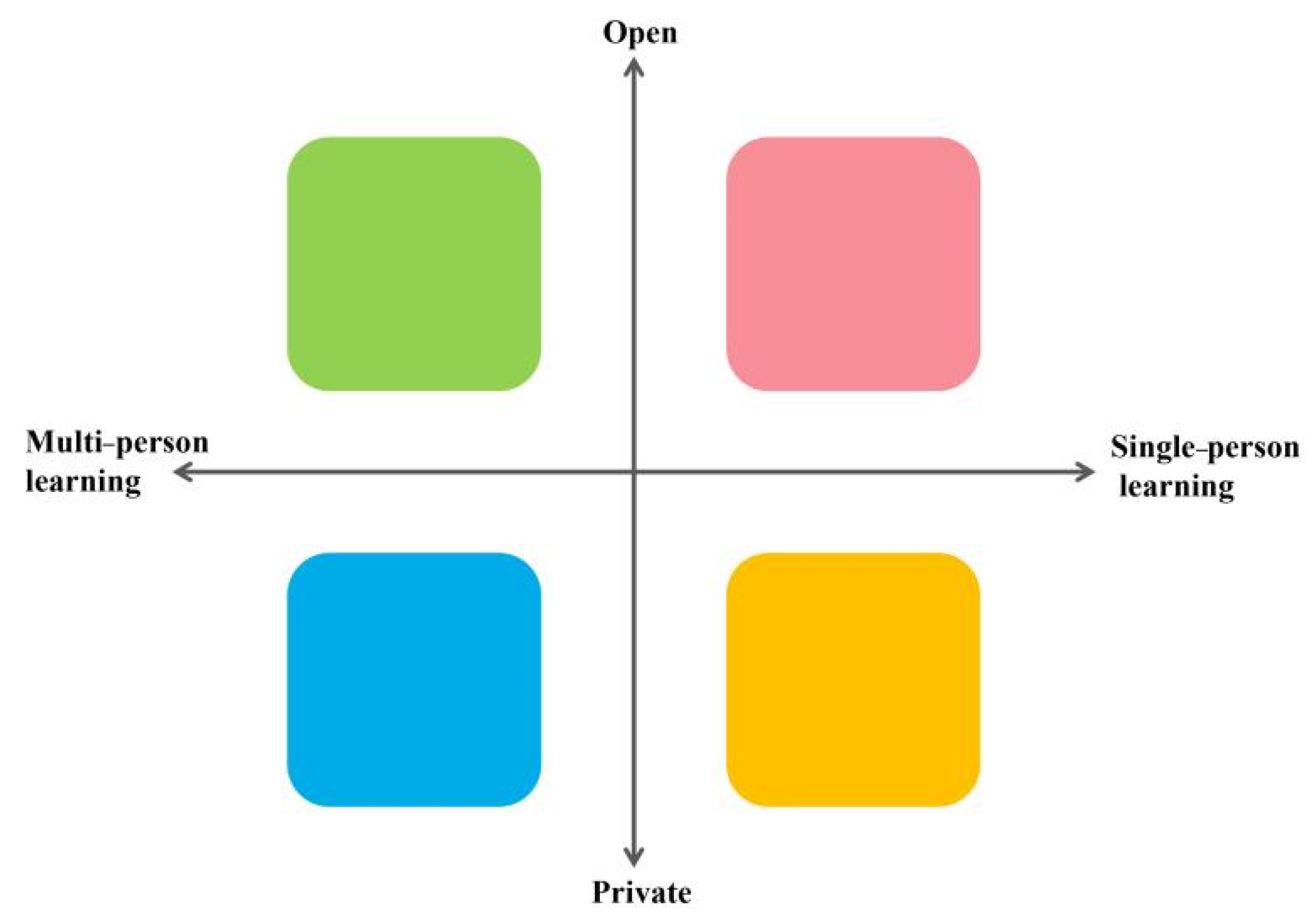
Informal learning in libraries mainly focused on self-directed learning but also included occasional learning [28]. A good learning environment can promote a state of learning and focus. Therefore, improving the spatial quality of ILS is particularly important [29]. To better explore the specific characteristics of ILS, Scott-Webber proposed the ‘four quadrant framework’ [5]. Figure 2 shows this framework. Counterclockwise, the first type of ILS is open and single learning (ILS-1), the second is private and single learning (ILS-2), the third is collaborative project learning (ILS-3), and the last is open and multi-person learning (ILS-4) [30]. This classification method was also used in this study.
Figure 2. Four quadrant framework.
Learners’ perceptions and evaluations were increasingly being studied [31]. In terms of learning outcomes and activities, users’ perceptions have a greater impact than the environment itself [32]. Numerous factors influenced perceptions of the environment. First, it has been demonstrated that students’ personal characteristics could influence their preferences and perceptions [33,34,35]. Livingstone found that learners with higher education tend to engage in more personalised learning activities [36]. This indicated that people from different educational backgrounds tend to choose different learning methods. Ng et al. showed that men were more adept at utilising emerging technologies [37], which leads to men being more involved in informal learning. Second, the physical environmental characteristics, such as sound [38], light [39], temperature [40], were also important conditions that affected the perception of ILS [41,42,43,44,45,46]. Ramu et al. found that physical factors such as lighting, temperature, and noise exceeding thresholds could lead to a decrease in evaluation of the ILS [47]. Additionally, the facilities and equipment, as well as the characteristics of the space itself, had a certain impact on overall perception [48]. Berg and Chyun suggested that the ability to access the Internet and computers were among the top two attractions of ILS [35,49]. Ramu et al. found that students’ sense of belonging to a space was also very important [47]. In recent years, researchers found that natural elements could create restorative spaces, alleviate fatigue, and improve mental health [39,50,51].
There was a lack of clear exploration on the relationship between multiple factors and ILS, and these studies were not systematic [52]. Da Graça et al. evaluated four aspects of comfort in ILS just using semantic scales [53]. Williams et al. created a database to evaluate the new ILS for the future [54]. Technological advancements brought feasibility to quantitative perception, such as wearable eye trackers, which could be used to explore the relationship between space and vision [5]. Acoustic detection equipment could be used to analyse the relationship between students’ attention and acoustic comfort [55]. The higher the level of acoustic comfort in ILS, the stronger the creativity of its students. Researchers have explored the relationship between carbon dioxide levels and learning. According to Zhang et al., ILS design should introduce mechanical ventilation and air filtration to improve air quality [56]. In conclusion, most studies summarised the methods of updating and renovating [57], with little evaluation of the usage status after renovation [58]. However, quantitative research on multiple factors was scarcer [59]. In terms of conclusions, previous studies have certain limitations and have not considered the composite effects of multiple factors, which cannot provide comprehensive guidance for ILS design [22].
To fill this research gap, the present study comprehensively explored the usage of ‘group embedded’ library ILS, identified key factors and existing problems of the learning cluster, and proposed improvement strategies. This study used high-precision positioning devices to explore the relationship between ILS and users. Simultaneously, devices were utilised to record various physical data to analyse the relationship between the physical environment and behaviours.

3. Research Methodology

3.1. Research Subjects

3.1.1. Case Study

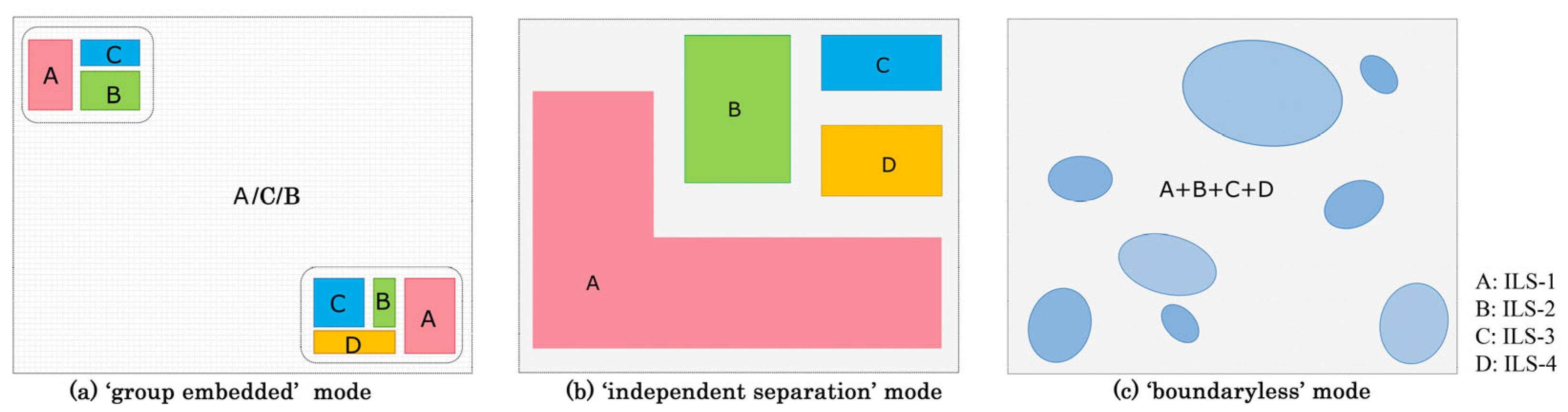
The first round of basic research was conducted in 20 libraries of major universities in Guangzhou, China (Please refer to the Appendix A Table A1). Eighteen of these libraries had been renovated, and only two were new libraries. The original library had focused on individual public learning, whereas the newly renovated ILS was inserted into the original space in the form of learning clusters. Figure 3a shows the basic mode of a clustered embedded library. This spatial organisation model was referred to as ‘group embedded’ in this study. The reason for this model was that renovating existing libraries required a long time and financial support [60], and the library still needed to operate normally during the semester, providing students with learning and collection spaces. Therefore, most libraries only underwent partial renovation. During the research, two other organisational models were also discovered, which were called ‘boundaryless’ mode and ‘independent separation’ mode. The independent separation’ mode occurred in newly built or fully renovated libraries, where four types of ILS were independently distributed, either vertically or horizontally, without interfering with each other. Figure 3b shows the basic mode of an independent and separate library. ‘independent separation’ mode is commonly found on university campuses in Europe or the United States, and has gradually emerged in some schools in China in recent years. Its internal space has no distinct boundaries, and multiple learning methods coexist in a large space, with fuzziness and intersection as the main characteristics. Figure 3c shows the basic mode of a boundaryless library. Some learning centres may have meditation halls or meeting rooms isolated from other spaces. Owing to the high proportion of the ‘group embedded’ mode, we explored only this mode in depth.
Figure 3. Three forms of spatial organisation.
To explore the spatial environment quality of ILS in ‘group embedded’ libraries, we investigated six of them in a second round. The results are summarised in Table 1. This table mainly summarised the tested feasibility, characteristics of learning clusters, update time, and suitability as typical cases.
Table 1. Characteristics of ILS in the second round of research.
After comparison, we ultimately chose library of GDUT (GDUT-L) as a typical case, as it had a large number of groups, making it convenient for testing. The users were relatively stable and suitable for drawing universal conclusions.

3.1.2. Introduction of Research Subjects

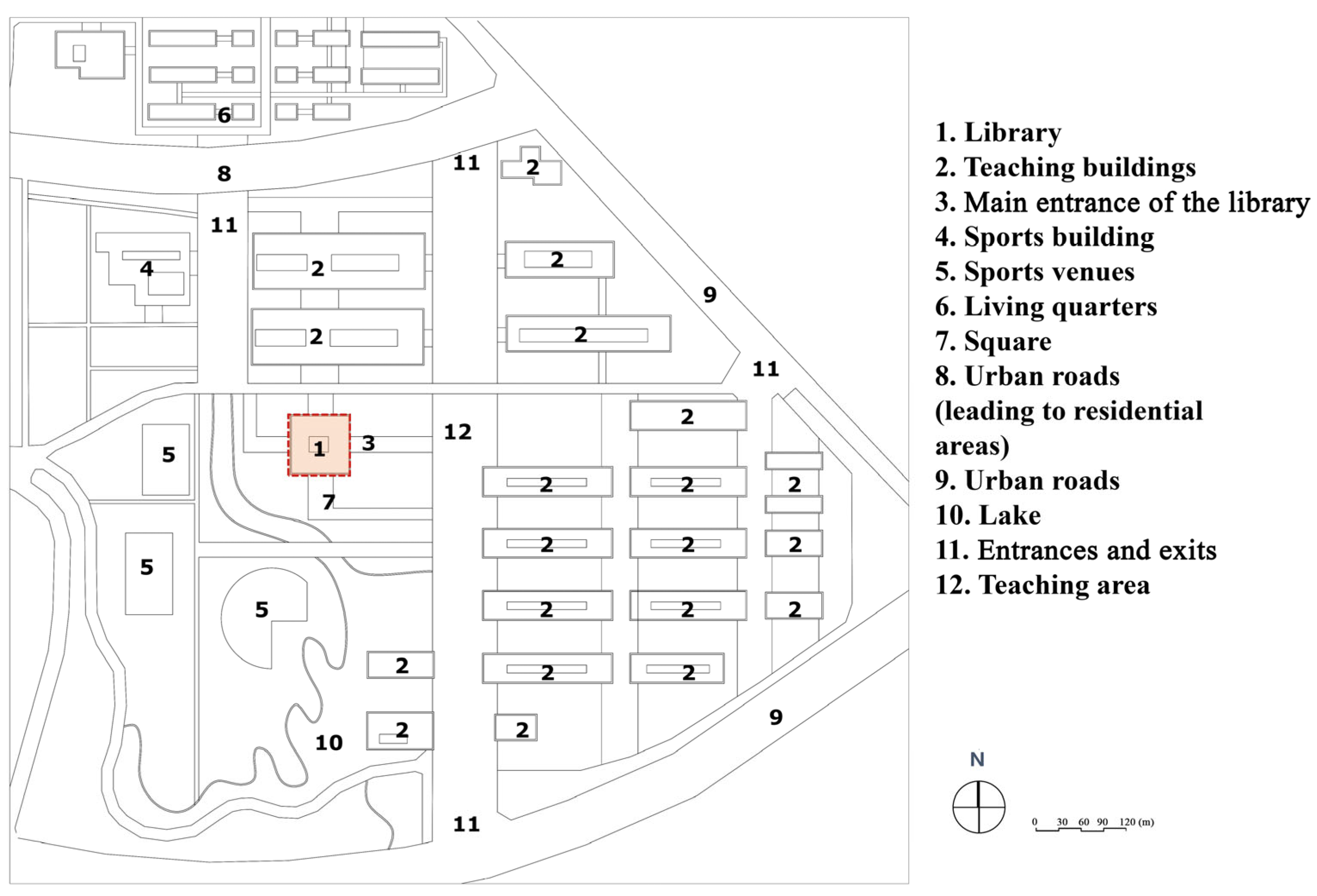
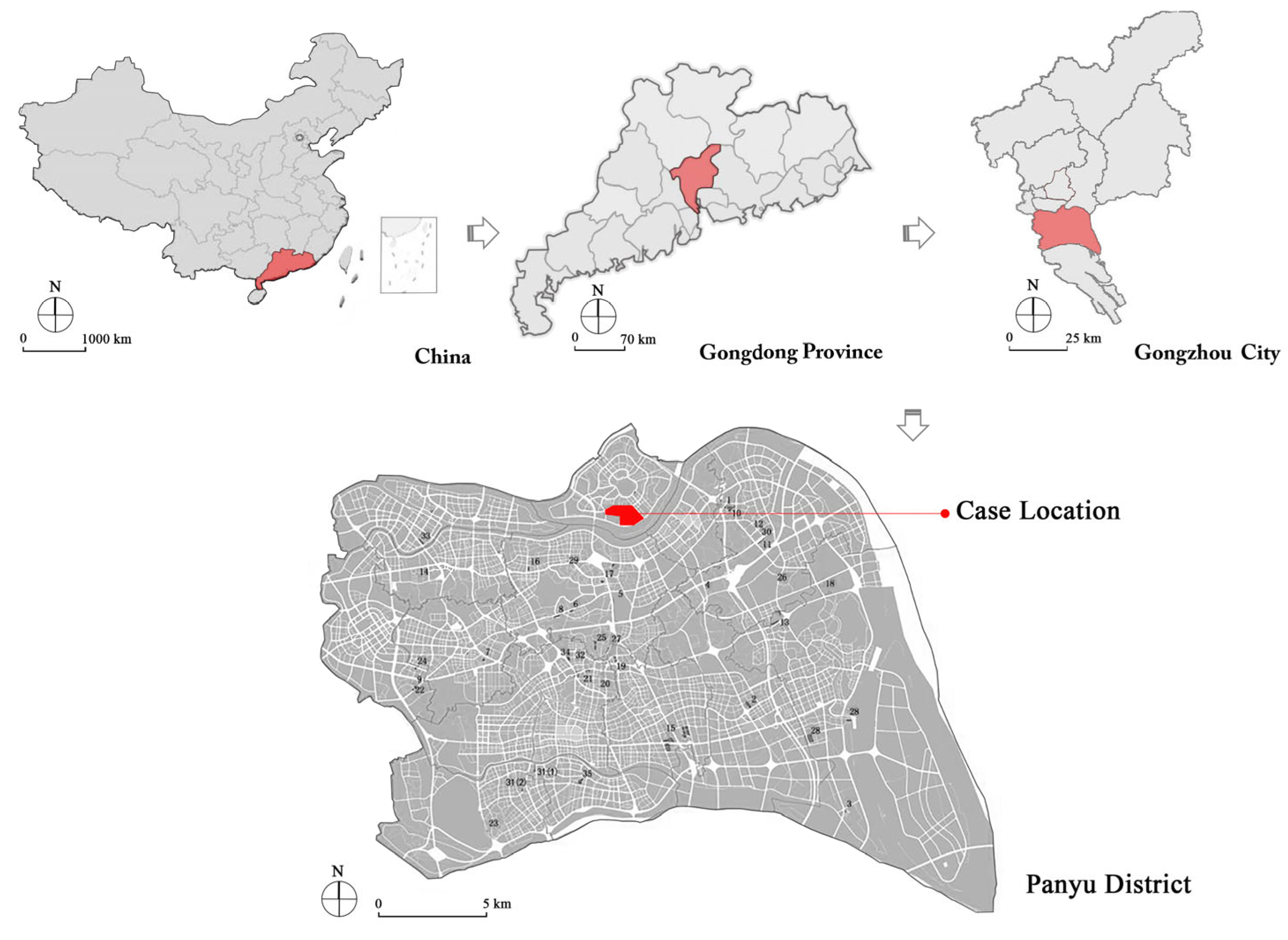
Figure 4 shows the geographical location of the library. GDUT-L was located in University Town, Panyu District, Guangzhou City. To cope with the hot and rainy climate, buildings often use transparent corridors to enhance ventilation and heat dissipation inside them [61,62]. The exterior of the building is typically designed with sunshades, grilles, and other shading elements that block the sun. The buildings on the GDUT campus were designed considering climate adaptability [63]. Figure 5 shows the overall layout of the library. GDUT-L was founded in 2003 and upgraded over 1000 square metres of ILS in 2022, forming seven major learning clusters. The library has seven floors, with the main entrance hall located on the south 2nd floor. The 24 h study group was located on the first floor. The opening hours of the other ILS were from 7:30 am to 10:30 pm.
Figure 4. Geographical location.
Figure 5. General library layout.
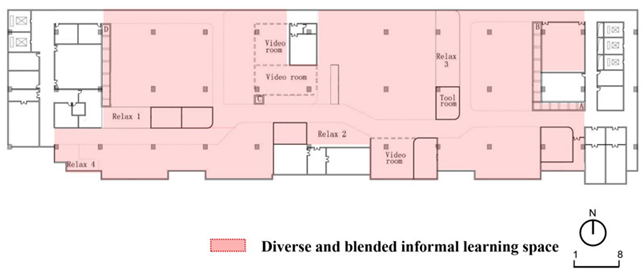
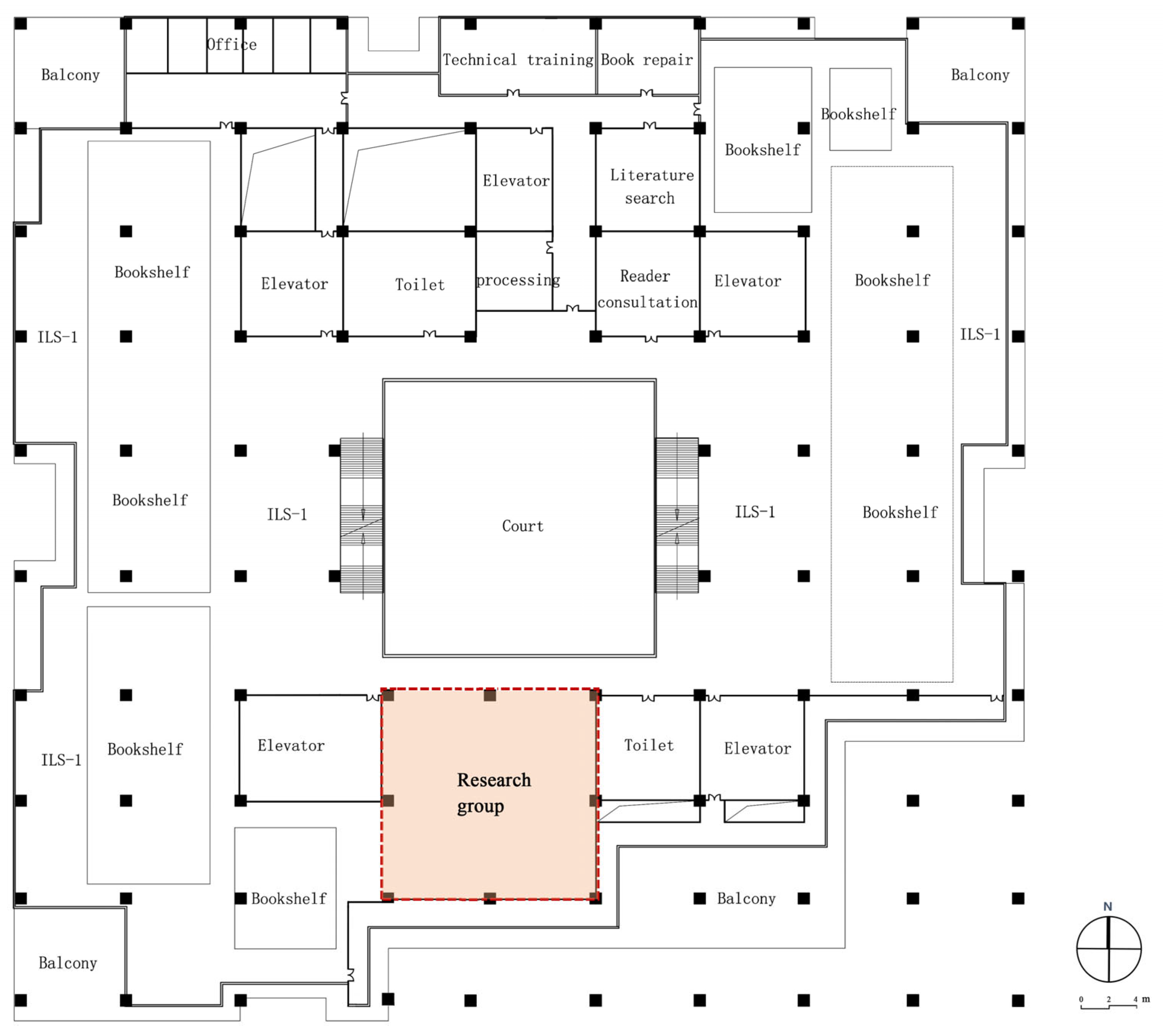
To select typical cluster modules, we chose an academic and creative cluster located on the southwest side of the third floor. Figure 6 shows the three-level plan where the research cluster is located. This cluster included four types of ILS: ILS-1, ILS-2, ILS-3, and ILS-4. This cluster was located near the courtyard and also near the outer corridor on the south side. Compared with other clusters, it covered a more comprehensive range of types, had a larger scale, and was easier to measure, making it more suitable for analysis and comparative research. Table 2 compares the basic information of seven clusters. In this table, you can clearly see the number of users, scale, feasibility of actual testing, and the main characteristics of the group.
Figure 6. Academic and creative clusters in the third-floor plan.
Table 2. Comparative analysis of the seven clusters.
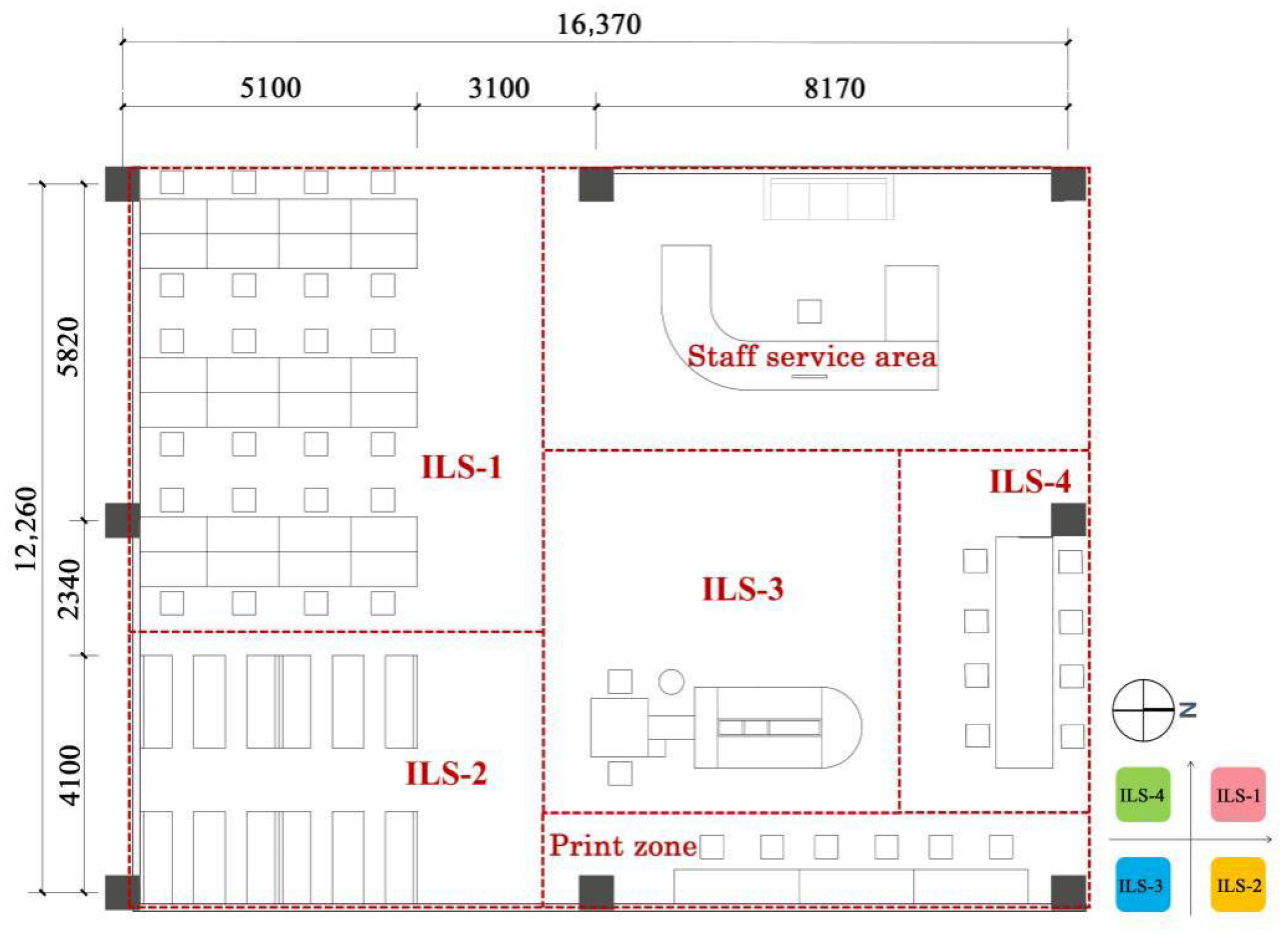
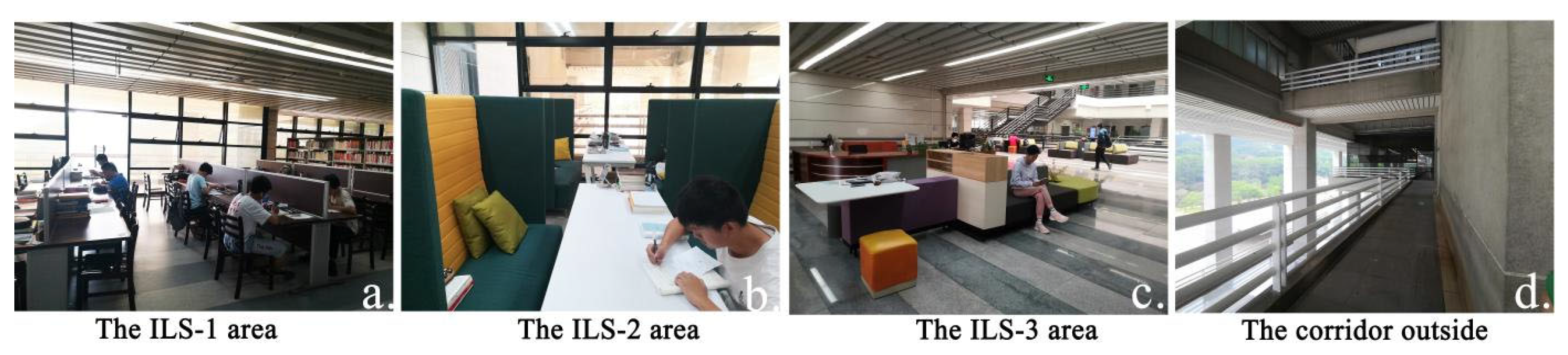
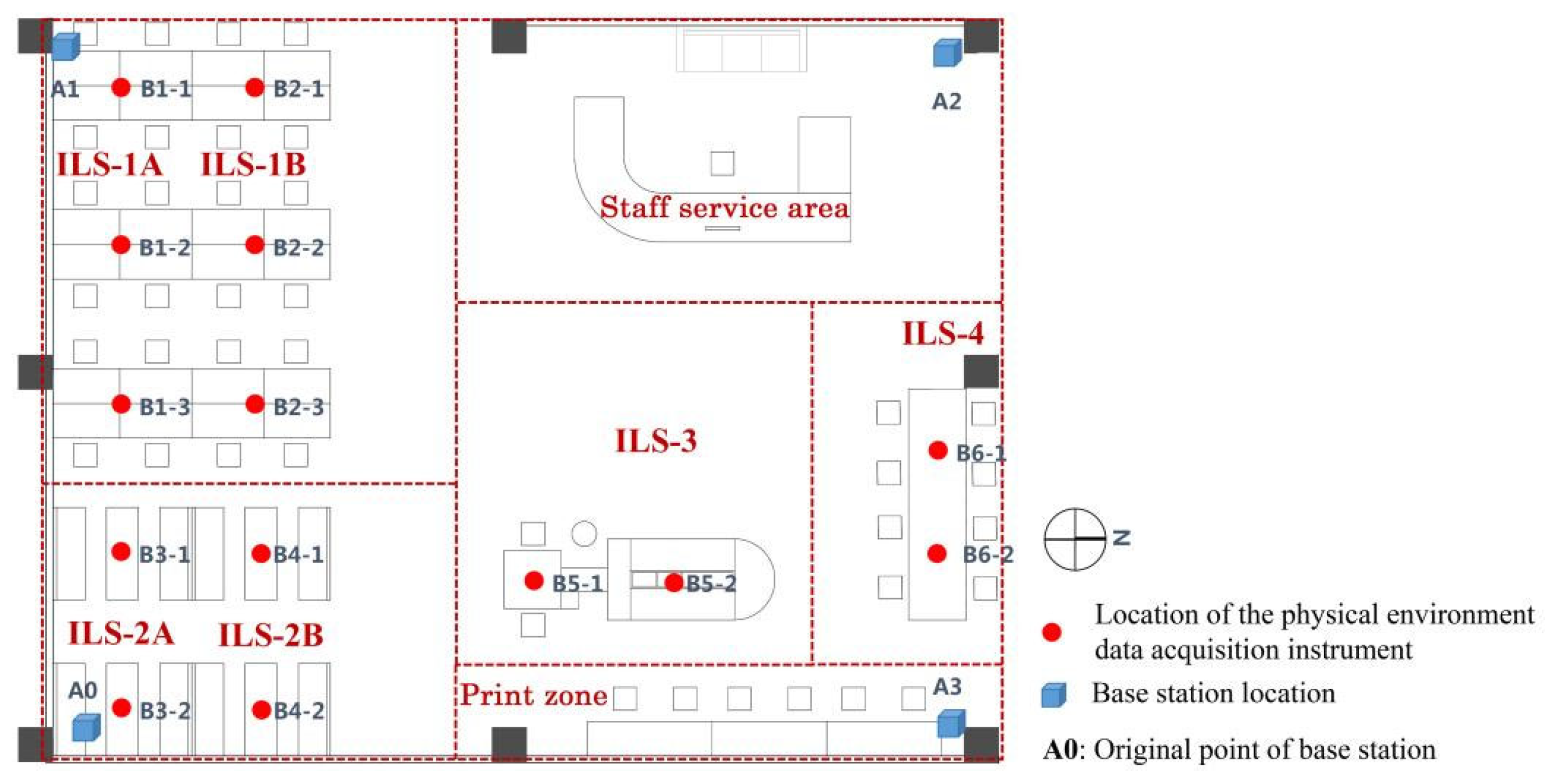
The length of the cluster was approximately 16.0 m, its width approximately 12.0 m, and its net height 3.4 m. Figure 7 shows the layout and dimensions of this cluster. It included four major learning areas, as well as a service area and a printing area. Figure 8 shows the usage of various spaces within this cluster. The southern and eastern parts of the cluster featured French windows. There was also a 2.0 m wide corridor outside the cluster, and the balcony above provided a certain shading effect, as shown in Figure 8d. For convenience of analysis, the cluster was divided into six regions: (1) The ILS-1 area consisted of 12 study desks and 24 seats, with mainly hardwood furniture. To ensure privacy, the table was divided by a 40 cm-high partition in the middle, as shown in Figure 8a. (2) The ILS-2 area, consisting of four sets of sofas and tables, as shown in Figure 8b. The sofa was 1.2 m high and could provide users with comprehensive visual obstruction. (3) The ILS-3 area featured modular furniture (as shown in Figure 8c) and served multiple functions, including storage, relaxation, learning, and discussion. (4) The ILS-4 area included a large table and eight seats. This area was also used as a space for new book and painting exhibitions. (5) Printing area; (6) Service area.
Figure 7. Group plan.
Figure 8. Current usage status.

3.2. Selection of Positioning Technology

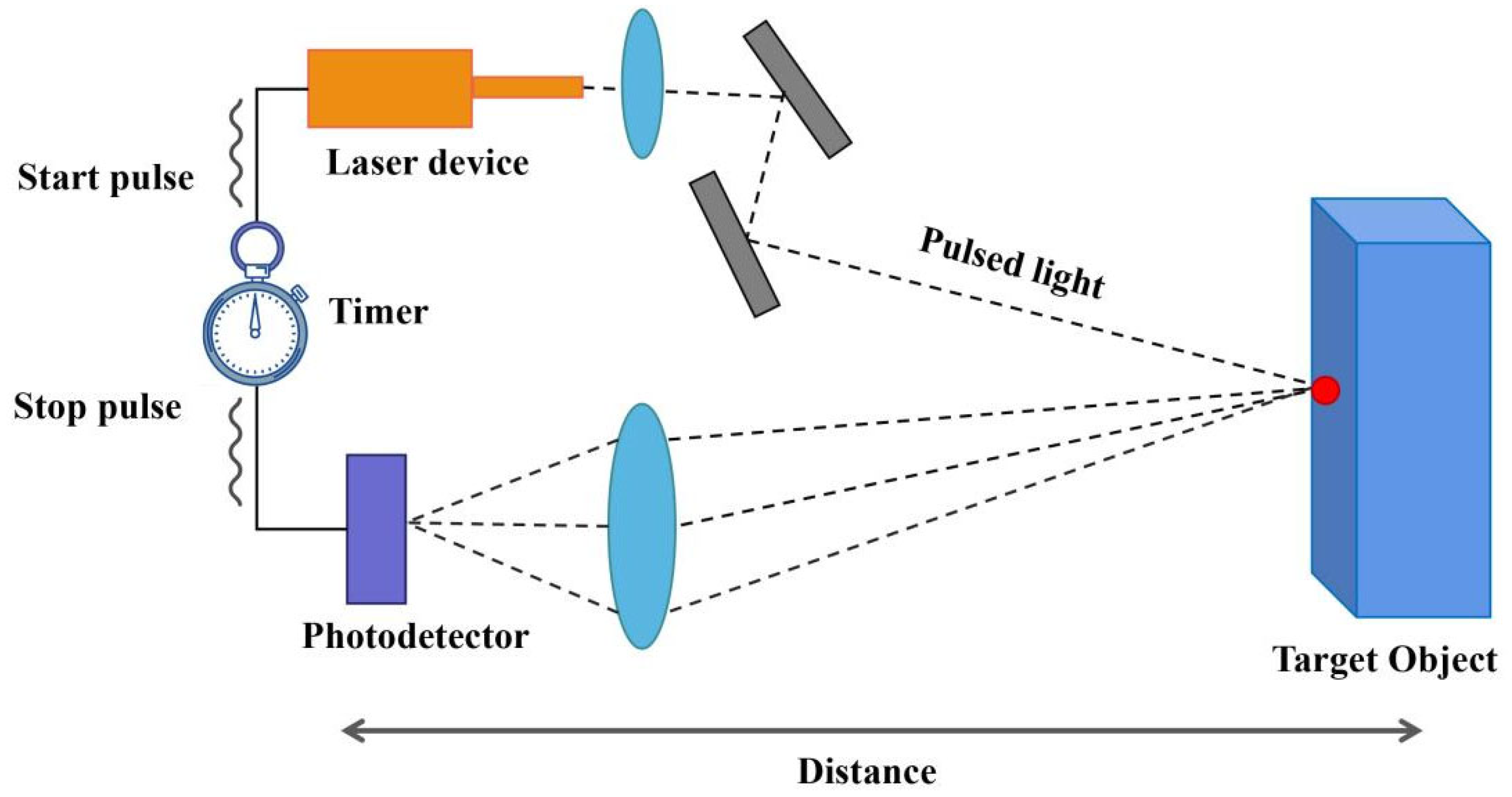
Currently, there are many positioning technologies, including GPS, WIFI positioning, Bluetooth positioning, and Radio Frequency Identification [64]. When deciding on specific technologies, we mainly considered three points: first, whether it was suitable for the size of the spatial module; second, whether its accuracy met the requirements; and third, whether its feasibility was sufficiently high without affecting students’ learning. Some positioning technologies cover wide areas, but their accuracy is relatively low [65]. Some positioning technologies might interfere with students’ learning; therefore, we did not consider them. We ultimately selected Ultra-Wide Band (UWB) high-precision positioning technology [66]. Its label was wearable, lightweight, and could be used as long as it was clipped onto students’ clothes [67]. The advantage of UWB is its high accuracy, with measurement errors in the cm range, making it suitable for indoor use in small spaces [68]. UWB systems use intermittent pulses to transmit data, with a short pulse duration between 0.20 and 1.5 ns, and its system power consumption is low [66]. The instrument was designed based on a UWB high-power module MAX2001-IPEX/CA, YCHIOT, Wenzhou, China. Table 3 lists the main performance indicators. It included the operating temperature and frequency range of this instrument, etc. The positioning principle is illustrated in Figure 9. The time-of-flight (TOF) positioning algorithm was used [69]. The propagation distance was calculated by measuring the time required for the signal to bounce back to determine the position of the object [70]. The advantages of TOF were its strong anti-interference ability and high refresh rate; it is particularly suitable for dynamic scenes. The selected cluster had an open interior and no other obstructions that would significantly interfere with the signal [71].
Table 3. Primary performance indicators of UWB.
Figure 9. Positioning principle.
After determining the positioning technology, we distributed and set up the base stations within the cluster. Four base stations were selected and placed at the corners of the space using tripods. Owing to the high height of the sofa in ILS-1, the height of the base station was set to 3.0 m to reduce its impact on the signal. The maximum instantaneous usage of this cluster was 40; therefore, 40 tags were used. Before the experiment, the four base stations were tested for their origin settings. The equipment was tested to check that it operated normally, with assistants carrying tags to walk around the space.

3.3. Preliminary Establishment of Evaluation System

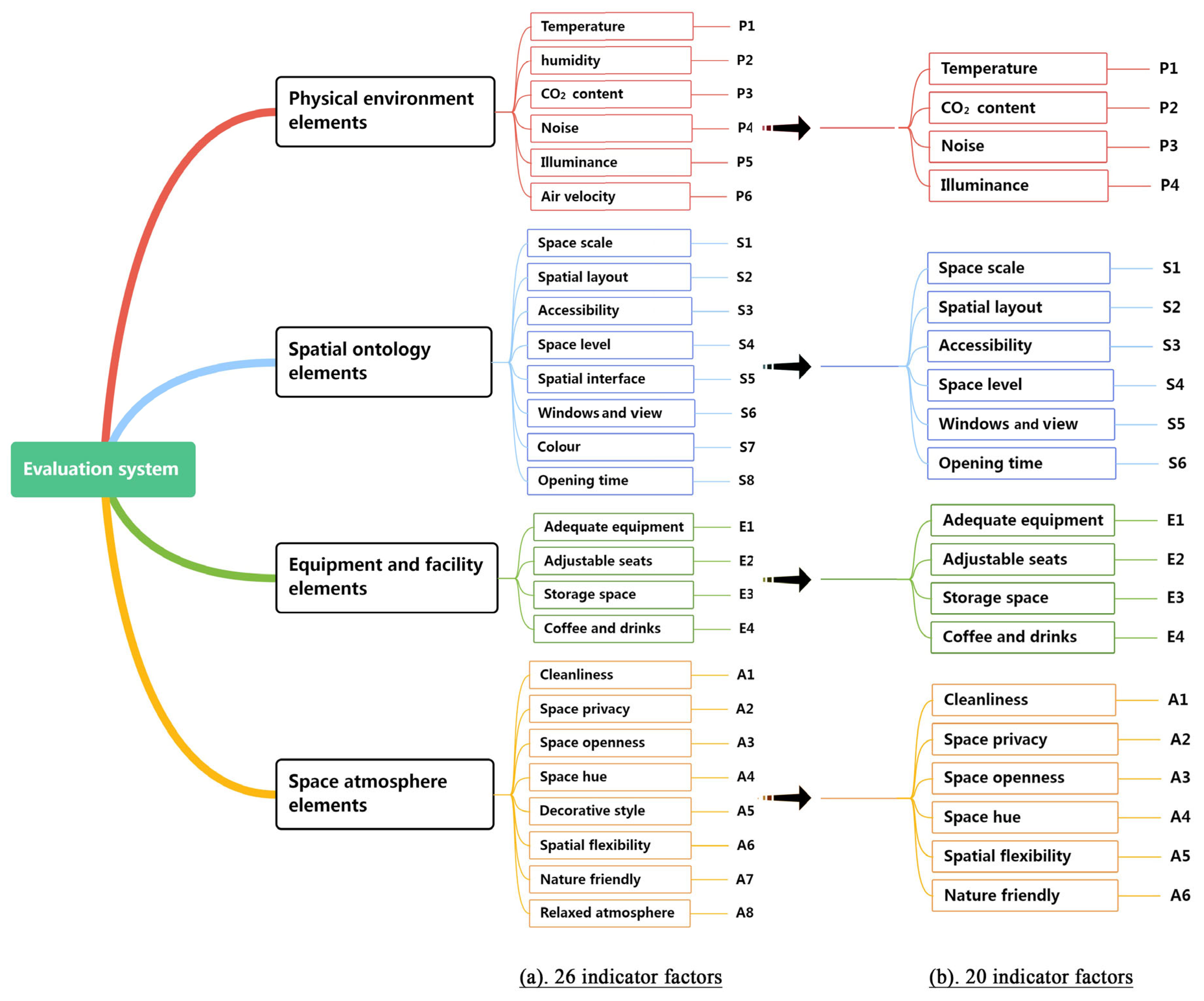
Through research and interviews with users, we initially established four key determinants for evaluating the spatial quality of the learning cluster. These were the physical environmental, spatial ontology, spatial atmosphere, and facility equipment determinants. Figure 10 shows the establishment process of the evaluation system. Figure 10a shows the initial evaluation system. Each determinant was associated with specific factors, and the total number of factors among the four determinants was 26. Figure 10b is the final evaluation system, which only has 20 influencing factors. The process of this operation from Figure 10a to Figure 10b is as follows. A two-week questionnaire survey was conducted with users within the learning cluster, and 606 questionnaires were collected. After excluding invalid questionnaires, the number of valid questionnaires was 578. A reliability test was conducted on these, and the results showed that the Cronbach’s alpha coefficient was 0.952, indicating excellent reliability. Validity testing was conducted by randomly selecting four major determinants from among the 26 factors. The results showed that the Kaiser–Meyer–Olkin (KMO) value was 0.565, which was less than 0.6, indicating insufficient data validity. Subsequently, factors with low commonality were removed, and those that did not match the preset dimensions were adjusted, resulting in the retention of 20 factors. The evaluation system was revalidated, and the results showed a KMO value of 0.674. The cumulative variance interpretation rate after rotation was 76.04%. The validation results passed the Bartlett sphericity test, and the significance p-value less than 0.01, indicating that the data met the requirements of factor analysis and could be used for quantitative descriptions in weight analysis.
Figure 10. Establishment of the evaluation system.

3.4. Weight Calculation of Indicators

This study constructed an evaluation system for the environmental quality of informal learning clusters consisting of four major determinants and 20 indicator factors. It used a combination of the weighted coefficient and comparative scoring methods to calculate the weights of the factors. At the end of the questionnaire, the students selected and ranked the six most critical factors. The weight coefficients of these six factors are listed in Table 4. The weight coefficient of a factor that ranked first was the highest: 6/21; that of a factor that ranked sixth was the lowest: 1/21. When a factor was not included in the top six, its coefficient was considered to be 0. After superimposing and calculating each factor, their weights were obtained. The specific calculation formulae were (1), (2), and (3). ‘MAn’ calculated the weight of certain factors in all valid questionnaires. Equation (2) was used to calculate the total weight score of the questionnaire. Equation (3) was used to calculate the score for this factor in the overall evaluation system.
MAn = n1 × 6/21 + n2 × 5/21 + n3 × 4/21 + n4 × 3/21 + n5 × 2/21+ n6 × 1/21
Q = MA1 + MA2 + MA3 + … + MAn
Pn = MAn/Q
Table 4. Extraction of factor weights.
The reason for choosing this method was that it provided more accurate weight values than simple SPSS 29.0.2.0 analysis, as the cumulative variance explained by SPSS after rotation was not 100%. The variance explained rate only represented the proportion of the original information extracted by common factors. It did not consider the relative importance between variables within each factor, and if weights were directly allocated using this ratio, it was equivalent to ignoring the unexplained portion of variance.

3.5. Specific Implementation of the Experiment

The experiment lasted for two weeks, from 8 to 22 October 2023. This was the autumn semester of Chinese universities, and students’ learning courses and tasks had entered the middle of the semester, with a relatively stable learning state. The number of students in the library was at the annual average level. In October, Panyu District in Guangzhou remained hot and rainy, with an average temperature of 21–29 °C, reflecting the distinct characteristics of the climate. The library still required air conditioning to maintain a suitable temperature. Before the experiment, preparation and debugging work were conducted, including positioning software, measuring instruments, and a platform for collecting data on computer terminals.
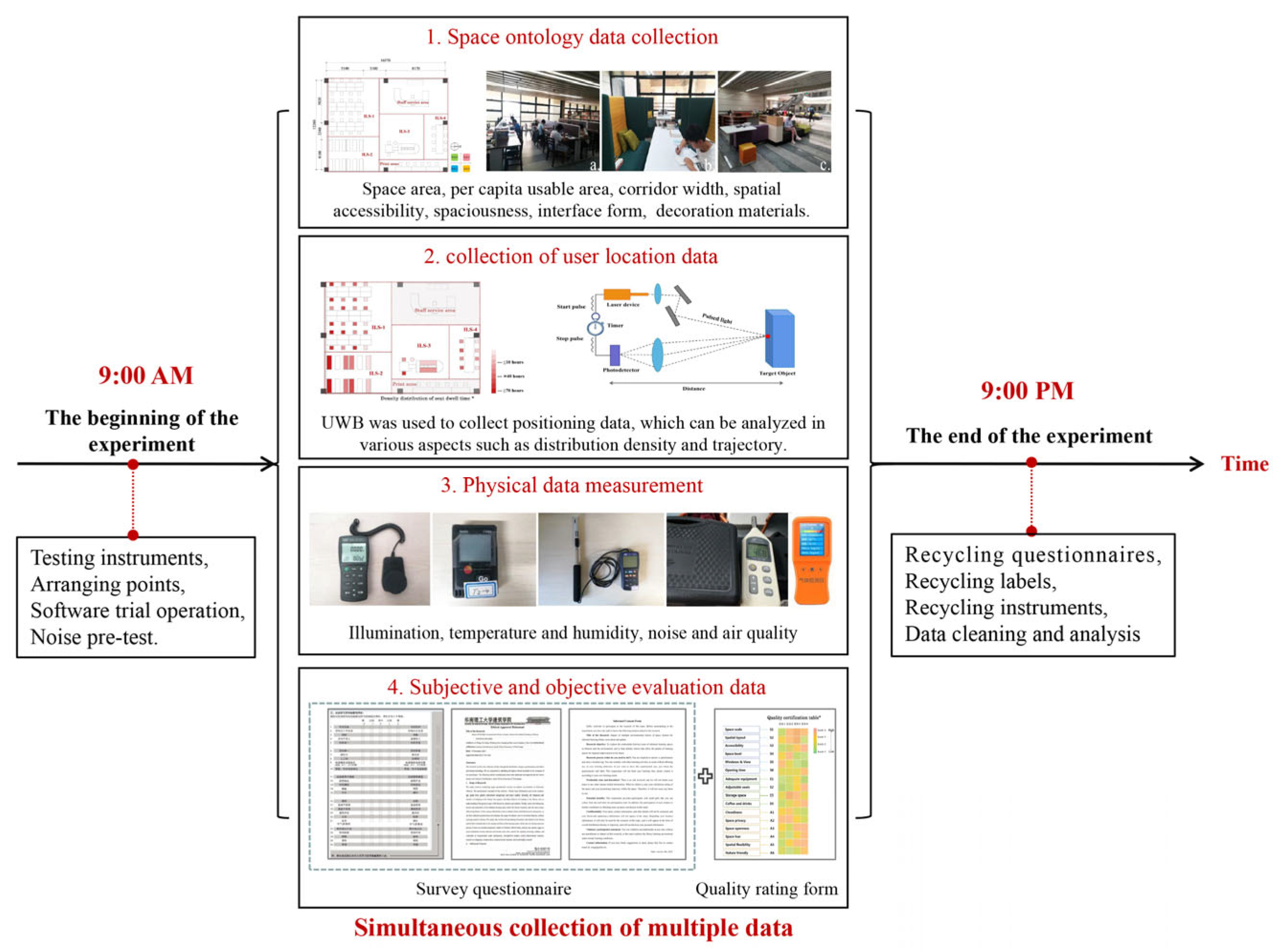
Figure 11 shows the experimental method flowchart of this study. The experiment started at 9 am. We distributed location tags, questionnaires, and participatory gifts to students who entered the cluster, while collecting tags and questionnaires in a timely manner from the students who left. If the student only came to find classmates and left quickly (with a stay time of less than five minutes), their data would not be recorded. The experiment ended at 9 pm, after which the number of people decreased significantly and was no longer considered. This experiment adhered to the principle of ‘three simultaneities’, which involved collecting location information data, questionnaire information, and physical environment data simultaneously. In total, 759 questionnaires were completed. After excluding 17 invalid questionnaires, the final number of valid questionnaires obtained was 742. The Cronbach’s alpha for these valid questionnaires was 0.914, indicating good reliability. After the experiment, the collected data were analysed and organised. Positioning information data were used to analyse student behaviour and preferences and were compared with physical environment and questionnaire data to obtain the relationship between student behaviour, preferences, and various indicator factors.
Figure 11. Experimental method flowchart.

3.6. Collection of Objective and Subjective Data

3.6.1. Measurement of Physical Environment Data

According to the evaluation system in Figure 10b, the physical data were required to collect four items: temperature, noise, carbon dioxide (CO2), and illuminance. The instrument used for temperature collection was the ‘Testo-174H’ temperature and humidity detector, with a measured accuracy of ±0.5 °C. Its manufacturer is Testo SE&Co. KGaA, located in Lenzkirch, Germany. The noise metre adopted ‘BENETECH GM1356, Shenzhen, China’ with an accuracy of ±1.5 dB. The model of the illuminance metre was ‘TES-1339R, Taiwan, China’, with an accuracy of ±3% reading ±5 digits. The CO2 detection used ‘CB-ETH, Shenzhen, China’ with a measurement accuracy of 3%. Figure 12 shows the arrangement of measurement points within the cluster. Physical measurement equipment was deployed after the base station location was set. The arrangement of equipment should be as uniform as possible and cover the entire cluster. It found that many users preferred to sit by the windows; therefore, ILS-1 and ILS-2 were further divided. The area closer to the west window was Zone A, and the area farther away was Zone B. The south side of ILS-2 had much softer lighting than the west side; therefore, the influence of the west window was mainly considered. For convenience of comparative research, points were arranged according to the characteristics of the region. ILS-5 and ILS-6 were service areas, which were not included in this study.
Figure 12. Measurement of the distribution points.
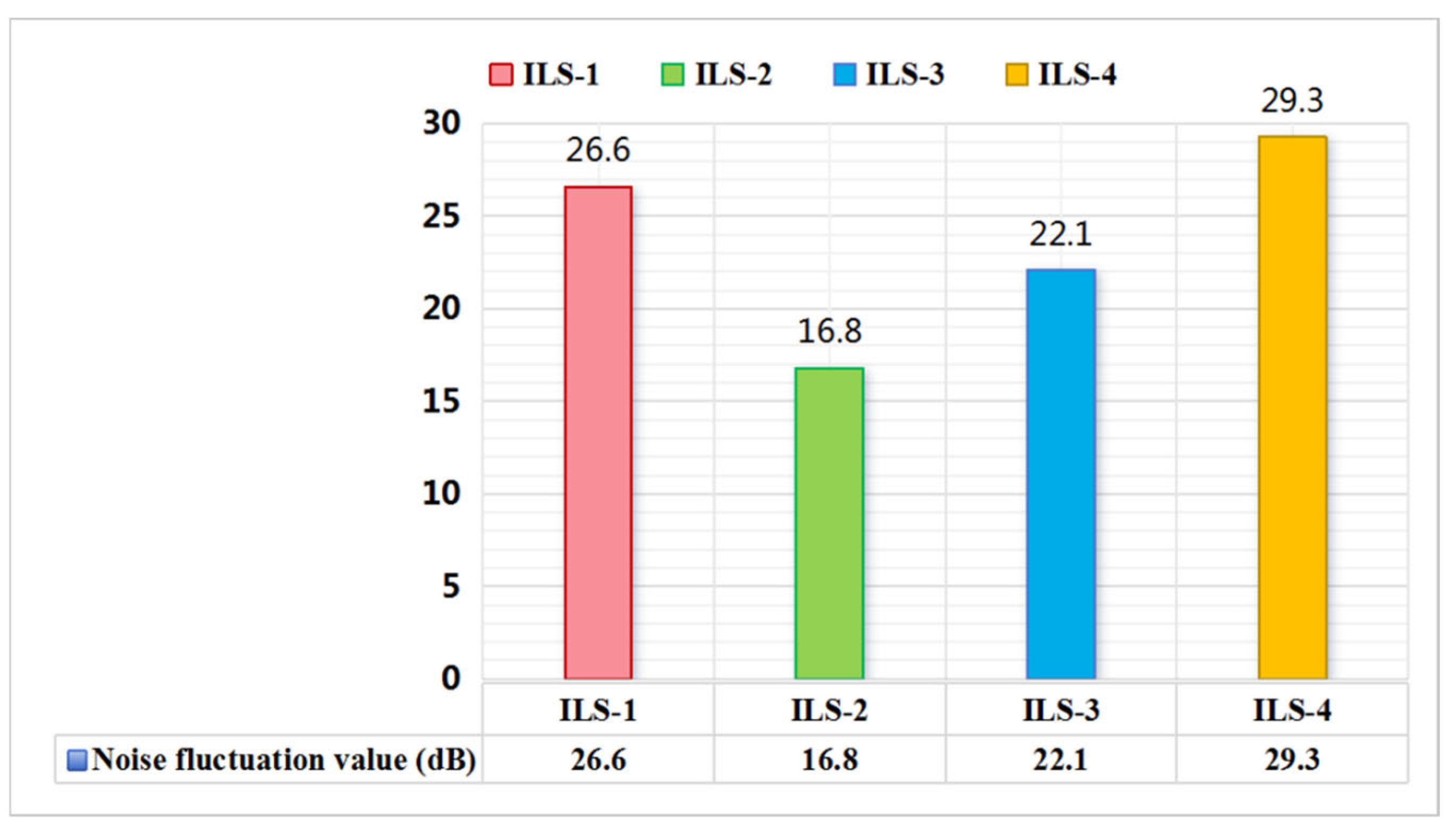
Noise was divided into steady-state noise and non-stationary noise [72]. During the observation period, when using a sound level metre to measure the dynamic characteristics of ‘slow gear’, noise with a sound level fluctuation of more than 3 dB was considered non-stationary noise, whereas noise with a fluctuation of less than 3 dB was considered steady-state noise [72]. Before conducting the formal experiment, we conducted noise pre-testing on the four regions within the learning cluster. Figure 13 shows the results of the noise pre-test. Among the four areas, ILS-2 was the quietest. The noise fluctuation difference in ILS-2 was 16.8 dB, indicating that the overall noise of the learning cluster was non-stationary noise. For non-stationary noise, it is only necessary to measure the noise duration for 20 min in a formal experiment to meet the experimental requirements.
Figure 13. Noise pre-test results for learning cluster.

3.6.2. Collection of Other Objective Data

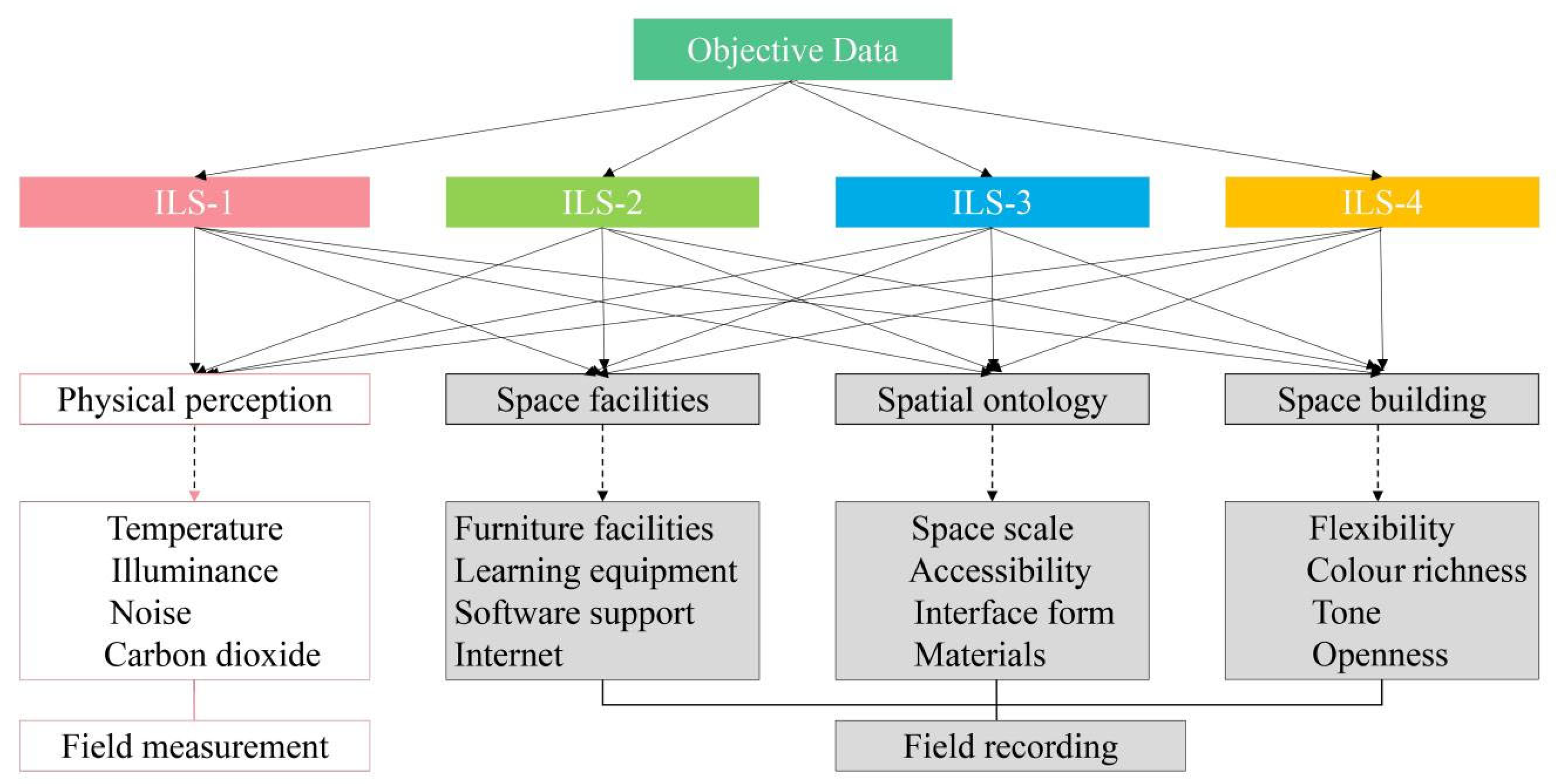
Figure 14 shows the content and methods of objective data collection. In addition to physical data, the data on facility equipment, spatial ontology, and spatial atmosphere also needed to be summarised. Before the experiment began, the research team collected detailed on-site records of the characteristics of these three aspects of the cluster.
Figure 14. Content and methods of objective data collection.
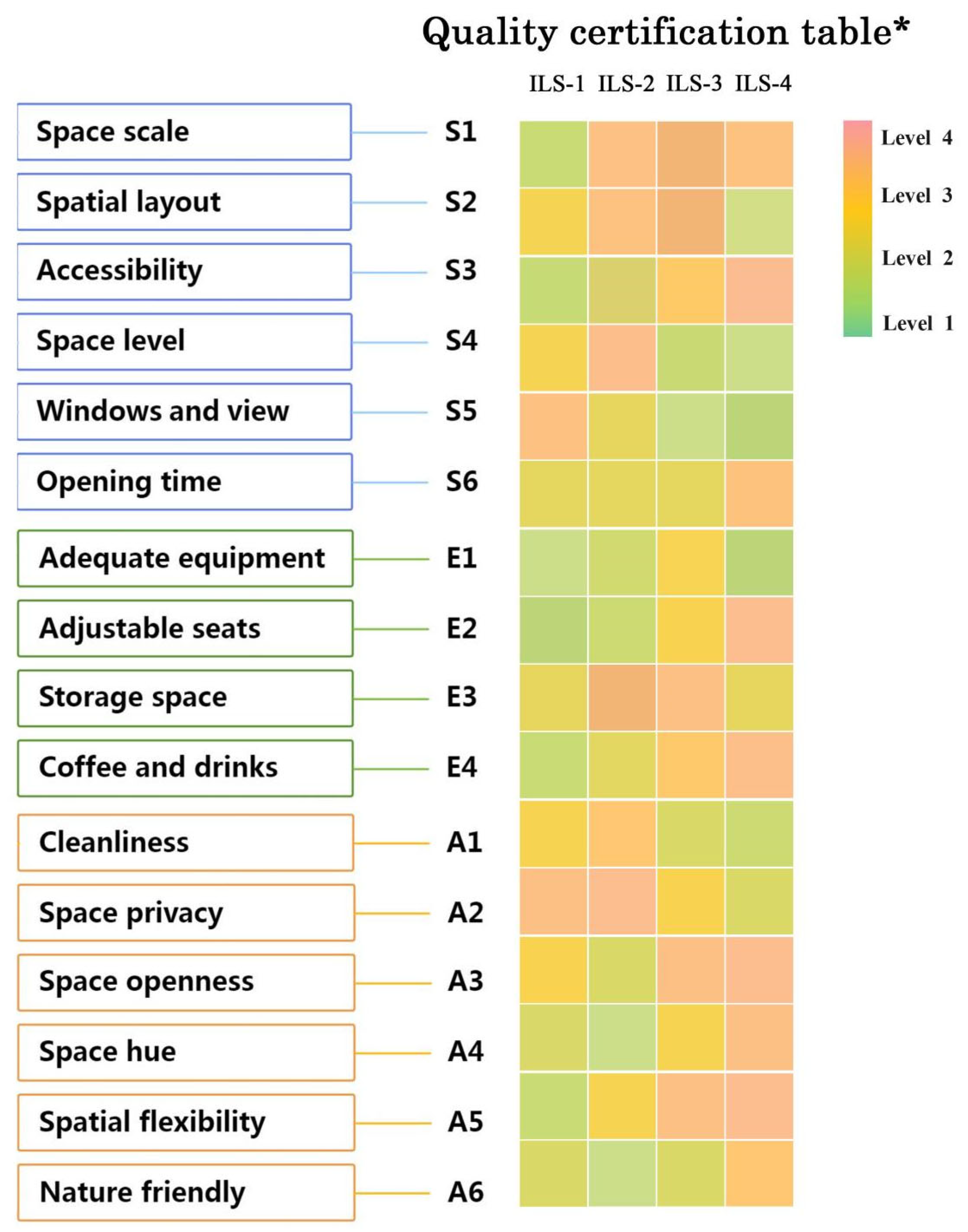
The records included textual descriptions and graphic illustrations of important nodes. The library’s internal space designers rated and scored the quality of this cluster, which was reflected in the results of a quality rating table. The quality rating table was divided into four levels, with the highest quality being level-4 and the lowest level-1. This section would be compared with user satisfaction ratings to gain a comprehensive understanding of the spatial quality of the learning cluster.

3.6.3. Collection of Subjective Data

Subjective data were collected through two channels: user interviews and questionnaire surveys. The questionnaire included all the questions we wanted to clarify and categorised the relevant questions. The questionnaire mainly included three types of questions and content. First, information was collected using multiple-choice questions. The first aspect was personal characteristic information, including the user’s education, gender, and major. The second aspect was study habits, which mainly included users’ seat selection preferences, daily study duration, number of peers, learning objectives, learning methods, and other information. The third aspect was the usage status of the space, which mainly included the following questions: (1) What was the most critical reason for sitting here? (2) What accompanying learning behaviours exist besides the primary learning behaviour, or casual behaviour? (3) Were there areas that needed improvement in this ILS? (4) What was the most crucial reason for choosing to leave this seat? (5) What type of ILS was lacking the most? Second, an evaluation scale was used. This study collected user evaluations in the form of a satisfaction scale. The scale was divided into five levels, with ‘very dissatisfied’ having a score of 1 and ‘very satisfied’ having a score of 5. Third, a ranking question required the users to select the six most critical factors in order of their importance.
During the interviews, discussions were held on relevant details, and additional questions were asked, which enabled us to gain a more comprehensive understanding of the learning cluster. The research objective for learning clusters in informal learning was to identify the most important determinants that students were most concerned about and the corresponding design indicators and to propose targeted improvement strategies.

4. Results

4.1. User Attributes and Learning Behaviour

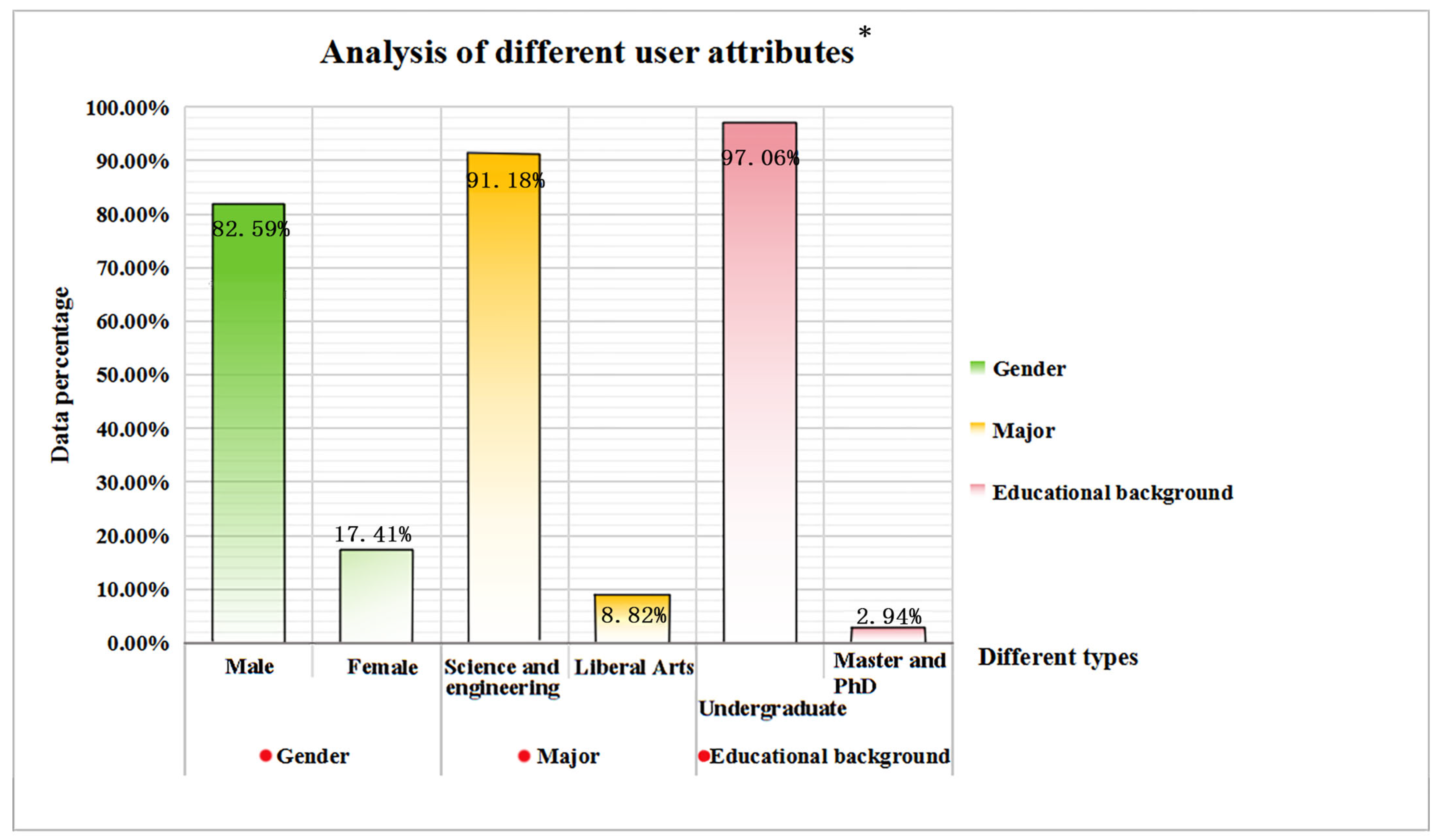
Figure 15 shows the percentages of the gender, major, and education levels of the users. The cluster was composed mainly of men (82.59%), with fewer women. Students majored mainly in science and engineering (91.18%), with fewer humanities majors (8.82%). In terms of educational background, undergraduate students comprised the majority, whereas the proportion of master’s and doctoral students was very low (2.94%).
Figure 15. Analysis of gender, major, and educational background. * The questions in Figure 15 and Figure 16 were multiple-choice questions; therefore, the sum of the proportions for each item was greater than 100%.
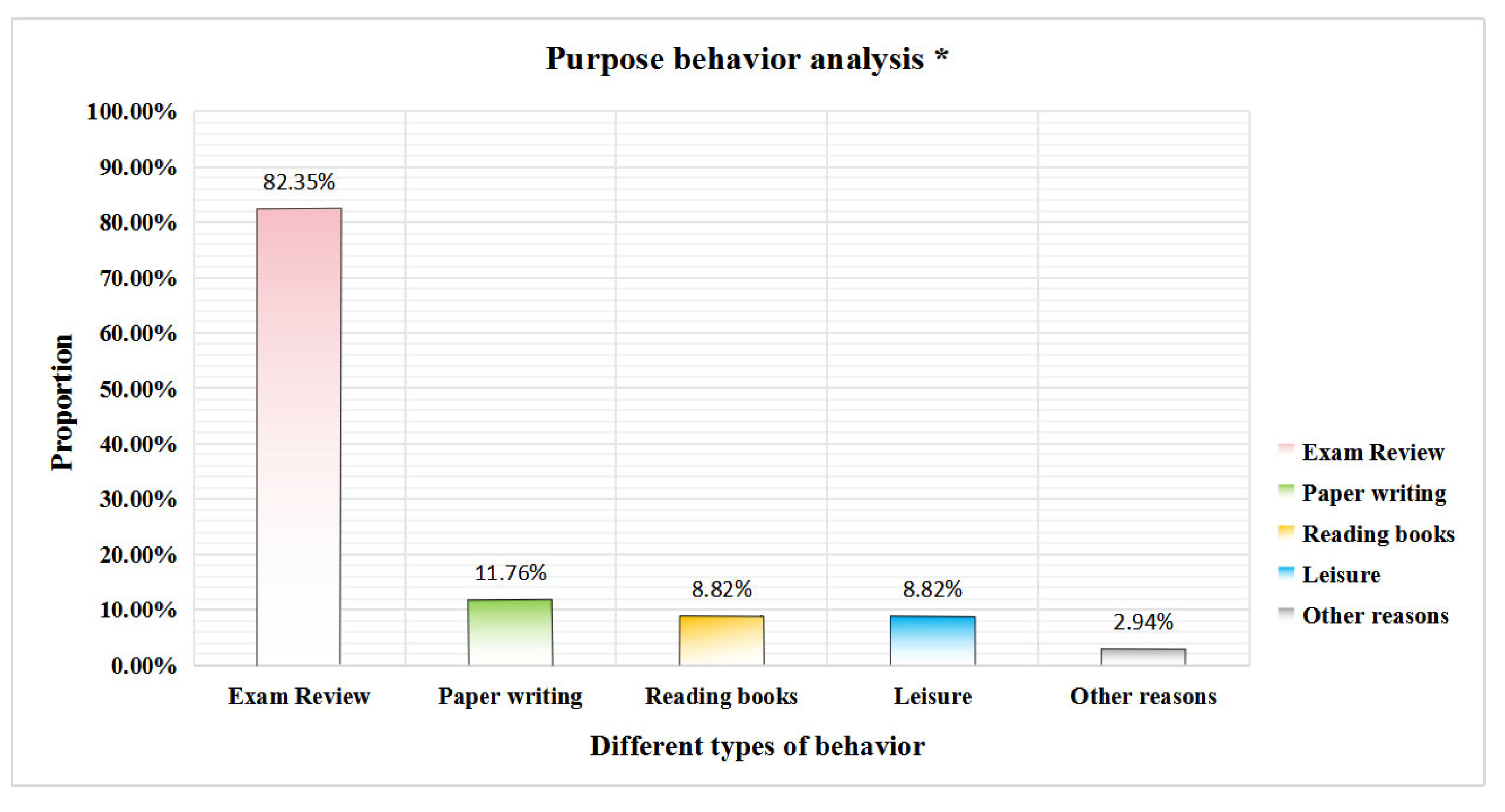
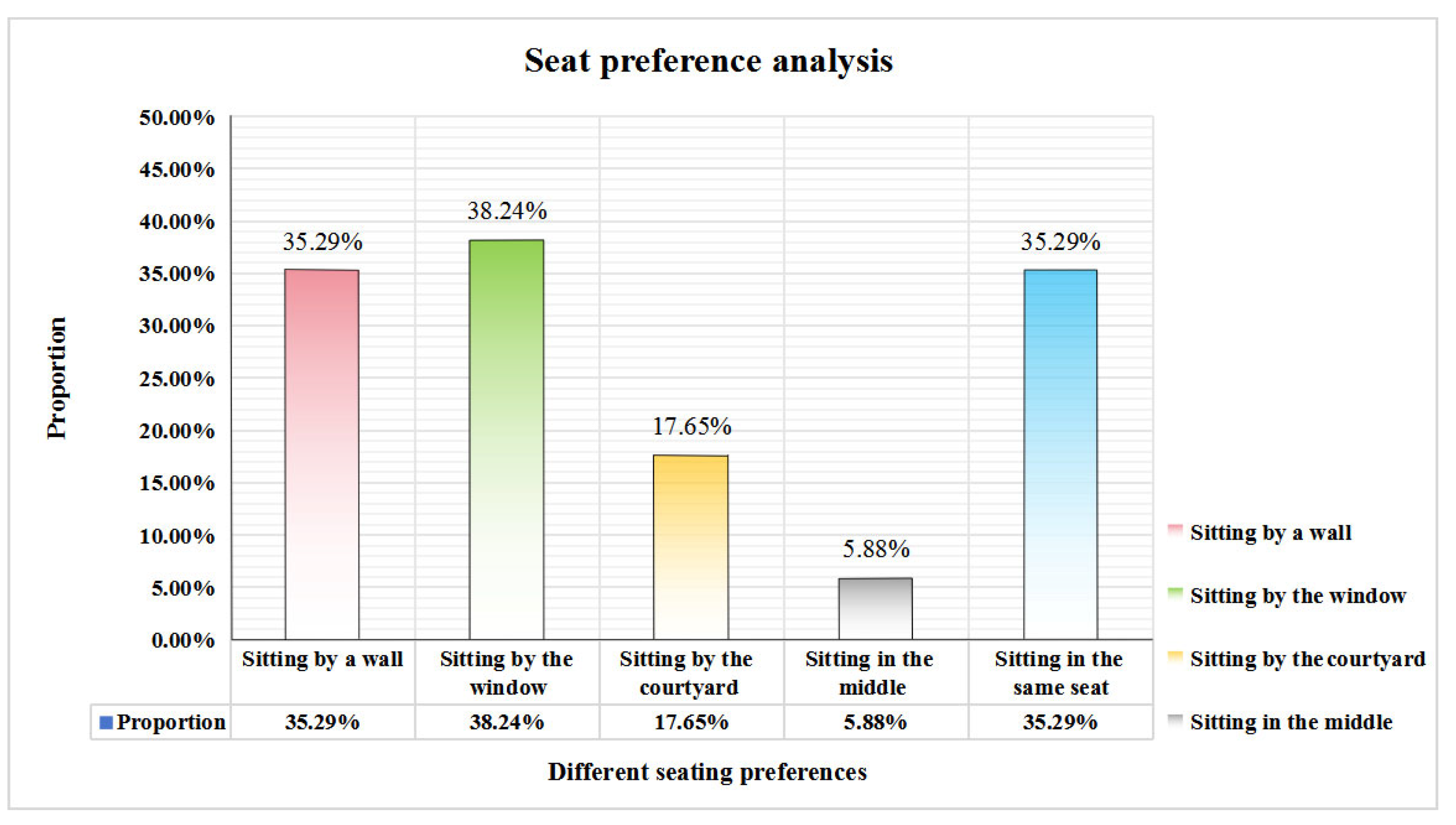
Figure 16 shows a user’s purposeful behaviour. Only 8.82% of the users visited for leisure, whereas the majority intended to study. The proportion of examination reviews was the highest (82.35%). Next were research writing (11.76%) and reading (8.82%). Figure 17 shows the users’ seating preferences. Most users preferred to sit by a window, wall, or near the courtyard, whereas only 5.88% preferred to sit in the middle. Some students (35.29%) expressed a preference for sitting in the same position to study.
Figure 16. Analysis of users’ purposeful behaviour.
Figure 17. Analysis of users’ seating preferences.
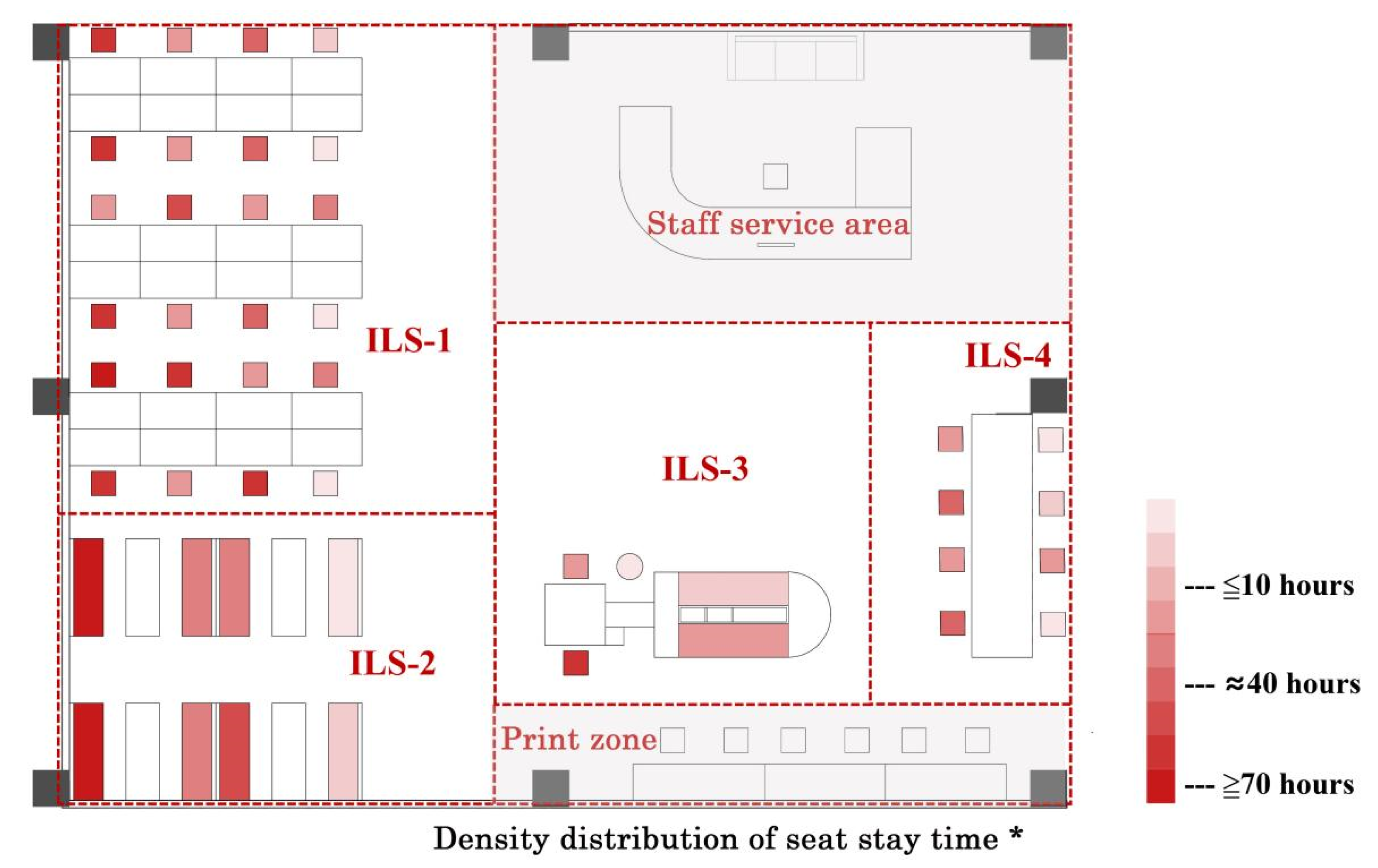
Figure 18 shows the total duration of seat stay within the research scope. The seats in the ILS-2 area, particularly those near the interior, were the most popular. The seat preference of ILS-1 exhibited separate and diagonal characteristics. Seats near the aisle in ILS-3 and ILS-4 were usually not selected. ILS-3 was mainly for two users to discuss, whereas ILS-4 was mainly for three or more people to learn. This study also found that users preferred to sit facing the direction of pedestrians to protect screen from being seen, which was reflected in all areas.
Figure 18. Duration of seat stay. * The calculation of stay duration was the sum of the total duration within two weeks. The darker the colour, the longer the user stayed in the seat, and the more popular the seat was.

4.2. Subjective Evaluation Results

Table 5 presents the satisfaction, average, and complaint rates for each factor within the learning cluster. The three best indicators for student satisfaction were spatial scale, adequacy of equipment and facilities, and noise, with satisfaction rates of 52.94%, 50.95%, and 51.00%, respectively. The three factors indicating least popularity were space openness, nature-friendly design, and storage space, with complaint rates of 44.12%, 32.35%, and 27.47%, respectively.
Table 5. Satisfaction evaluation of learning clusters.

4.3. Performance of Physical Data

4.3.1. Illuminance

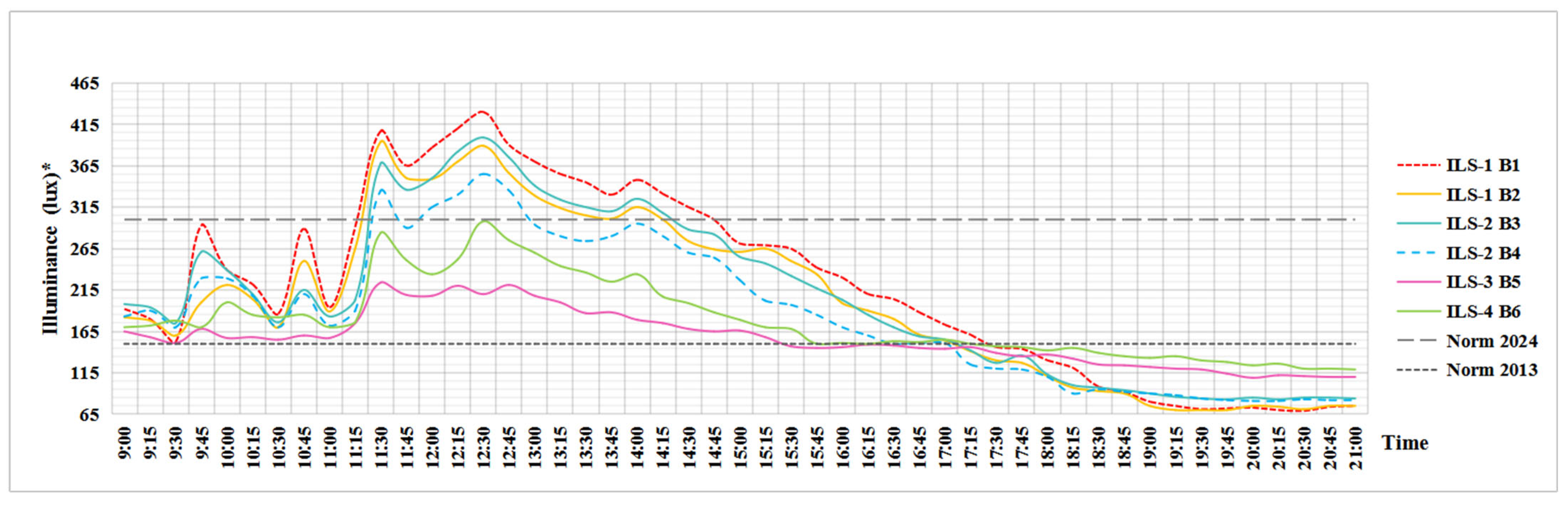
According to the latest standard GB/T50034-2024 [73], the illuminance standard value for the learning environment in the library was 300 lux. However, in the on-site usage evaluation, students generally expressed that an environment of 150–200 lux met the visual requirements for learning. Figure 19 shows the variation in illuminance within the learning cluster during the testing period. The illuminance value was lower in the morning and gradually increased, reaching its peak at 12:30 pm, and the illuminance value gradually decreased in the afternoon, which was a common trend. The illuminance values fluctuated greatly in the morning and less in the afternoon. After 5:30 pm, the overall illuminance of the learning cluster was below 150 lux, which did not meet the learning needs. The illuminance values of ILS-1 and ILS-2 were higher than the optimal values between 11:30 am and 2:00 pm.
Figure 19. Relationship between illuminance and time variation. * In Figure 19, Figure 20, Figure 21, Figure 22, Figure 23, Figure 24 and Figure 25, the values on the y-axis refer to the average of all the measurement points within the area (when there were multiple measuring points in the area).
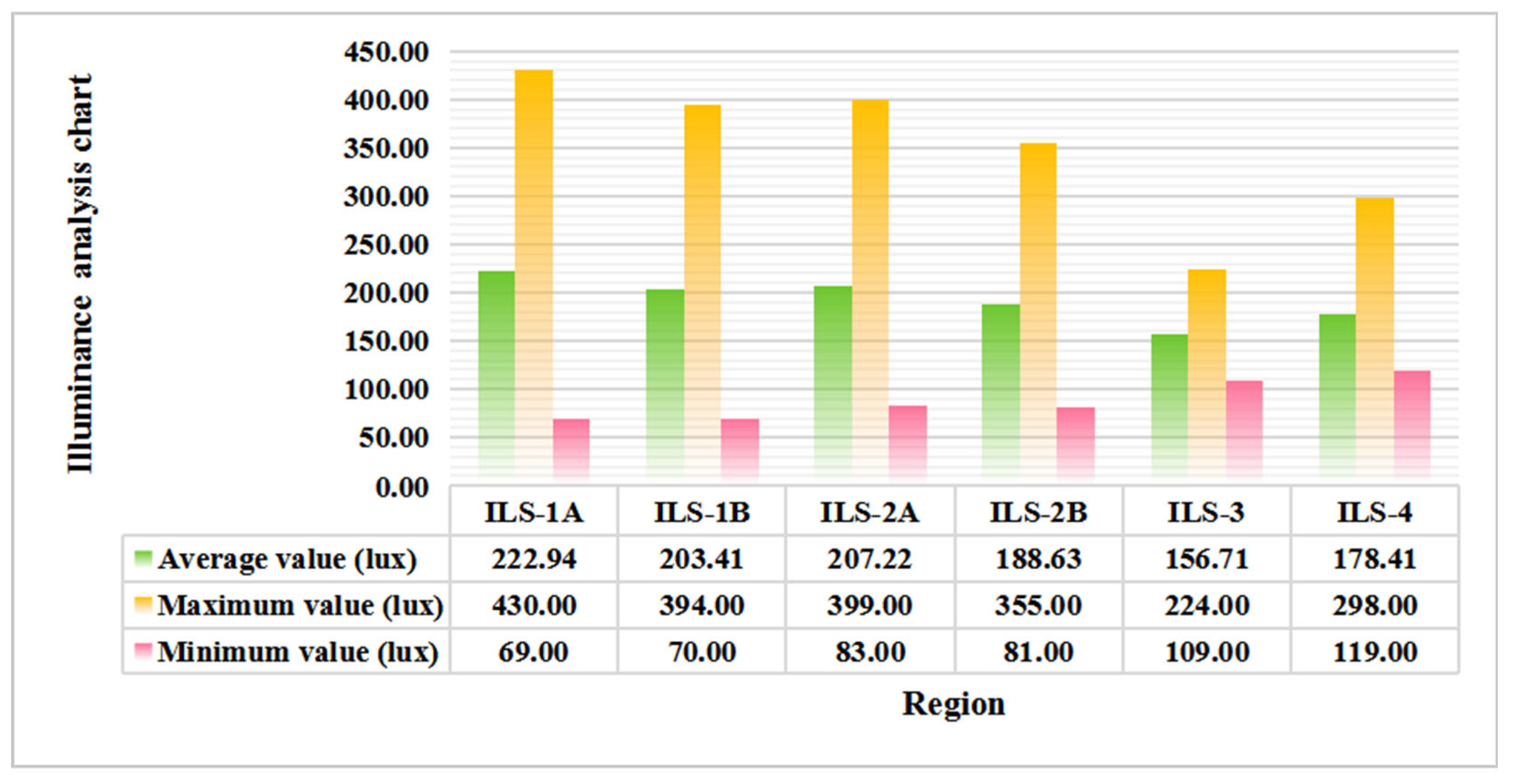
Figure 20 shows the contrast in illuminance in different areas. The order of the average illuminance values was ILS-1A, ILS-2A, ILS-1B, ILS-2B, ILS-4, and ILS-3. The highest average illuminance value occurred in the ILS-1A area, at 222.94 lux. The highest and lowest values of illumination appeared in the ILS-1A zone, at 43.000 and 69.00 lux, respectively. The average illuminance value of area A was higher than that of area B, while the average illuminance of area ILS-4 was higher than that of area ILS-3.
Figure 20. Comparison of illuminance in different regions.

4.3.2. Temperature

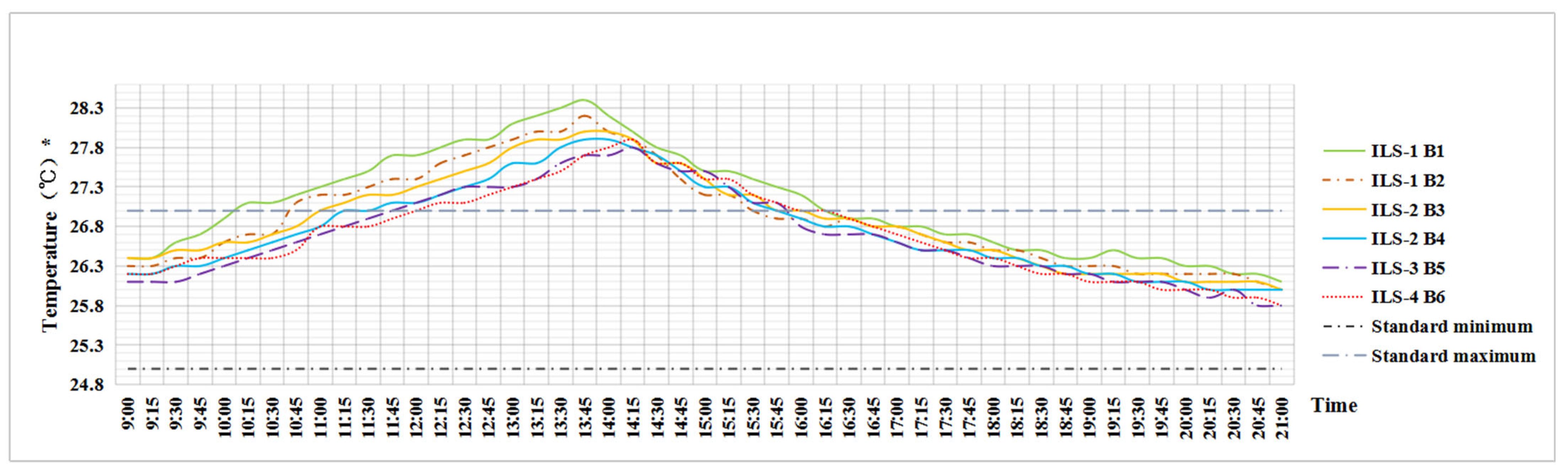
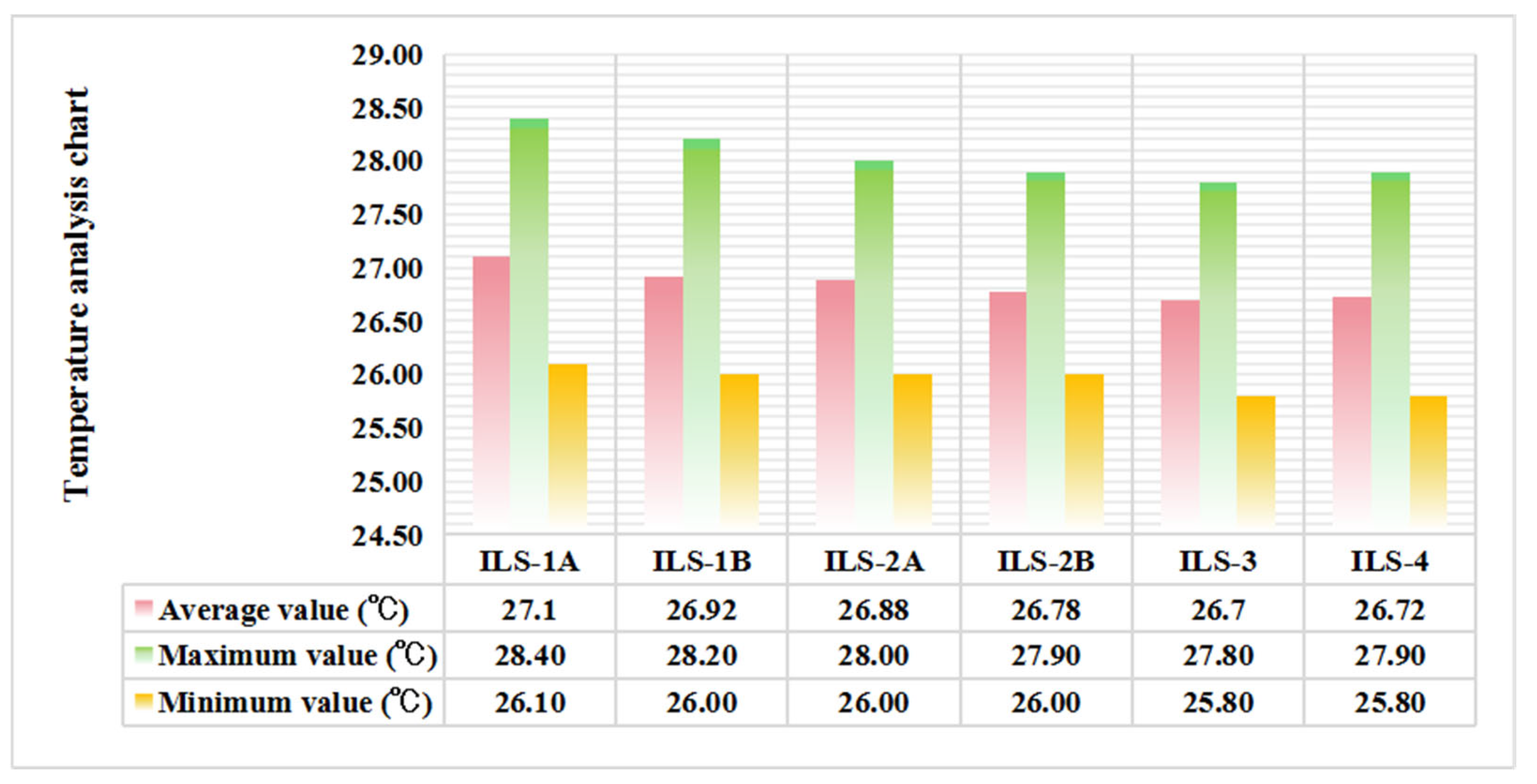
Figure 21 shows the variation in temperature during the measurements. The temperature of the cluster remained at around 26 °C in the morning, then continued to rise until it peaked at 1:50 in the afternoon, and then gradually fell back to below 26 °C after 6:30 in the evening. The highest average temperature occurred at ILS-1A, at 27.10 °C. The lowest average temperature occurred in ILS-3, at 26.70 °C. The highest temperature occurred in ILS-1A, at 28.4 °C; the lowest occurred in ILS-3, at 25.8 °C. According to the requirements of ‘Code JGJ38-2015’ [74], the indoor temperature in summer should be between 25 and 27 °C. As shown in Figure 21, the temperature at noon did not meet the regulatory requirements, but met the requirements early in the morning and evening. The temperature in ILS-4 was the most comfortable, whereas that in ILS-1A deviated the most from the regulations. The temperatures in different areas of ILS-1 and ILS-2 are shown in Figure 22, where the temperature in area A was higher than that in area B, and the fluctuations within a day were relatively large.
Figure 21. Temperature variation in the learning cluster over time.
Figure 22. Temperatures in different regions.

4.3.3. Carbon Dioxide Content

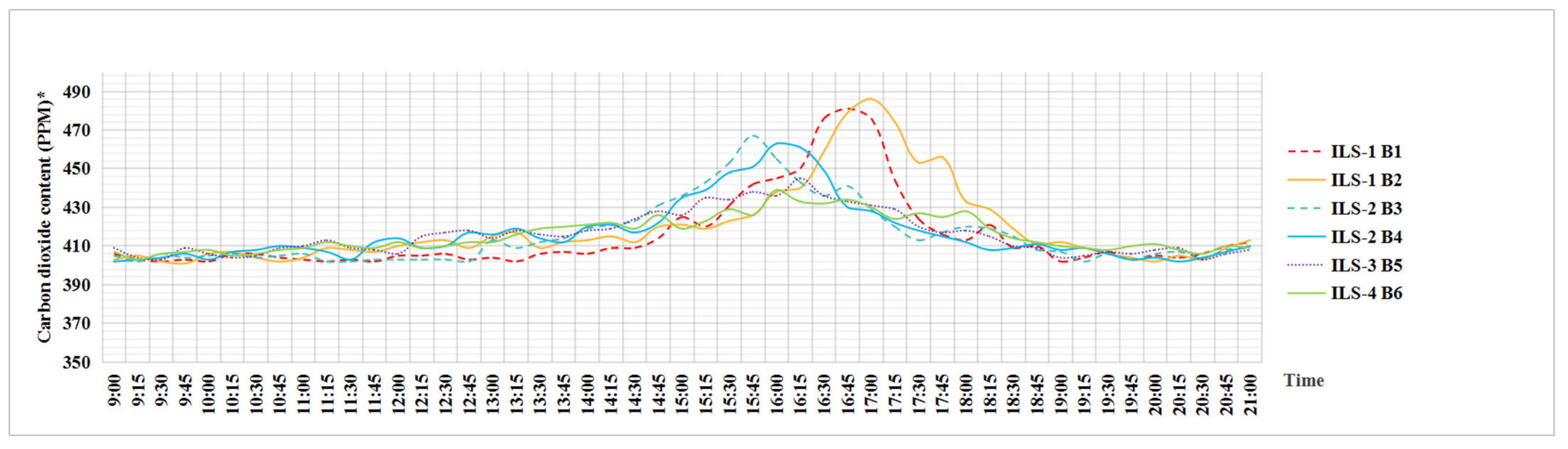
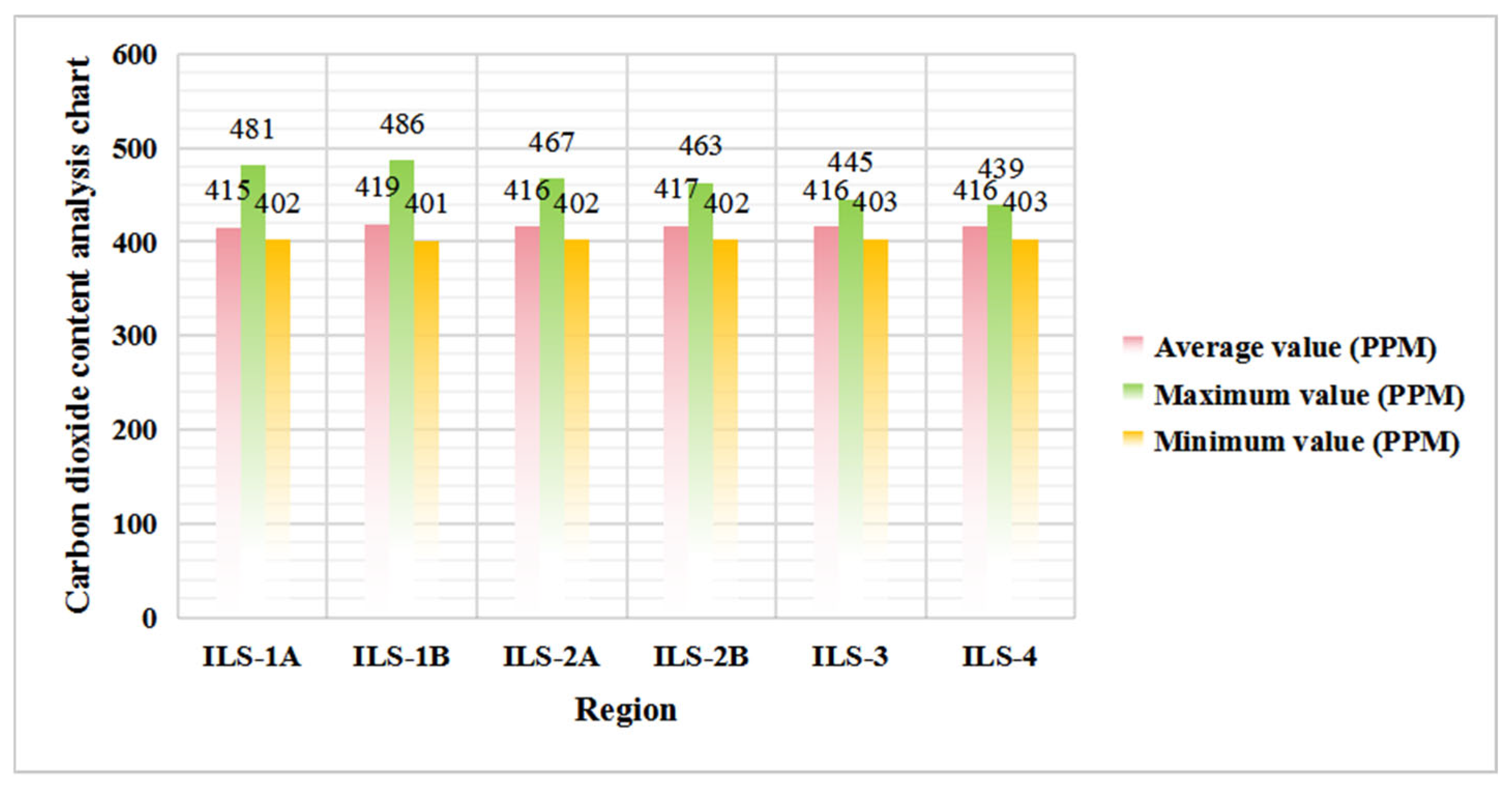
Figure 23 shows the variation in CO2 content over time. There was a fluctuating increase in CO2 levels between 3 and 6 pm, which then gradually stabilised. The latest standard, GB50325-2020 [75], for indoor environments requires that the CO2 content in densely populated areas be controlled to within 800 PPM. The peak CO2 content of the learning cluster was 486 PPM, indicating that all data met the regulations. Figure 24 shows the CO2 levels in the different regions. The maximum value of CO2 occurred in ILS-1B, at 486 PPM. ILS-1B had the highest average CO2 concentration of 419 PPM, whereas ILS-1A had the lowest average concentration of 415 PPM.
Figure 23. Changes in the CO2 content over time.
Figure 24. CO2 in different regions.

4.3.4. Noise

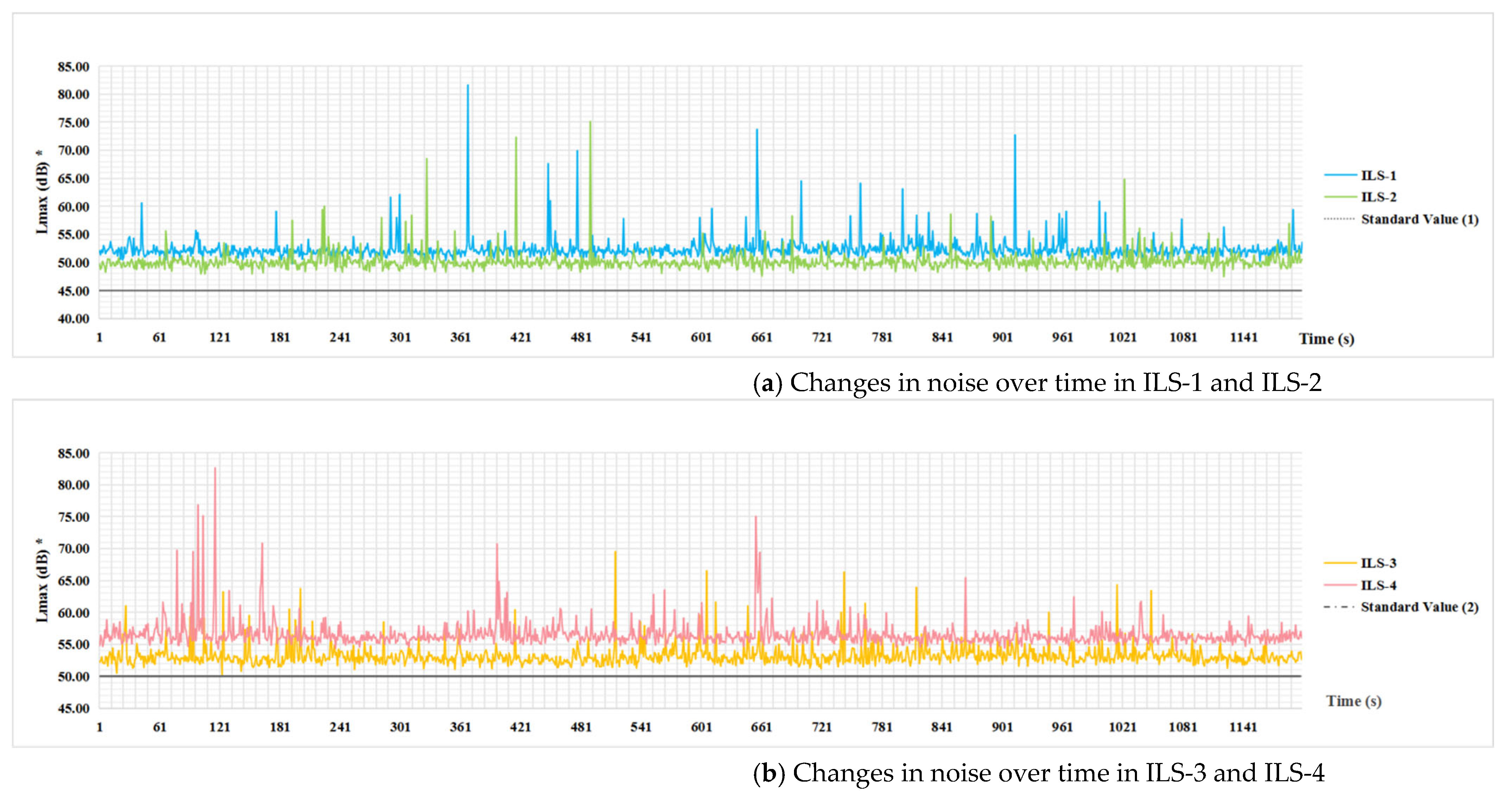
Figure 25a,b show the temporal variations in noise in the four regions. The noise in ILS-1 was generally higher than that of ILS-2, with the highest values being 81.60 dB and 75.10 dB, and the lowest values being 49.70 dB and 47.50 dB, respectively. According to the requirements of JGJ38-2015 [74], both ILS-1 and ILS-2 belonged to the quiet zone, and their average noise should be controlled within 45 dB. However, the actual situation did not meet this requirement. The noise level of ILS-3 was generally lower than that of ILS-4, with the highest noise being 69.50 dB and 82.60 dB, and the lowest values being 50.30 dB and 54.00 dB, respectively. Both ILS-3 and ILS-4 belonged to the dynamic zone [74], and their average noise should be controlled to within 50 dB; however, they did not meet the requirements. The noise values of the four regions were ranked from high to low as ILS-4, ILS-3, ILS-1, and ILS-2, with average noise of 56.60 dB, 53.20 dB, 52.40 dB, and 50.20 dB, respectively.
Figure 25. Changes in noise over time.

4.4. Performance of Other Objective Data

Figure 26 shows the quality ratings of the learning cluster with different spatial characteristics. The S1 factor had the highest quality rating, with the three regions approaching level 4 in spatial quality. The quality ratings of S5, E1, and A6 were all very low, with the three areas approaching level 1 in spatial quality. As mentioned in Section 3.6.2, this was determined by the interior space designers based on the specific characteristics of each space. The colour tended towards green, indicating the lower-quality characteristic of the space. The more the colour tends towards pink, the higher its quality. A comprehensive comparison was made between the user evaluations and this quality rating table in the fifth part.
Figure 26. Quality rating table. * The physical environment data were obtained through actual measurements, and further data analysis was carried out. Therefore, this figure does not include factors related to the physical environment.

4.5. Results of Weight Analysis

Table 6 shows the weights of the 20 factors, with the first six factors accounting for 50.58% of the total. Spatial privacy ranked first, with a weight of 10.34%, which represented users’ loyalty to spatial privacy. The second highest was illuminance, with a weight of 9.20%. Noise was ranked third, with a weight of 8.62%. Temperature was ranked fourth, with a weight of 8.05%. Notably, among the top six factors, there were three related to the physical environment. Among the determinants of facilities and equipment, sufficient equipment had the highest proportion, with a weight of 6.90%. Among the ontology determinants, spatial scale accounted for the highest proportion, with a weight of 7.47%.
Table 6. Specific weights of each factor.
Table 7 presents the weights and rankings of the four major determinants. In this learning cluster, physical determinants dominated 30.65% of students’ preferences. The environmental atmosphere determinant ranked second, explaining 26.76% of students’ preferences. The spatial ontology determinant ranked third, explaining 25.03% of students’ preferences. The equipment and facility determinants ranked fourth, with a weight of 17.56%.
Table 7. Weights of the four major determinants.

5. Discussion

5.1. Relationship Between User Attributes and Selection Preferences

In terms of disciplines, the main learners in this learning cluster were science and engineering students, whereas the proportion of humanities students was very low. This result was consistent with Tibbits et al.’s research, in which humanities students were described as ‘bookworms’ and did not appear in new ILS [76]. Ibanez and Delgado Kloos’ research suggested that interdisciplinary learning is becoming popular, which used to occur in the natural sciences but is now happening in the humanities as well [77]. Their research reflected that interdisciplinary education is currently in progress. Although humanities students accounted for only 8.82% of all students in this study, this proportion is expected to increase. With the promotion of the ‘STEAM’ concept [78], problem-oriented learning is forming the foundation for learning integration in interdisciplinary education. Tibbits et al. suggested that innovative ILS can influence the long-term establishment of disciplines [76]. This indicates that the spatial design features and disciplines are interdependent. The design of ILS should consider the characteristics of users [78] such as major [76,77], gender [79,80], education level [36], and seating preference [81,82]. ILS could be set according to the characteristics of a certain discipline to satisfy specific requirements [82].
In terms of gender, male users accounted for over 80% in this study. According to the official enrolment data for 2025, the male to female ratio at GDUT was 68% and 32%, respectively, and the survey results showed that the male proportion was higher than 68%, indicating that the cluster still had a certain appeal to men. Ng et al. found that boys can master new technologies faster, such as new networks and learning devices [37]. Zhang et al. found that women have stronger self-learning abilities and prefer to study at home, whereas men prefer to study outside [82]. Li et al. found that boys were more likely than girls to tolerate the noise generated by typing [44]. These studies explained the results of this study from different perspectives. Bancheva and Ivanova called for attention to the relationship between gender and informal learning [80]. Boeren confirmed that men prefer to participate in work-related learning [34]. Beil and Hanes confirmed that women prefer access to natural environments [35]. The evaluation score for the natural design in this cluster was relatively low. The environment should be improved by adding green plants, plant walls, or natural decorative materials.
In terms of educational background, the cluster mainly consisted of undergraduate students, with a few master’s and doctoral students. Tikkanen confirmed that young people with lower educational levels prefer informal learning [83]. Livingstone found that learning content and needs have sparked different responses, such as PhDs preferring to conduct research quietly, whereas undergraduates prefer to communicate [36]. Zhang et al. supported this finding, as students who desired a quiet learning environment were more sensitive to noise [82]. The analysis of purpose behaviour in this study was consistent with the statistical results for educational background.
Regarding seating preferences, users mainly exhibited sitting in separate seats, sitting diagonally, and leaning against a wall, all of which were related to privacy [77]. Learners hoped to have a private or semi-private learning area, and women valued privacy more than men [47]. The seat stay times of this cluster, from highest to lowest, were as follows: ILS-2, ILS-1, ILS-3, and ILS-4. Overall, students valued privacy more than openness. When two people sat next to each other, they were afraid that the person next to them would see the content on their screen. If two people sat facing each other, they would feel embarrassed when they looked up simultaneously. Users liked sitting by the window because of the lighting and visibility. Research has shown that students prefer to be exposed to natural rather than artificial lighting [38]. Taib confirmed that after prolonged learning, exposure to natural environments can improve psychological stress [39].

5.2. Correlation Between Physical Environment and Preferences

In this case, the noise exceeded the regulations in both the quiet and dynamic areas. However, users’ satisfaction with background sounds ranked third among all the factors. Harrop and Turpin confirmed that noise could be a positive or negative attribute of a learning space [38]. Excessive noise can cause quiet learners to feel frustrated; however, not everyone likes to study in a quiet atmosphere [84]. To some extent, sound can make the learning environment more dynamic [38]. The underlying principle of this phenomenon is “productive background noise,” which refers to the concept that under specific conditions, moderate and non-intrusive background noise does not interfere with work or study but instead enhances an individual’s creativity, focus, and information processing abilities. For library learners, there exists an optimal range where noise levels below the minimum threshold lead to drowsiness and difficulty concentrating, while noise levels above the maximum threshold cause distractions or even disrupt normal learning states. The measured results of this study confirmed that current Chinese regulations did not account for the theory of productive background noise. This research will delve deeper to provide recommended optimal noise range values in the future. Harrop and Turpin also conducted actual measurements of ILS in different regions, and Table 8 shows a comparison between the measured results of this study and their research. The two results were very close and the noise fluctuations in adjacent areas were very low, with the highest value being ±3.4 dB. According to the Department for Environment Food and Rural Affairs, this sound was very similar to the characteristics of a regular office space [85]. This situation causes quiet learners to sit away from the discussion area. In future optimisations, relevant spatial barriers, such as whiteboards, tall plants, large displays, and glass barriers, can be added to improve this mutual interference phenomenon [77] to create a more discrete spatial organisation pattern [38].
Table 8. Comparison of noise with the same spatial organisation pattern (‘group embedded’).
To provide a more precise explanation of the problem, this study conducted noise measurements on another university library operating in an ‘independent separation’ mode. Table 9 presents a statistical comparison between the two libraries. The presence of spatial barriers caused significant fluctuations in the average noise between different types of ILS, reaching over 10 dB. Simultaneously, this study measured the ILS of the ‘boundaryless’ mode in Guangzhou; the results showed that the average noise in the ‘boundaryless’ mode was much higher than that of the learning cluster, and the minimum fluctuation value in adjacent areas was 0.6 dB.
Table 9. Comparison of noise with different spatial organisation patterns.
Regarding illuminance, the actual measurements showed that for most of the day, the average illuminance within the cluster did not meet the standard requirement of 300 lux [73] and only met the requirement at noon. Both the southern and eastern sides of this cluster had external corridors, and the illumination of their internal spaces relied more on artificial lighting. The lighting mainly came from the top strip lights, which were spaced apart and had low illumination, resulting in insufficient illumination and uneven distribution. ILS-4 could take advantage of the atrium for lighting; therefore, its overall illumination was better. Natural light was favoured by students [86]. Directly receiving solar radiation was more conducive for learners to relax their minds [87]. The optimisation of this cluster mainly included the following measures: First, the skylight material in the atrium should be replaced with materials of higher transparency to introduce more natural light. Second, full use should be made of the outer corridor, with doors added for entering the corridor, and several sofas placed to allow students to experience natural sunlight and air. Third, different types of lighting fixtures should be added [88], such as desk lamps on the tables, and switches should be configured for different illumination.
In terms of illumination, the ‘group embedded’ mode was not significantly different from the other two patterns. Illumination was closely related to orientation and space scale. When natural lighting is poor and depth is large, the use of artificial lighting should be strengthened. When the space faces west, measures must be taken to prevent direct sunlight from causing glare.
The temperature within the cluster only met the requirements in the morning and evening and exceeded the prescribed 27 °C at noon. Despite the use of air-conditioning and refrigeration equipment, the indoor temperature was not maintained in a constant state. An increase in temperature would cause a decrease in users’ comfort [47]. The satisfaction rate of users with the temperature was only 26.47%. Ramu et al. found that the average temperature of ILS was higher, and the higher the temperature, the lower the humidity, which made users feel drier and uncomfortable [47]. Thomas et al. confirmed that at a normal temperature (25 °C), students’ attention was most concentrated [45]. Rising temperatures not only affected learning performance but also led to health and emotional issues [49]. Juan and Chen concluded that uncomfortable temperatures had the greatest impact on anxiety [84]. The above studies indicated the urgency of improving the temperature, and that passive methods should be used for cooling and insulation in future optimisation [63]. Tukiran et al. found that plants can increase humidity and decrease temperature [89]. In future optimisation, green plants could be used as barriers to separate spaces, and the atrium could also be used to regulate the temperature by opening air holes in the skylight of the atrium to promote air circulation [90]. Intelligent temperature control systems could also be introduced to adjust the indoor temperature according to the amount of sunlight.
In terms of CO2 content, the overall level of CO2 in this cluster was maintained within the prescribed level of 800 PPM. Students had a high satisfaction rate with this factor (approaching 50%). The concentration of CO2 was higher in ILS-1 and ILS-2 and lower in ILS-3 and ILS-4. Yang et al. reported that the impact of air quality in ILS was lower only than that of high temperatures [40]. When the CO2 content was high, students’ attention would decrease. When the concentration of CO2 increased from 690 to 2900 PPM, the decrease in attention was 5% [42]. The discussion attempted to explore the factors related to CO2 concentration to find the key to optimising air quality. Turunen et al. found that air quality was closely related to the ventilation rate of the ILS [41]. Coley et al. found that the ventilation rate of the ILS in many schools did not meet these requirements [42]. During testing, the air conditioning was turned on and the external windows were closed. The indoor ventilation relied mainly on a fresh-air system. The increase in CO2 concentration was mainly related to user density. When personnel density increased, the oxygen content decreased, and students might experience symptoms such as dizziness and chest tightness [43]. The perception of air quality was affected by thermal perception. When the CO2 content remained constant, users would feel that the air quality was decreasing as the temperature increased [43]. When improving ventilation, attention should be paid to the temperature.

5.3. Exploration of Subjective and Objective Evaluation Results

Among the 20 factors, only two factors had a satisfaction rate lower than the complaint rate, that were spatial openness and nature-friendly design, which further illustrated the students’ need to enhance these two points. Based on both subjective and objective evaluations, pro-nature design was a mutually recognised area for improvement by both users and designers. In the objective evaluation, the rating for ‘windows and view’ was very low; in the subjective evaluations, the openness of the ILS was also criticised by users. These two factors were also somewhat associated with ‘pro-nature design’. Research has shown that learners prefer to engage in informal learning activities in free spaces related to nature, such as courtyards and terraces [30]. These spaces enhance interactions with nature, making them conducive to collaborative learning and participation [50]. Zandvliet and Broekhuizen suggested that such spaces could serve as transitional spaces for interaction and socialisation [91]. Taib stated that such spaces could help users with psychological recovery and emotional regulation [39]. The learning cluster can be improved using the enhancement method presented in Table 10.
Table 10. Optimisation methods for pro-nature designs.
In the subjective and objective evaluations, the adequacy of the equipment was the most controversial issue. Users had high satisfaction, whereas designers had low satisfaction. There were three types of equipment and facilities that users in this study required the most, ranked in descending order of demand: network, power sockets, and storage space. More than 80% of users came here to study for postgraduate and civil service exams and often needed to search online; therefore, network and power were essential [48]. They brought many review materials and did not need to borrow books; therefore, they needed a sufficiently large desktop or drawer to store them. Harrop and Turpin mentioned that a new policy in the learning centre was to use desks with a length exceeding 1100 mm, because desks that were previously 800 mm wide were no longer sufficient for use [38]. The study also found that whether students could access the plug at any time was an important factor for them to stay [38]. This explains why an Internet connection and sockets ranked among the top two in the ranking of users’ needs. This cluster was equipped with four types of seats, including hard seats, soft seats, seats with composite function and sofas, which could meet different learning needs. This was also the reason for the high scores for facilities and equipment. Not everyone liked comfortable seats and some students preferred formal environments to stay alert [38]. The designers targeted all users when grading. Therefore, they believed that the cluster still needed to be equipped with computers and monitors as well as public service equipment such as water dispensers, retrieval computers, and borrowing and returning machines.

5.4. Exploration of Key Factor Weights

This study obtained the ranking and specific weights of the four major determinants of ILS in a ‘group embedded’ library. Physical determinants ranked first, accounting for over 30%, and environmental atmosphere determinants were second, accounting for approximately 26.76%. The spatial ontology elements and equipment facility determinants ranked third and fourth with proportions of 25.03% and 17.56%, respectively. This study also determined the specific weights of each factor, with the first six factors being privacy, illumination, noise, temperature, spatial scale, and equipment facilities. Psychologist Alvin Osman proposed that privacy is a dynamic regulatory process rather than a static state, and when individuals feel insufficient privacy, they will adopt boundary control behaviours to restore balance. This was the intrinsic reason why learners chose to lean against walls, partitions, or stack books to create learning boundaries. Therefore, libraries should provide diverse spaces with physical barriers to support and simplify the privacy adjustment process for users, reducing their psychological burden. Juan and Chen confirmed that temperature had the greatest impact on learning status, noise had the fastest impact on learning status, and uncomfortable lighting distracted students [90]. This demonstrated the important role of physical environmental determinants and supported the results of the present study. This Section 5.3 mainly compared the differences between ‘group embedded’ and the other two modes. Guo et al.’s study on coffee shops explored the ‘boundaryless’ model and concluded that noise ranked first, illumination second, and temperature third [46]. The biggest difference between these two modes is ‘noise’. Privacy was also worthy of attention, especially in ‘group embedded’ libraries, where it was prominent in ‘personal public ILS’. Harrop and Turpin mentioned that learners who prefer quietness hope to have their own small space [38]. Li et al.’s study on ‘independent separation’ libraries found that the highest factor affecting users’ learning status was light, followed by spatial accessibility, and then noise [44]. The scale of an ‘independent separation’ ILS was usually larger than that of a ‘group embedded’ ILS, and accessibility became important. However, ‘accessibility’ was ranked 17th in our case. This is also a clear difference.

5.5. Research Limitations

There were some limitations and shortcomings in this study.
The first limitation was that the sample size was insufficient. In this study, we selected only one learning cluster from university libraries in Guangzhou. This might affect the specific weights of the factors. This method could be extended to all learning clusters. Owing to the limited length of this paper, this study only explored one learning cluster as a case study. The research should include additional learning clusters in the future.
The second limitation was the applicability of the research conclusions. The relevant conclusions of this study were only applicable to ‘group embedded’ libraries. This study mainly focused on this pattern because it is currently the most common in libraries. The organisational model of ILS within some new libraries was different from that of renovated libraries, often manifested as two types: ‘independent separation’ mode and ‘boundaryless’ mode. Follow-up research should explore these two patterns. Therefore, this study’s conclusion cannot be applied to all library designs.
Finally, this study has not yet considered the impact of cultural factors, as it was conducted in the Chinese context. Culture is one of the essential elements that cannot be ignored. In the exploration process of this study, it was found that students from different countries have different learning habits. In the future, cultural factors will be taken into account when comparing global cases.

6. Conclusions

6.1. Main Conclusion

This study constructed a multi-factor impact model. It obtained the weights and rankings of four major determinants, with physical determinants ranking first (30.65%), atmosphere determinants ranking second (26.76%), ontology determinants ranking third (25.03%), and equipment and facilities determinants ranking fourth (17.56%), respectively. The specific weights and rankings of the 20 factors were obtained, with privacy ranked first (10.34%), illumination ranked second (9.20%), and noise ranked third (8.62%). In the future, the library can use partitions, bookshelves, storage cabinets, or large green plants for appropriate separation, thereby improving spatial privacy. Secondly, measures such as strengthening top lighting, installing desktop lamps, and using more transparent materials in the atrium can effectively improve the current uneven illumination. Thirdly, using more woollen materials such as carpets and soft cushions can effectively reduce noise. In addition, this cluster should focus on optimising nature-friendly designs and strengthening targeted equipment configurations.
This study compared the differences between ‘group embedded’ ILS and ‘boundaryless’ ILS and ‘independent separation’ ILS and found that more attention should be paid to the impact of noise if users are learning in ‘boundaryless’ ILSs, whereas the focus should be on privacy if they are studying in ‘group embedded’ ILSs. The key factors affecting the space quality of the ‘independent separation’ ILSs were ‘illumination’ and ‘accessibility’.

6.2. Optimisation Strategy

Based on the ranking of various factors, subjective and objective evaluation, and some urgent points of the current ‘group embedded’ mode that need to be corrected, this study proposed optimisation strategies for the learning cluster (Table 11).
Table 11. Optimisation strategy of ‘group embedded’ ILS.

6.3. Future Outlook

This study is a sub branch of the topic ‘Informal learning spaces in libraries with different organisational models’. This study compared ILS and its characteristics of three different organisational models. The main innovations and contributions of this study are as follows: The organisational models of ILS within the library were divided into three categories and their characteristics summarised. An analysis was conducted on the spatial quality of the ILS in ‘group embedded’ mode, and a multi-factor model was constructed. The ranking of the four major determinants and 20 factors was obtained, and the order in which spatial quality was promoted was determined. Necessary optimisation measures were proposed.
There are still certain limitations to this study. In the future, we will strive to draw more accurate and guiding conclusions by improving the sample size and delving deeper into the comparison of the three organisational models.
Due to the fact that only one library case was analysed in this study, the conclusions drawn regarding gender and disciplinary differences in preferences still require further research. In the future, more university libraries should be analysed to obtain more universal and generalizable conclusions.

Author Contributions

L.W.: Conceptualization, Methodology, Software, Investigation, Resources, Writing—original draft, Writing—review and editing. J.S.: Software, Investigation, Writing—review and editing. W.G.: Supervision, Writing—review and editing. G.W.: Investigation, Writing—review and editing. L.C.: Supervision, Writing—review and editing. X.L.: Conceptualization, Investigation, Methodology, Project administration, Resources, Validation, Writing—original draft, Writing—review and editing, Funding acquisition. All authors have read and agreed to the published version of the manuscript.

Funding

This research is supported by the Guangdong Basic and Applied Basic Research Foundation (Grant No. 2024A1515012129); the National Natural Science Foundation of China (Grant No. 52108011 and 51678239); the Fundamental Research Funds for the Central Universities (Grant No. 2024ZYGXZR048); the State Key Laboratory of Subtropical Building and Urban Science, South China University of Technology (Grant No. 2024ZB06); Guangzhou Basic and Applied Basic Research Foundation (Grant No. 2024A04J9930); the Department of Housing and Urban-Rural Development of Guangdong Province (Grant No. 2021-K2-305243); the Department of Education of Guangdong Province (Grant No. 2021KTSCX004). It is also partly supported by the China Scholarship Council (CSC) scholarship under the CSC Grant No. 202406150137.

Institutional Review Board Statement

The study was conducted in accordance with the Declaration of Helsinki, and approved by the Institutional Review Board of the School of Architecture, South China University of Technology (The protocol code is SCUT-lw-E02, and the approval date is 30 September 2023).

Data Availability Statement

Data will be made available on request.

Acknowledgments

The authors thank Yanning Liu from GWH studio for assisting with the field investigation.

Conflicts of Interest

Author Guangting Wan was employed by the Guangdong Architectural Design and Research Institute Group Co., Ltd. The remaining authors declare that the research was conducted in the absence of any commercial or financial relationships that could be construed as a potential conflict of interest.

Appendix A

Table A1. Overview of the 20 Research Libraries.
1. Group Embedded Library (17 Libraries)
Abbreviation for University LibraryRepresentative floor planPhoto of libraryThe area, number of users, characteristics, and floor of the learning cluster.
ZDDXQ-L
(Renovated)
Buildings 15 04530 i001Buildings 15 04530 i002From the third to the fifth floor, 490 m2, 164 users. A typical learning cluster module located on the north side of the atrium, which included various learning methods such as exhibitions, individual learning, and group discussions.
GDDXC-L
(Renovated)
Buildings 15 04530 i003Buildings 15 04530 i004From the third to the fifth floor, 576 m2, 136 users. The coffee learning cluster located on the north side of the atrium included coffee sales functions, as well as various learning methods.
GKDGZ-L
(Renovated)
Buildings 15 04530 i005Buildings 15 04530 i006From the second to the fifth floor, 300 m2, 140 users. Fully utilising the space around spiral staircase, creating learning cluster with various ILS.
ZDNXQ-L
(Renovated)
Buildings 15 04530 i007Buildings 15 04530 i008First floor, 192 m2, 45 users. On one side of the courtyard, a discussion and learning space that was close to nature has been created, fully utilising the green scenery of the courtyard.
HSSP-L
(Renovated)
Buildings 15 04530 i009Buildings 15 04530 i010First floor, third floor, and sixth floor. 700 m2, 625 m2 and 208 m2. 125, 80, and 40 users. The latest renovation has added innovative learning spaces to meet the diverse learning needs of users.
HSPY-L
(Renovated)
Buildings 15 04530 i011Buildings 15 04530 i012The top floor. 770 m2, 260 users. A mixed learning space for coffee learning has been set up between two traditional reading rooms.
JDSP-L
(Renovated)
Buildings 15 04530 i013Buildings 15 04530 i014First floor, the top floor.
980 m2, 240 users. A smart learning space has been set up on the west side of the entrance hall, which included various ILS and advanced equipment and facilities.
GMD-L
(Renovated)
Buildings 15 04530 i015Buildings 15 04530 i016Second, third, and fourth floors. 456 m2, 120 users. In 2023, multiple learning clusters were renovated, including four types of ILS, to fully meet the learning needs of students.
GZCLO-L
(Renovated)
Buildings 15 04530 i017Buildings 15 04530 i018First floor, 178 m2, 80 users. A mixed learning area has been set up using the lobby space of the entrance hall, which could also be used as an exhibition or small lecture hall.
GZCLN-L
(Renovated)
Buildings 15 04530 i019Buildings 15 04530 i020Third floor, 215 m2, 24 users. On the west side was a learning cluster that includes coffee sales, and on the east side was a learning cluster that includes art exhibition functions.
HN-L
(Renovated)
Buildings 15 04530 i021Buildings 15 04530 i022First floor, 490 m2, 145 users. Although the library has a relatively small area, it still utilised the first floor space to create a learning cluster and also served as an exhibition venue.
HGWS-L
(Renovated)
Buildings 15 04530 i023Buildings 15 04530 i024Second, third, and fourth floors. 317 m2, 66 users. A learning cluster has been created in the hub area between the east and west sides, which has been well received by a large number of students.
GDUT-L
(Renovated)
Buildings 15 04530 i025Buildings 15 04530 i026Third, fourth, and fifth floors. 200 m2, 68 users. There were 7 learning clusters with different themes, and this paper explored one of them.
HGGJ-L
(New library)
Buildings 15 04530 i027Buildings 15 04530 i028Second floors. 245 m2, 50 users. The design concept of the library was a “knowledge valley”, which utilised the middle “valley” space to create a learning cluster.
GGLD-L
(Renovated)
Buildings 15 04530 i029Buildings 15 04530 i030First floors. S1 = 115 m2, 16 users. S2 = 280 m2, 45 users.
By utilising the buffer space on the first floor of the atrium and the secondary entrance, a diverse, free, and mixed learning cluster has been created.
JDPY-L
(Renovated)
Buildings 15 04530 i031Buildings 15 04530 i032Second floors. 256 m2, 40 users. Utilised the hub areas of transportation on both sides to create learning clusters with various informal learning options.
2. Independent and Separate Library (Two Libraries)
Abbreviation for University LibraryRepresentative floor planPhoto of libraryThe area, number of users, characteristics, and floor of the ILS.
HGDXC-L
(Unrenovated Library)
Buildings 15 04530 i033Buildings 15 04530 i034ILS1 = 940 m2, 200 users. ILS2 = 250 m2, 50 users. ILS3 = 203 m2, 40 users. ILS4 = 145 m2, 25 users. Third to sixth floors.
Four different types of ILS existed independently with partitions between them.
GDGHG-L (Unrenovated Library)Buildings 15 04530 i035Buildings 15 04530 i036ILS1 = 140 m2 and 360 m2, 90 users and 200 users. ILS2 = 61 m2, 16 users. ILS4 = 86 m2, 24 users.
The first floor consisted of ILS1 and ILS2, located in two separate rooms. The second floor consisted of ILS4 and ILS1, which were also independently configured.
GMCG-L
(Renovated)
Buildings 15 04530 i037Buildings 15 04530 i038Second floor. ILS1 = 792 m2, 80users. ILS3 = 108 m2, 15 users. ILS4 = 72 m2, 15 users. Partition informal learning spaces through different rooms.
3. Borderless Library (One Libraries)
Abbreviation for University LibraryRepresentative floor planPhoto of libraryThe area, number of users, characteristics, and floor of the ILS.
GKG-SC
(New library)
Buildings 15 04530 i039Buildings 15 04530 i040ILS = 2300 m2, 360 users. fourth to sixth floors.
An academic and creative centre that served as a library in the school and the place where students spent the longest time in their daily studies. All informal learning was mixed together.

References

  1. Long, P.; Oblinger, D.G. Trends in learning space design. Learn. Spaces 2006, 9, 1–9. [Google Scholar]
  2. Wang, L.; Guo, W.; Caneparo, L.; Wan, G.; Liu, X.; Xue, Y. Research on the design of Informal Learning Space (ILS) in universities in the Guangdong-Hong Kong-Macao Greater Bay Area—A survey on the Guangzhou Campus of HKUST. In Proceedings of the Forum on the Fate and Development of Cities in the Guangdong Hong Kong Macao Greater Bay Area, Macau, China, 18 May 2024; pp. 38–50. [Google Scholar]
  3. Zimmermann, P.A.; Stallings, L.; Pierce, R.L.; Largent, D. Classroom Interaction Redefined: Multidisciplinary Perspectives on Moving beyond Traditional Classroom Spaces to Promote Student Engagement. J. Learn. Spaces 2018, 7, 45–61. [Google Scholar]
  4. Karasic, V.M. From commons to classroom: The evolution of learning spaces in academic libraries. J. Learn. Spaces 2016, 5, 601384. [Google Scholar]
  5. Scott-Webber, L. Informal learning places–Oft forgotten yet important places for student learning: Time for a design rethink!”. Des. Community Theme Rep. 2015, 2, 28–43. [Google Scholar]
  6. Dokmeci Yorukoglu, P.N.; Kang, J. Analysing sound environment and architectural characteristics of libraries through indoor soundscape framework. Arch. Acoust. 2016, 41, 203–212. [Google Scholar] [CrossRef]
  7. Melo, M. How do makerspaces communicate who belongs? Examining gender inclusion through the analysis of user journey maps in a makerspace. J. Learn. Spaces 2020, 9, 36–50. [Google Scholar]
  8. Savin-Baden, M. Using problem-based learning: New constellations for the 21st century. J. Excell. Coll. Teach. 2014, 25, 197–219. [Google Scholar]
  9. Quay, J. Experience and participation: Relating theories of learning. J. Exp. Educ. 2003, 26, 105–112. [Google Scholar] [CrossRef]
  10. Chen, Y.; Wu, J.; Zou, Y.; Dong, W.; Zhou, X. Optimal Design and Verification of Informal Learning Spaces (ILS) in Chinese Universities Based on Visual Perception Analysis. Buildings 2022, 12, 1495. [Google Scholar] [CrossRef]
  11. Altenburger, E. Rural High School Libraries: Places Prone to Promote Positive School Climates. J. Learn. Spaces 2021, 10, 1–14. [Google Scholar]
  12. Elrod, R. “I Didn’t Realize That I Needed Books That Often”: Demonstrating Library Value during the Temporary Closure of an Academic Branch Library. J. Learn. Spaces 2019, 8, 10–18. [Google Scholar]
  13. Zheng, B.; Masrabaye, F.; Guiradoumngué, G.M.; Zheng, J.; Liu, L. Progress in research on sustainable urban renewal since 2000: Library and visual analyses. Sustainability 2021, 13, 4154. [Google Scholar] [CrossRef]
  14. Carrico, S.; Lindell, A. A Post-Occupancy Look at Library Building Renovations: Meeting the Needs of the Twenty-First Century Users. In Meeting the Needs of Student Users in Academic Libraries; Chandos Publishing: Oxford, UK, 2012; pp. 37–68. [Google Scholar]
  15. Wu, X.; Kou, Z.; Oldfield, P.; Heath, T.; Borsi, K. Informal learning spaces in higher education: Student preferences and activities. Buildings 2021, 11, 252. [Google Scholar] [CrossRef]
  16. Gatlin, A.R.; Kuhn, W.; Boyd, D.; Doukopoulos, L.; McCall, C.P. Successful at scale: 500 faculty, 39 classrooms, 6 years: A case study. J. Learn. Spaces 2021, 10, 601441. [Google Scholar]
  17. Fouad, A.T.Z.; Sailer, K.E.R.S.T.I.N. The design of school buildings. Potentiality of informal learning spaces for self-directed learning. In Proceedings of the 12th International Space Syntax Symposium, Beijing, China, 9–11 July 2019; Volume 12. [Google Scholar]
  18. Huang, K.T.; Huang, W.P.; Lin, T.P.; Hwang, R.L. Implementation of green building specification credits for better thermal conditions in naturally ventilated school buildings. Build. Environ. 2015, 86, 141–150. [Google Scholar] [CrossRef]
  19. Cecchi, T. Identification of representative pollutants in multiple locations of an Italian school using solid phase micro extraction technique. Build. Environ. 2014, 82, 655–665. [Google Scholar] [CrossRef]
  20. Braat-Eggen, E.; Reinten, J.; Hornikx, M.; Kohlrausch, A. The influence of background speech on a writing task in an open-plan study environment. Build. Environ. 2020, 169, 106586. [Google Scholar] [CrossRef]
  21. Barrett, P.; Davies, F.; Zhang, Y.; Barrett, L. The impact of classroom design on pupils’ learning: Final results of a holistic, multi-level analysis. Build. Environ. 2015, 89, 118–133. [Google Scholar] [CrossRef]
  22. Alkhafaji, A.S.; Fallahkhair, S. Smart ambient: Development of mobile location based system to support informal learning in the cultural heritage domain. In Proceedings of the 2014 IEEE 14th International Conference on Advanced Learning Technologies, Athens, Greece, 7–10 July 2014; IEEE: Piscataway, NJ, USA, 2014. [Google Scholar]
  23. Li, J.; Chen, S.; Xu, H.; Kang, J. Effects of implanted wood components on environmental restorative quality of indoor informal learning spaces in college. Build. Environ. 2023, 245, 110890. [Google Scholar] [CrossRef]
  24. Williams, M.K. John Dewey in the 21st century. J. Inq. Action Educ. 2017, 9, 7. [Google Scholar]
  25. Jarvis, P. Malcolm S Knowles. In Twentieth Century Thinkers in Adult & Continuing Education; Psychology Press: Hove, UK, 2001; pp. 144–159. [Google Scholar]
  26. National Research Council; Board on Behavioral; Sensory Sciences; Committee on Developments in the Science of Learning with Additional Material from the Committee on Learning Research & Educational Practice. How People Learn: Brain, Mind, Experience, and School: Expanded Edition; National Academies Press: Washington, DC, USA, 2000; Volume 1. [Google Scholar]
  27. Casanova, D.; Mitchell, P. The Cube and the Poppy Flower: Participatory Approaches for Designing Technology-Enhanced Learning Spaces. J. Learn. Spaces 2017, 6, 1–12. [Google Scholar]
  28. Merriam, S.B. Informal and Incidental Learning in the New Update on Adult Learning Theory; Jossey-Boss: San Francisco, DC, USA, 2001; p. 27. [Google Scholar]
  29. Basdogan, M.; Morrone, A.S. Coffeehouse as classroom: Examining a flexible and active learning space from the pedagogy-space-technology-user perspective. J. Learn. Spaces 2021, 10, 601454. [Google Scholar]
  30. Walton, G.; Matthews, G. (Eds.) Exploring Informal Learning Space in the University: A Collaborative Approach; Routledge: Abingdon, UK, 2017. [Google Scholar]
  31. Guinther, L.L.; Carll-White, A. Utilizing Emergency Departments as Learning Spaces through a Post-Occupancy Evaluation. J. Learn. Spaces 2014, 3, 601364. [Google Scholar]
  32. Walton, G.; Matthews, G. Evaluating university’s informal learning spaces: Role of the university library? New Rev. Acad. Librariansh. 2013, 19, 1–4. [Google Scholar] [CrossRef]
  33. Boeren, E. Gender differences in formal, non-formal and informal adult learning. Stud. Contin. Educ. 2011, 33, 333–346. [Google Scholar] [CrossRef]
  34. Beil, K.; Hanes, D. The influence of urban natural and built environments on physiological and psychological measures of stress—A pilot study. Int. J. Environ. Res. Public Health 2013, 10, 1250–1267. [Google Scholar] [CrossRef]
  35. Berg, S.A.; Chyung, S.Y. Factors that influence informal learning in the workplace. J. Workplace Learn. 2008, 20, 229–244. [Google Scholar] [CrossRef]
  36. Livingstone, D.W. Exploring the icebergs of adult learning: Findings of the first canadian survey of informal learning practices. Can. J. Study Adult Educ. 1999, 13, 49–72. [Google Scholar] [CrossRef]
  37. Ng, L.S.; Thang, S.M.; Noor, N.M. The usage of social networking sites for informal learning: A comparative study between Malaysia students of different gender and age group. Int. J. Comput.-Assist. Lang. Learn. Teach. (IJCALLT) 2018, 8, 76–88. [Google Scholar] [CrossRef]
  38. Harrop, D.; Turpin, B. A study exploring learners’ informal learning space behaviors, attitudes, and preferences. New Rev. Acad. Librariansh. 2013, 19, 58–77. [Google Scholar] [CrossRef]
  39. Taib, N. The Effects of Ornamental Plants and Users’ Perception on Thermal Comfort in Landscape Gardens of a High-rise Office Building. Ph.D. Dissertation, Universiti Sains Malaysia, Penang, Malaysia, 2014. [Google Scholar]
  40. Yang, Z.; Becerik-Gerber, B.; Mino, L. A study on student perceptions of higher education classrooms: Impact of classroom attributes on student satisfaction and performance. Build. Environ. 2013, 70, 171–188. [Google Scholar] [CrossRef]
  41. Turunen, M.; Toyinbo, O.; Putus, T.; Nevalainen, A.; Shaughnessy, R.; Haverinen-Shaughnessy, U. Indoor environmental quality in school buildings, and the health and wellbeing of students. Int. J. Hyg. Environ. Health 2014, 217, 733–739. [Google Scholar] [CrossRef]
  42. Coley, D.A.; Greeves, R.; Saxby, B.K. The effect of low ventilation rates on the cognitive function of a primary school class. Int. J. Vent. 2007, 6, 107–112. [Google Scholar] [CrossRef]
  43. Liu, J.; Yang, X.; Jiang, Q.; Qiu, J.; Liu, Y. Occupants’ thermal comfort and perceived air quality in natural ventilated classrooms during cold days. Build. Environ. 2019, 158, 73–82. [Google Scholar] [CrossRef]
  44. Li, L.H.; Wu, F.; Su, B. Impacts of library space on learning satisfaction—An empirical study of university library design in Guangzhou, China. J. Acad. Librariansh. 2018, 44, 724–737. [Google Scholar] [CrossRef]
  45. Thomas, J.R.; Ahlers, S.T.; House, J.F.; Schrot, J. Repeated exposure to moderate cold impairs matching-to-sample performance. Aviat. Space Environ. Med. 1989, 60, 1063–1067. [Google Scholar]
  46. Guo, W.; Wang, L.; Caneparo, L. Research on the Factors That Influence and Improve the Quality of Informal Learning Spaces (ILS) in University Campus. Buildings 2024, 14, 3458. [Google Scholar] [CrossRef]
  47. Ramu, V.; Taib, N.; Massoomeh, H.M. Informal academic learning space preferences of tertiary education learners. J. Facil. Manag. 2022, 20, 679–695. [Google Scholar]
  48. Clark, K. Mapping diaries, or where do they go all day. In Studying Students: The Undergraduate Research Project at the University of Rochester; Association of College and Research Libraries: Chicago, IL, USA, 2007; pp. 48–54. [Google Scholar]
  49. Fisher, K.; Newton, C. Transforming the twenty-first-century campus to enhance the net-generation student learning experience: Using evidence-based design to determine what works and why in virtual/physical teaching spaces. High. Educ. Res. Dev. 2014, 33, 903–920. [Google Scholar] [CrossRef]
  50. Waldock, J.; Rowlett, P.; Cornock, C.; Robinson, M.; Bartholomew, H. The role of informal learning spaces in enhancing student engagement with mathematical sciences. Int. J. Math. Educ. Sci. Technol. 2017, 48, 587–602. [Google Scholar] [CrossRef]
  51. Wen, H.; Lin, H.; Liu, X.; Guo, W.; Yao, J.; He, B.-J. An Assessment of the Psychologically Restorative Effects of the Environmental Characteristics of University Common Spaces. Environ. Impact Assess. Rev. 2025, 110, 107645. [Google Scholar] [CrossRef]
  52. Felix, E.; Brown, M. The case for a learning space performance rating system. J. Learn. Spaces 2011, 1, 601341. [Google Scholar]
  53. da Graça, V.A.C.; Kowaltowski, D.C.C.K.; Petreche, J.R.D. An evaluation method for school building design at the preliminary phase with optimisation of aspects of environmental comfort for the school system of the State São Paulo in Brazil. Build. Environ. 2007, 42, 984–999. [Google Scholar] [CrossRef]
  54. Williams, J.J.; Hong, S.M.; Mumovic, D.; Taylor, I. Using a unified school database to understand the effect of new school buildings on school performance in England. Intell. Build. Int. 2015, 7, 83–100. [Google Scholar] [CrossRef]
  55. Kim, Y.; Hong, S.; Yang, E. Perceived Productivity in Open-Plan Design Library: Exploring Students’ Behaviors and Perceptions. J. Learn. Spaces 2021, 10, 28–42. [Google Scholar]
  56. Zhang, X.; Zhao, Z.; Nordquist, T.; Norback, D. The prevalence and incidence of sick building syndrome in Chinese pupils in relation to the school environment: A two-year follow-up study. Indoor Air 2011, 21, 462–471. [Google Scholar] [CrossRef] [PubMed]
  57. McLane, Y.; Dawkins, J. Building of Requirement: Liberating Academic Interior Architecture. J. Learn. Spaces 2014, 3, 601365. [Google Scholar]
  58. Morieson, L.; Murray, G.; Wilson, R.; Clarke, B.; Lukas, K. Belonging in space: Informal learning spaces and the student experience. J. Learn. Spaces 2018, 7, 601410. [Google Scholar]
  59. Marble, S.; Fairbanks, K. Toni Stabile Student Center, Columbia University Graduate School of Journalism-Marble Fairbanks. Archit. Des. 2009, 79, 106–109. [Google Scholar] [CrossRef]
  60. Dewe, M. (Ed.) Renewing Our Libraries: Case Studies in RE-Planning and Refurbishment; Ashgate Publishing, Ltd.: Farnham, UK, 2009. [Google Scholar]
  61. Wei, J.; Chen, Z.; Kong, X.Y.; Zhang, Y.J. The prevention strategies for strengthening the resilience of urban high-rise and high-density built environment based on multi-objective optimization: An empirical study in Guangzhou, China. Environ. Impact Assess. Rev. 2023, 101, 107106. [Google Scholar] [CrossRef]
  62. Liu, X.; He, J.; Xiong, K.; Liu, S.; He, B.-J. Identification of factors affecting public willingness to pay for heat mitigation and adaptation: Evidence from Guangzhou, China. Urban Clim. 2023, 48, 101405. [Google Scholar] [CrossRef]
  63. Dias Pereira, L.; Bispo Lamas, F.; Gameiro da Silva, M. Improving energy use in schools: From IEQ towards energy-efficient planning—Method and in-field application to two case studies. Energy Effic. 2019, 12, 1253–1277. [Google Scholar] [CrossRef]
  64. Wang, G.; Mehari, A.; Genovese, P.V. The Relationship between Spatial Behavior and External Spatial Elements in Ancient Villages Based on GPS-GIS: A Case Study of Huangshan Hinterland, China. Sustainability 2024, 16, 3756. [Google Scholar] [CrossRef]
  65. Nguyen, T.M.; Yang, Y.; Nguyen, T.D.; Yuan, S.; Xie, L. ULOC: Learning to Localize in Complex Large-Scale Environments with Ultra-Wideband Ranges. arXiv 2024, arXiv:2409.11122. [Google Scholar]
  66. Brunacci, V.; De Angelis, A.; Costante, G.; Carbone, P. Development and analysis of a UWB relative localization system. IEEE Trans. Instrum. Meas. 2023, 72, 1–13. [Google Scholar] [CrossRef]
  67. Gezici, S.; Tian, Z.; Giannakis, G.B.; Kobayashi, H.; Molisch, A.F.; Poor, H.V.; Sahinoglu, Z. Localization via ultra-wideband radios: A look at positioning aspects for future sensor networks. IEEE Signal Process. Mag. 2005, 22, 70–84. [Google Scholar] [CrossRef]
  68. Bharadwaj, R.; Swaisaenyakorn, S.; Parini, C.G.; Batchelor, J.; Alomainy, A. Localization of wearable ultrawideband antennas for motion capture applications. IEEE Antennas Wirel. Propag. Lett. 2014, 13, 507–510. [Google Scholar] [CrossRef]
  69. Vandenberghe, S.; Mikhaylova, E.; D’Hoe, E.; Mollet, P.; Karp, J.S. Recent developments in time-of-flight PET. EJNMMI Phys. 2016, 3, 1–30. [Google Scholar] [CrossRef]
  70. Mamyrin, B.A. Time-of-flight mass spectrometry (concepts, achievements, and prospects). Int. J. Mass Spectrom. 2001, 206, 251–266. [Google Scholar] [CrossRef]
  71. Schindhelm, C.K. Activity recognition and step detection with smartphones: Towards terminal based indoor positioning system. In Proceedings of the 2012 IEEE 23rd International Symposium on Personal, Indoor and Mobile Radio Communications-(PIMRC), Sydney, NSW, Australia, 9–12 September 2012. [Google Scholar]
  72. Rangachari, S.; Loizou, P.C. A noise-estimation algorithm for highly non-stationary environments. Speech Commun. 2006, 48, 220–231. [Google Scholar] [CrossRef]
  73. GB50034-2024; Building Lighting Design Standard. China Building Industry Press: Beijing, China, 2024.
  74. JGJ38-2015; Code for Design of Library Buildings. China Building Industry Press: Beijing, China, 2015.
  75. GB50325-2020; Standard for Indoor Environmental Pollution Control of Civil Building Engineering. China Planning Press: Beijing, China, 2020.
  76. Tibbits, G.; Jolly, L.; Szymakowski, J.; Maynard, N.; Tadé, M.O. The engineering pavilion—A learning space developing engineers for the global community. In Proceedings of the 2014 International Conference on Interactive Collaborative Learning (ICL), Dubai, United Arab Emirates, 3–6 December 2014. [Google Scholar]
  77. Ibáñez, M.B.; Delgado-Kloos, C. Augmented reality for STEM learning: A systematic review. Comput. Educ. 2018, 123, 109–123. [Google Scholar] [CrossRef]
  78. Salmi, H.; Thuneberg, H. The role of self-determination in informal and formal science learning contexts. Learn. Environ. Res. 2019, 22, 43–63. [Google Scholar] [CrossRef]
  79. Wang, S.; Han, C. The influence of learning styles on perception and preference of learning spaces in the university campus. Buildings 2021, 11, 572. [Google Scholar] [CrossRef]
  80. Bancheva, E.; Ivanova, M. Informal learning in the workplace: Gender differences. In Private World(s) Gender and Informal Learning of Adults; Sense Publishers: Rotterdam, The Netherlands, 2015; pp. 157–182. [Google Scholar]
  81. Tao, Y.; Zhao, F.; Xue, M.; Jiang, B.; Lau, S.S.Y.; Zhang, L. Factors Influencing Seating Preferences in Semi-Outdoor Learning Spaces at Tropical Universities. Buildings 2023, 13, 982. [Google Scholar] [CrossRef]
  82. Zhang, J.; Liu, C.; Luther, M.; Chil, B.; Zhao, J.; Liu, C. Students’ sound environment perceptions in informal learning spaces: A case study on a university campus in Australia. Eng. Constr. Archit. Manag. 2023, 1, 109–130. [Google Scholar] [CrossRef]
  83. Tikkanen, T. Learning at work in technology intensive environments. J. Workplace Learn. 2002, 14, 89–97. [Google Scholar] [CrossRef]
  84. Juan, Y.K.; Chen, Y. The influence of indoor environmental factors on learning: An experiment combining physiological and psychological measurements. Build. Environ. 2022, 221, 109299. [Google Scholar] [CrossRef]
  85. Department for Environment Food and Rural Affairs. Help: Typical Noise Levels and Subjective Evaluation. Available online: https://www.gov.uk/search/all?keywords=noise (accessed on 13 May 2012).
  86. Lee, K.E.; Williams, K.J.; Sargent, L.D.; Williams, N.S.; Johnson, K.A. 40-second green roof views sustain attention: The role of micro-breaks in attention restoration. J. Environ. Psychol. 2015, 42, 182–189. [Google Scholar] [CrossRef]
  87. Ohly, H.; White, M.P.; Wheeler, B.W.; Bethel, A.; Ukoumunne, O.C.; Nikolaou, V.; Garside, R. Attention Restoration Theory: A systematic review of the attention restoration potential of exposure to natural environments. J. Toxicol. Environ. Health Part B 2016, 19, 305–343. [Google Scholar] [CrossRef]
  88. Waxman, L.; Clemons, S.; Banning, J.; McKelfresh, D. The library as place: Providing students with opportunities for socialization, relaxation, and restoration. New Libr. World 2007, 108, 424–434. [Google Scholar] [CrossRef]
  89. Tukiran, J.M.; Ariffin, J.; Ghani, A.N.A. Cooling effects of two types of tree canopy shape in Penang, Malaysia. GEOMATE J. 2016, 11, 2275–2283. [Google Scholar] [CrossRef]
  90. Zhao, Y.; Zhao, K.; Ge, J. Predicting the temperature distribution of a non-enclosed atrium and adjacent zones based on the Block model. Build. Environ. 2022, 214, 108952. [Google Scholar] [CrossRef]
  91. Zandvliet, D.; Broekhuizen, A. Spaces for learning: Development and validation of the School Physical and Campus Environment Survey. Learn. Environ. Res. 2017, 20, 175–187. [Google Scholar] [CrossRef]
Disclaimer/Publisher’s Note: The statements, opinions and data contained in all publications are solely those of the individual author(s) and contributor(s) and not of MDPI and/or the editor(s). MDPI and/or the editor(s) disclaim responsibility for any injury to people or property resulting from any ideas, methods, instructions or products referred to in the content.

Article Metrics

Citations

Article Access Statistics

Multiple requests from the same IP address are counted as one view.