You are currently viewing a new version of our website. To view the old version click .
Buildings
  • Article
  • Open Access

15 December 2025

Disaster-Adaptive Resilience Evaluation of Traditional Settlements Using Ant Colony Bionics: Fenghuang Ancient Town, Shaanxi, China


,
,
,
and
1
School of Human Settlements and Civil Engineering, Xi’an Jiaotong University, Xi’an 710049, China
2
School of XJTU-POLIMI Joint School, Xi’an Jiaotong University, Xi’an 710049, China
3
Department of Architecture and Urban Studies (DASTU), Politecnico di Milano, Piazza Leonardo da Vinci 32, 20133 Milan, Italy
*
Author to whom correspondence should be addressed.
This article belongs to the Section Architectural Design, Urban Science, and Real Estate

Abstract

Current research on disaster-adaptive resilience predominantly focuses on urban systems, with insufficient attention paid to the unique scale of traditional settlements and their formation mechanisms and pathways to systemic realization remain significantly understudied. There is also a lack of multi-dimensional coupling analysis and innovative methods tailored to the specific contexts of rural areas. To address this, this study innovatively introduces ant colony bionic intelligence, drawing on its characteristics of swarm intelligence, positive feedback, path optimization, and dynamic adaptation to reframe emergency decision-making logic in human societies. An evaluation model for disaster-adaptive resilience is constructed based on these four dimensions as the criterion layer. The weights of dimensions and indicators are determined using a combined AHP–entropy weight method, enabling a comprehensive assessment of settlement resilience. Taking Fenghuang Ancient Town as an empirical case, the research utilizes methods such as field surveys, questionnaire surveys, and GIS data analysis. The results indicate that (1) the overall resilience evaluation score of Fenghuang Ancient Town is 3.408 (based on a 5-point scale); (2) the path optimization dimension contributes the most to the overall resilience, with road redundancy design (C21) being the core driving factor; within the positive feedback mechanism dimension, soil and water conservation projects (C15) provide the fundamental guarantee for village safety; (3) based on these findings, hierarchical planning strategies encompassing infrastructure reinforcement, community capacity enhancement, and ecological risk management are proposed. This study verifies the applicability of the evaluation model based on ant colony bionic intelligence in assessing the disaster resilience of traditional settlements, revealing a new paradigm of “bio-intelligence-driven” resilience planning. It successfully translates ant colony behavioral principles into actionable planning and design guidelines and governance tools, providing a replicable method for resilience evaluation and enhancement for traditional settlements in ecological barrier areas such as the Qinling Mountains.

1. Introduction

China’s unique geographical location, intense crustal movements, mountainous terrain, and unstable monsoon climate constitute a complex, regional disaster-prone environment [1]. The disaster situation in villages is particularly severe, characterized by diverse types and clustered occurrences, posing serious threats to people’s lives and property. These areas are often repositories of precious historical and cultural heritage, yet their physical spaces and environmental systems exhibit significant vulnerability. Traditional settlements maintain a close connection with historical and cultural heritage, encompassing multiple dimensions such as anthropology, sociology, cultural diversity, and local customs. They also bear rich tangible and intangible cultural heritage. This heritage not only serves as a historical testament to over two millennia of rural culture and embodies its artistic value, but also shoulders a vital mission in preserving regional cultural identity and mitigating global cultural homogenization [2]. In this context, the construction of disaster prevention and mitigation capabilities for traditional settlements has become a core concern for their sustainable development, and the concept of “resilience” has gradually become a central orientation in the fields of urban and rural planning [3]. Therefore, enhancing the disaster resilience of traditional settlements is not only an urgent necessity for safeguarding the safety of rural living environments, but also a key pathway to achieving the goals outlined in the report of the 20th CPC National Congress of the Communist Party of China: “promoting rural revitalization and enhancing the nation’s cultural soft power” [4].
Currently, disaster resilience research predominantly focuses on cities or general communities [5,6]. At the unique scale of villages and towns, however, the formation mechanisms and systemic implementation pathways for disaster resilience remain significantly understudied, particularly the lack of systematic analysis and response strategies tailored to the specific characteristics of rural areas [7]. As complex adaptive systems [8], the operation of village and town settlements is influenced by multiple internal factors while continuously subjected to disturbances from external environmental changes [9]. Traditional top-down, static evaluation methods often struggle to capture the dynamic, self-organizing, and adaptive characteristics inherent in these systems [10]. Therefore, it is imperative to introduce multidimensional coupling analysis and adaptive cycle theory to interpret and address these dynamics [11]. Against this backdrop, bionic intelligent methods provide a new perspective for research on disaster-adaptive resilience in villages and towns [12]. In nature, many biological systems have efficiently solved highly complex optimization problems through adaptive evolution, offering profound insights [13]. Ant colonies, as a quintessential complex adaptive system in nature, exhibit remarkable resilience. Despite the limited intelligence of individual ants, the entire group demonstrates exceptional capabilities in path discovery, resource allocation, and dynamic adaptation to disturbances through self-organization and collective intelligence [14]. The resulting ant colony optimization algorithm not only provides tools for combinatorial optimization problems but also offers a conceptual framework for understanding decentralized adaptive problem-solving mechanisms [15]. The inherently intelligent response mechanisms of ant colonies, such as distributed exploration of parallel paths [16], pheromone-based positive feedback, and global path optimization [17], exhibit profound theoretical parallels with the core processes of human colony disaster adaptive resilience, i.e., resisting initial shocks, absorbing disturbances, adapting to changing conditions, and recovering functions [18,19]. The village-town system exhibits striking structural and behavioral similarities to natural complex adaptive systems (CAS) such as ant colonies, both demonstrating the emergence of holistic resilience through localized interactions [20]. Therefore, introducing the ant colony algorithm into research on disaster resilience in villages and towns is both theoretically sound and a novel methodological approach for systematically addressing disaster response challenges.
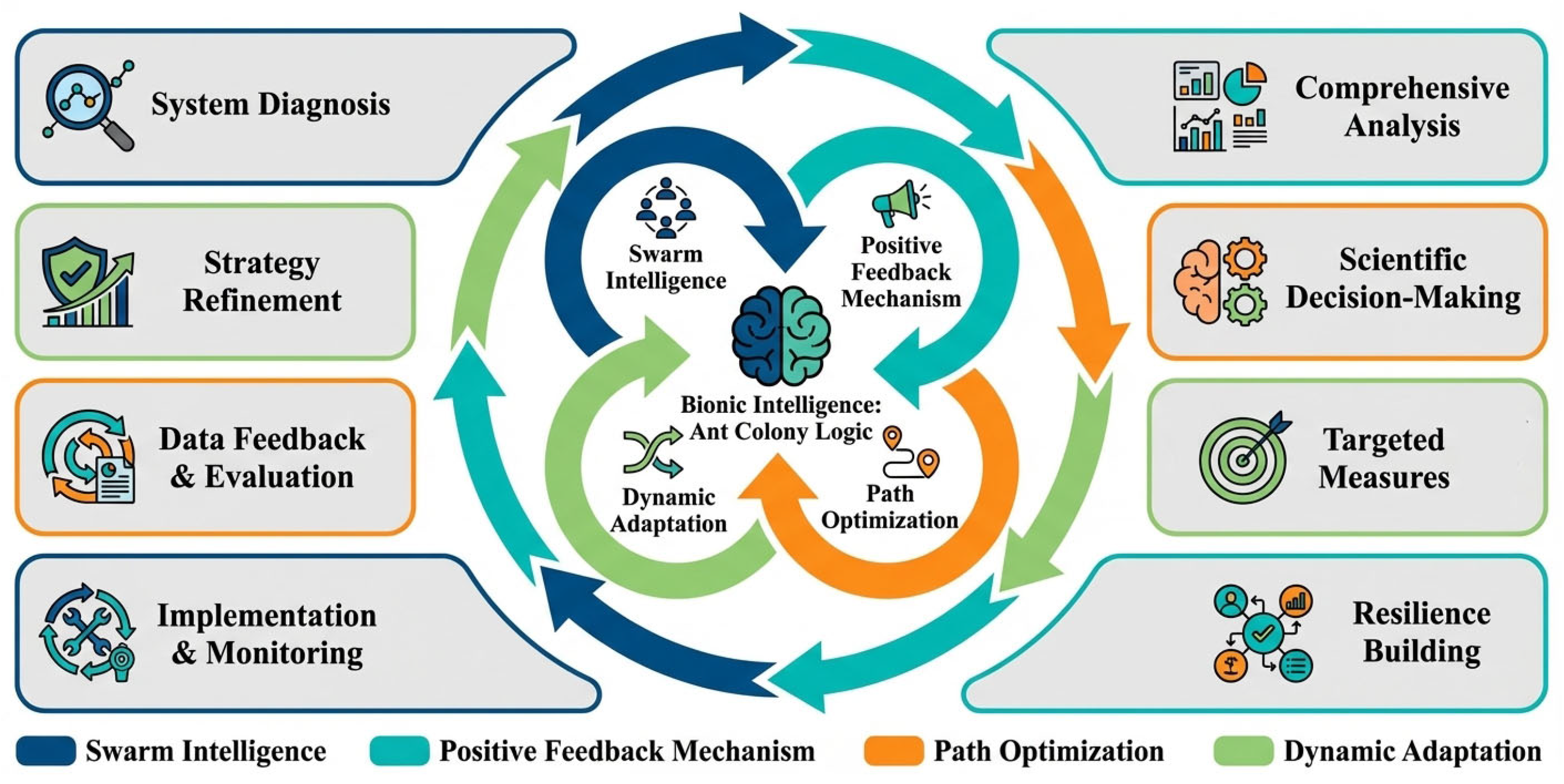
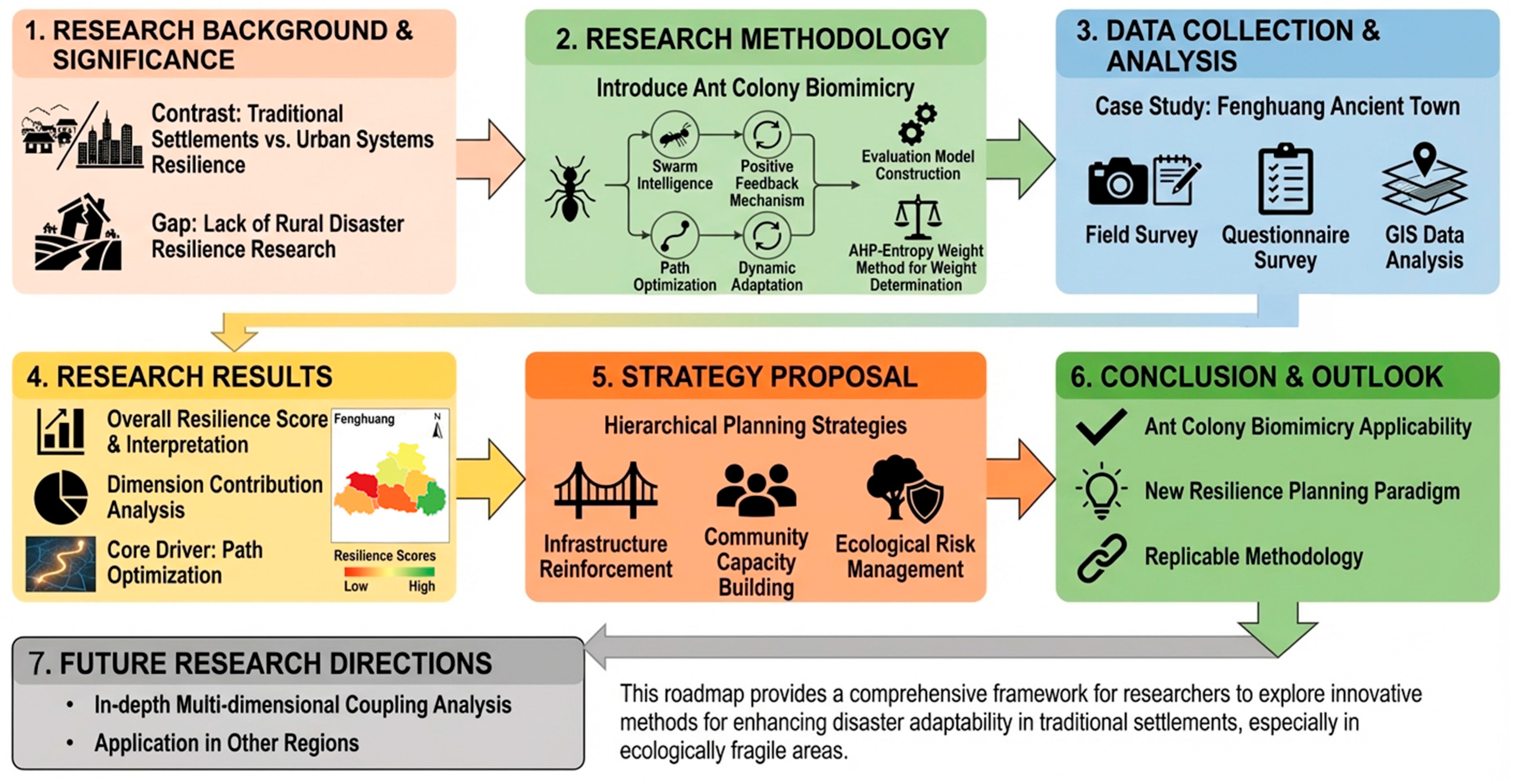
Based on this theoretical synergy between colony intelligence and resilience, this study introduces principles from ant colony biomimicry, treating ant colonies as intelligent, self-organizing system models. Four core characteristics are extracted from this framework, which are then applied to deconstruct, reorganize, and reinterpret the traditional settlement disaster resilience evaluation system. This yields a systematic evaluation method for traditional settlement disaster resilience, supporting national strategies for rural revitalization and cultural heritage preservation. This research provides an innovative methodological framework for the quantitative and dynamic assessment of rural system resilience, as shown Figure 1.
Figure 1. A roadmap for studying disaster resilience based on ant colony-inspired bionics.

2. Literature Review

2.1. Disaster-Adaptive Resilience

Disaster-adaptive resilience refers to a system’s to maintain or quickly restore normal functions when exposed to natural or human-induced hazards through proactive adaptation, recovery, and recovery capacities [21]. Research on disaster-adaptive resilience began in the field of natural disaster engineering. Representative scholar Bruneau et al., from the perspective of reducing earthquake disaster losses, proposed the famous 4R theoretical framework for resilience [19], namely Robustness, Redundancy, Resourcefulness, and Rapidity. This establishes a theoretical foundation for systematically evaluating the disaster resilience of engineering structures and systems, marking the deepening application of the concept of “resilience” in the field of disaster management.
Domestic scholars often take Cutter’s baseline resilience model [22] as the theoretical starting point, combined with Holling’s three-stage resilience of “Resistance-Adaptation-Recovery”, and generally divide disaster-adaptive resilience into six aspects (economic, social, ecological, infrastructure, governance, emergency capacity) to construct indicators for quantitative assessment. Existing research covers townships and rural areas under different geographical environments and socio-economic backgrounds, showing obvious regional differences and governance priorities. In mountain flash flood-prone areas of Guangdong, research using the DEMATEL-ISM method (a methodology used to identify and analyze the influential relationships among fac-tors in a complex system) identified disaster monitoring and early warning systems and community organizations as key driving factors and proposed enhancing resilience through information sharing and emergency drills, showing a trend towards methodological innovation and path-oriented research [23]. Research in southwestern ethnic regions emphasizes party construction leadership and multi-hazard coordinated governance, constructing a “bottom-line-basic” work system, promoting equalization of public services, reflecting the core role of policy and governance structure in resilience building [24]. In broader rural community studies, using the BRIC framework (a tool for quantifying community resilience across ecological, social, economic, and infrastructural dimensions) [25] to quantitatively analyze ecological, economic, and social resilience, found that ecological resilience is positively correlated with economic resilience, suggesting that ecological protection has a superimposed effect on promoting overall disaster-adaptive capacity. Overall, domestic research on disaster resilience is shifting from assessment toward mechanism analysis and pathway development. By integrating quantitative methods with local practices, it emphasizes the coordinated enhancement of economic, infrastructure, social, ecological, and governance systems, providing both theoretical and practical foundations for building resilient urban and rural areas.

2.2. Ant Colony Bionics

Ants exhibit a high degree of self-organization and coordination capabilities in foraging, nest building, division of labor, and information transfer. Their core mechanisms include pheromone positive feedback, local perception and global path selection, and distributed decision-making, which provide a natural template for constructing swarm intelligence algorithms.
Biological research indicates that the phase cycles, collective foraging strategies, and nest migration behaviors of ant colonies exhibit distinct dynamic patterns under varying environmental conditions, providing a theoretical basis for developing diverse variants of bio-inspired algorithms. Among them, the Ant Colony Optimization (ACO) algorithm, proposed by Italian scholar Marco Dorigo in 1992 [26]. This algorithm simulates the way ants interact and cooperate through pheromones during food search to solve complex optimization problems. It has now been widely applied to various combinatorial optimization problems, demonstrating significant advantages and providing an effective tool for solving complex system optimization problems [26].
P i j k represents the transition probability of ant k from node i to node j, as shown in Equations (1) and (2):
P i j k = τ ij ( t ) α · η ij ( t ) β s allow k τ is ( t ) α · η is ( t ) β , j allow k 0 , j allow k
η i j = 1 d i j
where τ i j represents the pheromone concentration on the path between locations i and j at time t; η i j is the heuristic function; α is the pheromone importance factor; β is the heuristic function importance factor.
The pheromone update rules are shown in Equations (3) and (4):
τ ij ( t   +   1 )   =   ( 1   -   ρ ) τ ij ( t )   +   Δ τ ij Δ τ ij = k = 1 n Δ τ ij k ,   0   <   ρ   <   1
Δ τ ij k ( t , t + n ) = Q L k 0
where ρ represents the pheromone evaporation coefficient; Δ τ ij represents the sum of pheromone concentrations released by all ants on the path between nodes i and j; Q is the pheromone intensity; d ij represents the length of the path passed between points i and j; Lij is the total path length traversed by ant k in this cycle.
In China, the application of ant colony algorithms has rapidly expanded, extending from initial combinatorial optimization problems to encompass vehicle routing problems, network routing, scheduling problems, and numerous other engineering and scientific domains. Li et al. investigated a multi-field path planning method for agricultural robots based on an improved ant colony algorithm [27]; Li proposed an enhanced ant colony algorithm to optimize garbage truck collection routes for rural waste management [28]; Shen and Fei optimized circular delivery routes for township express services using ant colony algorithms [29]; Gao proposed a multi-objective ant colony algorithm-based land use optimization allocation model, ensuring the integration of quantitative structure optimization with spatial layout optimization [30]; Geng and Hou proposed an emergency resource supply-demand matching-based shelter network optimization model [31].
The aforementioned research demonstrates the potential of ant colony-inspired biomimetic principles in addressing complex spatial optimization challenges in rural areas. Nevertheless, these applications exhibit a highly fragmented nature, predominantly focusing on enhancing localized efficiency within individual subsystems under normal conditions. They fail to integrate adaptation and recovery mechanisms across multiple disaster scenarios from a systemic resilience perspective. There is a particular lack of holistic modeling for disturbance resistance, recovery, and adaptive capacity within disaster resilience frameworks, hindering their ability to support sustainability and safety resilience at the village and township system levels. Therefore, there is an urgent need to elevate the biomimetic mechanisms of ant colony algorithms from the operational level to the systemic level, achieving a paradigm shift from “local optimization” to “systemic resilience.”

3. Methodology

3.1. Construction of the Ant Colony Bionic Resilience Evaluation Model

Based on the aforementioned algorithm model (Equations (1)–(4)), the dynamic changes in parameters such as pheromone concentration and path length significantly influence the path decisions of individual ants and the collective behavior of the colony. Specifically, the mechanisms of pheromone evaporation and accumulation constitute the internal driving force for the colony’s collaborative optimization and dynamic adaptation. Correspondingly, in human settlement systems, changes in factors such as social networks, infrastructure, resource flows, and organizational structures also profoundly constrain the settlement’s resistance, adaptation, and recovery capabilities in disaster scenarios. Drawing on the foundational principles of Ant Colony Optimization (ACO) as established in the literature [32,33], the study extracts and synthesizes four core characteristics of ant colony intelligence: collective coordination, information feedback, path optimization, and dynamic adaptation. These characteristics can be systematically mapped to the settlement disaster resilience analysis framework, corresponding to social organizational capacity, facility reliability, network efficiency, and systemic learning capability. While these four characteristics are canonical in ACO research, their integrated application to deconstruct and evaluate disaster resilience in traditional settlements represents a novel contribution of this work. This mapping indicates that ant colony intelligence mechanisms can provide a structured biomimetic theoretical basis and methodological support for analyzing and enhancing settlement system resilience, as shown in Table 1.
Table 1. Mapping between ant colony system characteristics and traditional settlements.
The four core characteristics in the “Ant colony behaviour” and “Core concept” columns are derived from the established ACO literature [32,33]. The “Settlement correspondence” and the integrative mapping framework are proposed by the authors of this study, with the “Academic support” column citing relevant works that conceptually align with each mapped dimension in the context of human settlements and resilience.
Swarm collaboration: Although a single ant has limited capacity, simple rules and interactions enable the colony to generate powerful collective intelligence. Similarly, residents form effective self-rescue and mutual aid systems during disasters through social networks, self-organization mechanisms, and knowledge sharing. Neighborhood collaboration in evacuation, information exchange, and coordinated resource allocation are forms of human collective intelligence and significantly strengthen emergency response and recovery.
Information feedback: Ants create positive feedback loops through pheromone paths, continuously reinforcing efficient behavioral patterns. In settlement systems, this is reflected in real-time perception and response mechanisms for infrastructure and environmental conditions, such as water level monitoring in drainage systems, perception of ecological environment changes, and dynamic scheduling of medical resources. This information forms the material basis for disaster response and adjustment strategies, helping people avoid risks in a timely manner and optimize resource allocation.
Path optimization: Ant colonies can find the optimal paths for resource transportation and allocation through pheromone communication. This corresponds to the reliability and efficiency of physical connections and logistics systems in settlements, such as the connectivity and throughput of road networks, and the scientific nature of emergency material reserve and distribution mechanisms. During disasters, fast and reliable path systems are lifelines for ensuring the entry of rescue forces and the evacuation of affected people, directly affecting the overall effectiveness of emergency response.
Dynamic adaptation: Pheromones evaporate over time, enabling the ant colony to abandon old paths and explore new solutions, thereby adapting to environmental changes. Human settlements similarly need dynamic adjustment and learning capabilities. For example, updating emergency plans through post-disaster reviews, developing diversified economic structures to enhance recovery capacity, and promoting the flexible transformation of spatial functions.

3.2. Identification of Resilience Indicators

Based on the principles of ant colony intelligence, this study develops a closed-loop analytical framework for settlement disaster resilience, structured around a core logic of “group coordination—information feedback—path optimization—dynamic adaptation.” This framework systematically maps the collective behavior of ant colonies onto key resilience dimensions, integrating algorithmic features with the inherent resilience traits of rural systems to enhance relevance in disaster management contexts.
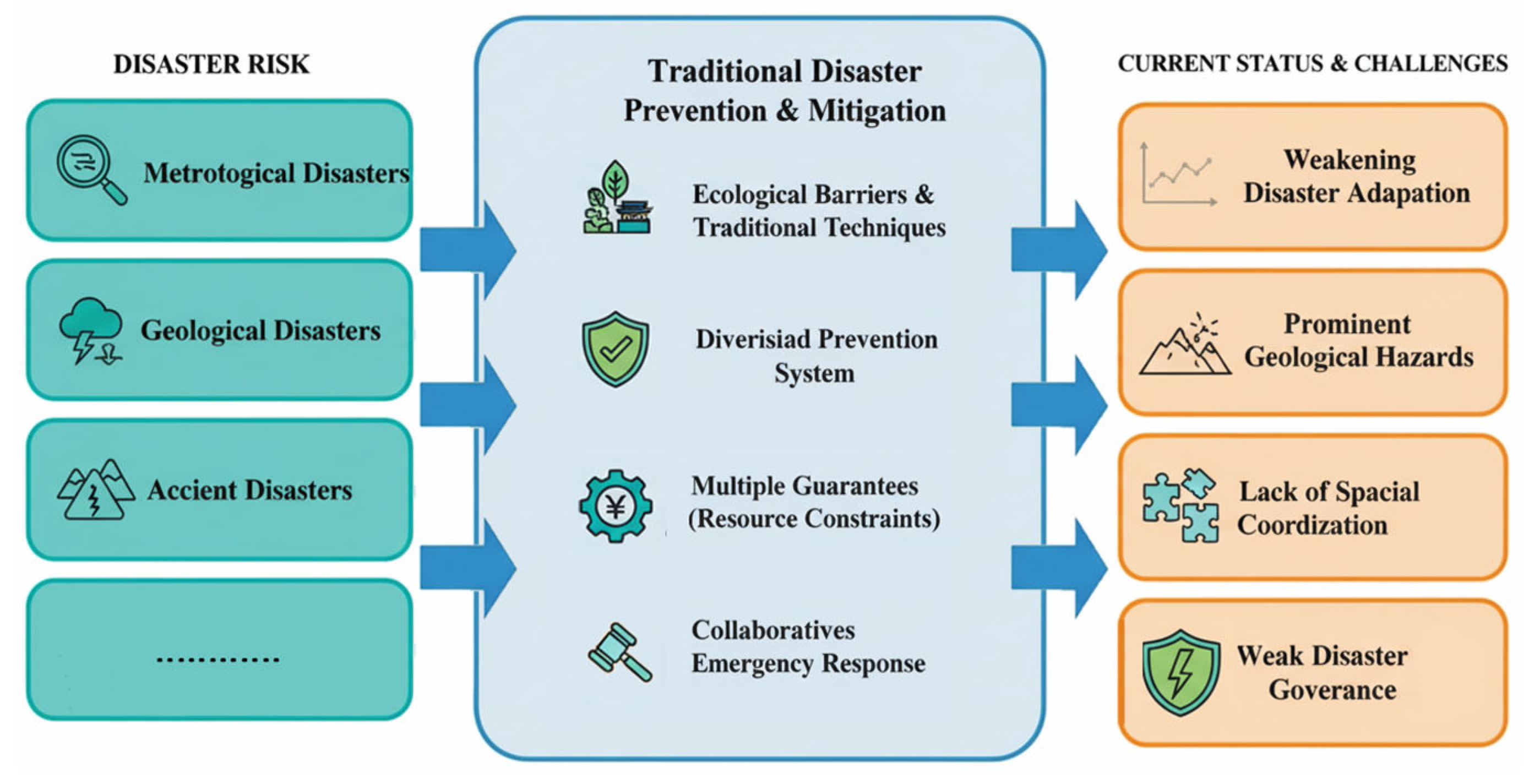
As illustrated in Figure 2, the identification of resilience indicators under this framework follows a complete operational cycle. It begins with a systematic diagnosis of core issues, including weakened traditional adaptive capacity, prominent disaster risks, and insufficient governance capability. Through comprehensive analysis, a resilience enhancement mechanism is activated. This process informs scientific decision-making and leads to targeted intervention measures, ultimately driving the system toward continuous updating and reinforcement through a virtuous cycle. Thus, the algorithmic logic of ant colony intelligence is embedded organically into the entire resilience-building process.
Figure 2. Identification of disaster-adaptive resilience indicators.
For the development of specific evaluation indicators, the element layer of the framework draws upon internationally recognized systems such as the ISO 37120 series [44] and the GRI Standards [45], as well as China’s existing rural resilience evaluation system developed under the guidance of the rural revitalization strategy [46].

3.3. Quantification of Resilience Indicators

To make the acquisition of indicator weights more scientific, the entropy weight method [47] and the AHP (Analytic Hierarchy Process) [48] are used together to determine the indicator weights. Combining subjective and objective weighting to further enhance the feasibility of the indicator weights. The Analytic Hierarchy Process (AHP), proposed by American operational research scientist T.L. Saaty in the mid-1970s, is a multi-factor decision-making evaluation method that combines qualitative and quantitative analysis. It uses mathematical modeling to measure cognitive information that cannot be directly measured, to obtain a meaningful and repeatable decision-making process and reasonable evaluation.
First, based on the established evaluation indicator system, invite experts in relevant research fields to conduct subjective weighting, thereby constructing an indicator evaluation matrix grounded in expert judgment. Generally, it is difficult to directly quantify the relative importance of relevant factors. So, the study adopts the 9-point scale method [49] to obtain the judgment matrix A for pairwise comparisons of these n factors concerning z, see Equation (5).
A n × n = a 11 a 12 a 1 a 1 n a 21 a 22 a a 2 n a a a a a n 1 a n 2 a n a n n
Using the geometric mean method can ensure consistency checking. The scoring matrices formed by m experts (m = 1, 2, …, k) are multiplied element-wise, and then the m-th root is taken to obtain a unique integrated matrix A ¯ , as shown in the formula:
A ¯ = ( k = 1 m a i j k ) 1 m
The relative importance weight of factors at a certain level relative to a factor at the previous level is calculated based on the judgment matrix. According to matrix theory, the geometric mean method (root method) is applied to the integrated unique matrix to calculate the weights, as shown in the formula:
W i = ( j = 1 n a i j ) 1 n i = 1 n ( j = 1 n a i j ) 1 n ,   i = 1 , 2 , 3 , n
When constructing a judgment matrix, due to the complexity of phenomena and the diversity of human subjective perceptions, it is impossible to make precise pairwise comparisons; only estimated judgments can be provided. Thus, the values given in the judgment matrix deviate from the actual ratios, so it cannot be guaranteed that the judgment matrix has complete consistency. Academia generally uses CR as the standard for judging the consistency of the judgment matrix, where CR is the ratio of the consistency index CI to the average random consistency index RI. If CR < 0.1, it indicates that the matrix meets the requirements and no modification is needed. Otherwise, experts should be asked to revise the judgment matrix again until the calculated result CR < 0.1. The formula for calculating the consistency index CI is shown in Equation (8).
C I = λ m a x n ( n 1 )
The formula for calculating the consistency check CR is shown in Equation (9).
C R = C I R I = λ m a x n ( n 1 ) R I < 0.1
λ m a x is the maximum eigenvalue of the judgment matrix. RI is the average consistency index, with specific values as shown in Table 2.
Table 2. Average consistency index table.
Finally, combining the weight results of the entropy weight method and the AHP method, the comprehensive weights combining subjective and objective aspects are obtained through a coupling method. Each dimension is rated from 0 to 5 points according to the scoring standard. Comprehensive score = Σ (Dimension score × Dimension weight). The scoring results are divided into five levels, corresponding to different resilience levels, with higher values indicating a higher level of disaster-adaptive resilience.

3.4. Establishment of Evaluation Index System

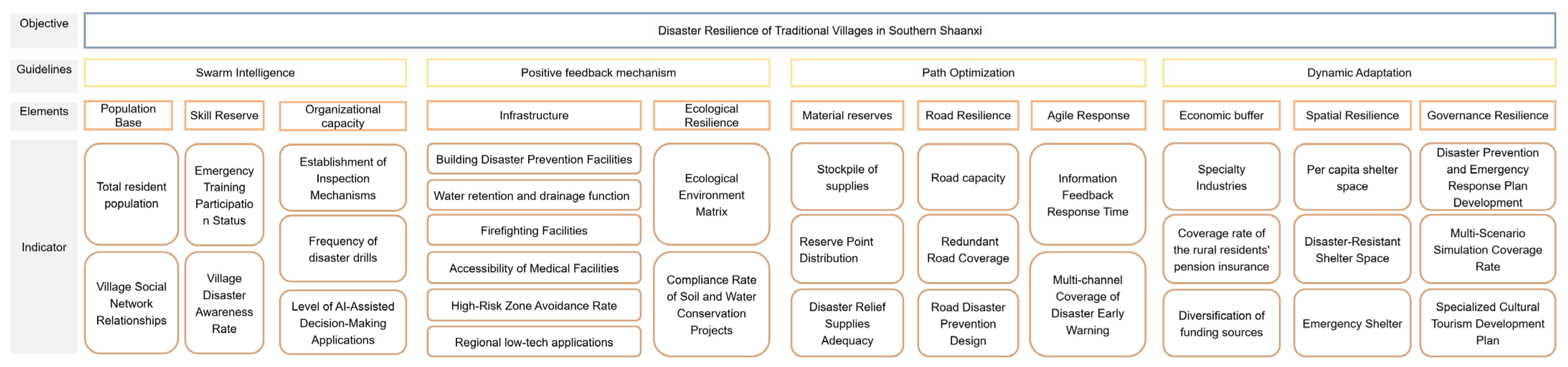
Based on the theoretical framework of the aforementioned ant colony-inspired resilience evaluation model, this study constructs a four-tier disaster-resilient evaluation indicator system comprising the objective layer, criterion layer, factor layer, and indicator layer, as shown in Figure 3. This system aims to translate abstract biomimetic principles into quantifiable and operational evaluation tools.
Figure 3. Disaster-adaptive resilience evaluation system based on ant colony bionic characteristics.
Target Layer A is the comprehensive evaluation of disaster-adaptive resilience of traditional settlements, which is the highest level and ultimate goal of the system. Criterion Layer A1–A4 directly corresponds to the four core characteristics of ant colony bionic intelligence, namely Swarm Intelligence (A1), Positive Feedback Mechanism (A2), Path Optimization (A3), and Dynamic Adaptation (A4). This layer is the conceptual bridge connecting bionic theory and settlement resilience dimensions. The B1–B11 element layer is further refined into 11 key domains, such as “population foundation,” “skill reserves,” “ecological resilience,” “road resilience,” and “economic buffer,” making the connotations of each bionic dimension more concrete and context-specific. Indicator layers C1–C33 constitute the lowest tier of the system, comprising 33 specific, measurable, quantitative or qualitative indicators. The AHP–entropy weight combination method was employed to determine the comprehensive weights for indicators at each level, integrating expert subjective judgments with objective data information, as shown in Table 3.
Table 3. Evaluation system weight table.
Through rigorously designed Analytic Hierarchy Process (AHP) for subjective weighting, the study invited 12 experts from three key domains: urban and rural planning with heritage conservation, disaster prevention and mitigation with risk management, and community resilience with public administration. This interdisciplinary panel ensured the judgment matrix systematically and comprehensively captured the multidimensional complexity of traditional settlement disaster resilience across spatial, technological, social, and economic dimensions.
During data processing, consistency checks were performed on each expert’s judgment matrix. All matrices demonstrated a Consistency Ratio (CR) below the acceptable threshold of 0.10, ensuring logical consistency in the assessments. For individual matrices that did not pass the test on the first attempt, the research team communicated with the corresponding experts for review and calibrated comparison items with obvious contradictions until they met the consistency requirements. After confirming the validity of all individual expert matrices, this study integrated the weight results approved by the 12 experts using the geometric mean method, ultimately forming the comprehensive weight set shown in Table 3 (see Table A1 for definitions of indicators).

4. Case Study

4.1. Study Area

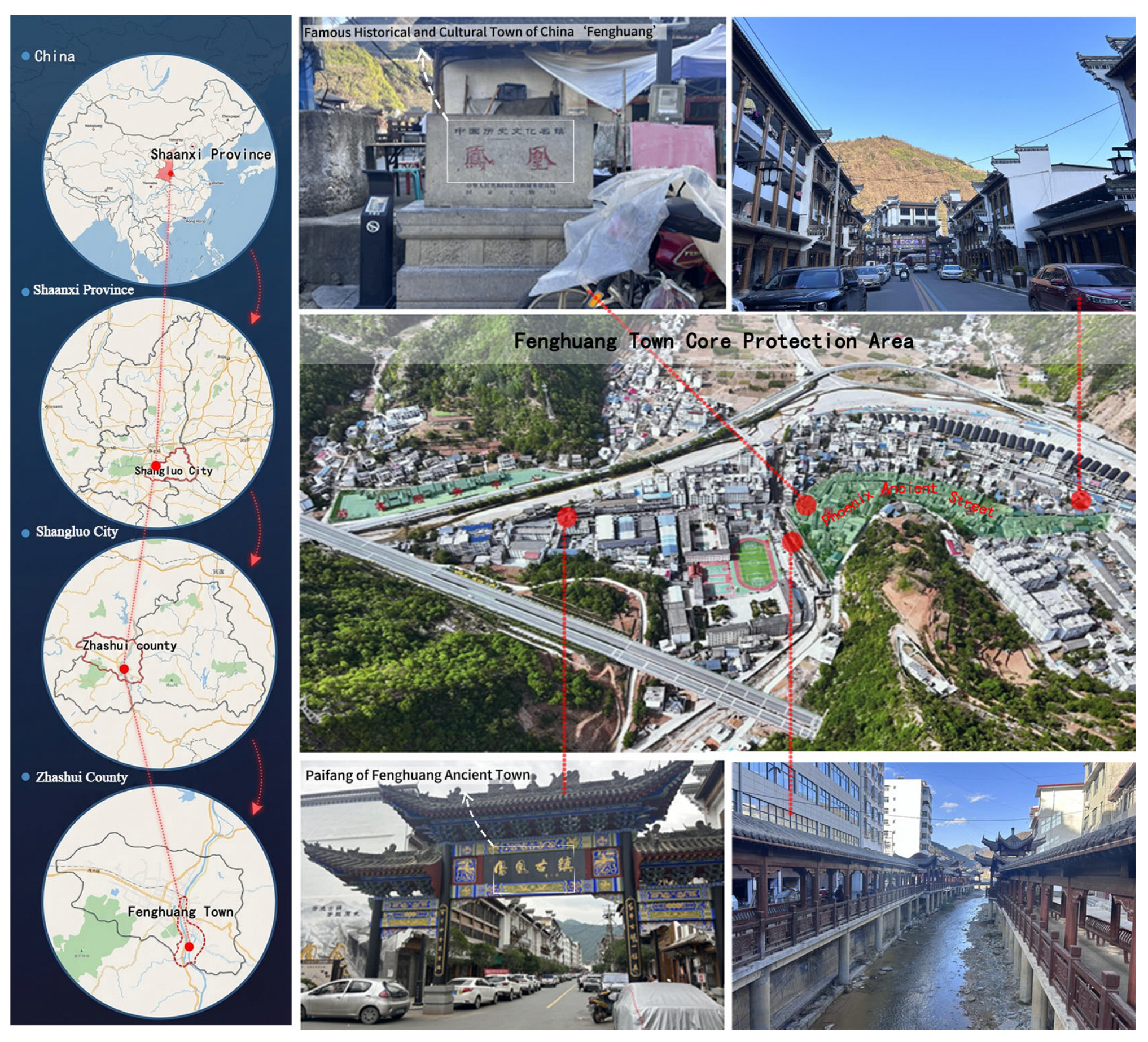
Fenghuang Ancient Town is located in Zhashui County, Shangluo City, Shaanxi Province, 45 km from the county seat, named after its terrain resembling a spreading phoenix. The ancient town was founded in the Tang Dynasty and has a history of over 1400 years, located at the sedimentary delta where the Shechuan River, Zao River, and Shuiduigou River converge, forming a unique “cross-water” spatial pattern. Historically, relying on its water transport advantages, it became an important commercial hub in Southern Shaanxi, especially during the Ming and Qing dynasties. There is an old street lined with Qing Dynasty residential buildings in the town, where more than 60 residential buildings from the Ming and Qing periods are still well preserved. Shops line both sides of the street, with residences behind them, showing a distinct “shop in front, residence behind” form. It was listed as a provincial-level cultural relic protection unit for “Ancient Architectural Complex and Dwellings” in the fourth batch of Shaanxi Province in 2002 [50] (see Figure 4).
Figure 4. Location and current situation of Fenghuang Ancient Town.
This study focuses on Fenghuang Ancient Town because it embodies typical tensions and broad relevance in its responses to natural disasters. Situated at the confluence of multiple rivers on the southern slopes of the Qinling Mountains, the town has long faced threats from geological hazards like flash floods and landslides, as well as meteorological disasters. Its traditional “cross-water” spatial layout and architecture reflect biomimetic wisdom and inherent resilience, illustrating how rural societies adapt to hydrological conditions. However, rising extreme weather events and rapid tourism growth require the town to balance upgrading disaster-prevention facilities with preserving its historical character. It must also navigate tensions between tourism-driven change and the continuity of local traditions. These challenges make it a site for observing the multiple tensions between “traditional dis-aster-adaptive wisdom and modern disaster prevention needs” and “heritage preservation and community development”.
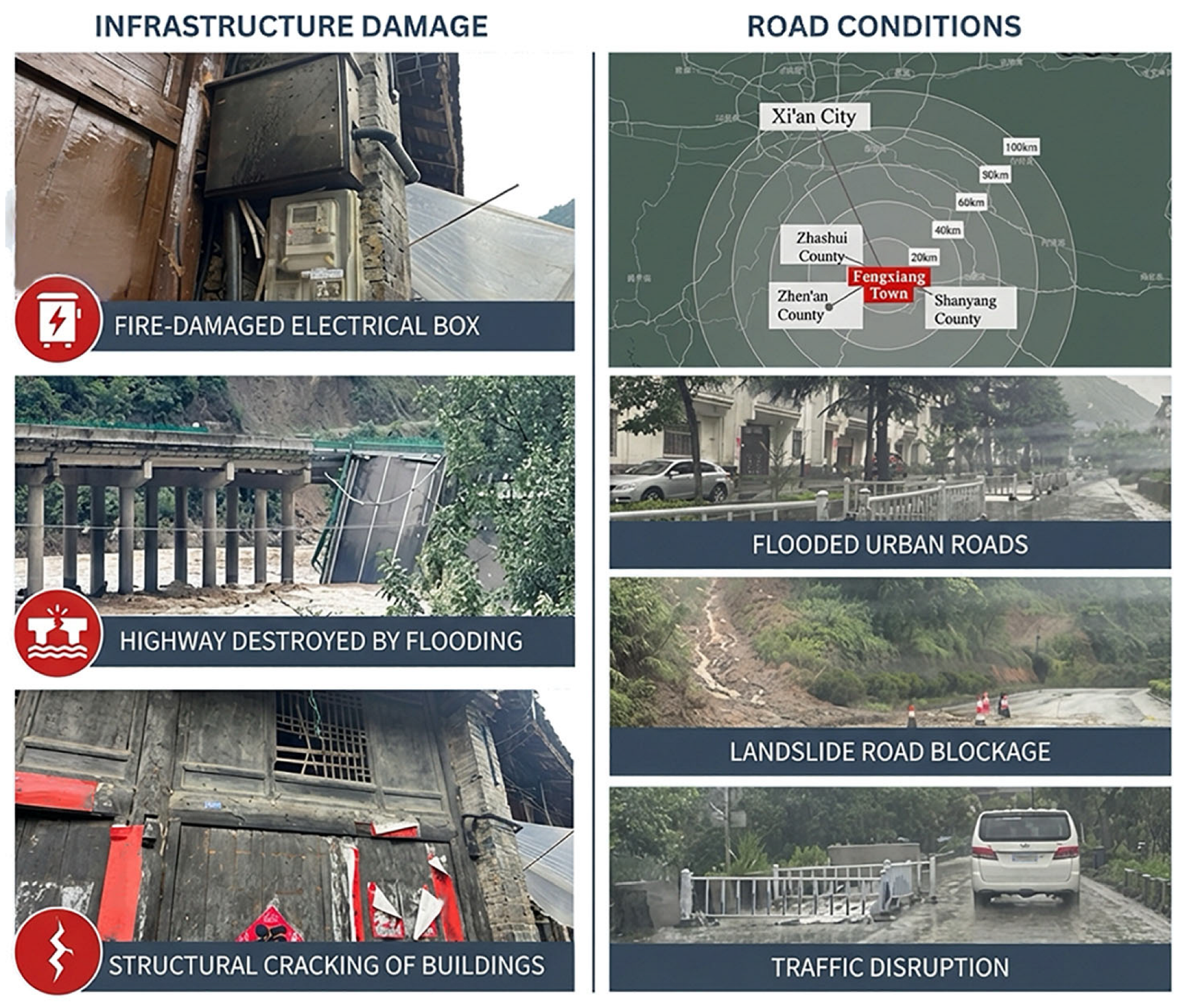
The ancient town complex is situated in a high landslide-prone area of southern Shaanxi. Its geological structure is dominated by Middle and Upper Devonian and Lower Carboniferous strata, exhibiting characteristics of conglomeratic sedimentation. The surface is covered with a 5~8 m thick layer of loose accumulation, which is highly prone to triggering debris flows under heavy rainfall conditions. Records indicate that severe flooding occurred in this area in 1937, on 18 June 1940, and on 6 August 1963. The 1963 flood reached depths of 1.6 to 2.3 m, resulting in the complete loss of crops. On 22 March 1966, an earthquake struck, causing buildings to collapse and claiming 37 lives. This event stands as the most destructive natural disaster recorded. A man-made fire on 2 May 2016, which destroyed six Ming and Qing dynasty ancient buildings, also highlights the need to address human-induced risks during modernization. After the 1930s, with the decline of water transport and the development of road traffic, Fenghuang Town gradually faded into obscurity in the deep mountains. In 2006, the opening of the then-longest tunnel in Asia shortened the distance from Xi’an to Zhashui to 65 km, and the urbanization process gradually impacted its original disaster-adaptive resilience system. In addition, the surrounding areas are more concentrated in coal mines and other heavy industries, a large number of heavy trucks frequently transit the countryside due to transportation needs, and long-term overloading has led to serious damage to rural roads, further exacerbating the deterioration of traffic conditions, which not only affects the efficiency of residents’ daily travel and emergency relief (Figure 5) but also poses a continuous threat to the settlement’s physical space and ecological resilience.
Figure 5. Disaster situation in Fenghuang Ancient Town.
In summary, the ancient town of Fenghuang faces multiple disaster threats such as landslides, floods, and fires at the same time. This situation highlights the typical disaster profile of Southern Shaanxi, dictated by its topography. Fenghuang Ancient Town serves as a microcosm of the disaster chains common in the Qinba mountainous area, encapsulating the topographic challenges that such mountain villages commonly face in disaster prevention and mitigation (see Figure 6).
Figure 6. Summary of the current situation in Fenghuang Ancient Town.

4.2. Date Source

In this study, based on the traditional village disaster resilience evaluation theory, relevant regulations and norms and expert consensus, the scoring interval of the indicators is set uniformly, and the threshold method is used to grade each indicator from 0 to 5. The composite score is calculated using a weighted sum model: composite score = ∑ (dimension score × dimension weight). Based on the composite score, the sample was divided into five resilience levels, with threshold intervals of 0–1, 1–2, 2–3, 3–4, 4–5, with higher scores indicating stronger levels of disaster resilience.
Indicator data sources include six categories of socio-economic data, questionnaire survey data, semi-structured interview data, planning and management data, infrastructure and facility data, and geospatial data see Table A1. To ensure the authenticity, scientific rigor, and completeness of the research, the accuracy of relevant data was supplemented and calibrated through three rounds of field surveys, questionnaire surveys, and on-site interviews, conducted on a sampling basis.
The first part of the questionnaire collected basic demographic information of the respondents, including gender, age, place of residence, and income source. Three rounds of field surveys were conducted between 3 December 2024, and 2 July 2025. The surveys were mainly conducted on weekends or national holidays between 14:00 and 18:00. This time slot was chosen due to the high flow of people, meeting the requirements of random sampling. Researchers proactively explained the research objectives and survey content. All participants were fully informed, voluntarily consented, and agreed to complete the questionnaire designed in accordance with the principle of anonymity. A total of 80 questionnaires were collected. After eliminating questionnaires with high repetition or missing items, 61 valid questionnaires were retained.

4.3. Resilience Evaluation Results of Fenghuang Ancient Town

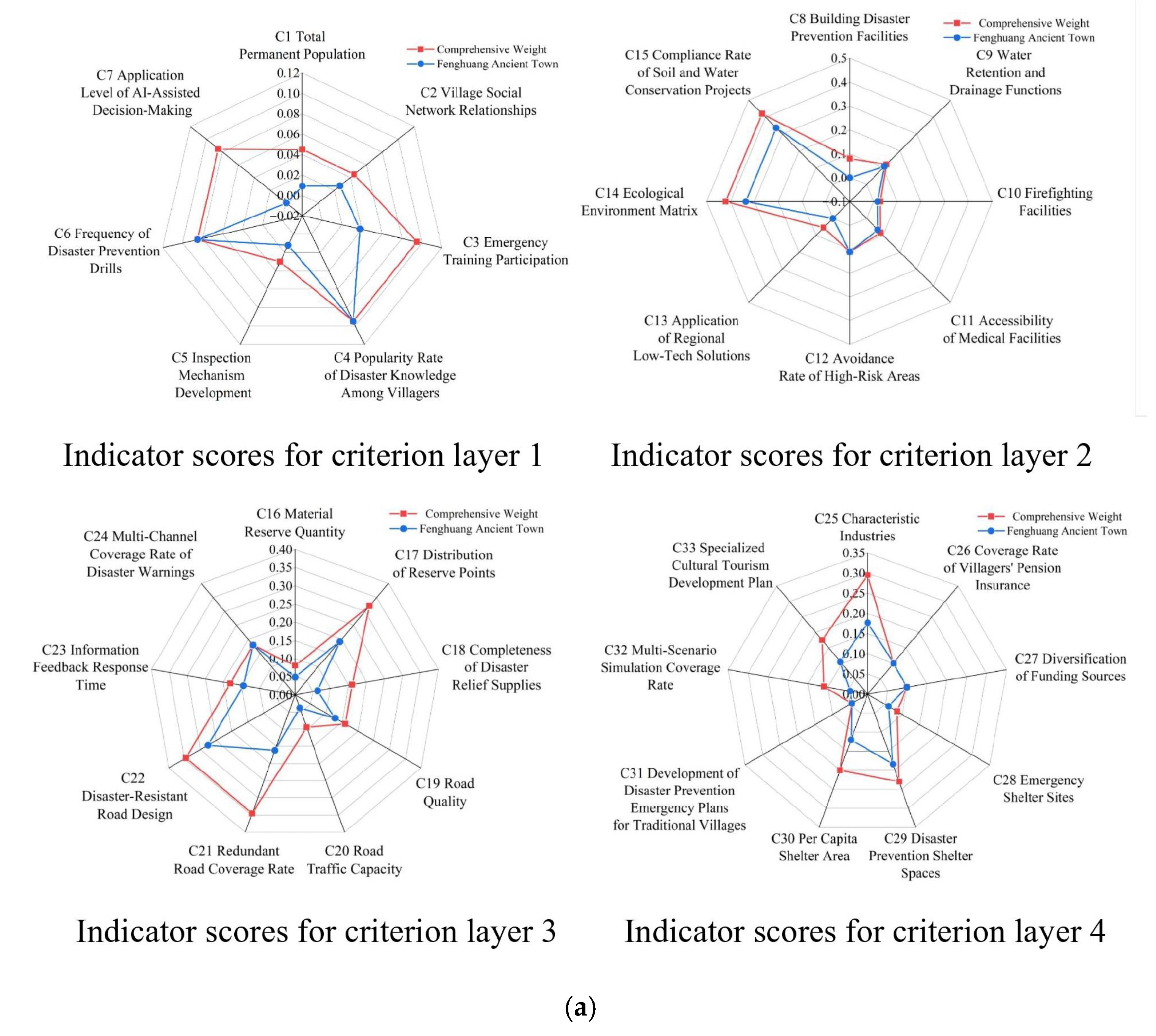
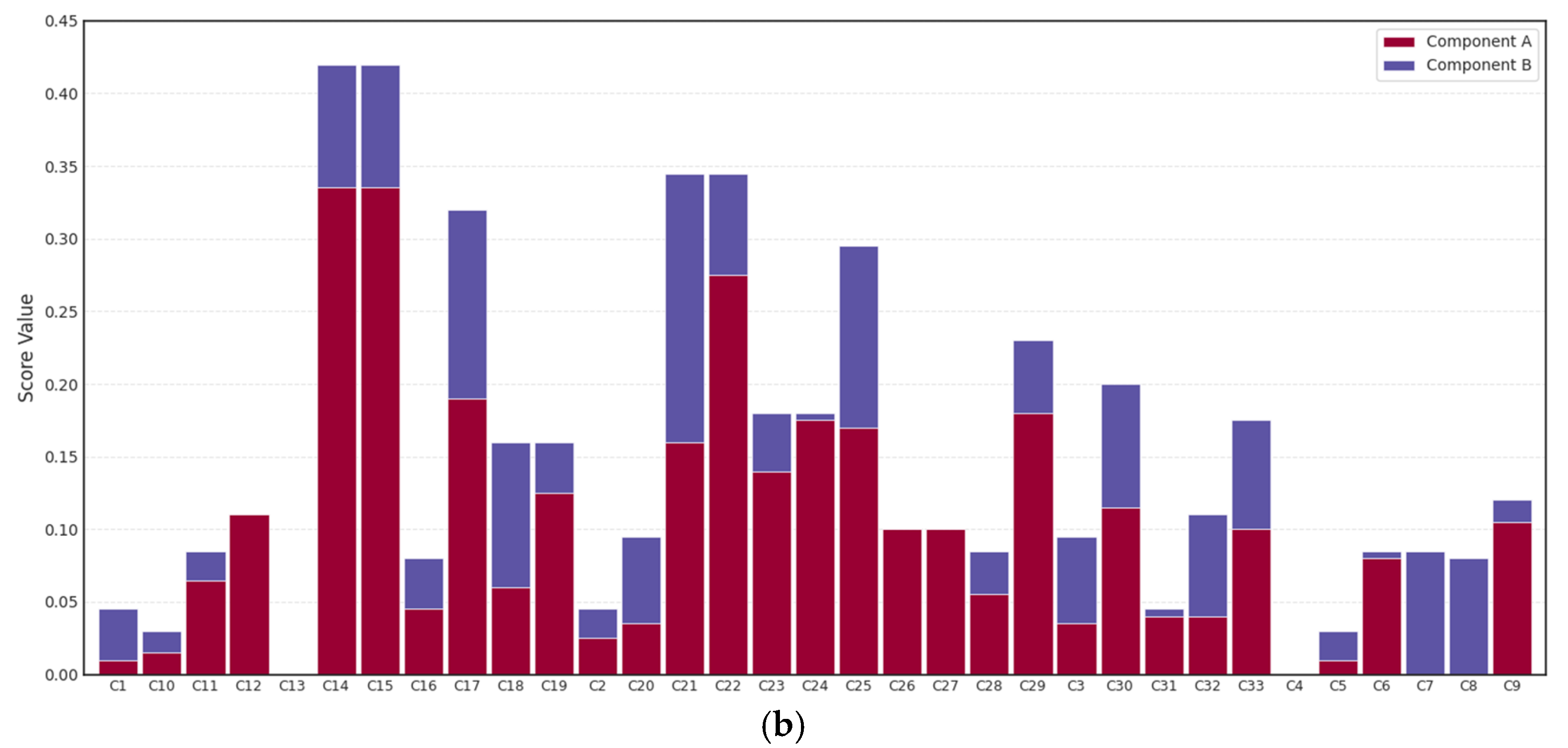
Based on the AHP-Ant Colony Bionic Evaluation Model, this study comprehensively evaluates the disaster-ready resilience of the Fenghuang Ancient Town in Zhashui, Shaanxi, with a final score of 3.408. The detailed scores for each individual indicator are provided in Table 4. The results show that the overall disaster resilience of Fenghuang Ancient Town is at a medium level. This indicates that the settlement possesses a certain capacity for adaptation and response post-disaster, but significant shortcomings exist in key areas, leaving room for optimizing the resilience structure. Based on the standardized results of each indicator, a polygon chart can be constructed, as shown in Figure 7. The polygons for various indicators at each factor level are as follows:
Table 4. Fenghuang Ancient Town’s disaster-adaptive resilience model score.
Figure 7. Disaster-adaptive resilience evaluation results of Fenghuang Ancient Town. (a) Indicator scores for each criterion layer. (b) Stacked bar chart of indicator scores.
  • Comprehensive evaluation results at the criterion level: The scores and contributions of the four bionic dimensions are uneven. The path optimization (A3) dimension has the highest contribution, the positive feedback mechanism (A2) and dynamic adaptation (A4) dimensions have the middle scores, and the group intelligence (A1) dimension has the lowest scores, indicating that the ancient town is weakest in the “human” dimensions, such as community organization, knowledge dissemination, technology application, and intelligent decision-making. These are the key dimensions that lower the overall resilience score. This indicates that the ancient town is weakest in the “human” dimension of community organization, knowledge popularization, technology application, and intelligent decision-making, which is the key dimension that lowers the overall resilience score.
  • Analysis of specific results at the indicator level: Strong drivers such as C12 High-Risk Zone Avoidance, C24 Multichannel Early Warning Coverage, and C4 Disaster Knowledge Popularization reflect the traditional disaster-avoidance wisdom accumulated through long-term adaptation. C26 Pension Insurance Coverage Rate and C27 Diversification of Funding Sources showing that social security infrastructure acts as stabilizer of resilience. The major shortcomings include C7 AI-Assisted Decision-Making Application Level, which shows that the emergency management remains traditional, lacking intelligent technologies and routine training. C8 Building Disaster Prevention Facilities scores the lowest score, confirming that the vulnerability of Ming-Qing Dynasty wooden buildings is the main safety hazard. Although path optimization has the highest overall score, key indicators within it, such as C21 Redundant Road Coverage and C20 Road Capacity, remain low, revealing uneven internal performance. C29 Disaster-Prevention and Evacuation Space is limited because the designated school site is not open daily. This institutional constraint reduces the effectiveness of high-quality evacuation resources and prevents full scoring.
In summary, the disaster resilience of Fenghuang Ancient Town presents a complex picture characterized by “coexisting systemic strengths and structural weaknesses”: its traditional wisdom and ecological foundation form the bedrock of resilience, while deficiencies in building safety, technological application, community organization, and resource management mechanisms constrain further enhancement of its resilience level.

4.4. Model Validation and Feedback Analysis

To verify the scientific and practical validity of this evaluation system, this study conducted structured follow-up interviews in Fenghuang Ancient Town in September 2025. The follow-up participants encompassed three key groups: heads of government administrative departments, community and village officials, and ordinary residents. Focusing on the core findings within the evaluation system, the interviews combined closed-ended questions with open-ended discussions to compare the evaluation results’ key insights with the participants’ frontline experiences and subjective perceptions. The feedback from the return visits indicated a high degree of agreement between the evaluation results and the perceptions of local subjects, specifically reflected in:
Firstly, there was high consensus regarding the “shortcomings” identified by the evaluation. When presented with the feedback that “the collective intelligence dimension scored the lowest, with particularly significant weaknesses in the C3 Emergency Training Participation mechanism and C7 AI-Assisted Decision-Making Applications,” the head of the town’s emergency management department explicitly acknowledged that this assessment accurately reflected the current situation. He pointed out that disaster prevention efforts currently rely primarily on administrative resources and a limited pool of volunteers, with a lack of regular training and drill mechanisms for community residents and virtually no digital decision-support capabilities in place.
Secondly, the “advantageous characteristics” pointed out by the evaluation were also confirmed on the ground. Regarding the findings that “A3 route optimization demonstrated relatively optimal performance, while C22 Road Disaster Prevention Design made significant contributions,” local residents expressed approval, particularly acknowledging the engineering improvements made to main thoroughfares in recent years.
However, they also noted that “internal alleyways still exhibit significant shortcomings in traffic capacity, with heavy-duty trucks causing severe damage during transit.” This feedback further corroborates the assessment that C20 Road Capacity and C21 Redundant Road Coverage remain weak points. Most importantly, the evaluation results revealed certain latent systemic contradictions and prompted a reexamination of management mechanisms. For instance, the limited evaluation score for C29 Disaster Prevention Shelter Space due to the absence of an integrated peacetime-emergency management mechanism was not initially given sufficient attention by the revisit subjects. After the explanation, the town’s education and culture official stated: “Schools are indeed closed to the public during normal times due to safety management and operational cost considerations. We had not realized this posed a critical constraint on their emergency evacuation effectiveness during disasters.” The evaluation findings underscore the urgent need to establish rapid activation and coordination mechanisms for public facilities during disasters.
In summary, the ant colony–based resilience assessment model gained broad recognition from multiple stakeholders and proved capable of revealing hidden institutional and resource coordination problems. These insights helped deepen local understanding of resilience gaps and motivated improvements. Overall, practical feedback demonstrates the model’s scientific rigor, sensitivity, and applied value.

5. Discussion

5.1. Interpretation of Results

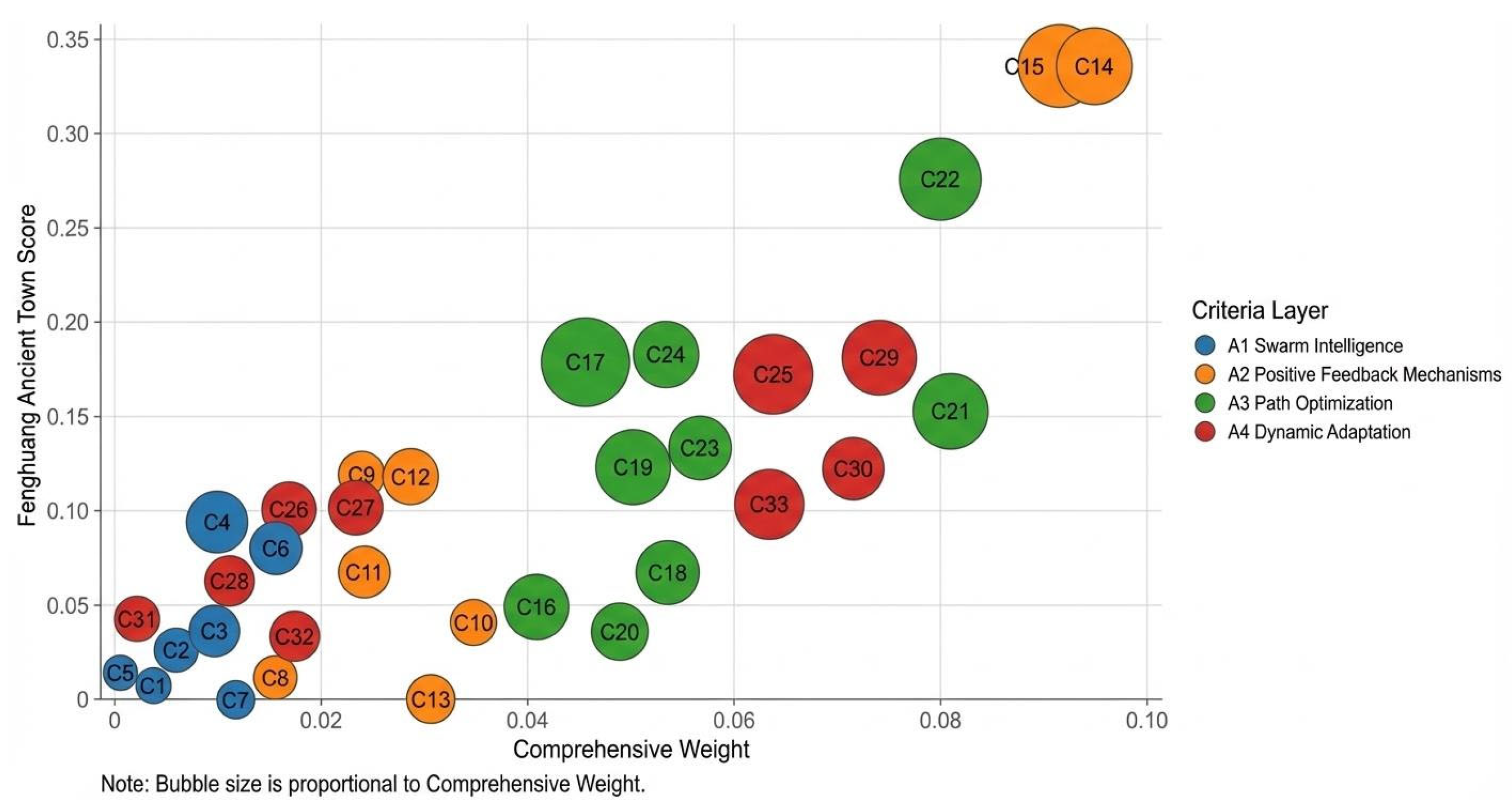
The evaluation results show that the disaster-adaptive resilience score of Fenghuang Ancient Town is 3.408, at a medium level, and the performance of the four dimensions is uneven (see Figure 8), profoundly revealing the complexity and contradictoriness of resilience capabilities of traditional settlements in the context of modern disasters. Their causes can be explained from a bionic perspective.
Figure 8. Bubble diagram of the distribution of resilience assessment indicators.
  • Path Optimization Dominance: Modern Embodiment of Traditional Spatial Wisdom
The highest contribution to path optimization stems not from modern technological investments, but from the organic embodiment of the ancient town’s traditional spatial layout. This is primarily driven by the high score in C21 Redundant Road Coverage, which reflects robust performance in this dimension. This layout functionally parallels the multi-path networks observed in ant colonies, which enhance risk mitigation and operational efficiency. As a result, it provides inherent traffic accessibility and alternative routing capacity during disasters. However, indicators like C20 Road Capacity score lower, indicating that the impact of modern heavy traffic (such as mining trucks) is eroding this traditional advantage, reflecting the tension between traditional wisdom and modern development.
2.
Weak Swarm Intelligence: Dual Lag in Community Organization and Technology Application
The lowest score in the Swarm Intelligence dimension accurately exposes the blind spot in current resilience construction—namely, the “human” factor. The C7 AI-Assisted Decision-Making Application scored zero points, while the C3 Emergency Training Participation and C5 Inspection Mechanism Development scored low. Taken together, these results indicate that the town’s disaster prevention system remains dependent on traditional, experience-based, and reactive approaches. It has yet to evolve the efficient, self-organizing, and distributed “swarm intelligence” characteristic of ant colonies. This stems from both the absence of core participants due to an aging community and outmigration of young labor, and from a widespread lack of smart technology applications in disaster prevention management within traditional settlements.
3.
Dilemmas of Positive Feedback Mechanism and Dynamic Adaptation: Imbalance between Static Protection and Dynamic Demand
The scores for positive feedback and dynamic adaptation dimensions are moderate, but the sharp contradictions among their internal indicators reveal deeper underlying issues. In the positive feedback mechanism, high-scoring items such as the C15 Soil and Water Conservation Project reflect a sound ecological foundation. However, the zero score for C8 Building Disaster Prevention Facilities constitutes the weakest link in the “wooden bucket effect.” This confirms the inherent physical vulnerability of Ming and Qing dynasty timber structures, where the degradation of their disaster resilience creates a positive feedback loop that amplifies overall risk. Breaking this cycle urgently requires intervention through adaptive technologies. Within dynamic adaptation, the C29 Disaster Prevention Shelter Space highlights rigidities in management mechanisms. This contradicts the principle of “instantaneous functional switching based on demand” observed in ant colonies adapting dynamically to their environment. Consequently, potentially vital resources remain inert and cannot be mobilized as effective resilience capacity during disasters. This reflects deeper institutional contradictions: between the imperatives of preservation and development, and between the modes of routine management and emergency response.

5.2. Strategies for Enhancing Resilience

  • Activate Swarm Intelligence, Build a Community Self-Organization Network Guided by “Pheromones”
Replace the top-down management model with mechanisms that activate endogenous community dynamics. Develop a hybrid information-sharing and decision-making platform that mimics ant-colony pheromone communication to enable real-time dissemination and response to disaster information and rescue needs [27]. Implement a standardized emergency training and drill program to improve villagers’ self-rescue and mutual-aid skills. Establish a “disaster-prevention points” reward system to motivate patrol participation, creating incentives that shift residents from passive recipients to an active “disaster-prevention ant colony.” Encourage the return of young people to their hometowns to increase both the size and skill level of the permanent population. Conduct regular training and drills: Organize periodic disaster prevention and mitigation skill training and practical exercises to enhance villagers’ self-rescue and mutual aid capabilities. Introduce smart emergency response systems: Gradually build AI-assisted decision-making platforms to elevate the intelligence level of disaster response.
2.
Strengthen Positive Feedback Mechanism: Implement Structural Reinforcement and Ecological Regulation Mimicking “Ant Nests”
To address the greatest vulnerability of wooden structures, implement adaptive retrofitting with a “low-tech, high-resilience” approach. Drawing inspiration from ant nest structures, key heritage buildings undergo non-destructive or minimally invasive seismic and fireproof reinforcement (e.g., using carbon fiber cloth, flame-retardant coatings) rather than brutal demolition and reconstruction. Building upon existing soil and water conservation achievements, ecological engineering is integrated with gray infrastructure to enhance settlements’ natural buffering and regulatory capacity against floods and landslides, fostering stable ecological positive feedback loops.
3.
Optimize Path System: Create a Redundant and Efficient “Ant Path” Transport Network
While preserving the traditional street and alley fabric, reinforce critical pathways. Prioritize enhancing road capacity by strengthening and widening streets and alleys serving as emergency routes. Simultaneously, revitalize private passageways and public spaces to form a redundant network combining visible and hidden routes. This ensures alternative evacuation and rescue paths remain available even if any key node becomes inaccessible. Transition from a single-point material storage model to a distributed, multi-node emergency supply depot system. This approach mimics the distributed food storage strategy of ant colonies, significantly reducing the risk of “single-point failure” while improving resource accessibility.
4.
Enhance dynamic adaptability: Develop resilient management policies that integrate peacetime and disaster preparedness.
Transforming spatial and resource resilience, we spearheaded the development of the Technical and Management Guidelines for Dual-Purpose Conversion of Emergency Facilities in Fenghuang Ancient Town. Through lightweight, rapidly deployable engineering designs, we ensure public spaces like schools and plazas can swiftly transform into efficient shelters during disasters. Simultaneously, we integrate resilience objectives into cultural tourism development plans, fostering mutual enhancement between heritage preservation and disaster resilience. This approach achieves sustainable adaptation and development for the settlement.

6. Conclusions

6.1. Research Summary

(1)
Theoretical Innovation and Empirical Value of the Bionic Disaster-Adaptive Resilience Evaluation System
This study develops a disaster resilience evaluation system based on ant colony biomimetic characteristics, providing new theoretical perspectives and methodological tools for research and practice in this field. The core innovation of this system lies in translating the biomimetic logic of “group coordination—information feedback—path optimization—dynamic adaptation” from ant colony algorithms into an operational framework applicable to assessing the disaster resilience of traditional settlements. This effectively translates biological intelligence into a resilience governance paradigm. Taking Fenghuang Ancient Town as an example, this model not only quantifies the settlement’s pre-disaster response capabilities—identifying its adaptive capacity as moderate—but also pinpoints its strengths and weaknesses, demonstrating the model’s strong diagnostic and practical value. Innovatively, this system breaks away from traditional evaluations that are often confined to single disasters or static indicators. By incorporating multidimensional, dynamic, and process-oriented ant colony biomimetic characteristics, it offers a novel pathway for understanding the adaptive mechanisms of settlements within complex disaster systems. Furthermore, by integrating algorithmic logic with rural spatial governance, the system provides scientific foundations for disaster prevention and rural revitalization in the Qinling region’s traditional settlements, while also offering replicable strategic insights for similar contexts. This approach advances disaster-resilient research from theoretical analysis toward empirical optimization.
(2)
Resilience Enhancement Strategies for Traditional Settlements Based on Bionic Principles
The disaster resilience of ancient towns still exhibits significant shortcomings in areas such as building structures, resource allocation, community participation, and spatial management, which constrain the enhancement of their overall disaster resistance capabilities. Current resilience construction overly emphasizes hardware facilities and static planning, lacking systematic optimization of resource allocation. In particular, the emergency material reserve still adopts a centralized model, failing to establish a distributed reserve network, which severely affects disaster response efficiency. Simultaneously, the continuous impact of modern heavy traffic (such as mining trucks) causes damage to the road system, directly weakening the redundancy and reliability of transportation paths and reducing the internal connectivity resilience of the settlement. At the community participation level, existing mechanisms lack sufficient daily training and coordinated drills. Residents’ disaster awareness and self-rescue skills remain inadequate. This undermines the activation of swarm intelligence, hindering the formation of an efficient, self-organizing emergency response. Finally, spatial management suffers from a lack of effective integration between daily and disaster-time functions. Potential emergency sites such as schools and squares are often closed during daily management. This systemic barrier severely limits its ability to rapidly transform into an evacuation and resettlement space during disasters.
The evaluation system developed in this study, based on ant colony biomimetic characteristics, derives its dimensional framework and indicator design from the common features of traditional settlements and disaster response logic. Consequently, it exhibits strong transferability and applicability, enabling its promotion and implementation in similar historical settlements across southern Shaanxi and nationwide. This system provides a scientific basis and practical reference for resilience diagnosis and planning in traditional villages and towns.

6.2. Prospects

This study has preliminarily established an assessment framework for disaster resilience at the township level and conducted empirical exploration, providing valuable insights into the disaster prevention and mitigation capabilities of traditional settlements. However, the study still has certain limitations: First, data acquisition primarily relies on expert ratings and questionnaire surveys, which may introduce subjective biases due to individual cognitive differences, affecting the objectivity of the assessment results; Second, the existing evaluation framework exhibits coverage gaps in cultural and social dimensions, governance and institutional dimensions, as well as technological and innovation dimensions, limiting the systematic and comprehensive nature of the assessment. Additionally, the case study focused solely on a single traditional settlement, and the applicability of its conclusions to settlements of different types and geographical locations remains to be tested.
Looking ahead, the research will focus on expanding the sample scope by conducting repeated surveys and longitudinal tracking across settlements with diverse geographical and cultural backgrounds, thereby enhancing the universality and practical applicability of the findings. Crucially, we will incorporate a biomimetic perspective to explore the dynamic influence mechanisms of resilience indicators—based on principles like ant colony intelligence—on settlements’ disaster adaptation capacity. This will enable the development of more adaptive, self-organizing, and intelligently responsive resilience theoretical models and enhancement pathways.

Author Contributions

Conceptualization, J.Z. and B.Z.; methodology, J.Z. and B.Z.; software, C.X.; validation, J.Z., B.Z. and Y.X.; formal analysis, J.Z.; investigation, J.Z.; resources, B.Z. and Y.X.; data curation, J.Z., D.V., B.Z. and Y.X.; writing—original draft preparation, J.Z.; writing—review and editing, B.Z. and D.V.; visualization, J.Z. and B.Z.; supervision, B.Z.; project administration, B.Z. and D.V.; funding acquisition, B.Z. All authors have read and agreed to the published version of the manuscript.

Funding

This research was funded by the National Key Research and Development Program of China [Grant No. 2024YFE0105300]; the National Natural Science Foundation of China [Grant No. 52178057]; the Shaanxi Provincial Science and Technology Innovation Team [Grant No. 2024RS-CXTD-14]; and the Shaanxi Province Key Research and Development Plan Project [Grant No. 2022GY-330].

Data Availability Statement

The raw data supporting the conclusions of this article will be made available by the authors on request.

Acknowledgments

The authors thank the support from School of Human Settlements and Civil Engineering, Xi’an Jiaotong University.

Conflicts of Interest

The authors declare no conflicts of interest.

Appendix A

Table A1. Explanation and data type of each indicator.
Criterion LayerIndicator DefinitionData Type
C1 Total Resident PopulationThe actual resident population size of a village reflects its human resource base. An excessively small population limits the availability of personnel for emergency response, while an excessively large population intensifies pressure on resources.Socio-economic Data
C2 Village Social Network RelationshipsThe strength of mutual aid networks formed by clan blood ties. Traditional social capital determines the efficiency of spontaneous rescue efforts during disasters (e.g., neighborhood mutual aid).Questionnaire Survey Data
C3 Emergency Training Participation StatusProportion of villagers who have participated in disaster preparedness training. Measuring the level of specialization of emergency manpower reserves at the grassroots levelQuestionnaire Survey Data
C4 Village Disaster Awareness RatePercentage of villagers with knowledge of local disaster characteristics, escape routes, and first aid skills. Directly related to the ability to save themselves and each other in times of disaster.Questionnaire Survey Data
C5 Establishment of Inspection MechanismsInstitutionalized action to regularly identify potential safety hazards. Achieve dynamic prevention and control of early identification and early warning of risks.Semi-structured interview data
C6 Frequency of Disaster DrillsFrequency of organizing emergency drills or public education. To test the feasibility of the plans and to strengthen the population’s awareness of the crisis.Planning and Management Data
C7 AI Level of AI-Assisted Decision-Making ApplicationsUtilizing technological means to predict disasters and empowering accurate research and judgment of high-risk scenarios.Semi-structured interview data
C8 Building Disaster Prevention FacilitiesThe extent to which the building complies with the National Seismic Fire Code. Reduced physical vulnerability of disaster-bearing bodies and reduced risk of secondary hazards.Infrastructure and Facility Data
C9 Water Retention and Drainage FunctionAbility to manage stormwater flooding using natural topography and engineered facilitiesGeospatial data
C10 Firefighting FacilitiesKey ecological projects to mitigate flooding risks.Infrastructure and Facility Data
C11 Accessibility of Medical FacilitiesDegree of completeness of fire escapes, water sources, and equipment. Hardware to contain the spread of fire.Infrastructure and Facility Data
C12 High-Risk Zone Avoidance RateProportion of settlements and farmland away from landslide or flash flood high risk areas. Direct means of spatial planning to avoid primary hazardsGeospatial data
C13 Regional Low-Tech ApplicationsProportion of settlements and farmland away from areas at high risk of landslides or flash floods. Direct means of spatial planning to avoid primary hazards.Questionnaire Survey Data
C14 Ecological Environment MatrixConstruction/renovation of farmhouses using traditional materials and techniques. Utilizing the low-cost disaster mitigation value of Indigenous Knowledge.Geospatial data
C15 Compliance Rate of Soil and Water Conservation ProjectsSoil and water conservation capacity and pollution prevention and control levels. Stabilization of ecosystems is a natural barrier to disaster mitigation, e.g., vegetative soil stabilization reduces landslides.Geospatial data
C16 Stockpile of SuppliesQuality pass rate of projects such as levees, reservoirs and sluices. Artificial intervention strengthens the natural system’s ability to resist disasters.Socio-economic Data
C17 Reserve Point DistributionNumber of days to stockpile supplies to meet basic survival needs after a disaster. Life support capacity to support the golden rescue period.Semi-structured interview data
C18 Disaster Relief Supplies AdequacyDegree of path efficiency optimization for material point layout. Resource allocation optimization through Ant Colony Algorithm (ACO) simulation.Planning and Management Data
C19 Road QualityMaterial types cover six categories and are managed in a standardized manner. It guarantees the effectiveness of material scheduling and avoids material disorganization and failure.Planning and Management Data
C20 Road CapacityPavement structural integrity and functional service level. Affects the reliability of passage and rescue speed in times of disaster.Semi-structured interview data
C21 Redundant Road CoverageRatio of actual roadway traffic to theoretical carrying capacity. Quantifying Traffic Load States.Geospatial data
C22 Road Disaster Prevention DesignProportion of alternative roads that can be used as alternative routes to trunk roadsInfrastructure and Facility Data
C23 Information Feedback Response TimeSignificance: Improvement of the robustness of the road network and guarantee of connectivity in case of disruption at critical nodes.Semi-structured interview data
C24 Multi-Channel Coverage of Disaster Early WarningDesign criteria for bridges/roadbeds to resist flood impacts. Engineering and technical measures to prevent disruption of transportation lifelines due to disasters.Infrastructure and Facility Data
C25 Specialty IndustriesSpeed of villagers’ feedback on disaster warnings. Shorten the “warning-action” delay and improve response efficiency.Planning and Management Data
C26 Coverage Rate of the Rural Residents’ Pension InsuranceProportion of villagers reached through electronic versus traditional channels. Solve the problem of “last-mile” access to information.Socio-economic Data
C27 Diversification of Funding SourcesExtent of diversification of farm household income sources. Economic diversity increases resilience to post-disaster recovery and avoids the collapse of a single industry.Socio-economic Data
C28 Emergency ShelterPercentage of villagers participating in social pension insurance. Social security reduces the risk of returning to poverty due to disasters.Infrastructure and Facility Data
C29 Disaster-Resistant Shelter SpaceProportion of non-government funds involved in disaster prevention inputs. Sustainable development mechanisms for breaking financial constraints.Geospatial data
C30 Per Capita Shelter SpaceTemporary settlement space that meets safety norms. Reduce the number of affected people exposed to hazardous environments (e.g., avoid landslide areas, secure evacuation routes).Infrastructure and Facility Data
C31 Disaster Prevention and Emergency Response Plan DevelopmentGIS-based calculation of service coverage for places of refuge. Spatial accessibility equity guarantee (500m emergency/800m fixed refuge circle).Planning and Management Data
C32 Multi-Scenario Simulation Coverage RateMatch the size of the evacuation space with the evacuated population. Avoid secondary risks (stampedes/epidemics) caused by overcrowding in evacuation spaces.Semi-structured interview data
C33 Specialized Cultural Tourism Development PlanA democratically negotiated disaster response program. Translating village consensus into institutional resilience.Planning and Management Data

References

  1. Wang, Q.; Zhang, P.; Niu, Z.; Freymueller, J.T.; Lai, X.; Li, Y.; Zhu, W.; Liu, J.; Bilham, R.; Larson, K.M. Present-day crustal movement and tectonic deformation in China continent. Sci. China Ser. D-Earth Sci. 2002, 45, 865–874. [Google Scholar] [CrossRef]
  2. Pu, J. Promoting the integration of traditional villages into the construction of the symbolic system of Chinese civilization. People’s Trib. 2025, 2025, 52–56. [Google Scholar] [CrossRef]
  3. McManus, P.; Walmsley, J.; Argent, N.; Baum, S.; Bourke, L.; Martin, J.; Pritchard, B.; Sorensen, T. Rural Community and Rural Resilience: What is important to farmers in keeping their country towns alive? J. Rural Stud. 2012, 28, 20–29. [Google Scholar] [CrossRef]
  4. Huo, L. Accelerating the construction of harmonious and beautiful villages to vigorously promote rural revitalization. Mod. Rural Technol. 2025, 2025, 108+118. [Google Scholar] [CrossRef]
  5. Leichenko, B. Climate change and urban resilience. Curr. Opin. Environ. Sustain. 2011, 3, 164–168. [Google Scholar] [CrossRef]
  6. Allen, C.R.; Birge, H.E.; Bartelt-Hunt, S.; Bevans, R.A.; Burnett, J.L.; Cosens, B.A.; Cai, X.; Garmestani, A.S.; Linkov, I.; Scott, E.A.; et al. Avoiding decline: Fostering resilience and sustainability in midsize cities. Sustainability 2016, 8, 844. [Google Scholar] [CrossRef]
  7. Heijman, W.; Hagelaar, G.; van der Heide, M. Rural resilience as a new development concept. In EU Bioeconomy Economics and Policies: Volume II; Dries, L., Heijman, W., Jongeneel, R., Purnhagen, K., Wesseler, J., Eds.; Palgrave Macmillan: Cham, Germany, 2019; pp. 195–211. [Google Scholar] [CrossRef]
  8. Ge, Y.; Xu, Z. On the theory of Holland’s CAS—A new view of study on complex systems. Chin. J. Syst. Sci. 2002, 10, 65–67+75. [Google Scholar] [CrossRef]
  9. Chen, Z.; Ji, Y.; Zhou, H.; Chen, W. A study on the evolution and adaptation of traditional Chinese villages based on complex adaptative system (CAS). Archit. J. 2014, 11, 57–63. [Google Scholar]
  10. Jansen, G.L.J. Resilience of Rural Scottish Communities: Community Strengths in a Complex Adaptive Systems Framework. Master’s Thesis, Utrecht University, Utrecht, The Netherlands, 2020. [Google Scholar]
  11. Liu, M.; Wang, L.; Tian, B. A comparative analysis of the research development and hotspots of urban and rural resilience in China based on CiteSpace knowledge graph mapping. Chin. Overseas Archit. 2025, 2025, 43–48. [Google Scholar] [CrossRef]
  12. Cui, Y.; Zhai, B.; Villa, D. Resilience analysis of rural settlement morphology from a bionic perspective: A case study of southern Shaanxi, China. Land 2025, 14, 2154. [Google Scholar] [CrossRef]
  13. Fang, S. Introduction to bionics. Prog. Biochem. Biophys. 1977, 1977, 48–49+2. [Google Scholar]
  14. Dorigo, M.; Blum, C. Ant colony optimization theory: A survey. Theor. Comput. Sci. 2005, 344, 243–278. [Google Scholar] [CrossRef]
  15. Hani, Y.; Amodeo, L.; Yalaoui, F.; Chen, H. Ant colony optimization for solving an industrial layout problem. Eur. J. Oper. Res. 2007, 183, 633–642. [Google Scholar] [CrossRef]
  16. Colorni, A.; Dorigo, M.; Maniezzo, V. Distributed optimization by ant colonies. In Proceedings of the European Conference on Artificial Life (ECAL), Paris, France, 11–13 December 1991; pp. 134–142. [Google Scholar]
  17. Hfeda, M. Supply Chain Management Optimization Using Meta-Heuristics Approaches Applied to a Case in the Automobile Industry. Master’s Thesis, École de Technologie Supérieure, Montreal, QC, Canada, 2018. [Google Scholar]
  18. Berkes, F.; Folke, C.; Colding, J. (Eds.) Linking Social and Ecological Systems: Management Practices and Social Mechanisms for Building Resilience; Cambridge University Press: Cambridge, UK, 2000. [Google Scholar]
  19. Bruneau, M.; Chang, S.E.; Eguchi, R.T.; Lee, G.C.; O’Rourke, T.D.; Reinhorn, A.M.; Shinozuka, M.; Tierney, K.; Wallace, W.A.; von Winterfeldt, D. A framework to quantitatively assess and enhance the seismic resilience of communities. Earthq. Spectra 2003, 19, 733–752. [Google Scholar] [CrossRef]
  20. Coetzee, C. Towards a Complex Adaptive Systems Paradigm of Disaster Resilience: A Study of Southern African Subsistence Agriculture Communities. PhD Thesis, North-West University, Kirkland, WA, USA, 2016. [Google Scholar]
  21. Yang, L.; Jiang, X.; Zhang, J. A review on community resilience to natural disaster. J. Catastrophol. 2019, 34, 159–164. [Google Scholar] [CrossRef]
  22. Cutter, S.L.; Derakhshan, S. Implementing disaster policy: Exploring scale and measurement schemes for disaster resilience. J. Homeland Secur. Emerg. Manag. 2019, 16, 20180029. [Google Scholar] [CrossRef]
  23. Zhong, M.; Xiao, L.; Zhang, Q.; Wen, J. Influencing factors and quantitative analysis of community resilience to flash floods. Prog. Geogr. 2022, 41, 423–436. [Google Scholar] [CrossRef]
  24. Wu, W. Research on resilient township construction in southwest ethnic minority areas based on multi-hazard governance. J. China Emerg. Manage. Sci. 2023, 2023, 50–61. [Google Scholar]
  25. Sung, C.-H.; Liaw, S.-C. A GIS approach to analyzing the spatial pattern of Baseline Resilience Indicators for Community (BRIC). Water 2020, 12, 1401. [Google Scholar] [CrossRef]
  26. Li, S.; Chen, Y.; Li, Y. Ant Colony Algorithms with Applications; Harbin Institute of Technology Press: Harbin, China, 2004. [Google Scholar]
  27. Li, W.; Xu, L.; Yang, L.; Liu, W.; Pan, K.; Li, C. Multi field path planning method and experiment of agricultural robot based on improved ant colony algorithm. J. Nanjing Agric. Univ. 2024, 47, 823–834. [Google Scholar] [CrossRef]
  28. Li, T. The application of improved ant colony algorithm in rural garbage treatment. Hubei Agric. Sci. 2024, 63, 255–259. [Google Scholar] [CrossRef]
  29. Shen, W.; Fei, J. Optimization of rural express delivery routes based on cyclic pickup and delivery. Shanxi Agric. Econ. 2024, 2024, 9–12+38. [Google Scholar] [CrossRef]
  30. Gao, X. Optimizing Land Use Allocation Based on Multi-Objective ant Colony Algorithm. Ph.D. Thesis, Wuhan University, Wuhan, China, 2010. [Google Scholar]
  31. Geng, S.; Hou, H. Optimization of emergency evacuation network based on hybrid decision-making method. J. Ind. Eng. Eng. Manag. 2025, 39, 130–143. [Google Scholar] [CrossRef]
  32. Dorigo, M.; Birattari, M.; Stutzle, T. Ant colony optimization. IEEE Comput. Intell. Mag. 2006, 1, 28–39. [Google Scholar] [CrossRef]
  33. Mohan, B.C.; Baskaran, R. A survey: Ant Colony Optimization based recent research and implementation on several engineering domain. Expert Syst. Appl. 2012, 39, 4618–4627. [Google Scholar] [CrossRef]
  34. Zhang, H.; Sun, J.; Yang, B.; Shi, Y.; Li, Z. Optimal search and rescue route design using an improved ant colony optimization. Inf. Technol. Control 2020, 49, 438–447. [Google Scholar] [CrossRef]
  35. Zhang, X.; Chen, S.; Cao, Q.; Ren, X. Optimization of emergency supplies paths based on dynamic real-time split deliver. Int. J. Ind. Eng. Comput. 2023, 14, 623–644. [Google Scholar] [CrossRef]
  36. Xia, Y.; Huang, X.; Kang, C.; Xu, X. Spatial differentiation of accessibility characteristics and influencing factors of traditional villages in Shaanxi Province. J. Northwest Univ. (Nat. Sci. Ed.) 2024, 54, 288–299. [Google Scholar] [CrossRef]
  37. Du, S. Research on the Location Selection of Urban Emergency Shelters Based on Ant Colony Algorithm. Master’s Thesis, Shanghai Normal University, Shanghai, China, 2018. [Google Scholar] [CrossRef]
  38. He, Z. The Research of Public Emergency Response System Information Transmission Model. Master’s Thesis, Xi’an University of Architecture and Technology, Xi’an, China, 2010. [Google Scholar]
  39. Kodaka, A.; Kawasaki, A. An empirical study on visualization of efficiency of disaster warnings to citizens—A social experiment of warning dissemination by loudspeakers and SMS at rural mountainous areas in Thailand. Theory Appl. GIS 2016, 24, 125–135. [Google Scholar] [CrossRef]
  40. Nicolis, S.C.; Zabzina, N.; Latty, T.; Sumpter, D.J. Collective irrationality and positive feedback. PLoS ONE 2011, 6, e18901. [Google Scholar] [CrossRef]
  41. Elgezabal, O.; Mirchuk, K.; Singer-Coudoux, K.; Kretschmer, M. Organisational competencies: The essence of emerging resilience. In Proceedings of the 19th European Conference on Management Leadership and Governance, London, UK, 23–24 November 2023; pp. 125–135. [Google Scholar] [CrossRef]
  42. Jiang, L.; Pei, Y.; Zhao, J. Cloud task assignment strategy based on ant colony optimization algorithm. Comput. Appl. Softw. 2021, 38, 284–287+305. [Google Scholar] [CrossRef]
  43. Hu, W.; Rui, G. Complexity-oriented compound governance: A possible path of resilience construction in digital countryside. J. Hunan Agric. Univ. (Soc. Sci.) 2023, 24, 64–73. [Google Scholar] [CrossRef]
  44. ISO 37120:2018(E); International Standard. Sustainable Cities and Communities—Indicators for City Services and Quality of Life. International Organization for Standardization: Geneva, Switzerland, 2018.
  45. Kim, B.; Lee, G.-S.; Kim, M.; Lee, W.-S.; Choi, H.-S. Developing and applying an urban resilience index for the evaluation of declining areas: A case study of South Korea’s urban regeneration sites. Int. J. Environ. Res. Public Health 2023, 20, 3653. [Google Scholar] [CrossRef]
  46. Yang, M.; Jiao, M.; Zhang, J. Spatio-temporal analysis and influencing factors of rural resilience from the perspective of sustainable rural development. Int. J. Environ. Res. Public Health 2022, 19, 12294. [Google Scholar] [CrossRef]
  47. Zhu, X.; Wei, G. Discussion on excellence criteria for dimensionless methods in entropy weight method. Stat. Decis. 2015, 2015, 12–15. [Google Scholar] [CrossRef]
  48. Guo, J.; Zhang, Z.; Sun, Q. Study and applications of analytic hierarchy process. China Saf. Sci. J. 2008, 18, 148–153. [Google Scholar] [CrossRef]
  49. Luo, Z.; Wang, T.; Zhou, H. A discuss on the indirect method of a judgement matrix in analytic hierarchy process. Syste. Eng. 1993, 11, 34–41. [Google Scholar]
  50. Gong, Y. Phoenix Town, Zhashui County, Shaanxi—Research on historical streets by the national center for historical and cultural cities. City Plann. Rev. 2012, 36, 97–98. [Google Scholar]
Disclaimer/Publisher’s Note: The statements, opinions and data contained in all publications are solely those of the individual author(s) and contributor(s) and not of MDPI and/or the editor(s). MDPI and/or the editor(s) disclaim responsibility for any injury to people or property resulting from any ideas, methods, instructions or products referred to in the content.

Article Metrics

Citations

Article Access Statistics

Multiple requests from the same IP address are counted as one view.