Article

Model Test Study on the Mechanical Characteristics of Boltless Hexagonal Segments in TBM Tunnels

1
School of Civil Engineering, Chongqing University, Chongqing 400045, China
2
State Key Laboratory of Coal Mine Disaster Dynamics and Control, Chongqing University, Chongqing 400044, China
3
China Railway 18th Bureau Group Co., Ltd., Tianjin 300222, China
*
Author to whom correspondence should be addressed.
Buildings 2025, 15(24), 4482; https://doi.org/10.3390/buildings15244482
Submission received: 13 November 2025 / Revised: 4 December 2025 / Accepted: 9 December 2025 / Published: 11 December 2025
(This article belongs to the Section Building Structures)

Abstract

This study investigated the mechanical properties of a boltless hexagonal segment lining structure in TBM tunnels through a 1:10 scale similarity model test. The analysis considered the effects of burial depth and lateral pressure coefficient. A gypsum-diatomite composite simulated C50 concrete segments, and a custom loading system applied equivalent soil-water loads. The tests examined variations in bending moment, axial force and displacement. The results demonstrate that: (1) The tongue-and-groove joints behave like hinges, effectively reducing joint bending moments. (2) The unique staggered interlocking structure induces significantly higher axial forces at the joints than traditional rectangular segments, increasing susceptibility to stress concentration. (3) Increased burial depth has the most significant impact on the tunnel crown, where the bending moment, axial force, and displacement change most notably. (4) The lateral pressure coefficient (λ) alters the joint load transfer mechanism by modifying the structure’s triaxial stress state. An optimal λ of 0.6 maximizes axial force transfer efficiency, while excessively high values impair horizontal load-bearing capacity. (5) Structural failure was ductile, with a final ovality slightly exceeding 10‰. The findings of this study can provide a reference for the design and application of similar boltless hexagonal segment tunnels.

1. Introduction

The hexagonal segment is a unique lining form for TBM water conveyance tunnels. Compared to traditional rectangular segments, it offers advantages in construction simplicity, structural stability, installation speed, and operational efficiency. This form also provides superior compressive resistance and sealing performance, making it particularly suitable for water diversion projects in regions with uneven water resource distribution and giving it significant potential for broader engineering application.
Research methods for analyzing tunnel lining stress primarily fall into three categories: theoretical analysis [1,2,3,4,5,6], numerical simulation [7,8,9,10,11,12,13], and model testing. Due to its controllability, cost-effectiveness, and efficiency, model testing has become a vital method for investigating segment structural performance. It is particularly suitable for exploring failure mechanisms and optimizing designs under complex conditions, serving as a critical link between theoretical research and engineering practice.
Extensive model testing has been conducted on traditional bolted rectangular segments. For instance, Xing et al. [14] employed this method to study the influence of earth pressure variations on underwater shield tunnels, while Yan et al. [15] proposed a multi-layer thermoelastic damage model using scaled tests to analyze segment behavior under high temperatures. Feng et al. [16] and Li et al. [17] further demonstrated the versatility of model testing in simulating construction processes and seismic responses.
However, despite this wealth of research on conventional segments, a critical gap exists regarding hexagonal segment systems. Existing literature reveals that while model testing encompasses numerous factors and conditions, it predominantly focuses on traditional bolted rectangular segments. Research on hexagonal segments remains largely qualitative, with quantitative analysis limited to a few numerical simulations. For example, Winkler et al. [18] employed an extended concrete constitutive model for finite element analysis, successfully predicting cracking loads, while Koneshwaran et al. [19] analyzed mechanical response under blast loading. Furthermore, Murugesan et al. [20] compared the performance of different segment geometries, highlighting the influence of shape on structural behavior through parameters like principal stress. These studies collectively indicate that the unique interlocking mechanism of hexagonal segments fundamentally alters force transmission paths and structural behavior.
This research gap is particularly critical because the mechanical behavior of boltless hexagonal systems differs fundamentally from traditional designs. The staggered interlocking assembly with tongue-and-groove joints creates a distinct load-transfer mechanism. Consequently, existing findings derived from traditional segment studies become inadequate for predicting the actual performance of hexagonal systems, especially regarding joint behavior, stress concentration patterns, and overall deformation characteristics.
To address this research gap, this study employs a similarity model test based on the Shenzhen Baishiling Natural Gas Pipeline Project. It quantitatively investigates the influence of tunnel burial depth and lateral pressure coefficient on the internal forces and displacement of boltless hexagonal segments. The findings provide both theoretical insights and practical guidance for designing and applying such innovative tunnel structures, filling an important knowledge gap in modern tunneling technology.

2. Similarity Model Test

2.1. Test Principle

This experimental tunnel model is based on the 6.06 km Shenzhen Baishiling Area Natural Gas Pipeline Adjustment Project. Due to site constraints, construction combines both mining and Tunnel Boring Machine (TBM) methods. The alignment passes through eight fault fracture zones and five joint fissure development zones, but it encounters no particularly adverse geology. The TBM segment lining uses hexagonal segments made of C50 concrete. Each ring has four segments, which are 1400 mm wide and 250 mm thick, forming a lining with an inner diameter of 4500 mm and an outer diameter of 5000 mm. The segments connect via tongue-and-groove joints. A schematic diagram of the segment division is shown in Figure 1.
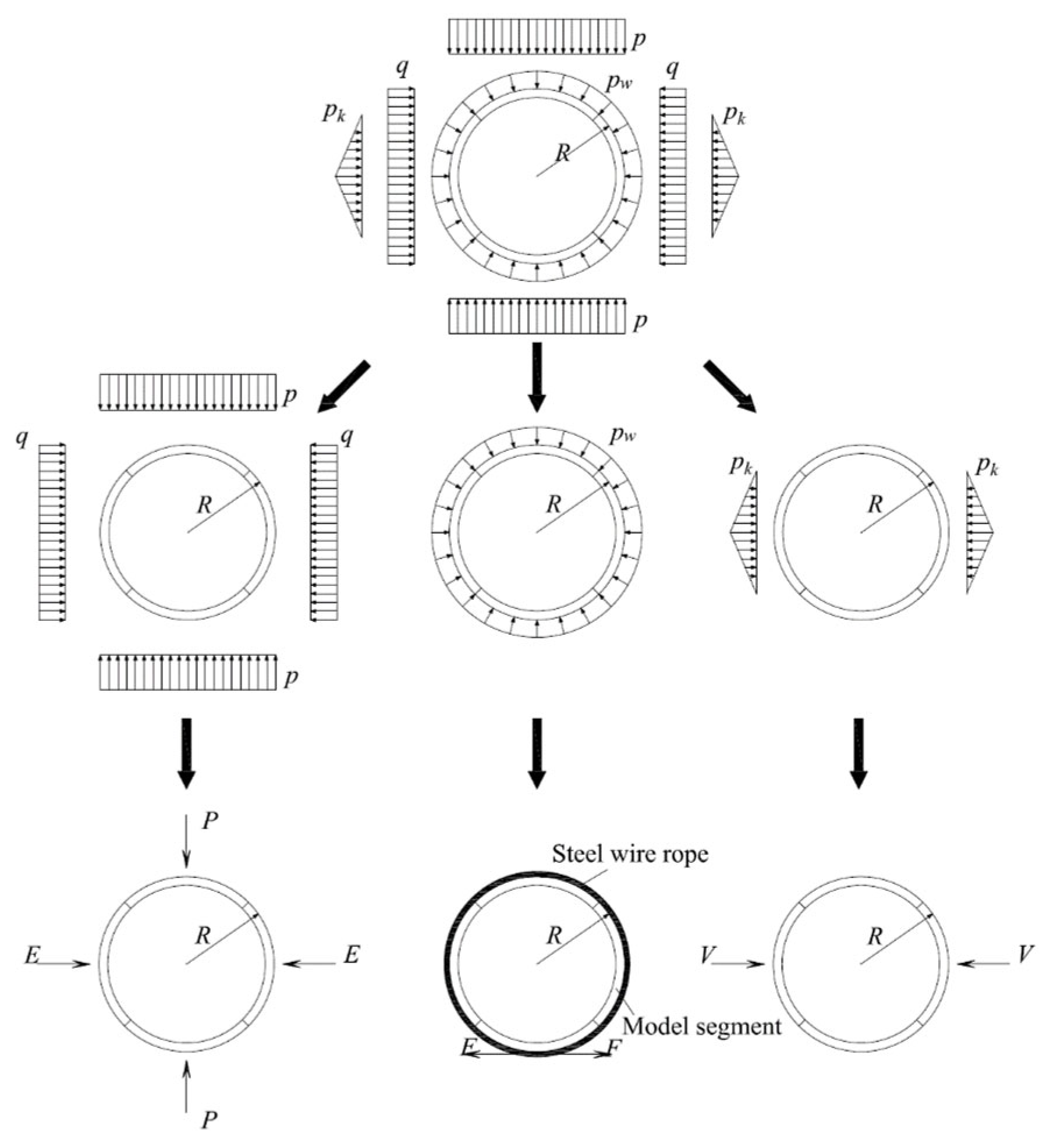
The similarity model test was designed using the load-structure method, as shown in Figure 2. Here, p denotes vertical earth pressure, q horizontal earth pressure, pw water pressure, and pk strata resistance. Water pressure and earth pressure typically exhibit weak correlation. To realistically simulate the various mechanical characteristics of tunnels, it is necessary to separately control water pressure and earth pressure during loading [21]. To balance realism with practical feasibility, the segment model is placed horizontally, each load was equivalently simulated: circumferential water pressure was applied by winding steel wire ropes around the segment ring’s outer surface, while lateral and longitudinal soil pressures, along with strata resistance, were replicated using centralized jack forces. Steel wire ropes converts the tensile force into a nearly uniform radial pressure. Compared to stranded steel cables, the flexible wire ropes effectively minimize radial frictional disturbances through internal micro-slip within their strands. The accuracy of load transfer was ensured through lubrication of the contact surface.

2.2. Similarity Constants

The model and prototype must satisfy geometric and mechanical similarity criteria to ensure the model accurately represents the prototype’s mechanical behavior. The primary physical quantities governing this relationship are length (l), bulk density (γ), stress (σ), strain (ε), force (F), bending moment (M), elastic modulus (E), tensile stiffness (EA), and flexural stiffness (EI).
To ensure experimental operability and material feasibility, two fundamental similarity ratios were established: the geometric ratio Cl = 10 and density ratio Cγ = 1. Furthermore, since strain, internal friction angle, and Poisson’s ratio are dimensionless, their similarity constants were set to unity (Cε = Cϕ = Cμ = 1). Based on these principles, the similarity constants for all other physical parameters were derived using similarity theory, as summarized in Table 1.

2.3. Similarity Material Proportion Test

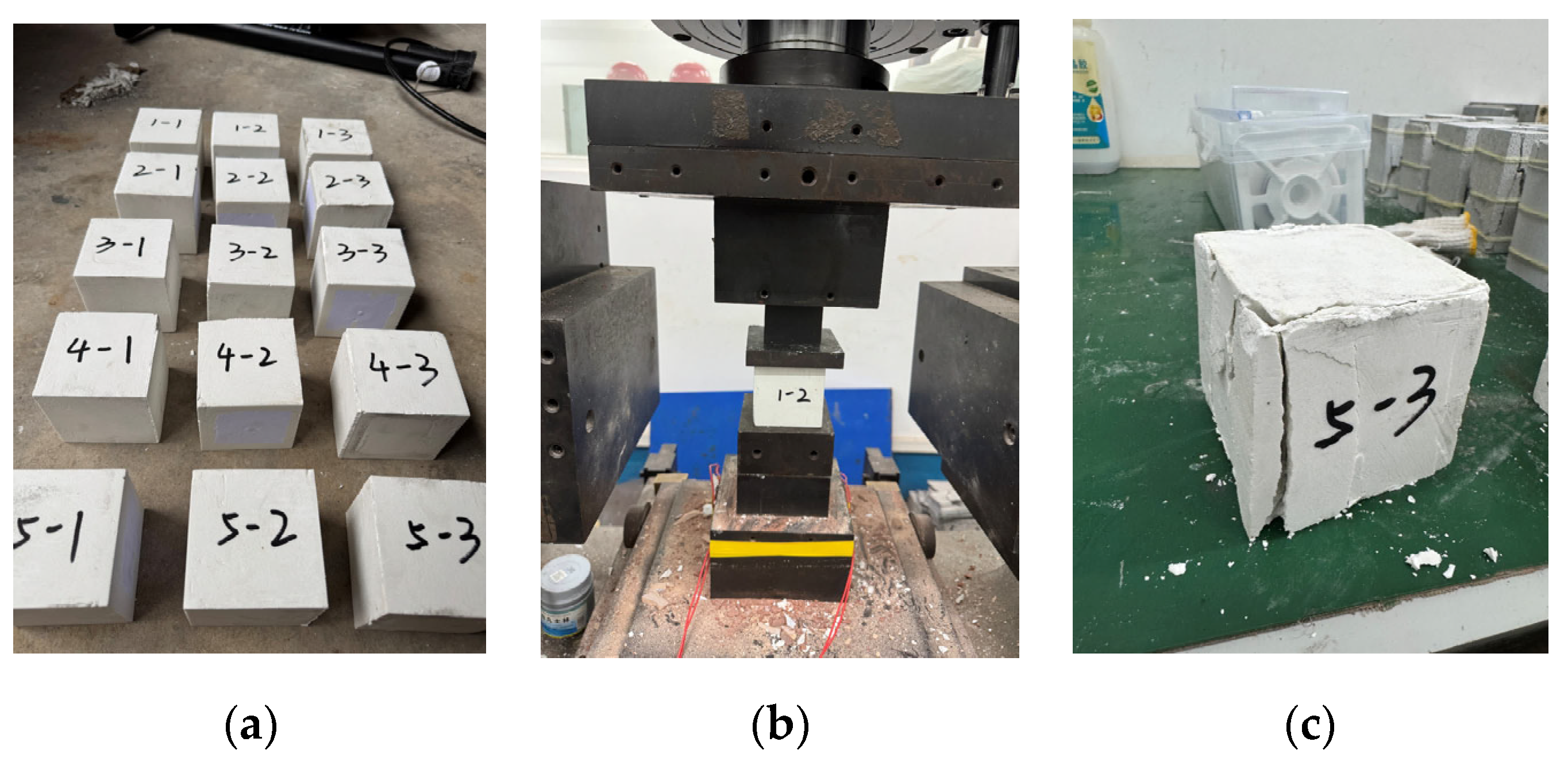
The prototype segments use C50 concrete. For the model, gypsum was selected as the primary binder. There are fundamental differences in the meso-structure and failure mechanisms between gypsum and C50 concrete. The primary objective of this study is to investigate the macroscopic mechanical response during the elastic and elastic-plastic stages, rather than to precisely simulate the material failure process of concrete. Therefore, the gypsum-diatomite mixture was selected due to its excellent linear-elastic properties, homogeneity, and repeatability, which are widely recognized in structural mechanical model tests for clearly revealing internal force redistribution and deformation patterns [22,23,24,25]. Diatomaceous powder was incorporated as an admixture to modulate the mixture’s mechanical properties and deformation capacity. These components were mixed with water to form the final model segment material. Since the ratios of gypsum, diatomite, and water critically influence strength and deformation, a proportioning study was conducted to meet the experimental requirements. Five mix groups were tested, each producing three 70.7 mm3 cubic specimens. The specimens were cured in a cool location for 72 h. After demolding, they were air-dried for 3~4 days before uniaxial compression testing, as shown in Figure 3.
The primary objective of the material proportioning tests in this study was not to fully characterize the constitutive relationship of the model material, but to identify the optimal mixture ratio that satisfies the target elastic modulus and compressive strength. This is both a primary and sufficient condition for achieving similarity in macroscopic mechanical response between the model and the prototype. The uniaxial compression tests on cubic samples effectively provided the cube compressive strength and elastic modulus, allowing direct comparison with the prototype values of C50 concrete [26]. The uniaxial compressive strength and elastic modulus for each mix group were measured, and the average values are presented in Table 2.
The results indicated that the mix from Group 2 yielded a cube compressive strength and elastic modulus closest to the target values (1/10 of C50 concrete properties). Consequently, the mixture ratio of water:gypsum:diatomite = 1:1.4:0.25 was selected for the model segments. A comparison of the physical and mechanical parameters for the prototype and model segments is provided in Table 3.

2.4. Establishment of the Similarity Model Test System

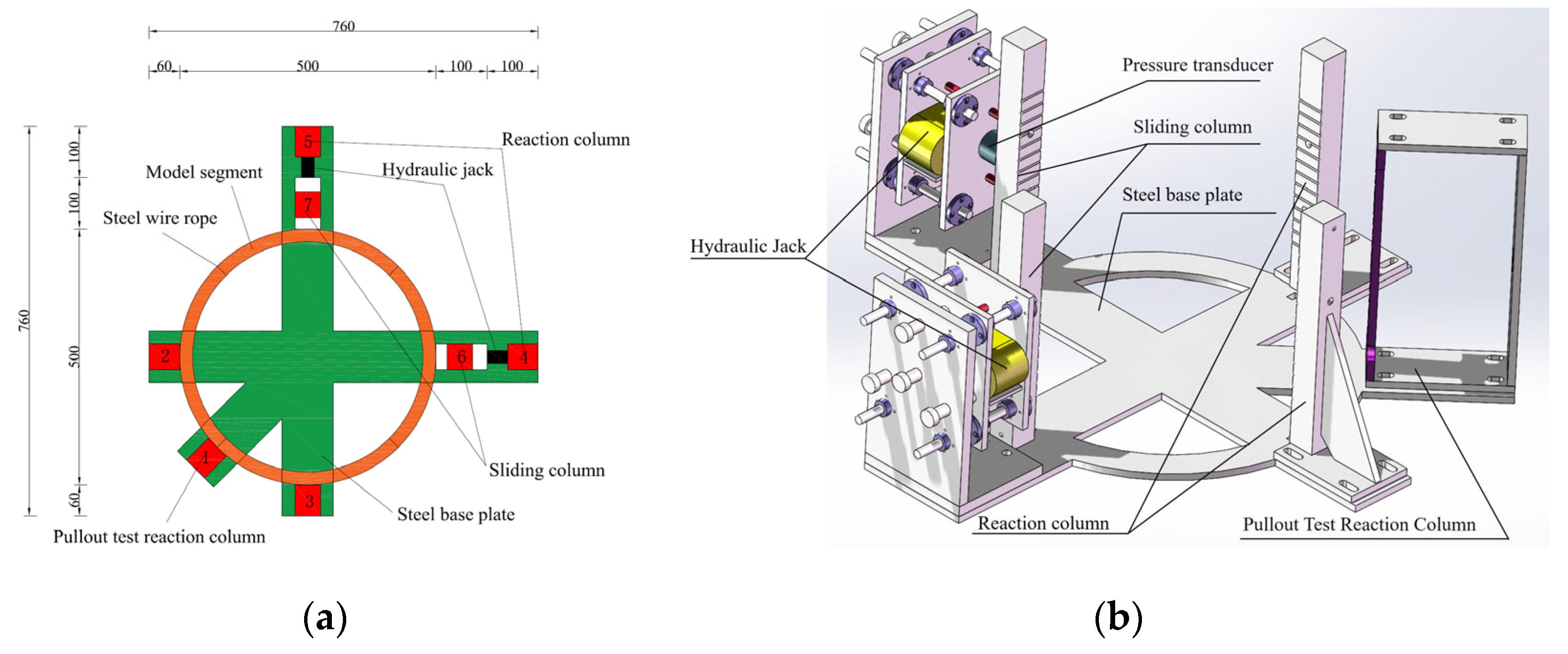
The test system, shown in Figure 4, secures the tunnel segment and provides reaction support for the loading system. Its platform is anchored by a fixed base and comprises two sliding columns, four reaction columns, and one pullout test reaction column.
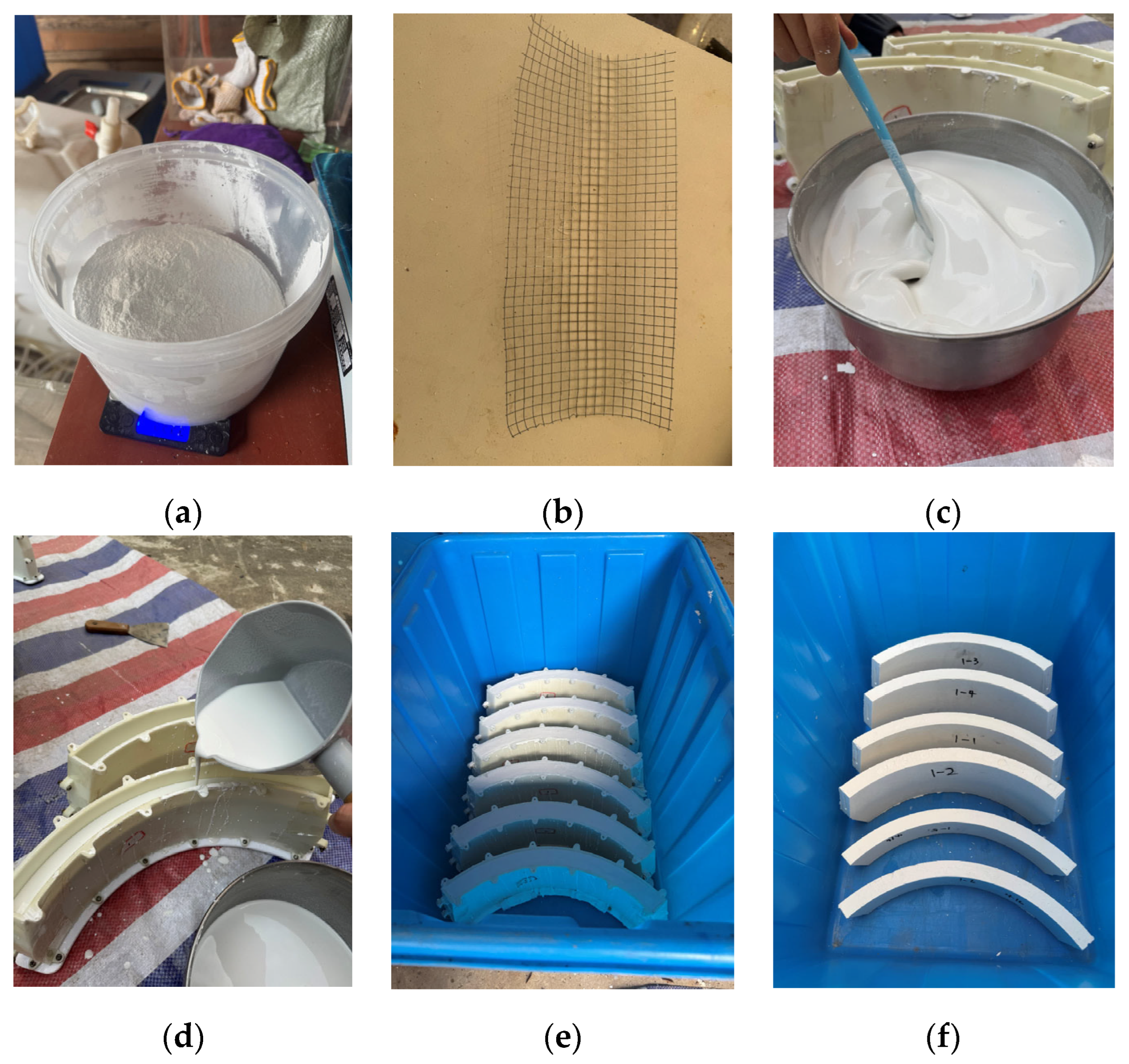
Using the mix ratio determined from the material proportioning tests, constituent materials were weighed and combined. A 1.2 mm diameter wire mesh was embedded to simulate the segment’s reinforcement. The gypsum-diatomite slurry was maintained fluid through continuous stirring before being poured into a prefabricated, 3D-printed hexagonal segment mold (Figure 5). After the wire mesh was positioned, the surface was smoothed for curing.
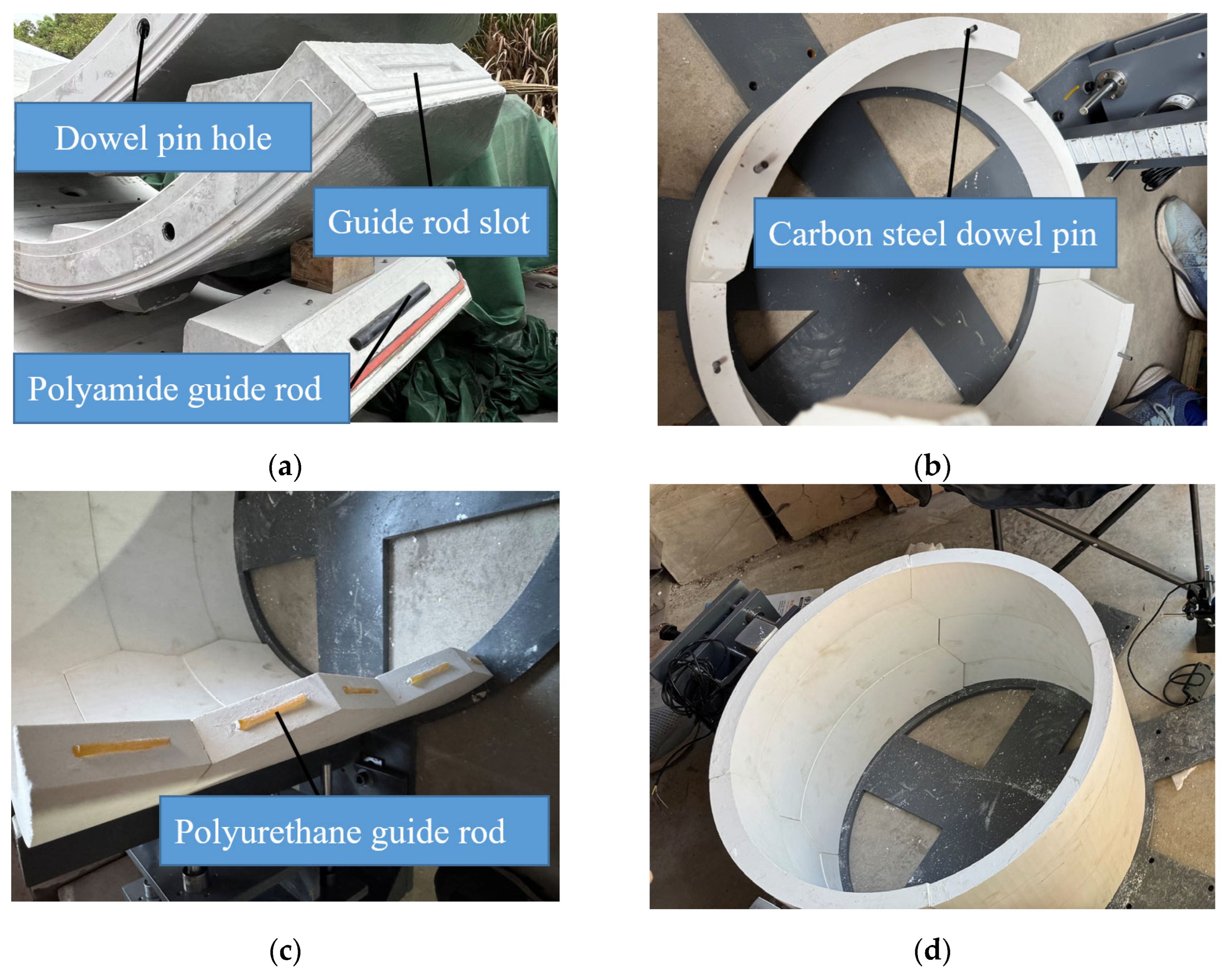
The model segments employ a boltless connection system. The longitudinal joints use polyurethane rubber rods to simulate guide rods, while the circumferential joints utilize carbon steel dowel pins. Although carbon steel exhibits significantly higher material stiffness compared to the gypsum-diatomite mixture, this study primarily applies radial loading with no load component along the tunnel axis. Consequently, the utilization of carbon steel is not expected to significantly influence the primary mechanical responses under investigation. Assembly followed a bottom-to-top sequence, as illustrated in Figure 6. Each ring, consisting of four blocks, was constructed by first connecting the longitudinal joints, then the circumferential joints, with rings being added sequentially upward.

2.5. Measurement Points and Loading Conditions

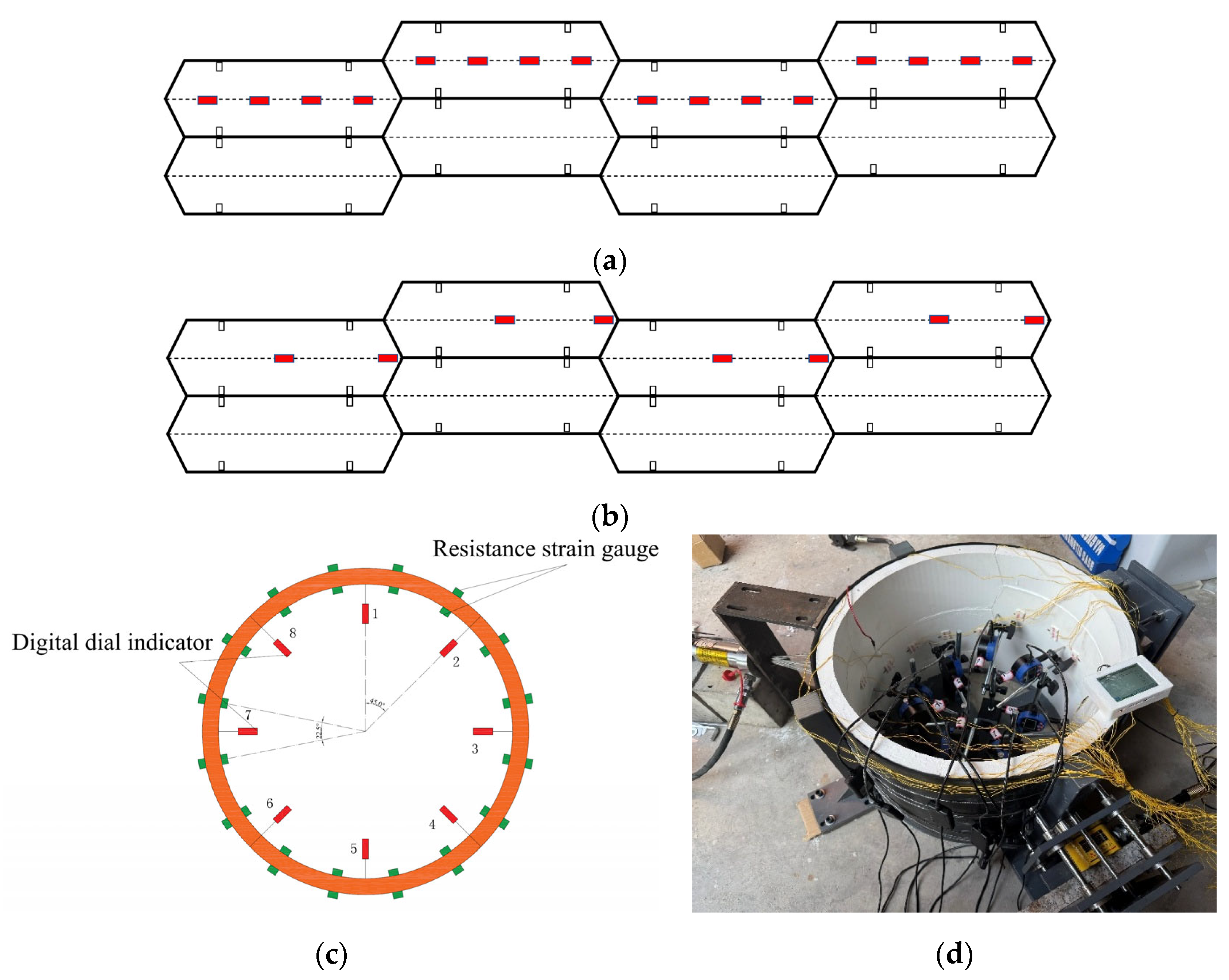
A total of 32 strain gauges were installed at 22.5° intervals on the tunnel’s intrados and extrados. To accurately capture the stress distribution across the staggered segment rings, the 16 gauge pairs were vertically offset rather than placed in a single plane. Furthermore, eight dial indicators were positioned at 45° intervals on the inner surface to measure radial displacement and deformation. The instrumentation layout is shown in Figure 7.
The surrounding rock mass of the Baishiling Tunnel primarily consists of moderately weathered granite with a unit weight of 25.9 kN/m3. This experiment primarily investigates the variation patterns of the mechanical properties of hexagonal tubular segments within burial depths of 15~50 m and lateral pressure coefficients of 0.35~0.7. The experimentally measured data were processed and converted into prototype values using the established similarity ratios for presentation. The test conditions are detailed in Table 4.

3. Analysis of Test Results

3.1. Stress Characteristics of Hexagonal Segments at Different Burial Depths

3.1.1. Variation in Bending Moment

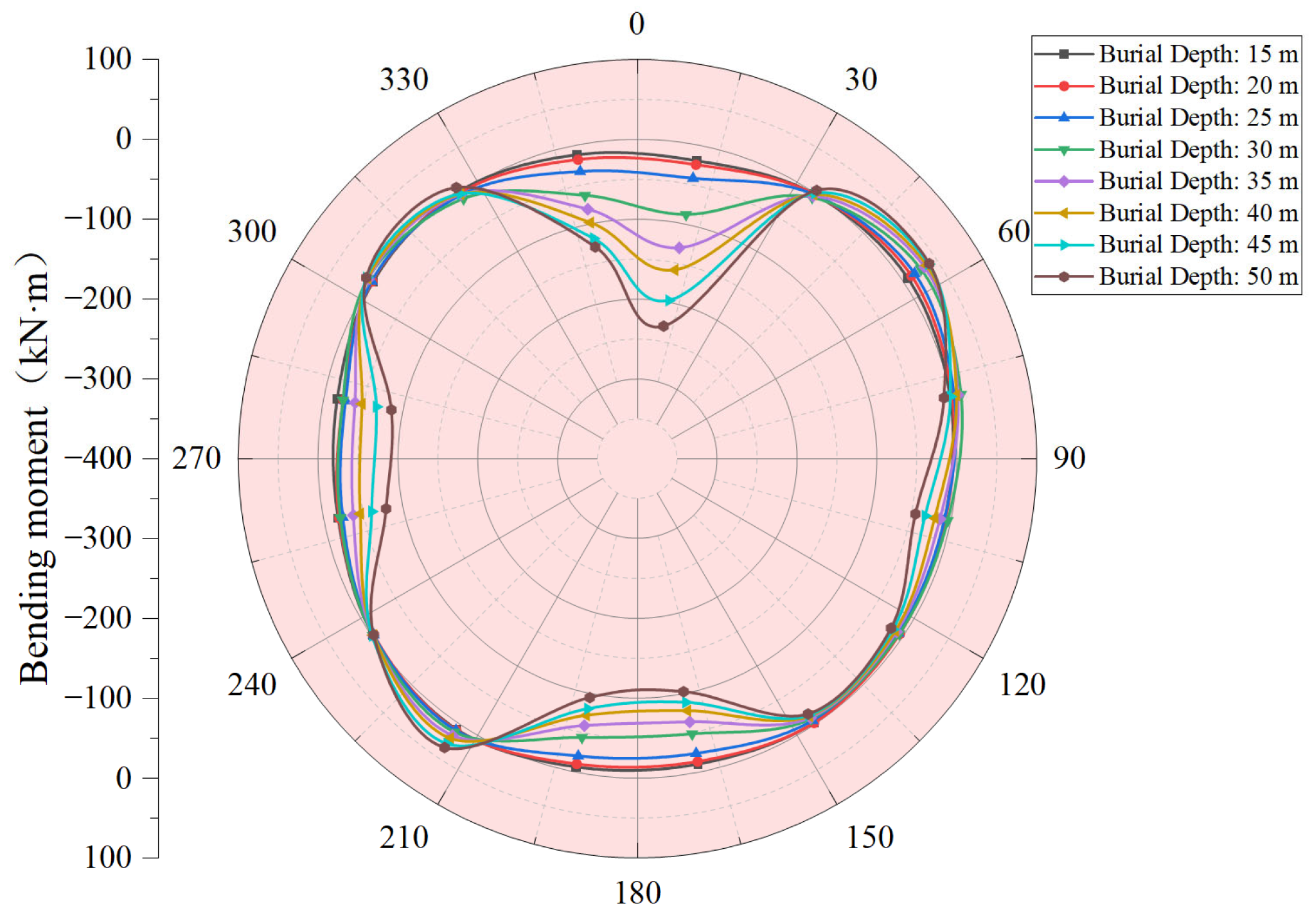
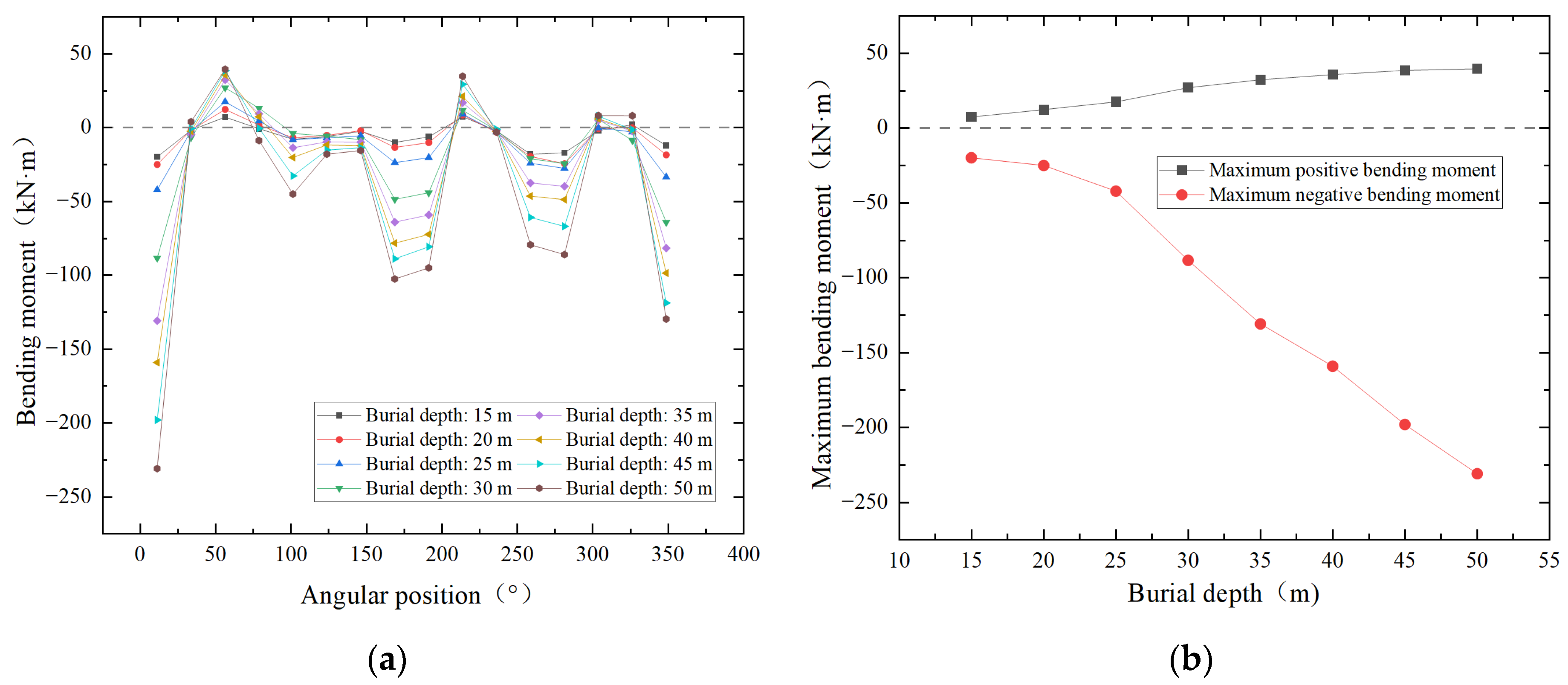
As the tunnel burial depth increases from 15 to 50 m, the bending moment at all measurement points rises correspondingly, as shown in Figure 8a. The bending moment distribution is characterized by negative values at the crown, invert, and haunches, and positive values at the three joint locations (near 45°, 225°, and 315°). Unlike conventional model tests that use slot-reduced stiffness [24], this study directly simulated the prototype’s rigid tongue-and-groove contact. This method allows for slight sliding and rotation under load, more accurately capturing the nonlinear stiffness from joint friction. Consequently, the joints exhibit hinge-like behavior, which significantly releases and reduces bending moments when the segment ring deforms.
This bending moment release mechanism is evidenced by a marked reduction in the absolute values of both positive and negative bending moments at the joints, accompanied by substantial fluctuations in the rate of moment transfer.
Figure 9 presents the bending moment diagram of the model. The results show internal tension at the four loading points and slight external tension at the joint sections. The maximum positive and negative bending moments occur near the joints and the tunnel crown, respectively. The transition of bending moments from the joints to the haunches is relatively smooth, whereas a pronounced abrupt change is observed toward the crown and invert. This contrast indicates that increased burial depth has a more significant impact on the bending moments at the crown and invert.
As shown in Figure 8b, both maximum positive and negative bending moments increase with burial depth, but at markedly different rates. The positive bending moment grows rapidly at shallow depths (averaging 6.528 kN·m per 5 m from 15–30 m) before the rate slows considerably (2.409 kN·m per 5 m from 35–50 m). In contrast, the negative bending moment accelerates after an initial slower phase, increasing linearly at an average of 37.746 kN·m per 5 m from 25–50 m. Overall, the total increase in the maximum negative bending moment is approximately 657% of the positive moment’s increase, demonstrating that negative bending moments are far more sensitive to changes in burial depth.

3.1.2. Variation in Axial Force

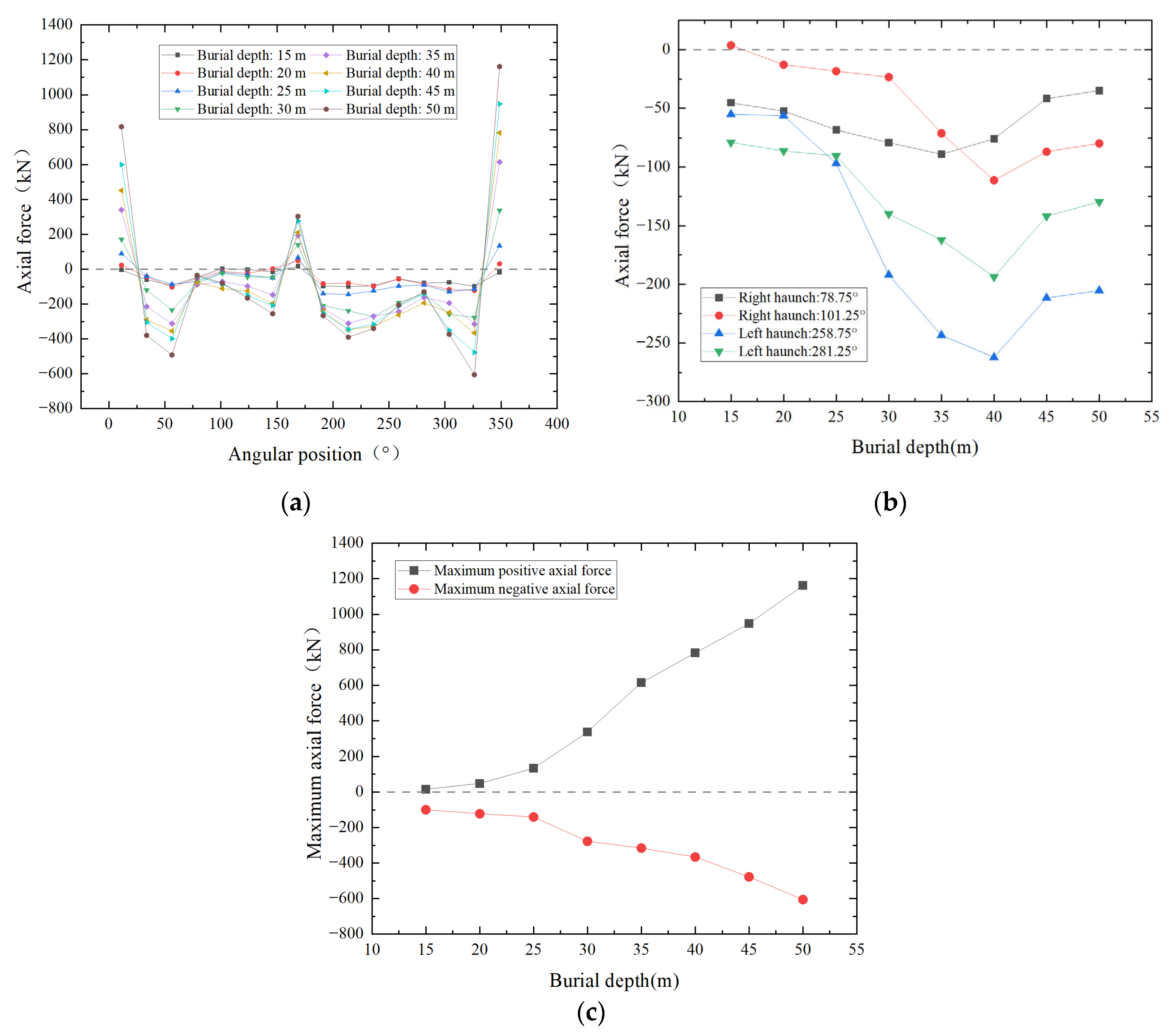
As burial depth increases, the axial force distribution evolves, as shown in Figure 10a. Compressive forces dominate at the haunches and joint locations, while significant tensile stresses develop at the crown and invert. Strain and deformation data indicate that the increasing vertical load causes the ring to deform inward at the crown and invert, generating these tensile stresses on the inner surface.
Correspondingly, axial forces increase at most points. However, the negative axial forces (compressive forces) at the left and right haunches initially increase and then decrease (Figure 10b). This occurs because the structural state transitions from “ primarily compressive” to a “coupled compression-bending state.” The growing negative bending moment at the haunches induces tensile stress on the inner surface, ultimately leading to a reduction in compressive axial force at these locations.
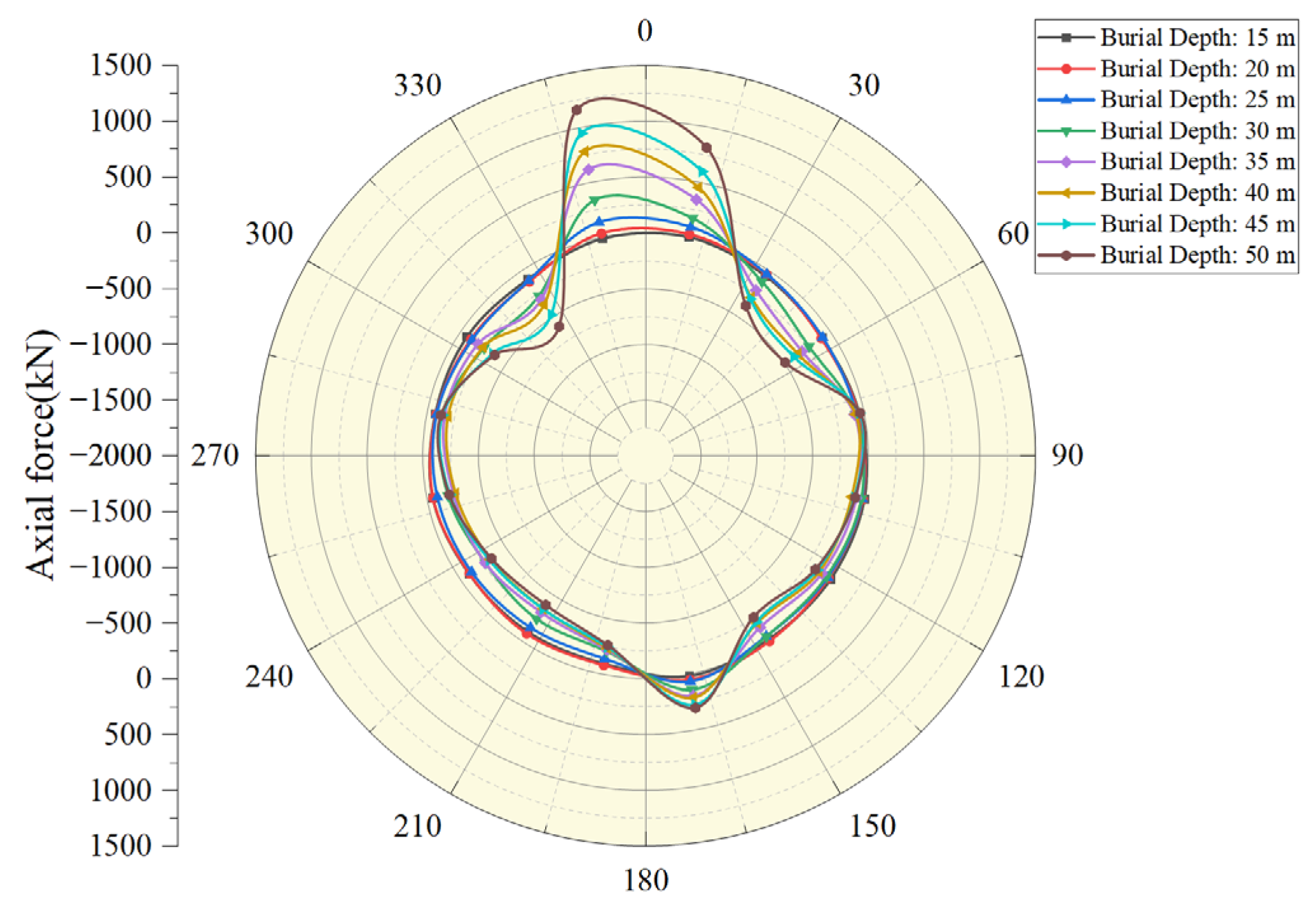
The axial force diagrams for the complete tunnel ring under eight different burial depths are shown in Figure 11. Analysis reveals that the maximum tensile (positive) axial force occurs most frequently at the crown and invert, indicating that the coupled compression-bending effect is most pronounced at these locations under vertically dominant loading. Consequently, tensile axial forces at the crown and invert increase steadily with load. In contrast, the maximum compressive (negative) axial forces are consistently concentrated at the joints, demonstrating that these regions induce a significant concentration of compressive stress.
In traditional rectangular segment tunnels, reduced joint stiffness typically leads to lower axial forces at the joints. In contrast, the staggered interlocking structure of hexagonal segments facilitates controlled rotation and displacement. Under increasing external pressure, forces are transmitted along the oblique sides of the segments, converting bending stress within the circular ring into axial pressure along the segment’s central axis. Consequently, when relative displacement occurs at a joint, the normal pressure on the inclined surfaces generates a component force that tightens the joint. That is to say, the greater the applied load, the tighter the joint interfaces become, resulting in increased transmission of axial force through the joint. This axial force generates substantial static friction at the joint interface, effectively restraining joint opening and dislocation. This self-locking mechanism promotes stress concentration, resulting in significantly higher compressive axial forces at the joints compared to rectangular segments.
As shown in Figure 10c, the maximum axial forces initially increase slowly before accelerating to a linear growth pattern. Between 15~25 m, the maximum positive axial force increased by 58.622 kN per 5 m on average, while the maximum negative axial force increased by 20.185 kN per 5 m. Between 25~50 m, the maximum positive axial force increased by 205.559 kN per 5 m on average, and the maximum negative axial force increased by 92.952 kN per 5 m. The total increase in the maximum tensile force was approximately 227% of the total increase in the maximum compressive force. This indicates that although compressive forces dominate at most tunnel locations, tensile forces play a dominant role in absolute values.

3.1.3. Variation in Displacement

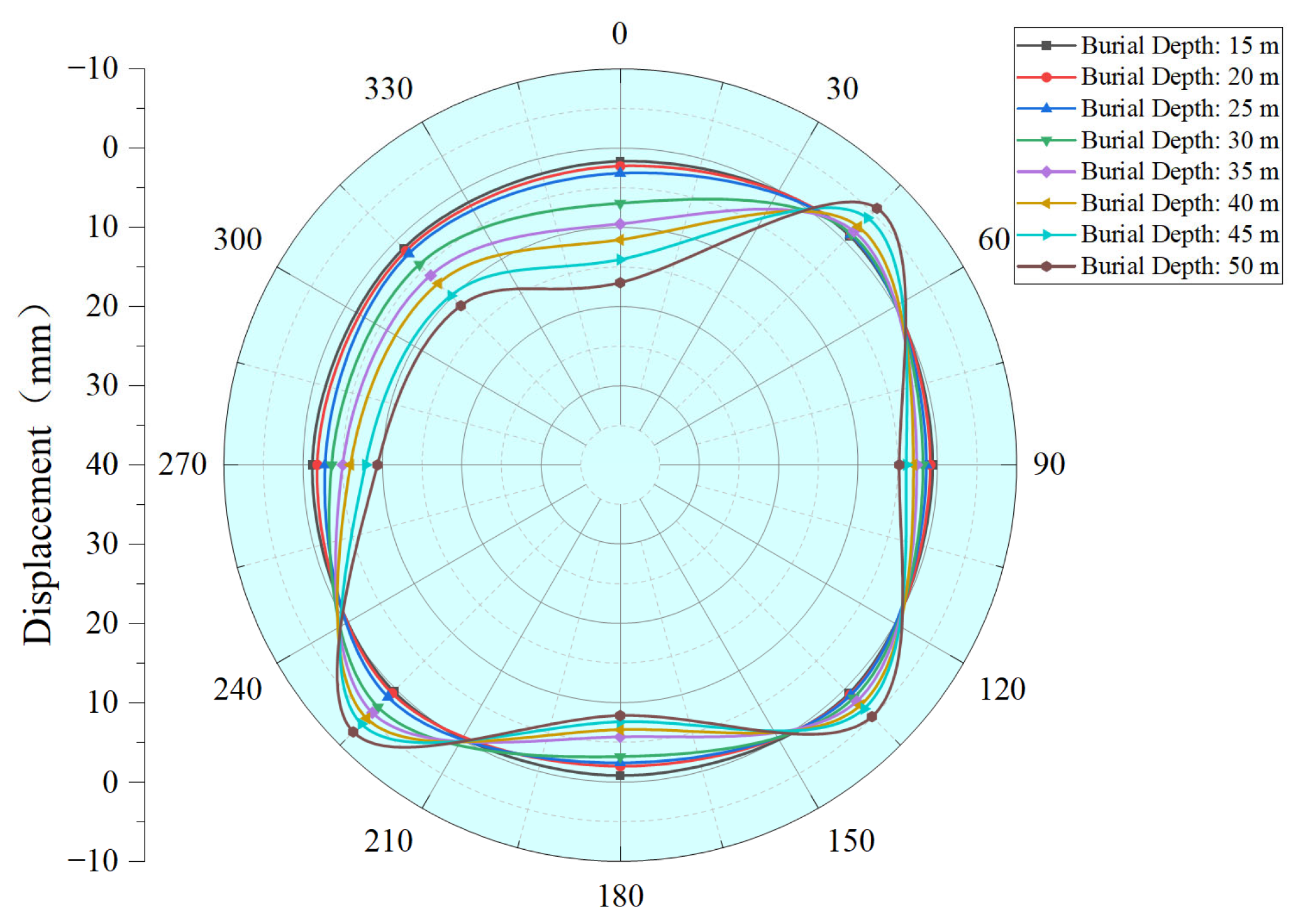
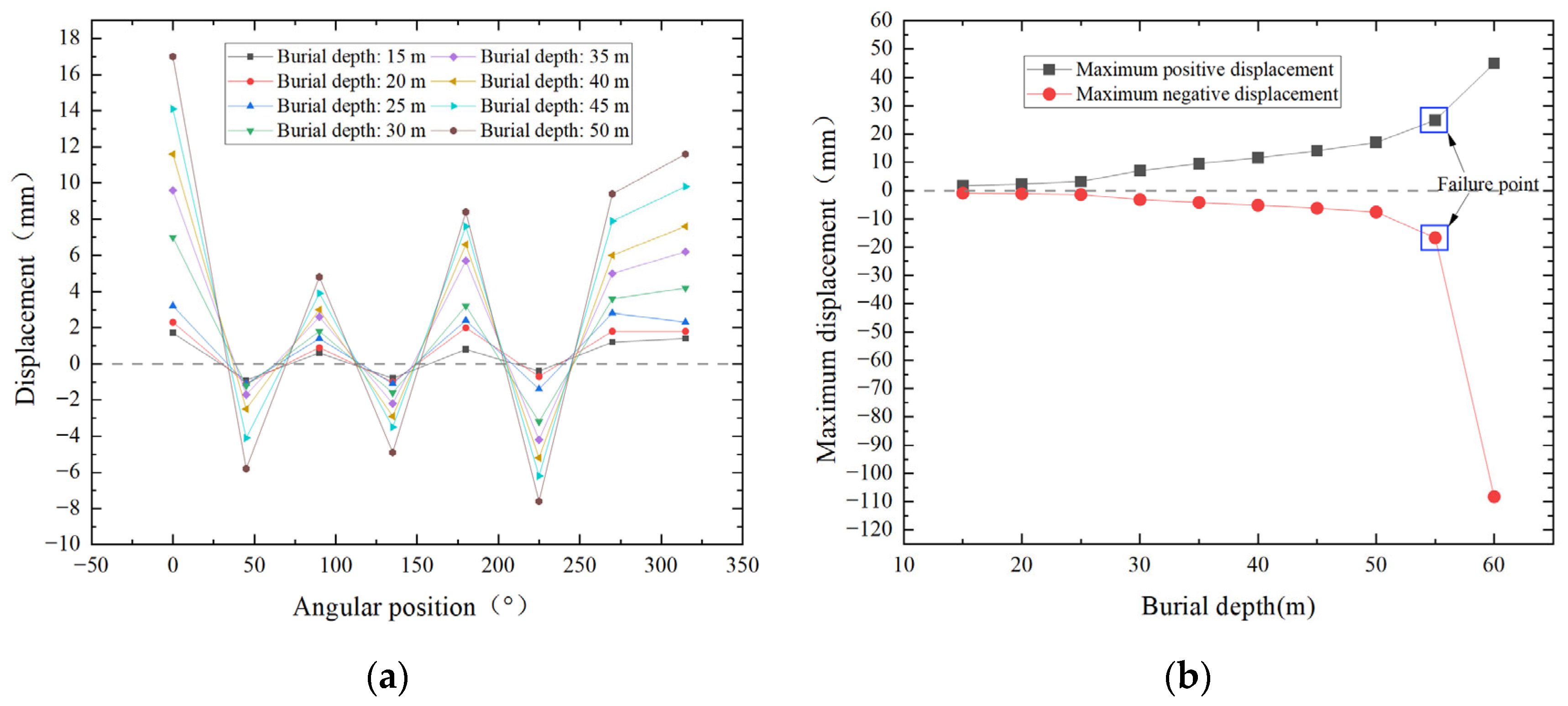
As shown in Figure 12a, displacement magnitudes at all 8 measurement points generally increase with burial depth. Inward deformation (positive displacement) occurs at the crown, invert, both haunches, and the left spandrel joint. Conversely, outward deformation (negative displacement) is observed at the left springing joint, right spandrel joint, and right springing joint.
The displacement diagram of the tunnel (Figure 13) shows that the maximum positive displacement consistently occurs at the crown. This aligns with the previous stress analysis, which identified the crown as the location of the greatest tensile stress, negative bending moment, and tensile axial force. The maximum negative displacement occurs most frequently at the left springing joint and the right spandrel joint. Although an imbalance in lateral pressure caused an anomalous inward displacement at the left spandrel joint, the overall deformation pattern confirms a clear tendency for outward displacement at all four joint locations due to compressive action.
The maximum displacement exhibited an overall increasing trend, As shown in Figure 12b, progressing through distinct deformation phases. During the initial elastic phase (15–25 m), displacement changes were modest, with average increases of 0.75 mm per 5 m for positive displacement and 0.25 mm for negative displacement. The growth rate then accelerated during the elastic-plastic phase (25–50 m), with average increases of 2.76 mm and 1.24 mm per 5 m for positive and negative displacement, respectively. Beyond 50 m, displacement increased rapidly, progressing toward structural failure. The total increase in positive displacement from 15 to 50 m was 228% of the total increase in negative displacement, confirming that the change in tunnel displacement under increasing burial depth is predominantly characterized by inward radial deformation.
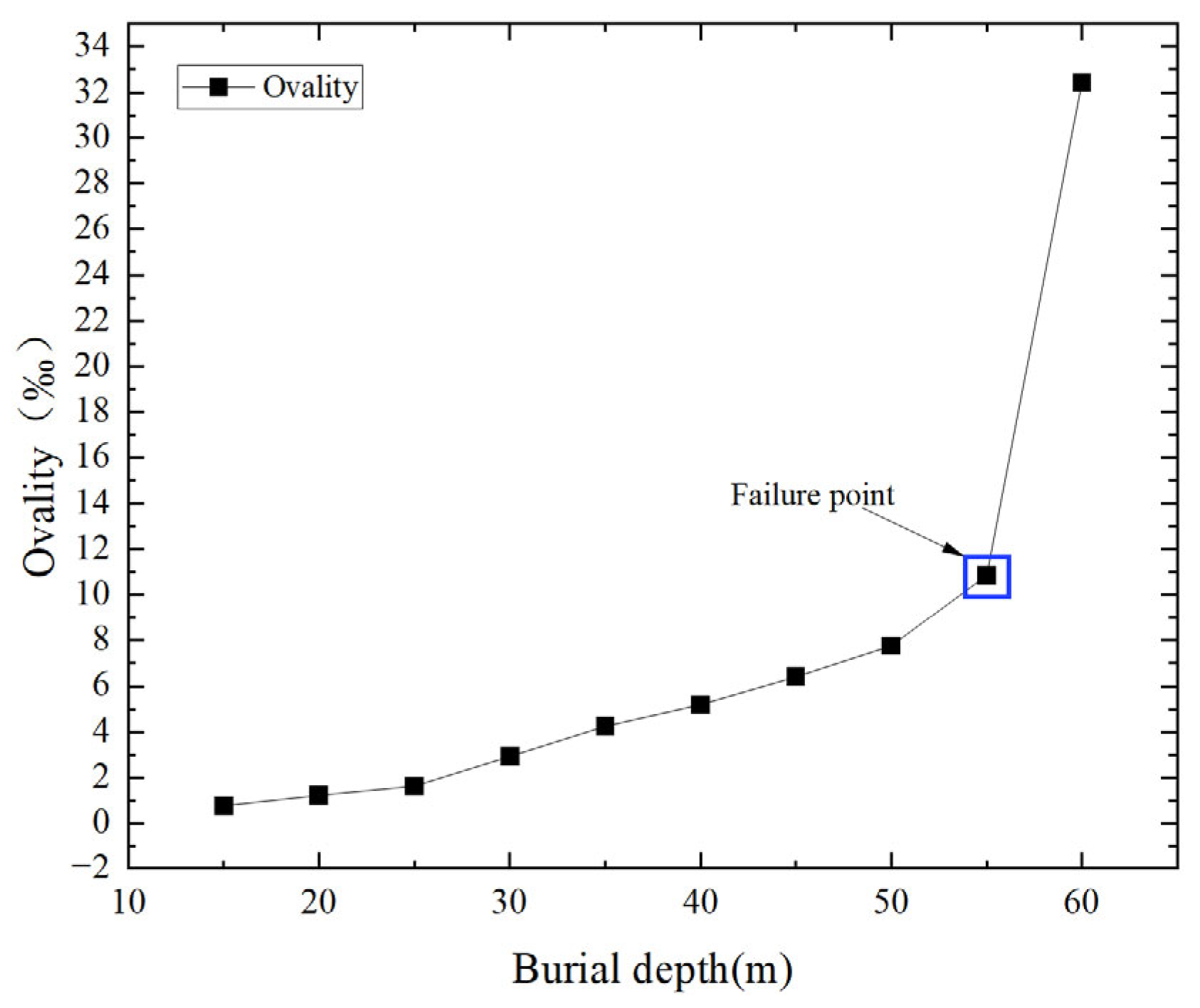
Ovality, which quantifies the elliptical distortion of a tunnel cross-section under load, serves as an indicator of structural plasticity. As shown in Figure 14, the ovality growth curve closely mirrors the trend of maximum displacement. The ovality increased from 0.76‰ to 7.76‰, a 9.21-fold increase, progressing through three distinct stages: initial elastic growth, intermediate elastic-plastic growth, and final accelerated failure. The final ovality value of 10.854‰ at failure confirms a ductile failure mode.

3.2. Stress Characteristics of Hexagonal Segments at Different Lateral Pressure Coefficients

3.2.1. Variation in Bending Moment

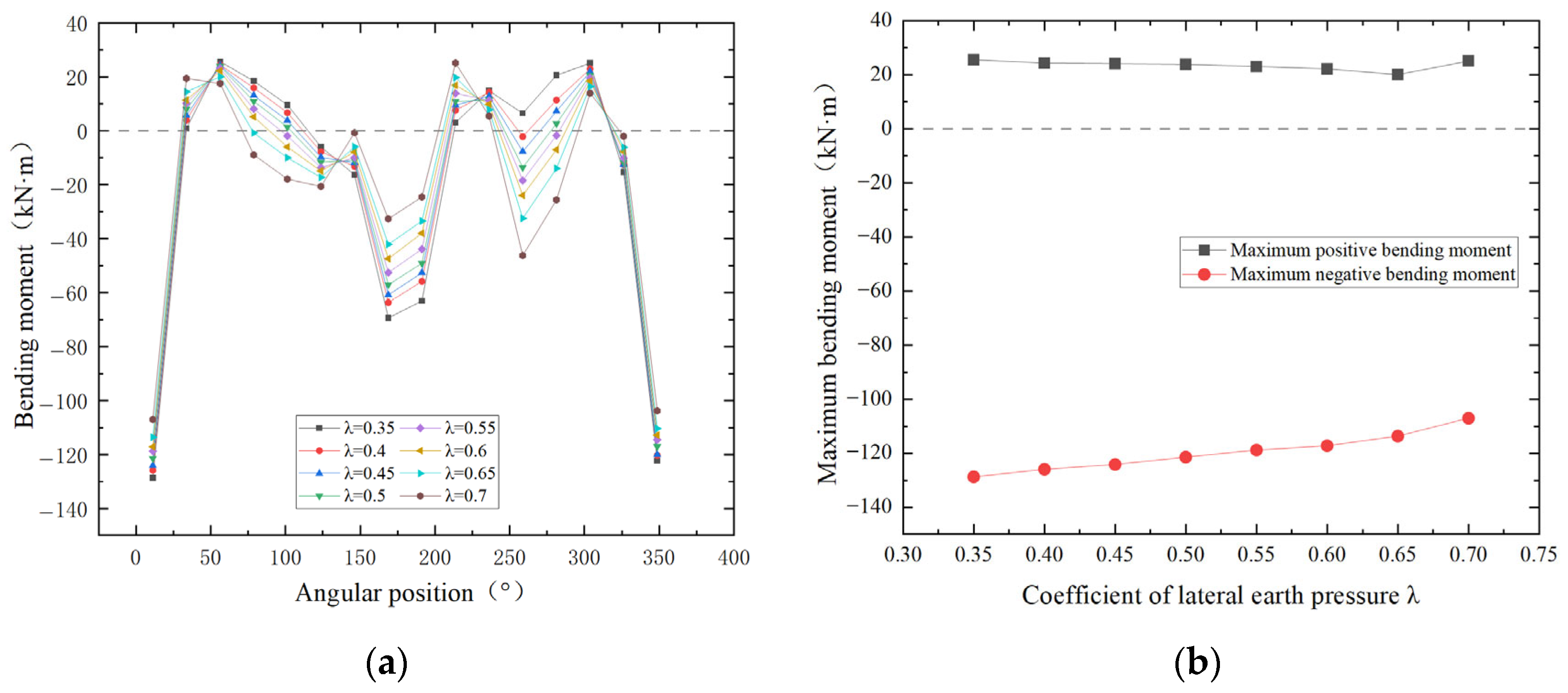
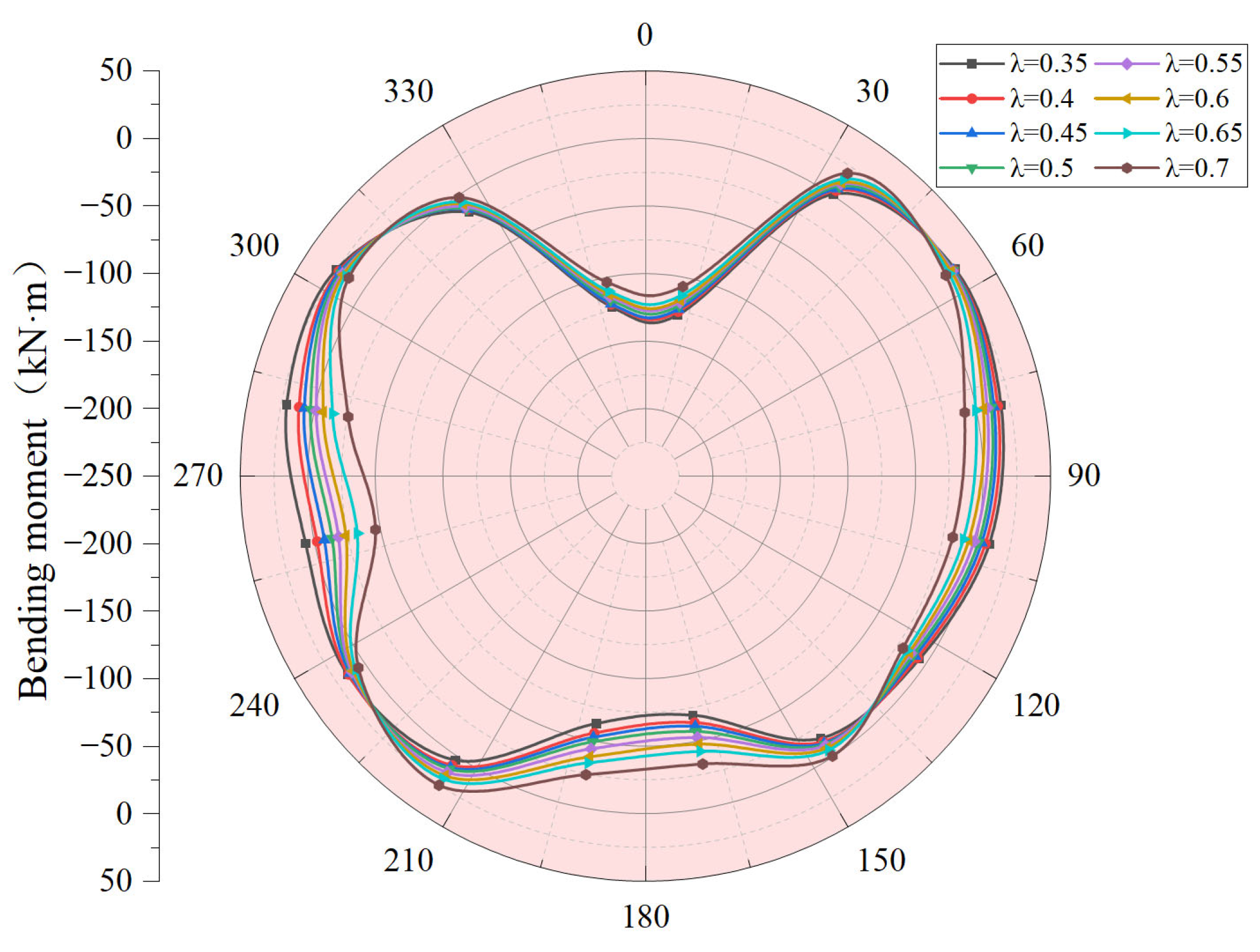
As the lateral pressure coefficient (λ) increases from 0.35 to 0.7, as shown in Figure 15a, the overall distribution pattern of bending moments remains similar. However, the trends in values at different tunnel locations exhibit variations. Under a low λ (dominant vertical load), negative bending moments occur at the crown, invert, and right springing, with positive moments elsewhere (Figure 16). However, when λ increases to 0.5 or higher, the influence of lateral pressure intensifies. This leads to the development of negative bending moments at both left and right haunches, while the positive bending moments at other locations, such as the spandrels and crown, decrease correspondingly.
As shown in Figure 15b, the maximum bending moments exhibit an overall decreasing trend with an increasing lateral pressure coefficient (λ). The maximum negative bending moment decreased from −128.702 kN·m to −107.021 kN·m, while the maximum positive bending moment decreased from 25.624 kN·m to 20.081 kN·m before rising to 25.175 kN·m at λ = 0.7. This non-monotonic behavior occurs because the positive bending moment at the left springing joint increases with λ, eventually surpassing the value at the right spandrel joint to become the new maximum. Consequently, appropriately increasing λ can generally improve the tunnel’s bending moment distribution. However, excessively high values may induce unfavorable developments at specific locations like the haunches or springing.

3.2.2. Variation in Axial Force

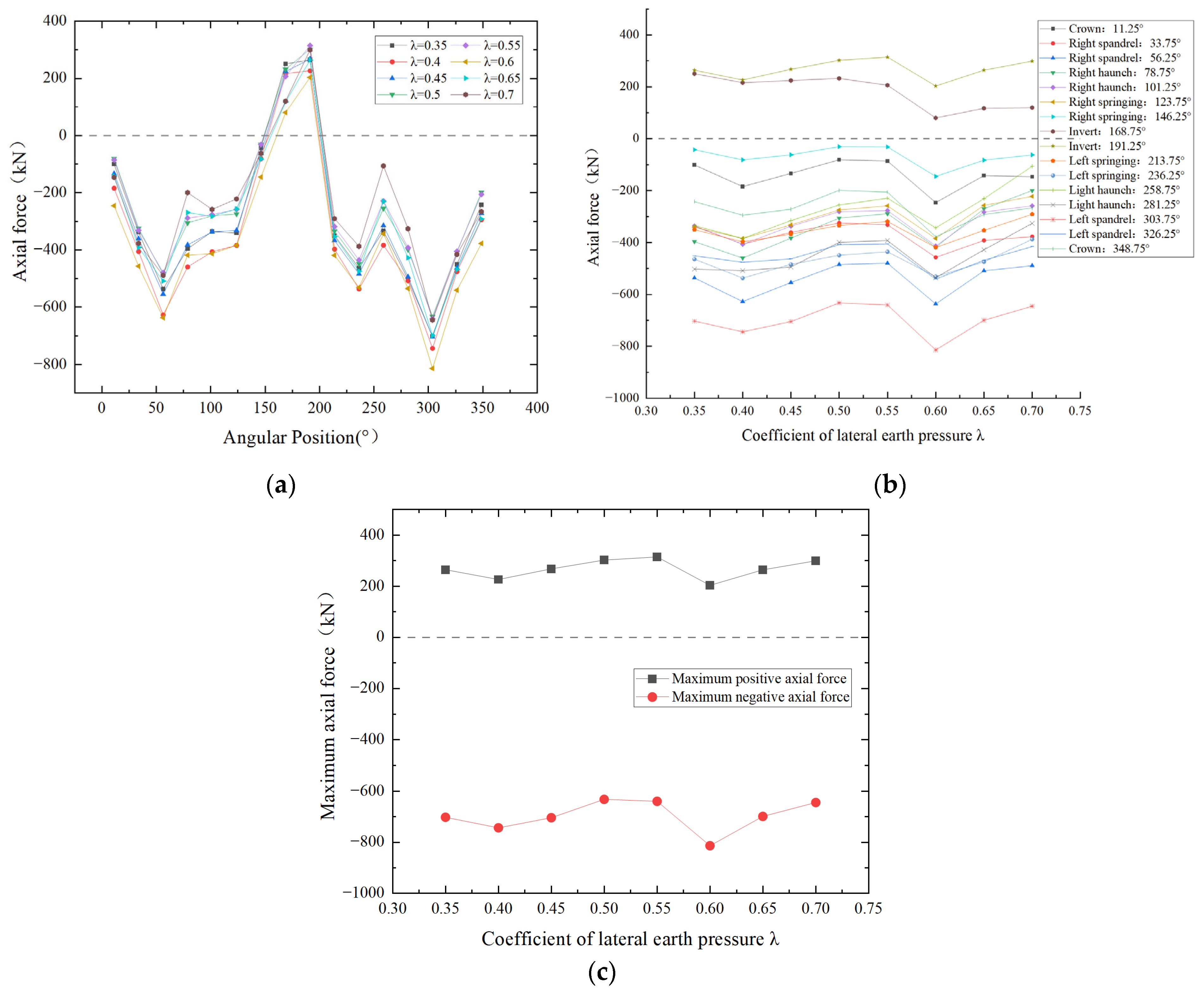
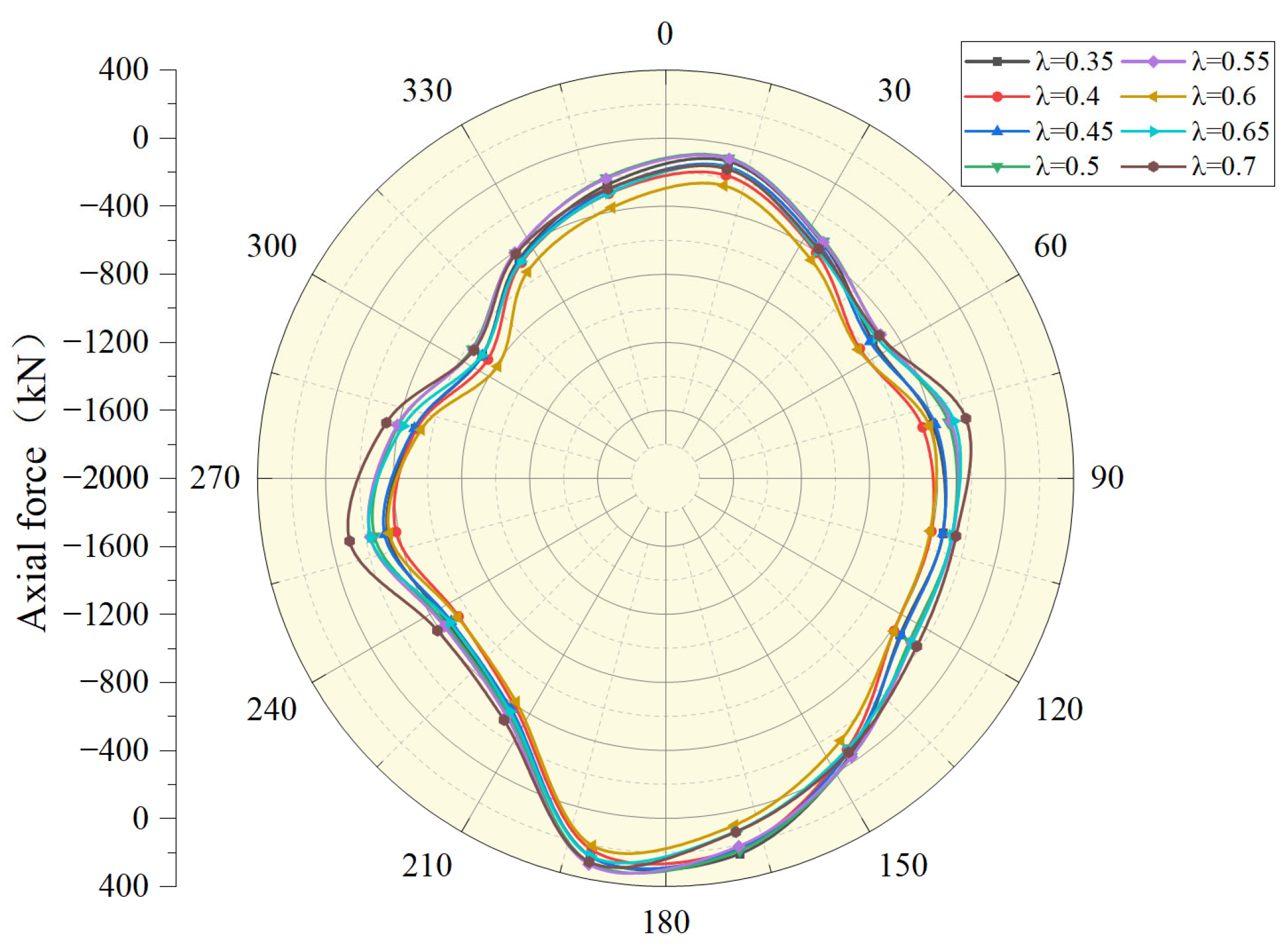
As shown in Figure 17a, the axial forces at each measurement point do not exhibit a consistent monotonic trend, and their variation range is relatively small. To clarify these relationships, Figure 17b plots the axial force at each point directly against the lateral pressure coefficient (λ).
The axial forces at all measurement points exhibit a consistent trend: negative force initially increases, then decreases, followed by another increase and final decrease, with positive force demonstrating the inverse pattern. This behavior is attributed to the changing triaxial stress state induced by varying the lateral pressure coefficient (λ), which alters the vertical-to-horizontal stress ratio. Under these changing stress conditions, the specific tongue-and-groove joint configuration significantly influences force transmission. The polyurethane guide rods, being less stiff than the segment material, deform and experience minor slippage within the joint grooves upon loading.
When λ = 0.35–0.4, with low lateral force, the tongue-and-groove joints remain tightly engaged below their slippage threshold, enabling effective circumferential force transfer. When λ = 0.4–0.5, as lateral force surpasses the joint’s resistance, the polyurethane guide rods deform and slip, causing a sudden reduction in constraint stiffness. This manifests as a decrease in negative axial force and an increase in positive axial force. When λ = 0.5–0.6, increased lateral force causes the deformed guide rods to re-engage in new stable positions, re-establishing contact on the hexagonal inclined surfaces. Consequently, negative force rises again while positive force decreases. When λ = 0.6–0.7, at high lateral pressure, significant negative bending moments at the haunches expand the tensile stress zones on inner surfaces, leading to a final decrease in negative force and increase in positive force.
As shown in Figure 18, the maximum negative axial force consistently occurred at the left spandrel joint, while the maximum positive force was always located at the invert. This distribution further verifies the “self-locking effect” of the hexagonal joints. Figure 17c demonstrates that at λ = 0.6, coinciding with the guide rods having slipped and re-established a tight engagement. The tunnel exhibited its smallest maximum positive force and largest maximum negative force. Given that concrete possesses high compressive strength but low tensile resistance, this state represents the optimal load-bearing condition for the structure. Consequently, for tunnels employing tongue-and-groove hexagonal segments, selecting an appropriate lateral pressure coefficient (in this case, λ = 0.6) is critical for optimizing the axial force distribution and maximizing structural capacity.

3.2.3. Variation in Displacement

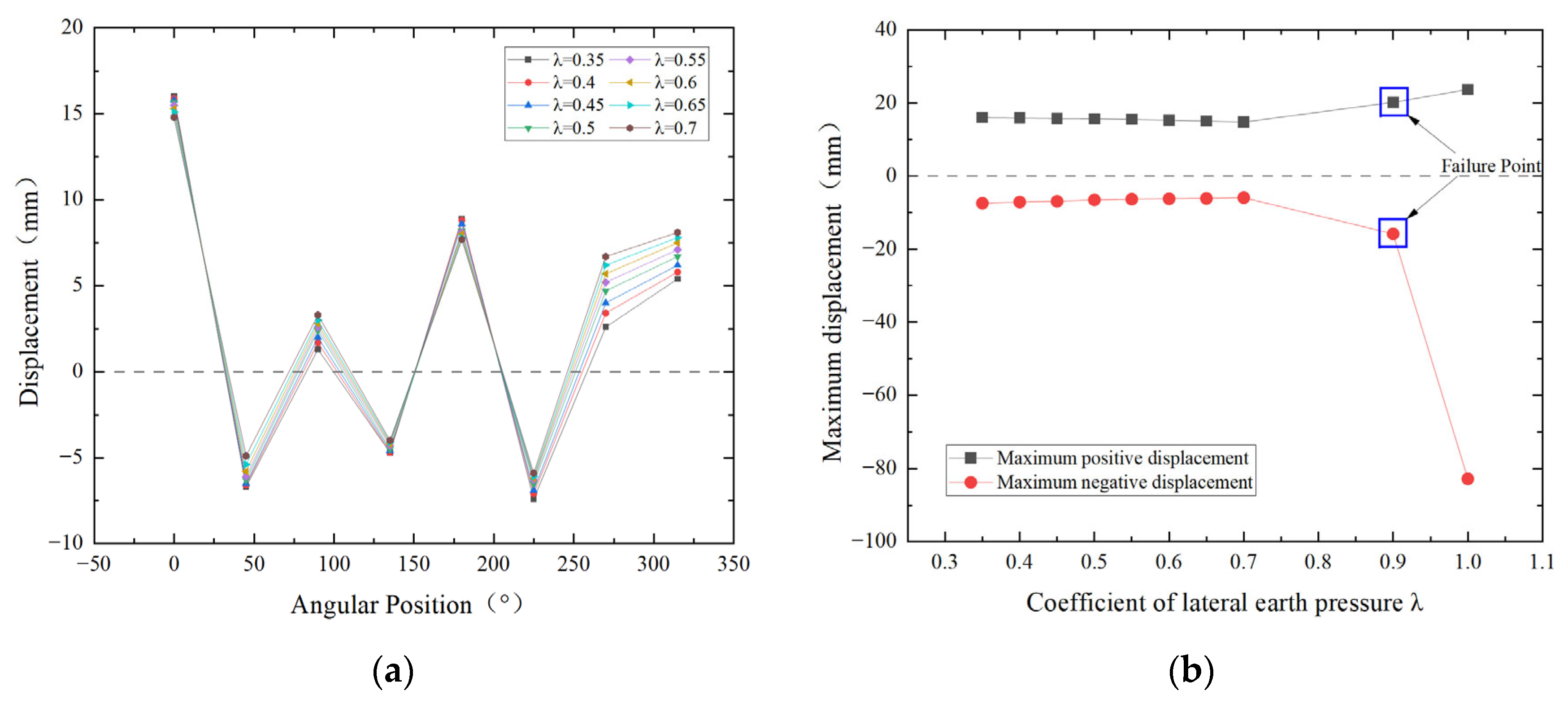
As illustrated in Figure 19a, positive displacement occurs at the crown, invert, both haunches, and the left spandrel joint, while the remaining locations exhibit negative displacement.
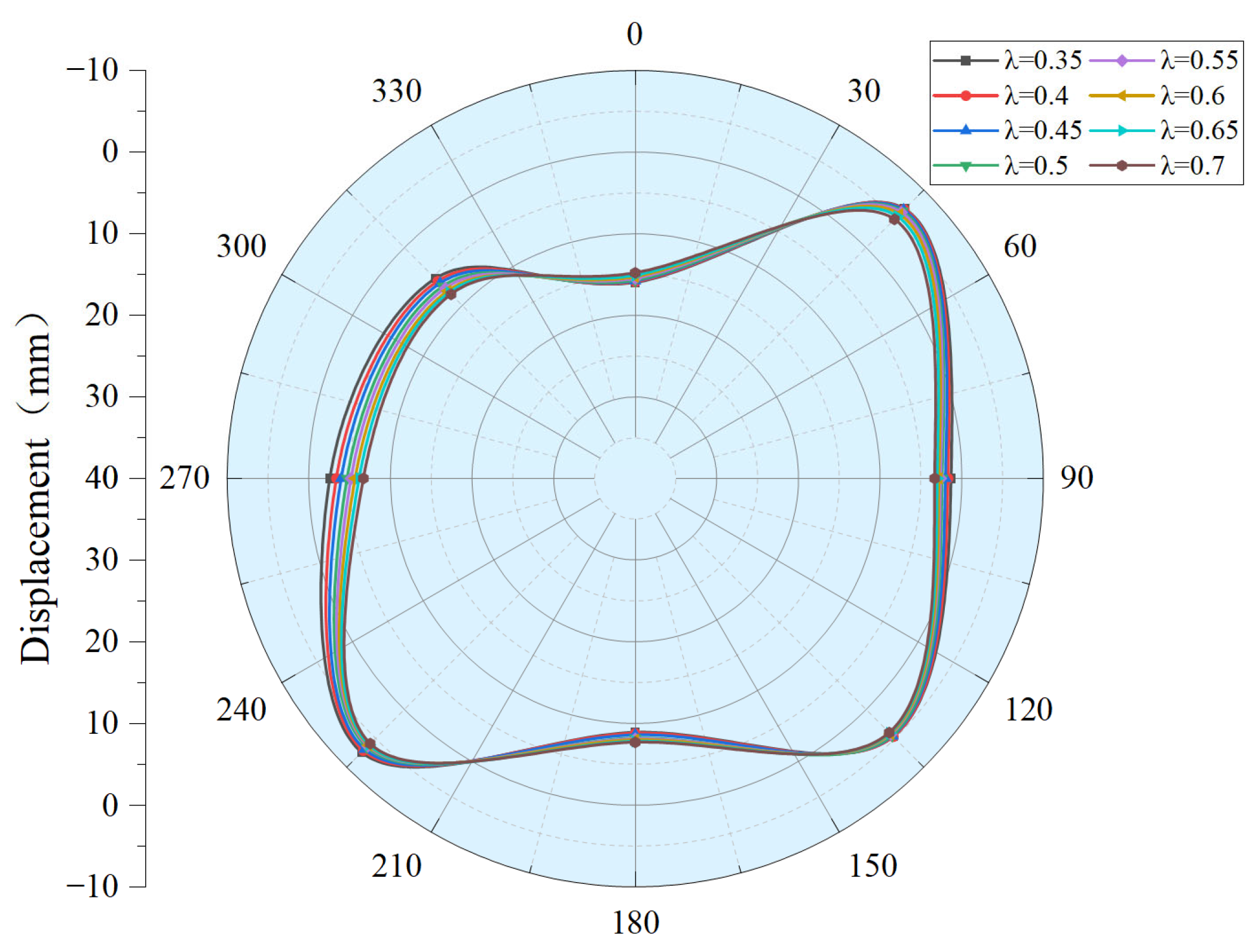
The displacement diagram (Figure 20) reveals that an increasing lateral pressure coefficient reduces positive displacement at the crown and invert, as well as negative displacement at the right spandrel and both springing joints. Conversely, positive displacement increases at the left spandrel joint and both haunches. Although the overall magnitude of these variations is relatively small, the maximum positive displacement consistently occurs at the crown, while the maximum negative displacement remains at the left springing joint.
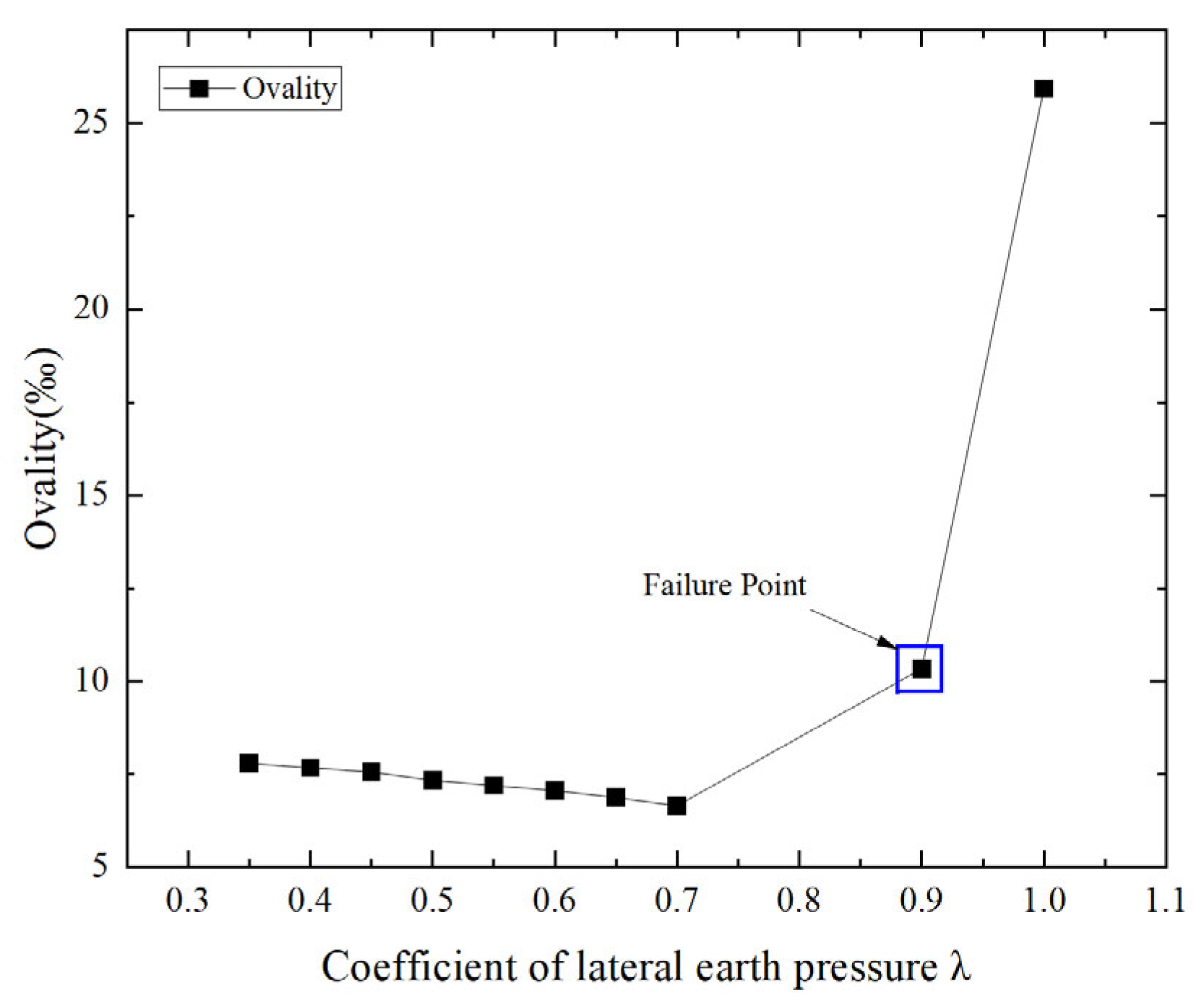
As shown in Figure 19b and Figure 21, the overall maximum displacement before failure exhibited a slight decreasing trend. When λ increased from 0.35 to 0.7, the maximum positive displacement at the crown decreased linearly from 16.0 mm to 14.8 mm, while the maximum negative displacement at the left springing decreased from −7.4 mm to −5.9 mm. Ovality also decreased linearly from 7.80‰ to 6.66‰. These results collectively indicate that increasing λ within the tested range moderately improves the tunnel’s deformation behavior by mitigating crown settlement, invert uplift, and joint extrusion.
However, as lateral force increased, displacement at the haunches grew rapidly; the left haunch’s displacement rose from 2.6 mm to 6.7 mm and the right from 1.3 mm to 3.3 mm. Structural failure occurred at λ ≈ 0.9, characterized by a dramatic deformation shift: the left haunch’s displacement surged to 20.2 mm, surpassing the crown, while the left springing joint displaced outward to −15.8 mm, resulting in an ovality of 10.34‰. This demonstrates that an excessively high lateral pressure coefficient severely compromises structural stability by inducing excessive horizontal deformation.

3.3. Failure Characteristics of Hexagonal Segments

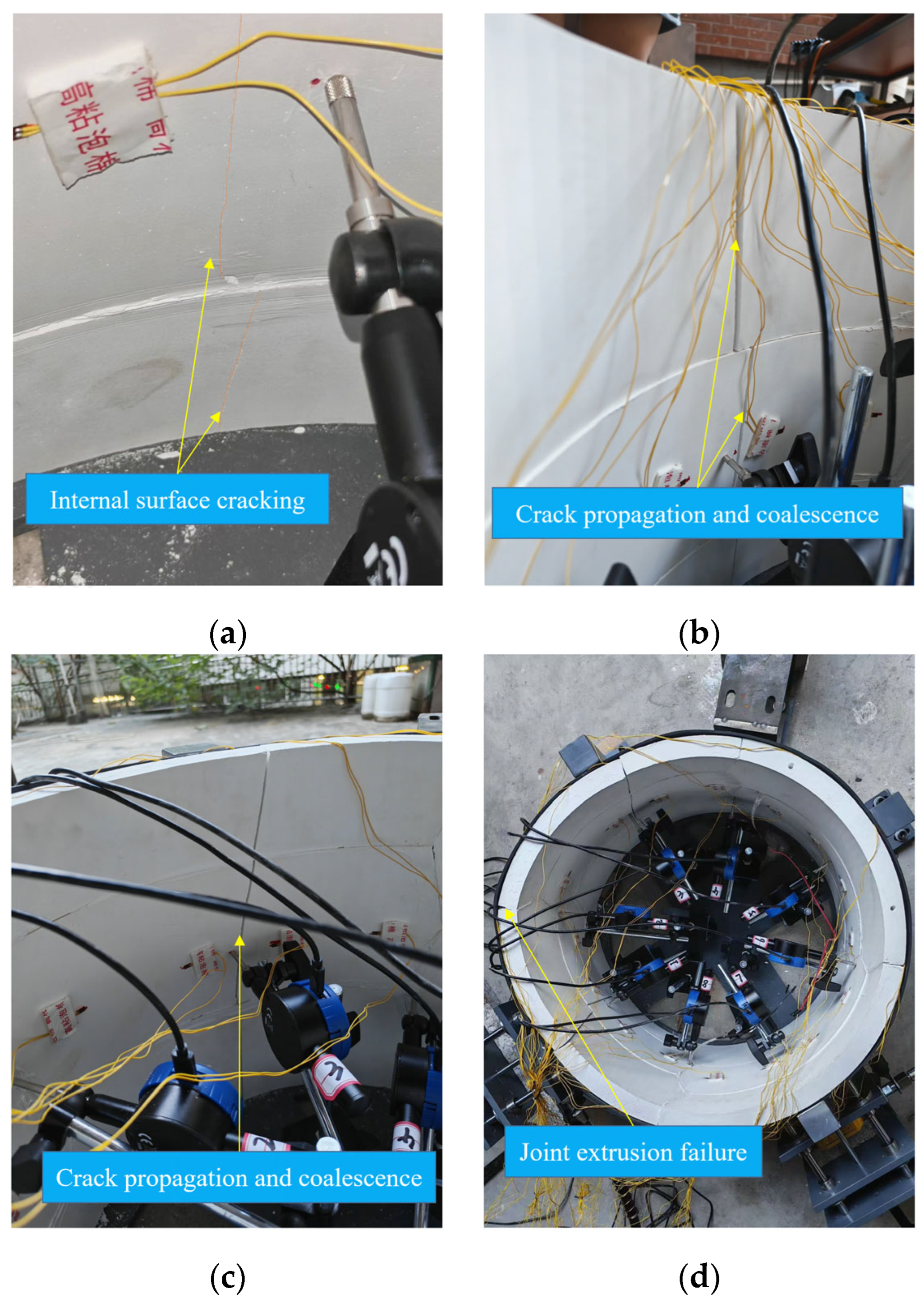
Under loading conditions simulating increasing burial depth, vertical cracks initially developed on the inner surfaces at the crown and right haunch prior to complete structural failure. With continued loading, these cracks propagated and coalesced, forming two primary fractures that penetrated the inner surfaces of the segments at the crown and right haunch, as shown in Figure 22. Local crushing of the gypsum material was observed on the outer surface adjacent to these cracks. Further loading led to extruding and torsional displacement failure of the fractured segments, centered at the crown and right haunch. This failure was particularly pronounced at the 45° right spandrel joint due to insufficient joint stiffness, ultimately resulting in global structural collapse.
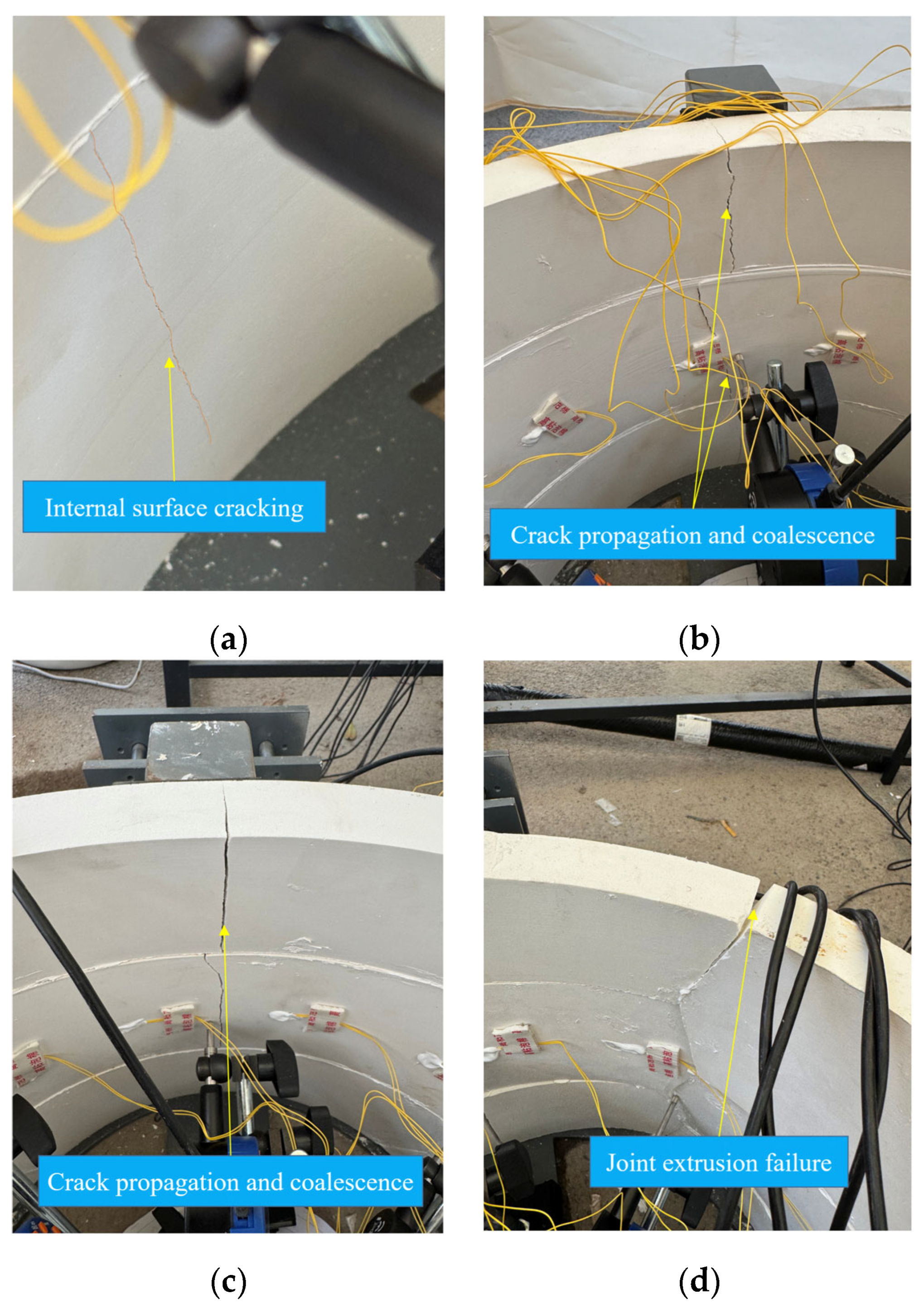
In contrast, under conditions where the lateral pressure coefficient λ was increased beyond 0.7, micro-cracks initially appeared at both the left and right haunches. These cracks gradually propagated and interconnected, eventually triggering outward extrusion failure at the left springing joint. This was accompanied by a rapid increase in negative displacement, leading to complete structural failure, as shown in Figure 23.

4. Conclusions

This study investigated the mechanical behavior of a boltless tongue-and-groove hexagonal segment tunnel through a 1:10 scale model test based on the Shenzhen Baishiling Area Natural Gas Pipeline Adjustment Project. The research analyzed the interactions between segments and the overall structural performance, including bearing capacity, internal forces, and deformation under varying burial depths and lateral pressure coefficients. The principal conclusions are as follows:
(1) The boltless tongue-and-groove joints function similarly to hinges, permitting limited rotation. This mechanism significantly releases bending moments at the joints during ring deformation, resulting in substantially lower bending moments at joint locations compared to other parts of the tunnel.
(2) The staggered interlocking assembly converts global bending stress into axial pressure along the segment axis. This provides the joints with markedly higher stiffness than traditional rectangular segments, but also leads to significantly higher axial forces and increased susceptibility to stress concentration.
(3) Burial depth has the most substantial impact on bending moments, axial forces, and deformation at the tunnel crown. The influence of guide rod slippage and deformation on axial force transmission efficiency is not significant when burial depth is the controlling factor. When axial forces at the joints become excessively high and significant tensile stress occurs on the inner side of segments, the joints tend to displace outwards.
(4) The lateral pressure coefficient modifies the tunnel’s triaxial stress state and joint load-transfer mechanism. Increasing λ from 0.35 to 0.7 moderately improves overall bending resistance and deformation control. Optimal axial force transmission occurs at λ = 0.6, where compressive force peaks and tensile force is minimized. Excessively high λ values induce unfavorable mechanical responses at the haunches.
(5) When loaded to failure under the load pattern based on burial depth and lateral pressure coefficient, the ovality of the tunnel slightly exceeds 10‰, indicating ductile failure.

Author Contributions

Conceptualization: X.J.; writing-original draft preparation, X.W.; writing-review and editing, X.J.; methodology, X.W. and S.Z.; data processing, F.Y.; formal analysis, Z.L.; project administration, X.J.; resources, Z.L. All authors have read and agreed to the published version of the manuscript.

Funding

This research was funded by the Science and Technology Project of China Railway 18th Bureau Group Co., Ltd. (11-JF-2023-baishiling-0-06).

Data Availability Statement

The original contributions presented in this study are included in the article. Further inquiries can be directed to the corresponding author.

Conflicts of Interest

Author Zhuang Li was employed by the company China Railway 18th Bureau Group Co., Ltd. The remaining authors declare that the research was conducted in the absence of any commercial or financial relationships that could be construed as a potential conflict of interest. The authors declare that this study received funding from the Science and Technology Project of China Railway 18th Bureau Group Co., Ltd. The funder had the following involvement with the study: provides background information of the project (including geological data and design data).

References

  1. Huang, Q.; Liu, S.; Lv, Y.; Ji, D.; Li, P. Modification of Segment Structure Calculation Theory and Development and Application of Integrated Software for a Shield Tunnel. Appl. Sci. 2022, 12, 6043. [Google Scholar] [CrossRef]
  2. Liu, N.; Wen, Z.; You, G.; Wang, S.; Liu, W. Study on the Calculation of the Surrounding Rock Stress on Shield Tunnels in Rock Strata. Geotech. Geol. Eng. 2023, 41, 4383–4393. [Google Scholar] [CrossRef]
  3. Shang, X.; Miao, S.; Wang, H.; Yang, P.; Xia, D. A prediction model for surface settlement during the construction of variable cross-section tunnels under existing structures based on stochastic medium theory. Tunn. Undergr. Space Technol. 2025, 155, 106177. [Google Scholar] [CrossRef]
  4. Wu, J.; Chen, J. Experimental Research on the Floating Amount of Shield Tunnel Based on the Innovative Cumulative Floating Amount Calculation Method. Buildings 2024, 14, 1228. [Google Scholar] [CrossRef]
  5. Wang, Y.; Dai, F.; Ding, B.; Zhong, M.; Zhang, H. Study on the effect of excavation sequence of three-hole shield tunnel on surface settlement and segment deformation. Sci. Rep. 2023, 13, 16971. [Google Scholar] [CrossRef]
  6. Liu, W.-Z.; Dai, X.-Y.; Sun, K.; Ai, G.-P.; Lei, T. Calculation method of longitudinal deformation of metro shield tunnel overpassing existing line at short distance. Rock Soil Mech. 2022, 43, 831–842. [Google Scholar] [CrossRef]
  7. Zhuo, H.; Xie, D.; Sun, J.; Shi, X. Mining Hazards to the Safety of Segment Lining for Tunnel Boring Machine Inclined Tunnels. Front. Earth Sci. 2022, 9, 814672. [Google Scholar] [CrossRef]
  8. Chang, J.; Zhang, D.; Huang, H.; Thewes, M.; Liu, X. Surrogate numerical prediction method of TBM position via FEM simulation and machine learning. In Proceedings of the 5th GeoShanghai International Conference, Shanghai, China, 26–29 May 2024; Tongji University, College of Civil Engineering: Shanghai, China. [Google Scholar] [CrossRef]
  9. Yang, G.; Hu, H.; Huang, X.; Luo, H.; Si, G.; Chen, Y.; Qiu, J. Response characteristics of surrounding rock and segment structure of large longitudinal slope tunnel. Electron. J. Struct. Eng. 2024, 24, 39–44. [Google Scholar] [CrossRef]
  10. Wang, R.; Wang, Y.; Yan, B.; Ding, B. Dynamic response of single pile induced by the vibration of tunnel boring machine in hard rock strata. Sci. Rep. 2025, 15, 11658. [Google Scholar] [CrossRef] [PubMed]
  11. Lou, P.; Li, Y.; Tang, X.; Lu, S.; Xiao, H.; Zhang, Z. Influence of double-line large-slope shield tunneling on settlement of ground surface and mechanical properties of surrounding rock and segment. Alex. Eng. J. 2023, 63, 645–659. [Google Scholar] [CrossRef]
  12. Bao, X.; Wu, X.; Zhang, X.; Shen, J.; Chen, X.; Dang, P.; Cui, H. Mechanical behaviours of concrete segmented tunnel considering the effects of grouting voids—A 3D numerical simulation. Case Stud. Constr. Mater. 2025, 22, e04370. [Google Scholar] [CrossRef]
  13. Lou, P.; Li, Y.; Xiao, H.; Zhang, Z.; Lu, S. Influence of Small Radius Curve Shield Tunneling on Settlement of Ground Surface and Mechanical Properties of Surrounding Rock and Segment. Appl. Sci. 2022, 12, 9119. [Google Scholar] [CrossRef]
  14. Xing, R.; Li, Y.; He, C.; Zhu, D.; Li, Y.; Yao, C.; Liu, Y.; Xu, P.; Zhao, Z. Study on Deformation Characteristics of the Segment in the Underwater Shield Tunnel with Varying Earth Pressure. Buildings 2024, 14, 2789. [Google Scholar] [CrossRef]
  15. Yan, Z.-G.; Zhang, Y.; Shen, Y.; Zhu, H.-H.; Lu, Y. A multilayer thermo-elastic damage model for the bending deflection of the tunnel lining segment exposed to high temperatures. Tunn. Undergr. Space Technol. 2020, 95, 103142. [Google Scholar] [CrossRef]
  16. Feng, H.; Ye, F.; Han, X.; Wang, P.; Chen, Z.; Liang, X. Displacement and pressure of surrounding rock during shield tunnelling and supporting in low water content loess. Eng. Geol. 2024, 338, 107612. [Google Scholar] [CrossRef]
  17. Li, H.; Jin, X.; Sun, G.; He, J. A Study on Seismic Dynamic Response of Pile-Supported Tunnels in Deep Backfill Area of Soil-Rock Mixture Based on a Model Test. Buildings 2024, 14, 791. [Google Scholar] [CrossRef]
  18. Winkler, B.; Hofsterter, G.; Lehar, H. Application of a constitutive model for concrete to the analysis of a precast segmental tunnel lining. In Proceedings of the EURO-C 2003 Conference, St Johann Im Pongau, Austria, 17–20 March 2003; pp. 717–725. [Google Scholar] [CrossRef]
  19. Koneshwaran, S.; Thambiratnam, D.P.; Gallage, C. Response of segmented bored transit tunnels to surface blast. Adv. Eng. Softw. 2015, 89, 77–89. [Google Scholar] [CrossRef]
  20. Murugesan, K.; Subramanian, S.N.S.; Sekar, A.; Ravichandran, P.T. Energy consumption analysis of different geometries of precast tunnel lining segment numerically. Environ. Sci. Pollut. Res. 2023, 30, 46475–46488. [Google Scholar] [CrossRef] [PubMed]
  21. Feng, K.; He, C.; Zhou, J.; Su, Z. A Loading Test Method of Prototype Structure for Nanjing Changjiang Tunnel. In Proceedings of the 1st International Conference on Civil Engineering, Architecture and Building Materials (CEABM 2011), Haikou, China, 18–20 June 2011; p. 2605. [Google Scholar] [CrossRef]
  22. Wang, S.; He, X.; Peng, X.; Wang, Y.; Li, Z.; Song, Z. Influence of secondary lining thickness on mechanical behaviours of double-layer lining in large-diameter shield tunnels. Undergr. Space 2024, 18, 130–150. [Google Scholar] [CrossRef]
  23. Wang, S.; Wang, X.; Chen, B.; Fu, Y.; Jian, Y.; Lu, X. Critical state analysis of instability of shield tunnel segment lining. Tunn. Undergr. Space Technol. 2020, 96, 103180. [Google Scholar] [CrossRef]
  24. Liu, C.; Wang, S.; Guo, W.; Chen, F.; Zhang, J.; He, C. Investigation of the Deformation Characteristics and Bearing Capacity of a Segment Structure of a Shield Tunnel with Cracks. Ksce J. Civ. Eng. 2022, 26, 381–393. [Google Scholar] [CrossRef]
  25. Xu, G.; Zhang, J.; Wang, S.; Zhang, C.; Yao, C. The progressive failure features of shield tunnel lining with large section. Eng. Fail. Anal. 2024, 164, 108687. [Google Scholar] [CrossRef]
  26. Tang, J.; Zhou, Y.; Shi, Y.; Yuan, Y. Simulation Method of Scale Reduction Tests for Shield Tunnel Segment Joints. Tunn. Constr. 2022, 42, 1187–1195. [Google Scholar] [CrossRef]
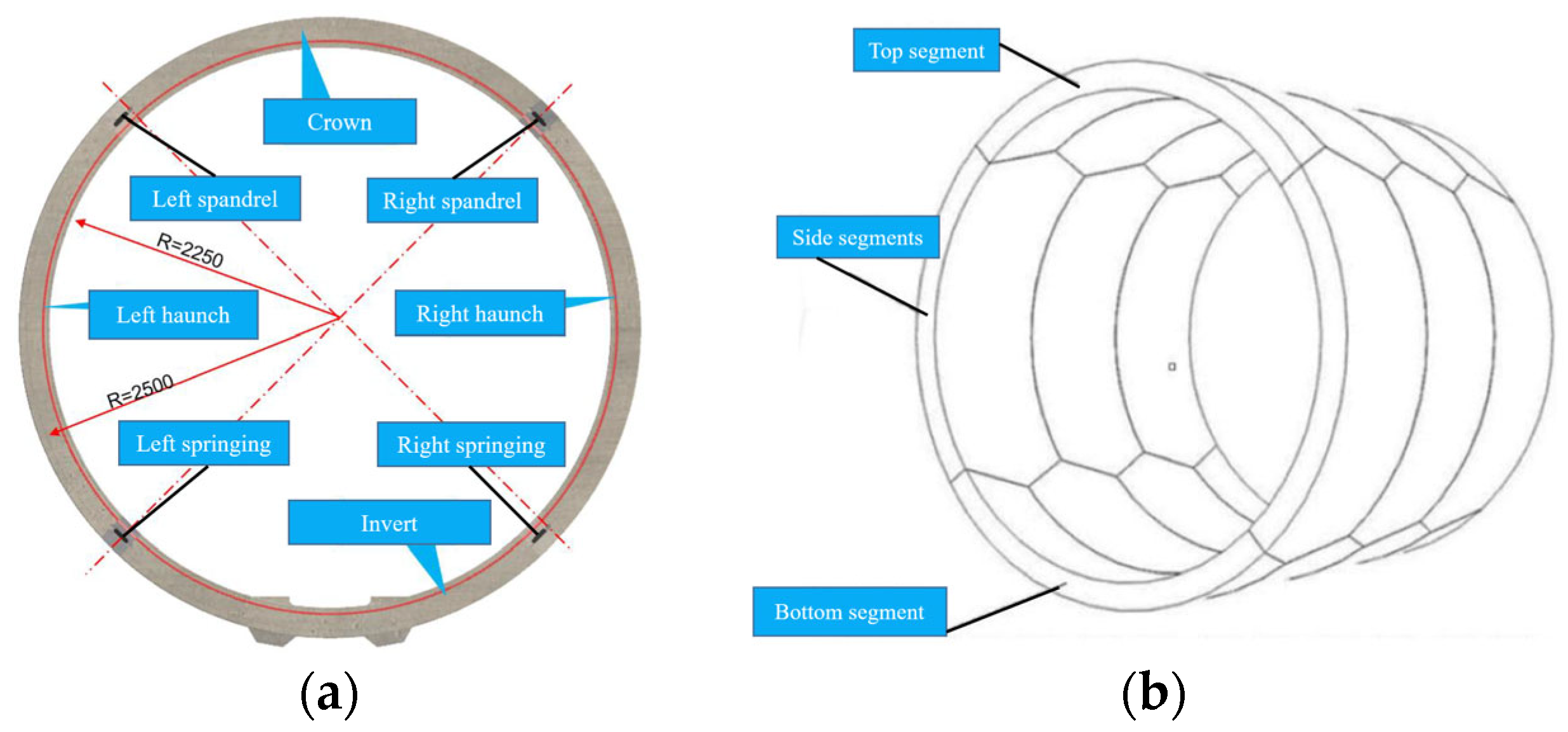
Figure 1. Schematic diagram of the hexagonal segments of Baishiling Tunnel. (a) Cross-sectional schematic diagram; (b) Three-dimensional schematic diagram.
Buildings 15 04482 g001
Figure 2. Equivalent schematic diagram of test load calculation.
Buildings 15 04482 g002
Figure 3. The process of cube compressive strength test. (a) Sample grouping. (b) Uniaxial compression test. (c) Cubic specimen failure.
Buildings 15 04482 g003
Figure 4. Schematic diagram of the loading device for the model test. (a) Planar schematic diagram; (b) Three-dimensional schematic diagram.
Buildings 15 04482 g004
Figure 5. The process of making model segments. (a) Material weighing; (b) Prefabricated steel mesh; (c) Mixing and stirring; (d) Mold casting; (e) Finished product curing; (f) Segment demolding.
Buildings 15 04482 g005
Figure 6. The process of assembling and connecting model segments. (a) Prototype segment joint; (b) Circumferential joint connection; (c) Longitudinal joint connection; (d) Assembly completed.
Buildings 15 04482 g006
Figure 7. Schematic diagram of measurement point layout. (a) Schematic diagram of strain gauge position; (b) Schematic diagram of the dial indicator position; (c) Top view of the measurement point layout; (d) Actual effect drawing.
Buildings 15 04482 g007
Figure 8. The bending moment variation in the model tunnel under the control of burial depth. (a) Bending moment distribution; (b) Variation in maximum bending moment.
Buildings 15 04482 g008
Figure 9. Bending moment diagram of the model tunnel under the control of burial depth.
Buildings 15 04482 g009
Figure 10. The axial force variation in the model tunnel under the control of burial depth. (a) Axial force distribution; (b) Variation in axial force at the left and right haunches; (c) Variation in maximum axial force.
Buildings 15 04482 g010
Figure 11. Axial force diagram of the model tunnel under the control of burial depth.
Buildings 15 04482 g011
Figure 12. The displacement variation in the model tunnel under the control of burial depth. (a) Displacement distribution; (b) Variation in maximum displacement.
Buildings 15 04482 g012
Figure 13. Displacement diagram of the model tunnel under the control of burial depth.
Buildings 15 04482 g013
Figure 14. The ovality variation in the model tunnel under the control of burial depth.
Buildings 15 04482 g014
Figure 15. The bending moment variation in the model tunnel under the control of lateral pressure coefficient. (a) Bending moment distribution; (b) Variation in maximum bending moment.
Buildings 15 04482 g015
Figure 16. Bending moment diagram of the model tunnel under the control of lateral pressure coefficient.
Buildings 15 04482 g016
Figure 17. The axial force variation in the model tunnel under the control of lateral pressure coefficient. (a) Axial force distribution; (b) Variation in axial force at each measuring point; (c) Variation in maximum axial force.
Buildings 15 04482 g017
Figure 18. Axial force diagram of the model tunnel under the control of lateral pressure coefficient.
Buildings 15 04482 g018
Figure 19. The displacement variation in the model tunnel under the control of lateral pressure coefficient. (a) Displacement distribution; (b) Variation in maximum displacement.
Buildings 15 04482 g019
Figure 20. Displacement diagram of the model tunnel under the control of lateral pressure coefficient.
Buildings 15 04482 g020
Figure 21. The ovality variation in the model tunnel under the control of lateral pressure coefficient.
Buildings 15 04482 g021
Figure 22. The failure form of the model tunnel under the control of burial depth. (a) Internal surface cracking appear; (b) Crown crack propagation and coalescence; (c) Right haunch crack propagation and coalescence; (d) Right spandrel joint extrusion failure.
Buildings 15 04482 g022
Figure 23. The failure form of the model tunnel under the control of lateral pressure coefficient. (a) Internal surface cracking appear; (b) Right haunch crack propagation and coalescence; (c) Left haunch crack propagation and coalescence; (d) Left springing joint extrusion failure.
Buildings 15 04482 g023
Table 1. Similarity relationship and similarity constant of the model system.
Physical QuantitySymbolUnitSimilarity RelationshipSimilarity Constant
lengthlmbasic quantityCl = 10
bulk densityγN/m3basic quantityCγ = 1
strainε-CεCε = 1
stressσN/m2CγClCσ = 10
forceFNCγCl3CF = 103
bending momentMN∙mCγCl4CM = 104
elastic modulusEMPaCγClCE = 10
tensile stiffnessEANCγCl3CEA = 103
flexural stiffnessEIN∙m2CγCl5CEI = 105
Table 2. Mechanical parameters of gypsum-diatomite materials.
Group NumberWater: Gypsum: DiatomiteSpecimen NumberElastic Modulus (GPa)Mean Elastic Modulus (GPa)Converted Cube Compressive Strength (MPa)Mean Compressive Strength (MPa)
11:1.4:0.21-13.113.184.214.37
1-23.194.47
1-33.254.43
21:1.4:0.252-13.423.504.965.05
2-23.555.24
2-33.534.94
31:1.4:0.33-13.443.555.495.50
3-23.595.55
3-33.625.46
41:1.4:0.354-13.583.616.446.51
4-23.666.73
4-33.586.38
51:1.4:0.45-13.733.747.487.31
5-23.697.18
5-33.797.26
Table 4. Test condition grouping.
Condition NumberBurial Depth (m)Water Head Height (m)Lateral Pressure Coefficient
A-115150.5
A-220150.5
A-325150.5
A-430150.5
A-535150.5
A-640150.5
A-745150.5
A-850150.5
B-130150.35
B-230150.4
B-330150.45
B-430150.5
B-530150.55
B-630150.6
B-730150.65
B-830150.7
Table 3. Comparison of material parameters between segment prototypes and models.
Prototype ValueModel ValueConverted Prototype Value
Cube Compressive Strength (MPa)505.0550.5
Elastic Modulus (GPa)34.53.5035.0
Disclaimer/Publisher’s Note: The statements, opinions and data contained in all publications are solely those of the individual author(s) and contributor(s) and not of MDPI and/or the editor(s). MDPI and/or the editor(s) disclaim responsibility for any injury to people or property resulting from any ideas, methods, instructions or products referred to in the content.