Article

Workplace Stress Among Construction Professionals: The Influence of Demographic and Institutional Characteristics

1
Department of Architecture, Haliç University, Istanbul 34060, Türkiye
2
Department of Architecture, Mimar Sinan Fine Arts University, Istanbul 34427, Türkiye
*
Authors to whom correspondence should be addressed.
Buildings 2025, 15(24), 4460; https://doi.org/10.3390/buildings15244460

Submission received: 24 October 2025 / Revised: 30 November 2025 / Accepted: 8 December 2025 / Published: 10 December 2025
(This article belongs to the Special Issue Occupational Safety and Health in Building Construction Project)

Abstract

The construction sector is traditionally known for a harsh working culture characterized by uncertainty, frequent crises, and long working hours, which increase stress among employees at all organizational levels. The primary objective of the present research is to examine the extent to which workplace stress factors grouped under organisational/interpersonal, task and physical stressor categories influence professionals within the construction industry. A cross-sectional online survey of 185 construction professionals in Turkey was conducted between October 2024 and February 2025. Findings reveal that the task stressors category associated with increased workload exerts the most significant adverse effect on employees, while organisational/interpersonal stressors are the least impactful. The analysis also shows significant variations in perceptions across different demographic and workplace contexts. An overwhelming majority of significant differences between male and female employees occur within the “Organizational/Interpersonal Stressors”, with six out of the eight significant factors falling under this category. In particular, the most pronounced gender-based differences are observed in specific areas such as gender and age discrimination in promotion and development opportunities at work, fear of failure at the job/job insecurity and insufficient encouragement/support from managers. In addition, young professionals and employees of medium sized firms are found to be more severely influenced by task stressors. By highlighting the differing perceptions of stress factors among employees based on their demographic profiles, these findings provide insights for managers in formulating effective organizational policies. Establishing goals about streamlining tasks, reviewing hiring policies to reduce workloads, providing guidance and training for employees’ task prioritization skills, and implementing workload redistribution strategies are some of the strategies that may be considered by organisations in the construction industry.

1. Introduction

The construction sector plays an important role in the development of national economies due to its strong connections with other economic sectors and its crucial function as the provider of basic infrastructure [1,2]. The sector which encompasses a broad spectrum of structures, from small residential construction to large-scale projects, is traditionally known for its harsh working culture characterized by long working hours including weekends [3]. The need for timely project completion, driven by substantial upfront investment costs and contractual penalties associated with delays, constitutes the root cause of time pressure in the industry. Thus, working hours tend to become increasingly demanding as projects move close to completion.
Long working hours, coupled with a work environment characterized by uncertainty and frequent crises inherent to the industry, contribute significantly to elevated stress levels among employees across all hierarchical levels in construction organisations [4,5,6,7,8,9]. Moreover, site-specific nature of the industry, which requires employees to work on different sites and regions for each new project, highlights the importance of mobility in the sector. Such an environment compels employees to either undertake long daily commutes or temporarily relocate to another city or country. Such demands pose particular difficulties for individuals with childcare and eldercare responsibilities, negatively affecting their work–life balance. Failure to adapt to these industry norms may hinder employees’ career advancement, and in extreme cases it may even threaten their job security.
Previous studies have linked high stress to a range of adverse mental health outcomes, including depression, anxiety, and broader psychological distress among construction professionals [10,11]. In the literature, psychological distress also appears as a source of poor safety, quality, and productivity in the sector. Thus, stress can no longer be perceived solely as an individual issue. Indeed, today it is well known that it has significant effects on the productivity of an entire sector, highlighting the need for further research in this field [12]. In broader terms, occupational stress has been shown to negatively impact job performance, reduce job satisfaction and lead to burnout syndrome among employees [13]. Over the long term, continued work stress may also manifest itself in physical symptoms such as headaches and back pain, decrease employees’ sense of belonging in their workplace, increase absenteeism, and ultimately reduce overall productivity [14]. In the literature, the decrease in occupational health and safety performance stemming from stress is particularly examined for employees working on construction sites [15,16,17]. If work-related stress is not managed effectively, it can also extend beyond the workplace, adversely affecting employees’ family lives and personal well-being [5,18].
In recent years, growing awareness of the negative effects of work-related stress has led to an increase in research conducted within the construction industry. However, there remains a notable gap in the previous literature regarding the specific impact of occupational stress on the mental health of construction employees [19]. While previous studies have revealed that demographic, role-based and institutional differences lead to varying levels of susceptibility to stress among individuals, the exact mechanisms and extent to which these factors influence individuals have not yet been fully clarified [20,21]. Efforts towards identifying the stress factors and developing strategies accordingly is not sufficient to manage the growing stress problem in the construction industry. Recent research indicates that stress is perceived differently by individuals. For example, job insecurity is reported to be a more significant stressor for older employees as well as married individuals in the construction sector [20]. Several studies have shown that female employees in construction perceive higher stress levels compared to their male counterparts [7]. Gomez-Salgado et al. (2023) argue that risks can only be identified at an early stage by including different work contexts and demographic variables in studies [22]. Therefore, further research is needed to develop strategies that address the needs of individuals and groups with varying characteristics, to foster a healthier and more productive work environment.
Based on this research gap, the main objectives of the present research are to identify the main workplace stressors perceived by employees in the construction industry and to explore the influence of demographic and institutional variables (e.g., age, gender, company size, etc.) on their stress perceptions. Improving our understanding of employees’ psychological well-being is essential for developing a more complete and accurate picture of stressors in the construction industry. Therefore, a secondary objective of the present research is to explore the effects of workplace stressors on construction professionals’ mental health, as well as their social and family lives.
The findings obtained from this study are expected to contribute to a better understanding of the causes and effects of stress experienced by professionals working in the construction sector. Moreover, the results may enhance managers’ perceptions towards development of effective stress management strategies that can be implemented within the industry. In this way, necessary measures can be taken to enhance the well-being of professionals and ensure the successful and timely completion of construction projects.

2. Theoretical Framework

2.1. Stressors Among Construction Professionals

Stress is one of the leading causes of absenteeism, negatively affecting not only working individuals but also their families and colleagues. Several studies have emphasized that stress has become a health epidemic of the 21st century and is increasingly prevalent on a global scale [23,24]. Furthermore, stress results in significant financial costs for employers due to decreased productivity and increased accidents [25].
Occupational stress is defined as a physical or mental response to situations perceived as threats in the workplace [26] and is regarded as a highly influential factor on individual behaviour [27]. In recent years, workplace stressors such as toxic work environments, excessive workloads, isolation, role conflict, role ambiguity, lack of autonomy, career development barriers, difficult relationships with managers and/or colleagues, managerial bullying, harassment, and adverse organizational climate have increased compared to previous decades [26].
Many studies have reported that professionals working in the construction sector are particularly exposed to high levels of stress [5,7,28,29,30]. Construction professionals employed on-site are found to experience significantly higher levels of occupational stress than their counterparts working in office-based settings [5,31]. Stress factors arising from construction activities are considered key dynamics of occupational stress due to the very nature of the construction industry [3,32,33]. Construction is known to be a highly labour-intensive sector where workers are often faced with physically demanding tasks leading to both stress and physical fatigue [34]. Commonly acknowledged consequences of physical fatigue in the literature include loss of productivity, reduced motivation, inattentiveness, poor decision-making, low work quality, job dissatisfaction, and increased risk of accidents [35,36].
In addition, several studies have shown that female professionals in the industry experience severe discrimination and harassment, adversely impacting their psychological well-being [7,37,38,39]. Some research has further revealed that occupational stress leads to physiological, psychological, and sociological strain, contributing to workplace stress [39,40]. In a comparative study by Pinto et al. [41] which investigated stress levels in various project-based sectors including consulting and software, construction professionals were found to experience higher levels of job burnout, particularly emotional exhaustion, compared to those in other sectors [41].
Leung et al. [6] conducted a survey with 108 construction professionals in Hong Kong to examine the impact of stress on project managers’ performances. Findings showed that stress is the root cause of burnout and poor job performance [6]. Similarly, a survey conducted by Abdalla et al. [42] on young professionals involved in international construction projects revealed that these individuals experienced significant levels of burnout due to stress, which was closely linked to high turnover expectations [42]. Another study by Alsulami et al. [16] indicated that employees with heavier workloads and those working long hours experienced more stress than those working shorter periods [16]. Moreover, Wu et al. [43] found that while role ambiguity negatively affected both job performance and burnout, role conflict had similar adverse effects only on job burnout [43].
Improved safety practices in the workplace are key indicators of good performance and job satisfaction among employees [44]. Previous research reveals that increased stress levels among construction professionals lead to unsafe work practices and poor performance [45]. Physical factors such as weak lighting, high noise levels, heavy material handling, and crowded workspaces further exacerbate workers’ vulnerability, fostering negative emotions that lead to inefficiency and loss of motivation [46]. Alsulami et al. [16] argued that stress factors tend to cause distraction among workers, increasing the likelihood of injuries or accidents [16]. Mental health issues such as depression and anxiety stemming from stress diminish employees’ ability to focus on work [10]. These health issues are reported to arise mainly from high job demands [47]. The consequences of neglecting such issues include suicide attempts, workplace accidents, and absenteeism [8].
Construction professionals are also highly exposed to other types of occupational stress that negatively affect their health and well-being, including long working hours, excessive workloads, unhealthy work–life balance, perceived loss of professional value, and lack of job security [48]. A study by Haynes and Love [49] conducted in Australia found that the top three sources of stress for professionals were excessive workload, long working hours, and insufficient time spent with family [49]. Similarly, Bowen et al. [50] highlighted that long working hours significantly contribute to the imbalance between work and family responsibilities [50]. In another study, Leung et al. [9] reported that time and energy spent on family responsibilities often reduce the time available for work tasks, thereby disrupting work–life balance and increasing stress [9].
As Manivannan et al. [51] has also pointed out, previous research has extensively examined various dimensions of occupational stress, however studies exploring its impact on personal life remain limited [51]. The authors utilized previously developed scales to measure occupational stress and its relation to work–life balance. Earlier studies have generally categorized stressors among construction professionals as task-related, organizational, physical, and personal [30].

2.1.1. Organizational and Interpersonal Stress Factors

Organizational stressors can be defined as stress factors originating from within the organization itself [52], and they may lead to the weakening of employees’ sense of connection with the organization [32]. These stressors are often associated with perceived organizational injustice and the extent to which construction professionals are included in decision-making processes regarding their career development opportunities [53].
Interpersonal stressors, on the other hand, refer to factors related to an individual’s personality traits and behavioural tendencies [54]. Previous studies have emphasized that organizational and interpersonal stressors often create a ripple effect on one another, functioning as mutually reinforcing critical stressors [55].
The literature identifies several common organizational and interpersonal stressors in the workplace, including violence and threats, disrespectful behaviours, bullying, gender and age discrimination, harassment, lack of managerial support, conflicts with colleagues, suppression of individual opinions, job insecurity, and fear of failure [7,19,37,39,42,50,56,57,58].

2.1.2. Task-Related Stressors

Task-related stressors refer to both the quantitative workload that construction professionals encounter in their daily work, as well as the qualitative challenges that exceed an individual’s capacity [32,52]. Research has shown that the quantitative dimensions of workload include high job demands, excessive overtime, irregular and uncertain working hours, and pressure to meet tight deadlines. On the other hand, the qualitative dimensions encompass ambiguity in job roles and constantly changing employer expectations. These factors have been found to contribute significantly to work–life imbalance and emotional exhaustion among employees [5,7,33,39,41,49,50,59,60,61]. Furthermore, several studies highlight that these stressors can lead to reduced job performance, declining motivation, and an increased intention to leave the profession [34,39,62].

2.1.3. Physical Stressors

Physical stressors refer to poor physical conditions in the workplace, such as excessive noise, overcrowding, temperature fluctuations (extremely hot or cold), inadequate lighting or glaring light, limited working space, and insufficient occupational health and safety measures [7,9,12,16,32,46]. These conditions have the potential to negatively affect individuals’ physical and psychological well-being over time [9].
The literature frequently emphasizes that exposure to excessive physical stressors can lead to physical fatigue, making employees more prone to errors and mistakes, reducing the quality of workmanship, decreasing productivity, and lowering job satisfaction [57]. Moreover, these stressors have been linked to occupational accidents [63], and this relationship has been strongly supported by various empirical studies [64].
A summary of the review of studies addressing occupational stressors in the construction industry are presented in Table 1.

3. Method and Data

3.1. Design of the Questionnaire Survey

The aim of this study is to examine the effects of stress factors encountered by professionals in the construction industry on their mental health. The target population of the study comprises company owners, architects, civil engineers, and other professionals (e.g., designers, site managers, cost engineers, consultants) working in the Turkish construction industry. Data were collected through an online questionnaire survey. Surveys are widely utilized in academic research to assess individuals’ attitudes, behaviours, beliefs, and opinions [75]. The online survey method, which has recently gained popularity, enables participants to respond with minimal effort and at their convenience, irrespective of their geographical location [76,77]. Therefore, an online survey was adopted for data collection.
The survey questions used in the current research are based on the most frequently emphasized stressor categories identified in the existing literature (see Table 1). The questions are further categorized under three dimensions—task stressors, organizational/interpersonal stressors, and physical stressors—based on the classifications provided by Senaratne and Rasagopalasingam [78], Leung et al. [9,52,53].
In designing the survey questions, particular attention was given to ensuring clarity and ease of comprehension. Thus, a pilot survey was conducted with ten participants, and the questions were revised in accordance with their comments. Based on the feedback, minor revisions were made, including simplifying the wording of the items (e.g., lexical simplification and remove the unclear words) and improving the logical flow of the questions. The final questionnaire survey consists of three sections. The first section includes questions aimed at collecting general demographic and workplace information about the participants, such as age, gender, profession, years of experience in the industry, and the number of employees in their company. The second section comprises 20 items designed using a 5-point Likert scale ranging from “Very Effective” to “Not Effective at All” to measure the perceived impact of workplace stress factors. Participants were asked to evaluate how significantly each factor affected them in their professional environment by assigning scores from 5 (“Very Effective”) to 1 (“Not Effective at All”). The responses were analysed based on quartile calculations, and quartile ranges were established to interpret which stress factors were considered more critical (Table 2).
Table 2 shows the results of the quartile analysis based on the scores given by the participants to workplace stress factors. Average scores are divided into three groups: Lower Quartile, Middle Half, and Upper Quartile. Quartiles provide insights into central tendency and variability, and when they are presented alongside Likert scale categories, they support the interpretation of participants’ responses to statements concerning workplace stress factors. Although quartiles and Likert scales are based on distinct methodological frameworks, there are instances where categories overlap. For instance, the expression ‘Neutral’ can be found in both the Lower Quartile and the Middle Half Quartile. This indicates that the same expression can represent different levels of impact across participant groups, thereby allowing for more nuanced interpretations [79,80].
In the third section of the survey, an additional set of twenty 5-point Likert scale items, ranging from “Most Effective” to “Not Effective at All,” was developed to assess the perceived impact of stress factors encountered by participants in their workplaces. The forty attitude scale items included in the second and third sections were identified based on the most reported issues in the literature (Table 1). In addition to this the 20 impact items related to effects of stress factors on health, family life, and social life in the third section of the questionnaire were grouped into three themes based on the literature review. The health-related items were derived from Schuler [55], Jin et al. [72], Biggs et al. [73], Rotimi et al. [69], Haynes and Love [49], Leung et al. [53], De Silva et al. [30], Chan et al. [19], Bowen et al. [40], Zhang et al. [70], Firose et al. [74], Sunindijo and Kamardeen [39], Love et al. [5], Bowen et al. [7], Seo Hee Chang et al. [65], Manivannan et al. [51], Abdalla et al. [42], and Hosseini et al. [12]. The items related to family life were informed by Hosseini et al. [12], Firose et al. [74], Zhang et al. [70], Nwagu et al. [31], Wu et al. [71], Leung et al. [53], Manivannan et al. [51], De Silva et al. [30], Chan et al. [19], Bowen et al. [40], and Rotimi et al. [69]. The items concerning social life were based on Leung et al. [53], Jin et al. [72], Manivannan et al. [51], Bowen et al. [40], De Silva et al. [30], Chan et al. [19], Rotimi et al. [69], Zhang et al. [70], and Firose et al. [74].

3.2. Data Collection

Data collection was carried out between October 2024 and February 2025. The survey questions were distributed via Google Forms and LinkedIn, ensuring that participation was voluntary and that all responses would remain confidential.
Participant selection was based on convenience sampling and snowball sampling. Convenience sampling refers to selecting members of the population accessible to researchers [79]. A convenience sampling approach was applied to select participants during the initial distribution of survey questions. However, due to the limited number of responses (93 participants) following the initial distribution, a snowball sampling strategy was subsequently employed to enhance participation. In this context, individuals who had completed the survey on LinkedIn were kindly asked to share the survey within their professional networks to reach a broader segment of the construction industry.
Snowball sampling is an efficient method for reaching hard-to-access populations by leveraging the professional networks of initial participants. However, it is also subject to selection bias, as participants’ networks often consist of individuals with similar backgrounds, experiences, and characteristics, which may limit the diversity and generalizability of the sample [76]. Griffiths et al. [81] suggests that due to theses biases inherent snowball sampling, researchers should be cautious about generalizing their findings [81]. Therefore, the results of the study should be interpreted with the understanding that the sample does not represent all construction professionals in Turkiye.
Additionally, after this second round of dissemination, email correspondence was conducted with 10 participants who had completed the survey. The aim of these follow-up interactions was to gather more detailed insights into participants’ views regarding workplace stress factors.
The survey remained accessible on Google Forms between October 2024 and March 2025, during which a total of 185 valid responses were collected.

3.3. Data Analysis

The research data were analysed using Microsoft Excel and SPSS Version 26. Initially, the data were transferred to Microsoft Excel and subsequently imported into IBM SPSS 26 for statistical analysis. For descriptive statistics frequencies was calculated. For the Likert-type items, frequency, mean, and standard deviation values were computed across the entire sample to identify critical workplace stress factors as perceived by participants.
Prior to statistical analyses, the Kolmogorov–Smirnov test was employed to check whether the data was normally distributed. Although the test results indicated a deviation from normality, the skewness and kurtosis values were within the acceptable range of ±2, suggesting that the data could be considered normally distributed. In the literature, skewness and kurtosis values within the range of ±2 is commonly considered acceptable indicators of approximate normality [82,83,84,85]. Moreover, Kline [86]. suggests slightly broader thresholds, recommending ±3 for skewness and ±10 for kurtosis [86]. In addition, this result was confirmed with Q-Q plot and histogram graphics.
Although the distribution of the data showed deviations from normality, parametric analyses were retained in this study for several reasons. First, assessments of normality in scientific research typically draw upon descriptive statistics, skewness and kurtosis coefficients, graphical inspections (e.g., histograms, normal Q–Q plots, boxplots), and hypothesis-based tests such as Kolmogorov–Smirnov and Shapiro–Wilk. The literature emphasizes that a sound evaluation of normality should incorporate these methods collectively rather than relying on a single indicator [83,87,88]. Moreover, because hypothesis tests for normality tend to be overly sensitive to minor deviations in large samples, giving greater weight to graphical and descriptive examinations is considered an appropriate approach [83,88]. In the present study, both the Q–Q plot and histogram suggested an approximately normal distribution, and skewness and kurtosis values were also low. Second, the literature indicates that parametric tests are robust to violations of the normality assumption when sample size is sufficient [89,90]. Several methodological studies further report that parametric procedures can remain robust to assumption violations depending on sample size [91,92,93,94,95]. According to Jekel et al. [96] an adequately large sample size (e.g., 30 or more) helps ensure, as a natural consequence of the central limit theorem, that minor deviations from normality do not lead to serious analytical problems. Third, the sample size in this study is sufficient for the central limit theorem to apply; therefore, even if the raw distribution exhibits slight skewness, the sampling distribution of the mean can be assumed to approximate normality [97,98]. For all these reasons, parametric tests were employed in the analysis of the Likert-type data used in this study. Nonetheless, the lack of non-parametric sensitivity analyses represents a methodological limitation. Additionally, conducting multiple t-tests and ANOVAs increases the risk of Type I error [99]. Therefore, the findings should be interpreted as exploratory.
To examine differences between groups, independent sample t-test and one-way analysis of variance (ANOVA) were applied. Given that the samples were independent, Welch’s ANOVA was used in cases where the assumption of homogeneity of variances was violated [100]. Post hoc comparisons were conducted using Scheffé, Games-Howell, and Tamhane’s T2 tests, depending on the variance homogeneity status of the independent variables with three or more subgroups. Significance levels of 0.01 and 0.05 were adopted for all statistical analyses.
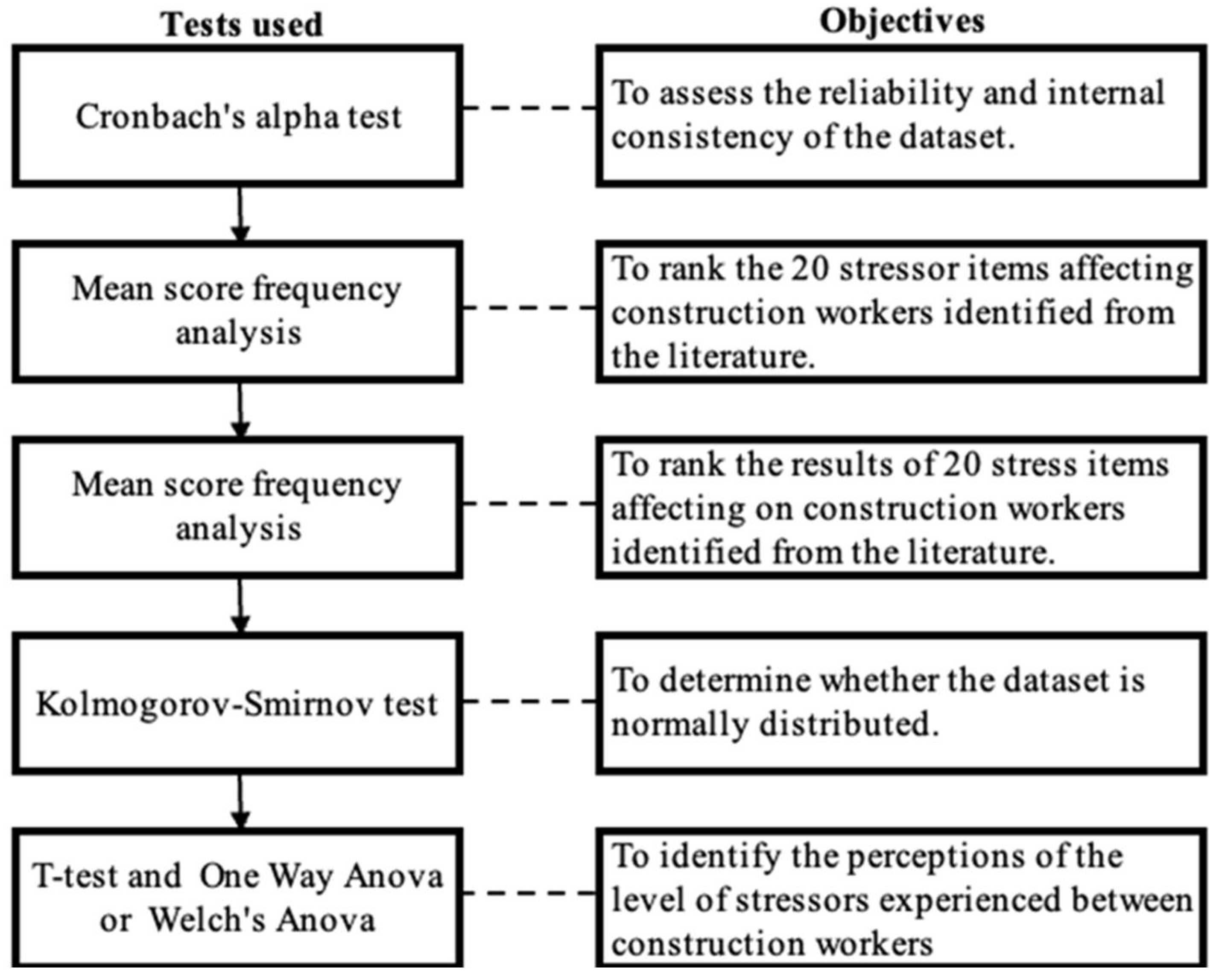
To evaluate the internal consistency and reliability of the questionnaire, Cronbach’s alpha coefficients were calculated. According to existing literature, a Cronbach’s alpha value of 0.70 is generally considered acceptable, 0.80 is considered good, and 0.90 or above indicates excellent internal consistency [82,101]. In this study, the overall Cronbach’s alpha coefficient was found to be 0.960. The alpha values for the subdimensions “impact factors on health,” “impact factors on family life,” and “impact factors on social life” were 0.911, 0.827, and 0.895, respectively, indicating high reliability across all dimensions. For statistical analyses, significance levels of p < 0.05 and p < 0.01 were adopted. Figure 1 presents the flowchart outlining the analysis steps and their sequence in the study (Figure 1).

4. Findings

4.1. Descriptive Statistics

The survey collected comprehensive demographic and professional information from respondents, resulting in a complete profile of the study sample (Table 3). A total of 185 employees completed the questionnaire, 60% of which are male and 40% female. The age distribution shows that many respondents (44.30%) were between 30 and 39 years old, followed by those aged 20–29 (32.40%), and 23.20% were 40 or older. In terms of their positions within their companies, 41.60% were in senior management roles, 41.10% worked in design and support roles and 17.30% were employed in technical and operational management roles.
The size of the organizations where participants worked varied greatly: 48.10% were employed in small companies, 27.60% in medium-sized and 24.30% in large companies. Note that firms are categorized by size in according to their number of employees as noted in European Commission [102]. In other words, small businesses employ “1–49,” medium-sized businesses employ “50–249,” and large businesses employ “250 or more” professionals.

4.2. Stressors in the Construction Industry

In this section of the survey instrument, professionals in the construction sector were asked to evaluate twenty statements on a 5-point Likert scale to identify the main stress factors they encounter in their working lives. Table 4 shows the frequencies, means and standard deviations, and 95% confidence intervals for all items based on the participants’ responses.
Table 4 shows the main stress factors encountered by construction professionals. Looking at the whole population, it may be observed that SF4 “high level of time pressure”, SF3 “high job demands/responsibility”, SF8 “excessive workload”, SF7 “unclear job scope and responsibility” and SF1 “long working hours (overtime)” have been identified as the top five stressors by participants (mean scores of 4.23, 4.22, 4.00, 3.97 and 3.86, respectively).
Located in the middle half (moderate impact) category, the next five workplace stress factors include SF2 “uncertainty in working hours (irregular work schedule)”, SF19 “taking on tasks due to others’ negligence”, SF14 “insufficient encouragement/support from manager”, SF10 “high level of client’s demands and requirements” and SF5 “poor physical working conditions (noise, crowd, etc.)” with mean scores of 3.82, 3.79, 3.70, 3.66 and 3.46, respectively.
Responses provided by the whole population indicate that SF18 “Harassment/Bullying”, SF16 “Age discrimination (Discrimination in promotion and advancement Processes at work)” and SF17 “Gender discrimination (Discrimination in promotion and development opportunities at work)” are perceived to be the last three stressors that affect construction professionals with mean scores of 2.82, 3.01, 3.02, respectively among all factors.
The factor groups were named after a thorough examination of the statements of the relevant items. The groups were entitled as “Organisational/Interpersonal Stressors”, “Task Stressors” and “Physical Stressors”. The results of the analysis conducted to assess which group exerts a greater influence on participants’ stress perceptions reveals that among the three factor groups, the most prominent stressors are in “Factor 2: Task Stressors” group, with a mean score (m = 3.89, SD = 0.87, 95% CI = 3.77–4.01). This is followed by the “Physical Stressors” factor (m = 3.35, SD = 1.39, 95% CI= 3.15–3.55), while the “Organisational/Interpersonal Stressors” category has the lowest average score among the three groups (m = 3.19, SD = 1.19, 95% CI = 3.02–3.36). The confidence intervals further indicate that task-related stressors exert the strongest influence on construction professionals’ perceived stress levels.

4.3. Differences in Perceptions Across Demographic and Workplace Contexts

Independent samples t-test, one-way analysis of variance (ANOVA) and Welch Anova test were applied to assess whether individuals’ perceptions of stress factors differ in terms of demographic variables such as gender, age group, professional experience and marital status. In some of the analyses, Welch Anova test was used instead of Anova test due to inequality of within-group variances [103]. The results obtained from the analyses are shown in Table 5.
A closer look at the values in the last column of Table 5, where total number of significant differences for each factor is displayed, reveals that there are significant differences in the perceptions of professionals with different demographic and workplace characteristics regarding all stress factors except SF20: “Facing obstacles when my views differ from coworkers”. This result indicates that the severity of the stress factors experienced by professionals vary depending on their personal and workplace characteristics.
Detailed analysis shows that women were more severely affected by gender discrimination in promotion and development opportunities at work (SF17), age discrimination (SF16), fear of failure at the job/job insecurity (SF11) and insufficient encouragement/support from managers (SF14) than their male counterparts. Moreover, women were more sensitive to conflicts/poor relationships with coworkers (SF12), acts of personal disrespect at work (SF13), harassment/bullying (SF18), and inadequate occupational health and safety (SF9) than men. Notably, women scored significantly higher on item SF9 (m = 3.54) compared to men (m = 3.06). These results indicate that an overwhelming majority of significant differences between male and female employees occur within the “Organizational/Interpersonal Stressors” category.
In the evaluations made according to marital status, significant differences were found between the perceptions of single and married individuals for a number of factors causing stress, namely little development/learning opportunities at work (SF6), gender discrimination (SF17) and harassment/bullying (SF18), poor physical working conditions (noise, crowd, etc.) (SF5), high job demands/responsibility (SF3), inadequate occupational health and safety (SF9) and personal disrespect at work (SF13). A closer look at the results reveals that all these stressors except SF3 were felt more severely by single employees compared to their married counterparts. Indeed, the mean value for SF6 was 3.85 for single employees and 2.97 for married employees (p < 0.05).
One way and Welch Anova tests were also conducted for the three different age groups: 20–29 (group 1), 30–39 (group 2) and 40+ (group 3). Results revealed that there are significant differences for SF6 “little development/learning opportunities at work”, SF1 “Long working hours”, SF2 “Uncertainty in working hours (irregular work schedule)” and SF5 “Poor physical working conditions (noise, crowd, etc.)”. The mean value for the SF6 stress factor for the 20–29 age group was 3.96, while this value dropped to 2.50 for employees aged 60 and over. Evidence shows that the youngest, namely 20–29 years old group is more affected from these stress factors compared to older two groups. Note that, half of these factors are located in the “task stressor” group (SF1 and SF2).
In the company size grouping, significant differences were observed between participants working for different sizes of companies for SF1 “Long working hours”, SF7 “Unclear job scope and responsibility”, SF10 “High level of client’s demands and requirements”, SF3 “High job demands/responsibility”, SF6 “little development/learning opportunities at work”, SF15 “Violence at work (threat, assault, etc.)”, SF2 “Uncertainty in working hours (irregular work schedule)”, SF9 “inadequate occupational health and safety” and SF8 “Excessive workload”. Results reveal that employees of middle-sized firms are affected more severely than participants from small and large companies for SF1 “Long working hours”, SF7 “Unclear job scope and responsibility”, SF10 “High level of client’s demands and requirements”, SF3 “High job demands/responsibility” and SF8 “Excessive workload”. Note that, these stressors are all located in the “task stressors” group. On the other hand, SF15 “Violence at work (threat, assault, etc.)”, SF9 “inadequate occupational health and safety” and SF2 “Uncertainty in working hours (irregular work schedule)” seem to affect the employees of small sized companies more than their larger counterparts. Numerically, the mean score for SF19 was 3.51 for small companies, while it was 2.82 for large companies (p = 0.031).
In the detailed analysis made according to the experience of the employees, significant differences were found in SF3 “high job demands/responsibility”, SF8 “Excessive workload”, SF10 “High level of client’s demands and requirements”, SF6 “little development/learning opportunities at work”, SF4 “High level of time pressure”, SF2 “Uncertainty in working hours (irregular work schedule)”, SF18 “harassment/bullying”, SF9 “inadequate occupational health and safety”, SF11 “fear of failure at the job/job insecurity” and SF14 “insufficient encouragement/support from manager”. In general, less experienced employees (1–5 years) experienced stressors related to workload, uncertainty, and limited development opportunities more intensely. For instance, the mean score for item SF6 “little development/learning opportunities at work” was 3.81 for employees with 1–5 years of experience, while this value was 2.83 for employees with 11–15 years of experience (p = 0.024). In contrast, employees with 26 or more years of experience reported higher stress for the stress factor (SF19) “occupational health and safety” (m = 3.90) indicating that different stages of professional tenure may be associated with distinct stress priorities.
Differences were also recorded in stress perceptions between participants only working in construction sites, employees only working in office and those working both on construction sites and offices. The findings related to the workplace are also noteworthy. Differences in perceived stress were noted among those who worked solely on-site, those who worked solely in the office, and those who worked both on-site and in the office. A detailed analysis shows that, regarding conflicts/poor relationships with coworkers (SF12), participants working both on construction sites and in offices reported the highest mean score (m = 3.69). In contrast, the mean scores of those working only in offices (m = 2.88) and those working only on construction sites (m = 2.76) were lower. This indicates that professionals who experience both working environments simultaneously feel this stress factor more intensely. Similarly significant differences were found among these groups in items SF9 “inadequate occupational health and safety,” SF4: “high time pressure,” SF11 “fear of failure at work/job insecurity,” SF13 “personal disrespect,” SF16 “age discrimination,” SF19 “tasks undertaken due to the negligence of others,” SF10 “high customer demands,” and SF14 “insufficient managerial support.” All of these stress factors, except SF4 and SF14, are felt more intensely by both on-site and office workers. “High time pressure” (SF4) particularly affects office workers (m = 4.29), while (SF14) “insufficient managerial support” is experienced more severely by those working only on-site (m = 4.00).

4.4. Effects of Workplace Stressors on Private Lives of Employees

In the next section of the survey, participants were asked to respond to a series of items on a 5-point Likert scale to evaluate the effects of workplace stressors on the health, family and social life of construction industry professionals. Table 6 shows the summary of responses to 5-point Likert type items, their means and standard deviations. The highest scoring effects of workplace stress on private life of construction industry professionals ranged between 3.04 and 4.07, with the most prominent being inability to engage in preferred activities (4.07), marital conflicts (4.06), and income-related family stress (4.02). In contrast, behaviours indicating potentially maladaptive coping—such as self-harm (1.72), alcohol consumption (2.31), anxiolytic use (2.37), and smoking (2.50)—had the lowest mean scores.
Among the twelve impacts in Table 6, where the effects of workplace stress factors on “health” are grouped, the first three impacts with the highest scores appear to be “irritability and tension”, “Sleep disturbances” and “minor physical discomforts” with mean scores of 3.91, 3.81 and 3.80, respectively. Among the four-factor group in which the effects on family life are grouped, “marital conflicts”, “income related family stress” and “limited time with child(ren)” were identified by construction professionals as the first three effects of workplace stress on family life with average scores of 4.06, 4.02 and 3.50, respectively. For the four-factor group in which the effects on social life are grouped, the statement “inability to engage in preferred activities” received the highest average score of 4.07. The remaining three factors in this group, namely “limited time for professional growth”, “dissatisfaction with life” and “social isolation” have the same average scores of 3.84. The ranking of these effects, as presented in Table 6, provides a clearer understanding of how workplace stress extends beyond the professional environment and shapes family and social functioning.

5. Discussion

The first important theme emerging from the results relates to the identification of key stressors affecting construction professionals. One of the most prominent findings emerging from the study is that task-related stressors have a greater impact on construction professionals compared to organizational/interpersonal and physical stressors. A high level of time pressure, high job demands/responsibility, excessive workload, unclear job scope and long working hours all of which belong to the task stressors category are the top five stress factors in construction industry. The findings of this study are largely consistent with the existing literature. Manivannan et al. [51], similarly demonstrated that task-related stressors such as excessive workload, time pressure, and long working hours exerted a more significant influence on employees compared to other types of stressors. This finding is further supported the findings of the study by Nwaogu et al. [31], which reveals that task stressors such as excessive workload and increased work speed are the most critical stressors affecting construction professionals’ well-being. Their study also emphasized that high job demands, limited job control, and insufficient social support significantly contribute to psychological strain, thereby reinforcing the conclusion that task-related stressors represent the most influential category in shaping occupational stress outcomes in the construction sector.
While the top seven positions are dominated by task-related stressors in the ranking of the twenty stress factors, the first stressor belonging to a different category appears in the eighth place: “Insufficient encouragement/support from managers,” which falls under the organisational/interpersonal category. This finding constitutes a significant insight for managerial practice, as it highlights the areas that should be strategically prioritized to effectively mitigate stress levels among employees and enhance organizational productivity. Understanding which stressors have the greatest impact on employees enables managers to allocate resources efficiently and design targeted interventions. In this way, efforts to mitigate stress in the workplace will not be directed to interventions that hold limited relevance to employee well-being and thus will not be wasted.
The second important theme concerns demographic and institutional differences in the experience of workplace stress. While implementing stress reducing strategies, it is also important for managers to consider a range of individual and institutional variables that may influence how stress is perceived and experienced across different roles and organizational settings. Previous studies show that quantitative workload, job insecurity, limited promotion opportunities, and poor communication are strongly associated with job stress, especially in small and medium-sized enterprises [104,105,106,107]. These findings may explain the higher stress reported by employees in medium-sized companies in our study. The findings of this study provide important insight into the disproportionate impact of task-related stress factors on employees in medium-sized enterprises and the potential for structural deficiencies in such organizations. Furthermore, in an industry characterized by norms of continuous presence and unlimited accessibility, heightened stress among employees with dual office–site roles are unsurprising. Such stress largely stems from the conflicting demands of two work settings and the increased workload associated with managing multiple responsibilities [108,109]. This highlights the importance of revisiting organizational design and implementing workload redistribution strategies to reduce stress and improve overall operational efficiency.
Similarly, the finding that younger employees are more affected by task-related stressors compared to their older counterparts suggests that efforts to reduce stress and enhance productivity should not be implemented uniformly across the organization. Instead, such initiatives should consider generational differences in work culture, expectations, and stress perception, emphasizing a more individualized and targeted approach. Young employees, whose professional identities are not yet fully established are faced with various stressors and thus may find it difficult to adapt to the workplace. Managing stress among young employees necessitates an organizational culture that actively supports training initiatives designed to improve their adaptability to work environments and their capacity to manage occupational stress factors. Moreover, younger employees and the new generation express significantly greater discomfort with long and irregular working hours compared to their older counterparts. This highlights the necessity for managers to develop incentive mechanisms and supportive strategies aimed at facilitating younger employees’ adaptation to the demanding work culture of the construction industry.
Among the three main categories, the one that employees were least affected appears to be the “Organisational/Interpersonal Stressors” category, which includes factors such as harassment, bullying, gender and age discrimination, and violence in the workplace. The fact that these factors ranked lower does not necessarily indicate that such issues have been fully resolved within construction organizations and that they can be disregarded. Rather, these findings should be interpreted within the context of varying perceptions across different demographic groups and workplace environments. Indeed, an overwhelming majority of significant differences between male and female employees are observed within the “Organizational/Interpersonal Stressors” category, for gender discrimination in promotion and development opportunities at work, age discrimination, fear of failure at the job/job insecurity and insufficient encouragement/support from managers. Therefore, the evidence that female employees are disproportionately affected by these types of stressors highlights the importance of not dismissing them and of considering gender-based differences in workplace experiences. Furthermore, finding that single employees appear to be more affected by stressors within the “Organisational/Interpersonal” category than their married counterparts, suggests the need for targeted interventions that account for such demographic differences.
Contrary to previous literature [19,50,72] suggesting that employees working solely on construction sites experience higher levels of stress, the study finds that those working both on-site and in-office report higher overall stress levels. In the previous studies office and site employees’ have generally been examined separately, and little attention has been paid to employees who simultaneously undertake both roles. However, the present study includes a group of workers who are required to work both in the office and on construction sites, and who therefore frequently encounter coordination challenges. The findings indicate that this group experiences significantly higher levels of both physical and mental fatigue while fulfilling the demands of both work environments. To reduce stress levels and enhance the productivity of this group which has been largely neglected in the literature, it is necessary to reconsider compensation schemes and leave policies tailored specifically to their needs.
Results also reveal that professionals working for small sized firms are more adversely affected by inadequate occupational health and safety measures at the workplace, uncertainty in working hours and violence at work (threat, assault, etc.) compared to their counterparts working for larger firms. Similarly, refs [110,111] state that small firms’ limited organizational capacity inhibits the adoption of full OHS strategies, exposing employees to higher levels of risk. This can be attributed to the informal organizational structures commonly observed in small firms, which often lead to several managerial deficiencies. For instance, inadequate health and safety controls and irregular work schedules—both resulting from the absence of formalized procedures and standardized planning processes—are typical consequences of such organizational settings.
The third important theme relates to the impacts of workplace stress on employees’ health, family, and social life. In the present study, the most significant impact of occupational stressors on employees’ personal lives appears to be their inability to engage in preferred activities—such as traveling, learning new languages, or participating in artistic pursuits. To address this issue that has a negative influence on employees’ social lives, managers could focus on implementing initiatives such as flexible working hours, wellness programs, and training leave and support for career development. The second and third most significant effects of occupational stress on employees’ personal lives appear to be marital conflicts and income-related family stress. To mitigate these impacts, organizations could adopt strategies such as childcare and eldercare support services, family-friendly shift and leave policies, and structured, performance-based incremental salary increases.

6. Limitation and Future Research

This study has limitations. First, the combined use of convenience and snowball sampling during data collection reduces the representativeness of the sample and increases the risk of selection bias. The tendency of snowball participants to select individuals with similar demographic and professional characteristics may limit data diversity. Therefore, generalizing the findings to all construction professionals in Turkiye should be approached with caution. Future research could compare stress levels among construction professionals in different countries—particularly among women and younger employees—to gain a deeper understanding of how cultural and institutional contexts shape workplace stress. In addition, an in-depth examination of the effects of working in medium-sized firms and assuming dual roles both in the office and on the construction site on stress constitutes a significant research area for the sustainability of the sector.

7. Conclusions

In line with the three important themes identified in the discussion, the conclusions highlight key stressors, subgroup differences, and the broader private life impacts of workplace stress. Increasing the productivity of the workforce is essential to ensuring construction sector’s continued and sustainable development. The level of occupational stress that is experienced by the workforce is one of the most important factors that directly influences the productivity of employees. In this study, a survey-based analysis is carried out with the purpose of providing a more comprehensive understanding of the effects that stress variables have on individuals who are employed in the construction business.
Results showed that task stressors have greater influence on construction professionals compared to organizational and physical stressors. This issue requires managers to establish goals about streamlining tasks, hiring policies to reduce workloads and providing guidance and training for employees’ task prioritization skills. The present research further revealed that employees working for medium-sized firms and younger employees are disproportionately affected by task-related stressors compared to their counterparts. The latter finding highlights the importance of revisiting organizational design and implementing workload redistribution strategies to improve overall operational efficiency particularly in medium-sized firms. Managing stress among young employees on the other hand necessitates an organizational culture that embraces strategies aimed at fostering younger employees’ adaptation to the demanding work culture of the construction industry. Occupational stressors appear to have a significant impact on employees’ social lives, negatively affecting their inability to engage in preferred activities such as traveling, learning new languages, or participating in artistic pursuits. In this concept, initiatives such as flexible working hours, wellness programs, and training leaves may be considered throughout organizations to increase employee satisfaction.
The present research contributes to the establishment of appropriate policies and strategies that can boost the productivity of employees. By highlighting the necessity of developing strategies to minimize the effects of task-related stresses, particularly those that arise from excessive working hours and increasing workload, the results of this study are expected to contribute to the productivity issues in the industry. The implementation of targeted policies and practices that address the specific needs of particular employee groups, such as women and young professionals, emerges as a vital prerequisite for enhancing the overall performance of the sector.

Author Contributions

Conceptualization, S.G.; methodology, E.S.; formal analysis, E.S.; investigation E.S. and S.G.; writing—original draft preparation, E.S. and S.G.; writing—review and editing, S.G. All authors have read and agreed to the published version of the manuscript.

Funding

This research received no external funding.

Institutional Review Board Statement

The study was conducted in accordance with the Declaration of Helsinki and approved by the Social and Human Sciences Research Ethics Committee of Haliç University (Approval Code: 05, Approval Date: 12 June 2024).

Informed Consent Statement

Informed consent was obtained from all subjects involved in the study.

Data Availability Statement

The data that support the findings of this study are available from the corresponding author upon reasonable request. Due to privacy and ethical restrictions, the data are not publicly available.

Conflicts of Interest

The authors declare no conflicts of interest.

References

  1. Gundes, S. Exploring the dynamics of the Turkish construction industry using input–output analysis. Constr. Manag. Econ. 2011, 29, 59–68. [Google Scholar] [CrossRef]
  2. Gundes, S. Input structure of the construction industry: A cross-country analysis, 1968–1990. Constr. Manag. Econ. 2011, 29, 613–621. [Google Scholar] [CrossRef]
  3. Tijani, B.; Jin, X.; Osei-Kyei, R. A systematic review of mental stressors in the construction industry. Int. J. Build. Pathol. Adapt. 2021, 39, 433–460. [Google Scholar] [CrossRef]
  4. Beswick, J.; Rogers, K.; Corbett, E.; Binch, S.; Jackson, K. An Analysis of the Prevalence and Distribution of Stress in the Construction Industry; Health and Safety Executive: Buxton, UK, 2007. [Google Scholar]
  5. Love, P.E.; Edwards, D.J.; Irani, Z. Work stress, support, and mental health in construction. J. Constr. Eng. Manag. 2010, 136, 650–658. [Google Scholar] [CrossRef]
  6. Leung, M.Y.; Shan Isabelle Chan, Y.; Dongyu, C. Structural linear relationships between job stress, burnout, physiological stress, and performance of construction project managers. Eng. Constr. Archit. Manag. 2011, 18, 312–328. [Google Scholar] [CrossRef]
  7. Bowen, P.; Edwards, P.; Lingard, H. Workplace stress experienced by construction professionals in South Africa. J. Constr. Eng. Manag. 2013, 139, 393–403. [Google Scholar] [CrossRef]
  8. Nwaogu, J.M.; Chan, A.P.; Naslund, J.A. Measures to improve the mental health of construction personnel based on expert opinions. J. Manag. Eng. 2022, 38, 04022019. [Google Scholar] [CrossRef]
  9. Leung, M.Y.; Zhang, H.; Skitmore, M. Effects of organizational supports on the stress of construction estimation participants. J. Constr. Eng. Manag. 2008, 134, 84–93. [Google Scholar] [CrossRef]
  10. Boschman, J.S.; Van der Molen, H.F.; Sluiter, J.K.; Frings-Dresen, M.H.W. Psychosocial work environment and mental health among construction workers. Appl. Ergon. 2013, 44, 748–755. [Google Scholar] [CrossRef]
  11. Wang, C.; Mohd-Rahim, F.A.; Chan, Y.Y.; Abdul-Rahman, H. Fuzzy mapping on psychological disorders in construction management. J. Constr. Eng. Manage 2017, 143, 04016094. [Google Scholar] [CrossRef]
  12. Hosseini, O.; Loosemore, M.; Fini, A.A.F. Construction workforce’s mental health: Research and policy alignment in the Australian construction industry. Buildings 2023, 13, 335. [Google Scholar] [CrossRef]
  13. Fordjour, G.A.; Chan, A.P. Exploring occupational psychological health indicators among construction employees: A study in Ghana. J. Ment. Health Clin. Psychol. 2019, 3, 6–18. [Google Scholar] [CrossRef]
  14. Selcuk, E.; Gundes, S. İnşaat Projelerinde Verimlilik Performansını Etkileyen Faktörler. In Proceedings of the 2. Proje ve Yapım Yönetimi Kongresi, İzmir, Turkey, 13–16 September 2012; pp. 1006–1017. [Google Scholar]
  15. Avcı, M.; Selçuk, E. Türkiye’de İnşaat Projelerinde Çalışanların İşçi Sağlığı ve Güvenliği Tutumlarının Değerlendirilmesi. Haliç Üniversitesi Fen Bilim. Derg. 2020, 3, 139–158. [Google Scholar] [CrossRef]
  16. Alsulami, H.; Serbaya, S.H.; Rizwan, A.; Saleem, M.; Maleh, Y.; Alamgir, Z. Impact of emotional intelligence on the stress and safety of construction workers in Saudi Arabia. Eng. Constr. Archit. Manag. 2023, 30, 1365–1378. [Google Scholar] [CrossRef]
  17. Lee, G.; Lee, S. Importance of testing with independent subjects and contexts for machine-learning models to monitor construction workers’ psychophysiological responses. J. Constr. Eng. Manag. 2022, 148, 04022082. [Google Scholar] [CrossRef]
  18. Ahmed, K.; Leung, M.Y.; Ojo, L.D. An exploratory study to identify key stressors of ethnic minority workers in the construction industry. J. Constr. Eng. Manag. 2022, 148, 04022014. [Google Scholar] [CrossRef]
  19. Chan, A.P.; Nwaogu, J.M.; Naslund, J.A. Mental ill-health risk factors in the construction industry: Systematic review. J. Constr. Eng. Manag. 2020, 146, 04020004. [Google Scholar] [CrossRef]
  20. Liang, H.; Yang, W.; Liu, T.; Xia, F. Demographic influences on perceived stressors of construction workers during the COVID-19 pandemic. Int. J. Environ. Res. Public Health 2022, 19, 4192. [Google Scholar] [CrossRef]
  21. Feng, Y.; Wu, P.; Ye, G.; Zhao, D. Risk-compensation behaviors on construction sites: Demographic and psychological determinants. J. Manag. Eng. 2017, 33, 04017008. [Google Scholar] [CrossRef]
  22. Gomez-Salgado, C.; Camacho-Vega, J.C.; Gomez-Salgado, J.; Garcia-Iglesias, J.J.; Fagundo-Rivera, J.; Allande-Cusso, R.; Martín-Pereira, J.; Ruiz-Frutos, C. Stress, fear, and anxiety among construction workers: A systematic review. Front. Public Health 2023, 11, 1226914. [Google Scholar] [CrossRef]
  23. Candeias, A.A.; Galindo, E.; Reschke, K.; Bidzan, M.; Stueck, M. Editorial: The interplay of stress, health, and well-being: Unraveling the psychological and physiological processes. Front. Psychol. 2024, 15, 1471084. [Google Scholar] [CrossRef]
  24. Gunasekra, K.A.; Perera, B.A.K.S. Defining occupational stress: A systematic literature review. FARU J. 2023, 10, 104–111. [Google Scholar] [CrossRef]
  25. HSE. Health and Safety Executive. Tackling Work-Related Stress Using the Management Standards Approach. 2019. Available online: https://www.hse.gov.uk/pubns/wbk01.pdf (accessed on 9 December 2024).
  26. Colligan, T.W.; Higgins, E.M. Workplace stress: Etiology and consequences. J. Workplace Behav. Health 2006, 21, 89–97. [Google Scholar] [CrossRef]
  27. Siegrist, J.; Li, J. Associations of extrinsic and intrinsic components of work stress with health: A systematic review of evidence on the effort-reward imbalance model. Int. J. Environ. Res. Public Health 2016, 13, 432. [Google Scholar] [CrossRef]
  28. Djebarni, R. The impact of stress in site management effectiveness. Constr. Manag. Econ. 1996, 14, 281–293. [Google Scholar] [CrossRef]
  29. Lingard, H. The impact of individual and job characteristics on ‘burnout’ among civil engineers in Australia and the implications for employee turnover. Constr. Manag. Econ. 2003, 21, 69–80. [Google Scholar] [CrossRef]
  30. De Silva, N.; Samanmali, R.; De Silva, H.L. Managing occupational stress of professionals in large construction projects. J. Eng. Des. Technol. 2017, 15, 488–504. [Google Scholar] [CrossRef]
  31. Nwaogu, J.M.; Chan, A.P.; Akinyemi, T.A. Conceptualizing the dynamics of mental health among construction supervisors. Int. J. Constr. Manag. 2023, 23, 2593–2613. [Google Scholar] [CrossRef]
  32. Leung, M.Y.; Ahmed, K.; Chan, I.Y. Impact of Stressors/Stress on Organizational Commitment of Engineers in the Construction Industry. Buildings 2024, 14, 956. [Google Scholar] [CrossRef]
  33. Lingard, H.; Francis, V.; Turner, M. The rhythms of project life: A longitudinal analysis of work hours and work–life experiences in construction. Constr. Manag. Econ. 2010, 28, 1085–1098. [Google Scholar] [CrossRef]
  34. Jebelli, H.; Choi, B.; Lee, S. Application of wearable biosensors to construction sites. II: Assessing workers’ physical demand. J. Constr. Eng. Manag. 2019, 145, 04019080. [Google Scholar] [CrossRef]
  35. Abdelhamid, T.S.; Everett, J.G. Physiological demands during construction work. J. Constr. Eng. Manag. 2002, 128, 427–437. [Google Scholar] [CrossRef]
  36. Hwang, S.; Lee, S. Wristband-type wearable health devices to measure construction workers’ physical demands. Autom. Constr. 2017, 83, 330–340. [Google Scholar] [CrossRef]
  37. Sang, K.J.C.; Dainty, A.R.J.; Ison, S.G. Gender: A risk factor for occupational stress in the architectural profession? Constr. Manag. Econ. 2007, 25, 1305–1317. [Google Scholar] [CrossRef]
  38. Raver, J.L.; Nishii, L.H. Once, twice, or three times as harmful? Ethnic harassment, gender harassment, and generalized workplace harassment. J. Appl. Psychol. 2010, 95, 236–254. [Google Scholar] [CrossRef]
  39. Sunindijo, R.Y.; Kamardeen, I. Work stress is a threat to gender diversity in the construction industry. J. Constr. Eng. Manag. 2017, 143, 04017073. [Google Scholar] [CrossRef]
  40. Bowen, P.; Peihua Zhang, R.; Edwards, P. An investigation of work-related strain effects and coping mechanisms among South African construction professionals. Constr. Manag. Econ. 2021, 39, 298–322. [Google Scholar] [CrossRef]
  41. Pinto, J.K.; Patanakul, P.; Pinto, M.B. Project personnel, job demands, and workplace burnout: The differential effects of job title and project type. IEEE Trans. Eng. Manag. 2016, 63, 91–100. [Google Scholar] [CrossRef]
  42. Abdalla, A.; Li, X.; Yang, F. Stressors and job burnout of Chinese expatriate construction professionals. Eng. Constr. Archit. Manag. 2025, 32, 705–731. [Google Scholar] [CrossRef]
  43. Wu, G.; Hu, Z.; Zheng, J. Role stress, job burnout, and job performance in construction project managers: The moderating role of career calling. Int. J. Environ. Res. Public Health 2019, 16, 2394. [Google Scholar] [CrossRef]
  44. Shan, Y.; Imran, H.; Lewis, P.; Zhai, D. Investigating the latent factors of quality of work-life affecting construction craft worker job satisfaction. J. Constr. Eng. Manag. 2017, 143, 04016134. [Google Scholar] [CrossRef]
  45. Loosemore, M.; Waters, T. Gender differences in occupational stress among professionals in the construction industry. J. Manag. Eng. 2004, 20, 126–132. [Google Scholar] [CrossRef]
  46. Vitharana, V.H.P.; De Silva, G.S.; De Silva, S. Health hazards, risk and safety practices in construction sites–a review study. Eng. J. Inst. Eng. Sri Lanka 2015, 48, 35–44. [Google Scholar] [CrossRef]
  47. Karasek, R.A., Jr. Job demands, job decision latitude, and mental strain: Implications for job redesign. Adm. Sci. Q. 1979, 24, 285–308. [Google Scholar] [CrossRef]
  48. Sang, K.J.; Ison, S.G.; Dainty, A.R. The job satisfaction of UK architects and relationships with work-life balance and turnover intentions. Eng. Constr. Archit. Manag. 2009, 16, 288–300. [Google Scholar] [CrossRef]
  49. Haynes, N.S.; Love, P.E. Psychological adjustment and coping among construction project managers. Constr. Manag. Econ. 2004, 22, 129–140. [Google Scholar] [CrossRef]
  50. Bowen, P.; Edwards, P.; Lingard, H.; Cattell, K. Predictive modeling of workplace stress among construction professionals. J. Constr. Eng. Manag. 2014, 140, 04013055. [Google Scholar] [CrossRef]
  51. Manivannan, J.; Loganathan, S.; Kamalanabhan, T.J.; Kalidindi, S.N. Investigating the relationship between occupational stress and work-life balance among Indian construction professionals. Constr. Econ. Build. 2022, 22, 27–51. [Google Scholar] [CrossRef]
  52. Leung, M.Y.; Chan, Y.S.; Yu, J. Integrated model for the stressors and stresses of construction project managers in Hong Kong. J. Constr. Eng. Manag. 2009, 135, 126–134. [Google Scholar] [CrossRef]
  53. Leung, M.Y.; Liang, Q.; Chan, I.Y. Development of a stressors–stress–performance–outcome model for expatriate construction professionals. J. Constr. Eng. Manag. 2017, 143, 04016121. [Google Scholar] [CrossRef]
  54. Bruce, P.J.; Hrymak, V.; Bruce, C.; Byrne, J. The role of interpersonal conflict as a cause of work-related stress in construction managers in Ireland. Constr. Innov. 2025, 25, 61–77. [Google Scholar] [CrossRef]
  55. Schuler, R.S. Definition and conceptualization of stress in organizations. Organ. Behav. Hum. Perform. 1980, 25, 184–215. [Google Scholar] [CrossRef]
  56. Frimpong, S.; Sunindijo, R.Y.; Wang, C.C.; Boadu, E.F.; Dansoh, A.; Fagbenro, R.K. Coping with psychosocial hazards: A systematic review of young construction workers’ practices and their determinants. Buildings 2023, 13, 22. [Google Scholar] [CrossRef]
  57. Sun, C.; Hon, C.K.; Way, K.A.; Jimmieson, N.L.; Xia, B.; Wu, P.P.Y. A Bayesian network model for the impacts of psychosocial hazards on the mental health of site-based construction practitioners. J. Constr. Eng. Manag. 2023, 149, 04022184. [Google Scholar] [CrossRef]
  58. Caven, V. Constructing a career: Women architects at work. Career Dev. Int. 2004, 9, 518–531. [Google Scholar] [CrossRef]
  59. Hon, C.K.; Sun, C.; Way, K.A.; Jimmieson, N.L.; Xia, B.; Biggs, H.C. Psychosocial hazards affecting mental health in the construction industry: A qualitative study in Australia. Eng. Constr. Archit. Manag. 2024, 31, 3165–3192. [Google Scholar] [CrossRef]
  60. Lingard, H.; Francis, V. Does work–family conflict mediate the relationship between job schedule demands and burnout in male construction professionals and managers? Constr. Manag. Econ. 2005, 23, 733–745. [Google Scholar] [CrossRef]
  61. Turner, M.; Lingard, H. Identification and verification of demands and resources within a work–life fit framework: Evidence from the Australian construction industry. Community Work Fam. 2014, 17, 268–287. [Google Scholar] [CrossRef]
  62. Kikuchi, H.; Odagiri, Y.; Ohya, Y.; Nakanishi, Y.; Shimomitsu, T.; Theorell, T.; Inoue, S. Association of overtime work hours with various stress responses in 59,021 Japanese workers: Retrospective cross-sectional study. PLoS ONE 2020, 15, e0229506. [Google Scholar] [CrossRef]
  63. Barlas, B.; Izci, F.B. Individual and workplace factors related to fatal occupational accidents among shipyard workers in Turkey. Saf. Sci. 2018, 101, 173–179. [Google Scholar] [CrossRef]
  64. Umer, W.; Yu, Y.; Antwi Afari, M.F. Quantifying the effect of mental stress on physical stress for construction tasks. J. Constr. Eng. Manag. 2022, 148, 04021204. [Google Scholar] [CrossRef]
  65. Seo, H.C.; Lee, Y.S.; Kim, J.J.; Jee, N.Y. Analyzing safety behaviors of temporary construction workers using structural equation modeling. Saf. Sci. 2015, 77, 160–168. [Google Scholar] [CrossRef]
  66. Cattell, K.; Bowen, P.; Edwards, P. Stress among South African construction professionals: A job demand-control-support survey. Constr. Manag. Econ. 2016, 34, 700–723. [Google Scholar] [CrossRef]
  67. Langdon, R.R.; Sawang, S. Construction workers’ well-being: What leads to depression, anxiety, and stress? J. Constr. Eng. Manag. 2018, 144, 1406. [Google Scholar] [CrossRef]
  68. Newaz, M.T.; Giggins, H.; Ranasinghe, U. A critical analysis of risk factors and strategies to improve mental health issues of construction workers. Sustainability 2022, 14, 13024. [Google Scholar] [CrossRef]
  69. Rotimi, F.E.; Burfoot, M.; Naismith, N.; Mohaghegh, M.; Brauner, M. A systematic review of the mental health of women in construction: Future research directions. Build. Res. Inf. 2023, 51, 459–480. [Google Scholar] [CrossRef]
  70. Zhang, S.; Sunindijo, R.Y.; Loosemore, M. The influence of personal and workplace characteristics on the job stressors of design professionals in the Chinese construction industry. J. Manag. Eng. 2023, 39, 05023006. [Google Scholar] [CrossRef]
  71. Wu, Z.; Wang, Y.; Liu, M. Job stress and burnout among construction professionals: The moderating role of online emotions. Eng. Constr. Archit. Manag. 2024, 31, 4831–4851. [Google Scholar] [CrossRef]
  72. Jin, X.H.; Senaratne, S.; Fu, Y.; Tijani, B. Tackling stress of project management practitioners in the Australian construction industry: The causes, effects and alleviation. Eng. Constr. Archit. Manag. 2024, 31, 4016–4041. [Google Scholar] [CrossRef]
  73. Biggs, A.; Townsend, K.; Loudoun, R.; Robertson, A.; Mason, J.; Maple, M.; Lacey, J.; Thompson, N. Towards an Evidence-Based Critical Incidents and Suicides Response Program in Australian Construction. Buildings 2024, 14, 2797. [Google Scholar] [CrossRef]
  74. Firose, M.M.; Chathurangi, B.N.M.; Kamardeen, I. Work stress among construction professionals during an economic crisis: A case study of Sri Lanka. Smart Sustain. Built Environ. 2025. Ahead-of-print. [Google Scholar] [CrossRef]
  75. Ademci, E.; Gundes, S. Individual and Organisational Level Drivers and Barriers to Building Information Modelling (BIM). J. Constr. Dev. Ctries. 2020, 26, 89–109. [Google Scholar]
  76. Selcuk, E. Impact of the COVID-19 pandemic on construction project performance: Challenges and strategic responses. J. Asian Archit. Build. Eng. 2025, 1–18. [Google Scholar] [CrossRef]
  77. Atakul, N.; Gundes, S. Capital Structure in the Construction Industry: Theory and Practice. Can. J. Civ. Eng. 2021, 48, 819–828. [Google Scholar] [CrossRef]
  78. Senaratne, S.; Rasagopalasingam, V. The causes and effects of work stress in construction project managers: The case in Sri Lanka. Int. J. Constr. Manag. 2017, 17, 65–75. [Google Scholar] [CrossRef]
  79. Naderifar, M.; Goli, H.; Ghaljaie, F. Snowball sampling: A purposeful method of sampling in qualitative research. Strides Dev. Med. Educ. 2017, 14, 1–6. [Google Scholar] [CrossRef]
  80. Van Aalderen-Smeets, S.; Walma van der Molen, J. Measuring primary teachers’ attitudes toward teaching science: Development of the dimensions of attitude toward science (DAS) instrument. Int. J. Sci. Educ. 2013, 35, 577–600. [Google Scholar] [CrossRef]
  81. Griffiths, P.; Gossop, M.; Powis, B.; Strang, J. Reaching hidden populations of drug users by privileged access interviewers: Methodological and practical issues. Addiction 1993, 88, 1617–1626. [Google Scholar] [CrossRef]
  82. George, D.; Mallery, P. SPSS for Windows Step by Step: A Simple Guide and Reference, 17.0 update; Allyn & Bacon: Boston, MA, USA, 2010. [Google Scholar]
  83. Field, A. Discovering Statistics Using IBM SPSS Statistics; Sage Publications: Thousand Oaks, CA, USA, 2013. [Google Scholar]
  84. Gravetter, F.; Wallnau, L. Essentials of Statistics for the Behavioral Sciences; Wadsworth: Thousand Oaks, CA, USA, 2014. [Google Scholar]
  85. Trochim, W.M.; Donnelly, J.P. The Research Methods Knowledge Base; Atomic Dog: Mason, OH, USA, 2006. [Google Scholar]
  86. Kline, R.B. Methodology in the Social Sciences: Principles and Practice of Structural Equation Modeling; Guilford Press: New York, NY, USA, 2011. [Google Scholar]
  87. Tabachnick, B.G.; Fidell, L.S. Using Multivariate Statistics; Pearson: London, UK, 2013. [Google Scholar]
  88. Demir, E.; Çelik, İ.; Urlu, S. Araştırmalarda Uygun İstatistiksel Tekniğin Belirlenmesinde Normallik ve Homojenlik İhlallerinin Etkisinin İlgili Literatür Bağlamında Değerlendirilmesi. J. Psychom. Res. 2024, 2, 52–62. [Google Scholar] [CrossRef]
  89. Rezaei, M.; Pironti, M.; Quaglia, R. AI in knowledge sharing, which ethical challenges are raised in decision-making processes for organisations? Manag. Decis. 2024, 63, 3369–3388. [Google Scholar] [CrossRef]
  90. Sainani, K.L. Dealing with non-normal data. PMR 2012, 4, 1001–1005. [Google Scholar] [CrossRef]
  91. Ali, M.M.; Sharma, S.C. Robustness to nonnormality of regression Ftests. J. Econom. 1996, 71, 175–205. [Google Scholar] [CrossRef]
  92. Box, G.E.P.; Watson, G.S. Robustness to non-normality of regression tests. Biometrika 1962, 49, 93–106. [Google Scholar] [CrossRef]
  93. Lumley, T.; Diehr, P.; Emerson, S.; Chen, L. The importance of the normality assumption in large public health data sets. Annu. Rev. Public Health 2002, 23, 151–169. [Google Scholar] [CrossRef]
  94. Gelman, A.; Hill, J. Data Analysis Using Regression and Multilevel/Hierarchical Models; Cambridge University Press: Cambridge, MA, USA, 2007. [Google Scholar]
  95. Knief, U.; Forstmeier, W. Violating the normality assumption may be the lesser of two evils. Behav. Res. Methods 2021, 53, 2576–2590. [Google Scholar] [CrossRef] [PubMed]
  96. Jekel, J.F.; Katz, D.L.; Elmore, J.G. Epidemiology, Biostatistics and Preventive Medicine; W.B. Saunders Company: Philadelphia, PA, USA, 2001. [Google Scholar]
  97. Bachrach, D.G.; Wang, H.; Bendoly, E.; Zhang, S. Importance of organizational citizenship behaviour for overall performance evaluation: Comparing the role of task interdependence in China and the USA. Manag. Organ. Rev. 2007, 3, 255–276. [Google Scholar] [CrossRef]
  98. Pallant, J. SPSS Survival Manual: A Step by Step Guide to Data Analysis Using IBM SPSS; Open University Press: Milton Keynes, UK, 2020; Available online: https://books.google.com.tr/books?hl=en&lr=&id=CxUsEAAAQBAJ&oi=fnd&pg=PP1&ots=n38AvGCe4V&sig=2HibIDC6bl2YuTKsNInrn4I3nos&redir_esc=y#v=onepage&q&f=false (accessed on 15 November 2025).
  99. Staffa, S.J.; Zurakowski, D. Strategies in adjusting for multiple comparisons: A primer for pediatric surgeons. J. Pediatr. Surg. 2020, 55, 1699–1705. [Google Scholar] [CrossRef]
  100. Moder, K. Alternatives to F-test in one way ANOVA in case of heterogeneity of variances (a simulation study). Psychol. Test Assess. Model. 2010, 52, 343. [Google Scholar]
  101. Marcial, D.; Launer, M. Test-retest reliability and internal consistency of the survey questionnaire on digital trust in the workplace. Solid State Technol. 2021, 64, 4369–4381. [Google Scholar]
  102. European Commission. Commission Recommendation Concerning the Definition of Micro, Small and Medium Sized Enterprises; 2003/361/EC; European Commission: Brussels, Belgium, 2003.
  103. Tsubono, K.; Mitoku, S. Public school teachers’ occupational stress across different school types: A nationwide survey during the prolonged COVID-19 pandemic in Japan. Front. Public Health 2023, 11, 1287893. [Google Scholar] [CrossRef] [PubMed]
  104. Lai, Y.; Saridakis, G.; Blackburn, R. Job stress in the United Kingdom: Are small and medium-sized enterprises and large enterprises different? Stress Health 2015, 31, 222–235. [Google Scholar] [CrossRef]
  105. Lloyd, N.; Smeeton, N.; Freethy, I.; Jones, J.; Wills, W.; Dennington-Price, A.; Jackson, J.; Brown, K. Workplace health and wellbeing in small and medium sized enterprises (SMEs): A mixed methods evaluation of provision and support uptake. Int. J. Environ. Res. Public Health 2025, 22, 90. [Google Scholar] [CrossRef]
  106. Engels, M.; Boß, L.; Engels, J.; Kuhlmann, R.; Kuske, J.; Lepper, S.; Lesener, L.; Pavlista, V.; Diebig, M.; Lunau, T.; et al. Facilitating stress prevention in micro and small-sized enterprises: Protocol for a mixed method study to evaluate the effectiveness and implementation process of targeted web-based interventions. BMC Public Health 2022, 22, 591. [Google Scholar] [CrossRef]
  107. Saito, J.; Odawara, M.; Takahashi, H.; Fujimori, M.; Yaguchi-Saito, A.; Inoue, M.; Uchitomi, Y.; Shimazu, T. Barriers and facilitative factors in the implementation of workplace health promotion activities in small and medium-sized enterprises: A qualitative study. Implement. Sci. Commun. 2022, 3, 23. [Google Scholar] [CrossRef] [PubMed]
  108. Watts, J.H. Allowed into a man’s world’meanings of work–life balance: Perspectives of women civil engineers as ‘minority’workers in construction. Gend. Work Organ. 2009, 16, 37–57. [Google Scholar] [CrossRef]
  109. Wang, X.; Du, M.; Li, H.X.; Hasan, A.; Ahmadian Fard Fini, A. Gender inequality and challenges of women in the construction industry: An evidenced-based analysis from China. Eng. Constr. Archit. Manag. 2025, 32, 213–233. [Google Scholar] [CrossRef]
  110. Mills, A.; Lin, J. Effect of company size on occupational health and safety. Int. J. Constr. Manag. 2004, 4, 29–39. [Google Scholar] [CrossRef]
  111. Ikegami, K.; Ando, H.; Eguchi, H.; Tsuji, M.; Tateishi, S.; Mori, K.; Ogami, A. Relationship among work–treatment balance, job stress, and work engagement in Japan: A cross-sectional study. Ind. Health 2022, 61, 56–67. [Google Scholar] [CrossRef]
Figure 1. Data analysis process.
Buildings 15 04460 g001
Table 1. Overview of Occupational Stressors in Construction.
Stressor Factors GroupsSurvey QuestionsSupporting Literature
Love et al. [5]Leung et al. [6]Bowen et al. [7]Boschman et al. [10]Hosseini et al. [12]Alsulami et al. [16]Ahmed et al. [18]Chan et al. [19]De Silva et al. [30]Nwaogu et al. [31]Jebelli et al. [34]Sunindijo and Kamardeen [39]Bowen et al. [40]Abdalla et al. [42]Shan et al. [44]Loosemore and Waters [45]Vitharana et al. [46]Haynes and Love [49]Manivannan et al. [51] Leung et al. [52]Leung et al. [53]Schuler [55]Seo HeeChang et al. [65]Cattell et al. [66]Langdon and Sawang [67] Newaz et al. [68]Rotimi et al. [69]Zhang et al. [70]Wu et al. [71]Jin et al. [72]Biggs et al. [73]Firose et al. [74]
Organisational/
Interpersonal Stressors
SF15—Violence at work (threat, assault, etc.)
SF18—Harrasment/Bullying
SF13—Acts of personal disrespect at work
SF12—Conflicts/poor relationships with coworkers
SF17—Gender discrimination
SF14—Insufficient encouragement/support from manager
SF16—Age discrimination
SF20—Facing obstacles when my views differ from coworkers.
SF6—Little development/learning opportunities at work
Task StressorsSF3—High job demands/responsibility
SF8—Excessive workload
SF4—High level of time pressure
SF7—Unclear job scope and responsibility
SF10—High level of client’s demands and requirements
SF11—Fear of failure at the job/job insecurity
SF19—Taking on tasks due to others’ negligence
SF1—Long working hours (overtime)
SF2—Uncertainty in working hours (irregular work schedule)
Physical StressorsSF9—Inadequate occupational health and safety measures at the workplace
SF5—Poor physical working conditions (noise, crowd etc.)
Table 2. Quartile subset of workplace stress factors and Likert Scale Equivalent.
QuartileMean Score Scale (1–5)Quartile Ranges of AveragesLevels of Impact of ExpressionsLikert Scale Response Options
Lower Quartile Mean < 3.16Min:2.82; Q1:3.16Low impact statement scores(1) Not Effective at All
(2) Slightly Effective
(3) Neutral
Middle Half Quartile Mean = 3.16–3.83Median:3.43Moderately effective expression ratings(3) Neutral
(4) Effective to some extent
Upper Quartile Mean > 3.83Q3:3.83; Max:4.23Most effective expression ratings(4) Effective to some extent
(5) Most Effective
Table 3. Descriptive statistics of sample.
General InformationNo. of Samples% of Total Respondents
Gender
      Male11160
      Female7440
Marital Status
      Married9450.80
      Single9149.20
Age
      20–29 6032.43
      30–39 8244.32
      40 and above 4323.25
Position in the company
      Senior management 7741.60
      Technical Operational Management 3217.30
      Design and support 7641.10
Number of employees
      1–498948.10
      50–2495127.60
      250 or more4524.30
Years of experience
      1–5 years6635.70
      6–10 years3820.50
      11–15 years3016.20
      16–20 years1910.30
      21–25 years105.40
      26 years and above2211.90
Number of children
      010556.80
      14122.20
      23217.30
      3 and above73.80
Place of work
      Construction site2111.40
      Office9249.70
      Both construction site and office7238.90
Weekly working hours
      0–20 h63.20
      21–20 h147.60
      31–40 h2915.70
      41–50 h8747.00
      51–60 h 3217.30
      60 h and above179.20
Table 4. Main stress factors for construction professionals.
Item No.ItemsFrequency of Responses
12345MeanS.DRankingQuartile Grouping
(%)(%)(%)(%)(%)
SF4THigh level of time pressure1.104.8615.6725.9452.434.230.9591Upper
Quartile
Category
SF3THigh job demands/responsibility2.175.9510.8129.7251.354.221.0052
SF8TExcessive workload6.496.4911.8930.8144.324.001.1883
SF7TUnclear job scope and responsibility4.339.1912.9731.3542.163.971.1464
SF1TLong working hours (overtime)4.8711.8910.8236.7535.673.861.1695
SF2TUncertainty in working hours (irregular work schedule)5.9511.3517.3025.4040.003.821.2406Middle
Half
Category
SF19TTaking on tasks due to others’ negligence3.2512.9815.6837.2830.813.791.1137
SF14O/IInsufficient encouragement/support from managers7.037.0327.0326.4832.433.701.1948
SF10THigh level of client’s demands and requirements5.9518.9212.9727.0235.143.661.2929
SF5PPoor physical working conditions (noise, crowd, etc.) 10.2714.6021.6225.4028.113.461.31410
SF6O/ILittle development/learning opportunities at work10.2714.6023.2427.5724.323.411.28211
SF13O/IActs of personal disrespect at work17.8410.2715.6824.8631.353.411.46812
SF11TFear of failure at the job/job insecurity10.8019.4618.9225.4125.413.351.33513
SF9PInadequate occupational health and safety measures at the workplace18.9213.5117.8522.7027.023.251.46514
SF12 O/IConflicts/poor relationships with coworkers17.8514.6025.4015.6726.483.181.43215
SF20 O/IFacing obstacles when my views differ from coworkers22.168.1123.2430.8115.683.091.37916Lower Quartile
Category
SF15 O/IViolence at work (threat, assault, etc.)27.5710.8118.9210.8131.893.081.61217
SF17 O/IGender discrimination (Discrimination in promotion and development opportunities at work)28.119.1921.0815.1326.493.021.56118
SF16 O/IAge discrimination (Discrimination in promotion and development opportunities at work)23.2412.9723.2520.0020.543.011.44619
SF18 O/IHarassment/Bullying34.0511.8917.849.7326.492.821.61920
Note: T: task stressors, O/I: organizational/Interpersonal stressors; P: Physical stressors.,lower quartile category: mean < 3.16; middle half category: 3.16 ≤ mean ≤ 3.83; upper quartile category: Mean > 3.83.
Table 5. Differences between Subgroups.
Stress Factors Independent SamplesOne Way Anova/Welch ANOVA Test Number of
Significant
Differences
t-Test
GenderMarital
Status
AgePositionNumber of
Employees
ExperiencePlace of Work
AnovaWelch Anova WelchAnova Welch Anova Welch Anova Welch
SF15. Violence at work (threat, assault, etc.) 0.0750.098 0.3310.352 0.026 * 0.624 0.1131
SF18. Harassment/Bullying 0.034 *0.005 **0.265 0.730 0.080 0.004 **0.069 3
SF13. Acts of personal disrespect at work 0.023 *0.044 * 0.6710.698 0.779 0.546 0.006 **3
SF12. Conflicts/poor relationships with coworkers0.014 *0.3420.631 0.522 0.797 0.703 0.000 ** 2
SF17. Gender discrimination 0.000 **0.001 **0.137 0.193 0.147 0.152 0.349 2
SF9. Inadequate H&S0.034 *0.028 *0.324 0.151 0.031 * 0.004 ** 0.001 ** 5
SF16. Age discrimination0.002 **0.1700.587 0.247 0.553 0.632 0.013 *2
SF20. Facing obstacles when my views differ from coworkers0.7290.3870.949 0.848 0.777 0.557 0.0610
SF6. Little development/learning opportunities at work 0.2630.000 ** 0.000 ** 0.028 *0.008 ** 0.001 ** 0.110 5
SF3. High job demands/responsibility 0.8350.026 *0.619 0.216 0.006 ** 0.000 ** 0.4043
SF8. Excessive workload0.1300.806 0.647 0.4850.035 * 0.000 **0.670 2
SF4. High level of time pressure0.4000.3890.947 0.496 0.404 0.002 **0.001 ** 2
SF7. Unclear job scope and responsibility 0.8350.9970.381 0.822 0.001 **0.469 0.532 1
SF10. High level of client’s demands and requirements 0.1380.4600.766 0.026 * 0.003 ** 0.000 **0.025 * 4
SF11. Fear of failure at the job/job insecurity0.007 **0.3780.109 0.456 0.061 0.020 * 0.005 ** 3
SF19. Taking on tasks due to others’ negligence 0.5660.9680.594 0.312 0.912 0.339 0.015 * 1
SF14. Insufficient encouragement/support from managers0.007 **0.2660.984 0.048 * 0.122 0.020 * 0.027 * 4
SF1. Long working hours 0.4270.0950.001 ** 0.538 0.001 **0.142 0.563 2
SF2. Uncertainty in working hours (irregular work schedule) 0.9810.3010.009 ** 0.023 * 0.030 * 0.002 ** 0.5594
SF5. Poor physical working conditions (noise, crowd, etc.)0.0960.005 **0.028 * 0.415 0.360 0.1830.514 2
Note: * and ** denote significance level at % 5 and at % 1, respectively.
Table 6. Effects of Workplace Stress Factors.
Mean Score
Analysis Result
Effects of Stress Factors Encountered at the WorkplaceMean AverageMean ScoreS.D.Rank
Effects of stress factors on mental health3.08
      21. Minor physical discomforts (bodily pain, headaches, neck pain, or other aches, etc.) 3.801.137
      22. Occupational injuries 3.231.41612
      23. Desire to leave profession/career change 3.301.30911
      24. Anxiety and depression 3.441.36610
      25. Burnout syndrome 3.601.3838
      26. Sleep disturbances (difficulty falling asleep, poor sleep quality) 3.811.2866
      27. Irritability and tension 3.911.1414
      28. Receiving psychosocial support 3.041.36613
      29. Anxiolytic use 2.371.36215
      30. Alcohol consumption 2.311.31416
      31. Smoking 2.501.47114
      32. Self-harm behaviour 1.721.16617
Effects of Stress Factors on Family Life3.70
      33. Marital conflicts 4.061.042
      34. Income related family stress 4.021.2083
      35. Insufficient engagement in elderly care 3.231.43610
      36. Limited time with children 3.501.3999
Effects of Workplace Stress Factors on Social Life3.90
      37. Limited time for personal growth 3.841.1285
      38. Dissatisfaction with life 3.841.2595
      39. Inability to engage in preferred activities (such as traveling, learning languages, participating in artistic activities, etc.) 4.071.1391
      40. Social isolation (inability to meet with friends or others) 3.841.2165
Disclaimer/Publisher’s Note: The statements, opinions and data contained in all publications are solely those of the individual author(s) and contributor(s) and not of MDPI and/or the editor(s). MDPI and/or the editor(s) disclaim responsibility for any injury to people or property resulting from any ideas, methods, instructions or products referred to in the content.