Article

Nonlinear Seismic Response Analysis of a Building Foundation on Liquefaction-Prone Soil in Padada, Davao del Sur

by
Juliana Marie Fitri T. Cerado
1,* and
Gilford B. Estores
2
1
School of Civil, Environmental and Geological Engineering, Mapúa University, Manila 1002, Philippines
2
School of Graduate Studies, Mapúa University, Manila 1002, Philippines
*
Author to whom correspondence should be addressed.
Buildings 2025, 15(24), 4420; https://doi.org/10.3390/buildings15244420
Submission received: 26 October 2025 / Revised: 4 December 2025 / Accepted: 5 December 2025 / Published: 7 December 2025
(This article belongs to the Special Issue Research on Building Foundations and Underground Engineering)

Abstract

The Philippines, located along the Pacific Ring of Fire, is highly susceptible to significant seismic activity arising from the active convergence of major tectonic plates. These seismic events often induce ground shaking intense enough to trigger soil liquefaction, particularly in geologically sensitive regions such as Davao del Sur. This study presents a nonlinear static and dynamic analysis of a mat foundation for a proposed midrise building located within the liquefaction-prone zone of Padada, Davao del Sur. Geotechnical data were obtained through rotary drilling and Standard Penetration Tests (SPTs), which provided the basis for developing the numerical model. Liquefaction assessment was conducted using the PLAXIS Liquefaction Model (UBC3D-PLM), confirming that the site adjacent to the Padada–Mainit River exhibits a high liquefaction potential. Subsequently, finite element analyses were performed in PLAXIS 3D using ground motion records from the 2013 Bohol Earthquake, scaled to 1.0 g, and modeled under the Hardening Soil Model with Small-Strain Stiffness (HSsmall). Results showed excess pore pressure ratios approaching 1, and vertical displacements of the mat foundation exceed 100 mm. These results suggest severe degradation in soil strength, as well as reduced friction angles and mobilized pressure.

1. Introduction

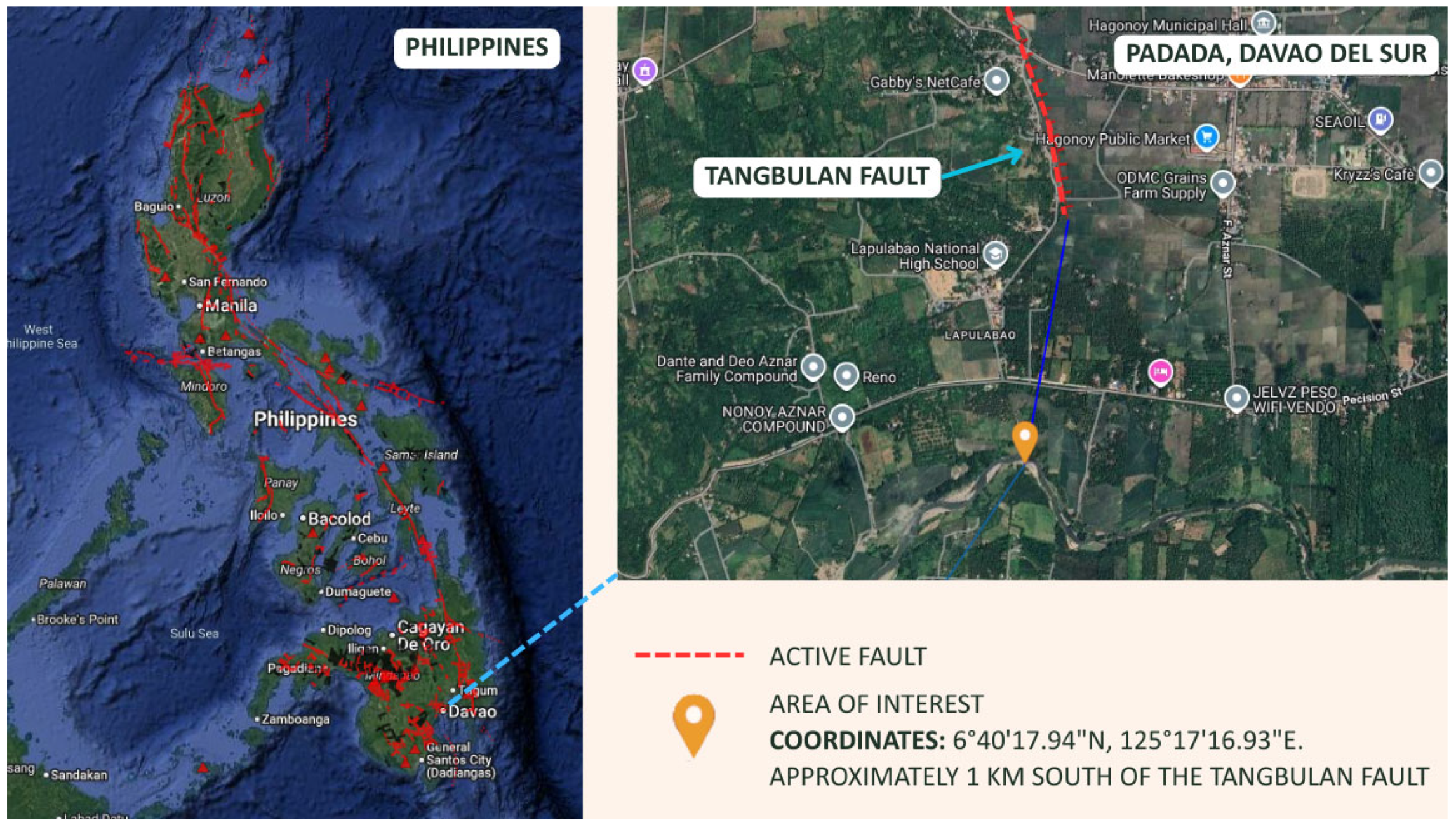
The Philippines exhibits profound seismic activity, being situated along the Pacific Ring of Fire. The active tectonic boundaries that exist within the region expose it to high intensity, and frequent earthquakes. Among these, the 7.2-magnitude Bohol Earthquake in 2013 demonstrated the severe impact of seismic-induced soil liquefaction on structures built over loose, saturated alluvial deposits. According to Lagmay [1], the earthquake originated from a previously unmapped reverse fault at a depth of approximately 12 km, produced surface rupture with up to 3 m of vertical displacement, caused 222 fatalities, and resulted in infrastructure damage estimated at USD 52.06 million. The earthquake’s effect on liquefaction was substantial, and demonstrated how unchecked seismic activity can influence pliable and ill-defined sediment. Liquefaction is the condition that causes the temporary reduction of the strength of soil leading to differential settlements. These settlements occur due to a combination of foundation submergence and lateral displacement of soil layers. With the rapid urbanization taking place in the province of Davao del Sur, attentively studying the seismic behavior of such urban area is exceptionally relevant for infrastructure resilience. Figure 1 shows the location of the study area within the national tectonic setting of the Philippines and the local setting in Padada, Davao del Sur. The figure highlights the Tangbulan Fault and the exact position of the area of interest of this study, located at 6°40′17.94″ N, 125°17′16.93″ E, with active fault data obtained from HazardHunterPH [2].
To date, there has been considerable research conducted on the response of foundations subjected to liquefaction using finite element modeling (FEM). Zhao et al. [3] studied the behavior of laterally loaded piles in layered sloping ground using PLAXIS 3D and concluded that the behavior of the foundation is primarily governed by the nonlinear response of the soil to liquefaction, while Cajka et al. [4] used FEM to study the soil and structure interaction on their area of interest and compared both numerical and tested values focusing on deformation, contact stress, and bending moments. Hamood and Kadhim [5] emphasized that the foundation response is seismic in nature and that nonlinear soil behavior is crucial to its prediction. In addition, Tipsunavee and Arangjelovski [6] investigated the soil–structure interaction of high-rise structures supported by pile foundations, providing valuable insights into the behavior of deep foundation systems. The study employed ABAQUS as the FEM software and adopted the Mohr–Coulomb model as the constitutive model. Zhussupbekov and Omarov [7] presented advances in site-specific geotechnical investigations of deep foundations, focusing on improved pile capacity and settlement estimation. Research conducted by Amin and Singh [8] and Hakro et al. [9] pointed out that dynamic time–history analysis was necessary in assessing the response of the foundation to liquefaction. They noted that foundation displacement and settlement are triggered mainly by the pore-pressure that is produced during earthquakes. The study of Xu and Ma [10] pioneered the finite element analysis simulation of the dynamic response of space mediums and demonstrated the necessity of calculus-based models for accurate evaluation. Although their study focused more on moving loads, such as high-speed metro trains, the principle of dynamic loads can be adapted to the design of building foundations subjected to lateral loads, such as earthquake loads. This creates a necessary framework for the design of mat foundations and could develop important models to compute the response of shallow foundations, thus improving foundation design in the Philippines.
Dash and Bhattacharya [11] and Fedorenko et al. [12] further emphasized the need to account for soil–structure interaction under dynamic loading to achieve more reliable predictions of settlement and structural displacements. Zhang et al. [13] validated that the modeling of the combined lateral and axial loading in liquefied soil systems needs nonlinear constitutive equations to more accurately represent the field conditions. There are studies that evaluate the impacts of seismic activity in the Philippines, for instance, Perez et al. [14] discuss the impacts of the 4.7 Mw Leyte Earthquake and the different seismic-induced failures occurring in the province. Liquefaction was observed primarily in areas near the Palaypay River. This suggests that it is most probable that the areas that are substantially more at risk to liquefaction failure would be areas near rivers or bodies of water. There are also studies that delve more into the perspective of Filipino citizens when discussing the anticipation of earthquakes, rather than physical structural failures Ong et al. [15] assessed this perspective through the use of Artificial Neural Network, as it was suggested that preparedness of such calamities can lessen the failures experienced by citizens living in urban spaces. Liquefaction hazard assessments have improved throughout the decade by using machine learning and finite element analysis. Arab et al. [16] studied the use of machine learning to calculate the Horizontal-to-Vertical Spectral Ratio to calculate the liquefaction potential of an area. Further research on deep foundations is frequently observed in recent studies. For instance, Guo et al. [17] examined the deformations formed in deep foundations and how this determines the behavior of neighboring structures.
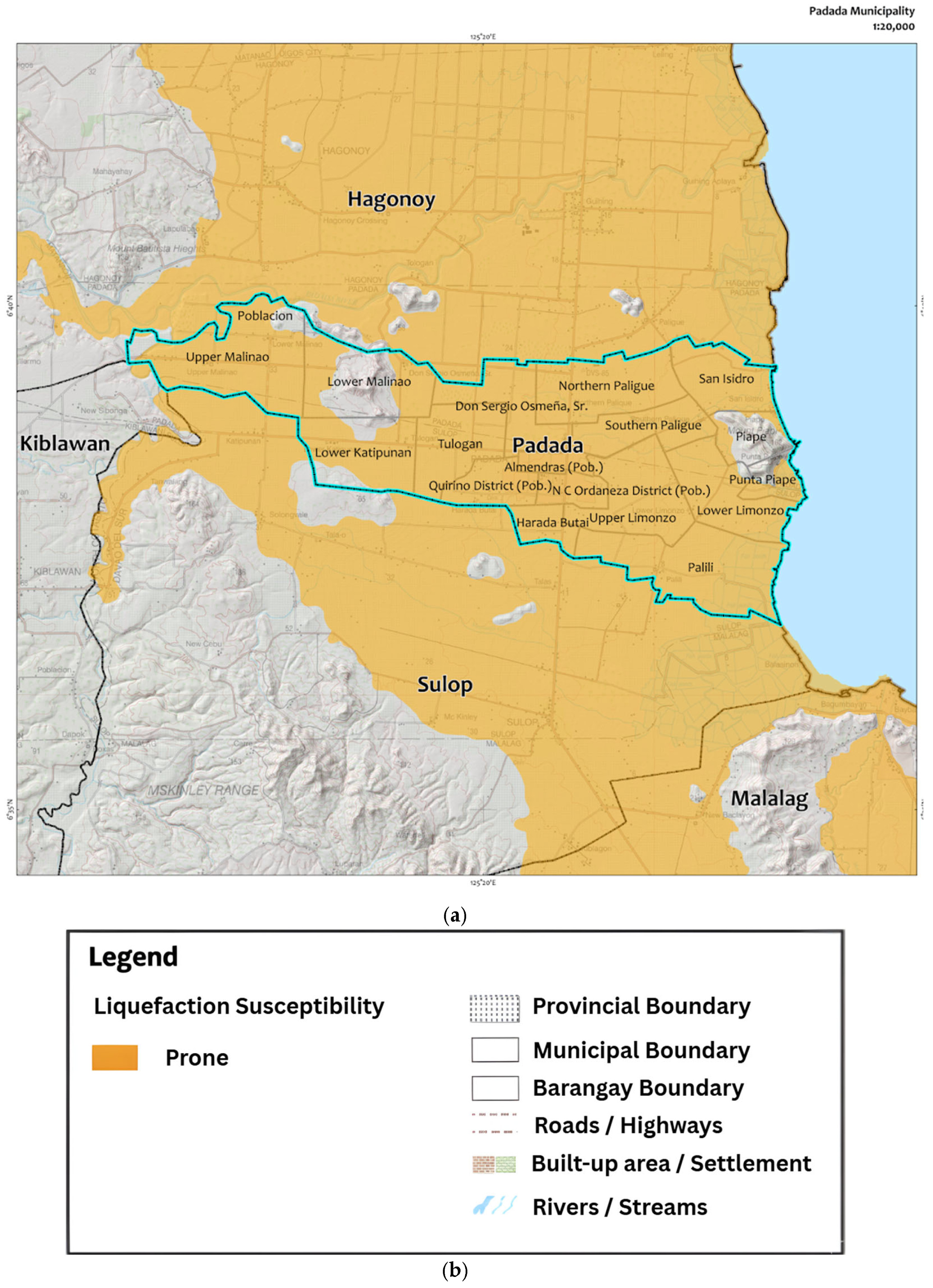
Nonlinear analysis of deep foundations, specifically pile groups, contain numerous investigations, which suggest that using an incremental computation scheme to assess load-displacement behavior should be adapted. Li et al. [18] suggest the use of Cam-clay models to sufficiently analyze the displacements in soil and structure. However, despite all the available data presented, current engineering research is still primarily focused on deep foundations, particularly pile foundations for high-rise buildings or isolated footings for low-rise buildings. There is a definite knowledge gap on the shallow raft foundations used in mid-rise buildings and on site-specific studies that tackle highly liquifiable areas such as Padada, Davao del Sur. Figure 2a presents the liquefaction susceptibility map of Padada, Davao del Sur, highlighting zones classified as prone based on regional geohazard assessment.
This study attempts to fill this gap by carrying out site specific geotechnical non-linear static and dynamic analyses of a proposed midrise building foundation located in Padada, Davao del Sur using PLAXIS 3D [19]. Data were acquired from geotechnical investigations (involving rotary drilling and SPT), with laboratory processing conducted according to the American Society for Testing and Materials (ASTM) and the Department of Public Works and Highways—Bureau of Research and Standards (DPWH–BRS) [20,21]. The liquefaction potential was initially assessed by the UBC3D-PLM constitutive model, with the conclusion of the site selected in proximity to the Padada–Mainit River. The HSsmall model was then used to estimate the seismic effects of the 2013 Bohol earthquake scaled to 1.0 g. The results seek to deepen understanding of the nonlinear behavior of the soil with respect to the stability of the shallow foundation. This study is aimed towards setting up a design basis for midrise building foundations in highly liquefied areas of the Philippines.

2. Materials and Methods

This section outlines the step-by-step process undertaken to assess the seismic response of a midrise building foundation located in a liquefaction-prone area of Padada, Davao del Sur. It includes data collection procedures, site investigation activities, laboratory testing, numerical modeling, and simulation-based assessments. A combination of field data and publicly sourced documents issued by the Freedom of Information platform of the Executive Order No. 2, s. 2016 [22] was used to construct reliable soil profiles and structural loading conditions. To determine foundation behavior under seismic excitation, a two-stage approach was applied: initial liquefaction screening using the UBC3D-PLM model and subsequent nonlinear seismic analysis using the HSsmall model. The nonlinearity considered in the numerical analyses is primarily material nonlinearity, arising from the nonlinear stress–strain relationship of liquefiable soils. Seismic input records were obtained from the 2013 Bohol Earthquake through the strong-motion database of the Philippine Institute of Volcanology and Seismology (PHIVOLCS), accessed via the same FOI platform, to simulate high-intensity shaking and investigate dynamic soil–structure interaction.

2.1. Field Procedure

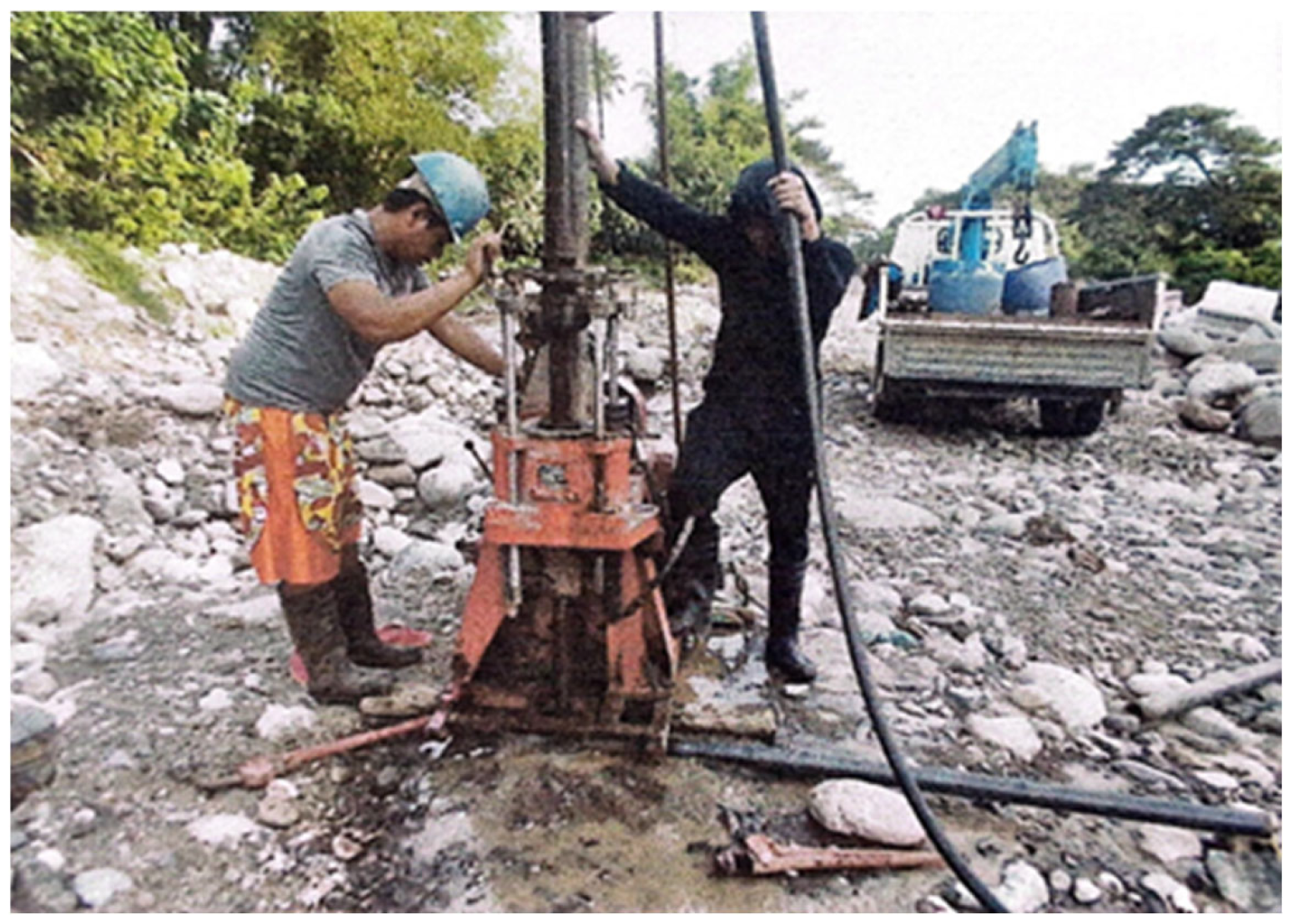
The field investigation was initiated through a rotary drilling rig setup in the Padada–Mainit River area. Figure 3 illustrates the drilling team operating the rotary rig with a water jetting mechanism.
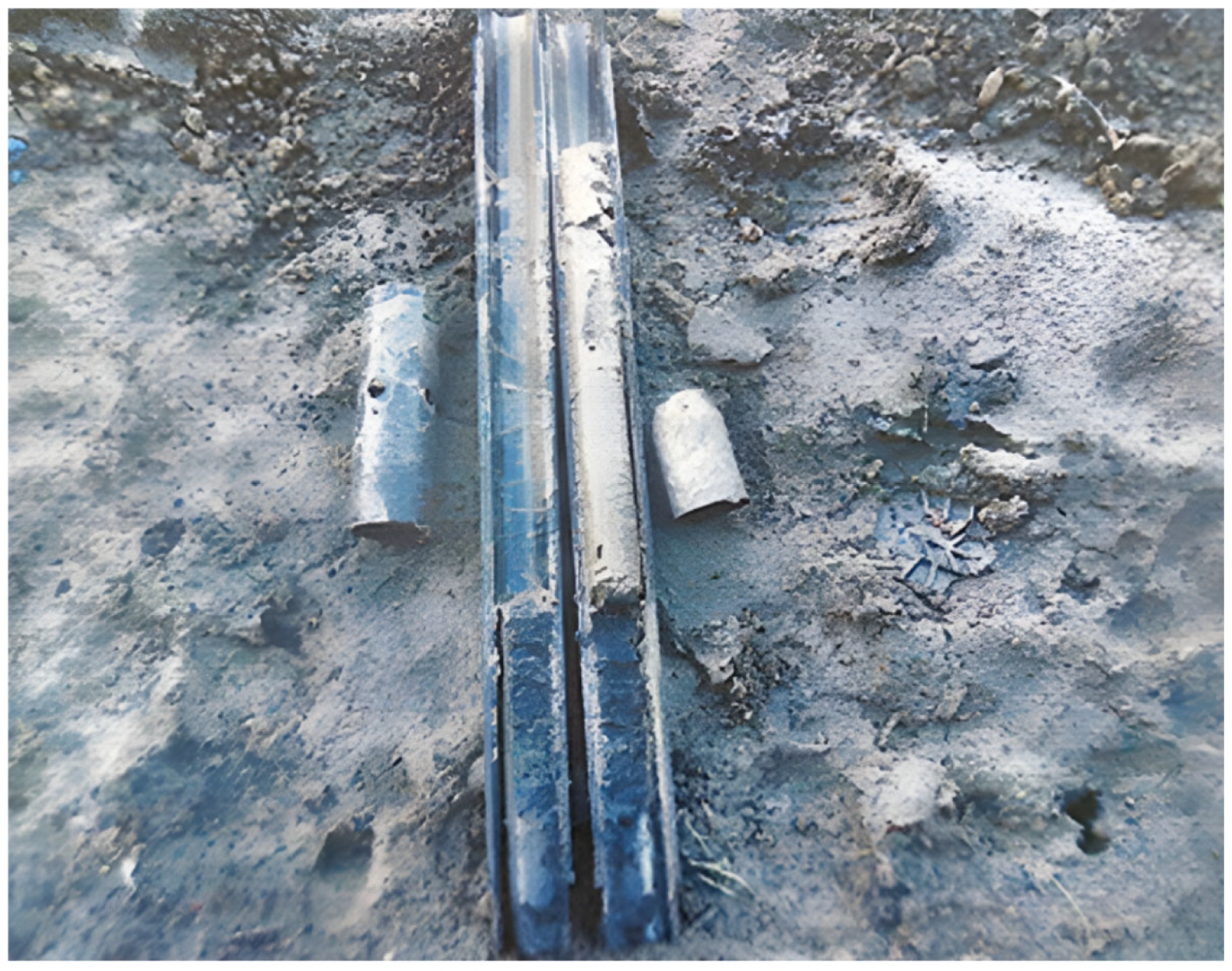
The rotary drilling rig was powered by a mud pump to enable borehole advancement in granular and silty soils. The system used a casing approximately 1.5 m long to stabilize the borehole during initial penetration. Once the casing was embedded, the soil within was extracted using a three-wing alloy bit attached to a drill rod. This allowed controlled boring of the subsurface layers. As drilling progressed, additional casing sections were connected to maintain borehole integrity and prevent collapse. This setup was essential to reach deeper strata, especially in areas where loose or saturated sands are common. The equipment in Figure 4 showcases the extracted soil core sample from the split spoon sampler. In accordance with the site investigation requirements of the National Structural Code of the Philippines (NSCP) Volume 2, a minimum of two boreholes is considered adequate for building footprints with plan areas less than 500 m2, which is consistent with the 470 m2 mat foundation area considered in this study [23].
This procedure highlights the use of mechanical and hydraulic systems to ensure continuous boring and soil sample retrieval. This step is crucial for capturing the full soil profile necessary for later analysis in liquefaction-prone conditions.

2.2. Liquefaction Assessment

A liquefaction assessment was carried out using the UBC3D-PLM constitutive model in PLAXIS 3D. The model accounts for stress-dependent stiffness and strength properties of soil layers, making it effective for evaluating liquefaction under cyclic seismic loading conditions. The results helped identify the site along the Padada–Mainit River as liquefied.

2.3. Nonlinear Finite-Element Modelling

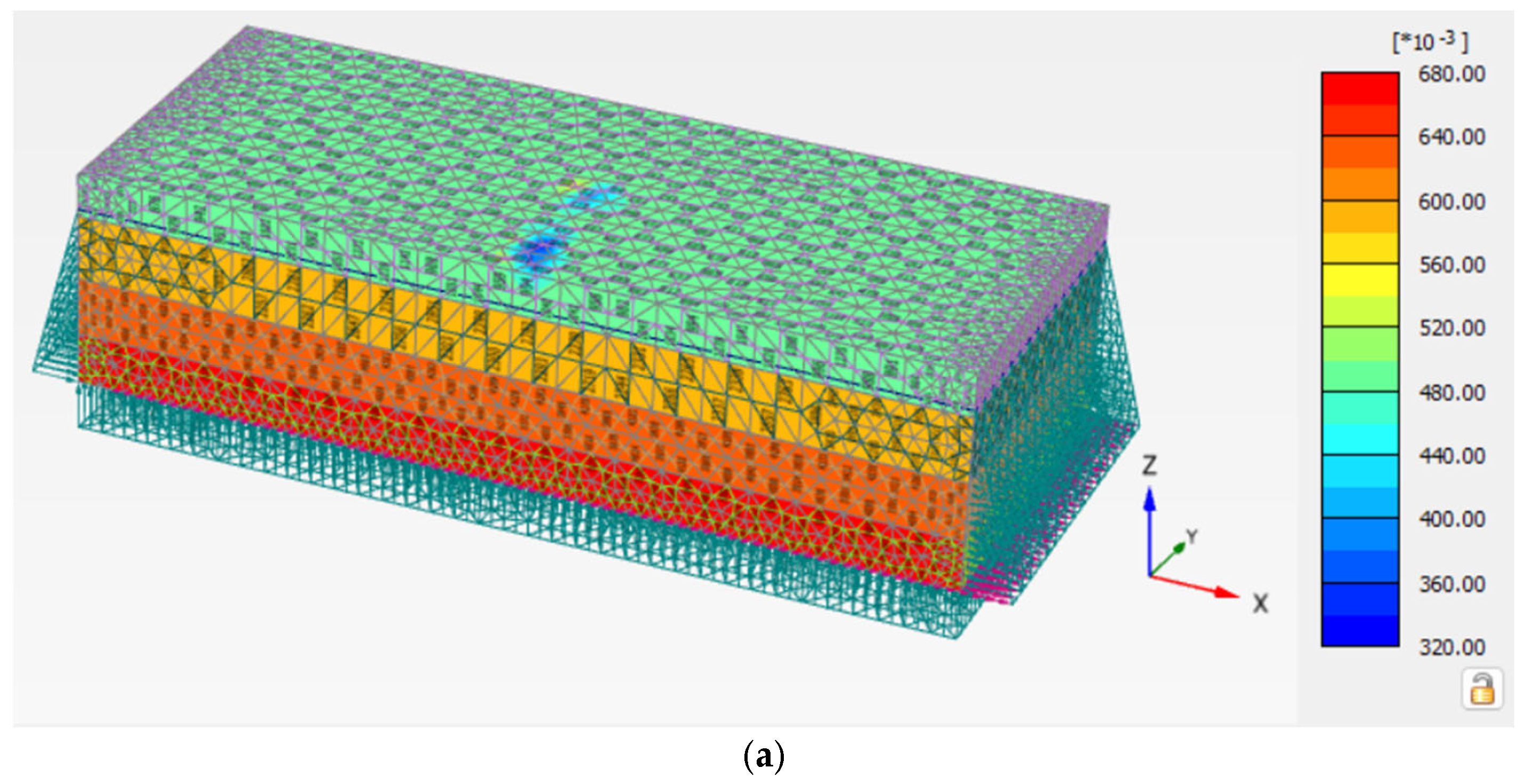
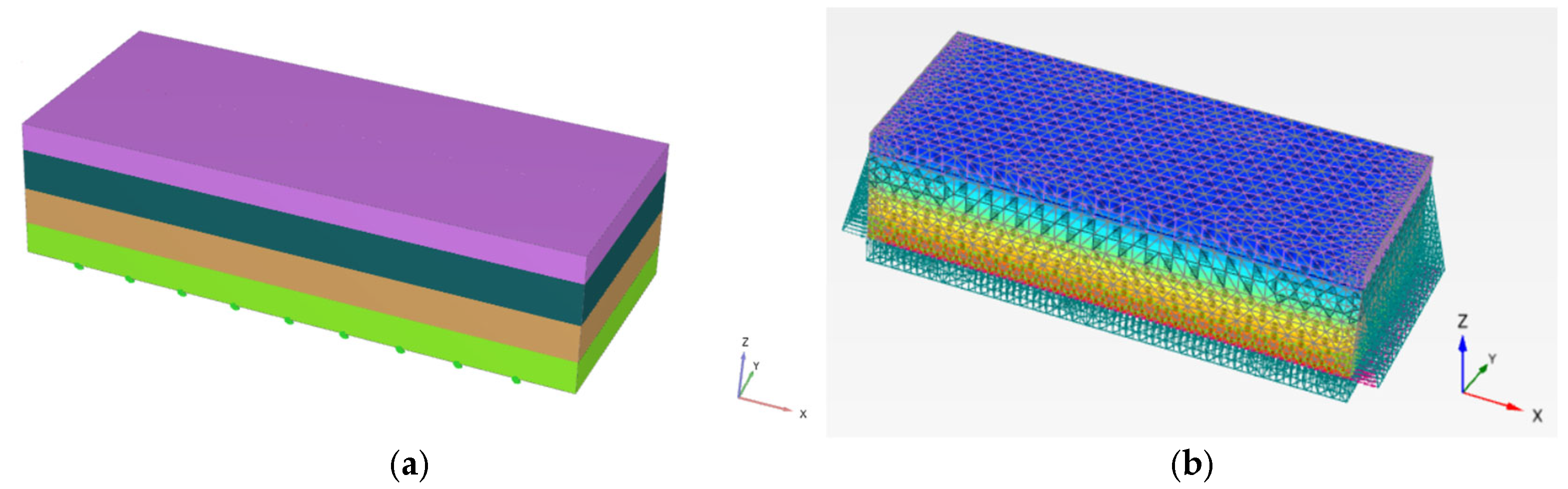
As shown in Figure 5, the PLAXIS 3D model illustrates the defined soil stratification along the depth together with the corresponding finite element mesh used in the numerical analysis. The colors differentiate the soil layers and mesh zones for visualization, without implying analytical values.
The soil parameters presented in Table 1 were obtained from a combination of borehole log investigation, standard geotechnical correlations, and numerical calibration following the UBC3D-PLM constitutive modeling framework.
In the present study, stratigraphy, layer thicknesses, soil classification, grain-size distribution, corrected SPT blow counts (N1)60, and unit weights were taken directly from the borehole log and index test results. The friction angle reported in the borehole log was interpreted as the peak friction angle φ p ° , while the constant-volume friction angle φ c v   °   was estimated using the SPT-based correlation proposed for the UBC3D-PLM model, expressed as follows:
φ p i = φ c v + ( N 1 ) 60 10
φ p = φ p i + m a x ( ( N 1 ) 60 15 5 , 0.0 )
The elastic shear modulus constant was computed directly from the corrected SPT value using
k G e = 21.7 × 20.0 × ( ( N 1 ) 60 ) 0.333
while the elastic bulk modulus constant was obtained as follows:
k B e = 0.7 k G e
The plastic shear modulus constant was determined using
k G p = k G e × ( ( N 1 ) 60 ) 2 × 0.003 + 100.0
These correlations were adopted following the UBC3D-PLM parameter estimation procedure proposed for cases where cyclic direct simple shear (DSS) or cyclic triaxial test data are not available, according to Abu Bakr et al. [24], as demonstrated in their numerical liquefaction study. The constitutive model exponents m e , n e , and n p , together with the reference pressure P r e f = 100 kPa, were adopted as standard UBC3D-PLM values recommended for silty soils.
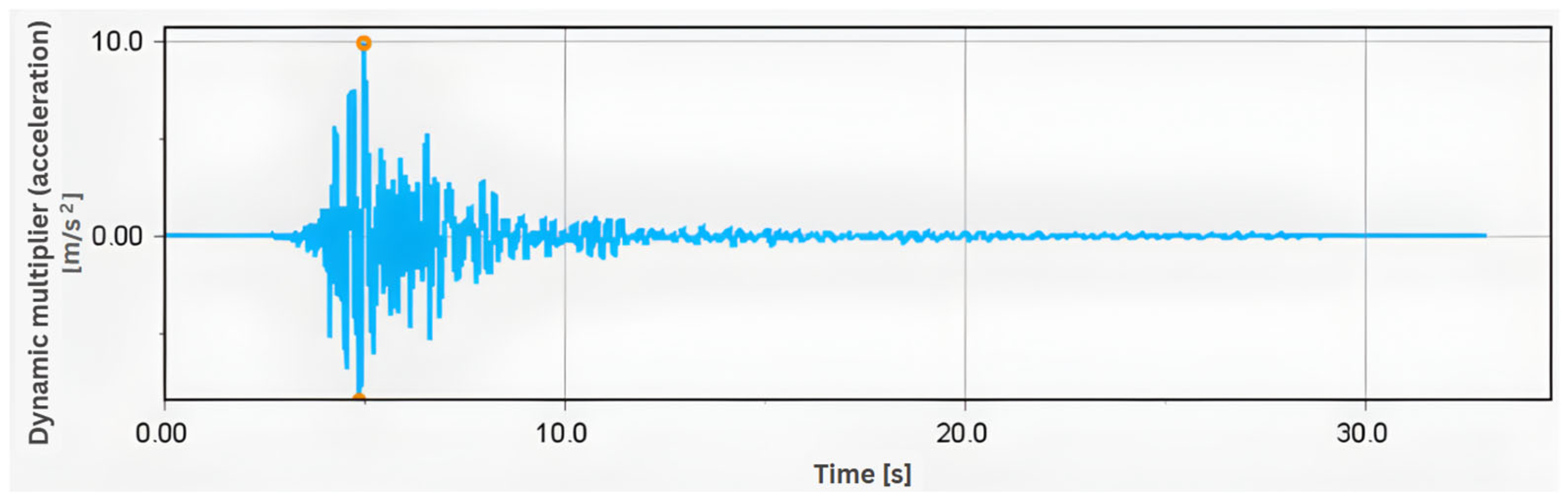
Following the assignment of all of UBC3D-PLM input parameters alongside the definition of the soil properties corresponding to each layer, the phase of dynamic analysis was initiated through the application of an earthquake loading dynamic multiplier uniform to the Bohol earthquake of 7.2 Mw. This multiplier corresponds to the time–history acceleration record corresponding to the 2013 Bohol earthquake. As seen in Figure 6, the input motion has a total duration of 33 s, with a record of strong shaking followed by a record of the gradual relaxing of shaking, or the prolonged motion diminishing over a longer duration of time.
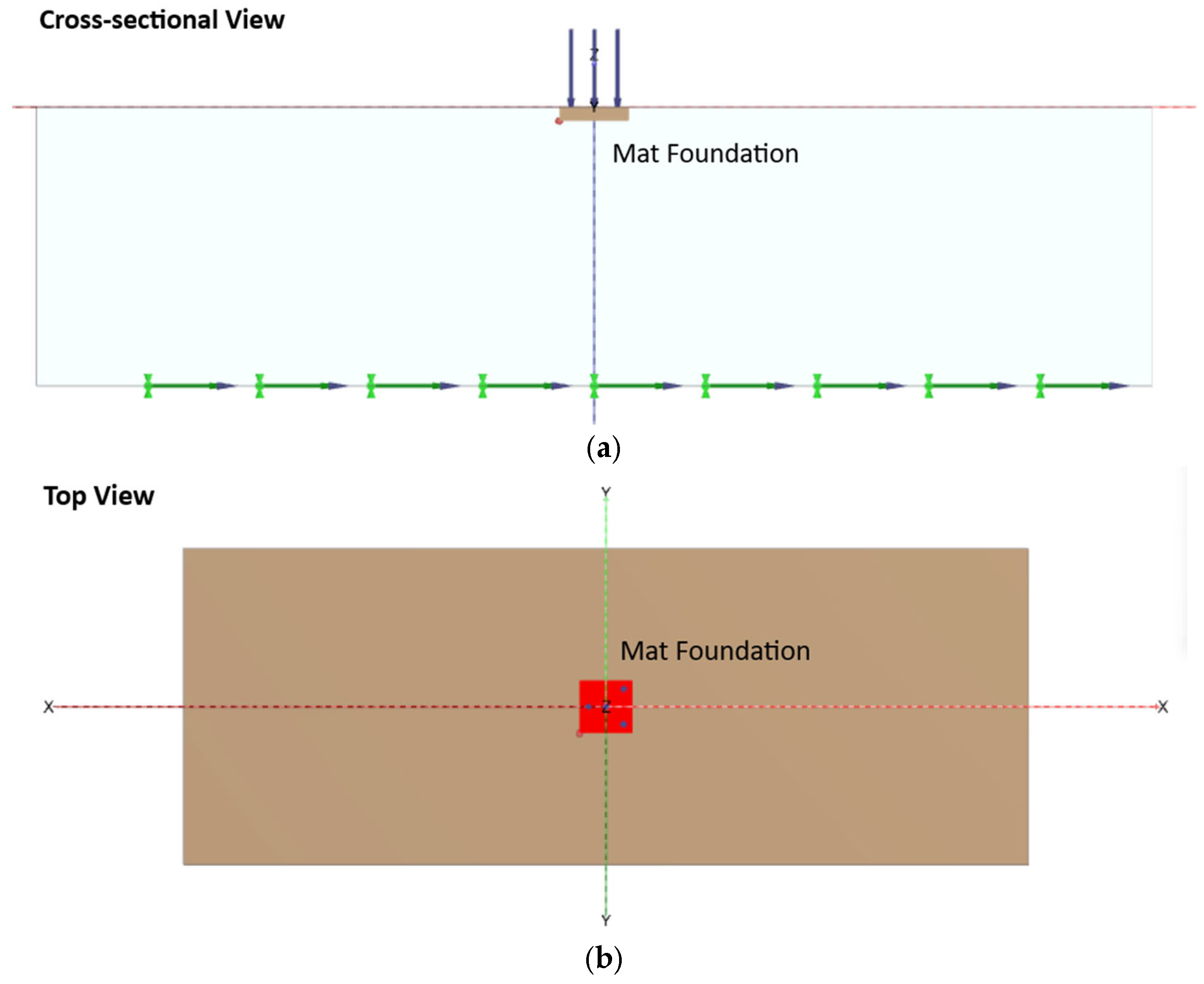
This history of time data was the seismic excitation for the model, which in turn activated the simulation of excess pore pressure, displacement, and deformation behavior of the mat foundation for a realistic earthquake loading scenario. To represent a realistic yet conservative seismic demand for a liquefaction-prone site, the input motion was scaled to a peak ground acceleration of 1.0 g, which reflects an upper-bound level of shaking that can occur in near-fault or highly amplified soil conditions. This approach aligns with liquefaction and soil–structure interaction studies such as that of Forcellini [25], who adopted PGA scaling up to 1.0 g to capture extreme nonlinear soil behavior. The model setup is shown in Figure 7a,b, presenting the cross-sectional view and top view of the mat foundation defined using the Hardening Soil Model with Small-Strain Stiffness (HSsmall).
The parameters in Table 2 define the stiffness and small-strain behavior of the soil layers using the Hardening Soil Model with Small-Strain Stiffness implemented in PLAXIS. These include the reference shear modulus, secant modulus, oedometer modulus, and unloading–reloading modulus, which together control both initial stiffness and nonlinear deformation under seismic loading. All values were selected based on standard HSsmall formulations and verified against the PLAXIS user’s manual [26].
The nonlinear response of the soil to dynamic loading was captured using the Hardening Soil Model with Small-Strain Stiffness (HSsmall) for the numerical soil model. The values in Table 2 are parameters obtained from the soil stratification and relative density with the assumption that the stiffness increases with depth. The mat foundation properties and structural load inputs are listed in Table 3, representing a 0.7 m thick concrete mat (20 m × 23.5 m plan area) subjected to a uniform surface load of 173.3 kN/m2, corresponding to the combined superstructure and operational loads. In this study, the columns were modeled implicitly through fixed boundary conditions at the mat foundation level, which assumes uniform force transfer from the superstructure to the foundation; this idealization is reasonable for the objective of capturing soil-foundation interaction but may underestimate localized column flexibility effects. All parameters mentioned are recognized as limitations of the study.

3. Results

3.1. Liquefaction Assessment Using the UBC3D-PLM Model

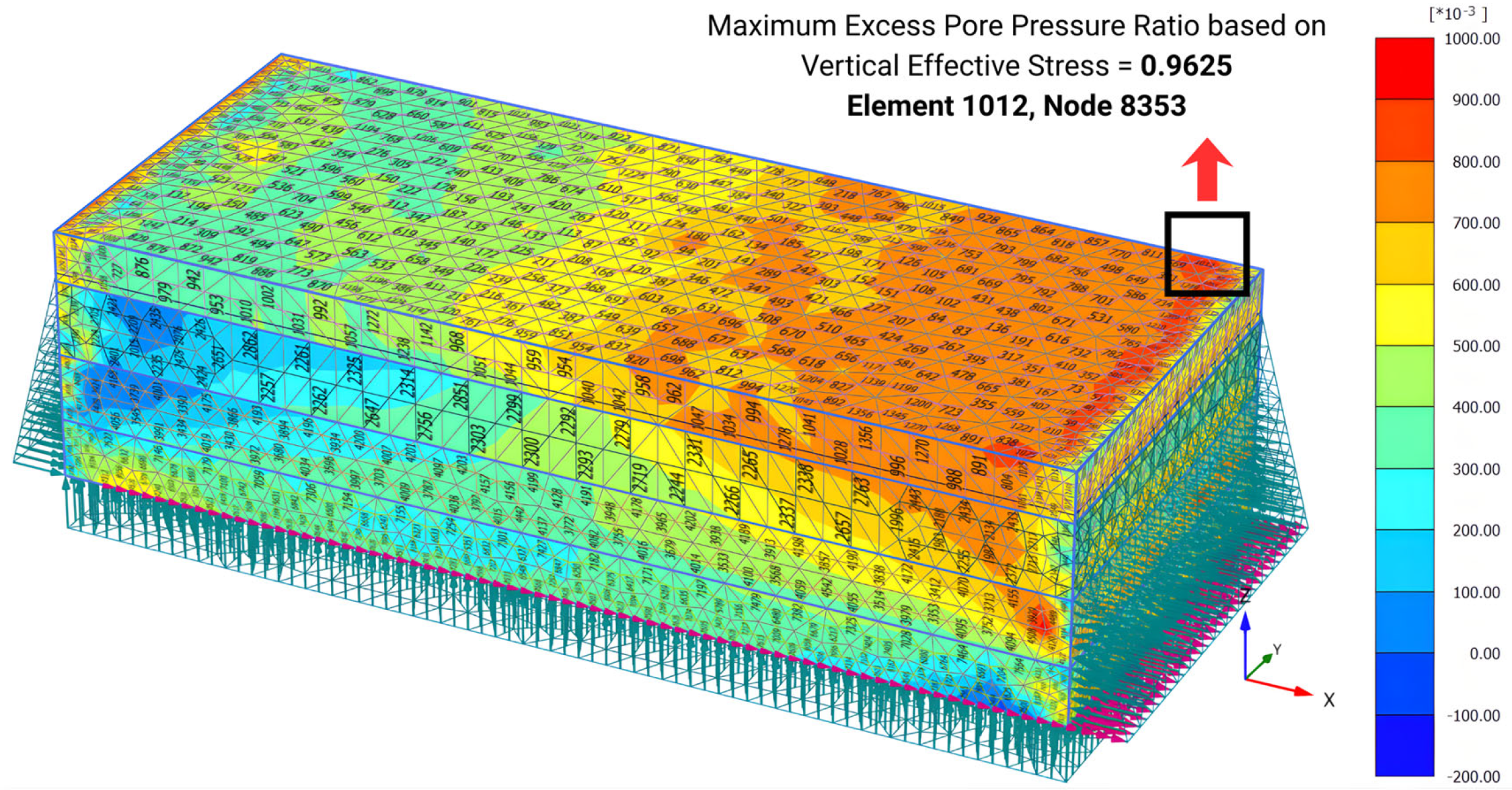
The UBC3D-PLM contour plots depict how dynamic loading conditions permeate the various soil strata, particularly on the layer liquidity contour surfaces. Figure 8 showcases the ratio computed with respect to vertical effective stress, as defined as follows:
r u = u σ 0
where the maximum value of 0.9625 occurred at Element 1012, Node 8353.
This indicates that pore pressure reached approximately 96% of the initial vertical effective stress, suggesting that there are localized zones of near-complete liquefaction developed within the upper to mid-depth layers where the structure is situated. These zones correspond to fine-grained, saturated soils that are more prone to pore pressure buildup.
Meanwhile, Figure 9 presents the pore pressure ratio relative to mean effective stress with a maximum value of 0.9318 recorded at Element 587, Node 12384.
Although it has a lower recorded value, this still reflects significant loss of effective stress across the soil strata and overall structure. Both figures highlight the tendency of the upper fine soil layers to accumulate excess pore pressure during seismic loading. The results show that r u values near 1.0 delineate regions that have undergone liquefaction, as excess pore pressure ratios greater than 0.8 are typically associated with the onset of liquefaction [27]. This confirms the model’s sensitivity to seismic-induced pore pressure buildup.

3.2. Nonlinear Assessment Using the Hardening Soil Model with Small-Strain Stiffness Model

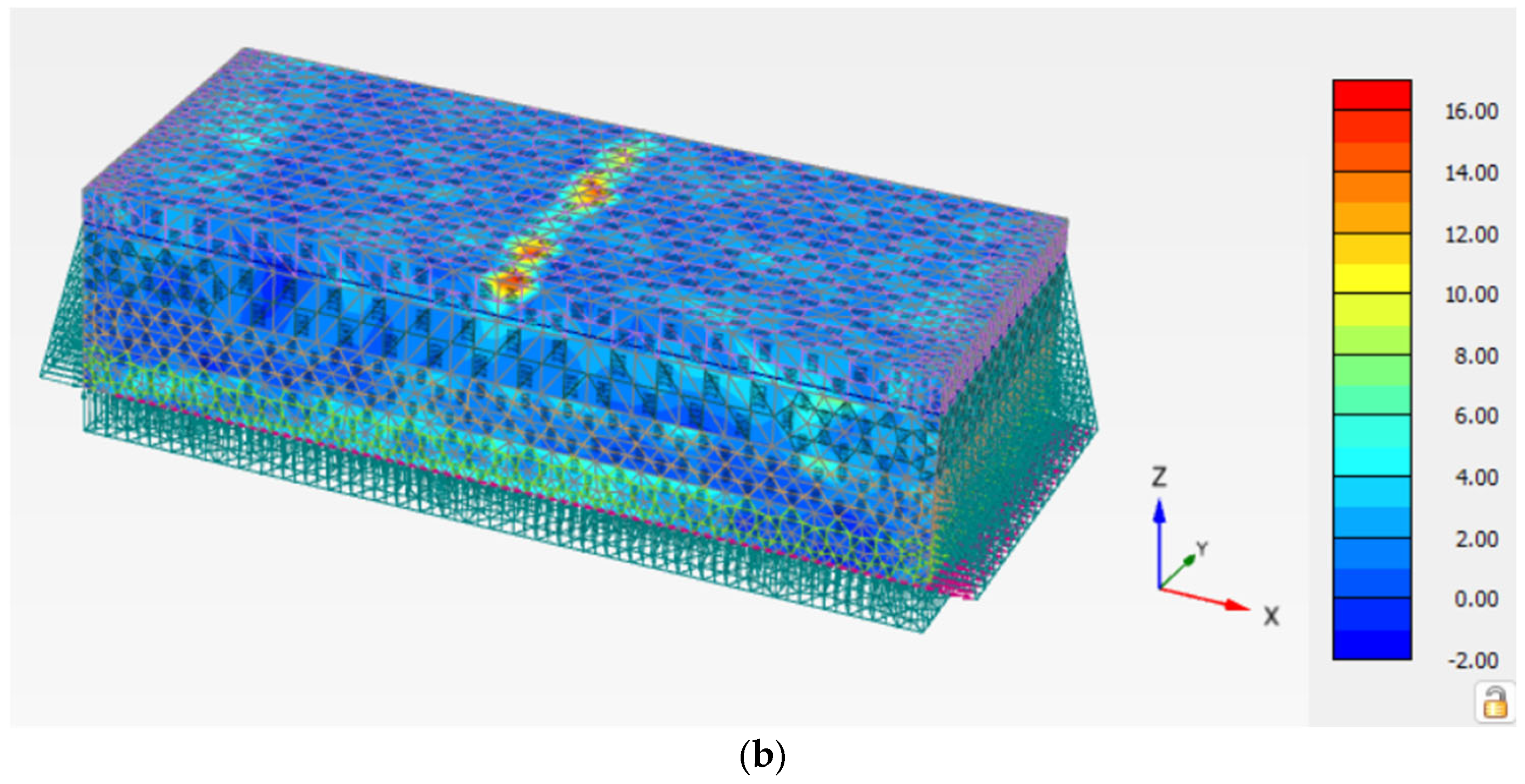
Figure 10 presents the deformed mesh of the mat foundation, showing the displacement behavior obtained from the PLAXIS 3D simulation.
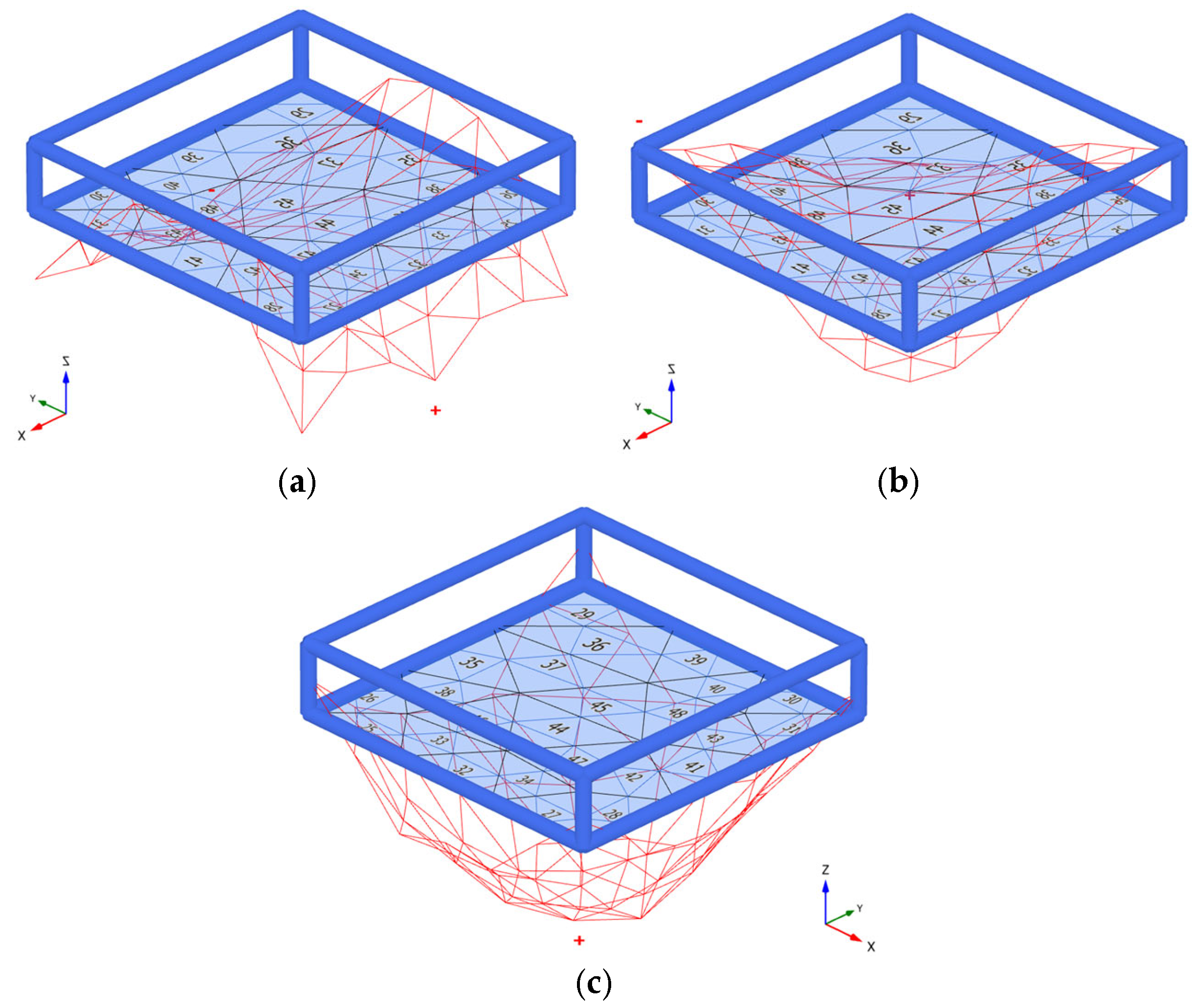
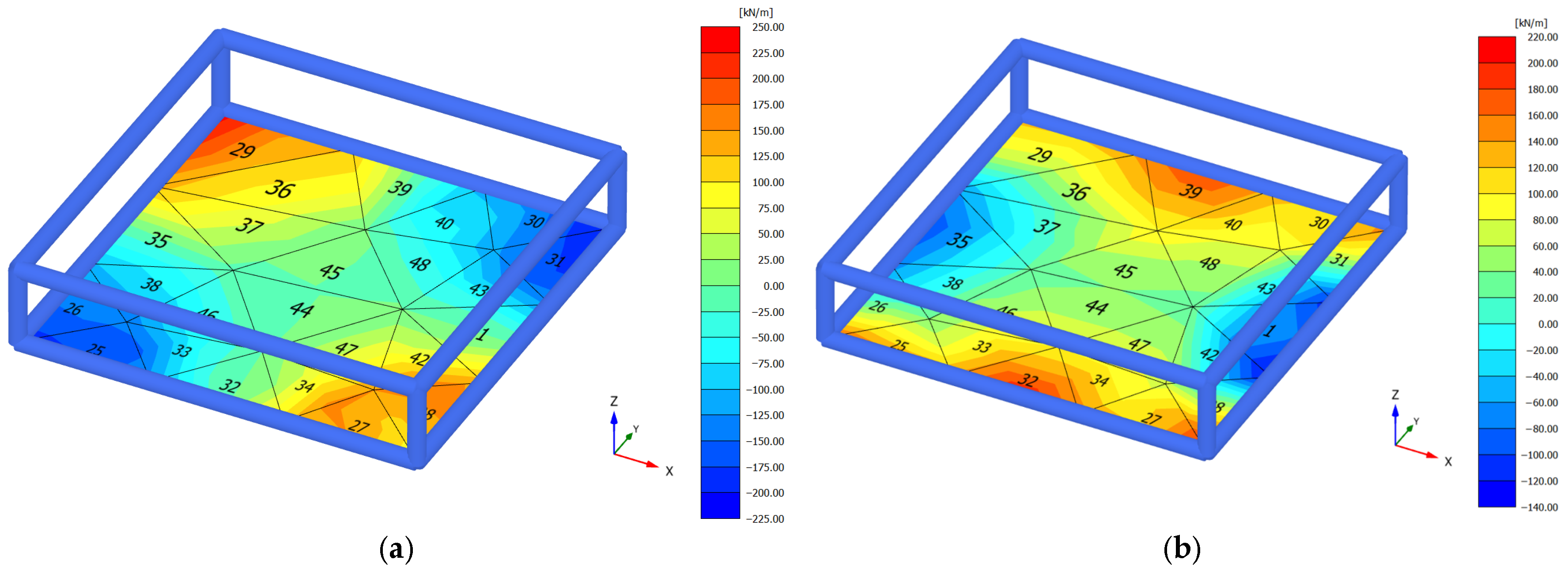
The total displacement of the mat foundation obtained in PLAXIS 3D, ∣u∣ = 0.1012 m, significantly exceeds the range of settlements typically reported for raft foundations subjected to similar loading conditions. Le Ba Vinh et al. [28] documented settlements of 30 mm to 70 mm while analyzing raft foundations subjected to 150–250 kN/m2 using analytical and finite-element methods. These settlements, along with PLAXIS 3D results, which are 33–34 mm, fall within the range of field data. The value obtained in the present study maintains the same ratio with respect to the experimental data and remains 1.5–3 times higher than the range, suggesting an over-flexible foundation system for which structural modifications are necessary. The internal force results from the dynamic analysis, shown in Figure 11a,b, indicate critical shear and axial force demands within the mat foundation during seismic loading.
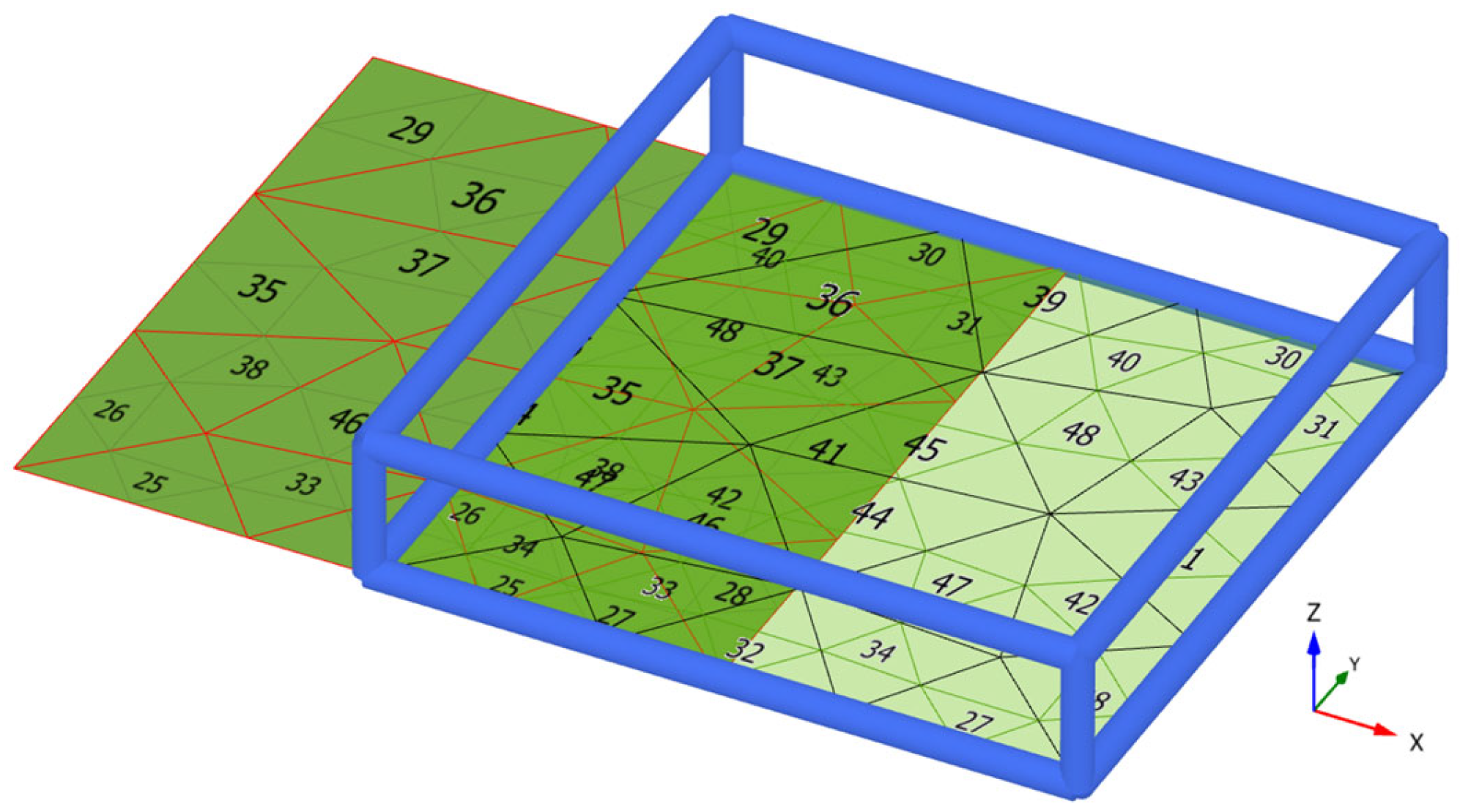
The shear forces Q13 and Q23, with values of 384.2 kN/m and 367.9 kN/m, respectively, indicate significant transverse shear demand, particularly near the edges. The highest axial force of 208.5 kN/m reflects the combined effects of vertical loading and seismic-induced in-plane forces contributing to compression within the mat. The bending moments of 289.4 kN·m/m (M22) and 282.8 kN·m/m (M11), together with the torsional moment M12 of 152.5 kN·m/m, indicate high flexural and torsional demand in the system. These results, shown on Figure 12a–c, show that a 0.7 m-thick mat foundation could encounter stresses near or above the limit in the current design, especially in the absence of vertical loading, thereby high serviceability failure, possible flexural distress, and mat foundation instability. Seismic design compliance of the mat foundation could be achieved by adding reinforcement or increasing the mat thickness in place.
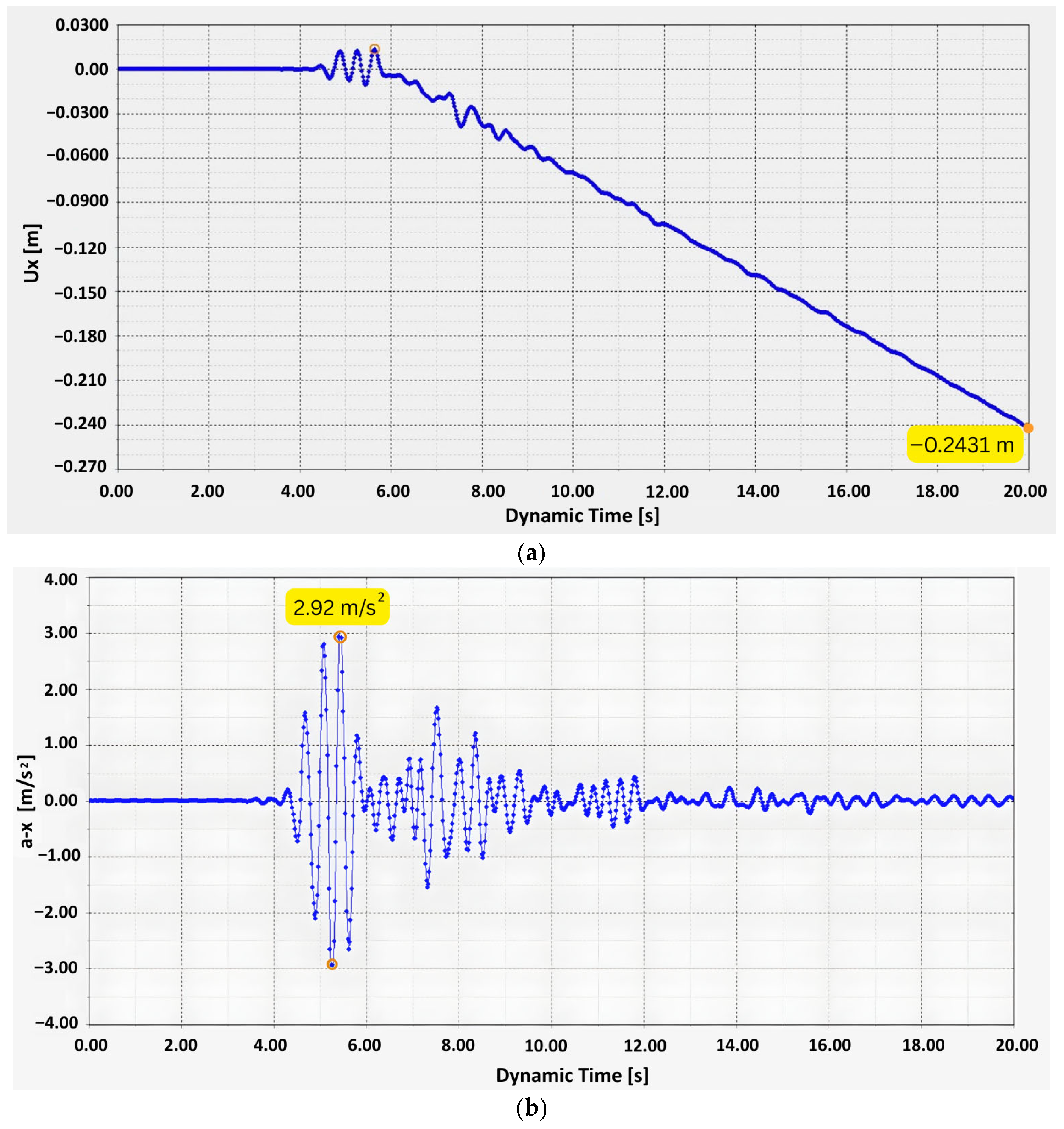
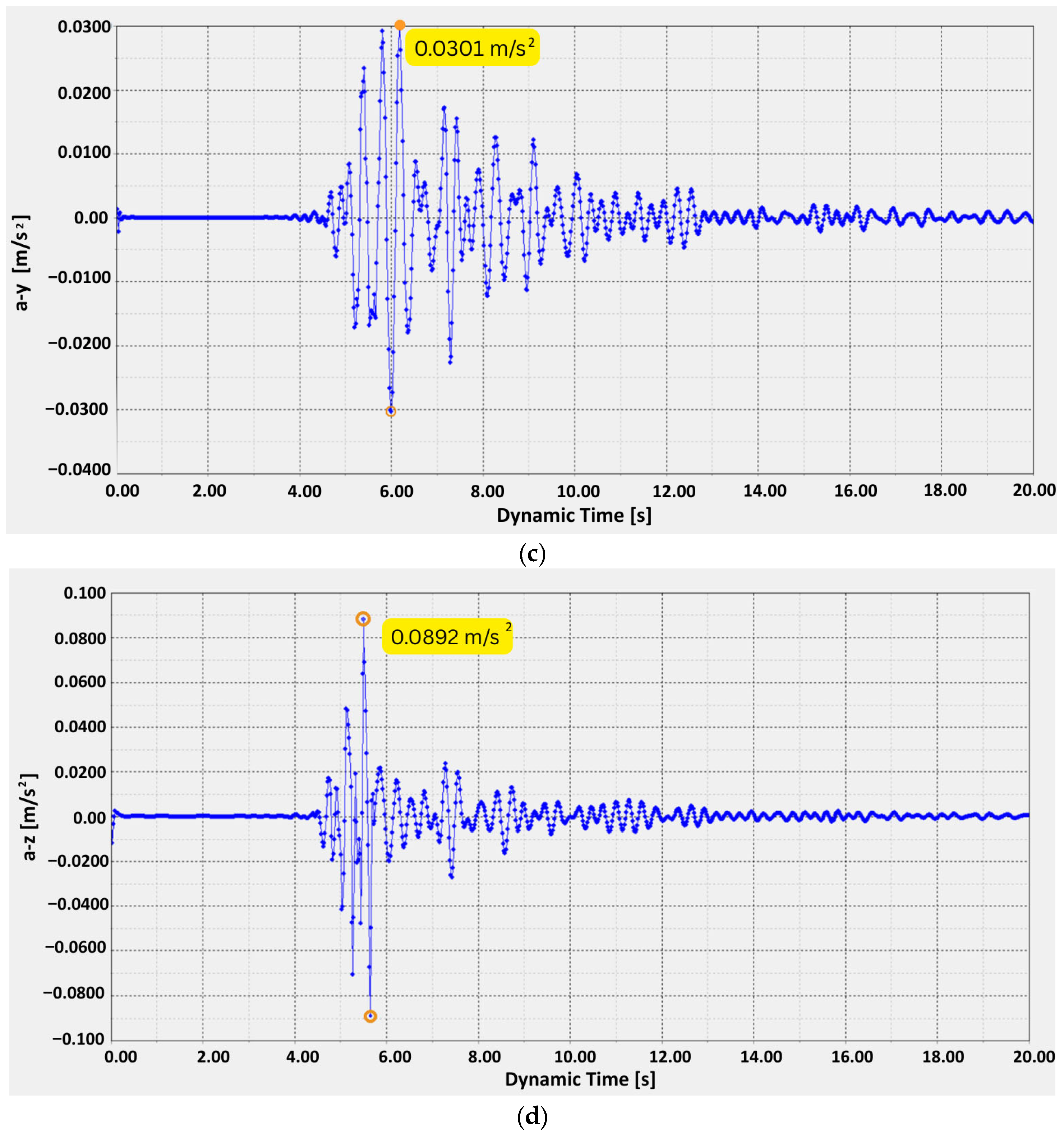
As seen in Figure 13, the dynamic response of the mat foundation during the Bohol Earthquake has qualitatively captured broad shifts in the behavior of the foundation. For instance, in Figure 13a, the horizontal displacement (uₓ) reached a value of −0.2431 m, suggesting large scale movement during the excitation of the ground. In Figure 13b, the acceleration in the x-direction ( a x ) reached a value of 2.92 m/s2, indicating that the most vigorous shaking of the foundation occurred in horizontal directions. In Figure 13c, the value for the y-direction acceleration ( a y ) reached the minimum of 0.0301 m/s2. Additionally, in Figure 13d, the vertical acceleration ( a z ) reached a maximum of 0.0892 m/s2.
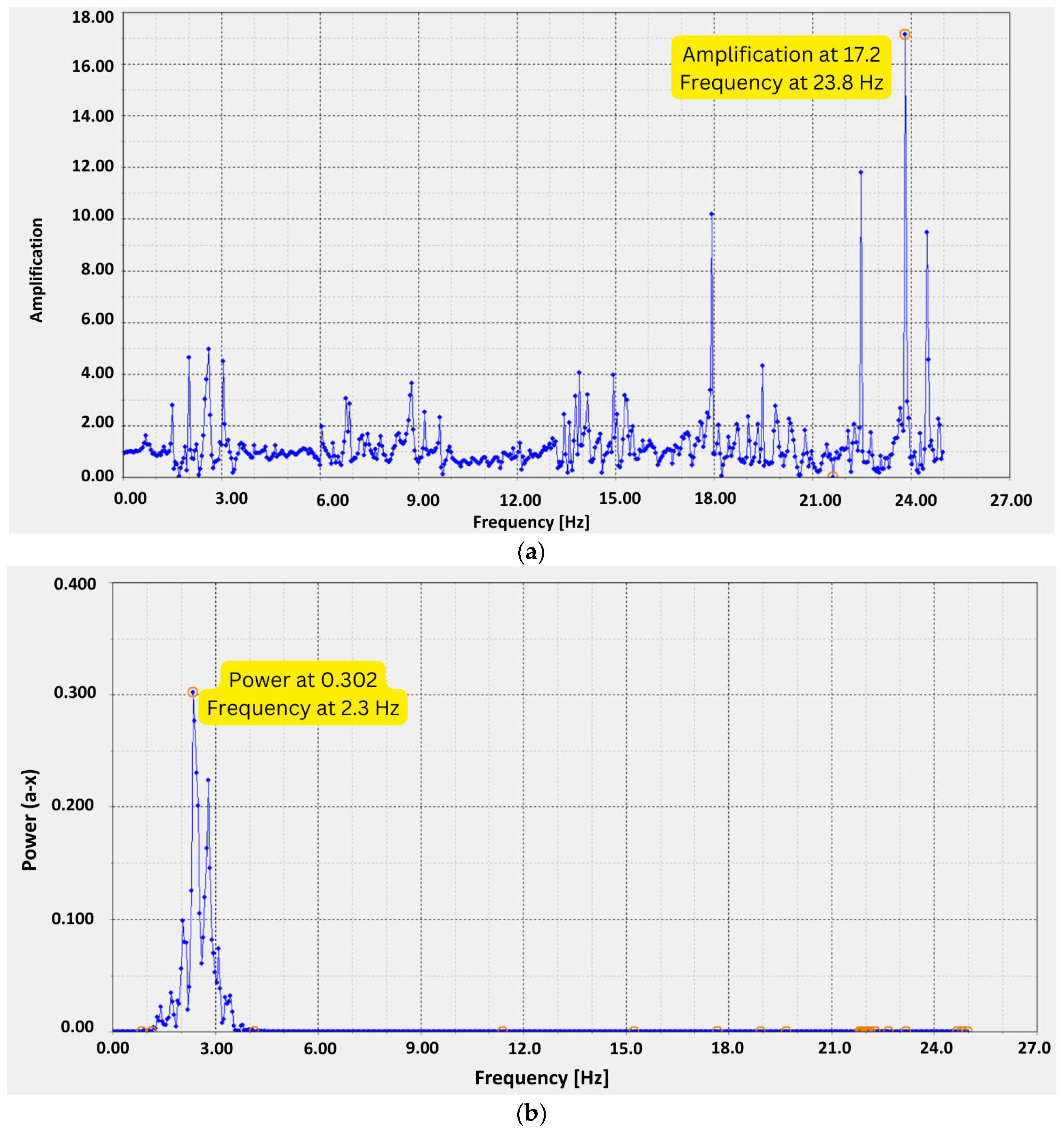
Figure 14 presents the frequency-domain dynamic response of the foundation under seismic loading. In Figure 14a, the amplification spectrum shows a peak value of 17.2 at approximately 23.8 Hz, indicating significant amplification at higher frequencies that may increase structural demand. Meanwhile, Figure 14b illustrates the power spectral density, which identifies a clear dominant frequency at 2.3 Hz, corresponding to the fundamental vibration mode of the soil-foundation system.
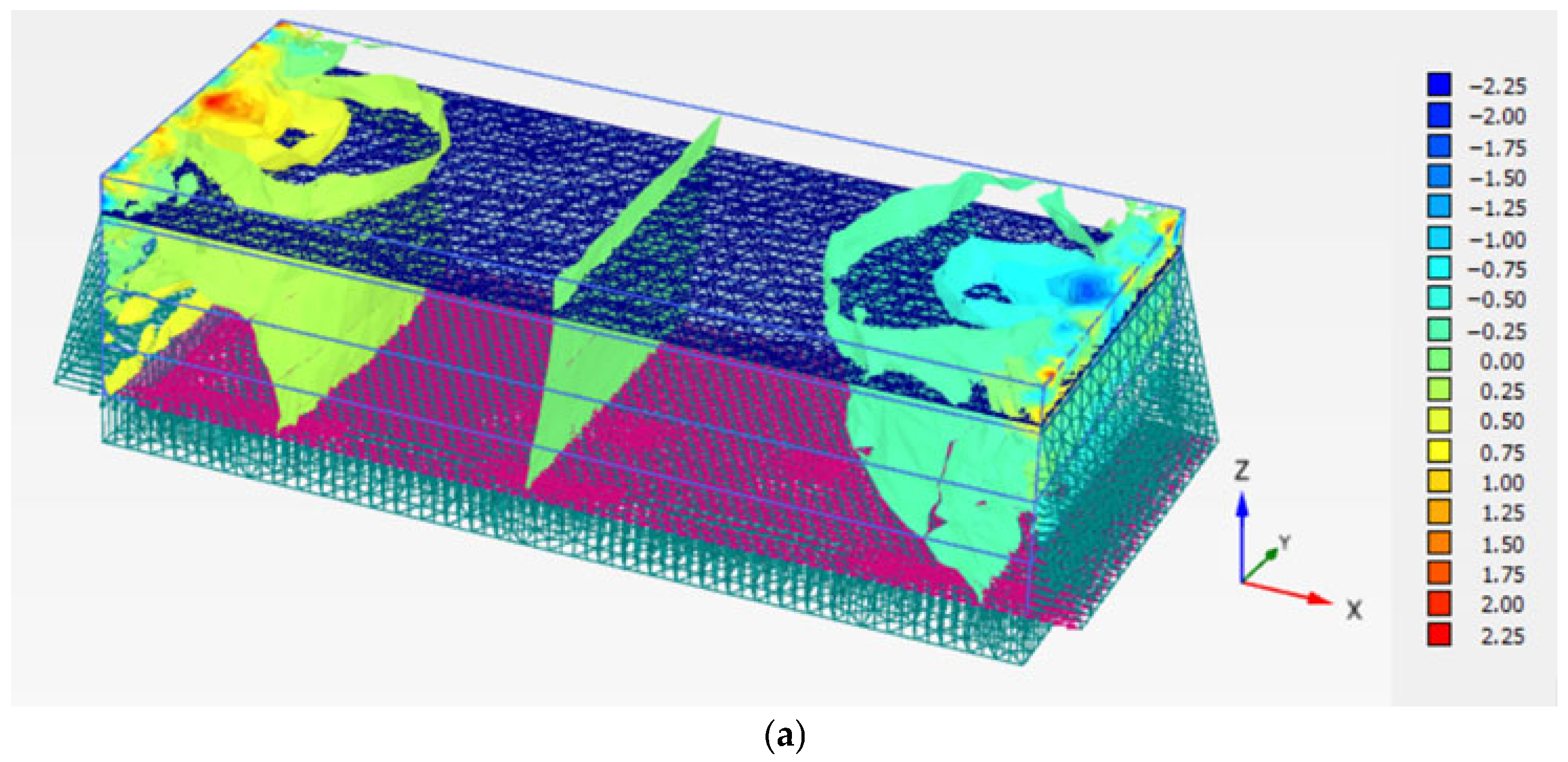
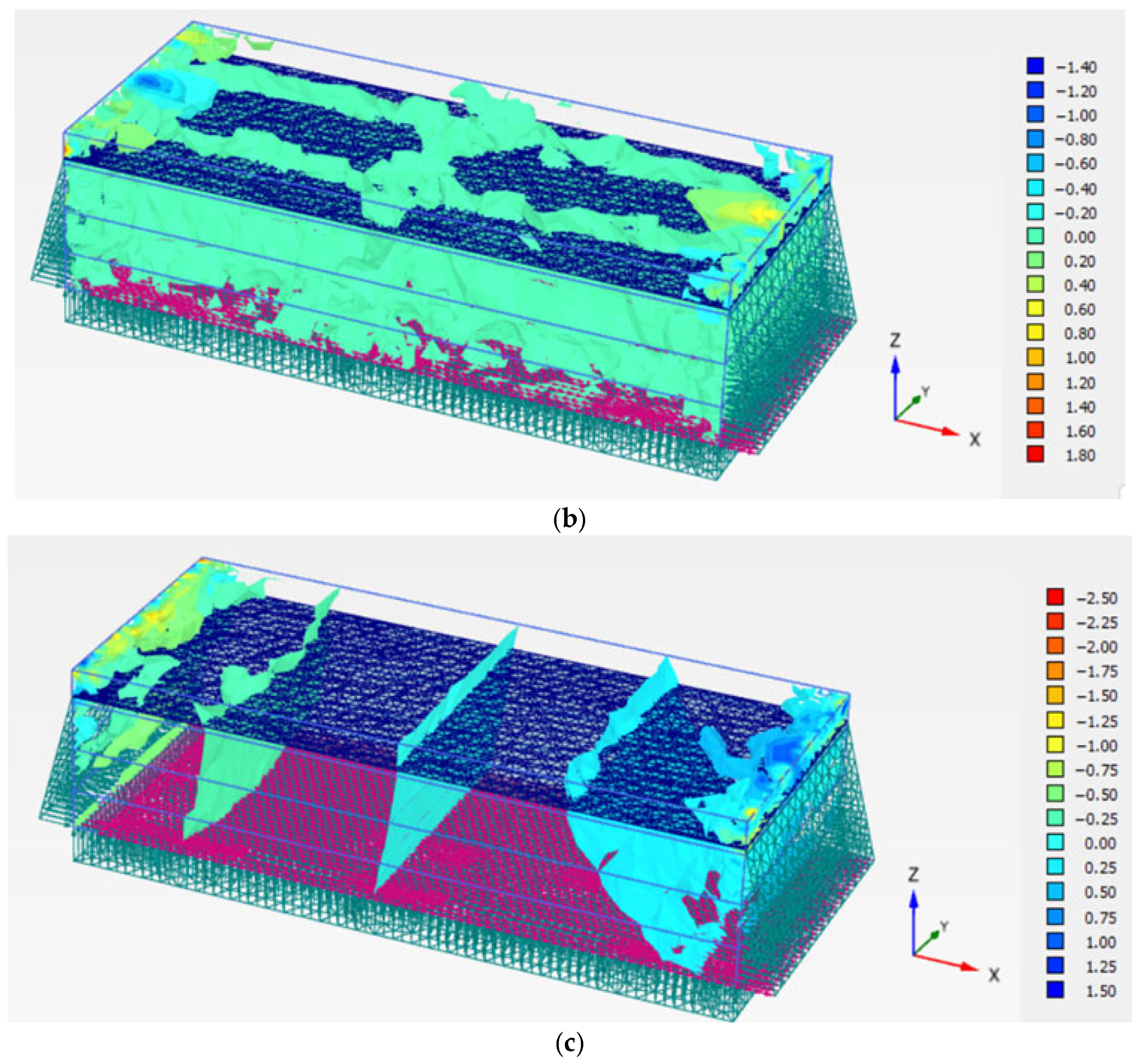
As shown in Figure 15a–c, the incremental strains ( x x ,     y y ,     z z   ) reflect the rapid change in the soil phase during specified time intervals and the maximum value in the x-direction was 1.782 × 10 3 while in the y and z the values are 0.9616 × 10⁻³ and 1.25 × 10⁻³, respectively.
Figure 16 illustrates the seismic soil response in terms of mobilized friction angle and number of half cycles highlighting the evolution of shear strength mobilization and cyclic loading during the earthquake.
The analysis of the mobilized friction angle captures the extent of shear strength of the soil that was activated throughout the period of the earthquake. For example, at the 33 s interval, the mobilized friction angle fell within the parameters of sin φₘₒb = 0.3368 and 0.6647. These correspond to friction angles of 19.7 degrees and 41.6 degrees. The higher values were located at the bottom of the model, close to the mat foundation and the deeper layers of soil. When the mobilized friction angle approaches the peak and critical-state friction angles, the soil response transitions from elastic to plastic behavior, characterizing nonlinear cyclic deformation [29].
The number of half cycles (nₙₑᵥ) depicts the number of stress reversals (load–unload events) that the soil was subjected to, which is important to assess cyclic degradation and the potential buildup of liquefaction. There is no fixed universal upper limit for this, as it is governed by earthquake duration and frequency content The range of nₙₑᵥ is reported as −1.854 to 16.33. The higher values of nₙₑᵥ are located at the middle zone of the foundation, which most likely corresponds to areas of repetitive stress and pore pressure accumulation [30,31].

4. Discussion

Table 4 shows the summary of key results, such as a total foundation displacement of 101.2 mm, a peak excess pore-water pressure ratio of up to r u , σ v , max = 0.9625 , and a dominant response frequency of 2.3 Hz.
The results of the present numerical liquefaction analysis are consistent with the findings of Al Rahman et al. [27], who evaluated liquefaction potential using empirical, nonlinear, and finite element methods at four borehole locations in Palu, Central Sulawesi. In their study, empirical analysis using the simplified procedure indicated liquefaction depths of 17 m, 12 m, 15 m, and 13.5 m for BH 1 to BH 4, respectively, while numerical analysis using DEEPSOIL v7 yielded shallower liquefaction depths ranging from approximately 6.5 m to 11 m, and Plaxis 2D predicted liquefaction depths between 6.25 m and 11 m. A similar trend is observed in the present study, where liquefaction is predicted to occur primarily within the shallower soil layers rather than uniformly throughout the full depth indicated by empirical methods. Al Rahman et al. [27] further reported that liquefaction predominantly developed in silty sand to gravelly sand layers with N-SPT values ranging from 6 to 20, which is consistent with the present study, where liquefaction also initiates within layers of comparable SPT resistance. Their analysis further showed that areas where r u   values exceeding 0.8 are considered liquefied. These values were not uniformly distributed through a liquefied layer but were concentrated near the lower boundary of the layer, a behavior that is likewise captured in the present numerical simulations using finite element analysis. Although exact numerical agreement is not expected due to differences in soil profiles, boundary conditions, and input motions, the close agreement in order of magnitude confirms the physical realism and reliability of the results presented in Table 4. Further work will need to concentrate on the integrated use of experimental work and advanced constitutive models in order to improve the predictive ability with respect to the seismic performance of soil in the Philippines.
To establish the consistency and realism of the simulation, a verification analysis detailed in Table 5, was performed. The simulation was rerun using the simpler Mohr–Coulomb (MC) constitutive model, incorporating the same boundary conditions and input parameters as the advanced HSsmall model.
To establish the consistency and realism of the simulation, a verification analysis was performed. The simulation was rerun using the simpler Mohr–Coulomb (MC) [32] constitutive model, incorporating the same boundary conditions and input parameters as the advanced HSsmall model. The MC model, which utilizes a single constant elastic modulus, served as a crucial benchmark to assess the dynamic loading foundation response and evaluate the realism of the HSsmall predictions. The statistical correlation between the two models’ key parameters is detailed in Table 6. The high Coefficient of Determination ( R 2 ) of 0.9983 demonstrates an exceptionally strong linear relationship between the parameters, as summarized by the regression equation y = 1.046x + 0.532. This near-perfect fit mathematically validates the robust and consistent transfer of geotechnical properties from the primary MC input to the stress-dependent HSsmall framework. The limits of agreement, computed as the mean difference ±1.96 times the standard deviation, range from −12.26 to 24.80, indicating acceptable agreement between the two models for calibration and comparative analysis [33]. The parameters derived for both models are in close agreement, assuring the reliability of the HSsmall simulation for predicting seismic response.

5. Conclusions

Through nonlinear static and dynamic analysis of the midrise building foundation in Padada, Davao del Sur, and the surrounding liquefaction zone, new conclusions about the seismic response of shallow foundation systems on water-saturated, coarse and fine-grained soil have been formulated. During the UBC3D-PLM liquefaction assessment, followed by dynamic finite element analysis with the Hardening Soil Model with Small-Strain Stiffness (HSsmall), the extent of degradation due to liquefaction and foundation response to strong seismic excitation of the 2013 Bohol Earthquake (Mw 7.2, scaled to 1.0 g) have been determined through dual-stage modeling. Liquefaction analysis incorporating UBC3D-PLM resulting in maximum excess pore pressure ratio values of r u , σ v , max = 0.9625 and r u , p , max = 0.9318 suggests that the neutralization of vertical effective stress up to 96% of the initial loss occurs during ground motion.
The dynamic analysis showed critical internal stress state: bending moments of 289.4 kN·m/m ( M 22 ) and 282.8 kN·m/m ( M 11 ) moments of torsion of 152.5 kN·m/m ( M 12 ) and shear forces ( Q 13 ) = 384.2 kN/m and ( Q 13 ) = 367.9 kN/m. These suggest excessive flexural and shear demands which, under destructive-level earthquakes, could reach or surpass the material yield. The total observed displacement of the mat foundation, measured 101.2 mm, significantly exceeds typical acceptance criteria, thus indicating a critical serviceability failure. To minimize these failures for succeeding building foundation design projects in the area, these recommendations may be adapted:
  • Strategies to decrease settlements and enhance stiffness include augmenting the thickness of the mat foundation from 0.7 m to approximately 1.0–1.2 m or replacing the mat foundation with pile-enhanced mat foundations, subject to future parametric verification.
  • Insert coarse gravel drains or geogrids to stimulate faster pore-pressure dissipation and pore-pressure dissipation reinforcement layers.
  • Increased superstructure isolation with isolators, dissipators and decreased isolation cross-section or energy-dissipating interfaces between the foundation and superstructure for reinforced structures are proposed.
  • For greatly critical load points, implement vibratory compaction or stone columns.
  • During potential earthquakes, construct and utilize vertical drains, gravel trenches, and other strategic pore-pressure relief valves to reduce pore-pressure build up within structures.
  • In this study, one earthquake is utilized. However, numerous earthquakes that have different characteristics should be analyzed for generalizing deductions derived from this manuscript.
  • Additional in situ instrumentation of piezometers, scalar magnetometers, and set gauge monitoring devices are to be utilized to evaluate the evolution of pore pressure at construction sites, as well as during operational phases.
  • Assimilating results from the liquefaction model with structural designs (for instance, National Structural Code of the Philippines 2015 for Mindanao-based structures) needs increased attention.
  • Advocate the need for liquefaction susceptibility mapping at the pre-development stage of construction projects.
This study has outlined the nonlinear static and dynamic analysis of the behavior of shallow foundations in a liquefaction prone area of the Philippines, specifically Padada, Davao del Sur. Future engineering designs must incorporate not only code-based safety calculations but also nonlinear and performance-based criteria, ensuring that infrastructure remains serviceable even under extreme seismic loads. This study belongs to one specific building under one specific earthquake. In order to generalize the findings of the study, the other type of buildings on the cited site under different type of earthquakes should be analyzed.


Author Contributions

Conceptualization, G.B.E.; Methodology, G.B.E. and J.M.F.T.C.; Formal analysis, J.M.F.T.C.; Investigation, J.M.F.T.C.; Data curation, J.M.F.T.C.; Software, J.M.F.T.C.; Visualization, J.M.F.T.C.; Writing—original draft, J.M.F.T.C.; Validation, G.B.E.; Writing—review and editing, G.B.E. All authors have read and agreed to the published version of the manuscript.

Funding

This research received no external funding.

Data Availability Statement

The data presented in this study are available on request from the corresponding author.

Conflicts of Interest

The authors declare no conflicts of interest.

Abbreviations

The following abbreviations are used in this manuscript:
HSsmallHardening Soil Model with Small-Strain Stiffness
SPTStandard Penetration Test
ASTMAmerican Society for Testing and Materials
DPWH-BRSDepartment of Public Works and Highways—Bureau of Research and Standards
MCMohr–Coulomb

References

  1. Lagmay, A.M.F.; Eco, R. Brief communication: On the source characteristics and impacts of the magnitude 7.2 Bohol earthquake, Philippines. Nat. Hazards Earth Syst. Sci. 2014, 14, 2795–2801. [Google Scholar] [CrossRef]
  2. HazardHunterPH. Geohazard and Risk Assessment Tool for the Philippines. Available online: https://hazardhunter.georisk.gov.ph/map (accessed on 26 November 2025).
  3. Zhao, Y.; Guo, T.; Liu, H.; Zhang, J. Nonlinear Dynamic Analysis of Laterally Loaded Piles in Liquefiable Layered Sloping Ground under the Influence of Axial Loading. Indian Geotech. J. 2024, 54, 1286–1309. [Google Scholar] [CrossRef]
  4. Cajka, R.; Labudkova, J.; Mynarcik, P. Numerical Solution of Soil–Foundation Interaction and Comparison with Experimental Measurements. Int. J. GEOMATE 2016, 11, 2116–2122. [Google Scholar] [CrossRef]
  5. Hamood, M.J.; Kadhim, A.F. Nonlinear Static and Dynamic Analysis of Buildings Considering Soil–Structure Interaction. Eng. Technol. J. 2016, 34, 530–541. [Google Scholar] [CrossRef]
  6. Tipsunavee, T.; Arangjelovski, G. Three-Dimensional Analysis of Soil–Pile–Structure Interaction on High-Rise Buildings on Improved Soft Soil. Int. J. GEOMATE 2021, 21, 54–60. [Google Scholar] [CrossRef]
  7. Zhussupbekov, A.; Omarov, A. Modern Advances in the Field Geotechnical Testing Investigations of Pile Foundations. Procedia Eng. 2016, 165, 88–95. [Google Scholar] [CrossRef]
  8. Amin, M.; Singh, M. A Numerical Study on the Effect of Liquefaction on Ring Footings during the 2001 Bhuj Earthquake, Gujarat, India. Discov. Civ. Eng. 2024, 3, 13. [Google Scholar] [CrossRef]
  9. Hakro, M.R.; Kumar, A.; Ali, M.; Habib, A.F.; de Azevedo, A.R.G.; Fediuk, R.; Sabri, M.M.S.; Salmi, A.; Awad, Y.A. Numerical Analysis of Shallow Foundations with Varying Loading and Soil Conditions. Buildings 2022, 12, 693. [Google Scholar] [CrossRef]
  10. Xu, L.; Ma, M. Dynamic Response of the Multilayered Half-Space Medium due to the Spatially Periodic Harmonic Moving. Load. Soil Dyn. Earthq. Eng. 2022, 157, 107246. [Google Scholar] [CrossRef]
  11. Dash, S.R.; Bhattacharya, S. Pore Water Pressure Generation and Dissipation Near to Pile and Far-Field in Liquefiable Soils. Int. J. GEOMATE 2015, 9, 1454–1459. [Google Scholar] [CrossRef]
  12. Fedorenko, Y.V.; Vavrinyuk, T.S.; Yerchenko, D.Y.; Kovalsky, A.I. Numerical Simulation of Station Tracks on Soft Soils. Procedia Eng. 2017, 189, 372–378. [Google Scholar] [CrossRef]
  13. Zhang, X.; Tang, L.; Li, X.; Ling, X.; Chan, A. Effect of the Combined Action of Lateral Load and Axial Load on the Pile Instability in Liquefiable Soils. Eng. Struct. 2020, 205, 110074. [Google Scholar] [CrossRef]
  14. Perez, J.S.; Llamas, D.C.E.; Buhay, D.J.L.; Constantino, R.C.C.; Legaspi, C.J.M.; Lagunsad, K.D.B.; Grutas, R.N.; Quimson, M.M.Y. Impacts of a Moderate-Sized Earthquake: The 2023 Magnitude (Mw) 4.7 Leyte, Leyte Earthquake, Philippines. Geosciences 2024, 14, 61. [Google Scholar] [CrossRef]
  15. Ong, A.K.S.; Zulvia, F.E.; Prasetyo, Y.T. “The Big One” Earthquake Preparedness Assessment among Younger Filipinos Using a Random Forest Classifier and an Artificial Neural Network. Geosciences 2023, 13, 226. [Google Scholar] [CrossRef]
  16. Arab, O.; Mekouar, S.; Mastere, M.; Cabieces, R.; Rodríguez Collantes, D. Improved liquefaction hazard assessment via deep feature extraction and stacked ensemble learning on microtremor data. Appl. Sci. 2025, 15, 6614. [Google Scholar] [CrossRef]
  17. Guo, C.; Yang, X.; Guo, C.; Li, P. Analysis of Deformation of Deep and Large Foundation Pit Support Structure and Impact on Neighbouring Buildings in Complex Environments. Buildings 2023, 13, 2550. [Google Scholar] [CrossRef]
  18. Li, L.; Li, J.; Wang, Y.; Gong, W. Analysis of Nonlinear Load–Displacement Behaviour of Pile Groups in Clay Considering Installation Effects. Soils Found. 2020, 60, 650–663. [Google Scholar] [CrossRef]
  19. PLAXIS 3D, version 2024.2; Bentley Systems, Inc.: Delft, The Netherlands, 2024.
  20. ASTM D1586/D1586M-18; Standard Test Method for Standard Penetration Test (SPT) and Split-Barrel Sampling of Soils. ASTM International: West Conshohocken, PA, USA, 2018.
  21. Department of Public Works and Highways–Bureau of Research and Standards (DPWH–BRS). Standard Specifications for Public Works and Highways (DPWH Blue Book); DPWH: Manila, Philippines, 2013; Volume 2. [Google Scholar]
  22. Freedom of Information–Philippines. Freedom of Information (FOI) Platform under Executive Order No. 2, s. 2016. Available online: https://www.foi.gov.ph (accessed on 26 November 2025).
  23. Association of Structural Engineers of the Philippines (ASEP). National Structural Code of the Philippines (NSCP), Volume 2-Geotechnical Design and Investigation, 7th ed.; ASEP: Quezon City, Philippines, 2015; Volume 2. [Google Scholar]
  24. Abu Bakr, A.M.; Hassan, A.M.; El Fattah, M.A.; Mohamed, A.M. Numerical analysis of liquefaction phenomenon using the UBC3D-PLM constitutive model. J. Adv. Eng. Trends 2019, 38, 81–96. [Google Scholar]
  25. Forcellini, D. Probabilistic-Based Assessment of Liquefaction-Induced Damage with Analytical Fragility Curves. Geosciences 2020, 10, 315. [Google Scholar] [CrossRef]
  26. PLAXIS. User’s Manual of PLAXIS-Hardening Soil Model (with Small-Strain Stiffness); Bentley Systems: Delft, The Netherlands, 2014. [Google Scholar]
  27. Al Rahman, M.H.; Fathani, T.F.; Wilopo, W. Excess Pore Water Pressure Ratio Comparison from Empirical and Numerical Methods to Determine Liquefaction Potential in Palu, Central Sulawesi, Indonesia. Open Civ. Eng. J. 2025, 19, e1874195372949. [Google Scholar] [CrossRef]
  28. Le Ba, V.; Van, N.N.; Le Ba, K. Study on the settlement of raft foundations by different methods. MATEC Web Conf. 2018, 251, 04054. [Google Scholar] [CrossRef]
  29. Manzari, M.T.; Dafalias, Y.F. A critical state two-surface plasticity model for sands. Géotechnique 1997, 47, 255–272. [Google Scholar] [CrossRef]
  30. Yang, J.; Sato, T. Interpretation of cyclic mobility and post-liquefaction deformation of saturated sand. Soil Dyn. Earthq. Eng. 2002, 22, 213–226. [Google Scholar] [CrossRef]
  31. Boulanger, R.W.; Idriss, I.M. CPT and SPT Based Liquefaction Triggering Procedures; Report UCD/CGM-14/01; Center for Geotechnical Modeling, Department of Civil and Environmental Engineering, University of California, Davis: Davis, CA, USA, 2014. [Google Scholar]
  32. Zhang, T.; Lin, S.; Zheng, H.; Chen, Y. Elastoplastic integration method of Mohr–Coulomb criterion. Geotechnics 2022, 2, 599–614. [Google Scholar] [CrossRef]
  33. Soltani, A.; Azimi, M.; O’Kelly, B.C. Modeling the compaction characteristics of fine-grained soils blended with tire-derived aggregates. Sustainability 2021, 13, 7737. [Google Scholar] [CrossRef]
Figure 1. Geographic location of the study area within the active fault framework of Padada, Davao del Sur.
Buildings 15 04420 g001
Figure 2. Liquefaction hazard mapping of Padada, Davao del Sur showing (a) the susceptibility map and (b) the corresponding legend.
Buildings 15 04420 g002
Figure 3. Field investigation setup showing the rotary drilling rig in operation using a water jetting mechanism.
Buildings 15 04420 g003
Figure 4. Extracted soil samples obtained from Padada–Mainit River.
Buildings 15 04420 g004
Figure 5. Soil stratification and mesh generation in PLAXIS 3D model showing (a) defined soil layers and (b) finite element mesh configuration with element contours.
Buildings 15 04420 g005
Figure 6. Dynamic Multiplier—Time–History Data of Bohol Earthquake 2013.
Buildings 15 04420 g006
Figure 7. Model setup using the Hardening Soil Model with Small-Strain Stiffness (HSsmall): (a) cross-sectional view; (b) top view.
Buildings 15 04420 g007
Figure 8. Excess pore pressure ratio contours for the soil domain based on vertical effective stress.
Buildings 15 04420 g008
Figure 9. Excess pore pressure ratio contours for the soil domain based on mean effective stress.
Buildings 15 04420 g009
Figure 10. Deformed mesh of the mat foundation in PLAXIS 3D.
Buildings 15 04420 g010
Figure 11. Distribution of (a) internal shear and (b) axial forces in the mat foundation under seismic loading.
Buildings 15 04420 g011
Figure 12. Axial, shear, and moment response patterns of the mat foundation under dynamic loading (a) axial response pattern, (b) shear response pattern, and (c) moment response pattern.
Buildings 15 04420 g012
Figure 13. Dynamic time–history response of the mat foundation under seismic loading: (a) displacement in the x-direction (Element 37, Node 312), (b) acceleration in the x-direction (Element 45, Node 428), (c) acceleration in the y-direction (Element 42, Node 501), and (d) acceleration in the z-direction (Element 33, Node 457).
Buildings 15 04420 g013aBuildings 15 04420 g013b
Figure 14. Dynamic response of the foundation: (a) amplification peaking at 17.2 around 23.8 Hz; (b) power spectral density showing a dominant frequency at 2.3 Hz.
Buildings 15 04420 g014
Figure 15. Contour plots of soil strain response under seismic loading: (a) incremental strain in the x-direction, (b) incremental strain in the y-direction, (c) incremental strain in the z-direction.
Buildings 15 04420 g015aBuildings 15 04420 g015b
Figure 16. Seismic soil response showing (a) mobilized friction angle ( sin φ mob ) and (b) number of half cycles ( n rev ).
Buildings 15 04420 g016aBuildings 15 04420 g016b
Table 1. UBC3D-PLM Input Parameters.
ParameterDescriptionSoil Layer 1Soil Layer 2Soil Layer 3Soil Layer 4
Borehole 1
γ u n s a t (kN/m2)Unsaturated unit weight19.3318.8119.5320.25
γ s a t (kN/m2)Saturated unit weight21.4721.2321.6922.84
c (kN/m2)Cohesion0.000.000.000.00
φ c v   ° Constant volume friction angle28.6033.9934.7735.96
φ p ° Peak friction angle29.2035.7939.2741.66
(N1)60Corrected SPT blow count6.0016.0025.0029.00
k B e Bulk modulus constant551.712764.82887.39664.16
k G e Elastic shear modulus constant788.161092.61267.71331.89
k G p Plastic shear modulus constant185.12939.122476.943460.36
m e Model parameter (dilation control)0.50000.50000.50000.5000
n e Model parameter (contraction control)0.50000.50000.50000.5000
n p Pore-pressure parameter0.40000.40000.40000.4000
P r e f   (kN/m2)Reference pressure100.0100.0100.0100.0
DepthLayer thickness4.5 m8 m9 m8.5 m
Soil ClassificationUSCS classificationClayey SiltSilty Clay Clayey Silt Dense Silty Clay
Borehole 2
γ u n s a t (kN/m2)Unsaturated unit weight19.4018.7919.5120.27
γ s a t (kN/m2)Saturated unit weight22.4322.1921.8823.01
c (kN/m2)Cohesion0.000.000.000.00
φ c v   ° Constant volume friction angle28.1933.6134.4636.22
φ p ° Peak friction angle28.8936.0138.9641.62
(N1)60Corrected SPT blow count7.0018.0025.0028.00
k B e Bulk modulus constant581.56795.96888.44922.32
k G e Elastic shear modulus constant830.81137.091269.201317.60
k G p Plastic shear modulus constant222.271205.702476.703199.00
m e Model parameter (dilation control)0.50000.50000.50000.5000
n e Model parameter (contraction control)0.50000.50000.50000.5000
n p Pore-pressure parameter0.40000.40000.40000.4000
P r e f   (kN/m2)Reference pressure100.0100.0100.0100.0
DepthLayer thickness4.5 m8 m9 m8.5 m
Soil ClassificationUSCS classificationClayey SiltSilty Clay Clayey Silt Dense Silty Clay
Table 2. Hardening Soil Model with Small-Strain Stiffness Input parameters.
ParameterDescriptionSoil Layer 1Soil Layer 2Soil Layer 3Soil Layer 4
Borehole 1
G 0 r e f (kN/m2)Reference small-strain shear modulus12,350 31,280 59,870 101,420
E 50 r e f (kN/m2)Secant modulus at 50 percent strength29,60075,400144,800240,600
E o e d r e f (kN/m2)Constrained (oedometer) modulus20,70052,780101,360167,000
E u r r e f (kN/m2)Unloading–reloading modulus44,300112,800213,500361,000
v u r Poisson’s ratio for unloading–reloading0.200.200.200.20
γ 0.7 (unitless)Shear strain at 70 percent reduction in stiffness 7 × 10 4 7 × 10 4 7 × 10 4 7 × 10 4
Borehole 2
G 0 r e f (kN/m2)Reference small-strain shear modulus12,130 30,380 58,750 103,460
E 50 r e f (kN/m2)Secant modulus at 50 percent strength28,10073,270141,400241,200
E o e d r e f (kN/m2)Constrained (oedometer) modulus19,90051,76099,980170,800
E u r r e f (kN/m2)Unloading–reloading modulus42,800111,880209,830368,670
v u r Poisson’s ratio for unloading–reloading0.200.200.200.20
γ 0.7 (unitless)Shear strain at 70 percent reduction in stiffness 7 × 10 4 7 × 10 4 7 × 10 4 7 × 10 4
Table 3. Mat foundation geometry and applied loading parameters.
ParameterValue
Mat area, A470 m2
Mat thickness, t0.70 m
Mat volume329 m3
Concrete unit weight24.0 kN/m3
Mat self-weight7896 kN
Applied uniform surface load 173.3 kN/m2
Table 4. Summary of key seismic analysis results and parameter.
ParameterKey Result
Excess pore pressure ratio (vertical effective stress) r u , σ v , max = 0.9625
Excess pore pressure ratio (mean effective stress) r u , p , max = 0.9318
Total foundation displacement101.2 mm
Bending moment (x-direction) M 11 = 282.8 kN / m / m
Bending moment (y-direction) M 22 = 289.4   kN / m / m
Torsional moment M 12 = 152.5 kN / m / m
Shear force (x-z plane) Q 13 = 384.2 kN / m
Shear force (y-z plane) Q 23 = 367.9 kN / m
Horizontal displacement (x-direction) u x = 0.2341 m
Acceleration (x-direction) a x = 2.92 m / s 2
Acceleration (y-direction) a y = 0.0301 m / s 2
Acceleration (z-direction) a z = 0.0892 m / s 2
Dominant frequency f dominant = 2.3   Hz
Amplification factor A max = 17.2 ( at   23.8   Hz )
Incremental strain (x-direction) Δ ε x x = 1.782 × 10 3
Incremental strain (y-direction) Δ ε y y = 0.9616 × 10 3
Incremental strain (z-direction) Δ ε z z = 1.25 × 10 3
Mobilized friction angle (sine) s i n φ mob = 0.3368 0.6647
Mobilized friction angle (degrees) φ mob = 19.7 41.6
Number of half cycles n rev = 1.854 16.33
Table 5. Comparison of HSsmall and Mohr–Coulomb Model Simulation Results.
ParameterHSsmall Result Mohr-Coulomb Result
Total foundation displacement101.2 mm99.6 mm
Bending moment (x-direction) M 11 = 282.8 kN / m / m M 11 = 272.6 kN / m / m
Bending moment (y-direction) M 22 = 289.4   kN / m / m M 22 = 284.9   kN / m / m
Torsional moment M 12 = 152.5 kN / m / m M 12 = 132.9 kN / m / m
Shear force (x-z plane) Q 13 = 384.2 kN / m Q 13 = 355.3 kN / m
Shear force (y-z plane) Q 23 = 367.9 kN / m Q 23 = 357.5 kN / m
Horizontal displacement (x-direction) u x = 0.2341 m u x = 0.2307 m
Incremental strain (x-direction) Δ ε x x = 1.782 × 10 3 Δ ε x x = 1.598 × 10 3
Incremental strain (y-direction) Δ ε y y = 0.9616 × 10 3 Δ ε y y = 0.9418 × 10 3
Incremental strain (z-direction) Δ ε z z = 1.25 × 10 3 Δ ε z z = 1.11 × 10 3
Mobilized friction angle (sine) s i n φ mob = 0.3368 0.6647 sin φ mob = 0.3326 0.6504
Mobilized friction angle (degrees) φ mob = 19.7 41.6 φ mob = 19.5   40.4
Number of half cycles n rev = 1.854 16.33 n rev = 1.755 15.81
Table 6. Statistical Correlation between HSsmall and Mohr–Coulomb Models.
ParameterCorrelation Result
Regression Equationy = 1.046x + 0.532
Coefficient   of   Determination   ( R 2 )0.9983
Mean Difference6.27
Standard Deviation of Differences9.45
Limits of Agreement −12.26 to 24.80
Disclaimer/Publisher’s Note: The statements, opinions and data contained in all publications are solely those of the individual author(s) and contributor(s) and not of MDPI and/or the editor(s). MDPI and/or the editor(s) disclaim responsibility for any injury to people or property resulting from any ideas, methods, instructions or products referred to in the content.