Article

Assessing the Seismic Performance of Prefabricated Coupling Beams Using Double-Lap Sleeves: An Experimental and Numerical Investigation

by
Mei Jin
1,
Hao Wu
2,*,
Lei Su
2,
Xiaoyi Hu
2,
Yong Zeng
1,
Qiang Cai
1 and
Wenju Yang
1
1
Bureau of Housing and Urban–Rural Development of Naqu, Naqu 852000, China
2
College of Civil Engineering, Tongji University, 1239 Siping Rd., Shanghai 200092, China
*
Author to whom correspondence should be addressed.
Buildings 2025, 15(23), 4387; https://doi.org/10.3390/buildings15234387
Submission received: 12 November 2025 / Revised: 25 November 2025 / Accepted: 27 November 2025 / Published: 3 December 2025
(This article belongs to the Special Issue Advances in Mechanical Behavior of Prefabricated Structures)

Abstract

To advance the application of prefabricated structures, this study proposes a novel sleeve connection for reinforced concrete coupling beams, aiming to balance the construction efficiency with seismic performance in prefabricated structures. Quasi-static tests and numerical simulations were conducted, investigating the effects of span-to-depth ratio, connection type, and casting method. The experimental results demonstrate that the proposed sleeve-connected beams exhibit seismic performance comparable to, and in some cases superior to, their cast-in-place counterparts. Specifically, the prefabricated specimen with a span-to-depth ratio of 4 achieved approximately 85% of the energy dissipation capacity of its cast-in-place counterpart. However, as the span-to-depth ratio decreased, the energy dissipation capacity of the prefabricated beams increased significantly, reaching up to 2.5 times that of the cast-in-place specimens. Numerical simulations, which showed good agreement with experimental results in terms of failure modes and hysteresis curves, further revealed that concrete compressive strength has a limited influence on seismic behavior. In contrast, increasing the reinforcement ratio effectively improved stiffness and ductility. Notably, increasing the rebar diameter from 18 mm to 22 mm resulted in approximately 25% improvement in energy dissipation capacity. The findings provide novel insights and a scientific basis for the practical application of this innovative prefabricated solution.

1. Introduction

In regions with high seismic intensity, shear wall structures have demonstrated excellent seismic performance due to their high lateral stiffness, ductility, and energy dissipation capacity [1]. The coupling beams within these shear wall systems play a crucial role in dissipating seismic energy. By allowing the coupling beams to yield and fail prior to the wall limbs, a substantial amount of seismic energy can be absorbed, thereby protecting the primary structural components. Consequently, the seismic performance of coupling beams is a key determinant of the overall seismic resistance of shear wall systems [2]. This topic has attracted extensive research attention over the past decades [3,4,5].
However, conventional cast-in-place concrete construction suffers from low productivity and severe environmental pollution. With the advancement of science and technology and the ongoing transformation toward industrialized construction, prefabricated buildings have gained increasing attention and widespread adoption in recent years. Compared with traditional cast-in-place methods, prefabricated construction offers significant advantages such as industrialization and environmental sustainability [6,7].
Similar to their cast-in-place counterparts, prefabricated shear wall structures also include coupling beams. Unlike monolithic construction, the connection between the prefabricated coupling beam and the wall limbs involves horizontal joints, and the reliability of this connection is a decisive factor influencing the global seismic performance of the structure [8], as well as construction cost and efficiency. Numerous studies have investigated the influence of different connection types on the seismic performance of prefabricated coupling beams. For instance, Zheng et al. [9] proposed a wet connection method in which preformed holes were reserved at the interfaces between the coupling beam and wall limbs, into which equivalent bars were inserted and grouted to achieve structural continuity. Their results indicated that prefabricated shear walls using this method exhibited seismic behavior comparable to that of monolithic walls. Nevertheless, the process is complicated, and the narrow holes often result in poor grouting quality, which impairs the composite action between the beam and wall limbs. Wang et al. [10] developed an arched coupling beam connected to the wall limbs through steel connectors and horizontal and inclined steel bars, which effectively enhanced shear capacity, optimized stress distribution, and improved overall ductility. However, the fabrication process remained complex and required high casting precision. In contrast, Xia et al. [11] introduced a bolted connection system that offered efficient and convenient installation. Yet, this approach inevitably led to a reduction in ductility by approximately 25.0–48.6% and a decrease in load-bearing capacity by 11.6–25.7% compared with cast-in-place components.
The widespread adoption of precast coupling beams is often challenged by a compromise between construction efficiency and seismic performance, as evidenced in conventional connection methods. While socket and grouted sleeve connections [12] can provide good performance, they exhibit limitations such as stringent installation tolerance requirements and difficulties in verifying grout integrity, leading to potential quality concerns. Similarly, welded [13] and bolted [14] connections, though robust, face challenges in ensuring consistent on-site quality control and may suffer from residual stresses and thermal damage. Hybrid steel-concrete connections [15], while demonstrating superior load-bearing capacity, are not without their drawbacks, such as construction complexity and practical installation difficulties. Therefore, a reliable and practical connection technology is essential to facilitate the application of prefabricated shear wall structures in seismically active regions. The mechanical splicing method investigated in this study, as a type of dry connection, addresses these issues by enabling rapid installation and omitting the need for in situ curing, thereby offering a highly viable alternative.
To address these challenges, this study proposes a prefabricated coupling beam system employing double-threaded sleeve mechanical connections to achieve a reliable and efficient connection between the beam and wall limbs. This configuration ensures that the prefabricated shear wall exhibits seismic behavior comparable to that of a monolithic wall structure. In this system, the longitudinal reinforcement from the prefabricated coupling beam and the wall limbs are connected through double-threaded sleeves. After the mechanical connection is completed, a post-cast concrete segment with the same strength grade as the main component is poured and cured, forming an integrated coupling beam specimen. This construction approach significantly simplifies the assembly process while maintaining structural integrity and connection reliability between the coupling beam and the wall limbs.
This paper aims to investigate the mechanical performance of the proposed connection system through a series of seven quasi-static cyclic tests conducted under different conditions. The effects of span-to-depth ratio, presence of sleeve connections, and sleeve location on the seismic behavior of prefabricated shear wall coupling beams are examined. Furthermore, numerical analyses are performed to explore the influence of shear-span ratio, concrete compressive strength, and reinforcement ratio on the overall failure mechanism, stiffness degradation, ductility, and energy dissipation characteristics of the system.

2. Experimental Description

2.1. Specimen Design

As summarized in Specifically, specimens S1–S2 adopted single-sided sleeve connections with span-to-depth ratios of 4.0 and 2.5, respectively. Specimens S3–S4 used double-sided sleeve connections with span-to-depth ratios of 4.0 and 2.5, respectively. The cast-in-place specimens (S5 and S6) were designed with span-to-depth ratios of 4.0 and 2.5, respectively. Comparative analysis among these groups enables a systematic investigation of the effects of span-to-depth ratio, presence of sleeve connections, and sleeve placement on the seismic performance of the coupling beams.
As shown in Table 1, a total of six reinforced concrete (RC) coupling beam specimens were designed and tested. Among them, four specimens (S1–S4) were prefabricated beams connected using MT double-threaded sleeve mechanical joints, while the other two specimens (S5–S6) were cast-in-place beams serving as reference specimens. All specimens shared identical cross-sectional dimensions and reinforcement ratios for both longitudinal and transverse reinforcement. The key experimental variables included the span-to-depth ratio, the location of the sleeve connection, and the construction method.
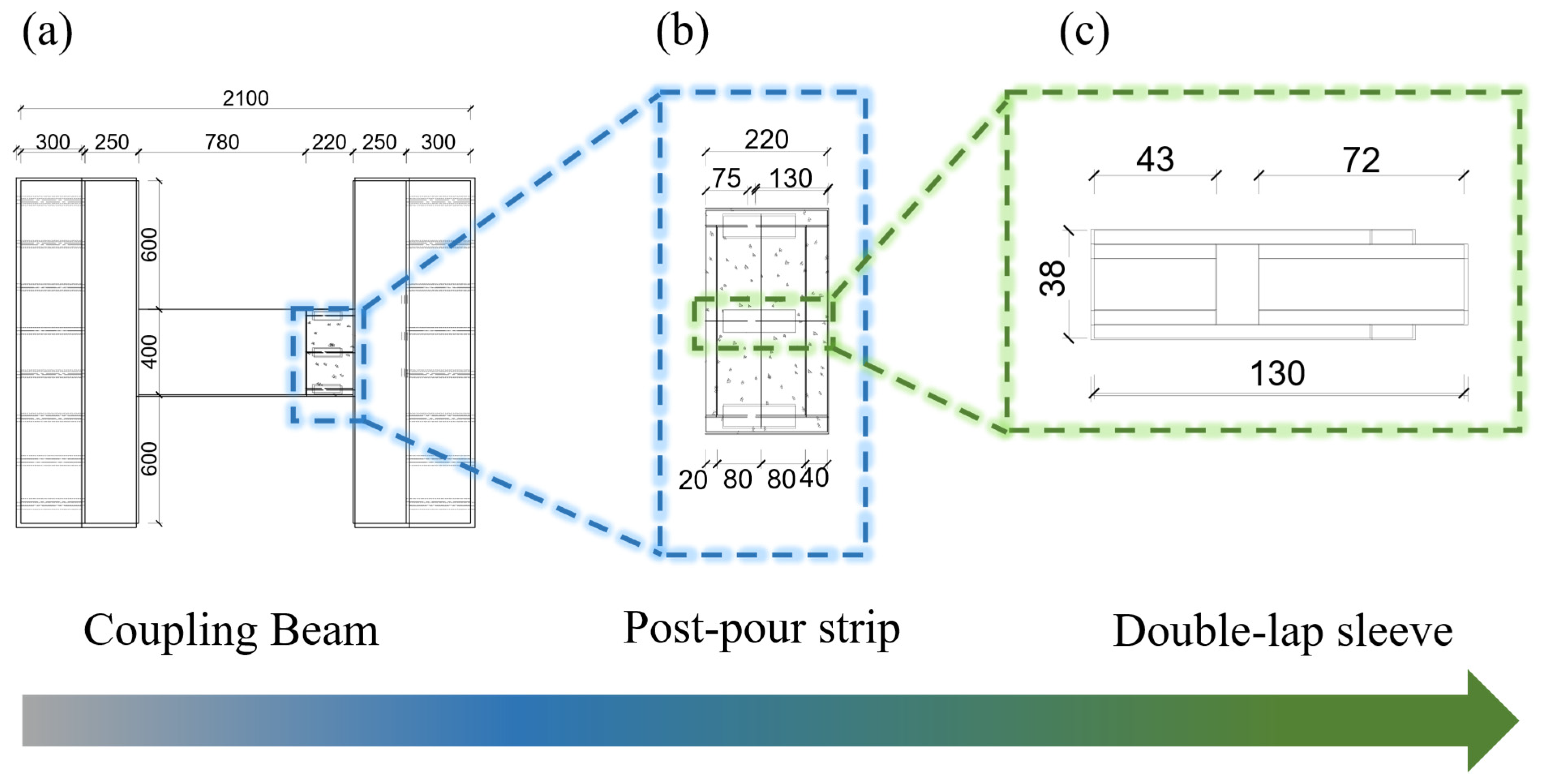
The geometric configurations and reinforcement details of the specimens are illustrated in Figure 1 and Figure 2. Each specimen consisted of two main components: a coupling beam and two wall limbs. The wall limbs served both as boundary elements for beam connection and as interfaces for load transfer between the specimen and the loading frame. All specimens had identical cross-sectional dimensions of 400 mm × 200 mm. Two span-to-depth ratios—4.0 and 2.5—were adopted, corresponding to beam clear spans of 1600 mm and 1000 mm, respectively.

2.2. Experimental Material

The mechanical properties of the concrete and reinforcing steel are summarized in Table 2, and fcu,m, fcu,k represent the average and standard values of the compressive strength of concrete cubes, respectively, where fcu,k = fcu,m (1–1.645). Similarly, fc,m, fck, and, fc represent the average, characteristics, and design values of the axial compressive strength of concrete, where fc,m = 0.76 fcu,m.
Table 3, respectively. Additionally, the compressive strength of the concrete was obtained as the average value from three cube specimens with dimensions of 150 mm × 150 mm × 150 mm, tested according to the standard procedure [16], and the compressive strength at 7 days is 30.5 MPa. Both the longitudinal and transverse reinforcements were made of HRB400-grade steel bars. For tensile strength testing, three 8 mm and three 18 mm diameter bars were selected, while three 14 mm diameter bars from the same batch were used to determine the elastic modulus. The yield strength fy and ultimate tensile strength fu of the reinforcing bars were obtained from the average values of the measured results.

2.3. Loading System and Measurement Content

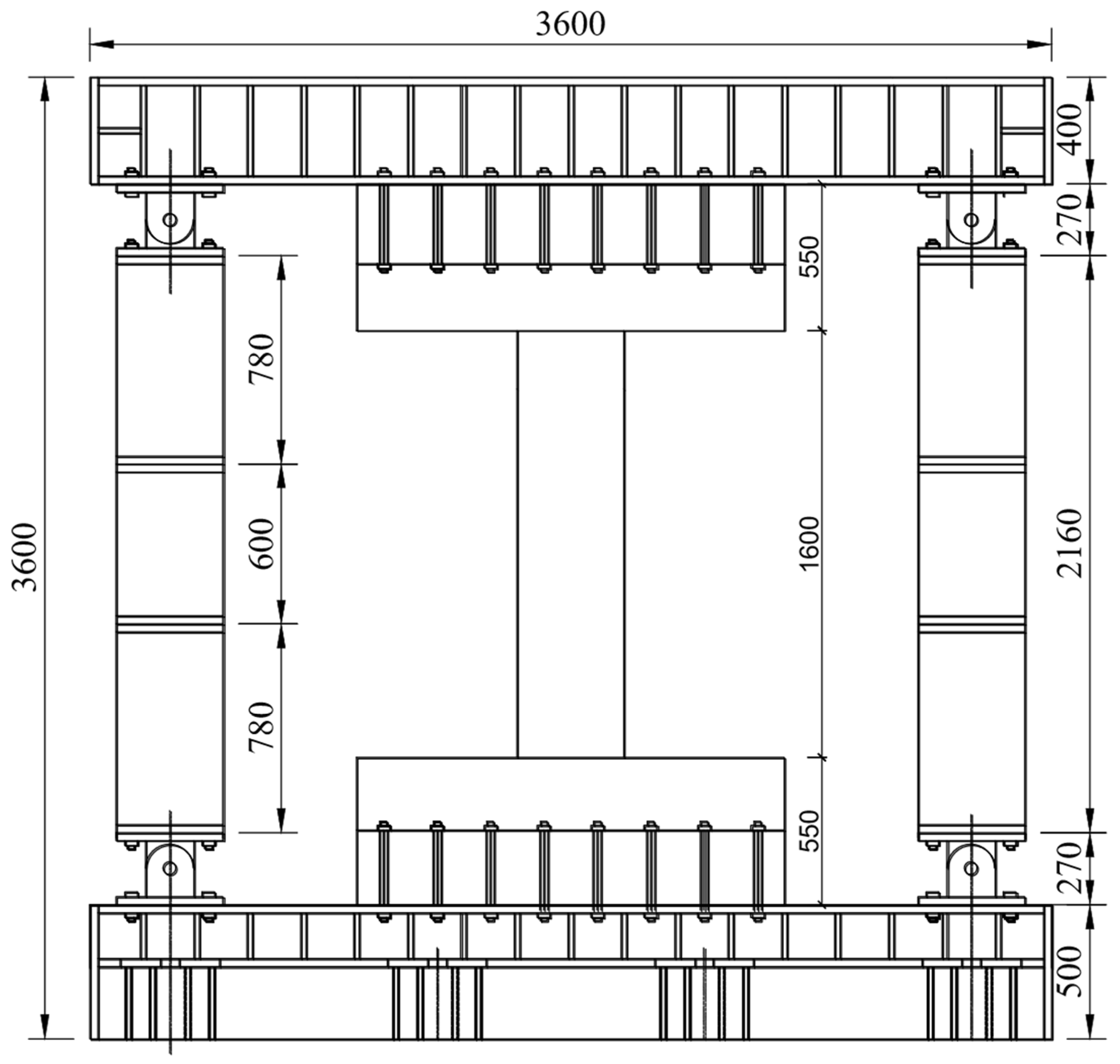
The specimens were tested under a shear loading system, as illustrated in Figure 3. The setup consisted of two parallel steel beams on each side of the specimen, with their upper and lower ends pinned to allow horizontal translation during loading. This configuration ensured that the coupling beam was subjected to pure shear deformation, thereby simulating the actual deformation behavior of coupling beams in shear wall structures under lateral seismic loads. The loading end was connected to one side of the upper steel beam and driven by a horizontal actuator. The wall limbs of each specimen were anchored to the upper and lower steel beams using 32 threaded rods with a diameter of 24 mm. The test frame was fixed to the laboratory floor using anchor bolts, and mortar was applied between the base and the floor surface to prevent sliding. A 1000 kN IST horizontal actuator was used to apply the lateral cyclic loading.
To evaluate the seismic performance of the coupling beam specimens, low-cycle reversed loading was employed to simulate the structural response under earthquake excitation. The tests were conducted under displacement-controlled loading. The beam chord rotation θ—defined as the rotation of the beam chord line caused by the relative vertical displacement between the two ends of the coupling beam—was adopted as the primary deformation parameter. The increment of chord rotation θ per loading level was set to 0.2%, and the corresponding lateral displacement increment was calculated based on the beam span length of each specimen. Each displacement level was repeated three times, and the loading process was terminated when the lateral load capacity decreased to 85% of the peak load recorded during the test. The detailed loading protocol is summarized in Table 4.
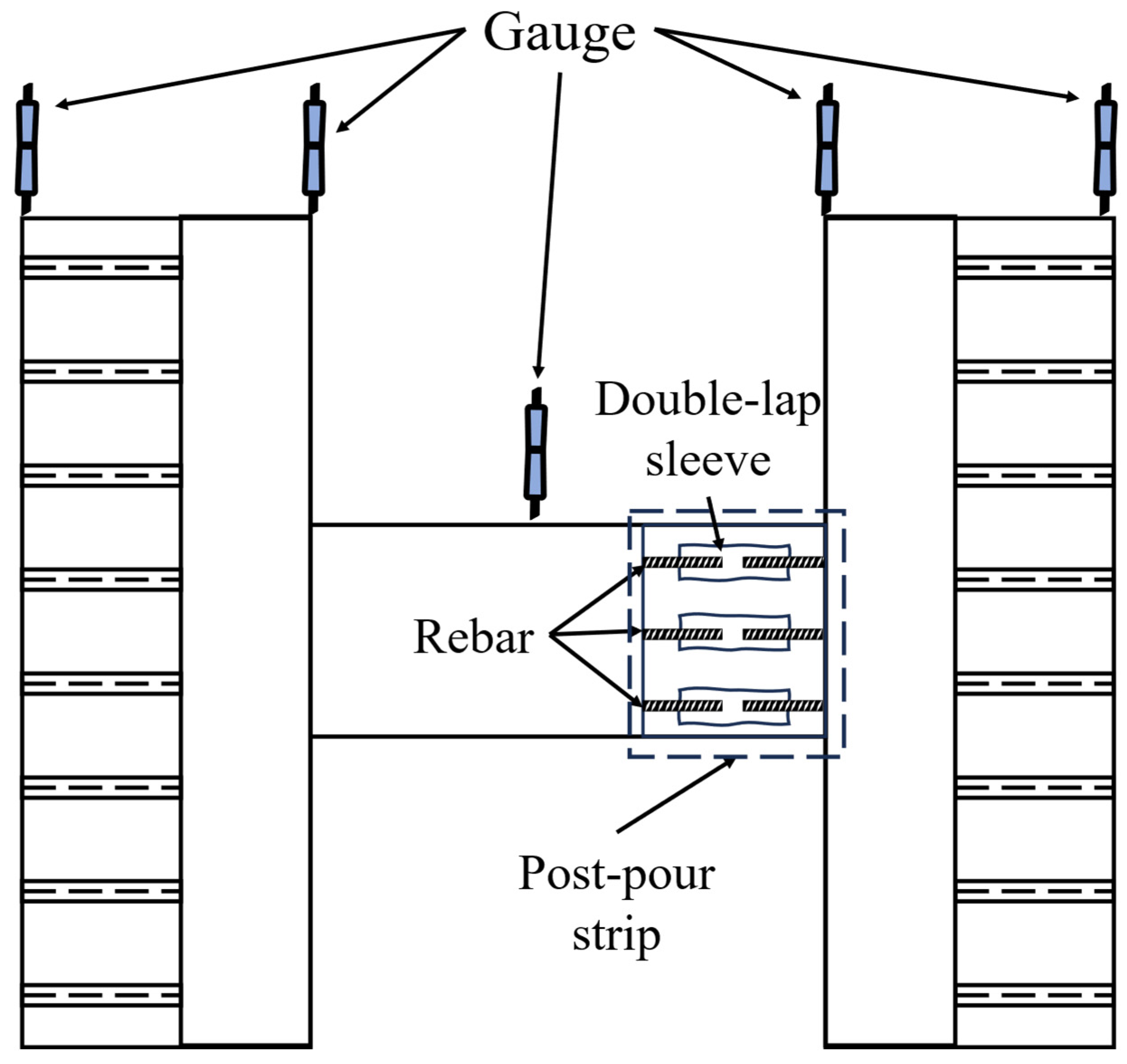
The arrangement of displacement transducers is shown in Figure 4. A load cell was used to measure the applied horizontal load. Four displacement gauges were installed along the beam height to record the deformation at different elevations, including the actuator level, beam top, mid-span, and beam bottom. Although no displacement gauge was mounted on the base of the test frame, sliding was effectively restrained by anchoring the base to the reaction wall and applying a mortar bedding beneath the base plate to provide additional frictional resistance.

3. Development and Validation of Numerical Models Based on DIANA

3.1. Finite Element Model

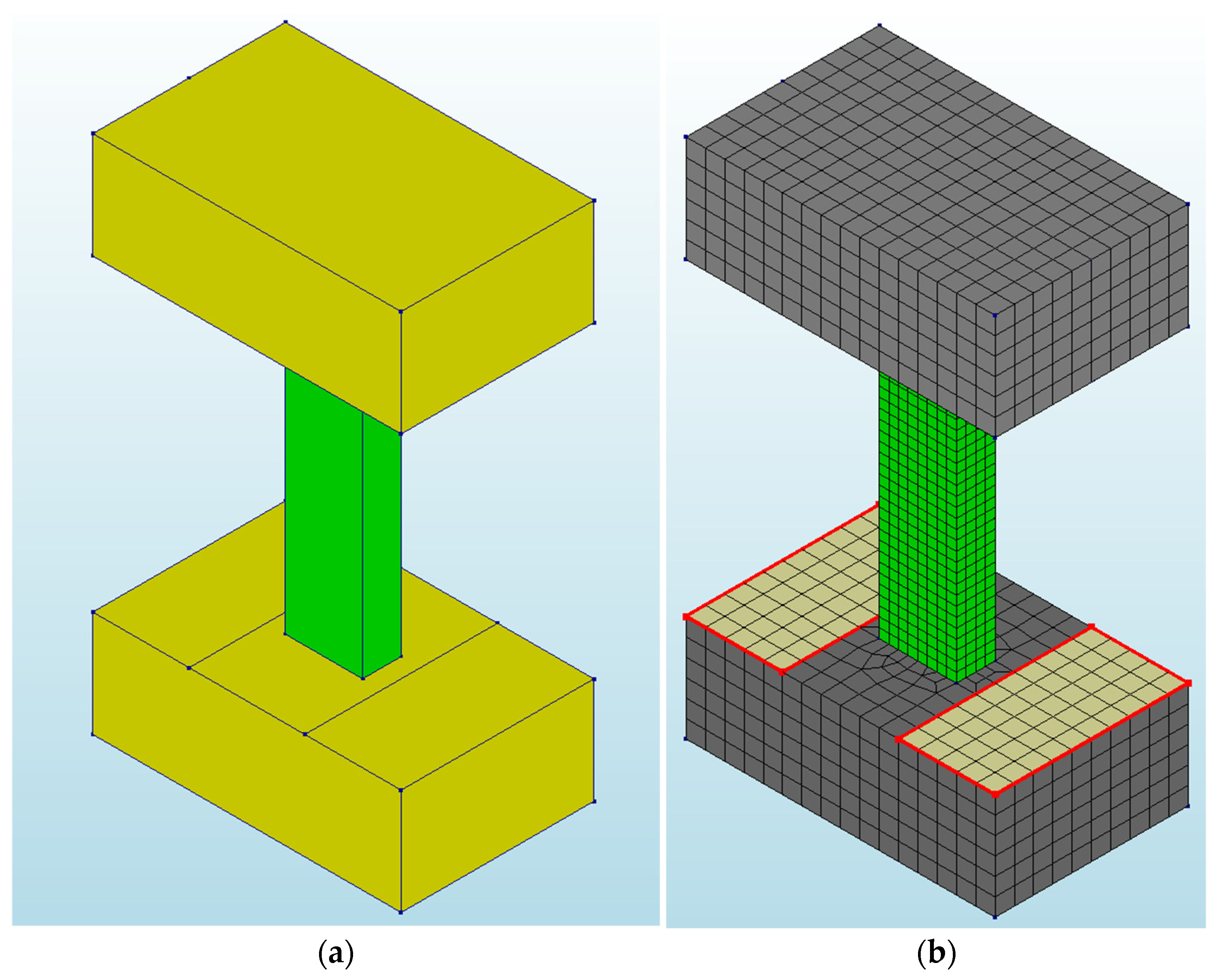
A detailed finite element model of the precast concrete coupling beams was developed in the DIANA finite element software (version 11.1), as shown in Figure 5. This software was selected for its powerful nonlinear solution capabilities, which ensure computational convergence and stability when handling the highly nonlinear problems encountered in this study. Furthermore, its advanced constitutive models accurately simulate the deterioration behavior of concrete under cyclic loading, which is crucial for a precise analysis of the seismic performance of coupling beams. The model was developed based on the actual geometric dimensions and material properties of the tested specimens, ensuring a faithful representation of the physical configuration. The concrete and rebar were modeled using three-dimensional solid and embedded bar elements, respectively. Specifically, the concrete components were discretized using eight-node hexahedral solid elements (HX24L), which are capable of accurately capturing the stress and strain distributions under complex loading conditions. The longitudinal and transverse reinforcements were modeled using embedded truss elements, allowing for a precise simulation of the bond–slip interaction without the need for mesh dependency between the steel and concrete.

3.2. Constitutive Model

The strain-based rotating crack model available in DIANA was adopted to simulate the nonlinear behavior of the concrete. The input parameters for this model include the elastic modulus and Poisson’s ratio of the concrete, the crack orientation, and the concrete’s uniaxial constitutive relationships under compression and tension. The elastic modulus was determined based on the experimental test results, the Poisson’s ratio was set to 0.2, and the crack orientation was defined as “rotating.” In addition, the Mander model [17] was used to establish the compressive stress–strain relationship of the concrete. All characteristic material parameters used in the numerical simulation were defined consistently with those adopted in the experimental campaign. The constitutive curve of concrete under uniaxial compression is determined using (1) to (8).
σ c = f cmax x r r 1 + x r
x = ε c ε cmax
r = E c E c E sec
E sec = f cmax ε cmax
E c = 5000 f co
f cmax = f co unconfined   concrete f co 1 + 2.4 I e 0.7 confined   concrete
ε cmax = ε co unconfined   concrete ε co 1 + 35 I e 1.2 confined   concrete
I e = ρ sey f h f c
where fcmax represents the compressive strength of confined concrete, and εcmax denotes the corresponding strain at the compressive strength; σc and εc represent the stress and corresponding strain of the concrete, respectively; Ec represents the tangential elastic modulus of concrete. fco and εco represent the compressive strength of the cylinder and the corresponding strain, respectively; Ie refers the effective confinement parameter, defined as the ratio of effective confinement stress to the peak stress of unconfined concrete; ρsey is the equivalent transverse rebar ratio, and fh denotes the yield strength of transverse rebar.
A linear softening model based on the tensile fracture energy of concrete was adopted to account for the fact that tensile failure in concrete is not purely brittle. This model uses a bilinear stress–strain relationship, with straight-line segments representing the ascending and descending branches. The ultimate tensile strain of the concrete is determined by its tensile fracture energy, while the tensile strength and fracture energy are calculated in accordance with Eurocode [18], as expressed in Equations (9)–(11).
f t = 0.26 f cu   2 / 3 f cu     50 MPa 0.21 f cu   2 / 3 f cu   >   50 MPa
G F = G F 0 f co / 10 0.7
G F 0 = 0.025 d a = 8   mm 0.030 d a = 16   mm 0.058 d a = 32   mm
where fcu and fco are the cubic compressive strength and cylindrical compressive strength of concrete, respectively, and GF0 and da represents the reference fracture energy and the maximum aggregate size, respectively.
A trilinear constitutive model was adopted for the steel, with the elastic modulus, yield strength, and ultimate strength determined from the actual material tests. The post-yield stiffness was defined as 1% of the initial elastic stiffness to account for strain-hardening behavior during loading.

3.3. Validation of Numerical Model

3.3.1. Failure Pattern

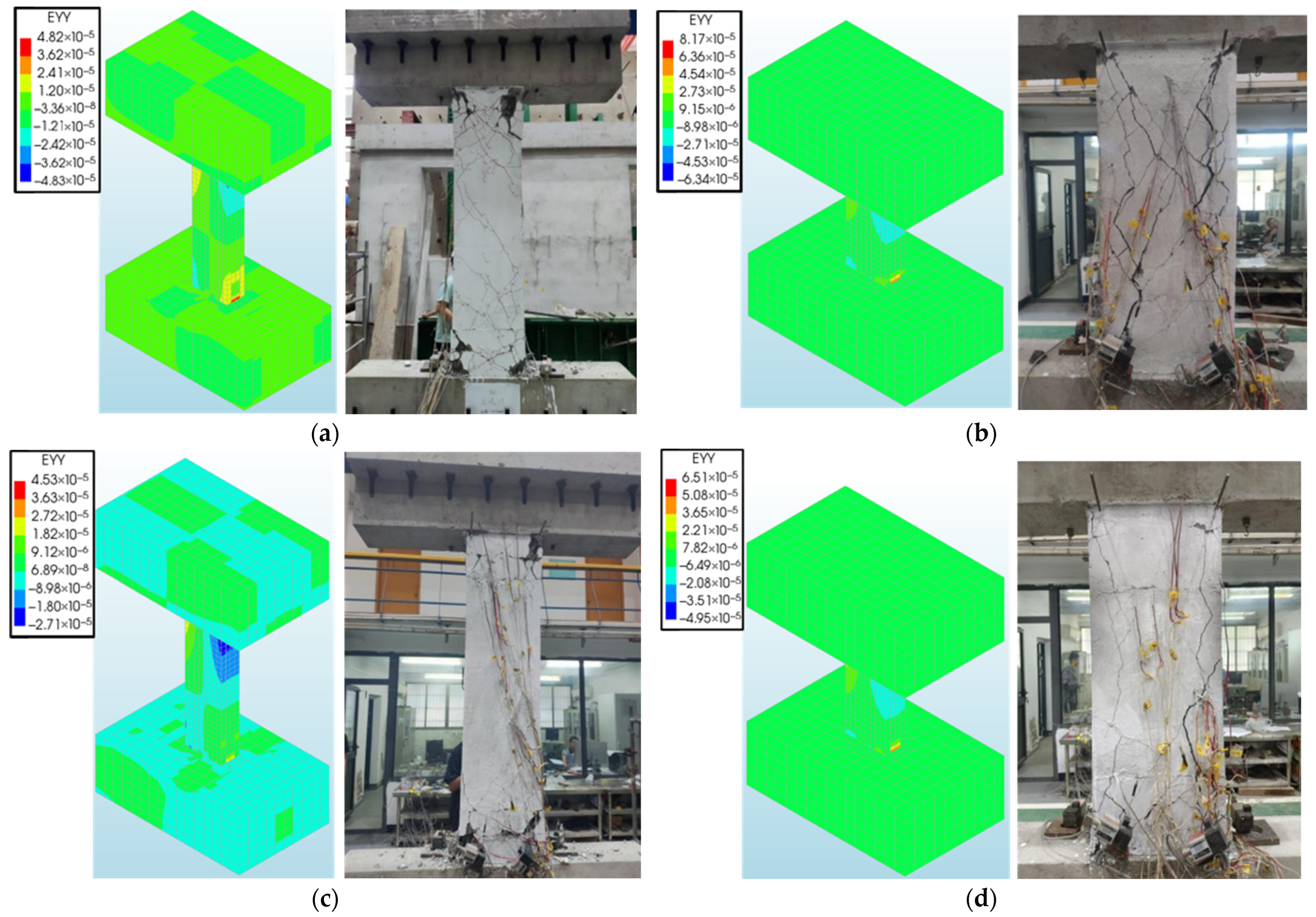
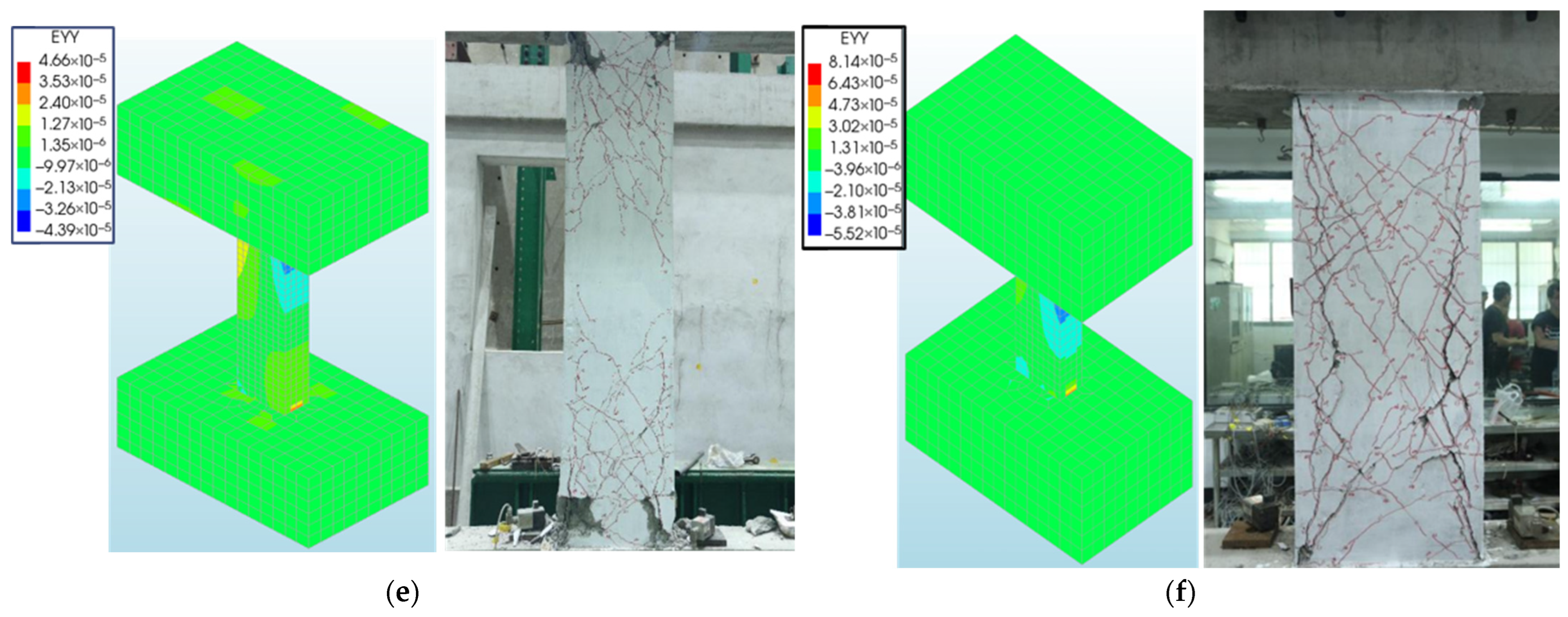
Figure 6 illustrates the comparison between the failure modes of the experimental and simulated specimens. Significant damage was observed at the concrete corners of the coupling beam under cyclic loading, which is in good agreement with the experimental observations. The failure modes of both cast-in-place and prefabricated coupling beams were generally similar and could be divided into four distinct stages: the elastic stage, the crack development stage, the damage propagation stage, and the final failure stage.
At the early stage of loading, the load–displacement response exhibited an approximately linear relationship, and the specimens behaved elastically. As the lateral load increased, the longitudinal reinforcement strain gradually approached the yield strain. The crack pattern transitioned from flexure-dominated to shear-dominated, and diagonal cracks at approximately 45° appeared at the four corners of the coupling beams and propagated rapidly [19]. By the end of this stage, the critical diagonal cracks had penetrated through the beam web, resulting in significant stiffness degradation. Localized concrete crushing was observed in the core region near the wall limbs. The diagonal crack network continued to develop, and the crushed concrete zone expanded, accompanied by spalling of the concrete cover. The overall stiffness and bearing capacity progressively deteriorated. After reaching the peak load, all specimens entered the descending branch of the load–displacement curve. No new cracks formed at this stage, but existing cracks widened considerably, accompanied by severe concrete spalling, buckling of longitudinal reinforcement, and exposure of stirrups. Eventually, shear slip occurred along the major diagonal crack, leading to a complete loss of load-bearing capacity. Importantly, throughout the entire testing process, no bar pullout or bond failure was observed at the mechanical connection interfaces for either prefabricated or cast-in-place specimens. This observation provides direct experimental evidence supporting the effectiveness and reliability of the proposed double-threaded sleeve connection system.
In addition, specimens with a larger span-to-depth ratio exhibited a slenderer geometry and consequently better ductility, characterized by larger displacements at each characteristic loading stage. In contrast, specimens with a smaller span-to-depth ratio displayed stockier proportions and a more brittle failure behavior. Comparisons between specimens S1 and S5, as well as S2 and S6, indicated that the prefabricated single-sided sleeve specimens exhibited displacements, load-carrying capacities, and ductility coefficients comparable to those of their cast-in-place counterparts. Meanwhile, the prefabricated specimens with double-sided sleeve connections showed slightly larger displacements at each characteristic stage compared with the monolithic beams.

3.3.2. Hysteresis Curves and Skeleton Curves

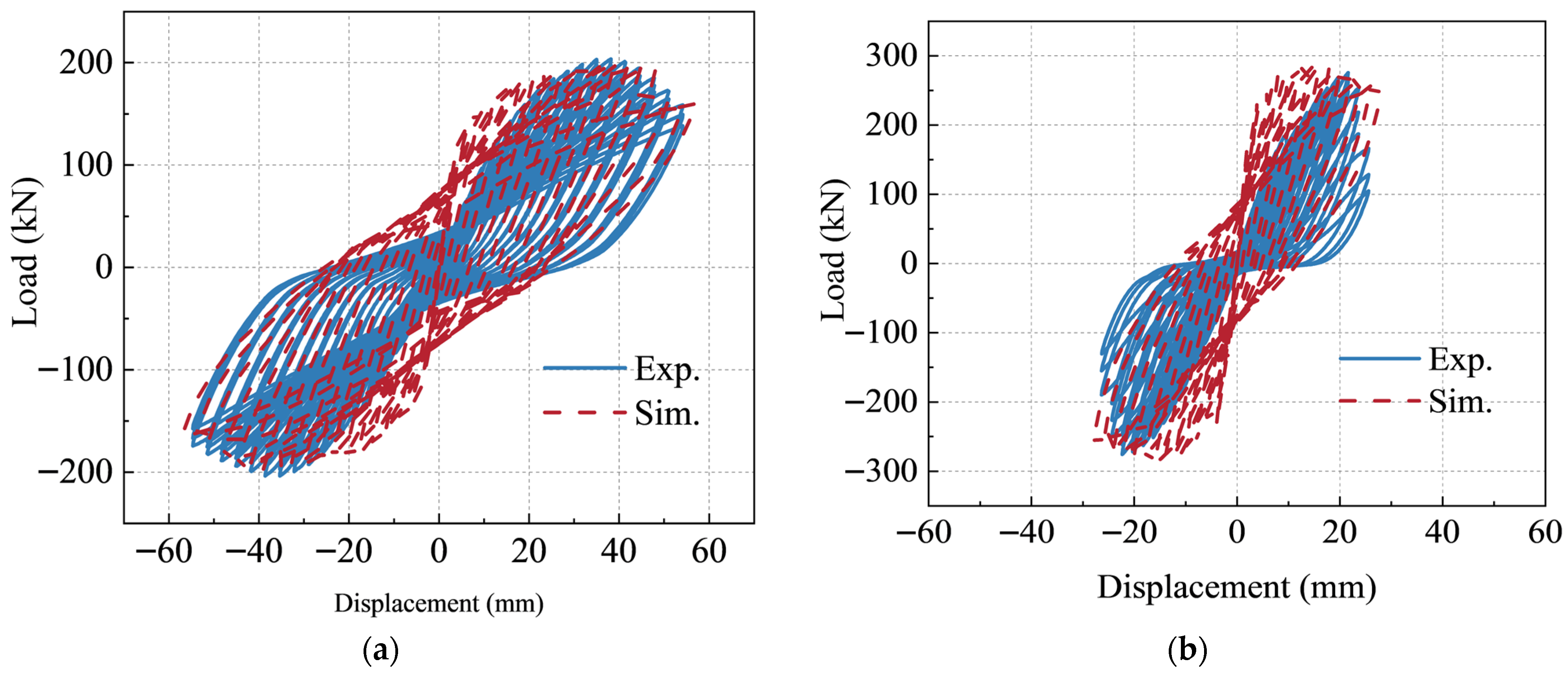
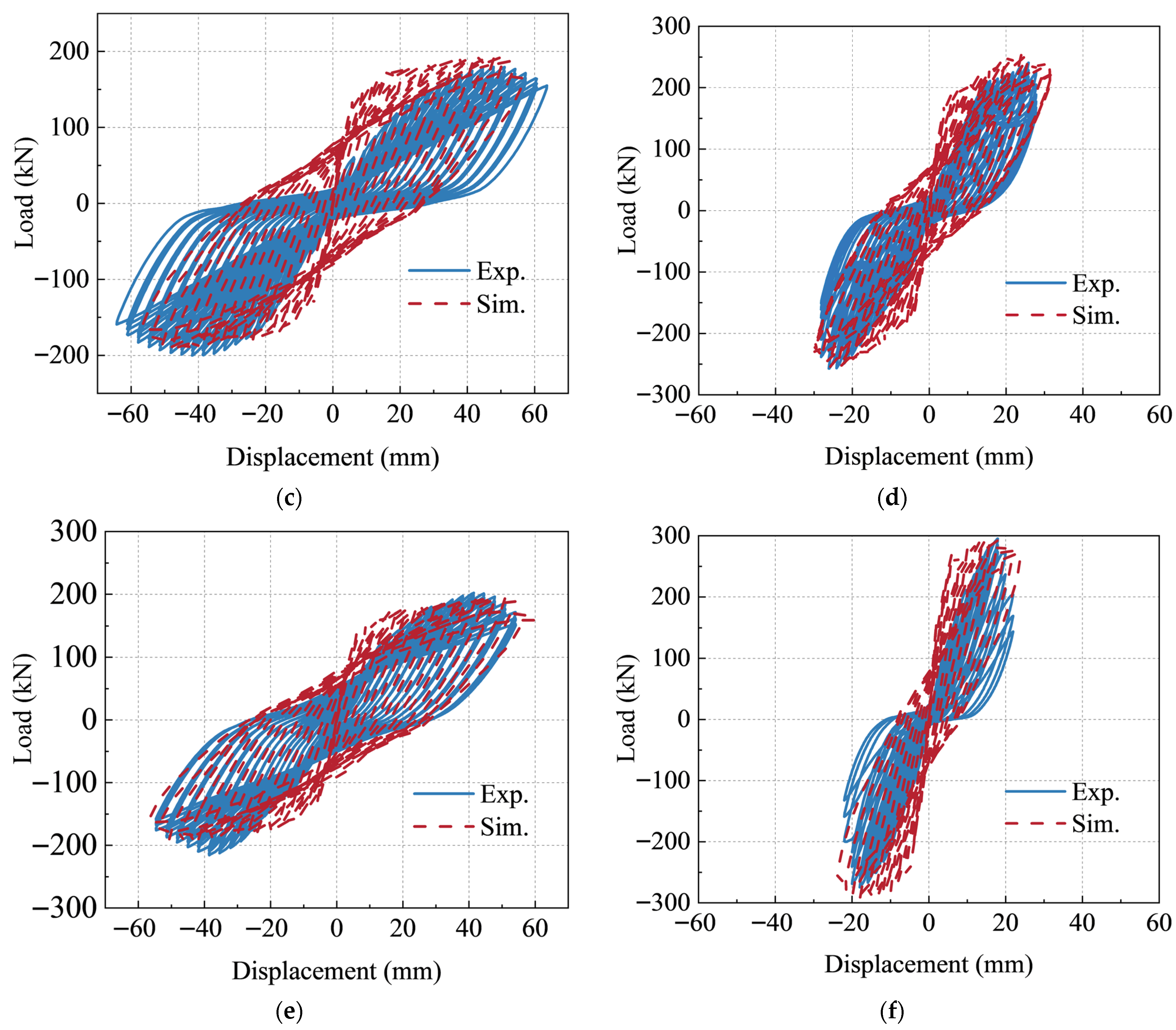
Figure 7 presents a comparison of the hysteretic responses of the specimens obtained from both numerical simulations and experimental tests. Before yielding, the load–displacement hysteretic curves of all specimens were narrow and slender, indicating limited energy dissipation and negligible residual deformation. Once yielding occurred, the loops gradually deviated from the horizontal axis and increased in enclosed area, reflecting an enhancement in energy dissipation capacity. Within the three repeated loading cycles at each amplitude, the enclosed area of the second and third loops was slightly smaller than that of the first, revealing a gradual reduction in energy dissipation under cumulative cyclic loading. The hysteresis curves of the cast-in-place specimens (S5 and S6) exhibited a typical spindle-shaped profile, while S6 showed a slight pinching effect, suggesting that a reduced span-to-depth ratio led to more pronounced pinching behavior. For the prefabricated specimens, cracks consistently initiated along the interface at the post-cast joint during testing. Consequently, specimens with smaller span-to-depth ratios (S2 and S4) exhibited more evident pinching behavior, whereas those with larger ratios (S1 and S3) displayed relatively fuller and more stable hysteresis loops.
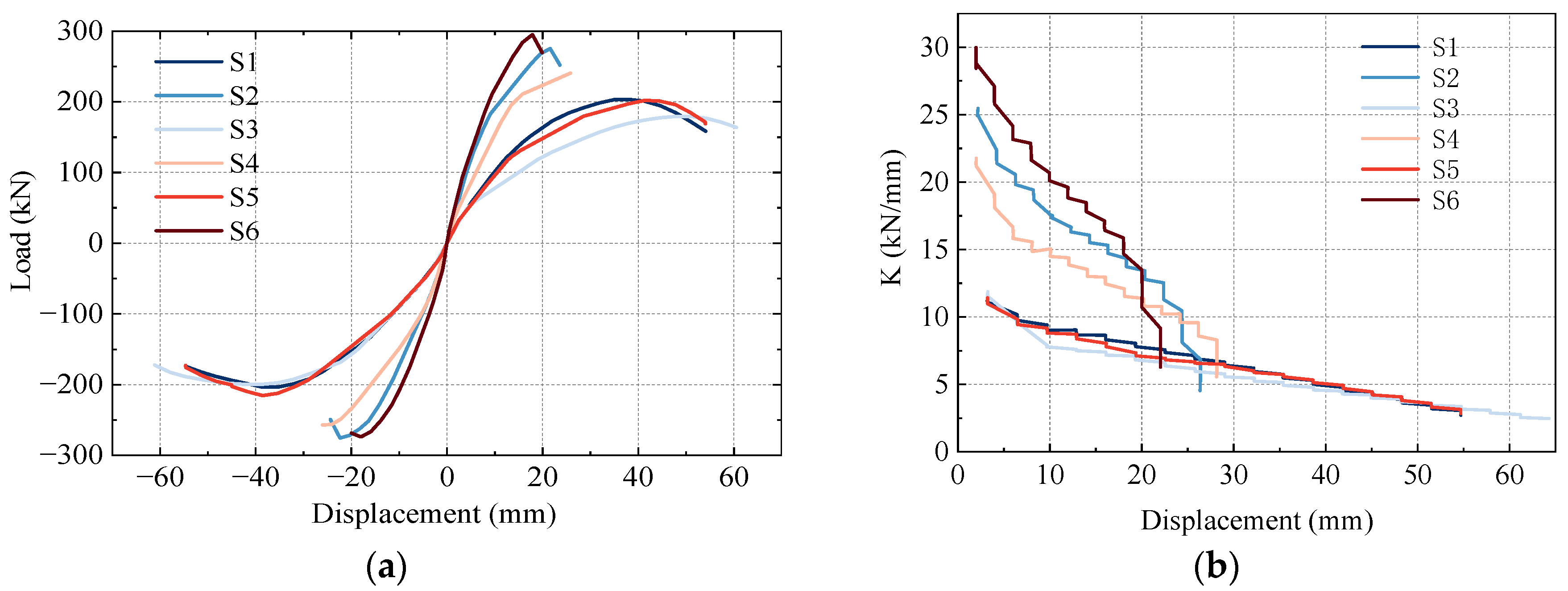
Figure 8a illustrates the overall load–displacement relationships under cyclic loading. The curves reveal distinct behavioral trends influenced by the shear span ratio, connection type, and beam geometry. In general, all specimens exhibited an initial linear response followed by a yielding phase and a gradual post-peak decline, indicating typical flexural-dominated behavior. The cast-in-place specimens (S5 and S6) demonstrated the highest peak loads and relatively stable post-peak characteristics, confirming the superior integrity and monolithic behavior of conventional concrete coupling beams. In contrast, the sleeve-connected specimens (S1–S4) exhibited slightly lower ultimate loads but comparable deformation capacities, indicating that the sleeve joints effectively transferred internal forces without significant slippage or premature failure. A closer comparison between the single-sided and double-sided sleeve connections (S1–S4) reveals that the double-sided configuration (S3 and S4) provided better force-transfer efficiency and enhanced stiffness. Their skeleton curves displayed steeper ascending branches and delayed strength degradation compared with the single-sided specimens, indicating improved ductility and a more stable cyclic response. This enhancement can be attributed to the symmetric stress distribution and reduced eccentricity of the double-sided anchorage system, which minimizes stress concentrations near the sleeve interface. Furthermore, the influence of the shear-span ratio is evident. Specimens with smaller shear-span ratios (λ = 2.5, such as S2, S4, and S6) achieved higher peak loads and exhibited stiffer responses than those with larger shear spans (λ = 4.0, such as S1, S3, and S5). This behavior reflects the transition from flexural-dominated to shear-dominated mechanisms: a smaller λ promotes higher shear resistance and reduced flexural deformation, whereas a larger λ results in increased bending flexibility and greater energy dissipation capacity.
The stiffness degradation of all specimens is illustrated in Figure 8b. The comparison between S2 and S6 indicates that the stiffness of the prefabricated specimens remained consistently lower than that of the cast-in-place specimens. However, the differences were less pronounced for S1 versus S5 and for S3 versus S5, suggesting that the proposed connection method effectively maintained stiffness performance. Furthermore, comparisons between S5 and S6, S1 and S2, and S3 and S4 showed that specimens with a larger shear-span ratio exhibited higher initial stiffness but experienced more rapid stiffness degradation during cyclic loading.
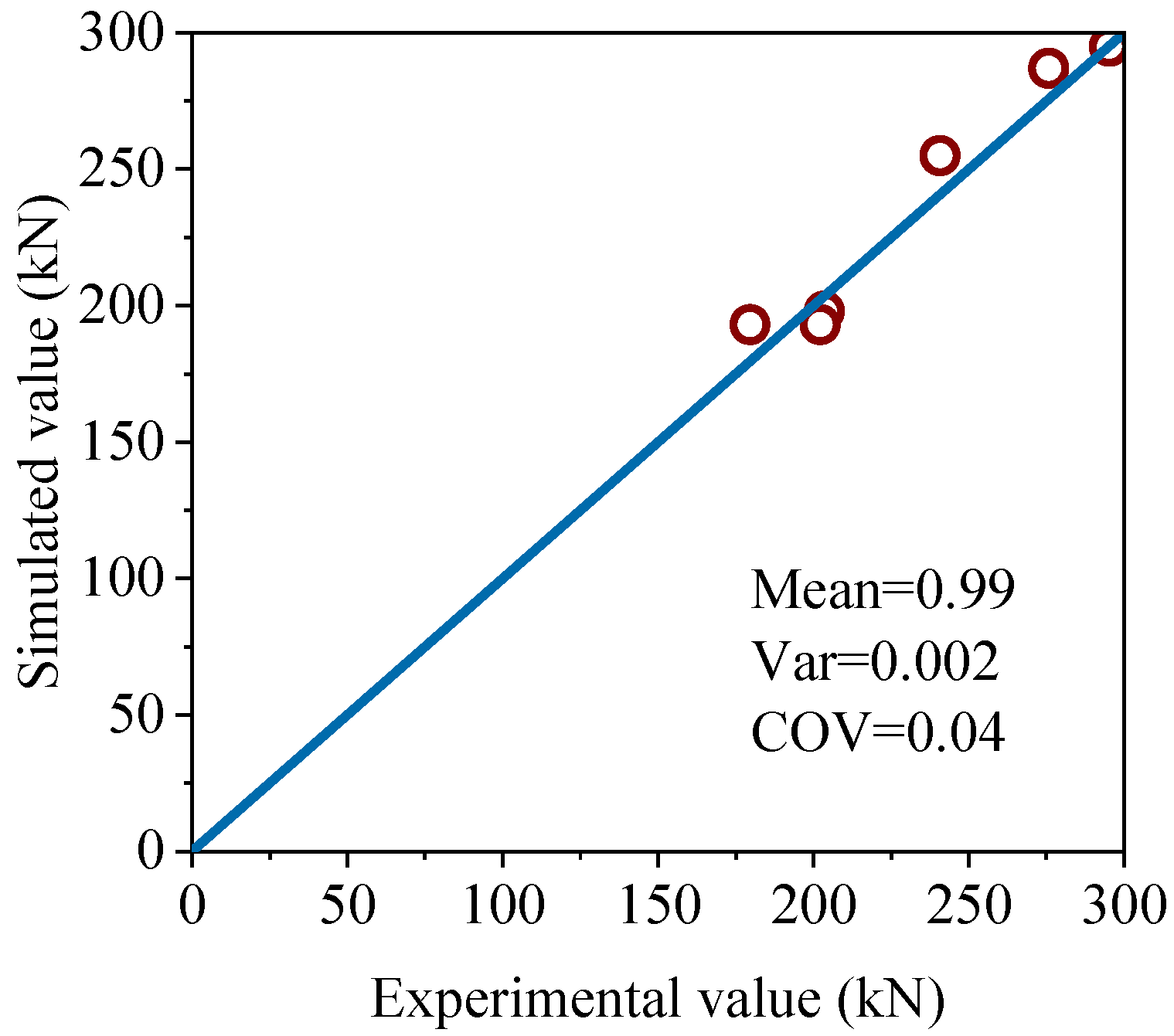
While the simulated hysteretic loops generally resemble their experimental counterparts in shape, the experimental curves exhibit a more pronounced pinching effect. This discrepancy can be attributed to two main factors: (1) the idealized material properties of concrete adopted in the simulation [20], and (2) potential interfacial slip between the reinforcing bars and the concrete during cyclic testing, which leads to reduced experimental stiffness. The mean ratio of experimental-to-simulated peak loads is 0.99, with a variance (Var) of 0.002 and a coefficient of variation (COV) of 0.04, as summarized in Figure 9. Overall, the close agreement between the simulated hysteretic behavior and load-carrying capacity validates the applicability of the proposed model for precast coupling beams under cyclic loading.

4. Results and Discussion

The hysteretic performance of RC coupling beams is governed by a variety of structural and material parameters. However, conducting extensive experimental investigations to quantify their individual effects is both time-consuming and costly. Therefore, a comparative analysis based on the validated experimental results is conducted to examine the influence of key parameters on the seismic behavior of the coupling beams. In particular, this study focuses on three primary parameters: (1) the shear-span ratio, which governs the deformation mode and failure mechanism; (2) the compressive strength of the ECC, which affects the stiffness and energy dissipation capacity; and (3) the reinforcement ratio, which directly influences the strength and ductility of the specimens.

4.1. Energy Evolution of Specimens

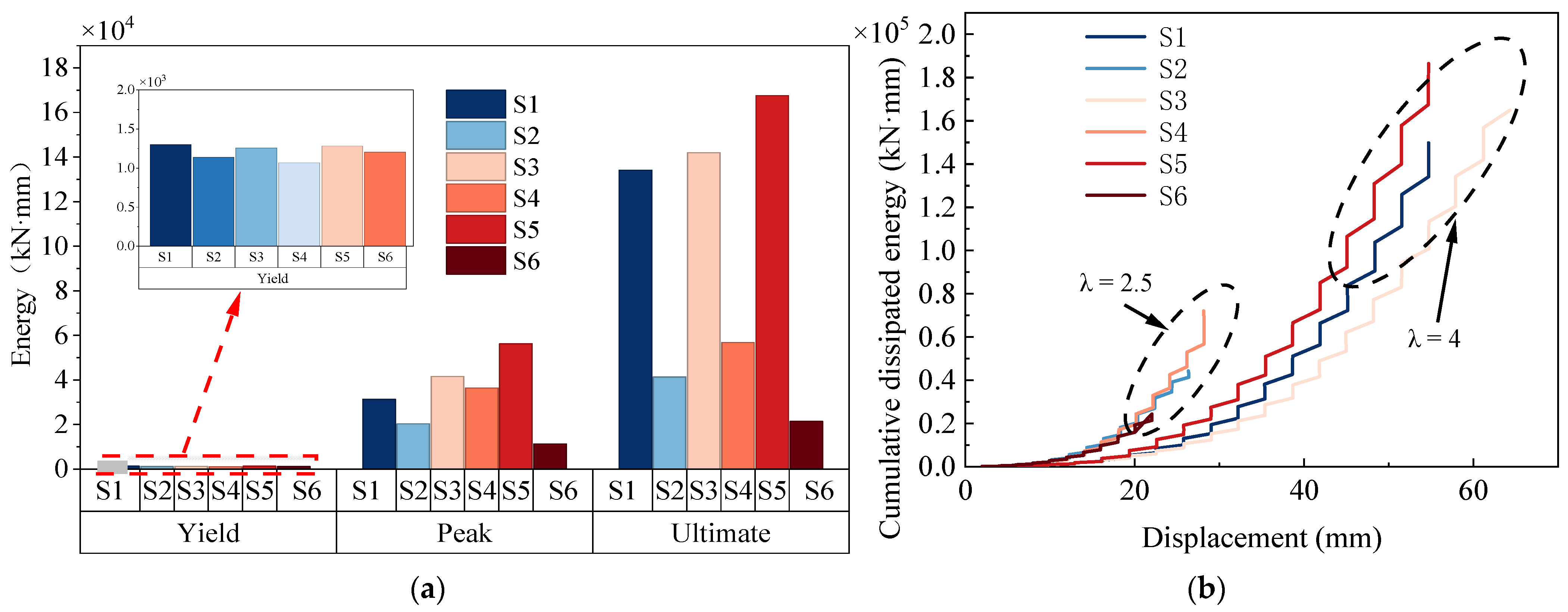
The energy dissipation capacity was evaluated for all specimens, as shown in Figure 10. For each displacement level, the dissipated energy was calculated as the average envelope area of the positive and negative loading directions in the hysteresis loop. The cumulative energy was then obtained by summing the values from all successive cycles. As the displacement amplitude increased, the cumulative energy dissipation gradually rose, indicating an enhanced ability to absorb energy under larger cyclic deformations. At the yielding stage, the cumulative energy dissipation of the single-sleeve specimen was 1137 kN·mm, slightly lower than that of the double-sleeve specimen (1163 kN·mm) and the cast-in-place specimen (1243 kN·mm). At the peak-load stage, the single-sleeve specimen exhibited the highest energy dissipation, reaching 55,994 kN·mm, followed by the double-sleeve specimen (38,962 kN·mm) and the cast-in-place specimen (33,711 kN·mm). At the ultimate stage, the cumulative energy dissipation of the single-sleeve, double-sleeve, and cast-in-place specimens reached 104,555 kN·mm, 99,354 kN·mm, and 94,460 kN·mm, respectively [21]. A comparison among specimens S1, S3, and S5 shows that when the shear span ratio is 4.0, the energy dissipation capacity increases in the order of single-sleeve, double-sleeve, and cast-in-place specimens, with an overall difference within 20%. For specimens S2, S4, and S6, it is shown that when the shear span ratio is 2.5, the single-sleeve specimen exhibits slightly lower energy dissipation than the double-sleeve specimen, whereas the cast-in-place specimen showed the smallest value. Moreover, comparing S1 with S2, S3 with S4, and S5 with S6 reveals that, under the same connection type, specimens with a larger shear span ratio demonstrated superior energy dissipation [20]. More notably, in the displacement range of 20–22 mm, the energy dissipation capacity of the cast-in-place specimen (S6) was significantly lower, reaching only 40% of that of the precast specimens, while its ultimate displacement was limited to 70% of the precast specimens. This pronounced discrepancy may be attributed to potential construction defects or inconsistencies in the cast-in-place specimen.

4.2. Shear Span Ratio

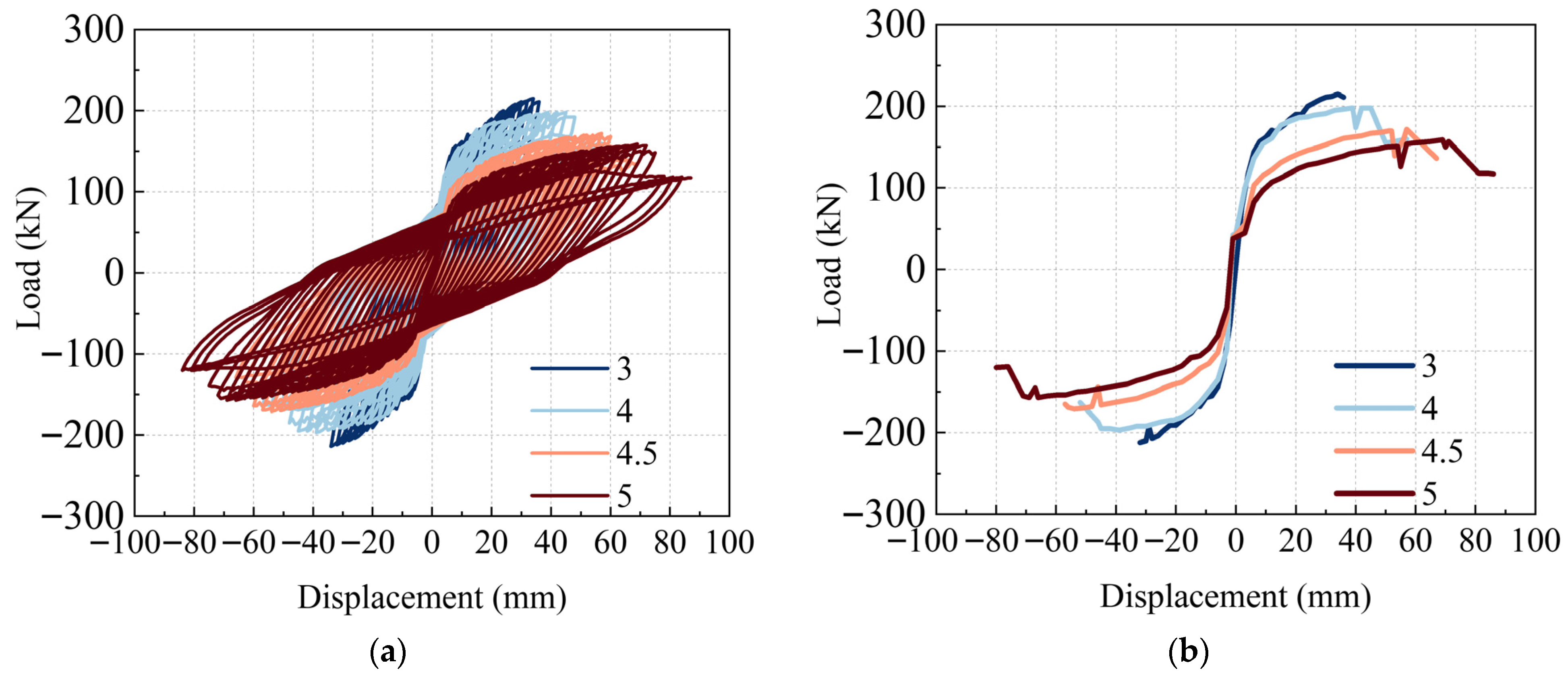
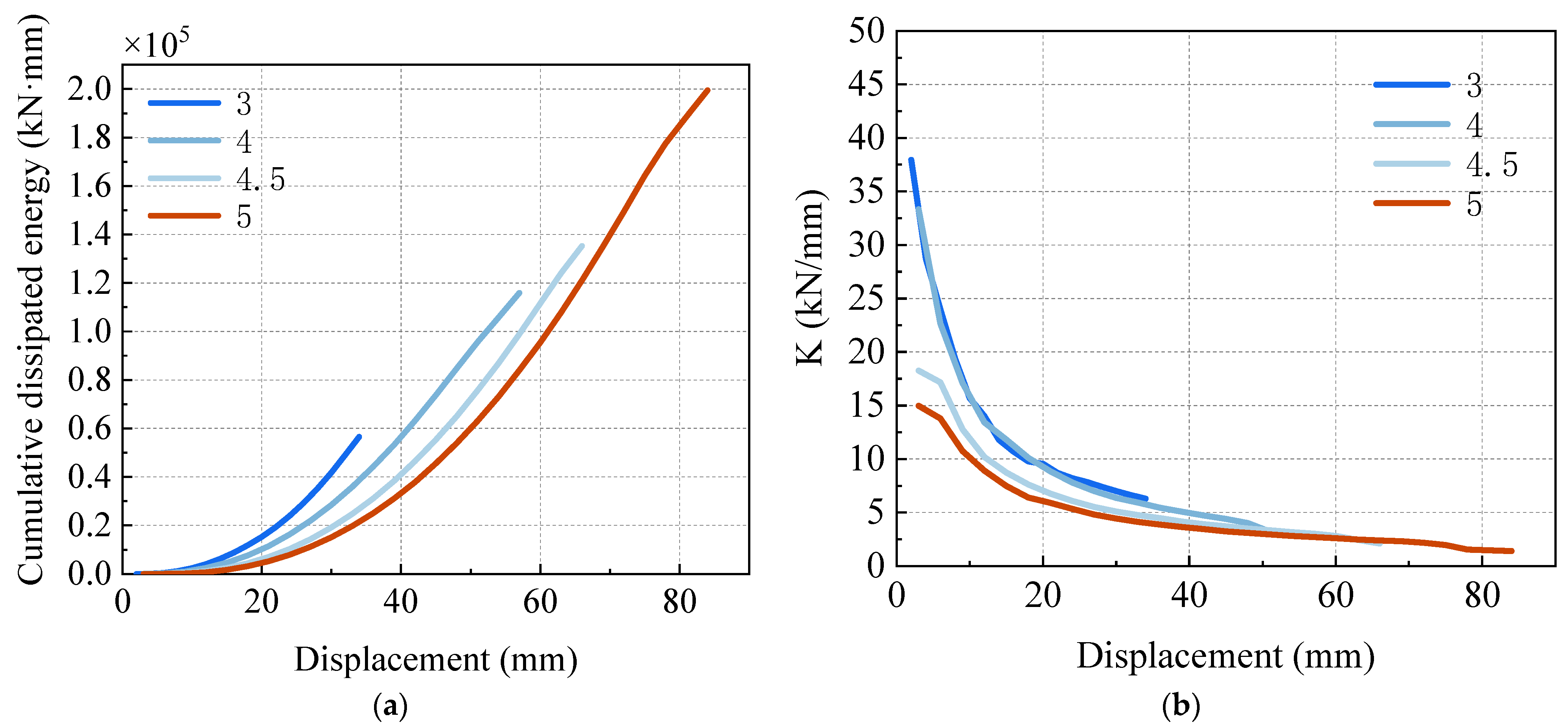
The influence of shear span ratio (λ) on the seismic behavior of coupling beams was investigated through specimens with shear span ratios of 3.0, 4.0, 4.5, and 5.0. The corresponding hysteresis curves, skeleton curves, cumulative energy dissipation, and stiffness degradation responses are illustrated in Figure 11 and Figure 12, while the key mechanical performance indicators are summarized in Table 5.
As shown in Figure 11a, with an increase in the shear-span ratio, the hysteretic loops gradually became narrower, implying a reduction in shear resistance and energy dissipation efficiency [20]. Specimens with smaller shear-span ratios (e.g., λ = 3.0 and 4.0) displayed relatively fuller loops, indicating that shear deformation dominated their overall behavior. In contrast, as the span ratio increased to 4.5 and 5.0, the deformation mode shifted toward flexural control. The skeleton curves in Figure 11b show that the yield and peak loads decreased with increasing shear-span ratio, whereas the ultimate displacement increased significantly. Quantitatively, the yield load decreased from 172.8 kN to 130.2 kN as λ increased from 3.0 to 5.0, corresponding to a 24.6% reduction. Similarly, the peak load dropped from 215.0 kN to 159.0 kN over the same range of λ. In contrast, the ultimate displacement increased from 36.0 mm to 76.6 mm, indicating an improvement in ductility. The ductility factor increased from 2.50 to 3.85 as λ increased from 3.0 to 4.0, then slightly declined to around 2.8 for larger span ratios, suggesting that excessive span length may lead to premature flexural failure and reduced energy dissipation stability.
The cumulative dissipated energy results in Figure 12a indicate that, at the same displacement amplitude, specimens with smaller shear-span ratios dissipated more energy. Conversely, beams with larger span ratios exhibited slower energy accumulation. The stiffness degradation curves in Figure 12b further support these observations. Specimens with smaller shear-span ratios displayed higher initial stiffness but experienced faster stiffness degradation, reflecting pronounced shear cracking. In contrast, beams with larger span ratios showed lower initial stiffness yet more gradual stiffness decay, attributable to the predominance of flexural deformation.

4.3. Compressive Strength

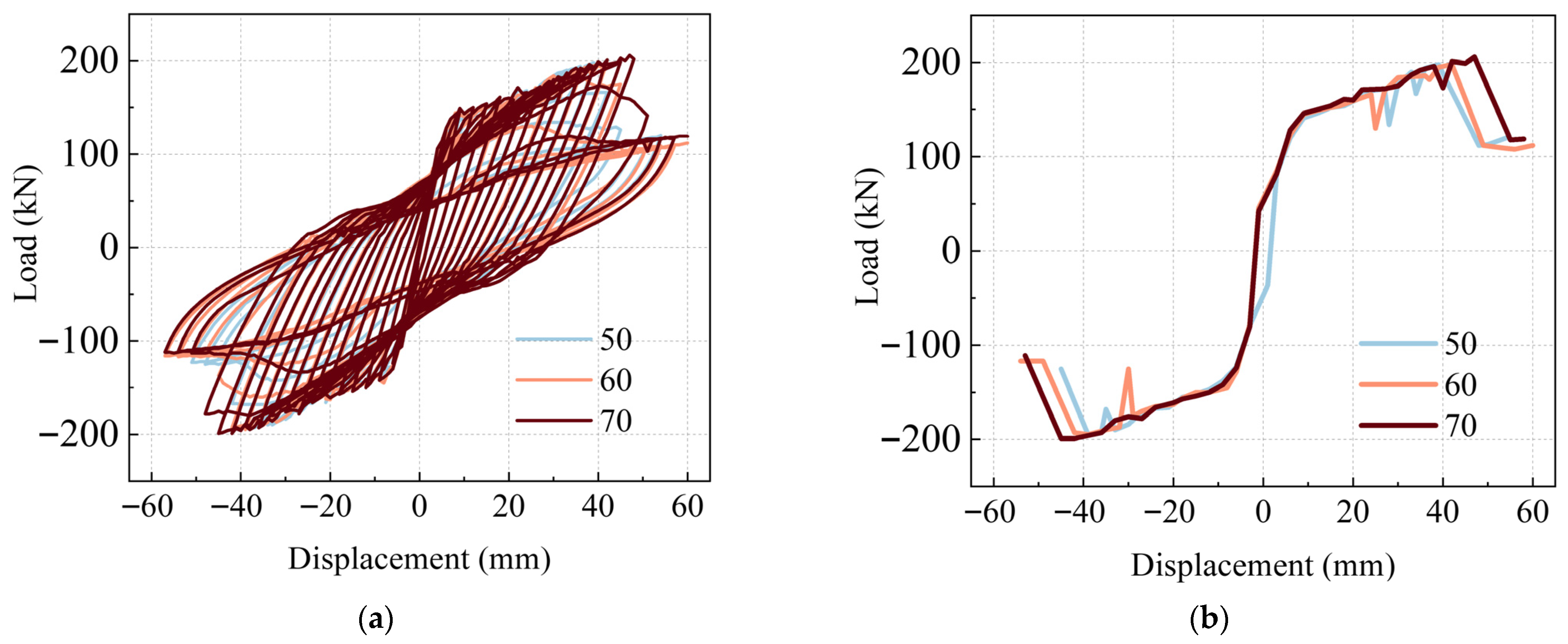
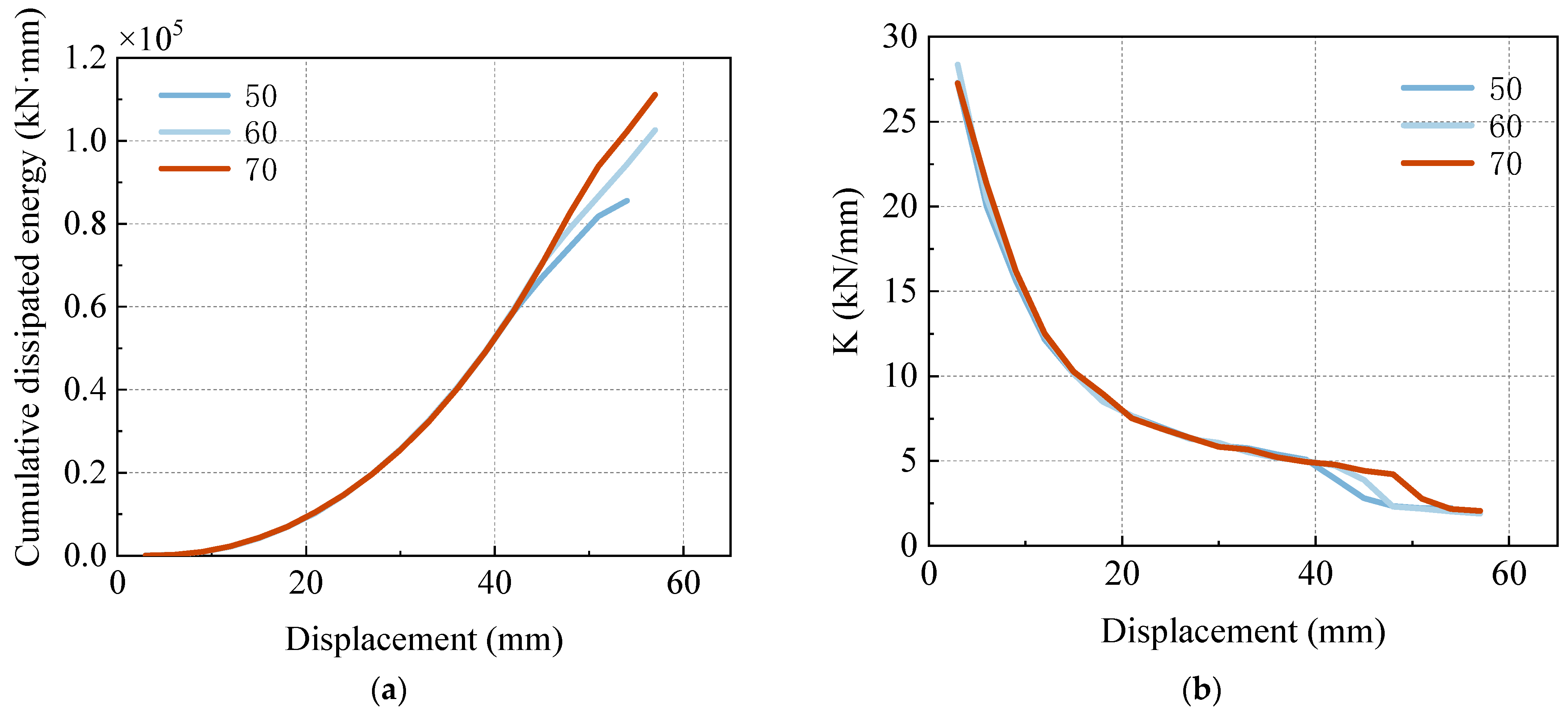
The influence of compressive strength on the seismic behavior of coupling beams was investigated using specimens with compressive strengths of 50, 60, and 70 MPa. The corresponding hysteresis curves, skeleton curves, cumulative energy dissipation, and stiffness degradation responses are shown in Figure 13 and Figure 14, while the key mechanical performance indicators are summarized in Figure 14a,b.
Figure 13a shows cumulative dissipated energy for different compressive strengths and Figure 13b shows stiffness degradation curves for different compressive strengths.
Table 6, the influence of concrete compressive strength on the seismic performance of coupling beams is relatively limited. With increasing compressive strength, the hysteretic loops become fuller and the enclosed areas slightly larger, indicating moderate improvements in energy dissipation. Specifically, the yield load, yield displacement, peak load, peak displacement, and ultimate displacement increase by approximately 4.6%, 6.6%, 3.9%, and 17%, respectively, as the compressive strength increases from 50 MPa to 70 MPa. As shown in Figure 14, variations in concrete compressive strength have a negligible influence on stiffness degradation. The overall trend and magnitude of stiffness reduction remain almost identical across the three strength levels. Beams cast with higher-strength concrete exhibit greater cumulative energy absorption; compared with C50 concrete, C70 concrete shows an increase of approximately 23% in cumulative dissipated energy.

4.4. Reinforcement Ratio

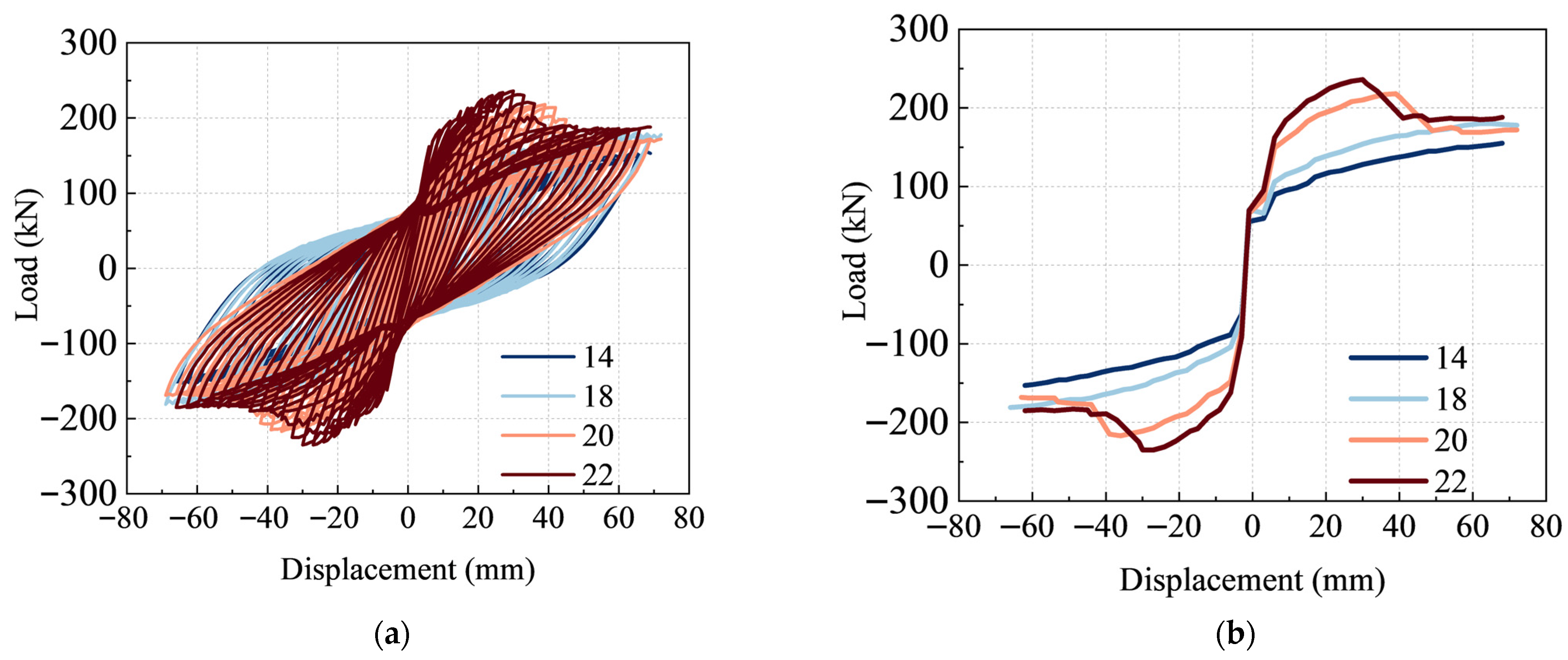
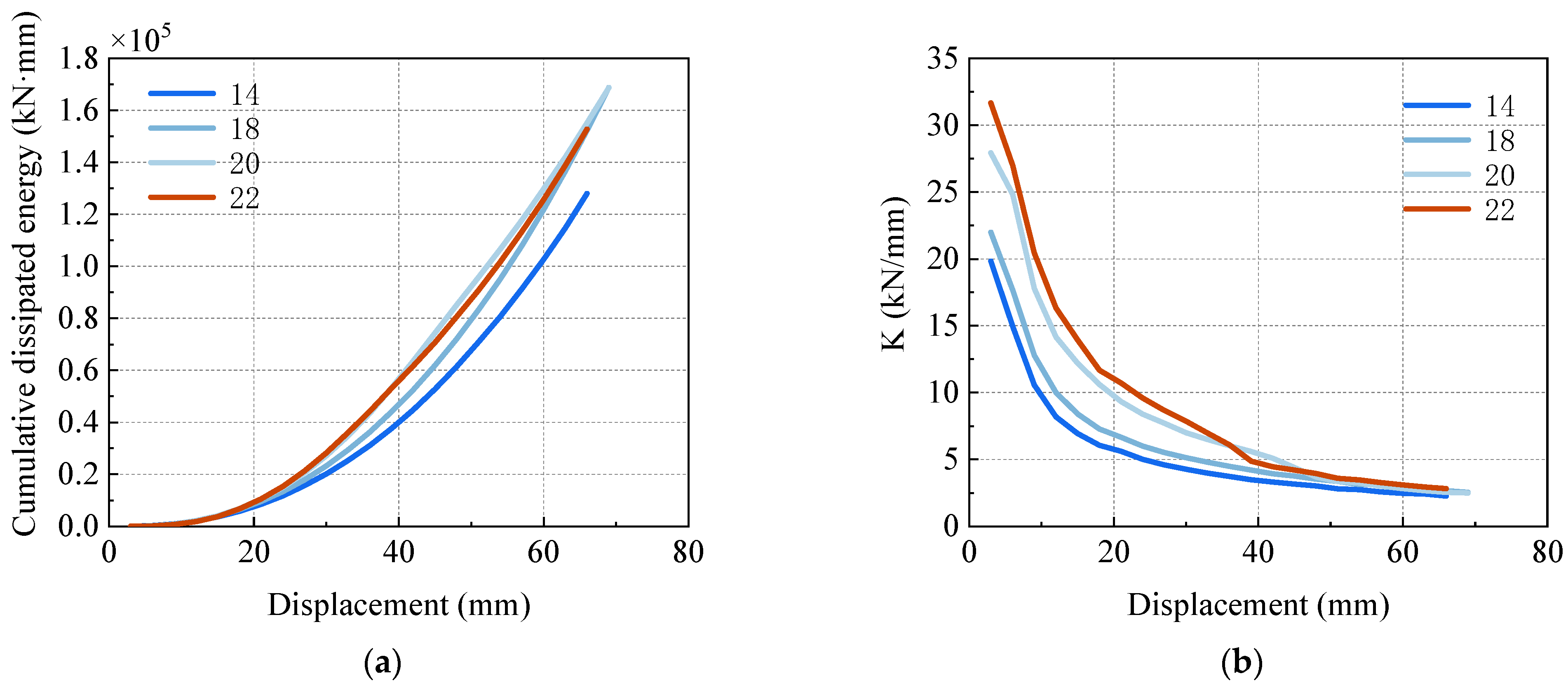
The influence of the reinforcement ratio on the seismic behavior of coupling beams was investigated using specimens with reinforcement ratios of 14, 18, 20, and 22 mm. The corresponding hysteresis curves, skeleton curves, cumulative energy dissipation, and stiffness degradation responses are shown in Figure 15 and Figure 16, while the key mechanical performance indicators are summarized in Table 7.
The influence of reinforcement ratio on the hysteretic behavior of coupling beams is presented in Figure 15 and Table 7. The overall shapes of the hysteretic loops remain similar across different reinforcement ratios [9,20]. However, with an increase in bar diameter, both the yield load and peak load of the beams are significantly enhanced, while the corresponding yield and peak displacements decrease. When the bar diameter is 14 mm, the yield and peak loads are 123.66 kN and 155.00 kN, respectively. In contrast, increasing the bar diameter to 22 mm raises the yield and peak loads to 196.06 kN and 236.00 kN, corresponding to increases of approximately 36% and 31%. Meanwhile, the yield and peak displacements decrease by about 50% and 52%, respectively. This reduction in displacement is attributed to the increased stiffness resulting from higher reinforcement ratios. Similar trends can be observed in Figure 16b. Despite the decrease in displacement, the ductility of the beams improves with higher reinforcement ratios. Specifically, increasing the bar diameter from 14 mm to 22 mm elevates the ductility factor from 2.54 to 3.18, indicating an enhanced capacity for inelastic deformation [22]. Figure 16 also illustrates that variations in reinforcement ratio have a limited effect on cumulative dissipated energy. In contrast, the impact on structural stiffness is more pronounced. As shown in Figure 16b, beams with higher reinforcement ratios exhibit greater initial stiffness; however, their stiffness degrades more significantly with increasing displacement. Beams with smaller reinforcement ratios, although initially less stiff, display a comparatively gentler degradation trend.

5. Conclusions

To clarify the seismic performance and key influencing factors of prefabricated RC shear walls with novel sleeve connections, this study conducted quasi-static tests and numerical simulations. Although this study demonstrates the structural advantages of the proposed connection technique, it should be noted that a comprehensive assessment of its environmental benefits warrants further investigation. Future applications should include a systematic life cycle analysis (LCA) to quantitatively compare this precast solution with conventional cast-in-place methods in terms of resource consumption, energy use, and carbon emissions [23], thereby providing a more holistic basis for decision-making in sustainable construction. While the proposed double-threaded sleeve connection system for precast coupling beams facilitates rapid and efficient on-site assembly—potentially significantly shortening construction timelines for high-rise buildings [24]—its scalability to large-scale projects requires further investigation. Future application in super-tall structures necessitates a deeper understanding of the connection performance under higher axial loads and complex combined bending-shear stress conditions. The following conclusions can be drawn:
Throughout the entire loading process, no reinforcement pull-out or fracture occurred in any of the specimens, and all sleeves remained in good condition. The experimental results confirmed that the proposed double-sleeve connection can effectively transfer both tensile and compressive forces, indicating its reliability and applicability for reinforcement connections in prefabricated coupling beams.
Under identical span-to-depth ratios, specimens with different sleeve arrangements and casting methods exhibited nearly identical hysteretic behaviors. With a span-to-depth ratio of 4.0, specimens that used double-sided sleeve connections had the same energy dissipation capacity. Moreover, with the decrease in span-to-depth ratio, prefabricated coupling beams exhibited superior energy dissipation. Compared with conventional connection types, the double-sleeve connection maintained the advantages of prefabricated construction—rapid assembly and high-quality control—while achieving seismic performance equivalent to that of cast-in-place coupling beams.
A consistent trend was observed among specimens with different span-to-depth ratios. Specimens with a span-to-depth ratio of 4.0 exhibited larger hysteretic loop areas but smaller peak horizontal loads compared with those having a ratio of 2.5. Beams with smaller span-to-depth ratios showed pinched hysteresis loops, whereas those with larger ratios displayed fuller and more stable loops. The precast specimen with a span-to-depth ratio of 4 achieved approximately 85% of the energy dissipation capacity of its cast-in-place counterpart. Overall, the double-sided sleeve connection demonstrated superior energy dissipation performance compared to the single-sided sleeve connection. Specifically, for span-to-depth ratios of 4.0 and 2.5, the energy dissipation capacity of the single-sided sleeve connection was 95% and 72%, respectively, of that of the double-sided sleeve connection.
The proposed numerical simulation method accurately predicted the hysteretic response and failure mechanisms of double-sleeve-connected coupling beams, verifying the effectiveness of the modeling approach. Parametric analyses revealed that the compressive strength of concrete had an insignificant influence on the overall seismic performance of the shear walls. In contrast, increasing the reinforcement ratio significantly enhanced stiffness, ductility, and energy dissipation capacity, although its contribution to strength improvement became less pronounced at higher reinforcement levels. The increase in rebar diameter from 18 mm to 22 mm resulted in approximately 25% improvement in energy dissipation capacity. The ductile factor increases from 2.54 to 3.18. The peak load increased by almost 85%.

Author Contributions

Methodology, H.W., M.J. and Y.Z.; Validation, H.W. and L.S.; Investigation, H.W., L.S. and X.H.; Data Curation, H.W., L.S. and X.H.; Writing—Original Draft Preparation, H.W. and X.H.; Writing—Review and Editing, H.W. and X.H.; Funding—M.J., Q.C. and W.Y. All authors have read and agreed to the published version of the manuscript.

Funding

Funding was provided by the Science and Technology Plan Project of Naqu (NQKJ-2023-19).

Data Availability Statement

Data are contained within the article.

Conflicts of Interest

The authors declare no conflicts of interest.

References

  1. Wu, X.; Hao, J.; Jiang, Y.; Fu, H.; Hou, X.; Ou, T. Coupling Ratio and Parametric Analysis of Coupled Steel Plate Shear Wall Based on Orthogonal Test. Thin-Walled Struct. 2026, 218, 113917. [Google Scholar] [CrossRef]
  2. Li, G.-Q.; Pang, M.-D.; Li, Y.-W.; Li, L.-L.; Sun, F.-F.; Sun, J.-Y. Experimental Comparative Study of Coupled Shear Wall Systems with Steel and Reinforced Concrete Link Beams. Struct. Des. Tall Spec. Build. 2019, 28, e1678. [Google Scholar] [CrossRef]
  3. Li, Y.; Xu, J.; Ma, K.; Yu, H. Seismic Behavior of Coupled Wall Structure with Steel and Viscous Damping Composite Coupling Beams. J. Build. Eng. 2022, 52, 104510. [Google Scholar] [CrossRef]
  4. Chen, Y.; Li, J.; Lu, Z. Experimental Study and Numerical Simulation on Hybrid Coupled Shear Wall with Replaceable Coupling Beams. Sustainability 2019, 11, 867. [Google Scholar] [CrossRef]
  5. Gong, N.; Shi, Z.; Li, P.; Lei, Y. Seismic Performance of RC Coupled Shear Wall Structure with Hysteretic-Viscous Replaceable Coupling Beams: Experimental and Numerical Investigations. Eng. Struct. 2025, 326, 119493. [Google Scholar] [CrossRef]
  6. Fu, Y.; Fan, G.; Tao, L.; Yang, Y.; Wang, J. Seismic Behavior of Prefabricated Steel Reinforced Concrete Shear Walls with New Type Connection Mode. Structures 2022, 37, 483–503. [Google Scholar] [CrossRef]
  7. Qin, C.; Bai, G.; Liu, B.; Wu, T.; Wang, B. Study on the Global Bidirectional Seismic Behavior of Monolithic Prefabricate Concrete Shear Wall Structure. Soil Dyn. Earthq. Eng. 2020, 136, 106194. [Google Scholar] [CrossRef]
  8. Li, A.; Wang, W.; Jia, H.; Chen, M.; Zheng, J. Research Progress on Seismic Behavior of Precast Reinforced Concrete Shear Wall Structures (Ⅰ): Study on Joint Performance. J. Disaster Prev. Mitig. Eng. 2013, 33, 600–605. [Google Scholar]
  9. Zheng, B.; Li, M.; Liu, X.; Wang, Z.; Wang, C. Study on Seismic Performance of Connecting Prefabricated Coupling Beam and Shear Wall with Equivalent Bars. Adv. Civ. Eng. 2022, 2022, 2784137. [Google Scholar] [CrossRef]
  10. Wang, T.; Yuan, S.; Jiang, R.; Li, L.; Liu, J.; Dou, L.; Zou, G. Behavior of Prefabricated Composite Arch Coupling Beam for Shear Walls Subjected to Cyclic Loading. Buildings 2022, 12, 917. [Google Scholar] [CrossRef]
  11. Xia, K.; Hu, X.; Xue, W. Experimental Study on Seismic Behavior of Bolted Connection between Composite Beam and Precast Shear Wall. J. Harbin Eng. Univ. 2021, 42, 447–455. [Google Scholar]
  12. Gu, S.; Gu, J.-B.; Guo, J.-Y.; Tao, Y.; Zhang, J. Seismic Performance of Precast Concrete Shear Wall with Treatments of Connecting Reinforcement Defects in Grouted Sleeves under Combined Axial Tension and Cyclic Horizontal Load. J. Build. Eng. 2024, 97, 110941. [Google Scholar] [CrossRef]
  13. Tu, T.; Wu, H.; Huo, J.; Wang, J.; Wang, C. Thermo-Mechanical Behavior and Flexural Enhancement of in-Service Steel-Concrete Composite Beams Strengthened by Welded Channel Steel. J. Build. Eng. 2026, 117, 114720. [Google Scholar] [CrossRef]
  14. Yang, F.; Cao, K.; Zhu, H.; Wang, Y.; Li, X. Experimental and Numerical Evaluation of Seismic Behavior in Fully Prefabricated Composite RCS Joints with Cover Plates and Bolted Connections. Structures 2025, 81, 110153. [Google Scholar] [CrossRef]
  15. Chen, L.; Feng, J.; Xue, Y.; Liang, C. Seismic Behavior of an Innovative Prefabricated Steel-Concrete Composite Beam-Column Joint. J. Build. Eng. 2023, 76, 107211. [Google Scholar] [CrossRef]
  16. GB 50010—2010; Code for Design of Concrete Structures. China Architecture & Building Press: Beijing, China, 2010.
  17. Mander, J.B.; Priestley, M.J.N.; Park, R. Theoretical Stress-Strain Model for Confined Concrete. J. Struct. Eng. 1988, 114, 1804–1826. [Google Scholar] [CrossRef]
  18. Comite Euro-International Du Beton. CEB-FIP Model Code 1990: Design Code; Comite Euro-International Du Beton: Lausanne, Switzerland, 1993. [Google Scholar]
  19. Yang, J.; Sun, M.; Yao, G.; Guo, H.; Zhong, R. Research on Optimization Design of Prefabricated ECC/RC Composite Coupled Shear Walls Based on Seismic Energy Dissipation. Buildings 2024, 14, 951. [Google Scholar] [CrossRef]
  20. Wang, K.; Xu, H.; Yang, S.; Liu, W.; Liu, W. Numerical Investigation on Seismic Performance of a Hollow Precast Coupling Beam-Shear Wall Connection with Insulation. Structures 2025, 79, 109479. [Google Scholar] [CrossRef]
  21. Liu, R.; Wang, Z.; Yan, G.; Zheng, L.; Chen, Y.; Lu, J.; Jiang, G. Seismic Behavior and Parametric Study of the Precast Shear Wall with Steel Energy-Dissipating Connection. Structures 2025, 82, 110542. [Google Scholar] [CrossRef]
  22. Hu, S.; Xu, H.; Zeng, S.; Chen, T.; He, K. Experimental Study on Seismic Performance of Precast High-Strength RC Beam-Column Joint with Embedded Channel Steel and UHPC. Structures 2025, 81, 110235. [Google Scholar] [CrossRef]
  23. Zhang, H.; Gao, S.; Qing, L. Research on the Application of Solid Waste-Derived Reactive Powder in Engineered Cementitious Composites (ECC) and Micro-Mechanisms. Process Saf. Environ. Prot. 2025, 197, 107033. [Google Scholar] [CrossRef]
  24. Zhang, W.; Wallace, J.W.; Jiang, X.; Qian, J. Seismic Behaviour of Assembled Monolithic Concrete Coupling Beams through Tests of Two-Story Coupled Shear Walls. J. Build. Eng. 2023, 76, 107331. [Google Scholar] [CrossRef]
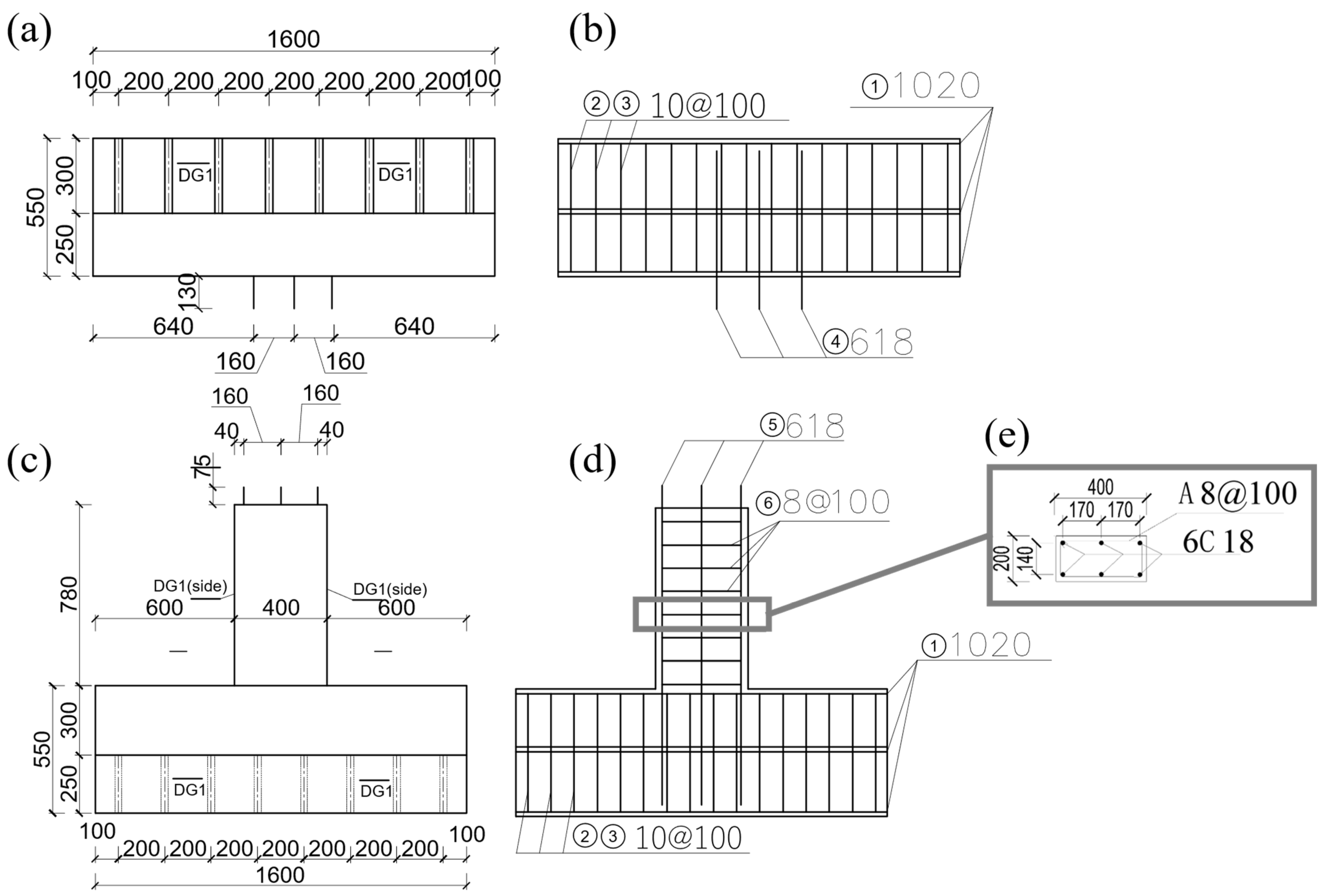
Figure 1. Geometric dimensions and reinforcement details of the specimens: (a,b) upper segment; (c,d) lower segment; (e) cross-section.
Buildings 15 04387 g001
Figure 2. Geometric details of specimen: (a) coupling beam, (b) post-pour strip, (c) double-lap sleeve.
Buildings 15 04387 g002
Figure 3. Schematic illustration of the experimental test setup.
Buildings 15 04387 g003
Figure 4. Layout of displacement transducers.
Buildings 15 04387 g004
Figure 5. Finite element model configuration and mesh discretization: (a) model; (b) mesh.
Buildings 15 04387 g005
Figure 6. Comparison of failure modes between experimental and simulated results. (a) S1. (b) S2. (c) S3. (d) S4. (e) S5. (f) S6.
Buildings 15 04387 g006aBuildings 15 04387 g006b
Figure 7. Comparison of load–displacement curves between experimental and simulated results. (a) S1. (b) S2. (c) S3. (d) S4. (e) S5. (f) S6.
Buildings 15 04387 g007aBuildings 15 04387 g007b
Figure 8. (a) Skeleton curves and (b) stiffness degradation curves of the experimental specimens.
Buildings 15 04387 g008
Figure 9. Comparison of the bearing capacities of the specimens obtained from the simulation and the experiment.
Buildings 15 04387 g009
Figure 10. (a) Cumulative dissipated energy; (b) load–energy curves of the specimens.
Buildings 15 04387 g010
Figure 11. (a) Hysteresis curves for different shear-span ratios; (b) skeleton curves for different shear-span ratios.
Buildings 15 04387 g011
Figure 12. (a) Cumulative dissipated energy for different shear-span ratios; (b) stiffness degradation curves for different shear-span ratios.
Buildings 15 04387 g012
Figure 13. (a) Hysteresis curves for different compressive strengths; (b) skeleton curves for different compressive strengths.
Buildings 15 04387 g013
Figure 14. (a) Cumulative dissipated energy for different compressive strengths; (b) stiffness degradation curves for different compressive strengths.
Buildings 15 04387 g014
Figure 15. (a) Hysteresis curves for different reinforcement ratios; (b) skeleton curves for different reinforcement ratios.
Buildings 15 04387 g015
Figure 16. (a) Cumulative dissipated energy for different reinforcement ratios; (b) stiffness degradation curves for different reinforcement ratios.
Buildings 15 04387 g016
Table 1. The main design parameters of each specimen.
SpecimenCoupling Beam Dimensions (mm)Longitudinal ReinforcementShear ReinforcementSpan-to-Depth RatioSleeve Connection Detail
S11600 × 400 × 200Top & Bottom: 2C18 each
Side: 1C18 each
C8@1004Single-sided
S21000 × 400 × 2002.5Single-sided
S31600 × 400 × 2004Double-sided
S41000 × 400 × 2002.5Double-sided
S51600 × 400 × 2004Cast-in-place
S61000 × 400 × 2002.5Cast-in-place
Table 2. The mechanical properties of concrete at 28 days.
Concretefcu,m (MPa)fcu,k (MPa)fc,m (MPa)fck (MPa)fc (MPa)
42.038.731.928.519.1
Note. fcu,m, fcu,k represent the average and standard values of the compressive strength of concrete cubes, respectively, where fcu,k = fcu,m (1–1.645). Similarly, fc,m, fck, and fc represent the average, characteristics, and design values of the axial compressive strength of concrete, where fc,m = 0.76 fcu,m.
Table 3. Mechanical properties of rebars.
Rebar Diameter (mm)Es (MPa)fy (MPa)fu (MPa)
82.02 × 105451656
142.02 × 105474622
182.02 × 105448628
Note. Es is the elastic modulus of rebars, fy and fu represent the yield stress and ultimate stress of the reinforcing bars, respectively.
Table 4. Loading protocol.
SpecimenCoupling Beam Length
(mm)
Chord Rotation IncrementDisplacement Increment per Step (mm)Loading Cycles per StepMaximum Chord RotationMaximum Displacement
(mm)
S116000.2%3.23 times3.4%54.4
S210002.02.6%26.0
S316003.23.8%60.8
S410002.02.6%26.0
S516003.23.4%20.4
S610002.02.6%26.0
Table 5. Mechanical performance parameters for different shear-span ratios.
Shear Span RatioYield Load/kNYield Displacement/mmPeak Load/kNPeak Displacement/mmUltimate Displacement/mmDuctility Factor
3.0 172.79 14.42 215.00 34.00 36.00 2.50
4.0 164.11 12.58 198.00 39.00 48.45 3.85
4.5 143.18 21.89 172.00 57.00 64.17 2.93
5.0 130.19 27.19 159.00 69.00 76.60 2.82
Table 6. Mechanical performance characteristic parameters for different compressive strengths.
Compressive Strength/MPaYield Load/kNYield Displacement/mmPeak Load/kNPeak Displacement/mmUltimate Displacement/mmDuctility Factor
50 157.64 19.56 198.00 39.00 42.11 2.15
60 157.66 19.09 198.00 42.00 44.42 2.33
70 165.17 20.94 206.00 47.00 49.81 2.38
Table 7. Mechanical performance characteristic parameters for different reinforcement ratios.
Bar Diameter/mmYield Load/kNYield Displacement/mmPeak Load/kNPeak Displacement/mmUltimate Displacement/mmDuctility Factor
14 123.66 26.74 155.00 68.00 68.00 2.54
18 144.04 24.02 180.00 62.00 72.00 3.00
20 180.39 14.40 218.00 39.00 46.01 3.20
22 196.06 12.01 236.00 30.00 38.20 3.18
Disclaimer/Publisher’s Note: The statements, opinions and data contained in all publications are solely those of the individual author(s) and contributor(s) and not of MDPI and/or the editor(s). MDPI and/or the editor(s) disclaim responsibility for any injury to people or property resulting from any ideas, methods, instructions or products referred to in the content.