Abstract
This study employs a mixed-methods approach to investigate the current use and evolving needs of dormitory environments through a cross-analysis of existing research and user experience. A two-phased PRISMA-guided systematic literature review for both global and China-based content was conducted, which was then linked to an examination of eight high-density dormitory spaces in Shanghai. The case studies were analyzed using qualitative content analysis methods, incorporating both spatial analysis and netnography to provide a comprehensive understanding of dormitory use. The cross-analysis highlights a persistent design–use gap: efficiency-driven layouts underdeliver on privacy and comfort, prompting compensatory user modifications. Findings also reveal that most rooms fell below suggested standards; circulation was mainly limited to a single central aisle with no entrance buffer, constraining flexibility and privacy. Students responded to these limitations with small-scale personalization, such as bed curtains, mattress toppers, chair swaps, lighting, and storage hacks, to mitigate acoustic/visual exposure and comfort deficits. With the rising demand for dormitories and based on these insights, we identified three critical dimensions for future dormitory design: privacy, equity, and personalization. These findings underscore that current designs fail to fully satisfy even basic functional requirements, making it essential to develop strategies that respond to evolving needs and integrate considerations of well-being, comfort, and user autonomy.
1. Introduction
The design of student dormitories plays a crucial role in shaping the lives of young people. Research indicates that designing youth-friendly, mentally supportive environments is essential for strengthening “the social fabric”, especially by fostering social connectedness and a sense of belonging [1]. Considering that by 2050, 70% of youth will live in cities for educational and employment opportunities [2], the question of where they will reside has become an increasingly pressing topic. This applies to dormitory (the term dormitory, often abbreviated as dorm [3], is also referred to as resident hall [4]) design, which is defined as a large room or building containing many beds [5].
A student dormitory is a type of residential environment designed specifically for particular groups, such as university students. They serve as crucial spaces for living and engaging in exchange activities [6]. They are key spaces for promoting independence and are the first platforms for socialization within a community [7], identified as crucial factors for mental health [8]. For instance, students in high-density dormitories reported less trust, cooperativeness, and responsibility, as well as less socially responsible behavior compared to those in low-density dormitories [9].
Studies highlight the importance of designing spaces that consider individuals’ diverse needs and preferences to prevent conflicts, which will affect their behavior and academic performance [10]. Amole (2011) mentions the importance of equitable design, arguing that all students should have access to fundamental facilities regardless of differences in gender or socioeconomic background [11]. The role of dormitories in students’ social lives was also indicated to promote better social interactions [12] and higher levels of interaction with the faculty, as well as higher participation in student organizations [13,14]. This results in improved academic performance [15,16,17] and higher college satisfaction [8]. While these research outcomes provide valuable guidance on factors that benefit youth, each addressing different aspects of dormitories, the demand for purpose-built student accommodation far exceeds the supply of available beds in many countries such as the UK, Canada, and Australia [18].
China has a rapidly growing population with limited affordable accommodation availability in major cities. This pressure is further amplified by the increasing number of students relocating to cities for educational opportunities, creating a critical need for accessible and efficient living solutions. The number of universities in China has increased from 1731 to 2868 over the past 20 years. This growth of new universities and the expansion of university enrolments have put significant pressure on student accommodation [3]. Most universities in China offer on-campus living arrangements, where students typically share spaces with multiple peers. According to statistics from the Ministry of Education of the People’s Republic of China, 82 percent of students reside in university dormitories, and 80 percent of them share a room with four to six individuals [4]. The city of Shanghai, which not only serves as China’s economic hub but is also a major center of higher education, hosts 68 universities and colleges, which is the highest concentration of higher education institutions in East China [19].
With the rapid expansion of Chinese universities, the demand for student dormitories has surged, creating a growing imbalance between supply and demand [20]. Standard dormitory design in China has long emphasized functional efficiency, while largely overlooking how spatial layout and configuration influence students’ day-to-day experiences [21]. While some research has briefly mentioned room layout or basic furnishings as part of broader investigations into student satisfaction [22], these aspects are rarely examined as independent spatial variables. Empirical understanding of how students interact with, adapt to, or personalize shared spatial environments remains limited, especially in the high-density contexts that characterize most Chinese dormitories.
Existing studies highlight the importance of the dormitory environment in shaping students’ well-being and social dynamics. However, their insights are restricted by the temporal and geographical contexts their represent. Thus, there remains a lack of research on how students actively use these spaces today in response to their evolving needs. As improving the environment of university dormitories is suggested to be one of the main priorities of universities [23], a comprehensive synthesis of existing findings is needed to inform design strategies that address these changing requirements.
Within this framework, this study investigates the contemporary use and evolving needs of student dormitories, with a focus on one-room living arrangements shared by multiple users. It examines not only the spatial characteristics of these high-density environments, but also how students adapt to and interact with these conditions as their needs evolve in time, with the following aims:
- Aim 1: Evaluate the existing literature to identify key findings and gaps regarding the design and use of dormitory environments.
- Aim 2: Conduct a comprehensive analysis of the spatial characteristics of current high-density student dormitories as a comparative analysis.
- Aim 3: Examine the relationship between spatial layout and evolving needs of users to inform the future design of such spaces.
In the context of these aims, spatial layout refers to the arrangement and configuration of the physical spaces within a dormitory, including the positioning of furniture such as beds. User experience refers to the ways in which occupants interact with and utilize these spaces for their daily activities. In this case, the focus is how students engage with the dormitory physical space to meet their evolving needs.
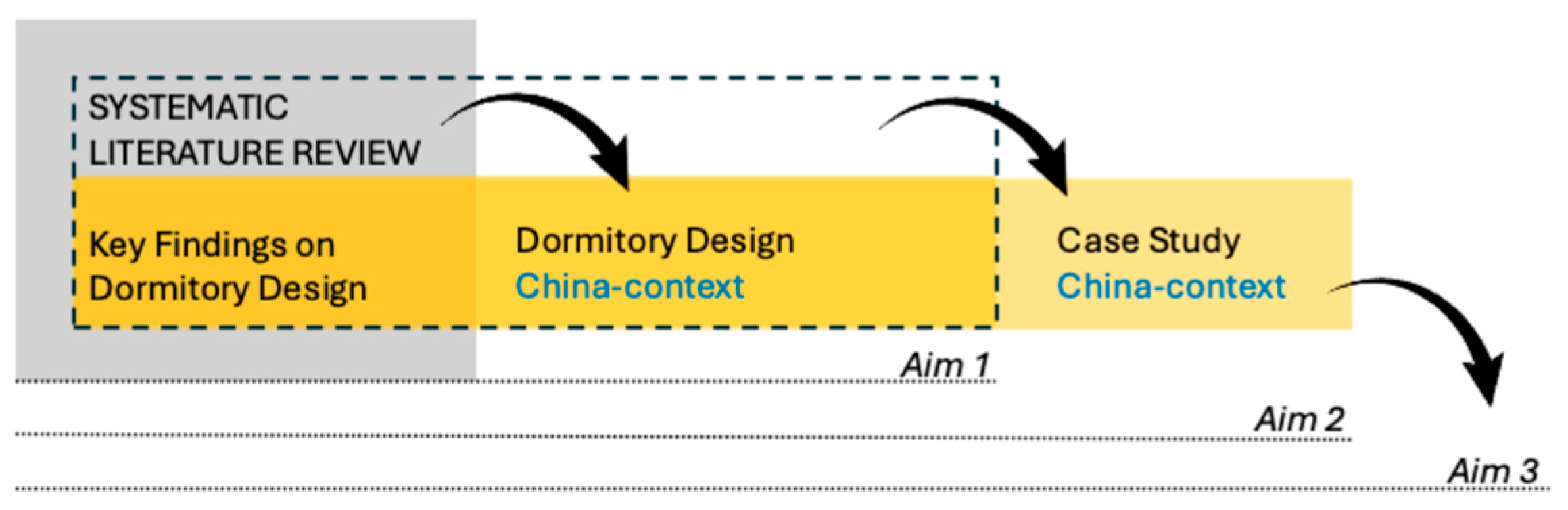
The next section details the methodology, which is structured around the three aims and builds progressively from a systematic literature review with a general overview, then narrows down to studies in the Chinese context and informing the examination of a high-density dormitory environment in Shanghai, China (Figure 1). Following the explanation of the methodology, the final sections present the research findings (Aims 1 and 2) and discuss how current spatial characteristics and user adaptations can inform future design directions (Aim 3).
Figure 1.
Diagram introducing the methodology structured around the three research aims, with arrows specifying the links between them.
2. Methodology
This study employs a mixed-method research approach to investigate the relationship between dormitory design and user experience, aiming to integrate diverse methods for a comprehensive analysis [24,25]. This method is preferred for its ability to offer a multidimensional perspective by providing richer insight into the research phenomena [26], conducted in two phases: 1. a systematic literature review and 2. a case study analysis, including a supporting examination of social media content to understand user perspectives. The details of each method, along with supporting analysis approaches, are presented in the following subsections.
2.1. Systematic Literature Review: Dormitory Design in Academic Research
The purpose of the systematic literature review (SLR) was to identify key academic insights regarding the design and use of dormitory environments to provide a foundation for analyzing the current usage of dormitory environments. The Preferred Reporting Items for Systematic Reviews and Meta-Analyses (PRISMA 2020) method with the suggested diagram template [27] was applied for this analysis, which is significant for identifying the relevant literature with the defined research objectives and is preferred for minimizing systematic errors during the selection, evaluation, and synthesis of studies [28]. SLR reduces such biases by employing a clear methodology to identify, select, and critically assess relevant studies. Also, this method is considered more transparent than traditional narrative literature reviews, resulting in a broader range of articles that allow for the mapping of specific trends and identification of gaps [28].
2.1.1. Database Selection
Given the interdisciplinary nature of dormitory-related research, a cross-database approach was adopted. We conducted a comprehensive search using three major academic platforms in June 2025: EBSCOhost, ProQuest, and Web of Science. Within EBSCOhost, the search included Art & Architecture Source, Avery Index to Architectural Periodicals, and Environment Complete. For ProQuest, relevant sub-databases were accessed, including Humanities, Design & the Arts, Health & Medicine, Social Sciences, and Education databases). Web of Science was searched without field limitation. The search retrieved all records published between 1 January 1998 and 5 June 2025, aligning with the temporal scope defined by the study’s eligibility criteria.
2.1.2. Strategy and Analytical Approach
This study employed a two-phase systematic review approach to address Aims 1 and 2 (Figure 1). The first phase involved a global scan of the relevant literature aimed at identifying international research trends, methodologies, and thematic priorities. The second phase focused specifically on student dormitories in China, where demand has been rising significantly [3,4,19].
The global search included the following five keywords: dormitory, dormitory layout, dormitory use, and dormitory organization, along with user experience and user performance in dormitories. After removing duplicates from results obtained from the EBSCOhost (Arts and Architecture) database, titles and abstracts were screened in three consecutive steps, excluding articles that did not address university dormitory spaces, lacked full-text access, or omitted reference lists. When uncertainty arose, the decision was made in favor of inclusion, with all exclusions verified by both reviewers.
The second phase of the search included the keywords “China” and “Chinese”, combined with “dormitory”. To ensure the relevance and contextual specificity of the literature included in this second phase of the systematic review, the following four eligibility criteria were applied. These criteria were designed to focus the review on studies that directly address the spatial design and user experience of student dormitories in China.
i. Geographic and topical relevance: Since the geographic focus was justified by the high density of dormitories and growing demand, it was essential to maintain contextual consistency, reflecting the context-based factors influencing dormitory design in China. Studies conducted outside of China were excluded.
ii. Publication type: Articles were published in academic journals, though not strictly peer-reviewed articles. This decision was made due to the relatively niche scope of research on Chinese student dormitory spatial design; excluding non-peer-reviewed studies would have significantly reduced the available literature and valuable insights that might inform further research.
iii. Temporal scope: Only articles published in 1998 and later were included. This cutoff was defined based on a pivotal policy shift: in 1998, the Ministry of Education of the People’s Republic of China proposed “The Action Plan to Vitalize Education in the Twenty-first Century” [29], which marked the beginning of a rapid expansion in higher education enrolment [30]. This expansion had a profound impact on student housing demand and design, making studies prior to this period less relevant to the current context.
iv. Language: To ensure accessibility and consistency in analysis, only articles published in English were included.
All retrieved records were imported into EndNote 21 for duplicate removal, followed by title, abstract, and full-text screening in Covidence according to the agreed inclusion criteria.
2.2. Case Study Analysis: Dormitory Environments in Use
The second methodology we employed was a case study analysis, focusing on a single location in China. This method was chosen to provide insights into how leading institutions address student dormitory needs by analyzing how dormitory spaces are currently organized, inhabited, and adapted by students in their daily use. Shanghai’s diverse institutional types contribute to a wide range of dormitory configurations, making it an ideal site for conducting comparative analyses of student housing [19].
Eight dormitories across two highly ranked universities were selected to represent a range of spatial conditions as high-density case studies. Both universities are in high demand and provide a strong basis for examining current student dormitory design and use in China, as shown in Table 1 [31]. Shanghai Jiao Tong University, with 18,582 undergraduate students, accommodates approximately 30,000 students in its dormitories, including both undergraduate and postgraduate residents. Fudan University reported an undergraduate population of 15,523 in 2024, although dormitory-specific data is not publicly available.
Table 1.
Selected universities for case study context.
The case studies were analyzed using qualitative content analysis methods, incorporating both spatial analysis and netnography. Publicly accessible data in various formats was collected to capture informal, user-generated perspectives on dormitory rooms. Including these digital sources allowed a comprehensive understanding of how students perceive and navigate their dormitory environments.
Spatial analysis is essential for understanding the spatial characteristics and social interactions that the space hosts. For instance, Chrysikou [32] highlights the importance of spatial analysis in healthcare research as an architectural methodology, as the outcomes can reveal insights into institutional behaviors that may not be evident through traditional qualitative methods. In this study, spatial analysis focused on dormitory room occupancy, spatial characteristics, and user-led personalization. Personalization is defined as the adjustment of design elements and/or spatial configurations to reflect individual preferences and/or needs. In this context, it describes students’ spatial modification behaviors aimed at optimizing their living environments, including layout adjustments. The eight dormitory spaces in these two universities were analyzed accordingly, visualizing their spatial characteristics and examining the user experience. Overlay diagrams were used as tools to superimpose multiple layers of information, including architectural plans combined with furniture layouts and usage data gathered from public social media posts shared by users of these specific dormitories.
Netnography is employed as a qualitative methodology and is considered a form of online ethnographic research involving the systematic observation of groups [33]. As this method is identified as an adaptation of the traditional ethnographic techniques to the online context [34], it serves as a significant tool for gaining insights into user-generated content and interactions, particularly content shared by younger generations. A digital platform specific to Chinese users, Rednote, was selected to analyze users’ viewpoints due to its user group characteristics being highly compatible with this study. This platform is considered the largest lifestyle-sharing community in China, also functioning as an e-commerce platform driven by user-generated content (UGC) social networking [35]. As of March 2025, 44 percent of active users are specified as under 24 years old [36]. This user structure ensures that a large portion of the feedback collected directly reflects the experiences and perspectives of university students [37], who mainly live in student dormitories. This data collection method provides a user-focused analysis of spatial elements across different dormitories, offering insights into their variations.
3. Results
The results are organized in three sections. Section 3.1 presents findings from the systematic literature review, including both global and China-based research outcomes. Section 3.2 follows with the analysis of case studies, and Section 3.3 concludes the results with a comparative discussion that synthesizes findings across all methods.
3.1. Systematic Literature Review
3.1.1. SLR Findings: Global Review
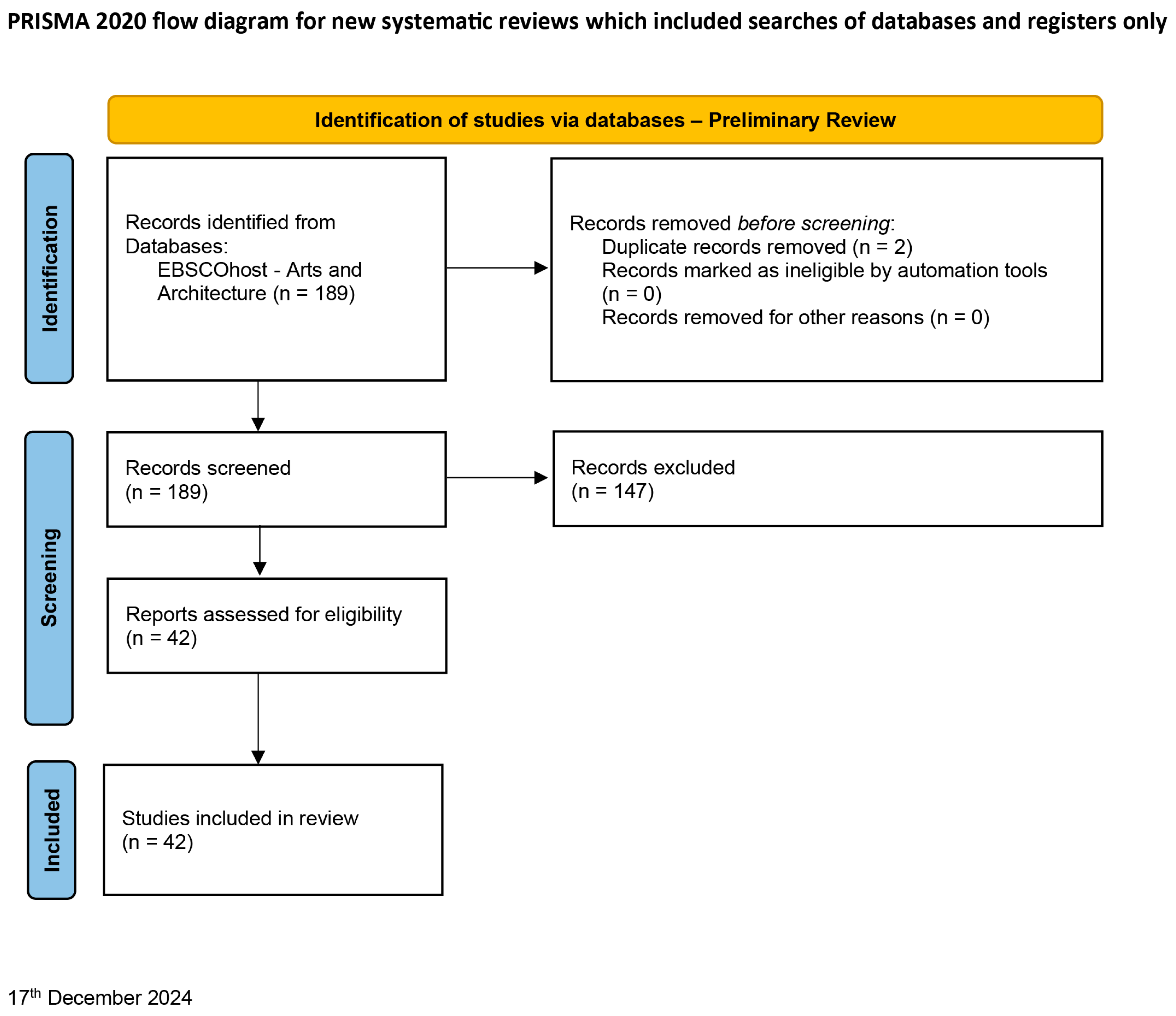
As the first phase of the literature review, a global overview offered insights into international research on dormitory design, including methodologies, thematic priorities, and spatial considerations, which informed the second phase of the China-based literature framework of this study. The preliminary search yielded 189 articles published between 1980 and December 2024. In total, 42 articles were assessed as full texts after the screening process, as shown in Figure 2.
Figure 2.
Flow diagram showing the preliminary literature review process.
In total, 42 articles were analyzed to provide a general overview, and the results were categorized into two dimensions to identify key findings regarding the dormitory environments (Aim 1). Research outcomes categorized under physical characteristics emphasize environmental quality and spatial configuration, highlighting factors such as acoustic and air quality, access to natural light, effective thermal control, and architectural suggestions. The second dimension, experiential characteristics, addresses aspects not covered by physical characteristics, focusing on user-related factors such as well-being needs, privacy, and social adaptability. Table 2 summarizes the outcomes, with one key reference highlighted from the literature review.
Table 2.
Literature review findings.
Our objective was to undertake a more rigorous and in-depth analysis to strengthen the case study and inform future design strategies (Aims 2 and 3). Thus, after systematically examining and thematically categorizing the research outcomes, we identified eight studies based on “spatial characteristics”, including spatial design, spatial organization, and spatial use. The details and outcomes of each study are presented in Table 3.
Table 3.
Summary of nine studies focusing on “spatial design” resulted from the preliminary literature review.
From an architectural perspective, two studies recommend limiting the building height to a maximum of three stories (including the ground floor) to enhance accessibility and encourage interaction to support a human-scaled living environment [11,39]. Where feasible, the inclusion of a balcony is recommended to improve ventilation and natural lighting and provide a semi-private transitional zone that enhances residents’ connection to the outdoor environment [11]. In terms of room density, same studies also highlighted that single and double rooms should be prioritized, while acknowledging that economic considerations remained an important constraint. In addition, communal facilities were identified as critical, proposing a limit of five users per kitchen and ten per bathroom to reduce overcrowding and associated stressors [11].
The critical role of privacy emerges as a central concern in dormitory design, particularly under conditions of high resident density. Previous outcomes have shown that overcrowding can diminish trust, cooperation, and friendliness among residents [9], while also contributing to psychological stress, interpersonal conflict, and reduced academic performance [10]. Across genders, students express heightened sensitivity to privacy concerns when selecting housing, with preferences shaped by factors such as shared facilities, number of occupants, bedroom type, and study location. Crowding negatively impacts privacy satisfaction, with higher floors perceived as more private due to reduced noise and expansive views. Quantitative assessments using a 26-item architectural rating scale revealed that cluster-plex dorms scored highest on the “quiet” factor (mean: 6.20), indicating superior privacy and study suitability, while corridor-plex dorms scored lowest (mean: 4.23) [46]. One study specifically focused on the impact of privacy in dormitory environments using qualitative indicators such as window height, indoor bathroom configurations, and student interviews [7]. The results pointed to factors like noise and odor disturbances caused by bathroom locations, as well as the effects of window placement and size on residents’ visual privacy, underscoring the importance of multi-sensory privacy. Privacy preservation is thus recognized as a key objective in dormitory design, regardless of gender.
Awal [45] highlights flexibility needs by pointing out that dormitory spaces are neither entirely public nor entirely private as their nature dynamically shifts with usage and time. The in-between zones within dormitories, in fact, are important in providing this flexibility of use. Through forms such as buffer zones, adaptable spaces, and semi-open areas, the balance between public and private can be adjusted, providing users with more control over their privacy while fostering a stronger sense of belonging.
3.1.2. SLR Findings: China-Based Review
In the second phase of the literature review, we focused on the Chinese context and retrieved a total of 189 articles, including 36 from the EBSCOhost database, 37 from the ProQuest database, and 116 from the Web of Science database. To ensure focus on dormitory design, we excluded studies that did not investigate university student housing and lacked full-text access. Based on this process, 48 studies were included in the Chinese context review.
Table 4 presents three themes that emerged from the analysis of China-specific studies, spanning topics such as thermal comfort, energy performance, ventilation, and occupancy. Due to the extensive number of references, one key resource was identified for each theme (Table 4).
Table 4.
Categorical review of the analyzed studies specific to the Chinese context.
The majority of the analyzed studies (n = 35) focused on physical environmental conditions in Chinese dormitories, with a focus on building performance, energy consumption (n = 12), and indoor environmental parameters (n = 12). Although environmental factors play a significant role in shaping user experience, most of the studies overlooked the spatial conditions of the dormitory spaces and disregarded user-specific needs. Two studies considered room types, offering insights into 1. spatial layout and user satisfaction and 2. spatial adaptability and user-driven personalization. The necessity of balancing space usage and comfort was emphasized by Dong et al. [56], suggesting that dormitory design should consider both physical layout and psychological needs. The study found that dormitory space layout design—including factors such as floor area per capita, spatial organization, and furniture design—has the greatest impact on overall indoor environmental quality satisfaction among all indoor environmental factors, even exceeding traditional indoor environment quality (IEQ) factors such as thermal environment, air quality, lighting environment, and acoustic environment. Single rooms and two-person rooms with balconies are most capable of improving student satisfaction. As the average living space per person increases, student satisfaction improves significantly, but once the average space per person reaches approximately 13.5 square meters, further improvements in satisfaction are limited [56]. Part of Wang et al.’s [57] research covered the impact of modular dormitory layouts on user satisfaction. The results showed that the shift from traditional crowded dormitory designs to more personalized, independent living spaces significantly improved thermal comfort, privacy, and the overall living environment, leading to higher resident satisfaction.
Research by Dong et al. [56] noted that universities should adopt space designs incorporating sufficient private and public areas to enhance student well-being and satisfaction. However, their focus was primarily on the impact of university dormitory space design on residents’ IEQ satisfaction, the relationship between space design and other IEQ factors, and the halo effect within space design. Wang et al. [57] focused on the thermal comfort and health impacts of unit-type dormitories, comparing unit-type layouts with traditional layouts. The study found that unit-type layouts can improve thermal environmental conditions and enhance user satisfaction but did not explore how students interact with or modify these spatial layouts [57].
3.2. Case Study Analysis
This case study examines eight dormitories across two leading universities in Shanghai, China, analyzing how student dormitory environments function in practice and comparing these findings with the SLR review through cross-analysis. Table 5 presents the characteristics of the eight dormitory spaces, detailing specifications such as room size and occupancy density.
Table 5.
Key characteristics of the dormitories analyzed as case studies.
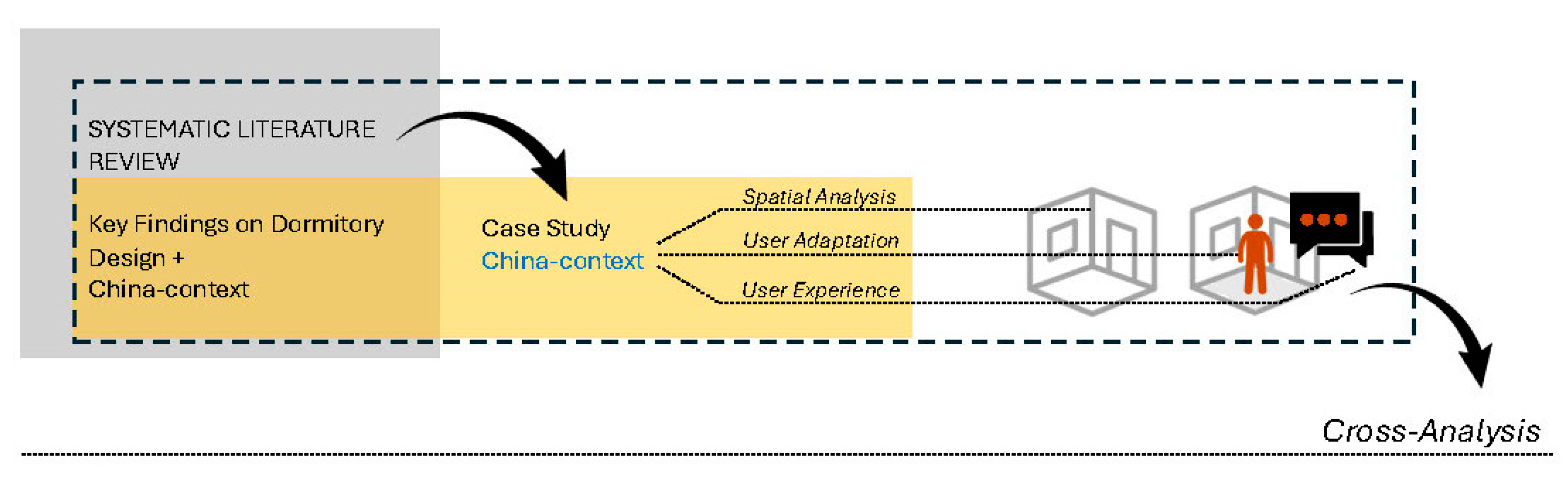
The case study analysis employed a multi-step approach to capture user-specific dimensions of dormitory use. First, a spatial analysis was conducted to examine the physical characteristics of the dormitory rooms, including floor area, layout, and patterns of use, and to assess their compliance with recommendations identified in the systematic literature review (SLR). Second, user-driven adaptations were investigated to understand modifications made beyond the standard room design. This stage incorporated netnographic analysis of user-generated content. Visual analysis was performed using publicly available photographs, which were mapped and overlaid onto architectural drawings from the initial spatial analysis. Additionally, discourse analysis of online posts was undertaken to capture user perspectives and contextualize observed adaptations. The case study analysis process and its integration with the SLR is illustrated in Figure 3.
Figure 3.
Illustration presenting the case study analysis workflow for the eight selected dormitories and its integration with the SLR for cross-analysis, specified with the arrows.
3.2.1. Spatial Analysis
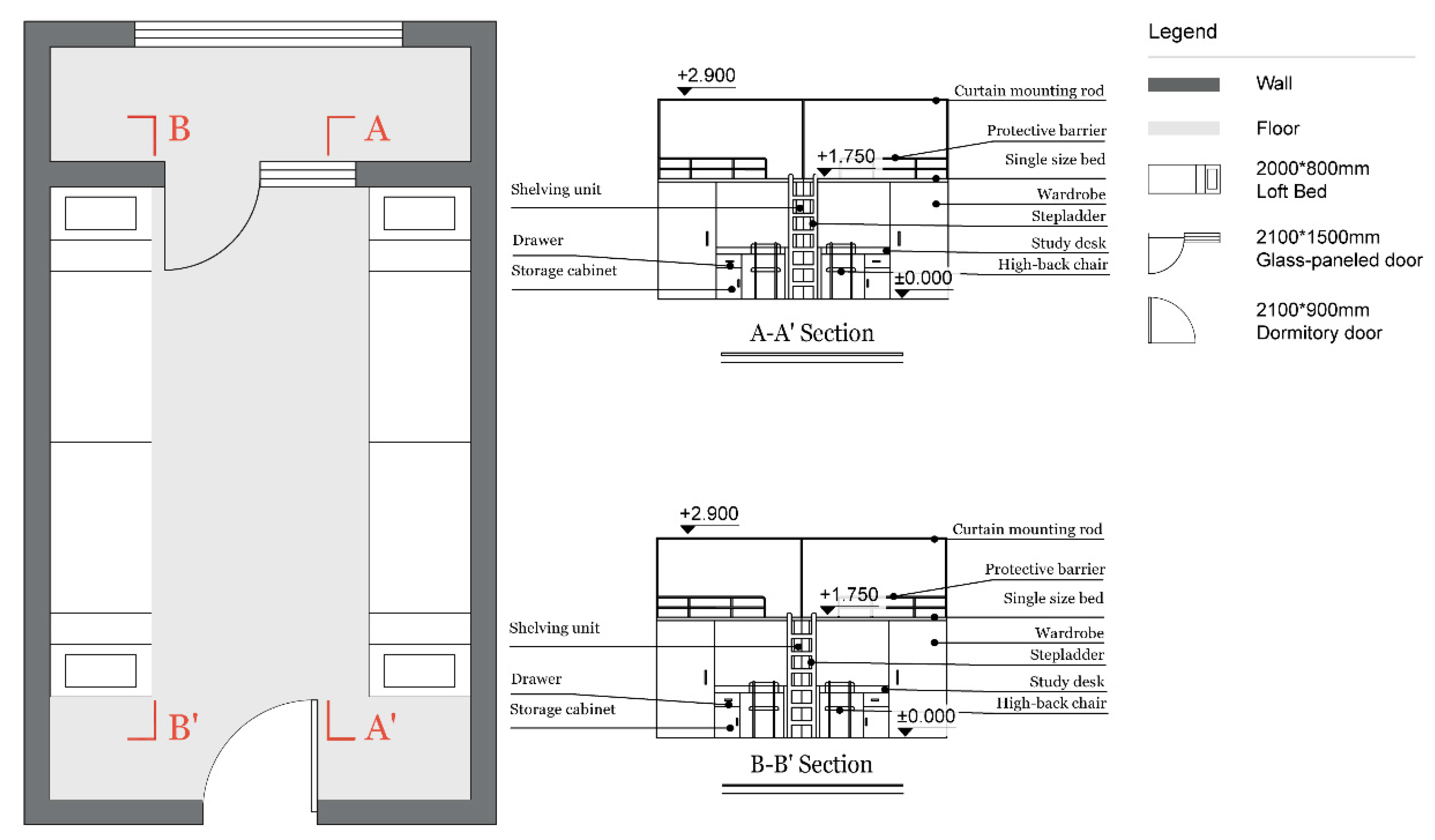
Spatial characteristics of each dormitory room were documented using publicly available resources, such as floor plans and photographs illustrating overall room use. When official floor plans or measurements were unavailable, layouts were reconstructed based on standard dormitory bed dimensions, photographic evidence, and precise furniture measurements provided on the university’s official website, with necessary spatial approximations. Each dormitory type was then drawn in detail, highlighting key spatial features, including circulation zones, furniture arrangements, storage areas, and window placement. This process enabled a comparative spatial analysis across all cases, focusing on layout and functional use. The following visuals and captions present a detailed description of each dormitory type, emphasizing layout, occupancy, and spatial characteristics.
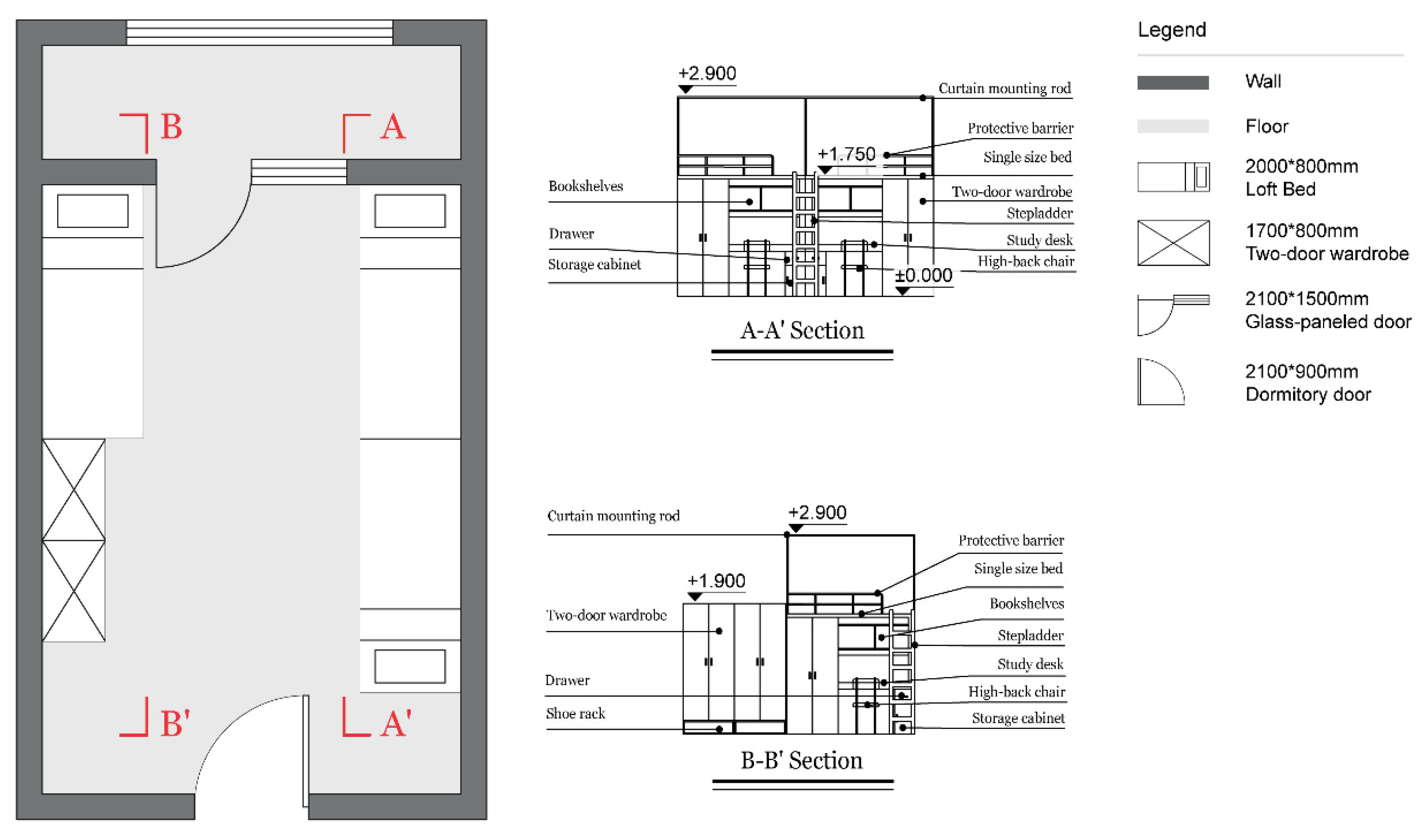
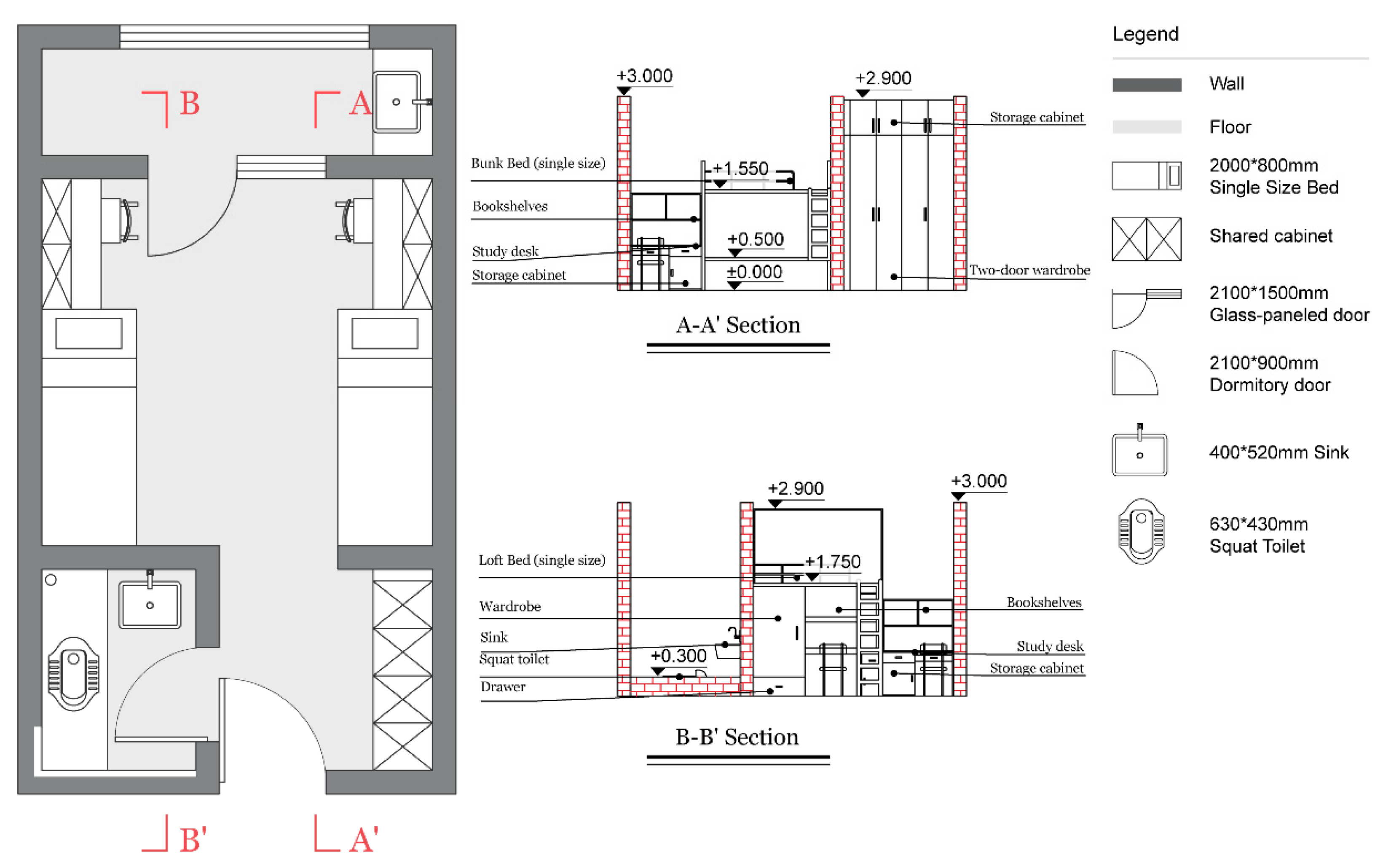
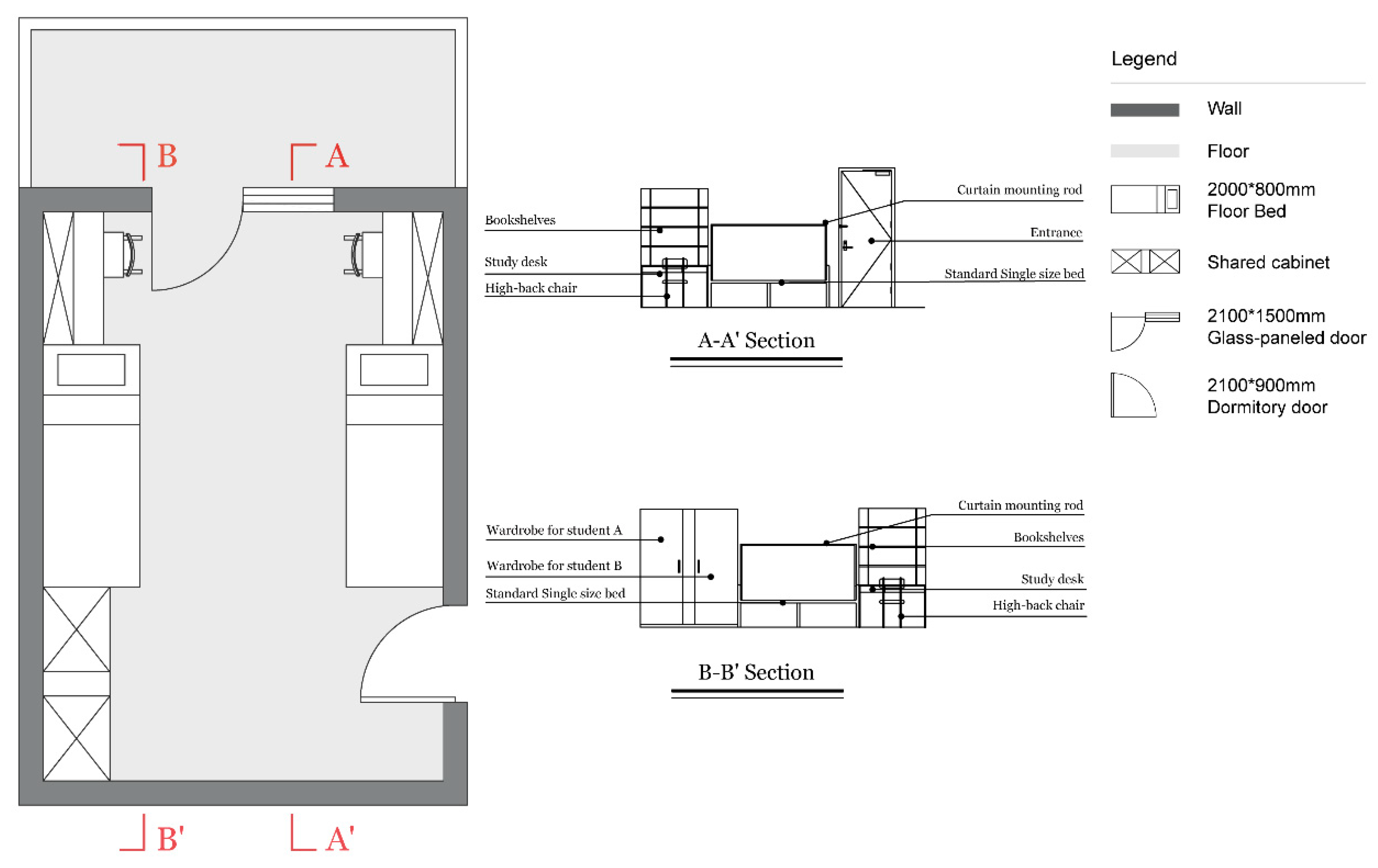
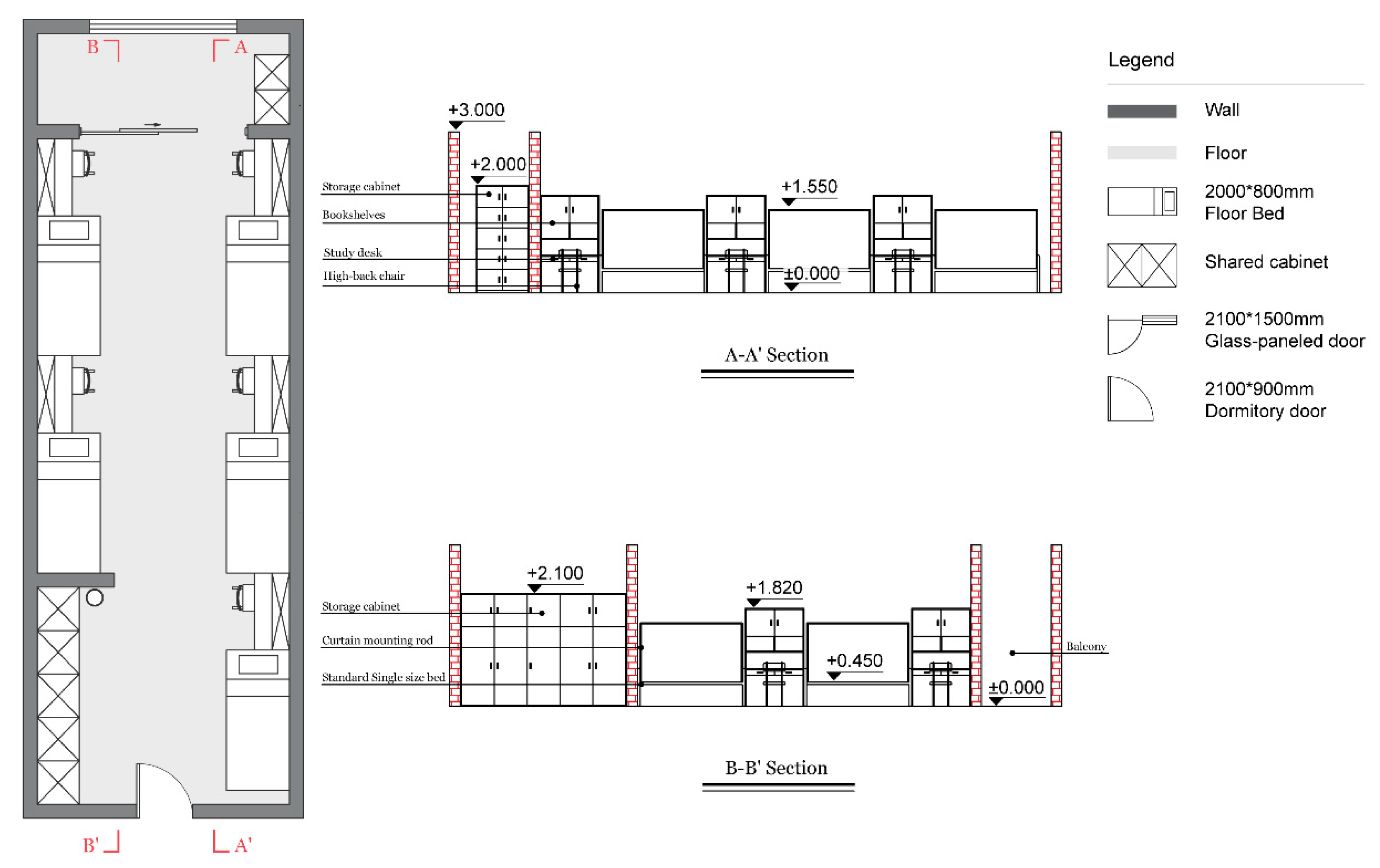
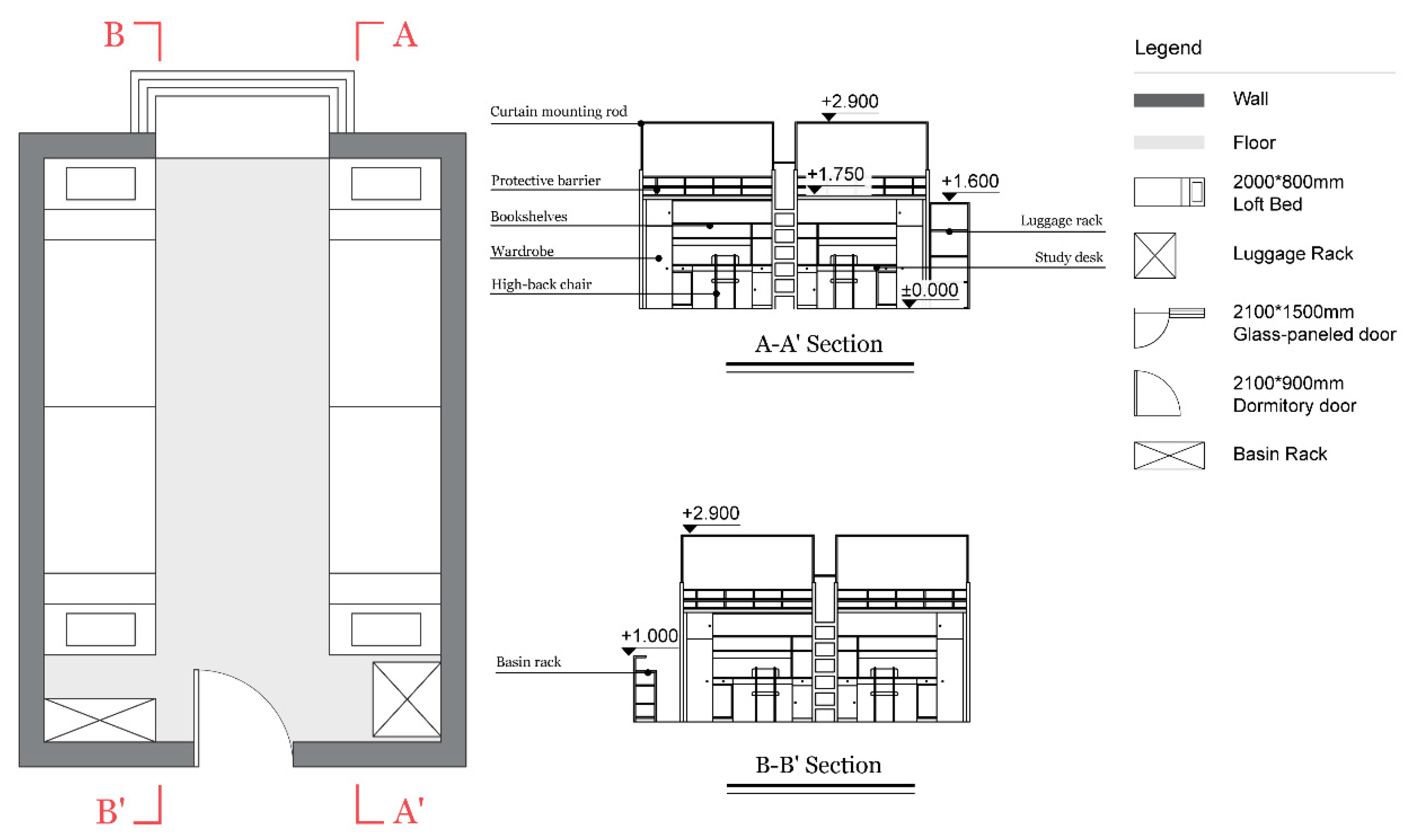
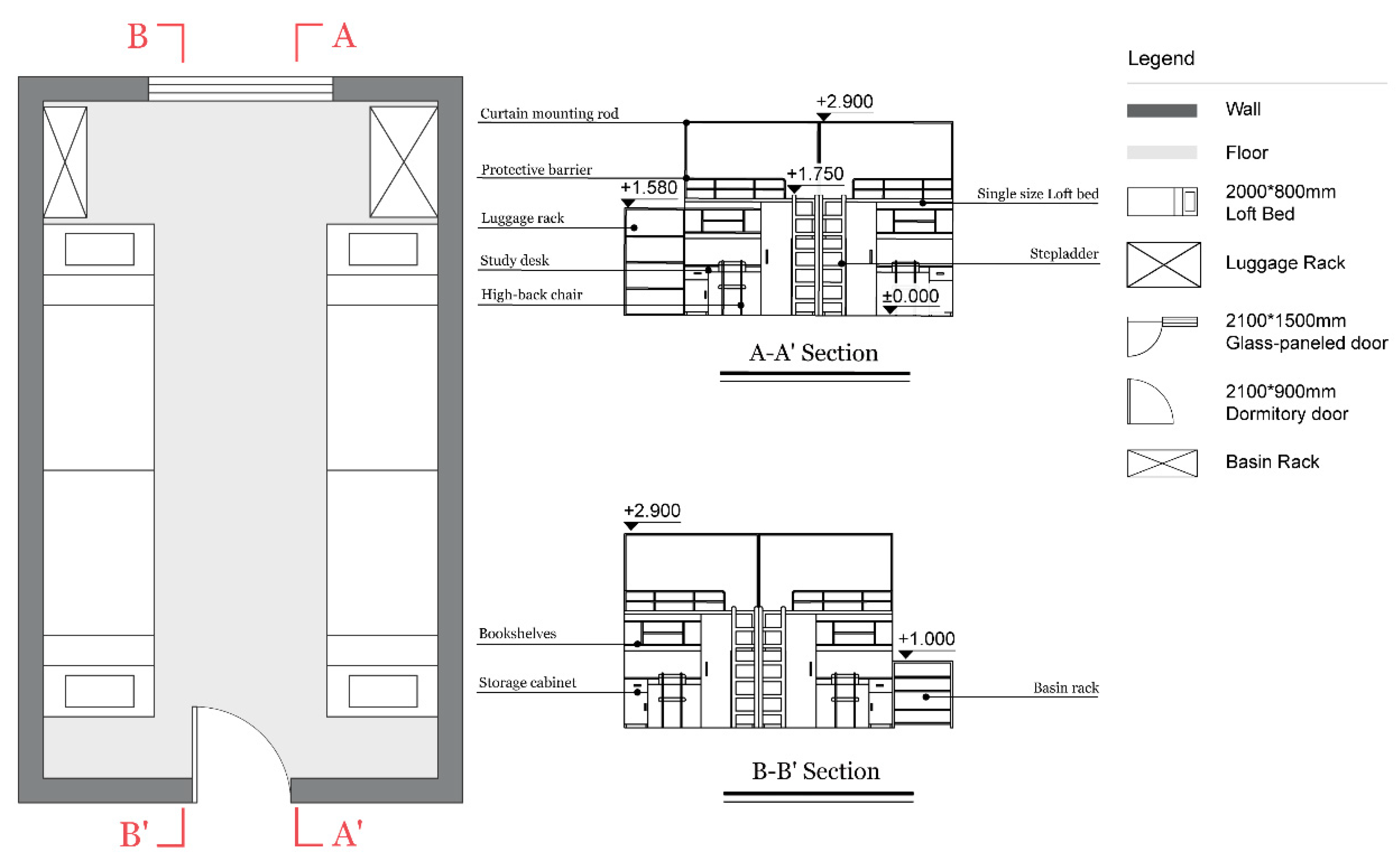
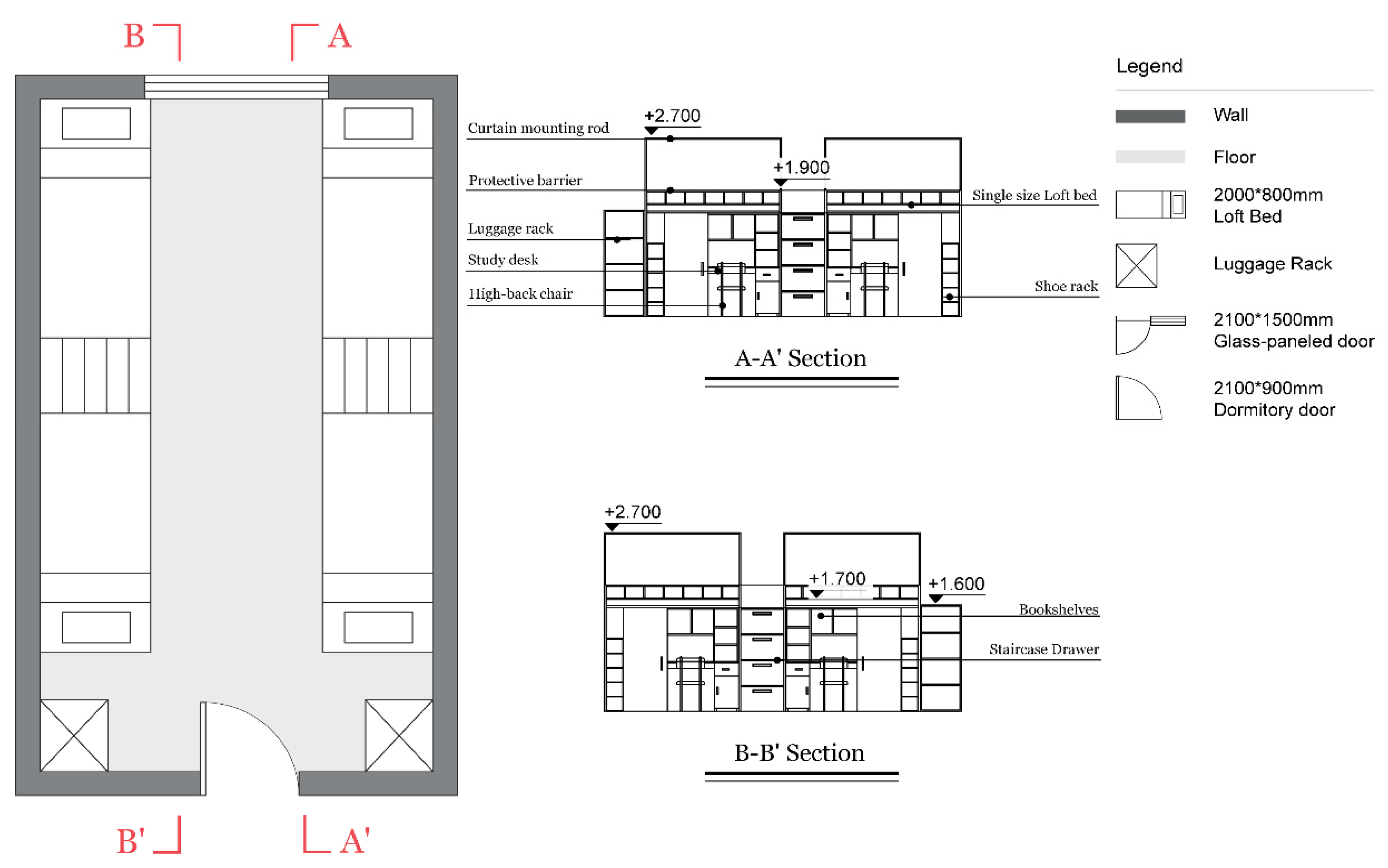
Room occupancy, defined as the number of residents accommodated within each dormitory space, was analyzed across eight selected cases representing four distinct occupancy types, ranging from two-person to five-person rooms. Figure 4, Figure 5, Figure 6, Figure 7, Figure 8, Figure 9, Figure 10 and Figure 11 illustrate each dormitory layout, with captions and legends detailing the specific spatial characteristics of the rooms. In all figure labels, ‘*’ indicates the dimension format (length × width).
Figure 4.
D-01 SJTU 4-person dormitory floor plan: Accommodates up to four residents, providing a per capita area of 3.96 m2. Features include a balcony, loft beds with integrated desks for each resident.
Figure 5.
D-02 SJTU 3-person dormitory floor plan (type 1): Designed for three residents with a per capita area of 5.28 m2, including a balcony and loft beds with integrated desks. Additional storage is provided via two shared cabinets.
Figure 6.
D-03 SJTU 3-person dormitory floor plan (type 2): Originally intended for two residents but currently housing three, offering a per capita area of 4.85 m2. Includes a balcony, toilet, and a mix of loft and bunk beds with desks, supplemented by four communal storage cabinets.
Figure 7.
D-04 SJTU 2-person dormitory floor plan: Two-person occupancy, with the largest per capita area of 7.76 m2, featuring individual floor beds and desks, a balcony, and shared storage cabinet.
Figure 8.
D-05 FDU 5-person dormitory floor plan: Five-person dormitory providing 6.84 m2 per capita. Facilities include floor beds, individual desks, a balcony, and seven shared storage cabinets.
Figure 9.
D-06 FDU 4-person dormitory floor plan (type 1): Four-person occupancy, the smallest per capita area at 3.94 m2. Furnished with loft beds integrated with desks, bay windows, and communal storage for luggage and shoes.
Figure 10.
D-07 FDU 4-person dormitory floor plan (type 2): Accommodates four residents with 4.4 m2 per capita. Features loft beds with integrated desks, sliding windows, and shared storage racks for luggage, shoes, and basins.
Figure 11.
D-08 FDU 4-person dormitory floor plan (type 3): Another four-person room providing 4.5 m2 per capita. Equipped similarly to D-07 with loft beds and integrated desks, shared stair drawers between beds, and communal storage racks.
In the studied dormitories, circulation is primarily organised along a single centralized axis, creating straightforward yet constrained pathways between furniture elements. The pass is the space between two sets of beds or tables, with a clear width ranging from 1.4 m to 1.7 m, which meets basic circulation needs. The layout of Dormitory D-04 is an exception, with its L-shaped circulation route providing slight flexibility and differentiation in the use of space.
All analyzed dormitories feature a symmetrical furniture layout arranged along the walls. Each furniture unit within the same dormitory (including beds, desks, and wardrobes) has a modular design with consistent alignment, and the number of furniture items directly corresponds to the number of occupants, creating a predictable and unified spatial arrangement. In Chinese dormitory design, there are two major furniture layout strategies: integrated loft beds and traditional floor bed arrangements. Integrated loft bed modules (such as D-01, D-02, D-03, D-06, D-07, and D-08) enhance spatial compactness, while floor bed and desk layouts (such as D-04 and D-05) offer greater visual openness but require larger room areas. Storage facilities within the case can generally be divided into two categories: personal storage space (such as ladder-integrated storage units, personal wardrobes connected to loft beds, bookshelves, and desk drawers) and shared cabinets. These storage components are usually arranged on the entrance wall or near the sleeping area.
According to the Chinese national standards titled “Code for Design of Dormitory Buildings” [58], dormitories are classified into four types based on bed configuration and number of occupants (Table 6).
Table 6.
Chinese national standards, excluding toilets, bathrooms, and balconies [58].
Excluding balcony and bathroom areas, each category has a minimum recommended per-person space standard. Analysis revealed that six out of the eight dormitory cases (D01, D03, D04, D06, D07, and D08) studied did not meet the national standards, indicating that per capita space allocation generally falls short of the recommended guidelines (Table 7).
Table 7.
Measured per capita usage area evaluation across eight case studies.
3.2.2. User Adaptation
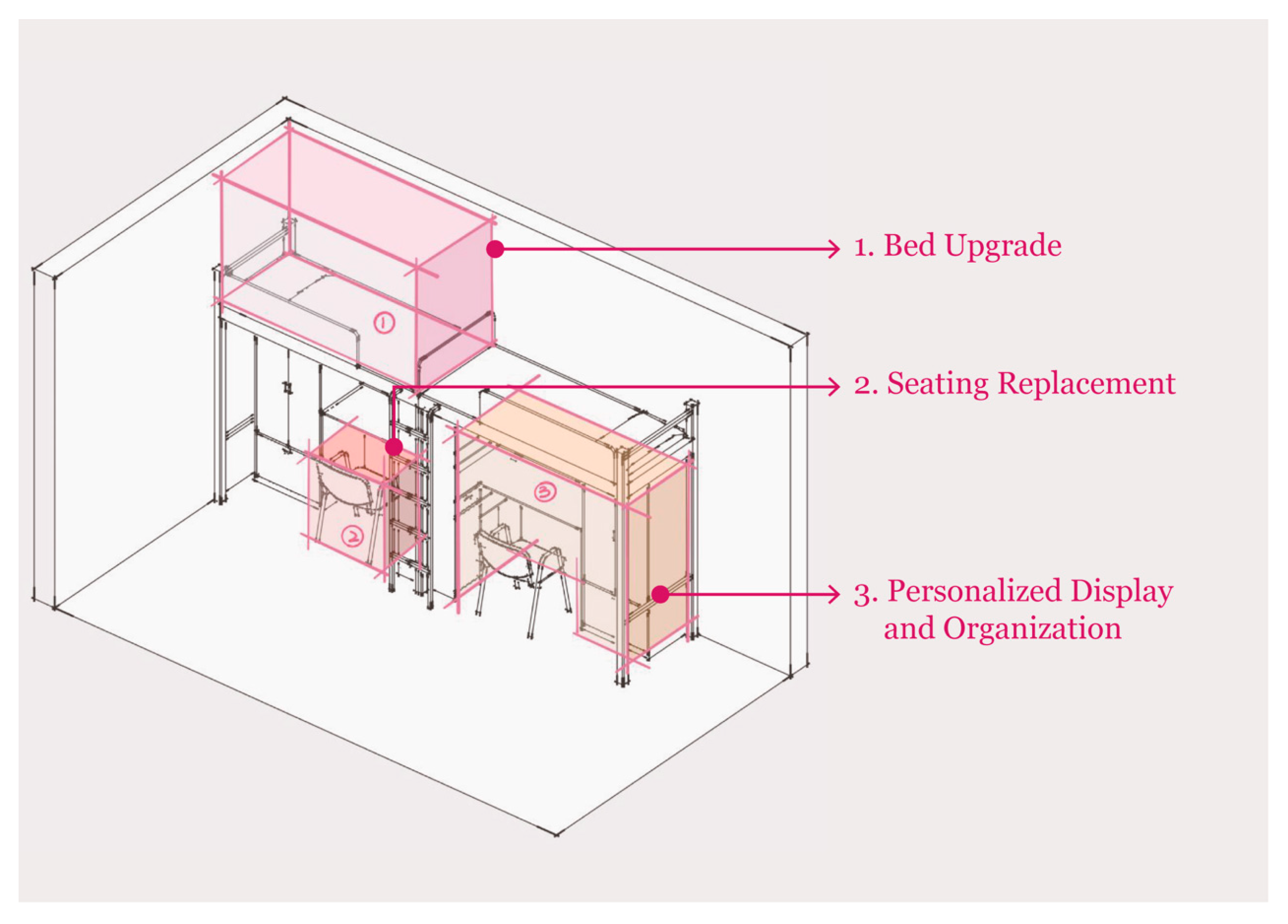
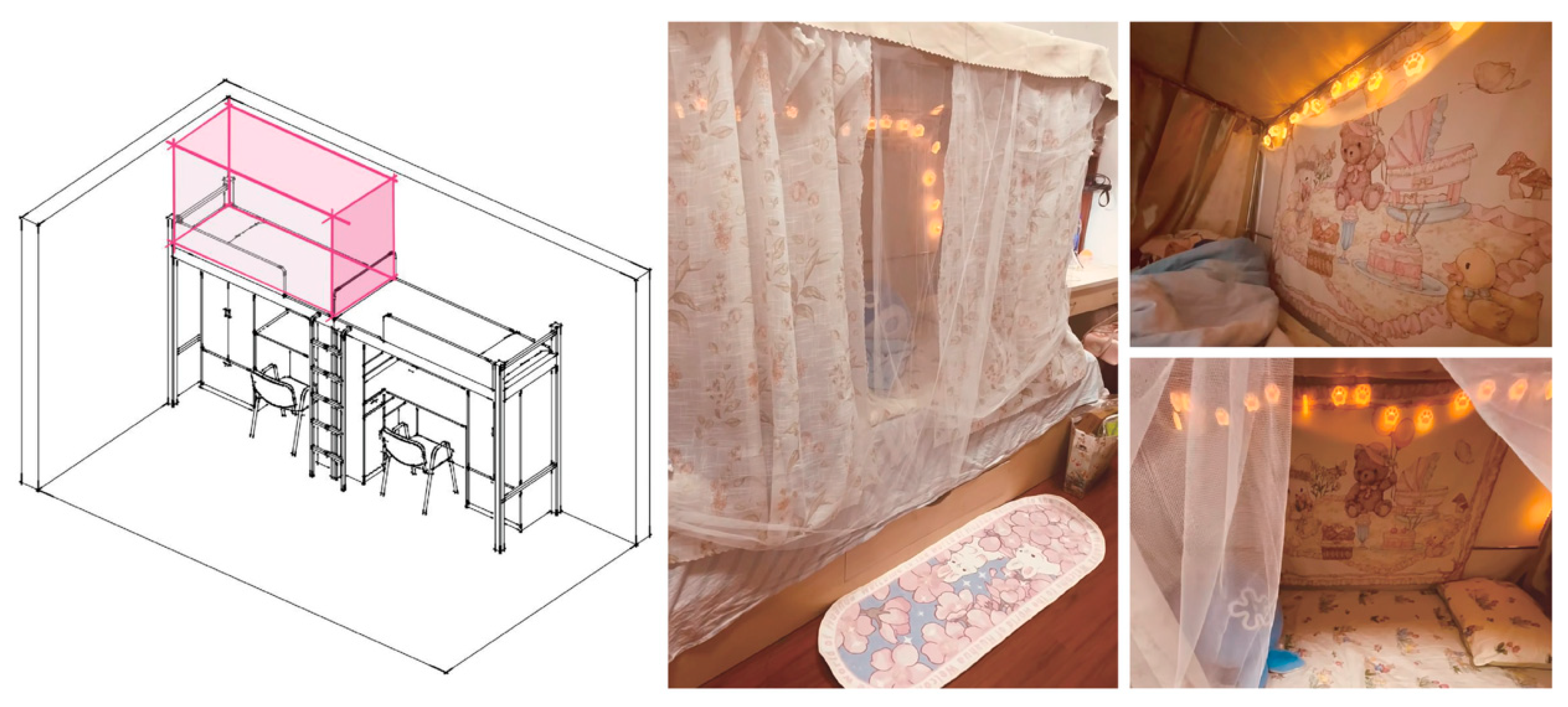
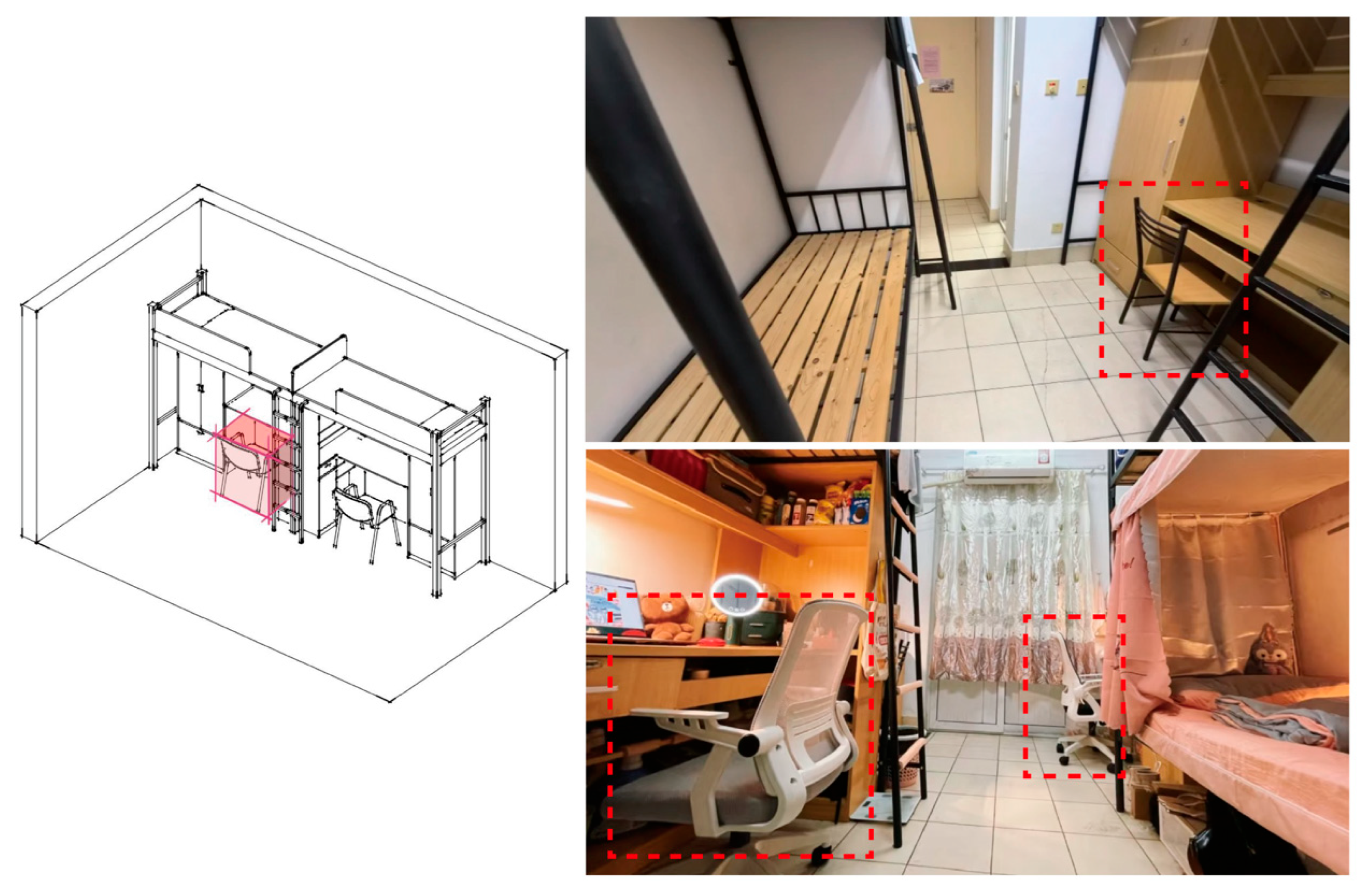
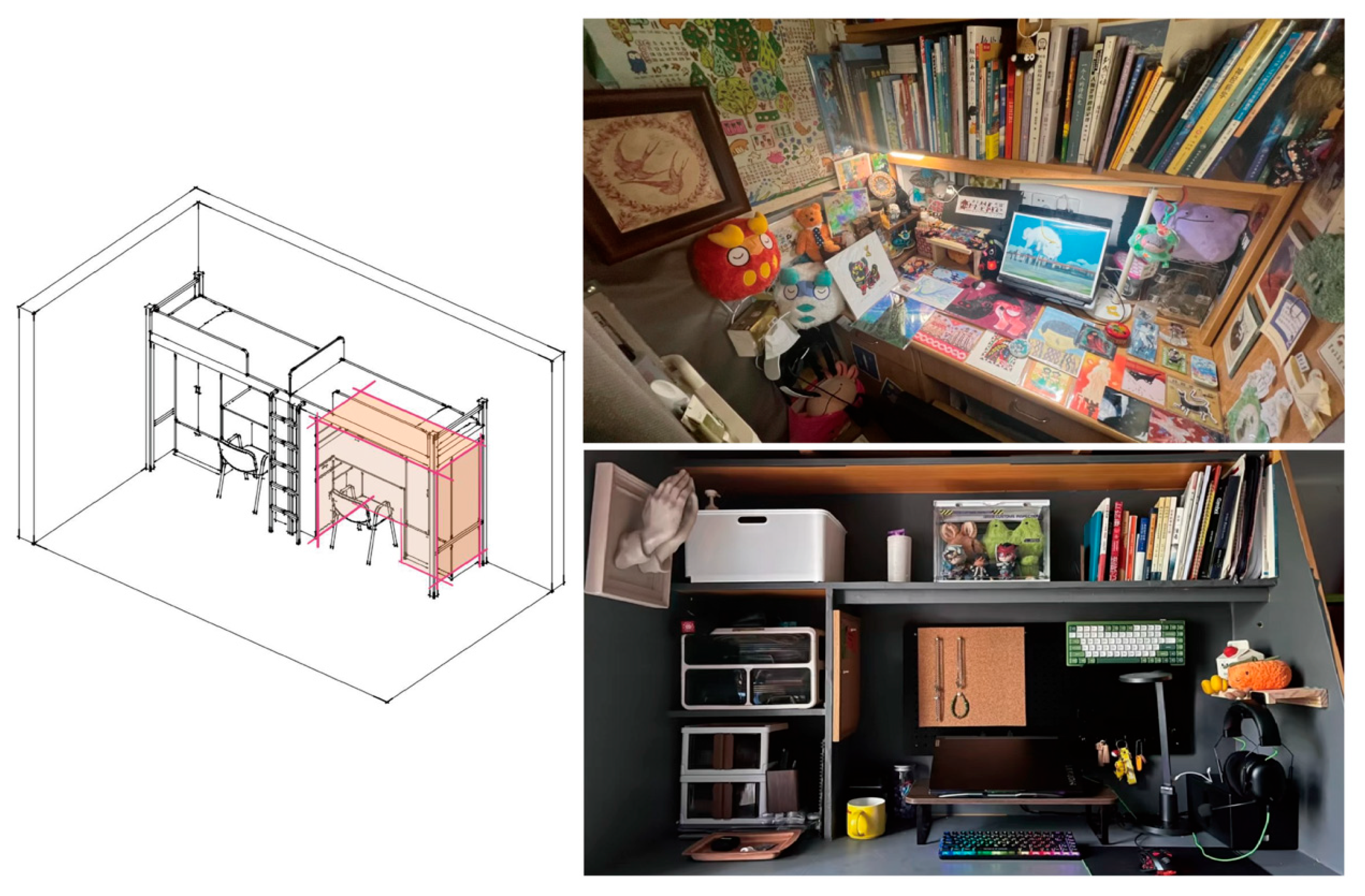
Drawing on publicly available photographs and social media content, student-led modifications and personalization of dormitory spaces can be broadly categorized into three key areas: (i) bed zone upgrades, (ii) seating replacements, and (iii) personalized study zone. These categories reflect common strategies students use to adapt their living environments to better suit individual needs and preferences. Each category is discussed in detail below (Figure 12).
Figure 12.
Representation of the three categories defining how students adapt their living environment to suit their needs.
- i.
- Bed zone upgrades
To enhance sleep quality, comfort, and privacy, students frequently modify their bed spaces through targeted upgrades. Common adaptations include the addition of blackout bed curtains, supplementary mattresses or mattress toppers, bedside storage baskets, and small environment-related items such as hanging night lights and portable fans. These modifications aim to create a more comfortable and personalized sleeping environment within constraints of limited space, contributing to both physical comfort and a sense of security (Figure 13).
Figure 13.
Bed zone modifications for improved comfort and privacy. (Illustration by the authors; photographs sourced from Rednote users with permission.).
Previous research findings have already highlighted the importance of privacy and noise control in bedroom use: 89% of the respondents considered bedroom privacy important, and 62% stated that their bedroom reflected their personal identity [59]. Such findings resonate with the personalization needs observed in these dormitories, where students actively reshape their spaces to assert control and express individuality.
Beyond functional improvements, students also engage in symbolic and aesthetic modifications, such as decorating vertical surfaces with posters, adding plush toys and decorative pillows, and using bed-top study desks. These practices further illustrate the diverse ways students negotiate spatial limitations and personalize their environments to support both emotional well-being and daily routines.
- ii.
- Seating replacement
The default seating provided in Chinese dormitories is a chair with a wooden seat surface and a metal frame. Some students choose to replace the default chairs with more ergonomic office chairs. Others place cushions or pillows on the default seats to reduce discomfort from sitting on hard wooden chairs for extended periods (Figure 14).
Figure 14.
Standard seating and user modifications. (Illustration by the authors; photographs sourced from Rednote users with permission.).
- iii.
- Personalized study zone
Visual analysis of student desk areas reveals students’ personalization and adaptation of their study zones. It can be observed that students incorporate a variety of personal items into their desk setups, including lighting fixtures, decorative objects, storage boxes, posters, and photographs. Some students apply wallpaper to alter the original color of the furniture, install LED light strips for ambiance, or repurpose open bookshelves into curated display zones (Figure 15). These modifications reflect both their functional needs, such as improved lighting and organization, as well as expressive intentions, allowing them to assert identity and create a sense of ownership within shared living environments.
Figure 15.
Personalization of study desks and shelves. (Illustration by the authors; photographs sourced from Rednote users with permission.).
3.2.3. User Experience
In the dormitories analyzed, all eight allow basic personalization, with limitations on the use of high-power appliances (for example, D-01, D-02, D-03, and D-04 strictly prohibit students from using such appliances, while the remaining dormitories only allow the use of small appliances with a power rating of 450 watts or less). While personal storage space is generally available, some dormitories (D-04 and D-05) rely entirely on shared wardrobes. Regarding sanitary facilities, all dormitories except D-03 rely on communal toilets and bathhouses. D-03 is unique in offering private toilets, though students must still use the public bathhouse for showers. The analysis of students’ posts which were shared on social media platforms provides additional confirmation of this finding.
Student feedback shared on the Rednote social media platform details their lived spatial experiences. An analysis of posts related to dormitory design, students’ daily use of their living spaces, and room modifications reveal recurring themes and concerns. The posts between 2022 and 2025 were analyzed and some anonymized excerpts from representative posts and comments are quoted to show how students perceive, adapt to, and critique their living environments, all of which have been anonymized.
At one selected university, user discussion intensity significantly increased starting in 2024, with dissatisfaction expressed over the university’s decision to convert dorm rooms originally designed for two people into three-person rooms. Other complaints primarily focused on issues such as aging dormitory buildings, poor living conditions, shared bathroom facilities, and unfair dormitory allocation:
“This dormitory is hard to accept. The ventilation is very poor, the walls are moldy, and the toilet pipes are old. The ceiling of a dormitory in the same building fell off in half.”“The water pressure in the bathrooms is very low, and the environment is poor. I even saw on the university discussion board that a student was bitten on the foot by a centipede while showering.”“The room is too small. With narrow corridors, and extremely low ceiling that will hit your head when you sit up on the bed.”“The one who came up with the idea of turning two-people dormitory into three-people must be a genius. Moving in feels like my life is over.”
In contrast, another university recently completed a major renovation of its undergraduate dormitories, receiving mostly positive feedback. Online posts generally praise the improved living experience and updated facilities. However, some students raised concerns about inequities between residents living in renovated versus old dormitory spaces, although these comments lack visual evidence:
“Overall, the new dormitory is good, with plenty of storage space and luxurious decoration.”“Why don’t you post about main dormitory, only choosing to post the good-looking ones? You don’t mention a thing about mosquitoes, dampness, and years-old stains.”“The conditions are really good. I live in the East District, in an old building, and the dormitory isn’t this new.”
The primary complaints about this university, as reflected in students’ posts, center on insufficient personal space, inadequate storage solutions for personal belongings, and the additional cost required for air conditioning. Practical concerns such as limited areas for drying clothes are also frequently mentioned.
“The space is too small to fit student’s things, so we can only be messy and happy.”“The loft bed are really bad. The space utilization is too poor. It is difficult to put clothes in the closet. The cabinet below is very deep and can’t be used at all. The dormitory is small, and I don’t even have a place to put a clothes hanger.”“The air conditioning is utterly unreasonable; the money each students pays to rent an air conditioner is enough to buy a much better new one. Moreover, most students never get their deposit back.”
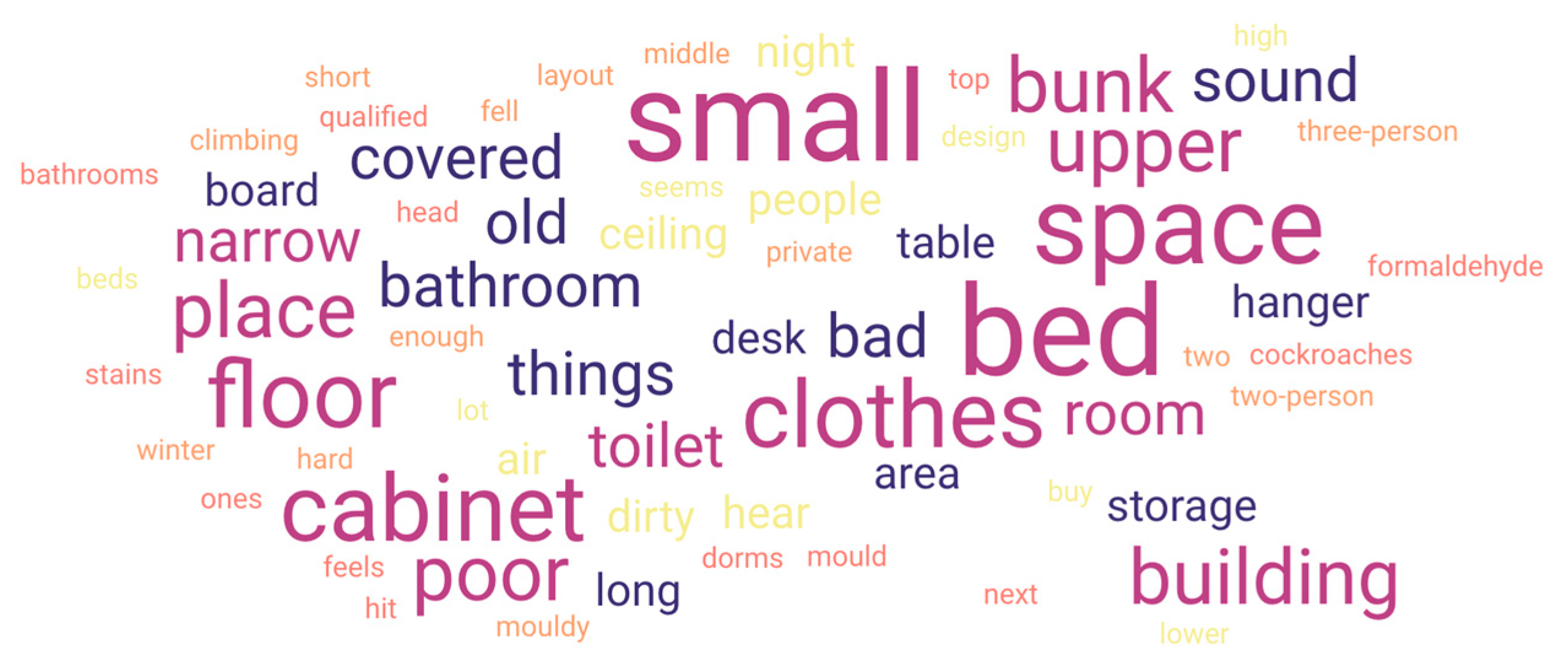
To examine which spatial elements students consider most important and to understand their overall perceptions of current dormitory conditions, we conducted a word-frequency analysis of the 61 collected comments and visualized the results using a word cloud using the website Word Cloud Generator (Figure 16). The analysis included synonyms, excluded stop words and irrelevant verbs, and applied a minimum word length of three letters to ensure clarity in interpretation. The words “dormitory” and “dorm” were removed from the analysis since they appeared in all entries and added no meaningful variation.
Figure 16.
Word cloud mapping.
As shown in Figure 16, the term “small” appears most frequently (n = 9) in students’ posts, highlighting the constrained layouts that shape daily activities, often described as “limited space” (n = 7). Storage-related concerns are also prominent, with references to “excessive belongings” (n = 7) and “cabinet” (n = 6). Additionally, issues related to room maintenance and hygiene emerge through words such as “dirty” (n = 4), “messy” (n = 4), and “bad conditions” (n = 4).
Table 8 summarizes a thematic analysis of 61 posts describing students’ dormitory experiences at the two case study universities. Six themes emerged, with comments on spatial layout being the most prevalent (n = 21). Among these, concerns about bed height, desk design, and overall narrowness were mentioned most frequently. Beyond layout issues, recurring problems included hygiene, noise, humidity, and psychological stress.
Table 8.
Rednote user comment categories.
3.3. Cross-Analysis of Findings (Comparative Insights)
This section integrates findings from the systemic literature review and case study analysis to provide comparative insights into dormitory design. Literature screening results without location specification indicated that dormitory design research primarily addresses indoor environmental quality (IEQ) topics such as thermal comfort, acoustics, and air quality, which are factors that significantly influence students’ experience within their rooms. However, there is a clear need for further investigation given the increasing demand and density of these rooms, as existing studies on user experience are limited (n = 9). A recurring theme among these resources identifies privacy as one of the fundamental needs. Based on a single study, recent research examining users’ experience with biophilic design adaptations in student housing indicates a positive impact on students’ well-being [41]. Although not specific to dormitory settings, evidence from the broader educational context on implementing biophilic design strategies demonstrates benefits for student health and academic success, highlighting a promising direction for further research [60].
Dormitory research within the Chinese context emphasizes building performance and indoor air quality (n = 24), while spatial characteristics are largely overlooked as key factors shaping user experience. Only two studies address user needs, which is critical for high-density dormitories in cities such as Shanghai. Dong et al. [56] proposed a reference threshold for student satisfaction of approximately 13.5 m2 per person. Accordingly, most Chinese dormitories fall short of even the national minimum standard of less than 4 m2 per person. While research generally agrees that two-person or private unit-style dormitories enhance student well-being, the trend in population density is moving in the opposite direction, which indicates an emerging need for further research.
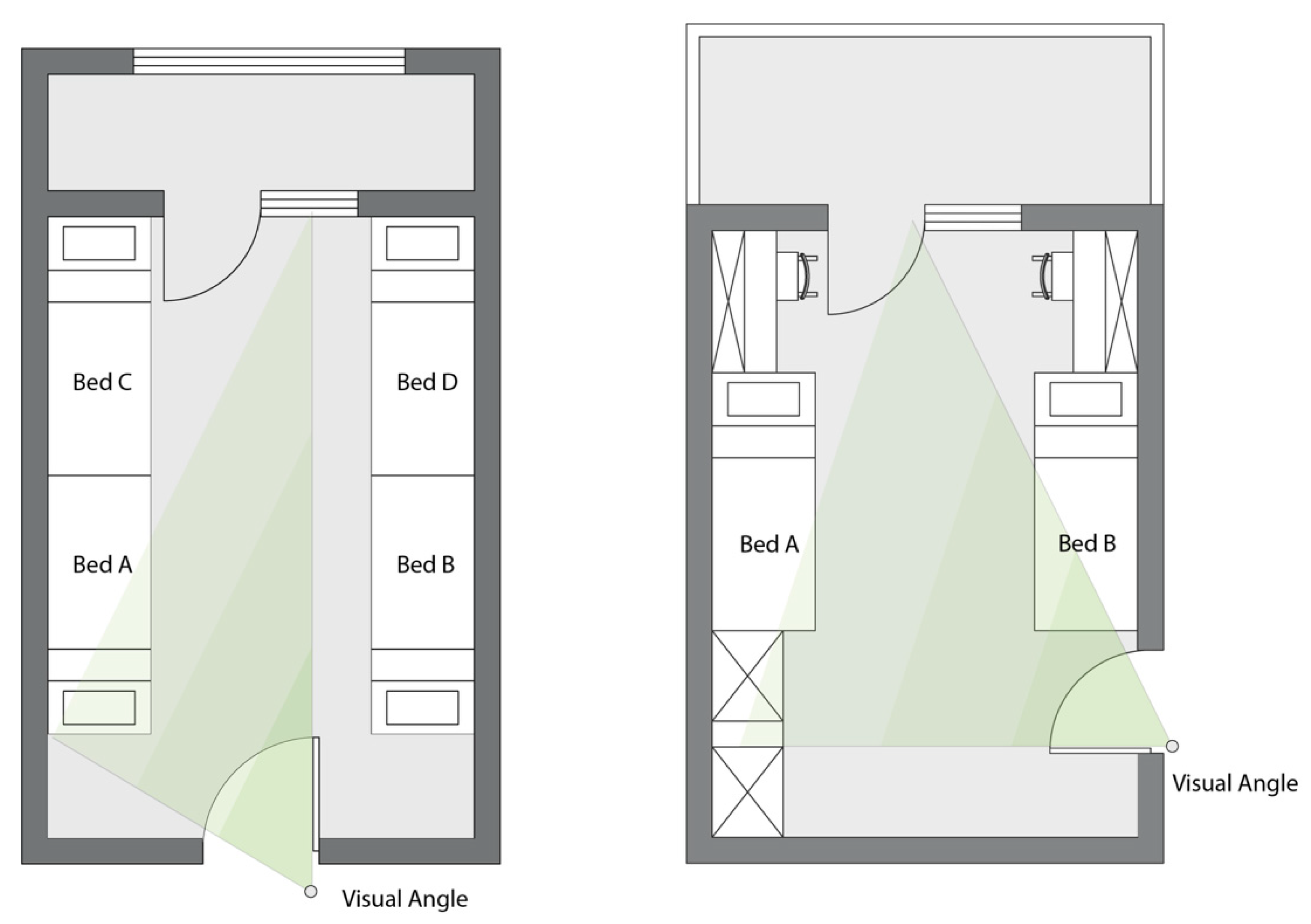
The SLR emphasizes that privacy is a key element of user satisfaction but lacks in-depth empirical analysis. Spatial characteristics observed in case studies reveal that dormitory layouts lack transition zones or buffer areas, resulting in the main living area being directly exposed upon entry. This design severely compromises residents’ privacy, a conclusion further supported by social media user feedback, where users explicitly expressed psychological discomfort due to insufficient privacy. Figure 17 presents the two dormitory layouts analyzed as examples of visual exposure based on entrance visibility. Beds located within these zones, particularly near the entrance or in direct line of sight when doors are unexpectedly opened, are more vulnerable to visual privacy concerns. In contrast, beds positioned outside these zones benefit from visual shielding. Such spatial inequalities may influence how students personalize their areas, negotiate boundaries, or experience daily disturbances.
Figure 17.
Plan-based analysis of potential visual exposure.
Complementary analyses of social media content further confirm widespread user dissatisfaction, particularly in relation to overcrowding, lack of personal space, and inadequate storage solutions. The growing number of social media posts about dormitory renovations indicate emerging user needs and students’ proactive efforts to compensate for functional shortcomings. Common interventions include blackout curtains, custom seating, enhanced storage, decorative elements, and wallpaper applied through personal renovation initiatives. Students’ posts also reveal discomfort due to spatial layouts (n = 21) and concerns about poor maintenance and hygiene (n = 14). Cross-analysis results review the correlation between dormitory space layout (including factors such as area, furniture arrangement, and room layout) and student satisfaction [57,58]. The results indicate that satisfaction increases with more spacious, private, and personalized layouts.
4. Conclusions
Existing research on dormitories acknowledges physical environmental needs as well as the importance of spatial adaptability and user-centered design. However, with rising demand for dormitory spaces, current layouts and organizational structures prioritize structural efficiency, which can lead to student discomfort and negatively affect their well-being. In examining the current use of shared dormitory spaces, insights are revealed regarding evolving user needs, as students actively reconfigure their spaces by using bed curtains, additional storage solutions, and personalized accessories. These behavioral patterns indicate that beyond meeting functional requirements, particularly in response to growing demand, dormitory design must also address the emotional, social, and sensory dimensions that shape how students interact with and inhabit their spaces. Through cross-analysis of the systematic literature review results and case studies, three dimensions emerged as critical in shaping students’ experience beyond what the current literature addresses:
1. Privacy needs should be embedded within spatial organization, particularly through strategies that enable visual and acoustic separation. Although privacy is widely acknowledged as essential, its physical translation into practice requires more empirical study. The existing literature recognizes insufficient dormitory space and lack of privacy as major concerns; however, practical guidance on addressing these issues through design strategies remains limited. Potential solutions include layouts incorporating entrance buffer zones, visual screening, and acoustic isolation. In most cases, a single circulation route and the absence of transitional buffer zones between the entrance and activity areas result in immediate exposure to the main living space upon entry. While this configuration offers visual transparency, it provides minimal privacy.
2. Equity is an emerging need in dormitory design, particularly in the context of increasing standardization. In shared rooms, this issue becomes more pronounced, as students do not have equal opportunities to personalize or control their immediate space, leading to disparities in comfort and experience. In addition, standardized layouts often lack inclusivity and adaptability, failing to accommodate diverse student needs, such as physical accessibility or cultural preferences, which remain largely unaddressed in current design practices.
3. Personalization should be considered a fundamental need, rather than a discretionary feature, as is reflected in students’ active efforts to adapt and customize their living spaces. However, there is a lack of empirical research capturing how students personalize and use these spaces—an important area for understanding evolving user needs. This study provides an initial foundation by illustrating diverse strategies students employ to modify their environments.
This study argues that future dormitory designs must balance structural efficiency with spatial flexibility, enabling students to express their personal identity, control their sensory experience, and establish micro-boundaries within shared environments. Providing flexibility for spatial adaptation, such as designing a bed area that allows small modifications for separation, which is suggested to be part of standardized layouts, is a fundamental need to support students’ sense of comfort and privacy. While standardization remains essential for managing density and ensuring affordability, incorporating opportunities for personalization can enhance adaptability and comfort. Simple design interventions, such as pin-up boards behind desks, optional curtains for separation, or varied lighting options, offer flexibility and support students’ well-being. Our findings also highlight that bed placement and proximity to entrance doors often create unequal conditions among occupants in shared rooms. Including a transitional space, such as an entrance hallway or spatial separation between the entry and sleeping areas, could provide effective solutions.
Overall, the lack of research on design solutions, combined with the tendency of most dormitory studies to prioritize physical parameters over user experience, underscores the need for further investigation, particularly as demand for dormitories continues to rise. Empirical studies linking quantifiable spatial characteristics (e.g., room type, density, per capita area, furniture modules, circulation areas, and buffer zones) to student experience and performance remain limited. Furthermore, the contemporary needs in student dormitories, conceived as residential environments for university students, offers insights beyond their target group. These spaces function as multi-purpose environments optimized for usability, revealing not only physical efficiency, but also evolving social and psychological needs. A notable trend is the increasing number of studio apartments or micro-flats in densely populated cities. Research indicates that the number of micro-flats in Hong Kong has doubled in recent years [61], reflecting shifting patterns of urban living and an increasing demand for compact spaces. In fact, future research on dormitory environments will provide more insights into how spatial layout and organizational strategies can positively influence people’s well-being, particularly within high-density environments.
5. Limitations
There may be omissions in the selected literature due to the inherent limitations of the search strategy; English-language publications were considered, potentially excluding relevant studies published in other languages. While the scope of dormitory-related research is extensive, the review does not account for the diverse needs of specific user groups, such as students with disabilities or mental health conditions.
Regarding empirical data, social media content was sourced primarily from Rednote. While such user-generated content offers valuable first-hand accounts, it remains limited in scope and lacks the depth that an interview-based study could provide. Future research is needed to gain a more comprehensive understanding of users’ perspectives. The online data was carefully considered, and only the evidence-based content that aligned with the broader findings and/or supported the other posts was included.
The two case study universities provide a wide range of dormitory types, which vary significantly across campuses, academic disciplines, and student cohorts. Due to the dynamic nature of annual housing allocations, it is difficult to ensure that the dormitory layouts included in this study fully represent the full diversity of student living environments. The spatial documentation was also constrained by the absence of official architectural drawings or publicly available floor plans. As a result, room layouts and dimensions were inferred using standard floor tile measurements. While care was taken to ensure consistency, minor deviations between measured and actual room sizes are likely.
Author Contributions
Conceptualization, X.S. and D.D.; methodology, X.S. and D.D.; software, X.S.; validation, D.D.; formal analysis, X.S.; investigation, X.S. and D.D.; resources, X.S. and D.D.; data curation, X.S. and D.D.; writing—original draft preparation, X.S. and D.D.; writing—review and editing, X.S. and D.D.; visualization, X.S.; supervision, D.D.; project administration, D.D. All authors have read and agreed to the published version of the manuscript.
Funding
This research received no external funding.
Data Availability Statement
The original contributions presented in the study are included in the article, further inquiries can be directed to the corresponding author.
Conflicts of Interest
The authors declare no conflicts of interest.
References
- Collins, P.Y.; Sinha, M.; Concepcion, T.; Patton, G.; Way, T.; McCay, L.; Mensa-Kwao, A.; Herrman, H.; de Leeuw, E.; Anand, N.; et al. Making cities mental health friendly for adolescents and young adults. Nature 2024, 627, 137–148. [Google Scholar] [CrossRef]
- UNICEF Innovation & ARM. Innovation for Children in an Urbanizing World: A Use-Case Handbook; UNICEF: New York, NY, USA, 2017; Available online: https://www.unicef.org/innovation/reports/innovation-children-urbanizing-world (accessed on 22 November 2025).
- Ministry of Education of the People’s Republic of China. List of National Colleges and Universities. 2024. Available online: http://www.moe.gov.cn/jyb_xxgk/s5743/s5744/A03/202406/t20240621_1136990.html (accessed on 14 January 2025).
- Ministry of Education of the People’s Republic of China. National Statistical Communiqué on the Development of Education. 2019. Available online: http://www.moe.gov.cn/jyb_sjzl/sjzl_fztjgb/202005/t20200520_456751.html (accessed on 14 January 2025).
- Cambridge Academic Content. Dormitory. Available online: https://dictionary.cambridge.org/fr/dictionnaire/anglais/dormitory (accessed on 16 January 2025).
- Li, Y.; Cheng, F.; Wei, R. Optimization evaluation model of student dormitory design scheme based on multiple evaluation principles. Expert Syst. Appl. 2023, 219, 119605. [Google Scholar] [CrossRef]
- Firmansyah, R.; Shaari, N.; Ismail, S.; Utaberta, N.; Usman, I.M.S. Observation of female dorm privacy in islamic boarding schools in west java, indonesia. J. Islam. Archit. 2021, 6, 360–368. [Google Scholar] [CrossRef]
- Rodger, S.; Johnson, A.M. The impact of residence design on freshman outcomes: Dormitories versus suite-style residences. Can. J. High. Educ. 2005, 35, 83–99. [Google Scholar] [CrossRef]
- Bickman, L.; Teger, A.; Gabriele, T.; McLaughlin, C.; Berger, M.; Sunaday, E. Dormitory Density and Helping Behavior. Environ. Behav. 1973, 5, 465–490. [Google Scholar] [CrossRef]
- Daliri Dizaj, M.; Hatami Khanghahi, T. Students’ residential preferences: A case study is dormitories of University of Mohaghegh Ardabili. J. Asian Archit. Build. Eng. 2022, 21, 1348–1363. [Google Scholar] [CrossRef]
- Amole, D. Students housing preferences in Southwestern Nigeria. J. Archit. Plan. Res. 2011, 28, 44–57. Available online: http://www.jstor.org/stable/43030926 (accessed on 23 December 2024).
- Kim, W.P. Effects of Physical Living Environment on the Social Interaction and Perceived Sense of Community among Students in University Dormitory. J. Korean Inst. Educ. Facil. 2015, 22, 3–10. [Google Scholar] [CrossRef]
- Astin, A. Impact of dormitory living on students. Educ. Rec. 1973, 54, 204–210. [Google Scholar]
- Astin, A. Student involvement: A developmental theory for higher education. J. Coll. Stud. Dev. 1999, 40, 518–529. [Google Scholar]
- Erden, G.; Özdoğru, A.A.; Çoksan, S.; Ögel-Balaban, H.; Azak, Y.; Altınoğlu-Dikmeer, İ.; Ergül-Topçu, A.; Yasak, Y.; Kıral-Uçar, G.; Oktay, S.; et al. Social contact, academic satisfaction, COVID-19 knowledge, and subjective well-being among students at Turkish universities: A nine-university sample. Appl. Res. Qual. Life 2021, 17, 2017–2039. [Google Scholar] [CrossRef]
- Hountras, P.T.; Brandt, K.R. Relation of student residence to academic performance in college. J. Educ. Res. 1970, 63, 351–354. [Google Scholar] [CrossRef]
- Nowack, K.M.; Hanson, A.L. Academic achievement of freshmen as a function of residence hall housing. NASPA J. 1985, 22, 22–28. [Google Scholar] [CrossRef]
- ICEF Monitor Global Report Finds That Demand for Student Housing Is Still Far Greater than Supply. Available online: https://monitor.icef.com/2025/02/global-report-finds-that-demand-for-student-housing-is-still-far-greater-than-supply/ (accessed on 21 November 2025).
- Government Portal of the Ministry of Education of the People’s Republic of China. List of General Higher Education Institutions in the Country. 2023. Available online: https://hudong.moe.gov.cn/qggxmd/ (accessed on 14 January 2025).
- China International Engineering Consulting Corporation. Reflections and Recommendations on University Student Dormitory Construction. Available online: https://www.ciecc.com.cn/art/2025/2/27/art_2218_111889.html?utm_source (accessed on 14 January 2025).
- He, W.; Zeng, N. The Relationship Between University Dormitory Environmental Factors and Students’ Informal Learning Experiences: A Case Study of Three Universities in Guangdong Province. Buildings 2025, 15, 2518. [Google Scholar] [CrossRef]
- Ning, Y.; Chen, J. Improving Residential Satisfaction of University Dormitories through Post-Occupancy Evaluation in China: A Socio-Technical System Approach. Sustainability 2016, 8, 1050. [Google Scholar] [CrossRef]
- Beder, D.; Imamoğlu, Ç. Correlates of dormitory satisfaction and differences involving social density and room locations. J. Hous. Built Environ. 2023, 38, 2307–2323. [Google Scholar] [CrossRef]
- Bryman, A. Social Research Methods; Oxford University Press: Toronto, ON, Canada, 2016. [Google Scholar]
- Creswell, J.W. A Concise Introduction to Mixed Methods Research; SAGE publications: Thousand Oaks, CA, USA, 2021. [Google Scholar]
- Dawadi, S.; Shrestha, S.; Giri, R.A. Mixed-Methods Research: A Discussion on its types, challenges, and criticisms. J. Stud. Educ. 2021, 2, 25–36. [Google Scholar] [CrossRef]
- PRISMA 2020. Available online: https://www.prisma-statement.org/prisma-2020 (accessed on 14 January 2025).
- O’Brien, A.M.; Mc Guckin, C. The Systematic Literature Review Method: Trials and Tribulations of Electronic Database Searching at Doctoral Level; SAGE Publications: London, UK, 2016. [Google Scholar] [CrossRef]
- Ministry of Education of the People’s Republic of China. The Action Plan to Education in the 21st Century. Available online: http://www.moe.gov.cn/jyb_xwfb/xw_zt/moe_357/s3580/moe_2448/moe_2470/tnull_41377.html (accessed on 6 May 2025).
- Mok, K.H.; Jiang, J. Massification of higher education and challenges for graduate employment and social mobility: East Asian experiences and sociological reflections. Int. J. Educ. Dev. 2018, 63, 44–51. [Google Scholar] [CrossRef]
- Times Higher Education University Rankings. Available online: https://www.timeshighereducation.com/world-university-rankings/2024/world-ranking (accessed on 18 April 2025).
- Chrysikou, E. Psychiatric institutions and the physical environment: Combining medical architecture methodologies and architectural morphology to increase our understanding. J. Healthc. Eng. 2019, 2019, 4076259. [Google Scholar] [CrossRef]
- Wallace, R.; Costello, L.; Devine, A. Netnographic slog. Int. J. Qual. Methods 2018, 17, 1609406918797796. [Google Scholar] [CrossRef]
- Sandlin, J.A. Netnography as a consumer education research tool. Int. J. Consum. Stud. 2006, 31, 288–294. [Google Scholar] [CrossRef]
- Xu, Y.; Wang, Y. The Influence of Chinese Social Media “Xiaohongshu”. In Proceedings of the Appearance Anxiety Among University Students in Shanghai International Conference on Science Education and Art Appreciation, Chengdu, China, 24–26 June 2022. [Google Scholar]
- Ma, Y. Active User Age Distribution of Xiaohongshu (Rednote) as of March 2025. Available online: https://www.statista.com/statistics/1053545/china-xiaohongshu-user-age-distribution/ (accessed on 23 May 2025).
- Zou, Y.; Sharpe, A.; Demant, D. The effectiveness of podcasts in promoting health among young people: A scoping review. Health Promot. Int. 2025, 40, daaf102. [Google Scholar] [CrossRef] [PubMed]
- Abdollahzadeh, N.; Farahani, A.V.; Soleimani, K.; Zomorodian, Z.S. Indoor Environmental Quality Improvement of Student Dormitories in Tehran, Iran. Int. J. Build. Pathol. Adapt. 2022, 41, 258–278. [Google Scholar] [CrossRef]
- Adebayo, J.; Amole, D. Gender and Students’ Housing Preferences. Int. J. Constr. Environ. 2019, 10, 27–40. [Google Scholar] [CrossRef]
- Kaya, N.; Erkip, F. Satisfaction in a Dormitory Building. Environ. Behav. 2001, 33, 35–53. [Google Scholar] [CrossRef]
- Hasa, A.; Husein, H. Promoting Students’ Well-Being Indicators through Adapting Biophilic Design Attributes in Salahaddin University Dormitories. Al-Qadisiyah J. Eng. Sci. 2023, 16, 180–186. [Google Scholar] [CrossRef]
- Nazarpour, M.-T.; Norouzian-Maleki, S. A Comparative Study of Satisfaction Evaluation between Students of Mid-Rise and High-Rise Student Housing. Facilities 2020, 39, 508–524. [Google Scholar] [CrossRef]
- Vráblová, E.; Czafík, M.; Puskár, B. Spatial Characteristics of Contemporary Prefabricated Modular Dormitory Cells. Spatium 2022, 64–74. [Google Scholar] [CrossRef]
- Gosling, S.D.; Craik, K.H.; Martin, N.R.; Pryor, M.R. Material Attributes of Personal Living Spaces. Home Cult. 2005, 2, 51–87. [Google Scholar] [CrossRef]
- Awal, S. Public, Private & In-Between Spaces in Student Housing. Master’s Thesis, Chulalongkorn University, Bangkok, Thailand, 2020. [Google Scholar] [CrossRef]
- Devlin, A.S.; Donovan, S.; Nicolov, A.; Nold, O.; Zandan, G. Residence Hall Architecture and Sense of Community Everything Old Is New Again. Environ. Behav. 2008, 40, 487–521. [Google Scholar] [CrossRef]
- Vinsel, A.; Brown, B.B.; Altman, I.; Foss, C. Privacy Regulation, Territorial Displays, and Effectiveness of Individual Functioning. J. Personal. Soc. Psychol. 1980, 39, 1104–1115. [Google Scholar] [CrossRef]
- Hou, H.C.; Law, K.K. Examining the Relationship between Student Residents’ Self-Reported Energy Consumption Behavior and Their Energy-Saving Intention. J. Build. Eng. 2024, 98, 111490. [Google Scholar] [CrossRef]
- Chen, X.; Kang, H.; Zhao, J.; Liu, Q. Optimization Design Research of Architectural Layout and Morphology in Multi-Story Dormitory Areas Based on Wind Environment Analysis. Buildings 2025, 15, 1747. [Google Scholar] [CrossRef]
- Cheng, M.-J.; Hwang, R.-L.; Lin, T.-P. Field Experiments on Thermal Comfort Requirements for Campus Dormitories in Taiwan. Indoor Built Environ. 2008, 17, 191–202. [Google Scholar] [CrossRef]
- Jian, W.; He, H.; Wang, B.; Liu, Z. Investigating the Impact of Green Space Ratio and Layout on Bioaerosol Concentrations in Urban High-Density Areas: A Simulation Study in Beijing, China. Sustainability 2024, 16, 3688. [Google Scholar] [CrossRef]
- Kong, D.; Han, D.; Zhai, R.; Wang, C.; Zhang, J.; Xia, Y.; Nian, X.; Liu, C.; He, Y.; Wang, D. A Case Study on Tropical Bed Bug, Cimex Hemipterus (Hemiptera: Cimicidae) Infestation and Management in Dormitories. J. Econ. Entomol. 2022, 116, 5–11. [Google Scholar] [CrossRef] [PubMed]
- Huang, Y.; Guo, Z.; Chu, H.; Sengupta, R. Evacuation Simulation Implemented by ABM-BIM of Unity in Students’ Dormitory Based on Delay Time. ISPRS Int. J. Geo-Inf. 2023, 12, 160. [Google Scholar] [CrossRef]
- Wen, K.; Fang, Y. Daily Information Management System for Postgraduates to Check In and Out of the Dormitory Based on Mobile Edge Computing. Mob. Inf. Syst. 2021, 2021, 5167395. [Google Scholar] [CrossRef]
- Ren, J.; Esangbedo, M.O. Grey Preferences Selection Index with Trimmed Group Preference for Evaluating University Dormitory Renovation Design. Sci. Rep. 2024, 14, 28218. [Google Scholar] [CrossRef]
- Dong, Z.; Zhao, K.; Ren, M.; Ge, J.; Chan, I.Y.S. The impact of space design on occupants’ satisfaction with indoor environment in university dormitories. Build. Environ. 2022, 218, 109143. [Google Scholar] [CrossRef]
- Wang, Z.; Wu, Y.; Jia, Z.; Gao, Q.; Gu, Z. Research on health and thermal comfort of unit-type student apartments in the Western China Science and Technology Innovation Harbor. Front. Public Health 2022, 10, 850107. [Google Scholar] [CrossRef] [PubMed]
- JGJ 36-2005/J408-2005; Code for Design of Dormitory Building. Ministry of Construction of the People’s Republic of China: Beijing, China, 2005. Available online: https://aimg8.dlssyht.cn/u/816266/ueditor/file/409/816266/1723686368312784.pdf (accessed on 22 November 2025).
- Dincer, D.; Tietz, C.; Dalci, K. Beyond Sleep: Investigating User Needs in Today’s Bedrooms. Buildings 2024, 14, 1061. [Google Scholar] [CrossRef]
- Peters, T.; D’Penna, K. Biophilic Design for Restorative University Learning Environments: A Critical Review of Literature and Design Recommendations. Sustainability 2020, 12, 7064. [Google Scholar] [CrossRef]
- Lau, M.H.M.; Wei, X. Housing size and housing market dynamics: The case of micro-flats in Hong Kong. Land Use Policy 2018, 78, 278–286. [Google Scholar] [CrossRef]
Disclaimer/Publisher’s Note: The statements, opinions and data contained in all publications are solely those of the individual author(s) and contributor(s) and not of MDPI and/or the editor(s). MDPI and/or the editor(s) disclaim responsibility for any injury to people or property resulting from any ideas, methods, instructions or products referred to in the content. |
© 2025 by the authors. Licensee MDPI, Basel, Switzerland. This article is an open access article distributed under the terms and conditions of the Creative Commons Attribution (CC BY) license (https://creativecommons.org/licenses/by/4.0/).