Systematic Review

A Review of Indoor Thermal Comfort Studies on Older Adults in China

by
Jia Li
*,
Mohd Farid Mohamed
and
Wardah Fatimah Mohammad Yusoff
Department of Architecture, Faculty of Engineering and Built Environment, Universiti Kebangsaan Malaysia, UKM Bangi, Bangi 43600, Selangor, Malaysia
*
Author to whom correspondence should be addressed.
Buildings 2025, 15(23), 4331; https://doi.org/10.3390/buildings15234331 (registering DOI)
Submission received: 5 November 2025 / Revised: 21 November 2025 / Accepted: 24 November 2025 / Published: 28 November 2025
(This article belongs to the Section Building Energy, Physics, Environment, and Systems)

Abstract

This review systematically examines research on indoor thermal comfort for older adults conducted in China since 2010. It highlights several existing research gaps, including the lack of a systematic understanding of environmental and individual influences, limitations of thermal comfort models, challenges in their optimization, and inadequate integration of intelligent technologies. Results indicate that environmental factors usually exert a greater impact on the elderly’s neutral temperature than individual factors. Thermal comfort models differ in predictive accuracy, data requirements, and applicability. The adaptive predicted mean vote (aPMV) model is better suited for group-level assessments. Machine learning (ML) models, featuring high flexibility and accuracy, are more appropriate for personalized predictions. In addition, physiological parameters could play a critical role in thermal assessments. When integrated with ML models, physiological parameters could further improve predictive accuracy. When integrated into artificial intelligence (AI) and Internet of Things (IoT) systems, forehead and back skin temperatures could act as early-warning indicators during heat exposure, while lower-limb temperatures are more indicative of thermal discomfort during cold exposure. Overall, this review summarizes current progress and limitations, offering a reference for the development of user-friendly modeling and intelligent temperature-control systems.

1. Introduction

1.1. Background on Thermal Comfort Among Older Adults in China

China is undergoing a demographic transformation, with a rapidly growing elderly population. According to the United Nations’ definition [1] and the Chinese law on the protection of the rights and interests of the elderly [2], individuals aged 60 or older are classified as elderly. As of 2021, China had approximately 264 million people aged 60 and above, accounting for 18.7% of its population of 1.4 billion. This figure is expected to exceed 400 million by 2035, marking China’s transition into a deeply aged society [3,4].
With aging, older adults become less mobile and spend more time indoors [5]. In China, approximately 64% of elderly urban residents live in aging residential buildings over 20 years old, often featuring suboptimal design and insufficient thermal comfort [6]. The majority of older Chinese adults living in rural areas reside in houses without professionally designed insulation, resulting in significant fluctuations in indoor thermal conditions [7]. In addition to building insulation issues, accelerated climate change has heightened the risk of thermal discomfort among the elderly. In southern China, extreme heat events have become increasingly frequent. Many older adults use air conditioning less frequently due to lower incomes and frugal habits, increasing their susceptibility to heat stress and associated health problems [8]. Similarly, cold environments in northern China also pose significant health threats. Older adults are particularly vulnerable to freezing [9]. Cardiovascular disease, a major cause of death, reaches its peak in winter [10]. Moreover, as aging progresses, especially with disabilities or cognitive decline, the ability to perceive and express thermal comfort needs weakens [11]. Overall, the quality of the indoor thermal environment is crucial not only for health and comfort but also for overall well-being [12,13,14]. However, the current thermal environment design standards do not sufficiently reflect the specific needs of the elderly population and provide limited guidance for age-friendly design [15,16,17,18,19].

1.2. Limitations of Existing Thermal Comfort Research

The present indoor thermal environment assessment standard GB 50736-2012 [20] mainly relies on the PMV and predicted percentage of dissatisfied (PPD) indices, which define acceptable temperature ranges for summer and winter in mechanically conditioned environments [21,22]. The PMV model has limited applicability for evaluating thermal comfort in older adults, primarily due to the lack of data from older adults [12]. Consequently, it has several limitations, such as insufficient consideration of age-related physiological changes and limited evaluation of health risks [15,23,24]. Compared with younger adults, older adults exhibit reduced thermal sensitivity and weaker physiological responses, necessitating larger temperature changes to perceive equivalent sensations [21,25,26,27]. They also have limited environmental regulation capacity, often relying on passive strategies such as opening windows or adjusting clothing, rather than active cooling [28,29,30,31,32]. These age-related differences lead to distinct neutral temperatures and narrower comfort ranges among older adults [33,34,35].
In addition, thermal comfort variations exist not only between older and younger adults but also among older adults themselves. These differences are mainly shaped by a combination of environmental and individual factors, including climatic zone, urban–rural context, physical condition, and adaptive behaviors [36,37,38]. In recent years, although numerous studies have examined thermal environments across various groups and regions, the findings remain fragmented and inconsistent. Differences are often presented in isolation within individual studies, lacking systematic integration.
To address the limitations of the PMV model, various evaluation methods have been proposed. Modified PMV models, such as the adaptive PMV and the Griffiths method, have demonstrated improved predictive performance. Compared with the PMV and modified PMV models, ML models offer distinct advantages in integrating multiple parameters and capturing nonlinear relationships, substantially improving prediction accuracy. Nonetheless, several challenges remain. First, selecting appropriate ML algorithms and tuning their parameters is complex [39], and the lack of model standardization reduces generalizability. Second, ML models require large, high-quality datasets, which are difficult to obtain and accurately label for elderly populations [40].

1.3. Objectives and Contributions of This Review

Overall, this review is organized around a framework comprising three stages: understanding, evaluating, and improving thermal comfort. First, this review summarizes the environmental and individual factors influencing the thermal comfort of older adults. Then, it compares existing thermal comfort models in terms of their structural characteristics, required sample size, and predictive accuracy, and further examines how these models account for the influencing factors. Finally, it proposes specific directions for model optimization and the development of intelligent temperature control applications. The specific objectives are as follows:
(1)
Identify and clarify how environmental and individual factors influence the thermal comfort of older adults.
(2)
Evaluate and compare the applicability of existing thermal comfort models to identify their strengths, limitations, and contexts of optimal use.
(3)
Propose specific directions for model optimization and future intelligent applications.
The framework of this review is shown in Figure 1. Notably, although all cases considered in this review are from China, the comprehensive research framework is generalizable and can be applied to other regions and countries.

2. Method

2.1. Literature Identification

This review followed the PRISMA guidelines. The review included studies published from 2010 onwards. Since then, improvements in living conditions and indoor environments in China have changed residential and daily living patterns [41,42,43], making earlier studies potentially less representative of current thermal environments for older adults. Searches were performed in the Web of Science, Scopus, and China National Knowledge Infrastructure (CNKI) databases. Only peer-reviewed journal articles were included. For CNKI, only articles published in Peking University Core Journals or indexed in the Chinese Social Sciences Citation Index were selected to ensure research quality. The review focused on studies conducted in mainland China, Hong Kong, and Taiwan.
The search strategy was based on three core concepts: (1) elderly population (e.g., elderly, aged, older adults, senior); (2) thermal comfort–related terms (e.g., thermal comfort, thermal requirement, thermal sensation, thermal perception, thermal adaptation, thermal satisfaction, thermal preference, thermal environment); and (3) exclusion of outdoor studies.
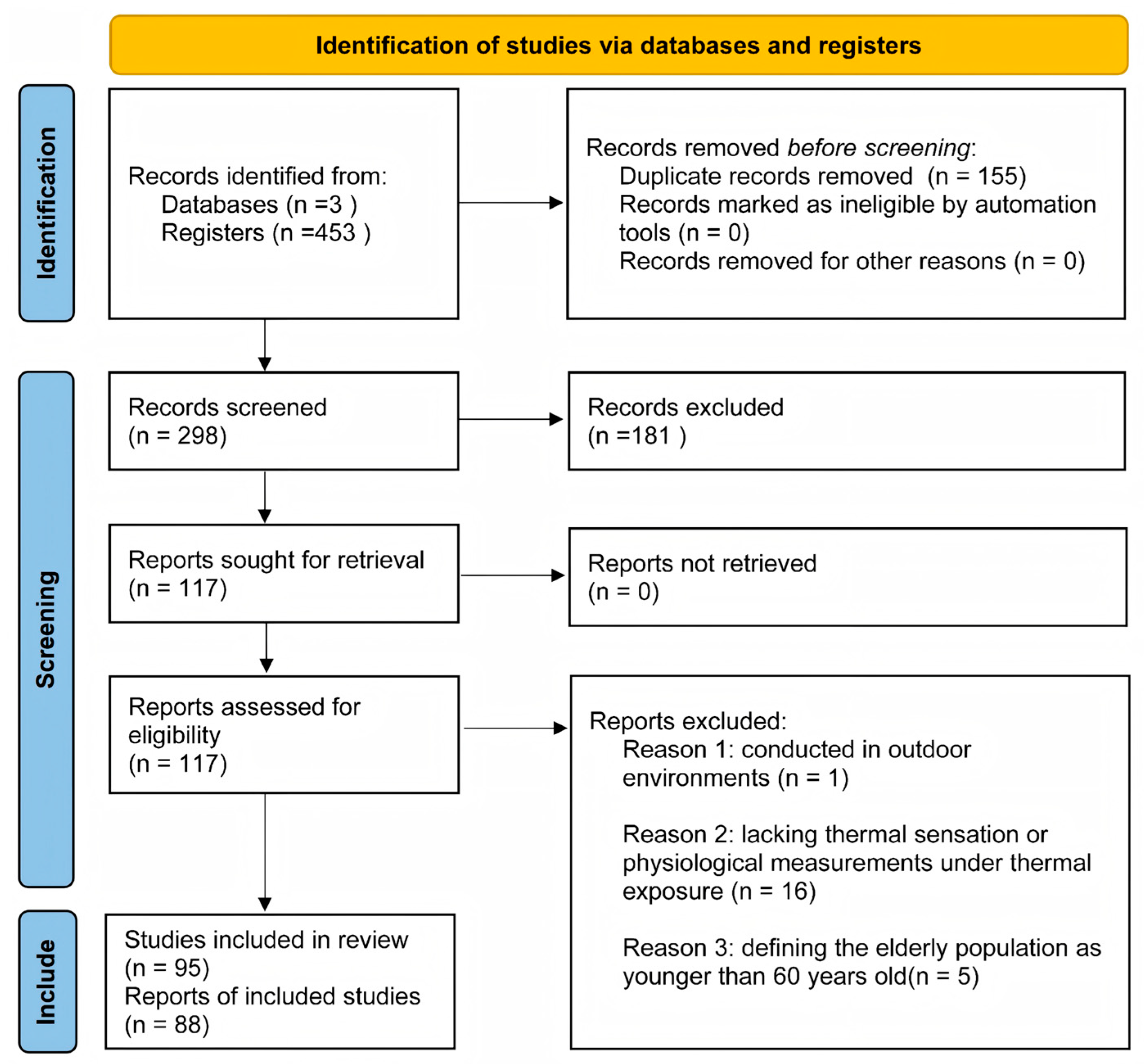
A total of 453 records were identified, including 423 from international databases and 30 from CNKI. After removing 155 duplicates, 298 articles remained for screening. Based on titles and abstracts, 181 irrelevant articles were excluded, leaving 117 full-text articles for eligibility assessment. Among these, the reasons for exclusion were as follows: 1 study conducted in outdoor environments, 16 studies lacking thermal sensation or physiological data under thermal exposure, and 5 studies that defined the elderly population as younger than 60 years old. Finally, 95 studies met the inclusion criteria. The screening process is illustrated in Figure 2 using the PRISMA flow diagram. The PRISMA Checklist for this review is provided in the Supplementary Materials.

2.2. Keywords Frequency Analysis

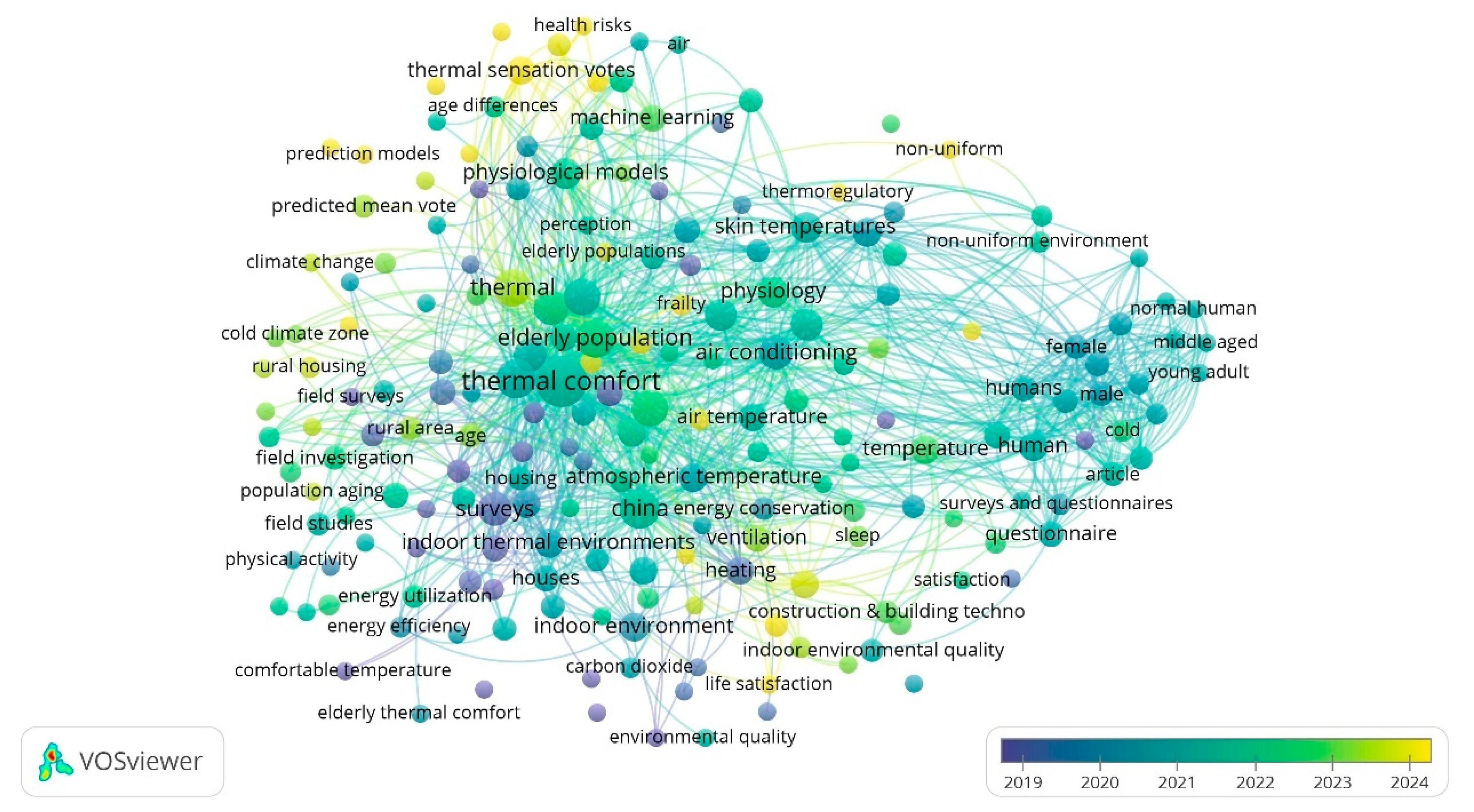
Based on the selected literature, a keyword co-occurrence map was generated using VOSviewer version 1.6.20. Figure 3 illustrates that the core keyword “thermal comfort” is centrally positioned and frequently co-occurs with terms such as elderly population, indoor environment, physiology, surveys, and air temperature. This indicates a focused research effort on the subjective and physiological responses of older adults to indoor thermal conditions. In recent years, emerging keywords such as ML, predictive models, thermal sensation votes, and health risks have reflected a shift toward data-driven modeling and health-oriented assessment. Meanwhile, frailty, cold climate zones, and rural housing show increasing attention to vulnerable subgroups and region-specific conditions, especially in colder or rural settings. The field is evolving from traditional surveys and statistical analyses toward integrated, multidimensional approaches emphasizing smart modeling, precision targeting, and contextual sensitivity. These thematic trends provide a foundation for the structure of this review.

3. Results

3.1. Environmental Factors Influencing Thermal Comfort in Older Adults

3.1.1. Climate Zones

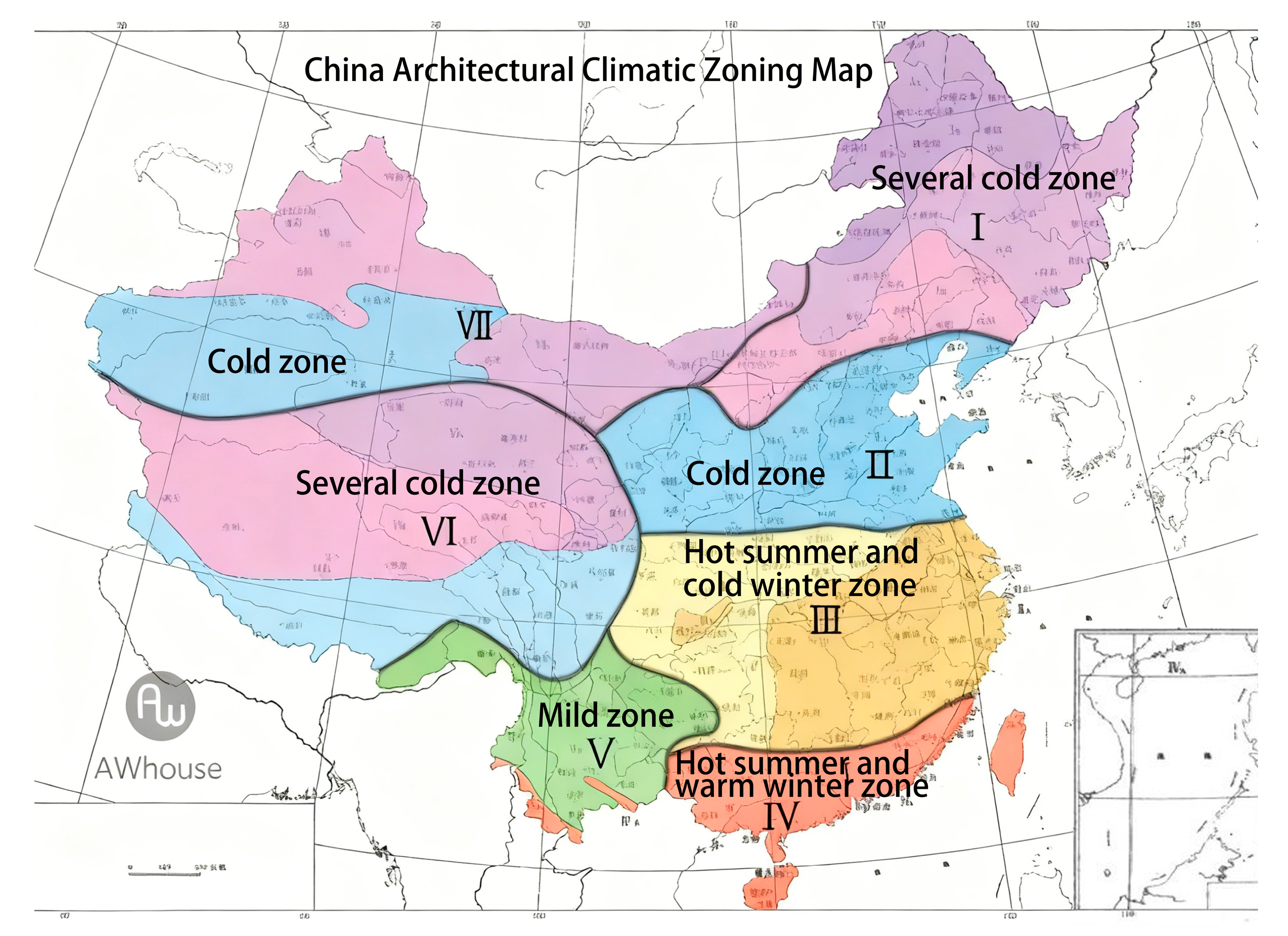
China spans a vast geographical range from north to south, resulting in significant climatic diversity, as shown in Figure 4. China’s thermal climate zones are classified according to the GB 50176-2016 [44], and are divided into five categories: severe cold zone (SCZ), cold zone (CZ), hot summer and cold winter zone (HSCWZ), hot summer and warm winter zone (HSWWZ), and mild zone (MZ). Due to the significant temperature differences between winter and summer across these climate zones, the thermal environment, thermal comfort, thermal sensation, and adaptive behaviors of older people vary considerably [7,45,46,47]. For example, studies in Taiwan [5] and Shanghai [37] found that clothing adjustment is the primary adaptive strategy in both summer and winter, although it is more effective in summer than in winter. Meanwhile, another study showed that clothing adjustment is most responsive to temperature changes during transitional seasons, while in summer and winter, extreme conditions or limited adjustment options reduce its correlation with temperature [48]. In addition, elderly individuals exhibit significant differences in their tolerance and sensitivity to heat and cold, which collectively shape diverse patterns of thermal comfort across various climate zones.
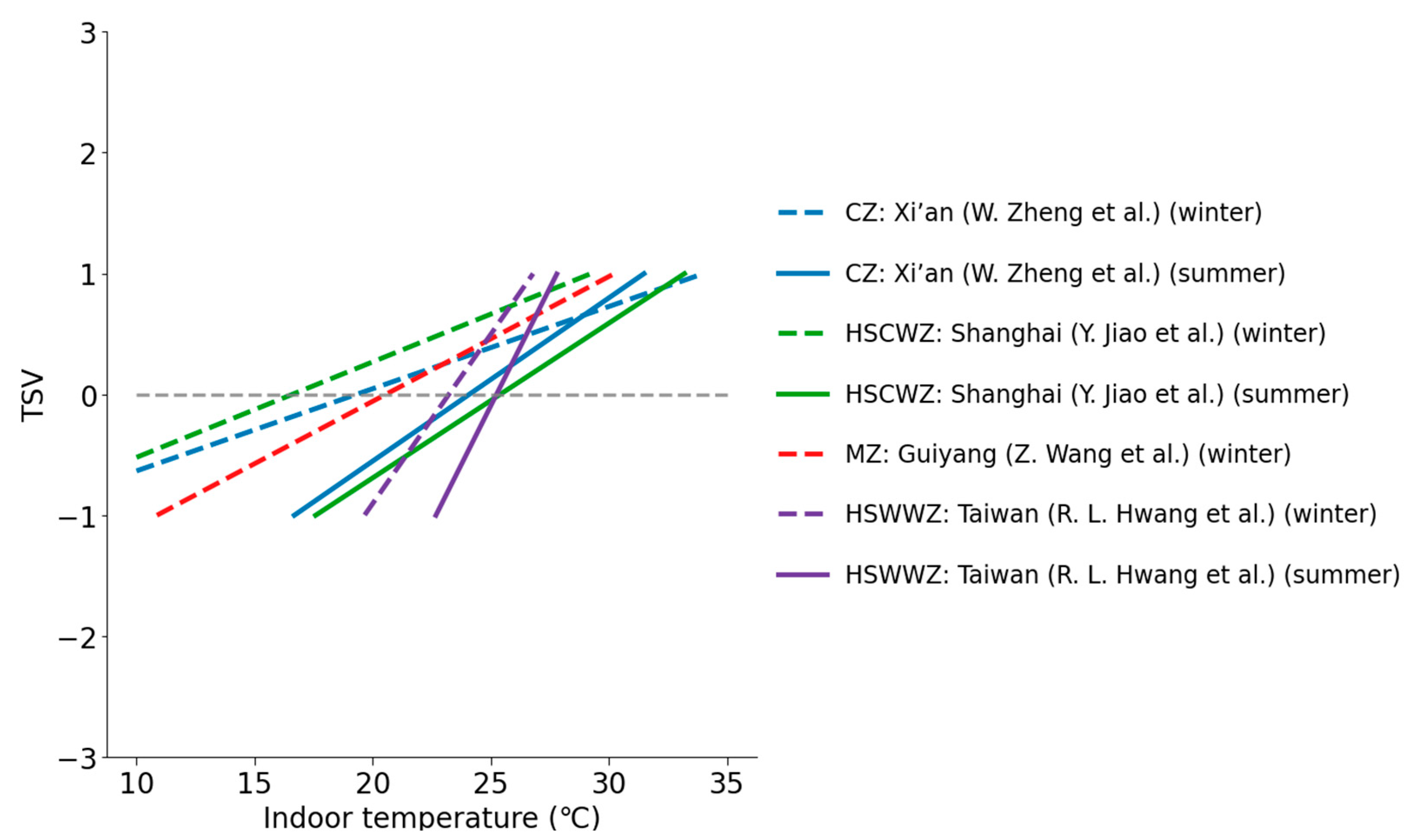
Figure 5 presents the relationships between thermal sensation vote (TSV) and indoor temperature among elderly residents in urban areas across four climate zones: CZ in Xi’an [48], HSCWZ in Shanghai [37], MZ in Guiyang [49], and HSWWZ in Taiwan [5], during winter and summer. Overall, seasonal and climatic differences are evident. The regression slopes are generally steeper in summer, indicating that older people are more sensitive to high temperatures. Among all cities, Shanghai’s neutral temperature is the highest in summer and the lowest in winter, with a temperature difference of 8.8 °C, likely due to the hot and humid summer conditions and the lack of central heating in winter, which may contribute to stronger thermal adaptability. In Xi’an, both the neutral temperature and thermal sensitivity are at moderate levels. In Taiwan, the neutral temperatures in winter and summer are nearly identical, with a difference of only 2 °C.

3.1.2. Urban–Rural Differences

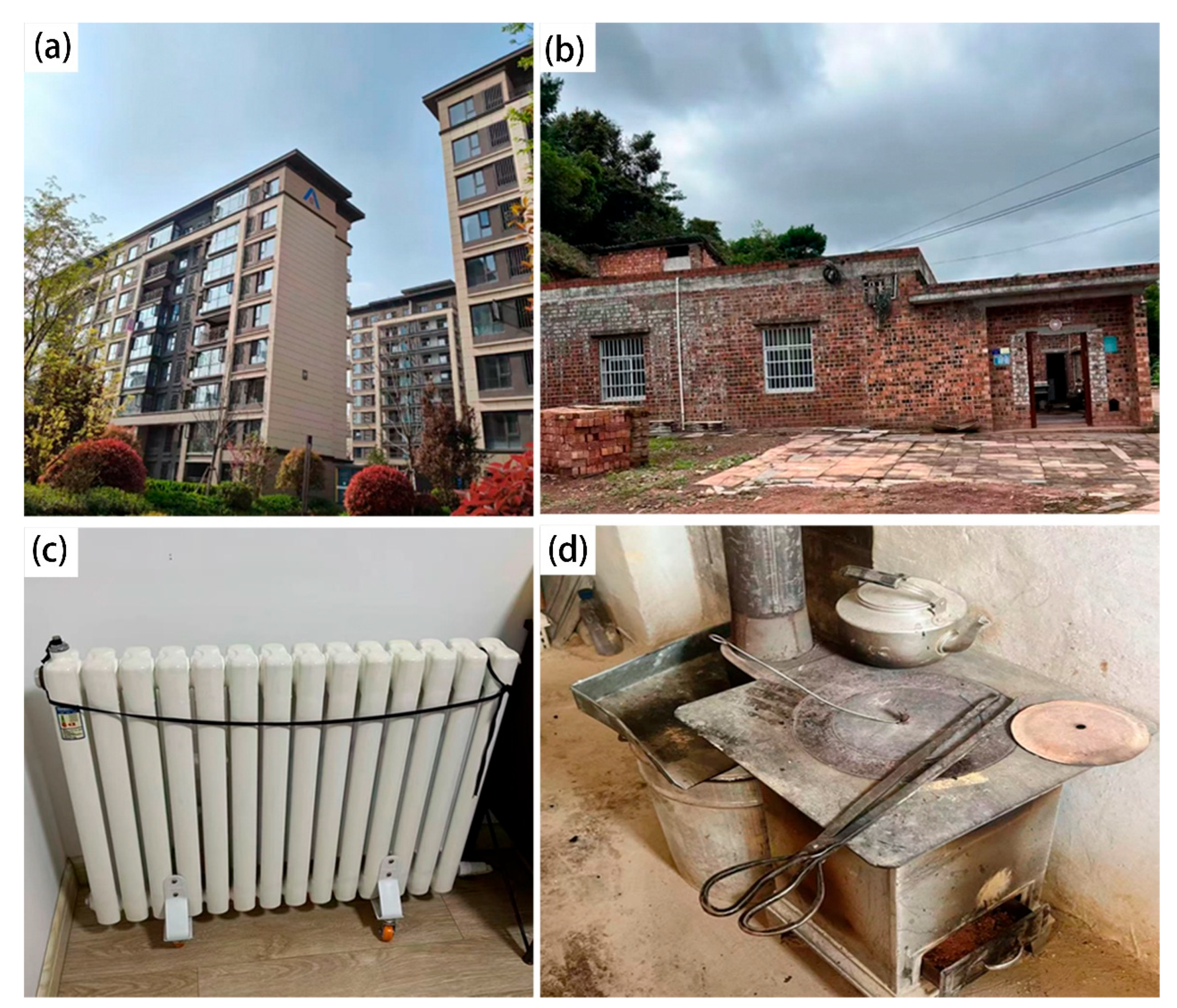
Urban–rural differences significantly influence the thermal comfort of older adults, primarily due to variations in lifestyle, heating systems, and building insulation [50]. Figure 6 shows the typical building forms and heating facilities in urban and rural settings. Urban dwellings generally have better insulation, helping maintain stable indoor temperatures throughout the year [50]. In contrast, most rural homes lack professional insulation design, and only a few economically developed regions have adopted basic insulation measures [7]. As a result, rural buildings experience faster heat loss in winter and greater heat gain in summer [7,50,51,52,53].
Heating conditions also differ substantially between urban and rural areas. Urban households often benefit from district central heating, while rural residents rely on decentralized systems such as individual water heaters and traditional kang stoves. A survey conducted in Beijing revealed that 85% of urban elderly households were connected to municipal heating networks, whereas 70% of rural households used individual systems [38]. A field study conducted in Hunan found that 60.4% of urban older adults used independent radiators, while 39.6% used electric heaters or air conditioners; in contrast, all rural elderly relied solely on simple “warm buckets” [54]. Consequently, indoor temperatures in winter were typically 5–6 °C higher in urban homes than in rural ones, where the use of coal or biomass stoves led to larger temperature fluctuations [38,54,55]. During summer, rural homes were about 2–4 °C warmer than urban homes [48,50,56].
Differences in lifestyle further shape the patterns of thermal comfort. Urban older adults primarily engage in indoor activities and can adjust their clothing accordingly, such as removing outer layers or switching to short-sleeved shirts. In contrast, rural older adults, especially those living in mountainous regions, frequently move between outdoor farm work and indoor environments, which exposes them to larger temperature variations [50]. As a result, rural older adults usually wear thicker or multilayered clothing, and their average clothing insulation value is significantly higher than that of urban residents [38,54,55,57,58]. These differences in building insulation, heating systems, and daily behavior contribute to distinct thermal sensitivities and neutral temperatures between urban and rural older adults.
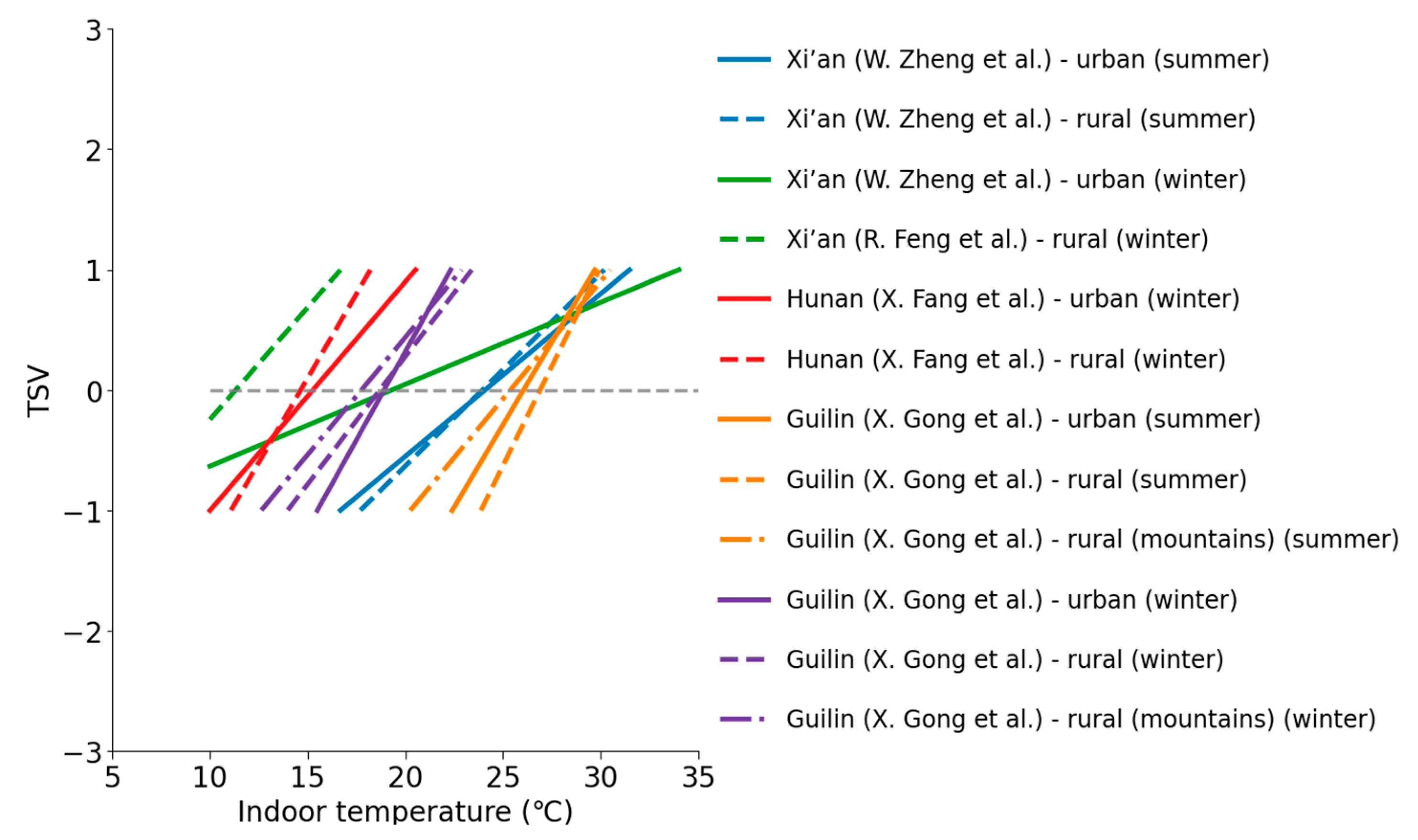
Figure 7 compares the relationship between TSV and indoor temperature among older adults living in urban and rural areas of Xi’an [48,56,58], Hunan [54], and Guilin [50] during winter and summer. The results indicate that, except for Xi’an in winter, where the urban–rural neutral temperature difference is relatively large at 7.98 °C, the differences in other cases are all below 1 °C. In Xi’an during summer, the urban–rural neutral temperature difference is only 0.13 °C. This pattern may be explained by the strong thermal adaptation of rural older adults, which reduces the urban–rural difference and results in similar neutral temperatures in most cases.

3.2. Individual Factors Influencing Thermal Comfort in Older Adults

3.2.1. Gender

Research on gender differences remains limited. Most studies indicate that gender has no significant impact on overall thermal sensation, with only minor differences in neutral temperatures between elderly males and females during summer and winter [5,37,59,60,61,62,63]. However, older women tend to be more sensitive to high temperatures and humidity fluctuations, experiencing greater thermal discomfort and reduced concentration, whereas they are generally more comfortable under cooler conditions. In contrast, older men generally demonstrate greater heat tolerance [11]. A field study conducted in Sichuan further confirmed this gender disparity, showing that the proportion of males reporting an “extremely hot” sensation was significantly lower than that of females [51].

3.2.2. Age Groups

Age has been shown to influence thermal preferences among older adults [64], with different age groups exhibiting distinct adaptive behaviors, preferred neutral temperatures, and thermal comfort ranges [22].
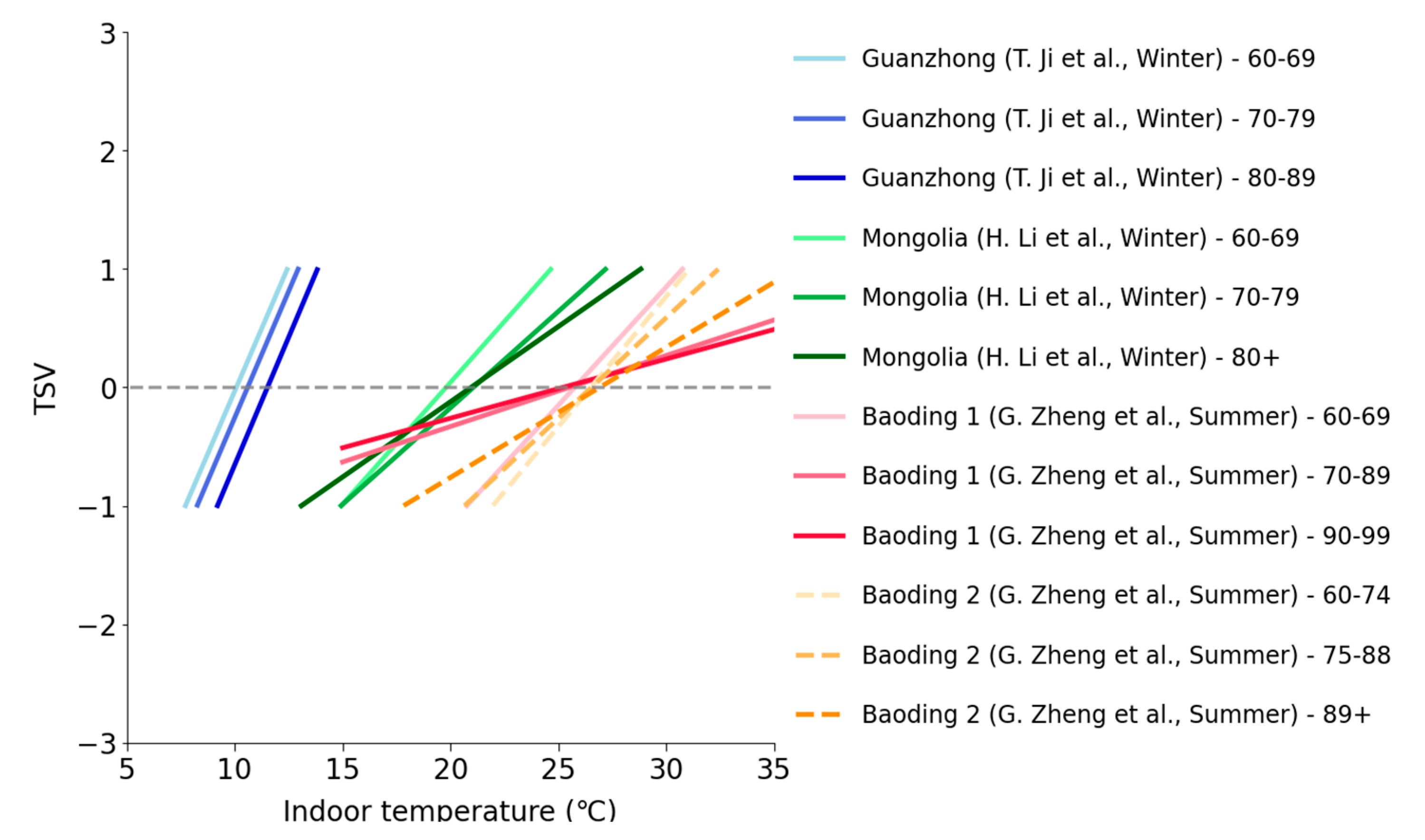
Studies conducted in rural areas of Guanzhong [65] and Inner Mongolia [66] during the winter categorized older adults into three age groups: 60–69 years, 70–79 years, and 80 years and above. Results showed that with increasing age, cold tolerance declined, while preferred temperatures increased and thermal sensitivity decreased. Older adults over 80 tended to wear thicker clothing and preferred warmer environments, reflected in higher neutral temperatures and lower comfort thresholds.
A study conducted in the urban areas of Baoding during the summer categorized older adults into three age groups: 60–69 years, 70–89 years, and 90–99 years [67]. It was found that with increasing age, thermoregulatory functions declined, resulting in reduced thermal sensitivity. Meanwhile, the upper limits and widths of the temperature and humidity comfort zones expanded significantly, suggesting a broader environmental tolerance among the oldest group. Another summer study conducted in urban Baoding classified older adults into three groups: 60–74 years, 75–88 years, and 89 years and above. Similarly, thermal sensitivity decreased with age, while environmental tolerance increased in the oldest group [68].
Figure 8 compares the relationship between TSV and indoor temperature across age groups in these studies. The differences in neutral temperature among various age groups are relatively small, ranging from 0.41 °C to 1.45 °C. The overall trend shows that the neutral temperature rises with age, while sensitivity to environmental changes declines.

3.2.3. Frailty Levels

Frailty, a common geriatric syndrome involving multisystem functional decline, directly reduces thermoregulatory capacity. The commonly used frailty phenotype proposed by Fried et al. [69] classifies individuals according to five criteria. These include unintentional weight loss of at least 4.5 kg in the past year not caused by dieting or illness, reduced grip strength within the lowest 20 percent for sex and BMI group, fatigue or exhaustion assessed by two items from the revised Center for Epidemiologic Studies Depression Scale, slow walking speed based on a 15-foot walking time within the slowest 20 percent for sex and height group, and low physical activity reflected by weekly energy expenditure within the lowest 20 percent for sex group. Individuals who meet none of these criteria are classified as non-frail, those who meet one or two as pre-frail, and those who meet three or more as frail. Frailty levels could reflect physiological differences among older adults [70]. Older adults with varying levels of frailty exhibit significant differences in physiological regulation, behavioral adjustments, and thermal perception and preferences.
As for physiological regulation, pre-frail older adults show reduced thermoregulatory responsiveness compared to non-frail older adults. Pre-frail older adults exhibit slower stabilization of skin temperature, especially in the limbs, during transitions from warm to neutral environments [71]. Their sweating responses are weaker, with faster reduction during cooling and delayed onset during heating [71]. Due to their impaired cardiovascular responses, they exhibit elevated heart rates and delayed pulse index adjustment when temperature changes exceed 5 °C [71]. Additionally, they are more sensitive to air movement in warm environments, especially around the head, lower legs, and feet, and less tolerant of higher airspeeds [72].
Regarding behavioral regulation, frailty levels have a significant influence on thermal comfort behaviors in older adults. During winter, individuals with higher frailty levels report greater discomfort, rely more heavily on heating devices, and tend to keep their windows closed to maintain indoor thermal stability [73]. They also wear more insulating clothing and engage in fewer daily activities, reducing their metabolic rate [73]. In summer, they rarely use air conditioners or fans, instead opting for increased clothing and reduced outdoor activity to avoid exposure to temperature fluctuations [70].
In terms of thermal perception and subjective preferences, older adults with higher frailty levels tend to exhibit greater thermal sensitivity, prefer higher neutral temperatures, and have narrower thermal comfort ranges [70,73].
Table 1 shows that increasing frailty is associated with a stronger preference for warmer environments, higher neutral temperatures, and narrower comfort ranges. The neutral temperature rises by 2.1 °C with increasing frailty, while the comfort range shifts upward and narrows by about 1–2 °C.
Table 1. Thermal comfort characteristics of older adults with different frailty levels.
Non-Frail Older AdultsPre-Frail Older AdultsFrail Older Adults
Neutral temperature25.8 °C in summer26.9 °C in summer27.9 °C in summer
Sensitivity of TSV to temperature (Slope)0.1139 in summer0.2001 in summer0.3399 in summer
Temperature difference triggering significant TSV differences>5 °C>3 °CNA
Comfortable temperature range24.0–30.0 °C in
summer; 18–22 °C in winter
24.3–29.3 °C in
summer; 19–23 °C in winter
25.9–29.3 °C in
summer; 20–24 °C in winter

3.3. Evaluation Methods

3.3.1. Modified PMV Models

The widely used PMV model is based on specific experimental conditions and does not adequately account for regional or age-related differences [21,66,74,75,76]. Therefore, based on living habits and adaptive capacity, several modified models and methods have been developed.
The aPMV is an adaptive thermal comfort model that introduces a correction factor (λ) to the traditional PMV to better account for thermal adaptation. According to GB/T 50785-2012 [77], λ is set at 0.21 for PMV ≥ 0 (warm conditions) and −0.49 for PMV < 0 (cold conditions). However, these fixed values are often inaccurate and vary significantly across regions, as shown in Table 2. Winter aPMV λ values range from −0.49 to −0.26, and summer from 0.065 to 0.272, indicating greater variability in cold adaptation than in heat adaptation.
aPMV = PMV 1 + λ · PMV
Besides these modified PMV models, Griffiths’ method was used to estimate the neutral temperature. Unlike regression-based TSV methods, it determines the neutral temperature by assuming a linear relationship between TSV and operative temperature, combined with a predefined thermal sensitivity constant.
T n = T o p + 0 TSV α
where Tn means neutral temperature, and Top means operative temperature (°C).
For instance, Jiao et al. [37] used a Griffiths constant of 0.33 to calculate the neutral temperature for older adults in Shanghai. The results showed a winter neutral temperature of 14 °C, which was 2.6 °C lower than that derived from the TSV regression method, and a summer neutral temperature of 28 °C, which was 2.6 °C higher [37]. This discrepancy highlights the importance of considering thermal adaptation in older adults.
Apart from these, modified PMV models based on personalized regulation have also been proposed, which could more accurately reflect the unique physiological traits and daily habits of older adults. For example, based on the relatively fixed activity patterns and daily routines of older adults at home, Miao et al. [78] proposed a time-weighted PMV model, PMVt, incorporating temporal scales and habitual trajectories. This model calculates an integrated thermal comfort index by weighting the PMV values of different spaces according to the duration of stay and the proportion of valid records in each space [78]. The model demonstrated strong performance, achieving a high correlation with TSV (R2 = 0.82) [78].
Additionally, considering the impact of age, Zheng et al. [79] proposed the mPMV model, which incorporates a logistic function with age and TSV as key correction parameters. The model achieved improved prediction performance by calculating both the age-related coefficient and the age-temperature correlation.
Table 2. Comparison of modified PMV models.
Model/MethodCity or Region (Climate Zone)Sample Size (Subjects)Key ParametersNeutral Temperature or Comfortable Range (°C)Paper
aPMV, Griffiths MethodShanghai (HSCWZ)672α = 0.33Winter: 14 °C; Summer: 28 °C[37]
aPMVXiangxi (HSCWZ)92Winter λ = −0.26Comfort temperature range 16.7–27.1 °C[74]
aPMVSuining, Sichuan (HSCWZ)177Summer λ = 0.065Acceptable temperature range 21.41–27.61 °C[51]
aPMV, Griffiths MethodWeihai (CZ)203Cold λ = −0.38;
Warm λ= 0.272;
α = 0.33
Griffiths 21.63 °C[16]
aPMVHefei (HSCWZ)720 (60)Summer λ = 0.21;
Winter λ = −0.49
NA[45]
mPMVBaoding (CZ)1535 (44)Age coefficient BT (0.0012–0.0676)27.8–28.3 °C[79]
PMVtShanghai (HSCWZ)447 (15)Time-weighted coefficient25.5 °C[78]

3.3.2. ML Models

ML models are computational frameworks that learn patterns from existing data and use the learned knowledge to make predictions on unseen data. ML has been applied in thermal comfort studies to develop group-based and personalized comfort models. It enables more accurate predictions than traditional PMV models and can be used to optimize air conditioning control, improve indoor environments, and enhance energy efficiency [80]. Furthermore, ML models can automatically uncover complex relationships and optimize predictions [81]. These models possess a self-updating ability, allowing them to adjust and fine-tune their predictions across diverse environmental and contextual scenarios, thereby ensuring better alignment with the evolving nature of thermal comfort [82].
Table 3 summarizes studies that applied ML in thermal comfort research for the Chinese elderly. Based on the study setting, these studies can be categorized into climate chamber experiments and field studies. Climate chamber studies provide a highly controlled environment, enabling a detailed examination of the mechanisms between environmental and physiological parameters. Field studies are conducted in real-life settings, taking into account the adaptive behaviors of older adults. ML models can incorporate a broader range of influencing factors and be tailored to different population groups.
In addition, the sample sizes varied significantly across studies, ranging from as few as 135 [83] to as many as 3440 [84]. Algorithm choices have also diversified, ranging from traditional methods to ensemble learning and neural networks, with XGBoost and Random Forest (RF) frequently showing superior accuracy.
Models can be categorized into four types based on the input parameters: those that use only environmental parameters, those that use only physiological parameters, those that combine environmental and physiological parameters, and those that further incorporate human-related factors. The latter two types have become increasingly common, reflecting a shift in thermal comfort research from ‘environmental determinism’ to a human–environment interaction model. Most studies used 3-point or 7-point TSV for output parameters. In terms of performance metrics, while accuracy remains widely used, many studies have adopted more detailed indicators such as precision, recall, F1 score, ROC curve, AUC, and even regression metrics like R2, MAE, and MSE. This shift reflects a move toward more comprehensive model evaluation, focusing on correctness and error types, model stability, and real-world applicability.
Table 3. ML-based thermal comfort studies for the elderly in China.
PaperStudy SettingSubjects (Sample Size)AlgorithmInput ParametersOutput Parameter(s)Generalization Test MethodPerformance Metric(s)
[8]Climate chamber38 (NA)GBDT, AdaBoost, XGBoostEnvironmental, physiological, and heat exchange parameters7-point TSV80% of the dataset for training and 20% for testingR2, MAE, and MSE
[84]Field study (summer)44 (3440)AB, DT, GNB, KNN, RF, SVM, and XGBoostEnvironmental, physiological, and human-related parameters3-point TSV80% of the dataset for training and 20% for testingPrecision, recall, accuracy (76%), ROC curve, AUC, and F1 score
[85]Field study (summer)14 (1389)LR, DT, KNN, and SVMEnvironmental and physiological parameters3-point TSV80% of the dataset for training and 20% for testingPrecision, accuracy (70%), ROC curve, AUC, and F1 score
[86]Field study (summer)20 (1865)AB, RF, LR, ANN, and NBEnvironmental parameters3, 5, 7, and 9-point TSV80% of the dataset for training and 20% for testingRecall, accuracy (92.4%), ROC curve, AUC, and F1 score
[87]Climate chamber13 (964)BP and RBFEnvironmental and physiological parameters3-point TSV80% of the dataset for training and 20% for testingAccuracy (87.82%)
[88]Climate chamber5 (NA)SVM, RF, KNN, MLP-ANNPhysiological parameters3-point TSV10-fold cross-validationAccuracy (81.2%), F1 score, ROC curve, and AUC
[81]Field study (year-round)1040 (724)RFEnvironmental and human-related parameters3-point TSV80% of the dataset for training and 20% for testingAccuracy (56.6%)
Accuracy (81.2%)
Climate chamber18 (372)RFPhysiological parameters
[83]Field study (winter)35 (135)ANN, LoR, SVM, KNN, DT, and NBEnvironmental and physiological parameters7-point TSV80% of the dataset for training and 20% forAccuracy (67.6%)
[GBDT]: gradient boosting decision tree; [AdaBoost]: adaptive boosting; [XGBoost]: eXtreme gradient boosting; [AB]: adaptive boosting; [DT]: decision tree; [GNB]: gaussian naive bayes; [KNN]: k-nearest neighbors; [RF]: random forest; [SVM]: support vector machine; [LR]: logistic regression; [ANN]: artificial neural network; [NB]: naive bayes; [BP]: back propagation neural network; [RBF]: radial basis function neural network; [MLP-ANN]: multi-layer perceptron artificial neural network; [LoR]: logistic regression.

3.3.3. Thermal Comfort Questionnaires

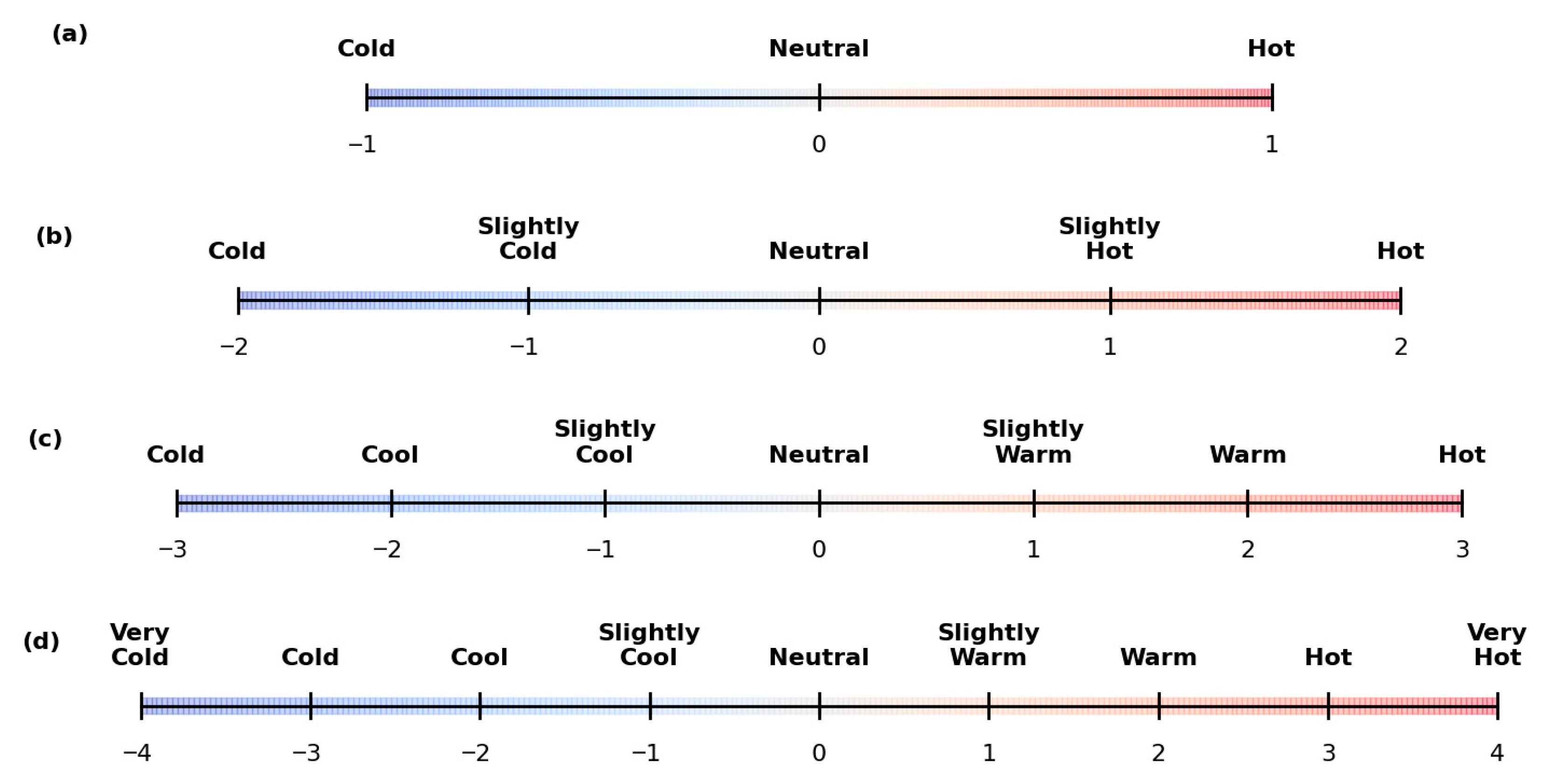
TSV is the most commonly used subjective method for evaluating thermal comfort. Figure 9 shows the commonly used 3-, 5-, 7-, and 9-point TSV scales, with the 7-point TSV scale being the most widely applied. These scales differ in the level of granularity and practical applicability.
Using the ML method, Zheng et al. [86] evaluated the performance of 3-, 5-, 7-, and 9-point TSV scales among older adults. Results showed that finer scales could capture more detailed differences in thermal sensation. For example, the 7-point TSV scale reflected subtle gradients but faced issues with ambiguous boundaries. In contrast, the 9-point TSV scale accurately described transitions from “slightly warm” to “very hot” but imposed a greater cognitive load [86]. In contrast, despite its simplicity, the 3-point TSV scale was easier for older adults to understand and complete, reducing the risk of response fatigue and inaccurate reporting [86]. This aligns with findings by Chang et al. [11], who noted that longer questionnaires increased impatience and resistance among older participants, potentially affecting data quality.
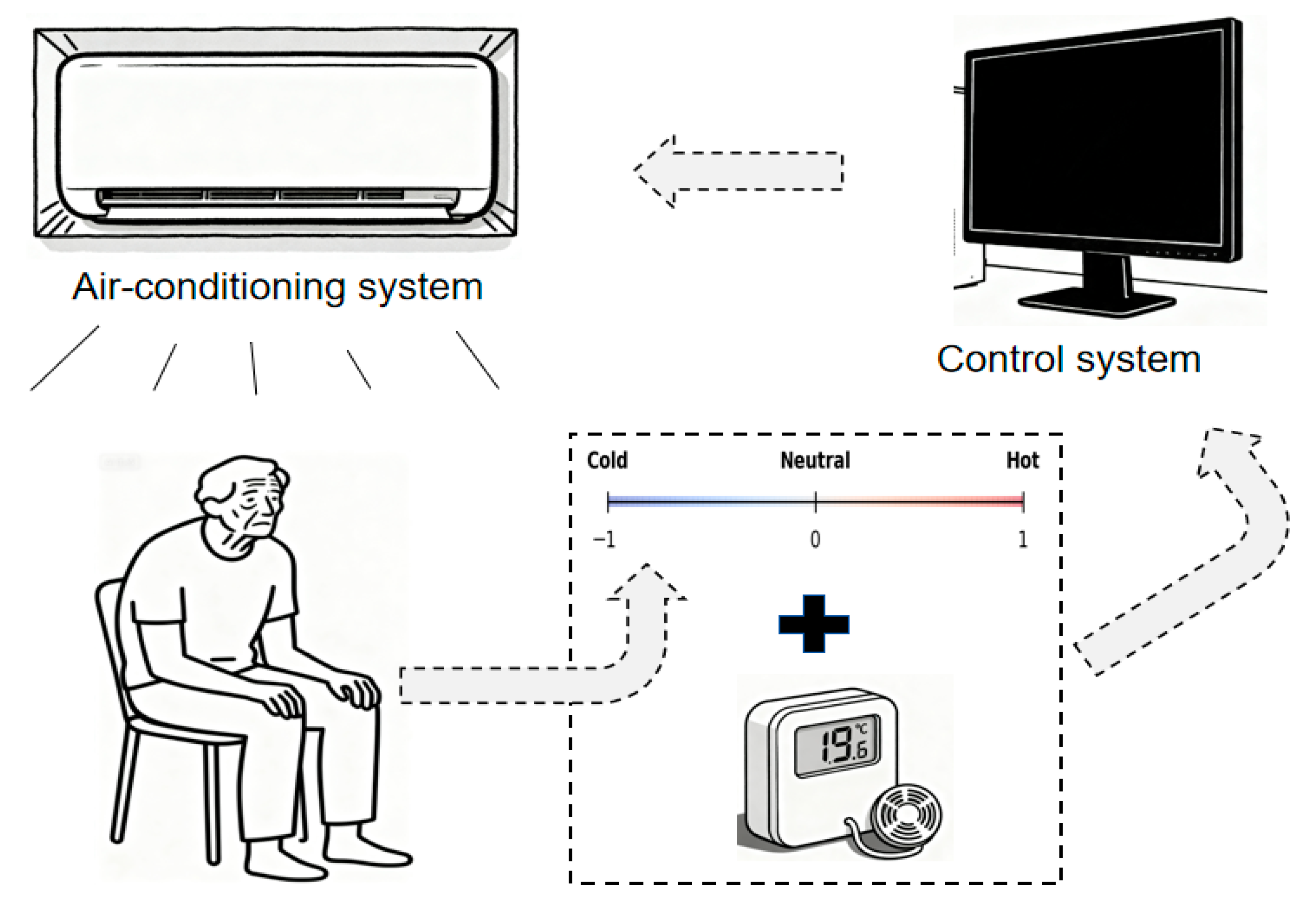
Zheng et al. [89] found that the 3-point TSV scale had the highest overall correlation with physiological indicators, outperforming the 5-, 7-, and 9-point TSV scales. This suggests that a simpler TSV scale aligns better with the cognitive capacity of older adults and enhances physiological consistency. In addition, the 3-point TSV scale can effectively address the class imbalance problem, especially when ML models struggle to distinguish between adjacent categories [90]. Several studies [81,84] have successfully mitigated this issue by converting 7-point TSV data into 3-point TSV. Moreover, its clarity facilitates integration into intelligent temperature-control systems: as shown in Figure 10, when the system detects an input of +1 (hot) or −1 (cold), it can automatically adjust toward the neutral state (0), enabling a more adaptive and user-friendly temperature control [89].
Besides numerical scales, thermal satisfaction is a practical subjective indicator for comfort assessment. It reflects users’ overall experience more directly and may further reduce cognitive burden compared to the 3-point TSV scale. For instance, a field study in Shanghai by Jiao et al. [63] used thermal satisfaction as the dependent variable (satisfied = 1, dissatisfied = 0). It developed a logistic regression model with individual and health characteristics as predictors. This method, being more intuitive for elderly participants, provided valuable insights for designing age-friendly living environments. However, given the decline in thermal perception among older adults and the potential mismatch between subjective comfort and physiological safety, perceived satisfaction may not necessarily indicate a healthy state [37].
In conclusion, the selection of a TSV scale should be aligned with the purpose and structure of the model. For an ML model, a 3-point TSV scale is generally more appropriate. This choice addresses the cognitive decline and safety concerns of older adults, while also meeting the requirements of automated air conditioning control systems. In contrast, for modified PMV or regression-based models, a 7-point TSV scale is typically more suitable. Using a 3- or 5-point scale reduces granularity and tends to steepen the regression slope, whereas a 9-point scale may increase the cognitive burden and decision-making difficulty for elderly participants.

3.4. Application of Intelligent Technologies in Thermal Environment Regulation

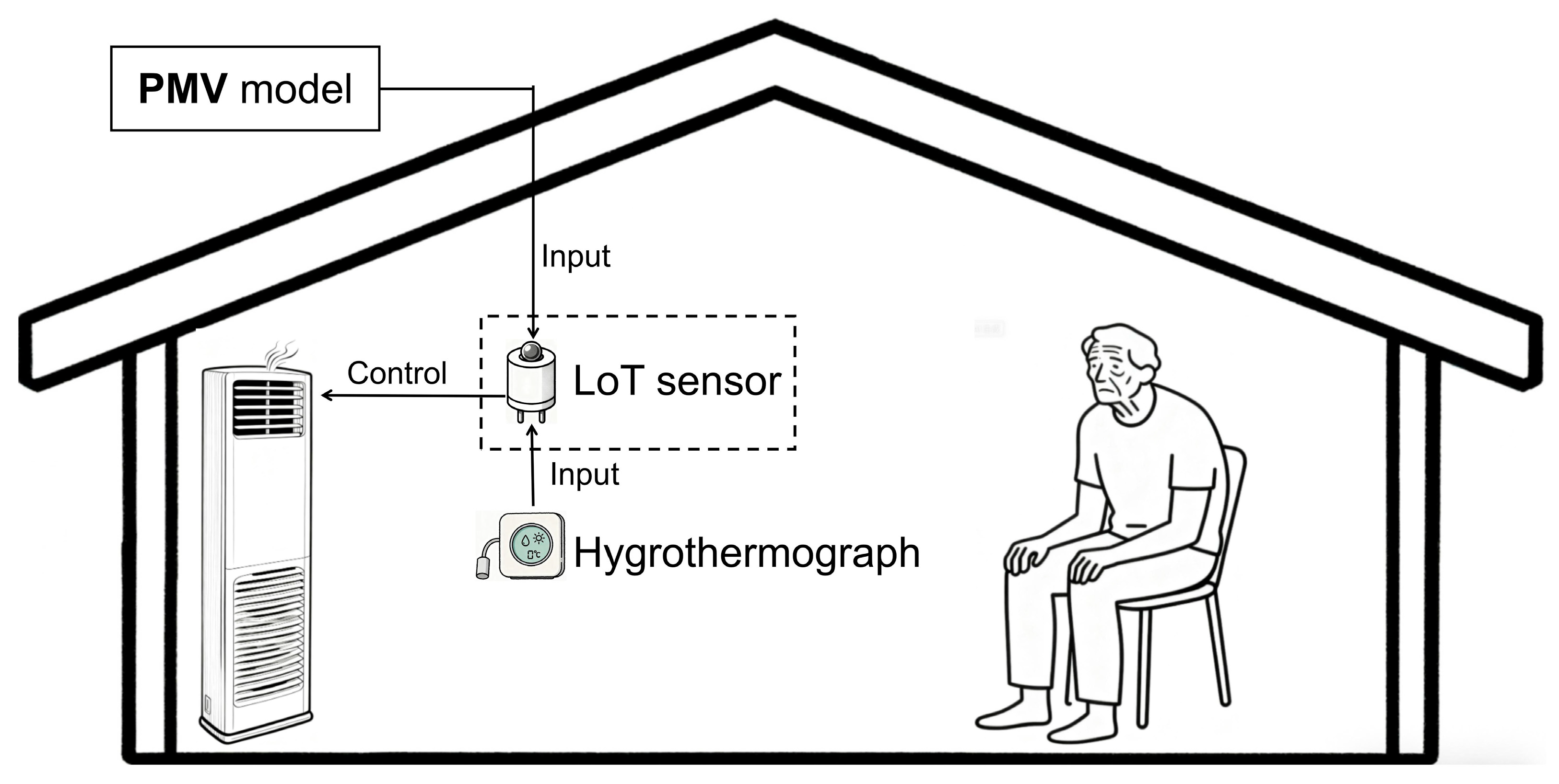
AI technologies have shown great potential in optimizing thermal environments, as they can monitor indoor parameters in real time and automatically adjust temperature-control systems based on thermal comfort models. Temperature control has become a key direction for future research and practice on thermal comfort, with the IoT providing fundamental support for its implementation. Specifically, models can predict how different thermal environments affect thermal sensations. Wireless sensor networks provide continuous year-round monitoring of indoor conditions, overcoming the limitations of intermittent measurements or questionnaires and supporting safer aging in place for older adults [45,91,92]. As an example, Figure 11 illustrates one IoT-based framework that integrates indoor environmental parameters collected by sensors with the PMV model to jointly control the air-conditioning system, achieving intelligent temperature regulation [92]. The feasibility of an IoT-based thermal comfort model framework has been demonstrated, supported by its technical robustness, data-integration capability, interpretability, and practical value [92].
However, the application of ML models in field studies is currently limited, as shown in Table 3, with most studies focusing on a single season, either summer or winter. Only study [81] covers the entire year. Prediction accuracies of the models vary widely, ranging from 56.6% to 92.4%, with study [81] reporting 56.6%, study [83] 67.6%, and all other studies achieving at least 70%. Among these, study [83] had the smallest sample size (135), implying insufficient training data, which may explain its relatively lower prediction accuracy. In contrast, despite a relatively larger sample size (n = 724), study [81] achieved only 56.6% accuracy. This is likely due to its year-round coverage, as seasonal variations significantly affect thermal sensation (as observed in Section 3.1.1), making it difficult for a single model to capture annual patterns. Therefore, to improve the prediction of thermal sensation, employing separate models for each season, together with larger sample sizes, may be a more effective approach.
In addition, relevant practices still face challenges. On the one hand, it is necessary to strengthen data security and privacy protection mechanisms. On the other hand, some elderly individuals have a relatively low level of technology acceptance. Privacy protection can be achieved through both technical and regulatory means. At the technical level, sensitive data can be processed locally at gateways or edge devices, transmitting only aggregated features or model gradients to minimize the risks of data exposure and centralized storage [93]. At the regulatory level, a clear legal framework defining the rights and responsibilities of data subjects is needed to ensure compliance and accountability [94].

4. Discussion

As described above, thermal comfort in older adults is influenced by both environmental and individual factors, with varying degrees of impact. Among thermal comfort models, the aPMV and ML models are the most widely used for studying older adults, but their applicability differs considerably depending on the context. The suitability of questionnaires also varies. This section provides a comparative analysis of these integrated systems to offer a more comprehensive reference for practical applications.

4.1. Influencing Factors and Model Comparison for Older Adults

Based on Section 3.1, Section 3.2 and Section 3.3, Table 4 presents the effects of environmental and individual factors on neutral temperature. The impact of environmental factors varies widely, ranging from about 0.1 °C to nearly 10 °C, whereas the influence of individual factors is relatively small, all under 2.1 °C.
Table 4. Summary of key factors and their effects on neutral temperature.
Factors Influence on Neutral Temperature (Range)Trend
Environmental factors
Climate zones and seasons2–8.8 °CThe winter–summer difference is largest in HSCWZ and smallest in HSWWZ.
Urban–rural differences0.13–7.98 °CLarger differences occur in regions with greater disparities in indoor environmental conditions.
Individual factors
GenderNo significant differenceOlder women tend to be less tolerant of heat.
Age groups0.41–1.45 °CNeutral temperature generally increases with age.
Frailty2.1 °CHigher frailty levels are associated with higher neutral temperatures.
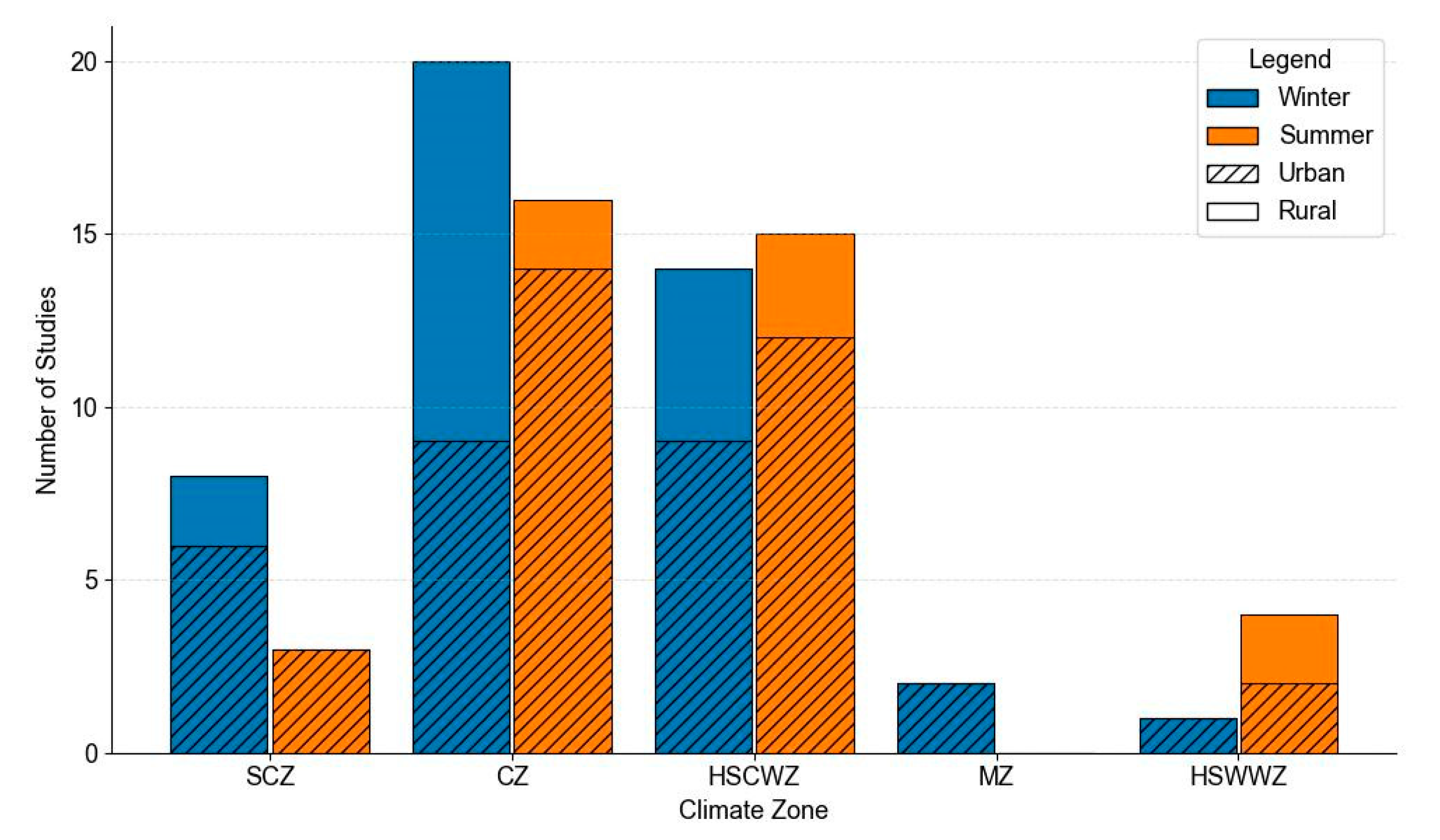
Figure 12 shows the distribution of studies across climate zones, seasons, and urban versus rural areas. The results show that research is unevenly distributed, mostly concentrated in CZ and HSWZ, with MZ receiving the least attention. Studies in SCZ have mainly focused on winter, while studies in HSWZ have focused on summer. However, with global warming, extreme summer heatwaves in SCZ have increased [95], and winter drops in HSWZ may cause significant cold stress for older adults [96]. Therefore, future research should focus on summer in SCZ and winter in HSWZ and expand studies in rural areas.
Models for thermal comfort vary in terms of input parameters, sample requirements, and applicability. In terms of input parameters, the aPMV includes air temperature, mean radiant temperature, relative humidity, air velocity, clothing insulation, and metabolic rate. Although it is adjusted using the λ coefficient, it still lacks systematic consideration of individual factors such as age, frailty levels, sex, and physiological status. In contrast, ML models offer greater flexibility in input selection, allowing the simultaneous inclusion of environmental factors, individual attributes, and physiological indicators, thereby providing richer predictive features.
Regarding the sample size, the aPMV often relies on large samples (as shown in Table 2). In contrast, most ML models establish predictive relationships by relying on longitudinal data (as shown in Table 3).
Overall, the aPMV model is more suitable as a group-level thermal comfort model for building energy-efficiency design or regional evaluation [16,51], while ML models, which can account for individual attributes and physiological differences, are more appropriate for personalized thermal comfort prediction and intelligent control scenarios [8,83]. Table 5 provides a comparison of their differences.
Table 5. Comparative summary of aPMV and ML models.
Comparison DimensionaPMV ModelML Model
Input parametersFixed parameters include air temperature, mean radiant temperature, air velocity, clothing insulation, and relative humidity.Flexible integration of environmental, individual, and physiological parameters.
Sample sizeHard to capture individual differences and relies on large samples.Effective in capturing individual differences. Accuracy is mostly above 70%.
Output formOutputs the 7-point TSV scale (−3 to +3), suitable for analyzing thermal sensation and comfort ranges.Outputs are flexible, with the 3-point TSV scale (−1 to +1) being more suitable.
Application Suitable for design standards and indoor thermal-comfort evaluation; Suitable for group-based models.Suitable for intelligent control systems; Suitable for personalized models.

4.2. Optimizing ML Models and Intelligent Temperature-Control Systems

Currently, although many ML studies include numerous physiological inputs, such as skin temperature, MST, eardrum temperature, heart rate, and blood pressure, there is still no clear guideline for older adults. Specifically, it remains unclear which parameters are essential and in which conditions they should be applied.
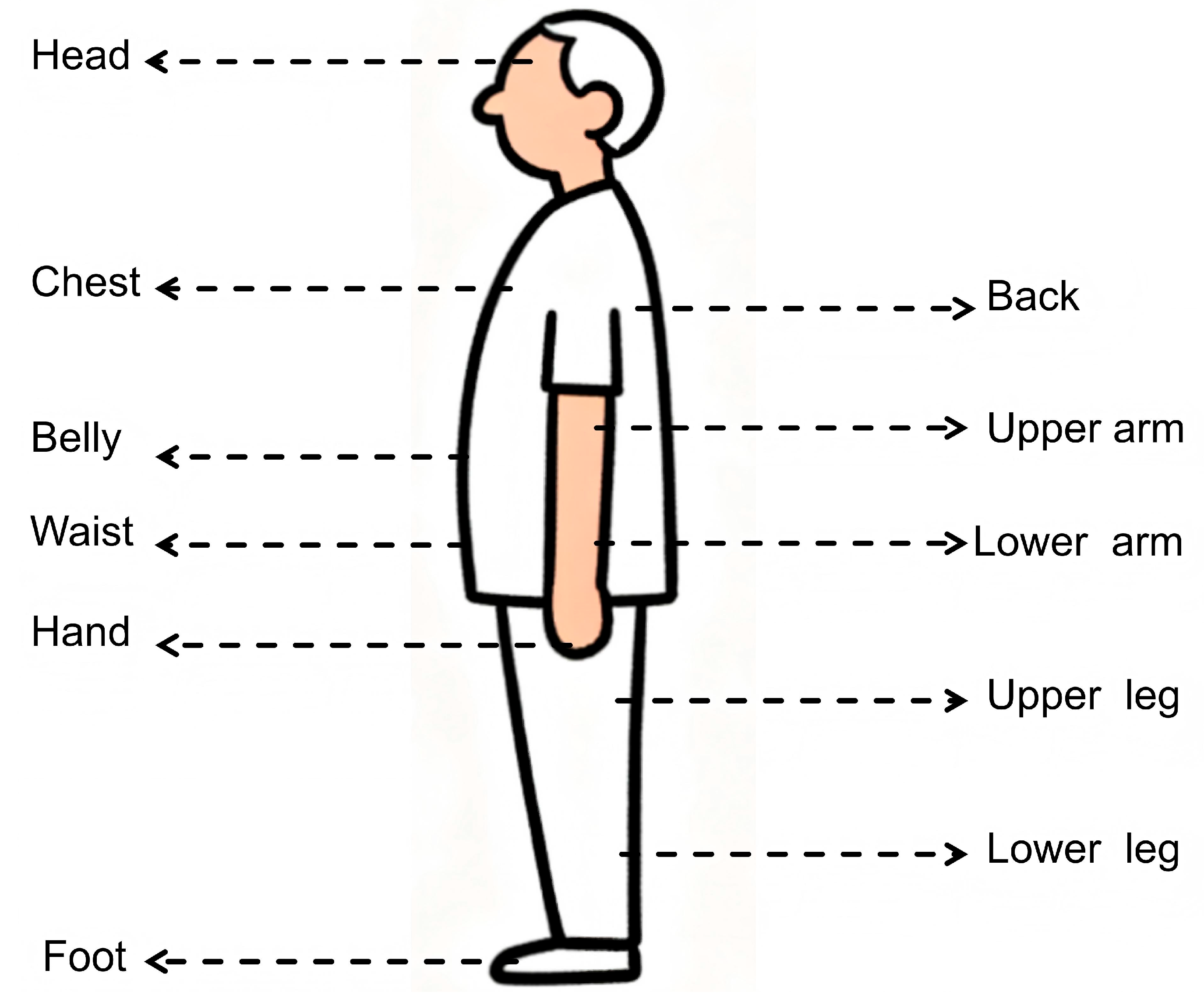
Skin temperatures at different body sites, as shown in Figure 13, correlate with thermal sensation and could serve as key physiological indicators in thermal comfort evaluation [87,97,98]. Mean skin temperature (MST) exhibits a strong positive correlation with operative temperature and TSV, making it a reliable indicator of subjective thermal perception [87,99]. However, MST responds slowly and requires over 50 min to stabilize after cold exposure and approximately 24 min after warm exposure [100,101], which limits its ability to capture rapid thermal changes.
Local skin temperature, particularly at the head, arms, and chest, exhibits notable differences in response to thermal stimuli and strongly influences MST and thermal perception [99]. Overall thermal sensation and comfort are largely determined by the coldest or hottest body part [97]. In warm environments, the head and back are the core regions where older adults exhibit the strongest thermal sensations and the highest weighting coefficients for overall thermal perception [25,97]. Conversely, in cold conditions, older adults’ heating preferences are typically lower than the maximum local heating demand, with the lower limbs often being the coldest body regions [97].
The temperature of the eardrum decreases markedly in response to cold exposure and recovers slowly, but remains below baseline even after returning to neutral conditions [101]. Heart rate tends to decrease during cold exposure [102]. However, the findings on heart rate changes under heat exposure remain inconsistent. One study reported a sharp increase in heart rate [103], while another found no significant change [101]. Blood pressure increases significantly during cold exposure and often remains elevated even after returning to neutral conditions, whereas changes under heat exposure are minimal [101,104].
In conclusion, MST and eardrum temperature recover slowly after cold exposure. Moreover, previous studies report inconsistent findings regarding changes in blood pressure and heart rate. Therefore, forehead and back skin temperatures are recommended for assessing thermal sensation and health in hot environments, while lower-limb temperatures are preferable indicators in cold conditions.

5. Conclusions

This review systematically examines studies on thermal comfort among older adults in China from 2010 to 2025. The key findings are described as follows:
(1)
Environmental and individual factors jointly shape the thermal comfort of older adults, but their impacts on neutral temperature vary considerably. Environmental factors usually exert stronger and more variable effects (as shown in Table 4). Current research remains unevenly distributed across urban and rural areas, climate zones, and seasons. Future research should focus more on summer in the SCZ and winter in the HSWZ, and expand investigations in rural regions.
(2)
Comparative findings indicate that the aPMV model has limited flexibility in capturing individual differences and relies on small-scale datasets, making it more appropriate as a group-level model. In contrast, ML models exhibit clear advantages in identifying individual variability and perform well with longitudinal datasets, making them more appropriate for personalized modeling. Moreover, integrating physiological parameters can further improve their accuracy, and the adoption of the 3-point TSV scale questionnaire facilitates better integration with intelligent temperature-control systems. A more detailed comparison of the two models is presented in Table 5.
(3)
Forehead and back skin temperatures can serve as indicative physiological parameters for predicting thermal sensation and providing health-related early warnings in warm environments, whereas lower-limb skin temperature is more indicative of cold discomfort. However, the real-world application of these physiological indicators remains limited. Future research should further incorporate these parameters into ML models to improve predictive performance and enhance intelligent temperature-control systems.

Supplementary Materials

The following supporting information can be downloaded at: https://www.mdpi.com/article/10.3390/buildings15234331/s1.

Author Contributions

J.L.: Conceptualization, Methodology, Investigation, Data Curation, Writing—Original Draft, Visualization. M.F.M. and W.F.M.Y.: Supervision, Conceptualization, Writing—Review and Editing. All authors have read and agreed to the published version of the manuscript.

Funding

This research received no external funding.

Data Availability Statement

The original contributions presented in this study are included in the article and Supplementary Materials. Further inquiries can be directed to the corresponding author.

Acknowledgments

Thanks to my supervisor and all relevant contributors for their guidance and support during the research and writing of this thesis.

Conflicts of Interest

The authors declare that they have no known competing financial interests or personal relationships that could have appeared to influence the work reported in this paper. The authors declare the following financial interests/personal relationships, which may be considered as potential competing interests.

Abbreviations

aPMVadaptive Predicted Mean Vote
MLMachine Learning
AIArtificial Intelligence
IoTInternet of Things
PMVPredicted Mean Vote
PPDPredicted Percentage of Dissatisfied
TSVThermal Sensation Vote
SCZSevere Cold Zone
CZCold Zone
HSCWZHot Summer and Cold Winter Zone
HSWWZHot Summer and Warm Winter Zone
MZMild Zone
MSTMean Skin Temperature
GBDTGradient Boosting Decision Tree
AdaBoostAdaptive Boosting
XGBoosteXtreme Gradient Boosting
ABAdaptive Boosting
DTDecision Tree
GNBGaussian Naive Bayes
KNNK-Nearest Neighbors
RFRandom Forest
SVMSupport Vector Machine
LRLogistic Regression
ANNArtificial Neural Network
NBNaive Bayes
BPBack Propagation Neural Network
RBFRadial Basis Function Neural Network
MLP-ANNMulti-Layer Perceptron Artificial Neural Network
LoRLogistic Regression
CNKIChina National Knowledge Infrastructure
CSSCIChinese Social Sciences Citation Index

References

  1. United Nations. World Population Prospects 2022; United Nations Department of Economic and Social Affairs, Population Division: New York, NY, USA, 2022. [Google Scholar]
  2. National People’s Congress of the People’s Republic of China. Law on the Protection of the Rights and Interests of the Elderly of China (2018 Amendment). Available online: https://www.gov.cn/guoqing/2021-10/29/content_5647622.htm (accessed on 4 November 2025).
  3. Office of the Leading Group for the Seventh National Population Census of the State Council. Communiqué of the Seventh National Population Census (No. 5): Age Composition; National Bureau of Statistics of China: Beijing, China, 2021. [Google Scholar]
  4. Peng, D. Negative population growth and population ageing in China. China Popul. Dev. Stud. 2023, 7, 95–103. [Google Scholar] [CrossRef]
  5. Hwang, R.L.; Chen, C.P. Field study on behaviors and adaptation of elderly people and their thermal comfort requirements in residential environments. Indoor Air 2010, 20, 235–245. [Google Scholar] [CrossRef]
  6. Yang, S.; Bai, T.; Feng, L.; Zhang, J.; Jiang, W. Indoor Environmental Quality in Aged Housing and Its Impact on Residential Satisfaction Among Older Adults: A Case Study of Five Clusters in Sichuan, China. Sustainability 2025, 17, 5064. [Google Scholar] [CrossRef]
  7. Zhang, J.; Lu, J.; Deng, W.; Beccarelli, P.; Lun, I.Y.F. Thermal comfort investigation of rural houses in China: A review. Build. Environ. 2023, 235, 110208. [Google Scholar] [CrossRef]
  8. He, M.; Liu, H.; Zhou, S.; Yao, Y.; Kosonen, R.; Wu, Y.; Li, B. Machine learning-based assessment of thermal comfort for the elderly in warm environments: Combining the XGBoost algorithm and human body exergy analysis. Int. J. Therm. Sci. 2025, 209, 109519. [Google Scholar] [CrossRef]
  9. Xiong, J.; Lian, Z.; Zhang, H. Investigation of the elderly’s response to winter temperature steps in severe cold area of China. Procedia Eng. 2017, 205, 309–313. [Google Scholar] [CrossRef]
  10. Lv, Y.; Zhu, R.; Xie, J.C.; Yoshino, H. Indoor environment and the blood pressure of elderly in the cold region of China. Indoor Built Environ. 2022, 31, 2482–2498. [Google Scholar] [CrossRef]
  11. Chang, C.Y.; Tan, J.A.; Lee, M.C.J.; Cheng, T.J. A Study on the Relationship Between Indoor Thermal Comfort and the Physical and Psychological Perception of the Elderly. In Proceedings of the Kansei Engineering and Emotion Research, KEER 2024, Taichung, Taiwan, 20–23 November 2024; pp. 277–293. [Google Scholar]
  12. Zhou, S.; Li, B.; Du, C.; Liu, H.; Wu, Y.; Hodder, S.; Chen, M.; Kosonen, R.; Ming, R.; Ouyang, L.; et al. Opportunities and challenges of using thermal comfort models for building design and operation for the elderly: A literature review. Renew. Sustain. Energy Rev. 2023, 183, 113504. [Google Scholar] [CrossRef]
  13. Yan, Y.; Lan, L.; Zhang, H.; Sun, Y.; Fan, X.; Wyon, D.P.; Wargocki, P. Association of bedroom environment with the sleep quality of elderly subjects in summer: A field measurement in Shanghai, China. Build. Environ. 2022, 208, 108572. [Google Scholar] [CrossRef]
  14. Hou, Y.; Chen, W.; Chen, S.; Liu, X.; Zhu, Y.; Cui, X.; Cao, B. Associations between indoor thermal environment assessment, mental health, and insomnia in winter. Sustain. Cities Soc. 2024, 114, 105751. [Google Scholar] [CrossRef]
  15. Jin, Y.; Wang, F.; Payne, S.R.; Weller, R.B. A comparison of the effect of indoor thermal and humidity condition on young and older adults’ comfort and skin condition in winter. Indoor Built Environ. 2022, 31, 759–776. [Google Scholar] [CrossRef]
  16. Zhang, J.; Lu, J.; Deng, W.; Beccarelli, P.; Lun, I.Y.F. Investigation of thermal comfort and preferred temperatures among rural elderly in Weihai, China: Considering metabolic rate effects. J. Build. Eng. 2024, 97, 110940. [Google Scholar] [CrossRef]
  17. Jingyi, M.; Shanshan, Z.; Wu, Y. The Influence of Physical Environmental Factors on Older Adults in Residential Care Facilities in Northeast China. Health Environ. Res. Des. J. 2022, 15, 131–149. [Google Scholar] [CrossRef]
  18. Liu, Y.; Yang, H.; Liu, C.; Guan, Y.; Cheng, T. Surrogate-based approach of predicting and optimising building performance by integrating daylighting, thermal comfort, and costs—A case study of community care homes. J. Build. Eng. 2025, 99, 111534. [Google Scholar] [CrossRef]
  19. Wang, Y.; Liu, X.; Li, Y.; Chen, J.; Yin, L.Y.; Dong, Q.W. Characteristics of indoor thermal environment requirements for elderly people in Tianjin during summer. Build. Sci. 2025, 41, 133–139. [Google Scholar] [CrossRef]
  20. GB 50736-2012; Code for Design of Heating Ventilation and Air Conditioning in Civil Buildings. China Architecture and Building Press: Beijing, China, 2012.
  21. Wang, R.; Zhao, C.; Li, W.; Qi, Y. Research on thermal comfort equation of comfort temperature range based on Chinese thermal sensation characteristics. In Advances in Manufacturing, Production Management and Process Control, Proceedings of AHFE 2019 International Conference on Human Aspects of Advanced Manufacturing, and the AHFE International Conference on Advanced Production Management and Process Control, Washington, DC, USA, 24–28 July 2019; Springer: Berlin/Heidelberg, Germany, 2019; pp. 254–265. [Google Scholar]
  22. Gong, X.Z.; Pang, W.; Liu, H.; Liang, M.M. Thermal environment and elderly thermal comfort in naturally ventilated residential buildings in Guilin during summer. J. Wuhan Univ. (Eng. Ed.) 2022, 55, 807–814. [Google Scholar] [CrossRef]
  23. Su, Y.; Gong, A.; Wang, C.; Han, Y.; Gao, W. Exploring thermal comfort for the older adults: A comparative study in Dalian City’s diverse living environments. Front. Archit. Res. 2025, 14, 812–824. [Google Scholar] [CrossRef]
  24. Zheng, G.Z.; Feng, X.; Li, C.; Gao, Y.F. Study on indoor thermal and humidity comfort for humans during hot weather. J. Shihezi Univ. (Nat. Sci. Ed.) 2022, 40, 327–332. [Google Scholar] [CrossRef]
  25. Mao, H.; Yu, H.; Tang, Y.; Weng, Q.; Zhang, K. Age differences in thermal comfort and sensitivity under contact local body cooling. Build. Environ. 2025, 268, 112355. [Google Scholar] [CrossRef]
  26. Sun, N.; Ding, X.; Bi, J.; Cui, Y. Field Study on Winter Thermal Comfort of Occupants of Nursing Homes in Shandong Province, China. Buildings 2024, 14, 2881. [Google Scholar] [CrossRef]
  27. Xiong, J.; Ma, T.; Lian, Z.; de Dear, R. Perceptual and physiological responses of elderly subjects to moderate temperatures. Build. Environ. 2019, 156, 117–122. [Google Scholar] [CrossRef]
  28. Ma, T.; Xiong, J.; Lian, Z. A human thermoregulation model for the Chinese elderly. J. Therm. Biol. 2017, 70, 2–14. [Google Scholar] [CrossRef]
  29. Wu, Y.; Wang, Z.; Xiao, P.; Zhang, J.; He, R.; Zhang, G.H.; Chu, A. Development of smart heating clothing for the elderly. J. Text. Inst. 2022, 113, 2358–2368. [Google Scholar] [CrossRef]
  30. Li, J.; Sun, R.; Chen, L. Identifying sensitive population associated with summer extreme heat in Beijing. Sustain. Cities Soc. 2022, 83, 103925. [Google Scholar] [CrossRef]
  31. Sima, L. Analysis of Chinese Elders’ Attitude and Preference Regarding Air Conditioning Usage in Bedrooms of Care Facilities in Summer—The Case of Shanghai. AIJ J. Technol. Des. 2022, 28, 350–355. [Google Scholar] [CrossRef]
  32. Guo, F.; Zhang, H. Comparison of thermal adaptation models between elderly and non-elderly people in naturally ventilated residential buildings. J. Dalian Univ. Technol. 2016, 56, 147–152. [Google Scholar] [CrossRef]
  33. Wan, J.; Deng, Q.; Zhou, Z.; Ren, Z.; Shan, X. Study on indoor thermal comfort of different age groups in winter in a rural area of China’s hot-summer and cold-winter region. Sc. Tech. Built Environ. 2022, 28, 1407–1419. [Google Scholar] [CrossRef]
  34. Zhou, F.; Wang, Z.; Yang, Y.; Liu, C.; Duanmu, L.; Zhai, Y.; Lian, Z.; Cao, B.; Zhang, Y.; Zhou, X.; et al. Effects of individual factors on thermal sensation in the cold climate of China in winter. Energy Build. 2023, 301, 113720. [Google Scholar] [CrossRef]
  35. Li, P.; Liu, Y.; Dong, J. Age-Related Thermal Comfort in a Science Museum with Hot–Humid Climate in Summer. In Proceedings of the 11th International Symposium on Heating, Ventilation and Air Conditioning (ISHVAC 2019), Harbin, China, 12–15 July 2019; pp. 421–431. [Google Scholar]
  36. Yu, X.; Wu, X.; Huang, X.; Shi, G. Adaptive Behaviors of Thermal Environment Based on Thermal Comfort for the Elderly People. In Proceedings of the 11th International Symposium on Heating, Ventilation and Air Conditioning (ISHVAC 2019), Harbin, China, 12–15 July 2019; pp. 221–227. [Google Scholar]
  37. Jiao, Y.; Yu, H.; Wang, T.; An, Y.; Yu, Y. Thermal comfort and adaptation of the elderly in free-running environments in Shanghai, China. Build. Environ. 2017, 118, 259–272. [Google Scholar] [CrossRef]
  38. Fan, G.; Xie, J.; Yoshino, H.; Yanagi, U.; Hasegawa, K.; Wang, C.; Zhang, X.; Liu, J. Investigation of indoor thermal environment in the homes with elderly people during heating season in Beijing, China. Build. Environ. 2017, 126, 288–303. [Google Scholar] [CrossRef]
  39. Khalil, M.; Esseghir, M.; Merghem-Boulahia, L. Applying IoT and data analytics to thermal comfort: A review. In Machine Intelligence and Data Analytics for Sustainable Future Smart Cities; Springer: Cham, Switzerland, 2021; pp. 171–198. [Google Scholar]
  40. Tufail, S.; Riggs, H.; Tariq, M.; Sarwat, A.I. Advancements and Challenges in Machine Learning: A Comprehensive Review of Models, Libraries, Applications, and Algorithms. Electronics 2023, 12, 1789. [Google Scholar] [CrossRef]
  41. Auffhammer, M. Cooling China: The Weather Dependence of Air Conditioner Adoption. Front. Econ. China 2014, 9, 70–84. [Google Scholar] [CrossRef]
  42. Li, Y.; Fei, Y.; Zhang, X.-B.; Qin, P. Household appliance ownership and income inequality: Evidence from micro data in China. China Econ. Rev. 2019, 56, 101309. [Google Scholar] [CrossRef]
  43. Shi, L.; Taubenboeck, H.; Zhang, Z.; Liu, F.; Wurm, M. Urbanization in China from the end of 1980s until 2010-spatial dynamics and patterns of growth using EO-data. Int. J. Digit. Earth 2019, 12, 78–94. [Google Scholar] [CrossRef]
  44. GB 50176-2016; Code for Thermal Design of Civil Buildings. China Architecture and Building Press: Beijing, China, 2016.
  45. Yu, J.; Hassan, M.D.T.; Bai, Y.; An, N.; Tam, V.W.Y. A pilot study monitoring the thermal comfort of the elderly living in nursing homes in Hefei, China, using wireless sensor networks, site measurements and a survey. Indoor Built Environ. 2020, 29, 449–464. [Google Scholar] [CrossRef]
  46. Zheng, W.; Che, D.; Zhou, F.; Liu, Y.; Seigen, C. Filed Study on Human Thermal Comfort for the Elderly in Xi’an, China. In Proceedings of the 11th International Symposium on Heating, Ventilation and Air Conditioning (ISHVAC 2019), Harbin, China, 12–15 July 2019; Environmental Science and Engineering. pp. 925–933. [Google Scholar]
  47. Wu, M.Y.; Jiang, S.; Dai, J.; Xu, X. Investigation of summer thermal comfort in rooms of a nursing home in Shihezi, Xinjiang. J. Shihezi Univ. (Nat. Sci. Ed.) 2019, 37, 445–451. [Google Scholar] [CrossRef]
  48. Zheng, W.; Shao, T.; Lin, Y.; Wang, Y.; Dong, C.; Liu, J. A field study on seasonal adaptive thermal comfort of the elderly in nursing homes in Xi’an, China. Build. Environ. 2022, 208, 108623. [Google Scholar] [CrossRef]
  49. Wang, Z.; Xia, L.; Lu, J. Development of Adaptive Prediction Mean Vote (APMV) Model for the Elderly in Guiyang, China. Energy Procedia 2017, 142, 1848–1853. [Google Scholar] [CrossRef]
  50. Gong, X.; Lai, S.; Meng, Q.; Santamouris, M.; Yu, Y.; Zhang, L. Comparison of indoor thermal comfort of the elderly in urban, suburban rural and mountainous rural areas in South China karst. Build. Environ. 2025, 282, 113260. [Google Scholar] [CrossRef]
  51. Li, Y.; Zhou, T.; Wang, Z.; Li, W.; Zhou, L.; Cao, Y.; Shen, Q. Environment improvement and energy saving in Chinese rural housing based on the field study of thermal adaptability. Energy Sustain. Dev. 2022, 71, 315–329. [Google Scholar] [CrossRef]
  52. Zhang, T.; Jiao, Z.; Duan, Y.; Guan, Y.; Hu, Q.; Gao, W. Winter thermal study in coastal rural dwellings: Focus on elderly comfort in Chinese cold coastal regions. J. Asian Archit. Build. Eng. 2024, 24, 3971–3995. [Google Scholar] [CrossRef]
  53. Jian, Y.; Liu, J.; Pei, Z.; Chen, J. Occupants’ tolerance of thermal discomfort before turning on air conditioning in summer and the effects of age and gender. J. Build. Eng. 2022, 50, 104099. [Google Scholar] [CrossRef]
  54. Fang, X.; Li, N.; Wei, Z.; Shen, X.; Cui, H. Residential Thermal Environment and Thermal Sensation Model of the Elderly in Hunan Province in Winter. In Proceedings of the 11th International Symposium on Heating, Ventilation and Air Conditioning (ISHVAC 2019), Harbin, China, 12–15 July 2019; pp. 373–383. [Google Scholar]
  55. Fan, G.; Xie, J.; Yoshino, H.; Yanagi, U.; Hasegawa, K.; Kagi, N.; Goto, T.; Zhang, Q.; Wang, C.; Liu, J. Indoor environmental conditions in urban and rural homes with older people during heating season: A case in cold region, China. Energy Build. 2018, 167, 334–346. [Google Scholar] [CrossRef]
  56. Zheng, W.; Feng, R.; Wang, Y.; Shao, T.; Chow, D.; Zhang, L. Fundamental Research on Sustainable Building Design for the Rural Elderly: A Field Study of Various Subjective Responses to Thermal Environments and Comfort Demands during Summer in Xi’an, China. Sustainability 2024, 16, 7778. [Google Scholar] [CrossRef]
  57. Li, Y.; Gu, Y.; Li, Z.; Zhang, X.; Gao, W.; Xiao, F. Study on the challenge and influence of the built thermal environment on elderly health in rural areas: Evidence from Shandong, China. Build. Simul. 2023, 16, 1345–1360. [Google Scholar] [CrossRef]
  58. Feng, R.; Zheng, W.; Wang, Y.; Shao, T.; Wang, X.; Zhang, J.; Fang, Y.; Dong, C. Thermal responses of the elderly in naturally ventilated dwelling houses during winter in rural Xi’an, China. E3S Web Conf. 2024, 546, 01008. [Google Scholar] [CrossRef]
  59. Gong XZ, C.C. Field study on indoor thermal environment and thermal comfort in rural houses during summer in Hezhou. J. Wuhan Univ. (Eng. Ed.) 2022, 55, 372–379. [Google Scholar] [CrossRef]
  60. Mu, J.; Kang, J. Indoor Environmental Quality of Residential Elderly Care Facilities in Northeast China. Front. Public Health 2022, 10, 860976. [Google Scholar] [CrossRef]
  61. Yuan, J.; Cong, Y.; Yao, S.; Dai, C.; Li, Y. Research on the thermal comfort of the elderly in rural areas of cold climate, China. Adv. Build. Energy Res. 2022, 16, 612–642. [Google Scholar] [CrossRef]
  62. XL, Y. Investigation and analysis of indoor thermal environment for elderly people in nursing homes in Shanghai. Heat. Vent. Air Cond. 2011, 41, 66–70. [Google Scholar]
  63. Jiao, Y.; Yu, H.; Wang, Z.; Wei, Q.; Yu, Y. Influence of individual factors on thermal satisfaction of the elderly in free running environments. Build. Environ. 2017, 116, 218–227. [Google Scholar] [CrossRef]
  64. Xu, S.; Zhang, T.; Fukuda, H.; He, J.; Bao, X. Comprehensive Study of Residential Environment Preferences and Characteristics among Older Adults: Empirical Evidence from China. Buildings 2024, 14, 2175. [Google Scholar] [CrossRef]
  65. Ji, T.; Zhang, T.; Fukuda, H. Thermal Comfort Research on the Rural Elderly in the Guanzhong Region: A Comparative Analysis Based on Age Stratification of Residential Environments. Sustainability 2024, 16, 6101. [Google Scholar] [CrossRef]
  66. Li, H.; Xu, G.; Chen, J.; Duan, J. Investigating the Adaptive Thermal Comfort of the Elderly in Rural Mutual Aid Homes in Central Inner Mongolia. Sustainability 2022, 14, 6802. [Google Scholar] [CrossRef]
  67. Zheng, G.; Wei, C.; Yue, X.; Li, K. Application of hierarchical cluster analysis in age segmentation for thermal comfort differentiation of elderly people in summer. Build. Environ. 2023, 230, 109981. [Google Scholar] [CrossRef]
  68. Zheng, G.; Wei, C.; Li, K. Determining the summer indoor design parameters for pensioners’ buildings based on the thermal requirements of elderly people at different ages. Energy 2022, 258, 124854. [Google Scholar] [CrossRef]
  69. Fried, L.P.; Tangen, C.M.; Walston, J.; Newman, A.B.; Hirsch, C.; Gottdiener, J.; Seeman, T.; Tracy, R.; Kop, W.J.; Burke, G.; et al. Frailty in older adults: Evidence for a phenotype. J. Gerontol. Ser. A Biol. Sci. Med. Sci. 2001, 56, M146–M156. [Google Scholar] [CrossRef] [PubMed]
  70. Zhou, H.; Yu, W.; Zhao, K.; Shan, H.; Zhou, S.; Wei, S.; Ouyang, L. Thermal demand characteristics of elderly people with varying levels of frailty in residential buildings during the summer. J. Build. Eng. 2024, 84, 108654. [Google Scholar] [CrossRef]
  71. Zhou, H.; Kort, H.S.; Loomans, M.G.L.C.; Tran, T.H.; Wei, S.; Zhang, Y.; Wang, Y.; Shi, W.; Zhou, S.; Yu, W. Lab study on the physiological thermoregulatory abilities of older people with different frailty levels. Build. Environ. 2024, 266, 112130. [Google Scholar] [CrossRef]
  72. Zhou, H.; Yu, W.; Kort, H.S.M.; Loomans, M.G.L.C.; Wei, S.; Zhou, S.; Guo, M.; Zheng, H.; Chen, M.; Tran, T.H.; et al. Air speed needs and local sensitivity of non-frail and pre-frail older adults: A lab study in China. Build. Environ. 2025, 280, 113118. [Google Scholar] [CrossRef]
  73. Zhou, H.; Yu, W.; Wei, S.; Zhao, K.; Shan, H.; Zheng, S.; Guo, L.; Zhang, Y. Variability in thermal comfort and behavior of elderly individuals with different levels of frailty in residential buildings during winter. Build. Environ. 2025, 267, 112290. [Google Scholar] [CrossRef]
  74. Li, N.P.; Fang, X.; Wei, Z.X.; Shen, X.H.; Wu, Z.B. Study on winter indoor thermal environment and elderly thermal comfort in residential buildings in Xiangxi. J. Hunan Univ. (Nat. Sci. Ed.) 2019, 46, 123–128. [Google Scholar] [CrossRef]
  75. Liu, H.; Wu, Y.; Zhang, H.; Du, X.Y. Evaluation of adaptive thermal comfort for elderly people in naturally ventilated residential buildings during summer. Heat. Vent. Air Cond. 2015, 45, 50–58. [Google Scholar]
  76. Wang, Y.; Cai, R.; Qu, K.Y.; Hui, J.H. Study on summer indoor thermal comfort in institutional elderly care facilities in Baoding. Build. Sci. 2022, 38, 51–57. [Google Scholar] [CrossRef]
  77. GB/T 50785-2012; Evaluation Standard for Indoor Thermal Environment in Civil Buildings. Ministry of Housing and Urban-Rural Development of the People’s Republic of China: Beijing, China, 2012.
  78. Miao, Y.; Chau, K.W.; Lau, S.S.Y.; Ye, T. A novel thermal comfort model modified by time scale and habitual trajectory. Renew. Sustain. Energy Rev. 2025, 207, 114903. [Google Scholar] [CrossRef]
  79. Zheng, G.; Yi, W.; Jia, R.; Yue, X. Application of logistic function in a new PMV modification model for elderly people: Combining age and TSV. Build. Environ. 2025, 267, 112182. [Google Scholar] [CrossRef]
  80. Fard, Z.Q.; Zomorodian, Z.S.; Korsavi, S.S. Application of machine learning in thermal comfort studies: A review of methods, performance and challenges. Energy Build. 2022, 256, 20. [Google Scholar] [CrossRef]
  81. Wang, Z.; Yu, H.; Luo, M.; Wang, Z.; Zhang, H.; Jiao, Y. Predicting older people’s thermal sensation in building environment through a machine learning approach: Modelling, interpretation, and application. Build. Environ. 2019, 161, 106231. [Google Scholar] [CrossRef]
  82. Zhou, X.; Xu, L.; Zhang, J.S.; Niu, B.; Luo, M.H.; Zhou, G.Y.; Zhang, X. Data-driven thermal comfort model via support vector machine algorithms: Insights from ASHRAE RP-884 database. Energy Build. 2020, 211, 14. [Google Scholar] [CrossRef]
  83. He, W.; Yin, D.; Li, K.; Zhan, J.; Wang, S. Thermal sensation prediction model for the elderly in rural areas of cold regions under winter conditions. Energy Build. 2025, 337, 115657. [Google Scholar] [CrossRef]
  84. Zheng, G.; Zhang, Y.; Yue, X.; Li, K. Interpretable prediction of thermal sensation for elderly people based on data sampling, machine learning and SHapley Additive exPlanations (SHAP). Build. Environ. 2023, 242, 110602. [Google Scholar] [CrossRef]
  85. Zheng, G.; Yue, X.; Yi, W.; Jia, R. Establishment, interpretation and application of logistic regression models for predicting thermal sensation of elderly people. Energy Build. 2024, 315, 114318. [Google Scholar] [CrossRef]
  86. Zheng, G.; Yi, W.; Li, X.; Ni, R. Machine learning-based prediction and transformation of thermal sensation votes (TSV) under different scales for elderly people in summer. J. Build. Eng. 2025, 99, 111519. [Google Scholar] [CrossRef]
  87. Zhang, J.; Liu, H.; Wu, Y.; Zhou, S.; Liu, M. Neural network-based thermal comfort prediction for the elderly. E3S Web Conf. 2021, 237, 02022. [Google Scholar] [CrossRef]
  88. Zhan, J.; He, W. Evaluation and prediction of elderly thermal comfort at varying ambient temperatures based on electroencephalogram signals and machine learning. In Proceedings of the 2022 15th International Congress on Image and Signal Processing, BioMedical Engineering and Informatics (CISP-BMEI 2022), Beijing, China, 5–7 November 2022. [Google Scholar]
  89. Zheng, G.; Zhang, Y.; Li, Z.; Yue, X.; Li, X. Determination of the optimal thermal sensation voting scale for elderly people in summer: Considering environment-physiology-TSV correlation characteristics. Build. Environ. 2025, 274, 112777. [Google Scholar] [CrossRef]
  90. Luo, M.H.; Xie, J.Q.; Yan, Y.C.; Ke, Z.H.; Yu, P.R.; Wang, Z.; Zhang, J.S. Comparing machine learning algorithms in predicting thermal sensation using ASHRAE Comfort Database II. Energy Build. 2020, 210, 109776. [Google Scholar] [CrossRef]
  91. Yu, J.Y.; An, N.; Hassan, T.; Kong, Q. A Pilot Study on a Smart Home for Elders Based on Continuous In-Home Unobtrusive Monitoring Technology. Herd-Health Env. Res. Des. J. 2019, 12, 206–219. [Google Scholar] [CrossRef]
  92. Hassan, M.T.; Yu, J.; Zhu, W.; Liu, F.; Liu, J.; An, N. Monitoring thermal comfort with IoT technologies: A pilot study in Chinese eldercare centers. In Proceedings of the Human Aspects of IT for the Aged Population. Applications in Health, Assistance, and Entertainment, Las Vegas, NV, USA, 15–20 July 2018; pp. 303–314. [Google Scholar]
  93. Loftus, T.J.; Ruppert, M.M.; Shickel, B.; Ozrazgat-Baslanti, T.; Balch, J.A.; Efron, P.A.; Upchurch Jr, G.R.; Rashidi, P.; Tignanelli, C.; Bian, J. Federated learning for preserving data privacy in collaborative healthcare research. Digit. Health 2022, 8, 20552076221134455. [Google Scholar] [CrossRef]
  94. Ouyang, T.; Yang, J.; Gu, Z.; Zhang, L.; Wang, D.; Wang, Y.; Yang, Y. Research on privacy protection in the context of healthcare data based on knowledge map. Medicine 2024, 103, e39370. [Google Scholar] [CrossRef]
  95. Li, L.; Wang, L.; Feng, T.; Tang, J.; Huang, J.H.; Cai, Z.L. Multi-Index Analysis of Spatiotemporal Variations of Dry Heat Waves and Humid Heat Waves in China. Atmosphere 2023, 14, 1660. [Google Scholar] [CrossRef]
  96. Guo, J.; Xia, D.; Zhang, L.; Zou, Y.; Guo, G.; Chen, Z.; Xie, W. Assessing the winter indoor environment with different comfort metrics in self-built houses of hot-humid areas: Does undercooling matter for the elderly? Build. Environ. 2024, 263, 111871. [Google Scholar] [CrossRef]
  97. Tang, Y.; Yu, H.; Zhong, X.; Zhang, K.; Mao, H.; Geng, J.; Wang, M. Understanding local thermal comfort and physiological responses in older people under uniform thermal environments. Physiol. Behav. 2025, 292, 114832. [Google Scholar] [CrossRef] [PubMed]
  98. Deng, Q.; Wang, R.; Li, Y.; Miao, Y.; Zhao, J. Human thermal sensation and comfort in a non-uniform environment with personalized heating. Sci. Total Environ. 2017, 578, 242–248. [Google Scholar] [CrossRef]
  99. Wu, Y.; Zhang, Z.; Liu, H.; Li, B.; Chen, B.; Kosonen, R.; Jokisalo, J. Age differences in thermal comfort and physiological responses in thermal environments with temperature ramp. Build. Environ. 2023, 228, 109887. [Google Scholar] [CrossRef]
  100. Tang, Y.; Yu, H.; Wang, Z.; Luo, M.; Li, C. Validation of the stolwijk and tanabe human thermoregulation models for predicting local skin temperatures of older people under thermal transient conditions. Energies 2020, 13, 6524. [Google Scholar] [CrossRef]
  101. Wang, Z.; Yu, H.; Jiao, Y.; Chu, X.; Luo, M. Chinese older people’s subjective and physiological responses to moderate cold and warm temperature steps. Build. Environ. 2019, 149, 526–536. [Google Scholar] [CrossRef]
  102. Zhang, Z.; Wu, Y.; Liu, H.; Li, B.; Kosonen, R. Experimental study on the thermal comfort and physiological responses of the elderly in unstable environments. E3S Web Conf. 2022, 356, 03011. [Google Scholar] [CrossRef]
  103. Yan, Y.; Zhang, H.; Kang, M.; Lan, L.; Wang, Z.; Lin, Y. Experimental study of the negative effects of raised bedroom temperature and reduced ventilation on the sleep quality of elderly subjects. Indoor Air 2022, 32, e13159. [Google Scholar] [CrossRef]
  104. Gu, Y.; Li, Y.; Jia, Z.W.; Gao, W.J. Effects of indoor thermal environment in rural houses on cardiovascular physiological parameters of elderly people. Build. Sci. 2023, 39, 213–218. [Google Scholar] [CrossRef]
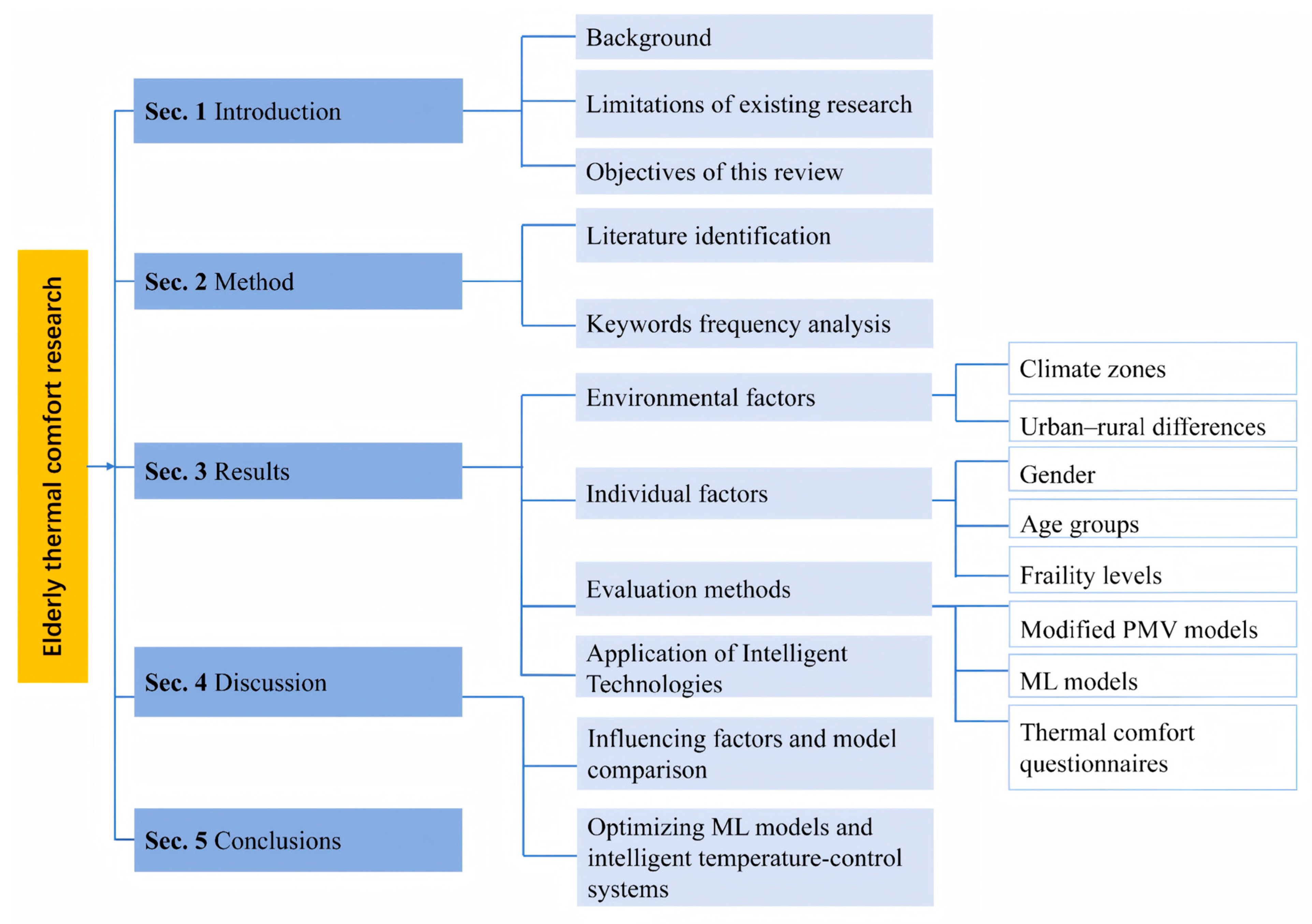
Figure 1. The framework of the review contents.
Buildings 15 04331 g001
Figure 2. PRISMA flow diagram for study selection.
Buildings 15 04331 g002
Figure 3. Mapping of keyword co-occurrence network in the field of thermal comfort research.
Buildings 15 04331 g003
Figure 4. Climate zone of China according to GB 50176-2016 [44].
Buildings 15 04331 g004
Figure 5. Variation in TSV with indoor temperature across different climate zones [5,37,48,49].
Buildings 15 04331 g005
Figure 6. Urban and rural building forms and heating facilities. (a) Urban building. (b) Rural building. (c) Urban central heating. (d) Rural coal stove. Sources: Author.
Buildings 15 04331 g006
Figure 7. Variation in TSV with indoor temperature among older adults in urban and rural areas [48,50,54,56,58].
Buildings 15 04331 g007
Figure 8. Variation in TSV with indoor temperature among older adults of different age groups [65,66,67,68].
Buildings 15 04331 g008
Figure 9. TSV scales: (a) 3-point TSV scale; (b) 5-point TSV scale; (c) 7-point TSV scale; (d) 9-point TSV scale.
Buildings 15 04331 g009
Figure 10. Use of the 3-point TSV scale in air conditioning systems.
Buildings 15 04331 g010
Figure 11. The framework for the integration of IoT and the PMV model.
Buildings 15 04331 g011
Figure 12. Distribution of studies across climate zones, seasons, and urban or rural areas.
Buildings 15 04331 g012
Figure 13. Body segmentation and skin temperature measurement points.
Buildings 15 04331 g013
Disclaimer/Publisher’s Note: The statements, opinions and data contained in all publications are solely those of the individual author(s) and contributor(s) and not of MDPI and/or the editor(s). MDPI and/or the editor(s) disclaim responsibility for any injury to people or property resulting from any ideas, methods, instructions or products referred to in the content.