Article

From Capability Integration to Value Co-Creation: A Case Study on the Dynamic Capability Mechanisms of the F+EPC+O Model in Super-High-Rise Projects


1
Xiamen CCCC Investment Company Ltd., Unit 1501, No. 373 Chengyi Street, Software Park Phase III, Xiamen 361000, China
2
School of Architecture, Huaqiao University, Xiamen Campus, Xiamen 361021, China
*
Author to whom correspondence should be addressed.
Buildings 2025, 15(23), 4258; https://doi.org/10.3390/buildings15234258
Submission received: 27 October 2025 / Revised: 20 November 2025 / Accepted: 24 November 2025 / Published: 25 November 2025
(This article belongs to the Section Construction Management, and Computers & Digitization)

Abstract

As one of the most technically and managerially complex types of construction projects, super-high-rise buildings require deep multidisciplinary integration and intensive collaboration throughout their lifecycle. Conventional stage-based delivery models, such as the EPC, are often inadequate for handling this complexity. In recent years, the integrated Financing–Engineering, Procurement and Construction–Operation (F+EPC+O) model has emerged to address lifecycle governance challenges in building projects. This study explores how an investment-led F+EPC+O model builds dynamic capabilities to enable lifecycle collaboration in complex projects. It is based on a case study of the Xiamen Hemei Center and employs a qualitative case study approach to examine the operation of an internal F+EPC+O in the project. Drawing on multi-source data, including internal archives, BIM/CIM logs, and interviews, the findings identify three elements—lifecycle incentive alignment, internal power symmetry, and extended operation duration—that shape the Sensing–Seizing–Reconfiguring (SSR) capabilities of the approach. Specifically, Sensing is achieved through NPV-based decision frameworks and cross-stage trade-off lists; Seizing is achieved through BIM/CIM issue closure and joint rapid-cycle decision-making; and Reconfiguring is achieved through performance feedback and institutionalized knowledge repositories. The findings indicate that the SSR dynamic cycle transforms institutional integration into value co-creation, turning project complexity into a source of collaborative advantage.

1. Introduction

Super-high-rise buildings (SHBs) have become emblematic of contemporary urban development, playing a crucial role in land intensification, functional integration, and urban identity formation [1,2]. Definitions of high-rise buildings vary globally. The Council on Tall Buildings and Urban Habitat (CTBUH) classifies buildings over 300 m as SHBs structures, whereas this study follows the Chinese national standard, which defines SHBs as those exceeding 100 m in height [3,4]. Given that the case investigated is located in China and focuses on engineering management practices, the Chinese standard is adopted as the definitional basis.
SHBs represent one of the most technically and managerially complex categories of construction projects. Their development involves deep coupling among multiple specialized systems—such as structural, mechanical, electrical, façade, and intelligent building systems—across a prolonged lifecycle characterized by numerous participants, dense system interfaces, and extended risk transmission chains [5,6]. This high degree of integration, coupling, and temporal dependency means that project management must address not only technical challenges but also inter-stage, interdisciplinary, and inter-organizational coordination issues [7].
Traditional delivery models, including Design–Bid–Build (DBB) and Engineering, Procurement, and Construction (EPC), exhibit clear limitations when applied to SHBs. The division of the project lifecycle into discrete stages results in information loss and goal misalignment; complex interfaces amplify coordination costs; and the absence of feedback mechanisms prevents operational experience from informing design and construction processes [8]. These problems are particularly pronounced in SHBs, where disconnected front-end decision-making, fragmented process collaboration, and disrupted post-completion feedback create systemic governance challenges [9]. As a result, incremental process optimization or contract management alone is insufficient to support lifecycle collaboration and value creation in SHBs. These challenges indicate the need for an integrated governance model.
To address these coordination demands, both academia and industry have proposed the Financing–Engineering, Procurement, and Construction–Operation (F+EPC+O) model, under which a single enterprise or consortium assumes overall responsibility for project financing, design and construction, and operational management, thereby forming a closed loop of “investment decision–project delivery–operational performance” [10,11]. This model has been increasingly applied in infrastructure and public works, and has been reported to exhibit institutional advantages in risk sharing and incentive alignment. However, research and practice concerning F+EPC+O in SHBs remain limited [12]. Compared with infrastructure projects, SHBs feature shorter but more tightly coupled professional chains, making internal information flow and decision mechanisms crucial determinants of collaborative performance [13]. Even when investment, design, construction, and operation are implemented within the same enterprise or corporate group, integrated management may still face departmental silos, information isolation, and path dependency [14]. When institutional integration is not accompanied by capability integration, projects may revert to an “organizational EPC”—integrated in form but fragmented in substance [15,16]. The transformation from institutional integration to capability integration, and ultimately to performance improvement, depends on whether organizations can establish internal capability mechanisms that enable cross-stage collaboration, rather than relying solely on contractual or procedural arrangements [17].
The Dynamic Capabilities Theory offers a useful analytical lens to understand this transformation from institution to capability and from capability to performance. Teece and colleagues proposed that firms achieve sustainable competitive advantage through three interrelated processes—Sensing opportunities and threats, Seizing opportunities and resources, and Reconfiguring assets and processes in response to environmental change [18,19]. Unlike strategic approaches that emphasize the selection of appropriate strategic, dynamic capabilities focus on how organizations continually adjust cognition, resources, and structures under uncertainty and complexity to maintain adaptability and innovation [20,21]. This cyclical mechanism of “sensing–seizing–reconfiguring” aligns closely with the collaborative demands inherent in the F+EPC+O model [22].
Accordingly, this study investigates how an investment-led F+EPC+O model enables lifecycle collaboration in SHBs through the development of dynamic capabilities. Specifically, it explores (1) the institutional characteristics of the F+EPC+O model—investment leadership and full-cycle responsibility—and why these require supplementation by dynamic capabilities; (2) the micro-mechanisms through which Sensing, Seizing, and Reconfiguring operate at the project level; and (3) how institutional integration evolves into capability integration, thereby enhancing performance. The study ultimately aims to construct a comprehensive interpretive framework linking institutional integration, capability integration, and performance improvement, providing theoretical guidance and practical insights for integrated governance in complex high-rise projects.

2. Literature Review

2.1. Development of Integrated Governance Models

The evolution of project delivery systems reflects the construction industry’s ongoing governance innovations in response to increasingly complex project demands. The traditional Design–Bid–Build (DBB) model, originating in the early twentieth century, separates design, procurement, and construction into independent contractual relationships, thereby promoting professional specialization and risk segregation [23]. However, such segmentation of stages leads to systemic challenges, including information discontinuity, blurred responsibility boundaries, and elevated coordination costs—issues that become particularly salient in complex projects [24,25].
To overcome the coordination deficiencies of DBB, the Engineering–Procurement–Construction (EPC) model emerged in the 1970s, particularly in large-scale industrial projects, integrating design and construction under a single point of responsibility [26]. Entering the twenty-first century, Integrated Project Delivery (IPD) and Public–Private Partnership (PPP) models further expanded the scope of integration by incorporating financing and operations within a unified framework [27,28]. These models share several core characteristics: multi-party collaboration, risk sharing, and lifecycle value integration [29].
Existing studies on integrated governance models are largely grounded in transaction cost theory and principal–agent theory, emphasizing contract design and risk allocation mechanisms [30,31]. The main research themes include rational risk distribution among participants, incentive-compatible mechanisms, the governance effects of relational contracts, and equilibrium conditions in multi-party games [32,33]. Wang et al. (2022) examined risk allocation and dynamic supervision in EPC projects, concluding that an incentive–constraint mechanism based on incomplete contracts and game theory can achieve stable and cooperative equilibria [26]. Wang et al. (2023) further investigated the evolutionary game of risk sharing in EPC+PPP projects, finding that neglecting secondary risks—those induced by mitigation measures—distorts optimal allocation, whereas incorporating such risks enhances the efficiency of risk–return matching [32]. Osipova (2015) analyzed how project participants address principal–agent issues and found that effective joint risk management relies heavily on relationship building and collaborative strategies [34]. Park (2023) explored the impact of contracting on cost savings, revealing that contracting does not necessarily reduce costs and may impose additional economic burdens on citizens [35]. Similarly, Chang (2025) identified a two-stage design benefit paradox between owners and general contractors in Chinese EPC projects due to conflicting interests during the design phase, posing significant challenges to project implementation [36]. Overall, this body of research focuses primarily on achieving goal alignment among multiple stakeholders through contractual and incentive mechanisms [37,38].
A common feature of these studies is that the project lifecycle is divided into discrete stages, each undertaken sequentially by different participants, with contractual interfaces serving as the primary connection rather than continuous information and knowledge flows [39,40]. Such segmental integration may reduce inter-organizational transaction costs but fails to address the fundamental problems arising from stage fragmentation, such as information loss, goal drift, and lack of experiential feedback [41]. To overcome the systemic limitations of fragmented delivery, both academia and industry have increasingly explored the Financing–Engineering, Procurement, and Construction–Operation (F+EPC+O) model. This model assigns comprehensive responsibility for financing, design, construction, and operation to a single entity or consortium, seeking to internalize incentives and close the accountability loop by integrating objectives previously dispersed across multiple stages and organizations [42].
From a transaction cost perspective, the F+EPC+O model establishes a lifecycle value loop by consolidating investment, construction, and operational functions within one entity: investment decisions must account for long-term operational returns rather than short-term construction costs; design processes must incorporate constructability and operability constraints; and construction quality directly influences future maintenance costs and asset value [43]. This binding of responsibilities can theoretically reduce inter-stage transaction costs, mitigate opportunism, and promote goal alignment across the project lifecycle [44]. Nevertheless, most existing research has remained focused on risk sharing and contractual incentive mechanisms, with limited exploration of how internal capability building within organizations enables effective lifecycle collaboration.

2.2. Collaborative Mechanisms of Project-Based Organizations from a Dynamic Capabilities Perspective

To explain how institutional arrangements are transformed into collaborative performance, scholars have increasingly applied Dynamic Capabilities Theory (DCT) to the study of project-based organizations [45]. Barney (1991) made a foundational contribution to the Resource-Based View (RBV), proposing that firms gain competitive advantage when their resources are valuable, rare, inimitable, and non-substitutable [46]. However, Wang (2007) argued that this framework is inherently static and therefore struggles to explain success or sustained competitiveness under turbulent and unpredictable conditions [47]. In this context, the concept of dynamic capabilities emerged—offering a framework that extends beyond static resource views by explaining how firms achieve and maintain competitive advantage in constantly changing environments [48,49].
Teece is widely regarded as a leading proponent of the dynamic capabilities framework, defining it as a firm’s ability to continuously sense external opportunities and threats, seize opportunities by mobilizing internal resources, and reconfigure strategies and assets accordingly to sustain competitiveness [50,51]. Dynamic capabilities encompass the organizational and strategic processes that enable firms to integrate, reconfigure, acquire, and release resources in response to market emergence, collision, fragmentation, evolution, or collapse [52,53].
Empirical research has progressively advanced the operationalization of dynamic capabilities. Laaksonen (2018) combined managerial assessments, financial data, firm experience, and performance indicators to measure dynamic capabilities, emphasizing that more robust operational definitions can help formulate competing hypotheses and enhance theoretical precision in this field [54]. Barrachina (2023), through a survey of 106 firms and hierarchical linear regression analysis, demonstrated that the influence of organizational learning on dynamic capabilities varies by departmental type [55]. Patrício (2022), using qualitative methods and 21 semi-structured interviews in Portugal, identified a set of capability elements—related to sensing, seizing, and reconfiguring—that organizations must cultivate to develop dynamic capabilities [56]. Li (2025) integrated knowledge management with the dynamic capabilities framework, showing how the sensing–seizing–transforming perspective enables firms to reconfigure knowledge processes in alignment with evolving strategic objectives [57].
At the same time, researchers have extended the dynamic capabilities perspective to project and engineering governance. Davies (2015) systematically distinguished between project capabilities and dynamic capabilities, finding that project-based organizations must balance exploration and exploitation through a portfolio of routines and innovation-oriented capabilities to manage complexity effectively [58]. Barboa (2025) examined the sensing capability of project-based organizations and found that mechanisms of knowledge transfer and external interaction significantly enhance sensing, thereby improving strategic planning and integration [59]. Bechtel (2023) empirically tested how the capabilities of Sensing, Seizing, and Reconfiguring contribute to project portfolio agility and success rates [21].
Collectively, these studies demonstrate that dynamic capabilities provide a robust theoretical lens for understanding how project-based organizations adapt, learn, and coordinate across boundaries under conditions of uncertainty and complexity. These are also the core challenges inherent to the F+EPC+O model in high-rise projects.

2.3. Research Gap and Study Positioning

Existing research on integrated governance models largely focuses on institutional design and contractual arrangements, drawing mainly on transaction cost economics and principal–agent theory to emphasize how contractual coordination can reduce external coordination costs. However, this line of inquiry often assumes that institutional integration can be automatically translated into collaborative performance, while neglecting the process mechanisms through which capabilities are generated within institutional structures. At the same time, although DCT sheds light on how organizations sense, seize, and reconfigure resources under uncertainty, related studies mostly remain at the level of corporate strategic management, with little attention to lifecycle coordination and cross-phase learning mechanisms in project-based organizations.
As a result, the existing literature exhibits two clear gaps. First, the transformation logic between institutional integration and capability integration has not yet been adequately articulated. Second, the dynamic capabilities perspective has not been effectively embedded in the governance context of complex engineering projects. Moreover, although existing models such as IPD, PPP, or EPC+PPP also advocate integration and learning, their underlying mechanisms still follow a contract-coordination logic and lack explanations of internal capability formation and dynamic cycles. By contrast, the investment-led F+EPC+O model, which unifies financing, design–construction, and operation within a single entity, provides an ideal setting for examining the transformation chain from institutions to capabilities to performance.
The present paper seeks to construct an integrative analytical framework that treats the F+EPC+O model as an institutional precondition and dynamic capabilities (SSR) as the process mechanism. In doing so, it aims to reveal how the three institutional features of incentive unity, power symmetry, and an extended temporal horizon are activated as project-level sensing, seizing, and reconfiguring capabilities, thereby driving a dynamic evolution from institutional integration to capability integration and ultimately to value integration.

3. Methodology and Case Description

3.1. Research Design and Technical Route

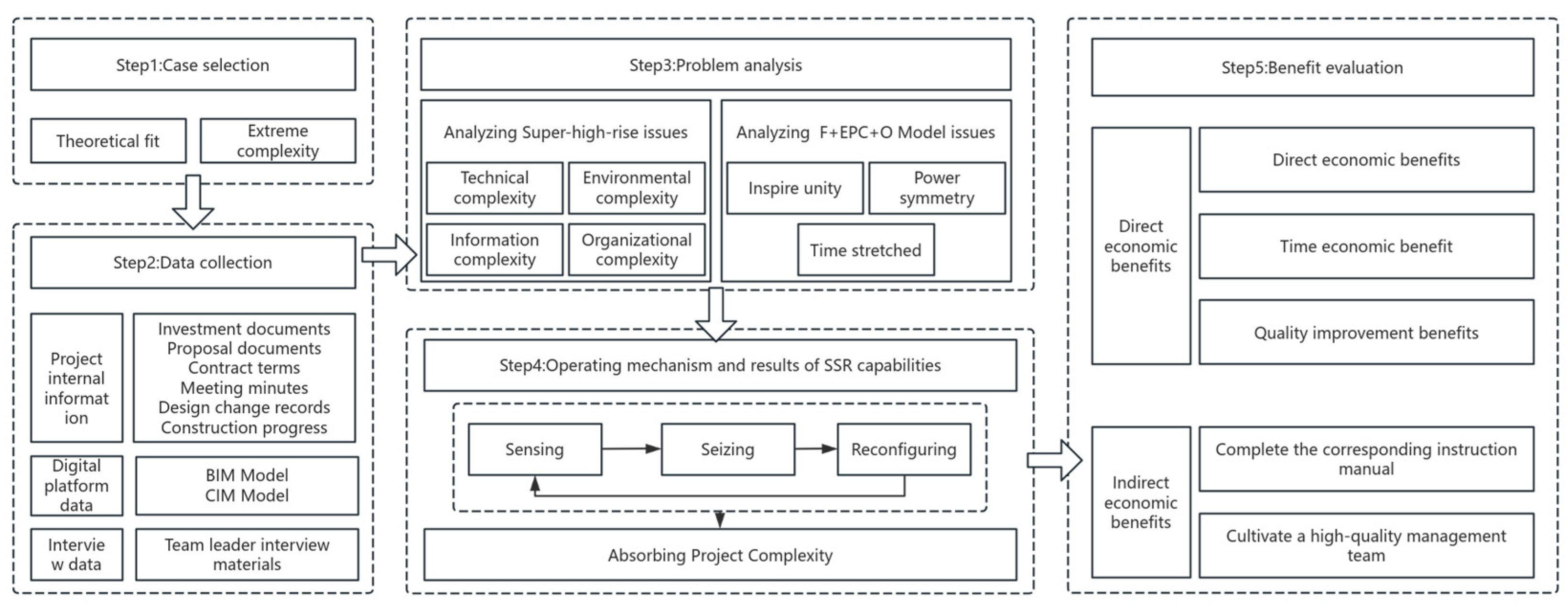
The case study method is well suited to investigating the underlying mechanisms of complex phenomena in real-world contexts, and for providing a foundation for theory building through systematic evidence collection and contextualized analysis [60,61,62,63,64]. In the field of engineering project governance, case studies enable the integration of technical, organizational, and institutional factors into a unified analytical framework, thereby uncovering dynamic interactions across phases and departments [36,65,66]. The high level of complexity inherent in SHBs F+EPC+O projects makes them particularly suitable as revelatory cases, in which extreme characteristics magnify and clarify capability mechanisms that are difficult to observe in more ordinary settings [67,68]. Based on these criteria, this study selects a representative Chinese SHBs F+EPC+O project as the research object and adopts a single in-depth case study design. Case selection follows the criteria for revelatory cases proposed by Yin (2018) [69,70]:
  • Theoretical fit: Candidate projects must span the full value chain from financing, design, and construction to operation, and be governed by a single controlling entity. This requirement is intended to minimize confounding effects arising from differences in cross-organizational coordination mechanisms [71].
  • Extreme complexity: Candidate projects must exhibit high levels of complexity along the technological–organizational–environmental (TOE) dimensions. Specifically, they should involve highly coupled multi-disciplinary systems, multiple stakeholders, and high levels of uncertainty, thus providing a stress test context in which underlying mechanisms can be amplified and examined [72].
The technical roadmap of this study is illustrated in Figure 1. Building on DCT as the core analytical lens, supported by the case study design and centered on cross-phase coordination mechanisms, the integrated research framework aims to reveal how sensing, seizing, and reconfiguring capabilities are formed and operate in an investment-led SHBs project, and how these capabilities influence project performance and organizational learning.

3.2. Case Selection and Project Overview

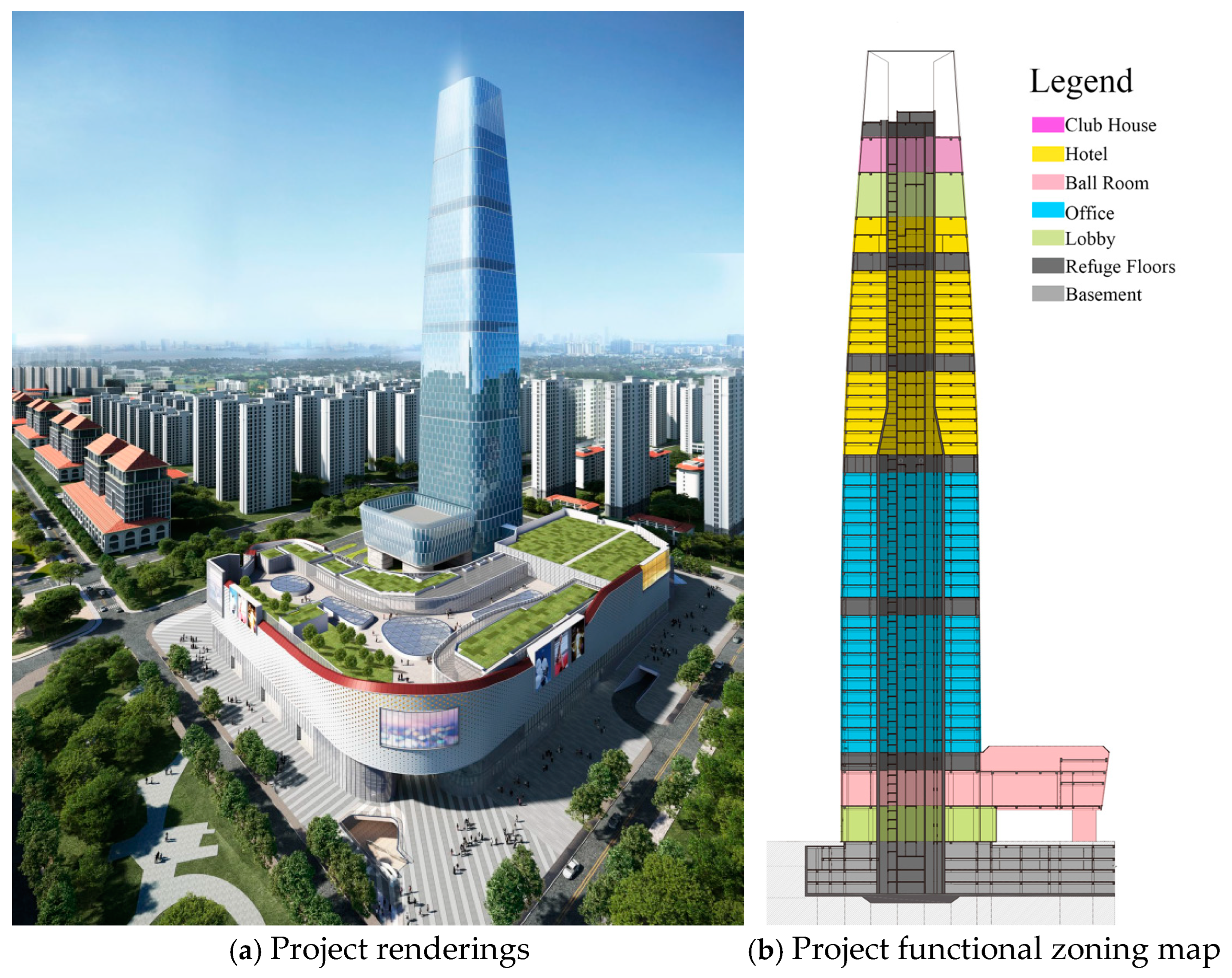
Based on the above criteria, this study selects the CCCC Xiamen Hemei Center SHBs urban complex as the focal case (Figure 2). The project is located in the core area of a major coastal city and is invested, designed, constructed, and operated under the unified control of a single enterprise group. It therefore exhibits the essential features of an integrated F+EPC+O governance model and achieves full-process integration from investment decision-making to operation preparation. This organizational structure mitigates coordination frictions associated with cross-organizational boundaries and allows resource allocation, information transmission, and feedback in decision-making to operate within the same governance system, thereby meeting the requirement of internal consistency and controlled conditions for theoretical matching.
In terms of extreme complexity, the project demonstrates high complexity across technological, organizational, and environmental dimensions. Structurally, it adopts an innovative concrete-filled steel tube frame–core tube system that must be constructed with high precision under conditions of intensive multi-disciplinary interfaces. The deep basement and its proximity to metro tunnels and major urban roads generate significant geotechnical and deformation-control risks. At the same time, the project must satisfy stringent requirements related to wind resistance, disaster prevention, and high-level green building standards, imposing multi-objective constraints on design and implementation.
The project involves more than ten professional disciplines, including structural engineering, façade, MEP, fire protection, and landscape, with highly intertwined organizational relationships and task dependencies. To cope with this complexity, the project team has established institutionalized mechanisms for collaborative decision-making—such as weekly coordination meetings, monthly reporting sessions, and special topic workshops—forming a pattern of high-frequency interaction and rapid response. These mechanisms provide a rich empirical setting for observing how sensing–seizing–reconfiguring (SSR) dynamic capabilities are generated and enacted under conditions of high complexity.

3.3. Data Acquisition and Analysis Methods

Data collection and analysis in this study follow the principles of systematization, multi-sourcing, and traceability. Three categories of data are used:
  • Internal project documentation: This includes investment and design-phase scheme documents, contract clauses, design change records, meeting minutes, and construction progress records. Key financial data—such as total investment, cost savings, and NPV (net present value) improvements—have been independently verified by the Audit Department of CCCC, ensuring data reliability.
  • Digital collaboration platform outputs: These refer mainly to data generated by the BIM/CIM systems, including modeling information, change logs, and collaboration records. Key indicators such as issue-closure rates and numbers of clash-detection events are automatically generated by the platform. Data extraction is carried out by the project information management department, which is organizationally independent of the design and construction departments, in order to reduce human bias.
  • Interview data: The research team conducted semi-structured interviews with key decision-makers, design leaders, construction managers, and operation representatives involved in the project, thereby covering stakeholders from investment, design, construction, and operation.
Data analysis is primarily qualitative. First, document analysis is employed to identify key event nodes that reflect the complexity characteristics of the system. Second, process-tracing is used to reconstruct the evolution paths linking complexity problems, managerial responses, and coordination outcomes. Finally, mechanism-matching analysis is conducted to align elements in the theoretical framework with their empirical manifestations in the case, thereby examining both the effectiveness and the boundary conditions of different mechanisms in addressing specific types of complexity.
To enhance the practical operationalization of qualitative process-tracing, the study introduces several weakly quantitative indicators—such as issue-closure rate, decision response time, NPV improvement rate, and knowledge reuse rate—as observable proxies for the routines associated with the three dimensions of dynamic capability (sensing, seizing, and reconfiguring). These indicators are used to support the empirical validation of the proposed mechanisms.

4. Findings

4.1. Project Complexity and Governance Challenges

As one of the most technologically intensive building types in modern urban development, SHBs embody four interrelated dimensions of complexity. The Xiamen Hemei Center—a 266 m tall, 240,000 m2 mixed-use complex and the first SHBs independently invested, constructed, and operated by CCCC—illustrates how these dimensions pose systemic governance challenges. This section identifies these four dimensions of complexity and explains how the F+EPC+O model establishes the organizational preconditions for addressing them.
  • Technical complexity arises from the high degree of coupling among multiple professional systems within limited spatial constraints. In this project, dense MEP shafts are arranged between the concrete core and peripheral steel structure, where structural adjustments affect MEP routing, which in turn alters façade anchoring nodes and construction sequences. Such interdependencies leave minimal design tolerances; unilateral decisions by individual disciplines are infeasible, and design changes often trigger cascading effects. Effective governance therefore requires cross-disciplinary, real-time decision-making capabilities.
  • Information complexity stems from heterogeneous, multi-source data environments. In the early stages, inconsistent data standards caused difficulties in model integration and delays in information transmission, leading to design conflicts and spatial clashes. This demonstrates that the effectiveness of integrated governance critically depends on a shared information platform capable of harmonizing heterogeneous data and ensuring consistency as the foundation for collaborative decision-making.
  • Organizational complexity reflects intrinsic differences in objectives, incentives, and work rhythms among participants. Although the F+EPC+O model unified investment, design, construction, and operation under CCCC, intra-organizational performance orientations still diverged: the investment department prioritized NPV and IRR; designers emphasized innovation and regulatory compliance; the construction team focused on schedule and safety; and the operations team stressed maintainability and energy efficiency. These misaligned goals caused early-stage decision conflicts despite institutional unification.
  • Environmental complexity results from multiple external constraints, including urban, policy, and social factors. The project’s core-city location meant limited site space, heavy surrounding traffic, and overlapping underground structures with metro tunnels, requiring continuous coordination with rail authorities. The region’s frequent typhoons posed heightened safety and scheduling risks, while evolving green-building and energy-efficiency standards further increased design compliance challenges.
Overall, the Hemei Center project exhibits high levels of complexity along the technological, informational, organizational, and environmental dimensions. Under such conditions, traditional EPC or segmented governance models can no longer cope effectively through simple contractual partitioning and stage-wise acceptance. On the one hand, a multi-disciplinary, multi-phase, and highly coupled technical and informational environment requires a project governance mode with real-time, cross-disciplinary, and cross-phase collaborative decision-making capabilities. On the other hand, interdepartmental performance heterogeneity and long-term environmental uncertainty call for the development of dynamic capabilities at the project level to continuously sense, evaluate, and adjust. Against this backdrop, CCCC adopted an investment-led F+EPC+O model for the Hemei Center project, integrating financing, design–construction, and operation management within a single governance framework. Through institutional design, it seeks to embed full-lifecycle value objectives into one unified structure. The next subsection analyzes the key institutional features of this model, explaining how it achieves institutional integration at the structural level and provides organizational preconditions for subsequent capability formation.

4.2. Institutional Features of the Investment-Led F+EPC+O Model

4.2.1. Advantages and Limitations of Institutional Integration

The core of the investment-led F+EPC+O model lies in constructing a governance system based on full lifecycle responsibility binding through institutionally embedded structural integration. In the Hemei Center project, this structural integration has generated notable governance outcomes and established the essential preconditions for achieving integrated collaboration. First, institutional integration provides the structural preconditions and governance advantages required for integrated collaboration. Empirical analysis shows that the F+EPC+O model achieves structural integration primarily through three key institutional features.
The first element is incentive unity. By linking investment returns to operational performance over a 20-year horizon, the project adopts full lifecycle net present value (NPV) maximization as a shared value anchor. This arrangement encourages the design team to conduct cost–benefit assessments related to the operation phase already during conceptual and schematic design. The second element is power symmetry. Investment, design, construction, and operation functions are embedded within the same corporate group, and traditional principal–contractor boundaries are removed through joint decision-making mechanisms and the use of a shared BIM/CIM platform. The BIM platform functions as a visual decision-support environment that provides all participants with a common and symmetrical information base. The third element is an extended temporal horizon. Institutional integration lengthens the responsibility period from the conventional two-to-five-year defect-liability window characteristic of EPC contracts to the full 20-year operation phase, incorporating benefit realization and asset value preservation into long-term performance evaluation. This reinforces the organization’s intrinsic motivation to establish systematic design–operation feedback mechanisms and provides the temporal conditions necessary for sustained organizational learning.
However, further practice-based tracking reveals distinct limitations in the governance effects of institutional integration: structural integration does not automatically translate into process-level collaboration. Although unified management within a single organizational entity has been formally established, substantial coordination gaps remain at both the cognitive and procedural levels:
  • Insufficient cognitive integration: despite the presence of the incentive-unity mechanism, the design team in the early stages continued to optimize schemes according to established professional logics. For example, the MEP system was initially configured using conventional office-building standards without adequately accounting for the specific operational requirements of the hotel component. As a result, substantial modifications to the chiller and cold-source configuration became necessary in the late construction phase once the issue surfaced. This case illustrates a misalignment between the formally defined value anchor and the actual value cognition guiding practitioners’ decision-making.
  • Limited process coupling: despite the presence of power symmetry in formal decision-making structures, interdepartmental process inertia remained evident. Performance appraisal systems and work rhythms across functions largely followed prior routines, resulting in departmental path dependence in collaborative activities. Consequently, coordination meetings were frequent, yet they exhibited low closure efficiency, and the cost of cross-functional collaboration manifested as increased organizational friction.
  • Fragile learning mechanisms: although the project adopted an extended temporal horizon, knowledge feedback mechanisms were not systematically institutionalized in the early stages. Experience transfer relied primarily on ad hoc meetings and informal communication, leading to a pattern of organizational learning that was reactive rather than embedded in formal processes. As key personnel rotated or departed, the project faced heightened risks of knowledge discontinuity.
In summary, the institutional integration achieved through the F+EPC+O model effectively aligns organizational boundaries and incentive constraints at the structural level, as demonstrated in Table 1. At the same time, the empirical findings reveal a central analytical puzzle: despite the presence of a seemingly sophisticated integrated arrangement, significant cognitive divergences, process inertia, and learning discontinuities still arise in the early stages of the project. This discrepancy between structural integration and process-level collaboration constitutes the core analytical problem addressed in this study. It indicates that, although institutional integration establishes the structural foundation for unified management within a single organizational entity, it does not inherently generate the dynamic capabilities necessary for cross-phase coordination and continuous organizational learning.

4.2.2. Operational Distinction Between Institutional Integration and Capability Integration

The above findings indicate that relying solely on institutional integration cannot fully resolve the high-complexity problems encountered in project governance. Although the F+EPC+O model unifies organizational boundaries, incentive mechanisms, and responsibility horizons at the institutional level, project-level collaboration efficiency and learning feedback are still constrained by factors such as cognitive fragmentation and process inertia. To further explain this phenomenon—adequate structural integration but insufficient process collaboration—it is necessary to introduce the perspective of capability integration on the basis of institutional integration.
Drawing on dynamic capability theory (DCT), this paper conceptualizes institutional integration and capability integration as forming a progressive relationship, aimed at explaining how organizations convert institutional potential into project-level dynamic capabilities through mechanisms of sensing, seizing, and reconfiguring.
At the theoretical level, institutional integration denotes structural integration achieved through the alignment of rights and responsibilities, incentive coherence, and the redefinition of organizational boundaries. It highlights the prior role of formal institutions in enabling cross-phase integration and centers on questions concerning coordination authority and the binding of responsibilities, thereby reflecting the stability and configurational logic inherent in the governance structure.
In contrast, capability integration refers to process integration achieved through dynamic capabilities—such as sensing, seizing, and reconfiguring—within a given institutional framework. It focuses on how institutional arrangements are activated, enacted, and translated into coordinated actions in day-to-day operations, thereby addressing the practical questions of how collaboration occurs and how learning is generated and maintained. This perspective underscores the dynamic and evolutionary character of organizational behavior.
The two are not mutually exclusive alternatives, but rather stand in a progressive relationship between antecedent condition and mediating mechanism.
Institutional integration, through incentive unity, power symmetry, and an extended temporal horizon, provides a common value anchor, decision platform, and temporal framework. Capability integration, building on this framework, uses the three types of dynamic capabilities—sensing, seizing, and reconfiguring (SSR)—to transform these structural preconditions into observable coordination routines and performance improvements. If institutional integration does not give rise to corresponding sensing, seizing, and reconfiguring, the organization is likely to fall into a dilemma of formal integration but substantive fragmentation—appearing integrated in structure while remaining fragmented in operation. To avoid conceptual ambiguity, this paper further distinguishes institutional integration and capability integration in operational terms across dimensions such as definitional focus, unit of analysis, theoretical attributes, and observable indicators (see Table 2).
This distinction clarifies the analytical boundaries between institutional integration and capability integration and provides an operational foundation for subsequent mechanism analysis. The three features of institutional integration—incentive unity, power symmetry, and an extended temporal horizon—respectively, provide a value anchor, decision platform, and temporal framework for sensing, seizing, and reconfiguring. Dynamic capabilities, in turn, transform these structural preconditions into concrete coordination processes and performance outcomes through the sensing–seizing–reconfiguring cycle. In other words, institutional integration is the structural precondition for capability formation, whereas capability integration is the process mechanism through which institutional potential is converted into collaborative performance.
Building on this distinction, Section 4.3 adopts DCT as the analytical framework and, drawing on BIM/CIM logs, meeting minutes, and interview materials, conducts process tracing of the concrete operations of sensing, seizing, and reconfiguring routines in the Hemei Center project. This enables a systematic exposition of how the institutional features of the F+EPC+O model are activated as project-level dynamic capabilities, thereby realizing the transformation from institutional integration to capability integration.

4.3. Formation of Dynamic Capabilities: Activating Institutional Preconditions into Organizational Capabilities

4.3.1. Formation of Dynamic Capabilities and Theoretical Framing

As discussed above, institutional integration in the F+EPC+O model achieves structural unification through three design features—incentive unity, power symmetry, and an extended temporal horizon—thereby providing the preconditions for the emergence of dynamic capabilities. However, these institutional features can only generate cross-phase synergistic effects when they are transformed, in the course of project execution, into concrete organizational routines and cognitive patterns. In other words, institutional integration represents a form of static potential, whereas capability integration represents its dynamic realization. This section explains how institutional features are activated in project practice and transformed into three types of dynamic capabilities: sensing, seizing, and reconfiguring.
  • Incentive unity → Formation of sensing capability: By anchoring the performance of all functions to the project’s 20-year net present value (NPV), the incentive-unity mechanism redefines the criteria for valuable information. Design, construction, and operations teams are no longer oriented toward phase-specific optimization; instead, guided by a shared value anchor, they actively identify cross-phase trade-offs and opportunities that enhance long-term outcomes. This orientation is reinforced through institutionalized routines such as ex ante NPV assessments, early participation of the operations unit, and the use of cross-phase trade-off checklists. Collectively, these routines constitute the cognitive basis for project-level sensing capability.
  • Power symmetry → Formation of seizing capability: By combining a joint decision-making mechanism with the BIM/CIM information platform, power symmetry breaks the traditional hierarchical barrier between owner and contractor, placing investment, design, construction, and operations in a relatively balanced position in terms of both information and decision-making power. Visualization-based discussions on a unified model and cross-functional joint meetings enable the opportunities and risks identified at the sensing stage to be rapidly converted into concrete action commitments. This gives rise to a high-speed linkage between information, decision, and execution—that is, a project-level seizing capability.
  • Extended temporal horizon → Formation of reconfiguring capability: Extending the responsibility horizon from 2–5 years to 20 years forces the project team to confront the long-term consequences of its decisions during the operation phase, and encourages the organization to establish feedback channels from operations back to design and investment. Through mechanisms such as a unified BIM–CIM database, operation-data tracking, and standardized manuals, project experience is continuously codified and used for subsequent projects as well as for revising internal standards, thereby demonstrating an ongoing capability to reconfigure processes and knowledge systems.
In sum, incentive unity—via NPV as a common value anchor—determines what the organization senses and how it frames opportunities and risks; power symmetry—via joint decision-making and shared models—shapes how opportunities are seized and how resource allocation is coordinated among multiple parties; and an extended temporal horizon—via longer responsibility periods and operation-side feedback—provides the temporal frame and learning pressure that determine when and how existing processes and standards are reconfigured.
Building on this theoretical mapping, the remainder of this section conducts process tracing of key organizational routines and their performance indicators in the Hemei Center project, along the three dimensions of sensing, seizing, and reconfiguring. This analysis demonstrates how institutional integration is transformed, through a series of observable organizational practices, into project-level dynamic capabilities. In doing so, it not only clarifies the causal chain between institutional integration and capability integration, but also responds to the concern that institutional integration might merely improve coordination efficiency without truly generating dynamic capabilities.

4.3.2. Sensing: A Benefit-Oriented Cognitive-Focusing Mechanism

Sensing capability is the starting point of the dynamic capabilities system. It refers to an organization’s ability to identify, interpret, and respond to external opportunities and potential threats in a complex environment. In this project, the sensing mechanism is defined as follows: under a unified value anchor of full lifecycle benefit maximization, the organization systematically identifies critical cross-phase trade-offs and transforms multi-source information into actionable decision inputs.
Within the institutional framework of incentive unity, the project’s sensing capability is shaped by a constraint mechanism oriented toward long-term value. The investment-led F+EPC+O model brings investment, design, construction, and operations into a unified incentive system, using the 20-year NPV as a common evaluation benchmark. This arrangement shifts organizational cognition from stage-based optimization to full lifecycle value creation and enables different functional departments to share a common value-judgment standard under uncertainty, thereby forming the cognitive foundation for dynamic sensing.
This capability is concretized through three institutionalized processes: First is Lifecycle NPV evaluation for major technical schemes. All major technical options are assessed using a full lifecycle NPV framework that covers investment, construction, energy consumption, maintenance, and residual value, ensuring that decisions take long-term benefits into account. Second is early involvement of operations. A formal early-involvement mechanism is established for the asset management department, which is granted official review authority during the design stage, ensuring that operational experience is embedded ex ante. Third is Cross-phase trade-off checklist. A cross-phase trade-off checklist is developed, covering 42 elements across structure, MEP, façade, and intelligent systems interfaces, in order to systematically identify potential conflicts and value gaps and avoid fragmented, ad hoc discussions.
Table A1 in Appendix A presents typical cross-phase trade-offs and their NPV implications. The results show that, between 2018 and 2024, a total of 43 key trade-off issues were identified, of which 12 entered the joint decision-making meetings; 75% of the resulting schemes improved operational indicators. Over the same period, 132 evidence packages were compiled, 66% of which involved cross-phase integrated considerations. A typical case shows that integrated optimization of structure and construction increased upfront investment by 4502 thousand USD but, through schedule compression and reduced maintenance costs, generated an NPV improvement of 5768 thousand USD, yielding a net benefit of approximately 1266 thousand USD.
Taken together, the sensing capability manifests as a benefit-oriented cognitive focusing mechanism enabled by a unified value anchor, ex ante cognition, and systematic tools. It is not simply the application of NPV, BIM, or any other single method, but rather the translation of incentive unity into a routinized cognitive pattern. This allows the organization to continuously make early-stage judgments by jointly considering technical, financial, and operational information, thereby laying the foundation for subsequent capabilities.

4.3.3. Seizing: Efficient Implementation Driven by Information and Organizational Coordination

The core of seizing capability lies in rapidly converting identified opportunities into resource commitments and coordinated action. In this project, the seizing mechanism is supported by collaborative routines enabled jointly by digital platforms and organizational structures. Its effectiveness derives from the close coupling between information flows and decision-making processes, which allows timely alignment of analysis, judgment, and execution.
Under the institutional framework of power symmetry, the project’s seizing capability arises from an organizational structure characterized by information transparency and decision balance. In the F+EPC+O model, investment, design, construction, and operations are internalized within the same organization, and joint decision-making mechanisms are used to achieve symmetry in both information and power. This arrangement breaks the traditional hierarchical barrier between owner and contractor, enabling opportunities identified by multiple actors to be rapidly converted into executable decisions, thus laying the foundation for efficient implementation at the project level.
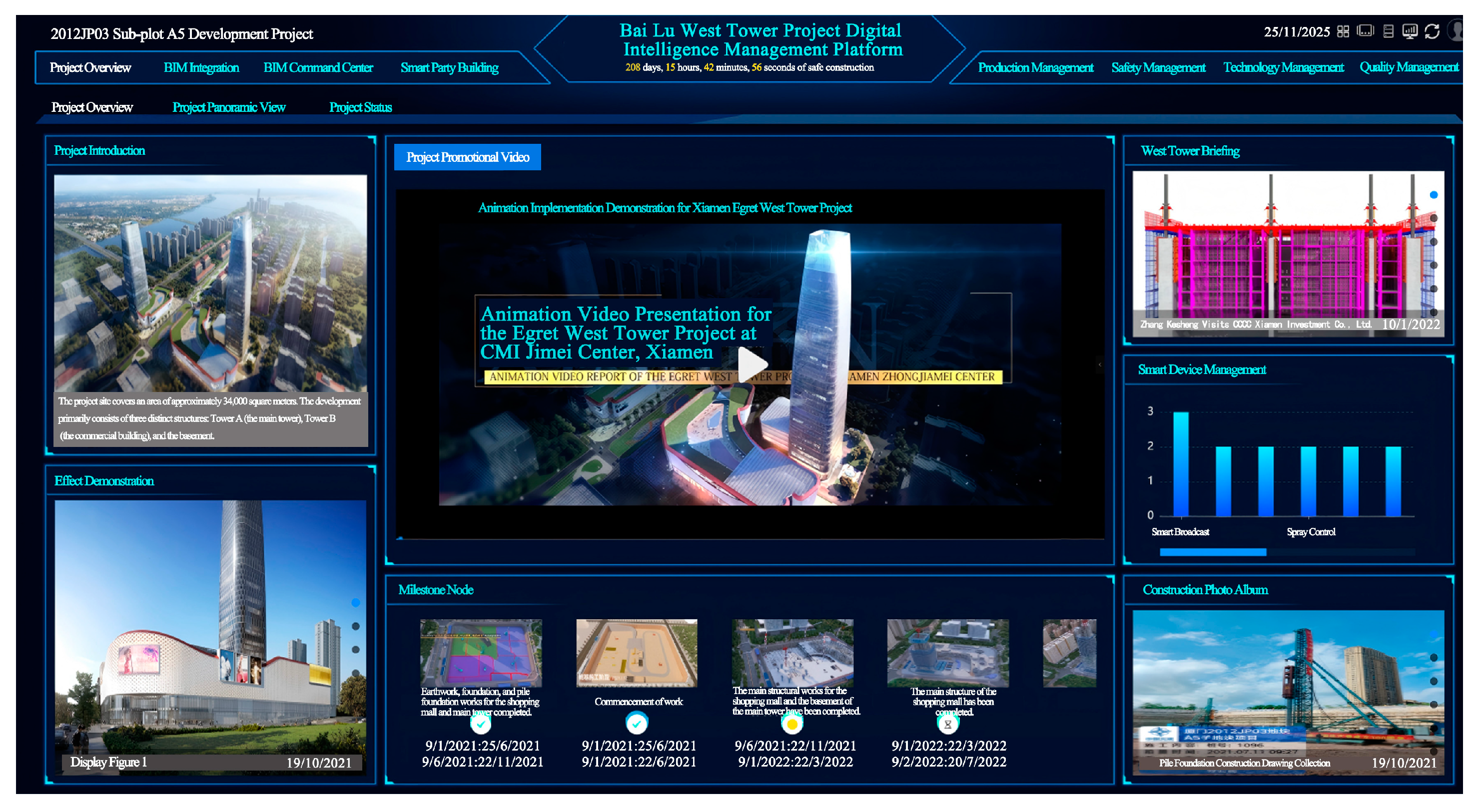
This capability is concretized through three institutionalized processes: first, a unified BIM/CIM integrated platform is established to achieve model federation, clash detection (with automated alerts when pipe spacing is less than 300 mm), standardized issue management, and version control, thereby ensuring full traceability of issues (see Figure 3); second, BIM-based visual simulations of construction processes are used to enable design, construction, and supervision teams to identify and optimize process and site conflicts within a single, shared model; and third, a joint decision-making mechanism is implemented, whereby a decision body composed of representatives from investment, design, construction, and operations conducts weekly coordination meetings, monthly reporting sessions, and ad hoc special-topic meetings—268 meetings in total—thus forming a rapid coordination system.
Statistics reported in Table A2 and Table A3 in Appendix A show that, during the design and construction stages, more than 2200 issues were identified, 96% of which were resolved before construction, saving approximately 788 thousand USD in rework losses. Pile construction was optimized through three rounds of simulation, shortening the schedule by 15 days and saving 63 thousand USD. For the core tube, the adoption of a non-uniform synchronous climbing method increased efficiency by 20%. The weld pass rate of robotic welding reached 99.9%. Overall calculations indicate that, compared with traditional models, the joint-mechanism arrangement shortened decision cycles by about 62%, significantly improving collaborative efficiency.
In summary, the seizing capability is manifested as a distributed decision-making mechanism driven by information transparency and power balance. Its essence lies in swiftly converting opportunities identified during the sensing stage into resource-allocation decisions, while ensuring consistency between execution and accountability through data-based closed-loop control. In this way, the mechanism transforms institutional power symmetry into workable organizational routines, providing structural support for dynamic collaboration.

4.3.4. Reconfiguring: Continuous Renewal Through Performance Incentives and Feedback Loops

Reconfiguring capability refers to the organization’s ability to systematically improve its processes, assets, and capability base in light of performance feedback, thereby ensuring that project learning evolves toward organizational institutionalization. Under the institutional framework of an extended temporal horizon, the project’s reconfiguring capability is rooted in the constraining and enabling role of long-term accountability mechanisms in organizational learning. By extending the responsibility period from the traditional 2–5 years to a 20-year operation horizon, the F+EPC+O model requires the project team to bear responsibility for long-term performance outcomes. This arrangement encourages the organization to continuously attend to operational feedback and to incorporate learning and improvement into the routines of governance, thus forming a dynamic mechanism for ongoing renewal.
This capability is realized through a set of institutionalized processes. A long-term performance evaluation system is established that incorporates indicators such as energy efficiency, maintainability, and user satisfaction into cross-departmental appraisal, while embedding metrics on issue-closure rates and feedback timeliness into the assessment framework. At the same time, a structured knowledge system is developed, in which the processes and solutions associated with major problems are documented, classified, and codified in a standardized manner. Knowledge is organized by lifecycle stage, professional discipline, and problem type, thereby forming a reusable knowledge base; between 2019 and 2022, these materials were compiled into internal documents such as Integrated Construction Practices for SHBs Complexes and Guidelines for BIM Lifecycle Applications. Building on this, a pilot–evaluation–standardization cycle is implemented, whereby process innovations are first tested in localized pilots and, after evaluation, are institutionalized and scaled up. For example, the introduction of an asynchronous BIM coordination process in curtain wall installation reduced interface conflicts by 40% and significantly shortened issue-closure cycles.
Empirical results show that the performance feedback mechanism substantially enhances the traceability of learning: the reuse rate of knowledge items in subsequent projects reaches 35%, effectively improving organizational knowledge retention. Operational data are continuously fed back to the design and investment stages, forming a closed feedback loop that reduces experiential loss and improves decision accuracy.
In summary, reconfiguring capability embodies a mechanism of institutionalized learning under extended temporal responsibility. Through the coupling of performance incentives, knowledge codification, and process revision, the project shifts from passive error correction to proactive regeneration. The extended time horizon provides the structural conditions for continuous feedback, enabling the organization to achieve dynamic evolution within the SSR cycle and to transform institutional constraints into capability renewal and long-term value creation.

4.3.5. The SSR Synergy Mechanism: From Capability Cycles to Complexity Absorption

The previous subsections analyzed the formation paths of capability integration along the three dimensions of sensing, seizing, and reconfiguring. In actual project operation, however, these three types of capabilities are not separate or isolated; rather, under the institutional preconditions of the investment-led F+EPC+O model, they form a self-reinforcing cyclical system. The basic logic of this system can be summarized as follows: under a unified value anchor and structural constraints, the organization continually absorbs and transforms project complexity through SSR capabilities, consolidating experience from individual projects into transferable organizational capabilities.
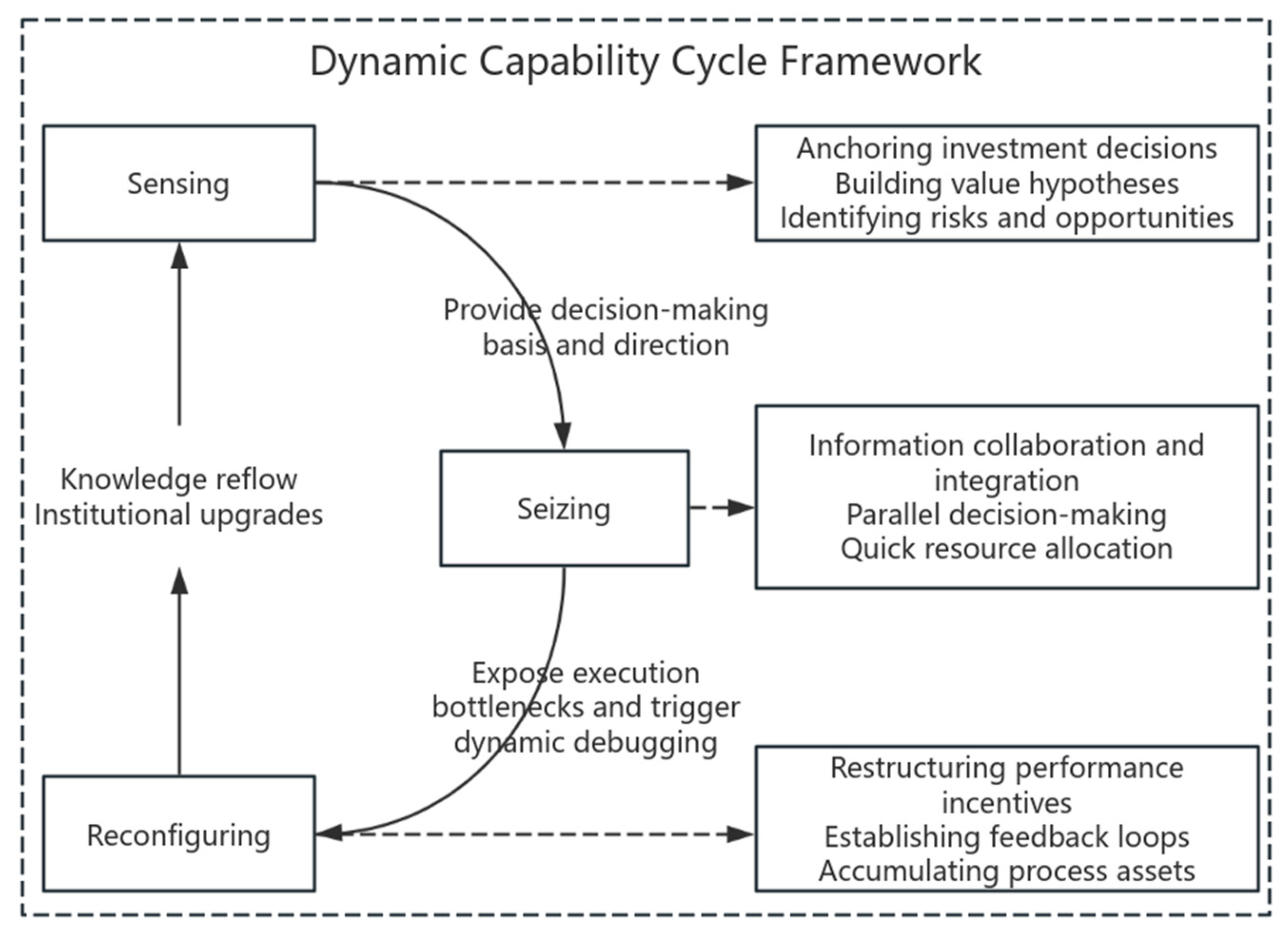
Within this cycle, sensing is the starting point. The unified NPV value anchor, early involvement of operations, and cross-phase trade-off checklists enable the project, even before technical schemes are locked in, to identify key coupling points and potential conflicts among structure, MEP, façade, and operations. These potential issues are reframed from dispersed local problems into structured cross-phase trade-off topics. Equipped with complete evidence packages, these topics enter the joint decision-making platform, triggering the routines associated with seizing. On a shared BIM/CIM digital base map and within a relatively balanced power structure, multiple parties conduct collaborative trade-offs around a common set of data and, within a limited time window, arrive at executable resource-allocation decisions. At this stage, information symmetry and power symmetry are concretized into observable behavioral patterns—shorter decision cycles, higher closure rates, and reduced rework risks (Figure 4).
As the project advances, the implementation outcomes of major decisions, together with operational performance data, are continuously incorporated into the knowledge base and process system through structured evaluation and feedback mechanisms. This ongoing incorporation constitutes the core of reconfiguring. Through a systematic pilot–evaluation–standardization process, a subset of validated practices—such as the NPV-centered approach to system selection, the asynchronous BIM coordination workflow, and construction strategies for metro interface conditions—is formalized into standard operating procedures, internal technical guidelines, and training materials, thereby becoming codified organizational knowledge. In subsequent projects, these updated standards, tools, and processes serve as the initial reference point in the sensing phase, enabling project teams to identify opportunities and risks earlier and with greater accuracy and scope.
SSR should therefore be understood not as three separate process categories, but as a dynamic cycle of sensing, seizing, reconfiguring, and renewed sensing. Its significance lies less in the presence of each individual component than in the continuous linkage that sustains the cycle. Without sensing, the organization is unable to identify opportunities that warrant resource mobilization; without seizing, detected opportunities dissipate within complex hierarchical structures; without reconfiguring, effective practices developed within individual projects fade quickly after completion and cannot accumulate into cross-project capabilities.
Evidence from the Hemei Center project indicates that, under the investment-led F+EPC+O institutional arrangement, the SSR cycle enhances collaboration efficiency within a single project and, more importantly, converts technological, informational, organizational, and environmental complexity from a source of risk into a resource that can be systematically absorbed and utilized within the capability system. This process of complexity absorption forms the micro-foundation through which investment-led organizations develop dynamic competitive advantages in the context of SHBs projects.

4.4. Validation of Dynamic Capabilities and Benefit Analysis

This section evaluates the operational effectiveness of the Sensing–Seizing–Reconfiguring (SSR) dynamic-capability mechanism and examines its contribution to overall project performance. This study employs a dual-path analytical approach, combining weakly quantitative indicators with benefit attribution. Using project archives, BIM/CIM platform logs, internal meeting records, and corporate audit data, the study systematically assesses the institutional foundations, operational expressions, and economic outcomes associated with each component of the capability system.
In terms of indicator design, the operational characteristics of dynamic capabilities are translated into observable variables: sensing corresponds to value identification and trade-off efficiency; seizing corresponds to information coordination and decision-response speed; and reconfiguring corresponds to knowledge feedback and improvements in operation-and-maintenance (O&M) performance. The results show that each set of indicators is highly consistent with its underlying institutional foundation, indicating that the three institutional designs—incentive unity, power symmetry, and an extended temporal horizon—are effectively translated into dynamic capability mechanisms in practice. In the sensing stage, the unified NPV evaluation and early involvement of operations enable the organization to achieve a full lifecycle value focus. In the seizing stage, routines built on the BIM/CIM platform and the joint decision-making mechanism allow information flows and power flows to operate in parallel, significantly improving issue-closure rates and response speed. In the reconfiguring stage, under conditions of long-term accountability, performance feedback and knowledge-reuse mechanisms support continuous improvement and experiential accumulation, thereby forming a dynamic learning loop.
Four weakly quantitative indicators—NPV improvement rate, issue-closure rate, decision-response timeliness, and knowledge reuse rate—show significant improvement, confirming both the observability and the operational stability of dynamic capabilities in complex engineering projects (see Table 3).
From the perspective of benefit attribution, the benefit-attribution analysis of dynamic capabilities presented in Table 4 shows that the three types of capabilities within the SSR mechanism jointly generate quantifiable economic and coordination gains through their synergistic effects. According to the group’s 2024 audit data, the project achieved approximately 9989 thousand USD in direct economic gains over its lifecycle. Among these, the sensing stage—through cross-phase value identification—contributed about 4854 thousand USD in NPV improvement, accounting for 48.6% of the total. The seizing stage—relying on digital collaboration—saved approximately 1801 thousand USD in rework and delay losses, accounting for 18.0%. The reconfiguring stage—through feedback from operations, knowledge reuse, and O&M optimization—saved about 1365 thousand USD or 13.7%. The remaining roughly 1970 thousand USD, accounting for 19.7%, constitutes indirect benefits arising from improved organizational coordination and risk control.
From a longitudinal perspective, if the current feedback and reuse mechanisms are maintained, the project’s net present value over a 20-year lifecycle is expected to be approximately 11.8% higher than under a traditional EPC model, with energy-saving and maintenance-related benefits accounting for roughly one-third of the total. This indicates that the economic value of SSR capabilities manifests not only in short-term performance improvements, but, more importantly, in the sustained accumulation of long-term value.
Overall, the analysis shows that dynamic capabilities are the key mediating mechanism linking institutional integration and performance improvement. The three capabilities—sensing, seizing, and reconfiguring—respectively, undertake the functions of opportunity identification, resource allocation, and learning-based renewal, and together form a stable evolutionary chain under the investment-led F+EPC+O model. At the economic level, the project has achieved a shift from cost saving to value enhancement. At the organizational level, information flows, decision flows, and knowledge flows are integrated into a closed loop, significantly improving coordination efficiency and organizational memory. At the institutional level, incentive unity, power symmetry, and temporal extension are translated by the dynamic-capability mechanism into executable routines of everyday governance. Taken together, the SSR mechanism is not only validated theoretically, but also empirically demonstrated as an effective core for full lifecycle governance.

5. Discussion

This study seeks to address a core question: in the highly complex project environment of SHBs, how an investment-led F+EPC+O model can achieve integrated collaboration across project phases? Based on an explanatory case analysis, the findings indicate that institutional integration alone—namely, structural unification achieved through incentive unity, power symmetry, and an extended temporal horizon—does not automatically translate into cross-phase collaboration and continuous learning. Rather, these institutional features only complete the transformation chain from structural integration to capability integration and ultimately to value integration when they are activated into a stable and operational system of dynamic capabilities, that is, Sensing–Seizing–Reconfiguring (SSR). Section 5 is organized around this logic and aims to deepen the implications of the findings from three perspectives: theoretical extension, conceptual construction, and cross-model comparison.

5.1. From Institutional Integration to Capability Integration

Existing integrated-governance models such as EPC, IPD, and PPP generally assume that cross-phase collaboration can be enhanced through organizational-boundary restructuring, risk sharing, and contractual integration [73,74]. However, this study finds that such models place greater emphasis on external contractual coordination than on internal capability formation [75]. Their collaborative foundation relies on contractual mechanisms, relational capital, or incentive complementarity, but does not necessarily produce a sustainable learning structure. In particular, under engineering conditions characterized by multi-disciplinary coupling and high uncertainty, contractual coordination alone cannot adequately address endogenous issues such as cross-phase knowledge flows, cognitive alignment, and complexity absorption. By contrast, the F+EPC+O model, through a unified incentive logic, a symmetrical power structure, and an extended temporal horizon, provides institutional soil for the emergence of dynamic capabilities.
Yet this form of institutional integration does not automatically translate into collaborative behavior; institutions are only truly activated when they are embedded in organizational routines of sensing, seizing and reconfiguring. On this basis, the paper argues for a necessary shift from institutional integration to capability integration. Institutional integration is the precondition for the emergence of dynamic capabilities, but only when institutions are woven into the organization’s sensing, decision, and reconfiguring can they be transformed into a capability system that supports sustained collaboration.
More specifically, the three institutional features act as catalytic factors for the corresponding dimensions of dynamic capabilities. Incentive unity, by providing a shared value anchor (such as NPV), shapes the organization’s cognitive focus and enables systematic identification of cross-phase opportunities. Power symmetry restructures information flows and decision flows, allowing different functional actors to allocate resources around a common informational base map and thereby realize distributed adjudication. An extended temporal horizon, by lengthening the performance cycle, binds short-term execution behavior to long-term operational outcomes and thus catalyzes the institutionalization of learning and feedback mechanisms.
The main contribution of articulating the shift from institutional integration to capability integration is that it elucidates the process mechanisms that have remained implicit in prior research on institutional integration. Traditional institutional designs often assume that institutions will naturally produce collaboration, whereas this study reveals that institutions only exert their real effects once they trigger dynamic capabilities. In other words, institutional integration is not an end in itself, but rather the structural soil for capability formation. For research on integrated governance, this insight shifts the analytical focus from “how institutions are designed” to “how institutions are organizationally absorbed and enacted,” thereby providing a new conceptual basis for understanding the causal chain linking institutions, capabilities, and performance.

5.2. Project-Level Operationalization of Dynamic Capabilities

DCT is typically discussed at the level of corporate strategy, where its core concern is to explain how firms sense environmental change, seize opportunities, and reconfigure resources in order to maintain adaptability and competitive advantage [76]. However, the application of dynamic capabilities to project governance has long faced two constraints [77,78]. First, the temporary nature of project organizations and their multi-actor structure make it difficult to form enduring capabilities. Second, the SSR framework is often treated as an abstract set of capabilities, lacking observable organizational routines as its micro-foundations [79]. The theoretical contribution of this study lies in re-embedding the SSR framework within the context of project governance and operationalizing it as a set of measurable organizational routines. This operationalization has three main aspects.
First, in the project context, sensing is redefined as a value-focusing mechanism. In an investment-led organization, a unified value anchor—such as lifecycle NPV—serves as the core basis for cross-phase judgment, enabling the organization to make early decisions using future value as the evaluation criterion. In this way, sensing extends beyond the conventional notion of environmental scanning found in traditional literature and becomes an institutionalized process of value-oriented perception, thereby strengthening the consistency of judgments across multiple interacting project phases.
Second, Seizing is dedicated to building a collaborative distributed adjudication system. Under the F+EPC+O model, the combination of a symmetrical power structure and digital platforms enables multi-disciplinary actors to form consensus on the basis of shared information, thereby shifting decision-making from hierarchical approval to collective adjudication. This mechanism shows that the effective exercise of dynamic capabilities does not depend on centralized authority, but on opportunity capture achieved through the joint functioning of information symmetry and collective decision-making.
Third, reconfiguring is redefined as institutionalized learning. As the project time horizon is significantly extended, the organization must systematically process feedback from the operation phase and incorporate it into a long-term learning process. Reconfiguring thus assumes a dual function of problem correction and knowledge accumulation. Through knowledge codification, process updates, and standard revision, experience can be transferred across projects and form a sustainable capability base. This demonstrates that dynamic capabilities do not have to rely on a stable organizational structure; they can also be sustained in project-based organizations through institutionalized learning.
Taken together, this study transforms SSR from an abstract, strategy-level construct into a set of operational organizational routines within project governance, thereby filling a micro-foundation gap in the application of DCT to project settings. More importantly, the analysis shows that project-based organizations are not inherently incapable of sustaining capabilities; rather, they can build extensible and cumulative systems of dynamic capabilities through institutionalized routines.

5.3. Viewing Dynamic Capabilities as a Mechanism for Complexity Absorption

In highly complex engineering contexts such as SHBs construction, uncertainty arises from structural factors including deep technological coupling, informational heterogeneity, divergent objectives among multiple actors, and long-term operational constraints [80,81]. Although traditional integrated frameworks such as EPC, IPD, and PPP emphasize collaboration and learning, their logic of integration relies primarily on contractual arrangements, process standardization, or relational capital. Their learning mechanisms are essentially exogenous and project-specific: learning depends on contract duration, the stability of cooperative relationships, and external incentive structures [82,83]. Once contracts expire or organizations are reconfigured, knowledge and collaborative patterns often fail to extend across projects [84]. As a result, such models are better suited to handling foreseeable coordination problems than to endogenously absorbing and transforming systemic complexity that spans phases, disciplines, and time scales.
The superiority of the F+EPC+O–SSR model lies in the fact that its logic of integration fundamentally shifts from contract-oriented to capability-oriented, constructing dynamic capabilities as a mechanism for complexity absorption. By unifying organizational boundaries, tying actors to long-term value responsibilities, and embedding collaboration into institutionalized routines, SSR ceases to be an occasional learning event within individual projects and instead becomes a persistent internal capability structure that can accumulate and transfer across projects [85,86]. In this way, collaboration and learning are no longer dependent on specific contractual arrangements but become endogenous attributes of the organization. This allows the F+EPC+O–SSR model to handle accumulating uncertainty in highly complex environments in a stable manner and to transform disturbances into components of future capability. From this perspective, the F+EPC+O–SSR arrangement should not be understood merely as a stronger form of integration; rather, it reflects a paradigmatic shift from exogenous contractual integration toward endogenous capability integration. This transition helps explain why, in the context of SHBs projects, it demonstrates higher consistency across project phases, greater transferability across different projects, and stronger potential for long-term evolutionary development compared with IPD or PPP models.

5.4. Practical Contributions

This study offers three actionable insights for governance innovation in SHBs projects and other complex engineering contexts.
First, establishing a lifecycle value evaluation framework is foundational for achieving effective collaboration. However, its efficacy lies not in the tools themselves but in institutional design mechanisms—such as the evidence-package system and early-stage operational participation—that compel decision-makers to integrate operational constraints into front-end evaluations. Second, investments in digital platforms must be accompanied by deliberate organizational process design. The value of BIM/CIM depends on the presence of clearly defined issue-management mechanisms, including responsibility allocation, response timeframes, and closure verification. Without these procedural supports, digital platforms risk becoming information repositories rather than instruments of coordination. Finally, institutionalizing feedback loops from operation to design requires a perspective that extends beyond single projects. By building a structured knowledge base and formal standards revision processes, project experiences can be transformed into organizational capability assets. This ensures that lessons learned are not merely archived but reincorporated into future decision-making, enabling cumulative learning and continuous improvement.

6. Conclusions

Using the CCCC Xiamen Hemei Center SHBs complex as an explanatory case, this study explores how an investment-led F+EPC+O model (financing–design and construction–operation) can achieve full lifecycle coordination through a dynamic capabilities mechanism. The findings show that institutional integration alone does not automatically lead to effective collaboration. Only when a dynamic cycle of three-dimensional capabilities—sensing, seizing, and reconfiguring—is formed within the organization can complexity be transformed into a source of collaborative advantage, enabling a leap from capability integration to value integration.
The findings indicate that an investment-led F+EPC+O model provides three critical preconditions for the emergence of dynamic capabilities. Incentive unity ensures that goals at all stages are anchored to the maximization of long-term net present value (NPV) through full-cycle responsibility binding, thereby eliminating the tendency toward local optimization. Power symmetry—achieved through an internally integrated decision structure—mitigates principal–agent conflicts and allows technical information and decision-making authority to flow in parallel. An extended temporal horizon—through the extension of responsibility into the operation phase—encourages the organization to establish feedback loops that transform operational experience into institutionalized learning. By introducing weakly quantitative indicators such as issue-closure rate, decision-response timeliness, and knowledge reuse rate as proxies, this study further validates the transformation pathway from institutional integration (incentive unity, power symmetry, extended temporal horizon) to capability integration (sensing–seizing–reconfiguring), thereby providing an operational approach to measuring dynamic capabilities in complex engineering projects.
The study also identifies the concrete operational mechanisms of the three-dimensional dynamic capabilities at the project level. Sensing achieves cognitive focusing and anticipatory information processing through full lifecycle value anchoring and cross-phase trade-off identification. Seizing, built on digital platforms and joint decision-making mechanisms, transforms information symmetry into efficient decision-making and rapid response. Reconfiguring enables organizational learning and continuous optimization through performance feedback, knowledge accumulation, and standard revision. Together, these three capabilities form a sensing–seizing–reconfiguring–re-sensing cycle, enabling an investment-led organization to continuously learn, anticipate risks, and proactively evolve in the highly complex environment of SHBs projects, thereby achieving full lifecycle coordination and value maximization.
This study has several limitations. First, the single-case design restricts the external validity of the findings. The Hemei Center project’s strong resource base and governance maturity may not be representative of other organizations. To partly mitigate this limitation, we employed process tracing to strengthen internal validity; nevertheless, broader empirical variation is needed. Future research should therefore incorporate multi-case comparisons across firms of different sizes, ownership types, and capability bases to identify boundary conditions and moderating effects. Second, data collection concluded at the trial-operation stage, preventing assessment of the long-term stability of dynamic capabilities. Whether knowledge depreciates or feedback loops weaken over time remains unknown. Longitudinal studies using operational indicators—such as energy consumption, maintenance costs, and user satisfaction—would help trace the evolution of the SSR cycle and validate capability persistence. Third, case studies inherently limit causal inference. Future quasi-experimental designs and cross-project comparisons, especially in firms implementing F+EPC+O across multiple projects, would provide more robust tests of the causal mechanisms and examine capability transferability.
Finally, the external applicability of the F+EPC+O–SSR model is expected to depend on three preconditions: incentive unity, power symmetry, and institutionalized feedback. Different types of organizations will need to assess their own conditions against these requirements. Large state-owned enterprises (as in this case) typically enjoy advantages in resources and long-term orientation but may face challenges related to organizational inertia. Private enterprises may be more advantageous in terms of decision-making flexibility and digital adoption but must contend with constraints in long-term financing and risk-bearing capacity. The F+EPC+O–SSR model should therefore not be viewed as a universal remedy, but as a governance innovation that must be carefully adapted to specific organizational and project contexts. Future cross-case comparative studies should aim to verify these boundary conditions and further distinguish which factors constitute necessary conditions for the model to hold and which serve as amplifying conditions that enhance its effectiveness, thereby providing differentiated implementation guidance for different types of organizations.

Author Contributions

Conceptualization, J.P. and Q.Z.; methodology, Y.S.; software, H.L.; validation, Q.X.; formal analysis, Q.Z.; investigation, J.P.; resources, J.P. and Y.S.; data curation, J.P.; writing—original draft preparation, Q.Z.; writing—review and editing, Q.Z.; visualization, H.L. and Q.X.; supervision, M.Y.; project administration, M.Y.; funding acquisition, M.Y. All authors have read and agreed to the published version of the manuscript.

Funding

This work was supported by the National Natural Science Foundation (No. 52278061), and the Xiamen Key Laboratory of Ecological Building Construction and Key Laboratory of Eco-habitats along the Southeast Coast of Fujian Province.

Data Availability Statement

The original contributions presented in this study are included in the article. Further inquiries can be directed to the corresponding author.

Acknowledgments

The authors would like to express their sincere appreciation to all individuals and organizations that provided support throughout the preparation of this study. We gratefully acknowledge the administrative and technical assistance offered by the project management and engineering teams involved in the Xiamen Hemei Center project, as well as the colleagues who contributed valuable discussions, data access, and operational coordination during various stages of the research. The authors also thank the BIM/CIM technical personnel for their support in data extraction and platform operation, and the interview participants whose insights greatly enriched the study. During the preparation of this manuscript, the authors used ChatGPT (OpenAI, GPT-5.1 model) for the purposes of language polishing and improving clarity of expression. The authors have reviewed and edited all generated content and take full responsibility for the final version of this publication.

Conflicts of Interest

Author Ji Pan, Yu Su, Huiting Lin, and Qianlan Xu were employed by the company Xiamen CCCC Investment Company Ltd. The remaining authors declare that the research was conducted in the absence of any commercial or financial relationships that could be construed as a potential conflict of interest.

Abbreviations

The following abbreviations are used in this manuscript:
F+EPC+OFinancing–Engineering, Procurement and Construction–Operation
SHBsSuper-high-rise buildings
DCTDynamic Capabilities Theory
SSRSensing–Seizing–Reconfiguring
BIMBuilding Information Modeling
CIMCity Information Modeling
NPVNet present value
O&MOperation and maintenance
DBBDesign–Bid–Build
EPCEngineering, Procurement and Construction
IPDIntegrated Project Delivery
PPPPublic–Private Partnership

Appendix A

Table A1. Typical system cross-phase trade-offs and NPV impact.
No.CategoryInitial Preferred SchemeAdjusted SchemeInvestment Difference
USD (Thousand)
Construction Impact20-Year NPV Improvement
USD (Thousand)
Net Benefit
(NPV—Investment) USD (Thousand)
1Structural System OptimizationConventional frame + SRC columns (RC beams)CFT columns + steel beams (including ring trusses)4502Construction period reduced by approximately 27% (from 448 to 326 days)57681266
2Structural–Architectural CoordinationLower V-shaped column with conventional frame + core tubeCFT columns + steel beams + ring trusses3517Construction period shortened by approximately 20%; simplified working platform4502985
3Structural System SelectionMegacolumn frame + core tubeConventional frame + core tube−9848Construction complexity significantly reduced365813,506
4Material System SelectionSRC composite column systemCFT composite column system2110Each floor cycle shortened by approximately 3.5 days2673563
5Banquet Hall Spatial StructureLarge truss on west sideSmall truss configuration−704Simplified hoisting and reduced schedule duration4221126
6Cooling Source System Configuration4 × 1200 RT (equal capacity)3 × 1200 RT + 1 × 600 RT4221337915
Table A2. BIM/CIM Platform monitoring data.
No.DisciplineAreaTypeQuantity
1Architectural/StructuralBasementIntra-disciplinary27
2Inter-disciplinary24
3PodiumIntra-disciplinary11
4Inter-disciplinary9
5TowerIntra-disciplinary8
6Inter-disciplinary9
7MEPBasementElectrical327
8Plumbing and Drainage385
9HVAC131
10Combined126
11PodiumElectrical134
12Plumbing and Drainage128
13HVAC95
14Combined78
15TowerElectrical217
16Plumbing and Drainage195
17HVAC186
18Combined117
Total2207
Table A3. Construction process simulation.
No.Application ScenarioChallengesApplied Technology/ProcessMain Outcomes
1Subway Entrance Support RemovalMultiple units working in confined space with high safety risksBIM-based construction organization simulation and optimizationOptimized the support scheme (from six stages and five supports to four stages and three supports), reducing complexity and risk while improving safety and efficiency.
2Pile Foundation ConstructionComplex geology with boulders and large variations in pile lengthC3D + BIM simulation for composite hole forming; ArchiCAD-based parametric pile length calculationShortened the construction schedule by 15 days; achieved a 98.3% qualified rate for pile bearing depth; reduced pile head cutting rate (96.3% of piles with trimming depth < 0.5 m).
3Core Tube ClimbingTight schedule for a SHBs structureAsynchronous climbing formwork technique combined with Revit-based dynamic simulationAccurately verified the vertical flow rhythm of construction, overcoming traditional scheduling bottlenecks.
4Inclined Wall at High AltitudeHigh-altitude variable cross-section (floors 27–31) with high difficulty and riskBIM-based scheme comparison; composite scaffolding system (climbing + cantilever) with dynamic simulation briefingEnsured stability and safety of complex high-altitude variable-section construction and improved operational efficiency.
5Y-shaped Steel ColumnComplex joint geometry, heavy components, and high installation precisionTekla-based detailed design, Revit-based clash detection, and virtual hoisting simulationProvided accurate construction references, ensured smooth installation of components, and improved precision and efficiency.
6High Formwork SystemHeavy loads and large support height (up to 28.57 m)BIM-based simulation and verification combined with modular ring-lock scaffoldingEnsured structural safety of high formwork systems, achieved precise quantity estimation, and reduced on-site rework and clashes.
7Mass Concrete PouringHigh risk of temperature-induced cracking due to heat of hydration4D-BIM dynamic simulation of the pouring processOptimized pouring sequence and strategy, ensuring construction quality and schedule control.
8Heavy Steel Column InstallationExtremely heavy components (up to 19 tons) with high hoisting risksSegmented component assembly, Midas structural stress analysis, and BIM-based hoisting simulationEnsured hoisting safety, eliminated the need for larger cranes, and improved resource utilization efficiency.
9Vertical Shaft of SHBsComplex vertical pipelines; high collision risk in traditional 2D designBIM-based 3D modeling and clash detectionEliminated pipeline collisions at the design stage, fundamentally preventing on-site rework and repair.
10Intelligent RobotsComplex curved-surface layout prone to manual errors; time-consuming measurement processLayout robot using Rhino for coordinated extraction; measurement and inspection robotEliminated human errors in complex layout tasks and significantly improved measurement efficiency (from three workers in 60 min to one worker in 4 min).
11Prefabricated Equipment RoomLow efficiency and poor quality control in traditional on-site constructionBIM integration with factory prefabrication (BIM + prefabricated system)Achieved substantial quality improvement, doubled efficiency through parallel operations, and maximized resource utilization.
12Welding RobotsLarge welding volume and stringent quality requirements in steel structuresBIM-based standardized modeling with sensor-integrated welding robotsAchieved a 99.9% weld pass rate, significantly improved welding efficiency and quality, and reduced labor costs.

References

  1. Ahlfeldt, G.M.; Barr, J. The economics of skyscrapers: A synthesis. J. Urban Econ. 2022, 129, 103419. [Google Scholar] [CrossRef]
  2. Gong, J.; Fang, T.; Zuo, J. A Review of Key Technologies Development of Super High-Rise Building Construction in China. Adv. Civ. Eng. 2022, 2022, 5438917. [Google Scholar] [CrossRef]
  3. Council on Tall Buildings and Urban Habitat (CTBUH). CTBUH Height Criteria for Measuring & Defining Tall Buildings; CTBUH: Chicago, IL, USA, 2017. [Google Scholar]
  4. 2005 GB; General Principles of Civil Building Design. China Architecture & Building Press: Beijing, China, 2005.
  5. Bahramian, M.; Yetilmezsoy, K. Life cycle assessment of the building industry: An overview of two decades of research (1995–2018). Energy Build. 2020, 219, 109917. [Google Scholar] [CrossRef]
  6. Mok, K.Y.; Shen, G.Q.; Yang, J. Stakeholder management studies in mega construction projects: A review and future directions. Int. J. Proj. Manag. 2015, 33, 446–457. [Google Scholar] [CrossRef]
  7. Sacks, R.; Girolami, M.; Brilakis, I. Building information modelling, artificial intelligence and construction tech. Dev. Built Environ. 2020, 4, 100011. [Google Scholar] [CrossRef]
  8. Patacas, J.; Dawood, N.; Kassem, M. BIM for facilities management: A framework and a common data environment using open standards. Autom. Constr. 2020, 120, 103366. [Google Scholar] [CrossRef]
  9. Denicol, J.; Davies, A.; Krystallis, I. What are the causes and cures of poor megaproject performance? A systematic literature review and research agenda. Proj. Manag. J. 2020, 51, 328–345. [Google Scholar] [CrossRef]
  10. Li, Y. Research on the ecological value of railway construction investment financing + EPC + operation and maintenance model. Value Eng. 2019, 38, 68–70. [Google Scholar] [CrossRef]
  11. Wang, J. Research on Risk Management of Major Projects Under PPP + EPC Model; South China University of Technology: Guangzhou, China, 2024. [Google Scholar] [CrossRef]
  12. Dam-Krogh, E.P.; Rupp, R.F.; Clausen, G.; Toftum, J. Scoping review of post occupancy evaluation of office buildings with focus on indoor environmental quality and productivity. J. Build. Eng. 2024, 86, 108911. [Google Scholar] [CrossRef]
  13. Denicol, J.; Davies, A.; Pryke, S. The organisational architecture of megaprojects. Int. J. Proj. Manag. 2021, 39, 339–350. [Google Scholar] [CrossRef]
  14. Yin, Z.; Caldas, C.; de Oliveira, D.; Kermanshachi, S.; Pamidimukkala, A. Cross-functional collaboration in the early phases of capital projects: Barriers and contributing factors. Proj. Leadersh. Soc. 2023, 4, 100092. [Google Scholar] [CrossRef]
  15. Davies, A.; Mackenzie, I. Project complexity and systems integration: Constructing the London 2012 Olympics and Paralympics Games. Int. J. Proj. Manag. 2014, 32, 773–790. [Google Scholar] [CrossRef]
  16. Winch, G.M. Three domains of project organising. Int. J. Proj. Manag. 2014, 32, 721–731. [Google Scholar] [CrossRef]
  17. Brady, T.; Davies, A. Managing structural and dynamic complexity: A tale of two projects. Proj. Manag. J. 2014, 45, 21–38. [Google Scholar] [CrossRef]
  18. Teece, D.J.; Pisano, G.; Shuen, A. Dynamic capabilities and strategic management. Strateg. Manag. J. 1997, 18, 509–533. [Google Scholar] [CrossRef]
  19. Teece, D.J. Business models and dynamic capabilities. Long Range Plan. 2018, 51, 40–49. [Google Scholar] [CrossRef]
  20. Teece, D.J. The evolution of the dynamic capabilities framework. Artif. Sustain. Entrep. 2023, 113, 238. [Google Scholar]
  21. Bechtel, J.; Kaufmann, C.; Kock, A. The interplay between dynamic capabilities’ dimensions and their relationship to project portfolio agility and success. Int. J. Proj. Manag. 2023, 41, 102469. [Google Scholar] [CrossRef]
  22. Aghimien, D.; Aigbavboa, C.; Matabane, K. Dynamic capabilities for construction organizations in the fourth industrial revolution era. Int. J. Constr. Manag. 2023, 23, 855–864. [Google Scholar] [CrossRef]
  23. Ling, F.Y.Y.; Chan, S.L.; Chong, E.; Ee, L.P. Predicting performance of design-build and design-bid-build projects. J. Constr. Eng. Manag. 2004, 130, 75–83. [Google Scholar] [CrossRef]
  24. Almuhannadi, M.A.; Ghareeb, A.S. Enhancing design–bid–build project delivery: A comprehensive review and framework for contractor selection and project optimisation in the construction industry. Organ. Technol. Manag. Constr. 2024, 16, 63–80. [Google Scholar] [CrossRef]
  25. Park, J.; Kwak, Y.H. Design-bid-build (DBB) vs. design-build (DB) in the US public transportation projects: The choice and consequences. Int. J. Proj. Manag. 2017, 35, 280–295. [Google Scholar] [CrossRef]
  26. Wang, S.; Liu, X. Development of EPC model in Chinese public projects: Evolutionary game among stakeholders. J. Asian Archit. Build. Eng. 2022, 21, 2095–2113. [Google Scholar] [CrossRef]
  27. Walker, D.H.; Rowlinson, S. The global state of play of IPD. In Routledge Handbook of Integrated Project Delivery; Routledge: Oxfordshire, UK, 2019; pp. 41–66. [Google Scholar]
  28. Criado, R. A critical review of the presentation-practice-production model (PPP) in foreign language teaching. Homen. A Fr. Gutiérrez Díez 2013, 6, 97–115. [Google Scholar]
  29. Mahdi, I.; Abdelkhaleq, A.M.; Hassan, H.M.; Tolba, E.R.; Raed, L. Risk categorization for various project delivery methods in construction sector. In International Work-Conference on Bioinformatics and Biomedical Engineering; Springer Nature: Cham, Switzerland, 2023; pp. 579–592. [Google Scholar]
  30. Abdel-Galil, E.; Ibrahim, A.H.; Alborkan, A. Assessment of transaction costs for construction projects. Int. J. Constr. Manag. 2022, 22, 1618–1631. [Google Scholar] [CrossRef]
  31. Wu, H.; Qian, Q.K.; Straub, A.; Visscher, H.J. Factors influencing transaction costs of prefabricated housing projects in China: Developers’ perspective. Eng. Constr. Archit. Manag. 2022, 29, 476–501. [Google Scholar] [CrossRef]
  32. Wang, J.; Bai, S. Evolutionary Game-Based Research on Risk Sharing in Major Projects under the EPC + PPP Mode Considering Secondary Risks. Buildings 2023, 13, 2443. [Google Scholar] [CrossRef]
  33. Rashed, A.; Mutis, I. Trends of integrated project delivery implementations viewed from an emerging innovation framework. Eng. Constr. Archit. Manag. 2023, 30, 989–1014. [Google Scholar] [CrossRef]
  34. Osipova, E. Establishing cooperative relationships and joint risk management in construction projects: Agency theory perspective. J. Manag. Eng. 2015, 31, 05014026. [Google Scholar] [CrossRef]
  35. Park, S.; Moon, M.J. Fixing big government or feeding private contractors? Empirical evidence from the case of municipal solid waste management. Aust. J. Public Adm. 2023, 82, 116–132. [Google Scholar] [CrossRef]
  36. Chang, W.; Li, X.; Song, X.; Zhang, R.; Li, Y.; Yin, Y. Solving the Two-Stage Design Interest Paradox Between Chinese EPC Project Owners and General Contractors: A Case Study. Buildings 2025, 15, 3162. [Google Scholar] [CrossRef]
  37. Engebø, A.; Lædre, O.; Young, B.; Larssen, P.F.; Lohne, J.; Klakegg, O.J. Collaborative project delivery methods: A scoping review. J. Civ. Eng. Manag. 2020, 26, 278–303. [Google Scholar] [CrossRef]
  38. Rönndahl, C.; Bosch-Sijtsema, P.; Rempling, R.; Karlsson, M. Making sense of collaboration in major infrastructure construction projects. Proj. Leadersh. Soc. 2025, 6, 100178. [Google Scholar] [CrossRef]
  39. Uusitalo, P.; Seppänen, O.; Peltokorpi, A.; Olivieri, H. Solving design management problems using lean design management: The role of trust. Eng. Constr. Archit. Manag. 2019, 26, 1387–1405. [Google Scholar] [CrossRef]
  40. Dzhusupova, R.; Shteriyanov, V.; Bosch, J.; Olsson, H.H. Smart Material Estimation for the Engineering, Procurement, and Construction (EPC) Sector. Results Eng. 2025, 27, 105802. [Google Scholar] [CrossRef]
  41. Ríos, F.; Peña, C.; Agnese, P. Mining for efficiency: How blockchain could boost productivity in Chile’s copper industry. Miner. Econ. 2025, 1–51. [Google Scholar] [CrossRef]
  42. Zhou, S. Practical exploration of financial empowerment of design enterprises in the whole chain of F+EPC+O: Transformation from value protection to ecological co-construction. Archit. Des. Manag. 2025, 42, 16–24. [Google Scholar]
  43. Chen, L. Risk management of the whole life cycle of real estate construction projects under the F+EPC+O model. Juye 2025, 188–190. Available online: https://cstj.cqvip.com/Qikan/Article/Detail?id=7201405301 (accessed on 18 July 2025).
  44. Xu, D. Research on Optimization of Wuhan Liankong Project Development Model; Huazhong University of Science and Technology: Wuhan, China, 2024. [Google Scholar] [CrossRef]
  45. Penrose, E.T. The Theory of the Growth of the Firm; Oxford University Press: Oxfordshire, UK, 2009. [Google Scholar]
  46. Barney, J. Firm resources and sustained competitive advantage. J. Manag. 1991, 17, 99–120. [Google Scholar] [CrossRef]
  47. Wang, C.L.; Ahmed, P.K. Dynamic capabilities: A review and research agenda. Int. J. Manag. Rev. 2007, 9, 31–51. [Google Scholar] [CrossRef]
  48. Barreto, I. Dynamic capabilities: A review of past research and an agenda for the future. J. Manag. 2010, 36, 256–280. [Google Scholar] [CrossRef]
  49. Ambrosini, V.; Bowman, C.; Collier, N. Dynamic capabilities: An exploration of how firms renew their resource base. Br. J. Manag. 2009, 20, S9–S24. [Google Scholar] [CrossRef]
  50. Teece, D.J.; Pisano, G.P.; Shuen, A. Dynamic capabilities and strategic management. In Center for Research in Management; University of California: Berkeley, CA, USA, 1992. [Google Scholar]
  51. Winter, S.G. Understanding dynamic capabilities. Strateg. Manag. J. 2003, 24, 991–995. [Google Scholar] [CrossRef]
  52. Eisenhardt, K.M.; Martin, J.A. Dynamic capabilities: What are they? In The SMS Blackwell Handbook of Organizational Capabilities; Blackwell Publishing Ltd.: Oxford, UK, 2017; pp. 341–363. [Google Scholar] [CrossRef]
  53. Teece, D.J. Explicating dynamic capabilities: The nature and microfoundations of (sustainable) enterprise performance. Strateg. Manag. J. 2007, 28, 1319–1350. [Google Scholar] [CrossRef]
  54. Laaksonen, O.; Peltoniemi, M. The essence of dynamic capabilities and their measurement. Int. J. Manag. Rev. 2018, 20, 184–205. [Google Scholar] [CrossRef]
  55. Bornay-Barrachina, M.; López-Cabrales, Á.; Salas-Vallina, A. Sensing, seizing, and reconfiguring dynamic capabilities in innovative firms: Why does strategic leadership make a difference? BRQ Bus. Res. Q. 2025, 28, 399–420. [Google Scholar] [CrossRef]
  56. Patrício, V.; Costa, R.L.D.; Carvalho, H.; Pereira, L.; Dias, Á.; Gonçalves, R. Investigation model of sensing, seizing and reconfiguring capabilities. Int. J. Value Chain. Manag. 2022, 13, 395–421. [Google Scholar] [CrossRef]
  57. Li, B.; Teece, D.J.; Baskaran, A.; Chandran, V.G.R. Dynamic Knowledge Management: A dynamic capabilities approach to knowledge management. Technovation 2025, 147, 103316. [Google Scholar] [CrossRef]
  58. Davies, A.; Brady, T. Explicating the dynamics of project capabilities. Int. J. Proj. Manag. 2016, 34, 314–327. [Google Scholar] [CrossRef]
  59. Barbosa, M.T.; Carvalho, M.M. Enhancing sensing capabilities in project-based organizations: The role of knowledge transfer between commercial and operational teams. Int. J. Proj. Manag. 2025, 43, 102724. [Google Scholar] [CrossRef]
  60. Bonoma, T.V. Case research in marketing: Opportunities, problems, and a process. J. Mark. Res. 1985, 22, 199–208. [Google Scholar] [CrossRef]
  61. Leadley, S.; Jones, M.; Hocking, C. Case study methodology. In Qualitative Research Methodologies for Occupational Science and Occupational Therapy; Routledge: Oxfordshire, UK, 2023; pp. 105–126. [Google Scholar]
  62. Crowe, S.; Cresswell, K.; Robertson, A.; Huby, G.; Avery, A.S.; Sheikh, A. The case study approach. BMC Med. Res. Methodol. 2017, 11. [Google Scholar] [CrossRef]
  63. Yin, R.K. Case Study Research: Design and Methods; Sage: Thousand Oaks, CA, USA, 2009; Volume 5. [Google Scholar]
  64. Baxter, P.; Jack, S. Qualitative case study methodology: Study design and implementation for novice researchers. Qual. Rep. 2008, 13, 544–559. [Google Scholar] [CrossRef]
  65. Savolainen, J.M.; Saari, A.; Männistö, A.; Kähkonen, K. Indicators of collaborative design management in construction projects. J. Eng. Des. Technol. 2018, 16, 674–691. [Google Scholar] [CrossRef]
  66. Chua, D.K.H.; Tyagi, A.; Ling, S.; Bok, S.H. Process-parameter-interface model for design management. J. Constr. Eng. Manag. 2003, 129, 653–663. [Google Scholar] [CrossRef]
  67. Ge, Q. BIM applications in the Shanghai tower construction. In Proceedings of the CTBUH 2012 9th World Congress, Council on Tall Buildings and Urban Habitat, Shanghai, China, 19–21 September 2012. [Google Scholar]
  68. Konar, T. Mega-tall buildings: Current trends, challenges and future prospects. Discov. Civ. Eng. 2025, 2, 1–24. [Google Scholar] [CrossRef]
  69. Yin, R.K. Case Study Research and Applications; Sage: Thousand Oaks, CA, USA, 2018; Volume 6. [Google Scholar]
  70. Goertz, G. Multimethod Research, Causal Mechanisms, and Case Studies: An Integrated Approach; Princeton University Press: Princeton, NJ, USA, 2017. [Google Scholar]
  71. Seawright, J.; Gerring, J. Case selection techniques in case study research: A menu of qualitative and quantitative options. Political Res. Q. 2008, 61, 294–308. [Google Scholar] [CrossRef]
  72. Bosch-Rekveldt, M.; Jongkind, Y.; Mooi, H.; Bakker, H.; Verbraeck, A. Grasping project complexity in large engineering projects: The TOE (Technical, Organizational and Environmental) framework. Int. J. Proj. Manag. 2011, 29, 728–739. [Google Scholar] [CrossRef]
  73. Fischer, M.; Ashcraft, H.W.; Reed, D.; Khanzode, A. Integrating Project Delivery; John Wiley & Sons: Hoboken, NJ, USA, 2017. [Google Scholar]
  74. Jones, B. Integrated project delivery (IPD) for maximizing design and construction considerations regarding sustainability. Procedia Eng. 2014, 95, 528–538. [Google Scholar] [CrossRef]
  75. Jiang, X.; Wang, S.; Liu, Y.; Xia, B.; Skitmore, M.; Nepal, M.; Ghanbaripour, A.N. A method for the ontology-based risk management of PPP construction projects. Constr. Innov. 2023, 23, 1095–1129. [Google Scholar] [CrossRef]
  76. Tian, Z.; Wang, T.; Jiang, K.; He, Q.; Xue, Y.; Chen, X. How do public owners’ dynamic capabilities improve project resilience in megaprojects: A configurational perspective. Eng. Constr. Archit. Manag. 2025. [Google Scholar] [CrossRef]
  77. Adam, A.; Lindahl, G. Applying the dynamic capabilities framework in the case of a large public construction client. Constr. Manag. Econ. 2017, 35, 420–431. [Google Scholar] [CrossRef]
  78. Davies, A.; Dodgson, M.; Gann, D. Dynamic capabilities in complex projects: The case of London Heathrow Terminal 5. Proj. Manag. J. 2016, 47, 26–46. [Google Scholar] [CrossRef]
  79. Leiringer, R.; Zhang, S. Organisational capabilities and project organising research. Int. J. Proj. Manag. 2021, 39, 422–436. [Google Scholar] [CrossRef]
  80. Zhang, X.; Liu, M.; Le, Y.; Wei, J.; Zhu, Y.; Li, Y. Deconstructing organizational capabilities of megaproject owners: Dimensions and levels. J. Constr. Eng. Manag. 2023, 149, 04023055. [Google Scholar] [CrossRef]
  81. Vukomanović, M.; Cerić, A.; Brunet, M.; Locatelli, G.; Davies, A. Trust and governance in megaprojects. Int. J. Proj. Manag. 2021, 39, 321–324. [Google Scholar] [CrossRef]
  82. Wang, S.; Liu, X.; Liu, N. How to alter path dependency and promote the use of EPC model in public projects of China? PLoS ONE 2022, 17, e0266957. [Google Scholar] [CrossRef]
  83. Arar, A.J.; Poirier, E.; Staub-French, S. A capability maturity model for integrated project delivery. Buildings 2025, 15, 1733. [Google Scholar] [CrossRef]
  84. Zhang, S.; Liu, X.; Gao, Y.; Ma, P. Effect of level of owner-provided design on contractor’s design quality in DB/EPC projects. J. Constr. Eng. Manag. 2019, 145, 04018121. [Google Scholar] [CrossRef]
  85. Cavusgil, S.T.; Deligonul, S.Z. Dynamic capabilities framework and its transformative contributions. J. Int. Bus. Stud. 2025, 56, 33–42. [Google Scholar] [CrossRef]
  86. Barbosa, M.T.; Carvalho, M.M. Toward a multilevel framework of dynamic capabilities through the lens of project management, project portfolio management, and project-based organizations. Proj. Manag. J. 2024, 55, 247–263. [Google Scholar] [CrossRef]
Figure 1. Research framework of the SSR synergy mechanism.
Buildings 15 04258 g001
Figure 2. Project Overview.
Buildings 15 04258 g002
Figure 3. BIM/CIM Platform.
Buildings 15 04258 g003
Figure 4. Dynamic capability cycle framework.
Buildings 15 04258 g004
Table 1. Governance Advantages and Limitations of the Investment-Led F+EPC+O Institutional Integration.
Institutional Design LogicPrimary Governance Advantages (Empirical Evidence)Limitations and Challenges (as Observed in the Hemei Center Project)
Incentive Unity—Aligning investment returns with operational performance to create a full-lifecycle value anchor
  • Investment, design, construction, and operation objectives are jointly oriented toward maximizing NPV.
  • The Investment Management Department participates in energy consumption and maintenance cost estimations already at the design stage.
  • Design-optimization proposals reduced projected operational energy consumption by approximately 12% (based on comparative design reports).
  • Some design teams initially prioritized construction feasibility, insufficiently considering operational experience.
  • Investment-return metrics were excessively weighted toward financial metrics, underestimating long-term value such as user experience and brand premium.
Power Symmetry—Achieving information symmetry through joint internal decision-making mechanisms and BIM-based data platforms
  • Joint-meeting mechanisms enabled equal participation of the investment, design, construction, and operation units in major decisions.
  • The BIM model supported real-time data sharing, shortening the decision cycle from 14 days to 5 days.
  • Symmetric decision rights occasionally resulted in ambiguous accountability, creating collective decision-making with diluted responsibility.
  • Coordination among key technical disciplines still relied on informal communication channels, increasing hidden transaction costs.
Extended temporal horizon—Extending the responsibility horizon to 20 years to strengthen organizational learning
  • Long-term operational accountability encouraged incorporating maintainability considerations into earlier design and construction stages.
  • The investment side promoted a design–operation feedback loop, supported by BIM-based data recording.
  • Knowledge-feedback channels remain insufficiently systematized, with experience predominantly stored in individual memory.
  • Long-cycle performance evaluation has not been fully aligned with medium-term incentives, weakening team learning motivation.
Overall Effects
  • Achieved alignment of organizational boundaries, information flows, and incentive objectives.
  • Improved cross-stage decision efficiency and collaboration transparency.
  • Dynamic coordination and learning mechanisms remain incomplete; institutional integration has not necessarily translated into capability integration.
  • Persistent tension between structural integration and insufficient process-level coordination.
Table 2. Operational Distinction Between Institutional Integration and Capability Integration.
Comparison DimensionInstitutional IntegrationCapability Integration
Definition FocusStructural integration: aligning objectives through the consolidation of responsibilities, authority, and incentive mechanisms.Processual integration: achieving cross-stage coordination through the development and enactment of dynamic capabilities.
Level of AnalysisInstitutional-design level (Static Configuration)Organizational-behavior level (Dynamic Process)
Core QuestionsWho coordinates? How are responsibilities and incentives linked?How does coordination occur? How is learning generated and sustained?
Theoretical PropertyAntecedent conditionMediating mechanism
Key CharacteristicsUnified incentives, power symmetry, and extended temporal horizonSense–Seize–Reconfigure (SSR) cycle
Observable Indicators
  • Degree of integration across investment, construction, and operation
  • Symmetry of decision-making authority
  • Length of performance-evaluation cycles
  • Consistency of incentive alignment
  • Frequency of sensing activities and number of early-stage issue identifications
  • BIM issue-closure rate and timeliness of decision responses
  • Rates of knowledge feedback and reuse
Analytical PurposeTo identify the structural preconditions for integrationTo uncover the generative and operational mechanisms of dynamic capabilities
Table 3. Weakly Quantitative Verification Indicators for SSR Dynamic Capabilities.
Capability DimensionCore Institutional FoundationKey Verification IndicatorsIndicator PerformanceData Sources
Sensing: Benefit-oriented cognitive focusingIncentive unity (unified NPV evaluation)① NPV improvement rateAverage NPV improvement of 8–12%; 43 key cross-phase trade-off issues identified, 12 of which entered joint decision meetings; 75% had positive impacts on operational indicatorsCost–benefit analysis reports; design optimization records
② Number of cross-phase issues identified
Seizing: Implementation through information and organizational coordinationPower symmetry (joint decision-making mechanism)① Issue-closure rateA total of 2206 issues were identified, with a closure rate of 96%; average decision cycle of 5.2 days, approximately 62% shorter than in traditional modelsBIM/CIM platform logs; meeting minutes
② Decision-response timeliness
Reconfiguring: Performance-driven continuous reconfigurationExtended temporal horizon (long-term accountability)① Knowledge-item reuse rateKnowledge base contains 320 entries, with a reuse rate of 35%; O&M costs reduced by 1365 thousand USDCorporate knowledge management system; audit reports
② O&M cost savings
Note: All indicator data are taken from project archives and corporate audit records for 2018–2024 and show no significant discrepancies after cross-checking.
Table 4. Benefit Attribution Analysis of Dynamic Capabilities.
Benefit CategoryMain SourceEconomic Gain USD (Thousand)ProportionNotes
Sensing benefitsFull lifecycle NPV optimization; early involvement of operations485448.60%Maximization of long-term value through cross-phase trade-offs identified at design stage
Seizing benefitsDigital coordination and parallel decision-making180118.00%Higher decision efficiency and coordination, reduced rework losses
Reconfiguring benefitsOperational feedback, knowledge reuse, and process improvement136513.70%Lower O&M costs; enhanced organizational learning and adaptability
Indirect benefitsRisk reduction and enhanced organizational coordination197019.70%Improved overall execution quality and risk-control capability
Total9989100%
Note: All data are sourced from the 2024 corporate audit report. The benchmark comparison project is a SHBs complex in the same region delivered under a traditional EPC model.
Disclaimer/Publisher’s Note: The statements, opinions and data contained in all publications are solely those of the individual author(s) and contributor(s) and not of MDPI and/or the editor(s). MDPI and/or the editor(s) disclaim responsibility for any injury to people or property resulting from any ideas, methods, instructions or products referred to in the content.