Spatiotemporal Distribution of Water Heritages in the Xishan–Yongding River Cultural Belt



Abstract
1. Introduction
2. Materials and Methods
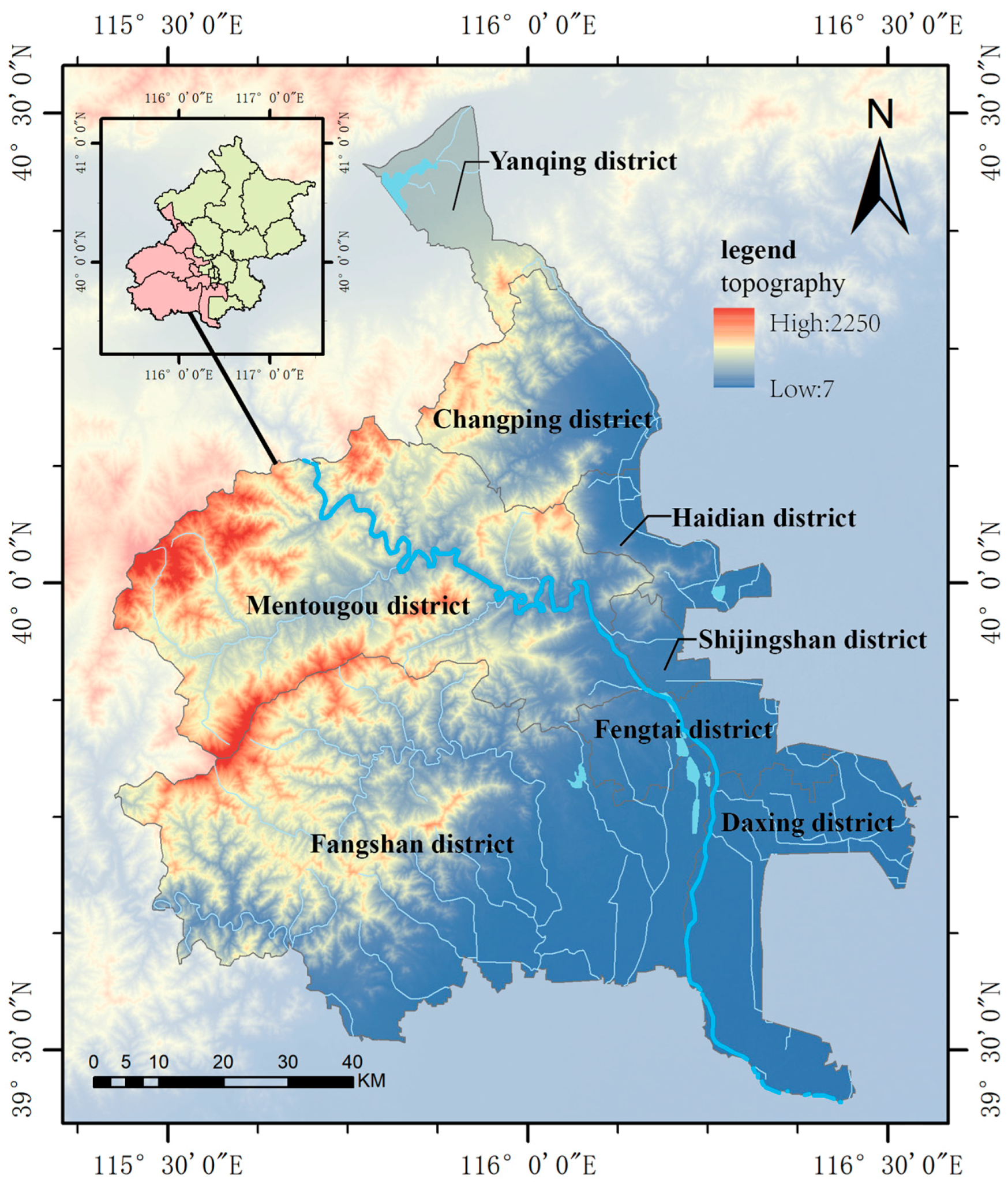
2.1. Study Area
2.2. Research Subjects and Data Sources
2.3. Technical Methodology
2.3.1. Kernel Density Estimation
2.3.2. Standard Deviational Ellipse
2.3.3. Mean Nearest Neighbor Index
3. Results
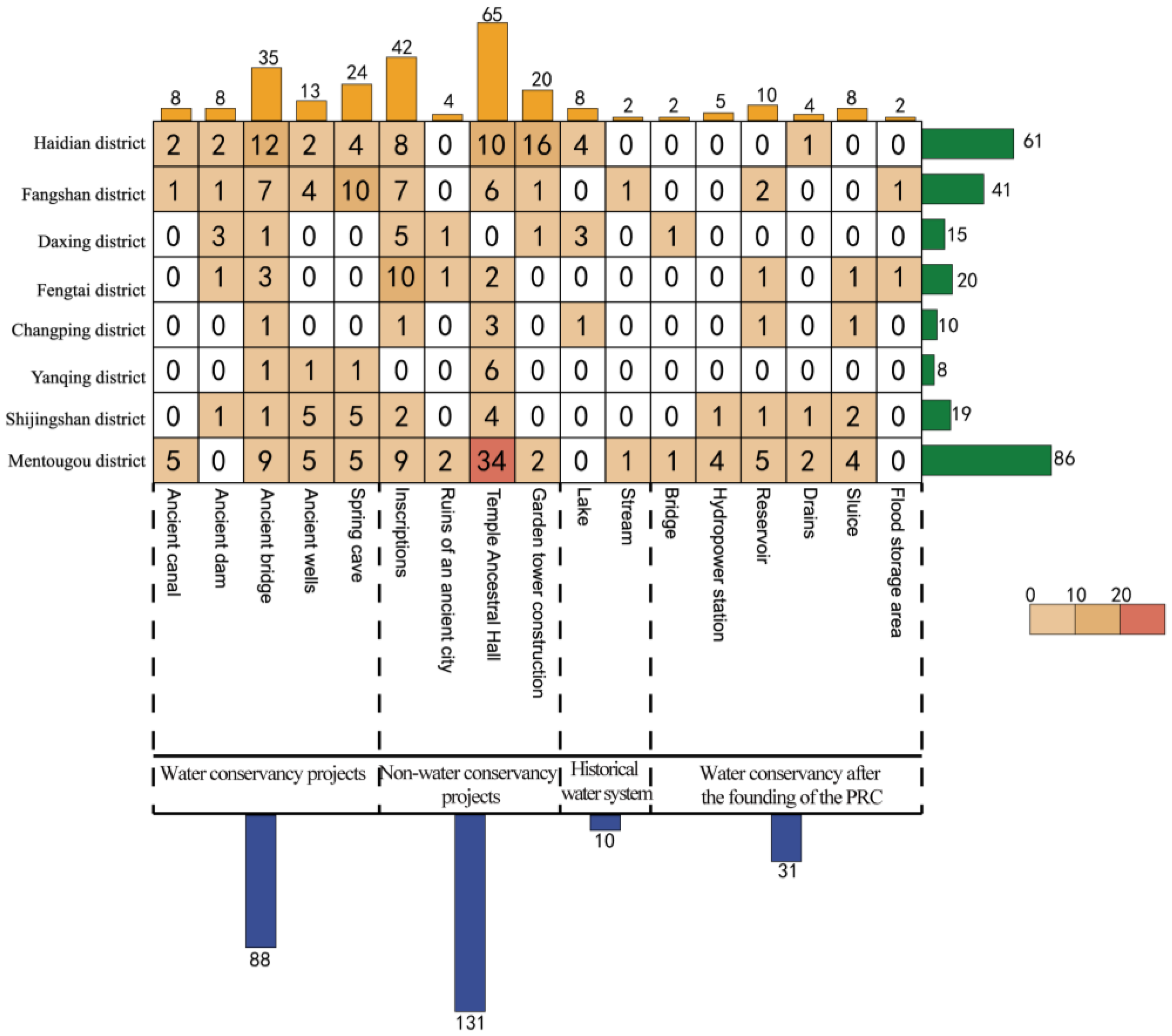
3.1. Quantitative and Typological Profile
3.2. Temporal Distribution Patterns
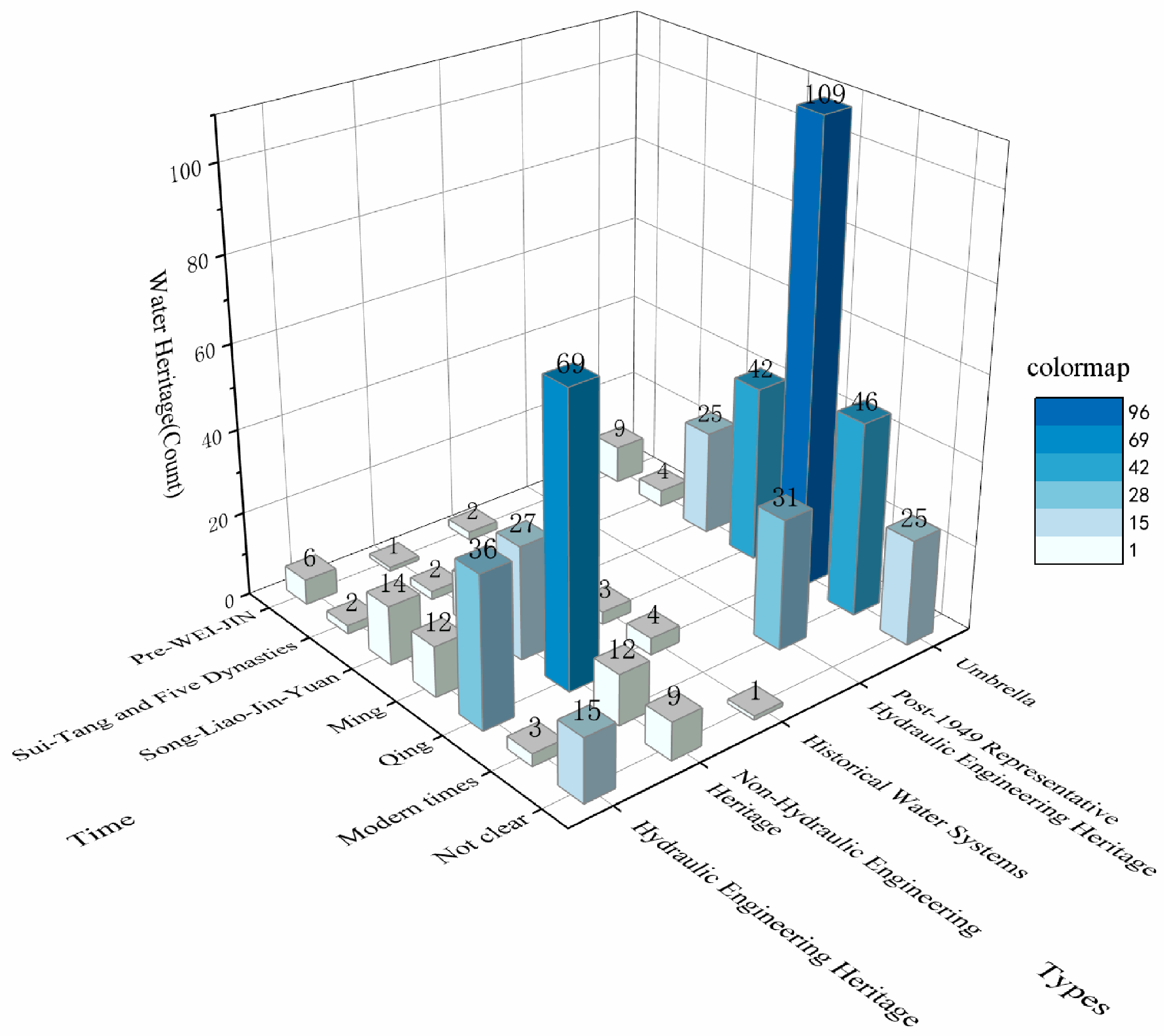
3.2.1. Temporal Changes in Water Heritage
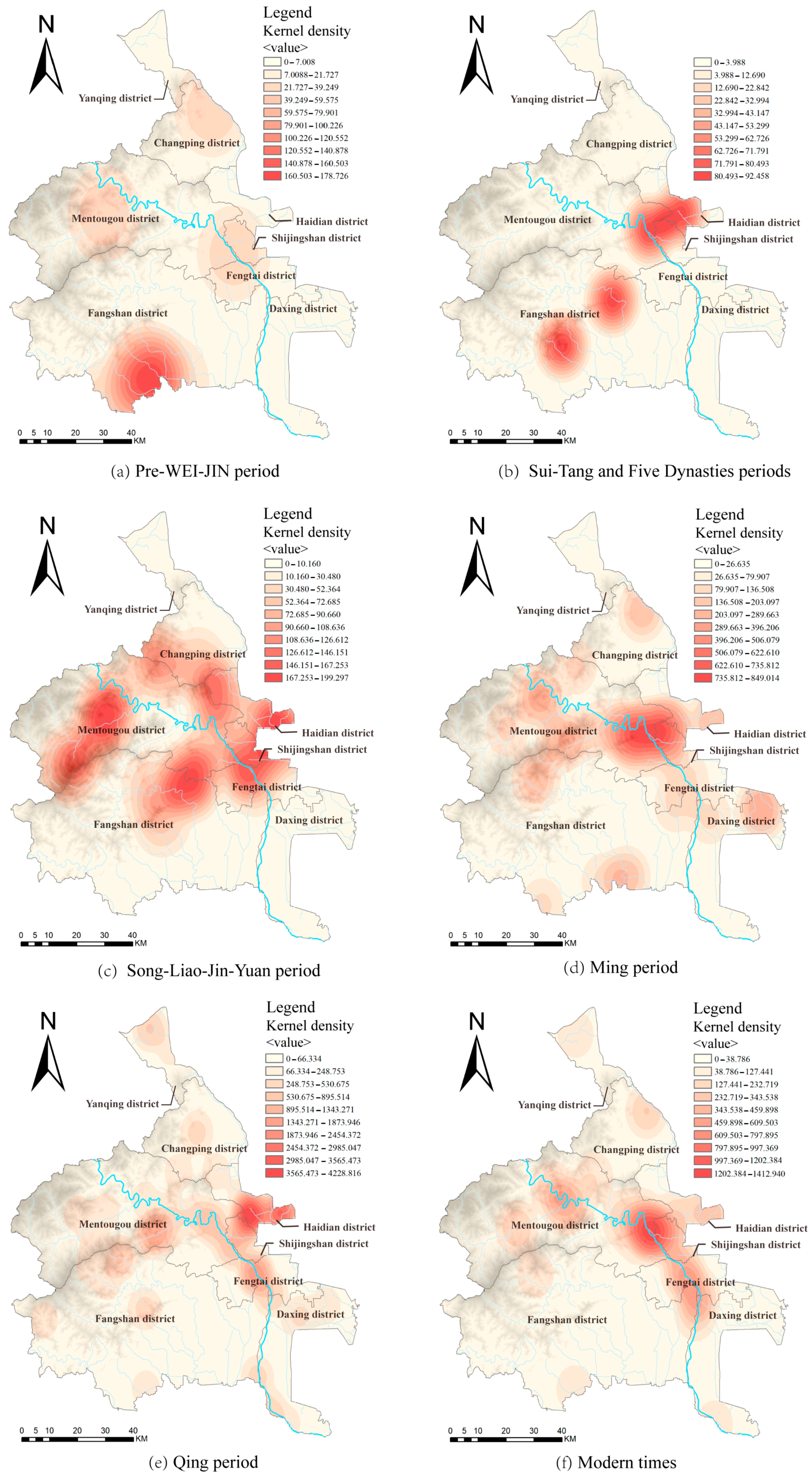
3.2.2. Distribution of Water Heritage Across Different Periods
3.3. Spatial Distribution
3.3.1. Characteristics of the Spatial Distribution of Water Heritage Sites
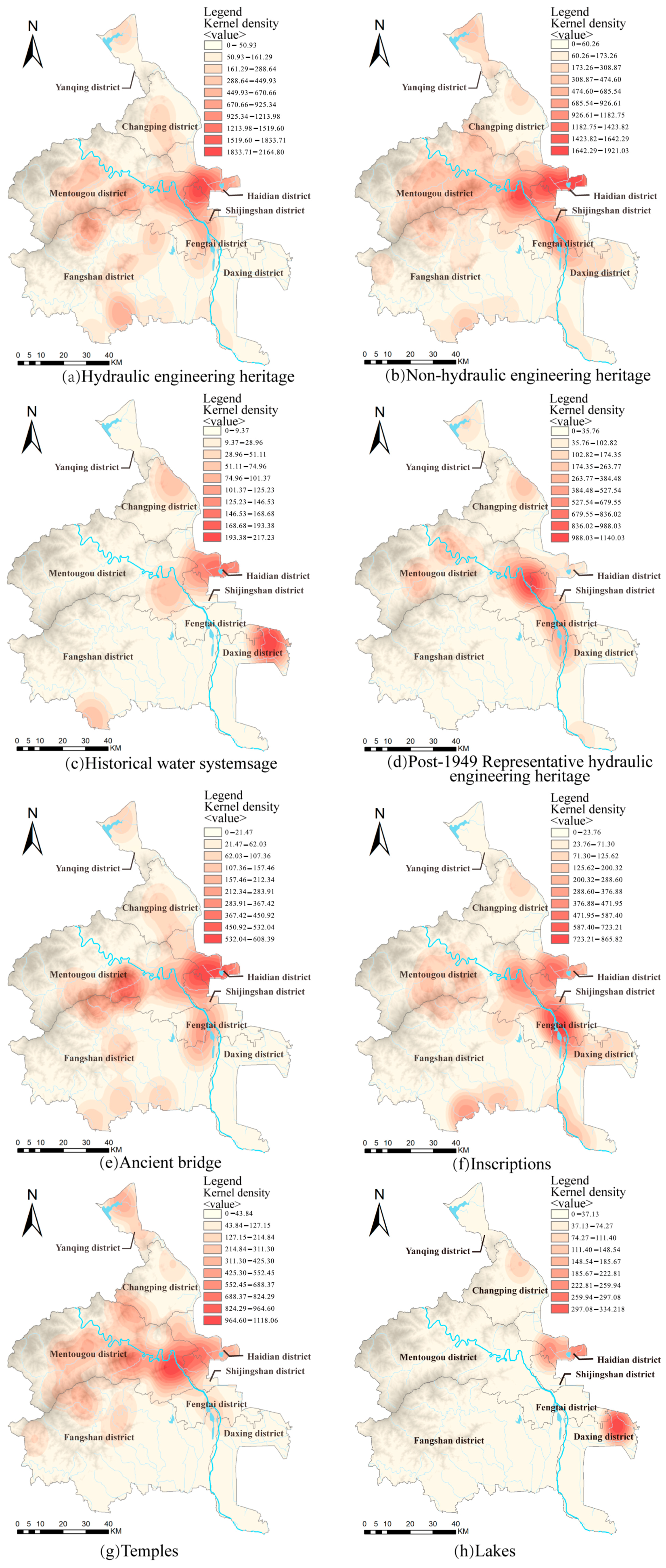
- Distribution of Hydraulic Engineering Heritage: This type of heritage follows a spatial pattern aligned with river systems, with concentrations along the upper, middle, and lower reaches of the Yongding River basin. The distribution exhibits a stepped segmentation, following the natural course of the river and key geographic nodes. In the upper reaches, the focus is on hydraulic source exploitation, as well as dam and canal construction reflecting the early use of irrigation systems and the ancient management of water resources. The middle reaches are characterized by typical irrigation systems and flood control structures, forming a more complete group of water engineering heritage that illustrates the control of water flow and its close relationship with agricultural society. The lower reaches focus on flood control and dam-gate systems.
- Distribution of Non-Hydraulic Engineering Heritage: This type of heritage is widely distributed across the cultural belt, with concentrated areas in specific locations, such as Longquan Town in Mentougou and the Three Hills and Five Gardens in Haidian District. Non-water engineering heritage refers to cultural relics related to water management and activities, aimed at maintaining water benefits, facilitating management, or meeting social needs, from historical periods. These types of heritage are closely linked to human activity. Longquan Town in Mentougou, located at the alluvial fan of the Yongding River, has historically served as a key flood control node, with a dense concentration of heritage sites, such as the Dragon King Temple and inscriptions, reflecting human intervention in the river’s hydrological characteristics. The Three Hills and Five Gardens area in Haidian District, leveraging the spring water resources of the Western Hills and its wetland ecosystems, emerged as a focal zone for Qing imperial hydraulic projects, exhibiting a high concentration of heritage sites [47].
- Distribution of Historical Water Systems: This type of heritage displays a distinct clustered pattern along river systems, with notable high-density areas in the middle and lower reaches of major rivers, such as the Yongding River and Juma River. Its formation is closely linked to the natural hydrological conditions of the rivers and the needs of human production and life. The flat terrain and abundant water supply in the middle and lower reaches were central to ancient agricultural irrigation, as well as the development of water transportation and settlements. The spatial concentration of this heritage not only highlights the guiding role of river corridors in water infrastructure but also validates Beijing’s evolutionary trajectory as a hydraulic-driven civilization.
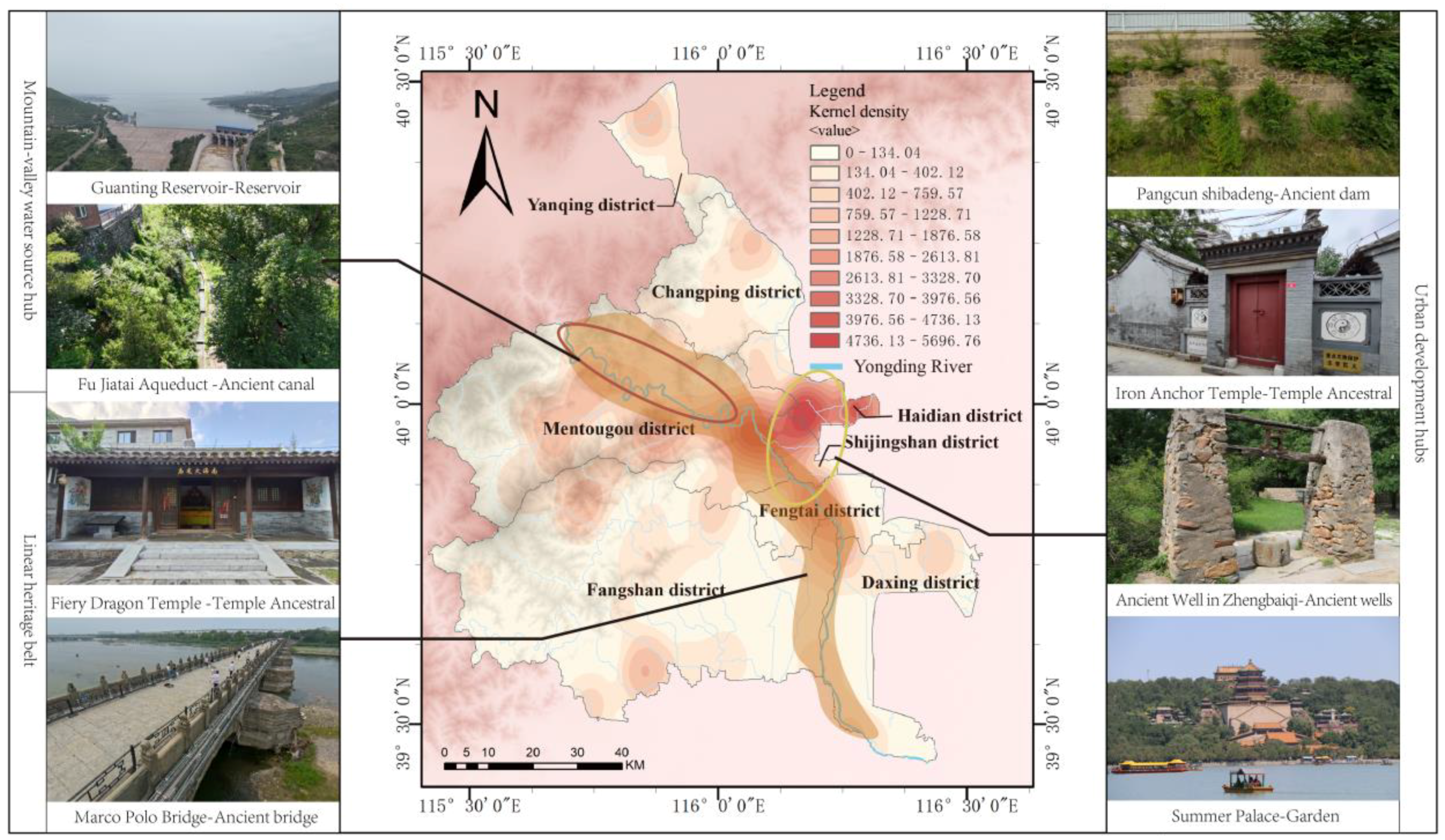
- Distribution of Post-1949 Representative Hydraulic Engineering Heritage: These water engineering projects follow a spatial pattern focused on key river systems and critical nodes, characterized by large scale and multifunctionality. Their distribution logic is deeply tied to the water management policies of the new China and the development needs of the capital. The Yongding River basin, as a key flood control area, saw the construction of major control works such as the Guanting Reservoir and Sanjiadian Barrage starting in the 1950s [48], forming a series of interconnected water engineering hubs that embody the “comprehensive control of the Yongding River” strategy [49].
- Distribution of Inscriptions: These inscriptions typically exhibit a clustered distribution around core water activity areas, with concentrations in river engineering zones, water administration nodes, and water deity worship sites. The distribution of inscription-based water heritage is closely related to the intensity of local water management, administrative structures, and cultural transmission needs [8]. In areas frequently affected by floods along the Yongding River, inscriptions related to water control are densely distributed in flood embankment restoration zones or around dam hubs, following the tradition of “commemorating achievements with inscriptions”. In contrast, inscriptions found in water deity temples such as Dragon King’s Temple, adhere to the folk belief logic of “communicating with the gods through inscriptions,” recording rain prayer rituals, temple donations, and similar activities, thus creating a dual space for water management and spiritual education [50].
- Distribution of Temples Heritage: The distribution of temples heritage along the Xishan–Yongding River cultural belt follows a “small clusters, large dispersion” pattern. It is primarily concentrated in the central and eastern parts of the cultural belt, particularly in the Yongding River valley area, and scattered across most of the region. The temples mainly consist of physical structures, such as temples and ancestral halls, built to worship river gods, water deities, and well spirits, originating from the reverence for nature and the desire for blessings and good fortune. The Yongding River is the only river in the Beijing area to have been deified, and water worship in the cultural belt is primarily centered on the veneration of the Yongding River God. As a result, most of this water-related heritage is concentrated along the banks of the Yongding River.
- Distribution of Ancient Bridge Heritage: These bridges demonstrate linear distribution patterns along major waterways, with notable clustering in population-dense zones (Haidian, Shijingshan Districts) and historical transport nodes (Lugou Bridge, Sanjiadian). Their spatial configuration reflects both essential river-crossing needs and the interaction between hydrological conditions and human adaptation. At river confluences and water diversion hubs, bridges frequently integrate with sluice gates and embankments to form comprehensive hydraulic networks.
- Distribution of Lakes: This type of water heritage is primarily located near the former course of the Yongding River, characterized by a spatial pattern of “suburban linkage and clustered lakes.” The core area consists of the Yongding River’s alluvial fan and the groundwater discharge zone at the foot of the mountains, forming a dual cluster of lakes: one group near the royal gardens on the outskirts of the capital, and another in the wetland lakes of the Beijing suburbs. This spatial distribution pattern necessitates a focus on the comprehensive protection of the historical context of the lake systems in the future, to prevent fragmented development from compromising the authenticity of the heritage.
3.3.2. Factors Influencing the Spatial Distribution of Water Heritage
- 1.
- Rivers
- 2.
- Villages
- 3.
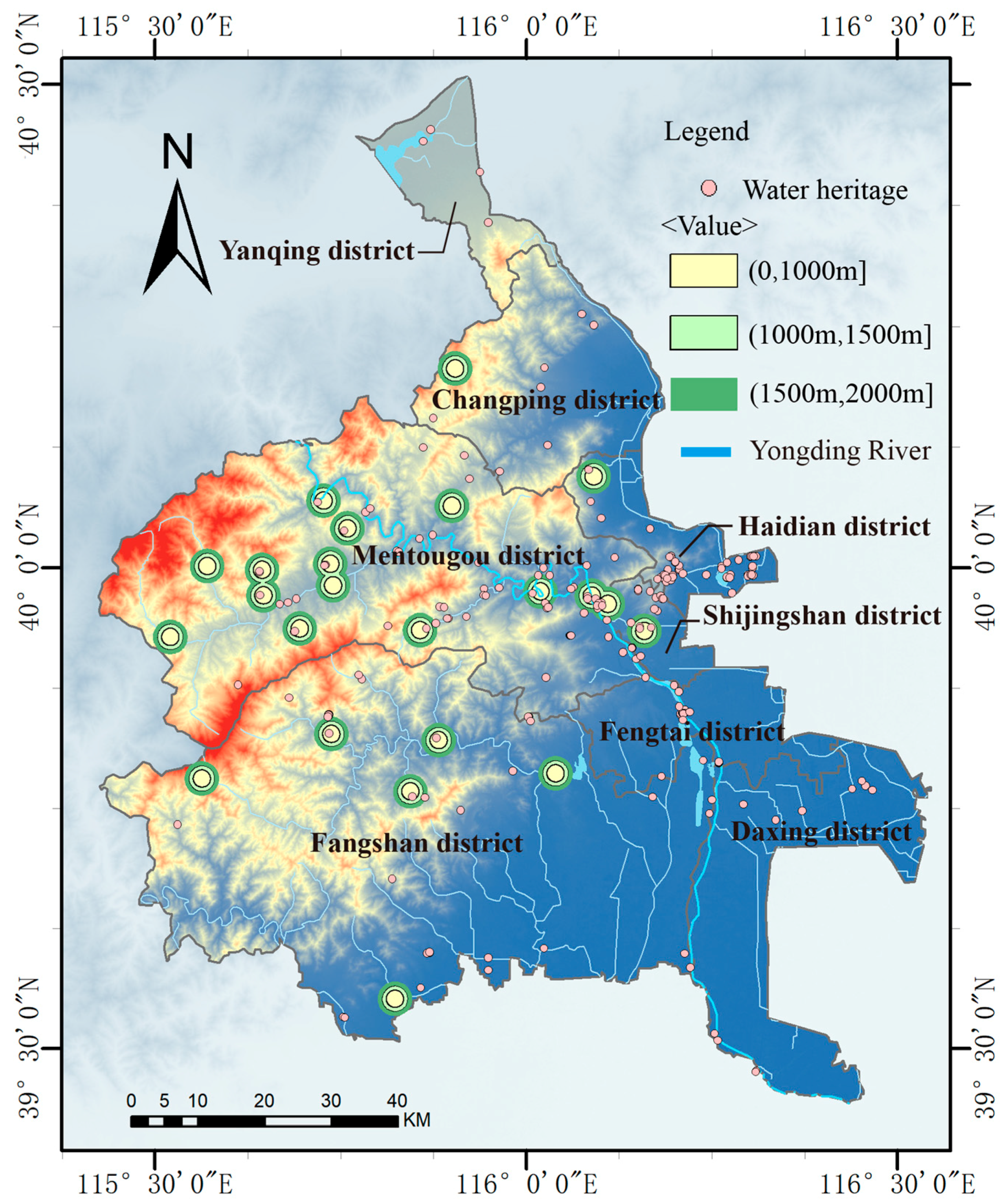
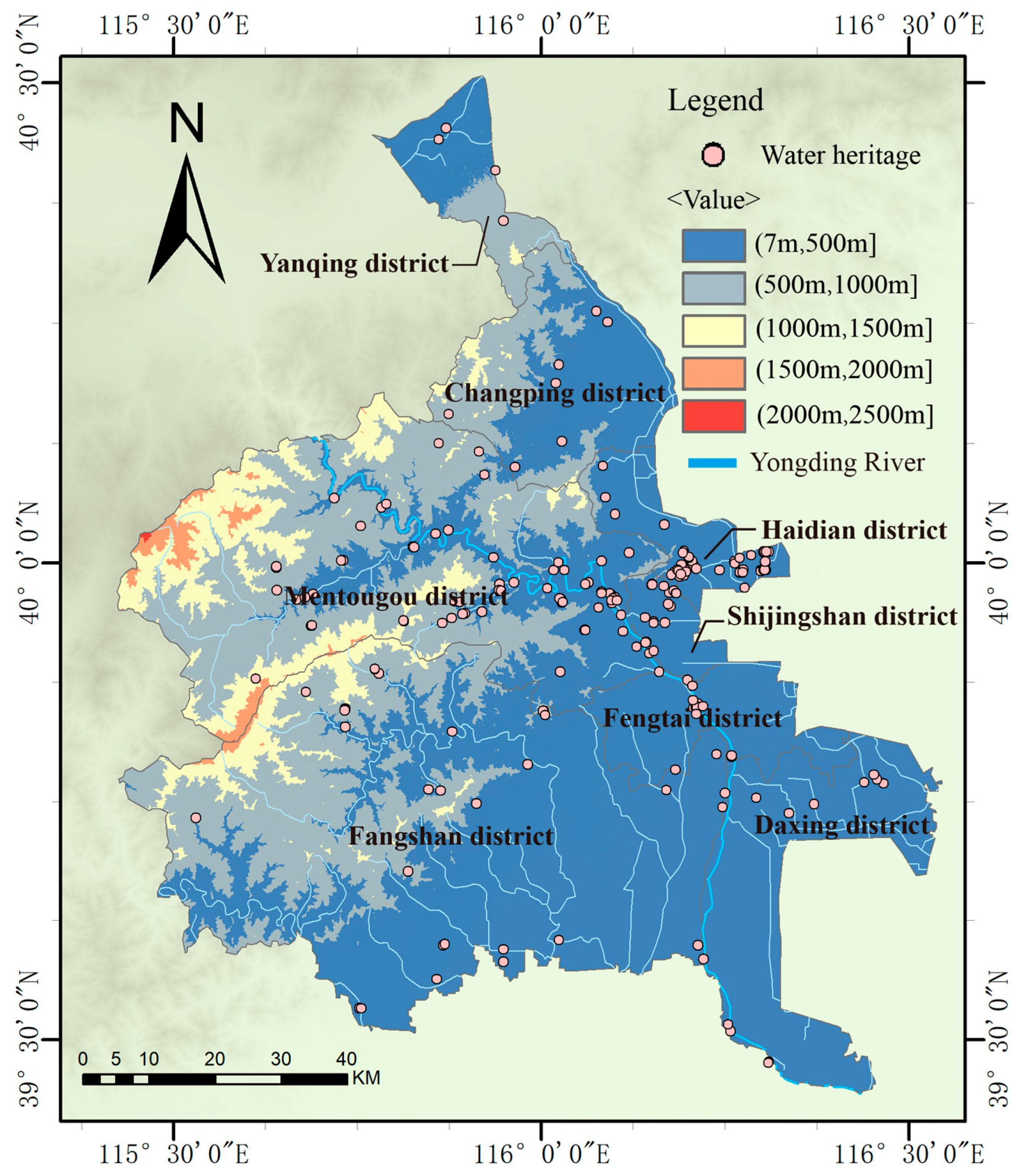
- Elevation
- 4.
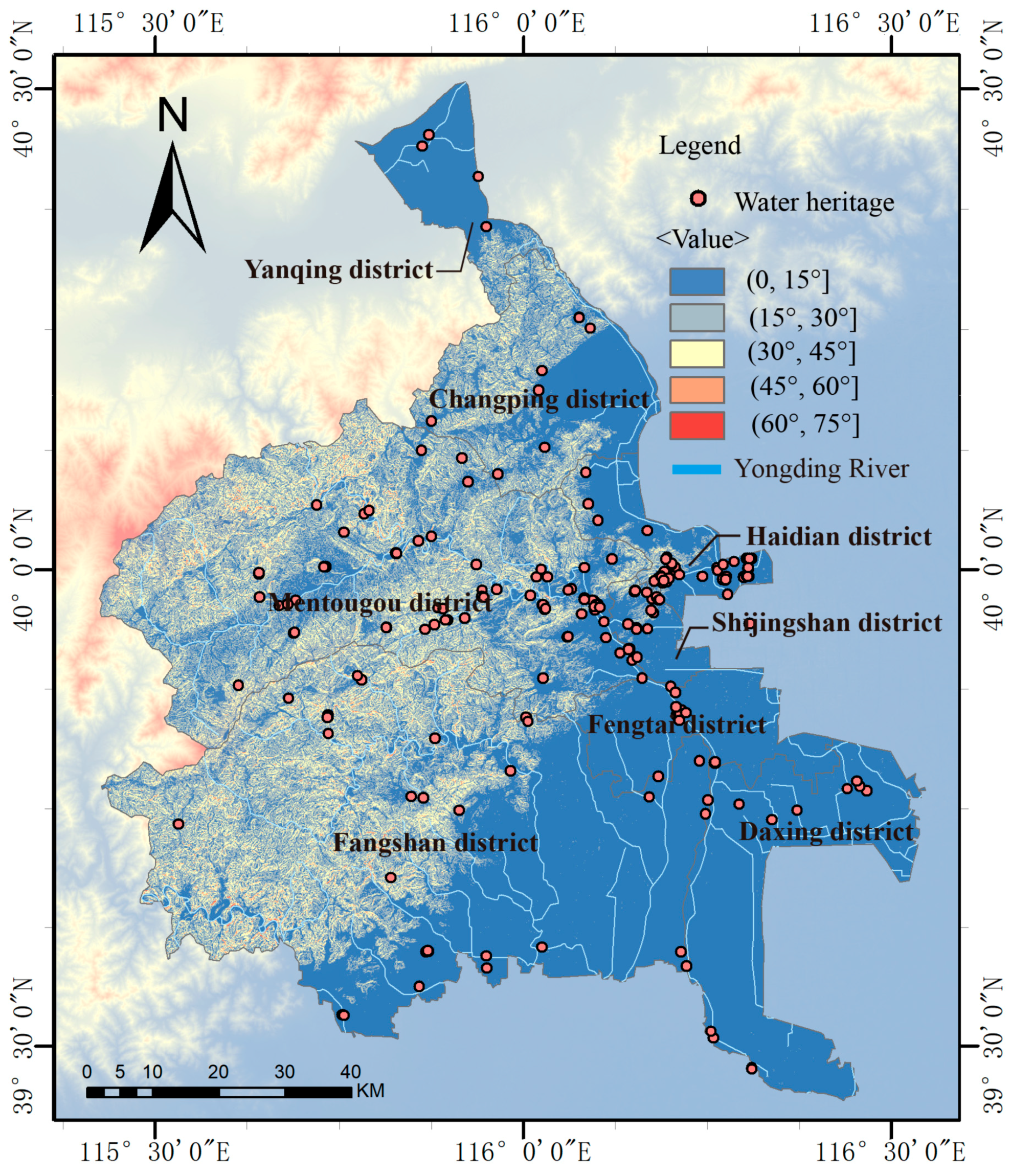
- Slope
- 5.
- Political System
4. Discussion
5. Conclusions
Author Contributions
Funding
Data Availability Statement
Conflicts of Interest
References
- Pang, L.; Wu, L. Distribution Characteristics and Influencing Factors of Intangible Cultural Heritage in Beijing-Tianjin-Hebei. Herit. Sci. 2023, 11, 19. [Google Scholar] [CrossRef]
- Zhou, K.; Li, Y.; Wang, P.; Chu, Z.; Wang, C.; Li, A. The Spatial-Temporal Distribution Characteristics of Cultural Relics in Beijing. J. Arid. Land Resour. Environ. 2024, 38, 70–79. [Google Scholar] [CrossRef]
- Shang, J.; Zhou, K.; Wang, C. The Influence and Value of the Rivers and Lakes System along Beijing Central Axis on the Urban Layout. Chin. Landsc. Archit. 2023, 39, 98–103. [Google Scholar] [CrossRef]
- Wang, C.-C. Une Plongée dans les Réseaux d’eau Sinueux de l’Axe Central de Beijing. Available online: http://www.dialoguechinefrance.com/cul/202208/t20220809_800303224.html (accessed on 9 November 2025).
- Wang, C.; Li, S.; Wang, Y. Study on the Time-Space Distribution of Water Cultural Heritage in Beijing. Urban Dev. Stud. 2016, 23, 129–132. [Google Scholar] [CrossRef]
- Zhou, K.; Wang, C.; Qin, H.; Shang, J. Planning and Empirical Analysis of Ancient Rivers and Lake Conservation Systems in Beijing. South Architecture 2023, 12, 11–18. [Google Scholar] [CrossRef]
- Zaina, F.; Branduini, P.; Zavvari, F. Applying ICOMOS-IFLA Principles for the Conservation, Management and Reuse of a Historical Hydraulic System: The No-Ras Qanat in North-Western Iran. Heritage 2022, 5, 3165–3187. [Google Scholar] [CrossRef]
- Goralnik, L.; Brunacini, J.; Rutty, M.; Finnell, E. Restoring Relationships: Water Heritage, Sense of Place, and Community Engagement. J. Great Lakes Res. 2022, 48, 1375–1386. [Google Scholar] [CrossRef]
- Hermosilla Pla, J.; Mayordomo Maya, S. A Methodological System for Hydraulic Heritage Assessment: A Management Tool. Water Supply 2017, 17, 879–888. [Google Scholar] [CrossRef]
- Megdiche-Kharrat, F.; Zheng, X.Y.; Moussa, M.; Famin, Z.; Angelakis, A.N. Historic Hydraulic Works: Paradigms of Traditional Good Water Governance, Integrity and Sustainability. Water Supply 2020, 20, 2484–2498. [Google Scholar] [CrossRef]
- Zhang, Y.; Jing, Z.; Huang, Q.; Wang, X.; Sun, W.; Zhang, C.; Wang, J.; Zhong, Y.; Wang, J.; Tan, L.; et al. On Conservation of World Heritage Beijing-Hangzhou Grand Canal for Enhancing Cultural Ecosystem Services. Herit. Sci. 2023, 11, 269. [Google Scholar] [CrossRef]
- Zheng, X. Progress of International Water History Science and Its Development in China Discussed. J. Tsinghua Univ. (Philos. Socia Sci.) 2017, 32, 77–86+195. [Google Scholar] [CrossRef]
- López-Cuervo, S. Water, a Cultural Heritage. Landsc. Urban Plan. 1988, 16, 93–103. [Google Scholar] [CrossRef]
- Yüceer, H.; Baba, A.; Gönülal, Y.Ö.; Uştuk, O.; Gerçek, D.; Güler, S.; Uzelli, T. Valuing Groundwater Heritage: The Historic Wells of Kadıovacık. Geoheritage 2021, 13, 97. [Google Scholar] [CrossRef]
- Gerçek, D.; Yüceer, H.; Özcan Gönülal, Y.; Uştuk, O.; Uzelli, T.; Güler, S.; Baba, A. Traditional Water Harvesting Systems In Climate Change Adaptation: Insights From A Semi-Arid Mediterranean Village. METU JFA 2025, 42, 203–227. [Google Scholar] [CrossRef]
- Gioia, M.E. Following Water at the Mantua and Sabbioneta World Heritage Site. Blue Pap. 2022, 1, 111–121. [Google Scholar] [CrossRef]
- Nedvedova, K.; Dzurakova, M.; Vyskocil, A.; Svitak, Z.; Kleparnikova, R.; Honek, D. Historical Water Management Constructions, Their Value, Function and Significance. IOP Conf. Ser. Earth Environ. Sci. 2019, 290, 012156. [Google Scholar] [CrossRef]
- Barahona, M. The Roman Dam Irrigation System (Jumilla, Murcia): Historical Review of an Agricultural Landscape or the Deconstruction of a Stereotype based on an Archaeological, Technological and Territorial research. Hist. Agrar. 2022, 86, 71–106. [Google Scholar] [CrossRef]
- Ogura, T.; Shimamoto, K.; Mizuno, T.; Katayama, D.; Yamauchi, H.; Hattanji, T. Identification of Traditional Flood Control Facilities Concealed in the Riparian Forest: A Case Study of the Echi River, Central Japan. Prog. Earth Planet. Sci. 2025, 12, 41. [Google Scholar] [CrossRef]
- Vidal Gonçalves, G.; Borges Pereira, D.; Gómez-Ullate, M.; da Silva Mano, A. Water Heritage in the Rural Hinterland Landscapes of the UNESCO Alto Douro Wine Region, Portugal: A Digital Humanities Approach. Heritage 2023, 6, 3706–3721. [Google Scholar] [CrossRef]
- Huang, Y. Bibliometric Analysis of GIS Applications in Heritage Studies Based on Web of Science from 1994 to 2023. Herit. Sci. 2024, 12, 57. [Google Scholar] [CrossRef]
- Blanco, A.; de Bustamante, I.; Pascual-Aguilar, J.A. Using Old Cartography for the Inventory of a Forgotten Heritage: The Hydraulic Heritage of the Community of Madrid. Sci. Total Environ. 2019, 665, 314–328. [Google Scholar] [CrossRef]
- Daneshvar, M.R.M.; Ebrahimi, M.; Ahmadi, F.S. Efficiency Assessment of the Environmental Variables in the Qanat Systems Based on Major Hydrological Basins in Iran. Appl. Water Sci. 2023, 13, 99. [Google Scholar] [CrossRef]
- Deng, J.; Lv, J.; Liu, J.; Zhou, B.; Li, Y. Investigation and Protection Strategy of Water Resources Cultural Heritage. E3S Web Conf. 2020, 218, 04026. [Google Scholar] [CrossRef]
- Shi, Y.; Zhang, J. The Flood Control Heritage of the Yongding River in the Late Qing Dynasty Surrounding the Marco Polo Bridge Section, 1890–1899. River Res. Appl. 2023, 39, 1242–1254. [Google Scholar] [CrossRef]
- Tan, L.; Qiu, X.; Wang, C.; Sun, Z.; Hou, X.; Qiao, J.; Yang, C.; Xin, J. A Comprehensive Model for Assessing Water Engineering Facilities Heritage in Grand Canal’s Huitong River during the Ming and Qing Dynasties. Sci. Rep. 2025, 15, 19838. [Google Scholar] [CrossRef]
- Hagage, M.; Abdulaziz, A.M.; Hewaidy, A.-G.A.; Shetaia, S.A. Unveiling the Past: Utilizing Satellite Imagery Archives to Study Archaeological Landscapes in the Northeastern Nile Delta, Egypt. Anthropocene 2023, 44, 100409. [Google Scholar] [CrossRef]
- Ahmed, A.T.; El Gohary, F.; Tzanakakis, V.A.; Angelakis, A.N. Egyptian and Greek Water Cultures and Hydro-Technologies in Ancient Times. Sustainability 2020, 12, 9760. [Google Scholar] [CrossRef]
- Zhang, J.; Jiang, L.; Wang, X.; Chen, Z.; Xu, S. A Study on the Spatiotemporal Aggregation and Corridor Distribution Characteristics of Cultural Heritage: The Case of Fuzhou, China. Buildings 2024, 14, 121. [Google Scholar] [CrossRef]
- Beijing Urban Master Plan (2016–2035). Available online: https://www.beijing.gov.cn/gongkai/guihua/wngh/cqgh/201907/t20190701_100008.html (accessed on 19 December 2024).
- Allen, M.J.; Allen, T.R.; Davis, C.; McLeod, G. Exploring Spatial Patterns of Virginia Tornadoes Using Kernel Density and Space-Time Cube Analysis (1960–2019). ISPRS Int. J. Geo-Inf. 2021, 10, 310. [Google Scholar] [CrossRef]
- Silalahi, F.E.S.; Hidayat, F.; Dewi, R.S.; Purwono, N.; Oktaviani, N. GIS-Based Approaches on the Accessibility of Referral Hospital Using Network Analysis and the Spatial Distribution Model of the Spreading Case of COVID-19 in Jakarta, Indonesia. BMC Health Serv. Res. 2020, 20, 1053. [Google Scholar] [CrossRef]
- Ramadan, M.S.; Khairy, N.; Alogayell, H.M.; Alkadi, I.I.; Ismail, I.Y.; Ramadan, R.H. Spatial Equity Priority Modeling of Elementary and Middle Schools through GIS Techniques, El-Taif City, Saudi Arabia. Sustainability 2022, 14, 12057. [Google Scholar] [CrossRef]
- Xiao, Y.; Liu, L. Royal Land Use and Management in Beijing in the Qing Dynasty. Land 2021, 10, 1093. [Google Scholar] [CrossRef]
- Hu, S.; Cheng, X.; Zhou, D.; Zhang, H. GIS-Based Flood Risk Assessment in Suburban Areas: A Case Study of the Fangshan District, Beijing. Nat. Hazards 2017, 87, 1525–1543. [Google Scholar] [CrossRef]
- Yin, J. On the Relationship between the Yongding River and Beijing City. Soc. Sci. Beijing 2003, 4, 12–18. [Google Scholar] [CrossRef]
- Song, R.; Tian, J.; Han, Q. Architectural Heritage Characterisation and Functional Evolution of the Yongding River Cultural Belt in the Xishan Mountains. Zhongguo Wenwu Kexue Yanjiu 2023, 2, 30–40. [Google Scholar] [CrossRef]
- Ouyang, X.; Wu, X.; Wang, J.; Pan, Y.; Lin, Y.; He, J.; Guo, J.; Cui, J. A Modeling Radiocarbon Dating for the Founding of Yan Vassal State in Western Zhou Dynasty. Radiocarbon 2025, 67, 122–134. [Google Scholar] [CrossRef]
- Yu, X. Iconic Photographs of the Zhoukoudian Team and Chinese-Western Interaction Surrounding the Peking Man Discovery. Earth Sci. Hist. 2022, 41, 133–160. [Google Scholar] [CrossRef]
- Wang, X. Archaeological Work in the Beijing Area: Retrospect and Prospect. Archaeology 2004, 2, 7–17. [Google Scholar]
- Zhu, Q. Research on the Layout Method of Haidian Imperial Garden Cluster of Beijing. Landsc. Archit. 2021, 28, 115–120. [Google Scholar] [CrossRef]
- Bao, H. Yongding River Historic Floods and the City of Beijing. China Water Resour. 1993, 1, 41. [Google Scholar]
- Huang, Y.; Yang, S. Spatio-Temporal Evolution and Distribution of Cultural Heritage Sites along the Suzhou Canal of China. Herit Sci 2023, 11, 188. [Google Scholar] [CrossRef]
- Zhou, K.; Wang, C. One River Yongding, One City Daxing. Beijing Obs. 2024, 4, 72–75. [Google Scholar] [CrossRef]
- Chiu, Y.-Y.; Raina, N.; Chen, H.-E. Evolution of Flood Defense Strategies: Toward Nature-Based Solutions. Environments 2022, 9, 2. [Google Scholar] [CrossRef]
- Li, Y.; Wang, X.; Dong, X. Delineating an Integrated Ecological and Cultural Corridor Network: A Case Study in Beijing, China. Sustainability 2021, 13, 412. [Google Scholar] [CrossRef]
- Shao, N. The Influence of Politics in Different Chinese Dynasties on the Central Axis of Beijing. Commun. Humanit. Res. 2023, 5, 461–468. [Google Scholar] [CrossRef]
- Yin, B. The Transformation of Hydraulic Engineering Concepts in Modern China: A Research on Planning of Kuan-Ting Reservoir in Early Republican China. J. Dialectics Nat. 2019, 41, 18–25. [Google Scholar] [CrossRef]
- Jiang, B.; Wong, C.P.; Lu, F.; Ouyang, Z.; Wang, Y. Drivers of Drying on the Yongding River in Beijing. J. Hydrol. 2014, 519, 69–79. [Google Scholar] [CrossRef]
- Jin, A.; Wang, G. “Co-Governance”Between the Government and the Society in Water Governance: An Observation from Ming-Qing Inscriptions of Water Resources. J. Beijing Adm. Coll. 2022, 03, 28–39. [Google Scholar] [CrossRef]
- Zhang, H.; Gao, Y.; Yi, C.; Jue, W. The Protection Path of Agricultural Cultural Heritage from the Perspective of World Heritage: A Case Study of Jingxi Rice. Chin. Landsc. Archit. 2021, 37, 81–86. [Google Scholar] [CrossRef]
- Lu, J.; Mo, D.; Zhuang, Y.; Jiang, J.; Liao, Y.; Lu, P.; Ren, X.; Feng, J. Holocene Geomorphic Evolution and Settlement Distribution Patterns in the Mid-Lower Fen River Basins, China. Quat. Int. 2019, 521, 16–24. [Google Scholar] [CrossRef]
- Lucero, L.J.; Harrison, J.; Larmon, J.; Nissen, Z.; Benson, E. Prolonged Droughts, Short-Term Responses, and Diaspora: The Power of Water and Pilgrimage at the Sacred Cenotes of Cara Blanca, Belize. WIREs Water 2017, 4, e1148. [Google Scholar] [CrossRef]
- Jun, D.; Yunpeng, L.; Jiangang, L.; Bo, Z.; Jianzhong, X.; Yugao, W. Study on Heritage Value and Composition of Changqu Water Conservancy Project. IOP Conf. Ser. Earth Environ. Sci. 2019, 218, 012128. [Google Scholar] [CrossRef]
- Li, Y.; Wang, C.; Xue, F.; Zhou, K.; Wang, C.-C. Suitability Analysis of Water Cultural Heritage Structures in Beijing Based on Analytic Hierarchy Process and Geographic Information Systems. Buildings 2023, 13, 624. [Google Scholar] [CrossRef]
- Viviroli, D.; Kummu, M.; Meybeck, M.; Kallio, M.; Wada, Y. Increasing Dependence of Lowland Populations on Mountain Water Resources. Nat. Sustain. 2020, 3, 917–928. [Google Scholar] [CrossRef]
- Cao, W.; Liu, J.; Ceola, S.; Mao, G.; Macklin, M.G.; Montanari, A.; Ciais, P.; Yao, Y.; Tarolli, P. Landform-Driven Human Reliance on Rivers in Imperial China. J. Hydrol. 2023, 620, 129353. [Google Scholar] [CrossRef]
- Zhang, J.; Wang, Z. State and Cult in Six Hundred Years of Irrigation Activities in an Arid Area of China: A Case Study of the Dragon King Temples in the Hexi Corridor. J. Mod. Chin. Hist. 2016, 10, 184–205. [Google Scholar] [CrossRef]
- Bebermeier, W.; Abeywardana, N.; Susarina, M.; Schütt, B. Domestication of Water: Management of Water Resources in the Dry Zone of Sri Lanka as Living Cultural Heritage. WIREs Water 2023, 10, e1642. [Google Scholar] [CrossRef]
- Zhou, K.; Kong, F.; Yin, H.; Destouni, G.; Meadows, M.E.; Andersson, E.; Chen, L.; Chen, B.; Li, Z.; Su, J. Urban Flood Risk Management Needs Nature-Based Solutions: A Coupled Social-Ecological System Perspective. Npj Urban Sustain 2024, 4, 25. [Google Scholar] [CrossRef]
- Goyal, V.C.; Ullah, M.F.; Pandey, C. Contextualizing Traditional Water Knowledge with Modern Water Challenges in India: A Hydrological Review. Indian J. Tradit. Knowl. 2025, 24, 258–267. [Google Scholar] [CrossRef]
- Batista, D.; Guerreiro, M.; Sequeira, B.; Cesário, M.; Agapito, D. The Cultural Landscape of Campina de Faro: Solutions Based on Water Heritage and Cultural Tourism. Rev. PH 2023, 109, 88–111. [Google Scholar] [CrossRef]



| Administrative District | Number of Artifacts/Sites | Density/Sites-km−2 |
|---|---|---|
| Haidian district | 61 | 0.205 |
| Fangshan district | 41 | 0.012 |
| Daxing district | 15 | 0.017 |
| Fengtai district | 20 | 0.044 |
| Changping district | 10 | 0.013 |
| Yanqing district | 8 | 0.024 |
| Shijingshan district | 19 | 0.133 |
| Mentougou district | 86 | 0.035 |
| Form | r-Value | z-Score | p-Value | Average Observation Distance (m) | Expected Average Distance (m) | Typology |
|---|---|---|---|---|---|---|
| Hydraulic Engineering Heritage | 0.506 | −8.873 | 0 | 2089.111 | 4132.203 | Clustered |
| Non-hydraulic Engineering Heritage | 0.455 | −11.941 | 0 | 1672.447 | 3678.520 | Clustered |
| Historical Water Systems | 1.004 | 0.023 | 0.982 | 10,307.485 | 10,268.556 | Random |
| Post-1949 Representative Hydraulic Engineering Heritage | 0.609 | −4.161 | 0.001 | 3650.947 | 5991.173 | Clustered |
| Inscriptions | 0.743 | −3.186 | 0.001 | 3841.093 | 5169.330 | Clustered |
| Ancient Canals | 1.375 | 2.027 | 0.043 | 7491.979 | 5450.178 | Dispersed |
| Ancient Bridge | 0.713 | −3.247 | 0.001 | 7350.764 | 10,308.436 | Clustered |
| Ancient Urban Ruins | 4.452 | 11.4383 | 0 | 26,226.071 | 5890.823 | Dispersed |
| Temples | 0.642 | −5.477 | 0 | 2796.590 | 4354.945 | Clustered |
| Garden Pagodas | 0.853 | −1.350 | 0.177 | 5043.725 | 5913.694 | Random |
| River | 495.606 | 1338.151 | 0 | 51,277.163 | 103.464 | Dispersed |
| Lakes | 0.413 | −2.971 | 0.003 | 1316.635 | 3188.326 | Clustered |
| Modern Canals | 2.666 | 6.375 | 0 | 7690.253 | 2884.278 | Dispersed |
| Reservoirs | 1.304 | 1.839 | 0.066 | 11,350.390 | 8703.884 | Dispersed |
| Ancient Sluices | 1.203 | 1.097 | 0.272 | 5649.355 | 4696.745 | Random |
| Spring-cave Heritage | 0.915 | −0.793 | 0.428 | 5487.681 | 5994.884 | Random |
| Bridge | 539.023 | 1455.616 | 0 | 58,042.890 | 107.682 | Dispersed |
| Hydropower Station | 2.903 | 7.280 | 0 | 5075.542 | 1748.482 | Dispersed |
| Sluice Gates | 1.264 | 1.429 | 0.153 | 9633.916 | 7620.902 | Random |
Disclaimer/Publisher’s Note: The statements, opinions and data contained in all publications are solely those of the individual author(s) and contributor(s) and not of MDPI and/or the editor(s). MDPI and/or the editor(s) disclaim responsibility for any injury to people or property resulting from any ideas, methods, instructions or products referred to in the content. |
© 2025 by the authors. Licensee MDPI, Basel, Switzerland. This article is an open access article distributed under the terms and conditions of the Creative Commons Attribution (CC BY) license (https://creativecommons.org/licenses/by/4.0/).
Share and Cite
Li, Y.; Shi, Z.; Zhou, K.; Wang, P.; Wang, C.-C. Spatiotemporal Distribution of Water Heritages in the Xishan–Yongding River Cultural Belt. Buildings 2025, 15, 4069. https://doi.org/10.3390/buildings15224069
Li Y, Shi Z, Zhou K, Wang P, Wang C-C. Spatiotemporal Distribution of Water Heritages in the Xishan–Yongding River Cultural Belt. Buildings. 2025; 15(22):4069. https://doi.org/10.3390/buildings15224069
Chicago/Turabian StyleLi, Youqi, Zhihao Shi, Kunpeng Zhou, Peng Wang, and Chong-Chen Wang. 2025. "Spatiotemporal Distribution of Water Heritages in the Xishan–Yongding River Cultural Belt" Buildings 15, no. 22: 4069. https://doi.org/10.3390/buildings15224069
APA StyleLi, Y., Shi, Z., Zhou, K., Wang, P., & Wang, C.-C. (2025). Spatiotemporal Distribution of Water Heritages in the Xishan–Yongding River Cultural Belt. Buildings, 15(22), 4069. https://doi.org/10.3390/buildings15224069