


Abstract
In this work, nanofibers and cellulose nanocrystals from the native Amazonian bamboo Guadua weberbabeuri were used in structural cementitious composites. Through the preparation of bamboo nanofibers—bleached cellulose pulp (BCP) and cellulose nanocrystals (CNC), as well as obtaining shredded bamboo (SB) and delignified cellulose pulp (DCP)—the additions corresponding to the additive nanomaterials were characterized with physical tests such as water absorption, specific mass, void index, and dimensional variation. A mechanical tensile strength test was carried out at 28 days, with an incorporation content of 0.40% of mass in relation to the cement. The results indicated, in relation to the control, improvement in the physical properties, especially in the additions with nanofibers and cellulose nanocrystals. For the mechanical tensile strength tests, the indicator allowed an increase of 14.60% with the addition of nanofibers and 12.70% in the addition of nanocrystals. Therefore, with the execution carried out, it could be seen that the incorporation was able to generate optimization in the joint performance of the materials under analysis, reinforcing the practices and ideals arising from civil engineering, nanotechnology, and sustainability.
1. Introduction
The use of vegetable fibers includes everything, from food, handicrafts, and furniture to civil construction, and in the latter, their use is aimed at structural and coating applications [1]. In structural applications, the development of additives for mortar or concrete using vegetable fibers to enhance strength has gained increasing prominence in recent years. Jute (Corchorus capsularis) and mallow (Urena lobata L.) fibers combined with metakaolinite have resulted in composites, which are mixed materials resulting in optimization of matrix materials, with optimization in flexural strength performance [2].
Fiber synthesis can have a variety of origins when it comes to vegetable fibers, which can be extracted from roots, stems, and leaves, among others [3]. From the buriti sheet, in an epoxy-based matrix, composites of low specific weight were obtained which showed a low weight-to-volume ratio, conducive to structural use, also increasing the characteristic compressive strengths [3].
It is also important to note that when vegetable fibers are worked with, the composition of varied materials with similar characteristics tends to produce results that converge to an increase in mechanical strength [4]. Curuá, sisal, and polypropylene microfibers combined in different proportions offer the following characteristics: mortars enriched with sisal fibers have greater peak mechanical resistance, while those enriched with polypropylene microfibers presented optimized performance in the physical properties of the materials [4].
At the same time, the development of plant fibers has been improved when compared to synthetic fibers [5]. Comparative experimental studies with vegetable fibers (açaí and pineapple) in relation to synthetic fibers (glass and polyester) have shown superior results on the part of synthetic fibers, showing a certain margin of improvement to be developed, especially in the short fiber of açaí, which had the best performance among vegetable fibers [5].
Thus, it is well known that the use of natural fibers is growing, emerging as a viable option when new materials are developed, especially composites [6]. Thus, it can be noted that sustainable practices have been aligned with technical advantages, for structural use, also considering technological (research products), social (development of local economies), and environmental (use of regional plant abundances) factors [6].
Nanotechnology, applied to civil construction, has made it possible to optimize strength performances through the addition of nanoproducts [7,8,9]. Concrete with carbon nanotubes and fibers allowed the reduction of water absorption rates, making the mobility of mixtures and their workability stable, as well as increasing the resistance to axial compression and bending of those obtained materials, signaling the transformations that occur at the level of the nanostructure in the developed composites [7].
It can also be noted that, from the interaction between nanotechnology, civil engineering, and plant fibers, there is a unique and growing perspective aimed at leveraging all these areas together [10]. Composites with cellulose nanofibers obtained from the pulp of Eucalyptus sp. demonstrated, through analyses and tests, perfect incorporation between the cementitious matrix and the nanofibers, enabling integration and optimized joint performance, which increased the mechanical properties of resistance and decreased the physical indexes, such as specific weight and void indexes [10].
Parallel to the development of the use of nanofibers, the structural sector of civil construction has been demonstrating the widest range in terms of application potential. Composites with the addition of Bambusa vulgaris nanofibers, at levels of 2 to 5%, obtained axial compressive strength values in the order of 20 MPa [11]. In addition to strength, physical parameters, such as modulus of elasticity, were observed and adapted to the performance requirements [11].
This potential points to the growth, in recent years, of nanofibrillated matrices, such as that composed with nanocellulose [12]. In addition to these, the reinforcements sought through the additions of synthetic fibers also explore new aspects in these applications, highlighting additions based on the use of carbon nanotubes [13], polyester [14], and laminated metal fibers [15].
In the area of fibers, unlike those previously seen, vegetable and synthetic nanofibers, as well as fibers from natural sources that are not necessarily vegetable, also stand out. Fitting into this list are technologies based on clay composites and carbon fibers [16], geopolymers [17], magnesium-silicon alloys [18], and basalt fibers [19], as well as silica, the latter having a higher framework of studies analyzing the possibility of its application on a micro or nano scale, in addition to verifying its performance in a colloidal state [20,21,22].
Given the due perspective of the literature regarding the applications and aspects of vegetable fibers, synthetic and natural, it is possible to notice the focus that guides the present research: cellulose nanofibers. Nanocellulose, whose characteristic potential is due to the properties present in its nanometric structure, stands out as an important product of interest in the development of cementitious matrices based on its addition [23]. Initial studies showed trends of increasing the performance of the mechanical strength of composites in bamboo fiber-based panels of the genus Guadua, bringing light to this aspect of incorporation for the most recent studies [24,25].
In this study, the physical and mechanical properties of a cementitious composite reinforced with cellulose nanofibers and nanocrystals extracted from the native Amazonian bamboo Guadua weberbaueri were evaluated. This work addresses two key research gaps: the lack of studies on the effects of treatment methods for nanofibers and nanocrystals, and the unexplored potential of Guadua weberbaueri, a species native to the state of Acre in the Brazilian Amazon, in cementitious applications. The objective is to evaluate the material’s potential for enhancing mechanical strength using a sustainable, locally sourced raw material.
2. Materials and Methods
The flowchart in Figure 1 briefly shows the scheme of methods carried out throughout the process.
Figure 1.
Flowchart of executed methods.
2.1. Synthesis of Nanofibers and Nanocrystals
The nanofibers and nanocrystals, as well as their chemical and thermal characterizations, were obtained following the methodology of reference [26]. The main aspects of each step of preparation of additions are expressed below (Table 1).
Table 1.
Synthesis process of additions.
2.2. Preparation of Mortar
The preparation of the mortar followed what was exposed in reference [27], with adaptations according to reference [28] in relation to the water content. The incorporation content of each addition, of 0.40% in relation to the cement mass, occurred according to reference [29]. Table 2 shows the quantities of each input used.
Table 2.
Proportion of inputs used.
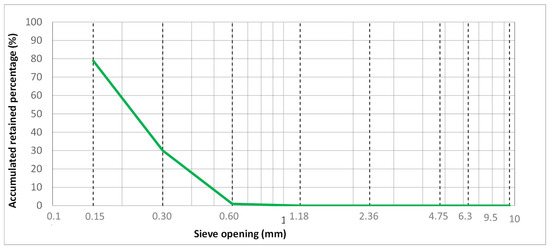
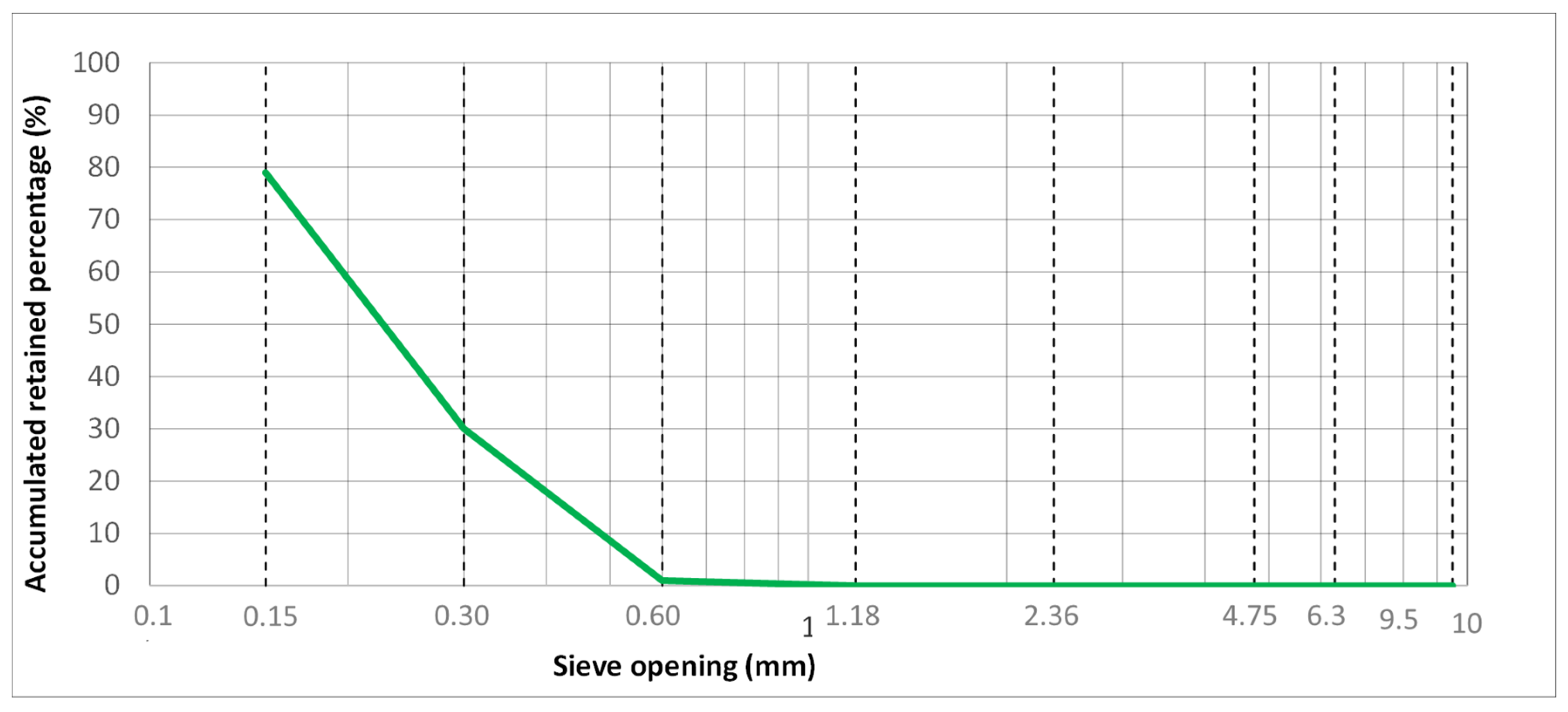
The cement used was Itaú, of the Portland Cement IV-32 type (characterizations in Table 3). The sand used was the fine fraction of sand from the Acre River (granulometry expressed in Figure 2 and Table 4).
Table 3.
Composition of Portland Cement used.
Figure 2.
Granulometric curve of the sand of the Acre River used.
Table 4.
Physical parameters of the sand used.
Five traces were prepared for the measurement of the specimens (SPs), one for each addition and one control trace, without addition.
The process of mixing the inputs followed what was exposed in reference [27], with adaptations. For the mixture, a mortar mixer of the PAVITEST brand was used. Dry inputs were mixed with water at low speed (140 rpm) for 30 s. Then, for 90 s, the equipment was turned off, and in the first 30 s, the walls and shovel of the container were cleaned with a trowel. In the final 60 s, the mixture remained at rest. Finally, the mixture was brought to high speed (285 rpm) for 60 s.
The SPs were molded in cylindrical molds 50 mm × 100 mm, previously greased with vegetable oil. The mortar was allocated in four dense layers with approximately 30 strokes in each, using a manual socket. The SPs remained in the mold for the initial 24 h, and after demolding, they were taken to the tank and immersed.
2.3. Physical Tests
The properties of water absorption, specific mass, void index, and dimensional variation were characterized using the standards [31].
In the execution of the test, the molded SPs were taken to a DELEO oven, where they remained for 4 days at a temperature of 105 °C. After this period, their mass was measured: dry mass (DM) and its dimensions of length and diameter, dry, measured through dimensional variations (DV) of length (DVd,l) and diameter (DVd,d), respectively. They were then immersed in water for 72 h. At the end of the period, the SPs were conditioned to containers where, completely submerged in water at a constant level, they were brought to a boil for 2 h. At the end of the test, the immersed masses (IM), through a hydrostatic balance, the saturated mass in air (SM) and also its saturated dimensions of length and diameter (DVs,l and DVs,d) were measured.
The calculations of the water absorption index, void index, specific mass, and dimensional variation were carried out according to the equations established by the [31] standard: Equations (1) (water absorption), (2) (specific mass), (3) (void index), and (4) (dimensional variation).
where W = water absorption.
where Iv = void index.
where = specific mass.
where DV = dimensional variations; DVs = dimensional variations saturated; DVd = dimensional variations dry.
2.4. Mechanical Tests
For the mechanical tests, the [32] standard was used to perform a diametrical compression test to obtain tensile strength. The press is from the EMIC brand and has a load application rate of 0.1 kN/min.
The data related to the rupture force in diametrical compression, collected in the press, were tabulated and calculated to obtain the tensile strength, calculated through the equation provided by the [32] standard (Equation (5) (tensile strength)).
where
f(ct,sp) = tensile strength by diametrical compression; F = maximum force obtained in the test; d = nominal diameter; l = nominal length.
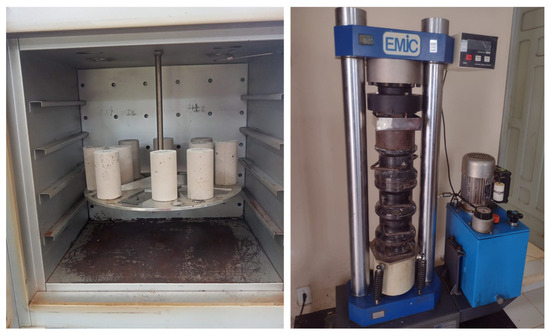
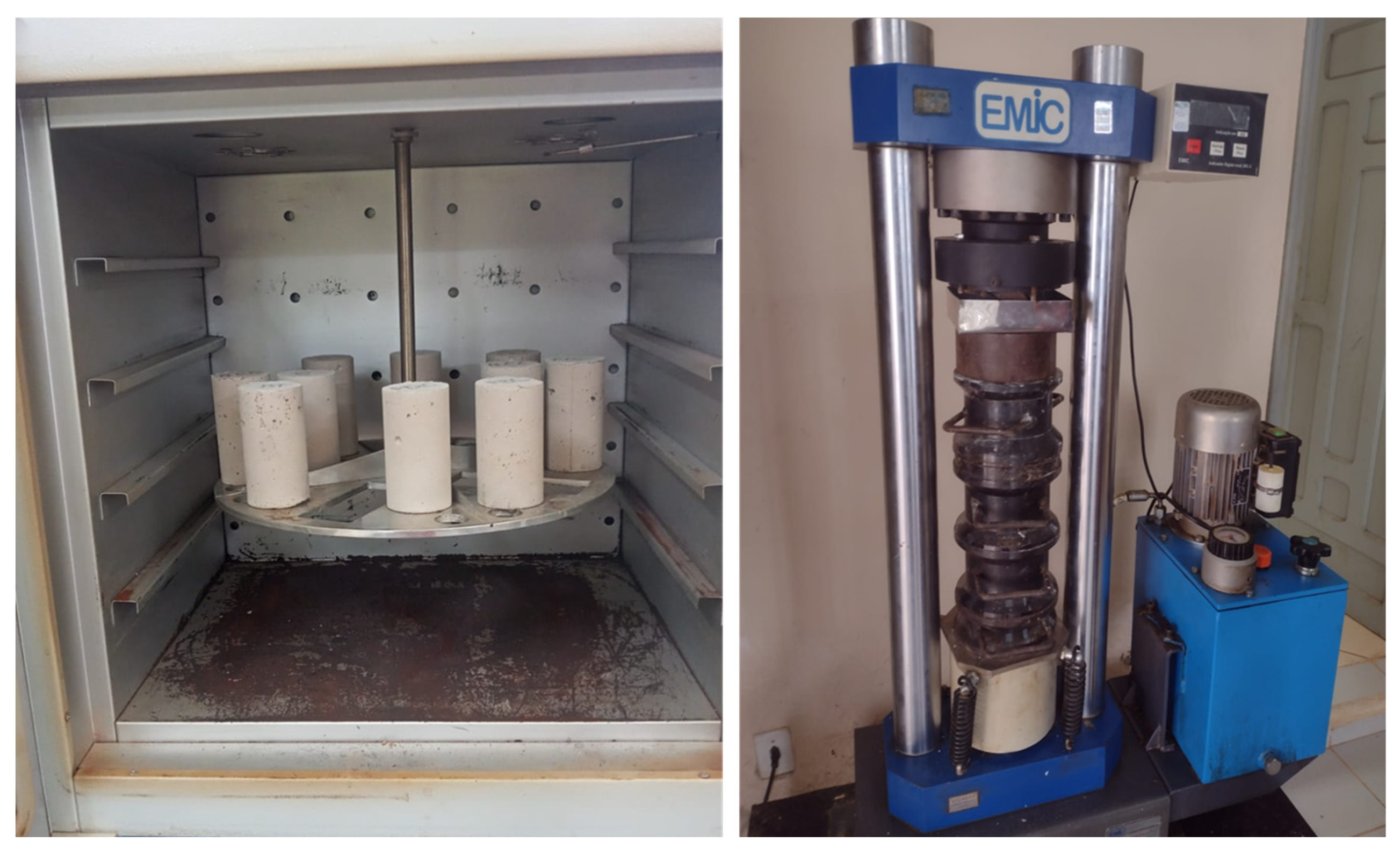
The steps related to the physical and mechanical testing processes are shown in Figure 3.
Figure 3.
On the left, drying in an oven; on the right, breaking process in a press.
2.5. Statistical Analysis
For the sample design that meets the conditions for statistical analysis, the following were used:
- Physical tests: 5 additions, 2 SPs, 2 repetitions in the measurements of each property, totaling N = 20 additions, meeting the provisions for statistical analysis [33] and the conditions of [31];
- Mechanical tests: 5 additions, 6 SPs, totaling N = 30 additions, meeting the provisions for statistical analysis [33] and the conditions of [32]. However, the 10 SPs that most deviated from the mean were excluded from the analysis in order to increase the reliability of the results, resulting in N = 20, also meeting the provisions for statistical analysis [33].
The statistical analysis adopted was descriptive. The means were considered and analyzed based on the standard deviation of each addition presented for the treatments in question [33].
3. Results
3.1. Physical Properties
The mean values of the measurements measured by the SPs, related to the calculation parameters for determining the physical indices, after statistical analysis are shown in Table 5.
Table 5.
Average data obtained from measurements after statistical analysis.
Table 5 correlates measures of dry mass, dimensional variation of length and diameter, dry, immersed mass, saturated mass, and dimensional variation of length and diameter, saturated, for the five additions tested. From them, it is possible to notice that the higher value of dry mass of the SB addition differs from the others, as well as the BCP addition. The lowest mass value refers to the control addition (C) and differs from the others. Regarding dimensional variation, the greatest length was found in the BCP addition, which differs from the others. The minimum values are C and DCP. Regarding the diameters, there were no significant differences. Regarding the immersed masses, the maximum value, SB, and the minimum, DCP, are different from each other, but BCP, CNC, and C have partial similarity to both. Regarding saturated mass, there were no significant differences between them. Regarding the saturated dimensional variation, the longest lengths were found in BCP and CNC. Regarding the diameters, there were no major differences.
3.2. Water Absorption
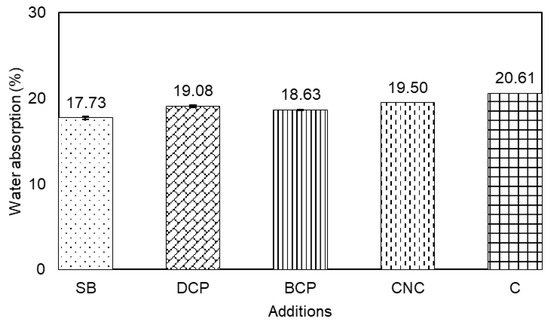
Figure 4 shows the water absorption index for each addition analyzed. The control sample (C), without additions, is the highest absolute index. The intermediate values are found in the DCP, BCP, and CNC additions, with a range of variation between 18.63 and 19.50%. The lowest absolute value is shown by SB.
Figure 4.
Water absorption graph, after statistical analysis.
The lowest indexes obtained, referring to the addition of crushed bamboo and nanofiber pulp, were higher than the indexes found in granite composites [34]. Similarly, composites with coconut fiber had a low water absorption index compared to the indices calculated here, even for the lowest percentages shown [35]. The range of values obtained for the additions in the indicated treatments were equated to the absorption indices in composites with kenaf fiber and also in composites with jute fiber [36]. An equal relationship of proportionality was found in mortars enriched with polypropylene fiber, marble dust, and silica fume [37]. Thus, it is possible to observe that the results found and compared with the literature are aligned with each other, as well as justified by the water absorption property of bamboo, characterized by internal voids in the fibers, providing higher absorption than when compared to materials of non-fibrous origin [38].
3.3. Void Index
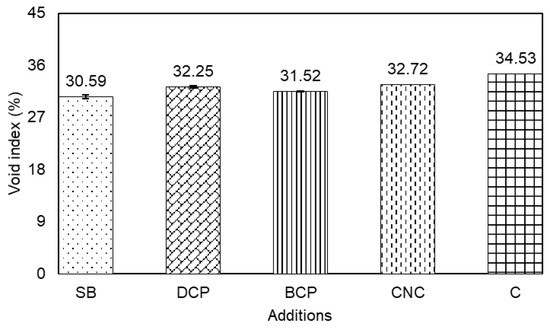
Figure 5 shows the void rates calculated throughout the treatments. The highest index was found in addition C. The intermediate values of the DCP, BCP, and CNC additions vary in the range between 31.52 and 32.72%. The lowest absolute value is from the SB addition.
Figure 5.
Graph of the void index, after statistical analysis.
The range of values found for the void index, ranging from the minimum for crushed bamboo to the maximum value for the addition of cellulose nanocrystals, is similar to that obtained for granite-based composites [34]. However, they vary divergently when compared to coconut fiber additive composites, which accounted for 50% of those obtained with the addition of crushed bamboo [35]. Therefore, from these relationships, it is possible to observe that this variation, even between materials of organic and fibrous origin, is related to the nature of the material studied. Even considering the internal voids characteristic of bamboo fibers, when compared to coconut fibers, a material with low-efficiency bonds in the fiber-matrix aspect, which results in the highest incidence of voids in relation to bamboo fibers, thus possibly reflecting on the physical characteristics of the obtained composites [35,38].
3.4. Specific Mass
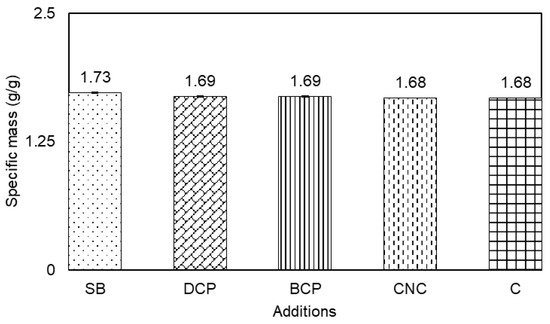
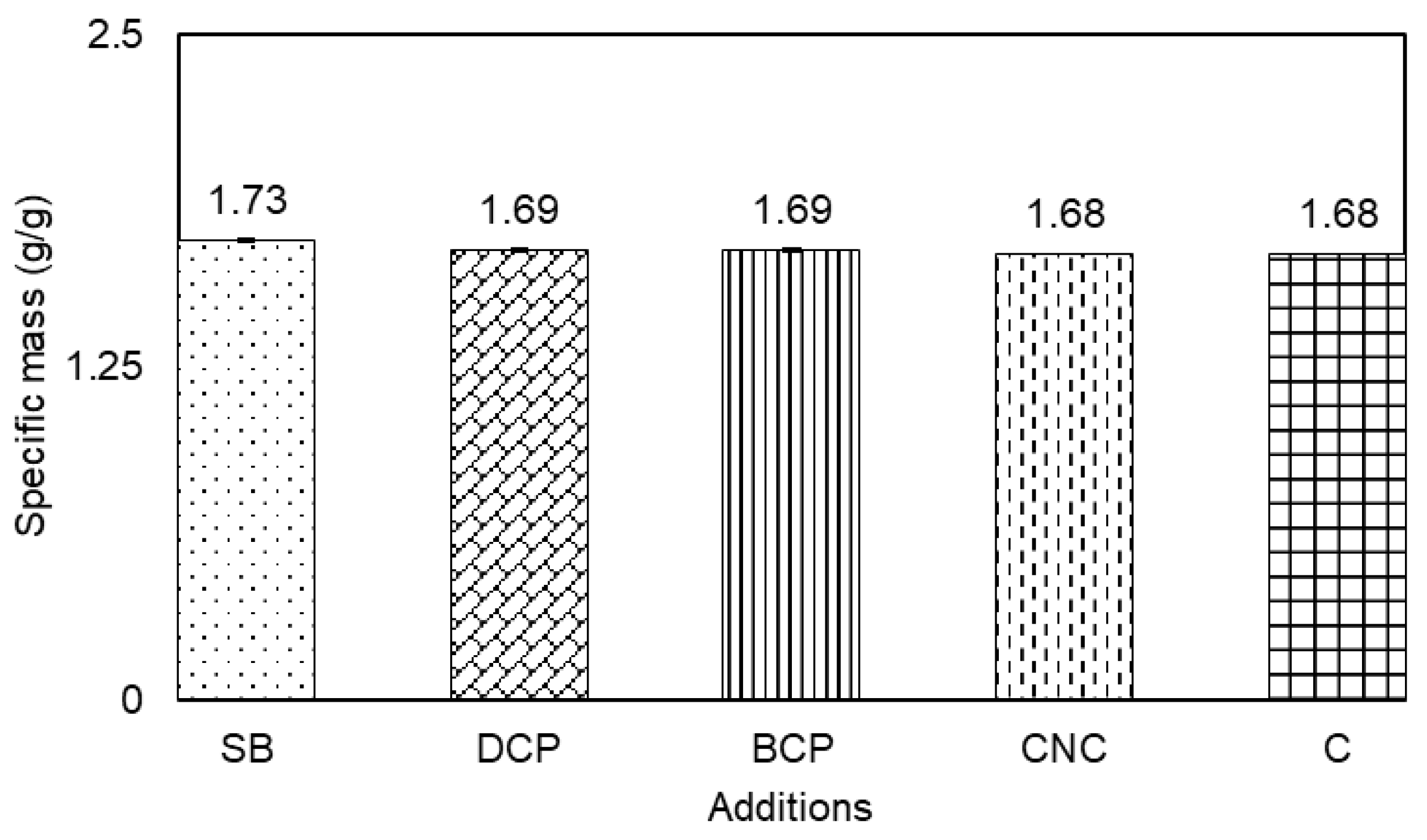
Figure 6 demonstrates the relation found between the specific masses calculated from the additions. A different behavior from the other indexes, previously seen, is observed. The highest specific mass index is found in isolation in the SB addition. In absolute terms, additions such as DCP and BCP showed the same index, 1.69 g/g, while in additions CNC and C, with 1.68 g/g, the lowest absolute value was found.
Figure 6.
Specific mass graph.
The specific mass index had the smallest variation in amplitude among the additions tested. Similar to what was found, there are specific mass indices for composites with the addition of coconut fibers with eucalyptus and those with the addition of sisal fibers [39]. However, those obtained with nanofibers and nanocrystals are of a lower order than those found in crystalline microcellulose composites from coconut fiber [35]. Mortar composites with granitic addition attested to an even higher value than those obtained with bamboo and coconut fibers [34]. The values obtained (1.68 and 1.69 g/g) were also lower than those found for composites with Bambusa vulgaris fibers added, in the order of 1.71 g/g [40]. The correlations found can be explained by the nature of the geometric arrangement and internal arrangement of bamboo fibers, which provides their lower specific mass when compared to other plant species [41].
3.5. Dimensional Variation
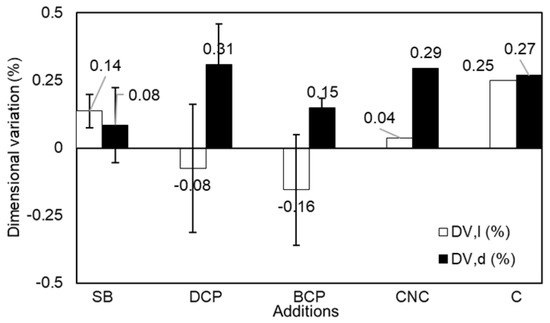
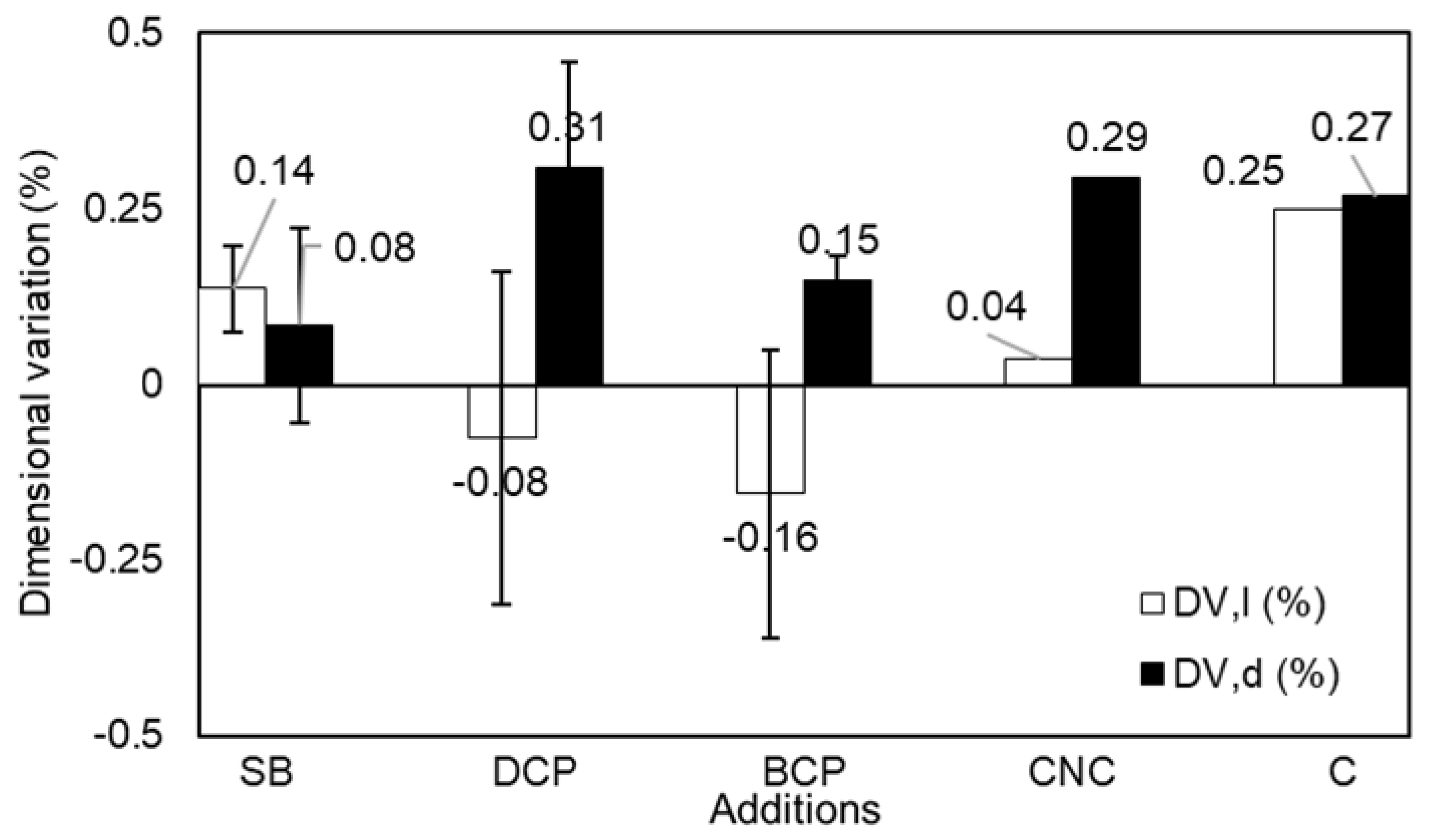
Figure 7 shows the relation obtained, after statistical analysis, of the dimensional variation calculated between the additions, considering the dimensions of length and diameter. The additions of DCP and BCP indicated a retraction in the variation in the length of the observed SPs. The highest index of DV,l was presented by addition C. In relation to DV,d, there were no cases of retraction, and additions such as DCP and CNC were, in absolute number, higher, while the CNC addition showed the lowest index found.
Figure 7.
Graphic of dimensional variation of length and diameter, after statistical analysis.
Proportionally, the behavior of the dimensional variation index was similar to that seen in composites with coconut fiber, compared to the indices calculated here, even if for the lowest percentages shown [35]. An equal relationship of proportionality was found in mortars enriched with polypropylene fiber, marble dust, and silica fume [37]. Thus, it is observed that the dimensional behavior found is in accordance with the properties of bamboo described in the literature. This behavior presents the same peaks of swelling and retraction identified in the physical characterizations of Guadua weberbaueri bamboo [42]. It is worth noting that the anatomy of the fibers itself can directly contribute to this correlation, although there is no way to directly explain the relationship when it comes to nanofibers [42].
3.6. Tensile Strength
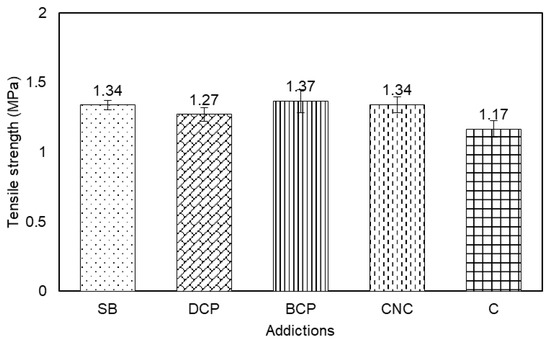
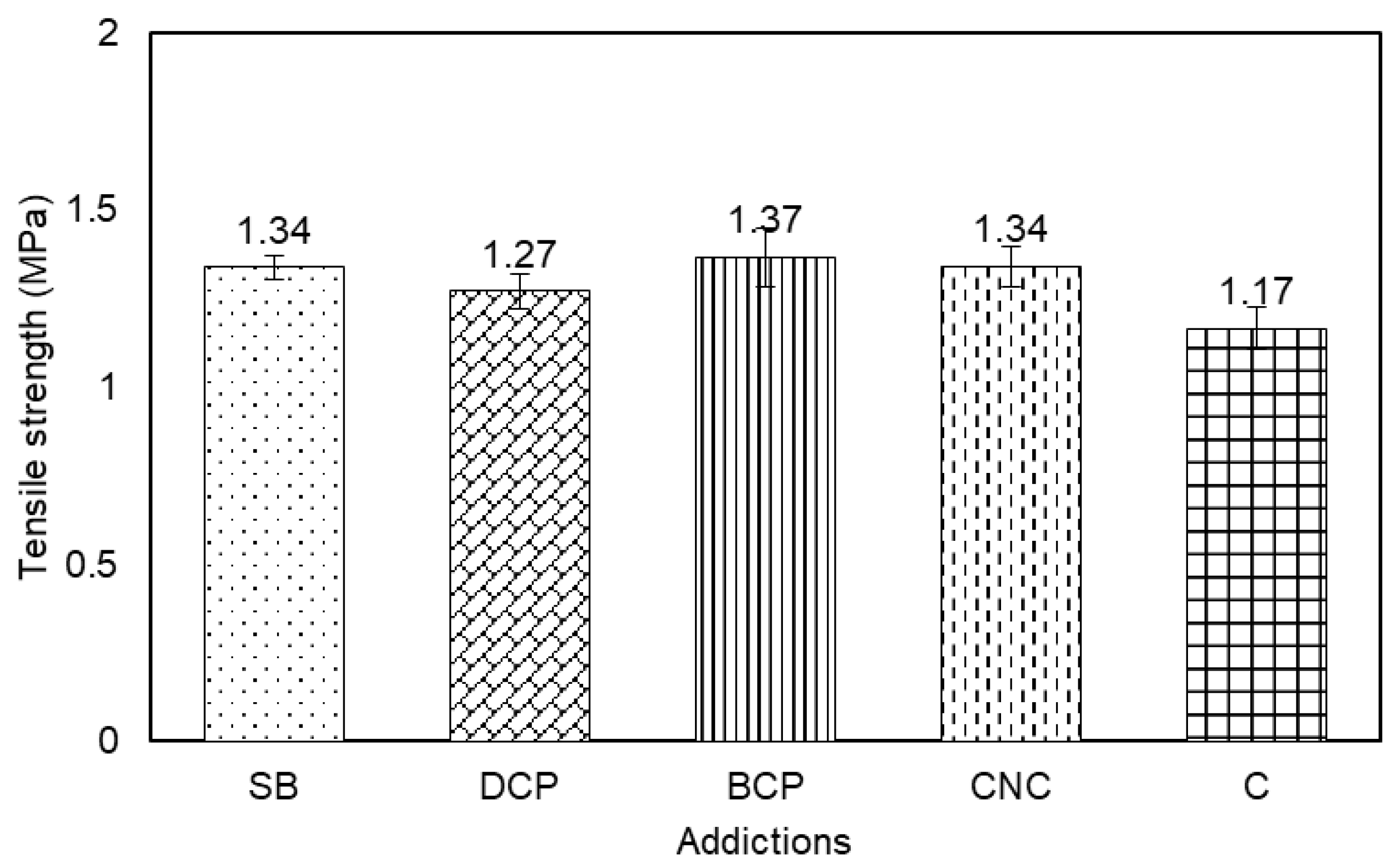
Figure 8 shows the relations found for the mean values of tensile strength in each addition. In the range of highest tensile strength, in absolute value, are the BCP and CNC additions. On the other hand, the lowest performance in tensile strength is presented by addition C. The SB and DCP treatments show intermediate values. Despite the result found in the SB treatment, as it is an in natura addition and the research looks for additions whose treatments extend their useful lives in buildings, its validity for the objectives of the study is discarded.
Figure 8.
Graph of tensile strength, after statistical analysis.
The tensile strength indexes were obtained, considering the performance with and without the additions. Similarly, with slightly lower absolute values, the treatments with nanofibers and nanocrystals of bamboo cellulose were at the margin when observing the resistances obtained by other composites of vegetable fibers, such as the contents with the incorporation of sisal and coconut [39]. When considering bamboo genera, the behavior of nanofibers is also similar to that obtained in composites with Guadua spp., due to the family’s kinship [29]. In an intermediate way, but with higher absolute distance, there are treatments with the incorporation of synthetic fibers, such as polypropylene and the addition of silica fume [37]. Finally, with the greatest absolute distance to the strengths found here, there are the additive composites of materials with high performance, such as glass fibers and steel fibers [43,44]. The behavior can possibly be explained by the fact that fibers extracted from the stalk, as in the case of Guadua weberbaueri bamboo, may have characteristics that influence resistance performance when compared to other vegetable and synthetic fibers [45]. Factors such as exposed microfibrils, variations in uniformity, and irregularities in surface finish can lead to tensile strength situations by hindering the adhesion between matrix and fibrous substrate [45]. One way to work on the validation of reliable results on matrix-fiber interaction, consequently developing its role in mechanical strength, is through measuring contact angle and directly assessing hydrophilicity, which, although they could not be used in the present study, could guide future studies [46,47].
Considering the results in the previous Figure 4, Figure 5, Figure 6, Figure 7 and Figure 8 regarding the physical indices and mechanical tensile strength, as well as the performance of each of the additions tested, it is possible to make descriptive inferences. In general, it was possible to observe that BCP and CNC, treatments with the addition of nanofibers and nanocrystals from bamboo, had superior performances to the other treatments. Similarly, C, the control addition, without the addition of treatments, also significantly lowered the performance of the others. Thus, comparing both additions with bamboo nanofibers and nanocrystals with control addition, it is possible to obtain Table 6.
Table 6.
Comparison between the changes promoted by the addition of cellulose nanofibers and nanocrystals, in relation to the control addition.
In the table, BCP and CNC had superior performance, indicating, primarily, that the potential of adding cellulose nanofibers and nanocrystals is significant. The addition of nanofibers (BCP) decreased water absorption and void rates, resulting in a more stable composite, similar to what occurs in the addition of cellulose nanocrystals (CNC). The addition of bamboo nanofibers resulted in an increase in the specific mass, while the addition of bamboo nanocrystals did not interfere with this property. The dimensional variations were also not interfered with by the addition of nanofibers and nanocrystals of bamboo cellulose. Finally, both additions increased tensile strength, so that the bamboo nanofibers had a slightly higher increase than that provided by the addition of bamboo nanocrystals.
Thus, it is observed that cellulose nanofibers and nanocrystals are promising materials for application in cementitious materials. Future studies may investigate, for example, whether cellulose microcrystals and nanocrystals after some treatment methods can present a pozzolanic effect [48], whether the addition of functional groups on the surface of nanoparticles can contribute to the improvement of some properties [49,50], whether natural nanofibers contribute to improving internal curing [51], the application of machine learning to predict some behaviors of materials with nanoparticles [52], and life cycle assessment to indicate the CO2 emission of cementitious composites with cellulose nanofibers and nanocrystals [53].
4. Conclusions
The evaluation of the physical and mechanical properties of the cementitious composite with incorporation of nanofibers and cellulose nanocrystals from Guadua weberbaueri bamboo showed interesting properties. The potential for increasing the mechanical strength of the material, using a native raw material in the state of Acre, Amazônia, enabled an increase in mechanical strength and opens up avenues for future evaluation of optimal levels, tests for new resistance parameters, and interactions with other fibers. The statistical analyses indicated that there is evidence of differentiation in the results obtained between the control additions, crushed bamboo, delignified cellulose pulp, bleached cellulose pulp (nanofibers), and cellulose nanocrystals, so that, considering only the final treatments, the incorporation of nanofibers decreased the void index and water absorption, caused a slight increase in the specific mass, did not cause dimensional variation, and increased tensile strength by 14.60%, while the incorporation of nanocrystals had the same behavior (differing by the fact that it did not cause variation in specific mass) and obtained an increase of 12.70% in tensile strength. Therefore, there are indications of technical feasibility and, in the face of more complex analyses later, the confirmation (or not) of the use of cellulose nanofibers and nanocrystals as additives to tensile strength in composites, allowing the combination of civil engineering, sustainability, and nanotechnology.
Author Contributions
Conceptualization, T.H.d.C.V. and A.F.R.R.; methodology, T.H.d.C.V. and M.d.S.S.; software, T.H.d.C.V.; validation, T.H.d.C.V. and Y.S.B.F.; formal analysis, T.H.d.C.V. and Y.S.B.F.; investigation, T.H.d.C.V.; resources, T.H.d.C.V.; data curation, T.H.d.C.V.; writing—original draft preparation, T.H.d.C.V.; writing—review and editing, T.H.d.C.V., A.E.C.S., and Y.S.B.F.; visualization, T.H.d.C.V.; supervision, T.H.d.C.V. and J.R.d.L.M.; project administration, T.H.d.C.V. and A.F.R.R.; funding acquisition, T.H.d.C.V. and Y.S.B.F. All authors have read and agreed to the published version of the manuscript.
Funding
Federal University of Acre; University of Brasilia for financial support under Call nº 001/2025 DPI/BCE/UnB.
Data Availability Statement
The original contributions presented in this study are included in the article. Further inquiries can be directed to the corresponding author(s).
Acknowledgments
The authors acknowledge the support of the Federal University of Acre (UFAC), the Coordination for the Improvement of Higher Education Personnel (CAPES) and the University of Brasilia (UnB).
Conflicts of Interest
The authors declare no conflicts of interest.
Abbreviations
The following abbreviations are used in this manuscript:
| SP | Specimens |
| SB | Shredded bamboo |
| DCP | Delignified cellulose pulp |
| BCP | Bleached cellulose pulp |
| CNC | Cellulose nanocrystals |
| DM | Dry mass |
| DV | Dimensional variations |
| DVd,l | Dimensional variations of length |
| DVd,d | Dimensional variations of diameter |
| IM | Immersed masses |
| SM | Saturated mass in air |
| DVs,l | Saturated dimensions of length |
| DVs,d | Saturated dimensions of diameter |
| W | Water absorption |
| Void index | |
| Specific mass | |
| f(ct,sp) | Tensile strength by diametrical compression |
| F | Maximum force obtained in the test |
| d | Nominal diameter |
| l | Nominal length |
References
- da Silva Nunes, M.R.; da Paixão Ramos, D.; Sena, A.E.C.; do Nascimento Morais, C.D.; Ramos, A.L.; Rodriguez, A.F.R.; Faria, F.S.E.D.V. Preparation and characterization of cellulosic pulp from Guadua weberbauri bamboo: Technology. South Am. J. Basic Educ. Tech. Technol. 2021, 8, 217–232. Available online: https://periodicos.ufac.br/index.php/SAJEBTT/article/view/4306 (accessed on 18 April 2024).
- de Oliveira, J.M.Z.; de Almeida Melo Filho, J. Evaluation of the durability of cementicious composites reinforced with natural vegetable fibers from the Amazon. Braz. J. Dev. 2024, 10, e67006. Available online: https://ojs.brazilianjournals.com.br/ojs/index.php/BRJD/article/view/67006 (accessed on 7 April 2024). [CrossRef] [Scilit]
- Pereira, W.A.; Ceron, I.; Silva, M.S.E.; Freitas, M.P.C.D.; Silva, E.R.D.; Costa, F.M.D. Development of polymeric composites reinforced with buriti leaf fiber. Matéria (Rio J.) 2021, 26, e12932. [Google Scholar] [CrossRef] [Scilit]
- Nascimento, C.B.D.; Barbosa, V.M.; Barbosa, C.E.D.S.M.; Motao, W.K.B.; Oliveira, V.C.D. Analysis of the properties of mortars produced with different natural fibers. In Brazilian Symposium on Mortar Technology; Springer: João Pessoa, Brazil, 2023; Volume 14. [Google Scholar] [CrossRef] [Scilit]
- Barraza, M.T.; Tambara Junior, L.U.D.; Onghero, L.; Gleize, P.J.P.; de Azevedo, A.R.G. Physical-mechanical properties of geopolymeric mortars reinforced with natural and synthetic polymeric fibers. In Brazilian Symposium on Mortar Technology; Springer: João Pessoa, Brazil, 2023; Volume 14. [Google Scholar] [CrossRef] [Scilit]
- Barros, J.G.; Lopes, J.N.P.; Leite, L.L.; Maciel, J.K.V.S.; Arruda, T.R.; Batista, Y.B.G.; Bandeira, D.J.A.; dos Santos Oliveira, H.W.G. Feasibility of the use of vegetable fibers for sustainable constructions: A review. Obs. Econ. Latinoam. 2023, 21, 19754–19771. [Google Scholar] [CrossRef] [Scilit]
- Lopes, J.P.; Ferrari, V.J.; Camões, A.; Souza, A.; Fangueiro, R. Influence of carbon nanotubes on the performance of concrete and fiber-reinforced concrete (CRF). Matéria (Rio J.) 2002, 27, e13197. [Google Scholar] [CrossRef] [Scilit]
- Fraga, Y.S.B.; Rêgo, J.H.S.; Capuzzo, V.M.S.; Andrade, D.S. Efeito da ultrasonicação da silica ativa e da nanossílica coloidal em pastas de cimento. Matéria (Rio J.) 2020, 25, e-12847. [Google Scholar] [CrossRef] [Scilit]
- Martins, G.L.O.; Fraga, Y.S.B.; Paula, A.; Rêgo, J.H.S.; Terrades, A.M.; Rojas, M.F. Analysis of the Microstructure and Porosity of Cement Pastes with Functionalized Nanosilica with Different Contents of Aminosilane. Materials 2023, 16, 5675. [Google Scholar] [CrossRef] [Scilit]
- Czovny, C.K.; Gidrão GDe, M.S.; Bilcati, G.K.; Lengowski, E.C.; Bosse, R.M.; Silvestro, L. Fresh and hardened properties of cementitious composites with the addition of nanofibrillated cellulose. Ibracon J. Struct. Mater. 2024, 17, e17202. [Google Scholar] [CrossRef] [Scilit]
- dos Santos Ribeiro, V.A.; Werdine, D.; Barbosa, L.F.; Oliveira, A.F.; Barbosa, A.M.; Silva, L.R.R.; Ribeiro, L.H. Investigation of the physical and mechanical properties of conventional concrete with partial replacement of sand by bamboo fibers. Res. Soc. Dev. 2021, 10, e268101321092. [Google Scholar] [CrossRef] [Scilit]
- Rocha, J.H.A.; Farias, L.D.N.; Siquiera, T.P.L. Cellulose nanofibers (CNF) as reinforcement for cementitious matrices: A systematic literature review. Rev. Alconpat 2022, 12, 311–327. [Google Scholar]
- Su, J. Optimizing mechanical Properties of multi-walled carbon nanotube reinforced thermoplastic polyurethane composites for advanced athletic protective gear. Matéria (Rio J.) 2024, 29, e20240059. [Google Scholar] [CrossRef] [Scilit]
- Ramanjaneyulu, C.; Somasundaram, S.; Babu, G.D.; Shajahan, M.I. Experimental investigation of mechanical, thermal, DMA analysis and morphological analysis on Abaca/Hemp/Kenaf reinforced with Anogeissus latifolia blender polyester nanocomposites. Matéria (Rio J.) 2024, 29, e20240380. [Google Scholar] [CrossRef] [Scilit]
- Palaniyandi, S.; Veeman, D. Experimental Investigation of Mechanical Performance of Basalt/Epoxy/MWCNT/SiC Reinforced Hybrid Fiber Metal Laminates. Mater. Res. 2022, 25, e20220174. [Google Scholar] [CrossRef] [Scilit]
- Silva, C.R.; Lago, R.M.; Veloso, H.S.; Patricio, P.S.O. Use of Amphiphilic Composites based on Clay/Carbon Nanofibers as Fillers in UHMWPE. J. Braz. Chem. Soc. 2018, 29, 278–284. [Google Scholar] [CrossRef] [Scilit]
- Raja, M.A.; Sujatha, S.J. Geopolymer concrete cured under ambient conditions using a single alkali activator. Matéria (Rio J.) 2024, 29, e20240281. [Google Scholar] [CrossRef] [Scilit]
- Murugan, A.; Vellingiri, S.; Manohar, G.; Sridhar, V.P. Influence of mesquite derived SiO2 and Graphene reinforcement on Magnesium-Silicon alloy hybrid nanocomposites: Experimental, mechanical and wear possessions analysis. Mater. Res. 2024, 27, e20240344. [Google Scholar] [CrossRef] [Scilit]
- Magdalene, P.S.; Karthikeyan, B. Influence of basalt fiber in ultra-high-performance concrete in hybrid mode: A comprehensive study on mechanical properties and microstructure. Rev. Construcción 2024, 23, 104–128. [Google Scholar] [CrossRef] [Scilit]
- Subramani, K.; Ganesan, A.K. Synergistic effect of graphene oxide and coloidalnano-silica on the microstructure and strength properties of fly ash blended cement composites. Matéria (Rio J.) 2024, 29, e20230305. [Google Scholar] [CrossRef] [Scilit]
- Cozza, R.C.; Verma, V. Evaluation of fracture toughness of epoxy polymer composite incorporating micro/nano silica, rubber and CNTs. Polímeros 2020, 30, e2020030. [Google Scholar] [CrossRef] [Scilit]
- Srinivasan, S.S.; Muthusamy, N.; Anbarasu, N.A. The structural performance of fiber-reinforced concrete beams with nanosilica. Matéria (Rio J.) 2024, 29, e20240194. [Google Scholar] [CrossRef] [Scilit]
- Pérez, R.H.; Álvarez Castillo, A.; Olarte Paredes, A.; Salgado Delgado, A.M. Obtención de nanocelulosa a partir de residuos postcosecha. Mundo Nano. Rev. Interdiscip. En Nanociencias Y Nanotecnología 2021, 16, 1e–47e. [Google Scholar] [CrossRef] [Scilit]
- Sanchez, M.L.; Capote, G.; Patiño, J.P. Properties of Composite Materials Reinforced with Guadua Fibers: A Comparative Study. Rev. Ing. Univ. Medellín 2022, 21, 1–18. [Google Scholar] [CrossRef] [Scilit]
- Sánchez-Cruz, M.L.; Capote Rodriguez, G.; Patiño-Quiazua, J.P. Influencia del tipo de fibras y del tratamiento superficial de las fibras en las propiedades físicas y mecánicas de compuestos reforzados con fibras vegetales. Ingeniería 2023, 28, e18852. [Google Scholar] [CrossRef] [Scilit]
- Viana, T.H.C.; Sena, A.E.C.; Silva, M.S.; Maia, B.R.S.; Nunes, M.R.S.; Fraga, Y.S.B.; Murad, J.R.L.; Rodriguez, A.F.R. Synthesis and characterization of nanofibers and nanocrystals of cellulose from Guadua weberbaueri. Ciência Nat. 2024, 46, e85624. [Google Scholar] [CrossRef] [Scilit]
- Associação Brasileira De Normas Técnicas—ABNT. NBR 7215: Cimento Portland—Determinação da Resistência à Compressão. Rio de Janeiro. 2019. Available online: https://professor.pucgoias.edu.br/sitedocente/admin/arquivosupload/17827/material/nbr%207215%20-.pdf (accessed on 14 April 2025).
- Associação Brasileira De Normas Técnicas—ABNT. NBR 12655: Concreto—Preparo, Controle e Recebimento. Rio de Janeiro. 2022. Available online: https://www.target.com.br/produtos/normas-tecnicas/36237/nbr12655-concreto-de-cimento-portland-preparo-controle-recebimento-e-aceitacao-procedimento (accessed on 7 April 2024).
- Morais, C.D.N. Production and Use of Cellulosic Nanofibers from Bamboo (Guadua spp.) for Reinforcement of Cementitious Composites. Science, Innovation and Technology for the Amazon. Master’s Thesis, Federal University of Acre, Rio Branco, Brazil, 2021. [Google Scholar]
- Votorantim. Chemical Safety Data Sheet—MSDS—Revision n°00 06/01/2020. Available online: https://s3.amazonaws.com/mapa-da-obra-producao/wp-content/uploads/2015/12/FISPQ-Cimento-Rev-00_-2020.pdf (accessed on 3 March 2024).
- Associação Brasileira De Normas Técnicas—ABNT. NBR 9778: Argamassa e concreto endurecidos—Determinação da absorção de água, índice de vazios e massa específica. Rio de Janeiro. 2009. Available online: https://www.target.com.br/produtos/normas-tecnicas/36398/nbr9778-argamassa-e-concreto-endurecidos-determinacao-da-absorcao-de-agua-indice-de-vazios-e-massa-especifica (accessed on 7 April 2024).
- Associação Brasileira De Normas Técnicas—ABNT. NBR 7222: Concreto—Determinação da Resistência à Tração por Compressão Diametral de Corpos de Prova cilíndricos. Rio de Janeiro. 2011. Available online: https://www.target.com.br/produtos/normas-tecnicas/36322/nbr7222-concreto-e-argamassa-determinacao-da-resistencia-a-tracao-por-compressao-diametral-de-corpos-de-prova-cilindricos (accessed on 7 April 2024).
- Santos, T.B.L. Addition Size for the Test-Retest in the Determination of the Intraclass Correlation Coefficient. Bachelor’s Thesis, Federal University of Uberlândia, Uberlândia, Brazil, 2018. [Google Scholar]
- Mendes, G.A.; Effting, C.; Schackow, A. Self-leveling mortar with the addition of marble and granite waste: Physical and mechanical properties. Ambiente Construido 2020, 20, 403–418. [Google Scholar] [CrossRef] [Scilit]
- Capelin, L.J.; Moraes, K.K.; Zampieri, J.P.; Vanderlei, R.D. Evaluation of the effects of coconut fiber and crystalline microcellulose on the properties of cementitious mortars. Matéria (Rio J.) 2020, 25, e12551. [Google Scholar] [CrossRef] [Scilit]
- Dias, B.Z.; de Alvarez, C.E.; Meneghetti, L.C.; Lara, A.H. Vegetable thermoset composites: Water absorption and retention of mechanical properties after weathering. Built Environ. 2024, 24, e127325. [Google Scholar] [CrossRef] [Scilit]
- Oliveira, S.; Soranço, L.; Pereira, T.; Games, B.; Ferreira, C.; Barbosa, M.T. Study of the addition of N95 face mask fibers, silica fume and marble powder in high-performance mortar. Matéria (Rio J.) 2023, 28, e20230042. [Google Scholar] [CrossRef] [Scilit]
- De Sandre, D.S.; Bianchi, G.; da Silva Trentin, T.F.; Cavazzana, T.L. Feasibility for Implementation of Bamboo Fibers in Mortar. Sci. J. ANAP Bras. 2019, 12. [Google Scholar] [CrossRef] [Scilit]
- Savastano Junior, H.; Pimentel, L.L. Feasibility of using vegetable fiber waste for the purpose of obtaining construction material. Braz. J. Agric. Environ. Eng. 2000, 4, 103–110. [Google Scholar]
- Lima, L.M. Production and Characterization of Cementitious Composites Reinforced with Bamboo Fibers (Bambusa vulgaris). Master’s Thesis, Federal University of Amazonas, Manaus, Brazil, 2019. [Google Scholar]
- Dos Anjos, M.A.S.; Ghavami, K.; Barbosa, N.P. Cement-based composites reinforced with bamboo cellulosic pulp. Part I: Determination of the optimal reinforcement content. Braz. J. Agric. Environ. Eng. 2003, 7, 339–345. [Google Scholar]
- Viana, T.H.C.; Silveira, G.G.; Segobia, P.B.; Murad, J.R.L. Physical Characterization of the Dimensional Variations of Guadua Weberbaueri Bamboo from Rio Branco–Ac. In Annals Of The I North-Northeast Engineering Journey (Online); Triunfo: Campinas, Brazil, 2021; p. 60. [Google Scholar]
- Furian, B.O.; Pimentel, L.L.; Forti, N.C.S.; Jacintho, A.E.P.G.A. Analysis of the mechanical behavior of concrete with recycled aggregate and addition of steel and AR glass fibers. Matéria (Rio J.) 2022, 27, e202145749. [Google Scholar] [CrossRef] [Scilit]
- Suk, D.A.; Ferrari, V. Application of steel fiber reinforced concrete (CRFA) in beams subjected to shear. Ambiente Construdo 2024, 24, e129720. [Google Scholar] [CrossRef] [Scilit]
- Barbosa, K.L.S. Incorporation of Short Bamboo Fibers (Bambusa vulgaris) and Industrial Kaolin Residue in Polymeric Matrix Composites: Tensile Strength and Fractography. Advisor: Alessandro José Gomes dos Santos. 2018. 72 f. Course Work (Bachelor of Science and Technology)—University Campus of Ananindeua, Federal University of Pará, Ananindeua. 2018. Available online: https://bdm.ufpa.br/items/d4cace6e-9a98-454e-bf7c-b7b610ceeab7 (accessed on 25 January 2025).
- Chen, H.; Muros-Cobos, J.L.; Amirfazli, A. Contact angle measurement with a smartphone. Rev. Sci. Instrum. 2018, 89, 035117. [Google Scholar] [CrossRef] [Scilit]
- Kabir, H.; Garg, N. Machine learning enabled orthogonal camera goniometry for accurate and robust contact angle measurements. Sci. Rep. 2023, 13, 1497. [Google Scholar] [CrossRef] [Scilit]
- Correia, J.V.F.B.; Santos, H.C.; Fraga, Y.S.B.; Oliveira, R.M.P.B. Influence of chemical pretreatment on the pozzolanicity of recycled glass microparticles used as a substitute for Portland cement. Mater. Constr. 2024, 74, e341. [Google Scholar] [CrossRef] [Scilit]
- Vasconcellos, J.S.; Fraga, Y.S.B.; Rêgo, J.H.S.; Sartoratto, P.P.C.; Rojas, M.F. Hydration, mechanical performance and porosity of Portland cement pastes with functionalized nanosilica with APTES. Dev. Built Environ. 2023, 14, 100157. [Google Scholar] [CrossRef] [Scilit]
- Martins, G.L.O.; Fraga, Y.S.B.; Vasconcellos, J.S.; Rego, J.H.S. Synthesis and characterization of functionalized nanosilica for cementitious composites: Review. J. Nanoparticle Res. 2020, 22, 338. [Google Scholar] [CrossRef] [Scilit]
- Manzano, M.A.R.; Fraga, Y.S.B.; Silva, E.F.; Oliveira, R.B.; Hormaza, B.C.; Toledo Filho, R.D. Internal Curing Water Effect of Superabsorbent Polymer on Microstructure of High-Performance Fine-Grained Concrete. ACI Mater. J. 2021, 118, 125–135. [Google Scholar] [CrossRef] [Scilit]
- Silva, V.P.; Carvalho, R.A.; Rêgo, J.H.S.; Evangelista, F. Machine Learning-Based Prediction of the Compressive Strength of Brazilian Concretes: A Dual-Dataset Study. Materials 2023, 16, 4977. [Google Scholar] [CrossRef] [Scilit]
- Rego, J.H.S.; Sanjuán, M.A.; Mora, P.; Zaragoza, A.; Visedo, G. Carbon Dioxide Uptake by Brazilian Cement-Based Materials. Appl. Sci. 2023, 13, 10386. [Google Scholar] [CrossRef] [Scilit]



Disclaimer/Publisher’s Note: The statements, opinions and data contained in all publications are solely those of the individual author(s) and contributor(s) and not of MDPI and/or the editor(s). MDPI and/or the editor(s) disclaim responsibility for any injury to people or property resulting from any ideas, methods, instructions or products referred to in the content. |
© 2025 by the authors. Licensee MDPI, Basel, Switzerland. This article is an open access article distributed under the terms and conditions of the Creative Commons Attribution (CC BY) license (https://creativecommons.org/licenses/by/4.0/).