Article

Topic Mining and Evolutionary Analysis of Urban Renewal Policy Texts in China

School of Urban Economics and Management, Beijing University of Civil Engineering and Architecture, Beijing 100044, China
*
Author to whom correspondence should be addressed.
Buildings 2025, 15(18), 3324; https://doi.org/10.3390/buildings15183324

Submission received: 1 August 2025 / Revised: 8 September 2025 / Accepted: 12 September 2025 / Published: 14 September 2025
(This article belongs to the Special Issue Large-Scale AI Models Across the Construction Lifecycle)

Abstract

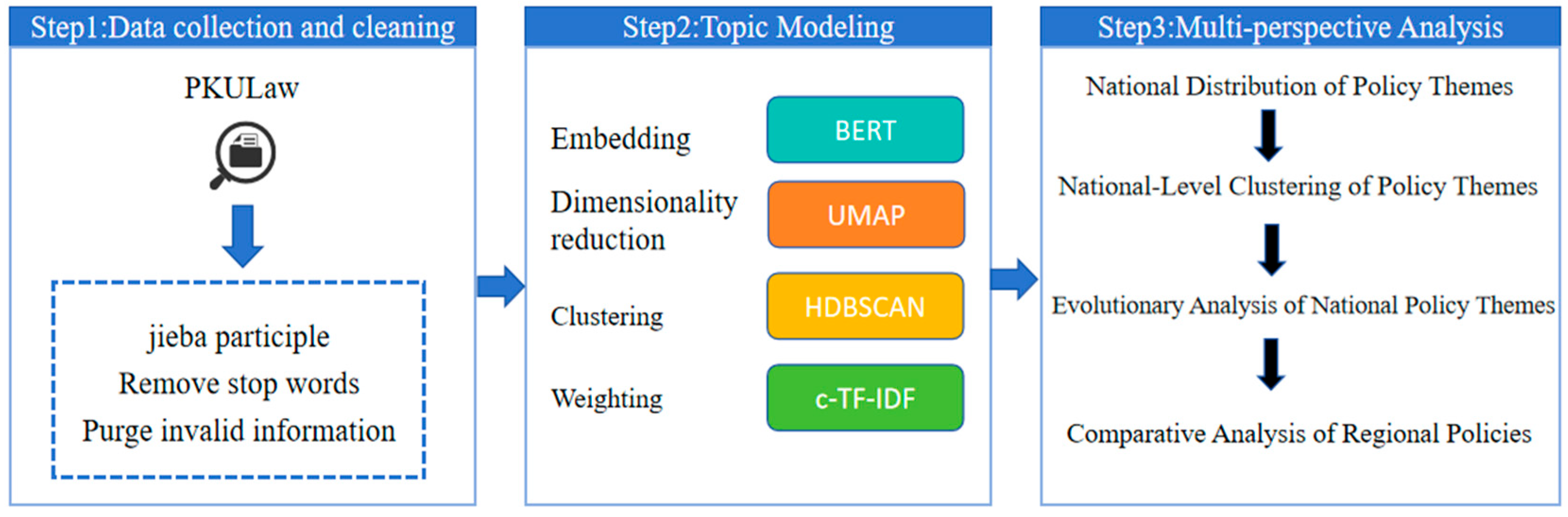
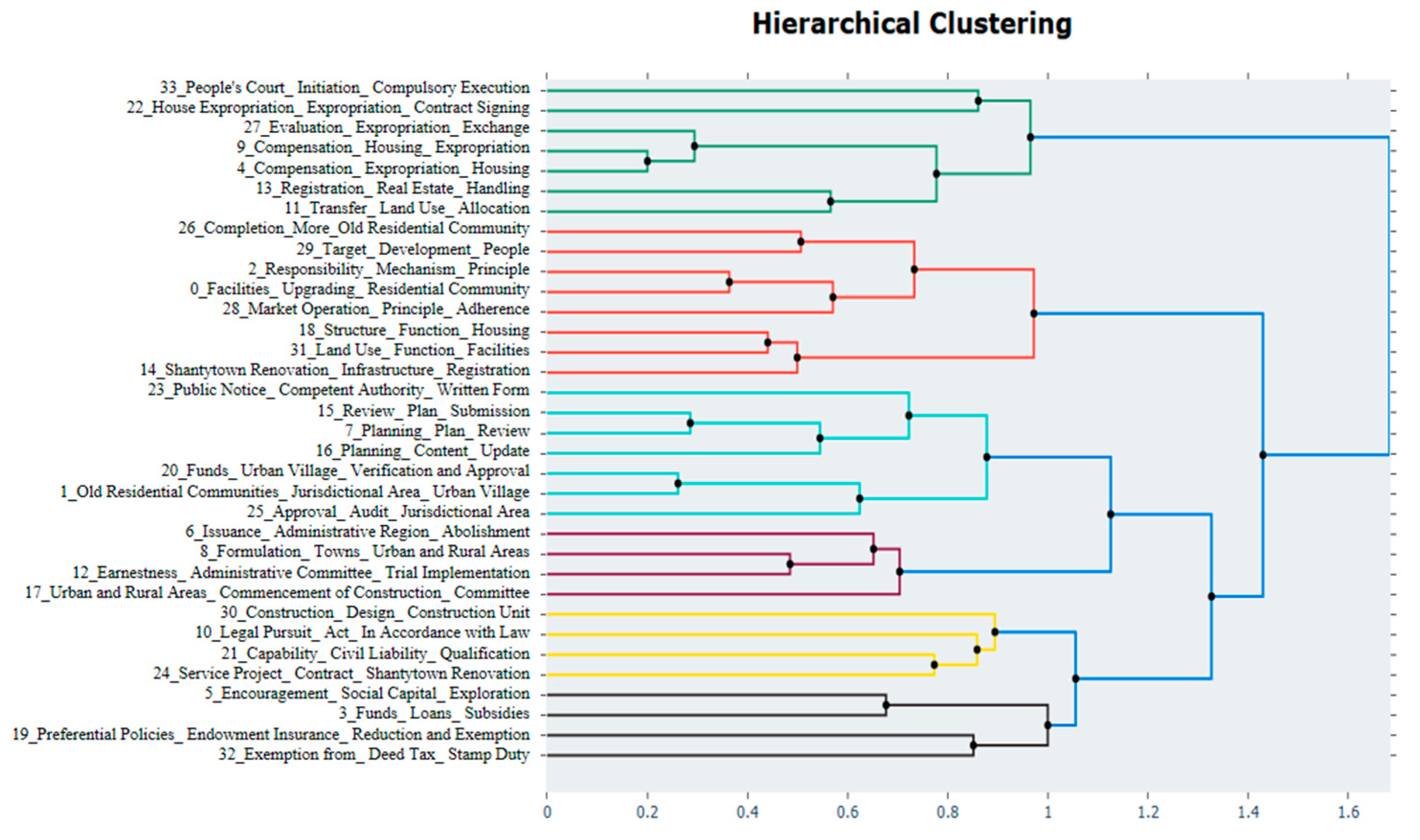
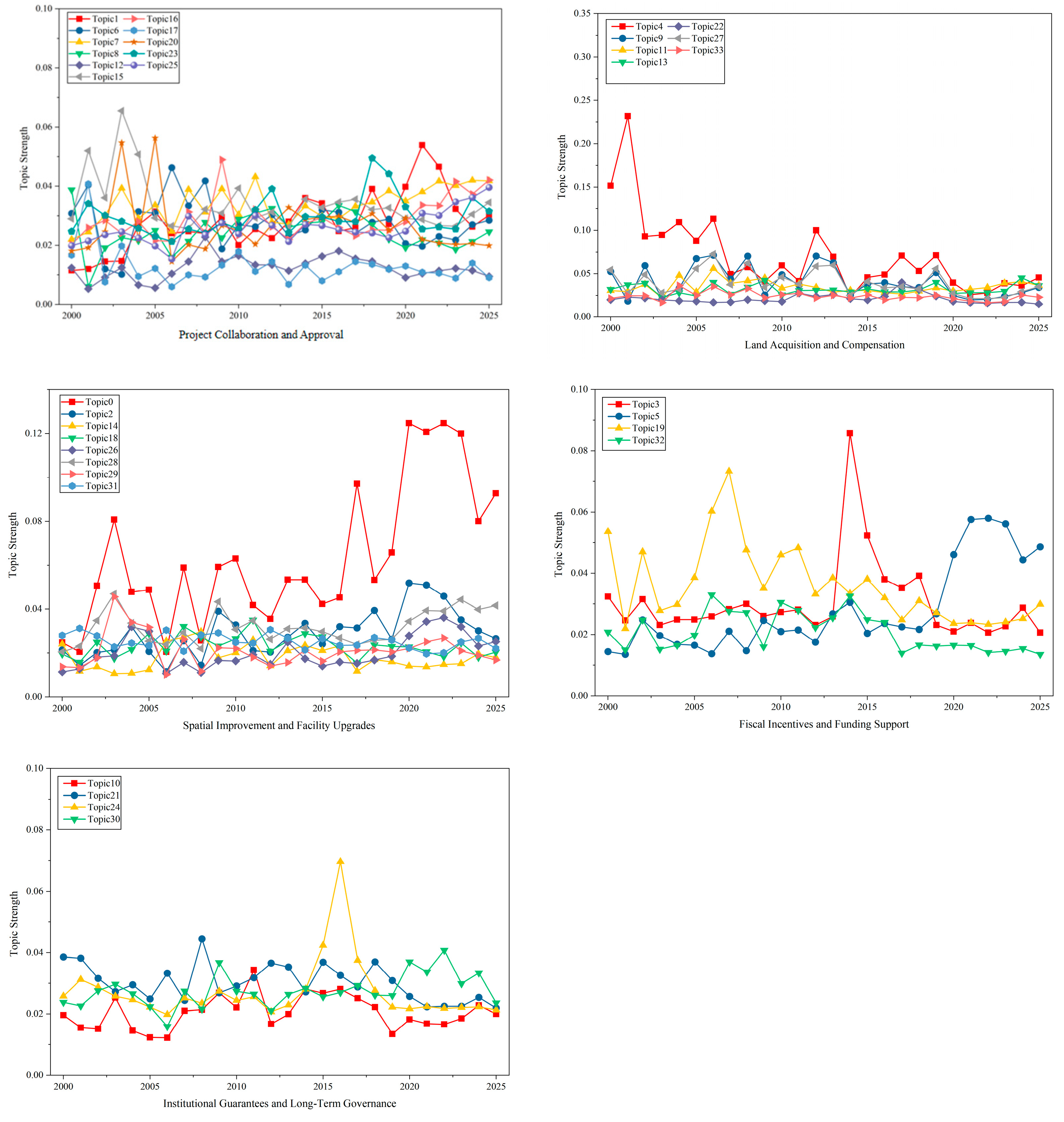
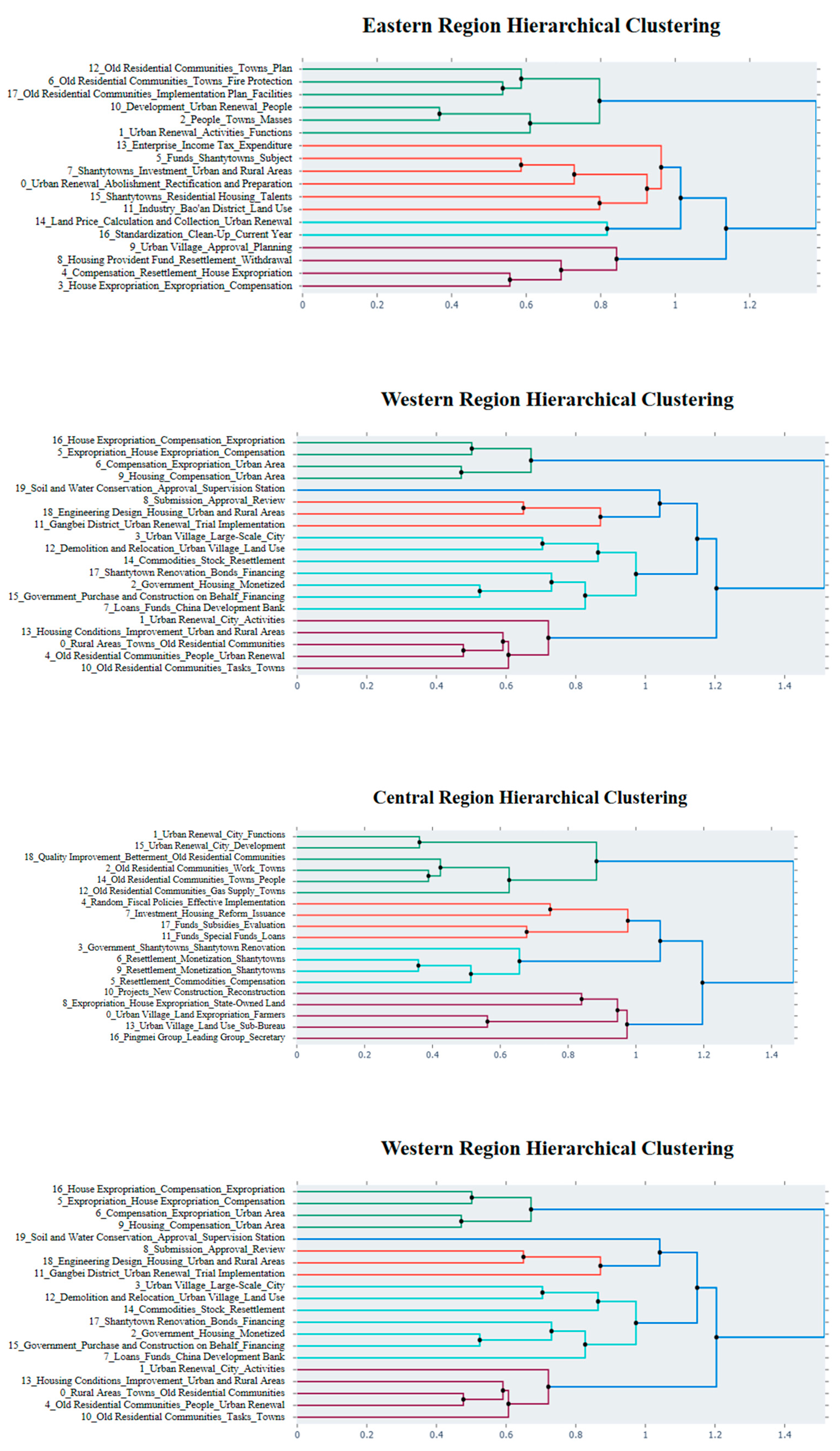
In the context of China’s rapid urbanization and the era of stock planning, urban renewal policies play a significant role in enhancing urban quality and promoting sustainable development. To reveal the thematic structure and evolution of China’s urban renewal policy system, this study applies the BERTopic model to conduct semantic mining and evolutionary analysis on 1144 policy documents issued by central and local governments. Research findings: The study identifies 34 distinct themes in urban renewal policies, grouped into five main directions: Spatial Improvement and Facility Upgrades, Project Collaboration and Approval, Land Acquisition and Compensation, Fiscal Incentives and Funding Support, and Institutional Guarantees and Governance. Each of these directions exhibits distinct evolutionary trends over time. While urban renewal policies in the Central, Western, Eastern, and Northeastern regions share common characteristics in key aspects such as land acquisition and compensation, funding assurance, and residential quality enhancement, they also reflect regional differences due to varying stages of development, economic conditions, and geographic factors. This demonstrates both the shared and distinct policy focus areas across different regions of China. By identifying underlying themes and their trajectories, this study provides critical insights into the structural characteristics of urban renewal policies and offers valuable references for government authorities to improve and optimize policy systems. At the same time, it provides the Chinese experience for urban renewal in other countries.
Keywords: urban renewal policy; BERTopic; topic mining; evolutionary trends urban renewal policy; BERTopic; topic mining; evolutionary trends