1. Introduction
Earthquakes have consistently posed a significant threat to structural integrity, resulting in substantial economic losses. Traditional seismic design methods rely on structural deformation and ductile members to absorb and dissipate earthquake energy. However, ductile member may sustain damage from excessive deformation during major earthquakes, posing a challenge for repairing destroyed components [
1,
2,
3]. During the First Planning Meeting for the Second Phase of NEES/E-Defense in January 2009, American and Japanese scholars introduced the “Resilient City” concept as a comprehensive overarching theme [
4]. Designing a structure that can resist earthquakes without any damage or with damage that can be repaired quickly will become a pivotal research direction of earthquake engineering [
5,
6,
7].
Over the past few decades, isolation structures have gained increasing prominence in the field of resilient structures [
8]. Evidence suggests that structures equipped with a base isolation system demonstrate superior performance during huge earthquake [
9]. The primary objective of base isolation is to uncouple the structure from the detrimental effect of earthquakes by shifting the structural fundamental period to long period range along with enhancing energy dissipation capabilities. Structural isolation enables precise control of the structural response, leading to a reduction in both acceleration and lateral forces transmitted to the building. At present, base isolators are mainly classified into rubber-based isolators and sliding-based isolators, and they have been widely studied and applied in engineering structures. A representative example of the sliding-based isolator is the friction pendulum system (FPS). Drawing inspiration from pendulum motion, Zayas et al. [
10] proposed the friction pendulums for seismic isolation of buildings. The supported structure responds to earthquake motions with small amplitude pendulum motions and friction damping absorbs the earthquake energy. Paolo et al. [
11] conducted an analysis of the impact of FPS isolator properties on the seismic performance of base-isolated structures through theoretical modeling. In 2002, Pranesh et al. [
12] introduced the variable frequency pendulum isolator to address limitations related to restoring force characteristics and period. Tsai et al. [
13,
14] investigated the performance of multiple friction pendulum system (MFPS) on seismic mitigation through shaking table tests. However, some problems limit the application of the FPS system, such as the response to high vertical accelerations [
15,
16] and the relevance of residual displacement [
17].
The suspension structure is an example of the isolation structure that utilizes a pendulum isolation mechanism. The suspension structure was first used in bridge engineering, such as modern suspension bridges and cable-stayed bridges [
18,
19]. With the development of suspended-floor buildings, suspension structure has been applied in large-span and high-rise buildings [
20]. The suspension structure consists of the main supporting structures and the suspended substructures. The main supporting structures, namely core tube or mega-frame, bear all horizontal and vertical loads. The suspended substructures are connected to the main structure by rigid hangers. Nowadays, research on suspension structures mainly focuses on the core-tube-suspended building structure [
21,
22] and the mega-frame suspended building structure [
23,
24]. Yutaka et al. [
25,
26] proposed a new core-suspended isolation (CSI) system consisting of a reinforced concrete core, a multilevel structure and rubber bearings. The seismic isolation performance of the system was verified through shaking table tests of a scale model and quasi-static loading tests, and the effects of the CSI system are revealed via the observed earthquake records. Du et al. [
27] designed a 1:20 scaled two-segment 19-story mega-frame suspended structure and evaluated its seismic performance through shaking table tests. The suspended floors can adjust the natural frequencies of structures similar to larger mass pendulums, like tuned mass dampers (TMD) [
28].
However, suspension structure also has some disadvantages in practical application. Compared to conventional structures, the load mode of suspension structure increases the load paths, leading to a reduction in force transmission efficiency and an increase in the amount of material used in the structure [
29]. In addition, because the lateral stiffness of the suspended layer is relatively small, the story drift of the suspended layer may exceed the elastic limit [
30], and the structure enters the plastic deformation stage under a rare earthquake. Therefore, excessive deformation will likely damage rigid hangers [
31,
32].
To address the shortcomings of traditional suspended seismic isolation buildings, some researchers have proposed a new type of seismic isolation structure in which the suspension layer is suspended from the foundation. Bakhshi et al. [
33] proposed the Suspended Pendulum Isolation (SPI) system and evaluated its seismic behavior via a nonlinear program based on the Runge–Kutta algorithm and an experimental test of a 4:25-scale model. The invented SPI system had similar isolation mechanisms as the above base device isolation and was equipped with a lead damper to absorb earthquake energy. Tan et al. [
34] performed an experimental study on the symmetrical suspension pendulum and found the possibility of developing an isolation system based on the feature that non-parallel symmetry pendulum could adjust its natural period.
On the other hand, the viscous damper has gained popularity in the field of passive energy dissipation systems and is widely employed in seismic isolation structures to control structural deformation [
35]. The viscous damper can offer additional damping and dissipate energy, without significantly improving structural stiffness [
36]. Viscous dampers and diagonal steel braces were applied, replacing the steel bars in suspension structures [
37]. The results of numerical analysis verify the feasibility of the new suspension structure. Cai et al. [
38] carried out a series of shaking table tests of a ten story concrete suspended structure equipped with viscous dampers. The test results show that the maximum strain response was decreased by 42.3–72.7% for the damping suspended structure compared with the suspended structure without damper.
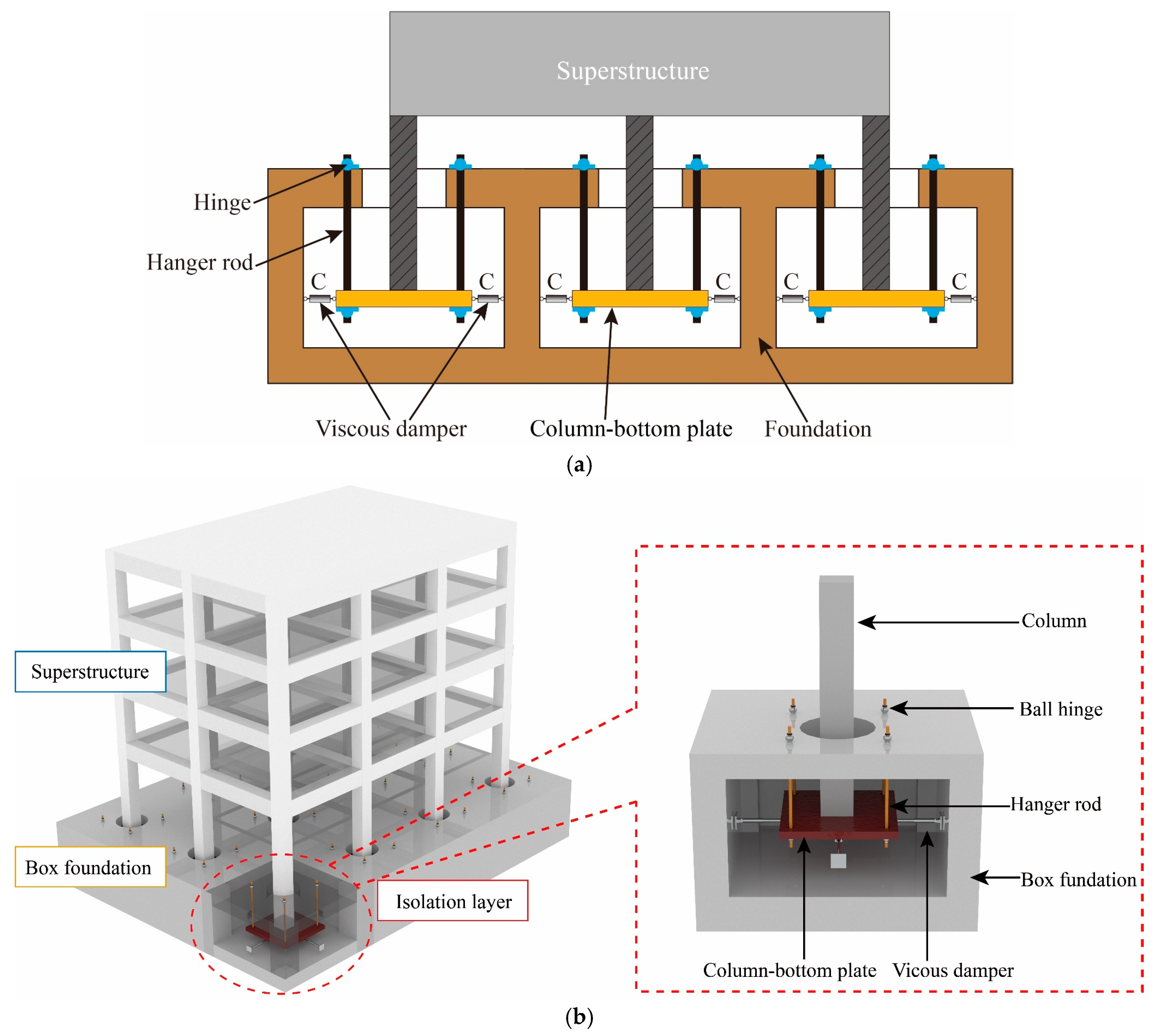
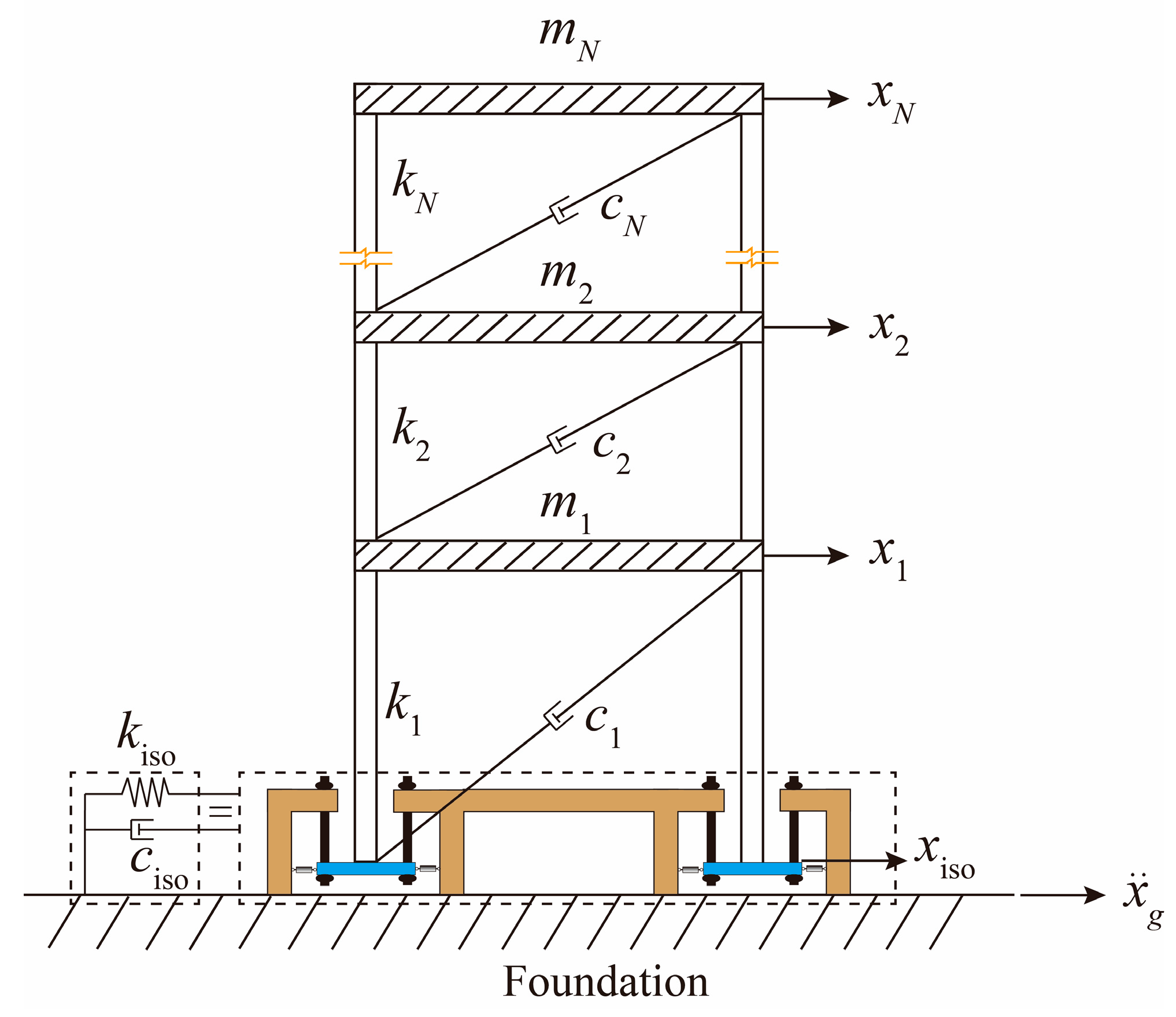
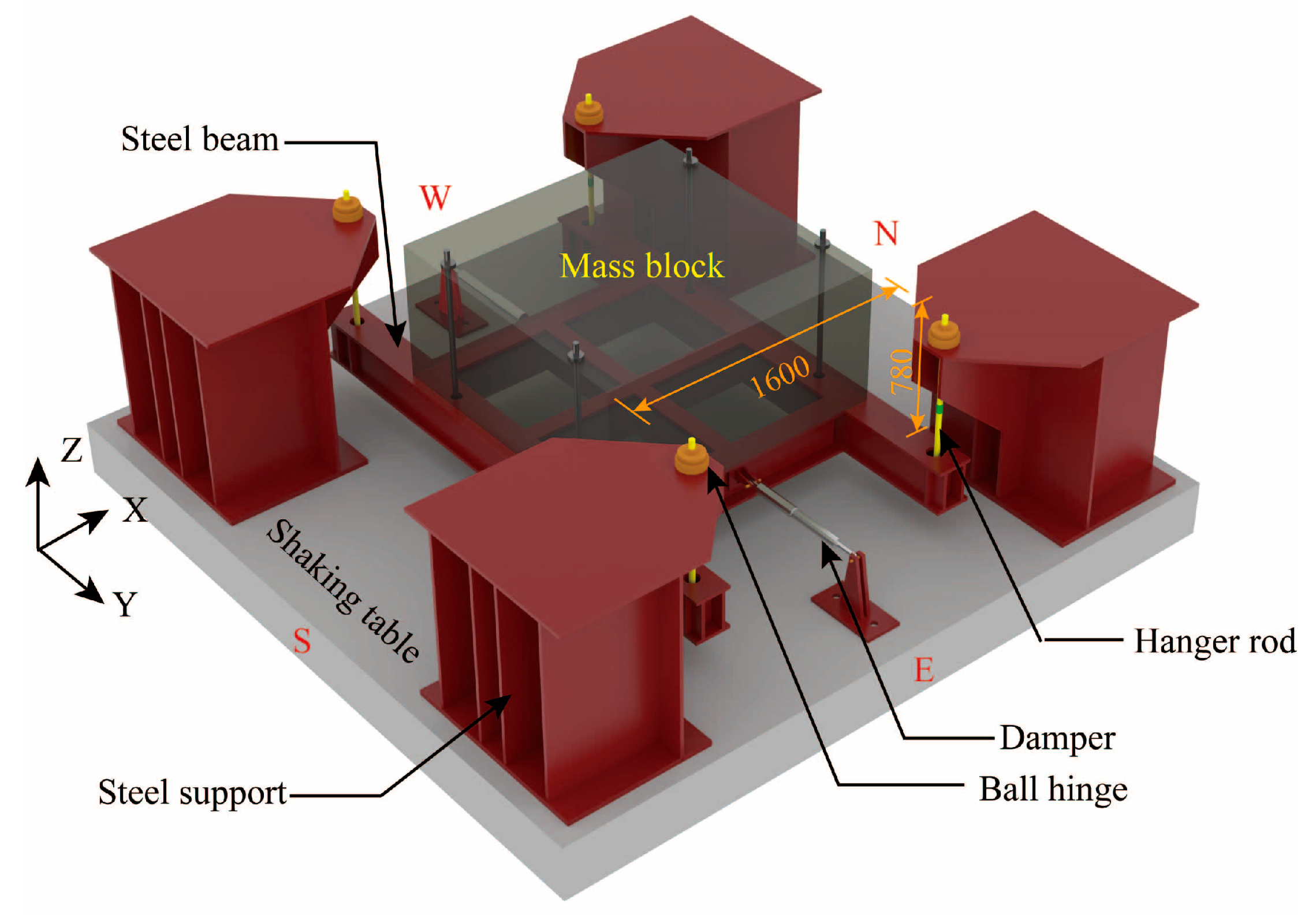
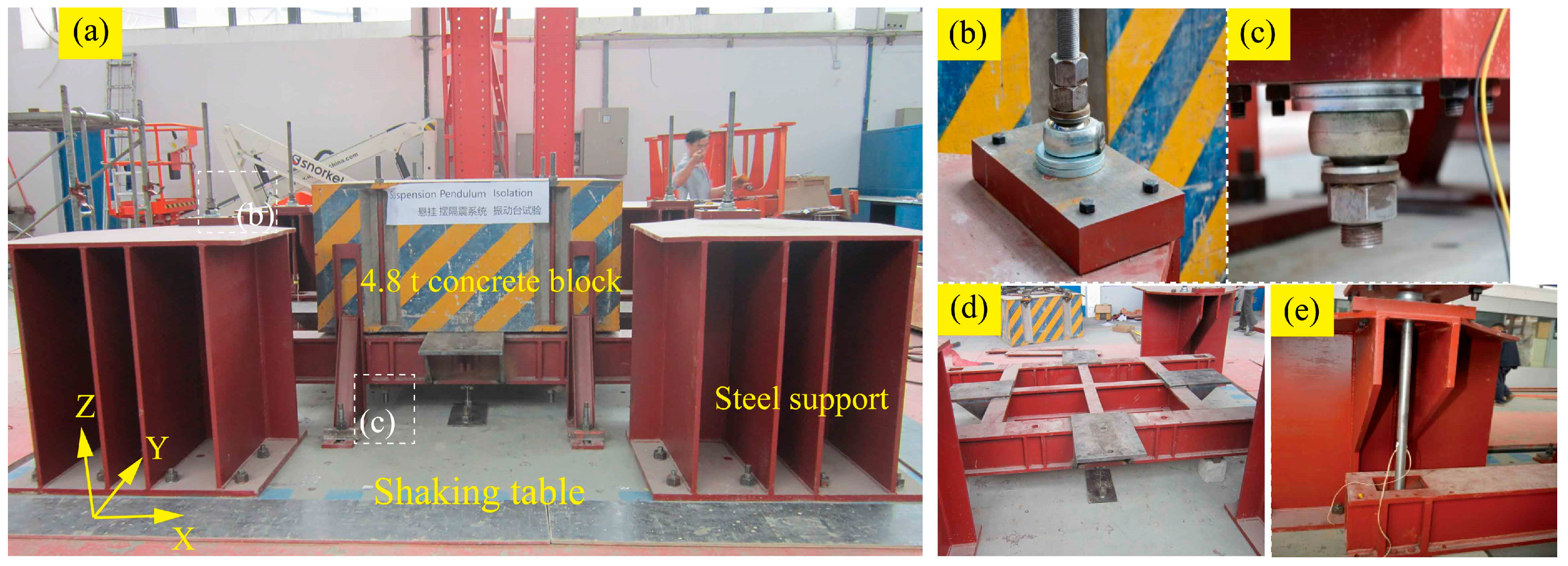
This paper proposes a new seismic isolation structure, Base-suspended Pendulum Isolation (BSPI). It realizes the effect of seismic isolation by suspending the superstructure on the foundation while avoiding the shortcomings of FPS and main-substructure suspension system. The BSPI system operates by suspending the superstructure from the foundation using hanger rods, allowing it to move like a pendulum. This motion reduces the lateral stiffness of the structure and decouples the superstructure from seismic ground motions. Energy dissipation is achieved through viscous dampers installed in the isolation layer, which absorb earthquake energy by converting kinetic energy into heat. The damping force is velocity-dependent, helping to reduce accelerations and displacements during seismic events. The structural configuration and motion equations of BSPI are presented. Based on the theoretical analysis, a shaking table test of a single-mass BSPI model was conducted. Finite element models of the BSPI structure and the conventional reinforced concrete frame (RCF) structure are established, and dynamic time-history comparative analysis is carried out on the seismic performance of these two types of structures.
5. Finite Element Analysis of the BSPI Frame
The suspension system of BSPI weakens the structure’s lateral stiffness, thereby lengthening the structure’s natural period and consequently mitigating the structural acceleration response. However, this also causes an increase in the displacement of the structure. In order to further investigate the seismic isolation performance of the BSPI frame, as well as to study the effects of the length of the suspension rod and the damping ratio on the seismic isolation effectiveness, a finite element model of the BSPI frame was established and analyzed.
5.1. Model Overview
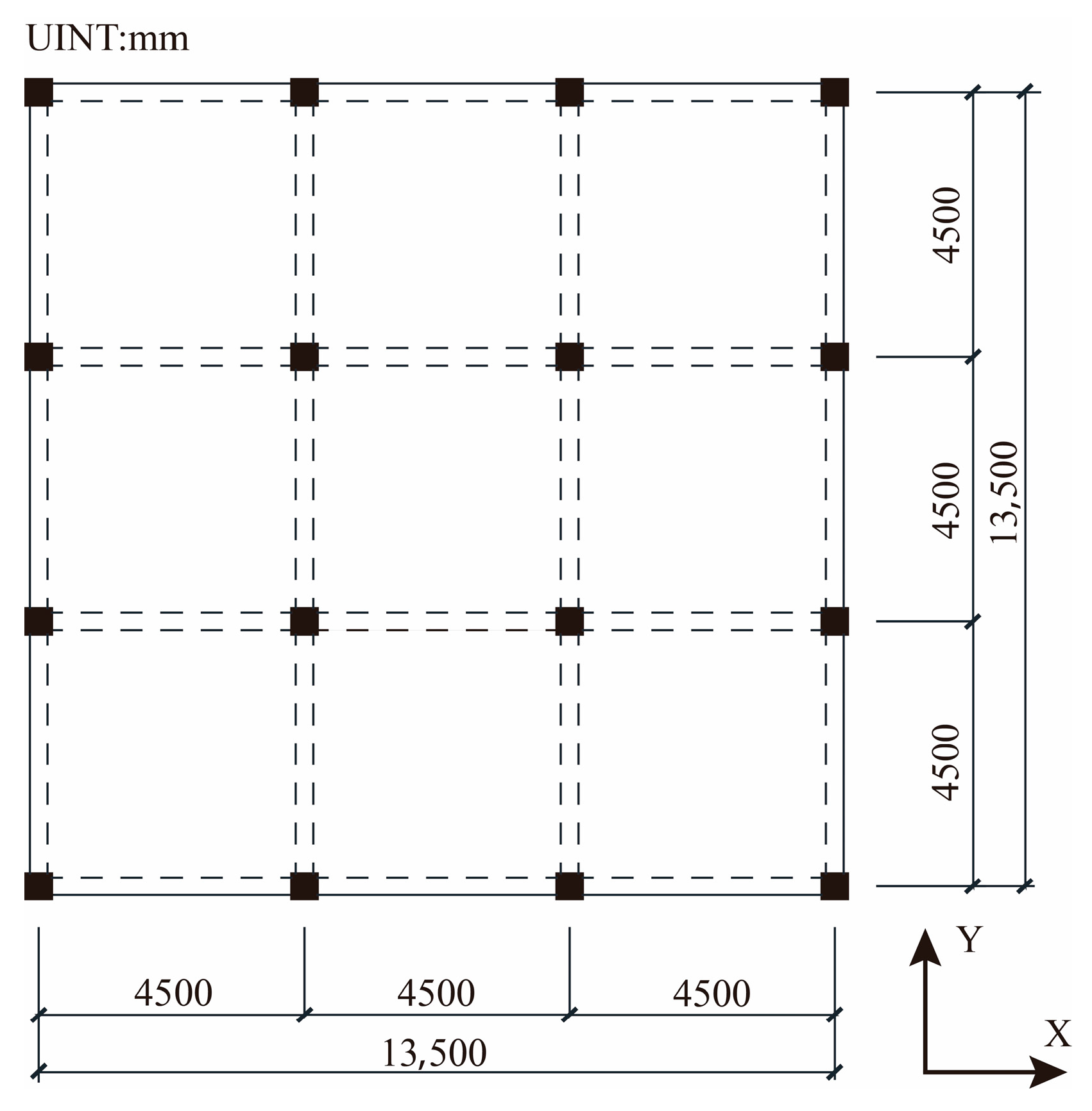
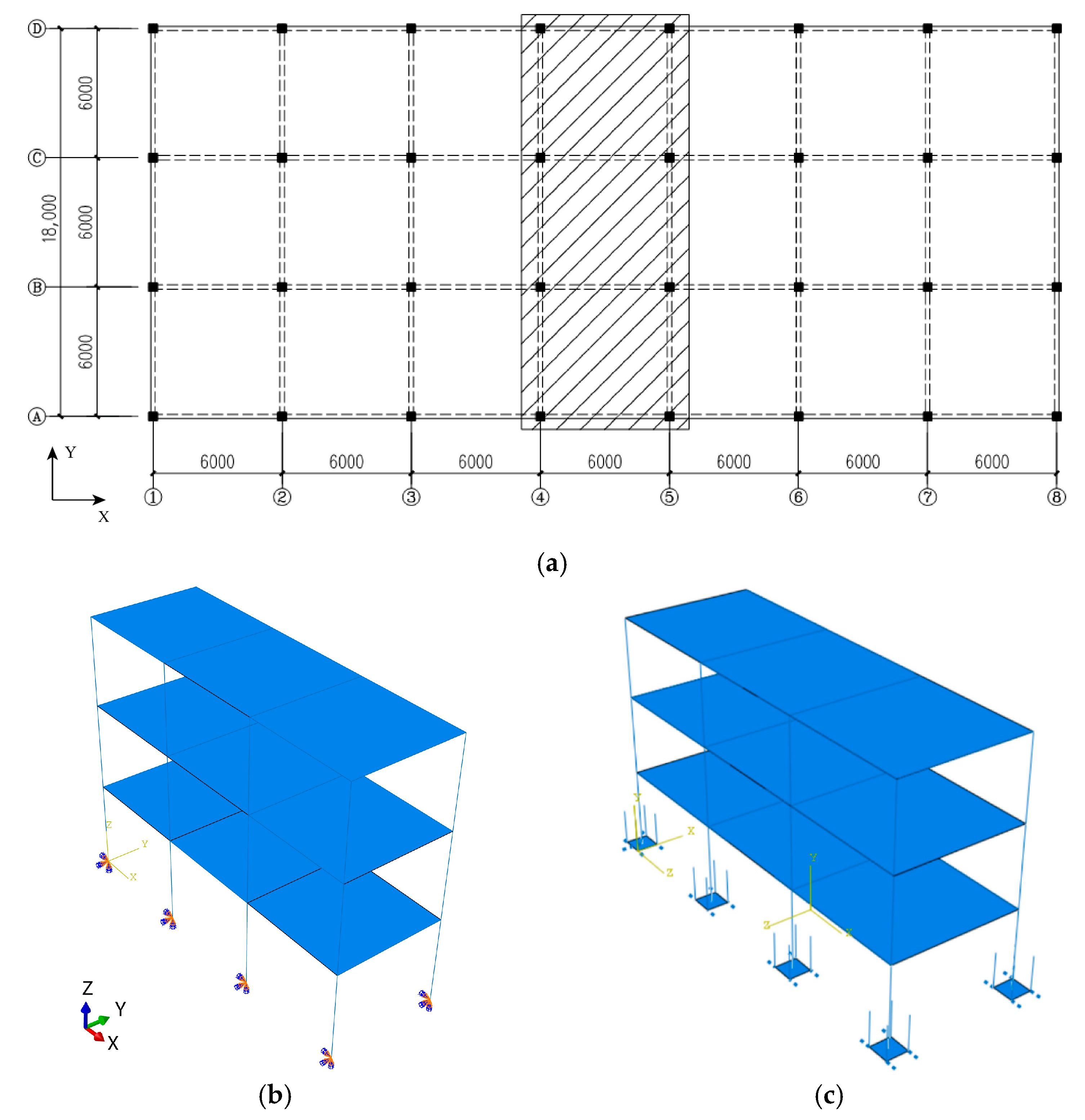
Figure 17a displays the plane configuration of a three-story prototype building (unit: mm). The height of each story is 3.6 m. The building has three spans in depth and seven spans in width. A dead load of 5.0 kN/m
2 and a live load of 2.0 kN/m
2 are intended for the building. The reinforcement design follows Chinese seismic design code GB5011-2010 [
32]. As shown in
Figure 17b, only two transverse frames are separated for nonlinear analysis in order to increase analysis efficiency. The dynamic analysis of the model was performed only in the Y-direction. The suspension rod of the seismic isolation layer adopts a Q345 steel rod with a length of 1.3 m and a diameter of 30 mm, and four rods are arranged at the bottom of each column. There are two viscous dampers positioned transversely at the bottom of each column, with damping coefficient C of 40 kN/(m/s)
0.3 and damping index
α of 0.3.
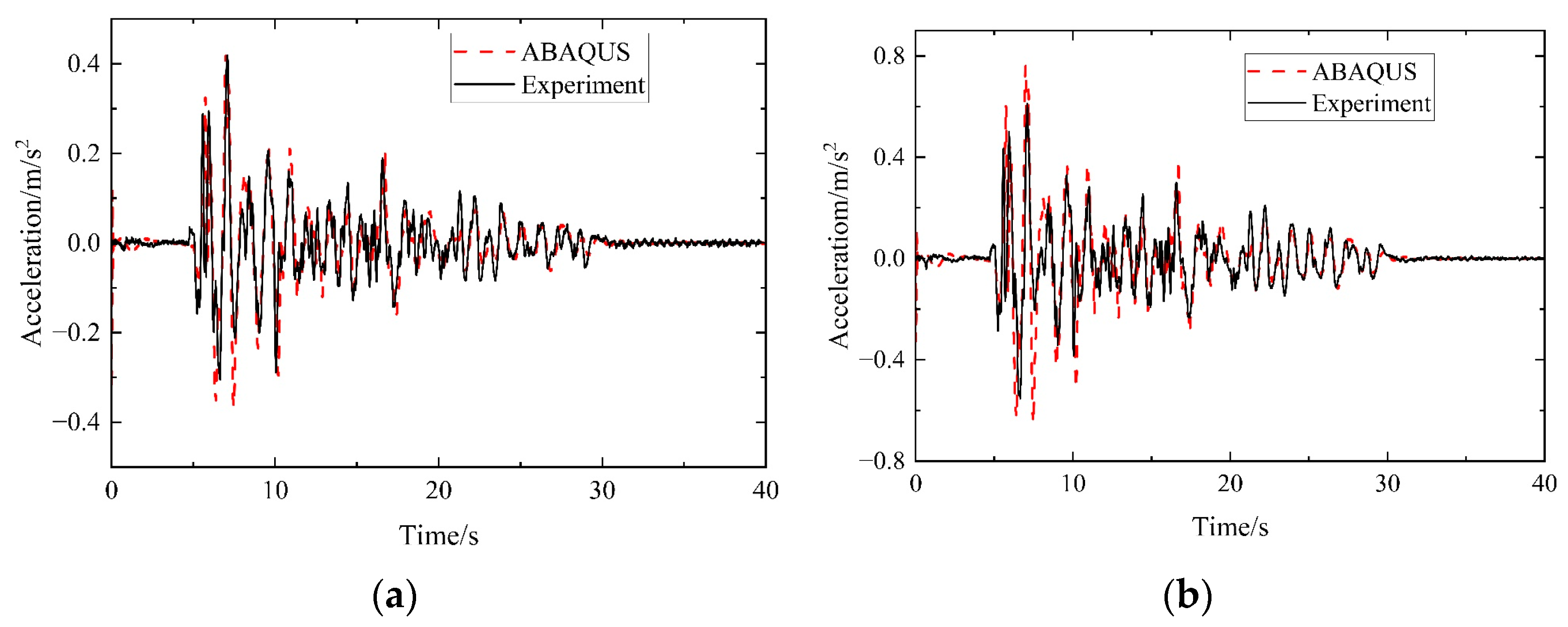
The numerical models of the BSPI structure and the RCF structure were established using ABAQUS finite element software, as shown in
Figure 17. Modeling of the seismic isolation layer was carried out using the modeling approach in
Section 4.5.1. The properties of the isolation model used in the numerical study are summarized in
Table 6. The hanger rods are simulated using the ABAQUS software’s
TRUSS element (
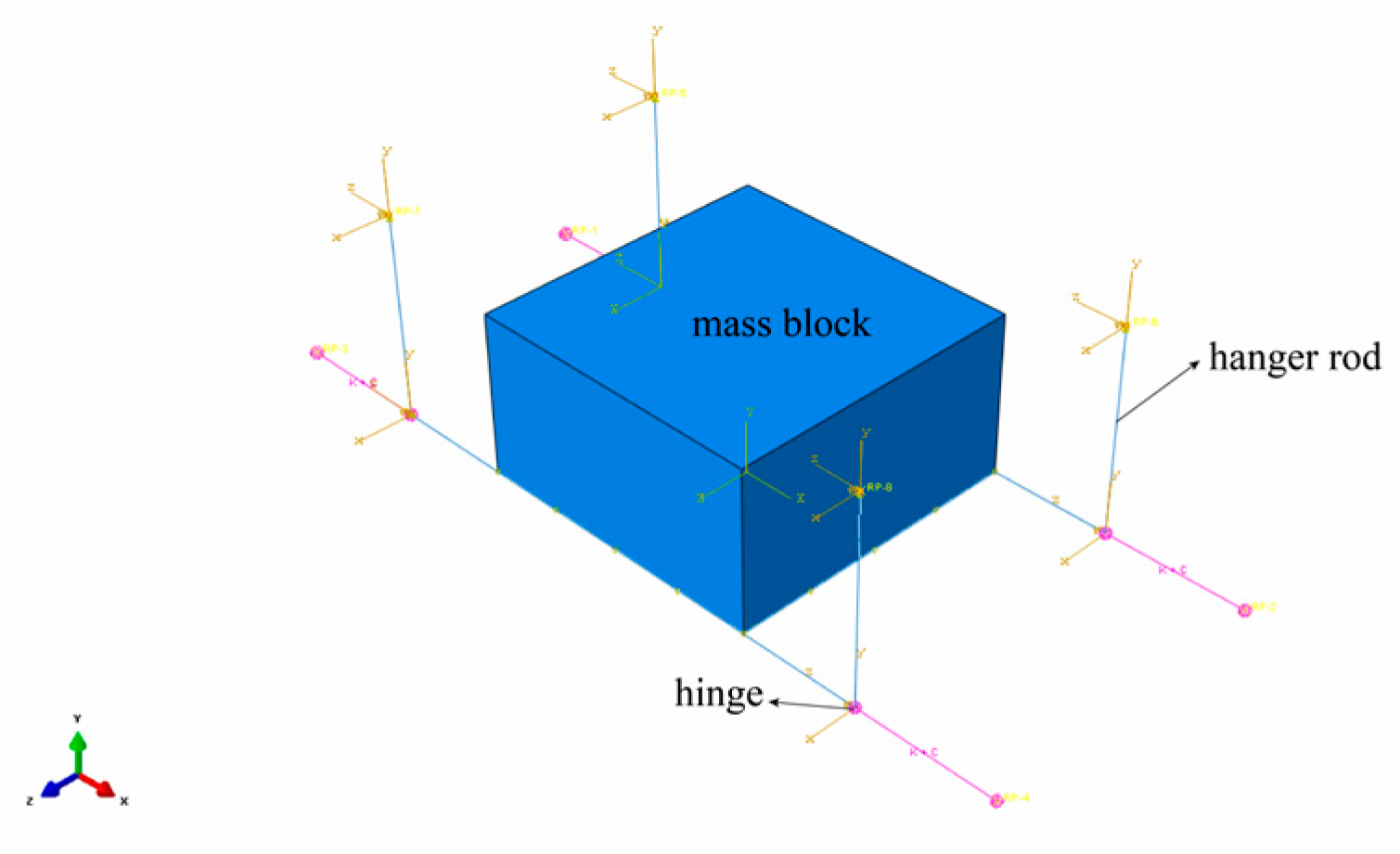
T3D2), while the B31 element simulates the superstructure’s beams and columns. The HINGE element is used to model the movement of the joints between the hanger rods and column-bottom plates. This allows for the exact simulation and assurance of the joints’ rotatable properties. The restoring force of the seismic isolation layer provided by gravity is defined by the behavior of the AXIAL element.
To address the variability in ground motion, a range of seismic records representing different intensities—frequent, fortification, and rare earthquakes—was considered. The performance of the BSPI structure was analyzed under each of these scenarios to assess its resilience across a spectrum of seismic activities.
5.2. Natural Vibration Frequencies of Structures
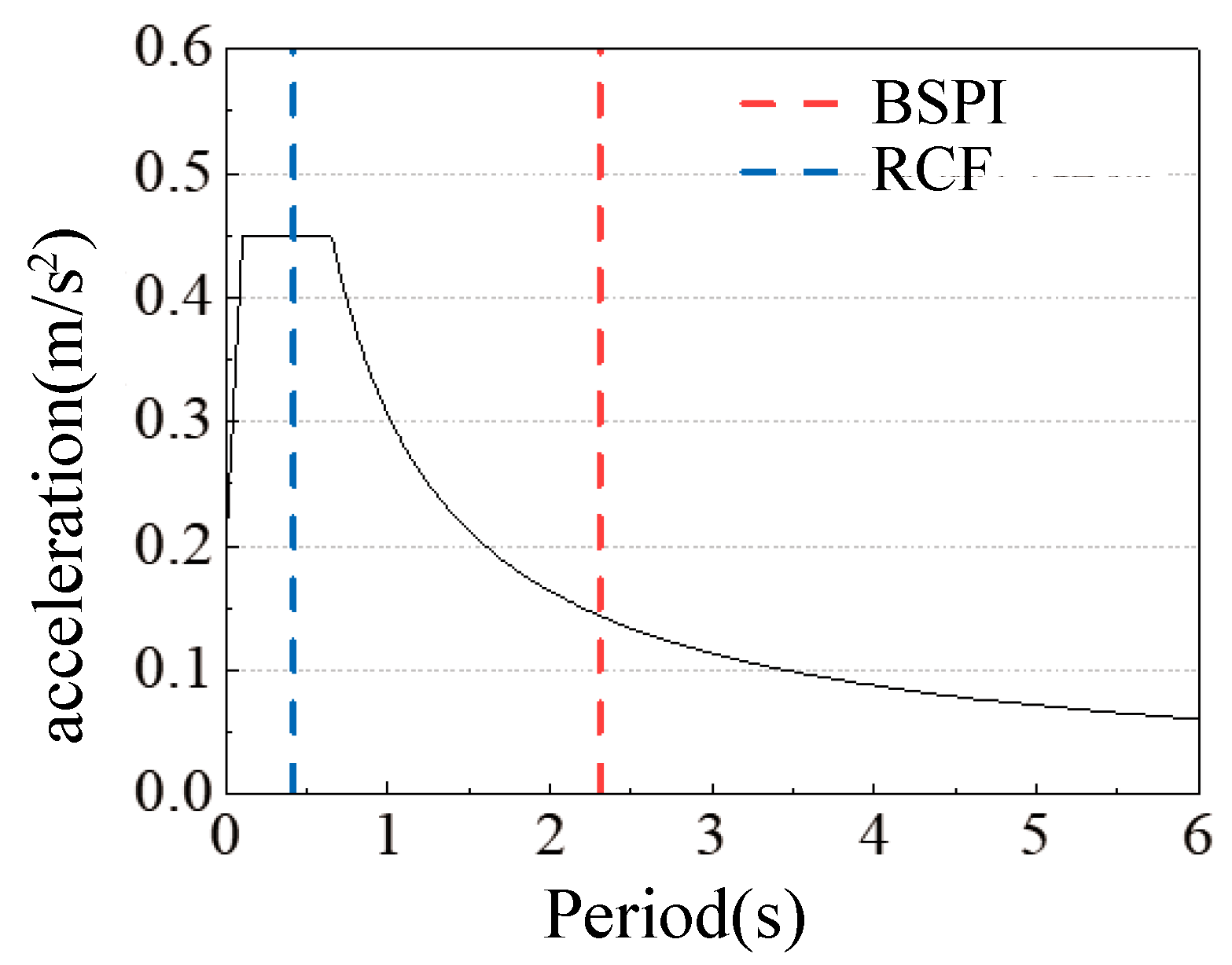
The natural period of the BSPI structure and the RCF in the Y direction were determined through computational analysis using the ABAQUS finite element software. The BSPI structure exhibited a natural period of 2.305 s, while the RCF demonstrated a natural period of 0.415 s. This suggests that positioning the suspension layer in the BSPI structure reduced the overall structural stiffness, consequently extending the structure’s natural period. The seismic response spectrum for an intensity level of VIII is shown in
Figure 18. According to seismic response spectrum theory, extending the structural period can reduce the acceleration response. It is evident that the BSPI structure exhibits excellent seismic isolation capabilities in terms of its natural vibration period.
5.3. Acceleration Response
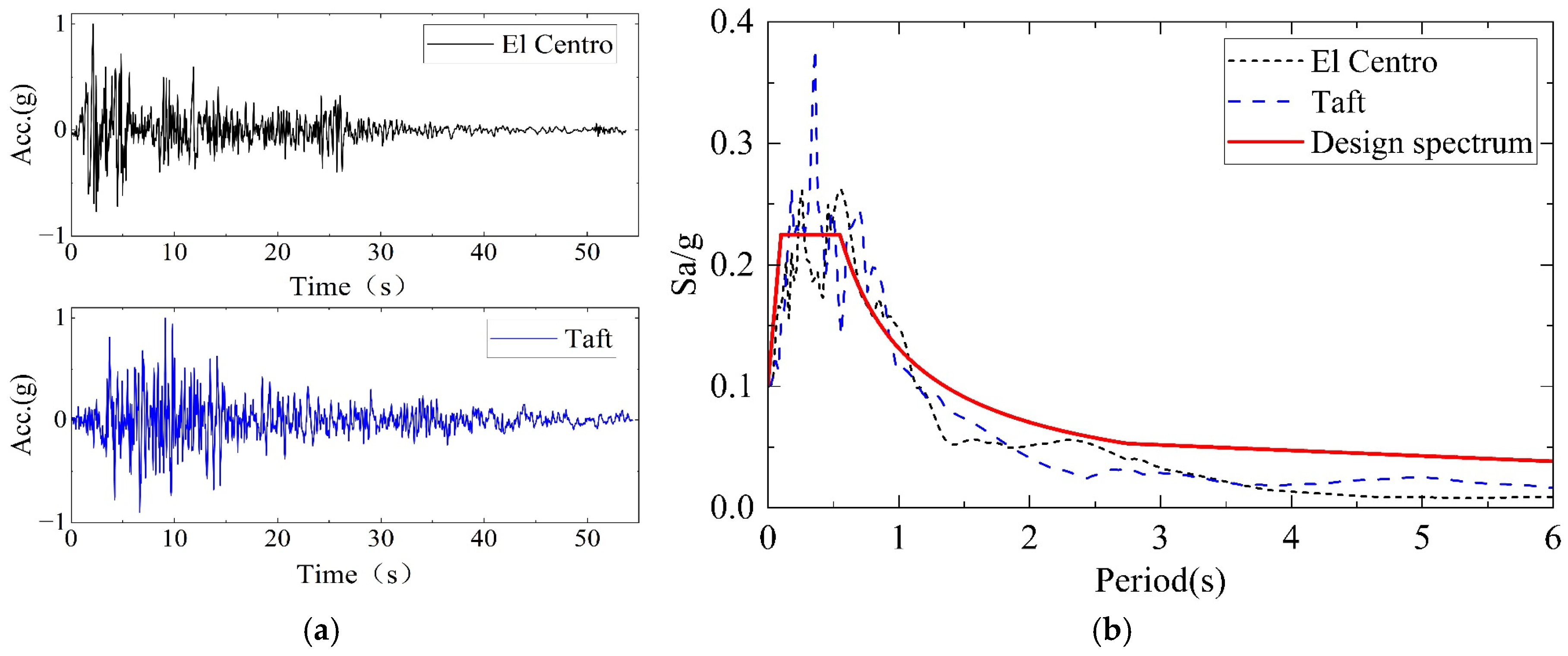
In addition to the El-Centro and Taft records, the SH09-1 wave was introduced to enhance the validation of the BSPI structure’s seismic performance. This approach aligns with the guidelines set forth in the Chinese Seismic Design Code for Seismic Isolation of Structures (GB 50011-2010), which permits the use of two natural seismic records and one artificial record for time-history analysis.
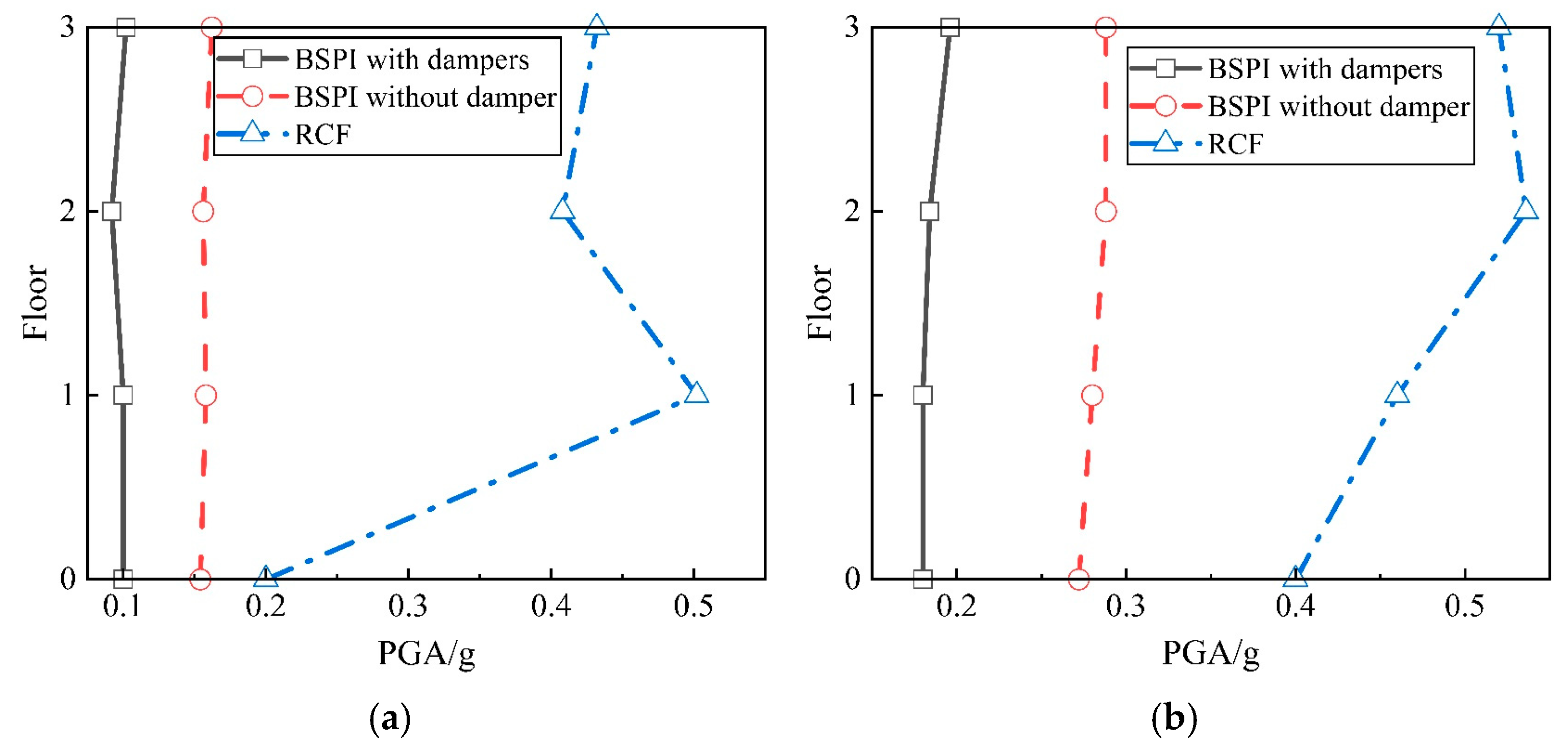
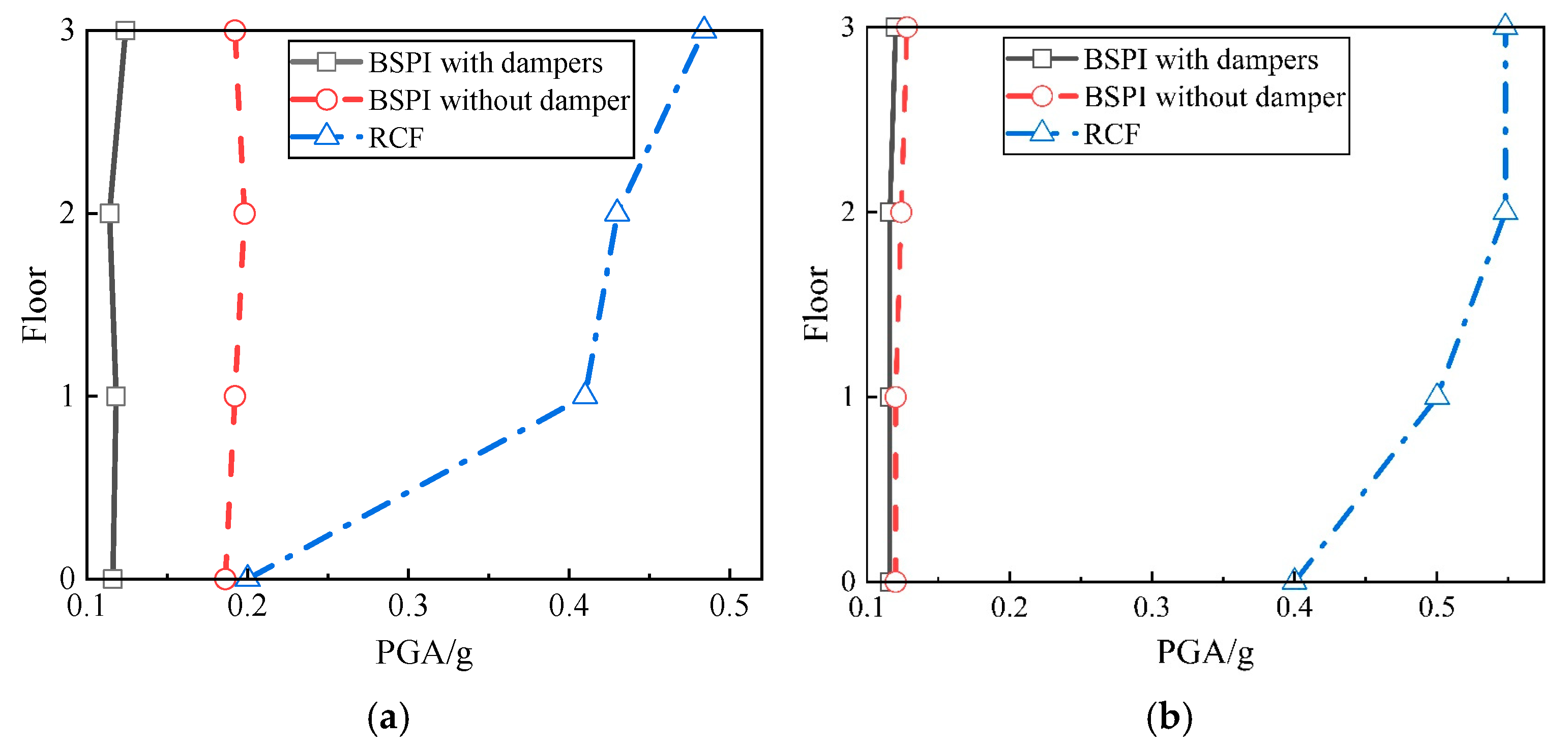
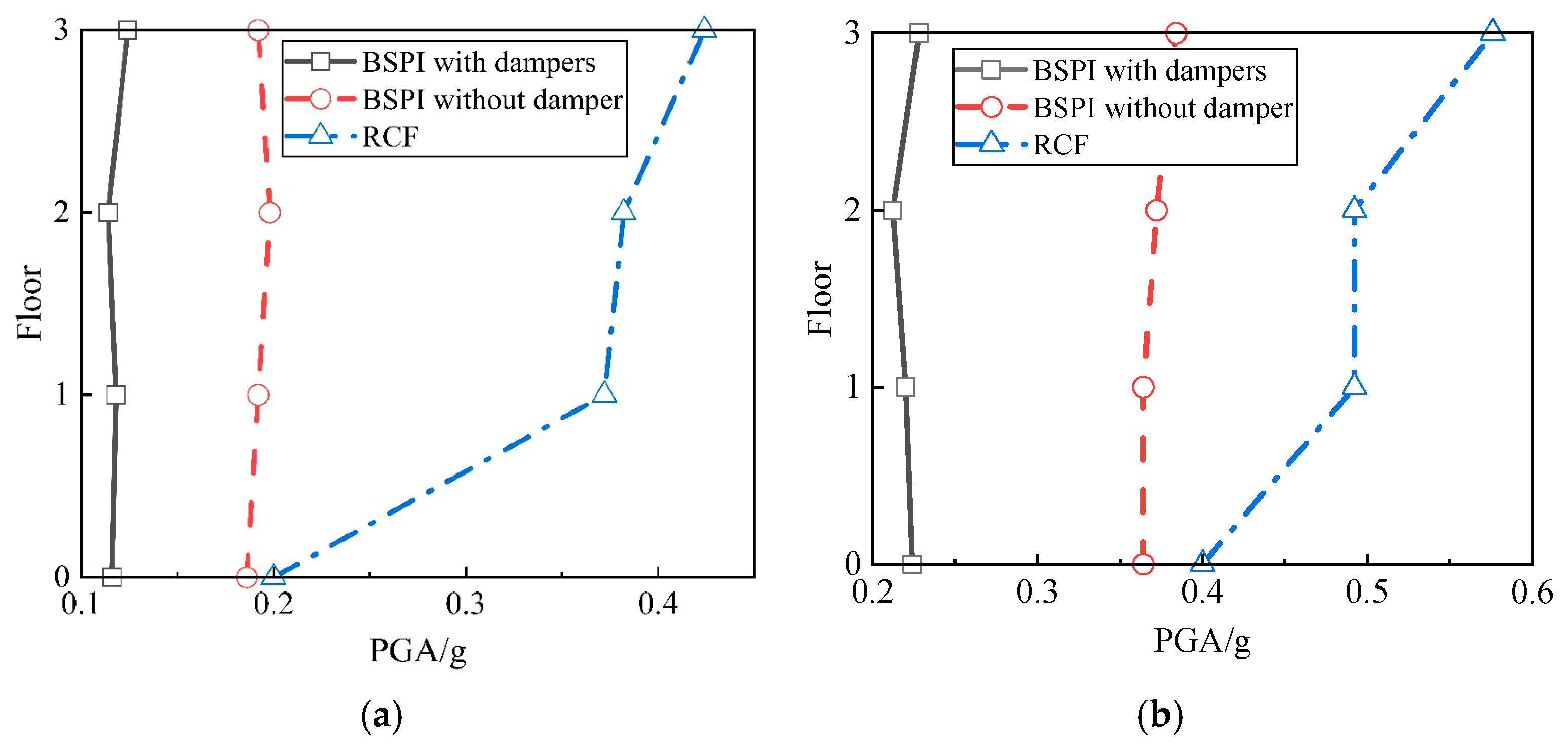
Figure 19,
Figure 20 and
Figure 21 depict the structure’s acceleration responses at each floor under the three input ground motions. The dynamic amplification coefficient
K is defined as the ratio of the maximum acceleration of floor to the input PGA.
Table 7 lists the peak acceleration response of the BSPI structure and the dynamic amplification coefficient (
K). The acceleration response of the BSPI structure is smaller than that of the RCF, which is due to the suspended seismic isolation layer weakening the overall stiffness of the structure, indicating that the BSPI structure has an obvious seismic isolation effect.
The acceleration response of the BSPI structure is reduced when equipped with viscous dampers compared to its undamped structure. Specifically, the maximum floor acceleration response during rare earthquakes is approximately 70% lower in the BSPI damped structure. This reduction is attributable to the incorporation of viscous dampers in the seismic isolation layer, which enhances the damping capacity of the BSPI structure and effectively diminishes its acceleration response by dissipating energy.
5.4. Displacement Response
The BSPI structure represents an innovative seismic isolation system that requires the definition of seismic objectives for assessing its seismic performance. According to the Chinese code GB50011-2010, it is recommended to set an inter-story drift limit of 1/400 for fortification earthquakes and 1/100 for rare earthquake in the superstructure of the isolated system. Considering both the structural functional requirements and the stress restrictions of the hanger rod, it is recommended that the displacement of the seismic isolation layer be less than 10% of the length of the rod and the maximum value of 300 mm at the same time during rare earthquake.
The displacement reduction factor
η is the ratio of the inter-story displacements in the BSPI structure to those in the RCF structure.
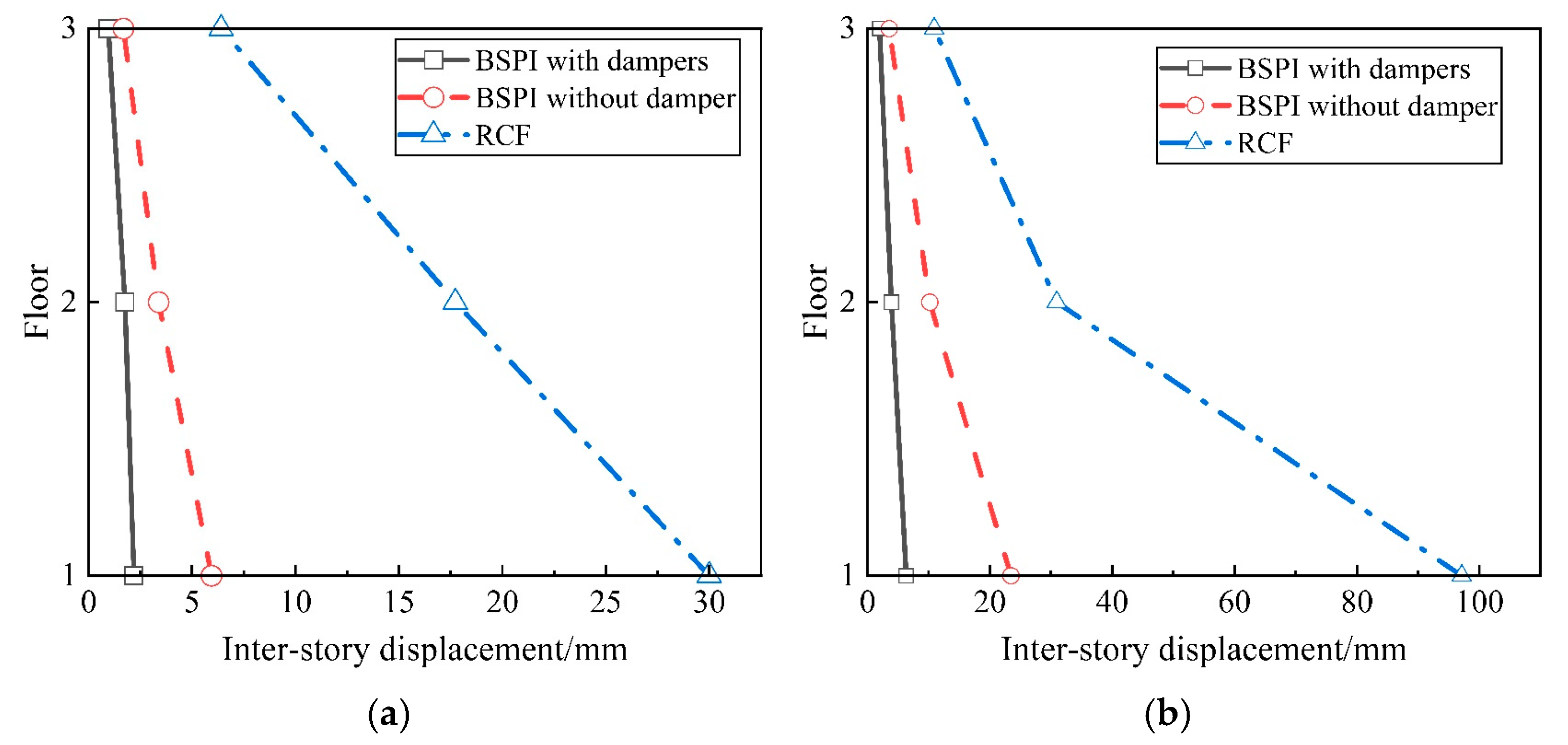
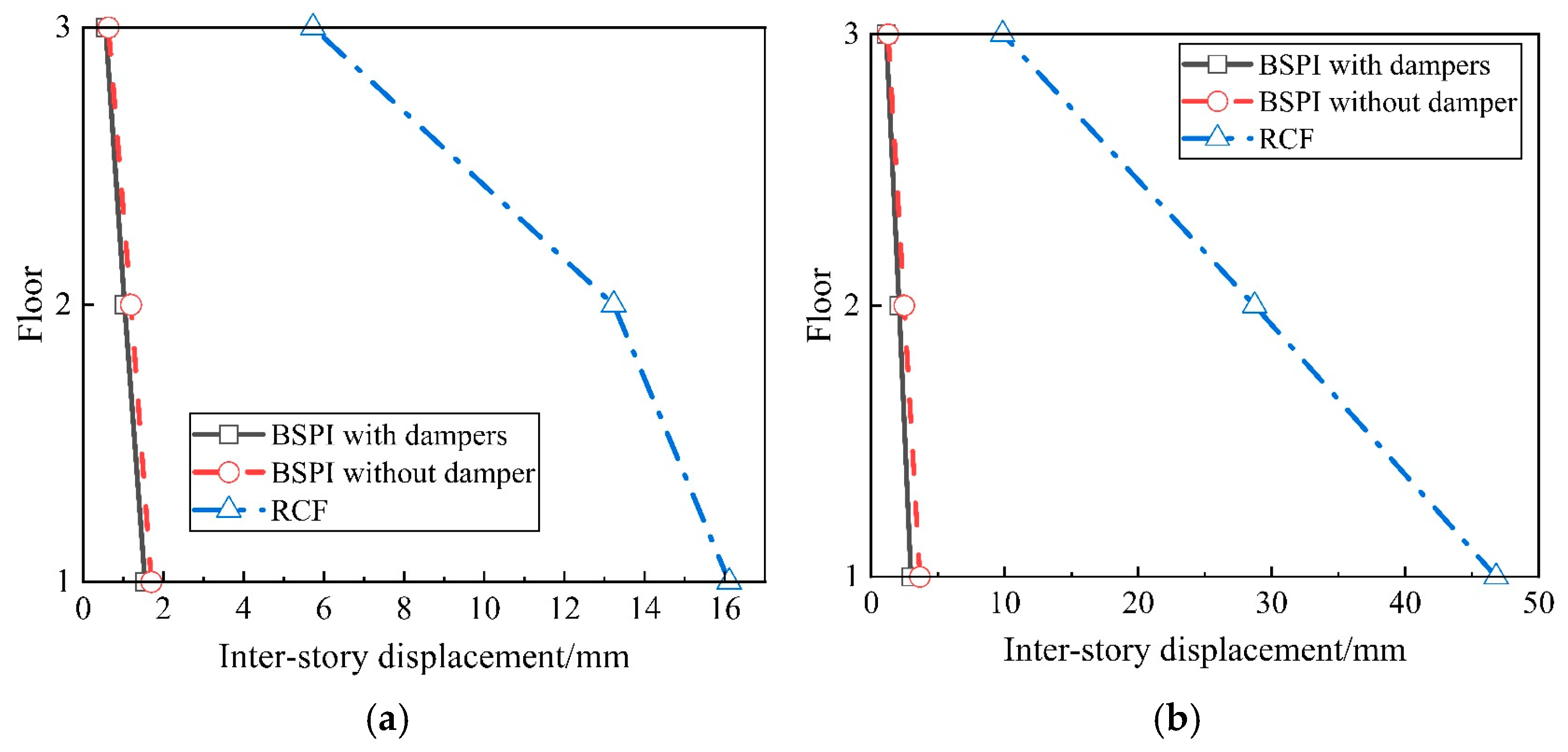
Table 8 displays the displacement reduction factor and the maximum inter-story displacement response Δ
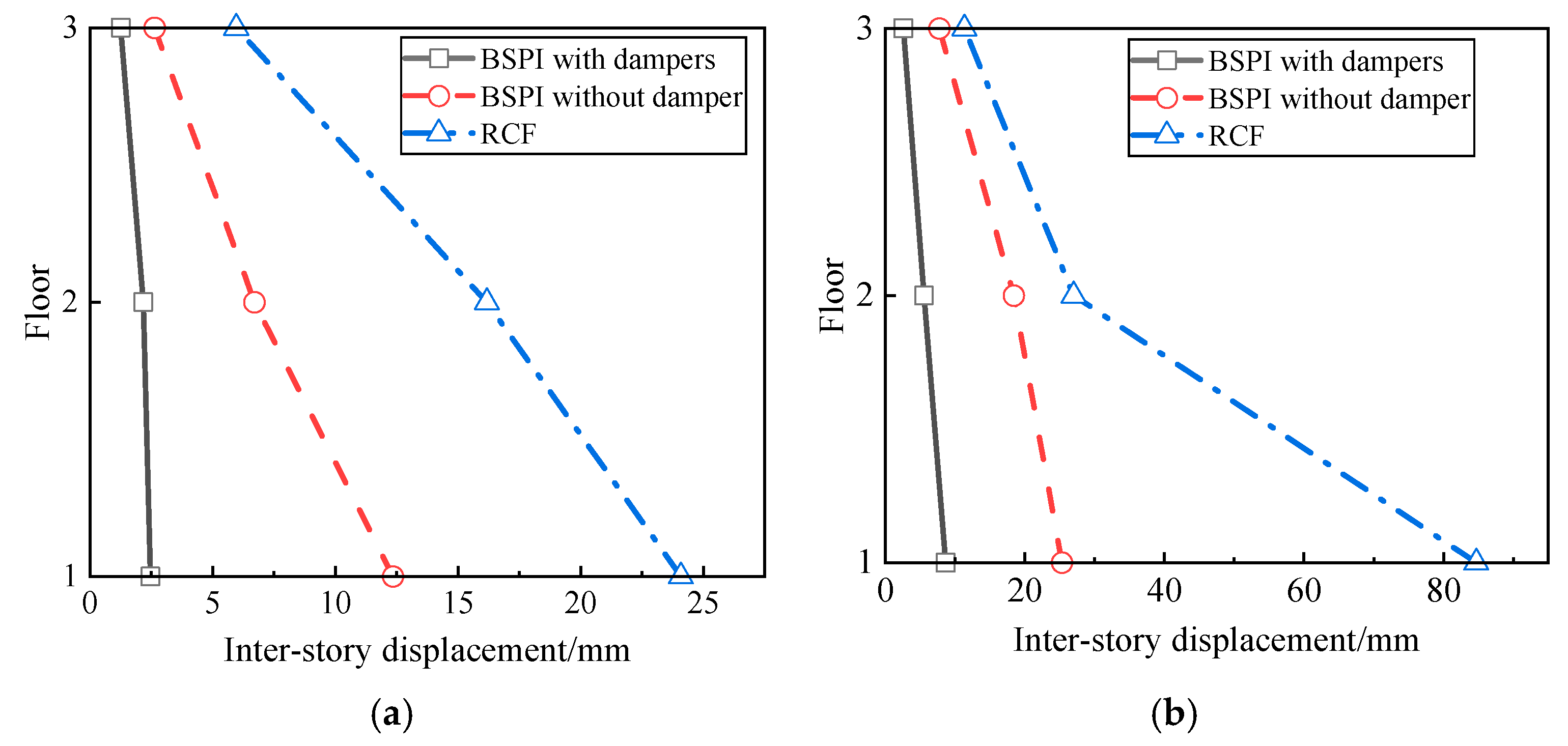
max for each floor in the three structures subjected to three different seismic motions. The inter-story displacement response of the BSPI structure is substantially smaller than that of the RCF structure, as seen in
Figure 22,
Figure 23 and
Figure 24. The displacement reduction factor of the BSPI structure without damper ranges from approximately 0.1 to 0.6 under rare earthquakes, whereas it ranges from 0.1 to 0.2 for the BSPI structure equipped with dampers. The maximum inter-story displacement of the BSPI structure with dampers under fortification earthquakes and rare earthquakes is about 1/1400 (<1/400) and 1/415 (<100), respectively, which meets displacement design objectives for seismic isolation.
The implementation of viscous dampers in BSPI structures enhances seismic performance. Under fortification earthquakes, the inter-story displacements decreased by 47.8%, 57.9%, and 64.5% when compared to undamped BSPI structures. Similarly, the reductions were 48.0%, 54.8%, and 54.4% under rare earthquakes. This confirms that viscous dampers can improve the additional effective damping ratio of the BSPI structure and control the displacement response of the seismic isolation layer. Furthermore, the isolation layer displacement of the BSPI structure with dampers is less than 1/10 and 300 mm of the hanging rod length, meeting the seismic objectives.
5.5. Analysis of the Rod Length and Damping Ratio
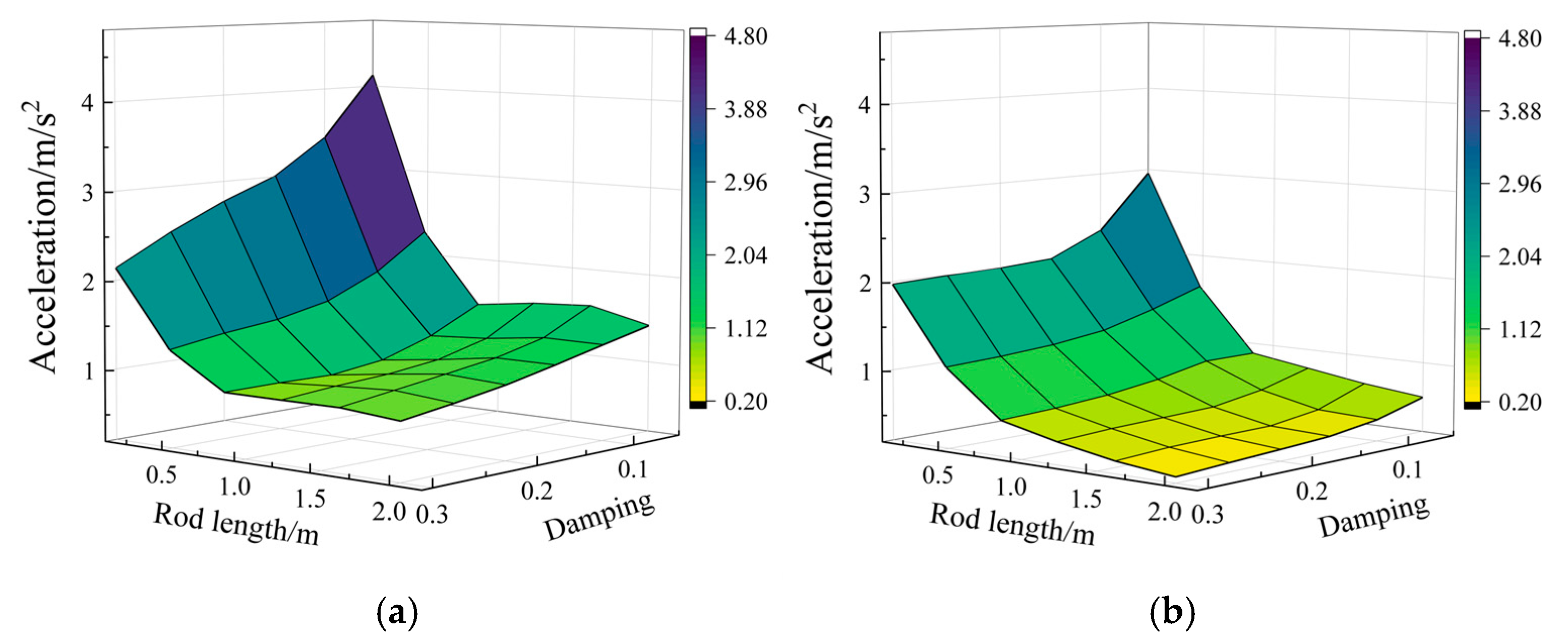
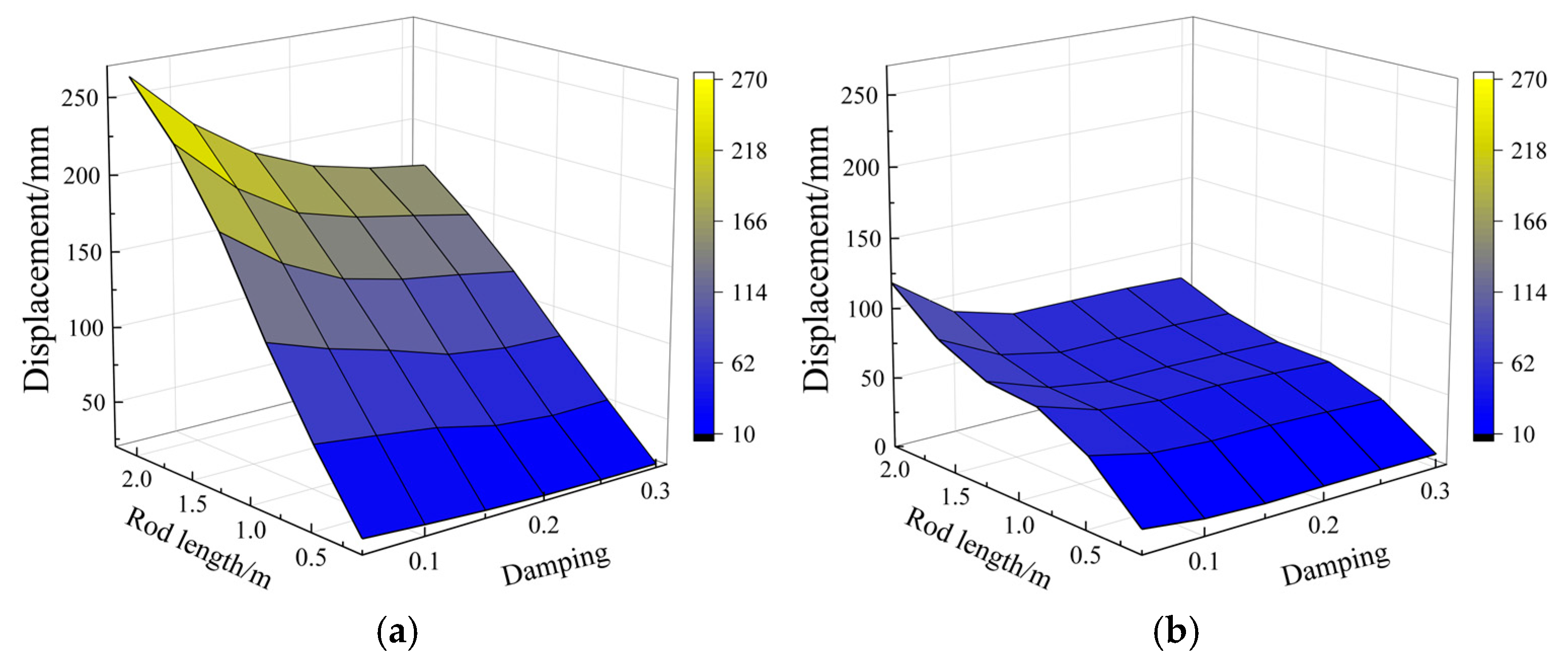
Adjust the length of BSPI structure model’s hanger rods from 0.1m to 2 m, and adjust the damping ratio to 0.05, 0.1, 0.15, 0.2, 0.25, and 0.3, respectively, to analyze the influence of the rod length and damping ratio on the structure. Inputting El Centro and Taft ground motions for dynamic time-history analysis, the effects of damping ratio and rod length on the maximum roof acceleration response of the structure and the maximum displacement response of the isolation layer are shown in
Figure 25 and
Figure 26.
The maximum roof acceleration response of the BSPI structure varies with changes in rod lengths and damping ratios, as illustrated in
Figure 25. As the rod length extends from 0.1 to 2 m, the acceleration response of the structure becomes smaller. For instance, under the El-Centro seismic wave and maintaining a constant damping ratio of 0.3, the acceleration response is reduced from 2.1 m/s
2 to 0.85 m/s
2 when the rod length is increased from 0.1 to 2 m. Furthermore, the rate of decrease in acceleration is more pronounced when the rod length varies from 0.1 m to 1 m, while changes beyond 1 m in rod length have a lesser impact on acceleration. As the rods’ length increases, the seismic isolation’s displacement response increases. It shows that the increase in the horizontal stiffness weakening of the isolation layer causes an increase in the horizontal displacement of the isolation layer under seismic action.
As the damping ratio increases, there is a corresponding decrease in the structure’s acceleration response. As the damping ratio rises from 0.05 to 0.30, the acceleration response under El-Centro motion decreases from 1.862 m/s2 to 1.007 m/s2, while the rod length remains unchanged at 1 m. For the same rod length, the increase in damping ratio reduces the displacement response of the seismic isolation layer. The maximum inter-story displacement under the El-Centro motion decreased by 35.2% when the damping ratio increased from 0.05 to 0.3, at which time the rod length was 2 m, indicating that an appropriate increase in damping ratio can control the displacement of the seismic isolation layer in the BSPI structure.
The analysis of parameter sensitivity showed that increasing the rod length reduced the structure’s acceleration response, while an increase in damping ratio led to reductions in both displacement and acceleration responses. These variations emphasize the critical role of damping and rod length in optimizing the seismic performance of the BSPI structure.
6. Conclusions
This paper proposes a Base-suspended Pendulum Isolation system, composed of superstructure, hanger rods, viscous dampers, and foundation. The seismic performance of the BSPI structure was verified through theoretical analysis, shaking table tests, and numerical simulations. The main conclusions are drawn as follows:
- (1)
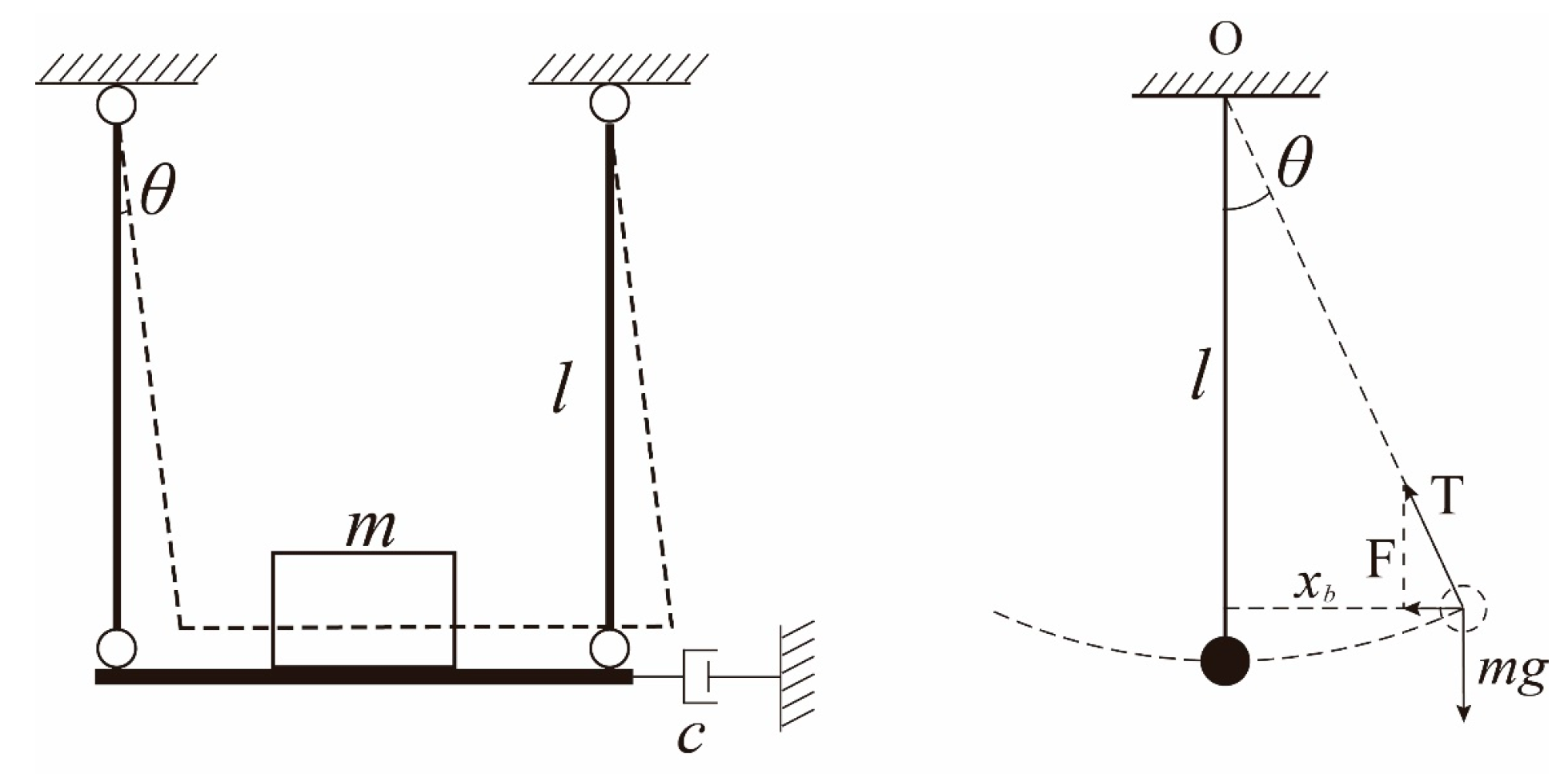
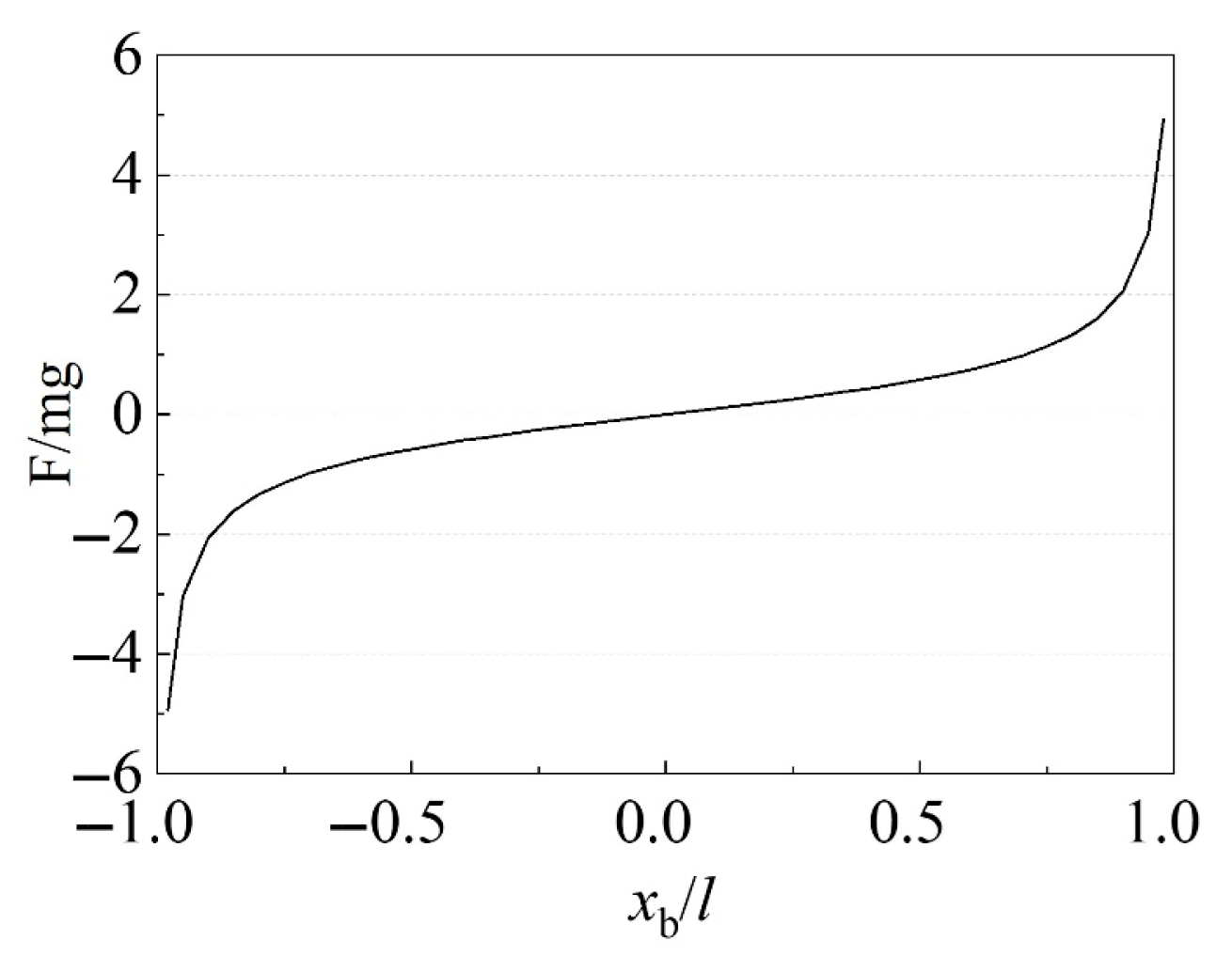
The self-centering mode of the BSPI system is similar to that of a pendulum, and the natural period mainly depends on the length of the hanger rods. The lateral stiffness of the structure is weakened, and the natural period of the structure is prolonged by suspending the superstructure from the foundation.
- (2)
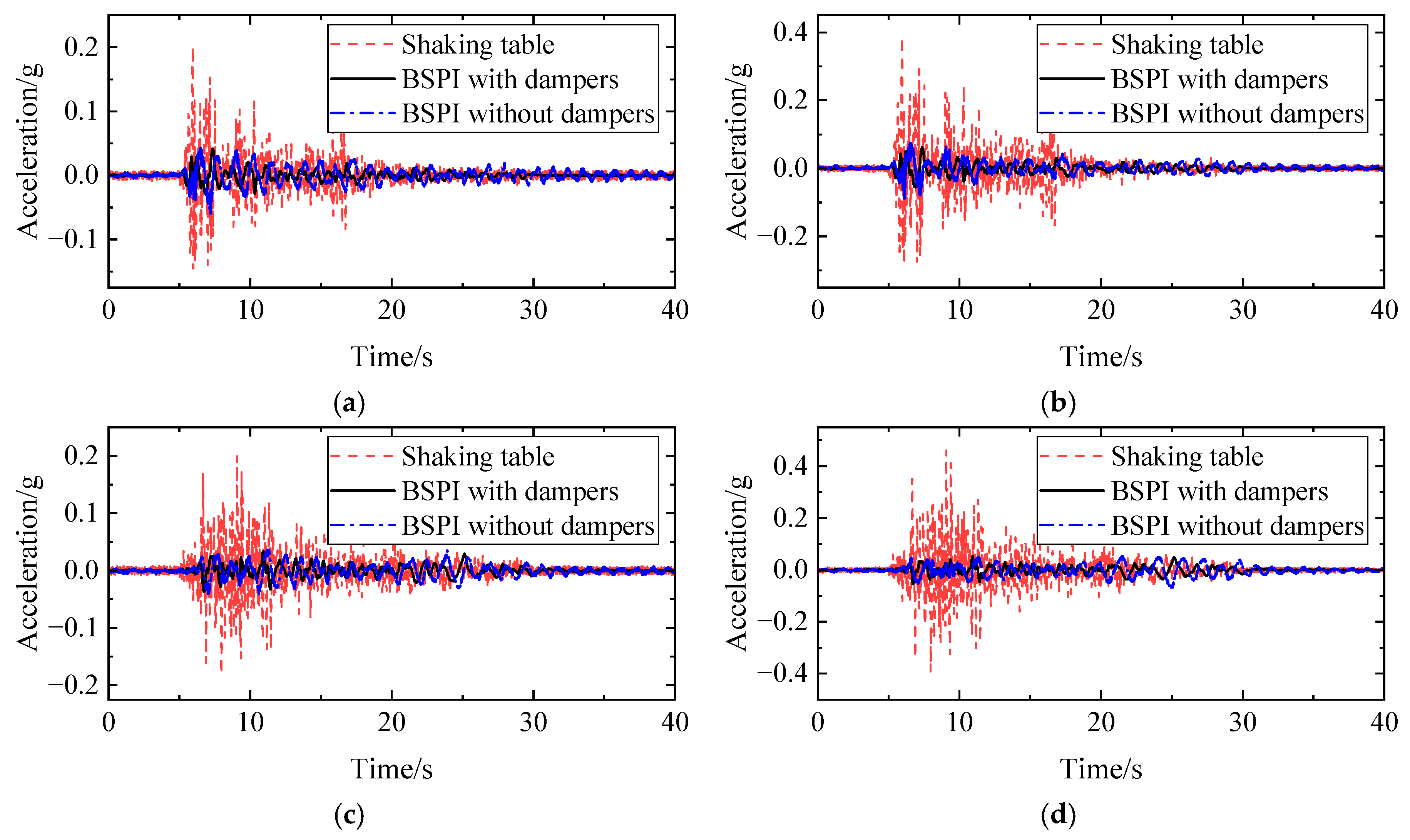
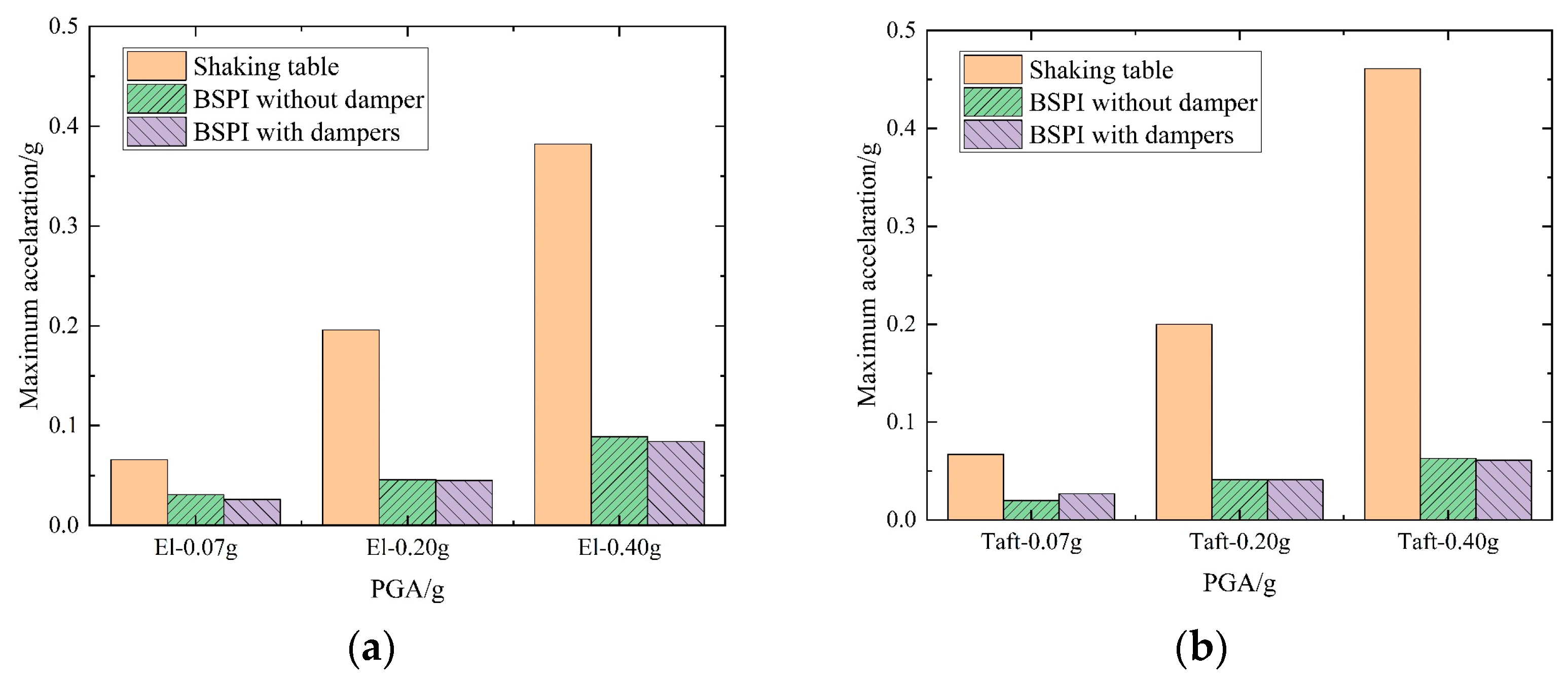
The utilization of BSPI technology effectively reduces the acceleration demands of the structure. The shaking table test findings indicate a decrease in the acceleration response of the BSPI model under El-Centro and Taft motion compared to the input from the shaking table. The effectiveness of BSPI technology on vibration reduction ranges between 58% and 79%.
- (3)
The incorporation of viscous dampers into the isolation layer mitigates the deformation requirements of the BSPI structure. Finite element analysis results show that the inter-story displacement of the superstructure of the BSPI structure is reduced by about 50%, attributable to the viscous dampers.
- (4)
The seismic performance of BSPI structures is affected by the rod length and damping ratio. As the hanger rod’s length increases, the structure’s acceleration response decreases and displacement response increases. When the damping ratio was adjusted from 0.05 to 0.3, the maximum inter-story displacement under the El-Centro motion decreased by 35.2%.
While the small-scale tests and simplified numerical models demonstrate promising reductions in acceleration and displacement responses, these findings remain preliminary and test-specific. Given the inherent limitations of model scaling and numerical simplifications, the generalizability of the results warrants cautious interpretation. Further validation through large-scale physical testing and sophisticated numerical simulations is essential to comprehensively evaluate the BSPI structural system’s performance across diverse seismic scenarios.