Integrating Social Network and Space Syntax: A Multi-Scale Diagnostic–Optimization Framework for Public Space Optimization in Nomadic Heritage Villages of Xinjiang

 , ,
, ,
Abstract
1. Introduction
1.1. Background
1.2. Literature Review
- (1)
- Space Syntax
- (2)
- Social Network
- (3)
- Renovation Study of Village Public Space
1.3. Research Gaps and Contributions
- Narrow perspectives: Heritage studies relying solely on space syntax as a quantitative method tend to focus exclusively on street network characteristics while neglecting the relationship between streets and surrounding elements, particularly overlooking how villagers’ behaviors interact with and influence public spaces.
- Geographical imbalance: Research on ethnic minority villages in Xinjiang remains scarce, with existing studies disproportionately concentrated in Hami, Turpan, and Changji regions, leaving quantitative studies on heritage villages in Yili and Aletai prefectures virtually unexplored.
- Typological bias: Current heritage village research predominantly examines agricultural and coastal fishing villages, with inadequate attention given to nomadic settlement studies.
- Expanded analytical framework: The analytical framework has been significantly expanded through the integration of diverse spatial datasets across urban and rural contexts. The developed multidimensional social network models successfully capture structural characteristics of various social network patterns, while simultaneously providing reliable references for regional planning and development initiatives.
- Geographical and typological diversity: The research addresses critical geographical and typological gaps by focusing on three nomadic tourism heritage villages in northern Xinjiang. This approach not only fills the quantitative research void regarding ethnic minority villages in Xinjiang, but also pioneers visual analysis techniques for nomadic settlements. Comparative analysis of villages with distinct spatial configurations yields both differential assessments and practical optimization strategies.
- Multi-scale indicator system: Integrating social network analysis (SNA) with space syntax, along with ArcGIS (v10.8) spatial analysis tools and virtual boundary scale theory, a three-tier “village territory–street network–node” analytical framework is established.
2. Materials and Methods
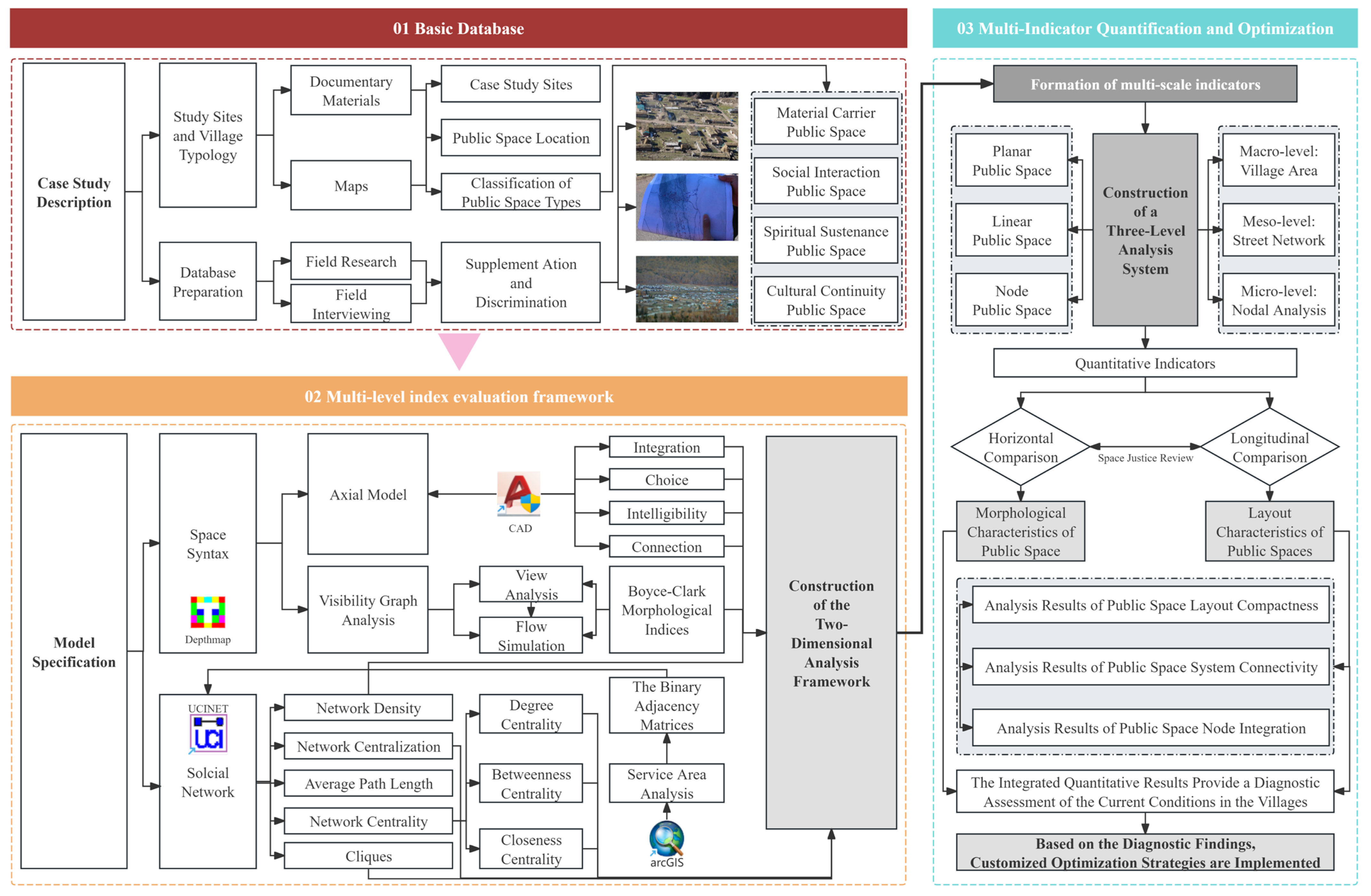
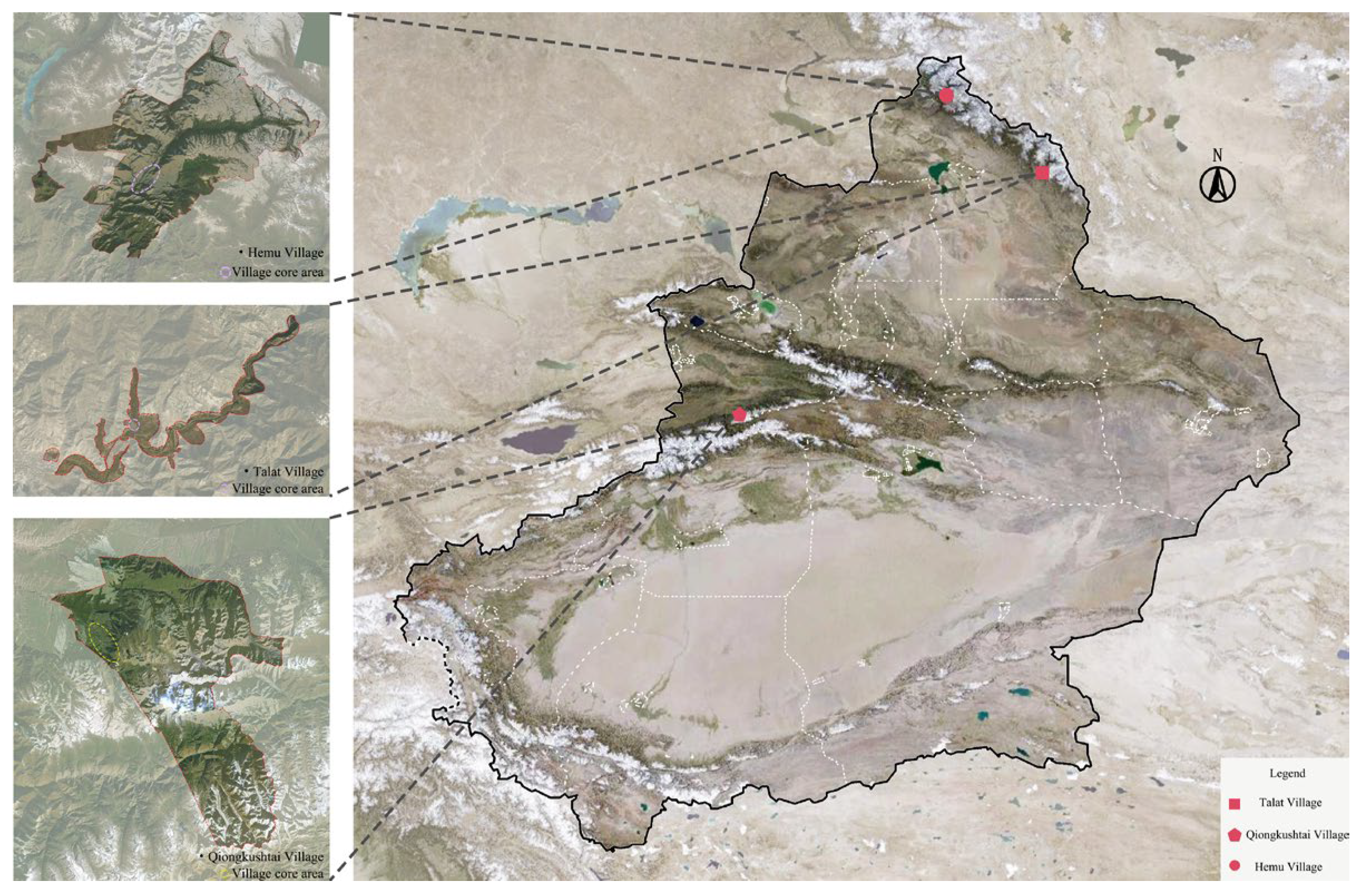
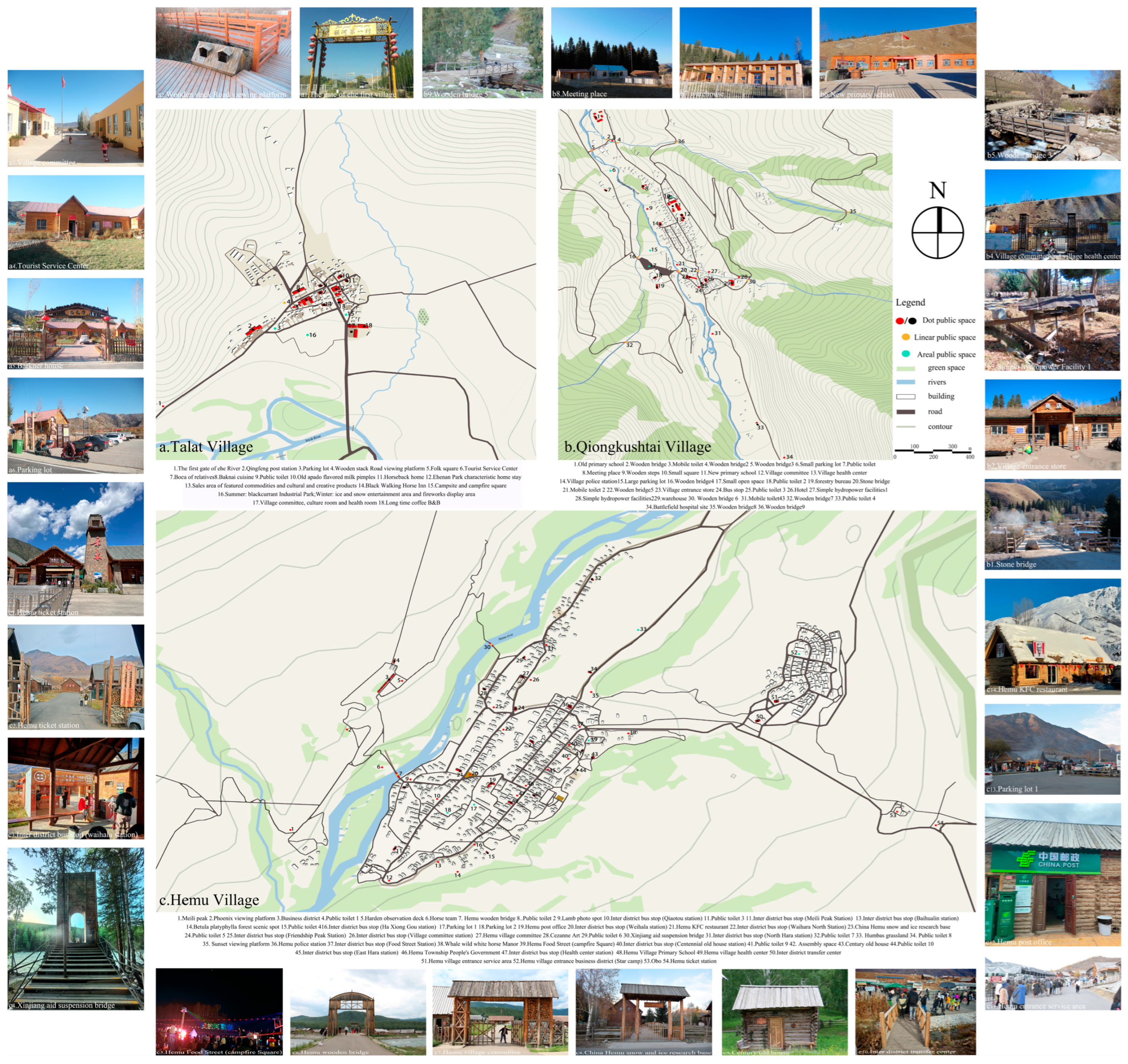
- Case Study Description: Through literature review and field investigations, the study locations and public space distributions within each village were identified. Fundamental data collection established a foundational database for subsequent model development.
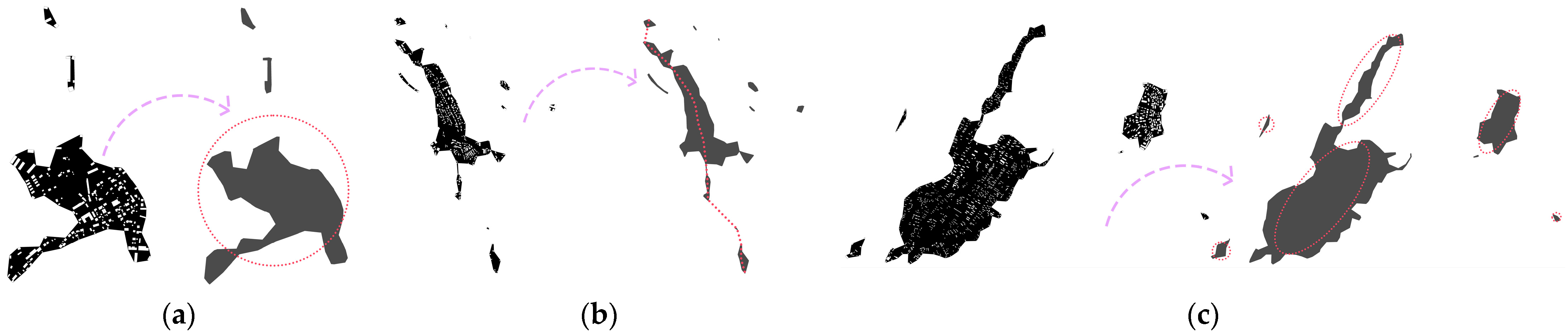
- Multi-level Index Evaluation Framework: Integrating social network analysis with space syntax, the framework simultaneously generates space syntax axial models and social network spatial models. This integration addresses the limitations of space syntax through social network complementarity. Employing virtual boundary scale theory, planar closed shapes of settlement boundaries were created to facilitate space syntax visibility graph analysis. Combined with GIS, this approach enables a comprehensive examination of public space structural characteristics in northern Xinjiang’s tourism-oriented heritage nomadic villages.
- Multi-Indicator Quantification and Optimization: Adopting a “point-line-plane” spatial perspective, the analysis system evaluates three hierarchical levels—village territory, street, and nodes. The comparative analysis employs dual methodological approaches to examine public space characteristics. Horizontal comparisons elucidate typological patterns across varying village scales, whereas vertical comparisons assess morphological differences in three key dimensions: spatial layout density, systemic connectivity, and nodal integration levels. Subsequently, all quantitative analysis results are consolidated, and targeted optimization strategies are formulated based on the findings.
2.1. Case Study Description
2.1.1. Study Sites and Village Typology
2.1.2. Data Preparation
2.2. Multi-Level Index Evaluation Framework:
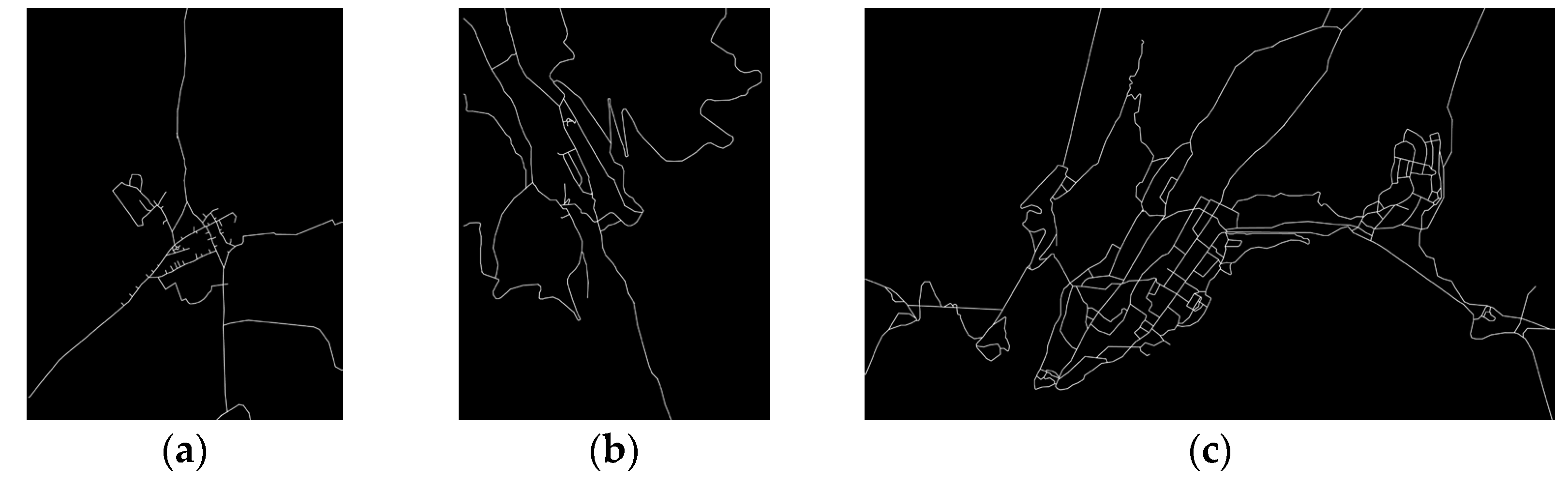
2.2.1. Construction of Axial Model and Visibility Analysis Scope
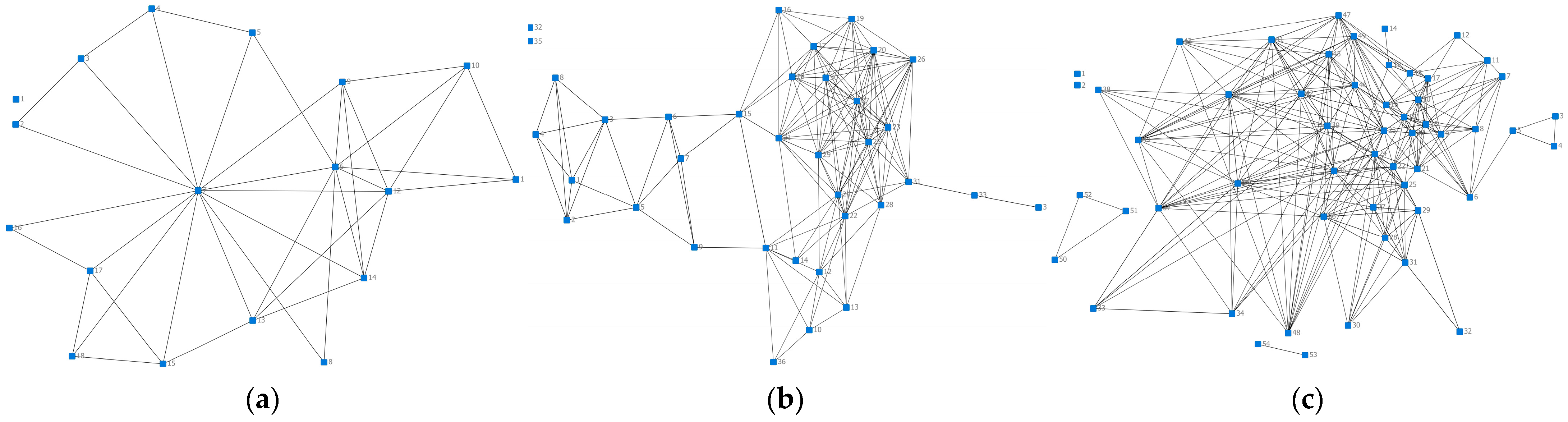
2.2.2. Spatial Domain Network Modeling
2.3. Multi-Indicator Quantification and Optimization
3. Results
- (1)
- Morphological Characteristics Results:
- (2)
- Comparative Analysis of Indicators Results:
- (3)
- Comparison of simulated flow and actual behavior:
3.1. Characteristics of Public Spaces in Heritage Villages Across Different Dimensions
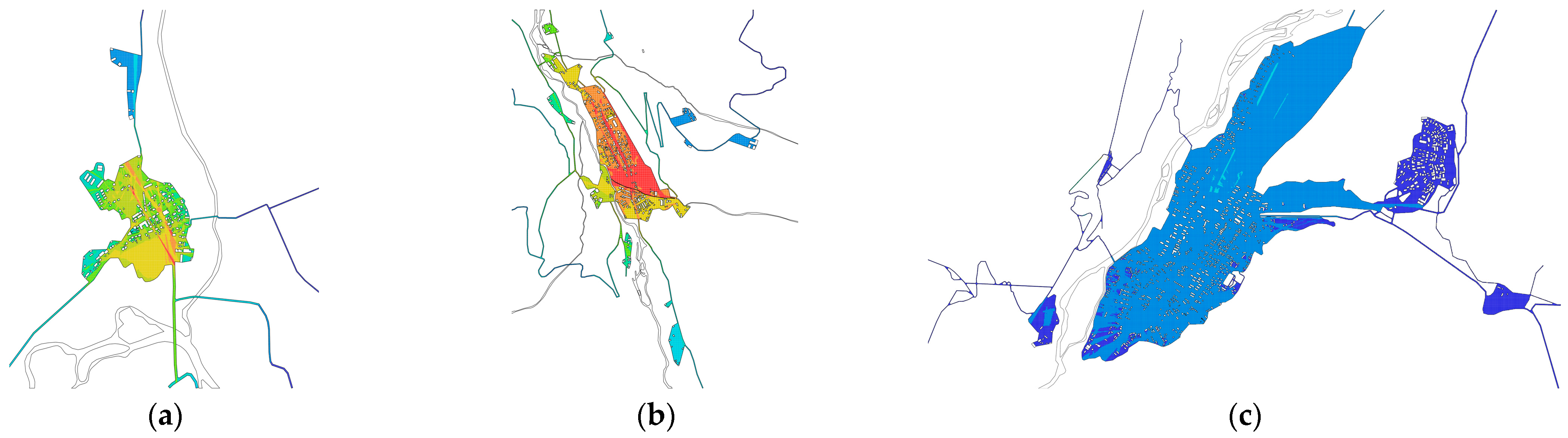
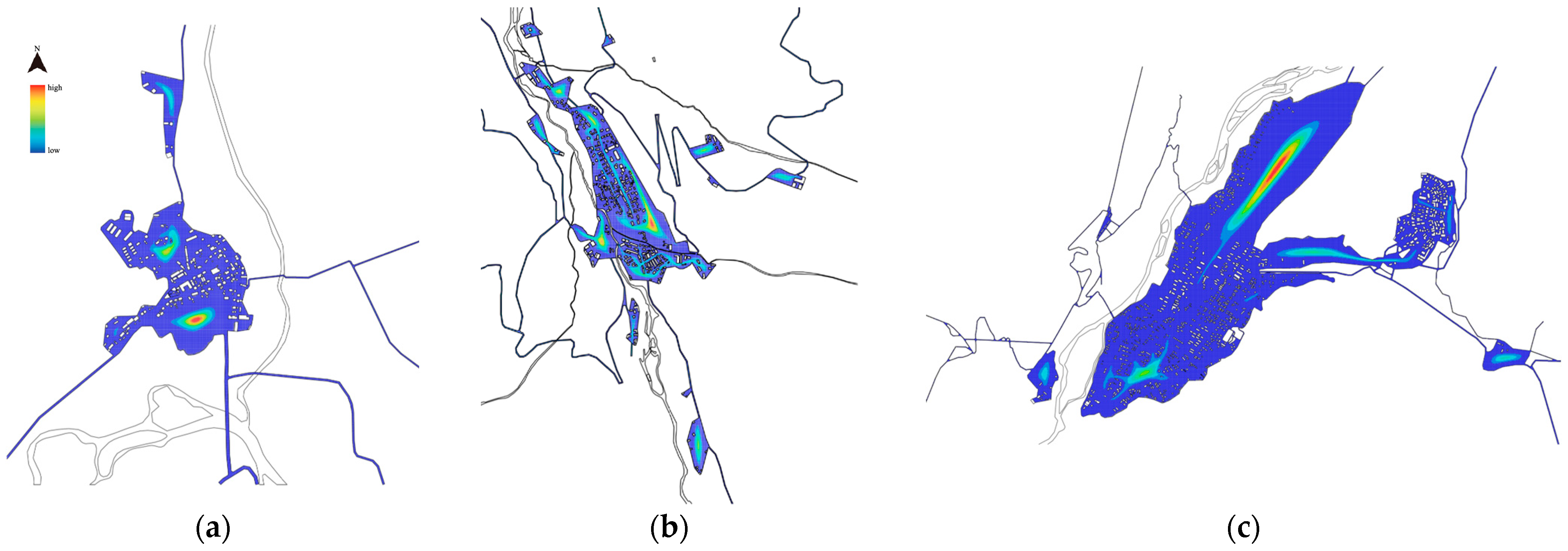
3.1.1. Macro-Scale and “Areal” Spatial Features
- (1)
- Compact Village (Talat Village)
- (2)
- Linear Village (Qiongkushitai Village)
- (3)
- Dispersed Village (Hemu Village)
3.1.2. Street Scale and Linear Spatial Characteristics
- (1)
- Compact Village (Talat Village)
- (2)
- Linear Village (Qiongkushitai Village)
- (3)
- Dispersed Village (Hemu Village)
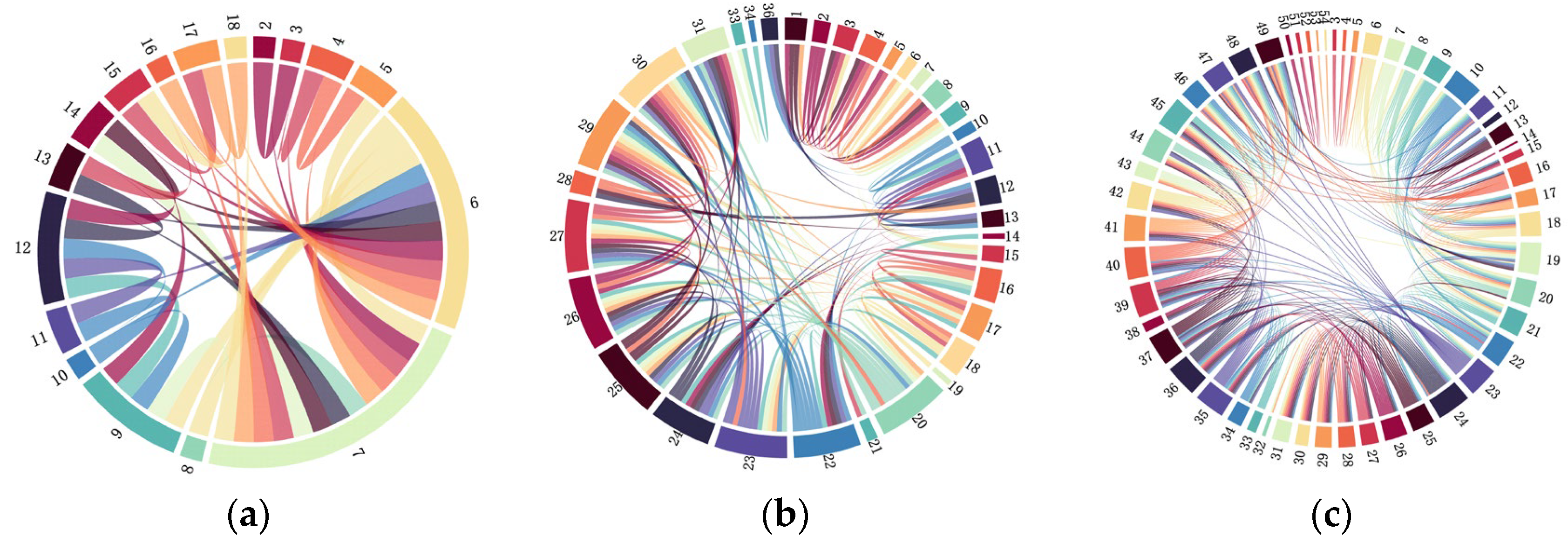
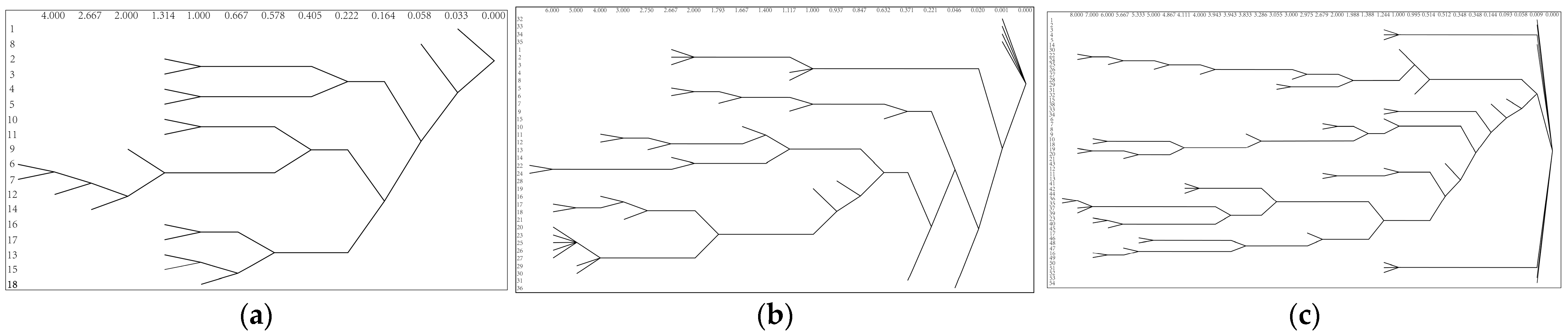
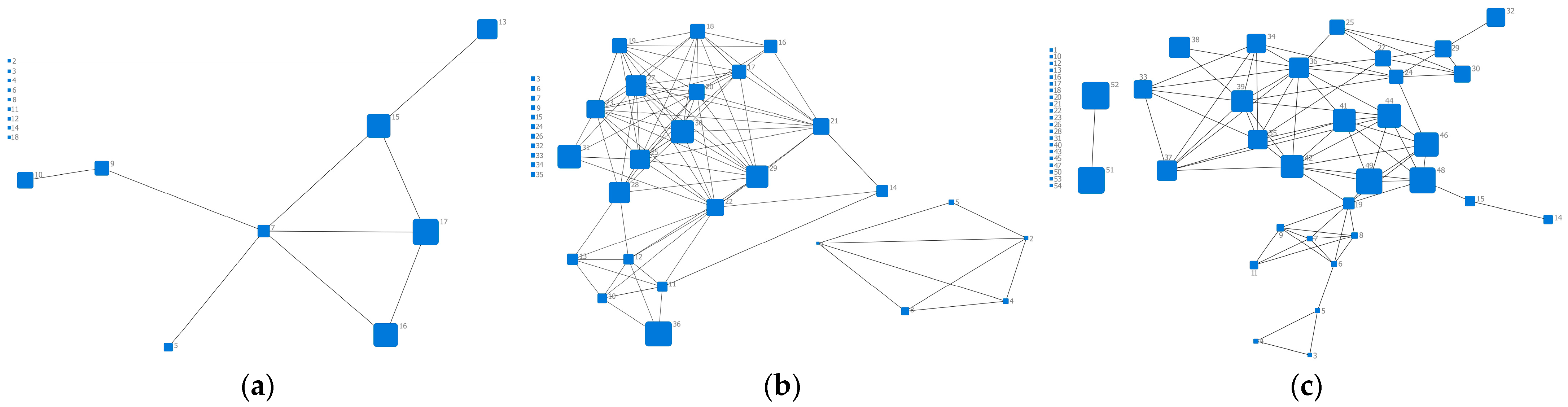
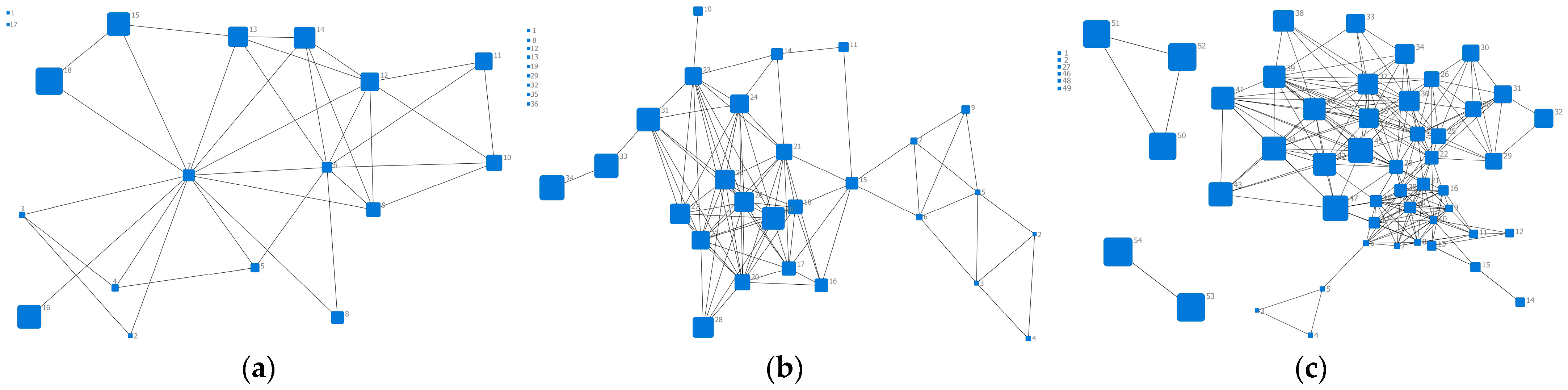
3.1.3. Node Scale and Point-Type Spatial Characteristics
- (1)
- Compact Village (Talat Village)
- (2)
- Linear Village (Qiongkushitai Village)
- (3)
- Dispersed Village (Hemu Village)
3.2. Comparative Analysis Results of Hierarchical Indicators for Heritage Villages with Different Morphologies
3.2.1. Analysis of Public Space Layout Compactness
3.2.2. Connectivity Analysis of Public Space Systems
3.2.3. Integration Analysis of Public Space Nodes
3.3. Comparison of Simulated Flow and Actual Behavior
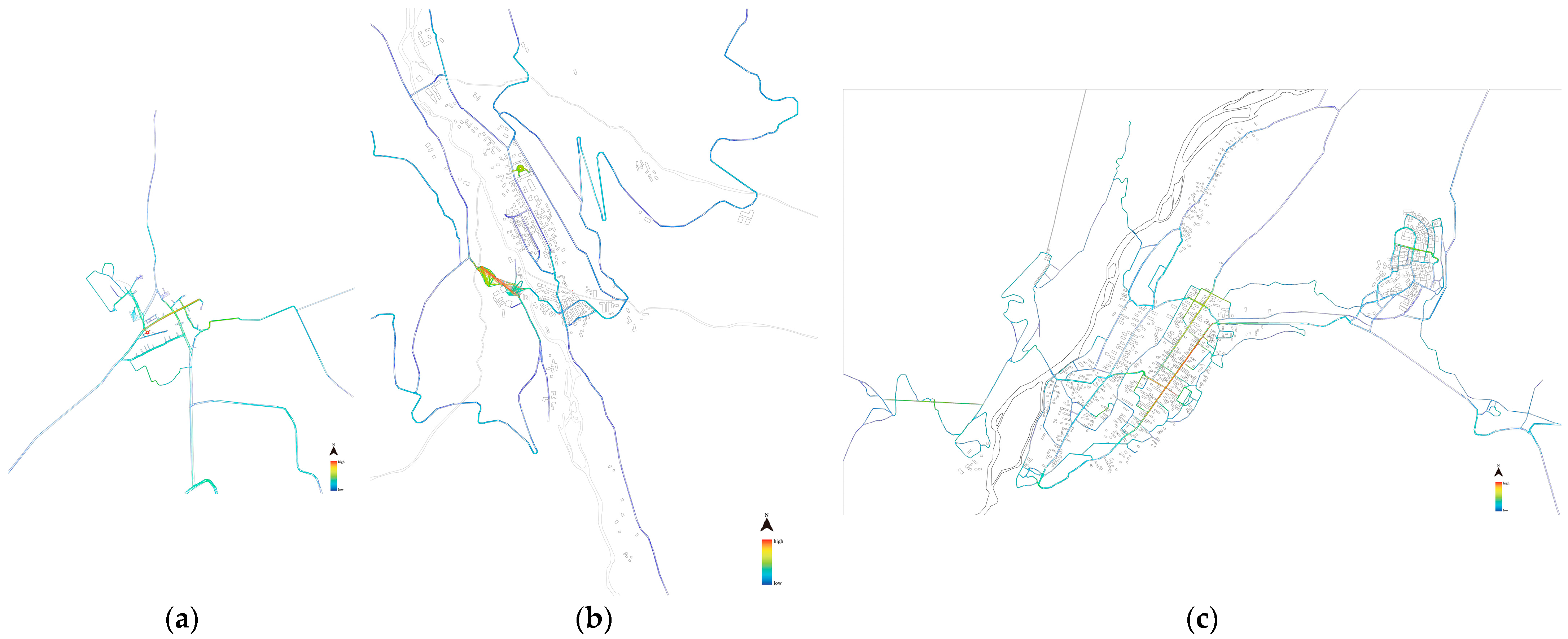
3.3.1. Pedestrian Flow Simulation
- (1)
- Compact Village (Talat Village)
- (2)
- Linear Village (Qiongkushitai Village)
- (3)
- Dispersed Village (Hemu Village)
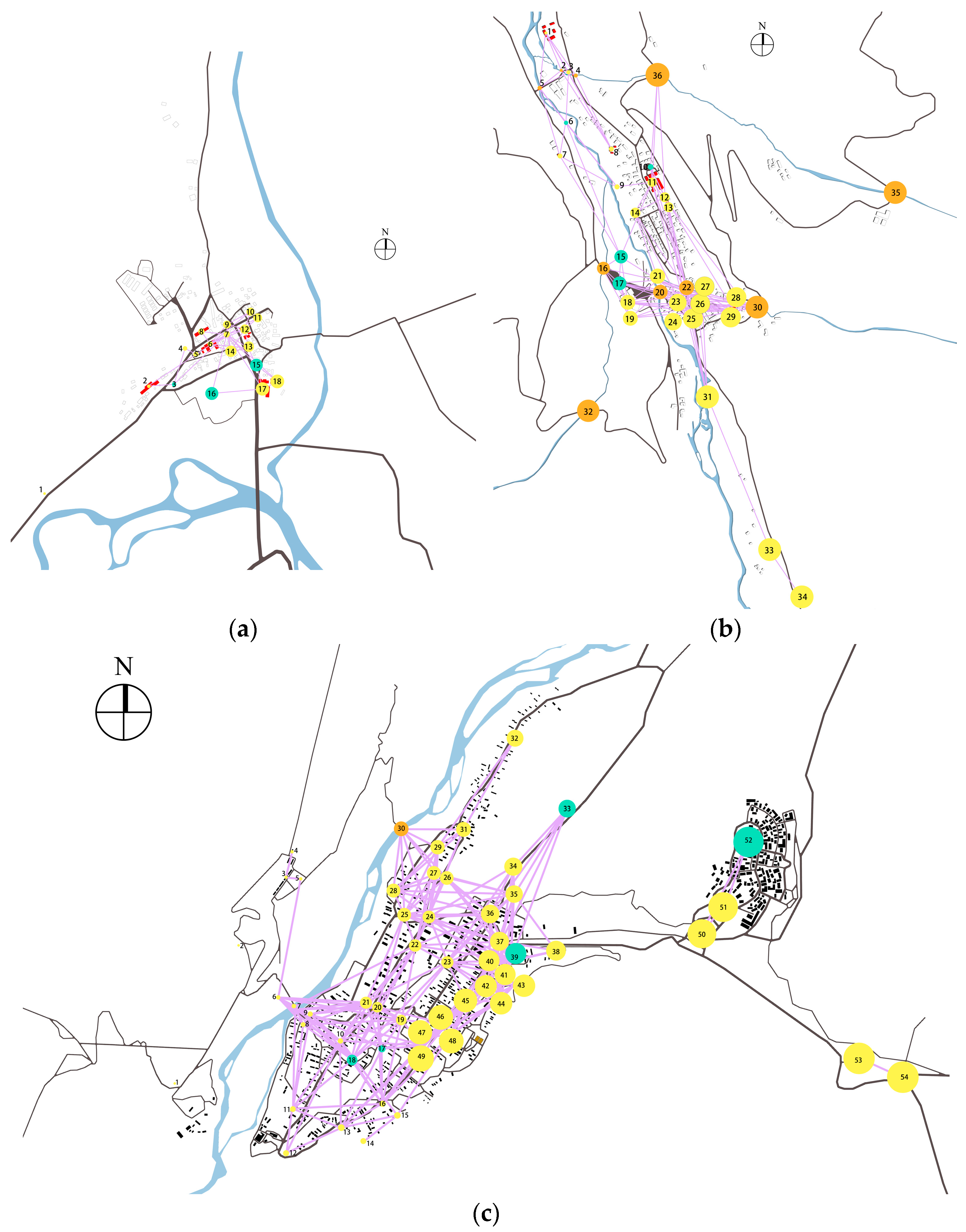
3.3.2. Construction of Behavioral Networks
- (1)
- Comparison between villager behavior network and tourist behavior network
- (2)
- Comparison between the actual behavior node network and the flow simulation
4. Discussion
4.1. Findings Based on Comparative Analysis of Multi-Level Indicators
- (1)
- Compact Villages
- (2)
- Linear Villages
- (3)
- Dispersed Villages
4.2. Space Justice Discussion
4.3. Socio-Culturally Sensitive Optimization Strategies for Public Spaces with Different Morphological Characteristics
4.3.1. Socio-Culturally Sensitive Optimization Strategies for Public Spaces in Compact Villages
4.3.2. Socio-Culturally Sensitive Optimization Strategies for Public Spaces in Linear Villages
4.3.3. Socio-Culturally Sensitive Optimization Strategies for Public Spaces in Dispersed Villages
4.4. Sensibility Analysis
4.5. Global Comparative Insights and Socioeconomic Implications
4.6. Limitations and Future Research Directions
4.6.1. Limitations
- (1)
- Limited sample size: The number of cases in this study is relatively small, making the identified characteristics more likely to represent individual cases rather than universal phenomena of this morphology. In addition, the study has two data limitations. First, the data collection period was short. Second, it did not separate tourist behavior data between peak and off-peak seasons. These factors may reduce behavioral accuracy. While the model successfully summarizes the structural characteristics of public spaces in Xinjiang’s nomadic villages, its applicability to other regions requires further verification.
- (2)
- Technical limitations in software methodology: Current model construction lacks automation capabilities, while data collection faces constraints from acquisition difficulties and limited social resources. These factors compromise modeling accuracy. Furthermore, varying levels of surveyors’ domain knowledge and familiarity inevitably introduce human errors.
- (3)
- Limitations of space syntax: The visibility graph analysis obtained through Depthmap+ has several limitations. This software’s analysis is based on human eye-level perspective and cannot accurately represent terrain elevation differences or building heights. For destinations with distinct seasonal variations, the visibility analysis remains unchanged over time. The results present an idealized scenario that only accounts for fixed obstacles in the village, excluding dynamic factors like crowd obstruction. These aspects represent inherent limitations of space syntax analysis.
4.6.2. Future Research Directions
- The examination of the correlation between public spaces and the behaviors of different social groups, systematically analyzing the divergent demands of heterogeneous groups regarding heritage village public spaces, thereby establishing a three-dimensional “community-behavior-space” interactive research framework, will be prioritized. Given Xinjiang’s unique characteristics as a multi-ethnic settlement and a melting pot of Eastern and Western cultures, follow-up studies will conduct comparative research on the relationship between spatial organization and resident-tourist behaviors across different ethnic villages in Xinjiang, further clarifying the interactions among villagers, tourists, and spatial behaviors in ethnic regions.
- The research will expand the sample size for resident-tourist behavior surveys, collect longitudinal data on villagers’ daily behaviors across different periods, and gather tourist behavior data during peak and off-peak seasons. The study proposes future implementation of GPS tracking to better understand village migration patterns and related behaviors. This will facilitate the development of a research paradigm for spatiotemporal behavior patterns in ethnic villages and explore viable pathways for rural revitalization in these communities.
5. Conclusions
- Compact villages demonstrate good visibility with pedestrian flow concentrated in public spaces; nodes exhibit compact distribution and limited cliques, yielding strong layout cohesion and core aggregation, though significant network centrality variation exists across space types.
- Linear villages maintain good visibility with linearly distributed core nodes and optimal average shortest path but display the poorest spatial cohesion and system connectivity of public spaces.
- Dispersed villages show poor visual integration with mismatched pedestrian hot spots and public space locations; they contain the most scattered cliques and dispersed core nodes yet achieve the highest network density with relatively strong system connectivity.
- For optimization strategies: Compact villages should mitigate core-area over concentration and optimize dense networks; linear villages require path-linking and node-addition strategies to enhance connectivity and reduce elongation; dispersed villages must strengthen inter-regional linkages through key clique intersections while balancing distribution via spatial hierarchy optimization.
Author Contributions
Funding
Institutional Review Board Statement
Informed Consent Statement
Data Availability Statement
Acknowledgments
Conflicts of Interest
Abbreviations
| SNA | Social Network Analysis |
| VGA | Viewshed Graph Analysis |
Appendix A

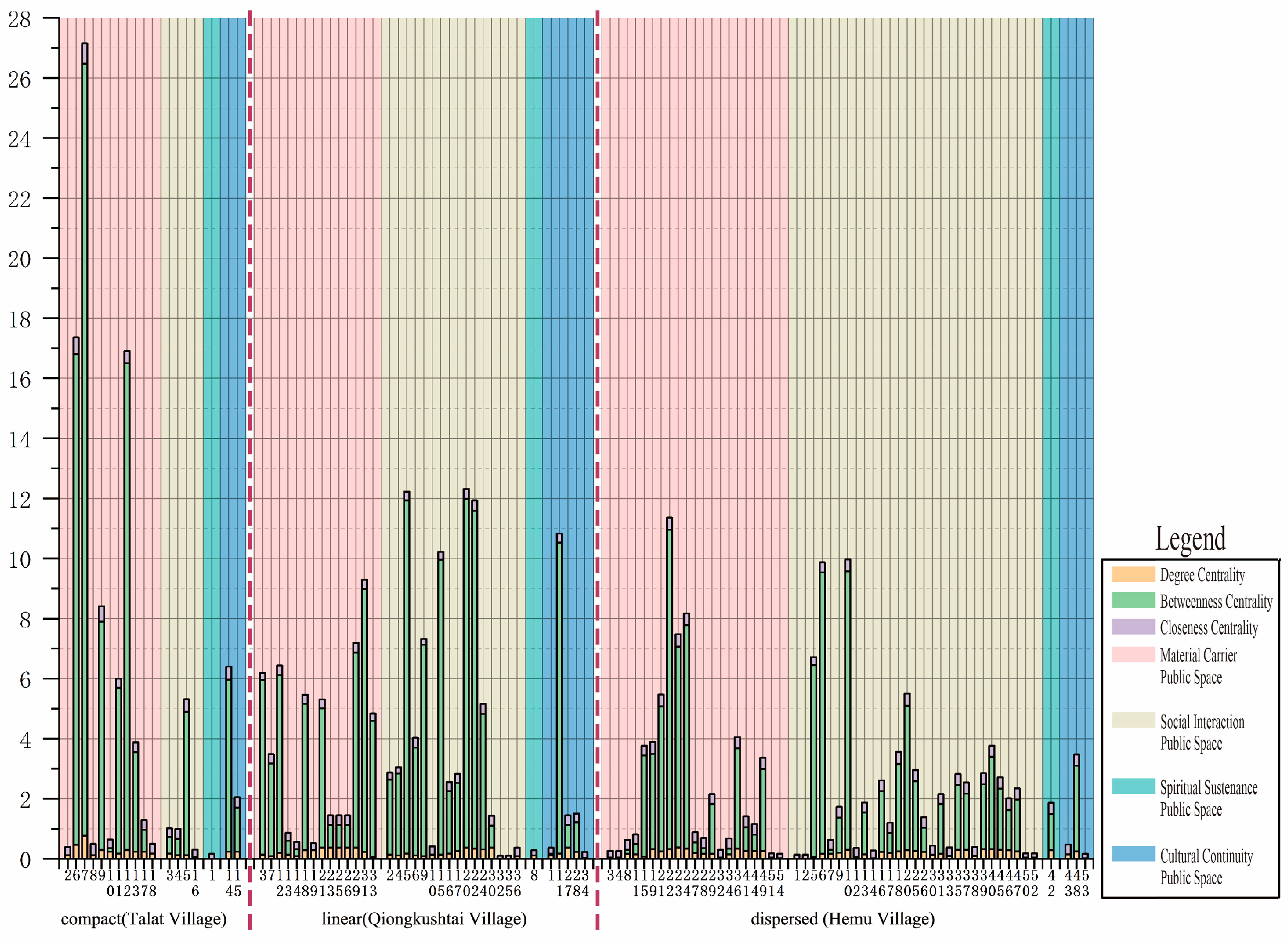
| Village Name | Material Carrier Public Space | Social Interaction Public Space | Spiritual Sustenance Public Space | Cultural Continuity Public Space |
|---|---|---|---|---|
| Talat | 2, 6, 7, 8, 9, 10, 11, 12, 13, 17, 18 | 3, 4, 5, 16 | 1 | 14, 15 |
| Qiongkushitai | 3, 7, 12, 13, 14, 18, 19, 21, 23, 25, 26, 29, 31, 33 | 2, 4, 5, 6, 9, 10, 15, 16, 17, 20, 22, 24, 30, 32, 35, 36 | 8 | 1, 11, 27, 28, 34 |
| Hemu | 3, 4, 8, 11, 15, 19, 21, 22, 23, 24, 27, 28, 29, 32, 34, 36, 41, 44, 49, 51, 54 | 1, 2, 5, 6, 7, 9, 10, 12, 13, 14, 16, 17, 18, 20, 25, 26, 30, 31, 33, 35, 37, 38, 39, 40, 45, 46, 47, 50, 52 | 42 | 43, 48, 53 |
| Name of Villages | Clique Distribution Data |
|---|---|
| Talat | 1: 6 7 12 13 14; 2: 6 7 9 12 14; 3: 6 7 8; 4: 5 6 7; 5: 3 4 7; 6: 2 3 7; 7: 4 5 7; 8: 7 15 17 18; 9: 7 13 15; 10: 7 16 17; 11: 6 10 11 12; 12: 6 9 10 12 |
| Qiongkushitai | 1: 17 18 20 21 23 25 26 27 29 30; 2: 20 21 22 23 24 25 26 27 29 30; 3: 17 18 19 20 23 25 26 27 29 30; 4: 20 23 25 26 27 28 29 30; 5: 20 22 23 24 25 26 27 31; 6: 16 17 18 20 21; 7: 16 17 18 19 20; 8: 1 2 3 4 8; 9: 1 2 3 5; 10: 3 5 6; 11: 5 6 7 9; 12: 6 7 15; 13: 10 11 12 13 22; 14: 10 11 12 36; 15: 11 12 13 22 24; 16: 11 14 22 24; 17: 12 22 24 29; 18: 12 28 29; 19: 12 13 28; 20: 14 21 22 24; 21: 15 16 17 18 21 |
| Hemu | 1: 23 35 36 37 39 40 41 42 44 45; 2: 23 39 40 41 42 44 45 46; 3: 23 40 41 42 44 45 46 47 48 49; 4: 23 24 35 36 37 39 40 45; 5: 23 24 39 40 45 46; 6: 23 24 34 35 36 37 39 40; 7: 19 23 42 46 47 48 49; 8: 19 20 23 46; 9: 18 19 20 21 22 23; 10: 20 21 22 23 24; 11: 20 23 24 46; 12: 22 23 24 35 36 37 39; 13: 3 4 5; 14: 6 7 8 9 10 18 19 20 21; 15: 7 8 9 10 11 18; 16: 9 10 17 18 19 20 21; 17: 9 10 18 19 20 21 22; 18: 10 16 17 18 19 20; 19: 10 16 17 19 49; 20: 10 13 16 17 49; 21: 10 11 13 16; 22: 10 11 16 18; 23: 10 11 12 13; 24: 10 13 15; 25: 13 16 17 47 49; 26: 16 17 19 47 49; 27: 16 19 46 47 48 49; 28: 16 19 20 46; 29: 16 45 46 47 48 49; 30: 22 24 25 26 27 28 29 31; 31: 22 24 25 26 27 28 36; 32: 22 24 25 26 27 35 36; 33:22 24 25 26 35 36 37 39; 34: 20 21 22 24 25; 35: 24 25 26 27 28 29 30 31; 36: 29 31 32; 37: 33 34 35 36 37 39; 38: 35 36 37 38 39 40; 39: 40 41 42 43 44 45 46 47 48; 40: 50 51 52 |


References
- Liu, L.; Liu, B.; Song, W.; Yu, H. The Relationship between Rural Sustainability and Land Use: A Bibliometric Review. Land 2023, 12, 1617. [Google Scholar] [CrossRef]
- Wang, Q.; Bing, H.; Wang, S.; Xu, Q. Study on the Spatial Distribution Characteristics and Influencing Factors of Famous Historical and Cultural Towns or Villages in Hubei Province, China. Sustainability 2022, 14, 13735. [Google Scholar] [CrossRef]
- Li, G.; Chen, B.; Zhu, J.; Sun, L. Traditional Village research based on culture-landscape genes: A Case of Tujia traditional villages in Shizhu, Chongqing, China. J. Asian Archit. Build. Eng. 2023, 23, 325–343. [Google Scholar] [CrossRef]
- Su, H.; Wang, Y.; Zhang, Z.; Dong, W. Characteristics and Influencing Factors of Traditional Village Distribution in China. Land 2022, 11, 1631. [Google Scholar] [CrossRef]
- Fu, J.; Zhou, J.L.; Deng, Y.Y. Heritage values of ancient vernacular residences in traditional villages in Western Hunan, China: Spatial patterns and influencing factors. Build. Environ. 2021, 188, 107473. [Google Scholar] [CrossRef]
- Liu, S.; Wu, L.; Xiang, C.; Dai, W. Revitalizing Rural Landscapes: Applying Cultural Landscape Gene Theory for Sustainable Spatial Planning in Linpu Village. Buildings 2024, 14, 2396. [Google Scholar] [CrossRef]
- Zhong, Q.; Fu, H.; Yan, J.; Li, Z. How Does Energy Utilization Affect Rural Sustainability Development in Traditional Villages? Re-Examination from the Coupling Coordination Degree of Atmosphere-Ecology-Socioeconomics System. Build. Environ. 2024, 257, 111541. [Google Scholar] [CrossRef]
- Liu, F.; Xu, W.; Niu, Q. Spatial Pattern of Traditional Villages in Remote Mountainous Areas and Their Development Potential Assessment: The Case of Enshi, China. Sustainability 2025, 17, 1138. [Google Scholar] [CrossRef]
- Wang, L.; Sun, C.; Wang, M.; Xiao, X. Construction and Characterization of Traditional Village Landscape Cultural Genome Atlases: A Case Study in Xupu County, Hunan, China. Sustainability 2024, 16, 9524. [Google Scholar] [CrossRef]
- Li, R.; Mao, L. Spatial Characteristics of Suburban Villages Based on Spatial Syntax. Sustainability 2022, 14, 14195. [Google Scholar] [CrossRef]
- Nie, Z.; Li, N.; Pan, W.; Yang, Y.; Chen, W.; Hong, C. Quantitative Research on the Form of Traditional Villages Based on the Space Gene—A Case Study of Shibadong Village in Western Hunan, China. Sustainability 2022, 14, 8965. [Google Scholar] [CrossRef]
- Pei, Y.F.; Gong, K.; Leng, J.W. Study on the inter-village space of a traditional village group in Huizhou Region: Hongguan Village group as an example. Front. Archit. Res. 2020, 9, 588–605. [Google Scholar] [CrossRef]
- Yang, R.; Pan, Y.; Xu, Q. Space diversification process and evolution mechanism of typical village in the suburbs of Guangzhou: A case study of Beicun. J. Geogr. Sci. 2020, 30, 1155–1178. [Google Scholar] [CrossRef]
- LI, Z.; Cheng, S.; Xiao, L.; Wei, Y.; Fang, T. Sustainability Benefit Evaluation and Optimization of Rural Public Spaces Under Self-Organization Theory. Sustainability 2025, 17, 1019. [Google Scholar] [CrossRef]
- Kohl, J.G. Der Verkehr und die Ansiedelungen der Menschen in Ihrer Abhängigkeit von der Gestaltung der Erdoberfläche: Mit 24 Steindrucktafeln; HardPress Publishing: Miami, FL, USA, 1841. [Google Scholar]
- Meitzen, A. Siedelung und Agrarwesen der Westgermanen und Ostergemanen: Der Kelten, Römer, Finnen und Slawen; W. Hertz: Berlin, Germany, 1895; Volume 2. [Google Scholar]
- Xiao, J.; Qian, Y.; Chen, S.; Xu, Y.; Li, B. Research on Publicness Evaluation and Behavioral Characteristics in Traditional Villages—A Case Study of Chongqing Hewan Village. Buildings 2024, 14, 1759. [Google Scholar] [CrossRef]
- Wang, H.-f.; Chiou, S.-c. Study on the Sustainable Development of Human Settlement Space Environment in Traditional Villages. Sustainability 2019, 11, 4186. [Google Scholar] [CrossRef]
- Muoz-Erickson, T.A. Co-production of knowledge–action systems in urban sustainable governance: The KASA approach. Environ. Sci. Policy 2014, 37, 182–191. [Google Scholar] [CrossRef]
- Manningtyas, R.D.T.; Furuya, K. Traditional Ecological Knowledge versus Ecological Wisdom: Are They Dissimilar in Cultural Landscape Research? Land 2022, 11, 1123. [Google Scholar] [CrossRef]
- Wang, H.; Yang, Z.; Chen, L.; Yang, J.; Li, R. Minority community participation in tourism: A case of Kanas Tuva villages in Xinjiang, China. Tour. Manag. 2010, 31, 759–764. [Google Scholar] [CrossRef]
- Guo, Y.; Zhai, S.; Huang, J.; Guo, H. Characteristics of the Spatial Structure of Traditional Villages in the Xinjiang Uygur Autonomous Region in China and Their Influence Mechanisms. Buildings 2024, 14, 3420. [Google Scholar] [CrossRef]
- Conzen, M.R.G. Morphogenesis, morphogenetic regions and secular human agency in the historic townscape, as exemplified by Ludlow. In Urban Historical Geography; Denecke, D., Shaw, G., Eds.; Cambridge University Press: Cambridge, UK, 1988; pp. 253–271. [Google Scholar]
- Li, B.; Lu, Y.; Li, Y.; Zuo, H.; Ding, Z. Research on the Spatiotemporal Distribution Characteristics and Accessibility of Traditional Villages Based on Geographic Information Systems—A Case Study of Shandong Province, China. Land 2024, 13, 1049. [Google Scholar] [CrossRef]
- Bian, J.; Chen, W.; Zeng, J. Spatial Distribution Characteristics and Influencing Factors of Traditional Villages in China. Int. J. Environ. Res. Public Health 2022, 19, 4627. [Google Scholar] [CrossRef]
- Feng, X.; Hu, M.; Somenahalli, S.; Bian, X.; Li, M.; Zhou, Z.; Li, F.; Wang, Y. A Study of Spatio-Temporal Differentiation Characteristics and Driving Factors of Shaanxi Province’s Traditional Heritage Villages. Sustainability 2023, 15, 7797. [Google Scholar] [CrossRef]
- Wang, H.; Shan, Y.; Xia, S.; Cao, J. Traditional Village Morphological Characteristics and Driving Mechanism from a Rural Sustainability Perspective: Evidence from Jiangsu Province. Buildings 2024, 14, 1302. [Google Scholar] [CrossRef]
- Afnarius, S.; Syukur, M.; Ekaputra, E.G.; Parawita, Y.; Darman, R. Development of GIS for Buildings in the Customary Village of Minangkabau Koto Gadang, West Sumatra, Indonesia. ISPRS Int. J. Geo-Inf. 2020, 9, 365. [Google Scholar] [CrossRef]
- Trusiani, E.; Rigatti, D. Italian immigration in southern Brazil: Reproduction and innovation in the layout of rural houses through the space syntax theory. Oculum Ens. 2016, 13, 71–90. [Google Scholar] [CrossRef]
- Kim, Y.S.; Shin, B.U.; Nam, H.K. A Study on the Plane Spatial Characteristics of Modern Hanok in the Jeonju Hanok Village using Space Syntax. J. Archit. Inst. Korea Plan. Des. 2018, 34, 35–44. [Google Scholar] [CrossRef]
- Beyti, H.; Pourjavad Asl, B.; Gharehbaglou, M.; Naseri, H. The Effect of Climate on the Spatial Organization of Rural Housing Based on the Theory of Space Syntax (Case Study: Villages of East Azerbaijan Province). J. Rural Res. 2021, 11, 746–765. [Google Scholar] [CrossRef]
- Ayyıldız, S.; Durak, Ş. Space Syntax Analysis of the Spatial Configuration of Yalova Traditional Rural Houses. Nexus Netw. J. 2023, 26, 27–48. [Google Scholar] [CrossRef]
- Yim, H.Y.; Jun, B.K. An Analysis of the spatial Structure of Centre Villages as Social Housing. KIEAE J. 2018, 18, 13–20. [Google Scholar] [CrossRef]
- Bacău, S.; Grădinaru, S.R.; Hersperger, A.M. Spatial plans as relational data: Using social network analysis to assess consistency among Bucharest’s planning instruments. Land Use Policy 2020, 92, 17–18. [Google Scholar] [CrossRef]
- Jiren, T.S.; Bergsten, A.; Dorreste, I.; Collier, N.F.; Leventon, J.; Fischer, J. Integrating food security and biodiversity governance: A multi-level social network analysis in Ethiopia. Land Use Policy 2018, 25, 78. [Google Scholar] [CrossRef]
- Ma, H.; Wang, M.; Li, J.; Liu, H. Public Space Optimization Strategy Through Social Network Analysis in Shenzhen’s Gongming Ancient Fair. Land 2025, 14, 1267. [Google Scholar] [CrossRef]
- Vainio, R.H.T. How are forest owners’ objectives and social networks related to successful conservation? J. Rural Stud. 2018, 6, 132–135. [Google Scholar] [CrossRef]
- Behbahani, H.; Nazari, S.; Partovifar, H.; Kang, M.J. Designing a Road Network Using John Rawls’s Social Justice Approach. J. Urban Plan. Dev. 2019, 145, 05019002. [Google Scholar] [CrossRef]
- Josey, M.J.; Moore, S. The influence of social networks and the built environment on physical inactivity: A longitudinal study of urban-dwelling adults. Health Place 2018, 54, 62–68. [Google Scholar] [CrossRef]
- Kaplan, N.; Burg, D.; Omer, I. Multiscale accessibility and urban performance. Environ. Plan. B Urban Anal. City Sci. 2022, 49, 687–703. [Google Scholar] [CrossRef]
- Zhao, L.; Shun, Y.W.; Fang, W. Isolated or integrated? Planning and management of urban renewal for historic areas in Old Beijing city, based on the association network system. Habitat Int. 2019, 52, 18–19. [Google Scholar] [CrossRef]
- Manfredini, M.; Tian, X.; Jenner, R.; Besgen, A. “Transductive Urbanism” A Method for the Analysis of the Relational Infrastructure of Malled Metropolitan Centres in Auckland, New Zealand. Am. J. Archaeol. 2017, 3, 411–440. [Google Scholar] [CrossRef]
- Xia, B.; Wu, K.; Guo, P.; Sun, Y.; Wu, J.; Xu, J.; Wang, S. Multidisciplinary Innovation Adaptability of Campus Spatial Organization: From a Network Perspective. SAGE Open 2022, 12, 21582440221079929. [Google Scholar] [CrossRef]
- Li, Y.; Cheshmehzangi, A.; He, B.J. A Framework of Urban Renewal for Leisure Space in Neighborhood Streets: A Case Study of Shazheng Street in Chongqing, China. In Proceedings of the International Conference on Urban Climate, Sustainability and Urban Design, Mianyang, China, 11–12 November 2023; Springer Nature: Singapore, 2023; pp. 693–705. [Google Scholar] [CrossRef]
- Chen, Y.; Meng, S.; Xiong, Y.; Zhang, C.; Zhang, Y. Optimizing public space structure of traditional villages coupling SNA and spatial syntax. Trans. Chin. Soc. Agric. Eng. 2024, 40, 304–314. [Google Scholar] [CrossRef]
- Lipovská, B. Assessing observation methods for landscape planning practice in rural villages. Curr. Urban Stud. 2013, 1, 102. [Google Scholar] [CrossRef]
- Chmielewski, T.J.; Kulak, A.; Michalik-Sniezek, M.; Lorens, B. Physiognomic structure of agro-forestry landscapes: Method of evaluation and guidelines for design, on the example of the West Polesie Biosphere Reserve. Int. Agrophysics 2016, 30, 415. [Google Scholar] [CrossRef]
- Jaszczak, A.; Žukovskis, J.; Antolak, M. The role of rural renewal program in planning of the village public spaces: Systematic approach. Manag. Theory Stud. Rural. Bus. Infrastruct. Dev. 2017, 39, 432–441. [Google Scholar] [CrossRef]
- Soszyński, D.; Sowińska-Świerkosz, B.; Kamiński, J.; Trzaskowskaa, E.; Gawryl, A. Rural public places: Specificity and importance for the local community (case study of four villages). Eur. Plan. Stud. 2022, 30, 311–335. [Google Scholar] [CrossRef]
- Michalka, L.; Siláči, I. The transformation of transport and public spaces of the selected rural settlement. Procedia Eng. 2017, 192, 592–596. [Google Scholar] [CrossRef]
- Cilliers, E.J.; Cornelius, S. The creation of rural child-friendly spaces: A spatial planning perspective. Appl. Res. Qual. Life 2019, 14, 925–939. [Google Scholar] [CrossRef]
- Purcell, M. Recapturing Democracy: Neoliberalization and the Struggle for Alternative Urban Futures; Routledge: Oxfordshire, UK, 2008. [Google Scholar]
- Soja, E.W. Seeking Spatial Justice; U of Minnesota Press: Minneapolis, MN, USA, 2013. [Google Scholar]
- Gao, C.G.; Wang, F. A syntactic analysis of the spatial structure characteristics of traditional villages along the Yellow River in western Shanxi. Landsc. Archit. 2025, 32, 116–124. [Google Scholar] [CrossRef]
- Hu, Y.; Zhang, T.; Wang, L.; He, J. Measurement and Spatial Distribution of Perception in Urban Blocks from the Perspective of Landscape Service. Landsc. Archit. 2022, 29, 45–52. [Google Scholar] [CrossRef]
- Zhou, Z.; Jia, Z.; Wang, N.; Fang, M. Sustainable Mountain Village Construction Adapted to Livelihood, Topography, and Hydrology: A Case of Dong Villages in Southeast Guizhou, China. Sustainability 2019, 10, 4619. [Google Scholar] [CrossRef]
- Yao, Q.; An, N.; Gu, G.; Yang, E.; Yang, H.; Li, C.; Yan, K. Research Progress on Features and Characteristics of Rural Settlements: Literature Distribution, Key Issues, and Development Trends. Buildings 2023, 13, 2457. [Google Scholar] [CrossRef]
- Zhang, A.; Zhang, T.; Fukuda, H. Adaptation Analysis of Urban Village Resettlers Based on Lefebvre’s Spatial Production Theory in Qingdao, China. Sustainability 2025, 17, 3725. [Google Scholar] [CrossRef]
- Ding, J.; Gao, Z.; Ma, S. Understanding socialspaces in tourist villages through space syntax analysis.cases of villages in Huizhou, China. Sustainability 2022, 14, 12376. [Google Scholar] [CrossRef]
- Saierjiang, H. The Living Environment of Rural Settlements in the Grasslandes of Northrn Xinjiang; TongJi University Press: Shanghai, China, 2024. [Google Scholar]
- Guo, X.; Liu, L.; Sun, S. Research on the Renewal of Public Space of Ancient Towns in Western Chongqing Based on Historical Interpretation—A Case Study of Songji Ancient Town. J. Southwest Univ. Nat. Sci. Ed. 2022, 44, 230–240. [Google Scholar] [CrossRef]
- Ya, J.J.; Wei, W.; Yu, G.; Hui, L.Z.; Ke, W. The Influence of Social Networks on Tourism Support Behaviors Among Ethnic Village Residents. Sustainability 2024, 16, 10787. [Google Scholar] [CrossRef]
- Song, Y.; Chen, Y. Research on Rural Landscape Construction Mode and Spatial Structure of Chengdu in the Context of Rural Revitalization. Landsc. Archit. 2022, 29, 37–42. [Google Scholar] [CrossRef]
- Jiang, Y.J.; Li, N.; Wang, Z.Y. Parametric Reconstruction of Traditional Village Morphology Based on the Space Gene Perspective—The Case Study of Xiaoxi Village in Western Hunan, China. Sustainability 2023, 15, 2088. [Google Scholar] [CrossRef]
- Feng, X.; Hu, M.; Somenahalli, S.; Zhang, W.; Liu, K.; Li, M.; Zhou, Z.; Li, F. Study on the Spatial Morphology of Ando Tibetan Traditional Villages in China: A Case of Traditional Villages in Huangnan Prefecture. Sustainability 2025, 17, 1353. [Google Scholar] [CrossRef]
- Li, Q.; Yang, Z.; Cui, J.; Wu, X.; Liu, J.; Li, W.; Liu, Y. Age-Friendly Public-Space Retrofit in Peri-Urban Villages Using Space Syntax and Exploratory Factor Analysis. Buildings 2025, 15, 2219. [Google Scholar] [CrossRef]
- Chen, L.; Cai, X.; Liu, Z. Multi-Source Data and Semantic Segmentation: Spatial Quality Assessment and Enhancement Strategies for Jinan Mingfu City from a Tourist Perception Perspective. Buildings 2025, 15, 2298. [Google Scholar] [CrossRef]




| Research Direction | Methods | Region | Research Content |
|---|---|---|---|
| Quantitative Study of Village Public Spaces | Space Syntax | International | Provides systematic technical methods by exploring the fundamental relationship between spatial morphology and social functions. |
| Analyzes spatial distribution patterns and summarizes structural characteristics, examining village morphology and architectural layouts to identify influencing factors, thereby proposing strategies to address existing issues. | |||
| China | Establishes an objective evaluation system by integrating space syntax’s axial line model with the K-prototype clustering algorithm to classify spatial structural attributes. | ||
| Combines GIS and space syntax to develop a “spatial-social” framework for identifying, optimizing, and validating the spatial morphology of historical districts. | |||
| Social Network | International | Guides public participation in space transformation through social networks. | |
| Evaluates the coordination between public spaces and activities using social networks. | |||
| Explains multi-level spatial network structures via social network analysis to inform public space development. | |||
| China | Conducts a quantitative analysis of public spaces using social network visualization. | ||
| Integrates spatial layouts with population needs to propose targeted optimization strategies. | |||
| Research on the Transformation and Optimization of Rural Public Spaces | - | International | Examines urban inequities using justice theories to identify systemic patterns, consequently developing inclusive planning solutions. |
| China | Classifies public spaces into specific categories to derive their functions and compositions, thereby proposing optimization strategies. | ||
| Applies Lefebvre’s theory of public space to investigate the adaptability of resettled villagers, thereby informing relocation planning strategies. |
| Scale | Indicators | Calculation Formula |
|---|---|---|
| Macro-level: Village Domain | Network Density | —(1) |
| where P is the network density; E denotes the number of edges (connections) that actually exist in the network; and n represents the number of nodes in the network. | ||
| Network Centralization | —(2) | |
| where CX is the network centralization and CX(p*) denotes the centrality measure of the most central node in the network; while CX(pi) represents the centrality of the i-th node. And indicates the maximum possible sum of centrality differences among nodes in a graph with n nodes. | ||
| Intelligibility | —(3) | |
| where R2 is the intelligibility; I(3) is the local integration value at step n = 3; I′(3) is the average of the 3-step integration; I(n) is the global integration value; and I′(n) is the average of the global integration. | ||
| Meso-level: Street Network | Integration | —(4) |
| where Ii is the integration; n is the total number of axes or nodes in the traditional village space; di stands for the minimum number of connections from one axis to any other axis in the network of axes; and Nd is the number of connected axes. | ||
| Choice | —(5) | |
| where C is the degree of spatial selectivity; I ≠ x ≠ j, d(x, j) stands for the shortest distance from space x to i; and σ (i, x, j) is the shortest topological path of the area i from x to j. | ||
| Connection | —(6) | |
| where CVi is the connection value of node i (a measure of its direct connections in the network); Xij stands for binary adjacency matrix entry (1 if nodes i and j are directly connected, 0 otherwise); and N denotes total number of nodes in the spatial network. | ||
| Average Path Length | —(7) | |
| where L is the average path length; N denotes total number of nodes in the spatial network; and d(i,j) represents the shortest path length between node i and node j. | ||
| Micro-level: Nodal Analysis | Degree Centrality | —(8) |
| where di represents the degree centrality of individual i and xij denotes the value in the adjacency matrix corresponding to the pair (i,j), that is, the entry at the intersection of the i-th row and the j-th column. | ||
| Betweenness Centrality | —(9) | |
| where bj represents the betweenness centrality of individual i and gijk denotes the number of geodesic paths between nodes i and k that pass through node j, while gik represents the total number of geodesic paths connecting nodes i and k. | ||
| Closeness Centrality | —(10) | |
| where Ci represents the closeness centrality of node j; d(i,j) denotes the shortest-path distance from node i to node j; and N is the total number of nodes in the network. | ||
| Cliques | —(11) | |
| where S is the cliques; EL represents external links; and IL represents internal links. |
| Indicators | Metrics and Evaluation Criteria |
|---|---|
| Visibility Analysis | Colors closer to red indicate better performance in the corresponding metric, while those closer to blue indicate poorer performance. |
| Pedestrian Flow Simulation | |
| Global Integration | |
| Local Integration | |
| Choice | |
| Cliques | A higher number of cliques indicates a more fragmented village structure. Nodes present in multiple cliques serve as bridges connecting different cliques, representing key intersections in the village. |
| Network Density and Weighted Node-Scale Proportion Visualization Model | Larger nodes indicate more central positions within the network. |
| Indicators | Talat | Qiongkushitai | Hemu |
|---|---|---|---|
| Global Integration |  |  |  |
| Local Integration (R = 3) |  |  |  |
| Choice |  |  |  |
| Indicators | Talat | Qiongkushitai | Hemu |
|---|---|---|---|
| Network Density | 0.170 | 0.160 | 0.177 |
| Network Centralization | 66.9% | 22.4% | 16.9% |
| Indicators | Talat | Qiongkushitai | Hemu |
|---|---|---|---|
| Global Integration | 0.367 | 0.163 | 0.282 |
| Local Integration | 0.967 | 0.920 | 1.125 |
| Average Path Length | 2.289 | 2.777 | 2.369 |
Disclaimer/Publisher’s Note: The statements, opinions and data contained in all publications are solely those of the individual author(s) and contributor(s) and not of MDPI and/or the editor(s). MDPI and/or the editor(s) disclaim responsibility for any injury to people or property resulting from any ideas, methods, instructions or products referred to in the content. |
© 2025 by the authors. Licensee MDPI, Basel, Switzerland. This article is an open access article distributed under the terms and conditions of the Creative Commons Attribution (CC BY) license (https://creativecommons.org/licenses/by/4.0/).
Share and Cite
Liu, H.; Paerhati, R.; Tuluxun, N.; Halike, S.; Wang, C.; Yan, H. Integrating Social Network and Space Syntax: A Multi-Scale Diagnostic–Optimization Framework for Public Space Optimization in Nomadic Heritage Villages of Xinjiang. Buildings 2025, 15, 2670. https://doi.org/10.3390/buildings15152670
Liu H, Paerhati R, Tuluxun N, Halike S, Wang C, Yan H. Integrating Social Network and Space Syntax: A Multi-Scale Diagnostic–Optimization Framework for Public Space Optimization in Nomadic Heritage Villages of Xinjiang. Buildings. 2025; 15(15):2670. https://doi.org/10.3390/buildings15152670
Chicago/Turabian StyleLiu, Hao, Rouziahong Paerhati, Nurimaimaiti Tuluxun, Saierjiang Halike, Cong Wang, and Huandi Yan. 2025. "Integrating Social Network and Space Syntax: A Multi-Scale Diagnostic–Optimization Framework for Public Space Optimization in Nomadic Heritage Villages of Xinjiang" Buildings 15, no. 15: 2670. https://doi.org/10.3390/buildings15152670
APA StyleLiu, H., Paerhati, R., Tuluxun, N., Halike, S., Wang, C., & Yan, H. (2025). Integrating Social Network and Space Syntax: A Multi-Scale Diagnostic–Optimization Framework for Public Space Optimization in Nomadic Heritage Villages of Xinjiang. Buildings, 15(15), 2670. https://doi.org/10.3390/buildings15152670