Article

Research on the Effects of Spatial Forms in Residential Blocks on Road Traffic Noise Distribution in Typical City of China


School of Architecture, Nanjing Tech University, Nanjing 211816, China
*
Author to whom correspondence should be addressed.
Buildings 2024, 14(8), 2556; https://doi.org/10.3390/buildings14082556

Submission received: 8 July 2024 / Revised: 15 August 2024 / Accepted: 18 August 2024 / Published: 20 August 2024
(This article belongs to the Special Issue Acoustics and Perception in Special Shape Spaces)

Abstract

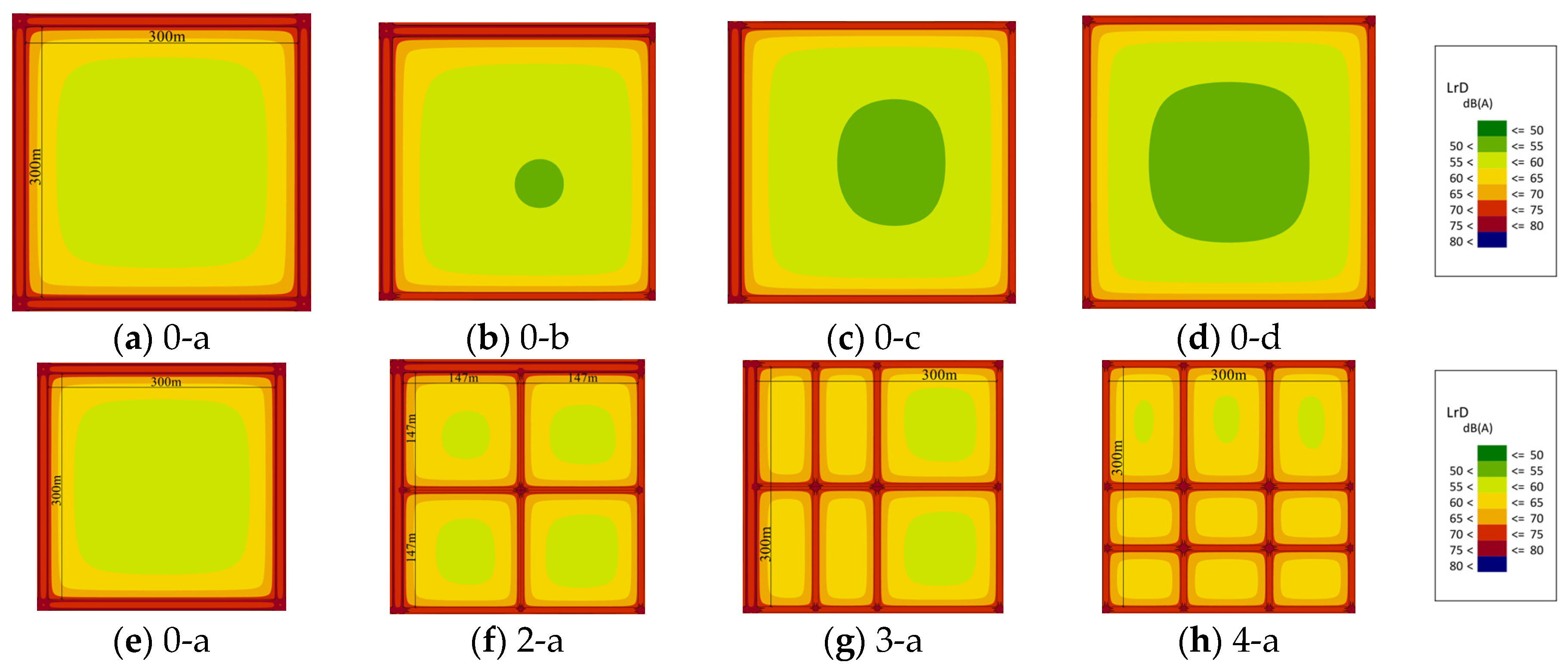
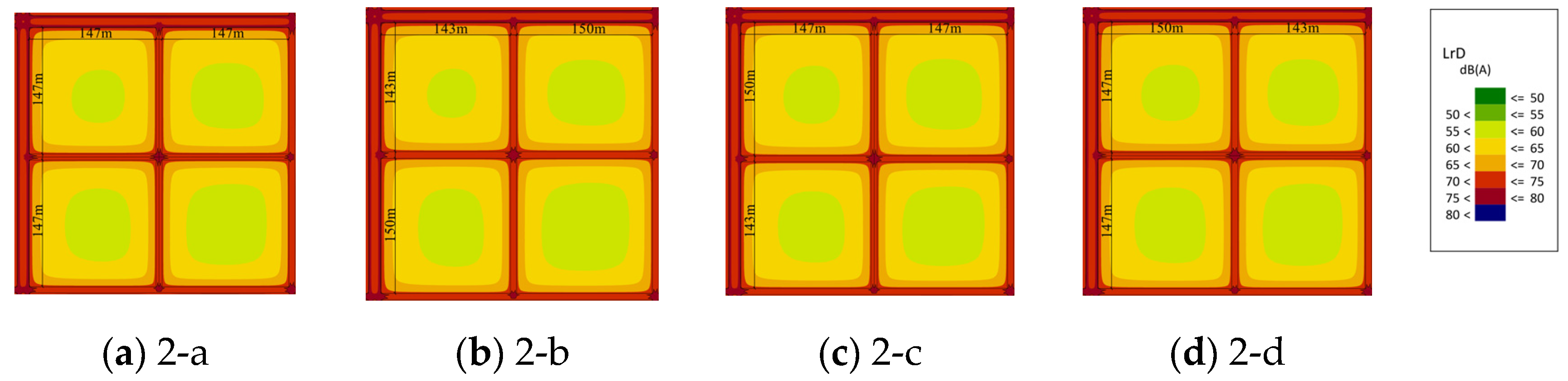
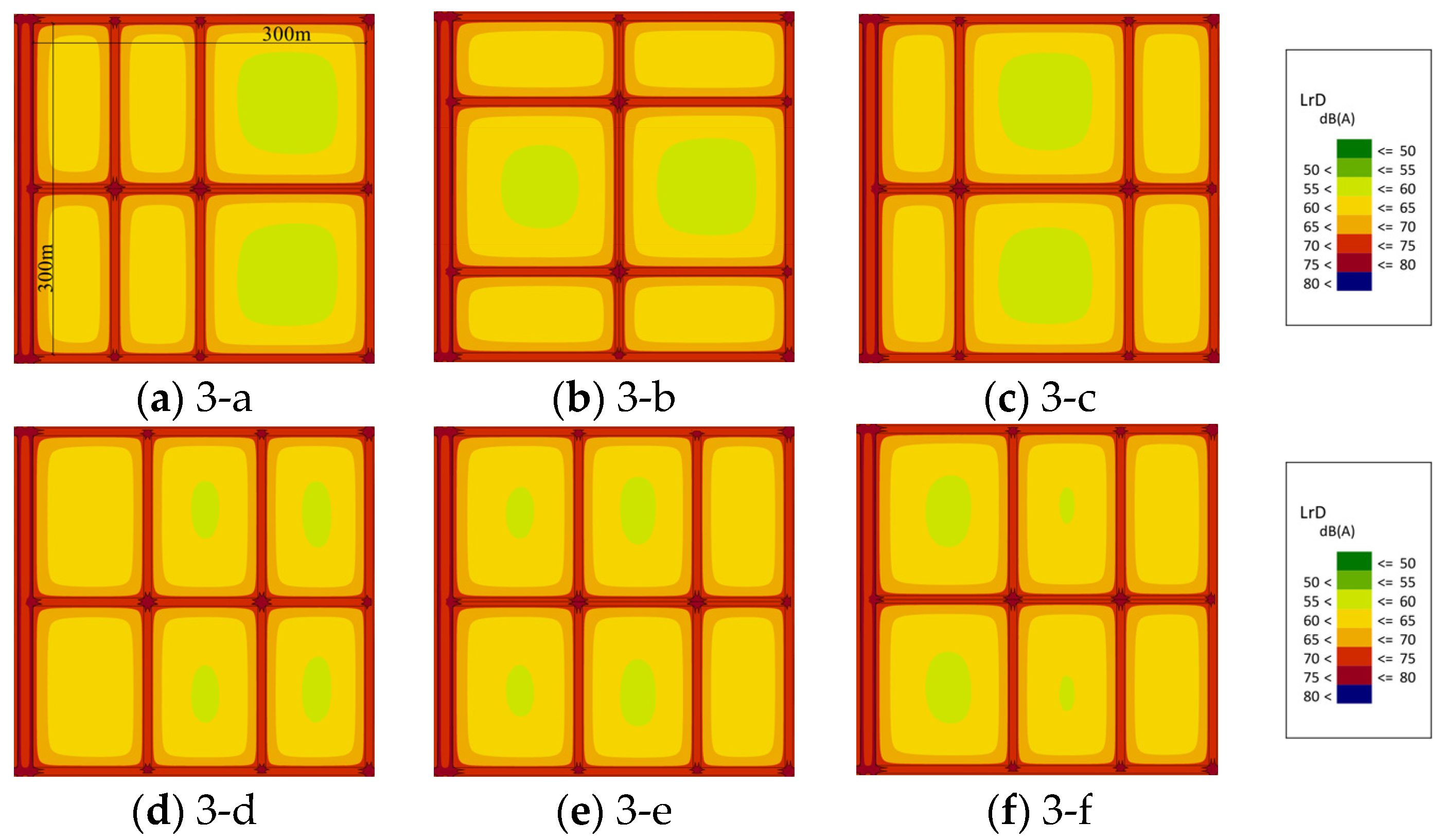
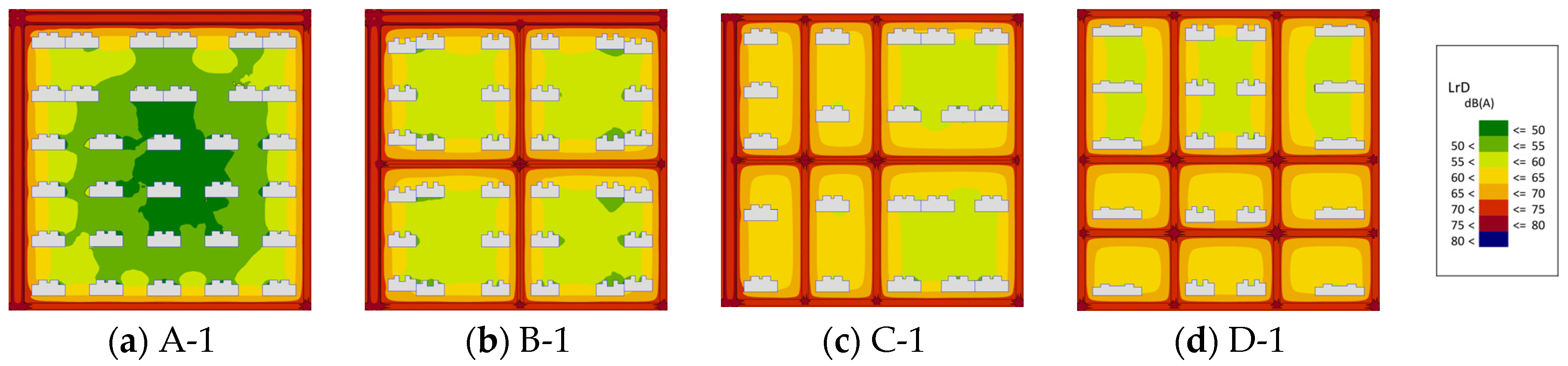
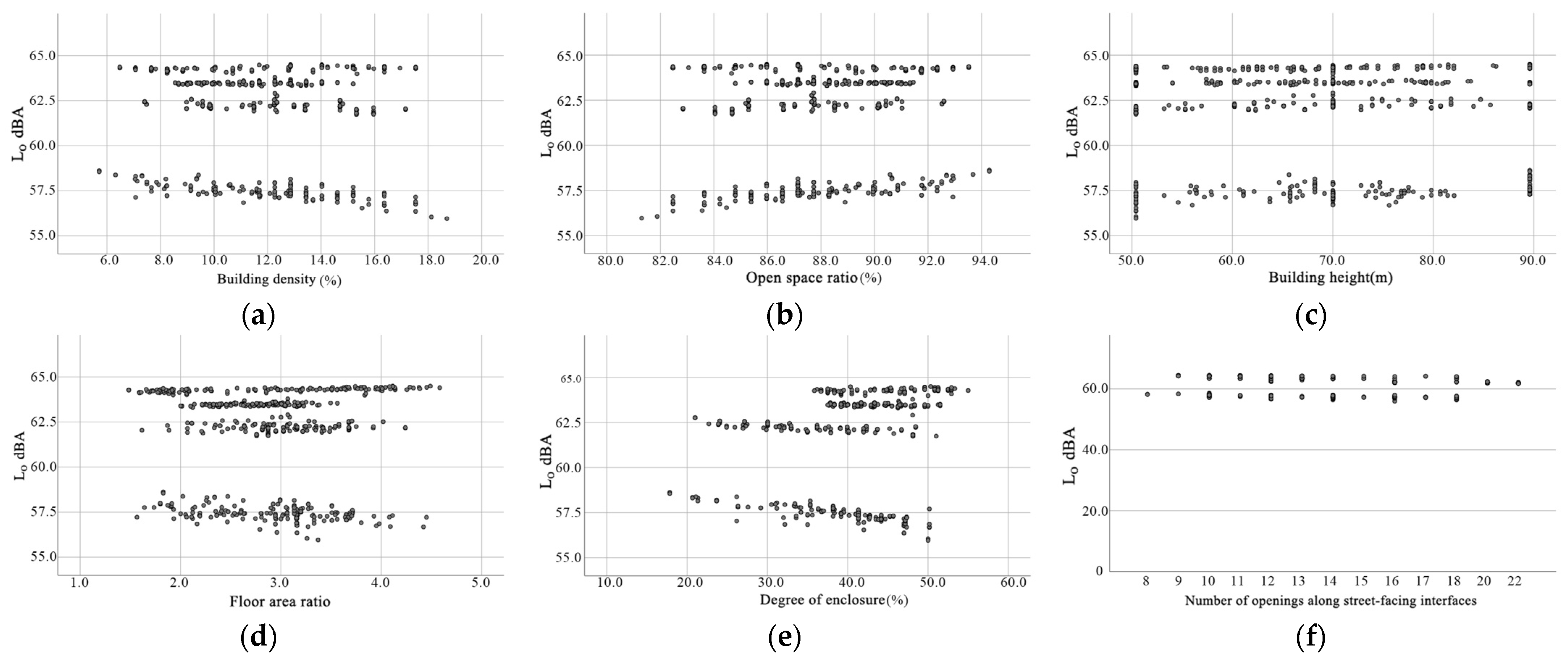
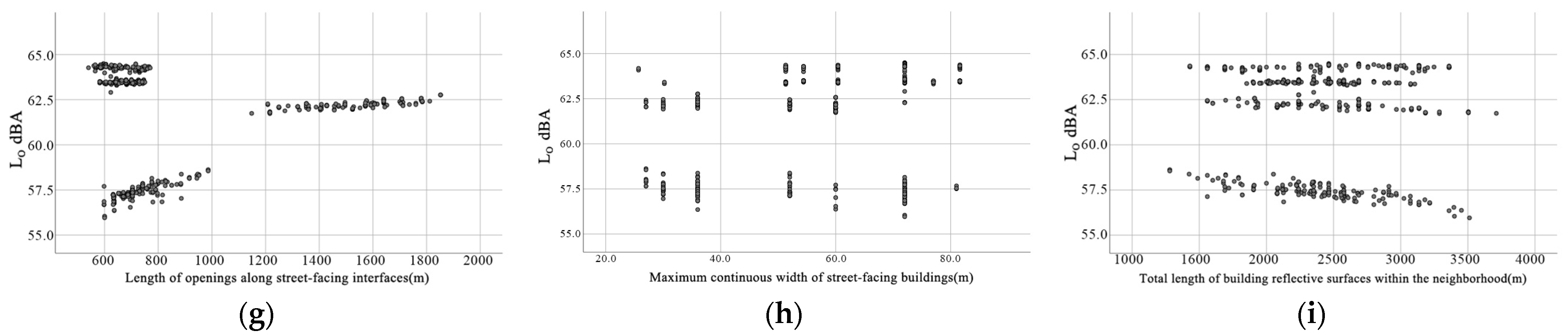
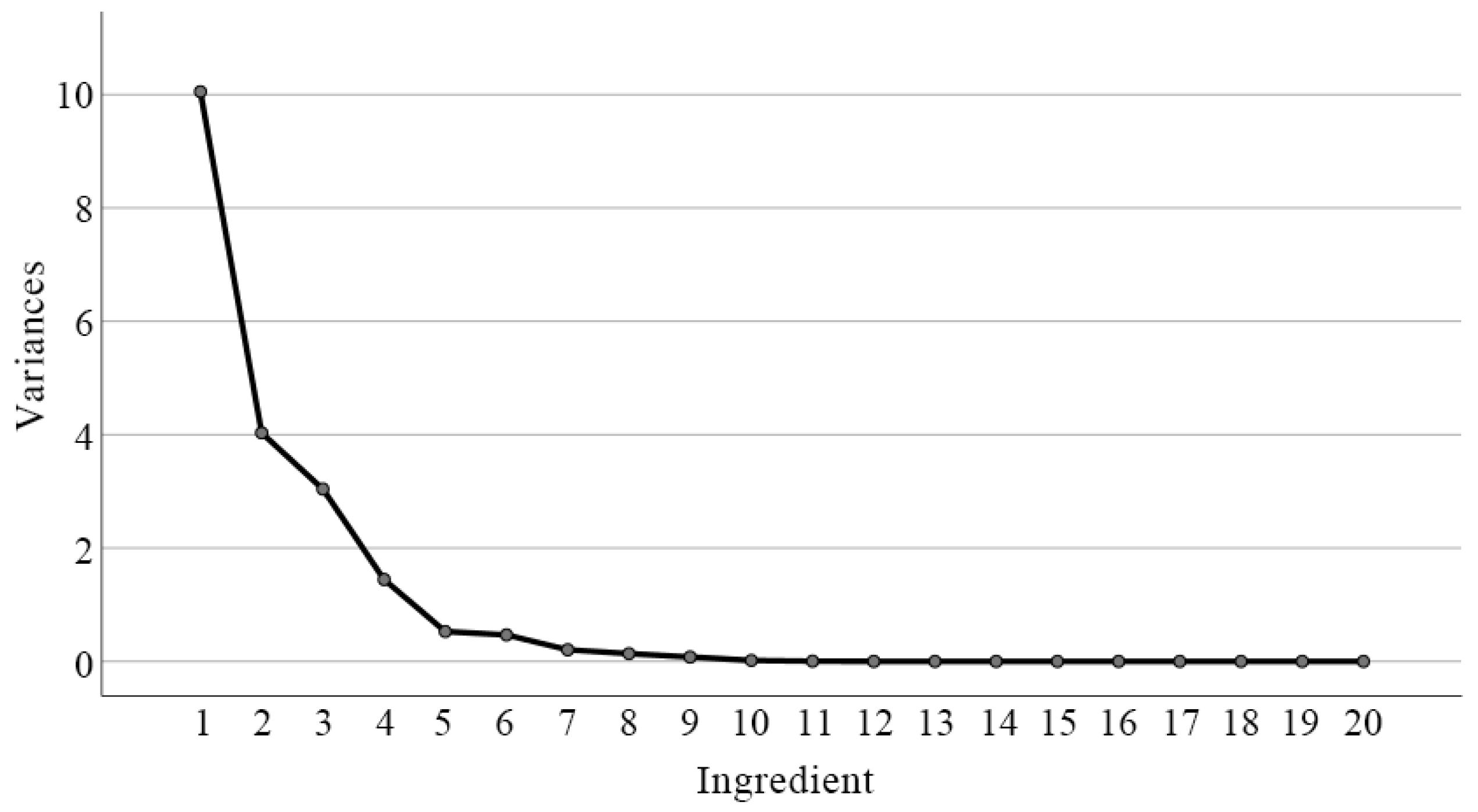
Integrating the block system into construction is the current trend in the development of residential areas in China. Road traffic noise is the major noise source in residential blocks, and its relationship with spatial forms of blocks remains unclear. In this study, 852 block models (258 block road network models and 594 models with buildings inside) were established and simulated with SoundPLAN 8.2 software, in order to reveal the impact of spatial forms (road network morphology, neighborhood scale, and architectural texture) on the road traffic noise distribution in residential blocks. Meantime, a prediction model based on spatial morphology parameters is proposed. It was found that (1) Without considering the impact of buildings, both the road network morphology and neighborhood scale parameters have significant effects on the distribution of road traffic noise, but road network morphology has a larger effect than neighborhood scale. (2) In the presence of buildings within the block, architectural texture parameters have effects on the distribution of road traffic noise, but to a lesser extent than road network morphology and neighborhood scale parameters. (3) This research employs principal component analysis to reduce the dimensionality of urban spatial form parameters. Subsequently, a model was developed to predict overall noise exposure levels in residential areas, which was validated by example. This model can be used as a tool for rapid prediction and diagnosis of the block acoustic environment. These findings offer insights for the planning and design of residential blocks from the perspective of optimizing the acoustic environment.
Keywords: spatial form parameters; road traffic noise distribution; acoustic environment simulation; prediction model; residential blocks spatial form parameters; road traffic noise distribution; acoustic environment simulation; prediction model; residential blocks