1. Introduction
The United Nations Sustainable Development Goals (SDGs) strive to enhance the well-being of individuals across all age groups with the objective of fostering inclusivity, safety, and sustainability in cities and human settlements. With the accelerated urbanization of societies, the increase in population density has made urban land resources more and more limited. In this context, the importance of urban public open space (POS) has become increasingly significant.
The concept of POS is derived from public space, which is defined as a barrier-free area that everyone can use freely [
1]. The dual attributes of “public” and “open” space are further clarified [
2]. Including parks, green spaces, squares, etc., it is the main place for outdoor activities, interaction, and entertainment for urban residents, and it is also the natural landscape element closest to people’s daily life. Studies have shown that POS not only provides residents with a place to exercise and promote physical health, but also helps reduce mortality and chronic disease rates [
3]. This is especially true for vulnerable groups (e.g., the elderly) [
4]. It can be seen that POS plays a crucial role in organizing urban public life, cultivating residents’ healthy lifestyle, improving the ecological environment, and enhancing the soft power of urban culture [
5,
6,
7].
Some scholars have emphasized the public nature of POS, defining it as a space characterized by physical accessibility. This concept is clearly defined in “The Medieval City”, which highlights “accessibility” as one of the most basic and important concepts of public space [
8]. The study by Addas and Maghrabi demonstrated that the Kingdom of Saudi Arabia is implementing various strategies, such as increasing the per capita area of POS, improving the quality of life of urban residents [
9]. This underscores the significance of accessibility to POS in meeting the needs of its users. As a crucial indicator for evaluating whether urban residents can conveniently and equally access public service resources, accessibility has become a significant focus in the theoretical study of POS, garnering extensive attention from scholars in various fields. The concept of accessibility is categorized into two perspectives: a broader sense and a more specific sense. In the narrow sense, accessibility emphasizes factors such as transportation cost, time cost, economic cost, etc., incurred to overcome the obstacles of physical space, reflecting the influence of objective factors. On the other hand, the broad sense of accessibility places more emphasis on the potential of people to reach the point of spatial activity, taking into account factors such as the user’s willingness, the cost of passage, spatial characteristics, and more [
10]. Therefore, accessibility encompasses both place-based accessibility and person-based accessibility [
11]. Whyte, in his study of people’s behavioral patterns in public spaces, emphasized that public spaces must have good pedestrian accessibility and appropriate environmental amenities to meet the needs of human stay [
12].
From the exploration of aesthetic quality and visual perception to the diverse values of POS, scholars have increasingly focused on the interplay between space, humans, and nature. They emphasize that urban planning should not solely concern itself with spatial layout; rather, it should take into account residents’ perceptions, attitudes, and emotional connections to space. The emphasis should shift towards human–land relations. The concept of “topophilia,” proposed by Tuan in 1974 [
13], marked a turning point, prompting humanistic geographers to deepen their understanding of the meaning and value of the spatial concept of place. Given the swift advancement of information technology and the substantial rise in individual mobility, human–place relationships have evolved into a more complex state. The concept of place attachment has emerged from this evolutionary process, and Brown and Perkins defined place attachment as “the feelings, connections, thoughts, and behavioral purposes that people develop over time with a socio-natural environment [
14]”. Although there are different interpretations of the concept of place attachment, researchers generally concur with the notion that place attachment is a comprehensive concept involving emotion, cognition, and behavior. This consensus finds support across various areas of study, such as human geography, environmental psychology, and urban and rural planning [
15].
Satisfaction, as a critical factor in evaluating individual cognition, is generally defined as a cumulative structure, influenced by user expectations and performance perceptions over any period of time [
16]. Satisfaction measurement spans multiple dimensions, encompassing a broad spectrum of human needs and spatial attributes. Hagen categorizes health, mobility, and safety as basic needs among human space-use requirements, with additional needs including reliability, convenience, comfort, and aesthetics. Mccormack, et al. found that factors such as safety, aesthetics, park amenities, and landscape maintenance positively influenced park satisfaction [
17].
Numerous studies have shown the association between place attachment and place satisfaction [
18,
19] and the positive impact of accessibility on place attachment [
20]. For instance, in an empirical study employing the Citizen Satisfaction Index (CSI) model, Zenker demonstrated that citizen satisfaction significantly influences place attachment, place evaluation, and the willingness to leave a place [
21]. In a survey of tourist farm visitors, Yamagishi, et al. found that place attachment partially mediated satisfaction and re-visit intention [
22]. Lee and Jeong revealed the correlation between satisfaction with the residential environment, social capital, and place attachment [
23]. Their findings underscored that accessibility had the most substantial influence on place attachment. Li, et al. found that walkability and spatial quality were key factors influencing place attachment and place satisfaction, and accessibility, mediated through walkability, indirectly affects place attractiveness [
24]. Pratiwi, et al. conducted a survey identifying a positive correlation between visitor satisfaction with facilities and perceived accessibility during the Hakata Dontaku Festival [
25].
While much of the research centers around public open space in cities, a quantitative analysis of specific areas would be more helpful in providing insight. Research on the relationship between accessibility and place attachment in urban POS, especially regarding the spatial and perceptual dimensions of accessibility and the mechanisms of its influence, still needs further exploration. The question of whether place satisfaction is an antecedent of accessibility or a consequence of place attachment is controversial [
26]. In addition, with the in-depth study of spatial accessibility theories, the related evaluation models have become more complex. Some scholars have found that the evaluation results based on spatial accessibility do not fully reflect the actual accessibility situation; that is, there is a discrepancy between the evaluation results and the individual’s perception of accessibility [
27]. In the Netherlands, a study revealed that, while the average perceived accessibility was higher in rural areas, approximately 12% of the population reported a perception of somewhat lower accessibility. Notably, lower perceived accessibility was more prevalent in the most peripheral areas and less common in rural areas near cities [
28]. When predicting individuals’ behavioral intentions, focusing only on the physical characteristics of the spatial environment and location-based accessibility evaluation can no longer adequately represent the real impact on residents. More and more scholars have proposed to incorporate individual perception, needs, and preferences into the evaluation system of the concept of accessibility [
29,
30,
31].
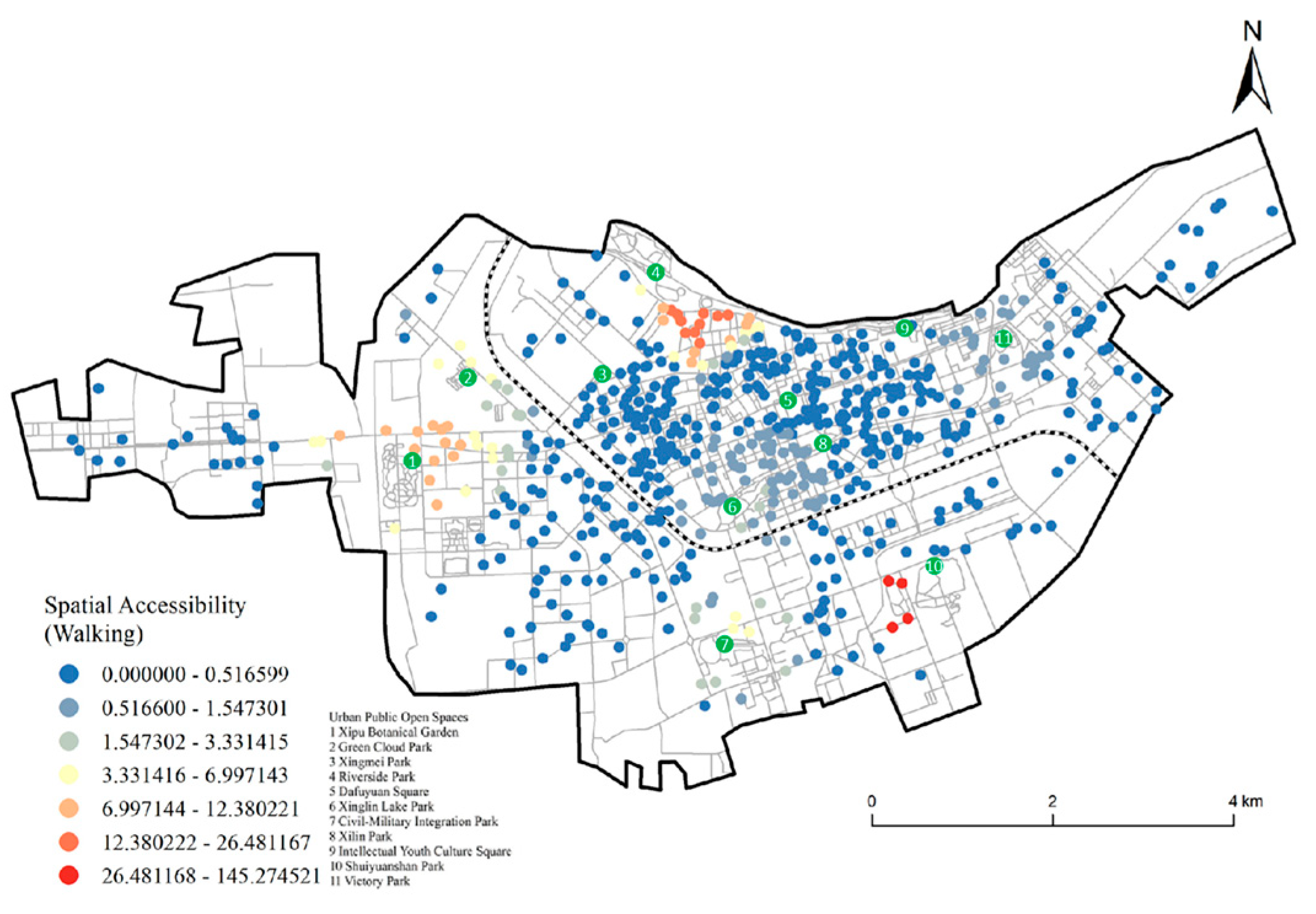
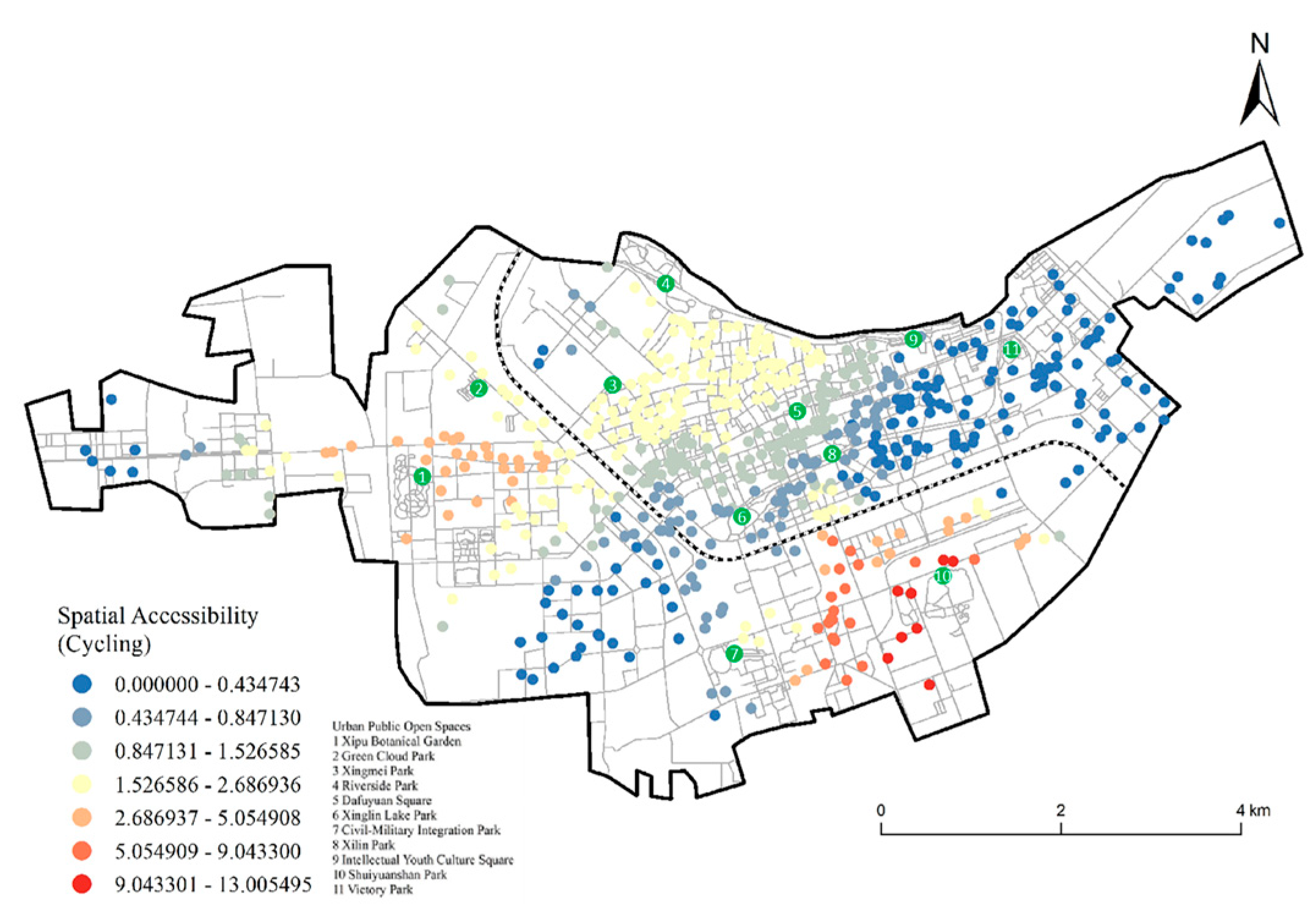
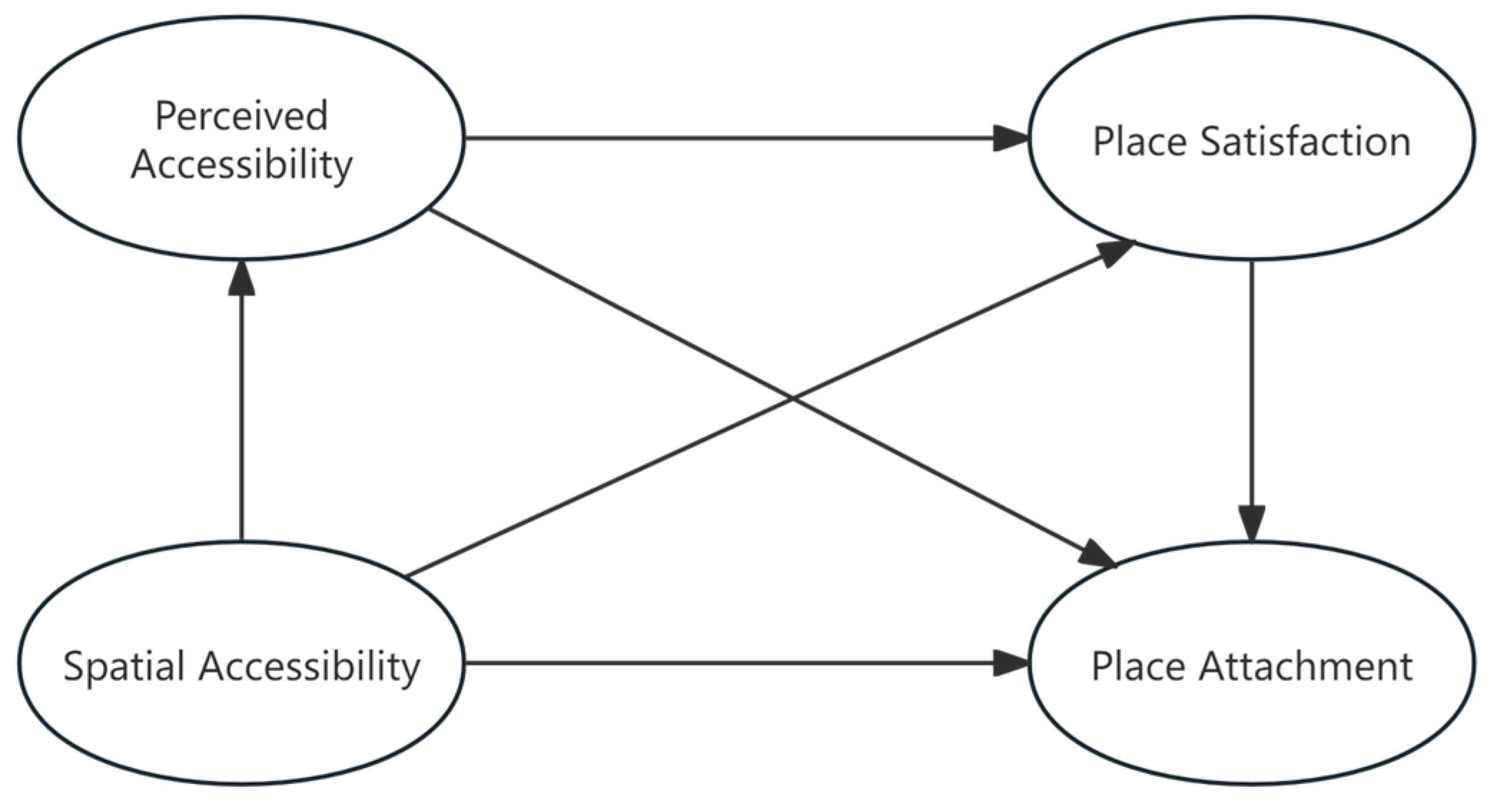
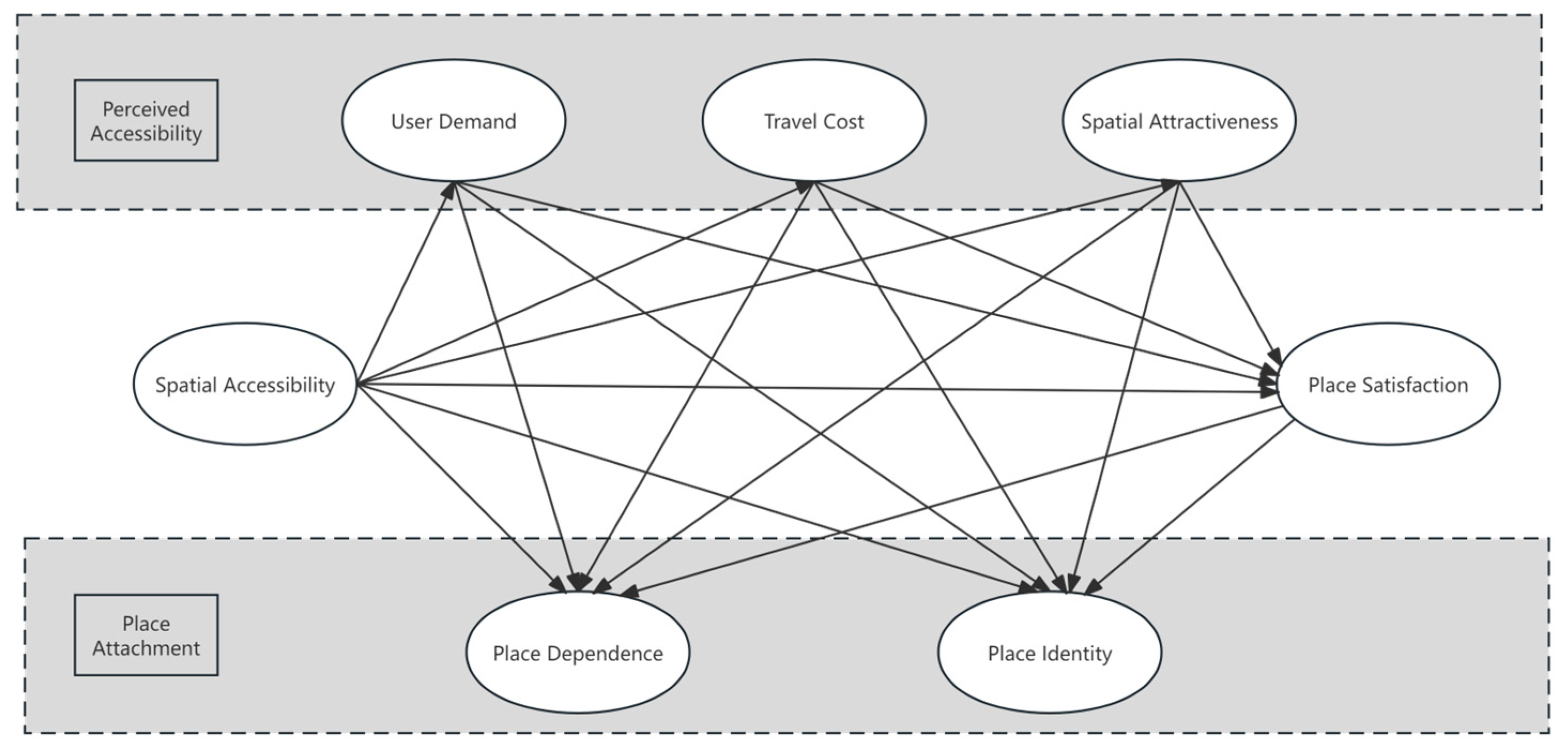
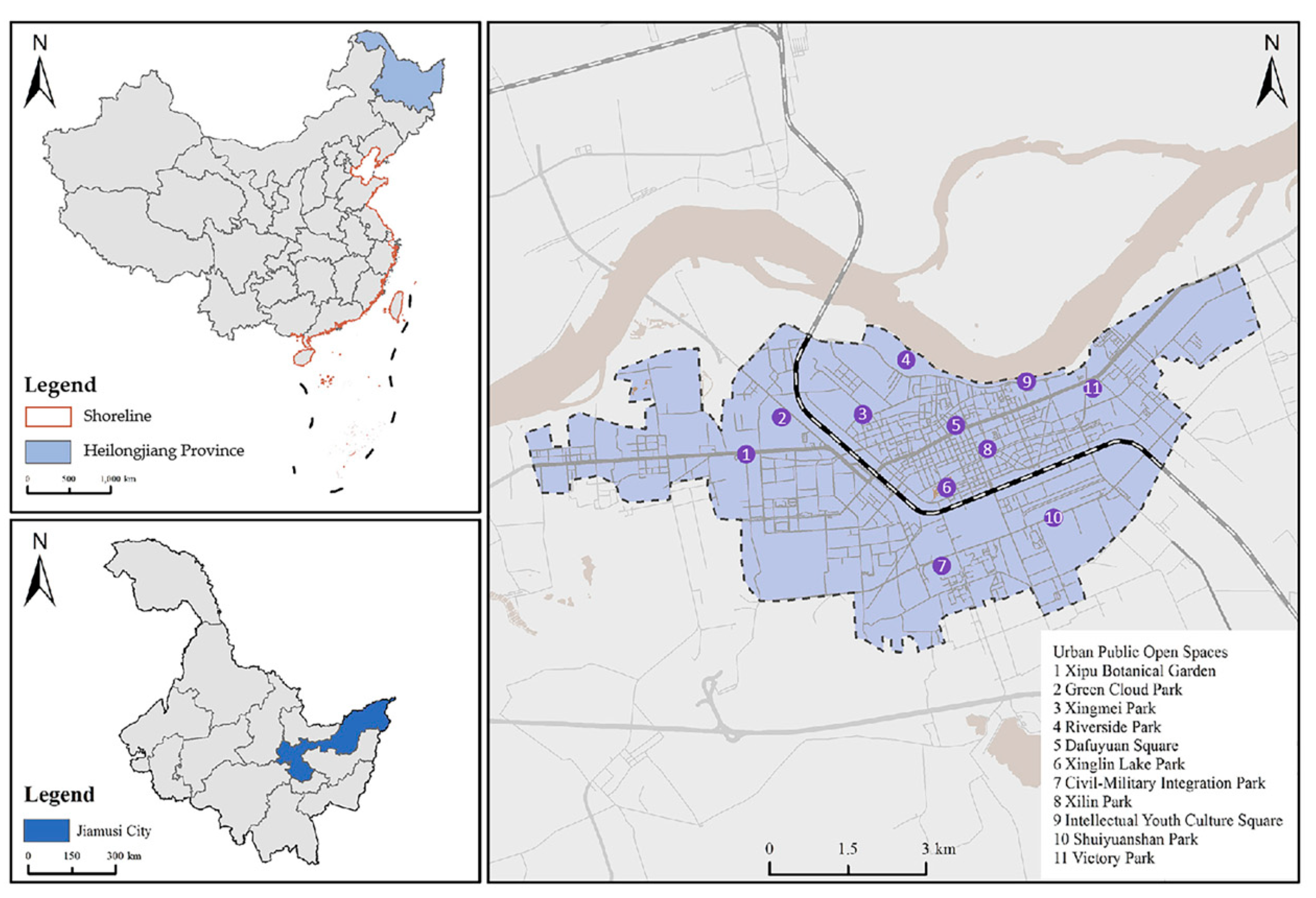
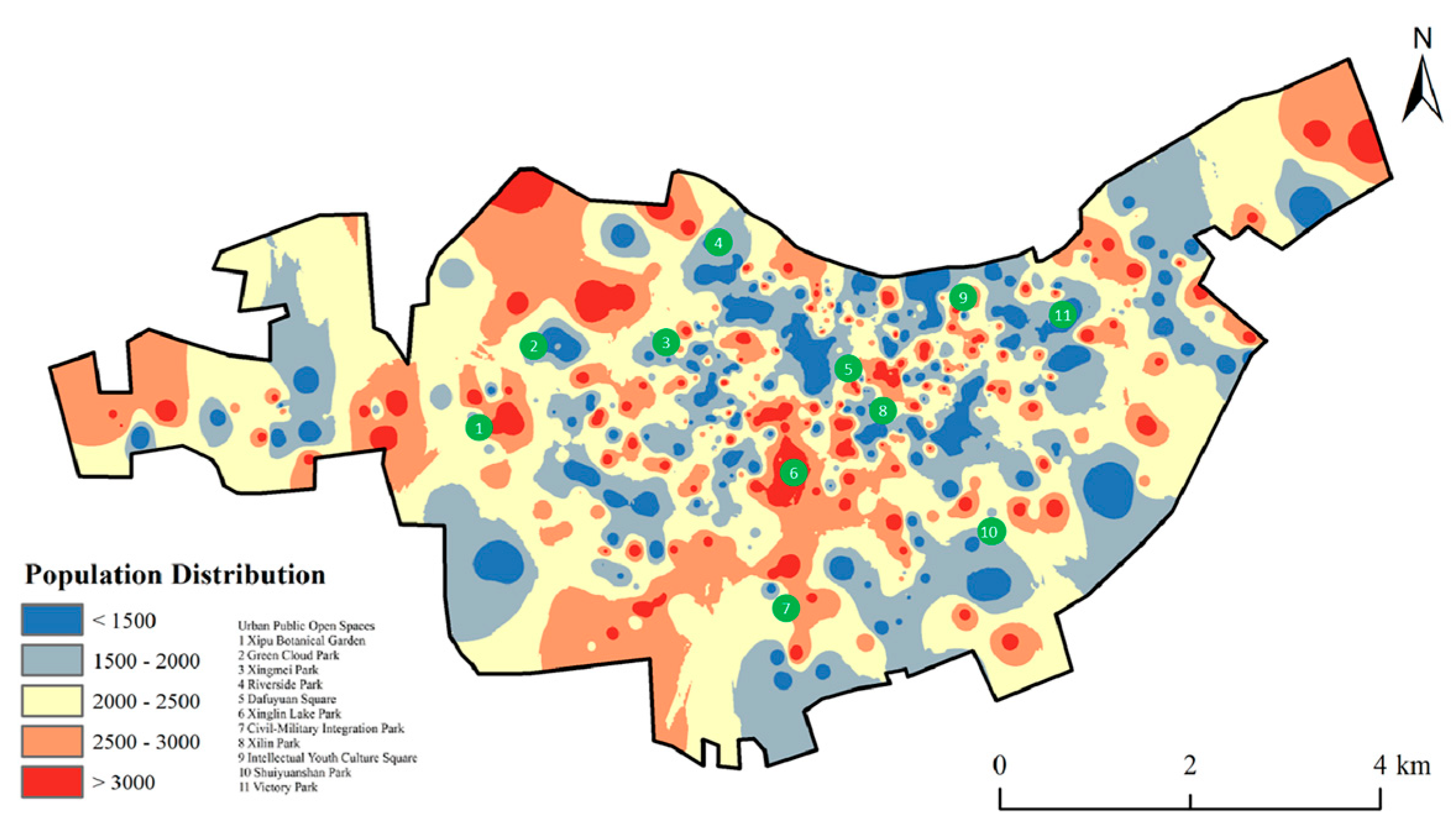
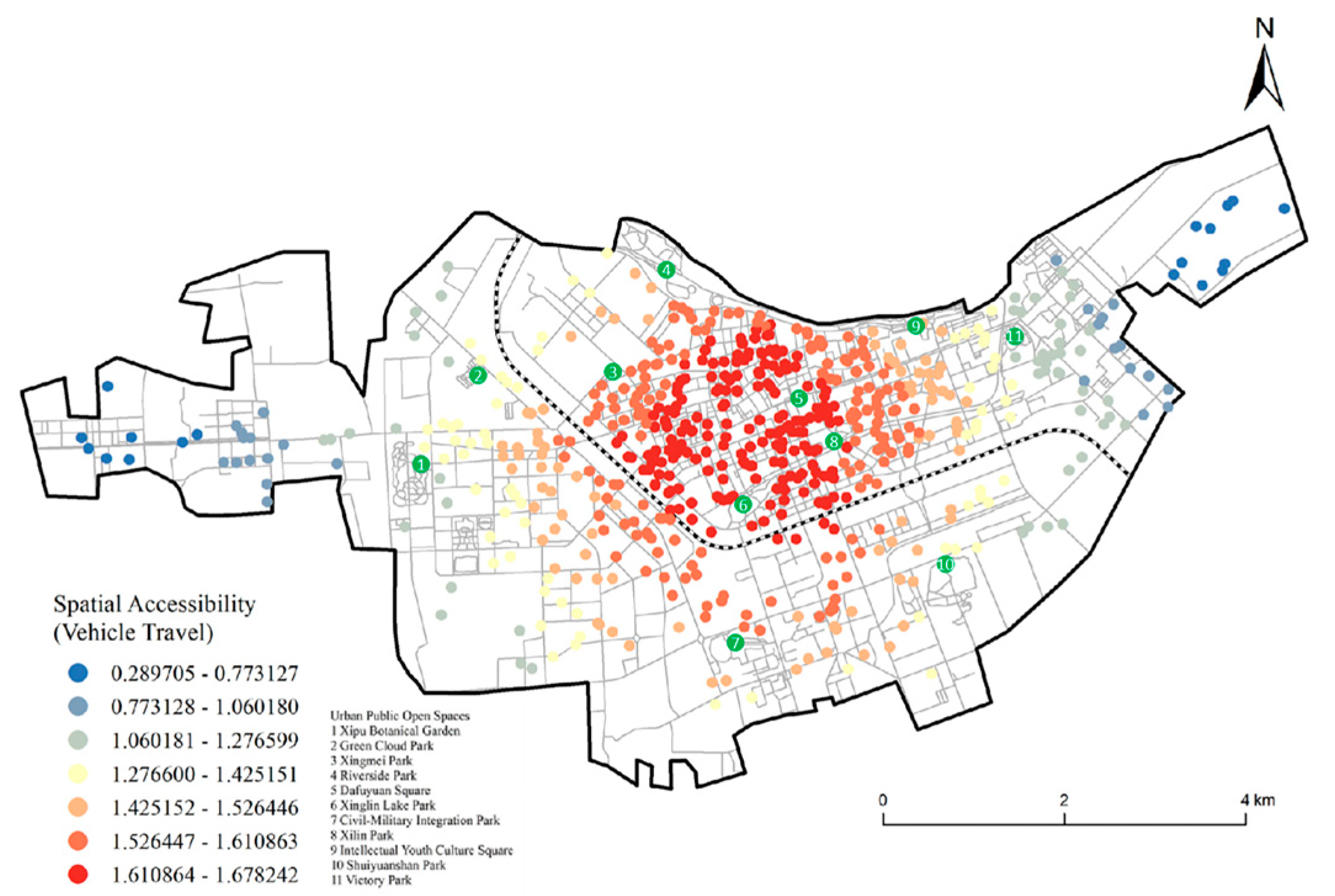
To solve the above problems, this paper selects 11 POS in cities in northeast China for research, which will make our research results more universal and provide more cases and data for understanding urban spatial characteristics in northern China. Accessibility analysis is carried out from the two levels of space and perception. Besides considering the influence of objective factors, comprehensive measurement is carried out by assessing more factors, such as users’ willingness, access cost, and spatial characteristics. Multi-source data analysis is carried out by integrating geographic information data and questionnaire survey data. We plan to construct a structural equation model to systematically analyze the complex relationship between perceptual accessibility, spatial accessibility, place satisfaction, and place attachment. This not only gives us a deeper understanding of the influencing factors, but also optimizes urban spaces, enhances user experience, promotes social activity and social health, and enhances community cohesion. The aim is to provide policymakers, planners, and practitioners with comprehensive information to build more humane and sustainable urban environments in a more scientific and holistic way.
5. Discussion
Firstly, our study reveals a mismatch between perceived accessibility and spatial accessibility. This finding aligns with Wee’s discovery of a discrepancy between objective and subjective measures of accessibility [
60]. Additionally, Lttman supported this finding, noting that bicyclists rated perceived accessibility significantly higher than all other modes of travel, except for walking [
61]. In a study on park accessibility, Lindsey found that, although some parks were more spatially accessible, there was a lack of willingness in the neighborhood to reach them [
33]. Mccormack observed that in many cases, perceived accessibility and spatial accessibility were not only weakly correlated but, in some instances, uncorrelated [
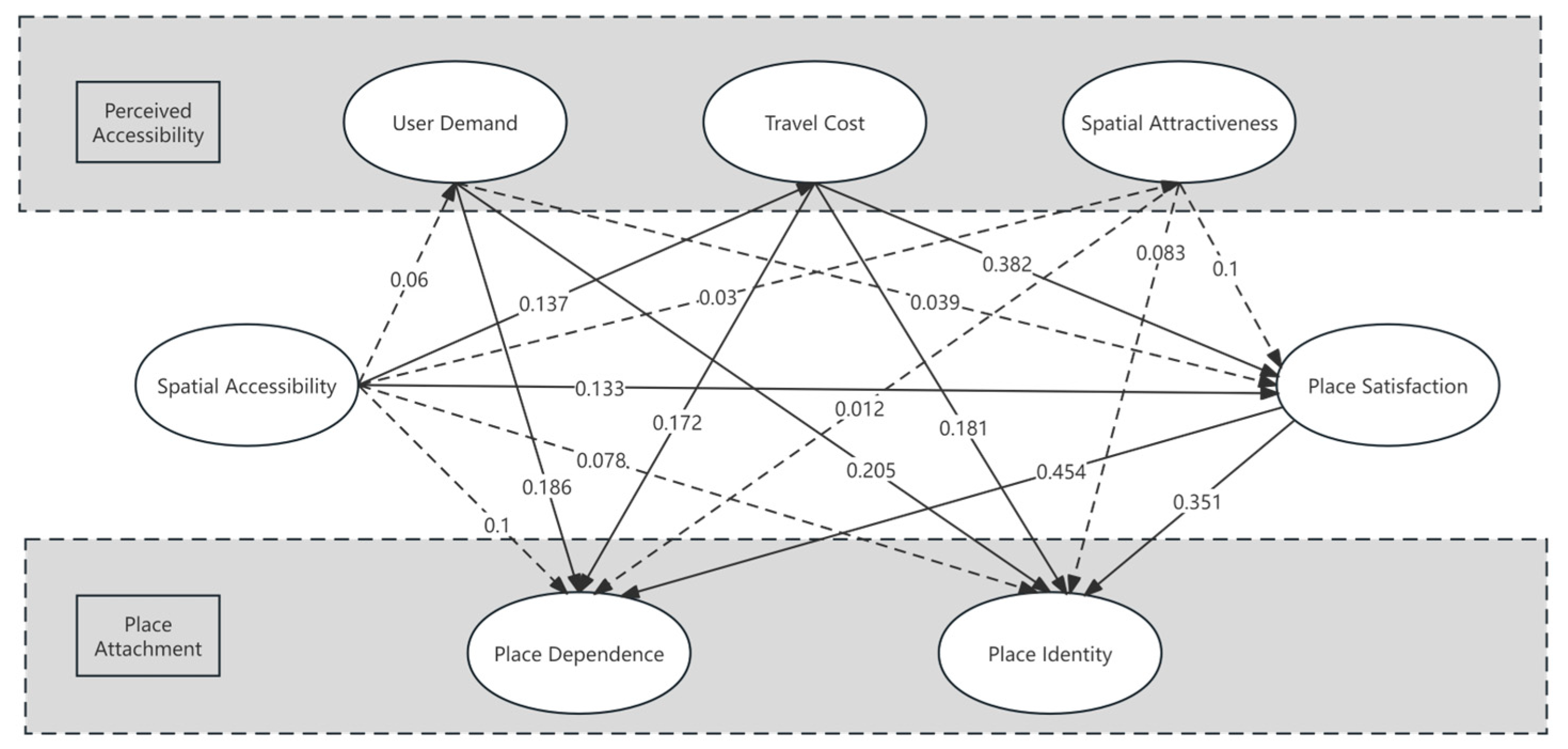
62]. This discrepancy may arise, on one hand, from errors in calculating spatial accessibility, such as using outdated or flawed data. Particularly, the possible omission of sidewalks from the road network calculation can yield different results. Additionally, travel thresholds may vary under different climatic conditions, especially in colder regions, where travel may be more restricted in winter. On the other hand, individual perception contributes to these differences. An individual’s perception of their surroundings is subjective and influenced by factors such as personal experience, cognition, emotions, weather, and environmental quality. Therefore, even if two locations are similar in physical distance, an individual’s perceived accessibility may differ due to individual differences. Individuals’ needs play a key role in determining their perceived accessibility to a location. For instance, individuals may perceive a location as accessible if it fulfills their daily needs, such as work, school, shopping, or leisure activities. This demand-oriented perceived accessibility may align with actual spatial accessibility, and vice versa. In addition, the cost of traveling is an important factor. Perceived accessibility bias can easily occur when individuals do not have accurate perceptions of their destination or their route. For example, people may overestimate the travel time for an unfamiliar mode of transportation. Even if a location is physically accessible, if it requires a significant amount of time, money, or effort, individuals may perceive it as having low accessibility and, therefore, be less willing to travel. The spatial attractiveness of a location can also strongly influence an individual’s perceived accessibility. Even if a location is relatively far away spatially, individuals may feel it is more accessible if it is highly spatially attractive. However, when explaining place attachment, user demand and travel cost showed significant positive effects on place dependence and place identity, while spatial attractiveness only mediated through place satisfaction, and thus influenced place attachment indirectly.
Secondly, the results of the study showed that perceived accessibility influences individuals’ attachment to a place through its effect on place satisfaction. This discovery aligns with Lee’s research on residential environments, which revealed that accessibility, comfort, and security collectively influenced satisfaction with residential environments [
23]. Subsequently, this satisfaction influenced individuals’ attachment to their place of residence, with accessibility having the most significant effect on place attachment. One of the key findings of this study was that place satisfaction acts as a mediating factor between accessibility and place attachment. This suggests that perceived accessibility and spatial accessibility indirectly influence individuals’ attachment to a place through their impact on place satisfaction. This finding has important implications for gaining a deeper understanding of the mechanisms underlying these relationships. Firstly, the results suggest that an individual’s perceived accessibility and actual spatial accessibility impact their emotional attachment to a place. However, this effect does not occur directly; instead, it is transmitted through place satisfaction. Therefore, increasing perceived accessibility and actual spatial accessibility can indirectly enhance individuals’ attachment to a place, provided that they are satisfied with it. Secondly, the mediating role of place satisfaction emphasizes the importance of satisfaction in the behavior and emotions of urban residents. This further underscores the significance of considering resident satisfaction in urban planning and design. If the urban environment not only boasts good accessibility but also meets the needs and expectations of residents, then residents are more likely to develop positive emotions and attachments to the city.
The most striking finding, however, was the higher persuasiveness of perceived accessibility relative to spatial accessibility in explaining and predicting place attachment. This suggests that individuals are more attuned to their subjective experiences rather than merely considering physical distance. This discovery underscores the significance of individuals’ subjective perceptions in shaping their attachment to specific places. Perceived accessibility involves how individuals perceive and understand their surroundings. These subjective perceptions encompass assessments of factors such as convenience, safety, pleasantness, and ease of access, all of which play pivotal roles in shaping an individual’s place attachment. In contrast, spatial accessibility relies more on factors such as objective distances and transportation conditions, without directly incorporating individuals’ subjective perceptions. Meanwhile, perceived accessibility is more likely to capture the emotional dimensions associated with place attachment. The emotional connection and attachment that individuals form to specific places often arise from their subjective perceptions and emotional experiences. For instance, some urban residents habitually visit only a few parks or urban open spaces for recreational activities, and some residents strongly oppose the renovation of specific buildings or places in the city [
63]. Perceived accessibility is better suited to reflect individuals’ emotional responses to places, encompassing satisfaction, identity, and a sense of belonging. Therefore, it is more potent in explaining and predicting place attachment.
Our study also found differences between perceived accessibility, place satisfaction, and place attachment across social contexts. In terms of age, the 61–70 age group showed lower place satisfaction, a finding that reflects the changes in the needs and perceptions of different age groups in relation to urban public open spaces. As users grow older, they accumulate more life experience and knowledge of urban spaces. Since this age group may face physical conditions or health problems, such as mobility problems and vision loss, they pay more attention to the comfort, safety, and convenience of their environment and have specific needs. Differences in educational background are reflected in higher levels of satisfaction among those with higher levels of education. Higher educated groups may have higher levels of cognition and a richer knowledge base, may be better able to recognize and understand amenities and safety hazards in urban spaces, and may be more attentive to the overall experience and quality of the place. Typically, more educated groups have higher social status and better economic status. As a result, they are more able to choose to live in safer, more convenient, and more comfortable urban areas, or to enjoy a wider range of amenities and services. In addition, better-educated groups are more likely to be involved in urban planning and policymaking processes, and their views and needs may be more likely to be taken into account by governments and relevant organizations. As individuals spend more time living in an area, they exhibit a more positive sense of adaptation and integration. This leads to a higher perception of accessibility in urban spaces, as they become more familiar with the surrounding transportation and facilities, finding it easier to reach their desired destinations. With a deeper understanding of the surrounding environment, including amenities, safety conditions, and spatial ambiance, their satisfaction with urban spaces is likely to increase. They are able to comprehensively evaluate the strengths and weaknesses of the space. Additionally, over time, individuals may develop emotional ties and a sense of attachment to their residential area. They establish connections with community members, engage in spatial activities, and experience significant moments in their lives. Consequently, they may develop a stronger sense of attachment to public open spaces and be more willing to engage in their use and maintenance.
Our model culminates in a typical service model. Under the assumption of its application to urban spaces, urban public open spaces should be established and managed as important public services for urban residents. Public open space is not only a place for people to rest, recreate, and exercise, but also an important element in improving the quality of life of urban residents, promoting community cohesion and facilitating sustainable urban development. In his book,
Pattern Languages, Alexander explains the importance of public squares as places for people to gather and socialize, and that they should be designed with diversity, comfort, as well as people’s mobility needs and convenience in mind [
64]. It is important to ensure that the square is surrounded by adequate transportation options and parking facilities for easy access. Therefore, the rational planning, construction, and management of urban public open space to meet the growing spiritual and cultural needs of residents and the diversification of their lifestyles is of great significance in building livable cities and creating harmonious communities. City managers should fully recognize its value as a public service, strengthen their input and management, and enhance their service level and quality to provide urban residents with a better quality of life experience.
It is important to recognize certain limitations of this study, including sample specificity and constraints related to the research methodology. In measuring spatial accessibility, we simplified the study of spatial accessibility by using a traveling distance of 15 min as the radius for the spatial threshold, in addition to the setting of the speed. This approach did not sufficiently account for differences among multi-generational users and dynamic factors [
65]. In addition, different measurement methods also led to differences in the results. In order to solve these problems, it is expected that these limitations will be further addressed in future research, and the combined measurement of perceptual accessibility and spatial accessibility will be investigated more deeply to minimize the differences between them.
6. Conclusions
Synthesizing the results and analyses of the above studies, this study delves into the effects of perceived accessibility and spatial accessibility in urban POS on urban residents’ place attachment, while considering the role of place satisfaction as a mediating variable. Through field research in eleven POS in Jiamusi City, we draw the following conclusions:
First, perceived accessibility plays an important role in urban residents’ place attachment, and among its influencing factors, travel cost is recognized as the most important factor. This implies that measures such as reducing travel costs and improving transportation accessibility can effectively reduce the gap between perceived accessibility and spatial accessibility, thus encouraging urban residents to make more active use of urban resources and facilities. The government should consider appropriately increasing investment in public transport infrastructure to enhance the efficiency and coverage of the public transportation system. Additionally, subsidy policies can be formulated to assist low-income groups in easing their commuting burden, such as providing public transport subsidies or concessions. Simultaneously, the government can introduce incentives to encourage people to adopt environmentally friendly modes of transportation, such as cycling, walking, and using electric vehicles for commuting. Through scientific urban and regional planning, better integration of residential areas and points of service (POS) can be achieved, reducing travel distances. These measures can, to a certain extent, reduce travel costs, improve accessibility, and promote more flexible and sustainable modes of transportation.
Second, both perceived accessibility and spatial accessibility have a significant positive effect on place attachment, which suggests that urban planners and government departments can enhance residents’ emotional attachment to the city by improving the accessibility of POS. However, we also observed a certain level of mismatch between perceived accessibility and spatial accessibility, which may stem from the discrepancy between the public’s subjective perception of urban open spaces and their actual accessibility. Therefore, urban planning and design need to better communicate and explain the concept of accessibility to minimize this mismatch.
Third, place satisfaction plays a partially mediating role between accessibility and place attachment. Improving satisfaction with urban POSs, including enhancing pleasure, safety, comfort, and convenience, can help enhance residents’ emotional attachment to urban places, thereby promoting community cohesion and sustainable urban development. Skillful landscape design, providing greenery and vibrant colors, and creating a pleasant environment enhance the aesthetic appeal and delightfulness of public open spaces. Implementing effective lighting systems, surveillance facilities, and personnel patrols serves as a means of ensuring safety. Reducing the occurrence of adverse incidents ensures that public open spaces offer a sense of security during the night. Formulating multifunctional plans that consider the diverse needs of different demographics and integrating innovative technological applications help enhance the residents’ experience.
Finally, perceived accessibility shows a stronger ability than spatial accessibility in explaining and predicting place attachment. Therefore, more attention and optimization of perceived accessibility for urban residents should be paid in urban planning and policy making to achieve a more humane urban environment. When formulating urban planning and policies, actively engaging with community residents to understand their needs is crucial. In addition, in today’s rapidly evolving landscape of online information and big data, we can analyze user comments, posts, and tags on social media platforms to gain insights into their evaluations, opinions, and suggestions regarding urban spaces. By monitoring topics and trends on social media, we can capture real-time user needs and feedback. Furthermore, leveraging data from mobile applications, such as navigation and ride-sharing apps, allows us to understand users’ activity trajectories, travel preferences, and destination choices more effectively. Through the analysis of mobile app data, we can gain a better understanding of users’ travel demands and behavioral patterns. Simultaneously, establishing a mechanism for regular assessment of the effectiveness of urban planning and policies and adjusting it based on resident feedback and actual circumstances, is essential. This helps ensure that policy implementation aligns with the expectations and requirements of the residents.
In conclusion, this study provides new insights into the complex relationship between perceived accessibility, spatial accessibility, place satisfaction, and place attachment in urban POSs. These findings provide valuable guidance for urban planning and design, which can help create more livable and attractive urban environments. Future research can further deepen the understanding of these relationships and provide more targeted recommendations for urban planning and policy making to promote sustainable urban development and social prosperity.