Article

Non-Linear Behaviour and Analysis of Innovative Suspension Steel Roof Structures

by
Algirdas Juozapaitis
1,
Alfonsas Daniūnas
1,* and
Leonas Ustinovichius
2
1
Department of Steel and Composite Structures, Vilnius Gediminas Technical University—VILNIUS TECH, Saulėtekio al. 11, 10223 Vilnius, Lithuania
2
Institute of Sustainable Construction, Vilnius Gediminas Technical University—VILNIUS TECH, Saulėtekio al. 11, 10223 Vilnius, Lithuania
*
Author to whom correspondence should be addressed.
Buildings 2024, 14(3), 661; https://doi.org/10.3390/buildings14030661

Submission received: 19 January 2024 / Revised: 19 February 2024 / Accepted: 24 February 2024 / Published: 1 March 2024
(This article belongs to the Special Issue Non-linear Behavior and Design of Steel Structures)

Abstract

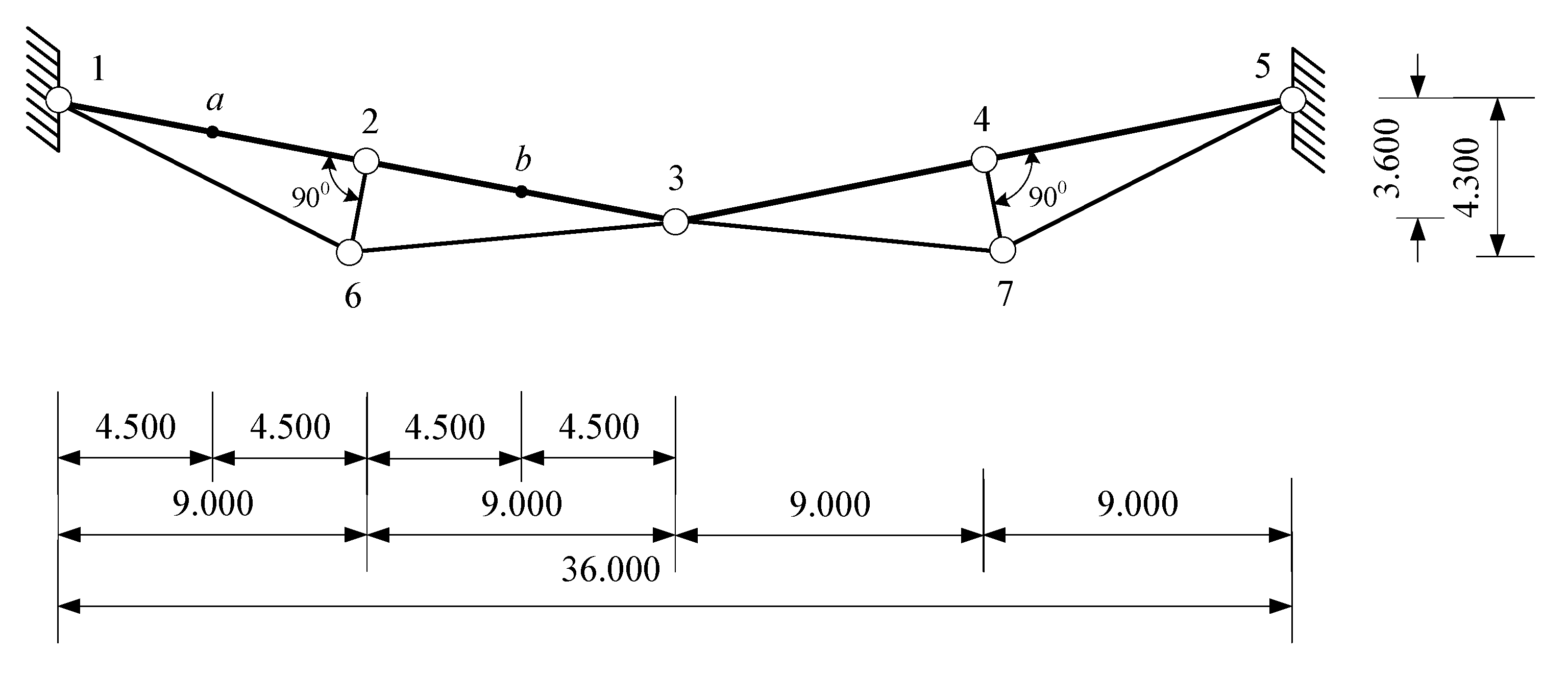
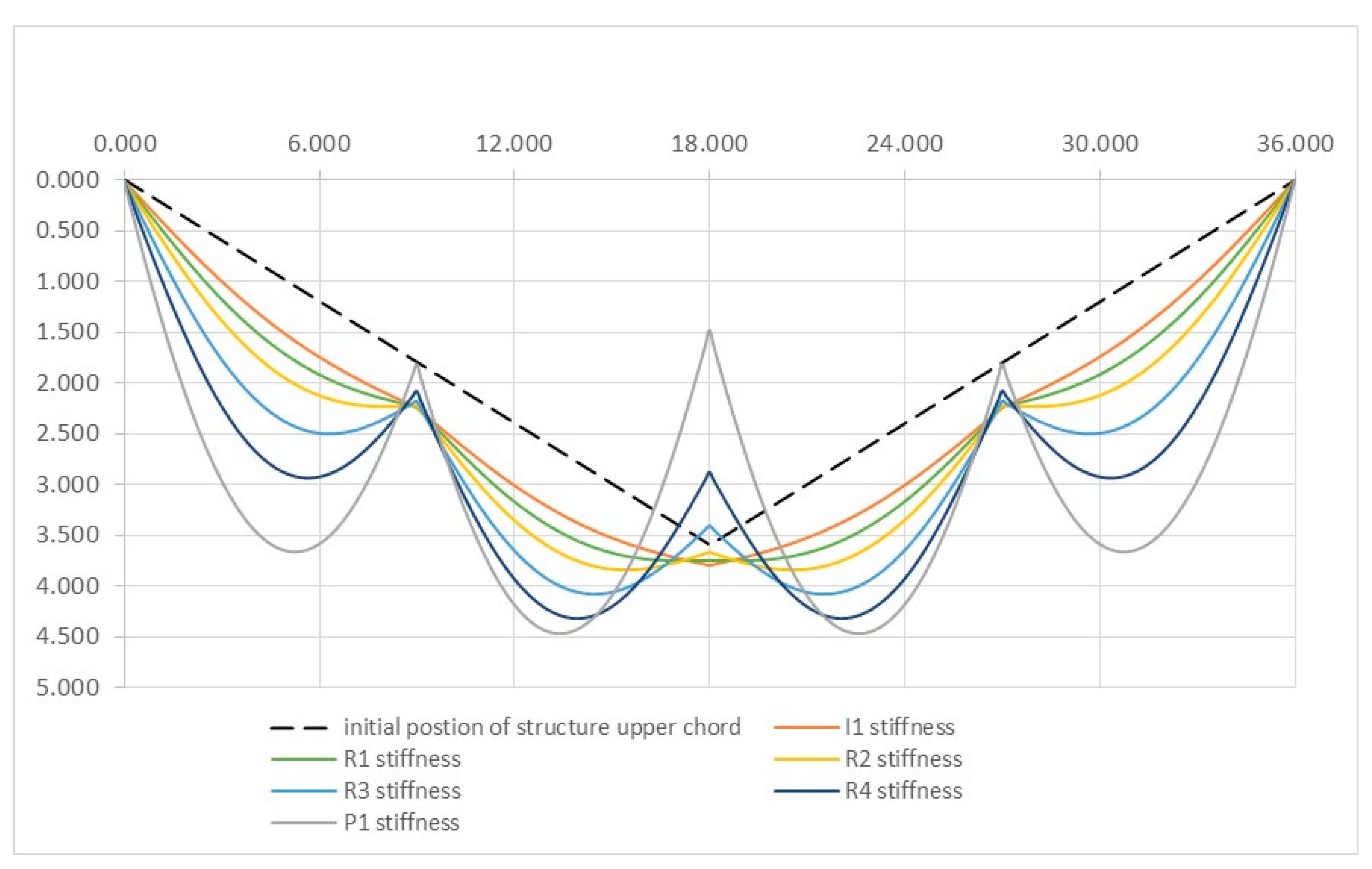
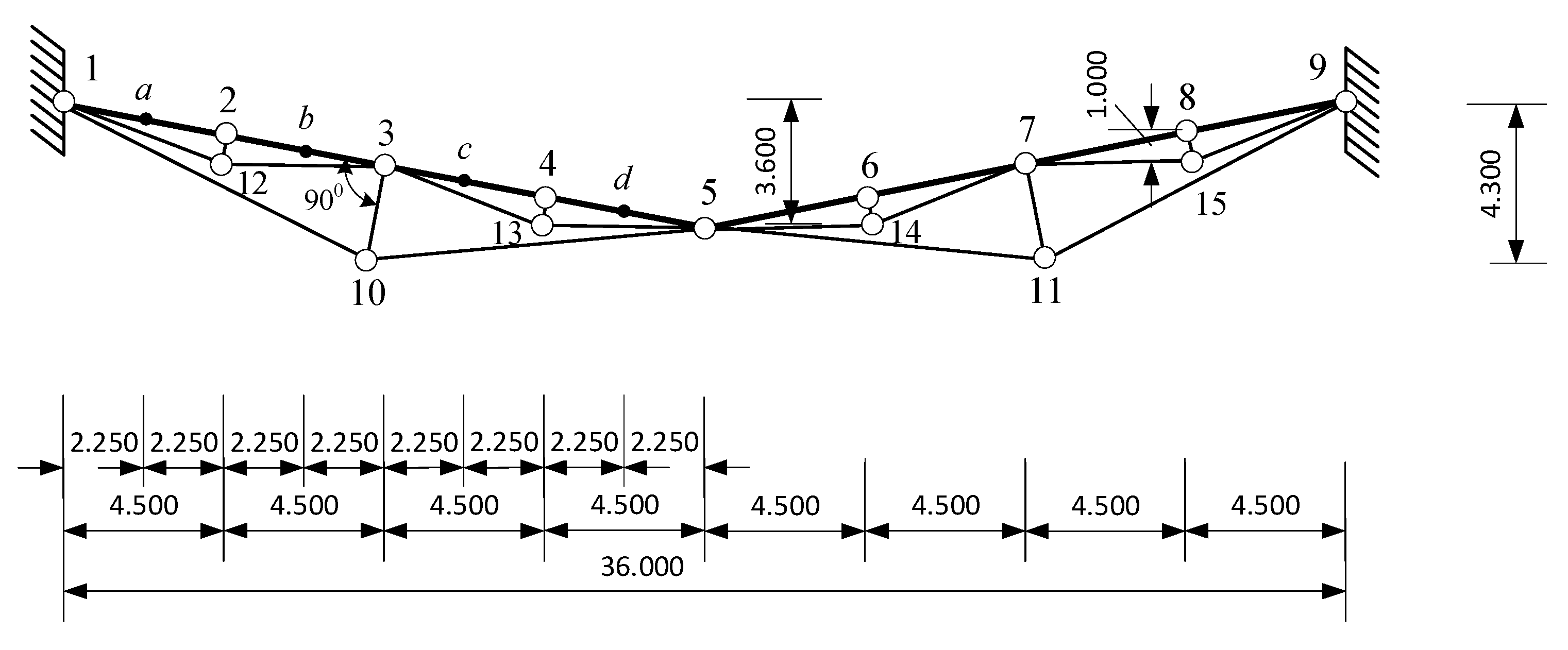
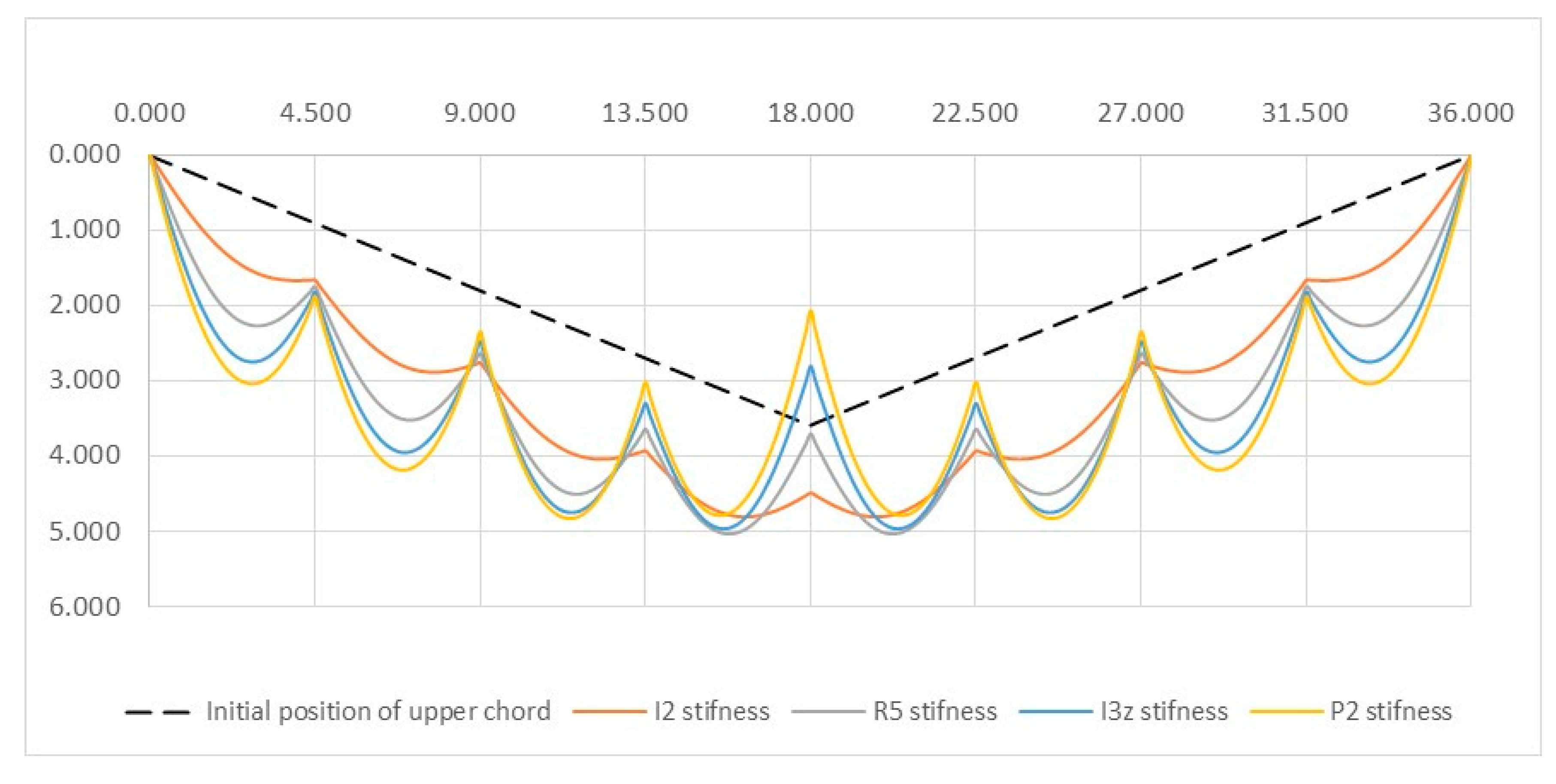
Suspension structures are one of the most effective roof load-bearing structures for medium to long spans. Their shape under symmetric loads is usually a square parabola or a curve close to it. The biggest drawback of such structures is their increased deformability under asymmetric loads. So-called rigid cables are used to solve this problem. However, the production of such rigid cables with a curvilinear shape is complicated, and their maintenance also has drawbacks due to the above-mentioned shape. To avoid these shortcomings, straight-line suspension structures have been used. This paper proposes a new form of combined suspension roof structures consisting of main load-bearing straight suspension elements supported by cable struts. For the main suspension elements, the bending stiffness is accepted, taking into account the operational requirements of the structure. This article analyses the behaviour of such a combined suspension structural system in symmetric conditions with an innovative approach. The arrangements of this system are discussed. The calculation of the forces and displacements of this structure and its elements is presented, taking into account the geometrical nonlinear behaviour. The distribution of the forces in the rigid elements and node displacements of the structure are discussed. The proposed new form of a combined cable-supported roof structure was shown to be more effective in terms of weight than the standard parabolic-shaped suspension structure.
Keywords: suspension roof structures; steel structures; cable-struts system; symmetric loading; nonlinear behavior; rigid straight elements suspension roof structures; steel structures; cable-struts system; symmetric loading; nonlinear behavior; rigid straight elements