Article

The Influence of Different Dynamic Material Constitutive Models on the Impact Performance of Circular CFST Columns


1
School of Civil Engineering, Xi’an University of Architecture and Technology, Xi’an 710055, China
2
Key Lab of Structural Engineering and Earthquake Resistance, Ministry of Education (XAUAT), Xi’an 710055, China
3
Key Laboratory of Urban Security and Disaster Engineering of Ministry of Education, Beijing University of Technology, Beijing 100124, China
4
School of Civil and Mechanical Engineering, Curtin University, Kent Street, Bentley, WA 6102, Australia
*
Author to whom correspondence should be addressed.
Buildings 2023, 13(7), 1634; https://doi.org/10.3390/buildings13071634

Submission received: 6 June 2023 / Revised: 20 June 2023 / Accepted: 26 June 2023 / Published: 27 June 2023

Abstract

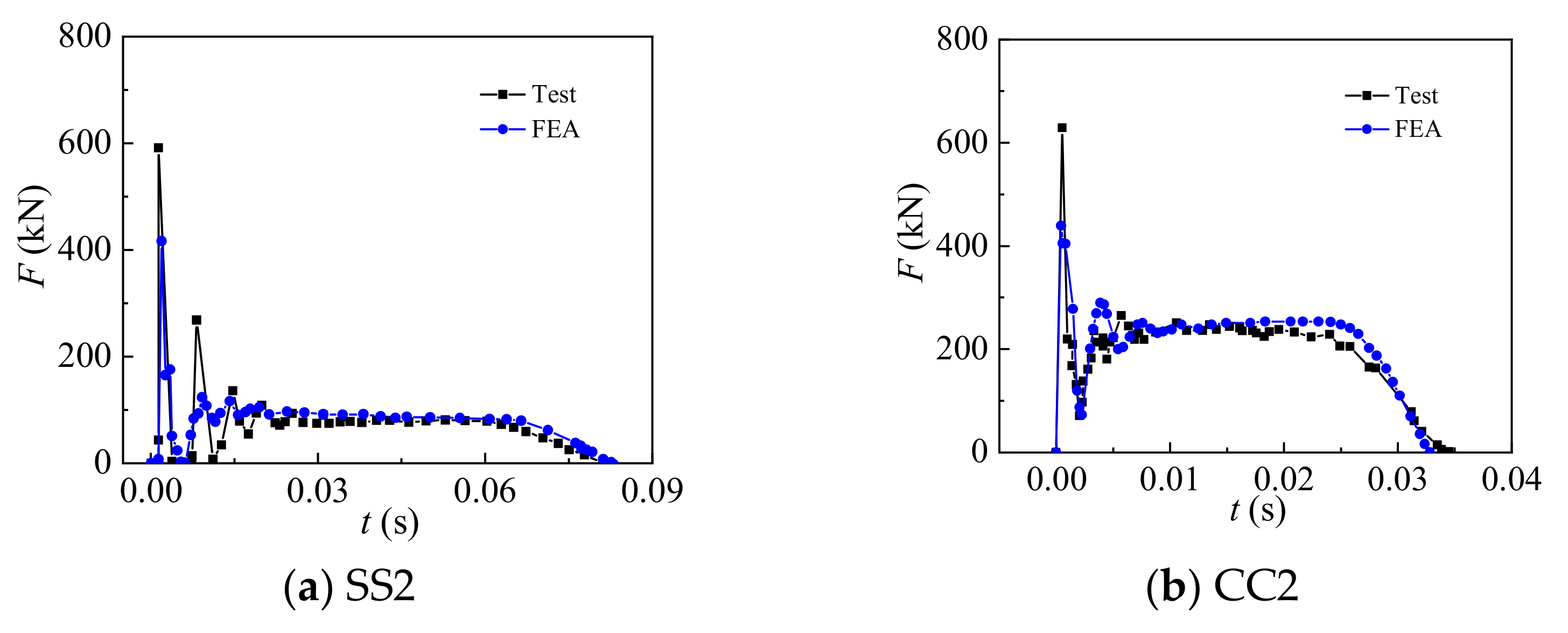
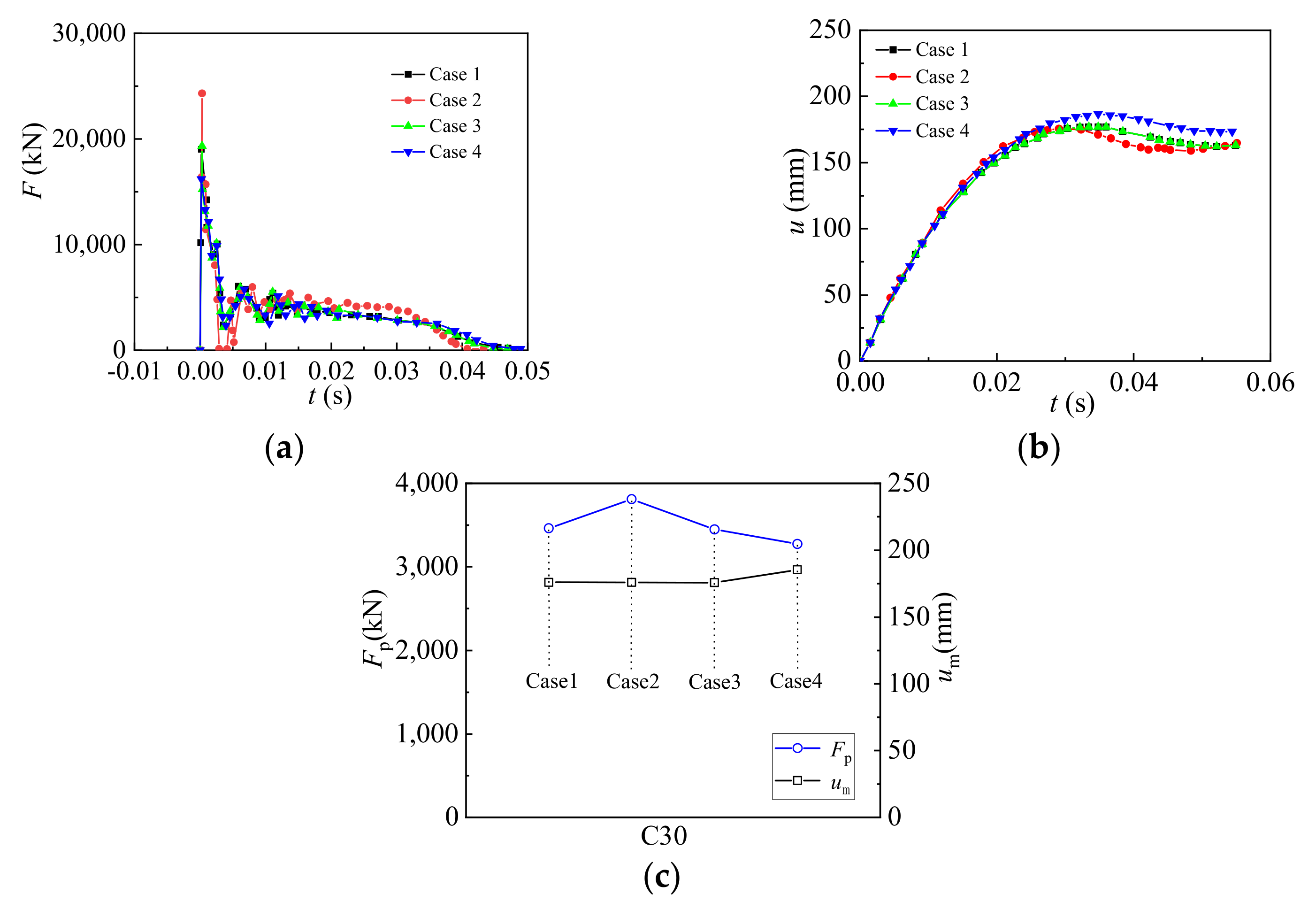
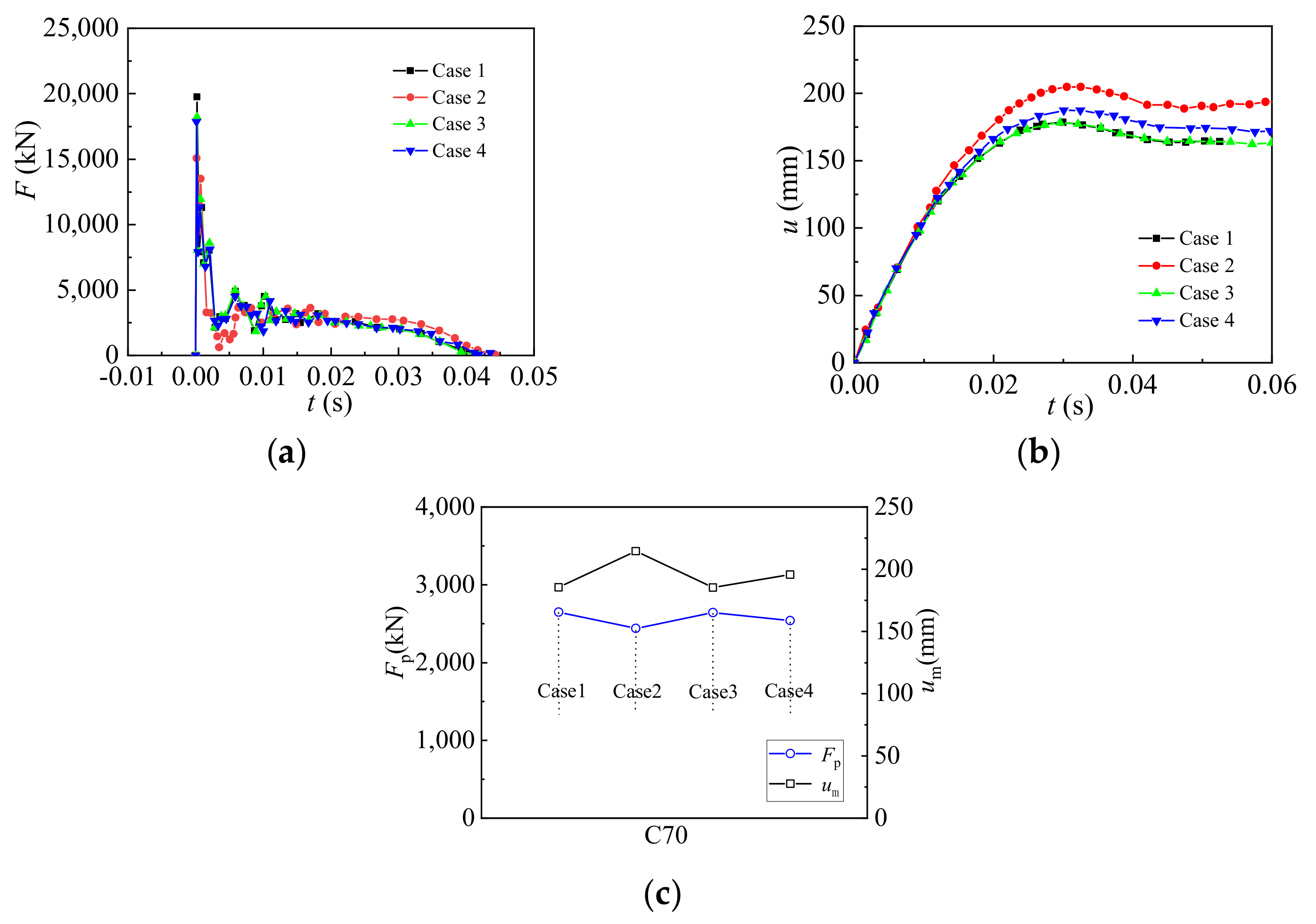
At present, there is a lack of research on the influence of different dynamic constitutive models of steel and concrete on the dynamic mechanical properties of concrete-filled steel tubular (CFST) columns under lateral impact. In this paper, A comprehensive numerical study on the effects of different dynamic constitutive models of steel and concrete on the lateral impact response of CFST columns was conducted. The dynamic constitutive models of steel and concrete with different strengths were divided into four categories, namely, normal-strength steel, high-strength steel, normal-strength concrete and high-strength concrete. The established finite element model of CFST columns considering the progressive damage degradation of steel as well as the compressive and tensile damage factors of concrete was verified against published experimental data. Based on the verified FE model, the effects of different dynamic constitutive models of steel and concrete on the impact response of circular CFST columns were analyzed. The analyzed results show that the different dynamic constitutive models of steel have different effects on the impact force and mid-span time-history deflection curves of CFST columns. The analysis result, ignoring the effect of concrete strain rate, is in good agreement with the CEB-FIP model considering the effect of steel strain rate. This is because the largest proportion of the impact energy of CFST members is mainly assimilated by the outer steel tube.
Keywords: concrete-filled steel tubes; dynamic constitutive model; lateral impact; finite element model concrete-filled steel tubes; dynamic constitutive model; lateral impact; finite element model