Article

Participation as a Tool for the Sustainable Redesign of Vacant Heritage: The Case of Politiebureau Groningen Centrum

Faculty of Architecture and the Built Environment, Delft University of Technology, 2628 BL Delft, The Netherlands
*
Author to whom correspondence should be addressed.
Buildings 2023, 13(2), 515; https://doi.org/10.3390/buildings13020515

Submission received: 13 January 2023 / Revised: 3 February 2023 / Accepted: 9 February 2023 / Published: 14 February 2023
(This article belongs to the Collection Strategies for Sustainable Urban Development)

Abstract

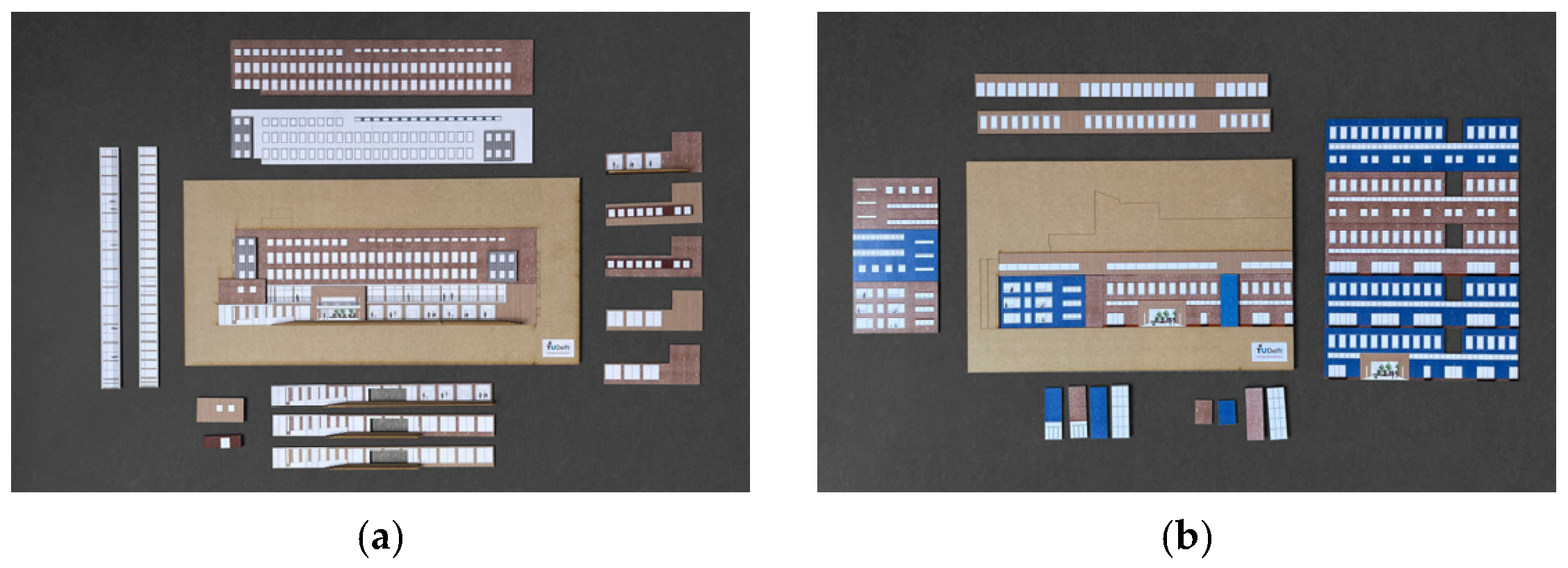
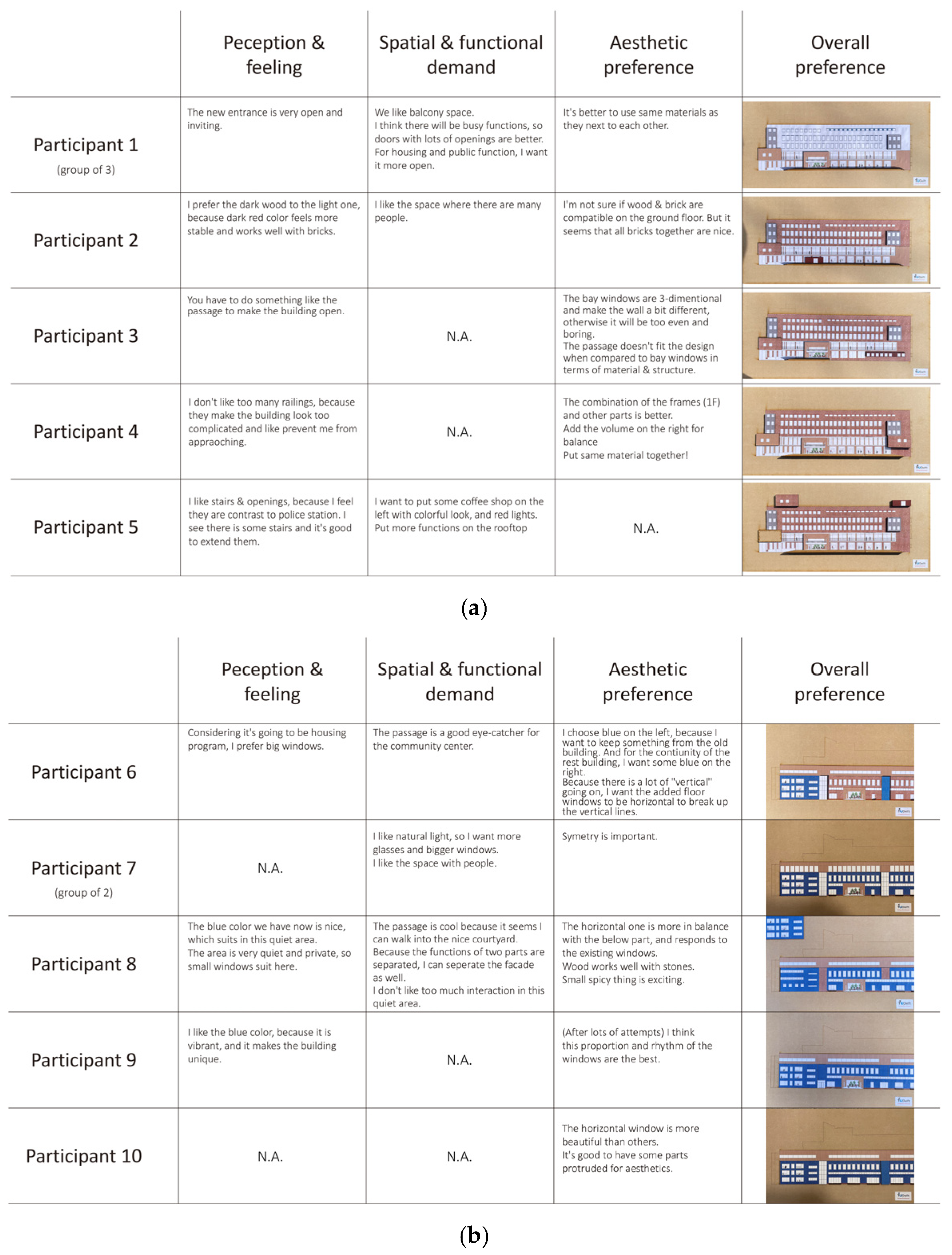
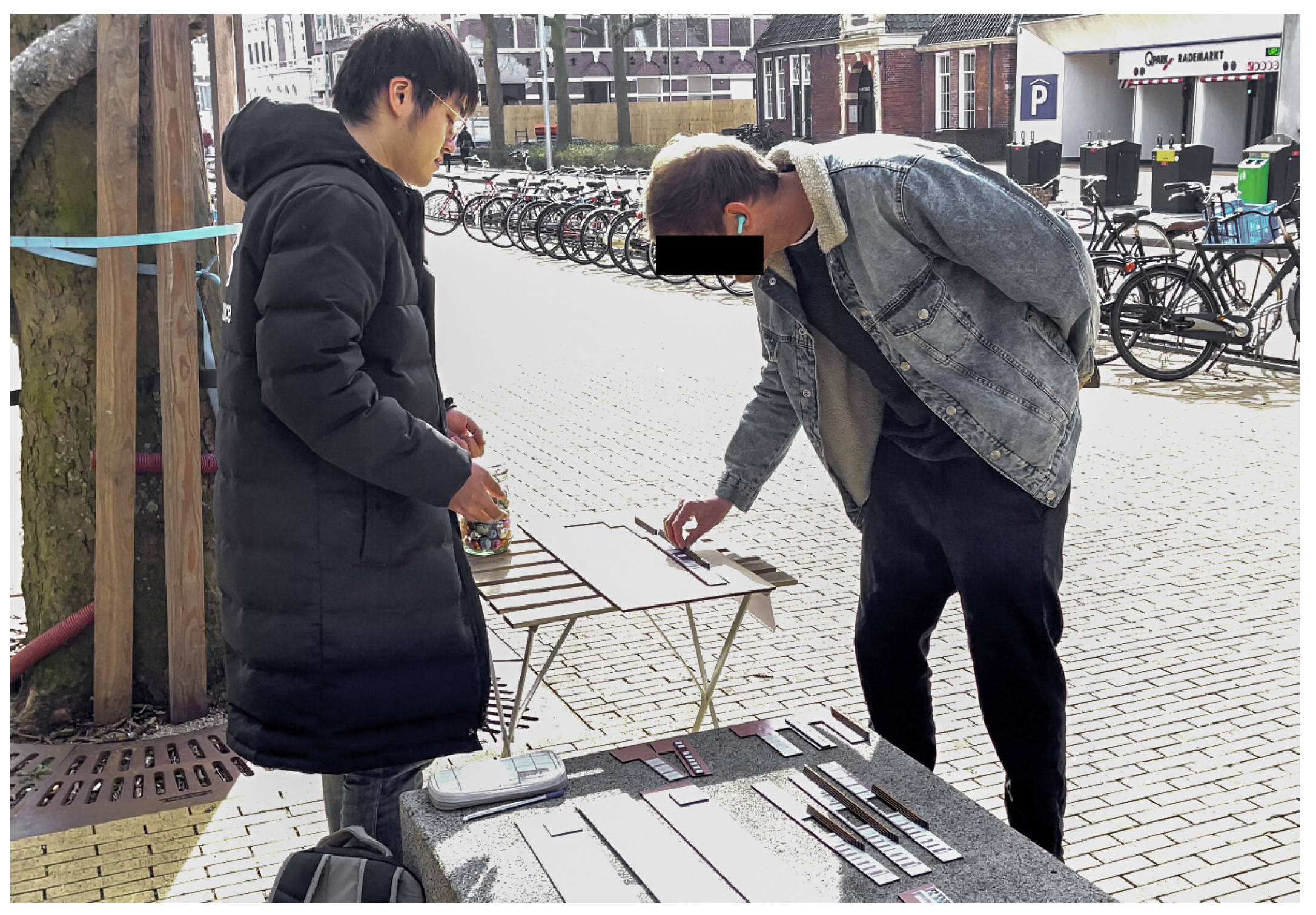
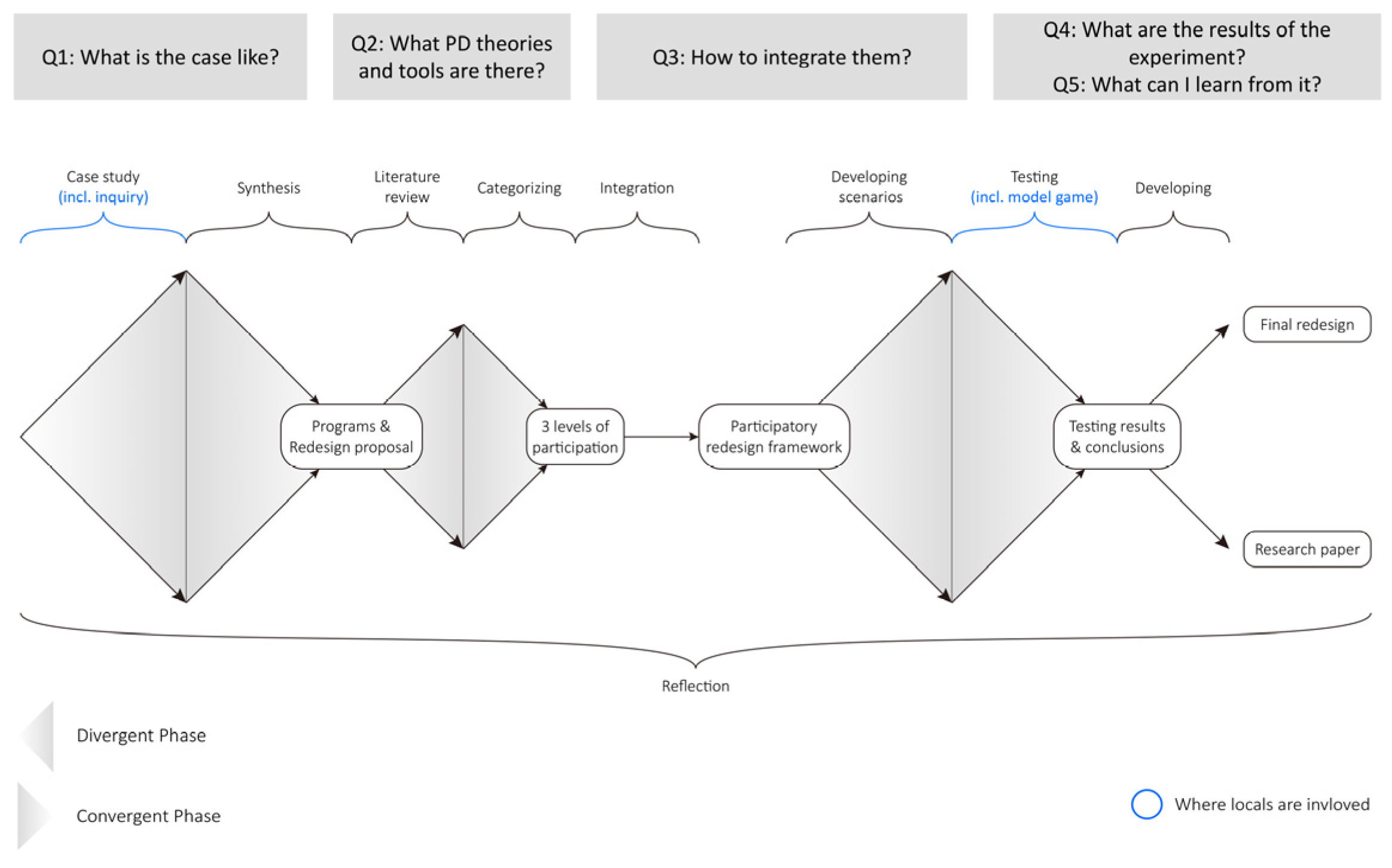
This paper explores the opportunities for locals’ participation as a tool for the sustainable redevelopment of vacant heritage. It focuses on the Politiebureau Groningen Centrum (The Netherlands) as a case study to apply a novel approach to engage community participation in architectural redesign. It fills the academic gap on participation in heritage building redesign lacking diversity in stakeholder perspectives and overcomes some of the current participatory design tools’ downsides, identified in the previous literature: lack of transparent communication and high requirement for participants. This research employs a combination of methods structured by sets of divergent and convergent phases. Cognitive mapping, semi-structured interviewing, and a 2,5D model game were tested in the research for inquiry and redesign testing, the two key participatory stages. The research outcomes include participants’ perceptions and remembrance of the site for generating redesign scenarios, the common ground in their scenario preferences, and their contrasting attitudes toward the overall material and the specific elements. The 2,5D model game tool turns out effective in transparently delivering the redesign possibilities to participants and lowering the requirements of time, language skill, and learning capacity, thus being easily repeatable for other sites and participants to boost social and community values. Future research recommendations are given on applying the approach to larger samples covering all the minorities to get in-depth knowledge on the community’s collective perspectives in relation to their sociodemographic characteristics and validate the hypothesis on their preferences toward materials and elements.
Keywords: sustainability; heritage redevelopment; participatory design; public engagement; community value; social value; Faro Convention; HUL; heritage; cognitive mapping sustainability; heritage redevelopment; participatory design; public engagement; community value; social value; Faro Convention; HUL; heritage; cognitive mapping