Review of Mesoscale Geometric Models of Concrete Materials




Abstract
1. Introduction
2. Complex Aggregate Shape Modeling Method
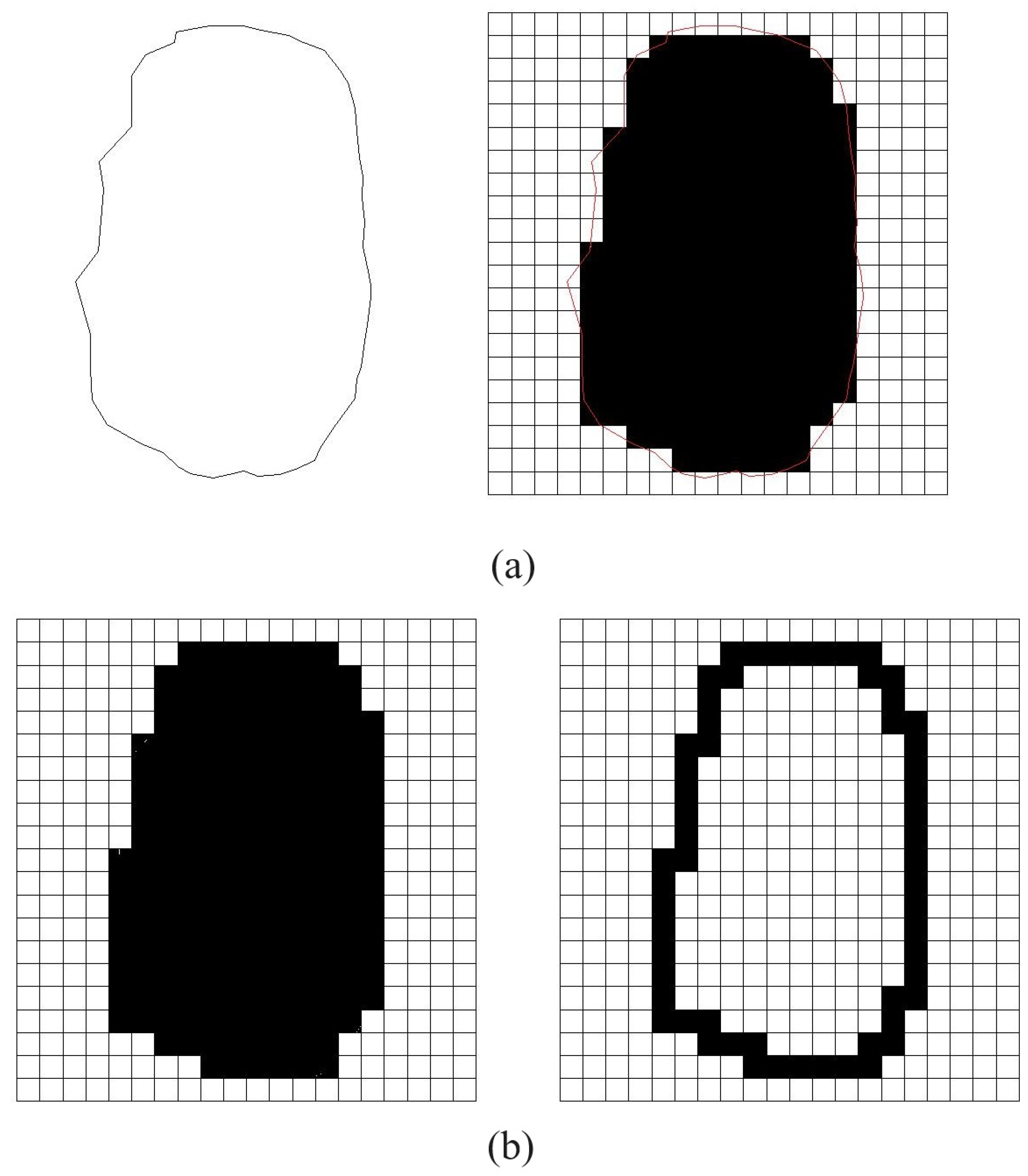
2.1. Virtual Space Method
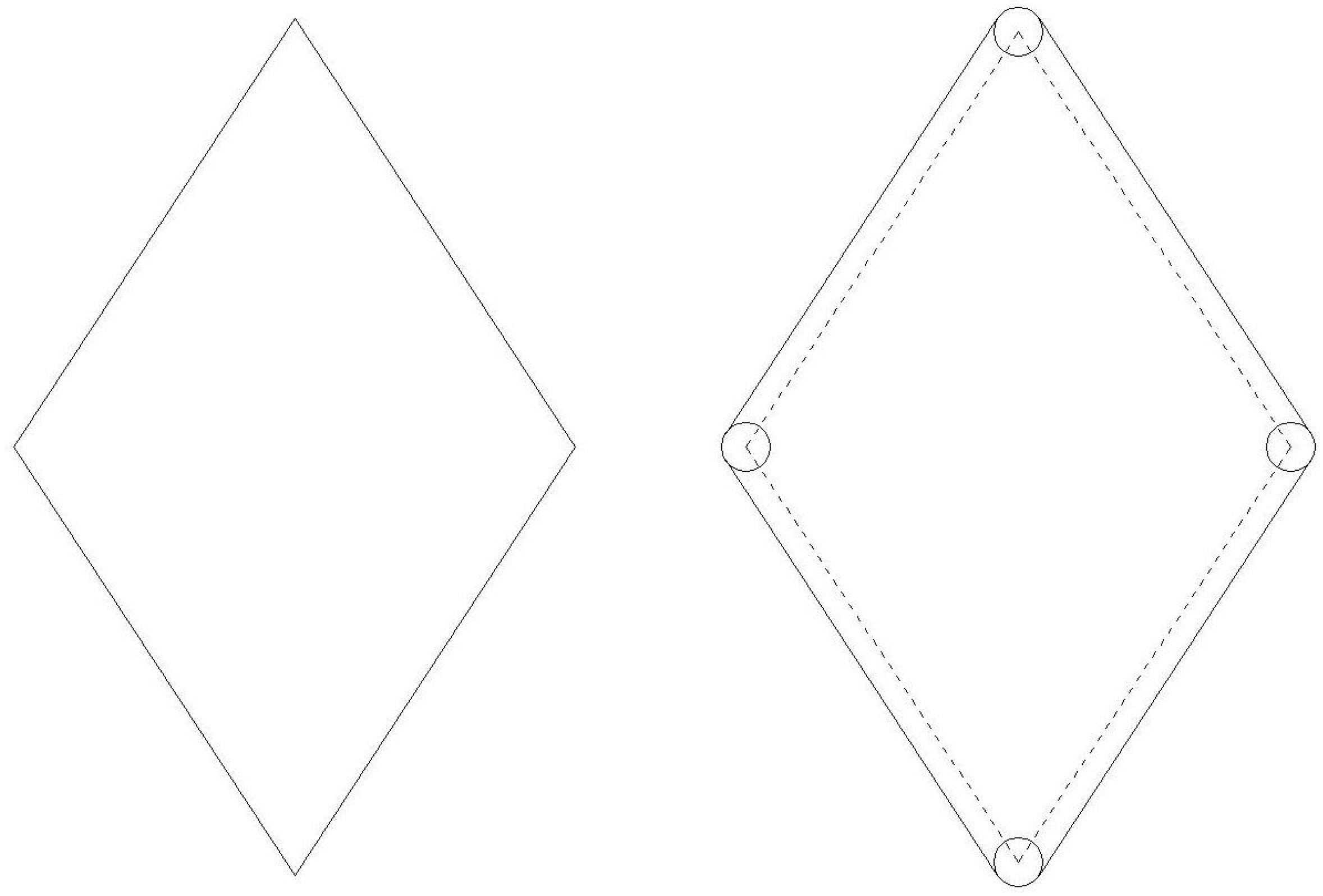
2.2. Polygon Polyhedron Method
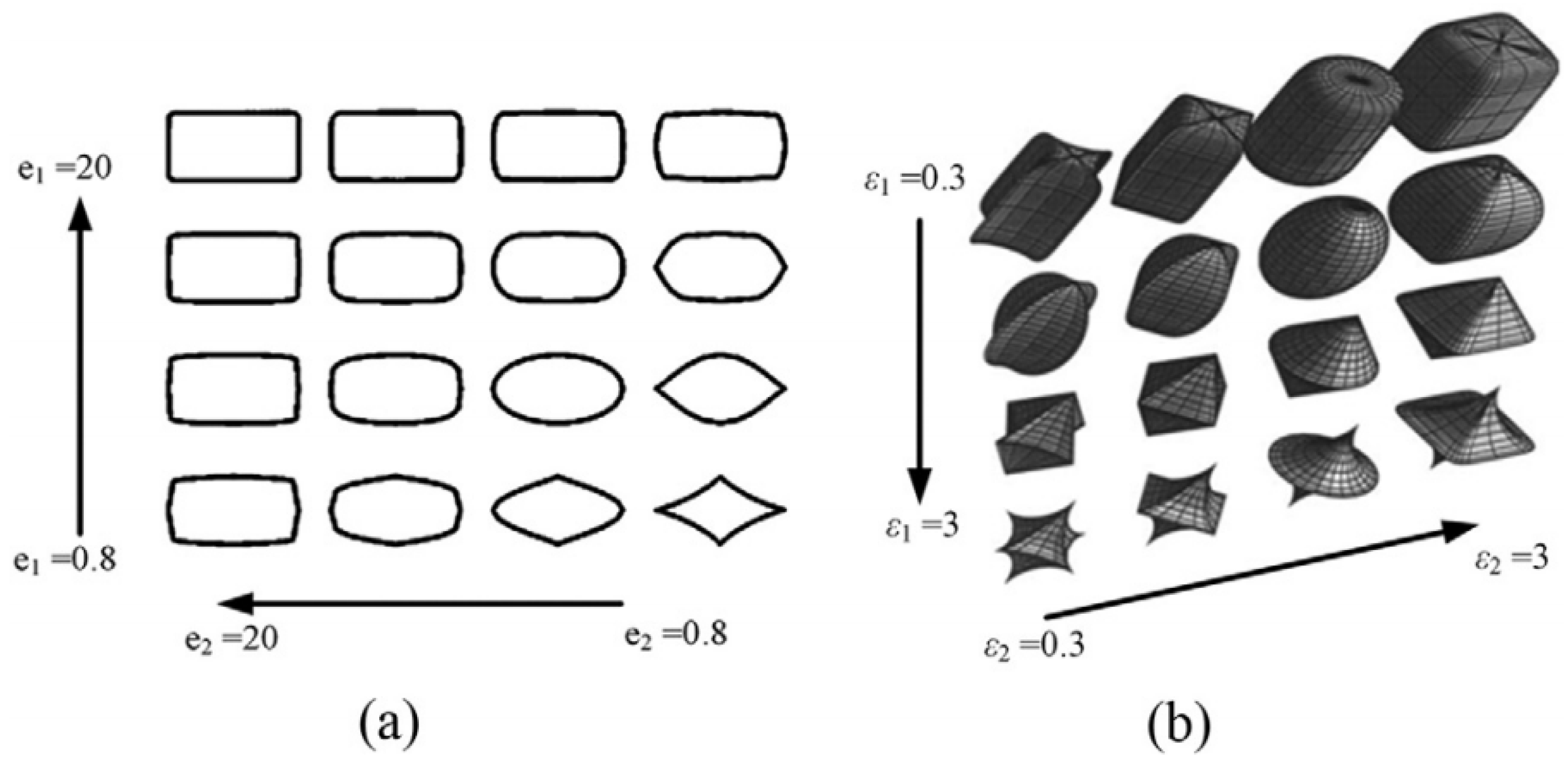
2.3. Continuous Function Method
2.4. Discrete Function Method
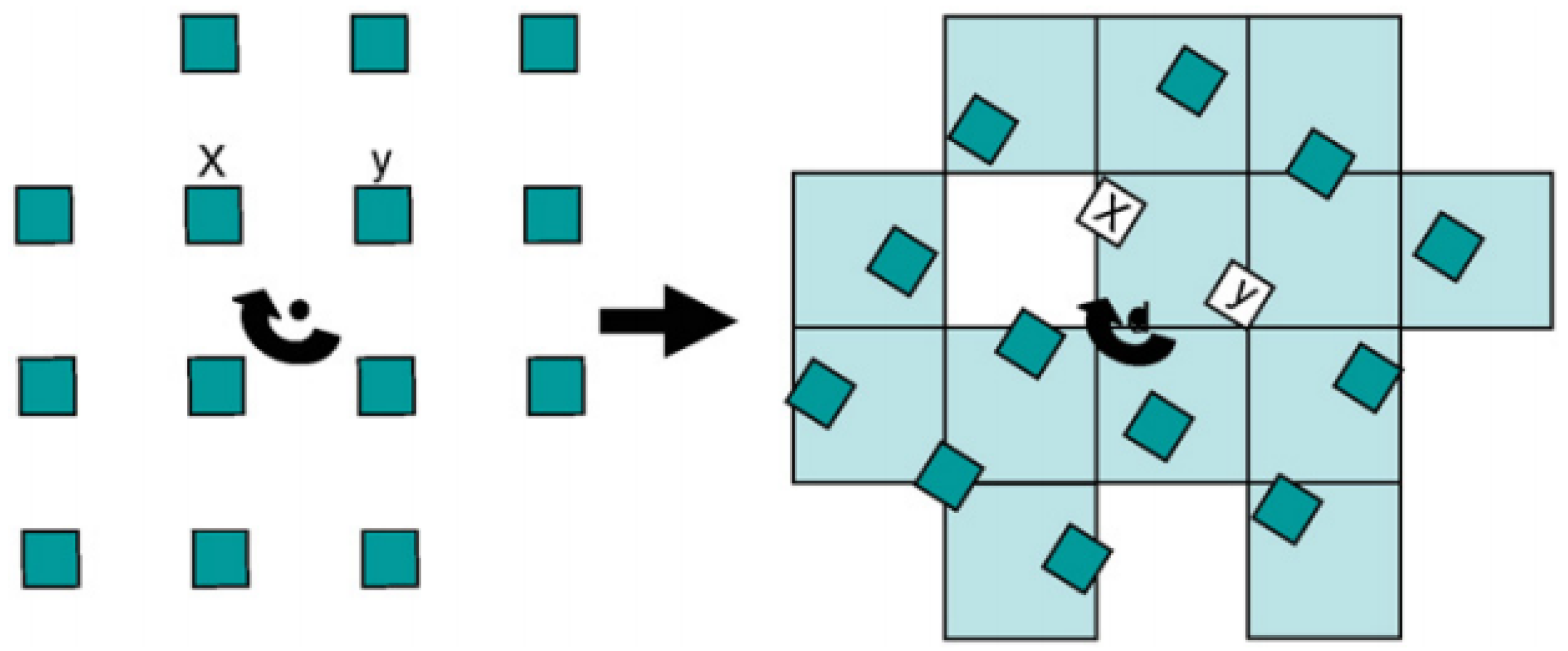
2.5. Combined Particle Method
2.6. Summary
3. Collision Detection Algorithm
3.1. Spatial Sorting Phase
3.2. Voxel-Based Detection Algorithms
3.3. Common Plane Separation Axis Algorithms
3.4. Geometric Potential Algorithm
3.5. Simplified Geometric Potential Algorithm
3.6. Combined Particle Collision Detection Method
3.7. The Definition of Collision
3.8. Summary
4. The Aggregate Packing Algorithm
4.1. The Random Sequential Packing Algorithm
4.2. The Sequential Deposition Algorithm
4.3. The Collective Rearrangement Algorithm
4.4. The Voronoi Tessellation Algorithm
4.5. The CT Image Algorithm
4.6. Summary
5. Conclusions
- The choice of the aggregate modeling method depends on the requirement of the model accuracy.
- The choice of the collision detection algorithm is often influenced by the selected aggregate modeling method, although this relationship is not absolute.
- To build models that are reasonable and effective, it is crucial to select mutually adaptive methods for the three modeling steps based on specific requirements and available resources.
- Accuracy. Although the concrete mesoscale modeling method based on the real aggregate shape has been developed, the most commonly used concrete mesoscale modeling method is still based on regular aggregate shapes. There are a few promising methods that have been proposed. The first one is directly obtaining the mesoscale model of concrete by X-ray CT [114,116]. The second one is obtaining the shape of real aggregates by X-ray CT or laser scanning to build the library of aggregate. The aggregate model in the library will be packed to model concrete at the mesoscale [89], but both of these methods are needed to solve the high cost which is produced in the scan.
- Packing fraction. The random sequential packing algorithm is the most commonly used algorithm. However, the packing fraction of concrete modeled by the random sequential packing algorithm is limited. In order to obtain the concrete model with a higher packing fraction, some more advanced algorithms have been used. Based on the concrete model built by other packing algorithms, a dynamic physics engine can be used to simulate compaction and vibration and improve the packing fraction [117].
- Efficiency. As the packing fraction increases, the computational efficiency will inevitably decrease. However, the efficiency must be controlled within an acceptable range. For this goal, researchers have tried to simplify the collision detection algorithm and propose a more efficient packing algorithm [9]. The parallel computing and GPU-based acceleration methods are also used to improve computational efficiency [118].
Author Contributions
Funding
Data Availability Statement
Conflicts of Interest
References
- Nguyen, V.P.; Stroeven, M.; Sluys, L.J. Multiscale failure modeling of concrete: Micromechanical modeling, discontinuous homogenization and parallel computations. Comput. Methods Appl. Mech. Eng. 2012, 201, 139–156. [Google Scholar] [CrossRef] [Scilit]
- Wriggers, P.; Moftah, S. Mesoscale models for concrete: Homogenisation and damage behaviour. Finite Elem. Anal. Des. 2006, 42, 623–636. [Google Scholar] [CrossRef] [Scilit]
- Chen, H.; Sun, W.; Stroeven, P. Interfacial transition zone between aggregate and paste in cementitious composites (II): Mechanism of formation and degradation of interfacial transition zone microstructure, and its influence factors. Kuei Suan Jen Hsueh Pao/J. Chin. Ceram. Soc. 2004, 32, 70–79. [Google Scholar]
- Zhou, X.; Hao, H. Mesoscale modelling of concrete tensile failure mechanism at high strain rates. Comput. Struct. 2008, 86, 2013–2026. [Google Scholar] [CrossRef] [Scilit]
- Pedersen, R.; Simone, A.; Sluys, L. Mesoscopic modeling and simulation of the dynamic tensile behavior of concrete. Cem. Concr. Res. 2013, 50, 74–87. [Google Scholar] [CrossRef] [Scilit]
- Huang, Y.; Yang, Z.; Chen, X.; Liu, G. Monte Carlo simulations of meso-scale dynamic compressive behavior of concrete based on X-ray computed tomography images. Int. J. Impact Eng. 2016, 97, 102–115. [Google Scholar] [CrossRef] [Scilit]
- Zhou, Y.; Jin, H.; Wang, B. Modeling and mechanical influence of meso-scale concrete considering actual aggregate shapes. Constr. Build. Mater. 2019, 228, 116785. [Google Scholar] [CrossRef] [Scilit]
- Li, C.Z.; Song, X.B. Mesoscale modeling of chloride transport in unsaturated concrete based on Voronoi tessellation. Cem. Concr. Res. 2022, 161, 106932. [Google Scholar] [CrossRef] [Scilit]
- Huang, L.; Tang, L.; Löfgren, I.; Olsson, N.; Yang, Z.; Li, Y. Moisture and ion transport properties in blended pastes and their relation to the refined pore structure. Cem. Concr. Res. 2022, 161, 106949. [Google Scholar] [CrossRef] [Scilit]
- Yao, L.; Ren, L.; Gong, G.; Zhang, J. Simulation of chloride diffusion in concrete based on a new mesoscopic numerical method. Adv. Civ. Eng. 2020, 2020. [Google Scholar] [CrossRef] [Scilit]
- Wittmann, F. Structure of concrete with respect to crack formation. Fract. Mech. Concr. 1983, 43, 6. [Google Scholar]
- Bažant, Z.P.; Tabbara, M.R.; Kazemi, M.T.; Pijaudier-Cabot, G. Random particle model for fracture of aggregate or fiber composites. J. Eng. Mech. 1990, 116, 1686–1705. [Google Scholar] [CrossRef] [Scilit]
- Zubelewicz, A.; Bažant, Z.P. Interface element modeling of fracture in aggregate composites. J. Eng. Mech. 1987, 113, 1619–1630. [Google Scholar] [CrossRef] [Scilit]
- Vonk, R. Softening of Concrete Loaded in Compression. Ph.D. Thesis, Built Environment, Technische Universiteit Eindhoven, Eindhoven, The Netherlands, 1992. [Google Scholar]
- Cusatis, G.; Bažant, Z.P.; Cedolin, L. Confinement-shear lattice model for concrete damage in tension and compression: I. Theory. J. Eng. Mech. 2003, 129, 1439–1448. [Google Scholar] [CrossRef] [Scilit]
- Cusatis, G.; Mencarelli, A.; Pelessone, D.; Baylot, J. Lattice discrete particle model (LDPM) for failure behavior of concrete. II: Calibration and validation. Cem. Concr. Compos. 2011, 33, 891–905. [Google Scholar] [CrossRef] [Scilit]
- Schlangen, E.; Garboczi, E.J. Fracture simulations of concrete using lattice models: Computational aspects. Eng. Fract. Mech. 1997, 57, 319–332. [Google Scholar] [CrossRef] [Scilit]
- Lilliu, G.; van Mier, J.G. 3D lattice type fracture model for concrete. Eng. Fract. Mech. 2003, 70, 927–941. [Google Scholar] [CrossRef] [Scilit]
- Caballero, A.; Carol, I.; López, C. A meso-level approach to the 3D numerical analysis of cracking and fracture of concrete materials. Fatigue Fract. Eng. Mater. Struct. 2006, 29, 979–991. [Google Scholar] [CrossRef] [Scilit]
- Nagai, K.; Sato, Y.; Ueda, T. Mesoscopic simulation of failure of mortar and concrete by 3D RBSM. J. Adv. Concr. Technol. 2005, 3, 385–402. [Google Scholar] [CrossRef] [Scilit]
- Avadh, K.; Jiradilok, P.; Bolander, J.E.; Nagai, K. 3D mesoscale simulation of the influence of corrosion on loss of tension stiffening in reinforced concrete. Constr. Build. Mater. 2022, 339, 127684. [Google Scholar] [CrossRef] [Scilit]
- Hentz, S.; Daudeville, L.; Donzé, F.V. Identification and validation of a discrete element model for concrete. J. Eng. Mech. 2004, 130, 709–719. [Google Scholar] [CrossRef] [Scilit]
- Azevedo, N.M.; Lemos, J. Aggregate shape influence on the fracture behaviour of concrete. Struct. Eng. Mech. Int. J. 2006, 24, 411–427. [Google Scholar] [CrossRef] [Scilit]
- Nitka, M.; Tejchman, J. Modelling of concrete behaviour in uniaxial compression and tension with DEM. Granul. Matter 2015, 17, 145–164. [Google Scholar] [CrossRef] [Scilit]
- Zhou, W.; Zhao, C.; Liu, X.; Chang, X.; Feng, C. Mesoscopic simulation of thermo-mechanical behaviors in concrete under frost action. Constr. Build. Mater. 2017, 157, 117–131. [Google Scholar] [CrossRef] [Scilit]
- Tal, D.; Fish, J. Stochastic multiscale modeling and simulation framework for concrete. Cem. Concr. Compos. 2018, 90, 61–81. [Google Scholar] [CrossRef] [Scilit]
- Alnaggar, M.; Cusatis, G.; Di Luzio, G. Lattice discrete particle modeling (LDPM) of alkali silica reaction (ASR) deterioration of concrete structures. Cem. Concr. Compos. 2013, 41, 45–59. [Google Scholar] [CrossRef] [Scilit]
- Serra, C.; Azevedo, N.M.; Lopes Batista, A.; Schclar, N. Discrete element method for modeling the long-term aging viscoelastic behavior of concrete considering its mesostructure. J. Eng. Mech. 2018, 144, 04018021. [Google Scholar] [CrossRef] [Scilit]
- Wang, W.; Wang, J.; Wang, J.; He, J.; Pan, J. Mesoscale modeling study on mechanical deterioration of alkali–aggregate reaction-affected concrete. Materials 2022, 15, 3861. [Google Scholar] [CrossRef] [Scilit]
- Rezakhani, R.; Gallyamov, E.; Molinari, J.F. Meso-scale finite element modeling of Alkali-Silica-Reaction. Constr. Build. Mater. 2021, 278, 122244. [Google Scholar] [CrossRef] [Scilit]
- Zhao, C.; Zhou, W.; Chen, X.; Wu, Q.; Ma, G.; Wang, Q. Mesoscopic analysis of heat and moisture coupled transfer in concrete considering phase change under frost action. J. Build. Eng. 2022, 57, 104888. [Google Scholar] [CrossRef] [Scilit]
- Jin, L.; Yu, W.; Du, X.; Yang, W. Mesoscopic numerical simulation of dynamic size effect on the splitting-tensile strength of concrete. Eng. Fract. Mech. 2019, 209, 317–332. [Google Scholar] [CrossRef] [Scilit]
- Vegt, I.; Breugel, V.; Weerheijm, J. Failure mechanisms of concrete under impact loading. Fract. Mech. Concr. Concr. Struct. FraMCoS-6 2007, 1, 579–587. [Google Scholar]
- Bicanic, N.; Borst, R.; Mang, H.; Meschke, G. Computational Modelling of Concrete Structures; CRC Press: Boca Raton, FL, USA, 2010. [Google Scholar]
- Ma, H.; Xu, W.; Li, Y. Random aggregate model for mesoscopic structures and mechanical analysis of fully-graded concrete. Comput. Struct. 2016, 177, 103–113. [Google Scholar] [CrossRef] [Scilit]
- Comby-Peyrot, I.; Bernard, F.; Bouchard, P.O.; Bay, F.; Garcia-Diaz, E. Development and validation of a 3D computational tool to describe concrete behaviour at mesoscale. Application to the alkali-silica reaction. Comput. Mater. Sci. 2009, 46, 1163–1177. [Google Scholar] [CrossRef] [Scilit]
- Pan, Z.; Chen, A.; Ruan, X. Spatial variability of chloride and its influence on thickness of concrete cover: A two-dimensional mesoscopic numerical research. Eng. Struct. 2015, 95, 154–169. [Google Scholar] [CrossRef] [Scilit]
- Li, B.; Mao, J.; Nawa, T.; Liu, Z. Mesoscopic chloride ion diffusion model of marine concrete subjected to freeze-thaw cycles. Constr. Build. Mater. 2016, 125, 337–351. [Google Scholar] [CrossRef] [Scilit]
- Zhao, S.; Zhang, N.; Zhou, X.; Zhang, L. Particle shape effects on fabric of granular random packing. Powder Technol. 2017, 310, 175–186. [Google Scholar] [CrossRef] [Scilit]
- Jia, X.; Williams, R.A. A packing algorithm for particles of arbitrary shapes. Powder Technol. 2001, 120, 175–186. [Google Scholar] [CrossRef] [Scilit]
- Byholm, T.; Toivakka, M.; Westerholm, J. Effective packing of 3-dimensional voxel-based arbitrarily shaped particles. Powder Technol. 2009, 196, 139–146. [Google Scholar] [CrossRef] [Scilit]
- Abyaneh, S.D.; Wong, H.; Buenfeld, N. Modelling the diffusivity of mortar and concrete using a three-dimensional mesostructure with several aggregate shapes. Comput. Mater. Sci. 2013, 78, 63–73. [Google Scholar] [CrossRef] [Scilit]
- Liu, C.; Liu, G.; Liu, Z.; Yang, L.; Zhang, M.; Zhang, Y. Numerical simulation of the effect of cement particle shapes on capillary pore structures in hardened cement pastes. Constr. Build. Mater. 2018, 173, 615–628. [Google Scholar] [CrossRef] [Scilit]
- Abyaneh, S.D.; Wong, H.; Buenfeld, N. Computational investigation of capillary absorption in concrete using a three-dimensional mesoscale approach. Comput. Mater. Sci. 2014, 87, 54–64. [Google Scholar] [CrossRef] [Scilit]
- Wang, M.; Al-Tabbaa, A.; Wang, W. Improving discrete particle packing models for the microstructural formation simulation of Portland cement. Constr. Build. Mater. 2019, 229, 116841. [Google Scholar] [CrossRef] [Scilit]
- Jia, X.; Garboczi, E.J. Advances in shape measurement in the digital world. Particuology 2016, 26, 19–31. [Google Scholar] [CrossRef] [Scilit]
- De Korte, A.; Brouwers, H. Random packing of digitized particles. Powder Technol. 2013, 233, 319–324. [Google Scholar] [CrossRef] [Scilit]
- Ghaboussi, J.; Barbosa, R. Three-dimensional discrete element method for granular materials. Int. J. Numer. Anal. Methods Geomech. 1990, 14, 451–472. [Google Scholar] [CrossRef] [Scilit]
- Kruggel-Emden, H.; Oschmann, T. Numerical study of rope formation and dispersion of non-spherical particles during pneumatic conveying in a pipe bend. Powder Technol. 2014, 268, 219–236. [Google Scholar] [CrossRef] [Scilit]
- Zhao, S.; Zhou, X.; Liu, W. Discrete element simulations of direct shear tests with particle angularity effect. Granul. Matter 2015, 17, 793–806. [Google Scholar] [CrossRef] [Scilit]
- Höhner, D.; Wirtz, S.; Scherer, V. Experimental and numerical investigation on the influence of particle shape and shape approximation on hopper discharge using the discrete element method. Powder Technol. 2013, 235, 614–627. [Google Scholar] [CrossRef] [Scilit]
- Xu, W.; Chen, H. Numerical investigation of effect of particle shape and particle size distribution on fresh cement paste microstructure via random sequential packing of dodecahedral cement particles. Comput. Struct. 2013, 114, 35–45. [Google Scholar] [CrossRef] [Scilit]
- Li, X.; Li, H.; Zhao, J. Transgranular fracturing of crystalline rocks and its influence on rock strengths: Insights from a grain-scale continuum–discontinuum approach. Comput. Methods Appl. Mech. Eng. 2021, 373, 113462. [Google Scholar] [CrossRef] [Scilit]
- Fang, X.; Pan, Z.; Chen, A. Analytical models to estimate efficiency of capsule-based self-healing cementitious materials considering effect of capsule shell thickness. Constr. Build. Mater. 2021, 274, 121999. [Google Scholar] [CrossRef] [Scilit]
- Pan, Z.; Ruan, X.; Chen, A. Chloride diffusivity of concrete: Probabilistic characteristics at meso-scale. Comput. Concr. 2014, 13, 187–207. [Google Scholar] [CrossRef] [Scilit]
- Wu, B.; Yang, Y.; Zhang, L.; Wang, Y.; Li, H. Meso-scale numerical study on the non-uniform corrosion-induced cracking of confined concrete. Constr. Build. Mater. 2020, 260, 120463. [Google Scholar] [CrossRef] [Scilit]
- Jin, L.; Hao, H.; Zhang, R.; Du, X. Determination of the effect of elevated temperatures on dynamic compressive properties of heterogeneous concrete: A meso-scale numerical study. Constr. Build. Mater. 2018, 188, 685–694. [Google Scholar] [CrossRef] [Scilit]
- Hogue, C. Shape representation and contact detection for discrete element simulations of arbitrary geometries. Eng. Comput. 1998, 15, 374–390. [Google Scholar] [CrossRef] [Scilit]
- Bowman, E.T.; Soga, K.; Drummond, W. Particle shape characterisation using Fourier descriptor analysis. Geotechnique 2001, 51, 545–554. [Google Scholar] [CrossRef]
- Kiryati, N.; Maydan, D. Calculating geometric properties from fourier representation. Pattern Recognit. 1989, 22, 469–475. [Google Scholar] [CrossRef] [Scilit]
- Wang, H.; Chen, Z.; Zhang, J.; Zheng, J.; Sun, X.; Li, J. Numerical scheme for predicting chloride diffusivity of concrete. J. Mater. Civ. Eng. 2021, 33, 04021237. [Google Scholar] [CrossRef] [Scilit]
- Wei, D.; Hurley, R.C.; Poh, L.H.; Dias-da-Costa, D.; Gan, Y. The role of particle morphology on concrete fracture behaviour: A meso-scale modelling approach. Cem. Concr. Res. 2020, 134, 106096. [Google Scholar] [CrossRef] [Scilit]
- Garboczi, E.J. Three-dimensional mathematical analysis of particle shape using X-ray tomography and spherical harmonics: Application to aggregates used in concrete. Cem. Concr. Res. 2002, 32, 1621–1638. [Google Scholar] [CrossRef] [Scilit]
- Garboczi, E.J.; Bullard, J.W. 3D analytical mathematical models of random star-shape particles via a combination of X-ray computed microtomography and spherical harmonic analysis. Adv. Powder Technol. 2017, 28, 325–339. [Google Scholar] [CrossRef] [Scilit]
- Bullard, J.W.; Garboczi, E.J. Defining shape measures for 3D star-shaped particles: Sphericity, roundness, and dimensions. Powder Technol. 2013, 249, 241–252. [Google Scholar] [CrossRef] [Scilit]
- Cundall, P.A.; Strack, O.D.L. A discrete numerical model for granular assemblies. Géotechnique 1979, 29, 47–65. [Google Scholar] [CrossRef] [Scilit]
- Williams, J.; O’Connor, R. A linear complexity intersection algorithm for discrete element simulation of arbitrary geometries. Eng. Comput. 1995, 12, 185–201. [Google Scholar] [CrossRef] [Scilit]
- Liu, Y.; Gong, F.; You, Z.; Wang, H. Aggregate morphological characterization with 3D optical scanner versus X-ray computed tomography. J. Mater. Civ. Eng. 2018, 30, 04017248. [Google Scholar] [CrossRef] [Scilit]
- Capozza, R.; Hanley, K. A hierarchical, spherical harmonic-based approach to simulate abradable, irregularly shaped particles in DEM. Powder Technol. 2021, 378, 528–537. [Google Scholar] [CrossRef] [Scilit]
- Xu, W.; Jia, M.; Guo, W.; Wang, W.; Zhang, B.; Liu, Z.; Jiang, J. GPU-based discrete element model of realistic non-convex aggregates: Mesoscopic insights into ITZ volume fraction and diffusivity of concrete. Cem. Concr. Res. 2023, 164, 107048. [Google Scholar] [CrossRef] [Scilit]
- Favier, J.F.; Abbaspour-Fard, M.H.; Kremmer, M. Modeling nonspherical particles using multisphere discrete elements. J. Eng. Mech. 2001, 127, 971–977. [Google Scholar] [CrossRef] [Scilit]
- Favier, J.F.; Abbaspour-Fard, M.H.; Kremmer, M.; Raji, A.O. Shape representation of axi-symmetrical, non-spherical particles in discrete element simulation using multi-element model particles. Eng. Comput. 1999, 16, 467–480. [Google Scholar] [CrossRef] [Scilit]
- Bertei, A.; Chueh, C.C.; Pharoah, J.; Nicolella, C. Modified collective rearrangement sphere-assembly algorithm for random packings of nonspherical particles: Towards engineering applications. Powder Technol. 2014, 253, 311–324. [Google Scholar] [CrossRef] [Scilit]
- Kodam, M.; Curtis, J.; Hancock, B.; Wassgren, C. Discrete element method modeling of bi-convex pharmaceutical tablets: Contact detection algorithms and validation. Chem. Eng. Sci. 2012, 69, 587–601. [Google Scholar] [CrossRef] [Scilit]
- Song, Y.; Turton, R.; Kayihan, F. Contact detection algorithms for DEM simulations of tablet-shaped particles. Powder Technol. 2006, 161, 32–40. [Google Scholar] [CrossRef] [Scilit]
- Chung, Y.C.; Ooi, J.Y. A study of influence of gravity on bulk behaviour of particulate solid. Particuology 2008, 6, 467–474. [Google Scholar] [CrossRef] [Scilit]
- Yang, X.; You, Z.; Jin, C.; Wang, H. Aggregate representation for mesostructure of stone based materials using a sphere growth model based on realistic aggregate shapes. Mater. Struct. 2016, 49, 2493–2508. [Google Scholar] [CrossRef] [Scilit]
- Huang, P.; Ding, Y.; Miao, Q.; Sang, G.; Jia, M. An improved contact detection algorithm for bonded particles based on multi-level grid and bounding box in DEM simulation. Powder Technol. 2020, 374, 577–596. [Google Scholar] [CrossRef] [Scilit]
- Löhner, R. Automatic unstructured grid generators. Finite Elem. Anal. Des. 1997, 25, 111–134. [Google Scholar] [CrossRef] [Scilit]
- Džiugys, A.; Peters, B. An approach to simulate the motion of spherical and non-spherical fuel particles in combustion chambers. Granul. Matter 2001, 3, 231–266. [Google Scholar] [CrossRef] [Scilit]
- Cundall, P. Formulation of a three-dimensional distinct element model—Part I. A scheme to detect and represent contacts in a system composed of many polyhedral blocks. Int. J. Rock Mech. Min. Sci. Geomech. Abstr. 1988, 25, 107–116. [Google Scholar] [CrossRef] [Scilit]
- Nezami, E.G.; Hashash, Y.M.; Zhao, D.; Ghaboussi, J. Shortest link method for contact detection in discrete element method. Int. J. Numer. Anal. Methods Geomech. 2006, 30, 783–801. [Google Scholar] [CrossRef] [Scilit]
- Torquato, S.; Jiao, Y. Dense packings of polyhedra: Platonic and Archimedean solids. Phys. Rev. E 2009, 80, 041104. [Google Scholar] [CrossRef] [Scilit]
- Xu, W.; Chen, H.; Liu, L. Evaluation of mesostructure of particulate composites by quantitative stereology and random sequential packing model of mono-/polydisperse convex polyhedral particles. Ind. Eng. Chem. Res. 2013, 52, 6678–6693. [Google Scholar] [CrossRef] [Scilit]
- Ng, T.T. Numerical simulations of granular soil using elliptical particles. Comput. Geotech. 1994, 16, 153–169. [Google Scholar] [CrossRef] [Scilit]
- Ting, J.M. A robust algorithm for ellipse-based discrete element modelling of granular materials. Comput. Geotech. 1992, 13, 175–186. [Google Scholar] [CrossRef] [Scilit]
- Lu, G.; Third, J.; Müller, C. Critical assessment of two approaches for evaluating contacts between super-quadric shaped particles in DEM simulations. Chem. Eng. Sci. 2012, 78, 226–235. [Google Scholar] [CrossRef] [Scilit]
- Lin, X.; Ng, T.T. Contact detection algorithms for three-dimensional ellipsoids in discrete element modelling. Int. J. Numer. Anal. Methods Geomech. 1995, 19, 653–659. [Google Scholar] [CrossRef] [Scilit]
- Qian, Z. Multiscale Modeling of Fracture Processes in Cementitious Materials. Ph.D. Thesis, Technische Universiteit Delft, Delft, The Netherlands, 2012. [Google Scholar]
- Lu, G.; Third, J.R.; Müller, C.R. Effect of particle shape on domino wave propagation: A perspective from 3D, anisotropic discrete element simulations. Granul. Matter 2014, 16, 107–114. [Google Scholar] [CrossRef] [Scilit]
- Lu, G.; Third, J.R.; Müller, C.R. Effect of wall rougheners on cross-sectional flow characteristics for non-spherical particles in a horizontal rotating cylinder. Particuology 2014, 12, 44–53. [Google Scholar] [CrossRef] [Scilit]
- Williams, J.R.; O’Connor, R.M. Discrete element simulation and the contact problem. Arch. Comput. Methods Eng. 1999, 6, 279–304. [Google Scholar] [CrossRef] [Scilit]
- Kačianauskas, R.; Tumonis, L.; Džiugys, A. Simulation of the normal impact of randomly shaped quasi-spherical particles. Granul. Matter 2014, 16, 339–347. [Google Scholar] [CrossRef] [Scilit]
- Kruggel-Emden, H.; Rickelt, S.; Wirtz, S.; Scherer, V. A study on the validity of the multi-sphere discrete element method. Powder Technol. 2008, 188, 153–165. [Google Scholar] [CrossRef] [Scilit]
- Kodam, M.; Bharadwaj, R.; Curtis, J.; Hancock, B.; Wassgren, C. Force model considerations for glued-sphere discrete element method simulations. Chem. Eng. Sci. 2009, 64, 3466–3475. [Google Scholar] [CrossRef] [Scilit]
- Markauskas, D.; Kačianauskas, R.; Džiugys, A.; Navakas, R. Investigation of adequacy of multi-sphere approximation of elliptical particles for DEM simulations. Granul. Matter 2010, 12, 107–123. [Google Scholar] [CrossRef] [Scilit]
- Galindo-Torres, S.A.; Pedroso, D.M. Molecular dynamics simulations of complex-shaped particles using Voronoi-based Spheropolyhedra. Phys. Rev. E 2010, 81, 061303. [Google Scholar] [CrossRef] [Scilit]
- Lu, G.; Third, J.; Müller, C. Discrete element models for non-spherical particle systems: From theoretical developments to applications. Chem. Eng. Sci. 2015, 127, 425–465. [Google Scholar] [CrossRef] [Scilit]
- Cooper, D.W. Random-sequential-packing simulations in three dimensions for spheres. Phys. Rev. A 1988, 38, 522–524. [Google Scholar] [CrossRef] [Scilit] [PubMed]
- Visscher, W.M.; Bolsterli, M. Random packing of equal and unequal spheres in two and three dimensions. Nature 1972, 239, 504–507. [Google Scholar] [CrossRef] [Scilit]
- Shashidhar, N.; Gopalakrishnan, K. Evaluating the aggregate structure in hot-mix asphalt using three-dimensional computer modeling and particle packing simulations. Can. J. Civ. Eng. 2006, 33, 945–954. [Google Scholar] [CrossRef] [Scilit]
- Marek, M. Numerical modeling of random packed beds of various packing densities with a sequential deposition algorithm. In Proceedings of the 15th Conference on Computational Technologies in Engineering, Jora Wielka, Poland, 16–19 October 2018; p. 020015. [Google Scholar]
- Yang, A.; Miller, C.; Turcoliver, L. Simulation of correlated and uncorrelated packing of random size spheres. Phys. Rev. E 1996, 53, 1516. [Google Scholar] [CrossRef] [Scilit]
- Bezrukov, A.; Stoyan, D. Simulation and statistical analysis of random packings of ellipsoids. Part. Part. Syst. Charact. 2006, 23, 388–398. [Google Scholar] [CrossRef] [Scilit]
- Liu, G.; Thompson, K.E. Influence of computational domain boundaries on internal structure in low-porosity sphere packings. Powder Technol. 2000, 113, 185–196. [Google Scholar] [CrossRef] [Scilit]
- Hirsch, C.; Gaiselmann, G.; Schmidt, V. Asymptotic properties of collective-rearrangement algorithms. ESAIM Probab. Stat. 2015, 19, 236–250. [Google Scholar] [CrossRef] [Scilit]
- Jodrey, W.S.; Tory, E.M. Computer simulation of close random packing of equal spheres. Phys. Rev. A 1985, 32, 2347–2351. [Google Scholar] [CrossRef] [Scilit] [PubMed]
- Lubachevsky, B.D.; Stillinger, F.H. Geometric properties of random disk packings. J. Stat. Phys. 1990, 60, 561–583. [Google Scholar] [CrossRef] [Scilit]
- Donev, A.; Cisse, I.; Sachs, D.; Variano, E.A.; Stillinger, F.H.; Connelly, R.; Torquato, S.; Chaikin, P.M. Improving the density of jammed disordered packings using ellipsoids. Science 2004, 303, 990–993. [Google Scholar] [CrossRef] [Scilit] [PubMed]
- He, D.; Ekere, N.N.; Cai, L. Computer simulation of random packing of unequal particles. Phys. Rev. E 1999, 60, 7098–7104. [Google Scholar] [CrossRef] [Scilit]
- Williams, S.R.; Philipse, A.P. Random packings of spheres and spherocylinders simulated by mechanical contraction. Phys. Rev. E 2003, 67, 051301. [Google Scholar] [CrossRef] [Scilit]
- Trofimov, A.; Mishurova, T.; Lanzoni, L.; Radi, E.; Bruno, G.; Sevostianov, I. Microstructural analysis and mechanical properties of concrete reinforced with polymer short fibers. Int. J. Eng. Sci. 2018, 133, 210–218. [Google Scholar] [CrossRef] [Scilit]
- Fritzen, F.; Böhlke, T. Periodic three-dimensional mesh generation for particle reinforced composites with application to metal matrix composites. Int. J. Solids Struct. 2011, 48, 706–718. [Google Scholar] [CrossRef] [Scilit]
- Yang, Z.J.; Li, B.B.; Wu, J.Y. X-ray computed tomography images based phase-field modeling of mesoscopic failure in concrete. Eng. Fract. Mech. 2019, 208, 151–170. [Google Scholar] [CrossRef] [Scilit]
- Schüler, T.; Jänicke, R.; Steeb, H. Nonlinear modeling and computational homogenization of asphalt concrete on the basis of XRCT scans. Constr. Build. Mater. 2016, 109, 96–108. [Google Scholar] [CrossRef] [Scilit]
- Trawiński, W.; Tejchman, J.; Bobiński, J. A three-dimensional meso-scale modelling of concrete fracture, based on cohesive elements and X-ray μCT images. Eng. Fract. Mech. 2018, 189, 27–50. [Google Scholar] [CrossRef] [Scilit]
- Guo, F.q.; Zhang, H.; Yang, Z.j.; Huang, Y.j.; Withers, P.J. A spherical harmonic-random field coupled method for efficient reconstruction of CT-image based 3D aggregates with controllable multiscale morphology. Comput. Methods Appl. Mech. Eng. 2023, 406, 115901. [Google Scholar] [CrossRef] [Scilit]
- Zhong, W.; Yu, A.; Liu, X.; Tong, Z.; Zhang, H. DEM/CFD-DEM modelling of non-spherical particulate systems: Theoretical developments and applications. Powder Technol. 2016, 302, 108–152. [Google Scholar] [CrossRef] [Scilit]


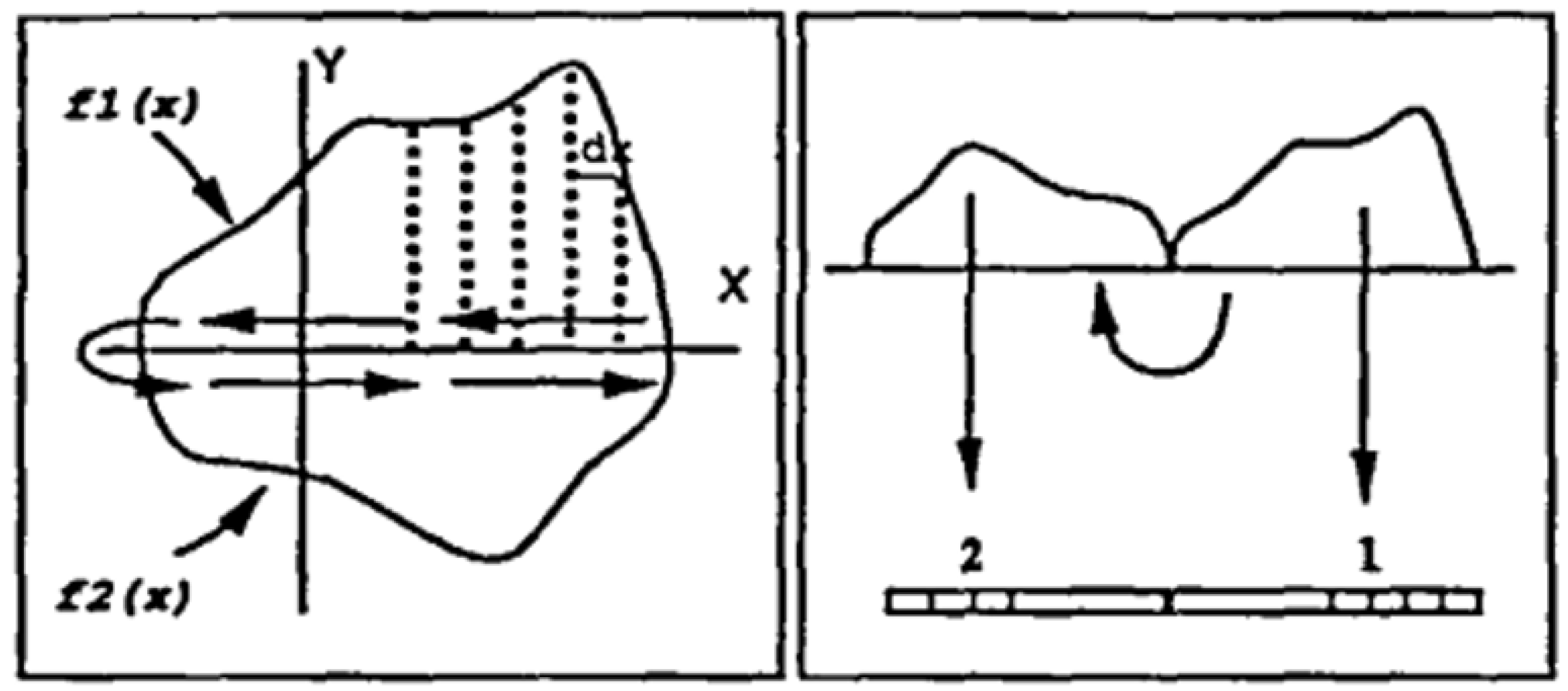
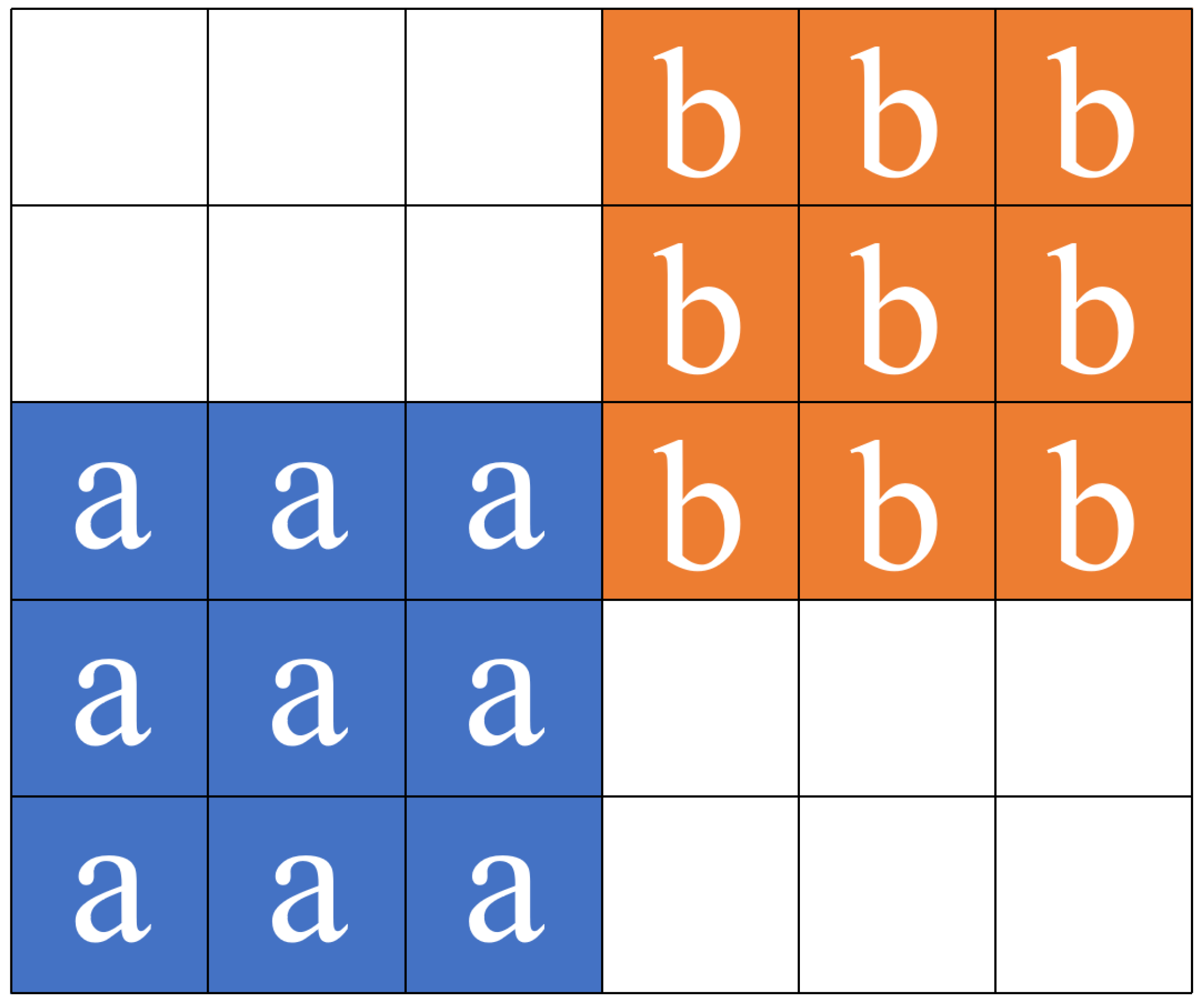
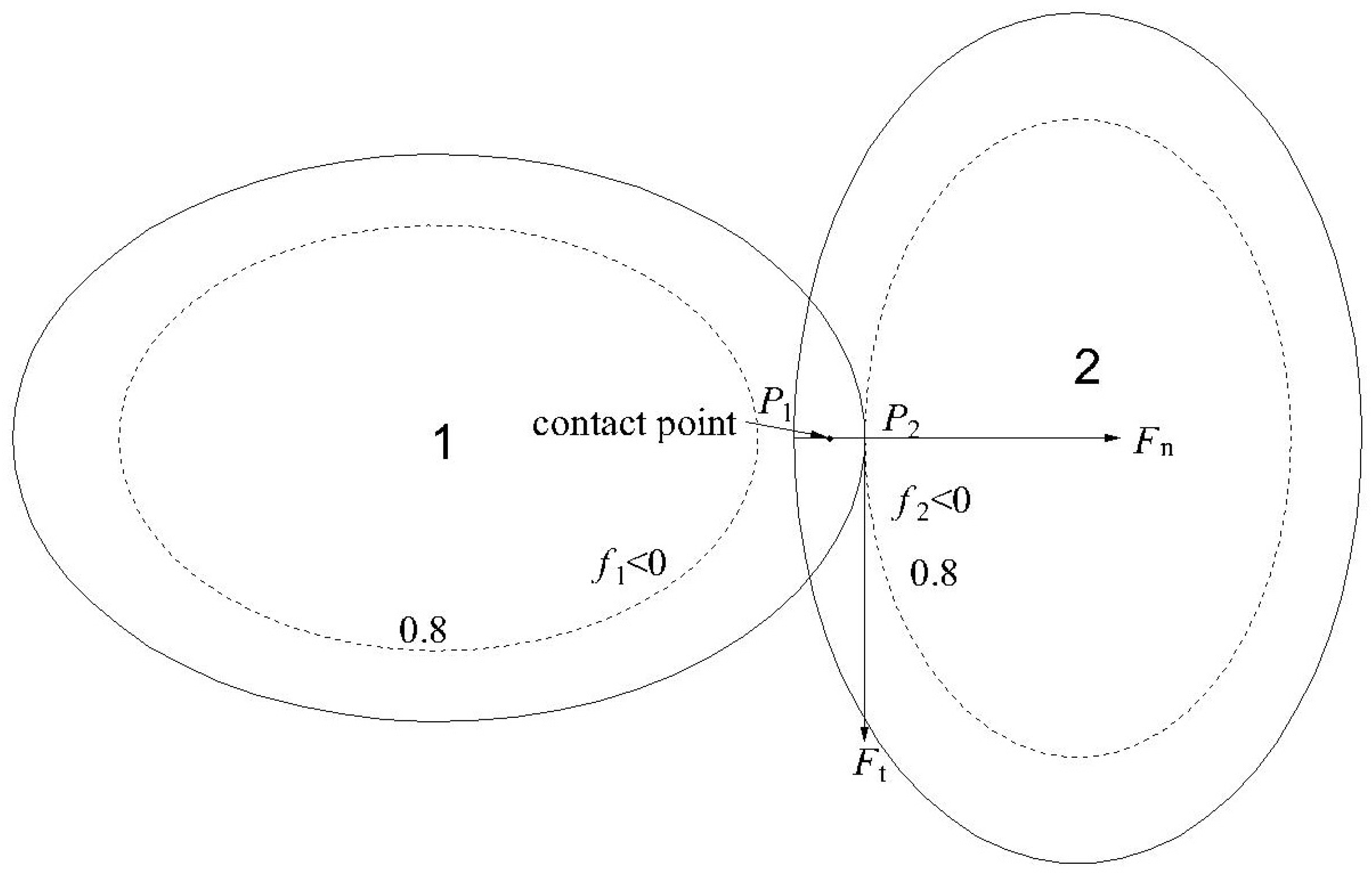
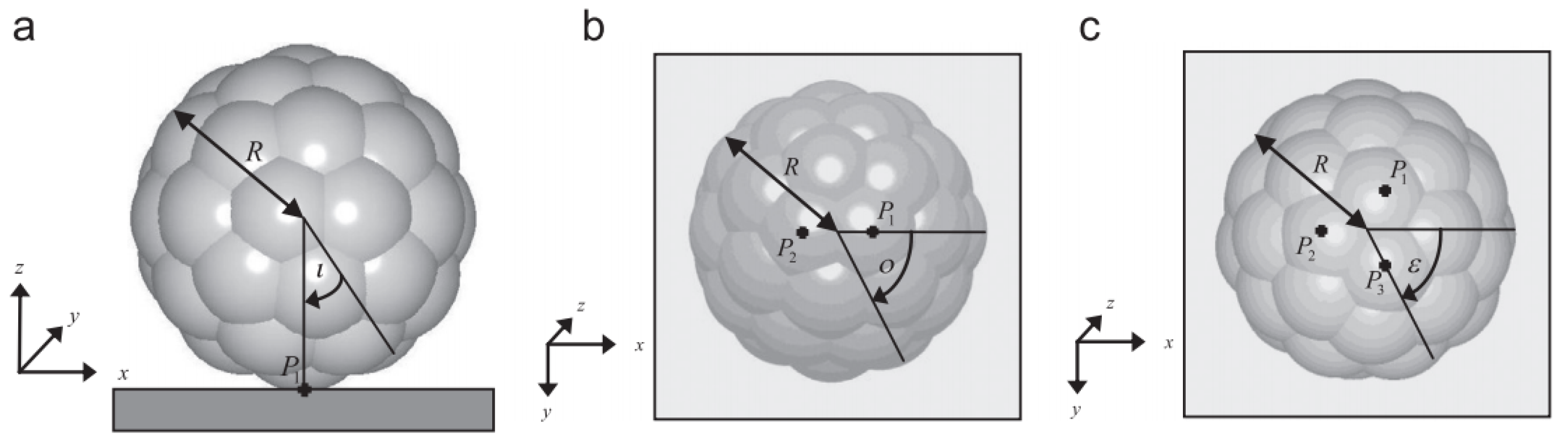

| Model Accuracy | Model Storage Space and Modeling Efficiency | |
|---|---|---|
| Virtual Space Method | Influenced by the density of the grid division and accuracy is middle. | Large storage space and middle modeling efficiency. |
| Polygon and Polyhedron Method | Accuracy for polygon and polyhedron is high. Accuracy for others is low. | Large storage space and high modeling efficiency. |
| Continuous Function Method | Accuracy for spherical, ellipsoid, etc., is high. Accuracy for complex shapes is influenced by spherical harmonics calculate order. The accuracy is middle. | Small storage space and high modeling efficiency for spheres and ellipsoids, and lower modeling efficiency for complex shapes. |
| Discrete Function Method | Influenced by the density of the discrete points, and accuracy is middle. | Large storage space and low modeling efficiency. It is commonly used in modeling based on continuous function algorithms. |
| Combined Particle Method | Influenced by the number of basic particles and accuracy is low. | Middle storage space and low modeling efficiency. |
| Correspond Aggregate Modeling Method | Collision Detection Accuracy | Efficiency of Collision Detection | |
|---|---|---|---|
| Voxel-based collision detection algorithm | Virtual Space Method | Related to the density of the virtual space grid partitioning and accuracy is middle. | Related to the density of the virtual space grid partitioning. |
| Separation axis common plane algorithms | Polygon and Polyhedron Method | High | High |
| Geometric Potential Algorithm | Continuous Function Method | High | Low |
| Simplified Geometric Potential Algorithm | Discrete Function Method | Related to the density of the discrete points and accuracy is middle. | Related to the density of the discrete points. |
| Combined Particle Collision Detection Method | Combined Particle Method | Related to the density of the number of basic particles and accuracy is low. | Related to the number of basic particles. |
| Packing Efficiency | Algorithm Cost | Packing Process | Volume Fraction * | Aggregates Shape | Aggregate Gradations | |
|---|---|---|---|---|---|---|
| Random Sequential Packing Algorithm | Low volume fraction: High High volume fraction: Low | Low | No | 0.385 [99] | Arbitrarily | Yes |
| Sequential Deposition Algorithm | Middle | Low | Yes | 0.58 [100] | Arbitrarily | Yes |
| Collective Rearrangement Algorithm | Low | Low | No | 0.64 [107] | Arbitrarily | Yes |
| Voronoi Tessellation algorithm | High | Low | No | --- | Arbitrarily | Yes |
| CT Image Algorithm | High | High | No | --- | --- | No |
Disclaimer/Publisher’s Note: The statements, opinions and data contained in all publications are solely those of the individual author(s) and contributor(s) and not of MDPI and/or the editor(s). MDPI and/or the editor(s) disclaim responsibility for any injury to people or property resulting from any ideas, methods, instructions or products referred to in the content. |
© 2023 by the authors. Licensee MDPI, Basel, Switzerland. This article is an open access article distributed under the terms and conditions of the Creative Commons Attribution (CC BY) license (https://creativecommons.org/licenses/by/4.0/).
Share and Cite
Zhang, J.; Ma, R.; Pan, Z.; Zhou, H. Review of Mesoscale Geometric Models of Concrete Materials. Buildings 2023, 13, 2428. https://doi.org/10.3390/buildings13102428
Zhang J, Ma R, Pan Z, Zhou H. Review of Mesoscale Geometric Models of Concrete Materials. Buildings. 2023; 13(10):2428. https://doi.org/10.3390/buildings13102428
Chicago/Turabian StyleZhang, Jiajun, Rujin Ma, Zichao Pan, and Haijun Zhou. 2023. "Review of Mesoscale Geometric Models of Concrete Materials" Buildings 13, no. 10: 2428. https://doi.org/10.3390/buildings13102428
APA StyleZhang, J., Ma, R., Pan, Z., & Zhou, H. (2023). Review of Mesoscale Geometric Models of Concrete Materials. Buildings, 13(10), 2428. https://doi.org/10.3390/buildings13102428