Article

A Multiscale Modelling Approach to Support Knowledge Representation of Building Codes

1
Department of Civil Engineering, Shanghai Jiao Tong University, Shanghai 200240, China
2
Shanghai Key Laboratory for Digital Maintenance of Buildings and Infrastructure, Shanghai 200240, China
*
Author to whom correspondence should be addressed.
Buildings 2022, 12(10), 1638; https://doi.org/10.3390/buildings12101638

Submission received: 13 September 2022 / Revised: 24 September 2022 / Accepted: 27 September 2022 / Published: 9 October 2022
(This article belongs to the Section Construction Management, and Computers & Digitization)

Abstract

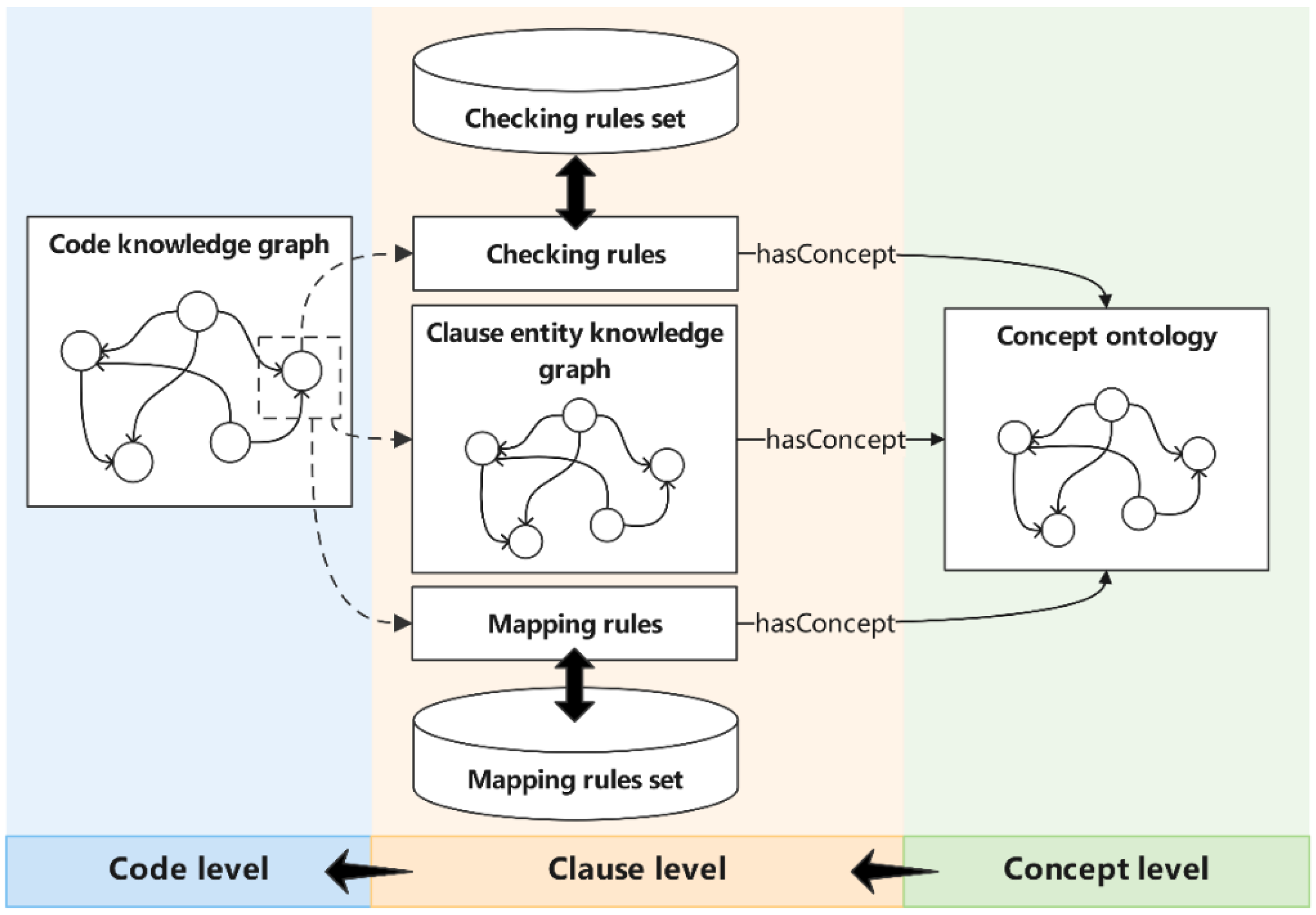
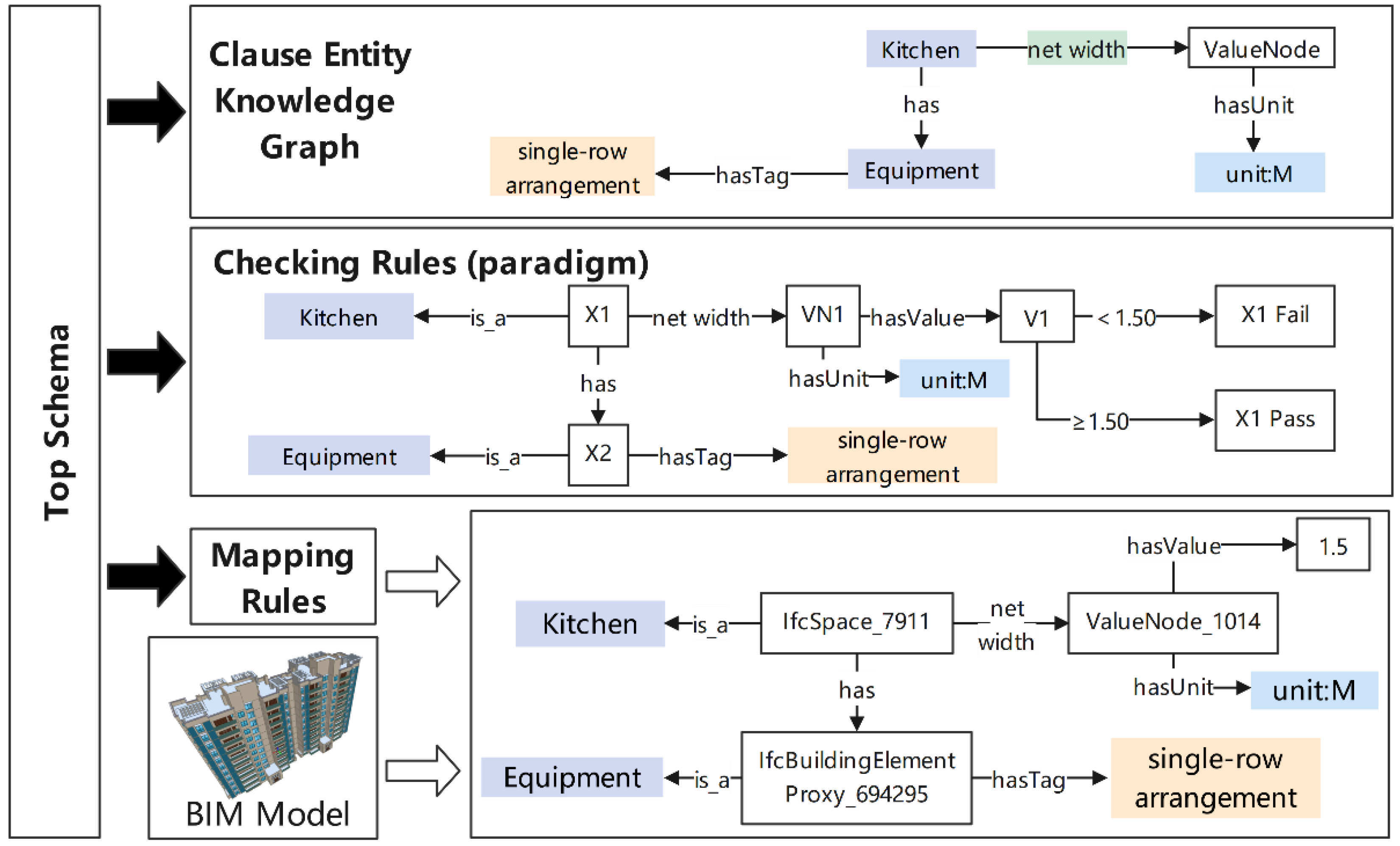
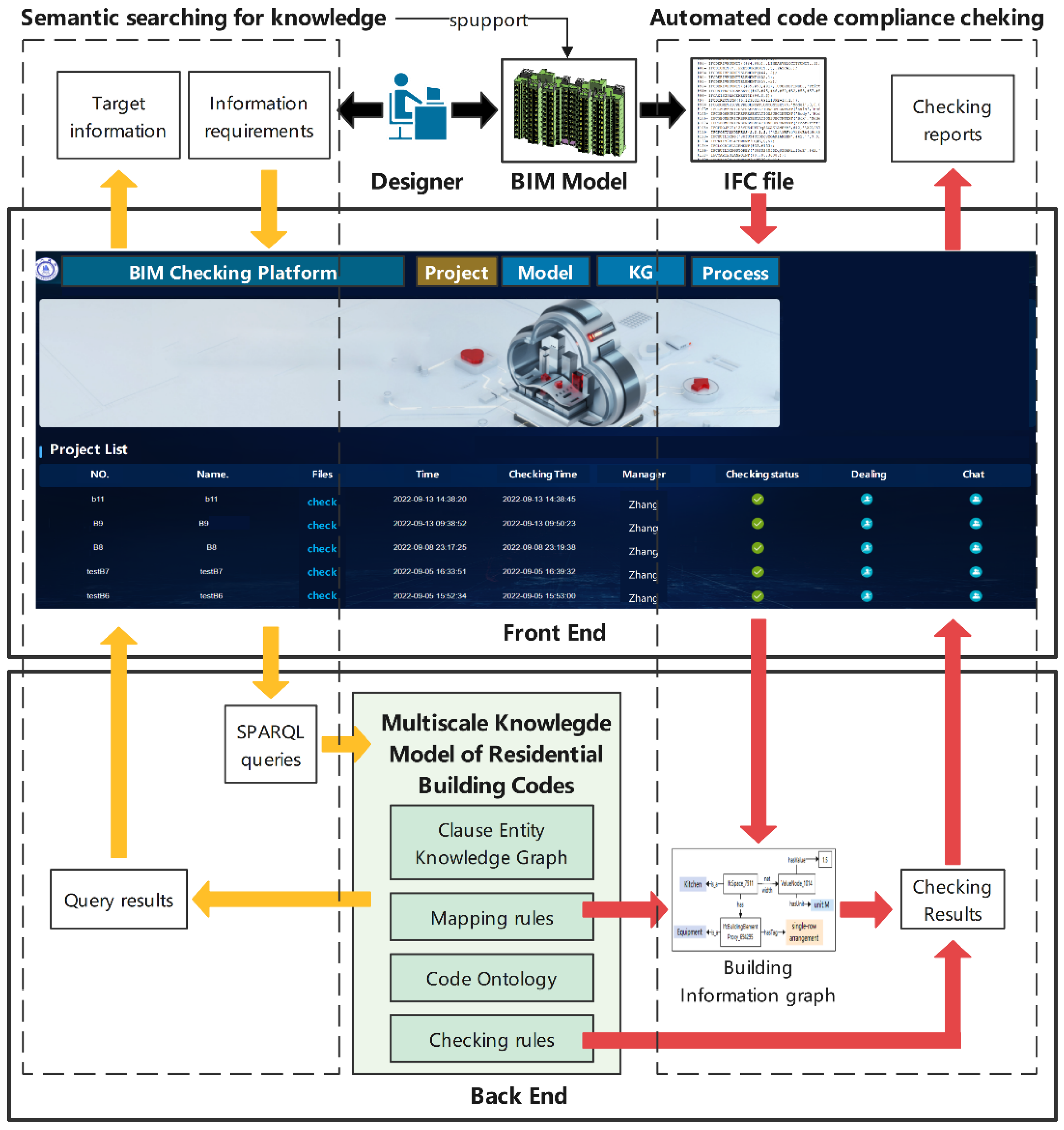
Knowledge representations of building codes are essential and critical resources for the organization, retrieval, sharing, and reuse of implicit knowledge in the AEC industry. Against this background, traditional code compliance checking is time-consuming and error-prone. This research aimed to utilize various knowledge representation techniques to establish a knowledge model of building codes to facilitate the automated code compliance checking. The proposed knowledge model consists of three levels to achieve conceptual, logical, and correlational representations of building codes. The concept-level model provides the basic knowledge elements. The clause-level model was developed based on a unified top schema and provides the conceptual graph, mapping logics, and checking logics of each clause. The code-level model is constructed based on the explicit cross-references and semantic connections between clauses. The investigations on the model applications indicate two aspects. On the one hand, the proposed knowledge model shows high potential for semantic searching and knowledge recommendation. On the other hand, the automated code-compliance-checking processes based on the proposed multiscale knowledge model can achieve three main advantages: guiding designers to create a building model with completely necessary information, mitigating the differences between building information and regulatory information, and making the checking procedures more friendly and relatively transparent to users.
Keywords: knowledge representation; multiscale knowledge model; building codes; ontology; semantic web technologies; knowledge graph; automated code compliance checking; semantic searching knowledge representation; multiscale knowledge model; building codes; ontology; semantic web technologies; knowledge graph; automated code compliance checking; semantic searching