Article

Market Commonality and Competition in Communities—An Empirical Study Based on Bidding Data of the Construction Market


School of Management Science and Real Estate, Chongqing University, Chongqing 400045, China
*
Author to whom correspondence should be addressed.
Buildings 2021, 11(10), 435; https://doi.org/10.3390/buildings11100435

Submission received: 18 August 2021 / Revised: 16 September 2021 / Accepted: 21 September 2021 / Published: 26 September 2021
(This article belongs to the Section Construction Management, and Computers & Digitization)

Abstract

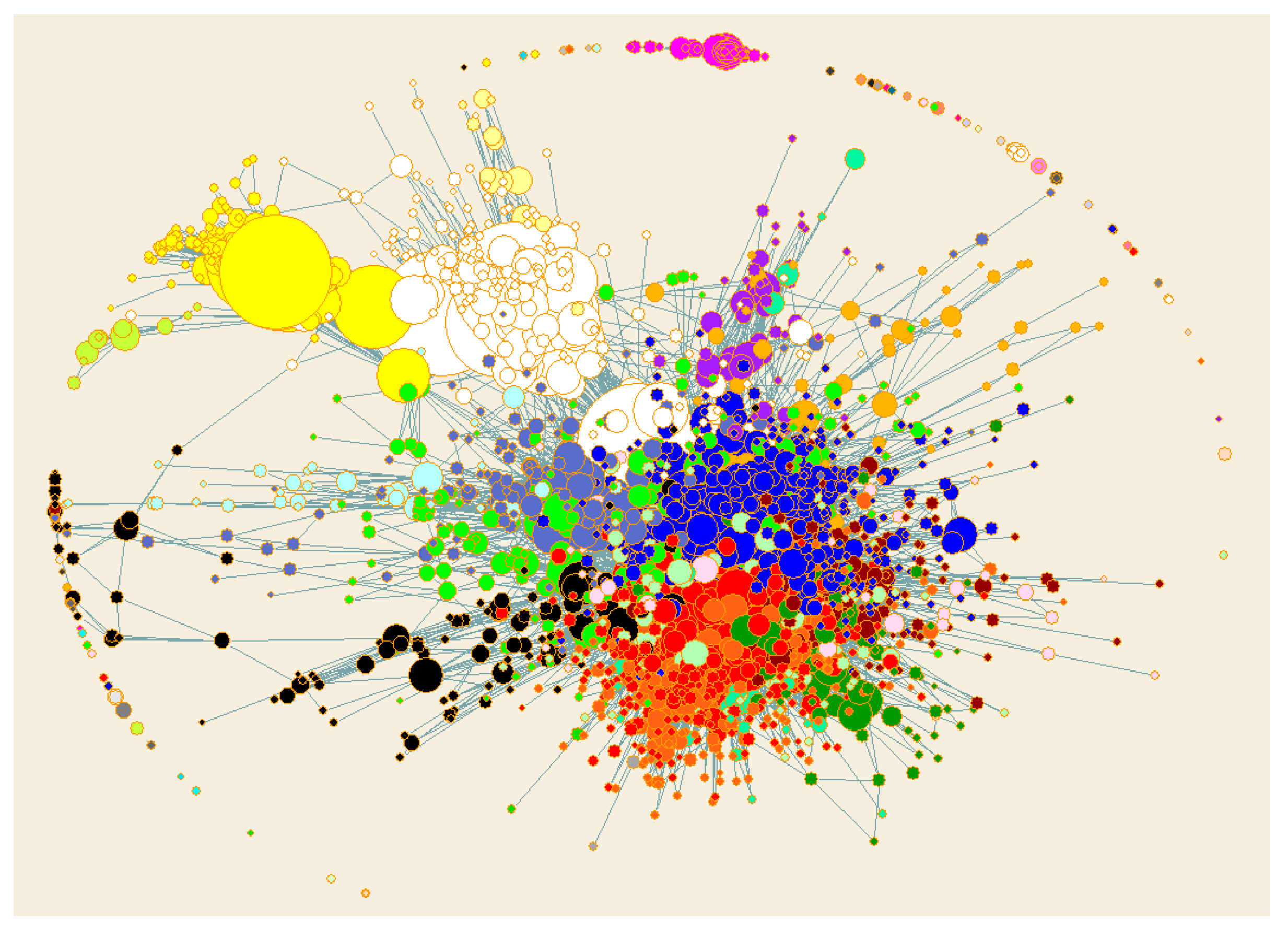
In contrast to traditional enterprise rivalry, the construction market competition is irregular on the surface due to the randomization of client targets and the one-time competition organization, which conflicts with construction businesses’ perceptions of the nature and future trend of rivalry. Therefore, contractors urgently need to accurately understand the competitive environment in which they will operate. In construction, few empirical studies exist on competitive environments from the standpoint of enterprise-to-enterprise competitive interactions. Based on market commonality, several hypotheses concerning the competitive pattern of the construction market have been proposed. To test these, a model of competing relationship networks is created using 7402 bid-winner notices for construction projects in Chongqing, China, from 2015 to 2018, followed by quantitative analysis and discussion of the model’s characteristic features. The findings suggest that there is a “community-type” rivalry in the building market, which represents the essential characteristics of market commonality. The research shows that the competitive action of construction enterprises is affected by construction technology, industrial division of labor and regional markets, and the competitive relationship between them tends to be “strong-strong”. This study reveals that the “community” competitive relationship in the construction industry may be a unique phenomenon, expands the application and development of market commonality and enterprise clusters in the construction economy, and provides theoretical guidance for construction enterprises to accurately recognize competitive behavior and decision making.
Keywords: market commonality; market competition; competitive relationship; social network; construction enterprises; bidding market commonality; market competition; competitive relationship; social network; construction enterprises; bidding