Article

Microstructure Evolution, Crystallographic Orientation Regulation and Strength-Ductility Synergy Mechanism of Al-Si-Mg Alloy Synergistically Modified by Rare Earth Y and In Situ ZrB2 Nanoparticles


1
Yunnan Key Laboratory of Integrated Computational Materials Engineering for Advanced Light Alloys, Faculty of Materials Science and Engineering, Kunming University of Science and Technology, Kunming 650093, China
2
Kunming Metallurgical Research Institute Co., Ltd., Kunming 650031, China
3
Faculty of Automobile, Yunnan Vocational College of Transportation, Kunming 650300, China
4
Faculty of Metallurgical and Energy Engineering, Kunming University of Science and Technology, Kunming 650093, China
*
Authors to whom correspondence should be addressed.
Metals 2026, 16(6), 653; https://doi.org/10.3390/met16060653 (registering DOI)
Submission received: 8 May 2026 / Revised: 8 June 2026 / Accepted: 11 June 2026 / Published: 14 June 2026
(This article belongs to the Section Metal Casting, Forming and Heat Treatment)

Abstract

To address the demand for lightweight, high-performance Al-Si-Mg alloys in aerospace and automotive industries, this work proposes a novel synergistic strengthening strategy by combining rare-earth Y microalloying and in situ synthesized ZrB2 nanoparticles to construct a hybrid reinforcement architecture. The effects of Y-ZrB2 additions on the microstructure, crystallographic orientation evolution, and mechanical properties of Al-Si-Mg alloys were systematically investigated via XRD, SEM, EBSD, and tensile/hardness tests. Results show that compared with the base alloy and single-modified alloys, the co-addition of Y and ZrB2 simultaneously enhances mechanical properties and optimizes grain structure. The optimal comprehensive performance is achieved at 0.3 wt.% Y + 2 wt.% ZrB2 after T6 heat treatment, with ultimate tensile strength of 332.87 MPa, yield strength of 271.35 MPa, elongation of 16.24%, and Vickers hardness of 153.9 HV. Phase analysis and SEM-EDS confirm a synergistic coupling relationship between Y-rich phases and ZrB2 nanoparticles. EBSD characterization reveals that Y-ZrB2 modification has negligible effect on the morphology and crystallographic orientation stability of primary α-Al grains, but effectively regulates the lattice rotation, texture redistribution, and growth behavior of eutectic Si. At the optimal composition, the fraction of high-angle grain boundaries (HAGBs) reaches a maximum of 34.3%. Furthermore, the synergistic effect significantly increases the geometrically necessary dislocation (GND) density and reduces the Schmid factor of the dominant {111}⟨110⟩ slip system, thus enhancing dislocation strengthening and plastic deformation resistance. This work clarifies the intrinsic strength-ductility synergy mechanism of Y-ZrB2 co-modified Al-Si-Mg alloys, paving a new pathway for the development of advanced lightweight aluminum alloys.

1. Introduction

The rapid expansion of high-end strategic manufacturing sectors-including aerospace, automotive, and rail transit-has led to a growing requirement for structural materials characterized by low weight and high performance in modern industrial engineering [1,2]. Aluminum alloys are widely considered among the most attractive lightweight structural candidates because of their low density and favorable specific strength [2,3,4,5,6]. Within the various aluminum alloy families, Al-Si-Mg alloys offer excellent overall service characteristics and have thus been extensively employed in industrial structural components [7,8,9,10]. Nevertheless, conventional commercially available Al-Si-Mg alloys fail to achieve a satisfactory strength-toughness balance under extreme service conditions; their limited mechanical properties remain a major barrier to large-scale industrial application [8].
Two predominant modification strategies have been explored to address these performance challenges: particle reinforcement and rare-earth microalloying. Regarding particle reinforcement, the incorporation of ceramic nanoparticles into the aluminum matrix acts as obstacles impeding dislocation glide and restricting grain boundary mobility, thereby contributing to marked enhancements in both strength and structural rigidity [11,12,13,14,15]. As for rare-earth microalloying, the addition of trace amounts of rare-earth elements can tailor microstructural features, promote the formation of stable strengthening precipitates, and consequently improve overall mechanical behavior. Previous studies have demonstrated that combined modification using rare-earth elements together with metallic alloying elements facilitates heterogeneous nucleation, refines grain size, and suppresses casting defects, thus enabling a simultaneous improvement in strength and ductility of aluminum alloys [3,5,6,16,17,18,19,20,21,22,23,24,25,26,27,28].
In recent years, the microalloying of Al-Si-Mg alloys with Y has drawn increasing attention. For instance, as reported by Xu et al., Y addition to an Al-0.6Mg-0.5Si alloy results in progressive grain refinement. The most pronounced effect, corresponding to a reduction in average grain size to 168 μm and an increase in tensile strength to 154 MPa, is observed upon the addition of 0.4 wt.% Y, representing an enhancement of 12.4% [29]. Bi et al. further showed that combining T6 heat treatment with 0.3 wt.% Y raises the tensile strength to 206.2 MPa-a 36.6% improvement relative to the as-cast condition-although the elongation decreases substantially after heat treatment [30]. Moreover, rare-earth oxides can also effectively regulate the alloy microstructure; the work of Chen et al. revealed how La2O3 refines grains and improves corrosion resistance [31]. Nonetheless, the strengthening effect attainable through single rare-earth microalloying alone remains modest and insufficient for increasingly stringent engineering requirements.
With respect to particle reinforcement, in situ synthesized nanoparticles have become a research focus in aluminum matrix composites owing to their high melting point, high hardness, and favorable lattice matching with the aluminum matrix [11,12,13,14,15]. However, single-method particle reinforcement suffers from inherent drawbacks, including poor interfacial wettability and pronounced clustering of nanoscale ceramic phases. When the ZrB2 content exceeds 3 wt.%, such agglomeration severely compromises the ductility and long-term service reliability of the alloy [11,12]. Motamedi Yegane and Alizadeh reported that introducing 10 wt.% ZrB2 into an Al5083 matrix via in situ stir casting increases the ultimate tensile strength by 18.2%, yet the strain (elongation) is reduced by 19.5% compared with the unreinforced alloy [32]. This trade-off between strength and ductility highlights the plasticity deficiency commonly associated with single-phase nanoparticle reinforcement.
To circumvent these technical bottlenecks, the synergistic introduction of rare-earth elements together with ZrB2 particles into the aluminum matrix to construct a hybrid reinforcement architecture has emerged as an effective strategy to overcome the limitations of conventional modification approaches. Kai et al. demonstrated that the combined introduction of in situ ZrB2 nanoparticles and Sc into a 7N01 Al alloy mitigates particle agglomeration, modifies Fe-rich precipitates, and refines the grain structure. These microstructural changes translate into enhanced mechanical properties, with the yield strength, ultimate tensile strength, and elongation reaching 447 MPa, 481 MPa, and 9.6%, respectively-representing gains of 16.1%, 11.3%, and 29.7% compared to the unreinforced matrix [33]. Ahmad et al. microalloyed an Al-Si-Mg alloy with Sc and Zr and observed that the combined addition refines the grain structure, alters precipitation behavior, and thereby contributes to a more favorable strength-ductility combination [34]. Ye et al. employed a high-throughput computational approach to screen microalloyed Al-Mg-Si alloys and identified Yb, Sc, and Ce as efficient microalloying elements; the enhanced overall performance of the material arises primarily from the formation of rare-earth-based strengthening phases within the alloy [35]. Collectively, these investigations demonstrate that the synergistic effect between rare-earth elements and ZrB2 particles can effectively alleviate particle agglomeration, improve interfacial bonding, refine the grain structure, and enhance precipitation strengthening, thereby significantly optimizing the comprehensive mechanical properties of the alloys.
Based on the above considerations, this study synergistically combines in situ synthesized ZrB2 nanoparticles with rare-earth Y microalloying to create a novel hybrid strengthening system in an Al-Si-Mg alloy. The influence of Y on the microstructural characteristics and crystallographic orientation distribution of the ZrB2-modified alloy is systematically examined, and the fundamental mechanisms governing the observed synergy between reinforcement and toughening are clarified. The work aims to uncover the microstructural evolution behavior of Al-Si-Mg alloys and to provide a theoretical basis for the development of new high-performance lightweight aluminum alloys suitable for demanding industrial environments.

2. Experimental Procedure

2.1. Material Preparation and Heat Treatment Process

TheAl-Si-Mg-Y-ZrB2 alloy used in this study was prepared using Al-3B, Al-10Zr, and Al-5Y master alloys. Based on the as-prepared Al-Si-Mg-ZrB2 alloy, an appropriate amount of Al-5Y master alloy was added to adjust the Y content to the optimal value of 0.3 wt.%, with the aim of further optimizing the microstructure and mechanical properties of the alloy [36]. The chemical composition of the alloy was determined by inductively coupled plasma atomic emission spectrometry (ICP-AES, Agilent Technologies Inc., Santa Clara, CA, USA), and the results of the elemental analysis are given in Table 1.
The specific preparation procedure was as follows. A graphite crucible was preheated at 423 K for 20 min. A predetermined amount of Al-Si-Mg alloy was weighed, placed into the preheated graphite crucible, and melted at 1123 K. After the alloy was completely melted, Al-3B and Al-10Zr master alloys were added. To ensure sufficient reaction and in situ formation of ZrB2 nanoparticles, the melt was maintained at 1123 K for 30 min with simultaneous refining. Subsequently, the melt temperature was raised to 1193 K, and Al-5Y master alloy was added to tailor the microstructure, followed by another holding period of 30 min. After removing the crucible, the high-temperature melt was mechanically stirred to ensure uniform distribution of yttrium in the aluminum liquid. When the melt temperature decreased to 993 K, the melt was cast into a mold. Finally, the as-cast alloy was subjected to T6 heat treatment, which consisted of solution treatment at 808 K for 6 h followed by aging at 443 K for 7 h.

2.2. Material Characterization and Testing Methods

To prepare specimens for EBSD observation, the Al-Si-Mg-Y-ZrB2 alloy samples were mechanically ground using SiC abrasive papers with grit sizes progressively increased from 180 to 2000 mesh. This was followed by electrolytic polishing carried out at 253 K under an applied voltage of 12 V for 30 s in a solution of perchloric acid and ethanol (HClO4:C2H5OH = 1:9 by volume), which yielded a surface free from deformation-induced strain.
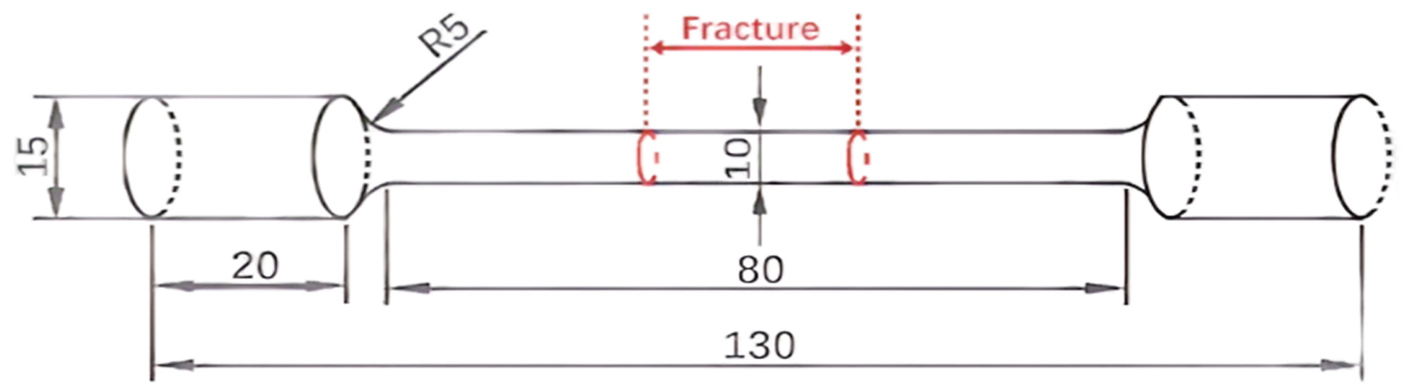
Mechanical property testing: According to GB/T 40123-2021 [37], the specimen was machined into the shape shown in Figure 1. Tensile tests were performed using an Shimadzu AG-X plus electronic universal testing machine (Shimadzu Corporation, Kyoto, Japan) at a crosshead speed of 0.5 mm/min. The tensile properties were reported as the average values of three replicate measurements.
Vickers hardness testing: Vickers hardness tests were conducted in accordance with GB/T 4340.1-2009 [38], with a test force of 4.9 N and a dwell time of 15 s. Fifteen random indentations were made on the specimen, and the arithmetic mean of the measurements was calculated.
Electron backscatter diffraction (EBSD) measurements were performed using a scanning electron microscope (SEM) equipped with an Oxford Instruments Nordlys Max3 detector (Oxford Instruments plc, Abingdon, Oxfordshire, UK) to acquire crystallographic orientation data. The acquired EBSD data were subsequently processed with TSL OIM™ analysis software(Version 7.3, EDAX, Inc., Mahwah, NJ, USA) to extract information on grain orientation, texture distribution, and grain boundary characteristics.

3. Results

3.1. XRD Phase Analysis

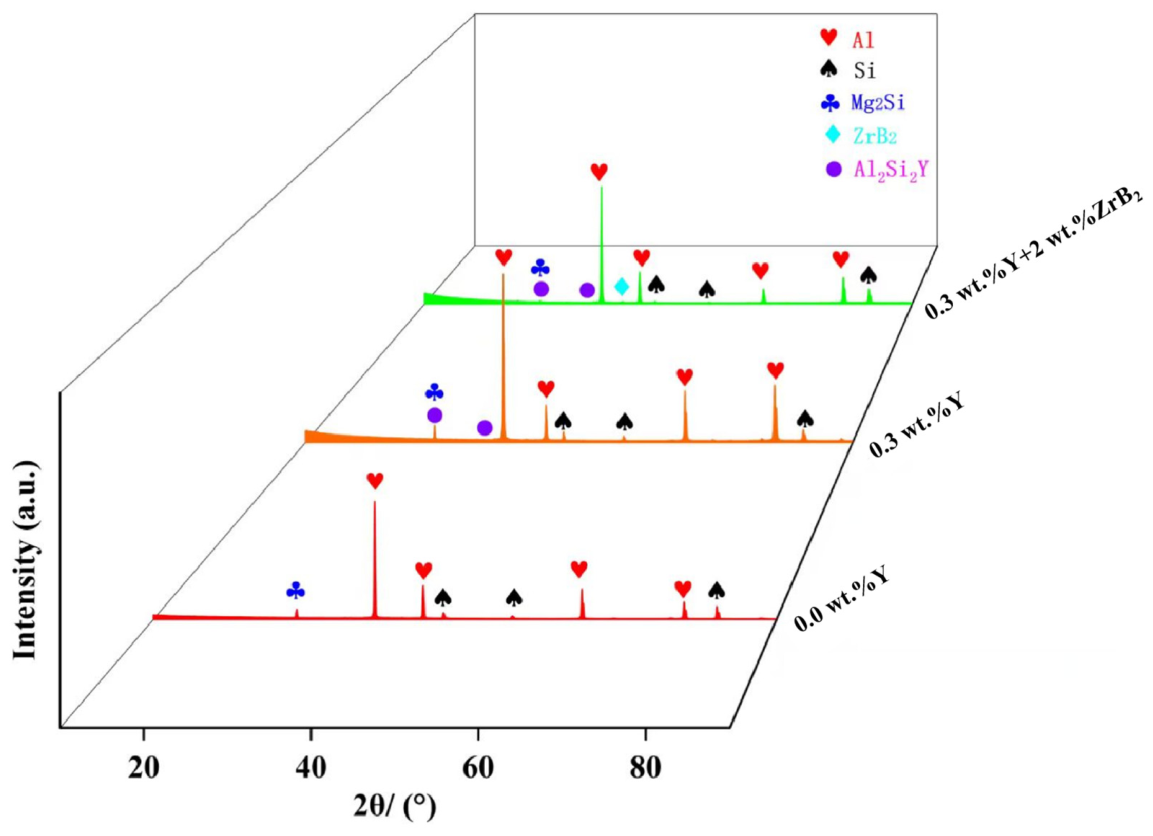
X-ray diffraction (XRD) was used to identify the phase composition of the investigated alloys, and the resulting patterns are shown in Figure 2. For the base Al-Si-Mg alloy, the diffraction pattern exhibits only peaks attributable to α-Al, eutectic Si, and the Mg2Si phase, in agreement with the equilibrium phase assemblage reported for conventional cast Al-Si-Mg alloys.
Upon the addition of 0.3 wt.% Y, additional diffraction reflections corresponding to the ternary intermetallic Al2Si2Y phase become observable [39,40]. These new peaks, however, are found to partially overlap with those of the eutectic Si phase. This overlap arises primarily from two aspects. First, Al2Si2Y adopts a hexagonal crystal system (space group P6/mmm, a = b = 0.420 nm, c = 0.664 nm), whereas Si crystallizes in a diamond cubic structure (space group Fd-3m, a = 0.543 nm). The interplanar spacings of certain planes in these two phases are very close, leading to nearly identical diffraction angles under Cu-Kα radiation [6]. Second, because the Y content is only 0.3 wt.%, the volume fraction of the in situ formed Al2Si2Y phase is inherently low. Consequently, the diffraction signal from this intermetallic phase is weak and can be easily masked by the intense peaks of the predominant Si phase.
For the alloy synergistically modified with 0.3 wt.% Y and 2 wt.% ZrB2, the characteristic peaks of both the in situ synthesized ZrB2 particles and the Y-containing phase appear around 2θ ≈ 35°, where they overlap substantially. This overlapping suggests spatial proximity and likely interfacial interaction between the ZrB2 nanoparticles and the rare-earth phase. Such an interpretation is further supported by the subsequent SEM-EDS analysis.

3.2. SEM-EDS Results

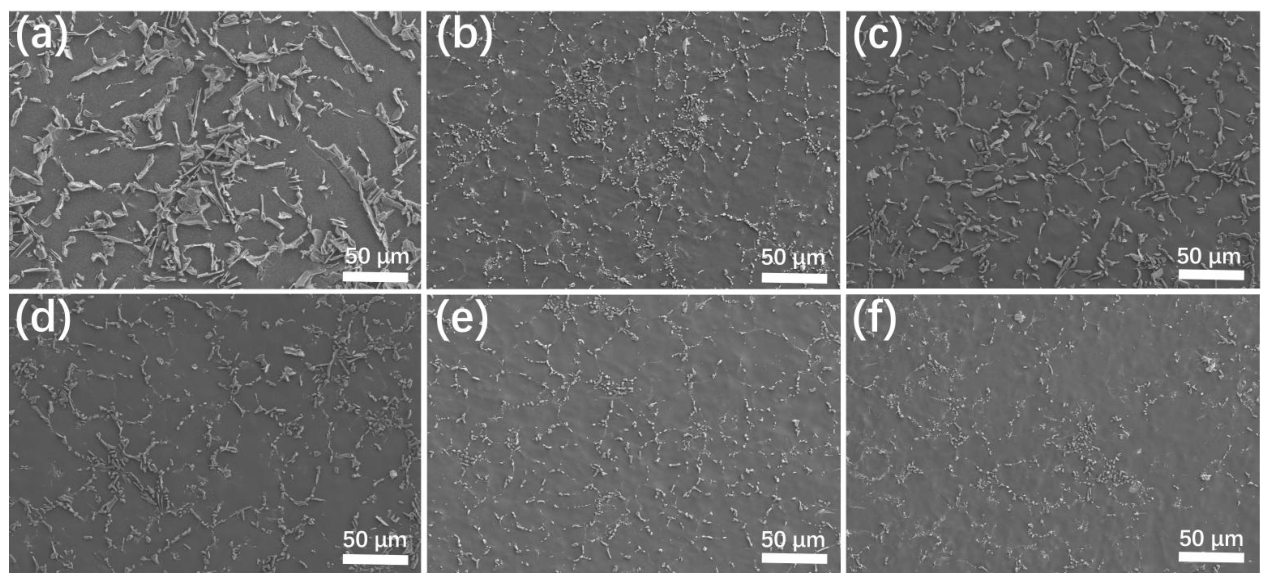
The microstructural evolution of the investigated alloys was examined by scanning electron microscopy (SEM), and the representative micrographs are compiled in Figure 3, including the unmodified base alloy, the alloys singly modified with 0.3 wt.% Y or 2 wt.% ZrB2, and the Al-Si-Mg alloys compositely modified with different Y-ZrB2 ratios.
Figure 3a displays the microstructure of the as-cast base alloy. After electropolishing treatment, the eutectic Si in the matrix exhibits a typical coarse flake-like morphology, a characteristic feature of conventional as-cast Al-Si-Mg alloys. Such a flake-like eutectic Si morphology is generally considered detrimental to mechanical performance, as the sharp edges of the Si plates tend to act as stress concentrators, promoting premature crack initiation under loading [41].
Compared with the base alloy, the introduction of the Y-ZrB2 modifying phases induces a marked refinement of the eutectic Si structure. As shown in Figure 3b–f, with increasing Y-ZrB2 composite addition, the eutectic Si undergoes progressive morphological transformation, accompanied by a continuous decrease in grain size. This refinement behavior is commonly observed in Al-Si-Mg alloys upon rare-earth microalloying, where rare-earth elements suppress the growth of eutectic Si by adsorbing at the solid-liquid interface and restricting Si atom diffusion [31,42]. At the optimal modification composition of 0.3 wt.% Y + 2 wt.%ZrB2 (Figure 3e), the originally coarse flake—like eutectic Si is substantially refined and completely transformed into a uniform, fine rod-like morphology, achieving the most pronounced refinement and morphological modification effect. This morphological transition from flake-like to rod-like Si is known to significantly reduce stress concentration at the Si-matrix interface, thereby contributing to enhanced ductility [30].
Upon further increasing the Y-ZrB2 addition (Figure 3f), the modification effect noticeably deteriorates: the refined, uniform rod-like eutectic Si regresses into a mixed morphology consisting of both flake-like and rod-like features, accompanied by a pronounced loss of microstructural uniformity. Such over-modification behavior is well documented in rare-earth modified Al-Si alloys, where excessive modifier addition leads to the reappearance of coarse Si phases due to the saturation of adsorption sites and the formation of coarser intermetallic compounds [42].
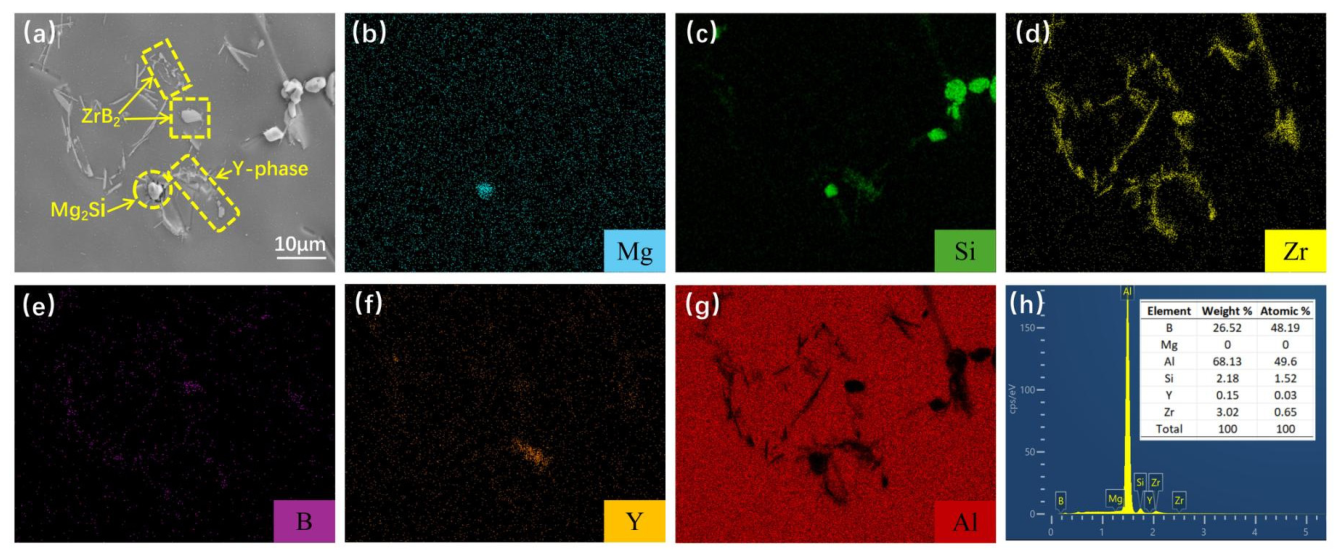
Figure 4 presents the EDS elemental mapping results of the Al-Si-Mg alloy compositely modified with 0.3 wt.%Y + 2 wt.%ZrB2. The modified alloy matrix simultaneously contains Y-rich rare-earth phases, in situ ZrB2 nanoparticles, and Mg2Si strengthening phases. Notably, the elemental distribution maps reveal that the spatial distribution of the in situ ZrB2 nanoparticles and the Y-containing rare-earth phases largely overlap. This observation provides direct evidence of spatial proximity and potential interfacial interaction between the two modifying phases.
Such overlapping distribution patterns have been reported in several studies on synergistic modification in aluminum matrix composites, where the co-location of reinforcing particles and rare-earth phases facilitates load transfer across the interface and retards crack propagation [33,43]. This result corroborates the aforementioned XRD analysis (Figure 2), in which the characteristic diffraction peaks of the ZrB2 phase and the rare-earth Al2Si2Y phase overlap at 2θ ≈ 35°. Collectively, the combined XRD and EDS evidence confirms the existence of a significant interfacial coupling and synergistic effect between the in situ ZrB2 nanoparticles and the rare-earth Y phase, leading to the formation of an integrated composite modification system within the Al-Si-Mg matrix.

3.3. Mechanical Properties and Vickers Hardness

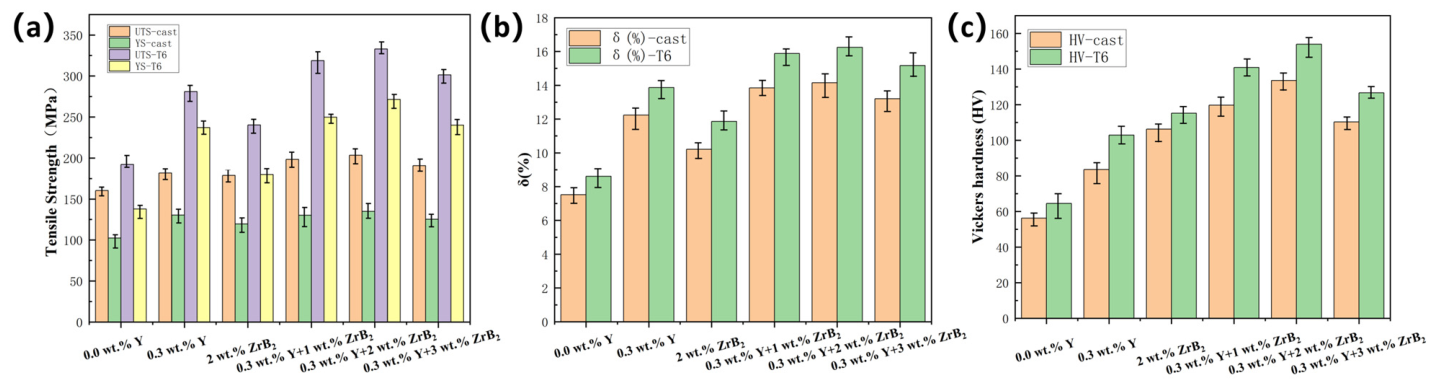
Figure 5 presents the ultimate tensile strength (UTS), yield strength (YS), elongation after fracture (δ), and Vickers hardness (HV) of the base alloy, the alloy singly modified with 0.3 wt.% Y, the alloy singly modified with 2 wt.% ZrB2, and the Al-Si-Mg alloys compositely modified with different ratios of Y-ZrB2.
In the as-cast condition, the base alloy exhibits a UTS of 159.11 MPa, YS of 102.34 MPa, δ of 7.75%, and HV of 56.2. With the addition of 0.3 wt.%Y, these properties increase to 181.78 MPa, 130.42 MPa, 12.54%, and 83.5 HV, respectively. For the alloy singly modified with 2 wt.% ZrB2, the corresponding values are 178.85 MPa, 119.55 MPa, 10.21%, and 106.2 HV.
A comparison reveals that the single ZrB2-modified alloy exhibits lower strength and elongation but higher hardness than the single Y-modified alloy. This discrepancy arises from the distinct strengthening mechanisms of each approach. ZrB2 primarily enhances hardness through grain refinement and dispersion strengthening derived from the hard ceramic particles [32], while its influence on the morphological modification of eutectic Si is limited. Consequently, a substantial amount of coarse flake-like eutectic Si persists in the microstructure. Under external loading, these flake-like Si particles readily induce stress concentration and promote microcrack initiation, thereby degrading the load-bearing capacity and fracture resistance of the alloy [44]. In contrast, trace amounts of rare earth Y effectively refine and spheroidize the coarse eutectic Si, mitigating stress concentration risks, while simultaneously achieving multiple synergistic strengthening and toughening effects via grain refinement, morphological modification, and second-phase precipitation strengthening [30].
When 0.3 wt.%Y and 2 wt.%ZrB2 are added in combination, the as-cast alloy achieves the optimum comprehensive mechanical properties, with UTS, YS, δ, and HV reaching 203.46 MPa, 134.78 MPa, 14.15%, and 133.5 HV, respectively. After T6 heat treatment, the properties of this hybrid modified alloy are further significantly enhanced, attaining 332.87 MPa, 271.35 MPa, 16.24%, and 153.9 HV, respectively, representing a substantial improvement over the base alloy. It should be noted that T6 treatment of Al-Si-Mg alloys typically involves solution treatment followed by artificial aging, which promotes the precipitation of fine Mg2Si strengthening phases uniformly dispersed within the α-Al matrix, thereby achieving precipitation hardening [41]. This precipitation hardening effect, combined with the morphological refinement of eutectic Si induced by Y addition and the dispersion strengthening from in situ ZrB2 nanoparticles, accounts for the exceptional mechanical performance of the synergistically modified alloy in the T6 condition.
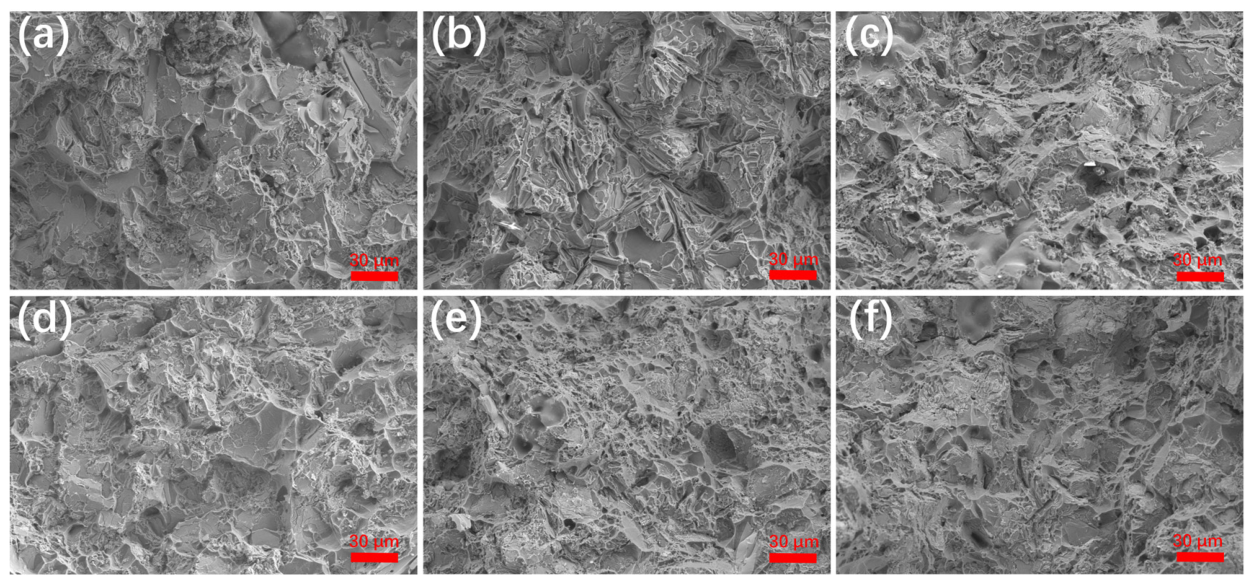
Figure 6 shows the fracture morphologies of the base alloy, the alloy singly modified with 0.3 wt.% Y, the alloy singly modified with 2 wt.% ZrB2, and the Al-Si-Mg alloys compositely modified with different ratios of Y-ZrB2.
For the base alloy (Figure 6a), the fracture surface exhibits extensive flat cleavage facets, river patterns, and a few tear ridges, with few and unevenly distributed dimples, indicating predominantly brittle fracture. The coarse flake-like eutectic Si phase acts as crack initiation sites during fracture, which is consistent with the low elongation data of this alloy. This phenomenon aligns with well-established observations that microcracks in Al-Si-Mg cast alloys are predominantly initiated within Si particles, where shear bands precede particle fracture and dislocation pile-up serves as the dominant damage-initiating process [45].
After the single addition of Y or ZrB2 (Figure 6b,c), the alloy performance is moderately improved, with an increased number of dimples and reduced cleavage facets, exhibiting a mixed brittle-ductile fracture characteristic. Upon the combined addition of Y and ZrB2 (Figure 6d–f), the number of dimples further increases, their size distribution becomes more uniform, and brittle cleavage facets are further reduced, indicating the onset of a synergistic modification effect. At the addition level of 0.3 wt.% Y + 2 wt.% ZrB2 (Figure 6e), the fracture surface consists of numerous fine and uniformly distributed dimples, displaying a typical ductile fracture mode. This indicates that crack propagation is effectively inhibited, and the plasticity reaches its optimum. With excessive addition, the dimples become uneven in size, secondary cracks increase, and the plasticity declines.
The transition from brittle cleavage to ductile dimple fracture is directly correlated with the morphological evolution of eutectic Si from coarse flakes to fine rods/spheroids, which effectively reduces stress concentration at the Si-matrix interface and retards premature crack nucleation [46]. Furthermore, the presence of uniformly dispersed ZrB2 nanoparticles can induce crack deflection and crack bridging, contributing to enhanced ductile failure behavior [47].
The evolution of fracture morphologies is in good agreement with the mechanical property test results, confirming the regulatory role of Y-ZrB2 synergistic modification on the fracture mode of the alloy.

3.4. Orientation Distribution of Microstructure

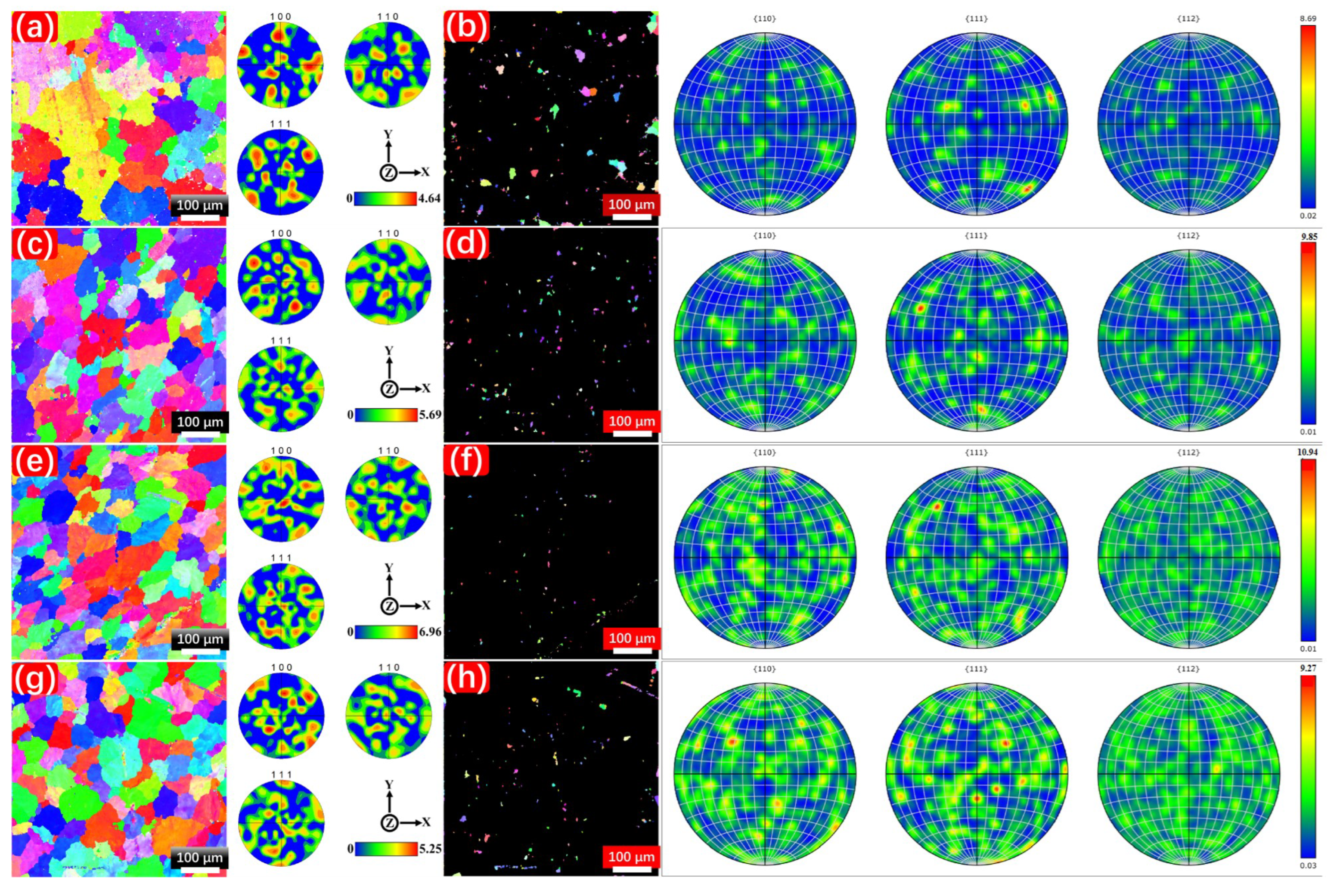
To elucidate the synergistic role of in situ ZrB2 nanoparticles and rare-earth Y in governing the crystallographic orientation evolution of the Al-Si-Mg matrix, systematic electron backscatter diffraction (EBSD) characterization was performed. Figure 7 presents the EBSD inverse pole figure (IPF) maps of Al-Si-Mg alloys incorporating different amounts of the Y-ZrB2 composite modifier.
Irrespective of the Y-ZrB2 addition level, the primary α-Al grains consistently exhibit an equiaxed morphology. With increasing ZrB2 nanoparticle content, secondary dendrites progressively appear surrounding the α-Al grains. However, the morphological characteristics of the α-Al grains remain largely unaffected by the compositional variations. This observation aligns with the EBSD findings reported by Liu et al. [36], in which the addition of Y-containing nanoscale precipitates was shown to have a negligible influence on the crystallographic orientation stability of α-Al grains. Furthermore, the crystallographic orientations of the α-Al grains are randomly distributed across the {100}, {110}, and {111} planes, without the formation of any pronounced preferred texture, indicating that the Y-ZrB2 composite modification barely alters the intrinsic crystallographic configuration of the α-Al matrix, which thus retains its disordered growth characteristic.
By contrast, the crystallographic orientation and texture evolution of eutectic Si are significantly regulated by the Y-ZrB2 addition. In the unmodified Al-Si-Mg alloy, eutectic Si exhibits a distinct preferred growth along the {111} Si plane, whereas no notable texture features appear on the {110} or {112} planes. This preferential orientation is consistent with the well-established impurity-induced twinning (IIT) mechanism, where modifier atoms preferentially adsorb at the {111} Si twin re-entrant edges, thereby facilitating growth along specific crystallographic directions [48]. As the Y-ZrB2 content increases, prominent texture spots emerge on the {110} plane, implying substantial orientation deviation and lattice rotation of the eutectic Si grains. This evolution substantiates the mechanism that Y atoms preferentially segregate to the growth steps of the Si phase, increasing its lattice constant and thereby suppressing the preferential growth along {111} Si [15]. This is further evidenced by the possible dissolution of Y into ZrB2 particles during processing, leading to the formation of a nano-modified interfacial layer that effectively constrains the directional solidification of eutectic Si [49].
At the optimal addition level of 0.3 wt.% Y + 2 wt.% ZrB2, the texture intensity of eutectic Si increases from 8.69 (base alloy) to 10.94, reflecting the maximal regulatory effect on texture refinement. Excessive ZrB2 addition results in a progressive decline in texture intensity, which is primarily ascribed to the orientation randomization and redistribution of partial eutectic Si grains. This behavior is reminiscent of findings in textured porous Si3N4-ZrB2 composites, where increasing ZrB2 content was observed to inhibit the degree of grain orientation [50]. The deterioration of texture intensity at excessive modifier levels suggests a saturation of the adsorption sites for Y atoms on the ZrB2 nanoparticle surfaces, accompanied by the reappearance of coarser eutectic Si structures, which aligns with the microstructural observations presented in Figure 3.

3.5. Grain Boundary Character and Grain Size Distribution

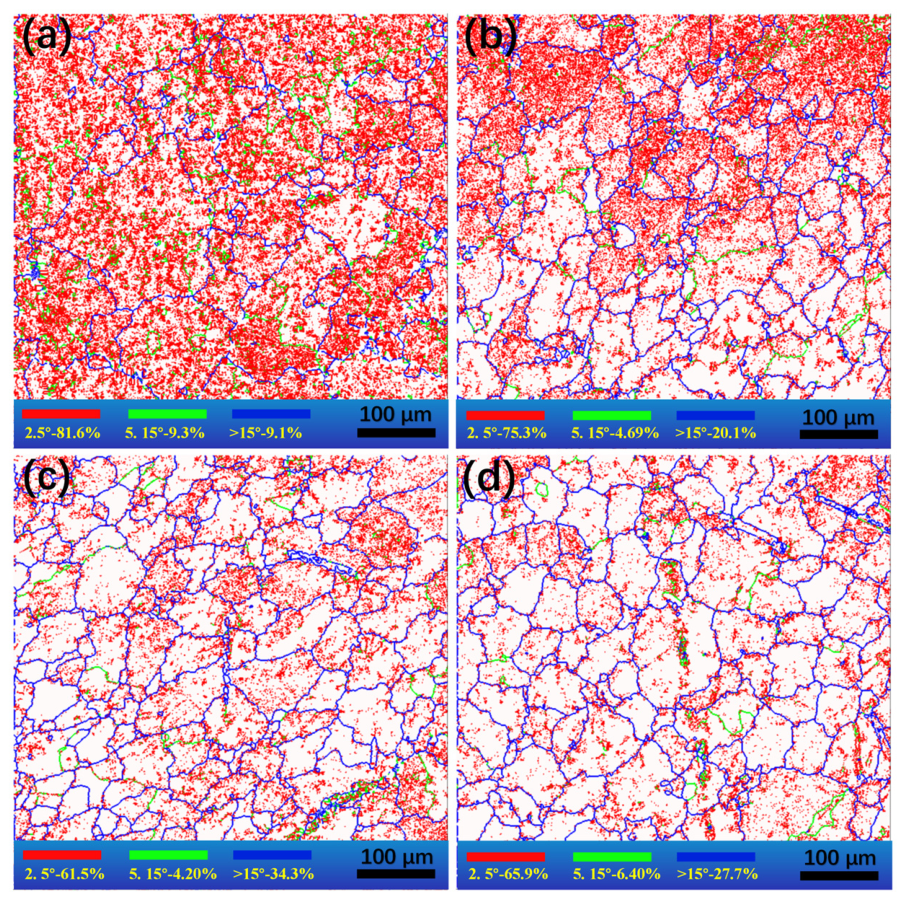
Figure 8 presents the grain boundary character distribution (GBCD) of Al-Si-Mg alloys with various Y-ZrB2 additions. In the figure, red lines denote low-angle grain boundaries (LAGBs, 2–5°), green lines represent medium-angle grain boundaries (MAGBs, 5–15°), and blue lines indicate high-angle grain boundaries (HAGBs, >15°). Statistical analysis reveals that the unmodified Al-Si-Mg alloy is dominated by LAGBs with a proportion of 81.6%, whereas the fractions of MAGBs and HAGBs are only 9.3% and 9.1%, respectively, exhibiting the typical LAGB-dominated microstructure characteristic of as-cast aluminum alloys.
The introduction of Y-ZrB2 composite phases enables preferential adsorption and enrichment of nanoparticles at grain boundaries, generating an obvious grain boundary pinning effect via the Zener mechanism and promoting the progressive transition from LAGBs to MAGBs and HAGBs. This phenomenon is consistent with the Zener pinning effect reported by Gutta et al., where nano-sized ceramic particles at grain boundaries effectively suppress grain growth and promote the evolution of boundary misorientation [51]. At the optimal alloy composition of 0.3 wt.% Y + 2 wt.% ZrB2, the HAGB fraction reaches a peak value of 34.3%, achieving the most favorable reconstruction of grain boundary structure. A high HAGB fraction is known to be beneficial for mechanical properties, as HAGBs can more effectively impede dislocation motion and hinder crack propagation compared to LAGBs [52].
Further increasing the ZrB2 content leads to severe nanoparticle agglomeration, which weakens the interfacial modification efficiency of rare earth Y and reverses the grain boundary evolution trend, inducing a backward transformation from HAGBs to MAGBs and LAGBs. Statistical data reveal that the HAGB fraction decreases from 34.3% to 27.7%, while the LAGB fraction increases from 61.5% to 65.9%. This phenomenon originates from excessive ZrB2 accumulation at grain boundaries, which greatly compromises the grain refinement and interfacial optimization effect of rare earth Y. It should be noted that this behavior is analogous to the over-modification phenomenon observed in Al-Si-Mg alloys with excessive Sr addition, where the precipitation of hard Sr-rich particles leads to a deterioration in mechanical properties [53].
Excessive Y-ZrB2 addition introduces abundant microstructural defects into the matrix, remarkably increasing dislocation density and enabling LAGBs to store high strain energy. Although the stored energy provides a driving force for grain boundary misorientation transition, high-density defects reduce the intergranular fracture energy, weaken the coordinated deformation capacity of grain boundaries, and eventually lead to synchronous deterioration of alloy strength and ductility.
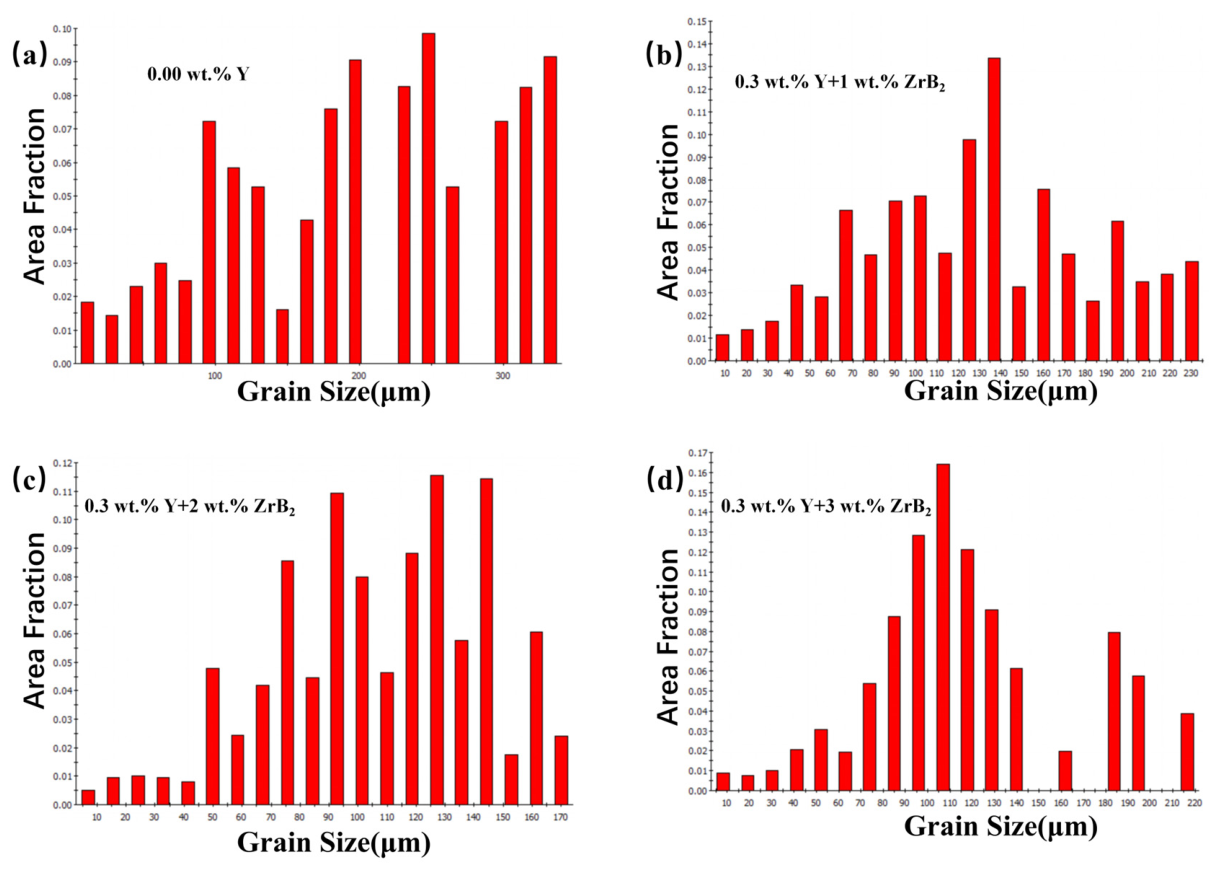
Figure 9 presents the grain size distribution histograms of the Al-Si-Mg alloys with different Y-ZrB2 addition levels. Combined with the grain boundary misorientation analysis results in Figure 8, it can be observed that the base alloy exhibits a wide grain size distribution range, corresponding to the relatively low proportion of high-angle grain boundaries (HAGBs, >15°) shown in Figure 8a. The coarse-grained structure leads to a limited total grain boundary length and a relatively high proportion of low-angle grain boundaries.
After the introduction of Y-ZrB2 composite modification, the grain size distribution range narrows significantly, and the grain refinement effect is evident, accompanied by a substantial increase in the total grain boundary length, which is consistent with the increasing trend of the HAGB proportion in Figure 8. Among all the compositions, the addition of 0.3 wt.% Y + 2 wt.% ZrB2 yields a grain size predominantly concentrated in the range of 100–130 µm, exhibiting the narrowest distribution and the optimal refinement effect. This corresponds to the highest HAGB proportion shown in Figure 8c, indicating that the grain structure uniformity is optimal under this condition. The abundant HAGBs effectively impede crack propagation, which is in good agreement with the observed improvement in mechanical properties.
With a further increase in the Y-ZrB2 addition level, the grain refinement effect weakens, the size distribution broadens, and the HAGB proportion decreases, ultimately leading to a decline in the mechanical properties of the alloy. This behavior is consistent with the over-modification phenomenon documented in rare-earth modified Al-Si alloys, where excessive modifier addition leads to the reappearance of coarse Si phases and a deterioration of grain uniformity [54].

3.6. Grain Boundary Misorientation Evolution

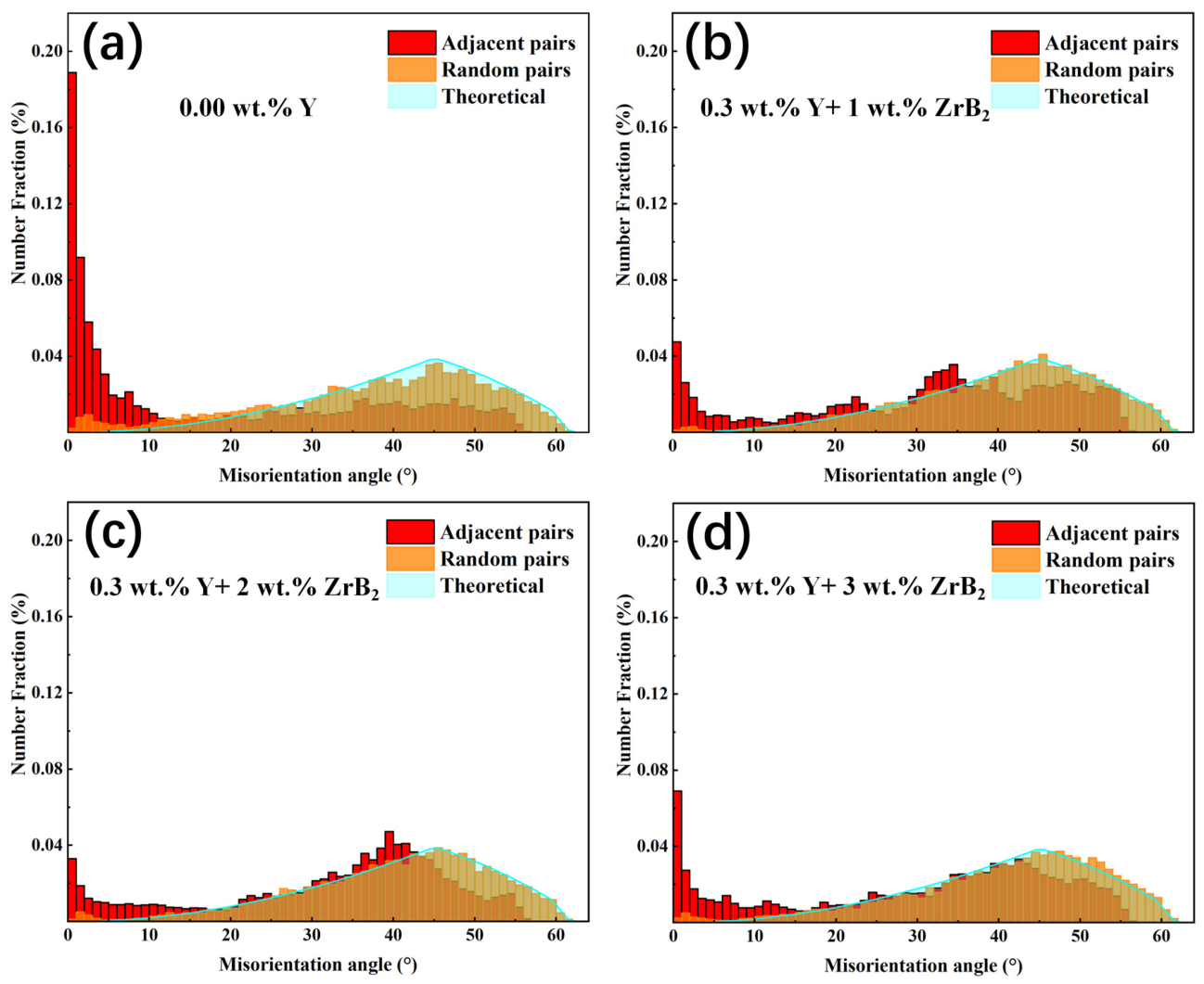
The grain boundary misorientation distribution of the Al-Si-Mg alloys modified with different Y-ZrB2 additions is presented in Figure 10. For the unmodified base alloy (Figure 10a), the misorientation between adjacent grains is predominantly concentrated in the range of 0–5°, with only a minor fraction distributed in the theoretical random misorientation range of 40–50°.
The evolution of grain boundary misorientation with Y-ZrB2 addition is governed by the competition between Zener pinning and nanoparticle agglomeration. At moderate addition levels (Figure 10b,c), in situ synthesized ZrB2 nanoparticles are well dispersed at grain boundaries, exerting a strong pinning force that forces adjacent grains to rotate toward larger misorientation angles [51,54]. According to the classical Zener pinning model, particles situated at grain boundaries impede boundary migration; importantly, the pinning effect is significantly stronger at low-angle grain boundaries (LAGBs) than at high-angle grain boundaries (HAGBs), which promotes the progressive transition from LAGBs to HAGBs [55]. The dominant misorientation peak gradually shifts from 0–5° toward 30–50°, accompanied by a marked increase in the proportion of random misorientation in the 50–60° range.
This pinning-induced lattice rotation is further assisted by Y-rich precipitates, which segregate at grain boundaries and promote dislocation accumulation. According to Jiang et al., such segregation induces high-density dislocation pile-ups and increases the stored strain energy at the boundaries, which provides an additional thermodynamic driving force for the LAGB-to-HAGB transformation [56]. The synergistic effect of Zener pinning and grain boundary segregation thus accounts for the observed increase in overall grain misorientation.
However, when the Y-ZrB2 addition exceeds the optimal level (e.g., 0.3 wt.% Y + 3 wt.% ZrB2 in Figure 10d), severe agglomeration of nanoparticles occurs. This reduces their effective pinning number density, weakens the Zener force, and compromises the grain boundary modification efficiency of the rare earth Y. Consequently, the overall grain misorientation gradually decreases: the dominant misorientation peak shifts back toward lower angles, the HAGB fraction declines, and LAGBs reappear. These observations underscore the critical importance of optimizing the Y-ZrB2 addition level to maximize the grain boundary structural benefit.

3.7. Geometrically Necessary Dislocation Density

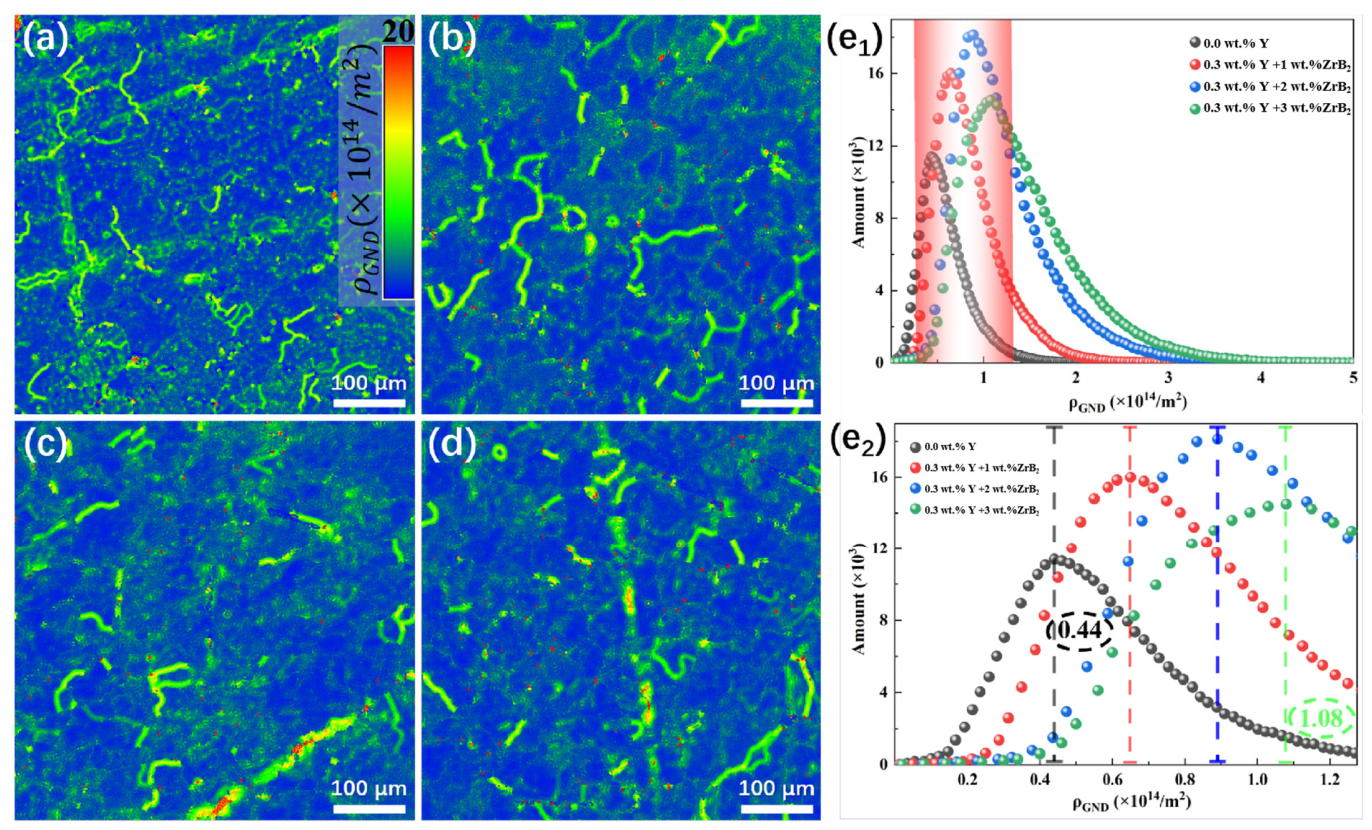
The geometrically necessary dislocation (GND) density distribution of Al-Si-Mg alloys with different Y-ZrB2 addition levels is presented in Figure 11. GND density was calculated from the kernel average misorientation (KAM) values derived from the EBSD data, with quantitative analysis performed using the TSL OIM™ software. As shown in Figure 11a, the base Al-Si-Mg alloy exhibits relatively low GND density concentrated near grain boundary regions. In contrast, the Y-ZrB2 modified alloys display distinctly higher GND density in the grain boundary areas, as evidenced in Figure 11b–d. As the Y-ZrB2 addition increases, GND density progressively rises across the modified alloys, with the highest GND density observed for the 0.3 wt.% Y + 3 wt.% ZrB2 alloy. Quantitative analysis reveals that the average GND density increases from 0.44 × 10¹⁴ m−2 for the base alloy to 1.08 × 10¹⁴ m−2 for the 0.3 wt.% Y + 3 wt.% ZrB2 alloy. This elevation in GND density is consistent with the trend reported in nanoparticle-reinforced aluminum matrix composites, where increasing reinforcing particle content leads to a higher density of geometrically necessary dislocations due to thermal expansion mismatch and plastic incompatibility between the matrix and reinforcing phases [32,57].
Correlating the GND distribution with the grain boundary evolution presented in Figure 8, the regions of elevated GND density gradually expand from grain boundaries toward grain interiors as the Y-ZrB2 content increases. This spatial propagation of dislocation-rich zones from interfaces into the grain matrix is consistent with bright-field TEM microstructural observations [36]. The underlying mechanism is primarily ascribed to the grain boundary segregation of Y-ZrB2 nanoparticles, which induces interfacial dislocation proliferation and promotes the continuous outward propagation of dislocations from boundary-adjacent zones into the matrix interior. This phenomenon aligns with the established understanding that nanoparticle clustering at grain boundaries acts as dislocation sources under applied stress, thereby enhancing the overall GND density within the alloy [51]. The observed GND evolution trend also correlates well with the variation in adjacent and random grain misorientation presented in Figure 10, where higher misorientation angles are generally accompanied by increased GND densities, reflecting the intrinsic coupling between crystallographic rotation and dislocation accumulation during plastic deformation [56,58].

3.8. Schmid Factor Statistics

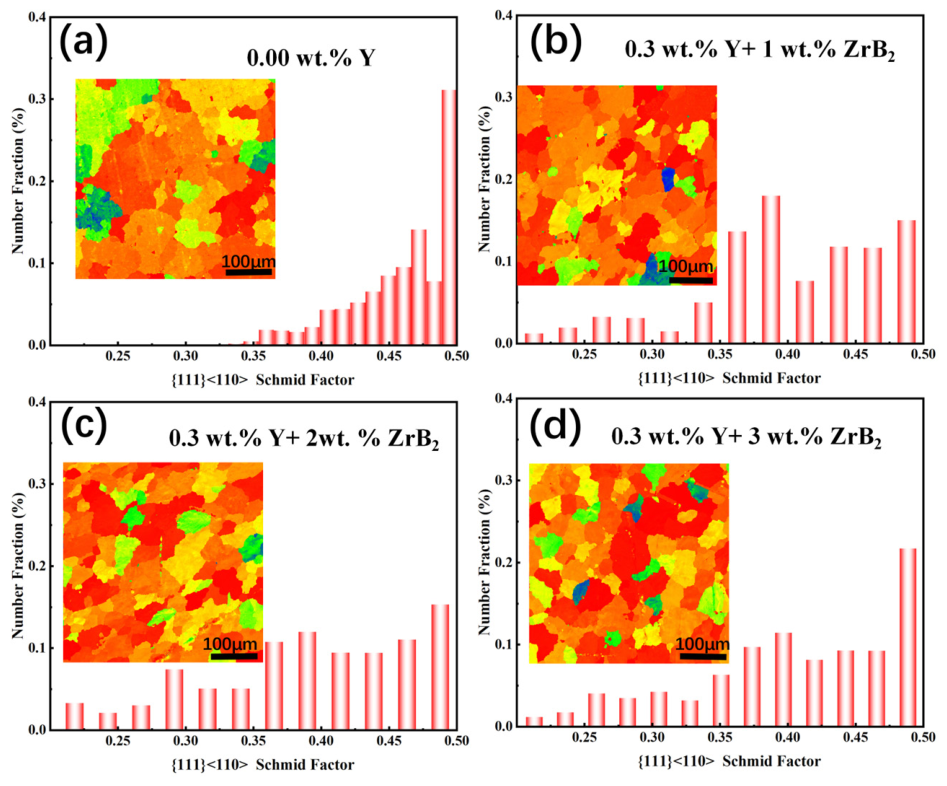
Figure 12 presents the statistical distribution of Schmid factors for the dominant {111}⟨110⟩ slip system in Al–Si–Mg alloys with different Y-ZrB2 additions. The Schmid factor describes the ratio of the resolved shear stress on a slip system to the applied uniaxial tensile stress. A smaller Schmid factor implies a lower probability of dislocation slip activation when the same external load is applied. As a result, materials possessing a lower average Schmid factor tend to offer greater resistance to plastic deformation and consequently display enhanced mechanical strength. In contrast, a higher average Schmid factor facilitates the activation of slip systems and promotes extensive crystallographic slip, which is beneficial for ductility but may reduce the yield strength of the material.
When compared with the unmodified base alloy, all Y-ZrB2 modified alloys exhibit a reduced average Schmid factor. This reduction is attributed to the combined influence of grain refinement and the distributed nanoparticle phases, which act as obstacles hindering dislocation motion and raising the stress required for slip initiation. It is also noteworthy that heterogeneous local stress fields, originating from the non-uniform dispersion of reinforcing phases or from strain mismatches at grain boundaries, can cause appreciable Schmid factor variations even among grains sharing the same crystallographic orientation.

4. Discussion

The combined addition of rare earth Y and in situ ZrB2 nanoparticles induces a pronounced multi-scale modulation of the Al-Si-Mg alloy microstructure, especially affecting the crystallographic orientation relationship and texture evolution between primary α-Al and eutectic Si grains. Systematic EBSD pole figure analysis (Figure 7, Figure 8, Figure 9, Figure 10, Figure 11, Figure 12 and Figure 13) demonstrates the unique advantage of this composite modification strategy in optimizing both microstructure and mechanical properties.
  • Multi-scale modulation of α-Al orientation and eutectic Si texture
The Y-ZrB2 composite modification has only a weak influence on the spatial orientation distribution of α-Al matrix grains, with no noticeable preferred orientation shift before and after modification. This observation confirms the inherent stability of the crystallographic growth configuration of the Al matrix [59,60]. Neither second-phase particles nor rare earth doping can alter the intrinsic lattice growth characteristics of α-Al grains.
In contrast, rare earth Y exerts a decisive and targeted regulation on the anisotropic growth, lattice orientation evolution, and preferred growth mode of eutectic Si [6,61]. Through interfacial segregation and atomic adsorption, Y suppresses the continuous growth of eutectic Si along its intrinsic crystallographic direction and breaks its coarse lamellar directional growth habit [6,62].
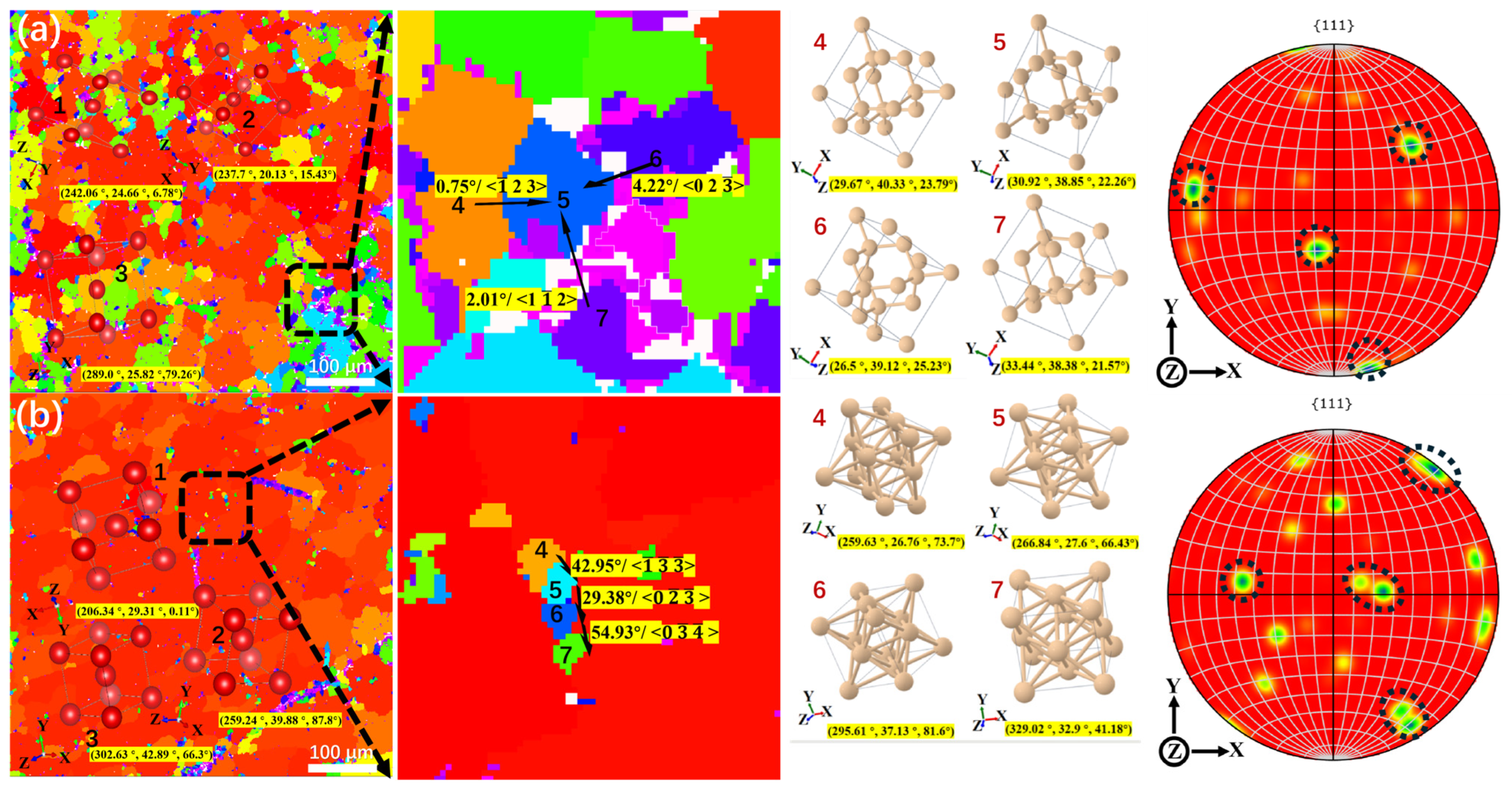
Local orientation analysis of eutectic Si grains (Figure 13a,b) reveals essential differences in grain misorientation. In the unmodified alloy, adjacent eutectic Si grains exhibit misorientation angles of 0.75°/⟨1 2 3⟩, 4.22°/⟨0 2 3⟩, and 2.01°/⟨1 1 2⟩, all below 5°, which are typical low-angle grain boundary (LAGB) characteristics [62]. The atomic arrangement inside Si grains remains highly ordered with low lattice distortion, and eutectic Si grows in a single-orientation directional mode with strong anisotropy.
At the optimal composition (0.3 wt.% Y + 2 wt.% ZrB2), adjacent eutectic Si grains undergo significant lattice rotation and orientation reconstruction. Their misorientation angles increase to 42.95°/⟨1 3 3⟩, 29.38°/⟨0 2 3⟩, and 54.93°/⟨0 3 4⟩, forming abundant high-angle grain boundaries (HAGBs) [60]. The refinement and structural reconstruction of eutectic Si at grain boundaries break the original directional growth mode and induce a systematic texture transformation. The orientation evolution shows a positive correlation with grain deflection and increased texture intensity.
{111} pole figure analysis further verifies the texture reconstruction mechanism induced by Y-ZrB2 synergy. The unmodified alloy displays four regular concentrated bright spots corresponding to the directional growth of eutectic Si. After modification, the pole figure spots appear mostly in pairs with clear angular deviation, increasing texture dispersion [59,60].
  • Formation of a Y-ZrB2 nano-transition layer and interfacial energy modulation
Combined with grain boundary evolution (Figure 8) and GND variation (Figure 11), Y-ZrB2 composite phases preferentially segregate and accumulate at grain boundaries during solidification, raising the GND density from 0.44 × 10¹⁴ m−2 to 1.08 × 10¹⁴ m−2 [59,60]. The dislocation pinning and strain accumulation induced by Y-modified ZrB2 nanoparticles elevate interfacial energy and create high-density local dislocations and strain-concentrated zones at the Si/Al interface [59].
From the perspective of crystal defect theory, a high density of interfacial dislocations aggravates lattice distortion at phase boundaries, forcing lattice deflection and orientation adjustment of eutectic Si grains [60]. The texture intensity of the Y-ZrB2 modified alloy is lower than that of the alloy modified only with Y [36]. This arises from interfacial adsorption competition: active Y atoms are preferentially adsorbed onto ZrB2 surfaces, forming a nano-transition layer [6,59], which consumes some Y atoms that would otherwise passivate the Si growth interface and regulate growth habits. Consequently, the texture-modifying effect of Y alone is weakened, confirming that Y dominates the growth direction and crystallographic orientation of eutectic Si [6,61].
  • Thermodynamic-kinetic correlation and eutectic Si refinement mechanism
The layered structure of the Y-ZrB2 composite does not directly alter the crystallographic orientation of eutectic Si. Instead, it improves the interfacial wettability between the reinforcing particles and the Al matrix and increases the heterogeneous nucleation activation energy (ΔG*↑) [59,60]. This thermodynamic-kinetic coupling promotes uniform dispersion of in situ ZrB2 nanoparticles, improves the heterogeneous nucleation rate, and suppresses particle agglomeration, achieving size refinement and homogeneous distribution of the ZrB2 nanoparticles [59,60].
The synergistic effect between Y and ZrB2 achieves comprehensive optimization of the microstructure and crystallographic orientation. The interfacial adsorption behavior of Y on ZrB2 can be described by the Langmuir-McLean model. Y adsorption reduces the Si/Al interfacial energy and suppresses the preferential {111}Si growth [6,63].
  • Essential mechanism for strength-ductility synergy
The increase in GND density is closely correlated with the transition of grain boundary character distribution (GBCD); specifically, the LAGB fraction decreases from 81.6% while the HAGB fraction rises to 34.3% [60,61]. High-density GNDs promote strength enhancement through the Taylor-Orowan strengthening mechanism. The transition from LAGBs to HAGBs improves the grain boundary resistance to dislocation motion and increases the work-hardening capacity. An increased HAGB fraction also benefits ductility by absorbing deformation energy and hindering crack propagation [59,60].
Excessive Y-ZrB2 addition (beyond 0.3 wt.% Y + 2 wt.% ZrB2) causes severe ZrB2 agglomeration and a decrease in Y adsorption saturation, inducing abnormal dislocation accumulation and reducing intergranular fracture energy. This restricts further improvement of mechanical properties and may even cause simultaneous deterioration of strength and ductility. Hence, there exists an optimal composition window for Y-ZrB2 synergistic modification, and precise control of the composition is key to achieving strength-ductility synergy. The coupling of grain boundary character distribution and grain boundary engineering (GBE) further clarifies the intrinsic relationship between grain boundary structure and macroscopic mechanical performance.
In summary, the synergistic addition of rare earth Y and in situ ZrB2 nanoparticles constructs a Y-modified ZrB2 nano-transition layer, precisely modulates the Si/Al interfacial energy, suppresses preferential {111} Si growth, induces local lattice rotation, and promotes interfacial dislocation proliferation. This multi-scale thermodynamic–kinetic coupling mechanism realizes eutectic Si refinement, texture redistribution, interfacial dislocation proliferation, and eventual strength-ductility synergy of the alloy.

5. Conclusions

Based on the systematic investigation of grain orientation, grain boundary character distribution, geometrically necessary dislocation (GND) density, and Schmid factor analysis, the influence of Y-ZrB2 addition on the microstructural evolution and mechanical performance of Al-Si-Mg alloys is clarified. The main findings are drawn as follows:
The Y-ZrB2 composite modification has a minor influence on the crystallographic orientation and morphological stability of primary α-Al grains, but exerts a strong regulation on the lattice rotation, texture redistribution, and growth behavior of eutectic Si. In the unmodified alloy, eutectic Si grains exhibit low misorientation angles and a dominant {111} preferred orientation. At the optimal addition (0.3 wt.% Y + 2 wt.% ZrB2), significant lattice rotation and orientation randomization of eutectic Si occur, leading to a much more uniform texture.
The introduction of Y-ZrB2 promotes a progressive transition from low-angle grain boundaries (LAGBs) to high-angle grain boundaries (HAGBs). The HAGB fraction reaches its maximum of 34.3% at the optimal composition. Excessive addition causes severe nanoparticle agglomeration, weakens the grain boundary pinning effect, and reverses the grain boundary evolution, resulting in a decrease in HAGBs and an increase in LAGBs.
The synergistic effect of Y and ZrB2 significantly increases the GND density (from 0.44 × 10¹⁴ m−2 to 1.08 × 10¹⁴ m−2) while simultaneously reducing the Schmid factor of the dominant {111}⟨110⟩ slip system. This dual action strengthens the alloy through the Taylor-Orowan dislocation mechanism and restricts the initiation of plastic slip, thereby enhancing both deformation resistance and work-hardening capacity.
There exists an optimal composition window for Y-ZrB2 synergistic modification (0.3 wt.% Y + 2 wt.% ZrB2). Within this window, the alloy achieves the best combination of microstructural refinement, texture homogenization, and mechanical properties: ultimate tensile strength 332.87 MPa, yield strength 271.35 MPa, elongation 16.24%, and Vickers hardness 153.9 HV after T6 heat treatment. Either too low or too high addition deteriorates the comprehensive performance, confirming that precise composition control is the key to realizing strength–ductility synergy.

Author Contributions

Conceptualization, L.Z. and X.C.; methodology, K.Y., L.Z. and X.F.; validation, K.Y. and L.Z.; formal analysis, Y.Y., X.C. and M.V.L.; investigation, Y.Y. and X.F.; data curation, X.F.; writing—original draft preparation, Y.Y.; writing—review and editing, X.C. and M.V.L.; visualization, Y.Y.; supervision, X.C. and M.V.L.; funding acquisition, L.Z. All authors have read and agreed to the published version of the manuscript.

Funding

This work was supported by the Major Science and Technology Special Program of Yunnan Province, funded by the Science and Technology Department of Yunnan Province, under Grant Nos. 202102AB080004, 202202AB080005 and 202302AB080007.

Data Availability Statement

The raw data supporting the conclusions of this article will be made available by the authors on request.

Conflicts of Interest

Youcheng Yue was employed by the Kunming Metallurgical Research Institute Co., Ltd. The remaining authors declare that the research was conducted in the absence of any commercial or financial relationships that could be construed as a potential conflict of interest.

References

  1. Biedermann, M.; Beutler, P.; Meboldt, M. Routing multiple flow channels for additive manufactured parts using iterative cable simulation. Addit. Manuf. 2022, 56, 102891. [Google Scholar] [CrossRef]
  2. Montanari, R.; Palombi, A.; Richetta, M.; Varone, A. Additive manufacturing of aluminum alloys for aeronautic applications: Advantages and problems. Metals 2023, 13, 716. [Google Scholar] [CrossRef]
  3. Wang, W.; Pan, Q.; Wang, X.; Liu, B. Improved heat and corrosion resistance of high electrical conductivity Al-Mg-Si alloys by multi-alloying of Ce, Sc and Y. Corros. Sci. 2024, 226, 111695. [Google Scholar] [CrossRef]
  4. Cordova, L.; Bor, T.; Macía Rodríguez, E.; Tinga, T.; Campos, M. In-situ mechanical and microstructural characterization of miniaturized Al-Mg-Sc-Zr and AlSi10Mg specimens processed by laser powder-bed fusion (PBF-LB). J. Mater. Res. Technol. 2024, 30, 348–359. [Google Scholar] [CrossRef]
  5. Bi, J.; Lei, Z.; Chen, Y.; Chen, X.; Lu, N.; Tian, Z.; Qin, X. An additively manufactured Al-14.1Mg-0.47Si-0.31Sc-0.17Zr alloy with high specific strength, good thermal stability and excellent corrosion resistance. J. Mater. Sci. Technol. 2021, 67, 23–35. [Google Scholar] [CrossRef]
  6. Ye, K.; Cai, X.; Sun, B.; Zhou, L.; Ma, S.; Yue, Y.; Xu, F.; Zheng, D.; Fu, X. Effect of rare earth Ce on the microstructure and mechanical properties of cast Al–7Si alloys. J. Sci. Adv. Mater. Devices 2023, 8, 100634. [Google Scholar] [CrossRef]
  7. Miyajima, Y.; Nakamura, Y.; Konishi, Y.; Ishikawa, K.; Wang, W.; Takata, N. Effect of low-temperature annealing on electrical resistivity and mechanical properties of laser-powder bed fused AlSi10Mg alloy. Mater. Sci. Eng. A 2023, 871, 144876. [Google Scholar] [CrossRef]
  8. Zheng, X.; Li, S.; Ma, J.; Xu, Q.; Zhao, H.; Han, Z. Improvement of impact properties of Al-Si-Mg alloy via solution treatment and joint modification with Sr and La. Rare Met. 2024, 43, 3301–3313. [Google Scholar] [CrossRef]
  9. Kim, J.; Shin, S.; Lee, S. Correlation between microstructural evolution and corrosion resistance of hypoeutectic Al-Si-Mg alloy: Influence of corrosion product layer. Mater. Charact. 2022, 193, 112276. [Google Scholar] [CrossRef]
  10. Abdellah, M.Y.; Fadhl, B.M.; Abu El-Ainin, H.M.; Hassan, M.K.; Backar, A.H.; Mohamed, A.F. Experimental evaluation of mechanical and tribological properties of segregated Al-Mg-Si alloy filled with alumina and silicon carbide through different types of casting molds. Metals 2023, 13, 316. [Google Scholar] [CrossRef]
  11. Li, D.; Zhao, K.; Han, M.; Liu, G.; Sun, Q.; Liu, S.; Liu, X. Optimizing microstructure and enhancing mechanical properties of Al-Si-Mg-Mn-based alloy by novel C—doped TiB2 particles. J. Mater. Res. Technol. 2023, 26, 9450–9466. [Google Scholar] [CrossRef]
  12. Li, D.; Zhao, K.; Liu, G.; Han, M.; Liu, S.; Liu, X. Revealing the correlation of microstructure configuration and mechanical properties of Al-Si-Mg alloy reinforced by C-doped TiB2 and SiC. Mater. Des. 2023, 226, 111694. [Google Scholar] [CrossRef]
  13. Kai, X.; Wang, Y.; Chen, R.; Peng, Y.; Shi, A.; Tao, R.; Liang, X.; Li, G.; Chen, G.; Xu, X.; et al. Effects of in-situ ZrB2 nanoparticles and scandium on microstructure and mechanical property of 7N01 aluminum alloy. J. Rare Earths 2024, 42, 612–620. [Google Scholar] [CrossRef]
  14. Zhao, Z.; Li, D.; Zhang, D.; Liu, G.; Liu, S.; Liu, X. Enhancement of the strength-ductility synergy of Al-Si-Mg alloys via C-doped TiB2 particles. Mater. Lett. 2022, 328, 133094. [Google Scholar] [CrossRef]
  15. Jiang, J.; Liao, F.; Hu, Z.; Wang, L.; Zhu, D.; Zhu, F. Effects of P and rare earth elements compound modification on the morphology of Si phase in Al—20Si alloy. Spec. Cast. Nonferrous Alloys 2017, 37, 1381–1384. [Google Scholar]
  16. Geng, Y.; Tang, H.; Xu, J.; Zhang, Z.; Xiao, Y.; Wu, Y. Strengthening mechanisms of high-performance Al-Mn-Mg-Sc-Zr alloy fabricated by selective laser melting. Sci. China Mater. 2021, 64, 3131–3137. [Google Scholar] [CrossRef]
  17. Yu, M.; Zhu, B.; Li, N.; Zheng, H.; Lu, Y.; Yu, X. Study on microstructure, tensile performance and creep resistance of Al-Mg-Si-Sc-Zr alloy strengthened by Al3(Sc, Zr) nanoprecipitates. Mater. Sci. Eng. A 2024, 897, 146362. [Google Scholar] [CrossRef]
  18. Wu, X.; Wu, F.; Qin, J.; Zhao, R. Synergistic effect of Sc and excess Mg on the microstructure and mechanical properties of hypoeutectic Al-10Mg2Si alloy. J. Mater. Eng. Perform. 2025, 34, 4376–4387. [Google Scholar] [CrossRef]
  19. Aryshenskii, E.V.; Lapshov, M.A.; Rasposienko, D.Y.; Konovalov, S.V.; Drits, A.M.; Makarov, V.V. Studying the effect of small additives of Sc and Zr on the microstructure of Al-Mg-Si alloy with excess silicon during multi-step heat treatment. Phys. Met. Metallogr. 2024, 125, 142–155. [Google Scholar] [CrossRef]
  20. Yuan, S.; Peng, J.; Wang, W.; Gan, P.; Ji, J.; Zeng, J. Microstructure evolution of a novel Al-8Si-0.4Mg-0.2Sc-0.2Er alloy solidified under permanent magnet stirring. Mater. Lett. 2024, 368, 136725. [Google Scholar] [CrossRef]
  21. Mao, G.; Tong, G.; Gao, W.; Liu, S.; Zhong, L. The poisoning effect of Sc or Zr in grain refinement of Al-Si-Mg alloy with Al-Ti-B. Mater. Lett. 2021, 302, 130428. [Google Scholar] [CrossRef]
  22. Liu, Y.; Pan, Q.; Liu, B.; Yu, Q.; Li, G.; Pan, D. Effect of aging treatments on fatigue properties of 6005A aluminum alloy containing Sc. Int. J. Fatigue 2022, 163, 107103. [Google Scholar] [CrossRef]
  23. Aryshenskii, E.; Lapshov, M.; Hirsch, J.; Konovalov, S.; Bazhenov, V.; Drits, A.; Zaitsev, D. Influence of the small Sc and Zr additions on the as-cast microstructure of Al-Mg-Si alloys with excess silicon. Metals 2021, 11, 1797. [Google Scholar] [CrossRef]
  24. Zhang, J.; Gao, Y.; Yang, C.; Zhang, P.; Kuang, J.; Liu, G.; Sun, J. Microalloying Al alloys with Sc: A review. Rare Met. 2020, 39, 636–650. [Google Scholar] [CrossRef]
  25. Jiang, L.; Zhang, Z.; Bai, Y.; Li, S.; Mao, W. Study on Sc microalloying and strengthening mechanism of Al-Mg alloy. Crystals 2022, 12, 673. [Google Scholar] [CrossRef]
  26. Zhang, Z.; Zhao, Q.; Liu, L.; Xia, X.; Zheng, C.; Quan, L.; Ding, J.; Chen, X.; Luo, X.; Wang, L.; et al. Mechanical performances of Al-Si-Mg alloy with dilute Sc and Sr elements. Materials 2020, 13, 665. [Google Scholar] [CrossRef]
  27. Cao, R.; Zhao, Y.; Kai, X.; Qian, W.; Huang, L.; Miao, C.; Xu, Z. Effects of Sc on the microstructure and properties of in situ ZrB2/7085Al composites. Mater. Sci. Technol. 2022, 38, 794–803. [Google Scholar] [CrossRef]
  28. Li, R.; Wang, M.; Li, Z.; Cao, P.; Yuan, T.; Zhu, H. Developing a high-strength Al-Mg-Si-Sc-Zr alloy for selective laser melting: Crack-inhibiting and multiple strengthening mechanisms. Acta Mater. 2020, 193, 83–98. [Google Scholar] [CrossRef]
  29. Xu, Q.; Guo, C.Y.; Zheng, Z.Y.; Zhang, S.; Cai, Y.Y.; Bi, X.Q.; Fu, X.; Chen, R.R. Phase transformation and property improvement of Al-0.6Mg-0.5Si alloys by addition of rare-earth Y. Sci. Eng. Compos. Mater. 2025, 32, 20240048. [Google Scholar] [CrossRef]
  30. Bi, X.Q.; Zhang, S.; Zheng, Z.Y.; Qi, Y.L.; Fu, Y.; Xu, Q. Effect of Y addition and heat treatment on microstructure and properties of Al-Mg-Si-Y alloy. Heat Treat. Met. 2025, 50, 148–154. [Google Scholar]
  31. Chen, W.; Xu, X.R.; Jiang, P.P.; Qiu, W.; Gan, L.; Chen, K.; Li, C.; Chen, J.; He, D.G.; Lin, Y.C. Investigation into the role of rare earth oxides in controlling the microstructure and enhancing the mechanical and corrosion properties of as-cast Al-Si-Mg alloys. J. Alloys Compd. 2025, 1025, 179708. [Google Scholar] [CrossRef]
  32. Motamedi Yegane, M.; Alizadeh, A. Investigating the microstructure and mechanical properties of Al5083-ZrB2 nanocomposite made by situ-stir casting and in situ synthesis. J. Metall. Mater. Eng. 2025, 36, 45–56. [Google Scholar]
  33. Kai, X.Z.; Chen, R.K.; Peng, Y.J.; Zhao, Y.T. Microstructure and tensile properties of 7N01 aluminum alloy reinforced by in-situ ZrB2 nanoparticles and rare earth Sc. Hot Work Technol. 2025, 54, 108–112. [Google Scholar]
  34. Xiang, L.; Dong, D.; Gu, G.; Lu, Y.; Zheng, H. AlSi2(Sc, Zr, Ti)2 phase formation in Sc(Zr)-containing Al-7Si-Mg alloy and their effects on microstructure and mechanical properties. J. Mater. Res. Technol. 2026, 40, 165–175. [Google Scholar] [CrossRef]
  35. Ye, J.F.; Zhao, H.J.; Zhang, B.; Li, M.H.; Liang, X. High-throughput design of micro-alloyed Al-Mg-Si alloys. JOM 2025, 77, 4115–4134. [Google Scholar] [CrossRef]
  36. Yue, Y.; Ye, K.; Zhou, L.; Chen, X.; Li, M.; Wu, C. Microstructural evolution of a hypoeutectic Al-Si-Mg alloy via the synergistic effect of heat treatment and yttrium-containing nanoscale precipitates. J. Mater. Res. Technol. 2026, 42, 5673–5687. [Google Scholar] [CrossRef]
  37. GB/T 40123-2021; Metallic Materials—Tensile Test at Room Temperature. Standards Press of China: Beijing, China, 2021.
  38. GB/T 4340.1-2009; Metallic Materials—Vickers Hardness Test—Part 1: Test Method. Standards Press of China: Beijing, China, 2009.
  39. Quan, X.; Wei, Q.R.; Li, J.B. Effects of rare earth Y on the microstructure and properties of recycled 6061 aluminium alloy. Powder Metall. Mater. Sci. Eng. 2023, 28, 368–378. [Google Scholar]
  40. Zhao, W.J.; Quan, X.; Wang, H.X.; Wang, B. Tailoring Fe-bearing intermetallics via yttrium alloying: Morphological control and mechanical enhancement in recycled 6061 alloys. J. Mater. Eng. Perform. 2026. early access. [Google Scholar] [CrossRef]
  41. Wang, F.; Xiong, B.Q.; Zhang, Y.G.; Li, L.; Zhang, J.; Li, J. Effect of heat treatment on microstructure and mechanical properties of Al-Si-Mg alloy. Mater. Sci. Eng. A 2011, 528, 4724–4729. [Google Scholar] [CrossRef]
  42. Wang, Y.H.; Zhao, X.P.; Liu, F.; Hou, X.H.; Bai, P.C.; Cui, X.M. Modification mechanism of eutectic Si phases in Al-Si-Mg series alloys with Sc addition. J. Mater. Res. Technol. 2025, 1036, 181912. [Google Scholar] [CrossRef]
  43. Zhang, Y.Q.; Zhao, Y.T.; Kai, X.Z.; Yang, J.D.; Zhu, H.F.; Shan, Y. Study on the microstructure and mechanical properties of 7085 aluminum alloy reinforced by in situ (ZrB2 + Al2O3) nanoparticles and rare earth Er. Materials 2025, 18, 2009. [Google Scholar] [CrossRef]
  44. Lados, D.A.; Apelian, D. Relationships between microstructure and fatigue crack propagation paths in Al-Si-Mg cast alloys. Eng. Fract. Mech. 2008, 75, 821–832. [Google Scholar] [CrossRef]
  45. Mishnaevsky, L.L.; Lippmann, N.; Schmauder, S.; Fumbsch, P. In-situ observation of damage evolution and fracture in AlSi7Mg0.3 cast alloys. Eng. Fract. Mech. 1999, 62, 395–411. [Google Scholar] [CrossRef]
  46. Ahmad, F.; Shah, S.; Kai, X.Z.; Rajendren, V.B.; Abdullah, M.R.; Khan, S.U.; Zia, A.W.; Zhao, Y.T. Impact of Y and Er on recrystallization behavior and mechanical properties of AA7085/Al2O3 + ZrB2 composites. J. Mater. Res. Technol. 2025, 36, 5259–5272. [Google Scholar] [CrossRef]
  47. Cao, R.; Kai, X.Z.; Xing, Y.C.; Qian, W.; Zhao, Y.T. Elevated temperature performances of Sc, Zr micro-alloying ZrB2/7085Al composites. Mater. Lett. 2026, 402, 139350. [Google Scholar] [CrossRef]
  48. Li, J.H.; Albu, M.; Ludwig, T.; Matsubara, T.; Hofer, F.; Arnberg, L.; Tsunekawa, Y.; Schumacher, P. Recent advances on the understanding of modification of eutectic Si in Al-Si based alloys. Mater. Sci. Forum 2014, 794–796, 117–122. [Google Scholar]
  49. Guo, S.; Kagawa, Y. High-strength zirconium diboride-based ceramic composites consolidated by low-temperature hot pressing. Sci. Technol. Adv. Mater. 2012, 13, 045007. [Google Scholar] [CrossRef]
  50. Yang, Z.G.; Zhao, Z.J.; Wang, H.; Song, H.Q.; Yu, J.B.; Ren, Z.M.; Ren, S.X.; Ma, S.Q.; Wang, Z. Effects of ZrB2 addition on texture development and properties of porous Si3N4-ZrB2 composites by magnetic field alignment. J. Asian Ceram. Soc. 2019, 7, 369–376. [Google Scholar] [CrossRef]
  51. Gutta, B.; Huilgol, P.; Perugu, C.S.; Kumar, G.; Reddy, S.T.; Toth, L.S.; Bouazia, O.; Kailas, S.V. Development of high-strength and high-ductility aluminum metal-matrix composite by in-situ ceramic reinforcement. Materials 2023, 16, 84. [Google Scholar]
  52. Sadig, K.; Kheder, A. Effect of high-angle grain boundaries on the mechanical properties of aluminum alloys. J. Eng. Res. 2021, 9, 1–12. [Google Scholar]
  53. Samuel, A.M.; Samuel, F.H.; Doty, H.W. Metallurgical parameters controlling the eutectic silicon characteristics in Be-treated Al-Si-Mg alloys. Int. J. Cast. Met. Res. 2016, 29, 145–156. [Google Scholar]
  54. Liu, J.; Zhang, Q.; Chen, Z.; Wang, L.; Ji, G.; Shi, Q.W.; Wu, Y.; Zhang, F.G.; Wang, H.W. Fabrication of fine grain structures in Al matrices at elevated temperature by the stimulation of dual-size particles. Mater. Sci. Eng. A 2021, 805, 140614. [Google Scholar] [CrossRef]
  55. Tweed, C.J.; Ralph, B.; Hansen, N. The pinning by particles of low and high angle grain boundaries during grain growth. Acta Mater. 1984, 32, 1407–1414. [Google Scholar] [CrossRef]
  56. Lu, Z.; Zhang, L.J.; Wang, J.; Yao, Q.R.; Rao, G.H.; Zhou, H.Y. Understanding of strengthening and toughening mechanisms for Sc-modified Al-Si-(Mg) series casting alloys designed by computational thermodynamics. J. Alloys Compd. 2019, 805, 415–425. [Google Scholar] [CrossRef]
  57. Kai, X.Z.; Huang, S.M.; Wu, L.; Tao, R.; Peng, Y.J.; Mao, Z.M.; Chen, F.; Li, G.R.; Chen, G.; Zhao, Y.T. High strength and high creep resistant ZrB2/Al nanocomposites fabricated by ultrasonic-assisted in-situ casting. J. Mater. Sci. Technol. 2019, 35, 146325. [Google Scholar] [CrossRef]
  58. Fu, W.K.; Li, Y.L.; Hu, S.Y.; Sushko, P.; Mathaudhu, S. Effect of loading path on grain misorientation and geometrically necessary dislocation density in polycrystalline aluminum under reciprocating shear. Comput Mater. Sci. 2022, 205, 111221. [Google Scholar] [CrossRef]
  59. Ye, P.; Jiang, F.; Wu, F.; Ye, K.; Fan, Y. Effects of Zr and Y additions on microstructure and mechanical properties of cast A356 alloy. J. Mater. Res. Technol. 2024, 30, 6355–6365. [Google Scholar] [CrossRef]
  60. Fang, X.G.; Zhang, T.Y.; Dong, B.K.; Yuan, Z.Y.; Huang, Z.Y.; Yan, F.; Zu, F.Q. Simultaneous refinement of α-Al and modification of Si in Al-Si alloy achieved via the addition of Y and Zr. J. Mater. Res. Technol. 2024, 30, 1822–1833. [Google Scholar] [CrossRef]
  61. Ye, K.; Cai, X.; Zhou, L.; Ma, S.; Yue, Y.; Xu, F.; Zheng, D.; Tan, J.; Chen, Y. Influence of Y Content and T6 Heat Treatment on the Organization and Mechanical Properties of Cast A356 Aluminum Alloy. Integr. Ferroelectr. 2024, 240, 477–485. [Google Scholar] [CrossRef]
  62. Dai, J.; Xia, X.; Wang, Y.; Wang, J.; Xin, W.; Zhang, E.; Ding, J.; Liu, Y.C. Synergistic effect of Gd and Sr on the microstructure and mechanical properties of Al-Si-Mg alloy. J. Mater. Sci. 2024, 59, 5607–5621. [Google Scholar] [CrossRef]
  63. Zeng, L.; Jin, Y.; Gao, J.; Yi, W.; Chen, L.; Zhang, L. Achieving simultaneous improvement in strength and ductility in Al-Si-Mg-Ce alloy through synergistic morphology modification of eutectic (Si) and Al2Si2Ce phases by Sr addition. J. Mater. Res. Technol. 2024, 33, 975–981. [Google Scholar] [CrossRef]
Figure 1. Dimensions of bar tensile specimens processed with Al-Si-Mg matrix composites (mm).
Metals 16 00653 g001
Figure 2. XRD patterns of Al-Si-Mg alloys with different Y-ZrB2 additions: 0.0 wt.% Y, 0.3 wt.% Y, and 0.3 wt.% Y + 2 wt.% ZrB2. The characteristic peaks of α-Al, Si, Mg2Si, Al2Si2Y, and ZrB2 phases are marked with different symbols.
Metals 16 00653 g002
Figure 3. SEM micrographs showing the evolution of eutectic Si morphology in Al-Si-Mg alloys with different Y-ZrB2 additions after T6 heat treatment: (a) 0.00 wt.%Y, (b) 0.3 wt.% Y, (c) 2 wt.%ZrB2, (d) 0.3 wt.%Y + 1 wt.% ZrB2, (e) 0.3 wt.% Y + 2 wt.% ZrB2, (f) 0.3 wt.% Y + 3 wt.% ZrB2.
Metals 16 00653 g003
Figure 4. SEM micrograph and corresponding EDS elemental mapping of the Al-Si-Mg alloy modified with 0.3 wt.% Y + 2 wt.%ZrB2 after T6 heat treatment: (a) Secondary electron (SE) image showing the distribution of intermetallic phases, including ZrB2, Mg2Si, and Y-containing phases. (bg) Elemental distribution maps of Mg, Si, Zr, B, Y, and Al, respectively. (h) EDS map spectrum of the marked ZrB2 particle, confirming its elemental composition.
Metals 16 00653 g004
Figure 5. Mechanical properties of Al-Si-Mg alloys with different Y-ZrB2 additions under as-cast and T6-treated conditions: (a) Ultimate tensile strength (UTS) and yield strength (YS); (b) Elongation to fracture (δ); (c) Vickers hardness (HV). Error bars represent the standard deviation of the measurements.
Metals 16 00653 g005
Figure 6. SEM fractographs of tensile-fractured Al-Si-Mg alloys with different Y-ZrB2 additions after T6 heat treatment: (a) 0.00 wt.% Y, (b) 0.3 wt.% Y, (c) 2 wt.% ZrB2, (d) 0.3 wt.% Y + 1 wt.% ZrB2, (e) 0.3 wt.% Y + 2 wt.% ZrB2, (f) 0.3 wt.% Y + 3 wt.% ZrB2.
Metals 16 00653 g006
Figure 7. EBSD characterization of Al-Si-Mg alloys with different Y-ZrB2 additions after T6 heat treatment. From top to bottom: (a,b) 0 wt.% Y, (c,d) 0.3 wt.% Y + 1 wt.% ZrB2, (e,f) 0.3 wt.% Y + 2 wt.% ZrB2, and (g,h) 0.3 wt.% Y + 3 wt.% ZrB2, (a,c,e,g) Inverse pole figure (IPF) maps of α-Al grains, with corresponding {100}, {110}, and {111} pole figures on the right, (b,d,f,h) Orientation maps of eutectic Si/ZrB2 phases, with corresponding {110}, {111}, and {112} pole figures on the right.
Metals 16 00653 g007
Figure 8. Grain boundary distribution of Al-Si-Mg alloys with different contents of Y-ZrB2 after T6 heat treatment: (ad) 0.0 wt.% Y, 0.3 wt.% Y + 1 wt.% ZrB2, 0.3 wt.% Y + 2 wt.%ZrB2, 0.3 wt.% Y + 3 wt.% ZrB2.
Metals 16 00653 g008
Figure 9. Grain size distribution histograms of Al-Si-Mg alloys with different Y-ZrB2 additions after T6 heat treatment: (a) 0.00 wt.% Y (base alloy), (b) 0.3 wt.% Y + 1 wt. % ZrB2, (c) 0.3 wt.%Y + 2 wt.% ZrB2, (d) 0.3 wt.% Y + 3 wt.% ZrB2.
Metals 16 00653 g009
Figure 10. Distribution of grain orientation difference of Al-Si-Mg alloys with different contents of Y-ZrB2 after T6 heat treatment: (ad) 0.00 wt.% Y, 0.3 wt.% Y+ 1 wt.% ZrB2, 0.3 wt.% Y + 2 wt.% ZrB2, 0.3 wt.% Y + 3 wt.% ZrB2.
Metals 16 00653 g010
Figure 11. Geometrically necessary dislocation (GND) densities of Al-Si-Mg alloys with different Y-ZrB2 additions after T6 heat treatment: (a) 0 wt.% Y, (b) 0.3 wt.% Y + 1 wt.% ZrB2, (c) 0.3 wt.% Y + 2 wt.% ZrB2, (d) 0.3 wt.% Y + 3 wt.% ZrB2, (e1) Statistical distribution histograms of GND density for all alloys, (e2) Local enlargement of the peak region in (e1), showing the evolution of the mean GND density. The vertical dotted lines with different colors in (e2) correspond to the average GND density value of each alloy, and the numerical values marked beside the lines represent the quantified mean GND density.
Metals 16 00653 g011
Figure 12. Statistical distribution of Schmid factor for {111} <110> slip systems in T6 heat-treated Al-Si-Mg alloy with different contents of Y-ZrB2: (ad) 0.00 wt.% Y, 0.3 wt.% Y + 1 wt.% ZrB2, 0.3 wt.% Y + 2 wt.% ZrB2, 0.3 wt.% Y + 3 wt.% ZrB2. The embedded color contour maps in each subplot represent the spatial distribution of the {111}⟨110⟩ Schmid factor of grains: green corresponds to low Schmid factor values, yellow and orange denote intermediate values, and blue stands for relatively high Schmid factor values; distinct color regions differentiate grains with different slip activation potentials.
Metals 16 00653 g012
Figure 13. Orientation relationship of α-Al and Si grains in the Al-Si-Mg-Y-ZrB2 alloy after T6 heat treatment. Numbered positions indicate the spatial orientation of the grain location: 1–3 for α-Al grains, 4–7 for Si grains, (a) Base alloy, (b) 0.3 wt.% Y + 2 wt.% ZrB2.The multicolored in (a,b) follow the standard RGB color rule for FCC Al alloys: red represents grains with the <100> direction parallel to the sample normal, green corresponds to <110> orientation, and blue denotes <111> orientation; different color areas separate grains with distinct crystallographic orientations.
Metals 16 00653 g013
Table 1. Nominal addition amounts and the corresponding experimentally determined actual contents of the Al-Si-Mg-Y-ZrB2 alloy (wt.%).
SamplesSiMgZrBYOther ImpurityAl
Al-Si-Mg7.060.44000<0.01Bal.
0.3 wt.% Y + 1 wt.% ZrB27.020.410.80.190.31<0.01Bal.
0.3 wt.% Y + 2 wt.% ZrB26.980.411.620.480.31<0.01Bal.
0.3 wt.% Y + 3 wt.% ZrB26.880.392.430.720.30<0.01Bal.
Disclaimer/Publisher’s Note: The statements, opinions and data contained in all publications are solely those of the individual author(s) and contributor(s) and not of MDPI and/or the editor(s). MDPI and/or the editor(s) disclaim responsibility for any injury to people or property resulting from any ideas, methods, instructions or products referred to in the content.