Effect of Mo Content on Microstructure and Tribological Properties of WC–Ni–Fe–Mo Cemented Carbides
Abstract
1. Introduction
2. Materials and Methods
2.1. Material Preparation
2.2. Characterization
3. Results
3.1. XRD Analysis
3.2. Microstructure Characteristics
3.3. Mechanical Properties
3.4. Tribological Properties
4. Conclusions
- (a)
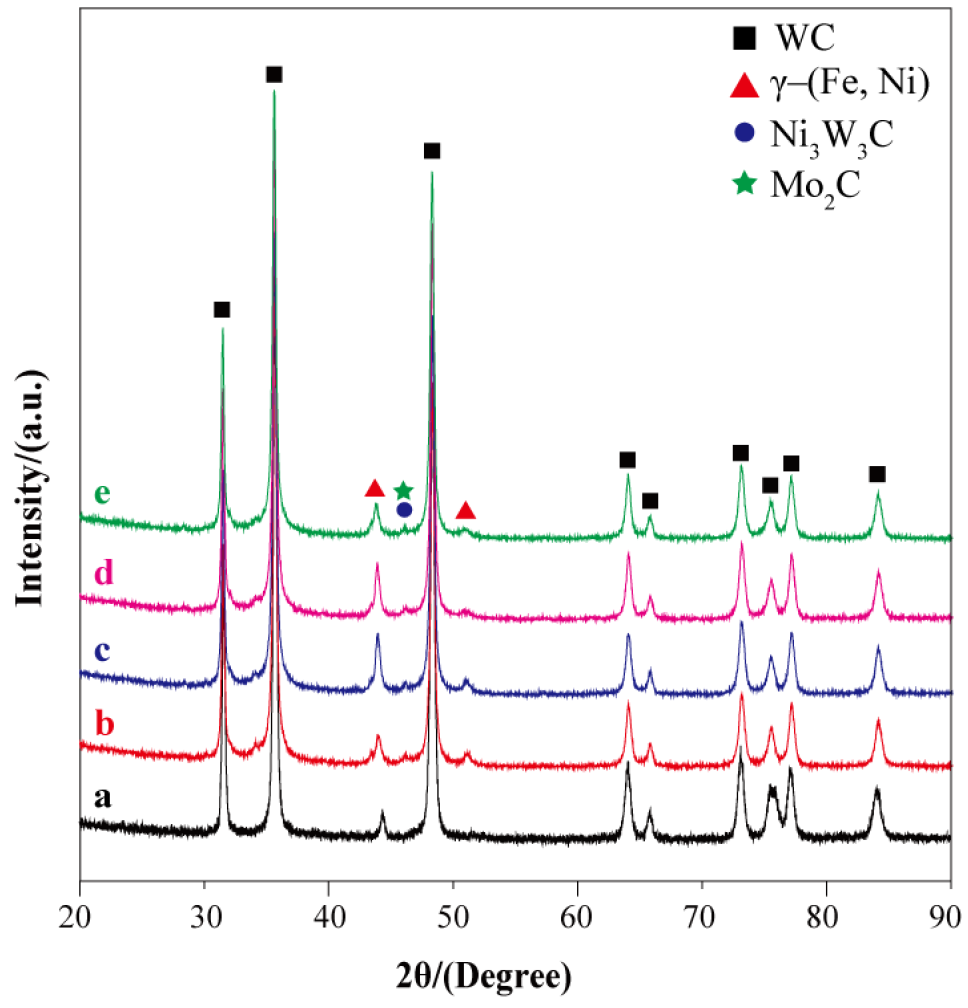
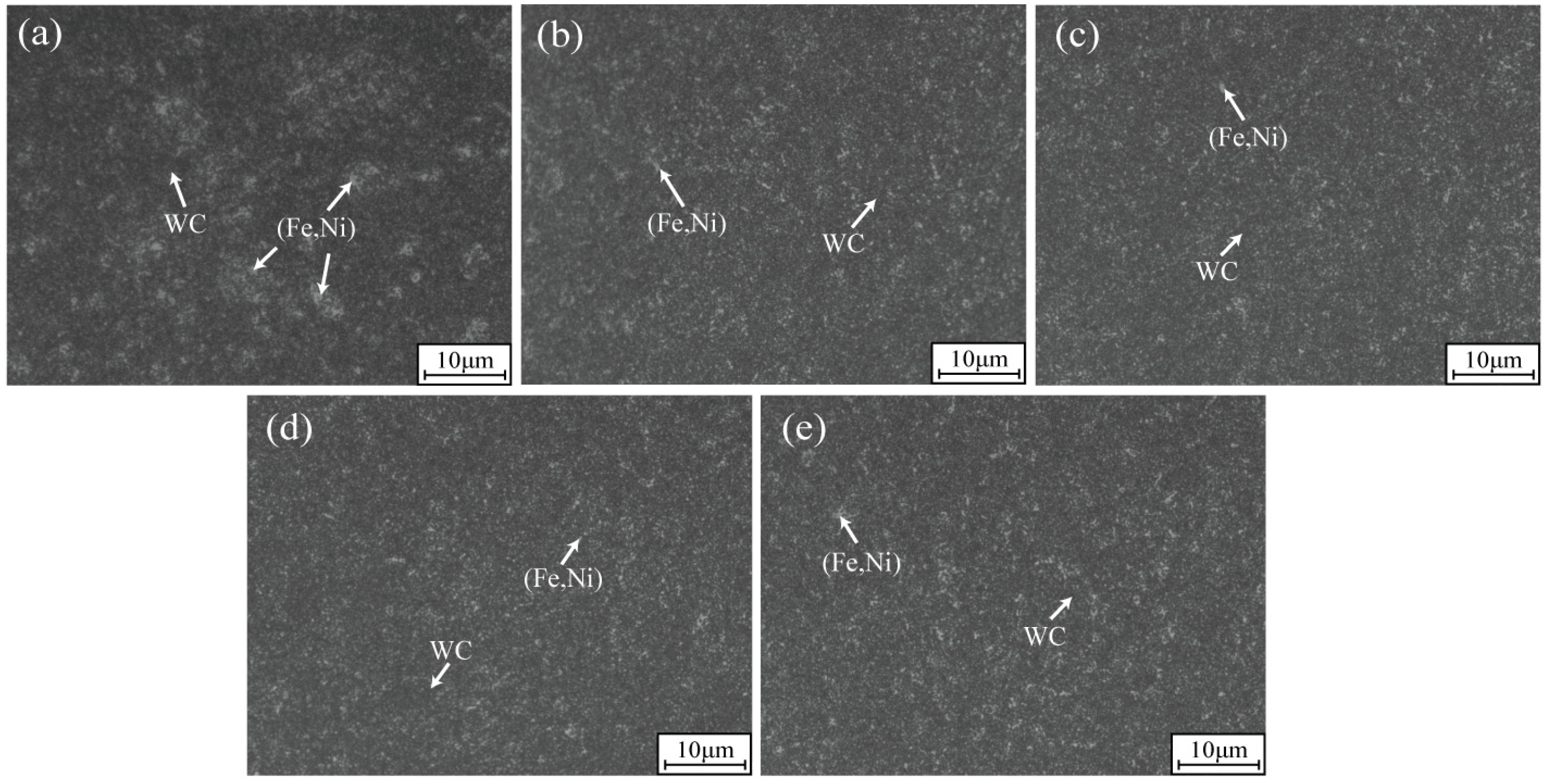
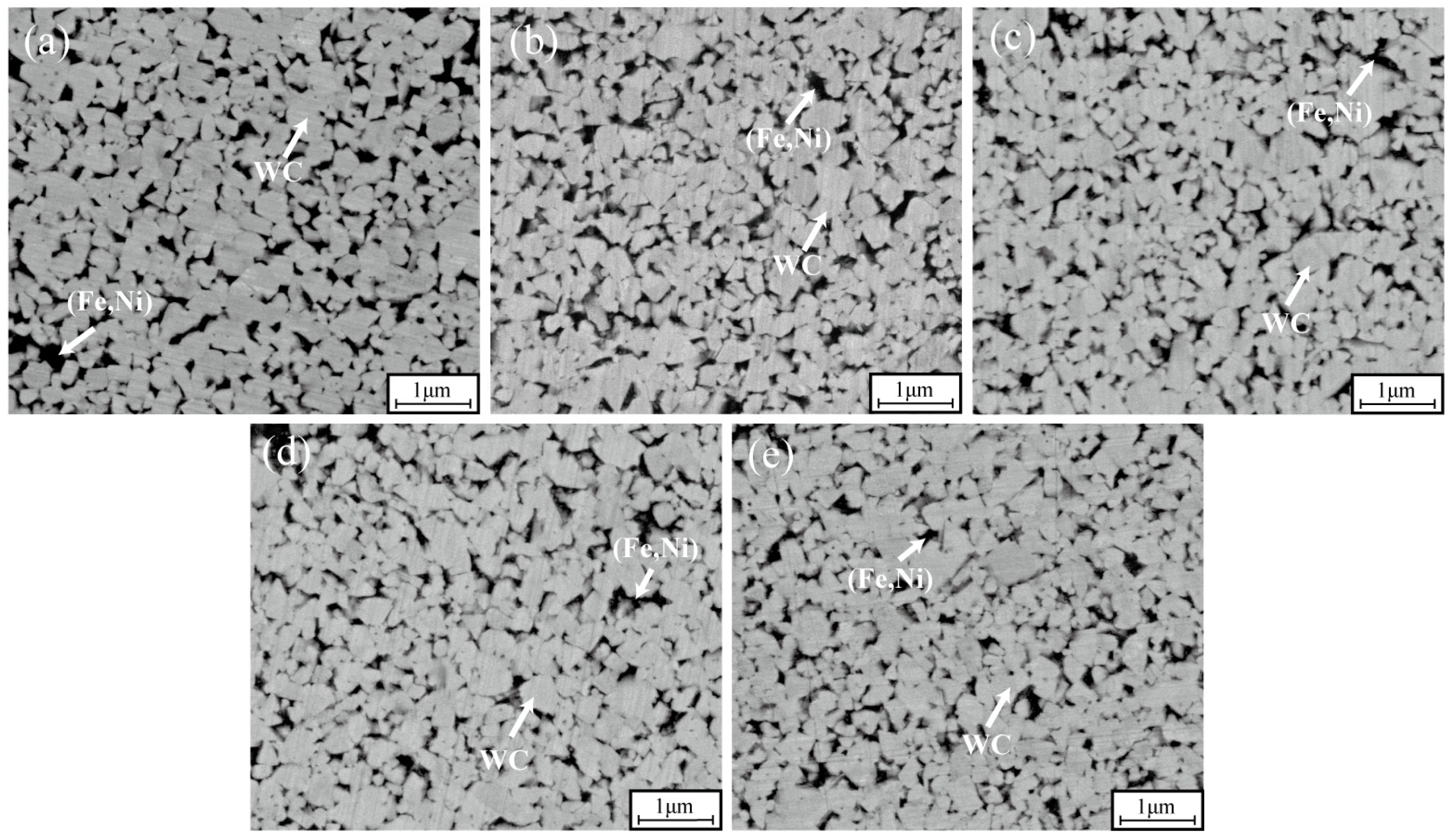
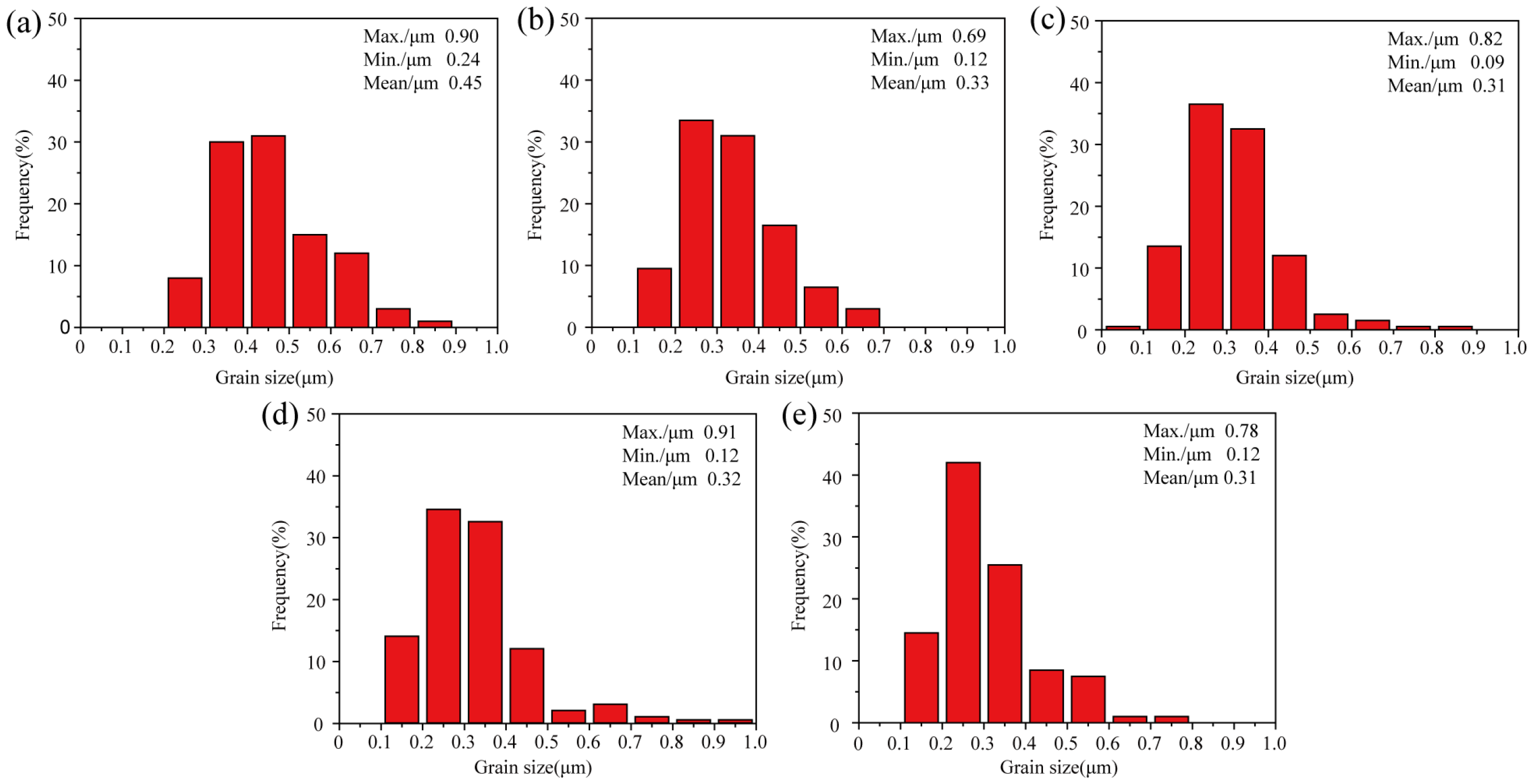
- The WC-Ni-Fe alloy exhibits a two-phase structure. The addition of Mo leads to the formation of Mo2C phase, which contributes to refining the alloy grains. The WC grain size gradually decreases from 0.45 μm to 0.31 μm.
- (b)
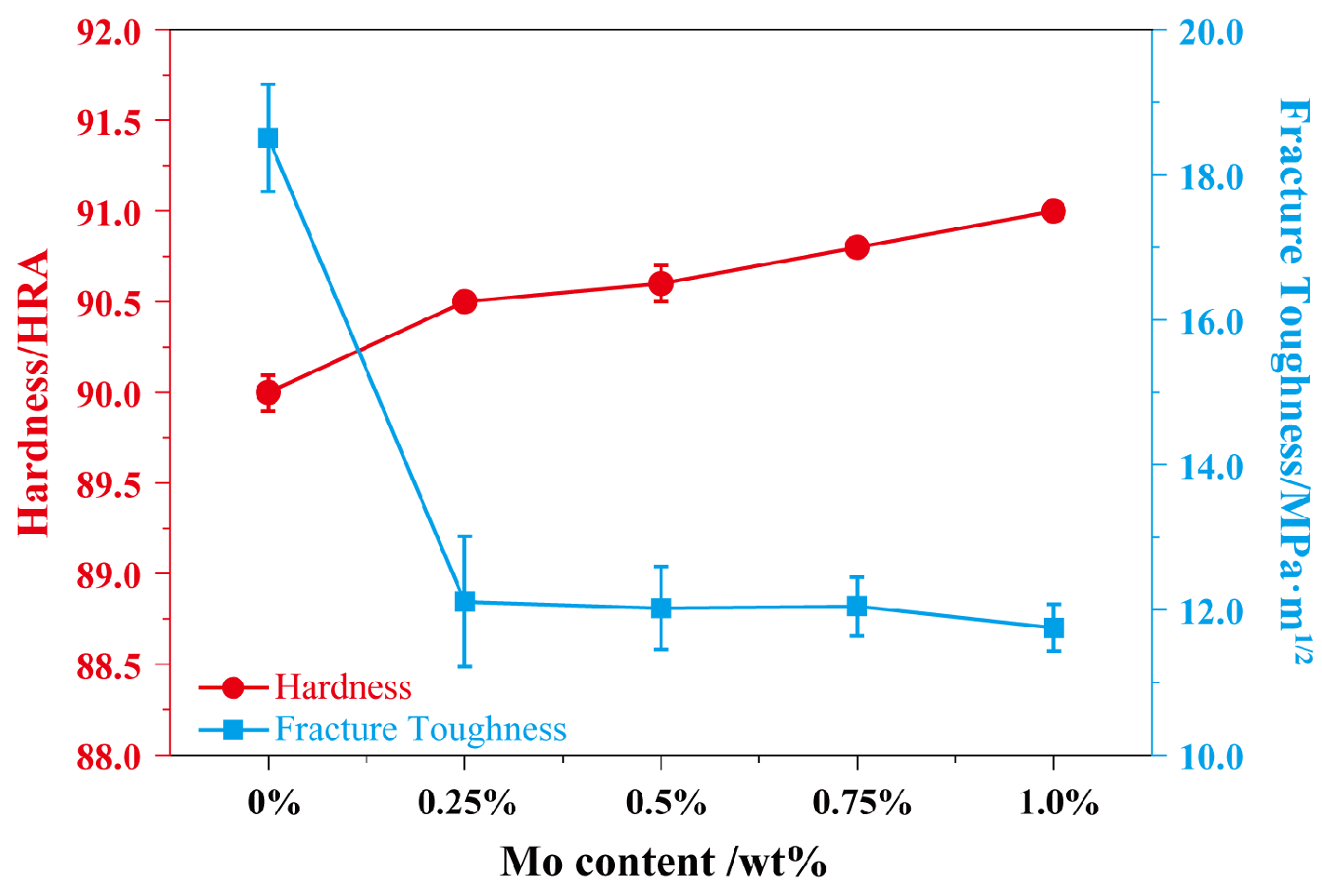
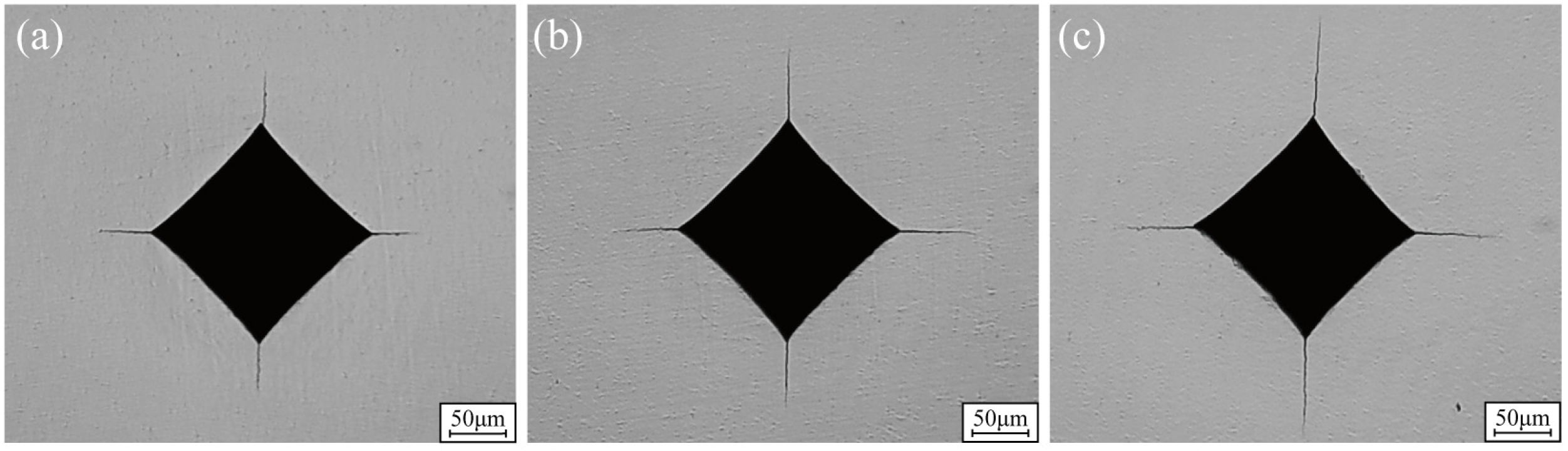
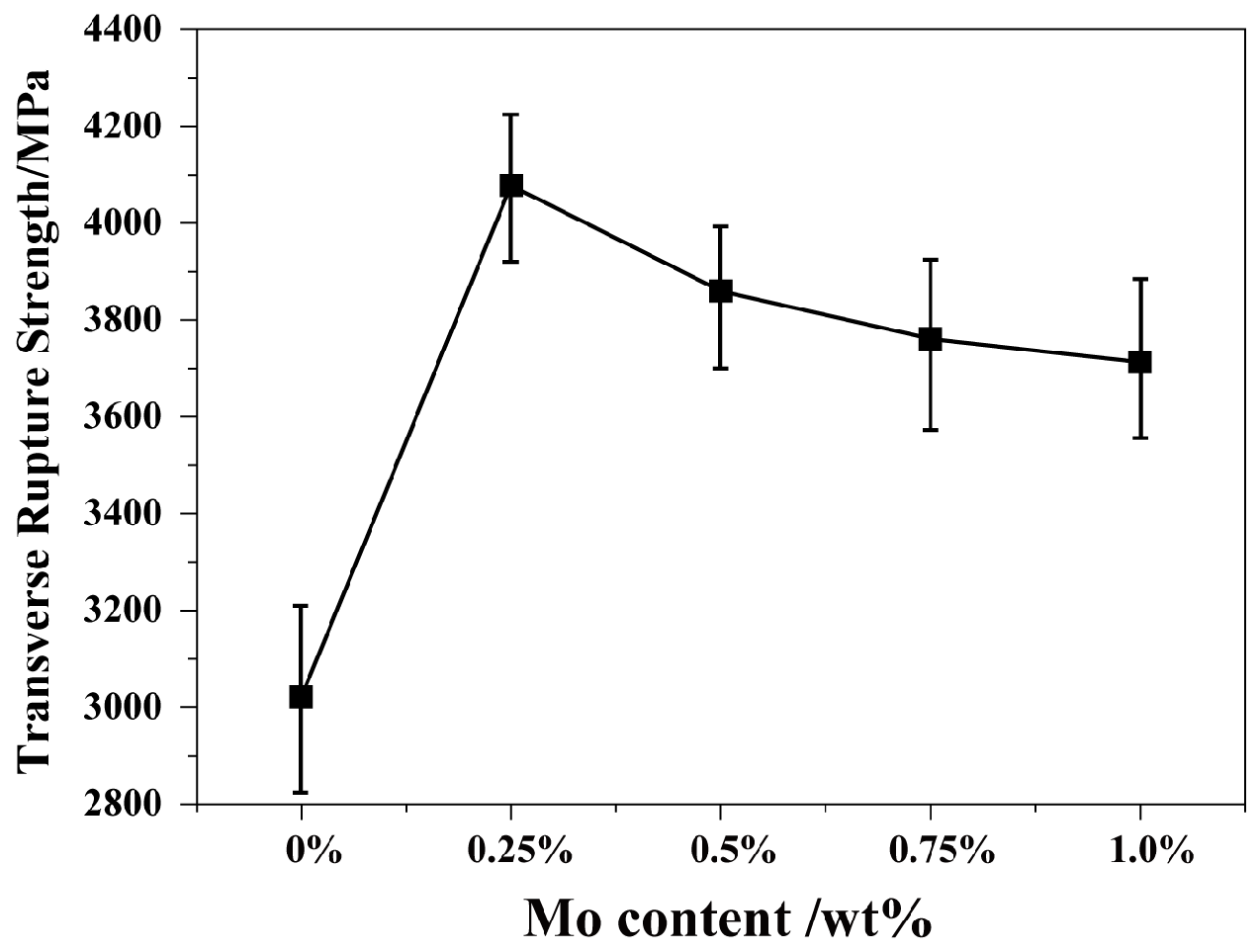
- The incorporation of Mo helps enhance the hardness of the alloy; however, it also reduces the fracture toughness. The transverse rupture strength of the alloy increases initially and then decreases, reaching a maximum value of 4078 MPa.
- (c)
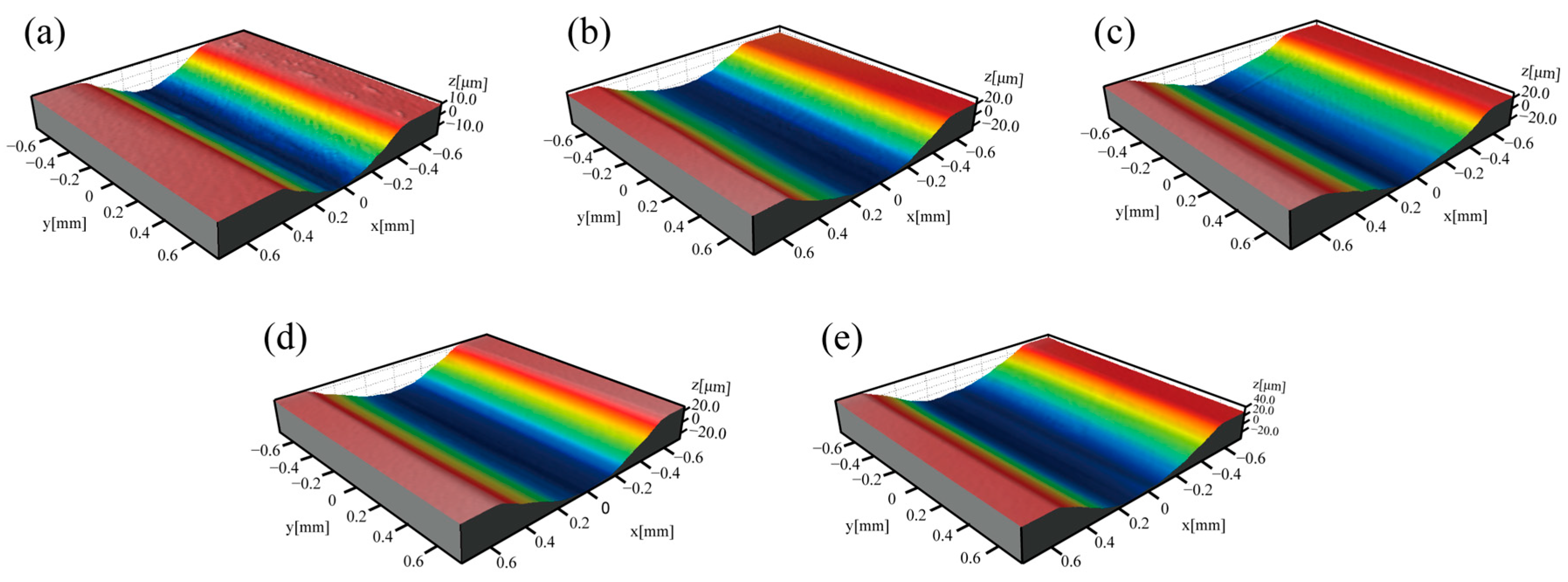
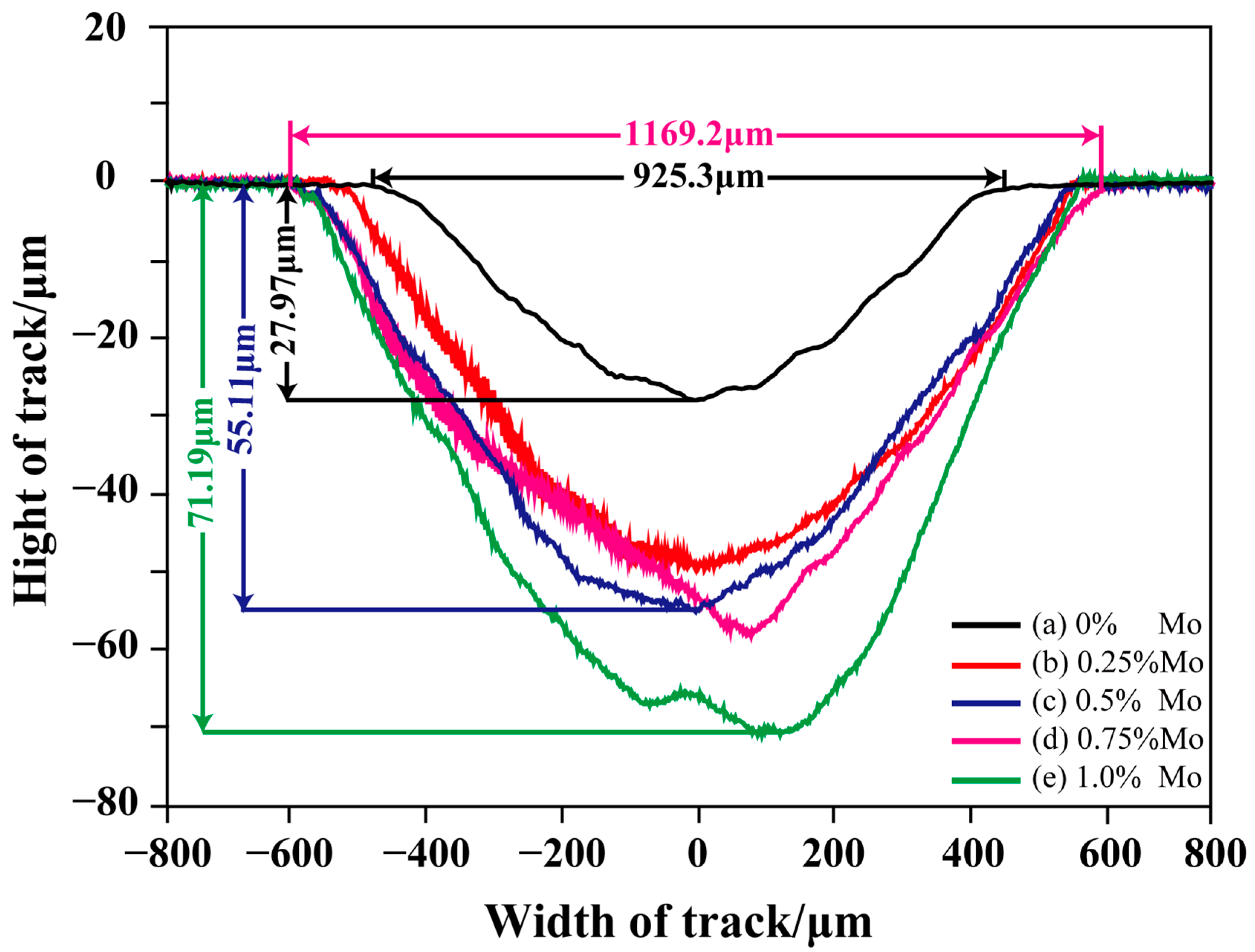
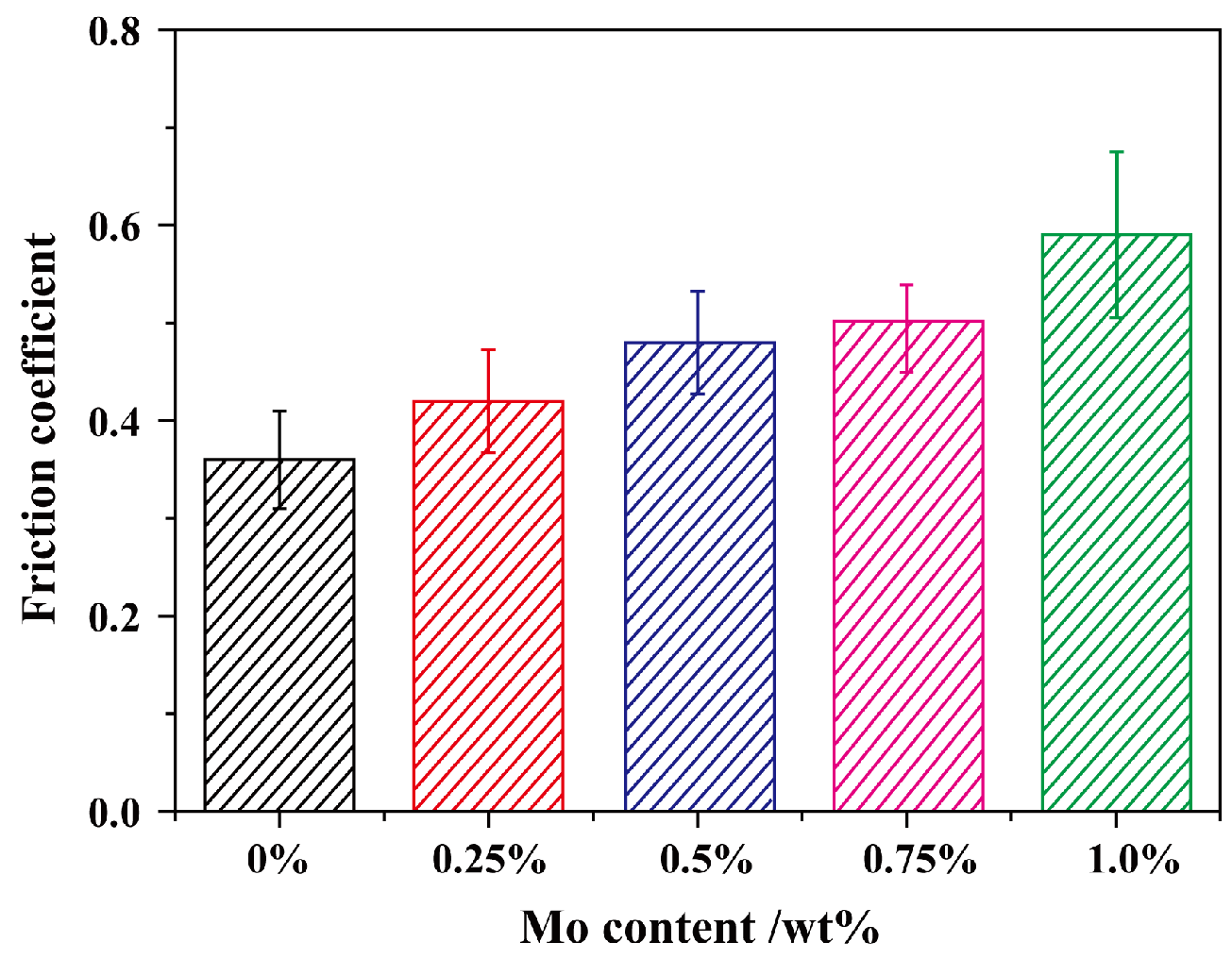
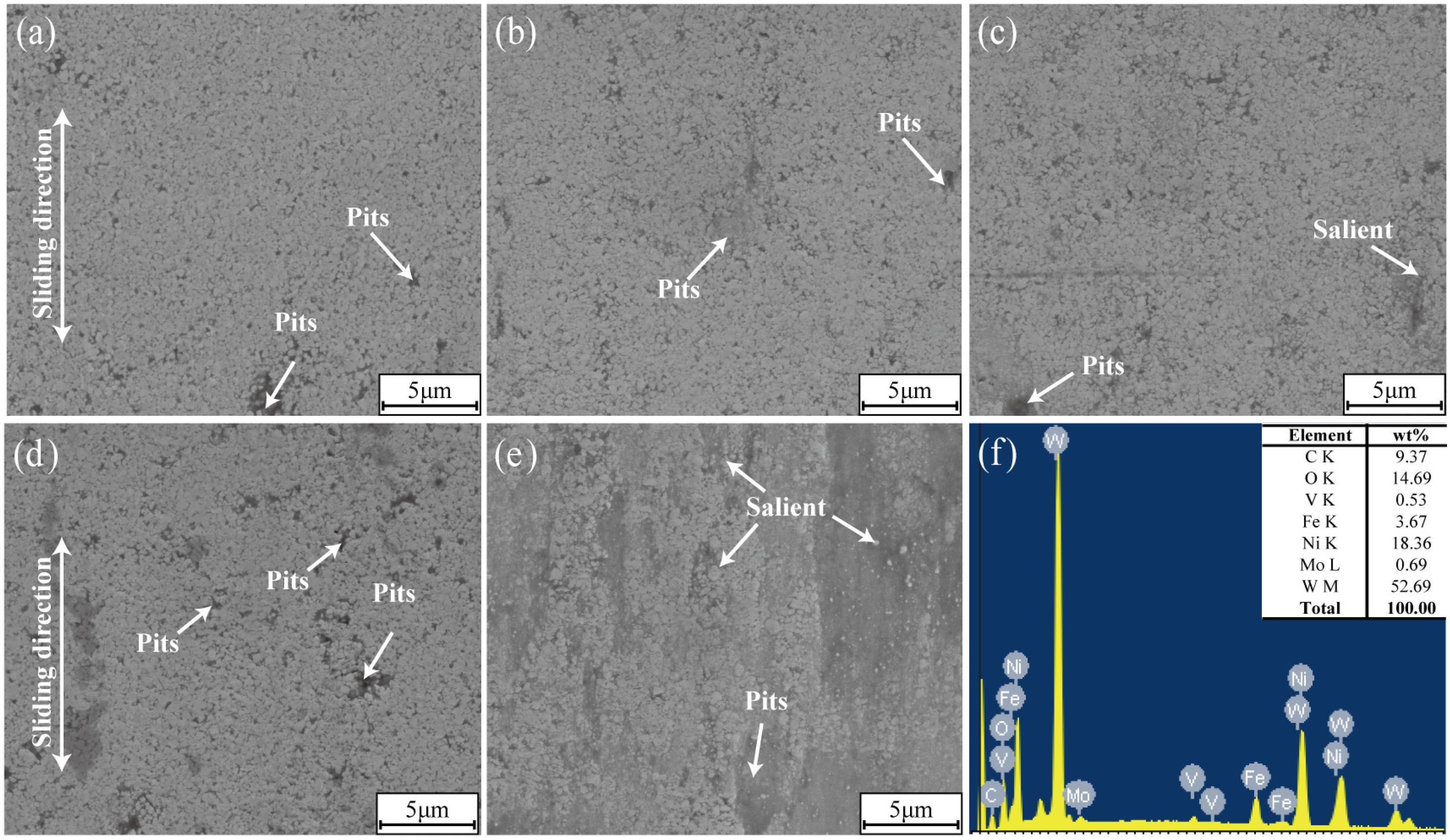
- The addition of Mo increases the brittleness of the binder phase, thereby reducing the wear resistance of the alloy. The friction coefficient of the alloy increases from 0.36 to 0.59. The alloy demonstrates the most balanced comprehensive performance when the Mo content is 0.25 wt%.
Author Contributions
Funding
Data Availability Statement
Conflicts of Interest
References
- García, J.; Ciprés, V.C.; Blomqvist, A.; Kaplan, B. Cemented carbide microstructures: A review. Int. J. Refract. Met. Hard Mater. 2019, 80, 40–68. [Google Scholar] [CrossRef]
- He, M.; Ouyang, Z.; Zhong, Q.; Zhang, J.; Li, Z.; Ye, J. Enhancement of Mechanical Properties and Corrosion Resistance of Dual-Scale Structured WC-10Co Cemented Carbides via Cr-N Dual-Functional Regulation. Metals 2026, 16, 447. [Google Scholar] [CrossRef]
- Liu, Z.H.; Zhou, K.C.; Shi, K.H.; Wu, X.Z.; Xiao, H.; Peng, C.Q.; Wang, R.C.; Wang, X.F. Additive manufacturing techniques for WC-Co cemented carbides: Principle, progress, and perspective. Trans. Nonferrous Met. Soc. China 2026, 36, 1–24. [Google Scholar] [CrossRef]
- Viswanadham, R.K.; Lindquis, P.G. Transformation-toughening in cemented carbides: Part I. Binder composition control. Metall. Trans. A 1987, 18, 2163–2173. [Google Scholar] [CrossRef]
- Gao, Y.; Kang, L.; Yang, Z.; Jia, Y.; Li, X.; Sun, D.; Guo, X.; Fan, L.; An, L. Preparation of ultra-high hardness and toughness WC-Co cemented carbides by dynamic hot forging. J. Alloys Compd. 2025, 1047, 185059. [Google Scholar] [CrossRef]
- Peng, R.; Chen, W.; Mao, M.; Zhao, L.; Chen, X. Chemical-Mechanical Synergy in Chemical Mechanical Polishing of WC-Co Cemented Carbide Inserts under Varied Chemical Environments. Ceram. Int. 2026, 52, 18128–18145. [Google Scholar] [CrossRef]
- Wu, X.Y.; Zhang, W.; Li, D.X.; Guo, J.D. Microstructure of WC in WC-Co cemented carbides consolidated by electric discharge. Mater. Sci. Technol. 2007, 23, 627–629. [Google Scholar] [CrossRef]
- Guo, Z.; Xiong, J.; Yang, M.; Xiong, S.; Chen, J.; Bi, S. Characterization and properties of MTCVD Ti(C,N) coated cemented carbide substrates with Fe/Ni binder. Int. J. Refract Met. Hard Mater. 2010, 28, 238–242. [Google Scholar] [CrossRef]
- Gries, B.; Prakash, L. Iron bonds to curb hardmetal’s more lethal tendencies. Met. Powder Rep. 2007, 62, 15–17. [Google Scholar] [CrossRef]
- Genga, R.M.; Cornish, L.A.; Akdogan, G. Effect of Mo2C additions on the properties of SPS manufactured WC-TiC-Ni cemented carbides. Int. J. Refract Met. Hard Mater. 2013, 41, 12–21. [Google Scholar] [CrossRef]
- Schubert, W.D.; Fugger, M.; Wittmann, B.; Useldinger, R. Aspects of sintering of cemented carbides with Fe-based binders. Int. J. Refract Met. Hard Mater. 2015, 49, 110–123. [Google Scholar] [CrossRef]
- Rosa, J.M.B.; Lugon, R.D.; Silva, K.S.; Chagas, V.M.; Guimarães, R.S.; Carvalho, C.S.; Barreto, L.P.P.; Filgueira, M. Study of characteristics and properties of spark plasma sintered WC with the use of alternative Fe-Ni-Nb binder as Co replacement. Int. J. Refract Met. Hard Mater. 2020, 92, 105316. [Google Scholar] [CrossRef]
- Kakeshita, T.; Wayman, C.M. Martensitic transformations in cermets with a metastable austenitic binder I: WC-(Fe-Ni-C). Mater. Sci. Eng. A 1991, 141, 209–219. [Google Scholar] [CrossRef]
- Ojo-Kupoluyi, O.J.; Tahir, S.M.; Baharudin, B.T.H.T.; Azmah Hanim, M.A.; Anuar, M.S. Mechanical properties of WC-based hardmetals bonded with iron alloys—A review. Mater. Sci. Technol. 2017, 33, 507–517. [Google Scholar] [CrossRef]
- Zheng, Y.; Huang, T.; Yao, J.; Fargas, G.; Armelin, E.; Llanes, L.; Xie, C.; Crespo, D.; Bruna, P.; Lavigne, O. Electrochemical corrosion behavior of WC-Co and WC-Ni cemented carbides: Effect of chloride and sulfate ions. Int. J. Refract Met. Hard Mater. 2025, 132, 107224. [Google Scholar] [CrossRef]
- Yang, S.; Zhu, W.; Ye, N.; Zhang, F.; Jiang, J.; Zhuo, H.; Tang, J. Realizing superior strength-toughness synergy in cemented carbides with coarse and fine-grained heterostructures. J. Mater. Res. Technol. 2025, 36, 3785–3795. [Google Scholar] [CrossRef]
- Gao, Y.; Luo, B.H.; He, K.J.; Zhang, W.W.; Bai, Z.H. Effect of Fe/Ni ratio on the microstructure and properties of WC-Fe-Ni-Co cemented carbides. Ceram. Int. 2018, 44, 2030–2041. [Google Scholar] [CrossRef]
- Zhao, Z.; Liu, J.; Tang, H.; Ma, X.; Zhao, W. Effect of Mo addition on the microstructure and properties of WC-Ni-Fe hard alloys. J. Alloys Compd. 2015, 646, 155–160. [Google Scholar] [CrossRef]
- Agrawal, S.A. Simplified measurement of density of irregular shaped composites material using Archimedes principle by mixing two fluids having different densities. Int. Res. J. Eng. Technol. 2021, 8, 1005. Available online: https://www.researchgate.net/publication/351065185 (accessed on 18 March 2026).
- BS EN ISO 3327:2009; Hardmetals-Determination of Transverse Rupture Strength. European Committee for Standardization: Brussels, Belgium, 2009.
- Ju, J.; Huang, D.; Xu, H.; Dong, D.; Lou, J.; Xu, Y.; Shi, J.; Zhu, L. Effects of Sintering Pressure and Co Content on the Microstructure and Mechanical Performance of WC–Co Cemented Carbides. Metals 2025, 15, 930. [Google Scholar] [CrossRef]
- Massalski, T.B. (Ed.) Binary Alloy Phase Diagrams, 2nd ed.; ASM International: Metals Park, OH, USA, 1990. [Google Scholar]
- Ghasali, E.; Kariminejad, A.; Raza, S.; Li, J.; Hussainova, I.; Alizadeh, M.; Antonov, M.; Ebadzadeh, T.; Orooji, Y. Comparative study of elemental additives (Mo, Si, Ti, V) in spark plasma sintered WC-5wt%Ni hardmetals: Phase formation, mechanical properties, and Wear performance. Int. J. Refract Met. Hard Mater. 2026, 138, 107762. [Google Scholar] [CrossRef]
- Ghasali, E.; Ebadzadeh, T.; Alizadeh, M.; Razavi, M. Mechanical and microstructural properties of WC-based cermets: A comparative study on the effect of Ni and Mo binder phases. Ceram. Int. 2018, 44, 2283–2291. [Google Scholar] [CrossRef]
- Tang, X.; Mao, R.; Zhang, F.; Jin, Y.; Zhou, W.; Su, W.; Jiang, W.; Wang, J. Optimizing WC-10Co cemented carbides with high-entropy (Ti, Cr, V, Nb, Mo)(C, N) inhibitor: Microstructure, mechanics, and wear resistance. J. Alloys Compd. 2025, 1037, 182148. [Google Scholar] [CrossRef]
- Fang, Z.Z.; Wang, X.; Ryu, T.; Hwang, K.S.; Sohn, H.Y. Synthesis, sintering, and mechanical properties of nanocrystalline cemented tungsten carbide-A review. Int. J. Refract Met. Hard Mater. 2009, 27, 288–299. [Google Scholar] [CrossRef]
- Buchegger, C.; Koos, R.; Lengauer, W.; Rödiger, K.; van den Berg, H. Hardmetals with alternative Fe/Ni and Fe/Co/Ni binders: A study on Mo doping, mechanical properties and creep behaviour. In Proceedings of the Euro International Powder Metallurgy Congress & Exhibition, Göteborg, Sweden, 15–18 September 2013. [Google Scholar]
- Chang, S.H.; Chen, S.L. Characterization and properties of sintered WC–Co and WC–Ni–Fe hard metal alloys. J. Alloys Compd. 2014, 585, 407–413. [Google Scholar] [CrossRef]
- Moskowitz, D.; Ford, M.J.; Humenik, M. High-Strength Tungsten Carbides. In Modern Developments in Powder Metallurgy; Hausner, H.H., Ed.; Springer: Boston, MA, USA, 1971; pp. 273–292. [Google Scholar]
- Chang, S.H.; Chang, P.Y. Investigation into the sintered behavior and properties of nanostructured WC–Co–Ni–Fe hard metal alloys. Mater. Sci. Eng. A 2014, 606, 150–156. [Google Scholar] [CrossRef]
- Chen, W.; Yin, Z.; Li, X.; Yuan, J. Effect of co-doped additives on microstructure and mechanical properties of microwave-sintered WC-10Co cemented carbide tool materials. J. Alloys Compd. 2023, 962, 171148. [Google Scholar] [CrossRef]
- Astacio, R.; Gallardo, J.M.; Cintas, J.; Montes, J.M.; Cuevas, F.G.; Prakash, L.; Torres, Y. Fracture toughness of cemented carbides obtained by electrical resistance sintering. Int. J. Refract Met. Hard Mater. 2019, 80, 259–269. [Google Scholar] [CrossRef]
- Brieseck, M.; Bohn, M.; Lengauer, W. Diffusion and solubility of Cr in WC. J. Alloys Compd. 2010, 489, 408–414. [Google Scholar] [CrossRef]
- Fang, Z.Z. Correlation of transverse rupture strength of WC–Co with hardness. Int. J. Refract Met. Hard Mater. 2005, 23, 119–127. [Google Scholar] [CrossRef]
- Bonny, K.; De Baets, P.; Perez, Y.; Vleugels, J.; Lauwers, B. Friction and wear characteristics of WC–Co cemented carbides in dry reciprocating sliding contact. Wear 2010, 268, 1504–1517. [Google Scholar] [CrossRef]
- Herr, M.; Sailer, T.; Sockel, H.G.; Schulte, R.; Feld, H.; Prakash, L.J. Characterisation of wear properties of ultrafine-grained hardmetals using a special abrasive wheel test. Int. J. Refract Met. Hard Mater. 2001, 19, 371–379. [Google Scholar] [CrossRef]







| Powder | WC | Ni | Fe | Mo | VC |
|---|---|---|---|---|---|
| Purity/% | ≥99.9 | ≥99.9 | ≥98.5 | ≥99.9 | ≥99.5 |
| Oxygen/% | 0.15 | 0.30 | 0.50 | 0.25 | 0.79 |
| Carbon/% | 6.13 | 0.35 | 0.80 | 0.01 | 17.72 |
| Fsss/μm | 0.55 | 1.00 | 1.00–6.00 | 3.00 | 1.15 |
| Alloys | Design Composition (wt.%) | ||||
|---|---|---|---|---|---|
| WC | Ni | Fe | Mo | VC | |
| a | Balance | 12.5 | 2.5 | 0 | 0.5 |
| b | Balance | 12.5 | 2.5 | 0.25 | 0.5 |
| c | Balance | 12.5 | 2.5 | 0.5 | 0.5 |
| d | Balance | 12.5 | 2.5 | 0.75 | 0.5 |
| e | Balance | 12.5 | 2.5 | 1.0 | 0.5 |
| Alloys | Binder Phase Composition (wt.%) | |||||
|---|---|---|---|---|---|---|
| W | C | Ni | Fe | Mo | V | |
| a | 15.47 | 2.85 | 67.59 | 12.56 | 0.00 | 1.53 |
| b | 17.09 | 3.65 | 64.30 | 13.04 | 0.26 | 1.66 |
| c | 22.41 | 3.59 | 59.59 | 12.57 | 0.52 | 1.33 |
| d | 25.78 | 3.72 | 55.56 | 12.55 | 0.71 | 1.68 |
| e | 26.25 | 4.96 | 55.32 | 11.41 | 1.19 | 1.86 |
| Alloys | Density/ g·cm−3 | Porosity/% | Hardness/HRA | Fracture Toughness/MPa·m1/2 | Transverse Rupture Strength/MPa |
|---|---|---|---|---|---|
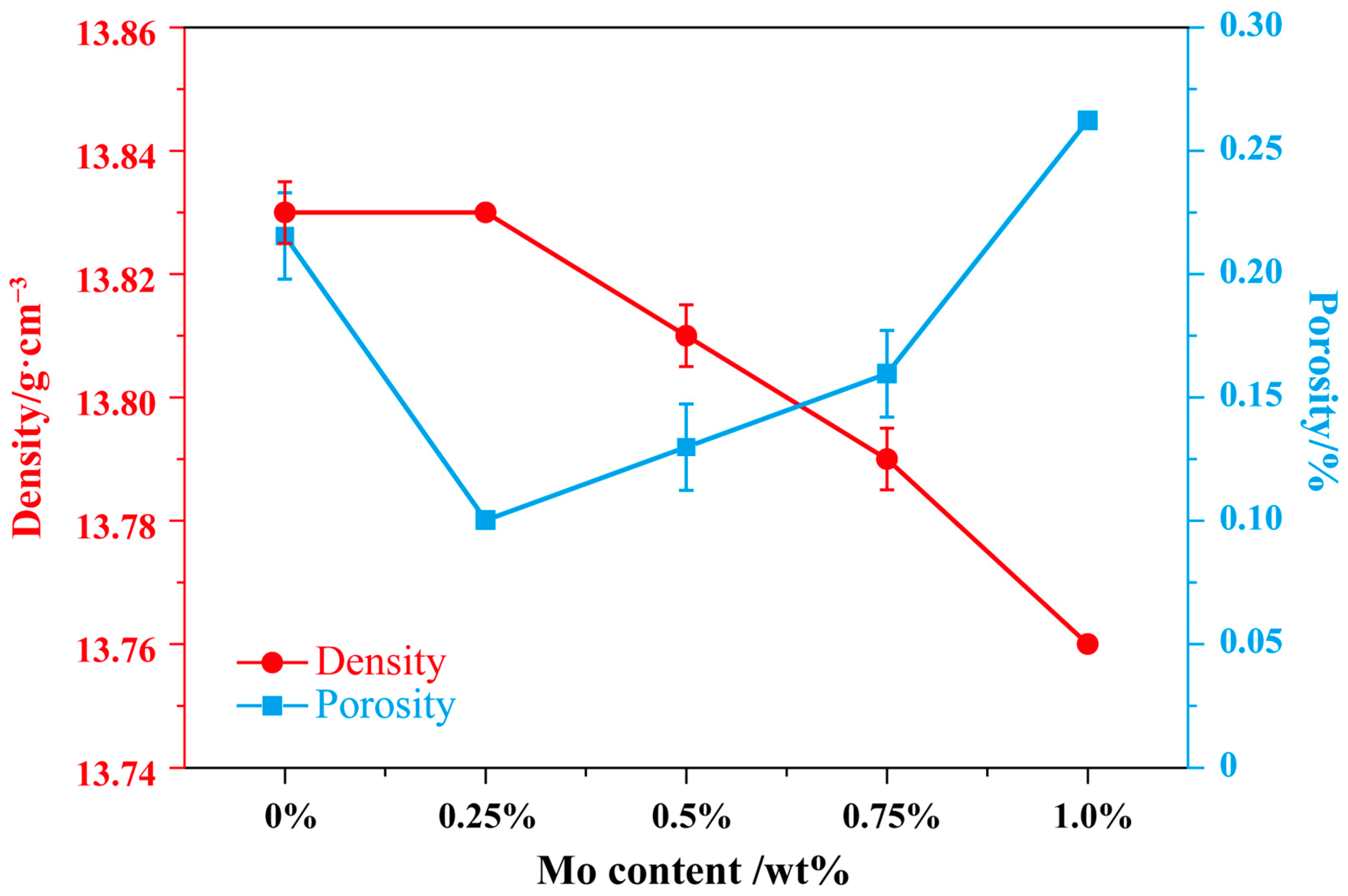
| a | 13.83 ± 0.1 | 0.21 ± 0.07 | 90.0 ± 0.2 | 18.51 ± 1.48 | 3021 ± 390 |
| b | 13.83 | 0.10 ± 0 | 90.5 ± 0.1 | 12.11 ± 1.78 | 4078 ± 301 |
| c | 13.81 ± 0.1 | 0.13 ± 0.07 | 90.6 ± 0.2 | 12.02 ± 1.15 | 3860 ± 287 |
| d | 13.79 ± 0.1 | 0.16 ± 0.07 | 90.8 ± 0.1 | 12.05 ± 0.81 | 3761 ± 336 |
| e | 13.76 | 0.26 ± 0 | 91.0 ± 0.1 | 11.75 ± 0.65 | 3713 ± 329 |
Disclaimer/Publisher’s Note: The statements, opinions and data contained in all publications are solely those of the individual author(s) and contributor(s) and not of MDPI and/or the editor(s). MDPI and/or the editor(s) disclaim responsibility for any injury to people or property resulting from any ideas, methods, instructions or products referred to in the content. |
© 2026 by the authors. Licensee MDPI, Basel, Switzerland. This article is an open access article distributed under the terms and conditions of the Creative Commons Attribution (CC BY) license.
Share and Cite
Zhang, F.; Yuan, D.; Chen, L.; Ye, Y.; Chen, H. Effect of Mo Content on Microstructure and Tribological Properties of WC–Ni–Fe–Mo Cemented Carbides. Metals 2026, 16, 654. https://doi.org/10.3390/met16060654
Zhang F, Yuan D, Chen L, Ye Y, Chen H. Effect of Mo Content on Microstructure and Tribological Properties of WC–Ni–Fe–Mo Cemented Carbides. Metals. 2026; 16(6):654. https://doi.org/10.3390/met16060654
Chicago/Turabian StyleZhang, Fan, Delin Yuan, Liyong Chen, Yuwei Ye, and Hao Chen. 2026. "Effect of Mo Content on Microstructure and Tribological Properties of WC–Ni–Fe–Mo Cemented Carbides" Metals 16, no. 6: 654. https://doi.org/10.3390/met16060654
APA StyleZhang, F., Yuan, D., Chen, L., Ye, Y., & Chen, H. (2026). Effect of Mo Content on Microstructure and Tribological Properties of WC–Ni–Fe–Mo Cemented Carbides. Metals, 16(6), 654. https://doi.org/10.3390/met16060654