Selective Removal of Copper Ions from Fully Leached Solution of Lithium Iron Phosphate Using Copper Chelating Resin


Abstract
1. Introduction
2. Materials and Methods
2.1. Raw Materials
2.2. Test Method
2.2.1. Fourier Transform Infrared Spectroscopy (FT-IR)
2.2.2. X-Ray Photoelectron Spectroscopy (XPS)
2.2.3. Scanning Electron Microscopy-Energy Dispersive X-Ray Spectroscopy (SEM-EDS)
2.3. Test Experiment
2.3.1. Static Adsorption Experiment
2.3.2. Static Desorption Experiment
2.3.3. Dynamic Adsorption and Desorption Experiments
2.3.4. Isothermal Adsorption Experiment
3. Results and Discussions
3.1. Comparison of Copper Removal Between Copper Chelating Resin and Iron Powder
3.2. Influencing Factors of Chelating Resin for Separating Cu
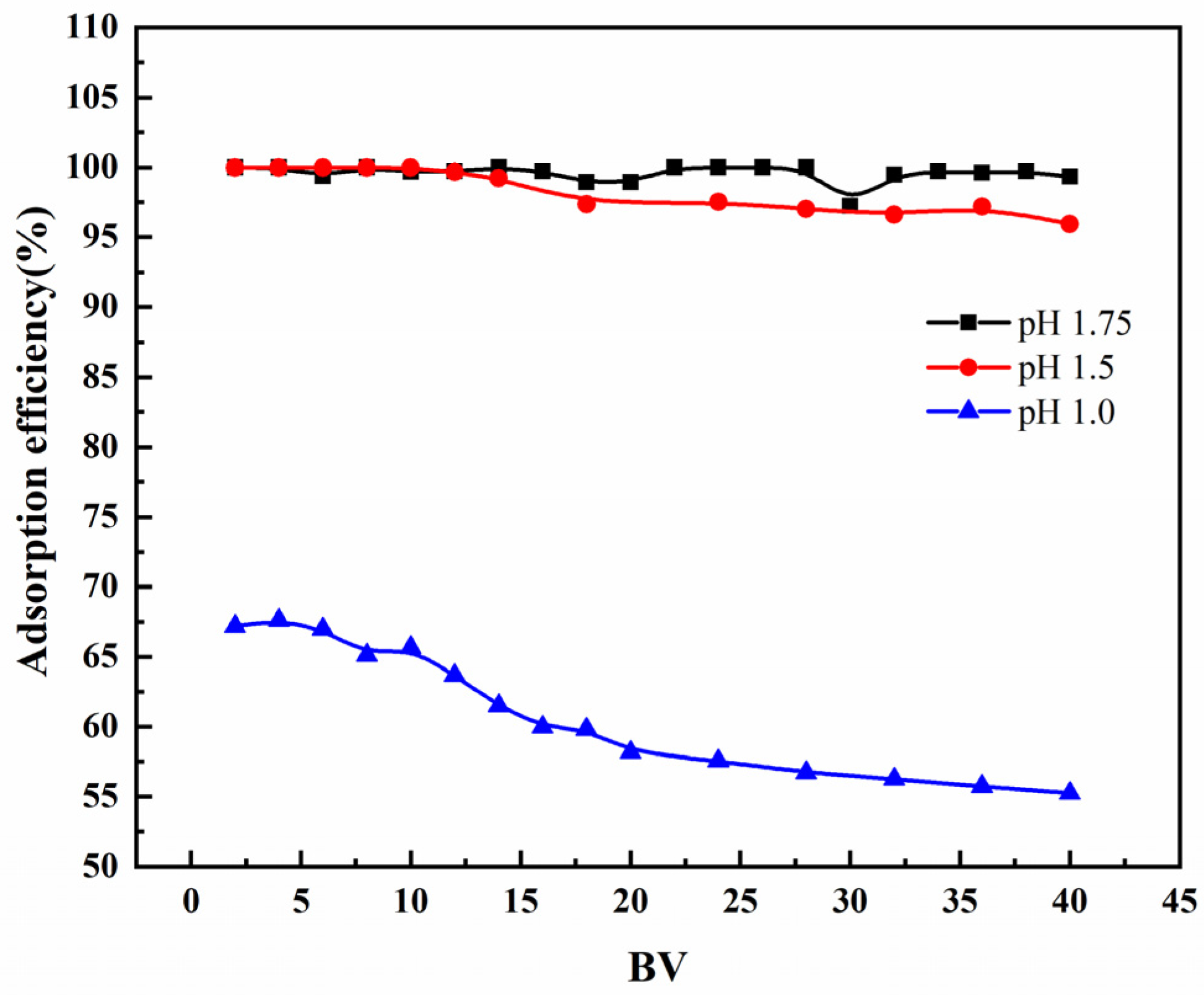
3.2.1. The Influence of pH Values
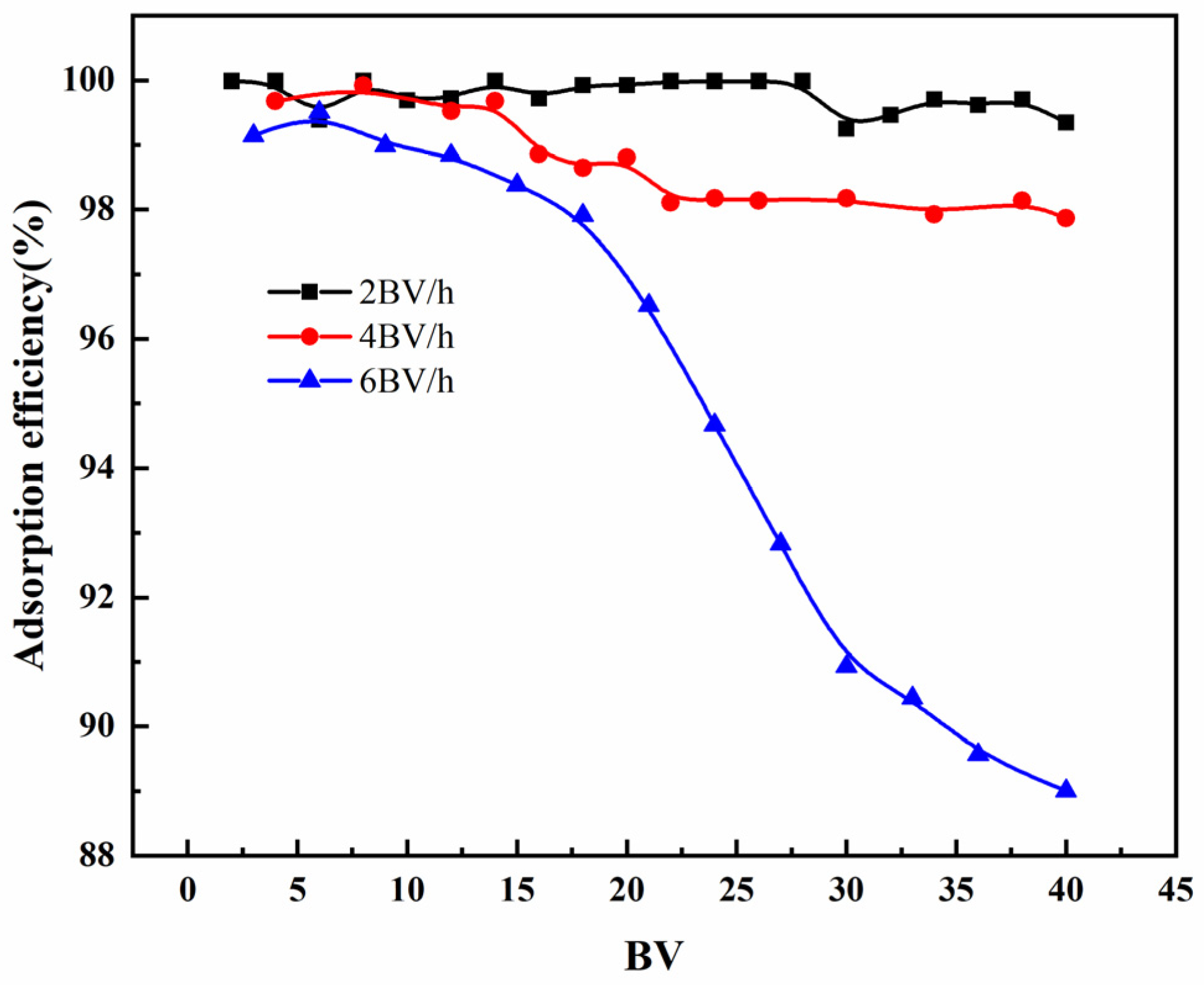
3.2.2. The Influence of Flow Rate
3.2.3. The Selection of Desorption Agents
3.3. Mechanism of Adsorption–Desorption of Copper Chelating Resin
3.3.1. Isothermal Adsorption Model for Cu Adsorption by Copper Chelating Resin
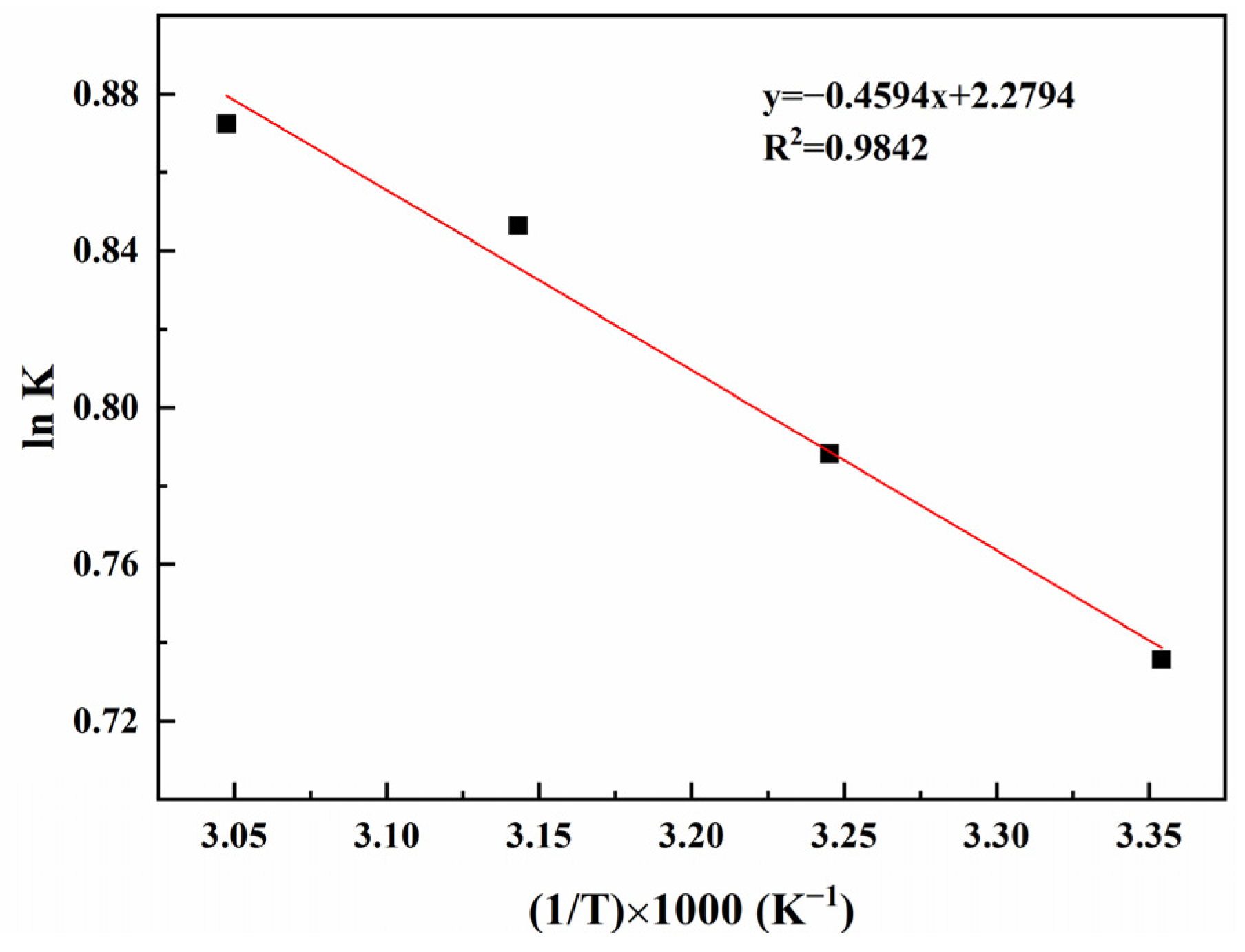
3.3.2. The Thermodynamic of Copper Adsorption by Copper Chelating Resin
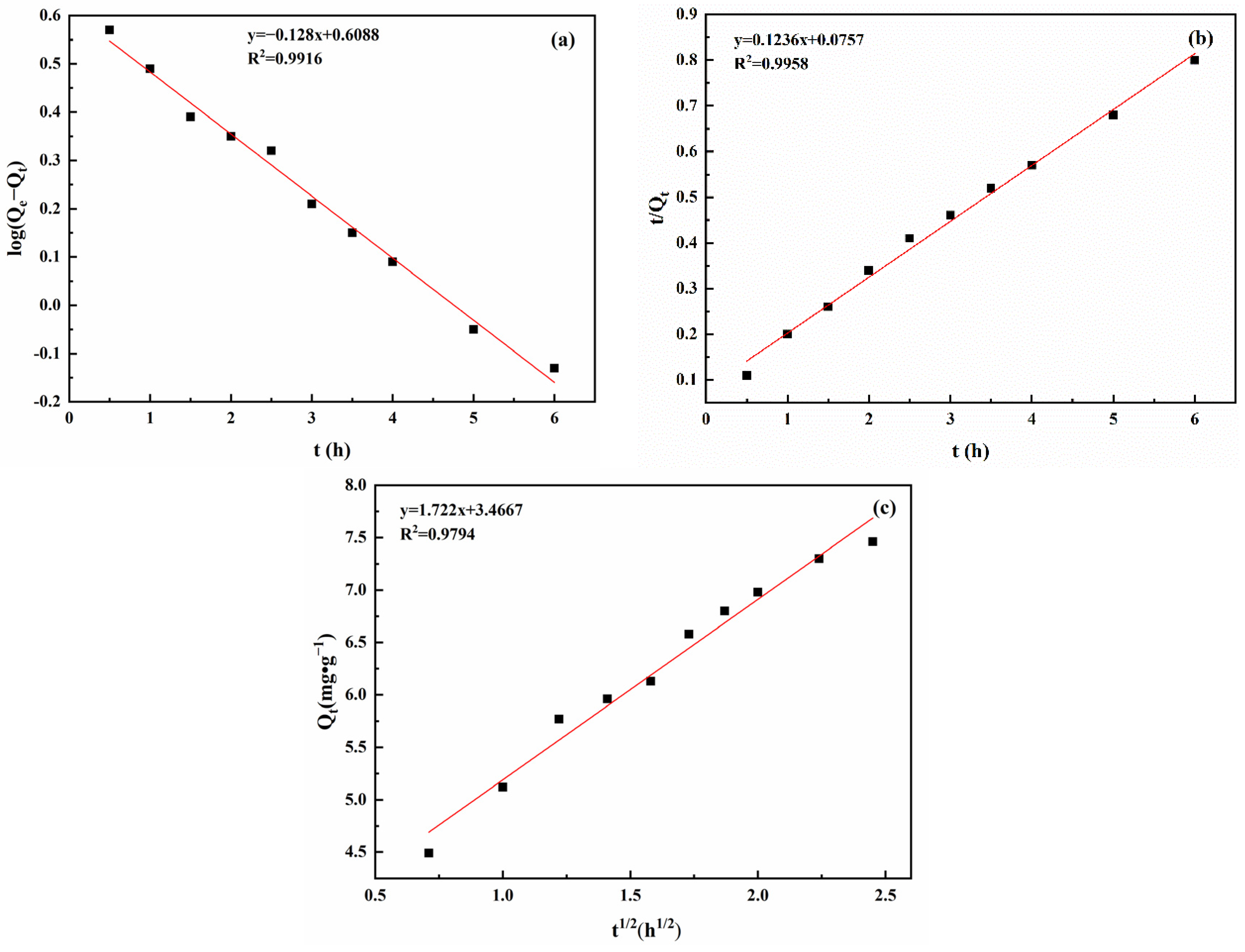
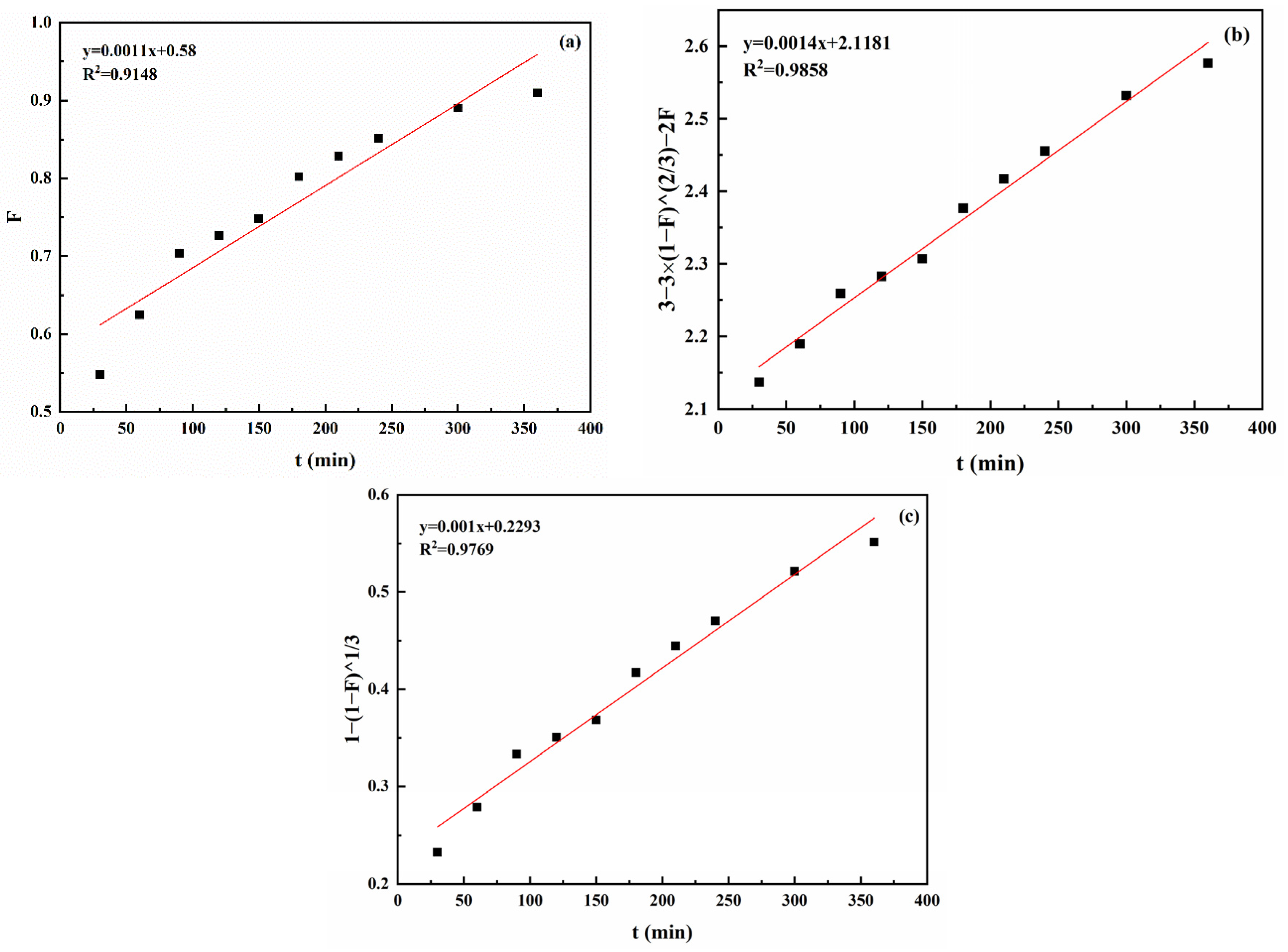
3.3.3. The Adsorption Kinetics of Copper by Copper Chelating Resin
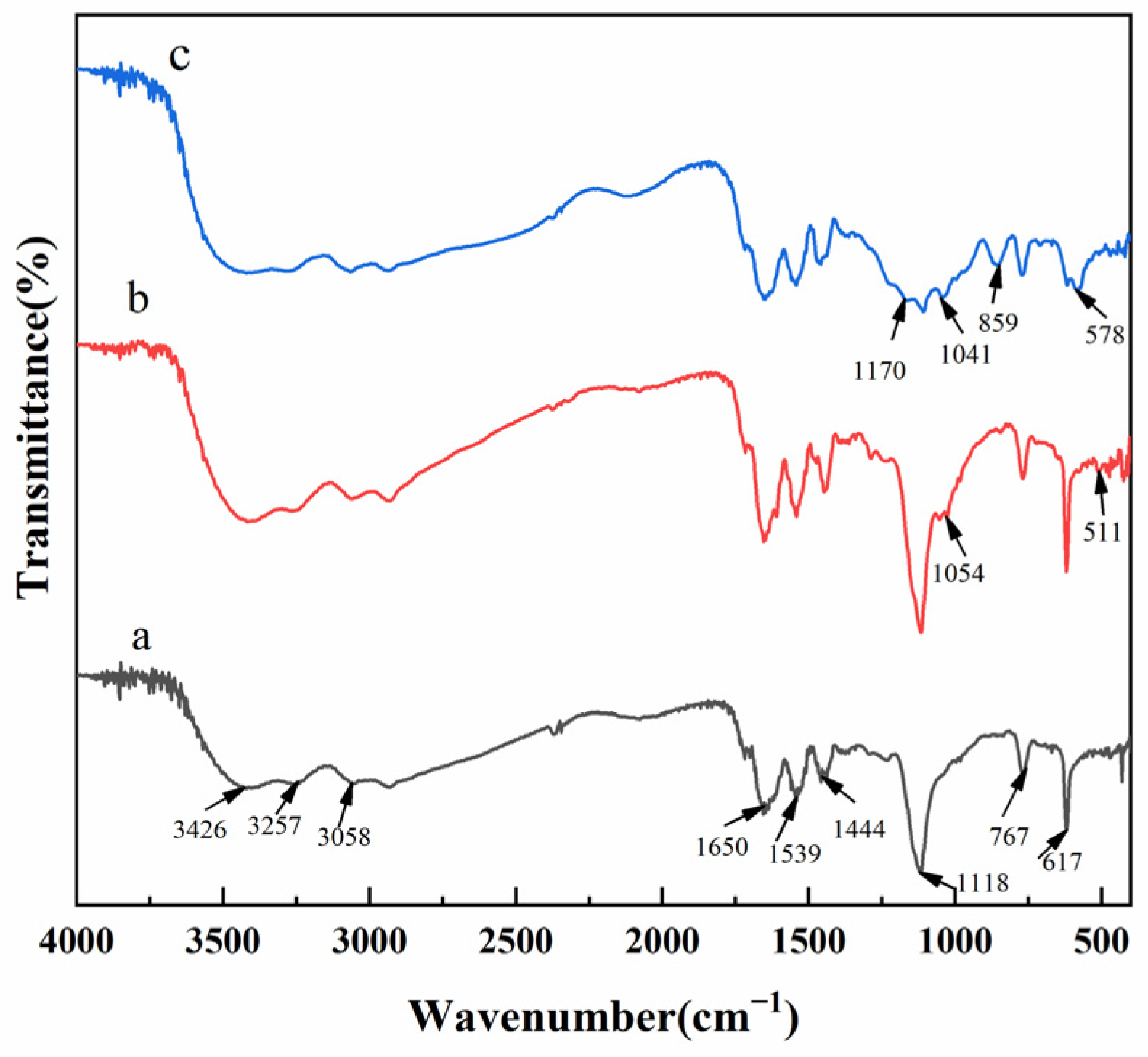
3.3.4. Fourier Transform Infrared (FTIR) Spectrum Analysis
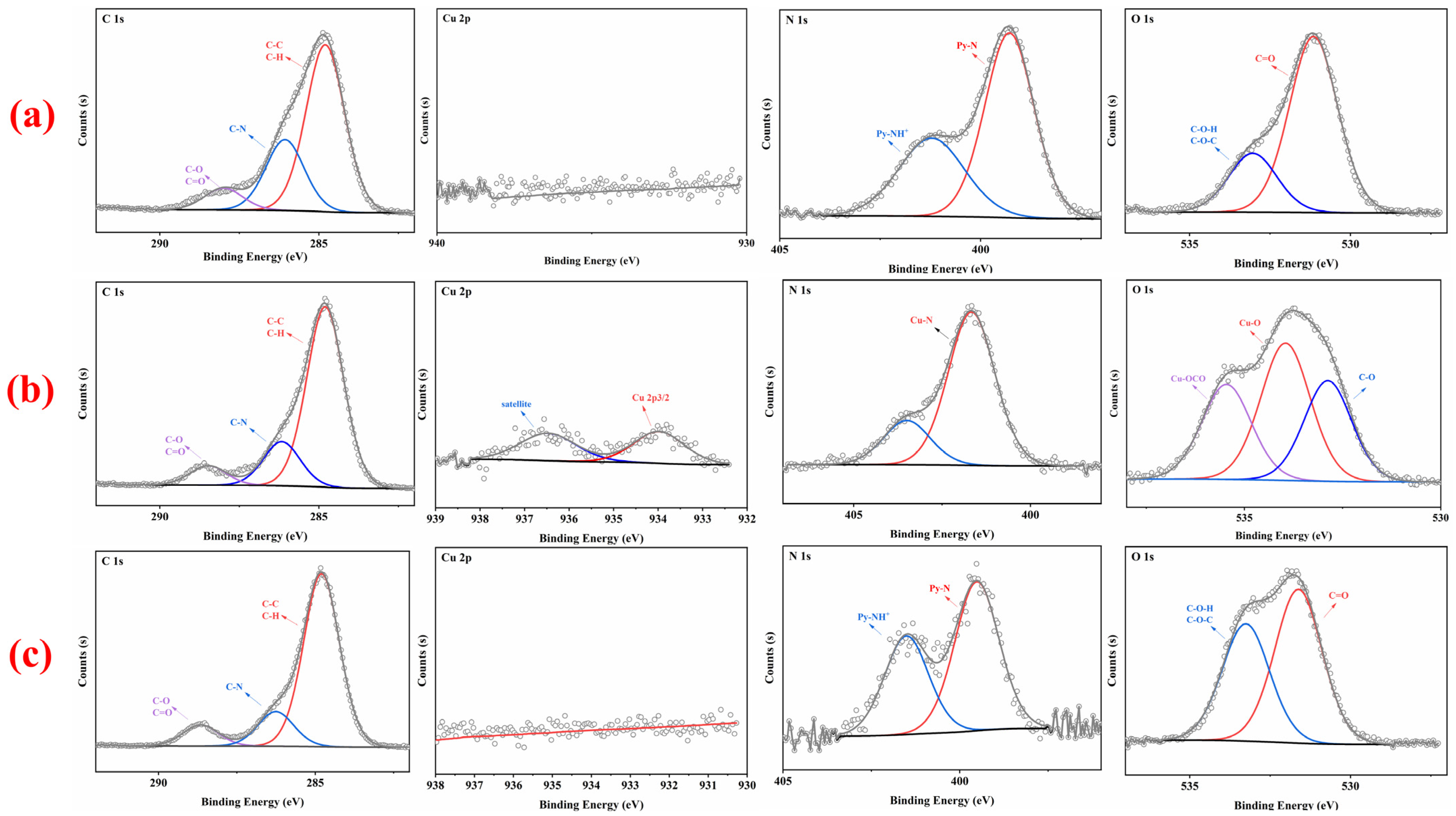
3.3.5. XPS Analysis
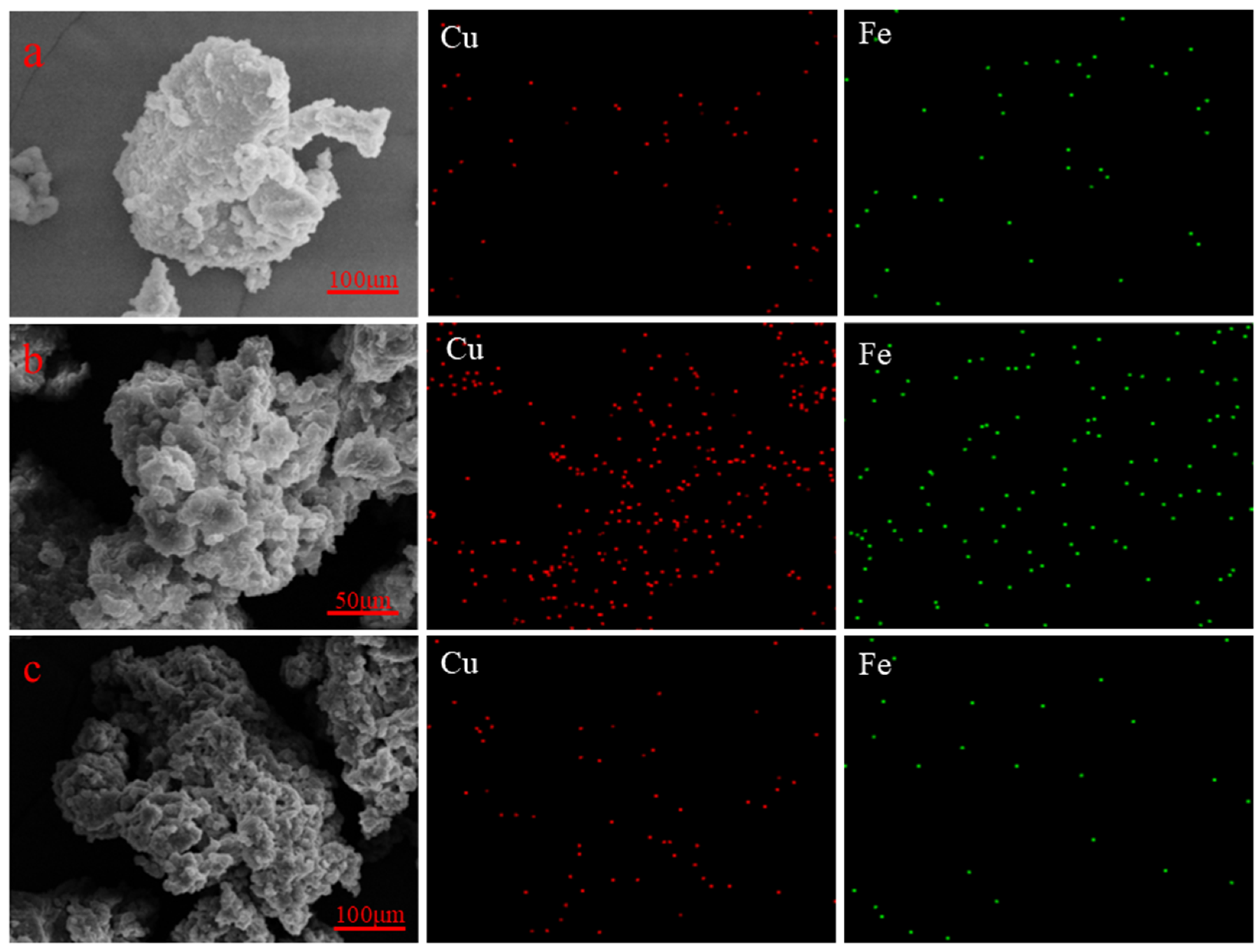
3.3.6. SEM-EDS
4. Conclusions
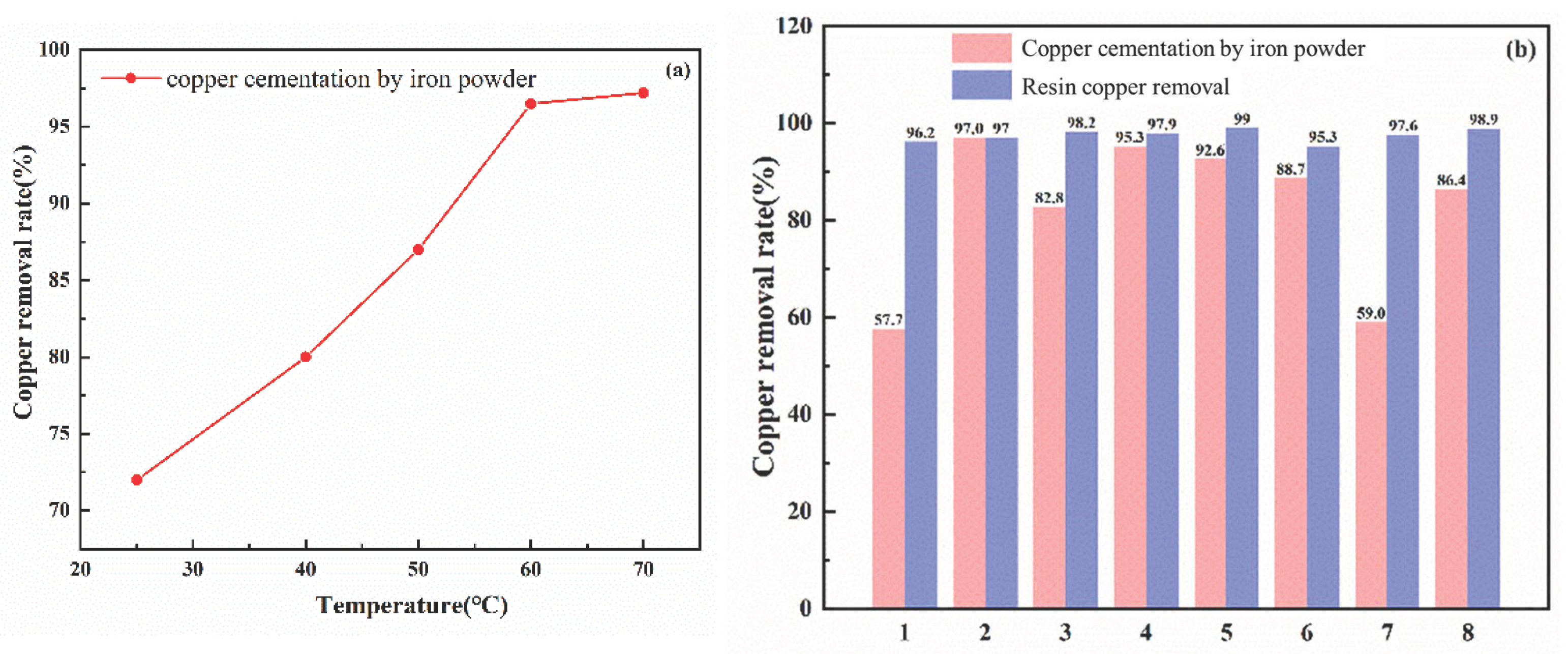
- The copper chelating resin demonstrated markedly higher efficiency for copper removal from lithium iron phosphate full leachate than iron powder cementation at room temperature, achieving up to 96.99% Cu removal with residual Cu concentrations below 10 mg/L.
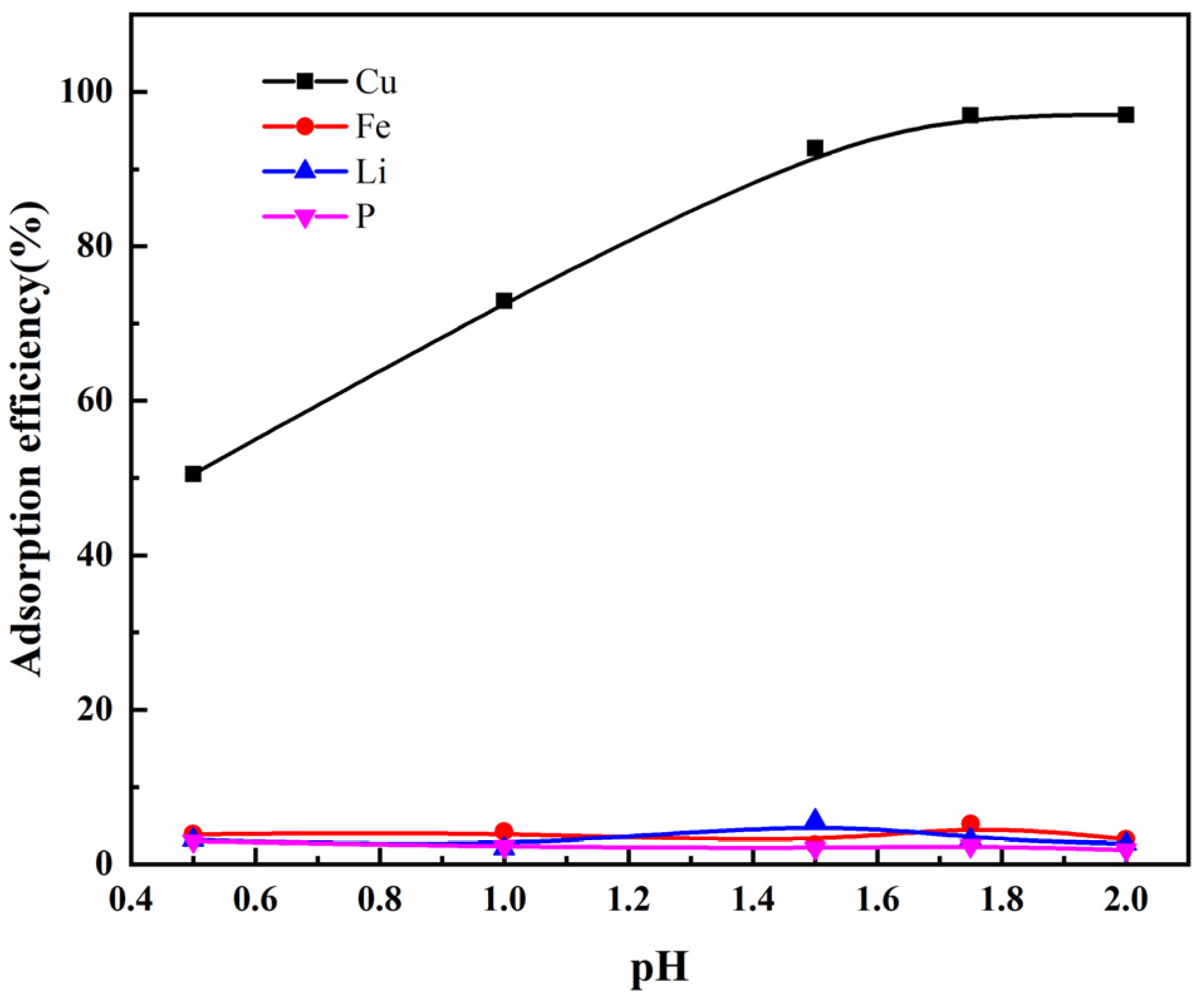
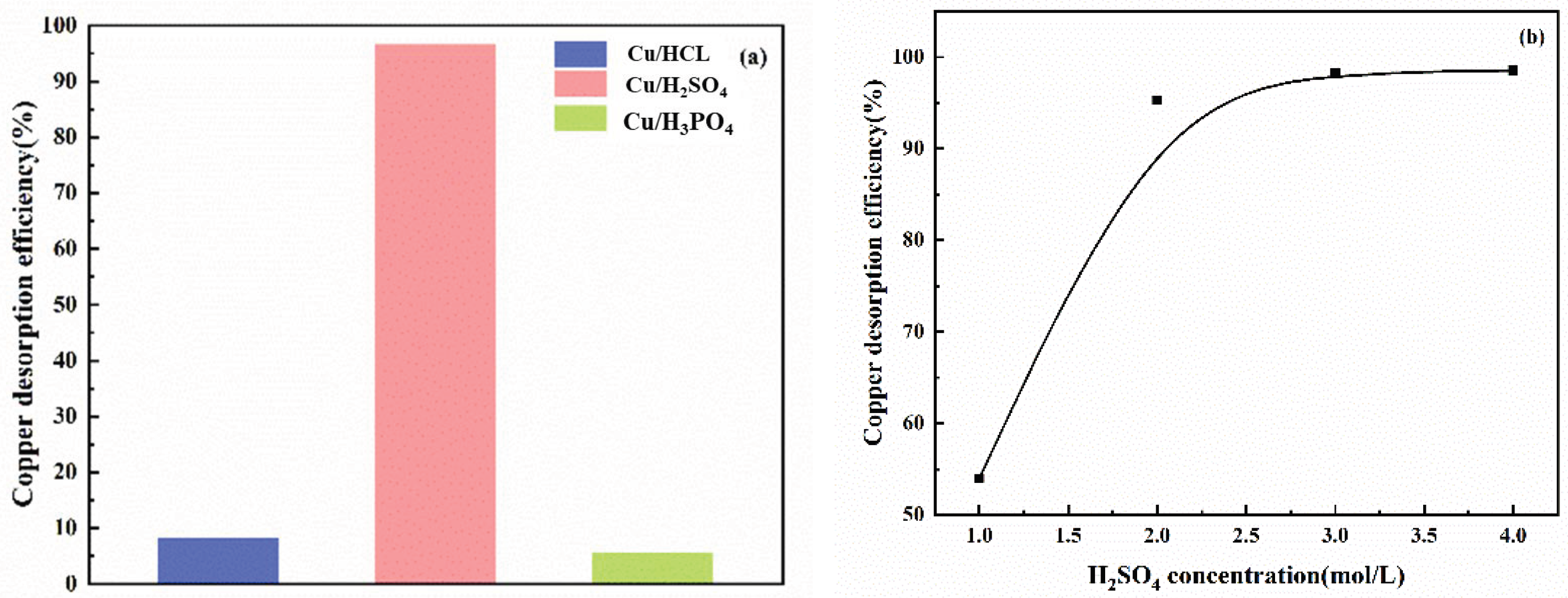
- When the initial pH value of the lithium iron phosphate leaching solution is 1.75, the adsorption rate of copper by the copper chelating resin can reach 98%. Compared with HCl solution and H3PO4 solution, the desorption effect is the best when H2SO4 solution is used as the desorption medium. The desorption efficiency of copper can reach 95% when the loaded copper chelating resin is desorbed with 2 mol/L H2SO4 solution. Selective separation and enrichment of Cu have been achieved.
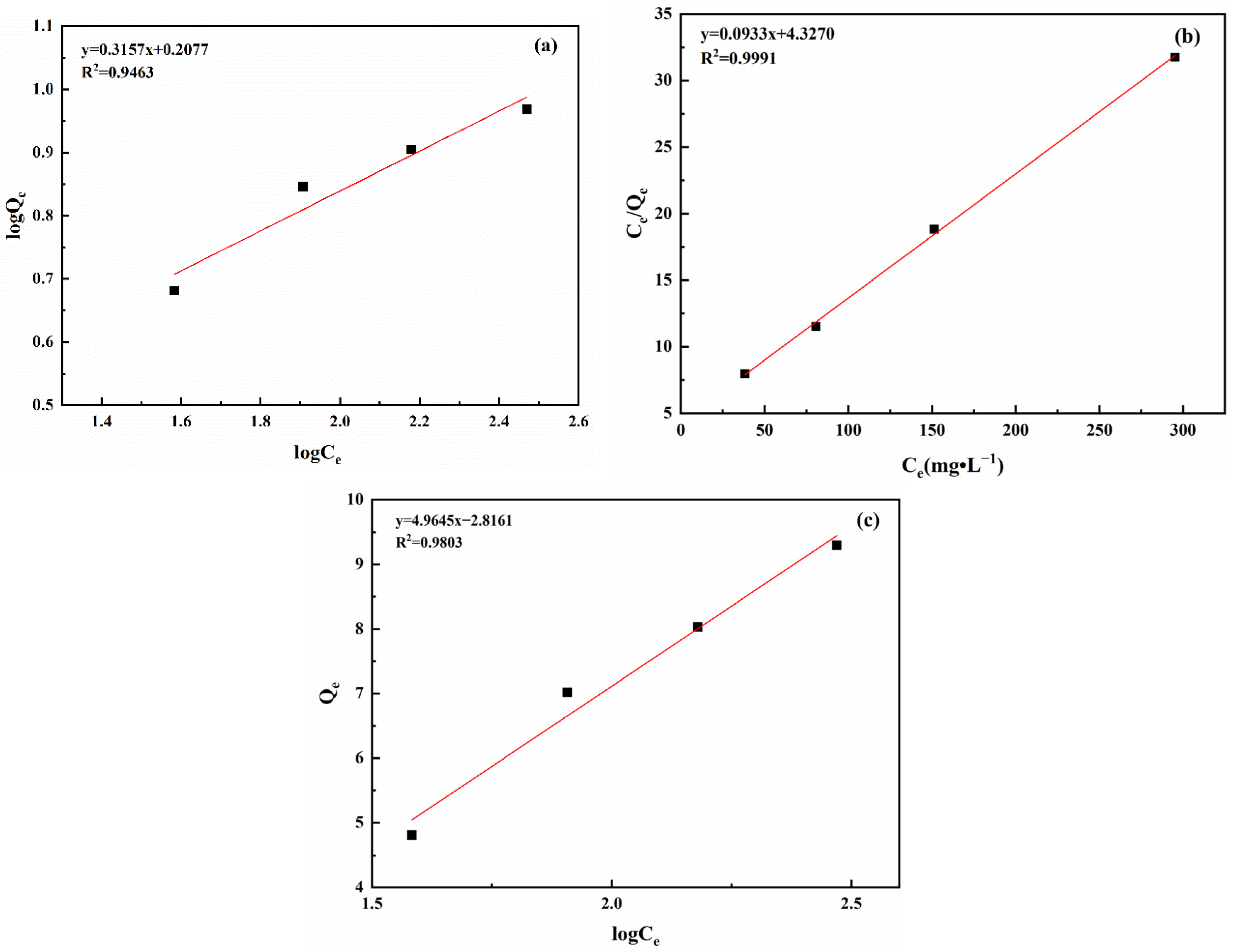
- The copper chelating resin’s adsorption of copper conforms to the Langmuir isothermal adsorption model and the pseudo-second-order kinetic law. The adsorption process was governed by a mixed control mechanism, with chemisorption as the dominant rate-limiting step and intraparticle diffusion also playing a role.
- This study demonstrates that the copper chelating resin enables efficient and selective Cu2+ adsorption via synergistic coordination. The copper chelating resin framework is stable, and its structure and performance can be fully recovered after desorption. This stable, reusable adsorbent shows high practical value for copper recovery.
- This research focuses on the practical demand for LFP battery recycling. Targeting the full leachate of LFP batteries, it fills the research gap in the selective removal of copper ions from such systems. Compared with traditional chemical precipitation, iron powder cementation and solvent extraction methods, the chelating resin adopted in this study can realize efficient and selective copper removal with the advantages of simple operation, low cost, environmental friendliness and higher safety. By deeply exploring the adsorption mechanism, this work provides a theoretical basis for the selective removal of copper from complex leachate systems and proposes a novel economical and recyclable copper removal method with a clarified reaction mechanism.
Author Contributions
Funding
Data Availability Statement
Acknowledgments
Conflicts of Interest
References
- Luo, X.; Wang, J.H.; Dooner, M.; Clarke, J. Overview of current development in electrical energy storage technologies and the application potential in power system operation. Appl. Energy 2015, 137, 511–536. [Google Scholar] [CrossRef]
- Lei, S.Y.; Sun, W.; Yang, Y. Comprehensive Technology for Recycling and Regenerating Materials from Spent Lithium Iron Phosphate Battery. Environ. Sci. Technol. 2024, 58, 3609–3628. [Google Scholar] [CrossRef]
- Yang, L.M.; Gao, Z.; Liu, T.; Huang, M.T.; Liu, G.Z.; Feng, Y.F.; Luo, X.B. Direct Electrochemical Leaching Method for High-Purity Lithium Recovery from Spent Lithium Batteries. Environ. Sci. Technol. 2023, 57, 4591–4597. [Google Scholar] [CrossRef]
- Li, H.; Xing, S.Z.; Liu, Y.; Li, F.J.; Guo, H.; Kuang, G. Recovery of Lithium, Iron, and Phosphorus from Spent LiFePO4 Batteries Using Stoichiometric Sulfuric Acid Leaching System. ACS Sustain. Chem. Eng. 2017, 5, 8017–8024. [Google Scholar] [CrossRef]
- Li, J.; Wang, G.X.; Xu, Z.M. Environmentally-friendly oxygen-free roasting/wet magnetic separation technology for in situ recycling cobalt, lithium carbonate and graphite from spent LiCoO2/graphite lithium batteries. J. Hazard. Mater. 2016, 302, 97–104. [Google Scholar] [CrossRef] [PubMed]
- Ji, S.J.; Wang, X.Y.; Wang, F.Q.; Sha, W.X.; Cheng, D.P.; Wang, Z.X.; Cao, Y.C. Recycling methods for spent lithium iron phosphate cathode materials. Ionics 2025, 31, 12511–12521. [Google Scholar] [CrossRef]
- Hammond, G.P.; Hazeldine, T. Indicative energy technology assessment of advanced rechargeable batteries. Appl. Energy 2015, 138, 559–571. [Google Scholar] [CrossRef]
- Ou, J.; Kang, S.; Chen, J.; E, J.; Liao, G.; Zhang, F.; Leng, E. Study on the selective recovery of metals from lithium iron phosphate cathode materials based on hydrothermal oxidation. J. Energy Storage 2024, 101, 113832. [Google Scholar] [CrossRef]
- Guo, Y.; Li, F.; Zhu, H.; Li, G.; Huang, J.; He, W. Leaching lithium from the anode electrode materials of spent lithiumion batteries by hydrochloric acid (HCl). Waste Manag. 2016, 51, 227–233. [Google Scholar] [CrossRef] [PubMed]
- Dias, I.P.; Alves, I.A.; Barbosa, A.J.B.; Romano, C.D.E. Comparative study of selective copper recovery techniques from nickel laterite leach waste towards a competitive sustainable extractive process. Clean. Eng. Technol. 2020, 1, 100031. [Google Scholar] [CrossRef]
- Fan, E.; Li, L.; Wang, Z.P.; Lin, J.; Huang, Y.X.; Yao, Y.; Feng, R.J.; Wu, C. Sustainable Recycling Technology for Li-Ion Batteries and Beyond: Challenges and Future Prospects. Chem. Rev. 2020, 120, 7020−7063. [Google Scholar] [CrossRef]
- Sami, V.; Tobias, W.; Arttu, K.; Tuomo, S. Removal of iron, aluminium, manganese and copper from leach solutions of lithium-ion battery waste using ion exchange. Hydrometallurgy 2021, 202, 105602. [Google Scholar] [CrossRef]
- Wang, C.X.; Hu, H.P.; Qiu, X.J.; Cheng, Z.Y.; Meng, L.J.; Zhu, L. Synthesis of novel silica-supported chelating resin containing tert-butyl 2-picolyamino-N-acetate and its properties for selective adsorption of copper from simulated nickel electrolyte. Trans. Nonferrous Met. Soc. China 2018, 28, 2553–2565. [Google Scholar] [CrossRef]
- Kim, I.; Kim, S.; Kim, G. Analytical artifacts associated with the chelating resin extraction of dissolved rare earth elements in natural water samples. Aquat. Geochem. 2010, 16, 611–620. [Google Scholar] [CrossRef]
- Wang, M.M.; Zhang, C.C.; Zhang, F.S. An environmental benign process for cobalt and lithium recovery from spent lithium-ion batteries by mechanochemical approach. Waste Manag. 2016, 51, 239–244. [Google Scholar] [CrossRef]
- Yadav, P.; Chan, J.J.; Tan, S.M.; Srinivasan, M. Recycling of cathode from spent lithium iron phosphate batteries. J. Hazard. Mater. 2020, 399, 123068. [Google Scholar] [CrossRef]
- Santana, I.L.; Moreira, T.F.M.; Lelis, M.F.F.; Freitas, M.B.J.G. Photocatalytic properties of Co3O4/LiCoO2 recycled from spent lithium-ion batteries using citric acid as leaching agent. Mater. Chem. Phys. 2017, 190, 38–44. [Google Scholar] [CrossRef]
- Qiu, X.J.; Hu, H.P.; Yang, J.P.; Wang, C.X.; Cheng, Z.Y. Removal of trace copper from simulated nickel electrolytes using a new chelating resin. Hydrometallurgy 2018, 180, 121–131. [Google Scholar] [CrossRef]
- Zhao, J.J.; Zhang, B.L.; Xie, H.W. Hydrometallurgical recovery of spent cobalt-based lithiumion battery cathodes using ethanol as the reducing agent. Environ. Res. 2020, 181, 108803. [Google Scholar] [CrossRef] [PubMed]
- Xu, J.Q.; Thomas, H.R.; Francis, R.W.; Lum, K.R.; Wang, J.W.; Liang, B. A review of processes and technologies for the recycling of lithium-ion secondary batteries. J. Power Sources 2008, 177, 512–527. [Google Scholar] [CrossRef]
- Yao, L.; Yao, H.; Xi, G.X.; Feng, Y. Recycling and synthesis of LiNi1/3Co1/3Mn1/3O2 from waste lithium ion batteries using D, L-malic acid. RSC Adv. 2016, 6, 17947–17954. [Google Scholar] [CrossRef]
- Zhang, J.W.; Zhu, C.G.; Zhou, F.; Ma, L. Adsorption behavior and kinetics for L-valine separation from aqueous solution using ion exchange resin. React. Funct. Polym. 2018, 130, 51–60. [Google Scholar] [CrossRef]
- Racovita, S.; Lungan, M.A.; Bunia, I.; Popa, M.; Vasiliu, S. Adsorption and release studies of cefuroxime sodium from acrylic ion exchange resin microparticles coated with gellan. React. Funct. Polym. 2016, 105, 103–113. [Google Scholar] [CrossRef]
- Rodrigues, E.; Almeida, O.; Brasil, H.; Moraes, D.; dos Reis, M.A.L. Adsorption of chromium (VI) on hydrotalcite-hydroxyapatite material doped with carbon nanotubes: Equilibrium, kinetic and thermodynamic study. Appl. Clay Sci. 2019, 172, 57–64. [Google Scholar] [CrossRef]







| Material | Cu (mg/L) | Fe (g/L) | Li (g/L) | P (g/L) | pH |
|---|---|---|---|---|---|
| LiFePO4 extract | 65.50 | 29.25 | 7.90 | 13.40 | 1.5 |
| Device Name | Unit Type |
|---|---|
| Fourier-transform infrared spectroscopy (FT-IR) | Nicolet iS50 (FT-IR) Thermo Fisher Scientific (Nicolet), Madison, WI, USA |
| X-ray photoelectron spectroscopy (XPS) | Escalab 250Xi (XPS) Thermo Fisher Scientific (VG Scienta), East Grinstead, West Sussex, UK |
| Scanning electron microscopy-energy dispersive X-ray spectroscopy (SEM-EDS) | Regulus 8220 (SEM-EDS) Hitachi High-Tech Corporation, Tokyo, Japan |
| Parameters | Freundlich Isotherm | Langmuir Isotherm | Temkin Isotherm | ||||||
|---|---|---|---|---|---|---|---|---|---|
| Kf | n | R2 | Q0 | KL | R2 | bT | aT | R2 | |
| Values | 1.613 | 3.167 | 0.946 | 10.718 | 0.021 | 0.999 | 1149.908 | 0.271 | 0.980 |
| T (K) | ΔG kJ/mol | ΔH kJ/mol | ΔS J/(mol/K) |
|---|---|---|---|
| 298 | −1.823 | 14.922 | 53.011 |
| 308 | −2.019 | ||
| 318 | −2.238 | ||
| 328 | −2.380 |
| Parameters | Pseudo-First Order | Pseudo-Second Order | Weber–Morris | ||||||
|---|---|---|---|---|---|---|---|---|---|
| Qe | K1 | R2 | Qe | K2 | R2 | C | K3 | R2 | |
| Values | 4.0626 | 0.2948 | 0.9916 | 8.0906 | 0.2018 | 0.9958 | 3.4667 | 1.722 | 0.9794 |
Disclaimer/Publisher’s Note: The statements, opinions and data contained in all publications are solely those of the individual author(s) and contributor(s) and not of MDPI and/or the editor(s). MDPI and/or the editor(s) disclaim responsibility for any injury to people or property resulting from any ideas, methods, instructions or products referred to in the content. |
© 2026 by the authors. Licensee MDPI, Basel, Switzerland. This article is an open access article distributed under the terms and conditions of the Creative Commons Attribution (CC BY) license.
Share and Cite
Hu, Y.; Liu, L.; Zhu, Y.; Liu, H.; Xu, K. Selective Removal of Copper Ions from Fully Leached Solution of Lithium Iron Phosphate Using Copper Chelating Resin. Metals 2026, 16, 650. https://doi.org/10.3390/met16060650
Hu Y, Liu L, Zhu Y, Liu H, Xu K. Selective Removal of Copper Ions from Fully Leached Solution of Lithium Iron Phosphate Using Copper Chelating Resin. Metals. 2026; 16(6):650. https://doi.org/10.3390/met16060650
Chicago/Turabian StyleHu, Yi, Lian Liu, Yaqian Zhu, Hui Liu, and Kaihua Xu. 2026. "Selective Removal of Copper Ions from Fully Leached Solution of Lithium Iron Phosphate Using Copper Chelating Resin" Metals 16, no. 6: 650. https://doi.org/10.3390/met16060650
APA StyleHu, Y., Liu, L., Zhu, Y., Liu, H., & Xu, K. (2026). Selective Removal of Copper Ions from Fully Leached Solution of Lithium Iron Phosphate Using Copper Chelating Resin. Metals, 16(6), 650. https://doi.org/10.3390/met16060650