Article

Carbothermic Reduction and Sulfidation Behavior for Fe–Ni–S Matte Production from Synthetic Saprolitic Nickel Ore

BB21 Plus Team, Department of Metallurgical Engineering, Pukyong National University, Busan 48513, Republic of Korea
*
Author to whom correspondence should be addressed.
Metals 2026, 16(6), 589; https://doi.org/10.3390/met16060589
Submission received: 7 May 2026 / Revised: 20 May 2026 / Accepted: 22 May 2026 / Published: 26 May 2026
(This article belongs to the Special Issue Advances in Sustainable Utilization of Metals: Recovery and Recycling)

Abstract

This study investigates the production behavior of Fe–Ni–S matte from synthetic nickel ore designed to simulate low-grade saprolitic laterite. The synthetic feed was formulated based on XRF and XRD analyses of magnetically upgraded laterite concentrate. Thermodynamic modeling, including phase stability analysis, Ellingham evaluation, viscosity prediction, and sulfidation equilibria, was employed to define optimal smelting conditions. Carbothermic reduction at 1550 °C enabled selective reduction in NiO and FeO, leading to the formation of Fe–Ni alloy droplets, which subsequently reacted with FeS to produce Fe–Ni–S matte. The carbon ratio played a critical role in controlling FeO content in slag, thereby influencing slag basicity and viscosity. An optimal carbon ratio of 0.2–0.4 mol maintained slag viscosity within the industrially favorable range (2–5 poise) and minimized crucible dissolution. Thermodynamic analysis confirmed that FeS is the only stable sulfide phase at high temperature and dissolves into the Fe–Ni melt, promoting stable matte formation. Under optimized carbon and FeS addition conditions, a maximum nickel recovery of approximately 88% was achieved, attributed to improved slag composition, controlled viscosity, and enhanced matte–slag separation. These results demonstrate that simultaneous carbothermic reduction and sulfidation is an effective route for Fe–Ni–S matte production from saprolite-derived oxide feed. Control of carbon ratio, FeS addition, and Al2O3 flux is essential for achieving stable matte formation and efficient metal–slag separation.

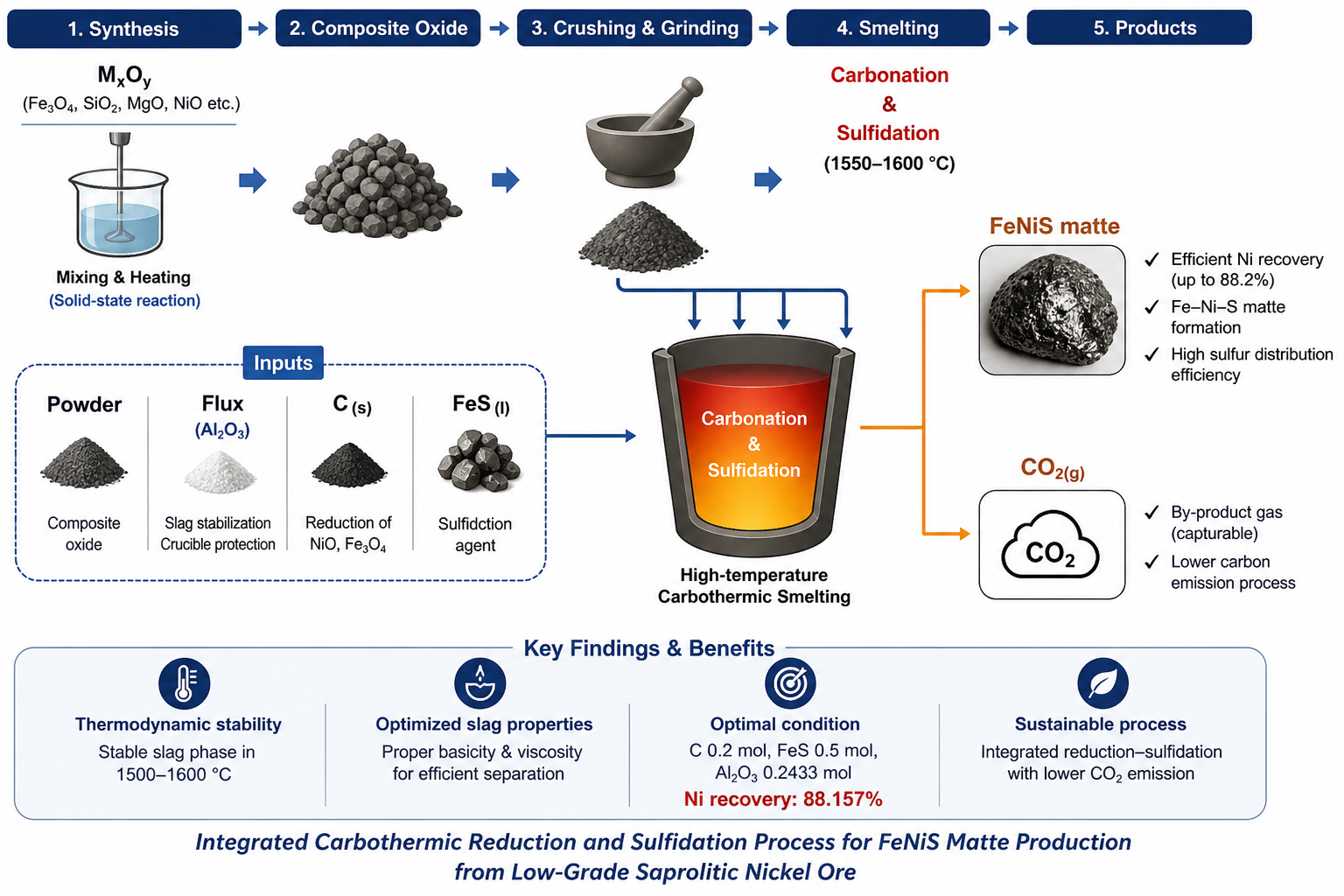
Graphical Abstract

1. Introduction

Nickel (Ni) is a strategically important non-ferrous metal widely used in stainless steel, high-performance alloys, and lithium-ion batteries [1]. In particular, nickel-rich cathode materials such as NCM (Ni–Co–Mn) and NCA (Ni–Co–Al) have attracted significant attention because higher Ni content increases the specific capacity and energy density of batteries. Consequently, the rapid growth of electric vehicles and energy storage systems has led to a substantial increase in Ni demand [2]. According to the International Energy Agency (IEA), the demand for Ni in clean energy technologies is projected to increase from 562 kt in 2024 to 1349 kt by 2030 and further to 2381 kt by 2040 [3].
Nickel is extracted from two main types of ores: sulfide ores and oxide ores. Nickel sulfide ores mainly consist of pentlandite ((Ni,Fe)9S8), with minor amounts of millerite (NiS) and violarite (Ni2FeS4) [4]. Historically, nickel smelting has been dominated by sulfide ores due to their relatively high Ni grade and the presence of valuable by-products such as copper, cobalt, platinum, and palladium. In addition, the presence of sulfur enables autothermic smelting, resulting in high energy efficiency and high recovery of Ni and Co [5,6]. However, since the 1970s, the depletion of high-grade sulfide deposits and the limited discovery of new resources have shifted the global Ni supply toward laterite ores [7]. As of 2024, global nickel resources are estimated at approximately 350 million tons, of which about 54% exist as laterite ores [8]. Laterite ores are formed through intense weathering and are generally classified into saprolite and limonite depending on their composition. Saprolite ores are characterized by high MgO and SiO2 contents and relatively low Fe content, whereas limonite ores contain higher Fe and lower MgO and SiO2 contents. These compositional differences strongly influence process selection, with limonite typically treated via hydrometallurgical routes and saprolite via pyrometallurgical smelting [9].
Among hydrometallurgical processes, high-pressure acid leaching (HPAL) is widely applied for limonite ores. HPAL involves the dissolution of Ni and Co in sulfuric acid under high temperature and pressure, enabling high recovery and direct production of battery-grade intermediates. However, the process suffers from high capital and operating costs, severe corrosion, large acid consumption, and environmental concerns associated with acidic effluents [10,11,12]. For saprolite ores, the rotary kiln–electric furnace (RKEF) process is the most widely used pyrometallurgical route. In this process, ores are dried and partially reduced in a rotary kiln and then smelted in an electric furnace to produce ferronickel. Although RKEF is technologically mature and suitable for large-scale production, it is energy-intensive and generates significant carbon emissions. Approximately 174 GJ of energy per ton of Ni is required, which is 2.18–2.37 times higher than other routes, and additional refining steps are required to convert ferronickel into high-grade nickel matte suitable for battery precursor production [5,7,13,14].
Recently, increasing attention has been paid to direct matte production from laterite ores via combined reduction and sulfidation. Liu et al. demonstrated that saprolitic laterite could be converted into nickel matte using pyrite as a sulfidizing agent and carbon as a reductant, achieving a Ni grade of 11.79 wt.% and a recovery of 90.3% under optimized conditions (1450 °C, 60 min) [15]. Similarly, Li et al. reported that the use of CaS as a sulfidizing agent enabled Ni recoveries of up to 99% through optimized reduction–sulfidation conditions [16]. Recent studies on nickel laterite smelting have increasingly focused not only on improving Ni recovery, but also on controlling slag chemistry, slag viscosity, and energy consumption during pyrometallurgical processing [17,18,19]. In particular, the viscosity and phase stability of MgO–SiO2–FeO-based slags have been recognized as critical factors affecting metal–slag separation efficiency, matte formation behavior, and refractory stability during high-temperature smelting operations [17,18]. Previous studies have reported that FeO acts as a network-modifying oxide that strongly influences slag fluidity and reduction behavior, while Al2O3 may exhibit amphoteric behavior depending on slag composition and oxygen potential, thereby significantly affecting slag polymerization and viscosity [17,20]. In addition, several thermodynamic and experimental investigations have examined sulfur distribution and matte formation behavior in Fe–Ni–S systems derived from lateritic nickel resources [16,21].
Several previous studies have investigated combined carbothermic reduction and sulfidation routes for nickel laterite processing using sulfurizing agents such as FeS, pyrite (FeS2), elemental sulfur, and CaS [15,16,21,22,23]. These studies mainly focused on improving Ni recovery and matte grade through optimization of sulfur addition and reduction conditions. However, the influence of slag chemistry, particularly the relationship among FeO behavior, slag viscosity, Al2O3 dissolution, matte–slag separation stability, and sulfur distribution within MgO–SiO2–FeO-based slag systems, has not been sufficiently clarified. Among various sulfurizing agents, FeS was selected in the present study because it exhibits relatively stable thermodynamic behavior at high temperature within the Fe–S system [21,23]. In contrast, pyrite and elemental sulfur undergo significant sulfur volatilization at elevated temperatures, which complicates sulfur potential control during smelting. CaS may additionally alter slag chemistry through CaO generation during sulfidation reactions. Therefore, FeS was considered a suitable sulfurizing agent for systematically investigating matte formation and slag behavior under controlled reduction–sulfidation conditions.
However, most previous studies have primarily focused on the type and amount of reductants and sulfidizing agents or temperature optimization. The combined effects of carbon ratio, FeS addition, Al2O3 flux, slag viscosity, and matte–slag separation behavior have not been systematically investigated in integrated carbothermic reduction–sulfidation systems, particularly for MgO–SiO2-rich saprolitic laterite compositions. In contrast, the influence of slag composition, particularly within the MgO–SiO2–FeO system, has not been sufficiently addressed. The FeO content and MgO/SiO2 ratio significantly affect slag properties such as viscosity, which directly influences metal–slag separation efficiency and Ni loss. Therefore, this study aims to optimize Fe–Ni–S matte production from synthetic saprolitic nickel ore by simultaneously considering carbothermic reduction, sulfidation reactions, and slag composition. The synthetic feed was designed based on the physicochemical characteristics of low-grade saprolitic laterite using thermodynamic modeling. The effects of temperature, carbon ratio, and slag composition on Ni recovery were systematically evaluated. Furthermore, the influence of FeS addition on matte composition and Ni recovery was investigated to establish optimal conditions for stable matte formation and efficient metal–slag separation.

2. Materials and Methods

2.1. Experimental Materials

In this study, a synthetic nickel laterite feed was designed to investigate the formation behavior of Fe–Ni–S matte under controlled conditions. The target composition was derived from a magnetically upgraded saprolitic laterite concentrate provided by an academic source. The concentrate was originally obtained from a laterite deposit in the Palawan region (Philippines), and its chemical and mineralogical characteristics were analyzed using X-ray fluorescence (XRF) and X-ray diffraction (XRD). Rather than directly using the raw concentrate, a synthetic feed was intentionally prepared to reproduce the major oxide composition and mineralogical features of the upgraded laterite. This approach was adopted to minimize compositional variability inherent in natural ores and to enable systematic investigation of key process variables, including carbon ratio, FeS addition, and slag composition. Such a controlled system allows clearer interpretation of thermodynamic and kinetic behavior during simultaneous carbothermic reduction and sulfidation. The synthetic nickel ore was formulated based on the major oxide components identified by XRF analysis, including SiO2, MgO, Fe2O3, Al2O3, and NiO. High-purity oxide reagents, including Fe3O4, NiO, SiO2, and Al2O3 supplied by JUNSEI Chemical Co., Ltd. (Tokyo, Japan), Cr2O3 supplied by JUNSEI Chemical Co., Ltd. (Tokyo, Japan), CaO supplied by Samchun Pure Chemical Co., Ltd. (Pyeongtaek, Republic of Korea), and MgO supplied by Duksan Pure Chemicals Co., Ltd. (Ansan, Republic of Korea), were quantitatively mixed to match the target composition. The relative proportions of mineral phases were adjusted with reference to the XRD patterns (Figure 1) and chemical composition (Table 1) of the original concentrate. Commercial graphite powder supplied by Daejung Chemicals & Metals Co., Ltd. (Siheung, Republic of Korea) was used as the reducing agent for carbothermic reduction experiments during matte smelting. FeS supplied by Daejung Chemicals & Metals Co., Ltd. (Siheung, Republic of Korea) was used as the sulfidizing agent, while Al2O3 was additionally introduced as a flux to control slag chemistry and suppress alumina crucible dissolution. Graphite was selected in order to minimize the influence of volatile matter and ash components on the thermodynamic interpretation of the reduction behavior. FeS was used as the sulfidizing agent, while Al2O3 was additionally introduced as a flux to control slag chemistry and suppress alumina crucible dissolution. The raw materials used for synthetic ore preparation and matte production are summarized in Table 2. However, unlike natural saprolitic laterite ores, the synthetic system used in this study does not fully reproduce the complex mineral textures, particle association behavior, Ni-bearing silicate inclusions, chemically bound water, and heterogeneous phase distributions typically observed in natural ores. These factors may influence reduction kinetics, matte formation behavior, and matte–slag separation during practical smelting operations. Therefore, the present study should be regarded as a controlled model-system investigation intended to isolate the effects of carbon ratio, FeS addition, slag composition, and viscosity behavior. Further investigation using natural laterite ores will be necessary to evaluate the industrial applicability of the proposed process under realistic smelting conditions.

2.2. Experimental Apparatus

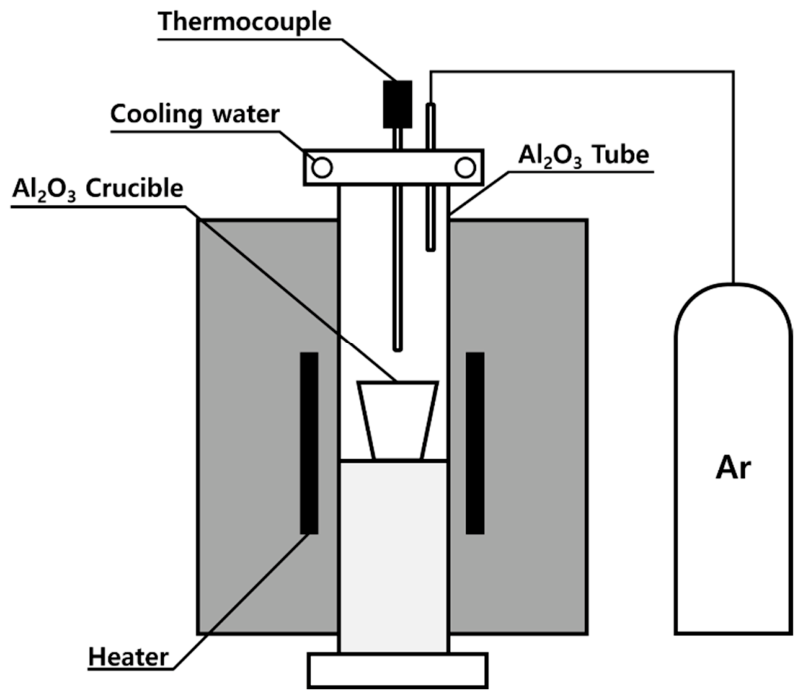
Figure 2 shows a schematic diagram of the vertical Kanthal tube furnace used in this study. The furnace consisted of a high-temperature resistance heating unit, an alumina reaction tube, a water-cooled stainless-steel sealing assembly, an alumina crucible, an alumina gas inlet tube, and a thermocouple for temperature monitoring. The alumina reaction tube had an inner diameter of 80 mm and a height of 500 mm, providing a stable reaction space for high-temperature smelting experiments. An alumina crucible containing the prepared synthetic nickel ore, carbon reductant, FeS sulfidizing agent, and flux was placed at the center of the hot zone using a refractory support. The crucible dimensions were OD 56 mm × T 30 mm × H 95 mm. The hot zone position was selected to ensure uniform heating of the sample and stable molten slag–matte separation during the experiment. An Ar gas atmosphere was maintained during the experiments to suppress unwanted oxidation and to provide an inert environment for carbothermic reduction and sulfidation reactions. Ar gas was introduced through an alumina tube from the upper part of the furnace, and the gas flow was controlled before and during heating. The upper and lower ends of the reaction tube were sealed using water-cooled stainless-steel covers to prevent gas leakage and protect the sealing components from thermal damage. The temperature inside the furnace was monitored using a thermocouple positioned near the crucible. After reaching the target temperature, the sample was held for the designated reaction time to allow reduction in NiO and FeO, sulfidation by FeS, and subsequent formation of Fe–Ni–S matte. After completion of the experiment, the furnace was cooled under an Ar atmosphere to minimize reoxidation of the reduced and sulfidized products.

2.3. Analysis

2.3.1. Synthetic Nickel Ore

The phase composition of the synthesized nickel ore was characterized using X-ray diffraction (XRD; Bruker, D8 Advance A25 Plus, Billerica, MA, USA). Measurements were conducted using Cu Kα radiation (λ = 1.5406 Å) over a 2θ range of 10–80° with a scanning rate of 0.58°·min−1. Phase identification was performed by comparison with standard diffraction patterns from the ICDD PDF database. Rietveld refinement was not performed due to the complexity of the multiphase mixtures. The chemical composition of the synthetic nickel ore was determined using X-ray fluorescence (XRF; Rigaku, ZSX-Primus IV, Tokyo, Japan). Quantitative analysis was carried out using the fundamental parameter (FP) method, and the results were expressed as major oxide components in wt.%. The measured compositions were used to verify the consistency between the designed and synthesized feed materials.

2.3.2. Fe–Ni–S Matte

The phase composition of the produced Fe–Ni–S matte was analyzed using XRD (Bruker, D8 Advance A25 Plus) under the same measurement conditions described above. Particular attention was given to identifying metallic, sulfide, and oxide phases formed during the reduction–sulfidation process. Rietveld refinement was not performed due to the complexity of the multiphase reaction products. The bulk chemical composition of the matte was measured using XRF (Rigaku, ZSX-Primus IV, Tokyo, Japan), and the results were quantified using the FP method. For metallic and sulfide phases, elemental compositions were interpreted based on equivalent oxide conversion and elemental balance. Microstructural characterization was performed using scanning electron microscopy (SEM; JEOL, JSM-IT800SHL, Tokyo, Japan) equipped with energy-dispersive X-ray spectroscopy (EDS). The samples were sectioned, mounted, and mechanically polished, followed by carbon coating to ensure electrical conductivity. SEM observations were conducted at an accelerating voltage of 20 kV. EDS analysis was used to determine the elemental distribution and phase composition of the matte, slag, and metallic phases. Both qualitative elemental mapping and point analysis were performed to distinguish Fe–Ni alloy droplets, sulfide phases, and the slag matrix, enabling evaluation of phase separation behavior and elemental partitioning.

2.4. Experimental Procedure

2.4.1. Preparation of Synthetic Nickel Ore and Thermodynamic Calculations

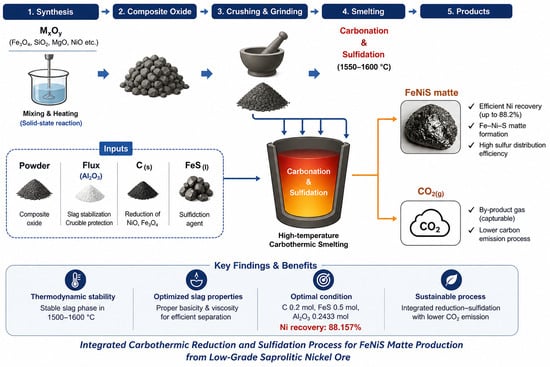
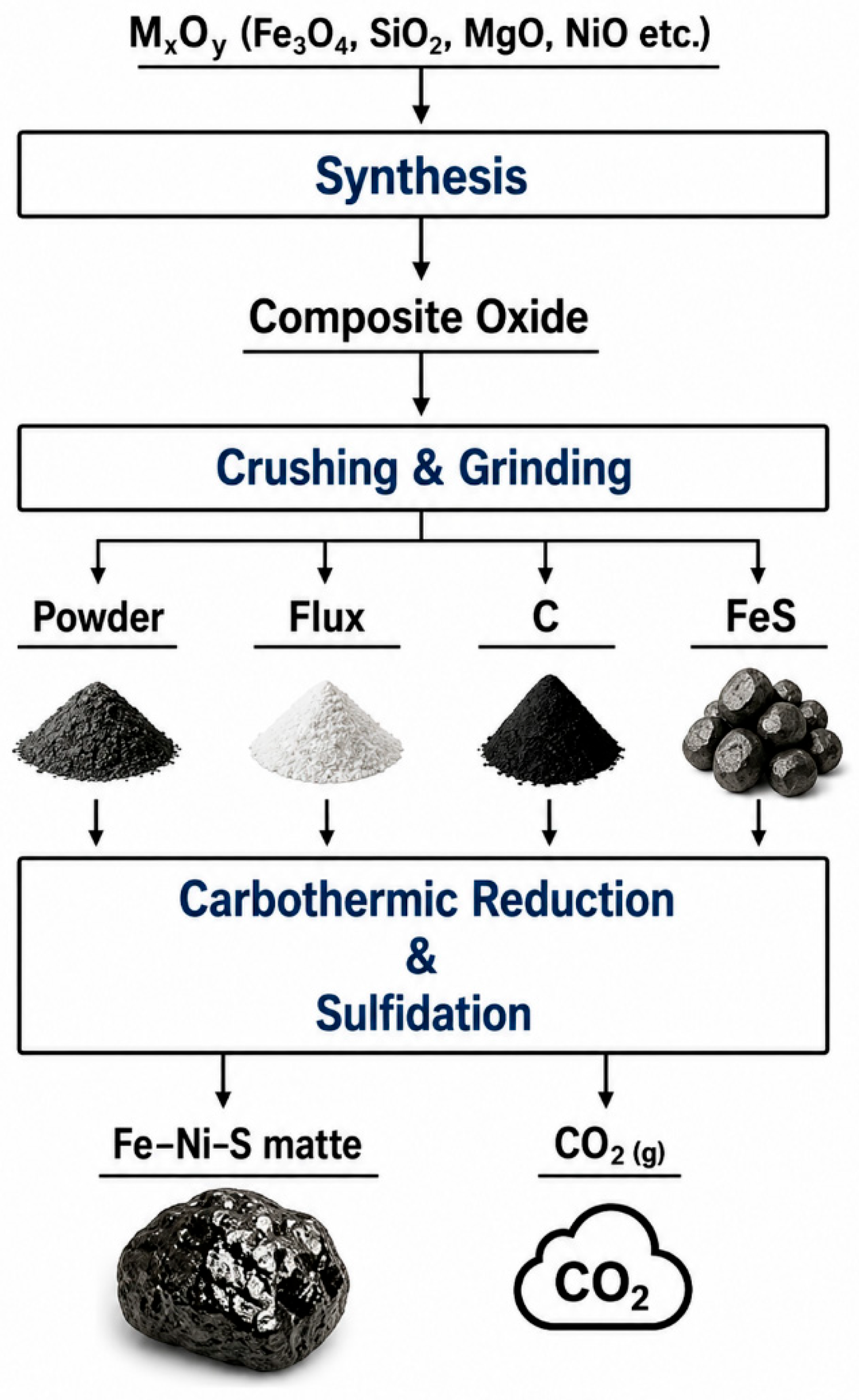
Figure 3 illustrates the overall process flow adopted in this study for the preparation of synthetic nickel ore and subsequent Fe–Ni–S matte production via simultaneous carbothermic reduction and sulfidation. Initially, high-purity oxide powders (Fe3O4, SiO2, MgO, NiO, and other minor components) were weighed and mixed according to the target composition derived from the reference laterite concentrate. The mixed powders were then subjected to high-temperature synthesis to form a composite oxide that reproduces the mineralogical characteristics of saprolitic laterite. This synthesis step was designed to ensure homogeneous distribution of constituent elements and to stabilize the oxide phases prior to reduction. After synthesis, the solidified product was crushed and ground into fine powder to increase the reaction surface area and to improve the reactivity during subsequent smelting reactions.
Thermodynamic calculations were performed using FactSage 8.2 software (Thermfact/CRCT, Montreal, QC, Canada) to evaluate phase stability, slag formation behavior, carbothermic reduction reactions, and sulfidation equilibria in the Fe–Ni–MgO–SiO2–FeO system. The Equilib module was employed under atmospheric pressure (1 atm) assuming thermodynamic equilibrium conditions. The FToxid, FactPS, and FTsulf databases were used for oxide, gas, and sulfide phase calculations, respectively. Slag phase behavior and oxide activities were evaluated using the thermodynamic solution models implemented in the FToxid database for MgO–SiO2–FeO-based oxide systems. All calculations were conducted within the temperature range of 1000–1800 °C depending on the investigated reaction system. Additional Gibbs free energy calculations for carbothermic reduction reactions were performed using HSC Chemistry 6 software under standard-state conditions. The slag viscosity values presented in this study were thermodynamically calculated using the viscosity estimation model implemented in the FToxid database of FactSage 8.2 under equilibrium conditions assuming homogeneous liquid slag behavior. The calculated viscosities were used to evaluate the influence of carbon ratio and slag composition on slag fluidity and matte–slag separation behavior. The gas atmosphere was assumed to be an inert Ar atmosphere corresponding to the experimental conditions, while generated gas species such as CO, CO2, and S2 were treated as equilibrium gas phases during the calculations.
The prepared powder was then mixed with carbon (reductant), FeS (sulfidizing agent), and flux components to control slag composition. The mixture was charged into an alumina crucible and placed at the center of the vertical Kanthal tube furnace. An inert Ar atmosphere (300 cc·min−1) was maintained throughout the experiment to suppress oxidation and to provide a controlled environment for reduction–sulfidation reactions. The temperature was increased at a heating rate of 5 °C·min−1 up to 1600 °C and held for 2 h to ensure sufficient reaction time for phase transformation and matte formation. During heating, carbothermic reduction in NiO and FeO occurs, leading to the formation of metallic Fe–Ni phases. Simultaneously, the added FeS reacts with the reduced metallic phases to form matte Fe–Ni–S matte. The overall process involves the generation of CO gas as a by-product, and the separation of molten matte from slag is governed by differences in density and interfacial properties. After completion of the reaction, the furnace was cooled to room temperature under an Ar atmosphere to prevent reoxidation. The solidified products were retrieved, crushed, and subjected to XRD and XRF analyses to evaluate phase composition and chemical characteristics.

2.4.2. Smelting of Fe–Ni–S Matte

Table 3 summarizes the experimental conditions employed for Fe–Ni–S matte production. The synthetic nickel ore powder (100 g) was mixed with a carbon reductant (C), FeS as a sulfidizing agent, and Al2O3 as a flux according to the molar ratios listed in Table 3. The mixture was thoroughly homogenized prior to charging into a high-purity alumina crucible. The crucible was placed at the center of the hot zone in the vertical Kanthal tube furnace. An Ar atmosphere was maintained throughout the experiment by continuously supplying Ar gas at a flow rate of 300 cc·min−1 to prevent oxidation during the reduction and sulfidation reactions. The furnace was heated at a rate of 5 °C·min−1 up to the target temperature of 1550 °C, followed by isothermal holding for 3 h to ensure sufficient progression of carbothermic reduction and sulfidation. During this stage, NiO and FeO were reduced to metallic phases, which subsequently reacted with FeS to form Fe–Ni–S matte. After completion of the reaction, the furnace was cooled to room temperature under an Ar atmosphere by furnace cooling to minimize reoxidation of the products. The solidified samples were removed from the crucible, and the separation behavior between matte and slag phases was first evaluated visually. The samples were then sectioned and crushed into fine powders for subsequent phase and chemical analyses. The prepared samples were analyzed using XRD, XRF, and SEM–EDS to evaluate phase evolution, chemical composition, and microstructural characteristics. Particular attention was given to the distribution of Ni between matte and slag phases and to the effect of carbon ratio, FeS addition, and slag composition on matte formation and separation efficiency. The experimental design was intended to systematically evaluate the effect of key process variables on matte formation and metal–slag separation behavior.
The Ni recovery to matte was calculated based on the ratio of the amount of Ni contained in the recovered matte phase to the total amount of Ni initially introduced into the synthetic feed, as expressed in Equation (1):
N i   R e c o v e r y   % = m m a t t e × w N i , m a t t e m f e e d × w N i , f e e d × 100
where m m a t t e and m f e e d represent the mass of the recovered matte and the initial synthetic feed, respectively, while w N i , m a t t e and w N i , f e e d denote the Ni concentration in the matte and feed materials determined by XRF analysis.

3. Results and Discussion

3.1. Synthesis of Ni-Bearing Minerals

Ni-bearing synthetic minerals were designed based on the physicochemical characteristics of low-grade nickel laterite ores. As shown in Figure 1, the reference laterite concentrate is primarily composed of Mg–Si–O-based phases such as forsterite, olivine, and spinel-type compounds, and its elemental composition is summarized in Table 1. To reproduce these characteristics under controlled conditions, a synthetic nickel ore was prepared using high-purity oxide reagents according to the target composition listed in Table 4. This approach enables minimization of compositional variability inherent in natural ores and allows systematic investigation of reduction–sulfidation behavior under well-defined conditions. However, unlike natural saprolitic laterite ores, the synthetic system does not contain chemically bound water associated with hydrous minerals such as serpentine or goethite, nor additional minor impurity elements such as Mn-bearing phases. These components may influence slag liquidus behavior, gas evolution, and reduction kinetics during practical smelting operations. In particular, dehydration and dehydroxylation reactions of hydrous minerals in natural laterite ores may affect porosity development and gas diffusion behavior during heating. Furthermore, minor impurity elements such as Mn and Cr may partially modify slag structure, liquidus temperature, spinel formation behavior, and refractory interaction depending on their concentration and oxidation state. Therefore, further investigation using natural laterite ores will be necessary to evaluate the industrial applicability of the proposed process under more realistic smelting conditions. The mixed oxide system was subjected to high-temperature treatment to promote phase formation and chemical homogenization. Although the starting materials were initially prepared by physically mixing high-purity oxide reagents, the subsequent heat treatment at 1600 °C promoted extensive solid-state diffusion, interfacial reactions, and partial liquid-phase formation within the oxide system. Under these high-temperature conditions, thermodynamic equilibration and cation redistribution among Mg, Fe, Ni, Cr, and Si species occurred, resulting in the formation of stable silicate and spinel phases, including MgCr2O4 and Fe–Ni-containing spinel structures. Therefore, the detected phases were generated through high-temperature reaction and equilibration processes rather than by simple physical mixing alone.
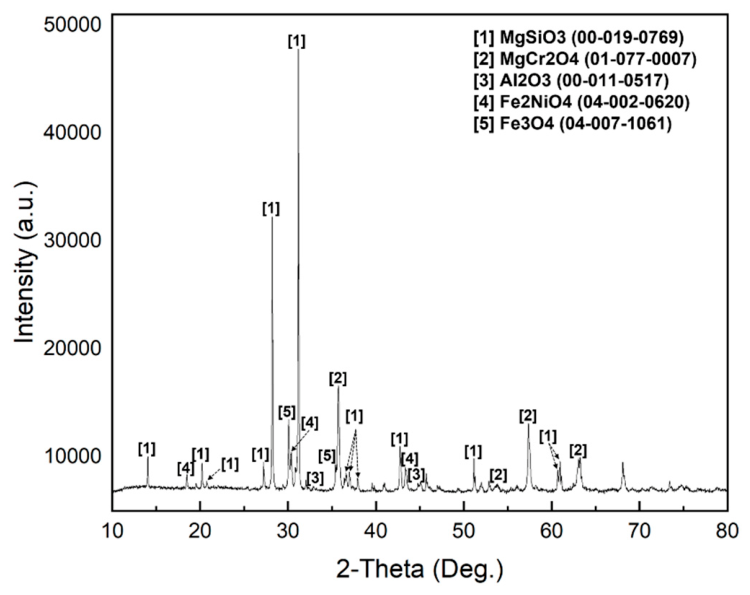
The phase composition of the synthesized nickel ore is presented in Figure 4. The XRD results indicate that the sample mainly consists of Mg–Si–O-based silicate phases, including MgSiO3 and olivine-type structures, along with minor amounts of spinel phases such as MgCr2O4 and Fe-containing oxides. These phase assemblages are consistent with those typically observed in saprolitic laterite ores, confirming that the synthetic approach successfully reproduces the mineralogical characteristics of natural Ni oxide ores. A high temperature of 1600 °C was selected to ensure complete solid-state reaction and partial melting of the oxide mixture, which facilitates phase homogenization and promotes the formation of a representative composite oxide structure. From a thermodynamic perspective, Mg–Si–O-based silicates are stable phases at high temperatures, while Fe-containing oxides tend to be incorporated into spinel or silicate structures depending on oxygen potential and composition. Therefore, the synthesized nickel ore can be considered a representative model feed that preserves the essential mineralogical features of saprolitic laterite while providing a controlled system for evaluating phase evolution, metal recovery, and matte–slag separation behavior.
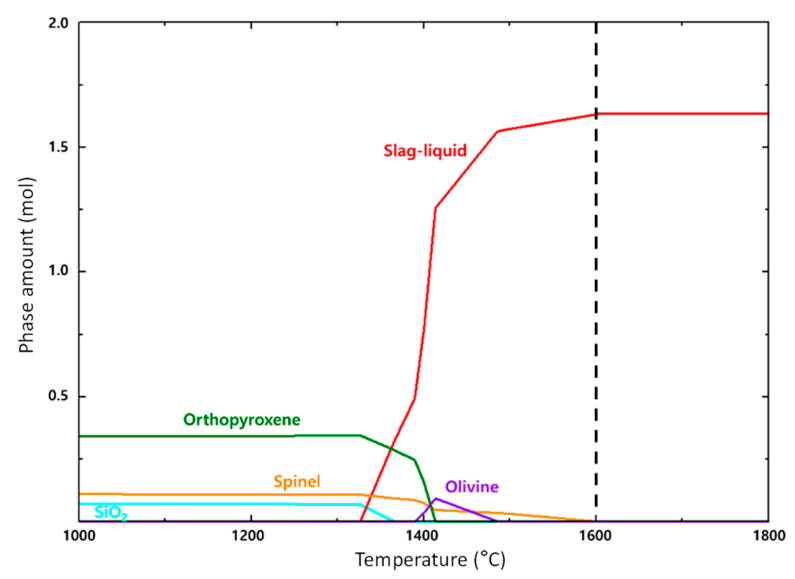
The thermodynamic phase stability of the synthesized nickel ore system was evaluated to determine a suitable temperature for feed preparation and homogenization. As shown in Figure 5, the oxide mixture contains several solid phases, including orthopyroxene, spinel, olivine, and SiO2, in the temperature range of 1000–1400 °C. These residual solid phases indicate incomplete reaction and insufficient homogenization of the composite oxide feed at lower temperatures. With increasing temperature, the amount of solid phases decreases rapidly, while the slag-liquid phase becomes dominant. In particular, the coexistence of spinel and olivine observed in the 1300–1500 °C range is progressively suppressed as the temperature approaches 1600 °C. At 1600 °C, the calculation predicts that the system is mainly composed of a slag-liquid phase, indicating that this temperature is sufficient to promote melting, chemical homogenization, and formation of a representative composite oxide structure. Therefore, 1600 °C was selected as the synthesis temperature for preparing the synthetic nickel ore. This condition was intended to minimize residual solid phases and reproduce a homogeneous MgO–SiO2–FeO-based oxide system suitable for subsequent carbothermic reduction and sulfidation experiments.
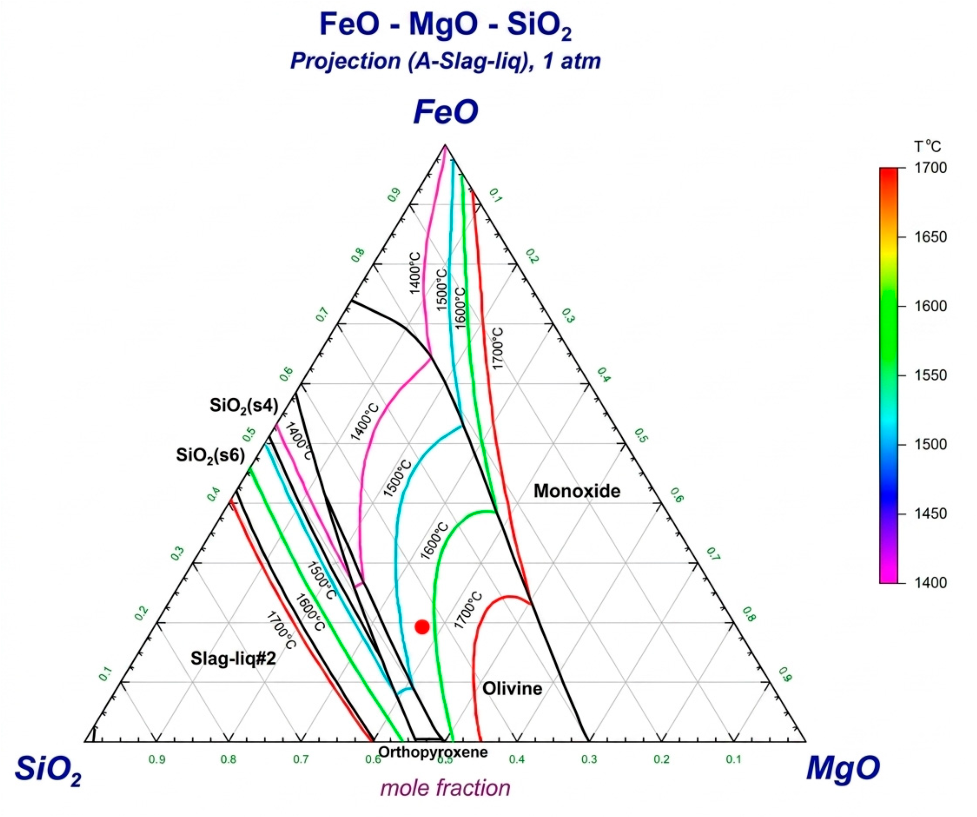
Following the phase stability analysis shown in Figure 5, the compositional validity of the synthesized nickel ore was further evaluated using the FeO–MgO–SiO2 ternary liquidus projection, as presented in Figure 6. As indicated in Figure 6, the composition of the synthesized nickel ore (marked by the red point) is located near the boundary between the olivine phase field and the slag-liquid region. In the temperature range of 1500–1600 °C, this compositional position falls within or very close to the fully molten slag region, suggesting that the system can achieve near-complete melting under the selected experimental conditions. This result is consistent with the phase stability analysis in Figure 5, where solid phases such as spinel and olivine diminish with increasing temperature, leading to the dominance of the slag-liquid phase at 1600 °C. The ternary diagram further confirms that the selected composition avoids regions associated with high-melting solid phases, such as orthopyroxene or spinel stability fields, which could otherwise hinder complete melting and phase separation. From a thermodynamic perspective, positioning the composition near the olivine–slag-liquid boundary is advantageous, as it ensures sufficient fluidity of the slag while maintaining chemical compatibility with Mg–Si–O-based systems. This facilitates efficient separation between matte and slag phases and promotes stable carbothermic reduction and sulfidation reactions. Therefore, the combined results from phase stability prediction and ternary liquidus analysis demonstrate that the selected composition and temperature (1600 °C) provide suitable thermodynamic conditions for generating a homogeneous molten slag phase, which is essential for subsequent Fe–Ni–S matte formation and metal–slag separation.
The similarity between the reference laterite concentrate and the synthesized nickel ore was evaluated by comparing their XRD patterns, as shown in Figure 1 and Figure 4. Both samples exhibit characteristic Mg–Si-based silicate phases, such as MgSiO3 and Mg2SiO4, which are typical of saprolitic laterite ores. The overall peak distribution and relative intensities are comparable, indicating that the synthetic sample successfully reproduces the dominant silicate framework of the natural ore. In addition, spinel-type phases containing Fe–Mg–Al or Fe–Mg–Cr are observed in both samples, suggesting the formation of a similar multiphase silicate–spinel structure. Nickel is not detected as a distinct crystalline phase, which is consistent with its incorporation into silicate or oxide lattices via substitution. As a result, both samples can be regarded as Ni-bearing silicate/oxide systems. Although minor differences exist in the substitution ratios of Fe, Al, and Cr within the spinel phases, the overall phase assemblage remains consistent. This indicates that the synthesized nickel ore adequately represents the mineralogical characteristics of low-grade saprolitic laterite. Combined with the thermodynamic analysis presented in Figure 5 and Figure 6, these results confirm that the selected composition and synthesis conditions provide a representative and reliable model system for investigating carbothermic reduction, sulfidation behavior, and subsequent matte–slag separation.

3.2. Carbothermic Reduction Behavior

3.2.1. Thermodynamic Analysis Based on Gibbs Free Energy

The carbothermic reduction behavior of metal oxides present in the synthetic nickel ore was evaluated based on the standard Gibbs free energy changes (ΔG°) of the relevant reactions. The temperature dependence of enthalpy and entropy was calculated using Equations (2)–(4), and the Gibbs free energy change was determined as follows:
H T = H f o + T 1 T 2 C p T d T + H t r
S T = S o + T 1 T 2 C P ( T ) T d T + S t r
G = H T S
At high temperatures, carbon reacts with oxygen to form CO gas, which provides the reducing atmosphere necessary for oxide reduction. The main reactions considered in this study are as follows:
2 C ( s ) + O 2 g = 2 C O ( g )
F e O ( l ) + C ( s ) = F e ( l ) + C O ( g )
N i O ( s ) + C ( s ) = N i ( s ) + C O ( g )
To quantitatively compare the reduction tendency of the investigated oxide phases, additional standard Gibbs free-energy (ΔG°) calculations were performed using HSC Chemistry 6 software under standard-state conditions. The calculated ΔG° values at representative temperatures are summarized in Table 5.
As shown in Table 5, the reduction in NiO exhibits more negative ΔG° values than those of FeO and Fe3O4 over the investigated temperature range, indicating that NiO reduction is thermodynamically more favorable under the present carbothermic reduction conditions. This suggests that metallic Ni forms preferentially before extensive Fe oxide reduction occurs. In contrast, the reduction in Fe3O4 requires relatively stronger reducing conditions and proceeds through stepwise reduction reactions involving intermediate FeO formation. The ΔG° values for all reactions become increasingly negative with increasing temperature, confirming that high-temperature operation promotes carbothermic reduction. Therefore, at 1550 °C, both NiO and FeO are thermodynamically reducible by carbon, although NiO reduction proceeds preferentially due to its larger thermodynamic driving force. In contrast, MgO and Al2O3 exhibit high thermodynamic stability and do not participate in carbothermic reduction, remaining in the slag phase. SiO2 may exhibit limited reducibility at elevated temperatures but primarily contributes to the formation of a stable silicate slag matrix. Therefore, under the present conditions, the system is expected to form a Fe–Ni metallic phase through selective reduction, which subsequently reacts with FeS to form Fe–Ni–S matte.

3.2.2. Carbon Reaction Ratio

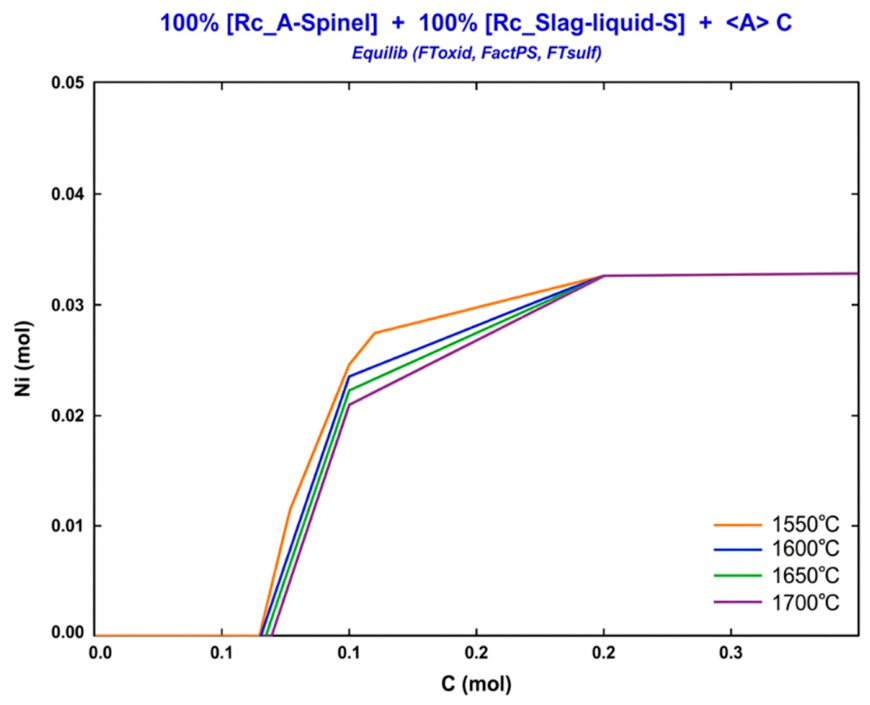
The effect of carbon reaction ratio on the reduction behavior of the Ni–Fe oxide system was evaluated using thermodynamic calculations. As shown in Figure 7, the amount of metallic Ni formed in the system is presented as a function of carbon addition at different temperatures. The results indicate that Ni generation increases rapidly with increasing carbon content and reaches a plateau at approximately 0.2 mol of carbon, corresponding to the complete reduction in NiO present in the synthetic nickel ore. This trend is consistent across the investigated temperature range (1550–1700 °C), although slightly higher carbon input is required at elevated temperatures due to changes in equilibrium gas composition and oxygen potential. The plateau region observed beyond 0.2 mol suggests that additional carbon does not significantly increase Ni production, indicating that the reduction in NiO is essentially complete under these conditions. At this stage, the reduced Ni is expected to dissolve into the Fe phase, forming a Fe–Ni liquid solution, which is a precursor for subsequent sulfidation and matte formation.
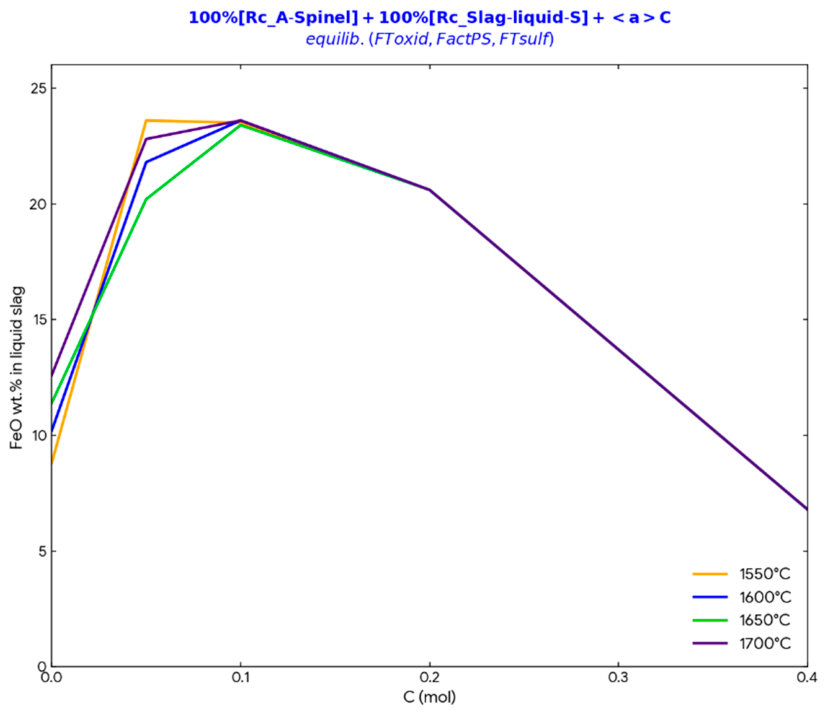
The influence of carbon reaction ratio on slag composition was further evaluated by examining the FeO content in the liquid slag phase, as shown in Figure 8. The FeO content exhibits a non-monotonic trend with increasing carbon addition. At low carbon levels, the FeO content in the slag increases slightly due to the preferential reduction in NiO over FeO. As NiO is reduced first, the relative concentration of FeO in the slag temporarily increases. However, as the carbon reaction ratio increases further, FeO begins to be reduced to metallic Fe, resulting in a gradual decrease in FeO content in the slag phase. At higher carbon additions (>0.2 mol), excessive reduction in FeO leads to a significant decrease in its concentration in the slag. This reduction in FeO has important implications for slag properties. Since FeO acts as a network modifier in silicate slags, its depletion can increase slag viscosity and alter slag basicity, potentially hindering efficient metal–slag separation. Therefore, the carbon reaction ratio plays a critical role in controlling both metal reduction and slag characteristics. A carbon addition of approximately 0.2 mol is considered optimal, as it ensures complete reduction in NiO while maintaining sufficient FeO in the slag to preserve favorable fluidity and separation behavior. Excessive carbon input should be avoided, as it may lead to undesirable changes in slag properties and reduced process efficiency.

3.2.3. Viscosity of Slag as a Function of Carbon Reaction Ratio

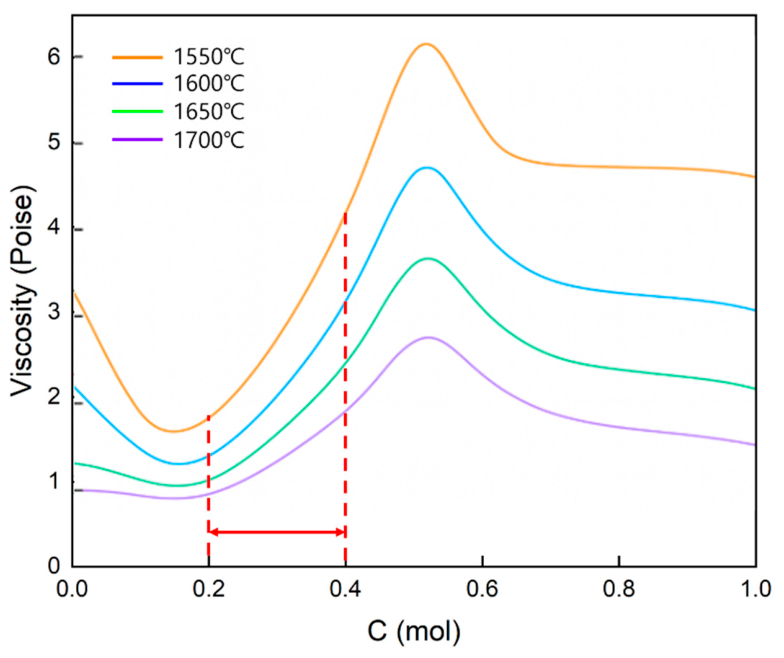
The variation in slag viscosity as a function of carbon reaction ratio was thermodynamically calculated using the viscosity estimation model implemented in the FToxid database of FactSage 8.2 under equilibrium conditions, as shown in Figure 9. At low carbon additions (0–0.1 mol), the viscosity decreases sharply with increasing carbon content. This behavior is attributed to the preferential reduction in NiO and Fe2O3, which results in the formation of FeO in the slag phase. FeO acts as a typical network-modifying oxide in silicate systems, breaking the Si–O–Si bridging structure and promoting depolymerization of the silicate network. As a result, the degree of polymerization decreases, leading to a significant reduction in slag viscosity. The minimum viscosity observed near 0.1 mol indicates that this early reduction stage strongly influences slag fluidity. As the carbon reaction ratio increases beyond 0.1 mol, FeO itself begins to be reduced to metallic Fe, resulting in a gradual decrease in FeO content within the slag phase. Since FeO plays a key role in maintaining low viscosity, its depletion leads to an increase in the relative proportion of network-forming oxides such as SiO2 and Al2O3. Consequently, the silicate network becomes more polymerized, causing a progressive increase in viscosity in the range of 0.2–0.5 mol. At higher carbon additions (>0.5 mol), the slag enters a high-viscosity regime due to further polymerization of the silicate network. Although partial reduction in SiO2 may occur at excessive carbon levels (>0.6 mol), the overall effect is limited under the present conditions, and the slag remains relatively viscous due to the dominance of SiO2-rich network structures. From a pyrometallurgical process perspective, slag viscosity must be maintained within an appropriate range to ensure stable matte settling, efficient metal–slag separation, and sufficient slag fluidity during high-temperature smelting operations. In industrial ferronickel and matte smelting processes, slag viscosities in the range of approximately 2–5 poise are generally considered favorable for stable phase separation and furnace operability [17,18,19,20]. When slag viscosity becomes excessively high, matte droplet settling and coalescence are hindered, resulting in poor phase separation and increased metal loss to slag. Conversely, excessively low slag viscosity may promote excessive slag fluidity and increased interaction with refractory materials, potentially accelerating crucible dissolution and refractory wear [18,20].
As shown in Figure 9, carbon additions exceeding 0.5 mol result in excessively high viscosity, which may hinder slag flow, reduce phase separation efficiency, and adversely affect furnace operability. Conversely, at very low carbon additions (~0.1 mol), the viscosity becomes too low, which can lead to excessive slag fluidity and increased interaction with the alumina crucible, potentially causing crucible dissolution. Therefore, considering both thermodynamic reduction behavior and slag structural evolution, an optimal carbon reaction ratio in the range of 0.2–0.4 mol was selected. This range corresponds to a stable regime prior to significant FeO depletion and avoids excessive SiO2 network polymerization. Under these conditions, the slag maintains appropriate fluidity while providing a suitable environment for Fe–Ni–S matte formation and efficient metal–slag separation.

3.2.4. Effect of Al2O3 on Slag Solubility and Crucible Stability

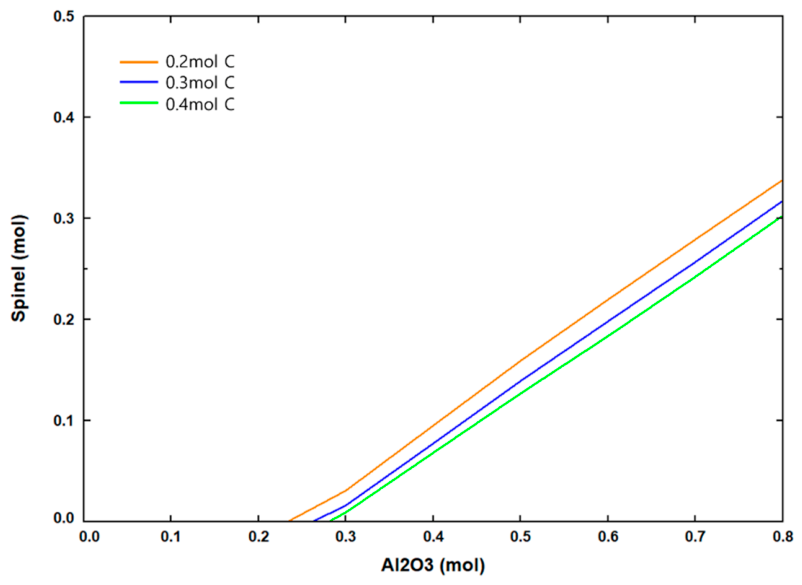
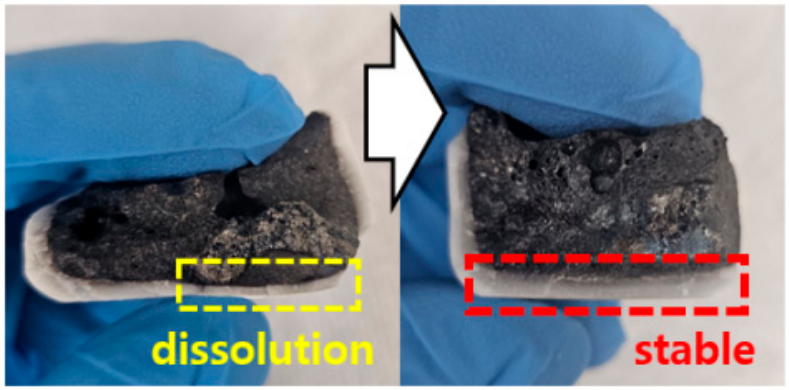
The effect of carbon reaction ratio on the solubility of Al2O3 in the slag and its influence on crucible dissolution behavior was investigated, as shown in Figure 10. The solubility limit of Al2O3 was defined as the onset point of spinel phase formation in the slag system. As the carbon reaction ratio increased from 0.2 to 0.4 mol, the Al2O3 solubility limit increased from 0.2433 mol to 0.2804 mol, indicating that the slag system could accommodate a higher amount of Al2O3 under more reducing conditions. This behavior is attributed to the decrease in FeO content in the slag with increasing carbon addition, which lowers the overall oxidation state of the system. From a structural perspective, FeO acts as a network-modifying oxide in silicate slags, disrupting the Si–O–Si network and reducing polymerization. As the FeO content decreases due to progressive reduction, the relative acidity of the slag increases, enhancing the capacity of the melt to dissolve amphoteric oxides such as Al2O3. Consequently, the solubility of Al2O3 increases under higher carbon conditions. The effect of Al2O3 addition on crucible stability was further confirmed by experimental observations, as shown in Figure 11. In the absence of Al2O3 addition, localized dissolution and erosion of the alumina crucible were observed, particularly at the wall and bottom regions. This indicates that the molten slag, being undersaturated with respect to Al2O3, tends to dissolve the crucible material to reach equilibrium. In contrast, when Al2O3 was added as a flux prior to smelting, satisfying the solubility limit of the slag, crucible dissolution was significantly suppressed. Under these conditions, the slag system preferentially forms thermodynamically stable spinel phases rather than dissolving additional Al2O3 from the crucible. As a result, the crucible surface remained relatively intact after the experiment. These results demonstrate that pre-addition of Al2O3 is essential for preventing refractory dissolution and ensuring stable and reproducible smelting conditions. Considering the increase in Al2O3 solubility with carbon addition, it is necessary to supply Al2O3 in amounts exceeding the solubility limit to maintain slag saturation and protect the crucible. In this study, the Al2O3 addition level was optimized to effectively suppress crucible dissolution while maintaining appropriate slag properties for matte formation and separation.

3.2.5. Effect of Al2O3 Addition on Slag Viscosity

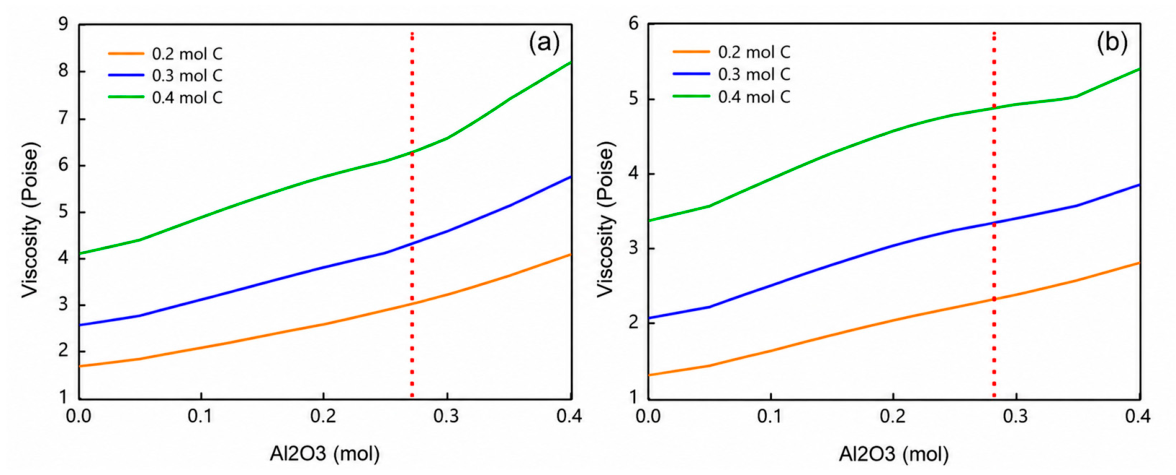
The effect of Al2O3 addition on slag viscosity was evaluated at different carbon reaction ratios, as shown in Figure 12. At 1550 °C (Figure 12a), the slag viscosity increases monotonically with increasing Al2O3 content for all carbon conditions (0.2, 0.3, and 0.4 mol). This behavior is attributed to the role of Al2O3 as a network-forming oxide, similar to SiO2, which enhances the degree of polymerization of the silicate structure. Simultaneously, the relative fraction of FeO, which acts as a network modifier, decreases with increasing Al2O3 addition, leading to a reduction in slag fluidity. In particular, at a carbon reaction ratio of 0.4 mol, the viscosity reaches approximately 8.4 poise at 0.4 mol Al2O3, significantly exceeding the typical industrial operating range of 2–5 poise. Under these conditions, excessive slag viscosity may hinder slag–matte separation and adversely affect Ni recovery. Therefore, for C = 0.4 mol, Al2O3 addition beyond approximately 0.15 mol is considered unfavorable for process performance. In contrast, at lower carbon levels (0.2–0.3 mol), the increase in viscosity with Al2O3 addition is more gradual, and the viscosity remains within the desirable range of 2–5 poise up to approximately 0.3 mol Al2O3. This indicates that these conditions satisfy the fluidity and phase separation requirements in practical nickel smelting operations [17]. At 1600 °C (Figure 12b), a similar trend is observed; however, the overall viscosity is reduced compared to that at 1550 °C. This decrease is attributed to partial depolymerization of the silicate network at higher temperatures, where the Si–O–Si bonds become thermally destabilized. As a result, the average degree of polymerization decreases, leading to improved slag fluidity. Nevertheless, even at elevated temperature, the system with 0.4 mol carbon still exhibits relatively high viscosity at higher Al2O3 contents, indicating that excessive Al2O3 addition continues to promote network formation and suppress fluidity. Overall, the combined effects of carbon reaction ratio and Al2O3 addition indicate that an optimal composition range exists where both sufficient reduction and appropriate slag fluidity are achieved. In this study, the combination of 0.2–0.4 mol carbon and ≤0.3 mol Al2O3 provides a balanced condition that ensures stable slag properties, minimizes crucible dissolution, and promotes efficient matte–slag separation.

3.3. Sulfidation

3.3.1. Selection of Sulfidizing Agent

To select an appropriate sulfidizing agent for Fe–Ni–S matte formation, the thermodynamic stability and high-temperature equilibrium behavior of Fe–S compounds were evaluated. Representative iron sulfides, including FeS, FeS2, Fe7S8, Fe9S10, Fe10S11, and Fe11S12, were considered. Although Fe-rich sulfides such as Fe9S10, Fe10S11, and Fe11S12 exhibit relatively low standard Gibbs free energies of formation at 25 °C, their stability changes significantly with increasing temperature. Therefore, the suitability of a sulfidizing agent should be evaluated not only based on ΔG° at room temperature but also on its phase stability under the actual smelting temperature. Equilibrium calculations for the Fe–S system indicate that complex iron sulfides progressively decompose into simpler sulfide phases as temperature increases. The main phase transition sequence can be expressed as follows:
F e 11 S 12 F e S + F e S 2
F e S + F e S 2 F e S + F e 7 S 8
F e S + F e 7 S 8 F e S + S 2 ( g )
At elevated temperatures, sulfur has a high vapor pressure and exists predominantly as gaseous sulfur species such as S2(g). Therefore, the direct use of elemental sulfur is difficult because sulfur activity and sulfur supply are hard to control during high-temperature smelting. In contrast, FeS remains the most stable condensed sulfide phase in the Fe–S system at high temperature. FeS can provide sulfur activity through its equilibrium with gaseous sulfur species while also dissolving into the Fe–Ni metallic phase. This makes FeS more suitable than elemental sulfur or complex Fe–S compounds as a practical sulfidizing agent. Therefore, FeS was selected as the sulfidizing agent in this study. Its thermodynamic stability at high temperature and ability to supply sulfur to the reduced Fe–Ni metallic phase are expected to promote the formation of Fe–Ni–S matte under controlled smelting conditions.

3.3.2. Solubility of FeS in Fe–Ni Alloy

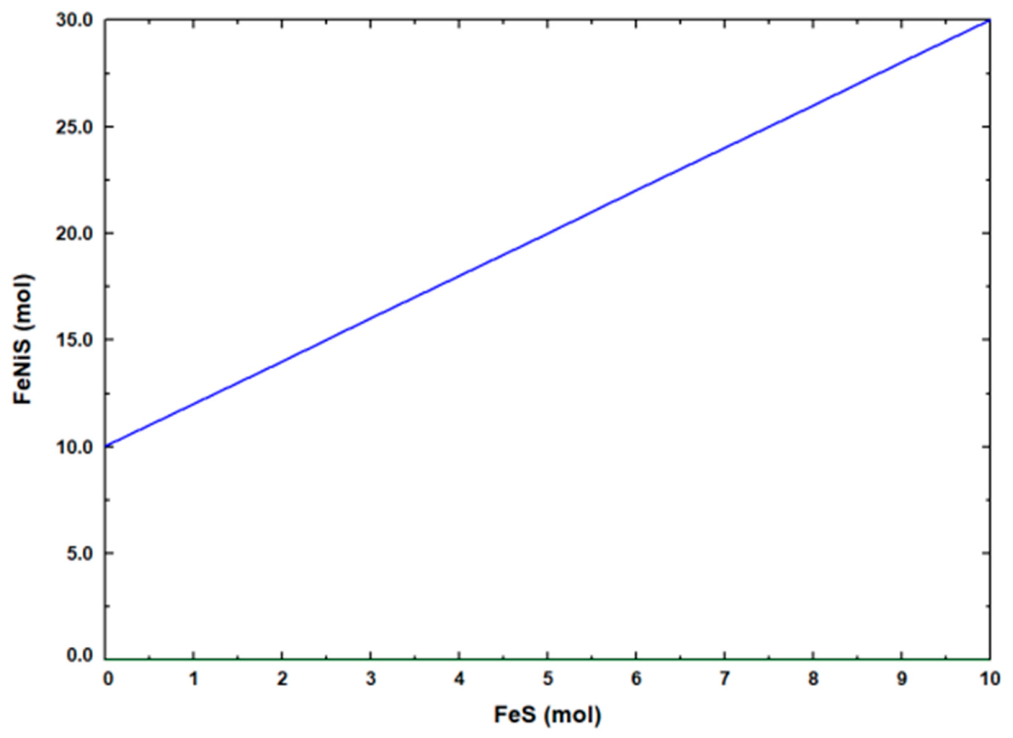
The effect of FeS addition on the formation of the Fe–Ni–S liquid phase was thermodynamically evaluated in the temperature range of 1550–1700 °C, as shown in Figure 13. The calculated results show that the amount of Fe–Ni–S liquid increases almost linearly with increasing FeS addition, regardless of temperature. This indicates that FeS is readily incorporated into the Fe–Ni metallic liquid under the investigated smelting conditions and directly contributes to matte formation. The absence of a saturation plateau within the investigated FeS addition range suggests that FeS incorporation into the Fe–Ni liquid is not significantly limited under the present thermodynamic conditions. Therefore, the supplied FeS can effectively act as a sulfur source for converting the reduced Fe–Ni metallic phase into Fe–Ni–S matte. This behavior is consistent with the previous thermodynamic assessment of the Fe–S system, in which FeS was identified as the most stable condensed sulfide phase at high temperature. Unlike elemental sulfur, which may volatilize as S2(g), FeS remains stable and provides sulfur to the Fe–Ni melt through direct dissolution and reaction. The calculated trend also suggests that the Fe/Ni ratio of the metallic alloy has a limited effect on the total amount of Fe–Ni–S liquid formed. Instead, the FeS addition level is the dominant factor controlling matte formation. This means that the matte amount and sulfur content can be regulated primarily by adjusting the FeS input. Therefore, FeS addition is an effective and controllable parameter for Fe–Ni–S matte production. Under the present conditions, increasing FeS addition promotes stable matte formation, while excessive FeS should be optimized in relation to matte composition, slag separation, and Ni recovery.

3.4. Nickel Recovery and Matte Composition

The chemical composition of the produced Fe–Ni–S matte, matte weight, and Ni recovery under different smelting conditions are summarized in Table 6. The Ni recovery varied from approximately 57.4% to 88.2%, depending on the carbon ratio, FeS addition, and Al2O3 flux content. Overall, Ni recovery increased with increasing FeS addition, indicating that sufficient sulfur supply promotes the conversion of reduced Fe–Ni alloy into Fe–Ni–S matte. In particular, high Ni recoveries of 85.799% and 88.157% were obtained for Samples 5 and 8, respectively, where FeS was added at 0.5 mol. These results suggest that adequate FeS addition enhances matte formation and improves matte–slag separation by stabilizing the Fe–Ni–S liquid phase. The effect of carbon addition was also significant. At carbon ratios of 0.2–0.3 mol, Ni recovery was generally improved when sufficient FeS and Al2O3 were supplied. These conditions correspond well with the thermodynamic predictions discussed above, where NiO reduction is essentially completed while slag viscosity remains within a favorable range for matte–slag separation. Therefore, this carbon range provides a suitable balance between reduction efficiency and slag fluidity. In contrast, when the carbon ratio was increased to 0.4 mol (Samples 9–11), Ni recovery remained in the range of approximately 67–74%, even with increasing FeS addition. This indicates that excessive carbon does not necessarily improve Ni recovery. As discussed in the slag viscosity analysis, excess carbon promotes FeO reduction, decreases the FeO content in the slag, and increases slag viscosity. The resulting decrease in slag fluidity can hinder matte droplet coalescence and settling, thereby reducing effective matte–slag separation. The addition of Al2O3 also affected Ni recovery indirectly by stabilizing slag composition and suppressing crucible dissolution. Under the same carbon and FeS conditions, Al2O3 addition increased Ni recovery from approximately 57–63% to 67–70%. This improvement is attributed to the stabilization of slag chemistry rather than a direct chemical enhancement of Ni reduction. By satisfying the Al2O3 solubility requirement of the slag, crucible dissolution was suppressed, and the slag composition became more reproducible during smelting. However, excessive Al2O3 addition may increase slag viscosity due to enhanced polymerization of the silicate network. Therefore, Al2O3 should be controlled within an appropriate range to balance crucible stability and slag fluidity. Consequently, the highest Ni recovery was achieved under conditions combining an appropriate carbon ratio and sufficient FeS addition. In this study, the optimal condition was obtained at C = 0.2 mol, FeS = 0.5 mol, and Al2O3 = 0.2433 mol, where the Ni recovery reached 88.157%. This confirms that efficient Fe–Ni–S matte production requires simultaneous control of reduction behavior, sulfur supply, and slag viscosity.

3.5. Matte Phase Composition and Microstructure

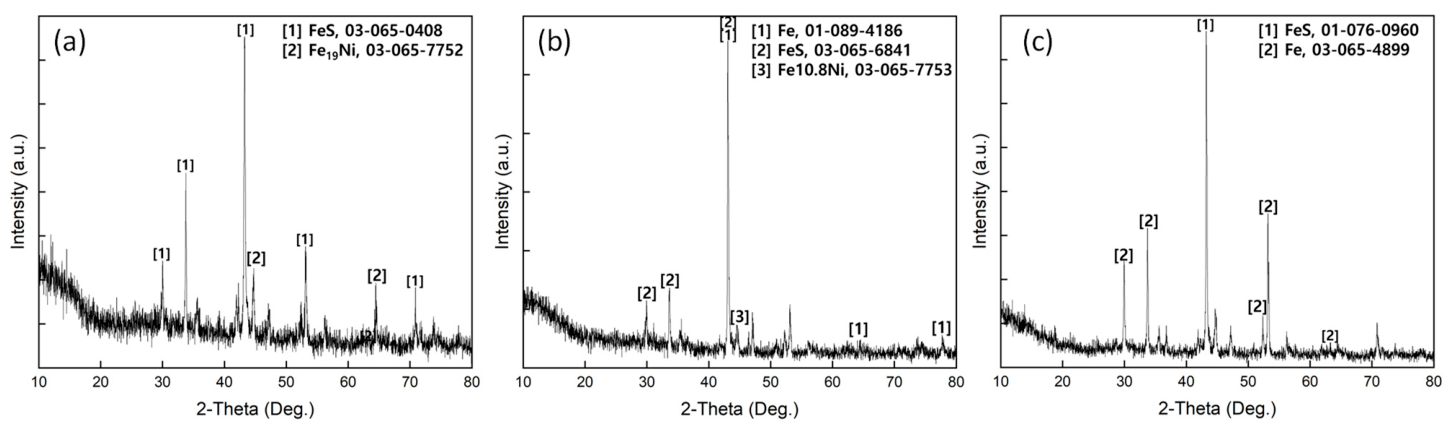
The phase composition and microstructure of the produced Fe–Ni–S matte were investigated to clarify the effects of carbon ratio and FeS addition on matte formation behavior. As summarized in Table 5, the matte mainly consisted of Fe, S, and Ni, with minor amounts of Al, Si, Mg, and Cr. The presence of these minor elements is attributed to partial entrainment of slag phases or interaction between the matte and slag during high-temperature smelting. The sulfur content in the matte was used to evaluate the extent of sulfidation. When FeS was added at 0.3 mol, the S content in the matte ranged from approximately 21.5 to 23.25 wt.%. Increasing FeS addition to 0.4 mol maintained or slightly increased the S content to approximately 22.3–25.3 wt.%. However, when FeS was further increased to 0.5 mol, the S content did not increase proportionally and remained within a similar range of approximately 21.8–24.1 wt.%. This indicates that the matte phase approaches a sulfur-saturation region, and excessive FeS addition does not necessarily lead to a corresponding increase in S content in the final matte. The absolute amount of sulfur distributed into the matte was estimated from the matte weight and S concentration. At FeS additions of 0.3–0.4 mol, a relatively large fraction of the supplied sulfur was incorporated into the matte phase. In contrast, at 0.5 mol FeS, the apparent sulfur distribution efficiency decreased despite the increase in FeS input. This suggests that excess sulfur may remain in residual sulfide phases, dissolve into slag as sulfide-bearing species, or partially volatilize as gaseous sulfur species under high-temperature conditions. Therefore, FeS addition improves matte formation up to an appropriate level, but excessive FeS can reduce sulfur utilization efficiency. The XRD patterns of representative matte samples are shown in Figure 14a–c. In all samples, the main crystalline phases were identified as FeS and metallic Fe or Fe–Ni alloy phases, while oxide peaks were not clearly detected within the XRD detection limit. This result indicates that reduction and sulfidation reactions were successfully achieved, producing matte phases mainly composed of sulfide and metallic alloy components. For the sample prepared at C = 0.3 mol and FeS = 0.4 mol (Figure 14a), FeS was the dominant phase, with minor Fe–Ni alloy peaks such as Fe19Ni. This suggests that sufficient sulfidation occurred under this condition, while a small portion of reduced Fe–Ni alloy remained as a metallic phase. For the sample prepared at C = 0.2 mol and FeS = 0.5 mol (Figure 14b), Fe, FeS, and Fe–Ni alloy phases were simultaneously observed. Although the carbon content was relatively low, the high FeS addition promoted matte formation. The coexistence of metallic Fe–Ni alloy and FeS indicates that the reduction and sulfidation reactions proceeded simultaneously, but part of the reduced metallic phase was not completely converted into sulfide matte. For the sample prepared at C = 0.3 mol and FeS = 0.3 mol (Figure 14c), FeS and Fe phases were mainly detected. The relatively low FeS addition likely limited the extent of sulfidation, leaving a larger fraction of metallic Fe or Fe-rich alloy phase in the matte. Therefore, the XRD results confirm that the relative fraction of sulfide and metallic phases in the matte is strongly affected by the balance between carbon reduction and FeS sulfidation.
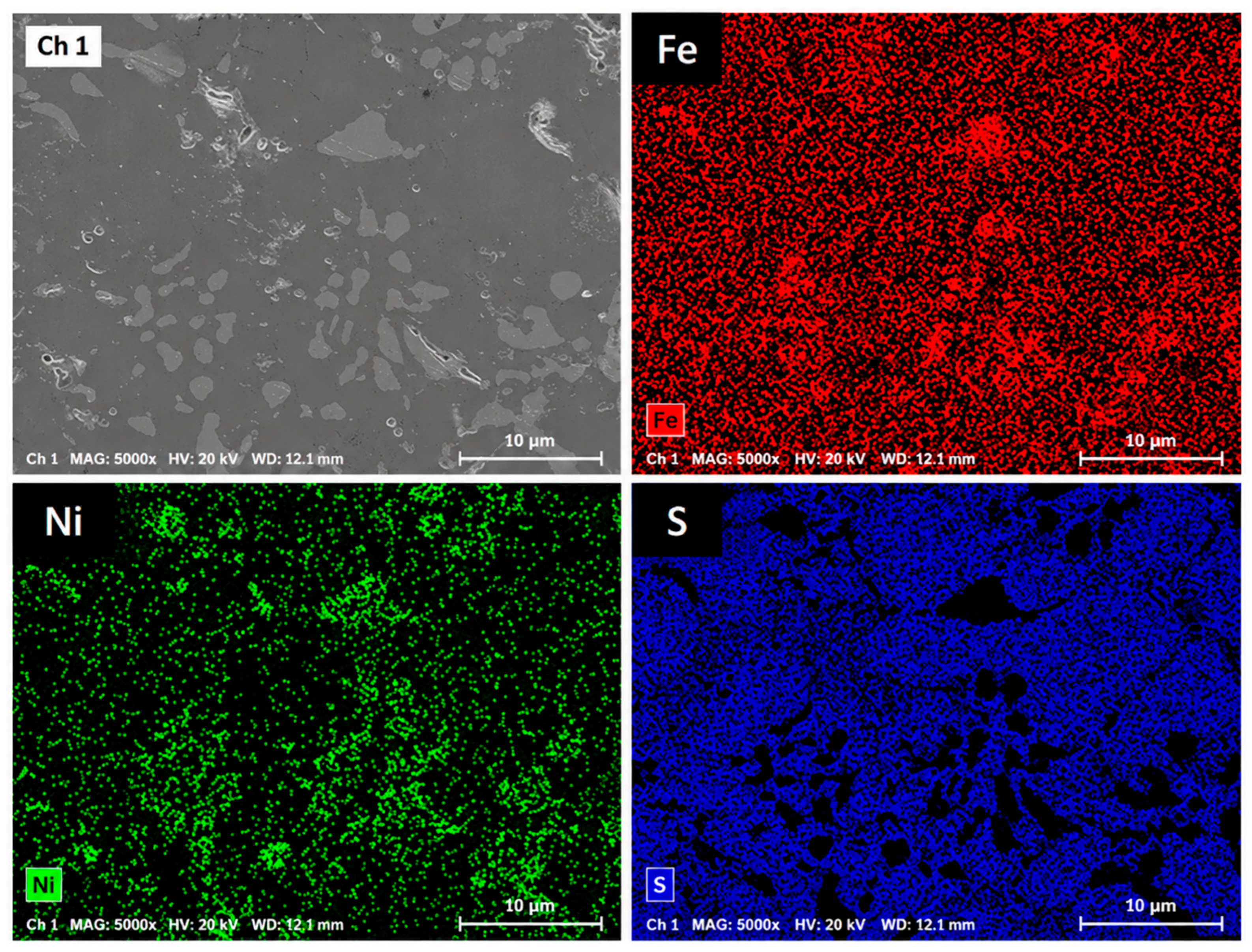
The microstructure of the sample prepared at C = 0.2 mol and FeS = 0.5 mol, which showed the highest Ni recovery of 88.157%, was further examined by SEM–EDS mapping (Figure 15). The EDS maps show that Fe and S are widely distributed throughout the matrix, confirming the formation of a Fe–S-rich matte phase. Ni was also detected within the matte region but was more concentrated in specific metallic regions. The brighter regions in the SEM image correspond to Fe–Ni alloy particles, where Fe and Ni signals are relatively strong and S is weak or nearly absent. In contrast, the darker matrix regions show strong S distribution, indicating Fe–Ni–S matte. This two-phase structure suggests that reduced Fe–Ni alloy droplets partially reacted with FeS to form matte, while some metallic alloy remained unreacted or incompletely sulfidized. These results are consistent with the thermodynamic prediction that FeS can dissolve into or react with Fe–Ni liquid to form Fe–Ni–S matte. The coexistence of Fe–Ni alloy and sulfide matte indicates that matte formation proceeds through simultaneous reduction, alloy formation, and sulfidation. The high Ni recovery obtained under this condition suggests that both the sulfide matte phase and residual Fe–Ni alloy phase contributed to the retention of Ni in the collected matte product. Overall, the matte composition, XRD results, and SEM–EDS mapping demonstrate that FeS effectively promotes Fe–Ni–S matte formation. However, the final matte structure depends strongly on the balance among carbon ratio, FeS addition, slag viscosity, and matte–slag separation behavior. The optimal condition should therefore provide sufficient reduction and sulfidation while maintaining slag fluidity for efficient separation.

3.6. Slag Composition

The chemical composition of the slag produced under different smelting conditions is summarized in Table 7. The slag was mainly composed of SiO2, Al2O3, FeO, and MgO, which together represent the principal oxide components of the synthetic saprolitic nickel ore system. Minor components such as Cr2O3, NiO, CaO, and other oxides were also detected. The SiO2 content remained relatively high in all samples because of the silicate-rich composition of the synthetic nickel ore. However, its relative concentration decreased when Al2O3 was added as a flux. The Al2O3 content increased markedly with increasing Al2O3 addition, confirming that the added Al2O3 was effectively incorporated into the slag phase. This behavior is consistent with the thermodynamic prediction that Al2O3 can dissolve into the MgO–SiO2–FeO-based slag system until the spinel saturation limit is reached.
The FeO content showed a clear dependence on the carbon reaction ratio. Under C = 0.2 mol conditions, FeO remained relatively high at approximately 17.8–18.4 wt.%, indicating that FeO reduction was incomplete. In contrast, under C = 0.4 mol conditions, FeO decreased to approximately 9.9–10.2 wt.%, confirming that enhanced carbothermic reduction promoted the conversion of FeO to metallic Fe. This result agrees well with the thermodynamic prediction discussed in Section 3.2.2, where increasing carbon addition was shown to reduce FeO content in the slag. FeO plays an important role in controlling slag chemistry and physical properties. In silicate slags, FeO acts as a network-modifying oxide that breaks Si–O–Si bonds and decreases the degree of polymerization of the slag structure. Therefore, sufficient FeO contributes to lowering slag viscosity and improving matte–slag separation. However, excessive reduction in FeO decreases the concentration of network-modifying oxides, resulting in a relatively SiO2- and Al2O3-rich slag structure with higher viscosity. The NiO content in the slag was relatively low, ranging from approximately 0.66 to 1.02 wt.%. This indicates that most of the Ni originally present in the synthetic ore was reduced and transferred to the matte or metallic phase. Nevertheless, the residual NiO detected in the slag suggests that a small portion of Ni remained dissolved in the silicate slag as Ni2+ species. Such residual NiO represents a major source of Ni loss during matte production. The MgO content varied depending on the relative dilution effect caused by Al2O3 addition and FeO reduction. Although MgO itself is thermodynamically stable and does not participate directly in reduction or sulfidation, it contributes to the overall slag structure and liquidus behavior. Cr2O3 remained at approximately 1.0–1.6 wt.% and is considered to be associated with spinel-type phases or dissolved oxide species in the slag. Overall, the slag composition results demonstrate that carbon addition controls the FeO level, while Al2O3 addition stabilizes the slag composition and suppresses crucible dissolution. However, excessive carbon decreases FeO too strongly and promotes viscosity increase, whereas excessive Al2O3 also enhances slag polymerization. Therefore, the slag composition must be controlled by balancing carbon ratio and Al2O3 addition to achieve suitable viscosity, stable matte formation, and efficient Ni recovery.

3.7. Basicity and Viscosity of Slag

The basicity and viscosity of the slag obtained under different smelting conditions are summarized in Table 8. In this study, slag basicity was calculated as the ratio of basic oxides to acidic oxides, as expressed in Equation (11):
B = w F e O + w M g O + w C a O w S i O 2 + w A l 2 O 3
where wi represents the weight percentage of each oxide in the slag.
Although Al2O3 was treated as an acidic oxide component for simplified basicity calculation in the present study, its behavior in MgO–SiO2-based slags is fundamentally amphoteric. Depending on slag composition, oxygen potential, and local structural balance, Al2O3 may act as both a network former and a charge-compensating oxide. Therefore, the calculated basicity values should be interpreted as relative compositional indices for comparing slag behavior under different experimental conditions rather than as absolute thermodynamic basicity parameters. Nevertheless, under the present experimental conditions, increased Al2O3 addition generally promoted aluminosilicate network formation and resulted in increased slag viscosity.
As shown in Table 8, the slag basicity varied from 0.476 to 0.940, while the viscosity ranged from approximately 1.973 to 4.445 poise. These variations were mainly governed by the carbon reaction ratio and Al2O3 addition. In contrast, FeS addition had a relatively minor effect on slag basicity and viscosity under the present conditions.
In Samples 1 and 2, where no Al2O3 flux was added, the basicity values were relatively high, 0.940 and 0.927, respectively, and the viscosities were the lowest among all samples, approximately 1.97–2.03 poise. This is because the slag contained sufficient FeO and MgO, which act as network-modifying oxides in silicate slags. These oxides break the Si–O–Si network structure, reduce the degree of polymerization, and consequently enhance slag fluidity. When Al2O3 was added under the same carbon condition of C = 0.3 mol (Samples 3–5), the basicity decreased markedly from 0.927 to 0.655–0.526, while the viscosity increased from 2.027 to 2.927–3.656 poise. This change is mainly attributed to the significant increase in Al2O3 content and the relative decrease in basic oxide concentration. Al2O3 behaves as an amphoteric oxide; however, in SiO2-rich silicate slags, it can participate in the formation of aluminosilicate network structures. Therefore, increased Al2O3 addition enhances slag polymerization and increases viscosity. For Samples 6–8, where the carbon ratio was reduced to 0.2 mol while Al2O3 was fixed at 0.2433 mol, the FeO content remained relatively high at approximately 17.8–18.4 wt.%. As a result, the basicity was maintained at 0.634–0.638, and the viscosity decreased to approximately 2.52–2.55 poise. This indicates that insufficient carbon suppresses FeO reduction, allowing FeO to remain in the slag as a network modifier. The retained FeO reduces the polymerization degree of the slag and contributes to maintaining favorable fluidity. In contrast, under the higher carbon condition of C = 0.4 mol (Samples 9–11), FeO decreased to approximately 9.9–10.2 wt.% due to enhanced carbothermic reduction. Consequently, the basicity decreased to 0.476–0.479, and the viscosity increased to 4.332–4.445 poise. This behavior indicates that excessive carbon removes FeO from the slag, reducing the concentration of network-modifying oxides. The slag then becomes relatively enriched in SiO2 and Al2O3, leading to a more polymerized aluminosilicate structure and higher viscosity. The role of FeS was different from that of carbon and Al2O3. Within the same carbon and Al2O3 conditions, increasing FeS from 0.3 to 0.5 mol caused only minor changes in basicity and viscosity. For example, in Samples 4 and 5, the basicity remained nearly constant at 0.526–0.528, and the viscosity changed only slightly from 3.625 to 3.656 poise. Similar trends were observed in Samples 6–8 and 9–11. This suggests that FeS primarily acts as a sulfidizing agent for matte formation rather than as a major modifier of slag oxide chemistry. Overall, the slag basicity and viscosity are mainly controlled by the balance between FeO retention, FeO reduction, and Al2O3 incorporation. Carbon controls the FeO level in the slag through reduction, while Al2O3 stabilizes the slag composition and suppresses crucible dissolution but simultaneously increases slag viscosity when added excessively. FeS mainly governs sulfur supply and matte formation, with limited influence on slag basicity and viscosity. The viscosity behavior observed in the present study indicates that the acceptable viscosity range for matte–slag separation is highly sensitive to the FeO concentration in the slag. FeO acts as a representative network-modifying oxide that depolymerizes the silicate structure by breaking Si–O–Si bonds. Therefore, even moderate decreases in FeO concentration can significantly increase slag polymerization and viscosity. In the present MgO–SiO2–FeO–Al2O3 slag system, viscosity remained within the industrially favorable range of approximately 2–5 poise when the FeO concentration was maintained at roughly 12–18 wt.%. However, when FeO decreased to approximately 10 wt.% under excessive carbon addition conditions (C = 0.4 mol), the slag viscosity increased rapidly to approximately 4.3–4.5 poise due to enhanced aluminosilicate network formation. These results suggest that the viscosity stability window is relatively narrow and strongly dependent on FeO retention in the slag. Therefore, fluctuations in FeO concentration under practical smelting conditions may rapidly shift the slag viscosity outside the favorable operating range. Careful control of carbon addition and oxygen potential is therefore essential to maintain stable slag fluidity and efficient matte–slag separation during industrial operation. Therefore, appropriate control of carbon ratio and Al2O3 addition is essential to maintain slag viscosity within the favorable range for matte–slag separation. Based on the present results, the conditions of C = 0.2–0.3 mol with controlled Al2O3 addition provide a suitable balance between slag fluidity, crucible stability, and Ni recovery.

4. Conclusions

In this study, Fe–Ni–S matte production from synthetic saprolitic nickel ore was investigated through simultaneous carbothermic reduction and sulfidation. The synthetic ore was designed to reproduce the major chemical and mineralogical characteristics of low-grade saprolitic laterite, and the effects of carbon ratio, FeS addition, and Al2O3 flux on matte formation, slag chemistry, and Ni recovery were systematically evaluated. Thermodynamic analysis confirmed that the MgO–SiO2–FeO-based slag system could form a stable liquid slag phase in the temperature range of 1500–1600 °C. This condition was favorable for phase separation between the Fe–Ni liquid alloy and molten slag. The carbon reaction ratio was identified as a key variable controlling both NiO/FeO reduction and slag properties. At excessive carbon addition, FeO in the slag decreased significantly, resulting in increased slag viscosity and reduced matte–slag separation efficiency.
The highest Ni recovery of 88.157% was obtained at C = 0.2 mol, FeS = 0.5 mol, and Al2O3 = 0.2433 mol. Under this condition, NiO was effectively reduced, sufficient sulfur was supplied by FeS, and the slag maintained suitable viscosity and basicity for matte–slag separation. These results indicate that Ni recovery is governed not only by the extent of reduction and sulfidation, but also by slag fluidity and phase separation behavior. Al2O3 addition played an important role in stabilizing the slag and suppressing alumina crucible dissolution. Without Al2O3 flux addition, localized crucible dissolution was observed. In contrast, when Al2O3 was added near the calculated solubility limit, crucible dissolution was effectively suppressed. However, excessive Al2O3 increased slag viscosity due to the formation of aluminosilicate network structures. Therefore, Al2O3 addition should be optimized to balance crucible stability and slag fluidity. FeS was confirmed to be an effective sulfidizing agent for Fe–Ni–S matte formation. Thermodynamic assessment showed that FeS is the most stable condensed sulfide phase at high temperature. Increasing FeS addition promoted matte formation, but excessive FeS did not proportionally increase sulfur incorporation into the matte. The sulfur distribution efficiency was approximately 89% at FeS = 0.3 mol, 90% at FeS = 0.4 mol, and decreased to approximately 76% at FeS = 0.5 mol, suggesting that the matte phase approaches sulfur saturation at higher FeS additions.
The slag composition analysis showed that FeO, Al2O3, and SiO2 strongly influenced slag basicity and viscosity. FeO acted as a network-modifying oxide and contributed to lower viscosity, whereas Al2O3 increased slag polymerization and viscosity. FeS mainly affected sulfidation and sulfur distribution rather than slag oxide chemistry. Although the produced matte showed effective Ni recovery, its composition still differed from that of commercial high-grade nickel matte, which generally contains higher Ni and lower Fe contents. Therefore, further optimization of reductant and sulfidizing agent additions, as well as post-smelting upgrading, is required to produce matte compositions closer to commercial specifications. Overall, this study provides a thermodynamic and experimental basis for producing Fe–Ni–S matte from saprolite-derived oxide feed through an integrated reduction–sulfidation process. The results demonstrate that simultaneous control of carbon ratio, FeS addition, Al2O3 flux, and slag viscosity is essential for achieving stable matte formation, efficient Ni recovery, and reliable metal–slag separation. Although the present study employed a relatively high smelting temperature of 1550 °C to ensure stable melting behavior in the MgO–SiO2–FeO-based slag system, future studies should investigate the possibility of reducing the operating temperature through slag engineering and flux optimization. In particular, the use of additional fluxing agents such as CaO and CaF2 may lower the slag liquidus temperature and improve slag fluidity by modifying the silicate network structure. Such approaches could contribute to improved energy efficiency and reduced carbon emissions during matte smelting operations, which are increasingly important considerations in sustainable nickel processing and industrial decarbonization.

Author Contributions

Conceptualization, C.H.J. and J.-P.W.; methodology, C.H.J.; software, C.H.J.; validation, C.H.J. and J.-P.W.; formal analysis, C.H.J.; investigation, C.H.J.; resources, J.-P.W.; data curation, C.H.J.; writing—original draft preparation, C.H.J.; writing—review and editing, J.-P.W.; visualization, C.H.J.; supervision, J.-P.W.; project administration, J.-P.W.; funding acquisition, J.-P.W. All authors have read and agreed to the published version of the manuscript.

Funding

This work was supported by the Technology Innovation Program (Developed 1000 tons/year valuable metal recovery technology from zinc concentrate using carbon-reducing pyrometallurgy smelting) (RS-2024-00448329) funded By the Ministry of Trade, Industry & Energy (MOTIE, Republic of Korea).

Data Availability Statement

The original contributions presented in the study are included in the article, further inquiries can be directed to the corresponding author.

Conflicts of Interest

The authors declare no conflicts of interest.

References

  1. Nickel Institute. Nickel Magazine; Nickel Institute: Toronto, ON, Canada, 2024; Volume 39. [Google Scholar]
  2. Kim, J.; Lee, H.; Cha, H.; Yoon, M.; Park, M.; Cho, J. Nickel-Rich Layered Cathode Materials for Automotive Lithium-Ion Batteries: Achievements and Perspectives. ACS Energy Lett. 2021, 6, 605–614. [Google Scholar] [CrossRef]
  3. International Energy Agency. Global Critical Minerals Outlook 2025; IEA: Paris, France, 2025. [Google Scholar]
  4. Sohn, H.-S. Current Status of Nickel Smelting Technology. Resour. Recycl. 2021, 30, 3–13. [Google Scholar] [CrossRef]
  5. Keskinkilic, E. Nickel Laterite Smelting Processes and Possible Modifications to the Conventional Route. Metals 2019, 9, 974. [Google Scholar] [CrossRef]
  6. Zhou, Q.; Wang, Y.; Li, X.; Zhang, H.; Chen, L. The Process Analysis of Converting Ferronickel into High Nickel Matte. Miner. Eng. 2025, 213, 108259. [Google Scholar] [CrossRef]
  7. Dalvi, A.D.; Bacon, W.G.; Osborne, R.C. The Past and the Future of Nickel Laterites. In Proceedings of the PDAC International Convention, Toronto, ON, Canada, 4–7 March 2004; pp. 1–27. [Google Scholar]
  8. U.S. Geological Survey. Mineral Commodity Summaries 2024: Nickel; U.S. Department of the Interior: Reston, VA, USA, 2024.
  9. Zhang, Z.-F.; Liu, Y.; Wang, J.; Li, Q.; Chen, S. Nickel Extraction from Nickel Laterites: Processes, Resources, Environment and Cost. China Geol. 2025, 8, 235–236. [Google Scholar] [CrossRef]
  10. McDonald, R.G.; Whittington, B.I. Atmospheric Acid Leaching of Nickel Laterites. Part I: Sulphuric Acid Technologies. Hydrometallurgy 2008, 91, 35–55. [Google Scholar] [CrossRef]
  11. Whittington, B.I.; Muir, D.M. Pressure Acid Leaching of Nickel Laterites: A Review. Miner. Process. Extr. Metall. Rev. 2000, 21, 527–600. [Google Scholar] [CrossRef]
  12. Coral Bay Nickel Corporation. Coral Bay Nickel HPAL: Operations and Expansion. In Proceedings of the ALTA Nickel–Cobalt Conference, Perth, Australia, 23–25 May 2011. [Google Scholar]
  13. Kyle, J.H. Nickel Laterite Processing Technologies—Where to Next? In Proceedings of the ALTA Nickel–Cobalt–Copper Conference, Perth, Australia, 24–26 May 2010. [Google Scholar]
  14. Cheng, L.; Liu, G.; Huang, H.; Wang, X.; Chen, Y.; Zhang, J.; Meng, A.; Yang, R.; Tao, Y. Equilibrium analysis of general N-population multi-strategy games for generation-side long-term bidding: An evolutionary game perspective. J. Clean. Prod. 2020, 276, 124123. [Google Scholar] [CrossRef]
  15. Liu, W.; Zhang, T.; Li, Y.; Chen, H.; Wang, X. Production of Nickel Matte from Saprolitic Laterite Ore by Sulfide Smelting with Pyrite; Central South University: Changsha, China, 2024. [Google Scholar]
  16. Li, Z.; Tian, Q.; Wang, S.; Wang, Q.; Guo, X. Thermodynamic and Experimental Study on Sulphidizing Smelting of Laterite Nickel Ore for Nickel Matte Production. J. Sustain. Metall. 2025, 11, 2744–2756. [Google Scholar] [CrossRef]
  17. Wang, G.; Liu, X.; Zhang, Y.; Li, Q.; Chen, H. Molecular Dynamics Simulation on Microstructure and Physicochemical Properties of FexO–SiO2–CaO–MgO–NiO Slag in Nickel Matte Smelting under Modulating CaO Content. Minerals 2020, 10, 149. [Google Scholar] [CrossRef]
  18. Wang, G.; Cui, Y.; Yang, J.; Yang, S.; Zhao, J.; Tang, H. Influence Mechanism of Fe/SiO2 Ratio on the Properties, Microstructure and Fe-Containing Phases of CaO-Modified Nickel Matte Smelting Slags. Metall. Mater. Trans. B 2021, 52, 1463–1471. [Google Scholar] [CrossRef]
  19. Li, C.; Dong, L.; Wang, L. Improvement of flotation recovery using oscillatory air supply. Miner. Eng. 2019, 131, 321–324. [Google Scholar] [CrossRef]
  20. You, D.; Bernhard, C.; Mayerhofer, A.; Michelic, S.K. Influence of Slag Viscosity and Composition on the Inclusion Content in Steel. ISIJ Int. 2021, 61, 2991–2997. [Google Scholar] [CrossRef]
  21. Yazawa, A.; Azakami, T. Sulfur Distribution between Matte and Slag in Nonferrous Smelting Systems. Metall. Trans. B 1970, 1, 36–44. [Google Scholar] [CrossRef]
  22. Guo, Q.; Qu, J.; Han, B.; Wei, G.; Zhang, P.; Qi, T. Dechromization and dealumination kinetics in process of Na2CO3-roasting pretreatment of laterite ores. Trans. Nonferrous Met. Soc. China 2014, 24, 3979–3986. [Google Scholar] [CrossRef]
  23. Wang, H.Y.; Hou, Y.; Chang, H.Q.; Zhang, G.H.; Chou, K.C. Preparation of Ni–Fe–S Matte from Nickeliferous Laterite Ore Using CaS as the Sulfurization Agent. Metall. Mater. Trans. B 2022, 53, 1136–1147. [Google Scholar] [CrossRef]
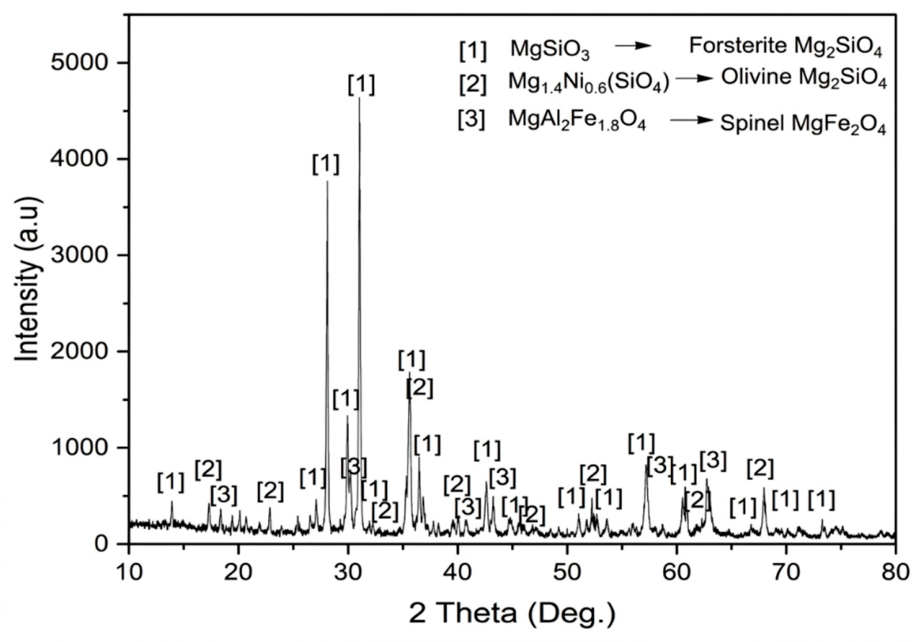
Figure 1. XRD pattern of magnetically upgraded saprolitic laterite concentrate used as the reference for synthetic feed design.
Metals 16 00589 g001
Figure 2. Schematic diagram of the vertical Kanthal tube furnace used for high-temperature reduction and sulfidation experiments under an Ar atmosphere.
Metals 16 00589 g002
Figure 3. Schematic process flow diagram illustrating the synthesis of composite oxide feed and its conversion to Fe–Ni–S matte through simultaneous carbothermic reduction and sulfidation.
Metals 16 00589 g003
Figure 4. XRD pattern of the synthesized nickel ore.
Metals 16 00589 g004
Figure 5. Equilibrium phase evolution of the synthesized nickel ore system. The dashed line indicates the selected synthesis temperature of 1600 °C.
Metals 16 00589 g005
Figure 6. FeO–MgO–SiO2 ternary liquidus projection showing the compositional position of the synthesized nickel ore. The red circle indicates the composition of the synthesized nickel ore.
Metals 16 00589 g006
Figure 7. Thermodynamic prediction of Ni generation as a function of carbon reaction ratio at different temperatures (1550–1700 °C).
Metals 16 00589 g007
Figure 8. Variation in FeO content in the liquid slag as a function of carbon reaction ratio at different temperatures.
Metals 16 00589 g008
Figure 9. Calculated slag viscosity as a function of carbon reaction ratio at different temperatures. The red dashed lines and arrow indicate the recommended carbon reaction ratio range (0.2–0.4 mol) corresponding to favorable slag viscosity for stable matte–slag separation.
Metals 16 00589 g009
Figure 10. Calculated Al2O3 solubility limit in the slag as a function of carbon reaction ratio, determined from the onset of spinel phase formation.
Metals 16 00589 g010
Figure 11. Effect of Al2O3 addition on crucible stability: (left) severe crucible dissolution without Al2O3 addition; (right) stable crucible surface with Al2O3 addition at 0.2614 mol.
Metals 16 00589 g011
Figure 12. Effect of Al2O3 addition on slag viscosity at different carbon reaction ratios: (a) 1550 °C; (b) 1600 °C. The red dashed lines indicate the recommended Al2O3 addition range (~0.28–0.30 mol) selected based on slag viscosity considerations.
Metals 16 00589 g012
Figure 13. Thermodynamic prediction of Fe–Ni–S liquid formation as a function of FeS addition at 1550–1700 °C.
Metals 16 00589 g013
Figure 14. XRD patterns of Fe–Ni–S matte obtained under different smelting conditions: (a) C = 0.3 mol and FeS = 0.4 mol; (b) C = 0.2 mol and FeS = 0.5 mol; (c) C = 0.3 mol and FeS = 0.3 mol.
Metals 16 00589 g014
Figure 15. SEM–EDS elemental mapping of Fe–Ni–S matte obtained at C = 0.2 mol and FeS = 0.5 mol.
Metals 16 00589 g015
Table 1. Chemical composition of magnetically upgraded saprolitic laterite concentrate determined by XRF analysis.
FeNiMgSiCrAlCaOTotal
[g]15.111.6212.7617.240.710.990.1451.4450
[wt%]15.111.6212.7617.240.710.990.1451.44100
[mol]0.140.010.260.310.010.0201.612.35
[at%]5.760.5911.1813.060.290.780.0768.44100
Table 2. Raw materials used for synthetic ore preparation and Fe–Ni–S matte production.
Raw MaterialsManufacturerPurityProcess
SynthesisMatte
Fe3O4JUNSEI94.00%
NiOJUNSEI99.00%
SiO2JUNSEI99.00%
Al2O3JUNSEI99.70%
Cr2O3JUNSEI99.00%
CaOSAMCHUN96.00%
MgODUKSAN97.00%
FeSDAEJUNG95.00%
Graphite powderDAEJUNG99.00%
Table 3. Experimental conditions for Fe–Ni–S matte production showing the variation in carbon ratio, FeS addition, and Al2O3 flux under fixed temperature (1550 °C) and holding time (3 h).
SampleFlux [mol]TemperatureReaction Time
CarbonFeSAl2O3[°C][h]
10.30.3-15503
20.30.4-
30.30.40.13
40.30.40.26
50.30.50.26
60.20.30.24
70.20.40.24
80.20.50.24
90.40.30.28
100.40.40.28
110.40.50.28
Table 4. Chemical composition of the synthesized nickel ore based on major oxide components.
Raw MaterialsFe3O4NiOSiO2MgOAl2O3Cr2O3CaO
wt.%24.832.4543.8625.171.242.220.23
Table 5. Standard Gibbs free-energy (ΔG°) values for major carbothermic reduction reactions calculated using HSC Chemistry 6.
ReactionΔG° at 1400 °C (kJ/mol)ΔG° at 1500 °C (kJ/mol)ΔG° at 1600 °C (kJ/mol)
NiO + C → Ni + CO−118.4−126.7−135.1
FeO + C → Fe + CO−82.6−90.4−98.3
Fe3O4 + C → 3FeO + CO−34.2−41.8−49.6
Table 6. Chemical composition, matte weight, and Ni recovery of Fe–Ni–S matte obtained under different carbon, FeS, and Al2O3 addition conditions.
No.Flux [mol]Composition [wt.%]MatteNi Rec.
CFeSAl2O3FeSNiAlSiMgCr[g][%]
10.30.3-71.7423.252.771.160.48-0.6139.9457.42
20.30.4-71.2125.322.440.650.18-0.249.9363.37
30.30.40.1370.8523.902.651.100.400.700.4049.0367.49
40.30.40.2670.6023.602.721.200.360.730.4949.8370.40
50.30.50.2670.0522.103.051.850.900.810.2454.1685.80
60.20.30.2469.3021.503.252.101.050.900.1834.5858.37
70.20.40.2469.5522.303.002.051.000.880.2245.3170.60
80.20.50.2469.8021.813.012.191.121.120.9556.4288.16
90.40.30.2870.2021.953.201.900.920.860.3240.7467.72
100.40.40.2870.7523.052.851.350.550.750.2049.3873.10
110.40.50.2871.1024.102.601.050.420.690.1754.5173.62
Table 7. Chemical composition of slag obtained under different carbon, FeS, and Al2O3 addition conditions.
No.Flux [mol]Composition [wt.%]
CFeSAl2O3SiO2Al2O3FeOMgOCr2O3NiOCaOEtc
10.30.3-46.521.2117.9426.281.570.960.674.85
20.30.4-46.081.2717.5125.711.491.020.696.23
30.30.40.1338.6216.7414.5221.161.220.850.596.3
40.30.40.2633.4127.2812.7118.691.150.740.515.51
50.30.50.2633.5726.6512.8918.421.090.780.486.12
60.20.30.2431.9225.3218.4217.521.010.720.474.62
70.20.40.2431.2125.4417.8317.641.060.660.455.71
80.20.50.2431.0524.9217.9717.281.030.710.486.56
90.40.30.2835.4228.1110.2319.511.130.770.524.31
100.40.40.2834.7828.389.9319.621.170.720.544.86
110.40.50.2834.4427.9510.1419.241.120.760.495.86
“Etc” represents the remaining minor oxide components and trace impurities that were not individually classified in the main composition columns.
Table 8. Basicity and viscosity of slag obtained under different carbon, FeS, and Al2O3 addition conditions.
No.Flux [mol]BasicityViscosity
CFeSAl2O3
10.30.3-0.941.97
20.30.4-0.932.03
30.30.40.130.662.93
40.30.40.260.533.63
50.30.50.260.533.66
60.20.30.240.642.55
70.20.40.240.632.54
80.20.50.240.642.52
90.40.30.280.484.45
100.40.40.280.484.36
110.40.50.280.484.33
Disclaimer/Publisher’s Note: The statements, opinions and data contained in all publications are solely those of the individual author(s) and contributor(s) and not of MDPI and/or the editor(s). MDPI and/or the editor(s) disclaim responsibility for any injury to people or property resulting from any ideas, methods, instructions or products referred to in the content.